EP2012802B1 - Novel drugs for anti-herpes virus treatments - Google Patents
Novel drugs for anti-herpes virus treatments Download PDFInfo
- Publication number
- EP2012802B1 EP2012802B1 EP07731407A EP07731407A EP2012802B1 EP 2012802 B1 EP2012802 B1 EP 2012802B1 EP 07731407 A EP07731407 A EP 07731407A EP 07731407 A EP07731407 A EP 07731407A EP 2012802 B1 EP2012802 B1 EP 2012802B1
- Authority
- EP
- European Patent Office
- Prior art keywords
- hsv
- polysaccharide
- viral
- herpes virus
- sulphated
- Prior art date
- Legal status (The legal status is an assumption and is not a legal conclusion. Google has not performed a legal analysis and makes no representation as to the accuracy of the status listed.)
- Not-in-force
Links
- 0 C[C@@](*)C(C1)([C@](*2*)C(*)OC1C(C)=C)OC2(C)[C@@](C(*)[C@]1C2I(C)C)OC(C[O+])[C@@]12O Chemical compound C[C@@](*)C(C1)([C@](*2*)C(*)OC1C(C)=C)OC2(C)[C@@](C(*)[C@]1C2I(C)C)OC(C[O+])[C@@]12O 0.000 description 1
Images



Classifications
-
- A—HUMAN NECESSITIES
- A61—MEDICAL OR VETERINARY SCIENCE; HYGIENE
- A61K—PREPARATIONS FOR MEDICAL, DENTAL OR TOILETRY PURPOSES
- A61K31/00—Medicinal preparations containing organic active ingredients
- A61K31/70—Carbohydrates; Sugars; Derivatives thereof
- A61K31/715—Polysaccharides, i.e. having more than five saccharide radicals attached to each other by glycosidic linkages; Derivatives thereof, e.g. ethers, esters
-
- A—HUMAN NECESSITIES
- A61—MEDICAL OR VETERINARY SCIENCE; HYGIENE
- A61K—PREPARATIONS FOR MEDICAL, DENTAL OR TOILETRY PURPOSES
- A61K31/00—Medicinal preparations containing organic active ingredients
- A61K31/70—Carbohydrates; Sugars; Derivatives thereof
- A61K31/715—Polysaccharides, i.e. having more than five saccharide radicals attached to each other by glycosidic linkages; Derivatives thereof, e.g. ethers, esters
- A61K31/737—Sulfated polysaccharides, e.g. chondroitin sulfate, dermatan sulfate
-
- A—HUMAN NECESSITIES
- A61—MEDICAL OR VETERINARY SCIENCE; HYGIENE
- A61P—SPECIFIC THERAPEUTIC ACTIVITY OF CHEMICAL COMPOUNDS OR MEDICINAL PREPARATIONS
- A61P31/00—Antiinfectives, i.e. antibiotics, antiseptics, chemotherapeutics
- A61P31/12—Antivirals
- A61P31/20—Antivirals for DNA viruses
- A61P31/22—Antivirals for DNA viruses for herpes viruses
Definitions
- the invention relates to novel drugs for the treatment against herpesvirus ( Herpesviridae ).
- herpesviruses belong to a family of viruses whose genome is double-stranded linear DNA encoding 100 to 200 genes and which is encapsulated in an icosahedral protein cage called the capsid, itself enveloped in a lipid membrane called envelope.
- the herpesvirus family comprises three subfamilies, namely alpha herpesvirus, beta herpesvirus and gamma herpesvirus.
- Alpha herpesviruses are characterized by a tropism with regard to a large number of cell types.
- Herpes simplex virus 1 HSV-1
- Herpes simplex virus 2 HSV-2
- VZV varicella-zoster virus
- Beta herpesviruses are characterized by a tropism with regard to a limited number of cell types.
- the cytomegalovirus (CMV) responsible for a mononucleosis syndrome and the human herpesviruses 6 (HHV6) and 7 (HHV7) responsible for roseola belong to this subfamily.
- Viruses of this subfamily include Epstein-Barr virus (EBV), which causes infectious mononucleosis, Burkitt's lymphoma and nasopharyngeal carcinoma, and Kaposi's sarcoma or Rhadinovirus-associated herpesvirus (KSHV). responsible for a lymphoma.
- EBV Epstein-Barr virus
- KSHV Rhadinovirus-associated herpesvirus
- Herpes infection includes a primary infection phase and latency phases interrupted by reactivation phases.
- the virus enters the epithelial cells where it will multiply and produce cell lysis at the site of inoculation. The virus can then take the path of the sensory nerves to nuclei of ganglion neurons.
- primary infection is often accompanied by a short period of clinical illness, long-term latency is asymptomatic.
- latency phases the intracellular virus does not replicate. The virus remains in the nucleus of neuronal ganglia in the form of extrachromosomal DNA without integrating the cellular genome. The choice of neurons as a latency site allows viruses to escape the immune system.
- the virus can reactivate and begin the transcription of many genes that lead to accelerated replication.
- the reactivation is often accompanied by the appearance of non-specific symptoms such as low fever, fatigue, erythema, as well as clinical signs such as swollen or painful lymph nodes and immunological signs such as a decrease in the number of natural killer cells.
- herpesvirus One of the peculiarities of herpesvirus is its ability to remain in a latent host cell without producing viral particles throughout the life of the host, and in its ability to reactivate, which can result in to multiple infections.
- the penetration of herpesvirus into the host cell is an essential step in the infection. It begins with the adsorption of the virus on the cell surface via specific receptors and nonspecific receptors for cell membrane receptors. After the adsorption process, the virus enters the cell by fusing the viral envelope with the cell membrane, releasing the nucleocapsid into the cytoplasm. The nucleocapsid is then degraded by enzymatic proteolysis with the consequent release of the viral DNA which migrates to and penetrates the nucleus of the host cell.
- the viral DNA is transcribed into viral mRNA by cellular RNA polymerase II.
- the expression of the viral genes is called “ordered”, which reflects the fact that it comprises several successive phases, namely a so-called “very early” phase, a so-called “early” phase and a so-called “late” phase.
- very early viral proteins In the very early phase, very early viral proteins (Immediate Early Antigens) are expressed. These are regulatory proteins that bind to cellular DNA and stop the synthesis of certain cellular proteins while causing the synthesis of other proteins to increase.
- viral enzyme proteins such as DNA polymerase and thymidine kinase are expressed. These two enzymes are very important for the replication of the virus. Mutations of these enzymes are responsible for resistance to anti-herpes agents.
- late viral proteins correspond, among others, to the structural proteins of the capsid and integument that are expressed.
- the nucleocapsid assembly of newly formed viruses by replication takes place in several stages that remain poorly defined.
- the mature virus becomes infectious when budding at the nuclear membrane.
- Newly formed replication viruses are released outside the cell either by lysis of the cell membrane or by formation of a vacuole.
- the duration of the replication cycle is approximately 18 to 20 hours.
- the efficiency of replication results in the fact that one infectious viral particle is synthesized per 100 to 1000 viruses produced in the host cell.
- the treatments currently used to combat herpesviruses aim to block their replication cycle.
- two groups of anti-viral agents are used that are capable of inhibiting the synthesis of herpesvirus DNA, in particular nucleoside inhibitors and non-nucleoside inhibitors.
- Viral DNA polymerase In these treatments, two groups of anti-viral agents are used that are capable of inhibiting the synthesis of herpesvirus DNA, in particular nucleoside inhibitors and non-nucleoside inhibitors. Viral DNA polymerase.
- Nucleoside inhibitors of viral DNA polymerase include acyclovir, penciclovir and their respective prodrugs, valacyclovir and famcyclovir. Nucleoside inhibitors are distinguished from naturally occurring nucleosides by modifications of their sugar or purine base or pyrimidine. They compete with natural nucleosides and prevent the elongation of the DNA chain.
- Acyclovir is the preferred nucleoside inhibitor for the treatment of herpes infections. To be able to act against the virus, it must first be phosphorylated by the viral enzyme thymidine kinase (TK); it must then be subjected to other phosphorylations carried out by cellular enzymes which leads to its active form. In this active form, acyclovir is a highly selective inhibitor of viral DNA polymerase which it inhibits more than cellular DNA polymerase.
- TK thymidine kinase
- Non-nucleoside inhibitors are inorganic pyrophosphate analogues. These molecules do not have to be previously phosphorylated to inhibit the viral enzymes. Non-nucleoside inhibitor therapies are used for infections resistant to nucleoside analogues. Among the non-nucleoside inhibitors of viral DNA polymerase, mention may be made of Foscarnet.
- the mechanism of resistance of certain viral strains to acyclovir is mainly due to the presence of mutations on the gene coding for viral TK, which induces an alteration of its function. Thus, a deficient TK will no longer be able to phosphorylate acyclovir. However, a mutant viral strain with deficient TK remains viable because the TK enzyme is not essential for replication of the virus.
- Foscarnet is currently the only anti-herpesvirus agent approved for the treatment of infections caused by nucleoside-resistant HSV.
- long-term treatment with Foscamet often leads to severe intolerance.
- Adsorption is a critical step in the infection.
- 1742-1745 describes the activity of a number of sulfated polysaccharides, among others dextran sulfate and heparin, against enveloped viruses (ie DNA - or RNA -) and in particular against HSV -1 and HSV -2.
- the activity is attributed to inhibition of viral absorption.
- the invention therefore aims, above all, to provide the medical profession with new drugs with a high therapeutic index for the control of herpesviruses in general, and more particularly against alpha herpesviruses, and in particular against HSV-1 and HSV. -2, these drugs being essentially opposed to the multiplication of said viruses by inhibition of the adsorption of the latter on the host cell.
- the polysaccharide used is a polysaccharide of formula (I), in which R 1 and R 2 may be identical and then represent a sulfate group or different from each other, R 1 then representing a sulphated glucose unit preferably linked by a ⁇ -1,6-type ⁇ bond to the saccharide structure, X and / or Y representing a mannitol group and n an integer from 11 to 30, more particularly from 25 to 30; , said medicament acting in particular by inhibition of the adsorption of the viruses in question on the host cell.
- formula (I) in which R 1 and R 2 may be identical and then represent a sulfate group or different from each other, R 1 then representing a sulphated glucose unit preferably linked by a ⁇ -1,6-type ⁇ bond to the saccharide structure, X and / or Y representing a mannitol group and n an integer from 11 to 30, more particularly from 25 to 30; , said medicament acting in particular by inhibition of the a
- the Applicant has also demonstrated that the drug manufactured using a polysaccharide of formula (I) according to the invention acts by inhibiting the adsorption of the viruses in question on the host cell.
- the Applicant has also been able to demonstrate that the polysaccharides of formula (I) according to the invention, and in particular sulfated laminarine, showed neither in vitro nor in vivo toxicity nor anti-anticoagulant activity and therefore not risk of hemorrhagic side effects, and had a high therapeutic index.
- the term "therapeutic index” or “IT” means the ratio between the maximum non-toxic dose (or a dose inducing a quantified toxicity) and the dose inducing a favorable pharmacological effect.
- sulfation degree means the average number, per saccharide unit, of sulphated OH groups.
- a degree of sulfation greater than 2 means that, on average, over the entire polysaccharide, more than 2 OH groups per saccharide unit are sulfated.
- sulfate group means a group of the type (-SO 3 H).
- Another object of the present invention is the use, for the implementation of a method for treating diseases caused by herpesviruses, more particularly by alpha herpesviruses, and in particular by HSV-1 and HSV-2, and than by strains of these viruses which are resistant to previously known antiviral agents, at least one polysaccharide of formula (I) as defined above.
- said polysaccharide of formula (I) is a sulfated laminarine having a degree of sulfation greater than 2 and preferably of 2.2 to 2.4.
- the sulfated laminarine used according to the invention has a degree of polymerization of 11 to 28.
- the polysaccharide of formula (I) is a sulfated laminarine with a degree of sulfation equal to about 2.3, and a degree of polymerization of 11 to 28, called "laminarine PS3".
- the term "degree of polymerization” is understood to mean the number of monosaccharide units bonded to each other by ⁇ (1 ⁇ 3) -type bonds constituting the main linear chain.
- a degree of polymerization of 11 to 28 means a polysaccharide composed of 11 to 28 saccharide units, in particular glucose, linked together by ⁇ -type bonds (1 ⁇ 3). This degree of polymerization does not take into account glucose units linked in ⁇ (1 ⁇ 6) to the main chain of the polysaccharide.
- the degree of polymerization is equal to n + 2 when X and Y simultaneously represent OH, to n + 3 if only one of X or Y represents OH, and to n + 4 if neither X nor Y represents OH.
- sulphated laminarine having a degree of sulphation greater than 2, preferably of 2.2 to 2.4, and a degree of polymerization of 11 to 28, was particularly effective for the treatment of diseases caused by herpesviruses, preferably chosen from those caused by alpha herpesviruses, and in particular by HSV-1 and HSV-2, as well as by strains of these viruses which are resistant to previously known antiviral agents.
- This sulphated laminarine also has a low anticoagulant activity, without any risk of hemorrhagic side effects, thus confirming its great interest in the manufacture of a medicament intended for human or animal administration, and also has a high therapeutic index.
- the invention relates to the use of an oligosaccharide, obtained from sulphated laminarine with a degree of sulphation greater than 2 and preferably from 2.2 to 2.4, the degree of polymerization.
- this oligosaccharide being from 11 to 28, for the preparation of a medicament for treatments against herpesviruses in general, more particularly against alpha herpesviruses, and in particular against HSV-1 and HSV-2, this drug which is also active against strains resistant to previously known antiviral agents acting on the multiplication of said viruses in particular by inhibition of the adsorption of the latter on the host cell.
- a particular embodiment of the invention relates to the use of a sulfated laminarine, characterized in that it has a degree of sulfation greater than 2, preferably from 2.2 to 2.4, and a degree of polymerization. from 11 to 28, for the manufacture of a medicament for the treatment of diseases caused by herpesviruses.
- Another particular embodiment of the invention relates to the use of a sulfated laminarine, characterized in that it has a degree of sulfation greater than 2, preferably from 2.2 to 2.4, and a degree of polymerization from 11 to 28, for the implementation of a method of treating diseases caused by herpesviruses.
- the diseases caused by herpesviruses are preferably chosen from those of immunodeficient individuals, more particularly from those of transplanted individuals, individuals with acquired immunodeficiency syndrome or individuals with major alterations of the skin, especially burn victims.
- herpesvirus in the sense of the invention, including oral herpes, genital herpes, chickenpox, shingles, infectious mononucleosis, Burkitt's lymphoma, nasopharyngeal carcinoma, mononucleosis, retinitis, roseola, Kaopsi's sarcoma, or all herpesvirus-associated lymphomas.
- herpesvirus within the meaning of the invention, the herpesviruses human and animal, belonging in particular to the families of alphaherpesvirinae, betaherpesvirinae, and gammaherpevirinae. More particularly, the invention relates to viruses of the simplex virus type, varicellovirus, iliavirus, iltovirus, cytomegalovirus, muromegalovirus, roseolovirus, lymphocryptovirus, rhadinovirus, or ictaluvirus.
- herpesvirus is intended to mean the HSV-1, HSV-2, VZV (varicella zoster virus), HHV-4 or EBV (Epstein Barr virus), HHV-5 or CMV, HHV-7 viruses, and HHV-8 or KSHV.
- the invention relates to the use of a polysaccharide of formula I, more particularly of sulfated laminarin having a degree of sulfation greater than 2 and preferably from 2.2 to 2.4 for the preparation of a medicament for treatments against alpha herpesvirus, and especially against HSV-1 and HSV-2, particularly intended for individuals immunodeficient, more particularly to transplanted individuals, individuals with acquired immune deficiency syndrome (AIDS) or individuals with severe skin changes, including burn victims.
- AIDS acquired immune deficiency syndrome
- the subject of the invention is also a pharmaceutical composition
- a pharmaceutical composition comprising, as active substance, an effective amount of at least one polysaccharide of formula 1 as defined above, and more particularly of sulfated laminarine having a degree of sulfation greater than 2, and preferably from 2.2 to 2.4, as well as an effective amount of at least one compound selected from the group consisting of nucleoside inhibitors and non-nucleoside inhibitors of a viral enzyme of a herpesvirus.
- nucleoside inhibitors including and not limited to acyclovir, penciclovir, cidofovir, ganciclovir, valganciclovir, valacyclovir and famcyclovir.
- non-nucleoside inhibitors especially inorganic pyrophosphate analogs, in particular foscarnet.
- the polysaccharide of formula (I) and the compound selected from the group comprising nucleoside inhibitors and non-nucleoside inhibitors of a viral enzyme of a herpesvirus may be used simultaneously, separately or spread in time.
- each active substance can be administered sequentially, even by different routes, or at the same time.
- the term "effective amount” means an amount of active substance that is sufficient to obtain a therapeutic effect on a patient.
- the invention also relates to a method for treating diseases caused by herpesviruses, more particularly by alpha herpesviruses, and in particular HSV-1 and HSV-2, as well as strains of these viruses which are resistant to previously known antiviral agents, comprising administering, in a patient afflicted with said herpesvirus disease, an effective amount of a medicament comprising as active agent at least one polysaccharide of formula (I) as defined above.
- the term "patient” means any warm-blooded animal, particularly mammals and especially humans.
- the polysaccharide of formula (I) used in the treatment method according to the invention is a sulfated laminarine, characterized in that it has a degree of sulfation greater than 2, preferably 2 , 2 to 2.4, and a degree of polymerization of 11 to 28.
- the treatment method as defined above comprises, in addition to the administration of at least one polysaccharide of formula (I) as defined above, the simultaneous or sequential administration of an effective amount of at least one compound selected from the group consisting of nucleoside inhibitors and non-nucleoside inhibitors of a viral enzyme of a herpesvirus.
- the treatment method according to the invention is characterized in that said patients suffering from a disease caused by herpesviruses are chosen from immunodeficient individuals, more particularly from transplanted individuals, individuals suffering from acquired immunodeficiency or individuals with severe skin changes, including severe burns.
- a sulphation step is preferably carried out according to the protocol described by Alban S, Kraus J, and Franz G in "Synthesis of laminarin sulfates with anticoagulant activity ", Artzneim.Forsch./drug Res (1992) 42; 1005-1008 .
- This process has been perfected in the thesis of Susanne Alban, born in 1993 at the University of Regensburg and bearing the title "Synthese und physio strige Testung neuartiger Heparinoide” .
- the sulfation reaction is advantageously carried out under conditions corresponding to an absolute absence of water.
- the polysaccharide is therefore preferably dried, for example on phosphorus pentoxide (P 2 O 5 ) and then dissolved in dimethylformamide or DMF.
- P 2 O 5 phosphorus pentoxide
- DMF dimethylformamide
- the SO 3 -pyridine complex can advantageously be used.
- the SO 3 -pyridine complex has, compared to other complexes, the advantage of being neither too reactive nor too stable, that is to say, too slowly from the reaction point of view.
- the degree of sulfation obtained is proportional to the molar excess of sulfation reagent and since it is desired to obtain a degree of substitution greater than 2, it is advantageous to use a concentration of 6 moles of SO 3 -pyridine per mole of glucose.
- Pyridine is preferably added from the start of the reaction to the sulfation reagent, in an equimolar amount, in order to directly capture the sulfuric acid that may be formed by reaction of the SO 3 -pyridine complex with the water.
- the concentration of the polysaccharide as well as that of the sulfation reagent should preferably be as high as possible, the solubility of the polysaccharide and sulfation reagent limiting the degree of final sulfation.
- the solution of the SO 3 -pyridine complex in DMF might not be added all at once, but continuously for 4 hours.
- the sulfation reaction can be carried out at a temperature of 20 to 60 ° C, preferably about 40 ° C. Higher temperatures result in more efficient substitution but also chain degradation.
- the mixture is preferably stirred for several hours at about 60 ° C. At this temperature, an additional substitution occurs without degradation of the chains.
- the supernatant of the mixture is then advantageously separated by decantation.
- the residue is dissolved, preferably in NaOH, and then mixed with 10 times its volume of ethanol.
- the precipitate which occurs at a temperature of 4-8 ° C overnight is isolated and then preferentially dissolved in dilute sodium hydroxide (pH solution of about 9).
- the solution is dialysed to remove low molecular weight salts and molecules and then advantageously brought to a pH of 7.0 by adding NaOH and then lyophilized.
- the resulting sulfated polysaccharide is in the form of the sodium salt.
- the degree of sulphation is preferably determined by conductimetric titration of the free acid of the sulphated polysaccharide, or alternatively by ion chromatography after hydrolysis using an HPLC type system.
- the first method has the advantage of also being suitable for stability research (the consumption of soda increases when sulphate groups are eliminated) whereas the method HPLC requires less substance and can be automated. As a control, it is possible to determine the sulfur content by elemental analysis.
- the degree of sulfation obtained by proceeding as indicated above is greater than 2, more precisely from 2 to 2.5 and especially from 2.2 to 2.4.
- the polysaccharide of formula (I), and preferably sulfated laminarine are used for the preparation of a medicament for the treatment of diseases caused by herpesvirus for administration by the general route and preferably by oral, rectal, pulmonary topical (including transdermal, oral and sublingual) and parenteral (including subcutaneous intramuscular, intravenous, intradermal and intravitreous).
- the daily dose is generally from 0.01 to 250 mg per kilogram of weight of the patient and preferably from 0.10 to 100 mg, more preferably still from 0.5 to 30 mg, and especially from 1.0 to 20 mg.
- the daily dose can be administered per unit dose in one, two, three, four, five or six times or more at different times of the day.
- the unit doses can comprise from 10 to 1000 mg, from 50 to 400 mg, and preferably from 50 to 100 mg of active substance.
- the medicaments obtained according to the invention, using at least one of the polysaccharides of formula (I), comprise the conventional formulation ingredients and optionally one or more other therapeutic agents.
- polysaccharide of the invention can be advantageously combined with other active substances.
- Their mode of administration can be simultaneous or sequential. They can also be administered by different routes as previously described.
- laminarin was extracted from a raw material constituted by brown algae following the protocol described in the patent. FR 92 08387 .
- the laminarine was first dried over phosphorus pentoxide (P 2 O 5 ) and then dissolved in dimethylformamide or DMF.
- the supernatant was then decanted from the mixture, the residue dissolved in 2.5 M NaOH, and then mixed with 10 times its volume of 99% ethanol.
- the resulting solution was then placed at a temperature of 4-8 ° C overnight and a precipitate was obtained which was isolated and then dissolved in dilute sodium hydroxide (pH solution of about 9).
- the solution was then dialyzed using a 1000 D cutoff Spectrapor membrane and then brought to pH 7.0 by addition of NaOH. Finally, the solution thus dialysed was lyophilized. A laminarin sulphate in the form of a sodium salt was obtained.
- the degree of sulfation by conductimetric titration of the free acid of the sulfated polysaccharide was then determined using 0.1 N sodium hydroxide.
- the sulfation degree of the laminarin obtained was 2.3.
- the degree of polymerization of the laminarin sulphate thus obtained was 23 to 28.
- Vero cells which are green monkey kidney fibroblast cells (Cercopithecus aethiops, ATCC: CCL 81), were used. These cells have a growth rate of 1: 20 in 7 days when seeded at a concentration of 3 ⁇ 10 5 cells / ml in MEM culture medium supplemented with fetal calf serum.
- Vero cells were cultured in a vial to confluency (350,000 cells / ml) in 5 ml of Eagle Minimum Essential Medium Eagle (MEM) essential medium supplemented with 8% fetal calf serum (FCS). containing 500 ⁇ l of viral suspension.
- MEM Eagle Minimum Essential Medium Eagle
- FCS fetal calf serum
- the culture flask was then placed in an oven at 37 ° C for 2h. After this incubation, the cells were rinsed and then covered with MEM medium containing 8% FCS.
- the vial was subjected to two successive cycles of freezing and thawing in order to burst the cells and release the intracellular virions.
- the culture supernatant was then recovered and then centrifuged for 10 minutes at 600 g using a Jouan MR22i centrifuge to remove cell debris.
- the culture supernatant was then frozen at -80 ° C which constituted the viral stock.
- This viral stock was then titrated, then divided into cryotubes in 2 ml aliquots and stored at -80 ° C.
- the infectious titre corresponding to the number of viral particles per unit of volume capable of infecting permissive cells was determined.
- This assay was performed according to the following protocol in 96-well microtiter plates. Each microtiter plate consists of 8 rows of 12 wells thus forming 12 columns of 8 wells. Each line corresponds to a dilution of the virus stock suspension from 10 -1 to 10 -8 .
- the microtiter plate was then placed in an oven at 37 ° C for 72 hours. During this period, four to five cycles of virus multiplication occur. After 72 hours, the supernatant was removed and the cytopathic effect of the HSV virus was examined. This cytopathic effect was visualized on the one hand by swelling and rounding of the nuclei of the cells which took on a globular appearance and, on the other hand, by an organization of the cells infected into rosaries.
- the titre of each virus strain was determined by the method of Reed and Muench (Am, J. Hyg., 1983, 27: 493-497 ). According to this titration method, the number of wells having a cytopatic effect and the number of wells having no cytopatic effect were counted for each viral dilution. The range of dilutions used was wide enough to include both the dilution for which all responses are positive and the dilution for which all responses are negative.
- the infectious titre was then expressed in DI 50 / ml, which designates the dose which infects 50% of the cells of the culture in question.
- the infectious dose at 50% of the viral strain HSV-1 is 10 4.75 DI 50 for 50 ⁇ l, ie a titration of 2x10 5.75 DI 50 for 1 ml according to the method of Reed and Muench .
- the infectious titer of the stock suspension of each viral strain was also determined by measurement by neutral red staining of the viability of infected cells.
- This method is based on the principle that living cells absorb neutral red, which is a vital dye.
- the optical density of the medium was measured at the maximum absorption wavelength of neutral red, i.e., 540 nm, using a spectrophotometer (SpectraCount TM, microplate photometer, Packard).
- the optical density at 540 nm is proportional to the number of living cells in an infected culture ( McLaren et al, Antiviral Research, 1983; 3: 223-234 and Langlois et al, Standardization, 1986, 14: 201-211 ).
- the titration curve of the viral HSV-1 strain obtained by the neutral red cell viability method has been reported. figure 1 .
- the infectious dose at 50% of the viral strain HSV-1 is 10 5.05 for 50 ⁇ l which corresponds to an infectious titer of 2x10 6.05 for 1 ml; the value of 2x10 6.05 is the average of 4 titrations performed for the HSV-1 strain.
- the effective concentration (EC50%), that is to say the concentration of the sulphated polysaccharide which makes it possible to inhibit the infection of 50% of the cells of a culture, was measured.
- Sulphated laminarin PS3 was used either before, during or after infection of Vero cells by different virus strains, or continuously.
- the cell viability method was used to determine the anti-herpes activity of the viral strain HSV-1, the viral infectious titer of which is 2x10 6.05 ID 50 / ml.
- This anti-herpes activity was evaluated by determining the effective concentrations (EC 50 ) of PS3 that protect 50% of the cells of one culture against infection with HSV-1 viral suspensions with different MOIs, depending on the incubation time of PS3 (48, 72, 96 and 120 hours).
- Acyclovir was used as a comparator.
- the cells were then incubated in an oven at 37 ° C. for 48, 72, 96 and 120 hours and the viability of the cells in each well was evaluated after staining with neutral red according to the method described above.
- the EC 50 concentration corresponding to the 50% reduction in the cytopathic effect of the virus was calculated according to the following formula: DO cell + virus + PS ⁇ 3 or acyclovir - DO witness virus DO cell + PS ⁇ 3 or acyclovir - DO witness virus
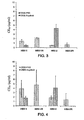
- the Figure 2 summarizes the anti-herpetic kinetic activity of PS3 for the three different MOIs. For each incubation time, it is for the MOI of 0.01 DI 50 / cell that the lowest EC 50 values were recorded and, conversely, it is for the MOI of 1 DI 50 / cell with the highest CE 50 values.
- the anti-herpes activity of PS3 was evaluated and compared to each HSV-1, HSV-1R, HSV-2 and HSV-2R viral suspension defined by an MOI of 0.01 DI 50 / cell for a cell concentration of 350. 000 cells / ml, after incubation times of 48 and 72 hours.
- PS3 is more effective than acyclovir in protecting Vero cells against HSV-1R, HSV-2 and HSV-2R strains, that is to say against viral strains. resistant to acyclovir.
- the EC 50 value of PS3 is lower than that of acyclovir for each of these strains, regardless of the treatment time.
- the procedure was as follows. In each well, the Vero cells were seeded at a cell density of 3.5 ⁇ 10 5 cells / ml in 100 ⁇ l of MEM medium containing 8% FCS. The cells were treated with 50 ⁇ l of PS3, the concentration of which varies from 0.125 to 2500 ⁇ g / ml or with 50 ⁇ l of acyclovir at a concentration of 5; 1; 0.5; 0.1 and 0.05 ⁇ g / ml. 50 ⁇ l of MEM medium containing 8% FCS was added to each well. Wells containing untreated cells were filled with 100 ⁇ l of MEM medium containing 8% FCS. The cells were then incubated in an oven at 37 ° C for 48, 72, 96 hours.
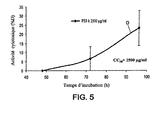
- cytotoxic activity of PS3 was determined by measuring the cytotoxic concentration at 50% or CC 50 .
- CC 50 is the concentration of PS3 that inhibits the growth of 50% of cells in a culture.
- the figure 5 illustrates the percentage of cellular destruction (CC 50 ) for the highest concentration of PS3, namely 2500 ⁇ g / ml depending on the incubation time (48, 72 and 96 hours). The examination of figure 5 reveals that PS3 has no toxic effect on Vero cells regardless of incubation time.
- the Therapeutic Index represents the ratio between the maximum non-toxic dose (or a dose inducing a quantified toxicity) and the dose inducing a favorable pharmacological effect.
- Table I are combined the values of the ITs of PS3, acyclovir, dextran sulfate and phycarine obtained for each of the four viral strains, after incubation times of 48 and 72 hours.
- PS3 is effective on all the viral strains studied, with EC 50 values of less than 2 ⁇ g / ml after 48 hours of treatment and less than 5 ⁇ g / ml. after 72 hours of treatment.
- PS3 is effective on strains resistant to acyclovir which is the inhibitor commonly used in patients with herpes.
- HSV-1, HSV-1R, HSV-2 and HSV-2R viral suspensions defined by an MOI of 0.01 DI 50 / cell were tested for a cell concentration of 350,000 cells / ml.
- acyclovir and dextran sulfate have been used at concentrations of between 0.05 and 5 ⁇ g / ml.
- PS3 concentrations 0.125 to 1250 ⁇ g / ml were used and experiments were performed in 96-well microtiter plates.
- Vero cells were inoculated at a cell density of 3.5 ⁇ 10 4 cells / well in 100 ⁇ l of MEM medium containing 8% FCS.
- microtiter plate containing cells treated with PS3 or the reference product was then placed in an oven at 37 ° C for 6, 12 or 24 hours.
- the cells were then washed with 100 ⁇ l of MEM medium in order to remove the PS3 or the reference product.
- a volume of 50 ⁇ l of a viral suspension in each well was then added, as well as 50 ⁇ l of MEM medium with 8% FCS; and the plates were held for 1 hour at 4 ° C.
- the infected cells were then placed in an oven at 37 ° C for 48 or 72 hours.
- the viability of the cells in each well was evaluated by neutral red staining according to the method described above.
- PS3 does not protect cells from viral infection.
- Vero cells were seeded for 24 hours, before the assay, at a cell density of 3.5 x 10 4 cells / well of a microtiter plate in 100 ⁇ l of MEM medium containing 8% FCS.
- the plates containing the infected cells were then placed in an oven at 37 ° C for 48 or 72 hours.
- the virucidal effect of PS3 was evaluated by measuring the EC 50 values determined according to the method described in Example 3.
- the Figures 6 and 7 give the EC 50 of PS3 on the different strains for incubation times of 48 and 72 hours respectively, the comparison product being acyclovir.
- the EC 50 values (illustrated by the Figures 6 and 7 ) should be lower than those obtained during evaluations of anti-herpes activity (illustrated by Figures 3 and 4 ).
- the examination of the results gathered in these Figures 6 and 7 shows that the EC 50 values are comparable to those obtained during evaluations of anti-herpes activity. PS3 therefore has no virucidal effect on the strains studied.
- Vero cells at a cell density of 3.5 ⁇ 10 4 cells / well were seeded into a 96-well microtiter plate in 100 ⁇ l of MEM medium containing 8% FCS and then infected by contact with the different viral strains. identified above for 1 hour at 4 ° C.
- the infected cells were then washed with saline buffer to remove virus particles that had not been adsorbed.
- the figure 8 shows the EC 50 values of the PS3 as a function of the moment of contact of the PS3 with the cells.
- Vero cells were inoculated 24 hours before the assay at a cell density of 3.5 x 10 4 cells / well of a 96-well microtiter plate in 100 ⁇ l MEM medium containing 8% FCS.
- the treated cells were infected with 50 ⁇ l of PS3 or of a comparison product (acyclovir) of a given concentration with 50 ⁇ l of one of the viral suspensions identified above for one hour at 4 ° C.
- the infected cells were then washed with 100 .mu.l of saline buffer in order to remove the PS3 or the reference product as well as the viral particles which had not been adsorbed by the cells.
- the cells were contacted with one of the viral suspensions identified above for 1 hour at 4 ° C.
- the infected cells were then washed with 100 ⁇ l of saline buffer in order to eliminate the viral particles which had not been adsorbed.
- the cells were then treated for 72 hours with different concentrations of PS3 or the reference product in a total volume of 200 ⁇ l per well.
- the treated cells were infected with 50 .mu.l of PS3 or reference product of a given concentration with 50 .mu.l of one of the viral suspensions identified above for one hour at 4.degree.
- the infected cells were then washed with 100 ⁇ l of saline buffer in order to eliminate the PS3 or the reference product as well as the viral particles which had not been adsorbed.
- the cells were then reapplied for 72 hours with the different concentrations of PS3 or the reference product in a total volume of 200 ⁇ l per well.
- the figure 9 shows the EC 50s of PS3 determined for the above four viral strains identified above after incubation times of 48 and 72 hours respectively, the comparison product being acyclovir.
- PS3 has an inhibitory effect on the 4 viral strains only during treatment C, ie when PS3 is present at the time and after the viral adsorption. PS3 thus exerts an antiviral activity in the first phase of the viral infection.
- Vero cells were seeded at a cell density of 3.5 ⁇ 10 4 cells / well of a microtiter plate in 100 ⁇ l of MEM medium containing 8% FCS.
- the confluent cells were brought into contact with 50 ⁇ l of a viral suspension for 1 hour at 4 ° C.
- the cell layer was then incubated with different concentrations of PS3 (0.125 - 1250 ⁇ g / ml) or reference product, here acyclovir (0.005 - 5 ⁇ l / ml), at 37 ° C in order to facilitate the penetration of the viruses. .
- the cells were then washed with 100 ⁇ l of PBS per well and resuspended at 37 ° C. in 200 ⁇ l MEM supplemented with 8% FCS.
- PS3 exhibits antiviral activity against the four viral strains tested, HSV-1, HSV-1R, HSV-2, HSV-2R by acting more particularly on the adsorption of viruses on cells; it is effective when present from the beginning of the infection.
- PS3 has an anti-herpes effect against acyclovir-resistant viral strains.
- the invention is therefore particularly aimed at the use of PS3 for the preparation of a medicament for a treatment against herpesvirus strains that are resistant to inhibitors of the nucleoside analogue type, and in particular with regard to the acyclovir.
- Immunodeficient individuals are those who are immunosuppressed, those who have undergone organ transplants, as well as those with Acquired Immunodeficiency Syndrome (AIDS) or those with severe skin changes such as burn victims.
- AIDS Acquired Immunodeficiency Syndrome
- the white rabbits were tested on the one hand for ocular irritation and on the other hand for the primary skin irritation test.
- the rats were subjected to an acute dermal toxicity test and to an acute oral toxicity study.
- the dermal lethal dose 50 is greater than 2 g / kg of body weight, which makes it possible to affirm that the product is not toxic.
- the acute oral toxicity may be considered to be greater than 2 g / kg of body weight, which again makes it possible to classify the product as nontoxic.
- the anticoagulant activity of the laminar sulfate PS3 obtained in Example 1 was determined as a function of its concentration in comparison with that of heparin in the conventional APTT or "Activated Partial Thromboplastin Time” coagulation tests.
- the duration of prothrombin, the test called “HEPTEST” and the duration of thrombin was determined as a function of its concentration in comparison with that of heparin in the conventional APTT or "Activated Partial Thromboplastin Time” coagulation tests.
- the APTT reflects an interaction with the intrinsic coagulation system while the prothrombin time reflects an interaction with extrinsic coagulation;
- the so-called "HEPTEST” test is the standard test for the measurement of heparin inhibitory activity with respect to factor Xa and the duration of thrombin corresponds to the last stage of coagulation, namely the formation of fibrins induced by thrombin. It has been found that unlike heparin, the activity of laminar sulfate PS3 in the test called “HEPTEST" is more than 20 times lower. Similarly, in relation to the duration of prothrombin, laminar sulfate PS3 showed no pronounced anticoagulant effect, as in the case of heparin.
- the specific activity (IU / mg) in the APTT represents 30% of the heparin activity and in the case of the thrombin time 60%. In order to completely prevent coagulation, the concentration of APTT was 4 times higher and, in the case of thrombin time, 20 times higher.
- laminar sulfate PS3 unlike heparin, does not exhibit either a significant anti-thrombin-dependent anti-factor Xa activity. an anti-thrombin activity.
- the effect in the case of thrombin time may be considered to be due to heparin cofactor II-dependent thrombin inhibition. Because of the lower specific activity on the one hand, and the concentration-dependent profile on the other, and further research on the mechanism of action, it is possible to consider that in the case of of laminarin sulphate PS3, the risk of bleeding is significantly lower than in the case of heparin.
- the sulfated laminarine tested came from lot PS3 8/2001 supplied by Laboratoires Go ⁇ mar.
- a sulphated laminarine cream PS3 having the following composition was produced: Demineralized Water 69.7% Glycerin 5.0% Sulphated Laminarin PS3 1.0% PEG 100 stearate 4.0% Cetearyl alcohol 2.0% Tory 1.0% PEG 40 stearate 3.0% Vitamin E acetate 0.5% C - 12-15 alkyl benzoate 6.5% Caprylic / capric triglycerides 5.5% 0.1N NaOH 1.8% 100%
- Example 11 Composition of an Aerosol Solution Based on Sulphated Laminarine PS3
- Example 12 Composition of a suppository based on a potassium salt of oligo sulfate ⁇ 1-3 glucan
- Example 13 Composition of a Solution for Injection Based on a Sodium Salt of Oligolaminaritol Sulfate
- An injectable solution based on a sodium salt of oligolaminaritol sulfate having the following composition: Sodium salt of oligolaminaritol sulphate (DP20, DS 2,3) 5.0% Sodium bicarbonate 3.0% Water ppi 92.0%
- EXAMPLE 14 Composition of a Vaginal Solution Based on a Sodium Salt of Oligo- ⁇ 1-3 Glucan Sulphate
- a vaginal solution based on a sodium salt of oligo ⁇ 1-3 glucan sulphate was prepared in the form of a single-dose 140 ml cannula vial having the following composition: Sodium salt of oligo sulfate ⁇ 1-3 glucan (DP23, DS 2,4) 0.1% Sodium chloride 9.0% 95 ° ethyl alcohol 5.0% Pink aroma 0.2% Purified water 84.7% Preservatives (benzalkonium chloride) 0.2% Sodium edetate 0.3% Polysorbate 20 0.5% 100%
Landscapes
- Health & Medical Sciences (AREA)
- Life Sciences & Earth Sciences (AREA)
- Animal Behavior & Ethology (AREA)
- Medicinal Chemistry (AREA)
- Molecular Biology (AREA)
- Veterinary Medicine (AREA)
- Public Health (AREA)
- Chemical & Material Sciences (AREA)
- General Health & Medical Sciences (AREA)
- Pharmacology & Pharmacy (AREA)
- Epidemiology (AREA)
- Virology (AREA)
- Dermatology (AREA)
- Nuclear Medicine, Radiotherapy & Molecular Imaging (AREA)
- Organic Chemistry (AREA)
- General Chemical & Material Sciences (AREA)
- Engineering & Computer Science (AREA)
- Chemical Kinetics & Catalysis (AREA)
- Oncology (AREA)
- Communicable Diseases (AREA)
- Biotechnology (AREA)
- Pharmaceuticals Containing Other Organic And Inorganic Compounds (AREA)
Description
L'invention a pour objet de nouveaux médicaments pour les traitements contre les herpèsvirus (Herpèsviridae).The invention relates to novel drugs for the treatment against herpesvirus ( Herpesviridae ).
Il est rappelé que les herpèsvirus appartiennent à une famille de virus dont le génome est à ADN linéaire double brin codant 100 à 200 gènes et qui est encapsulé dans une cage protéinique icosaèdrique appelée la capside, elle-même enveloppée dans une membrane lipidique appelée enveloppe.It is recalled that herpesviruses belong to a family of viruses whose genome is double-stranded linear DNA encoding 100 to 200 genes and which is encapsulated in an icosahedral protein cage called the capsid, itself enveloped in a lipid membrane called envelope.
La famille des herpèsvirus comporte trois sous familles, à savoir les alpha herpèsvirus, les béta herpèsvirus et les gamma herpèsvirus.The herpesvirus family comprises three subfamilies, namely alpha herpesvirus, beta herpesvirus and gamma herpesvirus.
Les alpha herpèsvirus sont caractérisés par un tropisme à l'égard d'un grand nombre de types cellulaires. Parmi les alphavirus, on peut citer le virus Herpès simplex 1 (HSV-1) et le virus Herpès simplex 2 (HSV-2) qui sont responsables de l'herpès buccal et/ou génital, ainsi que le virus varicelle-zona (VZV) responsable de la varicelle et du zona.Alpha herpesviruses are characterized by a tropism with regard to a large number of cell types. Among the alphaviruses, Herpes simplex virus 1 (HSV-1) and Herpes simplex virus 2 (HSV-2), which are responsible for oral and / or genital herpes, and varicella-zoster virus (VZV) may be mentioned. ) responsible for chickenpox and shingles.
Les béta herpèsvirus sont caractérisés par un tropisme à l'égard d'un nombre restreint de types cellulaires. Le cytomégalovirus (CMV) responsable d'un syndrome mononucléosique et les herpès virus humains de type 6 (HHV6) et de type 7 (HHV7) responsables de la roséole, appartiennent à cette sous famille.Beta herpesviruses are characterized by a tropism with regard to a limited number of cell types. The cytomegalovirus (CMV) responsible for a mononucleosis syndrome and the human herpesviruses 6 (HHV6) and 7 (HHV7) responsible for roseola belong to this subfamily.
Les gamma herpèsvirus sont caractérisés par un tropisme limité aux lymphocytes. Parmi les virus de cette sous famille, on peut citer le virus d'Epstein-Barr (EBV) responsable de la mononucléose infectieuse, du lymphome de Burkitt et du carcinome nasopharyngé, et l'herpèsvirus associé au sarcome de Kaposi ou Rhadinovirus (KSHV) responsable d'un lymphome.Gamma herpesviruses are characterized by a tropism limited to lymphocytes. Viruses of this subfamily include Epstein-Barr virus (EBV), which causes infectious mononucleosis, Burkitt's lymphoma and nasopharyngeal carcinoma, and Kaposi's sarcoma or Rhadinovirus-associated herpesvirus (KSHV). responsible for a lymphoma.
L'infection herpétique comprend une phase d'infection primaire et des phases de latence interrompues par des phases de réactivation. Lors de l'infection primaire ou infection initiale, le virus pénètre dans les cellules épithéliales où il va se multiplier et produire une lyse cellulaire au niveau du site d'inoculation. Le virus peut alors emprunter la voie des nerfs sensitifs pour cheminer jusqu'aux noyaux des neurones des ganglions. Alors que l'infection primaire est souvent accompagnée d'une période courte de maladie clinique, la latence à long terme est asymptomatique. Lors des phases de latence, le virus intracellulaire ne se réplique pas. Le virus demeure dans le noyau des neurones des ganglions nerveux sous forme d'ADN extrachromosomal sans intégrer le génome cellulaire. Le choix des neurones comme site de latence permet aux virus d'échapper au système immunitaire. Suite à certains stimuli tels que les rayonnements ultraviolets, la fièvre ou un stress émotionnel, le virus peut se réactiver et entamer la transcription de nombreux gènes qui conduisent à une réplication accélérée. Cliniquement, la réactivation s'accompagne souvent de l'apparition de symptômes non spécifiques tels qu'une faible fièvre, un état de fatigue, un érythème, ainsi que de signes cliniques tels que des ganglions lymphatiques enflés ou douloureux et de signes immunologiques tels qu'une diminution du nombre des cellules tueuses naturelles.Herpes infection includes a primary infection phase and latency phases interrupted by reactivation phases. During primary infection or initial infection, the virus enters the epithelial cells where it will multiply and produce cell lysis at the site of inoculation. The virus can then take the path of the sensory nerves to nuclei of ganglion neurons. While primary infection is often accompanied by a short period of clinical illness, long-term latency is asymptomatic. During latency phases, the intracellular virus does not replicate. The virus remains in the nucleus of neuronal ganglia in the form of extrachromosomal DNA without integrating the cellular genome. The choice of neurons as a latency site allows viruses to escape the immune system. Following certain stimuli such as ultraviolet radiation, fever or emotional stress, the virus can reactivate and begin the transcription of many genes that lead to accelerated replication. Clinically, the reactivation is often accompanied by the appearance of non-specific symptoms such as low fever, fatigue, erythema, as well as clinical signs such as swollen or painful lymph nodes and immunological signs such as a decrease in the number of natural killer cells.
Une des particularités de l'herpèsvirus réside dans sa capacité à rester présent dans une cellule hôte sous forme latente sans produire de particules virales tout au long de la vie de l'hôte, et dans sa capacité de réactivation, celle-ci pouvant donner lieu à de multiples infections.One of the peculiarities of herpesvirus is its ability to remain in a latent host cell without producing viral particles throughout the life of the host, and in its ability to reactivate, which can result in to multiple infections.
La pénétration de l'herpèsvirus dans la cellule hôte constitue une étape essentielle de l'infection. Elle débute par l'adsorption du virus à la surface cellulaire par l'intermédiaire de récepteurs spécifiques et de récepteurs non spécifiques à l'égard des récepteurs comportés par la membrane cellulaire. Après le processus d'adsorption, le virus pénètre dans la cellule par fusion de l'enveloppe virale avec la membrane cellulaire, libérant ainsi la nucléocapside dans le cytoplasme. La nucléocapside est ensuite dégradée par protéolyse enzymatique avec comme conséquence la libération de l'ADN viral qui migre vers le noyau de la cellule hôte et pénètre dans ce dernier.The penetration of herpesvirus into the host cell is an essential step in the infection. It begins with the adsorption of the virus on the cell surface via specific receptors and nonspecific receptors for cell membrane receptors. After the adsorption process, the virus enters the cell by fusing the viral envelope with the cell membrane, releasing the nucleocapsid into the cytoplasm. The nucleocapsid is then degraded by enzymatic proteolysis with the consequent release of the viral DNA which migrates to and penetrates the nucleus of the host cell.
Une fois parvenu à l'intérieur du noyau, l'ADN viral est transcrit en ARNm viral par l'ARN polymérase II cellulaire. L'expression des gènes viraux est dite "ordonnée", ce qui traduit le fait qu'elle comporte plusieurs phases successives, à savoir une phase dite « très précoce », une phase dite « précoce » et une phase dite « tardive ».Once inside the nucleus, the viral DNA is transcribed into viral mRNA by cellular RNA polymerase II. The expression of the viral genes is called "ordered", which reflects the fact that it comprises several successive phases, namely a so-called "very early" phase, a so-called "early" phase and a so-called "late" phase.
Lors de la phase très précoce, des protéines très précoces virales (Immediate Early Antigens) sont exprimées. Il s'agit de protéines régulatrices qui se fixent sur l'ADN cellulaire et provoquent l'arrêt de la synthèse de certaines protéines cellulaires tout en provoquant l'augmentation de la synthèse d'autres protéines.In the very early phase, very early viral proteins (Immediate Early Antigens) are expressed. These are regulatory proteins that bind to cellular DNA and stop the synthesis of certain cellular proteins while causing the synthesis of other proteins to increase.
Lors de la phase précoce, des protéines enzymatiques virales telles que l'ADN polymérase et la thymidine kinase sont exprimées. Ces deux enzymes sont très importantes pour la réplication du virus. Des mutations de ces enzymes sont responsables de résistance aux agents anti-herpétiques.In the early phase, viral enzyme proteins such as DNA polymerase and thymidine kinase are expressed. These two enzymes are very important for the replication of the virus. Mutations of these enzymes are responsible for resistance to anti-herpes agents.
Enfin, lors de la phase tardive, ce sont des protéines tardives virales (Late Antigens) qui correspondent entre autres aux protéines de structure de la capside et du tégument qui sont exprimées.Finally, during the late phase, late viral proteins (Late Antigens) correspond, among others, to the structural proteins of the capsid and integument that are expressed.
L'assemblage de la nucléocapside des virus nouvellement formés par réplication s'effectue en plusieurs étapes qui demeurent mal définies.The nucleocapsid assembly of newly formed viruses by replication takes place in several stages that remain poorly defined.
Le virus mature devient infectieux lors de son bourgeonnement au niveau de la membrane nucléaire. Les virus nouvellement formés par réplication sont libérés à l'extérieur de la cellule soit par lyse de la membrane cellulaire, soit par la formation d'une vacuole. La durée du cycle de réplication est d'environ 18 à 20 heures. L'efficacité de la réplication se traduit par le fait qu'il y a synthèse d'une particule virale infectieuse pour 100 à 1000 virus produits dans la cellule hôte.The mature virus becomes infectious when budding at the nuclear membrane. Newly formed replication viruses are released outside the cell either by lysis of the cell membrane or by formation of a vacuole. The duration of the replication cycle is approximately 18 to 20 hours. The efficiency of replication results in the fact that one infectious viral particle is synthesized per 100 to 1000 viruses produced in the host cell.
Les traitements actuellement mis en oeuvre pour combattre les herpèsvirus, notamment HSV-1 et HSV-2, visent à bloquer leur cycle de réplication.The treatments currently used to combat herpesviruses, in particular HSV-1 and HSV-2, aim to block their replication cycle.
Dans ces traitements, on utilise deux groupes d'agents anti-viraux propres à inhiber la synthèse de l'ADN des herpèsvirus, s'agissant d'une part d'inhibiteurs nucléosidiques et, d'autre part d'inhibiteurs non nucléosidiques de l'ADN polymérase virale.In these treatments, two groups of anti-viral agents are used that are capable of inhibiting the synthesis of herpesvirus DNA, in particular nucleoside inhibitors and non-nucleoside inhibitors. Viral DNA polymerase.
Parmi les inhibiteurs nucléosidiques de l'ADN polymérase virale, on peut citer l'acyclovir, le penciclovir ainsi que leurs prodrogues respectives, à savoir le valacyclovir et le famcyclovir. Les inhibiteurs nucléosidiques se distinguent des nucléosides naturels par des modifications de leur sucre ou de leur base purique ou pyrimidique. Ils entrent en compétition avec les nucléosides naturels et empêchent l'élongation de la chaîne d'ADN.Nucleoside inhibitors of viral DNA polymerase include acyclovir, penciclovir and their respective prodrugs, valacyclovir and famcyclovir. Nucleoside inhibitors are distinguished from naturally occurring nucleosides by modifications of their sugar or purine base or pyrimidine. They compete with natural nucleosides and prevent the elongation of the DNA chain.
L'acyclovir est l'inhibiteur nucléosidique préféré pour le traitement des infections herpétiques. Pour pouvoir agir contre le virus, il doit tout d'abord être phosphorylé par l'enzyme virale thymidine kinase (TK) ; il doit ensuite être soumis à d'autres phosphorylations réalisées par des enzymes cellulaires ce qui permet d'aboutir à sa forme active. Sous cette forme active, l'acyclovir est un inhibiteur très sélectif de l'ADN polymérase virale qu'il inhibe davantage que l'ADN polymérase cellulaire.Acyclovir is the preferred nucleoside inhibitor for the treatment of herpes infections. To be able to act against the virus, it must first be phosphorylated by the viral enzyme thymidine kinase (TK); it must then be subjected to other phosphorylations carried out by cellular enzymes which leads to its active form. In this active form, acyclovir is a highly selective inhibitor of viral DNA polymerase which it inhibits more than cellular DNA polymerase.
Pour ce qui est des inhibiteurs non nucléosidiques, ce sont des analogues de pyrophosphate anorganique. Ces molécules n'ont pas à être préalablement phosphorylées pour inhiber les enzymes virales. Les traitements à base d'inhibiteurs non nucléosidiques sont utilisés dans le cas d'infections résistantes aux analogues nucléosidiques. Parmi les inhibiteurs non nucléosidiques de l'ADN polymérase virale on peut citer le Foscarnet.Non-nucleoside inhibitors are inorganic pyrophosphate analogues. These molecules do not have to be previously phosphorylated to inhibit the viral enzymes. Non-nucleoside inhibitor therapies are used for infections resistant to nucleoside analogues. Among the non-nucleoside inhibitors of viral DNA polymerase, mention may be made of Foscarnet.
Actuellement, les limites des traitements utilisés pour combattre les herpèsvirus, notamment HSV-1 et HSV-2 sont dues à la toxicité des inhibiteurs mis en oeuvre, à l'émergence de souches virales résistantes ainsi qu'au fait que ces traitements ne sont actifs que sur des virus en phase de réplication.Currently, the limits of the treatments used to fight against herpesviruses, in particular HSV-1 and HSV-2, are due to the toxicity of the inhibitors used, to the emergence of resistant viral strains and to the fact that these treatments are not active. only on viruses in the replication phase.
Le mécanisme de résistance de certaines souches virales à l'acyclovir est principalement dû à la présence de mutations sur le gène codant pour la TK virale, ce qui induit une altération de sa fonction. Ainsi, une TK déficiente ne sera plus en mesure de phosphoryler l'acyclovir. Mais une souche virale mutante comportant une TK déficiente n'en reste pas moins viable car l'enzyme TK n'est pas essentielle pour la réplication du virus.The mechanism of resistance of certain viral strains to acyclovir is mainly due to the presence of mutations on the gene coding for viral TK, which induces an alteration of its function. Thus, a deficient TK will no longer be able to phosphorylate acyclovir. However, a mutant viral strain with deficient TK remains viable because the TK enzyme is not essential for replication of the virus.
Chez les individus immunocompétents, l'apparition de souches HSV résistantes à l'acyclovir est très rare mais a été signalée. En revanche, ce risque est plus grand dans le cas des individus immunodéficients, c'est-à-dire ceux qui sont soumis à une thérapie immunodépressive ce qui est le cas notamment pour les personnes ayant subi une transplantation d'organe, ceux atteints du syndrome de l'immunodéfience acquise (SIDA) ou ceux qui présente des grandes altérations de la peau tels que les grands brûlés.In immunocompetent individuals, the appearance of HSV strains resistant to acyclovir is very rare but has been reported. On the other hand, this risk is greater in the case of immunodeficient individuals, that is to say those who are subjected to immunosuppressive therapy, which is particularly the case for persons having undergone organ transplantation, those suffering from syndrome acquired immunodeficiency (AIDS) or those with large skin changes such as burn victims.
Plusieurs facteurs seraient associés à ce phénomène de résistance rencontré chez les individus immunodéficients. Il y a tout d'abord l'hétérogénéité des populations virales présentes chez un individu infecté. Certaines souches mutantes seraient issues de sous-populations virales minoritaires naturellement résistantes à un antiviral donné (ainsi, environ 0,01% des virus HSV sont spontanément résistants à l'acyclovir ou ACV). Il y a également le fait que le degré d'immunodéficience d'un individu infecté semblerait jouer un rôle important en influençant les facteurs immunitaires qui interviennent dans la limitation de la réplication virale. Enfin, l'usage prolongé d'agents antiviraux à des doses parfois suboptimales peut favoriser le développement de la résistance virale (
Comme déjà indiqué plus haut, le Foscarnet est actuellement le seul agent anti-herpèsvirus approuvé pour le traitement des infections causées par des HSV résistants aux analogues nucléosidiques. Cependant, un traitement à long terme au Foscamet entraîne fréquemment une forte intolérance.As already mentioned above, Foscarnet is currently the only anti-herpesvirus agent approved for the treatment of infections caused by nucleoside-resistant HSV. However, long-term treatment with Foscamet often leads to severe intolerance.
Enfin, il n'existe pas, actuellement, de vaccin anti-Herpès permettant un traitement de prévention.Finally, there is currently no herpes vaccine for preventive treatment.
Au vu des considérations qui précèdent, il est devenu nécessaire de faire porter l'effort de recherche sur d'autres cibles thérapeutiques et de mettre au point de nouveaux agents antiviraux permettant de combattre l'infection herpétique.In view of the foregoing considerations, it has become necessary to focus the research effort on other therapeutic targets and to develop new antiviral agents to combat herpes infection.
Il s'est avéré qu'une telle cible thérapeutique prometteuse se situe au niveau de l'entrée des particules virales dans la cellule, et plus particulièrement au niveau du mécanisme d'adsorption de ces particules virales à la surface cellulaire ; un intérêt particulier de cette cible est qu'elle se situe en amont de la pénétration des nucléocapsides dans les cellules, autrement dit de la réplication virale.It has been found that such a promising therapeutic target lies at the level of the entry of the viral particles into the cell, and more particularly at the level of the adsorption mechanism of these viral particles at the cell surface; a particular interest of this target is that it is located upstream of the penetration of nucleocapsids in the cells, in other words viral replication.
L'adsorption est une étape critique de l'infection.Adsorption is a critical step in the infection.
Il est déjà connu que certains polysaccharides sulfatés dont notamment le sulfate de dextran étaient capables d'interférer dans le mécanisme d'adsorption de certains virus enveloppés, s'agissant notamment du HSV-1 et du HSV-2. (
Ainsi,
Par ailleurs,
Ces travaux n'ont toutefois pas conduit à la mise au point de nouveaux traitements contre les herpèsvirus.However, this work did not lead to the development of new treatments against herpesviruses.
L'invention a donc pour but, surtout, de mettre à la disposition du corps médical de nouveaux médicaments à indice thérapeutique élevé pour lutter contre les herpèsvirus en général, et plus particulièrement contre les alpha herpèsvirus, et notamment contre les HSV-1 et HSV-2, ces médicaments s'opposant essentiellement à la multiplication desdits virus par inhibition de l'adsorption de ces derniers sur la cellule hôte.The invention therefore aims, above all, to provide the medical profession with new drugs with a high therapeutic index for the control of herpesviruses in general, and more particularly against alpha herpesviruses, and in particular against HSV-1 and HSV. -2, these drugs being essentially opposed to the multiplication of said viruses by inhibition of the adsorption of the latter on the host cell.
Et il est du mérite de la Société Demanderesse d'avoir trouvé que, de façon surprenante et inattendue, ce but pouvait être atteint par l'utilisation de polysaccharides particuliers.And it is the merit of the Applicant Company to have found that, surprisingly and unexpectedly, this goal could be achieved by the use of particular polysaccharides.
La présente invention a donc pour premier objet l'utilisation, pour la préparation d'un médicament destiné au traitement des maladies causées par les herpèsvirus, plus particulièrement par les alpha herpèsvirus, et notamment par les HSV-1 et HSV-2, ainsi que par des souches de ces virus qui sont résistantes aux agents antiviraux déjà connus, d'au moins un polysaccharide de formule (I)
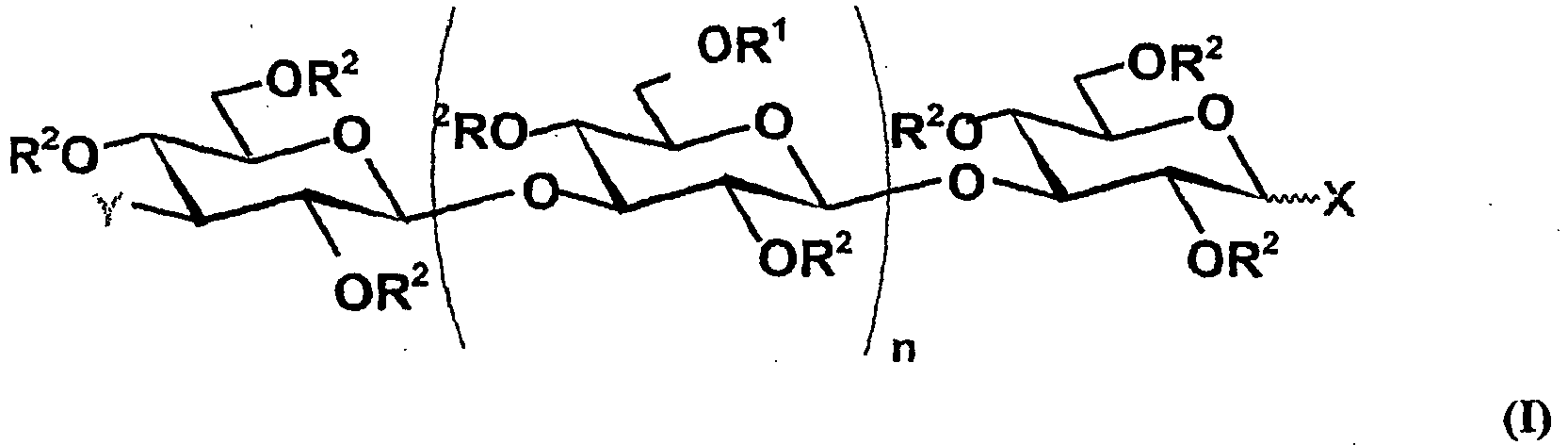
- R2 représente un atome d'hydrogène, un groupement sulfate R1 et R2 ne pouvant pas représenter simultanément un atome d'hydrogène,
- X et Y représentent, chacun indépendamment, un groupement OH, un glucose, un glucose sulfaté ou phosphaté, un mannitol, ou un mannitol sulfaté,
- n représente un nombre entier de 11 à 30, préférentiellement de 20 à 30, plus préférentiellement de 25 à 30,
- R 2 represents a hydrogen atom, a sulfate group R 1 and R 2 can not simultaneously represent a hydrogen atom,
- X and Y represent, each independently, an OH group, a glucose, a sulfated or phosphated glucose, a mannitol, or a sulfated mannitol,
- n represents an integer from 11 to 30, preferably from 20 to 30, more preferably from 25 to 30,
Dans un mode de réalisation particulier, le polysaccharide utilisé est un polysaccharide de formule (I), dans laquelle R1 et R2 peuvent être soit identiques et représentent alors un groupement sulfate soit différents l'un de l'autre, R1 représentant alors une unité glucose sulfatée liée, de préférence, par une liaison β de type β-1,6 à la structure saccharidique, X et/ou Y représentant un groupement mannitol et n un nombre entier de 11 à 30, plus particulièrement de 25 à 30, ledit médicament agissant notamment par inhibition de l'adsorption des virus en question sur la cellule hôte.In a particular embodiment, the polysaccharide used is a polysaccharide of formula (I), in which R 1 and R 2 may be identical and then represent a sulfate group or different from each other, R 1 then representing a sulphated glucose unit preferably linked by a β-1,6-type β bond to the saccharide structure, X and / or Y representing a mannitol group and n an integer from 11 to 30, more particularly from 25 to 30; , said medicament acting in particular by inhibition of the adsorption of the viruses in question on the host cell.
De manière étonnante et inattendue, la Demanderesse a par ailleurs démontré que le médicament fabriqué par utilisation d'un polysaccharide de formule (I) conformément à l'invention, agit par inhibition de l'adsorption des virus en question sur la cellule hôte. De plus, la Demanderesse a pu démontré également que les polysccharides de formule (I) selon l'invention, et en particulier la laminarine sulfatée, ne présentaient ni de toxicité in vitro et in vivo, ni d'activité anti-anticoagulante et donc pas de risques d'effets secondaires hémorragiques, et présentaient un indice thérapeutique élevé.Surprisingly and unexpectedly, the Applicant has also demonstrated that the drug manufactured using a polysaccharide of formula (I) according to the invention acts by inhibiting the adsorption of the viruses in question on the host cell. In addition, the Applicant has also been able to demonstrate that the polysaccharides of formula (I) according to the invention, and in particular sulfated laminarine, showed neither in vitro nor in vivo toxicity nor anti-anticoagulant activity and therefore not risk of hemorrhagic side effects, and had a high therapeutic index.
Par « indice thérapeutique » ou « IT », au sens de l'invention, on entend le rapport entre la dose maximale non toxique (ou une dose induisant une toxicité quantifiée) et la dose induisant un effet pharmacologique favorable.For the purposes of the invention, the term "therapeutic index" or "IT" means the ratio between the maximum non-toxic dose (or a dose inducing a quantified toxicity) and the dose inducing a favorable pharmacological effect.
Au sens de la présente invention, on entend par « degré de sulfatation », le nombre moyen, par unité saccharidique, de groupements OH sulfatés. Un degré de sulfatation supérieur à 2 signifie que, en moyenne, sur l'ensemble du polysaccharide, plus de 2 groupements OH par unité saccharidique sont sulfatés.For the purposes of the present invention, the term "sulfation degree" means the average number, per saccharide unit, of sulphated OH groups. A degree of sulfation greater than 2 means that, on average, over the entire polysaccharide, more than 2 OH groups per saccharide unit are sulfated.
Au sens de l'invention, on entend par « groupement sulfate », un groupement du type (-SO3H).For the purposes of the invention, the term "sulfate group" means a group of the type (-SO 3 H).
Un autre objet de la présente invention est l'utilisation, pour la mise en oeuvre d'une méthode de traitement de maladies causées par les herpèsvirus, plus particulièrement par les alpha herpèsvirus, et notamment par les HSV-1 et HSV-2, ainsi que par des souches de ces virus qui sont résistantes aux agents antiviraux déjà connus, d'au moins un polysaccharide de formule (I) telle que définie précédemment.Another object of the present invention is the use, for the implementation of a method for treating diseases caused by herpesviruses, more particularly by alpha herpesviruses, and in particular by HSV-1 and HSV-2, and than by strains of these viruses which are resistant to previously known antiviral agents, at least one polysaccharide of formula (I) as defined above.
Selon un mode de réalisation avantageux, ledit polysaccharide de formule (I) est une laminarine sulfatée ayant un degré de sulfatation supérieur à 2 et de préférence de 2,2 à 2,4. De préférence, la laminarine sulfatée utilisée selon l'invention présente un degré de polymérisation de 11 à 28.According to an advantageous embodiment, said polysaccharide of formula (I) is a sulfated laminarine having a degree of sulfation greater than 2 and preferably of 2.2 to 2.4. Preferably, the sulfated laminarine used according to the invention has a degree of polymerization of 11 to 28.
Préférentiellement, le polysaccharide de formule (I) est une laminarine sulfatée de degré de sulfatation égal à environ 2,3, et de degré de polymérisation de 11 à 28, appelée « laminarine PS3 ».Preferably, the polysaccharide of formula (I) is a sulfated laminarine with a degree of sulfation equal to about 2.3, and a degree of polymerization of 11 to 28, called "laminarine PS3".
Par « degré de polymérisation » on entend, au sens de l'invention, le nombre d'unités monosaccharidiques liées entre elles par des liaisons de type β(1→3) composant la chaîne linéaire principale. Un degré de polymérisation de 11 à 28 signifie un polysaccharide composé de 11 à 28 unités saccharidiques, notamment glucose, liées entre elles par des liaisons de type β(1→3). Ce degré de polymérisation ne tient pas compte des unités glucoses liées en β(1→6) à la chaine principale du polysaccharide. Ainsi, le degré de polymérisation est égal à n+2 lorsque X et Y représentent simultanément OH, à n+3 si seulement l'un de X ou Y représente OH, et à n+4 si ni X ni Y ne représente OH.For the purposes of the invention, the term "degree of polymerization" is understood to mean the number of monosaccharide units bonded to each other by β (1 → 3) -type bonds constituting the main linear chain. A degree of polymerization of 11 to 28 means a polysaccharide composed of 11 to 28 saccharide units, in particular glucose, linked together by β-type bonds (1 → 3). This degree of polymerization does not take into account glucose units linked in β (1 → 6) to the main chain of the polysaccharide. Thus, the degree of polymerization is equal to n + 2 when X and Y simultaneously represent OH, to n + 3 if only one of X or Y represents OH, and to n + 4 if neither X nor Y represents OH.
De manière étonnante et surprenante, la Demanderesse a pu démontrer que la laminarine sulfatée, ayant un degré de sulfatation supérieur à 2, de préférence de 2,2 à 2,4, et un degré de polymérisation de 11 à 28, était particulièrement efficace pour le traitement des maladies causées par les herpèsvirus, de préférence choisies parmi celles causées par les alpha herpèsvirus, et notamment par les HSV-1 et HSV-2, ainsi que par des souches de ces virus qui sont résistantes aux agents antiviraux déjà connus. Cette laminarine sulfatée présente en outre une faible activité anticoagulante, sans risques d'effets secondaires hémorragiques, confirmant ainsi son grand intérêt pour la fabrication d'un médicament destiné à une administration humaine ou animale, et présente également un indice thérapeutique élevé.Surprisingly and surprisingly, the Applicant has been able to demonstrate that sulphated laminarine, having a degree of sulphation greater than 2, preferably of 2.2 to 2.4, and a degree of polymerization of 11 to 28, was particularly effective for the treatment of diseases caused by herpesviruses, preferably chosen from those caused by alpha herpesviruses, and in particular by HSV-1 and HSV-2, as well as by strains of these viruses which are resistant to previously known antiviral agents. This sulphated laminarine also has a low anticoagulant activity, without any risk of hemorrhagic side effects, thus confirming its great interest in the manufacture of a medicament intended for human or animal administration, and also has a high therapeutic index.
Selon un autre mode de réalisation avantageux, l'invention vise l'utilisation d'un oligosaccharide, obtenu à partir de la laminarine sulfatée de degré de sulfatation supérieur à 2 et de préférence de 2,2 à 2,4, le degré de polymérisation de cet oligosaccharide étant de 11 à 28, pour la préparation d'un médicament pour les traitements contre les herpèsvirus en général, plus particulièrement contre les alpha herpèsvirus, et notamment contre les HSV-1 et HSV-2, ce médicament qui est également actif contre des souches résistantes aux agents antiviraux déjà connus agissant sur la multiplication desdits virus notamment par inhibition de l'adsorption de ces derniers sur la cellule hôte.According to another advantageous embodiment, the invention relates to the use of an oligosaccharide, obtained from sulphated laminarine with a degree of sulphation greater than 2 and preferably from 2.2 to 2.4, the degree of polymerization. of this oligosaccharide being from 11 to 28, for the preparation of a medicament for treatments against herpesviruses in general, more particularly against alpha herpesviruses, and in particular against HSV-1 and HSV-2, this drug which is also active against strains resistant to previously known antiviral agents acting on the multiplication of said viruses in particular by inhibition of the adsorption of the latter on the host cell.
Un mode de réalisation particulier de l'invention concerne l'utilisation d'une laminarine sulfatée, caractérisée en ce qu'elle possède un degré de sulfatation supérieur à 2, de préférence de 2,2 à 2,4, et un degré de polymérisation de 11 à 28, pour la fabrication d'un médicament destiné au traitement des maladies causées par les herpèsvirus.A particular embodiment of the invention relates to the use of a sulfated laminarine, characterized in that it has a degree of sulfation greater than 2, preferably from 2.2 to 2.4, and a degree of polymerization. from 11 to 28, for the manufacture of a medicament for the treatment of diseases caused by herpesviruses.
Un autre mode de réalisation particulier de l'invention concerne l'utilisation d'une laminarine sulfatée, caractérisée en ce qu'elle possède un degré de sulfatation supérieur à 2, de préférence de 2,2 à 2,4, et un degré de polymérisation de 11 à 28, pour la mise en oeuvre d'une méthode de traitement des maladies causées par les herpèsvirus.Another particular embodiment of the invention relates to the use of a sulfated laminarine, characterized in that it has a degree of sulfation greater than 2, preferably from 2.2 to 2.4, and a degree of polymerization from 11 to 28, for the implementation of a method of treating diseases caused by herpesviruses.
Selon un mode de réalisation préféré de l'invention, les maladies causées par les herpèsvirus sont préférentiellement choisies parmi celles des individus immunodéficients, plus particulièrement parmi celles des individus transplantés, des individus atteints du syndrome de l'immunodéfience acquise ou des individus qui présentent des grandes altérations de la peau, et notamment des grands brûlés.According to a preferred embodiment of the invention, the diseases caused by herpesviruses are preferably chosen from those of immunodeficient individuals, more particularly from those of transplanted individuals, individuals with acquired immunodeficiency syndrome or individuals with major alterations of the skin, especially burn victims.
En particulier, on entend par « maladie causée par les herpèvirus » au sens de l'invention, notamment l'herpès buccal, l'herpès génital, la varicelle, le zona, la mononucléose infectieuse, le lymphome de Burkitt, le carcinome nasopharyngé, le syndrome mononucléosique, la rétinite, la roséole, le sarcome de Kaopsi, ou encore tous les lymphomes associés aux herpèsvirus.In particular, the term "disease caused by herpesvirus" in the sense of the invention, including oral herpes, genital herpes, chickenpox, shingles, infectious mononucleosis, Burkitt's lymphoma, nasopharyngeal carcinoma, mononucleosis, retinitis, roseola, Kaopsi's sarcoma, or all herpesvirus-associated lymphomas.
De plus, on entend par « herpèsvirus » ou « herpesviridae », au sens de l'invention, les virus herpétiques humains et animaux, appartenant notamment aux familles des alphaherpesvirinae, betaherpesvirinae, et des gammaherpevirinae. Plus particulièrement, l'invention concerne les virus du type simplexvirus, varicellovirus, mardivirus, iltovirus, cytomegalovirus, muromegalovirus, roseolovirus, lymphocryptovirus, rhadinovirus, ou encore les ictaluvirus. Préférentiellement, on entend par herpèsvirus au sens de l'invention les virus HSV-1, HSV-2, VZV (varicella zoster virus), HHV-4 ou EBV (Epstein Barr virus), HHV-5 ou CMV, HHV-7, et HHV-8 ou KSHV.In addition, the term "herpesvirus" or "herpesviridae ", within the meaning of the invention, the herpesviruses human and animal, belonging in particular to the families of alphaherpesvirinae, betaherpesvirinae, and gammaherpevirinae. More particularly, the invention relates to viruses of the simplex virus type, varicellovirus, mardivirus, iltovirus, cytomegalovirus, muromegalovirus, roseolovirus, lymphocryptovirus, rhadinovirus, or ictaluvirus. For the purposes of the invention, the term "herpesvirus" is intended to mean the HSV-1, HSV-2, VZV (varicella zoster virus), HHV-4 or EBV (Epstein Barr virus), HHV-5 or CMV, HHV-7 viruses, and HHV-8 or KSHV.
Selon un mode de réalisation avantageux, l'invention vise l'utilisation d'un polysaccharide de formule I, plus particulièrement de la laminarine sulfatée ayant un degré de sulfatation supérieur à 2 et de préférence de 2,2 à 2,4 pour la préparation d'un médicament pour les traitements contre les alpha herpèsvirus, et notamment contre les HSV-1 et HSV-2, tout particulièrement destiné aux individus immunodéficients, plus particulièrement à des individus transplantés, des individus atteints du syndrome de l'immunodéfience acquise (SIDA) ou des individus qui présentent des grandes altérations de la peau, et notamment les grands brûlés.According to an advantageous embodiment, the invention relates to the use of a polysaccharide of formula I, more particularly of sulfated laminarin having a degree of sulfation greater than 2 and preferably from 2.2 to 2.4 for the preparation of a medicament for treatments against alpha herpesvirus, and especially against HSV-1 and HSV-2, particularly intended for individuals immunodeficient, more particularly to transplanted individuals, individuals with acquired immune deficiency syndrome (AIDS) or individuals with severe skin changes, including burn victims.
L'invention a également pour objet une composition pharmaceutique comprenant au titre de substance active une quantité efficace d'au moins un polysaccharide de formule 1 telle que définie précédemment, et plus particulièrement de laminarine sulfatée ayant un degré de sulfatation supérieur à 2 et de préférence de 2,2 à 2,4, ainsi qu'une quantité efficace d'au moins un composé choisi parmi le groupe comprenant les inhibiteurs nucléosidiques et les inhibiteurs non-nucléosidiques d'une enzyme virale d'un herpèsvirus.The subject of the invention is also a pharmaceutical composition comprising, as active substance, an effective amount of at least one polysaccharide of
Au sens de l'invention, on entend par « inhibiteurs nucléosidiques », notamment et sans s'y limiter l'acyclovir, le penciclovir, le cidofovir, le ganciclovir, le valganciclovir, le valacyclovir et le famcyclovir.For the purposes of the invention, the term "nucleoside inhibitors", including and not limited to acyclovir, penciclovir, cidofovir, ganciclovir, valganciclovir, valacyclovir and famcyclovir.
Au sens de l'invention, on entend par « inhibiteurs non nucléosidiques », notamment les analogues de pyrophosphate anorganique, en particulier le foscarnet.For the purposes of the invention, the term "non-nucleoside inhibitors", especially inorganic pyrophosphate analogs, in particular foscarnet.
Dans une telle composition pharmaceutique, le polysaccharide de formule (I) et le composé choisi parmi le groupe comprenant les inhibiteurs nucléosidiques et les inhibiteurs non-nucléosidiques d'une enzyme virale d'un herpèsvirus, peuvent être utilisés de manière simultanée, séparée ou étalée dans le temps.In such a pharmaceutical composition, the polysaccharide of formula (I) and the compound selected from the group comprising nucleoside inhibitors and non-nucleoside inhibitors of a viral enzyme of a herpesvirus, may be used simultaneously, separately or spread in time.
En effet, l'homme du métier est à même de définir l'administration la mieux adaptée permettant d'obtenir le meilleur indice thérapeutique pour le patient. Chaque substance active peut être administrée de manière séquentielle, voire par des routes différentes, ou alors en même temps.Indeed, the skilled person is able to define the best adapted administration to obtain the best therapeutic index for the patient. Each active substance can be administered sequentially, even by different routes, or at the same time.
Par « quantité efficace », au sens de l'invention, on entend une quantité de substance active suffisante pour obtenir un effet thérapeutique sur un patient.For the purposes of the invention, the term "effective amount" means an amount of active substance that is sufficient to obtain a therapeutic effect on a patient.
L'invention concerne aussi une méthode de traitement de maladies causées par les herpèsvirus, plus particulièrement par les alpha herpèsvirus, et notamment par les HSV-1 et HSV-2, ainsi que par des souches de ces virus qui sont résistantes aux agents antiviraux déjà connus, comprenant l'administration, chez un patient atteint par ladite maladie causée par les herpèsvirus, d'une quantité efficace d'un médicament comprenant à titre d'agent actif au moins un polysaccharide de formule (I) telle définie précédemment.The invention also relates to a method for treating diseases caused by herpesviruses, more particularly by alpha herpesviruses, and in particular HSV-1 and HSV-2, as well as strains of these viruses which are resistant to previously known antiviral agents, comprising administering, in a patient afflicted with said herpesvirus disease, an effective amount of a medicament comprising as active agent at least one polysaccharide of formula (I) as defined above.
Au sens de la présente invention, par « patient » on entend tout animal à sang chaud, particulièrement les mammifères et notamment les êtres humains.For the purposes of the present invention, the term "patient" means any warm-blooded animal, particularly mammals and especially humans.
Dans un mode de réalisation particulier, le polysaccharide de formule (I) mis en oeuvre dans la méthode de traitement selon l'invention est une laminarine sulfatée, caractérisée en ce qu'elle possède un degré de sulfatation supérieur à 2, de préférence de 2,2 à 2,4, et un degré de polymérisation de 11 à 28.In a particular embodiment, the polysaccharide of formula (I) used in the treatment method according to the invention is a sulfated laminarine, characterized in that it has a degree of sulfation greater than 2, preferably 2 , 2 to 2.4, and a degree of polymerization of 11 to 28.
Dans un mode réalisation avantageux, la méthode de traitement telle que définie précédemment, comprend, en plus de l'administration d'au moins un polysaccharide de formule (I) telle définie précédemment, l'administration simultanée ou séquentielle d'une quantité efficace d'au moins un composé choisi dans le groupe comprenant les inhibiteurs nucléosidiques et les inhibiteurs non-nucléosidiques d'une enzyme virale d'un herpèsvirus.In an advantageous embodiment, the treatment method as defined above, comprises, in addition to the administration of at least one polysaccharide of formula (I) as defined above, the simultaneous or sequential administration of an effective amount of at least one compound selected from the group consisting of nucleoside inhibitors and non-nucleoside inhibitors of a viral enzyme of a herpesvirus.
Dans un mode de réalisation particulier, la méthode de traitement selon l'invention est caractérisée en ce que lesdits patients atteints par une maladie causée par les herpèsvirus sont choisis parmi les individus immunodéficients, plus particulièrement parmi les individus transplantés, les individus atteints du syndrome de l'immunodéficience acquise ou les individus qui présentent de grandes altérations de la peau, et notamment les grands brûlés.In a particular embodiment, the treatment method according to the invention is characterized in that said patients suffering from a disease caused by herpesviruses are chosen from immunodeficient individuals, more particularly from transplanted individuals, individuals suffering from acquired immunodeficiency or individuals with severe skin changes, including severe burns.
Pour préparer un polysaccharide de formule (I) sulfaté au sens de l'invention, on effectue une étape de sulfatation en suivant de préférence le protocole décrit par
Pour aboutir à une sulfatation efficace du polysaccharide sans dégradation des chaînes polysaccharidiques, la réaction de sulfatation est avantageusement effectuée sous des conditions correspondant à une absence absolue d'eau. Avant la sulfatation, le polysaccharide est donc de préférence séché, par exemple sur pentoxide de phosphore (P2O5) et ensuite dissout dans du diméthylformamide ou DMF. De par ses effets alternatifs sur le polysaccharide, le DMF a une influence activante par la substitution. En effet, l'association du DMF polaire avec les groupes OH conduit à la coupure des liaisons hydrogène intra et inter moléculaires et à la désintégration des structures supérieures.In order to achieve effective sulfation of the polysaccharide without degradation of the polysaccharide chains, the sulfation reaction is advantageously carried out under conditions corresponding to an absolute absence of water. Before sulfation, the polysaccharide is therefore preferably dried, for example on phosphorus pentoxide (P 2 O 5 ) and then dissolved in dimethylformamide or DMF. By its alternative effects on the polysaccharide, DMF has an activating influence by substitution. Indeed, the association of the polar DMF with the OH groups leads to the cleavage of intra- and inter-molecular hydrogen bonds and to the disintegration of the higher structures.
Pour mettre en oeuvre la réaction de sulfatation, on peut avoir recours avantageusement au complexe SO3-pyridine.To carry out the sulfation reaction, the SO 3 -pyridine complex can advantageously be used.
Par suite de la coordination de l'accepteur d'électrons SO3 avec le donneur d'électrons pyridine, la réactivité difficilement contrôlable du SO3 qui se traduit par des réactions fortement exothermiques entraînant des dégradations, se trouve réduite. Le complexe SO3-pyridine présente par rapport à d'autres complexes l'avantage d'être ni trop réactif ni trop stable c'est-à-dire trop lent du point de vue réaction.As a result of the coordination of the electron acceptor SO 3 with the pyridine electron donor, the difficultly controllable reactivity of the SO 3, which results in highly exothermic reactions leading to degradation, is reduced. The SO 3 -pyridine complex has, compared to other complexes, the advantage of being neither too reactive nor too stable, that is to say, too slowly from the reaction point of view.
En raison du fait que le degré de sulfatation obtenu est proportionnel à l'excès molaire en réactif de sulfatation et étant donné que l'on cherche à obtenir un degré de substitution supérieur à 2, on met avantageusement en oeuvre une concentration de 6 moles de SO3-pyridine par mole de glucose.Due to the fact that the degree of sulfation obtained is proportional to the molar excess of sulfation reagent and since it is desired to obtain a degree of substitution greater than 2, it is advantageous to use a concentration of 6 moles of SO 3 -pyridine per mole of glucose.
Avantageusement, pour garantir l'absence d'eau, on peut travailler sous atmosphère d'argon.Advantageously, to ensure the absence of water, one can work under an argon atmosphere.
De préférence, on ajoute dès le début de la réaction de la pyridine au réactif de sulfatation et ce, en quantité équimolaire, en vue de capter directement l'acide sulfurique qui pourrait se former par réaction du complexe SO3-pyridine avec l'eau. La concentration du polysaccharide ainsi que celle du réactif de sulfatation doivent être de préférence aussi élevées que possible, la solubilité du polysaccharide et du réactif de sulfatation limitant le degré de sulfatation final. Pour éviter au début de la réaction un refroidissement du mélange qui pourrait entraîner des problèmes de solubilité et pour obtenir une substitution la plus régulière possible, la solution du complexe SO3-pyridine dans le DMF pourrait ne pas être ajoutée en une seule fois mais de manière continue pendant une durée de 4 heures.Pyridine is preferably added from the start of the reaction to the sulfation reagent, in an equimolar amount, in order to directly capture the sulfuric acid that may be formed by reaction of the SO 3 -pyridine complex with the water. . The concentration of the polysaccharide as well as that of the sulfation reagent should preferably be as high as possible, the solubility of the polysaccharide and sulfation reagent limiting the degree of final sulfation. To avoid cooling of the mixture at the beginning of the reaction, which could lead to problems of solubility and to obtain the most regular substitution possible, the solution of the SO 3 -pyridine complex in DMF might not be added all at once, but continuously for 4 hours.
La réaction de sulfatation peut être effectuée à une température de 20 à 60°C, de préférence d'environ 40°C. Des températures plus élevées entraînent une substitution plus efficace mais, également, une dégradation des chaînes.The sulfation reaction can be carried out at a temperature of 20 to 60 ° C, preferably about 40 ° C. Higher temperatures result in more efficient substitution but also chain degradation.
Après l'addition du réactif de sulfatation, le mélange est de préférence agité pendant plusieurs heures autour de 60°C. A cette température, il se produit une substitution supplémentaire sans dégradation des chaînes.After the addition of the sulfation reagent, the mixture is preferably stirred for several hours at about 60 ° C. At this temperature, an additional substitution occurs without degradation of the chains.
Le surnageant du mélange est alors avantageusement séparé par décantation. Le résidu est dissous, de préférence dans du NaOH, puis mélangé avec 10 fois son volume d'éthanol. Le précipité qui se produit à une température de 4-8°C pendant la nuit est isolé puis préférentiellement dissous dans de la soude diluée (solution de pH d'environ 9). La solution est dialysée pour enlever les sels et les molécules de bas poids moléculaire puis avantageusement amenée à un pH de 7,0 par addition de NaOH et ensuite lyophilisée. Le polysaccharide sulfaté résultant se présente sous forme de sel de sodium.The supernatant of the mixture is then advantageously separated by decantation. The residue is dissolved, preferably in NaOH, and then mixed with 10 times its volume of ethanol. The precipitate which occurs at a temperature of 4-8 ° C overnight is isolated and then preferentially dissolved in dilute sodium hydroxide (pH solution of about 9). The solution is dialysed to remove low molecular weight salts and molecules and then advantageously brought to a pH of 7.0 by adding NaOH and then lyophilized. The resulting sulfated polysaccharide is in the form of the sodium salt.
Le degré de sulfatation est préférentiellement déterminé par voie de titration conductimétrique de l'acide libre du polysaccharide sulfaté, ou alternativement par chromatographie ionique après hydrolyse en utilisant un système du type HPLC. La première méthode présente l'avantage d'être également propre à des recherches relatives à la stabilité (la consommation de soude s'accroît lorsque des groupes sulfates sont éliminés) alors que la méthode HPLC nécessite moins de substance et peut être automatisée. A titre de contrôle, il est possible de déterminer la teneur en soufre par analyse élémentaire.The degree of sulphation is preferably determined by conductimetric titration of the free acid of the sulphated polysaccharide, or alternatively by ion chromatography after hydrolysis using an HPLC type system. The first method has the advantage of also being suitable for stability research (the consumption of soda increases when sulphate groups are eliminated) whereas the method HPLC requires less substance and can be automated. As a control, it is possible to determine the sulfur content by elemental analysis.
Il est de plus possible de contrôler l'homogénéité de la sulfatation et la répartition des groupes sulfate sur les différentes positions dans la molécule de glucose par une forme modifiée de l'analyse de méthylation suivie d'un examen GC-MS (à savoir Chromatographie Gaz, Spectrométrie de Masse).It is furthermore possible to control the homogeneity of the sulfation and the distribution of the sulfate groups at the different positions in the glucose molecule by a modified form of the methylation analysis followed by a GC-MS examination (ie chromatography Gas, Mass Spectrometry).
Le degré de sulfatation obtenu en procédant comme indiqué ci-dessus est supérieur à 2, plus précisément de 2 à 2,5 et tout particulièrement de 2,2 à 2,4.The degree of sulfation obtained by proceeding as indicated above is greater than 2, more precisely from 2 to 2.5 and especially from 2.2 to 2.4.
Suivant un mode de réalisation avantageux, le polysaccharide de formule (I), et, de préférence, la laminarine sulfatée, sont utilisés pour la préparation d'un médicament pour le traitement des maladies causées par les herpèsvirus destiné à une administration par voie générale et de préférence par les voies orale, rectale, pulmonaire topique (incluant les voies transdermique, buccale et sublinguale) et parentérale (incluant les voies sous-cutanées intramusculaire, intraveineuse, intradermique et intra-vitréale).According to an advantageous embodiment, the polysaccharide of formula (I), and preferably sulfated laminarine, are used for the preparation of a medicament for the treatment of diseases caused by herpesvirus for administration by the general route and preferably by oral, rectal, pulmonary topical (including transdermal, oral and sublingual) and parenteral (including subcutaneous intramuscular, intravenous, intradermal and intravitreous).
La dose quotidienne est généralement de 0,01 à 250 mg par kilo de poids du patient et préférentiellement de 0,10 à 100 mg, plus préférentiellement encore de 0,5 à 30 mg, et tout particulièrement de 1,0 à 20 mg.The daily dose is generally from 0.01 to 250 mg per kilogram of weight of the patient and preferably from 0.10 to 100 mg, more preferably still from 0.5 to 30 mg, and especially from 1.0 to 20 mg.
Ces doses quotidiennes s'appliquent notamment dans le cas de la laminarine sulfatée ; pour les autres sels et esters selon la formule (I), les doses quotidiennes sont adaptées à chaque cas.These daily doses apply in particular in the case of sulfated laminarine; for the other salts and esters according to formula (I), the daily doses are adapted to each case.
La dose quotidienne peut être administrée par dose unitaire en une, deux, trois, quatre, cinq ou six fois ou plus à différents moments de la journée.The daily dose can be administered per unit dose in one, two, three, four, five or six times or more at different times of the day.
Les doses unitaires peuvent comporter de 10 à 1000 mg, de 50 à 400 mg, et, préférentiellement, de 50 à 100 mg de substance active.The unit doses can comprise from 10 to 1000 mg, from 50 to 400 mg, and preferably from 50 to 100 mg of active substance.
Les médicaments obtenus, conformément à l'invention, en utilisant au moins un des polysaccharides de formule (I), comportent les ingrédients de formulation classiques et éventuellement un ou plusieurs autres agents thérapeutiques.The medicaments obtained according to the invention, using at least one of the polysaccharides of formula (I), comprise the conventional formulation ingredients and optionally one or more other therapeutic agents.
De plus, comme mentionné précédemment, le polysaccharide de l'invention peut être avantageusement combiné avec d'autres substances actives. Leur mode d'administration peut être simultané ou séquentiel. Elles peuvent également être administrées par différentes voies telles que décrites précédemment.In addition, as mentioned above, the polysaccharide of the invention can be advantageously combined with other active substances. Their mode of administration can be simultaneous or sequential. They can also be administered by different routes as previously described.
La présente invention sera mieux comprise à la lecture des exemples non limitatifs suivants.
- La
figure 1 montre la courbe de titrage d'une suspension stock d'une souche HSV-1 : les pourcentages de cellules Vero détruites sont exprimés en fonction des dilutions virales de la suspension stock (de 10-1 à 10-8). - La
figure 2 montre l'évolution de la valeur CE50 du PS3 (µg/ml) dans le cas de cellules Vero infectées par des suspensions virales HSV-1 ayant des MOI différentes (MOI 0,01 ID50/cellule, courbe A,MOI MOI 1 ID50/cellule, courbe C), en fonction des temps d'incubation du PS3 (exprimé en heures h). - La
figure 3 est un diagramme montrant les valeurs CE50 du PS3 et de l'acyclovir pour chacune des souches virales étudiées, HSV-1, HSV-IR, HSV-2 et HSV-2R, après un traitement de 48 heures des cellules Vero infectées. - La
figure 4 est un diagramme montrant les valeurs CE50 du PS3 et de l'acyclovir pour chacune des souches virales étudiées HSV-1, HSV-IR, HSV-2 et HSV-2R, après un traitement de 72 heures des cellules Vero infectées. - La
figure 5 est un graphique montrant une courbe D traduisant l'activité cytotoxique du PS3, les pourcentages de destruction cellulaires (CC50) étant exprimés en fonction des temps d'incubation du PS3 (heures h). - La
figure 6 est un diagramme montrant les valeurs CE50 du PS3 et de l'acyclovir obtenues pour des cellules Vero infectées par les suspensions virales HSV-1, HSV-1R, HSV-2 et HSV-2R préalablement traitées par le PS3 ou l'acyclovir, après 48 heures de culture. - La
figure 7 est un diagramme montrant les valeurs CE50 du PS3 et de l'acyclovir obtenues pour des cellules Vero infectées par les suspensions virales HSV-1, HSV-1R, HSV-2 et HSV-2R préalablement traitées par le PS3 ou l'acyclovir, après 72 heures de culture. - La
figure 8 regroupe les quatre graphiques 8A, 8B, 8C et 8D sur lesquels apparaissent les courbes représentant l'évolution des valeurs CE50 du PS3 et de l'acyclovir en fonction de la durée de contact du PS3 ou de l'acyclovir avec les cellules Vero infectées par les souches virales HSV-1 (graphique 8A), HSV-1R (graphique 8B) ; HSV-2 (graphique 8C) et HSV-2R (graphique 8D), respectivement. - La
figure 9 regroupe les quatre graphiques 9A, 9B, 9C et 9D qui mettent en évidence l'effet du PS3 sur l'adsorption virale des souches virales HSV-1, HSV-1R, HSV-2 et HSV-2R respectivement par mesure des valeurs CE50 du PS3 et de l'acyclovir déterminées sur des cellules Vero traitées pendant l'infection (traitement A), après l'infection (traitement B), ou pendant et après l'infection (traitement C).
- The
figure 1 shows the titration curve of a stock suspension of an HSV-1 strain: the percentages of destroyed Vero cells are expressed according to the viral dilutions of the stock suspension (from 10 -1 to 10 -8 ). - The
figure 2 shows the evolution of the EC 50 value of PS3 (μg / ml) in the case of Vero cells infected with HSV-1 viral suspensions having different MOIs (MOI 0.01 ID 50 / cell, curve A,MOI MOI 1 ID 50 / cell, curve C), as a function of the incubation times of PS3 (expressed in hours h). - The
figure 3 is a diagram showing the EC 50 values of PS3 and acyclovir for each of the viral strains studied, HSV-1, HSV-IR, HSV-2 and HSV-2R, after a 48-hour treatment of infected Vero cells. - The
figure 4 is a diagram showing the EC 50 values of PS3 and acyclovir for each of the HSV-1, HSV-IR, HSV-2 and HSV-2R viral strains studied after 72 hours of treatment of infected Vero cells. - The
figure 5 is a graph showing a curve D reflecting the cytotoxic activity of PS3, the cell destruction percentages (CC 50 ) being expressed as a function of the incubation times of PS3 (hours h). - The
figure 6 is a diagram showing the EC 50 values of PS3 and acyclovir obtained for Vero cells infected with the viral suspensions HSV-1, HSV-1R, HSV-2 and HSV-2R previously treated with PS3 or acyclovir, after 48 hours of culture. - The
figure 7 is a diagram showing the EC 50 values of PS3 and acyclovir obtained for Vero cells infected with the viral suspensions HSV-1, HSV-1R, HSV-2 and HSV-2R previously treated with PS3 or acyclovir, after 72 hours of culture. - The
figure 8 groups together the four graphs 8A, 8B, 8C and 8D on which appear the curves representing the evolution of the EC 50 values of PS3 and acyclovir as a function of the duration of contact of PS3 or acyclovir with the infected Vero cells HSV-1 viral strains (Chart 8A), HSV-1R (Chart 8B); HSV-2 (Chart 8C) and HSV-2R (Chart 8D), respectively. - The
figure 9 regroups the four graphs 9A, 9B, 9C and 9D which highlight the effect of PS3 on the viral adsorption of the viral strains HSV-1, HSV-1R, HSV-2 and HSV-2R respectively by measuring the EC values 50 PS3 and acyclovir determined on Vero cells treated during infection (treatment A), after infection (treatment B), or during and after infection (treatment C).
En premier lieu, on a extrait la laminarine d'une matière première constituée par des algues brunes en suivant le protocole décrit dans le brevet
Une fois la laminarine extraite, on a effectuée une sulfatation en suivant le protocole décrit par
On a d'abord séché la laminarine sur du pentoxide de phosphore (P2O5) puis on l'a dissoute dans du diméthylformamide ou DMF.The laminarine was first dried over phosphorus pentoxide (P 2 O 5 ) and then dissolved in dimethylformamide or DMF.
Ensuite, pour mettre en oeuvre la réaction de sulfatation, on a eu recours au complexe SO3-pyridine sous atmosphère d'argon : on a ajouté en une seule fois mais de manière continue pendant une durée de 4 heures de la SO3-pyridine dans le DMF en quantité équimolaire. On a réalisé la réaction de sulfatation à une température de 40°C. Après l'addition du réactif de sulfatation, on a continué à agiter le mélange pendant 6 heures à 60°C.Then, for carrying out the sulphation reaction, was used to SO 3 -pyridine under argon complex was added all at once but continuously for a 4 hour duration of the SO 3 -pyridine in DMF in equimolar quantity. The sulfation reaction was carried out at a temperature of 40 ° C. After the addition of the sulfation reagent, the mixture was stirred for 6 hours at 60 ° C.
On a ensuite séparé le surnageant du mélange par décantation, dissous le résidu dans 2,5 M de NaOH, puis on l'a mélangé avec 10 fois son volume d'éthanol à 99%. On a alors placé la solution obtenue à une température de 4-8°C pendant la nuit et on a obtenu un précipité que l'on a isolé puis dissous dans de la soude diluée (solution de pH d'environ 9). Ensuite on a dialysé la solution à l'aide d'une membrane Spectrapor à seuil de coupure 1000 D puis amené le pH à 7,0 par addition de NaOH. Enfin, on a lyophilisé la solution ainsi dialysée. On a obtenu un sulfate de laminarine se présentant sous forme de sel de sodium.The supernatant was then decanted from the mixture, the residue dissolved in 2.5 M NaOH, and then mixed with 10 times its volume of 99% ethanol. The resulting solution was then placed at a temperature of 4-8 ° C overnight and a precipitate was obtained which was isolated and then dissolved in dilute sodium hydroxide (pH solution of about 9). The solution was then dialyzed using a 1000 D cutoff Spectrapor membrane and then brought to pH 7.0 by addition of NaOH. Finally, the solution thus dialysed was lyophilized. A laminarin sulphate in the form of a sodium salt was obtained.
On a ensuite déterminé le degré de sulfatation par voie de titration conductimétrique de l'acide libre du polysaccharide sulfaté en utilisant de la soude 0,1N. Le degré de sulfatation de la laminarine obtenu était de 2,3. Le degré de polymérisation du sulfate de laminarine ainsi obtenu était de 23 à 28.The degree of sulfation by conductimetric titration of the free acid of the sulfated polysaccharide was then determined using 0.1 N sodium hydroxide. The sulfation degree of the laminarin obtained was 2.3. The degree of polymerization of the laminarin sulphate thus obtained was 23 to 28.
On a nommé ce polysacharide sulfaté « laminarine sulfatée PS3 », ou encore « PS3 ».This sulphated polysaccharide "sulphated laminarine PS3" or "PS3" was named.
Pour la mise en oeuvre des différents tests décrits ci après, on a utilisé des cellules Vero, qui sont des cellules fibroblastiques de rein de singe vert (Cercopithecus aethiops, ATCC : CCL 81). Ces cellules ont un taux de croissance de 1 :20 en 7 jours quand elles sont ensemencées à une concentration de 3x10⁵ cellules/ml dans un milieu de culture MEM supplémenté en sérum de veau foetal.For carrying out the various tests described below, Vero cells, which are green monkey kidney fibroblast cells (Cercopithecus aethiops, ATCC: CCL 81), were used. These cells have a growth rate of 1: 20 in 7 days when seeded at a concentration of 3 × 10 5 cells / ml in MEM culture medium supplemented with fetal calf serum.
On a de plus mis en oeuvre les souches virales suivantes :
- ■ la souche 17 sauvage de HSV-1 ACVs et PFAs
- ■ la souche HSV-2 ,
- ■ la souche HSV-1R résistante à l'Acyclovir,
- ■ la souche HSV-2R résistante à l'Acyclovir.
- ■ wild strain 17 of HSV-1 ACVs and PFAs
- ■ the HSV-2 strain,
- ■ HSV-1R strain resistant to Acyclovir,
- ■ the HSV-2R strain resistant to Acyclovir.
Ces souches virales ont été fournies par le Professeur Ingrand (Laboratoire de virologie de Reims, France). Pour obtenir un stock viral pour chacune de ces souches, on a procédé de la façon suivante.These viral strains were provided by Professor Ingrand (Virology Laboratory of Reims, France). To obtain a viral stock for each of these strains, the procedure was as follows.
On a cultivé des cellules Vero dans un flacon jusqu'à confluence (350 000 cellules/ml) dans 5 ml de milieu minimum essentiel de Eagle «Minimum Essential Medium Eagle» (MEM) additionné de 8% de sérum de veau foetal (SVF) contenant 500 µl de suspension virale.Vero cells were cultured in a vial to confluency (350,000 cells / ml) in 5 ml of Eagle Minimum Essential Medium Eagle (MEM) essential medium supplemented with 8% fetal calf serum (FCS). containing 500 μl of viral suspension.
On a ensuite placé le flacon de culture dans une étuve à 37°C pendant 2h. Après cette incubation, on a rincé les cellules puis on les a recouvertes de milieu MEM contenant 8% de SVF.The culture flask was then placed in an oven at 37 ° C for 2h. After this incubation, the cells were rinsed and then covered with MEM medium containing 8% FCS.
Après 3 à 4 cycles de multiplication virale correspondant à environ 3 jours de culture, on a soumis le flacon à 2 cycles successifs de congélation et de décongélation afin de faire éclater les cellules et libérer les virions intracellulaires.After 3 to 4 cycles of viral propagation corresponding to about 3 days of culture, the vial was subjected to two successive cycles of freezing and thawing in order to burst the cells and release the intracellular virions.
On a alors récupéré le surnageant de culture puis on l'a centrifugé 10 minutes à 600g à l'aide d'une centrifugeuse Jouan MR22i, de façon à éliminer les débris cellulaires.The culture supernatant was then recovered and then centrifuged for 10 minutes at 600 g using a Jouan MR22i centrifuge to remove cell debris.
On a ensuite congélé le surnageant de culture à -80°C qui constituait le stock viral. On a alors titré ce stock viral, puis on l'a réparti dans des cryotubes par aliquots de 2 ml et on les a conservés à -80°C.The culture supernatant was then frozen at -80 ° C which constituted the viral stock. This viral stock was then titrated, then divided into cryotubes in 2 ml aliquots and stored at -80 ° C.
Pour chaque souche virale, on a déterminé le titre infectieux qui correspond au nombre de particules virales par unité de volume capables d'infecter des cellules permissives.For each viral strain, the infectious titre corresponding to the number of viral particles per unit of volume capable of infecting permissive cells was determined.
On a réalisé ce titrage selon le protocole suivant dans des plaques de microtitration de 96 puits. Chaque plaque de microtitration se compose de 8 lignes de 12 puits formant par conséquent 12 colonnes de 8 puits. Chaque ligne correspond à une dilution de la suspension virale stock de 10-1 à 10-8.This assay was performed according to the following protocol in 96-well microtiter plates. Each microtiter plate consists of 8 rows of 12 wells thus forming 12 columns of 8 wells. Each line corresponds to a dilution of the virus stock suspension from 10 -1 to 10 -8 .
On a ensemencé des cellules Vero à une densité cellulaire de 3,5.104 cellules/puits dans 100 µl de milieu MEM contenant 8% de SVF :
- ■ on a complété une des colonnes, dite colonne témoin négatif, avec 50 µL de milieu MEM avec 8% de SVF,
- ■ on en a complété une autre, dite colonne témoin positif, avec 50 µL de surnageant de culture issu du stock viral,
- ■ enfin on a successivement complété les dix autres colonnes avec 50 µL de surnageant viral dilué de 10 en 10 dans du
milieu MEM contenant 8% de SVF.
- One of the columns, called the negative control column, was filled with 50 μl of MEM medium with 8% FCS,
- Another positive control column was supplemented with 50 μl of culture supernatant from the viral stock,
- Finally, the other ten columns were successively completed with 50 μl of viral supernatant diluted 10 to 10 in MEM medium containing 8% FCS.
On a ensuite placé la plaque de microtitration dans une étuve à 37°C pendant 72 heures. Pendant cette période, quatre à cinq cycles de multiplication du virus se produisent. Après 72 heures, on a éliminé le surnageant et on a examiné l'effet cytopathique du virus HSV. On a visualisé cet effet cytopathique d'une part par un gonflement et un arrondissement des noyaux des cellules qui prenaient un aspect globuleux et d'autre part, par une organisation des cellules infectées en chapelets.The microtiter plate was then placed in an oven at 37 ° C for 72 hours. During this period, four to five cycles of virus multiplication occur. After 72 hours, the supernatant was removed and the cytopathic effect of the HSV virus was examined. This cytopathic effect was visualized on the one hand by swelling and rounding of the nuclei of the cells which took on a globular appearance and, on the other hand, by an organization of the cells infected into rosaries.
On a alors déterminé le titre de chaque souche virale par la méthode de
On a alors exprimé le titre infectieux en DI50/ml, qui désigne la dose qui infecte 50% des cellules de la culture considérée. On a calculé ce titre selon une formule statistique, après avoir déterminé les dilutions encadrant le point d'infection 50% : 

A partir de ce calcul, on a déterminé ce qu'on appelle la multiplicité d'infection MOI (Multiplicity Of Infection) en fonction du nombre de cellules.From this calculation, we have determined what is called the multiplicity of infection MOI (Multiplicity Of Infection) as a function of the number of cells.
A titre d'exemple, la dose infectieuse à 50% de la souche virale HSV-1 est de 104,75 DI50 pour 50 µl soit un titrage de 2x105,75 DI50 pour 1 ml selon la méthode de Reed et Muench.By way of example, the infectious dose at 50% of the viral strain HSV-1 is 10 4.75 DI 50 for 50 μl, ie a titration of 2x10 5.75 DI 50 for 1 ml according to the method of Reed and Muench .
Parallèlement à cette méthode, on a également déterminé le titre infectieux de la suspension stock de chaque souche virale par la mesure par coloration au rouge neutre de la viabilité de cellules infectées.In parallel with this method, the infectious titer of the stock suspension of each viral strain was also determined by measurement by neutral red staining of the viability of infected cells.
Cette méthode repose sur le principe que les cellules vivantes absorbent le rouge neutre qui est un colorant vital. On a mesuré la densité optique du milieu à la longueur d'onde d'absorption maximale du rouge neutre, c'est-à-dire 540 nm, à l'aide d'un spectrophotomètre (SpectraCount TM, microplate photometer, Packard). La densité optique à 540 nm est proportionnelle au nombre de cellules vivantes dans une culture infectée (
On a reporté la courbe de titrage de la souche virale HSV-1 obtenue par la méthode de viabilité cellulaire au rouge neutre à la
Le même protocole a permis de déterminer le titre viral de chaque suspension stock :
- 2x106,05 DI50/ml pour HSV-1
- 2x104,42 DI50/ml pour HSV-1R
- 2x105,31 DI50/ml pour HSV-2
- 2x104,44 DI50/ml pour HSV-2R
- 2x10 6.05 DI 50 / ml for HSV-1
- 2x10 4.42 DI 50 / ml for HSV-1R
- 2x10 5.31 DI 50 / ml for HSV-2
- 2x10 4.44 DI 50 / ml for HSV-2R
On a alors souhaité mettre en évidence l'activité antivirale de la laminarine sulfatée PS3 sur plusieurs souches virales par appréciation de la viabilité de cellules Vero infectées en présence de la laminarine sulfatée PS3, ladite activité antivirale se traduisant par l'inhibition de l'adsorption des souches virales en question sur la cellule hôte.It was then desired to demonstrate the antiviral activity of the sulfated laminar PS3 on several viral strains by assessing the viability of infected Vero cells in the presence of the sulfated laminar PS3, said antiviral activity resulting in the inhibition of adsorption virus strains in question on the host cell.
Pour chaque souche virale, on a mesuré la concentration efficace (CE50%), c'est-à-dire la concentration du polysaccharide sulfaté qui permet d'inhiber l'infection de 50 % des cellules d'une culture.For each viral strain, the effective concentration (EC50%), that is to say the concentration of the sulphated polysaccharide which makes it possible to inhibit the infection of 50% of the cells of a culture, was measured.
On a ainsi pu mettre en évidence le mécanisme d'action de la laminarine sulfatée PS3 en déterminant son effet sur l'adsorption virale. On a mis en oeuvre la laminarine sulfatée PS3 soit avant, pendant ou après l'infection des cellules Vero par différentes souches virales, soit en continu.It was thus possible to demonstrate the mechanism of action of sulphated laminarin PS3 by determining its effect on viral adsorption. Sulphated laminarine PS3 was used either before, during or after infection of Vero cells by different virus strains, or continuously.
A titre de comparaison, on a effectué les mêmes expériences en utilisant trois produits de comparaison à savoir le sulfate de dextran, l'acyclovir et la phycarine qui est la forme non sulfatée de la laminarine extraite à l'exemple 1.By way of comparison, the same experiments were carried out using three comparison products, namely dextran sulphate, acyclovir and phycarine, which is the non-sulphated form of laminarine extracted in example 1.
Dans une première série d'expériences, on a eu recours à la méthode de viabilité cellulaire pour déterminer l'activité anti-herpétique de la souche virale HSV-1 dont le titre infectieux viral est 2x106,05 DI50/ml.In a first series of experiments, the cell viability method was used to determine the anti-herpes activity of the viral strain HSV-1, the viral infectious titer of which is 2x10 6.05 ID 50 / ml.
On a évalué cette activité anti-herpétique en déterminant les concentrations effectives (CE50) de PS3 qui permettent de protéger 50% des cellules d'une culture contre l'infection par des suspensions virales HSV-1 ayant des MOI différentes, en fonction de la durée d'incubation du PS3 (48, 72, 96 et 120 heures).This anti-herpes activity was evaluated by determining the effective concentrations (EC 50 ) of PS3 that protect 50% of the cells of one culture against infection with HSV-1 viral suspensions with different MOIs, depending on the incubation time of PS3 (48, 72, 96 and 120 hours).
On a utilisé l'acyclovir comme produit de comparaison.Acyclovir was used as a comparator.
On a déterminé les gammes de concentration de PS3 utilisées pour une MOI donnée, à savoir
- ■ la gamme de concentrations de PS3 utilisée varie de 12,5 à 1250 µg/ml, pour une suspension virale HSV-1 ayant une MOI de 1 DI50/cellule,
- ■ la gamme de concentrations de PS3 utilisée varie de 1,25 à 125 µg/ml, pour une suspension virale HSV-1 ayant une MOI de 0,1 DI50/cellule,
- ■ la gamme de concentrations de PS3 utilisée varie de 0,5 à 125 µg/ml, pour une suspension virale HSV-1 ayant une MOI de 0,01 DI50/cellule.
- The range of PS3 concentrations used varies from 12.5 to 1250 μg / ml, for an HSV-1 viral suspension having a MOI of 1 ID 50 / cell,
- The range of PS3 concentrations used varies from 1.25 to 125 μg / ml, for an HSV-1 viral suspension with an MOI of 0.1 DI 50 / cell,
- The range of PS3 concentrations used varies from 0.5 to 125 μg / ml, for an HSV-1 viral suspension with an MOI of 0.01 DI 50 / cell.
On a réalisé la détermination des CE50 dans des plaques à microtitration de 96 puits selon le protocole suivant. Des cellules Vero sont ensemencées à une densité cellulaire de 3,5.104 cellules/puits dans 100 µl milieu MEM contenant 8% de SVF. Pour chaque suspension virale définie par sa MOI :
- ■ on a complété la colonne témoin négatif avec 100 µl de milieu MEM avec 8% de SVF,
- ■ on a complété la colonne témoin virus avec 50 µl de la suspension virale à la MOI voulue et avec 50 µl de milieu MEM avec 8% de SVF,
- ■ on a complété la colonne témoin PS3 ou acyclovir avec 50 µl de PS3 à la gamme de concentration voulue ou avec 50 µl d'acyclovir (
Zovirax 0,05 - 5 µg/ml), - ■ on a enfin successivement complété toutes les autres colonnes avec 50 µL de PS3 à la gamme de concentration voulue ou avec 50 µl d'acyclovir (
Zovirax 0,05 - 5 µg/ml) et avec 50 µl de suspension virale à la MOI voulue.
- The negative control column was completed with 100 μl of MEM medium with 8% FCS,
- The virus control column was supplemented with 50 μl of the viral suspension at the desired MOI and with 50 μl of MEM medium with 8% FCS,
- The PS3 or acyclovir control column was completed with 50 μl of PS3 at the desired concentration range or with 50 μl of acyclovir (Zovirax 0.05-5 μg / ml),
- Finally, all the other columns were successively completed with 50 μl of PS3 at the desired concentration range or with 50 μl of acyclovir (Zovirax 0.05-5 μg / ml) and with 50 μl of the desired MOI virus suspension. .
On a ensuite incubé les cellules dans une étuve à 37°C pendant 48, 72, 96 et 120 heures et on a évalué la viabilité des cellules dans chaque puits après coloration par le rouge neutre selon la méthode décrite ci-dessus.The cells were then incubated in an oven at 37 ° C. for 48, 72, 96 and 120 hours and the viability of the cells in each well was evaluated after staining with neutral red according to the method described above.
On a calculé la CE50 correspondant à la concentration permettant de diminuer de 50 % l'effet cytopathique du virus selon la formule suivante : 
La
On a évalué et comparé l'activité anti-herpétique du PS3 sur chaque suspension virale HSV-1, HSV-1R, HSV-2 et HSV-2R définie par une MOI de 0,01 DI50/cellule pour une concentration cellulaire de 350 000 cellules/ml, après des temps d'incubation de 48 et 72 heures.The anti-herpes activity of PS3 was evaluated and compared to each HSV-1, HSV-1R, HSV-2 and HSV-2R viral suspension defined by an MOI of 0.01 DI 50 / cell for a cell concentration of 350. 000 cells / ml, after incubation times of 48 and 72 hours.
On a réalisé cette série d'expériences en appliquant le protocole permettant de déterminer les CE50, tel que décrit dans l'exemple 3. Les
L'examen de ces figures permet de conclure que le PS3 est plus efficace que l'acyclovir pour protéger les cellules Vero contre les souches HSV-1R, HSV-2 et HSV-2R, c'est-à-dire contre les souches virales résistantes à l'acyclovir.Examination of these figures makes it possible to conclude that PS3 is more effective than acyclovir in protecting Vero cells against HSV-1R, HSV-2 and HSV-2R strains, that is to say against viral strains. resistant to acyclovir.
En effet, la valeur CE50 du PS3 est plus faible que celle de l'acyclovir pour chacune de ces souches, quel que soit le temps de traitement.Indeed, the EC 50 value of PS3 is lower than that of acyclovir for each of these strains, regardless of the treatment time.
Pour déterminer si le PS3 a une activité cytotoxique, on a procédé de la façon suivante. Dans chaque puits, on a ensemencé les cellules Vero à une densité cellulaire de 3,5.105 cellules/ml dans 100 µl de milieu MEM contenant 8% de SVF. On a traité les cellules par 50 µl de PS3 dont la concentration varie de 0,125 à 2500 µg/ml ou par 50 µl d'acyclovir à une concentration de 5 ; 1 ; 0,5 ; 0,1 et 0,05 µg/ml. On a ajouté 50 µl de milieu MEM contenant 8% de SVF à chaque puits. On a complété les puits contenant des cellules non traitées par 100 µl de milieu MEM contenant 8% de SVF. On a alors incubé les cellules dans une étuve à 37°C pendant 48, 72, 96 heures.To determine whether PS3 has a cytotoxic activity, the procedure was as follows. In each well, the Vero cells were seeded at a cell density of 3.5 × 10 5 cells / ml in 100 μl of MEM medium containing 8% FCS. The cells were treated with 50 μl of PS3, the concentration of which varies from 0.125 to 2500 μg / ml or with 50 μl of acyclovir at a concentration of 5; 1; 0.5; 0.1 and 0.05 μg / ml. 50 μl of MEM medium containing 8% FCS was added to each well. Wells containing untreated cells were filled with 100 μl of MEM medium containing 8% FCS. The cells were then incubated in an oven at 37 ° C for 48, 72, 96 hours.
On a déterminé l'activité cytotoxique du PS3 par la mesure de la concentration cytotoxique à 50% ou CC50. La CC50 correspond à la concentration de PS3 qui inhibe la croissance de 50 % des cellules d'une culture. On a mesuré la valeur CC50, exprimée en pourcentage de destruction cellulaire par la méthode de viabilité cellulaire après coloration par le rouge neutre selon la méthode décrite ci-dessus selon la formule : 
La
Parallèlement, on a déterminé les indices thérapeutiques (IT) du PS3, ainsi que de trois autres produits de référence, à savoir l'acyclovir, le sulfate de dextran et la phycarine pour chaque souche virale. Les valeurs des IT sont résumées dans le tableau I ci dessous.
L'indice thérapeutique (IT) représente le rapport entre la dose maximale non toxique (ou une dose induisant une toxicité quantifiée) et la dose induisant un effet pharmacologique favorable.The Therapeutic Index (TI) represents the ratio between the maximum non-toxic dose (or a dose inducing a quantified toxicity) and the dose inducing a favorable pharmacological effect.
Dans le tableau I sont réunies les valeurs des IT du PS3, de l'acyclovir, du sulfate de dextran et de la phycarine obtenues pour chacune des quatre souches virales, après des temps d'incubation de 48 et 72 heures.In Table I are combined the values of the ITs of PS3, acyclovir, dextran sulfate and phycarine obtained for each of the four viral strains, after incubation times of 48 and 72 hours.
L'examen des valeurs réunies dans le tableau I permet de conclure
- ■ que le PS3 est aussi efficace que le sulfate de dextran sur toutes les souches étudiées pour des concentrations identiques (0,125 - 1250 µg/ml),
- ■ que l'acyclovir n'a aucune efficacité sur les souches HSV-1R et HSV-2R, contrairement au PS3 et
- ■ que la phycarine qui correspond à la forme non sulfatée du PS3 ne présente aucune activité anti-herpétique.
- ■ that PS3 is as effective as dextran sulfate on all the strains studied for identical concentrations (0.125 - 1250 μg / ml),
- ■ that acyclovir has no efficacy on HSV-1R and HSV-2R strains, unlike PS3 and
- That phycarine, which corresponds to the non-sulphated form of PS3, has no anti-herpes activity.
Au vu d'une part des résultats traduits par les
Il est particulièrement intéressant de noter que le PS3 est efficace sur les souches résistantes à l'acyclovir qui est l'inhibiteur couramment utilisé chez les patients atteints d'herpès.It is particularly interesting to note that PS3 is effective on strains resistant to acyclovir which is the inhibitor commonly used in patients with herpes.
On a réalisé une série d'expériences afin de déterminer le mécanisme d'action du PS3, chaque étape du cycle de réplication du virus constituant une cible thérapeutique potentielle pour combattre le virus.A series of experiments were conducted to determine the mechanism of action of PS3, with each step of the virus replication cycle being a potential therapeutic target for fighting the virus.
On a testé les susdites suspensions virales HSV-1, HSV-1R, HSV-2 et HSV-2R définies par une MOI de 0,01 DI50/cellule pour une concentration cellulaire de 350 000 cellules/ml.The above-mentioned HSV-1, HSV-1R, HSV-2 and HSV-2R viral suspensions defined by an MOI of 0.01 DI 50 / cell were tested for a cell concentration of 350,000 cells / ml.
On a utilisé, comme produits de référence dans cette série d'expériences, l'acyclovir et le sulfate de dextran mis en oeuvre à des concentrations comprises entre 0,05 et 5 µg/ml. On a utilisé des concentrations de PS3 de 0,125 à 1250 µg/ml et on a réalisé les expériences dans des plaques à microtitration de 96 puits.As reference products in this series of experiments, acyclovir and dextran sulfate have been used at concentrations of between 0.05 and 5 μg / ml. PS3 concentrations of 0.125 to 1250 μg / ml were used and experiments were performed in 96-well microtiter plates.
Pour vérifier si le PS3 protège une culture cellulaire lorsqu'il est mis en oeuvre avant son infection par les susdites souches virales, on a procédé de la façon suivante.To verify whether PS3 protects a cell culture when it is carried out before its infection with the aforesaid viral strains, the procedure was as follows.
On a ensemencé des cellules Vero à une densité cellulaire de 3,5.104 cellules/puits dans 100 µl de milieu MEM contenant 8% de SVF.Vero cells were inoculated at a cell density of 3.5 × 10 4 cells / well in 100 μl of MEM medium containing 8% FCS.
On a alors ajouté une solution de 50 µl de PS3 ou de produit de comparaison, c'est-à-dire d'acyclovir ayant une concentration donnée, à chaque puits complété de 50 µl de milieu MEM avec 8% de SVF.A solution of 50 μl of PS3 or of comparison product, that is to say acyclovir having a given concentration, was then added to each well supplemented with 50 μl of MEM medium with 8% FCS.
On a ensuite placé la plaque de microtitration comportant les cellules traitées avec le PS3 ou le produit de référence dans une étuve à 37°C pendant 6, 12 ou 24 heures. On a ensuite lavé les cellules avec 100 µl de milieu MEM afin d'enlever le PS3 ou le produit de référence.The microtiter plate containing cells treated with PS3 or the reference product was then placed in an oven at 37 ° C for 6, 12 or 24 hours. The cells were then washed with 100 μl of MEM medium in order to remove the PS3 or the reference product.
On a alors ajouté un volume de 50 µl d'une suspension virale dans chaque puits, ainsi que 50 µl de milieu MEM avec 8% de SVF ; et on a maintenu les plaques pendant 1 heure à 4°C.A volume of 50 μl of a viral suspension in each well was then added, as well as 50 μl of MEM medium with 8% FCS; and the plates were held for 1 hour at 4 ° C.
On a ensuite placé les cellules infectées dans une étuve à 37°C pendant 48 ou 72 heures.The infected cells were then placed in an oven at 37 ° C for 48 or 72 hours.
On a évalué la viabilité des cellules dans chaque puits par coloration par le rouge neutre selon la méthode décrite plus haut.The viability of the cells in each well was evaluated by neutral red staining according to the method described above.
Au vu des résultats obtenus, on a pu conclure que les cellules prétraitées avant l'infection avec du PS3 ou de l'acyclovir n'étaient protégées contre aucune des souches étudiées.In view of the results obtained, it was concluded that cells pretreated before infection with PS3 or acyclovir were not protected against any of the strains studied.
Le PS3 ne protège donc pas les cellules de l'infection virale.PS3 does not protect cells from viral infection.
Pour déterminer si le PS3 a un effet virucide, on a procédé de la façon suivante.To determine whether PS3 has a virucidal effect, the procedure was as follows.
On a ensemencé des cellules Vero pendant 24 heures, avant l'essai, à une densité cellulaire de 3,5.104 cellules/puits d'une plaque de microtitration dans 100 µL de milieu MEM contenant 8% de SVF.Vero cells were seeded for 24 hours, before the assay, at a cell density of 3.5 x 10 4 cells / well of a microtiter plate in 100 μl of MEM medium containing 8% FCS.
Le jour de l'essai, on a traité 50 µl de chacune des suspensions virales identifiées plus haut avec 50 µl de PS3 ou de produit de référence (acyclovir) ayant une concentration donnée pendant une heure à 37°C.On the day of the test, 50 .mu.l of each of the viral suspensions identified above were treated with 50 .mu.l of PS3 or of reference product (acyclovir) having a given concentration for one hour at 37.degree.
On a introduit une quantité de 100 µl du mélange de cette suspension virale à laquelle a été ajouté le PS3 ou le produit de référence dans chaque puits de la plaque de microtitration. On a maintenu pendant une heure à 4°C.An amount of 100 .mu.l of the mixture of this viral suspension to which the PS3 or the reference product was added to each well of the microtitration plate was introduced. It was kept for one hour at 4 ° C.
Il est à noter que l'on a réalisé des témoins de la croissance des cellules et des virus simultanément.It should be noted that the growth of cells and viruses were simultaneously monitored.
On a ensuite placé les plaques contenant les cellules infectées dans une étuve à 37°C pendant 48 ou 72 heures.The plates containing the infected cells were then placed in an oven at 37 ° C for 48 or 72 hours.
On a évalué l'effet virucide du PS3 par la mesure des valeurs CE50 déterminées selon la méthode décrite à l'exemple 3.The virucidal effect of PS3 was evaluated by measuring the EC 50 values determined according to the method described in Example 3.
Les
Si le PS3 avait une activité virucide, les valeurs CE50 (illustrées par les
Pour déterminer à quel moment il convient de mettre le PS3 en oeuvre, on a procédé de la façon suivante.To determine when the PS3 should be implemented, the procedure was as follows.
On a ensemencé des cellules Vero à une densité cellulaire de 3,5.104 cellules/puits une plaque de microtitration à 96 puits dans 100 µl de milieu MEM contenant 8% de SVF puis on les a infecté par mise en contact avec les différentes souches virales identifiées plus haut pendant 1 heure à 4°C.Vero cells at a cell density of 3.5 × 10 4 cells / well were seeded into a 96-well microtiter plate in 100 μl of MEM medium containing 8% FCS and then infected by contact with the different viral strains. identified above for 1 hour at 4 ° C.
On a alors lavé les cellules infectées avec un tampon salin afin d'éliminer les particules virales n'ayant pas été adsorbées.The infected cells were then washed with saline buffer to remove virus particles that had not been adsorbed.
On a ensuite traité les cellules infectées avec du PS3 ou avec le produit de comparaison :
- ■ soit au moment de l'infection,
- ■
soit
- ■ at the time of infection,
- ■ 1, 2, 3 and 5 hours after infection.
Dans chaque cas on a maintenu les plaques de microtitration à 37°C pendant 72 heures. Ensuite on a déterminé l'effet inhibiteur du PS3 ou du produit de comparaison, ici l'acyclovir, pour chaque souche virale.In each case the microtiter plates were maintained at 37 ° C for 72 hours. Then the inhibitory effect of PS3 or the comparison product, here acyclovir, was determined for each virus strain.
La
Les résultats mettent en évidence que le PS3 est particulièrement efficace sur les souches virales HSV-1R et HSV-2R même lorsqu'il est mis en oeuvre 3 heures après l'infection. L'acyclovir n'a aucun effet sur les souches virales HSV-1R et HSV-2R.The results demonstrate that PS3 is particularly effective on the HSV-1R and HSV-2R viral strains even when it is used 3 hours after infection. Acyclovir has no effect on the HSV-1R and HSV-2R viral strains.
Même si l'effet inhibiteur du PS3 sur les quatre souches virales est confirmé, les résultats révèlent que la présence du PS3 au tout début de l'infection permet de conserver une efficacité à de faibles concentrations. Le PS3 est d'autant plus efficace qu'il est introduit tôt, c'est-à-dire au tout début de l'infection.Although the inhibitory effect of PS3 on the four viral strains is confirmed, the results reveal that the presence of PS3 at the very beginning of the infection makes it possible to maintain efficacy at low concentrations. The PS3 is all the more effective when it is introduced early, that is to say at the very beginning of the infection.
Afin de déterminer si le PS3 a un effet sur l'adsorption virale, on a procédé de la façon suivante.In order to determine whether PS3 has an effect on viral adsorption, the procedure was as follows.
On a ensemencé des cellules Vero 24 heures avant l'essai à une densité cellulaire de 3,5.104 cellules/puits d'une plaque de microtitration à 96 puits dans 100 µl de milieu MEM contenant 8% de SVF. On a testé les suspensions virales HSV-1, HSV-1R, HSV-2 et HSV-2R définies par une MOI de 0,01 DI50/cellule pour une concentration cellulaire de 350 000 cellules/ml.Vero cells were inoculated 24 hours before the assay at a cell density of 3.5 x 10 4 cells / well of a 96-well microtiter plate in 100 μl MEM medium containing 8% FCS. We tested viral suspensions HSV-1, HSV-1R, HSV-2 and HSV-2R defined by an MOI of 0.01 DI 50 / cell for a cell concentration of 350,000 cells / ml.
Le jour de l'essai, on a soumis les cellules à trois traitements différents désignés par A, B et C :On the day of the test, the cells were subjected to three different treatments designated A, B and C:
Selon le traitement A, on a infecté les cellules traitées par 50 µl de PS3 ou de produit de comparaison (acyclovir) d'une concentration donnée avec 50 µl d'une des suspensions virales identifiées plus haut pendant une heure à 4°C.According to treatment A, the treated cells were infected with 50 μl of PS3 or of a comparison product (acyclovir) of a given concentration with 50 μl of one of the viral suspensions identified above for one hour at 4 ° C.
On a ensuite lavé les cellules infectées avec 100 µl de tampon salin afin d'éliminer le PS3 ou le produit de référence ainsi que les particules virales n'ayant pas été adsorbées par les cellules.The infected cells were then washed with 100 .mu.l of saline buffer in order to remove the PS3 or the reference product as well as the viral particles which had not been adsorbed by the cells.
Après avoir complété chaque puits par suffisamment de milieu MEM contenant 8% de SVF pour arriver à un volume de 200 µl, on a ensuite placé les cellules dans une étuve à 37°C pendant 72 heures.After having completed each well with sufficient MEM medium containing 8% FCS to reach a volume of 200 μl, the cells were then placed in an oven at 37 ° C. for 72 hours.
Selon le traitement B, on a mis en contact les cellules avec l'une des suspensions virales identifiées plus haut pendant 1 heure à 4°C. On a ensuite lavé les cellules infectées avec 100 µl de tampon salin afin d'éliminer les particules virales n'ayant pas été adsorbées. On a ensuite traité les cellules pendant 72 heures avec différentes concentrations de PS3 ou du produit de référence dans un volume total de 200 µl par puits.According to treatment B, the cells were contacted with one of the viral suspensions identified above for 1 hour at 4 ° C. The infected cells were then washed with 100 μl of saline buffer in order to eliminate the viral particles which had not been adsorbed. The cells were then treated for 72 hours with different concentrations of PS3 or the reference product in a total volume of 200 μl per well.
Selon le traitement C, on a infecté les cellules traitées par 50 µl de PS3 ou de produit de référence d'une concentration donnée avec 50 µl de l'une des suspensions virales identifiées plus haut pendant une heure à 4°C. On a ensuite lavé les cellules infectées par 100 µl de tampon salin afin d'éliminer le PS3 ou le produit de référence ainsi que les particules virales n'ayant pas été adsorbées. On a ensuite remis en contact les cellules pendant 72 heures avec les différentes concentrations de PS3 ou du produit de référence dans un volume total de 200 µl par puits.According to treatment C, the treated cells were infected with 50 .mu.l of PS3 or reference product of a given concentration with 50 .mu.l of one of the viral suspensions identified above for one hour at 4.degree. The infected cells were then washed with 100 μl of saline buffer in order to eliminate the PS3 or the reference product as well as the viral particles which had not been adsorbed. The cells were then reapplied for 72 hours with the different concentrations of PS3 or the reference product in a total volume of 200 μl per well.
Pour ces 3 traitements, on a évalué l'effet inhibiteur du PS3 et du produit de référence (exprimé en CE50) sur l'adsorption des quatre susdites souches virales après 72 heures par la mesure des valeurs CE50 selon la méthode décrite dans l'exemple 3.For these 3 treatments, the inhibitory effect of PS3 and the reference product (expressed in EC 50 ) on the adsorption of the four aforementioned viral strains was evaluated. after 72 hours by measuring the EC 50 values according to the method described in Example 3.
La
L'examen de cette
En effet, on observe des valeurs de CE50 du PS3 de 3,84 µg/ml pour la souche HSV-1, de 5,54 µg/m, pour la souche HSV-1R, de 0,24 µg/ml pour la souche HSV-2 et 0,30 µg/ml pour la souche HSV-2R.Indeed, one observes values of EC 50 of the PS3 of 3.84 μg / ml for the strain HSV-1, of 5.54 μg / m, for the strain HSV-1R, of 0,24 μg / ml for the HSV-2 strain and 0.30 μg / ml for the HSV-2R strain.
Par conséquent, le PS3 a un effet inhibiteur sur les 4 souches virales uniquement lors du traitement C c'est-à-dire lorsque le PS3 est présent au moment et après l'adsorption virale. Le PS3 exerce donc une activité antivirale dans la première phase de l'infection virale.Consequently, PS3 has an inhibitory effect on the 4 viral strains only during treatment C, ie when PS3 is present at the time and after the viral adsorption. PS3 thus exerts an antiviral activity in the first phase of the viral infection.
Pour déterminer si le PS3 a un effet sur la pénétration virale, on a procédé de la façon suivante.To determine if PS3 has an effect on viral penetration, the procedure was as follows.
On a ensemencé des cellules Vero à une densité cellulaire de 3,5.104 cellules/puits d'une plaque de microtitration dans 100 µl de milieu MEM contenant 8% de SVF.Vero cells were seeded at a cell density of 3.5 × 10 4 cells / well of a microtiter plate in 100 μl of MEM medium containing 8% FCS.
Après 24 heures, on a mis en contact les cellules confluentes avec 50 µl d'une suspension virale pendant 1 heure à 4°C.After 24 hours, the confluent cells were brought into contact with 50 μl of a viral suspension for 1 hour at 4 ° C.
On a ensuite incubé le tapis cellulaire avec différentes concentrations de PS3 (0,125 - 1250 µg/ml) ou de produit de référence, ici l'acyclovir (0,005 - 5 µl/ml), à 37°C afin de faciliter la pénétration des virus.The cell layer was then incubated with different concentrations of PS3 (0.125 - 1250 μg / ml) or reference product, here acyclovir (0.005 - 5 μl / ml), at 37 ° C in order to facilitate the penetration of the viruses. .
Après des temps d'incubation de 15, 30 et 60 minutes, on a lavé les cellules correspondantes avec 100 µl de PBS puis on les a traité pendant 1 minute par 0,5 mg/ml de protéinase K (Sigma) en solution dans du PBS afin d'éliminer tous les virus extracellulaires non adsorbés.After incubation times of 15, 30 and 60 minutes, the corresponding cells were washed with 100 μl of PBS and then treated for 1 minute with 0.5 mg / ml Proteinase K (Sigma) solution in PBS to remove all non-adsorbed extracellular viruses.
On a arrêté ce traitement par addition de 1 mM de phénylméthylsulfonyl fluoride (Sigma) en solution dans du PBS contenant 3% de SVF.This treatment was stopped by addition of 1 mM phenylmethylsulfonyl fluoride (Sigma) in solution in PBS containing 3% FCS.
On a ensuite lavé les cellules avec 100 µl de PBS par puits et on les a remises en culture à 37°C dans 200 µl de MEM complémenté de 8% de SVF.The cells were then washed with 100 μl of PBS per well and resuspended at 37 ° C. in 200 μl MEM supplemented with 8% FCS.
On a mené des témoins de la croissance des cellules et des virus simultanément. Après 48 heures d'incubation, on a mesuré l'effet du PS3 et de l'acyclovir sur la pénétration du virus en ayant recours à la méthode du rouge neutre.Cell and virus growth controls were conducted simultaneously. After 48 hours of incubation, the effect of PS3 and acyclovir on the penetration of the virus was measured using the neutral red method.
Les résultats obtenus montrent que le PS3 n'a pas d'activité anti-virale au niveau de la pénétration du virus dans la cellule dans le cas des quatre souches virales.The results obtained show that PS3 has no anti-viral activity at the level of virus penetration into the cell in the case of the four viral strains.
On a réuni dans le tableau (II) les résultats obtenus dans les expériences qui viennent d'être décrites en rapport avec les quatre souches virales identifiées plus haut.
En conclusion, le PS3 présente une activité antivirale à l'égard des quatre souches virales testées, HSV-1, HSV-1R, HSV-2, HSV-2R en agissant plus particulièrement sur l'adsorption des virus sur les cellules ; il est efficace lorsqu'il est présent dès le début de l'infection.In conclusion, PS3 exhibits antiviral activity against the four viral strains tested, HSV-1, HSV-1R, HSV-2, HSV-2R by acting more particularly on the adsorption of viruses on cells; it is effective when present from the beginning of the infection.
Il est particulièrement important de souligner que le PS3 présente un effet anti-herpétique à l'égard des souches virales résistantes à l'acyclovir.It is particularly important to note that PS3 has an anti-herpes effect against acyclovir-resistant viral strains.
L'invention vise donc tout particulièrement l'utilisation du PS3 pour la préparation d'un médicament pour un traitement contre les souches d'herpèsvirus résistantes à l'égard des inhibiteurs du type analogue nucléosidique, et en particulier à l'égard de l'acyclovir.The invention is therefore particularly aimed at the use of PS3 for the preparation of a medicament for a treatment against herpesvirus strains that are resistant to inhibitors of the nucleoside analogue type, and in particular with regard to the acyclovir.
Chez les individus immunocompétents, le développement d'une infection herpétique causée par des souches de virus résistant à l'acyclovir est très rare.In immunocompetent individuals, the development of a herpes infection caused by strains of acyclovir-resistant virus is very rare.
En revanche, dans le cas des individus immunodéficients, ce risque de développer des infections herpétiques causées par des souches résistantes aux analogues nucléosidiques est plus grand.On the other hand, in the case of immunodeficient individuals, this risk of developing herpes infections caused by strains resistant to nucleoside analogues is greater.
Les individus immunodéficients sont ceux qui sont soumis à une thérapie immunodépressive, ceux qui ont subi une transplantation d'organes, ainsi que ceux atteints du syndrome de l'immunodéficience acquise (SIDA) ou encore ceux qui présentent des grandes altérations de la peau tels que les grands brûlés.Immunodeficient individuals are those who are immunosuppressed, those who have undergone organ transplants, as well as those with Acquired Immunodeficiency Syndrome (AIDS) or those with severe skin changes such as burn victims.
On a également recherché une éventuelle toxicité in vivo de la laminarine sulfatée PS3 utilisée conformément à l'invention.In vivo toxicity of the sulphated laminar PS3 used in accordance with the invention has also been investigated.
On a réalisé cette étude sur des lapins blancs de race New Zealand et sur des rats de race Sprague Dawley.This study was conducted on New Zealand white rabbits and Sprague Dawley rats.
On a soumis les lapins blancs d'une part au test d'irritation oculaire et d'autre part au test d'irritation cutanée primaire.The white rabbits were tested on the one hand for ocular irritation and on the other hand for the primary skin irritation test.
A l'issue du premier de ces tests on a conclu à une action légèrement irritante et dans le deuxième à une action non irritante.At the end of the first of these tests it was concluded that the action was mildly irritating and in the second, a non-irritating action.
On a soumis les rats d'une part à une étude de détermination de la toxicité dermique aigüe et d'autre part à une étude de détermination de la toxicité orale aigüe.The rats were subjected to an acute dermal toxicity test and to an acute oral toxicity study.
Dans le premier cas, la dose létale dermique 50 est supérieure à 2 g/kg de poids du corps ce qui permet d'affirmer que le produit n'est pas toxique.In the first case, the dermal
Dans le deuxième cas, la toxicité aigüe par voie orale peut être considérée comme supérieure à 2 g/kg de poids du corps ce qui permet, à nouveau, de classer le produit comme non toxique.In the second case, the acute oral toxicity may be considered to be greater than 2 g / kg of body weight, which again makes it possible to classify the product as nontoxic.
On a montré que l'activité anticoagulante de la laminarine sulfatée PS3 est suffisamment faible comparée à celle de l'héparine pour ne pas constituer un inconvénient dans le cadre de l'utilisation conforme à l'invention et qu'elle n'est pas cytotoxique aux concentrations les plus élevées susceptibles d'être mises en oeuvre.It has been shown that the anticoagulant activity of sulphated laminarin PS3 is sufficiently low compared to that of heparin to be no disadvantage in the context of the use according to the invention and that it is not cytotoxic. at the highest concentrations likely to be used.
Pour cela, on a déterminé l'activité anticoagulante du sulfate de laminarine PS3 obtenu à l'exemple 1 en fonction de sa concentration en comparaison avec celle de l'héparine dans les tests de coagulations classiques APTT ou « Activated Partial Thromboplastin Time », de la durée de prothrombine, du test dit « HEPTEST » et de la durée de thrombine. L'APTT reflète une interaction avec le système intrinsèque de la coagulation alors que la durée de prothrombine reflète une interaction avec la coagulation extrinsèque ; le test dit « HEPTEST » est le test classique pour la mesure de l'activité inhibitrice de l'héparine à l'égard du facteur Xa et la durée de thrombine correspond à la dernière étape de la coagulation à savoir la formation de fibrines induites par la thrombine. On a pu constater qu'au contraire de celle de l'héparine, l'activité du sulfate de laminarine PS3 dans le test dit « HEPTEST » est plus de 20 fois plus faible. De même, en rapport avec la durée de prothrombine le sulfate de laminarine PS3 n'a fait preuve d'aucun effet prononcé anticoagulant, comme dans le cas de l'héparine. L'activité spécifique (IU/mg) dans l'APTT représente 30% de l'activité de l'héparine et dans le cas de la durée de thrombine 60%. Pour empêcher totalement la coagulation, on a dû appliquer dans le cas de l'APTT une concentration 4 fois plus grande et dans le cas de la durée de thrombine une concentration 20 fois plus élevée.For this, the anticoagulant activity of the laminar sulfate PS3 obtained in Example 1 was determined as a function of its concentration in comparison with that of heparin in the conventional APTT or "Activated Partial Thromboplastin Time" coagulation tests. the duration of prothrombin, the test called "HEPTEST" and the duration of thrombin. The APTT reflects an interaction with the intrinsic coagulation system while the prothrombin time reflects an interaction with extrinsic coagulation; the so-called "HEPTEST" test is the standard test for the measurement of heparin inhibitory activity with respect to factor Xa and the duration of thrombin corresponds to the last stage of coagulation, namely the formation of fibrins induced by thrombin. It has been found that unlike heparin, the activity of laminar sulfate PS3 in the test called "HEPTEST" is more than 20 times lower. Similarly, in relation to the duration of prothrombin, laminar sulfate PS3 showed no pronounced anticoagulant effect, as in the case of heparin. The specific activity (IU / mg) in the APTT represents 30% of the heparin activity and in the case of the
Dans les tests spécifiques anti-facteur Xa et anti-thrombine en utilisant des substrats chromogènes on a constaté que le sulfate de laminarine PS3 au contraire de l'héparine ne présente ni une activité significative anti-facteur Xa dépendant de l'anti-thrombine ni une activité anti-thrombine. L'effet dans le cas de la durée de thrombine peut être considéré comme étant dû à une inhibition de thrombine dépendant du cofacteur II héparine. En raison d'une part de l'activité spécifique plus faible, d'autre part du profil dépendant de la concentration et d'autre part encore d'autres recherches relatives au mécanisme d'action, il est possible de considérer que dans le cas du sulfate de laminarine PS3, le risque de saignement est sensiblement plus faible que dans le cas de l'héparine.In the specific anti-factor Xa and anti-thrombin tests using chromogenic substrates, it has been found that laminar sulfate PS3, unlike heparin, does not exhibit either a significant anti-thrombin-dependent anti-factor Xa activity. an anti-thrombin activity. The effect in the case of thrombin time may be considered to be due to heparin cofactor II-dependent thrombin inhibition. Because of the lower specific activity on the one hand, and the concentration-dependent profile on the other, and further research on the mechanism of action, it is possible to consider that in the case of of laminarin sulphate PS3, the risk of bleeding is significantly lower than in the case of heparin.
Il s'ensuit que les propriétés anti-herpétiques du sulfate de laminarine PS3 pourront être avantageusement mises à profit sans crainte d'effets secondaires indésirables sur la coagulation.It follows that the anti-herpetic properties of laminar sulfate PS3 can be advantageously exploited without fear of undesirable side effects on coagulation.
Les expériences qui ont permis d'aboutir à ces conclusions ont été réalisées sous la direction du Docteur R. SHRIVASTAVA au Service de Toxicologie de l'établissement dénommé
Elevage Scientifique des Dombes (ESD) ROMANS 01400 CHATILLON SUR CHALARONNE
en respectant les lignes directrices de l'OCDE n° 404 et 405 du 24 février 1987 pour autant qu'il s'agit des études effectuées sur les lapins blancs et les lignes directrices de l'OCDE n° 401 est 402 (1987) ainsi que la directive CEE B-1 92/69 (1992) pour autant qu'il s'agit des études effectuées sur les rats Sprague Dawley.The experiments that led to these conclusions were carried out under the direction of Dr. R. SHRIVASTAVA at the Toxicology Department of the establishment named
Scientific breeding of Dombes (ESD) ROMANS 01400 CHATILLON ON CHALARONNE
in accordance with OECD Guidelines 404 and 405 of 24 February 1987 as far as the studies on white rabbits are concerned, and OECD Guidelines 401 and 402 (1987) EEC Directive B-1 92/69 (1992) in so far as it concerns studies carried out on Sprague Dawley rats.
La laminarine sulfatée testée provenait du lot PS3 8/2001 fourni par les Laboratoires Goëmar.The sulfated laminarine tested came from
Les rapports correspondants sont conservés dans les archives de la Société Demanderesse.The corresponding reports are kept in the files of the Applicant Company.
On a réalisé une crème à base de laminarine sulfatée PS3 présentant la composition suivante :
Il est possible de prévoir 2 à 5 applications par jour.It is possible to provide 2 to 5 applications per day.
On a réalisé une solution pour aérosol à base de laminarine sulfatée PS3 présentant la composition suivante :
Il est possible d'administrer par jour une quantité d'aérosol correspondant à une quantité de 1000 à 10 000 µg de substance active.It is possible to administer a daily quantity of aerosol corresponding to a quantity of 1000 to 10 000 μg of active substance.
On a réalisé un suppositoire à base d'un sel de potassium de sulfate d'oligo
Il est conseillé d'en administrer 1 ou 2 par jour.It is advisable to administer 1 or 2 daily.
On a réalisé une solution injectable à base d'un sel de sodium de sulfate d'oligolaminaritol présentant la composition suivante :
Sur une durée de 24 heures il est possible d'administrer de 1000 à 3000 ml de la solution injectable.Over a period of 24 hours it is possible to administer 1000 to 3000 ml of the injectable solution.
On a réalisé une solution vaginale à base d'un sel de sodium de sulfate d'oligo β 1-3 glucan, sous la forme d'un flacon unidose de 140 mL avec canule présentant la composition suivante :
Il est possible de faire une ou deux applications par jour.It is possible to make one or two applications a day.
Claims (11)
- Polysaccharide of formula (I)
 - R1 represents either a hydrogen atom or a sulphate group or a sulphated glucose bonded to the saccharide structure, preferably by a bond of the β(1→6) type,- R2 represents a hydrogen atom or a sulphate group, R1 and R2 not being able to represent a hydrogen atom simultaneously,- X and Y each independently represent an OH group, a glucose, a sulphated glucose, a mannitol or a sulphated mannitol,- n represents an integer from 11 to 30, preferably from 20 to 30, more preferably from 25 to 30,said polysaccharide having a degree of sulphation greater than 2, preferably from 2.2 to 2.4, for a use in a method for treatment of disease caused by herpes virus.
 - Polysaccharide for a use according to claim 1, said polysaccharide being a sulphated laminarin having a degree of sulphation greater than 2, and preferably from 2.2 to 2.4.
- Polysaccharide for a use in a method for treatment of disease caused by herpes viruses, said polysaccharide being a sulphated laminarin having a degree of sulphation greater than 2, and preferably from 2.2 to 2.4.
- Polysaccharide for a use according to claim 2 or claim 3, said sulphated laminarin having a degree of polymerization of 11 to 28.
- Polysaccharide for a use according to any one of claims 1-4, said herpes virus being an alpha-herpes virus.
- Polysaccharide for a use according to claim 5, said alpha-herpes virus being HSV-1 or HSV-2.
- Polysaccharide for a use according to any one of claims 1-6, said herpes virus being resistant to known antiviral agents.
- Polysaccharide for a use according to any one of claims 1-7, said disease caused by herpes viruses being chosen from a disease caused by herpes virus in immunodeficient individuals, more particularly a disease caused by a herpes virus in transplanted individual, a disease caused by a herpes virus in individual suffering from acquired immunodeficiency syndrome or a disease caused by herpes virus in individual who has major changes to the skin, and in particular a disease caused by a herpes virus in major bum.
- Polysaccharide for a use according to any one of claims 1-8, said method for treatment of a disease caused by herpes virus also comprising the simultaneous or sequential administration of an effective amount of at least one compound chosen from the group consisting of nucleoside inhibitors and non-nucleoside inhibitors of a viral enzyme of a herpes virus.
- Pharmaceutical composition comprising as active agent an effective
amount of at least one polysaccharide of formula (I) - R1 represents either a hydrogen atom or a sulphate group or a sulphated glucose bonded to the saccharide structure, preferably by a bond of the β(1→6) type,- R2 represents a hydrogen atom or a sulphate group, R1 and R2 not being able to represent a hydrogen atom simultaneously,- X and Y each independently represent an OH group, a glucose, a sulphated glucose, a mannitol or a sulphated mannitol,- n represents an integer from 11 to 30, preferably from 20 to 30, more preferably from 25 to 30,said polysaccharide having a degree of sulphation greater than 2, preferably from 2.2 to 2.4, and an effective amount of at least one compound chosen from the group consisting of nucleoside inhibitors and non-nucleoside inhibitors of a viral enzyme of a herpes virus, for a use which is simultaneous, separate or spread over time.
 - Composition according to claim 10, said polysaccharide being a sulphated laminarin with a degree of sulphation greater than 2 and preferably from 2.2 to 2.4
Priority Applications (1)
| Application Number | Priority Date | Filing Date | Title |
|---|---|---|---|
| PL07731407T PL2012802T3 (en) | 2006-05-04 | 2007-05-03 | Novel drugs for anti-herpes virus treatments |
Applications Claiming Priority (2)
| Application Number | Priority Date | Filing Date | Title |
|---|---|---|---|
| FR0603990A FR2900577B1 (en) | 2006-05-04 | 2006-05-04 | NEW MEDICAMENTS FOR TREATMENTS AGAINST HERPES VIRUS |
| PCT/FR2007/000761 WO2007128914A1 (en) | 2006-05-04 | 2007-05-03 | Novel drugs for anti-herpes virus treatments |
Publications (2)
| Publication Number | Publication Date |
|---|---|
| EP2012802A1 EP2012802A1 (en) | 2009-01-14 |
| EP2012802B1 true EP2012802B1 (en) | 2012-08-29 |
Family
ID=37568481
Family Applications (1)
| Application Number | Title | Priority Date | Filing Date |
|---|---|---|---|
| EP07731407A Not-in-force EP2012802B1 (en) | 2006-05-04 | 2007-05-03 | Novel drugs for anti-herpes virus treatments |
Country Status (6)
| Country | Link |
|---|---|
| US (1) | US8288363B2 (en) |
| EP (1) | EP2012802B1 (en) |
| CA (1) | CA2651225A1 (en) |
| FR (1) | FR2900577B1 (en) |
| PL (1) | PL2012802T3 (en) |
| WO (1) | WO2007128914A1 (en) |
Families Citing this family (5)
| Publication number | Priority date | Publication date | Assignee | Title |
|---|---|---|---|---|
| US8853223B2 (en) | 2010-09-17 | 2014-10-07 | G2L Touch, Inc. | Therapeutic composition to treat lesions caused by herpes simplex virus |
| WO2011035120A2 (en) * | 2009-09-17 | 2011-03-24 | Gk Ventures, L.L.C. | Therapeutic composition to treat lesions caused by herpes simplex virus |
| FR3110396B1 (en) | 2020-05-20 | 2023-03-17 | M G B Pharma | Composition comprising a metal ascorbo-camphorate compound for its use in the treatment of infections caused by herpesvirus |
| CN115957293B (en) * | 2022-11-03 | 2023-06-27 | 通化仁生源生物科技股份有限公司 | Application of gastrodia elata polypeptide in preparing external product for resisting herpes virus |
| CN119161499B (en) * | 2024-09-23 | 2025-04-15 | 广东医科大学 | A kind of kelp polysaccharide and its preparation method and application |
Family Cites Families (3)
| Publication number | Priority date | Publication date | Assignee | Title |
|---|---|---|---|---|
| US5874479A (en) * | 1991-03-01 | 1999-02-23 | Warner-Lambert Company | Therapeutic permeation enhanced-wound healing compositions and methods for preparing and using same |
| IL108951A0 (en) * | 1994-03-13 | 1994-06-24 | Hadasit Med Res Service | Pharmaceutical compositions containing polysulfated polysaccharides |
| TW438585B (en) * | 1995-02-06 | 2001-06-07 | Astra Ab | Pharmaceutical compositions for topical administration for prophylaxis and/or treatment of herpesvirus infections |
-
2006
- 2006-05-04 FR FR0603990A patent/FR2900577B1/en not_active Expired - Fee Related
-
2007
- 2007-05-03 EP EP07731407A patent/EP2012802B1/en not_active Not-in-force
- 2007-05-03 PL PL07731407T patent/PL2012802T3/en unknown
- 2007-05-03 CA CA002651225A patent/CA2651225A1/en not_active Abandoned
- 2007-05-03 WO PCT/FR2007/000761 patent/WO2007128914A1/en not_active Ceased
- 2007-05-03 US US12/299,365 patent/US8288363B2/en not_active Expired - Fee Related
Also Published As
| Publication number | Publication date |
|---|---|
| WO2007128914A1 (en) | 2007-11-15 |
| FR2900577A1 (en) | 2007-11-09 |
| EP2012802A1 (en) | 2009-01-14 |
| CA2651225A1 (en) | 2007-11-15 |
| US20090176733A1 (en) | 2009-07-09 |
| FR2900577B1 (en) | 2008-09-12 |
| US8288363B2 (en) | 2012-10-16 |
| PL2012802T3 (en) | 2013-03-29 |
Similar Documents
| Publication | Publication Date | Title |
|---|---|---|
| Kimberlin et al. | Antiviral therapy of HSV-1 and-2 | |
| EP2012802B1 (en) | Novel drugs for anti-herpes virus treatments | |
| RU2650636C2 (en) | Polyinosinic-polycytidylic acid (poly(i:c)) formulations for the treatment of upper respiratory tract infections | |
| Szczubiałka et al. | In search for effective and definitive treatment of herpes simplex virus type 1 (HSV-1) infections | |
| RU2573977C2 (en) | 4,6-di(3,12-diaza-6,9-diazoniadispiro[5,2,5,2]hexadecan-1-yl)-2-methyl-5-nitropyrimidine tetrachloride hydrochloride hexahydarate for treating herpetic infection, pharmaceutical composition for local application | |
| JP6416207B2 (en) | Antiviral gel formulation | |
| Besednova et al. | Antiviral activity and pathogenetic targets for seaweed sulfated polysaccharides in herpesvirus infections | |
| WO2021180742A1 (en) | Methyl-cyclodextrin for use in treating enveloped virus infections such as cov-2 | |
| CN111249288B (en) | Application of mannoglucuronic acid oligosaccharide and derivatives thereof in preparation of medicine for treating and/or preventing HCMV (human chorionic gonadotropin) | |
| JPH10504279A (en) | Pharmaceutical compositions for prevention and / or treatment of viral infections and possibly inflammation and methods of treating them | |
| Arad et al. | Antiviral activity of sulfated polysaccharides of marine red algae | |
| US7056520B2 (en) | Method and composition for the treatment of a viral infection | |
| WO2011035120A2 (en) | Therapeutic composition to treat lesions caused by herpes simplex virus | |
| CA3171013A1 (en) | Composition for the treatment of lesions of the respiratory system | |
| WO2021236626A1 (en) | Mucoretentive antiviral technologies | |
| EP1888092B1 (en) | Medicament made from laminarine or oligolaminarines for treatment of septicemia and septic shock | |
| CN100364975C (en) | Medicine for resisting respiratory virus and application | |
| AU2013234542A1 (en) | A mixture of polar glycolipids for use in the treatment of pain and COPD | |
| JP2024507287A (en) | DHODH-inhibiting NEUROLAENA leaf-based therapeutic composition for the treatment of RNA virus infections | |
| DE102016113017A1 (en) | Pharmaceutical use of alpha-L-guluronic acid | |
| WO2021257007A1 (en) | An antiviral pharmaceutical composition with therapeutic agent originated from astraeus asiaticus | |
| Shaik | Arthospira-A Medicinal Approach Review | |
| WO2021171225A1 (en) | Antimicrobial agents based on beta-glucans, methods for producing and use thereof | |
| WO2021180342A1 (en) | Composition for the treatment of lesions of the respiratory system | |
| CA3172373A1 (en) | Use of early apoptotic cells for treating covid-19 |
Legal Events
| Date | Code | Title | Description |
|---|---|---|---|
| PUAI | Public reference made under article 153(3) epc to a published international application that has entered the european phase |
Free format text: ORIGINAL CODE: 0009012 |
|
| 17P | Request for examination filed |
Effective date: 20081029 |
|
| AK | Designated contracting states |
Kind code of ref document: A1 Designated state(s): AT BE BG CH CY CZ DE DK EE ES FI FR GB GR HU IE IS IT LI LT LU LV MC MT NL PL PT RO SE SI SK TR |
|
| AX | Request for extension of the european patent |
Extension state: AL BA HR MK RS |
|
| RAP1 | Party data changed (applicant data changed or rights of an application transferred) |
Owner name: LABORATOIRES GOEMAR |
|
| RAP1 | Party data changed (applicant data changed or rights of an application transferred) |
Owner name: ASE & BIO |
|
| 17Q | First examination report despatched |
Effective date: 20110412 |
|
| GRAP | Despatch of communication of intention to grant a patent |
Free format text: ORIGINAL CODE: EPIDOSNIGR1 |
|
| DAX | Request for extension of the european patent (deleted) | ||
| GRAS | Grant fee paid |
Free format text: ORIGINAL CODE: EPIDOSNIGR3 |
|
| GRAA | (expected) grant |
Free format text: ORIGINAL CODE: 0009210 |
|
| AK | Designated contracting states |
Kind code of ref document: B1 Designated state(s): AT BE BG CH CY CZ DE DK EE ES FI FR GB GR HU IE IS IT LI LT LU LV MC MT NL PL PT RO SE SI SK TR |
|
| REG | Reference to a national code |
Ref country code: GB Ref legal event code: FG4D Free format text: NOT ENGLISH |
|
| REG | Reference to a national code |
Ref country code: CH Ref legal event code: EP |
|
| REG | Reference to a national code |
Ref country code: AT Ref legal event code: REF Ref document number: 572678 Country of ref document: AT Kind code of ref document: T Effective date: 20120915 |
|
| REG | Reference to a national code |
Ref country code: IE Ref legal event code: FG4D Free format text: LANGUAGE OF EP DOCUMENT: FRENCH |
|
| REG | Reference to a national code |
Ref country code: DE Ref legal event code: R096 Ref document number: 602007025112 Country of ref document: DE Effective date: 20121018 |
|
| REG | Reference to a national code |
Ref country code: AT Ref legal event code: MK05 Ref document number: 572678 Country of ref document: AT Kind code of ref document: T Effective date: 20120829 |
|
| REG | Reference to a national code |
Ref country code: NL Ref legal event code: VDEP Effective date: 20120829 |
|
| REG | Reference to a national code |
Ref country code: LT Ref legal event code: MG4D Effective date: 20120829 |
|
| PG25 | Lapsed in a contracting state [announced via postgrant information from national office to epo] |
Ref country code: AT Free format text: LAPSE BECAUSE OF FAILURE TO SUBMIT A TRANSLATION OF THE DESCRIPTION OR TO PAY THE FEE WITHIN THE PRESCRIBED TIME-LIMIT Effective date: 20120829 Ref country code: LT Free format text: LAPSE BECAUSE OF FAILURE TO SUBMIT A TRANSLATION OF THE DESCRIPTION OR TO PAY THE FEE WITHIN THE PRESCRIBED TIME-LIMIT Effective date: 20120829 Ref country code: CY Free format text: LAPSE BECAUSE OF FAILURE TO SUBMIT A TRANSLATION OF THE DESCRIPTION OR TO PAY THE FEE WITHIN THE PRESCRIBED TIME-LIMIT Effective date: 20120829 Ref country code: IS Free format text: LAPSE BECAUSE OF FAILURE TO SUBMIT A TRANSLATION OF THE DESCRIPTION OR TO PAY THE FEE WITHIN THE PRESCRIBED TIME-LIMIT Effective date: 20121229 Ref country code: FI Free format text: LAPSE BECAUSE OF FAILURE TO SUBMIT A TRANSLATION OF THE DESCRIPTION OR TO PAY THE FEE WITHIN THE PRESCRIBED TIME-LIMIT Effective date: 20120829 |
|
| RAP2 | Party data changed (patent owner data changed or rights of a patent transferred) |
Owner name: ASE & BIO |
|
| PG25 | Lapsed in a contracting state [announced via postgrant information from national office to epo] |
Ref country code: PT Free format text: LAPSE BECAUSE OF FAILURE TO SUBMIT A TRANSLATION OF THE DESCRIPTION OR TO PAY THE FEE WITHIN THE PRESCRIBED TIME-LIMIT Effective date: 20121231 Ref country code: SI Free format text: LAPSE BECAUSE OF FAILURE TO SUBMIT A TRANSLATION OF THE DESCRIPTION OR TO PAY THE FEE WITHIN THE PRESCRIBED TIME-LIMIT Effective date: 20120829 Ref country code: GR Free format text: LAPSE BECAUSE OF FAILURE TO SUBMIT A TRANSLATION OF THE DESCRIPTION OR TO PAY THE FEE WITHIN THE PRESCRIBED TIME-LIMIT Effective date: 20121130 Ref country code: SE Free format text: LAPSE BECAUSE OF FAILURE TO SUBMIT A TRANSLATION OF THE DESCRIPTION OR TO PAY THE FEE WITHIN THE PRESCRIBED TIME-LIMIT Effective date: 20120829 Ref country code: LV Free format text: LAPSE BECAUSE OF FAILURE TO SUBMIT A TRANSLATION OF THE DESCRIPTION OR TO PAY THE FEE WITHIN THE PRESCRIBED TIME-LIMIT Effective date: 20120829 |
|
| REG | Reference to a national code |
Ref country code: CH Ref legal event code: PCOW Free format text: NEW ADDRESS: LES ARCADES, ESCALIER C 76/78 AVENUE DES CHAMPS ELYSEES, 75008 PARIS (FR) |
|
| REG | Reference to a national code |
Ref country code: PL Ref legal event code: T3 |
|
| REG | Reference to a national code |
Ref country code: FR Ref legal event code: CA Effective date: 20130305 |
|
| PG25 | Lapsed in a contracting state [announced via postgrant information from national office to epo] |
Ref country code: DK Free format text: LAPSE BECAUSE OF FAILURE TO SUBMIT A TRANSLATION OF THE DESCRIPTION OR TO PAY THE FEE WITHIN THE PRESCRIBED TIME-LIMIT Effective date: 20120829 Ref country code: NL Free format text: LAPSE BECAUSE OF FAILURE TO SUBMIT A TRANSLATION OF THE DESCRIPTION OR TO PAY THE FEE WITHIN THE PRESCRIBED TIME-LIMIT Effective date: 20120829 Ref country code: ES Free format text: LAPSE BECAUSE OF FAILURE TO SUBMIT A TRANSLATION OF THE DESCRIPTION OR TO PAY THE FEE WITHIN THE PRESCRIBED TIME-LIMIT Effective date: 20121210 Ref country code: RO Free format text: LAPSE BECAUSE OF FAILURE TO SUBMIT A TRANSLATION OF THE DESCRIPTION OR TO PAY THE FEE WITHIN THE PRESCRIBED TIME-LIMIT Effective date: 20120829 Ref country code: EE Free format text: LAPSE BECAUSE OF FAILURE TO SUBMIT A TRANSLATION OF THE DESCRIPTION OR TO PAY THE FEE WITHIN THE PRESCRIBED TIME-LIMIT Effective date: 20120829 Ref country code: CZ Free format text: LAPSE BECAUSE OF FAILURE TO SUBMIT A TRANSLATION OF THE DESCRIPTION OR TO PAY THE FEE WITHIN THE PRESCRIBED TIME-LIMIT Effective date: 20120829 |
|
| PG25 | Lapsed in a contracting state [announced via postgrant information from national office to epo] |
Ref country code: SK Free format text: LAPSE BECAUSE OF FAILURE TO SUBMIT A TRANSLATION OF THE DESCRIPTION OR TO PAY THE FEE WITHIN THE PRESCRIBED TIME-LIMIT Effective date: 20120829 |
|
| PLBE | No opposition filed within time limit |
Free format text: ORIGINAL CODE: 0009261 |
|
| STAA | Information on the status of an ep patent application or granted ep patent |
Free format text: STATUS: NO OPPOSITION FILED WITHIN TIME LIMIT |
|
| PG25 | Lapsed in a contracting state [announced via postgrant information from national office to epo] |
Ref country code: BG Free format text: LAPSE BECAUSE OF FAILURE TO SUBMIT A TRANSLATION OF THE DESCRIPTION OR TO PAY THE FEE WITHIN THE PRESCRIBED TIME-LIMIT Effective date: 20121129 |
|
| PGFP | Annual fee paid to national office [announced via postgrant information from national office to epo] |
Ref country code: GB Payment date: 20130521 Year of fee payment: 7 |
|
| 26N | No opposition filed |
Effective date: 20130530 |
|
| PGFP | Annual fee paid to national office [announced via postgrant information from national office to epo] |
Ref country code: PL Payment date: 20130416 Year of fee payment: 7 Ref country code: BE Payment date: 20130530 Year of fee payment: 7 Ref country code: IT Payment date: 20130513 Year of fee payment: 7 |
|
| REG | Reference to a national code |
Ref country code: DE Ref legal event code: R097 Ref document number: 602007025112 Country of ref document: DE Effective date: 20130530 |
|
| PG25 | Lapsed in a contracting state [announced via postgrant information from national office to epo] |
Ref country code: MC Free format text: LAPSE BECAUSE OF FAILURE TO SUBMIT A TRANSLATION OF THE DESCRIPTION OR TO PAY THE FEE WITHIN THE PRESCRIBED TIME-LIMIT Effective date: 20120829 |
|
| REG | Reference to a national code |
Ref country code: IE Ref legal event code: MM4A |
|
| PG25 | Lapsed in a contracting state [announced via postgrant information from national office to epo] |
Ref country code: IE Free format text: LAPSE BECAUSE OF NON-PAYMENT OF DUE FEES Effective date: 20130503 |
|
| GBPC | Gb: european patent ceased through non-payment of renewal fee |
Effective date: 20140503 |
|
| PG25 | Lapsed in a contracting state [announced via postgrant information from national office to epo] |
Ref country code: MT Free format text: LAPSE BECAUSE OF FAILURE TO SUBMIT A TRANSLATION OF THE DESCRIPTION OR TO PAY THE FEE WITHIN THE PRESCRIBED TIME-LIMIT Effective date: 20120829 |
|
| PG25 | Lapsed in a contracting state [announced via postgrant information from national office to epo] |
Ref country code: IT Free format text: LAPSE BECAUSE OF NON-PAYMENT OF DUE FEES Effective date: 20140503 |
|
| REG | Reference to a national code |
Ref country code: FR Ref legal event code: PLFP Year of fee payment: 9 |
|
| PG25 | Lapsed in a contracting state [announced via postgrant information from national office to epo] |
Ref country code: GB Free format text: LAPSE BECAUSE OF NON-PAYMENT OF DUE FEES Effective date: 20140503 |
|
| PG25 | Lapsed in a contracting state [announced via postgrant information from national office to epo] |
Ref country code: TR Free format text: LAPSE BECAUSE OF FAILURE TO SUBMIT A TRANSLATION OF THE DESCRIPTION OR TO PAY THE FEE WITHIN THE PRESCRIBED TIME-LIMIT Effective date: 20120829 |
|
| PG25 | Lapsed in a contracting state [announced via postgrant information from national office to epo] |
Ref country code: LU Free format text: LAPSE BECAUSE OF NON-PAYMENT OF DUE FEES Effective date: 20130503 Ref country code: HU Free format text: LAPSE BECAUSE OF FAILURE TO SUBMIT A TRANSLATION OF THE DESCRIPTION OR TO PAY THE FEE WITHIN THE PRESCRIBED TIME-LIMIT; INVALID AB INITIO Effective date: 20070503 |
|
| PG25 | Lapsed in a contracting state [announced via postgrant information from national office to epo] |
Ref country code: PL Free format text: LAPSE BECAUSE OF NON-PAYMENT OF DUE FEES Effective date: 20140503 |
|
| PGFP | Annual fee paid to national office [announced via postgrant information from national office to epo] |
Ref country code: FR Payment date: 20150528 Year of fee payment: 9 |
|
| REG | Reference to a national code |
Ref country code: PL Ref legal event code: LAPE |
|
| PGFP | Annual fee paid to national office [announced via postgrant information from national office to epo] |
Ref country code: CH Payment date: 20150721 Year of fee payment: 9 Ref country code: DE Payment date: 20150710 Year of fee payment: 9 |
|
| REG | Reference to a national code |
Ref country code: DE Ref legal event code: R119 Ref document number: 602007025112 Country of ref document: DE |
|
| REG | Reference to a national code |
Ref country code: CH Ref legal event code: PL |
|
| PG25 | Lapsed in a contracting state [announced via postgrant information from national office to epo] |
Ref country code: CH Free format text: LAPSE BECAUSE OF NON-PAYMENT OF DUE FEES Effective date: 20160531 Ref country code: LI Free format text: LAPSE BECAUSE OF NON-PAYMENT OF DUE FEES Effective date: 20160531 |
|
| REG | Reference to a national code |
Ref country code: FR Ref legal event code: ST Effective date: 20170131 |
|
| PG25 | Lapsed in a contracting state [announced via postgrant information from national office to epo] |
Ref country code: FR Free format text: LAPSE BECAUSE OF NON-PAYMENT OF DUE FEES Effective date: 20160531 Ref country code: DE Free format text: LAPSE BECAUSE OF NON-PAYMENT OF DUE FEES Effective date: 20161201 |
|
| PG25 | Lapsed in a contracting state [announced via postgrant information from national office to epo] |
Ref country code: BE Free format text: LAPSE BECAUSE OF NON-PAYMENT OF DUE FEES Effective date: 20140531 |