EP2011810A1 - Polycarbonate resin - Google Patents
Polycarbonate resin Download PDFInfo
- Publication number
- EP2011810A1 EP2011810A1 EP07741902A EP07741902A EP2011810A1 EP 2011810 A1 EP2011810 A1 EP 2011810A1 EP 07741902 A EP07741902 A EP 07741902A EP 07741902 A EP07741902 A EP 07741902A EP 2011810 A1 EP2011810 A1 EP 2011810A1
- Authority
- EP
- European Patent Office
- Prior art keywords
- polycarbonate resin
- molecular weight
- less
- average molecular
- viscosity
- Prior art date
- Legal status (The legal status is an assumption and is not a legal conclusion. Google has not performed a legal analysis and makes no representation as to the accuracy of the status listed.)
- Withdrawn
Links
- 229920005668 polycarbonate resin Polymers 0.000 title claims abstract description 150
- 239000004431 polycarbonate resin Substances 0.000 title claims abstract description 150
- YMWUJEATGCHHMB-UHFFFAOYSA-N Dichloromethane Chemical compound ClCCl YMWUJEATGCHHMB-UHFFFAOYSA-N 0.000 claims abstract description 138
- 239000000155 melt Substances 0.000 claims abstract description 19
- 239000003607 modifier Substances 0.000 claims description 66
- 150000001875 compounds Chemical class 0.000 claims description 30
- 125000002887 hydroxy group Chemical group [H]O* 0.000 claims description 30
- 239000002994 raw material Substances 0.000 claims description 23
- BVKZGUZCCUSVTD-UHFFFAOYSA-L Carbonate Chemical compound [O-]C([O-])=O BVKZGUZCCUSVTD-UHFFFAOYSA-L 0.000 claims description 14
- 150000008065 acid anhydrides Chemical class 0.000 claims description 12
- 239000004793 Polystyrene Substances 0.000 claims description 9
- 238000005227 gel permeation chromatography Methods 0.000 claims description 9
- 229920002223 polystyrene Polymers 0.000 claims description 9
- 125000000962 organic group Chemical group 0.000 claims description 7
- 238000002844 melting Methods 0.000 abstract description 17
- 230000008018 melting Effects 0.000 abstract description 17
- 238000006243 chemical reaction Methods 0.000 description 66
- HEMHJVSKTPXQMS-UHFFFAOYSA-M Sodium hydroxide Chemical compound [OH-].[Na+] HEMHJVSKTPXQMS-UHFFFAOYSA-M 0.000 description 63
- 239000003054 catalyst Substances 0.000 description 42
- ZMANZCXQSJIPKH-UHFFFAOYSA-N Triethylamine Chemical compound CCN(CC)CC ZMANZCXQSJIPKH-UHFFFAOYSA-N 0.000 description 39
- 239000012074 organic phase Substances 0.000 description 32
- 239000007864 aqueous solution Substances 0.000 description 31
- IISBACLAFKSPIT-UHFFFAOYSA-N bisphenol A Chemical compound C=1C=C(O)C=CC=1C(C)(C)C1=CC=C(O)C=C1 IISBACLAFKSPIT-UHFFFAOYSA-N 0.000 description 26
- 239000000243 solution Substances 0.000 description 26
- 239000008346 aqueous phase Substances 0.000 description 23
- 238000003756 stirring Methods 0.000 description 21
- XLYOFNOQVPJJNP-UHFFFAOYSA-N water Substances O XLYOFNOQVPJJNP-UHFFFAOYSA-N 0.000 description 21
- 239000004417 polycarbonate Substances 0.000 description 18
- 238000006116 polymerization reaction Methods 0.000 description 18
- 239000000565 sealant Substances 0.000 description 18
- 239000003513 alkali Substances 0.000 description 17
- -1 aromatic carboxylic acids Chemical class 0.000 description 15
- 229930185605 Bisphenol Natural products 0.000 description 14
- VEXZGXHMUGYJMC-UHFFFAOYSA-N Hydrochloric acid Chemical compound Cl VEXZGXHMUGYJMC-UHFFFAOYSA-N 0.000 description 14
- 238000004519 manufacturing process Methods 0.000 description 14
- AOJFQRQNPXYVLM-UHFFFAOYSA-N pyridin-1-ium;chloride Chemical compound [Cl-].C1=CC=[NH+]C=C1 AOJFQRQNPXYVLM-UHFFFAOYSA-N 0.000 description 14
- 125000001424 substituent group Chemical group 0.000 description 14
- 238000005406 washing Methods 0.000 description 14
- YGYAWVDWMABLBF-UHFFFAOYSA-N Phosgene Chemical compound ClC(Cl)=O YGYAWVDWMABLBF-UHFFFAOYSA-N 0.000 description 13
- 230000000052 comparative effect Effects 0.000 description 13
- 239000000203 mixture Substances 0.000 description 11
- ISWSIDIOOBJBQZ-UHFFFAOYSA-N phenol group Chemical group C1(=CC=CC=C1)O ISWSIDIOOBJBQZ-UHFFFAOYSA-N 0.000 description 11
- 150000001491 aromatic compounds Chemical class 0.000 description 9
- 239000012071 phase Substances 0.000 description 9
- OKTJSMMVPCPJKN-UHFFFAOYSA-N Carbon Chemical compound [C] OKTJSMMVPCPJKN-UHFFFAOYSA-N 0.000 description 8
- JUJWROOIHBZHMG-UHFFFAOYSA-N Pyridine Chemical compound C1=CC=NC=C1 JUJWROOIHBZHMG-UHFFFAOYSA-N 0.000 description 8
- FAPWRFPIFSIZLT-UHFFFAOYSA-M Sodium chloride Chemical compound [Na+].[Cl-] FAPWRFPIFSIZLT-UHFFFAOYSA-M 0.000 description 8
- PASDCCFISLVPSO-UHFFFAOYSA-N benzoyl chloride Chemical compound ClC(=O)C1=CC=CC=C1 PASDCCFISLVPSO-UHFFFAOYSA-N 0.000 description 8
- 239000000839 emulsion Substances 0.000 description 8
- 150000004820 halides Chemical class 0.000 description 8
- 239000003960 organic solvent Substances 0.000 description 8
- 238000012695 Interfacial polymerization Methods 0.000 description 7
- FZFAMSAMCHXGEF-UHFFFAOYSA-N chloro formate Chemical compound ClOC=O FZFAMSAMCHXGEF-UHFFFAOYSA-N 0.000 description 7
- 238000005755 formation reaction Methods 0.000 description 7
- 238000000034 method Methods 0.000 description 7
- 229920000515 polycarbonate Polymers 0.000 description 7
- QHPQWRBYOIRBIT-UHFFFAOYSA-N 4-tert-butylphenol Chemical compound CC(C)(C)C1=CC=C(O)C=C1 QHPQWRBYOIRBIT-UHFFFAOYSA-N 0.000 description 6
- UHOVQNZJYSORNB-UHFFFAOYSA-N Benzene Chemical compound C1=CC=CC=C1 UHOVQNZJYSORNB-UHFFFAOYSA-N 0.000 description 6
- OKKJLVBELUTLKV-UHFFFAOYSA-N Methanol Chemical compound OC OKKJLVBELUTLKV-UHFFFAOYSA-N 0.000 description 6
- 238000001746 injection moulding Methods 0.000 description 6
- 239000012299 nitrogen atmosphere Substances 0.000 description 6
- 239000000126 substance Substances 0.000 description 6
- HTLZVHNRZJPSMI-UHFFFAOYSA-N N-ethylpiperidine Chemical compound CCN1CCCCC1 HTLZVHNRZJPSMI-UHFFFAOYSA-N 0.000 description 5
- WYURNTSHIVDZCO-UHFFFAOYSA-N Tetrahydrofuran Chemical compound C1CCOC1 WYURNTSHIVDZCO-UHFFFAOYSA-N 0.000 description 5
- 230000015572 biosynthetic process Effects 0.000 description 5
- 239000006085 branching agent Substances 0.000 description 5
- 238000001816 cooling Methods 0.000 description 5
- GRWZHXKQBITJKP-UHFFFAOYSA-L dithionite(2-) Chemical compound [O-]S(=O)S([O-])=O GRWZHXKQBITJKP-UHFFFAOYSA-L 0.000 description 5
- 238000001704 evaporation Methods 0.000 description 5
- 230000008020 evaporation Effects 0.000 description 5
- 238000002156 mixing Methods 0.000 description 5
- 238000006068 polycondensation reaction Methods 0.000 description 5
- 239000011541 reaction mixture Substances 0.000 description 5
- 150000003839 salts Chemical class 0.000 description 5
- SMWDFEZZVXVKRB-UHFFFAOYSA-N Quinoline Chemical compound N1=CC=CC2=CC=CC=C21 SMWDFEZZVXVKRB-UHFFFAOYSA-N 0.000 description 4
- 239000002253 acid Substances 0.000 description 4
- 239000000460 chlorine Substances 0.000 description 4
- 229910052801 chlorine Inorganic materials 0.000 description 4
- MVPPADPHJFYWMZ-UHFFFAOYSA-N chlorobenzene Chemical compound ClC1=CC=CC=C1 MVPPADPHJFYWMZ-UHFFFAOYSA-N 0.000 description 4
- 238000009833 condensation Methods 0.000 description 4
- 230000005494 condensation Effects 0.000 description 4
- 230000000694 effects Effects 0.000 description 4
- 238000006460 hydrolysis reaction Methods 0.000 description 4
- 239000007788 liquid Substances 0.000 description 4
- 238000005259 measurement Methods 0.000 description 4
- 238000000465 moulding Methods 0.000 description 4
- 238000006384 oligomerization reaction Methods 0.000 description 4
- 230000003287 optical effect Effects 0.000 description 4
- 229920000642 polymer Polymers 0.000 description 4
- 239000000843 powder Substances 0.000 description 4
- UMJSCPRVCHMLSP-UHFFFAOYSA-N pyridine Natural products COC1=CC=CN=C1 UMJSCPRVCHMLSP-UHFFFAOYSA-N 0.000 description 4
- 239000011780 sodium chloride Substances 0.000 description 4
- ZFPGARUNNKGOBB-UHFFFAOYSA-N 1-Ethyl-2-pyrrolidinone Chemical compound CCN1CCCC1=O ZFPGARUNNKGOBB-UHFFFAOYSA-N 0.000 description 3
- KXIXHISTUVHOCY-UHFFFAOYSA-N 1-propan-2-ylpiperidine Chemical compound CC(C)N1CCCCC1 KXIXHISTUVHOCY-UHFFFAOYSA-N 0.000 description 3
- NOGFHTGYPKWWRX-UHFFFAOYSA-N 2,2,6,6-tetramethyloxan-4-one Chemical compound CC1(C)CC(=O)CC(C)(C)O1 NOGFHTGYPKWWRX-UHFFFAOYSA-N 0.000 description 3
- HVCNXQOWACZAFN-UHFFFAOYSA-N 4-ethylmorpholine Chemical compound CCN1CCOCC1 HVCNXQOWACZAFN-UHFFFAOYSA-N 0.000 description 3
- XLZMWNWNBXSZKF-UHFFFAOYSA-N 4-propan-2-ylmorpholine Chemical compound CC(C)N1CCOCC1 XLZMWNWNBXSZKF-UHFFFAOYSA-N 0.000 description 3
- QTBSBXVTEAMEQO-UHFFFAOYSA-N Acetic acid Chemical compound CC(O)=O QTBSBXVTEAMEQO-UHFFFAOYSA-N 0.000 description 3
- WFDIJRYMOXRFFG-UHFFFAOYSA-N Acetic anhydride Chemical compound CC(=O)OC(C)=O WFDIJRYMOXRFFG-UHFFFAOYSA-N 0.000 description 3
- VEXZGXHMUGYJMC-UHFFFAOYSA-M Chloride anion Chemical compound [Cl-] VEXZGXHMUGYJMC-UHFFFAOYSA-M 0.000 description 3
- IMNFDUFMRHMDMM-UHFFFAOYSA-N N-Heptane Chemical compound CCCCCCC IMNFDUFMRHMDMM-UHFFFAOYSA-N 0.000 description 3
- YXFVVABEGXRONW-UHFFFAOYSA-N Toluene Chemical compound CC1=CC=CC=C1 YXFVVABEGXRONW-UHFFFAOYSA-N 0.000 description 3
- 125000000217 alkyl group Chemical group 0.000 description 3
- 150000004945 aromatic hydrocarbons Chemical class 0.000 description 3
- 125000003118 aryl group Chemical group 0.000 description 3
- 239000002585 base Substances 0.000 description 3
- 125000004432 carbon atom Chemical group C* 0.000 description 3
- 230000007423 decrease Effects 0.000 description 3
- 239000003480 eluent Substances 0.000 description 3
- 238000000605 extraction Methods 0.000 description 3
- 150000002500 ions Chemical class 0.000 description 3
- VLKZOEOYAKHREP-UHFFFAOYSA-N n-Hexane Chemical compound CCCCCC VLKZOEOYAKHREP-UHFFFAOYSA-N 0.000 description 3
- AHWALFGBDFAJAI-UHFFFAOYSA-N phenyl carbonochloridate Chemical compound ClC(=O)OC1=CC=CC=C1 AHWALFGBDFAJAI-UHFFFAOYSA-N 0.000 description 3
- 229920005989 resin Polymers 0.000 description 3
- 239000011347 resin Substances 0.000 description 3
- 238000000926 separation method Methods 0.000 description 3
- 238000007086 side reaction Methods 0.000 description 3
- 239000002904 solvent Substances 0.000 description 3
- 125000005270 trialkylamine group Chemical group 0.000 description 3
- QPFMBZIOSGYJDE-UHFFFAOYSA-N 1,1,2,2-tetrachloroethane Chemical compound ClC(Cl)C(Cl)Cl QPFMBZIOSGYJDE-UHFFFAOYSA-N 0.000 description 2
- RFFLAFLAYFXFSW-UHFFFAOYSA-N 1,2-dichlorobenzene Chemical compound ClC1=CC=CC=C1Cl RFFLAFLAYFXFSW-UHFFFAOYSA-N 0.000 description 2
- 238000005160 1H NMR spectroscopy Methods 0.000 description 2
- UIAFKZKHHVMJGS-UHFFFAOYSA-N 2,4-dihydroxybenzoic acid Chemical compound OC(=O)C1=CC=C(O)C=C1O UIAFKZKHHVMJGS-UHFFFAOYSA-N 0.000 description 2
- BSKHPKMHTQYZBB-UHFFFAOYSA-N 2-methylpyridine Chemical compound CC1=CC=CC=N1 BSKHPKMHTQYZBB-UHFFFAOYSA-N 0.000 description 2
- KWOLFJPFCHCOCG-UHFFFAOYSA-N Acetophenone Chemical compound CC(=O)C1=CC=CC=C1 KWOLFJPFCHCOCG-UHFFFAOYSA-N 0.000 description 2
- SDDLEVPIDBLVHC-UHFFFAOYSA-N Bisphenol Z Chemical compound C1=CC(O)=CC=C1C1(C=2C=CC(O)=CC=2)CCCCC1 SDDLEVPIDBLVHC-UHFFFAOYSA-N 0.000 description 2
- HEDRZPFGACZZDS-UHFFFAOYSA-N Chloroform Chemical compound ClC(Cl)Cl HEDRZPFGACZZDS-UHFFFAOYSA-N 0.000 description 2
- QIGBRXMKCJKVMJ-UHFFFAOYSA-N Hydroquinone Chemical compound OC1=CC=C(O)C=C1 QIGBRXMKCJKVMJ-UHFFFAOYSA-N 0.000 description 2
- 238000012696 Interfacial polycondensation Methods 0.000 description 2
- KYQCOXFCLRTKLS-UHFFFAOYSA-N Pyrazine Chemical compound C1=CN=CC=N1 KYQCOXFCLRTKLS-UHFFFAOYSA-N 0.000 description 2
- 239000004809 Teflon Substances 0.000 description 2
- 229920006362 Teflon® Polymers 0.000 description 2
- 238000002835 absorbance Methods 0.000 description 2
- DZBUGLKDJFMEHC-UHFFFAOYSA-N acridine Chemical compound C1=CC=CC2=CC3=CC=CC=C3N=C21 DZBUGLKDJFMEHC-UHFFFAOYSA-N 0.000 description 2
- 125000001931 aliphatic group Chemical group 0.000 description 2
- 150000001338 aliphatic hydrocarbons Chemical class 0.000 description 2
- QMKYBPDZANOJGF-UHFFFAOYSA-N benzene-1,3,5-tricarboxylic acid Chemical compound OC(=O)C1=CC(C(O)=O)=CC(C(O)=O)=C1 QMKYBPDZANOJGF-UHFFFAOYSA-N 0.000 description 2
- IOJUPLGTWVMSFF-UHFFFAOYSA-N benzothiazole Chemical compound C1=CC=C2SC=NC2=C1 IOJUPLGTWVMSFF-UHFFFAOYSA-N 0.000 description 2
- 150000001244 carboxylic acid anhydrides Chemical class 0.000 description 2
- 239000012295 chemical reaction liquid Substances 0.000 description 2
- 238000012937 correction Methods 0.000 description 2
- GHVNFZFCNZKVNT-UHFFFAOYSA-N decanoic acid Chemical compound CCCCCCCCCC(O)=O GHVNFZFCNZKVNT-UHFFFAOYSA-N 0.000 description 2
- 150000005690 diesters Chemical class 0.000 description 2
- 238000010790 dilution Methods 0.000 description 2
- 239000012895 dilution Substances 0.000 description 2
- POULHZVOKOAJMA-UHFFFAOYSA-N dodecanoic acid Chemical compound CCCCCCCCCCCC(O)=O POULHZVOKOAJMA-UHFFFAOYSA-N 0.000 description 2
- 239000003792 electrolyte Substances 0.000 description 2
- 150000002148 esters Chemical class 0.000 description 2
- MTZQAGJQAFMTAQ-UHFFFAOYSA-N ethyl benzoate Chemical compound CCOC(=O)C1=CC=CC=C1 MTZQAGJQAFMTAQ-UHFFFAOYSA-N 0.000 description 2
- 238000001125 extrusion Methods 0.000 description 2
- 239000000945 filler Substances 0.000 description 2
- 238000011049 filling Methods 0.000 description 2
- 230000007062 hydrolysis Effects 0.000 description 2
- 238000002347 injection Methods 0.000 description 2
- 239000007924 injection Substances 0.000 description 2
- AWJUIBRHMBBTKR-UHFFFAOYSA-N isoquinoline Chemical compound C1=NC=CC2=CC=CC=C21 AWJUIBRHMBBTKR-UHFFFAOYSA-N 0.000 description 2
- LQNUZADURLCDLV-UHFFFAOYSA-N nitrobenzene Chemical compound [O-][N+](=O)C1=CC=CC=C1 LQNUZADURLCDLV-UHFFFAOYSA-N 0.000 description 2
- QJGQUHMNIGDVPM-UHFFFAOYSA-N nitrogen group Chemical group [N] QJGQUHMNIGDVPM-UHFFFAOYSA-N 0.000 description 2
- 238000010534 nucleophilic substitution reaction Methods 0.000 description 2
- 239000011148 porous material Substances 0.000 description 2
- 239000011734 sodium Substances 0.000 description 2
- 159000000000 sodium salts Chemical class 0.000 description 2
- 229910001220 stainless steel Inorganic materials 0.000 description 2
- 239000010935 stainless steel Substances 0.000 description 2
- 239000000758 substrate Substances 0.000 description 2
- VZGDMQKNWNREIO-UHFFFAOYSA-N tetrachloromethane Chemical compound ClC(Cl)(Cl)Cl VZGDMQKNWNREIO-UHFFFAOYSA-N 0.000 description 2
- YLQBMQCUIZJEEH-UHFFFAOYSA-N tetrahydrofuran Natural products C=1C=COC=1 YLQBMQCUIZJEEH-UHFFFAOYSA-N 0.000 description 2
- UKDOTCFNLHHKOF-FGRDZWBJSA-N (z)-1-chloroprop-1-ene;(z)-1,2-dichloroethene Chemical group C\C=C/Cl.Cl\C=C/Cl UKDOTCFNLHHKOF-FGRDZWBJSA-N 0.000 description 1
- UOCLXMDMGBRAIB-UHFFFAOYSA-N 1,1,1-trichloroethane Chemical compound CC(Cl)(Cl)Cl UOCLXMDMGBRAIB-UHFFFAOYSA-N 0.000 description 1
- SCYULBFZEHDVBN-UHFFFAOYSA-N 1,1-Dichloroethane Chemical compound CC(Cl)Cl SCYULBFZEHDVBN-UHFFFAOYSA-N 0.000 description 1
- KNKRKFALVUDBJE-UHFFFAOYSA-N 1,2-dichloropropane Chemical compound CC(Cl)CCl KNKRKFALVUDBJE-UHFFFAOYSA-N 0.000 description 1
- WJFKNYWRSNBZNX-UHFFFAOYSA-N 10H-phenothiazine Chemical compound C1=CC=C2NC3=CC=CC=C3SC2=C1 WJFKNYWRSNBZNX-UHFFFAOYSA-N 0.000 description 1
- HYZJCKYKOHLVJF-UHFFFAOYSA-N 1H-benzimidazole Chemical compound C1=CC=C2NC=NC2=C1 HYZJCKYKOHLVJF-UHFFFAOYSA-N 0.000 description 1
- YIYBRXKMQFDHSM-UHFFFAOYSA-N 2,2'-Dihydroxybenzophenone Chemical compound OC1=CC=CC=C1C(=O)C1=CC=CC=C1O YIYBRXKMQFDHSM-UHFFFAOYSA-N 0.000 description 1
- JBGNINOUZCHFPB-UHFFFAOYSA-N 2,4,6-trimethyl-1h-triazine Chemical compound CN1NC(C)=CC(C)=N1 JBGNINOUZCHFPB-UHFFFAOYSA-N 0.000 description 1
- VPVTXVHUJHGOCM-UHFFFAOYSA-N 2,4-bis[2-(4-hydroxyphenyl)propan-2-yl]phenol Chemical compound C=1C=C(O)C(C(C)(C)C=2C=CC(O)=CC=2)=CC=1C(C)(C)C1=CC=C(O)C=C1 VPVTXVHUJHGOCM-UHFFFAOYSA-N 0.000 description 1
- MAQOZOILPAMFSW-UHFFFAOYSA-N 2,6-bis[(2-hydroxy-5-methylphenyl)methyl]-4-methylphenol Chemical compound CC1=CC=C(O)C(CC=2C(=C(CC=3C(=CC=C(C)C=3)O)C=C(C)C=2)O)=C1 MAQOZOILPAMFSW-UHFFFAOYSA-N 0.000 description 1
- BLDLRWQLBOJPEB-UHFFFAOYSA-N 2-(2-hydroxyphenyl)sulfanylphenol Chemical compound OC1=CC=CC=C1SC1=CC=CC=C1O BLDLRWQLBOJPEB-UHFFFAOYSA-N 0.000 description 1
- XSVZEASGNTZBRQ-UHFFFAOYSA-N 2-(2-hydroxyphenyl)sulfinylphenol Chemical compound OC1=CC=CC=C1S(=O)C1=CC=CC=C1O XSVZEASGNTZBRQ-UHFFFAOYSA-N 0.000 description 1
- HIXDQWDOVZUNNA-UHFFFAOYSA-N 2-(3,4-dimethoxyphenyl)-5-hydroxy-7-methoxychromen-4-one Chemical compound C=1C(OC)=CC(O)=C(C(C=2)=O)C=1OC=2C1=CC=C(OC)C(OC)=C1 HIXDQWDOVZUNNA-UHFFFAOYSA-N 0.000 description 1
- LXBGSDVWAMZHDD-UHFFFAOYSA-N 2-methyl-1h-imidazole Chemical compound CC1=NC=CN1 LXBGSDVWAMZHDD-UHFFFAOYSA-N 0.000 description 1
- ZEKCYPANSOJWDH-UHFFFAOYSA-N 3,3-bis(4-hydroxy-3-methylphenyl)-1H-indol-2-one Chemical compound C1=C(O)C(C)=CC(C2(C3=CC=CC=C3NC2=O)C=2C=C(C)C(O)=CC=2)=C1 ZEKCYPANSOJWDH-UHFFFAOYSA-N 0.000 description 1
- UMPGNGRIGSEMTC-UHFFFAOYSA-N 4-[1-(4-hydroxyphenyl)-3,3,5-trimethylcyclohexyl]phenol Chemical compound C1C(C)CC(C)(C)CC1(C=1C=CC(O)=CC=1)C1=CC=C(O)C=C1 UMPGNGRIGSEMTC-UHFFFAOYSA-N 0.000 description 1
- ODJUOZPKKHIEOZ-UHFFFAOYSA-N 4-[2-(4-hydroxy-3,5-dimethylphenyl)propan-2-yl]-2,6-dimethylphenol Chemical compound CC1=C(O)C(C)=CC(C(C)(C)C=2C=C(C)C(O)=C(C)C=2)=C1 ODJUOZPKKHIEOZ-UHFFFAOYSA-N 0.000 description 1
- XJGTVJRTDRARGO-UHFFFAOYSA-N 4-[2-(4-hydroxyphenyl)propan-2-yl]benzene-1,3-diol Chemical compound C=1C=C(O)C=C(O)C=1C(C)(C)C1=CC=C(O)C=C1 XJGTVJRTDRARGO-UHFFFAOYSA-N 0.000 description 1
- WNLMYNASWOULQY-UHFFFAOYSA-N 4-tert-butylbenzoyl chloride Chemical compound CC(C)(C)C1=CC=C(C(Cl)=O)C=C1 WNLMYNASWOULQY-UHFFFAOYSA-N 0.000 description 1
- RSWGJHLUYNHPMX-UHFFFAOYSA-N Abietic-Saeure Natural products C12CCC(C(C)C)=CC2=CCC2C1(C)CCCC2(C)C(O)=O RSWGJHLUYNHPMX-UHFFFAOYSA-N 0.000 description 1
- CPELXLSAUQHCOX-UHFFFAOYSA-M Bromide Chemical compound [Br-] CPELXLSAUQHCOX-UHFFFAOYSA-M 0.000 description 1
- OVGOKZGGSYUZHP-UHFFFAOYSA-N CC(C)(C)C1=CC=C(O)C=C1.CC(C)(C)C1=CC=C(O)C=C1 Chemical compound CC(C)(C)C1=CC=C(O)C=C1.CC(C)(C)C1=CC=C(O)C=C1 OVGOKZGGSYUZHP-UHFFFAOYSA-N 0.000 description 1
- 239000005632 Capric acid (CAS 334-48-5) Substances 0.000 description 1
- OIFBSDVPJOWBCH-UHFFFAOYSA-N Diethyl carbonate Chemical compound CCOC(=O)OCC OIFBSDVPJOWBCH-UHFFFAOYSA-N 0.000 description 1
- 239000005639 Lauric acid Substances 0.000 description 1
- AFCARXCZXQIEQB-UHFFFAOYSA-N N-[3-oxo-3-(2,4,6,7-tetrahydrotriazolo[4,5-c]pyridin-5-yl)propyl]-2-[[3-(trifluoromethoxy)phenyl]methylamino]pyrimidine-5-carboxamide Chemical compound O=C(CCNC(=O)C=1C=NC(=NC=1)NCC1=CC(=CC=C1)OC(F)(F)F)N1CC2=C(CC1)NN=N2 AFCARXCZXQIEQB-UHFFFAOYSA-N 0.000 description 1
- 229910002651 NO3 Inorganic materials 0.000 description 1
- NHNBFGGVMKEFGY-UHFFFAOYSA-N Nitrate Chemical compound [O-][N+]([O-])=O NHNBFGGVMKEFGY-UHFFFAOYSA-N 0.000 description 1
- CTQNGGLPUBDAKN-UHFFFAOYSA-N O-Xylene Chemical compound CC1=CC=CC=C1C CTQNGGLPUBDAKN-UHFFFAOYSA-N 0.000 description 1
- PCNDJXKNXGMECE-UHFFFAOYSA-N Phenazine Natural products C1=CC=CC2=NC3=CC=CC=C3N=C21 PCNDJXKNXGMECE-UHFFFAOYSA-N 0.000 description 1
- CZPWVGJYEJSRLH-UHFFFAOYSA-N Pyrimidine Chemical compound C1=CN=CN=C1 CZPWVGJYEJSRLH-UHFFFAOYSA-N 0.000 description 1
- KHPCPRHQVVSZAH-HUOMCSJISA-N Rosin Natural products O(C/C=C/c1ccccc1)[C@H]1[C@H](O)[C@@H](O)[C@@H](O)[C@@H](CO)O1 KHPCPRHQVVSZAH-HUOMCSJISA-N 0.000 description 1
- QAOWNCQODCNURD-UHFFFAOYSA-L Sulfate Chemical compound [O-]S([O-])(=O)=O QAOWNCQODCNURD-UHFFFAOYSA-L 0.000 description 1
- WETWJCDKMRHUPV-UHFFFAOYSA-N acetyl chloride Chemical compound CC(Cl)=O WETWJCDKMRHUPV-UHFFFAOYSA-N 0.000 description 1
- 239000012346 acetyl chloride Substances 0.000 description 1
- 230000003213 activating effect Effects 0.000 description 1
- 150000001335 aliphatic alkanes Chemical class 0.000 description 1
- 125000003545 alkoxy group Chemical group 0.000 description 1
- 239000002216 antistatic agent Substances 0.000 description 1
- 230000008901 benefit Effects 0.000 description 1
- QRUDEWIWKLJBPS-UHFFFAOYSA-N benzotriazole Chemical compound C1=CC=C2N[N][N]C2=C1 QRUDEWIWKLJBPS-UHFFFAOYSA-N 0.000 description 1
- 239000012964 benzotriazole Substances 0.000 description 1
- AQIHMSVIAGNIDM-UHFFFAOYSA-N benzoyl bromide Chemical compound BrC(=O)C1=CC=CC=C1 AQIHMSVIAGNIDM-UHFFFAOYSA-N 0.000 description 1
- KCXMKQUNVWSEMD-UHFFFAOYSA-N benzyl chloride Chemical compound ClCC1=CC=CC=C1 KCXMKQUNVWSEMD-UHFFFAOYSA-N 0.000 description 1
- 229940114055 beta-resorcylic acid Drugs 0.000 description 1
- VCCBEIPGXKNHFW-UHFFFAOYSA-N biphenyl-4,4'-diol Chemical compound C1=CC(O)=CC=C1C1=CC=C(O)C=C1 VCCBEIPGXKNHFW-UHFFFAOYSA-N 0.000 description 1
- YHASWHZGWUONAO-UHFFFAOYSA-N butanoyl butanoate Chemical compound CCCC(=O)OC(=O)CCC YHASWHZGWUONAO-UHFFFAOYSA-N 0.000 description 1
- NRDQFWXVTPZZAZ-UHFFFAOYSA-N butyl carbonochloridate Chemical compound CCCCOC(Cl)=O NRDQFWXVTPZZAZ-UHFFFAOYSA-N 0.000 description 1
- DVECBJCOGJRVPX-UHFFFAOYSA-N butyryl chloride Chemical compound CCCC(Cl)=O DVECBJCOGJRVPX-UHFFFAOYSA-N 0.000 description 1
- 238000011088 calibration curve Methods 0.000 description 1
- 125000003178 carboxy group Chemical group [H]OC(*)=O 0.000 description 1
- 150000001732 carboxylic acid derivatives Chemical class 0.000 description 1
- 150000001733 carboxylic acid esters Chemical class 0.000 description 1
- 239000003638 chemical reducing agent Substances 0.000 description 1
- 239000003795 chemical substances by application Substances 0.000 description 1
- 150000008280 chlorinated hydrocarbons Chemical class 0.000 description 1
- AOGYCOYQMAVAFD-UHFFFAOYSA-N chlorocarbonic acid Chemical group OC(Cl)=O AOGYCOYQMAVAFD-UHFFFAOYSA-N 0.000 description 1
- 238000004587 chromatography analysis Methods 0.000 description 1
- 238000002485 combustion reaction Methods 0.000 description 1
- 238000006482 condensation reaction Methods 0.000 description 1
- MGNCLNQXLYJVJD-UHFFFAOYSA-N cyanuric chloride Chemical compound ClC1=NC(Cl)=NC(Cl)=N1 MGNCLNQXLYJVJD-UHFFFAOYSA-N 0.000 description 1
- 150000001924 cycloalkanes Chemical class 0.000 description 1
- 238000000354 decomposition reaction Methods 0.000 description 1
- 230000003247 decreasing effect Effects 0.000 description 1
- 230000003111 delayed effect Effects 0.000 description 1
- IEJIGPNLZYLLBP-UHFFFAOYSA-N dimethyl carbonate Chemical compound COC(=O)OC IEJIGPNLZYLLBP-UHFFFAOYSA-N 0.000 description 1
- ROORDVPLFPIABK-UHFFFAOYSA-N diphenyl carbonate Chemical compound C=1C=CC=CC=1OC(=O)OC1=CC=CC=C1 ROORDVPLFPIABK-UHFFFAOYSA-N 0.000 description 1
- 238000004090 dissolution Methods 0.000 description 1
- 238000010828 elution Methods 0.000 description 1
- 238000005516 engineering process Methods 0.000 description 1
- RTZKZFJDLAIYFH-UHFFFAOYSA-N ether Substances CCOCC RTZKZFJDLAIYFH-UHFFFAOYSA-N 0.000 description 1
- XCPXPFNKTCFWTA-UHFFFAOYSA-N ethyl carbonobromidate Chemical compound CCOC(Br)=O XCPXPFNKTCFWTA-UHFFFAOYSA-N 0.000 description 1
- RIFGWPKJUGCATF-UHFFFAOYSA-N ethyl chloroformate Chemical compound CCOC(Cl)=O RIFGWPKJUGCATF-UHFFFAOYSA-N 0.000 description 1
- 238000011156 evaluation Methods 0.000 description 1
- 239000000835 fiber Substances 0.000 description 1
- 239000012458 free base Substances 0.000 description 1
- 238000010528 free radical solution polymerization reaction Methods 0.000 description 1
- 125000000524 functional group Chemical group 0.000 description 1
- 125000005843 halogen group Chemical group 0.000 description 1
- 150000002367 halogens Chemical group 0.000 description 1
- 238000010438 heat treatment Methods 0.000 description 1
- 150000002391 heterocyclic compounds Chemical class 0.000 description 1
- YRWYFHQUSMOHMG-UHFFFAOYSA-N hexadecanoyl bromide Chemical compound CCCCCCCCCCCCCCCC(Br)=O YRWYFHQUSMOHMG-UHFFFAOYSA-N 0.000 description 1
- 238000004128 high performance liquid chromatography Methods 0.000 description 1
- PSXRWZBTVAZNSF-UHFFFAOYSA-N hydron;quinoline;chloride Chemical compound Cl.N1=CC=CC2=CC=CC=C21 PSXRWZBTVAZNSF-UHFFFAOYSA-N 0.000 description 1
- 125000004464 hydroxyphenyl group Chemical group 0.000 description 1
- 150000002460 imidazoles Chemical class 0.000 description 1
- 230000001771 impaired effect Effects 0.000 description 1
- 230000006872 improvement Effects 0.000 description 1
- 238000011835 investigation Methods 0.000 description 1
- 239000000463 material Substances 0.000 description 1
- 230000007246 mechanism Effects 0.000 description 1
- 238000010128 melt processing Methods 0.000 description 1
- 238000012986 modification Methods 0.000 description 1
- 230000004048 modification Effects 0.000 description 1
- WTBAHSZERDXKKZ-UHFFFAOYSA-N octadecanoyl chloride Chemical compound CCCCCCCCCCCCCCCCCC(Cl)=O WTBAHSZERDXKKZ-UHFFFAOYSA-N 0.000 description 1
- JQDURWGNZCVESS-UHFFFAOYSA-N octadecyl carbonochloridate Chemical compound CCCCCCCCCCCCCCCCCCOC(Cl)=O JQDURWGNZCVESS-UHFFFAOYSA-N 0.000 description 1
- 230000003606 oligomerizing effect Effects 0.000 description 1
- 229950000688 phenothiazine Drugs 0.000 description 1
- ABUYPZMWYIVOKQ-UHFFFAOYSA-N phenyl carbonobromidate Chemical compound BrC(=O)OC1=CC=CC=C1 ABUYPZMWYIVOKQ-UHFFFAOYSA-N 0.000 description 1
- 125000001997 phenyl group Chemical group [H]C1=C([H])C([H])=C(*)C([H])=C1[H] 0.000 description 1
- 230000000379 polymerizing effect Effects 0.000 description 1
- 238000001556 precipitation Methods 0.000 description 1
- RZWZRACFZGVKFM-UHFFFAOYSA-N propanoyl chloride Chemical compound CCC(Cl)=O RZWZRACFZGVKFM-UHFFFAOYSA-N 0.000 description 1
- 150000003217 pyrazoles Chemical class 0.000 description 1
- PBMFSQRYOILNGV-UHFFFAOYSA-N pyridazine Chemical compound C1=CC=NN=C1 PBMFSQRYOILNGV-UHFFFAOYSA-N 0.000 description 1
- 230000035484 reaction time Effects 0.000 description 1
- 230000009257 reactivity Effects 0.000 description 1
- 238000010992 reflux Methods 0.000 description 1
- 239000003381 stabilizer Substances 0.000 description 1
- 150000003457 sulfones Chemical class 0.000 description 1
- LPWCRLGKYWVLHQ-UHFFFAOYSA-N tetradecanoyl chloride Chemical compound CCCCCCCCCCCCCC(Cl)=O LPWCRLGKYWVLHQ-UHFFFAOYSA-N 0.000 description 1
- XJDNKRIXUMDJCW-UHFFFAOYSA-J titanium tetrachloride Chemical compound Cl[Ti](Cl)(Cl)Cl XJDNKRIXUMDJCW-UHFFFAOYSA-J 0.000 description 1
- KHPCPRHQVVSZAH-UHFFFAOYSA-N trans-cinnamyl beta-D-glucopyranoside Natural products OC1C(O)C(O)C(CO)OC1OCC=CC1=CC=CC=C1 KHPCPRHQVVSZAH-UHFFFAOYSA-N 0.000 description 1
- 150000003852 triazoles Chemical class 0.000 description 1
- 239000008096 xylene Substances 0.000 description 1
Images



Classifications
-
- C—CHEMISTRY; METALLURGY
- C08—ORGANIC MACROMOLECULAR COMPOUNDS; THEIR PREPARATION OR CHEMICAL WORKING-UP; COMPOSITIONS BASED THEREON
- C08G—MACROMOLECULAR COMPOUNDS OBTAINED OTHERWISE THAN BY REACTIONS ONLY INVOLVING UNSATURATED CARBON-TO-CARBON BONDS
- C08G64/00—Macromolecular compounds obtained by reactions forming a carbonic ester link in the main chain of the macromolecule
- C08G64/04—Aromatic polycarbonates
- C08G64/06—Aromatic polycarbonates not containing aliphatic unsaturation
-
- C—CHEMISTRY; METALLURGY
- C08—ORGANIC MACROMOLECULAR COMPOUNDS; THEIR PREPARATION OR CHEMICAL WORKING-UP; COMPOSITIONS BASED THEREON
- C08L—COMPOSITIONS OF MACROMOLECULAR COMPOUNDS
- C08L69/00—Compositions of polycarbonates; Compositions of derivatives of polycarbonates
Definitions
- the present invention relates to a polycarbonate resin having a molecular weight distribution close to monodispersion and extremely excellent flowability when melting.
- a polycarbonate resin is widely used as a forming raw material of various molded articles.
- a substrate of an optical recording medium such as an optical disc and a magneto-optical disc is mainly produced by injection molding of a polycarbonate resin.
- ultrahigh flowability is required in order that a resin smoothly flows in a mold, and the degree of demand to the flowability increases with decreasing a thickness of a product.
- Patent Document 1 Japanese Patent 3720687
- Patent Document 2 Japanese Patent 3726618
- the present invention has an object to provide a polycarbonate resin having an extremely narrow molecular weight distribution, good flowability when melting, and particularly extremely good flowability when melting that does not depend on shear rate.
- the present inventors have found that a polycarbonate resin having small shear rate dependency of a logarithmic value of a melt viscosity (Pa ⁇ s) to a viscosity average molecular weight, or a polycarbonate resin having a given substituent introduced into a molecular end and having extremely narrow molecular weight distribution shows good flowability when melting that does not depend on shear rate, and have completed the present invention.
- the present invention has the following gist.
- a polycarbonate resin characterized in that a value obtained by dividing difference between a logarithmic value log MV 9.12 of a melt viscosity (Pa ⁇ s) measured at shear rate of 9.12 sec -1 and a logarithmic value log MV 1824 of a melt viscosity (Pa ⁇ s) measured at shear rate of 1824 sec -1 , with a capillary rheometer having a die diameter of 1 mm ⁇ and an effective length of 30 mmL, by a viscosity average molecular weight Mv calculated by the following equations (hereinafter referred to as "viscosity difference/molecular weight ratio": (log MV 9.12 - log MV 1824 )/Mv is 2.0 ⁇ 10 -5 or less.
- Measurement temperature of a melt viscosity in the present invention is not particularly limited so far as it is a temperature at which the polycarbonate resin melts.
- the melt viscosity at the above-described specific shear rate must be a value measured at the same temperature.
- ⁇ sp is a specific viscosity measured at 20°C with respect to a methylene chloride solution of a polycarbonate resin
- C is a polycarbonate resin concentration of the methylene chloride solution
- C 0.6 g/dl).
- a polycarbonate resin characterized in that it is a polycarbonate resin obtained by reacting a carbonate raw material and a dihydroxy compound, and is satisfied with the following requirements 1) to 4).
- the polycarbonate resin of the present invention is a polycarbonate resin having an extremely narrow molecular weight distribution, good flowability when melting, and particularly extremely good flowability when melting that does not depend on shear rate, and is therefore extremely industrially useful to various applications including injection molding of thin and high-precise products.
- the polycarbonate resin of the present invention is provided with the following requirements [I] and/or [II].
- the polycarbonate resin of the present invention is preferably provided with the following requirements [I] and [II] together.
- [I] A value obtained by dividing difference between a logarithmic value log MV 9.12 of a melt viscosity (Pa ⁇ s) measured at shear rate of 9.12 sec -1 and a logarithmic value log MV 1824 of a melt viscosity (Pa ⁇ s) measured at shear rate of 1824 sec -1 , with a capillary rheometer having a die diameter of 1 mm ⁇ and an effective length of 30 mmL, by a viscosity average molecular weight Mv calculated by the following equations (hereinafter referred to as "viscosity difference/molecular weight ratio": (log MV 9.12 - log MV 1824 )/Mv is 2.0 ⁇ 10 -5 or less.
- Measurement temperature of a melt viscosity in the present invention is not particularly limited so far as it is a temperature at which the polycarbonate resin melts.
- the melt viscosity at the above-described specific shear rate must be a value measured at the same temperature.
- ⁇ sp is a specific viscosity measured at 20°C with respect to a methylene chloride solution of a polycarbonate resin
- C is a polycarbonate resin concentration of the methylene chloride solution
- C 0.6 g/dl).
- melt viscosity measured at shear rate of 9.12 sec -1 shows low shear rate
- melt viscosity measured at shear rate of 1824 sec -1 shows high shear rate.
- difference between those is small to a viscosity average molecular weight Mv, it shows that such a resin is a resin having excellent Newtonian Flow property.
- the viscosity difference/molecular weight ratio: (log MV 9.12 - log MV 1824 )/Mv is larger than 2.0 ⁇ 10 -5 , a polycarbonate resin having an extremely narrow molecular weight distribution, good flowability when melting, and particularly extremely good flowability when melting that does not depend on shear rate, which is purposed in the present invention cannot be realized.
- the viscosity difference/molecular weight ratio: (log MV 9.12 - log MV 1824 )/Mv is preferable as smaller. The ratio is preferable 1.6 ⁇ 10 -5 or less, and more preferably 1.0 ⁇ 10 -5 or less.
- the lower limit of the viscosity difference/molecular weight ratio: (log MV 9.12 - log MV 1824 )/Mv is not particularly limited, but it is generally 0.5 ⁇ 10 -5 or more.
- the melt viscosity at the above-described specific shear rate must be a value measured at the same temperature.
- the ratio of a weight average molecular weight Mw to a number average molecular weight Mn: Mw/Mn is a measure showing width of a molecular weight distribution, and a small value shows that the molecular weight distribution is narrow.
- the polycarbonate resin of the present invention has the ratio of a weight average molecular weight Mw to a number average molecular weight Mn: Mw/Mn of 1.45 or less, and preferably 1.40 or less. Where Mw/Mn exceeds 1.45, a polycarbonate resin having an extremely narrow molecular weight distribution, good flowability when melting, and particularly extremely good flowability when melting that does not depend on shear rate, which is purposed in the present invention cannot be realized. Mw/Mn is preferable as smaller. The lower limit of Mw/Mn is not particularly limited, but it is generally 1.10 or more.
- the ratio of a viscosity average molecular weight Mv to a member average molecular weight Mn' calculated from the number of molecular ends: Mv/Mn' is also a measure showing width of a molecular weight distribution, similar to the ratio of a weight average molecular weight Mw to a number average molecular weight Mn: Mw/Mn, and its small value means that a molecular weight distribution is narrow.
- the polycarbonate resin of the present invention has the ratio of a viscosity average molecular weight Mv to a number average molecular weight Mn' : Mv/Mn' of 1.40 or less, preferably 1.30 or less, more preferably 1.20 or less, and further preferably 1.15 or less.
- Mv/Mn' exceeds 1.40, a polycarbonate resin having an extremely narrow molecular weight distribution, good flowability when melting, and particularly extremely good flowability when melting that does not depend on shear rate, which is purposed in the present invention cannot be realized.
- Mv/Mn' is preferable as smaller.
- the lower limit of Mv/Mn' is not particularly limited, but it is generally 1.05 or more.
- the polycarbonate resin of the present invention is that OH groups occupy less than 50%, preferably less than 40%, and more preferably less than 30%, of the whole end groups.
- a group introduced into the molecular ends, other than OH group is preferably a R-CO- group or a R'-O-CO-group (R and R' each represents an organic group).
- Examples of an end modifier for converting into the R-CO- group include a carboxylic acid having from 1 to 30 carbon atoms, a carboxylic halide, a carboxylic anhydride, and a carboxylic ester. Of those, a carboxylic halide and a carboxylic anhydride are preferable, and a carboxylic halide is particularly preferable.
- Examples of the end modifier include aliphatic and aromatic carboxylic acids such as capric acid, lauric acid, acetic anhydride, butyric anhydride, stearic chloride, palmitic bromide, myristic chloride, benzoic chloride (benzoyl chloride), toluic chloride, benzoic bromide, p-t-butylbenzoic chloride, octylbenzoic chloride, benzoic anhydride, ethyl benzoate, 1-napthylic chloride and 2-naphthylic bromide; and their reactive derivatives.
- aliphatic and aromatic carboxylic acids such as capric acid, lauric acid, acetic anhydride, butyric anhydride, stearic chloride, palmitic bromide, myristic chloride, benzoic chloride (benzoyl chloride), toluic chloride, benzoic bromide, p-t-butylbenzoic chloride,
- Example of an end modifier for converting into the R'-C-CO- group includes a halocarbonic ester having from 1 to 30 carbon atoms.
- the ester include ethyl chlorocarbonate, butyl chlorocarbonate, stearyl chlorocarbonate, phenyl chlorocarbonate (phenyl chloroformate), tolyl chlorocarbonate, naphthyl chlorocarbonate, ethyl bromocarbonate, phenyl bromocarbonate and naphthyl bromocarbonate.
- end modifiers are added after completion of the polymerization reaction of from an oligomer to a polycarbonate resin.
- the end modifier is added to a polycarbonate resin having end hydroxyl groups after passing a given reaction time and reaching a molecular weight to the desired value.
- the end modifier acts like an end-terminator, and as a result, only a product having a wide molecular weight distribution such that a tail extends toward a low molecular weight region is obtained.
- an end-modified polycarbonate resin can be produced without changing a molecular weight and a molecular weight distribution of a polycarbonate resin.
- the amount of the end modifier added is theoretically sufficient if it is an amount corresponding to the number of OH end groups of a polymer.
- a carboxylic halide or the like is used as the end modifier, where its addition amount increases, the carboxylic halide or the carboxylic acid halide at polymer ends is hydrolyzed by an alkali aqueous solution, and a side reaction generating a carboxyl group or its ion occurs. Further, the carboxylic ion is reacted with an unreacted carboxylic! halide to form an acid anhydride bond.
- a polycarbonate containing the acid anhydride bond is liable to induce decomposition by heat during melt processing such as injection molding, as compared with a polycarbonate that does not contain the acid anhydride bond.
- the molecular weight of a polymer as a molded article decreases, and mechanical strength deteriorates, which are not preferable.
- the amount of the end modifier added is selected from a range of generally from 0.5 to 10 mol%, and preferably from 1 to 6 ml%, to the dihydroxy compound as a raw material, considering the kind, reactivity and the like of the end modifier used.
- the OH groups occupy less than 50%, preferably less than 40%, more preferably less than 30%, and particularly preferably less than 10%, of the whole end groups.
- the polycarbonate resin of the present invention has the sum of the residual amounts of the end modifier and an acid halide of the end modifier of 20 ppm or less, preferably 10ppm or less, and more preferably 5 ppm or less. Where the sum of the residual amounts of the end modifier and an acid halide of the end modifier is large, the polycarbonate resin decomposes during molding, resulting in decrease in molecular weight, which is not preferable.
- Reaction for introducing a substituent other than OH group is important to conduct the reaction by, for example, mixing a catalyst together with the above-described reactive end modifier and an alkali aqueous solution such as sodium hydroxide with a polycarbonate resin having OH groups at all ends (hereinafter sometimes referred to as "end OH type PC") produced by reacting a carbonate raw material and a dihydroxy compound. That is, by conducting reaction by mixing a catalyst, the effect that a reaction rate for introducing a substituent increases is exhibited, and additionally the amount of the end modifier added can be reduced.
- Examples of the catalyst that can be used include a trialkylamine, N-ethylpyrrolidone, N-ethylmorpholine, N-isopropylpiperidine, N-isopropylmorpholine, triethylamine and N-ethylpiperidine. Those can be used alone or as mixtures of two or more thereof.
- the amount of the catalyst added is preferably from 0.0005 to 1 mol% to the dihydroxy compound as a raw material. Where the amount of the catalyst added is less than 0.0005 mol%, it is necessary to conduct a reaction for long period of time in order to introduce a substituent. Therefore, contact time with an aqueous alkali solution prolongs, resulting in production of a large amount of an acid anhydride of the end modifier, and washing separation of the end modifier after polymerization reaction is insufficient. As a result, the residual amount of the end modifier tends to increase.
- the viscosity average molecular weight of the polycarbonate resin of the present invention is preferably from about 8,000 to 100,000. Where the molecular weight is too small, impact resistance of the polycarbonate resin deteriorates, and where the molecular weight is too large, melt flowability deteriorates.
- the viscosity average molecular weight is more preferably from 10,000 to 70,000, and particularly preferably from 12,000 to 60,000.
- the polycarbonate resin of the present invention can be processed into various molded articles by injection molding, extrusion molding or the like.
- a processed product include materials such as a film, a yarn and a plate; parts such as a lighting fitting and an optical instrument; and substrates such as an optical disc and magneto-optical disc.
- stabilizers, rapping agents, combustion retardant, antistatic agents, fillers, fibers, impact strength-modifiers, and the like may be added to the polycarbonate resin of the present invention in the conventional manner.
- reaction operation and reaction conditions are appropriately controlled in the production method of a polycarbonate resin described in detail below.
- a catalyst used such as pyridine hydrochloride, which greatly affects a molecular weight of a polycarbonate resin obtained, interfacial area during interfacial polycondensation and the like are controlled.
- the production method of the polycarbonate resin of the present invention is not particularly limited.
- the polycarbonate resin is produced by reacting a carbonate raw material and a dihydroxy compound to produce a polycarbonate resin having OH groups at all ends (end OH type PC) and introducing predetermined substituents into the OH groups at the molecular ends of the polycarbonate resin.
- the carbonate raw material used herein is a compound that can form a carbonate bond: in a polycarbonate main chain by a polymer formation reaction such as condensation reaction and exchange reaction, an examples thereof include phosgene and carbonic diester.
- Carbonic diester examples include dimethyl carbonate, diethyl carbonate, diphenyl carbonate and ditolyl carbonate.
- examples of the dihydroxy compound include an aliphatic dihydroxy compound and an aromatic dihydroxy compound.
- the aromatic dihydroxy compound includes an aromatic compound having two phenolic hydroxyl groups.
- the end OH type PC according to the present invention can be produced by, for example, reacting an aromatic compound having two phenolic hydroxyl groups, typically represented by bisphenol A, and phosgene to from an oligomer, and polymerizing this oligomer in the absence of an end-terminator and in the presence of a catalyst such as pyridine hydrochloride or quinoline hydrochloride.
- a catalyst such as pyridine hydrochloride or quinoline hydrochloride.
- the aromatic compound having two phenolic hydroxyl groups can use compounds conventionally known as a raw material of a polycarbonate resin, as described in, for example, U.S. Patents 4,982,014 , 3,028,365 , 2,999,835 , 3,148,172 , 3,275,601 , 2,991,273 , 3,271,367 , 3,062,781 , 2,970,131 and 2,999,846 ; German Patents 1,570,703 , 2,063,050 , 2,063,052 and 2,211,956 ; and French Patent 1,561,518 ,
- Examples of the compound include hydroquinone resolcin, dihydroxydiphenol, bis(hydroxyphenyl)alkane, bis (hydroxyphenyl) cycloalkane, bis(hydroxyphenyl)sulfide, bis(hydxoxyphenyl)ether, bis (hydroxyphenyl)ketone, bis(hydxoxyphenyl)sulfone, bis (hydroxyphenyl)sulfoxide, bis(hydroxyphenyl)dialkylbenzene, and those derivatives having an alkyl or halogen substituent in the nucleus.
- preferable examples include 2,2-bis(4-hydroxyphenyl)propane, 2,2-bis (3,5-dimethyl-4-hydroxyphenyl)propane, 1,1-bis(4-hydroxyphenyl)cyclohexane, and 1,1-bis(4-hydroxyphenyl)-3,3,5-trimethylcyclohexane.
- a small amount of a branching agent having three or more functional groups can be used in combination with the aromatic compound having two phenolic hydroxyl groups.
- a branching agent is known, and examples thereof include 2,4-bis(4'-hydroxyphenyl-isopropyl)phenol, 2,6-bis (2'-hydroxy-5'-methylbenzyl)-4-methylphenol, 2-(4-hydroxyphenyl)-2-(2,4-dihydroxyphenyl)propane, 1,4-bis(4,4'-dihydroxytriphenylmethyl)benzene, 2,4-dihydroxybenzoic acid, trimesic acid, cyanuric chloride, bis(4'-hydroxyphenyl)-2-oxo-2,3-dihydroxyindole, and 3,3-bis(4-hydroxy-3-methylphenyl)-2-oxo-2,3-dihydroindole.
- a compound having three or more phenolic hydroxyl groups is preferable.
- the amount of the branching agent used varies depending on the desired degree of branching. In general, the branching agent is used in an amount of from 0.05 to 1 mol% to the aromatic compound having two phenolic hydroxyl groups. When the branching agent is used together, the viscosity average molecular weight Mv is liable to increase, and therefore care should be taken.
- pKa value in terms of a hydrochloride is 7 or less, preferably 6 or less and more preferably 5.5 or less.
- chloroformate molecular end is not ionized, and nucleophilic substitution reaction can preferentially be induced from only other ionized end (phenylene-ONa end). This differs in reaction mechanism from the conventional polycondensation during the polycarbonate resin formation which proceeds with only a single reaction, and as a result, a polycarbonate having a molecular weight distribution according to Poisson distribution is obtained.
- the polycarbonate resin of the present invention is preferably produced by an interfacial polymerization reaction in which an aqueous phase and an organic phase are present, as described hereinafter.
- reaction proceeds by a nucleophilic substitution reaction from only the ionized end, resulting in a successive reaction which necessarily causes only growth commensurate with an interfacial area per volume. Therefore, a molecular weight reached increases with increasing the interfacial area, a chloroformate molecular end undergoes hydrolysis by NaOH in the aqueous phase at the stage that condensation species have been lost, and molecular weight extension stops in the form of OH end.
- the chloroformate end as a molecular end to a growth reaction as a side reaction undergoes hydrolysis reaction by NaOH present in the aqueous phase, resulting in the state that cannot grow to a molecular weight more than that, that is, an interfacial area-dominated molecular weight.
- the background that such a reaction is established is that the growth reaction proceeds at a very high rate as compared with hydrolysis reaction.
- a salt of a nitrogen-containing heterocyclic compound is used as a catalyst satisfying the above-described requirements.
- salts of compounds having unsaturated nitrogen- containing six-membered ring in which carbon atoms in the ring may be substituted with an alkyl group, an alkoxy group, a halogen atom and the like such as pyridine, quinoline, isoquinoline, picoline, acridine, pyrazine, pyridazine, pyrimidine and 2,4,6-trimethyltriazine, are used.
- salts of compounds having unsaturated nitrogen-containing five-membered ring such as phenothiazine, 2-methylimidazole, benzimidazole, benzotriazole and benzothiazole, are used.
- nitrogen-containing heterocyclic compounds pyridine, quinoline, picoline, imidazoles, pyrazoles, triazoles and the like are preferably used.
- Those catalysts are used in an amount of generally from 0.01 to 1 mol%, preferably from 0.05 to 0.5mol%, and particularly preferably from 0.05 to 0.2 mol%, to the aromatic compound having two phenolic hydroxyl groups as a raw material.
- Those nitrogen-containing heterocyclic compounds are used in a salt form such as a hydrochloride, a sulfate, a nitrate and a hydrobromate, but it is considered that those are present in a dissolution equilibrium state between a free base form and a salt form in a reaction system.
- Those catalysts may be present in a reaction system from the start of the reaction between the dihydroxy compound such as an aromatic compound having two phenolic hydroxyl groups, and the carbonate raw material such as phosgene, or may be added to the reaction system after the reaction.
- the catalyst is preferably added to the reaction system between the start of the reaction of the dihydroxy compound and the carbonate raw material, and the start of increasing a molecular weight, that is, speaking from the standpoint of a viscosity average molecular weight Mv, up to reaching Mv to 2,000 to 3,000.
- the conventional catalyst used in a two-phase interfacial polymerization method may be used together.
- trialkylamine, N-ethylpyrrolidone, N-ethylpiperidine, N-ethylmorpholine, N-isopropylpiperidine, N-isopropylmorpholine and the like are generally used as the catalyst used together.
- triethylamine and N-ethylpiperidine is preferably used.
- the condensation catalyst is preferably supplied to the reaction system after supplying the carbonate raw material such as phosgene.
- an aqueous solution prepared by dissolving the dihydroxy compound such as an aromatic compound having two phenolic hydroxyl groups and an alkali such as sodium hydroxide in water, and an inert organic solvent are mixed to prepare an emulsion, and the carbonate raw material such as phosgene is supplied to the emulsion to conduct redaction, thereby forming an oligomer.
- a molar ratio between the dihydroxy compound such as an aromatic compound having two phenolic hydroxyl groups and an alkali such as sodium hydroxide is generally 1:1.8 to 3.5, and preferably 1:2.0 to 3.2.
- a small amount of a reducing agent such as hydrosulfite is preferably added to the aqueous solution.
- a ratio of an organic phase to an aqueous phase is preferably from 0.2 to 1.0 (volume ratio).
- the inert organic solvent used is that the carbonate raw material such as phosgene, and the oligomer and polycarbonate resin formed by the reaction dissolve therein, but it does not mutually dissolve in water, under the reaction conditions.
- the amount of the inert organic solvent used is an amount that the oligomer formed dissolves therein. It is generally used in an amount such that the concentration of the oligomer solution formed is from 10 to 40% by weight.
- the inert organic solvent include aliphatic hydrocarbons such as hexane and n-heptane; chlorinated aliphatic hydrocarbons such as methylene chloride, chloroform, carbon tetrachloride, dichloroethane, trichloroethane, tetrachloroethane, dichloropropane and 1,2-dichloroethylene; aromatic hydrocarbons such as benzene, toluene and xylene; chlorinated aromatic hydrocarbons such as chlorobenzene, o-dichlorobenzene and chlorotoluene; and substituted aromatic hydrocarbons such as nitrobenzene and acetophenone. Above all, chlorinated hydrocarbons such as methylene chloride and chlorobenzene are preferably used. Those inert organic solvent can be used alone or as mixtures with other solvents.
- oligomer formation reaction is conducted at 80°C or lower, and preferably 70°C or lower. Where the reaction temperature is too high, side reaction increases, and phosgene basic unit deteriorates. Reversely, low reaction temperature is advantageous in reaction control. However, the reaction is a large exothermic reaction, and cost for maintaining this temperature increases as temperature of reaction system is low. Therefore, considering those points, the reaction is generally conducted at 10 to 65°C.
- the oligomer formed as above is polymerized to form a polycarbonate rosin.
- a reaction mixed liquid obtained by the above oligomer formation step is separated into an aqueous phase and an organic phase having the oligomer dissolved therein, and according to need, an inert organic solvent is added such that the oligomer concentration in the organic phase is from 5 to 30% by weight.
- An alkali aqueous solution such as sodium hydroxide is newly added to the oligomer solution, and the catalyst described before is then added thereto to conduct interfacial polymerization.
- the ratio of the aqueous phase to the organic phase in this case is preferably from 0.2 to 2.0 (volume ratio).
- Temperature of the interfacial polymerization reaction varies depending on the organic solvent used, but when methylene chloride is used, the reaction is generally conducted at 10 to 35°C.
- the organic phase is washed with an alkali aqueous solution such as sodium hydroxide until the content of chloroformate group in the polycarbonate resin is 0.1 ⁇ eq/g or less, washed with an acid aqueous solution to neutralize the alkali and simultaneously remove the catalyst, and then further washed with water to completely remove an electrolyte. Finally, the organic solvent is removed from the organic phase by evaporation to obtain a polycarbonate resin.
- an alkali aqueous solution such as sodium hydroxide until the content of chloroformate group in the polycarbonate resin is 0.1 ⁇ eq/g or less
- the polycarbonate resin thus obtained has a viscosity average molecular weight of generally from about 8,000 to 100,000. As described before, where the molecular weight is too small, impact resistance of the polycarbonate resin deteriorates, and where the molecular weight is too large, melt flowability deteriorates.
- the viscosity average molecular weight is preferably from 10,000 to 70,000, and particularly preferably from 12,000 to 60,000.
- the polycarbonate resin includes all OH end polycarbonate resin having extremely narrow monocular weight distribution in the state after formation by interfacial polymerization reaction, that is, even thought treatment to control a molecular weight distribution, such as fractional precipitation or extraction removal of a low molecular weight component, is not conducted.
- the end OH type PC having OH groups at all ends is difficult to avoid reaction of mutual OH ends when melt molding, and increases its viscosity at that time, and a polycarbonate resin having flowability that does not depend on shear rate, that is, having extremely excellent flowability as compared with the conventional polycarbonate resin, is not obtained.
- At least one reactive compound selected from the group consisting of benzoyl chloride, phenyl chloroformate, acetyl chloride, propanoyl chloride and butanoyl chloride, as the end modifier described before is reacted with the end OH type PC in order to substitute 50% or more, preferably 60% or more, more preferably 70% or more, end particularly preferably from 90 to 100%, of OH groups at the molecular ends of the end OR type PC with at least one substituent selected from the group consisting of a OCOR group and a COR group (R: organic group such a alkyl or aryl),
- the reaction for the substituent introduction is conducted by mixing the reactive compound, an alkali aqueous solution such as sodium hydroxide and as a catalyst, at least one of trialkylamine, N-ethylpyrrolidone, N-ethylpiperidine, N-ethylmorpholine, N-isopropylpiperidine, N-isopropylmorpholine, triethylamine, N-ethylpiperidine, and the like with the end OH type PC obtained, by the above-described polymerization reaction (the end OH type PC in the form of a polymerization reaction formation liquid may directly be subjected to substituent introduction reaction).
- an alkali aqueous solution such as sodium hydroxide and as a catalyst
- trialkylamine N-ethylpyrrolidone
- N-ethylpiperidine N-ethylmorpholine
- N-isopropylpiperidine N-isopropylmorpholine
- the amount of the catalyst used is preferably from 0.001 to 1 mol% to the dihydroxy compound as a raw material.
- the amount of the catalyst added is less than 0.001 mol%, it is necessary to conduct reaction for a long period of time to introduce a substituent, washing separation of the end modifier after polymerization reaction is insufficient, and as a result, the residual amount of the end modifier tends to increase.
- the amount of the catalyst added exceeds 1 mol% to the dihydroxy compound as a raw material, reaction for substituent introduction can be shortened, but washing operation for removing the catalyst is complicated, which is not economical.
- the residual amount of the end modifier in the polycarbonate resin obtained can be reduced by using the catalyst.
- the organic phase containing polycarbonate after completion of the reaction is washed with an alkali aqueous solution such as sodium hydroxide repeatedly to remove the end modifier, washed with an acid aqueous solution to neutralize the alkali and simultaneously remove the catalyst, and then further washed with water to completely remove an electrolyte, thereby obtaining the polycarbonate resin of the present invention.
- the reason that the polycarbonate resin remarkably differs from a polycarbonate resin obtained by the conventional production method is due to that in the production, a nitrogen-containing heterocyclic compound such as pyridine hydrochloride is used as an (interfacial polymerization) catalyst, and an end sealant is not used.
- a method by solution polymerization using pyridine as a solvent was proposed as the production method of a polycarbonate resin ( U.S. Patents 3,275,601 , 3,269,985 , 3,437,639 , 3,804,722 and 3,428,600 ).
- This polymerization method is that a heterocyclic compound such as pyridine is used as a solvent for the purpose of dissolving bisphenol as a raw material and trapping hydrochloric acid formed by the reaction. The effect of activating only one end during condensation is not exhibited, and only a molecular weight distribution of a most probable distribution or more is obtained. Since those solution method technologies, an interfacial polycondensation method is the mainstream of the polycarbonate resin production method.
- a catalyst regularly used in the production of a polycarbonate resin is triethylamine, and when polymerization of an oligomer is conducted using only triethylamine as a catalyst, where an end sealant is not present, polymerization excessively proceeds, and a gel-like ultrahigh molecular weight polycarbonate resin is formed, Therefore, use of the end sealant was indispensable in the conventional production of a polycarbonate resin.
- an end-sealed molecule does not grow. As a result, variation occurs in the growth of molecule, and molecular weigh distribution necessarily has a considerable width including this variation portion (Flory's most probable distribution + variation).
- Mn ⁇ 10 6 / number of eng groups ( ⁇ eq / g ) ⁇ 1 / 2
- the amount of end OH groups was quantitatively determined as follows.
- 0.1 g of a polycarbonate resin was dissolved in 10 ml of methylene chloride, and 5 ml of 5 wt% methylene chloride solution of acetic acid (special grade chemical, a product of Wako Pure Chemical Industries, Ltd.) and 10 ml of 2.5 wt% methylene chloride solution of titanium tetrachloride (special grade chemical, a product of Wako Pure Chemical Industries Ltd.) were added to the resulting solution to color.
- Absorbance at a wavelength of 480 nm was measured using a spectrophotomoter (UV 160 Model, a product of Hitachi, Ltd.).
- absorbance index was obtained using a methylene chloride solution of a divalent phenol used at the time of the production, and concentration of OH group in a sample was quantitatively determined Further, the amount of an end modifier and the amount of an end sealant were measured as follows. 0.2 g of a polycarbonate resin was dissolved in 2 ml of methylene chloride, and a methyl alcohol solution of 1N sodium hydroxide was added thereto. The resulting solution was subjected to alkali hydrolysis at 75°C for 30 minutes under reflux with heating, and after cooling, was adjusted to pH 2 to 3 with 6N hydrochloric acid aqueous solution.
- an area correction factor was previously obtained using an end modifier (benzoyl chloride), an acid anhydride of the end modifier (benzoic anhydride) and an end sealant (p-tert-butylphenol) used, and concentration in a sample was quantitatively determined.
- a spiral flow length of thickness 2 mm was measured at an injection pressure of 300 kg/cm 2 , a mold temperature of 90°C and a cylinder temperature of 250 to 340°C. This value is a measure of flowability, and a large value means good flowability,
- aqueous solution obtained by dissolving bisphenol A in a sodium hydroxide aqueous solution having hydrosulfite dissolved therein at 35°C; and then cooling to 25°C, and methylene chloride cooled to 5°C were continuously supplied to a stainless steel pipe having an inner diameter of 6 mm, followed by mixing.
- the mixed liquid was emulsified by passing through a homomixer (T.K. Homomic Line Flow LF-500 Model, a product of Premix Corporation) to prepare an emulsion.
- the emulsion formed was flown in a Teflon (a registered trade make) pipe reactor having an inner diameter of 6 mm and a length of 34 m through a pipe having an inner diameter of 6 mm.
- Teflon a registered trade make
- liquefied phosgene cooled to 0°C was supplied to the pipe reactor at 7.5 kg/hr to react, thereby forming an oligomer.
- Flow rate of the pipe reactor is 1.7 m/ sec.
- washing operation of adding 20 kg of a 0.1N sodium hydroxide aqueous solution to the organic phase, followed by stirring for 15 minutes and then allowing to stand to separate into an aqueous phase and an organic phase was repeated three times.
- 20 kg of 0.1N hydrochloric acid was added to the organic phase after alkali washing, followed by stirring for 15 minutes, and the resulting mixture was allowed to stand to separate into an aqueous phase and an organic phase.
- Washing operation of adding 20 kg of pure water to the organic phase, followed by stirring for 15 minutes and then allowing to stand to separate into an aqueous phase and an oil phase was repeated three times. As a result, chlorine ions were not detected in the aqueous phase, and therefore, the washing operation was stopped.
- a polycarbonate resin of the present invention was produced in the same manner as in Example 1, except that the amount of pyridine hydrochloride added was 0.72 g (0.015 ml% to bisphenol), the amount of benzoyl chloride added was 171 g (2.95 ml% to bisphenol) and a 25 wt% sodium hydroxide aqueous solution was 200 g.
- Properties of the polycarbonate resin obtained are shown in Table 1 and Fig. 2 . Melt viscosity and spiral flow length (SEL) were measured at 280°C.
- a polycarbonate resin of the present invention was produced in the same manner as in Example 2, except that polymerization reaction was conducted by stirring at 10°C for 60 minutes at 320 rpm to obtain an all OH-ended polycarbonate resin, and 283 g (4.87 mol% to bisphenol) and 343 g of a 25 wt% sodium hydroxide aqueous solution where added to the reaction mixture to conduct polymerization reaction.
- Properties of the polycarbonate resin obtained are shown in Table 1 and Fig. 3 . Melt viscosity and spiral flow length (SFL) were measured at 250°C.
- BPZ bisphenol z (1,1-bis(4-hydroxyphenyl)cyclohexane
- Bp 4,4'-biphenol
- Supply amounts to the pipe are BPZ: 7.49 kg/hr, Bp: 0.81 kg/hr, sodium hydroxide: 3.87 kg/hr, water: 106.4 kg/hr, hydrosulfite: 0.018 kg/hr, and methylene chloride: 44.5 kg/hr.
- the emulsion formed was flown in a Teflon (a registered trade make) pipe reactor having an inner diameter of 6 mm and a length of 34 m through a pipe having an inner diameter of 6 nm.
- Teflon a registered trade make
- liquefied phosgene cooled to 0°C was supplied to the pipe reactor at 7.5 kg/hr to react, thereby forming an oligomer.
- Flow rate of the pipe reactor is 1.7 m/sec.
- washing operation of adding 20 kg of a 0.1N sodium hydroxide aqueous solution to the organic phase, followed by stirring for 15 minutes and then allowing to stand to separate into an aqueous phase and an organic phase was repeated three times.
- 20 kg of 0.1N hydrochloric acid was added to the organic phase after alkali washing, followed by stirring for 15 minutes, and the resulting mixture was allowed to stand to separate into an aqueous phase and an organic phase.
- Washing operation of adding 20 kg of pure water to the organic phase, followed by stirring for 15 minutes and then allowing to stand to separate into an aqueous phase and an oil phase was repeated three times. As a result, chlorine ions were not detected in the aqueous phase, and therefore, the washing operation was stopped.
- Methylene chloride was removed by evaporation from the organic phase with a kneader, and a powder obtained was dried to obtain a polycarbonate resin of the present invention. It was confirmed to have the following structure by 1 H-NMR.
- An oligomerized emulsion obtained from the pipe reactor of Example 1 was further introduced into a reaction tank having an inner volume of 50 liters equipped with a stirred, and stirred at 30°C in a nitrogen atmosphere.
- 0.005 kg/hr of triethylamine as a catalyst and 0.31 kg/hr (2.90 mol% to bisphenol) of p-t-b-utylphenol as a molecular weight regulator (end sealant) were introduced into the oligomerization tank.
- Sodium salt of unreacted bisphenol A (BPA-Na) present in the aqueous phase was completely consumed by oligomerization, and an aqueous phase and an oil phase were separated by allowing to stand, thereby obtaining a methylene chloride solution of an oligomer.
- Chloroformata concentration of the oligomer obtained wars 0.29N, OH end concentration was 0.17N and oligomer concentration was 26.5%.
- 63 kg in the methylene chloride solution of the oligomer was charged in a reaction tank having an inner volume of 200 liters equipped with Faudler blade. 38 kg of methylene chloride for dilution was added to the reaction tank, and 4.0 kg of a 25 wt% NaOH aqueous solution, 20 kg of water and 6.4 kg of triethylamine were further added thereto. The resulting mixture was stirred at 30°C in a nitrogen atmosphere to conduct polycondensation reaction for 60 minutes, thereby obtaining a polycarbonate resin. 30 kg of methylene chloride and 7 kg of water were added to the reaction liquid, followed by stirring for 20 minutes. Stirring was stopped, and an aqueous phase and an organic phase were separated.
- a polycarbonate resin was produced in the same manner as in Comparative Example 1, except that the feed amount of p-t-butylphenol as a molecular weight regulator was changed to 0.42 kg/hr (3.92 mol% to bisphenol), and its properties are shown in Table 1 and Fig. 2 . Melt viscosity and spiral flow length (SFL) were measured at 280°C.
- a polycarbonate resin was produced in the same manner as in Comparative Example 1, except that the feed amount of p-t-butylphenol as a molecular weight regulator was changed to 0.65 kg/hr (6.05 mol% to bisphanol), and its properties are shown in Table 1 and Fig. 2 . Melt viscosity and spiral flow length (SFL) were measured at 250°C.
- Polymerization reaction was conducted according to Example 1 described in Japanese Patent 3720687 . Specifically, in introducing a substituent into an all end OH type PC, polymerization reaction was conducted by adding an end modifier and sodium hydroxide in an equivalent amount of the end modifier, without adding a catalyst (triethylamine). Properties of a polycarbonate resin obtained are shown in Table 1. Spiral flow length (SFL) was measured at 280°C.
- An oligomerized emulsion obtained from the pipe reactor of Example 4 was further introduced into a reaction tank having an inner volume of 50 liters equipped with a stirrer, and stirred at 30°C in a nitrogen atmosphere.
- 0.13 kg/hr (3.51 mol% to bisphenol) of p-t-butylphenol as a molecular weight regulator (end sealant) was introduced into the oligomerization tank.
- Sodium salt of unreacted bisphenol A (BPA-Na) present in the aqueous phase was completely consumed by oligomerization, and an aqueous phase and an oil phase were separated by allowing to stand, thereby obtaining a methylene chloride solution of an oligomer.
- Chloroformate concentration of the oligomer obtained was 0.45N, OH and concentration was 0.002N and oligomer concentration was 19.6%.
- the polycarbonate resin of the present invention is a polycarbonate resin having an extremely narrow molecular weight distribution, good flowability when melting, and particularly extremely good flowability when melting that does not depend on shear rate, and is therefore extremely industrially useful to various applications including injection molding of thin and high-precise products.
Landscapes
- Chemical & Material Sciences (AREA)
- Health & Medical Sciences (AREA)
- Chemical Kinetics & Catalysis (AREA)
- Medicinal Chemistry (AREA)
- Polymers & Plastics (AREA)
- Organic Chemistry (AREA)
- Polyesters Or Polycarbonates (AREA)
Abstract


(In the above equations, ηsp is a specific viscosity measured at 20°C with respect to a methylene chloride solution of a polycarbonate resin, C is a polycarbonate resin concentration of the methylene chloride solution, and C=0.6 g/dl).
Description
- The present invention relates to a polycarbonate resin having a molecular weight distribution close to monodispersion and extremely excellent flowability when melting.
- As conventionally known, a polycarbonate resin is widely used as a forming raw material of various molded articles. For example, a substrate of an optical recording medium such as an optical disc and a magneto-optical disc is mainly produced by injection molding of a polycarbonate resin. To form such a precise product by injection molding, ultrahigh flowability is required in order that a resin smoothly flows in a mold, and the degree of demand to the flowability increases with decreasing a thickness of a product.
- Conventionally, a method of producing a polycarbonate resin having a small oligomer content and a narrow molecular weight distribution has been investigated as one of methods of improving properties of a polycarbonate resin, and as such a polycarbonate resin the present inventors have previously proposed a polycarbonate resin obtained by reacting a polycarbonate raw material and a dihydroxy compound, wherein a ratio of a weight average molecular weight Mw to a number average molecular weight Mn, in terms of a polystyrene measured by gel permeation chromatography, Mw/Mn, is 2.2 or less, and a ratio of a viscosity average molecular weight Mv to a number average molecular weight Mn' calculated from the number of molecular terminals, Mv/Mn', is 1.40 or less (Japanese Patents
3720687 3726618 - The polycarbonate resins described in those publications are a low volatile polycarbonate resin having extremely narrow molecular weight distribution and in which a low molecular weight oligomer is not substantially present, and its flowability is excellent. However, it cannot say to be sufficient in ultrahigh flowability required in molding a thin and precise injection molded product, particularly flowability which does not depend on shear rate, and therefore, its improvement has been desired.
Patent Document 1: Japanese Patent3720687
Patent Document 2: Japanese Patent3726618 - The present invention has an object to provide a polycarbonate resin having an extremely narrow molecular weight distribution, good flowability when melting, and particularly extremely good flowability when melting that does not depend on shear rate.
- As a result of keen investigations to solve the above problems, the present inventors have found that a polycarbonate resin having small shear rate dependency of a logarithmic value of a melt viscosity (Pa·s) to a viscosity average molecular weight, or a polycarbonate resin having a given substituent introduced into a molecular end and having extremely narrow molecular weight distribution shows good flowability when melting that does not depend on shear rate, and have completed the present invention.
Specifically, the present invention has the following gist. - [1] A polycarbonate resin, characterized in that a value obtained by dividing difference between a logarithmic value log MV9.12 of a melt viscosity (Pa·s) measured at shear rate of 9.12 sec-1 and a logarithmic value log MV1824 of a melt viscosity (Pa·s) measured at shear rate of 1824 sec-1, with a capillary rheometer having a die diameter of 1 mmφ and an effective length of 30 mmL, by a viscosity average molecular weight Mv calculated by the following equations (hereinafter referred to as "viscosity difference/molecular weight ratio": (log MV9.12 - log MV1824)/Mv is 2.0×10⁻⁵ or less. Measurement temperature of a melt viscosity in the present invention is not particularly limited so far as it is a temperature at which the polycarbonate resin melts. However, the melt viscosity at the above-described specific shear rate must be a value measured at the same temperature.


(In the above equations, ηsp is a specific viscosity measured at 20°C with respect to a methylene chloride solution of a polycarbonate resin, C is a polycarbonate resin concentration of the methylene chloride solution, and C=0.6 g/dl). - [2] The polycarbonate resin in [1], characterized in that the viscosity diffenence/molecular weight ratio: (log MV9.12 - log MV1824)/Mv is 1.6×10⁻⁵ or less.
- [3] The polycarbonate resin in [2], characterized in that the viscosity difference/molecular weight ratio: (log MV9.12 - log MV1824)/Mv is 1.0×10⁻⁵ or less.
- [4] A polycarbonate resin, characterized in that it is a polycarbonate resin obtained by reacting a carbonate raw material and a dihydroxy compound, and is satisfied with the following requirements 1) to 4).
- 1) It has R-CO- group or R'-O-CO- group (R and R' each shows an organic group) at a molecular end, and OH ends occupy less than 50% of the whole end groups.
- 2) The sum of the residual amounts of an end modifier and an acid anhydride of the end modifier is 20 ppm or less.
- 3) A ratio of a weight average molecular weight Mw to a number average molecular weight Mn, in terms of a polystyrene measured by gel permeation chromatography: Mw/Mn is 1.45 or less.
- 4) A ratio of a viscosity average molecular weight Mv calculated by the following equation to a number average molecular weight Mn' calculated from the number of molecular ends: Mv/Mn' is 1.40 or less.


(In the above equations, ηsp is a specific viscosity measured at 20°C with respect to a methylene chloride solution of a polycarbonate resin, C is a polycarbonate resin concentration of the methylene chloride solution, and C=0.6 g/dl). - [5] The polycarbonate resin in any one of [1] to [3], characterized in that it is a polycarbonate resin obtained by reacting a carbonate raw material and a dihydroxy compound, and is satisfied, with the following requirements 1) to 4).
- 1) It has R-CO- group or R'-O-CO- group (R and R' each shows an organic group) at a molecular end, and OH ends occupy less than 50% of the whole end groups.
- 2) The sum of the residual amounts of an end modifier and an acid anhydride of the end modifier is 20 ppm or less.
- 3) A ratio of a weight average molecular weight Mw to a number average molecular weight Mn, in terms of a polystyrene measured by gel permeation chromatography: Mw/Mn is 1.45 or less.
- 4) A ratio of a viscosity average molecular weight Mv calculated by the following equation to a number average molecular weight Mn' calculated from the number of molecular ends: Mv/Mn' is 1.40 or less.


(In the above equations, ηsp is a specific viscosity measured at 20°C with respect to a methylene chloride solution of a polycarbonate resin, C is a polycarbonate resin concentration of the methylene chloride solution, and C=0.6 g/dl). - [6] The polycarbonate resin in [4] or [5], characterized in that Mv/Mn' is 1.30 or less, and OH groups occupy less than 40% of the whole end groups.
- [7] The polycarbonate resin in [6], characterized in that Mv/Mn' is 1.20 or less, and OH groups occupy less than 30% of the whole end groups.
- [8] The polycarbonate resin in any one of [1] to [7], characterized in that the viscosity average molecular weight Mv is from 8,000 to 100,000.
- The polycarbonate resin of the present invention is a polycarbonate resin having an extremely narrow molecular weight distribution, good flowability when melting, and particularly extremely good flowability when melting that does not depend on shear rate, and is therefore extremely industrially useful to various applications including injection molding of thin and high-precise products.
-
- [
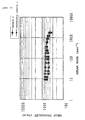
Fig. 1] Fig. 1 is graphs showing melt curves of the polycarbonate resins produced in Example 1 and Comparative Example 1. - [
Fig. 2] Fig. 2 is graphs showing melt curves of the polycarbonate resins produced in Example 2 and Comparative Example 2. - [
Fig. 3] Fig. 3 is graphs showing melt curves of the polycarbonate resins produced in Example 3 and Comparative Example 3. - [
Fig. 4] Fig. 4 is graphs showing melt curves of the polycarbonate resins produced in Example 4 and Comparative Example 5. - The embodiment of the polycarbonate resin of the present invention is described in detail below.
- The polycarbonate resin of the present invention is provided with the following requirements [I] and/or [II].
The polycarbonate resin of the present invention is preferably provided with the following requirements [I] and [II] together. - [I] A value obtained by dividing difference between a logarithmic value log MV9.12 of a melt viscosity (Pa·s) measured at shear rate of 9.12 sec-1 and a logarithmic value log MV1824 of a melt viscosity (Pa·s) measured at shear rate of 1824 sec-1, with a capillary rheometer having a die diameter of 1 mmφ and an effective length of 30 mmL, by a viscosity average molecular weight Mv calculated by the following equations (hereinafter referred to as "viscosity difference/molecular weight ratio": (log MV9.12 - log MV1824)/Mv is 2.0×10⁻⁵ or less.
Measurement temperature of a melt viscosity in the present invention is not particularly limited so far as it is a temperature at which the polycarbonate resin melts. However, the melt viscosity at the above-described specific shear rate must be a value measured at the same temperature.

(In the above equations, ηsp is a specific viscosity measured at 20°C with respect to a methylene chloride solution of a polycarbonate resin, C is a polycarbonate resin concentration of the methylene chloride solution, and C=0.6 g/dl). - [II] It is obtained by reacting a carbonate raw material and a dihydroxy compound, and is satisfied with the following requirements 1) to 4).
- 1) It has R-CO- group or R'-O-CO- group (R and R' each shows an organic group) at a molecular end, and OH ends occupy less than 50% of the whole end groups.
- 2) The sum of the residual amounts of an end modifier and an acid anhydride of the end modifier is 20 ppm or less.
- 3) A ratio of a weight average molecular weight Mw to a number average molecular weight Mn, in terms of a polystyrene measured by gel permeation chromatography: Mw/Mn is 1.45 or less.
- 4) A ratio of a viscosity average molecular weight Mv calculated by the following equation to a number average molecular weight Mn' calculated from the number of molecular ends: Mv/Mn' is 1.40 or less.


(In the above equations, ηsp is a specific viscosity measured at 20°C with respect to a methylene chloride solution of a polycarbonate resin, C is a polycarbonate resin concentration of the methylene chloride solution, and C=0.6 g/dl). - Here, the melt viscosity measured at shear rate of 9.12 sec-1 shows low shear rate, and the melt viscosity measured at shear rate of 1824 sec-1 shows high shear rate. When the difference between those is small to a viscosity average molecular weight Mv, it shows that such a resin is a resin having excellent Newtonian Flow property.
- When the viscosity difference/molecular weight ratio: (log MV9.12 - log MV1824)/Mv is larger than 2.0×10⁻⁵, a polycarbonate resin having an extremely narrow molecular weight distribution, good flowability when melting, and particularly extremely good flowability when melting that does not depend on shear rate, which is purposed in the present invention cannot be realized. The viscosity difference/molecular weight ratio: (log MV9.12 - log MV1824)/Mv is preferable as smaller. The ratio is preferable 1.6×10⁻⁵ or less, and more preferably 1.0×10⁻⁵ or less. The lower limit of the viscosity difference/molecular weight ratio: (log MV9.12 - log MV1824)/Mv is not particularly limited, but it is generally 0.5×10⁻⁵ or more. The melt viscosity at the above-described specific shear rate must be a value measured at the same temperature.
- The ratio of a weight average molecular weight Mw to a number average molecular weight Mn: Mw/Mn is a measure showing width of a molecular weight distribution, and a small value shows that the molecular weight distribution is narrow.
- Therefore, the polycarbonate resin of the present invention has the ratio of a weight average molecular weight Mw to a number average molecular weight Mn: Mw/Mn of 1.45 or less, and preferably 1.40 or less. Where Mw/Mn exceeds 1.45, a polycarbonate resin having an extremely narrow molecular weight distribution, good flowability when melting, and particularly extremely good flowability when melting that does not depend on shear rate, which is purposed in the present invention cannot be realized. Mw/Mn is preferable as smaller. The lower limit of Mw/Mn is not particularly limited, but it is generally 1.10 or more.
- The ratio of a viscosity average molecular weight Mv to a member average molecular weight Mn' calculated from the number of molecular ends: Mv/Mn' is also a measure showing width of a molecular weight distribution, similar to the ratio of a weight average molecular weight Mw to a number average molecular weight Mn: Mw/Mn, and its small value means that a molecular weight distribution is narrow.
- Therefore, the polycarbonate resin of the present invention has the ratio of a viscosity average molecular weight Mv to a number average molecular weight Mn' : Mv/Mn' of 1.40 or less, preferably 1.30 or less, more preferably 1.20 or less, and further preferably 1.15 or less. Where Mv/Mn' exceeds 1.40, a polycarbonate resin having an extremely narrow molecular weight distribution, good flowability when melting, and particularly extremely good flowability when melting that does not depend on shear rate, which is purposed in the present invention cannot be realized. Mv/Mn' is preferable as smaller. The lower limit of Mv/Mn' is not particularly limited, but it is generally 1.05 or more.
- The polycarbonate resin of the present invention is that OH groups occupy less than 50%, preferably less than 40%, and more preferably less than 30%, of the whole end groups.
- A group introduced into the molecular ends, other than OH group is preferably a R-CO- group or a R'-O-CO-group (R and R' each represents an organic group).
- Examples of an end modifier for converting into the R-CO- group include a carboxylic acid having from 1 to 30 carbon atoms, a carboxylic halide, a carboxylic anhydride, and a carboxylic ester. Of those, a carboxylic halide and a carboxylic anhydride are preferable, and a carboxylic halide is particularly preferable. Examples of the end modifier include aliphatic and aromatic carboxylic acids such as capric acid, lauric acid, acetic anhydride, butyric anhydride, stearic chloride, palmitic bromide, myristic chloride, benzoic chloride (benzoyl chloride), toluic chloride, benzoic bromide, p-t-butylbenzoic chloride, octylbenzoic chloride, benzoic anhydride, ethyl benzoate, 1-napthylic chloride and 2-naphthylic bromide; and their reactive derivatives.
- Example of an end modifier for converting into the R'-C-CO- group includes a halocarbonic ester having from 1 to 30 carbon atoms. Examples of the ester include ethyl chlorocarbonate, butyl chlorocarbonate, stearyl chlorocarbonate, phenyl chlorocarbonate (phenyl chloroformate), tolyl chlorocarbonate, naphthyl chlorocarbonate, ethyl bromocarbonate, phenyl bromocarbonate and naphthyl bromocarbonate.
- Those end modifiers may be used alone or as mixtures of two or more thereof,
- It is important that those end modifiers are added after completion of the polymerization reaction of from an oligomer to a polycarbonate resin. Specifically, the end modifier is added to a polycarbonate resin having end hydroxyl groups after passing a given reaction time and reaching a molecular weight to the desired value. Where the end modifier is added during the polymerization reaction, the end modifier acts like an end-terminator, and as a result, only a product having a wide molecular weight distribution such that a tail extends toward a low molecular weight region is obtained. When the end modifier is added after completion of the polymerization reaction of from an oligomer to a polycarbonate resin, an end-modified polycarbonate resin can be produced without changing a molecular weight and a molecular weight distribution of a polycarbonate resin.
- The amount of the end modifier added is theoretically sufficient if it is an amount corresponding to the number of OH end groups of a polymer. For example, when a carboxylic halide or the like is used as the end modifier, where its addition amount increases, the carboxylic halide or the carboxylic acid halide at polymer ends is hydrolyzed by an alkali aqueous solution, and a side reaction generating a carboxyl group or its ion occurs. Further, the carboxylic ion is reacted with an unreacted carboxylic! halide to form an acid anhydride bond. A polycarbonate containing the acid anhydride bond is liable to induce decomposition by heat during melt processing such as injection molding, as compared with a polycarbonate that does not contain the acid anhydride bond. As a result, the molecular weight of a polymer as a molded article decreases, and mechanical strength deteriorates, which are not preferable. For this reason, the amount of the end modifier added is selected from a range of generally from 0.5 to 10 mol%, and preferably from 1 to 6 ml%, to the dihydroxy compound as a raw material, considering the kind, reactivity and the like of the end modifier used.
- Where the OH groups at the molecular ends are 50% or more, even though the above-described Mw/Mn ratio or Mv/Mn' ratio is satisfied, flowability is impaired by viscosity increase due to reaction of mutual OH ends when melting, and the flowability that does not depend on shear rate is not secured.
- Therefore, the OH groups occupy less than 50%, preferably less than 40%, more preferably less than 30%, and particularly preferably less than 10%, of the whole end groups.
- The polycarbonate resin of the present invention has the sum of the residual amounts of the end modifier and an acid halide of the end modifier of 20 ppm or less, preferably 10ppm or less, and more preferably 5 ppm or less.
Where the sum of the residual amounts of the end modifier and an acid halide of the end modifier is large, the polycarbonate resin decomposes during molding, resulting in decrease in molecular weight, which is not preferable. - Reaction for introducing a substituent other than OH group is important to conduct the reaction by, for example, mixing a catalyst together with the above-described reactive end modifier and an alkali aqueous solution such as sodium hydroxide with a polycarbonate resin having OH groups at all ends (hereinafter sometimes referred to as "end OH type PC") produced by reacting a carbonate raw material and a dihydroxy compound.
That is, by conducting reaction by mixing a catalyst, the effect that a reaction rate for introducing a substituent increases is exhibited, and additionally the amount of the end modifier added can be reduced. As a result, it has been found that the affect of suppressing an acid anhydride bond of the end modifier is obtained, further the effect is obtained in washing reparation after polymerization, that is, separation removal of the residual end modifier, and by the use of a catalyst, the residual amount of the end modifier can be reduced. - Examples of the catalyst that can be used include a trialkylamine, N-ethylpyrrolidone, N-ethylmorpholine, N-isopropylpiperidine, N-isopropylmorpholine, triethylamine and N-ethylpiperidine. Those can be used alone or as mixtures of two or more thereof.
- The amount of the catalyst added is preferably from 0.0005 to 1 mol% to the dihydroxy compound as a raw material. Where the amount of the catalyst added is less than 0.0005 mol%, it is necessary to conduct a reaction for long period of time in order to introduce a substituent. Therefore, contact time with an aqueous alkali solution prolongs, resulting in production of a large amount of an acid anhydride of the end modifier, and washing separation of the end modifier after polymerization reaction is insufficient. As a result, the residual amount of the end modifier tends to increase. Where an acid anhydride of the end modifier is formed in a large amount or a polycarbonate resin containing a large residual amount of the end modifier is extrusion molded, the polycarbonate resin decomposes, resulting in decrease in molecular weight, which is not preferable, On the other hand, where the amount of the catalyst added exceeds 1 mol% to the dihydroxy compound as a raw material, reaction for introducing a substituent can be shortened, but a washing operation for removing the catalyst is complicated, which is not economical.
- The viscosity average molecular weight of the polycarbonate resin of the present invention is preferably from about 8,000 to 100,000. Where the molecular weight is too small, impact resistance of the polycarbonate resin deteriorates, and where the molecular weight is too large, melt flowability deteriorates. The viscosity average molecular weight is more preferably from 10,000 to 70,000, and particularly preferably from 12,000 to 60,000.
- Similar to the conventional polycarbonate resin, the polycarbonate resin of the present invention can be processed into various molded articles by injection molding, extrusion molding or the like. Examples of such a processed product include materials such as a film, a yarn and a plate; parts such as a lighting fitting and an optical instrument; and substrates such as an optical disc and magneto-optical disc. In producing those molded articles, stabilizers, rapping agents, combustion retardant, antistatic agents, fillers, fibers, impact strength-modifiers, and the like may be added to the polycarbonate resin of the present invention in the conventional manner.
- Production method of the polycarbonate resin of the present invention satisfying the requirements [I] and/or [II] is described in detail bellow.
- To produce the polycarbonate resin of the present invention satisfying the requirements [I] and/or [II], reaction operation and reaction conditions are appropriately controlled in the production method of a polycarbonate resin described in detail below. For example, to control Mw/Mn and Mv/Mn' in the following production method of a polycarbonate resin, the amount of a catalyst used, such as pyridine hydrochloride, which greatly affects a molecular weight of a polycarbonate resin obtained, interfacial area during interfacial polycondensation and the like are controlled.
- The production method of the polycarbonate resin of the present invention is not particularly limited. For example, the polycarbonate resin is produced by reacting a carbonate raw material and a dihydroxy compound to produce a polycarbonate resin having OH groups at all ends (end OH type PC) and introducing predetermined substituents into the OH groups at the molecular ends of the polycarbonate resin.
- The carbonate raw material used herein is a compound that can form a carbonate bond:

- Examples of the Carbonic diester include dimethyl carbonate, diethyl carbonate, diphenyl carbonate and ditolyl carbonate.
- On the other hand, examples of the dihydroxy compound include an aliphatic dihydroxy compound and an aromatic dihydroxy compound. The aromatic dihydroxy compound includes an aromatic compound having two phenolic hydroxyl groups.
- The end OH type PC according to the present invention can be produced by, for example, reacting an aromatic compound having two phenolic hydroxyl groups, typically represented by bisphenol A, and phosgene to from an oligomer, and polymerizing this oligomer in the absence of an end-terminator and in the presence of a catalyst such as pyridine hydrochloride or quinoline hydrochloride.
- This production method is described in more detail. The aromatic compound having two phenolic hydroxyl groups can use compounds conventionally known as a raw material of a polycarbonate resin, as described in, for example, U.S. Patents
4,982,014 ,3,028,365 ,2,999,835 ,3,148,172 ,3,275,601 ,2,991,273 ,3,271,367 ,3,062,781 ,2,970,131 and2,999,846 ; German Patents1,570,703 ,2,063,050 ,2,063,052 and2,211,956 ; and French Patent1,561,518 - Examples of the compound include hydroquinone resolcin, dihydroxydiphenol, bis(hydroxyphenyl)alkane, bis (hydroxyphenyl) cycloalkane, bis(hydroxyphenyl)sulfide, bis(hydxoxyphenyl)ether, bis (hydroxyphenyl)ketone, bis(hydxoxyphenyl)sulfone, bis (hydroxyphenyl)sulfoxide, bis(hydroxyphenyl)dialkylbenzene, and those derivatives having an alkyl or halogen substituent in the nucleus.
- Of those, preferable examples include 2,2-bis(4-hydroxyphenyl)propane, 2,2-bis (3,5-dimethyl-4-hydroxyphenyl)propane, 1,1-bis(4-hydroxyphenyl)cyclohexane, and 1,1-bis(4-hydroxyphenyl)-3,3,5-trimethylcyclohexane.
- A small amount of a branching agent having three or more functional groups can be used in combination with the aromatic compound having two phenolic hydroxyl groups. Such a branching agent is known, and examples thereof include 2,4-bis(4'-hydroxyphenyl-isopropyl)phenol, 2,6-bis (2'-hydroxy-5'-methylbenzyl)-4-methylphenol, 2-(4-hydroxyphenyl)-2-(2,4-dihydroxyphenyl)propane, 1,4-bis(4,4'-dihydroxytriphenylmethyl)benzene, 2,4-dihydroxybenzoic acid, trimesic acid, cyanuric chloride, bis(4'-hydroxyphenyl)-2-oxo-2,3-dihydroxyindole, and 3,3-bis(4-hydroxy-3-methylphenyl)-2-oxo-2,3-dihydroindole. Above all, a compound having three or more phenolic hydroxyl groups is preferable. The amount of the branching agent used varies depending on the desired degree of branching. In general, the branching agent is used in an amount of from 0.05 to 1 mol% to the aromatic compound having two phenolic hydroxyl groups. When the branching agent is used together, the viscosity average molecular weight Mv is liable to increase, and therefore care should be taken.
- Properties required in the catalyst in obtaining the polycarbonate resin having a molecular weight distribution close to monodispersion are that pKa value in terms of a hydrochloride is 7 or less, preferably 6 or less and more preferably 5.5 or less. In detail, by using a catalyst having weak basicity, chloroformate molecular end is not ionized, and nucleophilic substitution reaction can preferentially be induced from only other ionized end (phenylene-ONa end). This differs in reaction mechanism from the conventional polycondensation during the polycarbonate resin formation which proceeds with only a single reaction, and as a result, a polycarbonate having a molecular weight distribution according to Poisson distribution is obtained.
- Further, the polycarbonate resin of the present invention is preferably produced by an interfacial polymerization reaction in which an aqueous phase and an organic phase are present, as described hereinafter. In this interfacial polymerization reaction, reaction proceeds by a nucleophilic substitution reaction from only the ionized end, resulting in a successive reaction which necessarily causes only growth commensurate with an interfacial area per volume. Therefore, a molecular weight reached increases with increasing the interfacial area, a chloroformate molecular end undergoes hydrolysis by NaOH in the aqueous phase at the stage that condensation species have been lost, and molecular weight extension stops in the form of OH end. Where the interfacial area per volume is small, the chloroformate end as a molecular end to a growth reaction as a side reaction undergoes hydrolysis reaction by NaOH present in the aqueous phase, resulting in the state that cannot grow to a molecular weight more than that, that is, an interfacial area-dominated molecular weight. The background that such a reaction is established is that the growth reaction proceeds at a very high rate as compared with hydrolysis reaction.
- Contrary to this, polycondensation generated in the conventionally general polycarbonate resin formation does not involve such an unbalance of reaction. In the conventional polycondensation, a catalyst having high pKa value is used, and the chloroformate end is in the activated state like ions by the catalyst having high pKa value, resulting in having reaction activity which is substantially comparable to the ionized phenylene-ONa end, at both molecular ends. As a result, a condensate having a general molecular weight distribution according to Flory's most probable distribution is obtained, and at the same time, where an end-terminator is not present, an ultrahigh molecular weight compound is generally formed.
- A salt of a nitrogen-containing heterocyclic compound is used as a catalyst satisfying the above-described requirements. For example, salts of compounds having unsaturated nitrogen- containing six-membered ring in which carbon atoms in the ring may be substituted with an alkyl group, an alkoxy group, a halogen atom and the like, such as pyridine, quinoline, isoquinoline, picoline, acridine, pyrazine, pyridazine, pyrimidine and 2,4,6-trimethyltriazine, are used. Further, salts of compounds having unsaturated nitrogen-containing five-membered ring, such as phenothiazine, 2-methylimidazole, benzimidazole, benzotriazole and benzothiazole, are used. Of those nitrogen-containing heterocyclic compounds, pyridine, quinoline, picoline, imidazoles, pyrazoles, triazoles and the like are preferably used. Those catalysts are used in an amount of generally from 0.01 to 1 mol%, preferably from 0.05 to 0.5mol%, and particularly preferably from 0.05 to 0.2 mol%, to the aromatic compound having two phenolic hydroxyl groups as a raw material. Those nitrogen-containing heterocyclic compounds are used in a salt form such as a hydrochloride, a sulfate, a nitrate and a hydrobromate, but it is considered that those are present in a dissolution equilibrium state between a free base form and a salt form in a reaction system.
- Those catalysts may be present in a reaction system from the start of the reaction between the dihydroxy compound such as an aromatic compound having two phenolic hydroxyl groups, and the carbonate raw material such as phosgene, or may be added to the reaction system after the reaction. However, when addition of the catalyst is delayed, it is difficult to control a molecular weight of a polycarbonate resin formed, Therefore, the catalyst is preferably added to the reaction system between the start of the reaction of the dihydroxy compound and the carbonate raw material, and the start of increasing a molecular weight, that is, speaking from the standpoint of a viscosity average molecular weight Mv, up to reaching Mv to 2,000 to 3,000.
- As a condensation catalyst, the conventional catalyst used in a two-phase interfacial polymerization method may be used together. In this case, trialkylamine, N-ethylpyrrolidone, N-ethylpiperidine, N-ethylmorpholine, N-isopropylpiperidine, N-isopropylmorpholine and the like are generally used as the catalyst used together. Above all, triethylamine and N-ethylpiperidine is preferably used. The condensation catalyst is preferably supplied to the reaction system after supplying the carbonate raw material such as phosgene.
- For the reaction, an aqueous solution prepared by dissolving the dihydroxy compound such as an aromatic compound having two phenolic hydroxyl groups and an alkali such as sodium hydroxide in water, and an inert organic solvent are mixed to prepare an emulsion, and the carbonate raw material such as phosgene is supplied to the emulsion to conduct redaction, thereby forming an oligomer. A molar ratio between the dihydroxy compound such as an aromatic compound having two phenolic hydroxyl groups and an alkali such as sodium hydroxide is generally 1:1.8 to 3.5, and preferably 1:2.0 to 3.2. A small amount of a reducing agent such as hydrosulfite is preferably added to the aqueous solution. Further, a ratio of an organic phase to an aqueous phase is preferably from 0.2 to 1.0 (volume ratio).
- The inert organic solvent used is that the carbonate raw material such as phosgene, and the oligomer and polycarbonate resin formed by the reaction dissolve therein, but it does not mutually dissolve in water, under the reaction conditions. The amount of the inert organic solvent used is an amount that the oligomer formed dissolves therein. It is generally used in an amount such that the concentration of the oligomer solution formed is from 10 to 40% by weight.
- Representative examples of the inert organic solvent include aliphatic hydrocarbons such as hexane and n-heptane; chlorinated aliphatic hydrocarbons such as methylene chloride, chloroform, carbon tetrachloride, dichloroethane, trichloroethane, tetrachloroethane, dichloropropane and 1,2-dichloroethylene; aromatic hydrocarbons such as benzene, toluene and xylene; chlorinated aromatic hydrocarbons such as chlorobenzene, o-dichlorobenzene and chlorotoluene; and substituted aromatic hydrocarbons such as nitrobenzene and acetophenone. Above all, chlorinated hydrocarbons such as methylene chloride and chlorobenzene are preferably used. Those inert organic solvent can be used alone or as mixtures with other solvents.
- oligomer formation reaction is conducted at 80°C or lower, and preferably 70°C or lower. Where the reaction temperature is too high, side reaction increases, and phosgene basic unit deteriorates. Reversely, low reaction temperature is advantageous in reaction control. However, the reaction is a large exothermic reaction, and cost for maintaining this temperature increases as temperature of reaction system is low. Therefore, considering those points, the reaction is generally conducted at 10 to 65°C.
- The oligomer formed as above is polymerized to form a polycarbonate rosin. Generally, a reaction mixed liquid obtained by the above oligomer formation step is separated into an aqueous phase and an organic phase having the oligomer dissolved therein, and according to need, an inert organic solvent is added such that the oligomer concentration in the organic phase is from 5 to 30% by weight. An alkali aqueous solution such as sodium hydroxide is newly added to the oligomer solution, and the catalyst described before is then added thereto to conduct interfacial polymerization. The ratio of the aqueous phase to the organic phase in this case is preferably from 0.2 to 2.0 (volume ratio). Temperature of the interfacial polymerization reaction varies depending on the organic solvent used, but when methylene chloride is used, the reaction is generally conducted at 10 to 35°C.
- After completion of the reaction, the organic phase is washed with an alkali aqueous solution such as sodium hydroxide until the content of chloroformate group in the polycarbonate resin is 0.1 µeq/g or less, washed with an acid aqueous solution to neutralize the alkali and simultaneously remove the catalyst, and then further washed with water to completely remove an electrolyte. Finally, the organic solvent is removed from the organic phase by evaporation to obtain a polycarbonate resin.
- The polycarbonate resin thus obtained has a viscosity average molecular weight of generally from about 8,000 to 100,000. As described before, where the molecular weight is too small, impact resistance of the polycarbonate resin deteriorates, and where the molecular weight is too large, melt flowability deteriorates. The viscosity average molecular weight is preferably from 10,000 to 70,000, and particularly preferably from 12,000 to 60,000.
- The polycarbonate resin includes all OH end polycarbonate resin having extremely narrow monocular weight distribution in the state after formation by interfacial polymerization reaction, that is, even thought treatment to control a molecular weight distribution, such as fractional precipitation or extraction removal of a low molecular weight component, is not conducted.
- However, the end OH type PC having OH groups at all ends is difficult to avoid reaction of mutual OH ends when melt molding, and increases its viscosity at that time, and a polycarbonate resin having flowability that does not depend on shear rate, that is, having extremely excellent flowability as compared with the conventional polycarbonate resin, is not obtained. For this reason, in the present invention, at least one reactive compound selected from the group consisting of benzoyl chloride, phenyl chloroformate, acetyl chloride, propanoyl chloride and butanoyl chloride, as the end modifier described before is reacted with the end OH type PC in order to substitute 50% or more, preferably 60% or more, more preferably 70% or more, end particularly preferably from 90 to 100%, of OH groups at the molecular ends of the end OR type PC with at least one substituent selected from the group consisting of a OCOR group and a COR group (R: organic group such a alkyl or aryl),
- The reaction for the substituent introduction is conducted by mixing the reactive compound, an alkali aqueous solution such as sodium hydroxide and as a catalyst, at least one of trialkylamine, N-ethylpyrrolidone, N-ethylpiperidine, N-ethylmorpholine, N-isopropylpiperidine, N-isopropylmorpholine, triethylamine, N-ethylpiperidine, and the like with the end OH type PC obtained, by the above-described polymerization reaction (the end OH type PC in the form of a polymerization reaction formation liquid may directly be subjected to substituent introduction reaction).
- As described above, the amount of the catalyst used is preferably from 0.001 to 1 mol% to the dihydroxy compound as a raw material. Where the amount of the catalyst added is less than 0.001 mol%, it is necessary to conduct reaction for a long period of time to introduce a substituent, washing separation of the end modifier after polymerization reaction is insufficient, and as a result, the residual amount of the end modifier tends to increase. On the other hand, where the amount of the catalyst added exceeds 1 mol% to the dihydroxy compound as a raw material, reaction for substituent introduction can be shortened, but washing operation for removing the catalyst is complicated, which is not economical.
- As described above, in the reaction between the end OH type PC and the end modifier, the residual amount of the end modifier in the polycarbonate resin obtained can be reduced by using the catalyst. However, as described above it is preferable to sufficiently conduct alkali washing after completion of the reaction between the end OH type PC and the end modifier in order to add the residual amount of the end modifier. Specifically, the organic phase containing polycarbonate after completion of the reaction is washed with an alkali aqueous solution such as sodium hydroxide repeatedly to remove the end modifier, washed with an acid aqueous solution to neutralize the alkali and simultaneously remove the catalyst, and then further washed with water to completely remove an electrolyte, thereby obtaining the polycarbonate resin of the present invention.
- In producing the polycarbonate resin of the present invention as above, the reason that the polycarbonate resin remarkably differs from a polycarbonate resin obtained by the conventional production method, is due to that in the production, a nitrogen-containing heterocyclic compound such as pyridine hydrochloride is used as an (interfacial polymerization) catalyst, and an end sealant is not used. In old times, a method by solution polymerization using pyridine as a solvent was proposed as the production method of a polycarbonate resin (
U.S. Patents 3,275,601 ,3,269,985 ,3,437,639 ,3,804,722 and3,428,600 ). This polymerization method is that a heterocyclic compound such as pyridine is used as a solvent for the purpose of dissolving bisphenol as a raw material and trapping hydrochloric acid formed by the reaction. The effect of activating only one end during condensation is not exhibited, and only a molecular weight distribution of a most probable distribution or more is obtained. Since those solution method technologies, an interfacial polycondensation method is the mainstream of the polycarbonate resin production method. However, a catalyst regularly used in the production of a polycarbonate resin is triethylamine, and when polymerization of an oligomer is conducted using only triethylamine as a catalyst, where an end sealant is not present, polymerization excessively proceeds, and a gel-like ultrahigh molecular weight polycarbonate resin is formed, Therefore, use of the end sealant was indispensable in the conventional production of a polycarbonate resin. However, where polymerization is conducted in the presence of the end sealant, an end-sealed molecule does not grow. As a result, variation occurs in the growth of molecule, and molecular weigh distribution necessarily has a considerable width including this variation portion (Flory's most probable distribution + variation). Therefore, where the above-described nitrogen-containing heterocyclic compound such as pyridine hydrochloride is used as a catalyst, it is considered that it is easy to control a reaction even though an end sealant is not present, molecule grows uniformly because a molecular end is not sealed, and molecular weight distribution is necessarily narrow. - The present invention is described in more detail by reference to the following Examples, but the invention is not limited by the following Examples so far as it is not beyond its gist.
- In the following Examples and Comparative Examples, gel permeation chromatography, quantitative determination of an end group, an end modifier, a residual amount of an end sealant, and evaluation of melt flowability are conducted as follows.
-
- Apparatus: HLC-8020, a product of Tosoh Corporation
- Column: Four columns (diameter: 7.8 mmφ, length: 300 mm) filled, with TSK, 5000HLX, 4000HLX, 3000HLX and 2000HLX (products of Tosoh Corporation), respectively, as fillers were connected and used.
- Detector: Refractometer
- Eluent: Tetrahydrofuran
- calibration curve: Prepared using a standard polystyrene (molecular weight: 761 (Mw/Mn≦1.14), 2000 (Mw/Mn≦1.20), 4000 (Mw/Mn≦1.06), 9000 (Mw/Mn≦1.04), 17500 (Mw/Mn≦1.03), 50000 (Mw/Mn≦1.03), 233000 (Mw/Mn≦1.05), 600000 (Mw/Mn≦1.05) and 900000 (Mw/Mn≦1.05), a product of Chemco Scientific Co., Ltd.
- Operation: Mw and Mn were obtained in terms of a polystyrene from a chart obtained by detecting from refractive index difference, and Mw/Mn was calculated. The base line at this time was calculated by faithfully extending a base before initial rise of high molecular weight in a state that an apparatus is completely stabilized, and connecting to the point returned to the original base line at a low molecular weight side. It was confirmed that the standard polystyrene is measured and is all fallen within the standard.
- The sum of the amount of end OH groups and the amount of an end modifier or an end sealant were considered as the number of end groups, and a number average molecular weight (Mn') was calculated as follows.

The amount of end OH groups was quantitatively determined as follows. 0.1 g of a polycarbonate resin was dissolved in 10 ml of methylene chloride, and 5 ml of 5 wt% methylene chloride solution of acetic acid (special grade chemical, a product of Wako Pure Chemical Industries, Ltd.) and 10 ml of 2.5 wt% methylene chloride solution of titanium tetrachloride (special grade chemical, a product of Wako Pure Chemical Industries Ltd.) were added to the resulting solution to color. Absorbance at a wavelength of 480 nm was measured using a spectrophotomoter (UV 160 Model, a product of Hitachi, Ltd.).
Separately, absorbance index was obtained using a methylene chloride solution of a divalent phenol used at the time of the production, and concentration of OH group in a sample was quantitatively determined
Further, the amount of an end modifier and the amount of an end sealant were measured as follows. 0.2 g of a polycarbonate resin was dissolved in 2 ml of methylene chloride, and a methyl alcohol solution of 1N sodium hydroxide was added thereto. The resulting solution was subjected to alkali hydrolysis at 75°C for 30 minutes under reflux with heating, and after cooling, was adjusted topH 2 to 3 with 6N hydrochloric acid aqueous solution. The amount of an end modifier bonded and the amount of an end sealant bonded were measured with a high performance liquid chromatography (column: MCI-GEL 1HU ODS, inner diameter 4.5 mm, length 15 cm, eluent: methanol/water=50/50, detector: UV 280 nm).
Separately, an area correction factor was previously obtained using an end modifier and an end sealant used, and concentration in a sample was quantitatively determined. - 1.0 g of a polycarbonate resin was dissolved in 100 ml of tetrahydrofuran, and a residual end modifier amount, an acid anhydride amount of an end modifier and a residual end sealant amount were measured with a high performance chromatography (column: MCI-GEL 1HU ODS, inner diameter 4.5 mm, length 15 cm, eluent : terahydrofuran/water=50/50 → tertrahydrofuran 100%, 60 min gradient elution, detector: UV 254 nm). Separately, an area correction factor was previously obtained using an end modifier (benzoyl chloride), an acid anhydride of the end modifier (benzoic anhydride) and an end sealant (p-tert-butylphenol) used, and concentration in a sample was quantitatively determined.
- Using a capillary rheometer having a die
diameter 1 mmφ × 30 mmL (a product of Toyo Seiki Co., Ltd.), a sample dried at 130°C for 5 hours was heated at a constant temperature, and a melt viscosity was measured at shear rate γ =9.12 to 1,824 (sec-1). - A spiral flow length of
thickness 2 mm was measured at an injection pressure of 300 kg/cm2, a mold temperature of 90°C and a cylinder temperature of 250 to 340°C.
This value is a measure of flowability, and a large value means good flowability, - An aqueous solution obtained by dissolving bisphenol A in a sodium hydroxide aqueous solution having hydrosulfite dissolved therein at 35°C; and then cooling to 25°C, and methylene chloride cooled to 5°C were continuously supplied to a stainless steel pipe having an inner diameter of 6 mm, followed by mixing. The mixed liquid was emulsified by passing through a homomixer (T.K. Homomic Line Flow LF-500 Model, a product of Premix Corporation) to prepare an emulsion. Supply amounts to the pipe are bisphenol A: 16.31 kg/hr, sodium hydroxide: 5.93 kg/hr, water: 101.1 kg/hr, hydrosulfite: 0.018 kg/hr, and methylene chloride: 68.0 kg/hr.
- The emulsion formed was flown in a Teflon (a registered trade make) pipe reactor having an inner diameter of 6 mm and a length of 34 m through a pipe having an inner diameter of 6 mm. At the same time, liquefied phosgene cooled to 0°C was supplied to the pipe reactor at 7.5 kg/hr to react, thereby forming an oligomer. Flow rate of the pipe reactor is 1.7 m/ sec. Phosgene used was obtained by filling a cylindrical vessel having a diameter of 55 mm and a height of 500 mm with the following activated carbon, and passing phosgene cooled to -5°C through the vessel at SV=3 hr-1.
- Trade name Yashicoal S (a product of Taihei Chemical Industrial Co., Ltd.)
True density 2.1 g/ml Porosity 40% Specific surface area 1,200 m2/g Pore volume 0.86 ml/g - In the pipe reactor, temperature elevated to 60°C, but temperature at the outlet was 35°C by external cooling. A reaction mixture was allowed to stand to separate into an aqueous phase and an oil phase. Chloroformate concentration of an oligomer obtained was 0.47N, OH end concentration was 0.23N, and oligomer concentration was 27.7%. 40 kg was batched off from the oil phase obtained, and charged in a reaction tank having an inner volume of 200 liters equipped with Faudler blade, 25 kg of methylene chloride, 5.75 kg of a 25% sodium chloride aqueous solution, 41 kg of waster and 0.87 g (0.020 mol% to bisphenol) of pyridine hydrochloride as a catalyst were added to the reaction tank, and the resulting mixture was stirred at 10°C for 60 minutes at 360 rpm in a nitrogen atmosphere to conduct polymerization reaction, thereby forming all OH-ended (OH end group concentration: 60 µeq/g) polycarbonate resin.
- 90 g (1.55 mol% to bisphenol) of benzoyl chloride, 105 g of a 25 wt% sodium chloride aqueous solution and 218 g (0.10 mol% to bisphenol) of a 2 wt% triethylamine aqueous solution were added to the reaction mixture, and reaction was continued for 1 hour under stirring at 360 rpm. Thereafter, 30 kg of methylene chloride and 7 kg of water were added, and the resulting mixture was stirred at room temperature for 20 minutes, and allowed to stand to separate into an aqueous phase and an organic phase. Washing operation of adding 20 kg of a 0.1N sodium hydroxide aqueous solution to the organic phase, followed by stirring for 15 minutes and then allowing to stand to separate into an aqueous phase and an organic phase was repeated three times. 20 kg of 0.1N hydrochloric acid was added to the organic phase after alkali washing, followed by stirring for 15 minutes, and the resulting mixture was allowed to stand to separate into an aqueous phase and an organic phase. Washing operation of adding 20 kg of pure water to the organic phase, followed by stirring for 15 minutes and then allowing to stand to separate into an aqueous phase and an oil phase was repeated three times. As a result, chlorine ions were not detected in the aqueous phase, and therefore, the washing operation was stopped. Methylene chloride was removed by evaporation from the organic phase with a kneader, and a powder obtained was dried to obtain a polycarbonate resin of the present invention.
Properties of the polycarbonate resin obtained are shown in Table 1 andFig. 1 . Melt viscosity and spiral flow length (SFL) were measured at 300°C. - A polycarbonate resin of the present invention was produced in the same manner as in Example 1, except that the amount of pyridine hydrochloride added was 0.72 g (0.015 ml% to bisphenol), the amount of benzoyl chloride added was 171 g (2.95 ml% to bisphenol) and a 25 wt% sodium hydroxide aqueous solution was 200 g. Properties of the polycarbonate resin obtained are shown in Table 1 and
Fig. 2 . Melt viscosity and spiral flow length (SEL) were measured at 280°C. - A polycarbonate resin of the present invention was produced in the same manner as in Example 2, except that polymerization reaction was conducted by stirring at 10°C for 60 minutes at 320 rpm to obtain an all OH-ended polycarbonate resin, and 283 g (4.87 mol% to bisphenol) and 343 g of a 25 wt% sodium hydroxide aqueous solution where added to the reaction mixture to conduct polymerization reaction. Properties of the polycarbonate resin obtained are shown in Table 1 and
Fig. 3 . Melt viscosity and spiral flow length (SFL) were measured at 250°C. - An aqueous solution obtained by dissolving bisphenol z (1,1-bis(4-hydroxyphenyl)cyclohexane, hereinafter referred to as BPZ) and 4,4'-biphenol (hereinafter referred to as Bp) in a sodium hydroxide aqueous solution having hydrosulfite dissolved therein at 45°C and then cooling to 40°C, and methylene chloride cooled to 5°C were continuously supplied to a stainless steel pipe having an inner diameter of 6 mm, followed by mixing. The mixed liquid was emulsified by passing through a homomixer (T.K. Homomic Line Flow LF-500 Model, a product of Premix Corporation) to prepare an emulsion. Supply amounts to the pipe are BPZ: 7.49 kg/hr, Bp: 0.81 kg/hr, sodium hydroxide: 3.87 kg/hr, water: 106.4 kg/hr, hydrosulfite: 0.018 kg/hr, and methylene chloride: 44.5 kg/hr.
- The emulsion formed was flown in a Teflon (a registered trade make) pipe reactor having an inner diameter of 6 mm and a length of 34 m through a pipe having an inner diameter of 6 nm. At the same time, liquefied phosgene cooled to 0°C was supplied to the pipe reactor at 7.5 kg/hr to react, thereby forming an oligomer. Flow rate of the pipe reactor is 1.7 m/sec. Phosgene used was obtained by filling a cylindrical vessel having a diameter of 55 mm and a height of 500 mm with the following activated carbon, and passing phosgene cooled to -5°C through the vessel at SV=3 hr-1.
- Trade name Yashicoal S (a product of Taihei Chemical Industrial Co., Ltd.)
True density 2.1 g/ml Porosity 40% Specific surface area 1,200 m2/g Pore volume 0.86 ml/g - In the pipe reactor, temperature elevated to 60°C, but temperature at the outlet was 35°C by external cooling. A reaction mixture was allowed to stand to separate into an aqueous phase and an oil phase. Chloroformate concentration of an oligomer obtained was 0.47N, OH end concentration was 0.005N, and oligomer concentration was 19.5%. 40 kg was batched off from the oil phase obtained, and charged in a reaction tank having an inner volume of 200 liters equipped with Faudler blade. 5.5 kg of methylene chloride, 6.37 kg of a 25% sodium chloride aqueous solution, 30 kg of water and 8.89 q (0.30 mol% to BPZ+Bp) of pyridine hydrochloride as a catalyst were added to the reaction tank, and the resulting mixture was stirred at 10°C for 60 minutes at 220 rpm in a nitrogen atmosphere to conduct polymerization reaction, thereby forming all OH-ended (OH end group concentration: 103 µeq/g) polycarbonate resin.
- 110 g (3.07 ml% to BPZ+Bp) of benzoyl chloride, 120 g of a 25 wt% sodium chloride aqueous solution and 130 g (0.10 mol% to bisphenol) of a 2 wt% triethylamine aqueous solution were added to the reaction mixture, and reaction was continued for 1 hour under stirring at 220 rpm. Thereafter, 30 kg of methylene chloride and 7 kg of water were added, and the resulting mixture was stirred at room temperature for 20 minutes, and allowed to stand to separate into an aqueous phrase and an organic phase. Washing operation of adding 20 kg of a 0.1N sodium hydroxide aqueous solution to the organic phase, followed by stirring for 15 minutes and then allowing to stand to separate into an aqueous phase and an organic phase was repeated three times. 20 kg of 0.1N hydrochloric acid was added to the organic phase after alkali washing, followed by stirring for 15 minutes, and the resulting mixture was allowed to stand to separate into an aqueous phase and an organic phase. Washing operation of adding 20 kg of pure water to the organic phase, followed by stirring for 15 minutes and then allowing to stand to separate into an aqueous phase and an oil phase was repeated three times. As a result, chlorine ions were not detected in the aqueous phase, and therefore, the washing operation was stopped. Methylene chloride was removed by evaporation from the organic phase with a kneader, and a powder obtained was dried to obtain a polycarbonate resin of the present invention. It was confirmed to have the following structure by 1H-NMR.
-

- Properties of the polycarbonate resin obtained are shown in Table 1 and
Fig. 1 . Melt viscosity and spiral flow length (SFL) were measured at 340°C. - An oligomerized emulsion obtained from the pipe reactor of Example 1 was further introduced into a reaction tank having an inner volume of 50 liters equipped with a stirred, and stirred at 30°C in a nitrogen atmosphere. 0.005 kg/hr of triethylamine as a catalyst and 0.31 kg/hr (2.90 mol% to bisphenol) of p-t-b-utylphenol as a molecular weight regulator (end sealant) were introduced into the oligomerization tank. Sodium salt of unreacted bisphenol A (BPA-Na) present in the aqueous phase was completely consumed by oligomerization, and an aqueous phase and an oil phase were separated by allowing to stand, thereby obtaining a methylene chloride solution of an oligomer. Chloroformata concentration of the oligomer obtained wars 0.29N, OH end concentration was 0.17N and oligomer concentration was 26.5%.
- 63 kg in the methylene chloride solution of the oligomer was charged in a reaction tank having an inner volume of 200 liters equipped with Faudler blade. 38 kg of methylene chloride for dilution was added to the reaction tank, and 4.0 kg of a 25 wt% NaOH aqueous solution, 20 kg of water and 6.4 kg of triethylamine were further added thereto. The resulting mixture was stirred at 30°C in a nitrogen atmosphere to conduct polycondensation reaction for 60 minutes, thereby obtaining a polycarbonate resin. 30 kg of methylene chloride and 7 kg of water were added to the reaction liquid, followed by stirring for 20 minutes. Stirring was stopped, and an aqueous phase and an organic phase were separated. 20 kg of 0.1N hydrochloric acid was added to the organic phase separated, followed, by stirring for 15 minutes to extract triethylamine and a small amount of a residual alkali component. Stirring was stopped, and an aqueous solution and an organic phase were separated. 20 kg of pure water was added to the organic phase separated, followed by stirring for 15 minutes. Stirring was stopped, and an aqueous solution and an organic phase were separated. This operation was repeated (three times) until chlorine ions were not detected in extraction discharged water.
- Methylene chloride was removed by evaporation from the purified polycarbonate resin solution obtained with a kneader, and a powder obtained was dried to obtain a polycarbonate resin.
Properties of the polycarbonate resin obtained are shown in Table 1 andFig. 1 . Melt viscosity and spiral flow length (SFL) were measured at 300°C. - A polycarbonate resin was produced in the same manner as in Comparative Example 1, except that the feed amount of p-t-butylphenol as a molecular weight regulator was changed to 0.42 kg/hr (3.92 mol% to bisphenol), and its properties are shown in Table 1 and
Fig. 2 . Melt viscosity and spiral flow length (SFL) were measured at 280°C. - A polycarbonate resin was produced in the same manner as in Comparative Example 1, except that the feed amount of p-t-butylphenol as a molecular weight regulator was changed to 0.65 kg/hr (6.05 mol% to bisphanol), and its properties are shown in Table 1 and
Fig. 2 . Melt viscosity and spiral flow length (SFL) were measured at 250°C. - Polymerization reaction was conducted according to Example 1 described in Japanese Patent
3720687
Specifically, in introducing a substituent into an all end OH type PC, polymerization reaction was conducted by adding an end modifier and sodium hydroxide in an equivalent amount of the end modifier, without adding a catalyst (triethylamine). Properties of a polycarbonate resin obtained are shown in Table 1. Spiral flow length (SFL) was measured at 280°C. - An oligomerized emulsion obtained from the pipe reactor of Example 4 was further introduced into a reaction tank having an inner volume of 50 liters equipped with a stirrer, and stirred at 30°C in a nitrogen atmosphere. 0.13 kg/hr (3.51 mol% to bisphenol) of p-t-butylphenol as a molecular weight regulator (end sealant) was introduced into the oligomerization tank. Sodium salt of unreacted bisphenol A (BPA-Na) present in the aqueous phase was completely consumed by oligomerization, and an aqueous phase and an oil phase were separated by allowing to stand, thereby obtaining a methylene chloride solution of an oligomer. Chloroformate concentration of the oligomer obtained was 0.45N, OH and concentration was 0.002N and oligomer concentration was 19.6%.
- 40 kg in the methylene chloride solution of the oligomer was introduced into a reaction tank having an inner volume of 200 liters equipped with Faudler blade. 5.5 kg of methylene chloride for dilution was added to the reaction tank, and 6.4 kg of a 25 wt% NaOH aqueous solution, 30 kg of water and 1.8 kg of triethylamine were further added thereto. The resulting mixture was stirred at 30°C in a nitrogen atmosphere to conduct polycondensation reaction for 60 minutes, thereby obtaining a polycarbonate resin. 30 kg of methylene chloride and 7 kg of water were added to the reaction liquid, followed by stirring for 20 minutes. Stirring was stopped, and an aqueous phase and an organic phase were separated. 20 kg of 0.1N hydrochloric acid was added to the organic phase separated, followed by stirring for 15 minutes to extract triethylamine and a small amount of a residual alkali component. Stirring was stopped, and an aqueous solution and an organic phase were separated. 20 kg of pure water was adder to the organic phase separated, followed by stirring for 15 minutes. Stirring was stopped, and an aqueous solution and an organic phase were separated. This operation was repeated (three times) until chlorine ions were not detected in extraction discharged water.
- Methylene chloride was removed by evaporation from the purified polycarbonate resin solution obtained with a kneader, and a powder obtained was dried to obtain a polycarbonate resin. It was confirmed to be the following structure by 1H-NMR.
-

- Properties of the polycarbonate resin obtained are shown in Table 1 and
Fig. 1 . Melt viscosity and spiral flow length (SFL) were measured at 340°C. -
[TABLE 1] Comparative Example 1 2 3 4 5 Kind of end sealant p-t-Butylphenol - p-t-Butyl-phenol Amount of end sealant used (mol% to bisphenol) 2.90 3.92 6.05 - 3.51 Kind of and modifier - - - Benzoyl chloride - amount of end modifier used (mol% to bisphenol) - - - 6.35 - Kind of catalyst when introducing substituent - - - - - Amount of catalyst used when introducing substituent (mol% to bispenol) - - - - - Properties of polycarbonate resin Viscosity average molecular weight (Mv) Before melt viscosity measurement 25800 21200 18200 21200 After melt viscosity measurement 25700 21200 15100 16500 21200 Molecular weight distribution (Hw/Mn from GPC) 2.88 2.76 2.62 1.35 2.78 Amount of end OH group (µeq/g) 1.5 1.6 1.2 3.5 3.4 Amount of end phenyl group (µeq/g) - - 127.9 - Amount of end p-t-butylphenol group (µeq/g) 114.0 153.2 237.4 - 133.5 Number average molecular weight (Mn' from number of end group) 17300 12900 8400 15200 14600 Mv/Mn' (from number of end group) 1.49 1.64 1.82 1.20 1.45 log MV9.12 - 3.4 3.1 3.0 2.8 3.0 log MV1871 2.6 2.6 2.6 2.4 2.5 (log MV9.12-log MV1824)/Mv (x10-5) 2.8 2.2 2.6 2.2 2.4 Residual amount (ppm) End sealant (p-t-Butylphenol) <1 <1 <1 - <1 End modifier (Benzoyl chloride) - - - 31 - Acid anhydride of end modifier (Benzoic anhydride) - - - 570 - Sum of end modifier and its acid anhydride - - - 601 - Spiral flow length (SFL) (ca) 11.8 14.3 9.1 15.3 13.2 - While the invention has been described in detail and with reference to specific embodiments thereof, it will be apparent to one skilled in the art that various changes and modifications can be made therein without departing from the spirit and scope thereof.
This applications is based on Japanese Patent Application (Patent Application No.2006-116905) filed April 20, 2006 2007-092112) filed March 30, 2007 - The polycarbonate resin of the present invention is a polycarbonate resin having an extremely narrow molecular weight distribution, good flowability when melting, and particularly extremely good flowability when melting that does not depend on shear rate, and is therefore extremely industrially useful to various applications including injection molding of thin and high-precise products.
Claims (8)
- A polycarbonate resin, characterized in that a value obtained by dividing difference between a logarithmic value log MV9.12 of a melt viscosity Pa·s measured at shear rate of 9.12 sec-1 and a logarithmic value log MV1824 of a melt viscosity Pa·s measured at shear rate of 1824 sec-1, with a capillary rheometer having a die diameter of 1 mmφ and an effective length of 30 mmL, by a viscosity average molecular weight Mv calculated by the following equations: viscosity difference/molecular weight ratio, (log MV9.12 - log MV1824)/Mv, is 2.0×10⁻⁵ or less,


in the above equations, ηsp is a specific viscosity measured at 20°C with respect to a methylene chloride solution of a polycarbonate resin, C is a polycarbonate resin concentration of the methylene chloride solution, and C=0.6 g/dl. - The polycarbonate resin as claimed in claim 1, characterized in that the viscosity difference/molecular weight ratio, (log MV9.12 - log MV1824)/Mv is 1.6×10⁻⁵ or less.
- The polycarbonate resin in claimed in claim 2, characterized in that the viscosity difference/molecular weight ratio, (log MV9.12 - log MV1824)/Mv is 1.0×10⁻⁵ or less.
- A polycarbonate resin, characterized in that it is a polycarbonate resin obtained by reacting a carbonate raw material and a dihydroxy compound, and is satisfied with the following requirements 1) to 4),1) It has R-CO- group or R'-O-CO- group, wherein R and R' each shows an organic group, at a molecular end, and OH ends occupy less than 50% of the whole end groups,2) The sum of the residual amounts of an end modifier and an acid anhydride of the end modifier is 20 ppm or less,3) A ratio of a weight average molecular weight Mw to a number average molecular weight Mn, in terms of a polystyrene measured by gel permeation chromatography: Mw/Mn is 1.45 or less, and4) A ratio of a viscosity average molecular weight Mv calculated by the following equation to a number average molecular weight Mn' calculated from the number of molecular ends: Mv/Mn' is 1.40 or less,


in the above equations, ηsp is a specific viscosity measured at 20°C with respect to a methylene chloride solution of a polycarbonate resin, C is a polycarbonate resin concentration of the methylene chloride solution, and C=0.6 g/dl. - The polycarbonate resin as claimed in claim 1, characterized in that it is a polycarbonate resin obtained by reacting a carbonate raw material and a dihydroxy compound, and is satisfied with the following requirements 1) to 4),1) It has R-CO- group or R'-O-CO- group, wherein R and R' each shows an organic group, at a molecular end, and OH ends occupy less than 50% of the whole end groups,2) The sum of the residual amounts of an end modifier and an acid anhydride of the end modifier is 20 ppm or less,3) A ratio of a weight average molecular weight Mw to a number average molecular weight Mn, in terms of a polystyrene measured by gel permeation chromatography: Mw/Mn is 1.45 or less, and4) A ratio of a viscosity average molecular weight Mv calculated by the following equation to a number average molecular weight Mn' calculated from the number of molecular ends: Mv/Mn' is 1.40 or less,in the above equations, ηsp is a specific viscosity measured, at 20°C with respect to a methylene chloride solution of a polycarbonate resin, C is a polycarbonate resin concentration of the methylene chloride solution, and C=0.6 g/dl.


- The polycarbonate resin as claimed in claim 4 or 5, characterized in that Mv/Mn' is 1.30 or less, and OH groups occupy less than 40% of the whole end groups.
- The polycarbonate resin as claimed in claim 6, characterized in that Mv/Mn' is 1.20 or less, and OH groups occupy less than 30% of the whole end groups.
- The polycarbonate resin as claimed in claim 1 or 4, characterized in that the viscosity average molecular weight Mv is from 8,000 to 100,000.
Applications Claiming Priority (3)
| Application Number | Priority Date | Filing Date | Title |
|---|---|---|---|
| JP2006116905 | 2006-04-20 | ||
| JP2007092112A JP2007308687A (en) | 2006-04-20 | 2007-03-30 | Polycarbonate resin |
| PCT/JP2007/058466 WO2007123162A1 (en) | 2006-04-20 | 2007-04-18 | Polycarbonate resin |
Publications (2)
| Publication Number | Publication Date |
|---|---|
| EP2011810A1 true EP2011810A1 (en) | 2009-01-07 |
| EP2011810A4 EP2011810A4 (en) | 2010-03-10 |
Family
ID=38625063
Family Applications (1)
| Application Number | Title | Priority Date | Filing Date |
|---|---|---|---|
| EP07741902A Withdrawn EP2011810A4 (en) | 2006-04-20 | 2007-04-18 | POLYCARBONATE RESIN |
Country Status (5)
| Country | Link |
|---|---|
| US (1) | US20110021739A1 (en) |
| EP (1) | EP2011810A4 (en) |
| JP (1) | JP2007308687A (en) |
| KR (1) | KR20080110780A (en) |
| WO (1) | WO2007123162A1 (en) |
Families Citing this family (4)
| Publication number | Priority date | Publication date | Assignee | Title |
|---|---|---|---|---|
| TWI512002B (en) * | 2006-10-18 | 2015-12-11 | Idemitsu Kosan Co | Polycarbonate copolymer, a method for producing the same, a molded body, an optical material, and an electrophotographic photoreceptor |
| DE102008023800A1 (en) * | 2008-05-15 | 2009-11-19 | Bayer Materialscience Ag | Alkyl phenol for molecular weight adjustment and copolycarbonate with improved properties |
| JP5330447B2 (en) * | 2009-09-15 | 2013-10-30 | 国立大学法人室蘭工業大学 | Method for producing aromatic polyester |
| TWI549986B (en) | 2011-05-19 | 2016-09-21 | 三菱瓦斯化學股份有限公司 | A high-flow polycarbonate copolymer, a method for producing a high molecular weight aromatic polycarbonate resin, and an aromatic polycarbonate compound |
Family Cites Families (7)
| Publication number | Priority date | Publication date | Assignee | Title |
|---|---|---|---|---|
| JPH09183836A (en) * | 1995-12-28 | 1997-07-15 | Teijin Chem Ltd | Aromatic polycarbonate resin |
| US6316580B1 (en) * | 1999-03-02 | 2001-11-13 | Mitsubishi Chemical Corporation | Polycarbonate resin |
| JP3720687B2 (en) * | 2000-08-29 | 2005-11-30 | 三菱化学株式会社 | End-modified polycarbonate resin and process for producing the same |
| JP3677547B2 (en) * | 2002-09-17 | 2005-08-03 | 独立行政法人産業技術総合研究所 | Method for controlling molecular weight and molecular weight distribution of polycarbonate |
| JP2004192759A (en) * | 2002-12-13 | 2004-07-08 | Mitsubishi Engineering Plastics Corp | Optical information recording substrate |
| JP4067417B2 (en) * | 2003-02-07 | 2008-03-26 | 三菱化学株式会社 | Electrophotographic photoreceptor |
| JP2004346025A (en) * | 2003-05-23 | 2004-12-09 | Kanebo Ltd | Fluorescent cosmetic |
-
2007
- 2007-03-30 JP JP2007092112A patent/JP2007308687A/en active Pending
- 2007-04-18 WO PCT/JP2007/058466 patent/WO2007123162A1/en not_active Ceased
- 2007-04-18 EP EP07741902A patent/EP2011810A4/en not_active Withdrawn
- 2007-04-18 KR KR1020087024351A patent/KR20080110780A/en not_active Withdrawn
- 2007-04-18 US US12/297,711 patent/US20110021739A1/en not_active Abandoned
Also Published As
| Publication number | Publication date |
|---|---|
| WO2007123162A1 (en) | 2007-11-01 |
| EP2011810A4 (en) | 2010-03-10 |
| KR20080110780A (en) | 2008-12-19 |
| JP2007308687A (en) | 2007-11-29 |
| US20110021739A1 (en) | 2011-01-27 |
Similar Documents
| Publication | Publication Date | Title |
|---|---|---|
| TWI290152B (en) | Process for the production of modified polycarbonates | |
| JP4080710B2 (en) | Method for producing aromatic polycarbonate | |
| WO1989002904A1 (en) | Process for preparing crystallized aromatic polycarbonate and crystallized aromatic polycarbonate obtained by the process | |
| TWI388590B (en) | Polycarbonate with high refractive index | |
| JPH0794546B2 (en) | Method for producing aromatic polycarbonate and crystalline aromatic polycarbonate powder obtained thereby | |
| CN101874056B (en) | Monomer solution for producing polycarbonate | |
| CN101479315A (en) | Preparation of polycarbonates | |
| EP0382250A2 (en) | Process for preparation of polycarbonate | |
| US20110021739A1 (en) | Polycarbonate resin | |
| JP3692022B2 (en) | Production method of polycarbonate resin | |
| CN101331169A (en) | Equipment cleaning in polycarbonate manufacture | |
| JP5953691B2 (en) | Method for producing polycarbonate resin | |
| US5986037A (en) | Polycarbonate resin with a reduced volatile chlorine content and process for producing the same | |
| EP2167566A1 (en) | Method for storage and/or transport of bisphenolacetone and method for producing aromatic polycarbonate | |
| JP3544294B2 (en) | Polycarbonate resin with low volatile chlorine and method for producing the same | |
| JP3720687B2 (en) | End-modified polycarbonate resin and process for producing the same | |
| WO2000052076A1 (en) | Polycarbonate resin | |
| CN101415750A (en) | Polycarbonate resin | |
| JP4363762B2 (en) | Polycarbonate resin composition | |
| JPWO2002006374A1 (en) | Method for producing aromatic polycarbonate and method for preserving its raw materials | |
| JP4363763B2 (en) | Polycarbonate resin composition | |
| JP3726618B2 (en) | Polycarbonate resin | |
| JPH07196783A (en) | Method for producing aromatic polycarbonate | |
| JP3251742B2 (en) | Method for producing aromatic polycarbonate | |
| EP0303842A2 (en) | Cyclic polycarbonate oligomers: inhibition of polymerization to linear polycarbonates |
Legal Events
| Date | Code | Title | Description |
|---|---|---|---|
| PUAI | Public reference made under article 153(3) epc to a published international application that has entered the european phase |
Free format text: ORIGINAL CODE: 0009012 |
|
| 17P | Request for examination filed |
Effective date: 20081119 |
|
| AK | Designated contracting states |
Kind code of ref document: A1 Designated state(s): AT BE BG CH CY CZ DE DK EE ES FI FR GB GR HU IE IS IT LI LT LU LV MC MT NL PL PT RO SE SI SK TR |
|
| AX | Request for extension of the european patent |
Extension state: AL BA HR MK RS |
|
| RIN1 | Information on inventor provided before grant (corrected) |
Inventor name: UCHIMURA, RYUUJI Inventor name: SHIRAISHI, YOSHITAKA Inventor name: TSURUHARA, KENJI Inventor name: MIYAMOTO, MASAAKIDECEASED |
|
| A4 | Supplementary search report drawn up and despatched |
Effective date: 20100205 |
|
| 17Q | First examination report despatched |
Effective date: 20100309 |
|
| STAA | Information on the status of an ep patent application or granted ep patent |
Free format text: STATUS: THE APPLICATION IS DEEMED TO BE WITHDRAWN |
|
| 18D | Application deemed to be withdrawn |
Effective date: 20100720 |