EP2007124B1 - Informationsverarbeitungsvorrichtung, Informationsverarbeitungsverfahren und Programm - Google Patents
Informationsverarbeitungsvorrichtung, Informationsverarbeitungsverfahren und Programm Download PDFInfo
- Publication number
- EP2007124B1 EP2007124B1 EP08158542A EP08158542A EP2007124B1 EP 2007124 B1 EP2007124 B1 EP 2007124B1 EP 08158542 A EP08158542 A EP 08158542A EP 08158542 A EP08158542 A EP 08158542A EP 2007124 B1 EP2007124 B1 EP 2007124B1
- Authority
- EP
- European Patent Office
- Prior art keywords
- contents
- content
- scrapbook
- sequence
- photograph data
- Prior art date
- Legal status (The legal status is an assumption and is not a legal conclusion. Google has not performed a legal analysis and makes no representation as to the accuracy of the status listed.)
- Ceased
Links
Images



Classifications
-
- H—ELECTRICITY
- H04—ELECTRIC COMMUNICATION TECHNIQUE
- H04N—PICTORIAL COMMUNICATION, e.g. TELEVISION
- H04N1/00—Scanning, transmission or reproduction of documents or the like, e.g. facsimile transmission; Details thereof
- H04N1/00127—Connection or combination of a still picture apparatus with another apparatus, e.g. for storage, processing or transmission of still picture signals or of information associated with a still picture
- H04N1/00132—Connection or combination of a still picture apparatus with another apparatus, e.g. for storage, processing or transmission of still picture signals or of information associated with a still picture in a digital photofinishing system, i.e. a system where digital photographic images undergo typical photofinishing processing, e.g. printing ordering
-
- G—PHYSICS
- G06—COMPUTING OR CALCULATING; COUNTING
- G06F—ELECTRIC DIGITAL DATA PROCESSING
- G06F16/00—Information retrieval; Database structures therefor; File system structures therefor
- G06F16/50—Information retrieval; Database structures therefor; File system structures therefor of still image data
- G06F16/58—Retrieval characterised by using metadata, e.g. metadata not derived from the content or metadata generated manually
-
- G—PHYSICS
- G06—COMPUTING OR CALCULATING; COUNTING
- G06F—ELECTRIC DIGITAL DATA PROCESSING
- G06F16/00—Information retrieval; Database structures therefor; File system structures therefor
- G06F16/50—Information retrieval; Database structures therefor; File system structures therefor of still image data
- G06F16/58—Retrieval characterised by using metadata, e.g. metadata not derived from the content or metadata generated manually
- G06F16/587—Retrieval characterised by using metadata, e.g. metadata not derived from the content or metadata generated manually using geographical or spatial information, e.g. location
-
- G—PHYSICS
- G06—COMPUTING OR CALCULATING; COUNTING
- G06T—IMAGE DATA PROCESSING OR GENERATION, IN GENERAL
- G06T11/00—Two-dimensional [2D] image generation
- G06T11/60—Creating or editing images; Combining images with text
-
- H—ELECTRICITY
- H04—ELECTRIC COMMUNICATION TECHNIQUE
- H04N—PICTORIAL COMMUNICATION, e.g. TELEVISION
- H04N1/00—Scanning, transmission or reproduction of documents or the like, e.g. facsimile transmission; Details thereof
- H04N1/00127—Connection or combination of a still picture apparatus with another apparatus, e.g. for storage, processing or transmission of still picture signals or of information associated with a still picture
- H04N1/00132—Connection or combination of a still picture apparatus with another apparatus, e.g. for storage, processing or transmission of still picture signals or of information associated with a still picture in a digital photofinishing system, i.e. a system where digital photographic images undergo typical photofinishing processing, e.g. printing ordering
- H04N1/00185—Image output
- H04N1/00196—Creation of a photo-montage, e.g. photoalbum
-
- H—ELECTRICITY
- H04—ELECTRIC COMMUNICATION TECHNIQUE
- H04N—PICTORIAL COMMUNICATION, e.g. TELEVISION
- H04N1/00—Scanning, transmission or reproduction of documents or the like, e.g. facsimile transmission; Details thereof
- H04N1/32—Circuits or arrangements for control or supervision between transmitter and receiver or between image input and image output device, e.g. between a still-image camera and its memory or between a still-image camera and a printer device
- H04N1/32101—Display, printing, storage or transmission of additional information, e.g. ID code, date and time or title
- H04N1/32128—Display, printing, storage or transmission of additional information, e.g. ID code, date and time or title attached to the image data, e.g. file header, transmitted message header, information on the same page or in the same computer file as the image
-
- H—ELECTRICITY
- H04—ELECTRIC COMMUNICATION TECHNIQUE
- H04N—PICTORIAL COMMUNICATION, e.g. TELEVISION
- H04N2201/00—Indexing scheme relating to scanning, transmission or reproduction of documents or the like, and to details thereof
- H04N2201/32—Circuits or arrangements for control or supervision between transmitter and receiver or between image input and image output device, e.g. between a still-image camera and its memory or between a still-image camera and a printer device
- H04N2201/3201—Display, printing, storage or transmission of additional information, e.g. ID code, date and time or title
- H04N2201/3225—Display, printing, storage or transmission of additional information, e.g. ID code, date and time or title of data relating to an image, a page or a document
Definitions
- the present invention contains subject matter related to Japanese Patent Application JP 2007-161533 , filed in the Japan Patent Office on June 19, 2007.
- the present invention relates to an information processing apparatus, an information processing method, and a program.
- the present invention relates to an information processing apparatus, an information processing method, and a program which make it possible to group contents, such as data of images taken with a digital camera, into clusters such that each of the clusters will have an appropriate number of contents.
- photograph data digital image data obtained by photographing a subject is recorded together with metadata that includes a date/time at which a photograph of the photograph data was taken (hereinafter referred to as a “photographing date/time” as appropriate), and so on.
- a user commonly classifies the photographs according to photographing date/time, photographing location (photographing place), event, or the like, and arrange photographs taken on the same date, photographs taken at the same photographing place, photographs taken at the same event, or the like on one page or consecutive pages of an album, thereby organizing the photographs.
- An image file system has been proposed in Japanese Patent Laid-open No. Hei 10-143631 , for example.
- this image file system film-based images taken are converted into electronic images, additional information such as the date and place of photography is added to the electronic images, and they are stored and managed as electronic data. Meanwhile, a photographic film on which the images are recorded is kept so as to be associated with the electronic data, and the electronic data is made available for delivery to a location that needs the electronic data.
- the image file system makes copies of requested images from the photographic film corresponding to the electronic images.
- Document US 2003/0072486 A1 discloses an albuming method including the automatic adaptation of the page layout of a plurality of images to a boundary condition of an event.
- Document US2005/0165841 A1 discloses a system and method for automatically grouping digital photographs by analyzing the statistical distributions of at least one piece of information associated with each of the photographs.
- Document W02006/098490 A1 discloses an album generating apparatus for generating an album in which a desirable combination of images is disposed in one and the same page.
- the user can specify positions in the scrapbook at which the respective pieces of photograph data should be placed. In this manner, the user is able to place pieces of photograph data of the same photographing date, pieces of photograph data of the same photographing place, or pieces of photograph data of the same event on one page or consecutive pages of the scrapbook, for example.
- the first to Nth pieces of photograph data are placed in one page, while the remaining pieces of photograph data are placed in a next page, for example.
- the N+1 pieces of photograph data belonging to this cluster is divided into two groups, one composed of the first N pieces of photograph data and the other composed of the remaining piece of photograph data that has the latest photographing date/time, for example, and the N pieces of photograph data are placed on one page while the one piece of photograph data is placed on the next page.
- the Nth piece of photograph data and the (N+1)th piece of photograph data be placed on the same page, because the photographing date/times of these two pieces of photograph data has a short time interval therebetween.
- the present invention addresses the above-identified, and other problems associated with existing methods and apparatuses, and makes it possible to group contents, such as the pieces of photograph data, into clusters such that each of the clusters will have an appropriate number of contents.
- an information processing apparatus for grouping a plurality of contents into clusters, the apparatus including: an acquisition portion configured to acquire metadata of each of the plurality of contents; and a clustering portion configured to group the plurality of contents into the clusters based on the metadata, such that each of the clusters has N or less contents, N being a predetermined number.
- the clustering portion calculates a distance d(n) according to a predetermined distance scale between an nth content and an (n+1)th content with respect to first N+1 contents in a content sequence, and determines a greatest distance d(k) of all the distances d(n), the content sequence being a sequence of the plurality of contents as arranged according to a predetermined standard based on the metadata.
- the clustering portion also groups first k contents in the content sequence into one cluster; and with a (k+1)th content in the content sequence as a new top content in the content sequence, repeats the determining of the greatest distance d(k) and the grouping of the first k contents in the content sequence into one cluster.
- an information processing method for grouping a plurality of contents into clusters including the steps of: acquiring metadata of each of the plurality of contents; and grouping the plurality of contents into the clusters based on the metadata, such that each of the clusters has N or less contents, N being a predetermined number.
- the grouping step includes: calculating a distance d(n) according to a predetermined distance scale between an nth content and an (n+1)th content with respect to first N+1 contents in a content sequence, and determining a greatest distance d(k) of all the distances d(n), the content sequence being a sequence of the plurality of contents as arranged according to a predetermined standard based on the metadata.
- the grouping step further includes: grouping first k contents in the content sequence into one cluster; and with a (k+1)th content in the content sequence as a new top content in the content sequence, repeating the determining of the greatest distance d(k) and the grouping of the first k contents in the content sequence into one cluster.
- a program for causing a computer to function as an information processing apparatus for grouping a plurality of contents into clusters the program causing the computer to function as: an acquisition portion configured to acquire metadata of each of the plurality of contents; and a clustering portion configured to group the plurality of contents into the clusters based on the metadata, such that each of the clusters has N or less contents, N being a predetermined number.
- the clustering portion calculates a distance d(n) according to a predetermined distance scale between an nth content and an (n+1)th content with respect to first N+1 contents in a content sequence, and determines a greatest distance d(k) of all the distances d(n), the content sequence being a sequence of the plurality of contents as arranged according to a predetermined standard based on the metadata.
- the clustering portion also groups first k contents in the content sequence into one cluster; and with a (k+1)th content in the content sequence as a new top content in the content sequence, repeats the determining of the greatest distance d(k) and the grouping of the first k contents in the content sequence into one cluster.
- the metadata of each of the plurality of contents is acquired, and based on the metadata, the plurality of contents are grouped into the clusters, each of which has N or less contents, N being the predetermined number.
- the distance d(n) according to the predetermined distance scale between the nth content and the (n+1)th content is calculated with respect to the first N+1 contents in the content sequence, i.e., the sequence of the plurality of contents as arranged according to the predetermined standard based on the metadata, and the greatest distance d(k) of all the distances d(n) is determined.
- the first k contents in the content sequence are grouped into one cluster; and with the (k+1)th content in the content sequence as a new top content in the content sequence, the determining of the greatest distance d(k) and the grouping of the first k contents in the content sequence into one cluster are repeated.
- the program may be transmitted via a transmission medium to be provided to a user. Also, the program may be stored in a storage medium to be provided to the user.
- the information processing apparatus may be an independent device. Also, the information processing apparatus may be an internal block that forms part a device.
- An information processing apparatus is an information processing apparatus (e.g., a scrapbook apparatus as shown in FIG. 2 ) for grouping a plurality of contents into clusters, the apparatus including: an acquisition portion (e.g., a clustering section 127 as shown in FIG. 2 , which performs a process of step S51 as shown in FIG. 6 ) configured to acquire metadata of each of the plurality of contents; and a clustering portion (e.g., the clustering section 127 as shown in FIG. 2 , which performs processes of steps S52, S53, S54, and S55 as shown in FIG.
- an acquisition portion e.g., a clustering section 127 as shown in FIG. 2 , which performs a process of step S51 as shown in FIG. 6
- a clustering portion e.g., the clustering section 127 as shown in FIG. 2 , which performs processes of steps S52, S53, S54, and S55 as shown in FIG.
- the clustering portion calculates a distance d(n) according to a predetermined distance scale between an nth content and an (n+1)th content with respect to first N+1 contents in a content sequence, and determines a greatest distance d(k) of all the distances d(n), the content sequence being a sequence of the plurality of contents as arranged according to a predetermined standard based on the metadata (e.g., step S53 as shown in FIG. 6 ), groups first k contents in the content sequence into one cluster (e.g., step S54 as shown in FIG. 6 ), and with a (k+1)th content in the content sequence as a new top content in the content sequence, repeats the determining of the greatest distance d(k) and the grouping of the first k contents in the content sequence into one cluster.
- the information processing apparatus may further include a scrapbook generation portion (e.g., a scrapbook generation section 126 as shown in FIG. 2 ) configured to generate a scrapbook with pages each of which has arranged thereon the contents belonging to a separate one of the clusters, the scrapbook being an electronic album.
- a scrapbook generation portion e.g., a scrapbook generation section 126 as shown in FIG. 2
- the scrapbook being an electronic album.
- the information processing apparatus may further include a scrapbook display control portion (e.g., a scrapbook display control section 124 as shown in FIG. 2 ) configured to allow the scrapbook to be displayed.
- a scrapbook display control portion e.g., a scrapbook display control section 124 as shown in FIG. 2 .
- An information processing method is an information processing method for grouping a plurality of contents into clusters, the method including the steps of: acquiring metadata of each of the plurality of contents (e.g., step S51 as shown in FIG. 6 ); and grouping the plurality of contents into the clusters based on the metadata, such that each of the clusters has N or less contents, N being a predetermined number (e.g., steps S52, 553, S54, and S55 as shown in FIG.
- the grouping includes calculating a distance d(n) according to a predetermined distance scale between an nth content and an (n+1)th content with respect to first N+1 contents in a content sequence, and determining a greatest distance d(k) of all the distances d(n), the content sequence being a sequence of the plurality of contents as arranged according to a predetermined standard based on the metadata (e.g., step S53 as shown in FIG. 6 ), grouping first k contents in the content sequence into one cluster (e.g., step S54 as shown in FIG. 6 ), and with a (k+1)th content in the content sequence as a new top content in the content sequence, repeating the determining of the greatest distance d(k) and the grouping of the first k contents in the content sequence into one cluster.
- a program according to one embodiment of the present invention is a program for causing a computer (e.g., a PC as shown in FIG. 1 ) to function as an information processing apparatus (e.g., the scrapbook apparatus as shown in FIG. 2 ) for grouping a plurality of contents into clusters, the program causing the computer to function as: an acquisition portion (e.g., the clustering section 127 as shown in FIG. 2 , which performs the process of step S51 as shown in FIG. 6 ) configured to acquire metadata of each of the plurality of contents; and a clustering portion (e.g., the clustering section 127 as shown in FIG. 2 , which performs the processes of steps S52, S53, S54, and S55 as shown in FIG.
- a computer e.g., a PC as shown in FIG. 1
- an information processing apparatus e.g., the scrapbook apparatus as shown in FIG. 2
- the program causing the computer to function as: an acquisition portion (e.g., the clustering
- the clustering portion calculates a distance d(n) according to a predetermined distance scale between an nth content and an (n+1)th content with respect to first N+1 contents in a content sequence, and determines a greatest distance d(k) of all the distances d(n), the content sequence being a sequence of the plurality of contents as arranged according to a predetermined standard based on the metadata (e.g., step S53 as shown in FIG. 6 ), groups first k contents in the content sequence into one cluster (e.g., step S54 as shown in FIG. 6 ), and with a (k+1)th content in the content sequence as a new top content in the content sequence, repeats the determining of the greatest distance d(k) and the grouping of the first k contents in the content sequence into one cluster.
- FIG. 1 is a block diagram illustrating an exemplary structure of a personal computer (PC), which is an information processing apparatus according to one embodiment of the present invention.
- PC personal computer
- the PC includes a central processing unit (CPU) 101, a read only memory (ROM) 102, a random access memory (RAM) 103, a hard disk (HD) 104, an output section 105, an input section 106, a communication section 107, a drive 108, an input/output interface (I/F) 109, and a bus.
- the CPU 101, the ROM 102, the RAM 103, the HD 104, the output section 105, the input section 106, the communication section 107, the drive 108, and the input/output I/F 109 are connected to one another via the bus, and exchange data therebetween via the bus as necessary.
- the CPU 101 executes a program stored in the ROM 102 or the RAM 103 to control each of the blocks that constitute the PC.
- the CPU 101 performs processes demanded to allow the PC to function as a scrapbook apparatus for organizing contents, such as pieces of photograph data, using a scrapbook, which is an electronic album.
- the ROM 102 stores the program executed by the CPU 101, and so on.
- the RAM 103 temporarily stores the program executed by the CPU 101, data necessary for an operation of the CPU 101, and so on.
- the HD 104 stores the program executed by the CPU 101, the data necessary for the operation of the CPU 101, and so on.
- the output section 105 is formed by a liquid crystal display (LCD) and a loudspeaker, for example, and displays an image and outputs sound.
- LCD liquid crystal display
- loudspeaker for example
- the input section 106 is formed by a keyboard, a mouse, a microphone, and so on.
- the input section 106 is operated by a user when issuing an instruction to the PC, and so on, for example.
- the communication section 107 is an interface used for communicating with a network, such as a local area network (LAN) or the Internet.
- the communication section 107 exchanges data or the like with the network as necessary.
- a removable storage medium 111 such as a flexible disk, a CD-ROM (Compact Disc Read Only Memory), an MO (Magneto Optical) disk, a DVD (Digital Versatile Disc), a magnetic disk, or a semiconductor memory, can be attached to and detached from the drive 108.
- the drive 108 drives the removable storage medium 111 placed thereon to either record data or the like supplied from the bus onto the removable storage medium 111 or read the data or the like from the removable storage medium 111 and output it onto the bus.
- the input/output I/F 109 is an interface used for exchanging data or the like with an external device.
- Examples of the input/output I/F 109 include: communication interfaces for wired communication, such as a USB (Universal Serial Bus) interface and an IEEE (Institute of Electrical and Electronics) 1394 interface; and communication interfaces for wireless communication, such as a Bluetooth (Registered) interface.
- the user is able to connect a camera 112, such as a digital still camera or a digital video camera, to the input/output I/F 109, so that the photograph data, which is data of an image taken with the camera 112, can be loaded from the camera 112 to the HD 104 (so as to be stored in the HD 104) via the input/output I/F 109.
- the camera 112 is an exemplary external device.
- an application program i.e., a scrapbook program for allowing the PC to function as the scrapbook apparatus is installed in the HD 104, and the CPU 101 reads the scrapbook program from the HD 104, loads the scrapbook program into the RAM 103 to execute it.
- the PC functions as the scrapbook apparatus for organizing the contents, such as the pieces of photograph data, stored in the HD 104 using the scrapbook.
- the program executed by the PC may be originally installed in the PC (or the HD 104 of the PC), as described above.
- the program may be stored in the removable storage medium 111 first, and then installed from the removable storage medium 111 into the PC.
- the program may be downloaded from a download site on the Internet and installed into the PC.
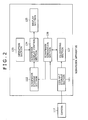
- FIG. 2 shows an exemplary structure of the scrapbook apparatus, whose functions are implemented by the CPU 101 executing the scrapbook program.
- the CPU 101 executes the scrapbook program stored in the HD 104, so that the PC functions as the scrapbook apparatus as shown in FIG. 2 .
- the scrapbook apparatus includes a content storage section 121, a scrapbook storage section 122, an operation section 123, a scrapbook display control section 124, a display section 125, a scrapbook generation section 126, and a clustering section 127.
- the content storage section 121 stores the pieces of photograph data, which are the contents loaded from the camera 112 into the PC, i.e., the scrapbook apparatus.
- the camera 112 takes photographs in accordance with user operations, and stores the resultant pieces of photograph data in an internal memory or a removable memory.
- the camera 112 stores metadata of each of the pieces of photograph data in the internal memory or the like.
- the metadata includes, for example, a date/time (for example, year, month, day, hour, minute, second) and location at which a photograph of the photograph data was taken. This date/time and location will be hereinafter referred to as a "photographing date/time" and a "photographing location", respectively.
- the camera 112 is capable of outputting (sending) the photograph data and the metadata stored in the internal memory or the like to an outside.
- the camera 112 contains a clock that calculates the date and time, for example, and obtains the photographing date/time, which is one component of the metadata of the photograph data, based on the date and time calculated by the clock.
- the camera 112 contains a reception section for receiving a signal from a GPS (Global Positioning System) satellite, for example, and obtains the photographing location, which is another component of the metadata of the photograph data, based on the signal received by the reception section.
- GPS Global Positioning System
- the photograph data and the metadata loaded from the camera 112 are stored in the content storage section 121.
- the metadata can be loaded from the camera 112 into the scrapbook apparatus together with the photograph data, as described above.
- the user is able to enter the metadata into the scrapbook apparatus by operating the input section 106.
- the user is able to modify the metadata stored in the content storage section 121, by operating the input section 106, for example.
- the scrapbook storage section 122 stores the scrapbook supplied from the scrapbook generation section 126.
- the operation section 123 is operated by the user, and supplies an operation signal corresponding to the user operation to the scrapbook display control section 124.
- the scrapbook display control section 124 performs control for reading the scrapbook from the scrapbook storage section 122, and allowing the display section 125 to display a thumbnail and a page of the scrapbook.
- the display section 125 Under control of the scrapbook display control section 124, the display section 125 displays the thumbnail and page of the scrapbook, and so on.
- the scrapbook generation section 126 generates the scrapbook, pages of which have placed (arranged) thereon the pieces of photograph data stored in the content storage section 121, and supplies the generated scrapbook to the scrapbook storage section 122.
- the scrapbook generation section 126 requests the clustering section 127 to subject the pieces of photograph data to clustering so that the pieces of photograph data will be grouped into clusters each of which has N or less pieces of photograph data, and based on a result of the clustering performed by the clustering section 127 in response to the request, the scrapbook generation section 126 generates the scrapbook such that pieces of photograph data that belong to one cluster are arranged on one page, and supplies the generated scrapbook to the scrapbook storage section 122.
- N is a maximum number of pieces of photograph data that can be placed on one page of the scrapbook.
- the scrapbook generated by the scrapbook generation section 126 contains the pieces of photograph data arranged on the pages of the scrapbook.
- each of the pages of the scrapbook may be associated data IDs (e.g., file names) that identify the pieces of photograph data arranged on the page.
- the scrapbook is displayed, the pieces of photograph data that are identified by the data IDs that are associated with the page can be read from the content storage section 121 and displayed.
- the clustering section 127 In response to the request from the scrapbook generation section 126, the clustering section 127 subjects the pieces of photograph data stored in the content storage section 121 to the clustering, and supplies information concerning the resulting clusters, to which the pieces of photograph data stored in the content storage section 121 belong, to the scrapbook generation section 126.
- the content storage section 121 and the scrapbook storage section 122 as shown in FIG. 2 correspond to the HD 104 or the RAM 103 as shown in FIG. 1 .
- the operation section 123 corresponds to the input section 106 as shown in FIG. 1
- the scrapbook display control section 124 corresponds to the CPU 101 and so on as shown in FIG. 1 .
- the display section 125 corresponds to the output section 105 as shown in FIG. 1
- the scrapbook generation section 126 and the clustering section 127 correspond to the CPU 101 and so on as shown in FIG. 1 .
- a scrapbook display control process and a scrapbook generation process are performed.
- the scrapbook display control process allows the display section 125 to display the scrapbook stored in the scrapbook storage section 122.
- the scrapbook generation process generates the scrapbook, the pages of which have arranged thereon the pieces of photograph data stored in the content storage section 121.
- FIG. 3 shows an exemplary screen that is displayed on the display section 125 by the scrapbook display control process.
- the scrapbook display control process allows a list screen 200 and a scrapbook screen 210 to be displayed on the display section 125.
- a thumbnail of a first page of each of the scrapbooks stored in the scrapbook storage section 122 is displayed, for example.
- the thumbnails of the first pages of the scrapbooks are arranged vertically in order of creation (generation) of the corresponding scrapbooks, for example.
- a maximum number of thumbnails that can be displayed on the list screen 200 are displayed thereon, while a scroll bar 201 is displayed on the list screen 200. If the user uses the operation section 123 to manipulate the scroll bar 201, the list screen 200 is scrolled so that the thumbnails being currently displayed on the list screen 200 will be replaced by other thumbnails.
- a cursor 202 is displayed on the list screen 200 so as to enclose one of the thumbnails for the scrapbooks. It is assumed here that the thumbnail on which the cursor 202 is placed (i.e., enclosed by the cursor 202) is referred to as an "in-focus thumbnail". The user can use the operation section 123 to move the cursor 202, thereby switching the in-focus thumbnail.
- scrapbook screen 210 On the scrapbook screen 210, one page of the scrapbook (hereinafter referred to as an "in-focus scrapbook" as appropriate) whose thumbnail is the in-focus thumbnail on the list screen 200 is displayed.
- Page buttons 211 are provided below the scrapbook screen 210.
- the user can use the operation section 123 to operate any of the page buttons 211 to switch the page of the in-focus scrapbook that is displayed on the scrapbook screen 210.
- the page is capable of having a background placed thereon.
- the background to be placed on the page and a layout of the page, such as the position, size, and so on of the pieces of photograph data to be placed on the page, may be determined by the scrapbook generation section 126 (see FIG. 2 ), and also may be specified or changed by the user by operating the operation section 123.
- the scrapbook display control process is started when the user has operated the input section 106 (see FIG. 1 ) to issue an instruction to execute the scrapbook program, for example.
- the scrapbook display control section 124 allows the display section 125 to display the list screen 200 and the scrapbook screen 210 as described above with reference to FIG. 3 . Then, control proceeds to step S12.
- the scrapbook display control section 124 reads all the scrapbooks stored in the scrapbook storage section 122, and generates the thumbnail of the first page of each of the scrapbooks.
- step S12 the scrapbook display control section 124 allows the thumbnail of the first page of each of the scrapbooks stored in the scrapbook storage section 122 to be displayed on the list screen 200. Then, control proceeds to step S13.
- thumbnails to be displayed on the list screen 200 may be generated in advance and stored in the scrapbook storage section 122. In this case, at step S12, the thumbnails that have previously been stored in the scrapbook storage section 122 are displayed.
- the scrapbook display control section 124 allows the cursor 202 to be displayed on the list screen 200 so as to enclose the top thumbnail (i.e., the uppermost thumbnail), for example, with the result that the scrapbook whose thumbnail is displayed at the top of the list screen 200 is determined to be the in-focus scrapbook. Then, control proceeds to step S14.
- the top thumbnail i.e., the uppermost thumbnail
- step S14 the scrapbook display control section 124 allows the first page of the in-focus scrapbook to be displayed on the scrapbook screen 210 (see FIG. 3 ). Then, control proceeds to step 515.
- the scrapbook display control section 124 determines whether the in-focus scrapbook has been switched.
- step S15 If it is determined at step S15 that the in-focus scrapbook has been switched, i.e., if the user has operated the operation section 123 to switch the thumbnail (i.e., the in-focus thumbnail) enclosed by the cursor 202, thereby switching the in-focus scrapbook, control returns to step S14, and the scrapbook display control section 124 allows the first page of the new in-focus scrapbook to be displayed on the scrapbook screen 210, and control proceeds to step S15 again.
- the thumbnail i.e., the in-focus thumbnail
- step S15 determines whether the in-focus scrapbook has been switched.
- step S16 the scrapbook display control section 124 determines whether the user has performed a page turning operation, i.e., an operation on any of the page buttons 211 (see FIG. 3 ), using the operation section 123.
- step S16 If it is determined at step S16 that the page turning operation has been performed, control proceeds to step S17.
- step S17 the scrapbook display control section 124 allows a next or previous page of the in-focus scrapbook to be displayed on the scrapbook screen 210 in accordance with the page turning operation. Then, control proceeds to step S18.
- step S16 determines whether the page turning operation has not been performed. If it is determined at step S16 that the page turning operation has not been performed, control proceeds to step S18, skipping step 517.
- step S18 the scrapbook display control section 124 determines whether the user has performed an end operation, i.e., an operation of operating the operation section 123 to end the scrapbook display control process.
- step S18 If it is determined at step S18 that the end operation has not been performed, control returns to step S15, and the subsequent processes are repeated.
- step S18 determines whether the end operation has been performed. If it is determined at step S18 that the end operation has been performed, control proceeds to step S19.
- the scrapbook display control section 124 closes (dismisses) the list screen 200 and the scrapbook screen 210 being displayed on the display section 125, and the scrapbook display control process is ended.
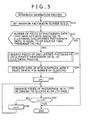
- the scrapbook generation process is started when the user has operated the input section 106 (see FIG. 1 ) to issue the instruction to execute the scrapbook program, for example.
- the scrapbook generation section 126 sets a maximum number (i.e., a maximum photograph number) N of pieces of photograph data that can be arranged (placed) on one page of the scrapbook. Then, control proceeds to step 532.
- a maximum number i.e., a maximum photograph number
- the maximum photograph number N is an integer greater than 1, and the user may specify the value of N in advance, for example.
- the maximum photograph number N may be originally set in the scrapbook program.
- the maximum photograph number N may be set to such a value that the size of the pieces of photograph data arranged on the pages of the scrapbook will be large enough for the user to see details of the photograph data to some extent, depending on the size of a screen of the display section 125 on which the scrapbook screen 210 (see FIG. 3 ) is displayed.
- the scrapbook generation section 126 determines whether or not the number of pieces of photograph data that have not been subjected to the clustering (hereinafter referred to as "unclustered photograph data" as appropriate), among the pieces of photograph data (i,e., contents) stored in the content storage section 121, is equal to or greater than a predetermined threshold TH, which is greater than the value of the maximum photograph number N.
- the clustering section 127 adds, to photograph data that has been subjected to the clustering, a flag that indicates that the photograph data has been subjected to the clustering, for example. This flag can be referred to when determining whether or not each of the pieces of photograph data stored in the content storage section 121 has been subjected to the clustering.
- step S32 If it is determined at step S32 that the number of pieces of unclustered photograph data is not equal to or greater than the predetermined threshold TH, i.e., if the number of pieces of unclustered photograph data stored in the content storage section 121 is less than the predetermined threshold TH, the scrapbook generation process is finished, in order to avoid creation (generation) of a scrapbook with a few pages, e.g., only one page.
- the pieces of unclustered photograph data are subjected to the clustering process, so that the pieces of unclustered photograph data are grouped into clusters each of which has N or less pieces of photograph data (where N is the maximum photograph number). Further, the scrapbook is created (generated) such that each of the pages of the scrapbook has arranged thereon pieces of photograph data that belong to a separate one of the clusters.
- the scrapbook generation section 126 requests the clustering section 127 to perform the clustering process.
- control proceeds from step S32 to step S33.
- the clustering section 127 in response to the request from the scrapbook generation section 126, subjects the pieces of unclustered photograph data stored in the content storage section 121 to the clustering process, so that the pieces of unclustered photograph data are grouped into the clusters each of which has N or less pieces of photograph data (where N is the maximum photograph number), and supplies to the scrapbook generation section 126 information concerning the clusters into which the pieces of unclustered photograph data have been grouped. Then, control proceeds to step S34.
- the scrapbook generation section 126 recognizes the total number P of clusters obtained as a result of subjecting the pieces of unclustered photograph data to the clustering, and creates a new scrapbook with P pages (where P is the total number of clusters). Then, control proceeds to step S35.
- step S35 the scrapbook generation section 126 sets a variable c for counting the number of pages to, for example, 1 as an initial value. Then, control proceeds to step S36.
- the scrapbook generation section 126 reads, from the content storage section 121, pieces of photograph data that belong to cluster #c, which is a cth cluster among the P clusters obtained as a result of the clustering process performed by the clustering section 127, and places (arranges) these pieces of photograph data on a cth page of the new scrapbook created at step 534. Then, control proceeds to step S37. Note that these pieces of photograph data are some of the pieces of unclustered photograph data that have been subjected to the clustering process at step 533.
- the scrapbook generation section 126 determines whether the variable c is equal to the total number P of clusters (i.e., the total number of pages of the scrapbook).
- step S37 If it is determined at step S37 that the variable c is not equal to the total number P of clusters, i.e., if the new scrapbook created at step S34 has a page on which no photograph data is placed, control proceeds to step S38.
- step S38 the scrapbook generation section 126 increments the variable c by one. Then, control returns to step S36, and the subsequent processes are repeated.
- the scrapbook generation section 126 supplies the scrapbook to the scrapbook storage section 122 to be stored therein, and finishes the scrapbook generation process.
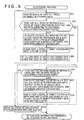
- the clustering section 127 handles the pieces of unclustered photograph data, among the pieces of photograph data stored in the content storage section 121, as an object of the clustering (hereinafter referred to as "object photograph data” as appropriate).
- the clustering section 127 recognizes a sequence of the pieces of object photograph data as arranged according to the photographing date/time (e.g., in the order in which the corresponding photographs were taken) (hereinafter referred to as an "object photograph data sequence" as appropriate) based on the photographing date/time included in the metadata stored in the content storage section 121.
- the clustering section 127 reads, from the content storage section 121, the metadata of first N+1 pieces of photograph data in the object photograph data sequence (where N is the maximum photograph number) to acquire them. Then, control proceeds to step S52.
- the clustering section 127 determines whether N+1 pieces of metadata, i.e., the metadata of the first N+1 pieces of photograph data in the object photograph data sequence (where N is the maximum photograph number), have been acquired at the previous iteration of step S51.
- the clustering section 127 groups first N or less pieces of photograph data in the object photograph data sequence into one cluster (where N is the maximum photograph number), based on the metadata acquired at the previous iteration of step S51.
- step S52 if it is determined at step S52 that the N+1 pieces of metadata, i.e., the metadata of the first N+1 pieces of photograph data in the object photograph data sequence (where N is the maximum photograph number), have been acquired, control proceeds to step S53.
- the distance d(n) is in accordance with a predetermined distance scale.
- step S53 the clustering section 127 determines the greatest distance d(k) (1 ⁇ k ⁇ N) of all the distances d(n) between the nth piece of photograph data and the (n+1)th piece of photograph data with respect to the N+1 pieces of photograph data. Then, control proceeds to step S54.
- the pieces of photograph data that belong to one cluster are placed on one page of the scrapbook as described above with reference to FIG. 5 .
- the maximum photograph number N i.e, the maximum number of pieces of photograph data that can be placed on one page of the scrapbook
- N the maximum photograph number
- the photographing date/time and the photographing location of the piece of photograph data #2 are close to those of the piece of photograph data #3
- the photographing date/time and the photographing location of the piece of photograph data #1 are far from those of the pieces of photograph data #2 and #3.
- t(i) denotes the photographing date/time of the photograph data #i.
- px(i) and py(i) denote an x-coordinate and a y-coordinate, respectively, in a predetermined x-y coordinate system of the photographing location of the photograph data #i.
- the predetermined x-y coordinate system a two-dimensional coordinate system with a location of a house of the user or the like for the origin can be adopted, for example.
- ⁇ and ⁇ are weighting coefficients and they are set at appropriate values.
- one of the weighting coefficients ⁇ and ⁇ may be set at 0.
- the distance dis (i,j) indicates a time interval (i.e., a temporal distance), (
- the distance dis(i,j) indicates a spatial distance ( ⁇ ((px(i) - px(j)) 2 + (py(i)-py(j)) 2 )) between the photographing location of the photograph data #i and the photographing location of the photograph data #j.
- step S54 the clustering section 127 groups first k ( ⁇ N) pieces of photograph data in the object photograph data sequence into one cluster. Then, control proceeds to step S55.
- the clustering section 127 divides the object photograph data sequence into two groups at a position where the distance d(n) according to the predetermined distance scale has the greatest value, i.e., the distance d(k), with the first group composed of the first k pieces of photograph data and the second group composed of the (k+1)th to last pieces of photograph data, and groups the first k pieces of photograph data into one cluster.
- step S55 the clustering section 127 sets the (k+1)th piece of photograph data in the object photograph data sequence as a top piece of photograph data in the object photograph data sequence. Then, control returns to step S51, and the subsequent processes are repeated.
- the clustering section 127 determines the greatest distance d(k) of all the distances d(n) between the nth piece of photograph data and the (n+1)th piece of photograph data with respect to first N+1 pieces (reckoned from the new top piece) of photograph data in the object photograph data sequence, which is a sequence of the pieces of unclustered photograph data as arranged according to the photographing date/time based on the metadata (the number of these pieces of unclustered photograph data is equal to or greater than the threshold TH), and groups first k pieces (reckoned from the new top piece) of photograph data in the object photograph data sequence into one cluster.
- step 552 If it is determined at step 552 that the N+1 pieces of metadata, i.e., the metadata of the first N+1 pieces of photograph data in the object photograph data sequence (where N is the maximum photograph number), have not been acquired at the previous iteration of step S51, i.e., if the number of pieces of photograph data included in the object photograph data sequence is less than N+1, or equal to or less than the maximum number N of pieces of photograph data that can be placed on one page, control proceeds to step 556. At step S56, the clustering section 127 determines whether the number of pieces of photograph data included in the object photograph data sequence is greater than one.
- step S56 If it is determined at step S56 that the number of pieces of photograph data included in the object photograph data sequence is greater than one, control proceeds to step 557.
- step 557 based on the metadata of all the pieces of photograph data included in the object photograph data sequence, the clustering section 127 calculates the distance d(n) between the nth piece of photograph data and the (n+1)th piece of photograph data, with respect to all the pieces of photograph data included in the object photograph data sequence.
- step S57 the clustering section 127 determines the greatest distance d(k) of all the distances d(n) with respect to all the pieces of photograph data in the object photograph data sequence. Then, control proceeds to step S58.
- the clustering section 127 groups the first k pieces of photograph data in the object photograph data sequence into one cluster, and groups the (k+1)th to last pieces of photograph data in the object photograph data sequence into another cluster.
- the clustering section 127 supplies, to the scrapbook generation section 126, information concerning the clusters obtained by the clustering at steps S54 and 558 (e.g., a set of information for identifying the clusters and information for identifying the pieces of photograph data that belong to the clusters), and control returns.
- information concerning the clusters obtained by the clustering at steps S54 and 558 e.g., a set of information for identifying the clusters and information for identifying the pieces of photograph data that belong to the clusters
- step S56 determines whether the number of pieces of photograph data included in the object photograph data sequence is not greater than one, i.e., if the number of pieces of photograph data included in the object photograph data sequence is one.
- control proceeds to step S59.
- the clustering section 127 groups all pieces of photograph data included in the object photograph data sequence (in this case, only the top piece of photograph data in the object photograph data sequence) into one cluster.
- the clustering section 127 supplies, to the scrapbook generation section 126, information concerning the clusters obtained by the clustering at steps S54 and S59, and control returns,
- step S52 if it is determined at step S52 that the N+1 pieces of metadata, i.e., the metadata of the first N+1 pieces of photograph data in the object photograph data sequence (where N is the maximum photograph number), have not been acquired at the previous iteration of step S51, i,e,, if the number of pieces of photograph data included in the object photograph data sequence is less than N+1, or equal to or less than the maximum number N of pieces of photograph data that can be placed on one page, control may proceed to step S59, so that the clustering section 127 groups all of the N or less pieces of photograph data in the object photograph data sequence into one cluster.
- the N+1 pieces of metadata i.e., the metadata of the first N+1 pieces of photograph data in the object photograph data sequence (where N is the maximum photograph number)
- the clustering section 127 may read, from the content storage section 121, the metadata of all pieces of photograph data in the object photograph data sequence, and that after step S55, control may return to step S52.
- the greatest distance d(k) of all the distances d(n) (according to the predetermined distance scale) between the nth piece of photograph data and the (n+1)th piece of photograph data is determined, with respect to the first N+1 pieces of photograph data in the object photograph data sequence, which is the sequence of the pieces of unclustered photograph data as arranged according to the photographing date/time based on the metadata (the number of these pieces of unclustered photograph data is equal to or greater than the threshold TH).
- the first k pieces of photograph data in the object photograph data sequence are grouped into one cluster, and this operation is repeated with the (k+1)th piece of photograph data in the object photograph data sequence as the new top piece of photograph data in the object photograph data sequence. Accordingly, the pieces of photograph data can be grouped into the clusters such that each of the clusters will have an appropriate number of pieces of photograph data.
- each of the clusters has N or less pieces of photograph data (where N is the maximum photograph number) with a short temporal and spatial distance therebetween.
- the object of the clustering is the photograph data in the present embodiment.
- the object of the clustering may be other types of contents, including video contents such as television broadcasts or films, video or still image contents obtained by photographing with a video camera, and music contents.
- all pieces of photograph data that have not been subjected to the clustering are subjected to the clustering in the clustering process (see FIG. 6 ).
- the user may specify, by operating the input section 106, the pieces of photograph data that should be subjected to the clustering, for example.
- the scrapbook generation process (see FIG. 5 ) is started when the user has operated the input section 106 (see FIG. 1 ) to issue the instruction to execute the scrapbook program.
- the scrapbook generation process may alternatively be performed periodically or when the user has issued an instruction to perform the scrapbook generation process, for example.
- the present invention is applicable to the PC. Note, however, that the present invention is also applicable to other types of devices that have a capability to store (accumulate) the contents, such as a hard disk recorder, the digital still camera, the digital video camera, and an audio player.
- processing steps of the program for causing the computer to perform the various processes as described above in the present specification do not need to be performed chronologically in the order as indicated in the above-described flowcharts. Some of the steps may be performed in parallel or independently of one another. For example, some of the steps may be implemented by parallel processing or object processing.
- program may be processed either by a single computer or by a plurality of computers in a distributed manner.
Landscapes
- Engineering & Computer Science (AREA)
- Theoretical Computer Science (AREA)
- Physics & Mathematics (AREA)
- General Physics & Mathematics (AREA)
- Multimedia (AREA)
- Signal Processing (AREA)
- Library & Information Science (AREA)
- Data Mining & Analysis (AREA)
- Databases & Information Systems (AREA)
- General Engineering & Computer Science (AREA)
- Information Retrieval, Db Structures And Fs Structures Therefor (AREA)
- Television Signal Processing For Recording (AREA)
Claims (7)
- Informationsverarbeitungsvorrichtung zum Gruppieren einer Mehrzahl von Inhalten in Clustern, wobei die Vorrichtung aufweist:einen Erlangungsabschnitt (127) der eingerichtet ist, Metadaten von jedem der Mehrzahl von Inhalten zu erlangen; undeinen Clusterbildungsabschnitt (127), der eingerichtet ist, die Mehrzahl von Inhalten basierend auf Metadaten so in Clustern zu gruppieren, dass jeder der Cluster N oder weniger Inhalte hat, wobei N eine vorbestimmte Zahl ist, wobei der Clusterbildungsabschnitteinen Abschnitt d(n) gemäß einer vorbestimmten Abstandskala zwischen einem n-ten Inhalt und einem (n+1)ten Inhalt in Bezug auf erste N+1 Inhalte in einer Inhaltsreichenfolge berechnet, und einen größten Abstand d(k) aller Abstände d(n) basierend auf den Metadaten ermittelt, wobei die Inhaltsfolge eine Folge der Mehrzahl von Inhalten ist, wie sie gemäß einem vorgegebenen Standard angeordnet sind,die ersten k Inhalte in der Inhaltsfolge in einem Cluster gruppiert, und,mit einem (k+1)ten Inhalt in der Inhaltsreihenfolge als neuen obersten Inhalt, in der Inhaltsfolge das Ermitteln des größten Abstands d(k) und das Gruppieren der ersten k Inhalte in der Inhaltsfolge in einen Cluster wiederholt.
- Informationsverarbeitungsvorrichtung gemäß Anspruch 1, wobei jeder der Inhalte Bilddaten eines mit einer Fotografiervorrichtung aufgenommenen Bildes sind,
die Metadaten ein/e Fotografierdatum/Zeit und eine Fotografierposition der Bilddaten umfasst,
die Inhaltsfolge eine Folge von Teilen von Bilddaten, wie sie gemäß der dem/der Fotografierdatum/Zeit angeordnet sind, und
der Clusterbildungsabschnitt als Abstand d(n) gemäß der vorbestimmten Abstandsskala einen Zeitabschnitt zwischen dem Fotografierdatum/Zeit des n-ten Inhalts und dem/der Fotografierdatum/Zeit des (n+1)ten Inhalts oder einen Abstand zwischen der Fotografierposition des n-ten Inhalts und der Fotografierposition des (n+1)ten Inhalts berechnet. - Informationsverarbeitungsvorrichtmg nach Anspruch 1, weiterhin aufweisend:einen Sammelalbumerzeugungsabschnitt (126) der eingerichtet ist, um ein Sammelalbum mit Seiten, auf denen jeweils Inhalte, die zu unterschiedlichen der Cluster gehören, angeordnet sind, zu erzeugen, wobei das Sammelalbum ein elektronisches Album ist.
- Informationsverarbeitungsvorrichtung nach Anspruch 3, wobei die vorbestimmte Anzahl N eine maximale Zahl von Inhalten ist, die auf einer Seite des Sammelalbums angeordnet werden können.
- Informationsverarbeitungsvorrichtung gemäß Anspruch 3, weiterhin aufweisend:ein Sammelalbumsanzeigesteuerabschnitt (124) der eingerichtet ist, zu erlauben, das Sammelalbum anzuzeigen.
- Infomnationsverarbeitungsverfahren zum Gruppieren einer Mehrzahl von Inhalten in Clustern, wobei das Verfahren die Verfahrensschritte aufweist:Erlangen von Metadaten von jedem der Mehrzahl von Inhalten; undGruppieren der Mehrzahl von Inhalten in Clustern, basierend auf den Metadaten, so dass jeder der Cluster N oder weniger Inhalte hat, wobei N eine vorbestimmte Zahl ist, wobeider Gruppierschritt umfasst:Berechnen eines Abstands d(n) zwischen einem n-ten Inhalt und einem (n+1)ten Inhalt in Bezug auf erste N+1 Inhalte in einer Inhaltsfolge gemäß einer vorbestimmten Abstandskala und Ermitteln eines größten Abstands d(k) aller Abstände d(n) basierend auf den Metadaten, wobei die Inhaltsfolge eine Folge der Mehrzahl von Inhalten ist, wie sie gemäß einem vorbestimmten Standard angeordnet sind,Gruppieren erster k-Inhalte in der Inhaltsfolge in einem Cluster und,mit einem (k+1)ten Inhalt in der Inhaltsfolge als einem neuem obersten Inhalt in der Inhaltsfolge, Wiederholen des Ermittelns des größten Abstands d(k) unddes Gruppierens der ersten k Inhalte in der Inhaltsfolge in einen Cluster.
- Programm zum Veranlassen eines Computers als eine Informationsverarbeitungsvorrichtung zum Gruppieren einer Mehrzahl von Inhalten in Clustern zu funktionieren, wobei das Programm den Computer veranlasst zu funktionieren als:ein Erlangungsabschnitt, der eingerichtet ist, Metadaten von jeden der Mehrzahl von Inhalten zu erlangen; undein Clusterbildungsabschnitt, der eingerichtet ist, die Mehrzahl von Inhalten in den Clustern basierend auf den Metadaten zu gruppieren, sodass jeder der Cluster N oder weniger Inhalte hat, wobei N eine vorbestimmte Zahl ist, wobei der Clusterbildungsabschnitteinen Abstand d(n) zwischen einen n-ten Inhalt und einem (n+1)ten Inhalt in Bezug auf erste N+1 Inhalte in einer Inhaltsfolge gemäß einem einer vorbestimmten Abstandskala berechnet und einen größten Abstand d(k) aller Abstände d(n) basierend auf den Metadaten ermittelt, wobei die Inhaltsfolge eine Folge der Mehrzahl von Inhalten ist, wie sie gemäß einem vorbestimmten Standard angeordnet sind,Gruppieren erster k-Inhalte in der Inhaltsfolge in einem Cluster und,mit einem (k+1)ten Inhalt in der Inhaltsfolge als einen neuen obersten Inhalt in der ItW altsfolge, Wiederholen des Ermittelns des größten Abstands d(k) und des Gruppierens der ersten k-Inhalte in der Inhaltsfolge in einem Cluster.
Applications Claiming Priority (1)
| Application Number | Priority Date | Filing Date | Title |
|---|---|---|---|
| JP2007161533A JP5034706B2 (ja) | 2007-06-19 | 2007-06-19 | 情報処理装置、情報処理方法、及びプログラム |
Publications (2)
| Publication Number | Publication Date |
|---|---|
| EP2007124A1 EP2007124A1 (de) | 2008-12-24 |
| EP2007124B1 true EP2007124B1 (de) | 2012-09-26 |
Family
ID=39591292
Family Applications (1)
| Application Number | Title | Priority Date | Filing Date |
|---|---|---|---|
| EP08158542A Ceased EP2007124B1 (de) | 2007-06-19 | 2008-06-19 | Informationsverarbeitungsvorrichtung, Informationsverarbeitungsverfahren und Programm |
Country Status (4)
| Country | Link |
|---|---|
| US (1) | US7870137B2 (de) |
| EP (1) | EP2007124B1 (de) |
| JP (1) | JP5034706B2 (de) |
| CN (1) | CN101329690B (de) |
Cited By (1)
| Publication number | Priority date | Publication date | Assignee | Title |
|---|---|---|---|---|
| US10140516B2 (en) | 2015-12-16 | 2018-11-27 | Samsung Electronics Co., Ltd. | Event-based image management using clustering |
Families Citing this family (8)
| Publication number | Priority date | Publication date | Assignee | Title |
|---|---|---|---|---|
| JP4737250B2 (ja) * | 2007-11-22 | 2011-07-27 | ソニー株式会社 | 情報処理装置及び情報処理方法 |
| US8838625B2 (en) * | 2009-04-03 | 2014-09-16 | Yahoo! Inc. | Automated screen scraping via grammar induction |
| JP5479274B2 (ja) * | 2010-08-30 | 2014-04-23 | 株式会社ニコンシステム | 画像分類装置、画像分類プログラム、プリンタ、撮像装置及び携帯電話機 |
| CN102651004A (zh) * | 2011-02-28 | 2012-08-29 | 国基电子(上海)有限公司 | 具影像获取功能的电子装置及方法 |
| US9904720B2 (en) * | 2013-09-18 | 2018-02-27 | Facebook, Inc. | Generating offline content |
| JP6582954B2 (ja) * | 2015-12-11 | 2019-10-02 | 富士通クライアントコンピューティング株式会社 | 書画カメラ装置、切り抜き支援方法及びプログラム |
| CN112287152B (zh) * | 2020-10-26 | 2021-08-27 | 山东晨熙智能科技有限公司 | 一种照片分类方法及系统 |
| KR20220102044A (ko) * | 2021-01-12 | 2022-07-19 | 삼성전자주식회사 | 상시 동작 카메라에 기반한 정보 획득 방법 |
Family Cites Families (8)
| Publication number | Priority date | Publication date | Assignee | Title |
|---|---|---|---|---|
| JP3932582B2 (ja) | 1996-11-11 | 2007-06-20 | ソニー株式会社 | 画像ファイルシステム |
| JP4056026B2 (ja) * | 1998-11-09 | 2008-03-05 | キヤノン株式会社 | 画像管理装置、画像管理方法及び記憶媒体 |
| US6636648B2 (en) | 1999-07-02 | 2003-10-21 | Eastman Kodak Company | Albuming method with automatic page layout |
| JP4017804B2 (ja) * | 2000-02-18 | 2007-12-05 | 富士フイルム株式会社 | 画像撮影装置、画像処理装置、及び画像管理方法 |
| US7441186B2 (en) | 2004-01-23 | 2008-10-21 | Microsoft Corporation | System and method for automatically grouping items |
| EP1589444A3 (de) | 2004-04-21 | 2008-03-12 | Samsung Electronics Co., Ltd. | Verfahren, Medium und Vorrichtung zur Erkennung von Änderungen der Situation in digitalen Fotos und Verfahren, Medium und Vorrichtung zur situationsbasierten Fotoclusterung in einem Digitalfotoalbum |
| JP2006293986A (ja) | 2005-03-15 | 2006-10-26 | Fuji Photo Film Co Ltd | アルバム作成装置、アルバム作成方法、及びプログラム |
| JP2007161533A (ja) | 2005-12-14 | 2007-06-28 | Ge Medical:Kk | オゾン発生器 |
-
2007
- 2007-06-19 JP JP2007161533A patent/JP5034706B2/ja not_active Expired - Fee Related
-
2008
- 2008-06-18 US US12/214,402 patent/US7870137B2/en not_active Expired - Fee Related
- 2008-06-19 EP EP08158542A patent/EP2007124B1/de not_active Ceased
- 2008-06-19 CN CN2008101285188A patent/CN101329690B/zh not_active Expired - Fee Related
Cited By (1)
| Publication number | Priority date | Publication date | Assignee | Title |
|---|---|---|---|---|
| US10140516B2 (en) | 2015-12-16 | 2018-11-27 | Samsung Electronics Co., Ltd. | Event-based image management using clustering |
Also Published As
| Publication number | Publication date |
|---|---|
| CN101329690A (zh) | 2008-12-24 |
| EP2007124A1 (de) | 2008-12-24 |
| US7870137B2 (en) | 2011-01-11 |
| JP5034706B2 (ja) | 2012-09-26 |
| US20080320039A1 (en) | 2008-12-25 |
| CN101329690B (zh) | 2010-12-08 |
| JP2009003542A (ja) | 2009-01-08 |
Similar Documents
| Publication | Publication Date | Title |
|---|---|---|
| EP2007124B1 (de) | Informationsverarbeitungsvorrichtung, Informationsverarbeitungsverfahren und Programm | |
| US8078618B2 (en) | Automatic multimode system for organizing and retrieving content data files | |
| US8732149B2 (en) | Content output device, content output method, program, program recording medium, and content output integrated circuit | |
| TWI498843B (zh) | 可攜式電子裝置、內容推薦方法及電腦可讀媒體 | |
| US20150156247A1 (en) | Client-Side Bulk Uploader | |
| US8028249B2 (en) | Method and system for browsing large digital multimedia object collections | |
| JP4577173B2 (ja) | 情報処理装置および方法、並びにプログラム | |
| US20080288869A1 (en) | Boolean Search User Interface | |
| US20060080342A1 (en) | Contents management system, contents management method, and computer program | |
| US20050271352A1 (en) | Apparatus and program for image classification | |
| WO2008103412A1 (en) | Representative image selection based on hierarchical clustering | |
| JP2012037974A5 (ja) | 表示制御装置及びその制御方法、並びにプログラム及び記憶媒体 | |
| WO2010021625A1 (en) | Automatic creation of a scalable relevance ordered representation of an image collection | |
| WO2015099834A1 (en) | Systems and methods for displaying an image capturing mode and a content viewing mode | |
| US20080085055A1 (en) | Differential cluster ranking for image record access | |
| KR20090039601A (ko) | 파일 전송 방법, 장치 및 프로그램 | |
| US9110927B2 (en) | Method and apparatus for organizing digital photographs | |
| US20080085032A1 (en) | Supplying digital images from a collection | |
| JP2002049907A (ja) | デジタルアルバム作成装置およびデジタルアルバム作成方法 | |
| KR100664959B1 (ko) | 이미지 클러스터링 장치 및 방법 | |
| JP5336759B2 (ja) | 画像出力装置及び画像出力方法 | |
| JP2002169810A (ja) | 画像検索プログラムを記録したコンピュータ読み取り可能な記録媒体、画像検索方法および画像検索装置 | |
| US7877684B2 (en) | Calendar production apparatus | |
| JP5651975B2 (ja) | 画像閲覧装置およびカメラ | |
| CN112258393A (zh) | 一种显示图片的方法和装置及设备 |
Legal Events
| Date | Code | Title | Description |
|---|---|---|---|
| PUAI | Public reference made under article 153(3) epc to a published international application that has entered the european phase |
Free format text: ORIGINAL CODE: 0009012 |
|
| AK | Designated contracting states |
Kind code of ref document: A1 Designated state(s): AT BE BG CH CY CZ DE DK EE ES FI FR GB GR HR HU IE IS IT LI LT LU LV MC MT NL NO PL PT RO SE SI SK TR |
|
| AX | Request for extension of the european patent |
Extension state: AL BA MK RS |
|
| 17P | Request for examination filed |
Effective date: 20090608 |
|
| 17Q | First examination report despatched |
Effective date: 20090703 |
|
| AKX | Designation fees paid |
Designated state(s): DE FR GB |
|
| RIC1 | Information provided on ipc code assigned before grant |
Ipc: H04N 1/00 20060101AFI20120314BHEP Ipc: G06F 17/30 20060101ALI20120314BHEP Ipc: G06T 11/60 20060101ALI20120314BHEP |
|
| GRAP | Despatch of communication of intention to grant a patent |
Free format text: ORIGINAL CODE: EPIDOSNIGR1 |
|
| GRAS | Grant fee paid |
Free format text: ORIGINAL CODE: EPIDOSNIGR3 |
|
| GRAA | (expected) grant |
Free format text: ORIGINAL CODE: 0009210 |
|
| AK | Designated contracting states |
Kind code of ref document: B1 Designated state(s): DE FR GB |
|
| REG | Reference to a national code |
Ref country code: GB Ref legal event code: FG4D |
|
| REG | Reference to a national code |
Ref country code: DE Ref legal event code: R096 Ref document number: 602008018951 Country of ref document: DE Effective date: 20121129 |
|
| PLBE | No opposition filed within time limit |
Free format text: ORIGINAL CODE: 0009261 |
|
| STAA | Information on the status of an ep patent application or granted ep patent |
Free format text: STATUS: NO OPPOSITION FILED WITHIN TIME LIMIT |
|
| 26N | No opposition filed |
Effective date: 20130627 |
|
| REG | Reference to a national code |
Ref country code: DE Ref legal event code: R097 Ref document number: 602008018951 Country of ref document: DE Effective date: 20130627 |
|
| REG | Reference to a national code |
Ref country code: FR Ref legal event code: PLFP Year of fee payment: 9 |
|
| REG | Reference to a national code |
Ref country code: FR Ref legal event code: PLFP Year of fee payment: 10 |
|
| REG | Reference to a national code |
Ref country code: FR Ref legal event code: PLFP Year of fee payment: 11 |
|
| PGFP | Annual fee paid to national office [announced via postgrant information from national office to epo] |
Ref country code: DE Payment date: 20190521 Year of fee payment: 12 |
|
| PGFP | Annual fee paid to national office [announced via postgrant information from national office to epo] |
Ref country code: FR Payment date: 20190522 Year of fee payment: 12 |
|
| PGFP | Annual fee paid to national office [announced via postgrant information from national office to epo] |
Ref country code: GB Payment date: 20190522 Year of fee payment: 12 |
|
| REG | Reference to a national code |
Ref country code: DE Ref legal event code: R119 Ref document number: 602008018951 Country of ref document: DE |
|
| GBPC | Gb: european patent ceased through non-payment of renewal fee |
Effective date: 20200619 |
|
| PG25 | Lapsed in a contracting state [announced via postgrant information from national office to epo] |
Ref country code: GB Free format text: LAPSE BECAUSE OF NON-PAYMENT OF DUE FEES Effective date: 20200619 Ref country code: FR Free format text: LAPSE BECAUSE OF NON-PAYMENT OF DUE FEES Effective date: 20200630 |
|
| PG25 | Lapsed in a contracting state [announced via postgrant information from national office to epo] |
Ref country code: DE Free format text: LAPSE BECAUSE OF NON-PAYMENT OF DUE FEES Effective date: 20210101 |