EP1973116B1 - Procédé de reproduction de contenu de média dans un terminal et terminal disposant d'une fonction de reproduction de contenu média - Google Patents
Procédé de reproduction de contenu de média dans un terminal et terminal disposant d'une fonction de reproduction de contenu média Download PDFInfo
- Publication number
- EP1973116B1 EP1973116B1 EP08004984.4A EP08004984A EP1973116B1 EP 1973116 B1 EP1973116 B1 EP 1973116B1 EP 08004984 A EP08004984 A EP 08004984A EP 1973116 B1 EP1973116 B1 EP 1973116B1
- Authority
- EP
- European Patent Office
- Prior art keywords
- content
- terminal
- content server
- media content
- media
- Prior art date
- Legal status (The legal status is an assumption and is not a legal conclusion. Google has not performed a legal analysis and makes no representation as to the accuracy of the status listed.)
- Active
Links
Images




Classifications
-
- G—PHYSICS
- G11—INFORMATION STORAGE
- G11B—INFORMATION STORAGE BASED ON RELATIVE MOVEMENT BETWEEN RECORD CARRIER AND TRANSDUCER
- G11B27/00—Editing; Indexing; Addressing; Timing or synchronising; Monitoring; Measuring tape travel
- G11B27/10—Indexing; Addressing; Timing or synchronising; Measuring tape travel
- G11B27/34—Indicating arrangements
-
- G—PHYSICS
- G11—INFORMATION STORAGE
- G11B—INFORMATION STORAGE BASED ON RELATIVE MOVEMENT BETWEEN RECORD CARRIER AND TRANSDUCER
- G11B27/00—Editing; Indexing; Addressing; Timing or synchronising; Monitoring; Measuring tape travel
- G11B27/10—Indexing; Addressing; Timing or synchronising; Measuring tape travel
-
- H—ELECTRICITY
- H04—ELECTRIC COMMUNICATION TECHNIQUE
- H04N—PICTORIAL COMMUNICATION, e.g. TELEVISION
- H04N21/00—Selective content distribution, e.g. interactive television or video on demand [VOD]
- H04N21/20—Servers specifically adapted for the distribution of content, e.g. VOD servers; Operations thereof
- H04N21/21—Server components or server architectures
-
- H—ELECTRICITY
- H04—ELECTRIC COMMUNICATION TECHNIQUE
- H04N—PICTORIAL COMMUNICATION, e.g. TELEVISION
- H04N21/00—Selective content distribution, e.g. interactive television or video on demand [VOD]
- H04N21/20—Servers specifically adapted for the distribution of content, e.g. VOD servers; Operations thereof
- H04N21/21—Server components or server architectures
- H04N21/222—Secondary servers, e.g. proxy server, cable television Head-end
- H04N21/2225—Local VOD servers
-
- H—ELECTRICITY
- H04—ELECTRIC COMMUNICATION TECHNIQUE
- H04N—PICTORIAL COMMUNICATION, e.g. TELEVISION
- H04N21/00—Selective content distribution, e.g. interactive television or video on demand [VOD]
- H04N21/20—Servers specifically adapted for the distribution of content, e.g. VOD servers; Operations thereof
- H04N21/23—Processing of content or additional data; Elementary server operations; Server middleware
-
- H—ELECTRICITY
- H04—ELECTRIC COMMUNICATION TECHNIQUE
- H04N—PICTORIAL COMMUNICATION, e.g. TELEVISION
- H04N21/00—Selective content distribution, e.g. interactive television or video on demand [VOD]
- H04N21/20—Servers specifically adapted for the distribution of content, e.g. VOD servers; Operations thereof
- H04N21/23—Processing of content or additional data; Elementary server operations; Server middleware
- H04N21/238—Interfacing the downstream path of the transmission network, e.g. adapting the transmission rate of a video stream to network bandwidth; Processing of multiplex streams
- H04N21/2387—Stream processing in response to a playback request from an end-user, e.g. for trick-play
-
- H—ELECTRICITY
- H04—ELECTRIC COMMUNICATION TECHNIQUE
- H04N—PICTORIAL COMMUNICATION, e.g. TELEVISION
- H04N21/00—Selective content distribution, e.g. interactive television or video on demand [VOD]
- H04N21/40—Client devices specifically adapted for the reception of or interaction with content, e.g. set-top-box [STB]; Operations thereof
- H04N21/43—Processing of content or additional data, e.g. demultiplexing additional data from a digital video stream; Elementary client operations, e.g. monitoring of home network or synchronising decoder's clock; Client middleware
- H04N21/433—Content storage operation, e.g. storage operation in response to a pause request, caching operations
- H04N21/4331—Caching operations, e.g. of an advertisement for later insertion during playback
-
- H—ELECTRICITY
- H04—ELECTRIC COMMUNICATION TECHNIQUE
- H04N—PICTORIAL COMMUNICATION, e.g. TELEVISION
- H04N21/00—Selective content distribution, e.g. interactive television or video on demand [VOD]
- H04N21/40—Client devices specifically adapted for the reception of or interaction with content, e.g. set-top-box [STB]; Operations thereof
- H04N21/43—Processing of content or additional data, e.g. demultiplexing additional data from a digital video stream; Elementary client operations, e.g. monitoring of home network or synchronising decoder's clock; Client middleware
- H04N21/44—Processing of video elementary streams, e.g. splicing a video clip retrieved from local storage with an incoming video stream or rendering scenes according to encoded video stream scene graphs
- H04N21/44016—Processing of video elementary streams, e.g. splicing a video clip retrieved from local storage with an incoming video stream or rendering scenes according to encoded video stream scene graphs involving splicing one content stream with another content stream, e.g. for substituting a video clip
-
- H—ELECTRICITY
- H04—ELECTRIC COMMUNICATION TECHNIQUE
- H04N—PICTORIAL COMMUNICATION, e.g. TELEVISION
- H04N21/00—Selective content distribution, e.g. interactive television or video on demand [VOD]
- H04N21/40—Client devices specifically adapted for the reception of or interaction with content, e.g. set-top-box [STB]; Operations thereof
- H04N21/45—Management operations performed by the client for facilitating the reception of or the interaction with the content or administrating data related to the end-user or to the client device itself, e.g. learning user preferences for recommending movies, resolving scheduling conflicts
- H04N21/462—Content or additional data management e.g. creating a master electronic programme guide from data received from the Internet and a Head-end or controlling the complexity of a video stream by scaling the resolution or bit-rate based on the client capabilities
- H04N21/4622—Retrieving content or additional data from different sources, e.g. from a broadcast channel and the Internet
-
- H—ELECTRICITY
- H04—ELECTRIC COMMUNICATION TECHNIQUE
- H04N—PICTORIAL COMMUNICATION, e.g. TELEVISION
- H04N21/00—Selective content distribution, e.g. interactive television or video on demand [VOD]
- H04N21/40—Client devices specifically adapted for the reception of or interaction with content, e.g. set-top-box [STB]; Operations thereof
- H04N21/47—End-user applications
- H04N21/472—End-user interface for requesting content, additional data or services; End-user interface for interacting with content, e.g. for content reservation or setting reminders, for requesting event notification, for manipulating displayed content
- H04N21/47202—End-user interface for requesting content, additional data or services; End-user interface for interacting with content, e.g. for content reservation or setting reminders, for requesting event notification, for manipulating displayed content for requesting content on demand, e.g. video on demand
-
- H—ELECTRICITY
- H04—ELECTRIC COMMUNICATION TECHNIQUE
- H04N—PICTORIAL COMMUNICATION, e.g. TELEVISION
- H04N21/00—Selective content distribution, e.g. interactive television or video on demand [VOD]
- H04N21/60—Network structure or processes for video distribution between server and client or between remote clients; Control signalling between clients, server and network components; Transmission of management data between server and client, e.g. sending from server to client commands for recording incoming content stream; Communication details between server and client
- H04N21/65—Transmission of management data between client and server
- H04N21/658—Transmission by the client directed to the server
- H04N21/6587—Control parameters, e.g. trick play commands, viewpoint selection
-
- H—ELECTRICITY
- H04—ELECTRIC COMMUNICATION TECHNIQUE
- H04L—TRANSMISSION OF DIGITAL INFORMATION, e.g. TELEGRAPHIC COMMUNICATION
- H04L65/00—Network arrangements, protocols or services for supporting real-time applications in data packet communication
- H04L65/60—Network streaming of media packets
- H04L65/75—Media network packet handling
- H04L65/764—Media network packet handling at the destination
Definitions
- the present invention relates to a method for reproducing media content in a terminal, and more particularly, to a method for reproducing media content when accessing a content-providing server, and a terminal having a function for reproducing media content.
- the terminal when a terminal accesses a specific content-providing server, the terminal outputs audio signal provided by the specific content-providing server.
- the terminal may stop the output of the audio signal and reproduce a media content, which is previously stored in the terminal, according to the selection of a user.
- WO03081446 is directed to an apparatus and method of providing a multimedia advertising service through a mobile communication network.
- a content server downloads add contents to a mobile terminal along with a content-displaying condition and the mobile terminal having received the add contents displays the received add contents according to the content-displaying condition when an event specified by the content-displaying condition occurs. Afterwards, a content-displayed history is uploaded to the content server by the mobile terminal.
- WO2006010950 discuses that music tracks are received over wireless digital radio and stored in encrypted form in a digital media player, but only when the player is receiving and playing back advertisements is it possibly to playback stored, encrypted tracks. A user could therefore build up a large library of music tracks over time, stored on the player, knowing that he could listen to any so long as he was prepared also to listen to advertisements.
- EP 1 120 716 discloses a method and apparatus for associating an auditory cue with a navigational aid for use in navigating the Internet.
- At least one element of a history or bookmark list, regardless of the structural representation of that list, of a browser is associated with a sound.
- "sound bytes" are stored in wave files on a storage medium of a computer running the browser.
- At least one element, for example, a web page name, of the history list is associated with one of the stored wave files. The associated sound is played when the web page is accessed and may be heard again when passing a cursor over the name in a history mechanism, or re-accessing the web page.
- US 2006/059535 discloses a receiver, such as in an automobile and/or wireless communication device, that is configured for a method of playing live and recorded multimedia content.
- a desired genre of content is first defined. Both recorded and live content of that desired genre is identified and assembled into a playlist. Live content that is near a beginning of its being played can be rotated to a top of the playlist.
- the present invention is directed to a method for reproducing media content in a terminal and a terminal having a function for reproducing media content that substantially obviate at least one problem due to limitations and disadvantages of the related art.
- An object of the present invention is to provide a method and terminal, as set out in the independent claims, reproducing media content desired by a user among at least one media content which is previously stored in the terminal, according to what a content server is accessed.
- a method for reproducing media content in a terminal includes accessing a content server; and reproducing at least one media content configured with the accessed content server, among at least one media content which is previously stored in the terminal.
- a terminal having a media content reproduction function comprising: a storage unit configured to store at least one media content; a transmission/reception unit configured to access a content server and receive at least one content from the accessed content server; and a controller configured to reproduce at least one media content configured with the accessed content server, among the at least one media content stored in the storage unit.
- FIG. 1 is a block diagram showing a terminal having a function for reproducing media content according to an embodiment of the present invention
- FIG. 2 is a structural diagram showing a system including a content server and a terminal according to an embodiment of the present invention.
- the terminal 100 includes an input unit 110, a transmission/reception unit 120, a storage unit 130, a controller 140, an output unit 150, a call connection unit 160, and a broadcast reception unit 170.
- the input unit 110 receives an input operation (or input command) from a user of the terminal 100 and generates a signal corresponding thereto.
- the input unit 110 is configured to receive the input operation of the user, and may include a key pad provided with a plurality of keys, a touch screen, or a touch pad.
- the input unit 110 includes a control key configured to receive a control command (or input command) from the user for a reproduction (or playing) of a media content (e.g., video, audio, and text) while the media content is being reproduced or played.
- a media content e.g., video, audio, and text
- the media content being reproduced is configured or pre-set in the terminal 100 so that if the user makes a selection via the control key, the media content is reproduced.
- the media content being reproduced is received from the accessed content-providing server (hereinafter referred to as a "content server").
- the transmission/reception unit 120 is configured to access the content server 210 (e.g., generally provided externally) through a communication network 240, and receive contents from the content server 210. Furthermore, the transmission/reception unit 120 may access a plurality of content servers 210, 220 and 230.
- the content server 210 e.g., generally provided externally
- the transmission/reception unit 120 may access a plurality of content servers 210, 220 and 230.
- the communication network 240 can be in a form of a wireless Internet.
- the communication network 240 can be implemented by at least one of Wireless Broadband (WiBro), Worldwide Interoperability for Microwave Access (WiMAX), Wireless Fidelity (WiFi), and High Speed Donwlink Packet Access (HSDPA).
- the communication network 240 can also include a wired Internet and be implemented by, without being limited to, all methods for receiving contents from an external server.
- the content servers 210, 220 and 230 can be connected to the terminal 100 over the communication network 240 to provide contents (e.g., audio, video, and text) to the terminal 100.
- contents e.g., audio, video, and text
- the content servers 210, 220 and 230 can include a variety of Internet servers such as a web server, a File Transfer Protocol (FTP) server, and a mail server.
- the content servers 210, 220 and 230 can have respective address information for indicating their locations on the network.
- the address information may be represented by a uniform resource locator (URL).
- URL uniform resource locator
- the transmission/reception unit 120 can access the content server 210 using the address information, and more particularly, the URL of the content server 210.
- the transmission/reception unit 120 can use the address information directly inputted by the user through the input unit 110 and the address information stored in the storage unit 130.
- the contents indicate a web page (including an highest-level web page and a lower-level web page).
- the web page includes a HTML file relating to script and graphic.
- the highest-level web page or the lower-level web page of the content server 210 can be outputted by the output unit 150.
- the storage unit 130 can store all data inputted/outputted to/from the terminal 100 and all programs necessary for the operation of the terminal 100.
- the storage unit 130 can store the contents provided by the content server 210 accessed through the transmission/reception unit 120, and can store the address information of the previously accessed content servers.
- the storage unit 130 can store various forms of media.
- the media (or media content) includes an audio including sound and music, a video including still image and moving image, and a video/audio including multimedia.
- the media can also be referred to as data related to audio, video, and text.
- the media can be stored in the storage unit 130 as a default, or can be received from an external terminal or server and stored in the storage unit 130.
- the controller 140 can control the whole operation of the terminal 100.
- the controller 140 can be configured to perform an operation for reproducing media when accessing the content server 210 through the transmission/reception unit 120.
- the controller 140 can configure (or set) a specific media to be reproduced when the terminal accesses a specific content server.
- the configured specific media is one of many media contents (e.g., audio, video, text, still images, and flash) stored in the storage unit 130.
- the controller 140 can configure at least one media content per at least one content server or conversely, can configure at least one content server per at least one media content, according to the selection of the user through the input unit 110.
- media content can be configured to more than one content server and/or a content server can be configured to more than one media content.
- the controller 140 can reproduce the at least one media content configured with the accessed specific content server.
- an audio signal (e.g., audio of the media contents) configured on the terminal 100 with the content server 210 collides with another audio signal, it is the function of the controller 140 to control the operation for reproducing (or playing/outputting) the audio.
- the controller 140 can provide control command(s) so that one of the provided audio signal or audio signal of the media content configured on the accessed server 210 is outputted.
- the controller 140 can control one of the audio stored in the storage unit 130 and the audio of the media content configured with the accessed content server 210 to be outputted.
- media e.g., audio, video, and text
- the controller 140 can control one of the audio according to the call connection and the audio of the media content configured with the accessed content server 210 to be outputted.
- the controller 140 can control one of audio signal of the broadcast program and audio signal of the media content configured with the accessed content server 210 to be outputted.
- the output unit 150 can be configured to output various forms of media (or signals) according to the control signal of the controller 140.
- the output unit 150 includes a video output device 152 for outputting the video and an audio output device 154 for outputting the audio.
- the output unit 150 can output audio or video of the media configured with the content server 210 accessed through the transmission/reception unit 120 according to the control signal of the controller 140.
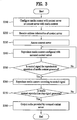
- FIG. 3 is a flowchart illustrating a method for reproducing media in a terminal according to an embodiment of the present invention.
- the terminal 100 can configure (or set) at least one media according to at least one content server, or at least one content server according to at least one media content (S310).
- the content server with which the media contents will be configured may be selected by the user, previously configured in the terminal 100, or previously connected to the terminal 100.
- the media contents can relate to media contents which are previously stored in the terminal 100, and as discussed, the media contents can include data (or files) associated with audio, video, and video/audio, among other contents.
- the terminal 100 can set at least one of a reproduction sequence, a reproduction frequency, a reproduction speed, and a reproduction time of at least one media content configured with a specific server, according to the selection of the user.
- the content server can also be referred to as a "web server.”
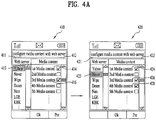
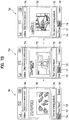
- the terminal 100 displays a list of web servers in first regions 411 and 421 of a screen and a list of media contents in second regions 412 and 422.
- the terminal 100 configures first media content 414 and third media content 416 with a web server 'Yahoo' 413 according to the selection of the user (410) .
- the terminal 100 configures first media content 424, third media content 426, and fourth media content 428 with a web server 'Naver' 423 according to the selection of the user (420).
- the terminal 100 can configure at least one media content with each web server by the above-described manner.
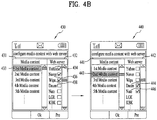
- the terminal 100 displays a list of media contents in first regions 431 and 441 of a screen and a list of web servers in second regions 432 and 442. For example, the terminal 100 can configure web servers 'Yahoo' 434, 'Naver' 436 and 'Wips' 438 with first media content 433 according to the selection of the user (430).
- the terminal 100 can configure web servers 'Daum' 444 and 'Nate' 446 with second media content 443 according to the selection of the user (440). Moreover, the terminal 100 can configure at least one web server with each media content by the above-described manner. In addition, the terminal 100 can receive the address information of a content server (for example, web server) to be accessed (S320).
- a content server for example, web server
- the web servers have respective address information (for example, URLs). Accordingly, the terminal 100 can directly receive the address information of the content server from the user, or receive the address information allowing the user to select the content server having the address information which is previously stored in the terminal 100.
- address information for example, URLs
- the terminal 100 accesses the content server having the received address information (S330).
- the terminal 100 can output a web page provided by the accessed content server on the screen.
- the terminal 100 reproduces at least one media content configured with the accessed content server (S340).
- the terminal 100 can reproduce at least one media content according to the reproduction frequency, the reproduction speed, and the reproduction time of the at least one media content configured in the setting step S310.
- the terminal 100 can display brief information on a media content which is currently being reproduced (for example, the name of the media content) in a predetermined region, and more particularly, a lower end region of the screen.
- a media content which is currently being reproduced for example, the name of the media content
- the terminal 100 can determine whether a control signal for the reproduction operation of the media content is generated (S350). More specifically, the terminal 100 can generate the control signal for the reproduction operation if the control key is selected by the user.
- the terminal 100 can display a list of media contents configured on the accessed content server, information on the media content which is currently being reproduced (for example, a title, a signer's name, a composer/lyricist's name, the lyrics of song, and album information when the media content is a "music file") and a control window for controlling a reproduction method (for example, a window for controlling a reproduction speed, a reproduction frequency, a reproduction time, a reproduced section, a reproduction volume and a reproduction sequence).
- information on the media content which is currently being reproduced for example, a title, a signer's name, a composer/lyricist's name, the lyrics of song, and album information when the media content is a "music file”
- a control window for controlling a reproduction method for example, a window for controlling a reproduction speed, a reproduction frequency, a reproduction time, a reproduced section, a reproduction volume and a reproduction sequence.
- the terminal 100 displays the URL of a web server 'Naver' on an address window 454 and the web page of the web server 'Naver' on a main screen 452.
- the terminal 100 displays the control key 458 on a portion of the lower end region of the screen, and displays information 456 that 'I love you', which is the media content configured with the web server 'Naver', is currently being reproduced.
- the terminal 100 displays a search window 466 for displaying search pointers 469 in a portion of the lower end region of the screen so as to search for the 'I love you' which is currently being produced and other media content configured with the web server 'Naver' (460). Accordingly, the user can search for desired media content by activating the search pointers 469.
- the terminal 100 displays the list 476 of media contents configured with the web server 'Naver' in a partial region of the screen (470). Accordingly, the user can search for desired media content using the list 476 of media contents.
- the terminal 100 can reproduce the searched media content in the states 460 and 470 according to the selection of the user.
- the terminal 100 displays the control window 496 on a partial region of the screen (490).
- control window 496 items for determining the reproduction speed, the reproduction volume, the reproduction frequency, and the reproduction skip are displayed.
- the terminal 100 reproduces at least one media content according to the control signal (S360).
- the terminal 100 may delete/skip specific media content (e.g., audio or video) from the list of media contents or add specific media content to the list of media contents.
- the terminal 100 may stop the reproduction of the media content which is currently being reproduced and reproduce specific media content selected from the list of media contents.
- the terminal 100 may reproduce at least one media content according to a reproduction method configured through the control window.
- the terminal 100 determines whether a reproduction stop signal for the media content which is currently being reproduced is generated (S370).
- the reproduction stop signal may be generated according to the selection of the user. Alternatively, the reproduction stop signal may be generated if all the media contents configured with the accessed web server is reproduced.
- the terminal 100 stops the reproduction operation of the media content configured with the accessed web server and outputs the audio signal provided by the accessed content server (S380).
- FIG. 5 shows the method for outputting audio, when other audio signal collides with the audio of media contents configured with the content server (or web server).
- the media content configured with the web server comprises audio. It is assumed that, when the other audio signal collides with the audio of the media content configured with the web server, the audio of the media content configured with the web server is outputted in preference to the other audio signal. Alternatively, the other audio signal may be outputted in preference to the audio of the media content configured with the web server.
- the terminal 100 can output audio (hereinafter, referred to as a "first audio") of the media content configured with the accessed content server (or web server) (S505).
- the terminal 100 determines whether audio (hereinafter, referred to as a "second audio") provided by the accessed content server is present (S510).
- the terminal 100 blocks the output of the second audio (S515) and continuously outputs the first audio (S520).
- the terminal 100 determines whether audio according to call connection (hereinafter, referred to as a "third audio") is present (S525).
- the terminal 100 blocks the output of the third audio (S530) and continuously outputs the first audio (S535).
- the terminal 100 determines whether the content server is accessed while audio (hereinafter, referred to as a "fourth audio") media content which is previously stored in the terminal 100 is reproduced (S540).
- audio hereinafter, referred to as a "fourth audio”
- the terminal 100 blocks the output of the fourth audio (S545) and continuously outputs the first audio (S550).
- the terminal 100 determines whether the terminal 100 is connected to a broadcast channel (S555). If it is determined that the terminal 100 is connected to the broadcast channel, the terminal 100 blocks the output of audio of a broadcast program provided through the broadcast channel (S560) and continuously outputs the first audio (S565).
- the terminal 100 may stop only the output of the audio of the broadcast program while the video of the broadcast program is outputted on the screen.
- the terminal 100 can configure (or set) a reproduction reference of media content when accessing the plurality of content servers (S610).
- the reproduction reference indicates a reference for determining the reproduction sequence of media content configured with the plurality of content servers when accessing the plurality of content server.
- the reproduction reference may be configured according to the selection of the user or as a default.
- the terminal 100 accesses the plurality of content servers (S620).
- the terminal 100 continuously reproduces at least one media content configured with the content server which is first accessed (S630).
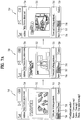
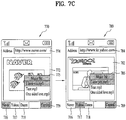
- 'I_love_you.mp3' is configured with a web server 'Naver'
- 'tear.mp3' is configured with a web server 'Yahoo'
- 'one-sided_love.mp3' is configured with a web server 'Daum' in FIGs 7A to 7C .
- the terminal 100 continuously reproduces the 'I_love_you.mp3' configured with the web server 'Naver' which is first accessed, regardless of what content server is activated among the plurality of accessed content servers (710, 720 and 730).
- the terminal 100 reproduces at least one media content configured with the content server which is currently being activated (S640).
- the terminal 100 reproduces the 'I_love_you.mp3' (740) if the web server 'Naver' is activated, the 'tear.mp3' (750) if the web server 'Yahoo' is activated, and the One-sided_love.mp3' if the web server 'Daum' is activated.
- the terminal 100 reproduces all the media contents configured with the plurality of content servers (S650).
- the terminal 100 may reproduce all the media contents configured with the plurality of content servers in order in which the servers were accessed.
- the terminal 100 reproduces all the media contents configured with the plurality of accessed content servers, regardless of what content server is activated among the plurality of accessed content servers.
- all the media contents configured with the plurality of content servers is displayed as a list of music 775 or 785 (770 and 780).
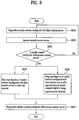
- a method for reproducing media content if the accessed content server is changed from one content server (hereinafter, referred to as a "first content server”) to another content server (hereinafter, referred to as a "second content server”) will now be described in detail with reference to FIG. 8 .
- the terminal 100 accesses the second content server (S820) while the media content configured with the first content server is reproduced (S810).
- the terminal 100 determines whether media content is configured with the second content server (S830). If it is determined that the media content is configured with the second content server, the terminal 100 stops the reproduction of the media content configured with the first content server in a fade-out manner (S840).
- the terminal 100 stops the reproduction of the media content configured with the first content server after the reproduction of the media content, which is being reproduced in the reproducing step (S810), is finished (S850).
- the terminal 100 reproduces the media content configured with the second content server (S860).
- the terminal 100 returns to the step S810, which the media content configured with the first content server is then continuously reproduced.
- media content to be reproduced can be configured with each web server, it is possible to access a web server and, at the same time, to reproduce media content configured with the accessed web server without a user's operation. Accordingly, a user can receive contents from a web server and, at the same time, reproduce desired media content.
Landscapes
- Engineering & Computer Science (AREA)
- Multimedia (AREA)
- Signal Processing (AREA)
- Databases & Information Systems (AREA)
- Human Computer Interaction (AREA)
- Information Transfer Between Computers (AREA)
- Telephonic Communication Services (AREA)
Claims (21)
- Procédé de reproduction de contenu multimédia dans un terminal (100), le procédé exécuté par le terminal comprenant les étapes consistant à :mettre en mémoire une pluralité de contenus multimédia dans le terminal (100) ;attribuer la pluralité de contenus multimédia mis en mémoire à associer à une pluralité de serveurs de contenu (413) ;accéder à un premier serveur de contenu de la pluralité de serveurs de contenu (413) ;afficher, par l'intermédiaire d'un écran tactile du terminal, une première page Web associée au premier serveur de contenu ;attribuer un premier contenu multimédia associé au premier serveur de contenu à une liste affichée sur l'écran tactile du terminal ;reproduire, en réponse à l'accès au premier serveur de contenu, le premier contenu multimédia associé au premier serveur de contenu attribué à la liste ;accéder à un seconde serveur de contenu de la pluralité des serveurs de contenu ;afficher, par l'intermédiaire de l'écran tactile, une seconde page Web associée au second serveur de contenu pendant la reproduction du premier contenu multimédia dans la liste ;attribuer un second contenu multimédia associé au second serveur de contenu à la liste affichée sur l'écran tactile du terminal ;reproduire le second contenu multimédia dans la liste après l'achèvement de la reproduction du premier contenu multimédia pendant l'affichage de la seconde page Web associé au seconde serveur de contenu ; etsi un canal de diffusion est connecté au terminal (100) par un réseau de diffusion, arrêter une sortie audio du programme de diffusion fourni par l'intermédiaire du canal de diffusion et produire une vidéo du programme de diffusion tandis que le premier ou le second contenu multimédia est en cours de reproduction,les premier et second contenus multimédia comprenant une audio.
- Procédé selon la revendication 1, le terminal (100) dans l'étape d'attribution définissant une séquence de reproduction et/ou une fréquence de reproduction et/ou une vitesse de reproduction et/ou une durée de reproduction dudit contenu multimédia (414) associé au serveur de contenu (413).
- Procédé selon la revendication 1 ou 2, si l'audio délivrée par le serveur de contenu accessible (413) est présente, le terminal (100) dans l'étape d'attribution configurant l'audio délivrée et/ou l'audio dudit contenu multimédia (414) associé au serveur de contenu accessible (413) à délivrer.
- Procédé selon la revendication 1 ou 2, si un appel est connecté au terminal (100), le terminal (100) dans l'étape d'attribution configurant l'audio par la connexion d'appel et/ou l'audio dudit contenu multimédia (414) associé au serveur de contenu accessible (413) à délivrer.
- Procédé selon la revendication 1 ou 2, si l'au moins un serveur de contenu (413) est accessible tandis qu'un contenu multimédia (414) mémorisé dans le terminal (100) est reproduit, le terminal (100) dans l'étape d'attribution configurant l'audio du contenu multimédia reproduite et/ou l'audio dudit contenu multimédia (414) associé au serveur de contenu accessible (413) à délivrer.
- Procédé selon l'une quelconque des revendications 1 à 5, le terminal (100) dans l'étape de reproduction reproduisant ledit contenu multimédia (414) associé au serveur de contenu (413) qui est en train d'être activé, si une pluralité de serveurs de contenu (413) sont accessibles.
- Procédé selon l'une quelconque des revendications 1 à 5, l'étape de reproduction consistant à :arrêter la reproduction d'un contenu multimédia (414) associé au premier serveur de contenu (413) si le serveur de contenu accessible (413) passe du premier serveur de contenu au second serveur de contenu ; etreproduire ledit contenu multimédia (414) associé au second serveur de contenu.
- Procédé selon l'une quelconque des revendications 1 à 7, consistant à :
commander une opération de reproduction dudit contenu multimédia (414) associé au serveur de contenu accessible (413),
le terminal (100) dans l'étape de reproduction reproduisant ledit contenu multimédia (414) associé au serveur de contenu accessible (413) selon le résultat de commande. - Procédé selon l'une quelconque des revendications 1 à 8, consistant en outre à :
bloquer la sortie d'un autre contenu multimédia tandis que ledit contenu multimédia (414) associé au serveur de contenu accessible (413) est reproduit. - Terminal (10) ayant une fonction de reproduction de contenu multimédia, le terminal (100) comprenant :un écran tactile ;une unité de mémoire (130) conçue pour mettre en mémoire une pluralité de contenus multimédia ; une unité de transmission/réception (120) conçue pour accéder à au moins un serveur de contenu (413) et pour recevoir au moins un contenu en provenant dudit serveur de contenu accessible ; etun organe de commande conçu pour :attribuer la pluralité de contenus multimédia mis en mémoire dans l'unité de mémoire à associer à la pluralité de serveurs de contenu (413),en réponse à l'accès au premier serveur de contenu de la pluralité des serveurs de contenu (413), ordonner à l'écran tactile d'afficher une première page Web associée au premier serveur de contenu dans une liste et reproduire un premier contenu multimédia associé au premier serveur de contenu dans la liste,si l'unité de transmission/réception accède au second serveur de contenu de la pluralité de serveurs de contenu (413) pendant la reproduction du premier contenu multimédia, ordonner à l'écran tactile d'afficher une seconde page Web associée au second serveur de contenu dans la liste, à poursuivre la reproduction du premier contenu multimédia pendant l'affichage de la seconde page Web associée au second serveur de contenu dans la liste, et à reproduire un second contenu multimédia associé au second serveur de contenu après l'achèvement de la reproduction du premier contenu multimédia dans la liste, etsi un canal de diffusion est connecté au terminal (100) par l'intermédiaire d'un réseau de diffusion, arrêter une sortie d'audio d'un programme de diffusion délivré par l'intermédiaire du canal de diffusion et produire la vidéo du programme de diffusion, pendant que le premier ou le second contenu multimédia est en cours de reproduction,les premier et second contenus multimédia comprenant une audio.
- Terminal (100) selon la revendication 10, le contenu multimédia (414) comprenant des données associées à au moins l'audio et la vidéo.
- Terminal (100) selon les revendications 10 ou 11, l'unité de transmission/réception (120) étant conçue pour accéder au serveur de contenu (413) à l'aide des informations d'adresse du serveur de contenu (413).
- Terminal (100) selon les revendications 10 à 12, l'organe de commande (140) étant conçu pour définir une séquence de reproduction et/ou une fréquence de reproduction et/ou une vitesse de reproduction et/ou une durée de reproduction d'au moins un contenu multimédia (par exemple, 414) associé au serveur de contenu (413).
- Terminal (100) selon l'une quelconque des revendications 10 à 13, l'organe de commande (140), lorsqu'une pluralité de serveurs de contenu (413) sont accessibles, étant conçu pour :
reproduire ledit contenu multimédia (414) associé au serveur de contenu (413) qui est le premier accessible,reproduire ledit contenu multimédia (414) associé au serveur de contenu (413) qui est actuellement activé, oureproduire tous les contenus multimédia (414) associés à la pluralité de serveurs de contenu (413) dans l'ordre d'accès. - Terminal selon l'une quelconque des revendications 10 à 13, l'organe de commande (140), lorsque le serveur de contenu (413) accessible passe du premier serveur de contenu au second serveur de contenu par l'intermédiaire de l'unité de transmission/réception (120), étant conçu pour arrêter la reproduction dudit contenu multimédia (414) associé au premier serveur de contenu, et pour reproduire ledit contenu multimédia (414) associé au second serveur de contenu.
- Terminal selon l'une quelconque des revendications 10 à 13, l'organe de commande (140) étant conçu pour reproduire en continu ledit contenu multimédia (414) associé à un premier serveur de contenu si le serveur de contenu accessible (413) passe du premier serveur de contenu au second serveur de contenu auquel le contenu multimédia est associé.
- Terminal selon l'une quelconque des revendications 10 à 16, comprenant en outre :une unité d'entrée (110) conçue pour recevoir un signal de sélection d'une manière de reproduction dudit contenu multimédia (414) associé au serveur de contenu accessible (413),l'organe de commande (140) étant conçu pour commander une opération de reproduction dudit contenu multimédia (414) associé au serveur de contenu accessible (413) selon le signal de sélection.
- Terminal selon l'une quelconque des revendications 10 à 17, l'organe de commande (140), lorsque l'audio délivrée par le serveur de contenu accessible (413) est présente, étant conçu pour commander l'audio délivrée et/ou l'audio dudit contenu multimédia (414) associé au serveur de contenu accessible (413) à délivrer.
- Terminal selon l'une quelconque des revendications 10 à 17, l'organe de commande (140) étant conçu pour, lorsqu'un appel est connecté au terminal (100), commander l'audio par la connexion d'appel et/ou l'audio dudit contenu multimédia (414) associé au serveur de contenu (413) à délivrer.
- Terminal selon l'une quelconque des revendications 10 à 17, l'organe de commande (140) étant conçu pour, si le serveur de contenu (413) est accessible pendant que le contenu multimédia (414) associé dans l'unité de mémoire (130) est reproduit, commander l'audio du contenu multimédia reproduit (414) et l'audio dudit contenu multimédia (414) associé au serveur de contenu accessible (413) à délivrer.
- Terminal selon l'une quelconque des revendications 10 à 20, l'organe de commande (140) étant conçu pour bloquer la sortie d'un autre contenu multimédia pendant que ledit contenu multimédia (414) associé au serveur de contenu accessible (413) est reproduit.
Applications Claiming Priority (1)
| Application Number | Priority Date | Filing Date | Title |
|---|---|---|---|
| KR1020070026620A KR101366325B1 (ko) | 2007-03-19 | 2007-03-19 | 단말기의 미디어 재생 방법 및 미디어 재생 기능을 갖는단말기 |
Publications (2)
| Publication Number | Publication Date |
|---|---|
| EP1973116A1 EP1973116A1 (fr) | 2008-09-24 |
| EP1973116B1 true EP1973116B1 (fr) | 2019-05-08 |
Family
ID=39639647
Family Applications (1)
| Application Number | Title | Priority Date | Filing Date |
|---|---|---|---|
| EP08004984.4A Active EP1973116B1 (fr) | 2007-03-19 | 2008-03-17 | Procédé de reproduction de contenu de média dans un terminal et terminal disposant d'une fonction de reproduction de contenu média |
Country Status (4)
| Country | Link |
|---|---|
| US (1) | US20080235329A1 (fr) |
| EP (1) | EP1973116B1 (fr) |
| KR (1) | KR101366325B1 (fr) |
| CN (1) | CN101272303B (fr) |
Families Citing this family (3)
| Publication number | Priority date | Publication date | Assignee | Title |
|---|---|---|---|---|
| KR101624904B1 (ko) | 2009-11-09 | 2016-05-27 | 삼성전자주식회사 | 휴대용 단말기에서 디엔엘에이를 이용하여 멀티 사운드 채널 컨텐츠를 재생하기 위한 장치 및 방법 |
| DK2824933T3 (en) * | 2010-09-01 | 2018-08-27 | Electronics & Telecommunications Res Inst | Method and device for providing HTTP streaming content based on client attributes. |
| US10817317B2 (en) * | 2019-01-24 | 2020-10-27 | Snap Inc. | Interactive informational interface |
Citations (2)
| Publication number | Priority date | Publication date | Assignee | Title |
|---|---|---|---|---|
| EP1120716A2 (fr) * | 2000-01-20 | 2001-08-01 | Lucent Technologies Inc. | Structure sonique pour la navigation sur l'Internet |
| US20060059535A1 (en) * | 2004-09-14 | 2006-03-16 | D Avello Robert F | Method and apparatus for playing content |
Family Cites Families (15)
| Publication number | Priority date | Publication date | Assignee | Title |
|---|---|---|---|---|
| US6912571B1 (en) * | 2000-02-22 | 2005-06-28 | Frank David Serena | Method of replacing content |
| US6925496B1 (en) * | 2000-06-16 | 2005-08-02 | I-Lor, Llc | Method of enhancing hyperlinks by adding user selectable functions to hyperlinks for capturing displayable elements and the url associated with the hyperlinks and displaying a link snapshot based on the hyperlink |
| JP2002114107A (ja) * | 2000-10-10 | 2002-04-16 | Nissan Motor Co Ltd | オーディオ装置及び音楽提供方法 |
| US6947728B2 (en) * | 2000-10-13 | 2005-09-20 | Matsushita Electric Industrial Co., Ltd. | Mobile phone with music reproduction function, music data reproduction method by mobile phone with music reproduction function, and the program thereof |
| US6665642B2 (en) * | 2000-11-29 | 2003-12-16 | Ibm Corporation | Transcoding system and method for improved access by users with special needs |
| KR100424449B1 (ko) * | 2002-03-23 | 2004-03-25 | 에스케이 텔레콤주식회사 | 이동 통신망에서의 멀티미디어 광고 서비스 제공 방법 및그 서비스를 위한 이동 단말기의 멀티미디어 컨텐츠 제어장치 및 방법 |
| KR20040041852A (ko) * | 2002-11-12 | 2004-05-20 | 에스케이 텔레콤주식회사 | 이동전화단말기의 오디오신호 출력방법 |
| BRPI0414125A (pt) * | 2003-09-03 | 2006-10-31 | Google Inc | determinação e/ou uso de informação de localização em um sistema de anúncio |
| KR20050099738A (ko) * | 2004-04-12 | 2005-10-17 | 에스케이 텔레콤주식회사 | 이동단말기에 저장된 배경음악 설정 방법 |
| EP1779215A2 (fr) * | 2004-07-29 | 2007-05-02 | Radioscape Limited | Procede de stockage et de lecture de contenu multimedia numerique |
| KR100502018B1 (ko) * | 2004-12-22 | 2005-07-25 | 엔에이치엔(주) | 음악 서비스 제공 방법 및 상기 방법을 수행하는 시스템 |
| KR100659460B1 (ko) * | 2005-05-02 | 2006-12-19 | 에스케이 텔레콤주식회사 | 배경음악 서비스 방법 및 시스템 |
| CN1794830A (zh) * | 2005-12-30 | 2006-06-28 | 北京金山软件有限公司 | 一种移动终端获取多媒体数据的方法 |
| US7716361B2 (en) * | 2006-05-04 | 2010-05-11 | Samsung Electronics Co., Ltd. | Method and system for providing persistent media across web pages using only browser plug-ins |
| US20130124341A1 (en) * | 2006-08-22 | 2013-05-16 | Adobe Systems Incorporated | Persistent content capture |
-
2007
- 2007-03-19 KR KR1020070026620A patent/KR101366325B1/ko not_active Expired - Fee Related
-
2008
- 2008-03-17 EP EP08004984.4A patent/EP1973116B1/fr active Active
- 2008-03-17 US US12/049,659 patent/US20080235329A1/en not_active Abandoned
- 2008-03-18 CN CN200810083698.2A patent/CN101272303B/zh not_active Expired - Fee Related
Patent Citations (2)
| Publication number | Priority date | Publication date | Assignee | Title |
|---|---|---|---|---|
| EP1120716A2 (fr) * | 2000-01-20 | 2001-08-01 | Lucent Technologies Inc. | Structure sonique pour la navigation sur l'Internet |
| US20060059535A1 (en) * | 2004-09-14 | 2006-03-16 | D Avello Robert F | Method and apparatus for playing content |
Also Published As
| Publication number | Publication date |
|---|---|
| US20080235329A1 (en) | 2008-09-25 |
| CN101272303A (zh) | 2008-09-24 |
| CN101272303B (zh) | 2011-06-08 |
| KR101366325B1 (ko) | 2014-02-20 |
| KR20080085314A (ko) | 2008-09-24 |
| EP1973116A1 (fr) | 2008-09-24 |
Similar Documents
| Publication | Publication Date | Title |
|---|---|---|
| JP4344139B2 (ja) | 娯楽機器によるマルチメディアデータの再生方法 | |
| JP6088439B2 (ja) | マルチメディアストリーミングシステムにおけるコンテンツの格納及び再生のための装置及びその方法 | |
| US20140052770A1 (en) | System and method for managing media content using a dynamic playlist | |
| CN104882151B (zh) | 在歌曲演唱中展示多媒体资源的方法、装置及系统 | |
| JP2010516181A (ja) | デジタルコンテンツをパーソナルコンピュータから携帯用ハンドセットへ転送するための方法と装置 | |
| JP2005535979A (ja) | 音楽チャンネルを選択するための装置及び方法 | |
| US10268760B2 (en) | Apparatus and method for reproducing multimedia content successively in a broadcasting system based on one integrated metadata | |
| JP2004194302A (ja) | 端末装置及び情報再生方法 | |
| US20170068730A1 (en) | Display apparatus, background music providing method thereof and background music providing system | |
| CN104581401A (zh) | 数据播放的方法及装置 | |
| CN104038774B (zh) | 生成铃声文件的方法及装置 | |
| EP1973116B1 (fr) | Procédé de reproduction de contenu de média dans un terminal et terminal disposant d'une fonction de reproduction de contenu média | |
| JP4379579B2 (ja) | ネットワーク装置および情報検索方法 | |
| CN104038772B (zh) | 生成铃声文件的方法及装置 | |
| JP2009510890A (ja) | 電波識別タグが付加された情報端末装置及びその制御方法 | |
| KR100575712B1 (ko) | 이동 통신 단말기의 멀티미디어 컨텐츠 검색 및 재생 방법 | |
| JP2008176126A (ja) | 通信端末およびコンテンツリスト管理システム | |
| US20090240710A1 (en) | Method and system for creating a reduced media file for use on a mobile device | |
| KR100724983B1 (ko) | 디지털 멀티미디어 방송 콘텐츠 저장 및 재생 방법 | |
| JP7002027B2 (ja) | 再生装置及びその制御方法 | |
| AU2018273154B2 (en) | Radio content replay | |
| KR20030027244A (ko) | Url을 이용한 dtv응용 프로그램의 업데이트 방법 | |
| EP1519529B1 (fr) | Dispositif de sortie de contenu pour fournir des contenus multimédia personalisées | |
| CN104038773B (zh) | 生成铃声文件的方法及装置 | |
| JP5355251B2 (ja) | カラオケ背景映像表示システム |
Legal Events
| Date | Code | Title | Description |
|---|---|---|---|
| PUAI | Public reference made under article 153(3) epc to a published international application that has entered the european phase |
Free format text: ORIGINAL CODE: 0009012 |
|
| 17P | Request for examination filed |
Effective date: 20080317 |
|
| AK | Designated contracting states |
Kind code of ref document: A1 Designated state(s): AT BE BG CH CY CZ DE DK EE ES FI FR GB GR HR HU IE IS IT LI LT LU LV MC MT NL NO PL PT RO SE SI SK TR |
|
| AX | Request for extension of the european patent |
Extension state: AL BA MK RS |
|
| RTI1 | Title (correction) |
Free format text: METHOD FOR REPRODUCING MEDIA CONTENT IN TERMINAL AND TERMINAL HAVING FUNCTION FOR REPRODUCING MEDIA CONTENT |
|
| 17Q | First examination report despatched |
Effective date: 20090423 |
|
| AKX | Designation fees paid |
Designated state(s): AT BE BG CH CY CZ DE DK EE ES FI FR GB GR HR HU IE IS IT LI LT LU LV MC MT NL NO PL PT RO SE SI SK TR |
|
| RAP1 | Party data changed (applicant data changed or rights of an application transferred) |
Owner name: LG ELECTRONICS INC. |
|
| STAA | Information on the status of an ep patent application or granted ep patent |
Free format text: STATUS: EXAMINATION IS IN PROGRESS |
|
| REG | Reference to a national code |
Ref country code: DE Ref legal event code: R079 Ref document number: 602008059972 Country of ref document: DE Free format text: PREVIOUS MAIN CLASS: G11B0027100000 Ipc: H04N0021230000 |
|
| GRAP | Despatch of communication of intention to grant a patent |
Free format text: ORIGINAL CODE: EPIDOSNIGR1 |
|
| STAA | Information on the status of an ep patent application or granted ep patent |
Free format text: STATUS: GRANT OF PATENT IS INTENDED |
|
| RIC1 | Information provided on ipc code assigned before grant |
Ipc: H04L 29/06 20060101ALN20181023BHEP Ipc: H04N 21/44 20080924ALI20181023BHEP Ipc: H04N 21/45 20080924ALI20181023BHEP Ipc: H04N 21/21 20080924ALI20181023BHEP Ipc: H04N 21/23 20080924AFI20181023BHEP Ipc: H04N 21/43 20080924ALI20181023BHEP Ipc: H04N 21/47 20080924ALI20181023BHEP Ipc: H04N 21/65 20080924ALI20181023BHEP |
|
| RIC1 | Information provided on ipc code assigned before grant |
Ipc: H04N 21/21 20080924ALI20181107BHEP Ipc: H04N 21/44 20080924ALI20181107BHEP Ipc: H04N 21/45 20080924ALI20181107BHEP Ipc: H04N 21/43 20080924ALI20181107BHEP Ipc: H04L 29/06 20060101ALN20181107BHEP Ipc: H04N 21/65 20080924ALI20181107BHEP Ipc: H04N 21/47 20080924ALI20181107BHEP Ipc: H04N 21/23 20080924AFI20181107BHEP |
|
| INTG | Intention to grant announced |
Effective date: 20181121 |
|
| RIC1 | Information provided on ipc code assigned before grant |
Ipc: H04N 21/21 20110101ALI20181107BHEP Ipc: H04N 21/45 20110101ALI20181107BHEP Ipc: H04N 21/23 20110101AFI20181107BHEP Ipc: H04N 21/47 20110101ALI20181107BHEP Ipc: H04N 21/65 20110101ALI20181107BHEP Ipc: H04N 21/44 20110101ALI20181107BHEP Ipc: H04N 21/43 20110101ALI20181107BHEP Ipc: H04L 29/06 20060101ALN20181107BHEP |
|
| RIC1 | Information provided on ipc code assigned before grant |
Ipc: H04N 21/47 20110101ALI20181107BHEP Ipc: H04N 21/65 20110101ALI20181107BHEP Ipc: H04N 21/23 20110101AFI20181107BHEP Ipc: H04N 21/43 20110101ALI20181107BHEP Ipc: H04N 21/45 20110101ALI20181107BHEP Ipc: H04N 21/21 20110101ALI20181107BHEP Ipc: H04N 21/44 20110101ALI20181107BHEP Ipc: H04L 29/06 20060101ALN20181107BHEP |
|
| GRAS | Grant fee paid |
Free format text: ORIGINAL CODE: EPIDOSNIGR3 |
|
| GRAA | (expected) grant |
Free format text: ORIGINAL CODE: 0009210 |
|
| STAA | Information on the status of an ep patent application or granted ep patent |
Free format text: STATUS: THE PATENT HAS BEEN GRANTED |
|
| AK | Designated contracting states |
Kind code of ref document: B1 Designated state(s): AT BE BG CH CY CZ DE DK EE ES FI FR GB GR HR HU IE IS IT LI LT LU LV MC MT NL NO PL PT RO SE SI SK TR |
|
| REG | Reference to a national code |
Ref country code: GB Ref legal event code: FG4D |
|
| REG | Reference to a national code |
Ref country code: CH Ref legal event code: EP Ref country code: AT Ref legal event code: REF Ref document number: 1132081 Country of ref document: AT Kind code of ref document: T Effective date: 20190515 |
|
| REG | Reference to a national code |
Ref country code: DE Ref legal event code: R096 Ref document number: 602008059972 Country of ref document: DE Ref country code: IE Ref legal event code: FG4D |
|
| REG | Reference to a national code |
Ref country code: NL Ref legal event code: MP Effective date: 20190508 |
|
| REG | Reference to a national code |
Ref country code: LT Ref legal event code: MG4D |
|
| PG25 | Lapsed in a contracting state [announced via postgrant information from national office to epo] |
Ref country code: FI Free format text: LAPSE BECAUSE OF FAILURE TO SUBMIT A TRANSLATION OF THE DESCRIPTION OR TO PAY THE FEE WITHIN THE PRESCRIBED TIME-LIMIT Effective date: 20190508 Ref country code: PT Free format text: LAPSE BECAUSE OF FAILURE TO SUBMIT A TRANSLATION OF THE DESCRIPTION OR TO PAY THE FEE WITHIN THE PRESCRIBED TIME-LIMIT Effective date: 20190908 Ref country code: NO Free format text: LAPSE BECAUSE OF FAILURE TO SUBMIT A TRANSLATION OF THE DESCRIPTION OR TO PAY THE FEE WITHIN THE PRESCRIBED TIME-LIMIT Effective date: 20190808 Ref country code: SE Free format text: LAPSE BECAUSE OF FAILURE TO SUBMIT A TRANSLATION OF THE DESCRIPTION OR TO PAY THE FEE WITHIN THE PRESCRIBED TIME-LIMIT Effective date: 20190508 Ref country code: HR Free format text: LAPSE BECAUSE OF FAILURE TO SUBMIT A TRANSLATION OF THE DESCRIPTION OR TO PAY THE FEE WITHIN THE PRESCRIBED TIME-LIMIT Effective date: 20190508 Ref country code: LT Free format text: LAPSE BECAUSE OF FAILURE TO SUBMIT A TRANSLATION OF THE DESCRIPTION OR TO PAY THE FEE WITHIN THE PRESCRIBED TIME-LIMIT Effective date: 20190508 Ref country code: ES Free format text: LAPSE BECAUSE OF FAILURE TO SUBMIT A TRANSLATION OF THE DESCRIPTION OR TO PAY THE FEE WITHIN THE PRESCRIBED TIME-LIMIT Effective date: 20190508 Ref country code: NL Free format text: LAPSE BECAUSE OF FAILURE TO SUBMIT A TRANSLATION OF THE DESCRIPTION OR TO PAY THE FEE WITHIN THE PRESCRIBED TIME-LIMIT Effective date: 20190508 |
|
| PG25 | Lapsed in a contracting state [announced via postgrant information from national office to epo] |
Ref country code: LV Free format text: LAPSE BECAUSE OF FAILURE TO SUBMIT A TRANSLATION OF THE DESCRIPTION OR TO PAY THE FEE WITHIN THE PRESCRIBED TIME-LIMIT Effective date: 20190508 Ref country code: BG Free format text: LAPSE BECAUSE OF FAILURE TO SUBMIT A TRANSLATION OF THE DESCRIPTION OR TO PAY THE FEE WITHIN THE PRESCRIBED TIME-LIMIT Effective date: 20190808 Ref country code: GR Free format text: LAPSE BECAUSE OF FAILURE TO SUBMIT A TRANSLATION OF THE DESCRIPTION OR TO PAY THE FEE WITHIN THE PRESCRIBED TIME-LIMIT Effective date: 20190809 |
|
| REG | Reference to a national code |
Ref country code: AT Ref legal event code: MK05 Ref document number: 1132081 Country of ref document: AT Kind code of ref document: T Effective date: 20190508 |
|
| PG25 | Lapsed in a contracting state [announced via postgrant information from national office to epo] |
Ref country code: CZ Free format text: LAPSE BECAUSE OF FAILURE TO SUBMIT A TRANSLATION OF THE DESCRIPTION OR TO PAY THE FEE WITHIN THE PRESCRIBED TIME-LIMIT Effective date: 20190508 Ref country code: AT Free format text: LAPSE BECAUSE OF FAILURE TO SUBMIT A TRANSLATION OF THE DESCRIPTION OR TO PAY THE FEE WITHIN THE PRESCRIBED TIME-LIMIT Effective date: 20190508 Ref country code: DK Free format text: LAPSE BECAUSE OF FAILURE TO SUBMIT A TRANSLATION OF THE DESCRIPTION OR TO PAY THE FEE WITHIN THE PRESCRIBED TIME-LIMIT Effective date: 20190508 Ref country code: EE Free format text: LAPSE BECAUSE OF FAILURE TO SUBMIT A TRANSLATION OF THE DESCRIPTION OR TO PAY THE FEE WITHIN THE PRESCRIBED TIME-LIMIT Effective date: 20190508 Ref country code: SK Free format text: LAPSE BECAUSE OF FAILURE TO SUBMIT A TRANSLATION OF THE DESCRIPTION OR TO PAY THE FEE WITHIN THE PRESCRIBED TIME-LIMIT Effective date: 20190508 Ref country code: RO Free format text: LAPSE BECAUSE OF FAILURE TO SUBMIT A TRANSLATION OF THE DESCRIPTION OR TO PAY THE FEE WITHIN THE PRESCRIBED TIME-LIMIT Effective date: 20190508 |
|
| REG | Reference to a national code |
Ref country code: DE Ref legal event code: R097 Ref document number: 602008059972 Country of ref document: DE |
|
| PG25 | Lapsed in a contracting state [announced via postgrant information from national office to epo] |
Ref country code: IT Free format text: LAPSE BECAUSE OF FAILURE TO SUBMIT A TRANSLATION OF THE DESCRIPTION OR TO PAY THE FEE WITHIN THE PRESCRIBED TIME-LIMIT Effective date: 20190508 |
|
| PLBE | No opposition filed within time limit |
Free format text: ORIGINAL CODE: 0009261 |
|
| STAA | Information on the status of an ep patent application or granted ep patent |
Free format text: STATUS: NO OPPOSITION FILED WITHIN TIME LIMIT |
|
| PG25 | Lapsed in a contracting state [announced via postgrant information from national office to epo] |
Ref country code: TR Free format text: LAPSE BECAUSE OF FAILURE TO SUBMIT A TRANSLATION OF THE DESCRIPTION OR TO PAY THE FEE WITHIN THE PRESCRIBED TIME-LIMIT Effective date: 20190508 |
|
| 26N | No opposition filed |
Effective date: 20200211 |
|
| PG25 | Lapsed in a contracting state [announced via postgrant information from national office to epo] |
Ref country code: PL Free format text: LAPSE BECAUSE OF FAILURE TO SUBMIT A TRANSLATION OF THE DESCRIPTION OR TO PAY THE FEE WITHIN THE PRESCRIBED TIME-LIMIT Effective date: 20190508 |
|
| PGFP | Annual fee paid to national office [announced via postgrant information from national office to epo] |
Ref country code: DE Payment date: 20200211 Year of fee payment: 13 |
|
| PG25 | Lapsed in a contracting state [announced via postgrant information from national office to epo] |
Ref country code: SI Free format text: LAPSE BECAUSE OF FAILURE TO SUBMIT A TRANSLATION OF THE DESCRIPTION OR TO PAY THE FEE WITHIN THE PRESCRIBED TIME-LIMIT Effective date: 20190508 |
|
| PG25 | Lapsed in a contracting state [announced via postgrant information from national office to epo] |
Ref country code: MC Free format text: LAPSE BECAUSE OF FAILURE TO SUBMIT A TRANSLATION OF THE DESCRIPTION OR TO PAY THE FEE WITHIN THE PRESCRIBED TIME-LIMIT Effective date: 20190508 |
|
| REG | Reference to a national code |
Ref country code: CH Ref legal event code: PL |
|
| REG | Reference to a national code |
Ref country code: BE Ref legal event code: MM Effective date: 20200331 |
|
| PG25 | Lapsed in a contracting state [announced via postgrant information from national office to epo] |
Ref country code: LU Free format text: LAPSE BECAUSE OF NON-PAYMENT OF DUE FEES Effective date: 20200317 |
|
| PG25 | Lapsed in a contracting state [announced via postgrant information from national office to epo] |
Ref country code: LI Free format text: LAPSE BECAUSE OF NON-PAYMENT OF DUE FEES Effective date: 20200331 Ref country code: FR Free format text: LAPSE BECAUSE OF NON-PAYMENT OF DUE FEES Effective date: 20200331 Ref country code: IE Free format text: LAPSE BECAUSE OF NON-PAYMENT OF DUE FEES Effective date: 20200317 Ref country code: CH Free format text: LAPSE BECAUSE OF NON-PAYMENT OF DUE FEES Effective date: 20200331 |
|
| PG25 | Lapsed in a contracting state [announced via postgrant information from national office to epo] |
Ref country code: BE Free format text: LAPSE BECAUSE OF NON-PAYMENT OF DUE FEES Effective date: 20200331 |
|
| GBPC | Gb: european patent ceased through non-payment of renewal fee |
Effective date: 20200317 |
|
| PG25 | Lapsed in a contracting state [announced via postgrant information from national office to epo] |
Ref country code: GB Free format text: LAPSE BECAUSE OF NON-PAYMENT OF DUE FEES Effective date: 20200317 |
|
| REG | Reference to a national code |
Ref country code: DE Ref legal event code: R119 Ref document number: 602008059972 Country of ref document: DE |
|
| PG25 | Lapsed in a contracting state [announced via postgrant information from national office to epo] |
Ref country code: DE Free format text: LAPSE BECAUSE OF NON-PAYMENT OF DUE FEES Effective date: 20211001 |
|
| PG25 | Lapsed in a contracting state [announced via postgrant information from national office to epo] |
Ref country code: MT Free format text: LAPSE BECAUSE OF FAILURE TO SUBMIT A TRANSLATION OF THE DESCRIPTION OR TO PAY THE FEE WITHIN THE PRESCRIBED TIME-LIMIT Effective date: 20190508 Ref country code: CY Free format text: LAPSE BECAUSE OF FAILURE TO SUBMIT A TRANSLATION OF THE DESCRIPTION OR TO PAY THE FEE WITHIN THE PRESCRIBED TIME-LIMIT Effective date: 20190508 |
|
| PG25 | Lapsed in a contracting state [announced via postgrant information from national office to epo] |
Ref country code: IS Free format text: LAPSE BECAUSE OF FAILURE TO SUBMIT A TRANSLATION OF THE DESCRIPTION OR TO PAY THE FEE WITHIN THE PRESCRIBED TIME-LIMIT Effective date: 20190908 |