EP1908470A1 - Agent de protection du peritoine - Google Patents
Agent de protection du peritoine Download PDFInfo
- Publication number
- EP1908470A1 EP1908470A1 EP06756476A EP06756476A EP1908470A1 EP 1908470 A1 EP1908470 A1 EP 1908470A1 EP 06756476 A EP06756476 A EP 06756476A EP 06756476 A EP06756476 A EP 06756476A EP 1908470 A1 EP1908470 A1 EP 1908470A1
- Authority
- EP
- European Patent Office
- Prior art keywords
- peritoneal
- group
- pyridoxamine
- protecting agent
- uremic
- Prior art date
- Legal status (The legal status is an assumption and is not a legal conclusion. Google has not performed a legal analysis and makes no representation as to the accuracy of the status listed.)
- Withdrawn
Links
Images



Classifications
-
- A—HUMAN NECESSITIES
- A61—MEDICAL OR VETERINARY SCIENCE; HYGIENE
- A61K—PREPARATIONS FOR MEDICAL, DENTAL OR TOILETRY PURPOSES
- A61K31/00—Medicinal preparations containing organic active ingredients
- A61K31/33—Heterocyclic compounds
- A61K31/395—Heterocyclic compounds having nitrogen as a ring hetero atom, e.g. guanethidine or rifamycins
- A61K31/435—Heterocyclic compounds having nitrogen as a ring hetero atom, e.g. guanethidine or rifamycins having six-membered rings with one nitrogen as the only ring hetero atom
- A61K31/44—Non condensed pyridines; Hydrogenated derivatives thereof
- A61K31/4415—Pyridoxine, i.e. Vitamin B6
-
- A—HUMAN NECESSITIES
- A61—MEDICAL OR VETERINARY SCIENCE; HYGIENE
- A61K—PREPARATIONS FOR MEDICAL, DENTAL OR TOILETRY PURPOSES
- A61K31/00—Medicinal preparations containing organic active ingredients
- A61K31/66—Phosphorus compounds
- A61K31/675—Phosphorus compounds having nitrogen as a ring hetero atom, e.g. pyridoxal phosphate
-
- A—HUMAN NECESSITIES
- A61—MEDICAL OR VETERINARY SCIENCE; HYGIENE
- A61P—SPECIFIC THERAPEUTIC ACTIVITY OF CHEMICAL COMPOUNDS OR MEDICINAL PREPARATIONS
- A61P13/00—Drugs for disorders of the urinary system
-
- A—HUMAN NECESSITIES
- A61—MEDICAL OR VETERINARY SCIENCE; HYGIENE
- A61P—SPECIFIC THERAPEUTIC ACTIVITY OF CHEMICAL COMPOUNDS OR MEDICINAL PREPARATIONS
- A61P3/00—Drugs for disorders of the metabolism
- A61P3/02—Nutrients, e.g. vitamins, minerals
-
- A—HUMAN NECESSITIES
- A61—MEDICAL OR VETERINARY SCIENCE; HYGIENE
- A61P—SPECIFIC THERAPEUTIC ACTIVITY OF CHEMICAL COMPOUNDS OR MEDICINAL PREPARATIONS
- A61P43/00—Drugs for specific purposes, not provided for in groups A61P1/00-A61P41/00
-
- A—HUMAN NECESSITIES
- A61—MEDICAL OR VETERINARY SCIENCE; HYGIENE
- A61P—SPECIFIC THERAPEUTIC ACTIVITY OF CHEMICAL COMPOUNDS OR MEDICINAL PREPARATIONS
- A61P7/00—Drugs for disorders of the blood or the extracellular fluid
- A61P7/08—Plasma substitutes; Perfusion solutions; Dialytics or haemodialytics; Drugs for electrolytic or acid-base disorders, e.g. hypovolemic shock
-
- A—HUMAN NECESSITIES
- A61—MEDICAL OR VETERINARY SCIENCE; HYGIENE
- A61M—DEVICES FOR INTRODUCING MEDIA INTO, OR ONTO, THE BODY; DEVICES FOR TRANSDUCING BODY MEDIA OR FOR TAKING MEDIA FROM THE BODY; DEVICES FOR PRODUCING OR ENDING SLEEP OR STUPOR
- A61M1/00—Suction or pumping devices for medical purposes; Devices for carrying-off, for treatment of, or for carrying-over, body-liquids; Drainage systems
- A61M1/14—Dialysis systems; Artificial kidneys; Blood oxygenators ; Reciprocating systems for treatment of body fluids, e.g. single needle systems for hemofiltration or pheresis
- A61M1/28—Peritoneal dialysis ; Other peritoneal treatment, e.g. oxygenation
- A61M1/287—Dialysates therefor
Definitions
- the present invention relates to a peritoneal membrane protecting agent comprising a pyridoxine such as pyridoxamine, as an active ingredient.
- Non Patent Documents 1 and 2 In long-term peritoneal dialysis (PD) patients, their peritoneal functions gradually deteriorate, which is characterized by an enhanced dissipation of the glucose-dependent osmotic gradient through the peritoneal membrane and a loss of the ultrafiltration ability [Non Patent Documents 1 and 2].
- the best thing which describes such alterations in the functional characteristics of the failing peritoneal membrane is the increase in the functional area for exchanging small solutes (urea, creatinine, and glucose) between blood and dialysate (so-called "effective peritoneal surface area (EPSA)”) [Non Patent Document 3].
- ESA effective peritoneal surface area
- Such alterations are due to enhanced angiogenesis, and probably, dilatation of peritoneal vessels [Non Patent Document 4].
- Biochemical alterations in the peritoneal membrane are considered to be caused by, at least partially, overloading of extremely highly reactive carbonyl compounds (RCOs) originating from both uremic circulation and PD fluid ("peritoneal carbonyl stress") [Non Patent Documents 9 to 14].
- RCOs extremely highly reactive carbonyl compounds
- PD PD fluid
- AGEs advanced glycation end-products
- This peritoneal carbonyl stress structurally promotes the irreversible AGE modification of peritoneal proteins.
- This RCO is believed to further stimulate the production of cytokines and growth factors (such as VEGF) to adjust the nitric oxide synthase (NOS) expression in a peritoneal cell [Non Patent Documents 22 to 25].
- VEGF and nitric oxide (NO) jointly act to stimulate the angiogenesis, increase the permeability, and dilate the peritoneal capillaries [Non Patent Documents 23 to 25].
- These composite alterations are considered to increase EPSA to thereby dissipate the osmotic pressure more quickly than normal, ending in unfeasible ultrafiltration.
- the upregulations of FGF-2 and TGF- ⁇ also stimulate the fibrosis of the peritoneal interstitium [Non Patent Documents 24 and 26].
- peritoneal dysfunctions and ultrafiltration failure in long-term peritoneal dialysis (PD) patients are associated with biochemical alterations in the peritoneal membrane which are induced by, at least partially, overloading of reactive carbonyl compounds (RCOs) originating from both uremic circulation and heat-sterilized glucose PD fluid ("peritoneal carbonyl stress")
- RCOs reactive carbonyl compounds
- the inventors of the present invention have conducted PD on subtotally nephrectomized uremic rat models using a typical glucose-based dialysate, to assess the protective effect of pyridoxamine (a recently-developed strong inhibitor against advanced glycation end-products (AGEs) and carbonyl stress) on structural, functional, and biochemical alterations in the peritoneal membrane.
- pyridoxamine a recently-developed strong inhibitor against advanced glycation end-products (AGEs) and carbonyl stress
- a peritoneal membrane protecting agent comprising a pyridoxine or a salt thereof, as an active ingredient.
- the pyridoxine is pyridoxamine.
- the peritoneal membrane protecting agent of the present invention is used for treating and/or preventing peritoneal dysfunction or ultrafiltration failure in a peritoneal dialysis patient.
- a method for protecting the peritoneal membrane comprising a step of administering an effective dose of a pyridoxine or a salt thereof to a mammal including human.
- a pyridoxine or a salt thereof for the production of a peritoneal membrane protecting agent.
- PD was conducted on subtotally nephrectomized uremic rat models using a typical glucose-based dialysate, to assess the protective effect of pyridoxamine (a recently-developed strong inhibitor against advanced glycation end-products (AGEs) and carbonyl stress) on structural, functional, and biochemical alterations in the peritoneal membrane.
- pyridoxamine a recently-developed strong inhibitor against advanced glycation end-products (AGEs) and carbonyl stress
- Uremic peritoneal membranes have been characterized in increased functional area for exchanging small solutes between blood and dialysate, vascular proliferation, increased AGF production, and upregulations of the expression of angiogenic cytokines (namely, VEGF and FGF-2).
- angiogenic cytokines namely, VEGF and FGF-2.
- PD-related structural, functional, and biochemical alterations in the peritoneal membrane show similar characteristics, the degree of which, however, are severer than those of chronic uremic patients without PD.
- the administration of pyridoxamine into uremic rats treated with PD significantly lowered the transport rate of small solutes and the vascular density. This result suggests beneficial roles of pyridoxamine with respect to the ultrafiltration failure. This improvement was accompanied by lowering in the AGE accumulation and the angiogenic cytokine expression.
- the peritoneal carbonyl stress caused by the uremic environment and the PD treatment serves as a causative factor of the vascular proliferation induced by bioactive molecules and the increased functional area for exchanging small solutes, finally leading to the ultrafiltration failure.
- pyridoxamine is capable of protecting the peritoneal membrane of uremic patients treated with PD, by improving functional, structural, and molecular biochemical alterations in the peritoneal membrane.
- the present invention relates to a peritoneal membrane protecting agent comprising a pyridoxine or a salt thereof, as an active ingredient.
- pyridoxamine or a salt thereof are preferably employed.
- the above pyridoxine, pyridoxal, and pyridoxamine refer to a chemical compound represented by the following formula: wherein R represents CH 2 OH (in the case of pyridoxine), CHO (in the case of pyridoxal), or CH 2 NH 2 (in the case of pyridoxamine).
- Examples of the salts of pyridoxines include inorganic acid salts such as a hydrochloride, a sulfate, a nitrate, and a phosphate of the pyridoxine, or organic acid salts such as a maleate, a fumarate, a citrate, and an acetate thereof. Pyridoxine phosphate, pyridoxal phosphate, pyridoxamine phosphate, and the like are particularly preferred as such a salt.
- the pyridoxine or a salt thereof may be present in the form of a hydrate or a solvate.
- the pyridoxine or a salt thereof can be synthesized by a publicly known method, alternatively commercially purchased.
- the peritoneal membrane protecting agent of the present invention comprises a pyridoxine as an active ingredient, and may be provided in the form of a pharmaceutical composition containing an additive for formulation, as desired.
- Such pharmaceutical compositions can be prepared by mixing the pyridoxine serving as an active ingredient in combination with a pharmaceutically acceptable carrier.
- Examples of pharmaceutically acceptable carriers include, but are not limited to, physiological saline, Ringer's solution, phosphate-buffered physiological saline, and other carriers to that are already known by those skilled in the art.
- Such pharmaceutical compositions may contain one or more additives selected from a stabilizer, an antioxidant, a colorant, an excipient, a binder, a thickener, a dispersant, a reabsorption enhancer, a buffer, a surfactant, a preservative, an emulsifier, an isotonizing agent, a diluent, and the like, for example.
- the abovementioned pharmaceutically acceptable carriers and additives are selected so as to minimize the side effects of the pyridoxine serving as an active ingredient and to lower the inhibition against the medicinal benefit of the pyridoxine.
- Preparation methods of pharmaceutical compositions comprising the pyridoxine in combination with a pharmaceutically acceptable carrier and/or an additive are already known by those skilled in the art.
- the pharmaceutical composition may be mixed with a microcrystalline cellulose, an alginic acid or sodium alginate as a suspending agent, a methylcellulose as a thickener, a fragrant material, and the like.
- the pharmaceutical composition may be mixed with a microcrystalline cellulose, starch, magnesium stearate, lactose, or other excipients, a binder, an extender, a disintegrator, a diluent, a lubricant, and the like.
- an injectable solution or suspension can be prepared using an appropriate dispersant or humectant such as a sterilized oil containing synthetic mono- or di-glyceride and a fatty acid containing an oleic acid, and a suspending agent.
- an appropriate dispersant or humectant such as a sterilized oil containing synthetic mono- or di-glyceride and a fatty acid containing an oleic acid, and a suspending agent.
- such a suppository can be prepared by mixing the pyridoxine with an appropriate excipient such as a cocoa butter, synthetic glyceride ester, and polyethylene glycol, which is solid at normal temperatures, but is dissolved in the rectal cavity to release the drug.
- an appropriate excipient such as a cocoa butter, synthetic glyceride ester, and polyethylene glycol, which is solid at normal temperatures, but is dissolved in the rectal cavity to release the drug.
- the administration route of the peritoneal membrane protecting agent of the present invention is not specifically limited, and may be either one of oral administration and parenteral administration (such as subcutaneous administration, intramuscular administration, intracutaneous administration, and intravenous administration).
- the pyridoxine content in the solid preparation is normally 0.01 to 30 weight %, and preferably 0.1 to 20 weight %.
- the pyridoxine content in the liquid preparation is normally 0.1 to 20 mg/mL, and preferably 1 to 10 mg/mL.
- the dose and the frequency of administration of the peritoneal membrane protecting agent of the present invention can be appropriately set according to various factors including the purpose of administration, the form of administration, the dosage form, and conditions such as the age, weight, and gender of the consumer.
- the dose is within a range of about 0.1 to 100 mg/kg, and preferably about 0.5 to 50 mg/kg per day, as a dose of the pyridoxine serving as an active ingredient.
- the formulation of the abovementioned dose is administered preferably once to four times a day.
- the administration period of the peritoneal membrane protecting agent of the present invention is not specifically limited, and the administration may be either in a short term (such as one day to several weeks) or a long term (several weeks to one month or more).
- the peritoneal membrane protecting agent of the present invention can be used for treating and/or preventing peritoneal dysfunction or ultrafiltration failure in peritoneal dialysis patients.
- the term “treat” encompasses to heal and improve peritoneal dysfunction or ultrafiltration failure, or to prevent the progress thereof so as to relieve the exacerbation.
- the term “prevent” encompasses to keep peritoneal dysfunction or ultrafiltration failure from occurring, or to restrain the exacerbation of the condition thereof.
- the peritoneal membrane can be protected by administering the pyridoxine of an effective dose for treating or preventing peritoneal dysfunction or ultrafiltration failure to a patient (such as a peritoneal dialysis patient), by which the peritoneal dysfunction or ultrafiltration failure can be treated and/or prevented.
- Fig. 1 The protocol of the animal experiment is shown in Fig. 1 .
- Rat-o-ports were implanted subcutaneously in the neck, after one week of which the peritoneal dialysis with 30 ml of dialysate was initiated twice a day. The PD was continued for 6 weeks [ Zweers MM, et al., Nephrol Dial Transplant 16: 651-654, 2001 ]. Before the initiation of the peritoneal dialysis, four, five, and two rats had died respectively in Group 2, Group 3, and Group 4.
- the concentrations of glucose, creatinine, urea, total cholesterol, and triglyceride in plasma and peritoneal dialysate were measured with an autoanalyzer (Hitachi 736-60, Hitachi Co. Ltd., Tokyo).
- the pentosidine content in the rat peritoneal membrane was assessed as follows, using HPLC in accordance with an already-reported method [ Miyata T, et al., J. Am. Soc. Nephrol 7: 1198-1206, 1996 ].
- the peritoneal tissue (100 mg) was homogenized with 1.5 ml of chloroform/methanol (2:1), and then was homogenized with 1.0 ml of methanol to remove lipid. The homogenized tissue was then dried under vacuum and hydrolyzed by 500 ⁇ l of 6N HCl at 110°C for 16 hours.
- Acid hydrolysates were dried in vacuo and reconstituted with 400 ⁇ l of 10 mM HCl, filtered through a 0.5 ⁇ m pore filter, and diluted with PBS.
- the diluted sample was injected into an HPLC system and separated on a C18 reverse-phase column (5 ⁇ m, 4.6 ⁇ 250 mm: Waters, Tokyo).
- the effluent was monitored using a fluorescence detector (RF-10A: Shimadzu, Tokyo) at an excitation-emission wavelength of 335/385 nm.
- Synthetic pentosidine was used to obtain a standard curve [ Miyata T, et aL, J.Am. Soc. Nephrol 7: 1198-1206, 1996 ].
- Immunohistochemistry was performed using formalin-fixed, paraffin-embedded sections. 4 ⁇ m sections were prepared from the paraffin block, followed by deparaffinization and dehydration by immersing in a series of ethanol concentrations. Primary antibodies used herein were anti-TGF- ⁇ 1 antibody (1:40, Santa Cruz Biotechnology, Santa Cruz, CA, USA), anti-von Willebrand factor antibody (1:400, Daco, Glostrup, Denmark), anti-VEGF antibody (1:100, Santa Cruz Biotechnology), anti-FGF-2 antibody (1:400, Santa Cruz Biotechnology), and anti-AGE antibody (1:200) (Trans Genic Inc., Kumamoto). The sections were deparaffinized in xylene and dehydrated through ethanol.
- Endogenous peroxidase activity was inhibited by soaking the sections in 0.3% H 2 O 2 -containing methanol for 10 minutes at a room temperature.
- the heat-induced epitope retrieval was performed.
- the sections (anti-TGF- ⁇ 1, von Willebrand factor, FGF2, and VEGF antibody) were heated in 0.01M citrate buffer (pH 6.0) in a microwave oven (500W) for 10 minutes at 100°C.
- the sections were incubated with the primary antibodies for 1 hour at a room temperature.
- the sections were rinsed and incubated with the secondary antibody (Nichirei Corp., Tokyo) for 45 minutes and were soaked in 0.2% 3, 3-diaminobenzidine tetrahydrochloride (DAB), followed by counterstaining with hematoxylin.
- DAB 3-diaminobenzidine tetrahydrochloride
- the number of vessels was assessed in the sections stained for von Willebrand factor by image analysis using a WinROOF software (Mitani. Corporation, Tokyo).
- the average number of capillaries was roughly estimated with 20 fields of view that were randomly selected for each cortical region, using a 40x object lens.
- the results are expressed as the ratio of the number of vessels thereof to the number of vessels of healthy control animals.
- the sequences of oligonucleotide primers are as follows.
- Primers for VEGF 5'-ACT GGA CCC TGG CTT TAC TGC-3' (SEQ ID NO: 1) 5'-TTG GTG AGG TTT GAT CCG CAT G-3' (SEQ ID NO: 2) The full-length amplified fragment is 310 bp long.
- Primers for FGF2 5'-CAA GCA GAA GAG AGA GGA GTT-3' (SEQ ID NO: 3) 5'-TCAAGC TCT TAG CAG ACATTG-3' (SEQ ID NO: 4) The full-length amplified fragment is 276 bp long.
- ⁇ -actin was used as an internal standard of RNA to enable comparison of RNA levels among different samples.
- the samples were amplified in a DNA Thermal Cycler (Perkin Elmer Cetus, Norwalk, CT, USA) for suitable cycles of 1 minute at 94°C, 1 minute at 58°C for VEGF or FGF2, and 1 minute at 60°C and 1 minute at 72°C for ⁇ -actin.
- DNA Thermal Cycler Perkin Elmer Cetus, Norwalk, CT, USA
- reverse transcription and PCR amplification were performed on various amounts of RNA for 18, 21, 25 28, 31, 34, and 36 cycles.
- PCR products that were resolved by electrophoresis on a 2% agarose gel and stained using ethidium bromide were quantified by measuring the signal intensity with a quantitation program (NIH image software). The mRNA was determined in triplicate and the results were averaged for each experiment. A total of three to four independent experiments were performed for each experimental condition. The results were averaged and expressed as means ⁇ SD.
- Results were all expressed as means ⁇ SD. The statistical significance of between-group differences was assessed by Wilcoxon nonparametric test (for comparing two groups) or Kruskal-Wallis test (for comparing three or more groups). In the statistical analysis of the present example, SPSS software (SPSS Inc., Chicago, IL, USA) was used to detect the significant difference. P-values less than 0.05 were regarded as significant.
- Table 1 shows biochemical data and body weight of subtotally nephrectomized uremic rats.
- the plasma creatinine, urea, and total cholesterol levels significantly increased and the body weight decreased in uremic rats (Groups 2 to 4) as compared with non-uremic rats (Group 1).
- Statistical analysis was performed between the presence/absence of PD and/or pyridoxamine treatment among the uremic groups, by which no significant difference was observed.
- the plasma concentrations of glucose and triglycerides were not statistically different across all groups.
- uremic rats were subjected to intraperitoneal PD using pyridoxamine (which is clinically used as strong inhibitor against AGEs and carbonyl stress).
- pyridoxamine which is clinically used as strong inhibitor against AGEs and carbonyl stress.
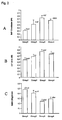
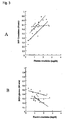
- the 6-week treatment with pyridoxamine (5 mg/L) significantly lowered the transport rate of small solutes from the plasma (Group 4 in figs. 2A and B ) and the absorption rate of glucose from the dialysate ( fig. 2C ). As shown in figs.
- pyridoxamine dramatically lowered the slope of the regression line between the increased permeability for the small solutes (creatinine and glucose) and the degree of renal failure. Pyridoxamine treatment completely dissipated the influence of uremia on membrane permeability.
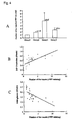
- An increased EPSA is known to be closely related to enhanced angiogenesis. Therefore, the number of vessels in the peritoneal tissue after von Willebrand factor staining were counted ( fig. 4A ). Uremia by itself caused a 1.87-fold increase in the vessel number, and the PD treatment augmented the value by 5.83-fold. This enhanced angiogenesis was improved by the pyridoxamine treatment significantly to 2.68-fold. Significant correlations were observed between the increased permeability for creatinine ( fig. 4B ) or glucose ( fig. 4C ) and the number of vessels. This result means that the increased EPSA at the time of deterioration of the peritoneal membrane function is related to uremia and PD treatment.
- pentosidine serving as a publicly known alternative marker for AGE and carbonyl stress
- the content of pentosidine, serving as a publicly known alternative marker for AGE and carbonyl stress, in the peritoneal membrane was measured by HPLC assay.
- Pentosidine content increased during uremia (Group 2 in fig. 5A ), and a correlation existed between the tissue pentosidine content and the degree of renal failure (solid circle in fig. 5B ).
- the formation of pentosidine was accelerated during the PD treatment (Group 3 in fig. 5A ), and PD increased the slope of the regression line between the pentosidine content and the renal failure (open square in fig. 5B ).
- tissue pentosidine content significantly lowered the tissue pentosidine content (Group 4 in fig. 5A ) and lowered the slope of the regression line (open triangle in fig. 5B ).
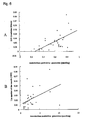
- Significant correlations were observed between the tissue pentosidine content and the increased permeability for creatinine ( fig. 6A ) and the number of vessels ( fig. 6B ).
- VEGF vascular endothelial growth factor
- FGF-2 FGF-2
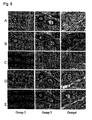
- VEGF, FGF-2, vWF, AGEs, and TGF- ⁇ 1 were virtually undetectable in the vascular endothelium of mesenterium of control rats, whereas these biomarkers were faintly present in the peritoneal membrane of uremic rats and were prominent in uremic rats with PD treatment.
- VEGF, FGF-2, vWF, AGEs, and TGF- ⁇ 1 stainings were virtually undetectable in the vascular endothelium of mesenterium of control rats, whereas these biomarkers were faintly present in the peritoneal membrane of uremic rats and were prominent in uremic rats with PD treatment.
- only faint stainings were detected in the capillaries of the mesenterium in rats treated with pyridoxamine.
- Pyridoxines such as pyridoxamine used as an active ingredient in the present invention are safe substances with less side effects.
- the present invention has enabled to provide safe peritoneal membrane protecting agent which can effectively suppress deterioration of peritoneal functions in long-term peritoneal dialysis (PD) patients, and the like.
Landscapes
- Health & Medical Sciences (AREA)
- Public Health (AREA)
- Animal Behavior & Ethology (AREA)
- Veterinary Medicine (AREA)
- Chemical & Material Sciences (AREA)
- General Health & Medical Sciences (AREA)
- Pharmacology & Pharmacy (AREA)
- Medicinal Chemistry (AREA)
- Life Sciences & Earth Sciences (AREA)
- Epidemiology (AREA)
- General Chemical & Material Sciences (AREA)
- Bioinformatics & Cheminformatics (AREA)
- Nuclear Medicine, Radiotherapy & Molecular Imaging (AREA)
- Organic Chemistry (AREA)
- Chemical Kinetics & Catalysis (AREA)
- Engineering & Computer Science (AREA)
- Hematology (AREA)
- Diabetes (AREA)
- Nutrition Science (AREA)
- Obesity (AREA)
- Urology & Nephrology (AREA)
- Pharmaceuticals Containing Other Organic And Inorganic Compounds (AREA)
- External Artificial Organs (AREA)
Applications Claiming Priority (2)
| Application Number | Priority Date | Filing Date | Title |
|---|---|---|---|
| JP2005150887 | 2005-05-24 | ||
| PCT/JP2006/310220 WO2006126523A1 (fr) | 2005-05-24 | 2006-05-23 | Agent de protection du peritoine |
Publications (2)
| Publication Number | Publication Date |
|---|---|
| EP1908470A1 true EP1908470A1 (fr) | 2008-04-09 |
| EP1908470A4 EP1908470A4 (fr) | 2009-06-24 |
Family
ID=37451948
Family Applications (1)
| Application Number | Title | Priority Date | Filing Date |
|---|---|---|---|
| EP06756476A Withdrawn EP1908470A4 (fr) | 2005-05-24 | 2006-05-23 | Agent de protection du peritoine |
Country Status (8)
| Country | Link |
|---|---|
| US (2) | US20090030047A1 (fr) |
| EP (1) | EP1908470A4 (fr) |
| JP (1) | JPWO2006126523A1 (fr) |
| KR (1) | KR20080034845A (fr) |
| CN (1) | CN101227904A (fr) |
| AU (1) | AU2006250547A1 (fr) |
| CA (1) | CA2624090A1 (fr) |
| WO (1) | WO2006126523A1 (fr) |
Cited By (1)
| Publication number | Priority date | Publication date | Assignee | Title |
|---|---|---|---|---|
| EP2596789A4 (fr) * | 2010-07-23 | 2014-01-01 | Univ Tokai Educational System | Composition pharmaceutique à administration par voie orale pour patient sous dialyse péritonéale, et mise en uvre de celle-ci |
Families Citing this family (1)
| Publication number | Priority date | Publication date | Assignee | Title |
|---|---|---|---|---|
| WO2014186052A2 (fr) * | 2013-05-17 | 2014-11-20 | Thomson Licensing | Procédé et système pour fournir des informations de repérage d'emplacement |
Family Cites Families (12)
| Publication number | Priority date | Publication date | Assignee | Title |
|---|---|---|---|---|
| US5717976A (en) * | 1995-08-28 | 1998-02-10 | Eastman Kodak Company | Stack of sheets and method of assuring orientation |
| US6228858B1 (en) * | 1995-09-12 | 2001-05-08 | University Of Kansas Medical Center | Advanced glycation end-product intermediaries and post-amadori inhibition |
| US6740668B1 (en) * | 1995-08-28 | 2004-05-25 | Kansas University Medical Center | Methods for inhibiting diabetic complications |
| US6436969B1 (en) * | 1995-09-12 | 2002-08-20 | Kansas University Medical Center Research Institute Inc. | Dialysis solutions and methods |
| US5744451A (en) * | 1995-09-12 | 1998-04-28 | Warner-Lambert Company | N-substituted glutamic acid derivatives with interleukin-1 β converting enzyme inhibitory activity |
| JPH10324629A (ja) * | 1997-03-28 | 1998-12-08 | Otsuka Pharmaceut Co Ltd | Age生成阻害組成物 |
| EP1009452A4 (fr) * | 1997-08-07 | 2004-03-31 | Ajay Gupta | Solution de dialyse contenant des vitamines et des nutriments hydrosolubles |
| CA2339879C (fr) * | 1998-08-24 | 2011-11-15 | Toshio Miyata | Substance ameliorant l'agression du carbonyle et du dialysate peritoneale |
| ATE241982T1 (de) * | 1998-10-22 | 2003-06-15 | Univ South Carolina | Verfahren zur hemmung von diabetischen komplikationen |
| JP2004300153A (ja) * | 2003-03-20 | 2004-10-28 | Kiyoshi Kurokawa | 蛋白修飾物生成抑制剤 |
| WO2005018649A1 (fr) * | 2003-08-25 | 2005-03-03 | Nagoya Industrial Science Research Institute | Agent permettant d'inhiber la formation d'un produit final de saccharification |
| WO2005077902A2 (fr) * | 2004-02-09 | 2005-08-25 | Biostratum, Inc. | Methodes de synthese de pyridoxamine |
-
2006
- 2006-05-23 CN CNA2006800270502A patent/CN101227904A/zh active Pending
- 2006-05-23 KR KR1020077030099A patent/KR20080034845A/ko not_active Withdrawn
- 2006-05-23 US US11/915,347 patent/US20090030047A1/en not_active Abandoned
- 2006-05-23 JP JP2007517830A patent/JPWO2006126523A1/ja active Pending
- 2006-05-23 CA CA002624090A patent/CA2624090A1/fr not_active Abandoned
- 2006-05-23 EP EP06756476A patent/EP1908470A4/fr not_active Withdrawn
- 2006-05-23 AU AU2006250547A patent/AU2006250547A1/en not_active Abandoned
- 2006-05-23 WO PCT/JP2006/310220 patent/WO2006126523A1/fr not_active Ceased
-
2010
- 2010-09-03 US US12/875,538 patent/US20110021579A1/en not_active Abandoned
Cited By (1)
| Publication number | Priority date | Publication date | Assignee | Title |
|---|---|---|---|---|
| EP2596789A4 (fr) * | 2010-07-23 | 2014-01-01 | Univ Tokai Educational System | Composition pharmaceutique à administration par voie orale pour patient sous dialyse péritonéale, et mise en uvre de celle-ci |
Also Published As
| Publication number | Publication date |
|---|---|
| EP1908470A4 (fr) | 2009-06-24 |
| CN101227904A (zh) | 2008-07-23 |
| KR20080034845A (ko) | 2008-04-22 |
| WO2006126523A1 (fr) | 2006-11-30 |
| US20110021579A1 (en) | 2011-01-27 |
| JPWO2006126523A1 (ja) | 2008-12-25 |
| US20090030047A1 (en) | 2009-01-29 |
| CA2624090A1 (fr) | 2006-11-30 |
| AU2006250547A1 (en) | 2006-11-30 |
Similar Documents
| Publication | Publication Date | Title |
|---|---|---|
| Martin et al. | Comparison of voriconazole (UK-109,496) and itraconazole in prevention and treatment of Aspergillus fumigatus endocarditis in guinea pigs | |
| Schulman et al. | Complement activation retards resolution of acute ischemic renal failure in the rat | |
| Mortier et al. | Long-term exposure to new peritoneal dialysis solutions: effects on the peritoneal membrane | |
| Guzman-Stein et al. | Abdominal radiation causes bacterial translocation | |
| KR100478181B1 (ko) | 카르보닐 스트레스상태 개선제 및 복막투석액 | |
| Morgan et al. | Beta‐adrenergic receptor blocking drugs, hypertension and plasma renin. | |
| Holmdahl et al. | Role of fibrinolysis in the formation of postoperative adhesions | |
| KR101529541B1 (ko) | 고양이에서 전신성 질환을 치료하기 위한 안지오텐신 ii 수용체 길항제 | |
| JPWO2000010606A1 (ja) | カルボニルストレス状態改善剤、および腹膜透析液 | |
| Kakuta et al. | Pyridoxamine improves functional, structural, and biochemical alterations of peritoneal membranes in uremic peritoneal dialysis rats | |
| Perico et al. | Evidence that an angiotensin-converting enzyme inhibitor has a different effect on glomerular injury according to the different phase of the disease at which the treatment is started. | |
| EP1083896A1 (fr) | Utilisation de neomycine pour le traitement de maladies associees a l'angiogenese | |
| US5393777A (en) | Deferration using anguibactin siderophore | |
| US20110021579A1 (en) | Peritoneum protecting agent | |
| Park | Factors increasing severity of peritonitis in long-term peritoneal dialysis patients | |
| Martis et al. | Impact of terminal heat sterilization on the quality of peritoneal dialysis solutions | |
| Rippe | Peritoneal angiogenesis in response to dialysis fluid | |
| JP5128003B2 (ja) | 腹膜透析患者用の経口医薬組成物及びその用法 | |
| Brouhard et al. | The combination of lovastatin and enalapril in a model of progressive renal disease | |
| Gasser et al. | Fleroxacin (Ro 23-6240) distribution in canine prostatic tissue and fluids | |
| Lange et al. | Experimental pancreatitis in the rat: role of bile reflux in sodium taurocholate-induced acute haemorrhagic pancreatitis | |
| Moore et al. | Effect of beta-adrenergic blockade on plasma-renin activity and intractable hypertension in patients receiving regular dialysis treatment | |
| Findon et al. | Bacterial peritonitis in continuous ambulatory peritoneal dialysis: effect of dialysis on host defense mechanisms | |
| Feriani et al. | CAPD systems and solutions | |
| JP3120965B2 (ja) | 水虫外用薬 |
Legal Events
| Date | Code | Title | Description |
|---|---|---|---|
| PUAI | Public reference made under article 153(3) epc to a published international application that has entered the european phase |
Free format text: ORIGINAL CODE: 0009012 |
|
| 17P | Request for examination filed |
Effective date: 20071220 |
|
| AK | Designated contracting states |
Kind code of ref document: A1 Designated state(s): AT BE BG CH CY CZ DE DK EE ES FI FR GB GR HU IE IS IT LI LT LU LV MC NL PL PT RO SE SI SK TR |
|
| DAX | Request for extension of the european patent (deleted) | ||
| A4 | Supplementary search report drawn up and despatched |
Effective date: 20090525 |
|
| 17Q | First examination report despatched |
Effective date: 20090921 |
|
| STAA | Information on the status of an ep patent application or granted ep patent |
Free format text: STATUS: THE APPLICATION IS DEEMED TO BE WITHDRAWN |
|
| 18D | Application deemed to be withdrawn |
Effective date: 20110524 |