EP1892472A1 - Verbrennungssystem insbesondere für eine Gasturbine - Google Patents
Verbrennungssystem insbesondere für eine Gasturbine Download PDFInfo
- Publication number
- EP1892472A1 EP1892472A1 EP06016932A EP06016932A EP1892472A1 EP 1892472 A1 EP1892472 A1 EP 1892472A1 EP 06016932 A EP06016932 A EP 06016932A EP 06016932 A EP06016932 A EP 06016932A EP 1892472 A1 EP1892472 A1 EP 1892472A1
- Authority
- EP
- European Patent Office
- Prior art keywords
- nozzle
- nozzle tube
- burner
- opening
- outlet opening
- Prior art date
- Legal status (The legal status is an assumption and is not a legal conclusion. Google has not performed a legal analysis and makes no representation as to the accuracy of the status listed.)
- Granted
Links
Images


Classifications
-
- F—MECHANICAL ENGINEERING; LIGHTING; HEATING; WEAPONS; BLASTING
- F23—COMBUSTION APPARATUS; COMBUSTION PROCESSES
- F23C—METHODS OR APPARATUS FOR COMBUSTION USING FLUID FUEL OR SOLID FUEL SUSPENDED IN A CARRIER GAS OR AIR
- F23C9/00—Combustion apparatus characterised by arrangements for returning combustion products or flue gases to the combustion chamber
- F23C9/006—Combustion apparatus characterised by arrangements for returning combustion products or flue gases to the combustion chamber the recirculation taking place in the combustion chamber
-
- F—MECHANICAL ENGINEERING; LIGHTING; HEATING; WEAPONS; BLASTING
- F23—COMBUSTION APPARATUS; COMBUSTION PROCESSES
- F23D—BURNERS
- F23D11/00—Burners using a direct spraying action of liquid droplets or vaporised liquid into the combustion space
- F23D11/36—Details
- F23D11/40—Mixing tubes; Burner heads
- F23D11/406—Flame stabilising means, e.g. flame holders
-
- F—MECHANICAL ENGINEERING; LIGHTING; HEATING; WEAPONS; BLASTING
- F23—COMBUSTION APPARATUS; COMBUSTION PROCESSES
- F23D—BURNERS
- F23D14/00—Burners for combustion of a gas, e.g. of a gas stored under pressure as a liquid
- F23D14/46—Details
- F23D14/70—Baffles or like flow-disturbing devices
-
- F—MECHANICAL ENGINEERING; LIGHTING; HEATING; WEAPONS; BLASTING
- F23—COMBUSTION APPARATUS; COMBUSTION PROCESSES
- F23R—GENERATING COMBUSTION PRODUCTS OF HIGH PRESSURE OR HIGH VELOCITY, e.g. GAS-TURBINE COMBUSTION CHAMBERS
- F23R3/00—Continuous combustion chambers using liquid or gaseous fuel
- F23R3/28—Continuous combustion chambers using liquid or gaseous fuel characterised by the fuel supply
-
- F—MECHANICAL ENGINEERING; LIGHTING; HEATING; WEAPONS; BLASTING
- F23—COMBUSTION APPARATUS; COMBUSTION PROCESSES
- F23C—METHODS OR APPARATUS FOR COMBUSTION USING FLUID FUEL OR SOLID FUEL SUSPENDED IN A CARRIER GAS OR AIR
- F23C2900/00—Special features of, or arrangements for combustion apparatus using fluid fuels or solid fuels suspended in air; Combustion processes therefor
- F23C2900/09002—Specific devices inducing or forcing flue gas recirculation
-
- F—MECHANICAL ENGINEERING; LIGHTING; HEATING; WEAPONS; BLASTING
- F23—COMBUSTION APPARATUS; COMBUSTION PROCESSES
- F23D—BURNERS
- F23D2900/00—Special features of, or arrangements for burners using fluid fuels or solid fuels suspended in a carrier gas
- F23D2900/11401—Flame intercepting baffles forming part of burner head
-
- F—MECHANICAL ENGINEERING; LIGHTING; HEATING; WEAPONS; BLASTING
- F23—COMBUSTION APPARATUS; COMBUSTION PROCESSES
- F23R—GENERATING COMBUSTION PRODUCTS OF HIGH PRESSURE OR HIGH VELOCITY, e.g. GAS-TURBINE COMBUSTION CHAMBERS
- F23R2900/00—Special features of, or arrangements for continuous combustion chambers; Combustion processes therefor
- F23R2900/03282—High speed injection of air and/or fuel inducing internal recirculation
Definitions
- the present invention relates to a combustion system, in particular a combustion system for a gas turbine with a combustion chamber and at least one nozzle tube, which opens into the combustion chamber with a nozzle outlet opening.
- Jet flames are discussed as an alternative to swirl flames in combustion systems for gas turbine plants.
- a fuel fluid or a mixture of fuel fluid and air is introduced by means of a nozzle tube as a jet into the combustion chamber.
- Jet flames enable emissions of nitrogen oxides (NO x) emissions, which are as low as in premixed flames swirl, while at the same time allow the distribution of heat release over a greater compared to the premixed swirl flame region in the combustor.
- NO x nitrogen oxides
- jet flames open up a potential for reducing thermoacoustically induced vibrations.
- jet flames enable the burning of very different fuel fluids, which ensures a high flexibility of the combustion system. High flexibility is one of the main goals of modern combustion systems.
- jet flames are mainly stabilized by the entrainment of hot reaction gases from an outer recirculation zone of the combustion chamber.
- the entrainment of the hot reaction gases has been improved by increasing the jet velocity and adjusting the geometry of the combustion assembly.
- the adjustment of the geometry is usually carried out by establishing a specific ratio between the diameter of the combustion chamber and the diameter of the nozzle opening into the combustion chamber of the nozzle tube.
- the Flame stability may still be unsatisfactory, in particular with regard to different operating points of gas turbine plants or when using fuels with a high hydrogen content, which lead to a high combustion speed.
- a burner according to the invention which in particular can be designed as a burner for a gas turbine, comprises at least one nozzle tube and a fuel fluid supply line communicating with the nozzle tube for supplying a fuel fluid into the nozzle tube and optionally additionally an air supply line communicating with the nozzle tube for supplying Combustion air in the nozzle tube.
- the nozzle tube has a nozzle outlet opening and is designed to inject a jet of fuel fluid or of a mixture of air and fuel fluid into a combustion chamber.
- the nozzle tube has in the region of the nozzle outlet opening to the center of the opening projecting elements.
- the elements projecting towards the center of the opening thus lead to an increase in the turbulent fluctuations in the region of the boundary surface between the jet and the recirculated combustion exhaust gases in the well-worn jet, which in turn intensifies the entrainment of the combustion exhaust gases. As a consequence, the stability of the flame is increased.
- the protruding elements are provided by a nozzle tube section having a corrugated inner circumferential surface extending up to the nozzle outlet opening educated.
- This realization leads to an enlargement of the surface of the jet emerging from the nozzle opening.
- the enhancement of vortex formation is essentially due to the increased radiation surface.
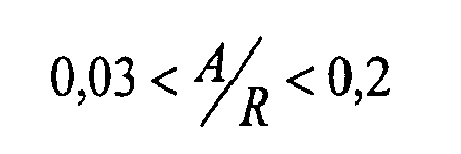
- the corrugated inner peripheral surface at the nozzle outlet opening may in particular be designed such that it has a maximum deflection A about a mean opening radius R of the nozzle outlet opening and the ratio of the deflection to the mean opening radius through the relationship 0 . 03 ⁇ / A R ⁇ 0 . 2 given is.
- the corrugated inner peripheral surface may in particular have the shape of a sine wave extending over the circumference of the nozzle outlet opening. But other in the broadest sense corrugated forms, such as sawtooth shapes, are possible.
- the nozzle tube has a nozzle tube section remote from the nozzle opening and a transition section.
- the transition section represents a transition from the nozzle tube section with a circular opening cross-section to the nozzle tube section with the corrugated inner circumferential surface.
- the maximum amplitude of the corrugated inner circumferential surface is reached directly at the nozzle outlet opening.
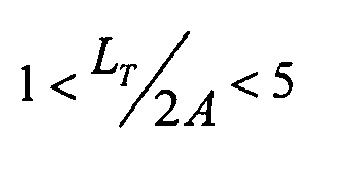
- the ratio of the length L T of the transition region to the maximum amplitude A is given by the formula 1 ⁇ / L T 2 ⁇ A ⁇ 5 given. In the given by the formula ratio of the length of the transition region to the maximum amplitude can be achieved particularly advantageous results for flame stability.
- the protruding elements are formed by vanes arranged in the region of the nozzle outlet opening on the inner circumferential surface of the nozzle tube, which wings may in particular be delta wings.
- Delta wings are triangular in shape and have a relatively low profile thickness relative to their length and depth.
- the wings, in particular the delta wings lead to an increased vortex formation in the area of the wing edges.
- the increased vortex formation is not first induced by the enlarged radiation surface, but is already present at the exit of the jet from the nozzle outlet opening.
- the blades protrude at the nozzle exit port via the distance S from the inner circumferential surface, which is formed at the nozzle orifice in a circular shape with an opening diameter D, into the nozzle orifice.
- the ratio of the distance S to the opening diameter D is determined by the relationship 0 . 03 ⁇ / S D ⁇ 0 . 2 given. The conditions which satisfy the given relationship lead to particularly good results in stabilizing the jet flame.
- the wings are inclined at an angle ⁇ with respect to the radial direction of the nozzle outlet opening.
- the angle ⁇ can in this case be in the range 65 ° ⁇ ⁇ 85 °, in particular.
- the inclined wings in particular those with angles of inclination in the specified range, lead to a particularly advantageous vortex formation in the surface region the exiting from the nozzle outlet opening fluid jet. This leads in particular to good results for the flame stability, if the ratio of the distance S to the opening diameter D of the nozzle outlet opening satisfies the relationship given above.
- a combustion system with a combustion chamber and a burner comprises at least one nozzle tube and a fuel fluid supply line communicating with the nozzle tube for supplying a fuel fluid into the nozzle tube and optionally additionally an air supply line communicating with the nozzle tube for supplying combustion air into the nozzle tube.
- the nozzle tube has a nozzle outlet opening into the combustion chamber and is designed to inject a jet of fuel fluid or a mixture of air and fuel fluid into the combustion chamber.
- the nozzle tube projects into the combustion chamber.
- the nozzle tube may have an opening diameter D and project over a length L in the combustion chamber, wherein the ratio of the length L to the opening diameter D by the relationship 0 .
- the nozzle tube projecting into the combustion chamber can be equipped, in particular in the region of the nozzle outlet opening, with elements projecting towards the center of the opening, as have been described with reference to the burner according to the invention.
- the burner may in particular be a burner according to the invention.
- FIG. 1 An embodiment of a combustion system according to the invention is shown in a highly schematic representation in Fig. 1.
- the figure shows a section through the longitudinal axis of the combustion system and shows a burner 1 and a combustion chamber. 3
- the burner is designed to generate a jet flame 5. It comprises a nozzle tube 7, which in the present embodiment is in communication with a fuel supply line 9 and an air supply line 11.
- the premixed air / fuel mixture is injected into the combustion chamber 3 to form the jet flame 5.
- a recirculation zone 6 in which hot combustion gases flow back in the radially outer region of the combustion chamber 3 in the direction of the burner 7 and in the upstream region of the combustion chamber 3 in its direction of movement in the direction of the deflected radially inner region of the combustion chamber.
- shear forces occur, which entrain the recirculated exhaust gas 17 in the flow direction F of the air / fuel mixture. Due to this entrainment effect, the jet flame 5 is stabilized in the combustion chamber 3. For the entrainment effect, primarily turbulent fluctuations in the peripheral surface of the jet flame 5 are responsible.
- the nozzle tube 7 of the burner 1 has a corrugated tube wall 19 in the region of the nozzle outlet opening 15.
- the corrugation is realized in that the tube wall 19 has the shape of a standing sine wave oscillating about an average tube radius R with an amplitude A.
- the corrugation can also be implemented in its inner wall by incorporating a sinusoidal contour in the circumferential direction of the nozzle tube. The curl does not necessarily have sinusoidal form. Other shapes, such as sawtooth shapes, are possible.
- the amplitude A of the corrugation has its maximum value at the nozzle outlet opening 15. It decreases towards upstream pipe sections until finally reaching a pipe section 21 in which the pipe has a circular cross-section.
- the transition area, in the amplitude decreases from its maximum value A to zero, in the axial direction of the nozzle tube 7 has a length L T.
- the ratio of the length L T of the transition region to the maximum amplitude A is defined by the relationship 1 ⁇ / L T 2 ⁇ A ⁇ 5 given.
- the surface of the jet emerging from the nozzle outlet opening 15 of air / fuel mixture is increased in comparison to a jet of air / fuel mixture emerging from a nozzle outlet opening with a round cross section and the radius R.
- the enlargement of the surface of the jet leads to more turbulent fluctuations and thus to an amplification of the described entrainment effect.
- the entrainment effect can be enhanced if the ratio of the deflection A of the corrugation to the mean radius R of the nozzle outlet opening is enhanced by the relationship 0 . 03 ⁇ / A R ⁇ 0 . 2 given is.
- Fig. 2 is merely exemplary and schematic of the shape of the corrugation.
- the number of wave crests and troughs may also be smaller or larger than shown in FIG.
- Fig. 3 shows a second embodiment of the nozzle tube of the burner according to the invention.
- the figure shows the nozzle tube 107 according to the second variant in a schematic section along its central longitudinal axis.
- the nozzle tube 107 of the second embodiment in the region of the nozzle outlet opening 115 no corrugation. Instead are arranged in the region of the inner peripheral surface of the nozzle outlet opening 115 delta wing 119.
- the delta wings 119 protrude beyond the distance S into the nozzle outlet opening 115.
- the ratio of the distance S to the diameter D of the nozzle outlet opening 115 is in this case in particular by the relationship 0 . 03 ⁇ / S D ⁇ 0 . 2 given.
- the delta wings 119 are inclined in the present embodiment by an angle ⁇ in the range between 65 ° and 85 ° against the radial direction in the nozzle tube 107. But there are also embodiments without inclination possible.
- FIG. 1 A further exemplary embodiment of the combustion system according to the invention is shown in FIG.
- the figure shows the combustion system in a section along its longitudinal axis and shows a burner 201 and a combustion chamber 203.
- the burner comprises a nozzle tube 207, a fuel supply line 209 and an air supply line 211 and a mixer 213, which is connected upstream of the nozzle tube 207 and into which the fuel supply line 209 and the air supply line 211 open.
- the nozzle tube 207 has neither a corrugation nor delta wings in the region of its nozzle outlet opening 215. It should be mentioned at this point, however, that the burner also in the second embodiment of the combustion system can be equipped with a corrugation or with delta wings in the region of its nozzle outlet opening 215.
- the nozzle tube 207 projects into the combustion chamber 203 by the distance L.
- the distance L, by which the nozzle tube 207 protrudes into the combustion chamber 203, is with the opening diameter D of the nozzle outlet opening preferably in a relationship by 0 . 3 ⁇ / L D ⁇ 3 given is. Due to the entry into the combustion chamber 203, the nozzle exit opening 215 can be brought closer to the recirculation zone in the combustion chamber, so that shortly after the exit of the jet 205 from the nozzle exit opening 215 the entrainment effect occurs. The entrainment effect can therefore stabilize the jet flame 205 largely over its entire length.
- the entrainment effect for the hot gases in the outer recirculation zone is increased.
- the increased turbulent fluctuations ensure uniform combustion with low acoustic amplitudes, thus suppressing the occurrence of combustion oscillations.
Landscapes
- Engineering & Computer Science (AREA)
- Chemical & Material Sciences (AREA)
- Combustion & Propulsion (AREA)
- Mechanical Engineering (AREA)
- General Engineering & Computer Science (AREA)
- Pre-Mixing And Non-Premixing Gas Burner (AREA)
- Control Of Turbines (AREA)
- Spray-Type Burners (AREA)
- Nozzles For Spraying Of Liquid Fuel (AREA)
- Gas Burners (AREA)
Abstract
Description
- Die vorliegende Erfindung betrifft ein Verbrennungssystem, insbesondere ein Verbrennungssystem für eine Gasturbine mit einer Brennkammer und wenigstens einem Düsenrohr, welches mit einer Düsenaustrittsöffnung in die Brennkammer mündet.
- In jüngster Zeit werden so genannte Strahlflammen (jet flames) als Alternative zu Drallflammen (swirl flames) in Verbrennungssystemen für Gasturbinenanlagen diskutiert. In Strahlflammen wird ein Brennstofffluid oder ein Gemisch aus Brennstofffluid und Luft mittels eines Düsenrohres als Strahl in die Brennkammer eingebracht. Strahlflammen ermöglichen Stickoxidemissionen (NOx-Emissionen), die so niedrig sind wie bei vorgemischten Drallflammen, während sie gleichzeitig die Verteilung der Wärmefreisetzung über einen im Vergleich zu den vorgemischten Drallflammen größeren Bereich in der Brennkammer ermöglichen. Infolge der Wärmefreisetzung über einen größeren Bereich eröffnen Strahlflammen ein Potential zum Vermindern thermoakustisch induzierter Schwingungen. Weiterhin ermöglichen Strahlflammen das Verbrennen sehr unterschiedlicher Brennstofffluide, was eine hohe Flexibilität des Verbrennungssystems sicherstellt. Eine hohe Flexibilität ist eines der Hauptziele moderner Verbrennungssysteme.
- Die Stabilisierung einer Strahlflamme bleibt jedoch weiterhin eine nicht vollständig gelöste Aufgabe. Bisher werden Strahlflammen hautsächlich durch die Mitführung von heißen Reaktionsgasen aus einer äußeren Rezirkulationszone der Brennkammer stabilisiert. Die Mitführung der heißen Reaktionsgase wurde bisher verbessert, indem die Strahlgeschwindigkeit erhöht und die Geometrie der Verbrennungsanordnung geeignet eingestellt worden sind. Das Einstellen der Geometrie erfolgt in der Regel durch Herstellen eines speziellen Verhältnisses zwischen dem Durchmesser der Brennkammer und dem Durchmesser der in die Brennkammer mündenden Düsenöffnung des Düsenrohres. Die Flammenstabilität kann jedoch insbesondere im Hinblick auf unterschiedliche Betriebspunkte von Gasturbinenanlagen oder bei Verwendung von Brennstoffen mit hohem Wasserstoffgehalt, welche zu einer hohen Verbrennungsgeschwindigkeit führen, trotz allem noch unbefriedigend sein.
- Demgegenüber ist es eine Aufgabe der vorliegenden Erfindung, einen vorteilhaften Brenner für Strahlflammen und eine vorteilhafte Verbrennungssystem für Strahlflammen zur Verfügung zu stellen.
- Diese Aufgabe wird durch einen Brenner nach Anspruch 1 bzw. durch ein Verbrennungssystem nach Anspruch 12 gelöst. Die abhängigen Ansprüche enthalten vorteilhafte Ausgestaltungen der Erfindung.
- Ein erfindungsgemäßer Brenner, der insbesondere als Brenner für eine Gasturbine ausgestaltet sein kann, umfasst wenigstens ein Düsenrohr sowie eine mit dem Düsenrohr in Verbindung stehende Brennstofffluidzufuhrleitung zum Zuführen eines Brennstofffluids in das Düsenrohr und ggf. zusätzlich eine mit dem Düsenrohr in Verbindung stehende Luftzufuhrleitung zum Zuführen von Verbrennungsluft in das Düsenrohr. Das Düsenrohr weist eine Düsenaustrittsöffnung auf und ist zum Eindüsen eines Strahls aus Brennstofffluid oder aus einem Gemisch aus Luft und Brennstofffluid in eine Brennkammer ausgestaltet. Das Düsenrohr weist im Bereich der Düsenaustrittsöffnung zur Öffnungsmitte hin vorstehende Elemente auf. Die zur Öffnungsmitte hin vorstehenden Elemente führen im ausgetretenen Strahl so zu einer Erhöhung der turbulenten Fluktuationen im Bereich der Grenzfläche zwischen dem Strahl und den rezirkulierten Verbrennungsabgasen, was wiederum das Mitreißen der Verbrennungsabgase verstärkt. Als Konsequenz hiervon wird die Stabilität der Flamme erhöht.
- In einer ersten Realisierung der Erfindung sind die vorstehenden Elemente durch einen bis zur Düsenaustrittsöffnung reichenden Düsenrohrabschnitt mit gewellter Innenumfangsfläche gebildet. Diese Realisierung führt zu einer Vergrößerung der Oberfläche des aus der Düsenöffnung austretenden Strahls. Da die Zahl der turbulenten Fluktuationen von der Größe der Grenzfläche zwischen dem Strahl und den heißen Reaktionsgasen, d.h. den Verbrennungsgasen, in der Rezirkulationszone abhängt, ist in dieser Realisierung die Verstärkung der Wirbelbildung im Wesentlichen auf die vergrößerte Strahloberfläche zurückzuführen.
- Die gewellte Innenumfangsfläche an der Düsenaustrittsöffnung kann insbesondere derart ausgestaltet sein, dass sie eine maximale Auslenkung A um einen mittleren Öffnungsradius R der Düsenaustrittsöffnung aufweist und das Verhältnis der Auslenkung zum mittleren Öffnungsradius durch die Beziehung

- Die gewellte Innenumfangsfläche kann insbesondere die Form einer sich über den Umfang der Düsenaustrittsöffnung erstreckenden Sinuswelle aufweisen. Aber auch andere im weitesten Sinne gewellte Formen, wie etwa Sägezahnformen, sind möglich.
- In einer Weiterbildung des Brenners mit der gewellten Innenumfangsfläche weist das Düsenrohr einen von der Düsenöffnung entfernten Düsenrohrabschnitt und einen Übergangsabschnitt auf. Der Übergangsabschnitt stellt einen Übergang von dem Düsenrohrabschnitt mit runden Öffnungsquerschnitt zu dem Düsenrohrabschnitt mit der gewellten Innenumfangsfläche dar. Die maximale Amplitude der gewellten Innenumfangsfläche wird unmittelbar an der Düsenaustrittsöffnung erreicht. Das Verhältnis der Länge LT des Übergangsbereiches zur maximalen Amplitude A ist durch die Formel
- In einer alternativen Realisierung des Brenners sind die vorstehenden Elemente durch im Bereich der Düsenaustrittsöffnung an der Innenumfangsfläche des Düsenrohres angeordnete Flügel, die insbesondere Deltaflügel sein können, gebildet. Deltaflügel weisen die Form eines Dreiecks auf und besitzen im Verhältnis zu ihrer Länge und Tiefe eine relativ geringe Profildicke. Die Flügel, insbesondere die Deltaflügel führen zu einer verstärkten Wirbelbildung im Bereich der Flügelkanten. Im Unterschied zur ersten Realisierung wird die verstärkte Wirbelbildung nicht erst durch die vergrößerte Strahloberfläche induziert, sondern liegt bereits beim Austritt des Strahls aus der Düsenaustrittsöffnung vor.
- Die Flügel stehen an der Düsenaustrittsöffnung über die Strecke S von der Innenumfangsfläche aus, welche an der Düsenöffnung kreisförmig mit einem Öffnungsdurchmesser D ausgebildet ist, in die Düsenöffnung vor. Das Verhältnis der Strecke S zum Öffnungsdurchmesser D ist durch die Beziehung

- In einer besonderen Ausgestaltung der Realisierung mit Flügeln im Bereich der Düsenaustrittsöffnung sind die Flügel um einen Winkel α bezüglich der Radialrichtung der Düsenaustrittsöffnung geneigt. Der Winkel α kann hierbei insbesondere im Bereich 65°< α <85° liegen. Die geneigten Flügel, insbesondere solche mit Neigungswinkeln im angegebenen Bereich, führen zu einer besonders vorteilhaften Wirbelbildung im Oberflächenbereich des aus der Düsenaustrittsöffnung austretenden Fluidstrahls. Dies führt insbesondere dann zu guten Ergebnissen für die Flammenstabilität, wenn das Verhältnis der Strecke S zum Öffnungsdurchmesser D der Düsenaustrittsöffnung der weiter oben angegebenen Beziehung genügt.
- Erfindungsgemäß wird außerdem ein Verbrennungssystem mit einer Brennkammer und einem Brenner zur Verfügung gestellt. Der Brenner umfasst wenigstens ein Düsenrohr sowie eine mit dem Düsenrohr in Verbindung stehende Brennstofffluidzufuhrleitung zum Zuführen eines Brennstofffluids in das Düsenrohr und ggf. zusätzlich eine mit dem Düsenrohr in Verbindung stehende Luftzufuhrleitung zum Zuführen von Verbrennungsluft in das Düsenrohr. Das Düsenrohr weist eine in die Brennkammer mündende Düsenaustrittsöffnung auf und ist zum Eindüsen eines Strahls aus Brennstofffluid oder einem Gemisch aus Luft und Brennstofffluid in die Brennkammer ausgestaltet. In dem erfindungsgemäßen Verbrennungssystem steht das Düsenrohr in die Brennkammer vor. Insbesondere kann das Düsenrohr einen Öffnungsdurchmesser D aufweisen und über eine Länge L in die Brennkammer vorstehen, wobei das Verhältnis der Länge L zum Öffnungsdurchmesser D durch die Beziehung

- Das in die Brennkammer vorstehende Düsenrohr kann insbesondere im Bereich der Düsenaustrittsöffnung mit zur Öffnungsmitte hin vorstehenden Elementen, wie sie mit Bezug auf den erfindungsgemäßen Brenner beschrieben worden sind, ausgestattet sein. Mit anderen Worten, der Brenner kann insbesondere ein erfindungsgemäßer Brenner sein.
- Weitere Merkmale, Eigenschaften und Vorteile der vorliegenden Erfindung ergeben sich aus der nachfolgenden Beschreibung von Ausführungsbeispielen unter Bezugnahme auf die beiliegenden Figuren.
- Fig. 1
- zeigt ein erfindungsgemäßes Verbrennungssystem mit einem Brenner und einer Brennkammer in einer schematisierten, geschnittenen Seitenansicht.
- Fig. 2
- zeigt eine Draufsicht auf die Düsenaustrittsöffnung des Brenners aus Fig. 1.
- Fig. 3
- zeigt eine alternative Ausgestaltung des Brenners im Verbrennungssystem aus Fig. 1 in einer geschnittenen, schematisierten Seitenansicht.
- Fig. 4
- zeigt eine Draufsicht auf die Düsenausrittsöffnung der alternativen Ausgestaltung des Brenners.
- Fig. 5
- zeigt ein zweites Ausführungsbeispiel für ein erfindungsgemäßes Verbrennungssystem mit einem Brenner und einer Brennkammer in einer schematisierten, geschnittenen Seitenansicht.
- Ein Ausführungsbeispiel für ein erfindungsgemäßes Verbrennungssystem ist in einer stark schematisierten Darstellung in Fig. 1 gezeigt. Die Figur stellt einen Schnitt durch die Längsachse des Verbrennungssystems dar und zeigt einen Brenner 1 und eine Brennkammer 3.
- Der Brenner ist zum Erzeugen einer Strahlflamme (jet flame) 5 ausgebildet. Er umfasst ein Düsenrohr 7, welches im vorliegenden Ausführungsbeispiel mit einer Brennstoffzufuhrleitung 9 und einer Luftzufuhrleitung 11 in Verbindung steht. Das über die Brennstoffzufuhrleitung 9 zugeführte Brennstofffluid, beispielsweise Gas (etwa Erdgas) oder Öl (etwa Heizöl), wird in einem Mischer 13 gemischt und dem Düsenrohr 7 zugeführt.
- Über eine Düsenaustrittsöffnung 15 wird das vorgemischte Luft/Brennstoffgemisch in die Brennkammer 3 eingedüst, um die Strahlflamme 5 zu bilden. Üblicherweise steht der Durchmesser der Düsenaustrittsöffnung mit der Abmessung der Brennkammeröffnung W im Verhältnis 1 < W/D < 4.
- Im äußeren Bereich der Brennkammer 3 bildet sich bei vorliegender Strahlflamme 5 eine Rezirkulationszone 6 aus, in welcher heiße Verbrennungsabgase im radial äußeren Bereich der Brennkammer 3 in Richtung auf den Brenner 7 zurückströmen und im stromauf gelegenen Bereich der Brennkammer 3 in ihrer Bewegungsrichtung in Richtung auf den radial inneren Bereich der Brennkammer abgelenkt werden. Zwischen dem rezirkulierten Abgas 17 und der Umfangsfläche des Luft/Brennstoffgemisches in der Strahlflamme 5 treten Scherkräfte auf, welche das rezirkulierte Abgas 17 in Strömungsrichtung F des Luft/Brennstoffgemisches mitreißen. Aufgrund dieses Mitreißeffektes wird die Strahlflamme 5 in der Brennkammer 3 stabilisiert. Für den Mitreißeffekt sind in erster Linie turbulente Fluktuationen in der Umfangsfläche der Strahlflamme 5 verantwortlich.
- Das Düsenrohr 7 des Brenners 1 weist im Bereich der Düsenaustrittsöffnung 15 eine gewellte Rohrwand 19 auf. Im vorliegenden Ausführungsbeispiel ist die Wellung dadurch realisiert, dass die Rohrwand 19 die Form einer um einen mittleren Rohrradius R mit einer Amplitude A oszillierenden stehenden Sinuswelle aufweist. Die Wellung kann jedoch auch Einarbeiten einer in Umfangsrichtung des Düsenrohres sinusförmigen Kontur in seine Innenwandung realisiert sein. Die Wellung braucht aber nicht zwingend Sinusform aufzuweisen. Andere Formen, wie etwa Sägezahnformen, sind möglich.
- Die Amplitude A der Wellung weist an der Düsenaustrittsöffnung 15 ihren maximalen Wert auf. Sie verringert sich zu stromaufwärts gelegenen Rohrabschnitten hin, bis schließlich ein Rohrabschnitt 21 erreicht ist, in dem das Rohr einen kreisförmigen Querschnitt aufweist. Der Übergangsbereich, in dem die Amplitude von ihrem Maximalwert A auf Null abnimmt, besitzt in Axialrichtung des Düsenrohres 7 eine Länge LT. Das Verhältnis der Länge LT des Übergangsbereiches zur maximalen Amplitude A ist durch die Beziehung

- Aufgrund der Wellung des Düsenrohres 7 im Bereich Düsenaustrittsöffnung 15 ist die Oberfläche des aus der Düsenaustrittsöffnung 15 austretenden Strahls aus Luft/Brennstoffgemisch im Vergleich zu einem aus einer Düsenaustrittsöffnung mit rundem Querschnitt und dem Radius R austretenden Strahl aus Luft/Brennstoffgemisch vergrößert. Die Vergrößerung der Oberfläche des Strahls führt zu mehr turbulenten Fluktuationen und somit zu einer Verstärkung des beschriebenen Mitreißeffektes. Besonders vorteilhaft lässt sich der Mitreißeffekt verstärken, wenn das Verhältnis der Auslenkung A der Wellung zum mittleren Radius R der Düsenaustrittsöffnung durch die Beziehung
- Fig. 3 zeigt eine zweite Ausführungsvariante für das Düsenrohr des erfindungsgemäßen Brenners. Die Figur zeigt das Düsenrohr 107 gemäß der zweiten Variante in einem schematischen Schnitt entlang seiner zentralen Längsachse. Im Unterschied zum Düsenrohr 7 des ersten Ausführungsbeispiels weist das Düsenrohr 107 des zweiten Ausführungsbeispiels im Bereich der Düsenaustrittsöffnung 115 keine Wellung auf. Stattdessen sind im Bereich der Innenumfangsfläche der Düsenaustrittsöffnung 115 Deltaflügel 119 angeordnet. Die Deltaflügel 119 ragen über die Strecke S in die Düsenaustrittsöffnung 115 hinein. Das Verhältnis der Strecke S zum Durchmesser D der Düsenaustrittsöffnung 115 ist hierbei insbesondere durch die Beziehung

- An den Kanten der im Bereich der Düsenauslassöffnung 115 angeordneten Deltaflügel 119 erfolgt eine Wirbelbildung, die sich in der Oberfläche des aus der Düsenaustrittsöffnung 115 austretenden Strahls fortsetzt. Die Wirbel erhöhen die turbulenten Fluktuationen im Grenzbereich zwischen dem Strahl und dem rezirkulierten Abgas, sodass der Mitreißeffekt verstärkt wird.
- Ein weiteres Ausführungsbeispiel für das erfindungsgemäße Verbrennungssystem ist in Fig. 5 dargestellt. Die Figur stellt das Verbrennungssystem in einem Schnitt entlang seiner Längsachse dar und zeigt einen Brenner 201 und eine Brennkammer 203.
- Der Brenner umfasst ein Düsenrohr 207, eine Brennstoffzufuhrleitung 209 und eine Luftzufuhrleitung 211 sowie einen Mischer 213, der dem Düsenrohr 207 vorgeschaltet ist und in den die Brennstoffzufuhrleitung 209 und die Luftzufuhrleitung 211 münden. Im Unterschied zum Brenner im ersten Ausführungsbeispiel des erfindungsgemäßen Verbrennungssystems weist das Düsenrohr 207 weder eine Wellung noch Deltaflügel im Bereich seiner Düsenaustrittsöffnung 215 auf. Es sei an dieser Stelle aber erwähnt, dass der Brenner auch im zweiten Ausführungsbeispiel des Verbrennungssystems mit einer Wellung oder mit Deltaflügeln im Bereich seiner Düsenaustrittsöffnung 215 ausgestattet sein kann.
- Im Unterschied zu dem in Fig. 1 dargestellten Verbrennungssystem ragt das Düsenrohr 207 in dem in Fig. 5 dargestellten Verbrennungssystem um die Strecke L in die Brennkammer 203 hinein. Die Strecke L, um die das Düsenrohr 207 in die Brennkammer 203 hineinragt, steht mit dem Öffnungsdurchmesser D des Düsenaustrittsöffnung vorzugsweise in einer Beziehung, die durch

- Mit Hilfe der Erfindung wird der Mitreißeffekt für die heißen Gase in der äußeren Rezirkulationszone erhöht. Zudem gewährleisten die erhöhten turbulenten Fluktuationen einen gleichmäßige Verbrennung mit niedrigen akustischen Amplituden, sodass das Auftreten von Verbrennungsschwingungen unterdrückt wird. Eine Optimierung der Stabilität der Strahlflamme kann durch Kombinieren der in den Figuren 1 bis 4 dargstellten Brenner mit dem in Fig. 5 dargestellten Verbrennungssystem herbeigeführt werden.
Claims (13)
- Brenner (1, 101), insbesondere für eine Gasturbine, mit wenigstens einem Düsenrohr (7, 107) sowie einer mit dem Düsenrohr (7, 107) in Verbindung stehenden Brennstofffluidzufuhrleitung (9) zum Zuführen eines Brennstofffluides in das Düsenrohr (7, 107), wobei das Düsenrohr (7, 107) eine Düsenaustrittsöffnung (15, 115) aufweist und zum Eindüsen eines Strahls (5) aus Brennstofffluid oder aus einem Gemisch aus Luft und Brennstofffluid in eine Brennkammer (3) ausgestaltet ist, dadurch gekennzeichnet, dass das Düsenrohr (7, 107) im Bereich der Düsenaustrittsöffnung (15, 115) zur Öffnungsmitte hin vorstehende Elemente (19, 119) aufweist.
- Brenner (1) nach Anspruch 1, dadurch gekennzeichnet, dass die vorstehende Elemente durch einen bis zur Düsenaustrittsöffnung (15) reichenden Düsenrohrabschnitt mit gewellter Innenumfangsfläche (19) gebildet sind.
- Brenner (1) nach Anspruch 2, dadurch gekennzeichnet, dass die gewellte Innenumfangsfläche (19) an der Düsenaustrittsöffnung (15) eine maximale Auslenkung A um einen mittleren Öffnungsradis R der Düsenaustrittsöffnung (15) aufweist und das Verhältnis der Auslenkung zum mittleren Öffnungsradius durch die Beziehung

- Brenner (1) nach Anspruch 2 oder 3, dadurch gekennzeichnet, dass die gewellte Innenumfangsfläche (19) die Form einer Sinuswelle aufweist.
- Brenner (1) nach Anspruch 2 oder 3, dadurch gekennzeichnet, dass die gewellte Innenumfangsfläche (19) Sägezahnform aufweist.
- Brenner (1) nach einem der Ansprüche 2 bis 5, dadurch gekennzeichnet, dass das Düsenrohr (7) einen von der Düsenöffnung (15) entfernten Düsenrohrabschnitt (21) mit einem runden Öffnungsquerschnitt und einen Übergangsabschnitt von dem Düsenrohrabschnitt (21) mit dem runden Öffnungsquerschnitt zum Düsenrohrabschnitt mit der gewellten Innenumfangsfläche (19) aufweist, wobei die maximale Amplitude A der gewellten Innenumfangsfläche (19) an der Düsenaustrittsöffnung (15) erreicht wird und das Verhältnis der Länge LT des Übergangsbereiches zur maximalen Amplitude A durch die Beziehung

- Brenner (101) nach Anspruch 1, dadurch gekennzeichnet, dass die vorstehenden Elemente durch im Bereich der Düsenaustrittsöffnung (115) an der Innenumfangsfläche (107) des Düsenrohrs angeordnete Flügel (119) gebildet sind.
- Brenner (101) nach Anspruch 7, dadurch gekennzeichnet, dass die Flügel als Deltaflügel (119) ausgebildet sind.
- Brenner (101) nach Anspruch 7 oder 8, dadurch gekennzeichnet, dass die Flügel (119) an der Düsenaustrittsöffnung (115) über die Strecke S von der Innenumfangsfläche aus in die Düsenöffnung vorstehen, die Innenumfangsfläche an der Düsenöffnung einen kreisförmigen Umfang mit Öffnungsdurchmesser D aufweist und das Verhältnis der Strecke S zum Öffnungsdurchmesser D durch die Beziehung

- Brenneranordnung (101) nach einem der Ansprüche 7 bis 9, dadurch gekennzeichnet, dass die Flügel (119) um einen Neigungswinkel α bezüglich der Radialrichtung der Düsenaustrittsöffnung (115) geneigt sind.
- Brenner (101) nach Anspruch 10, dadurch gekennzeichnet, dass der Neigungswinkel α im Bereich 65°< α < 85° liegt.
- Verbrennungssystem, insbesondere für eine Gasturbine, mit einer Brennkammer (203) und einem Brenner (201), insbesondere mit einem Brenner nach einem der vorangehenden Ansprüche, welcher wenigstens ein Düsenrohr (207) sowie eine mit dem Düsenrohr (207) in Verbindung stehende Brennstofffluidzufuhrleitung (209) zum Zuführen eines Brennstofffluides in das Düsenrohr (207) umfasst, wobei das Düsenrohr (207) eine in die Brennkammer (203) mündende Düsenaustrittsöffnung (215) aufweist und zum Eindüsen eines Strahls (205) aus Brennstofffluid oder einem Gemisch aus Luft und Brennstofffluid in die Brennkammer (203) ausgestaltet ist, dadurch gekennzeichnet, das Düsenrohr (207) in die Brennkammer vorsteht.
- Verbrennungssystem nach Anspruch 12, dadurch gekennzeichnet, dass das Düsenrohr (207) einen Öffnungsdurchmesser D aufweist und über eine Länge L in die Brennkammer (203) vorsteht, wobei das Verhältnis des Öffnungsdurchmessers D zur Länge L durch die Beziehung

Priority Applications (6)
| Application Number | Priority Date | Filing Date | Title |
|---|---|---|---|
| AT06016932T ATE493615T1 (de) | 2006-08-14 | 2006-08-14 | Verbrennungssystem insbesondere für eine gasturbine |
| EP06016932A EP1892472B1 (de) | 2006-08-14 | 2006-08-14 | Verbrennungssystem insbesondere für eine Gasturbine |
| ES06016932T ES2356924T3 (es) | 2006-08-14 | 2006-08-14 | Sistemas de combustión, en especial para una turbina de gas. |
| DE502006008611T DE502006008611D1 (de) | 2006-08-14 | 2006-08-14 | Verbrennungssystem insbesondere für eine Gasturbine |
| EP07788256A EP2052184A1 (de) | 2006-08-14 | 2007-08-06 | Verbrennungssystem insbesondere für eine gasturbine |
| PCT/EP2007/058144 WO2008019969A1 (de) | 2006-08-14 | 2007-08-06 | Verbrennungssystem insbesondere für eine gasturbine |
Applications Claiming Priority (1)
| Application Number | Priority Date | Filing Date | Title |
|---|---|---|---|
| EP06016932A EP1892472B1 (de) | 2006-08-14 | 2006-08-14 | Verbrennungssystem insbesondere für eine Gasturbine |
Publications (2)
| Publication Number | Publication Date |
|---|---|
| EP1892472A1 true EP1892472A1 (de) | 2008-02-27 |
| EP1892472B1 EP1892472B1 (de) | 2010-12-29 |
Family
ID=37575196
Family Applications (2)
| Application Number | Title | Priority Date | Filing Date |
|---|---|---|---|
| EP06016932A Not-in-force EP1892472B1 (de) | 2006-08-14 | 2006-08-14 | Verbrennungssystem insbesondere für eine Gasturbine |
| EP07788256A Withdrawn EP2052184A1 (de) | 2006-08-14 | 2007-08-06 | Verbrennungssystem insbesondere für eine gasturbine |
Family Applications After (1)
| Application Number | Title | Priority Date | Filing Date |
|---|---|---|---|
| EP07788256A Withdrawn EP2052184A1 (de) | 2006-08-14 | 2007-08-06 | Verbrennungssystem insbesondere für eine gasturbine |
Country Status (5)
| Country | Link |
|---|---|
| EP (2) | EP1892472B1 (de) |
| AT (1) | ATE493615T1 (de) |
| DE (1) | DE502006008611D1 (de) |
| ES (1) | ES2356924T3 (de) |
| WO (1) | WO2008019969A1 (de) |
Cited By (5)
| Publication number | Priority date | Publication date | Assignee | Title |
|---|---|---|---|---|
| EP2169308A1 (de) * | 2008-09-29 | 2010-03-31 | Siemens Aktiengesellschaft | Brennstoffzufuhr und Verfahren zur Brennstoffeindüsung |
| EP2169307A1 (de) * | 2008-09-29 | 2010-03-31 | Siemens Aktiengesellschaft | Brennstoffdüse |
| WO2010034819A1 (de) * | 2008-09-29 | 2010-04-01 | Siemens Aktiengesellschaft | Brennstoffdüse |
| WO2016068922A1 (en) * | 2014-10-30 | 2016-05-06 | Siemens Aktiengesellschaft | Pilot burner and method for stabilizing a pilot flame in a combustor subject to combustion dynamics |
| CN110822479A (zh) * | 2019-11-22 | 2020-02-21 | 四川航天中天动力装备有限责任公司 | 一种高燃油调节比的加力燃烧室喷油装置 |
Families Citing this family (1)
| Publication number | Priority date | Publication date | Assignee | Title |
|---|---|---|---|---|
| CN106016358B (zh) * | 2016-05-30 | 2019-04-30 | 中国科学院工程热物理研究所 | 一种兼具旋流、喷射与掺混作用的旋流器 |
Citations (6)
| Publication number | Priority date | Publication date | Assignee | Title |
|---|---|---|---|---|
| GB1502459A (en) * | 1974-08-30 | 1978-03-01 | Ofr Spa | Burner assembly for use in a fuel oil burner |
| DE3636787A1 (de) * | 1986-10-29 | 1988-05-19 | Man Technologie Gmbh | Brenner mit einer oelzerstaeubervorrichtung |
| DE9310257U1 (de) * | 1993-07-09 | 1993-09-02 | Viessmann Werke Gmbh & Co, 35108 Allendorf | Gebläsebrenner |
| US5323614A (en) * | 1992-01-13 | 1994-06-28 | Hitachi, Ltd. | Combustor for gas turbine |
| US6026644A (en) * | 1993-04-07 | 2000-02-22 | Hitachi, Ltd. | Stabilizer for gas turbine combustors and gas turbine combustor equipped with the stabilizer |
| EP1342956A2 (de) * | 2002-03-08 | 2003-09-10 | National Aerospace Laboratory of Japan | Gasturbinenverbrennungskammer |
-
2006
- 2006-08-14 EP EP06016932A patent/EP1892472B1/de not_active Not-in-force
- 2006-08-14 DE DE502006008611T patent/DE502006008611D1/de active Active
- 2006-08-14 AT AT06016932T patent/ATE493615T1/de active
- 2006-08-14 ES ES06016932T patent/ES2356924T3/es active Active
-
2007
- 2007-08-06 EP EP07788256A patent/EP2052184A1/de not_active Withdrawn
- 2007-08-06 WO PCT/EP2007/058144 patent/WO2008019969A1/de not_active Ceased
Patent Citations (6)
| Publication number | Priority date | Publication date | Assignee | Title |
|---|---|---|---|---|
| GB1502459A (en) * | 1974-08-30 | 1978-03-01 | Ofr Spa | Burner assembly for use in a fuel oil burner |
| DE3636787A1 (de) * | 1986-10-29 | 1988-05-19 | Man Technologie Gmbh | Brenner mit einer oelzerstaeubervorrichtung |
| US5323614A (en) * | 1992-01-13 | 1994-06-28 | Hitachi, Ltd. | Combustor for gas turbine |
| US6026644A (en) * | 1993-04-07 | 2000-02-22 | Hitachi, Ltd. | Stabilizer for gas turbine combustors and gas turbine combustor equipped with the stabilizer |
| DE9310257U1 (de) * | 1993-07-09 | 1993-09-02 | Viessmann Werke Gmbh & Co, 35108 Allendorf | Gebläsebrenner |
| EP1342956A2 (de) * | 2002-03-08 | 2003-09-10 | National Aerospace Laboratory of Japan | Gasturbinenverbrennungskammer |
Cited By (9)
| Publication number | Priority date | Publication date | Assignee | Title |
|---|---|---|---|---|
| EP2169308A1 (de) * | 2008-09-29 | 2010-03-31 | Siemens Aktiengesellschaft | Brennstoffzufuhr und Verfahren zur Brennstoffeindüsung |
| EP2169307A1 (de) * | 2008-09-29 | 2010-03-31 | Siemens Aktiengesellschaft | Brennstoffdüse |
| WO2010034819A1 (de) * | 2008-09-29 | 2010-04-01 | Siemens Aktiengesellschaft | Brennstoffdüse |
| CN102165258A (zh) * | 2008-09-29 | 2011-08-24 | 西门子公司 | 燃料喷嘴 |
| CN102165258B (zh) * | 2008-09-29 | 2014-01-22 | 西门子公司 | 燃料喷嘴 |
| RU2506497C2 (ru) * | 2008-09-29 | 2014-02-10 | Сименс Акциенгезелльшафт | Топливная форсунка |
| US8959922B2 (en) | 2008-09-29 | 2015-02-24 | Siemens Aktiengesellschaft | Fuel nozzle with flower shaped nozzle tube |
| WO2016068922A1 (en) * | 2014-10-30 | 2016-05-06 | Siemens Aktiengesellschaft | Pilot burner and method for stabilizing a pilot flame in a combustor subject to combustion dynamics |
| CN110822479A (zh) * | 2019-11-22 | 2020-02-21 | 四川航天中天动力装备有限责任公司 | 一种高燃油调节比的加力燃烧室喷油装置 |
Also Published As
| Publication number | Publication date |
|---|---|
| WO2008019969A1 (de) | 2008-02-21 |
| EP1892472B1 (de) | 2010-12-29 |
| EP2052184A1 (de) | 2009-04-29 |
| DE502006008611D1 (de) | 2011-02-10 |
| ATE493615T1 (de) | 2011-01-15 |
| ES2356924T3 (es) | 2011-04-14 |
Similar Documents
| Publication | Publication Date | Title |
|---|---|---|
| EP1802915B1 (de) | Brenner für gasturbine | |
| DE3217674C2 (de) | Brennkammer für eine Gasturbine | |
| DE2936073C2 (de) | Verbrennungsverfahren zur Reduzierung der Emission von Stickstoffoxiden und Rauch | |
| DE4426351B4 (de) | Brennkammer für eine Gasturbine | |
| EP2156095B1 (de) | Drallfreie stabilisierung der flamme eines vormischbrenners | |
| DE10205839B4 (de) | Vormischbrenner zur Verminderung verbrennungsgetriebener Schwingungen in Verbrennungssystemen | |
| EP3087323B1 (de) | Brennstoffdüse, brenner mit einer solchen brennstoffdüse, und gasturbine mit einem solchen brenner | |
| EP1182398A1 (de) | Verfahren zur Erhöhung der strömungsmechanischen Stabilität eines Vormischbrenners sowie Vormischbrenner zur Durchführung des Verfahrens | |
| DE19545310B4 (de) | Vormischbrenner | |
| EP0687860A2 (de) | Brennkammer mit Selbstzündung | |
| DE4411622A1 (de) | Vormischbrenner | |
| EP1723369A1 (de) | Vormischbrenner sowie verfahren zur verbrennung eines niederkalorischen brenngases | |
| EP0775869B1 (de) | Vormischbrenner | |
| WO2009086943A1 (de) | Brenner und verfahren zur verringerung von selbstinduzierten flammenschwingungen | |
| DE112020000262T5 (de) | Brenner, damit ausgestattete brennkammer und gasturbine | |
| EP1754002B1 (de) | Gestufter vormischbrenner mit einem injektor für flüssigbrennstoff | |
| EP2601447A2 (de) | Gasturbinenbrennkammer | |
| WO2008019969A1 (de) | Verbrennungssystem insbesondere für eine gasturbine | |
| EP1308673B1 (de) | Vorrichtung zur Kraftstoffeinspritzung in den Strömungs-Nachlauf von Drallschaufeln | |
| DE19527453B4 (de) | Vormischbrenner | |
| DE102007036953B3 (de) | Brenner | |
| EP0924461B1 (de) | Zweistufige Druckzerstäuberdüse | |
| EP2462379B1 (de) | Stabilisierung der flamme eines brenners | |
| DE2606704A1 (de) | Brennkammer fuer gasturbinentriebwerke | |
| EP2864706A1 (de) | Lokale verbesserung der mischung von luft und brennstoff in brennern mit drallerzeugern mit im aussenbereich verschränkten schaufelenden |
Legal Events
| Date | Code | Title | Description |
|---|---|---|---|
| PUAI | Public reference made under article 153(3) epc to a published international application that has entered the european phase |
Free format text: ORIGINAL CODE: 0009012 |
|
| AK | Designated contracting states |
Kind code of ref document: A1 Designated state(s): AT BE BG CH CY CZ DE DK EE ES FI FR GB GR HU IE IS IT LI LT LU LV MC NL PL PT RO SE SI SK TR |
|
| AX | Request for extension of the european patent |
Extension state: AL BA HR MK YU |
|
| 17P | Request for examination filed |
Effective date: 20080411 |
|
| 17Q | First examination report despatched |
Effective date: 20080520 |
|
| AKX | Designation fees paid |
Designated state(s): AT BE BG CH CY CZ DE DK EE ES FI FR GB GR HU IE IS IT LI LT LU LV MC NL PL PT RO SE SI SK TR |
|
| GRAP | Despatch of communication of intention to grant a patent |
Free format text: ORIGINAL CODE: EPIDOSNIGR1 |
|
| GRAS | Grant fee paid |
Free format text: ORIGINAL CODE: EPIDOSNIGR3 |
|
| GRAA | (expected) grant |
Free format text: ORIGINAL CODE: 0009210 |
|
| AK | Designated contracting states |
Kind code of ref document: B1 Designated state(s): AT BE BG CH CY CZ DE DK EE ES FI FR GB GR HU IE IS IT LI LT LU LV MC NL PL PT RO SE SI SK TR |
|
| REG | Reference to a national code |
Ref country code: GB Ref legal event code: FG4D Free format text: NOT ENGLISH |
|
| REG | Reference to a national code |
Ref country code: CH Ref legal event code: NV Representative=s name: SIEMENS SCHWEIZ AG Ref country code: CH Ref legal event code: EP |
|
| REG | Reference to a national code |
Ref country code: IE Ref legal event code: FG4D Free format text: LANGUAGE OF EP DOCUMENT: GERMAN |
|
| REF | Corresponds to: |
Ref document number: 502006008611 Country of ref document: DE Date of ref document: 20110210 Kind code of ref document: P |
|
| REG | Reference to a national code |
Ref country code: DE Ref legal event code: R096 Ref document number: 502006008611 Country of ref document: DE Effective date: 20110210 |
|
| REG | Reference to a national code |
Ref country code: SE Ref legal event code: TRGR |
|
| REG | Reference to a national code |
Ref country code: ES Ref legal event code: FG2A Ref document number: 2356924 Country of ref document: ES Kind code of ref document: T3 Effective date: 20110414 |
|
| REG | Reference to a national code |
Ref country code: NL Ref legal event code: VDEP Effective date: 20101229 |
|
| PG25 | Lapsed in a contracting state [announced via postgrant information from national office to epo] |
Ref country code: LT Free format text: LAPSE BECAUSE OF FAILURE TO SUBMIT A TRANSLATION OF THE DESCRIPTION OR TO PAY THE FEE WITHIN THE PRESCRIBED TIME-LIMIT Effective date: 20101229 |
|
| LTIE | Lt: invalidation of european patent or patent extension |
Effective date: 20101229 |
|
| PG25 | Lapsed in a contracting state [announced via postgrant information from national office to epo] |
Ref country code: FI Free format text: LAPSE BECAUSE OF FAILURE TO SUBMIT A TRANSLATION OF THE DESCRIPTION OR TO PAY THE FEE WITHIN THE PRESCRIBED TIME-LIMIT Effective date: 20101229 Ref country code: LV Free format text: LAPSE BECAUSE OF FAILURE TO SUBMIT A TRANSLATION OF THE DESCRIPTION OR TO PAY THE FEE WITHIN THE PRESCRIBED TIME-LIMIT Effective date: 20101229 Ref country code: CY Free format text: LAPSE BECAUSE OF FAILURE TO SUBMIT A TRANSLATION OF THE DESCRIPTION OR TO PAY THE FEE WITHIN THE PRESCRIBED TIME-LIMIT Effective date: 20101229 Ref country code: SI Free format text: LAPSE BECAUSE OF FAILURE TO SUBMIT A TRANSLATION OF THE DESCRIPTION OR TO PAY THE FEE WITHIN THE PRESCRIBED TIME-LIMIT Effective date: 20101229 Ref country code: BG Free format text: LAPSE BECAUSE OF FAILURE TO SUBMIT A TRANSLATION OF THE DESCRIPTION OR TO PAY THE FEE WITHIN THE PRESCRIBED TIME-LIMIT Effective date: 20110329 |
|
| REG | Reference to a national code |
Ref country code: IE Ref legal event code: FD4D |
|
| PG25 | Lapsed in a contracting state [announced via postgrant information from national office to epo] |
Ref country code: EE Free format text: LAPSE BECAUSE OF FAILURE TO SUBMIT A TRANSLATION OF THE DESCRIPTION OR TO PAY THE FEE WITHIN THE PRESCRIBED TIME-LIMIT Effective date: 20101229 Ref country code: IS Free format text: LAPSE BECAUSE OF FAILURE TO SUBMIT A TRANSLATION OF THE DESCRIPTION OR TO PAY THE FEE WITHIN THE PRESCRIBED TIME-LIMIT Effective date: 20110429 Ref country code: GR Free format text: LAPSE BECAUSE OF FAILURE TO SUBMIT A TRANSLATION OF THE DESCRIPTION OR TO PAY THE FEE WITHIN THE PRESCRIBED TIME-LIMIT Effective date: 20110330 Ref country code: PT Free format text: LAPSE BECAUSE OF FAILURE TO SUBMIT A TRANSLATION OF THE DESCRIPTION OR TO PAY THE FEE WITHIN THE PRESCRIBED TIME-LIMIT Effective date: 20110429 Ref country code: CZ Free format text: LAPSE BECAUSE OF FAILURE TO SUBMIT A TRANSLATION OF THE DESCRIPTION OR TO PAY THE FEE WITHIN THE PRESCRIBED TIME-LIMIT Effective date: 20101229 |
|
| PG25 | Lapsed in a contracting state [announced via postgrant information from national office to epo] |
Ref country code: RO Free format text: LAPSE BECAUSE OF FAILURE TO SUBMIT A TRANSLATION OF THE DESCRIPTION OR TO PAY THE FEE WITHIN THE PRESCRIBED TIME-LIMIT Effective date: 20101229 Ref country code: SK Free format text: LAPSE BECAUSE OF FAILURE TO SUBMIT A TRANSLATION OF THE DESCRIPTION OR TO PAY THE FEE WITHIN THE PRESCRIBED TIME-LIMIT Effective date: 20101229 Ref country code: NL Free format text: LAPSE BECAUSE OF FAILURE TO SUBMIT A TRANSLATION OF THE DESCRIPTION OR TO PAY THE FEE WITHIN THE PRESCRIBED TIME-LIMIT Effective date: 20101229 Ref country code: PL Free format text: LAPSE BECAUSE OF FAILURE TO SUBMIT A TRANSLATION OF THE DESCRIPTION OR TO PAY THE FEE WITHIN THE PRESCRIBED TIME-LIMIT Effective date: 20101229 |
|
| PG25 | Lapsed in a contracting state [announced via postgrant information from national office to epo] |
Ref country code: IE Free format text: LAPSE BECAUSE OF FAILURE TO SUBMIT A TRANSLATION OF THE DESCRIPTION OR TO PAY THE FEE WITHIN THE PRESCRIBED TIME-LIMIT Effective date: 20101229 Ref country code: DK Free format text: LAPSE BECAUSE OF FAILURE TO SUBMIT A TRANSLATION OF THE DESCRIPTION OR TO PAY THE FEE WITHIN THE PRESCRIBED TIME-LIMIT Effective date: 20101229 |
|
| PLBE | No opposition filed within time limit |
Free format text: ORIGINAL CODE: 0009261 |
|
| STAA | Information on the status of an ep patent application or granted ep patent |
Free format text: STATUS: NO OPPOSITION FILED WITHIN TIME LIMIT |
|
| 26N | No opposition filed |
Effective date: 20110930 |
|
| REG | Reference to a national code |
Ref country code: DE Ref legal event code: R097 Ref document number: 502006008611 Country of ref document: DE Effective date: 20110930 |
|
| BERE | Be: lapsed |
Owner name: SIEMENS A.G. Effective date: 20110831 |
|
| PG25 | Lapsed in a contracting state [announced via postgrant information from national office to epo] |
Ref country code: MC Free format text: LAPSE BECAUSE OF NON-PAYMENT OF DUE FEES Effective date: 20110831 |
|
| PG25 | Lapsed in a contracting state [announced via postgrant information from national office to epo] |
Ref country code: BE Free format text: LAPSE BECAUSE OF NON-PAYMENT OF DUE FEES Effective date: 20110831 |
|
| REG | Reference to a national code |
Ref country code: AT Ref legal event code: MM01 Ref document number: 493615 Country of ref document: AT Kind code of ref document: T Effective date: 20110814 |
|
| PG25 | Lapsed in a contracting state [announced via postgrant information from national office to epo] |
Ref country code: AT Free format text: LAPSE BECAUSE OF NON-PAYMENT OF DUE FEES Effective date: 20110814 |
|
| PG25 | Lapsed in a contracting state [announced via postgrant information from national office to epo] |
Ref country code: LU Free format text: LAPSE BECAUSE OF NON-PAYMENT OF DUE FEES Effective date: 20110814 |
|
| PG25 | Lapsed in a contracting state [announced via postgrant information from national office to epo] |
Ref country code: TR Free format text: LAPSE BECAUSE OF FAILURE TO SUBMIT A TRANSLATION OF THE DESCRIPTION OR TO PAY THE FEE WITHIN THE PRESCRIBED TIME-LIMIT Effective date: 20101229 |
|
| PG25 | Lapsed in a contracting state [announced via postgrant information from national office to epo] |
Ref country code: HU Free format text: LAPSE BECAUSE OF FAILURE TO SUBMIT A TRANSLATION OF THE DESCRIPTION OR TO PAY THE FEE WITHIN THE PRESCRIBED TIME-LIMIT Effective date: 20101229 |
|
| PGFP | Annual fee paid to national office [announced via postgrant information from national office to epo] |
Ref country code: GB Payment date: 20150812 Year of fee payment: 10 Ref country code: ES Payment date: 20150928 Year of fee payment: 10 |
|
| PGFP | Annual fee paid to national office [announced via postgrant information from national office to epo] |
Ref country code: SE Payment date: 20150806 Year of fee payment: 10 |
|
| PGFP | Annual fee paid to national office [announced via postgrant information from national office to epo] |
Ref country code: CH Payment date: 20151102 Year of fee payment: 10 |
|
| REG | Reference to a national code |
Ref country code: FR Ref legal event code: PLFP Year of fee payment: 11 |
|
| PGFP | Annual fee paid to national office [announced via postgrant information from national office to epo] |
Ref country code: IT Payment date: 20160830 Year of fee payment: 11 |
|
| PGFP | Annual fee paid to national office [announced via postgrant information from national office to epo] |
Ref country code: FR Payment date: 20160823 Year of fee payment: 11 |
|
| REG | Reference to a national code |
Ref country code: SE Ref legal event code: EUG |
|
| REG | Reference to a national code |
Ref country code: CH Ref legal event code: PL |
|
| GBPC | Gb: european patent ceased through non-payment of renewal fee |
Effective date: 20160814 |
|
| PG25 | Lapsed in a contracting state [announced via postgrant information from national office to epo] |
Ref country code: LI Free format text: LAPSE BECAUSE OF NON-PAYMENT OF DUE FEES Effective date: 20160831 Ref country code: SE Free format text: LAPSE BECAUSE OF NON-PAYMENT OF DUE FEES Effective date: 20160815 Ref country code: CH Free format text: LAPSE BECAUSE OF NON-PAYMENT OF DUE FEES Effective date: 20160831 |
|
| PG25 | Lapsed in a contracting state [announced via postgrant information from national office to epo] |
Ref country code: GB Free format text: LAPSE BECAUSE OF NON-PAYMENT OF DUE FEES Effective date: 20160814 |
|
| REG | Reference to a national code |
Ref country code: FR Ref legal event code: ST Effective date: 20180430 |
|
| PG25 | Lapsed in a contracting state [announced via postgrant information from national office to epo] |
Ref country code: ES Free format text: LAPSE BECAUSE OF NON-PAYMENT OF DUE FEES Effective date: 20160815 |
|
| PG25 | Lapsed in a contracting state [announced via postgrant information from national office to epo] |
Ref country code: IT Free format text: LAPSE BECAUSE OF NON-PAYMENT OF DUE FEES Effective date: 20170814 Ref country code: FR Free format text: LAPSE BECAUSE OF NON-PAYMENT OF DUE FEES Effective date: 20170831 |
|
| REG | Reference to a national code |
Ref country code: ES Ref legal event code: FD2A Effective date: 20181203 |
|
| REG | Reference to a national code |
Ref country code: DE Ref legal event code: R081 Ref document number: 502006008611 Country of ref document: DE Owner name: SIEMENS ENERGY GLOBAL GMBH & CO. KG, DE Free format text: FORMER OWNER: SIEMENS AKTIENGESELLSCHAFT, 80333 MUENCHEN, DE |
|
| PGFP | Annual fee paid to national office [announced via postgrant information from national office to epo] |
Ref country code: DE Payment date: 20211025 Year of fee payment: 16 |
|
| REG | Reference to a national code |
Ref country code: DE Ref legal event code: R119 Ref document number: 502006008611 Country of ref document: DE |
|
| PG25 | Lapsed in a contracting state [announced via postgrant information from national office to epo] |
Ref country code: DE Free format text: LAPSE BECAUSE OF NON-PAYMENT OF DUE FEES Effective date: 20230301 |