EP1859048B1 - Stabilizing the activity of pqq-dependent glucose dehydrogenase in electrochemical biosensors - Google Patents
Stabilizing the activity of pqq-dependent glucose dehydrogenase in electrochemical biosensors Download PDFInfo
- Publication number
- EP1859048B1 EP1859048B1 EP06737095.7A EP06737095A EP1859048B1 EP 1859048 B1 EP1859048 B1 EP 1859048B1 EP 06737095 A EP06737095 A EP 06737095A EP 1859048 B1 EP1859048 B1 EP 1859048B1
- Authority
- EP
- European Patent Office
- Prior art keywords
- composition
- reagent composition
- buffer
- cellulose
- total weight
- Prior art date
- Legal status (The legal status is an assumption and is not a legal conclusion. Google has not performed a legal analysis and makes no representation as to the accuracy of the status listed.)
- Not-in-force
Links
- 108010050375 Glucose 1-Dehydrogenase Proteins 0.000 title claims description 15
- 230000000694 effects Effects 0.000 title description 30
- 230000001419 dependent effect Effects 0.000 title 1
- 230000000087 stabilizing effect Effects 0.000 title 1
- 239000000203 mixture Substances 0.000 claims description 71
- 239000003153 chemical reaction reagent Substances 0.000 claims description 58
- WQZGKKKJIJFFOK-GASJEMHNSA-N Glucose Natural products OC[C@H]1OC(O)[C@H](O)[C@@H](O)[C@@H]1O WQZGKKKJIJFFOK-GASJEMHNSA-N 0.000 claims description 35
- 239000008103 glucose Substances 0.000 claims description 35
- VYPSYNLAJGMNEJ-UHFFFAOYSA-N Silicium dioxide Chemical compound O=[Si]=O VYPSYNLAJGMNEJ-UHFFFAOYSA-N 0.000 claims description 28
- 239000000872 buffer Substances 0.000 claims description 18
- 239000004094 surface-active agent Substances 0.000 claims description 14
- 239000004354 Hydroxyethyl cellulose Substances 0.000 claims description 13
- 229920000663 Hydroxyethyl cellulose Polymers 0.000 claims description 13
- 235000019447 hydroxyethyl cellulose Nutrition 0.000 claims description 13
- -1 potassium ferricyanide Chemical group 0.000 claims description 13
- 229920002678 cellulose Polymers 0.000 claims description 10
- 239000001913 cellulose Substances 0.000 claims description 10
- 239000000377 silicon dioxide Substances 0.000 claims description 10
- 229920001477 hydrophilic polymer Polymers 0.000 claims description 9
- MMXZSJMASHPLLR-UHFFFAOYSA-N pyrroloquinoline quinone Chemical compound C12=C(C(O)=O)C=C(C(O)=O)N=C2C(=O)C(=O)C2=C1NC(C(=O)O)=C2 MMXZSJMASHPLLR-UHFFFAOYSA-N 0.000 claims description 9
- 239000008351 acetate buffer Substances 0.000 claims description 8
- 239000008362 succinate buffer Substances 0.000 claims description 8
- UXVMQQNJUSDDNG-UHFFFAOYSA-L Calcium chloride Chemical compound [Cl-].[Cl-].[Ca+2] UXVMQQNJUSDDNG-UHFFFAOYSA-L 0.000 claims description 7
- 239000001110 calcium chloride Substances 0.000 claims description 7
- 229910001628 calcium chloride Inorganic materials 0.000 claims description 7
- 239000001768 carboxy methyl cellulose Substances 0.000 claims description 7
- LFQSCWFLJHTTHZ-UHFFFAOYSA-N Ethanol Chemical compound CCO LFQSCWFLJHTTHZ-UHFFFAOYSA-N 0.000 claims description 6
- 239000004721 Polyphenylene oxide Substances 0.000 claims description 6
- 229920000570 polyether Polymers 0.000 claims description 6
- 239000000843 powder Substances 0.000 claims description 6
- QTBSBXVTEAMEQO-UHFFFAOYSA-M Acetate Chemical group CC([O-])=O QTBSBXVTEAMEQO-UHFFFAOYSA-M 0.000 claims description 5
- KRKNYBCHXYNGOX-UHFFFAOYSA-K Citrate Chemical compound [O-]C(=O)CC(O)(CC([O-])=O)C([O-])=O KRKNYBCHXYNGOX-UHFFFAOYSA-K 0.000 claims description 5
- 125000002877 alkyl aryl group Chemical group 0.000 claims description 5
- 239000007979 citrate buffer Substances 0.000 claims description 5
- 229920000642 polymer Polymers 0.000 claims description 4
- 239000000758 substrate Substances 0.000 claims description 4
- 229920002153 Hydroxypropyl cellulose Polymers 0.000 claims description 3
- DPXJVFZANSGRMM-UHFFFAOYSA-N acetic acid;2,3,4,5,6-pentahydroxyhexanal;sodium Chemical compound [Na].CC(O)=O.OCC(O)C(O)C(O)C(O)C=O DPXJVFZANSGRMM-UHFFFAOYSA-N 0.000 claims description 3
- 239000001863 hydroxypropyl cellulose Substances 0.000 claims description 3
- 235000010977 hydroxypropyl cellulose Nutrition 0.000 claims description 3
- 230000001590 oxidative effect Effects 0.000 claims description 3
- 235000019812 sodium carboxymethyl cellulose Nutrition 0.000 claims description 3
- 229920001027 sodium carboxymethylcellulose Polymers 0.000 claims description 3
- 229940071826 hydroxyethyl cellulose Drugs 0.000 claims 4
- 239000012472 biological sample Substances 0.000 claims 2
- 125000002887 hydroxy group Chemical group [H]O* 0.000 claims 2
- 229940071676 hydroxypropylcellulose Drugs 0.000 claims 2
- GZCGUPFRVQAUEE-VANKVMQKSA-N aldehydo-L-glucose Chemical compound OC[C@H](O)[C@H](O)[C@@H](O)[C@H](O)C=O GZCGUPFRVQAUEE-VANKVMQKSA-N 0.000 claims 1
- 230000001681 protective effect Effects 0.000 claims 1
- 229940088598 enzyme Drugs 0.000 description 32
- 108090000790 Enzymes Proteins 0.000 description 31
- 102000004190 Enzymes Human genes 0.000 description 31
- 210000004369 blood Anatomy 0.000 description 19
- 239000008280 blood Substances 0.000 description 19
- 239000010410 layer Substances 0.000 description 18
- 238000012360 testing method Methods 0.000 description 15
- 238000007650 screen-printing Methods 0.000 description 13
- 238000009472 formulation Methods 0.000 description 12
- 239000000976 ink Substances 0.000 description 12
- 238000000034 method Methods 0.000 description 12
- 238000006243 chemical reaction Methods 0.000 description 9
- 239000012491 analyte Substances 0.000 description 8
- 239000002585 base Substances 0.000 description 8
- 239000012530 fluid Substances 0.000 description 7
- 239000007853 buffer solution Substances 0.000 description 6
- 239000000463 material Substances 0.000 description 6
- 230000004044 response Effects 0.000 description 6
- YAGKRVSRTSUGEY-UHFFFAOYSA-N ferricyanide Chemical compound [Fe+3].N#[C-].N#[C-].N#[C-].N#[C-].N#[C-].N#[C-] YAGKRVSRTSUGEY-UHFFFAOYSA-N 0.000 description 5
- 229920002134 Carboxymethyl cellulose Polymers 0.000 description 4
- 229920003171 Poly (ethylene oxide) Polymers 0.000 description 4
- VSGNNIFQASZAOI-UHFFFAOYSA-L calcium acetate Chemical compound [Ca+2].CC([O-])=O.CC([O-])=O VSGNNIFQASZAOI-UHFFFAOYSA-L 0.000 description 4
- 239000001639 calcium acetate Substances 0.000 description 4
- 235000011092 calcium acetate Nutrition 0.000 description 4
- 229960005147 calcium acetate Drugs 0.000 description 4
- 235000010948 carboxy methyl cellulose Nutrition 0.000 description 4
- 239000008112 carboxymethyl-cellulose Substances 0.000 description 4
- NLYAJNPCOHFWQQ-UHFFFAOYSA-N kaolin Chemical compound O.O.O=[Al]O[Si](=O)O[Si](=O)O[Al]=O NLYAJNPCOHFWQQ-UHFFFAOYSA-N 0.000 description 4
- 230000003647 oxidation Effects 0.000 description 4
- 238000007254 oxidation reaction Methods 0.000 description 4
- 239000005020 polyethylene terephthalate Substances 0.000 description 4
- 229920000139 polyethylene terephthalate Polymers 0.000 description 4
- RXGJTUSBYWCRBK-UHFFFAOYSA-M 5-methylphenazinium methyl sulfate Chemical compound COS([O-])(=O)=O.C1=CC=C2[N+](C)=C(C=CC=C3)C3=NC2=C1 RXGJTUSBYWCRBK-UHFFFAOYSA-M 0.000 description 3
- OKTJSMMVPCPJKN-UHFFFAOYSA-N Carbon Chemical compound [C] OKTJSMMVPCPJKN-UHFFFAOYSA-N 0.000 description 3
- 108010015776 Glucose oxidase Proteins 0.000 description 3
- 239000004366 Glucose oxidase Substances 0.000 description 3
- 229910052799 carbon Inorganic materials 0.000 description 3
- 230000002596 correlated effect Effects 0.000 description 3
- 239000011888 foil Substances 0.000 description 3
- 229910021485 fumed silica Inorganic materials 0.000 description 3
- 229940116332 glucose oxidase Drugs 0.000 description 3
- 235000019420 glucose oxidase Nutrition 0.000 description 3
- FSVCQIDHPKZJSO-UHFFFAOYSA-L nitro blue tetrazolium dichloride Chemical compound [Cl-].[Cl-].COC1=CC(C=2C=C(OC)C(=CC=2)[N+]=2N(N=C(N=2)C=2C=CC=CC=2)C=2C=CC(=CC=2)[N+]([O-])=O)=CC=C1[N+]1=NC(C=2C=CC=CC=2)=NN1C1=CC=C([N+]([O-])=O)C=C1 FSVCQIDHPKZJSO-UHFFFAOYSA-L 0.000 description 3
- 230000000704 physical effect Effects 0.000 description 3
- 229920000515 polycarbonate Polymers 0.000 description 3
- 239000004417 polycarbonate Substances 0.000 description 3
- 230000002028 premature Effects 0.000 description 3
- 238000006722 reduction reaction Methods 0.000 description 3
- 239000002562 thickening agent Substances 0.000 description 3
- HDTRYLNUVZCQOY-UHFFFAOYSA-N α-D-glucopyranosyl-α-D-glucopyranoside Natural products OC1C(O)C(O)C(CO)OC1OC1C(O)C(O)C(O)C(CO)O1 HDTRYLNUVZCQOY-UHFFFAOYSA-N 0.000 description 2
- QTBSBXVTEAMEQO-UHFFFAOYSA-N Acetic acid Chemical compound CC(O)=O QTBSBXVTEAMEQO-UHFFFAOYSA-N 0.000 description 2
- LYCAIKOWRPUZTN-UHFFFAOYSA-N Ethylene glycol Chemical compound OCCO LYCAIKOWRPUZTN-UHFFFAOYSA-N 0.000 description 2
- HDTRYLNUVZCQOY-WSWWMNSNSA-N Trehalose Natural products O[C@@H]1[C@@H](O)[C@@H](O)[C@@H](CO)O[C@@H]1O[C@@H]1[C@H](O)[C@@H](O)[C@@H](O)[C@@H](CO)O1 HDTRYLNUVZCQOY-WSWWMNSNSA-N 0.000 description 2
- HDTRYLNUVZCQOY-LIZSDCNHSA-N alpha,alpha-trehalose Chemical compound O[C@@H]1[C@@H](O)[C@H](O)[C@@H](CO)O[C@@H]1O[C@@H]1[C@H](O)[C@@H](O)[C@H](O)[C@@H](CO)O1 HDTRYLNUVZCQOY-LIZSDCNHSA-N 0.000 description 2
- 229910052782 aluminium Inorganic materials 0.000 description 2
- XAGFODPZIPBFFR-UHFFFAOYSA-N aluminium Chemical compound [Al] XAGFODPZIPBFFR-UHFFFAOYSA-N 0.000 description 2
- 150000001875 compounds Chemical class 0.000 description 2
- 239000004020 conductor Substances 0.000 description 2
- 238000013461 design Methods 0.000 description 2
- 235000005911 diet Nutrition 0.000 description 2
- 230000037213 diet Effects 0.000 description 2
- 229940079593 drug Drugs 0.000 description 2
- 239000003814 drug Substances 0.000 description 2
- 238000011835 investigation Methods 0.000 description 2
- 239000002346 layers by function Substances 0.000 description 2
- 238000005259 measurement Methods 0.000 description 2
- 229910052751 metal Inorganic materials 0.000 description 2
- 239000002184 metal Substances 0.000 description 2
- 230000003287 optical effect Effects 0.000 description 2
- 230000009467 reduction Effects 0.000 description 2
- 238000007789 sealing Methods 0.000 description 2
- 229910052709 silver Inorganic materials 0.000 description 2
- 239000004332 silver Substances 0.000 description 2
- 239000000243 solution Substances 0.000 description 2
- 239000000126 substance Substances 0.000 description 2
- NECRQCBKTGZNMH-UHFFFAOYSA-N 3,5-dimethylhex-1-yn-3-ol Chemical compound CC(C)CC(C)(O)C#C NECRQCBKTGZNMH-UHFFFAOYSA-N 0.000 description 1
- NIXOWILDQLNWCW-UHFFFAOYSA-M Acrylate Chemical compound [O-]C(=O)C=C NIXOWILDQLNWCW-UHFFFAOYSA-M 0.000 description 1
- 241000251468 Actinopterygii Species 0.000 description 1
- 102000009027 Albumins Human genes 0.000 description 1
- 108010088751 Albumins Proteins 0.000 description 1
- GAWIXWVDTYZWAW-UHFFFAOYSA-N C[CH]O Chemical group C[CH]O GAWIXWVDTYZWAW-UHFFFAOYSA-N 0.000 description 1
- PHOQVHQSTUBQQK-SQOUGZDYSA-N D-glucono-1,5-lactone Chemical compound OC[C@H]1OC(=O)[C@H](O)[C@@H](O)[C@@H]1O PHOQVHQSTUBQQK-SQOUGZDYSA-N 0.000 description 1
- SXRSQZLOMIGNAQ-UHFFFAOYSA-N Glutaraldehyde Chemical compound O=CCCCC=O SXRSQZLOMIGNAQ-UHFFFAOYSA-N 0.000 description 1
- DGAQECJNVWCQMB-PUAWFVPOSA-M Ilexoside XXIX Chemical compound C[C@@H]1CC[C@@]2(CC[C@@]3(C(=CC[C@H]4[C@]3(CC[C@@H]5[C@@]4(CC[C@@H](C5(C)C)OS(=O)(=O)[O-])C)C)[C@@H]2[C@]1(C)O)C)C(=O)O[C@H]6[C@@H]([C@H]([C@@H]([C@H](O6)CO)O)O)O.[Na+] DGAQECJNVWCQMB-PUAWFVPOSA-M 0.000 description 1
- 239000004677 Nylon Substances 0.000 description 1
- RVGRUAULSDPKGF-UHFFFAOYSA-N Poloxamer Chemical compound C1CO1.CC1CO1 RVGRUAULSDPKGF-UHFFFAOYSA-N 0.000 description 1
- 108010039918 Polylysine Proteins 0.000 description 1
- 229910021607 Silver chloride Inorganic materials 0.000 description 1
- 229920004890 Triton X-100 Polymers 0.000 description 1
- 239000013504 Triton X-100 Substances 0.000 description 1
- 229960000583 acetic acid Drugs 0.000 description 1
- 230000002378 acidificating effect Effects 0.000 description 1
- 239000000654 additive Substances 0.000 description 1
- 239000000853 adhesive Substances 0.000 description 1
- 230000001070 adhesive effect Effects 0.000 description 1
- VSCWAEJMTAWNJL-UHFFFAOYSA-K aluminum chloride Substances Cl[Al](Cl)Cl VSCWAEJMTAWNJL-UHFFFAOYSA-K 0.000 description 1
- 238000013459 approach Methods 0.000 description 1
- 239000013060 biological fluid Substances 0.000 description 1
- 230000015572 biosynthetic process Effects 0.000 description 1
- 210000001124 body fluid Anatomy 0.000 description 1
- 239000004927 clay Substances 0.000 description 1
- 239000011248 coating agent Substances 0.000 description 1
- 238000000576 coating method Methods 0.000 description 1
- 230000009849 deactivation Effects 0.000 description 1
- 206010012601 diabetes mellitus Diseases 0.000 description 1
- 231100000673 dose–response relationship Toxicity 0.000 description 1
- 238000002848 electrochemical method Methods 0.000 description 1
- 238000004049 embossing Methods 0.000 description 1
- 238000001952 enzyme assay Methods 0.000 description 1
- 210000003743 erythrocyte Anatomy 0.000 description 1
- 239000012362 glacial acetic acid Substances 0.000 description 1
- 235000012209 glucono delta-lactone Nutrition 0.000 description 1
- 229960003681 gluconolactone Drugs 0.000 description 1
- 238000005534 hematocrit Methods 0.000 description 1
- 230000036571 hydration Effects 0.000 description 1
- 238000006703 hydration reaction Methods 0.000 description 1
- 230000002209 hydrophobic effect Effects 0.000 description 1
- WGCNASOHLSPBMP-UHFFFAOYSA-N hydroxyacetaldehyde Natural products OCC=O WGCNASOHLSPBMP-UHFFFAOYSA-N 0.000 description 1
- 239000001866 hydroxypropyl methyl cellulose Substances 0.000 description 1
- 229920003088 hydroxypropyl methyl cellulose Polymers 0.000 description 1
- 235000010979 hydroxypropyl methyl cellulose Nutrition 0.000 description 1
- UFVKGYZPFZQRLF-UHFFFAOYSA-N hydroxypropyl methyl cellulose Chemical compound OC1C(O)C(OC)OC(CO)C1OC1C(O)C(O)C(OC2C(C(O)C(OC3C(C(O)C(O)C(CO)O3)O)C(CO)O2)O)C(CO)O1 UFVKGYZPFZQRLF-UHFFFAOYSA-N 0.000 description 1
- 238000005470 impregnation Methods 0.000 description 1
- 230000000977 initiatory effect Effects 0.000 description 1
- 238000007641 inkjet printing Methods 0.000 description 1
- 238000005304 joining Methods 0.000 description 1
- 238000011031 large-scale manufacturing process Methods 0.000 description 1
- 238000004519 manufacturing process Methods 0.000 description 1
- 239000011159 matrix material Substances 0.000 description 1
- 238000012544 monitoring process Methods 0.000 description 1
- 239000000178 monomer Substances 0.000 description 1
- 230000007935 neutral effect Effects 0.000 description 1
- 229920001778 nylon Polymers 0.000 description 1
- 239000006174 pH buffer Substances 0.000 description 1
- 229920000058 polyacrylate Polymers 0.000 description 1
- 229920000656 polylysine Polymers 0.000 description 1
- 229920002959 polymer blend Polymers 0.000 description 1
- 239000004800 polyvinyl chloride Substances 0.000 description 1
- 229920000915 polyvinyl chloride Polymers 0.000 description 1
- 238000002360 preparation method Methods 0.000 description 1
- 230000008569 process Effects 0.000 description 1
- 239000000376 reactant Substances 0.000 description 1
- 238000006479 redox reaction Methods 0.000 description 1
- 230000000284 resting effect Effects 0.000 description 1
- 238000000518 rheometry Methods 0.000 description 1
- HKZLPVFGJNLROG-UHFFFAOYSA-M silver monochloride Chemical compound [Cl-].[Ag+] HKZLPVFGJNLROG-UHFFFAOYSA-M 0.000 description 1
- 239000011734 sodium Substances 0.000 description 1
- 229910052708 sodium Inorganic materials 0.000 description 1
- 235000015424 sodium Nutrition 0.000 description 1
- 229940074404 sodium succinate Drugs 0.000 description 1
- ZDQYSKICYIVCPN-UHFFFAOYSA-L sodium succinate (anhydrous) Chemical compound [Na+].[Na+].[O-]C(=O)CCC([O-])=O ZDQYSKICYIVCPN-UHFFFAOYSA-L 0.000 description 1
- 238000010561 standard procedure Methods 0.000 description 1
- KDYFGRWQOYBRFD-UHFFFAOYSA-L succinate(2-) Chemical compound [O-]C(=O)CCC([O-])=O KDYFGRWQOYBRFD-UHFFFAOYSA-L 0.000 description 1
- 235000000346 sugar Nutrition 0.000 description 1
- 150000008163 sugars Chemical class 0.000 description 1
- 125000003831 tetrazolyl group Chemical group 0.000 description 1
- 230000008719 thickening Effects 0.000 description 1
- GPRLSGONYQIRFK-MNYXATJNSA-N triton Chemical compound [3H+] GPRLSGONYQIRFK-MNYXATJNSA-N 0.000 description 1
- 125000000391 vinyl group Chemical group [H]C([*])=C([H])[H] 0.000 description 1
- 229920002554 vinyl polymer Polymers 0.000 description 1
- 238000003466 welding Methods 0.000 description 1
Images


Classifications
-
- C—CHEMISTRY; METALLURGY
- C12—BIOCHEMISTRY; BEER; SPIRITS; WINE; VINEGAR; MICROBIOLOGY; ENZYMOLOGY; MUTATION OR GENETIC ENGINEERING
- C12Q—MEASURING OR TESTING PROCESSES INVOLVING ENZYMES, NUCLEIC ACIDS OR MICROORGANISMS; COMPOSITIONS OR TEST PAPERS THEREFOR; PROCESSES OF PREPARING SUCH COMPOSITIONS; CONDITION-RESPONSIVE CONTROL IN MICROBIOLOGICAL OR ENZYMOLOGICAL PROCESSES
- C12Q1/00—Measuring or testing processes involving enzymes, nucleic acids or microorganisms; Compositions therefor; Processes of preparing such compositions
- C12Q1/26—Measuring or testing processes involving enzymes, nucleic acids or microorganisms; Compositions therefor; Processes of preparing such compositions involving oxidoreductase
- C12Q1/32—Measuring or testing processes involving enzymes, nucleic acids or microorganisms; Compositions therefor; Processes of preparing such compositions involving oxidoreductase involving dehydrogenase
-
- C—CHEMISTRY; METALLURGY
- C12—BIOCHEMISTRY; BEER; SPIRITS; WINE; VINEGAR; MICROBIOLOGY; ENZYMOLOGY; MUTATION OR GENETIC ENGINEERING
- C12Q—MEASURING OR TESTING PROCESSES INVOLVING ENZYMES, NUCLEIC ACIDS OR MICROORGANISMS; COMPOSITIONS OR TEST PAPERS THEREFOR; PROCESSES OF PREPARING SUCH COMPOSITIONS; CONDITION-RESPONSIVE CONTROL IN MICROBIOLOGICAL OR ENZYMOLOGICAL PROCESSES
- C12Q1/00—Measuring or testing processes involving enzymes, nucleic acids or microorganisms; Compositions therefor; Processes of preparing such compositions
- C12Q1/001—Enzyme electrodes
- C12Q1/005—Enzyme electrodes involving specific analytes or enzymes
- C12Q1/006—Enzyme electrodes involving specific analytes or enzymes for glucose
-
- C—CHEMISTRY; METALLURGY
- C12—BIOCHEMISTRY; BEER; SPIRITS; WINE; VINEGAR; MICROBIOLOGY; ENZYMOLOGY; MUTATION OR GENETIC ENGINEERING
- C12Q—MEASURING OR TESTING PROCESSES INVOLVING ENZYMES, NUCLEIC ACIDS OR MICROORGANISMS; COMPOSITIONS OR TEST PAPERS THEREFOR; PROCESSES OF PREPARING SUCH COMPOSITIONS; CONDITION-RESPONSIVE CONTROL IN MICROBIOLOGICAL OR ENZYMOLOGICAL PROCESSES
- C12Q1/00—Measuring or testing processes involving enzymes, nucleic acids or microorganisms; Compositions therefor; Processes of preparing such compositions
-
- C—CHEMISTRY; METALLURGY
- C12—BIOCHEMISTRY; BEER; SPIRITS; WINE; VINEGAR; MICROBIOLOGY; ENZYMOLOGY; MUTATION OR GENETIC ENGINEERING
- C12Q—MEASURING OR TESTING PROCESSES INVOLVING ENZYMES, NUCLEIC ACIDS OR MICROORGANISMS; COMPOSITIONS OR TEST PAPERS THEREFOR; PROCESSES OF PREPARING SUCH COMPOSITIONS; CONDITION-RESPONSIVE CONTROL IN MICROBIOLOGICAL OR ENZYMOLOGICAL PROCESSES
- C12Q1/00—Measuring or testing processes involving enzymes, nucleic acids or microorganisms; Compositions therefor; Processes of preparing such compositions
- C12Q1/001—Enzyme electrodes
- C12Q1/004—Enzyme electrodes mediator-assisted
-
- C—CHEMISTRY; METALLURGY
- C12—BIOCHEMISTRY; BEER; SPIRITS; WINE; VINEGAR; MICROBIOLOGY; ENZYMOLOGY; MUTATION OR GENETIC ENGINEERING
- C12Q—MEASURING OR TESTING PROCESSES INVOLVING ENZYMES, NUCLEIC ACIDS OR MICROORGANISMS; COMPOSITIONS OR TEST PAPERS THEREFOR; PROCESSES OF PREPARING SUCH COMPOSITIONS; CONDITION-RESPONSIVE CONTROL IN MICROBIOLOGICAL OR ENZYMOLOGICAL PROCESSES
- C12Q1/00—Measuring or testing processes involving enzymes, nucleic acids or microorganisms; Compositions therefor; Processes of preparing such compositions
- C12Q1/26—Measuring or testing processes involving enzymes, nucleic acids or microorganisms; Compositions therefor; Processes of preparing such compositions involving oxidoreductase
-
- G—PHYSICS
- G01—MEASURING; TESTING
- G01N—INVESTIGATING OR ANALYSING MATERIALS BY DETERMINING THEIR CHEMICAL OR PHYSICAL PROPERTIES
- G01N27/00—Investigating or analysing materials by the use of electric, electrochemical, or magnetic means
- G01N27/26—Investigating or analysing materials by the use of electric, electrochemical, or magnetic means by investigating electrochemical variables; by using electrolysis or electrophoresis
- G01N27/28—Electrolytic cell components
- G01N27/30—Electrodes, e.g. test electrodes; Half-cells
- G01N27/327—Biochemical electrodes, e.g. electrical or mechanical details for in vitro measurements
- G01N27/3271—Amperometric enzyme electrodes for analytes in body fluids, e.g. glucose in blood
Definitions
- This invention is directed generally to the field of medical devices that are used to analyze biological fluids.
- this invention relates to the biosensors that are used to measure the amount of analytes in bodily fluids, particularly in measuring glucose in samples of whole blood.
- Optical methods are often used for making such measurements, but the present invention relates to improvements in electrochemical biosensors.
- the invention also relates to an electrochemical instrument in which a constant or varying potential is applied to electrodes in contact with a blood sample and the resulting current is measured after a short period of time. The measured electrical current is correlated with the amount of the analyte in the sample.
- Such instruments are referred to as amperometric.
- Glucose biosensors used in amperometric instruments may employ a number of reagent systems that react enzymes with the glucose in the sample and produce a measurable electrical current by oxidation of a redox compound, referred to as a mediator in the following general sequence of steps: Glucose + E oxid ⁇ E red + Oxidized Glucose Gluconolactone E red + n Med oxid ⁇ n Med red + E oxid n Med red ⁇ Med oxid + n e -
- E oxid and E red are oxidized and reduced forms of the redox center of the enzyme and Med oxid and Med red are the oxidized and reduced forms of the mediator.
- Glucose oxidase has been used as the enzyme in electrochemical biosensors, but more recently, glucose dehydrogenase has been introduced. These enzymes are used with a co-enzyme or co-factor, such as NAD, FAD, and PQQ.
- the mediator may be ferricyanide or a tetrazolium salt, among others familiar to those skilled in the art.
- Glucose dehydrogenase (GDH), its co-factor, and the mediator are combined in a formulation that is applied to a pair of electrodes, described as the working and counter electrodes.
- GDH Glucose dehydrogenase
- the mediator is reduced as it reoxidizes the enzyme.
- the reduced mediator migrates to the working electrode where it is reoxidized, and in the process releases electrons that move to the counter electrode and establish an electrical current that is proportional to the amount of the glucose present in the sample.
- the present invention relates in particular to limiting or preventing the loss of activity of an enzyme/co-factor system [i.e., glucose dehydrogenase - pyrrolo-quinoline quinone (GDH-PQQ)] used in electrochemical biosensors.
- an enzyme/co-factor system i.e., glucose dehydrogenase - pyrrolo-quinoline quinone (GDH-PQQ)
- U.S. Patent No. 6,656,702 which teaches the addition of sugars to the reagent formulations, particularly trehalose with GDH-PQQ.
- a hydrophilic polymer carboxymethyl cellulose
- the reagent mixture including GDH-PQQ, trehalose, and potassium ferricyanide as the electron acceptor (mediator)
- the patent also suggests that a hydrophilic polymer could also be added to the layer that contains the reagents. It is believed that the '702 patent by referring to "dropping" of the reagent layers means that they were deposited by dispensing reagent droplets into a well surrounding the exposed electrodes.
- U.S. Patent No. 6,270,637 describes a formulation for electrochemical biosensors that includes GDH-PQQ and also includes hydroxyethyl cellulose.
- the patent stresses the value of including polyethylene oxide having a molecular weight of 100 to 900 kilodaltons (kDa).
- the method of applying their formulation on the electrodes is not provided in detail, but it is believed to be done by dispensing reagent with a pump system.
- Glucose oxidase was used as the enzyme and the reagent compositions also included hydroxyethyl cellulose and a treated silica that was selected to have a balance of hydrophobicity and hydrophilicity, said to form two-dimensional networks that exclude red blood cells.
- Reagent formulations may be deposited by various methods, including impregnation, stripe coating, ink-jet printing, or micro-deposition with a syringe pump that may include the addition of a micro-solenoid valve drop ejection device.
- Screen printing is a method of particular interest since it is efficient and well adapted to large scale production of biosensors. It requires that the formulation (i.e,. the ink) applied to the electrodes has certain physical properties to be successfully applied.
- the inks applied by screen-printing should have the following properties: adhesion to the substrate, cohesion, thixotropy (shear thinning), and optimized rheology for viscosity and flow.
- US 6455001 relates to functional layers of high precision and their production, the use of N-acyl-N-alkyl-glycinates, N-acyl-laurates and N-acyl-glutamates to produce these functional layers and test strips without disclosing a reagent composition containing amorphous untreated silica powder.
- WO 2004/113917 A discloses a reagent composition for electrochemical biosensors comprising GDH-PQQ; the hydrophilic polymer sodium carboxymethyl cellulose; amorphous untreated silica powder; a buffer; the mediator potassium ferricyanide,; and a viscosity of between 95-115 mPa-s.
- Examples 1 and 4 utilize small amounts of carboxymethyl cellulose.
- EP 0992589 A discloses an analytical reagent for the preparation of GDH:PQQ-based amperometric biosensors with a hydrophilic polymer being present in an amount up to 0.5 wt% or being not present.
- the present inventors found that a composition, which was used for screen printing when glucose oxidase was the enzyme, could not be used when the enzyme was changed to GDH-PQQ, because the new enzyme lost activity rapidly. After investigation, it was determined that certain of the components used to provide the necessary physical properties for screen printing caused the loss of enzyme activity. Consequently, it was necessary to discover components that would not cause premature deactivation of the GDH-PQQ, but also meet the requirements for screen printing. Those reagent formulations are described below.
- the invention in one aspect is a reagent composition for application to the electrodes in electrochemical biosensors, as defined in claim 1.
- the new composition can be screen printed and avoids premature loss of activity of the enzyme-co-factor system (GDH-PQQ) used to oxidize glucose in a glucose biosensor.
- GDH-PQQ enzyme-co-factor system
- the GDH-PQQ is combined with a hydrophilic polymer, preferably hydroxyethyl cellulose, and amorphous hydrophilic silica powder in a buffer solution maintaining a pH between 4.5 and 6.5, a surfactant, and a mediator, preferably ferricyanide.
- the invention is an electrochemical biosensor in which the reaction composition described above is screen printed onto working and counter electrodes.
- the glucose contained in blood can be measured by various methods. Of particular interest are methods that are used by diabetic patients at home. These include optical and electrochemical methods, both of which may function by oxidizing glucose with an enzyme. The amount of glucose present is determined by measuring the color developed by an indicator or the electrical current produced by oxidation of a redox mediator when a potential is applied across a pair of electrodes.
- the present invention relates to the later method of measuring the glucose content of whole blood, in particular to the electrochemical biosensors that employ glucose dehydrogenase (GDH) and the co-factor pyrrolo-quinoline quinone (PQQ).
- GDH glucose dehydrogenase
- PQQ co-factor pyrrolo-quinoline quinone
- the GDH-PQQ is combined with other components, including mediators, polymers, surfactants, buffers and thickeners, to produce a composition that is deposited on a pair of electrodes.
- mediators including mediators, polymers, surfactants, buffers and thickeners.
- the reaction of the GDH-PQQ with glucose and the redox reactions of the mediator produce an electrical current proportional to the amount of glucose in the blood sample that is in contact with the reactive composition.
- the present invention is not limited to a particular biosensor design among the many that have been disclosed in the art.
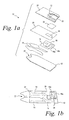
- An example of biosensors which may be used is described in U.S. Patent No. 6,531,040 , which is illustrated in FIG. la-b.
- the biosensor 10 is shown in an exploded view in FIG. 1 . It comprises an insulating base 12 upon which is printed in sequence (typically by screen printing techniques), an electrical conductor pattern 14, an electrode pattern (portions 16 and 18), an insulating (dielectric) pattern 20, and a reaction layer 22.
- the biosensor is completed by adding a cover layer 28.
- the capillary 30 formed between the cover layer 28 and the reagent layer 22, provides a flow path for the fluid test sample.
- the reagents in reaction layer 22 react with the analytes in the fluid test sample (e.g., glucose in blood) and to produce an electrical current which is measured and correlated with the amount of the analyte present.
- the reaction layer 22 typically contains an enzyme or enzymes, and an electron acceptor.
- the enzyme reacts with the analyte to produce electrons, which are conveyed to the surface of the working electrode by an electron acceptor or mediator, which is reduced in response to the reaction between the analyte and the enzyme.
- the enzyme is glucose dehydrogenase (GDH) and its co-factor pyrrolo-quinoline quinone (PQQ) and the mediator is a ferricyanide salt.
- the two portions 16, 18 of the electrode pattern provide the respective working and counter electrodes necessary to electrochemically determine the analyte concentration.
- a feature of the design shown is that the working and counter electrodes are configured such that the major portion of the counter electrode is located downstream (in terms of the direction of fluid flow along the flow path) from the exposed portion of the working electrode 16a.
- Counter electrode sub element 18a is positioned up stream from working electrode upper element 16a so that when an amount of the test fluid sample (e.g., a whole blood sample) inadequate to completely cover the working electrode enters the capillary space, an electrical connection forms between counter electrode sub element 18a and exposed portion of the working electrode 16a due to the conductivity of the whole blood sample.
- the area of the counter electrode that is available for contact by the whole blood sample is so small that only a very weak current can pass between the electrodes and, thus, through the current detector.
- the sensor device informs the user that insufficient blood has entered the sensor's cavity and that another test should be conducted, or that more blood should be added. While the particular dimensions of the electrodes are not critical, the area of the counter electrode sub-element 18a is typically less than about 10% than that of the working electrode and, more specifically, less than about 6%. This element should be made as small as possible.
- reaction layer 22 could be removed from contact with counter electrode sub-element 18a, by producing a screen that does not print reagent ink over the counter electrode sub element 18a. This would starve the sub-element for reagent, thereby not allowing it to function as a proper counter electrode, so that an error condition is achieved when the test fluid sample fails to contact the bulk of the counter electrode 18. While sub element 18a is shown as being physically connected to, and therefore part of, the counter electrode 18, 18a may be physically disconnected from the rest of the counter electrode provided that it has its own connector and the sensor is equipped with a third contact to the detector.
- the working and counter electrodes are generally printed using electrode ink, which is generally about 14 ⁇ m (0.00055") thick and typically contains electrochemically active carbon.
- Components of the conductor ink may be a mixture of carbon and silver that is chosen to provide a low chemical resistance path between the electrodes and the meter to which they are connected via contact with the conductive pattern at a fish tail end 26 of the sensor.
- the counter electrode may be comprised of silver/silver chloride, although carbon is preferred.
- the dielectric pattern insulates the electrodes from the fluid test sample except in a defined area near the center of the electrode pattern 24. A defined area is important in this type of electrochemical determination because the measured current depends not only on the analyte concentration and the area of the reaction layer 22, but also on the area of the working electrode 16a that is exposed to the analyte-containing test sample.
- a typical dielectric layer 20 comprises a UV-cured acrylate modified monomer, oligomer or polymer, and is about 10 ⁇ m (0.0004") thick.
- the dielectric layer also may be moisture-curable or heat-curable.
- the lid or cover 28 is adapted to mate with the base to form a space to receive the fluid test sample in which the counter and working electrodes are situated.
- Lid 28 provides a concave space 30, and is typically formed by embossing a flat sheet of deformable material. The lid 28 is punctured to provide an air vent 32 and joined to the base 12 in a sealing operation.
- the lid and base can be sealed together by sonic welding in which the base 12 and lid 28 are first aligned and then pressed together between a vibratory heat sealing member or horn and a stationary jaw, with contact only with the flat, non-embossed regions of the lid.
- the embossed lid and base may also be joined by using an adhesive material on the underside of the lid. The method of joining the lid and base are more fully described in U.S. Patent No. 5,798,031 .
- Suitable materials for the insulating base 12 include polycarbonate, polyethylene terephthalate, dimensionally stable vinyl and acrylic polymers, and polymer blends such as polycarbonate/polyethylene terephthalate, and metal foil structures (e.g., a nylon/aluminum/polyvinyl chloride laminate).
- the lid typically is fabricated from a deformable polymeric sheet material such as polycarbonate, or an embossable grade of polyethylene terephthalate, glycol modified polyethylene terephthalate, or a metal foil composition (e.g., an aluminum foil structure).
- electrochemical sensors may be used in the present invention.
- Examples of an electrochemical sensor that can be used to measure glucose concentrations are those used in Bayer HealthCare's AscensiaTM AUTODISC® and AscensiaTM ELITE® systems. More details on such electrochemical sensors may be found in U.S. Patent Nos. 5,120,420 and 5,320,732 .
- Other electrochemical sensors are available from Matsushita Electric Industrial Company.
- a further example of an electrochemical sensor that may be used in an amperometric monitoring system is disclosed in U.S. Patent No. 5,429,735 .
- the electrochemical sensors may be located in a blood glucose sensor dispensing instrument loaded with a plurality of sensors.
- a sensor pack loaded in a sensor dispensing instrument is disclosed in U.S. Patent No. 5,660,791 .
- an electrochemical sensor When an electrochemical sensor is placed in a suitable measuring instrument and a blood sample is introduced, a potential is applied across the electrodes and the electrical current is measured, correlated with the glucose content of the sample, and reported to the user.
- the amperometric sensors may apply a fixed potential across the electrodes and the current produced is measured over a predetermined period of time, which may be quite short, say 5 to 10 seconds, in order to correct for the bias that may be present due to premature reduction of the mediator. That period is referred to as "bum period".
- the current rises to a peak and then declines, while the sample is re-hydrating the reagent layer, enabling the oxidation and reduction reactions to occur.
- the applied potential is removed or at least reduced during a resting period that allows the reactions to occur. Then, the potential is reapplied and the current measured over a predetermined "read” period (e.g., ten seconds).
- the composition that reacts with a sample of blood in an electrochemical biosensor must provide a consistent response from one sensor to the next. Consistent response is important to users that rely on the results to adjust their diet or medication. It follows that changes in activity of the reagents over the shelf life of the biosensor should be as small as possible, but at least predictable, so that adjustment of the results can be made.
- the present invention solves a problem discovered where the enzyme-co-factor GDH-PQQ was to be used in an electrochemical biosensor in which the reactive composition was to be screen printed onto the sensor's electrodes. The inventors found that GDH-PQQ in components commonly used in screen printing caused the GDH-PQQ to lose activity.
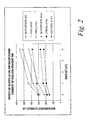
- GDH-PQQ Mixtures of GDH-PQQ with potassium ferricyanide as a redox mediator were prepared in a series of buffers. Although it was known that GDH-PQQ preferred a neutral pH, buffers, including acetate, citrate and succinate buffers, providing a pH in the range of from about 4.5 to about 6.5 and, more specifically, from about 5.0 to about 6.0 were found to be more desirable, since the mediator ferricyanide is more stable in acidic pH (see FIG. 2 ).
- the enzyme activity was determined with a Beckman SYNCHRON CX 4 ® Delta instrument measuring the rate of diformazan formation at 560 nm formed by the reduction of nitrotetrazolium blue (NBT) with phenazine methosulfate (PMS) at 37°C.
- NBT nitrotetrazolium blue
- PMS phenazine methosulfate
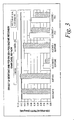
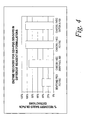
- Bentone a clay thickener, supplied by RHEOX, Inc. was included at 1.3 wt % in the buffer solution. The results shown in FIG.
- hydroxyethyl cellulose can be used as a matrix component in the reactant layer in electrochemical biosensors using GDH-PQQ without causing undue loss of enzyme activity.
- Other related hydrophilic polymers may also be used, to make the viscosity of the composition suitable for screen printing.
- Other cellulose derivatives include, but are not limited to, sodium, carboxymethyl cellulose, hydroxypropylcellulose, hydroxyethylcellulose, of hydroxypropyl methylcellulose.
- CAB-O-SIL M5 ® is an amorphous untreated fumed silica that has been shown to provide the needed physical properties to inks used in screen printing of reagent layers of the invention.
- This untreated hydrophilic silica is to be distinguished from the treated silica taught in several earlier patents to balance hydrophobic and hydrophilic properties.
- the selection of the surfactants may also affect the activity of GDH-PQQ.
- Triton x-100 an alkyl aryl polyether alcohol, supplied by Sigma is very suitable.
- FC 170C a product of 3M
- Pluronic L62 D a product of BASF are considered to be useful in formulations of the invention.
- Preferred reagent compositions for screen-printing biosensor according to the invention contain:
- a 75mM calcium acetate buffer having a pH of 5.3 was prepared by adding calcium acetate and glacial acetic acid. To the buffer solution, the following compounds were added: 10mM CaCl 2 , 0.05 wt% Triton X-100 surfactant, 1-3 wt% Cabosil M5 amorphous untreated fumed silica powder, and 4-8 wt% hydroxyethyl celluose. After allowing 16 hours for hydration of the silica and cellulose, 15-20 wt% potassium ferricyanide and, 3 to 8 units of GDH-PQQ were added to each milligram of reagent ink. The reagent ink was mixed at 600 rpm with a blade mixer for about 10 to 20 minutes to produce a reagent composition having a viscosity about 80,000 to 140,000 cps.
- the reagent composition was screen printed onto a substrate containing electrodes and dried at 45-50°C for 5 minutes.
- Glucose sensors were prepared using the reagent composition of Example 1 and tested with blood samples containing known glucose contents and having 40% hematocrit. A potential of 200 to 400 millivolts was applied to the electrodes and the current measured ten seconds after applying the potential was used to determine the glucose contents of the samples. The results of these tests are shown in Fig. 5 where the response of an AscensiaTM AUTODISC® Glucose meter programmed for a 10 second test time are plotted against the glucose content measured by the industry standard YSI glucose instrument. It can be seen that a linear response was obtained, that was relatively insensitive to the concentration of the enzyme-cofactor concentration within the range studied.
- the sensors also demonstrated good dose response when compared with the results obtained from the YSI instrument, an industry standard.
- the bias relative to the YSI instrument results is shown in FIG. 6 .
- the bias was within ⁇ 5 % for samples with ⁇ 400 mg/dL glucose and within ⁇ 10% for samples with 680 mg/dL glucose.
Landscapes
- Chemical & Material Sciences (AREA)
- Life Sciences & Earth Sciences (AREA)
- Organic Chemistry (AREA)
- Health & Medical Sciences (AREA)
- Proteomics, Peptides & Aminoacids (AREA)
- Zoology (AREA)
- Wood Science & Technology (AREA)
- Engineering & Computer Science (AREA)
- Physics & Mathematics (AREA)
- Analytical Chemistry (AREA)
- General Health & Medical Sciences (AREA)
- Biochemistry (AREA)
- Immunology (AREA)
- Molecular Biology (AREA)
- Genetics & Genomics (AREA)
- Bioinformatics & Cheminformatics (AREA)
- Biotechnology (AREA)
- Microbiology (AREA)
- Biophysics (AREA)
- General Engineering & Computer Science (AREA)
- Emergency Medicine (AREA)
- Chemical Kinetics & Catalysis (AREA)
- Hematology (AREA)
- Pathology (AREA)
- General Physics & Mathematics (AREA)
- Electrochemistry (AREA)
- Measuring Or Testing Involving Enzymes Or Micro-Organisms (AREA)
- Apparatus Associated With Microorganisms And Enzymes (AREA)
- Enzymes And Modification Thereof (AREA)
- Immobilizing And Processing Of Enzymes And Microorganisms (AREA)
- Compositions Of Macromolecular Compounds (AREA)
Applications Claiming Priority (2)
| Application Number | Priority Date | Filing Date | Title |
|---|---|---|---|
| US65863405P | 2005-03-04 | 2005-03-04 | |
| PCT/US2006/007875 WO2006096619A2 (en) | 2005-03-04 | 2006-03-03 | Stabilizing the activity of pqq-dependent glucose dehydrogenase in electrochemical biosensors |
Publications (2)
| Publication Number | Publication Date |
|---|---|
| EP1859048A2 EP1859048A2 (en) | 2007-11-28 |
| EP1859048B1 true EP1859048B1 (en) | 2014-06-18 |
Family
ID=36677188
Family Applications (1)
| Application Number | Title | Priority Date | Filing Date |
|---|---|---|---|
| EP06737095.7A Not-in-force EP1859048B1 (en) | 2005-03-04 | 2006-03-03 | Stabilizing the activity of pqq-dependent glucose dehydrogenase in electrochemical biosensors |
Country Status (14)
| Country | Link |
|---|---|
| US (3) | US8921065B2 (enExample) |
| EP (1) | EP1859048B1 (enExample) |
| JP (2) | JP5020832B2 (enExample) |
| KR (1) | KR20070114802A (enExample) |
| CN (1) | CN101133162A (enExample) |
| AU (1) | AU2006220770A1 (enExample) |
| BR (1) | BRPI0607841A2 (enExample) |
| CA (1) | CA2600132C (enExample) |
| MX (1) | MX2007010778A (enExample) |
| NO (1) | NO20074925L (enExample) |
| RU (1) | RU2422534C2 (enExample) |
| TW (1) | TW200643173A (enExample) |
| WO (1) | WO2006096619A2 (enExample) |
| ZA (1) | ZA200708312B (enExample) |
Families Citing this family (17)
| Publication number | Priority date | Publication date | Assignee | Title |
|---|---|---|---|---|
| CA2629492C (en) * | 2005-11-14 | 2013-03-26 | Bayer Healthcare Llc | Test sensor reagent having cellulose polymers |
| JP5395665B2 (ja) | 2006-09-22 | 2014-01-22 | バイエル・ヘルスケア・エルエルシー | 改善された安定性およびヘマトクリット性能(performance)を有するバイオセンサー系 |
| JP5583594B2 (ja) * | 2007-12-10 | 2014-09-03 | バイエル・ヘルスケア・エルエルシー | 試験センサ内に試薬物質を被着させる方法 |
| CA2708156C (en) | 2007-12-10 | 2018-01-23 | Bayer Healthcare Llc | Reagents and methods for detecting analytes |
| US7678250B2 (en) * | 2008-01-22 | 2010-03-16 | Home Diagnostics, Inc. | Reagent compositions for use in electrochemical detection |
| AU2009269702B2 (en) | 2008-07-11 | 2016-07-21 | Universal Biosensors Pty Ltd | Enhanced immunoassay sensor |
| US20100270152A1 (en) * | 2009-04-24 | 2010-10-28 | Lifescan Scotland Limited | Enzymatic reagent ink |
| US8025788B2 (en) * | 2009-04-24 | 2011-09-27 | Lifescan Scotland Limited | Method for manufacturing an enzymatic reagent ink |
| US20100273249A1 (en) * | 2009-04-24 | 2010-10-28 | Lifescan Scotland Limited | Analytical test strips |
| US8409412B2 (en) * | 2010-08-23 | 2013-04-02 | Lifescan Scotland, Ltd. | Enzymatic reagent inks for use in test strips having a predetermined calibration code |
| CA2840949A1 (en) * | 2011-07-06 | 2013-01-10 | Advanced Liquid Logic Inc | Reagent storage on a droplet actuator |
| KR101239381B1 (ko) | 2012-05-02 | 2013-03-05 | 주식회사 아이센스 | 산화환원반응용 시약의 안정제 조성물 |
| US9097659B2 (en) * | 2013-03-14 | 2015-08-04 | Bayer Healthcare Llc | Maintaining electrode function during manufacture with a protective layer |
| AU2016269840A1 (en) * | 2015-06-01 | 2017-11-30 | The University Of Queensland | Electrochemical biosensor |
| CN108802157A (zh) * | 2018-06-22 | 2018-11-13 | 桂林中辉科技发展有限公司 | 一种总胆汁酸检测试剂、试纸及检测方法与应用 |
| CN114173831B (zh) * | 2019-05-28 | 2023-11-14 | W.L.戈尔及同仁股份有限公司 | 稳定化的医疗装置及其制造方法 |
| CN114923965B (zh) * | 2022-03-18 | 2023-05-23 | 杭州微策生物技术股份有限公司 | 一种一体式多指标传感器及其制作方法 |
Family Cites Families (26)
| Publication number | Priority date | Publication date | Assignee | Title |
|---|---|---|---|---|
| US5682884A (en) | 1983-05-05 | 1997-11-04 | Medisense, Inc. | Strip electrode with screen printing |
| DE68924026T3 (de) | 1988-03-31 | 2008-01-10 | Matsushita Electric Industrial Co., Ltd., Kadoma | Biosensor und dessen herstellung. |
| US5200051A (en) * | 1988-11-14 | 1993-04-06 | I-Stat Corporation | Wholly microfabricated biosensors and process for the manufacture and use thereof |
| US5320732A (en) | 1990-07-20 | 1994-06-14 | Matsushita Electric Industrial Co., Ltd. | Biosensor and measuring apparatus using the same |
| US5429735A (en) | 1994-06-27 | 1995-07-04 | Miles Inc. | Method of making and amperometric electrodes |
| JP3775518B2 (ja) * | 1995-11-22 | 2006-05-17 | 東洋紡績株式会社 | Pqq依存性グルコースデヒドロゲナーゼ組成物およびグルコース測定用試薬組成物 |
| US5708247A (en) | 1996-02-14 | 1998-01-13 | Selfcare, Inc. | Disposable glucose test strips, and methods and compositions for making same |
| US6241862B1 (en) | 1996-02-14 | 2001-06-05 | Inverness Medical Technology, Inc. | Disposable test strips with integrated reagent/blood separation layer |
| JP3370504B2 (ja) | 1996-03-13 | 2003-01-27 | 松下電器産業株式会社 | バイオセンサ |
| US5660791A (en) | 1996-06-06 | 1997-08-26 | Bayer Corporation | Fluid testing sensor for use in dispensing instrument |
| US6059946A (en) | 1997-04-14 | 2000-05-09 | Matsushita Electric Industrial Co., Ltd. | Biosensor |
| US5798031A (en) | 1997-05-12 | 1998-08-25 | Bayer Corporation | Electrochemical biosensor |
| US6736957B1 (en) | 1997-10-16 | 2004-05-18 | Abbott Laboratories | Biosensor electrode mediators for regeneration of cofactors and process for using |
| US5997817A (en) | 1997-12-05 | 1999-12-07 | Roche Diagnostics Corporation | Electrochemical biosensor test strip |
| US7407811B2 (en) | 1997-12-22 | 2008-08-05 | Roche Diagnostics Operations, Inc. | System and method for analyte measurement using AC excitation |
| US6656702B1 (en) | 1998-07-03 | 2003-12-02 | Matsushita Electric Industrial Co., Ltd. | Biosensor containing glucose dehydrogenase |
| JP3694424B2 (ja) | 1998-09-29 | 2005-09-14 | 松下電器産業株式会社 | グルコースセンサ |
| DE19849000A1 (de) | 1998-10-23 | 2000-04-27 | Roche Diagnostics Gmbh | Funktionsschichten mit hoher Präzision, Verfahren zu ihrer Herstellung und Teststreifen enthaltend diese Funktionsschichten |
| CA2305922C (en) | 1999-08-02 | 2005-09-20 | Bayer Corporation | Improved electrochemical sensor design |
| WO2001025776A1 (en) * | 1999-10-05 | 2001-04-12 | Matsushita Electric Industrial Co., Ltd. | Glucose sensor |
| US6780296B1 (en) * | 1999-12-23 | 2004-08-24 | Roche Diagnostics Corporation | Thermally conductive sensor |
| US6627057B1 (en) * | 1999-12-23 | 2003-09-30 | Roche Diagnostic Corporation | Microsphere containing sensor |
| EP1126032B1 (en) | 1999-12-27 | 2005-04-20 | Matsushita Electric Industrial Co., Ltd. | Biosensor |
| KR100554649B1 (ko) * | 2003-06-09 | 2006-02-24 | 주식회사 아이센스 | 전기화학적 바이오센서 |
| JP4619359B2 (ja) * | 2003-06-20 | 2011-01-26 | エフ ホフマン−ラ ロッシュ アクチェン ゲゼルシャフト | フレア状に形成された試料受入チャンバーを持つ試験片 |
| CA2543802A1 (en) * | 2003-10-31 | 2005-05-19 | Lifescan Scotland Limited | Method of reducing the effect of direct and mediated interference current in an electrochemical test strip |
-
2006
- 2006-03-03 RU RU2007136760/13A patent/RU2422534C2/ru not_active IP Right Cessation
- 2006-03-03 MX MX2007010778A patent/MX2007010778A/es not_active Application Discontinuation
- 2006-03-03 BR BRPI0607841-9A patent/BRPI0607841A2/pt not_active IP Right Cessation
- 2006-03-03 US US11/885,237 patent/US8921065B2/en active Active
- 2006-03-03 AU AU2006220770A patent/AU2006220770A1/en not_active Abandoned
- 2006-03-03 EP EP06737095.7A patent/EP1859048B1/en not_active Not-in-force
- 2006-03-03 WO PCT/US2006/007875 patent/WO2006096619A2/en not_active Ceased
- 2006-03-03 JP JP2007558321A patent/JP5020832B2/ja active Active
- 2006-03-03 CA CA2600132A patent/CA2600132C/en not_active Expired - Fee Related
- 2006-03-03 CN CNA2006800071180A patent/CN101133162A/zh active Pending
- 2006-03-03 TW TW095107296A patent/TW200643173A/zh unknown
- 2006-03-03 KR KR1020077022533A patent/KR20070114802A/ko not_active Withdrawn
-
2007
- 2007-09-28 ZA ZA200708312A patent/ZA200708312B/xx unknown
- 2007-09-28 NO NO20074925A patent/NO20074925L/no not_active Application Discontinuation
-
2012
- 2012-04-20 JP JP2012096204A patent/JP5236824B2/ja active Active
-
2014
- 2014-11-26 US US14/554,537 patent/US20150076003A1/en not_active Abandoned
-
2019
- 2019-04-24 US US16/393,601 patent/US20190249214A1/en not_active Abandoned
Also Published As
| Publication number | Publication date |
|---|---|
| RU2422534C2 (ru) | 2011-06-27 |
| CA2600132A1 (en) | 2006-09-14 |
| NO20074925L (no) | 2007-11-02 |
| JP2012198218A (ja) | 2012-10-18 |
| JP5020832B2 (ja) | 2012-09-05 |
| US8921065B2 (en) | 2014-12-30 |
| MX2007010778A (es) | 2007-11-07 |
| US20190249214A1 (en) | 2019-08-15 |
| BRPI0607841A2 (pt) | 2009-06-13 |
| AU2006220770A1 (en) | 2006-09-14 |
| CA2600132C (en) | 2014-09-09 |
| ZA200708312B (en) | 2008-11-26 |
| EP1859048A2 (en) | 2007-11-28 |
| WO2006096619A2 (en) | 2006-09-14 |
| JP2008532047A (ja) | 2008-08-14 |
| KR20070114802A (ko) | 2007-12-04 |
| US20150076003A1 (en) | 2015-03-19 |
| WO2006096619A3 (en) | 2006-11-23 |
| RU2007136760A (ru) | 2009-04-10 |
| US20080199937A1 (en) | 2008-08-21 |
| CN101133162A (zh) | 2008-02-27 |
| TW200643173A (en) | 2006-12-16 |
| JP5236824B2 (ja) | 2013-07-17 |
Similar Documents
| Publication | Publication Date | Title |
|---|---|---|
| US20190249214A1 (en) | Test sensors and methods of using the same | |
| EP1802962B1 (en) | Concentration determination in a diffusion barrier layer | |
| EP2679150B1 (en) | Transient decay amperometry | |
| EP1869203B1 (en) | Series of control solutions for biosensors comprising an oxidizable species as an internal reference | |
| EP2373805B1 (en) | Low total salt reagent compositions and systems for biosensors | |
| US10190146B2 (en) | Method of correcting for oxygen effect | |
| EP1949101B1 (en) | Test sensor reagent having cellulose polymers | |
| HK1116220A (en) | Stabilizing the activity of pqq-dependent glucose dehydrogenase in electrochemical biosensors | |
| HK1229422A1 (en) | Test sensor for determining the concentration of an analyte in a sample |
Legal Events
| Date | Code | Title | Description |
|---|---|---|---|
| PUAI | Public reference made under article 153(3) epc to a published international application that has entered the european phase |
Free format text: ORIGINAL CODE: 0009012 |
|
| 17P | Request for examination filed |
Effective date: 20071004 |
|
| AK | Designated contracting states |
Kind code of ref document: A2 Designated state(s): AT BE BG CH CY CZ DE DK EE ES FI FR GB GR HU IE IS IT LI LT LU LV MC NL PL PT RO SE SI SK TR |
|
| DAX | Request for extension of the european patent (deleted) | ||
| 17Q | First examination report despatched |
Effective date: 20100309 |
|
| RAP1 | Party data changed (applicant data changed or rights of an application transferred) |
Owner name: BAYER HEALTHCARE LLC |
|
| GRAP | Despatch of communication of intention to grant a patent |
Free format text: ORIGINAL CODE: EPIDOSNIGR1 |
|
| INTG | Intention to grant announced |
Effective date: 20140130 |
|
| GRAS | Grant fee paid |
Free format text: ORIGINAL CODE: EPIDOSNIGR3 |
|
| GRAA | (expected) grant |
Free format text: ORIGINAL CODE: 0009210 |
|
| AK | Designated contracting states |
Kind code of ref document: B1 Designated state(s): AT BE BG CH CY CZ DE DK EE ES FI FR GB GR HU IE IS IT LI LT LU LV MC NL PL PT RO SE SI SK TR |
|
| REG | Reference to a national code |
Ref country code: GB Ref legal event code: FG4D |
|
| REG | Reference to a national code |
Ref country code: CH Ref legal event code: EP |
|
| REG | Reference to a national code |
Ref country code: AT Ref legal event code: REF Ref document number: 673401 Country of ref document: AT Kind code of ref document: T Effective date: 20140715 |
|
| REG | Reference to a national code |
Ref country code: IE Ref legal event code: FG4D |
|
| REG | Reference to a national code |
Ref country code: DE Ref legal event code: R096 Ref document number: 602006041956 Country of ref document: DE Effective date: 20140731 |
|
| PG25 | Lapsed in a contracting state [announced via postgrant information from national office to epo] |
Ref country code: GR Free format text: LAPSE BECAUSE OF FAILURE TO SUBMIT A TRANSLATION OF THE DESCRIPTION OR TO PAY THE FEE WITHIN THE PRESCRIBED TIME-LIMIT Effective date: 20140919 Ref country code: FI Free format text: LAPSE BECAUSE OF FAILURE TO SUBMIT A TRANSLATION OF THE DESCRIPTION OR TO PAY THE FEE WITHIN THE PRESCRIBED TIME-LIMIT Effective date: 20140618 Ref country code: LT Free format text: LAPSE BECAUSE OF FAILURE TO SUBMIT A TRANSLATION OF THE DESCRIPTION OR TO PAY THE FEE WITHIN THE PRESCRIBED TIME-LIMIT Effective date: 20140618 Ref country code: CY Free format text: LAPSE BECAUSE OF FAILURE TO SUBMIT A TRANSLATION OF THE DESCRIPTION OR TO PAY THE FEE WITHIN THE PRESCRIBED TIME-LIMIT Effective date: 20140618 |
|
| REG | Reference to a national code |
Ref country code: NL Ref legal event code: VDEP Effective date: 20140618 |
|
| REG | Reference to a national code |
Ref country code: AT Ref legal event code: MK05 Ref document number: 673401 Country of ref document: AT Kind code of ref document: T Effective date: 20140618 |
|
| REG | Reference to a national code |
Ref country code: LT Ref legal event code: MG4D |
|
| PG25 | Lapsed in a contracting state [announced via postgrant information from national office to epo] |
Ref country code: SE Free format text: LAPSE BECAUSE OF FAILURE TO SUBMIT A TRANSLATION OF THE DESCRIPTION OR TO PAY THE FEE WITHIN THE PRESCRIBED TIME-LIMIT Effective date: 20140618 Ref country code: LV Free format text: LAPSE BECAUSE OF FAILURE TO SUBMIT A TRANSLATION OF THE DESCRIPTION OR TO PAY THE FEE WITHIN THE PRESCRIBED TIME-LIMIT Effective date: 20140618 |
|
| PG25 | Lapsed in a contracting state [announced via postgrant information from national office to epo] |
Ref country code: PT Free format text: LAPSE BECAUSE OF FAILURE TO SUBMIT A TRANSLATION OF THE DESCRIPTION OR TO PAY THE FEE WITHIN THE PRESCRIBED TIME-LIMIT Effective date: 20141020 Ref country code: ES Free format text: LAPSE BECAUSE OF FAILURE TO SUBMIT A TRANSLATION OF THE DESCRIPTION OR TO PAY THE FEE WITHIN THE PRESCRIBED TIME-LIMIT Effective date: 20140618 Ref country code: EE Free format text: LAPSE BECAUSE OF FAILURE TO SUBMIT A TRANSLATION OF THE DESCRIPTION OR TO PAY THE FEE WITHIN THE PRESCRIBED TIME-LIMIT Effective date: 20140618 Ref country code: SK Free format text: LAPSE BECAUSE OF FAILURE TO SUBMIT A TRANSLATION OF THE DESCRIPTION OR TO PAY THE FEE WITHIN THE PRESCRIBED TIME-LIMIT Effective date: 20140618 Ref country code: CZ Free format text: LAPSE BECAUSE OF FAILURE TO SUBMIT A TRANSLATION OF THE DESCRIPTION OR TO PAY THE FEE WITHIN THE PRESCRIBED TIME-LIMIT Effective date: 20140618 Ref country code: RO Free format text: LAPSE BECAUSE OF FAILURE TO SUBMIT A TRANSLATION OF THE DESCRIPTION OR TO PAY THE FEE WITHIN THE PRESCRIBED TIME-LIMIT Effective date: 20140618 |
|
| PG25 | Lapsed in a contracting state [announced via postgrant information from national office to epo] |
Ref country code: NL Free format text: LAPSE BECAUSE OF FAILURE TO SUBMIT A TRANSLATION OF THE DESCRIPTION OR TO PAY THE FEE WITHIN THE PRESCRIBED TIME-LIMIT Effective date: 20140618 Ref country code: PL Free format text: LAPSE BECAUSE OF FAILURE TO SUBMIT A TRANSLATION OF THE DESCRIPTION OR TO PAY THE FEE WITHIN THE PRESCRIBED TIME-LIMIT Effective date: 20140618 Ref country code: AT Free format text: LAPSE BECAUSE OF FAILURE TO SUBMIT A TRANSLATION OF THE DESCRIPTION OR TO PAY THE FEE WITHIN THE PRESCRIBED TIME-LIMIT Effective date: 20140618 Ref country code: IS Free format text: LAPSE BECAUSE OF FAILURE TO SUBMIT A TRANSLATION OF THE DESCRIPTION OR TO PAY THE FEE WITHIN THE PRESCRIBED TIME-LIMIT Effective date: 20141018 |
|
| REG | Reference to a national code |
Ref country code: DE Ref legal event code: R097 Ref document number: 602006041956 Country of ref document: DE |
|
| PLBE | No opposition filed within time limit |
Free format text: ORIGINAL CODE: 0009261 |
|
| STAA | Information on the status of an ep patent application or granted ep patent |
Free format text: STATUS: NO OPPOSITION FILED WITHIN TIME LIMIT |
|
| PG25 | Lapsed in a contracting state [announced via postgrant information from national office to epo] |
Ref country code: DK Free format text: LAPSE BECAUSE OF FAILURE TO SUBMIT A TRANSLATION OF THE DESCRIPTION OR TO PAY THE FEE WITHIN THE PRESCRIBED TIME-LIMIT Effective date: 20140618 Ref country code: IT Free format text: LAPSE BECAUSE OF FAILURE TO SUBMIT A TRANSLATION OF THE DESCRIPTION OR TO PAY THE FEE WITHIN THE PRESCRIBED TIME-LIMIT Effective date: 20140618 |
|
| 26N | No opposition filed |
Effective date: 20150319 |
|
| PG25 | Lapsed in a contracting state [announced via postgrant information from national office to epo] |
Ref country code: BE Free format text: LAPSE BECAUSE OF FAILURE TO SUBMIT A TRANSLATION OF THE DESCRIPTION OR TO PAY THE FEE WITHIN THE PRESCRIBED TIME-LIMIT Effective date: 20140618 |
|
| PG25 | Lapsed in a contracting state [announced via postgrant information from national office to epo] |
Ref country code: SI Free format text: LAPSE BECAUSE OF FAILURE TO SUBMIT A TRANSLATION OF THE DESCRIPTION OR TO PAY THE FEE WITHIN THE PRESCRIBED TIME-LIMIT Effective date: 20140618 |
|
| PG25 | Lapsed in a contracting state [announced via postgrant information from national office to epo] |
Ref country code: LU Free format text: LAPSE BECAUSE OF FAILURE TO SUBMIT A TRANSLATION OF THE DESCRIPTION OR TO PAY THE FEE WITHIN THE PRESCRIBED TIME-LIMIT Effective date: 20150303 Ref country code: MC Free format text: LAPSE BECAUSE OF FAILURE TO SUBMIT A TRANSLATION OF THE DESCRIPTION OR TO PAY THE FEE WITHIN THE PRESCRIBED TIME-LIMIT Effective date: 20140618 |
|
| REG | Reference to a national code |
Ref country code: CH Ref legal event code: PL |
|
| GBPC | Gb: european patent ceased through non-payment of renewal fee |
Effective date: 20150303 |
|
| REG | Reference to a national code |
Ref country code: FR Ref legal event code: ST Effective date: 20151130 |
|
| REG | Reference to a national code |
Ref country code: IE Ref legal event code: MM4A |
|
| PG25 | Lapsed in a contracting state [announced via postgrant information from national office to epo] |
Ref country code: CH Free format text: LAPSE BECAUSE OF NON-PAYMENT OF DUE FEES Effective date: 20150331 Ref country code: IE Free format text: LAPSE BECAUSE OF NON-PAYMENT OF DUE FEES Effective date: 20150303 Ref country code: LI Free format text: LAPSE BECAUSE OF NON-PAYMENT OF DUE FEES Effective date: 20150331 Ref country code: GB Free format text: LAPSE BECAUSE OF NON-PAYMENT OF DUE FEES Effective date: 20150303 |
|
| PG25 | Lapsed in a contracting state [announced via postgrant information from national office to epo] |
Ref country code: FR Free format text: LAPSE BECAUSE OF NON-PAYMENT OF DUE FEES Effective date: 20150331 |
|
| PG25 | Lapsed in a contracting state [announced via postgrant information from national office to epo] |
Ref country code: BG Free format text: LAPSE BECAUSE OF FAILURE TO SUBMIT A TRANSLATION OF THE DESCRIPTION OR TO PAY THE FEE WITHIN THE PRESCRIBED TIME-LIMIT Effective date: 20140618 Ref country code: HU Free format text: LAPSE BECAUSE OF FAILURE TO SUBMIT A TRANSLATION OF THE DESCRIPTION OR TO PAY THE FEE WITHIN THE PRESCRIBED TIME-LIMIT; INVALID AB INITIO Effective date: 20060303 |
|
| PG25 | Lapsed in a contracting state [announced via postgrant information from national office to epo] |
Ref country code: TR Free format text: LAPSE BECAUSE OF FAILURE TO SUBMIT A TRANSLATION OF THE DESCRIPTION OR TO PAY THE FEE WITHIN THE PRESCRIBED TIME-LIMIT Effective date: 20140618 |
|
| PGFP | Annual fee paid to national office [announced via postgrant information from national office to epo] |
Ref country code: DE Payment date: 20230329 Year of fee payment: 18 |
|
| REG | Reference to a national code |
Ref country code: DE Ref legal event code: R119 Ref document number: 602006041956 Country of ref document: DE |
|
| PG25 | Lapsed in a contracting state [announced via postgrant information from national office to epo] |
Ref country code: DE Free format text: LAPSE BECAUSE OF NON-PAYMENT OF DUE FEES Effective date: 20241001 |
|
| PG25 | Lapsed in a contracting state [announced via postgrant information from national office to epo] |
Ref country code: DE Free format text: LAPSE BECAUSE OF NON-PAYMENT OF DUE FEES Effective date: 20241001 |