EP1849063B1 - System and method of handling a branch misprediction - Google Patents
System and method of handling a branch misprediction Download PDFInfo
- Publication number
- EP1849063B1 EP1849063B1 EP06735438.1A EP06735438A EP1849063B1 EP 1849063 B1 EP1849063 B1 EP 1849063B1 EP 06735438 A EP06735438 A EP 06735438A EP 1849063 B1 EP1849063 B1 EP 1849063B1
- Authority
- EP
- European Patent Office
- Prior art keywords
- instruction
- branch
- instructions
- pipeline
- pipelines
- Prior art date
- Legal status (The legal status is an assumption and is not a legal conclusion. Google has not performed a legal analysis and makes no representation as to the accuracy of the status listed.)
- Expired - Lifetime
Links
Images


Classifications
-
- G—PHYSICS
- G06—COMPUTING OR CALCULATING; COUNTING
- G06F—ELECTRIC DIGITAL DATA PROCESSING
- G06F9/00—Arrangements for program control, e.g. control units
- G06F9/06—Arrangements for program control, e.g. control units using stored programs, i.e. using an internal store of processing equipment to receive or retain programs
- G06F9/30—Arrangements for executing machine instructions, e.g. instruction decode
- G06F9/38—Concurrent instruction execution, e.g. pipeline or look ahead
- G06F9/3836—Instruction issuing, e.g. dynamic instruction scheduling or out of order instruction execution
- G06F9/3842—Speculative instruction execution
- G06F9/3844—Speculative instruction execution using dynamic branch prediction, e.g. using branch history tables
-
- G—PHYSICS
- G06—COMPUTING OR CALCULATING; COUNTING
- G06F—ELECTRIC DIGITAL DATA PROCESSING
- G06F9/00—Arrangements for program control, e.g. control units
- G06F9/06—Arrangements for program control, e.g. control units using stored programs, i.e. using an internal store of processing equipment to receive or retain programs
- G06F9/30—Arrangements for executing machine instructions, e.g. instruction decode
- G06F9/38—Concurrent instruction execution, e.g. pipeline or look ahead
-
- G—PHYSICS
- G06—COMPUTING OR CALCULATING; COUNTING
- G06F—ELECTRIC DIGITAL DATA PROCESSING
- G06F9/00—Arrangements for program control, e.g. control units
- G06F9/06—Arrangements for program control, e.g. control units using stored programs, i.e. using an internal store of processing equipment to receive or retain programs
- G06F9/30—Arrangements for executing machine instructions, e.g. instruction decode
- G06F9/38—Concurrent instruction execution, e.g. pipeline or look ahead
- G06F9/3836—Instruction issuing, e.g. dynamic instruction scheduling or out of order instruction execution
-
- G—PHYSICS
- G06—COMPUTING OR CALCULATING; COUNTING
- G06F—ELECTRIC DIGITAL DATA PROCESSING
- G06F9/00—Arrangements for program control, e.g. control units
- G06F9/06—Arrangements for program control, e.g. control units using stored programs, i.e. using an internal store of processing equipment to receive or retain programs
- G06F9/30—Arrangements for executing machine instructions, e.g. instruction decode
- G06F9/38—Concurrent instruction execution, e.g. pipeline or look ahead
- G06F9/3836—Instruction issuing, e.g. dynamic instruction scheduling or out of order instruction execution
- G06F9/3838—Dependency mechanisms, e.g. register scoreboarding
-
- G—PHYSICS
- G06—COMPUTING OR CALCULATING; COUNTING
- G06F—ELECTRIC DIGITAL DATA PROCESSING
- G06F9/00—Arrangements for program control, e.g. control units
- G06F9/06—Arrangements for program control, e.g. control units using stored programs, i.e. using an internal store of processing equipment to receive or retain programs
- G06F9/30—Arrangements for executing machine instructions, e.g. instruction decode
- G06F9/38—Concurrent instruction execution, e.g. pipeline or look ahead
- G06F9/3854—Instruction completion, e.g. retiring, committing or graduating
-
- G—PHYSICS
- G06—COMPUTING OR CALCULATING; COUNTING
- G06F—ELECTRIC DIGITAL DATA PROCESSING
- G06F9/00—Arrangements for program control, e.g. control units
- G06F9/06—Arrangements for program control, e.g. control units using stored programs, i.e. using an internal store of processing equipment to receive or retain programs
- G06F9/30—Arrangements for executing machine instructions, e.g. instruction decode
- G06F9/38—Concurrent instruction execution, e.g. pipeline or look ahead
- G06F9/3861—Recovery, e.g. branch miss-prediction, exception handling
Definitions
- the present invention relates generally to the field of processors and in particular to a method of flushing uncommitted instructions from a processor execution pipeline in response to a branch misprediction.
- Microprocessors perform computational tasks in a wide variety of applications. Improved processor performance is almost always desirable, to allow for faster operation and/or increased functionality through software changes. In many embedded applications, such as portable electronic devices, conserving power is also an important consideration in processor design and implementation.
- processors employ a pipelined architecture, where sequential instructions, each having multiple execution steps, are overlapped in execution. For maximum performance, the instructions should flow through continuously through the pipeline. However, instructions often become stalled in the pipeline for a variety of reasons, such as data dependencies between instructions, delays associated with memory accesses, an inability to allocate sufficient pipeline resources to instructions, and the like. Minimizing pipeline stalls and resolving them efficiently are important factors in achieving improved processor performance.
- Real-world programs include conditional branch instructions, the actual branching behavior of which is commonly not known until the instruction is evaluated deep in the pipeline.
- Commonly modern processors employ various forms of branch prediction, whereby the branching behavior of conditional branch instructions is predicted early in the pipeline, and the processor speculatively allocates pipeline resources, and/or fetches and speculatively executes instructions, based on the branch prediction.
- branch prediction When the actual branch behavior is determined, if the branch was mispredicted, the speculatively fetched instructions must be flushed from the pipeline, and new instructions fetched from the correct branch target address. Mispredicted branches adversely impact processor performance and power consumption.
- the write buffer is controlled to store the results of write operations to memory until such time as the cache becomes available, such as when no high-priority reads are to be performed.
- the write buffer includes multiple entries that are split into two circular buffer sections for facilitating the interaction with the two pipelines of the core; cross-dependency tables are provided for each write buffer entry to ensure that the data is written from the write buffer to memory in program order, considering the possibility of prior data present in the opposite section.
- Non-cacheable reads from memory are also ordered in program order with the writing of data from the write buffer.
- US-A-5 584 009 discloses a processor and corresponding method, said processor comprising: two instruction pipelines and means for flushing the pipelines behind mispredicted branches and keeping track of which execution pipeline contains the earliest instruction, for each stage, and providing stall output and receiving a delay input.
- the counterflow pipeline processor includes an instruction pipeline, a data pipeline, a reorder buffer and a plurality of execution units.
- An instruction and one or more operands issue into the instruction pipeline and a determination is made at one of the execution units whether the instruction is ready for execution. If so, the operands are loaded into the execution unit and the instruction executes.
- the execution unit is monitored for a result and, when the result arrives, it is stored into the result pipeline. If the instruction reaches the end of the pipeline without executing it wraps around and is sent down the instruction pipeline again.
- the method includes dispatching and executing a first and second plurality of instructions in a portion of a pipeline without first determining whether stages of the portion of the pipeline are ready.
- the method further includes determining if an execution problem is encountered and replaying the first plurality of instructions in response to determining that the first plurality of instructions encountered an execution problem.
- a processor pipeline is describes that includes a front end to fetch a plurality of instructions for execution and a back end to execute the plurality of instructions fetched by the front end.
- the back end includes a retirement stage to determine if an instruction had an execution problem.
- the back end is non-stallable.
- the processor pipeline also includes a channel to send an indication that the instruction encountered an execution problem from the retirement stage to a replay point of the pipeline from which the instruction may be re-executed.
- the present invention relates to a method of correcting a branch misprediction in a pipelined processor.
- a branch instruction misprediction is detected. Whether the branch instruction is the last uncommitted instruction in the pipelines determined. If the branch instruction is the last uncommitted instruction in the pipelines, the branch instruction is committed and all uncommitted instructions are flushed from the pipelines. If the branch instruction is not the last uncommitted instruction in the pipelines, whether an instruction older than the branch instruction is stalled in a pipeline due to a long latency operation is determined. If an instruction older than the branch instruction is stalled in a pipeline due to a long latency operation, the branch instruction and all other uncommitted instructions are flushed from the pipelines.
- FIG. 1 depicts a functional block diagram of a processor 10.
- the processor 10 executes instructions in an instruction execution pipeline 12 according to control logic 14.
- the pipeline 12 may be a superscalar design, with multiple parallel pipelines such as 12a and 12b.
- the pipeline control logic 14 may include a branch predictor 13 and an instruction order manager 15.
- the pipelines 12a, 12b include various registers or latches 16, organized in pipe stages, and one or more Arithmetic Logic Units (ALU) 18.
- a General Purpose Register (GPR) file 20 provides registers comprising the top of the memory hierarchy.
- the pipelines 12a, 12b fetch instructions from an Instruction Cache 22, with memory addressing and permissions managed by an Instruction-side Translation Lookaside Buffer (ITLB) 24.
- ILB Instruction-side Translation Lookaside Buffer
- the ITLB may comprise a copy of part of the TLB.
- the ITLB and TLB may be integrated.
- the I-cache 22 and D-cache 26 may be integrated, or unified. Misses in the I-cache 22 and/or the D-cache 26 cause an access to main (off-chip) memory 32, under the control of a memory interface 30.
- the processor 10 may include an Input/Output (I/O) interface 34, controlling access to various peripheral devices 36.
- I/O Input/Output
- the processor 10 may include a second-level (L2) cache for either or both the I and D caches.
- one or more of the functional blocks depicted in the processor 10 may be omitted from a particular embodiment.
- Pipelining is a well-known processor implementation technique whereby multiple instructions are simultaneously overlapped in execution.
- Each instruction in a typical architecture is executed in a plurality of execution steps, such as Fetch, Decode, Execute, Memory Access, and Write-Back.
- a processor pipeline 12 consists of a plurality of "pipe stages,” each comprising logic and a storage element 16, which completes an execution step or part of an execution step of an instruction.
- the pipe stages are connected together to form a pipeline 12. Instructions enter the pipeline 12 and are successively processed through the stages. New instructions enter the pipeline 12 before previous instructions complete execution - hence, multiple instructions may be processed within the pipeline 12 at any given time. This ability to exploit parallelism among instructions in a sequential instruction stream contributes significantly to improved processor performance. Under ideal conditions and in a processor 10 that completes each pipe stage in one cycle, following the brief initial process of filling the pipeline 12, an instruction may complete execution every cycle.
- a typical data hazard is encountered when an instruction performs an arithmetic or logical operation on two operands, where one or more of the operands is the result of a preceding instruction that has not completed execution and hence has not generated the required operand.
- the older instruction may be another arithmetic or logical operation, or it may be a memory access, such as one that misses in a cache 22, 26, forcing the memory interface 30 to perform an off-chip memory access operation.
- a data hazard forces the pipeline 12 to stall.
- a typical control hazard encountered in pipelined processors 10 is a mispredicted branch instruction.
- Conditional branch instructions are either "taken,” wherein the instruction directs control flow to a different program point, or "not taken,” wherein instruction execution proceeds sequentially.
- the evaluation of the branch condition occurs deep in a pipeline 12, during an execute pipe stage. Until the branch instruction is evaluated, the processor 10 does not know which instruction to fetch and execute next (i.e., the next sequential instruction or the instruction at a branch target address). The delay in waiting until the branch condition is evaluated causes a stall in the pipeline 12. Accordingly, many processors predict how a branch condition will evaluate, for example based on prior execution of the conditional branch instruction.
- the processor 10 fetches instructions into the pipeline 12 beginning at the predicted address, speculatively executing the instructions. When the prediction is correct, a pipeline stall is avoided.
- branch misprediction a branch condition opposite to that which was predicted. This is referred herein as a "branch misprediction” or a “mispredicted branch.”
- branch misprediction When a branch misprediction is detected, all instruction newer than the branch instruction (i.e., all instructions fetched based on the branch prediction) must be flushed from the pipeline 12. In a single pipeline, determining which instructions are newer than the mispredicted branch is straightforward - all pipe stages "behind" the branch must be flushed.
- Figure 2 depicts a superscalar pipeline architecture, with two parallel execution pipelines 12a and 12b.
- instruction A in pipeline 12a is stalled due to a dependency on instruction X, such as operand generation, a memory access, or some other long latency operation.
- Instruction A's data hazard has also stalled instruction B.
- instructions C, D and E have been fetched from the instruction cache 22 and loaded into pipeline 12b.
- some mechanism is necessary for tracking the order of instruction execution, as well as tracking dependencies between instructions.
- Most superscalar processors 10 include an order manager 15 as part of the pipeline control logic 14.
- the order manager 15 tracks the order of instruction execution through the pipeline - that is, which instructions are older or newer than a given instruction.
- the order manager 15 additionally tracks instruction dependencies, and is instrumental in exception handling.
- An exception or interrupt occurs whenever a pipe stage is unable to complete its execution of an instruction step. For example, a store instruction writing data to memory may cause an exception if a TLB 28 look-up indicates that the memory page is read-only. Other types of exceptions are well known in the art.
- the processor 10 Upon encountering an exception, the processor 10 must execute all prior, or older, instructions in the pipeline 12 (or pipelines 12a and 12b in a superscalar architecture); flush the exception-causing instruction and all newer instructions from the pipelines 12a and 12b; and then fetch and execute interrupt-handling code.
- the order manager 15 assists in this process by tracking which instructions are "confirmed" and which are "committed.”
- An instruction is confirmed when it is determined that no pipeline hazards will impede its execution - that is, the instruction will not stall.
- an instruction performing an arithmetic or logical operation may be confirmed when both operands are known to have been generated from previous instructions, fetched from memory, or are otherwise available.
- An instruction is committed when that instruction, and all older instructions, are confirmed.
- a committed instruction is known to be able to complete execution, as no pipeline hazards impede either it (the instruction itself is confirmed) or any instruction ahead of it (all older instructions are confirmed).
- instruction A is not confirmed, due to its dependency on the results of instruction X.
- Instruction B is unlikely to be confirmed at such an early stage in the pipeline 12a.
- Instruction C in pipeline 12b may be confirmed, meaning that no hazards preclude instruction C from completing execution. Instruction C cannot be committed, however, until all instructions older that it - i.e., instructions A and B - are confirmed.
- the conventional rule during exception handling is that the pipelines 12a and 12b are flushed when the exception-causing instruction is the "last uncommitted instruction.” For example, if instruction D were to generate an exception, the dependency of instruction A on instruction X must be resolved, allowing A to confirm. Once A confirms, if there are no unconfirmed instructions ahead of A (assume instruction X completes), it will also be committed. If instruction B also confirms and commits as it proceeds through the pipeline 12A, instruction C will then be committed, as instructions A, B and C are confirmed. D is then the last uncommitted instruction, and will be flushed, along with all newer instructions (e.g., E), from the pipelines 12a and 12b.
- all newer instructions e.g., E
- the exception-handling instructions are then fetched and fed into the pipelines 12a and 12b, as the committed instructions A, B and C proceed through the pipeline and complete execution.
- the exception-causing instruction By forcing the exception-causing instruction to be the last uncommitted instruction in the pipelines 12a and 12b, a clean break in the program execution is ensured. That is, once the interrupt-handling instructions resolve the error and restore the state of the processor 10, program execution may resume, beginning with instruction D, and will generate correct results.
- instruction C in Figure 2 is a conditional branch instruction that has evaluated its branch condition and discovered that it was mispredicted.
- Instructions D and E were fetched based on the erroneous branch prediction, and must be flushed from the pipeline 12b and replaced with instructions fetched from the correct branch target address.
- the mispredicted branch C would wait until it was the last uncommitted instruction - that is, until the dependence of A on X was resolved and A and B confirmed and committed - before flushing D and E.
- the dependency of A on X may require some time to resolve, delaying the time until the proper next instruction following the mispredicted branch C is fetched and executed. Additionally, if A and B were flushed along with D and E and re-fetched, by the time A proceeds again through the pipeline 12a, the dependency maybe resolved, allowing A to confirm immediately.
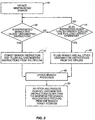
- a mispredicted branch when a mispredicted branch is detected (block 40), if the mispredicted branch is not the oldest uncommitted instruction (block 42), older uncommitted instructions are checked for stalls (block 44). If a stalled instruction is detected, such as due to a pipeline hazard, memory access, or other long latency operation, then the pipeline controller 14 immediately flushes all uncommitted instructions from the pipelines 12a, 12b (block 46). This includes the mispredicted branch, all uncommitted instructions older than the mispredicted branch, and all instructions newer than the branch (i.e., those speculatively fetched based on the branch misprediction).
- the branch prediction is reversed (block 48), and the flushed, uncommitted instructions are then re-fetched and executed in order (block 50).
- the long latency operation causing the stall may be resolved by the time the previously stalled instruction is re-fetched and re-executed. Even if it is not, however, the processor is fetching instructions from the correct branch target, and need not wait for the stall to be resolved before doing so, thus improving processor performance.
- mispredicted branch instruction is the oldest uncommitted instruction (block 42)
- the processor commits the mispredicted branch instruction (so as not to flush it), and flushes all uncommitted instructions from the pipelines 12a, 12b (block 52). This flushes all the instructions newer than the mispredicted branch instruction-i.e., those on the erroneously predicted branch path.
- the branch prediction is then corrected (block 48) so that the branch prediction mechanism accurately reflects the branch evaluation, and instruction fetching and execution continues at the proper branch target address (block 50).
- a mispredicted branch (block 40) is not the oldest uncommitted instruction (block 42), and no older, uncommitted instruction is stalled due to a long latency operation, the processor may simply wait for all older instructions to commit (block 42) prior to committing the mispredicted branch and flushing all newer instructions (block 52). This process may take advantage of control logic that already exists for handling exceptions, as discussed above (with the exception of committing the branch, rather than flushing it).
- the processor may simply flush all uncommitted instructions (block 46), including the mispredicted branch, and proceed as in the case where an uncommitted instruction was stalled (blocks 48, 50).
- the latter option (not shown in Fig. 3 , but in which the YES path would be the only control flow exiting block 44) may optimize performance, at the cost of control complexity.
- a stalled instruction (block 44) the committing of new instructions is paused, and synchronizing the tasks of committing new instructions and flushing uncommitted instructions is simplified.
- processor design practice is to execute all instructions older than an exception-causing instruction, mispredicted branch, or other instruction that prompts a pipeline flush.
- one or more instructions older than a mispredicted branch instruction is flushed from the pipeline, re-fetched and executed. This may improve processor performance and power consumption by promptly terminating the fetching of instructions from an incorrect (mispredicted) address, and constructively utilizing the latency of a pipeline hazard to correct the misprediction. Where the time to resolve the pipeline hazard is equal to or greater than the time required to flush and re-fetch the stalled instruction, recovery from the misprediction incurs no performance penalty.
Landscapes
- Engineering & Computer Science (AREA)
- Software Systems (AREA)
- Theoretical Computer Science (AREA)
- Physics & Mathematics (AREA)
- General Engineering & Computer Science (AREA)
- General Physics & Mathematics (AREA)
- Advance Control (AREA)
Applications Claiming Priority (2)
| Application Number | Priority Date | Filing Date | Title |
|---|---|---|---|
| US11/061,981 US7152155B2 (en) | 2005-02-18 | 2005-02-18 | System and method of correcting a branch misprediction |
| PCT/US2006/005776 WO2006089189A2 (en) | 2005-02-18 | 2006-02-17 | System and method of correcting a branch misprediction |
Publications (2)
| Publication Number | Publication Date |
|---|---|
| EP1849063A2 EP1849063A2 (en) | 2007-10-31 |
| EP1849063B1 true EP1849063B1 (en) | 2018-08-01 |
Family
ID=36685580
Family Applications (1)
| Application Number | Title | Priority Date | Filing Date |
|---|---|---|---|
| EP06735438.1A Expired - Lifetime EP1849063B1 (en) | 2005-02-18 | 2006-02-17 | System and method of handling a branch misprediction |
Country Status (8)
| Country | Link |
|---|---|
| US (1) | US7152155B2 (https=) |
| EP (1) | EP1849063B1 (https=) |
| JP (1) | JP4763727B2 (https=) |
| KR (1) | KR100938367B1 (https=) |
| CN (1) | CN100538629C (https=) |
| IL (1) | IL185301A0 (https=) |
| MX (1) | MX2007010048A (https=) |
| WO (1) | WO2006089189A2 (https=) |
Families Citing this family (57)
| Publication number | Priority date | Publication date | Assignee | Title |
|---|---|---|---|---|
| US7254700B2 (en) * | 2005-02-11 | 2007-08-07 | International Business Machines Corporation | Fencing off instruction buffer until re-circulation of rejected preceding and branch instructions to avoid mispredict flush |
| US7949861B2 (en) | 2005-06-10 | 2011-05-24 | Qualcomm Incorporated | Method and apparatus for managing instruction flushing in a microprocessor's instruction pipeline |
| EP2011018B1 (en) | 2006-04-12 | 2016-07-13 | Soft Machines, Inc. | Apparatus and method for processing an instruction matrix specifying parallel and dependent operations |
| CN107368285B (zh) | 2006-11-14 | 2020-10-09 | 英特尔公司 | 多线程架构 |
| US7624254B2 (en) * | 2007-01-24 | 2009-11-24 | Qualcomm Incorporated | Segmented pipeline flushing for mispredicted branches |
| US8601234B2 (en) * | 2007-11-07 | 2013-12-03 | Qualcomm Incorporated | Configurable translation lookaside buffer |
| US8261025B2 (en) | 2007-11-12 | 2012-09-04 | International Business Machines Corporation | Software pipelining on a network on chip |
| US8874885B2 (en) * | 2008-02-12 | 2014-10-28 | International Business Machines Corporation | Mitigating lookahead branch prediction latency by purposely stalling a branch instruction until a delayed branch prediction is received or a timeout occurs |
| US8443227B2 (en) * | 2008-02-15 | 2013-05-14 | International Business Machines Corporation | Processor and method for workaround trigger activated exceptions |
| US7890739B2 (en) * | 2008-02-19 | 2011-02-15 | Oracle America, Inc. | Method and apparatus for recovering from branch misprediction |
| US20090260013A1 (en) * | 2008-04-14 | 2009-10-15 | International Business Machines Corporation | Computer Processors With Plural, Pipelined Hardware Threads Of Execution |
| US8423715B2 (en) | 2008-05-01 | 2013-04-16 | International Business Machines Corporation | Memory management among levels of cache in a memory hierarchy |
| US8271765B2 (en) * | 2009-04-08 | 2012-09-18 | International Business Machines Corporation | Managing instructions for more efficient load/store unit usage |
| EP3156896B1 (en) | 2010-09-17 | 2020-04-08 | Soft Machines, Inc. | Single cycle multi-branch prediction including shadow cache for early far branch prediction |
| TWI541721B (zh) | 2010-10-12 | 2016-07-11 | 軟體機器公司 | 使用指令序列緩衝器來增強分支預測效能的方法、系統及微處理器 |
| EP2628076B1 (en) | 2010-10-12 | 2017-08-30 | Intel Corporation | An instruction sequence buffer to store branches having reliably predictable instruction sequences |
| CN108108188B (zh) | 2011-03-25 | 2022-06-28 | 英特尔公司 | 用于通过使用由可分区引擎实例化的虚拟核来支持代码块执行的存储器片段 |
| CN103547993B (zh) | 2011-03-25 | 2018-06-26 | 英特尔公司 | 通过使用由可分割引擎实例化的虚拟核来执行指令序列代码块 |
| KR101620676B1 (ko) | 2011-03-25 | 2016-05-23 | 소프트 머신즈, 인크. | 분할가능한 엔진에 의해 인스턴스화된 가상 코어를 이용한 코드 블록의 실행을 지원하는 레지스터 파일 세그먼트 |
| US8862861B2 (en) | 2011-05-13 | 2014-10-14 | Oracle International Corporation | Suppressing branch prediction information update by branch instructions in incorrect speculative execution path |
| US8886920B2 (en) | 2011-05-13 | 2014-11-11 | Oracle International Corporation | Associating tag to branch instruction to access array storing predicted target addresses for page crossing targets for comparison with resolved address at execution stage |
| CN107729267B (zh) | 2011-05-20 | 2022-01-25 | 英特尔公司 | 资源的分散分配以及用于支持由多个引擎执行指令序列的互连结构 |
| US9442772B2 (en) | 2011-05-20 | 2016-09-13 | Soft Machines Inc. | Global and local interconnect structure comprising routing matrix to support the execution of instruction sequences by a plurality of engines |
| KR101703401B1 (ko) | 2011-11-22 | 2017-02-06 | 소프트 머신즈, 인크. | 다중 엔진 마이크로프로세서용 가속 코드 최적화기 |
| WO2013077876A1 (en) | 2011-11-22 | 2013-05-30 | Soft Machines, Inc. | A microprocessor accelerated code optimizer |
| US8930674B2 (en) | 2012-03-07 | 2015-01-06 | Soft Machines, Inc. | Systems and methods for accessing a unified translation lookaside buffer |
| US9740612B2 (en) | 2012-07-30 | 2017-08-22 | Intel Corporation | Systems and methods for maintaining the coherency of a store coalescing cache and a load cache |
| US9229873B2 (en) | 2012-07-30 | 2016-01-05 | Soft Machines, Inc. | Systems and methods for supporting a plurality of load and store accesses of a cache |
| US9710399B2 (en) | 2012-07-30 | 2017-07-18 | Intel Corporation | Systems and methods for flushing a cache with modified data |
| US9916253B2 (en) | 2012-07-30 | 2018-03-13 | Intel Corporation | Method and apparatus for supporting a plurality of load accesses of a cache in a single cycle to maintain throughput |
| US9678882B2 (en) | 2012-10-11 | 2017-06-13 | Intel Corporation | Systems and methods for non-blocking implementation of cache flush instructions |
| US9886279B2 (en) | 2013-03-15 | 2018-02-06 | Intel Corporation | Method for populating and instruction view data structure by using register template snapshots |
| WO2014150806A1 (en) | 2013-03-15 | 2014-09-25 | Soft Machines, Inc. | A method for populating register view data structure by using register template snapshots |
| US10275255B2 (en) | 2013-03-15 | 2019-04-30 | Intel Corporation | Method for dependency broadcasting through a source organized source view data structure |
| US9904625B2 (en) | 2013-03-15 | 2018-02-27 | Intel Corporation | Methods, systems and apparatus for predicting the way of a set associative cache |
| WO2014150971A1 (en) | 2013-03-15 | 2014-09-25 | Soft Machines, Inc. | A method for dependency broadcasting through a block organized source view data structure |
| US10140138B2 (en) | 2013-03-15 | 2018-11-27 | Intel Corporation | Methods, systems and apparatus for supporting wide and efficient front-end operation with guest-architecture emulation |
| US9811342B2 (en) | 2013-03-15 | 2017-11-07 | Intel Corporation | Method for performing dual dispatch of blocks and half blocks |
| WO2014150991A1 (en) | 2013-03-15 | 2014-09-25 | Soft Machines, Inc. | A method for implementing a reduced size register view data structure in a microprocessor |
| US9891924B2 (en) | 2013-03-15 | 2018-02-13 | Intel Corporation | Method for implementing a reduced size register view data structure in a microprocessor |
| EP2972845B1 (en) | 2013-03-15 | 2021-07-07 | Intel Corporation | A method for executing multithreaded instructions grouped onto blocks |
| WO2014151043A1 (en) | 2013-03-15 | 2014-09-25 | Soft Machines, Inc. | A method for emulating a guest centralized flag architecture by using a native distributed flag architecture |
| US9569216B2 (en) | 2013-03-15 | 2017-02-14 | Soft Machines, Inc. | Method for populating a source view data structure by using register template snapshots |
| US9792252B2 (en) | 2013-05-31 | 2017-10-17 | Microsoft Technology Licensing, Llc | Incorporating a spatial array into one or more programmable processor cores |
| US9672298B2 (en) * | 2014-05-01 | 2017-06-06 | Oracle International Corporation | Precise excecution of versioned store instructions |
| US10346168B2 (en) | 2015-06-26 | 2019-07-09 | Microsoft Technology Licensing, Llc | Decoupled processor instruction window and operand buffer |
| US10409606B2 (en) | 2015-06-26 | 2019-09-10 | Microsoft Technology Licensing, Llc | Verifying branch targets |
| US9720693B2 (en) | 2015-06-26 | 2017-08-01 | Microsoft Technology Licensing, Llc | Bulk allocation of instruction blocks to a processor instruction window |
| US10169044B2 (en) | 2015-06-26 | 2019-01-01 | Microsoft Technology Licensing, Llc | Processing an encoding format field to interpret header information regarding a group of instructions |
| US10409599B2 (en) | 2015-06-26 | 2019-09-10 | Microsoft Technology Licensing, Llc | Decoding information about a group of instructions including a size of the group of instructions |
| US9952867B2 (en) | 2015-06-26 | 2018-04-24 | Microsoft Technology Licensing, Llc | Mapping instruction blocks based on block size |
| US10191747B2 (en) | 2015-06-26 | 2019-01-29 | Microsoft Technology Licensing, Llc | Locking operand values for groups of instructions executed atomically |
| US9946548B2 (en) | 2015-06-26 | 2018-04-17 | Microsoft Technology Licensing, Llc | Age-based management of instruction blocks in a processor instruction window |
| US10175988B2 (en) | 2015-06-26 | 2019-01-08 | Microsoft Technology Licensing, Llc | Explicit instruction scheduler state information for a processor |
| CN112559048B (zh) * | 2019-09-25 | 2023-12-12 | 阿里巴巴集团控股有限公司 | 一种指令处理装置、处理器及其处理方法 |
| US11360773B2 (en) | 2020-06-22 | 2022-06-14 | Microsoft Technology Licensing, Llc | Reusing fetched, flushed instructions after an instruction pipeline flush in response to a hazard in a processor to reduce instruction re-fetching |
| US11074077B1 (en) | 2020-06-25 | 2021-07-27 | Microsoft Technology Licensing, Llc | Reusing executed, flushed instructions after an instruction pipeline flush in response to a hazard in a processor to reduce instruction re-execution |
Family Cites Families (10)
| Publication number | Priority date | Publication date | Assignee | Title |
|---|---|---|---|---|
| US5487156A (en) * | 1989-12-15 | 1996-01-23 | Popescu; Valeri | Processor architecture having independently fetching issuing and updating operations of instructions which are sequentially assigned and stored in order fetched |
| US5226130A (en) * | 1990-02-26 | 1993-07-06 | Nexgen Microsystems | Method and apparatus for store-into-instruction-stream detection and maintaining branch prediction cache consistency |
| DE69429612T2 (de) * | 1993-10-18 | 2002-09-12 | Via-Cyrix, Inc. | Schreibpuffer für einen superskalaren Mikroprozessor mit Pipeline |
| US5584009A (en) | 1993-10-18 | 1996-12-10 | Cyrix Corporation | System and method of retiring store data from a write buffer |
| SG52391A1 (en) * | 1994-01-03 | 1998-09-28 | Intel Corp | Method and apparatus for implementing a four stage branch resolution system in a computer processor |
| US5978909A (en) * | 1997-11-26 | 1999-11-02 | Intel Corporation | System for speculative branch target prediction having a dynamic prediction history buffer and a static prediction history buffer |
| US6205542B1 (en) | 1997-12-24 | 2001-03-20 | Intel Corporation | Processor pipeline including replay |
| US6163839A (en) | 1998-09-30 | 2000-12-19 | Intel Corporation | Non-stalling circular counterflow pipeline processor with reorder buffer |
| US6799263B1 (en) * | 1999-10-28 | 2004-09-28 | Hewlett-Packard Development Company, L.P. | Prefetch instruction for an unpredicted path including a flush field for indicating whether earlier prefetches are to be discarded and whether in-progress prefetches are to be aborted |
| CN1280712C (zh) * | 2004-03-09 | 2006-10-18 | 中国人民解放军国防科学技术大学 | 超长指令字微处理器中的指令控制流水线方法 |
-
2005
- 2005-02-18 US US11/061,981 patent/US7152155B2/en not_active Expired - Lifetime
-
2006
- 2006-02-17 JP JP2007556350A patent/JP4763727B2/ja not_active Expired - Fee Related
- 2006-02-17 WO PCT/US2006/005776 patent/WO2006089189A2/en not_active Ceased
- 2006-02-17 EP EP06735438.1A patent/EP1849063B1/en not_active Expired - Lifetime
- 2006-02-17 MX MX2007010048A patent/MX2007010048A/es active IP Right Grant
- 2006-02-17 KR KR1020077021439A patent/KR100938367B1/ko not_active Expired - Fee Related
- 2006-02-17 CN CNB2006800115780A patent/CN100538629C/zh not_active Expired - Fee Related
-
2007
- 2007-08-15 IL IL185301A patent/IL185301A0/en unknown
Also Published As
| Publication number | Publication date |
|---|---|
| US7152155B2 (en) | 2006-12-19 |
| MX2007010048A (es) | 2007-11-06 |
| CN100538629C (zh) | 2009-09-09 |
| EP1849063A2 (en) | 2007-10-31 |
| JP4763727B2 (ja) | 2011-08-31 |
| CN101156136A (zh) | 2008-04-02 |
| KR20070105366A (ko) | 2007-10-30 |
| KR100938367B1 (ko) | 2010-01-22 |
| WO2006089189A3 (en) | 2006-10-12 |
| JP2008530713A (ja) | 2008-08-07 |
| WO2006089189A2 (en) | 2006-08-24 |
| US20060190707A1 (en) | 2006-08-24 |
| IL185301A0 (en) | 2008-02-09 |
Similar Documents
| Publication | Publication Date | Title |
|---|---|---|
| EP1849063B1 (en) | System and method of handling a branch misprediction | |
| JP2008530713A5 (https=) | ||
| JP5866259B2 (ja) | 誤予測された分岐のためにフラッシュするセグメント化パイプライン | |
| JP5313279B2 (ja) | 非アラインドメモリアクセス予測 | |
| TWI470546B (zh) | 微處理器、管線式微處理器、快速執行條件分支指令之方法、以及解析第一或第二類別條件分支指令之方法 | |
| US6079014A (en) | Processor that redirects an instruction fetch pipeline immediately upon detection of a mispredicted branch while committing prior instructions to an architectural state | |
| CN101866280B (zh) | 微处理器及其执行方法 | |
| US9021240B2 (en) | System and method for Controlling restarting of instruction fetching using speculative address computations | |
| US5832260A (en) | Processor microarchitecture for efficient processing of instructions in a program including a conditional program flow control instruction | |
| JP2008530714A5 (https=) | ||
| KR20090061644A (ko) | 명시적 서브루틴 호출의 브랜치 예측 동작을 에뮬레이트하기 위한 방법 및 장치 | |
| TWI436274B (zh) | 一種微處理器及其執行方法 | |
| US6871275B1 (en) | Microprocessor having a branch predictor using speculative branch registers | |
| JP3721002B2 (ja) | メモリ要求を形成するために並列に生成される複数の取出アドレスのうちの1つを選択する、プロセッサおよび命令取出方法 | |
| HK1112982A (en) | System and method of correcting a branch misprediction |
Legal Events
| Date | Code | Title | Description |
|---|---|---|---|
| PUAI | Public reference made under article 153(3) epc to a published international application that has entered the european phase |
Free format text: ORIGINAL CODE: 0009012 |
|
| 17P | Request for examination filed |
Effective date: 20070816 |
|
| AK | Designated contracting states |
Kind code of ref document: A2 Designated state(s): AT BE BG CH CY CZ DE DK EE ES FI FR GB GR HU IE IS IT LI LT LU LV MC NL PL PT RO SE SI SK TR |
|
| 17Q | First examination report despatched |
Effective date: 20080104 |
|
| DAX | Request for extension of the european patent (deleted) | ||
| GRAP | Despatch of communication of intention to grant a patent |
Free format text: ORIGINAL CODE: EPIDOSNIGR1 |
|
| STAA | Information on the status of an ep patent application or granted ep patent |
Free format text: STATUS: GRANT OF PATENT IS INTENDED |
|
| INTG | Intention to grant announced |
Effective date: 20180226 |
|
| GRAS | Grant fee paid |
Free format text: ORIGINAL CODE: EPIDOSNIGR3 |
|
| GRAA | (expected) grant |
Free format text: ORIGINAL CODE: 0009210 |
|
| STAA | Information on the status of an ep patent application or granted ep patent |
Free format text: STATUS: THE PATENT HAS BEEN GRANTED |
|
| AK | Designated contracting states |
Kind code of ref document: B1 Designated state(s): AT BE BG CH CY CZ DE DK EE ES FI FR GB GR HU IE IS IT LI LT LU LV MC NL PL PT RO SE SI SK TR |
|
| REG | Reference to a national code |
Ref country code: GB Ref legal event code: FG4D |
|
| REG | Reference to a national code |
Ref country code: CH Ref legal event code: EP Ref country code: AT Ref legal event code: REF Ref document number: 1025083 Country of ref document: AT Kind code of ref document: T Effective date: 20180815 |
|
| REG | Reference to a national code |
Ref country code: IE Ref legal event code: FG4D |
|
| REG | Reference to a national code |
Ref country code: DE Ref legal event code: R096 Ref document number: 602006055959 Country of ref document: DE |
|
| REG | Reference to a national code |
Ref country code: NL Ref legal event code: MP Effective date: 20180801 |
|
| REG | Reference to a national code |
Ref country code: LT Ref legal event code: MG4D |
|
| REG | Reference to a national code |
Ref country code: AT Ref legal event code: MK05 Ref document number: 1025083 Country of ref document: AT Kind code of ref document: T Effective date: 20180801 |
|
| PG25 | Lapsed in a contracting state [announced via postgrant information from national office to epo] |
Ref country code: LT Free format text: LAPSE BECAUSE OF FAILURE TO SUBMIT A TRANSLATION OF THE DESCRIPTION OR TO PAY THE FEE WITHIN THE PRESCRIBED TIME-LIMIT Effective date: 20180801 Ref country code: PL Free format text: LAPSE BECAUSE OF FAILURE TO SUBMIT A TRANSLATION OF THE DESCRIPTION OR TO PAY THE FEE WITHIN THE PRESCRIBED TIME-LIMIT Effective date: 20180801 Ref country code: IS Free format text: LAPSE BECAUSE OF FAILURE TO SUBMIT A TRANSLATION OF THE DESCRIPTION OR TO PAY THE FEE WITHIN THE PRESCRIBED TIME-LIMIT Effective date: 20181201 Ref country code: NL Free format text: LAPSE BECAUSE OF FAILURE TO SUBMIT A TRANSLATION OF THE DESCRIPTION OR TO PAY THE FEE WITHIN THE PRESCRIBED TIME-LIMIT Effective date: 20180801 Ref country code: BG Free format text: LAPSE BECAUSE OF FAILURE TO SUBMIT A TRANSLATION OF THE DESCRIPTION OR TO PAY THE FEE WITHIN THE PRESCRIBED TIME-LIMIT Effective date: 20181101 Ref country code: SE Free format text: LAPSE BECAUSE OF FAILURE TO SUBMIT A TRANSLATION OF THE DESCRIPTION OR TO PAY THE FEE WITHIN THE PRESCRIBED TIME-LIMIT Effective date: 20180801 Ref country code: GR Free format text: LAPSE BECAUSE OF FAILURE TO SUBMIT A TRANSLATION OF THE DESCRIPTION OR TO PAY THE FEE WITHIN THE PRESCRIBED TIME-LIMIT Effective date: 20181102 Ref country code: FI Free format text: LAPSE BECAUSE OF FAILURE TO SUBMIT A TRANSLATION OF THE DESCRIPTION OR TO PAY THE FEE WITHIN THE PRESCRIBED TIME-LIMIT Effective date: 20180801 Ref country code: AT Free format text: LAPSE BECAUSE OF FAILURE TO SUBMIT A TRANSLATION OF THE DESCRIPTION OR TO PAY THE FEE WITHIN THE PRESCRIBED TIME-LIMIT Effective date: 20180801 |
|
| PG25 | Lapsed in a contracting state [announced via postgrant information from national office to epo] |
Ref country code: LV Free format text: LAPSE BECAUSE OF FAILURE TO SUBMIT A TRANSLATION OF THE DESCRIPTION OR TO PAY THE FEE WITHIN THE PRESCRIBED TIME-LIMIT Effective date: 20180801 Ref country code: ES Free format text: LAPSE BECAUSE OF FAILURE TO SUBMIT A TRANSLATION OF THE DESCRIPTION OR TO PAY THE FEE WITHIN THE PRESCRIBED TIME-LIMIT Effective date: 20180801 |
|
| PG25 | Lapsed in a contracting state [announced via postgrant information from national office to epo] |
Ref country code: CZ Free format text: LAPSE BECAUSE OF FAILURE TO SUBMIT A TRANSLATION OF THE DESCRIPTION OR TO PAY THE FEE WITHIN THE PRESCRIBED TIME-LIMIT Effective date: 20180801 Ref country code: RO Free format text: LAPSE BECAUSE OF FAILURE TO SUBMIT A TRANSLATION OF THE DESCRIPTION OR TO PAY THE FEE WITHIN THE PRESCRIBED TIME-LIMIT Effective date: 20180801 Ref country code: EE Free format text: LAPSE BECAUSE OF FAILURE TO SUBMIT A TRANSLATION OF THE DESCRIPTION OR TO PAY THE FEE WITHIN THE PRESCRIBED TIME-LIMIT Effective date: 20180801 Ref country code: IT Free format text: LAPSE BECAUSE OF FAILURE TO SUBMIT A TRANSLATION OF THE DESCRIPTION OR TO PAY THE FEE WITHIN THE PRESCRIBED TIME-LIMIT Effective date: 20180801 |
|
| REG | Reference to a national code |
Ref country code: DE Ref legal event code: R097 Ref document number: 602006055959 Country of ref document: DE |
|
| PG25 | Lapsed in a contracting state [announced via postgrant information from national office to epo] |
Ref country code: DK Free format text: LAPSE BECAUSE OF FAILURE TO SUBMIT A TRANSLATION OF THE DESCRIPTION OR TO PAY THE FEE WITHIN THE PRESCRIBED TIME-LIMIT Effective date: 20180801 Ref country code: SK Free format text: LAPSE BECAUSE OF FAILURE TO SUBMIT A TRANSLATION OF THE DESCRIPTION OR TO PAY THE FEE WITHIN THE PRESCRIBED TIME-LIMIT Effective date: 20180801 |
|
| PLBE | No opposition filed within time limit |
Free format text: ORIGINAL CODE: 0009261 |
|
| STAA | Information on the status of an ep patent application or granted ep patent |
Free format text: STATUS: NO OPPOSITION FILED WITHIN TIME LIMIT |
|
| 26N | No opposition filed |
Effective date: 20190503 |
|
| PG25 | Lapsed in a contracting state [announced via postgrant information from national office to epo] |
Ref country code: SI Free format text: LAPSE BECAUSE OF FAILURE TO SUBMIT A TRANSLATION OF THE DESCRIPTION OR TO PAY THE FEE WITHIN THE PRESCRIBED TIME-LIMIT Effective date: 20180801 |
|
| REG | Reference to a national code |
Ref country code: DE Ref legal event code: R119 Ref document number: 602006055959 Country of ref document: DE |
|
| REG | Reference to a national code |
Ref country code: CH Ref legal event code: PL |
|
| GBPC | Gb: european patent ceased through non-payment of renewal fee |
Effective date: 20190217 |
|
| PG25 | Lapsed in a contracting state [announced via postgrant information from national office to epo] |
Ref country code: LU Free format text: LAPSE BECAUSE OF NON-PAYMENT OF DUE FEES Effective date: 20190217 Ref country code: MC Free format text: LAPSE BECAUSE OF FAILURE TO SUBMIT A TRANSLATION OF THE DESCRIPTION OR TO PAY THE FEE WITHIN THE PRESCRIBED TIME-LIMIT Effective date: 20180801 |
|
| REG | Reference to a national code |
Ref country code: BE Ref legal event code: MM Effective date: 20190228 |
|
| REG | Reference to a national code |
Ref country code: IE Ref legal event code: MM4A |
|
| PG25 | Lapsed in a contracting state [announced via postgrant information from national office to epo] |
Ref country code: CH Free format text: LAPSE BECAUSE OF NON-PAYMENT OF DUE FEES Effective date: 20190228 Ref country code: LI Free format text: LAPSE BECAUSE OF NON-PAYMENT OF DUE FEES Effective date: 20190228 |
|
| PG25 | Lapsed in a contracting state [announced via postgrant information from national office to epo] |
Ref country code: DE Free format text: LAPSE BECAUSE OF NON-PAYMENT OF DUE FEES Effective date: 20190903 Ref country code: IE Free format text: LAPSE BECAUSE OF NON-PAYMENT OF DUE FEES Effective date: 20190217 Ref country code: GB Free format text: LAPSE BECAUSE OF NON-PAYMENT OF DUE FEES Effective date: 20190217 |
|
| PG25 | Lapsed in a contracting state [announced via postgrant information from national office to epo] |
Ref country code: BE Free format text: LAPSE BECAUSE OF NON-PAYMENT OF DUE FEES Effective date: 20190228 Ref country code: FR Free format text: LAPSE BECAUSE OF NON-PAYMENT OF DUE FEES Effective date: 20190228 |
|
| PG25 | Lapsed in a contracting state [announced via postgrant information from national office to epo] |
Ref country code: TR Free format text: LAPSE BECAUSE OF FAILURE TO SUBMIT A TRANSLATION OF THE DESCRIPTION OR TO PAY THE FEE WITHIN THE PRESCRIBED TIME-LIMIT Effective date: 20180801 |
|
| PG25 | Lapsed in a contracting state [announced via postgrant information from national office to epo] |
Ref country code: PT Free format text: LAPSE BECAUSE OF FAILURE TO SUBMIT A TRANSLATION OF THE DESCRIPTION OR TO PAY THE FEE WITHIN THE PRESCRIBED TIME-LIMIT Effective date: 20181201 |
|
| PG25 | Lapsed in a contracting state [announced via postgrant information from national office to epo] |
Ref country code: CY Free format text: LAPSE BECAUSE OF FAILURE TO SUBMIT A TRANSLATION OF THE DESCRIPTION OR TO PAY THE FEE WITHIN THE PRESCRIBED TIME-LIMIT Effective date: 20180801 |
|
| PG25 | Lapsed in a contracting state [announced via postgrant information from national office to epo] |
Ref country code: HU Free format text: LAPSE BECAUSE OF FAILURE TO SUBMIT A TRANSLATION OF THE DESCRIPTION OR TO PAY THE FEE WITHIN THE PRESCRIBED TIME-LIMIT; INVALID AB INITIO Effective date: 20060217 |