EP1835708A2 - Eingrenzung von Ausgangsphasenmodulationsmitnahme für digitale Filter - Google Patents
Eingrenzung von Ausgangsphasenmodulationsmitnahme für digitale Filter Download PDFInfo
- Publication number
- EP1835708A2 EP1835708A2 EP20070250899 EP07250899A EP1835708A2 EP 1835708 A2 EP1835708 A2 EP 1835708A2 EP 20070250899 EP20070250899 EP 20070250899 EP 07250899 A EP07250899 A EP 07250899A EP 1835708 A2 EP1835708 A2 EP 1835708A2
- Authority
- EP
- European Patent Office
- Prior art keywords
- phase
- digital
- signal
- signals
- increments
- Prior art date
- Legal status (The legal status is an assumption and is not a legal conclusion. Google has not performed a legal analysis and makes no representation as to the accuracy of the status listed.)
- Granted
Links
Images




Classifications
-
- H—ELECTRICITY
- H04—ELECTRIC COMMUNICATION TECHNIQUE
- H04R—LOUDSPEAKERS, MICROPHONES, GRAMOPHONE PICK-UPS OR LIKE ACOUSTIC ELECTROMECHANICAL TRANSDUCERS; ELECTRIC HEARING AIDS; PUBLIC ADDRESS SYSTEMS
- H04R25/00—Electric hearing aids
- H04R25/45—Prevention of acoustic reaction, i.e. acoustic oscillatory feedback
-
- H—ELECTRICITY
- H04—ELECTRIC COMMUNICATION TECHNIQUE
- H04M—TELEPHONIC COMMUNICATION
- H04M9/00—Arrangements for interconnection not involving centralised switching
- H04M9/08—Two-way loud-speaking telephone systems with means for conditioning the signal, e.g. for suppressing echoes for one or both directions of traffic
- H04M9/082—Two-way loud-speaking telephone systems with means for conditioning the signal, e.g. for suppressing echoes for one or both directions of traffic using echo cancellers
-
- H—ELECTRICITY
- H04—ELECTRIC COMMUNICATION TECHNIQUE
- H04R—LOUDSPEAKERS, MICROPHONES, GRAMOPHONE PICK-UPS OR LIKE ACOUSTIC ELECTROMECHANICAL TRANSDUCERS; ELECTRIC HEARING AIDS; PUBLIC ADDRESS SYSTEMS
- H04R25/00—Electric hearing aids
- H04R25/45—Prevention of acoustic reaction, i.e. acoustic oscillatory feedback
- H04R25/453—Prevention of acoustic reaction, i.e. acoustic oscillatory feedback electronically
-
- H—ELECTRICITY
- H04—ELECTRIC COMMUNICATION TECHNIQUE
- H04R—LOUDSPEAKERS, MICROPHONES, GRAMOPHONE PICK-UPS OR LIKE ACOUSTIC ELECTROMECHANICAL TRANSDUCERS; ELECTRIC HEARING AIDS; PUBLIC ADDRESS SYSTEMS
- H04R3/00—Circuits for transducers
- H04R3/002—Damping circuit arrangements for transducers, e.g. motional feedback circuits
-
- H—ELECTRICITY
- H04—ELECTRIC COMMUNICATION TECHNIQUE
- H04R—LOUDSPEAKERS, MICROPHONES, GRAMOPHONE PICK-UPS OR LIKE ACOUSTIC ELECTROMECHANICAL TRANSDUCERS; ELECTRIC HEARING AIDS; PUBLIC ADDRESS SYSTEMS
- H04R3/00—Circuits for transducers
- H04R3/02—Circuits for transducers for preventing acoustic reaction, i.e. acoustic oscillatory feedback
Definitions
- This disclosure relates to digital filters used for feedback and echo cancellation, and in particular to method and apparatus for digital filters employing entrainment containment.
- a feedback canceller or an echo canceller is a system that eliminates, as much as possible, the output of a system from re-entering its input.
- an audio system having a microphone, an audio processing unit and a speaker (or any other audio transducer)
- the output signal can leave the speaker and come back to the input microphone by means of a physical acoustic path.
- This physical path where the output sound waves can propagate back to the input of the system is usually referred as "acoustic feedback path".
- the reentrant signal can be perceived as an echo if the feedback path delay is long and the gain is low. This is usually the case of telecommunication systems such as speakerphones.
- the system used to reduce such artifact is usually known as echo canceller.
- the loop gain is greater than one, it may cause a sustained oscillation. This is usually the case of hearing aids and amplified mic/headset pairs. It is perceived as a loud whistle, which forces the user to remove the apparatus from his/her ears. It can also be perceived as a ringing artifact if the oscillation gets attenuated.
- the system used to reduce such artifacts is usually known as feedback canceller.
- Both echo canceller and feedback canceller are usually implemented as an adaptive system, whose goal is to match the system response of the acoustic feedback path. If the acoustic feedback path can be estimated, the feedback signal can also be estimated by supplying it with the output of the system.
- the adaptive algorithm When an acoustic feedback control system is stimulated with a sinusoidal signal from the environment in an adaptive digital filter, the adaptive algorithm will correlate the output of the filter with the feedback signal and with the stimulus signal itself. This will cause a degraded response to the feedback signal. This phenomenon is called “entrainment” as the feedback canceller gets entrained by the stimulus signal. It happens with signals that have high autocorrelation between samples, such as sinusoidal signals and other periodic signals.
- the present subject matter provides method and apparatus for entrainment containment of digital filter systems.
- the present subject matter relates to time domain and frequency domain embodiments for entrainment containment of digital filter systems.
- Several embodiments are provided which relate to digital filters for acoustic feedback reduction.
- Some applications include hearing assistance devices, such as hearing aids.
- one such apparatus includes a sensor to receive sound and convert it to an electrical signal; an analog-to-digital converter to convert the electrical signal into a digital signal; a summing node receiving the digital signal and an acoustic feedback compensation signal Y(z) adapted to correct for acoustic feedback received by the sensor, the summing node providing an error signal E(z) by subtraction of the acoustic feedback compensation signal Y(z) from the digital signal; a signal processing module and a phase adjustment module processing the error signal E(z) in series to produce an output signal X(z); an adaptive filter including an adaptive algorithm receiving the error signal E(z), the adaptive filter producing the feedback compensation signal Y(z); a digital-to-analog converter providing an analog version of the output signal X(z); and a receiver to output processed sound from the analog version, wherein the phase adjustment module gradually changes phase applied to the output signal X(z).
- phase adjustment modules which gradually changes phase between zero and 180 degrees are provided.
- One such module includes an all-pass filter.
- Various phase shift increments are performed from about 0.25 degrees to 25 degrees.
- Embodiments of 0.25 and 4, and 25 degree increments are some examples.
- Some examples include programmable phase changes.
- phase adjustment module which gradually changes phase between zero and 360 degrees.
- One such example is a pair of all-pass filters.
- Various phase shift increments are performed from about 0.25 degrees to 25 degrees.
- Embodiments of 0.25 and 4, and 25 degree increments are some examples.
- Some examples include programmable phase changes.
- Frequency domain embodiments are also provided.
- Some applications include hearing assistance devices, such as hearing aids.
- One such application includes a sensor to receive sound and convert it to an electrical signal; an analog-to-digital converter to convert the electrical signal into a digital signal; a frequency analysis module to produce frequency domain subband signals from the digital signal; a summing node receiving the frequency domain subband signals and acoustic feedback compensation subband signals AFC(k) adapted to correct for acoustic feedback received by the sensor, the summing node providing error subband signals E(k) by subtraction of the received signals; a complex multiplier producing a gradually phase shifted version of the error subband signals E'(k); a signal processing module to process the phase shifted error subband signals E'(k); a time synthesis module to produce time domain, processed, digital signals; a digital-to-analog converter providing an analog version of the processed, digital signals; and a receiver to produce processed sound from the analog version; wherein the processed, digital signals are passed through
- phase adjustments may be made, for example, in some embodiments the multiplier receives a gradually shifted phase signal from a phase shifter, and the phase shifter module resets when reaching an aggregate phase of 360 degrees.
- Various phase increments include 4 degrees, 0.25 degrees, 25 degrees, or any phase between about 0.25 degrees to about 25 degrees.
- time-domain to frequency domain transformations can be used, including FFT, and its inverse, the IFFT, can be used to get back into the time domain.
- the time and/or frequency analysis modules include a weighted overlap-add structure.
- Different adaptive filters designs may be used, such as an LMS adaptive filter design.
- One method for entrainment containment includes converting an analog sound signal into a digital signal; processing the digital signal using an acoustic feedback reduction loop; gradually changing phase of a forward feed of the feedback reduction loop; converting the processed digital signals into analog signals; and generating sound from the analog time domain signals.
- phase is changed at about 4 degree increments per sample. In one example, phase is changed at about 0.25 to about 25 degree increments per sample. In various applications, larger phase shift increments are used to achieve more aggressive entrainment containment. In various applications, smaller phase shift increments are used to reduce artifacts.
- Some frequency domain methods include converting analog sound signals into a plurality of digital, frequency domain subband signals; processing a gradually phase shifted version of the digital, frequency domain subband signals to create processed digital, frequency domain signals to reduce entrainment; converting the processed digital, frequency domain signals into analog time domain signals; and generating sound from the analog time domain signals.
- Some applications include gradually incrementing phase of the digital, frequency domain subband signals at 4 degree increments per sample.
- Some applications include gradually incrementing phase of the digital, frequency domain subband signals at about .25 to about 25 degree increments per sample. In some applications, larger phase shift increments are used to achieve more aggressive entrainment containment. In some applications, smaller phase shift increments are used to reduce artifacts.
- FIG. 1 shows one example of signal processing in a time-domain output phase modulator approach, according to one embodiment of the present subject matter.
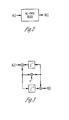
- FIG. 2 shows one example of an all-pass filter for use in a time-domain output phase modulator approach, according to one embodiment of the present subject matter.
- FIG. 3 shows one example of an all-pass filter for use in a time-domain output phase modulator approach, according to one embodiment of the present subject matter.
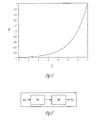
- FIG. 4 shows a mapping of a variable q to variable ⁇ , for use to control an all-pass filter for use in a time-domain output phase modulator approach, according to one embodiment of the present subject matter.
- FIG. 5 shows one example of a series of all-pass filters for use in a time-domain output phase modulator approach, according to one embodiment of the present subject matter.
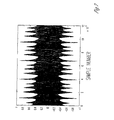
- FIGS. 6, 8, and 10 demonstrate entrainment of a hearing assistance device upon reception of room noise and a 500 Hz tone and with the output phase modulator deactivated.
- FIGS. 7, 9, and 11 show a reduction in entrainment of an output phase modulator operating on the same systems as FIGS. 6, 8 and 10, respectively.
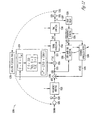
- FIG. 12 is a frequency domain approach to containing entrainment using output phase modulation, according to one embodiment of the present subject matter.
- the present subject matter relates to methods and apparatus for entrainment containment in digital filter designs.
- the principles provided by this disclosure may be applied in the time domain or in the frequency domain. They may be applied in a variety of apparatus, including, but not limited to hearing assistance devices.
- hearing assistance devices include, but not limited to hearing assistance devices, those of skill in the art will understand other applications and variations falling within the scope of the present subject matter upon reading and understanding this specification.
- the method and apparatus set forth herein are demonstrative of the principles of the invention, and it is understood that other method and apparatus are possible using the principles described herein.
- FIG. 1 demonstrates one example of an acoustic feedback cancellation system using a novel output phase modulation according to one embodiment of the present subject matter.
- This system 100 can be adapted for use in audio applications, including but not limited to, hearing assistance devices.
- One application involving hearing assistance devices is the use of hearing aids.
- the sound sensor 101 is a microphone or other acoustic sensor for receiving sound and converting it into electrical signals.
- Sensor 101 receives sound via the acoustic feedback path 130 and other sounds from outside the system.
- Acoustic feedback path 130 represents sound from the audio source 112 that reaches sensor 101, thus making a closed loop feedback of acoustic sound.
- the audio source 112 is a receiver (also known as a speaker) for creating sound based on electrical signals presented to it.
- Applications besides hearing assistance devices are possible which employ the principles set forth herein.
- the AD block 102 of system 100 converts an analog input signal into a digital output signal.
- the AD block 102 includes an analog-to-digital converter and may include various amplifiers or buffers to interface with sensor 101.
- Digital signals representing the superposition of acoustic feedback and other sounds are processed by the closed loop system of block 120.
- the DA block 111 converts the incoming digital signal into an analog output signal.
- the DA block 111 includes an digital-to-analog converter and may include various amplifiers or signal conditioners for conditioning the analog signal for the audio source 112.
- the audio source is called a "receiver.”
- the audio source may be a speaker or other sound transducer.
- Block 120 represents a simplified flow of the digital signal processing of input signals from AD block 102.
- block 120 is implemented using a digital signal processor (DSP) for echo cancellation/feedback cancellation in the digital domain.
- DSP digital signal processor
- the filter 108 is used to emulate the acoustic feedback path 130 in the digital domain.
- an adaptive algorithm such as an LMS algorithm (least mean squares algorithm) 106 is used to tune the filter 108 response such that it matches the acoustic feedback path 130 response.
- the estimated feedback signal, Y(z), 109 can then be generated by applying the output of the system, X(z), 107 to the filter 108.
- the estimated feedback signal Y(z) 109 is subtracted from the input signal in the digital domain using summer 105, therefore reducing the effects of the acoustic feedback path 130.
- Module 104 includes various different types of signal processing that the system may employ. For example, in cases where the signal processing is for a hearing assistance device, module 104 is adjusted for the best hearing of the wearer of the device. In cases where the hearing assistance device is a hearing aid, module 104 provides hearing aid signal processing. Such processing is known to include adjustments of gain and phase for the benefit of the hearing aid user.
- filter 108 is a FIR filter (finite impulse response filter).
- an adaptive algorithm such as the LMS algorithm is used to tune the FIR coefficients based on the correlation of the input error signal E(z) 113 and the output of the system X(z) 107.
- a bulk delay line is inserted between the output of the system and the FIR input, if the FIR is not long enough to accommodate the feedback path length, therefore being truncated.
- filter 108 is an IIR filter (infinite impulse response filter). Other filters may be used without departing from the scope of the present subject matter.
- the LMS algorithm is not the only adaptive algorithm that can be used.
- Other such algorithms include, but are not limited to N-LMS and filtered X-LMS algorithms.
- the N-LMS algorithm is a variation of the LMS algorithm which also uses the power of both E(z) and X(z) signals to adjust the tuning step of the FIR filter, which is based on the correlation of the same two signals.
- the filtered-X LMS algorithm is a variation of the LMS algorithm which uses filtered X(z) and E(z) samples to generate the correlation to tune the filter 108.
- Output phase modulator 110 is used to adjust the phase of the output of module 104 in the feedback loop to contain entrainment of the filter 108. It was discovered that by controlled adjustment of phase of the output signal X(z), entrainment of the filter 108 can be reduced or avoided. The process can avoid coefficient drift caused by entrainment and can correct coefficients that have drifted due to an onset of entrainment. Various embodiments will be provided herein to show how phase may be adjusted to avoid entrainment.
- One embodiment of the output phase modulator switches phase 180 degrees every half period of a periodic cycle time, T.
- T One way to do this is using the following approach:
- the same reversed output signal is applied to the filter 108 as well as the acoustic feedback path 130.
- the reversed correlation to the periodic input stimulus will cause the coefficients to move to the opposite direction, therefore canceling the previous entrainment drift.
- the entrainment effect is contained by making the coefficients to move back and forth around the correct values, instead of allowing them to drift to improper (entrained) values.
- Another implementation of the output phase modulator 110 looks for opportunities to change the phase, where it will not cause artifacts, thereby being unperceivable to the user. These windows of opportunity happen when there is "notch" in the signal power envelope.
- a notch detector constantly monitors the power envelope of the signal, and when it detects a notch, it flags the system an opportunity to reverse the phase.
- One implementation of the notch detector is to run two signal envelope detectors, a slow one and a fast one.
- the magnitude of the slow envelope detector is compared to the magnitude of the fast envelope detector by means of division (or division approximation).
- subtraction of the outputs of the two signal envelope detectors may be used.
- the difference is a metric of the relationship between the slow one and the fast one. Other comparisons may be performed without departing from the scope of this subject matter.
- FIG. 2 shows a block diagram of a single stage approach to output phase modulation employing an all-pass filter.
- the single all-pass filter is capable of different amounts of phase shift, and up to 180 degrees of phase shift.
- One such all-pass filter is shown in FIG. 3.
- This embodiment uses a single coefficient, ⁇ , as a control of the overall phase adjustment. As ⁇ is adjusted from +1 to -1, phase is shifted from 0 degrees to 180 degrees. The system is stable and distortion free as long as ⁇ is varied in small increments.
- the transfer function for the embodiment of FIG. 3 is:
- Phase shift - ATAN [ ( 1 - ⁇ / 1 + ⁇ ) * TAN M * ⁇ / 2 ] , where ⁇ is frequency in radians.
- a first order all-pass filter can be used to smoothly change the phase shift from 0 to 180 degrees by varying ⁇ from +1 to -1 and then back from -1 to +1.
- the ⁇ increment (or step size) produces a nonlinear phase shift, and so the empirical equation for ⁇ is:
- FIG. 4 is a chart showing a nonlinear mapping of variable q to ⁇ .
- q varying in small steps is q varying by 0.001.
- Some examples of q and ⁇ in the extreme are:
- the system smoothly changes the phase of the output: from 0 degrees to 180 degrees, and then from 180 degrees back to 0 degrees. In some embodiments, this system smoothly sweeps the phase shift from 0 to 180, going through several intermediate values (1,2,3....,179,180).
- phase change increments of 0.25 degrees to 25 degrees are programmable.
- a fixed phase change increment is employed.
- a phase change of 4 degree increments is used.
- a phase change of 0.25 degree increments is used.
- a phase change of 25 degree increments is used. The greater the phase change increment, the faster entrainment is compensated for and the larger the audible artifacts. Thus, smaller phase changes result in lower artifacts, but in slower compensation for entrainment. If transitions are made slowly, the transitions cause no perceivable artifacts. Other embodiments are possible without departing from the scope of the present subject matter.
- Implementations using all-pass filters change the phase of the input signal without changing its magnitude.
- the amount of phase shift can be controlled by slowly changing the coefficient(s) of the filter.
- FIGS. 6 and 7 demonstrate efficacy of the single stage embodiment. These figures show an output of a digital signal processing system of a hearing aid sampling at 16 KHz (simulation) receiving a 500 Hz tone to demonstrate the effects of the algorithm on entrainment.
- FIG. 6 shows the hearing aid where the filter 108 is entrained by the 500 Hz tone.
- FIG. 7 shows what happens when the present algorithm is enabled, thereby eliminating entrainment.
- FIG. 5 shows a two-stage series of all-pass filters to achieve a 360 degree phase shift.
- the input is A(z) and the ultimate output is B(z).
- the first and second filters operate as follows: Both filters start off at zero degrees, then the first all-pass filter begins sweeping from zero to 180 degrees. Once the first filter sweeps to 180 degrees, it stays there and the second filter begins sweeping from zero to 180 degrees. The aggregate phase shift of the series filters is 360 degrees. Upon reaching 360 degrees the second all-pass filter begins sweeping back to zero degrees. Upon reaching zero degrees, the second all-pass filter stops sweeping and the first all-pass filter starts sweeping from 180 degrees towards zero degrees. When both filters are at zero degrees the process starts over again.
- phase change increments of 0.25 degrees to 25 degrees are programmable.
- a fixed phase change increment is employed.
- a phase change of 4 degree increments is used.
- a phase change of 0.25 degree increments is used.
- a phase change of 25 degree increments is used. The greater the phase change increment, the faster entrainment is compensated for and the larger the audible artifacts. Thus, smaller phase changes result in lower artifacts, but in slower compensation for entrainment. If transitions are made slowly , the transitions cause no perceivable artifacts. Other embodiments are possible without departing from the scope of the present subject matter.
- the first filter gradually changes the phase of the signal from 0 to 180 degrees and the second filter remains static (phase shift at 0 degrees).
- the first filter now remains static at 180 degrees phase shift, and now the second filter sweeps from 0 to 180 degrees.
- the first filter sweeps from 180 degrees back to 0 degrees while the second filter remains static at 180 phase shift.
- the first filter remains static at 0 degrees, and the second filter sweeps from 180 degrees back to 0 degrees. The whole pattern repeats again for every T samples.
- FIGS. 8 to 11 demonstrate efficacy of the two-stage embodiment. These figures show an output of a digital signal processing system of a hearing aid sampling at 16 KHz (simulation) receiving a 500 Hz tone to demonstrate the effects of the algorithm on entrainment.
- FIG. 8 shows an envelope of the output of the hearing aid without the present algorithm. In FIG. 8, it can be seen that extra frequency is introduced during entrainment.
- FIG. 9 shows the effect of activating the algorithm, which, besides envelope modulation, presents only the sinusoid with no extra frequency introduced.
- FIGS. 10 and 11 are before and after spectral graphs of the output of the hearing aid without and with, respectively, the algorithm on. It is straightforward to see entrainment and extra harmonics output by the hearing aid without the present algorithm running on the hearing aid (FIG. 10). The entrainment is gone after the algorithm is turned on (FIG. 11). Thus, efficacy of the approach is established.
- FIG. 12 shows one embodiment of an output phase modulation approach in the frequency domain.
- This system 1200 can be adapted for use in audio applications, including but not limited to, hearing assistance devices.
- One application involving hearing assistance devices is the use of hearing aids.
- the sound sensor 1201 is a microphone or other acoustic sensor for receiving sound and converting it into electrical signals.
- Sensor 1201 receives sound via the acoustic feedback path 1230 and other sounds from outside the system.
- Acoustic feedback path 1230 represents sound from the audio source 1212 that reaches sensor 1201, thus making a closed loop feedback of acoustic sound.
- the audio source 1212 is a receiver (also known as a speaker) for creating sound based on electrical signals presented to it.
- Applications besides hearing assistance devices are possible which employ the principles set forth herein.
- the AD block 1202 of system 1200 converts an analog input signal into a digital output signal.
- the AD block 1202 includes an analog-to-digital converter and may include various amplifiers or buffers to interface with sensor 1201. Digital signals representing the superposition of acoustic feedback and other sounds are processed by the closed loop system 1200.
- the DA block 1211 converts the incoming digital signal into an analog output signal.
- the DA block 1211 includes a digital-to-analog converter and may include various amplifiers or signal conditioners for conditioning the analog signal for the audio source 1212.
- the audio source In hearing assistance devices, such as hearing aids the audio source is called a "receiver.” In other applications the audio source may be a speaker or other sound transducer.
- FIG. 12 represents a simplified flow of the digital signal processing of signals from sensor 1201 to audio source 1212.
- the "T" inputs to various modules indicate that such operations are synchronous in one embodiment.
- the processing is implemented using a digital signal processor (DSP) for echo cancellation/feedback cancellation in the digital domain.
- DSP digital signal processor
- the frequency analysis modules 1222 and 1218 convert digital, time domain signals into frequency subband signals (subband signals denoted with a "(k)" to indicate that the signal is subdivided into frequency bands for processing).
- Time synthesis module 1216 converts the subband frequency domain signals into time domain signals.
- One such approach for conversion includes, but is not limited to, the use of weighted overlap structures for discrete Fourier transforms (DFTs), such as those discussed in Multirate Digital Signal Processing, by Ronald E. Crochiere and Lawrence R. Rabiner, Prentice-Hall, 1983 , especially at Section 7.2.5, starting on p. 313, the entire book hereby incorporated by reference.
- DFTs discrete Fourier transforms
- One such approach is a fast Fourier transform (FFT) for conversion to the frequency domain and an inverse FFT or IFFT for conversion to the time domain.
- FFT fast Fourier transform
- IFFT inverse FFT or IFFT
- the filter 1208 is used to emulate the acoustic feedback path 1230 in the frequency subband digital domain.
- an adaptive algorithm such as a sub-band LMS algorithm (least mean squares algorithm) 1206 is used to tune the filter 1208 response such that it matches the acoustic feedback path 1230 response.
- the estimated feedback signal, AFC(k) 1209 can then be generated by applying a delayed version of the output of the system, X(z) 1207, to the filter 1208.
- the bulk delay 1220 provides a time domain delay to X(z) 1207, before converting the signals back into the subband frequency domain using frequency analysis module 1218.
- the estimated feedback signal, AFC(k) 1209 is subtracted from the input signal m(k) in the subband frequency domain using summer 1205, therefore reducing the effects of the acoustic feedback path 1230.
- Module 1204 includes various different types of subband frequency domain signal processing that the system may employ. For example, in cases where the signal processing is for a hearing assistance device, module 1204 is adjusted for the best hearing of the wearer of the device. In cases where the hearing assistance device is a hearing aid, module 1204 provides hearing aid signal processing. Such processing is known to include adjustments of gain and phase for the benefit of the hearing aid user.
- filter 1208 is a FIR filter (finite impulse response filter).
- an adaptive algorithm such as the LMS algorithm is used to tune the FIR coefficients based on the correlation of the input error signal E(k) 1213 and the delayed output of the system X(z) 1207 which is converted to the frequency domain, S d (k).
- the bulk delay 1220 is between the output of the system and the FIR input, so that the FIR is long enough to accommodate the feedback path length, without being truncated.
- the LMS algorithm is not the only adaptive algorithm that can be used.
- Other such algorithms include, but are not limited to N-LMS and filtered X-LMS algorithms.
- the N-LMS algorithm is a variation of the LMS algorithm which also uses the power of both E(k) and S d (k) signals to adjust the tuning step of the FIR filter, which is based on the correlation of the same two signals.
- the filtered-X LMS algorithm is a variation of the LMS algorithm which uses filtered S d (k) and E(k) samples to generate the correlation to tune the filter 1208.
- Output phase modulator is comprised of phase shifter 1214 and a complex multiplier 1210.
- the combination is used to adjust the phase of the input of module 1204 in the feedback loop to contain entrainment of the filter 1208. It was discovered that by controlled adjustment of phase of the output signal E'(k) 1217, entrainment of the filter 1208 can be reduced or avoided.
- the process can avoid coefficient drift caused by entrainment and can correct coefficients that have drifted due to an onset of entrainment.
- phase shifter 1214 increments phase by a predetermined amount and cycles from 0 to 360 degrees, then starts over again at 0 degrees and increments to 360 degrees.
- phase change increments of 0.25 degrees to 25 degrees are programmable.
- a fixed phase change increment is employed.
- a phase change of 4 degree increments is used.
- a phase change of 0.25 degree increments is used.
- a phase change of 25 degree increments is used. The greater the phase change increment, the faster entrainment is compensated for and the larger the audible artifacts. Thus, smaller phase changes result in lower artifacts, but in slower compensation for entrainment. If transitions are made slowly (for example, around 1Hz or less), the transitions cause no perceivable artifacts. Other embodiments are possible without departing from the scope of the present subject matter.
- the output phase modulation can be disabled for low frequencies.
- the processing of certain subbands below a predetermined frequency threshold can disable the output phase modulator, since entrainment is generally not an issue at lower frequencies.
- output phase modulation is disabled for frequencies below 1250 Hz.
- frequency thresholds may be used without departing from the scope of the present subject matter. This approach also avoids phase change artifacts which are more noticeable at low frequencies.
- Another enhancement to the previous threshold frequency approach is to have a transition band where output phase modulation is optional depending on the energy detected about the frequency of the threshold. This reduces or eliminates audible artifacts arising from phase discontinuities due to switching the device output phase modulation on and off at the threshold frequency.
- One approach to performing the transition is to window the energy just below the threshold frequency (i.e., window the energy from about 750 Hz to 1250 Hz). As energy increases in the window, program the system to disable output phase modulation at all frequencies and freeze the adaptive filter. As energy decreases, enable the output phase modulation and start adapting the filter again. In one embodiment, a window energy for frequencies between 750 Hz and 1250 Hz is detected and compared with energy found in the other bands. If the energy in the window is greater than the energy in the other bands by 12dB, then output phase modulation is disabled and adaptation is stopped. If the energy in all bands is less than a threshold energy, then output phase modulation is also disabled and adaptation is stopped.
- the output phase modulation system for containing the entrainment effect was presented above.
- Various embodiments are provided which reduce the phase reversal artifact to unperceivable levels.
- the proposed embodiments reduce the effect of entrainment upon the filter 108 coefficients and corrects coefficient entrainment drift.
- the present subject matter improves feedback signal estimation, therefore improving the feedback cancellation. It avoids the attenuation of the input signal. It causes increased system stability by removal of the periodic input signal, the feedback canceller won't act as a feedback generator as before. It avoids the indefinite growth of the coefficients, another cause of system instability when the system is being constantly stimulated by a periodic signal.
- filter 108 for the frequency domain approach, and/or filter 1208 for the frequency domain approach
- filter 1208 for the frequency domain approach
- FIG. 1 blocks 120 and 102 could be realized by one signal processor. If a signal processor included a digital to analog conversion, then blocks 120 and 111 may be realized by a single processor. Likewise, in FIG. 12, it is possible that any combination of blocks could be realized by a single processor. For example, if a signal processor included analog to digital conversion, then it could include A/D converter 1202 with the remaining portion of the system.
- hearing assistance devices including, but not limited to occluding and non-occluding applications.
- Some types of hearing assistance devices which may benefit from the principles set forth herein include, but are not limited to, behind-the-ear devices, over-the-ear devices, on-the-ear devices, and in-the ear devices, such as in-the-canal and/or completely-in-the-canal hearing assistance devices.
- Other applications beyond those listed herein are contemplated as well.
Landscapes
- Engineering & Computer Science (AREA)
- Signal Processing (AREA)
- Physics & Mathematics (AREA)
- Acoustics & Sound (AREA)
- Health & Medical Sciences (AREA)
- General Health & Medical Sciences (AREA)
- Neurosurgery (AREA)
- Otolaryngology (AREA)
- Soundproofing, Sound Blocking, And Sound Damping (AREA)
- Circuit For Audible Band Transducer (AREA)
- Digital Transmission Methods That Use Modulated Carrier Waves (AREA)
- Transmitters (AREA)
Applications Claiming Priority (1)
| Application Number | Priority Date | Filing Date | Title |
|---|---|---|---|
| US11/276,763 US8116473B2 (en) | 2006-03-13 | 2006-03-13 | Output phase modulation entrainment containment for digital filters |
Publications (3)
| Publication Number | Publication Date |
|---|---|
| EP1835708A2 true EP1835708A2 (de) | 2007-09-19 |
| EP1835708A3 EP1835708A3 (de) | 2008-06-11 |
| EP1835708B1 EP1835708B1 (de) | 2013-05-08 |
Family
ID=38218082
Family Applications (1)
| Application Number | Title | Priority Date | Filing Date |
|---|---|---|---|
| EP20070250899 Active EP1835708B1 (de) | 2006-03-13 | 2007-03-05 | Eingrenzung von Ausgangsphasenmodulationsmitnahme für digitale Filter |
Country Status (4)
| Country | Link |
|---|---|
| US (4) | US8116473B2 (de) |
| EP (1) | EP1835708B1 (de) |
| CA (1) | CA2581912A1 (de) |
| DK (1) | DK1835708T3 (de) |
Cited By (1)
| Publication number | Priority date | Publication date | Assignee | Title |
|---|---|---|---|---|
| WO2009007245A1 (en) * | 2007-07-10 | 2009-01-15 | Oticon A/S | Generation of probe noise in a feedback cancellation system |
Families Citing this family (64)
| Publication number | Priority date | Publication date | Assignee | Title |
|---|---|---|---|---|
| US7809150B2 (en) * | 2003-05-27 | 2010-10-05 | Starkey Laboratories, Inc. | Method and apparatus to reduce entrainment-related artifacts for hearing assistance systems |
| US8401212B2 (en) | 2007-10-12 | 2013-03-19 | Earlens Corporation | Multifunction system and method for integrated hearing and communication with noise cancellation and feedback management |
| US8116473B2 (en) | 2006-03-13 | 2012-02-14 | Starkey Laboratories, Inc. | Output phase modulation entrainment containment for digital filters |
| US8553899B2 (en) | 2006-03-13 | 2013-10-08 | Starkey Laboratories, Inc. | Output phase modulation entrainment containment for digital filters |
| US8150065B2 (en) * | 2006-05-25 | 2012-04-03 | Audience, Inc. | System and method for processing an audio signal |
| EP2077061A2 (de) | 2006-10-23 | 2009-07-08 | Starkey Laboratories, Inc. | Entrainment-vermeidung mit polstabilisierung |
| US8452034B2 (en) * | 2006-10-23 | 2013-05-28 | Starkey Laboratories, Inc. | Entrainment avoidance with a gradient adaptive lattice filter |
| DK2080408T3 (da) | 2006-10-23 | 2012-11-19 | Starkey Lab Inc | Undgåelse af medrivning med et auto-regressivt filter |
| EP2095681B1 (de) * | 2006-10-23 | 2016-03-23 | Starkey Laboratories, Inc. | Filter-entrainment-vermeidung mit einem frequenzbereichs-transformationsalgorithmus |
| JP5242151B2 (ja) * | 2007-12-21 | 2013-07-24 | セミコンダクター・コンポーネンツ・インダストリーズ・リミテッド・ライアビリティ・カンパニー | 振動補正制御回路及びそれを備えた撮像装置 |
| JP5237622B2 (ja) * | 2007-12-21 | 2013-07-17 | セミコンダクター・コンポーネンツ・インダストリーズ・リミテッド・ライアビリティ・カンパニー | 振動補正制御回路及びそれを備えた撮像装置 |
| JP2009156945A (ja) * | 2007-12-25 | 2009-07-16 | Sanyo Electric Co Ltd | 撮像装置の防振制御回路 |
| US8571244B2 (en) * | 2008-03-25 | 2013-10-29 | Starkey Laboratories, Inc. | Apparatus and method for dynamic detection and attenuation of periodic acoustic feedback |
| WO2009155358A1 (en) | 2008-06-17 | 2009-12-23 | Earlens Corporation | Optical electro-mechanical hearing devices with separate power and signal components |
| WO2010019660A2 (en) * | 2008-08-12 | 2010-02-18 | Intricon Corporation | A switch for a hearing aid |
| US8767987B2 (en) * | 2008-08-12 | 2014-07-01 | Intricon Corporation | Ear contact pressure wave hearing aid switch |
| EP3509324B1 (de) | 2008-09-22 | 2023-08-16 | Earlens Corporation | Ausgewogene ankervorrichtungen und verfahren zum hören |
| US8139457B2 (en) * | 2008-09-23 | 2012-03-20 | Agere Systems Inc. | Systems and methods for low latency media defect detection |
| US8949701B2 (en) * | 2008-09-23 | 2015-02-03 | Agere Systems Inc. | Systems and methods for low latency media defect detection |
| US8442251B2 (en) * | 2009-04-02 | 2013-05-14 | Oticon A/S | Adaptive feedback cancellation based on inserted and/or intrinsic characteristics and matched retrieval |
| US8737636B2 (en) | 2009-07-10 | 2014-05-27 | Qualcomm Incorporated | Systems, methods, apparatus, and computer-readable media for adaptive active noise cancellation |
| US8364298B2 (en) * | 2009-07-29 | 2013-01-29 | International Business Machines Corporation | Filtering application sounds |
| US9729976B2 (en) * | 2009-12-22 | 2017-08-08 | Starkey Laboratories, Inc. | Acoustic feedback event monitoring system for hearing assistance devices |
| US8718290B2 (en) | 2010-01-26 | 2014-05-06 | Audience, Inc. | Adaptive noise reduction using level cues |
| DE102010007336B4 (de) * | 2010-02-09 | 2013-08-08 | Siemens Medical Instruments Pte. Ltd. | Verfahren zum Kompensieren eines Rückkopplungssignals und Hörvorrichtung |
| US8917891B2 (en) | 2010-04-13 | 2014-12-23 | Starkey Laboratories, Inc. | Methods and apparatus for allocating feedback cancellation resources for hearing assistance devices |
| US9654885B2 (en) | 2010-04-13 | 2017-05-16 | Starkey Laboratories, Inc. | Methods and apparatus for allocating feedback cancellation resources for hearing assistance devices |
| US8942398B2 (en) | 2010-04-13 | 2015-01-27 | Starkey Laboratories, Inc. | Methods and apparatus for early audio feedback cancellation for hearing assistance devices |
| US9378754B1 (en) | 2010-04-28 | 2016-06-28 | Knowles Electronics, Llc | Adaptive spatial classifier for multi-microphone systems |
| EP3758394A1 (de) | 2010-12-20 | 2020-12-30 | Earlens Corporation | Anatomisch angepasstes gehörgangs-hörgerät |
| US10034103B2 (en) | 2014-03-18 | 2018-07-24 | Earlens Corporation | High fidelity and reduced feedback contact hearing apparatus and methods |
| JP6285300B2 (ja) * | 2014-07-07 | 2018-02-28 | リオン株式会社 | 補聴器及びフィードバックキャンセラ |
| DK3169396T3 (da) | 2014-07-14 | 2021-06-28 | Earlens Corp | Glidende forspænding og peak-begrænsning for optiske høreapparater |
| US9924276B2 (en) | 2014-11-26 | 2018-03-20 | Earlens Corporation | Adjustable venting for hearing instruments |
| EP3139636B1 (de) * | 2015-09-07 | 2019-10-16 | Oticon A/s | Hörgerät mit einem auf signalenergieverschiebung basierenden rückkopplungsunterdrückungssystem |
| US9401158B1 (en) | 2015-09-14 | 2016-07-26 | Knowles Electronics, Llc | Microphone signal fusion |
| DK3888564T3 (da) | 2015-10-02 | 2025-07-14 | Earlens Corp | Indretning til tilpasset afgivelse af medicin i øregangen |
| CN105530582A (zh) * | 2015-12-25 | 2016-04-27 | 青岛北斗星云通信科技有限公司 | 便携式助听器 |
| CN105472521A (zh) * | 2015-12-25 | 2016-04-06 | 青岛北斗星云通信科技有限公司 | 耳障电子辅助装置 |
| CN105554668A (zh) * | 2015-12-25 | 2016-05-04 | 青岛北斗星云通信科技有限公司 | 耳障辅助装置 |
| CN105472520A (zh) * | 2015-12-25 | 2016-04-06 | 青岛北斗星云通信科技有限公司 | 电子助听装置 |
| CN105472522A (zh) * | 2015-12-25 | 2016-04-06 | 青岛北斗星云通信科技有限公司 | 耳障助听装置 |
| CN105635923A (zh) * | 2015-12-25 | 2016-06-01 | 青岛北斗星云通信科技有限公司 | 电子助听器 |
| CN105491484A (zh) * | 2015-12-28 | 2016-04-13 | 青岛玻莱莫斯新材料技术有限公司 | 一种听力辅助装置 |
| CN105491498A (zh) * | 2015-12-28 | 2016-04-13 | 青岛玻莱莫斯新材料技术有限公司 | 听力辅助仪 |
| CN105491499A (zh) * | 2015-12-28 | 2016-04-13 | 青岛玻莱莫斯新材料技术有限公司 | 一种老年助听器 |
| CN105491501A (zh) * | 2015-12-30 | 2016-04-13 | 青岛玻莱莫斯新材料技术有限公司 | 一种便携式电子助听器 |
| US9779716B2 (en) | 2015-12-30 | 2017-10-03 | Knowles Electronics, Llc | Occlusion reduction and active noise reduction based on seal quality |
| US10492010B2 (en) | 2015-12-30 | 2019-11-26 | Earlens Corporations | Damping in contact hearing systems |
| US11350226B2 (en) | 2015-12-30 | 2022-05-31 | Earlens Corporation | Charging protocol for rechargeable hearing systems |
| US9830930B2 (en) | 2015-12-30 | 2017-11-28 | Knowles Electronics, Llc | Voice-enhanced awareness mode |
| WO2017116791A1 (en) | 2015-12-30 | 2017-07-06 | Earlens Corporation | Light based hearing systems, apparatus and methods |
| US9812149B2 (en) | 2016-01-28 | 2017-11-07 | Knowles Electronics, Llc | Methods and systems for providing consistency in noise reduction during speech and non-speech periods |
| US10009685B2 (en) * | 2016-03-22 | 2018-06-26 | Cirrus Logic, Inc. | Systems and methods for loudspeaker electrical identification with truncated non-causality |
| US20170311095A1 (en) | 2016-04-20 | 2017-10-26 | Starkey Laboratories, Inc. | Neural network-driven feedback cancellation |
| US10097930B2 (en) | 2016-04-20 | 2018-10-09 | Starkey Laboratories, Inc. | Tonality-driven feedback canceler adaptation |
| DK3291581T3 (da) * | 2016-08-30 | 2022-04-11 | Oticon As | Høreanordning omfattende en feedback-detektionsenhed |
| CN112738700A (zh) | 2016-09-09 | 2021-04-30 | 伊尔兰斯公司 | 智能镜系统和方法 |
| WO2018093733A1 (en) | 2016-11-15 | 2018-05-24 | Earlens Corporation | Improved impression procedure |
| JP2018159759A (ja) * | 2017-03-22 | 2018-10-11 | 株式会社東芝 | 音声処理装置、音声処理方法およびプログラム |
| WO2019173470A1 (en) | 2018-03-07 | 2019-09-12 | Earlens Corporation | Contact hearing device and retention structure materials |
| WO2019199680A1 (en) | 2018-04-09 | 2019-10-17 | Earlens Corporation | Dynamic filter |
| US10885896B2 (en) | 2018-05-18 | 2021-01-05 | Bose Corporation | Real-time detection of feedforward instability |
| CN117529772A (zh) * | 2021-02-14 | 2024-02-06 | 赛朗声学技术有限公司 | 用于开放式声学耳机处的主动声学控制(aac)的设备、系统和方法 |
Citations (4)
| Publication number | Priority date | Publication date | Assignee | Title |
|---|---|---|---|---|
| DE19748079A1 (de) | 1997-10-30 | 1999-05-06 | Siemens Audiologische Technik | Hörgerät mit Rückkopplungsunterdrückung sowie Verfahren zur Rückkopplungsunterdrückung in einem Hörgerät |
| EP1178110A1 (de) | 2000-08-01 | 2002-02-06 | Aventis Pharma Deutschland GmbH | EDG8 Rezeptor für Sphingosine 1-Phosphate , dessen Herstellung und Anwendung |
| WO2004105430A1 (en) | 2003-05-26 | 2004-12-02 | Dynamic Hearing Pty Ltd | Oscillation suppression |
| US20050047620A1 (en) | 2003-09-03 | 2005-03-03 | Resistance Technology, Inc. | Hearing aid circuit reducing feedback |
Family Cites Families (57)
| Publication number | Priority date | Publication date | Assignee | Title |
|---|---|---|---|---|
| US3601549A (en) | 1969-11-25 | 1971-08-24 | Bell Telephone Labor Inc | Switching circuit for cancelling the direct sound transmission from the loudspeaker to the microphone in a loudspeaking telephone set |
| US4176252A (en) | 1977-11-22 | 1979-11-27 | Dutko Incorporated | Multi-dimensional audio projector |
| US4495643A (en) | 1983-03-31 | 1985-01-22 | Orban Associates, Inc. | Audio peak limiter using Hilbert transforms |
| JPS62164400A (ja) | 1986-01-14 | 1987-07-21 | Hitachi Plant Eng & Constr Co Ltd | 電子消音システム |
| US4731850A (en) | 1986-06-26 | 1988-03-15 | Audimax, Inc. | Programmable digital hearing aid system |
| US4879749A (en) | 1986-06-26 | 1989-11-07 | Audimax, Inc. | Host controller for programmable digital hearing aid system |
| US5016280A (en) | 1988-03-23 | 1991-05-14 | Central Institute For The Deaf | Electronic filters, hearing aids and methods |
| US4985925A (en) | 1988-06-24 | 1991-01-15 | Sensor Electronics, Inc. | Active noise reduction system |
| US5027410A (en) | 1988-11-10 | 1991-06-25 | Wisconsin Alumni Research Foundation | Adaptive, programmable signal processing and filtering for hearing aids |
| US5091952A (en) | 1988-11-10 | 1992-02-25 | Wisconsin Alumni Research Foundation | Feedback suppression in digital signal processing hearing aids |
| US5259033A (en) | 1989-08-30 | 1993-11-02 | Gn Danavox As | Hearing aid having compensation for acoustic feedback |
| NO169689C (no) | 1989-11-30 | 1992-07-22 | Nha As | Programmerbart hybrid hoereapparat med digital signalbehandling samt fremgangsmaate ved deteksjon og signalbehandlingi samme. |
| US5402496A (en) | 1992-07-13 | 1995-03-28 | Minnesota Mining And Manufacturing Company | Auditory prosthesis, noise suppression apparatus and feedback suppression apparatus having focused adaptive filtering |
| US6563931B1 (en) | 1992-07-29 | 2003-05-13 | K/S Himpp | Auditory prosthesis for adaptively filtering selected auditory component by user activation and method for doing same |
| DK169958B1 (da) | 1992-10-20 | 1995-04-10 | Gn Danavox As | Høreapparat med kompensation for akustisk tilbagekobling |
| US5502869A (en) | 1993-02-09 | 1996-04-02 | Noise Cancellation Technologies, Inc. | High volume, high performance, ultra quiet vacuum cleaner |
| US5621802A (en) | 1993-04-27 | 1997-04-15 | Regents Of The University Of Minnesota | Apparatus for eliminating acoustic oscillation in a hearing aid by using phase equalization |
| US5533120A (en) | 1994-02-01 | 1996-07-02 | Tandy Corporation | Acoustic feedback cancellation for equalized amplifying systems |
| JPH07248778A (ja) | 1994-03-09 | 1995-09-26 | Fujitsu Ltd | 適応フィルタの係数更新方法 |
| US6246774B1 (en) | 1994-11-02 | 2001-06-12 | Advanced Micro Devices, Inc. | Wavetable audio synthesizer with multiple volume components and two modes of stereo positioning |
| US6434246B1 (en) | 1995-10-10 | 2002-08-13 | Gn Resound As | Apparatus and methods for combining audio compression and feedback cancellation in a hearing aid |
| US6072884A (en) | 1997-11-18 | 2000-06-06 | Audiologic Hearing Systems Lp | Feedback cancellation apparatus and methods |
| US5659622A (en) * | 1995-11-13 | 1997-08-19 | Motorola, Inc. | Method and apparatus for suppressing noise in a communication system |
| EP0951798B1 (de) | 1996-04-03 | 2002-07-03 | BRITISH TELECOMMUNICATIONS public limited company | Korrektur einer akustischen rückkopplung |
| US6104993A (en) | 1997-02-26 | 2000-08-15 | Motorola, Inc. | Apparatus and method for rate determination in a communication system |
| US6219427B1 (en) | 1997-11-18 | 2001-04-17 | Gn Resound As | Feedback cancellation improvements |
| US6498858B2 (en) | 1997-11-18 | 2002-12-24 | Gn Resound A/S | Feedback cancellation improvements |
| US6356606B1 (en) | 1998-07-31 | 2002-03-12 | Lucent Technologies Inc. | Device and method for limiting peaks of a signal |
| US6173063B1 (en) | 1998-10-06 | 2001-01-09 | Gn Resound As | Output regulator for feedback reduction in hearing aids |
| FR2792781B1 (fr) | 1999-04-26 | 2001-07-13 | Cit Alcatel | Procede et dispositif d'alimentation electrique dans un appareil mobile |
| DK1203509T3 (da) | 1999-07-19 | 2007-01-02 | Oticon As | Tilbagekoblingsannullering med anvendelse af båndbreddedetektering |
| US6434247B1 (en) | 1999-07-30 | 2002-08-13 | Gn Resound A/S | Feedback cancellation apparatus and methods utilizing adaptive reference filter mechanisms |
| US6480610B1 (en) | 1999-09-21 | 2002-11-12 | Sonic Innovations, Inc. | Subband acoustic feedback cancellation in hearing aids |
| US7058182B2 (en) | 1999-10-06 | 2006-06-06 | Gn Resound A/S | Apparatus and methods for hearing aid performance measurement, fitting, and initialization |
| DE10045197C1 (de) | 2000-09-13 | 2002-03-07 | Siemens Audiologische Technik | Verfahren zum Betrieb eines Hörhilfegerätes oder Hörgerätessystems sowie Hörhilfegerät oder Hörgerätesystem |
| EP1191813A1 (de) | 2000-09-25 | 2002-03-27 | TOPHOLM & WESTERMANN APS | Hörgerät mit adaptivem Filter zur Unterdrückung akustischer Rückkopplung |
| US6754356B1 (en) | 2000-10-06 | 2004-06-22 | Gn Resound As | Two-stage adaptive feedback cancellation scheme for hearing instruments |
| US6831986B2 (en) | 2000-12-21 | 2004-12-14 | Gn Resound A/S | Feedback cancellation in a hearing aid with reduced sensitivity to low-frequency tonal inputs |
| US7050545B2 (en) * | 2001-04-12 | 2006-05-23 | Tallabs Operations, Inc. | Methods and apparatus for echo cancellation using an adaptive lattice based non-linear processor |
| DE10131964B4 (de) | 2001-07-02 | 2005-11-03 | Siemens Audiologische Technik Gmbh | Verfahren zum Betrieb eines digitalen programmierbaren Hörgerätes sowie digitales programmierbares Hörgerät |
| US7243060B2 (en) | 2002-04-02 | 2007-07-10 | University Of Washington | Single channel sound separation |
| US7065486B1 (en) | 2002-04-11 | 2006-06-20 | Mindspeed Technologies, Inc. | Linear prediction based noise suppression |
| US7155018B1 (en) | 2002-04-16 | 2006-12-26 | Microsoft Corporation | System and method facilitating acoustic echo cancellation convergence detection |
| US7092529B2 (en) | 2002-11-01 | 2006-08-15 | Nanyang Technological University | Adaptive control system for noise cancellation |
| US7809150B2 (en) | 2003-05-27 | 2010-10-05 | Starkey Laboratories, Inc. | Method and apparatus to reduce entrainment-related artifacts for hearing assistance systems |
| CN1820542A (zh) * | 2003-08-21 | 2006-08-16 | 唯听助听器公司 | 具有声反馈抑制的助听器 |
| WO2005081584A2 (en) | 2004-02-20 | 2005-09-01 | Gn Resound A/S | Hearing aid with feedback cancellation |
| US8116489B2 (en) | 2004-10-01 | 2012-02-14 | Hearworks Pty Ltd | Accoustically transparent occlusion reduction system and method |
| DK1718110T3 (en) | 2005-04-27 | 2017-12-04 | Oticon As | Audio feedback and suppression means |
| US8553899B2 (en) | 2006-03-13 | 2013-10-08 | Starkey Laboratories, Inc. | Output phase modulation entrainment containment for digital filters |
| US8116473B2 (en) | 2006-03-13 | 2012-02-14 | Starkey Laboratories, Inc. | Output phase modulation entrainment containment for digital filters |
| US8452034B2 (en) * | 2006-10-23 | 2013-05-28 | Starkey Laboratories, Inc. | Entrainment avoidance with a gradient adaptive lattice filter |
| DK2080408T3 (da) | 2006-10-23 | 2012-11-19 | Starkey Lab Inc | Undgåelse af medrivning med et auto-regressivt filter |
| EP2077061A2 (de) | 2006-10-23 | 2009-07-08 | Starkey Laboratories, Inc. | Entrainment-vermeidung mit polstabilisierung |
| US8045738B2 (en) | 2008-10-31 | 2011-10-25 | Zounds Hearing, Inc. | System for managing feedback |
| US8917891B2 (en) * | 2010-04-13 | 2014-12-23 | Starkey Laboratories, Inc. | Methods and apparatus for allocating feedback cancellation resources for hearing assistance devices |
| US8942398B2 (en) * | 2010-04-13 | 2015-01-27 | Starkey Laboratories, Inc. | Methods and apparatus for early audio feedback cancellation for hearing assistance devices |
-
2006
- 2006-03-13 US US11/276,763 patent/US8116473B2/en active Active
-
2007
- 2007-03-05 DK DK07250899T patent/DK1835708T3/da active
- 2007-03-05 EP EP20070250899 patent/EP1835708B1/de active Active
- 2007-03-09 CA CA002581912A patent/CA2581912A1/en not_active Abandoned
-
2010
- 2010-12-29 US US12/980,720 patent/US8634576B2/en active Active
-
2013
- 2013-12-13 US US14/105,269 patent/US8929565B2/en not_active Expired - Lifetime
-
2015
- 2015-01-05 US US14/589,275 patent/US9392379B2/en not_active Expired - Lifetime
Patent Citations (4)
| Publication number | Priority date | Publication date | Assignee | Title |
|---|---|---|---|---|
| DE19748079A1 (de) | 1997-10-30 | 1999-05-06 | Siemens Audiologische Technik | Hörgerät mit Rückkopplungsunterdrückung sowie Verfahren zur Rückkopplungsunterdrückung in einem Hörgerät |
| EP1178110A1 (de) | 2000-08-01 | 2002-02-06 | Aventis Pharma Deutschland GmbH | EDG8 Rezeptor für Sphingosine 1-Phosphate , dessen Herstellung und Anwendung |
| WO2004105430A1 (en) | 2003-05-26 | 2004-12-02 | Dynamic Hearing Pty Ltd | Oscillation suppression |
| US20050047620A1 (en) | 2003-09-03 | 2005-03-03 | Resistance Technology, Inc. | Hearing aid circuit reducing feedback |
Cited By (2)
| Publication number | Priority date | Publication date | Assignee | Title |
|---|---|---|---|---|
| WO2009007245A1 (en) * | 2007-07-10 | 2009-01-15 | Oticon A/S | Generation of probe noise in a feedback cancellation system |
| US8538052B2 (en) | 2007-07-10 | 2013-09-17 | Oticon A/S | Generation of probe noise in a feedback cancellation system |
Also Published As
| Publication number | Publication date |
|---|---|
| US20070223755A1 (en) | 2007-09-27 |
| EP1835708A3 (de) | 2008-06-11 |
| US8116473B2 (en) | 2012-02-14 |
| US8634576B2 (en) | 2014-01-21 |
| US9392379B2 (en) | 2016-07-12 |
| US8929565B2 (en) | 2015-01-06 |
| US20110091049A1 (en) | 2011-04-21 |
| CA2581912A1 (en) | 2007-09-13 |
| US20140098967A1 (en) | 2014-04-10 |
| EP1835708B1 (de) | 2013-05-08 |
| DK1835708T3 (da) | 2013-08-05 |
| US20150110317A1 (en) | 2015-04-23 |
Similar Documents
| Publication | Publication Date | Title |
|---|---|---|
| EP1835708B1 (de) | Eingrenzung von Ausgangsphasenmodulationsmitnahme für digitale Filter | |
| US8553899B2 (en) | Output phase modulation entrainment containment for digital filters | |
| EP1417756B1 (de) | Adaptive teilbandsignalverarbeitung in einer überabgetasteten filterbank | |
| EP1169883B1 (de) | System und verfahren zur rauschverminderung im mikrofonpaarsignal mittels spektraler subtraktion | |
| EP1252796B1 (de) | System und verfahren zur rauschverminderung im mikrofonpaarsignal mittels spektraler subtraktion | |
| JP6351538B2 (ja) | ディジタル音響信号用の多帯域信号プロセッサ | |
| EP1214866B1 (de) | Teilband-unterdrückung einer akustischen rückkopplung in hörgeräten | |
| US6831986B2 (en) | Feedback cancellation in a hearing aid with reduced sensitivity to low-frequency tonal inputs | |
| US8538052B2 (en) | Generation of probe noise in a feedback cancellation system | |
| EP0415677B1 (de) | Hörgerät mit Kompensation der akustischen Rückkopplung | |
| EP2106163A2 (de) | Vorrichtung und Verfahren zur dynamischen Detektion und Dämpfung von periodischer Schallrückkopllung | |
| US8422708B2 (en) | Adaptive long-term prediction filter for adaptive whitening | |
| CN104125526B (zh) | 用于控制适配步幅的方法和听力装置 | |
| JP3947021B2 (ja) | 通話音声処理装置 | |
| US11678105B2 (en) | Noise canceling headphones | |
| CA2397080C (en) | Sub-band adaptive signal processing in an oversampled filterbank | |
| CN117241200A (zh) | 一种低延时自适应声反馈消除方法及装置 | |
| JP2766887B2 (ja) | 反響消去装置 |
Legal Events
| Date | Code | Title | Description |
|---|---|---|---|
| PUAI | Public reference made under article 153(3) epc to a published international application that has entered the european phase |
Free format text: ORIGINAL CODE: 0009012 |
|
| AK | Designated contracting states |
Kind code of ref document: A2 Designated state(s): AT BE BG CH CY CZ DE DK EE ES FI FR GB GR HU IE IS IT LI LT LU LV MC MT NL PL PT RO SE SI SK TR |
|
| AX | Request for extension of the european patent |
Extension state: AL BA HR MK YU |
|
| PUAL | Search report despatched |
Free format text: ORIGINAL CODE: 0009013 |
|
| AK | Designated contracting states |
Kind code of ref document: A3 Designated state(s): AT BE BG CH CY CZ DE DK EE ES FI FR GB GR HU IE IS IT LI LT LU LV MC MT NL PL PT RO SE SI SK TR |
|
| AX | Request for extension of the european patent |
Extension state: AL BA HR MK RS |
|
| 17P | Request for examination filed |
Effective date: 20081210 |
|
| 17Q | First examination report despatched |
Effective date: 20090115 |
|
| AKX | Designation fees paid |
Designated state(s): AT BE BG CH CY CZ DE DK EE ES FI FR GB GR HU IE IS IT LI LT LU LV MC MT NL PL PT RO SE SI SK TR |
|
| GRAJ | Information related to disapproval of communication of intention to grant by the applicant or resumption of examination proceedings by the epo deleted |
Free format text: ORIGINAL CODE: EPIDOSDIGR1 |
|
| GRAP | Despatch of communication of intention to grant a patent |
Free format text: ORIGINAL CODE: EPIDOSNIGR1 |
|
| GRAC | Information related to communication of intention to grant a patent modified |
Free format text: ORIGINAL CODE: EPIDOSCIGR1 |
|
| RIN1 | Information on inventor provided before grant (corrected) |
Inventor name: NATARAJAN, HARIKRISHNA P. Inventor name: SALVETTI, ARTHUR Inventor name: KINDRED, JON S. |
|
| GRAP | Despatch of communication of intention to grant a patent |
Free format text: ORIGINAL CODE: EPIDOSNIGR1 |
|
| GRAC | Information related to communication of intention to grant a patent modified |
Free format text: ORIGINAL CODE: EPIDOSCIGR1 |
|
| GRAP | Despatch of communication of intention to grant a patent |
Free format text: ORIGINAL CODE: EPIDOSNIGR1 |
|
| GRAS | Grant fee paid |
Free format text: ORIGINAL CODE: EPIDOSNIGR3 |
|
| GRAA | (expected) grant |
Free format text: ORIGINAL CODE: 0009210 |
|
| AK | Designated contracting states |
Kind code of ref document: B1 Designated state(s): AT BE BG CH CY CZ DE DK EE ES FI FR GB GR HU IE IS IT LI LT LU LV MC MT NL PL PT RO SE SI SK TR |
|
| REG | Reference to a national code |
Ref country code: GB Ref legal event code: FG4D |
|
| REG | Reference to a national code |
Ref country code: AT Ref legal event code: REF Ref document number: 611555 Country of ref document: AT Kind code of ref document: T Effective date: 20130515 Ref country code: CH Ref legal event code: EP |
|
| REG | Reference to a national code |
Ref country code: IE Ref legal event code: FG4D |
|
| REG | Reference to a national code |
Ref country code: DE Ref legal event code: R096 Ref document number: 602007030299 Country of ref document: DE Effective date: 20130704 |
|
| REG | Reference to a national code |
Ref country code: CH Ref legal event code: NV Representative=s name: MARKS AND CLERK (LUXEMBOURG) LLP, CH |
|
| REG | Reference to a national code |
Ref country code: DK Ref legal event code: T3 |
|
| REG | Reference to a national code |
Ref country code: NL Ref legal event code: T3 |
|
| REG | Reference to a national code |
Ref country code: AT Ref legal event code: MK05 Ref document number: 611555 Country of ref document: AT Kind code of ref document: T Effective date: 20130508 |
|
| REG | Reference to a national code |
Ref country code: LT Ref legal event code: MG4D |
|
| PG25 | Lapsed in a contracting state [announced via postgrant information from national office to epo] |
Ref country code: SI Free format text: LAPSE BECAUSE OF FAILURE TO SUBMIT A TRANSLATION OF THE DESCRIPTION OR TO PAY THE FEE WITHIN THE PRESCRIBED TIME-LIMIT Effective date: 20130508 Ref country code: PT Free format text: LAPSE BECAUSE OF FAILURE TO SUBMIT A TRANSLATION OF THE DESCRIPTION OR TO PAY THE FEE WITHIN THE PRESCRIBED TIME-LIMIT Effective date: 20130909 Ref country code: AT Free format text: LAPSE BECAUSE OF FAILURE TO SUBMIT A TRANSLATION OF THE DESCRIPTION OR TO PAY THE FEE WITHIN THE PRESCRIBED TIME-LIMIT Effective date: 20130508 Ref country code: FI Free format text: LAPSE BECAUSE OF FAILURE TO SUBMIT A TRANSLATION OF THE DESCRIPTION OR TO PAY THE FEE WITHIN THE PRESCRIBED TIME-LIMIT Effective date: 20130508 Ref country code: GR Free format text: LAPSE BECAUSE OF FAILURE TO SUBMIT A TRANSLATION OF THE DESCRIPTION OR TO PAY THE FEE WITHIN THE PRESCRIBED TIME-LIMIT Effective date: 20130809 Ref country code: IS Free format text: LAPSE BECAUSE OF FAILURE TO SUBMIT A TRANSLATION OF THE DESCRIPTION OR TO PAY THE FEE WITHIN THE PRESCRIBED TIME-LIMIT Effective date: 20130908 Ref country code: ES Free format text: LAPSE BECAUSE OF FAILURE TO SUBMIT A TRANSLATION OF THE DESCRIPTION OR TO PAY THE FEE WITHIN THE PRESCRIBED TIME-LIMIT Effective date: 20130819 Ref country code: LT Free format text: LAPSE BECAUSE OF FAILURE TO SUBMIT A TRANSLATION OF THE DESCRIPTION OR TO PAY THE FEE WITHIN THE PRESCRIBED TIME-LIMIT Effective date: 20130508 Ref country code: SE Free format text: LAPSE BECAUSE OF FAILURE TO SUBMIT A TRANSLATION OF THE DESCRIPTION OR TO PAY THE FEE WITHIN THE PRESCRIBED TIME-LIMIT Effective date: 20130508 |
|
| PG25 | Lapsed in a contracting state [announced via postgrant information from national office to epo] |
Ref country code: CY Free format text: LAPSE BECAUSE OF FAILURE TO SUBMIT A TRANSLATION OF THE DESCRIPTION OR TO PAY THE FEE WITHIN THE PRESCRIBED TIME-LIMIT Effective date: 20130508 Ref country code: PL Free format text: LAPSE BECAUSE OF FAILURE TO SUBMIT A TRANSLATION OF THE DESCRIPTION OR TO PAY THE FEE WITHIN THE PRESCRIBED TIME-LIMIT Effective date: 20130508 Ref country code: BG Free format text: LAPSE BECAUSE OF FAILURE TO SUBMIT A TRANSLATION OF THE DESCRIPTION OR TO PAY THE FEE WITHIN THE PRESCRIBED TIME-LIMIT Effective date: 20130808 |
|
| PG25 | Lapsed in a contracting state [announced via postgrant information from national office to epo] |
Ref country code: LV Free format text: LAPSE BECAUSE OF FAILURE TO SUBMIT A TRANSLATION OF THE DESCRIPTION OR TO PAY THE FEE WITHIN THE PRESCRIBED TIME-LIMIT Effective date: 20130508 |
|
| PG25 | Lapsed in a contracting state [announced via postgrant information from national office to epo] |
Ref country code: EE Free format text: LAPSE BECAUSE OF FAILURE TO SUBMIT A TRANSLATION OF THE DESCRIPTION OR TO PAY THE FEE WITHIN THE PRESCRIBED TIME-LIMIT Effective date: 20130508 Ref country code: SK Free format text: LAPSE BECAUSE OF FAILURE TO SUBMIT A TRANSLATION OF THE DESCRIPTION OR TO PAY THE FEE WITHIN THE PRESCRIBED TIME-LIMIT Effective date: 20130508 Ref country code: BE Free format text: LAPSE BECAUSE OF FAILURE TO SUBMIT A TRANSLATION OF THE DESCRIPTION OR TO PAY THE FEE WITHIN THE PRESCRIBED TIME-LIMIT Effective date: 20130508 Ref country code: CZ Free format text: LAPSE BECAUSE OF FAILURE TO SUBMIT A TRANSLATION OF THE DESCRIPTION OR TO PAY THE FEE WITHIN THE PRESCRIBED TIME-LIMIT Effective date: 20130508 |
|
| PG25 | Lapsed in a contracting state [announced via postgrant information from national office to epo] |
Ref country code: RO Free format text: LAPSE BECAUSE OF FAILURE TO SUBMIT A TRANSLATION OF THE DESCRIPTION OR TO PAY THE FEE WITHIN THE PRESCRIBED TIME-LIMIT Effective date: 20130508 Ref country code: IT Free format text: LAPSE BECAUSE OF FAILURE TO SUBMIT A TRANSLATION OF THE DESCRIPTION OR TO PAY THE FEE WITHIN THE PRESCRIBED TIME-LIMIT Effective date: 20130508 |
|
| PLBE | No opposition filed within time limit |
Free format text: ORIGINAL CODE: 0009261 |
|
| STAA | Information on the status of an ep patent application or granted ep patent |
Free format text: STATUS: NO OPPOSITION FILED WITHIN TIME LIMIT |
|
| 26N | No opposition filed |
Effective date: 20140211 |
|
| REG | Reference to a national code |
Ref country code: DE Ref legal event code: R097 Ref document number: 602007030299 Country of ref document: DE Effective date: 20140211 |
|
| PG25 | Lapsed in a contracting state [announced via postgrant information from national office to epo] |
Ref country code: LU Free format text: LAPSE BECAUSE OF FAILURE TO SUBMIT A TRANSLATION OF THE DESCRIPTION OR TO PAY THE FEE WITHIN THE PRESCRIBED TIME-LIMIT Effective date: 20140305 |
|
| REG | Reference to a national code |
Ref country code: IE Ref legal event code: MM4A |
|
| PG25 | Lapsed in a contracting state [announced via postgrant information from national office to epo] |
Ref country code: IE Free format text: LAPSE BECAUSE OF NON-PAYMENT OF DUE FEES Effective date: 20140305 |
|
| PG25 | Lapsed in a contracting state [announced via postgrant information from national office to epo] |
Ref country code: MT Free format text: LAPSE BECAUSE OF FAILURE TO SUBMIT A TRANSLATION OF THE DESCRIPTION OR TO PAY THE FEE WITHIN THE PRESCRIBED TIME-LIMIT Effective date: 20130508 |
|
| REG | Reference to a national code |
Ref country code: FR Ref legal event code: PLFP Year of fee payment: 10 |
|
| PGFP | Annual fee paid to national office [announced via postgrant information from national office to epo] |
Ref country code: NL Payment date: 20160326 Year of fee payment: 10 |
|
| PG25 | Lapsed in a contracting state [announced via postgrant information from national office to epo] |
Ref country code: MC Free format text: LAPSE BECAUSE OF FAILURE TO SUBMIT A TRANSLATION OF THE DESCRIPTION OR TO PAY THE FEE WITHIN THE PRESCRIBED TIME-LIMIT Effective date: 20130508 |
|
| PG25 | Lapsed in a contracting state [announced via postgrant information from national office to epo] |
Ref country code: HU Free format text: LAPSE BECAUSE OF FAILURE TO SUBMIT A TRANSLATION OF THE DESCRIPTION OR TO PAY THE FEE WITHIN THE PRESCRIBED TIME-LIMIT; INVALID AB INITIO Effective date: 20070305 Ref country code: TR Free format text: LAPSE BECAUSE OF FAILURE TO SUBMIT A TRANSLATION OF THE DESCRIPTION OR TO PAY THE FEE WITHIN THE PRESCRIBED TIME-LIMIT Effective date: 20130508 |
|
| REG | Reference to a national code |
Ref country code: FR Ref legal event code: PLFP Year of fee payment: 11 |
|
| REG | Reference to a national code |
Ref country code: NL Ref legal event code: MM Effective date: 20170401 |
|
| PG25 | Lapsed in a contracting state [announced via postgrant information from national office to epo] |
Ref country code: NL Free format text: LAPSE BECAUSE OF NON-PAYMENT OF DUE FEES Effective date: 20170401 |
|
| REG | Reference to a national code |
Ref country code: FR Ref legal event code: PLFP Year of fee payment: 12 |
|
| PGFP | Annual fee paid to national office [announced via postgrant information from national office to epo] |
Ref country code: CH Payment date: 20220224 Year of fee payment: 16 |
|
| P01 | Opt-out of the competence of the unified patent court (upc) registered |
Effective date: 20230610 |
|
| REG | Reference to a national code |
Ref country code: CH Ref legal event code: PL |
|
| PG25 | Lapsed in a contracting state [announced via postgrant information from national office to epo] |
Ref country code: LI Free format text: LAPSE BECAUSE OF NON-PAYMENT OF DUE FEES Effective date: 20230331 Ref country code: CH Free format text: LAPSE BECAUSE OF NON-PAYMENT OF DUE FEES Effective date: 20230331 |
|
| PGFP | Annual fee paid to national office [announced via postgrant information from national office to epo] |
Ref country code: DK Payment date: 20250214 Year of fee payment: 19 |
|
| PGFP | Annual fee paid to national office [announced via postgrant information from national office to epo] |
Ref country code: GB Payment date: 20250310 Year of fee payment: 19 |
|
| PGFP | Annual fee paid to national office [announced via postgrant information from national office to epo] |
Ref country code: DE Payment date: 20260216 Year of fee payment: 20 |
|
| PGFP | Annual fee paid to national office [announced via postgrant information from national office to epo] |
Ref country code: FR Payment date: 20260212 Year of fee payment: 20 |