EP1774052B1 - Acier inoxydable martensitique pour moules et carcasses de moules d'injection - Google Patents
Acier inoxydable martensitique pour moules et carcasses de moules d'injection Download PDFInfo
- Publication number
- EP1774052B1 EP1774052B1 EP05788934.7A EP05788934A EP1774052B1 EP 1774052 B1 EP1774052 B1 EP 1774052B1 EP 05788934 A EP05788934 A EP 05788934A EP 1774052 B1 EP1774052 B1 EP 1774052B1
- Authority
- EP
- European Patent Office
- Prior art keywords
- content
- steel
- component according
- equal
- stainless steel
- Prior art date
- Legal status (The legal status is an assumption and is not a legal conclusion. Google has not performed a legal analysis and makes no representation as to the accuracy of the status listed.)
- Expired - Lifetime
Links
Classifications
-
- C—CHEMISTRY; METALLURGY
- C22—METALLURGY; FERROUS OR NON-FERROUS ALLOYS; TREATMENT OF ALLOYS OR NON-FERROUS METALS
- C22C—ALLOYS
- C22C38/00—Ferrous alloys, e.g. steel alloys
- C22C38/60—Ferrous alloys, e.g. steel alloys containing lead, selenium, tellurium, or antimony, or more than 0.04% by weight of sulfur
-
- B—PERFORMING OPERATIONS; TRANSPORTING
- B29—WORKING OF PLASTICS; WORKING OF SUBSTANCES IN A PLASTIC STATE IN GENERAL
- B29C—SHAPING OR JOINING OF PLASTICS; SHAPING OF MATERIAL IN A PLASTIC STATE, NOT OTHERWISE PROVIDED FOR; AFTER-TREATMENT OF THE SHAPED PRODUCTS, e.g. REPAIRING
- B29C33/00—Moulds or cores; Details thereof or accessories therefor
- B29C33/38—Moulds or cores; Details thereof or accessories therefor characterised by the material or the manufacturing process
-
- C—CHEMISTRY; METALLURGY
- C22—METALLURGY; FERROUS OR NON-FERROUS ALLOYS; TREATMENT OF ALLOYS OR NON-FERROUS METALS
- C22C—ALLOYS
- C22C38/00—Ferrous alloys, e.g. steel alloys
- C22C38/001—Ferrous alloys, e.g. steel alloys containing N
-
- C—CHEMISTRY; METALLURGY
- C22—METALLURGY; FERROUS OR NON-FERROUS ALLOYS; TREATMENT OF ALLOYS OR NON-FERROUS METALS
- C22C—ALLOYS
- C22C38/00—Ferrous alloys, e.g. steel alloys
- C22C38/18—Ferrous alloys, e.g. steel alloys containing chromium
- C22C38/40—Ferrous alloys, e.g. steel alloys containing chromium with nickel
- C22C38/42—Ferrous alloys, e.g. steel alloys containing chromium with nickel with copper
-
- C—CHEMISTRY; METALLURGY
- C22—METALLURGY; FERROUS OR NON-FERROUS ALLOYS; TREATMENT OF ALLOYS OR NON-FERROUS METALS
- C22C—ALLOYS
- C22C38/00—Ferrous alloys, e.g. steel alloys
- C22C38/18—Ferrous alloys, e.g. steel alloys containing chromium
- C22C38/40—Ferrous alloys, e.g. steel alloys containing chromium with nickel
- C22C38/44—Ferrous alloys, e.g. steel alloys containing chromium with nickel with molybdenum or tungsten
-
- C—CHEMISTRY; METALLURGY
- C22—METALLURGY; FERROUS OR NON-FERROUS ALLOYS; TREATMENT OF ALLOYS OR NON-FERROUS METALS
- C22C—ALLOYS
- C22C38/00—Ferrous alloys, e.g. steel alloys
- C22C38/18—Ferrous alloys, e.g. steel alloys containing chromium
- C22C38/40—Ferrous alloys, e.g. steel alloys containing chromium with nickel
- C22C38/46—Ferrous alloys, e.g. steel alloys containing chromium with nickel with vanadium
-
- C—CHEMISTRY; METALLURGY
- C22—METALLURGY; FERROUS OR NON-FERROUS ALLOYS; TREATMENT OF ALLOYS OR NON-FERROUS METALS
- C22C—ALLOYS
- C22C38/00—Ferrous alloys, e.g. steel alloys
- C22C38/18—Ferrous alloys, e.g. steel alloys containing chromium
- C22C38/40—Ferrous alloys, e.g. steel alloys containing chromium with nickel
- C22C38/58—Ferrous alloys, e.g. steel alloys containing chromium with nickel with more than 1.5% by weight of manganese
-
- B—PERFORMING OPERATIONS; TRANSPORTING
- B29—WORKING OF PLASTICS; WORKING OF SUBSTANCES IN A PLASTIC STATE IN GENERAL
- B29C—SHAPING OR JOINING OF PLASTICS; SHAPING OF MATERIAL IN A PLASTIC STATE, NOT OTHERWISE PROVIDED FOR; AFTER-TREATMENT OF THE SHAPED PRODUCTS, e.g. REPAIRING
- B29C45/00—Injection moulding, i.e. forcing the required volume of moulding material through a nozzle into a closed mould; Apparatus therefor
Definitions
- the present invention relates to a martensitic stainless steel for the manufacture of molds and mold carcasses for injection molding of plastics.
- Plastic injection molding requires the use of molds and mold carcasses made of high-strength steel capable of withstanding high forces resulting from high injection pressures.
- the manufacture of molds and mold carcasses involves many and long machining operations, such as milling or drilling, so that good machinability of the steel is required.
- molds and mold carcasses having a function not only geometric but also cooling molded parts, the steel of which they are made must preferably have a good thermal conductivity so as to facilitate the evacuation of the mold. heat by conduction through the mold structures.
- the molds must be able to withstand corrosion, which may be either corrosion by the plastics injected when these plastics are corrosive, or corrosion caused by cooling fluids in the cooling circuits, or corrosion by atmospheric oxidation of the cavities. polished molding parts of the molds.
- martensitic stainless steels have relatively high carbon contents, of the order of 0.10 to 0.5%, or even more, which have the disadvantage of not being very favorable to the resistance to corrosion, and especially to be particularly unfavorable to machining operations.
- too high carbon contents are detrimental to weldability, yet this property is important for mold parts, in particular to allow the repair by welding of these parts when resumption of machining is necessary.
- a martensitic stainless steel for the manufacture of plastic injection molds with a carbon content of not more than 0.08% and a significant addition of sulfur from 0.06 to 0.3% to improve machinability.
- This steel contains essentially 12 to 14% chromium, 0.03 to 0.06% carbon, 1 to 1.6% manganese, 0.25 to 1% silicon, 0.01 to 0.1% vanadium, from 0.02 to 0.08% nitrogen, further comprises a 0.5 to 1.3% copper addition for improving the thermal conductivity of the steel.
- This steel whose properties are better adapted to the manufacture of mold parts or mold carcasses, than the martensitic stainless steels of the AISI 420 to 440 series, and which also has a hardness of the order of about 300 HB, nevertheless presents a double disadvantage. On the one hand, it is difficult to shape by hot rolling because its hot forgeability is not very good. On the other hand, it is not very easy to recycle because its copper content is significantly higher than the average copper content of stainless steel scrap.
- US2002 / 0162614 A1 describes a martensitic maraging type steel for the manufacture of molds for plastic injection molding, with improved machinability, good weldability and high corrosion resistance.
- the object of the present invention is to remedy these drawbacks by proposing a stainless steel with high characteristics suitable for the manufacture of molds or mold carcasses for plastic injection molding, which is both easy to machine, easy welding, which is resistant to corrosion, has good thermal conductivity and poses little manufacturing problem, including little forgeability problem and little recycling problem.
- the subject of the invention is a piece of molds or carcasses of molds for injection molding of plastics, made of martensitic stainless steel whose composition consists of, in% by weight: 0 , 02 % ⁇ VS ⁇ 0 , 09 % 0 , 025 % ⁇ NOT ⁇ 0 , 12 % Yes ⁇ 0 , 25 % with 0 , 05 % ⁇ VS + NOT ⁇ 0 , 17 % al ⁇ 0 , 080 % with Yes + 23 al ⁇ 0 , 20 % and Yes + 0 , 6 al ⁇ 0 , 25 % and 0 , 00025 ⁇ al ⁇ NOT ⁇ 0 , 0020 0 , 55 % ⁇ mn ⁇ 1 , 8 % 11 , 5 % ⁇ Cr ⁇ 16 % optionally up to 0.48% copper, up to 0.90% of the sum Mo + W / 2, up to 0.90% nickel, up to
- the composition of the martensitic stainless steel satisfies one or more of the following conditions: Cu ⁇ 0 , 4 % al ⁇ NOT ⁇ 0 , 00050
- the compositions of the martensitic stainless steel satisfy at least one of the following conditions: Or ⁇ 0 , 10 % V ⁇ 0 , 015 % MB + W / 2 ⁇ 0 , 10 %
- the composition of martensitic stainless steel can satisfy the condition: 7 , 0 ⁇ F ⁇ 8 , 9 when a very good polishing ability is sought, or satisfies the condition: 9 , 0 ⁇ F ⁇ 11 , 5 in other cases.
- the mold or mold carcass part for plastic injection consists of a martensitic stainless steel according to the invention, which is quenched and tempered.
- the structure of the steel of which the piece is made contains less than 20% of ⁇ ferrite, the rest being martensite. It is even more preferable that the steel structure contains less than 10% ferrite ⁇ , the rest being martensite.
- the inventors have found in a new and unexpected way that, in martensitic stainless steels, the favorable effect of copper on thermal conductivity could be replaced by a significant decrease in the silicon content, and the favorable effect of copper on corrosion. could be offset by an increase in the molybdenum or nitrogen content.
- the steel according to the invention is a martensitic type stainless steel whose composition comprises, by weight, the contents defined below.
- the carbon and nitrogen contents are adjusted so that within the limits that have just been defined, the sum of the carbon and nitrogen contents is greater than or equal to 0.05% and preferably greater than or equal to 0.07. %, to ensure a sufficient contribution to hardening by carbide and nitride formation, but the sum of carbon and nitrogen contents should not exceed 0.17%, better 0.14% and better still 0.11% %, so as not to lead to excessive hardening for the application considered here, to avoid harming the toughness and finally not to reduce the resistance to corrosion too much by local lowering of the partially chromium content fixed in the form of carbonitrides.
- sulfur can be added, especially when the surface quality requirements (polish quality, or grain surfaces) are not high, especially when the steel is used to make mold carcasses or to make moldings of plastics with low appearance requirements.
- the sulfur content should preferably be at least 0.05%, more preferably at least 0.075%, and more preferably at least 0.10%.
- the maximum levels of sulfur must remain less than 0.25%, preferably 0.20%, and better still 0.15% in order not to affect the forgeability of the steel, its resistance to corrosion and his tenacity.
- Silicon and aluminum are elements that help to ensure a good deoxidation of the steel bath, and from this point of view, their presence is desirable.
- the silicon and aluminum contents are such that Si + 23 ⁇ Al ⁇ 0.20% and preferably ⁇ 0.35%.
- the inventors have discovered that the reduction to the lowest possible level of the silicon content, and to a lesser extent of the aluminum content, makes it possible to partially but very significantly compensate for the very unfavorable effect of a high chromium content on the thermal conductivity of steel.
- this poor thermal conductivity of high chromium steels is Especially disadvantageous in mold applications for plastic injection molding where efficient heat removal for fast solidification of injected plastic parts is an important functional feature in service.
- the silicon and aluminum contents are such that: Si + 0.6 x Al ⁇ 0.25%, and better ⁇ 0.17%.
- the contents of aluminum and nitrogen must be such that: Al ⁇ 0.0020 / N, and preferably ⁇ 0.0010 / N.
- the aluminum and nitrogen contents must be such that: Al ⁇ 0.00025 / N and, preferably ⁇ 0.00050 / N.
- Manganese is particularly desirable for fixing sulfur in the form of manganese sulphides in order to limit the unfavorable role of sulfur on the fragility of steel. For this reason the manganese content should preferably be such that: Mn ⁇ 0.3% + 5 x S.
- manganese increases quenchability and reduces the ferrite content in the essentially martensitic structure obtained after quenching.
- the manganese content will be greater than or equal to 0.55%, and more preferably greater than or equal to 0.75%, and more preferably greater than or equal to 1.05%.
- the manganese content should remain less than or equal to 1.8%, and preferably less than or equal to 1.6%.
- the chromium content which ensures the resistance to corrosion, should be greater than or equal to 11.5% and preferably greater than or equal to 12%. However, and in order to limit the presence in structures obtained after quenching, ferrite ⁇ which is a soft constituent, the chromium content should remain less than or equal to 16%, and preferably less than or equal to 15%, better still less than or equal to 14%, and better still less than or equal to at 13%.
- the copper content will remain less than or equal to 0.48%, preferably less than or equal to 0.4%, and may even be as small as desired, in order not to deteriorate the heat distortion ability. , and in order to lead to falls less difficult to recycle.
- copper is often present as a residual in scrap, so that in order to limit the extra costs of sorting the scrap necessary to obtain a very low copper content, it will be possible to accept a copper content brought by scrap. greater than 0.1%, even greater than 0.2%, or even greater than 0.31% and more preferably greater than 0.35%.
- Molybdenum has the advantage of improving quenchability, which favors obtaining a desirable martensitic microstructure to optimize the tensile strength / toughness compromise.
- This element also promotes a strong resistance to income mitigation. Finally, it contributes significantly to corrosion resistance. However it is very expensive and promotes the formation of ferrite ⁇ . Also, the maximum molybdenum content will not exceed 0.90% and preferably not 0.48%, and more preferably not 0.35%. The presence of this element is not essential, and its minimum content may be simply 0% or traces. However, it is preferable that the minimum molybdenum content is at least 0.10% and preferably at least 0.20% and more preferably 0.30%.
- Molybdenum may optionally be replaced by tungsten at 2% tungsten per 1 molybdenum. However, he is not It is not desirable to replace molybdenum with tungsten, particularly because of the particularly high cost of tungsten.
- this element will preferably remain less than or equal to 0.010%. That is, this element will remain in a trace or impurity state.
- Nickel is an element that promotes toughness. On the other hand it is a gammagenic element that makes it possible to compensate the effects of added alphagenes elements to reinforce the resistance to corrosion. This element can be added without its presence being mandatory. Also, the minimum nickel content may be 0% or traces, but it is advantageous if its content is greater than or equal to 0.10% and more preferably greater than or equal to 0.20%. However, its high cost leads to not wanting a content greater than 0.90%. Preferably the nickel content will remain less than or equal to 0.48%.
- Vanadium may be present in the residual state. Considering the chromium content in steel, conventional elaboration in the electric furnace can lead to residual contents of up to about 0.05% without guaranteed minimum value. However, vanadium can optionally be used as a controlled addition for its hardening function with a minimum content of 0.015%. Nevertheless, due in particular to its cost and its unfavorable influence on machinability, the vanadium content must not exceed 0.090%.
- Niobium has effects similar to that of vanadium and, similarly, its content should not exceed 0.090%. In addition, this element is unfavorable to forgeability. Therefore it is desirable that its content remains less than 0.020%, and better still less than 0.010%, and even more so that this element is only in the form of traces.
- titanium is not desired because of the hardness of nitride or carbide titanium components that can significantly impair machinability, this element can be added optionally to control grain magnification during the course of time. heat treatments.
- the titanium content must not exceeded 0.025% and preferably will be between 0.010% and 0.020%.
- the titanium nitrides In addition, and in order that the size of the titanium nitrides is small and in particular remains less than about 1 micron, it will be very desirable that the titanium be added to the liquid steel bath at the time of the elaboration in a progressive way to from the addition in a slag and by very gradual transfer in contact with metal / nitride.
- the rest of the composition consists of iron and impurities.
- the composition be adjusted so as to limit the ferrite content ⁇ which is not likely to be transformed into martensite and whose presence is harmful to polishability, resistance and corrosion resistance.
- the proportion of ⁇ ferrite remains less than or equal to 20% or better still less than or equal to 10% in a mainly martensitic structure.
- subdomains can be distinguished.
- the subdomain corresponding to F between 7.0 and 8.9 which is more favorable to a good homogeneity of the metal and to a good polishability, and on the other hand the domain corresponding to F between 9, 0 and 11.5.
- this steel is produced by known methods, for example in an electric oven.
- this element is added to a slag and titanium is transferred into the liquid steel bath by the contact of the dairy metal, the liquid steel is cast in the form of slabs or ingots which the It is shaped hot, either by rolling or by forging.
- a heat treatment consisting of an austenitization at approximately 950 ° followed by a cooling ensuring transformation of austenite to martensite (which may be a simple air cooling for thicknesses of less than about 100 mm, or any other tempering means) and a tempering at a preferred temperature of between 500 ° C. C and 550 ° C, to obtain a hardness between 250HB and 400HB and typically around 300HB. Then, the mold or mold carcass parts are machined.
- the steel of the first line is a comparison steel corresponding to the prior art, and the other steels are steels according to the invention.
- the ferrite content ⁇ always remains below 20%, and is generally around 10% as for the steel of the prior art.
- the HB hardness of the steel varies from 300 HB to 350 HB
- the corrosion resistance index varies from 14.6 to 18.2, the latter value being very significantly greater than the corrosion resistance index of the comparison steel.
- the thermal conductivity ranges from 23.4 to 26.1 W / m / ° C, which in all cases is greater or even substantially greater than the thermal conductivity of the comparison steel.
- the implementation of the steel according to the invention is without any difficulty of hot forming, the forgeability is still very satisfactory. It should be noted that the copper contents which remain less than or equal to 0.43% are close to the levels that become conventional in scrap, which makes it possible to easily recycle the falls of the steel according to the invention.
Landscapes
- Chemical & Material Sciences (AREA)
- Engineering & Computer Science (AREA)
- Mechanical Engineering (AREA)
- Materials Engineering (AREA)
- Metallurgy (AREA)
- Organic Chemistry (AREA)
- Manufacturing & Machinery (AREA)
- Moulds For Moulding Plastics Or The Like (AREA)
- Heat Treatment Of Steel (AREA)
- Heat Treatment Of Articles (AREA)
- Injection Moulding Of Plastics Or The Like (AREA)
Description
- La présente invention est relative à un acier inoxydable martensitique pour la fabrication de moules et de carcasses de moules pour le moulage par injection de matières plastiques.
- Le moulage par injection de matière plastique nécessite l'utilisation de moules et de carcasses de moules constitués d'acier à haute résistance mécanique capable de résister à des efforts importants résultant des fortes pressions d'injection. La fabrication des moules et des carcasses de moules implique de nombreuses et de longues opérations d'usinage, tels que le fraisage ou le perçage, de sorte qu'une bonne usinabilité de l'acier est nécessaire. En outre, les moules et les carcasses de moules ayant une fonction non seulement géométrique mais également de refroidissement des pièces moulées, l'acier dont ils sont constitués doit, de préférence, avoir une bonne conductivité thermique de façon à faciliter l'évacuation de la chaleur par conduction à travers les structures du moule. Enfin les moules doivent pouvoir résister à la corrosion qui peut être soit la corrosion par les matières plastiques injectées lorsque ces matières plastiques sont corrosives, soit la corrosion engendrée par les fluides de refroidissement dans les circuits de refroidissement, soit la corrosion par oxydation atmosphérique des empreintes polies des parties moulantes des moules.
- Afin de répondre à l'ensemble de ces exigences, on cherche à utiliser des aciers à haute résistance qui soient également inoxydables. De ce point de vue, on est incité à rechercher des aciers inoxydables du type martensitique et plus particulièrement des aciers inoxydables du type martensitique des séries AISI 420 à 440 ou des aciers comparables à ces aciers.
- Cependant ces aciers inoxydables martensitiques ont des teneurs en carbone relativement élevées, de l'ordre de 0,10 à 0,5 %, ou même plus, qui ont l'inconvénient de ne pas être très favorable à la résistance à la corrosion, et surtout d'être particulièrement défavorable aux opérations d'usinage. En outre, de trop fortes teneurs en carbone sont nuisibles à la soudabilité, or cette propriété est importante pour les pièces de moules, en particulier pour permettre la réparation par soudage de ces pièces lorsque des reprise d'usinage sont nécessaires.
- Afin de remédier à ces divers inconvénients, il a été proposé, notamment dans le brevet
US 6,358,334 , un acier inoxydable martensitique destiné à la fabrication de moules pour moulages par injection de matière plastique, dont la teneur en carbone ne dépasse pas 0,08 %, et qui comporte une addition importante de soufre, de 0,06 à 0,3 % de façon à améliorer l'usinabilité. Cet acier qui contient essentiellement de 12 à 14 % de chrome, de 0,03 à 0,06 % de carbone, de 1 à 1,6 % de manganèse, de 0,25 à 1 % de silicium, de 0,01 à 0,1 % de vanadium, de 0,02 à 0,08 % d'azote, comporte, en outre, une addition de cuivre de 0,5 à 1,3 % destinée à améliorer la conductibilité thermique de l'acier. Cet acier dont les propriétés sont mieux adaptées à la fabrication de pièces pour moules ou de carcasses de moules, que les aciers inoxydables martensitiques des séries AISI 420 à 440, et qui a également une dureté de l'ordre de 300 HB environ, présente cependant un double inconvénient. D'une part, il est difficile à mettre en forme par laminage à chaud, car sa forgeabilité à chaud n'est pas très bonne. D'autre part, il n'est pas très facile de le recycler, car sa teneur en cuivre est sensiblement plus importante que la teneur en cuivre moyenne des chutes d'acier inoxydable. -
US2002/0162614 A1 décrit un acier martensitique du type maraging, destiné à la fabrication de moules pour moulages par injection de matière plastique, avec une usinabilité améliorée, une bonne aptitude au soudage et une résistance élevée à la corrosion. - Le but de la présente invention est de remédier à ces inconvénients en proposant un acier inoxydable à hautes caractéristiques adapté à la fabrication de moules ou de carcasses de moules pour le moulage par injection de matière plastique, qui soit à la fois facile à usiner, facile à souder, qui résiste bien à la corrosion, qui a une bonne conductibilité thermique et qui pose peu de problème de fabrication, notamment peu de problème de forgeabilité et peu de problème de recyclage.
- A cet effet, l'invention a pour objet une pièce de moules ou de carcasses de moules pour le moulage par injection de matières plastiques, en acier inoxydable martensitique dont la composition est constituée de, en % en poids :





le reste étant du fer et des impuretés résultant de l'élaboration, la composition satisfaisant, en outre, la condition :
- De préférence, la composition de l'acier inoxydable martensitique satisfait une ou plusieurs des conditions suivantes :
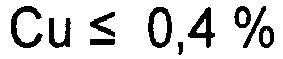

- De préférence, la compositions de l'acier inoxydable martensitique satisfait au moins l'une des conditions suivantes :


- La composition de l'acier inoxydable martensitique peut satisfaire la condition :


- La pièce de moule ou de carcasse de moule pour injection de matière plastique est constituée d'un acier inoxydable martensitique selon l'invention, qui est trempé et revenu.
- De préférence la structure de l'acier dont est constitué la pièce contient moins de 20% de ferrite δ, le reste étant de la martensite. Il est encore plus préférable que la structure de l'acier contienne moins de 10% de ferrite δ, le reste étant de la martensite.
- L'invention va maintenant être décrite plus en détail mais de façon non limitative et illustrée par des exemples.
- Les inventeurs ont constatés de façon nouvelle et inattendue que, dans des aciers inoxydables martensitiques, l'effet favorable du cuivre sur la conductibilité thermique pouvait être remplacé par une baisse significative de la teneur en silicium, et l'effet favorable du cuivre sur la corrosion pouvait être compensé par une augmentation de la teneur en molybdène ou en azote.
- Partant de ces observations, les inventeurs ont constaté que l'on pouvait obtenir un acier inoxydable martensitique ayant des propriétés satisfaisantes pour la fabrication de pièces de moules, et également une bonne forgeabilité, en baissant significativement la teneur en cuivre, en baissant significativement la teneur en silicium et en ajoutant éventuellement du molybdène ou de l'azote ou une combinaison de ces deux éléments.
- Compte tenu de ces observations, l'acier selon l'invention est un acier inoxydable de type martensitique dont la composition comprend en poids, les teneurs définies ci-dessous.
- Plus de 0,02 %, de préférence plus de 0,03 %, de carbone, pour contribuer au durcissement, mais pas plus de 0,09 %, de préférence pas plus 0,06 %, et de préférence pas plus de 0,05 %, de carbone pour ne pas nuire à la résistance à la corrosion ;
- Au moins 0,025 %, et de préférence au moins 0,035 %, d'azote pour améliorer la résistance mécanique de l'acier et sa résistance à la corrosion, mais moins de 0,12 %, et de préférence de moins de 0,10%, voire moins de 0,075 %, d'azote afin de réduire la tendance à la formation de nitrures de chrome indésirables ; ces nitrures de chrome étant fragilisants et tendant à réduire la teneur en chrome libre, ce qui est défavorable à la tenue à la corrosion ;
- Les teneurs en carbone et azote sont ajustées de façon à ce que dans les limites qui viennent d'être définies, la somme des teneurs en carbone et azote soit supérieure ou égale à 0,05% et de préférence supérieure ou égale à 0,07 %, afin d'assurer une contribution suffisante au durcissement au revenu par formation de carbures et de nitrures, mais la somme des teneurs en carbone et azote ne doit pas dépasser 0,17 %, mieux 0,14 % et mieux encore 0,11 %, de façon à ne pas conduire à un durcissement excessif pour l'application considérée ici, à éviter de nuire à la ténacité et enfin à ne pas réduire la résistance à la corrosion de façon trop importante par abaissement local de la teneur en chrome partiellement fixé sous forme de carbonitrures.
- Afin d'améliorer l'usinabilité, notamment en fraisage et en perçage, on peut ajouter du soufre, en particulier lorsque les exigences de qualité de surface (qualité de poli, ou surfaces grainées) ne sont pas élevées, notamment lorsque l'acier est utilisé pour fabriquer des carcasses de moules ou fabriquer des empreintes de moulage de matière plastique à faible exigence d'aspect. Dans ce cas la teneur en soufre doit, de préférence, être d'au moins 0,05 %, plus préférentiellement d'au moins 0,075 %, et mieux encore d'au moins 0,10 %. Cependant, les teneurs maximales en soufre doivent rester inférieures à 0,25 %, de préférence 0,20 %, et mieux encore 0,15 % afin de ne pas nuire à la forgeabilité de l'acier, à sa tenue à la corrosion et sa ténacité.
- Le silicium et l'aluminium sont des éléments qui contribuent à assurer une bonne désoxydation du bain d'acier, et de ce point de vue, leur présence est souhaitable. En particulier il est nécessaire que les teneurs en silicium et en aluminium soient telles que Si + 23 x Al ≥ 0,20% et de préférence ≥ 0,35 %. Mais les inventeurs ont découvert que la réduction au niveau le plus bas possible de la teneur en silicium, et dans une moindre mesure de la teneur en aluminium, permet de compenser partiellement, mais de façon très significative, l'effet très défavorable d'une forte teneur en chrome sur la conductivité thermique de l'acier. Or cette mauvaise conductivité thermique des aciers à fort chrome est spécialement pénalisante dans les applications de moules pour le moulage par injection de matière plastique pour lesquelles l'évacuation efficace de la chaleur permettant de solidifier rapidement les pièces de matière plastique injectée constitue une des fonctionnalités importantes en service.
- Afin d'obtenir une bonne conductivité thermique, il est donc souhaitable que les teneurs en silicium et en aluminium soient telles que : Si + 0,6 x Al ≤ 0,25 %, et mieux ≤ 0,17 %.
- En outre, et afin d'assurer une aptitude au laminage ou au forgeage satisfaisante, c'est-à-dire conduisant à une amplitude de température de formage à chaud suffisamment large pour permettre en général un laminage en une seule chaude sans chauffage intermédiaire, les teneurs en aluminium et en azote doivent être telles que : Al ≤ 0,0020 / N, et de préférence ≤ 0,0010/ N. En outre, et afin de contrôler le grossissement du grain de façon à limiter la taille du grain lors du traitement thermique et ainsi assurer une taille de grain satisfaisante après avoir effectué le traitement de qualité, les teneurs en aluminium et azote doivent être telles que : Al ≥ 0,00025 / N et, de préférence ≥ 0,00050 / N.
- Le manganèse est particulièrement souhaitable pour fixer le soufre sous forme de sulfures de manganèse afin de limiter le rôle défavorable du souffre sur la fragilité de l'acier. Pour cette raison la teneur en manganèse doit, de préférence, être telle que : Mn ≥ 0,3 % + 5 x S.
- En outre, le manganèse augmente la trempabilité et réduit la teneur en ferrites dans la structure essentiellement martensitique obtenue après trempe.
- Pour cette raison, la teneur en manganèse sera supérieure ou égale à 0,55 %, et mieux supérieure ou égale à 0,75 %, et mieux encore supérieure ou égale 1,05 %. Cependant lorsque la teneur en manganèse est trop élevée, cet élément détériore la ténacité. Aussi la teneur en manganèse devra rester inférieure ou égale à 1,8 %, et de préférence inférieure ou égale à 1,6 %.
- La teneur en chrome, qui assure la résistance à la corrosion, devra être supérieure ou égale à 11,5 % et de préférence supérieure ou égale à 12 %. Cependant, et afin de limiter la présence dans les structures obtenues après trempe, de ferrite δ qui est un constituant doux, la teneur en chrome devra rester inférieure ou égale à 16 %, et de préférence inférieure ou égale à 15 %, mieux inférieure ou égale à 14 %, et mieux encore inférieure ou égale à 13 %.
- La teneur en cuivre restera inférieure ou égale à 0,48 %, de préférence inférieure ou égale à 0,4 %, et pourra même être aussi faible que l'on souhaite, afin de ne pas détériorer l'aptitude à la déformation à chaud, et afin de conduire à des chutes moins difficilement recyclables.
- Comme on l'a indiqué précédemment, bien que le cuivre ait un effet favorable sur la tenue à la corrosion et sur la teneur en ferrite delta, les inventeurs ont découvert qu'il était possible de conserver, voire même de renforcer, les avantages de la teneur élevée en cuivre, notamment en ajoutant du molybdène et en réduisant le plus possible la teneur silicium.
- Cependant, le cuivre est souvent présent à titre de résiduel dans les ferrailles, si bien que, afin de limiter les surcoûts liés au tri des ferrailles nécessaire pour obtenir une teneur en cuivre très basse, on pourra admettre une teneur en cuivre apportée par les ferrailles supérieure à 0,1 %, voire supérieure à 0,2 %, voire même supérieure à 0,31 % et mieux encore, supérieure à 0,35 %.
- Le molybdène a l'avantage d'améliorer la trempabilité, ce qui favorise l'obtention d'une microstructure martensitique souhaitable pour optimiser le compromis résistance à la traction/ tenacité.
- Cet élément favorise également une forte résistance à l'adoucissement au revenu. Enfin, il contribue fortement à la résistance à la corrosion. Cependant il est très coûteux et favorise la formation de ferrite δ. Aussi, la teneur maximale en molybdène ne dépassera pas 0,90 % et de préférence pas 0,48 %, et mieux encore pas 0,35 %. La présence de cet élément n'est pas indispensable, et sa teneur minimale peut être simplement de 0 % ou des traces. Mais cependant, il préférable que la teneur minimale en molybdène soit d'au moins 0,10 % et de préférence au moins 0,20 % et mieux encore 0,30 %.
- Le molybdène peut éventuellement être remplacé par du tungstène à raison de 2 % de tungstène pour 1 % de molybdène. Cependant il n'est pas souhaitable de remplacer le molybdène par le tungstène, en particulier du fait du coût du tungstène qui est particulièrement élevé.
- De même, le cobalt, qui a un effet comparable, pourrait être ajouté. Mais ce n'est pas souhaitable, aussi la teneur en cet élément restera de préférence inférieure ou égale à 0,010 %. C'est-à-dire que cet élément restera à un état de trace ou d'impureté.
- Le nickel est un élément favorable à la ténacité. D'autre part c'est un élément gammagène qui permet de compenser les effets d'éléments alphagènes ajoutés pour renforcer la résistance à la corrosion. Cet élément peut donc être ajouté, sans que sa présence soit obligatoire. Aussi, la teneur minimale en nickel peut être 0% ou de traces, mais il est avantageux que sa teneur soit supérieure ou égale à 0,10 % et mieux encore supérieure ou égale à 0,20 %. Cependant son coût élevé conduit à ne pas souhaiter une teneur supérieure à 0,90 %. De préférence la teneur en nickel restera inférieure ou égale à 0,48 %.
- Le vanadium peut être présent à l'état de résiduel. Compte tenu de la teneur en chrome dans l'acier, l'élaboration par la voie classique au four électrique peut conduire à des teneurs résiduelles allant jusqu'à 0,05 % environ sans garantie de valeur minimale contrôlée. Toutefois, le vanadium peut éventuellement être utilisé comme addition contrôlée, pour sa fonction durcissante au revenu, avec une teneur minimale de 0,015 %. Néanmoins, en raison notamment de son coût et de son influence défavorable sur l'usinabilité, la teneur en vanadium ne doit pas dépasser 0,090 %.
- Le niobium présente des effets analogues à celui du vanadium et, de la même façon, sa teneur ne doit pas dépasser 0,090 %. En outre cet élément est défavorable à la forgeabilité. De ce fait il est souhaitable que sa teneur reste inférieure à 0,020 %, et mieux inférieure à 0,010 %, et mieux encore que cet élément ne soit qu'à l'état de traces.
- Bien que la présence de titane ne soit pas souhaitée en raison de la dureté des composants nitrurés ou carburés de titane qui peuvent nuire significativement à l'usinabilité, cet élément peut être ajouté de manière optionnelle pour assurer le contrôle du grossissement du grain au cours des traitements thermiques. Dans ce cas, la teneur en titane ne doit pas dépassée 0,025 % % et préférence devra être comprise entre 0,010 % et 0,020 %.
- De plus, et afin que la taille des nitrures de titane soit faible et en particulier reste inférieure à 1 micron environ, il sera très souhaitable que le titane soit ajouté dans le bain d'acier liquide au moment de l'élaboration de manière progressive à partir de l'addition dans un laitier et par transfert très progressif en contact métal/nitrure.
- Le reste de la composition est constitué de fer et d'impuretés.
- Outre les conditions qui viennent d'être indiquées sur les teneurs en chacun des éléments, il est souhaitable que la composition soit ajustée de façon à limiter la teneur en ferrite δ qui n'est pas susceptible de se transformer en martensite et dont la présence est nuisible à la polissabilité, à la résistance et à la tenue à la corrosion. En particulier il est souhaitable que la proportion de ferrite δ reste inférieure ou égale à 20 % ou mieux encore inférieure ou égale à 10 % dans une structure principalement martensitique.
- Pour cela, la composition doit satisfaire la condition suivante :

avec :
- Dans ces limites, on peut distinguer deux sous domaines. D'une part, le sous domaine correspondant à F compris entre 7,0 et 8,9 qui est plus favorable à une bonne homogénéité du métal et à une bonne polissabilité, et d'autre part le domaine correspondant à F compris entre 9,0 et 11,5. Un compromis intéressant correspondant à 8,5 inférieur ou égal à F inférieur ou égal à 10,5.
- D'une façon générale, cet acier est élaboré par les procédés connus, par exemple au four électrique. Eventuellement, pour ajouter du titane, on ajoute cet élément à un laitier et on assure un transfert du titane dans le bain d'acier liquide par le contact du métal laitier, l'acier liquide est coulé sous forme de brames ou de lingots que l'on met en forme à chaud, soit par laminage, soit par forgeage. On effectue alors un traitement thermique constitué d'une austénitisation à environ 950° suivie d'un refroidissement assurant la transformation de l'austénite en martensite (qui peut être un simple refroidissement à l'air pour des épaisseurs inférieures à 100 mm environ, ou tout autre moyen de trempe) et d'un revenu à une température préférentielle comprise entre 500°C et 550°C, afin d'obtenir une dureté comprise entre 250HB et 400HB et typiquement, autour de 300HB. Puis, on usine les pièces de moule ou de carcasse de moule.
- A titre d'exemple, on peut réaliser les aciers dont les compositions chimiques sont reportées au tableau 1.

- Dans ce tableau on a également reporté des pourcentages de ferrite δ obtenue, la dureté HB obtenue après un traitement thermique de revenu à 520°C, la conductivité thermique de l'acier, et un indice de corrosion égal à :

- Dans ce tableau, l'acier de la première ligne est un acier de comparaison correspondant à l'art antérieur, et les autres aciers sont des aciers conforment à l'invention.
- Comme on peut le constater sur le tableau, la teneur en ferrite δ reste toujours inférieure à 20 %, et se situe en général autour de 10 % comme pour l'acier de l'art antérieur. La dureté HB de l'acier varie de 300 HB à 350 HB, l'indice de tenue à la corrosion varie de 14,6 à 18,2, cette dernière valeur étant très sensiblement supérieur à l'indice de tenue à la corrosion de l'acier de comparaison. Enfin, la conductivité thermique varie de 23,4 à 26,1 W/m/°C, ce qui, dans tous les cas, est supérieur, voire sensiblement supérieur, à la conductivité thermique de l'acier de comparaison. En outre, la mise en oeuvre de l'acier suivant l'invention se fait sans aucune difficulté de mise en forme à chaud, la forgeabilité étant toujours très satisfaisante. On notera que les teneurs en cuivre qui restent inférieures ou égales à 0,43 % se rapprochent des teneurs qui deviennent classiques dans les ferrailles, ce qui permet de recycler sans difficultés les chutes de l'acier selon l'invention.
Claims (10)
- Pièce de moule ou de carcasse de moule pour le moulage par injection de matières plastiques, en acier inoxydable martensitique trempé et revenu dont la composition est constituée de, en % en poids :


et

 - éventuellement jusqu'à 0,48 % de cuivre, jusqu'à 0,90 % de la somme Mo + W/2, jusqu'à 0,90 % de nickel, jusqu'à 0,090 % de vanadium, jusqu'à 0,090 % de niobium, jusqu'à 0,025 % de titane, éventuellement jusqu'à 0,25 % de soufre,le reste étant du fer et des impuretés résultant de l'élaboration, la composition satisfaisant, en outre, la condition :
- Pièce selon la revendication 1, caractérisée en ce que :

- Pièce selon l'une quelconque des revendication 1 à 2, caractérisée en ce que :

- Pièce selon l'une quelconque des revendications 1 à 3, caractérisée en ce que la composition satisfait au moins l'une des conditions suivantes :


- Pièce selon l'une quelconque des revendications 1 à 4, caractérisée en ce que la composition satisfait la condition :

- Pièce selon l'une quelconque des revendications 1 à 4, caractérisée en ce que la composition satisfait la condition :

- Pièce selon l'une quelconque des revendications 1 à 6, caractérisée en ce que :

- Pièce selon l'une quelconque des revendications 1 à 7, caractérisée en ce que la structure de l'acier contient moins de 20% de ferrite δ, le reste étant de la martensite.
- Pièce selon la revendication 8, caractérisée en ce que la structure de l'acier contient moins de 10% de ferrite δ, le reste étant de la martensite.
- Pièce selon l'une quelconque des revendications 1 à 9, caractérisée en ce que :

Priority Applications (1)
| Application Number | Priority Date | Filing Date | Title |
|---|---|---|---|
| PL05788934T PL1774052T3 (pl) | 2004-07-12 | 2005-07-06 | Stal nierdzewna martenzytyczna do form i korpusów form wtryskowych |
Applications Claiming Priority (2)
| Application Number | Priority Date | Filing Date | Title |
|---|---|---|---|
| FR0407764A FR2872825B1 (fr) | 2004-07-12 | 2004-07-12 | Acier inoxydable martensitique pour moules et carcasses de moules d'injection |
| PCT/FR2005/001750 WO2006016043A2 (fr) | 2004-07-12 | 2005-07-06 | Acier inoxydable martensitique pour moules et carcasses de moules d'injection |
Publications (2)
| Publication Number | Publication Date |
|---|---|
| EP1774052A2 EP1774052A2 (fr) | 2007-04-18 |
| EP1774052B1 true EP1774052B1 (fr) | 2017-03-01 |
Family
ID=34947002
Family Applications (1)
| Application Number | Title | Priority Date | Filing Date |
|---|---|---|---|
| EP05788934.7A Expired - Lifetime EP1774052B1 (fr) | 2004-07-12 | 2005-07-06 | Acier inoxydable martensitique pour moules et carcasses de moules d'injection |
Country Status (15)
| Country | Link |
|---|---|
| US (1) | US9267197B2 (fr) |
| EP (1) | EP1774052B1 (fr) |
| JP (1) | JP4938658B2 (fr) |
| KR (4) | KR20130133077A (fr) |
| CN (1) | CN100543169C (fr) |
| AU (1) | AU2005271134B2 (fr) |
| BR (1) | BRPI0512467B1 (fr) |
| CA (1) | CA2570440C (fr) |
| ES (1) | ES2624148T3 (fr) |
| FR (1) | FR2872825B1 (fr) |
| PL (1) | PL1774052T3 (fr) |
| RU (1) | RU2379180C2 (fr) |
| TW (1) | TWI352125B (fr) |
| UA (1) | UA82617C2 (fr) |
| WO (1) | WO2006016043A2 (fr) |
Families Citing this family (17)
| Publication number | Priority date | Publication date | Assignee | Title |
|---|---|---|---|---|
| FR2920784B1 (fr) * | 2007-09-10 | 2010-12-10 | Aubert & Duval Sa | Acier inoxydable martensitique, procede de fabrication de pieces realisees en cet acier et pieces ainsi realisees |
| JP5412851B2 (ja) * | 2009-01-29 | 2014-02-12 | 大同特殊鋼株式会社 | プラスチック成形金型用鋼およびプラスチック成形金型 |
| US8557059B2 (en) * | 2009-06-05 | 2013-10-15 | Edro Specialty Steels, Inc. | Plastic injection mold of low carbon martensitic stainless steel |
| BRPI0904608A2 (pt) * | 2009-11-17 | 2013-07-02 | Villares Metals Sa | aÇo inoxidÁvel para moldes com menor quantidade de ferrita delta |
| KR101268764B1 (ko) * | 2009-12-22 | 2013-05-29 | 주식회사 포스코 | 내식성을 향상시킨 사출성형 몰드용 마르텐사이트 스테인리스강 |
| FR2964668B1 (fr) * | 2010-09-14 | 2012-10-12 | Snecma | Optimisation de l'usinabilite d'aciers martensitiques inoxydables |
| CN102528016B (zh) * | 2012-01-17 | 2013-09-11 | 建德市易通金属粉材有限公司 | 金属注射成形用合金钢粉及其制备方法 |
| IN2014DN07791A (fr) * | 2012-03-30 | 2015-05-15 | Nippon Steel & Sumitomo Metal Corp | |
| US20150275340A1 (en) * | 2014-04-01 | 2015-10-01 | Ati Properties, Inc. | Dual-phase stainless steel |
| JP6128291B2 (ja) * | 2015-04-21 | 2017-05-17 | Jfeスチール株式会社 | マルテンサイト系ステンレス鋼 |
| US10344758B2 (en) * | 2016-04-07 | 2019-07-09 | A. Finkl & Sons Co. | Precipitation hardened martensitic stainless steel and reciprocating pump manufactured therewith |
| KR102169859B1 (ko) | 2016-04-12 | 2020-10-26 | 제이에프이 스틸 가부시키가이샤 | 마텐자이트계 스테인리스 강판 |
| CN109890993B (zh) * | 2016-10-18 | 2022-01-11 | 杰富意钢铁株式会社 | 马氏体系不锈钢板 |
| CN106987769B (zh) * | 2017-03-29 | 2018-08-03 | 苏州浩焱精密模具有限公司 | 一种高硬度精密蚀刻刀模 |
| JP7053688B2 (ja) * | 2017-06-30 | 2022-04-12 | アペラム | マルテンサイトステンレス鋼シートをスポット溶接する方法 |
| US11318640B1 (en) * | 2018-04-04 | 2022-05-03 | Edro Specialty Steels, Inc. | Method for making a continuously cast slab and the resulting mold plate |
| CN112779384B (zh) * | 2020-12-04 | 2022-06-07 | 中国航发南方工业有限公司 | 一种提高0Cr16Ni5Mo1马氏体不锈钢韧塑性的热处理方法 |
Family Cites Families (25)
| Publication number | Priority date | Publication date | Assignee | Title |
|---|---|---|---|---|
| US3720545A (en) * | 1971-08-20 | 1973-03-13 | Crucible Inc | Steel mold and method for producing the same |
| DE3901470C1 (en) * | 1989-01-19 | 1990-08-09 | Vereinigte Schmiedewerke Gmbh, 4630 Bochum, De | Cold-working steel and its use |
| JPH0621323B2 (ja) * | 1989-03-06 | 1994-03-23 | 住友金属工業株式会社 | 耐食、耐酸化性に優れた高強度高クロム鋼 |
| US5089067A (en) * | 1991-01-24 | 1992-02-18 | Armco Inc. | Martensitic stainless steel |
| EP0508574A1 (fr) * | 1991-04-11 | 1992-10-14 | Crucible Materials Corporation | Article en acier martensitique inoxydable et procédé pour sa fabrication |
| DE4133480A1 (de) * | 1991-10-09 | 1993-04-15 | Boehler Ag | Nichtrostender chromlegierter stahl fuer kunststofformen |
| JPH07296605A (ja) | 1994-04-28 | 1995-11-10 | Matsushita Electric Ind Co Ltd | 車両用前照灯 |
| JP3587330B2 (ja) * | 1996-10-03 | 2004-11-10 | 日立金属株式会社 | 耐孔食性の優れた高硬度マルテンサイト系ステンレス鋼 |
| JPH10259458A (ja) * | 1997-03-18 | 1998-09-29 | Nisshin Steel Co Ltd | 打抜きだれの少ないマルテンサイト系ステンレス鋼板およびその製造方法 |
| US6045633A (en) * | 1997-05-16 | 2000-04-04 | Edro Engineering, Inc. | Steel holder block for plastic molding |
| JP3919043B2 (ja) * | 1998-03-09 | 2007-05-23 | 富士フイルム株式会社 | スプール射出成形用金型 |
| JP2000109957A (ja) * | 1998-10-05 | 2000-04-18 | Sumitomo Metal Ind Ltd | ガスケット用ステンレス鋼およびその製造方法 |
| JP3327853B2 (ja) * | 1998-11-27 | 2002-09-24 | 日本高周波鋼業株式会社 | 耐発錆性に優れた快削ステンレス系金型用鋼 |
| WO2000070112A1 (fr) * | 1999-05-18 | 2000-11-23 | Sumitomo Metal Industries, Ltd. | Acier inoxydable martensitique pour tube en acier sans soudure |
| JP2001107195A (ja) * | 1999-10-01 | 2001-04-17 | Daido Steel Co Ltd | 低炭素高硬度・高耐食マルテンサイト系ステンレス鋼およびその製造方法 |
| JP2001152294A (ja) * | 1999-11-26 | 2001-06-05 | Daido Steel Co Ltd | 耐食性及び被削性に優れたプラスチック成形金型用鋼 |
| US6479013B1 (en) * | 2000-08-10 | 2002-11-12 | Sumitomo Metal Industries, Ltd. | Casting components made from a tool steel |
| KR100765661B1 (ko) * | 2000-08-31 | 2007-10-10 | 제이에프이 스틸 가부시키가이샤 | 저탄소 마르텐사이트계 스테인레스 강판 및 이의 제조방법 |
| SE518023C2 (sv) * | 2000-12-11 | 2002-08-20 | Uddeholm Tooling Ab | Stål för plastformningsverktyg och detaljer av stålet för plastformningsverktyg |
| DE10103290A1 (de) * | 2001-01-25 | 2002-08-22 | Edelstahl Witten Krefeld Gmbh | Stahl und Verfahren zur Herstellung eines Zwischenproduktes |
| AT409636B9 (de) * | 2001-02-14 | 2002-12-27 | Boehler Edelstahl Gmbh & Co Kg | Stahl für kunststoffformen und verfahren zur wärmebehandlung desselben |
| TW567233B (en) * | 2001-03-05 | 2003-12-21 | Kiyohito Ishida | Free-cutting tool steel |
| JP4240189B2 (ja) * | 2001-06-01 | 2009-03-18 | 住友金属工業株式会社 | マルテンサイト系ステンレス鋼 |
| DE60205896D1 (de) * | 2001-06-11 | 2005-10-06 | Nisshin Steel Co Ltd | Band aus doppelphasigem nichtrostendem stahl für stahlriemen |
| FR2866154B1 (fr) | 2004-02-10 | 2014-02-21 | Batscap Sa | Procede d'elaboration d'un dispositif electrochimique. |
-
2004
- 2004-07-12 FR FR0407764A patent/FR2872825B1/fr not_active Expired - Lifetime
-
2005
- 2005-06-07 UA UAA200700248A patent/UA82617C2/uk unknown
- 2005-07-04 TW TW094122567A patent/TWI352125B/zh not_active IP Right Cessation
- 2005-07-06 PL PL05788934T patent/PL1774052T3/pl unknown
- 2005-07-06 BR BRPI0512467-0A patent/BRPI0512467B1/pt not_active IP Right Cessation
- 2005-07-06 KR KR1020137029257A patent/KR20130133077A/ko not_active Ceased
- 2005-07-06 WO PCT/FR2005/001750 patent/WO2006016043A2/fr not_active Ceased
- 2005-07-06 CN CNB2005800234380A patent/CN100543169C/zh not_active Expired - Lifetime
- 2005-07-06 US US11/632,047 patent/US9267197B2/en not_active Expired - Lifetime
- 2005-07-06 KR KR1020077000685A patent/KR20070034055A/ko not_active Ceased
- 2005-07-06 EP EP05788934.7A patent/EP1774052B1/fr not_active Expired - Lifetime
- 2005-07-06 ES ES05788934.7T patent/ES2624148T3/es not_active Expired - Lifetime
- 2005-07-06 KR KR1020147034474A patent/KR20150000514A/ko not_active Ceased
- 2005-07-06 CA CA2570440A patent/CA2570440C/fr not_active Expired - Lifetime
- 2005-07-06 JP JP2007520858A patent/JP4938658B2/ja not_active Expired - Lifetime
- 2005-07-06 RU RU2007105105/02A patent/RU2379180C2/ru active
- 2005-07-06 KR KR1020117031661A patent/KR20120007557A/ko not_active Ceased
- 2005-07-06 AU AU2005271134A patent/AU2005271134B2/en not_active Expired
Non-Patent Citations (1)
| Title |
|---|
| None * |
Also Published As
| Publication number | Publication date |
|---|---|
| CN101142337A (zh) | 2008-03-12 |
| BRPI0512467B1 (pt) | 2014-07-08 |
| RU2007105105A (ru) | 2008-08-20 |
| UA82617C2 (uk) | 2008-04-25 |
| CN100543169C (zh) | 2009-09-23 |
| TWI352125B (en) | 2011-11-11 |
| RU2379180C2 (ru) | 2010-01-20 |
| AU2005271134B2 (en) | 2009-09-24 |
| KR20150000514A (ko) | 2015-01-02 |
| BRPI0512467A (pt) | 2008-03-04 |
| TW200610827A (en) | 2006-04-01 |
| JP2008505786A (ja) | 2008-02-28 |
| CA2570440A1 (fr) | 2006-02-16 |
| ES2624148T3 (es) | 2017-07-13 |
| KR20070034055A (ko) | 2007-03-27 |
| US9267197B2 (en) | 2016-02-23 |
| FR2872825B1 (fr) | 2007-04-27 |
| PL1774052T3 (pl) | 2017-08-31 |
| CA2570440C (fr) | 2013-06-18 |
| KR20120007557A (ko) | 2012-01-20 |
| EP1774052A2 (fr) | 2007-04-18 |
| WO2006016043A2 (fr) | 2006-02-16 |
| FR2872825A1 (fr) | 2006-01-13 |
| AU2005271134A1 (en) | 2006-02-16 |
| KR20130133077A (ko) | 2013-12-05 |
| US20080069719A1 (en) | 2008-03-20 |
| WO2006016043A3 (fr) | 2007-01-25 |
| JP4938658B2 (ja) | 2012-05-23 |
Similar Documents
| Publication | Publication Date | Title |
|---|---|---|
| EP0805220B1 (fr) | Acier faiblement allié pour la fabrication de moules pour matières plastiques | |
| EP0792944B1 (fr) | Acier utilisable notamment pour la fabrication de moules pour injection de matière plastique | |
| CA2570440C (fr) | Acier inoxydable martensitique pour moules et carcasses de moules d'injection | |
| EP1490526B1 (fr) | Bloc en acier pour la fabrication de moules d injection de matiere plastique ou pour la fabrication de pieces pour le travail des metaux | |
| CA2595609C (fr) | Procede de fabrication de toles d'acier austenitique fer-carbone-manganese et toles ainsi produites | |
| EP0709481B1 (fr) | Acier faiblement allié pour la fabrication de moules pour matières plastiques ou pour caoutchouc | |
| CA2506347C (fr) | Procede pour fabriquer une tole en acier resistant a l'abrasion et tole obtenue | |
| CA2506349C (fr) | Procede pour fabriquer une tole en acier resistant a l'abrasion et tole obtenue | |
| EP0805221B1 (fr) | Acier reparable par soudure pour la fabrication de moules pour matières plastiques | |
| EP2188402A1 (fr) | Acier inoxydable martensitique, procédé de fabrication de pièces réalisées en cet acier et pièces ainsi réalisées. | |
| EP2279275B1 (fr) | Bloc ou tole en acier à hautes caractéristiques pour pièces massives | |
| WO2003083154A1 (fr) | Bloc en acier pour la fabrication de moules pour le moulage par injection de matieres plastiques ou pour la fabrication d'outils pour le travail des metaux | |
| EP2690187B1 (fr) | Alliage, pièce et procédé de fabrication correspondants | |
| EP1885900B1 (fr) | Acier pour coques de sous-marins a soudabilite renforcee | |
| FR2777023A1 (fr) | Composition d'acier a outils |
Legal Events
| Date | Code | Title | Description |
|---|---|---|---|
| PUAI | Public reference made under article 153(3) epc to a published international application that has entered the european phase |
Free format text: ORIGINAL CODE: 0009012 |
|
| 17P | Request for examination filed |
Effective date: 20061214 |
|
| AK | Designated contracting states |
Kind code of ref document: A2 Designated state(s): AT BE BG CH CY CZ DE DK EE ES FI FR GB GR HU IE IS IT LI LT LU LV MC NL PL PT RO SE SI SK TR |
|
| AX | Request for extension of the european patent |
Extension state: AL BA HR MK YU |
|
| RIN1 | Information on inventor provided before grant (corrected) |
Inventor name: PISSELOUP, JEAN Inventor name: BOUCHAUD, FREDERIC Inventor name: BEGUINOT, JEAN |
|
| 17Q | First examination report despatched |
Effective date: 20081119 |
|
| RAP1 | Party data changed (applicant data changed or rights of an application transferred) |
Owner name: INDUSTEEL FRANCE |
|
| GRAP | Despatch of communication of intention to grant a patent |
Free format text: ORIGINAL CODE: EPIDOSNIGR1 |
|
| RIC1 | Information provided on ipc code assigned before grant |
Ipc: C22C 38/58 20060101ALI20160914BHEP Ipc: C22C 38/44 20060101ALI20160914BHEP Ipc: B29C 33/38 20060101ALI20160914BHEP Ipc: C22C 38/42 20060101ALI20160914BHEP Ipc: C22C 38/60 20060101AFI20160914BHEP Ipc: C22C 38/46 20060101ALI20160914BHEP Ipc: C22C 38/00 20060101ALI20160914BHEP |
|
| INTG | Intention to grant announced |
Effective date: 20160929 |
|
| GRAS | Grant fee paid |
Free format text: ORIGINAL CODE: EPIDOSNIGR3 |
|
| GRAA | (expected) grant |
Free format text: ORIGINAL CODE: 0009210 |
|
| AK | Designated contracting states |
Kind code of ref document: B1 Designated state(s): AT BE BG CH CY CZ DE DK EE ES FI FR GB GR HU IE IS IT LI LT LU LV MC NL PL PT RO SE SI SK TR |
|
| AX | Request for extension of the european patent |
Extension state: AL BA HR MK YU |
|
| REG | Reference to a national code |
Ref country code: GB Ref legal event code: FG4D Free format text: NOT ENGLISH |
|
| REG | Reference to a national code |
Ref country code: CH Ref legal event code: EP Ref country code: AT Ref legal event code: REF Ref document number: 871438 Country of ref document: AT Kind code of ref document: T Effective date: 20170315 |
|
| REG | Reference to a national code |
Ref country code: IE Ref legal event code: FG4D Free format text: LANGUAGE OF EP DOCUMENT: FRENCH |
|
| REG | Reference to a national code |
Ref country code: DE Ref legal event code: R096 Ref document number: 602005051425 Country of ref document: DE |
|
| REG | Reference to a national code |
Ref country code: SE Ref legal event code: TRGR |
|
| REG | Reference to a national code |
Ref country code: RO Ref legal event code: EPE |
|
| REG | Reference to a national code |
Ref country code: NL Ref legal event code: FP |
|
| REG | Reference to a national code |
Ref country code: FR Ref legal event code: PLFP Year of fee payment: 13 |
|
| REG | Reference to a national code |
Ref country code: LT Ref legal event code: MG4D |
|
| REG | Reference to a national code |
Ref country code: ES Ref legal event code: FG2A Ref document number: 2624148 Country of ref document: ES Kind code of ref document: T3 Effective date: 20170713 |
|
| PG25 | Lapsed in a contracting state [announced via postgrant information from national office to epo] |
Ref country code: LT Free format text: LAPSE BECAUSE OF FAILURE TO SUBMIT A TRANSLATION OF THE DESCRIPTION OR TO PAY THE FEE WITHIN THE PRESCRIBED TIME-LIMIT Effective date: 20170301 Ref country code: FI Free format text: LAPSE BECAUSE OF FAILURE TO SUBMIT A TRANSLATION OF THE DESCRIPTION OR TO PAY THE FEE WITHIN THE PRESCRIBED TIME-LIMIT Effective date: 20170301 Ref country code: GR Free format text: LAPSE BECAUSE OF FAILURE TO SUBMIT A TRANSLATION OF THE DESCRIPTION OR TO PAY THE FEE WITHIN THE PRESCRIBED TIME-LIMIT Effective date: 20170602 |
|
| PG25 | Lapsed in a contracting state [announced via postgrant information from national office to epo] |
Ref country code: BG Free format text: LAPSE BECAUSE OF FAILURE TO SUBMIT A TRANSLATION OF THE DESCRIPTION OR TO PAY THE FEE WITHIN THE PRESCRIBED TIME-LIMIT Effective date: 20170601 Ref country code: LV Free format text: LAPSE BECAUSE OF FAILURE TO SUBMIT A TRANSLATION OF THE DESCRIPTION OR TO PAY THE FEE WITHIN THE PRESCRIBED TIME-LIMIT Effective date: 20170301 |
|
| PG25 | Lapsed in a contracting state [announced via postgrant information from national office to epo] |
Ref country code: EE Free format text: LAPSE BECAUSE OF FAILURE TO SUBMIT A TRANSLATION OF THE DESCRIPTION OR TO PAY THE FEE WITHIN THE PRESCRIBED TIME-LIMIT Effective date: 20170301 |
|
| REG | Reference to a national code |
Ref country code: SK Ref legal event code: T3 Ref document number: E 24446 Country of ref document: SK |
|
| PG25 | Lapsed in a contracting state [announced via postgrant information from national office to epo] |
Ref country code: PT Free format text: LAPSE BECAUSE OF FAILURE TO SUBMIT A TRANSLATION OF THE DESCRIPTION OR TO PAY THE FEE WITHIN THE PRESCRIBED TIME-LIMIT Effective date: 20170703 Ref country code: IS Free format text: LAPSE BECAUSE OF FAILURE TO SUBMIT A TRANSLATION OF THE DESCRIPTION OR TO PAY THE FEE WITHIN THE PRESCRIBED TIME-LIMIT Effective date: 20170701 |
|
| REG | Reference to a national code |
Ref country code: DE Ref legal event code: R097 Ref document number: 602005051425 Country of ref document: DE |
|
| PLBE | No opposition filed within time limit |
Free format text: ORIGINAL CODE: 0009261 |
|
| STAA | Information on the status of an ep patent application or granted ep patent |
Free format text: STATUS: NO OPPOSITION FILED WITHIN TIME LIMIT |
|
| PG25 | Lapsed in a contracting state [announced via postgrant information from national office to epo] |
Ref country code: DK Free format text: LAPSE BECAUSE OF FAILURE TO SUBMIT A TRANSLATION OF THE DESCRIPTION OR TO PAY THE FEE WITHIN THE PRESCRIBED TIME-LIMIT Effective date: 20170301 |
|
| 26N | No opposition filed |
Effective date: 20171204 |
|
| REG | Reference to a national code |
Ref country code: CH Ref legal event code: PL |
|
| REG | Reference to a national code |
Ref country code: IE Ref legal event code: MM4A |
|
| PG25 | Lapsed in a contracting state [announced via postgrant information from national office to epo] |
Ref country code: IE Free format text: LAPSE BECAUSE OF NON-PAYMENT OF DUE FEES Effective date: 20170706 Ref country code: LI Free format text: LAPSE BECAUSE OF NON-PAYMENT OF DUE FEES Effective date: 20170731 Ref country code: CH Free format text: LAPSE BECAUSE OF NON-PAYMENT OF DUE FEES Effective date: 20170731 |
|
| REG | Reference to a national code |
Ref country code: FR Ref legal event code: PLFP Year of fee payment: 14 |
|
| PG25 | Lapsed in a contracting state [announced via postgrant information from national office to epo] |
Ref country code: LU Free format text: LAPSE BECAUSE OF NON-PAYMENT OF DUE FEES Effective date: 20170706 |
|
| REG | Reference to a national code |
Ref country code: AT Ref legal event code: UEP Ref document number: 871438 Country of ref document: AT Kind code of ref document: T Effective date: 20170301 |
|
| PG25 | Lapsed in a contracting state [announced via postgrant information from national office to epo] |
Ref country code: HU Free format text: LAPSE BECAUSE OF FAILURE TO SUBMIT A TRANSLATION OF THE DESCRIPTION OR TO PAY THE FEE WITHIN THE PRESCRIBED TIME-LIMIT; INVALID AB INITIO Effective date: 20050706 Ref country code: MC Free format text: LAPSE BECAUSE OF FAILURE TO SUBMIT A TRANSLATION OF THE DESCRIPTION OR TO PAY THE FEE WITHIN THE PRESCRIBED TIME-LIMIT Effective date: 20170301 |
|
| PG25 | Lapsed in a contracting state [announced via postgrant information from national office to epo] |
Ref country code: CY Free format text: LAPSE BECAUSE OF NON-PAYMENT OF DUE FEES Effective date: 20170301 |
|
| P01 | Opt-out of the competence of the unified patent court (upc) registered |
Effective date: 20230522 |
|
| PGFP | Annual fee paid to national office [announced via postgrant information from national office to epo] |
Ref country code: GB Payment date: 20240620 Year of fee payment: 20 |
|
| PGFP | Annual fee paid to national office [announced via postgrant information from national office to epo] |
Ref country code: NL Payment date: 20240619 Year of fee payment: 20 |
|
| PGFP | Annual fee paid to national office [announced via postgrant information from national office to epo] |
Ref country code: CZ Payment date: 20240625 Year of fee payment: 20 |
|
| PGFP | Annual fee paid to national office [announced via postgrant information from national office to epo] |
Ref country code: SK Payment date: 20240627 Year of fee payment: 20 |
|
| PGFP | Annual fee paid to national office [announced via postgrant information from national office to epo] |
Ref country code: FR Payment date: 20240619 Year of fee payment: 20 |
|
| PGFP | Annual fee paid to national office [announced via postgrant information from national office to epo] |
Ref country code: PL Payment date: 20240625 Year of fee payment: 20 |
|
| PGFP | Annual fee paid to national office [announced via postgrant information from national office to epo] |
Ref country code: SE Payment date: 20240619 Year of fee payment: 20 Ref country code: BE Payment date: 20240619 Year of fee payment: 20 |
|
| PGFP | Annual fee paid to national office [announced via postgrant information from national office to epo] |
Ref country code: IT Payment date: 20240619 Year of fee payment: 20 |
|
| PGFP | Annual fee paid to national office [announced via postgrant information from national office to epo] |
Ref country code: DE Payment date: 20240619 Year of fee payment: 20 |
|
| PGFP | Annual fee paid to national office [announced via postgrant information from national office to epo] |
Ref country code: ES Payment date: 20240802 Year of fee payment: 20 |
|
| PGFP | Annual fee paid to national office [announced via postgrant information from national office to epo] |
Ref country code: AT Payment date: 20240620 Year of fee payment: 20 |
|
| PGFP | Annual fee paid to national office [announced via postgrant information from national office to epo] |
Ref country code: SI Payment date: 20240627 Year of fee payment: 20 |
|
| PGFP | Annual fee paid to national office [announced via postgrant information from national office to epo] |
Ref country code: RO Payment date: 20240704 Year of fee payment: 20 |
|
| PGFP | Annual fee paid to national office [announced via postgrant information from national office to epo] |
Ref country code: TR Payment date: 20240701 Year of fee payment: 20 |
|
| REG | Reference to a national code |
Ref country code: DE Ref legal event code: R071 Ref document number: 602005051425 Country of ref document: DE |
|
| REG | Reference to a national code |
Ref country code: NL Ref legal event code: MK Effective date: 20250705 |
|
| PG25 | Lapsed in a contracting state [announced via postgrant information from national office to epo] |
Ref country code: CZ Free format text: LAPSE BECAUSE OF EXPIRATION OF PROTECTION Effective date: 20250706 |
|
| REG | Reference to a national code |
Ref country code: ES Ref legal event code: FD2A Effective date: 20250728 |
|
| REG | Reference to a national code |
Ref country code: SK Ref legal event code: MK4A Ref document number: E 24446 Country of ref document: SK Expiry date: 20250706 Ref country code: GB Ref legal event code: PE20 Expiry date: 20250705 |
|
| REG | Reference to a national code |
Ref country code: BE Ref legal event code: MK Effective date: 20250706 |
|
| REG | Reference to a national code |
Ref country code: SE Ref legal event code: EUG |
|
| PG25 | Lapsed in a contracting state [announced via postgrant information from national office to epo] |
Ref country code: ES Free format text: LAPSE BECAUSE OF EXPIRATION OF PROTECTION Effective date: 20250707 |
|
| PG25 | Lapsed in a contracting state [announced via postgrant information from national office to epo] |
Ref country code: SK Free format text: LAPSE BECAUSE OF EXPIRATION OF PROTECTION Effective date: 20250706 |