EP1773986B1 - Preprimitive streak and mesendoderm cells - Google Patents
Preprimitive streak and mesendoderm cells Download PDFInfo
- Publication number
- EP1773986B1 EP1773986B1 EP05769491.1A EP05769491A EP1773986B1 EP 1773986 B1 EP1773986 B1 EP 1773986B1 EP 05769491 A EP05769491 A EP 05769491A EP 1773986 B1 EP1773986 B1 EP 1773986B1
- Authority
- EP
- European Patent Office
- Prior art keywords
- cells
- cell
- human
- expression
- preprimitive streak
- Prior art date
- Legal status (The legal status is an assumption and is not a legal conclusion. Google has not performed a legal analysis and makes no representation as to the accuracy of the status listed.)
- Expired - Lifetime
Links
Images


Classifications
-
- C—CHEMISTRY; METALLURGY
- C12—BIOCHEMISTRY; BEER; SPIRITS; WINE; VINEGAR; MICROBIOLOGY; ENZYMOLOGY; MUTATION OR GENETIC ENGINEERING
- C12N—MICROORGANISMS OR ENZYMES; COMPOSITIONS THEREOF; PROPAGATING, PRESERVING, OR MAINTAINING MICROORGANISMS; MUTATION OR GENETIC ENGINEERING; CULTURE MEDIA
- C12N5/00—Undifferentiated human, animal or plant cells, e.g. cell lines; Tissues; Cultivation or maintenance thereof; Culture media therefor
- C12N5/06—Animal cells or tissues; Human cells or tissues
- C12N5/0602—Vertebrate cells
- C12N5/0603—Embryonic cells ; Embryoid bodies
-
- C—CHEMISTRY; METALLURGY
- C12—BIOCHEMISTRY; BEER; SPIRITS; WINE; VINEGAR; MICROBIOLOGY; ENZYMOLOGY; MUTATION OR GENETIC ENGINEERING
- C12N—MICROORGANISMS OR ENZYMES; COMPOSITIONS THEREOF; PROPAGATING, PRESERVING, OR MAINTAINING MICROORGANISMS; MUTATION OR GENETIC ENGINEERING; CULTURE MEDIA
- C12N5/00—Undifferentiated human, animal or plant cells, e.g. cell lines; Tissues; Cultivation or maintenance thereof; Culture media therefor
- C12N5/06—Animal cells or tissues; Human cells or tissues
- C12N5/0602—Vertebrate cells
- C12N5/0603—Embryonic cells ; Embryoid bodies
- C12N5/0606—Pluripotent embryonic cells, e.g. embryonic stem cells [ES]
-
- C—CHEMISTRY; METALLURGY
- C12—BIOCHEMISTRY; BEER; SPIRITS; WINE; VINEGAR; MICROBIOLOGY; ENZYMOLOGY; MUTATION OR GENETIC ENGINEERING
- C12N—MICROORGANISMS OR ENZYMES; COMPOSITIONS THEREOF; PROPAGATING, PRESERVING, OR MAINTAINING MICROORGANISMS; MUTATION OR GENETIC ENGINEERING; CULTURE MEDIA
- C12N2500/00—Specific components of cell culture medium
- C12N2500/90—Serum-free medium, which may still contain naturally-sourced components
-
- C—CHEMISTRY; METALLURGY
- C12—BIOCHEMISTRY; BEER; SPIRITS; WINE; VINEGAR; MICROBIOLOGY; ENZYMOLOGY; MUTATION OR GENETIC ENGINEERING
- C12N—MICROORGANISMS OR ENZYMES; COMPOSITIONS THEREOF; PROPAGATING, PRESERVING, OR MAINTAINING MICROORGANISMS; MUTATION OR GENETIC ENGINEERING; CULTURE MEDIA
- C12N2501/00—Active agents used in cell culture processes, e.g. differentation
- C12N2501/10—Growth factors
- C12N2501/16—Activin; Inhibin; Mullerian inhibiting substance
-
- C—CHEMISTRY; METALLURGY
- C12—BIOCHEMISTRY; BEER; SPIRITS; WINE; VINEGAR; MICROBIOLOGY; ENZYMOLOGY; MUTATION OR GENETIC ENGINEERING
- C12N—MICROORGANISMS OR ENZYMES; COMPOSITIONS THEREOF; PROPAGATING, PRESERVING, OR MAINTAINING MICROORGANISMS; MUTATION OR GENETIC ENGINEERING; CULTURE MEDIA
- C12N2506/00—Differentiation of animal cells from one lineage to another; Differentiation of pluripotent cells
- C12N2506/02—Differentiation of animal cells from one lineage to another; Differentiation of pluripotent cells from embryonic cells
Definitions
- preprimitive streak cells may be present for about every 1 hESC in the cell cultures. It is also disclosed in the context of the present invention that the hESCs are derived from a morula, embryonic inner cell mass (ICM) or embryonic gonadal ridges,
- the cell cultures containing human preprimitive streak cells comprise a medium comprising from less than 2% (v/v) to from less than about 0.2% (v/v) serum. In preferred embodiments, such cell cultures comprise a medium that lacks serum or serum replacement.
- the cell cultures containing human preprimitive streak cells comprise a growth factor of the Nodal/Activin subgroup of the TGF ⁇ superfamily. In preferred embodiments, the growth factor is activin A
- cell populations comprising cells wherein at least about 90% of the cells are human mesendoderm cells.
- the mesendoderm cells are multipotent cells that can differentiate into mesoderm cells and/or definitive endoderm cells.
- at least about 95% to at least about 98% of the human cells in the population are mesendoderm cells.
- mesendoderm cells express a marker, such as brachyury, FGF4 and/or SNAI1.
- the expression of one or both of these markers is greater than the expression of OCT4, SOX17, CXCR4, FOXA2, SOX7 and/or SOX1.
- the cell populations are substantially free of visceral endodermal cells, parietal endodermal cells, primitive endodermal cells, definitive endodermal cells, ectodermal cells and/or mesodermal cells.
- a cell population comprising pluripotent human cells, such as hESCs, is obtained.
- Pluripotent human cells within the cell population are differentiated in a medium comprising less than about 2% serum and at least one growth factor of the TGF ⁇ superfamily, wherein the growth factor is present in the medium in an amount sufficient to promote differentiation of at least a portion of said pluripotent cells to preprimitive streak cells which are multipotent and can differentiate into mesendoderm cells.
- detecting the presence of preprimitive streak cells in the cell population comprises detecting the expression of at least one marker selected from the group consisting of FGF8 and nuclear-localized ⁇ -catenin and at least one marker from the group consisting of brachyury, FGF4, SNAI1, SOX17, FOXA2, SOX7 and SOX1 in cells of the cell population, wherein the expression of a marker selected from the group consisting of FGF8 and nuclear-localized ⁇ -catenin is greater than the expression of a marker selected from the group consisting of brachyury, FGF4, SNAI1, SOX17, FOXA2, SOX7 and SOX1 in said preprimitive streak cells.
- marker detection can be by quantitative polymerase chain reaction (Q-PCR), immunocytochemistry or other comparable method.
- Such methods comprise the steps of (a) obtaining a populations of pluripotent cells, such as hESCs, wherein at least a one cell of the pluripotent cell population comprises a copy of a nucleic acid sequence encoding green fluorescent protein (GFP) or a biologically active fragment thereof under the control of the brachyury, FGF4 or SNAI1 promoter, (b) differentiating the pluripotent cells so as to produce mesendoderm cells which are multipotent cells that can differentiate into mesoderm cells and/or definitive endoderm cells, and (c) separating the mesendoderm cells from cells that do not express GFP.
- a populations of pluripotent cells such as hESCs
- pluripotent cell population comprises a copy of a nucleic acid sequence encoding green fluorescent protein (GFP) or a biologically active fragment thereof under the control of the brachyury, FGF4 or SNAI1 promoter
- GFP green fluorescent protein
- the first time point is prior to or at approximately the same time as providing the candidate differentiation factor. As disclosed herein, the first time point is subsequent to providing the candidate differentiation factor.
- the human preprimitive streak cells differentiate into cells, such as mesendoderm cells, mesoderm cells and/or definitive endoderm cells, in response to the candidate differentiation factor.
- mesendoderm is indicated by the expression of markers, such as brachyury, FGF4 and/or SNAI1.
- mesoderm is indicated by the expression, of markers, such as FOXF1, FLK1, BMP4, MOX1 and SDF1.
- definitive endoderm is indicated by the expression of markers, such as CXCR4 and/or SOX17.
- a candidate differentiation factor such as at least one growth factor from the TGF ⁇ superfamily, such as activin A. It is also disclosed that the candidate differentiation factor is a small molecule or a polypeptide. It is also disclosed that the candidate differentiation factor is not a factor of the TGF ⁇ superfamily. It is also disclosed that the candidate differentiation factor is a factor that is not known to cause the differentiation of mesendoderm cells.
- the method comprises obtaining an hESC in a medium comprising less than about 2% (v/v) serum and contacting the hESC with a differentiation factor in an amount sufficient to increase expression of the FGF8 gene product.
- the differentiation factor is at least one growth factor from the TGF ⁇ superfamily, such as activin A. It is also disclosed that the medium does not comprise serum replacement.
- Gastrulation is extremely significant because it is at this time that the three primary germ layers are first specified and organized (Lu et al., 2001; Schoenwolf and Smith, 2000).
- the ectoderm is responsible for the eventual formation of the outer coverings of the body and the entire nervous system whereas the heart, blood, bone, skeletal muscle and other connective tissues are derived from the mesoderm.
- the expression of a marker gene product can be detected by using antibodies specific for the marker gene product of interest.
- the expression of marker genes characteristic of preprimitive streak cells as well as the lack of significant expression of marker genes characteristic of hESCs and other cell types is determined.
- both the timing and amount of expression of marker genes characteristic of preprimitive streak cells at one or more time points subsequent to the addition of the differentiation factor is determined.
- the expression of the FGF8 marker and/or the nuclear-localized ⁇ -catenin marker in preprimitive streak cells or cell populations is infinitely higher than the expression of the FGF8 marker and/or the nuclear-localized ⁇ -catenin marker in non-preprimitive streak cells or cell populations, during about the first 6 to 18 hours of differentiation from hESCs.
- compositions such as cell populations and cell cultures, that comprise both pluripotent cells, such as stem cells, and preprimitive streak cells.
- compositions comprising mixtures of hESCs and preprimitive streak cells can be produced.
- compositions comprising at least about 5 preprimitive streak cells for about every 95 pluripotent cells are produced.
- compositions comprising at least about 95 preprimitive streak cells for about every 5 pluripotent cells are produced.
- compositions comprising other ratios of preprimitive streak cells to pluripotent cells are disclosed.
- compositions comprising at least about 1 preprimitive streak cell for about every 1,000,000 pluripotent cells, at least about 1 preprimitive streak cell for about every 100,000 pluripotent cells, at least about 1 preprimitive streak cell for about every 10,000 pluripotent cells, at least about 1 preprimitive streak cell for about every 1000 pluripotent cells, at least about 1 preprimitive streak cell for about every 500 pluripotent cells, at least about 1 preprimitive streak cell for about every 100 pluripotent cells, at least about 1 preprimitive streak cell for about every 10 pluripotent cells, at least about 1 preprimitive streak cell for about every 5 pluripotent cells, at least about 1 preprimitive streak cell for about every 2 pluripotent cells, at least about 2 preprimitive streak cells for about every 1 pluripotent cell, at least about 5 preprimitive streak cells for about every 1 pluripotent cell, at least about 10 preprimitive streak cells for about every 1 pluripotent cell, at least about 20 preprimi
- compositions such as cell cultures or cell populations, comprising human cells, such as human preprimitive streak cells, wherein the expression of the FGF8 marker and/or the nuclear-localized ⁇ -catenin marker is greater than the expression of the brachyury, FGF4, SNAI1, SOX17, FOXA2, SOX7 and/or SOX1 markers in at least about 5% of the human cells.
- the pluripotent cells used as starting material are stem cells.
- mesendoderm cell cultures and enriched cell populations comprising mesendoderm cells are produced from embryonic stem cells.
- a preferred method for deriving mesendoderm cells as disclosed in the context of the present invention utilizes human embryonic stem cells as the starting material for mesendoderm cell production.
- pluripotent cells can be cells that originate from the morula, embryonic inner cell mass or those obtained from embryonic gonadal ridges.
- Human embryonic stem cells can be maintained in culture in a pluripotent state without substantial differentiation using methods that are known in the art. Such methods are described, for example, in US Patent Nos. 5,453,357 , 5,670,372 , 5,690,926 5,843,780 , 6,200,806 and 6,251,671 .
- the above-mentioned growth factors are removed from the cell culture subsequent to their addition.
- the growth factors can be removed within about 18 hours, within about 19 hours, within about 20 hours, within about 21 hours, within about 22 hours, within about 23 hours, within about 24 hours, within about 25 hours, within about 26 hours, within about 27 hours, within about 28 hours, within about 29 hours, within about 30 hours, within about 31 hours, within about 32 hours, within about 33 hours, within about 34 hours, within about 35 hours, within about 36 hours, within about 37 hours, within about 38 hours, within about 39 hours, within about 40 hours, within about 41 hours, within about 42 hours, within about 43 hours, within about 44 hours, within about 45 hours, within about 46 hours, within about 47 hours, within about 48 hours or within about more than 48 hours.
- the serum concentration of the medium can be less than about 0.05% (v/v), less than about 0.1% (v/v), less than about 0.2% (v/v), less than about 0.3% (v/v), less than about 0.4% (v/v), less than about 0.5% (v/v), less than about 0.6% (v/v), less than about 0.7% (v/v), less than about 0.8% (v/v), less than about 0.9% (v/v), less than about 1% (v/v), less than about 2% (v/v), less than about 3% (v/v), less than about 4% (v/v), less than about 5% (v/v), less than about 6% (v/v), less than about 7% (v/v), less than about 8% (v/v), less than about 9% (v/v), less than about 1% (v/v), less than about 2% (v/v), less than about 3% (v/v), less than about 4% (v/v), less than about 5% (v/v), less than about 6%
- Substantial upregulation of the brachyury, FGF4 and/or SNAI1 mRNA, to near peak levels, can be observed in a differentiating hESC culture by 24 hours after contacting the hESCs with an appropriate differentiation factor, such as activin A.
- an appropriate differentiation factor such as activin A.
- expression of certain markers indicative of other cells types such as primitive endoderm, definitive endoderm, mesoderm and ectoderm (see Table 1), is still comparatively low.
- certain markers indicative of primitive endoderm, definitive endoderm, mesoderm and ectoderm are not substantially expressed by 24 hours after contacting the hESCs with the differentiation factor.
- brachyury, FGF4 and/or SNAI1 mRNA expression begins to decline after about 24 hours subsequent to contacting the hESCs with the differentiation factor. As disclosed herein,brachyury, FGF4 and/or SNAI1 mRNA expression begins to decline after about 30 hours, after about 36 hours, after about 42 hours, after about 48 hours or after more than about 48 hours subsequent to contacting the hESCs with the differentiation factor.
- brachyury, FGF4 and/or SNAI1 expression is induced over a range of different levels in mesendoderm cells depending on the differentiation conditions.
- the expression of the brachyury, FGF4 and/or SNAI1 marker in mesendoderm cells or cell populations is at least about 2-fold higher to at least about 10,000-fold higher than the expression of these markers in non-mesendoderm cells or cell populations, after about 24 hours of differentiation from hESCs.
- the expression of the brachyury, FGF4 and/or SNAI1 marker in mesendoderm cells or cell populations is infinitely higher than the expression of the brachyury, FGF4 and/or SNAI1 marker in non-mesendoderm cells or cell populations, after about 24 hours of differentiation from hESCs.
- the expression of the brachyury, FGF4 and/or SNAI1 markers is at least about 2-fold higher to at least about 10,000-fold higher than the expression of the OCT4, SOX17, CXCR4, FOXA2, SOX7 and/or SOX1 markers.
- mesendoderm cells can be enriched, isolated and/or purified.
- cell populations enriched for mesendoderm cells are produced by isolating such cells from cell cultures.
- mesendoderm cells may be fluorescently labeled then isolated from non-labeled cells by using a FACS. It is also disclosed that a nucleic acid encoding green fluorescent protein (GFP) or another nucleic acid encoding an expressible fluorescent marker gene is used to label mesendoderm cells. For example, at least one copy of a nucleic acid encoding GFP or a biologically active fragment thereof is introduced into a pluripotent cell, preferably a human embryonic stem cell, downstream of the brachyury, FGF4 or SNAI1 promoter such that the expression of the GFP gene product or biologically active fragment thereof is under control of the brachyury, FGF4 or SNAI1 promoter.
- a pluripotent cell preferably a human embryonic stem cell
- Fluorescently marked cells such as the above-described pluripotent cells, are differentiated to mesendoderm cells as described previously above. Because mesendoderm cells express the fluorescent marker gene, whereas non-mesendoderm cells do not, these two cell types can be separated. It is also disclosed that cell suspensions comprising a mixture of fluorescently-labeled mesendoderm cells and unlabeled non-mesendoderm cells are sorted using a FACS. Mesendoderm cells are collected separately from non-mesendoderm cells, thereby resulting in the isolation of such cell types. If desired, the isolated cell compositions can be further purified by additional rounds of sorting using the same or different markers that are specific for mesendoderm cells.
- cell populations or cell cultures can be enriched in mesendoderm cell content by at least about 2- to about 1000-fold as compared to untreated or unenriched cell populations or cell cultures. It is also disclosed that mesendoderm cells can be enriched by at least about 5- to about 500-fold as compared to untreated or unenriched cell populations or cell cultures. It is also disclosed that mesendoderm cells can be enriched from at least about 10- to about 200-fold as compared to untreated or unenriched cell populations or cell cultures. It is also disclosed that mesendoderm cells can be enriched from at least about 20- to about 100-fold as compared to untreated or unenriched cell populations or cell cultures.
- mesendoderm cells can be enriched from at least about 40- to about 80-fold as compared to untreated or unenriched cell populations or cell cultures. It is also disclosed that mesendoderm cells can be enriched from at least about 2- to about 20-fold as compared to untreated or unenriched cell populations or cell cultures.
- the differentiation procedures described herein can result in about 5%, about 10%, about 15%, about 20%, about 25%, about 30%, about 35%, about 40%, about 45%, about 50%, about 55%, about 60%, about 65%, about 70%, about 75%, about 80%, about 85%, about 90%, about 95%, or greater than about 95% conversion of pluripotent cells to mesendoderm cells.
- a substantially pure mesendoderm cell population can be recovered.
- the expression of either the brachyury, FGF4 and/or SNAI1 marker is greater than the expression of the OCT4, SOX17, CXCR4, FOXA2, SOX7 and/or SOX1 marker in at least about 10% of the human cells, in at least about 15% of the human cells, in at least about 20% of the human cells, in at least about 25% of the human cells, in at least about 30% of the human cells, in at least about 35% of the human cells, in at least about 40% of the human cells, in at least about 45% of the human cells, in at least about 50% of the human cells, in at least about 55% of the human cells, in at least about 60% of the human cells, in at least about 65% of the human cells, in at least about 70% of the human cells, in at least about 75% of the human cells, in at least about 80% of the human cells, in at least about 85% of the human cells, in at least about 90% of the human cells, in at least about 95% of the human cells, in at least about 98% of the
- hESCs are maintained on a feeder layer.
- any feeder layer which allows hESCs to be maintained in a pluripotent state can be used.
- One commonly used feeder layer for the cultivation of human embryonic stem cells is a layer of mouse fibroblasts. More recently, human fibroblast feeder layers have been developed for use in the cultivation of hESCs (see US Patent Application Alternative processes for producing definitive endoderm permit the maintenance of pluripotent hESC without the use of a feeder layer.
- the above-mentioned growth factors are present in the cell culture at a concentration of at least about 5 ng/ml, at least about 10 ng/ml, at least about 25 ng/ml, at least about 50 ng/ml, at least about 75 ng/ml, at least about 100 ng/ml, at least about 200 ng/ml, at least about 300 ng/ml, at least about 400 ng/ml, at least about 500 ng/ml, at least about 1000 ng/ml, at lest about 2000 ng/ml, at least about 3000 ng/ml, at least about 4000 ng/ml, at least about 5000 ng/ml or more than about 5000 ng/ml.
- serum concentrations can range from about 0.05% v/v to about 20% v/v.
- the serum concentration of the medium can be less than about 0.05% (v/v), less than about 0.1% (v/v), less than about 0.2% (v/v), less than about 0.3% (v/v), less than about 0.4% (v/v), less than about 0.5% (v/v), less than about 0.6% (v/v), less than about 0.7% (v/v), less than about 0.8% (v/v), less than about 0.9% (v/v), less than about 1% (v/v), less than about 2% (v/v), less than about 3% (v/v), less than about 4% (v/v), less than about 5% (v/v), less than about 6% (v/v), less than about 7% (v/v), less than about 8% (v/v), less than about 9% (v/v), less than about 1% (v/v), less than about 2% (v/v), less than about 3% (v/v), less
- Definitive endoderm cells produced by any of the above-described processes can be enriched, isolated and/or purified by using an affinity tag that is specific for such cells.
- affinity tags specific for definitive endoderm cells are antibodies, ligands or other binding agents that are specific to a marker molecule, such as a polypeptide, that is present on the cell surface of definitive endoderm cells but which is not substantially present on other cell types that would be found in a cell culture produced by the methods described herein.
- an antibody which binds to CXCR4 is used as an affinity tag for the enrichment, isolation or purification of definitive endoderm cells.
- the chemokine SDF-1 or other molecules based on SDF-1 can also be used as affinity tags. Such molecules include, but not limited to, SDF-1 fragments, SDF-1 fusions or SDF-1 mimetics.
- compositions Comprising Definitive Endoderm Cells
- Certain screening methods described herein relate to methods for identifying at least one differentiation factor that is capable of promoting the differentiation of preprimitive streak and/or mesendoderm cells.
- a cell population comprising preprimitive streak and/or mesendoderm cells, such as human preprimitive streak and/or mesendoderm cells, is obtained.
- the cell population is then provided with a candidate differentiation factor.
- expression of a marker is determined.
- expression of the marker can be determined after providing the candidate differentiation factor.
- the candidate differentiation factors may comprise one or more growth factors selected from the group consisting of Amphiregulin, B-lymphocyte stimulator, IL-16, Thymopoietin, TRAIL/Apo-2, Pre B cell colony enhancing factor, Endothelial differentiation-related factor 1 (EDF1), Endothelial monocyte activating polypeptide II, Macrophage migration inhibitory factor (MIF), Natural killer cell enhancing factor (NKEFA), Bone mophogenetic protein 2, Bone mophogenetic protein 8 (osteogeneic protein 2), Bone morphogenic protein 6, Bone morphogenic protein 7, Connective tissue growth factor (CTGF), CGI-149 protein (neuroendocrine differentiation factor), Cytokine A3 (macrophage inflammatory protein 1-alpha), Gliablastoma cell differentiation-related protein (GBDR1), Hepatoma-derived growth factor, Neuromedin U-25 precursor, Vascular endothelial growth factor (VEGF), Vascular endothelial growth
- steps of the screening methods described herein comprise determining expression of at least one marker at a first time point and a second time point. It is also disclosed that the first time point can be prior to or at approximately the same time as providing the cell population with the candidate differentiation factor. Alternatively, the first time point is subsequent to providing the cell population with the candidate differentiation factor. Expression of a plurality of markers is determined at a first time point.
- the marker having its expression may be determined at the first and second time points is a marker that is associated with the differentiation of human preprimitive streak cells and/or mesendoderm cells to cells which are the precursors of cells which make up tissues and/or organs that are derived from the gut tube. It is also disclosed that the tissues and/or organs that are derived from the gut tube comprise terminally differentiated cells. It is also disclosed that the marker is indicative of pancreatic cells or pancreatic precursor cells. It is also disclosed that the marker is pancreatic-duodenal homeobox factor-1 (PDX1). It is also disclosed that the marker is homeobox A13 (HOXA13) or homeobox C6 (HOXC6).
- PDX1 pancreatic-duodenal homeobox factor-1
- the medium does not comprise serum replacement.
- the hESCs are contacted with a differentiation factor in an amount sufficient to increase expression of the FGF8 gene product. It is also disclosed that the differentiation factor is at least one growth factor of the TGF ⁇ superfamily. It is also disclosed that the growth factor of the TGF ⁇ superfamily is activin A.
- the concentration of differentiation factor that is used to contact the hESCs ranges from about 1 ng/ml to about 1 mg/ml.
- the medium can comprise serum at a concentration of about 0% (v/v), of about 0.05% (v/v), about 0.1% (v/v), about 0.2% (v/v), about 0.3% (v/v), about 0.4% (v/v), about 0.5% (v/v), about 0.6% (v/v), about 0.1% (v/v), about 0.2% (v/v), about 0.3% (v/v), about 0.4% (v/v), about 0.5% (v/v), about 0.6% (v/v), about 0.7% (v/v), about 0.8% (v/v), about 0.9% (v/v), about 1% (v/v), about 1.1% (v/v), about 1.2% (v/v), about 1.3% (v/v), about 1.4% (v/v), about 1.5% (v/v), about 1.6% (v/v), about 1.7% (v/v), about 1.8% (v/v) or about 1.9% (v/v).
- the medium does not comprise serum replacement.
- the hESCs are contacted with a differentiation factor in an amount sufficient to increase expression of the brachyury, FGF4 and/or SNAI1 gene product.
- the differentiation factor is at least one growth factor of the TGF ⁇ superfamily.
- the growth factor of the TGF ⁇ superfamily is activin A.
- concentration of differentiation factor that is used to contact the hESCs ranges from about 1 ng/ml to about 1 mg/ml.
- ⁇ -catenin polypeptide There are also disclosed cell cultures exhibiting increased nuclear localization of the ⁇ -catenin polypeptide. It is also disclosed that the ⁇ -catenin polypeptide begins to become localized to the cell nucleus by about 17 hours from the reference time point. It is also disclosed that the ⁇ -catenin polypeptide begins to become localized to the cell nucleus by less than about 17 hours from the reference time point. It is also disclosed that the ⁇ -catenin polypeptide becomes predominantly localized to the cell nucleus by about 17 hours from the reference time point.
- brachyury mRNA expression is substantially upregulated by about 24 hours from the reference time point.
- FGF4 mRNA expression is substantially upregulated by about 24 hours from the reference time point. It is also disclosed that FGF4 mRNA expression is substantially upregulated prior to about 24 hours from the reference time point. It is also disclosed that expression of FGF4 mRNA is substantially downregulated by about 48 hours from the reference time point. It is also disclosed that peak expression of FGF4 mRNA is, reached at a time between about 12 hours and about 48 hours from the reference time point. It is also disclosed that the FGF4 mRNA in not substantially expressed by about 72 hours from the reference time point. It is also disclosed that FGF4 mRNA is substantially upregulated by about 24 hours from the reference time point and is not substantially expressed by about 72 hours from the reference time point.
- brachyury and FGF4 mRNA expression is substantially upregulated by about 24 hours from the reference time point. It is also disclosed that brachyury and FGF4 mRNA expression is substantially upregulated prior to about 24 hours from the reference time point. It is also disclosed that expression of brachyury and FGF4 mRNA is substantially downregulated by about 48 hours from the reference time point. It is also disclosed that peak expression of brachyury and FGF4 mRNA is reached at a time between about 12 hours and about 48 hours from the reference time point.
- SNAI1 mRNA expression is substantially upregulated by about 24 hours from the reference time point. In some embodiments, SNAI1 mRNA expression is substantially upregulated prior to about 24 hours from the reference time point. It is also disclosed that expression of SNAI1 mRNA is downregulated by about 48 hours from the reference time point. It is also disclosed that peak expression of SNAI1 mRNA is reached at a time between about 12 hours and about 48 hours from the reference time point.
- cell cultures that comprise cells having certain specified patterns of gene expression. It is also disclosed that the cell cultures comprise hESCs, a differentiation factor, such as a differentiation factor of the TGF ⁇ superfamily, and a medium comprising less than about 2% (v/v) serum. It is also disclosed that the medium comprises greater than 2% (v/v) serum. It is also disclosed that the medium lacks serum replacement.
- the cell culture comprises all or predominantly all hESCs.
- the hESCs differentiate into other cell types as indicated by the expression of the products (mRNA and/or polypeptides) of certain marker genes.
- the expression of a first set of marker genes may be upregulated prior to the upregulation of a second and/or a third set of marker genes. It is also disclosed that each set of marker genes can include one or more marker genes. Upregulation of gene expression can range from slight to substantial. For example, expression of a marker gene can be upregulated by at least about 10% as compared to the expression of the same marker gene in undifferentiated hESCs.
- the marker gene expression can be upregulated by at least 2-fold, at least about 3-fold, at least about 4-fold, at least about 5-fold, at least about 6-fold, at least about 7-fold, at least about 8-fold, at least about 9-fold, at least about 10-fold, at least about 15-fold, at least about 20-fold, at least about 30-fold, at least about 40-fold, at least about 50-fold, at least about 60-fold, at least about 70-fold, at least about 80-fold, at least about 90-fold, at least about 100-fold or greater than at least about 100-fold as compared to the expression of the same marker gene in undifferentiated hESCs.
- expression of a marker gene can be downregulated by at least about 20%, at least about 30%, at least about 40%, at least about 50%, at least about 60%, at least about 70%, at least about 80%, at least about 90% or greater than at least about 90% as compared to the expression of the same marker gene in undifferentiated hESCs.
- the marker gene expression can be downregulated by at least 2-fold, at least about 3-fold, at least about 4-fold, at least about 5-fold, at least about 6-fold, at least about 7-fold, at least about 8-fold, at least about 9-fold, at least about 10-fold, at least about 15-fold, at least about 20-fold, at least about 30-fold, at least about 40-fold, at least about 50-fold, at least about 60-fold, at least about 70-fold, at least about 80-fold, at least about 90-fold, at least about 100-fold or greater than at least about 100-fold as compared to the expression of the same marker gene in undifferentiated hESCs.
- the expression of a first set of marker genes may be upregulated prior to or at about the same time as the peak expression of a second set and/or a third set of marker genes. It is also disclosed that each set of marker genes can comprise one or more marker genes. It is also disclosed that the expression of a first set of marker genes is downregulated prior to or at about the same time as the peak expression of a second set and/or a third set of marker genes. As described above, each set of marker genes can comprise one or more marker genes. Furthermore, in the above-described , both upregulation and downregulation of gene expression can range from slight to substantial.
- expression of a marker gene can be upregulated or downregulated by at least about 10% as compared to the expression of the same marker gene in undifferentiated hESCs. It is also disclosed that expression of a marker gene can be upregulated or downregulated by at least about 20%, at least about 30%, at least about 40%, at least about 50%, at least about 60%, at least about 70%, at least about 80%, at least about 90% or greater than at least about 90% as compared to the expression of the same marker gene in undifferentiated hESCs.
- the marker gene expression can be upregulated or downregulated by at least 2-fold, at least about 3-fold, at least about 4-fold, at least about 5-fold, at least about 6-fold, at least about 7-fold, at least about 8-fold, at least about 9-fold, at least about 10-fold, at least about 15-fold, at least about 20-fold, at least about 30-fold, at least about 40-fold, at least about 50-fold, at least about 60-fold, at least about 70-fold, at least about 80-fold, at least about 90-fold, at least about 100-fold or greater than at least about 100-fold as compared to the expression of the same marker gene in undifferentiated hESCs.
- expression of a marker gene selected from the group consisting of FGF8, Nodal, HEG, HEY1, GATA2, BIK and ID1 is upregulated prior to upregulation of expression of a marker gene selected from the group consisting of brachyury, FGF4, SNAI1, Wnt3, MIXL1, DKK4, NETO1, T, DACT1, FLJ22662, SLIT2, GAD1 and GRM4.
- a marker gene selected from the group consisting of FGF8, Nodal, HEG, HEY1, GATA2, BIK and ID1 is upregulated prior to peak expression of a marker gene selected from the group consisting of brachyury, FGF4, SNAI1, Wnt3, MIXL1, DKK4, NETO1, T, DACT1, FLJ22662, SLIT2, GAD1 and GRM4.
- Some of the cell cultures having one or more of the temporal gene expression patterns described above include a medium comprising less than about 2% (v/v) serum. It is also disclosed that the medium does not include serum. It is also disclosed that the medium lacks serum replacement. Some of the media used in the cell cultures described herein include serum at a concentration of less than about 1.9% (v/v), less than about 1.8% (v/v), less than about 1.7% (v/v), less than about 1.6% (v/v), less than about 1.5% (v/v), less than about 1.4% (v/v), less than about 1.3% (v/v), less than about 1.2% (v/v), less than about 1.1% (v/v), less than about 1% (v/v), less than about 0.9 % (v/v), less than about 0.8% (v/v), less than about 0.7% (v/v), less than about 0.6% (v/v), less than about 0.5% (v/v), less than about 0.4% (v/v), less than about 0.3% (v/v), less than about
- the differentiation factor of the TGF ⁇ superfamily can be supplied to the cell culture at concentrations ranging from about 1 ng/ml to about 1 mg/ml. It is also disclosed that the differentiation factor of the TGF ⁇ superfamily is supplied to the cell culture at about 5 ng/ml, about 25 ng/ml, about 50 ng/ml, about 75 ng/ml, about 100 ng/ml, about 125 ng/ml, about 150 ng/ml, about 175 ng/ml, about 200 ng/ml, about 225 ng/ml, about 250 ng/ml, about 275 ng/ml, about 300 ng/ml, about 325 ng/ml, about 350 ng/ml, about 375 ng/ml, about 400 ng/ml, about 425 ng/ml, about 450 ng/ml, about 475 ng/ml, about 500 ng/ml, about 525 ng/ml, about
- the expression of a first set of marker genes may be downregulated regulated prior to the upregulation of a second and/or a third set of marker genes. It is also disclosed that the each set of marker genes can include one or more marker genes. As with upregulation of gene expression, downregulation can range from slight to substantial. For example, expression of a marker gene can be downregulated by at least about 10% as compared to the expression of the same marker gene in undifferentiated hESCs.
- expression of a marker gene selected from the group consisting of FGF8, Nodal, HEG, HEY1, GATA2, BIK and ID1 may be upregulated prior to upregulation of expression of a marker gene selected from the group consisting of brachyury, FGF4, SNAI1, Wnt3, MIXL1, DKK4, NETO1, T, DACT1, FLJ22662, SLIT2, GAD1 and GRM4.
- expression of a marker gene selected from the group consisting of brachyury, FGF4, SNAI1, Wnt3, MIXL1, DKK4, NETO1, T, DACT1, FLJ22662, SLIT2, GAD1 and GRM4 is upregulated prior to or at about the same time as upregulation of expression of a marker gene selected from the group consisting of SOX17, FOXA2, CXCR4 and MIXL1.
- the differentiation factor of the TGF ⁇ superfamily can be supplied to the cell culture at concentrations ranging from about 1 ng/ml to about 1 mg/ml. It is also disclosed that the differentiation factor of the TGF ⁇ superfamily is supplied to the cell culture at about 5 ng/ml, about 25 ng/ml, about 50 ng/ml, about 75 ng/ml, about 100 ng/ml, about 125 ng/ml, about 150 ng/ml, about 175 ng/ml, about 200 ng/ml, about 225 ng/ml, about 250 ng/ml, about 275 ng/ml, about 300 ng/ml, about 325 ng/ml, about 350 ng/ml, about 375 ng/ml, about 400 ng/ml, about 425 ng/ml, about 450 ng/ml, about 475 ng/ml, about 500 ng/ml, about 525 ng/ml, about
- pluripotent human cells Many of the reference examples below describe the use of pluripotent human cells. Methods of producing pluripotent human cells are well known in the art and have been described numerous scientific publications, including U.S. Patent Nos. 5,453,357 , 5,670,372 , 5,690,926 , 6,090,622 , 6,200,806 and 6,251,671 .
- stem cells or other pluripotent cells can also be used as starting material for the differentiation procedures described herein.
- cells obtained from embryonic gonadal ridges which can be isolated by methods known in the art, can be used as pluripotent cellular starting material.
- Ectoderm production was demonstrated by Q-PCR for ZIC1 as well as immunocytochemistry (ICC) for nestin and more mature neuronal markers.
- Immunocytochemical staining for ⁇ -III tubulin was observed in clusters of elongated cells, characteristic of early neurons.
- VE visceral endoderm
- Treated cells expressed high levels of ⁇ -fetoprotein (AFP) and SOX7, two markers of VE, by 54 hours of treatment.
- AFP ⁇ -fetoprotein
- SOX7 two markers of VE
- RNA was submitted in duplicate to Expression Analysis (Durham, NC) for generation of the expression profile data using the Affymetrix platform and U133 Plus 2.0 high-density oligonucleotide arrays. Data presented is a group comparison that identifies genes differentially expressed between the two populations, hESCs and definitive endoderm. Genes that exhibited a robust upward change in expression level over that found in hESCs were selected as new candidate markers that are highly characteristic of definitive endoderm. Select genes were assayed by Q-PCR, as described above, to verify the gene expression changes found on the gene chip and also to investigate the expression pattern of these genes during a time course of hESC differentiation.
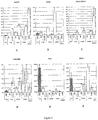
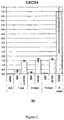
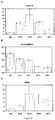
- Figures 2A-M show the gene expression results for certain markers. Results are displayed for cell cultures analyzed 1, 3 and 5 days after the addition of 100 ng/ml activin A, CXCR4-expressing definitive endoderm cells purified at the end of the five day differentiation procedure (CXDE), and in purified hESCs.
- CXDE five day differentiation procedure
- a comparison of Figures 2C and G-M demonstrates that the six marker genes, FGF17, VWF, CALCR, FOXQ1, CMKOR1 and CRIP1, exhibited an expression pattern that is almost identical to each other and which is also identical to the pattern of expression of CXCR4 and the ratio of SOX17/SOX7.
- SOX17 was expressed in both the definitive endoderm as well as in the SOX7-expressing extra-embryonic endoderm. Since SOX7 was not expressed in the definitive endoderm, the ratio of SOX17/SOX7 provides a reliable estimate of definitive endoderm contribution to the SOX17 expression witnessed in the population as a whole.
- the similarity of panels G-L and M to panel C indicates that FGF17, VWF, CALCR, FOXQ1, CMKOR1 and CRIP1 are markers of definitive endoderm and that they are not significantly expressed in extra-embryonic endoderm cells.
- hESCs were cultured in the absence of FBS for the first 24 hours, in 0.2% (v/v) FBS for the second 24 hours and in 2% (v/v) FBS on days 3 and 4, with continuous exposure to either 100 ng/ml of activin A to induce differentiation to definitive endoderm or 100 ng/ml of BMP4 and 2.5 ⁇ M of the FGFR1 inhibitor, SU5402, to induce differentiation to a mixed cell population of trophectoderm (TE) and primitive endoderm (PrE).
- the dynamics of gene expression in such cultures were determined by measuring gene expression at various time points during the differentiation procedure.
- gene expression was determined by Q-PCR at the time of addition of the differentiation factors as well as 6 hours, 12 hours, 24 hours, 48 hours, 72 hours and 96 hours after the addition of these factors.
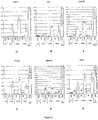
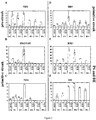
- Gene expression profiles over this time course for several different marker genes are displayed in Figures 3A-L .
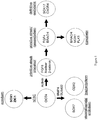
- FIG. 3A shows that expression of FGF8 increased to near its maximum level within 6 hours after treatment with activin A. FGF8 expression remained high for about 24 hours and then began to decline thereafter. Treatment with BMP4/SU5402 caused very little change in the level of FGF8 expression. ( Figure 3A ). These results demonstrate that activin A mediates a rapid transition of hESCs to FGF8 expressing cells. As FGF8 expression is one the first indicators of posterior pattern formation in the epiblast, the rapid up-regulation of FGF8 in differentiating hESCs indicates that these early stage cells have differentiated away from the hESC cell type to form a "pre-streak" (preprimitive streak) cell population.
- pre-streak preprimitive streak
- brachyury and FGF4 which are not expressed in definitive endoderm cells, down-regulated extremely rapidly to at or below hESC levels by 48-72 hours post activin A treatment ( Figures 3B-C ).
- SNAI1, MIXL1, and GSC continued to be significantly expressed at 48-96 hours ( Figures 3D-F ).
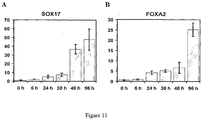
- SOX17 displayed robust up-regulation, which is consistent with a transition from a primitive streak (mesendoderm) intermediate to a definitive endoderm cell fate ( Figure 3G ). No such upregulation of SOX17 expression occurred in the BMP4/SU5402 treated cell cultures ( Figure 3G ).
- Figures 3H-L show that at about 24 to 48 hours, robust upregulation of trophectoderm and primitive endoderm markers, such as HCG, DAB2, SOX7, CHRD and E-cadherin (ECAD), began in cells treated with BMP4/SU5402. The upregulation of these markers continued through 72 and 96 hours. In contrast, no upregulation of HCG, DAB2, SOX7, CHRD or E-cadherin occurred in the cell cultures exposed to 100 ng/ml activin A ( Figures 3H-L ). These results indicate that hESCs have the potential to differentiate to trophectoderm and primitive endoderm under appropriate conditions, however, differentiation to these lineages did not occur to a significant degree in activin treated cultures.
- HCG trophectoderm and primitive endoderm markers
- EMT epithelial to mesenchymal transition
- FIG. 4A-C show the Q-PCR-determined expression of brachyury, E-cadherin and SNAI1 mRNA, respectively. Immunocytochemistry was used to determine the expression of brachyury, E-cadherin and activated (unphosphorylated) B-catenin.
- This reference Example demonstrates the competency of mesendoderm precursor cells to differentiate into definitive endoderm.
- brachyury protein expression shows the appearance of immunoreactive cells which began at the periphery of most large colonies at 12 hrs and rapidly spread to the interior of the colonies by 36-48 hours. At these later times, the majority of the cells in the culture were positive for brachyury protein. As such, the brachyury protein expression pattern was delayed by 12-24 hours in relation to the peak of brachyury mRNA expression shown in Figure 5A .
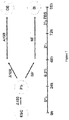
- Figure 7 shows the experimental design and culture conditions used in this reference Example. Specifically, two parallel hESCs were cultured for four days in RPMI medium. As in reference Example 4, the serum concentration of this medium was adjusted such that it contained 0% (v/v) FBS on the first day, 0.2% (v/v) FBS on the second day and 2% (v/v) FBS on the third and fourth days.
- activin A was supplied in the culture medium at a concentration of 100 ng/ml for the first 24 hours. At the end of this time period, activin A was removed from one of the parallel cultures (NF) and maintained in the other (A100).
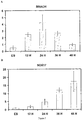
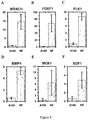
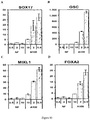
- Figures 8A-F show that there was a lack of expression for the mesoderm markers brachyury, MOX1, FOXF1, FLK1, BMP4, and SDF1 under high activin and low FBS conditions. These results demonstrate that the brachyury/FGF4/MIXL1-expressing mesendoderm cells were patterned towards the production of definitive endoderm rather than to mesoderm under high activin A conditions. This was also demonstrated by the robust expression of definitive endoderm markers, GSC, SOX17 and FOXA2 in the culture treated with activin over the entire four day period ( Figures 9A-C ).
- hESCs were differentiated to definitive endoderm cells medium containing various serum concentrations.
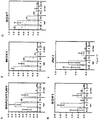
- Human embryonic stem cells were cultured for five days in RPMI medium containing 100 ng/ml activin A in the presence of 10% (v/v) FBS, 2% (v/v) FBS or 0.5% (v/v) FBS. Control cell cultures containing no activin A were also established at each of the three test serum levels. For each of these cultures, expression of several marker genes was determined by Q-PCR ( Figures 10A-I ). Additionally, the amount of the SOX17 protein produced by cells in these cultures was determined by immunocytochemistry using the antibody to SOX17 that has been previously described herein.
- Figures 10A-I show the expression of certain definitive endoderm marker genes at varying concentrations of FBS.
- Figures 10A-D show that decreasing the serum concentration in cell cultures treated with activin A resulted in substantial increases in the production of mRNA corresponding to the definitive endoderm positive markers, SOX17, GSC, MIXL1 and FOXA2.
- markers for which mRNA expression was decreased in response to activin A markers of non-definitive endoderm cell types, including Brachyury, MOX1, SOX7, SOX1 and ZIC1
- decreasing the serum concentrations resulted in substantial decreases in the production of mRNA corresponding to these markers ( Figures 10E-I ).
- the relative proportion of hESC converted to definitive endoderm cells at each of the serum concentrations was determined by immunocytochemistry using antibody to SOX17. After 5 days of differentiation in 100 ng/ml activin A in 0.5% FBS, the proportion of SOX17 positive cells was greater than 80% (>3 separate experiments) and there was no detectable immunoreactivity for alpha-fetoprotein (AFP) or thrombomodulin (THBD), markers of VE/PE and trophectoderm (TE), respectively.
- AFP alpha-fetoprotein
- THBD thrombomodulin
- TE trophectoderm
- Human embryonic stem cells were cultured in RPMI medium for four days in the presence of activin A and low serum as described previously in reference Example 4. Expression of SOX17 and FOXA2 mRNA was determined by Q-PCR.
- This reference Example shows that definitive endoderm cells can be produced from eight independently derived hESC lines using the methods described herein.
- hESC lines (CyT25, CyT-DM3, BG01, BG02, BG03, H7, H9 and HUES7) were cultured separately for five days in the presence of 100 ng/ml activin A in low serum RPMI medium.
- the RPMI medium contained 0% (v/v) FBS on day 1, 0.2% (v/v) FBS on day 2 and 2% (v/v) FBS on days 3-5.
- Human definitive endoderm cells were produced as described in the foregoing reference Examples. Such cells were harvested and transplanted under the kidney capsule of immunocompromised mice using standard procedures. After three weeks, the mice were sacrificed and the transplanted tissue was removed, sectioned and subjected to histological and immunocytochemical analysis.
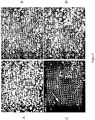
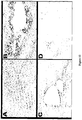
- Figures 12A-D show that after three weeks post-transplantation, the human definitive endoderm cells differentiated into cells and cellular structures derived from the gut tube.
- Figure 12A shows hematoxylin and eosin stained sections of transplanted human definitive endoderm tissue that has differentiated into gut-tube-like structures.
- Figure 12B shows a transplanted human definitive endoderm section immunostained with antibody to hepatocyte specific antigen (HSA). This result indicates that the human definitive endoderm cells are capable of differentiating into liver or liver precursor cells.
- Figures 12C and 12D show a transplanted human definitive endoderm section immunostained with antibody to villin and antibody to caudal type homeobox transcription factor 2 (CDX2), respectively. These results indicate that the human definitive endoderm cells are capable of differentiating into intestinal cells or intestinal cell precursors.
- CDX2 caudal type homeobox transcription factor 2
- FGF8-expressing preprimitive streak cell lines and brachyury-expressing mesendoderm cell lines genetically tagged with a reporter gene are constructed by placing a GFP reporter gene under the control of the regulatory region (promoter) of the FGF8 gene or the brachyury gene, respectively.
- a plasmid construct in which EGFP expression is driven by the human FGF8 or brachyury gene promoter is generated by replacing the CMV promoter of vector pEGFP-Nl (Clontech) with the human FGF8 or brachyury control region.
- These control regions contain the characterized regulatory elements of either the FGF8 or the brachyury gene, and they is sufficient to confer the normal expression pattern of these genes in transgenic mice.
- expression of EFGP is driven by either the FGF8 promoter or the brachyury promoter. In some experiments, this vector can be transfected into hESCs.
- the FGF8 promoter/EGFP cassette or the brachyury promoter/EGFP cassette is excised from the above vector, and then subcloned into a selection vector containing the neomycin phosphotransferase gene under control of the phosphoglycerate kinase-1 promoter.
- the selection cassette is flanked by flp recombinase recognition sites to allow removal of the cassette.
- This selection vector is linearized, and then introduced into hESCs using standard lipofection methods. Following 10-14 days of selection in G418, undifferentiated transgenic hESC clones are isolated and expanded.
- vectors containing GFP or EGFP reporter genes under the control of the FGF4 or SNAI1 promoter can also be constructed.
- reporter genes other than GFP or EGFP can be used in any of the above-described constructs provided that the reporter allows for cell separation by FACS.
- hESCs comprising an FGF8 promoter/EGFP cassette can be differentiated into preprimitive streak cells and then subsequently isolated by fluorescence-activated cell sorting (FACS).
- FACS fluorescence-activated cell sorting
- FGF8 promoter/EGFP transgenic hESCs are differentiated for approximately 6, 12 and 18 hours in growth medium containing 100 ng/ml activin A and no serum. The differentiated cells are then harvested by trypsin digestion and sorted on a Becton Dickinson FACS Diva directly into RNA lysis buffer or PBS. A sample of single live cells is taken without gating for EGFP and single live cells are gated into EGFP positive and GFP negative populations. In a separate experiment, the EGFP positive fraction is separated into two equally sized populations according to fluorescence intensity (Hi and Lo).
- Sorted cells are further subjected to Q-PCR analysis. Differentiated cells show a correlation of EGFP fluorescence with endogenous FGF8 gene expression. Compared to non-fluorescing cells, the EGFP positive cells show a greater than 2-fold increase in FGF8 expression levels. The separation of high and low EGFP intensity cells indicates that EGFP expression level correlates with FGF8 expression level.
- sorted cells are subjected to immunocytochemistry analysis of nuclear-localized ⁇ -catenin (nuclear ⁇ -catenin). Nuclear localization of this marker is enriched in the EGFP positive fraction. In contrast, little nuclear localization of ⁇ -catenin is seen in the EGFP negative fraction.
- hESCs comprising a brachyury promoter/EGFP cassette can be differentiated into primitive streak (mesendoderm) cells and then subsequently isolated by fluorescence-activated cell sorting (FACS).
- FACS fluorescence-activated cell sorting
- Brachyury promoter/EGFP transgenic hESCs are differentiated for approximately 24 hours in growth medium containing 100 ng/ml activin A and no serum or 100 ng./ml activin A and 0.1% (v/v) FBS.
- the differentiated cells are then harvested by trypsin digestion and sorted on a Becton Dickinson FACS Diva directly into RNA lysis buffer or PBS.
- a sample of single live cells is taken without gating for EGFP and single live cells are gated into EGFP positive and GFP negative populations.
- the EGFP positive fraction is separated into two equally sized populations according to fluorescence intensity (Hi and Lo).
- RNA is prepared using Qiagen RNeasy columns and then converted to cDNA.
- Q-PCR is conducted as described previously.
- immunocytochemistry analysis cells are sorted into PBS, fixed for 10 minutes in 4% paraformaldehyde, and adhered to glass slides using a Cytospin centrifuge.
- the primary antibodies are to FGF4 and SNAI1.
- Appropriate secondary antibodies conjugated to FITC (green) or Rhodamine (Red) are used to detect binding of the primary antibodies.
- Sorted cells are further subjected to Q-PCR analysis. Differentiated cells show a correlation of EGFP fluorescence with endogenous brachyury gene expression. Compared to non-fluorescing cells, the EGFP positive cells show a greater than 2-fold increase in brachyury expression levels. The separation of high and low EGFP intensity cells indicates that EGFP expression level correlates with brachyury expression level. In addition to brachyury marker analysis, sorted cells are subjected to immunocytochemistry analysis of FGF4 and SNAI1. Each of these markers are enriched in the EGFP positive fraction. In contrast, little FGF4 and/or SNAI1 is seen in the EGFP negative fraction.
- At least about 5% of the cells present in the differentiated cell cultures prior to sorting are brachyury/FGF4/SNAI1-positive cells. At least about 90% of the cells in the sorted cell populations are brachyury/FGF4/SNAI1-positive mesendoderm cells.
- vectors comprising an EGFP/brachyury construct comprising a GFP or EGFP reporter gene under the control of the FGF4 or SNAI1 promoter can be used in the mesendoderm enrichment methods described in this Example.
- populations of human preprimitive streak and mesendoderm cells produced using the methods described herein are separately provided with several candidate differentiation factors while determining the normalized expression levels of certain marker gene products at various time points.
- hESCs cells are grown in the presence of 100 ng/ml activin A in RPMI medium without serum for 12 hours (preprimitive streak) or 24 hours (mesendoderm). After formation of preprimitive streak cells and mesendoderm cells, the cell populations are maintained in individual plates in RPMI containing 0.2% FBS and are treated with one of: Wnt3B at 20 ng/ml, FGF2 at 5 ng/ml or FGF2 at 100 ng/ml. The expression of marker gene products for albumin, PROX1 and TITF1 are quantitated using Q-PCR.
- This reference Example provides a Table which summarizes the expression of marker genes useful in the identification and/or detection of cell types obtained during the early differentiation of hESCs.
- Table 1 below the full name and abbreviation for each marker is provided in the first two columns. Each of the next columns describes whether the gene is expressed in a specific tissue type.
- cell type The following abbreviations for cell type are used: ICM/ESC refers to hESCs; PS refers to primitive streak (mesendoderm) cells; Ecto refers to ectoderm cells; Meso refers to mesoderm cells; DE refers to definitive endoderm cells; PrE refers to primitive endoderm; VE refers visceral endoderm; and PE refers to parietal endoderm.
- This reference Example describes additional markers that are useful in identifying and/or detecting preprimitive streak and/or mesendoderm cells. It will be appreciated that the preprimitive streak markers described in this reference Example can be used in place of or in addition to any of the previously-described markers for preprimitive streak cells. It will also be appreciated that the mesendoderm markers described in this reference Example can be used in place of or in addition to any of the previously-described markers for mesendoderm cells.
- Gene expression patterns over the time course of hESC differentiation were studied using hierarchical clustering analyses as well as comparative analyses between groups of paired samples at the various time points. Genes that displayed an expression pattern characterized by a robust increase in expression over the first 6 hours followed by either maintenance or decreases in expression at the later time points were identified as genes involved in differentiation of hESCs to preprimitive streak cells. Genes that displayed peaks in expression at the 24-30 hour time points were identified as genes involved in mesendoderm differentiation.
- Table 2 below describes marker genes that were expressed at highly elevated levels by 6 hours after contacting the hESCs with activin A. These genes are indicative of preprimitive streak cells.
- Table 3, below describes marker genes that were expressed at peak levels by about 24 to about 30 hours after contacting the hESCs with activin A. These genes are indicative of mesendoderm cells.
- the Unigene database is publicly available via the National Center for Biotechnology Information (NCBI) website. The nucleotide and amino acid sequences for any of the marker genes described in these tables can therefore be obtained by a query for the appropriate Unigene Identification Number at the NCBI website.
- This reference Example describes markers that are useful in identifying and/or detecting stem cell differentiation prior to the preprimitive streak stage. Such cell types are referred to here as primitive ectoderm cells. It will be appreciated that the primitive ectoderm cell markers described in this reference Example can be associated with primitive ectoderm cell compositions and used in the methods that have already been described for producing and screening preprimitive streak cells and/or mesendoderm cells.
- Table 4 below describes marker genes that were expressed at increased or decreased elevated levels prior to 6 hours after contacting the hESCs with activin A. These genes are indicative of primitive ectoderm cells. As indicated for Tables 2 and 3 above, in Table 4, the first column lists the probe set identification number and the second column provides the Unigene Identification Number.
- the Unigene database is publicly available via the National Center for Biotechnology Information (NCBI) website. The nucleotide and amino acid sequences for any of the marker genes described in this table can therefore be obtained by a query for the appropriate Unigene Identification Number at the NCBI website.
- the complete citation is in the body of the text.
- the citation in the body of the text is by author and year, the complete citation being as follows:
Landscapes
- Health & Medical Sciences (AREA)
- Life Sciences & Earth Sciences (AREA)
- Engineering & Computer Science (AREA)
- Biomedical Technology (AREA)
- Wood Science & Technology (AREA)
- Zoology (AREA)
- Organic Chemistry (AREA)
- Biotechnology (AREA)
- Chemical & Material Sciences (AREA)
- Bioinformatics & Cheminformatics (AREA)
- Genetics & Genomics (AREA)
- Gynecology & Obstetrics (AREA)
- Developmental Biology & Embryology (AREA)
- Reproductive Health (AREA)
- General Health & Medical Sciences (AREA)
- Biochemistry (AREA)
- General Engineering & Computer Science (AREA)
- Microbiology (AREA)
- Cell Biology (AREA)
- Micro-Organisms Or Cultivation Processes Thereof (AREA)
- Peptides Or Proteins (AREA)
- Measuring Or Testing Involving Enzymes Or Micro-Organisms (AREA)
- Preparation Of Compounds By Using Micro-Organisms (AREA)
- Materials For Medical Uses (AREA)
Priority Applications (3)
| Application Number | Priority Date | Filing Date | Title |
|---|---|---|---|
| EP10013206.7A EP2341147B1 (en) | 2004-07-09 | 2005-07-08 | Preprimitive streak and mesendoderm cells |
| EP19151982.6A EP3505622A1 (en) | 2004-07-09 | 2005-07-08 | Preprimitive streak and mesendoderm cells |
| DK10013206T DK2341147T3 (da) | 2004-07-09 | 2005-07-08 | Præprimitive stribe- og mesendodermceller |
Applications Claiming Priority (5)
| Application Number | Priority Date | Filing Date | Title |
|---|---|---|---|
| US58656604P | 2004-07-09 | 2004-07-09 | |
| US58794204P | 2004-07-14 | 2004-07-14 | |
| US11/021,618 US7510876B2 (en) | 2003-12-23 | 2004-12-23 | Definitive endoderm |
| US69336405P | 2005-06-23 | 2005-06-23 | |
| PCT/US2005/024161 WO2006017134A2 (en) | 2004-07-09 | 2005-07-08 | Preprimitive streak and mesendoderm cells |
Related Child Applications (3)
| Application Number | Title | Priority Date | Filing Date |
|---|---|---|---|
| EP10013206.7A Division-Into EP2341147B1 (en) | 2004-07-09 | 2005-07-08 | Preprimitive streak and mesendoderm cells |
| EP10013206.7A Division EP2341147B1 (en) | 2004-07-09 | 2005-07-08 | Preprimitive streak and mesendoderm cells |
| EP19151982.6A Division EP3505622A1 (en) | 2004-07-09 | 2005-07-08 | Preprimitive streak and mesendoderm cells |
Publications (2)
| Publication Number | Publication Date |
|---|---|
| EP1773986A2 EP1773986A2 (en) | 2007-04-18 |
| EP1773986B1 true EP1773986B1 (en) | 2019-01-16 |
Family
ID=40262947
Family Applications (2)
| Application Number | Title | Priority Date | Filing Date |
|---|---|---|---|
| EP05769491.1A Expired - Lifetime EP1773986B1 (en) | 2004-07-09 | 2005-07-08 | Preprimitive streak and mesendoderm cells |
| EP19151982.6A Pending EP3505622A1 (en) | 2004-07-09 | 2005-07-08 | Preprimitive streak and mesendoderm cells |
Family Applications After (1)
| Application Number | Title | Priority Date | Filing Date |
|---|---|---|---|
| EP19151982.6A Pending EP3505622A1 (en) | 2004-07-09 | 2005-07-08 | Preprimitive streak and mesendoderm cells |
Country Status (10)
| Country | Link |
|---|---|
| EP (2) | EP1773986B1 (OSRAM) |
| JP (7) | JP5433879B2 (OSRAM) |
| CN (1) | CN102586170B (OSRAM) |
| AU (1) | AU2005271944B2 (OSRAM) |
| CA (1) | CA2573354C (OSRAM) |
| DK (2) | DK2341147T3 (OSRAM) |
| ES (2) | ES2754038T3 (OSRAM) |
| MX (1) | MX2007000317A (OSRAM) |
| NZ (1) | NZ582597A (OSRAM) |
| WO (1) | WO2006017134A2 (OSRAM) |
Families Citing this family (27)
| Publication number | Priority date | Publication date | Assignee | Title |
|---|---|---|---|---|
| US20050266554A1 (en) | 2004-04-27 | 2005-12-01 | D Amour Kevin A | PDX1 expressing endoderm |
| CN103898045B (zh) | 2003-12-23 | 2019-02-01 | 维亚希特公司 | 定形内胚层 |
| US8647873B2 (en) | 2004-04-27 | 2014-02-11 | Viacyte, Inc. | PDX1 expressing endoderm |
| US7541185B2 (en) | 2003-12-23 | 2009-06-02 | Cythera, Inc. | Methods for identifying factors for differentiating definitive endoderm |
| US7625753B2 (en) | 2003-12-23 | 2009-12-01 | Cythera, Inc. | Expansion of definitive endoderm cells |
| US7985585B2 (en) | 2004-07-09 | 2011-07-26 | Viacyte, Inc. | Preprimitive streak and mesendoderm cells |
| WO2007059007A2 (en) | 2005-11-14 | 2007-05-24 | Cythera, Inc. | Markers of definitive endoderm |
| US8187878B2 (en) | 2004-08-13 | 2012-05-29 | University Of Georgia Research Foundation, Inc. | Methods for increasing definitive endoderm differentiation of pluripotent human embryonic stem cells with PI-3 kinase inhibitors |
| WO2006071911A2 (en) * | 2004-12-23 | 2006-07-06 | Cythera, Inc. | Expansion of definitive endoderm cells |
| FI20055398A0 (fi) | 2005-07-08 | 2005-07-08 | Suomen Punainen Risti Veripalv | Menetelmä solupopulaatioiden evaluoimiseksi |
| EP3584311A1 (en) | 2005-10-27 | 2019-12-25 | Viacyte, Inc. | Pdx-1 expressing dorsal and ventral foregut endoderm |
| DK2420565T3 (en) | 2006-02-23 | 2017-12-04 | Viacyte Inc | APPLICABLE COMPOSITIONS AND METHODS FOR CULTIVATING DIFFERENTIBLE CELLS |
| US11254916B2 (en) | 2006-03-02 | 2022-02-22 | Viacyte, Inc. | Methods of making and using PDX1-positive pancreatic endoderm cells |
| EP2650359B1 (en) | 2006-03-02 | 2022-05-04 | Viacyte, Inc. | Endocrine precursor cells, pancreatic hormone-expressing cells and methods of production |
| US7695965B2 (en) | 2006-03-02 | 2010-04-13 | Cythera, Inc. | Methods of producing pancreatic hormones |
| WO2008013664A2 (en) | 2006-07-26 | 2008-01-31 | Cythera, Inc. | Methods of producing pancreatic hormones |
| WO2008048647A1 (en) * | 2006-10-17 | 2008-04-24 | Cythera, Inc. | Modulation of the phosphatidylinositol-3-kinase pathway in the differentiation of human embryonic stem cells |
| US7695963B2 (en) | 2007-09-24 | 2010-04-13 | Cythera, Inc. | Methods for increasing definitive endoderm production |
| US8008075B2 (en) | 2008-11-04 | 2011-08-30 | Viacyte, Inc. | Stem cell aggregate suspension compositions and methods of differentiation thereof |
| US8895300B2 (en) | 2008-11-04 | 2014-11-25 | Viacyte, Inc. | Scalable primate pluripotent stem cell aggregate suspension culture and differentiation thereof |
| CN105349517B (zh) | 2008-11-14 | 2021-05-04 | 维赛特公司 | 源于人多能干细胞的胰腺细胞的包封 |
| CA2745742A1 (en) | 2008-12-03 | 2010-06-10 | International Stem Cell Corporation | Methods of deriving differentiated cells from stem cells |
| AU2020283056B2 (en) | 2019-05-31 | 2023-06-08 | Viacyte, Inc. | A biocompatible membrane composite |
| EP3976237A1 (en) | 2019-05-31 | 2022-04-06 | W.L. Gore & Associates Inc. | Cell encapsulation devices with controlled oxygen diffusion distances |
| EP3976236A1 (en) | 2019-05-31 | 2022-04-06 | W.L. Gore & Associates Inc. | A biocompatible membrane composite |
| WO2020243666A1 (en) | 2019-05-31 | 2020-12-03 | W. L. Gore & Associates, Inc. | A biocompatible membrane composite |
| WO2022040035A1 (en) | 2020-08-15 | 2022-02-24 | Regeneron Pharmaceuticals, Inc. | Treatment of obesity in subjects having variant nucleic acid molecules encoding calcitonin receptor (calcr) |
Citations (4)
| Publication number | Priority date | Publication date | Assignee | Title |
|---|---|---|---|---|
| WO1998043679A1 (en) * | 1997-03-31 | 1998-10-08 | The Johns Hopkins University School Of Medicine | Human embryonic germ cell line and methods of use |
| WO2003046141A2 (en) * | 2001-11-26 | 2003-06-05 | Advanced Cell Technology, Inc. | Methods for making and using reprogrammed human somatic cell nuclei and autologous and isogenic human stem cells |
| WO2003089619A2 (en) * | 2002-04-19 | 2003-10-30 | University Of Pittsburgh Of The Commonwealth System Of Higher Education | Placental derived stem cells and uses thereof |
| WO2005063971A2 (en) * | 2003-12-23 | 2005-07-14 | Cythera, Inc | Definitive endoderm |
Family Cites Families (20)
| Publication number | Priority date | Publication date | Assignee | Title |
|---|---|---|---|---|
| US2161804A (en) | 1935-11-09 | 1939-06-13 | Baldwin Southwark Corp | Hydraulic press |
| US5453357A (en) | 1992-10-08 | 1995-09-26 | Vanderbilt University | Pluripotential embryonic stem cells and methods of making same |
| US5690926A (en) | 1992-10-08 | 1997-11-25 | Vanderbilt University | Pluripotential embryonic cells and methods of making same |
| US5843780A (en) | 1995-01-20 | 1998-12-01 | Wisconsin Alumni Research Foundation | Primate embryonic stem cells |
| CA2247502A1 (en) | 1996-02-28 | 1997-09-04 | Vanderbilt University | Compositions and methods of making embryonic stem cells |
| WO1998030576A1 (en) * | 1996-10-07 | 1998-07-16 | The Johns Hopkins University School Of Medicine | Novel hedgehog-derived polypeptides |
| AU736328B2 (en) * | 1997-02-19 | 2001-07-26 | Regeneron Pharmaceuticals, Inc. | Morphogenic proteins |
| US6090622A (en) | 1997-03-31 | 2000-07-18 | The Johns Hopkins School Of Medicine | Human embryonic pluripotent germ cells |
| US6075007A (en) * | 1997-07-17 | 2000-06-13 | Regeneron Pharmaceuticals, Inc. | Modified noggin polypeptide and compositions |
| JP3880795B2 (ja) | 1997-10-23 | 2007-02-14 | ジェロン・コーポレーション | フィーダー細胞を含まない培養物中で、霊長類由来始原幹細胞を増殖させるための方法 |
| US6667176B1 (en) | 2000-01-11 | 2003-12-23 | Geron Corporation | cDNA libraries reflecting gene expression during growth and differentiation of human pluripotent stem cells |
| JP2000217571A (ja) * | 1999-01-29 | 2000-08-08 | Japan Science & Technology Corp | インビトロで誘導した移植用臓器 |
| US7005252B1 (en) | 2000-03-09 | 2006-02-28 | Wisconsin Alumni Research Foundation | Serum free cultivation of primate embryonic stem cells |
| US6458589B1 (en) * | 2000-04-27 | 2002-10-01 | Geron Corporation | Hepatocyte lineage cells derived from pluripotent stem cells |
| US7045353B2 (en) * | 2000-08-01 | 2006-05-16 | Yissum Research Development Company Of The Hebrew University Of Jerusalem | Directed differentiation of human embryonic cells |
| KR101008868B1 (ko) * | 2001-12-07 | 2011-01-17 | 제론 코포레이션 | 인간 배아 줄기세포 유래의 섬세포 |
| EP2361966A1 (en) * | 2002-05-17 | 2011-08-31 | Mount Sinai School of Medicine of New York University | Mesoderm and definitive endoderm cell populations |
| US20040229350A1 (en) | 2003-05-12 | 2004-11-18 | Nikolai Strelchenko | Morula derived embryonic stem cells |
| US8187878B2 (en) * | 2004-08-13 | 2012-05-29 | University Of Georgia Research Foundation, Inc. | Methods for increasing definitive endoderm differentiation of pluripotent human embryonic stem cells with PI-3 kinase inhibitors |
| US11586805B2 (en) | 2021-07-26 | 2023-02-21 | Atlassian Pty Ltd. | Machine-learning-based natural language processing techniques for low-latency document summarization |
-
2005
- 2005-07-08 CA CA2573354A patent/CA2573354C/en not_active Expired - Lifetime
- 2005-07-08 CN CN201210020574.6A patent/CN102586170B/zh not_active Expired - Lifetime
- 2005-07-08 MX MX2007000317A patent/MX2007000317A/es active IP Right Grant
- 2005-07-08 ES ES10013206T patent/ES2754038T3/es not_active Expired - Lifetime
- 2005-07-08 WO PCT/US2005/024161 patent/WO2006017134A2/en not_active Ceased
- 2005-07-08 NZ NZ582597A patent/NZ582597A/en not_active IP Right Cessation
- 2005-07-08 JP JP2007520513A patent/JP5433879B2/ja not_active Expired - Lifetime
- 2005-07-08 AU AU2005271944A patent/AU2005271944B2/en not_active Expired
- 2005-07-08 EP EP05769491.1A patent/EP1773986B1/en not_active Expired - Lifetime
- 2005-07-08 ES ES05769491T patent/ES2716827T3/es not_active Expired - Lifetime
- 2005-07-08 DK DK10013206T patent/DK2341147T3/da active
- 2005-07-08 DK DK05769491.1T patent/DK1773986T3/en active
- 2005-07-08 EP EP19151982.6A patent/EP3505622A1/en active Pending
-
2013
- 2013-07-19 JP JP2013150092A patent/JP5956388B2/ja not_active Expired - Lifetime
-
2015
- 2015-04-21 JP JP2015086989A patent/JP6077044B2/ja not_active Expired - Lifetime
-
2016
- 2016-04-07 JP JP2016076972A patent/JP6473708B2/ja not_active Expired - Lifetime
-
2017
- 2017-11-09 JP JP2017216772A patent/JP6777620B2/ja not_active Expired - Lifetime
-
2020
- 2020-04-07 JP JP2020068885A patent/JP7161665B2/ja not_active Expired - Lifetime
-
2022
- 2022-07-15 JP JP2022113855A patent/JP7525102B2/ja not_active Expired - Lifetime
Patent Citations (4)
| Publication number | Priority date | Publication date | Assignee | Title |
|---|---|---|---|---|
| WO1998043679A1 (en) * | 1997-03-31 | 1998-10-08 | The Johns Hopkins University School Of Medicine | Human embryonic germ cell line and methods of use |
| WO2003046141A2 (en) * | 2001-11-26 | 2003-06-05 | Advanced Cell Technology, Inc. | Methods for making and using reprogrammed human somatic cell nuclei and autologous and isogenic human stem cells |
| WO2003089619A2 (en) * | 2002-04-19 | 2003-10-30 | University Of Pittsburgh Of The Commonwealth System Of Higher Education | Placental derived stem cells and uses thereof |
| WO2005063971A2 (en) * | 2003-12-23 | 2005-07-14 | Cythera, Inc | Definitive endoderm |
Non-Patent Citations (11)
| Title |
|---|
| DAHÉRON LAURENCE ET AL: "LIF/STAT3 signaling fails to maintain self-renewal of human embryonic stem cells.", STEM CELLS (DAYTON, OHIO) 2004 LNKD- PUBMED:15342941, vol. 22, no. 5, 2004, pages 770 - 778, XP009046296, ISSN: 1066-5099, DOI: doi:10.1634/stemcells.22-5-770 * |
| FEDOROFF AND RICHARDSON: "Protocols for Neural Cell Culture", 2001, article PAUL J PRICE AND GREGORY J. BREWER: "Serum-free Media for Neural Cell Cultures", pages: 255 - 263 * |
| FREUND CHRISTIAN ET AL: "Insulin redirects differentiation from cardiogenic mesoderm and endoderm to neuroectoderm in differentiating human embryonic stem cells.", STEM CELLS (DAYTON, OHIO) MAR 2008 LNKD- PUBMED:18096723, vol. 26, no. 3, March 2008 (2008-03-01), pages 724 - 733, ISSN: 1549-4918 * |
| GAVRILOV SVETLANA ET AL: "Derivation of two new human embryonic stem cell lines from nonviable human embryos.", STEM CELLS INTERNATIONAL 2011, vol. 2011, 2011, pages 765378, ISSN: 1687-9678 * |
| GAVRILOV SVETLANA ET AL: "Non-viable human embryos as a source of viable cells for embryonic stem cell derivation.", REPRODUCTIVE BIOMEDICINE ONLINE FEB 2009, vol. 18, no. 2, February 2009 (2009-02-01), pages 301 - 308, XP009165240, ISSN: 1472-6491, DOI: doi:10.1016/S1472-6483(10)60270-2 * |
| HUMPHREY ROHAN K ET AL: "Maintenance of pluripotency in human embryonic stem cells is STAT3 independent.", STEM CELLS (DAYTON, OHIO) 2004 LNKD- PUBMED:15277698, vol. 22, no. 4, 2004, pages 522 - 530, XP002463152, ISSN: 1066-5099, DOI: doi:10.1634/stemcells.22-4-522 * |
| LEE TURNPENNY ET AL: "Evaluating Human Embryonic Germ Cells: Concord and Conflict as Pluripotent Stem Cells", STEM CELLS, vol. 24, no. 2, 1 February 2006 (2006-02-01), pages 212 - 220, XP055083996, ISSN: 1066-5099, DOI: 10.1634/stemcells.2005-0255 * |
| MIKI TOSHIO ET AL: "Stem cell characteristics of amniotic epithelial cells", STEM CELLS, ALPHAMED PRESS, DAYTON, OH, US, vol. 23, no. 10, 4 August 2005 (2005-08-04), pages 1549 - 1559, XP002410842, ISSN: 1066-5099 * |
| THOMSON J A ET AL: "Embryonic stem cell lines derived from human blastocysts.", SCIENCE (NEW YORK, N.Y.) 6 NOV 1998 LNKD- PUBMED:9804556, vol. 282, no. 5391, 6 November 1998 (1998-11-06), pages 1145 - 1147, XP002151774, ISSN: 0036-8075, DOI: doi:10.1126/science.282.5391.1145 * |
| VALLIER LUDOVIC ET AL: "Nodal inhibits differentiation of human embryonic stem cells along the neuroectodermal default pathway.", DEVELOPMENTAL BIOLOGY 15 NOV 2004 LNKD- PUBMED:15501227, vol. 275, no. 2, 15 November 2004 (2004-11-15), pages 403 - 421, XP004606335, ISSN: 0012-1606, DOI: doi:10.1016/j.ydbio.2004.08.031 * |
| WEI CHIA LIN ET AL: "Transcriptome profiling of human and murine ESCs identifies divergent paths required to maintain the stem cell state.", STEM CELLS (DAYTON, OHIO) FEB 2005 LNKD- PUBMED:15671141, vol. 23, no. 2, February 2005 (2005-02-01), pages 166 - 185, ISSN: 1066-5099 * |
Also Published As
| Publication number | Publication date |
|---|---|
| NZ582597A (en) | 2011-08-26 |
| DK1773986T3 (en) | 2019-04-08 |
| CN102586170B (zh) | 2019-11-29 |
| JP2008505643A (ja) | 2008-02-28 |
| JP5956388B2 (ja) | 2016-07-27 |
| JP7525102B2 (ja) | 2024-07-30 |
| CA2573354C (en) | 2015-02-24 |
| JP6077044B2 (ja) | 2017-02-08 |
| JP2022142795A (ja) | 2022-09-30 |
| JP6473708B2 (ja) | 2019-02-20 |
| JP2020103321A (ja) | 2020-07-09 |
| JP2016119919A (ja) | 2016-07-07 |
| JP6777620B2 (ja) | 2020-10-28 |
| EP1773986A2 (en) | 2007-04-18 |
| AU2005271944B2 (en) | 2012-02-16 |
| AU2005271944A1 (en) | 2006-02-16 |
| EP3505622A1 (en) | 2019-07-03 |
| JP2015130889A (ja) | 2015-07-23 |
| JP5433879B2 (ja) | 2014-03-05 |
| MX2007000317A (es) | 2007-03-26 |
| ES2716827T3 (es) | 2019-06-17 |
| WO2006017134A2 (en) | 2006-02-16 |
| WO2006017134A3 (en) | 2007-01-18 |
| ES2754038T3 (es) | 2020-04-15 |
| CA2573354A1 (en) | 2006-02-16 |
| JP7161665B2 (ja) | 2022-10-27 |
| DK2341147T3 (da) | 2019-11-11 |
| JP2018027099A (ja) | 2018-02-22 |
| CN102586170A (zh) | 2012-07-18 |
| JP2013212121A (ja) | 2013-10-17 |
Similar Documents
| Publication | Publication Date | Title |
|---|---|---|
| US11667889B2 (en) | Methods of making human primitive ectoderm cells | |
| EP1773986B1 (en) | Preprimitive streak and mesendoderm cells | |
| EP1786896B1 (en) | Methods for identifying factors for differentiating definitive endoderm | |
| US8216836B2 (en) | Methods for identifying factors for differentiating definitive endoderm | |
| EP2341147B1 (en) | Preprimitive streak and mesendoderm cells | |
| CN101014702A (zh) | 前原条和中内胚层细胞 | |
| AU2015203517B2 (en) | Preprimitive streak and mesendoderm cells | |
| AU2012202529B2 (en) | Preprimitive streak and mesendoderm cells | |
| AU2013205842B2 (en) | Methods for identifying factors for differentiating definitive endoderm | |
| HK1159689A (en) | Preprimitive streak and mesendoderm cells | |
| AU2016235001A1 (en) | Methods for identifying factors for differentiating definitive endoderm |
Legal Events
| Date | Code | Title | Description |
|---|---|---|---|
| PUAI | Public reference made under article 153(3) epc to a published international application that has entered the european phase |
Free format text: ORIGINAL CODE: 0009012 |
|
| 17P | Request for examination filed |
Effective date: 20070209 |
|
| AK | Designated contracting states |
Kind code of ref document: A2 Designated state(s): AT BE BG CH CY CZ DE DK EE ES FI FR GB GR HU IE IS IT LI LT LU LV MC NL PL PT RO SE SI SK TR |
|
| AX | Request for extension of the european patent |
Extension state: AL BA HR MK YU |
|
| RIN1 | Information on inventor provided before grant (corrected) |
Inventor name: KROON, EVERT Inventor name: D'AMOUR, KEVIN, ALLEN Inventor name: BAETGE, EMMANUEL, E. Inventor name: AGULNICK, ALAN, D. Inventor name: ELIAZER, SUSAN |
|
| DAX | Request for extension of the european patent (deleted) | ||
| REG | Reference to a national code |
Ref country code: HK Ref legal event code: DE Ref document number: 1105994 Country of ref document: HK |
|
| 17Q | First examination report despatched |
Effective date: 20080912 |
|
| RAP1 | Party data changed (applicant data changed or rights of an application transferred) |
Owner name: VIACYTE, INC. |
|
| REG | Reference to a national code |
Ref country code: DE Ref legal event code: R079 Ref document number: 602005055295 Country of ref document: DE Free format text: PREVIOUS MAIN CLASS: C12N0005060000 Ipc: C12N0005071000 |
|
| RIC1 | Information provided on ipc code assigned before grant |
Ipc: C12N 5/0735 20100101ALI20170118BHEP Ipc: C12N 5/071 20100101AFI20170118BHEP |
|
| GRAP | Despatch of communication of intention to grant a patent |
Free format text: ORIGINAL CODE: EPIDOSNIGR1 |
|
| STAA | Information on the status of an ep patent application or granted ep patent |
Free format text: STATUS: GRANT OF PATENT IS INTENDED |
|
| INTG | Intention to grant announced |
Effective date: 20170704 |
|
| TPAC | Observations filed by third parties |
Free format text: ORIGINAL CODE: EPIDOSNTIPA |
|
| GRAS | Grant fee paid |
Free format text: ORIGINAL CODE: EPIDOSNIGR3 |
|
| GRAJ | Information related to disapproval of communication of intention to grant by the applicant or resumption of examination proceedings by the epo deleted |
Free format text: ORIGINAL CODE: EPIDOSDIGR1 |
|
| GRAL | Information related to payment of fee for publishing/printing deleted |
Free format text: ORIGINAL CODE: EPIDOSDIGR3 |
|
| STAA | Information on the status of an ep patent application or granted ep patent |
Free format text: STATUS: EXAMINATION IS IN PROGRESS |
|
| INTC | Intention to grant announced (deleted) | ||
| GRAP | Despatch of communication of intention to grant a patent |
Free format text: ORIGINAL CODE: EPIDOSNIGR1 |
|
| STAA | Information on the status of an ep patent application or granted ep patent |
Free format text: STATUS: GRANT OF PATENT IS INTENDED |
|
| INTG | Intention to grant announced |
Effective date: 20180718 |
|
| GRAA | (expected) grant |
Free format text: ORIGINAL CODE: 0009210 |
|
| STAA | Information on the status of an ep patent application or granted ep patent |
Free format text: STATUS: THE PATENT HAS BEEN GRANTED |
|
| RIC1 | Information provided on ipc code assigned before grant |
Ipc: C12N 5/0735 20100101ALI20170118BHEP Ipc: C12N 5/071 20100101AFI20170118BHEP |
|
| RIN1 | Information on inventor provided before grant (corrected) |
Inventor name: BAETGE, EMMANUEL, E. Inventor name: AGULNICK, ALAN, D. Inventor name: KROON, EVERT Inventor name: ELIAZER, SUSAN Inventor name: D'AMOUR, KEVIN, ALLEN |
|
| AK | Designated contracting states |
Kind code of ref document: B1 Designated state(s): AT BE BG CH CY CZ DE DK EE ES FI FR GB GR HU IE IS IT LI LT LU LV MC NL PL PT RO SE SI SK TR |
|
| REG | Reference to a national code |
Ref country code: GB Ref legal event code: FG4D |
|
| REG | Reference to a national code |
Ref country code: CH Ref legal event code: EP Ref country code: CH Ref legal event code: PK Free format text: BERICHTIGUNGEN |
|
| REG | Reference to a national code |
Ref country code: IE Ref legal event code: FG4D |
|
| RIC2 | Information provided on ipc code assigned after grant |
Ipc: C12N 5/0735 20100101ALI20170118BHEP Ipc: C12N 5/071 20100101AFI20170118BHEP |
|
| REG | Reference to a national code |
Ref country code: AT Ref legal event code: REF Ref document number: 1089716 Country of ref document: AT Kind code of ref document: T Effective date: 20190215 |
|
| REG | Reference to a national code |
Ref country code: DE Ref legal event code: R096 Ref document number: 602005055295 Country of ref document: DE |
|
| REG | Reference to a national code |
Ref country code: DE Ref legal event code: R082 Ref document number: 602005055295 Country of ref document: DE Representative=s name: VOSSIUS & PARTNER PATENTANWAELTE RECHTSANWAELT, DE |
|
| REG | Reference to a national code |
Ref country code: CH Ref legal event code: NV Representative=s name: VOSSIUS AND PARTNER PATENTANWAELTE RECHTSANWAE, CH |
|
| REG | Reference to a national code |
Ref country code: DK Ref legal event code: T3 Effective date: 20190401 |
|
| REG | Reference to a national code |
Ref country code: NL Ref legal event code: MP Effective date: 20190116 |
|
| REG | Reference to a national code |
Ref country code: LT Ref legal event code: MG4D |
|
| REG | Reference to a national code |
Ref country code: ES Ref legal event code: FG2A Ref document number: 2716827 Country of ref document: ES Kind code of ref document: T3 Effective date: 20190617 |
|
| PG25 | Lapsed in a contracting state [announced via postgrant information from national office to epo] |
Ref country code: NL Free format text: LAPSE BECAUSE OF FAILURE TO SUBMIT A TRANSLATION OF THE DESCRIPTION OR TO PAY THE FEE WITHIN THE PRESCRIBED TIME-LIMIT Effective date: 20190116 |
|
| REG | Reference to a national code |
Ref country code: AT Ref legal event code: MK05 Ref document number: 1089716 Country of ref document: AT Kind code of ref document: T Effective date: 20190116 |
|
| PG25 | Lapsed in a contracting state [announced via postgrant information from national office to epo] |
Ref country code: SE Free format text: LAPSE BECAUSE OF FAILURE TO SUBMIT A TRANSLATION OF THE DESCRIPTION OR TO PAY THE FEE WITHIN THE PRESCRIBED TIME-LIMIT Effective date: 20190116 Ref country code: PT Free format text: LAPSE BECAUSE OF FAILURE TO SUBMIT A TRANSLATION OF THE DESCRIPTION OR TO PAY THE FEE WITHIN THE PRESCRIBED TIME-LIMIT Effective date: 20190516 Ref country code: LT Free format text: LAPSE BECAUSE OF FAILURE TO SUBMIT A TRANSLATION OF THE DESCRIPTION OR TO PAY THE FEE WITHIN THE PRESCRIBED TIME-LIMIT Effective date: 20190116 Ref country code: FI Free format text: LAPSE BECAUSE OF FAILURE TO SUBMIT A TRANSLATION OF THE DESCRIPTION OR TO PAY THE FEE WITHIN THE PRESCRIBED TIME-LIMIT Effective date: 20190116 Ref country code: PL Free format text: LAPSE BECAUSE OF FAILURE TO SUBMIT A TRANSLATION OF THE DESCRIPTION OR TO PAY THE FEE WITHIN THE PRESCRIBED TIME-LIMIT Effective date: 20190116 |
|
| PG25 | Lapsed in a contracting state [announced via postgrant information from national office to epo] |
Ref country code: GR Free format text: LAPSE BECAUSE OF FAILURE TO SUBMIT A TRANSLATION OF THE DESCRIPTION OR TO PAY THE FEE WITHIN THE PRESCRIBED TIME-LIMIT Effective date: 20190417 Ref country code: BG Free format text: LAPSE BECAUSE OF FAILURE TO SUBMIT A TRANSLATION OF THE DESCRIPTION OR TO PAY THE FEE WITHIN THE PRESCRIBED TIME-LIMIT Effective date: 20190416 Ref country code: IS Free format text: LAPSE BECAUSE OF FAILURE TO SUBMIT A TRANSLATION OF THE DESCRIPTION OR TO PAY THE FEE WITHIN THE PRESCRIBED TIME-LIMIT Effective date: 20190516 Ref country code: LV Free format text: LAPSE BECAUSE OF FAILURE TO SUBMIT A TRANSLATION OF THE DESCRIPTION OR TO PAY THE FEE WITHIN THE PRESCRIBED TIME-LIMIT Effective date: 20190116 |
|
| REG | Reference to a national code |
Ref country code: DE Ref legal event code: R097 Ref document number: 602005055295 Country of ref document: DE |
|
| PG25 | Lapsed in a contracting state [announced via postgrant information from national office to epo] |
Ref country code: CZ Free format text: LAPSE BECAUSE OF FAILURE TO SUBMIT A TRANSLATION OF THE DESCRIPTION OR TO PAY THE FEE WITHIN THE PRESCRIBED TIME-LIMIT Effective date: 20190116 Ref country code: RO Free format text: LAPSE BECAUSE OF FAILURE TO SUBMIT A TRANSLATION OF THE DESCRIPTION OR TO PAY THE FEE WITHIN THE PRESCRIBED TIME-LIMIT Effective date: 20190116 Ref country code: SK Free format text: LAPSE BECAUSE OF FAILURE TO SUBMIT A TRANSLATION OF THE DESCRIPTION OR TO PAY THE FEE WITHIN THE PRESCRIBED TIME-LIMIT Effective date: 20190116 Ref country code: EE Free format text: LAPSE BECAUSE OF FAILURE TO SUBMIT A TRANSLATION OF THE DESCRIPTION OR TO PAY THE FEE WITHIN THE PRESCRIBED TIME-LIMIT Effective date: 20190116 Ref country code: AT Free format text: LAPSE BECAUSE OF FAILURE TO SUBMIT A TRANSLATION OF THE DESCRIPTION OR TO PAY THE FEE WITHIN THE PRESCRIBED TIME-LIMIT Effective date: 20190116 |
|
| PLBE | No opposition filed within time limit |
Free format text: ORIGINAL CODE: 0009261 |
|
| STAA | Information on the status of an ep patent application or granted ep patent |
Free format text: STATUS: NO OPPOSITION FILED WITHIN TIME LIMIT |
|
| 26N | No opposition filed |
Effective date: 20191017 |
|
| PG25 | Lapsed in a contracting state [announced via postgrant information from national office to epo] |
Ref country code: MC Free format text: LAPSE BECAUSE OF FAILURE TO SUBMIT A TRANSLATION OF THE DESCRIPTION OR TO PAY THE FEE WITHIN THE PRESCRIBED TIME-LIMIT Effective date: 20190116 Ref country code: SI Free format text: LAPSE BECAUSE OF FAILURE TO SUBMIT A TRANSLATION OF THE DESCRIPTION OR TO PAY THE FEE WITHIN THE PRESCRIBED TIME-LIMIT Effective date: 20190116 |
|
| PG25 | Lapsed in a contracting state [announced via postgrant information from national office to epo] |
Ref country code: TR Free format text: LAPSE BECAUSE OF FAILURE TO SUBMIT A TRANSLATION OF THE DESCRIPTION OR TO PAY THE FEE WITHIN THE PRESCRIBED TIME-LIMIT Effective date: 20190116 |
|
| PG25 | Lapsed in a contracting state [announced via postgrant information from national office to epo] |
Ref country code: LU Free format text: LAPSE BECAUSE OF NON-PAYMENT OF DUE FEES Effective date: 20190708 |
|
| PG25 | Lapsed in a contracting state [announced via postgrant information from national office to epo] |
Ref country code: IE Free format text: LAPSE BECAUSE OF NON-PAYMENT OF DUE FEES Effective date: 20190708 |
|
| REG | Reference to a national code |
Ref country code: HK Ref legal event code: WD Ref document number: 1105994 Country of ref document: HK |
|
| PG25 | Lapsed in a contracting state [announced via postgrant information from national office to epo] |
Ref country code: CY Free format text: LAPSE BECAUSE OF FAILURE TO SUBMIT A TRANSLATION OF THE DESCRIPTION OR TO PAY THE FEE WITHIN THE PRESCRIBED TIME-LIMIT Effective date: 20190116 |
|
| PG25 | Lapsed in a contracting state [announced via postgrant information from national office to epo] |
Ref country code: HU Free format text: LAPSE BECAUSE OF FAILURE TO SUBMIT A TRANSLATION OF THE DESCRIPTION OR TO PAY THE FEE WITHIN THE PRESCRIBED TIME-LIMIT; INVALID AB INITIO Effective date: 20050708 |
|
| P01 | Opt-out of the competence of the unified patent court (upc) registered |
Effective date: 20230504 |
|
| REG | Reference to a national code |
Ref country code: BE Ref legal event code: PD Owner name: VIACYTE, INC.; US Free format text: DETAILS ASSIGNMENT: CHANGE OF OWNER(S), OTHER; FORMER OWNER NAME: VIACYTE, INC. Effective date: 20230512 |
|
| PGFP | Annual fee paid to national office [announced via postgrant information from national office to epo] |
Ref country code: DE Payment date: 20240729 Year of fee payment: 20 |
|
| PGFP | Annual fee paid to national office [announced via postgrant information from national office to epo] |
Ref country code: DK Payment date: 20240725 Year of fee payment: 20 |
|
| PGFP | Annual fee paid to national office [announced via postgrant information from national office to epo] |
Ref country code: GB Payment date: 20240729 Year of fee payment: 20 |
|
| PGFP | Annual fee paid to national office [announced via postgrant information from national office to epo] |
Ref country code: BE Payment date: 20240729 Year of fee payment: 20 |
|
| PGFP | Annual fee paid to national office [announced via postgrant information from national office to epo] |
Ref country code: FR Payment date: 20240725 Year of fee payment: 20 |
|
| PGFP | Annual fee paid to national office [announced via postgrant information from national office to epo] |
Ref country code: ES Payment date: 20240801 Year of fee payment: 20 Ref country code: CH Payment date: 20240801 Year of fee payment: 20 |
|
| PGFP | Annual fee paid to national office [announced via postgrant information from national office to epo] |
Ref country code: IT Payment date: 20240719 Year of fee payment: 20 |
|
| REG | Reference to a national code |
Ref country code: DE Ref legal event code: R071 Ref document number: 602005055295 Country of ref document: DE |
|
| REG | Reference to a national code |
Ref country code: DK Ref legal event code: EUP Expiry date: 20250708 |
|
| REG | Reference to a national code |
Ref country code: CH Ref legal event code: PL |
|
| REG | Reference to a national code |
Ref country code: ES Ref legal event code: FD2A Effective date: 20250728 |
|
| REG | Reference to a national code |
Ref country code: GB Ref legal event code: PE20 Expiry date: 20250707 |
|
| REG | Reference to a national code |
Ref country code: BE Ref legal event code: MK Effective date: 20250708 |
|
| PG25 | Lapsed in a contracting state [announced via postgrant information from national office to epo] |
Ref country code: ES Free format text: LAPSE BECAUSE OF EXPIRATION OF PROTECTION Effective date: 20250709 |