EP1754350B1 - Procede et systeme de distribution d'informations - Google Patents
Procede et systeme de distribution d'informations Download PDFInfo
- Publication number
- EP1754350B1 EP1754350B1 EP04741584A EP04741584A EP1754350B1 EP 1754350 B1 EP1754350 B1 EP 1754350B1 EP 04741584 A EP04741584 A EP 04741584A EP 04741584 A EP04741584 A EP 04741584A EP 1754350 B1 EP1754350 B1 EP 1754350B1
- Authority
- EP
- European Patent Office
- Prior art keywords
- user
- groups
- message
- group
- membership
- Prior art date
- Legal status (The legal status is an assumption and is not a legal conclusion. Google has not performed a legal analysis and makes no representation as to the accuracy of the status listed.)
- Expired - Lifetime
Links
Images
Classifications
-
- H—ELECTRICITY
- H04—ELECTRIC COMMUNICATION TECHNIQUE
- H04L—TRANSMISSION OF DIGITAL INFORMATION, e.g. TELEGRAPHIC COMMUNICATION
- H04L51/00—User-to-user messaging in packet-switching networks, transmitted according to store-and-forward or real-time protocols, e.g. e-mail
- H04L51/21—Monitoring or handling of messages
- H04L51/214—Monitoring or handling of messages using selective forwarding
-
- G—PHYSICS
- G06—COMPUTING OR CALCULATING; COUNTING
- G06Q—INFORMATION AND COMMUNICATION TECHNOLOGY [ICT] SPECIALLY ADAPTED FOR ADMINISTRATIVE, COMMERCIAL, FINANCIAL, MANAGERIAL OR SUPERVISORY PURPOSES; SYSTEMS OR METHODS SPECIALLY ADAPTED FOR ADMINISTRATIVE, COMMERCIAL, FINANCIAL, MANAGERIAL OR SUPERVISORY PURPOSES, NOT OTHERWISE PROVIDED FOR
- G06Q30/00—Commerce
- G06Q30/02—Marketing; Price estimation or determination; Fundraising
-
- H—ELECTRICITY
- H04—ELECTRIC COMMUNICATION TECHNIQUE
- H04L—TRANSMISSION OF DIGITAL INFORMATION, e.g. TELEGRAPHIC COMMUNICATION
- H04L51/00—User-to-user messaging in packet-switching networks, transmitted according to store-and-forward or real-time protocols, e.g. e-mail
- H04L51/21—Monitoring or handling of messages
- H04L51/234—Monitoring or handling of messages for tracking messages
-
- H—ELECTRICITY
- H04—ELECTRIC COMMUNICATION TECHNIQUE
- H04L—TRANSMISSION OF DIGITAL INFORMATION, e.g. TELEGRAPHIC COMMUNICATION
- H04L51/00—User-to-user messaging in packet-switching networks, transmitted according to store-and-forward or real-time protocols, e.g. e-mail
- H04L51/48—Message addressing, e.g. address format or anonymous messages, aliases
-
- H—ELECTRICITY
- H04—ELECTRIC COMMUNICATION TECHNIQUE
- H04L—TRANSMISSION OF DIGITAL INFORMATION, e.g. TELEGRAPHIC COMMUNICATION
- H04L67/00—Network arrangements or protocols for supporting network services or applications
- H04L67/50—Network services
- H04L67/60—Scheduling or organising the servicing of application requests, e.g. requests for application data transmissions using the analysis and optimisation of the required network resources
- H04L67/63—Routing a service request depending on the request content or context
Definitions
- This invention relates to the field of information distribution.
- the invention relates to cascading information to on-line groups or communities of users and dynamically evolving membership of the groups by the users.
- the network may be a local area network (LAN) consisting of a few users or a wide area network (WAN) with users distributed over a vast geographic area.
- LAN local area network
- WAN wide area network
- the Internet has worldwide coverage and is a frequently used network for messaging. Messaging via any form of network is defined herein as on-line messaging.
- Groups may evolve naturally or be artificially created. Groups may be defined by an infinite number of topics such as geographic location, language, profession, religion, common interest, etc. Within a group messages can be distributed to every member or sub-sets of the members. Messages often take the form of questions looking for information sent by one member of a group referred to as group collaboration.
- US 5,892,909 discloses a system that allows users to manage the distribution and delivery of information.
- the system provides a method so that, as organizational changes occur, the system ensures that the most current, relevant information is made available to appropriate eligible subscribers.
- Subscriber lists of a distribution automatically respond to changes in group composition, accommodating new or departing individuals within the organization as well as accommodating changing organizational roles.
- US 6,453,438 discloses a method for managing a session during which data is sent to receivers, wherein retransmission of the data to the receivers can be automatically rescheduled if the receiver did not receive some or all of the data.
- US 6,529,882 discloses a method for strictly managing group membership in Internet multicast applications.
- a group management server creates a group and performs group registration.
- WO 02/103570 discloses a method for utilizing dynamic groups to manage user groups in a networked computer system.
- US 2002/0126120 discloses an electronic board system with a screen for displaying information of interest to a work group or community, and an input device for receiving information from users in a group or community.
- the aim of the present invention is to extend and introduce new capabilities in making connections between groups or communities in an on-line environment and to improve the efficiency of collaboration between on-line users.
- a system for information distribution including: a plurality of users; a plurality of groups wherein a user is a member of any number of the groups; and a message having an originating group or groups and defining a cascade of groups to which the message is to be sent; wherein the membership of the originating group or groups by a user evolves based on the response made by the user to the message.
- a message may have an originating user and the originating group or groups is one or more of the groups of which the originating user is a member.
- the groups in the cascade are not limited to the groups of which the originating user is a member.
- Means may be provided for the originating user to configure the cascade, the configuration including authorising the next stage of the cascade and stopping the cascade.
- the membership of the originating group or groups has a plurality of different categories.
- the categories may include a participating member, a contributor and an observer.
- the response made by a user to the message is one of a number of different types of response, including no action, an observation, and a contribution.
- the membership of the originating group or groups may evolve to a category of membership based on the type of response made.
- a means for storing relationships between groups as the basis for cascades the means having an interface for management of the relationships.
- a group administrator for managing the membership of a group.
- a group may have rules for membership and movement between categories of membership.
- a message may be tagged with the path it takes through the groups to ensure that a user does not receive a message twice due to membership of multiple groups.
- the users may be users of a network and the message is sent and received via the network.
- a method for information distribution including: an originating user creating a message; the originating user selecting an originating group or groups for the message from the one or more groups of which the originating user is a member; the originating user defining a cascade of groups to which the message is to be sent; wherein membership of the originating group or groups by a user receiving the message evolves based on the response made by the receiving user to the message.
- the originating user may be prompted to authorise each stage of the cascade and the originating user may stop the cascade.
- a computer program product stored on a computer readable storage medium comprising computer readable program code means for performing the steps of: creating a message from an originating user; selecting an originating group or groups for the message from the one or more groups of which the originating user is a member; defining a cascade of groups to which the message is to be sent; evolving membership of the originating group or groups by a user receiving the message based on the response made by the receiving user to the message.
- the users may belong to any number of groups or communities defined by common interests, geographical location, work place or any other topic or common denominator.
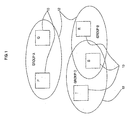
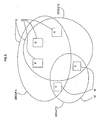
- Figure 1 shows a simple arrangement of a plurality of users 10 and their membership of different groups 12.
- users P and Q are members of group A.
- Users S and R are members of group B.
- User S is also a member of group C as well as user T. This arrangement is used to illustrate the invention in simple relationships. In practice, the number of users and the diversity of groups will be much greater.
- the users 10 are all connected via a network such that messages can be sent from any one user to any other one or more users.
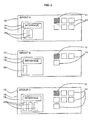
- Figure 2 shows a system with three groups 12 with members 10. Each group 12 has an administrator 11 or group owner. The administrator 11 may be one of the group members 10. Each group 12 includes a mechanism 16 for storing relationships between the groups 12.
- the mechanism 16 includes an interface 18 for the administrator 11 to manage the relationships between groups 12.
- the mechanism 16 stores the relationships as a list 20 of groups to try in order, referred to as a cascade. There may be one or more such lists 20 starting from a particular group 12.
- a message sent by a member 10 from a first group A can traverse groups 12 and thereby be received by users who are not members of the originating first group A.
- the message can follow one of the lists 20 of groups as the defined relationships with the other groups 12.
- the message can follow a subset of the defined relationships selected by the message originator.
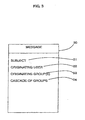
- a message 30 as show in Figure 3 has a subject 31, an originator 32 which is the user who sent the message 30, an originating group or groups 33 which is one or more of the groups selected by the user from the set of groups the user is a member of, and the cascade 34 of groups in the order to which the message 30 is to be sent.
- the message originator 32 is able to configure the cascade 34.
- Configuration of the cascade includes the user who is the originator 32 having: the ability to be prompted and authorise each stage of the cascade; the ability to stop the cascade after a predefined time limit; and the ability to stop the cascade immediately. If the user is prompted to authorise the next stage of the cascade 34, the system will prompt the user with the next groups in the cascade. The user can select a subset of these groups to follow, eliminating groups that are deemed by the user to be less relevant to the particular message.
- a user can participate in multiple groups and each group has multiple tiers of participation. This takes the form of different categories of membership, as follows:
- a system is provided to store and manage the relationships between users and groups.
- Existing directory services can be used to implement the relationship types of group membership.
- an Internet Directory Service could be used.
- a mechanism is provided for a recipient user to respond to a message in a number of different ways. If the message is from a group to which the recipient user does not belong, the form of response will dictate the form of future membership of the recipient user with the originating group.
- the forms of response which may be generated are as follows:
- a recipient user will receive a message display with selectable options for the possible forms of response to the message which then automatically categorise the form of response made.
- a protocol is provided for the dynamic creation of relationships between users and groups based on the message/response pair, as follows:
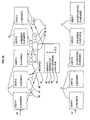
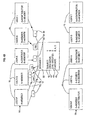
- FIG. 4A an example of the evolution of membership of groups is shown.
- five users 10 are shown and each user 10 is a member of one or more groups.
- the user's 10 membership of groups at a first time 40 is shown at the top of the figure.
- One of the users 10, user P creates 46 a message 41.
- the message 41 has the following information tagged to it.
- a subject 42 which is designated X.
- the originator 43 which is user P.
- the originating group or groups 44 which may be any one or more groups to which user P belongs, chosen by user P. In this case user P only belongs to group A and therefore the originating group 44 is group A.
- a cascade 45 configured by user P which is a list of groups in the order in which the message is to be distributed. In this case the cascade 45 is group A, followed by group B, followed by group C.
- the message 41 is first sent 47 to other members of group A which in this example is only user Q.
- the message 41 is then sent in a second wave 48 to members of group B which in this example are user R and user S.
- the message 41 is then sent in a third wave 49 to members of group C which in this example are user S and user T.
- a mechanism is provided to prevent an individual user 10 from receiving a message 41 more than once due to membership of multiple groups as the message 41 cascades through the network of groups.
- Each message 41 is tagged with the path it takes through the network of groups.
- message 41 may keep a record of the addresses of each user 10 to which the message 41 has been sent. If an address of a user 10 is repeated, the message 41 is not sent to the user 10 after the first transmission to that user 10.
- the message 41 may keep a record of each group.
- the user set can be derived as the users which are members of the new groups who are not members of the previous groups.
- User R responds to the message 41 with an observation 50 which is a form of an 'interest" response as defined previously.
- User T responds to the message with a contribution 51 which is a form of a "content" response as defined previously.
- the originating user has the control of when to terminate a cascade. If a message is answered early on in the transmission cascade, the originating user may decide to stop the subsequent transmissions. The originating user may be prompted at each stage of the cascade to authorise the next wave of transmissions. In the example shown in Figure 4A , user R responds 50 to the message 41 with an observation. If user R had responded to the message with a contribution that answered the message 41, the originating user, user P, would have the choice of terminating the cascade 45 without sending the message to the members of group C.
- FIG. 4B the users 10 at time 52 at the bottom of Figure 4A , are shown at the top of Figure 4B .
- a new message 53 is now created 54 by user S.
- the message 53 has the following information tagged to it.
- a subject 42 which is designated Y.
- the originator 43 which is user S.
- the originating group or groups 44 which may be any one or more of the groups to which user S belongs, chosen by user S. In this case user S belongs to groups B and C and user S chooses an originating group 44 as group B.
- a cascade 45 configured by user S which is a list of groups in the order in which the message is to be distributed. In this case the cascade 45 is group B, followed by group A, followed by group C.
- User S then sends the message 53.
- the message 53 is first sent 55 to other members of group B which in this example is only user R.
- the message 53 is then sent in a second wave 56 to members of group A which in this example are users P and Q which are full members of group A and user T which is a contributor of group A.
- User R is an observer of group A but has already been sent the message 53 as a member of group B and therefore is not sent the message 53 a second time.
- User P responds to the message 53 with a contribution 57 and user Q responds to the message 53 with an observation.
- These responses by users P and Q result in the further evolution of the membership of the groups.
- User P becomes a contributor to group B and user Q becomes an observer of group B. This is shown in the updated memberships of the users 10 shown at time 59 at the bottom of Figure 4B .
- a mechanism is provided for messages to be replayed to a user after a time period. This may arise in the following situations.
- a mechanism is provided for the administrator of a group to view and manage the group membership including the categories of full members, contributors and observers.
- the group administrator can also manipulate the group's membership manually.
- Figure 5 is a version of Figure 1 showing how the membership of the groups 12 by the users 10 has evolved after the messages 41, 53 of Figures 4A and 4B have been processed.
- group membership can evolve based on the level of interest shown to messages by users outside a group from which the message originated.
- the level of interest is defined in this example as contributions or observations. Many additional levels of interest may be defined resulting in further tiers of membership of a group.
- the user's membership level of that group may evolve to reflect a lapse of interest in the messages of the group. This can be manipulated manually by the group administrator at the group administrator's discretion.
- a group can have a set of rules governing membership of the group. For contributors, this could be the number of responses that warrant conversion to full membership. For observers, this could be a timet after which the observer is deleted from the group if no contribution is forthcoming. Rules may also allow a group to accept or not accept contributors or observers. In the case of not accepting contributors or observers, a message is delivered and responses received but no new user/group relationships are formed.
- the present invention is typically implemented as a computer program product, comprising a set of program instructions for controlling a computer or similar device. These instructions can be supplied persuaded into a system or recorded on a storage medium such as a CD-ROM, or made available for down loading over a network such as the Internet or a mobile telephone network.
Landscapes
- Engineering & Computer Science (AREA)
- Computer Networks & Wireless Communication (AREA)
- Signal Processing (AREA)
- Business, Economics & Management (AREA)
- Accounting & Taxation (AREA)
- Development Economics (AREA)
- Strategic Management (AREA)
- Finance (AREA)
- Game Theory and Decision Science (AREA)
- Entrepreneurship & Innovation (AREA)
- Economics (AREA)
- Marketing (AREA)
- Physics & Mathematics (AREA)
- General Business, Economics & Management (AREA)
- General Physics & Mathematics (AREA)
- Theoretical Computer Science (AREA)
- Information Transfer Between Computers (AREA)
Claims (16)
- Système pour la distribution d'informations, le système comprenant :un moyen d'interface (18) pour la gestion d'une relation entre une pluralité de groupes (12) et une pluralité d'utilisateurs (10), où au moins l'un parmi la pluralité d'utilisateurs (10) est un membre de n'importe quel nombre de la pluralité de groupes (12) ;le moyen d'interface (18) comprenant en outre un moyen pour la définition d'une cascade de groupes auxquels un message doit être envoyé, et chaque message ayant un groupe d'origine et un protocole associé pour l'évolution de l'adhésion au groupe d'origine, sur la base de la réponse faite par l'utilisateur (10) suite au message ;dans lequel un message inclut du contenu à distribuer à un ou plusieurs groupes, suite auquel une réponse peut être faite par un utilisateur (10) ;dans lequel l'adhésion au groupe d'origine (33) comprend une pluralité de catégories différentes ;caractérisé en ce que le moyen d'interface comprend en outre un moyen pour l'évolution de l'adhésion au groupe d'origine vers une catégorie d'adhésion, sur la base du type de réponse faite par un utilisateur.
- Système selon la revendication 1, dans lequel il est prévu un moyen permettant à un message de traverser la pluralité de groupes (12) et d'être reçu par des utilisateurs (10) qui ne sont pas des membres du groupe ou des groupes d'origine (33).
- Système selon la revendication 1 ou la revendication 2, dans lequel un message (30) a un utilisateur d'origine (32), et le groupe ou les groupes d'origine (33) est/sont un ou plusieurs des groupes (12) dont l'utilisateur d'origine (32) est membre.
- Système selon la revendication 3, dans lequel les groupes dans la cascade (34) ne sont pas limités aux groupes dont l'utilisateur d'origine (32) est membre.
- Système selon la revendication 3 ou la revendication 4, dans lequel il est prévu un moyen permettant à l'utilisateur d'origine (32) de configurer la cascade (34), la configuration incluant l'autorisation de l'étape suivante de la cascade (34) et l'arrêt de la cascade (34).
- Système selon la revendication 1, dans lequel les catégories incluent un membre participant, un contributeur et un observateur.
- Système selon l'une quelconque des revendications précédentes, dans lequel la réponse faite par un utilisateur au message (30) est l'une parmi un certain nombre de différents types de réponses, y compris pas d'action, une observation et une contribution.
- Système selon la revendication 1, dans lequel le moyen d'interface comprend en outre un moyen (16) pour stocker des relations (20) entre les groupes (12), comme base pour des cascades (34).
- Système selon l'une quelconque des revendications précédentes, dans lequel il est prévu un administrateur de groupe (11) pour la gestion de l'adhésion à un groupe (12).
- Système selon l'une quelconque des revendications précédentes, dans lequel un groupe (12) a des règles pour l'adhésion et le passage entre les catégories d'adhésion.
- Système selon l'une quelconque des revendications précédentes, dans lequel un message (30) est marqué avec le chemin qu'il emprunte à travers les groupes (12), pour assurer qu'un utilisateur (10) ne reçoive pas un message deux fois en raison de l'adhésion à une multitude de groupes (12).
- Système selon l'une quelconque des revendications précédentes, dans lequel les utilisateurs (10) sont des utilisateurs d'un réseau, et le message est envoyé et reçu par le réseau.
- Procédé pour la distribution d'informations, le procédé comprenant :la gestion d'une relation entre une pluralité de groupes (12) et une pluralité d'utilisateurs (10) à l'aide d'une interface (18), où au moins l'un parmi la pluralité d'utilisateurs (10) est un membre de n'importe quel nombre de la pluralité de groupes (12) ;la définition d'une cascade de groupes auxquels un message doit être envoyé, chaque message ayant un groupe d'origine, et l'évolution de l'adhésion au groupe d'origine, sur la base de la réponse faite par un utilisateur (10) suite au message ;dans lequel un message inclut du contenu à distribuer à un ou plusieurs groupes, suite auquel une réponse peut être faite par un utilisateur (10) ;dans lequel l'adhésion au groupe ou aux groupes d'origine (33) comporte une pluralité de catégories différentes ;caractérisé par l'évolution vers une catégorie d'adhésion,sur la base du type de réponse faite par l'utilisateur.
- Procédé selon la revendication 13, dans lequel l'utilisateur d'origine (32) est invité à autoriser chaque étape de la cascade (34).
- Procédé selon la revendication 13 ou la revendication 14, dans lequel l'utilisateur d'origine (32) peut arrêter la cascade (34).
- Produit de programme informatique chargeable directement dans la mémoire interne d'un ordinateur, comprenant des portions de code logiciel pour exécuter les étapes de l'une quelconque des revendications 13 à 15, lorsque ledit produit est exécuté sur un ordinateur.
Applications Claiming Priority (1)
| Application Number | Priority Date | Filing Date | Title |
|---|---|---|---|
| PCT/EP2004/050824 WO2005116882A1 (fr) | 2004-05-25 | 2004-05-25 | Procede et systeme de distribution d'informations |
Publications (2)
| Publication Number | Publication Date |
|---|---|
| EP1754350A1 EP1754350A1 (fr) | 2007-02-21 |
| EP1754350B1 true EP1754350B1 (fr) | 2012-11-21 |
Family
ID=35451069
Family Applications (1)
| Application Number | Title | Priority Date | Filing Date |
|---|---|---|---|
| EP04741584A Expired - Lifetime EP1754350B1 (fr) | 2004-05-25 | 2004-05-25 | Procede et systeme de distribution d'informations |
Country Status (5)
| Country | Link |
|---|---|
| EP (1) | EP1754350B1 (fr) |
| JP (1) | JP4538498B2 (fr) |
| KR (1) | KR101091287B1 (fr) |
| CN (1) | CN1957584B (fr) |
| WO (1) | WO2005116882A1 (fr) |
Cited By (1)
| Publication number | Priority date | Publication date | Assignee | Title |
|---|---|---|---|---|
| US10652096B2 (en) | 2017-02-22 | 2020-05-12 | University Of Notre Dame Du Lac | Methods and systems for inferring network structure from cascades |
Families Citing this family (4)
| Publication number | Priority date | Publication date | Assignee | Title |
|---|---|---|---|---|
| FI20085582L (fi) | 2008-06-13 | 2009-12-14 | Geniem Oy | Viestijärjestelmä, viestipalvelin, menetelmä ja tietokoneohjelmatuote |
| CN101753474A (zh) * | 2008-12-12 | 2010-06-23 | 国际商业机器公司 | 用于电子邮件的处理方法和系统 |
| US20210400003A1 (en) * | 2018-11-01 | 2021-12-23 | Sarath KAKUMANU | Sending messages to all members or selected members of a group in a messaging application by string tagging and categorization |
| CN115333877B (zh) * | 2021-04-26 | 2024-02-23 | 北京字跳网络技术有限公司 | 信息处理方法、装置、终端和存储介质 |
Family Cites Families (9)
| Publication number | Priority date | Publication date | Assignee | Title |
|---|---|---|---|---|
| US6453438B1 (en) * | 1995-01-19 | 2002-09-17 | The Fantastic Corporation | System and method for automatically rescheduling a data transmission to members of a group |
| US6625652B1 (en) * | 1995-01-19 | 2003-09-23 | The Fantastic Corporation | System and method for host list pruning |
| US5892909A (en) | 1996-09-27 | 1999-04-06 | Diffusion, Inc. | Intranet-based system with methods for co-active delivery of information to multiple users |
| JP3716548B2 (ja) * | 1997-05-13 | 2005-11-16 | 日本電信電話株式会社 | 返信送出方法及びシステム及び返信送出プログラムを格納した記憶媒体 |
| KR20010045237A (ko) | 1999-11-03 | 2001-06-05 | 오길록 | 인터넷 멀티캐스트 응용에서의 그룹 멤버쉽 관리방법 |
| JP2002149578A (ja) * | 2000-11-14 | 2002-05-24 | Denno Kashi Kobo:Kk | メールチャットシステム、及びメールチャット方法 |
| US6964022B2 (en) | 2000-12-22 | 2005-11-08 | Xerox Corporation | Electronic board system |
| US6671695B2 (en) | 2001-06-18 | 2003-12-30 | The Procter & Gamble Company | Dynamic group generation and management |
| JP2004102483A (ja) * | 2002-09-06 | 2004-04-02 | Minolta Co Ltd | 文書回覧サーバ装置、文書回覧装置及びプログラム |
-
2004
- 2004-05-25 CN CN2004800431562A patent/CN1957584B/zh not_active Expired - Lifetime
- 2004-05-25 EP EP04741584A patent/EP1754350B1/fr not_active Expired - Lifetime
- 2004-05-25 WO PCT/EP2004/050824 patent/WO2005116882A1/fr not_active Ceased
- 2004-05-25 JP JP2007513697A patent/JP4538498B2/ja not_active Expired - Fee Related
- 2004-05-25 KR KR1020067022410A patent/KR101091287B1/ko not_active Expired - Fee Related
Cited By (1)
| Publication number | Priority date | Publication date | Assignee | Title |
|---|---|---|---|---|
| US10652096B2 (en) | 2017-02-22 | 2020-05-12 | University Of Notre Dame Du Lac | Methods and systems for inferring network structure from cascades |
Also Published As
| Publication number | Publication date |
|---|---|
| JP4538498B2 (ja) | 2010-09-08 |
| JP2008500616A (ja) | 2008-01-10 |
| WO2005116882A1 (fr) | 2005-12-08 |
| EP1754350A1 (fr) | 2007-02-21 |
| KR101091287B1 (ko) | 2011-12-07 |
| CN1957584A (zh) | 2007-05-02 |
| CN1957584B (zh) | 2010-09-29 |
| KR20070031294A (ko) | 2007-03-19 |
Similar Documents
| Publication | Publication Date | Title |
|---|---|---|
| US7961212B2 (en) | Video messaging system | |
| US7231206B2 (en) | Group application for group formation and management | |
| CA2393571C (fr) | Anonymite dans un systeme de gestion de presence | |
| CA2393574C (fr) | Gregats dans un systeme de gestion de presence | |
| US6714519B2 (en) | Communications availability | |
| EA007176B1 (ru) | Система мгновенного обмена сообщениями | |
| WO2004002128A1 (fr) | Dispositif et systeme de communication par reseau | |
| EP1142267A1 (fr) | Annonce de description de session | |
| AU756725B2 (en) | Announced session control | |
| CN100464537C (zh) | 共享呈现信息的方法及系统、群组服务器及呈现服务器 | |
| US8880730B2 (en) | Method and system for managing destination addresses | |
| US7653711B2 (en) | Method and system for information distribution | |
| JP4538498B2 (ja) | 情報配信のための方法およびシステム | |
| JP4560844B2 (ja) | インターネットのような電気通信網内でのインスタントメッセージングサービスに対する選択的出席管理方法 | |
| US20030084167A1 (en) | System, method, apparatus and means for information transmission over a computer network | |
| RU2205053C1 (ru) | Устройство для проведения массовых развлечений | |
| CA2394317C (fr) | Systeme de gestion de presence faisant appel a une information de contexte | |
| US20070022160A1 (en) | Method of managing privileged conversations in an instant conversation system | |
| CA2536727C (fr) | Methode et systeme pour gerer des adresses de destination | |
| Khaitiyakun et al. | Mailing List Characteristic from Electronic Mail | |
| Boonlert et al. | Design Framework and Architecture of Unified Presence Service | |
| JP2002149578A (ja) | メールチャットシステム、及びメールチャット方法 | |
| CA2463863A1 (fr) | Systeme et methodes de messagerie de groupe du service mobile |
Legal Events
| Date | Code | Title | Description |
|---|---|---|---|
| PUAI | Public reference made under article 153(3) epc to a published international application that has entered the european phase |
Free format text: ORIGINAL CODE: 0009012 |
|
| 17P | Request for examination filed |
Effective date: 20061219 |
|
| AK | Designated contracting states |
Kind code of ref document: A1 Designated state(s): AT BE BG CH CY CZ DE DK EE ES FI FR GB GR HU IE IT LI LU MC NL PL PT RO SE SI SK TR |
|
| 17Q | First examination report despatched |
Effective date: 20111207 |
|
| GRAP | Despatch of communication of intention to grant a patent |
Free format text: ORIGINAL CODE: EPIDOSNIGR1 |
|
| GRAS | Grant fee paid |
Free format text: ORIGINAL CODE: EPIDOSNIGR3 |
|
| GRAA | (expected) grant |
Free format text: ORIGINAL CODE: 0009210 |
|
| AK | Designated contracting states |
Kind code of ref document: B1 Designated state(s): AT BE BG CH CY CZ DE DK EE ES FI FR GB GR HU IE IT LI LU MC NL PL PT RO SE SI SK TR |
|
| REG | Reference to a national code |
Ref country code: GB Ref legal event code: FG4D |
|
| REG | Reference to a national code |
Ref country code: DE Ref legal event code: R084 Ref document number: 602004040127 Country of ref document: DE |
|
| REG | Reference to a national code |
Ref country code: CH Ref legal event code: NV Representative=s name: IBM RESEARCH GMBH ZURICH RESEARCH LABORATORY I, CH Ref country code: CH Ref legal event code: EP |
|
| REG | Reference to a national code |
Ref country code: DE Ref legal event code: R082 Ref document number: 602004040127 Country of ref document: DE Representative=s name: DUSCHER, REINHARD, DIPL.-PHYS. DR.RER.NAT., DE |
|
| REG | Reference to a national code |
Ref country code: AT Ref legal event code: REF Ref document number: 585547 Country of ref document: AT Kind code of ref document: T Effective date: 20121215 |
|
| REG | Reference to a national code |
Ref country code: IE Ref legal event code: FG4D |
|
| REG | Reference to a national code |
Ref country code: GB Ref legal event code: 746 Effective date: 20121210 |
|
| REG | Reference to a national code |
Ref country code: DE Ref legal event code: R096 Ref document number: 602004040127 Country of ref document: DE Effective date: 20130117 |
|
| REG | Reference to a national code |
Ref country code: DE Ref legal event code: R084 Ref document number: 602004040127 Country of ref document: DE Effective date: 20121129 |
|
| REG | Reference to a national code |
Ref country code: NL Ref legal event code: VDEP Effective date: 20121121 |
|
| REG | Reference to a national code |
Ref country code: AT Ref legal event code: MK05 Ref document number: 585547 Country of ref document: AT Kind code of ref document: T Effective date: 20121121 |
|
| PG25 | Lapsed in a contracting state [announced via postgrant information from national office to epo] |
Ref country code: ES Free format text: LAPSE BECAUSE OF FAILURE TO SUBMIT A TRANSLATION OF THE DESCRIPTION OR TO PAY THE FEE WITHIN THE PRESCRIBED TIME-LIMIT Effective date: 20130304 Ref country code: FI Free format text: LAPSE BECAUSE OF FAILURE TO SUBMIT A TRANSLATION OF THE DESCRIPTION OR TO PAY THE FEE WITHIN THE PRESCRIBED TIME-LIMIT Effective date: 20121121 Ref country code: SE Free format text: LAPSE BECAUSE OF FAILURE TO SUBMIT A TRANSLATION OF THE DESCRIPTION OR TO PAY THE FEE WITHIN THE PRESCRIBED TIME-LIMIT Effective date: 20121121 |
|
| PG25 | Lapsed in a contracting state [announced via postgrant information from national office to epo] |
Ref country code: SI Free format text: LAPSE BECAUSE OF FAILURE TO SUBMIT A TRANSLATION OF THE DESCRIPTION OR TO PAY THE FEE WITHIN THE PRESCRIBED TIME-LIMIT Effective date: 20121121 Ref country code: GR Free format text: LAPSE BECAUSE OF FAILURE TO SUBMIT A TRANSLATION OF THE DESCRIPTION OR TO PAY THE FEE WITHIN THE PRESCRIBED TIME-LIMIT Effective date: 20130222 Ref country code: PT Free format text: LAPSE BECAUSE OF FAILURE TO SUBMIT A TRANSLATION OF THE DESCRIPTION OR TO PAY THE FEE WITHIN THE PRESCRIBED TIME-LIMIT Effective date: 20130321 Ref country code: PL Free format text: LAPSE BECAUSE OF FAILURE TO SUBMIT A TRANSLATION OF THE DESCRIPTION OR TO PAY THE FEE WITHIN THE PRESCRIBED TIME-LIMIT Effective date: 20121121 Ref country code: BE Free format text: LAPSE BECAUSE OF FAILURE TO SUBMIT A TRANSLATION OF THE DESCRIPTION OR TO PAY THE FEE WITHIN THE PRESCRIBED TIME-LIMIT Effective date: 20121121 |
|
| PG25 | Lapsed in a contracting state [announced via postgrant information from national office to epo] |
Ref country code: AT Free format text: LAPSE BECAUSE OF FAILURE TO SUBMIT A TRANSLATION OF THE DESCRIPTION OR TO PAY THE FEE WITHIN THE PRESCRIBED TIME-LIMIT Effective date: 20121121 |
|
| PG25 | Lapsed in a contracting state [announced via postgrant information from national office to epo] |
Ref country code: CZ Free format text: LAPSE BECAUSE OF FAILURE TO SUBMIT A TRANSLATION OF THE DESCRIPTION OR TO PAY THE FEE WITHIN THE PRESCRIBED TIME-LIMIT Effective date: 20121121 Ref country code: EE Free format text: LAPSE BECAUSE OF FAILURE TO SUBMIT A TRANSLATION OF THE DESCRIPTION OR TO PAY THE FEE WITHIN THE PRESCRIBED TIME-LIMIT Effective date: 20121121 Ref country code: DK Free format text: LAPSE BECAUSE OF FAILURE TO SUBMIT A TRANSLATION OF THE DESCRIPTION OR TO PAY THE FEE WITHIN THE PRESCRIBED TIME-LIMIT Effective date: 20121121 Ref country code: BG Free format text: LAPSE BECAUSE OF FAILURE TO SUBMIT A TRANSLATION OF THE DESCRIPTION OR TO PAY THE FEE WITHIN THE PRESCRIBED TIME-LIMIT Effective date: 20130221 Ref country code: SK Free format text: LAPSE BECAUSE OF FAILURE TO SUBMIT A TRANSLATION OF THE DESCRIPTION OR TO PAY THE FEE WITHIN THE PRESCRIBED TIME-LIMIT Effective date: 20121121 |
|
| PG25 | Lapsed in a contracting state [announced via postgrant information from national office to epo] |
Ref country code: RO Free format text: LAPSE BECAUSE OF FAILURE TO SUBMIT A TRANSLATION OF THE DESCRIPTION OR TO PAY THE FEE WITHIN THE PRESCRIBED TIME-LIMIT Effective date: 20121121 Ref country code: IT Free format text: LAPSE BECAUSE OF FAILURE TO SUBMIT A TRANSLATION OF THE DESCRIPTION OR TO PAY THE FEE WITHIN THE PRESCRIBED TIME-LIMIT Effective date: 20121121 Ref country code: NL Free format text: LAPSE BECAUSE OF FAILURE TO SUBMIT A TRANSLATION OF THE DESCRIPTION OR TO PAY THE FEE WITHIN THE PRESCRIBED TIME-LIMIT Effective date: 20121121 |
|
| PLBE | No opposition filed within time limit |
Free format text: ORIGINAL CODE: 0009261 |
|
| STAA | Information on the status of an ep patent application or granted ep patent |
Free format text: STATUS: NO OPPOSITION FILED WITHIN TIME LIMIT |
|
| 26N | No opposition filed |
Effective date: 20130822 |
|
| REG | Reference to a national code |
Ref country code: DE Ref legal event code: R097 Ref document number: 602004040127 Country of ref document: DE Effective date: 20130822 |
|
| PG25 | Lapsed in a contracting state [announced via postgrant information from national office to epo] |
Ref country code: MC Free format text: LAPSE BECAUSE OF FAILURE TO SUBMIT A TRANSLATION OF THE DESCRIPTION OR TO PAY THE FEE WITHIN THE PRESCRIBED TIME-LIMIT Effective date: 20121121 |
|
| REG | Reference to a national code |
Ref country code: CH Ref legal event code: PL |
|
| PG25 | Lapsed in a contracting state [announced via postgrant information from national office to epo] |
Ref country code: CH Free format text: LAPSE BECAUSE OF NON-PAYMENT OF DUE FEES Effective date: 20130531 Ref country code: LI Free format text: LAPSE BECAUSE OF NON-PAYMENT OF DUE FEES Effective date: 20130531 |
|
| REG | Reference to a national code |
Ref country code: IE Ref legal event code: MM4A |
|
| REG | Reference to a national code |
Ref country code: FR Ref legal event code: ST Effective date: 20140131 |
|
| PG25 | Lapsed in a contracting state [announced via postgrant information from national office to epo] |
Ref country code: IE Free format text: LAPSE BECAUSE OF NON-PAYMENT OF DUE FEES Effective date: 20130525 |
|
| PG25 | Lapsed in a contracting state [announced via postgrant information from national office to epo] |
Ref country code: FR Free format text: LAPSE BECAUSE OF NON-PAYMENT OF DUE FEES Effective date: 20130531 |
|
| PG25 | Lapsed in a contracting state [announced via postgrant information from national office to epo] |
Ref country code: TR Free format text: LAPSE BECAUSE OF FAILURE TO SUBMIT A TRANSLATION OF THE DESCRIPTION OR TO PAY THE FEE WITHIN THE PRESCRIBED TIME-LIMIT Effective date: 20121121 Ref country code: CY Free format text: LAPSE BECAUSE OF FAILURE TO SUBMIT A TRANSLATION OF THE DESCRIPTION OR TO PAY THE FEE WITHIN THE PRESCRIBED TIME-LIMIT Effective date: 20121121 |
|
| PG25 | Lapsed in a contracting state [announced via postgrant information from national office to epo] |
Ref country code: HU Free format text: LAPSE BECAUSE OF FAILURE TO SUBMIT A TRANSLATION OF THE DESCRIPTION OR TO PAY THE FEE WITHIN THE PRESCRIBED TIME-LIMIT; INVALID AB INITIO Effective date: 20040525 Ref country code: LU Free format text: LAPSE BECAUSE OF NON-PAYMENT OF DUE FEES Effective date: 20130525 |
|
| REG | Reference to a national code |
Ref country code: DE Ref legal event code: R082 Ref document number: 602004040127 Country of ref document: DE Representative=s name: RICHARDT PATENTANWAELTE PARTG MBB, DE Ref country code: DE Ref legal event code: R082 Ref document number: 602004040127 Country of ref document: DE Representative=s name: KUISMA, SIRPA, FI |
|
| REG | Reference to a national code |
Ref country code: DE Ref legal event code: R079 Ref document number: 602004040127 Country of ref document: DE Free format text: PREVIOUS MAIN CLASS: H04L0012580000 Ipc: H04L0051000000 |
|
| REG | Reference to a national code |
Ref country code: DE Ref legal event code: R081 Ref document number: 602004040127 Country of ref document: DE Owner name: KYNDRYL, INC., NEW YORK, US Free format text: FORMER OWNER: INTERNATIONAL BUSINESS MACHINES CORPORATION, ARMONK, N.Y., US Ref country code: DE Ref legal event code: R082 Ref document number: 602004040127 Country of ref document: DE Representative=s name: RICHARDT PATENTANWAELTE PARTG MBB, DE |
|
| REG | Reference to a national code |
Ref country code: GB Ref legal event code: 732E Free format text: REGISTERED BETWEEN 20220106 AND 20220112 |
|
| P01 | Opt-out of the competence of the unified patent court (upc) registered |
Effective date: 20230524 |
|
| PGFP | Annual fee paid to national office [announced via postgrant information from national office to epo] |
Ref country code: DE Payment date: 20230519 Year of fee payment: 20 |
|
| PGFP | Annual fee paid to national office [announced via postgrant information from national office to epo] |
Ref country code: GB Payment date: 20230522 Year of fee payment: 20 |
|
| REG | Reference to a national code |
Ref country code: DE Ref legal event code: R071 Ref document number: 602004040127 Country of ref document: DE |
|
| REG | Reference to a national code |
Ref country code: GB Ref legal event code: PE20 Expiry date: 20240524 |
|
| PG25 | Lapsed in a contracting state [announced via postgrant information from national office to epo] |
Ref country code: GB Free format text: LAPSE BECAUSE OF EXPIRATION OF PROTECTION Effective date: 20240524 |
|
| PG25 | Lapsed in a contracting state [announced via postgrant information from national office to epo] |
Ref country code: GB Free format text: LAPSE BECAUSE OF EXPIRATION OF PROTECTION Effective date: 20240524 |