EP1743622A1 - Winkle reduction agent and cosmetic skin preparation - Google Patents
Winkle reduction agent and cosmetic skin preparation Download PDFInfo
- Publication number
- EP1743622A1 EP1743622A1 EP05736821A EP05736821A EP1743622A1 EP 1743622 A1 EP1743622 A1 EP 1743622A1 EP 05736821 A EP05736821 A EP 05736821A EP 05736821 A EP05736821 A EP 05736821A EP 1743622 A1 EP1743622 A1 EP 1743622A1
- Authority
- EP
- European Patent Office
- Prior art keywords
- sclareol
- skin
- group
- cosmetic composition
- present
- Prior art date
- Legal status (The legal status is an assumption and is not a legal conclusion. Google has not performed a legal analysis and makes no representation as to the accuracy of the status listed.)
- Withdrawn
Links
- 239000002537 cosmetic Substances 0.000 title claims abstract description 24
- 239000003795 chemical substances by application Substances 0.000 title claims abstract description 23
- 238000002360 preparation method Methods 0.000 title description 7
- 230000009467 reduction Effects 0.000 title description 4
- 150000004330 sclareol derivatives Chemical class 0.000 claims abstract description 66
- 239000000203 mixture Substances 0.000 claims abstract description 36
- 230000001153 anti-wrinkle effect Effects 0.000 claims abstract description 22
- 244000182022 Salvia sclarea Species 0.000 claims description 30
- 235000002911 Salvia sclarea Nutrition 0.000 claims description 30
- 239000001691 salvia sclarea Substances 0.000 claims description 30
- 125000002252 acyl group Chemical group 0.000 claims description 23
- 239000000284 extract Substances 0.000 claims description 21
- 125000004435 hydrogen atom Chemical group [H]* 0.000 claims description 20
- 125000004432 carbon atom Chemical group C* 0.000 claims description 16
- 229920006395 saturated elastomer Polymers 0.000 claims description 11
- 241000207923 Lamiaceae Species 0.000 claims description 10
- 125000001495 ethyl group Chemical group [H]C([H])([H])C([H])([H])* 0.000 claims description 8
- 125000000391 vinyl group Chemical group [H]C([*])=C([H])[H] 0.000 claims description 8
- 230000037303 wrinkles Effects 0.000 abstract description 47
- 230000000694 effects Effects 0.000 abstract description 18
- 230000032683 aging Effects 0.000 abstract description 9
- XVULBTBTFGYVRC-HHUCQEJWSA-N sclareol Chemical compound CC1(C)CCC[C@]2(C)[C@@H](CC[C@](O)(C)C=C)[C@](C)(O)CC[C@H]21 XVULBTBTFGYVRC-HHUCQEJWSA-N 0.000 description 87
- 210000003491 skin Anatomy 0.000 description 59
- 206010040954 Skin wrinkling Diseases 0.000 description 46
- XVULBTBTFGYVRC-UHFFFAOYSA-N Episclareol Natural products CC1(C)CCCC2(C)C(CCC(O)(C)C=C)C(C)(O)CCC21 XVULBTBTFGYVRC-UHFFFAOYSA-N 0.000 description 44
- LAEIZWJAQRGPDA-UHFFFAOYSA-N Manoyloxid Natural products CC1(C)CCCC2(C)C3CC=C(C)OC3(C)CCC21 LAEIZWJAQRGPDA-UHFFFAOYSA-N 0.000 description 44
- 238000004519 manufacturing process Methods 0.000 description 24
- XEKOWRVHYACXOJ-UHFFFAOYSA-N Ethyl acetate Chemical compound CCOC(C)=O XEKOWRVHYACXOJ-UHFFFAOYSA-N 0.000 description 21
- VLKZOEOYAKHREP-UHFFFAOYSA-N n-Hexane Chemical compound CCCCCC VLKZOEOYAKHREP-UHFFFAOYSA-N 0.000 description 21
- LFQSCWFLJHTTHZ-UHFFFAOYSA-N Ethanol Chemical compound CCO LFQSCWFLJHTTHZ-UHFFFAOYSA-N 0.000 description 20
- 239000004615 ingredient Substances 0.000 description 17
- 230000000052 comparative effect Effects 0.000 description 16
- 102000008186 Collagen Human genes 0.000 description 14
- 108010035532 Collagen Proteins 0.000 description 14
- 229920001436 collagen Polymers 0.000 description 14
- 239000000243 solution Substances 0.000 description 14
- WFDIJRYMOXRFFG-UHFFFAOYSA-N Acetic anhydride Chemical compound CC(=O)OC(C)=O WFDIJRYMOXRFFG-UHFFFAOYSA-N 0.000 description 12
- 235000019441 ethanol Nutrition 0.000 description 12
- 239000006210 lotion Substances 0.000 description 11
- 239000002904 solvent Substances 0.000 description 10
- 206010051246 Photodermatosis Diseases 0.000 description 9
- 238000000034 method Methods 0.000 description 9
- 230000008845 photoaging Effects 0.000 description 9
- 238000012360 testing method Methods 0.000 description 9
- RTZKZFJDLAIYFH-UHFFFAOYSA-N Diethyl ether Chemical compound CCOCC RTZKZFJDLAIYFH-UHFFFAOYSA-N 0.000 description 8
- 239000002884 skin cream Substances 0.000 description 8
- XLYOFNOQVPJJNP-UHFFFAOYSA-N water Substances O XLYOFNOQVPJJNP-UHFFFAOYSA-N 0.000 description 8
- 241001465754 Metazoa Species 0.000 description 7
- 238000001460 carbon-13 nuclear magnetic resonance spectrum Methods 0.000 description 7
- 239000003205 fragrance Substances 0.000 description 7
- 238000003756 stirring Methods 0.000 description 7
- DNIAPMSPPWPWGF-UHFFFAOYSA-N Propylene glycol Chemical compound CC(O)CO DNIAPMSPPWPWGF-UHFFFAOYSA-N 0.000 description 6
- 238000011156 evaluation Methods 0.000 description 6
- 241000196324 Embryophyta Species 0.000 description 5
- 230000006870 function Effects 0.000 description 5
- 239000004006 olive oil Substances 0.000 description 5
- 235000008390 olive oil Nutrition 0.000 description 5
- KDLHZDBZIXYQEI-UHFFFAOYSA-N Palladium Chemical compound [Pd] KDLHZDBZIXYQEI-UHFFFAOYSA-N 0.000 description 4
- JUJWROOIHBZHMG-UHFFFAOYSA-N Pyridine Chemical compound C1=CC=NC=C1 JUJWROOIHBZHMG-UHFFFAOYSA-N 0.000 description 4
- 206010070834 Sensitisation Diseases 0.000 description 4
- 125000002777 acetyl group Chemical group [H]C([H])([H])C(*)=O 0.000 description 4
- 150000001336 alkenes Chemical group 0.000 description 4
- 210000004207 dermis Anatomy 0.000 description 4
- 238000005259 measurement Methods 0.000 description 4
- UKVIEHSSVKSQBA-UHFFFAOYSA-N methane;palladium Chemical compound C.[Pd] UKVIEHSSVKSQBA-UHFFFAOYSA-N 0.000 description 4
- LXCFILQKKLGQFO-UHFFFAOYSA-N methylparaben Chemical compound COC(=O)C1=CC=C(O)C=C1 LXCFILQKKLGQFO-UHFFFAOYSA-N 0.000 description 4
- JRZJOMJEPLMPRA-UHFFFAOYSA-N olefin Chemical group CCCCCCCC=C JRZJOMJEPLMPRA-UHFFFAOYSA-N 0.000 description 4
- 230000008313 sensitization Effects 0.000 description 4
- 238000001644 13C nuclear magnetic resonance spectroscopy Methods 0.000 description 3
- ZWEHNKRNPOVVGH-UHFFFAOYSA-N 2-Butanone Chemical compound CCC(C)=O ZWEHNKRNPOVVGH-UHFFFAOYSA-N 0.000 description 3
- CSCPPACGZOOCGX-UHFFFAOYSA-N Acetone Chemical compound CC(C)=O CSCPPACGZOOCGX-UHFFFAOYSA-N 0.000 description 3
- YMWUJEATGCHHMB-UHFFFAOYSA-N Dichloromethane Chemical compound ClCCl YMWUJEATGCHHMB-UHFFFAOYSA-N 0.000 description 3
- 206010015150 Erythema Diseases 0.000 description 3
- PEDCQBHIVMGVHV-UHFFFAOYSA-N Glycerine Chemical compound OCC(O)CO PEDCQBHIVMGVHV-UHFFFAOYSA-N 0.000 description 3
- OKKJLVBELUTLKV-UHFFFAOYSA-N Methanol Chemical compound OC OKKJLVBELUTLKV-UHFFFAOYSA-N 0.000 description 3
- 241000699670 Mus sp. Species 0.000 description 3
- 150000001298 alcohols Chemical class 0.000 description 3
- 125000003342 alkenyl group Chemical group 0.000 description 3
- 230000003247 decreasing effect Effects 0.000 description 3
- 229940079593 drug Drugs 0.000 description 3
- 239000003814 drug Substances 0.000 description 3
- 231100000321 erythema Toxicity 0.000 description 3
- 238000010438 heat treatment Methods 0.000 description 3
- -1 isobutyryl group Chemical group 0.000 description 3
- 239000003208 petroleum Substances 0.000 description 3
- 239000000955 prescription drug Substances 0.000 description 3
- 230000005855 radiation Effects 0.000 description 3
- 239000000126 substance Substances 0.000 description 3
- 238000005406 washing Methods 0.000 description 3
- 238000005160 1H NMR spectroscopy Methods 0.000 description 2
- NGNBDVOYPDDBFK-UHFFFAOYSA-N 2-[2,4-di(pentan-2-yl)phenoxy]acetyl chloride Chemical compound CCCC(C)C1=CC=C(OCC(Cl)=O)C(C(C)CCC)=C1 NGNBDVOYPDDBFK-UHFFFAOYSA-N 0.000 description 2
- HEDRZPFGACZZDS-UHFFFAOYSA-N Chloroform Chemical compound ClC(Cl)Cl HEDRZPFGACZZDS-UHFFFAOYSA-N 0.000 description 2
- UFHFLCQGNIYNRP-UHFFFAOYSA-N Hydrogen Chemical compound [H][H] UFHFLCQGNIYNRP-UHFFFAOYSA-N 0.000 description 2
- PMMYEEVYMWASQN-DMTCNVIQSA-N Hydroxyproline Chemical compound O[C@H]1CN[C@H](C(O)=O)C1 PMMYEEVYMWASQN-DMTCNVIQSA-N 0.000 description 2
- ATUOYWHBWRKTHZ-UHFFFAOYSA-N Propane Chemical compound CCC ATUOYWHBWRKTHZ-UHFFFAOYSA-N 0.000 description 2
- 208000003251 Pruritus Diseases 0.000 description 2
- 208000006981 Skin Abnormalities Diseases 0.000 description 2
- WYURNTSHIVDZCO-UHFFFAOYSA-N Tetrahydrofuran Chemical compound C1CCOC1 WYURNTSHIVDZCO-UHFFFAOYSA-N 0.000 description 2
- 150000008065 acid anhydrides Chemical class 0.000 description 2
- 239000012298 atmosphere Substances 0.000 description 2
- 230000015572 biosynthetic process Effects 0.000 description 2
- 238000004440 column chromatography Methods 0.000 description 2
- 239000006071 cream Substances 0.000 description 2
- 239000013078 crystal Substances 0.000 description 2
- PMMYEEVYMWASQN-UHFFFAOYSA-N dl-hydroxyproline Natural products OC1C[NH2+]C(C([O-])=O)C1 PMMYEEVYMWASQN-UHFFFAOYSA-N 0.000 description 2
- 239000000839 emulsion Substances 0.000 description 2
- 150000002148 esters Chemical class 0.000 description 2
- 238000000605 extraction Methods 0.000 description 2
- 239000000706 filtrate Substances 0.000 description 2
- 238000001914 filtration Methods 0.000 description 2
- 125000003104 hexanoyl group Chemical group O=C([*])C([H])([H])C([H])([H])C([H])([H])C([H])([H])C([H])([H])[H] 0.000 description 2
- 239000005556 hormone Substances 0.000 description 2
- 229940088597 hormone Drugs 0.000 description 2
- 229930195733 hydrocarbon Natural products 0.000 description 2
- 150000002430 hydrocarbons Chemical class 0.000 description 2
- 239000001257 hydrogen Substances 0.000 description 2
- 229910052739 hydrogen Inorganic materials 0.000 description 2
- 125000002887 hydroxy group Chemical group [H]O* 0.000 description 2
- 229960002591 hydroxyproline Drugs 0.000 description 2
- 238000002347 injection Methods 0.000 description 2
- 239000007924 injection Substances 0.000 description 2
- 230000007794 irritation Effects 0.000 description 2
- 230000007803 itching Effects 0.000 description 2
- 150000002576 ketones Chemical class 0.000 description 2
- 239000002932 luster Substances 0.000 description 2
- 229910052943 magnesium sulfate Inorganic materials 0.000 description 2
- 235000019341 magnesium sulphate Nutrition 0.000 description 2
- 125000002496 methyl group Chemical group [H]C([H])([H])* 0.000 description 2
- 235000010270 methyl p-hydroxybenzoate Nutrition 0.000 description 2
- 239000004292 methyl p-hydroxybenzoate Substances 0.000 description 2
- 229960002216 methylparaben Drugs 0.000 description 2
- 238000002156 mixing Methods 0.000 description 2
- 239000000820 nonprescription drug Substances 0.000 description 2
- GLDOVTGHNKAZLK-UHFFFAOYSA-N octadecan-1-ol Chemical compound CCCCCCCCCCCCCCCCCCO GLDOVTGHNKAZLK-UHFFFAOYSA-N 0.000 description 2
- 125000002801 octanoyl group Chemical group C(CCCCCCC)(=O)* 0.000 description 2
- 239000003921 oil Substances 0.000 description 2
- 235000019198 oils Nutrition 0.000 description 2
- 210000000056 organ Anatomy 0.000 description 2
- 230000003647 oxidation Effects 0.000 description 2
- 238000007254 oxidation reaction Methods 0.000 description 2
- 229910052763 palladium Inorganic materials 0.000 description 2
- BDERNNFJNOPAEC-UHFFFAOYSA-N propan-1-ol Chemical compound CCCO BDERNNFJNOPAEC-UHFFFAOYSA-N 0.000 description 2
- 238000000425 proton nuclear magnetic resonance spectrum Methods 0.000 description 2
- 239000008213 purified water Substances 0.000 description 2
- UMJSCPRVCHMLSP-UHFFFAOYSA-N pyridine Natural products COC1=CC=CN=C1 UMJSCPRVCHMLSP-UHFFFAOYSA-N 0.000 description 2
- 239000002994 raw material Substances 0.000 description 2
- 230000035882 stress Effects 0.000 description 2
- 238000004809 thin layer chromatography Methods 0.000 description 2
- FGMPLJWBKKVCDB-UHFFFAOYSA-N trans-L-hydroxy-proline Natural products ON1CCCC1C(O)=O FGMPLJWBKKVCDB-UHFFFAOYSA-N 0.000 description 2
- 238000009281 ultraviolet germicidal irradiation Methods 0.000 description 2
- YYGNTYWPHWGJRM-UHFFFAOYSA-N (6E,10E,14E,18E)-2,6,10,15,19,23-hexamethyltetracosa-2,6,10,14,18,22-hexaene Chemical compound CC(C)=CCCC(C)=CCCC(C)=CCCC=C(C)CCC=C(C)CCC=C(C)C YYGNTYWPHWGJRM-UHFFFAOYSA-N 0.000 description 1
- UOCLXMDMGBRAIB-UHFFFAOYSA-N 1,1,1-trichloroethane Chemical compound CC(Cl)(Cl)Cl UOCLXMDMGBRAIB-UHFFFAOYSA-N 0.000 description 1
- SCYULBFZEHDVBN-UHFFFAOYSA-N 1,1-Dichloroethane Chemical compound CC(Cl)Cl SCYULBFZEHDVBN-UHFFFAOYSA-N 0.000 description 1
- RYHBNJHYFVUHQT-UHFFFAOYSA-N 1,4-Dioxane Chemical compound C1COCCO1 RYHBNJHYFVUHQT-UHFFFAOYSA-N 0.000 description 1
- FPIPGXGPPPQFEQ-UHFFFAOYSA-N 13-cis retinol Natural products OCC=C(C)C=CC=C(C)C=CC1=C(C)CCCC1(C)C FPIPGXGPPPQFEQ-UHFFFAOYSA-N 0.000 description 1
- YQTCQNIPQMJNTI-UHFFFAOYSA-N 2,2-dimethylpropan-1-one Chemical group CC(C)(C)[C]=O YQTCQNIPQMJNTI-UHFFFAOYSA-N 0.000 description 1
- HIQIXEFWDLTDED-UHFFFAOYSA-N 4-hydroxy-1-piperidin-4-ylpyrrolidin-2-one Chemical compound O=C1CC(O)CN1C1CCNCC1 HIQIXEFWDLTDED-UHFFFAOYSA-N 0.000 description 1
- DKPFZGUDAPQIHT-UHFFFAOYSA-N Butyl acetate Natural products CCCCOC(C)=O DKPFZGUDAPQIHT-UHFFFAOYSA-N 0.000 description 1
- 239000004215 Carbon black (E152) Substances 0.000 description 1
- 235000000604 Chrysanthemum parthenium Nutrition 0.000 description 1
- LCGLNKUTAGEVQW-UHFFFAOYSA-N Dimethyl ether Chemical compound COC LCGLNKUTAGEVQW-UHFFFAOYSA-N 0.000 description 1
- 206010061218 Inflammation Diseases 0.000 description 1
- 239000004166 Lanolin Substances 0.000 description 1
- 240000007890 Leonurus cardiaca Species 0.000 description 1
- 235000000802 Leonurus cardiaca ssp. villosus Nutrition 0.000 description 1
- 229920001213 Polysorbate 20 Polymers 0.000 description 1
- 229920001214 Polysorbate 60 Polymers 0.000 description 1
- XBDQKXXYIPTUBI-UHFFFAOYSA-M Propionate Chemical compound CCC([O-])=O XBDQKXXYIPTUBI-UHFFFAOYSA-M 0.000 description 1
- DBMJMQXJHONAFJ-UHFFFAOYSA-M Sodium laurylsulphate Chemical compound [Na+].CCCCCCCCCCCCOS([O-])(=O)=O DBMJMQXJHONAFJ-UHFFFAOYSA-M 0.000 description 1
- HVUMOYIDDBPOLL-XWVZOOPGSA-N Sorbitan monostearate Chemical compound CCCCCCCCCCCCCCCCCC(=O)OC[C@@H](O)[C@H]1OC[C@H](O)[C@H]1O HVUMOYIDDBPOLL-XWVZOOPGSA-N 0.000 description 1
- 235000021355 Stearic acid Nutrition 0.000 description 1
- BHEOSNUKNHRBNM-UHFFFAOYSA-N Tetramethylsqualene Natural products CC(=C)C(C)CCC(=C)C(C)CCC(C)=CCCC=C(C)CCC(C)C(=C)CCC(C)C(C)=C BHEOSNUKNHRBNM-UHFFFAOYSA-N 0.000 description 1
- FPIPGXGPPPQFEQ-BOOMUCAASA-N Vitamin A Natural products OC/C=C(/C)\C=C\C=C(\C)/C=C/C1=C(C)CCCC1(C)C FPIPGXGPPPQFEQ-BOOMUCAASA-N 0.000 description 1
- 210000001015 abdomen Anatomy 0.000 description 1
- KXKVLQRXCPHEJC-UHFFFAOYSA-N acetic acid trimethyl ester Natural products COC(C)=O KXKVLQRXCPHEJC-UHFFFAOYSA-N 0.000 description 1
- 230000021736 acetylation Effects 0.000 description 1
- 238000006640 acetylation reaction Methods 0.000 description 1
- 238000005903 acid hydrolysis reaction Methods 0.000 description 1
- 125000003647 acryloyl group Chemical group O=C([*])C([H])=C([H])[H] 0.000 description 1
- 239000002671 adjuvant Substances 0.000 description 1
- 230000002411 adverse Effects 0.000 description 1
- SHGAZHPCJJPHSC-YCNIQYBTSA-N all-trans-retinoic acid Chemical compound OC(=O)\C=C(/C)\C=C\C=C(/C)\C=C\C1=C(C)CCCC1(C)C SHGAZHPCJJPHSC-YCNIQYBTSA-N 0.000 description 1
- FPIPGXGPPPQFEQ-OVSJKPMPSA-N all-trans-retinol Chemical compound OC\C=C(/C)\C=C\C=C(/C)\C=C\C1=C(C)CCCC1(C)C FPIPGXGPPPQFEQ-OVSJKPMPSA-N 0.000 description 1
- 150000001413 amino acids Chemical class 0.000 description 1
- 238000010171 animal model Methods 0.000 description 1
- 239000003963 antioxidant agent Substances 0.000 description 1
- 230000003078 antioxidant effect Effects 0.000 description 1
- 235000006708 antioxidants Nutrition 0.000 description 1
- 238000000222 aromatherapy Methods 0.000 description 1
- 238000003287 bathing Methods 0.000 description 1
- 230000003796 beauty Effects 0.000 description 1
- 235000013871 bee wax Nutrition 0.000 description 1
- 239000012166 beeswax Substances 0.000 description 1
- 229940092738 beeswax Drugs 0.000 description 1
- 230000037396 body weight Effects 0.000 description 1
- 238000009835 boiling Methods 0.000 description 1
- 239000001273 butane Substances 0.000 description 1
- 125000004063 butyryl group Chemical group O=C([*])C([H])([H])C([H])([H])C([H])([H])[H] 0.000 description 1
- BVKZGUZCCUSVTD-UHFFFAOYSA-N carbonic acid Chemical compound OC(O)=O BVKZGUZCCUSVTD-UHFFFAOYSA-N 0.000 description 1
- 125000002915 carbonyl group Chemical group [*:2]C([*:1])=O 0.000 description 1
- 230000008859 change Effects 0.000 description 1
- 238000006243 chemical reaction Methods 0.000 description 1
- 239000003086 colorant Substances 0.000 description 1
- 150000001875 compounds Chemical class 0.000 description 1
- 239000000470 constituent Substances 0.000 description 1
- 238000001816 cooling Methods 0.000 description 1
- 230000007123 defense Effects 0.000 description 1
- 235000014113 dietary fatty acids Nutrition 0.000 description 1
- 230000008034 disappearance Effects 0.000 description 1
- 229930004069 diterpene Natural products 0.000 description 1
- 150000004141 diterpene derivatives Chemical class 0.000 description 1
- PRAKJMSDJKAYCZ-UHFFFAOYSA-N dodecahydrosqualene Natural products CC(C)CCCC(C)CCCC(C)CCCCC(C)CCCC(C)CCCC(C)C PRAKJMSDJKAYCZ-UHFFFAOYSA-N 0.000 description 1
- 210000002615 epidermis Anatomy 0.000 description 1
- 229940011871 estrogen Drugs 0.000 description 1
- 239000000262 estrogen Substances 0.000 description 1
- 150000002170 ethers Chemical class 0.000 description 1
- 238000002474 experimental method Methods 0.000 description 1
- 229930195729 fatty acid Natural products 0.000 description 1
- 239000000194 fatty acid Substances 0.000 description 1
- 150000004665 fatty acids Chemical class 0.000 description 1
- 238000011049 filling Methods 0.000 description 1
- 239000007789 gas Substances 0.000 description 1
- 150000008282 halocarbons Chemical class 0.000 description 1
- 238000011597 hartley guinea pig Methods 0.000 description 1
- FUZZWVXGSFPDMH-UHFFFAOYSA-N hexanoic acid Chemical compound CCCCCC(O)=O FUZZWVXGSFPDMH-UHFFFAOYSA-N 0.000 description 1
- YWGHUJQYGPDNKT-UHFFFAOYSA-N hexanoyl chloride Chemical compound CCCCCC(Cl)=O YWGHUJQYGPDNKT-UHFFFAOYSA-N 0.000 description 1
- 230000006872 improvement Effects 0.000 description 1
- 230000004054 inflammatory process Effects 0.000 description 1
- 230000001678 irradiating effect Effects 0.000 description 1
- 235000019388 lanolin Nutrition 0.000 description 1
- 229940039717 lanolin Drugs 0.000 description 1
- 125000000400 lauroyl group Chemical group O=C([*])C([H])([H])C([H])([H])C([H])([H])C([H])([H])C([H])([H])C([H])([H])C([H])([H])C([H])([H])C([H])([H])C([H])([H])C([H])([H])[H] 0.000 description 1
- 239000000463 material Substances 0.000 description 1
- 238000000691 measurement method Methods 0.000 description 1
- 230000008099 melanin synthesis Effects 0.000 description 1
- 238000002844 melting Methods 0.000 description 1
- 230000008018 melting Effects 0.000 description 1
- 125000000325 methylidene group Chemical group [H]C([H])=* 0.000 description 1
- IJDNQMDRQITEOD-UHFFFAOYSA-N n-butane Chemical compound CCCC IJDNQMDRQITEOD-UHFFFAOYSA-N 0.000 description 1
- GOQYKNQRPGWPLP-UHFFFAOYSA-N n-heptadecyl alcohol Natural products CCCCCCCCCCCCCCCCCO GOQYKNQRPGWPLP-UHFFFAOYSA-N 0.000 description 1
- OFBQJSOFQDEBGM-UHFFFAOYSA-N n-pentane Natural products CCCCC OFBQJSOFQDEBGM-UHFFFAOYSA-N 0.000 description 1
- QIQXTHQIDYTFRH-UHFFFAOYSA-N octadecanoic acid Chemical compound CCCCCCCCCCCCCCCCCC(O)=O QIQXTHQIDYTFRH-UHFFFAOYSA-N 0.000 description 1
- OQCDKBAXFALNLD-UHFFFAOYSA-N octadecanoic acid Natural products CCCCCCCC(C)CCCCCCCCC(O)=O OQCDKBAXFALNLD-UHFFFAOYSA-N 0.000 description 1
- REEZZSHJLXOIHL-UHFFFAOYSA-N octanoyl chloride Chemical compound CCCCCCCC(Cl)=O REEZZSHJLXOIHL-UHFFFAOYSA-N 0.000 description 1
- 239000000049 pigment Substances 0.000 description 1
- 235000010486 polyoxyethylene sorbitan monolaurate Nutrition 0.000 description 1
- 239000003755 preservative agent Substances 0.000 description 1
- 230000002335 preservative effect Effects 0.000 description 1
- 230000008569 process Effects 0.000 description 1
- 239000001294 propane Substances 0.000 description 1
- 125000001501 propionyl group Chemical group O=C([*])C([H])([H])C([H])([H])[H] 0.000 description 1
- 230000001105 regulatory effect Effects 0.000 description 1
- 229930002330 retinoic acid Natural products 0.000 description 1
- 238000011076 safety test Methods 0.000 description 1
- 210000001991 scapula Anatomy 0.000 description 1
- 230000001235 sensitizing effect Effects 0.000 description 1
- 231100000121 skin sensitizing Toxicity 0.000 description 1
- 230000036558 skin tension Effects 0.000 description 1
- 235000019333 sodium laurylsulphate Nutrition 0.000 description 1
- 239000001587 sorbitan monostearate Substances 0.000 description 1
- 235000011076 sorbitan monostearate Nutrition 0.000 description 1
- 229940035048 sorbitan monostearate Drugs 0.000 description 1
- 229940031439 squalene Drugs 0.000 description 1
- TUHBEKDERLKLEC-UHFFFAOYSA-N squalene Natural products CC(=CCCC(=CCCC(=CCCC=C(/C)CCC=C(/C)CC=C(C)C)C)C)C TUHBEKDERLKLEC-UHFFFAOYSA-N 0.000 description 1
- 238000001256 steam distillation Methods 0.000 description 1
- 239000008117 stearic acid Substances 0.000 description 1
- 239000008223 sterile water Substances 0.000 description 1
- 230000000638 stimulation Effects 0.000 description 1
- 238000006467 substitution reaction Methods 0.000 description 1
- 239000004094 surface-active agent Substances 0.000 description 1
- 208000024891 symptom Diseases 0.000 description 1
- 238000010998 test method Methods 0.000 description 1
- YLQBMQCUIZJEEH-UHFFFAOYSA-N tetrahydrofuran Natural products C=1C=COC=1 YLQBMQCUIZJEEH-UHFFFAOYSA-N 0.000 description 1
- 230000008719 thickening Effects 0.000 description 1
- 238000012546 transfer Methods 0.000 description 1
- 229960001727 tretinoin Drugs 0.000 description 1
- 125000003774 valeryl group Chemical group O=C([*])C([H])([H])C([H])([H])C([H])([H])C([H])([H])[H] 0.000 description 1
- 229940099259 vaseline Drugs 0.000 description 1
- 235000019155 vitamin A Nutrition 0.000 description 1
- 239000011719 vitamin A Substances 0.000 description 1
- 229940045997 vitamin a Drugs 0.000 description 1
- 239000001993 wax Substances 0.000 description 1
Images


Classifications
-
- A—HUMAN NECESSITIES
- A61—MEDICAL OR VETERINARY SCIENCE; HYGIENE
- A61K—PREPARATIONS FOR MEDICAL, DENTAL OR TOILETRY PURPOSES
- A61K8/00—Cosmetics or similar toiletry preparations
- A61K8/18—Cosmetics or similar toiletry preparations characterised by the composition
- A61K8/30—Cosmetics or similar toiletry preparations characterised by the composition containing organic compounds
- A61K8/33—Cosmetics or similar toiletry preparations characterised by the composition containing organic compounds containing oxygen
- A61K8/34—Alcohols
-
- A—HUMAN NECESSITIES
- A61—MEDICAL OR VETERINARY SCIENCE; HYGIENE
- A61K—PREPARATIONS FOR MEDICAL, DENTAL OR TOILETRY PURPOSES
- A61K8/00—Cosmetics or similar toiletry preparations
- A61K8/18—Cosmetics or similar toiletry preparations characterised by the composition
- A61K8/30—Cosmetics or similar toiletry preparations characterised by the composition containing organic compounds
- A61K8/33—Cosmetics or similar toiletry preparations characterised by the composition containing organic compounds containing oxygen
-
- A—HUMAN NECESSITIES
- A61—MEDICAL OR VETERINARY SCIENCE; HYGIENE
- A61K—PREPARATIONS FOR MEDICAL, DENTAL OR TOILETRY PURPOSES
- A61K8/00—Cosmetics or similar toiletry preparations
- A61K8/18—Cosmetics or similar toiletry preparations characterised by the composition
- A61K8/96—Cosmetics or similar toiletry preparations characterised by the composition containing materials, or derivatives thereof of undetermined constitution
- A61K8/97—Cosmetics or similar toiletry preparations characterised by the composition containing materials, or derivatives thereof of undetermined constitution from algae, fungi, lichens or plants; from derivatives thereof
- A61K8/9783—Angiosperms [Magnoliophyta]
- A61K8/9789—Magnoliopsida [dicotyledons]
-
- A—HUMAN NECESSITIES
- A61—MEDICAL OR VETERINARY SCIENCE; HYGIENE
- A61Q—SPECIFIC USE OF COSMETICS OR SIMILAR TOILETRY PREPARATIONS
- A61Q19/00—Preparations for care of the skin
- A61Q19/08—Anti-ageing preparations
Definitions
- the present invention relates to an antiwrinkle agent and skin cosmetic composition having an excellent alleviating effect on wrinkles formed due to aging, especially at locations of exposed skin, and a high degree of safety.
- the organs of all living beings gradually deteriorate with age following birth and growth, their functions eventually stop, and once those portions of organs for which functions have stopped reach a certain point, death occurs.
- the process by which function gradually deteriorates is referred to as aging. Since the skin is directly subjected to the effects of the surrounding environment, and has an important function for maintaining the environment within the body, although it rarely completely loses its function, it is susceptible to the appearance of signs of aging such as wrinkles, spots, darkening and looseness, and this is particularly prominent at locations of the skin exposed to sunlight.
- retinoic acid is used as a prescription drug in the United States as a substance having alleviating effects on wrinkles formed as a result of the progression of photoaging, due to strong adverse side effects and problems with safety, it has not been approved in Japan (see non-patent document 1). Thus, there is a need for an antiwrinkle substance having a high degree of safety and adequate effects.
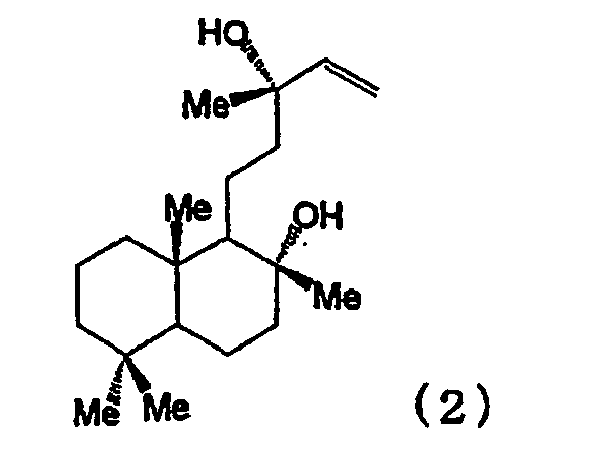
- sclareol is a diterpene alcohol represented by the following formula (2), and is obtained from extracts and refined oils such as Salvia sclarea, which is a member of the lamiaceae family of plants which are easily cultivated. Since sclareol has a structure similar to female hormone (estrogen) and has excellent hormone regulatory action, it is applied in aroma therapy and other aroma fields (see non-patent document 2). In addition, although an agent which inhibits melanin production due to sclareol formulated therein have been proposed (see patent document 1), there have not been any studies conducted on its safety during application or on its wrinkles alleviating effects.
- sclareol has skin sensitizing properties. Namely, sclareol was found to have problems with safety depending on the amount formulated into skin cosmetic composition.
- An object of the present invention is to provide an antiwrinkle agent and skin cosmetic composition having excellent alleviating effects on wrinkles appearing due to aging, and especially at exposed locations of skin, and a high degree of safety.
- sclareol derivatives particularly a hydrogenated sclareol obtained by reducing an alkenyl group of sclareol, and an acylated sclareol obtained by acylating at least one of hydroxyl group of sclareol, has superior safety as compared with sclareol, and a skin cosmetic composition formulated therewith has excellent safety and excellent wrinkle alleviating effects, thereby leading to completion of the present invention.
- claim 1 of the present invention relates to an antiwrinkle agent comprising a sclareol derivative represented by formula (1): (wherein, R 1 and R 2 independently represent a hydrogen atom, or a linear or branched, saturated or unsaturated acyl group having 2 to 12 carbon atoms, R 3 represents an ethyl group in the case R 1 and R 2 both represent hydrogen atoms, and R 3 represents an ethenyl group in the case of at least one of R 1 and R 2 represents the acyl group).
- R 1 and R 2 independently represent a hydrogen atom, or a linear or branched, saturated or unsaturated acyl group having 2 to 12 carbon atoms
- R 3 represents an ethyl group in the case R 1 and R 2 both represent hydrogen atoms
- R 3 represents an ethenyl group in the case of at least one of R 1 and R 2 represents the acyl group
- claim 2 of the present invention relates to an antiwrinkle agent comprising a sclareol derivative of formula (1) according to claim 1, wherein R 1 and R 2 both represent hydrogen atoms, and R 3 represents an ethyl group.
- claim 3 of the present invention relates to an antiwrinkle agent comprising a sclareol derivative of formula (1) according to claim 1, wherein R 1 and R 2 independently represent a hydrogen atom, or a linear or branched, saturated or unsaturated acyl group having 2 to 12 carbon atoms, at least one of R 1 and R 2 represents the acyl group, and R 3 represents an ethenyl group.
- claim 4 of the present invention relates to an antiwrinkle agent according to claim 2, which is obtained by hydrogenating an extract of Salvia sclarea, Lamiaceae.
- claim 5 of the present invention relates to an antiwrinkle agent according to claim 3, which is obtained by acylating an extract of Salvia sclarea , Lamiaceae.
- claim 6 of the present invention relates to a skin cosmetic composition
- a skin cosmetic composition comprising a sclareol derivative represented by formula (1): (wherein, R 1 and R 2 independently represent a hydrogen atom, or a linear or branched, saturated or unsaturated acyl group having 2 to 12 carbon atoms, R 3 represents an ethyl group in the case R 1 and R 2 both represent hydrogen atoms, and R 3 represents an ethenyl group in the case of at least one of R 1 and R 2 represents the acyl group).
- claim 7 of the present invention relates to a skin cosmetic composition
- a skin cosmetic composition comprising a sclareol derivative of formula (1) according to claim 6, wherein R 1 and R 2 both represent hydrogen atoms, and R 3 represents an ethyl group.
- claim 8 of the present invention relates to a skin cosmetic composition
- a skin cosmetic composition comprising a sclareol derivative of formula (1) according to claim 6, wherein R 1 and R 2 independently represent a hydrogen atom, or a linear or branched, saturated or unsaturated acyl group having 2 to 12 carbon atoms, at least one of R 1 and R 2 represents the acyl group, and R 3 represents an ethenyl group.
- claim 9 of the present invention relates to a skin cosmetic composition according to claim 7, which is obtained by hydrogenating an extract of Salvia sclarea, Lamiaceae.
- claim 10 of the present invention relates to a skin cosmetic composition according to claim 8, which is obtained by acylating an extract of Salvia sclarea , Lamiaceae.
- the present invention is able to provide an antiwrinkle agent and skin cosmetic composition which has excellent alleviating effects on wrinkles formed due to aging, especially at locations of exposed skin, and is capable of maintaining the skin in a dermatologically and aesthetically healthy state.
- a sclareol derivative represented by formula (1) used in the present invention can be obtained by reducing the alkenyl group of a commercially available sclareol manufactured by Tokyo Chemical Industry Co., Ltd. or Sigma-Aldrich Co., Ltd. using palladium carbon, or by acylating using an acid chloride or acid anhydride.
- a natural extract containing a large amount of sclareol such as an extract of Salvia sclarea, can be used directly after reducing or acylating.
- the Salvia sclarea extract used in the present invention may be from the whole plant, leaves, flowers, stem, root or any other site of Salvia sclarea, and can be obtained by extracting the above with a solvent such as liquefied gas (such as liquefied carbonic acid, liquefied propane or liquefied butane), water, lower alcohols having 1 to 5 carbon atoms (such as methyl alcohol, ethyl alcohol or propyl alcohol), water-containing lower alcohols, esters of lower alcohols having 1 to 5 carbon atoms and fatty acids having 1 to 5 carbon atoms (such as methyl acetate, ethyl acetate or butyl acetate), ketones (such as acetone or methyl ethyl ketone), water-containing forms of the aforementioned esters and ketones, halogenated hydrocarbons (such as chloroform, dichloromethane, dichloroethane or trichloroethane), ethers (such as methyl
- extraction method there are no particular limitations on the extraction method, and examples of such methods include immersing the raw material plant in a solvent at room temperature for about 1 to 100 hours, and extracting while heating and stirring at a temperature equal to or below the boiling point of the solvent.
- amount of solvent used may be, for example, 1 to 100 times, and preferably 5 to 50 times, the raw material plant in terms of the weight ratio.
- refined oils obtained by steam distillation can also be used.
- a Salvia sclarea extract obtained by extracting the leaves, flowers or whole plant of Salvia sclarea with a hydrocarbon such as petroleum ether or hexane is preferably used in the present invention, while that treated with a lower alcohol having 1 to 5 carbon atoms following extraction is also preferable.
- a concrete or absolute commonly used in the fragrance industry is used preferably.
- a concrete is obtained by, for example, charging a flower and a purified solvent (such as petroleum ether or hexane) into an extractor and immersing at room temperature to transfer the fragrance of flower followed by removing the treated flower and removing the solvent under reduced pressure.
- An absolute is obtained by, for example, re-extracting a concrete by heating and dissolving in highly pure ethyl alcohol, cooling the solvent to, for example, -15 to 25°C, and removing wax and other insoluble matters followed by distilling off the ethyl alcohol under reduced pressure.
- a sclareol derivative particularly used in the present invention is a hydrogenated sclareol represented by the following formula (3):
- a sclareol derivative particularly used in the present invention is an acylated sclareol represented by the following formula (4):
- R 1 and R 2 independently represent a hydrogen atom, or a linear or branched, saturated or unsaturated acyl group having 2 to 12 carbon atoms, provided R 1 and R 2 are not both hydrogen atoms.
- An example of an acylated sclareol represented by formula (4) is an acylated sclareol represented by the following formula (5):
- R 1 and R 2 independently represent a hydrogen atom, or a linear or branched, saturated or unsaturated acyl group having 2 to 12 carbon atoms, provided R 1 and R 2 are not both hydrogen atoms.
- the acylated sclareol represented by formula (4) may be a monoacylated sclareol or a diacylated sclareol, and in the case of a diacyl form, the two acyl groups may be the same or different.
- a monoacylated sclareol is more preferable.
- linear or branched, saturated or unsaturated acyl groups having 2 to 12 carbon atoms include linear or branched saturated acyl groups such as an acetyl group, propionyl group, butyryl group, isobutyryl group, valeryl group, isovaleryl group, pivaloyl group, hexanoyl group, octanoyl group or lauroyl group; and, linear or branched unsaturated acyl groups such as an acryloyl group, methacryloyl group or crotonyl group.
- linear or branched saturated acyl groups such as an acetyl group, propionyl group, butyryl group, isobutyryl group, valeryl group, isovaleryl group, pivaloyl group, hexanoyl group, octanoyl group or lauroyl group
- linear or branched unsaturated acyl groups such as an acryloyl group, methacryl
- a linear or branched saturated acyl group having 2 to 8 carbon atoms is preferable, an acetyl group, hexanoyl group or octanoyl group is more preferable, and an acetyl group is particularly preferable.
- the amount of a sclareol derivative formulated in the present invention is preferably 0.001 to 10% by weight (hereinafter, to be simply referred to as %) based on the total amount of antiwrinkle agent or skin cosmetic composition. If the amount is below the lower limit, the target effects of the present invention are inadequate, and if the amount is exceeded, improvement of effects corresponding to the increased amount are not obtained, thereby making this unpreferable.
- the amount of sclareol derivative formulated in the present invention is preferably 0.01 to 8.0% and particularly preferably 0.1 to 5.0%.
- the amount of sclareol derivative contained therein is formulated so as to be within the aforementioned range.
- An antiwrinkle agent of the present invention can be formulated in a skin cosmetic composition or external drug preparation in a prescription drug, over-the-counter drug or bath salts and the like, and examples of the drug form thereof include a lotion, emulsion, cream or pack. Furthermore, in addition to the aforementioned components, a coloring agent, fragrance, preservative, surfactant, pigment or antioxidant can be appropriately formulated into the antiwrinkle agent or skin cosmetic composition of the present invention within a range which achieves the object of the present invention.
- sclareol (Sigma-Aldrich, Cat. No. 35,799-5) were dissolved in 50 mL of ethanol, and 500 mg of palladium carbon (5% palladium) were added to this solution followed by stirring overnight in a hydrogen atmosphere (normal pressure) at room temperature. After filtering out the insoluble matter, the filtrate was concentrated under reduced pressure to obtain 1.2 g of a hydrogenated sclareol used in the present invention.
- sclareol (Sigma-Aldrich, Cat. No. 35,799-5) were dissolved in 10 mL of acetic anhydride, and pyridine was added dropwise into the solution followed by stirring overnight at room temperature. After washing the insoluble matter by water, the solution was extracted with ethyl acetate and dried.
- the sclareol derivatives of the present invention were determined to clearly demonstrate a high degree of safety as compared with sclareol.
- Wrinkle alleviating effects when a sample containing base only or a sample containing a sclareol derivative of the present invention was applied to photoaged skin were examined by the following test method.
- Hairless mice (age 10 weeks at the start of the test) were used in groups of 10 animals each.
- Photoaging was induced by irradiating the mice with UVA and UVB once a day, 5 times a week for 8 weeks.
- the radiation doses for UVA were increased each week for the first three weeks in the order of 20 J/cm 2 , 25 J/cm 2 and 30 J/cm 2
- the radiation doses for UVB were increased each week for the first three weeks in the order of 20 mJ/cm 2 , 30 mJ/cm 2 and 40 mJ/cm 2
- Wrinkle alleviating effect was evaluated according to the wrinkle score and dermis collagen content. The wrinkle score was determined according to the method of Bissett et al. (Photochem.
- Samples were prepared by blending 1% of the hydrogenated sclareol obtained in Production Example 1, and the monoacetylated sclareol (isomer mixture) and diacetylated sclareol obtained in Production Example 3, respectively, in a 50% ethanol solution (base) (Examples 1 to 3).
- a sample containing base only was also prepared and designated as Comparative Example 1.
- 0.1 mL of each sample was applied to the skin on the backs of the hairless mice (diameter: about 2.5 cm) at a frequency of once a day, 5 times a week starting in the 5th week after the start of UV irradiation though the 4th week following termination of UV irradiation.
- Wrinkle scores were evaluated after the final application, after which the animals were sacrificed and skin samples were collected. Collagen content was determined by calculating the amount of hydroxyproline per square centimeter. The wrinkle scores and collagen contents were compared with the base applied group serving as a control.
- Example 1 to 3 demonstrated significantly lower wrinkle scores than Comparative Example 1, thus indicating that the sclareol derivatives of the present invention are effective against wrinkles caused by photoaging.
- Examples 1 and 2 demonstrated an increasing trend in collagen content as compared with Comparative Example 1. Namely, the sclareol derivatives of the present invention were demonstrated to be effective against reduced dermis collagen levels caused by photoaging.
- skin lotions having the compositions indicated below were prepared according to the following preparation method, and samples of these skin lotions were evaluated for wrinkle alleviating effect according to the following procedure.
- Skin lotions of the examples and comparative example were applied to the skin of five healthy adult panelists each (women age 42 to 56) having wrinkles at the corners of their eyes. The women then filled in a questionnaire relating to the condition of the skin (wrinkles) at the corners of their eyes using the method described below.
- Each sample was applied to the area of wrinkled skin in the corner of the left or right eye in about 0.2 mL aliquots twice a day in the morning after washing the face and evening after bathing each day for 2 months (60 days) (each sample was applied over an area of 2 x 2 cm, or about 4 cm 2 , centering around the wrinkled area in the corner of the selected eye).
- each sample was applied over an area of 2 x 2 cm, or about 4 cm 2 , centering around the wrinkled area in the corner of the selected eye.
- the panelists filled in the questionnaire regarding the condition of the skin (wrinkles) in the corner of the selected eye after the final application.
- the sclareol derivative of ingredient C was added to ingredient B, and after uniformly mixing, ingredient A was added and dispersed by stirring followed by filling into a container. The contents were uniformly dispersed by shaking at the time of use. Furthermore, the hydrogenated sclareol of ingredient C was obtained in the aforementioned Production Example 1. On the other hand, the dioctanoylated sclareol was obtained by using, for example, octanoyl chloride instead of acetic anhydride according to the same method as that used in the aforementioned Production Example 3.
- Skin creams having the following compositions were prepared according to the preparation method described below and a questionnaire survey was conducted by having 20 healthy adult panelists (women age 45 to 56) suffering from wrinkles in the corners of their eyes use the skin creams for 1 week or more prior to the survey.
- the sclareol derivative of ingredient C was added to ingredient B, and after melting each ingredient A and B by heating to 80°C each, the ingredients were mixed and then cooled to 30°C while stirring to prepare a skin cream. Furthermore, the hydrogenated sclareol of ingredient C was obtained in the aforementioned Production Example 1, the hydrogenated Salvia sclarea was obtained in the aforementioned Production Example 2, and the diacetylated Salvia sclarea and monoacetylated Salvia sclarea forms were obtained in Production Example 4. On the other hand, the monohexanoylated sclareol was obtained by using, for example, hexanoyl chloride instead of acetic anhydride according to the same method as that used in the aforementioned Production Example 3.
- a questionnaire survey was conducted after having the panelists use the skin creams of Examples to 6 to 10. Those results are indicated below. The results show the number of panelists who replied in the affirmative with respect to after using the skin creams as compared with before using for each of the items shown, when replying to the following items contained in the questionnaire relating to wrinkle condition.
- the skin creams of Examples 6 to 10 were indicated as having alleviated wrinkles by making them no longer conspicuous as compared with prior to use by nearly all of the panelists.
- the factors behind these evaluations were determined that the skin creams were more effective in reducing the size of wrinkles rather than decreasing the numbers of wrinkles, thereby leading to alleviation of wrinkles caused by photoaging.
- there were no skin abnormalities such as irritation or itching observed due to use of the skin creams of the present invention.
- An antiwrinkle agent of the present invention can be formulated to a skin cosmetic composition or external drug preparation in a prescription drug, over-the-counter drug or bath salts and so forth, can be in the form of, for example, a lotion, emulsion, cream or pack, and is extremely useful from the viewpoint of skin beauty.
Landscapes
- Health & Medical Sciences (AREA)
- Life Sciences & Earth Sciences (AREA)
- General Health & Medical Sciences (AREA)
- Veterinary Medicine (AREA)
- Public Health (AREA)
- Animal Behavior & Ethology (AREA)
- Epidemiology (AREA)
- Birds (AREA)
- Emergency Medicine (AREA)
- Gerontology & Geriatric Medicine (AREA)
- Dermatology (AREA)
- Engineering & Computer Science (AREA)
- Biotechnology (AREA)
- Botany (AREA)
- Microbiology (AREA)
- Mycology (AREA)
- Cosmetics (AREA)
Abstract
Description
- The present invention relates to an antiwrinkle agent and skin cosmetic composition having an excellent alleviating effect on wrinkles formed due to aging, especially at locations of exposed skin, and a high degree of safety.
- The organs of all living beings, including humans, gradually deteriorate with age following birth and growth, their functions eventually stop, and once those portions of organs for which functions have stopped reach a certain point, death occurs. The process by which function gradually deteriorates is referred to as aging. Since the skin is directly subjected to the effects of the surrounding environment, and has an important function for maintaining the environment within the body, although it rarely completely loses its function, it is susceptible to the appearance of signs of aging such as wrinkles, spots, darkening and looseness, and this is particularly prominent at locations of the skin exposed to sunlight.
- As aging of the skin progresses, its defense against stimulation such as oxidation stress weakens. This causes a disturbance in the skin's internal environment, which further promotes aging. At exposed portions of the skin in particular, since these locations are continuously exposed to ultraviolet radiation and other forms of strong oxidation stress, the progress of aging is remarkable. This type of change in the skin is referred to as photoaging, and skin affected in this manner demonstrates thickening of the epidermis, and a reduction in collagen which is a major constituent of the dermis. Consequently, an aesthetically displeasing state results such as the formation of deep, large wrinkles.
- Although retinoic acid is used as a prescription drug in the United States as a substance having alleviating effects on wrinkles formed as a result of the progression of photoaging, due to strong adverse side effects and problems with safety, it has not been approved in Japan (see non-patent document 1). Thus, there is a need for an antiwrinkle substance having a high degree of safety and adequate effects.
- On the other hand, sclareol is a diterpene alcohol represented by the following formula (2), and is obtained from extracts and refined oils such as Salvia sclarea, which is a member of the lamiaceae family of plants which are easily cultivated. Since sclareol has a structure similar to female hormone (estrogen) and has excellent hormone regulatory action, it is applied in aroma therapy and other aroma fields (see non-patent document 2). In addition, although an agent which inhibits melanin production due to sclareol formulated therein have been proposed (see patent document 1), there have not been any studies conducted on its safety during application or on its wrinkles alleviating effects.
-
- Therefore, as a result of extensive studies conducted by the inventors of the present invention, it was clearly determined that sclareol has skin sensitizing properties. Namely, sclareol was found to have problems with safety depending on the amount formulated into skin cosmetic composition.
- patent document 1:
Japanese Patent Publication No. 3236130 - non-patent document 2: Itoh, M.: "Application of Lamiaceae Plants to Cosmetics - Focusing Primarily on motherwort", Fragrance Journal, Fragrance Journal Publishing Co., Ltd., May 15, 2001, Vol. 29, No. 5, pp. 77-80
- An object of the present invention is to provide an antiwrinkle agent and skin cosmetic composition having excellent alleviating effects on wrinkles appearing due to aging, and especially at exposed locations of skin, and a high degree of safety.
- As a result of conducting extensive studies in consideration of the above circumstances, the inventors of the present invention confirmed that specific sclareol derivatives, particularly a hydrogenated sclareol obtained by reducing an alkenyl group of sclareol, and an acylated sclareol obtained by acylating at least one of hydroxyl group of sclareol, has superior safety as compared with sclareol, and a skin cosmetic composition formulated therewith has excellent safety and excellent wrinkle alleviating effects, thereby leading to completion of the present invention.
- Namely,
claim 1 of the present invention relates to an antiwrinkle agent comprising a sclareol derivative represented by formula (1):
- In addition, claim 2 of the present invention relates to an antiwrinkle agent comprising a sclareol derivative of formula (1) according to
claim 1, wherein R1 and R2 both represent hydrogen atoms, and R3 represents an ethyl group. - In addition, claim 3 of the present invention relates to an antiwrinkle agent comprising a sclareol derivative of formula (1) according to
claim 1, wherein R1 and R2 independently represent a hydrogen atom, or a linear or branched, saturated or unsaturated acyl group having 2 to 12 carbon atoms, at least one of R1 and R2 represents the acyl group, and R3 represents an ethenyl group. - In addition, claim 4 of the present invention relates to an antiwrinkle agent according to claim 2, which is obtained by hydrogenating an extract of Salvia sclarea, Lamiaceae.
- In addition, claim 5 of the present invention relates to an antiwrinkle agent according to claim 3, which is obtained by acylating an extract of Salvia sclarea, Lamiaceae.
- Moreover, claim 6 of the present invention relates to a skin cosmetic composition comprising a sclareol derivative represented by formula (1):

- Moreover, claim 7 of the present invention relates to a skin cosmetic composition comprising a sclareol derivative of formula (1) according to claim 6, wherein R1 and R2 both represent hydrogen atoms, and R3 represents an ethyl group.
- Moreover, claim 8 of the present invention relates to a skin cosmetic composition comprising a sclareol derivative of formula (1) according to claim 6, wherein R1 and R2 independently represent a hydrogen atom, or a linear or branched, saturated or unsaturated acyl group having 2 to 12 carbon atoms, at least one of R1 and R2 represents the acyl group, and R3 represents an ethenyl group.
- Moreover, claim 9 of the present invention relates to a skin cosmetic composition according to claim 7, which is obtained by hydrogenating an extract of Salvia sclarea, Lamiaceae.
- In addition,
claim 10 of the present invention relates to a skin cosmetic composition according to claim 8, which is obtained by acylating an extract of Salvia sclarea, Lamiaceae. - The present invention is able to provide an antiwrinkle agent and skin cosmetic composition which has excellent alleviating effects on wrinkles formed due to aging, especially at locations of exposed skin, and is capable of maintaining the skin in a dermatologically and aesthetically healthy state.
-
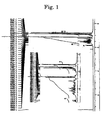
- Fig. 1 shows the 1H-NMR spectrum of hydrogenated sclareol described in Production Example 1.
-
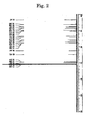
- Fig. 2 shows the 13C-NMR spectrum of hydrogenated sclareol described in Production Example 1.
-
- Fig. 3 shows the 13C-NMR spectrum of a diacetylated sclareol described in Production Example 3.
-
- Fig. 4 shows the 13C-NMR spectrum of a monoacetylated sclareol (isomer mixture) described in Production Example 3.
- The following provides a detailed description of embodiments of the present invention.
- A sclareol derivative represented by formula (1) used in the present invention can be obtained by reducing the alkenyl group of a commercially available sclareol manufactured by Tokyo Chemical Industry Co., Ltd. or Sigma-Aldrich Co., Ltd. using palladium carbon, or by acylating using an acid chloride or acid anhydride. In addition, a natural extract containing a large amount of sclareol, such as an extract of Salvia sclarea, can be used directly after reducing or acylating.
- The Salvia sclarea extract used in the present invention may be from the whole plant, leaves, flowers, stem, root or any other site of Salvia sclarea, and can be obtained by extracting the above with a solvent such as liquefied gas (such as liquefied carbonic acid, liquefied propane or liquefied butane), water, lower alcohols having 1 to 5 carbon atoms (such as methyl alcohol, ethyl alcohol or propyl alcohol), water-containing lower alcohols, esters of lower alcohols having 1 to 5 carbon atoms and fatty acids having 1 to 5 carbon atoms (such as methyl acetate, ethyl acetate or butyl acetate), ketones (such as acetone or methyl ethyl ketone), water-containing forms of the aforementioned esters and ketones, halogenated hydrocarbons (such as chloroform, dichloromethane, dichloroethane or trichloroethane), ethers (such as methyl ether, ethyl ether, tetrahydrofuran or dioxane), hydrocarbons (such as petroleum ether or hexane) or mixtures of the aforementioned solvents; the resulting extract can be used directly, or after concentration.
- There are no particular limitations on the extraction method, and examples of such methods include immersing the raw material plant in a solvent at room temperature for about 1 to 100 hours, and extracting while heating and stirring at a temperature equal to or below the boiling point of the solvent. There are no particular limitations on the amount of solvent used, and may be, for example, 1 to 100 times, and preferably 5 to 50 times, the raw material plant in terms of the weight ratio. In addition, refined oils obtained by steam distillation can also be used.
- In particular, a Salvia sclarea extract obtained by extracting the leaves, flowers or whole plant of Salvia sclarea with a hydrocarbon such as petroleum ether or hexane is preferably used in the present invention, while that treated with a lower alcohol having 1 to 5 carbon atoms following extraction is also preferable. More specifically, a concrete or absolute commonly used in the fragrance industry is used preferably. A concrete is obtained by, for example, charging a flower and a purified solvent (such as petroleum ether or hexane) into an extractor and immersing at room temperature to transfer the fragrance of flower followed by removing the treated flower and removing the solvent under reduced pressure.
An absolute is obtained by, for example, re-extracting a concrete by heating and dissolving in highly pure ethyl alcohol, cooling the solvent to, for example, -15 to 25°C, and removing wax and other insoluble matters followed by distilling off the ethyl alcohol under reduced pressure. - A sclareol derivative particularly used in the present invention is a hydrogenated sclareol represented by the following formula (3):
-

- which can be obtained by reducing the alkenyl group of a commercially available sclareol or a natural extract containing a large amount of sclareol such as a Salvia sclarea extract, using palladium carbon and the like.
- In addition, a sclareol derivative particularly used in the present invention is an acylated sclareol represented by the following formula (4):
-

- which can be obtained by acylating a commercially available sclareol or natural extract containing a large amount of sclareol such as a Salvia sclarea extract, using an acid chloride or acid anhydride, and in the aforementioned formula, R1 and R2 independently represent a hydrogen atom, or a linear or branched, saturated or unsaturated acyl group having 2 to 12 carbon atoms, provided R1 and R2 are not both hydrogen atoms.
- An example of an acylated sclareol represented by formula (4) is an acylated sclareol represented by the following formula (5):
-

- wherein, R1 and R2 independently represent a hydrogen atom, or a linear or branched, saturated or unsaturated acyl group having 2 to 12 carbon atoms, provided R1 and R2 are not both hydrogen atoms.
- The acylated sclareol represented by formula (4) may be a monoacylated sclareol or a diacylated sclareol, and in the case of a diacyl form, the two acyl groups may be the same or different. A monoacylated sclareol is more preferable.
- Examples of linear or branched, saturated or unsaturated acyl groups having 2 to 12 carbon atoms include linear or branched saturated acyl groups such as an acetyl group, propionyl group, butyryl group, isobutyryl group, valeryl group, isovaleryl group, pivaloyl group, hexanoyl group, octanoyl group or lauroyl group; and, linear or branched unsaturated acyl groups such as an acryloyl group, methacryloyl group or crotonyl group. A linear or branched saturated acyl group having 2 to 8 carbon atoms is preferable, an acetyl group, hexanoyl group or octanoyl group is more preferable, and an acetyl group is particularly preferable.
- The amount of a sclareol derivative formulated in the present invention is preferably 0.001 to 10% by weight (hereinafter, to be simply referred to as %) based on the total amount of antiwrinkle agent or skin cosmetic composition. If the amount is below the lower limit, the target effects of the present invention are inadequate, and if the amount is exceeded, improvement of effects corresponding to the increased amount are not obtained, thereby making this unpreferable. Thus, the amount of sclareol derivative formulated in the present invention is preferably 0.01 to 8.0% and particularly preferably 0.1 to 5.0%. Furthermore, in the case of using a sclareol derivative obtained from a Salvia sclarea extract in an antiwrinkle agent or skin cosmetic composition of the present invention without isolating, the amount of sclareol derivative contained therein is formulated so as to be within the aforementioned range.
- An antiwrinkle agent of the present invention can be formulated in a skin cosmetic composition or external drug preparation in a prescription drug, over-the-counter drug or bath salts and the like, and examples of the drug form thereof include a lotion, emulsion, cream or pack.
Furthermore, in addition to the aforementioned components, a coloring agent, fragrance, preservative, surfactant, pigment or antioxidant can be appropriately formulated into the antiwrinkle agent or skin cosmetic composition of the present invention within a range which achieves the object of the present invention. - The following provides a detailed description of the present invention based on examples and comparative examples thereof.
- 1.5 g of sclareol (Sigma-Aldrich, Cat. No. 35,799-5) were dissolved in 50 mL of ethanol, and 500 mg of palladium carbon (5% palladium) were added to this solution followed by stirring overnight in a hydrogen atmosphere (normal pressure) at room temperature. After filtering out the insoluble matter, the filtrate was concentrated under reduced pressure to obtain 1.2 g of a hydrogenated sclareol used in the present invention.
- According to the results of 1H-NMR of the hydrogenated sclareol, olefin signals observed at 5.03 ppm (dd, J=10.8, 1.2 Hz), 5.21 ppm (dd, J=17.2, 1.4 Hz) and 5.94 ppm (dd, J=17.4, 10.8 Hz) had disappeared, and a methyl signal resulting from olefin reduction was confirmed at 0.90 ppm (t, 3H) in 1H-NMR. The 1H-NMR spectrum of the resulting hydrogenated sclareol is shown in Fig. 1.
- According to the results of 13C-NMR of the hydrogenated sclareol, olefin signals observed at 111 ppm and 146 ppm had disappeared, and methyl and methylene signals resulting from olefin reduction were confirmed at 8.15 ppm and 35.1 ppm, respectively, in 13C-NMR. The 13C-NMR spectrum of the resulting hydrogenated sclareol is shown in Fig. 2.
- 10 g of Salvia sclarea concrete were dissolved in 500 mL of ethanol, and 3.5 g of palladium carbon (5% palladium) were added to this solution followed by stirring overnight in a hydrogen atmosphere (normal pressure) at room temperature. After filtering out the insoluble matter, the filtrate was concentrated under reduced pressure to obtain 8 g of a hydrogenated Salvia sclarea (containing about 70 to 80% hydrogenated sclareol).
- 1.5 g of sclareol (Sigma-Aldrich, Cat. No. 35,799-5) were dissolved in 10 mL of acetic anhydride, and pyridine was added dropwise into the solution followed by stirring overnight at room temperature. After washing the insoluble matter by water, the solution was extracted with ethyl acetate and dried. The extract was fractionated into fractions having rf values of 0.86 and 0.40 in thin-layer chromatography (developing solvent: hexane/ethyl acetate = 6/1) by column chromatography (hexane/ethyl acetate = 8/1 to 4/1), followed by concentrating under reduced pressure to obtain sclareol derivatives used in the present invention in the form of 0.5 g of a diacetylated sclareol and 0.6 g of monoacylated sclareol(isomer mixture), respectively, as white crystals.
- According to the results of 13C-NMR of the diacetylated sclareol, the signals observed at 73.6 ppm and 74.7 ppm for sclareol had disappeared, and signals resulting from substitution by the acetyl groups were confirmed at 83.3 ppm and 87.9 ppm. In addition, signals indicating carbonyl groups were newly confirmed at 169.7 ppm and 170.2 ppm. The 13C-NMR spectrum of the resulting diacetylated sclareol is shown in Fig. 3.
- Since a similar 13C-NMR spectrum was obtained for the monoacetylated sclareol(isomer mixture) in which the disappearance of signals and appearance of new signals indicating hydroxyl group acetylation was confirmed, the formation of this derivative was confirmed. The 13C-NMR spectrum of the sclareol monoacetyl form (isomer mixture) is shown in Fig. 4.
- 10 g of Salvia sclarea concrete were dissolved in 100 mL of acetic anhydride, and pyridine was added dropwise into this solution followed by stirring overnight at room temperature. After washing the insoluble matter by water, the solution was extracted with ethyl acetate and dried. The extract was fractionated into fractions having rf values of 0.86 and 0.40 in thin-layer chromatography (developing solvent: hexane/ethyl acetate = 6/1) by column chromatography (hexane/ethyl acetate = 8/1 to 4/1) and concentrating under reduced pressure to obtain 3.4 g and 4.0 g of a diacetylated Salvia Sclarea and monoacetylated Salvia Sclarea (isomer mixture), respectively, as white crystals.
- Safety (sensitization) was evaluated using a maximization test.
- An area of the skin over the scapula measuring 4 x 6 cm2 was shaved in Hartley guinea pigs (females) having body weights of 350 to 400 g, and two rows of three intradermal injections per row were made in the order indicated below.
- 1) 0.05 mL aliquots of Freund's complete adjuvant (hereinafter, to abbreviated as FCA solution) were intradermally injected at two locations on the left and right sides.
- 2) 0.05 mL aliquots of an olive oil solution containing 10% of a sclareol derivative obtained in the aforementioned producing examples or sclareol were intradermally injected at two locations on the left and right sides.
- 3) 0.05 mL aliquots of an emulsified solution obtained by adding an equal volume of sterile water to an FCA solution containing 20% sclareol or sclareol derivative obtained in the aforementioned production examples were intradermally injected at two locations on the left and right sides.
The same sites on the animals were shaved one week after these procedures, and vaseline containing 10% sodium lauryl sulfate was rubbed onto the skin to induce mild inflammation. 24 hours after rubbing, 0.2 mL of olive oil solutions containing 10% sclareol derivative sample of the present invention or sclareol were applied to a piece of gauze, which was then affixed to cover the skin for 48 hours. The abdomens of the animals were shaved on the 21st day after intradermal injection, and olive oil solutions containing 5% and 10% of a sclareol derivative sample of the present invention, or an olive oil solution containing 5% of a sclareol sample were affixed to cover the skin for 24 hours. Evaluations were made macroscopically 24 and 48 hours later in accordance with the evaluation criteria shown in Table 1. -
[Table 1] Symptom Score No macroscopic changes 0 Mild or diffuse erythema 1 Moderate erythema 2 Severe erythema 3 - As a result, in contrast to sensitization being confirmed for sclareol, sensitization was not confirmed for the sclareol derivatives of the present invention as shown in Table 2.
-
[Table 2] Compound Concentration (%) Time of Evaluation After 24 Hours After 48 Hours PR, (MR) PR, (MR) Hydrogenated sclareol (Production Example 1) 5 0, (0) 0, (0) 10 0, (0) 0, (0) Monoacetylated sclareol (isomer mixture, Production Example 3) 5 0, (0) 0, (0) 10 0, (0) 0. (0) Diacetylated sclareol (Production Example 3) 5 0, (0) 0, (0) 10 0, (0) 0, (0) Sclareol 5 4/10, (0.4) 4/10, (0.4) PR: Sensitization rate (Number of positive animals/Number of animals used)
MR: Mean score (average of reaction scores) - According to the results of this test, the sclareol derivatives of the present invention were determined to clearly demonstrate a high degree of safety as compared with sclareol.
- Wrinkle alleviating effects when a sample containing base only or a sample containing a sclareol derivative of the present invention was applied to photoaged skin were examined by the following test method.
- Hairless mice (
age 10 weeks at the start of the test) were used in groups of 10 animals each. - Photoaging was induced by irradiating the mice with UVA and UVB once a day, 5 times a week for 8 weeks. The radiation doses for UVA were increased each week for the first three weeks in the order of 20 J/cm2, 25 J/cm2 and 30 J/cm2, the radiation doses for UVB were increased each week for the first three weeks in the order of 20 mJ/cm2, 30 mJ/cm2 and 40 mJ/cm2, and the animals were irradiated at the maximum respective dose starting in the 3rd week.
Wrinkle alleviating effect was evaluated according to the wrinkle score and dermis collagen content. The wrinkle score was determined according to the method of Bissett et al. (Photochem. Photobiol. 46: 367-368, 1987). Namely, the overall size and depth of wrinkles were evaluated macroscopically, and scored based on a maximum score of 3 by assigning a score of 3 when "large, deep wrinkles can be confirmed", a score of 2 when "some wrinkles can be confirmed", a score of 1 when "wrinkles cannot be confirmed", and a score of 0 when "normal, fine skin is observed".
Dermis collagen content was measured by collecting a sample of whole skin and homogenizing with a Polytron Homogenizer (KINEMATICA AG), followed by extracting the collagen fraction, subjecting to acid hydrolysis and measuring the hydroxyproline content as the amount of collagen using an amino acid analyzer (JASCO Corp.). - Samples were prepared by blending 1% of the hydrogenated sclareol obtained in Production Example 1, and the monoacetylated sclareol (isomer mixture) and diacetylated sclareol obtained in Production Example 3, respectively, in a 50% ethanol solution (base) (Examples 1 to 3). A sample containing base only was also prepared and designated as Comparative Example 1.
First, 0.1 mL of each sample was applied to the skin on the backs of the hairless mice (diameter: about 2.5 cm) at a frequency of once a day, 5 times a week starting in the 5th week after the start of UV irradiation though the 4th week following termination of UV irradiation. Wrinkle scores were evaluated after the final application, after which the animals were sacrificed and skin samples were collected. Collagen content was determined by calculating the amount of hydroxyproline per square centimeter. The wrinkle scores and collagen contents were compared with the base applied group serving as a control. -
(Wrinkle Score Evaluation Results 1) Group Wrinkle Score Example 1 Hydrogenated sclareol sample applied group 2.40 ± 0.11 Comparative Example 1 Base sample applied group 2.70 ± 0.09 (Values are indicated as the average ± standard error) -
(Wrinkle Score Evaluation Results 2) Group Wrinkle Score Example 2 Monoacetylated sclareol sample applied group 2.45 ± 0.08 Example 3 Diacetylated sclareol sample applied group 2.55 ± 0.05 Comparative Example 1 Base sample applied group 2.75 ± 0.08 (Values are indicated as the average ± standard error) - Example 1 to 3 demonstrated significantly lower wrinkle scores than Comparative Example 1, thus indicating that the sclareol derivatives of the present invention are effective against wrinkles caused by photoaging.
-
(Collagen Content Measurement Results 1) Group Collagen Content (µmol/L) Example 1 Hydrogenated sclareol sample applied group 7.72 ± 0.49 Comparative Example 1 Base sample applied group 6.91 ± 0.48 (Values are indicated as the average ± standard error) -
(Collagen Content Measurement Results 2) Group Collagen Content (µ mol/L) Example 2 Monoacetylated sclareol sample applied group 8.75 ± 0.50 Comparative Example 1 Base sample applied group 7.62 ± 0.29 (Values are indicated as the average ± standard error) - As indicated by collagen content measurements results 1 and 2, Examples 1 and 2 demonstrated an increasing trend in collagen content as compared with Comparative Example 1. Namely, the sclareol derivatives of the present invention were demonstrated to be effective against reduced dermis collagen levels caused by photoaging.
- On the basis of the results of this test, the sclareol derivatives of the present invention were found to clearly have alleviating effects on wrinkles caused by photoaging as compared with Comparative Example 1.
- In these examples and comparative example, skin lotions having the compositions indicated below were prepared according to the following preparation method, and samples of these skin lotions were evaluated for wrinkle alleviating effect according to the following procedure.
Skin lotions of the examples and comparative example were applied to the skin of five healthy adult panelists each (women age 42 to 56) having wrinkles at the corners of their eyes. The women then filled in a questionnaire relating to the condition of the skin (wrinkles) at the corners of their eyes using the method described below.
Each sample was applied to the area of wrinkled skin in the corner of the left or right eye in about 0.2 mL aliquots twice a day in the morning after washing the face and evening after bathing each day for 2 months (60 days) (each sample was applied over an area of 2 x 2 cm, or about 4 cm2, centering around the wrinkled area in the corner of the selected eye). Next, the panelists filled in the questionnaire regarding the condition of the skin (wrinkles) in the corner of the selected eye after the final application. -
Skin Lotion Composition Ingredients Blended Amt (%) Ingredient A Example 4 Example 5 Olive oil 10.0 10.0 Isopropyl myristate 1.0 1.0 Polyoxyethylene (20) sorbitan monolaurate 0.5 0.5 Propylene glycol 1.0 1.0 Glycerol 2.0 2.0 Ingredient B Methyl paraben 0.1 0.1 Ethanol 7.0 7.0 Purified water Remainder to bring to a total of 100 Remainder to bring to a total of 100 Ingredient C Hydrogenated sclareol 1.0 Dioctanoylated sclareol 1.0 or 0 (Comparative Example 2) - In each example, the sclareol derivative of ingredient C was added to ingredient B, and after uniformly mixing, ingredient A was added and dispersed by stirring followed by filling into a container. The contents were uniformly dispersed by shaking at the time of use. Furthermore, the hydrogenated sclareol of ingredient C was obtained in the aforementioned Production Example 1. On the other hand, the dioctanoylated sclareol was obtained by using, for example, octanoyl chloride instead of acetic anhydride according to the same method as that used in the aforementioned Production Example 3.
- On the basis of the questionnaire results, the numbers of panelists who replied that the skin lotion of Example 4 was more effective than that of Comparative Example 2 for each of the items relating to skin (wrinkle) condition are shown below.
-
Item Number of Panelists Wrinkles no longer conspicuous 5 Skin became softer 4 Skin became tighter 5 Skin exhibited luster 4 Skin tone became brighter 3 - Similarly, the numbers of panelists who replied that the skin lotion of Example 5 was more effective than the skin lotion of Comparative Example 2 for each of the items relating to skin (wrinkle) condition on the basis of the questionnaire results are shown below.
-
Item Number of Panelists Wrinkles no longer conspicuous 5 Skin became softer 5 Skin became tighter 5 Skin exhibited luster 4 Skin tone became brighter 3 - On the basis of the results of this test, the skin lotions of Examples 4 and 5 clearly alleviated wrinkles as compared with Comparative Example 2, and flexibility and skin tension, which become worse due to photoaging, were also determined to be alleviated. In addition, there were no skin abnormalities such as irritation or itching observed due to use of the skin lotions of the present invention.
- Skin creams having the following compositions were prepared according to the preparation method described below and a questionnaire survey was conducted by having 20 healthy adult panelists (women age 45 to 56) suffering from wrinkles in the corners of their eyes use the skin creams for 1 week or more prior to the survey.
-
[Table 10] Composition Blended Amount (%) Ingredients Example 6 Example 7 Example 8 Example 9 Example 10 Ingredient A Bees wax 2.0 2.0 2.0 2.0 2.0 Stearic acid 5.0 5.0 5.0 5.0 5.0 Stearyl alcohol 5.0 5.0 5.0 5.0 5.0 Reduced lanolin 2.0 2.0 2.0 2.0 2.0 Squalene 20.0 20.0 20.0 20.0 20.0 Sorbitan monostearate 3.0 3.0 3.0 3.0 3.0 Polyoxyethylene (20) sorbitan monostearate 3.0 3.0 3.0 3.0 3.0 Propylene glycol 5.0 5.0 5.0 5.0 5.0 Ingredient B Methyl paraben 0.2 0.2 0.2 0.2 0.2 Purified water Remainder to bring to a total of 100 Remainder to bring to a total of 100 Remainder to bring to a total of 100 Remainder to bring to a total of 100 Remainder to bring to a total of 100 Ingredient C Hydrogenated sclareol 1.0 - - - - Hydrogenated salvia sclarea - 1.0 - - - Monohexanoylated sclareol (isomer mixture) - - 1.0 - - Diacetylated salvia sclarea - - - 1.0 - Monoacetylated salvia sclarea (isomer mixture) - - - - 1.0 - In each example, the sclareol derivative of ingredient C was added to ingredient B, and after melting each ingredient A and B by heating to 80°C each, the ingredients were mixed and then cooled to 30°C while stirring to prepare a skin cream. Furthermore, the hydrogenated sclareol of ingredient C was obtained in the aforementioned Production Example 1, the hydrogenated Salvia sclarea was obtained in the aforementioned Production Example 2, and the diacetylated Salvia sclarea and monoacetylated Salvia sclarea forms were obtained in Production Example 4. On the other hand, the monohexanoylated sclareol was obtained by using, for example, hexanoyl chloride instead of acetic anhydride according to the same method as that used in the aforementioned Production Example 3.
- A questionnaire survey was conducted after having the panelists use the skin creams of Examples to 6 to 10. Those results are indicated below. The results show the number of panelists who replied in the affirmative with respect to after using the skin creams as compared with before using for each of the items shown, when replying to the following items contained in the questionnaire relating to wrinkle condition.
-
[Table 11] Item No. of Panelists Example 6 Example 7 Example 8 Example 9 Example 10 Wrinkles no longer conspicuous 17 15 18 16 18 Wrinkles decreased in size 18 15 18 17 17 Wrinkles decreased in number 6 6 6 6 6 Wrinkles increased in number 0 0 0 0 0 - On the basis of the results of this test, the skin creams of Examples 6 to 10 were indicated as having alleviated wrinkles by making them no longer conspicuous as compared with prior to use by nearly all of the panelists. The factors behind these evaluations were determined that the skin creams were more effective in reducing the size of wrinkles rather than decreasing the numbers of wrinkles, thereby leading to alleviation of wrinkles caused by photoaging. In addition, there were no skin abnormalities such as irritation or itching observed due to use of the skin creams of the present invention.
- An antiwrinkle agent of the present invention can be formulated to a skin cosmetic composition or external drug preparation in a prescription drug, over-the-counter drug or bath salts and so forth, can be in the form of, for example, a lotion, emulsion, cream or pack, and is extremely useful from the viewpoint of skin beauty.
Claims (10)
- An antiwrinkle agent comprising a sclareol derivative represented by formula (1):

R3 represents an ethyl group in the case R1 and R2 both represent hydrogen atoms, and
R3 represents an ethenyl group in the case of at least one of R1 and R2 represents the acyl group. - The antiwrinkle agent comprising a sclareol derivative represented by formula (1) according to claim 1, wherein
R1 and R2 both represent hydrogen atoms, and R3 represents an ethyl group. - The antiwrinkle agent comprising a sclareol derivative represented by formula (1) according to claim 1, wherein
R1 and R2 independently represent a hydrogen atom, or a linear or branched, saturated or unsaturated acyl group having 2 to 12 carbon atoms, at least one of R1 and R2 represents the acyl group, and R3 represents an ethenyl group. - The antiwrinkle agent according to claim 2, which is obtained by hydrogenating an extract of Salvia sclarea, Lamiaceae.
- The antiwrinkle agent according to claim 3, which is obtained by acylating an extract of Salvia sclarea, Lamiaceae.
- A skin cosmetic composition comprising a sclareol derivative represented by formula (1):

R3 represents an ethyl group in the case R1 and R2 both represent hydrogen atoms, and
R3 represents an ethenyl group in the case of at least one of R1 and R2 represents the acyl group. - The skin cosmetic composition comprising a sclareol derivative represented by formula (1) according to claim 6, wherein R1 and R2 both represent hydrogen atoms, and R3 represents an ethyl group.
- The skin cosmetic composition comprising a sclareol derivative represented by formula (1) according to claim 6, wherein R1 and R2 independently represent a hydrogen atom, or a linear or branched, saturated or unsaturated acyl group having 2 to 12 carbon atoms, at least one of R1 and R2 represents the acyl group, and R3 represents an ethenyl group.
- The skin cosmetic composition according to claim 7, which is obtained by hydrogenating an extract of Salvia sclarea, Lamiaceae.
- The skin cosmetic composition according to claim 8, which is obtained by acylating an extract of Salvia sclarea, Lamiaceae.
Applications Claiming Priority (4)
| Application Number | Priority Date | Filing Date | Title |
|---|---|---|---|
| JP2004135183 | 2004-04-30 | ||
| JP2004184296A JP4359197B2 (en) | 2004-05-26 | 2004-05-26 | Wrinkle improving agent and skin cosmetic |
| JP2004373564A JP4359235B2 (en) | 2004-04-30 | 2004-12-24 | Wrinkle improving agent and skin cosmetic |
| PCT/JP2005/008112 WO2005105019A1 (en) | 2004-04-30 | 2005-04-28 | Winkle reduction agent and cosmetic skin preparation |
Publications (2)
| Publication Number | Publication Date |
|---|---|
| EP1743622A1 true EP1743622A1 (en) | 2007-01-17 |
| EP1743622A4 EP1743622A4 (en) | 2015-07-15 |
Family
ID=35241401
Family Applications (1)
| Application Number | Title | Priority Date | Filing Date |
|---|---|---|---|
| EP05736821.9A Withdrawn EP1743622A4 (en) | 2004-04-30 | 2005-04-28 | Winkle reduction agent and cosmetic skin preparation |
Country Status (6)
| Country | Link |
|---|---|
| US (2) | US7611737B2 (en) |
| EP (1) | EP1743622A4 (en) |
| KR (1) | KR100851694B1 (en) |
| CN (1) | CN1946368B (en) |
| TW (1) | TWI366473B (en) |
| WO (1) | WO2005105019A1 (en) |
Families Citing this family (3)
| Publication number | Priority date | Publication date | Assignee | Title |
|---|---|---|---|---|
| JP4704304B2 (en) * | 2006-09-28 | 2011-06-15 | 花王株式会社 | Topical skin preparation |
| KR101705811B1 (en) * | 2014-10-02 | 2017-02-13 | 바이오스펙트럼 주식회사 | Compositions for culuring and Promoting Cell Proliferation Comprising Sclareol |
| CN107184516A (en) * | 2017-05-26 | 2017-09-22 | 天津郁美净集团有限公司 | A kind of skin care compositions with moisture-keeping efficacy and preparation method and application |
Family Cites Families (11)
| Publication number | Priority date | Publication date | Assignee | Title |
|---|---|---|---|---|
| US3060172A (en) * | 1959-04-29 | 1962-10-23 | Reynolds Tobacco Co R | Process for recovering sclareol from clary sage |
| DE3852577T2 (en) * | 1987-06-23 | 1995-05-04 | Givaudan Roure Int | Process for the preparation of dodecahydro-3a, 6,6,9a-tetramethylnaphtho [2,1b] furan and of haloethyldecalin derivatives. |
| JP3236130B2 (en) | 1992-07-08 | 2001-12-10 | ポーラ化成工業株式会社 | Melanin production inhibitor and external preparation for skin |
| JP3346128B2 (en) * | 1995-10-24 | 2002-11-18 | 大日本インキ化学工業株式会社 | Aqueous crosslinked resin composition, method for producing the same, and material using the same |
| JPH10298070A (en) | 1997-04-22 | 1998-11-10 | Toagosei Co Ltd | Antifungal agent |
| US6150381A (en) | 1998-06-09 | 2000-11-21 | R.J. Reynolds Tobacco Company | Methods of treating microbial infection and therapeutic formulations therefor |
| US6123945A (en) | 1998-08-26 | 2000-09-26 | Takasago International Corporation | Water-soluble anti-oxidation agents |
| DE60014180T2 (en) * | 2000-04-04 | 2005-10-06 | Color Access, Inc. | PREPARATION FOR IMPROVING THE EPITHELIAL LIPID BARRIER FUNCTION |
| US20040009130A1 (en) * | 2002-07-08 | 2004-01-15 | Detore Donna Marie | Compositions for treating keratinous surfaces |
| JP2005008574A (en) | 2003-06-19 | 2005-01-13 | Takasago Internatl Corp | Collagen production promoter |
| JP2007022960A (en) * | 2005-07-15 | 2007-02-01 | Kanebo Cosmetics Inc | Melanin inhibitor and whitening cosmetic |
-
2005
- 2005-04-28 EP EP05736821.9A patent/EP1743622A4/en not_active Withdrawn
- 2005-04-28 WO PCT/JP2005/008112 patent/WO2005105019A1/en not_active Ceased
- 2005-04-28 CN CN2005800126530A patent/CN1946368B/en not_active Expired - Fee Related
- 2005-04-28 US US11/579,094 patent/US7611737B2/en not_active Expired - Fee Related
- 2005-04-28 KR KR1020067025138A patent/KR100851694B1/en not_active Expired - Fee Related
- 2005-04-29 TW TW094113937A patent/TWI366473B/en not_active IP Right Cessation
-
2009
- 2009-07-09 US US12/500,054 patent/US8084064B2/en not_active Expired - Fee Related
Non-Patent Citations (1)
| Title |
|---|
| See references of WO2005105019A1 * |
Also Published As
| Publication number | Publication date |
|---|---|
| US20100173989A1 (en) | 2010-07-08 |
| TWI366473B (en) | 2012-06-21 |
| KR20070008713A (en) | 2007-01-17 |
| EP1743622A4 (en) | 2015-07-15 |
| WO2005105019A1 (en) | 2005-11-10 |
| CN1946368B (en) | 2012-05-09 |
| US20070231416A1 (en) | 2007-10-04 |
| US7611737B2 (en) | 2009-11-03 |
| KR100851694B1 (en) | 2008-08-11 |
| TW200538159A (en) | 2005-12-01 |
| US8084064B2 (en) | 2011-12-27 |
| CN1946368A (en) | 2007-04-11 |
Similar Documents
| Publication | Publication Date | Title |
|---|---|---|
| KR100882618B1 (en) | Lipolysis Accelerators and External Skin Compositions | |
| WO2021175453A1 (en) | Composition comprising an aventhramide or an analogue thereof with improved stability | |
| JP2006514657A (en) | Compositions and delivery methods for the treatment of wrinkles, fine lines and hyperhidrosis | |
| KR102229247B1 (en) | Cosmetic composition for improving wrinkles containing zipenoside isolated from Chilgyeopdam | |
| US8084064B2 (en) | Antiwrinkle agent and skin cosmetic composition | |
| KR101509848B1 (en) | Composition for skin external application comprising tanshinone ⅱa as the active ingredient | |
| JP2008184439A (en) | Reactive oxygen species for cell damage improvement | |
| KR101481208B1 (en) | Composition for skin external application comprising cryptotanshinone as the active ingredient | |
| KR20120038321A (en) | Cosmetic composition using apios and manufacturing method thereof | |
| EP2671566A1 (en) | External skin preparation | |
| KR102223447B1 (en) | Composition for scalp and hair cosmetic | |
| KR100696294B1 (en) | Whitening cosmetic composition containing camphor extract inhibiting melanin production | |
| JP4359197B2 (en) | Wrinkle improving agent and skin cosmetic | |
| JPH1045528A (en) | Antioxidant | |
| JP2004307437A (en) | Skin care preparation for external use for preventing aging | |
| JPH072640A (en) | External preparation for protecting ultraviolet disorder | |
| JP4359235B2 (en) | Wrinkle improving agent and skin cosmetic | |
| KR102160306B1 (en) | skin whitening agent | |
| KR101664878B1 (en) | Cosmetic composition containing fractions of allium hookeri as active ingredient | |
| KR102048713B1 (en) | cosmetics containing boswellic acid | |
| KR101736725B1 (en) | Cosmetic composition for anti-wrinkle with the manassantin B | |
| JP4488933B2 (en) | Wrinkle improving agent and external composition for skin | |
| KR20140141188A (en) | External composition for skin containing green persimmon extract | |
| KR20230128886A (en) | hair cosmetics improving gray hair | |
| KR20240116232A (en) | Skin whitening agent comprising 1,3-dioctyloxybenzene as an actve agent |
Legal Events
| Date | Code | Title | Description |
|---|---|---|---|
| PUAI | Public reference made under article 153(3) epc to a published international application that has entered the european phase |
Free format text: ORIGINAL CODE: 0009012 |
|
| 17P | Request for examination filed |
Effective date: 20061106 |
|
| AK | Designated contracting states |
Kind code of ref document: A1 Designated state(s): DE ES FR GB IT |
|
| DAX | Request for extension of the european patent (deleted) | ||
| RBV | Designated contracting states (corrected) |
Designated state(s): DE ES FR GB IT |
|
| RA4 | Supplementary search report drawn up and despatched (corrected) |
Effective date: 20150615 |
|
| RIC1 | Information provided on ipc code assigned before grant |
Ipc: A61K 8/33 20060101ALI20150609BHEP Ipc: A61K 36/537 20060101ALI20150609BHEP Ipc: A61Q 19/08 20060101ALI20150609BHEP Ipc: A61K 8/97 20060101AFI20150609BHEP |
|
| 17Q | First examination report despatched |
Effective date: 20151009 |
|
| STAA | Information on the status of an ep patent application or granted ep patent |
Free format text: STATUS: THE APPLICATION IS DEEMED TO BE WITHDRAWN |
|
| 18D | Application deemed to be withdrawn |
Effective date: 20160220 |