EP1729283B1 - Tone synthesis apparatus and method - Google Patents
Tone synthesis apparatus and method Download PDFInfo
- Publication number
- EP1729283B1 EP1729283B1 EP06010998.0A EP06010998A EP1729283B1 EP 1729283 B1 EP1729283 B1 EP 1729283B1 EP 06010998 A EP06010998 A EP 06010998A EP 1729283 B1 EP1729283 B1 EP 1729283B1
- Authority
- EP
- European Patent Office
- Prior art keywords
- crossfade
- tone
- synthesis
- time
- rendition style
- Prior art date
- Legal status (The legal status is an assumption and is not a legal conclusion. Google has not performed a legal analysis and makes no representation as to the accuracy of the status listed.)
- Not-in-force
Links
- 238000003786 synthesis reaction Methods 0.000 title claims description 154
- 230000015572 biosynthetic process Effects 0.000 title claims description 153
- 238000000034 method Methods 0.000 title claims description 29
- 230000008859 change Effects 0.000 claims description 12
- 238000001308 synthesis method Methods 0.000 claims 1
- 239000013598 vector Substances 0.000 description 41
- 238000012545 processing Methods 0.000 description 29
- 230000001133 acceleration Effects 0.000 description 19
- 230000004044 response Effects 0.000 description 18
- 239000011295 pitch Substances 0.000 description 16
- 230000008569 process Effects 0.000 description 14
- 238000010586 diagram Methods 0.000 description 12
- 238000004891 communication Methods 0.000 description 11
- 230000015654 memory Effects 0.000 description 5
- 238000007796 conventional method Methods 0.000 description 4
- 239000003086 colorant Substances 0.000 description 3
- 230000006870 function Effects 0.000 description 3
- 230000003111 delayed effect Effects 0.000 description 2
- 230000000694 effects Effects 0.000 description 2
- 238000005562 fading Methods 0.000 description 2
- 230000002194 synthesizing effect Effects 0.000 description 2
- 230000007704 transition Effects 0.000 description 2
- 241000131390 Glis Species 0.000 description 1
- 238000013459 approach Methods 0.000 description 1
- 239000000470 constituent Substances 0.000 description 1
- 230000008602 contraction Effects 0.000 description 1
- 230000003247 decreasing effect Effects 0.000 description 1
- 230000000994 depressogenic effect Effects 0.000 description 1
- 230000001627 detrimental effect Effects 0.000 description 1
- 230000001747 exhibiting effect Effects 0.000 description 1
- 239000004973 liquid crystal related substance Substances 0.000 description 1
- 238000012986 modification Methods 0.000 description 1
- 230000004048 modification Effects 0.000 description 1
- 238000012544 monitoring process Methods 0.000 description 1
- 238000009527 percussion Methods 0.000 description 1
- 238000012797 qualification Methods 0.000 description 1
- 238000005070 sampling Methods 0.000 description 1
- 239000004065 semiconductor Substances 0.000 description 1
- 238000004904 shortening Methods 0.000 description 1
- 230000001052 transient effect Effects 0.000 description 1
- 230000003936 working memory Effects 0.000 description 1
Images


Classifications
-
- G—PHYSICS
- G10—MUSICAL INSTRUMENTS; ACOUSTICS
- G10H—ELECTROPHONIC MUSICAL INSTRUMENTS; INSTRUMENTS IN WHICH THE TONES ARE GENERATED BY ELECTROMECHANICAL MEANS OR ELECTRONIC GENERATORS, OR IN WHICH THE TONES ARE SYNTHESISED FROM A DATA STORE
- G10H7/00—Instruments in which the tones are synthesised from a data store, e.g. computer organs
- G10H7/008—Means for controlling the transition from one tone waveform to another
-
- G—PHYSICS
- G10—MUSICAL INSTRUMENTS; ACOUSTICS
- G10H—ELECTROPHONIC MUSICAL INSTRUMENTS; INSTRUMENTS IN WHICH THE TONES ARE GENERATED BY ELECTROMECHANICAL MEANS OR ELECTRONIC GENERATORS, OR IN WHICH THE TONES ARE SYNTHESISED FROM A DATA STORE
- G10H1/00—Details of electrophonic musical instruments
- G10H1/02—Means for controlling the tone frequencies, e.g. attack or decay; Means for producing special musical effects, e.g. vibratos or glissandos
- G10H1/04—Means for controlling the tone frequencies, e.g. attack or decay; Means for producing special musical effects, e.g. vibratos or glissandos by additional modulation
- G10H1/053—Means for controlling the tone frequencies, e.g. attack or decay; Means for producing special musical effects, e.g. vibratos or glissandos by additional modulation during execution only
- G10H1/057—Means for controlling the tone frequencies, e.g. attack or decay; Means for producing special musical effects, e.g. vibratos or glissandos by additional modulation during execution only by envelope-forming circuits
-
- G—PHYSICS
- G10—MUSICAL INSTRUMENTS; ACOUSTICS
- G10H—ELECTROPHONIC MUSICAL INSTRUMENTS; INSTRUMENTS IN WHICH THE TONES ARE GENERATED BY ELECTROMECHANICAL MEANS OR ELECTRONIC GENERATORS, OR IN WHICH THE TONES ARE SYNTHESISED FROM A DATA STORE
- G10H2250/00—Aspects of algorithms or signal processing methods without intrinsic musical character, yet specifically adapted for or used in electrophonic musical processing
- G10H2250/025—Envelope processing of music signals in, e.g. time domain, transform domain or cepstrum domain
- G10H2250/035—Crossfade, i.e. time domain amplitude envelope control of the transition between musical sounds or melodies, obtained for musical purposes, e.g. for ADSR tone generation, articulations, medley, remix
Definitions
- the present invention relates to tone synthesis apparatus, methods and programs for generating waveforms of tones, voices or other desired sounds, for example, on the basis of readout of waveform data from a memory or the like while varying a timbre and rendition style (or articulation) of the tones, voices or other sounds. More particularly, the present invention relates to an improved tone synthesis apparatus, method and program which perform control to reduce a delay in tone generation (i.e., tone generation delay) etc. that may occur during, for example, a real-time performance.
- tone generation delay i.e., tone generation delay
- the conventionally-known apparatus equipped with a tone generator using the SAEM technique are arranged to generate a continuous tone waveform by time-serially combining a plurality of ones of rendition style modules prepared in advance for individual portions of tones, such as an attack-related rendition style module defining an attack waveform, release-related rendition style module defining a release waveform, body-related rendition style module defining a body waveform (intermediate waveform) constituting a steady portion of a tone and a joint waveform interconnecting tones.
- the apparatus can generate a waveform of an entire tone by crossfade-synthesizing waveforms of individual portions of the tone using an attack-related rendition module for an attack portion, i.e.
- the apparatus can also generate a series of waveforms of a plurality of successive tones (or tone portions) connected together by a desired rendition style.
- tone waveform are used to mean a waveform of a voice or any desired sound rather than being limited only to a waveform of a musical tone.
- patent literature 2 Japanese Patent Application Laid-open Publication No. 2004-78095
- a tone generator capable of sequentially varying the tone color and rendition style (or articulation) while sequentially crossfade-synthesizing a plurality of waveforms on the basis of a tone synthesis technique as represented by the SAEM synthesis technique, such as those disclosed in patent literature 1 and patent literature 2 mentioned above
- at least two tone generating channels are used for synthesis of a tone to additively synthesize waveforms allocated to the tone generating channels while frequently fading out and fading in output tone volumes of the individual tone generating channels, to thereby output a waveform of the entire tone.
- Example of such tone synthesis is outlined in Fig. 9 . More specifically, Fig.
- FIG. 9 is a conceptual diagram showing a general picture of the conventionally-known tone synthesis where synthesis of a tone is performed using two, i.e. first and second, tone generating channels.
- the horizontal axis represents the time, while the vertical axis the respective output volumes of the first and second tone generating channels.
- the respective output volumes of the two tone generating channels are shown in Fig. 9 as linearly controlled from 0 % to 100 % within each crossfading time period.
- time point t2, t3, t5 and t6 each represents a point when switching between rendition style modules to be used is completed. These rendition style switching time points t2, t3, t5 and t6, i.e.
- time positions of the rendition style modules are determined in advance, in corresponding relation to rendition style modules corresponding to performance operation or operation of rendition-style operators (e.g., rendition style switches) by a human operator, in response to the operation and on the basis of data lengths specific to the rendition style modules designated in accordance with the operation, respective start times of the rendition style modules (which correspond to completion times of individual crossfade syntheses and each of which is variable in accordance with a time vector value or the like varying in accordance with the passage of time), etc.
- rendition-style operators e.g., rendition style switches
- a tone waveform in the form of a non-loop waveform corresponding to an attack portion is started in the first tone generating channel.
- synthesis of a tone waveform A that is a steady waveform constituting part of the attack waveform and in the form of a loop waveform to be read out repetitively (such a loop waveform is depicted in the figure in a solid-line vertically-elongated rectangle) is started in the first tone generating channel.
- the output volume of the first tone generating channel is gradually decreased from 100 % to 0 % to thereby fade out the tone waveform A.
- the output volume of the second tone generating channel is gradually increased from 0 % to 100 % to thereby fade in a tone waveform B (loop waveform) corresponding to a body portion of the tone.
- the waveforms of the first and second tone generating channels are additively synthesized into a single loop-reproduced waveform. The thus crossfade-synthesized loop-reproduced waveform smoothly varies from the tone waveform A to the tone waveform B.
- the tone is synthesized while fade-in/fade-out is alternately repeated in the first and second tone generating channels with the tone waveform to be used sequentially switched from one to another.
- transition or shift to a non-loop release waveform by way of a steady tone waveform E (loop waveform) constituting part of the release waveform is started after completion of crossfade between the tone waveform C of the first tone generating channel and the tone waveform D of the second tone generating channel (i.e., at time point t5 later by ⁇ t than time point t4 when the note-off instruction was given).
- the individual waveforms defined by the above-mentioned rendition style modules connected together can be smoothly connected together by crossfade synthesis between the loop waveforms, so that a continuous tone waveform can be formed as
- rendition style modules are allotted in advance to the time axis in response to real-time performance operation, selection instruction operation, etc. by the human player and in accordance with the respective start times of the rendition style modules, and cross-fade waveform synthesis is performed between the thus-allotted rendition style modules to thereby generate a continuous tone waveform.
- the tone synthesis is carried out in accordance with previously-determined crossfade time lengths.
- the conventionally-known apparatus shift to a release waveform (or joint waveform) only after crossfade synthesis having already been started at the time point when the performance instruction was given is completed, so that complete deadening of the previous tone would be delayed by an amount corresponding to the waiting time till the completion of the crossfade synthesis and thus start of generation of the next tone would be delayed by that amount.
- the present invention provides an improved tone synthesis apparatus for outputting a continuous tone waveform by time-serially combining rendition style modules, defining rendition-style-related waveform characteristics for individual tone portions, and sequentially crossfade-synthesizing a plurality of waveforms in accordance with the combination of the rendition style modules by use of at least two channels, which comprises: an acquisition section that acquires performance information; a determination section that makes a determination, in accordance with the performance information acquired by the acquisition section, as to whether a crossfade characteristic should be changed or not; and a change section that, in accordance with a result of the determination by the determination section, automatically changes a crossfade characteristic of crossfade synthesis having already been started at a time point when the performance information was acquired by the acquisition section.
- a time position of a succeeding one of rendition style modules to be time-serially combined in accordance with the acquired performance information is controlled by the change section automatically changing the crossfade characteristic of the crossfade synthesis having already been started at the time point when the performance information was acquired by the acquisition section.
- the tone synthesis apparatus of the present invention determines, in accordance with performance information acquired by the acquisition section, as to whether a crossfade characteristic should be changed or not. Then, in accordance with the result of the determination, the crossfade characteristic of crossfade synthesis having already been started when the performance information was acquired is automatically changed.
- the time length of the crossfade synthesis can be contracted as compared to the time length that had been previously set at the beginning of the crossfade synthesis, and thus, the time position of the succeeding one of the rendition style modules to be time-serially combined in accordance with the acquired performance information can be allotted to a time position displaced by an amount corresponding to the contracted time.
- control can be performed automatically, even during the course of the crossfade synthesis, to allow the crossfade synthesis to be completed earlier, so that a waveform shift can be made over to the succeeding rendition style module earlier , without a human player being conscious of the waveform shift.
- the present invention is characterized in that, during the course of crossfade synthesis having already been started when a performance instruction was given, the crossfade characteristic of the crossfade synthesis is automatically changed.
- the time length of the crossfade synthesis can be contracted as compared to the time length that had been previously set at the beginning of the crossfade synthesis, so that a waveform shift can be effected earlier (or later), without a human player being conscious of the waveform shift.
- the present invention may be constructed and implemented not only as the apparatus invention as discussed above but also as a method invention. Also, the present invention may be arranged and implemented as a software program for execution by a processor such as a computer or DSP, as well as a storage medium storing such a software program. Further, the processor used in the present invention may comprise a dedicated processor with dedicated logic built in hardware, not to mention a computer or other general-purpose type processor capable of running a desired software program.
- Fig. 1 is a block diagram showing an exemplary general hardware setup of an electronic musical instrument to which is applied a tone synthesis apparatus in accordance with an embodiment of the present invention.
- the electronic musical instrument illustrated here is implemented using a computer, where tone synthesis processing, as typified by the SAEM synthesis technique or method, for sequentially crossfade-synthesizing a plurality of waveforms to output a continuous tone waveform while varying the tone color and rendition style (or articulation) is carried out by the computer executing a predetermined program (software) for realizing the tone synthesis processing of the present invention.
- the tone synthesis processing may be implemented by microprograms to be executed by a DSP (Digital Signal Processor), rather than by such computer software.
- DSP Digital Signal Processor
- the tone synthesis processing may be implemented by a dedicated hardware apparatus having discrete circuits or integrated or large-scale integrated circuit incorporated therein.
- the equipment to which is applied the tone synthesis apparatus of the present invention may be embodied as an electronic musical instrument, automatic performance apparatus, such as a sequencer, karaoke apparatus, electronic game apparatus, multimedia-related apparatus, personal computer or any other desired form of product.
- the tone synthesis apparatus of the present invention may be constructed in any desired manner as long as it can generate tones, imparted with user-desired tone colors and rendition styles (or articulation), in accordance with normal performance information, such as note-on and note-off event information generated in response to operation of, for example, a performance operator unit 5, such as a keyboard, operators of a panel operator unit 6, switch output information, etc.
- a performance operator unit 5 such as a keyboard, operators of a panel operator unit 6, switch output information, etc.
- the electronic musical instrument employing the tone synthesis apparatus to be described below may include other hardware than the above-mentioned, it will hereinafter be described in relation to a case where only necessary minimum resources are used.
- a microcomputer including a microprocessor unit (CPU) 1, a read-only memory (ROM) 2 and a random access memory (RAM) 3.
- the CPU 1 controls operation of the entire electronic musical instrument.
- a communication bus e.g., data and address bus
- performance operator unit 5 panel operator unit 6, display device 7, tone generator 8 and interface 9.
- a timer 1A for counting various times, for example, to signal interrupt timing for timer interrupt processes.
- the timer 1A generates tempo clock pulses for counting a time interval or setting a performance tempo with which to perform a music piece in accordance with given performance information.
- the frequency of the tempo clock pulses is adjustable, for example, via a tempo-setting switch of the panel operator unit 6.
- Such tempo clock pulses generated by the timer 1A are given to the CPU 1 as processing timing instructions or as interrupt instructions.
- the CPU 1 carries out various processes in accordance with such instructions.
- the ROM 2 stores therein various programs for execution by the CPU 1 and various data.
- the RAM 3 is used as a working memory for temporarily storing various data generated as the CPU 1 executes predetermined programs, as a memory for storing a currently-executed program and data related to the currently-executed program, and for various other purposes. Predetermined address regions of the RAM 3 are allocated to various functions and used as various registers, flags, tables, memories, etc.
- the external storage device 4 is provided for storing various data, such as rendition style modules for generating tones corresponding to rendition styles specific to various musical instruments, and various control programs to be executed or referred to by the CPU 1.
- the control program may be prestored in the external storage device (e.g., hard disk device) 4, so that, by reading the control program from the external storage device 4 into the RAM 3, the CPU 1 is allowed to operate in exactly the same way as in the case where the particular control program is stored in the ROM 2.
- the external storage device 4 may use any of various removable-type recording media other than the hard disk (HD), such as a flexible disk (FD), compact disk (CD-ROM or CD-RAM), magneto-optical disk (MO) and digital versatile disk (DVD); alternatively, the external storage device 4 may comprise a semiconductor memory. It should be appreciated that other data than the above-mentioned may be stored in the ROM 2, external storage device 4 and RAM 3.
- the performance operator unit 5 is, for example, a keyboard including a plurality of keys operable to select pitches of tones to be generated and key switches corresponding to the keys.
- the performance operator unit 5 generates performance information for a tone performance; for example, the performance operator unit 5 generates, in response to ON/OFF operation by the user or human player, performance information (e.g., MIDI information), including event data, such as note-on and note-off event data, various control data, such as control change data, etc.
- performance operator unit 5 may be of any desired type other than the keyboard type, such as a neck-like device type having tone-pitch selecting strings provided thereon.
- the operator unit 6 includes various operators, such as setting switches operable to set tone pitches, colors, effects, etc.
- the panel operator unit 6 also include various other operators, such as a numeric keypad, character (text)-data entering keyboard and mouse.
- the keyboard 5 may be used as input means, such as setting switches and rendition switches.
- the display device 7, which comprises a liquid crystal display (LCD), CRT (Cathode Ray Tube) and/or the like, visually displays a listing of prestored rendition style modules, contents of the individual rendition style modules, controlling states of the CPU 1, etc.
- the tone generator 8 which is capable of simultaneously generating tone signals in a plurality of tone generation channels, receives performance information supplied via the communication bus 1D and generates tone signals by performing tone synthesis on the basis of the received performance information. Namely, as a rendition style module corresponding to the performance information is read out from the ROM 2 or external storage device 4, waveform data defined by the read-out rendition style module are delivered via the communication bus 1D to the tone generator 8 and stored in a buffer of the tone generator 8 as necessary. Then, the tone generator 8 outputs the buffered waveform data at a predetermined output sampling frequency.
- Tone signals generated by the tone generator 8 are subjected to predetermined digital processing performed by a not-shown effect circuit (e.g., DSP (Digital Signal Processor)) or the like, and the tone signals having been subjected to the digital processing are supplied to a sound system 8A, including an amplifier, speaker, etc., for audible reproduction or sounding.
- a not-shown effect circuit e.g., DSP (Digital Signal Processor)
- a sound system 8A including an amplifier, speaker, etc., for audible reproduction or sounding.
- the interface 9 which is, for example, a MIDI interface, communication interface, etc., is provided for communicating various MIDI information between the electronic musical instrument and external or other MIDI equipment (not shown).
- the MIDI interface functions to input performance information based on the MIDI standard (i.e., MIDI information) from the external MIDI equipment or the like to the electronic musical instrument, or output MIDI information from the electronic musical instrument to other MIDI equipment or the like.
- the other MIDI equipment may be of any type (or operating type), such as a keyboard type, guitar type, wind instrument type, percussion instrument type or gesture type, as long as it can generate MIDI information in response to operation by a user of the equipment.
- the MIDI interface may be a general-purpose interface rather than a dedicated MIDI interface, such as RS232-C, USB (Universal Serial Bus) or IEEE1394, in which case other data than MIDI data may be communicated at the same time.
- the communication interface is connected to a wired or wireless communication network (not shown), such as a LAN, Internet, telephone line network, via which the communication interface is connected to an external server computer or the like.
- a communication interface functions to input various information, such as a control program and various information, such as MIDI information, from the server computer to the electronic musical instrument.
- a communication interface may be capable of both wired and wireless communication rather than just one of wired and wireless communication.
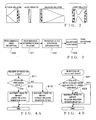
- FIG. 2 is a conceptual diagram showing examples of conventionally-known rendition style modules to be imparted to various portions of tones.
- the rendition style modules are prestored, in the ROM 2, external storage device 4, RAM 3 or the like, as a "rendition style table" where a variety of rendition style modules are compiled as a database.
- the rendition style modules each comprises original waveform data to be used for reproducing a waveform corresponding to any one of variety of rendition styles, and a group of related data.
- Each of the "rendition style modules” is a rendition style waveform unit that can be processed as a single data block in a rendition style waveform synthesis system; in other words, each of the "rendition style modules” is a rendition style waveform unit that can be processed as a single event.
- the rendition style modules as seen from Fig. 2 , include, in correspondence with timewise sections or portions etc.
- rendition style modules can be classified more finely into several rendition style types on the basis of characters of the individual rendition styles, in addition to the above-mentioned classification based on various portions of performance tones.
- the rendition style modules may be classified into: "Bendup Attack” which is an attack-related rendition style module that causes a bendup to take place immediately after a rise of a tone; "Glissup Attack” which is an attack-related rendition style module that causes a glissup to take place immediately after a rise of a tone; "Vibrato Body” which is a body-related rendition style module representative of a vibrato-imparted portion of a tone between rise and fall portions of a tone; “Benddown Release” which is a release-related rendition style module that causes a benddown to take place immediately before a fall of a tone; “Glissdown Release” which is a release-related rendition style module that causes a benddown to take place immediately after a fall of a tone; "Gliss Joint” which is a
- the human player can select any desired one of such rendition style types by operating any of the above-mentioned rendition style switches; however, these rendition style types will not be described in this specification because they are already known in the art.
- the rendition style modules are classified per original tone generator, such as musical instrument type. Further, selection from among various rendition style types may be made by any other means than the rendition style switch.
- each set of waveform data corresponding to one rendition style module is stored in a database as a data set of a plurality of waveform-constituting factors or elements, rather than being stored directly as the waveform data; each of the waveform-constituting elements will hereinafter be called a "vector".
- vectors corresponding to one rendition style module may include the following. Note that "harmonic” and “nonharmonic" components are defined here by separating an original rendition style waveform into a sine wave, waveform having a harmonious component capable of being additively synthesized, and the remaining waveform component.
- the rendition style waveform data of the rendition style module may include one or more other types of vectors, such as a time vector indicative of a time-axial progression of the waveform, although not specifically described here.
- waveforms or envelopes corresponding to various constituent elements of a rendition style waveform are constructed along a reproduction time axis of a performance tone by applying appropriate processing to these vector data to thereby modify the data values and arranging or allotting the thus-processed vector data on or to the time axis and then carrying out predetermined waveform synthesis processing on the basis of the vector data allotted to the time axis.
- a desired performance tone waveform i.e.
- a waveform segment of the harmonic component is produced by imparting a harmonic component's waveform shape vector with a pitch and time variation characteristic thereof corresponding to a harmonic component's pitch vector and with an amplitude and time variation characteristic thereof corresponding to a harmonic component's amplitude vector
- a waveform segment of the nonharmonic component is produced by imparting a nonharmonic component's waveform shape vector with an amplitude and time variation characteristic thereof corresponding to a nonharmonic component's amplitude vector.
- the desired performance tone waveform can be produced by additively synthesizing the thus-produced harmonic component's waveform segment and nonharmonic component's waveform segment, so that the tone to be sounded ultimately can be generated.
- tone synthesis processing will not be described later because it is known in the art.
- Each of the rendition style modules includes not only the aforementioned rendition style waveform data but also rendition style parameters.
- the rendition style parameters are parameters for controlling the time, level etc. of the waveform of the rendition style module in question.
- the rendition style parameters may include one or more kinds of parameters depending on the nature of the rendition style module.
- the "Bendup Attack" rendition style module may include different kinds of rendition style parameters, such as an absolute tone pitch at the end of the bendup attack, initial bend depth value during the bendup attack, time length from the start to end of the bendup attack, tone volume immediately after the bendup attack and timewise expansion/contraction of a default curve during the bendup attack.
- These "rendition style parameters" may be prestored in memory, or may be entered by user's input operation.
- the existing rendition style parameters may be modified via user operation. Further, in a case where no rendition style parameter is given at the time of reproduction of a rendition style waveform, predetermined standard rendition style parameters may be automatically applied Furthermore, suitable parameters may be automatically produoed and applied during the course of processing.
- each rendition style module has all of the waveform-constituting elements (waveform shape, pitch and amplitude) of the harmonic component and all of the waveform-constituting elements (waveform shape and amplitude) of the nonharmonic component, with a view to facilitating understanding of the description.
- the present invention is not so limited, and there may also be used rendition style modules each having only one of the waveform shape, pitch and amplitude elements of the harmonic component and only one of the waveform shape and/or amplitude elements of the nonharmonic component.
- some rendition style module may have only one of the waveform shape (Timbre), pitch and amplitude elements of the harmonic component and waveform shape and amplitude elements of the nonharmonic component.
- Such an alternative is preferable in that a plurality of rendition style modules can be used in combination per component.
- Fig. 3 is a functional block diagram showing an example general picture of the tone synthesis processing, where arrows indicate a processing flow.
- Performance reception section 100 performs a performance reception process for receiving in real time performance information (e.g., MIDI information) generated in response to operation by the human player.
- MIDI information such as note-on, note-off and control change data
- the performance operator unit 5 such as a keyboard
- rendition style switch output information indicative of which one of the rendition style switches having rendition style types allocated thereto in advance has been depressed or released, is output in real time, as control change data of MIDI information, from the rendition style switch.
- the performance reception section 100 is constantly monitoring so as to receive in real time such MIDI information output in response to operation of the performance operator unit 5 or rendition style switch.
- the performance reception section 100 When MIDI information has been received, the performance reception section 100 outputs the received MIDI information to a performance interpretation section 101.
- the performance interpretation section (“player") 101 performs performance interpretation processing on the basis of the received MIDI information.
- the received MIDI information is analyzed to generate rendition style designation information (i.e., rendition style ID and rendition style parameters), and performance information imparted with the thus-generated rendition style designation information (i.e., rendition-style-imparted performance information) is output to a rendition style synthesis section 102. More specifically, portion-specific rendition style modules are determined which are to be imparted at necessary performance time points corresponding to rendition styles in a time-serial flow of the received MIDI information.
- Fig. 4 is a flow chart showing an example operational sequence of the performance interpretation processing; more specifically, Fig. 4A shows an example operational sequence of the performance interpretation processing performed in response to reception of note-on event data, while Fig. 4B shows an example operational sequence of the performance interpretation processing performed in response to reception of note-off event data.
- the performance interpretation section 101 instructs the rendition style synthesis section 102 to impart a joint-related rendition style, at step S12. If, on the other hand, the note to be sounded in accordance with the received note-on event data does not overlap the preceding note, i.e. if the note-on event data has newly been received after receipt of the note-off event data of the preceding note (NO determination at step S11), the performance interpretation section 101 instructs the rendition style synthesis section 102 to impart an attack-related rendition style, at step S13.
- the performance interpretation section 101 when note-on event data has been received, the performance interpretation section 101 outputs to the rendition style synthesis section 102 rendition-style-imparted performance information with rendition style designation information designating a joint-related rendition style if the note to be sounded in accordance with the received note-on event data overlaps the preceding note, but it outputs to the rendition style synthesis section 102 rendition-style-imparted performance information with rendition style designation information designating an attack-related rendition style if the note to be sounded in accordance with the received note-on event data does not overlap the preceding note.
- the performance interpretation section 101 ignores the received note-off event data and does not output rendition-style-imparted performance information to the rendition style synthesis section 102 if next note-on event data has already been received and an instruction has been given for imparting a joint-related rendition style, but, if no instruction has been given for imparting a joint-related rendition style, the performance interpretation section 101 outputs to the rendition style synthesis section 102 rendition-style-imparted performance information imparted with rendition style designation information designating a release-related rendition style.
- the type of each rendition style which the rendition style synthesis section 102 is instructed to impart is determined in accordance with control change data, included in the MIDI information, output in response to operation of the corresponding rendition style switch. If no such control change data is included, a rendition style of a predetermined default type may be imparted.
- the rendition style synthesis section (articulator) 102 performs rendition style synthesis processing.
- the rendition style synthesis section 102 refers to the rendition style table, prestored in the external storage device 4, on the basis of the rendition style designation information (i.e., rendition style ID and rendition style parameters) in the rendition-style-imparted performance information generated by the performance interpretation section 101, to generate a packet stream (which may also be referred to as "vector stream”) corresponding the rendition style designation information and vector parameters pertaining to the stream.
- the thus generated packet stream and vector parameters are supplied to the waveform synthesis section 103.
- Data supplied to the waveform synthesis section 103 as the packet stream include, as regards the pitch element and amplitude element, time information of the packet, vector ID (also called vector data number), a train of values at representative points, etc., and the data supplied to the waveform synthesis section 103 also include, as regards the waveform shape (Timbre) element, vector ID (vector data number), time information, etc.
- start times at individual positions are calculated in accordance with the time information. Namely, individual rendition style modules are allotted to absolute time positions on the basis of the time information. More specifically, corresponding absolute times are calculated on the basis of element data indicating relative time positions, In this way, start times of the individual rendition style modules are calculated.
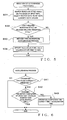
- Fig. 5 is a flow chart showing an example operational sequence of the rendition style synthesis processing performed by the rendition style synthesis section 102.
- the rendition style table is searched on the basis of the input information, i.e. rendition-style-imparted performance information, to select vector data to be used, and data values of the selected vector data are modified on the basis of the rendition-style-imparted performance information. For example, At this step, there performed operations, such as selection of vector data to be used, instruction related to qualification of vector data as to how the pitch element and amplitude element are to be controlled, start time calculation as to at what times vector data are to be used. At next step S32, a determination is made as to whether or not an instruction has been given for imparting a joint-related rendition style or release-related rendition style.
- the rendition style synthesis section 102 instructs the waveform synthesis section 103 to perform a later-described acceleration process of Fig. 6 , at step S33.
- the rendition style synthesis section 102 specifies, to the waveform synthesis section 103, the vector ID (vector data number), data values and start time.
- the start time thus specified to the waveform synthesis section 103 is the start time determined at step S31 above, or crossfade completion time advanced from the initially-set time and calculated by the acceleration process of step S33 above (see Fig. 6 ).
- the rendition style synthesis section 102 instructs the waveform synthesis section 103 to perform accelerated crossfade synthesis.
- the waveform synthesis section 103 performs waveform synthesis processing, where vector data are read out or retrieved from the "rendition style table" in accordance with the packet stream, the read-out vector data are modified in accordance with the vector parameters and then a waveform is synthesized on the basis of the modified vector data.
- the crossfade synthesis completion time is advanced from the initial time in accordance with the instruction given from the rendition style synthesis section 102 (see step S33 of Fig. 5 ), so that the waveform synthesis section 103 performs the accelerated crossfade synthesis to promptly complete the currently-performed crossfade synthesis.
- Fig. 6 is a flow chart showing an example operational sequence of the acceleration process for advancing the crossfade synthesis completion time from the initial time (see step S33 of Fig. 5 ).
- step S41 a determination is made as to whether the crossfade synthesis is currently under way. If the crossfade synthesis is currently under way (YES determination at step S41), the acceleration process goes to step S42, where it is further determined, on the basis of the start time previously specified by the rendition style synthesis section 102 (see step S31 of Fig. 5 ), whether or not the remaining time before completion of the current crossfade synthesis is shorter than a predetermined acceleration time (e.g., 10 ms). If the remaining time before the completion of the crossfade synthesis is not shorter than the predetermined acceleration time (NO determination at step S42), a crossfade completion time is newly calculated and set, at step S43. As an example, a sum of "current time + acceleration time" is set as the new crossfade completion time.
- a predetermined acceleration time e.g. 10 ms
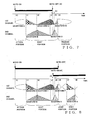
- Fig. 7 is a conceptual diagram outlining how tone synthesis is carried out by applying the accelerated crossfade synthesis to a release portion of a tone.
- Fig. 8 is a conceptual diagram outlining how tone synthesis is carried out by applying the accelerated crossfade synthesis to a joint portion.
- the tone synthesis described here uses two, i.e. first and second tone generating channels, similarly to the conventionally-known example explained above in relation to Fig. 9 . Tone synthesis operations performed at time point t0 to t3 are similar to those in the conventionally-known example of Fig. 9 and thus will not be described here to avoid unnecessary duplication.
- D loop waveform
- the above-described acceleration process ( Fig. 6 ) is carried out to change the crossfade completion time to time t5.
- the accelerated crossfade synthesis for expediting the fade-in and fade-out rates i.e., crossfade synthesis based on accelerated fade-out and fade-in according to crossfade curves from time point t4 to t5 with inclinations different from inclinations from time point t3 to time point t4, as indicated in thick lines in the figure
- the accelerated crossfade synthesis for expediting the fade-in and fade-out rates i.e., crossfade synthesis based on accelerated fade-out and fade-in according to crossfade curves from time point t4 to t5 with inclinations different from inclinations from time point t3 to time point t4, as indicated in thick lines in the figure
- the body portion tone waveform D
- tone waveform E tone waveform E
- the currently-performed crossfade synthesis is accelerated so as to be completed by the completion time in such a manner that the shift to a release waveform is started at time point t5, corresponding to a sum of values of the time t4 when the note-off instruction was given and a time ⁇ t representing an acceleration time, without waiting until crossfade synthesis between the tone waveform C being processed at the time of the note-off instruction and the tone waveform D is completed at the previously-set completion time, as in the conventional technique of Fig. 9 , Stated differently, the start time of the release waveform is changed by changing a crossfade characteristic during the course of the crossfade synthesis.
- the waveform shift from the body portion to the release portion can be made more promptly than in the conventional technique without the human player being particularly conscious of the waveform shift; thus, the instant embodiment can reduce a tone generation delay of a next note to be sounded based on a next note-on instruction (not shown).
- the synthesis is started while still another tone waveform D (loop waveform) constituting the body portion is being caused to fade in via the second tone generating channel, and simultaneously, fade-out of the tone waveform C of the first tone generating channel is started.
- D loop waveform
- the accelerated crossfade synthesis i.e., crossfade synthesis according to crossfade curves from time point t4 to t5 with inclinations different from inclinations from time point t3 to time point t4, as indicated in thick lines in the figure
- the accelerated crossfade synthesis is automatically performed so as to allow a shift from the body portion (tone waveform D) to the joint portion (tone waveform F) to be effected promptly.
- the currently-performed crossfade synthesis is accelerated so as to be completed by the above-mentioned completion time in such a manner that the shift to a joint waveform is started at time point t5, corresponding to a sum of values of the time t4 when the note-on instruction was given and the time ⁇ t representing an acceleration time, without waiting until crossfade synthesis between the tone waveform C being processed when the note-on instruction was given and the tone waveform D is completed at the previously-set completion time.
- the start time of the joint waveform is changed by changing the crossfade characteristic during the course of the crossfade synthesis.
- the instant embodiment can reduce a tone generation delay of a succeeding one of a plurality of notes to be connected together to such an extent that the delay will not be particularly perceived.
- tone waveforms to be crossfade-synthesized are loop waveform segments
- non-loop waveform (also called “block waveform”) segments may be crossfade-synthesized.
- crossfade characteristic of the crossfade synthesis is not limited to a linear characteristic and may be a non-linear characteristic.
- control curve of the crossfade synthesis i.e., crossfade curve
- the human player may select a desired crossfade characteristic.
- the acceleration (crossfade characteristic) of the crossfade synthesis need not necessarily use, or depend on, an absolute time, such as the above-mentioned crossfade completion time; alternatively, the acceleration may use, or depend on, any of a plurality of predetermined crossfade characteristics (i.e., rate dependency), or a combination of crossfade characteristics predetermined per rendition style module.
- next data has already been automatically prepared for the crossfade synthesis before an instruction regarding the next data is given by the rendition style synthesis section 102
- the already-prepared next data may be canceled.
- This approach is preferable in that it permits a smooth connection to the next data instructed by the rendition style synthesis section 102.
- the acceleration time to be used to advance the crossfade synthesis completion time may be set by the user to any desired time, or a different acceleration time may be preset in accordance with the rendition styles to be crossfade-synthesized. If the crossfade synthesis completion time is set to be later than the preset time by increasing the length of the acceleration time, it is possible to retard a waveform shift by a corresponding time amount.
- the present invention may of course be arranged to synthesize a tone on the basis of, for example, music piece data generated based on a plurality of pieces of MIDI information of a music piece prestored in the external storage device 4 or the like in particular order of a performance.
- the rendition style impartment may be controlled by the user appropriately operating the rendition style switches to a music piece performance based on such music piece data, rather than operating the rendition style switches to a performance on the keyboard.
- only MIDI information based on operation of the rendition style switches may be prestored so that the rendition style impartment is automatically controlled in accordance with the MIDI information, in which case the user is allowed to execute only a keyboard performance.
Landscapes
- Engineering & Computer Science (AREA)
- Physics & Mathematics (AREA)
- Acoustics & Sound (AREA)
- Multimedia (AREA)
- General Engineering & Computer Science (AREA)
- Electrophonic Musical Instruments (AREA)
Applications Claiming Priority (1)
| Application Number | Priority Date | Filing Date | Title |
|---|---|---|---|
| JP2005156560A JP4274152B2 (ja) | 2005-05-30 | 2005-05-30 | 楽音合成装置 |
Publications (2)
| Publication Number | Publication Date |
|---|---|
| EP1729283A1 EP1729283A1 (en) | 2006-12-06 |
| EP1729283B1 true EP1729283B1 (en) | 2015-04-15 |
Family
ID=36676160
Family Applications (1)
| Application Number | Title | Priority Date | Filing Date |
|---|---|---|---|
| EP06010998.0A Not-in-force EP1729283B1 (en) | 2005-05-30 | 2006-05-29 | Tone synthesis apparatus and method |
Country Status (4)
| Country | Link |
|---|---|
| US (1) | US7396992B2 (enExample) |
| EP (1) | EP1729283B1 (enExample) |
| JP (1) | JP4274152B2 (enExample) |
| CN (1) | CN1873775B (enExample) |
Families Citing this family (10)
| Publication number | Priority date | Publication date | Assignee | Title |
|---|---|---|---|---|
| EP1734508B1 (en) * | 2005-06-17 | 2007-09-19 | Yamaha Corporation | Musical sound waveform synthesizer |
| JP4525619B2 (ja) * | 2005-12-14 | 2010-08-18 | ヤマハ株式会社 | 電子楽器の鍵盤装置 |
| JP4561636B2 (ja) * | 2006-01-10 | 2010-10-13 | ヤマハ株式会社 | 楽音合成装置及びプログラム |
| JP4702160B2 (ja) * | 2006-04-25 | 2011-06-15 | ヤマハ株式会社 | 楽音合成装置及びプログラム |
| JP5142363B2 (ja) * | 2007-08-22 | 2013-02-13 | 株式会社河合楽器製作所 | 成分音合成装置及び成分音合成方法。 |
| US8553504B2 (en) * | 2008-12-08 | 2013-10-08 | Apple Inc. | Crossfading of audio signals |
| US8183452B2 (en) * | 2010-03-23 | 2012-05-22 | Yamaha Corporation | Tone generation apparatus |
| JP5701011B2 (ja) * | 2010-10-26 | 2015-04-15 | ローランド株式会社 | 電子楽器 |
| WO2019240042A1 (ja) * | 2018-06-15 | 2019-12-19 | ヤマハ株式会社 | 表示制御方法、表示制御装置およびプログラム |
| CN116259293A (zh) * | 2021-12-09 | 2023-06-13 | 雅马哈株式会社 | 信号生成方法、信号生成系统、电子乐器及程序 |
Family Cites Families (9)
| Publication number | Priority date | Publication date | Assignee | Title |
|---|---|---|---|---|
| US5262582A (en) | 1986-11-10 | 1993-11-16 | Terumo Kabushiki Kaisha | Musical tone generating apparatus for electronic musical instrument |
| JP3296648B2 (ja) * | 1993-11-30 | 2002-07-02 | 三洋電機株式会社 | ディジタル音程変換における不連続点の改善処理方法およびその装置 |
| US5744739A (en) * | 1996-09-13 | 1998-04-28 | Crystal Semiconductor | Wavetable synthesizer and operating method using a variable sampling rate approximation |
| JP3675184B2 (ja) | 1997-09-30 | 2005-07-27 | ヤマハ株式会社 | 波形形成装置及び方法 |
| DE69823947T2 (de) | 1997-09-30 | 2005-05-19 | Yamaha Corp., Hamamatsu | Verfahren, Vorrichtung und Aufzeichnungsmedium zur Erzeugung von Tondaten |
| JP3644263B2 (ja) | 1998-07-31 | 2005-04-27 | ヤマハ株式会社 | 波形形成装置及び方法 |
| JP3744216B2 (ja) | 1998-08-07 | 2006-02-08 | ヤマハ株式会社 | 波形形成装置及び方法 |
| JP3654080B2 (ja) | 1999-09-27 | 2005-06-02 | ヤマハ株式会社 | 波形生成方法及び装置 |
| JP3829780B2 (ja) | 2002-08-22 | 2006-10-04 | ヤマハ株式会社 | 奏法決定装置及びプログラム |
-
2005
- 2005-05-30 JP JP2005156560A patent/JP4274152B2/ja not_active Expired - Fee Related
-
2006
- 2006-05-26 US US11/441,682 patent/US7396992B2/en active Active
- 2006-05-29 EP EP06010998.0A patent/EP1729283B1/en not_active Not-in-force
- 2006-05-30 CN CN2006100842467A patent/CN1873775B/zh not_active Expired - Fee Related
Also Published As
| Publication number | Publication date |
|---|---|
| EP1729283A1 (en) | 2006-12-06 |
| US7396992B2 (en) | 2008-07-08 |
| JP2006330532A (ja) | 2006-12-07 |
| US20060272482A1 (en) | 2006-12-07 |
| CN1873775B (zh) | 2011-06-01 |
| CN1873775A (zh) | 2006-12-06 |
| JP4274152B2 (ja) | 2009-06-03 |
Similar Documents
| Publication | Publication Date | Title |
|---|---|---|
| US7259315B2 (en) | Waveform production method and apparatus | |
| US6881888B2 (en) | Waveform production method and apparatus using shot-tone-related rendition style waveform | |
| EP1087374B1 (en) | Method and apparatus for producing a waveform with sample data adjustment based on representative point | |
| US7432435B2 (en) | Tone synthesis apparatus and method | |
| US6911591B2 (en) | Rendition style determining and/or editing apparatus and method | |
| US7557288B2 (en) | Tone synthesis apparatus and method | |
| EP1087373B1 (en) | Method and apparatus for producing a waveform exhibiting rendition style characteristics | |
| EP1729283B1 (en) | Tone synthesis apparatus and method | |
| US7816599B2 (en) | Tone synthesis apparatus and method | |
| EP1087370B1 (en) | Method and apparatus for producing a waveform based on parameter control of articulation synthesis | |
| EP1638077B1 (en) | Automatic rendition style determining apparatus, method and computer program | |
| EP1087368B1 (en) | Method and apparatus for recording/reproducing or producing a waveform using time position information | |
| EP1742200A1 (en) | Tone synthesis apparatus and method | |
| EP1087369B1 (en) | Method and apparatus for producing a waveform using a packet stream | |
| EP1391873B1 (en) | Rendition style determination apparatus and method | |
| EP1087375B1 (en) | Method and appratus for producing a waveform based on a style-of-rendition stream data | |
| EP1087371B1 (en) | Method and apparatus for producing a waveform with improved link between adjoining module data | |
| US7420113B2 (en) | Rendition style determination apparatus and method |
Legal Events
| Date | Code | Title | Description |
|---|---|---|---|
| PUAI | Public reference made under article 153(3) epc to a published international application that has entered the european phase |
Free format text: ORIGINAL CODE: 0009012 |
|
| AK | Designated contracting states |
Kind code of ref document: A1 Designated state(s): AT BE BG CH CY CZ DE DK EE ES FI FR GB GR HU IE IS IT LI LT LU LV MC NL PL PT RO SE SI SK TR |
|
| AX | Request for extension of the european patent |
Extension state: AL BA HR MK YU |
|
| RAP1 | Party data changed (applicant data changed or rights of an application transferred) |
Owner name: YAMAHA CORPORATION |
|
| 17P | Request for examination filed |
Effective date: 20070606 |
|
| AKX | Designation fees paid |
Designated state(s): AT BE BG CH CY CZ DE DK EE ES FI FR GB GR HU IE IS IT LI LT LU LV MC NL PL PT RO SE SI SK TR |
|
| GRAP | Despatch of communication of intention to grant a patent |
Free format text: ORIGINAL CODE: EPIDOSNIGR1 |
|
| INTG | Intention to grant announced |
Effective date: 20141031 |
|
| GRAS | Grant fee paid |
Free format text: ORIGINAL CODE: EPIDOSNIGR3 |
|
| GRAA | (expected) grant |
Free format text: ORIGINAL CODE: 0009210 |
|
| AK | Designated contracting states |
Kind code of ref document: B1 Designated state(s): AT BE BG CH CY CZ DE DK EE ES FI FR GB GR HU IE IS IT LI LT LU LV MC NL PL PT RO SE SI SK TR |
|
| REG | Reference to a national code |
Ref country code: GB Ref legal event code: FG4D Ref country code: CH Ref legal event code: EP |
|
| REG | Reference to a national code |
Ref country code: IE Ref legal event code: FG4D |
|
| REG | Reference to a national code |
Ref country code: AT Ref legal event code: REF Ref document number: 722362 Country of ref document: AT Kind code of ref document: T Effective date: 20150515 |
|
| REG | Reference to a national code |
Ref country code: DE Ref legal event code: R096 Ref document number: 602006045099 Country of ref document: DE Effective date: 20150528 |
|
| REG | Reference to a national code |
Ref country code: NL Ref legal event code: VDEP Effective date: 20150415 |
|
| REG | Reference to a national code |
Ref country code: AT Ref legal event code: MK05 Ref document number: 722362 Country of ref document: AT Kind code of ref document: T Effective date: 20150415 |
|
| REG | Reference to a national code |
Ref country code: LT Ref legal event code: MG4D |
|
| PG25 | Lapsed in a contracting state [announced via postgrant information from national office to epo] |
Ref country code: NL Free format text: LAPSE BECAUSE OF FAILURE TO SUBMIT A TRANSLATION OF THE DESCRIPTION OR TO PAY THE FEE WITHIN THE PRESCRIBED TIME-LIMIT Effective date: 20150415 |
|
| PG25 | Lapsed in a contracting state [announced via postgrant information from national office to epo] |
Ref country code: ES Free format text: LAPSE BECAUSE OF FAILURE TO SUBMIT A TRANSLATION OF THE DESCRIPTION OR TO PAY THE FEE WITHIN THE PRESCRIBED TIME-LIMIT Effective date: 20150415 Ref country code: LT Free format text: LAPSE BECAUSE OF FAILURE TO SUBMIT A TRANSLATION OF THE DESCRIPTION OR TO PAY THE FEE WITHIN THE PRESCRIBED TIME-LIMIT Effective date: 20150415 Ref country code: FI Free format text: LAPSE BECAUSE OF FAILURE TO SUBMIT A TRANSLATION OF THE DESCRIPTION OR TO PAY THE FEE WITHIN THE PRESCRIBED TIME-LIMIT Effective date: 20150415 Ref country code: PT Free format text: LAPSE BECAUSE OF FAILURE TO SUBMIT A TRANSLATION OF THE DESCRIPTION OR TO PAY THE FEE WITHIN THE PRESCRIBED TIME-LIMIT Effective date: 20150817 |
|
| PG25 | Lapsed in a contracting state [announced via postgrant information from national office to epo] |
Ref country code: AT Free format text: LAPSE BECAUSE OF FAILURE TO SUBMIT A TRANSLATION OF THE DESCRIPTION OR TO PAY THE FEE WITHIN THE PRESCRIBED TIME-LIMIT Effective date: 20150415 Ref country code: GR Free format text: LAPSE BECAUSE OF FAILURE TO SUBMIT A TRANSLATION OF THE DESCRIPTION OR TO PAY THE FEE WITHIN THE PRESCRIBED TIME-LIMIT Effective date: 20150716 Ref country code: LV Free format text: LAPSE BECAUSE OF FAILURE TO SUBMIT A TRANSLATION OF THE DESCRIPTION OR TO PAY THE FEE WITHIN THE PRESCRIBED TIME-LIMIT Effective date: 20150415 Ref country code: IS Free format text: LAPSE BECAUSE OF FAILURE TO SUBMIT A TRANSLATION OF THE DESCRIPTION OR TO PAY THE FEE WITHIN THE PRESCRIBED TIME-LIMIT Effective date: 20150815 |
|
| REG | Reference to a national code |
Ref country code: CH Ref legal event code: PL |
|
| REG | Reference to a national code |
Ref country code: DE Ref legal event code: R097 Ref document number: 602006045099 Country of ref document: DE |
|
| PG25 | Lapsed in a contracting state [announced via postgrant information from national office to epo] |
Ref country code: CH Free format text: LAPSE BECAUSE OF NON-PAYMENT OF DUE FEES Effective date: 20150531 Ref country code: IT Free format text: LAPSE BECAUSE OF FAILURE TO SUBMIT A TRANSLATION OF THE DESCRIPTION OR TO PAY THE FEE WITHIN THE PRESCRIBED TIME-LIMIT Effective date: 20150415 Ref country code: EE Free format text: LAPSE BECAUSE OF FAILURE TO SUBMIT A TRANSLATION OF THE DESCRIPTION OR TO PAY THE FEE WITHIN THE PRESCRIBED TIME-LIMIT Effective date: 20150415 Ref country code: DK Free format text: LAPSE BECAUSE OF FAILURE TO SUBMIT A TRANSLATION OF THE DESCRIPTION OR TO PAY THE FEE WITHIN THE PRESCRIBED TIME-LIMIT Effective date: 20150415 Ref country code: LI Free format text: LAPSE BECAUSE OF NON-PAYMENT OF DUE FEES Effective date: 20150531 Ref country code: MC Free format text: LAPSE BECAUSE OF FAILURE TO SUBMIT A TRANSLATION OF THE DESCRIPTION OR TO PAY THE FEE WITHIN THE PRESCRIBED TIME-LIMIT Effective date: 20150415 |
|
| PLBE | No opposition filed within time limit |
Free format text: ORIGINAL CODE: 0009261 |
|
| STAA | Information on the status of an ep patent application or granted ep patent |
Free format text: STATUS: NO OPPOSITION FILED WITHIN TIME LIMIT |
|
| REG | Reference to a national code |
Ref country code: IE Ref legal event code: MM4A |
|
| REG | Reference to a national code |
Ref country code: FR Ref legal event code: ST Effective date: 20160129 |
|
| PG25 | Lapsed in a contracting state [announced via postgrant information from national office to epo] |
Ref country code: RO Free format text: LAPSE BECAUSE OF NON-PAYMENT OF DUE FEES Effective date: 20150415 Ref country code: CZ Free format text: LAPSE BECAUSE OF FAILURE TO SUBMIT A TRANSLATION OF THE DESCRIPTION OR TO PAY THE FEE WITHIN THE PRESCRIBED TIME-LIMIT Effective date: 20150415 Ref country code: PL Free format text: LAPSE BECAUSE OF FAILURE TO SUBMIT A TRANSLATION OF THE DESCRIPTION OR TO PAY THE FEE WITHIN THE PRESCRIBED TIME-LIMIT Effective date: 20150415 Ref country code: SK Free format text: LAPSE BECAUSE OF FAILURE TO SUBMIT A TRANSLATION OF THE DESCRIPTION OR TO PAY THE FEE WITHIN THE PRESCRIBED TIME-LIMIT Effective date: 20150415 |
|
| 26N | No opposition filed |
Effective date: 20160118 |
|
| PG25 | Lapsed in a contracting state [announced via postgrant information from national office to epo] |
Ref country code: IE Free format text: LAPSE BECAUSE OF NON-PAYMENT OF DUE FEES Effective date: 20150529 |
|
| PG25 | Lapsed in a contracting state [announced via postgrant information from national office to epo] |
Ref country code: FR Free format text: LAPSE BECAUSE OF NON-PAYMENT OF DUE FEES Effective date: 20150615 Ref country code: SI Free format text: LAPSE BECAUSE OF FAILURE TO SUBMIT A TRANSLATION OF THE DESCRIPTION OR TO PAY THE FEE WITHIN THE PRESCRIBED TIME-LIMIT Effective date: 20150415 |
|
| PG25 | Lapsed in a contracting state [announced via postgrant information from national office to epo] |
Ref country code: BE Free format text: LAPSE BECAUSE OF FAILURE TO SUBMIT A TRANSLATION OF THE DESCRIPTION OR TO PAY THE FEE WITHIN THE PRESCRIBED TIME-LIMIT Effective date: 20150415 |
|
| PG25 | Lapsed in a contracting state [announced via postgrant information from national office to epo] |
Ref country code: BG Free format text: LAPSE BECAUSE OF FAILURE TO SUBMIT A TRANSLATION OF THE DESCRIPTION OR TO PAY THE FEE WITHIN THE PRESCRIBED TIME-LIMIT Effective date: 20150415 Ref country code: HU Free format text: LAPSE BECAUSE OF FAILURE TO SUBMIT A TRANSLATION OF THE DESCRIPTION OR TO PAY THE FEE WITHIN THE PRESCRIBED TIME-LIMIT; INVALID AB INITIO Effective date: 20060529 |
|
| PG25 | Lapsed in a contracting state [announced via postgrant information from national office to epo] |
Ref country code: SE Free format text: LAPSE BECAUSE OF FAILURE TO SUBMIT A TRANSLATION OF THE DESCRIPTION OR TO PAY THE FEE WITHIN THE PRESCRIBED TIME-LIMIT Effective date: 20150415 Ref country code: CY Free format text: LAPSE BECAUSE OF FAILURE TO SUBMIT A TRANSLATION OF THE DESCRIPTION OR TO PAY THE FEE WITHIN THE PRESCRIBED TIME-LIMIT Effective date: 20150415 |
|
| PGFP | Annual fee paid to national office [announced via postgrant information from national office to epo] |
Ref country code: GB Payment date: 20170524 Year of fee payment: 12 |
|
| PG25 | Lapsed in a contracting state [announced via postgrant information from national office to epo] |
Ref country code: TR Free format text: LAPSE BECAUSE OF FAILURE TO SUBMIT A TRANSLATION OF THE DESCRIPTION OR TO PAY THE FEE WITHIN THE PRESCRIBED TIME-LIMIT Effective date: 20150415 |
|
| PG25 | Lapsed in a contracting state [announced via postgrant information from national office to epo] |
Ref country code: LU Free format text: LAPSE BECAUSE OF NON-PAYMENT OF DUE FEES Effective date: 20150529 |
|
| GBPC | Gb: european patent ceased through non-payment of renewal fee |
Effective date: 20180529 |
|
| PG25 | Lapsed in a contracting state [announced via postgrant information from national office to epo] |
Ref country code: GB Free format text: LAPSE BECAUSE OF NON-PAYMENT OF DUE FEES Effective date: 20180529 |
|
| PGFP | Annual fee paid to national office [announced via postgrant information from national office to epo] |
Ref country code: DE Payment date: 20190521 Year of fee payment: 14 |
|
| REG | Reference to a national code |
Ref country code: DE Ref legal event code: R119 Ref document number: 602006045099 Country of ref document: DE |
|
| PG25 | Lapsed in a contracting state [announced via postgrant information from national office to epo] |
Ref country code: DE Free format text: LAPSE BECAUSE OF NON-PAYMENT OF DUE FEES Effective date: 20201201 |