EP1718678B1 - Anti-human tenascin monoclonal antibody - Google Patents
Anti-human tenascin monoclonal antibody Download PDFInfo
- Publication number
- EP1718678B1 EP1718678B1 EP05718988.8A EP05718988A EP1718678B1 EP 1718678 B1 EP1718678 B1 EP 1718678B1 EP 05718988 A EP05718988 A EP 05718988A EP 1718678 B1 EP1718678 B1 EP 1718678B1
- Authority
- EP
- European Patent Office
- Prior art keywords
- antibody
- tenascin
- vial
- biotinylated
- group
- Prior art date
- Legal status (The legal status is an assumption and is not a legal conclusion. Google has not performed a legal analysis and makes no representation as to the accuracy of the status listed.)
- Expired - Lifetime
Links
Images





Classifications
-
- C—CHEMISTRY; METALLURGY
- C07—ORGANIC CHEMISTRY
- C07K—PEPTIDES
- C07K16/00—Immunoglobulins [IG], e.g. monoclonal or polyclonal antibodies
- C07K16/18—Immunoglobulins [IG], e.g. monoclonal or polyclonal antibodies against material from animals or humans
- C07K16/28—Immunoglobulins [IG], e.g. monoclonal or polyclonal antibodies against material from animals or humans against receptors, cell surface antigens or cell surface determinants
- C07K16/30—Immunoglobulins [IG], e.g. monoclonal or polyclonal antibodies against material from animals or humans against receptors, cell surface antigens or cell surface determinants from tumour cells
-
- A—HUMAN NECESSITIES
- A61—MEDICAL OR VETERINARY SCIENCE; HYGIENE
- A61P—SPECIFIC THERAPEUTIC ACTIVITY OF CHEMICAL COMPOUNDS OR MEDICINAL PREPARATIONS
- A61P35/00—Antineoplastic agents
-
- A—HUMAN NECESSITIES
- A61—MEDICAL OR VETERINARY SCIENCE; HYGIENE
- A61P—SPECIFIC THERAPEUTIC ACTIVITY OF CHEMICAL COMPOUNDS OR MEDICINAL PREPARATIONS
- A61P37/00—Drugs for immunological or allergic disorders
-
- A—HUMAN NECESSITIES
- A61—MEDICAL OR VETERINARY SCIENCE; HYGIENE
- A61P—SPECIFIC THERAPEUTIC ACTIVITY OF CHEMICAL COMPOUNDS OR MEDICINAL PREPARATIONS
- A61P43/00—Drugs for specific purposes, not provided for in groups A61P1/00-A61P41/00
-
- C—CHEMISTRY; METALLURGY
- C07—ORGANIC CHEMISTRY
- C07K—PEPTIDES
- C07K16/00—Immunoglobulins [IG], e.g. monoclonal or polyclonal antibodies
- C07K16/18—Immunoglobulins [IG], e.g. monoclonal or polyclonal antibodies against material from animals or humans
-
- C—CHEMISTRY; METALLURGY
- C07—ORGANIC CHEMISTRY
- C07K—PEPTIDES
- C07K16/00—Immunoglobulins [IG], e.g. monoclonal or polyclonal antibodies
- C07K16/46—Hybrid immunoglobulins
-
- A—HUMAN NECESSITIES
- A61—MEDICAL OR VETERINARY SCIENCE; HYGIENE
- A61K—PREPARATIONS FOR MEDICAL, DENTAL OR TOILETRY PURPOSES
- A61K39/00—Medicinal preparations containing antigens or antibodies
- A61K2039/505—Medicinal preparations containing antigens or antibodies comprising antibodies
-
- C—CHEMISTRY; METALLURGY
- C07—ORGANIC CHEMISTRY
- C07K—PEPTIDES
- C07K2317/00—Immunoglobulins specific features
- C07K2317/50—Immunoglobulins specific features characterized by immunoglobulin fragments
- C07K2317/56—Immunoglobulins specific features characterized by immunoglobulin fragments variable (Fv) region, i.e. VH and/or VL
-
- C—CHEMISTRY; METALLURGY
- C07—ORGANIC CHEMISTRY
- C07K—PEPTIDES
- C07K2317/00—Immunoglobulins specific features
- C07K2317/90—Immunoglobulins specific features characterized by (pharmaco)kinetic aspects or by stability of the immunoglobulin
- C07K2317/92—Affinity (KD), association rate (Ka), dissociation rate (Kd) or EC50 value
-
- Y—GENERAL TAGGING OF NEW TECHNOLOGICAL DEVELOPMENTS; GENERAL TAGGING OF CROSS-SECTIONAL TECHNOLOGIES SPANNING OVER SEVERAL SECTIONS OF THE IPC; TECHNICAL SUBJECTS COVERED BY FORMER USPC CROSS-REFERENCE ART COLLECTIONS [XRACs] AND DIGESTS
- Y10—TECHNICAL SUBJECTS COVERED BY FORMER USPC
- Y10S—TECHNICAL SUBJECTS COVERED BY FORMER USPC CROSS-REFERENCE ART COLLECTIONS [XRACs] AND DIGESTS
- Y10S435/00—Chemistry: molecular biology and microbiology
- Y10S435/81—Packaged device or kit
Definitions
- the present invention relates to anti-human tenascin monoclonal antibodies, methods and materials for obtaining them, the use of said antibodies in diagnostic and treatment procedures for tumours expressing tenascin and materials containing said antibodies suitable for use in the medical field.
- tumour therapy often constitutes a limiting factor in determining the success of the treatment.
- the onset of toxic effects and the reduced tolerability of a number of anticancer agents limit their use and the quality of life of the patients.
- Monoclonal antibodies are the ideal instrument for specifically localising the tumour and, when combined with the avidin/biotin amplification system, constitute an extremely potent method for directing active molecules to the tumour site.
- Tenascin is a molecule of the extracellular matrix, expressed during embryogenesis and in adult tissues during the processes of scar formation and tumour development, as well as in newly formed blood vessels. Tenascin is virtually absent in normal adult tissues, whereas it is expressed in the stroma of many solid tumours such as gliomas ( Burdon, et al., Cancer Res., 43:2796-2805, 1983 ), carcinomas of the breast ( Chiquet-Ehrismann, et al., 1986 ), lung ( Natali, et al., Intl. J. Cancer, 54:56-68, 1989 ), fibrosarcomas and squamous-cell carcinomas ( Ramos, D.M. et al., Intl. J.
- Tenascin is expressed in glioma, but not in the corresponding normal brain tissue.
- the reader is referred to WO 92/04464 , Wistar and related references.
- Three-step pre-targeting treatment is based on the sequential intravenous administration of a biotinylated anti-tenascin monoclonal antibody, streptavidin and 90 Y-biotin, with administrations of avidin and biotinylated albumin prior to the streptavidin and 90 Y-biotin, respectively ("chase" step), to reduce the circulating levels of the antibody and of streptavidin.
- the selectivity of the 3-step pre-targeting method is due to the use of the anti-tenascin monoclonal antibody.
- the targeting of extracellular matrix molecules presents the advantage, compared to targeting aimed at cell surface antigens, of not being affected by modulation of antigen expression by the tumour cell itself.
- the doses, administration times and "chases" of the pre-targeting treatment have been established for the purposes of obtaining optimal tumour to non-tumour biodistribution ratios.
- biotinylated anti-tenascin antibody The role of the biotinylated anti-tenascin antibody is to localise in the tumour and mediate, via the biotinylated molecule, the accumulation of avidin and subsequently of 90 Y-biotin, directing the radioisotopes directly into the interior of the tumour.
- Anti-tenascin antibodies are already the object of patents and patent applications: US 5,624,659 , Duke University; JP 2219590, Rikagaku ; WO 92/04464, Wistar ; and WO 03/072608, Sigma-Tau .
- BC-2 The clone used for the generation of said antibody in the above-cited studies is called BC-2.
- the applicant has demonstrated that the clone BC-2 is not suitable for industrial development, in that it produces an additional non-functional light chain (probably deriving from the parent myeloma line) whose level of expression increases during development of the production process on a large scale, preventing industrial-scale purification of the antibody.
- Antibody ST2485 the object of the present invention, recognises an epitope partly shared with that of BC-2, and therefore located in the same protein region. This region is greatly expressed in various tumour tissues. It is therefore important to have a homogeneous monoclonal antibody which is specific for this region, to be used for cancer diagnosis or targeting.
- antibody ST2485 presents the advantage of binding to tenascin in addition to antibody ST2146, thus proving useful in pre-targeting methods involving the combined use of the two antibodies.
- An anti-human tenascin monoclonal antibody has now been found which solves the above-mentioned problems, since it does not possess a non-functional light chain and presents the advantage of additivity when used in combination with another anti-tenascin antibody.
- This antibody is the object of the present invention, together with the method for obtaining it and its use in therapy, in particular for the preparation of a product useful for the treatment of diseases characterised by the expression of tenascin, such as, for instance, tumours.
- the present invention relates to the antibody and to antibody fragments, optionally containing additional markers and diagnostic agents, to processes for obtaining said antibody and antibody fragments, to pharmaceutical compositions containing said antibody and its fragments and to diagnostic and therapeutic methods making use of them, as well as kits useful for implementing said methods.
- the present invention also relates to the DNA encoding said antibody or fragments thereof, to vectors containing such DNA, to host cells containing such vectors, to the protein coded for by the nucleotide sequences SEQ ID 1 and SEQ ID 2, to the DNA encoding the protein and the fragments.
- the object of the present invention is also the hybridoma that produces said monoclonal antibody.
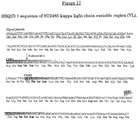
- the antibody which is the object of the present invention is characterised by the sequences of the variable region of the light and heavy chains SEQ ID 1 and SEQ ID 2, respectively, shown in Figures 17 and 18 .
- the antibody which is the object of the present invention will be identified by the name ST2485.
- fragments of ST2485 or its chimeric or recombinant derivatives can be produced and used within the scope of the present invention.
- objects of the present invention are the proteolytic fragments of said antibody capable of binding to an antigenic epitope within the A1-4-D region of human tenascin.
- antibody fragments are those fragments capable of binding to an antigenic epitope within the A1-4-D region of human tenascin C.
- said antibody or proteolytic fragments are preferably biotinylated.
- Another object of the present invention consists in the hybridoma cell line, called cST2485, producing the antibody ST2485.
- the hybridoma cell line was deposited at the Centro di Biotecnologie Avanzate, Largo Rossana Benzi 10, Genoa, Italy, on 12 November 2003 in accordance with the provisions of the Budapest Treaty, under deposit number PD03003.
- the recombinant derivatives of antibody ST2485 which may optionally be biotinylated.
- the recombinant derivatives preferred are those in which the murine constant region is replaced by its human counterpart ( Ferrer, C., et al., J. Biotechnol., 52: 51-60, 1996 ), or those in which the murine constant region is replaced by a biologically active component, such as, for example, a member of the avidin family ( Penichet ML., Manuel, L., et al., J.
- a growth factor useful for stimulating tumour-directed immunological effectors for example, G-CSF, GM-CSF
- a growth factor useful for stimulating tumour-directed immunological effectors for example, G-CSF, GM-CSF
- a pharmacologically active component such as, for example, a superantigen, a toxin, a cytokine or any other protein useful for enhancing the anticancer therapeutic efficacy
- Another object of the present invention consists in conjugated derivatives of antibody ST2485, optionally biotinylated.
- the conjugated derivatives preferred are those in which the biologically active component is bound to the antibody by means of conventional systems.
- biologically active compounds are the members of the avidin family, a growth factor useful stimulating tumour-directed immunological effectors (for example, G-CSF, GM-CSF), or those in which the murine constant region is replaced by a pharmacologically active component, such as, for example, a superantigen, a toxin, a cytokine or any other protein useful for enhancing the anticancer therapeutic efficacy, anticancer drugs, and radioisotopes.
- a pharmacologically active component such as, for example, a superantigen, a toxin, a cytokine or any other protein useful for enhancing the anticancer therapeutic efficacy, anticancer drugs, and radioisotopes.
- a further object of the present invention consists in the use of the antibody or its derivatives for the preparation of a pharmaceutical product useful in a method for cancer radioimmunotherapy carried out preferably according to the method called three-step pre-targeting, also known by the trade-mark PAGRIT ® , including the administration to a subject suffering from a cancer expressing the tenascin antibody ST2485 or proteolytic fragments thereof, preferably biotinylated.
- Recombinant derivatives of the antibody which is the object of the present invention and its conjugates can be used to advantage in cancer therapy. Therefore, the use of the antibody and its fragments or derivatives in the preparation of a medicine for the treatment of tumours expressing tenascin constitutes a further object of the present invention.
- the systemic kit consists of 5 vials, including vial 1 containing the bio-tinylated antibody or fragments or derivatives thereof according to the present invention; vial 2 containing avidin; vial 3 containing streptavidin; vial 4 containing biotinylated human albumin; and vial 5 containing biotin DOTA (or derivatives of biotin described in WO 02/066075 ).
- the locoregional kits consists of 3 vials, corresponding to vials 1, 2 and 5 of the systemic kit.
- the vials are prepared so as to be suitable for injection in the subject to be treated, preferably a human subject.
- IART Intraoperative Avidination for Radionuclide Treatment
- reagents which are the object of the present invention, either alone or in combination with other components of the PAGRIT ® kit.
- the specific container preferably in the form of a vial suitable for injection containing the antibody or its fragments in biotinylated form, constitutes a further object of the present invention.
- the biotinylated antibody in the therapeutic kits is combined with other anti-tenascin antibodies, preferably directed at the EGF-like region of the protein.
- the biotinylated antibody can be coupled to other antibodies specific to the tumour.
- EP 0 496 074 European Journal of Nuclear Medicine Viol.26, No4; April, 1999;348-357 , US 5,968,405 .
- Another object of the present invention is the use of the monoclonal antibody ST2485 for obtaining images for subsequent diagnostic purposes ("imaging") by means of in-vivo immunolocalisation in the tumour.
- Another object of the present invention is the use of the monoclonal antibody ST2485 in combination with a second anti-tenascin antibody in a test for the production of a diagnostic kit for determining circulating levels of tenascin.
- the inventors have prepared a new anti-human tenascin antibody called ST2485, whose light and heavy chain variable region sequences are SEQ ID 1 and SEQ ID 2, respectively, produced from the hybridoma cell line cST2485.
- the antibody is capable of binding to an antigenic epitope within the A (1-4) -D region of human tenascin.
- proteolytic fragments of the antibody according to the present invention are capable of binding to an antigenic epitope within the A (1-4) -D region of human tenascin.
- Recombinant derivatives of the antibody according to the present invention are obtained according to conventional methods which are well known to experts in the field.
- the recombinant derivatives preferred are those in which the murine constant region is replaced by its human counterpart, or by a biologically or pharmacologically active component, or by a member of the avidin family.
- the conjugated derivatives are obtained by means of conventional methods well known in this field.
- the preferred conjugated derivatives are those in which a biologically active portion is bound to the antibody.
- biologically active portions are the members of the avidin family, a growth factor useful for stimulating tumour-directed immunological effectors (such as G-CSF, GM-CSF), a pharmacologically active portion, such as, for example, a toxin, superantigen, cytokine or any other protein useful for enhancing the therapeutic anticancer effect, anticancer drugs, and radioisotopes.
- recombinant or conjugated derivatives of the monoclonal antibody are also referred to as "derivatives”.
- the antibody, its fragments and derivatives can be biotinylated.
- the antibody according to the present invention can also advantageously contain additional markers and diagnostic agents.
- the present invention also includes the DNA encoding the monoclonal antibody or its fragments as defined above.
- the invention also comprises a vector containing said DNA, and a host cell containing said vector.
- Vectors and host cells fall within the sphere of the common knowledge pertaining this field.
- the present invention also comprises the protein coded for by the nucleotide sequences SEQ ID 1 and SEQ ID 2 or its fragments, and the DNA encoding it.
- the process for preparing the antibody according to the present invention consists of the following stages:
- the monoclonal antibody ST2485 is produced from the hybridoma cell line cST2485, identified above.
- the antibody or its fragments or its derivatives, optionally biotinylated are used for the preparation of a pharmaceutical product useful for the treatment and diagnosis of diseases characterised by expression of tenascin.
- diseases are tumours, and more particularly include glioma, breast cancer, lung cancer, fibrosarcoma and squamous cell carcinoma.
- the above-mentioned pharmaceutical product is used in the two-stage perioperative therapy of solid tumours, described in WO 03/07268 .
- the biotinylated antibody is administered, followed by avidin, thus constructing the "artificial receptor" for the actual subsequent anticancer agent.
- the anticancer agent will be delivered by biotin, which will be contained in a chemical compound suitable for forming a complex with the anticancer agent and hereinafter referred to as the biotin compound, and will be administered systemically in the postoperative phase.
- biotin in fact, will localise only where avidin is present and in this case we can be sure that avidin is present in the area we are interested in treating, in that it is introduced by the surgeon a few hours earlier (e.g. 4 to 72 hours) during the operation. This is an advantage in that it drastically reduces the time elapsing between removal of the primary tumour and adjuvant therapy.
- the antibody described herein will be suitably formulated in pharmaceutical compositions or therapeutic or diagnostic kits, according to normal practice in the pharmaceutical field.
- kits are entirely of the type which is conventional in this field and can be prepared by experts in the field even only on the basis of common knowledge. Examples of pharmaceutical compositions are provided in the references cited in the present invention. The same is true of the kits. Particularly preferred are the kits for tumour radioimmunotherapy, as described in the above-mentioned studies by Paganelli et al., and in EP 0 496 074 , WO 02/066075 , WO 03/072608 , and WO 03/075960 . A particular use of the radioimmunotherapy kit can be implemented with the device described in WO 03/069632 .
- compositions containing the antibody or its derivatives or fragments, optionally biotinylated in mixtures with at least one pharmaceutically acceptable excipient or vehicle are included in the scope of the present invention.
- kits are supplied for systemic radioimmunotherapy, particularly three-step pre-targeting radioimmunotherapy, containing 5 vials, vial 1 containing an antibody or its fragments or recombinant derivatives or its conjugates or analogues, optionally biotinylated; vial 2 containing avidin; vial 3 containing streptavidin; vial 4 containing biotinylated human albumin; and vial 5 containing biotin DOTA.
- kits are for locoregional radioimmunotherapy and contain 3 vials which are the same as vials 1, 2 and 5 of the systemic kit.
- said biotin DOTA is the formula (I) compound in which Q is a -(CH 2 )n- group, where n is a whole number from 4 to 12, in which case R' is not present, or Q is selected from the group consisting of -(CH 2 ) a -CH(R') b -(CH 2 ) b -, where a and b are independently whole numbers from 0 to n, R' is as defined here below, or Q is cyclohexyl, phenyl, in which case R' is a substituent on the cyclohexyl or phenyl ring; R is hydrogen or -A where -A is a formula (II) macrocycle, where the various Y's, which
- the latter is an avidin dimer in which two molecules of avidin are bound via -NH 2 groups by means of suberate, or an avidin dimer in which two molecules of avidin are bound via -COOH groups by means of polyethylene glycol with a molecular weight of 3,400, as described in WO 03/075960 .
- the antibody, its proteolytic fragments, its derivatives, optionally biotinylated can be in combination with other anti-tenascin antibodies, preferably targeting the EGF-like region of the protein, or in combination with other tumour-specific antibodies.
- Another object of the present invention is a container, preferably in the form of a vial suitable for injection, containing an antibody or its proteolytic fragments or its derivatives, optionally biotinylated, and/or radiolabelled.
- the antibody or its fragments, recombinant derivatives, or analogues are used in combination with a second tenascin-specific antibody, in a sandwich-type in-vitro ELISA assay, in conditions in which said second antibody binds to a second antigenic epitope of tenascin, for the purposes of determining circulating tenascin levels, and particularly the isoforms containing the A (1-4) -D region.
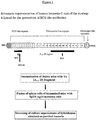
- Balb/c mice were immunised with the A (1-4) -D fragment of human tenascin, containing the epitope recognised by BC-2 ( Siri, A., et al., Nucl. Acid Res., 19(3):525-531, 1991 ; Balza, E., et al., FEBS, 332:39-43, 1993 ).
- the schematic representation of human tenascin C and the strategy adopted to generate the BC-2-like antibody are illustrated in Figure 1 .
- Spleen cells of mice immunised with the Tn (A (1-4) -D) fragment were fused with myeloma cells not producing immunoglobulins Sp2/0-Ag14 according to standard methods ( Cianfriglia, M., et al., Methods Enzymol., 121:193-210, 1986 ), and the hybridoma population obtained was subjected to screening by means of the ELISA test on purified tenascin from SK-Mel 28 human melanoma cells (ICLC HTL99010).
- hybridomas secreting anti-tenascin antibodies were cloned twice by means of limiting dilutions in growth medium containing FCS and twice in protein-free medium of animal origin (Animal Derived Component Free Medium HyClone, HyQR Perbio).
- Production of the ST2485 reference material was achieved by culturing the cST2485 hybridoma cells in a 2-litre bioreactor; two successive limiting dilution subclonings of the cST2485 Post Production Cell Bank (PPCB) led to the selection of the subclone cST2485/A3e/A12f, used for the production of the Master Cell Bank (MCB) and the Working Cell Bank (WCB).
- PPCB Post Production Cell Bank
- ST2485 is a mouse immunoglobulin of IgG1/k isotype.
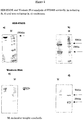
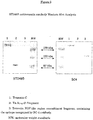
- FIG 2 shows the SDS-PAGE (a, b) and Western blot (c, d) analysis of the antibody ST2485 in reducing and non-reducing conditions.
- reducing conditions b, d
- Western blot analysis demonstrates that the two bands are immunoreactive as light chains of immunoglobulin.
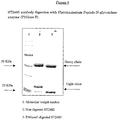
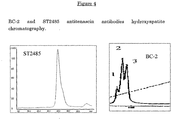
- Hydroxyapatite chromatographic analysis of antibody ST2485 shown in Figure 3 , confirms a mild heterogeneity of the antibody through the slightly asymmetrical peak.
- the antibody BC-2 presents a distinctly heterogeneous profile, in which three peaks can be distinguished, of which only peak 1 corresponds to the totally functional homogeneous antibody.
- variable region of the kappa light chain was amplified by the circularised cDNA using a pair of primers (5' GGGAAGATGGATACAGTTGGT-G, 5' CAAGAGCTTCAACAGGAATGAG) that recognise the constant region of the antibody as described by M. Sassano et al. Nucl. Ac. Res. (1994) 22, 1768-1769 .
- ST2485 binding to the A (1-4) -D region of tenascin is specific, as demonstrated by the Western blot analysis presented in Figure 5 .
- the antibody binds to human tenascin and to the A (1-4) -D fragment, but not to the EGF-like fragment of the same protein, containing the epitope recognised by the BC-4 antibody.
- Antibody ST2485 binds human tenascin in a distinct epitope or in one partly shared with BC-2, as demonstrated by the competitive ELISA assay between the two antibodies illustrated in Figure 6 .
- the biotinylated antibody BC-2 at a concentration established in preliminary experiments, is dispensed with non-biotinylated BC-2 (curve 1) or ST2485 (curve 2) in increasing concentrations on plates sensitised with the antigen tenascin C (a), or Tn A (1-4) -D fragment (b).
- the binding of the biotinylated antibody is measured after addition of HRP-streptavidin and the related chromogenic substrate TMB.
- Antibody ST2485 causes 40% inhibition of BC-2 binding to tenascin C or the Tn A (1-4) -D fragment.
- the immunoreactivity of ST2485 was evaluated in comparison with BC-2 by ELISA assay on tenascin C and on the Tn A (1-4) -D fragment, as shown in Figure 7 .
- the antibodies ST2485 and BC-2 and the normal mouse immunoglobulins (nMIgG) were dispensed at increasing concentrations on plates sensitised with tenascin C (a) or with the Tn A (1-4) -D fragment (b); the addition of the secondary antimouse antibody labelled with alkaline phosphatase and the related chromogenic substrate (pNPP) made it possible to determine the dose-response curve of the antibodies.
- the amount of ST2485 necessary to obtain 1.0 OD is approximately 13 times less than the amount of BC-2 on whole tenascin (a), and approximately 10 times less than the amount of BC-2 on the Tn (A1-4-D) fragment (b).
- the affinity of antibody ST2485 was evaluated both on tenascin C and on the Tn (A 1-4 -D) fragment by means of BIAcore analysis.
- biotinylated ST2485 (8.3 biotins/molecule) was evaluated by ELISA and BIAcore assays in comparison with biotinylated BC-2 (7.6 biotins/molecule).
- the antibodies ST2485 and BC-2, biotinylated and non-biotinylated, and the normal mouse immunoglobulins (nMIgG) were dispensed at increasing concentrations on plates sensitised with tenascin C (a) or with the Tn A (1-4) -D fragment (b); the addition of the secondary anti-mouse antibody labelled with alkaline phosphatase and the related chromogenic substrate (pNPP) made it possible to determine the dose-response curve of each biotinylated antibody compared to the non-biotinylated one (residual immunoreactivity).
- pNPP related chromogenic substrate
- the residual immunoreactivity of biotinylated ST2485 and BC-2 on tenascin C is equal to 76% and 88%, respectively.
- the residual immunoreactivity for ST2485 and BC-2 is 73% and 83%, respectively.
- Biotinylated ST2485 thus maintains good immunoreactivity and affinity characteristics, conserving an affinity for tenascin approximately 100 times greater than that of biotinylated BC-2.
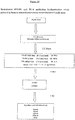
- biodistribution studies of biotinylated 125 I-labelled ST2485 and BC-2 were carried out. These studies were conducted in nude mice which had been implanted with human tumours expressing tenascin, according to the protocol represented schematically in Figure 10 .
- the animals were subcutaneously inoculated with 4 x 10 6 human colon carcinoma HT-29 cells in 0.1 ml of sterile saline solution. After 15 days, when the tumour had reached a mass of approximately 200 mg, groups of five animals received intravenous administrations of 125 I-BC2, 125 I-ST2485, or normal mouse 125 I-immunoglobulins (nMIg), all biotinylated (7-9 biotins/mol) and at five different doses: 0.2-0.5-1-2-5 ⁇ g/mouse in 100 ⁇ l of sterile PBS. Five days after administration of the antibodies the animals were sacrificed and samples of blood, spleen, kidney, liver and tumour were taken for determining the radioactivity present. Twenty-four hours prior to the sacrifice the animals received an intravenous administration of avidin in 100 ⁇ l of sterile PBS, at doses 100 times greater than that of the antibody (chase).
- nMIg normal mouse 125 I-immunoglobulin
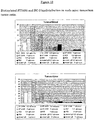
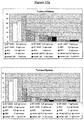
- the tumour:blood ratio for ST2485 is greater than 20 (optimal dose), whereas for the antibody BC-2 this ratio never exceeds 6 at any of the doses assayed.
- the tumour to non-tumour ratios for ST2485 at the dose of 1 ⁇ g/mouse are 9, 26, and 43 in relation to the spleen, kidney and liver, respectively.
- BC-2 on the other hand, these ratios are always lower than 7, at all the doses assayed.
- the tumour to non-tumour ratios are shown in Figures 12 and 12a .
- Figure 13b shows the additivity test, in which the biotinylated antibodies ST2485 and ST2146 were dispensed, in saturating doses, separately or together, on microplates sensitised with tenascin C: the mixture of the two antibodies produces a signal equal to the sum of the signals, thus demonstrating that the binding of the two antibodies is additive.
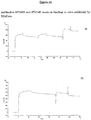
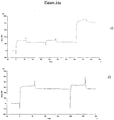
- the in-vitro additivity of the two antibodies was also assayed using BIACore analysis, as shown in Figures 14 and 14a .
- the tenascin was immobilised on the chip (CM5 sensor chip, Biosense) according to the method described ( De Santis R.; et al.; Br. J. Cancer, 88: 996-1003, 2003 ).
- Two consecutive injections of the first antibody were administered (ST2485 in a, ST2146 in c) at saturating concentrations (10 ⁇ M), followed by injection of the second anti-tenascin antibody (ST2146 in a; ST2485 in c).
- Sensorgrams a) and c) show that the two antibodies are capable of binding to the respective epitopes in an additive manner, as shown by the increase in the resonance signal produced by each single antibody.
- Sensorgrams b) and d) represent the injections of ST2485 and ST2146 respectively, each followed by the respective isotypical control antibodies, mIgG2b and mIgG1.
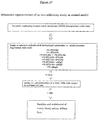
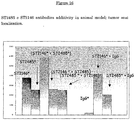
- the additivity study of the two antibodies ST2485 and ST2146 was also conducted in-vivo in the previously described animal model.
- the study scheme is illustrated in Figure 15 , whereas the results obtained are presented in Figure 16 , expressed in ng of antibody per gram of tumour.
- the data confirm the additivity of the two antibodies also in the animal model.
- the mixture of the two labelled antibodies in fact, presents an accumulation in the tumour amounting to 93% of the theoretical value (mathematical sum of the two individual labelled antibodies).
- Groups of control animals were treated with mixtures of radiolabelled antibody and second "cold" antibody to avoid any interference.
- variable region of the kappa light chain was amplified starting from the circularised cDNA using a pair of primers (5' GGGAAGATGG-ATACAGTTGGTG 3', 5' CAAGAGCTTCAACAGGAATGAG 3') that recognise the constant region of the light chain of the antibody, as described by M. Sassano, et al., Nucl. Ac. Res., (1994) 22, 1768-1769 .
- variable region of the gamma heavy chain was amplified starting from the circularised cDNA using a pair of primers (5' ATGGAGTTAG-TTTGGGCAGCAG 3', 5' GCACAACCACCATACTGAGAAG 3') that recognise the constant region of the heavy chain of the antibody, as described by M. Sassano, et al., Nucl. Ac. Res., (1994) 22, 1768-1769 .
- Figure 17 shows the SEQ ID 1 sequence of the variable region of the light chain (VL) of ST2485.
- Figure 18 shows the SEQ ID 2 sequence of the variable region of the heavy chain (VH) of ST2485.
Landscapes
- Health & Medical Sciences (AREA)
- Chemical & Material Sciences (AREA)
- Organic Chemistry (AREA)
- Life Sciences & Earth Sciences (AREA)
- Immunology (AREA)
- General Health & Medical Sciences (AREA)
- Medicinal Chemistry (AREA)
- Proteomics, Peptides & Aminoacids (AREA)
- Molecular Biology (AREA)
- Genetics & Genomics (AREA)
- Biophysics (AREA)
- Biochemistry (AREA)
- Nuclear Medicine, Radiotherapy & Molecular Imaging (AREA)
- General Chemical & Material Sciences (AREA)
- Veterinary Medicine (AREA)
- Animal Behavior & Ethology (AREA)
- Public Health (AREA)
- Pharmacology & Pharmacy (AREA)
- Chemical Kinetics & Catalysis (AREA)
- Bioinformatics & Cheminformatics (AREA)
- Engineering & Computer Science (AREA)
- Cell Biology (AREA)
- Peptides Or Proteins (AREA)
- Medicines Containing Antibodies Or Antigens For Use As Internal Diagnostic Agents (AREA)
- Preparation Of Compounds By Using Micro-Organisms (AREA)
- Micro-Organisms Or Cultivation Processes Thereof (AREA)
- Medicines That Contain Protein Lipid Enzymes And Other Medicines (AREA)
- Apparatus Associated With Microorganisms And Enzymes (AREA)
- Measuring Or Testing Involving Enzymes Or Micro-Organisms (AREA)
Priority Applications (1)
| Application Number | Priority Date | Filing Date | Title |
|---|---|---|---|
| PL05718988T PL1718678T3 (pl) | 2004-02-27 | 2005-02-16 | Przeciwciało monoklonalne przeciw ludzkiej tenascynie |
Applications Claiming Priority (2)
| Application Number | Priority Date | Filing Date | Title |
|---|---|---|---|
| IT000105A ITRM20040105A1 (it) | 2004-02-27 | 2004-02-27 | Anticorpo monoclonale antitenascina umana. |
| PCT/IT2005/000078 WO2005082938A2 (en) | 2004-02-27 | 2005-02-16 | Anti-human tenascin monoclonal antibody |
Publications (2)
| Publication Number | Publication Date |
|---|---|
| EP1718678A2 EP1718678A2 (en) | 2006-11-08 |
| EP1718678B1 true EP1718678B1 (en) | 2017-10-11 |
Family
ID=34897820
Family Applications (1)
| Application Number | Title | Priority Date | Filing Date |
|---|---|---|---|
| EP05718988.8A Expired - Lifetime EP1718678B1 (en) | 2004-02-27 | 2005-02-16 | Anti-human tenascin monoclonal antibody |
Country Status (15)
| Country | Link |
|---|---|
| US (1) | US7989171B2 (enExample) |
| EP (1) | EP1718678B1 (enExample) |
| JP (1) | JP5191036B2 (enExample) |
| KR (1) | KR101266389B1 (enExample) |
| CN (1) | CN1946740B (enExample) |
| AR (1) | AR047819A1 (enExample) |
| AU (1) | AU2005217237B2 (enExample) |
| BR (1) | BRPI0508082A8 (enExample) |
| CA (1) | CA2558718C (enExample) |
| ES (1) | ES2654065T3 (enExample) |
| IT (1) | ITRM20040105A1 (enExample) |
| MX (1) | MXPA06009674A (enExample) |
| PL (1) | PL1718678T3 (enExample) |
| PT (1) | PT1718678T (enExample) |
| WO (1) | WO2005082938A2 (enExample) |
Families Citing this family (9)
| Publication number | Priority date | Publication date | Assignee | Title |
|---|---|---|---|---|
| CA2597649A1 (en) | 2005-02-11 | 2006-08-17 | Amylin Pharmaceuticals, Inc. | Gip analog and hybrid polypeptides with selectable properties |
| US8263545B2 (en) | 2005-02-11 | 2012-09-11 | Amylin Pharmaceuticals, Inc. | GIP analog and hybrid polypeptides with selectable properties |
| JP2012031084A (ja) * | 2010-07-29 | 2012-02-16 | Tokyo Univ Of Science | 抗腫瘍剤 |
| WO2014113459A1 (en) * | 2013-01-15 | 2014-07-24 | Duke University | Hiv-1 neutralizing factor |
| EP2999967B1 (en) | 2013-05-21 | 2020-05-20 | NX Pharmagen | Use of tenascin-c as an extracellular marker of tumor-derived microparticles |
| GB201414021D0 (en) * | 2014-08-07 | 2014-09-24 | Nascient Ltd | Biological materials and uses thereof |
| GB201616596D0 (en) * | 2016-09-29 | 2016-11-16 | Nascient Limited | Epitope and antibodies |
| EP4536278A4 (en) | 2022-06-07 | 2026-08-12 | Actinium Pharmaceuticals Inc | CHELETARIANS AND BIFUNCTIONAL CONJUGATES |
| CN119019548B (zh) * | 2022-07-05 | 2025-06-24 | 东莞市朋志生物科技有限公司 | 抗甲型流感病毒抗体、检测甲型流感病毒的试剂和试剂盒 |
Family Cites Families (10)
| Publication number | Priority date | Publication date | Assignee | Title |
|---|---|---|---|---|
| US5634076A (en) * | 1994-10-04 | 1997-05-27 | Analog Devices, Inc. | DMA controller responsive to transition of a request signal between first state and second state and maintaining of second state for controlling data transfer |
| US6014709A (en) * | 1997-11-05 | 2000-01-11 | Unisys Corporation | Message flow protocol for avoiding deadlocks |
| US6335014B1 (en) | 1998-06-17 | 2002-01-01 | The Institute Of Physical And Chemical Research | Medicament for suppressing cancer metastasis |
| US6521593B1 (en) * | 1999-02-01 | 2003-02-18 | Childrens Hospital Los Angeles | Methods for inhibiting brain tumor growth |
| MXPA01011230A (es) * | 1999-05-01 | 2002-10-04 | Univ New Jersey Med | Crecimiento exterior de neurita y guia por tenascina-c. |
| US7058750B1 (en) * | 2000-05-10 | 2006-06-06 | Intel Corporation | Scalable distributed memory and I/O multiprocessor system |
| JP3646159B2 (ja) | 2001-02-08 | 2005-05-11 | 国立大学法人三重大学 | 抗テネイシンcモノクローナル抗体及び当該抗体を産生するハイブリドーマ |
| ITRM20010079A1 (it) * | 2001-02-16 | 2002-08-16 | Sigma Tau Ind Farmaceuti | Amminoderivati della biotina e loro coniugati con chelanti macrociclici. |
| CN1317303C (zh) | 2002-02-26 | 2007-05-23 | 希格马托制药工业公司 | 抗人腱生蛋白单克隆抗体 |
| ITRM20020128A1 (it) * | 2002-03-08 | 2003-09-08 | Sigma Tau Ind Farmaceuti | Dimeri di avidina efficaci nell'incrementare la concentrazione di biotina radioattiva nella immunoterapia con "pretargeting". |
-
2004
- 2004-02-27 IT IT000105A patent/ITRM20040105A1/it unknown
-
2005
- 2005-02-16 CA CA2558718A patent/CA2558718C/en not_active Expired - Fee Related
- 2005-02-16 EP EP05718988.8A patent/EP1718678B1/en not_active Expired - Lifetime
- 2005-02-16 AU AU2005217237A patent/AU2005217237B2/en not_active Ceased
- 2005-02-16 US US10/590,936 patent/US7989171B2/en not_active Expired - Fee Related
- 2005-02-16 JP JP2007500356A patent/JP5191036B2/ja not_active Expired - Fee Related
- 2005-02-16 MX MXPA06009674A patent/MXPA06009674A/es active IP Right Grant
- 2005-02-16 PT PT57189888T patent/PT1718678T/pt unknown
- 2005-02-16 CN CN2005800061324A patent/CN1946740B/zh not_active Expired - Fee Related
- 2005-02-16 ES ES05718988.8T patent/ES2654065T3/es not_active Expired - Lifetime
- 2005-02-16 PL PL05718988T patent/PL1718678T3/pl unknown
- 2005-02-16 BR BRPI0508082A patent/BRPI0508082A8/pt not_active IP Right Cessation
- 2005-02-16 WO PCT/IT2005/000078 patent/WO2005082938A2/en not_active Ceased
- 2005-02-16 KR KR1020067020062A patent/KR101266389B1/ko not_active Expired - Fee Related
- 2005-02-24 AR ARP050100671A patent/AR047819A1/es not_active Application Discontinuation
Non-Patent Citations (1)
| Title |
|---|
| None * |
Also Published As
| Publication number | Publication date |
|---|---|
| BRPI0508082A (pt) | 2007-07-17 |
| AU2005217237B2 (en) | 2011-12-22 |
| KR20070002029A (ko) | 2007-01-04 |
| CA2558718A1 (en) | 2005-09-09 |
| WO2005082938A2 (en) | 2005-09-09 |
| EP1718678A2 (en) | 2006-11-08 |
| CA2558718C (en) | 2015-01-13 |
| AU2005217237A1 (en) | 2005-09-09 |
| US7989171B2 (en) | 2011-08-02 |
| PT1718678T (pt) | 2017-12-29 |
| US20100297003A1 (en) | 2010-11-25 |
| WO2005082938A3 (en) | 2005-12-15 |
| KR101266389B1 (ko) | 2013-05-28 |
| JP2008506355A (ja) | 2008-03-06 |
| AR047819A1 (es) | 2006-02-22 |
| ITRM20040105A1 (it) | 2004-05-27 |
| CN1946740B (zh) | 2012-09-05 |
| CN1946740A (zh) | 2007-04-11 |
| JP5191036B2 (ja) | 2013-04-24 |
| MXPA06009674A (es) | 2007-03-21 |
| HK1100848A1 (en) | 2007-09-28 |
| ES2654065T3 (es) | 2018-02-12 |
| PL1718678T3 (pl) | 2018-05-30 |
| BRPI0508082A8 (pt) | 2017-12-26 |
Similar Documents
| Publication | Publication Date | Title |
|---|---|---|
| US8048417B2 (en) | Anti-human tenascin monoclonal antibody | |
| US20240269307A1 (en) | Anti-nectin-4 antibody and anti-nectin-4 antibody-drug conjugate, and medicinal use thereof | |
| ES2427964T3 (es) | Nuevos anticuerpos anti-IGF-IR y sus aplicaciones | |
| KR20200027971A (ko) | 항-cd166 항체 및 이의 용도 | |
| JP2023506805A (ja) | 抗cea抗体-エキサテカン類似体複合体及びその医薬用途 | |
| JP2022514786A (ja) | Muc18に特異的な抗体 | |
| US7989171B2 (en) | Anti-human tenascin monoclonal antibody | |
| JP2004536578A (ja) | 腫瘍ターゲティング用の抗−muc−1単鎖抗体 | |
| CN116789836A (zh) | 针对dll3的抗体及其用途 | |
| CN116574187B (zh) | 针对gucy2c的抗体及其用途 | |
| JP2002504372A (ja) | 高親和性ヒト型化抗−ceaモノクロ−ナル抗体 | |
| RU2833323C1 (ru) | Конъюгат антитела против cea и аналога эксатекана и его фармацевтическое применение | |
| HK1100848B (en) | Anti-human tenascin monoclonal antibody | |
| WO2025031285A1 (zh) | 抗psma抗体-药物偶联物及其医药用途 | |
| KR20260018091A (ko) | 항-ceacam5 항체 |
Legal Events
| Date | Code | Title | Description |
|---|---|---|---|
| PUAI | Public reference made under article 153(3) epc to a published international application that has entered the european phase |
Free format text: ORIGINAL CODE: 0009012 |
|
| 17P | Request for examination filed |
Effective date: 20060920 |
|
| AK | Designated contracting states |
Kind code of ref document: A2 Designated state(s): AT BE BG CH CY CZ DE DK EE ES FI FR GB GR HU IE IS IT LI LT LU MC NL PL PT RO SE SI SK TR |
|
| AX | Request for extension of the european patent |
Extension state: AL BA HR LV MK YU |
|
| 17Q | First examination report despatched |
Effective date: 20061128 |
|
| RAP3 | Party data changed (applicant data changed or rights of an application transferred) |
Owner name: TECNOGEN S.P.A. |
|
| RAP1 | Party data changed (applicant data changed or rights of an application transferred) |
Owner name: SIGMA-TAU INDUSTRIE FARMACEUTICHE RIUNITE S.P.A. |
|
| GRAP | Despatch of communication of intention to grant a patent |
Free format text: ORIGINAL CODE: EPIDOSNIGR1 |
|
| INTG | Intention to grant announced |
Effective date: 20161027 |
|
| GRAS | Grant fee paid |
Free format text: ORIGINAL CODE: EPIDOSNIGR3 |
|
| GRAJ | Information related to disapproval of communication of intention to grant by the applicant or resumption of examination proceedings by the epo deleted |
Free format text: ORIGINAL CODE: EPIDOSDIGR1 |
|
| GRAL | Information related to payment of fee for publishing/printing deleted |
Free format text: ORIGINAL CODE: EPIDOSDIGR3 |
|
| GRAP | Despatch of communication of intention to grant a patent |
Free format text: ORIGINAL CODE: EPIDOSNIGR1 |
|
| GRAJ | Information related to disapproval of communication of intention to grant by the applicant or resumption of examination proceedings by the epo deleted |
Free format text: ORIGINAL CODE: EPIDOSDIGR1 |
|
| INTC | Intention to grant announced (deleted) | ||
| GRAP | Despatch of communication of intention to grant a patent |
Free format text: ORIGINAL CODE: EPIDOSNIGR1 |
|
| INTG | Intention to grant announced |
Effective date: 20170412 |
|
| INTG | Intention to grant announced |
Effective date: 20170424 |
|
| GRAA | (expected) grant |
Free format text: ORIGINAL CODE: 0009210 |
|
| AK | Designated contracting states |
Kind code of ref document: B1 Designated state(s): AT BE BG CH CY CZ DE DK EE ES FI FR GB GR HU IE IS IT LI LT LU MC NL PL PT RO SE SI SK TR |
|
| AX | Request for extension of the european patent |
Extension state: AL BA HR LV MK YU |
|
| REG | Reference to a national code |
Ref country code: GB Ref legal event code: FG4D |
|
| REG | Reference to a national code |
Ref country code: CH Ref legal event code: EP |
|
| REG | Reference to a national code |
Ref country code: IE Ref legal event code: FG4D |
|
| REG | Reference to a national code |
Ref country code: AT Ref legal event code: REF Ref document number: 935936 Country of ref document: AT Kind code of ref document: T Effective date: 20171115 |
|
| REG | Reference to a national code |
Ref country code: DE Ref legal event code: R096 Ref document number: 602005052877 Country of ref document: DE |
|
| REG | Reference to a national code |
Ref country code: CH Ref legal event code: NV Representative=s name: SCHNEIDER FELDMANN AG PATENT- UND MARKENANWAEL, CH Ref country code: CH Ref legal event code: PFUS Owner name: ALFASIGMA S.P.A., IT Free format text: FORMER OWNER: SIGMA-TAU INDUSTRIE FARMACEUTICHE RIUNITE S.P.A., IT |
|
| REG | Reference to a national code |
Ref country code: PT Ref legal event code: SC4A Ref document number: 1718678 Country of ref document: PT Date of ref document: 20171229 Kind code of ref document: T Free format text: AVAILABILITY OF NATIONAL TRANSLATION Effective date: 20171219 |
|
| RAP2 | Party data changed (patent owner data changed or rights of a patent transferred) |
Owner name: ALFASIGMA S.P.A. |
|
| REG | Reference to a national code |
Ref country code: CH Ref legal event code: NV Representative=s name: RENTSCH PARTNER AG, CH Ref country code: CH Ref legal event code: PCOW Free format text: NEW ADDRESS: VIALE SARCA, 223, 20126 MILANO (IT) |
|
| REG | Reference to a national code |
Ref country code: NL Ref legal event code: FP |
|
| REG | Reference to a national code |
Ref country code: ES Ref legal event code: FG2A Ref document number: 2654065 Country of ref document: ES Kind code of ref document: T3 Effective date: 20180212 |
|
| REG | Reference to a national code |
Ref country code: LT Ref legal event code: MG4D |
|
| REG | Reference to a national code |
Ref country code: FR Ref legal event code: PLFP Year of fee payment: 14 |
|
| REG | Reference to a national code |
Ref country code: GB Ref legal event code: 732E Free format text: REGISTERED BETWEEN 20180201 AND 20180207 |
|
| REG | Reference to a national code |
Ref country code: AT Ref legal event code: MK05 Ref document number: 935936 Country of ref document: AT Kind code of ref document: T Effective date: 20171011 |
|
| REG | Reference to a national code |
Ref country code: FR Ref legal event code: TP Owner name: ALFASIGMA S.P.A., IT Effective date: 20180227 |
|
| PG25 | Lapsed in a contracting state [announced via postgrant information from national office to epo] |
Ref country code: LT Free format text: LAPSE BECAUSE OF FAILURE TO SUBMIT A TRANSLATION OF THE DESCRIPTION OR TO PAY THE FEE WITHIN THE PRESCRIBED TIME-LIMIT Effective date: 20171011 Ref country code: SE Free format text: LAPSE BECAUSE OF FAILURE TO SUBMIT A TRANSLATION OF THE DESCRIPTION OR TO PAY THE FEE WITHIN THE PRESCRIBED TIME-LIMIT Effective date: 20171011 Ref country code: FI Free format text: LAPSE BECAUSE OF FAILURE TO SUBMIT A TRANSLATION OF THE DESCRIPTION OR TO PAY THE FEE WITHIN THE PRESCRIBED TIME-LIMIT Effective date: 20171011 |
|
| REG | Reference to a national code |
Ref country code: NL Ref legal event code: PD Owner name: ALFASIGMA S.P.A.; IT Free format text: DETAILS ASSIGNMENT: CHANGE OF OWNER(S), ASSIGNMENT; FORMER OWNER NAME: SIGMA-TAU INDUSTRIE FARMACEUTICHE RIUNITE S.P.A. Effective date: 20180331 |
|
| PG25 | Lapsed in a contracting state [announced via postgrant information from national office to epo] |
Ref country code: AT Free format text: LAPSE BECAUSE OF FAILURE TO SUBMIT A TRANSLATION OF THE DESCRIPTION OR TO PAY THE FEE WITHIN THE PRESCRIBED TIME-LIMIT Effective date: 20171011 Ref country code: IS Free format text: LAPSE BECAUSE OF FAILURE TO SUBMIT A TRANSLATION OF THE DESCRIPTION OR TO PAY THE FEE WITHIN THE PRESCRIBED TIME-LIMIT Effective date: 20180211 Ref country code: GR Free format text: LAPSE BECAUSE OF FAILURE TO SUBMIT A TRANSLATION OF THE DESCRIPTION OR TO PAY THE FEE WITHIN THE PRESCRIBED TIME-LIMIT Effective date: 20180112 |
|
| REG | Reference to a national code |
Ref country code: DE Ref legal event code: R097 Ref document number: 602005052877 Country of ref document: DE |
|
| PG25 | Lapsed in a contracting state [announced via postgrant information from national office to epo] |
Ref country code: EE Free format text: LAPSE BECAUSE OF FAILURE TO SUBMIT A TRANSLATION OF THE DESCRIPTION OR TO PAY THE FEE WITHIN THE PRESCRIBED TIME-LIMIT Effective date: 20171011 Ref country code: DK Free format text: LAPSE BECAUSE OF FAILURE TO SUBMIT A TRANSLATION OF THE DESCRIPTION OR TO PAY THE FEE WITHIN THE PRESCRIBED TIME-LIMIT Effective date: 20171011 |
|
| PLBE | No opposition filed within time limit |
Free format text: ORIGINAL CODE: 0009261 |
|
| STAA | Information on the status of an ep patent application or granted ep patent |
Free format text: STATUS: NO OPPOSITION FILED WITHIN TIME LIMIT |
|
| 26N | No opposition filed |
Effective date: 20180712 |
|
| PG25 | Lapsed in a contracting state [announced via postgrant information from national office to epo] |
Ref country code: MC Free format text: LAPSE BECAUSE OF FAILURE TO SUBMIT A TRANSLATION OF THE DESCRIPTION OR TO PAY THE FEE WITHIN THE PRESCRIBED TIME-LIMIT Effective date: 20171011 |
|
| REG | Reference to a national code |
Ref country code: BE Ref legal event code: MM Effective date: 20180228 |
|
| PG25 | Lapsed in a contracting state [announced via postgrant information from national office to epo] |
Ref country code: LU Free format text: LAPSE BECAUSE OF NON-PAYMENT OF DUE FEES Effective date: 20180216 Ref country code: SI Free format text: LAPSE BECAUSE OF FAILURE TO SUBMIT A TRANSLATION OF THE DESCRIPTION OR TO PAY THE FEE WITHIN THE PRESCRIBED TIME-LIMIT Effective date: 20171011 |
|
| REG | Reference to a national code |
Ref country code: IE Ref legal event code: MM4A |
|
| PG25 | Lapsed in a contracting state [announced via postgrant information from national office to epo] |
Ref country code: IE Free format text: LAPSE BECAUSE OF NON-PAYMENT OF DUE FEES Effective date: 20180216 |
|
| REG | Reference to a national code |
Ref country code: SK Ref legal event code: T3 Ref document number: E 28773 Country of ref document: SK |
|
| PG25 | Lapsed in a contracting state [announced via postgrant information from national office to epo] |
Ref country code: BE Free format text: LAPSE BECAUSE OF NON-PAYMENT OF DUE FEES Effective date: 20180228 |
|
| PGFP | Annual fee paid to national office [announced via postgrant information from national office to epo] |
Ref country code: NL Payment date: 20190226 Year of fee payment: 15 |
|
| PGFP | Annual fee paid to national office [announced via postgrant information from national office to epo] |
Ref country code: GB Payment date: 20190227 Year of fee payment: 15 Ref country code: PL Payment date: 20190206 Year of fee payment: 15 Ref country code: IT Payment date: 20190222 Year of fee payment: 15 Ref country code: RO Payment date: 20190205 Year of fee payment: 15 Ref country code: DE Payment date: 20190227 Year of fee payment: 15 Ref country code: CZ Payment date: 20190208 Year of fee payment: 15 Ref country code: ES Payment date: 20190301 Year of fee payment: 15 Ref country code: BG Payment date: 20190221 Year of fee payment: 15 Ref country code: CH Payment date: 20190304 Year of fee payment: 15 |
|
| PGFP | Annual fee paid to national office [announced via postgrant information from national office to epo] |
Ref country code: FR Payment date: 20190225 Year of fee payment: 15 |
|
| PGFP | Annual fee paid to national office [announced via postgrant information from national office to epo] |
Ref country code: SK Payment date: 20190201 Year of fee payment: 15 |
|
| PGFP | Annual fee paid to national office [announced via postgrant information from national office to epo] |
Ref country code: PT Payment date: 20190201 Year of fee payment: 15 |
|
| REG | Reference to a national code |
Ref country code: RO Ref legal event code: EPE |
|
| PG25 | Lapsed in a contracting state [announced via postgrant information from national office to epo] |
Ref country code: TR Free format text: LAPSE BECAUSE OF FAILURE TO SUBMIT A TRANSLATION OF THE DESCRIPTION OR TO PAY THE FEE WITHIN THE PRESCRIBED TIME-LIMIT Effective date: 20171011 |
|
| PG25 | Lapsed in a contracting state [announced via postgrant information from national office to epo] |
Ref country code: HU Free format text: LAPSE BECAUSE OF FAILURE TO SUBMIT A TRANSLATION OF THE DESCRIPTION OR TO PAY THE FEE WITHIN THE PRESCRIBED TIME-LIMIT; INVALID AB INITIO Effective date: 20050216 |
|
| PG25 | Lapsed in a contracting state [announced via postgrant information from national office to epo] |
Ref country code: CY Free format text: LAPSE BECAUSE OF FAILURE TO SUBMIT A TRANSLATION OF THE DESCRIPTION OR TO PAY THE FEE WITHIN THE PRESCRIBED TIME-LIMIT Effective date: 20171011 |
|
| REG | Reference to a national code |
Ref country code: DE Ref legal event code: R119 Ref document number: 602005052877 Country of ref document: DE |
|
| REG | Reference to a national code |
Ref country code: CH Ref legal event code: PL |
|
| REG | Reference to a national code |
Ref country code: NL Ref legal event code: MM Effective date: 20200301 |
|
| GBPC | Gb: european patent ceased through non-payment of renewal fee |
Effective date: 20200216 |
|
| PG25 | Lapsed in a contracting state [announced via postgrant information from national office to epo] |
Ref country code: RO Free format text: LAPSE BECAUSE OF NON-PAYMENT OF DUE FEES Effective date: 20200216 Ref country code: PT Free format text: LAPSE BECAUSE OF NON-PAYMENT OF DUE FEES Effective date: 20200917 Ref country code: SK Free format text: LAPSE BECAUSE OF NON-PAYMENT OF DUE FEES Effective date: 20200216 Ref country code: CZ Free format text: LAPSE BECAUSE OF NON-PAYMENT OF DUE FEES Effective date: 20200216 |
|
| REG | Reference to a national code |
Ref country code: SK Ref legal event code: MM4A Ref document number: E 28773 Country of ref document: SK Effective date: 20200216 |
|
| PG25 | Lapsed in a contracting state [announced via postgrant information from national office to epo] |
Ref country code: CH Free format text: LAPSE BECAUSE OF NON-PAYMENT OF DUE FEES Effective date: 20200229 Ref country code: LI Free format text: LAPSE BECAUSE OF NON-PAYMENT OF DUE FEES Effective date: 20200229 Ref country code: BG Free format text: LAPSE BECAUSE OF NON-PAYMENT OF DUE FEES Effective date: 20200831 |
|
| PG25 | Lapsed in a contracting state [announced via postgrant information from national office to epo] |
Ref country code: NL Free format text: LAPSE BECAUSE OF NON-PAYMENT OF DUE FEES Effective date: 20200301 |
|
| PG25 | Lapsed in a contracting state [announced via postgrant information from national office to epo] |
Ref country code: DE Free format text: LAPSE BECAUSE OF NON-PAYMENT OF DUE FEES Effective date: 20200901 Ref country code: FR Free format text: LAPSE BECAUSE OF NON-PAYMENT OF DUE FEES Effective date: 20200229 Ref country code: GB Free format text: LAPSE BECAUSE OF NON-PAYMENT OF DUE FEES Effective date: 20200216 |
|
| REG | Reference to a national code |
Ref country code: ES Ref legal event code: FD2A Effective date: 20210707 |
|
| PG25 | Lapsed in a contracting state [announced via postgrant information from national office to epo] |
Ref country code: IT Free format text: LAPSE BECAUSE OF NON-PAYMENT OF DUE FEES Effective date: 20200216 |
|
| PG25 | Lapsed in a contracting state [announced via postgrant information from national office to epo] |
Ref country code: ES Free format text: LAPSE BECAUSE OF NON-PAYMENT OF DUE FEES Effective date: 20200217 |
|
| PG25 | Lapsed in a contracting state [announced via postgrant information from national office to epo] |
Ref country code: PL Free format text: LAPSE BECAUSE OF NON-PAYMENT OF DUE FEES Effective date: 20200216 |