EP1702381B1 - Suspension zur erzeugung eines stroms von elektronen sowie deren verwendung und präparation - Google Patents
Suspension zur erzeugung eines stroms von elektronen sowie deren verwendung und präparation Download PDFInfo
- Publication number
- EP1702381B1 EP1702381B1 EP04793664A EP04793664A EP1702381B1 EP 1702381 B1 EP1702381 B1 EP 1702381B1 EP 04793664 A EP04793664 A EP 04793664A EP 04793664 A EP04793664 A EP 04793664A EP 1702381 B1 EP1702381 B1 EP 1702381B1
- Authority
- EP
- European Patent Office
- Prior art keywords
- suspension according
- suspension
- electrons
- substrate
- electrically conductive
- Prior art date
- Legal status (The legal status is an assumption and is not a legal conclusion. Google has not performed a legal analysis and makes no representation as to the accuracy of the status listed.)
- Expired - Lifetime
Links
Images

Classifications
-
- H—ELECTRICITY
- H01—ELECTRIC ELEMENTS
- H01M—PROCESSES OR MEANS, e.g. BATTERIES, FOR THE DIRECT CONVERSION OF CHEMICAL ENERGY INTO ELECTRICAL ENERGY
- H01M10/00—Secondary cells; Manufacture thereof
- H01M10/42—Methods or arrangements for servicing or maintenance of secondary cells or secondary half-cells
- H01M10/425—Structural combination with electronic components, e.g. electronic circuits integrated to the outside of the casing
- H01M10/4257—Smart batteries, e.g. electronic circuits inside the housing of the cells or batteries
-
- H—ELECTRICITY
- H01—ELECTRIC ELEMENTS
- H01M—PROCESSES OR MEANS, e.g. BATTERIES, FOR THE DIRECT CONVERSION OF CHEMICAL ENERGY INTO ELECTRICAL ENERGY
- H01M8/00—Fuel cells; Manufacture thereof
- H01M8/16—Biochemical fuel cells, i.e. cells in which microorganisms function as catalysts
-
- H—ELECTRICITY
- H01—ELECTRIC ELEMENTS
- H01M—PROCESSES OR MEANS, e.g. BATTERIES, FOR THE DIRECT CONVERSION OF CHEMICAL ENERGY INTO ELECTRICAL ENERGY
- H01M10/00—Secondary cells; Manufacture thereof
- H01M10/04—Construction or manufacture in general
- H01M10/0472—Vertically superposed cells with vertically disposed plates
-
- H—ELECTRICITY
- H01—ELECTRIC ELEMENTS
- H01M—PROCESSES OR MEANS, e.g. BATTERIES, FOR THE DIRECT CONVERSION OF CHEMICAL ENERGY INTO ELECTRICAL ENERGY
- H01M8/00—Fuel cells; Manufacture thereof
- H01M8/10—Fuel cells with solid electrolytes
- H01M8/1009—Fuel cells with solid electrolytes with one of the reactants being liquid, solid or liquid-charged
-
- Y—GENERAL TAGGING OF NEW TECHNOLOGICAL DEVELOPMENTS; GENERAL TAGGING OF CROSS-SECTIONAL TECHNOLOGIES SPANNING OVER SEVERAL SECTIONS OF THE IPC; TECHNICAL SUBJECTS COVERED BY FORMER USPC CROSS-REFERENCE ART COLLECTIONS [XRACs] AND DIGESTS
- Y02—TECHNOLOGIES OR APPLICATIONS FOR MITIGATION OR ADAPTATION AGAINST CLIMATE CHANGE
- Y02E—REDUCTION OF GREENHOUSE GAS [GHG] EMISSIONS, RELATED TO ENERGY GENERATION, TRANSMISSION OR DISTRIBUTION
- Y02E60/00—Enabling technologies; Technologies with a potential or indirect contribution to GHG emissions mitigation
- Y02E60/10—Energy storage using batteries
-
- Y—GENERAL TAGGING OF NEW TECHNOLOGICAL DEVELOPMENTS; GENERAL TAGGING OF CROSS-SECTIONAL TECHNOLOGIES SPANNING OVER SEVERAL SECTIONS OF THE IPC; TECHNICAL SUBJECTS COVERED BY FORMER USPC CROSS-REFERENCE ART COLLECTIONS [XRACs] AND DIGESTS
- Y02—TECHNOLOGIES OR APPLICATIONS FOR MITIGATION OR ADAPTATION AGAINST CLIMATE CHANGE
- Y02E—REDUCTION OF GREENHOUSE GAS [GHG] EMISSIONS, RELATED TO ENERGY GENERATION, TRANSMISSION OR DISTRIBUTION
- Y02E60/00—Enabling technologies; Technologies with a potential or indirect contribution to GHG emissions mitigation
- Y02E60/30—Hydrogen technology
- Y02E60/50—Fuel cells
-
- Y—GENERAL TAGGING OF NEW TECHNOLOGICAL DEVELOPMENTS; GENERAL TAGGING OF CROSS-SECTIONAL TECHNOLOGIES SPANNING OVER SEVERAL SECTIONS OF THE IPC; TECHNICAL SUBJECTS COVERED BY FORMER USPC CROSS-REFERENCE ART COLLECTIONS [XRACs] AND DIGESTS
- Y02—TECHNOLOGIES OR APPLICATIONS FOR MITIGATION OR ADAPTATION AGAINST CLIMATE CHANGE
- Y02P—CLIMATE CHANGE MITIGATION TECHNOLOGIES IN THE PRODUCTION OR PROCESSING OF GOODS
- Y02P70/00—Climate change mitigation technologies in the production process for final industrial or consumer products
- Y02P70/50—Manufacturing or production processes characterised by the final manufactured product
Definitions
- the present invention relates to a suspension that can be used to generate a current of electrons, the use of the suspension for the production of a battery or more specifically of a nano-battery for the use in combination with a microchip.
- the present invention furthermore relates to a battery using the suspension, a fuel cell comprising: an anode compartment including an anode; a cathode compartment including a cathode; and disposed within said anode compartment, within said cathode compartment, or between said anode compartment and said cathode compartment, the suspension, a device for detection of a solute using the suspension, more specifically a device for the detection of glucose, a method of producing electrical power comprising the use of the suspension, and a method for preparing the suspension.
- the present invention relates to a suspension that can be used to generate a current of electrons, which suspension comprises a polypeptide, characterized in that the polypeptide is entrapped in a hollow particle. Because the polypeptide is entrapped and not embedded in the shell of the hollow particle, the hollow particle could have a shell that has unique properties, such as selective permeability, robustness and conductivity.
- the polypeptide can be any polypeptide that is active in an aqueous solution.
- the suspension preferably contains more hollow particles, in which preferably more than one polypeptide is entrapped. Preferably the density of the hollow particles in the suspension is such that the majority of the hollow particles is in close contact to each other for a more efficient generation of current of electrons.
- the hollow particle holds the polypeptide in a certain distribution within the suspension so the activity of the polypeptide is also well distributed and will stay well distributed.
- the hollow particle is not permeable to the polypeptide.
- the invention relates to a hollow particle that is a vesicle.
- a vesicle is a particular hollow particle that is composed of amphiphilic molecules that form the outer shell. Vesicles that entrap a polypeptide can be prepared by adding the molecules to the polypeptide.
- the hollow particle is a polymersome.
- a polymersome is a vesicle that is constructed from polymeric amphiphilic building blocks and can have unique properties such as rigidity and the ability to conduct electrons.
- the shell of the hollow particle is conductive. Because of the conductivity the electrons generated within the hollow sphere are transported via the conducting outer shells of the hollow particles and can be transported to the anode. Preferably there is no accumulation of electrons inside the hollow particles and transport of electrons is proceeding via the outer shell.
- the hollow particle is composed of conductive polymer. Specific types of polymers can easily conduct electrons and are readily synthesized.
- the hollow particle is composed of a block-copolymer. This polymer readily forms vesicles and forms a conductive outer shell.
- the hollow particle is composed of a rigid helical polyisocyanide head group and a flexible polystyrene tail, preferably polystyrene- b -poly(L-isocyanoalanine(2-thiophen-3-yl-ethyl)amide) (PS-PIAT).
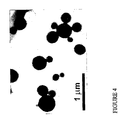
- PS-PIAT is able to form very stable and well-defined polymersomes in water ( Figure 3 ).
- the vesicles, which are formed upon dispersal of the macromolecules described above in an aqueous solution, are very robust, but still permeable for a substrate like glucose.
- This amphiphilic macromolecule is a rod-coil type of block copolymer.
- the membrane thickness of 30 ⁇ 10 nm was determined by scanning electron micrograph (SEM).
- SEM scanning electron micrograph
- the thiophene side groups present in the side chain of PS-PIAT are polymerized, thereby providing the vesicles with a more conducting polymer outer and inner shell. This can be performed electrochemically or by chemical oxidation. This polymerization results in cross-linking of the polymersome membrane. Studies have shown that the electron conducting properties of the PS-PIAT polymersomes improve after cross-linking.
- the polypeptide is capable of participating in a chemical reaction or is capable in participating in the formation of a molecular structure that facilitate such reaction.
- the chemical reaction can result in release of electrons that can be transported through the shell of the hollow particle, preferably through the conductive outer shell of vesicles.
- Such a polypeptide could potentially be a genetically modified polypeptide that is very stable for a long time.
- the polypeptide could be linked to the inner side of the vesicle by for example a lipophylic tail attached to the enzyme.
- the polypeptide preferably is an enzyme and in a preferred embodiment of the present invention the hollow particle is permeable to a substrate of the enzyme.
- the chemical reaction preferably is a redox reaction. With redox reaction electrons are released and can diffuse to the shell of the hollow particle and can be transported through the shells in a specific direction. More preferred is that the chemical reaction is an oxidation. Many enzymes in nature catalyze an oxidation reaction and the substrates for those enzymes are molecules that are easily available and relatively cheap.
- the polypeptide is a glucose oxidase.
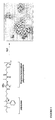
- the chemical reaction is the conversion of ⁇ -D-glucose into D-glucono-1,5-lactone. During this reaction two electrons are released, see below.
- the electrons that are liberated can be easily accepted by the conductive shell of the hollow particles, which also serve as organic electrodes.
- Glucose oxidase is relatively stable and a well known enzyme.
- the invention relates to a suspension wherein the hollow particle is embedded in a gel-like structure. In a gel-like structure the hollow particles diffuse slowly and the substrate diffuses slowly.
- the hollow particle is embedded in a glucose solution.
- Glucose is a good substrate for glucose oxidase and not expensive. In this respect of the invention glucose is the fuel from which electrons will be produced and is readily available and a relatively cheap.
- the combination glucose/glucose oxidase is a good and often used combination of enzyme/substrate.
- Glucose furthermore is stable and is obtainable in a very pure form.
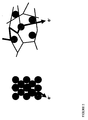
- the electrons can find their path via the conductive outer shell(s) of the hollow particles, on the condition that the majority of the hollow particles contact each other ( Figure 2 ).
- a preferred embodiment of the invention comprises a matrix to contact at least one hollow particle for carrying out the electron transport, for example a conducting polymer (e.g. a polythiophene) that contacts the vesicles ( Figure 2 ).
- the matrix can cross-link at least one hollow particle to another hollow particle.
- the matrix can for example be partially embedded in the shell of some of the hollow particles.
- the suspension contains in a preferred embodiment known electron carriers such as ferrocene derivatives and viologen derivatives in order to facilitate electron transport.
- the present invention also relates to the use of the suspension described above for the production of a battery.
- the suspension described above is used for the production of a nano-battery for the use in combination with a microchip.
- the present invention furthermore relates to a battery using the suspension described above.
- a battery can use relatively cheap fuel, like glucose, and can deliver a constant current. Since it can be chosen that the components of such a battery are not toxic it is saver for use in for example a pace maker in humans. No known toxic compounds (except for the viologen derivatives) are included so there is no toxicity risk involved. In addition such a battery is not harmful for the environment.
- the present invention furthermore relates to a fuel cell comprising: an anode compartment including an anode; a cathode compartment including a cathode; and disposed within said anode compartment, within said cathode compartment, or between said anode compartment and said cathode compartment, the suspension described above.
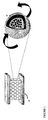
- the electrons can find their path in the direction of the anode via the conductive outer shell of the hollow particle(s). See figure 1 .
- the present invention also relates to a device for detection of a solute using the suspension described above.
- the suspension preferably comprises an enzyme that can chemically convert the solute. Preferably with these conversion electrons are released.
- a specific embodiment of the present invention in this respect relates to a glucose sensor using the suspension described above.
- the polypeptide in this embodiment is a glucose oxidase.
- glucose is sensed the glucose oxidase uses the glucose as a substrate and electrons are released.
- the electrons move via the outer shells of the hollow particles to an anode and a current of electrons can be detected.
- the present invention relates to a method of producing electrical power comprising the use of the suspension described above. Because of the natural source of energy this kind of electrical power is not harmful for the environment.
- the electrical power can for example be used for cars.
- the present invention furthermore relates to the process for preparing the suspension described above, comprising the steps of: (a) making an aqueous solution of bis(2,2'-bipyridine)ruthenium(II)bis(pyrazolyl); (b) injecting a solution containing polystyrene- b- poly(L-isocyanoalanine(2-thiophen-3-yl-ethyl)amide) in THF into the solution made in step (a). See example 1 for more details.
- the process furthermore comprises: (c) placing the dispersion made in step (b) at 60 °C; (d) cooling the dispersion to room temperature, and (e) filter dispersion of step (d) using a filter with a cutoff of 100 kDa. See example 1 for more details.
- Encapsulation of the GOx enzymes was carried out by preparing a solution of 48 mg.l -1 GOx dissolved in phosphate buffer (20 mM, pH 7.0). Into this solution a 1.0 mg.ml -1 solution of PS-PIAT in THF was injected resulting in a final buffer to THF ratio of 6:1 (v/v). The free enzyme was removed by size exclusion chromatography using Sephadex G-50 and an aqueous phosphate buffer (pH 7.5) as eluent. TEM micrographs of the resulting aggregates are shown in Figure 4 .
- Cross-linking of the PS-PIAT polymersome membrane was done by making an aqueous solution of 0.20 ml of 30 mg.l -1 CAL B and 1.0 ml of 1.3 ⁇ M BRP in which 0.10 ml of a solution containing 0.50 g.l -1 PS-PIAT in THF was injected, resulting in a final water/THF ratio of 12:1 (v/v).
- a concentration of BRP was chosen that was comparable to the amount of thiophene groups present (2 ⁇ 10 -7 M).
- the dispersion was placed in a water bath of 60 °C for the desired period of time.
- a confined reaction chamber of about 1-2 cm 3 is filled with a water-based dispersion of the Glucose Oxidase-containing vesicles.
- the 'fuel' glucose can be dissolved in this dispersion up to relatively high concentrations.
- two electrodes are attached (constructed of e.g. Indium Tin Oxide (ITO)).
- ITO Indium Tin Oxide
- an average electric current of approximately 200 mA is required, which means that 1.25 ⁇ 10 18 electrons are needed per second.
- the following calculations have been made assuming a maximum performance of a cell of 1 cm 3 .
- the required electric current corresponds to 6.25 ⁇ 10 17 enzymatic reactions per second.
- the battery can operate continuously for a period of about 8700 hours (1 year).
- the performance-limiting factor is the amount of glucose present and the build up of side products glucoselactone and protons.
- the system will, however, be subject to other factors that can affect its performance. One can think about enzyme degradation, in particular when the system is operating for a longer time.
- an important factor determining performance will be the efficiency of electron transport from the battery to the anode.
- the parameters of the battery can however be easily varied (e.g. the amounts of vesicles or glucose, the nature of the matrix).
Landscapes
- Engineering & Computer Science (AREA)
- Chemical & Material Sciences (AREA)
- Chemical Kinetics & Catalysis (AREA)
- Life Sciences & Earth Sciences (AREA)
- General Chemical & Material Sciences (AREA)
- Manufacturing & Machinery (AREA)
- Electrochemistry (AREA)
- Sustainable Development (AREA)
- Sustainable Energy (AREA)
- Microbiology (AREA)
- Biochemistry (AREA)
- Microelectronics & Electronic Packaging (AREA)
- Inert Electrodes (AREA)
- Measuring Or Testing Involving Enzymes Or Micro-Organisms (AREA)
- Apparatus Associated With Microorganisms And Enzymes (AREA)
- Pharmaceuticals Containing Other Organic And Inorganic Compounds (AREA)
- Immobilizing And Processing Of Enzymes And Microorganisms (AREA)
- Secondary Cells (AREA)
Claims (17)
- Suspension, die zur Erzeugung eines Elektronenstroms verwendet werden kann, wobei die Suspension eine Vielzahl von hohlen Partikeln in elektrisch leitendem Kontakt umfasst, wobei die hohlen Partikel eine Substratdurchlässige und elektrisch leitende äußere Schale und darin eingeschlossen ein Redoxreaktion-katalysierendes Enzym umfassen, das in den hohlen Partikeln eine enzymatische Umsetzung des besagten Substrates katalysiert, wobei Elektronen freigesetzt werden.
- Suspension gemäß Anspruch 1, wobei die Substratdurchlässige und elektrisch leitende äußere Schale aus einem Polymer zusammengesetzt ist.
- Suspension gemäß Anspruch 2, wobei das Polymer ein Block-Copolymer ist.
- Suspension gemäß Anspruch 3, wobei das Block-Copolymer einen hydrophoben Polystyrolblock und ein hydrophiles Polyisocyanopeptid umfasst.
- Suspension gemäß Anspruch 3 oder Anspruch 4, wobei das Block-Copolymer Polystyrol-b-poly (L-isocyanoalanin (2-thiophen-3-yl-ethyl) amid) (PS-PIAT) umfasst.
- Suspension gemäß Anspruch 5, wobei Seitengruppen, die sich auf dem Block-Copolymer befinden, polymerisiert sind.
- Suspension gemäß Anspruch 6, wobei die Thiophen-Seitengruppen, die sich in den Seitenketten des Polystyrol-b-poly (L-isocyanoalanin (2-thiophen-3-yl-ethyl) amid) befinden, polymerisiert sind.
- Suspension gemäß einem der Ansprüche 1 bis 7, wobei das Polypeptid mit der Innenseite des hohlen Partikels in Verbindung steht.
- Suspension gemäß einem der Ansprüche 1 bis 8, wobei das Enzym Glucose-Oxidase und das Substrat Glucose ist.
- Suspension gemäß einem der Ansprüche 1 bis 9, wobei die hohlen Partikel in einer elektrisch leitenden Matrix eingebettet sind.
- Suspension gemäß Anspruch 10, wobei die elektrisch leitende Matrix Ferrocen-Derivate und/oder Viologen-Derivate umfasst.
- Verwendung einer Suspension gemäß einem der Ansprüche 1-11 zur Herstellung einer Batterie.
- Brennstoffzelle, umfassend: ein Anoden-Kompartiment, umfassend eine Anode; ein Kathoden-Kompartiment, umfassend eine Kathode; und innerhalb dieses Anoden-Kompartiments, innerhalb dieses Kathoden-Kompartiments, oder zwischen diesem Anoden-Kompartiment und diesem Kathoden-Kompartiment verteilt, die Suspension gemäß einem der Ansprüche 1-11.
- Vorrichtung zum Detektieren eines Substrates unter Verwendung einer Suspension gemäß einem der Ansprüche 1 bis 11.
- Verfahren zur Erzeugung von elektrischer Leistung, umfassend die Verwendung der Suspension gemäß einem der Ansprüche 1-11.
- Verfahren zur Herstellung einer Suspension gemäß einem der Ansprüche 1-11, umfassend die Schritte:(a) Herstellen einer wässrigen Lösung von Bis (2,2'-bipyridin) ruthenium (II) bis (pyrazolyl);(b) Einspritzen einer Lösung enthaltend Polystyrol-b-poly (L-isocyanoalanin (2-thiophen-3-yl-ethyl) amid) in THF in die in Schritt (a) hergestellten Lösung.
- Verfahren gemäß Anspruch 16, ferner umfassend:(c) Bringen der in Schritt (b) hergestellten Lösung auf 60°C;(d) Abkühlen der Dispersion auf Raumtemperatur; und(e) Filtrieren der Dispersion von Schritt (d) unter Verwendung eines Filters mit einem Cut-off von 100 kDa.
Applications Claiming Priority (2)
| Application Number | Priority Date | Filing Date | Title |
|---|---|---|---|
| NL1024573 | 2003-10-20 | ||
| PCT/NL2004/000739 WO2005038968A2 (en) | 2003-10-20 | 2004-10-19 | Suspension for the generation of a current of electrons and the use and the preparation thereof |
Publications (2)
| Publication Number | Publication Date |
|---|---|
| EP1702381A2 EP1702381A2 (de) | 2006-09-20 |
| EP1702381B1 true EP1702381B1 (de) | 2010-06-09 |
Family
ID=34464917
Family Applications (1)
| Application Number | Title | Priority Date | Filing Date |
|---|---|---|---|
| EP04793664A Expired - Lifetime EP1702381B1 (de) | 2003-10-20 | 2004-10-19 | Suspension zur erzeugung eines stroms von elektronen sowie deren verwendung und präparation |
Country Status (8)
| Country | Link |
|---|---|
| US (1) | US20070224490A1 (de) |
| EP (1) | EP1702381B1 (de) |
| JP (1) | JP5132936B2 (de) |
| CN (1) | CN100401572C (de) |
| AT (1) | ATE470964T1 (de) |
| DE (1) | DE602004027659D1 (de) |
| ES (1) | ES2347251T3 (de) |
| WO (1) | WO2005038968A2 (de) |
Families Citing this family (7)
| Publication number | Priority date | Publication date | Assignee | Title |
|---|---|---|---|---|
| NL1027428C2 (nl) * | 2004-11-05 | 2006-05-09 | Encapson V O F | Permeabele capsules, werkwijze voor de vervaardiging evenals toepassing daarvan. |
| GB2449453A (en) * | 2007-05-22 | 2008-11-26 | Ugcs | A Biological fuel cell |
| JP2009158458A (ja) * | 2007-12-06 | 2009-07-16 | Sony Corp | 燃料電池、燃料電池の製造方法、電子機器、酵素固定化電極、バイオセンサー、バイオリアクター、エネルギー変換素子および酵素反応利用装置 |
| JP5325540B2 (ja) * | 2008-11-04 | 2013-10-23 | オリンパス株式会社 | ポータブル装置 |
| MX366655B (es) * | 2013-07-18 | 2019-07-17 | Stichting Katholieke Univ | Polímero adecuado para su uso en cultivo celular. |
| CN105680056B (zh) * | 2016-01-19 | 2018-07-10 | 南京斯博伏特新材料有限公司 | 一种微生物燃料电池的阳极装置的制备方法 |
| NL2028542B1 (en) * | 2021-06-25 | 2023-01-02 | Philippina JANSSEN Catharina | A contrast agent for mri imaging diagnostics |
Family Cites Families (10)
| Publication number | Priority date | Publication date | Assignee | Title |
|---|---|---|---|---|
| FR2077696B1 (de) * | 1970-02-06 | 1973-03-16 | Synthelabo | |
| US4622294A (en) * | 1985-02-08 | 1986-11-11 | Kung Viola T | Liposome immunoassay reagent and method |
| JPS6457152A (en) * | 1987-08-28 | 1989-03-03 | Nippon Suisan Kaisha Ltd | Analyzing method utilizing ribosome including enzyme |
| JP2883132B2 (ja) * | 1989-11-22 | 1999-04-19 | 沖電気工業株式会社 | バイオ素子 |
| US6022500A (en) * | 1995-09-27 | 2000-02-08 | The United States Of America As Represented By The Secretary Of The Army | Polymer encapsulation and polymer microsphere composites |
| US6270649B1 (en) * | 1998-07-09 | 2001-08-07 | Michigan State University | Electrochemical methods for generation of a biological proton motive force and pyridine nucleotide cofactor regeneration |
| KR100303611B1 (ko) * | 1999-07-07 | 2001-09-24 | 박호군 | 미생물의 전기화학적 농화배양 방법 및 유기물질 및 bod 분석용 바이오센서 |
| AU2002353776A1 (en) * | 2001-12-11 | 2003-06-23 | Powerzyme, Inc. | Biocompatible membranes of block copolymers and fuel cells produced therewith |
| US6781616B2 (en) * | 2002-09-12 | 2004-08-24 | Eastman Kodak Company | Preventing crease formation in donor web in dye transfer printer that can cause line artifact on print |
| US7638228B2 (en) * | 2002-11-27 | 2009-12-29 | Saint Louis University | Enzyme immobilization for use in biofuel cells and sensors |
-
2004
- 2004-10-19 CN CNB2004800308591A patent/CN100401572C/zh not_active Expired - Lifetime
- 2004-10-19 EP EP04793664A patent/EP1702381B1/de not_active Expired - Lifetime
- 2004-10-19 WO PCT/NL2004/000739 patent/WO2005038968A2/en not_active Ceased
- 2004-10-19 AT AT04793664T patent/ATE470964T1/de not_active IP Right Cessation
- 2004-10-19 ES ES04793664T patent/ES2347251T3/es not_active Expired - Lifetime
- 2004-10-19 US US10/576,701 patent/US20070224490A1/en not_active Abandoned
- 2004-10-19 JP JP2006536467A patent/JP5132936B2/ja not_active Expired - Lifetime
- 2004-10-19 DE DE602004027659T patent/DE602004027659D1/de not_active Expired - Lifetime
Also Published As
| Publication number | Publication date |
|---|---|
| EP1702381A2 (de) | 2006-09-20 |
| CN1871738A (zh) | 2006-11-29 |
| WO2005038968A3 (en) | 2005-06-02 |
| ES2347251T3 (es) | 2010-10-27 |
| ATE470964T1 (de) | 2010-06-15 |
| JP5132936B2 (ja) | 2013-01-30 |
| CN100401572C (zh) | 2008-07-09 |
| DE602004027659D1 (de) | 2010-07-22 |
| US20070224490A1 (en) | 2007-09-27 |
| JP2007509479A (ja) | 2007-04-12 |
| WO2005038968A2 (en) | 2005-04-28 |
Similar Documents
| Publication | Publication Date | Title |
|---|---|---|
| Heller | Electron-conducting redox hydrogels: design, characteristics and synthesis | |
| Mano et al. | On the parameters affecting the characteristics of the “wired” glucose oxidase anode | |
| Meredith et al. | Anthracene-modified multi-walled carbon nanotubes as direct electron transfer scaffolds for enzymatic oxygen reduction | |
| Willner et al. | Integrated enzyme‐based biofuel cells–a review | |
| US7368190B2 (en) | Miniature biological fuel cell that is operational under physiological conditions, and associated devices and methods | |
| Mano et al. | A miniature biofuel cell operating at 0.78 V | |
| EP2684239B1 (de) | Vereinheitlichte elektrodenanordnung mit ionomer mit hohem äquivalentgewicht | |
| Kaneko et al. | Redox‐active polymers connecting living microbial cells to an extracellular electrical circuit | |
| CN101641821A (zh) | 酶固定化电极、燃料电池、电子设备、利用酶反应的装置、以及酶固定化基体 | |
| Barelli et al. | Enzymatic fuel cell technology for energy production from bio-sources | |
| CN101366137A (zh) | 固定在疏水改性多糖中的酶 | |
| US20130130284A1 (en) | Enzyme-fiber matrix composite of three-dimensional network structure, preparation method thereof, and use thereof | |
| Hammond et al. | Solubilized Enzymatic Fuel Cell (SEFC) for quasi-continuous operation exploiting carbohydrate block copolymer glyconanoparticle mediators | |
| Lee et al. | Maximizing the enzyme immobilization of enzymatic glucose biofuel cells through hierarchically structured reduced graphene oxide | |
| EP1702381B1 (de) | Suspension zur erzeugung eines stroms von elektronen sowie deren verwendung und präparation | |
| Lee et al. | Self-charging hybrid energy devices collaborated with enzymatic biofuel cells and supercapacitors | |
| Hossain et al. | Effect of pore size of MgO-templated porous carbon electrode on immobilized crosslinked enzyme–mediator redox network | |
| Mano et al. | Electro-oxidation of glucose at an increased current density at a reducing potential | |
| EP2337134A1 (de) | Brennstoffzelle, elektronische vorrichtung und pufferlösung für die brennstoffzelle | |
| US20080213631A1 (en) | Hybrid Power Strip | |
| Kuwahara et al. | Bioelectrocatalytic fructose oxidation with fructose dehydrogenase-bearing conducting polymer films for biofuel cell application | |
| Shen et al. | An electrodeposited redox polymer–laccase composite film for highly efficient four-electron oxygen reduction | |
| Ammam et al. | Microbiofuel cell powered by glucose/O2 based on electrodeposition of enzyme, conducting polymer and redox mediators. Part II: Influence of the electropolymerized monomer on the output power density and stability | |
| Nikiforidis et al. | Redox-active Polymers in Biofuel Cells | |
| Lim | The Investigation of Polyelectrolytes as a Means of Enzyme/Mediator Immobilization for Applications in Bioelectrocatalysis |
Legal Events
| Date | Code | Title | Description |
|---|---|---|---|
| PUAI | Public reference made under article 153(3) epc to a published international application that has entered the european phase |
Free format text: ORIGINAL CODE: 0009012 |
|
| 17P | Request for examination filed |
Effective date: 20060519 |
|
| AK | Designated contracting states |
Kind code of ref document: A2 Designated state(s): AT BE BG CH CY CZ DE DK EE ES FI FR GB GR HU IE IT LI LU MC NL PL PT RO SE SI SK TR |
|
| 17Q | First examination report despatched |
Effective date: 20061027 |
|
| DAX | Request for extension of the european patent (deleted) | ||
| GRAP | Despatch of communication of intention to grant a patent |
Free format text: ORIGINAL CODE: EPIDOSNIGR1 |
|
| GRAS | Grant fee paid |
Free format text: ORIGINAL CODE: EPIDOSNIGR3 |
|
| GRAA | (expected) grant |
Free format text: ORIGINAL CODE: 0009210 |
|
| AK | Designated contracting states |
Kind code of ref document: B1 Designated state(s): AT BE BG CH CY CZ DE DK EE ES FI FR GB GR HU IE IT LI LU MC NL PL PT RO SE SI SK TR |
|
| REG | Reference to a national code |
Ref country code: CH Ref legal event code: EP |
|
| REG | Reference to a national code |
Ref country code: IE Ref legal event code: FG4D |
|
| REF | Corresponds to: |
Ref document number: 602004027659 Country of ref document: DE Date of ref document: 20100722 Kind code of ref document: P |
|
| REG | Reference to a national code |
Ref country code: NL Ref legal event code: T3 |
|
| REG | Reference to a national code |
Ref country code: ES Ref legal event code: FG2A Ref document number: 2347251 Country of ref document: ES Kind code of ref document: T3 |
|
| PG25 | Lapsed in a contracting state [announced via postgrant information from national office to epo] |
Ref country code: SE Free format text: LAPSE BECAUSE OF FAILURE TO SUBMIT A TRANSLATION OF THE DESCRIPTION OR TO PAY THE FEE WITHIN THE PRESCRIBED TIME-LIMIT Effective date: 20100609 |
|
| PG25 | Lapsed in a contracting state [announced via postgrant information from national office to epo] |
Ref country code: AT Free format text: LAPSE BECAUSE OF FAILURE TO SUBMIT A TRANSLATION OF THE DESCRIPTION OR TO PAY THE FEE WITHIN THE PRESCRIBED TIME-LIMIT Effective date: 20100609 Ref country code: SI Free format text: LAPSE BECAUSE OF FAILURE TO SUBMIT A TRANSLATION OF THE DESCRIPTION OR TO PAY THE FEE WITHIN THE PRESCRIBED TIME-LIMIT Effective date: 20100609 Ref country code: FI Free format text: LAPSE BECAUSE OF FAILURE TO SUBMIT A TRANSLATION OF THE DESCRIPTION OR TO PAY THE FEE WITHIN THE PRESCRIBED TIME-LIMIT Effective date: 20100609 |
|
| PG25 | Lapsed in a contracting state [announced via postgrant information from national office to epo] |
Ref country code: GR Free format text: LAPSE BECAUSE OF FAILURE TO SUBMIT A TRANSLATION OF THE DESCRIPTION OR TO PAY THE FEE WITHIN THE PRESCRIBED TIME-LIMIT Effective date: 20100910 Ref country code: PL Free format text: LAPSE BECAUSE OF FAILURE TO SUBMIT A TRANSLATION OF THE DESCRIPTION OR TO PAY THE FEE WITHIN THE PRESCRIBED TIME-LIMIT Effective date: 20100609 Ref country code: CY Free format text: LAPSE BECAUSE OF FAILURE TO SUBMIT A TRANSLATION OF THE DESCRIPTION OR TO PAY THE FEE WITHIN THE PRESCRIBED TIME-LIMIT Effective date: 20100609 |
|
| PG25 | Lapsed in a contracting state [announced via postgrant information from national office to epo] |
Ref country code: EE Free format text: LAPSE BECAUSE OF FAILURE TO SUBMIT A TRANSLATION OF THE DESCRIPTION OR TO PAY THE FEE WITHIN THE PRESCRIBED TIME-LIMIT Effective date: 20100609 |
|
| PG25 | Lapsed in a contracting state [announced via postgrant information from national office to epo] |
Ref country code: SK Free format text: LAPSE BECAUSE OF FAILURE TO SUBMIT A TRANSLATION OF THE DESCRIPTION OR TO PAY THE FEE WITHIN THE PRESCRIBED TIME-LIMIT Effective date: 20100609 Ref country code: RO Free format text: LAPSE BECAUSE OF FAILURE TO SUBMIT A TRANSLATION OF THE DESCRIPTION OR TO PAY THE FEE WITHIN THE PRESCRIBED TIME-LIMIT Effective date: 20100609 Ref country code: PT Free format text: LAPSE BECAUSE OF FAILURE TO SUBMIT A TRANSLATION OF THE DESCRIPTION OR TO PAY THE FEE WITHIN THE PRESCRIBED TIME-LIMIT Effective date: 20101011 Ref country code: CZ Free format text: LAPSE BECAUSE OF FAILURE TO SUBMIT A TRANSLATION OF THE DESCRIPTION OR TO PAY THE FEE WITHIN THE PRESCRIBED TIME-LIMIT Effective date: 20100609 |
|
| PLBE | No opposition filed within time limit |
Free format text: ORIGINAL CODE: 0009261 |
|
| STAA | Information on the status of an ep patent application or granted ep patent |
Free format text: STATUS: NO OPPOSITION FILED WITHIN TIME LIMIT |
|
| PG25 | Lapsed in a contracting state [announced via postgrant information from national office to epo] |
Ref country code: DK Free format text: LAPSE BECAUSE OF FAILURE TO SUBMIT A TRANSLATION OF THE DESCRIPTION OR TO PAY THE FEE WITHIN THE PRESCRIBED TIME-LIMIT Effective date: 20100609 |
|
| 26N | No opposition filed |
Effective date: 20110310 |
|
| PG25 | Lapsed in a contracting state [announced via postgrant information from national office to epo] |
Ref country code: MC Free format text: LAPSE BECAUSE OF NON-PAYMENT OF DUE FEES Effective date: 20101031 |
|
| REG | Reference to a national code |
Ref country code: CH Ref legal event code: PL |
|
| REG | Reference to a national code |
Ref country code: DE Ref legal event code: R097 Ref document number: 602004027659 Country of ref document: DE Effective date: 20110309 |
|
| PG25 | Lapsed in a contracting state [announced via postgrant information from national office to epo] |
Ref country code: CH Free format text: LAPSE BECAUSE OF NON-PAYMENT OF DUE FEES Effective date: 20101031 Ref country code: LI Free format text: LAPSE BECAUSE OF NON-PAYMENT OF DUE FEES Effective date: 20101031 |
|
| PG25 | Lapsed in a contracting state [announced via postgrant information from national office to epo] |
Ref country code: BG Free format text: LAPSE BECAUSE OF FAILURE TO SUBMIT A TRANSLATION OF THE DESCRIPTION OR TO PAY THE FEE WITHIN THE PRESCRIBED TIME-LIMIT Effective date: 20100609 Ref country code: HU Free format text: LAPSE BECAUSE OF FAILURE TO SUBMIT A TRANSLATION OF THE DESCRIPTION OR TO PAY THE FEE WITHIN THE PRESCRIBED TIME-LIMIT Effective date: 20101210 Ref country code: LU Free format text: LAPSE BECAUSE OF NON-PAYMENT OF DUE FEES Effective date: 20101019 |
|
| PG25 | Lapsed in a contracting state [announced via postgrant information from national office to epo] |
Ref country code: TR Free format text: LAPSE BECAUSE OF FAILURE TO SUBMIT A TRANSLATION OF THE DESCRIPTION OR TO PAY THE FEE WITHIN THE PRESCRIBED TIME-LIMIT Effective date: 20100609 |
|
| PG25 | Lapsed in a contracting state [announced via postgrant information from national office to epo] |
Ref country code: BG Free format text: LAPSE BECAUSE OF FAILURE TO SUBMIT A TRANSLATION OF THE DESCRIPTION OR TO PAY THE FEE WITHIN THE PRESCRIBED TIME-LIMIT Effective date: 20100909 |
|
| REG | Reference to a national code |
Ref country code: FR Ref legal event code: PLFP Year of fee payment: 12 |
|
| REG | Reference to a national code |
Ref country code: FR Ref legal event code: PLFP Year of fee payment: 13 |
|
| REG | Reference to a national code |
Ref country code: FR Ref legal event code: PLFP Year of fee payment: 14 |
|
| REG | Reference to a national code |
Ref country code: FR Ref legal event code: PLFP Year of fee payment: 15 |
|
| PGFP | Annual fee paid to national office [announced via postgrant information from national office to epo] |
Ref country code: IE Payment date: 20200206 Year of fee payment: 16 |
|
| PG25 | Lapsed in a contracting state [announced via postgrant information from national office to epo] |
Ref country code: IE Free format text: LAPSE BECAUSE OF NON-PAYMENT OF DUE FEES Effective date: 20201019 |
|
| PGFP | Annual fee paid to national office [announced via postgrant information from national office to epo] |
Ref country code: NL Payment date: 20221026 Year of fee payment: 19 |
|
| P01 | Opt-out of the competence of the unified patent court (upc) registered |
Effective date: 20230507 |
|
| PGFP | Annual fee paid to national office [announced via postgrant information from national office to epo] |
Ref country code: GB Payment date: 20231027 Year of fee payment: 20 |
|
| PGFP | Annual fee paid to national office [announced via postgrant information from national office to epo] |
Ref country code: ES Payment date: 20231102 Year of fee payment: 20 |
|
| PGFP | Annual fee paid to national office [announced via postgrant information from national office to epo] |
Ref country code: IT Payment date: 20231023 Year of fee payment: 20 Ref country code: FR Payment date: 20231025 Year of fee payment: 20 Ref country code: DE Payment date: 20231027 Year of fee payment: 20 |
|
| PGFP | Annual fee paid to national office [announced via postgrant information from national office to epo] |
Ref country code: BE Payment date: 20231027 Year of fee payment: 20 |
|
| REG | Reference to a national code |
Ref country code: NL Ref legal event code: MM Effective date: 20231101 |
|
| PG25 | Lapsed in a contracting state [announced via postgrant information from national office to epo] |
Ref country code: NL Free format text: LAPSE BECAUSE OF NON-PAYMENT OF DUE FEES Effective date: 20231101 |
|
| PG25 | Lapsed in a contracting state [announced via postgrant information from national office to epo] |
Ref country code: NL Free format text: LAPSE BECAUSE OF NON-PAYMENT OF DUE FEES Effective date: 20231101 |
|
| REG | Reference to a national code |
Ref country code: DE Ref legal event code: R071 Ref document number: 602004027659 Country of ref document: DE |
|
| REG | Reference to a national code |
Ref country code: ES Ref legal event code: FD2A Effective date: 20241025 |
|
| REG | Reference to a national code |
Ref country code: GB Ref legal event code: PE20 Expiry date: 20241018 |
|
| REG | Reference to a national code |
Ref country code: BE Ref legal event code: MK Effective date: 20241019 |
|
| PG25 | Lapsed in a contracting state [announced via postgrant information from national office to epo] |
Ref country code: GB Free format text: LAPSE BECAUSE OF EXPIRATION OF PROTECTION Effective date: 20241018 |
|
| PG25 | Lapsed in a contracting state [announced via postgrant information from national office to epo] |
Ref country code: ES Free format text: LAPSE BECAUSE OF EXPIRATION OF PROTECTION Effective date: 20241020 |
|
| PG25 | Lapsed in a contracting state [announced via postgrant information from national office to epo] |
Ref country code: GB Free format text: LAPSE BECAUSE OF EXPIRATION OF PROTECTION Effective date: 20241018 Ref country code: ES Free format text: LAPSE BECAUSE OF EXPIRATION OF PROTECTION Effective date: 20241020 |