EP1701360A2 - Röntgenlinse - Google Patents
Röntgenlinse Download PDFInfo
- Publication number
- EP1701360A2 EP1701360A2 EP05025936A EP05025936A EP1701360A2 EP 1701360 A2 EP1701360 A2 EP 1701360A2 EP 05025936 A EP05025936 A EP 05025936A EP 05025936 A EP05025936 A EP 05025936A EP 1701360 A2 EP1701360 A2 EP 1701360A2
- Authority
- EP
- European Patent Office
- Prior art keywords
- function
- parabola
- ray
- value
- ray lens
- Prior art date
- Legal status (The legal status is an assumption and is not a legal conclusion. Google has not performed a legal analysis and makes no representation as to the accuracy of the status listed.)
- Granted
Links
Images


Classifications
-
- G—PHYSICS
- G21—NUCLEAR PHYSICS; NUCLEAR ENGINEERING
- G21K—HANDLING OF PARTICLES OR IONISING RADIATION NOT OTHERWISE PROVIDED FOR; IRRADIATION DEVICES; GAMMA RAY OR X-RAY MICROSCOPES
- G21K1/00—Arrangements for handling particles or ionising radiation, e.g. focusing or moderating
- G21K1/06—Arrangements for handling particles or ionising radiation, e.g. focusing or moderating using diffraction, refraction or reflection, e.g. monochromators
Definitions
- the invention relates to an X-ray lens for focusing X-rays.
- X-ray lenses for focusing X-rays generally consist of a large number N of individual focusing elements, referred to as lens elements.
- x is the parabola axis and 1 / 2r is the half-parameter of the parabola (see, for example, Bronstein, Semendjajew, Taschenbuch der Mathematik, 20th ed., 1981, p.
- F is the focal length of the lens element and E is the photon energy and ⁇ (E) ⁇ E -2 .
- focal spots with a size ⁇ of less than 0.1 ⁇ m can be realized in the ideal case.
- X-ray spectroscopic investigations require a constant size of the focal spot, which should be less than 1 ⁇ m, over a broad energy range of the photons, preferably over a few keV at a fixed location, in particular the sample to be analyzed.
- the energy range ⁇ E to be covered amounts to approximately 1 keV, with XANES investigations approximately 100 eV.
- an x-ray lens which has a focal spot with a half-width of less than 1 micron at a fixed energy over a focal depth of several centimeters, the limits of the focal depth being determined by those points at which the half-width of the focal spot is greater than 1 ⁇ m.
- the function f (x) is a periodic function which ensures that no additional local radiation maxima occur in adjacent areas in addition to the desired focal spot.
- the quasiparabolic Profile in that the function f (x) monotonically decreases on a parabola (parabola) and monotonously increases on the adjacent parabola piece to monotonically decrease on the parabola piece adjacent thereto, etc.
- a section of Y (x) for a defined range of values of x, for example between x o and x o + l / 2 and understood, where l / 2 denotes the length of the parabola piece.
- the length L / 2 of the parabola sections are approximately the same.
- the homogeneity of the intensity distribution in the focal depth is determined. To achieve the best possible homogeneity, this value should be between 0.1 ⁇ m and 5 ⁇ m.
- This correction makes it possible to homogenize the intensity in the focal spot.
- the large over a several centimeters focal depth have a focal spot with a half-value width of less than 1 micron
- the parameter should ⁇ is set by the focal depth, greater than 1 micron and less than 40 may be .mu.m.
- the parameters in equation 10 preferably assume the following values: amplitude ⁇ between 1 ⁇ m and 25 ⁇ m, b between 0 and 3, ⁇ between 0 and 0.1 and ⁇ between 0 and ⁇ / 2.
- X-ray lenses according to the invention show, in contrast to conventional x-ray lenses with a parabolic profile, a significantly enlarged focal depth.
- the constancy of the focal spot width over a certain focal depth allows X-ray spectroscopic examinations to be carried out within a wide energy range, ie over a few keV, without the illuminated area its shape and size changes, ie the spectroscopic information comes from the same sample volume for all energies within the energy range.
- FIG. 1a shows the intensity distributions in the region of the focal spot
- FIG. 1b the half-width across the focal region
- FIG. 1c the intensity distribution over the width of the focal spot at different points in the focal region.
- the range of constant focal spot size with acceptable intensity variation extends at a half width of about 3 microns between 18.2 cm and 21, 7 cm, ie over a focal depth of about 3.5 cm.
- Fig. 2a in this case the intensity distributions in the region of the focal spot.
- 2b shows the half width over the focal region and subsequent regions for a function according to equation 8. From FIG. 2b it can be seen that the X-ray lens has a focal depth of 3.7 cm over a half-width of less than 1 ⁇ m. Within a focal depth of 1 cm, the half width varies only by 0.2 ⁇ m.
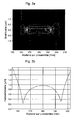
- Fig. 3a shows the intensity distributions in the region of the focal spot.
- 3b shows the half width over the focal region and subsequent regions for a function according to equation 9. It can be seen from FIG. 3b that this X-ray lens has a focal depth of 3.7 cm over a focal depth of less than 1 ⁇ m. Within a focal depth of 1 cm, the half-width varies less than 0.05 ⁇ m.
Landscapes
- Physics & Mathematics (AREA)
- Spectroscopy & Molecular Physics (AREA)
- Engineering & Computer Science (AREA)
- General Engineering & Computer Science (AREA)
- High Energy & Nuclear Physics (AREA)
- Analysing Materials By The Use Of Radiation (AREA)
- Prostheses (AREA)
- Lenses (AREA)
Abstract
Description
- Die Erfindung betrifft eine Röntgenlinse zur Fokussierung von Röntgenstrahlen.
- Röntgenlinsen zur Fokussierung von Röntgenstrahlen bestehen im Allgemeinen aus einer großen Anzahl N einzelner fokussierender Elemente, die als Linsenelemente bezeichnet werden.
- Aus A. Snigirev, V. Kohn, I. Snigireva, A. Souvorov und B. Lengeler, Focussing high-energy x rays by compound refractive lenses, Applied Optics, Band 37, 1998, S. 653-662, sind Linsenelemente bekannt, die ein parabolisches Profil aufweisen, das sich mittels der Gleichung

- Unter Berücksichtigung des Realteils δ der Brechzahl n =1+iβ - δ ergibt sich für diese Art von Röntgenlinsen bei einer Wellenlänge λ die Fokalfleckgröße σ zu

wobei F die Brennweite des Linsenelements und E die Photonenenergie bezeichnen und für δ(E) ~ E -2 gilt. Bei Wellenlängen im Bereich der Röntgenstrahlung, d.h. etwa zwischen 0,01 und 1 nm lassen sich damit im Idealfall Fokalflecke mit einer Größe σ unterhalb von 0,1 µm realisieren. - Die Fokaltiefe FWHM ist ein Maß für den Energiebereich, in dem die Linse als fokussierend angesehen werden kann, und ist für Linsen mit einem parabolischen Profil Y(x) nach Gleichung 1 definiert durch

- Bei bekannten Röntgenlinsen beträgt diese nur wenige Millimeter, was einem Energiebereich von 0,1 % der Nennenergie, d.h. einigen Elektronenvolt (eV), entspricht.
- Röntgenspektroskopische Untersuchungen erfordern jedoch über einen breiten Energiebereich der Photonen, vorzugsweise über einige keV an einem festen Ort, an dem sich insbesondere die zu analysierende Probe befindet, eine konstante Größe des Fokalflecks, die geringer als 1 µm sein soll. Beispielsweise beträgt bei EXAFS-Untersuchungen der abzudeckende Energiebereich ΔE ca. 1 keV, bei XANES-Untersuchungen ca. 100 eV.
- Die Brennweite einer Linse mit einer großen Fokaltiefe lässt sich mittels der Gleichung


- Ausgehend davon ist es die Aufgabe der Erfindung, Röntgenlinsen bereitzustellen, die die einfallende Röntgenstrahlung über einen großen Energiebereich an einem festen Ort fokussieren. Insbesondere soll eine Röntgenlinse angegeben werden, die bei einer festen Energie über eine mehrere Zentimeter große Fokaltiefe einen Fokalfleck mit einer Halbwertsbreite von weniger als 1 µm aufweist, wobei die Grenzen der Fokaltiefe durch diejenigen Stellen festgelegt sind, an denen die Halbwertsbreite des Fokalflecks größer als 1 µm wird.
- Diese Aufgabe wird gelöst durch die Merkmale des Patentanspruchs 1. Die Unteransprüche beschreiben vorteilhafte Ausgestaltungen der Erfindung.
- Eine erfindungsgemäße Röntgenlinse umfasst eine Vielzahl, vorzugsweise zwischen 100 und 1000 von Linsenelementen, die je ein Profil aufweisen, das sich durch die Gleichung

- Vorzugsweise handelt es sich bei der Funktion f(x) um eine periodische Funktion, die gewährleistet, dass neben dem gewollten Fokalfleck keine weiteren lokalen Strahlungsmaxima in benachbarten Gebieten auftreten.
- In einer bevorzugten Ausgestaltung zeichnet sich das quasiparabolische Profil dadurch aus, dass die Funktion f(x) auf einem Parabelstück (Parabelabschnitt) monoton abnimmt und auf dem hierzu benachbarten Parabelstück monoton anwächst, um auf dem hierzu benachbarten Parabelstück wieder monoton abzunehmen usw. Unter einem Parabelstück wird ein Abschnitt von Y(x) für einen abgegrenzten Wertebereich von x z.B. zwischen x o und x o + l /2 und verstanden, wobei l /2 die Länge des Parabelstücks bezeichnet.
- In einer bevorzugten Ausgestaltung sind die Längen l /2 dieser Parabelabschnitte annährend gleich. Durch die Wahl des Wertes der Länge der Parabelabschnitte l /2 wird die Homogenität der Intensitätsverteilung in der Fokaltiefe festgelegt. Um eine möglichst gute Homogenität zu erzielen, sollte dieser Wert zwischen 0,1 µm und 5 µm liegen.
- In einer bevorzugten Ausgestaltung wird für f(x) eine Sägezahnfunktion ausgewählt. Diese ist allgemein charakterisiert durch die Beziehungen


wobei der Parameter α, der die Amplitude der Sägezahnfunktion bezeichnet, zur Einstellung der Fokaltiefe dient. n gibt die laufende Nummer des betrachteten Parabelabschnitts an. Alternativ lässt sich eine Sägezahnfunktion f(x) in einer Reihenentwicklung wie folgt darstellen:
- In einer weitere Ausgestaltung wird das Profil der Sägezahnfunktion durch eine Funktion g(x) derart modifiziert, dass sich die Funktion

- Um erfindungsgemäße Röntgenlinsen zu erhalten, die über eine mehrere Zentimeter große Fokaltiefe einen Fokalfleck mit einer Halbwertsbreite von weniger als 1 µm aufweisen, sollte der Parameter α, durch den die Fokaltiefe eingestellt wird, größer als 1 µm und kleiner als 40 µm sein.
- In einer alternativen Ausgestaltung wird als sägezahnartige Funktion die Funktion

- Erfindungsgemäße Röntgenlinsen zeigen im Gegensatz zu herkömmlichen Röntgenlinsen mit parabolischem Profil eine deutlich vergrößerte Fokaltiefe. Die Konstanz der Fokalfleckbreite über eine gewisser Fokaltiefen erlaubt röntgenspektroskopische Untersuchungen innerhalb eines weiten Energiebereichs, d.h. über einige keV, durchzuführen, ohne dass der beleuchtete Bereich seine Form und Größe ändert, d.h. die spektroskopische Information kommt für alle Energien innerhalb des Energiebereichs aus dem gleichen Probevolumen.
- Die Erfindung wird im Folgenden anhand von Ausführungsbeispielen mit Hilfe der Abbildungen näher erläutert.
- Die experimentellen Untersuchungen wurden bei einer Energie von E = 15 keV an der European Synchrotron Radiation Facility (ESRF) durchgeführt. Für die Berechnungen wurde das Programm MATHCAD© eingesetzt.
- Für Fig. 1a-d wurde zur Modellierung des parabolischen Linsenprofils die lineare, d.h. nichtperiodische Funktion f(x) - a x verwendet. Für die Parameter der Röntgenlinse in den Fig. 1a-c wurden die folgenden Werte gewählt: r = 55 µm; α = 0,0417 r ; Energie der Röntgenstrahlung E = 12,7 keV; Linsenapertur A = 150 µm und Anzahl der Linsenelemente N = 153.
- Fig. 1a zeigt die Intensitätsverteilungen im Bereich des Fokalflecks, Fig. 1b die Halbwertsbreite über den Fokalbereich und Fig. 1c die Intensitätsverteilung über die Breite des Fokalflecks an verschiedenen Stellen im Fokalbereich.
- Fig. 1d zeigt die experimentell bestimmte Fokaltiefe [■] und Intensität [*] einer erfindungsgemäßen Röntgenlinse mit einer nichtperiodischen linearen Funktion f(x) = αx. Hierfür wurde eine Linse mit den Parametern r = 65 µm, α = 0,0267r Linsenapertur A = 150 µm und Anzahl der Linsenelemente N = 153 verwendet. Der Bereich konstanter Fokalfleckgröße bei akzeptabler Intensitätsschwankung erstreckt sich bei einer Halbwertsbreite von ca. 3 µm zwischen 18,2 cm und 21, 7 cm, d.h. über eine Fokaltiefe von ca. 3,5 cm.
- In den Fig. 2a-b wurde zur Modellierung des parabolischen Linsenprofils eine modifizierte Sägezahnfunktion nach Gleichung 9 mit folgenden Parametern eingesetzt: r = 91,75 µm; α = 0,08278 r ; E = 12,7 keV; A = 150 µm; N = 153, l = 5 µm.
- Fig. 2a hierbei die Intensitätsverteilungen im Bereich des Fokalflecks. Fig. 2b zeigt die Halbwertsbreite über den Fokalbereich und sich anschließender Bereiche für eine Funktion gemäß Gleichung 8. Aus Fig. 2b kann entnommen werden, dass die Röntgenlinse über eine Fokaltiefe von 3,7 cm einen Fokalfleck mit einer Halbwertsbreite von kleiner 1 µm aufweist. Innerhalb einer Fokaltiefe von 1 cm schwankt die Halbwertsbreite lediglich um 0,2 µm.
- In Fig. 3a-b wurde zur Modellierung des parabolischen Linsenprofils eine Funktion gemäß Gleichung 9 mit folgenden Parametern ausgewählt: r = 100 µm; α = 0,08575r; l = 1,3 µm; E = 12,2 keV; N = 153.
- Fig. 3a zeigt die Intensitätsverteilungen im Bereich des Fokalflecks. Fig. 3b zeigt die Halbwertsbreite über den Fokalbereich und sich anschließender Bereiche für eine Funktion gemäß Gleichung 9. Aus Fig. 3b kann entnommen werden, dass diese Röntgenlinse über eine Fokaltiefe von 3,7 cm einen Fokalfleck mit einer Halbwertsbreite von kleiner 1 µm aufweist. Innerhalb einer Fokaltiefe von 1 cm schwankt die Halbwertsbreite weniger als 0,05 µm.
Claims (8)
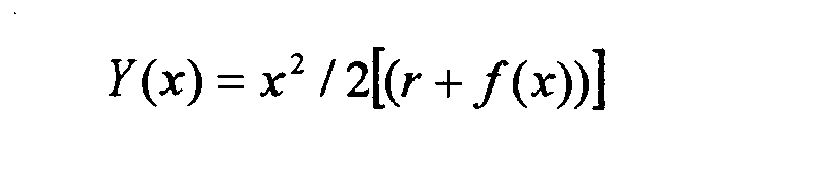
- Röntgenlinse zur Fokussierung von Röntgenstrahlen, umfassend eine Vielzahl von Linsenelementen, die je ein moduliertes parabolisches Profil Y(x) aufweisen, das der Gleichung
- Röntgenlinse nach Anspruch 1, dadurch gekennzeichnet, dass es sich bei der Funktion f(x) um eine periodische Funktion handelt, die auf einem Parabelstück monoton sinkt und auf dem hierzu benachbarten Parabelstück monoton steigt.
- Röntgenlinse nach Anspruch 2, dadurch gekennzeichnet, dass die Längen der Parabelstücke annährend gleich sind.
- Röntgenlinse nach Anspruch 2 oder 3, dadurch gekennzeichnet, dass f(x) eine Sägezahnfunktion darstellt.
- Röntgenlinse nach Anspruch 4, dadurch gekennzeichnet, dass f(x) eine modifizierte Sägezahnfunktion darstellt, für die

- Röntgenlinse nach Anspruch 5, dadurch gekennzeichnet, dass die Amplitude a einen Wert zwischen 1 µm und 40 µm und die Länge l einen Wert zwischen 0,1 µm und 5 µm annimmt.
- Röntgenlinse nach Anspruch 4, dadurch gekennzeichnet, dass f(x) eine modifizierte Sägezahnfunktion darstellt, für die

- Röntgenlinse nach Anspruch 7, dadurch gekennzeichnet, dass die Amplitude α einen Wert zwischen 1 µm und 25 µm, die Länge l einen Wert zwischen 0,1 µm und 5 µm und die Parameter b einen Wert zwischen 0 und 3, α einen Wert zwischen 0 und 0,1 sowie ϕ einen Wert zwischen 0 und π/2 annehmen.
Applications Claiming Priority (1)
| Application Number | Priority Date | Filing Date | Title |
|---|---|---|---|
| DE102004059285A DE102004059285B4 (de) | 2004-12-09 | 2004-12-09 | Röntgenlinse |
Publications (3)
| Publication Number | Publication Date |
|---|---|
| EP1701360A2 true EP1701360A2 (de) | 2006-09-13 |
| EP1701360A3 EP1701360A3 (de) | 2008-08-20 |
| EP1701360B1 EP1701360B1 (de) | 2009-08-19 |
Family
ID=36500163
Family Applications (1)
| Application Number | Title | Priority Date | Filing Date |
|---|---|---|---|
| EP05025936A Expired - Lifetime EP1701360B1 (de) | 2004-12-09 | 2005-11-29 | Röntgenlinse |
Country Status (4)
| Country | Link |
|---|---|
| US (1) | US7263163B2 (de) |
| EP (1) | EP1701360B1 (de) |
| AT (1) | ATE440368T1 (de) |
| DE (2) | DE102004059285B4 (de) |
Families Citing this family (1)
| Publication number | Priority date | Publication date | Assignee | Title |
|---|---|---|---|---|
| RU2634332C2 (ru) * | 2016-04-14 | 2017-10-25 | Федеральное государственное бюджетное учреждение науки Институт ядерной физики им. Г.И. Будкера Сибирского отделения РАН (ИЯФ СО РАН) | Рентгеновская линза на основе эффекта отражения |
Family Cites Families (3)
| Publication number | Priority date | Publication date | Assignee | Title |
|---|---|---|---|---|
| JP2526409B2 (ja) * | 1994-02-18 | 1996-08-21 | 工業技術院長 | X線レンズ |
| WO2001006518A1 (en) * | 1999-07-19 | 2001-01-25 | Mamea Imaging Ab | A refractive x-ray arrangement |
| US6718009B1 (en) * | 2002-09-13 | 2004-04-06 | The University Of Chicago | Method of making of compound x-ray lenses and variable focus x-ray lens assembly |
-
2004
- 2004-12-09 DE DE102004059285A patent/DE102004059285B4/de not_active Expired - Fee Related
-
2005
- 2005-11-29 EP EP05025936A patent/EP1701360B1/de not_active Expired - Lifetime
- 2005-11-29 AT AT05025936T patent/ATE440368T1/de not_active IP Right Cessation
- 2005-11-29 DE DE502005007927T patent/DE502005007927D1/de not_active Expired - Lifetime
- 2005-12-06 US US11/294,878 patent/US7263163B2/en not_active Expired - Fee Related
Non-Patent Citations (2)
| Title |
|---|
| A. SNIGIREV ET AL.: "Focussing high-energy x rays by compound refractive lenses", APPLIED OPTICS, vol. 37, 1998, pages 653 - 662 |
| BRONSTEIN, SE- MENDJAJEW, TASCHENBUCH DER MATHEMATIK, vol. 20, 1981, pages 278 |
Also Published As
| Publication number | Publication date |
|---|---|
| DE102004059285A1 (de) | 2006-06-14 |
| US7263163B2 (en) | 2007-08-28 |
| ATE440368T1 (de) | 2009-09-15 |
| DE502005007927D1 (de) | 2009-10-01 |
| US20060126342A1 (en) | 2006-06-15 |
| EP1701360B1 (de) | 2009-08-19 |
| EP1701360A3 (de) | 2008-08-20 |
| DE102004059285B4 (de) | 2007-04-26 |
Similar Documents
| Publication | Publication Date | Title |
|---|---|---|
| DE60025341T2 (de) | Linsensystem für röntgenstrahlen | |
| EP2583285B1 (de) | Gitter aus mindestens zwei materialien für die röntgenbildgebung | |
| DE112024000873T5 (de) | Röntgen-detektorsystem mit mindestens zwei gestapelten flachen bragg-diffraktoren | |
| EP1324351B1 (de) | Röntgen-optisches System mit Blende im Fokus eines Röntgen-Spiegels | |
| EP0053723B1 (de) | Plangitter-Monochromator | |
| EP1482519B1 (de) | Energiefiltereinrichtung | |
| DE102010022851B4 (de) | Röntgenstrahlungsvorrichtung zur Erzeugung von quasimonochromatischer Röntgenstrahlung und Radiographie-Röntgenaufnahmesystem | |
| EP1202291B1 (de) | Beleuchtungssystem mit einem Gitterelement | |
| EP1360699B1 (de) | Anordnung für röntgenanalytische anwendungen | |
| DE69800159T2 (de) | Röntgenfluoreszenz-Messsystem unter Verwendung polarisierter Strahlung und Röntgenröhre | |
| EP2040050B1 (de) | Messanordnung für ein optisches Spektrometer | |
| EP1701360B1 (de) | Röntgenlinse | |
| DE69727370T2 (de) | Mehrstufiger Diffraktor hergestellt mit konstantem Stufenbreite Winkel (mehrstufiger Monochromator) | |
| DE60030411T2 (de) | Optisches System zur Homogenisierung von Lichtstrahlen mit variablem Ausgangs-Querschnitt | |
| DE102005018329A1 (de) | Detektormodul für Röntgen- oder Gammastrahlung auf Basis von Wellenleitern | |
| DE10214259A1 (de) | Kollektoreinheit für Beleuchtungssysteme mit einer Wellenlänge <193 nm | |
| DE1547113A1 (de) | Scheitelmonochromator | |
| DE10160472B4 (de) | Röntgen-optisches System und Verfahren zur Abbildung einer Strahlungsquelle | |
| DE102011082469B4 (de) | Spektrometer mit wenigstens einem Zerstreuungselement | |
| DE19955848A1 (de) | Verfahren zur röntgenologischen Abbildung von Untersuchungsobjekten mit geringen Dichteunterschieden sowie röntgenoptische Systeme | |
| EP1278209B1 (de) | Einrichtung und Verfahren zur Analyse atomarer und/oder molekularer Elemente mittels wellenlängendispersiver, röntgenspektrometrischer Einrichtungen | |
| DE102006044417B4 (de) | Verfahren zur Mikro-Röntgenfluoreszenzanalyse einer Probe mit dreidimensionaler Auflösung | |
| DE102020110173B4 (de) | Beugungsgitter und Verfahren zur Verwendung des Beugungsgitters | |
| DE19832647C1 (de) | Verfahren zur Erzeugung Gaußscher Intensitätsverteilungen im Strahlprofil einer durch Frequenzverdopplung erzeugten Strahlung | |
| DE102024122242A1 (de) | Polykapillaroptik |
Legal Events
| Date | Code | Title | Description |
|---|---|---|---|
| PUAI | Public reference made under article 153(3) epc to a published international application that has entered the european phase |
Free format text: ORIGINAL CODE: 0009012 |
|
| AK | Designated contracting states |
Kind code of ref document: A2 Designated state(s): AT BE BG CH CY CZ DE DK EE ES FI FR GB GR HU IE IS IT LI LT LU LV MC NL PL PT RO SE SI SK TR |
|
| AX | Request for extension of the european patent |
Extension state: AL BA HR MK YU |
|
| PUAL | Search report despatched |
Free format text: ORIGINAL CODE: 0009013 |
|
| AK | Designated contracting states |
Kind code of ref document: A3 Designated state(s): AT BE BG CH CY CZ DE DK EE ES FI FR GB GR HU IE IS IT LI LT LU LV MC NL PL PT RO SE SI SK TR |
|
| AX | Request for extension of the european patent |
Extension state: AL BA HR MK YU |
|
| 17P | Request for examination filed |
Effective date: 20081016 |
|
| 17Q | First examination report despatched |
Effective date: 20081113 |
|
| GRAP | Despatch of communication of intention to grant a patent |
Free format text: ORIGINAL CODE: EPIDOSNIGR1 |
|
| AKX | Designation fees paid |
Designated state(s): AT BE BG CH CY CZ DE DK EE ES FI FR GB GR HU IE IS IT LI LT LU LV MC NL PL PT RO SE SI SK TR |
|
| GRAS | Grant fee paid |
Free format text: ORIGINAL CODE: EPIDOSNIGR3 |
|
| GRAA | (expected) grant |
Free format text: ORIGINAL CODE: 0009210 |
|
| AK | Designated contracting states |
Kind code of ref document: B1 Designated state(s): AT BE BG CH CY CZ DE DK EE ES FI FR GB GR HU IE IS IT LI LT LU LV MC NL PL PT RO SE SI SK TR |
|
| REG | Reference to a national code |
Ref country code: GB Ref legal event code: FG4D Free format text: NOT ENGLISH |
|
| REG | Reference to a national code |
Ref country code: CH Ref legal event code: NV Representative=s name: ROTTMANN, ZIMMERMANN + PARTNER AG Ref country code: CH Ref legal event code: EP |
|
| REG | Reference to a national code |
Ref country code: IE Ref legal event code: FG4D |
|
| REF | Corresponds to: |
Ref document number: 502005007927 Country of ref document: DE Date of ref document: 20091001 Kind code of ref document: P |
|
| RAP2 | Party data changed (patent owner data changed or rights of a patent transferred) |
Owner name: KARLSRUHER INSTITUT FUER TECHNOLOGIE |
|
| LTIE | Lt: invalidation of european patent or patent extension |
Effective date: 20090819 |
|
| PG25 | Lapsed in a contracting state [announced via postgrant information from national office to epo] |
Ref country code: LT Free format text: LAPSE BECAUSE OF FAILURE TO SUBMIT A TRANSLATION OF THE DESCRIPTION OR TO PAY THE FEE WITHIN THE PRESCRIBED TIME-LIMIT Effective date: 20090819 Ref country code: ES Free format text: LAPSE BECAUSE OF FAILURE TO SUBMIT A TRANSLATION OF THE DESCRIPTION OR TO PAY THE FEE WITHIN THE PRESCRIBED TIME-LIMIT Effective date: 20091130 Ref country code: FI Free format text: LAPSE BECAUSE OF FAILURE TO SUBMIT A TRANSLATION OF THE DESCRIPTION OR TO PAY THE FEE WITHIN THE PRESCRIBED TIME-LIMIT Effective date: 20090819 Ref country code: SE Free format text: LAPSE BECAUSE OF FAILURE TO SUBMIT A TRANSLATION OF THE DESCRIPTION OR TO PAY THE FEE WITHIN THE PRESCRIBED TIME-LIMIT Effective date: 20090819 Ref country code: IS Free format text: LAPSE BECAUSE OF FAILURE TO SUBMIT A TRANSLATION OF THE DESCRIPTION OR TO PAY THE FEE WITHIN THE PRESCRIBED TIME-LIMIT Effective date: 20091219 |
|
| NLV1 | Nl: lapsed or annulled due to failure to fulfill the requirements of art. 29p and 29m of the patents act | ||
| PG25 | Lapsed in a contracting state [announced via postgrant information from national office to epo] |
Ref country code: NL Free format text: LAPSE BECAUSE OF FAILURE TO SUBMIT A TRANSLATION OF THE DESCRIPTION OR TO PAY THE FEE WITHIN THE PRESCRIBED TIME-LIMIT Effective date: 20090819 Ref country code: PL Free format text: LAPSE BECAUSE OF FAILURE TO SUBMIT A TRANSLATION OF THE DESCRIPTION OR TO PAY THE FEE WITHIN THE PRESCRIBED TIME-LIMIT Effective date: 20090819 Ref country code: SI Free format text: LAPSE BECAUSE OF FAILURE TO SUBMIT A TRANSLATION OF THE DESCRIPTION OR TO PAY THE FEE WITHIN THE PRESCRIBED TIME-LIMIT Effective date: 20090819 Ref country code: LV Free format text: LAPSE BECAUSE OF FAILURE TO SUBMIT A TRANSLATION OF THE DESCRIPTION OR TO PAY THE FEE WITHIN THE PRESCRIBED TIME-LIMIT Effective date: 20090819 |
|
| REG | Reference to a national code |
Ref country code: IE Ref legal event code: FD4D |
|
| PG25 | Lapsed in a contracting state [announced via postgrant information from national office to epo] |
Ref country code: CY Free format text: LAPSE BECAUSE OF FAILURE TO SUBMIT A TRANSLATION OF THE DESCRIPTION OR TO PAY THE FEE WITHIN THE PRESCRIBED TIME-LIMIT Effective date: 20090819 Ref country code: PT Free format text: LAPSE BECAUSE OF FAILURE TO SUBMIT A TRANSLATION OF THE DESCRIPTION OR TO PAY THE FEE WITHIN THE PRESCRIBED TIME-LIMIT Effective date: 20091221 Ref country code: BG Free format text: LAPSE BECAUSE OF FAILURE TO SUBMIT A TRANSLATION OF THE DESCRIPTION OR TO PAY THE FEE WITHIN THE PRESCRIBED TIME-LIMIT Effective date: 20091119 |
|
| PG25 | Lapsed in a contracting state [announced via postgrant information from national office to epo] |
Ref country code: RO Free format text: LAPSE BECAUSE OF FAILURE TO SUBMIT A TRANSLATION OF THE DESCRIPTION OR TO PAY THE FEE WITHIN THE PRESCRIBED TIME-LIMIT Effective date: 20090819 Ref country code: IE Free format text: LAPSE BECAUSE OF FAILURE TO SUBMIT A TRANSLATION OF THE DESCRIPTION OR TO PAY THE FEE WITHIN THE PRESCRIBED TIME-LIMIT Effective date: 20090819 Ref country code: EE Free format text: LAPSE BECAUSE OF FAILURE TO SUBMIT A TRANSLATION OF THE DESCRIPTION OR TO PAY THE FEE WITHIN THE PRESCRIBED TIME-LIMIT Effective date: 20090819 Ref country code: CZ Free format text: LAPSE BECAUSE OF FAILURE TO SUBMIT A TRANSLATION OF THE DESCRIPTION OR TO PAY THE FEE WITHIN THE PRESCRIBED TIME-LIMIT Effective date: 20090819 Ref country code: DK Free format text: LAPSE BECAUSE OF FAILURE TO SUBMIT A TRANSLATION OF THE DESCRIPTION OR TO PAY THE FEE WITHIN THE PRESCRIBED TIME-LIMIT Effective date: 20090819 |
|
| BERE | Be: lapsed |
Owner name: FORSCHUNGSZENTRUM KARLSRUHE G.M.B.H. Effective date: 20091130 |
|
| PG25 | Lapsed in a contracting state [announced via postgrant information from national office to epo] |
Ref country code: SK Free format text: LAPSE BECAUSE OF FAILURE TO SUBMIT A TRANSLATION OF THE DESCRIPTION OR TO PAY THE FEE WITHIN THE PRESCRIBED TIME-LIMIT Effective date: 20090819 |
|
| PLBE | No opposition filed within time limit |
Free format text: ORIGINAL CODE: 0009261 |
|
| STAA | Information on the status of an ep patent application or granted ep patent |
Free format text: STATUS: NO OPPOSITION FILED WITHIN TIME LIMIT |
|
| PG25 | Lapsed in a contracting state [announced via postgrant information from national office to epo] |
Ref country code: MC Free format text: LAPSE BECAUSE OF NON-PAYMENT OF DUE FEES Effective date: 20091130 |
|
| 26N | No opposition filed |
Effective date: 20100520 |
|
| PG25 | Lapsed in a contracting state [announced via postgrant information from national office to epo] |
Ref country code: GR Free format text: LAPSE BECAUSE OF FAILURE TO SUBMIT A TRANSLATION OF THE DESCRIPTION OR TO PAY THE FEE WITHIN THE PRESCRIBED TIME-LIMIT Effective date: 20091120 Ref country code: BE Free format text: LAPSE BECAUSE OF NON-PAYMENT OF DUE FEES Effective date: 20091130 |
|
| PG25 | Lapsed in a contracting state [announced via postgrant information from national office to epo] |
Ref country code: AT Free format text: LAPSE BECAUSE OF NON-PAYMENT OF DUE FEES Effective date: 20091129 |
|
| PG25 | Lapsed in a contracting state [announced via postgrant information from national office to epo] |
Ref country code: IT Free format text: LAPSE BECAUSE OF FAILURE TO SUBMIT A TRANSLATION OF THE DESCRIPTION OR TO PAY THE FEE WITHIN THE PRESCRIBED TIME-LIMIT Effective date: 20090819 |
|
| PGFP | Annual fee paid to national office [announced via postgrant information from national office to epo] |
Ref country code: GB Payment date: 20101123 Year of fee payment: 6 |
|
| PG25 | Lapsed in a contracting state [announced via postgrant information from national office to epo] |
Ref country code: LU Free format text: LAPSE BECAUSE OF NON-PAYMENT OF DUE FEES Effective date: 20091129 |
|
| PG25 | Lapsed in a contracting state [announced via postgrant information from national office to epo] |
Ref country code: HU Free format text: LAPSE BECAUSE OF FAILURE TO SUBMIT A TRANSLATION OF THE DESCRIPTION OR TO PAY THE FEE WITHIN THE PRESCRIBED TIME-LIMIT Effective date: 20100220 |
|
| PG25 | Lapsed in a contracting state [announced via postgrant information from national office to epo] |
Ref country code: TR Free format text: LAPSE BECAUSE OF FAILURE TO SUBMIT A TRANSLATION OF THE DESCRIPTION OR TO PAY THE FEE WITHIN THE PRESCRIBED TIME-LIMIT Effective date: 20090819 |
|
| REG | Reference to a national code |
Ref country code: CH Ref legal event code: PFA Owner name: FORSCHUNGSZENTRUM KARLSRUHE GMBH Free format text: FORSCHUNGSZENTRUM KARLSRUHE GMBH#WEBERSTRASSE 5#76133 KARLSRUHE (DE) -TRANSFER TO- FORSCHUNGSZENTRUM KARLSRUHE GMBH#WEBERSTRASSE 5#76133 KARLSRUHE (DE) |
|
| PGFP | Annual fee paid to national office [announced via postgrant information from national office to epo] |
Ref country code: CH Payment date: 20111124 Year of fee payment: 7 Ref country code: FR Payment date: 20111125 Year of fee payment: 7 |
|
| REG | Reference to a national code |
Ref country code: CH Ref legal event code: PL |
|
| GBPC | Gb: european patent ceased through non-payment of renewal fee |
Effective date: 20121129 |
|
| PG25 | Lapsed in a contracting state [announced via postgrant information from national office to epo] |
Ref country code: CH Free format text: LAPSE BECAUSE OF NON-PAYMENT OF DUE FEES Effective date: 20121130 Ref country code: LI Free format text: LAPSE BECAUSE OF NON-PAYMENT OF DUE FEES Effective date: 20121130 |
|
| REG | Reference to a national code |
Ref country code: FR Ref legal event code: ST Effective date: 20130731 |
|
| PG25 | Lapsed in a contracting state [announced via postgrant information from national office to epo] |
Ref country code: FR Free format text: LAPSE BECAUSE OF NON-PAYMENT OF DUE FEES Effective date: 20121130 Ref country code: GB Free format text: LAPSE BECAUSE OF NON-PAYMENT OF DUE FEES Effective date: 20121129 |
|
| PGFP | Annual fee paid to national office [announced via postgrant information from national office to epo] |
Ref country code: DE Payment date: 20171124 Year of fee payment: 13 |
|
| REG | Reference to a national code |
Ref country code: DE Ref legal event code: R119 Ref document number: 502005007927 Country of ref document: DE |
|
| PG25 | Lapsed in a contracting state [announced via postgrant information from national office to epo] |
Ref country code: DE Free format text: LAPSE BECAUSE OF NON-PAYMENT OF DUE FEES Effective date: 20190601 |