EP1680791B1 - Elektrolytlösung und elektrochemischer doppelschichtkondensator mit der elektrolytlösung - Google Patents
Elektrolytlösung und elektrochemischer doppelschichtkondensator mit der elektrolytlösung Download PDFInfo
- Publication number
- EP1680791B1 EP1680791B1 EP04802679A EP04802679A EP1680791B1 EP 1680791 B1 EP1680791 B1 EP 1680791B1 EP 04802679 A EP04802679 A EP 04802679A EP 04802679 A EP04802679 A EP 04802679A EP 1680791 B1 EP1680791 B1 EP 1680791B1
- Authority
- EP
- European Patent Office
- Prior art keywords
- electrolyte solution
- component
- solution according
- butyrolactone
- tetrafluoroborate
- Prior art date
- Legal status (The legal status is an assumption and is not a legal conclusion. Google has not performed a legal analysis and makes no representation as to the accuracy of the status listed.)
- Expired - Lifetime
Links
Images


Classifications
-
- H—ELECTRICITY
- H01—ELECTRIC ELEMENTS
- H01G—CAPACITORS; CAPACITORS, RECTIFIERS, DETECTORS, SWITCHING DEVICES, LIGHT-SENSITIVE OR TEMPERATURE-SENSITIVE DEVICES OF THE ELECTROLYTIC TYPE
- H01G11/00—Hybrid capacitors, i.e. capacitors having different positive and negative electrodes; Electric double-layer [EDL] capacitors; Processes for the manufacture thereof or of parts thereof
- H01G11/54—Electrolytes
- H01G11/58—Liquid electrolytes
- H01G11/60—Liquid electrolytes characterised by the solvent
-
- H—ELECTRICITY
- H01—ELECTRIC ELEMENTS
- H01G—CAPACITORS; CAPACITORS, RECTIFIERS, DETECTORS, SWITCHING DEVICES, LIGHT-SENSITIVE OR TEMPERATURE-SENSITIVE DEVICES OF THE ELECTROLYTIC TYPE
- H01G11/00—Hybrid capacitors, i.e. capacitors having different positive and negative electrodes; Electric double-layer [EDL] capacitors; Processes for the manufacture thereof or of parts thereof
- H01G11/54—Electrolytes
- H01G11/58—Liquid electrolytes
- H01G11/62—Liquid electrolytes characterised by the solute, e.g. salts, anions or cations therein
-
- Y—GENERAL TAGGING OF NEW TECHNOLOGICAL DEVELOPMENTS; GENERAL TAGGING OF CROSS-SECTIONAL TECHNOLOGIES SPANNING OVER SEVERAL SECTIONS OF THE IPC; TECHNICAL SUBJECTS COVERED BY FORMER USPC CROSS-REFERENCE ART COLLECTIONS [XRACs] AND DIGESTS
- Y02—TECHNOLOGIES OR APPLICATIONS FOR MITIGATION OR ADAPTATION AGAINST CLIMATE CHANGE
- Y02E—REDUCTION OF GREENHOUSE GAS [GHG] EMISSIONS, RELATED TO ENERGY GENERATION, TRANSMISSION OR DISTRIBUTION
- Y02E60/00—Enabling technologies; Technologies with a potential or indirect contribution to GHG emissions mitigation
- Y02E60/13—Energy storage using capacitors
Definitions
- Electrochemical double-layer capacitors are used in the power range because they can be realized with high capacities and at the same time with very low ESR. For example, when used as a temporary energy storage, double-layer capacitors in relatively short periods of a few seconds and less high currents and associated high energies have to deliver or record. For this to be possible lossless, the internal electrical resistance of the capacitors must be minimized.
- An electrochemical double layer capacitor consists essentially of two electrodes either coated with a high surface area electrode material or inherently having a high surface area, e.g. Aluminum current collectors coated with activated carbon powder or carbon cloths as electrodes. Between the two electrodes, a separator is arranged, which serves for the electrical insulation of the two electrode layers, which is porous and can accommodate the electrolyte and beyond for the electrolyte and in particular for the ions formed by dissociation of the dissolved electrolyte electrolyte in the electrolyte , is permeable.
- the separator is usually selected from paper, plastic film, felt or fabric made of plastic or glass fibers.
- a simple capacitor cell consists of at least two electrodes and an intermediate separator layer. Usually, however, a plurality of electrode layers and separator layers are alternately stacked to increase the capacity, for example as a planar stack or even easier and more space-saving in the form of a so-called coil.
- Electrodes and separator layers are introduced into a housing and impregnated with an electrolyte, eg an electrolyte solution.
- Standard electrolyte solutions for double-layer capacitors usually contain acetonitrile as solvent.
- Acetonitrile has a very low viscosity and relatively high polarity, so that with acetonitrile very high conductivities of up to 70 mS / cm can be realized at room temperature. These high conductivities can not be achieved with other solvents except acetonitrile, for example propylene carbonate.
- a disadvantage of these highly conductive, acetonitrile-containing electrolyte solutions is that they are highly flammable and difficult to process because of their high vapor pressure.
- Electrolyte solutions for electrochemical cells which contain a mixture of two different solvents, for example 3-methyl-2-oxazolididone, methyl formate, ethyl acetate, ethyl methyl ketone or acetone and as the conductive salt tetraethylammonium tetrafluoroborate.
- Solvents such as acetone, methyl formate or ethyl methyl ketone have the disadvantage that they have a lower voltage stability than acetonitrile.
- EP 1 324 358 A2 is an electrical double-layer capacitor known whose electrolyte solution contains a salt of the formula R 1 R 2 R 3 R 4 N + X - and as a solvent dimethyl carbonate or mixtures thereof 'with other solvents.
- R1 is an n-propyl group, the remaining radicals are independent each other methyl or ethyl groups.
- the anion X - can be BF 4 - , PF 6 - , CF 3 SO 3 - and (CF 3 SO 2 ) 2 N - .
- Object of the present invention is to provide an electrolyte solution with high conductivity, which contains no acetonitrile and avoids the above-mentioned disadvantages of known electrolyte solutions.
- the advantage of the electrolyte solutions according to the invention consists, on the one hand, in the fact that, owing to the solvent, which is particularly simple and inexpensive to produce, electrolyte solutions are provided which have a high voltage stability, a high boiling point and, at the same time, high solubility for conducting salts because of the lactone or carbonate.
- the advantage of the electrolyte solutions according to the invention is that conductive salts result due to the asymmetrically substituted atom, which have a low lattice energy and thus an increased solubility in the lactone or carbonate. Leave these conductive salts Accordingly, dissolve in higher concentrations in the solvent as conductive salts, which have no asymmetrically substituted atom, so that an increased conductivity results.
- the asymmetrically substituted atom of component A) of the conductive salt is selected from the 5th main group of the Periodic Table, preferably nitrogen or phosphorus.
- the at least one ion in component A) is an ammonium cation, this ammonium cation conveniently having 4 non-identical substituents and being asymmetrically substituted therewith.
- Such asymmetrically substituted ammonium cations are particularly suitable as cations for conductive salts for electrochemical capacitors and have, as already mentioned above, due to the asymmetric substitution increased solubility in the solvents of the electrolyte solution.
- component A) is present in a concentration between 2 mol / l and 3 mol / l in the electrolyte solution.
- Conductive salts used in electrolyte solutions according to the invention since they contain asymmetrically substituted atoms with non-identical substituents, can easily be dissolved in these concentrations in the electrolyte solutions, with increased conductivity also resulting due to the high concentration.
- component B preference is given to using ⁇ -butyrolactone, ⁇ -valerolactone and, as carbonate, a cyclic carbonate, preferably propylene carbonate, ethylene carbonate or butylene carbonate.
- these solvents allow a particularly high solubility of the conducting salts with at least one asymmetrically substituted atom, have a particularly high dielectric strength and, moreover, are particularly easy and inexpensive to obtain.
- they are non-toxic, not highly flammable and have a much lower vapor pressure than acetonitrile and thus high boiling points> 150 ° C.
- the invention furthermore relates to an electrochemical double-layer capacitor which has an electrolytic solution according to the invention.
- electrochemical double-layer capacitors have a higher power and energy density than capacitors with conventional acetonitrile-free electrolyte solutions due to the electrolyte solution according to the invention.
- electrochemical double-layer capacitors with these electrolyte solutions are also more stable than capacitors with conventional acetonitrile-free electrolyte solutions and show better electrical properties even at very low temperatures of -40 ° C.
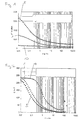
- Figures 1 to 7 are graphs comparing the electrical properties of a double-layer capacitor with an acetonitrile-free electrolytic solution of the present invention with those of a capacitor comprising a conventional acetonitrile-free electrolytic solution.
- Table 1 shows an overview of various electrolyte solutions according to the invention with their conductivities in comparison to two conventional electrolyte solutions.
- Table 2 shows in Compare the electrical properties of double-layer capacitors filled with inventive or conventional electrolyte solutions.
- Table 1 gives the composition of eight electrolyte solutions according to the invention (Examples 3 to 10) and two conventional acetonitrile-free electrolyte solutions (Examples 1 and 2): Table 1: example Leitsalz solvent Conductivity mS / cm [25 ° C] 1 0.69 M Et 4 NBF 4 100% propylene carbonate 12.2 2 0.9 M Et 4 NBF 4 Ethylene carbonate / dimethyl carbonate 1: 1 17.8 3 2 M Et 3 MeNBF 4 100% ⁇ -butyrolactone 25.9 4 1.75 M DMPF 3 CSO 3 100% ⁇ -butyrolactone 20.0 5 2 M DMPBF 4 100% ⁇ -butyrolactone 23.2 6 2 M Et 2 Me 2 NBF 4 100% ⁇ -butyrolactone 20.5 7 2 M BMIBF 4 100% ⁇ -butyrolactone 21.4 8th 3 M EMIBF 4 100% ⁇ -butyrolactone 23.4 9 2 M EMIBF 4 100% ethylene carbonate 23.7 10 0.5 M
- DMPF 3 denotes CSO 3 dimethylpyrrolidinium trifluoromethanesulfonate, DMPBF 4 dimethylpyrolidinium tetrafluoroborate, BMIBF 4 1-butyl-3-methylimidazolium tetrafluoroborate, and EMIBF 4 1-ethyl-3-methylimidazolium tetrafluoroborate.
- the table shows that the two conventional acetonitrile-free electrolyte solutions, examples 1 and 2, have conductive salts which contain no asymmetrically substituted atom. Accordingly, the conductive salt tetraethylammonium tetrafluoroborate used there is soluble in the solvents of the electrolyte solution only in low concentrations of 0.69 mol / l to 0.9 mol / l due to its low solubility. This results in low conductivities between 12.2 and 17.8 mS / cm.
- examples 3 to 10 have conductive salts in which at least the cation has an asymmetrically substituted atom (triethylmethylammonium tetrafluoroborate in Example 3, dimethylpyrrolidinium tetrafluoroborate in Example 5, diethyldimethylammonium tetrafluoroborate in Example 6, 1-butyl-3- methylimidazolium tetrafluoroborate in Example 7, 1-ethyl-3-methylimidazolium tetrafluoroborate in Examples 8, 9 and 10).
- the lead salt dimethylpyrrolidinium trifluoromethanesulfonate has both the anion and the cation an asymmetrically substituted atom.
- Table 1 it can be seen that the conducting salts used according to the invention with the asymmetrically substituted atom can be dissolved in higher concentrations in the electrolyte solutions according to the invention because of their higher solubility, whereby considerably higher conductivities result between 20 and 26 mS / cm.
- the solvents used in the present examples are ⁇ -butyrolactone and ethylene carbonate from the group of carbonates and lactones, both of which have high voltage stability and high boiling points, so that the electrolyte solutions of the invention can also be used at higher temperatures up to 70 ° C. Due to the increased solubility of the conductive salts do not precipitate even at very low temperatures, so that the electrolyte solutions of the invention can be used even at very low temperatures.
- inventive acetonitrile-free electrolyte solutions mentioned in Table 1 also have the advantage that due to the only one solvent they can be prepared very easily and quickly and at the same time have excellent long-term stability due to the high stability of this solvent from the group of lactones or carbonates.
- the invention provides for the first time acetonitrile-free electrolytes with a conductivity from 20 mS / cm, containing only one solvent.
- acetonitrile-free, conventional electrolyte solutions can be obtained so far only by mixing several, sometimes volatile and less voltage stable solvents, such as in the WO 02/061776 A disclosed.
- Table 2 shows the electrical properties of 120 Farad electrochemical double layer capacitors, each containing as electrodes cloth electrodes and a Textilseparator therebetween.
- the double-layer capacitors were filled with 14 ml of electrolyte solution.
- Two double-layer capacitors were filled with conventional acetonitrile-free electrolyte solutions, Examples 1 and 2 from Table 1, while a third double-layer capacitor with an electrolyte solution according to the invention, Example 3 from Table 1 was filled.
- ESR equivalent series resistance
- the table shows that at all temperatures the double-layer capacitors with the electrolyte solutions according to the invention have a lower ESR value and a larger capacity than the capacitors which are filled with the conventional acetonitrile-free electrolyte solutions. Electrochemical double-layer capacitors with the electrolyte solution according to the invention therefore have greater energy and power densities than capacitors with conventional acetonitrile-free electrolyte solutions.
- the double-layer capacitor, which is filled with the conventional electrolyte solution according to Example 2 (ethylene carbonate / dimethyl carbonate as solvent) is no longer functional at temperatures below -10 °, since the electrolyte is frozen.
- Figure 1 shows the frequency dependence of the real part Z 'of the impedance in m ⁇ as a function of the frequency in Hz.
- Figure 1 can be seen that due to the very low viscosity and relatively high polarity of the acetonitrile, the capacitor with the acetonitrile-containing electrolyte has the lowest impedance while the capacitor with the conventional acetonitrile-free electrolyte has the highest impedance.
- the capacitor with the acetonitrile-free electrolyte according to the invention in this case has an impedance which lies between the two other capacitors.
- electrolytic solutions according to the invention represent a possibility, on the one hand, of avoiding the disadvantages of the acetonitrile, eg its high flammability, but on the other hand still achieving acceptable impedance values.
- the conductivity of the electrolyte solution determines the ionic resistance of the separator, which is impregnated with the electrolyte solution.
- An electrolyte solution with a low conductivity will therefore increase the ionic resistance of the separator. Since the ionic resistance of the separator also contributes to Z 'at frequencies> 10 Hz, the double-layer capacitors with the different electrolytes already have different Z' values at high frequencies.
- FIG. 1 also shows that double layer capacitors have the highest impedance with the conventional acetonitrile-free electrolyte, so that these cells also heat up more during charge and discharge cycles than double-layer capacitors with electrolyte solutions according to the invention.
- FIG. 2 shows the frequency dependence of the capacitance as a function of the frequency in Hz for the double-layer capacitors with the three different electrolyte solutions.
- This diagram again shows that the double-layer capacitor with the electrolytic solution according to the invention according to Example 3 in Table 1 has a capacitance as a function of the frequency over a wide range between the high capacitance of the double-layer capacitor with the acetonitrile-containing electrolyte solution and the capacity of the double-layer capacitor the conventional acetonitrile-free electrolyte solution is.
- double-layer capacitors with electrolytic solutions according to the invention can store more energy than double-layer capacitors with conventional acetonitrile-free electrolyte solutions when the capacitors are subjected to charging and discharging cycles in the time window of 10 seconds.
- the reason for this different behavior lies again in the different conductivities of the electrolyte solutions.
- Figure 3 shows the temperature dependence of the real part of the impedance Z 'at a frequency of 10 mHz as a function of the temperature between -40 ° C and 70 ° C. It can again be seen that double-layer capacitors having the electrolyte solutions according to the invention have an impedance between the impedance of double-layer capacitors with conventional acetonitrile-free electrolyte solutions and the double-layer capacitors with acetonitrile-containing electrolyte solutions. From temperatures above room temperature Z 'takes significantly for all double-layer capacitors.
- the impedance of double-layer capacitors with electrolyte solutions according to the invention is still in an acceptable range, so that these are better suited for use at low temperatures compared to double-layer capacitors with conventional acetonitrile-free electrolyte solutions.
- FIG. 4 shows the capacity in farads at a frequency of 10 mHz as a function of the temperature between -40 ° C. and 70 ° C.
- the double-layer capacitor with the electrolyte solution according to the invention again assumes a middle position between the double-layer capacitor with the acetonitrile-containing electrolyte solution and the one with the conventional acetonitrile-free electrolyte solution.
- the increase in resistance causes a decrease in capacity.
- temperatures above room temperature a second effect occurs.
- the average distance of the Helmholtz layer to the surface of the electrode increases due to the increasing Brownian molecular motion of the ions at higher temperatures. Since the capacitance is inversely proportional to the distance between the Helmholz Anlagen and the electrode surface, thus decreases the capacity in all tested in Figure 4 double-layer capacitors at very high temperatures again.
- FIG. 5 shows the self-discharge behavior of the three double-layer capacitors with the different electrolyte solutions at 25 ° C. All cells were charged for 24 hours at 2.5V. Thereafter, the cells were disconnected from the power supply and the voltage drop at 25 ° C determined. FIG. 5 shows that all double-layer capacitors have approximately the same self-discharge behavior.
- FIG. 6 shows an endurance test at 2.5 V voltage and 60 ° C. with the aim of improving the stability of the double-layer capacitors to compare with the corresponding electrolyte solutions.
- the capacity was obtained at 10 A constant discharge current at 25 ° C.
- the resistance of the capacitors was determined at a frequency of 1 KHz.
- the predetermined breaking point due to the increase in the internal pressure of the capacitor, so that this double-layer capacitor was not included in the endurance test.
- the increase in the internal pressure in this capacitor is due to a decomposition of the electrolyte solution.
- FIG. 6 thus shows that double-layer capacitors having an electrolyte solution according to the invention (curve marked 1) have comparable stability as double-layer capacitors with an acetonitrile-containing electrolyte solution (curve marked with 5).
- Figure 7 shows the evolution of the impedance Z 'at 1 KHz during the 2.5 V / 60 ° C endurance test in Figure 6 as a function of time. This figure can be seen that both capacitors have good stability.
- the present invention is not limited to the embodiments shown here. Other variations are especially possible with respect to other conducting salts containing other cations and anions with asymmetrically substituted atoms.
Landscapes
- Chemical & Material Sciences (AREA)
- Chemical Kinetics & Catalysis (AREA)
- Electrochemistry (AREA)
- Engineering & Computer Science (AREA)
- Power Engineering (AREA)
- Microelectronics & Electronic Packaging (AREA)
- Electric Double-Layer Capacitors Or The Like (AREA)
Description
- Elektrochemische Doppelschichtkondensatoren werden im Leistungsbereich eingesetzt, da sie sich mit hohen Kapazitäten bei gleichzeitig sehr kleinem ESR verwirklichen lassen. Beispielsweise als temporärer Energiespeicher genutzt, müssen Doppelschichtkondensatoren in relativ kurzen Zeiträumen von einigen Sekunden und weniger hohe Ströme und damit verbunden hohe Energien abgeben oder aufnehmen. Damit dies möglichst verlustfrei erfolgen kann, muß der elektrische Innenwiderstand der Kondensatoren minimiert werden.
- Ein elektrochemischer Doppelschichtkondensator besteht im wesentlichen aus zwei Elektroden, die entweder mit einem Elektrodenmaterial hoher Oberfläche beschichtet sind oder von sich aus eine hohe Oberfläche aufweisen, z.B. Aluminiumstromkollektoren beschichtet mit Aktivkohlenstoffpulver oder Kohlenstofftücher als Elektroden. Zwischen den beiden Elektroden ist ein Separator angeordnet, der zur elektrischen Isolation der beiden Elektrodenschichten dient, der porös ausgebildet ist und den Elektrolyten aufnehmen kann und der darüber hinaus für den Elektrolyten und insbesondere für die Ionen, die sich durch Dissoziation des im Elektrolyten gelösten Leitsalzes ausbilden, durchlässig ist. Der Separator ist normalerweise aus Papier, Kunststoffolie, Filz oder Gewebe aus Kunststoff- oder Glasfasern ausgewählt.
- Eine einfache Kondensatorzelle besteht dabei aus zumindest zwei Elektroden und einer dazwischenliegenden Separatorschicht. Üblicherweise werden jedoch zur Erhöhung der Kapazität mehrere Elektrodenlagen und Separatorschichten alternierend übereinandergestapelt, beispielsweise als planarer Stapel oder noch einfacher und platzsparender in Form eines sogenannten Wickels. Nach dem Herstellen eines Stapels aus Elektroden und Separatorschichten wird dieser in ein Gehäuse eingebracht und mit einem Elektrolyten, z.B. einer Elektrolytlösung imprägnierte.
- Standardelektrolytlösungen für Doppelschichtkondensatoren enthalten in der Regel Acetonitril als Lösungsmittel. Acetonitril weist eine sehr geringe Viskosität und relativ hohe Polarität auf, so daß mit Acetonitril sehr hohe Leitfähigkeiten von bis zu 70 mS/cm bei Raumtemperatur realisiert werden können. Diese hohen Leitfähigkeiten lassen sich mit anderen Lösungsmitteln außer Acetonitril, beispielsweise Propylencarbonat nicht erreichen. Nachteilig an diesen hochleitfähigen, Acetonitril enthaltenden Elektrolytlösungen ist, daß diese leicht entzündlich sind und sich wegen ihrem hohen Dampfdruck nur schwer verarbeiten lassen.
- Aus der
WO 02/061776 A - Aus der
EP 1 324 358 A2 ist ein elektrischer Doppelschicht kondensator bekannt, dessen Elektrolytlösung ein Salz der Formel R1R2R3R4N+X- und als Lösungsmittel Dimethylcarbonat oder Mischungen daraus' mit weiteren Lösungsmitteln enthält. R1 ist dabei eine n-Propyl-Gruppe, die übrigen Reste sind unabhängig voneinander Methyl- oder Ethylgruppen. Das Anion X- kann BF4 -, PF6 -, CF3SO3 - und (CF3SO2)2N- sein. - Aufgabe der vorliegenden Erfindung ist es, eine Elektrolytlösung mit hoher Leitfähigkeit anzugeben, die kein Acetonitril enthält und die oben genannten Nachteile bekannter Elektrolytlösungen vermeidet.
- Diese Aufgabe wird erfindungsgemäß durch eine Elektrolytlösung mit den Merkmalen des Anspruchs 1 gelöst. Vorteilhafte Ausgestaltungen der Elektrolytlösung sowie ein elektrochemischer Doppelschichtkondensator mit der Elektrolytlösung sind Gegenstand weiterer Ansprüche.
- Eine erfindungsgemäße Elektrolytlösung weist kein Acetonitril und nur ein Lösungsmittel auf, hat eine Leitfähigkeit.von 20 mS/cm oder mehr bei 25° C und umfaßt folgende Komponenten:
- A) Ein Leitsalz oder Leitsalzgemisch in einer Konzentration von > 1, 7 mol/l, enthaltend zumindest ein Ion mit einem Atom, das nicht identische Substituenten aufweist,
- B) Ein Lösungsmittel, das entweder ein Lacton oder ein cyclisches Carbonat ist.
- Der Vorteil der erfindungsgemäßen Elektrolytlösungen besteht zum einen darin, daß aufgrund des nur einen Lösungsmittels, besonders einfach und kostengünstig herzustellende Elektrolytlösungen bereitgestellt werden, die aufgrund des Lactons oder Carbonats eine hohe Spannungsstabilität, einen hohen Siedepunkt und gleichzeitig eine hohe Löslichkeit für Leitsalze aufweisen. Zum anderen besteht der Vorteil der erfindungsgemäßen Elektrolytlösungen darin, daß aufgrund des asymmetrisch substituierten Atom Leitsalze resultieren, die eine geringe Gitterehergie und damit eine erhöhte Löslichkeit in dem Lacton oder Carbonat aufweisen. Diese Leitsalze lassen sich.dementsprechend in höheren Konzentrationen in dem Lösungsmittel lösen als Leitsalze, die kein asymmetrisch substituiertes Atom aufweisen, so daß eine erhöhte Leitfähigkeit resultiert. Dadurch lassen sich erfindungsgemäß acetonitrilfreie Elektrolytlösungen mit nur einem Lösungsmittel bereitstellen, die trotzdem eine Leitfähigkeit von wenigstens 20 mS/cm bei 25° C aufweisen.
- Vorteilhafterweise ist das asymmetrisch substituierte Atom der Komponente A) des Leitsalzes aus der 5. Hauptgruppe des Periodensystems, bevorzugt Stickstoff oder Phosphor ausgewählt. Günstigerweise ist das zumindest eine Ion in der Komponente A) ein Ammonium-Kation, wobei dieses Ammonium-Kation günstigerweise 4 nicht identische Substituenten aufweist und damit asymmetrisch substituiert ist. Derartige asymmetrisch substituierte Ammonium-Kationen eignen sich besonders gut als Kationen für Leitsalze für elektrochemische Kondensatoren und weisen wie bereits oben genannt, aufgrund der asymmetrischen Substitution eine erhöhte Löslichkeit in den Lösungsmitteln der Elektrolytlösung auf.
- Vorteilhafterweise ist die Komponente A) in einer Konzentration zwischen 2 mol/l und 3 mol/l in der Elektrolytlösung vorhanden. In erfindungsgemäßen Elektrolytlösungen eingesetzte Leitsalze können, da sie asymmetrisch substituierte Atome mit nicht identischen Substituenten enthalten, leicht in diesen Konzentrationen in den Elektrolytlösungen gelöst werden, wobei aufgrund der hohen Konzentration auch eine erhöhte Leitfähigkeit resultiert.
- Als Komponente B) werden bevorzugt γ-Butyrolacton, γ-Valerolacton sowie als Carbonat ein cyclisches Carbonat, bevorzugt Propylencarbonat, Ethylencarbonat oder Butylencarbonat eingesetzt. Diese genannten Lösungsmittel erlauben zum einen eine besonders hohe Löslichkeit der Leitsalze mit wenigstens einem asymmetrisch substituierten Atom, weisen eine besonders hohe Spannungsfestigkeit auf und sind darüber hinaus besonders einfach und billig erhältlich. Zudem sind sie nicht toxisch, nicht leichtentzündlich und besitzen einen weitaus kleineren Dampfdruck als Acetonitril und somit hohe Siedepunkte > 150°C.
- Die Leitsalze der Komponente A) können sich dabei aus einer Kombination der folgenden Anionen und Kationen ergeben:
- Kationen: Dimethylpyrrolidinium, Diethyldimethylammonium, 1-Butyl-3-methylimidazolium, 1-Ethyl-3-methylimidazolium, Triethylmethylammonium,
- Anionen: Trifluormethansulfonat, Tetrafluoroborat, Hexafluorophosphat.
- In dieser Auswahl weisen alle Kationen und von den Anionen das Trifluormethansulfonat zumindest ein asymmetrisch substituiertes Atom auf, so daß bei Kombination dieser Kationen und Anionen immer Leitsalze resultieren, die eine erhöhte Löslichkeit in den Lösungsmitteln der erfindungsgemäßen Elektrolytlösungen aufweisen.
- Gegenstand der Erfindung ist weiterhin ein elektrochemischer Doppelschichtkondensator, der eine erfindungsgemäße Elektrolytlösung aufweist. Derartige elektrochemische Doppelschichtkondensatoren weisen aufgrund der erfindungsgemäßen Elektrolytlösung eine höhere Leistungs- und Energiedichte auf als Kondensatoren mit herkömmlichen acetonitrilfreien Elektrolytlösungen. Aufgrund der erfindungsgemäßen Elektrolytlösungen sind elektrochemische Doppelschichtkondensatoren mit diesen Elektrolytlösungen auch stabiler als Kondensatoren mit herkömmlichen acetonitrilfreien Elektrolytlösungen und zeigen auch bei sehr niedrigen Temperaturen von -40° C bessere elektrische Eigenschaften.
- Im folgenden wird die Erfindung anhand von Ausführungsbeispielen und Figuren noch näher erläutert. Die Figuren 1 bis 7 zeigen Diagramme, bei denen die elektrischen Eigenschaften eines Doppelschichtkondensators mit einer erfindungsgemäßen acetonitrilfreien Elektrolytlösung mit denen eines Kondensators verglichen werden, der eine herkömmliche acetonitrilfreie Elektrolytlösung aufweist. Die Tabelle 1 zeigt in der Übersicht verschiedene erfindungsgemäße Elektrolytlösungen mit ihren Leitfähigkeiten im Vergleich zu zwei herkömmlichen Elektrolytlösungen. Tabelle 2 zeigt im Vergleich die elektrischen Eigenschaften von Doppelschichtkondensatoren, die mit erfindungsgemäßen oder herkömmlichen Elektrolytlösungen befüllt wurden. Die Tabelle 1 gibt die Zusammensetzung von acht erfindungsgemäßen Elektrolytlösungen (Beispiele 3 bis 10) und zwei herkömmlichen acetonitrilfreien Elektrolytlösungen (Beispiele 1 und 2) an:
Tabelle 1: Beispiel Leitsalz Lösungsmittel Leitfähigkeit mS/cm [25°C] 1 0,69 M Et4NBF4 100% Propylencarbonat 12,2 2 0,9 M Et4NBF4 Ethylencarbonat/Dimethylcarbonat 1:1 17,8 3 2 M Et3MeNBF4 100% γ-Butyrolacton 25,9 4 1,75 M DMPF3CSO3 100% γ-Butyrolacton 20,0 5 2 M DMPBF4 100% γ-Butyrolacton 23,2 6 2 M Et2Me2NBF4 100% γ-Butyrolacton 20,5 7 2 M BMIBF4 100% γ-Butyrolacton 21,4 8 3 M EMIBF4 100 % γ-Butyrolacton 23,4 9 2 M EMIBF4 100% Ethylen-carbonat 23,7 10 0, 5 M EMIBF4 + 1,75 M Et3MeNBF4 100% γ-Butyrolacton 24,5 - In der Tabelle 1 bezeichnet DMPF3CSO3 Dimethylpyrrolidiniumtrifluormethansulfonat, DMPBF4 Dimethylpyrolidiniumtetrafluoroborat, BMIBF4 1-Butyl-3-Methylimidazolium-tetrafluoroborat und EMIBF4 1-Ethyl-3-methylimidazolium-tetrafluoroborat.
- Der Tabelle läßt sich entnehmen, daß die beiden herkömmlichen acetonitrilfreien Elektrolytlösungen, Beispiele 1 und 2, Leitsalze aufweisen, die kein asymmetrisch substituiertes Atom enthalten. Demzufolge ist das dort eingesetzte Leitsalz Tetraethylammoniumtetrafluoroborat aufgrund seiner geringen Löslichkeit nur in geringen Konzentrationen von 0,69 mol/l bis 0,9 mol/l in den Lösungsmitteln der Elektrolytlösung löslich. Daraus resultieren geringe Leitfähigkeiten zwischen 12,2 und 17,8 mS/cm.
- Im Gegensatz dazu weisen die erfindungsgemäßen acetonitrilfreien Elektrolytlösungen, die Beispiele 3 bis 10, Leitsalze auf, bei denen wenigstens das Kation ein asymmetrisch substituiertes Atom aufweist (Triethylmethylammoniumtetrafluoroborat im Beispiel 3, Dimethylpyrrolidiniumtetrafluoroborat im Beispiel 5, Diethyldimethylammoniumtetrafluoroborat im Beispiel 6, 1-Butyl-3-methylimidazolium-tetrafluoroborat im Beispiel 7, 1-Ethyl-3-methylimidazolium-tetrafluoroborat in den Beispielen 8, 9 und 10). Im Beispiel 4 weist beim Leitsalz Dimethylpyrrolidiniumtrifluormethansulfonat sowohl das Anion als auch das Kation ein asymmetrisch substituiertes Atom auf. Der Tabelle 1 ist zu entnehmen, daß die erfindungsgemäß verwendeten Leitsalze mit dem asymmetrisch substituierten Atom aufgrund ihrer höheren Löslichkeit in höheren Konzentrationen in den erfindungsgemäßen Elektrolytlösungen gelöst werden können, wobei auch erheblich höhere Leitfähigkeiten zwischen 20 und 26 mS/cm resultieren. Als Lösungsmittel werden dabei in den vorliegenden Beispielen γ-Butyrolacton und Ethylencarbonat aus der Gruppe der Carbonate und Lactone verwendet, die beide hohe Spannungsstabilität und hohe Siedepunkte aufweisen, so daß die erfindungsgemäßen Elektrolytlösungen auch bei höheren Temperaturen bis 70°C eingesetzt werden können. Aufgrund der erhöhten Löslichkeit der Leitsalze präzipitieren diese auch bei sehr niedrigen Temperaturen nicht, so daß die erfindungsgemäßen Elektrolytlösungen auch bei sehr niedrigen Temperaturen eingesetzt werden können.
- Die in Tabelle 1 genannten erfindungsgemäßen acetonitrilfreien Elektrolytlösungen haben darüber hinaus den Vorteil, daß aufgrund des nur einen Lösungsmittels diese besonders einfach und schnell hergestellt werden können und gleichzeitig aufgrund der hohen Stabilität dieses Lösungsmittels aus der Gruppe der Lactone oder Carbonate auch eine ausgezeichnete Langzeitstabilität aufweisen. Somit gibt die Erfindung erstmals acetonitrilfreie Elektrolyte mit einer Leitfähigkeit ab 20 mS/cm an, die nur ein Lösungsmittel enthalten. Wie bereits oben genannt, lassen sich acetonitrilfreie, herkömmliche Elektrolytlösungen bisher nur mittels Mischen von mehreren, zum Teil leicht flüchtigen und wenig spannungsstabilen Lösungsmitteln erhalten, wie beispielsweise in der
WO 02/061776 A - Tabelle 2 zeigt die elektrischen Eigenschaften von 120 Farad elektrochemischen Doppelschichtkondensatoren, die jeweils als Elektroden Tuchelektroden und einen dazwischen befindlichen Papierseparator enthalten. Die Doppelschichtkondensatoren wurden mit jeweils 14 ml Elektrolytlösung befüllt. Zwei Doppelschichtkondensatoren wurden dabei mit herkömmlichen acetonitrilfreien Elektrolytlösungen, den Beispielen 1 und 2 aus Tabelle 1 befüllt, während ein dritter Doppelschichtkondensator mit einer erfindungsgemäßen Elektrolytlösung, dem Beispiel 3 aus Tabelle 1 befüllt wurde. Bei den so aufgefüllten und auf 2,3 V aufgeladenen Kondensatoren wurde mittels elektrochemischer Impedanzspektroskopie der equivalent series resistance (ESR) bei 100 Hz und die Kapazität zwischen -40° C und 70° C bestimmt:
Tabelle 2: T. [°C] Bsp. 1 Kapazität/F Bsp. 1 ESR [100 Hz/mΩ] Bsp. 2 Kapazität/F Bsp. 2 ESR [100 Hz/mΩ] Bsp. 3 Kapazität/F Bsp. 3 ESR [100 Hz/mΩ] -40 8,9 173,7 El. gefroren El. gefroren 22,2 92,3 -30 19,5 107,7 El. gefroren El. gefroren 38,5 63,3 25 103,5 23,8 118,1 19,1 123,7 16,9 60 116,4 14,9 126,0 12,6 130,7 11,3 70 117,7 13,8 127,9 11,9 130,4 10,7 - Der Tabelle läßt sich entnehmen, daß bei allen Temperaturen die Doppelschichtkondensatoren mit der erfindungsgemäßen Elektrolytlösungen einen kleineren ESR-Wert und eine größere Kapazität aufweisen als die Kondensatoren, die mit den herkömmlichen acetonitrilfreien Elektrolytlösungen befüllt sind. Elektrochemische Doppelschichtkondensatoren mit der erfindungsgemäßen Elektrolytlösung haben demnach größere Energie- und Leistungsdichten als Kondensatoren mit herkömmlichen acetonitrilfreien Elektrolytlösungen. Der Doppelschichtkondensator, der mit der herkömmlichen Elektrolytlösung nach Beispiel 2 (Ethylencarbonat/Dimethylcarbonat als Lösungsmittel) befüllt ist, ist bei Temperaturen unter -10° nicht mehr funktionstüchtig, da der Elektrolyt gefroren ist.
- Die Figuren 1 bis 5 zeigen Diagramme, bei denen die elektrischen Eigenschaften von folgenden Kondensatoren miteinander verglichen werden:
- 1)eine Ausführungsform eines Kondensators mit einer erfindungsgemäßen Elektrolytlösung gemäß dem Beispiel 3 der Tabelle 1 (mit dem Bezugszeichen 1 gekennzeichnete Kurven in den Figuren),
- 2) ein Kondensator der eine herkömmliche acetonitrilfreie Elektrolytlösung gemäß Beispiel 1 aus Tabelle 1 aufweist (mit dem Bezugszeichen 5 gekennzeichnete Kurven in den Figuren)und
- 3) ein Kondensator mit einer herkömmlichen Elektrolytlösung, bei der als Leitsalz Tetraethylammoniumtetrafluoroborat in einer Konzentration von 0,9 mol/l in 100 % Acetonitril gelöst ist (mit dem Bezugszeichen 10 gekennzeichnete Kurven in den Figuren).
- Figur 1 zeigt dabei die Frequenzabhängigkeit des Realteiles Z' der Impedanz in mΩ in Abhängigkeit von der Frequenz in Hz. Figur 1 kann entnommen werden, daß aufgrund der sehr geringen Viskosität und relativ hohen Polarität des Acetonitrils der Kondensator mit dem acetonitrilhaltigen Elektrolyt die geringste Impedanz aufweist, während der Kondensator mit dem herkömmlichen acetonitrilfreien Elektrolyt die höchste Impedanz aufweist. Der Kondensator mit dem erfindungsgemäßen acetonitrilfreien Elektrolyt weist dabei eine Impedanz auf, die zwischen der der beiden anderen Kondensatoren liegt. Somit stellen erfindungsgemäße Elektrolytlösungen eine Möglichkeit dar, einerseits die Nachteile des Acetonitrils, z.B. seine Leichtentzündlichkeit zu vermeiden, andererseits aber dennoch akzeptable Impedanzwerte zu erreichen. Die Leitfähigkeit der Elektrolytlösung bestimmt dabei den ionischen Widerstand des Separators, der mit der Elektrolytlösung getränkt ist. Eine Elektrolytlösung mit einer geringen Leitfähigkeit wird daher den ionischen Widerstand des Separators erhöhen. Da der ionische Widerstand des Separators auch zu Z' bei Frequenzen > 10 Hz beiträgt, haben die Doppelschichtkondensatoren mit den unterschiedlichen Elektrolyten bereits unterschiedlich große Z'-Werte bei hohen Frequenzen. Mit abnehmenden Frequenzen wird der Widerstand der Elektrolytlösung in den Poren der Elektrode der bestimmende Faktor für die Impedanz da bei niedrigeren Frequenzen mehr Poren der Elektrode zu Z' beitragen. Figur 1 zeigt darüber hinaus, daß Doppelschichtkondensatoren mit dem herkömmlichen acetonitrilfreien Elektrolyt die höchste Impedanz aufweisen, so daß diese Zellen sich während Ladungs- und Entladungszyklen auch mehr aufheizen als Doppelschichtkondensatoren mit erfindungsgemäßen Elektrolytlösungen.
- Figur 2 zeigt die Frequenzabhängigkeit der Kapazität in Abhängigkeit von der Frequenz im Hz für die Doppelschichtkondensatoren mit den drei unterschiedlichen Elektrolytlösungen. Auch diesem Diagramm läßt sich wieder entnehmen, daß der Doppelschichtkondensator mit der erfindungsgemäßen Elektrolytlösung nach Beispiel 3 in Tabelle 1 eine Kapazität in Abhängigkeit von der Frequenz aufweist, die über weite Bereiche zwischen der hohen Kapazität des Doppelschichtkondensators mit der acetonitrilhaltigen Elektrolytlösung und der Kapazität des Doppelschichtkondensators mit der herkömmlichen acetonitrilfreien Elektrolytlösung liegt. Der Figur läßt sich auch entnehmen, daß Doppelschichtkondensatoren mit erfindungsgemäßen Elektrolytlösungen mehr Energie speichern können, als Doppelschichtkondensatoren mit herkömmlichen acetonitrilfreien Elektrolytlösungen, wenn die Kondensatoren Ladungs- und Entladungszyklen im Zeitfenster von 10 Sekunden unterworfen werden. Der Grund für dieses unterschiedliche Verhalten liegt wieder in den unterschiedlichen Leitfähigkeiten der Elektrolytlösungen.
- Figur 3 zeigt die Temperaturabhängigkeit des Realteils der Impedanz Z' bei einer Frequenz von 10 mHz in Abhängigkeit von der Temperatur zwischen -40° C und 70° C. Dabei ist wieder zu sehen, daß Doppelschichtkondensatoren mit den erfindungsgemäßen Elektrolytlösungen eine Impedanz aufweisen, die zwischen der Impedanz von Doppelschichtkondensatoren mit herkömmlichen acetonitrilfreien Elektrolytlösungen und der vom Doppelschichtkondensatoren mit acetonitrilhaltigen Elektrolytlösungen liegen. Ab Temperaturen über der Raumtemperatur nimmt Z' signifikant für alle Doppelschichtkondensatoren ab. Bei Temperaturen unterhalb von 0° C liegt die Impedanz von Doppelschichtkondensatoren mit erfindungsgemäßen Elektrolytlösungen immer noch in einem akzeptablen Bereich, so daß sich diese im Vergleich zur Doppelschichtkondensatoren mit herkömmlichen acetonitrilfreien Elektrolytlösungen besser für den Einsatz bei niedrigen Temperaturen eignen.
- Figur 4 zeigt die Kapazität in Farad bei einer Frequenz von 10 mHz in Abhängigkeit von der Temperatur zwischen -40° C und 70° C. Dabei nimmt der Doppelschichtkondensator mit der erfindungsgemäßen Elektrolytlösung wieder eine Mittelstellung ein zwischen dem Doppelschichtkondensator mit der acetonitrilhaltigen Elektrolytlösung und demjenigen mit der herkömmlichen acetonitrilfreien Elektrolytlösung. Bei niedrigen Temperaturen unterhalb 0° C sorgt die Zunahme des Widerstandes für eine Abnahme der Kapazität. Bei Temperaturen oberhalb Raumtemperatur tritt ein zweiter Effekt auf. Der durchschnittliche Abstand der Helmholzschicht zur Oberfläche der Elektrode nimmt aufgrund der zunehmenden Braunschen Molekularbewegung der Ionen bei höheren Temperaturen zu. Da die Kapazität invers proportional zum Abstand zwischen der Helmholzschicht und der Elektrodenoberfläche ist, nimmt somit die Kapazität bei allen in Figur 4 getesteten Doppelschichtkondensatoren bei sehr hohen Temperaturen wieder ab.
- Figur 5 zeigt das Selbstentladungsverhalten der 3 Doppelschichtkondensatoren mit den unterschiedlichen Elektrolytlösungen bei 25° C. Alle Zellen wurden für 24 Stunden bei 2,5 V aufgeladen. Danach wurden die Zellen von der Energieversorgung abgetrennt und der Abfall der Spannung bei 25° C bestimmt. Figur 5 kann dabei entnommen werden, daß alle Doppelschichtkondensatoren in etwa gleiches Selbstentladungsverhalten aufweisen.
- Figur 6 zeigt einen Ausdauertest bei 2,5 V Spannung und 60° C mit dem Ziel, die Stabilität der Doppelschichtkondensatoren mit den entsprechenden Elektrolytlösungen zu vergleichen. Bei diesem Test wurde die Kapazität bei 10 A konstantem Entladungsstrom bei 25° C erhalten. Der Widerstand der Kondensatoren wurde bei einer Frequenz von 1 KHz bestimmt.
Bei diesem Test sprach bei dem Doppelschichtkondensator der mit dem herkömmlichen acetonitrilfreien Elektrolyten nach Beispiel 1 in Tabelle 1 befüllt war, bereits nach 400 Stunden die Sollbruchstelle aufgrund der Erhöhung des Innendrucks des Kondensators an, so daß dieser Doppelschichtkondensator nicht in dem Ausdauertest einbezogen wurde. Die Zunahme des Innendrucks bei diesem Kondensator ist dabei auf eine Zersetzung der Elektrolytlösung zurückzuführen. Figur 6 läßt sich somit entnehmen, daß Doppelschichtkondensatoren mit einer erfindungsgemäßen Elektrolytlösung (mit 1 gekennzeichnete Kurve) eine vergleichbare Stabilität aufweisen wie Doppelschichtkondensatoren mit einer acetonitrilhaltigen Elektrolytlösung (mit 5 gekennzeichnete Kurve). - Figur 7 zeigt die Entwicklung der Impedanz Z' bei 1 KHz während des 2,5 V/60° C Ausdauertest in Figur 6 in Abhängigkeit von der Zeit. Dieser Figur läßt sich dabei entnehmen, daß beide Kondensatoren eine gute Stabilität aufweisen.
- Die vorliegende Erfindung beschränkt sich nicht auf die hier dargestellten Ausführungsbeispiele. Weitere Variationen sind vor allem möglich im Bezug auf andere Leitsalze, die andere Kationen und Anionen mit asymmetrisch substituierten Atomen enthalten.
Claims (18)
- Acetonitrilfreie, nur ein Lösungsmittel aufweisende Elektrolytlösung für elektrochemische Doppelschichtkondensatören mit einer Leitfähigkeit von 20 mS/cm oder mehr bei 25°C, umfassend folgende Komponenten:A) ein Leitsalz oder Leitsalz-Gemisch in einer Konzentration von größer 1,7 mol/l, enthaltend zumindest ein Ion mit einem Atom, das nicht identische Substituenten aufweist,B) ein Lösungsmittel, das entweder ein Lacton oder ein cyclisches Carbonat ist.
- Elektrolytlösung nach dem vorhergehenden Anspruch,- bei der das Atom, das nicht identische Substituenten aufweist, aus der 5. Hauptgruppe des Periodensystems ausgewählt ist.
- Elektrolytlösung nach dem vorhergehenden Anspruch,- bei der das Atom, das nicht identische Substituenten aufweist, N oder P ist.
- Elektrolytlösung nach einem der vorhergehenden Ansprüche,- bei der das zumindest eine Ion in der Komponente A) ausgewählt ist aus:- Ammonium-Kation, Phosphohium-Kation und Imidazolium-Kation.
- Elektrolytlösung nach einem der vorhergehenden Ansprüche,- bei der Komponente A) in einer Konzentration zwischen 2 mol/l und 3 mol/l vorhanden ist.
- Elektrolytlösung nach einem der vorhergehenden Ansprüche,- bei der Komponente B) eines der folgenden Lösungsmittel ist:- γ-Butyrolacton, γ-Valerolacton.
- Elektrolytlösung nach Anspruch 1,- bei der das cyclische Carbonat eines der folgenden Lösungsmittel ist:- Propylencarbonat, Ethylencarbonat, Butylencarbonat.
- Elektrolytlösung nach einem der vorhergehenden Ansprüche,- bei der Komponente A) aus ausgewählt ist aus Leitsalzen die sich aus einer Kombination der folgenden Anionen und Kationen ergeben:- Kationen: Dimethylpyrrolidinium, Diethyldimethylammonium, 1-Butyl-3-methylimidazolium, 1-Ethyl-3-methylimidazolium, Triethylmethylammonium,- Anionen: Trifluormethansulfonat, Tetrafluoroborat, Hexafluorophosphat.
- Elektrolytlösung.nach einem der vorhergehenden Ansprüche,- bei der Komponente A) Dimethylpyrolidiniumtrifluormethan-- sulfonat ist,- bei der Komponente B) γ-Butyrolacton ist.
- Elektrolytlösung nach einem der Ansprüche 1 bis 8,- bei der Komponente A) Dimethylpyrolidiniumtetrafluoroborat ist,- bei der Komponente B) γ-Butyrolacton ist.
- Elektrolytlösung nach einem der Ansprüche 1 bis 8,- bei der Komponente A) 1-Butyl-3-methylimidazoliumtetrafluoroborat ist,- bei der Komponente B) γ-Butyrolacton ist.
- Elektrolytlösung nach einem der Ansprüche 1 bis 8,- bei der Komponente A) 1-Ethyl-3-methylimidazoliumtetrafluoroborat ist,- bei der Komponente B) γ-Butyrolacton ist.
- Elektrolytlösung nach einem der Ansprüche 1 bis 8,- bei der Komponente A) 1-Ethyl-3-methylimidazoliumtetrafluoroborat ist,- bei der Komponente B) Ethylencarbonat ist.
- Elektrolytlösung nach einem der Ansprüche 1 bis 8,- bei der Komponente A) ein Gemisch aus 1-Ethyl-3-methylimidazoliumtetrafluoroborat und Triethylmethylammoniumtetrafluoroborat ist,- bei der Komponente B) γ-Butyrolacton ist.
- Elektrolytlösung nach einem der Ansprüche 1 bis 8,- bei der Komponente A) Triethylmethylammonium-tetrafluoroborat ist,- bei der Komponente B) γ-Butyrolacton ist.
- Elektrochemischer Doppelschichtkondensator mit Elektroden,- der eine Elektrolytlösung nach einem der Ansprüche 1 bis 15 aufweist.
- Elektrochemischer Doppelschichtkondensator nach dem vorhergehenden Anspruch,- mit einem zwischen den Elektroden befindlichen porösen Separator, der mit der Elektrolytlösung imprägniert ist.
- Doppelschichtkondensator nach einem der Ansprüche 16 oder 17,- bei dem die Elektroden metallische Folien sind, die mit einem Elektrodenmaterial hoher Oberfläche beschichtet sind, das ausgewählt ist aus:- Kohlenstoffpulver und Kohlenstofftücher.
Applications Claiming Priority (2)
| Application Number | Priority Date | Filing Date | Title |
|---|---|---|---|
| DE10351899A DE10351899B4 (de) | 2003-11-06 | 2003-11-06 | Elektrolytlösung und elektrochemischer Doppelschichtkondensator mit der Elektrolytlösung |
| PCT/DE2004/002451 WO2005045861A1 (de) | 2003-11-06 | 2004-11-05 | Elektrolytlösung und elektrochemischer doppelschichtkondensator mit der elektrolytlösung |
Publications (2)
| Publication Number | Publication Date |
|---|---|
| EP1680791A1 EP1680791A1 (de) | 2006-07-19 |
| EP1680791B1 true EP1680791B1 (de) | 2008-01-09 |
Family
ID=34559415
Family Applications (1)
| Application Number | Title | Priority Date | Filing Date |
|---|---|---|---|
| EP04802679A Expired - Lifetime EP1680791B1 (de) | 2003-11-06 | 2004-11-05 | Elektrolytlösung und elektrochemischer doppelschichtkondensator mit der elektrolytlösung |
Country Status (3)
| Country | Link |
|---|---|
| EP (1) | EP1680791B1 (de) |
| DE (2) | DE10351899B4 (de) |
| WO (1) | WO2005045861A1 (de) |
Families Citing this family (2)
| Publication number | Priority date | Publication date | Assignee | Title |
|---|---|---|---|---|
| DE102004037601B4 (de) * | 2004-08-03 | 2007-07-12 | Epcos Ag | Elektrolytlösung für Doppelschichtkondensatoren und Doppelschichtkondensator mit der Elektrolytlösung |
| US8128833B1 (en) * | 2006-06-19 | 2012-03-06 | Lithdyne International | Non-aqueous electrolyte |
Family Cites Families (11)
| Publication number | Priority date | Publication date | Assignee | Title |
|---|---|---|---|---|
| US6514697B1 (en) | 1992-05-29 | 2003-02-04 | The Regents Of The University Of California | Methods for detection of Crytosporidium species and isolates and for diagnosis of Cryptosporidium infections |
| FR2729009B1 (fr) * | 1994-12-28 | 1997-01-31 | Accumulateurs Fixes | Electrode bifonctionnelle pour generateur electrochimique ou supercondensateur et son procede de fabrication |
| JP3156546B2 (ja) * | 1995-06-22 | 2001-04-16 | 三菱化学株式会社 | 電気二重層コンデンサ用電解液 |
| US6201686B1 (en) * | 1997-11-10 | 2001-03-13 | Asahi Glass Company Ltd. | Electric double layer capacitor |
| JPH11162790A (ja) * | 1997-11-27 | 1999-06-18 | Mitsubishi Chemical Corp | 電気化学キャパシタ用電解液 |
| US6256190B1 (en) * | 1998-09-29 | 2001-07-03 | General Electric Company | Ultracapacitor electroyte |
| DE10060653A1 (de) * | 2000-12-06 | 2002-06-20 | Epcos Ag | Elektrischer Doppelschicht-Kondensator |
| DE10103994B4 (de) * | 2001-01-30 | 2005-04-28 | Epcos Ag | Elektrolytlösung für elektrochemische Doppelschichtkondensatoren |
| DE10114107A1 (de) * | 2001-03-23 | 2002-10-02 | Epcos Ag | Schichtelektrode für elektrochemische Bauelemente und elektrochemischer Doppelschichtkondensator mit der Schichtelektrode |
| JP4815692B2 (ja) * | 2001-05-02 | 2011-11-16 | 三菱瓦斯化学株式会社 | 電解質及び非水電解液の製造方法 |
| EP1324358A3 (de) * | 2001-12-11 | 2003-12-17 | Asahi Glass Co., Ltd. | Elektrischer Doppelschichtkondensator |
-
2003
- 2003-11-06 DE DE10351899A patent/DE10351899B4/de not_active Expired - Fee Related
-
2004
- 2004-11-05 DE DE502004005923T patent/DE502004005923D1/de not_active Expired - Lifetime
- 2004-11-05 EP EP04802679A patent/EP1680791B1/de not_active Expired - Lifetime
- 2004-11-05 WO PCT/DE2004/002451 patent/WO2005045861A1/de not_active Ceased
Also Published As
| Publication number | Publication date |
|---|---|
| EP1680791A1 (de) | 2006-07-19 |
| DE10351899A1 (de) | 2005-06-16 |
| WO2005045861A1 (de) | 2005-05-19 |
| DE10351899B4 (de) | 2005-11-17 |
| DE502004005923D1 (de) | 2008-02-21 |
Similar Documents
| Publication | Publication Date | Title |
|---|---|---|
| DE69930957T2 (de) | Ladungsspeicher | |
| DE10212609B4 (de) | Elektrolytlösung und deren Verwendung | |
| DE69513191T2 (de) | Kondensator mit elektrischer doppelschicht | |
| DE10128581B4 (de) | Elektrolytlösung für elektrochemische Kondensatoren | |
| DE60319769T2 (de) | Elektrischer Doppelschichtkondensator | |
| EP1356483B1 (de) | Elektrolytlösung für elektrochemische zellen | |
| DE2031798A1 (de) | Elektrochemischer Kondensator | |
| DE102015218433A1 (de) | Hybridsuperkondensator | |
| DE69223731T2 (de) | Herstellungsverfahren für einen elektrolytischen Kondensator | |
| DE102004037601B4 (de) | Elektrolytlösung für Doppelschichtkondensatoren und Doppelschichtkondensator mit der Elektrolytlösung | |
| DE69800274T2 (de) | Elektrischer Doppelschichtkondensator und Elektrolyt | |
| DE102015224094A1 (de) | Hybridsuperkondensator | |
| DE102005050611A1 (de) | Elektrischer Doppelschichtkondensator | |
| DE10351899B4 (de) | Elektrolytlösung und elektrochemischer Doppelschichtkondensator mit der Elektrolytlösung | |
| DE102015224040A1 (de) | Hybridisierte Elektrode für einen Hybridsuperkondensator | |
| EP3293745B1 (de) | Additiv-material für eine elektrode einer elektrochemischen zelle, doppelschichtkondensator und herstellungsverfahren für eine elektrode desselben | |
| DE60120884T2 (de) | Elektrischer Doppelschichtkondensator und Elektrolyt dafür | |
| EP1425768B1 (de) | Elektrolytlösung für kondensatoren und ein elektrolytkondensator mit der elektrolytlösung sowie dessen verwendung | |
| DE102006015787B4 (de) | Elektrolytlösung für Doppelschichtkondensatoren und Doppelschichtkondensator mit der Elektrolytlösung | |
| EP1356482A1 (de) | Betriebselektrolyt für einen aluminium-elektrolyt-kondensator, kondensator mit dem betriebselektrolyt und verwendung des kondensators | |
| DE102007031477A1 (de) | Elektrolyte für elektrochemische Bauelemente | |
| DE102018006379A1 (de) | Flüssigelektrolyte umfassend organische Carbonate für Anwendungen in Lithium-Ionen-, Lithium-Metall- und Lithium-Schwefel-Batterien | |
| WO2026008445A1 (de) | β-H-FREIE TETRAALKYLAMMONIUM-SALZE VON SUBSTITUIERTEN TRIFLUORBORATHALTIGEN ANIONEN UND DEREN VERWENDUNG IN EINER ELEKTROLYTZUSAMMENSETZUNG IN EINEM ENERGIESPEICHER | |
| DE102021211681A1 (de) | Verfahren zum Herstellen einer Elektrode, Elektrode, Verfahren zum Herstellen einer Lithium-Ionen-Zelle, Lithium-Ionen-Zelle | |
| DE2846018A1 (de) | Elektrischer kondensator |
Legal Events
| Date | Code | Title | Description |
|---|---|---|---|
| PUAI | Public reference made under article 153(3) epc to a published international application that has entered the european phase |
Free format text: ORIGINAL CODE: 0009012 |
|
| 17P | Request for examination filed |
Effective date: 20060308 |
|
| AK | Designated contracting states |
Kind code of ref document: A1 Designated state(s): CH DE FR GB IT LI SE |
|
| 17Q | First examination report despatched |
Effective date: 20060911 |
|
| DAX | Request for extension of the european patent (deleted) | ||
| RBV | Designated contracting states (corrected) |
Designated state(s): CH DE FR GB IT LI SE |
|
| GRAP | Despatch of communication of intention to grant a patent |
Free format text: ORIGINAL CODE: EPIDOSNIGR1 |
|
| GRAS | Grant fee paid |
Free format text: ORIGINAL CODE: EPIDOSNIGR3 |
|
| GRAA | (expected) grant |
Free format text: ORIGINAL CODE: 0009210 |
|
| AK | Designated contracting states |
Kind code of ref document: B1 Designated state(s): CH DE FR GB IT LI SE |
|
| REG | Reference to a national code |
Ref country code: GB Ref legal event code: FG4D Free format text: NOT ENGLISH |
|
| REG | Reference to a national code |
Ref country code: CH Ref legal event code: EP |
|
| REF | Corresponds to: |
Ref document number: 502004005923 Country of ref document: DE Date of ref document: 20080221 Kind code of ref document: P |
|
| GBV | Gb: ep patent (uk) treated as always having been void in accordance with gb section 77(7)/1977 [no translation filed] | ||
| EN | Fr: translation not filed | ||
| PG25 | Lapsed in a contracting state [announced via postgrant information from national office to epo] |
Ref country code: SE Free format text: LAPSE BECAUSE OF FAILURE TO SUBMIT A TRANSLATION OF THE DESCRIPTION OR TO PAY THE FEE WITHIN THE PRESCRIBED TIME-LIMIT Effective date: 20080409 |
|
| PLBE | No opposition filed within time limit |
Free format text: ORIGINAL CODE: 0009261 |
|
| STAA | Information on the status of an ep patent application or granted ep patent |
Free format text: STATUS: NO OPPOSITION FILED WITHIN TIME LIMIT |
|
| 26N | No opposition filed |
Effective date: 20081010 |
|
| PG25 | Lapsed in a contracting state [announced via postgrant information from national office to epo] |
Ref country code: GB Free format text: LAPSE BECAUSE OF FAILURE TO SUBMIT A TRANSLATION OF THE DESCRIPTION OR TO PAY THE FEE WITHIN THE PRESCRIBED TIME-LIMIT Effective date: 20080109 |
|
| PG25 | Lapsed in a contracting state [announced via postgrant information from national office to epo] |
Ref country code: FR Free format text: LAPSE BECAUSE OF FAILURE TO SUBMIT A TRANSLATION OF THE DESCRIPTION OR TO PAY THE FEE WITHIN THE PRESCRIBED TIME-LIMIT Effective date: 20081031 |
|
| REG | Reference to a national code |
Ref country code: CH Ref legal event code: PL |
|
| PG25 | Lapsed in a contracting state [announced via postgrant information from national office to epo] |
Ref country code: IT Free format text: LAPSE BECAUSE OF FAILURE TO SUBMIT A TRANSLATION OF THE DESCRIPTION OR TO PAY THE FEE WITHIN THE PRESCRIBED TIME-LIMIT Effective date: 20080109 |
|
| PG25 | Lapsed in a contracting state [announced via postgrant information from national office to epo] |
Ref country code: LI Free format text: LAPSE BECAUSE OF NON-PAYMENT OF DUE FEES Effective date: 20081130 Ref country code: CH Free format text: LAPSE BECAUSE OF NON-PAYMENT OF DUE FEES Effective date: 20081130 |
|
| REG | Reference to a national code |
Ref country code: DE Ref legal event code: R082 Ref document number: 502004005923 Country of ref document: DE Representative=s name: EPPING HERMANN FISCHER, PATENTANWALTSGESELLSCH, DE Ref country code: DE Ref legal event code: R081 Ref document number: 502004005923 Country of ref document: DE Owner name: TDK CORP., JP Free format text: FORMER OWNER: EPCOS AG, 81669 MUENCHEN, DE Ref country code: DE Ref legal event code: R082 Ref document number: 502004005923 Country of ref document: DE Representative=s name: EPPING HERMANN FISCHER PATENTANWALTSGESELLSCHA, DE |
|
| PGFP | Annual fee paid to national office [announced via postgrant information from national office to epo] |
Ref country code: DE Payment date: 20230929 Year of fee payment: 20 |
|
| REG | Reference to a national code |
Ref country code: DE Ref legal event code: R071 Ref document number: 502004005923 Country of ref document: DE |