EP1674985A2 - Ressourcenverwaltungssystem, Drucker, Druckernetzwerkkarte, und Programm und Verfahren für Ressourcenverwaltung - Google Patents
Ressourcenverwaltungssystem, Drucker, Druckernetzwerkkarte, und Programm und Verfahren für Ressourcenverwaltung Download PDFInfo
- Publication number
- EP1674985A2 EP1674985A2 EP05257350A EP05257350A EP1674985A2 EP 1674985 A2 EP1674985 A2 EP 1674985A2 EP 05257350 A EP05257350 A EP 05257350A EP 05257350 A EP05257350 A EP 05257350A EP 1674985 A2 EP1674985 A2 EP 1674985A2
- Authority
- EP
- European Patent Office
- Prior art keywords
- resource
- function module
- volume
- limiting
- limiting information
- Prior art date
- Legal status (The legal status is an assumption and is not a legal conclusion. Google has not performed a legal analysis and makes no representation as to the accuracy of the status listed.)
- Withdrawn
Links
Images







Classifications
-
- G—PHYSICS
- G06—COMPUTING OR CALCULATING; COUNTING
- G06F—ELECTRIC DIGITAL DATA PROCESSING
- G06F3/00—Input arrangements for transferring data to be processed into a form capable of being handled by the computer; Output arrangements for transferring data from processing unit to output unit, e.g. interface arrangements
- G06F3/12—Digital output to print unit, e.g. line printer, chain printer
-
- G—PHYSICS
- G06—COMPUTING OR CALCULATING; COUNTING
- G06F—ELECTRIC DIGITAL DATA PROCESSING
- G06F3/00—Input arrangements for transferring data to be processed into a form capable of being handled by the computer; Output arrangements for transferring data from processing unit to output unit, e.g. interface arrangements
- G06F3/12—Digital output to print unit, e.g. line printer, chain printer
- G06F3/1201—Dedicated interfaces to print systems
- G06F3/1278—Dedicated interfaces to print systems specifically adapted to adopt a particular infrastructure
- G06F3/1284—Local printer device
-
- G—PHYSICS
- G06—COMPUTING OR CALCULATING; COUNTING
- G06F—ELECTRIC DIGITAL DATA PROCESSING
- G06F3/00—Input arrangements for transferring data to be processed into a form capable of being handled by the computer; Output arrangements for transferring data from processing unit to output unit, e.g. interface arrangements
- G06F3/12—Digital output to print unit, e.g. line printer, chain printer
- G06F3/1201—Dedicated interfaces to print systems
- G06F3/1202—Dedicated interfaces to print systems specifically adapted to achieve a particular effect
- G06F3/1218—Reducing or saving of used resources, e.g. avoiding waste of consumables or improving usage of hardware resources
- G06F3/122—Reducing or saving of used resources, e.g. avoiding waste of consumables or improving usage of hardware resources with regard to computing resources, e.g. memory, CPU
-
- G—PHYSICS
- G06—COMPUTING OR CALCULATING; COUNTING
- G06F—ELECTRIC DIGITAL DATA PROCESSING
- G06F3/00—Input arrangements for transferring data to be processed into a form capable of being handled by the computer; Output arrangements for transferring data from processing unit to output unit, e.g. interface arrangements
- G06F3/12—Digital output to print unit, e.g. line printer, chain printer
- G06F3/1201—Dedicated interfaces to print systems
- G06F3/1223—Dedicated interfaces to print systems specifically adapted to use a particular technique
- G06F3/1229—Printer resources management or printer maintenance, e.g. device status, power levels
-
- G—PHYSICS
- G06—COMPUTING OR CALCULATING; COUNTING
- G06F—ELECTRIC DIGITAL DATA PROCESSING
- G06F9/00—Arrangements for program control, e.g. control units
- G06F9/06—Arrangements for program control, e.g. control units using stored programs, i.e. using an internal store of processing equipment to receive or retain programs
-
- G—PHYSICS
- G06—COMPUTING OR CALCULATING; COUNTING
- G06F—ELECTRIC DIGITAL DATA PROCESSING
- G06F9/00—Arrangements for program control, e.g. control units
- G06F9/06—Arrangements for program control, e.g. control units using stored programs, i.e. using an internal store of processing equipment to receive or retain programs
- G06F9/46—Multiprogramming arrangements
- G06F9/50—Allocation of resources, e.g. of the central processing unit [CPU]
- G06F9/5005—Allocation of resources, e.g. of the central processing unit [CPU] to service a request
- G06F9/5011—Allocation of resources, e.g. of the central processing unit [CPU] to service a request the resources being hardware resources other than CPUs, Servers and Terminals
Definitions
- the invention relates to a resource management system, printer, network card and program, and method, in particular, a resource management system, a printer, a printer network card and a resource management program, and a resource management method that can preferably reduce the likelihood of an operation of software becoming instable and thereby can suppress resource usage from increasing.
- the invention disclosed in JP-A No. 2004-94782 is constituted by including a limit setter that sets a range operable to a resource that is utilized when a software is executed on an information device; and an operation range verifier that verifies that the software is operated within an operable range set by the limit setter.
- the operation range verifier when demanded from the software to use the resource, compares an operable range that is set and a volume of the demanded resource, and, when it is outside of the operable range, the software is stopped from executing.
- the invention described in JP-A No. 2003-330732, in an image formation device that has a first execution environment and a second execution environment, is constituted by including a resource management portion that manages resources such as memories that the second execution environment uses.
- the resource management portion limits resources that the second execution environment can use.
- an execution environment of a JAVA (registered trade mark) application is made of three execution environments where an application called JVM (Java (registered trade mark) Virtual Machine) is executed on an OS (Operating System) and a JAVA (registered trade mark) class set made of a plurality of JAVA (registered trade mark) classes is executed on the JVM.
- JVM Java (registered trade mark) Virtual Machine
- OS Operating System
- Figs. 18A and 18B are diagrams describing an execution environment of the JAVA (registered trade mark) application.
- JAVA (registered trade mark) class sets is executed in parallel.
- the JAVA (registered trade mark) class set can freely use the resource in the limited range thereof. Accordingly, when a certain JAVA (registered trade mark) class set uses the resource close to an operable upper limit value, other JAVA (registered trade mark) class sets cannot be executed, resulting in causing a problem in that an operation becomes instable.
- the JAVA (registered trade mark) class set necessitating the JVM in execution thereof, is not able to execute directly on the OS. Accordingly, when the inventions of JP-A Nos. 2004-94782 and 2003-330732 are applied to try to limit a volume of the resource that the respective JAVA (registered trade mark) class sets use, as shown in Fig. 18B, there is no way other than executing the JVM respectively for one JAVA (registered trade mark) class set. However, according to such an execution method, with an increase in the JAVA (registered trade mark) class sets, the JVMs increase as well. That is, a volume of resources used as a whole increases to be impractical.
- a problem similar to the above is caused. For instance, in a JAVA (registered trade mark) class set where many instances are simultaneously generated for instance, the JVM uses a large volume of resources to generate instances.
- the invention is achieved by paying attention to unsolved problems that such existing technologies have and intends to provide a resource management system, a printer, a printer network card and a resource management program, and a resource management method that can preferably reduce the likelihood of an operation of a software becoming instable and suppress a volume of resource used from increasing.
- a resource management system is a resource management system that manages a resource that a first function module and a plurality of second function modules that necessitates the first function module in execution thereof use.
- the resource management system includes a first resource limiting unit that limits a volume of resource that an entirety of the first function module and the plurality of second function modules uses; a resource limiting information acquisition unit that acquires resource limiting information that shows a limiting condition of the resource; and a second resource limiting unit that limits, based on the resource limiting information acquired at the resource limiting information acquisition unit, a volume of the resource that at least one of the plurality of second function modules uses.
- a volume of a resource that an entirety of a first function module and a plurality of second function modules uses is limited. Furthermore, by use of a resource limiting information acquisition unit, the resource limiting information is acquired, and, by use of the second resource limiting unit, based on the acquired resource limiting information, a volume of a resource that at least one of the plurality of second function modules uses is limited.
- a first function module and a plurality of second function modules as a whole, a volume of resource can be limited, and, even on the basis of the second function module, a volume of resource can be limited. Accordingly, an advantage in that, more than ever, the likelihood of an operation of a software becoming instable owing to the resource deficiency can be reduced can be obtained. Furthermore, since on a second function module basis a volume of resource is limited, a plurality of first function modules can be done without executing; accordingly, an advantage in that, more than ever, an increase in a volume of resource used can be suppressed can be obtained as well.
- the resource means a resource that softwares can use and includes, without restricting to hardware resources, software resources and other resources. Furthermore, the resource means a resource that an execution environment necessary for operating function modules supplies. In what follows, the same applies to a resource management system according to mode 3, printers according to modes 6 and 8, printer network cards according to modes 11 and 13, resource management programs according to modes 16 and 18, and resource management methods according to modes 21, 22, 24 and 25.
- a volume of a resource for instance, a volume of memory that function modules use or the number of startable function modules is contained. Furthermore, a volume of a resource (volume of memory and the number of function modules) that, for instance, an application that uses the function module secures is included.
- a resource management system according to mode 3, printers according to modes 6 and 8, printer network cards according to modes 11 and 13, resource management programs according to modes 16 and 18, and resource management methods according to modes 21, 22, 24 and 25.
- the upper limit value of the resource can be set.
- printers according to modes 6 and 8 printer network cards according to modes 11 and 13, resource management programs according to modes 16 and 18, and resource management methods according to modes 21, 22, 24 and 25.
- a resource management system for instance, to secure the resource is included.
- printers according to modes 6 and 8 printer network cards according to modes 11 and 13, resource management programs according to modes 16 and 18, and resource management methods according to modes 21, 22, 24 and 25.
- a resource exceeding the absolute volume is not secured. More specifically, a series of processes such that an operation that uses a resource is captured, a volume of a resource being used is measured, a volume of a resource is accumulated, a resource limiting value and an accumulated value are compared, a permission of the use of the resource is judged, when it can not be permitted, the resource is not secured, and when it can be permitted, the resource is secured is included.
- printers according to modes 6 and 8 printer network cards according to modes 11 and 13, resource management programs according to modes 16 and 18, and resource management methods according to modes 21, 22, 24 and 25.
- the resource limiting information acquisition unit may have any configurations.
- the resource limiting information may be input from an input device, may be acquired or received from an external device, may be read out of a memory device or a memory medium, or may be extracted from software and other data. Accordingly, in the acquisition, at least input, acquisition, reception, reading and extraction are included. In what follows, the same can be applied to a resource management system according to mode 3, printers according to modes 6 and 8 and printer network cards according to modes 11 and 13.
- the function module means a program necessary for realizing one function.
- the same can be applied to a resource management system according to mode 3, printers according to modes 6 and 8, printer network cards according to modes 11 and 13, resource management programs according to modes 16 and 18, and resource management methods according to modes 21, 22, 24 and 25.
- the first function module in executing the second function module means to call out the first function module when for instance the second function module is executed or to utilize the first function module when the second function module is executed.
- the system may be realized as a single device, terminal or other equipment or may be realized as a network system in which a plurality of devices, terminals and other equipment is communicatably connected.
- the respective constituent elements as far as these are communicatably connected, may belong to any one of a plurality of devices.
- a resource management system according to mode 2 is characterized in that, in the resource management system according to mode 1, a volume of a resource that is limited by the second resource limiting unit is a volume of a resource that the second function module uses, and a volume of a resource that the first function module uses to execute the second function module.
- the second resource limiting unit limits a volume of a resource that the second function module uses and a volume of a resource that the first function module uses to execute the second function module.
- a volume of a resource that the first function module uses can be limited on a basis of a second function module; accordingly, there is an advantage in that the likelihood of an operation of a software becoming instable owing to the deficiency of the resource can be further reduced.
- a resource management system is a resource management system that manages a resource that a first function module and a plurality of second function modules that necessitates the first function module in execution thereof use.
- the resource management system includes; a resource limiting information acquisition unit that acquires resource limiting information that shows a limiting condition of a resource; and a resource limiting unit that limits, based on the resource limiting information acquired at the resource limiting information acquisition unit, a volume of the resource that the first function module uses to execute the second function module.
- the resource limiting information acquisition unit When thus configured, by use of the resource limiting information acquisition unit, the resource limiting information can be acquired, and the resource limiting unit, based on the acquired resource limiting information, limits a volume of the resource that the first function module uses to execute the second function module.
- a volume of the resource that the first function module uses can be limited on a basis of a second function module; accordingly, there is an advantage in that the likelihood of an operation of a software becoming instable owing to the deficiency of the resource can be reduced more than ever. Furthermore, since on a basis of a second function module a volume of a resource is limited, a plurality of first function modules can be done without executing; accordingly, an advantage in that, more than ever, an increase in a resource used can be suppressed can be obtained as well.
- a resource management system according to mode 4 is characterized in that, in the resource management system according to mode 3, a volume of a resource that is limited by the resource limiting unit is a volume that the second function module uses, and a volume of a resource that the first function module uses to execute the second function module.
- the resource limiting unit limits a volume of a resource that the second function module uses and a volume of a resource that the first function module uses to execute the second function module.
- a resource management system is characterized in that, in the resource management system according to any one of modes 1 through 4, the second function module is made of one or a plurality of JAVA (registered trade mark) classes; and the first function module is an execution control application that controls an execution of the JAVA (registered trade mark) class.
- the second function module is made of one or a plurality of JAVA (registered trade mark) classes
- the first function module is an execution control application that controls an execution of the JAVA (registered trade mark) class.
- a volume of the resource that the JAVA (registered trade mark) class uses or a volume of the resource that the execution control application uses to execute the JAVA (registered trade mark) class can be limited.
- the JAVA (registered trade mark) class means a program in which data in a JAVA (registered trade mark) language and a method (function) that is an operational procedure thereof are summarized. Furthermore, the JAVA (registered trade mark) means an execution environment that makes use of a virtual machine and can be applied to all categories called a virtual machine that is operated on the OS. In what follows, the same applies to a printer according to mode 10, a printer network card according to mode 15, a resource management program according to mode 20, and a resource management method according to mode 27.
- the application means a program that provides a particular function made of a plurality of JAVA (registered trade mark) classes.
- JAVA registered trade mark
- a printer according to mode 6 is a printer that manages a resource that a first function module and a plurality of second function modules that necessitates the first function module in execution thereof use.
- the printer is characterized by including:
- a printer according to mode 7 is characterized in that, in the printer according to mode 6, a volume of a resource that is limited by the second resource limiting unit is a volume of a resource that the second function module uses and a volume of a resource that the first function module uses to execute the second function module.
- a printer according to mode 8 is a printer that manages a resource that a first function module and a plurality of second function modules that necessitates the first function module in the execution thereof use.
- the printer is characterized by including:
- a printer according to mode 9 is characterized in that, in the printer according to mode 8, a volume of a resource that is limited by the resource limiting unit is a volume of a resource that the second function module uses and a volume of a resource that the first function module uses to execute the second function module.
- Mode 10 Still furthermore, a printer according to mode 10 is characterized in that, in the printer according to any one of modes 6 through 9, the second function module is made of one or a plurality of JAVA (registered trade mark) classes; and the first function module is an execution control application that controls an execution of the JAVA (registered trade mark) class.
- the second function module is made of one or a plurality of JAVA (registered trade mark) classes
- the first function module is an execution control application that controls an execution of the JAVA (registered trade mark) class.
- a printer network card is a printer network card that manages a resource that a first function module and a plurality of second function modules that necessitates the first function module in the execution thereof use.
- the printer network card is characterized by including:
- a printer network card according to mode 12 is characterized in that, in the printer network card according to mode 11, a volume of a resource that is limited by the second resource limiting unit is a volume of a resource that the second function module uses and a volume of a resource that the first function module uses to execute the second function module.
- a printer network card is a printer network card that manages a resource that a first function module and a plurality of second function modules that necessitates the first function module in the execution thereof use.
- the printer network card is characterized by including:
- a printer network card according to mode 14 is characterized in that, in the printer network card according to mode 13, a volume of a resource that is limited by the resource limiting unit is a volume of a resource that the second function module uses and a volume of a resource that the first function module uses to execute the second function module.
- a printer network card according to mode 15 is characterized in that, in the printer network card according to any one of modes 11 through 14, the second function module is made of one or a plurality of JAVA (registered trade mark) classes; and the first function module is an execution control application that controls an execution of the JAVA (registered trade mark) class.
- the second function module is made of one or a plurality of JAVA (registered trade mark) classes
- the first function module is an execution control application that controls an execution of the JAVA (registered trade mark) class.
- a resource management program according to mode 16 is a resource management program that manages a resource that a first function module and a plurality of second function modules that necessitates the first function module in an execution thereof use.
- the resource management program is characterized by including:
- the resource limiting information acquisition step may have any configurations.
- the resource limiting information may be input from an input device, may be acquired or received from an external device, may be read out of a memory device or a memory medium, or may be extracted from software or other data. Accordingly, in the acquisition, at least input, acquisition, reception, reading and extraction are included.
- a resource management program according to mode 17 is characterized in that, in the resource management program according to mode 16, a volume of a resource that is limited by the second resource limiting step is a volume of a resource that the second function module uses and a volume of a resource that the first function module uses to execute the second function module.
- a resource management program according to mode 18 is a resource management program that manages a resource that a first function module and a plurality of second function modules that necessitates the first function module in an execution thereof use.
- the resource management program is characterized by including:
- a resource management program according to mode 19 is characterized in that, in the resource management program according to mode 18, a volume of a resource that is limited by the resource limiting step is a volume of a resource that the second function module uses and a volume of a resource that the first function module uses to execute the second function module.
- Mode 20 Still furthermore, a resource management program according to mode 20 is characterized in that, in the resource management programs according to any one of modes 16 through 19, the second function module is made of one or a plurality of JAVA (registered trade mark) classes; and the first function module is an execution control application that controls an execution of the JAVA (registered trade mark) class.
- the second function module is made of one or a plurality of JAVA (registered trade mark) classes
- the first function module is an execution control application that controls an execution of the JAVA (registered trade mark) class.
- a resource management method is a resource management method that manages a resource that a first function module and a plurality of second function modules that necessitates the first function module in the execution thereof use.
- the resource management method is characterized by including:
- a resource management method is a resource management method that manages a resource that a first function module and a plurality of second function modules that necessitates the first function module in the execution thereof use.
- the resource management method is characterized by including:
- a resource management method according to mode 23 is characterized in that, in the resource management method according to any one of modes 21 and 22, a volume of a resource that is limited by the second resource limiting step is a volume of a resource that the second function module uses and a volume of a resource that the first function module uses to execute the second function module.
- a resource management method is a resource management method that manages a resource that a first function module and a plurality of second function modules that necessitates the first function module in the execution thereof use.
- the resource management method is characterized by including:
- a resource management method is a resource management method that manages a resource that a first function module and a plurality of second function modules that necessitates the first function module in an execution thereof use.
- the resource management method is characterized by including:
- a resource management method according to mode 26 is characterized in that, in the resource management method according to any one of modes 24 and 25, a volume of a resource that is limited by the resource limiting step is a volume of a resource that the second function module uses and a volume of a resource that the first function module uses to execute the second function module.
- Mode 27 Still furthermore, a resource management method according to mode 27 is characterized in that, in the resource management method according to any one of modes 21 through 26, the second function module is made of one or a plurality of JAVA (registered trade mark) classes; and the first function module is an execution control application that controls an execution of the JAVA (registered trade mark) class.
- the second function module is made of one or a plurality of JAVA (registered trade mark) classes
- the first function module is an execution control application that controls an execution of the JAVA (registered trade mark) class.
- Fig. 1 is a diagram showing a configuration of the JAVA (registered trade mark) software.
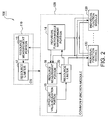
- Fig. 2 is a functional block diagram showing a function outline of a network printer 100.
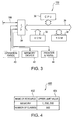
- Fig. 3 is a block diagram showing a hardware configuration of the network printer 100.
- Fig. 4 is a diagram showing a data structure of resource limiting information 400.
- Fig. 5 is a diagram showing a data structure of module information 420.
- Fig. 6 is a diagram showing a data structure of an execution environment information registration table 440.
- Fig. 7 is a diagram showing a data structure of a resource management table 460.
- Fig. 8 is a diagram showing a data structure of an event listener table 480.
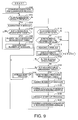
- Fig. 9 is a flow chart showing an individual function module control process.
- Fig. 10 is a flow chart showing an executability judgment process.
- Fig. 11 is a flow chart showing a module start-up process.
- Fig. 12 is a flow chart showing an event listener registration process.
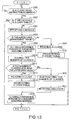
- Fig. 13 is a flow chart showing a class read process.
- Fig. 14 is a flow chart showing an event listener control process.
- Fig. 15 is a flow chart showing an event listener execution process.
- Fig. 16 is a flow chart showing an event listener elimination process.
- Fig. 17 is a time chart showing a case where individual function modules b and c that are targets of resource management are executed in parallel.
- Figs. 18A and 18B are diagrams for explaining an execution environment of a JAVA (registered trade mark) application.
- FIGs. 1 through 17 are diagrams showing first embodiments of a resource management system, a printer, a printer network card and a resource management program, and a resource management method according to an aspect of the invention.
- a resource management system, a printer, a printer network card and a resource management program, and a resource management method according to an aspect of the invention, as shown in Fig. 2, are applied to a case where a resource that a JAVA (registered trade mark) class set uses in an execution environment of a JAVA (registered trade mark) application is managed.
- JAVA registered trade mark
- Fig. 1 is a diagram showing a configuration of JAVA (registered trade mark) software.
- a common function module that is made of a JAVA (registered trade mark) class that controls an execution of a JAVA (registered trade mark) class set and JVM is executed on an OS and an individual function module that is the JAVA (registered trade mark) class set is executed on the common function module.
- the JAVA (registered trade mark) software is constituted of the common function module and the individual function module.
- the common function module can execute a plurality of individual function modules.
- a case where two individual function modules b and c are executed on a common function module a is shown.
- a volume of a resource that the individual function module b uses is represented with x1
- a volume of a resource that the common function module a uses to execute the individual function module b is represented with x2
- the upper limit value of a resource that the individual function module b can use is represented with X max
- a volume of a resource is limited so as to satisfy x1 + x2 ⁇ X max .
- Fig. 2 is a functional block diagram showing an outline of functions of a network printer 100.
- the network printer 100 is constituted including an OS 110, a common function module 120 and a plurality of individual function modules 130.
- the OS 110 is constituted including a resource measurement portion 10 that measures a volume of a resource that the JAVA (registered trade mark) software uses; and a resource limiter 12 that limits a volume of a resource that an entirety of the JAVA (registered trade mark) software uses.
- the resource limiter 12 limits a resource that the JAVA (registered trade mark) software uses so that a volume of a resource measured at the resource measurement portion 10 may be less than a predetermined upper limit value assigned to the JAVA (registered trade mark) software.
- the common function module 120 is constituted including; an individual function module management portion 14 that manages an execution of an individual function module 130; a resource measurement portion 16 that measures a volume of a resource that the individual function module management portion 14 and the individual function module 130 use; an upper limit value acquisition portion 18 that acquires an upper limit value of a resource that the individual function module 130 can use; and a resource limiter 20 that limits a volume of a resource that the individual function module management portion 14 and the individual function module 130 use.
- the resource measurement portion 16 measures, for each of the individual function modules 130, a volume of a resource that an individual function module 130 uses and a volume of a resource that the individual function module management portion 14 uses to execute the individual function module 130.
- the resource limiter 20 limits a volume of a resource that the individual function module 130 uses and a volume of a resource that the individual function module management portion 14 uses to execute the individual function module 130 so that a volume of a resource measured at the resource measurement portion 16 may be less than the upper limit value acquired at the upper limit acquisition portion 18.
- Fig. 3 is a block diagram showing a hardware configuration of the network printer 100.
- the network printer 100 includes; a CPU 30 that controls, based on a control program, a calculation and an entire system; a ROM 32 that stores a control program of the CPU 30 or the like in advance in a predetermined region; a RAM 34 that stores data read out of the ROM 32 and calculation results necessary in the course of calculation of the CPU 30; and an I/F 38 that intermediates input/output of data to an external device, and these are mutually connected data receivable through a bas 39 that is a signal line for transmitting data.
- an operation panel 40 made of a touch panel or the like that can input and display data as a human interface; a memory device 42 that stores data and tables as files; a printer engine 44 constituted of units necessary for printing such as a printer head, a head driver and others; and a signal line for connecting to a network 199 are connected.
- the memory device 42 memorizes a common function module 120 and a plurality of individual function modules 130.
- the individual function module 130 is constituted containing resource limiting information that stores an upper limit value of the resource.
- Fig. 4 is a diagram showing a data structure of resource limiting information 400.
- the resource limiting information 400 is constituted including a field 402 that stores an upper limit value of a memory (RAM 34) that an individual function module 130 and a common function module 120 can use to execute the individual function module 130; and a field 404 that stores the number of classes that an individual function module 130 and a common function module 120 can start-up to execute the individual function module 130.
- a field 402 that stores an upper limit value of a memory (RAM 34) that an individual function module 130 and a common function module 120 can use to execute the individual function module 130
- a field 404 that stores the number of classes that an individual function module 130 and a common function module 120 can start-up to execute the individual function module 130.
- the individual function module 130 is constituted further including module information relating to the individual function module 130.
- Fig. 5 is a diagram showing a data structure of module information 420.
- the module information 420 is constituted including a field 422 that stores whether a volume of a resource that the individual function module 130 uses is made a target that is limited (hereinafter, referred to as a resource management target) or not; a field 424 that stores models of network printers 100 that the individual function module 130 can execute; and a field 426 that stores electronic signature information.
- the memory device 42 further memorizes an execution environment information registration table where execution environment information that shows an execution environment of the common function module 120 is registered.
- Fig. 6 is a diagram showing a data structure of an execution environment information registration table 440.
- the execution environment information registration table 440 is constituted including a field 442 where an upper limit value of the number of individual function modules 130 that can be started is registered; a field 444 where a name of the individual function module 130 to be executed is registered; a field 446 where a name of the individual function module 130 to be eliminated is registered; a field 448 where a model of an own network printer 100 is registered; and a field 450 where accessible electronic signature information is registered.
- the memory device 42 further memorizes, for each of the individual function modules 130 that is a resource management target, a resource management table that manages a volume of a resource that the individual function module 130 uses.
- the resource management table is generated accompanying a start-up of the individual function module 130 when it is a resource management target.
- Fig. 7 is a diagram showing a data structure of a resource management table 460.
- each record is registered for each of types of the resources.
- Each record is registered including a field 462 where a name of the resource is registered; a field 464 where an upper limit value of the resource that the individual function module 130 can use is registered; and a field 466 where a volume of the resource that the individual function module 130 is now using is registered.
- the memory device 42 further memorizes an event listener table 480 where event listeners that process events received by the individual function module 130 are registered.
- Fig. 8 is a diagram showing a data structure of an event listener table 480.
- event listener table 480 As shown in Fig. 8, a record is registered for each of event listeners that the individual function module 130 registers. The respective records are registered including a field 482 where a name of an event listener is registered.
- a CPU 30 is made of a micro-processing unit and so on, starts a predetermined program stored in a predetermined region of the ROM 32, and, following the program, time-divisionally executes, respectively, an individual function module control process, a class read-in process, an event listener control process and an instance elimination process shown in flow charts of Figs. 9, 13, 14 and 16 as a process of the common module 120.
- Fig. 9 is a flow chart showing the individual function module control process.
- the individual function module control process is a process that controls the elimination and the execution of the individual function module 130.
- a step S100 is accessed.
- step S100 a name of an individual function module 130 to be executed and a name of an individual function module 130 to be eliminated are acquired from the execution environment information registration table 440, the step goes to S102, whether an individual function module 130 to be eliminated is present or not is judged, and when an individual function module 130 to be eliminated is judged present (Yes), the step goes to S104.
- step S104 based on the acquired name, the corresponding individual function module 130 is eliminated from the memory device 42, followed by forwarding to step S106, there, based on module information 420 contained in the individual function module 130, whether the individual function module 130 is a resource management target or not is judged, when the individual function module 130 is judged the resource management target (Yes), the step forwards to S108.
- step S108 the resource management table 460 corresponding to the individual function module 130 is eliminated from the memory device 42, followed by forwarding to step S110, "1" is subtracted from a value of a variable that shows the number of modules now in operation, further followed by forwarding to the step S102.
- step S106 when the individual function module 130 is judged not a resource management target (No), the step forwards to step S102.
- step S102 when an individual function module 130 to be eliminated is judged not present (No), the step forwards to S112, there, whether there is an individual function module 130 to be executed or not is judged, when an individual function module 130 to be executed is judged present (Yes), the step forwards to S114.
- step S114 whether a value of a variable that shows the number of modules that are now being started is less than the predetermined upper limit value or not is judged, and, when it is judged less than the predetermined upper limit value (Yes), the step forwards to S116.
- step 116 based on the acquired name, the corresponding individual function module 130 is read from the memory device 42, followed by forwarding to step S118, there, an executability judgment process that judges whether the read individual function module 130 is executable or not is carried out, followed by forwarding to step S120.
- step S120 whether a return value that shows a permission of the execution of the individual function module 130 is returned from the executability judgment process or not is judged, when the return value showing the permission of the execution is judged returned (Yes), the step forwards to S122.
- step S122 based on the module information 420 contained in the corresponding individual function module 130, whether the individual function module 130 is a resource management target or not is judged, when the individual function module 130 is judged the resource management target (Yes), the step forwards to S124.
- a resource management table 460 corresponding to the individual function module 130 is generated, the upper limit value is acquired from the resource limiting information 400 contained in the individual function module 130, the acquired upper limit value is registered in the generated resource management table 460, followed by forwarding to step S126, there, "1" is added to a value of a variable that shows the number of modules that are now started, the step forwards to S128.
- step S128 an address of the generated resource management table 460 is set to a reference pointer of a resource assuring address, followed by forwarding to step S130, there, a module start process is executed to start the individual function module 130, followed by forwarding to step S132, the reference pointer of the resource assuring address is cleared, the step forwards to S112.
- step S122 when the individual function module 130 is judged not a resource management target (No), followed by forwarding to step S134, a module start process similar to the step S130 is executed, the step forwards to S112.
- step S120 when the return value showing that the execution of the individual function module 130 is not permitted is judged returned from the executability judgment process (No), the step forwards to S112.
- step S114 a value of a variable showing the number of modules that are now started is judged a predetermined upper limit value or more (No), and when in the step S112 the individual function module 130 to be executed is judged not present (No), in both cases, a series of processes is brought to completion followed by returning to an initial process.
- Fig. 10 is a flow chart showing the executability judgment process.
- step S200 The executability judgment process, when executed in the step S118, as shown in Fig. 10, in the beginning, forwards to step S200.
- step S200 model information is acquired from the module information 420 contained in the individual function module 130, followed by forwarding to step S202, there, whether the acquired model information and model information of the execution environment information registration table 440 coincide or not is judged, when the model information is judged coincided (Yes), the step forwards to S204.
- step S204 electronic signature information is acquired from the module information 420 contained in the individual function module 130, followed by forwarding to step S206, there, based on the execution environment information registration table 440, whether the acquired electronic signature is accessible or not is judged, and when the electronic signature information is judged accessible (Yes), the step forwards to S208.
- step S208 based on the module information 420 contained in the individual function module 130, whether the individual function module 130 is a resource management target or not is judged, when it is judged a resource management target (Yes), the step forwards to S210.
- step S210 the upper limit value is acquired from the resource limiting information 400 contained in the individual function module 130, followed by forwarding to step S212, there, whether the upper limit value can be successfully acquired or not is judged, and when the upper limit value is judged successfully acquired (Yes), the step moves to S214.
- step 214 whether the acquired upper limit value is less than a volume of remaining memory that the common function module 120 can use or not is judged, and when it is judged less than a total volume of remaining memory (Yes), followed by forwarding to step S216, there the return value that shows the permission of the execution of the individual function module 130 is returned, and thereby a series of processes comes to completion, followed by returning to an initial process.
- step S208 when the individual function module 130 is judged not a resource management target (No), the step moves to S216.
- the step moves to S218, the return value that shows the execution of the individual function module 130 is not permitted is returned, and thereby a series of processes come to completion followed by returning to an initial process.
- Fig. 11 is a flow chart showing a module start-up process.
- the module start-up process when executed in the steps S130 and S134, as shown in Fig. 11, at the beginning, moves to step S300.
- step S300 a class read instruction to read a class from the individual function module 130 is outputted, followed by moving to step S302 to judge whether the class is successfully read or not is judged, and, when the class is judged successfully read (Yes), the step moves to S304.
- step S304 whether a reference pointer of a resource assuring address is set or not is judged, and, when the reference pointer of the resource assuring address is judged set (Yes), the step moves to S306.
- step S306 a volume of memory necessary for executing the read class is calculated, the calculated volume of memory is added to a volume of memory used of the resource management table 460 (hereinafter, referred to as reference resource management table 460) that the reference pointer of the resource assuring address indicates, followed by moving to step S308 to judge whether a total volume of memory after addition is less than the upper limit value of the reference resource management table 460 or not is judged, and, when it is judged less than the upper limit value (Yes), the step moves to S310.
- reference resource management table 460 a volume of memory used of the resource management table 460
- step S310 an instance of the read class is generated on the memory, followed by moving to step S312, resource assuring address reference information that shows a value of the reference pointer of the resource assuring address is reserved in the generated instance, followed by moving to step S314.
- step S314 whether the instance is successfully generated or not is judged, when the instance is judged successfully generated (Yes), the step moves to S316, a class function call process for calling a function of the read class is executed, followed by moving to step S318, an event listener registration process for registering an even listener of the individual function module 130 is executed, and thereby a series of processes comes to completion to return to an initial process.
- step S308 when in the step S308 a total volume of memory is judged the upper limit value or more (No), followed by moving to step S320, a volume of memory calculated at the step S306 is subtracted from a volume of used memory of the reference resource management table 460, followed by moving to step S322, error is notified, followed by moving to step S314.
- step S304 when, in the step S304, the reference pointer of the resource assuring address is judged not set (No), followed by moving to step S324, an instance of the read class is generated on the memory, followed by moving to step S314.
- step S314 the instance is judged unsuccessfully generated (No) and when in the step S302 the class is judged unsuccessfully read (No), the step moves to S318.
- Fig. 12 is a flow chart showing an event listener registration process.
- step S400 The event listener registration process, when executed in the step S318, as shown in Fig. 12, at the beginning, moves to step S400.
- step S400 a class read instruction to read an event listener class from the individual function module 130 is outputted, followed by moving to step S402 to judge whether the event listener class is successfully read or not, and, when the event listener class is judged successfully read (Yes), the step moves to S404.
- step S404 whether a reference pointer of a resource assuring address is set or not is judged, and, when the reference pointer of the resource assuring address is judged set (Yes), the step moves to S406.
- step S406 a volume of memory necessary for executing the read event listener class is calculated, the calculated volume of memory is added to a volume of used memory of the resource management table 460, followed by moving to step S408 to judge whether a total volume of memory after addition is less than the upper limit value of the reference resource management table 460 or not is judged, and, when it is judged less than the upper limit value (Yes), the step moves to S410.
- step S410 an instance of the read event listener class is generated on the memory, followed by moving to step S412, resource assuring address reference information that shows a value of the reference pointer of the resource assuring address is reserved in the generated instance, followed by moving to step S414.
- step S414 whether the instance is successfully generated or not is judged, when the instance is judged successfully generated (Yes), the step moves to S416, an event listener of the generated instance is registered in the event listener execution list, and thereby a series of processes comes to completion followed by returning to an initial process.
- step S408 when in the step S408 a total volume of memory is judged the upper limit value or more (No), followed by moving to step S418, a volume of memory calculated at the step S406 is subtracted from a volume of used memory of the reference resource management table 460, followed by moving to step S420, error is notified, followed by moving to step S414.
- step S404 when, in the step S404, the reference pointer of the resource assuring address is judged not set (No), followed by moving to step S422, an instance of the read event listener class is generated on the memory, followed by moving to step S414.
- Fig. 13 is a flow chart showing the class read process.
- the class read process is a process that reads a class in accordance with the class read instruction and, when it is executed on the CPU 30, as shown in Fig. 13, in the beginning, the step moves to S500.
- step S500 whether the class read instruction is acquired or not is judged, when the class read instruction is judged acquired (Yes), step moves to S502, however, when it is judged not acquired (No), the process waits at step S500 until the class read instruction is acquired.
- step S502 whether a class involving the class read instruction is registered in a cash table or not is judged, when it is judged not registered in the cash table (No), the step moves to S504.
- step S504 an individual function module 130 to which the class involving the class read instruction belongs is specified, the process moves to step S506, based on the module information 420 contained in the specified individual function module 130, whether the individual function module 130 is a resource management target or not is judged, when it is judged a resource management target (Yes), the step moves to S508.
- step S508 an address of the resource management table 460 corresponding to the individual function module 130 is set to a reference pointer of a resource assuring address and the step moves to S510.
- step S510 "1" is added to the number of start-up classes of the reference resource management table 460, the step moves to S512, whether a total number of classes after addition is less than the upper limit value of the reference resource management table 460 or not is judged, when it is judged less than the upper limit value (Yes), the step moves to S514.
- step S514 a class involving the class read instruction is read from the individual function module 130, the step moves to S516, the read class is registered in the cash table, the step moves to S518, a reference pointer of the resource assuring address is cleared, thereby a series of processes come to completion followed by returning to an initial process.
- step S512 when the total number of classes after addition is judged the upper limit value or more (No), the step moves to S520, "1" is subtracted from the number of start-up classes of the reference resource management table 460, the process moves to step S522, an error is notified, and the step moves to S518.
- step S506 when the individual function module 130 is judged not a resource management target (No), the step moves to S524, a class involving the class read instruction is read from the individual function module 130, the step moves to S526, the read class is registered in the cash table, thereby a series of processes come to completion followed by returning to an initial process.
- step S502 when the class involving the class read instruction is judged registered in the cash table (Yes), a series of processes come to completion followed by returning to an initial process.
- Fig. 14 is a flow chart showing the event listener control process.
- the event listener control process is a process that controls the execution of an event listener and, when it is executed on the CPU 30, as shown in Fig. 14, in the beginning, the step moves to S600.
- step S600 an event listener execution list is acquired, the step moves to S602, based on the acquired event listener execution list, whether an event listener to be executed is present or not is judged, and when the event listener to be executed is judged present (Yes), the step moves to S604.
- step S604 an individual function module 130 that is a generator of the event listener is specified, the step moves to S606, based on module information 420 contained in the specified individual function module 130, whether the individual function module 130 is a resource management target or not is judged, when it is judged the resource management target (Yes), the step moves to S608.
- step S608 an address of a resource management table 460 corresponding to the individual function module 130 is set to a reference pointer of a resource assuring address, the step moves to S610, an event listener execution process that executes the event listener is executed, followed by moving to step S612, the reference pointer of the resource assuring address is cleared, and the step moves to S614.
- step S614 the event listener is eliminated from the event listener execution list, and the step moves to S602.
- step S606 when the individual function module 130 is judged not a resource management target (No), the step moves to S616, the event listener is executed, followed by moving to step S614.
- step S610 an event listener execution process according to step S610 will be detailed with reference to Fig. 15.
- Fig. 15 is a flow chart showing the event listener execution process.
- step S700 The event listener execution process, when it is executed in the step S610, as shown in Fig. 15, in the beginning, moves to step S700.
- step S700 at a head of an instruction list contained in the event listener, a program pointer is moved, the step moves to S702, whether an instruction to be executed is present in an address indicated with the program pointer or not is judged, when the instruction to be executed is judged present (Yes), the step moves to S704.
- step S704 a volume of memory necessary for executing an instruction is calculated, a volume of calculated memory is added to a volume of memory used of the reference resource management table 460, the step moves to S706, whether a total volume of memory after addition is less than the upper limit value of the reference resource management table 460 or not is judged, when it is judged less than the upper limit value (Yes), the step moves to S708.
- step S708 memory is secured, followed by moving to step S710, an instruction of an address indicated with a program pointer is executed, followed by moving to step S712, the program pointer is moved to next one in the instruction list contained in the event listener, and the step moves to S702.
- step S706 when in the step S706 a total volume of memory is judged the upper limit value or more (No), followed by moving to step S714, a volume of memory calculated at the step S704 is subtracted from a volume of used memory of the reference resource management table 460, followed by moving to step S716, error is notified, followed by moving to step S712.
- step S702 when, in the step S702, the instruction to be executed is judged not present (No), a series of processes come to completion followed by returning to an initial process.
- Fig. 16 is a flow chart showing the instance elimination process.
- the instance elimination process is a process to eliminate an instance and, when it is executed on the CPU 30, as shown in Fig. 16, in the beginning, moves to step S800.
- step S800 an instance elimination list where an instance to be eliminated is registered is acquired, the step moves to S802, based on the acquired instance elimination list, whether an instance to be eliminated is present or not is judged, and, when the instance to be eliminated is judged present (Yes), the step moves to S804.
- step S804 resource assuring address reference information is acquired from the instance, the step moves to S805, whether the resource assuring address reference information is successfully acquired or not is judged, when the resource assuring address reference information is judged successfully acquired (Yes), the step moves to S806.
- step S806 based on the acquired resource assuring address reference information, a reference pointer of the resource assuring address is set, the step moves to S808, the instance is eliminated, followed by moving to step S810, a volume of memory necessary for executing the instance is subtracted from a volume of used memory of the reference resource management table 460, the step moves to S812.
- step S812 the reference pointer of the resource assuring address is cleared, the step moves to S814, the instance is eliminated from the instance elimination list, followed by moving to step S802.
- step S805 when the resource assuring address reference information is judged not successfully acquired (No), the step moves to S816, the instance is eliminated, followed by moving to step S814.
- step S802 when in the step S802 the instance to be eliminated is judged not present (No), a series of processes come to completion followed by returning to an initial process.
- a common function module 120 is executed to execute an individual function module control process.
- the individual function module control process through steps S102 through S110, when an individual function module 130 to be eliminated is present, the individual function module 130 is eliminated.
- step S114 when the number of modules that are now started is judged less than a predetermined upper limit value, through steps S116 and S118, the individual function module 130 is read, and whether the read individual function module 130 can be executed or not is judged.
- an executability judgment process when the individual function module 130 has coincident model information and accessible electronic signature information and the upper limit value of usable memory is less than a total volume of remaining memory, the execution is permitted.
- a resource management table 460 is generated, "1" is added to the number of running modules, and the individual function module 130 is started.
- steps S510 and S306 the number of start-up classes of the individual function module 130 and a volume of memory used are added.
- any one of the number of start-up classes and a volume of memory used becomes the upper limit value or more, through step S522 or S322, an error is notified, class read or instance generation is stopped.
- both of the number of start-up classes and a volume of memory used are less than the upper limit value, through steps S514, S310 and S318, a class of the individual function module 130 is read, an instance of the read class is generated, and an event listener of the individual function module 130 is registered.
- steps S510 and S406 the number of start-up classes of the individual function module 130 and a volume of memory used are added.
- step S522 or S420 an error is notified and event listener class read or instance generation is stopped.
- both of the number of start-up classes and a volume of memory used are less than the upper limit value, through steps S514, S410 and S416, an event listener class is read, an instance of the event listener class is generated, and the event listener of the generated instance is registered in the event listener execution list.
- the common function module 120 is executed to execute an event listener control process.
- the event listener control process through step S704, a volume of memory used by the individual function module 130 that becomes a generator of the event listener to be executed is added. At this time, when a volume of memory used becomes the upper limit value or more, through step S716, an error is notified and the event listener is stopped executing.
- step S710 an instruction contained in the event listener is executed.
- a common function module 120 is executed to execute an instance elimination process.
- the instance elimination process when an instance to be eliminated is present, through steps S808 and S810, the instance is eliminated, and a volume of memory used in the individual function module 130 that is a generator of the event listener is subtracted.
- step S134 the individual function module 130 is started.
- a module start-up process through steps S524, S324 and S318, a class of the individual function module 130 is read, an instance of the read class is generated, and an event listener of the individual function module 130 is registered.
- an event listener registration process through S524, S422 and S416, an event listener class is read, an instance of the event listener class is generated, and an event listener of the generated instance is registered in an event listener execution list.
- step S616 an instruction contained in the event listener to be executed is executed.
- Fig. 17 is a time chart showing a case when individual function modules b and c that are resource management targets are executed in parallel.
- solid lines show ones that are used in the execution of the individual function module b of a thread of the individual function module b and a thread of a common function module 120.
- dotted lines show ones that are used to execute the individual function module c of a thread of the individual function module c and a thread of a common function module 120.
- an AM thread (start-up processor) of the common function module 120 is executed and the individual function module b is started to execute the thread thereof. Furthermore, an AM thread of the common function module 120 is executed and thereby an event listener of the individual function module b is generated. When an event corresponding to the individual function module b is generated, the AM thread (event processor) of the common function module 120 is executed, a class of the individual function module b is read, and read instance is generated. When the individual function module b becomes unnecessary, an instance elimination thread of the common function module 120 is executed, and thereby the instance of the individual function module b is eliminated.
- the number of start-up classes and a volume of memory used that rise and fall accompanying the execution of the common function module 120 and the individual function module b are managed as a volume of a resource that the individual function module b uses and limited so as to be less than the predetermined upper limit value set to the individual function module b.
- the operation is same as to that of the individual function module c. However, in a series of processes, the number of start-up classes and a volume of memory used that rise and fall accompanying the execution of the common function module 120 and the individual function module c are managed as a volume of a resource that the individual function module c uses and limited so as to be less than the predetermined upper limit value set to the individual function module c.
- a class resource (the number of classes and size thereof) in the embodiment is assigned to a function module that supplies the class. Accordingly, when the class that the function module b has is read and utilized, irrespective of the thread that is used being either one of the function module b and the function module c, it becomes that the function module b consumes the class resource. Accordingly, in Fig. 17, resource consumption in the thread of a class load of the individual function module b is only broad solid lines showing regions of the function module b. Furthermore, resource consumption in the thread of a class load of the individual function module c is only broad broken lines showing regions of the function module c.
- a function module specified in step S504 is not an individual function module that reads a class but an individual function module that provides a class. In processes after that, a resource is assigned to a specified individual function module.
- a resource that is consumed in the thread of a certain individual function module 130 is assigned to any one of the common function module, own individual function module 130 and other individual function module 130.
- a volume of a resource that an entirety of the JAVA (registered trade mark) software uses is limited
- resource limiting information 400 is acquired from the individual function module 130, and, based on the acquired resource limiting information 400, a volume of memory that the individual function module 130 uses is limited.
- a volume of memory can be limited; accordingly, more than ever, in an execution environment of the JAVA (registered trade mark) application, the likelihood of becoming instable in the operation of software owing to deficiency of resource can be reduced. Furthermore, a volume of memory is limited on the basis of the individual function module 130; accordingly, there is no need of executing a plurality of common function modules 120, resulting in more than ever suppressing an increase in a volume of resource used.
- a volume of memory that the individual function module 130 uses, and a volume of memory that the common function module 120 uses to execute the individual function module 130 and the number of classes that are started are limited.
- a volume of memory that the common function module 120 uses and the number of classes that the common function module 120 starts-up can be limited on the basis of the individual function module 130; accordingly, in an execution environment of the JAVA (registered trade mark) application, the likelihood of becoming instable in the operation of software owing to deficiency of resource can be further reduced.
- JAVA registered trade mark
- the resource limiter 12 corresponds to the first resource limiting unit according to mode 1 or 6
- the upper limit value acquisition portion 18 and the step S124 correspond the resource limiting information acquisition unit according to mode 1, 3, 6 or 8
- the step S124 corresponds to the resource limiting information acquisition step according to mode 16, 18, 21, 22, 24 or 25.
- the resource limiter 20 and steps S214, S218, S120, S306, S308, S406, S408, S510, S512, S704 and S706 correspond to the second resource limiting unit according to mode 1, 2, 6 or 7, or the resource limiting unit according to mode 3, 4, 8 or 9.
- steps S214, S218, S120, S306, S308, S406, S408, S510, S512, S704 and S706 correspond to the second resource limiting steps according to modes 16, 17, and 21 through 23, or the resource limiting steps according to modes 16, 18, 19, 21, 22 and 24 through 26.
- the common function module 120 corresponds to the first function modules according to modes 1 through 10 and 16 through 27
- the individual function module 130 corresponds to the second function modules according to modes 1 through 10 and 16 through 27.
- Only difference of the embodiment from the first embodiment is in that only a volume of a resource that a common function module 120 uses to execute an individual function module 130 is limited.
- the event listener registration process shown in Fig. 12 is a thread that the individual function module 130 executes, and specifically an event listener is registered. Not a resource that the individual function module 130 uses, only a resource that a common function module 120 uses when the individual function module 130 is executed is measured; accordingly, processes in the respective steps become unnecessary.
- the event listener registration process shown in Fig. 12 corresponds to the event listener registration process (S318) in Fig. 11. However, a portion that secures a resource when the individual function module 130 is executed in addition to Fig. 12 becomes a class function call process (S316).
- the class function call process can be constituted according to a procedure similar to that of the event listener execution process shown in Fig. 15. When constituted like in Fig. 15, in the embodiment, processes corresponding to steps S704, S706, S708, S714 and S716 are not executed.
- a volume of a resource that the common function module 120 uses can be limited on the basis of an individual function module 130; accordingly, more than ever, the likelihood of an operation of a software becoming instable owing to the deficiency of the resource can be reduced. Furthermore, since a volume of a resource is limited on the basis of the individual function module 130, a plurality of common function modules 120 can be done without executing, more than ever, a volume of a resource can be inhibited from increasing.
- the upper limit value acquisition portion 18 and the step S124 correspond the resource limiting information acquisition unit according to mode 3 or 8
- the step S124 corresponds to the resource limiting information acquisition step according to mode 18, 24 or 25
- the resource limiter 20 and steps S214, S218, S120, S306, S308, S510, S512, S704 and S706 correspond to the resource limiting unit according to mode 3, 4, 8 or 9.
- steps S214, S218, S120, S306, S308, S510, S512, S704 and S706 correspond to the resource limiting steps according to modes 18, 19 and 24 through 26
- the common function module 120 corresponds to the first function modules according to modes 3 through 5, 8 through 10, 18 through 20 and 24 through 27.
- the individual function module 130 corresponds to the second function modules according to modes 3 through 5, 8 through 10, 18 through 20 and 24 through 27.
- a function made of the resource measurement unit 10, the resource limiter 12, the resource measurement unit 16, the upper limit value acquisition unit 18 and the resource limiter 20 is constituted so as to realize as an internal function of the network printer 100.
- the foregoing function may be constituted as well so as to realize as a function of a network card that is installed to the network printer 100.
- the resource limiter 12 corresponds to the first resource limiting unit according to mode 11
- the upper limit value acquisition portion 18 and the step S124 correspond to the resource limiting information acquisition unit according to mode 11 or 13
- the resource limiting unit 20 and the steps S124, S218, S120, S306, S308, S406, S408, S510, S512, S704 and S706 correspond to the second resource limiting unit according to mode 11 or 12, or the resource limiting unit according to mode 13 or 14.
- the common function module 120 corresponds to the first function modules according to modes 11 through
- the individual function module 130 corresponds to the second function modules 130 according to modes 11 through 15.
- a volume of a resource a volume of memory used and the number of start-up classes are limited.
- the number of socket connections, the number of file connections, the number of files, capacities of files, sizes of classes, capacities of ZIP memories, a volume of CPU used, a volume of socket communications and a volume of file writing and reading may be limited
- the memory media mean semiconductor memory media such as RAM, ROM and so on, magnetic memory media such as FD, HD and so on, optical reading type memory media such as CD, CDV, LD, DVD and so on and magnetic/optical reading memory media such as MO and so on, and, irrespective of electronic, magnetic and optical reading methods, as far as the memory medium can be read with a computer, all memory media are contained.
- the resource management system, the printer, the printer network card and resource management program, and the resource management method according to an aspect of the invention are applied, as shown in Fig. 2, to a case where a resource that the JAVA (registered trade mark) class set uses in an execution environment of the JAVA (registered trade mark) application is managed.
- a resource that the JAVA (registered trade mark) class set uses in an execution environment of the JAVA (registered trade mark) application is managed.
- these can be applied to other cases as well.
- these can be applied also to, for instance, a projector, a scanner, an electronic paper, a home gate way, a personal computer, a PDA (Personal Digital Assistant), a network storage, an audio device, a portable telephone, a PHS (registered trade mark) (Personal Handy phone System), a watch type PDA, a STB (Set Top Box), a POS (Point Of Sale) terminal, a FAX machine, a telephone (including IP telephone), a digital TV and other devices.
- a projector a scanner, an electronic paper, a home gate way, a personal computer, a PDA (Personal Digital Assistant), a network storage, an audio device, a portable telephone, a PHS (registered trade mark) (Personal Handy phone System), a watch type PDA, a STB (Set Top Box), a POS (Point Of Sale) terminal, a FAX machine, a telephone (including IP telephone), a digital TV and other devices.
- PHS Registered trade mark
Landscapes
- Engineering & Computer Science (AREA)
- Theoretical Computer Science (AREA)
- Physics & Mathematics (AREA)
- General Engineering & Computer Science (AREA)
- General Physics & Mathematics (AREA)
- Human Computer Interaction (AREA)
- Software Systems (AREA)
- Mathematical Physics (AREA)
- Accessory Devices And Overall Control Thereof (AREA)
- Stored Programmes (AREA)
- Computer And Data Communications (AREA)
Applications Claiming Priority (2)
| Application Number | Priority Date | Filing Date | Title |
|---|---|---|---|
| JP2004375708 | 2004-12-27 | ||
| JP2005266761A JP4215037B2 (ja) | 2004-12-27 | 2005-09-14 | リソース管理システム、プリンタ、プリンタ用ネットワークカードおよびリソース管理プログラム、並びにリソース管理方法 |
Publications (2)
| Publication Number | Publication Date |
|---|---|
| EP1674985A2 true EP1674985A2 (de) | 2006-06-28 |
| EP1674985A3 EP1674985A3 (de) | 2008-01-30 |
Family
ID=36088477
Family Applications (1)
| Application Number | Title | Priority Date | Filing Date |
|---|---|---|---|
| EP05257350A Withdrawn EP1674985A3 (de) | 2004-12-27 | 2005-11-29 | Ressourcenverwaltungssystem, Drucker, Druckernetzwerkkarte, und Programm und Verfahren für Ressourcenverwaltung |
Country Status (5)
| Country | Link |
|---|---|
| US (1) | US7954105B2 (de) |
| EP (1) | EP1674985A3 (de) |
| JP (1) | JP4215037B2 (de) |
| KR (1) | KR100679529B1 (de) |
| TW (1) | TW200627233A (de) |
Families Citing this family (11)
| Publication number | Priority date | Publication date | Assignee | Title |
|---|---|---|---|---|
| JP4955943B2 (ja) * | 2005-06-28 | 2012-06-20 | クラリオン株式会社 | 情報端末および計算機資源管理方法 |
| JP4407956B2 (ja) | 2005-10-31 | 2010-02-03 | 株式会社ソニー・コンピュータエンタテインメント | 情報処理方法および情報処理装置 |
| JP2007122664A (ja) | 2005-10-31 | 2007-05-17 | Sony Computer Entertainment Inc | 情報処理方法および情報処理装置 |
| JP2008250525A (ja) * | 2007-03-29 | 2008-10-16 | Kyocera Corp | 認証プログラム、認証方法及び携帯端末 |
| JP5020121B2 (ja) * | 2008-02-21 | 2012-09-05 | 京セラドキュメントソリューションズ株式会社 | 情報処理装置、画像形成装置および情報処理方法 |
| WO2009136628A1 (ja) * | 2008-05-08 | 2009-11-12 | 日本電気株式会社 | 情報処理システムと方法およびプログラム |
| WO2010050335A1 (ja) | 2008-10-27 | 2010-05-06 | 株式会社 日立製作所 | リソース管理方法と組込み装置 |
| JP5357989B2 (ja) * | 2012-02-27 | 2013-12-04 | 日本電信電話株式会社 | メモリ管理装置、メモリ管理方法およびメモリ管理プログラム |
| CN102750184A (zh) * | 2012-06-25 | 2012-10-24 | 广东轩辕网络科技股份有限公司 | 云资源分类与标识系统及方法 |
| US10218813B2 (en) | 2017-01-31 | 2019-02-26 | Salesforce.Com, Inc. | Automatic surge protection of system resources |
| CN112703691B (zh) * | 2018-09-13 | 2023-03-31 | 上海诺基亚贝尔股份有限公司 | 用于通信网络中的干扰测量的方法、设备和计算机可读介质 |
Citations (1)
| Publication number | Priority date | Publication date | Assignee | Title |
|---|---|---|---|---|
| EP1475710A1 (de) | 2003-05-09 | 2004-11-10 | Sun Microsystems, Inc. | Methode und System zur mehrstufigen Verteilung von Rechenleistung in einem partitionierten Betriebssystem |
Family Cites Families (23)
| Publication number | Priority date | Publication date | Assignee | Title |
|---|---|---|---|---|
| JPH04137046A (ja) | 1990-09-28 | 1992-05-12 | Toshiba Corp | 電子計算機のオペレーティングシステム |
| GB9023633D0 (en) | 1990-10-31 | 1990-12-12 | Int Computers Ltd | Predicting the performance of a computer system |
| BR9713267A (pt) * | 1996-10-25 | 2004-06-15 | Schlumberger Systems & Service | Cartão de circuito integrado para uso com um terminal, processo para uso com o mesmo, microcontrolador e processo para sua programação |
| US6148401A (en) | 1997-02-05 | 2000-11-14 | At&T Corp. | System and method for providing assurance to a host that a piece of software possesses a particular property |
| US5915085A (en) * | 1997-02-28 | 1999-06-22 | International Business Machines Corporation | Multiple resource or security contexts in a multithreaded application |
| US6105137A (en) | 1998-07-02 | 2000-08-15 | Intel Corporation | Method and apparatus for integrity verification, authentication, and secure linkage of software modules |
| US6405327B1 (en) | 1998-08-19 | 2002-06-11 | Unisys Corporation | Apparatus for and method of automatic monitoring of computer performance |
| US6581206B2 (en) | 1999-11-12 | 2003-06-17 | Sun Microsystems, Inc. | Computer program language subset validation |
| JP2000215089A (ja) | 1999-01-25 | 2000-08-04 | Sony Corp | ファイル管理方法およびファイル管理装置 |
| US6772106B1 (en) | 1999-08-20 | 2004-08-03 | Hewlett-Packard Development Company, L.P. | Retargetable computer design system |
| US6973417B1 (en) | 1999-11-05 | 2005-12-06 | Metrowerks Corporation | Method and system for simulating execution of a target program in a simulated target system |
| JP2002041305A (ja) * | 2000-07-26 | 2002-02-08 | Hitachi Ltd | 仮想計算機システムにおける計算機資源の割当て方法および仮想計算機システム |
| US20020120660A1 (en) * | 2001-02-28 | 2002-08-29 | Hay Russell C. | Method and apparatus for associating virtual server identifiers with processes |
| DE10118267A1 (de) | 2001-04-12 | 2002-10-24 | Bosch Gmbh Robert | Verfahren zur Authentifizierung eines Anwenders bei einem Zugang zu einem softwarebasierten System über ein Zugangsmedium |
| JP2003076562A (ja) | 2001-09-06 | 2003-03-14 | Nippon Telegr & Teleph Corp <Ntt> | メモリ量的制御方法、装置、コンピュータプログラム及び記録媒体 |
| JP2003108409A (ja) | 2001-09-28 | 2003-04-11 | Canon Inc | サーバ装置及びその制御方法 |
| US7610366B2 (en) * | 2001-11-06 | 2009-10-27 | Canon Kabushiki Kaisha | Dynamic network device reconfiguration |
| US6804691B2 (en) | 2002-03-21 | 2004-10-12 | Hewlett-Packard Development Company, L.P. | Method for optimization of memory usage for a computer program |
| JP2003330732A (ja) | 2002-05-17 | 2003-11-21 | Canon Inc | 画像形成装置、制御方法、制御プログラム |
| JP2004094782A (ja) | 2002-09-03 | 2004-03-25 | Ricoh Co Ltd | リソース管理システム、プログラムおよび記録媒体 |
| JP4373742B2 (ja) | 2002-09-13 | 2009-11-25 | 株式会社リコー | 画像形成装置およびアプリ起動制限方法 |
| US20040167859A1 (en) | 2003-02-14 | 2004-08-26 | Richard Mirabella | Software license management system configurable for post-use payment business models |
| US20040267868A1 (en) | 2003-06-26 | 2004-12-30 | International Business Machines Corporation | Method for monitoring print jobs in a data processing network |
-
2005
- 2005-09-14 JP JP2005266761A patent/JP4215037B2/ja not_active Expired - Fee Related
- 2005-11-29 EP EP05257350A patent/EP1674985A3/de not_active Withdrawn
- 2005-12-08 US US11/297,719 patent/US7954105B2/en not_active Expired - Fee Related
- 2005-12-09 KR KR1020050120885A patent/KR100679529B1/ko not_active Expired - Fee Related
- 2005-12-09 TW TW094143555A patent/TW200627233A/zh unknown
Patent Citations (1)
| Publication number | Priority date | Publication date | Assignee | Title |
|---|---|---|---|---|
| EP1475710A1 (de) | 2003-05-09 | 2004-11-10 | Sun Microsystems, Inc. | Methode und System zur mehrstufigen Verteilung von Rechenleistung in einem partitionierten Betriebssystem |
Also Published As
| Publication number | Publication date |
|---|---|
| KR100679529B1 (ko) | 2007-02-06 |
| US20060143325A1 (en) | 2006-06-29 |
| KR20060074830A (ko) | 2006-07-03 |
| TW200627233A (en) | 2006-08-01 |
| EP1674985A3 (de) | 2008-01-30 |
| US7954105B2 (en) | 2011-05-31 |
| JP4215037B2 (ja) | 2009-01-28 |
| JP2006209735A (ja) | 2006-08-10 |
Similar Documents
| Publication | Publication Date | Title |
|---|---|---|
| EP1365557B1 (de) | System zur gemeinsamen Benutzung von Geräten, Endgerät zum Administrieren von Geräten, Netzübergangseinrichtung, und Verfahren zum gemeinsamen Benutzen von Geräten | |
| US10764444B2 (en) | Portable terminal performing a printer search | |
| EP1674985A2 (de) | Ressourcenverwaltungssystem, Drucker, Druckernetzwerkkarte, und Programm und Verfahren für Ressourcenverwaltung | |
| WO2020171611A1 (en) | Electronic device for providing various functions through application using a camera and operating method thereof | |
| JP4232767B2 (ja) | ソフトウェア認証システムおよびソフトウェア認証プログラム、並びにソフトウェア認証方法 | |
| KR100750770B1 (ko) | 리소스 관리 시스템, 리소스 관리 방법 및 리소스 관리프로그램을 기록한 컴퓨터 판독 가능한 기록 매체 | |
| US11361402B2 (en) | Electronic device and method for saving image | |
| EP2093690A1 (de) | Authentifizierungskontrollvorrichtung und Authentifizierungskontrollverfahren | |
| US20190303206A1 (en) | Information processing apparatus, information processing method, and recording medium | |
| EP1429521A2 (de) | Managementsystem für ein Gerät zur vereinfachten Kontrolle der Gerätefunktion | |
| CN103368936A (zh) | 信息处理装置和信息处理方法 | |
| JP4207938B2 (ja) | ソフトウェア認証システム、ソフトウェア認証プログラム、およびソフトウェア認証方法 | |
| EP4109812A1 (de) | Verfahren zur signierung der schlüsselverwaltung durch eine elektronische vorrichtung und elektronische vorrichtung dafür | |
| JP2020009251A (ja) | 画像処理装置、その制御方法、及びプログラム | |
| US20090310179A1 (en) | Information processing apparatus using license information, method, and control program | |
| CN115994552B (zh) | 基于图形码的校验方法、装置、电子设备及存储介质 | |
| CN113423076B (zh) | 验证码短信的获取方法、装置、电子设备和存储介质 | |
| CN100435084C (zh) | 资源管理系统、管理方法、打印机、打印机用网卡 | |
| CN111092765B (zh) | 智能驱动方法、系统、电子设备及可读存储介质 | |
| CN100367182C (zh) | 资源管理系统、资源换算表生成系统以及软件认证系统 | |
| US7783071B2 (en) | Imaging apparatus having a slot in which an image verification apparatus is inserted | |
| KR102669446B1 (ko) | 억세스 정보를 제공하는 서버 및 그 작동 방법 | |
| JP2006244456A (ja) | リソース管理システム、リソース換算テーブル生成システム、ソフトウェア認証システム、リソース管理プログラム、リソース換算テーブル生成プログラムおよびソフトウェア認証プログラム、並びにリソース管理方法、リソース換算テーブル生成方法およびソフトウェア認証方法 | |
| CN101136985A (zh) | 信息处理装置和方法、计算机可读介质及计算机数据信号 | |
| CN115167849A (zh) | 一种接口调用方法、装置、车载无线终端及存储介质 |
Legal Events
| Date | Code | Title | Description |
|---|---|---|---|
| PUAI | Public reference made under article 153(3) epc to a published international application that has entered the european phase |
Free format text: ORIGINAL CODE: 0009012 |
|
| AK | Designated contracting states |
Kind code of ref document: A2 Designated state(s): AT BE BG CH CY CZ DE DK EE ES FI FR GB GR HU IE IS IT LI LT LU LV MC NL PL PT RO SE SI SK TR |
|
| AX | Request for extension of the european patent |
Extension state: AL BA HR MK YU |
|
| PUAL | Search report despatched |
Free format text: ORIGINAL CODE: 0009013 |
|
| AK | Designated contracting states |
Kind code of ref document: A3 Designated state(s): AT BE BG CH CY CZ DE DK EE ES FI FR GB GR HU IE IS IT LI LT LU LV MC NL PL PT RO SE SI SK TR |
|
| AX | Request for extension of the european patent |
Extension state: AL BA HR MK YU |
|
| 17P | Request for examination filed |
Effective date: 20080311 |
|
| 17Q | First examination report despatched |
Effective date: 20080422 |
|
| AKX | Designation fees paid |
Designated state(s): DE FR GB |
|
| STAA | Information on the status of an ep patent application or granted ep patent |
Free format text: STATUS: THE APPLICATION IS DEEMED TO BE WITHDRAWN |
|
| 18D | Application deemed to be withdrawn |
Effective date: 20100529 |