EP1673835B1 - Pile a combustible alcaline comportant une anode comprenant de l'aluminium et du zinc et procede de fabrication de l'anode - Google Patents
Pile a combustible alcaline comportant une anode comprenant de l'aluminium et du zinc et procede de fabrication de l'anode Download PDFInfo
- Publication number
- EP1673835B1 EP1673835B1 EP04791521.0A EP04791521A EP1673835B1 EP 1673835 B1 EP1673835 B1 EP 1673835B1 EP 04791521 A EP04791521 A EP 04791521A EP 1673835 B1 EP1673835 B1 EP 1673835B1
- Authority
- EP
- European Patent Office
- Prior art keywords
- anode
- zinc
- thin layer
- fuel cell
- aluminum
- Prior art date
- Legal status (The legal status is an assumption and is not a legal conclusion. Google has not performed a legal analysis and makes no representation as to the accuracy of the status listed.)
- Expired - Lifetime
Links
Images
Classifications
-
- H—ELECTRICITY
- H01—ELECTRIC ELEMENTS
- H01M—PROCESSES OR MEANS, e.g. BATTERIES, FOR THE DIRECT CONVERSION OF CHEMICAL ENERGY INTO ELECTRICAL ENERGY
- H01M4/00—Electrodes
- H01M4/86—Inert electrodes with catalytic activity, e.g. for fuel cells
-
- H—ELECTRICITY
- H01—ELECTRIC ELEMENTS
- H01M—PROCESSES OR MEANS, e.g. BATTERIES, FOR THE DIRECT CONVERSION OF CHEMICAL ENERGY INTO ELECTRICAL ENERGY
- H01M4/00—Electrodes
- H01M4/86—Inert electrodes with catalytic activity, e.g. for fuel cells
- H01M4/88—Processes of manufacture
- H01M4/8825—Methods for deposition of the catalytic active composition
- H01M4/8867—Vapour deposition
-
- H—ELECTRICITY
- H01—ELECTRIC ELEMENTS
- H01M—PROCESSES OR MEANS, e.g. BATTERIES, FOR THE DIRECT CONVERSION OF CHEMICAL ENERGY INTO ELECTRICAL ENERGY
- H01M4/00—Electrodes
- H01M4/86—Inert electrodes with catalytic activity, e.g. for fuel cells
- H01M4/90—Selection of catalytic material
-
- H—ELECTRICITY
- H01—ELECTRIC ELEMENTS
- H01M—PROCESSES OR MEANS, e.g. BATTERIES, FOR THE DIRECT CONVERSION OF CHEMICAL ENERGY INTO ELECTRICAL ENERGY
- H01M8/00—Fuel cells; Manufacture thereof
- H01M8/08—Fuel cells with aqueous electrolytes
-
- H—ELECTRICITY
- H01—ELECTRIC ELEMENTS
- H01M—PROCESSES OR MEANS, e.g. BATTERIES, FOR THE DIRECT CONVERSION OF CHEMICAL ENERGY INTO ELECTRICAL ENERGY
- H01M4/00—Electrodes
- H01M4/86—Inert electrodes with catalytic activity, e.g. for fuel cells
- H01M4/8647—Inert electrodes with catalytic activity, e.g. for fuel cells consisting of more than one material, e.g. consisting of composites
- H01M4/8657—Inert electrodes with catalytic activity, e.g. for fuel cells consisting of more than one material, e.g. consisting of composites layered
-
- H—ELECTRICITY
- H01—ELECTRIC ELEMENTS
- H01M—PROCESSES OR MEANS, e.g. BATTERIES, FOR THE DIRECT CONVERSION OF CHEMICAL ENERGY INTO ELECTRICAL ENERGY
- H01M8/00—Fuel cells; Manufacture thereof
- H01M8/08—Fuel cells with aqueous electrolytes
- H01M8/083—Alkaline fuel cells
-
- Y—GENERAL TAGGING OF NEW TECHNOLOGICAL DEVELOPMENTS; GENERAL TAGGING OF CROSS-SECTIONAL TECHNOLOGIES SPANNING OVER SEVERAL SECTIONS OF THE IPC; TECHNICAL SUBJECTS COVERED BY FORMER USPC CROSS-REFERENCE ART COLLECTIONS [XRACs] AND DIGESTS
- Y02—TECHNOLOGIES OR APPLICATIONS FOR MITIGATION OR ADAPTATION AGAINST CLIMATE CHANGE
- Y02E—REDUCTION OF GREENHOUSE GAS [GHG] EMISSIONS, RELATED TO ENERGY GENERATION, TRANSMISSION OR DISTRIBUTION
- Y02E60/00—Enabling technologies; Technologies with a potential or indirect contribution to GHG emissions mitigation
- Y02E60/10—Energy storage using batteries
-
- Y—GENERAL TAGGING OF NEW TECHNOLOGICAL DEVELOPMENTS; GENERAL TAGGING OF CROSS-SECTIONAL TECHNOLOGIES SPANNING OVER SEVERAL SECTIONS OF THE IPC; TECHNICAL SUBJECTS COVERED BY FORMER USPC CROSS-REFERENCE ART COLLECTIONS [XRACs] AND DIGESTS
- Y02—TECHNOLOGIES OR APPLICATIONS FOR MITIGATION OR ADAPTATION AGAINST CLIMATE CHANGE
- Y02E—REDUCTION OF GREENHOUSE GAS [GHG] EMISSIONS, RELATED TO ENERGY GENERATION, TRANSMISSION OR DISTRIBUTION
- Y02E60/00—Enabling technologies; Technologies with a potential or indirect contribution to GHG emissions mitigation
- Y02E60/30—Hydrogen technology
- Y02E60/50—Fuel cells
-
- Y—GENERAL TAGGING OF NEW TECHNOLOGICAL DEVELOPMENTS; GENERAL TAGGING OF CROSS-SECTIONAL TECHNOLOGIES SPANNING OVER SEVERAL SECTIONS OF THE IPC; TECHNICAL SUBJECTS COVERED BY FORMER USPC CROSS-REFERENCE ART COLLECTIONS [XRACs] AND DIGESTS
- Y10—TECHNICAL SUBJECTS COVERED BY FORMER USPC
- Y10T—TECHNICAL SUBJECTS COVERED BY FORMER US CLASSIFICATION
- Y10T428/00—Stock material or miscellaneous articles
- Y10T428/24—Structurally defined web or sheet [e.g., overall dimension, etc.]
- Y10T428/24008—Structurally defined web or sheet [e.g., overall dimension, etc.] including fastener for attaching to external surface
- Y10T428/24017—Hook or barb
Definitions
- the invention relates to an alkaline fuel cell comprising at least one electrolyte on which is disposed an anode comprising at least first and second thin layers respectively comprising aluminum and zinc.
- the invention also relates to a method of manufacturing an anode of such an alkaline fuel cell.
- the document WO-A-9607765 discloses an alkaline battery comprising a zinc powder containing from 0.0005% to 1% aluminum, 0.0001% to 2% of at least one element selected from bismuth, indium and gallium, at least one element selected from magnesium, strontium, barium and rare earth metals.
- the elements are intended to limit the corrosion of the anode.
- the aluminum contained in the powder however, remains in contact with the electrolyte and can therefore be subjected to corrosion.
- the protective layer is generally passive in the operation of the fuel cell and can shield the electrochemical reaction.
- the protective layer can be made porous by adding in the protective layer of the active elements during operation of the battery.
- the negative electrode is made of zinc or a zinc alloy and is covered by a gallium alloy containing 0.1% to 15% by weight of aluminum.
- the aluminum contained in a small proportion in the gallium alloy dissolves and generates a certain porosity in the gallium coating so as to allow the operation of the zinc electrode.
- Such a cell has a lower efficiency than a battery having an aluminum anode and the protective layer of gallium is relatively expensive. Indeed, with an aluminum anode, the theoretical energy mass is 8050Wh / kg while it is 2360Wh / kg with a zinc anode.
- the patent US Patent 5316632 discloses a method for improving the efficiency of an electrochemical cell by selectively and cyclically controlling the dissolution and inhibition of an aluminum electrode immersed in an electrolytic aqueous solution.
- a passivation layer is deposited on the aluminum electrode, by precipitation of lead, nickel or zinc.
- the passivation layer is removed electrochemically so as to allow the deposition on the surface of the electrode of an activation layer obtained by precipitation of tin, indium, gallium or copper.
- the activation layer is removed to allow the deposition of a new passivation layer.
- the object of the invention is to provide an alkaline fuel cell which overcomes the drawbacks of the prior art, and more particularly in which the anode is temporarily protected against corrosion while ensuring high efficiency for the cell.
- the second thin layer is made of zinc or a zinc alloy, and the anode is formed by an alternation of first and second thin layers.
- the invention also aims a method of manufacturing an anode of such a fuel cell, easy to implement and inexpensive.
- this object is achieved by the method of manufacturing an anode of an alkaline fuel cell according to one of claims 1 and 2.
- the method consists in depositing, by physical vapor deposition, at least a second thin layer intended to come into contact with the electrolyte and comprising zinc on a substrate formed by a first thin layer of aluminum or aluminum alloy.
- an alkaline fuel cell comprises at least one electrolyte 1 on which an anode 2 is disposed.
- the anode 2 consists of a stack of a first thin layer 3 and a second thin layer 4, said second thin layer being disposed between the electrolyte 1 and the first thin layer 3.
- the first thin layer 3 is aluminum or aluminum alloy while the second thin layer 4 is zinc or zinc alloy.
- aluminum alloy is meant an alloy comprising at least 75% by weight of aluminum and zinc alloy means an alloy comprising at least 75% by weight of zinc.
- the dissolution kinetics of zinc being slower than that of aluminum, the fact of having a second thin layer of zinc or zinc alloy between the electrolyte and the first thin layer of aluminum or aluminum alloy makes it possible to temporarily protect the first layer against corrosion, while maintaining a high operating efficiency.
- the second thin layer acting as a sacrificial layer it is also oxidized and thus participates, by dissolving, the operation of alkaline fuel cell while temporarily protecting the first thin layer against corrosion.
- the zinc of the second thin layer dissolves gradually according to the following reaction Zn + 1 / 2O 2 + H 2 O 2 Zn (OH) 2 so as to generate a porosity and generates a Electric power.
- the dissolution of zinc may possibly continue until it disappears completely.
- the aluminum of the first thin layer is consumed according to the following reaction 2Al + 3 / 2O 2 + 3H 2 O ⁇ 2Al (OH) 3 .
- the anode 2 of the alkaline fuel cell is preferably made by depositing, by physical vapor deposition, the second thin layer 4 intended to come into contact with the electrolyte 1 on a substrate formed by the first thin layer. 3 aluminum or aluminum alloy.
- Such a fuel cell has the advantage of being able to adapt the configuration of the anode to a consumption profile of the predetermined fuel cell.
- the storage duration of the battery is 72 hours while for a layer of zinc with a thickness of 10nm, the storage time is 26 seconds.
- the anode is constituted by a successive stack of four thin layers consisting of an alternation of two first thin layers and two second thin layers.
- a second zinc or zinc alloy thin layer 4a is disposed between the electrolyte 1 and a first thin layer 3a made of aluminum or aluminum alloy.
- a second additional thin layer 4b is disposed between the first thin layer 3a and a first additional thin layer 3b of the same type as the first thin layer 3a and preferably thicker.
- the thickness of each second thin layer 4a or 4b is preferably less than the thickness of the corresponding first thin layer 3a or 3b.
- the anode comprising an alternation of first and second layers, the second layer comprising zinc is then chosen so as to provide a consumption in energy of one hour and the first layer comprising aluminum provided the energy necessary for the transmission of data.
- a battery operating for 24 hours preferably comprises an alternation of first 24 layers and 24 second layers.
- weekly operation can be envisaged with hourly or daily use periods using layers of different thicknesses.
Landscapes
- Chemical & Material Sciences (AREA)
- Chemical Kinetics & Catalysis (AREA)
- Electrochemistry (AREA)
- General Chemical & Material Sciences (AREA)
- Engineering & Computer Science (AREA)
- Manufacturing & Machinery (AREA)
- Materials Engineering (AREA)
- Life Sciences & Earth Sciences (AREA)
- Sustainable Development (AREA)
- Sustainable Energy (AREA)
- Battery Electrode And Active Subsutance (AREA)
- Hybrid Cells (AREA)
- Inert Electrodes (AREA)
Description
- L'invention concerne une pile à combustible alcaline comportant au moins un électrolyte sur lequel est disposée une anode comportant au moins des première et seconde couches minces comprenant respectivement de l'aluminium et du zinc.
- L'invention concerne également un procédé de fabrication d'une anode d'une telle pile à combustible alcaline.
- Les piles à combustible alcalines sont généralement des piles primaires, c'est-à-dire non rechargeables et elles sont généralement utilisées dans des dispositifs électroniques portables. Elles sont le siége :
- d'une réaction d'oxydation d'une anode métallique selon la réaction suivante :
M → Mn+ + ne-
- et d'une réaction de réduction de l'oxygène de l'air, en milieu alcalin, selon la réaction suivante :
1/2 O2 + H2O + 2e- → 2 OH-
- Ainsi, le bilan de fonctionnement de ce type de piles est le suivant :
2M + n/2O2 +nH2O ⇔ 2M(OH)n
où M représente le métal de l'anode et n représente le degré d'oxydation du métal M. - Selon le métal employé pour l'anode, la corrosion peut, cependant, limiter le fonctionnement de la pile à combustible. Ainsi, les anodes en aluminium sont peu employées car elles sont soumises à une très forte corrosion. En effet, le potentiel fortement électronégatif de l'aluminium en milieu aqueux induit une décomposition de l'eau en hydrogène et une dissolution spontanée de l'aluminium. De plus, la couche naturelle de passivation de l'aluminium n'est pas stable en milieu alcalin.
- Le document
WO-A-9607765 - Pour limiter la corrosion de l'anode, il est également connu de disposer une couche mince entre l'anode et l'électrolyte destinée à de protéger l'anode contre la corrosion. La couche de protection est généralement passive dans le fonctionnement de la pile à combustible et peut faire écran à la réaction électrochimique. Ainsi, pour permettre un bon fonctionnement de la pile, la couche de protection peut être rendue poreuse en ajoutant dans la couche de protection des éléments actifs lors du fonctionnement de la pile.
- Ainsi, dans le document
JP4104464 - Le brevet
US-A-5316632 décrit une méthode pour améliorer l'efficacité d'une cellule électrochimique en contrôlant sélectivement et cycliquement la dissolution et l'inhibition d'une électrode en aluminium, immergée dans une solution aqueuse électrolytique. Ainsi, lorsque la cellule électrochimique est inactive, une couche de passivation est déposée sur l'électrode en aluminium, par précipitation de plomb, de nickel ou de zinc. Puis, pour le fonctionnement de la cellule, la couche de passivation est éliminée électrochimiquement de manière à permettre le dépôt, sur la surface de l'électrode, d'une couche d'activation obtenue par précipitation d'étain, d'indium, de gallium ou de cuivre. A la fin de la période de fonctionnement de la cellule, la couche d'activation est éliminée pour permettre le dépôt d'une nouvelle couche de passivation. Bien qu'une telle méthode permette de protéger l'électrode en aluminium contre la corrosion lorsque la cellule électrochimique ne fonctionne pas, cette méthode s'avère être difficile à mettre en oeuvre car elle requiert un grand nombre d'étapes mettant en jeu des dépôts par précipitation et des éliminations électrochimiques de couches de passivation et d'activation. - L'invention a pour but de réaliser une pile à combustible alcaline remédiant aux inconvénients de l'art antérieur, et plus particulièrement dans laquelle l'anode est protégée temporairement contre la corrosion tout en assurant à la pile un rendement élevé.
- Selon l'invention, ce but est atteint par la revendication 1. La première couche mince est constituée par de l'aluminium ou par un alliage d'aluminium, la seconde couche mince étant disposée entre la première couche mince et l'électrolyte.
- La seconde couche mince est constituée par du zinc ou par un alliage de zinc, et l'anode est constituée par une alternance de première et seconde couches minces.
- L'invention a également pour but un procédé de fabrication d'une anode d'une telle pile à combustible, facile à mettre en oeuvre et peu coûteux.
- Selon l'invention, ce but est atteint par le procédé de fabrication d'une anode d'une pile à combustible alcaline selon l'une des revendications 1 et 2. Le procédé consiste à déposer, par dépôt physique en phase vapeur, au moins une seconde couche mince destinée à venir en contact avec l'électrolyte et comportant du zinc sur un substrat formé par une première couche mince en aluminium ou en alliage d'aluminium.
- D'autres avantages et caractéristiques ressortiront plus clairement de la description qui va suivre de modes particuliers de réalisation de l'invention donnés à titre d'exemples non limitatifs et représentés aux dessins annexés, dans lesquels :
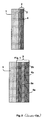
- La
figure 1 représente, en coupe, un premier mode de réalisation d'une pile à combustible selon l'invention. - La
figure 2 représente, en coupe, une variante de réalisation d'une pile à combustible selon lafigure 1 . - Selon un premier mode de réalisation illustré à la
figure 1 , une pile à combustible alcaline comporte au moins un électrolyte 1 sur lequel est disposée une anode 2. L'anode 2 est constituée par un empilement d'une première couche mince 3 et d'une seconde couche mince 4, ladite seconde couche mince étant disposée entre l'électrolyte 1 et la première couche mince 3. La première couche mince 3 est en aluminium ou en alliage d'aluminium tandis que la seconde couche mince 4 est en zinc ou en alliage de zinc. - Par alliage d'aluminium, on entend un alliage comportant au moins 75% en poids d'aluminium et par alliage de zinc, on entend un alliage comportant au moins 75% en poids de zinc.
- Les première et seconde couches minces ont, de préférence, une épaisseur comprise entre 10nm et 100µm et la seconde couche mince peut avoir préférentiellement une épaisseur inférieure à celle de la première couche mince.
- La cinétique de dissolution du zinc étant plus lente que celle de l'aluminium, le fait de disposer une seconde couche mince en zinc ou en alliage de zinc entre l'électrolyte et la première couche mince en aluminium ou en alliage d'aluminium permet de protéger temporairement la première couche contre la corrosion, tout en conservant un rendement de fonctionnement élevé. En effet, la seconde couche mince jouant le rôle de couche sacrificielle, elle est également oxydée et participe donc, par sa dissolution, au fonctionnement de pile à combustible alcaline tout en protégeant temporairement la première couche mince contre la corrosion. Ainsi, lorsque la pile à combustible alcaline fonctionne, le zinc de la seconde couche mince se dissout progressivement selon la réaction suivante Zn + 1/2O2 +H2O ⇔ Zn(OH)2 de manière à générer une porosité et il génère un courant électrique. La dissolution du zinc peut éventuellement se poursuivre jusqu'à sa disparition totale. Puis l'aluminium de la première couche mince est consommé selon la réaction suivante 2Al + 3/2O2 + 3H2O ⇔ 2Al(OH)3.
- L'anode 2 de la pile à combustible alcaline est, de préférence, réalisée en déposant, par dépôt physique en phase vapeur, la seconde couche mince 4 destinée à venir en contact avec l'électrolyte 1 sur un substrat formé par la première couche mince 3 en aluminium ou en alliage d'aluminium.
- Une telle pile à combustible présente l'avantage de pouvoir adapter la configuration de l'anode à un profil de consommation de la pile à combustible prédéterminé. Ainsi, en faisant varier l'épaisseur des première et seconde couches minces, il est possible d'ajuster la durée de stockage de la pile à combustible. A titre d'exemple, en considérant que la couche de zinc consommée pendant la non-utilisation de la pile est soumise à un courant de corrosion de 0,8mA/cm2, si cette couche a une épaisseur de 100µm, la durée de stockage de la pile est de 72 heures tandis que pour une couche de zinc d'une épaisseur de 10nm, la durée de stockage est de 26 secondes.
- Dans une variante de réalisation, l'anode 2, comme représentée à la
figure 2 , peut être constituée par une alternance de première et seconde couches minces 3 et 4, respectivement en aluminium ou en alliage d'aluminium et en zinc ou en alliage de zinc, une seconde couche mince 4 étant nécessairement en contact avec l'électrolyte 1. Dans ce cas, l'anode est, de préférence, réalisée en déposant par dépôt physique en phase vapeur, une alternance de première et seconde couches 3 et 4, sur une seconde couche mince 4, préalablement déposée sur un substrat en aluminium ou en alliage d'aluminium. De plus, les épaisseurs des premières couches minces 3 et/ou les épaisseurs des secondes couches minces 4 peuvent être différentes. - Ainsi, à la
figure 2 , l'anode est constituée par un empilement successif de quatre couches minces constitué par une alternance de deux premières couches minces et de deux secondes couches minces. Ainsi, une seconde couche mince 4a en zinc ou en alliage de zinc est disposée entre l'électrolyte 1 et une première couche mince 3a en aluminium ou en alliage d'aluminium. Une seconde couche mince supplémentaire 4b, du même type que la seconde couche mince 4a et, de préférence plus épaisse, est disposée entre la première couche mince 3a et une première couche mince 3b supplémentaire, du même type que la première couche mince 3a et de préférence plus épaisse. De plus, l'épaisseur de chaque seconde couches mince 4a ou 4b est, de préférence, inférieure à l'épaisseur de la première couche mince correspondante 3a ou 3b. Une telle variante de réalisation peut permettre d'obtenir un profil de consommation plus complexe. Ainsi, pour une pile nécessitant une puissance élevée toutes les heures de manière à, par exemple, transmettre des données, l'anode comportant une alternance de première et seconde couches, la seconde couche comportant du zinc est alors choisie de manière à fournir une consommation en énergie d'une heure et la première couche comportant de l'aluminium fourni l'énergie nécessaire à la transmission des données. Ainsi, une pile fonctionnant pendant 24 heures comporte, de préférence, une alternance de 24 premières couches et de 24 secondes couches. De même, un fonctionnement hebdomadaire peut être envisagé avec des périodes d'utilisation horaires ou journalières en utilisant des couches d'épaisseurs différentes.
Claims (3)
- Pile à combustible alcaline comportant au moins un électrolyte (1) sur lequel est disposée une anode (2) comportant au moins des première et seconde couches minces (3, 4) comprenant respectivement de l'aluminium et du zinc, la première couche mince (3) est constituée par de l'aluminium ou par un alliage d'aluminium, la seconde couche mince (4) étant disposée entre la première couche mince (3) et l'électrolyte (1) caractérisée en ce que la seconde couche mince (4) est constituée par du zinc ou un alliage de zinc et en ce que l'anode (2) est constituée par une alternance de première et seconde couches minces (3a, 3b et 4a, 4b).
- Pile à combustible selon la revendication 1, caractérisée en ce que l'épaisseur de chaque couche mince (3, 4) est comprise entre 10nm et 100µm.
- Procédé de fabrication d'une anode d'une pile à combustible alcaline selon l'une des revendications 1 et 2, caractérisé en qu'il consiste à déposer, par dépôt physique en phase vapeur, au moins une seconde couche mince (4) destinée à venir en contact avec l'électrolyte (1) et constituée par du zinc ou un alliage de zinc, sur un substrat formé par une première couche mince (3) en aluminium ou en alliage d'aluminium et en ce qu'une alternance de première et seconde couches minces (3a, 3b et 4a, 4b) est déposée, par dépôt physique en phase vapeur, sur la seconde couche mince (4b).
Applications Claiming Priority (2)
| Application Number | Priority Date | Filing Date | Title |
|---|---|---|---|
| FR0312058A FR2861219B1 (fr) | 2003-10-15 | 2003-10-15 | Pile a combustible alcaline comportant une anode comprenant de l'aluminium et du zinc et procede de fabrication de l'anode |
| PCT/FR2004/002608 WO2005038964A2 (fr) | 2003-10-15 | 2004-10-13 | Pile à combustible alcaline comportant une anode comprenant de l'aluminium et du zinc et procédé de fabrication de l’anode. |
Publications (2)
| Publication Number | Publication Date |
|---|---|
| EP1673835A2 EP1673835A2 (fr) | 2006-06-28 |
| EP1673835B1 true EP1673835B1 (fr) | 2014-07-30 |
Family
ID=34385188
Family Applications (1)
| Application Number | Title | Priority Date | Filing Date |
|---|---|---|---|
| EP04791521.0A Expired - Lifetime EP1673835B1 (fr) | 2003-10-15 | 2004-10-13 | Pile a combustible alcaline comportant une anode comprenant de l'aluminium et du zinc et procede de fabrication de l'anode |
Country Status (5)
| Country | Link |
|---|---|
| US (1) | US20070054155A1 (fr) |
| EP (1) | EP1673835B1 (fr) |
| JP (1) | JP4855263B2 (fr) |
| FR (1) | FR2861219B1 (fr) |
| WO (1) | WO2005038964A2 (fr) |
Families Citing this family (17)
| Publication number | Priority date | Publication date | Assignee | Title |
|---|---|---|---|---|
| CA2644680A1 (fr) * | 2006-03-07 | 2007-09-13 | Afc Energy Plc | Electrodes d'une pile a combustible |
| JP2011249287A (ja) * | 2010-05-31 | 2011-12-08 | Sumitomo Electric Ind Ltd | 電池用負極とその製造方法および一次電池 |
| JP6032018B2 (ja) * | 2012-01-19 | 2016-11-24 | 日産自動車株式会社 | 注液型金属空気電池 |
| US10581128B2 (en) | 2012-12-04 | 2020-03-03 | Massachusetts Institute Of Technology | Anaerobic aluminum-water electrochemical cell |
| US10396418B2 (en) | 2012-12-04 | 2019-08-27 | Massachusetts Institute Of Technology | Anaerobic aluminum-water electrochemical cell |
| US10581127B2 (en) | 2012-12-04 | 2020-03-03 | Massachusetts Institute Of Technology | Anaerobic aluminum-water electrochemical cell |
| US10516195B2 (en) | 2012-12-04 | 2019-12-24 | Massachusetts Institute Of Technology | Anaerobic aluminum-water electrochemical cell |
| US10581129B2 (en) | 2012-12-04 | 2020-03-03 | Massachusetts Institute Of Technology | Anaerobic aluminum-water electrochemical cell |
| US10608307B2 (en) | 2012-12-04 | 2020-03-31 | Massachusetts Institute Of Technology | Anaerobic aluminum-water electrochemical cell |
| EP2929586B1 (fr) | 2012-12-04 | 2020-02-05 | Massachusetts Institute of Technology | Cellule électrochimique anaérobie aluminium-eau |
| US10601095B2 (en) | 2012-12-04 | 2020-03-24 | Massachusetts Institute Of Technology | Anaerobic aluminum-water electrochemical cell |
| US10622690B2 (en) | 2012-12-04 | 2020-04-14 | Massachusetts Institute Of Technology | Anaerobic aluminum-water electrochemical cell |
| US10573944B2 (en) | 2012-12-04 | 2020-02-25 | Massachusetts Institute Of Technology | Anaerobic aluminum-water electrochemical cell |
| JP6149404B2 (ja) * | 2013-01-21 | 2017-06-21 | 日産自動車株式会社 | アルミニウム−空気電池 |
| US10115975B2 (en) | 2014-01-31 | 2018-10-30 | Massachusetts Institute Of Technology | Water-activated permanganate electrochemical cell |
| DE112021004100T5 (de) * | 2020-10-30 | 2023-05-17 | Murata Manufacturing Co., Ltd. | Alkaline-batterie und verfahren zur herstellung einer alkaline-batterie |
| CN117684221A (zh) * | 2022-09-05 | 2024-03-12 | 中国科学院大连化学物理研究所 | 一种降低湿态贮存期间铝电极腐蚀的方法 |
Family Cites Families (14)
| Publication number | Priority date | Publication date | Assignee | Title |
|---|---|---|---|---|
| DE1589907A1 (de) * | 1966-11-23 | 1970-05-14 | Hiradastechnikai Ipari Ki | Selbstheilender elektrischer Duennschichtkondensator sowie Verfahren zur Herstellung desselben |
| FR2088659A5 (fr) * | 1970-04-21 | 1972-01-07 | Progil | |
| US3939440A (en) * | 1974-12-17 | 1976-02-17 | Western Electric Company, Inc. | Wound resistor-capacitor network and method of forming |
| JPS5851674B2 (ja) * | 1978-11-06 | 1983-11-17 | 日本電信電話株式会社 | 電池 |
| US5006424A (en) * | 1989-11-08 | 1991-04-09 | The Regents Of The University Of California | Battery using a metal particle bed electrode |
| US5316632A (en) * | 1991-07-24 | 1994-05-31 | Dieter Remppel | Method for improving efficiency of electro-chemical cells |
| DE4221011A1 (de) * | 1992-06-26 | 1994-01-05 | Basf Ag | Schalenkatalysatoren |
| FR2695254B1 (fr) * | 1992-09-02 | 2003-01-10 | Conservatoire Nal Arts Metiers | Electrolyte polymère solide alcalin, électrode et générateur électrochimique comportant un tel électrolyte. |
| JPH06179936A (ja) * | 1992-12-15 | 1994-06-28 | Sumitomo Light Metal Ind Ltd | アルミニウム電池用負極材料 |
| JPH07282859A (ja) * | 1994-04-12 | 1995-10-27 | Aisin Seiki Co Ltd | アルミニウム−空気電池 |
| US6372371B1 (en) * | 1999-10-29 | 2002-04-16 | Eontech Group, Inc | Ecologically clean mechanically rechargeable air-metal current source |
| US20020076602A1 (en) * | 2000-12-18 | 2002-06-20 | More Energy Ltd. | Direct liquid fuel cell and a novel binary electrode therefor |
| US20030134172A1 (en) * | 2002-01-11 | 2003-07-17 | Grande Wendy C. | Integrated fuel cell and electrochemical power system employing the same |
| EP1376735A1 (fr) * | 2002-06-20 | 2004-01-02 | Yung-Jen Lin | Structure d'anode pour une pile métal-air |
-
2003
- 2003-10-15 FR FR0312058A patent/FR2861219B1/fr not_active Expired - Fee Related
-
2004
- 2004-10-13 WO PCT/FR2004/002608 patent/WO2005038964A2/fr not_active Ceased
- 2004-10-13 JP JP2006534792A patent/JP4855263B2/ja not_active Expired - Fee Related
- 2004-10-13 US US10/574,929 patent/US20070054155A1/en not_active Abandoned
- 2004-10-13 EP EP04791521.0A patent/EP1673835B1/fr not_active Expired - Lifetime
Also Published As
| Publication number | Publication date |
|---|---|
| FR2861219A1 (fr) | 2005-04-22 |
| WO2005038964A3 (fr) | 2006-05-11 |
| JP2007508672A (ja) | 2007-04-05 |
| FR2861219B1 (fr) | 2006-04-07 |
| WO2005038964A2 (fr) | 2005-04-28 |
| EP1673835A2 (fr) | 2006-06-28 |
| US20070054155A1 (en) | 2007-03-08 |
| JP4855263B2 (ja) | 2012-01-18 |
Similar Documents
| Publication | Publication Date | Title |
|---|---|---|
| EP1673835A2 (fr) | Pile a combustible alcaline comportant une anode comprenant de l'aluminium et du zinc et procede de fabrication de l'anode | |
| EP2460219B1 (fr) | Procédé de co-génération d'énergie électrique et d'hydrogène | |
| EP2926403B1 (fr) | Batterie métal-air avec dispositif de contrôle du potentiel de l'électrode négative | |
| Macdonald et al. | Development of anodes for aluminium/air batteries—solution phase inhibition of corrosion | |
| CA2869911A1 (fr) | Systeme d'accumulateurs et piles aluminium air | |
| EP2710663A1 (fr) | Accumulateur métal-air avec dispositif de protection de l'électrode à air | |
| CA2230939A1 (fr) | Generateur a boitier isole protege contre la corrosion | |
| EP3249719B1 (fr) | Cellule électrochimique de batterie lithium-ion rechargeable | |
| US20150221956A1 (en) | Water-Activated Permanganate Electrochemical Cell | |
| EP1958220B1 (fr) | Dispositif de stockage d'energie electrique comprenant une couche barriere de protection du collecteur | |
| EP0025560B1 (fr) | Générateur électrochimique à électrolyte non aqueux | |
| WO2007060369A1 (fr) | Générateur d'hydrogène et pile à combustible mettant en oeuvre un tel générateur | |
| JP2013239245A (ja) | 金属空気電池 | |
| Jayasayee et al. | Alternative chemistries in primary metal-air batteries | |
| FR3002696A1 (fr) | Procede de charge d'une batterie zinc/plomb et dispositif electrochimique comprenant une batterie zinc/plomb | |
| Nidhi et al. | Recent progress in the application of electrochemically rechargeable metal-air batteries: A focus review | |
| GB2333887A (en) | Metal-Air Battery | |
| US20240417843A1 (en) | Method for producing silicon electrodes as anodes for lithium batteries | |
| WO2024194563A1 (fr) | Procede de fabrication d'ammoniac comprenant un materiau revetu | |
| WO2019207248A1 (fr) | Cellule electrochimique a capacite elevee et a faible auto-decharge | |
| EP4531151A1 (fr) | Batterie en couches solides, et son procede d'obtention | |
| Yan et al. | Research progress of magnesium anodes and their applications in chemical power sources | |
| FR3152920A1 (fr) | Batterie à électrolyte et électrodes améliorées | |
| FR2572853A1 (fr) | Anodes en alliages li-al a haut rendement energetique applicables aux generateurs electrochimiques | |
| WO2011161375A1 (fr) | Dispositif d'electrolyse ou d'electrolyse inverse comportant un electrolyte compose d'une base alcaline et de silicate alcalin. |
Legal Events
| Date | Code | Title | Description |
|---|---|---|---|
| PUAI | Public reference made under article 153(3) epc to a published international application that has entered the european phase |
Free format text: ORIGINAL CODE: 0009012 |
|
| 17P | Request for examination filed |
Effective date: 20060328 |
|
| AK | Designated contracting states |
Kind code of ref document: A2 Designated state(s): AT BE BG CH CY CZ DE DK EE ES FI FR GB GR HU IE IT LI LU MC NL PL PT RO SE SI SK TR |
|
| AX | Request for extension of the european patent |
Extension state: AL HR LT LV MK |
|
| PUAK | Availability of information related to the publication of the international search report |
Free format text: ORIGINAL CODE: 0009015 |
|
| DAX | Request for extension of the european patent (deleted) | ||
| 17Q | First examination report despatched |
Effective date: 20090217 |
|
| RAP1 | Party data changed (applicant data changed or rights of an application transferred) |
Owner name: COMMISSARIAT A L'ENERGIE ATOMIQUE ET AUX ENERGIES |
|
| REG | Reference to a national code |
Ref country code: DE Ref legal event code: R079 Ref document number: 602004045566 Country of ref document: DE Free format text: PREVIOUS MAIN CLASS: H01M0012060000 Ipc: H01M0008080000 |
|
| GRAP | Despatch of communication of intention to grant a patent |
Free format text: ORIGINAL CODE: EPIDOSNIGR1 |
|
| RIC1 | Information provided on ipc code assigned before grant |
Ipc: H01M 8/08 20060101AFI20140130BHEP Ipc: H01M 4/86 20060101ALI20140130BHEP Ipc: H01M 4/90 20060101ALI20140130BHEP Ipc: H01M 4/88 20060101ALI20140130BHEP Ipc: H01M 4/00 20060101ALI20140130BHEP |
|
| INTG | Intention to grant announced |
Effective date: 20140221 |
|
| INTG | Intention to grant announced |
Effective date: 20140226 |
|
| GRAS | Grant fee paid |
Free format text: ORIGINAL CODE: EPIDOSNIGR3 |
|
| GRAA | (expected) grant |
Free format text: ORIGINAL CODE: 0009210 |
|
| AK | Designated contracting states |
Kind code of ref document: B1 Designated state(s): AT BE BG CH CY CZ DE DK EE ES FI FR GB GR HU IE IT LI LU MC NL PL PT RO SE SI SK TR |
|
| REG | Reference to a national code |
Ref country code: GB Ref legal event code: FG4D Free format text: NOT ENGLISH |
|
| REG | Reference to a national code |
Ref country code: CH Ref legal event code: EP |
|
| REG | Reference to a national code |
Ref country code: AT Ref legal event code: REF Ref document number: 680341 Country of ref document: AT Kind code of ref document: T Effective date: 20140815 |
|
| REG | Reference to a national code |
Ref country code: IE Ref legal event code: FG4D Free format text: LANGUAGE OF EP DOCUMENT: FRENCH |
|
| REG | Reference to a national code |
Ref country code: DE Ref legal event code: R096 Ref document number: 602004045566 Country of ref document: DE Effective date: 20140911 |
|
| REG | Reference to a national code |
Ref country code: AT Ref legal event code: MK05 Ref document number: 680341 Country of ref document: AT Kind code of ref document: T Effective date: 20140730 |
|
| REG | Reference to a national code |
Ref country code: NL Ref legal event code: VDEP Effective date: 20140730 |
|
| PG25 | Lapsed in a contracting state [announced via postgrant information from national office to epo] |
Ref country code: FI Free format text: LAPSE BECAUSE OF FAILURE TO SUBMIT A TRANSLATION OF THE DESCRIPTION OR TO PAY THE FEE WITHIN THE PRESCRIBED TIME-LIMIT Effective date: 20140730 Ref country code: PT Free format text: LAPSE BECAUSE OF FAILURE TO SUBMIT A TRANSLATION OF THE DESCRIPTION OR TO PAY THE FEE WITHIN THE PRESCRIBED TIME-LIMIT Effective date: 20141202 Ref country code: ES Free format text: LAPSE BECAUSE OF FAILURE TO SUBMIT A TRANSLATION OF THE DESCRIPTION OR TO PAY THE FEE WITHIN THE PRESCRIBED TIME-LIMIT Effective date: 20140730 Ref country code: SE Free format text: LAPSE BECAUSE OF FAILURE TO SUBMIT A TRANSLATION OF THE DESCRIPTION OR TO PAY THE FEE WITHIN THE PRESCRIBED TIME-LIMIT Effective date: 20140730 Ref country code: GR Free format text: LAPSE BECAUSE OF FAILURE TO SUBMIT A TRANSLATION OF THE DESCRIPTION OR TO PAY THE FEE WITHIN THE PRESCRIBED TIME-LIMIT Effective date: 20141031 Ref country code: BG Free format text: LAPSE BECAUSE OF FAILURE TO SUBMIT A TRANSLATION OF THE DESCRIPTION OR TO PAY THE FEE WITHIN THE PRESCRIBED TIME-LIMIT Effective date: 20141030 |
|
| PG25 | Lapsed in a contracting state [announced via postgrant information from national office to epo] |
Ref country code: AT Free format text: LAPSE BECAUSE OF FAILURE TO SUBMIT A TRANSLATION OF THE DESCRIPTION OR TO PAY THE FEE WITHIN THE PRESCRIBED TIME-LIMIT Effective date: 20140730 Ref country code: PL Free format text: LAPSE BECAUSE OF FAILURE TO SUBMIT A TRANSLATION OF THE DESCRIPTION OR TO PAY THE FEE WITHIN THE PRESCRIBED TIME-LIMIT Effective date: 20140730 Ref country code: CY Free format text: LAPSE BECAUSE OF FAILURE TO SUBMIT A TRANSLATION OF THE DESCRIPTION OR TO PAY THE FEE WITHIN THE PRESCRIBED TIME-LIMIT Effective date: 20140730 Ref country code: NL Free format text: LAPSE BECAUSE OF FAILURE TO SUBMIT A TRANSLATION OF THE DESCRIPTION OR TO PAY THE FEE WITHIN THE PRESCRIBED TIME-LIMIT Effective date: 20140730 |
|
| PG25 | Lapsed in a contracting state [announced via postgrant information from national office to epo] |
Ref country code: CZ Free format text: LAPSE BECAUSE OF FAILURE TO SUBMIT A TRANSLATION OF THE DESCRIPTION OR TO PAY THE FEE WITHIN THE PRESCRIBED TIME-LIMIT Effective date: 20140730 Ref country code: EE Free format text: LAPSE BECAUSE OF FAILURE TO SUBMIT A TRANSLATION OF THE DESCRIPTION OR TO PAY THE FEE WITHIN THE PRESCRIBED TIME-LIMIT Effective date: 20140730 Ref country code: DK Free format text: LAPSE BECAUSE OF FAILURE TO SUBMIT A TRANSLATION OF THE DESCRIPTION OR TO PAY THE FEE WITHIN THE PRESCRIBED TIME-LIMIT Effective date: 20140730 Ref country code: SK Free format text: LAPSE BECAUSE OF FAILURE TO SUBMIT A TRANSLATION OF THE DESCRIPTION OR TO PAY THE FEE WITHIN THE PRESCRIBED TIME-LIMIT Effective date: 20140730 Ref country code: RO Free format text: LAPSE BECAUSE OF FAILURE TO SUBMIT A TRANSLATION OF THE DESCRIPTION OR TO PAY THE FEE WITHIN THE PRESCRIBED TIME-LIMIT Effective date: 20140730 |
|
| REG | Reference to a national code |
Ref country code: DE Ref legal event code: R097 Ref document number: 602004045566 Country of ref document: DE |
|
| PG25 | Lapsed in a contracting state [announced via postgrant information from national office to epo] |
Ref country code: LU Free format text: LAPSE BECAUSE OF FAILURE TO SUBMIT A TRANSLATION OF THE DESCRIPTION OR TO PAY THE FEE WITHIN THE PRESCRIBED TIME-LIMIT Effective date: 20141013 Ref country code: MC Free format text: LAPSE BECAUSE OF FAILURE TO SUBMIT A TRANSLATION OF THE DESCRIPTION OR TO PAY THE FEE WITHIN THE PRESCRIBED TIME-LIMIT Effective date: 20140730 |
|
| REG | Reference to a national code |
Ref country code: CH Ref legal event code: PL |
|
| PLBE | No opposition filed within time limit |
Free format text: ORIGINAL CODE: 0009261 |
|
| STAA | Information on the status of an ep patent application or granted ep patent |
Free format text: STATUS: NO OPPOSITION FILED WITHIN TIME LIMIT |
|
| PG25 | Lapsed in a contracting state [announced via postgrant information from national office to epo] |
Ref country code: BE Free format text: LAPSE BECAUSE OF NON-PAYMENT OF DUE FEES Effective date: 20141031 |
|
| 26N | No opposition filed |
Effective date: 20150504 |
|
| REG | Reference to a national code |
Ref country code: IE Ref legal event code: MM4A |
|
| PG25 | Lapsed in a contracting state [announced via postgrant information from national office to epo] |
Ref country code: CH Free format text: LAPSE BECAUSE OF NON-PAYMENT OF DUE FEES Effective date: 20141031 Ref country code: LI Free format text: LAPSE BECAUSE OF NON-PAYMENT OF DUE FEES Effective date: 20141031 |
|
| PG25 | Lapsed in a contracting state [announced via postgrant information from national office to epo] |
Ref country code: IE Free format text: LAPSE BECAUSE OF NON-PAYMENT OF DUE FEES Effective date: 20141013 |
|
| REG | Reference to a national code |
Ref country code: FR Ref legal event code: PLFP Year of fee payment: 12 |
|
| PG25 | Lapsed in a contracting state [announced via postgrant information from national office to epo] |
Ref country code: SI Free format text: LAPSE BECAUSE OF FAILURE TO SUBMIT A TRANSLATION OF THE DESCRIPTION OR TO PAY THE FEE WITHIN THE PRESCRIBED TIME-LIMIT Effective date: 20140730 |
|
| PGFP | Annual fee paid to national office [announced via postgrant information from national office to epo] |
Ref country code: GB Payment date: 20151019 Year of fee payment: 12 Ref country code: DE Payment date: 20151014 Year of fee payment: 12 |
|
| PGFP | Annual fee paid to national office [announced via postgrant information from national office to epo] |
Ref country code: FR Payment date: 20151102 Year of fee payment: 12 |
|
| PGFP | Annual fee paid to national office [announced via postgrant information from national office to epo] |
Ref country code: IT Payment date: 20151014 Year of fee payment: 12 |
|
| PG25 | Lapsed in a contracting state [announced via postgrant information from national office to epo] |
Ref country code: HU Free format text: LAPSE BECAUSE OF FAILURE TO SUBMIT A TRANSLATION OF THE DESCRIPTION OR TO PAY THE FEE WITHIN THE PRESCRIBED TIME-LIMIT; INVALID AB INITIO Effective date: 20041013 Ref country code: TR Free format text: LAPSE BECAUSE OF FAILURE TO SUBMIT A TRANSLATION OF THE DESCRIPTION OR TO PAY THE FEE WITHIN THE PRESCRIBED TIME-LIMIT Effective date: 20140730 |
|
| REG | Reference to a national code |
Ref country code: DE Ref legal event code: R119 Ref document number: 602004045566 Country of ref document: DE |
|
| GBPC | Gb: european patent ceased through non-payment of renewal fee |
Effective date: 20161013 |
|
| REG | Reference to a national code |
Ref country code: FR Ref legal event code: ST Effective date: 20170630 |
|
| PG25 | Lapsed in a contracting state [announced via postgrant information from national office to epo] |
Ref country code: FR Free format text: LAPSE BECAUSE OF NON-PAYMENT OF DUE FEES Effective date: 20161102 Ref country code: DE Free format text: LAPSE BECAUSE OF NON-PAYMENT OF DUE FEES Effective date: 20170503 Ref country code: GB Free format text: LAPSE BECAUSE OF NON-PAYMENT OF DUE FEES Effective date: 20161013 |
|
| PG25 | Lapsed in a contracting state [announced via postgrant information from national office to epo] |
Ref country code: IT Free format text: LAPSE BECAUSE OF NON-PAYMENT OF DUE FEES Effective date: 20161013 |