EP1663408B1 - Verfahren und vorrichtung für zyklische variationen bei der gewöhnung an höhen - Google Patents
Verfahren und vorrichtung für zyklische variationen bei der gewöhnung an höhen Download PDFInfo
- Publication number
- EP1663408B1 EP1663408B1 EP04756811.8A EP04756811A EP1663408B1 EP 1663408 B1 EP1663408 B1 EP 1663408B1 EP 04756811 A EP04756811 A EP 04756811A EP 1663408 B1 EP1663408 B1 EP 1663408B1
- Authority
- EP
- European Patent Office
- Prior art keywords
- user
- session
- pressure vessel
- controller
- pressure
- Prior art date
- Legal status (The legal status is an assumption and is not a legal conclusion. Google has not performed a legal analysis and makes no representation as to the accuracy of the status listed.)
- Expired - Lifetime
Links
Images


Classifications
-
- A—HUMAN NECESSITIES
- A61—MEDICAL OR VETERINARY SCIENCE; HYGIENE
- A61G—TRANSPORT, PERSONAL CONVEYANCES OR ACCOMMODATION SPECIALLY ADAPTED FOR PATIENTS OR DISABLED PERSONS; OPERATING TABLES OR CHAIRS; CHAIRS FOR DENTISTRY; FUNERAL DEVICES
- A61G10/00—Treatment rooms or enclosures for medical purposes
-
- A—HUMAN NECESSITIES
- A61—MEDICAL OR VETERINARY SCIENCE; HYGIENE
- A61G—TRANSPORT, PERSONAL CONVEYANCES OR ACCOMMODATION SPECIALLY ADAPTED FOR PATIENTS OR DISABLED PERSONS; OPERATING TABLES OR CHAIRS; CHAIRS FOR DENTISTRY; FUNERAL DEVICES
- A61G10/00—Treatment rooms or enclosures for medical purposes
- A61G10/02—Treatment rooms or enclosures for medical purposes with artificial climate; with means to maintain a desired pressure, e.g. for germ-free rooms
- A61G10/023—Rooms for the treatment of patients at over- or under-pressure or at a variable pressure
- A61G10/026—Rooms for the treatment of patients at over- or under-pressure or at a variable pressure for hyperbaric oxygen therapy
-
- A—HUMAN NECESSITIES
- A63—SPORTS; GAMES; AMUSEMENTS
- A63B—APPARATUS FOR PHYSICAL TRAINING, GYMNASTICS, SWIMMING, CLIMBING, OR FENCING; BALL GAMES; TRAINING EQUIPMENT
- A63B2208/00—Characteristics or parameters related to the user or player
- A63B2208/05—Characteristics or parameters related to the user or player the user being at least partly surrounded by a pressure different from the atmospheric pressure
- A63B2208/053—Characteristics or parameters related to the user or player the user being at least partly surrounded by a pressure different from the atmospheric pressure higher pressure
-
- A—HUMAN NECESSITIES
- A63—SPORTS; GAMES; AMUSEMENTS
- A63B—APPARATUS FOR PHYSICAL TRAINING, GYMNASTICS, SWIMMING, CLIMBING, OR FENCING; BALL GAMES; TRAINING EQUIPMENT
- A63B2208/00—Characteristics or parameters related to the user or player
- A63B2208/05—Characteristics or parameters related to the user or player the user being at least partly surrounded by a pressure different from the atmospheric pressure
- A63B2208/056—Characteristics or parameters related to the user or player the user being at least partly surrounded by a pressure different from the atmospheric pressure lower pressure
-
- A—HUMAN NECESSITIES
- A63—SPORTS; GAMES; AMUSEMENTS
- A63B—APPARATUS FOR PHYSICAL TRAINING, GYMNASTICS, SWIMMING, CLIMBING, OR FENCING; BALL GAMES; TRAINING EQUIPMENT
- A63B2213/00—Exercising combined with therapy
- A63B2213/005—Exercising combined with therapy with respiratory gas delivering means, e.g. O2
- A63B2213/006—Exercising combined with therapy with respiratory gas delivering means, e.g. O2 under hypoxy conditions, i.e. oxygen supply subnormal
-
- A—HUMAN NECESSITIES
- A63—SPORTS; GAMES; AMUSEMENTS
- A63B—APPARATUS FOR PHYSICAL TRAINING, GYMNASTICS, SWIMMING, CLIMBING, OR FENCING; BALL GAMES; TRAINING EQUIPMENT
- A63B2230/00—Measuring physiological parameters of the user
- A63B2230/04—Measuring physiological parameters of the user heartbeat characteristics, e.g. ECG, blood pressure modulations
- A63B2230/06—Measuring physiological parameters of the user heartbeat characteristics, e.g. ECG, blood pressure modulations heartbeat rate only
-
- A—HUMAN NECESSITIES
- A63—SPORTS; GAMES; AMUSEMENTS
- A63B—APPARATUS FOR PHYSICAL TRAINING, GYMNASTICS, SWIMMING, CLIMBING, OR FENCING; BALL GAMES; TRAINING EQUIPMENT
- A63B2230/00—Measuring physiological parameters of the user
- A63B2230/20—Measuring physiological parameters of the user blood composition characteristics
- A63B2230/207—P-O2, i.e. partial O2 value
-
- A—HUMAN NECESSITIES
- A63—SPORTS; GAMES; AMUSEMENTS
- A63B—APPARATUS FOR PHYSICAL TRAINING, GYMNASTICS, SWIMMING, CLIMBING, OR FENCING; BALL GAMES; TRAINING EQUIPMENT
- A63B2230/00—Measuring physiological parameters of the user
- A63B2230/30—Measuring physiological parameters of the user blood pressure
-
- A—HUMAN NECESSITIES
- A63—SPORTS; GAMES; AMUSEMENTS
- A63B—APPARATUS FOR PHYSICAL TRAINING, GYMNASTICS, SWIMMING, CLIMBING, OR FENCING; BALL GAMES; TRAINING EQUIPMENT
- A63B2230/00—Measuring physiological parameters of the user
- A63B2230/50—Measuring physiological parameters of the user temperature
Definitions
- the present invention is directed to a system and method for cyclic variations in altitude conditioning using a pressure vessel capable of transitioning its internal pressure in response to a computer program.
- a pressure vessel capable of transitioning its internal pressure in response to a computer program.
- One such use for such a system and method is for physical conditioning.
- a treadmill having an adjustable belt speed.
- runners can increase or decrease the belt speed depending on their level of conditioning and the type of training they want on a given day. Further, as a runner's physical conditioning increases with continued use of the treadmill, the runner can further increase the belt speed.
- Newer treadmills have even more advanced features, such as slope adjustments, which allow runners to increase the slope of the belt to simulate different types of hills.
- WO 79/00526 A1 discloses a pressure vessel unit comprising a pressure vessel unit, a pressure vessel, a hermetic seal, a pressure transducer, and a blower.
- WO 97/03631 A1 discloses a hypoxic room system for hypoxic training and therapy.
- US 6 565 624 B2 discloses an altitude simulation method and system.
- US 3 445 032 A discloses a safety pressure relief device.
- the typical approach to the use of these pressure vessels was to subject a person to sustained periods in a pressurized environment.
- the underlying theory for the present invention is that the benefits to be derived from exposure to a pressure vessel results not from sustained exposure to a pressurized environment, but rather, to the transition between various simulated altitudes.
- one of the goals of the present invention is to provide conditioning to a human body through cyclic variations in altitude. By subjecting a person to transitions in simulated altitudes, the person is subjected to more than the mere exposure to a pressurized environment. In a system and method for cyclic variations in altitude conditioning, the person is exposed to transitions in pressure, temperature and oxygen levels.
- the physical conditioning system in accordance with the present invention includes three types of components: a master controller, a kiosk controller, and a pressure vessel.
- the pressure vessel and kiosk controller reside at a user accessible facility, while the master controller resides at a secure facility.
- the kiosk controller is typically located external to the pressure vessel, but it is connected to the electrical system of the pressure vessel.
- the master controller is also electrically connected to the kiosk controller.
- the pressure vessel is generally designed to enclose a person and expose that person to variations in pressure for a period of time for the purpose of physical conditioning.
- the shape of the vessel should facilitate rapid changes in its internal pressure. Therefore, it should generally have smooth, curved walls with no sharp angles or corners. For example, an egg-shaped pressure vessel is desirable.
- the pressure vessel generally includes a canopy and a tub. When the canopy is lifted, the user may board the vessel. When the canopy is closed, it forms a hermetic seal with the tub when air is evacuated from the vessel.
- the canopy and tub have flanges on their outside edges, which align when the two portions of the vessel are brought into contact. A gasket lies between the flanges and helps facilitate a hermetic seal when the system is in operation. Further, the canopy has a window opening covered by a clear material to allow the user to see outside of the pressure vessel when it is closed.
- the tub is securely fastened to a base, which has an upper surface designed to accept the shape of the tube and a flat lower surface that rests on the ground to prevent the tub from rolling or shifting during entry or use.
- the tub may be mounted to the base in an orientation that facilitates ease of entry.
- the interior of the pressure vessel is designed to hold a person comfortably for an extended period of time.
- the interior may comprise a seat, declining backrest, and arm rests.
- the kiosk controller may further include software that controls one or more pressure vessels. It is electrically connected to a pressure transducer, blower, and proportioning valve.
- the kiosk controller monitors the pressure within the vessel using a pressure transducer mounted within the vessel. It can then regulate the pressure within the vessel using the blower and proportioning valve, which are connected to the vessel through a network of pipes.
- the kiosk controller can turn on the blower, which is located external to the vessel, to remove air from the vessel and pressurize it.
- the kiosk controller opens the proportioning valve, which is also located external to the vessel, allowing air to flow into the vessel.
- the proportioning valve is a pipe, which contains a piston connected to a rod driven by a linear motor. The pipe has a bore through its sidewall that allows air into it when the bore is not covered by the piston.
- the kiosk controller can regulate the pressure within the vessel by driving the linear motor to position the piston either over the bore or away from it.
- the kiosk controller may further include software that allows a user to establish an account and setup an exercise program.
- the kiosk controller is typically connected to a user interface located external to the pressure vessel and an on-board user interface located within each pressure vessel attached to the system. Through the external user interface, users receive information about use of the system and its associated benefits, establish personalized accounts, provide payment information, and provide information that allows the kiosk controller to set up an exercise program tailored to the user's goals and physical attributes. The user may then choose to start a training session.
- the kiosk controller indicates which pressure vessel the user should board. Once inside the pressure vessel, the user communicates with the kiosk controller through an on-board interface.
- the on-board interface allows a user to start an exercise program. After the session has started, the user may also use the on-board interface to place the session on hold or abort the session entirely if the user desires to exit the pressure vessel or experiences any discomfort.
- the exercise program may include two different types of sessions: set up sessions and training sessions. Both types of sessions are executed in a progressive manner that allows a user to advance upon successful completion of a prior session.
- Set up sessions slowly acclimate a user to the pressure variations that the user will experience in his or her next full training session.
- a user Preferably, a user must successfully complete a series of set up sessions before proceeding with the next full training session. If a user aborts a set up session or indicates that he or she experienced any discomfort during the session, then the kiosk controller deems the session unsuccessful and adjusts the user's exercise program accordingly.
- All user data may be periodically downloaded from the kiosk controllers at each facility to a master controller.
- the master controller is a server that stores all user information into a database for backup purposes and to allow users to move to and from different facilities without having to re-register each time.
- an embodiment of the present invention generally comprises three types of components: a master controller 10, a kiosk controller 20, and one or more pressure vessel units 30a, 30b and 30c.
- Master controller 10 communicates with kiosk controller 20 through an electrical connection 12.
- Kiosk controller 20 controls and communicates with pressure vessel units 30a, 30b and 30c through electrical connections 22a, 22b and 22c, respectively.
- pressure vessel unit(s) 30 and kiosk controller 20 are typically located at a user accessible facility, while master controller 10 is typically located at a secure remote facility.
- pressure vessel(s) 30 and kiosk controller 20 may be located at a health club and master controller 10 maybe located at a separate facility entirely.
- pressure vessel unit 30 is comprised of three main components: a pressure vessel 40, a proportioning valve 50, and a blower 70.
- Pressure vessel 40 comprises an enclosed apparatus in which a user sits during a training session. It typically contains an onboard interface 44 and a pressure transducer 46.
- Kiosk controller 20 ( Fig. 1 ) controls the operations of pressure vessel unit 30 through electrical connections to each of its components, including the on-board interface 44, pressure transducer 46, proportioning valve 50, and blower 70.
- kiosk controller 20 monitors the internal pressure of pressure vessel 40 using signals from pressure transducer 46.
- kiosk controller 20 determines that a change in pressure is required, it operates blower 70 and proportioning valve 50 connected to pressure vessel 40 through a pipe network 42 to regulate the internal pressure of pressure vessel 40 accordingly.
- Kiosk controller 20 further comprises a server (not shown), which contains software that is capable of gathering user information, setting up tailored exercise programs in accordance with that information, and operating pressure vessels 40 when those exercise programs are executed. Kiosk controller 20 is connected to a centralized user interface (not shown) located external to pressure vessel 40, which allows a user to receive information about the system, establish a personalized account, pay for training sessions, set up an exercise program, start a training session, and perform a variety of other functions related to use of the system.
- a server not shown
- Kiosk controller 20 is connected to a centralized user interface (not shown) located external to pressure vessel 40, which allows a user to receive information about the system, establish a personalized account, pay for training sessions, set up an exercise program, start a training session, and perform a variety of other functions related to use of the system.
- kiosk controller 20 operates pressure vessel unit 30 in accordance with the user's exercise program. After the session begins, the user can place the session on hold or abort the session using the on-board interface 44.
- kiosk controller 20 allows the user to exit the pressure vessel 40 and updates the user's file. It is anticipated that kiosk controller 40 can be adapted to control more than one pressure vessel unit 30 at a time.
- the kiosk controller 20 at each facility communicates with a master controller 10 through electrical connection 12.
- Master controller 10 further comprises a server (not shown) that periodically collects and stores user information from the kiosk controller 20 at each facility into a database (not shown). Using the master controller database, a user can have his or her file transferred to a kiosk controller 20 at any facility.
- a pressure vessel may comprise a variety of different shapes. However, vessels with smooth curved shapes are advantageous for facilitating pressure changes accurately and quickly within the vessel, without creating excesses forces at any sharp edges of the vessel.
- the vessel should be large enough to enclose a user (typically a human, although the use of the present invention may be just as beneficial, if not more, for animals) in a sitting, lying, or other comfortable position, and its interior should allow the user to comfortably maintain that position for an extended period of time.
- the vessel should be fabricated from a material capable of withstanding rapid pressure changes. Preferably, the material should be relatively smooth such that the internal walls of the vessel facilitate laminar airflow.
- pressure vessel 40 is egg-shaped as shown in Figures 3a, 3b and 3c .
- pressure vessel 40 is divided into a top portion, labeled a canopy 80, and a bottom portion, labeled a tub 90.
- canopy 80 is mounted to the tub 90 by a hinge 88 on one side.
- canopy 80 may be lifted up to allow a user to enter the vessel. Once inside the vessel, the user can pull down the canopy 80, and secure it with a clamp if necessary, to seal the vessel.
- canopy 80 includes a window 84 to prevent users from feeling claustrophobic.
- Window 84 is preferably mounted above the user's head to allow the user to see outside of the vessel and should be made of a strong, clear material, preferably acrylic.
- Window 84 is mounted to the vessel in a manner that facilitates a hermetic seal when the vessel is under a negative pressure.
- canopy 80 has a first flange 82 inset around the circumference of the window opening.
- First flange 82 is shaped to fit the circumference of the window opening. It is made of a high strength, light weight material, preferably cast aluminum, to minimize the weight of canopy 80.
- First flange 82 is affixed to the inside rim of the window opening in canopy 80. Although it may be affixed to the canopy in a variety of different manners, it is generally bonded to canopy 80 using an adhesive. Window 84 is placed over the window opening in canopy 80 and affixed to the first flange 82, generally also using an adhesive. However, it should be noted that, other methods of creating a window in canopy 80 while maintaining a hermetic seal within pressure vessel 40 may also be used.
- second flanges 86 runs along the circumference of canopy 80 and tub 90 where the two portions of the vessel come into contact when the vessel is closed.
- Second flanges 86 are also typically made from cast aluminum and are also typically affixed to canopy 80 and tub 90 using an adhesive.
- Figure 3c shows second flanges 86 to be continuous pieces of material having oval shapes. However, it should be noted that the shape of second flanges 86 depends on the shapes of canopy 80 and tub 90. Second flanges 86 are of similar sizes and shapes such that they align when pressure vessel 40 is closed to facilitate a hermetic seal.
- each has a single, continuous groove along its center for holding a gasket 87.
- gasket 87 rests in between the grooves formed along the centers of second flanges 86.
- Gasket 87 is made from a material that would facilitate a hermetic seal between canopy 80 and tub 90 when closed, such as neoprene.
- it may be mounted onto flange 86 by an adhesive. It is preferable to mount it to the upper second flange 86 on the canopy 80 such that it does not inhibit user entry.
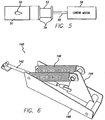
- FIG 4 shows an exploded view of the parts that comprise the pressure vessel 40.
- the interior of pressure vessel tub 90 is designed in a manner that allows a user to be comfortably positioned within the sealed vessel for the duration of a training session.
- the interior may be designed to seat a user comfortably.
- One method of designing the interior of pressure vessel tub 90 is to fabricate a user supporting section with a seat 110 having a declining backrest and arm rests, which can be inset into tub 90. This section rests on the outer rim of the tub 90 under second flange 86 and gasket 87.
- any design that allows a user to be comfortably positioned during a training session, and any method of mounting such design within the pressure vessel 40 is acceptable as long as the vessel is capable of being pressurized once sealed.
- Tub 90 is securely fastened to base 100, which has an upper surface designed to accept the shape of tub 90 and a flat lower surface that rests on the ground to prevent tub 90 from rolling or shifting during entry or use.
- base 100 may be mounted to a base 100 in an inclined position to allow a user to board pressure vessel 40 more easily and sit within it more comfortably.
- Tub 90 may be mounted to the base 100 using an adhesive or any other mounting method as long as it does not compromise the operation of the system. It should also be noted that the orientation of tub 90 with respect to base 100 may differ depending on the intended position of the user within pressure vessel 40.
- Pressure vessel 40, user supporting section 110, and base 100 are preferably fabricated from fiberglass, which can be molded into the desired shape. Furthermore, fiberglass provides a high strength material capable of sustaining the weight of a human, while being able to withstanding rapid changes in pressure during the operation of the system. Finally, fiberglass is sufficiently light that the system remains reasonably transportable.
- kiosk controller 20 regulates the pressure within pressure vessel 40 using proportioning valve 50, blower 70, and pipe network 42. These parts may be physically housed within base 100, which remains at atmospheric pressure during operation of the system, or they may be mounted external to pressure vessel 40.
- blower 70 The intake of blower 70 is connected through pipe network 42 to tub 90 with a hermetic seal. Through pipe network 42, blower 70 is able to remove air from pressure vessel 40 and hence, pressurize vessel 40 when closed.
- Pipe network 42 can be made of any material capable of sustaining air flow, but is preferably made from polyvinyl chloride ("PCV") due to the low cost and weight of the material.
- PCV polyvinyl chloride
- Pipe network 42 connects to tub 90 through a discretely placed opening in tub 90. For example, the opening may be placed in tub 90 under user supporting section 110 such that it is not visible to the user.
- the electrical connection of the blower is attached through a relay to a standard power outlet. The relay is connected to kiosk controller 20 enabling it to turn blower 70 on or off as needed to operate the system. If blower 70 requires three-phase voltage, a variable frequency driver may be connected between blower 70 and the power outlet to properly transform the voltage.
- Proportioning valve 50 is also connected through pipe network 42 to tub 90 with a hermetic seal.
- pipe network 42 can be configured in a variety of different ways, one method of making the proper connections is to insert a "T"-shaped pipe between the intake of blower 70 and tub 90, and connect proportioning valve 50 to the third branch of the "T".
- the purpose of proportioning valve 50 is to de-pressurize vessel 40 by venting it to the atmosphere.
- kiosk controller 20 when kiosk controller 20 is pressurizing vessel 40, it closes proportioning valve 50, and when it is de-pressurizing vessel 40, it opens proportioning valve 50 to allow air into pressure vessel 40.
- proportioning valve 50 comprises a pipe 51 with at least one bore 52 in its sidewall, a piston 53, rings 54, a rod 55, and a linear motor 56.
- One side of pipe 51 is connected to tub 90, while the other side connects to linear motor 56, both with hermetic seals.
- Linear motor 56 drives rod 55, which moves piston 53 back and forth inside pipe 51.
- Piston 53 is preferably hollow and cylindrical. To minimize the driving force requirements of linear motor 56, piston 53 fits loosely within pipe 51, but has rings 54 mounted around the top and bottom ends of piston 53, which form a hermetic seal with the internal walls of pipe 51. Rings 54 fit into grooves along the circumference of the top and bottom of the piston, which hold rings 54 in place.
- rings 54 are preferably made of TeflonTM, or other material with high durability and low surface friction. However, it should be noted that rings 54 are not required, and the piston can also be designed to fit tightly against the internal walls of pipe 51 to facilitate a hermetic seal.
- Pipe 51, rod 55, and piston 53 are preferably made from metal, which is strong, durable, and capable of being machined to tight tolerances.
- Bore 52 allows air into the vessel when it is not covered by piston 53.
- the shape and size of bore 52 depends upon the rate at which vessel 40 should be de-pressurized. For example, the larger the bore, the faster vessel 40 will de-pressurize.
- kiosk controller 20 monitors the pressure inside vessel 40 through pressure transducer 46. When kiosk controller 20 pressurizes vessel 40, it turns on blower 70 and drives linear motor 56 to position piston 53 over bore 52 to prevent air from entering vessel 40. When kiosk controller 20 depressurizes vessel 40, it drives linear motor 56 to move piston 53 to expose part or all of bore 52 to air. Kiosk controller 20 controls the rate of de-pressurization by the amount of bore 52 it exposes to air. When vessel 40 has been sufficiently de-pressurized in accordance with the user's exercise program, kiosk controller 20 again moves piston 53 back over bore 52.
- pipe 51 has a tear-drop shaped bore, which allows kiosk controller 20 to slowly or quickly de-pressurize vessel 40 with only slight adjustments to the position of piston 53.
- shape of bore 52 or number of bores may be changed to obtain the desired rates of de-pressurization.
- on-board interface 44 which is electrically connected to the kiosk controller 20, is mounted within pressure vessel 40.
- a touch-screen display is preferable for ease of use and space considerations, a display with any type of input device(s) can be used. It is convenient to mount on-board interface 44 to the top portion of the vessel in a location accessible by the user. However, the location of on-board interface 44 depends on the position of the user within pressure vessel 40 and space considerations.
- On-board interface 44 acts as the electronic interface through which the user receives information and sends instructions to kiosk controller 20 during operation of the system. The user typically is able to start a session, place a session on hold, or abort a session using on-board interface 44. Thus, if a user desires to exit the vessel or experiences discomfort during a session, the user is able to stop the program.
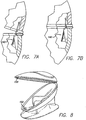
- canopy 80 and tub 90 are connected by a spring-loaded apparatus 140, which assists in the lifting of canopy 80 when it is not secured to tub 90 by a clamp or a negative pressure.
- Spring-loaded apparatus 140 includes rod 142, which pivotally connects to one corner of triangular bracket 144. One of the remaining corners of triangular bracket 144 is connected to springs 146 and the other is connected by an axle to mounting bracket 148. Mounting bracket 148 is then mounted to tub 90 and rod 142 is mounted to canopy 80 as shown in Figures 7a and 7b . When the canopy is closed, the rod is pressed towards tub 90 placing springs 146 in tension as shown in Figure 7b . Springs 146 are selected such that they are capable of significantly assisting in the lifting of the weight of canopy 80 unless it is secured to tub 90 by a clamp or a negative pressure.
- canopy 80 and tub 90 also contain an electro-magnetic clamp 150.
- One plate of electro-magnetic clamp 150 is mounted to canopy 80 and the other plate is mounted to tub 90 on the sides opposite the hinge as shown in Figure 8 .
- Electro-magnetic clamp 150 is electrically connected to kiosk controller 20, which engages or disengages the clamp by turning power to the clamp on or off.
- Kiosk controller 20 engages the clamp 150 when a user has boarded and closed pressure vessel 40. However, Kiosk controller 20 disengages the clamp 150 either when pressure vessel 40 is under a negative pressure or when the system completes a session.
- many other types of clamps may also be used to secure pressure vessel 40 during a session.
- a clamp may not be needed unless pressure vessel 40 has a mechanism that would open the canopy if it were not secured.
- pressure vessel 40 has a burst panel (not shown) to prevent it from subjecting its user to dangerously high pressures in the event of a system malfunction.
- a small opening (not shown) is bored into canopy 80 or tub 90.
- a small panel (not shown) is mounted over the opening to prevent air from escaping.
- the panel is scored or otherwise weakened such that it would physically rupture if subjected to a certain maximum pressure.
- vessel 40 de-pressurizes as air flows into the vessel through the opening.
- the panel may be constructed from any material as long as it will rupture when subjected to a certain pressure, it is commonly made from metal.
- Kiosk controller 20 comprises a server that stores software necessary for a user to learn about the health benefits associated with using the present invention, to establish an account to pay for sessions, to set up an exercise program tailored to the user's personal information, to start a session, and to perform a variety of other functions related to use of the system.
- a typical kiosk controller will comprise a personal computer, such as an information processing system that runs on Microsoft's Windows operating system, or an information processing system that runs on Apple Computer's operating system.
- kiosk controller 20 also stores the account, exercise program, and personal information for each user at a facility.
- the kiosk controller 20 stores all software necessary to operate one or more pressure vessels located at the facility. Thus, it is electrically connected to (i.e., in electrical communication with) the blower 70, proportioning valve linear motor 56, on-board pressure transducer 46, on-board interface 44, and any other electrical circuit or device attached to pressure vessel 40.
- kiosk controller 20 is located separate from, but in close proximity to, one or more pressure vessels 40.
- the kiosk controller 20 is also connected to one or more user interface terminals (not shown) located external to pressure vessel 40. These terminals are preferably touch-screen displays, but any device that receives information from users and displays information to users is appropriate.
- kiosk controller 20 may display an audio/visual presentation on the displays of these interface terminals explaining the health benefits users experience from training sessions.
- the kiosk controller 20 asks the user to set up a personalized account, including log-on identification and password information.
- Kiosk controller 20 then asks the user a series of questions regarding the user's health, exercise patterns, goals, and a variety of other questions targeted at creating an exercise program tailored to the individual. When the user has provided a response to the last question, kiosk controller 20 processes the information and creates an exercise program. Finally, kiosk controller 20 provides sufficient warnings about the risks associated with use of the system, asks the user to electronically sign the appropriate legal document(s), and asks the user for payment information, such as credit card or debit card information. It should be noted that the sequence of questions above can occur in any order, and that the system is not limited to the described order. It should be further noted that steps may be added or subtracted from this sequence.
- Each exercise program comprises two different parts.
- the user must successfully complete a "setup" session designed to slowly and cautiously acclimate the user to the varying levels of pressures to which the user will be exposed during the actual session. The user cannot bypass these "setup" sessions before moving on to the actual sessions. If the user successfully completes the "setup” session, then the user may start the actual sessions. The actual sessions are also progressive. Thus, when a user aborts a session or experiences a reasonable level of discomfort, the session is considered unsuccessful. In these cases, the user must either repeat the session or request that kiosk controller 20 modify the session until it better fits the user's abilities.
- Each session comprises a series of pressure changes (i.e., transitions between simulated altitudes) that vary in level of pressurization, length each level of pressurization is sustained, and rate at which pressurization occurs. Kiosk controller 20 creates each session, varying each of these factors in cycles, depending on the particular individual. These sessions can be a variety of different lengths of time, but 20 minutes is a standard length.
- kiosk controller 20 When a user opts to start an exercise program, kiosk controller 20 provides instructions on how to safely board a pressure vessel, which pressure vessel to board, and how to use onboard interface 44 once inside vessel 40. If canopy 80 is electrically or electro-magnetically operated, as discussed in a previous embodiment of the present invention, kiosk controller 20 will also release the canopy 80 open for the user. Similarly, once the user closes canopy 80, kiosk controller 20 may secure it. After the user has boarded and closed the vessel, kiosk computer 20 resumes displaying its audio/visual presentation to attract new users. However, kiosk controller 20 is also receiving commands from the user via the on-board interface 44 and pressure vessel 40 in response to those commands.
- kiosk controller 20 operates blower 70 and proportioning valve 50 to pressurize and de-pressurize vessel 40 in accordance with the user's particular exercise program. If the system has the electro-magnetic clamp 150, then kiosk controller 20 may disable it, allowing canopy 80 to remain shut under the negative pressure within vessel 40. When the session ends, canopy 80 may be opened by the user, or if canopy 80 and tub 90 are connected by spring-loaded apparatus 140, canopy 80 may be opened with the assistance of the springs.
- Master controller 10 comprises a server capable of communicating with kiosk controller 20 at each facility via electrical connection 12.
- a typical master controller will comprise a personal computer, such as an information processing system that runs on Microsoft's Windows operating system, or an information processing system that runs on Apple Computer's operating system.
- Master controller 10 contains software allowing it to periodically download and store all user account, personal, and exercise program information in an organized database from all kiosk controllers 20 connected to the master controller 10.
- Master controller 10 fulfills several crucial roles. If a kiosk controller 20 should fail, master controller 10 can easily replace the data needed by users at that facility. Further, if a user should move from one facility to another, that user can easily download his or her account information to the kiosk controller 20 at the new facility to continue training sessions.
- the methodology is basically a set of targets with defined transitions. Some of the terms relating to this methodology are defined below for a better understanding of the methodology.
- a Program Every user will respond in a unique manner to changes in air pressure, temperature and oxygen levels that occur during cyclic variations in altitude conditioning. This necessitates a customized approach to delivering a highly effective and efficacious Program to each user. Accordingly, a user is categorized into a group of users having similar body-types with similar characteristics.
- the Program consists of a set of sessions, which are administered to the user as a serial round or cycle. This means that a user may have a session that they start and repeat a given number of times and then proceed to the next scheduled session which will be repeated a given number of times. There will be a set of sessions, each of which will have a repetition schedule. The sessions are delivered in a scheduled order, which repeats itself like a loop.
- a Session comprises a set of targets which are pressures found in the natural atmosphere. These targets are delivered in a precise order. The starting point and ending point in any CVAC Session is preferably the ambient pressure at the delivery site.
- the targets inherent in any CVAC Session are connected or joined together by clearly defined transitions. These transitions are either rises in pressure or falls in pressure. The nature of any transition may be characterized by the function of "delta P/T" (change in pressure over time). All transitions produce a waveform. The most desirable waveforms are Sine, Trapezoidal and Square.
- the entire collection of targets and transitions are preferably delivered in a twenty minute CVAC Session.
- a Set-Up Session may also be considered a Program.
- the Set-Up Session is not body-type specific. It is a single Session designed to prepare a new user for the more aggressive maneuvers or transitions encountered in the subsequent Sessions that the user will undergo.
- the Set-Up Session accounts for all ages and sizes and conditions, and assumes a minimal gradient per step exercise that allows the ear structures to be more pliant and to allow for more comfortable equalization of pressure in the ear structures.
- the purpose of the Set-Up Session is to prepare a new user for their custom Program based upon the group into which they have been placed.
- the function of the Set-Up Session is to qualify a user as being capable of adapting to multiple pressure changes in a given Session with acceptable or no discomfort. This is accomplished by instituting a gradient scale increase in pressure targets from very slight to larger increments with slow transitions increasing until a maximum transition from the widest difference in pressure targets is accomplished with no discomfort.
- the structure of the Set-Up Session is as follows: as with any Session, the starting point and ending point is preferably at ambient pressure: A target equivalent to 1000ft above ambient is accomplished via a smooth linear (trapezoidal) transit. A second target equivalent to 500ft less than the first target is accomplished via a slow to moderate sine wave transit.
- the initial target 1000ft
- 500ft 500ft
- the secondary target 500ft less than the first target
- the target is increased by a factor of 500ft.
- the transits would remain the same but the option of increasing gradient (shorter time factor) in the transits may be made available.
- a user should have the option of resuming a lower gradient if desired. There can be an appropriate icon or pad that allows for this option on the on-board interface display screen.
- the Set-Up Session should not last longer than 20 minutes.
- a descent stage of the Program would initialize at 19 minutes and take the user on a staged descent. This would be characterized by a slow, 1000ft sine wave descent transits with re-ascensions of 500ft at each step.
- the user could interrupt the descent and hold a given level or resume a previous level until comfort was achieved.
- the user would indicate a "continue" on the descent and the staging would resume. This stepping would continue until ambient pressure was reached whereupon the canopy would be opened such that the user could exit the pressure vessel.
- the Set-Up Session would be considered a new user's Program until the user is able to fully complete the Set-Up Session (that is to continue the targets and transits to the highest gradient) with no interrupts or aborts.
- the user is ready to "graduate” from the Set-Up Session Program, they are duly acknowledged and informed that their next Program will be their special training Program customized for their body type and metabolism. Their file will be adjusted at the master controller and the next Session they get will be the one that corresponds to the group into which they were placed.
- the Interrupt During any phase in a Session wherein a user desires to stop the Session at that point for a short time, they may do so by activating an icon or other appropriate device on the on-board interface touch screen or control pad. This will hold the Session at the stage of interruption for a predetermined time period, such as a minute, at which time the Session will continue automatically.
- a Session can be interrupted 3 times after which a staged descent will occur and the user will be required to exit the pressure vessel.
- the user's file will be flagged and the user will be placed back on the Set-Up Sessions until they can satisfactorily complete it.
- a warning or reminder may be displayed on the screen each time an interrupt is used that informs the user of how many times interrupt has been used and the consequences of further use.
- the Abort function can be activated. Touching the "abort" icon on the on-board interface touch pad/screen enables this option. A secondary prompt is activated acknowledging the command and asking the user if they are sure they want to abort. The user indicates their commitment to the command by pressing "continue” or "yes”. The Program is aborted and a linear moderate descent is accomplished to ambient pressure whereupon the canopy opens and the user exits. The user's file is flagged. The next time the user comes in for their Session, the user is asked whether the abort was caused by discomfort. If yes, the user is placed back on the Set-Up Session Program. If no, the user is asked if they wish to resume their regularly scheduled Session. The client is given the option of resuming their regularly scheduled Session or returning to the Set-Up Session.
- a user is categorized into a group of users having similar body types with similar characteristics.
- B can be correlated with the element of "kapha” and G can be correlated to the element of "vata”.
- no particular body can be completely confined to a single group, such as an "absolute B”.
- the bodies that correlate to the individual groups i.e. "rbg" have attributes that are consistent and predictable in the way they react to patterns of change in any environment into which they are placed. Accordingly, there are specific programs or patterns that these individuals can be subjected to that will produce consistent and predictable results.
- These groups/categories are not in any particular order, but are numbered just to illustrate that there are 12 being taken into consideration.
- each body type i.e. gbr
- all living systems recognize, evaluate and respond with the best survival tactics, to patterns of change in environment. Accordingly, patterns are created that cause the particular body-type to respond with the optimal survival tactic(s). Additionally, movement can be incorporated within the general pattern to ensure that the living system creates "continuous" responses and does not devolve into a static or stable system of response. All users are different. Users respond in different ways to different things.
- a classification exam is given to a new user to determine their body type. Below is an example of a typical questionnaire in current use. Variations of this exam may be used, and should produce similarly accurate results. All of the questions on the exam should be answered otherwise the user may not be properly classified. If all the questions are answered, a valid classification should be obtained.
- the parenthetical designations of R, G or B following the answers below are typically not displayed on the user's questionnaire. However, they are displayed below to provide information regarding the correlation between a selected answer and an R, G or B designation.
- the present invention contemplates the use of a plurality of predetermined programs of cyclic variations in altitude conditioning for a plurality of human body types, based upon a plurality of the above-mentioned factors.
- the master controller 10 will assume that the user is still at a high level of physical fitness, as recorded in the master controller 10 database, based upon the user's last session.
- one or more user sensors may be placed in electrical communication with the on-board interface 44 such that sensor readings made inside the pressure vessel 40 can be monitored by the kiosk controller 20.
- the one or more user sensors may include sensors to measure the body temperature of the user, the heart-rate of the user, the blood-pressure of the user, the blood-oxygen level of the user, as well as other aspects of a person's physical state of being, also referred to as parameters of a user's body condition. It is understood that the use of the term "user sensors” covers both active sensors, such as sensors placed directly on the body for measurement of heart rate or blood pressure, as well as passive sensors, such as sensors based upon technologies such as lasers for determining body temperature without direct physical contact between the user and the user sensor.
- the kiosk controller 20 would incorporate software capable of monitoring the readings of such user sensors, and then determine whether the user is best suited to the current predetermined program, or whether, based upon the readings, an alternative program or a modification to the program, would be better suited to the user in the user's current physical state of being.
- the software is designed to take a reading of a measured parameter of a user's body condition to determine whether it is sufficiently within the range of the corresponding program. If the measured parameter of a user's body condition is deemed sufficiently outside of such range, then the software will determine whether an alternate program, or a modification to the current program, will be better suited for the current user in the current user's state of being.
- a classification template for different body types would be utilized.
- a continuous infrared scan is used with a pattern recognition program to index, or make note of, the distribution and changes of heat in the body.
- a continuous measurement of local frequencies related to the body i.e. the core to extremities
- an initial set of maneuvers would be instituted based on the starting levels that were sensed.
- the system may be calibrated before and after each session.
- each pattern that the program received (such as frequency, infrared and oxygen levels) would cause a corresponding response of patterns of maneuvers that correlated to the specific data patterns.
- the individual elements would not elicit any actions by themselves, but the patterns that they created would. In other words, it would be like a slide show. Every few seconds, a slide (data pattern) would present itself to the controller (program). This would be sorted to the nearest matching response (set of maneuvers), and since the slides would be coming every few seconds, the maneuvers would be going through updates very often.
- a coordinating program would be utilized to ensure that no set of maneuvers, once started, would cause a conflict in the predetermined rules set out for the session (this would prevent the cyclic variations in altitude from going up and down and the same time).
- the present invention is based upon the concept that for a given body type, or state of physical being, a method or program of cyclic variations in altitude conditioning can be predetermined, or modified in real-time, to provide results that subject a user to more beneficial transitions between simulated altitudes that the typical session of extended exposure to a pressurized environment.
Landscapes
- Health & Medical Sciences (AREA)
- Pulmonology (AREA)
- Life Sciences & Earth Sciences (AREA)
- Animal Behavior & Ethology (AREA)
- General Health & Medical Sciences (AREA)
- Public Health (AREA)
- Veterinary Medicine (AREA)
- Emergency Medicine (AREA)
- Accommodation For Nursing Or Treatment Tables (AREA)
- Air Conditioning Control Device (AREA)
Claims (20)
- Vorrichtung, beinhaltend:einen Druckbehälter (40), der geöffnet werden kann, um einen Benutzer aufzunehmen, und geschlossen werden kann, um eine hermetische Dichtung zu erzeugen;der Druckbehälter umfassend eine integrierte Schnittstelle (44), die im Druckbehälter angeordnet ist und dem Benutzer ermöglichen kann, eine oder mehrere Funktionen des Druckbehälters zu regeln, einen Druckmessumformer (46), der den Luftdruck im Druckbehälter überwachen kann, und einen Benutzersensor, der einen oder mehrere Parameter einer Benutzerkörperkondition messen kann, wobei der Benutzersensor in elektrischer Verbindung mit der integrierten Schnittstelle steht;ein Gebläse (70), das Luft aus dem Druckbehälter entfernen kann;ein Proportionalventil (50), das die Menge der Luft regeln kann, die in den Druckbehälter eintreten darf,die integrierte Schnittstelle konfiguriert, um eine Sitzung von zyklischen Variierungen in Höhenkonditionierung nach Initiierung durch den Benutzer bei einer ersten Zeitperiode zu initiieren, die Sitzung umfassend ein vorgegebenes Programm, konfiguriert, um zyklische Variierungen der Höhe im Druckbehälter zu regulieren; undeinen Kiosk-Controller (20), der mit dem Druckbehälter elektrisch gekoppelt ist, der Kiosk-Controller konfiguriert, um den Benutzer in eine von einer vorgegebenen Reihe von Körpertypkategorien einzustufen, der Kiosk-Controller konfiguriert, um das Programm basierend auf der Einstufung auszuwählen, der Kiosk-Controller konfiguriert, um eine Änderung der Sitzung von zyklischen Variierungen in Höhenkonditionierung bei einer zweiten Zeitperiode basierend auf einer vom mit der Benutzerkörperkondition assoziierten Benutzersensor empfangenen Ablesung zu bewirken.
- Vorrichtung gemäß Anspruch 1, wobei der Kiosk-Controller (20) konfiguriert ist, um Ablesungen vom Benutzersensor zu überwachen, um zu bestimmen, ob ein gemessener Parameter der Körperkondition eines Benutzers auf einem Niveau liegt, das ausreichend ist, um eine Änderung eines vorgegebenen Programms, das zyklische Variierungen in Höhenkonditionierung reguliert, zu rechtfertigen.
- Vorrichtung gemäß Anspruch 2, wobei der Kiosk-Controller (20) konfiguriert ist, um zu bewirken, dass das vorgegebene Programm während der zweiten Zeitperiode basierend auf der vom Benutzersensor empfangenen Ablesung modifiziert wird.
- Vorrichtung gemäß Anspruch 1, wobei die Sitzung eine erste Sitzung ist, der Kiosk-Controller (20) konfiguriert ist, um zu bewirken, dass während der zweiten Zeitperiode basierend auf der vom Benutzersensor empfangenen Ablesung die erste Sitzung abgebrochen wird und eine zweite Sitzung, die sich von der ersten Sitzung unterscheidet, initiiert wird.
- Vorrichtung gemäß Anspruch 1, wobei der Kiosk-Controller (20) in elektrischer Verbindung mit dem Gebläse (70), dem Proportionalventil (50) und dem Druckmessumformer (46) steht, der Kiosk-Controller konfiguriert ist, um einen Eingang von der integrierten Schnittstelle (44) zu empfangen, um die Sitzung von zyklischen Variierungen in Höhenkonditionierung durch zyklisches Betreiben des Gebläses, um einen negativen Druck im Druckbehälter zu erzeugen, und durch zyklisches Betreiben des Proportionalventils, um Luft in den Druckbehälter einzuleiten, um den negativen Druck bis hinauf auf den Punkt des atmosphärischen Drucks zu reduzieren, zu initiieren.
- Vorrichtung gemäß Anspruch 5, wobei der Kiosk-Controller (20) konfiguriert ist, um ein vorgegebenes Programm, das zyklische Variierungen in Höhenkonditionierung reguliert, zu modifizieren, falls die Ablesungen eines gemessenen Parameters der Körperkondition eines Benutzers als auf einem Niveau betrachtet werden, das ausreichend außerhalb eines vorgegebenen Bereichs für das ausgewählte vorgegebene Programm liegt.
- Vorrichtung gemäß Anspruch 5, wobei der Kiosk-Controller (20) konfiguriert ist, um ein alternatives vorgegebenes Programm zum Regulieren der zyklische Variierungen in Höhenkonditionierung auszuwählen, falls die Ablesungen eines gemessenen Parameters der Körperkondition eines Benutzers als auf einem Niveau betrachtet werden, das ausreichend außerhalb eines vorgegebenen Bereichs für das ursprünglich ausgewählte vorgegebene Programm liegt.
- Vorrichtung gemäß Anspruch 1, ferner beinhaltend:einen Master-Controller (10);der Kiosk-Controller (20) umfassend ein erstes Softwareprogramm und ein Informationsverarbeitungssystem, das das erste Softwareprogramm ausführen kann, der Kiosk-Controller in elektrischer Verbindung mit dem Master-Controller und der integrierten Schnittstelle des Druckbehälters,der Master-Controller umfassend ein zweites Softwareprogramm und ein Informationsverarbeitungssystem, das das zweite Softwareprogramm ausführen kann, der Master-Controller in elektrischer Verbindung mit der integrierten Schnittstelle des Druckbehälters.
- Vorrichtung gemäß Anspruch 8, wobei die integrierte Schnittstelle (44) konfiguriert ist, um zu bewirken, dass das mit der Sitzung assoziierte vorgegebene Programm basierend auf einem Eingang vom Benutzer über die integrierte Schnittstelle modifiziert wird.
- Vorrichtung gemäß Anspruch 8, wobei die Sitzung eine erste Sitzung ist, der Kiosk-Controller (20) konfiguriert ist, um zu bewirken, dass während der zweiten Zeitperiode basierend auf einer vom Benutzersensor empfangenen Ablesung die erste Sitzung abgebrochen wird und eine zweite Sitzung, die sich von der ersten Sitzung unterscheidet, initiiert wird.
- Vorrichtung gemäß Anspruch 8, wobei der Kiosk-Controller (20) in elektrische Verbindung mit dem Gebläse (70), dem Proportionalventil (50) und dem Druckmessumformer (46) gebracht ist, der Kiosk-Controller (20) konfiguriert ist, um die Sitzung von zyklischen Variierungen in Höhenkonditionierung durch zyklisches Betreiben des Gebläses, um einen negativen Druck im Druckbehälter zu erzeugen, und durch zyklisches Betreiben des Proportionalventils, um Luft in den Druckbehälter einzuleiten, um den negativen Druck bis hinauf auf den Punkt des atmosphärischen Drucks zu reduzieren, zu initiieren.
- Vorrichtung gemäß Anspruch 8, wobei der Kiosk-Controller (20) konfiguriert ist, um ein vorgegebenes Programm, das zyklische Variierungen in Höhenkonditionierung reguliert, zu modifizieren, falls die Ablesungen eines gemessenen Parameters der Körperkondition eines Benutzers als auf einem Niveau betrachtet werden, das ausreichend außerhalb eines vorgegebenen Bereichs für das ausgewählte vorgegebene Programm liegt.
- Vorrichtung gemäß Anspruch 8, wobei der Kiosk-Controller (20) konfiguriert ist, um ein alternatives vorgegebenes Programm zum Regulieren der zyklische Variierungen in Höhenkonditionierung auszuwählen, falls die Ablesungen eines gemessenen Parameters der Körperkondition eines Benutzers als auf einem Niveau betrachtet werden, das ausreichend außerhalb eines vorgegebenen Bereichs für das ursprünglich ausgewählte vorgegebene Programm liegt.
- Vorrichtung gemäß Anspruch 8, wobei das Informationsverarbeitungssystem, das das erste Softwareprogramm ausführt, Ablesungen vom Benutzersensor empfangen kann, um zu bestimmen, ob ein gemessener Parameter der Körperkondition eines Benutzers ausreichend ist, um eine Modifizierung eines vorgegebenen Programms, das zyklische Variierungen in Höhenkonditionierung reguliert, zu rechtfertigen, und eine solche Modifizierung vornimmt, falls ein solcher gemessener Parameter als ausreichend betrachtet wird.
- Vorrichtung gemäß Anspruch 8, wobei das Informationsverarbeitungssystem, das das erste Softwareprogramm ausführt, Ablesungen vom Benutzersensor empfangen kann, um zu bestimmen, ob ein gemessener Parameter der Körperkondition eines Benutzers auf einem Niveau liegt, das ausreichend ist, um eine Auswahl eines alternativen vorgegebenen Programms, das zyklische Variierungen in Höhenkonditionierung reguliert, zu rechtfertigen, und eine solche alternative Auswahl vornimmt, falls ein solcher gemessener Parameter als ausreichend betrachtet wird.
- Vorrichtung gemäß Anspruch 8, wobei sich der Master-Controller (10) in einer vom Kiosk-Controller (20) und von der Druckbehältereinheit getrennten Einrichtung befindet.
- Vorrichtung gemäß Anspruch 8, wobei der Master-Controller (10) Benutzerdaten, die in den Kiosk-Controller (20) oder die integrierte Schnittstelle (44) eingegeben und darauf gespeichert werden, speichern kann.
- Vorrichtung gemäß Anspruch 17, wobei der Master-Controller (10) solche auf dem Master-Controller gespeicherte Daten für einen zweiten Kiosk-Controller, der in elektrischer Verbindung mit dem Master-Controller steht, verfügbar machen kann, so dass ein Benutzer einen zweiten Druckbehälter verwenden kann, der in elektrischer Verbindung mit dem zweiten Kiosk-Controller steht, ohne Daten, die bereits im Master-Controller gespeichert sind, neu eingeben zu müssen.
- Vorrichtung gemäß Anspruch 1, ferner beinhaltend:eine in einer Wand des Druckbehälters definierte Öffnung und ein über der Öffnung angeordnetes Paneel, das Paneel konfiguriert, um aufzubrechen, wenn ein Druck im Druckbehälter einen vorgegebenen Schwellendruck überschreitet.
- Vorrichtung gemäß Anspruch 1, wobei die integrierte Schnittstelle (44) konfiguriert ist, um Benutzerzahlungsinformationen zu empfangen, um eine Sitzung von zyklischen Variierungen in Höhenkonditionierung zu bezahlen.
Priority Applications (1)
| Application Number | Priority Date | Filing Date | Title |
|---|---|---|---|
| EP12176504.4A EP2521112A3 (de) | 2003-09-11 | 2004-07-09 | Verfahren und Vorrichtung für zyklische Variationen bei der Höhenanpassung |
Applications Claiming Priority (2)
| Application Number | Priority Date | Filing Date | Title |
|---|---|---|---|
| US10/659,997 US8535064B2 (en) | 2003-09-11 | 2003-09-11 | Method and apparatus for cyclic variations in altitude conditioning |
| PCT/US2004/021987 WO2005035068A2 (en) | 2003-09-11 | 2004-07-09 | Method and apparatus for cyclic variations in altitude conditioning |
Related Child Applications (1)
| Application Number | Title | Priority Date | Filing Date |
|---|---|---|---|
| EP12176504.4A Division-Into EP2521112A3 (de) | 2003-09-11 | 2004-07-09 | Verfahren und Vorrichtung für zyklische Variationen bei der Höhenanpassung |
Publications (3)
| Publication Number | Publication Date |
|---|---|
| EP1663408A2 EP1663408A2 (de) | 2006-06-07 |
| EP1663408A4 EP1663408A4 (de) | 2010-04-14 |
| EP1663408B1 true EP1663408B1 (de) | 2017-04-19 |
Family
ID=34273570
Family Applications (2)
| Application Number | Title | Priority Date | Filing Date |
|---|---|---|---|
| EP04756811.8A Expired - Lifetime EP1663408B1 (de) | 2003-09-11 | 2004-07-09 | Verfahren und vorrichtung für zyklische variationen bei der gewöhnung an höhen |
| EP12176504.4A Ceased EP2521112A3 (de) | 2003-09-11 | 2004-07-09 | Verfahren und Vorrichtung für zyklische Variationen bei der Höhenanpassung |
Family Applications After (1)
| Application Number | Title | Priority Date | Filing Date |
|---|---|---|---|
| EP12176504.4A Ceased EP2521112A3 (de) | 2003-09-11 | 2004-07-09 | Verfahren und Vorrichtung für zyklische Variationen bei der Höhenanpassung |
Country Status (9)
| Country | Link |
|---|---|
| US (2) | US8535064B2 (de) |
| EP (2) | EP1663408B1 (de) |
| JP (1) | JP4550823B2 (de) |
| KR (1) | KR101148577B1 (de) |
| CN (1) | CN101116124B (de) |
| AU (1) | AU2004280153B2 (de) |
| BR (1) | BRPI0414261A (de) |
| CA (1) | CA2542664A1 (de) |
| WO (1) | WO2005035068A2 (de) |
Families Citing this family (25)
| Publication number | Priority date | Publication date | Assignee | Title |
|---|---|---|---|---|
| US8535064B2 (en) | 2003-09-11 | 2013-09-17 | Cvac Systems, Inc. | Method and apparatus for cyclic variations in altitude conditioning |
| US20080015640A1 (en) * | 2006-06-28 | 2008-01-17 | Kaiser Daniel E | Method for histogenesis and enhancement of tissue |
| CA2642049C (en) * | 2006-02-08 | 2015-07-14 | Cvac Systems, Inc. | Combination pressure therapy |
| CN101495078B (zh) * | 2006-02-08 | 2013-02-13 | Cvac系统有限公司 | 组合压力疗法 |
| US8899228B2 (en) | 2006-02-08 | 2014-12-02 | Cvac Systems, Inc. | Combination pressure therapy for treatment of chronic pain |
| EP2051681A4 (de) * | 2006-08-04 | 2013-07-10 | Groupe Medical Gaumond Inc Gaumond Medical Group Inc | Hyperbares/hypoxisches kammersystem |
| US9421331B2 (en) * | 2007-02-26 | 2016-08-23 | Cvac Systems, Inc. | Combination pressure therapy |
| WO2008112974A2 (en) * | 2007-03-14 | 2008-09-18 | Cvac Systems, Inc. | Combination pressure therapy for treatment of middle ear pressure and eustachian tube drainage |
| JP4477690B1 (ja) * | 2009-01-23 | 2010-06-09 | 進盟 川上 | 調圧装置及び調圧装置の調圧法 |
| JP5271148B2 (ja) * | 2009-05-07 | 2013-08-21 | 進盟 川上 | 調圧装置及び調圧装置の調圧法 |
| WO2013175249A1 (en) * | 2012-05-23 | 2013-11-28 | HORVÁTH, Imre Ferenc | Mobile resting chair and method for application thereof |
| CN105358203B (zh) * | 2013-06-13 | 2017-06-06 | 伊利诺伊大学董事会 | 用于麻醉的头盔 |
| WO2015034967A2 (en) | 2013-09-04 | 2015-03-12 | Microbaric Oxygen Systems, Llc | Hyperoxic therapy systems, methods and apparatus |
| US9764170B2 (en) * | 2013-12-18 | 2017-09-19 | The United States Of America As Represented By Secretary Of The Navy | Hypoxia recovery system for mask off hypoxia training |
| WO2016025376A1 (en) * | 2014-08-11 | 2016-02-18 | Stratosphere, Inc. | Exercise apparatus simulating mild to high altitude environments |
| CN107575742A (zh) * | 2016-09-26 | 2018-01-12 | 吉林壹舟医疗科技有限公司 | 一种低压舱的气路系统 |
| WO2018142171A1 (en) * | 2017-01-31 | 2018-08-09 | Berta Zsolt Zoltan | Apparatus for transcutaneous treatment by gas |
| CN109908566B (zh) * | 2019-03-18 | 2020-04-21 | 吉林大学 | 一种低氧舱、气压调节方法及系统 |
| MY209382A (en) * | 2020-01-17 | 2025-07-05 | Yoke Keong Yong | Soundproof enclosure |
| US20210346234A1 (en) * | 2020-05-08 | 2021-11-11 | Rudolf Weyergans | Process for improving appearance and regeneration and treatment device |
| JP7073443B2 (ja) * | 2020-05-26 | 2022-05-23 | 株式会社ホンダロック | ケース内回路基板への端子接続構造 |
| CN114293822B (zh) * | 2022-01-14 | 2024-08-30 | 中国铁建重工集团股份有限公司 | 一种大空间正压建筑人员出入过渡区结构及自动调压方法 |
| USD1065539S1 (en) * | 2023-05-29 | 2025-03-04 | Shanghai Baobang Medical Equipment Co., Ltd | Oxygen chamber |
| USD1065538S1 (en) * | 2023-05-30 | 2025-03-04 | Shanghai Baobang Medical Equipment Co., Ltd | Oxygen chamber |
| USD1125551S1 (en) * | 2023-07-07 | 2026-05-05 | Typhoon Water Wares Llc | Portable hyperbaric chamber |
Citations (1)
| Publication number | Priority date | Publication date | Assignee | Title |
|---|---|---|---|---|
| US3445032A (en) * | 1966-11-21 | 1969-05-20 | Continental Disc Corp | Safety pressure relief device |
Family Cites Families (55)
| Publication number | Priority date | Publication date | Assignee | Title |
|---|---|---|---|---|
| US3073040A (en) * | 1961-03-20 | 1963-01-15 | Schueller Otto | Multi-purpose space capsule |
| US3309684A (en) | 1964-06-09 | 1967-03-14 | Elliott H Kahn | Bio-instrumentation monitoring and display device |
| FR1568956A (de) * | 1968-03-04 | 1969-05-30 | ||
| US3877427A (en) * | 1972-05-25 | 1975-04-15 | Semen Mikhailovich Alexeev | Oxygen compressive chamber |
| SE7800580L (sv) | 1978-01-18 | 1979-07-19 | Ingelstedt Sven | Undersoknings- och behandlingskammare |
| US4227524A (en) * | 1978-04-03 | 1980-10-14 | Andre Galerne | Hyperbaric transfer system |
| US4427385A (en) * | 1982-06-23 | 1984-01-24 | Andre Galerne | Mixed gas bell diving deep ocean simulator |
| JPS60232178A (ja) | 1984-04-28 | 1985-11-18 | シャープ株式会社 | 運動管理装置 |
| US5360001A (en) * | 1985-06-10 | 1994-11-01 | Lance Brill | Hyperbaric chamber closure means |
| US4777974A (en) * | 1986-04-08 | 1988-10-18 | Fike Corporation | Staged pressure relief assembly |
| JPS63109878A (ja) * | 1986-10-27 | 1988-05-14 | 株式会社 セキネ | 基礎体力向上トレ−ニング装置 |
| US4678438A (en) * | 1986-10-29 | 1987-07-07 | The United States Of America As Represented By The Administrator Of The National Aeronautics And Space Administration | Weightlessness simulation system and process |
| US4835983A (en) * | 1988-08-10 | 1989-06-06 | Hopeman Brothers, Inc. | Kiosk with air conditioning |
| FR2640878A1 (en) | 1988-12-28 | 1990-06-29 | Martinez Francisco | Therapeutic chamber with reduced pressure |
| JPH02118571U (de) * | 1989-03-13 | 1990-09-25 | ||
| US4932160A (en) * | 1989-05-04 | 1990-06-12 | Sterilizer Technologies Corporation | Closure apparatus and method |
| US5318018A (en) * | 1989-09-19 | 1994-06-07 | Northrop Corporation | Advanced aircrew protection system |
| CA2066354A1 (en) * | 1991-04-19 | 1992-10-20 | Harold D. Waitz | Cannula |
| US5101819A (en) | 1991-07-11 | 1992-04-07 | Lane John C | Method for inducing hypoxia at low simulated altitudes |
| US5467764A (en) * | 1992-02-19 | 1995-11-21 | Hyperbaric Mountain Technologies, Inc. | Hypobaric sleeping chamber |
| US5490784A (en) * | 1993-10-29 | 1996-02-13 | Carmein; David E. E. | Virtual reality system with enhanced sensory apparatus |
| US5462504A (en) * | 1994-02-04 | 1995-10-31 | True Fitness Technology Inc. | Fitness apparatus with heart rate control system and method of operation |
| US5503143A (en) | 1994-02-17 | 1996-04-02 | Marion; Joseph | Method and apparatus for removing liquid from a patient's lungs |
| JPH07299251A (ja) * | 1994-04-28 | 1995-11-14 | Shinichi Marumo | 空間ゲーム装置 |
| US5645578A (en) | 1994-11-16 | 1997-07-08 | Sybaritic, Inc. | Total therapy sauna bed system |
| JPH08154982A (ja) | 1994-12-08 | 1996-06-18 | Daido Hoxan Inc | 高圧酸素治療装置 |
| US5799652A (en) | 1995-05-22 | 1998-09-01 | Hypoxico Inc. | Hypoxic room system and equipment for Hypoxic training and therapy at standard atmospheric pressure |
| US5718587A (en) * | 1995-08-28 | 1998-02-17 | Joseph C. Sussingham | Variable gravity simulation system and process |
| US5799562A (en) * | 1996-03-13 | 1998-09-01 | Weinberg; Morgan W. | Regenerative braking method and apparatus therefor |
| RU2112486C1 (ru) | 1996-05-13 | 1998-06-10 | Акционерное общество Центральное конструкторское бюро "ЛАЗУРИТ" | Барокамера медицинская одноместная |
| US5727950A (en) * | 1996-05-22 | 1998-03-17 | Netsage Corporation | Agent based instruction system and method |
| US5975081A (en) * | 1996-06-21 | 1999-11-02 | Northrop Grumman Corporation | Self-contained transportable life support system |
| US6364765B1 (en) * | 1998-07-01 | 2002-04-02 | Walker Digital, Llc | Electronic amusement device offering secondary game of chance and method for operating same |
| RU2139024C1 (ru) | 1997-07-16 | 1999-10-10 | Государственное предприятие Научно-исследовательский институт "Гермес" | Барокамера медицинская гипобарическая |
| RU2132179C1 (ru) | 1997-07-16 | 1999-06-27 | Государственное предприятие Научно-исследовательский институт "Гермес" | Барокамера медицинская гипобарическая |
| US6539946B2 (en) * | 1998-11-13 | 2003-04-01 | Rudolf Weyergans | Alternating pressure method for cellulite reduction |
| US6842877B2 (en) * | 1998-12-18 | 2005-01-11 | Tangis Corporation | Contextual responses based on automated learning techniques |
| IL134742A0 (en) * | 2000-02-27 | 2001-04-30 | Shusterman Taly | Ambient pressure control ventilation apparatus and method |
| US6719564B2 (en) * | 2000-03-22 | 2004-04-13 | Chart Inc. | Space simulation chamber and method |
| US6656091B1 (en) * | 2000-04-21 | 2003-12-02 | Kevin G. Abelbeck | Exercise device control and billing system |
| CN2422018Y (zh) * | 2000-04-28 | 2001-03-07 | 山东省体育科学研究中心 | 模拟高原训练低压舱 |
| AU2001290679A1 (en) * | 2000-09-06 | 2002-03-22 | Colorado Altitude Training Llc | Altitude simulation method and system |
| US6945911B2 (en) * | 2001-07-12 | 2005-09-20 | Edward, Llc | System and method for prescribing a fitness program |
| JP2003310800A (ja) | 2002-04-24 | 2003-11-05 | Konami Co Ltd | トレーニング装置 |
| US20040006926A1 (en) * | 2002-07-15 | 2004-01-15 | Neeley Clifton B. | Climate controlled practice facility and method utilizing the same |
| WO2004046155A2 (en) * | 2002-11-20 | 2004-06-03 | Boykin Jr Joseph V | Predicting outcome of hyperbaric oxygen therapy treatment with nitric oxide bioavailability |
| AU2002952811A0 (en) | 2002-11-22 | 2002-12-05 | Oxygen Therapy International Pty Ltd | Hyperbaric therapy capsule |
| JP4175460B2 (ja) | 2002-12-24 | 2008-11-05 | 洋一郎 山野邉 | 可搬式減圧室 |
| US7285123B2 (en) * | 2003-04-25 | 2007-10-23 | Shlomo Silman | Apparatus for treatment of middle ear fluid in the ears of infants and toddlers |
| US8251057B2 (en) * | 2003-06-30 | 2012-08-28 | Life Support Technologies, Inc. | Hyperbaric chamber control and/or monitoring system and methods for using the same |
| WO2005006279A1 (en) * | 2003-07-09 | 2005-01-20 | Innovation Maritime | Simulator and method for performing underwater submarine escape training |
| US8535064B2 (en) | 2003-09-11 | 2013-09-17 | Cvac Systems, Inc. | Method and apparatus for cyclic variations in altitude conditioning |
| US7503322B2 (en) * | 2003-09-12 | 2009-03-17 | Harris Michael F | Methods for the treatment of HIV and other viruses |
| US7998125B2 (en) * | 2004-05-21 | 2011-08-16 | Bluesky Medical Group Incorporated | Hypobaric chamber treatment system |
| CA2642049C (en) * | 2006-02-08 | 2015-07-14 | Cvac Systems, Inc. | Combination pressure therapy |
-
2003
- 2003-09-11 US US10/659,997 patent/US8535064B2/en active Active
-
2004
- 2004-07-09 KR KR1020067004975A patent/KR101148577B1/ko not_active Expired - Lifetime
- 2004-07-09 AU AU2004280153A patent/AU2004280153B2/en not_active Expired
- 2004-07-09 WO PCT/US2004/021987 patent/WO2005035068A2/en not_active Ceased
- 2004-07-09 EP EP04756811.8A patent/EP1663408B1/de not_active Expired - Lifetime
- 2004-07-09 CA CA002542664A patent/CA2542664A1/en not_active Abandoned
- 2004-07-09 EP EP12176504.4A patent/EP2521112A3/de not_active Ceased
- 2004-07-09 JP JP2006526066A patent/JP4550823B2/ja not_active Expired - Lifetime
- 2004-07-09 CN CN2004800258978A patent/CN101116124B/zh not_active Expired - Lifetime
- 2004-07-09 BR BRPI0414261-6A patent/BRPI0414261A/pt not_active Application Discontinuation
-
2013
- 2013-09-16 US US14/027,474 patent/US9351894B2/en not_active Expired - Lifetime
Patent Citations (1)
| Publication number | Priority date | Publication date | Assignee | Title |
|---|---|---|---|---|
| US3445032A (en) * | 1966-11-21 | 1969-05-20 | Continental Disc Corp | Safety pressure relief device |
Also Published As
| Publication number | Publication date |
|---|---|
| WO2005035068A2 (en) | 2005-04-21 |
| US20140014100A1 (en) | 2014-01-16 |
| EP2521112A2 (de) | 2012-11-07 |
| US8535064B2 (en) | 2013-09-17 |
| EP1663408A4 (de) | 2010-04-14 |
| JP4550823B2 (ja) | 2010-09-22 |
| HK1110983A1 (en) | 2008-07-25 |
| CN101116124B (zh) | 2011-06-08 |
| US20050056279A1 (en) | 2005-03-17 |
| AU2004280153A1 (en) | 2005-04-21 |
| EP1663408A2 (de) | 2006-06-07 |
| CA2542664A1 (en) | 2005-04-21 |
| AU2004280153B2 (en) | 2011-03-24 |
| KR101148577B1 (ko) | 2012-05-21 |
| WO2005035068A3 (en) | 2007-05-24 |
| JP2007513644A (ja) | 2007-05-31 |
| BRPI0414261A (pt) | 2006-11-07 |
| KR20070030725A (ko) | 2007-03-16 |
| EP2521112A3 (de) | 2013-07-17 |
| CN101116124A (zh) | 2008-01-30 |
| US9351894B2 (en) | 2016-05-31 |
Similar Documents
| Publication | Publication Date | Title |
|---|---|---|
| US9351894B2 (en) | Method and apparatus for cyclic variations in altitude conditioning | |
| US10204526B2 (en) | Adaptive exercise circuit training for health and fitness | |
| US9192817B2 (en) | Device for training swimmers and performing physiotherapeutic exercises | |
| US5785631A (en) | Exercise device | |
| US20220314072A1 (en) | Adjustment of exercise based on artificial intelligence, exercise plan, and user feedback | |
| CN115192993A (zh) | 基于控制序列的健身器控制器 | |
| US20090098981A1 (en) | Virtual Trainer | |
| US20080132383A1 (en) | Device And Method For Training, Rehabilitation And/Or Support | |
| US20130066449A1 (en) | Athlete training system | |
| JP2009530036A (ja) | 仮想個人トレーニングデバイス | |
| KR20220163372A (ko) | 카메라 장착 사이클 및 협응 펀치 운동 디바이스 및 방법 | |
| KR102164335B1 (ko) | 운동취약계층을 위한 디지털 제어형 능동모션 기능의 스마트 하지 훈련 복합운동 장치 | |
| WO2021191902A1 (en) | Balance trainer simulator system and method | |
| HK1110983B (en) | Method and apparatus for cyclic variations in altitude conditioning | |
| KR101995801B1 (ko) | 인지능력 강화를 위한 재활자전거 | |
| Samulski et al. | Mental preparation | |
| WO1997011753A1 (en) | Exercise device | |
| GB2448880A (en) | Exercise monitoring device | |
| US20250378929A1 (en) | Breathing exercise device | |
| KR102890728B1 (ko) | 심부근육 강화를 위한 에어 바이오피드백 장치 | |
| Sriserm et al. | A Smart Learning System with Sensors and Tracking System for Enhancing Learning Experience in Applied Thai Traditional Medicine Students | |
| KR20240047566A (ko) | 서킷 트레이닝 룸 시스템 및 이를 이용한 운동방법 | |
| Corey-Zopich et al. | Pilates for Children and Adolescents: Manual of Guidelines and Curriculum | |
| AU2003200999A1 (en) | Electronic watch for sports apparatus |
Legal Events
| Date | Code | Title | Description |
|---|---|---|---|
| PUAI | Public reference made under article 153(3) epc to a published international application that has entered the european phase |
Free format text: ORIGINAL CODE: 0009012 |
|
| 17P | Request for examination filed |
Effective date: 20060301 |
|
| AK | Designated contracting states |
Kind code of ref document: A2 Designated state(s): AT BE BG CH CY CZ DE DK EE ES FI FR GB GR HU IE IT LI LU MC NL PL PT RO SE SI SK TR |
|
| AX | Request for extension of the european patent |
Extension state: AL HR LT LV MK |
|
| RIN1 | Information on inventor provided before grant (corrected) |
Inventor name: LINTON, CARL E. |
|
| DAX | Request for extension of the european patent (deleted) | ||
| RIC1 | Information provided on ipc code assigned before grant |
Ipc: A61G 10/00 20060101AFI20061125BHEP |
|
| RAP1 | Party data changed (applicant data changed or rights of an application transferred) |
Owner name: LINTON, CARL E. |
|
| RIN1 | Information on inventor provided before grant (corrected) |
Inventor name: LINTON, CARL E. |
|
| PUAK | Availability of information related to the publication of the international search report |
Free format text: ORIGINAL CODE: 0009015 |
|
| RIC1 | Information provided on ipc code assigned before grant |
Ipc: G09B 9/08 20060101ALI20070706BHEP Ipc: G09B 19/16 20060101AFI20070706BHEP |
|
| A4 | Supplementary search report drawn up and despatched |
Effective date: 20100312 |
|
| 17Q | First examination report despatched |
Effective date: 20100707 |
|
| GRAP | Despatch of communication of intention to grant a patent |
Free format text: ORIGINAL CODE: EPIDOSNIGR1 |
|
| INTG | Intention to grant announced |
Effective date: 20160429 |
|
| GRAJ | Information related to disapproval of communication of intention to grant by the applicant or resumption of examination proceedings by the epo deleted |
Free format text: ORIGINAL CODE: EPIDOSDIGR1 |
|
| GRAL | Information related to payment of fee for publishing/printing deleted |
Free format text: ORIGINAL CODE: EPIDOSDIGR3 |
|
| GRAS | Grant fee paid |
Free format text: ORIGINAL CODE: EPIDOSNIGR3 |
|
| INTC | Intention to grant announced (deleted) | ||
| GRAR | Information related to intention to grant a patent recorded |
Free format text: ORIGINAL CODE: EPIDOSNIGR71 |
|
| INTG | Intention to grant announced |
Effective date: 20161027 |
|
| GRAA | (expected) grant |
Free format text: ORIGINAL CODE: 0009210 |
|
| STAA | Information on the status of an ep patent application or granted ep patent |
Free format text: STATUS: THE PATENT HAS BEEN GRANTED |
|
| AK | Designated contracting states |
Kind code of ref document: B1 Designated state(s): AT BE BG CH CY CZ DE DK EE ES FI FR GB GR HU IE IT LI LU MC NL PL PT RO SE SI SK TR |
|
| REG | Reference to a national code |
Ref country code: GB Ref legal event code: FG4D |
|
| REG | Reference to a national code |
Ref country code: CH Ref legal event code: EP |
|
| REG | Reference to a national code |
Ref country code: AT Ref legal event code: REF Ref document number: 886622 Country of ref document: AT Kind code of ref document: T Effective date: 20170515 |
|
| REG | Reference to a national code |
Ref country code: IE Ref legal event code: FG4D |
|
| REG | Reference to a national code |
Ref country code: DE Ref legal event code: R096 Ref document number: 602004051118 Country of ref document: DE |
|
| RAP2 | Party data changed (patent owner data changed or rights of a patent transferred) |
Owner name: CVAC SYSTEMS, INC. |
|
| RIN2 | Information on inventor provided after grant (corrected) |
Inventor name: LINTON, CARL E. |
|
| REG | Reference to a national code |
Ref country code: FR Ref legal event code: PLFP Year of fee payment: 14 |
|
| REG | Reference to a national code |
Ref country code: NL Ref legal event code: MP Effective date: 20170419 |
|
| REG | Reference to a national code |
Ref country code: AT Ref legal event code: MK05 Ref document number: 886622 Country of ref document: AT Kind code of ref document: T Effective date: 20170419 |
|
| PG25 | Lapsed in a contracting state [announced via postgrant information from national office to epo] |
Ref country code: NL Free format text: LAPSE BECAUSE OF FAILURE TO SUBMIT A TRANSLATION OF THE DESCRIPTION OR TO PAY THE FEE WITHIN THE PRESCRIBED TIME-LIMIT Effective date: 20170419 |
|
| PG25 | Lapsed in a contracting state [announced via postgrant information from national office to epo] |
Ref country code: AT Free format text: LAPSE BECAUSE OF FAILURE TO SUBMIT A TRANSLATION OF THE DESCRIPTION OR TO PAY THE FEE WITHIN THE PRESCRIBED TIME-LIMIT Effective date: 20170419 Ref country code: ES Free format text: LAPSE BECAUSE OF FAILURE TO SUBMIT A TRANSLATION OF THE DESCRIPTION OR TO PAY THE FEE WITHIN THE PRESCRIBED TIME-LIMIT Effective date: 20170419 Ref country code: FI Free format text: LAPSE BECAUSE OF FAILURE TO SUBMIT A TRANSLATION OF THE DESCRIPTION OR TO PAY THE FEE WITHIN THE PRESCRIBED TIME-LIMIT Effective date: 20170419 Ref country code: GR Free format text: LAPSE BECAUSE OF FAILURE TO SUBMIT A TRANSLATION OF THE DESCRIPTION OR TO PAY THE FEE WITHIN THE PRESCRIBED TIME-LIMIT Effective date: 20170720 |
|
| PG25 | Lapsed in a contracting state [announced via postgrant information from national office to epo] |
Ref country code: PL Free format text: LAPSE BECAUSE OF FAILURE TO SUBMIT A TRANSLATION OF THE DESCRIPTION OR TO PAY THE FEE WITHIN THE PRESCRIBED TIME-LIMIT Effective date: 20170419 Ref country code: BG Free format text: LAPSE BECAUSE OF FAILURE TO SUBMIT A TRANSLATION OF THE DESCRIPTION OR TO PAY THE FEE WITHIN THE PRESCRIBED TIME-LIMIT Effective date: 20170719 Ref country code: SE Free format text: LAPSE BECAUSE OF FAILURE TO SUBMIT A TRANSLATION OF THE DESCRIPTION OR TO PAY THE FEE WITHIN THE PRESCRIBED TIME-LIMIT Effective date: 20170419 |
|
| REG | Reference to a national code |
Ref country code: DE Ref legal event code: R097 Ref document number: 602004051118 Country of ref document: DE |
|
| PG25 | Lapsed in a contracting state [announced via postgrant information from national office to epo] |
Ref country code: SK Free format text: LAPSE BECAUSE OF FAILURE TO SUBMIT A TRANSLATION OF THE DESCRIPTION OR TO PAY THE FEE WITHIN THE PRESCRIBED TIME-LIMIT Effective date: 20170419 Ref country code: DK Free format text: LAPSE BECAUSE OF FAILURE TO SUBMIT A TRANSLATION OF THE DESCRIPTION OR TO PAY THE FEE WITHIN THE PRESCRIBED TIME-LIMIT Effective date: 20170419 Ref country code: RO Free format text: LAPSE BECAUSE OF FAILURE TO SUBMIT A TRANSLATION OF THE DESCRIPTION OR TO PAY THE FEE WITHIN THE PRESCRIBED TIME-LIMIT Effective date: 20170419 Ref country code: CZ Free format text: LAPSE BECAUSE OF FAILURE TO SUBMIT A TRANSLATION OF THE DESCRIPTION OR TO PAY THE FEE WITHIN THE PRESCRIBED TIME-LIMIT Effective date: 20170419 Ref country code: EE Free format text: LAPSE BECAUSE OF FAILURE TO SUBMIT A TRANSLATION OF THE DESCRIPTION OR TO PAY THE FEE WITHIN THE PRESCRIBED TIME-LIMIT Effective date: 20170419 |
|
| PLBE | No opposition filed within time limit |
Free format text: ORIGINAL CODE: 0009261 |
|
| STAA | Information on the status of an ep patent application or granted ep patent |
Free format text: STATUS: NO OPPOSITION FILED WITHIN TIME LIMIT |
|
| PG25 | Lapsed in a contracting state [announced via postgrant information from national office to epo] |
Ref country code: IT Free format text: LAPSE BECAUSE OF FAILURE TO SUBMIT A TRANSLATION OF THE DESCRIPTION OR TO PAY THE FEE WITHIN THE PRESCRIBED TIME-LIMIT Effective date: 20170419 |
|
| REG | Reference to a national code |
Ref country code: CH Ref legal event code: PL |
|
| 26N | No opposition filed |
Effective date: 20180122 |
|
| REG | Reference to a national code |
Ref country code: IE Ref legal event code: MM4A |
|
| PG25 | Lapsed in a contracting state [announced via postgrant information from national office to epo] |
Ref country code: LI Free format text: LAPSE BECAUSE OF NON-PAYMENT OF DUE FEES Effective date: 20170731 Ref country code: CH Free format text: LAPSE BECAUSE OF NON-PAYMENT OF DUE FEES Effective date: 20170731 Ref country code: IE Free format text: LAPSE BECAUSE OF NON-PAYMENT OF DUE FEES Effective date: 20170709 |
|
| PG25 | Lapsed in a contracting state [announced via postgrant information from national office to epo] |
Ref country code: SI Free format text: LAPSE BECAUSE OF FAILURE TO SUBMIT A TRANSLATION OF THE DESCRIPTION OR TO PAY THE FEE WITHIN THE PRESCRIBED TIME-LIMIT Effective date: 20170419 |
|
| REG | Reference to a national code |
Ref country code: BE Ref legal event code: MM Effective date: 20170731 |
|
| PG25 | Lapsed in a contracting state [announced via postgrant information from national office to epo] |
Ref country code: LU Free format text: LAPSE BECAUSE OF NON-PAYMENT OF DUE FEES Effective date: 20170709 |
|
| REG | Reference to a national code |
Ref country code: FR Ref legal event code: PLFP Year of fee payment: 15 |
|
| PG25 | Lapsed in a contracting state [announced via postgrant information from national office to epo] |
Ref country code: BE Free format text: LAPSE BECAUSE OF NON-PAYMENT OF DUE FEES Effective date: 20170731 |
|
| PG25 | Lapsed in a contracting state [announced via postgrant information from national office to epo] |
Ref country code: HU Free format text: LAPSE BECAUSE OF FAILURE TO SUBMIT A TRANSLATION OF THE DESCRIPTION OR TO PAY THE FEE WITHIN THE PRESCRIBED TIME-LIMIT; INVALID AB INITIO Effective date: 20040709 Ref country code: MC Free format text: LAPSE BECAUSE OF FAILURE TO SUBMIT A TRANSLATION OF THE DESCRIPTION OR TO PAY THE FEE WITHIN THE PRESCRIBED TIME-LIMIT Effective date: 20170419 |
|
| PG25 | Lapsed in a contracting state [announced via postgrant information from national office to epo] |
Ref country code: CY Free format text: LAPSE BECAUSE OF NON-PAYMENT OF DUE FEES Effective date: 20170419 |
|
| PG25 | Lapsed in a contracting state [announced via postgrant information from national office to epo] |
Ref country code: TR Free format text: LAPSE BECAUSE OF FAILURE TO SUBMIT A TRANSLATION OF THE DESCRIPTION OR TO PAY THE FEE WITHIN THE PRESCRIBED TIME-LIMIT Effective date: 20170419 |
|
| PG25 | Lapsed in a contracting state [announced via postgrant information from national office to epo] |
Ref country code: PT Free format text: LAPSE BECAUSE OF FAILURE TO SUBMIT A TRANSLATION OF THE DESCRIPTION OR TO PAY THE FEE WITHIN THE PRESCRIBED TIME-LIMIT Effective date: 20170419 |
|
| PGFP | Annual fee paid to national office [announced via postgrant information from national office to epo] |
Ref country code: GB Payment date: 20230727 Year of fee payment: 20 |
|
| PGFP | Annual fee paid to national office [announced via postgrant information from national office to epo] |
Ref country code: FR Payment date: 20230725 Year of fee payment: 20 Ref country code: DE Payment date: 20230727 Year of fee payment: 20 |
|
| REG | Reference to a national code |
Ref country code: GB Ref legal event code: PE20 Expiry date: 20240708 |
|
| PG25 | Lapsed in a contracting state [announced via postgrant information from national office to epo] |
Ref country code: GB Free format text: LAPSE BECAUSE OF EXPIRATION OF PROTECTION Effective date: 20240708 |
|
| PG25 | Lapsed in a contracting state [announced via postgrant information from national office to epo] |
Ref country code: GB Free format text: LAPSE BECAUSE OF EXPIRATION OF PROTECTION Effective date: 20240708 |