EP1663376B1 - Verbesserter ballonkatheter und behandlungsgerät - Google Patents
Verbesserter ballonkatheter und behandlungsgerät Download PDFInfo
- Publication number
- EP1663376B1 EP1663376B1 EP04710250A EP04710250A EP1663376B1 EP 1663376 B1 EP1663376 B1 EP 1663376B1 EP 04710250 A EP04710250 A EP 04710250A EP 04710250 A EP04710250 A EP 04710250A EP 1663376 B1 EP1663376 B1 EP 1663376B1
- Authority
- EP
- European Patent Office
- Prior art keywords
- balloon
- layer
- recited
- inflated
- diameter
- Prior art date
- Legal status (The legal status is an assumption and is not a legal conclusion. Google has not performed a legal analysis and makes no representation as to the accuracy of the status listed.)
- Expired - Lifetime
Links
- 238000011282 treatment Methods 0.000 title description 8
- 239000000463 material Substances 0.000 claims abstract description 79
- 239000003814 drug Substances 0.000 claims abstract description 6
- 229940124597 therapeutic agent Drugs 0.000 claims abstract description 6
- 238000000034 method Methods 0.000 claims description 54
- 230000008859 change Effects 0.000 claims description 23
- 229920001343 polytetrafluoroethylene Polymers 0.000 claims description 23
- 239000004810 polytetrafluoroethylene Substances 0.000 claims description 23
- -1 polyethylene Polymers 0.000 claims description 10
- 229920000728 polyester Polymers 0.000 claims description 8
- 230000008569 process Effects 0.000 claims description 7
- 239000004677 Nylon Substances 0.000 claims description 5
- 238000004519 manufacturing process Methods 0.000 claims description 5
- 229920001778 nylon Polymers 0.000 claims description 5
- 239000004698 Polyethylene Substances 0.000 claims description 3
- 229920000573 polyethylene Polymers 0.000 claims description 3
- OKTJSMMVPCPJKN-UHFFFAOYSA-N Carbon Chemical compound [C] OKTJSMMVPCPJKN-UHFFFAOYSA-N 0.000 claims description 2
- 229920000271 Kevlar® Polymers 0.000 claims description 2
- 229910052799 carbon Inorganic materials 0.000 claims description 2
- 239000004761 kevlar Substances 0.000 claims description 2
- 229920002614 Polyether block amide Polymers 0.000 claims 1
- VPRUMANMDWQMNF-UHFFFAOYSA-N phenylethane boronic acid Chemical compound OB(O)CCC1=CC=CC=C1 VPRUMANMDWQMNF-UHFFFAOYSA-N 0.000 claims 1
- 239000002131 composite material Substances 0.000 abstract description 4
- 239000013536 elastomeric material Substances 0.000 abstract description 2
- 230000001747 exhibiting effect Effects 0.000 abstract 1
- 229920001296 polysiloxane Polymers 0.000 description 31
- KFZMGEQAYNKOFK-UHFFFAOYSA-N Isopropanol Chemical compound CC(C)O KFZMGEQAYNKOFK-UHFFFAOYSA-N 0.000 description 27
- 239000011521 glass Substances 0.000 description 18
- 239000010935 stainless steel Substances 0.000 description 15
- 229910001220 stainless steel Inorganic materials 0.000 description 15
- 230000006835 compression Effects 0.000 description 14
- 238000007906 compression Methods 0.000 description 14
- 239000010408 film Substances 0.000 description 14
- 238000002399 angioplasty Methods 0.000 description 11
- 239000000853 adhesive Substances 0.000 description 8
- 230000001070 adhesive effect Effects 0.000 description 8
- 239000000314 lubricant Substances 0.000 description 7
- 239000000203 mixture Substances 0.000 description 7
- 239000004753 textile Substances 0.000 description 7
- LFQSCWFLJHTTHZ-UHFFFAOYSA-N Ethanol Chemical compound CCO LFQSCWFLJHTTHZ-UHFFFAOYSA-N 0.000 description 6
- 230000003902 lesion Effects 0.000 description 6
- 230000002829 reductive effect Effects 0.000 description 6
- 238000007669 thermal treatment Methods 0.000 description 6
- 238000001574 biopsy Methods 0.000 description 5
- XLYOFNOQVPJJNP-UHFFFAOYSA-N water Substances O XLYOFNOQVPJJNP-UHFFFAOYSA-N 0.000 description 5
- IMNFDUFMRHMDMM-UHFFFAOYSA-N N-Heptane Chemical compound CCCCCCC IMNFDUFMRHMDMM-UHFFFAOYSA-N 0.000 description 4
- 230000015572 biosynthetic process Effects 0.000 description 4
- 230000008901 benefit Effects 0.000 description 3
- 239000012530 fluid Substances 0.000 description 3
- 229920000126 latex Polymers 0.000 description 3
- 239000004816 latex Substances 0.000 description 3
- 239000007788 liquid Substances 0.000 description 3
- 229920002635 polyurethane Polymers 0.000 description 3
- 239000004814 polyurethane Substances 0.000 description 3
- 238000012545 processing Methods 0.000 description 3
- 230000002966 stenotic effect Effects 0.000 description 3
- PYHRZPFZZDCOPH-QXGOIDDHSA-N (S)-amphetamine sulfate Chemical compound [H+].[H+].[O-]S([O-])(=O)=O.C[C@H](N)CC1=CC=CC=C1.C[C@H](N)CC1=CC=CC=C1 PYHRZPFZZDCOPH-QXGOIDDHSA-N 0.000 description 2
- 230000000712 assembly Effects 0.000 description 2
- 238000000429 assembly Methods 0.000 description 2
- 210000004204 blood vessel Anatomy 0.000 description 2
- 238000004891 communication Methods 0.000 description 2
- 238000007598 dipping method Methods 0.000 description 2
- 229920001973 fluoroelastomer Polymers 0.000 description 2
- 239000000976 ink Substances 0.000 description 2
- 238000005259 measurement Methods 0.000 description 2
- 238000002844 melting Methods 0.000 description 2
- 230000008018 melting Effects 0.000 description 2
- 229910052751 metal Inorganic materials 0.000 description 2
- 238000012986 modification Methods 0.000 description 2
- 230000004048 modification Effects 0.000 description 2
- 238000000465 moulding Methods 0.000 description 2
- 230000000414 obstructive effect Effects 0.000 description 2
- 230000036961 partial effect Effects 0.000 description 2
- 229920000642 polymer Polymers 0.000 description 2
- 230000003014 reinforcing effect Effects 0.000 description 2
- 238000009877 rendering Methods 0.000 description 2
- 238000005507 spraying Methods 0.000 description 2
- 230000001225 therapeutic effect Effects 0.000 description 2
- 244000025254 Cannabis sativa Species 0.000 description 1
- 229920001651 Cyanoacrylate Polymers 0.000 description 1
- 229910000575 Ir alloy Inorganic materials 0.000 description 1
- 239000004721 Polyphenylene oxide Substances 0.000 description 1
- 239000004743 Polypropylene Substances 0.000 description 1
- 229910001260 Pt alloy Inorganic materials 0.000 description 1
- FAPWRFPIFSIZLT-UHFFFAOYSA-M Sodium chloride Chemical compound [Na+].[Cl-] FAPWRFPIFSIZLT-UHFFFAOYSA-M 0.000 description 1
- 230000006978 adaptation Effects 0.000 description 1
- 230000009286 beneficial effect Effects 0.000 description 1
- 210000004556 brain Anatomy 0.000 description 1
- 238000010276 construction Methods 0.000 description 1
- 238000001816 cooling Methods 0.000 description 1
- NLCKLZIHJQEMCU-UHFFFAOYSA-N cyano prop-2-enoate Chemical class C=CC(=O)OC#N NLCKLZIHJQEMCU-UHFFFAOYSA-N 0.000 description 1
- 230000001419 dependent effect Effects 0.000 description 1
- 238000000151 deposition Methods 0.000 description 1
- 238000013461 design Methods 0.000 description 1
- 230000002500 effect on skin Effects 0.000 description 1
- 229920001971 elastomer Polymers 0.000 description 1
- 239000000806 elastomer Substances 0.000 description 1
- 238000013156 embolectomy Methods 0.000 description 1
- 230000003073 embolic effect Effects 0.000 description 1
- 230000002708 enhancing effect Effects 0.000 description 1
- 238000001125 extrusion Methods 0.000 description 1
- 238000007511 glassblowing Methods 0.000 description 1
- PCHJSUWPFVWCPO-UHFFFAOYSA-N gold Chemical compound [Au] PCHJSUWPFVWCPO-UHFFFAOYSA-N 0.000 description 1
- 229910052737 gold Inorganic materials 0.000 description 1
- 239000010931 gold Substances 0.000 description 1
- 230000002401 inhibitory effect Effects 0.000 description 1
- 230000000977 initiatory effect Effects 0.000 description 1
- 238000002347 injection Methods 0.000 description 1
- 239000007924 injection Substances 0.000 description 1
- 208000014674 injury Diseases 0.000 description 1
- 238000003780 insertion Methods 0.000 description 1
- 230000037431 insertion Effects 0.000 description 1
- 230000010354 integration Effects 0.000 description 1
- GKOZUEZYRPOHIO-UHFFFAOYSA-N iridium atom Chemical compound [Ir] GKOZUEZYRPOHIO-UHFFFAOYSA-N 0.000 description 1
- 238000003698 laser cutting Methods 0.000 description 1
- 238000005461 lubrication Methods 0.000 description 1
- 239000003550 marker Substances 0.000 description 1
- PQLXHQMOHUQAKB-UHFFFAOYSA-N miltefosine Chemical compound CCCCCCCCCCCCCCCCOP([O-])(=O)OCC[N+](C)(C)C PQLXHQMOHUQAKB-UHFFFAOYSA-N 0.000 description 1
- 239000004033 plastic Substances 0.000 description 1
- 229920003023 plastic Polymers 0.000 description 1
- 229920002492 poly(sulfone) Polymers 0.000 description 1
- 229920000515 polycarbonate Polymers 0.000 description 1
- 239000004417 polycarbonate Substances 0.000 description 1
- 229920000570 polyether Polymers 0.000 description 1
- 229920001155 polypropylene Polymers 0.000 description 1
- 238000007634 remodeling Methods 0.000 description 1
- 230000004044 response Effects 0.000 description 1
- 238000004904 shortening Methods 0.000 description 1
- 239000011780 sodium chloride Substances 0.000 description 1
- 230000000087 stabilizing effect Effects 0.000 description 1
- 239000000758 substrate Substances 0.000 description 1
- 229910052715 tantalum Inorganic materials 0.000 description 1
- GUVRBAGPIYLISA-UHFFFAOYSA-N tantalum atom Chemical compound [Ta] GUVRBAGPIYLISA-UHFFFAOYSA-N 0.000 description 1
- 238000010998 test method Methods 0.000 description 1
- 239000010409 thin film Substances 0.000 description 1
- 230000008733 trauma Effects 0.000 description 1
- 210000005166 vasculature Anatomy 0.000 description 1
- 238000012800 visualization Methods 0.000 description 1
Images


Classifications
-
- A—HUMAN NECESSITIES
- A61—MEDICAL OR VETERINARY SCIENCE; HYGIENE
- A61M—DEVICES FOR INTRODUCING MEDIA INTO, OR ONTO, THE BODY; DEVICES FOR TRANSDUCING BODY MEDIA OR FOR TAKING MEDIA FROM THE BODY; DEVICES FOR PRODUCING OR ENDING SLEEP OR STUPOR
- A61M25/00—Catheters; Hollow probes
- A61M25/10—Balloon catheters
-
- A—HUMAN NECESSITIES
- A61—MEDICAL OR VETERINARY SCIENCE; HYGIENE
- A61L—METHODS OR APPARATUS FOR STERILISING MATERIALS OR OBJECTS IN GENERAL; DISINFECTION, STERILISATION OR DEODORISATION OF AIR; CHEMICAL ASPECTS OF BANDAGES, DRESSINGS, ABSORBENT PADS OR SURGICAL ARTICLES; MATERIALS FOR BANDAGES, DRESSINGS, ABSORBENT PADS OR SURGICAL ARTICLES
- A61L29/00—Materials for catheters, medical tubing, cannulae, or endoscopes or for coating catheters
- A61L29/08—Materials for coatings
- A61L29/085—Macromolecular materials
-
- A—HUMAN NECESSITIES
- A61—MEDICAL OR VETERINARY SCIENCE; HYGIENE
- A61L—METHODS OR APPARATUS FOR STERILISING MATERIALS OR OBJECTS IN GENERAL; DISINFECTION, STERILISATION OR DEODORISATION OF AIR; CHEMICAL ASPECTS OF BANDAGES, DRESSINGS, ABSORBENT PADS OR SURGICAL ARTICLES; MATERIALS FOR BANDAGES, DRESSINGS, ABSORBENT PADS OR SURGICAL ARTICLES
- A61L29/00—Materials for catheters, medical tubing, cannulae, or endoscopes or for coating catheters
- A61L29/12—Composite materials, i.e. containing one material dispersed in a matrix of the same or different material
- A61L29/126—Composite materials, i.e. containing one material dispersed in a matrix of the same or different material having a macromolecular matrix
-
- A—HUMAN NECESSITIES
- A61—MEDICAL OR VETERINARY SCIENCE; HYGIENE
- A61L—METHODS OR APPARATUS FOR STERILISING MATERIALS OR OBJECTS IN GENERAL; DISINFECTION, STERILISATION OR DEODORISATION OF AIR; CHEMICAL ASPECTS OF BANDAGES, DRESSINGS, ABSORBENT PADS OR SURGICAL ARTICLES; MATERIALS FOR BANDAGES, DRESSINGS, ABSORBENT PADS OR SURGICAL ARTICLES
- A61L29/00—Materials for catheters, medical tubing, cannulae, or endoscopes or for coating catheters
- A61L29/14—Materials characterised by their function or physical properties, e.g. lubricating compositions
- A61L29/146—Porous materials, e.g. foams or sponges
-
- A—HUMAN NECESSITIES
- A61—MEDICAL OR VETERINARY SCIENCE; HYGIENE
- A61M—DEVICES FOR INTRODUCING MEDIA INTO, OR ONTO, THE BODY; DEVICES FOR TRANSDUCING BODY MEDIA OR FOR TAKING MEDIA FROM THE BODY; DEVICES FOR PRODUCING OR ENDING SLEEP OR STUPOR
- A61M25/00—Catheters; Hollow probes
- A61M25/10—Balloon catheters
- A61M25/1027—Making of balloon catheters
- A61M25/1029—Production methods of the balloon members, e.g. blow-moulding, extruding, deposition or by wrapping a plurality of layers of balloon material around a mandril
-
- A—HUMAN NECESSITIES
- A61—MEDICAL OR VETERINARY SCIENCE; HYGIENE
- A61M—DEVICES FOR INTRODUCING MEDIA INTO, OR ONTO, THE BODY; DEVICES FOR TRANSDUCING BODY MEDIA OR FOR TAKING MEDIA FROM THE BODY; DEVICES FOR PRODUCING OR ENDING SLEEP OR STUPOR
- A61M25/00—Catheters; Hollow probes
- A61M25/10—Balloon catheters
- A61M2025/1043—Balloon catheters with special features or adapted for special applications
- A61M2025/105—Balloon catheters with special features or adapted for special applications having a balloon suitable for drug delivery, e.g. by using holes for delivery, drug coating or membranes
-
- A—HUMAN NECESSITIES
- A61—MEDICAL OR VETERINARY SCIENCE; HYGIENE
- A61M—DEVICES FOR INTRODUCING MEDIA INTO, OR ONTO, THE BODY; DEVICES FOR TRANSDUCING BODY MEDIA OR FOR TAKING MEDIA FROM THE BODY; DEVICES FOR PRODUCING OR ENDING SLEEP OR STUPOR
- A61M25/00—Catheters; Hollow probes
- A61M25/10—Balloon catheters
- A61M2025/1043—Balloon catheters with special features or adapted for special applications
- A61M2025/1075—Balloon catheters with special features or adapted for special applications having a balloon composed of several layers, e.g. by coating or embedding
-
- A—HUMAN NECESSITIES
- A61—MEDICAL OR VETERINARY SCIENCE; HYGIENE
- A61M—DEVICES FOR INTRODUCING MEDIA INTO, OR ONTO, THE BODY; DEVICES FOR TRANSDUCING BODY MEDIA OR FOR TAKING MEDIA FROM THE BODY; DEVICES FOR PRODUCING OR ENDING SLEEP OR STUPOR
- A61M25/00—Catheters; Hollow probes
- A61M25/10—Balloon catheters
- A61M2025/1043—Balloon catheters with special features or adapted for special applications
- A61M2025/1086—Balloon catheters with special features or adapted for special applications having a special balloon surface topography, e.g. pores, protuberances, spikes or grooves
-
- A—HUMAN NECESSITIES
- A61—MEDICAL OR VETERINARY SCIENCE; HYGIENE
- A61M—DEVICES FOR INTRODUCING MEDIA INTO, OR ONTO, THE BODY; DEVICES FOR TRANSDUCING BODY MEDIA OR FOR TAKING MEDIA FROM THE BODY; DEVICES FOR PRODUCING OR ENDING SLEEP OR STUPOR
- A61M25/00—Catheters; Hollow probes
- A61M25/0067—Catheters; Hollow probes characterised by the distal end, e.g. tips
- A61M25/0068—Static characteristics of the catheter tip, e.g. shape, atraumatic tip, curved tip or tip structure
- A61M25/007—Side holes, e.g. their profiles or arrangements; Provisions to keep side holes unblocked
Definitions
- balloon catheters generally relate to balloon catheters.
- various types of balloon catheters are routinely employed in medical procedures.
- balloon catheters consist of elongate, thin-walled tubular catheter assemblies with an inflatable balloon attached at the distal end.
- Balloon catheters are commonly used to dilate or remove constrictions, or to deliver and deploy other devices within bodily conduits.
- the balloon catheter In the treatment of constricted conduits, the balloon catheter is inserted within the patient and navigated through the conduit (such as a blood vessel) to the site of blockage. The balloon at the distal end of the catheter is then inflated, causing the balloon to increase in diameter until the desired therapeutic result is achieved. Once the blockage is opened, the balloon is deflated and removed from the patient.
- devices such as stents are typically secured onto the distal ends of balloon catheters, the catheters being used to deliver the stent to the site of a blockage.
- the underlying balloon is inflated, causing the stent to increase in diameter and thus remodel and support the tissue, which constitutes the blockage within the bodily conduit.
- the balloon is deflated and removed from the patient, leaving the stent implanted.
- Balloon catheters may employ various balloon materials depending on the application for which they are used.
- embolectomy balloon catheters utilize elastomeric balloon materials such as latex or silicone because, in such procedures, there is no need for the use of high inflation pressures.
- Angioplasty balloon catheters utilize relatively inelastic materials such as polyester or nylon because in such procedures the application of high inflation pressure is often required.
- Elastomeric and inelastic balloon materials each have advantages and drawbacks. While elastomeric materials are generally soft and conformable, they lack strength and exhibit continuous diameter growth with the application of increasing inflation pressure until rupture occurs. Elastomeric balloon materials are referred to as compliant. Inelastic balloon materials have very predictable diameter growth characteristics, and distend very little beyond their intended diameter with the application of increasing inflation pressure. Inelastic balloon materials are referred to as non-compliant or semi-compliant depending on their stiffness.
- inelastic balloon materials are not soft and conformable. Balloons made of these materials, such as angioplasty balloons, are carefully wrapped into a small cross-sectional configuration prior to introduction into the patient. During inflation, the balloons unwrap and assume their intended diameters. During subsequent deflation, however, the balloons do not return to their initial small cross-sectional state.
- Angioplasty balloons are often difficult to maneuver through tortuous bodily conduits, posing a challenge in the treatment of blockages within small conduits such as within the coronary vasculature or the neurovasculature. Further, when inflated within a curved conduit, such balloons tend to straighten the conduit because of their lack of conformability. This straightening can result in localized trauma.
- the delivery of devices such as stents via angioplasty balloon catheters can be problematic due to inadequate securement of the stent onto the balloon.
- the inelastic materials do not provide adequate engagement to the stent, leaving the stent prone to slipping along the length or completely off of the balloon. Also, because the inelastic materials are essentially non-compressible, the edges of a stent, when mounted onto a balloon made of such materials, are exposed and vulnerable to being damaged during navigation through narrowed tortuous conduits.
- angioplasty balloons are typically folded or wrapped about the catheters to which they are attached. During use, the balloons unfold at very low pressure. In the presence of an obstruction within a conduit, particularly if the obstruction is centered within the length of the balloon, such balloons tend to unfold very quickly at the ends where diameter growth is unimpeded, forming an hourglass shape. As the balloon is inflated to greater pressures, the obstructive tissue is remodeled toward the center of the balloon length, creating a densified lesion and a generally insufficient vessel inner diameter. Similar mechanics may occur during inflation of a stent, particularly if the length of the stent is not carefully matched to the length of the balloon.
- US publication no. 2002/0165523 discloses a medical device such as a tube or a balloon having a wall structure with multiple layers. A method of fabrication of such a device is also described.
- an apparatus which may be used to instill the regions of distinct compliance within the balloon.
- the apparatus may be used to essentially customize the compliance of the balloon such that the balloon optimally serves the needs of the end user.
- An improved balloon catheter comprised of a composite balloon material attached to a catheter assembly.
- the balloon material has the flexibility and elastic characteristics of an elastomeric material, but also has a well-defined growth limit such as exhibited by inelastic balloon materials.
- the balloon material may be manufactured to maintain a substantially constant length during inflation and subsequent deflation.
- Various embodiments of the balloon material may be produced to be liquid tight or may be produced with one or more regions of porosity through which various therapeutic agents may be delivered.
- the balloon material may be manufactured with regions of distinct inflation characteristics (compliance) such that one or more regions of the balloon inflate at a faster rate than the remaining region (s).
- Regions of distinct compliance provide enhanced control during angioplasty and stenting procedures and may be beneficial in reducing the creation of emboli during such procedures.
- the balloon catheter may also be provided with a balloon having a substantially constant diameter or may be provided with a balloon having a predetermined shape to further enhance angioplasty and stenting procedures.
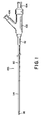
- Fig. 1 illustrated in Fig. 1 is an exemplary balloon catheter 100 that includes a proximal adapter 102 located at the proximal end of the device.
- the proximal adapter includes a wire port 104 and a balloon port 106, both of which comprise a luer fitting for engagement with other accessory devices.
- the proximal adapter 102 is attached to an inner catheter member 108 (see Fig. 2 ) and an outer catheter member 110.
- the two catheter members are arranged coaxially.
- the attachment between the proximal adapter 102 and the outer catheter member 110 may be enhanced by strain relief member 112, which provides support to the outer catheter member 110, minimizing the tendency of the outer catheter member 110 to kink at or near the attachment point.
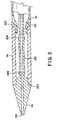
- Balloon 114 is attached at its proximal end to outer catheter member 110 and at its distal end to inner catheter member 108 as illustrated in Fig. 2 . Also, at the distal portion of balloon catheter 100 is distal tip 116, which comprises the distal end of inner catheter member 108.
- inner catheter member 108 may be provided with radiopaque markers 206 and 208. These markers can be positioned so as to coincide with the edges of balloon 114 while the balloon is inflated, and to provide radiographic visualization of the balloon. Markers 206 and 208, in this example configuration, are arranged as bands attached to inner catheter member 108. Any suitable arrangement of markers 206 and 208 may be employed. Additionally, any suitable method of attaching the markers 206 to the inner catheter member 108 such as, but not limited to, the use of various adhesives, or swaging may be used. Also, markers 206 and 208 may be of any suitable material or combination of materials such as, but not limited to, gold, tantalum, or alloys of platinum and iridium. Markers 206 and 208 may also be printed onto inner catheter member 108 with radiopaque inks.
- Inner catheter member 108 may also include a lumen 210, which may further accommodate a guidewire to aid in navigation of the balloon catheter 100.
- lumen 210 extends along the entire length of inner catheter member 108.
- Guidewire port 104 provides convenient access to lumen 210.
- outer member 110 includes lumen 212, which provides communication between balloon port 106 and balloon 114-allowing balloon 114 to be inflated with, for example, saline or water.
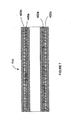
- Fig. 3 there is depicted an enlarged cross-sectional view of an exemplary balloon 114. While the illustrated, exemplary balloon 114 comprises 3 layers, it is to be understood, however, that balloon 114 may comprise any suitable number of layers in any suitable manner. It is to be further understood that the layers need not be separate and distinct. Rather, the layers can be co-extruded.
- inner layer 302 is comprised of silicone tubing having an inner diameter of approximately 1.2 mm and an outer diameter of approximately 1.4 mm.
- an approximately 150 mm length of silicone tubing may be fitted coaxially onto an approximately 1.19 mm diameter stainless steel rod.
- Isopropyl alcohol may be used as a lubricant to facilitate the fitting.
- the rod is preferably placed within an air convection oven set at approximately 70° C for approximately 10 minutes to evaporate any residual alcohol.
- the illustrated inner layer 302 is comprised of silicone tubing and is liquid tight, any suitable material or combination of materials such as, but not limited to, latex, polyurethane, PEBA, and/or fluoroelastomers may be used.
- inner layer 302 may include regions of porosity that allow the passage of fluids there through while still allowing balloon 114 to be inflated.
- Various methods or combinations of methods may be employed to create a suitable inner layer 302. Such methods include, but are not limited to, dipping, application by spraying, and/or molding.
- the middle layer 304 comprises 2 layers of a treated braided tube 400.
- the 2 layers of treated braided tube 400 are intended to provide strength to the finished embodiment of balloon 114 such that the balloon achieves a well-defined inflation diameter beyond which minimal growth occurs.
- a suitable braided tube 400 is manufactured by Prodesco, Inc. of Perkasie, PA (now Secant Medical, LLC). The tube is created from 144 individual strands of 9 denier monofilament polyester yarn, has a relaxed inner diameter of approximately 7 mm, a wall thickness of approximately 0.05 mm, and a braid density of 21.7 pixels per centimeter (55 pixels per inch).
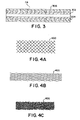
- Fig. 4A there is now illustrated an enlarged view of the braid pattern of braided tube 400 in a relaxed state. While the illustrated example utilizes polyester braid material, any suitable material or combination of materials such as, but not limited to, nylon, polyethylene, carbon, kevlar, PEBA, and/or PTFE may be used. In some embodiments it may be advantageous to combine thin metallic elements into the braid. Additionally, any suitable braid pattern with any suitable strand of any suitable denier, either monofilament, multifilament or any combination thereof may be used. The braid pattern may, for example, employ strands running parallel to the major axis of the tube.
- any suitable material or combination of materials such as, but not limited to, nylon, polyethylene, carbon, kevlar, PEBA, and/or PTFE may be used. In some embodiments it may be advantageous to combine thin metallic elements into the braid. Additionally, any suitable braid pattern with any suitable strand of any suitable denier, either monofilament, multifilament or any combination thereof may be used. The braid pattern
- any suitable form of textile material or combination of forms such as, but not limited to, woven materials, non-woven materials, knitted materials and/or braided materials may be used to create a suitable middle layer 304.
- a suitable middle layer 304 may be created using a textile other than a braid alone or in combination with a braid.
- Middle layer 304 need not be in the form of a continuous tube and need not be a continuous layer throughout the entire length of the balloon 114.
- narrow strips of suitable textiles may be arranged to create a middle layer 304.
- strips of textiles may be arranged helically to create a middle layer 304.
- balloon 114 may comprise a middle layer 304 in only a portion or portions of the balloon length.
- balloon 114 may comprise a middle layer 304 that varies in thickness and/or strength along the length of the balloon.
- braided tube 400 exhibits a relationship between its diameter and its length.
- braided tube 400 is preferably fitted coaxially over an approximately 1.65 mm diameter stainless steel rod.
- Braided tube 400 is then axially elongated such that it reduces in diameter and fits snugly onto the outer surface of the rod.
- Each end of braided tube 400 is then secured to the rod with wire, maintaining the axially elongated/reduced diameter condition.
- Fig. 4B shows an enlarged illustration of the braid pattern of braided tube 400 in the axially elongated/reduced diameter condition.
- thin PTFE film is helically wrapped about the outer surface of the tube to further secure the tube to the stainless steel rod.
- the wrapping of the PTFE film may be completed manually, with minimal tension.
- the wires at each end of braided tube 400 are then removed, marks may be placed at approximately 10 mm intervals along the entire length of the helically wrapped tube, and the tube/rod assembly can be placed into an air convection oven set at approximately 70° C for a minimum of 15 minutes.
- the tube/rod assembly After the passing of a minimum of 15 minutes the tube/rod assembly is preferably removed from the oven and, while still warm, the tube is axially compressed until the marks placed at the approximately 10 mm intervals are spaced consistently at approximately 6.5 mm intervals.
- the 15 minute, 70° C parameters are chosen to facilitate the axial compression. Any suitable time and temperature combination may be utilized.
- the braid pattern of the tube 400 densifies and small corrugations form along the surface of the tube.
- the PTFE film serves to substantially maintain the reduced diameter of braided tube 400 during the axial compression inhibiting the formation of gross corrugations.
- the tube/rod assembly With braided tube 400 axially compressed, the tube/rod assembly is preferably placed into an air convection oven set at approximately 197° C for approximately 3.5 minutes and then removed to cool to ambient temperature. Once cool, the PTFE film is removed and braided tube 400 is carefully removed from the rod. At this point the braided tube is capable of undergoing an increase in diameter without a substantial change in length.
- the 3.5 minute 197 °C treatment imparts a thermal set into braided tube 400, without substantially melting or bonding the strands of the tube, rendering the tube substantially dimensionally stable and easily handled. Any suitable time and temperature combination may be utilized. In some instances a more aggressive thermal treatment may be preferred or required such that all or portions of the material(s) used soften and mildly bond to one another.
- Fig. 4C shows an enlarged illustration of the compression of the braid pattern of braided tube 400.
- any suitable time/temperature combinations may be utilized in the various thermal treatment and axial compression steps described above.
- any suitable means of achieving the compression of the braid pattern of braided tube 400 may be employed.
- braided tube 400 may be placed within a glass tube having an inner diameter appropriate to cause braided tube 400 to assume an axially elongated/reduced diameter condition.
- a rod of appropriate material and diameter may then be fitted coaxially within braided tube 400.
- the rod is slidable yet snugly fit within braided tube 400.
- the glass tube/rod assembly may then be suitably heated.
- tubing of appropriate material having an outer diameter able to be inserted within the glass tube and having an inner diameter able to accommodate the rod, may be inserted into each end of the glass tube.
- the tubing is slidable within the glass tube and over the rod yet snugly fit to both, acting in a fashion similar to a piston within the glass tube.
- the tubing at each end of the glass tube may then be slid toward the center of the glass tube causing braided tube 400 to axially compress to the desired amount.
- the axially compressed braided tube 400 while in the glass tube, may be suitably thermally treated, then allowed to cool and removed form the glass tube.
- various forms of balloon 114 may include middle layers with any suitable amount of axial compression.
- the amount of axial compression desired may depend on the braid pattern of the tube. Some braid patterns may not be constant along the length of the braided tube and, as such, may require different amounts of axial compression along the length of the tube. Varying degrees of axial compression may result in varying degrees of corrugations. The formation of the corrugations may also be dependent on the technique employed to achieve the axial compression. In some forms of balloon 114 suitable axial compression may be achieved without any formation of corrugations.
- balloon 114 may also be desirable for balloon 114 to either shorten or lengthen as it is inflated. For example, if balloon catheter 100 is used to deploy a stent that shortens as it grows in diameter, it may be desirable for balloon 114 to shorten in unison with the stent during deployment. Conversely, in such an application of balloon catheter 100, it may be desirable for balloon 114 to slightly lengthen during inflation to counteract the shortening of the stent being deployed.
- While this example utilizes a braided tube that is treated to allow the tube to experience a change in diameter with no substantial change in length, it is to be understood that the treatment need not be applied to a completed braided or otherwise suitable textile tube.
- the individual strands utilized in the construction of the tube may be treated.
- the arrangement of untreated strands with respect to one another may be such that the resulting tube or layer will experience a change in diameter with no substantial change in length in a manner that is suitable for use in balloon 114.
- braided tube 400 is somewhat loose over inner layer 302, so the layer of braided tube 400, while over the silicone tubing comprising inner layer 302, is helically wrapped with PTFE film resulting in a more snug fit between the two.
- the PTFE wrapped inner layer 302 and layer of braided tube 400, while on the approximately 1.19 mm diameter rod, are placed within an air convection set at approximately 197° C for approximately 3.5 minutes then removed and allowed to cool to ambient temperature. Once cool, the PTFE film is removed.
- Another layer of braided tube 400 is then placed over the first and the helical wrapping, the thermal treatment, the cooling, and the removal of the wrapping film are all repeated. Thus, 2 layers of braided tube 400 are applied to the inner layer 302.
- any suitable method may be used. For example, shrink tubing of any suitable material or a heated die of appropriate dimension may be used. Depending on the material(s) used for the inner and middle layers, it may be desirable to embed at least a portion of the middle layer 304 into inner layer 302 by using any suitable means of heat and pressure.
- the exemplary balloon 114 is carefully removed from the approximately 1.19 mm diameter rod.
- small portions of each end of the balloon 114 may be cut off and the rod may be placed in a bath of isopropyl alcohol.
- the isopropyl alcohol penetrates between the balloon 114 and the rod thus providing lubrication during the removal process. After removal from the rod, the alcohol is allowed to evaporate from the exemplary balloon 114.
- the exemplary balloon 114 is deflated and the outer diameter and distance between the Tuohy-Borst adapters are measured to be 2.31 and 18.27 mm respectively, indicating that the exemplary balloon exhibits an elastic response returning to nearly its original dimensions after being inflated.
- This exemplary balloon 114 ruptures at approximately 0.8 MPa (8atm).
- the silicone tubing comprising inner layer 302 ruptures at approximately 0.1 MPa (1 atm). Therefore, the addition of the 2 layers of treated braided tube 400 (middle layer 304) and outer layer 306 results in an approximately eight-fold increase in burst strength.
- exemplary balloon 114 The compliance characteristics of exemplary balloon 114 are shown in Fig. 5 .
- the compliance signature of exemplary balloon 114 during the first inflation is clearly different from that of the balloon during the second inflation.
- most of the diameter growth of exemplary balloon 114 occurs between approximately 0.3 and 0.6 MPa (3 and 6 atm), while very little diameter growth occurs between approximately 0 and 0.3 MPa (0 and 3 atm).
- most of the diameter growth of the exemplary balloon occurs between approximately 0 and 0.2 MPa (0 and 2 atm), with a significant change in the slope of the compliance curve occurring at approximately 0.2 MPa (2 atm).
- the difference in the two compliance signatures is an aspect of balloon 114 that may be tailored and employed to enhance usage of balloon catheter 100.
- the distal portion of balloon catheter 100 may be placed within inflation mold 602 with balloon 114 centered lengthwise with respect to the large diameter cavity within the mold.
- the mold 602 may be sized such that the large cavity is approximately half of the length of balloon 114 and of approximately the nominal inflated diameter of the balloon.
- Balloon 114 may then be inflated within the mold causing the balloon material to adopt the shape of the mold.
- the center region of the balloon 114 having been inflated to its nominal diameter, will have a compliance signature corresponding to the second inflation curve as shown in Fig. 5 .
- the end regions of the balloon, not having been inflated to a substantially larger diameter, will have a compliance signature corresponding to the curve of the first inflation.
- Balloon 114 after such a treatment, essentially exhibits regions of varying compliance.
- Balloon 114 treated by inflation within mold 602, may provide enhanced control during an angioplasty procedure. For example, if the balloon catheter 100 is being used to remodel a stenotic lesion of relatively short length, balloon 114 may be placed, centered lengthwise with respect to the lesion. Upon inflation, the center of balloon 114 inflates first, coming into contact with the stenotic tissue and initiating the angioplasty process. The end regions of balloon 114, changing in diameter at a lesser rate, remain smaller than the center and do not contribute to the remodeling of the stenotic tissue. Eventually, with increasing pressure all of the regions of balloon 114 reach approximately the same diameter.
- An inflation mold 608 wherein one half of the mold is of a larger inner diameter than the other half is further illustrated in Fig. 6B .
- the larger diameter half of inflation mold 608 may be of approximately the nominal inflated diameter of the balloon 114.
- Such an inflation mold employed in a fashion similar to that described above, may be utilized to create a balloon 114 that inflates at a faster rate at one end.
- Such a balloon 114 may enhance the angioplasty process by not only pressurizing and expanding diseased blood vessels, but by also redistributing the diseased tissue in a predetermined lengthwise manner.
- Such a balloon 114 may be utilized, for example, in situations wherein an occlusive lesion is located very close to the origin of a side-branch vessel and redistribution of the diseased tissue away from the side-branch vessel origin is highly advantageous.
- any suitable inflation mold geometry may be employed to create any desired form of balloon, certain inflation molds may be used more commonly than others.
- a balloon provided by a manufacturer may, by virtue of being customized, be transformed into various embodiments each particularly treated to meet a specific need. It may be desirable to combine the aspect of treating a balloon by inflating it within a mold, with varying the materials or the amount of materials utilized along the balloon length. Such combinations may be utilized to create a balloon 114 with dramatically different regions of compliance.
- a balloon 114 wherein middle layer 304 is twice as thick at one half of the balloon length may be created.
- Each half of such a balloon 114 would have distinct compliance characteristics than the other, the half with the thinner middle layer 304 being the more compliant of the two.
- This balloon 114 may then be situated within inflation mold 608 such that the half of the balloon with the thicker region of middle layer 304 is located within the region of smaller diameter within mold 608 and suitably inflated within the mold.
- two of the described aspects may be combined to create various balloons with regions of different compliance. Balloons with regions of different compliance that include regions of porosity for the delivery of therapeutic agents may also be created.
- the aspect of treating a balloon by inflating it within a mold may be combined with utilizing a braid or other textile having any suitable geometry such as, but not limited to, tapers or teardrop shapes to create balloons that are suited to specific bodily conduit geometries.
- a braid or other textile having any suitable geometry such as, but not limited to, tapers or teardrop shapes to create balloons that are suited to specific bodily conduit geometries.
- Such balloon embodiments may also include regions of porosity for the delivery of therapeutic agents.
- a balloon designed to be of a constant outer diameter may be treated to have variable compliance (e.g., by usage of an inflation mold) such that prior to being fully inflated the balloon exhibits a tapered shape.
- a balloon designed to have a tapered shape may be treated by using an inflation mold to assume a constant diameter along its length prior to being fully inflated.
- middle layer 304 need not be in the form of a continuous tube, and need not be a continuous layer throughout balloon 114.
- Any suitable number of layers may be employed to create various embodiments of balloon 114.
- any number of layers with suitable attributes may be advantageously arranged so as to cooperate with each other during inflation to form a balloon with a predetermined shape.
- an approximately 100 mm length of silicone tubing may be fitted coaxially onto an approximately 0.50 mm diameter stainless steel rod approximately 317 mm in length.
- Isopropyl alcohol may be used as a lubricant to facilitate the fitting.
- An example silicone tubing, comprising inner layer 302 has a nominal inner diameter of 0.48 mm, a nominal wall thickness of 0.10 mm, and is manufactured by Specialty Silicone Fabricators located in Paso Robles, CA.
- An approximately 152 mm length of stainless steel hypodermic tubing having an inner diameter of 0.63 mm and an outer diameter of 0.82 mm may be fitted coaxially over the 0.50 mm diameter stainless steel rod and carefully inserted approximately 30 mm into the silicone tubing comprising inner layer 302.
- the hypodermic tubing is situated over the rod such that the end not covered by the silicone tubing is approximately 60 mm away from the corresponding end of the rod.
- Isopropyl alcohol may be used as a lubricant to facilitate the insertion of the hypodermic tubing within the silicone tubing.
- the tube/rod assembly After the passing of a minimum of 15 minutes the tube/rod assembly is removed from the oven and, while still warm, the tube is axially compressed until the marks placed at the approximately 10 mm intervals are spaced consistently at approximately 7.5 mm intervals.
- the tube/rod assembly With the first braided tube 400a axially compressed, the tube/rod assembly is preferably placed into an air convection oven set at approximately 197° C for approximately 5.0 minutes and then removed to cool to ambient temperature. Once cool, the PTFE film is removed and the first braided tube 400a is preferably carefully removed from the rod. At this point the first braided tube 400a is capable of undergoing an increase in diameter without a substantial change in length.
- Fig. 4C shows an enlarged illustration of the compression of the braid pattern of an exemplary first braided tube 400a.
- the second braided tube 400b is prepared for use in a balloon 114.
- An exemplary second braided tube 400b has an approximate relaxed inner diameter of 3 mm and is created from 24 individual strands of polyester multifilament yarn. Twelve of the 24 strands are 44 denier while the other 12 are 20 denier.
- the braid density of the tube is approximately 17.7 pixels per centimeter (45 pixels per inch).
- any suitable method may be employed to create any suitable size or shape hole through the second braided tube 400b.
- the hole may be created by laser cutting or a hole may be created by locally distorting the pattern of a braided or other suitable textile tube.
- Suitable holes may be created in various shapes such as, but not limited to, circles, ellipses, squares, rectangles, triangles and various polygons.
- the original shape of a hole may change as a result of a change in diameter of the balloon, e.g., an elliptical hole may assume a circular shape upon the balloon being expanded.
- a longitudinal cut approximately 6 mm long is made through both walls of one end of the shrink tube.
- the fitting is preferably done carefully without distorting the pattern of the first braided tube 400a.
- Isopropyl alcohol may be used as a lubricant to facilitate the fitting.
- any residual alcohol is allowed to evaporate at ambient temperature before proceeding to the next steps.
- the entire assembly is then placed in an air convection oven set at 197° C for 5.0 minutes, then removed and allowed to cool to ambient temperature.
- the 5.0 minute thermal treatment causes the shrink tubing to reduce in diameter while simultaneously imparting a thermal set into the first braided tube 400a, reducing the diameter of the braided tube and stabilizing the tube dimensionally for the subsequent process steps. Any suitable time and temperature combination may be utilized.
- a razor blade may be used to lightly score the shrink tubing along its entire length. This procedure is again preferably performed very carefully, ensuring that the razor blade does not cut the underlying braided tube. With the shrink tubing scored, it may be carefully peeled away using the tabs created from the 6 mm longitudinal cut.
- the 60 mm length of treated 3 mm braided tube 400b may then be fitted coaxially over the treated 5 mm braided tube 400a such that the ends of the tubes are coincident. Again, the fitting is preferably done carefully without distorting the pattern of the treated braided tubes. Isopropyl alcohol may be used as a lubricant to facilitate the fitting.
- polyester shrink tubing may be utilized to reduce the diameter and thermally set both the 5.0 and the 3.0 mm braided tubes now over the silicone tubing comprising inner layer 302, except in this case the inner diameter of the shrink tubing is 1.58 mm (e.g., part number 062050CST, manufactured by Advanced Polymers, Inc. of Salem NH).
- the entire assembly is preferably placed within an air convection oven set at 70° C for approximately 10 minutes to evaporate any residual alcohol.
- a razor blade may be used to trim away any excess silicone tubing extending beyond the length of middle layer 304, leaving a 60 mm long embodiment of balloon 114 situated over the stainless steel rod and hypodermic tubing comprising inner and outer catheter members 108 and 110 respectively. Note that in this exemplary balloon 114 layers 302, 304 and 306 are preferably not attached to each other.
- an apparatus to introduce an inflation fluid such as water into lumen 212 is created.
- a double female luer lock adapter e.g., part MX494, manufactured by Medex Medical of Dublin, OH
- a Y connector with a male rotating luer and 2 female luers such as, for example, part 83016 manufactured by Qosina of Edgewood NY.
- Tuohy-Borst adapters may then be connected to the open luer of the double female luer lock adapter and to the luer of the Y connector that is in line with the double female luer lock adapter.
- Tuohy-Borst adapter is placed over proximal end of the exemplary balloon, creating a seal between the balloon and the hypodermic tubing, and a 40 mm long, 2.0 mm inner diameter glass tube is placed over the balloon.
- Another Tuohy-Borst adapter is then placed over the distal end of the balloon, creating a seal between the balloon and the 0.50 diameter stainless steel rod.
- the balloon is inflated, again at ambient temperature, to between 0.3 and 0.4 MPa (3 and 4 atm), causing the outer surface of the balloon to substantially contact the inner surface of the glass tube.
- the 2.0 and 3.0 mm glass tubes e.g., manufactured by Farlows Scientific Glassblowing, Inc. of Grass Valley, CA
- the balloon is then deflated, the 3.0 mm glass tube is removed, and the Tuohy-Borst adapters are repositioned such that each is approximately 10 mm away from the region of the hole created by the biopsy punch.
- this exemplary balloon 114 is preferably initially inflated within the 2.0 and 3.0 mm inner diameter molds to allow, in subsequent inflations, the balloon to inflate in a substantially uniform fashion prior to the region of the hole inflating beyond the diameter/shape of the remainder of the balloon.
- the compliance characteristics of the balloon are tailored such that the balloon inflates in a uniform manner prior to the region of the hole assuming its intended shape.
- the balloon is inflated, at ambient temperature, to approximately 0.4 MPa (4 atm) with no mold present.
- the balloon assumes the intended shape with the region in the vicinity of the hole assuming a substantially elliptical geometry, protruding from the remainder of the balloon.
- the dimension of the elliptical protrusion along the major axis of the balloon is approximately 7 mm and the dimension along the minor axis of the balloon is approximately 3.5 mm.
- the protrusion measures approximately 3 mm in height.
- Fig. 6C shows an inflation mold 612 that simulates the geometry of the origin of a side-branch vessel.
- Exemplary inflation mold 612 is configured to allow the side protrusion to inflate, while maintaining the rest of the balloon below the fully inflated diameter.
- Such an inflation mold 612 may be utilized to create forms of balloon 114 that have side protrusions that inflate at a faster rate than the rest of the balloon.
- Such a balloon 114 may be utilized, for example, in situations where it is advantageous for the balloon to come into contact with the side-branch vessel origin first and redistribute the occlusive tissue such that flow into the side-branch vessel is restored. Such a balloon 114 may also have utility in enhancing the deployment of stents intended for usage at the origins of side-branch vessels.
- the control parameters are set to produce an elliptical hole having a 1.5 mm long major axis oriented along the transverse axis of the braided tube 400b, and a 0.75 mm long minor axis oriented along the major or longitudinal axis of braided tube 400b.
- the steps of coaxially fitting shrink tubing and thermally treating braided tubes 400a and 400b over inner layer 302 are omitted.
- the braided tubes 400 and the silicone tubing comprising outer layer 306 are coaxially arranged as previously described without the added thermal treatments. It is to be noted that the lack of the additional thermal treatments does make the coaxial fitting of the layers more difficult, resulting in a small amount of disruption and elongation to the patterns of the treated tubes 400a and 400b.
- the exemplary balloon 114 is inflated within the 2.0 and 3.0 mm molds as described above.
- the balloon When inflated to approximately 0.4 MPa (4 atm) with no mold present the balloon assumes its intended shape with the region in the vicinity of the hole assuming a substantially circular geometry, protruding from the remainder of the balloon.
- the substantially circular protrusion When measured using digital calipers, the substantially circular protrusion has a diameter of approximately 2.4 mm and a height of approximately 0.7 mm.
- an embodiment of balloon 114 wherein the side protrusion extends beyond the remainder of the balloon a greater amount may be desirable.
- Such an embodiment of balloon 114 may be produced by various suitable methods. For example in order to provide more material to protrude through the exemplary hole in braided tube 400b as described in the previous example, the region of braided tube 400a which is beneath the exemplary hole may be axially compressed such that the marks spaced originally at 10 mm are spaced, for example, at 5 mm (as opposed to 7.5 mm, as previously described).
- a balloon 114 may be attached to steps 202 and 204 (see Fig. 2 ) with various adhesives or combinations of adhesives such as, but not limited to, cyanoacrylates, or adhesives that are cured via ultra-violet light.
- adhesives or combinations of adhesives such as, but not limited to, cyanoacrylates, or adhesives that are cured via ultra-violet light.
- balloon catheter 100 balloon 114 may be thermally bonded to the catheter member(s).
- reinforcing bands made in any suitable configuration of any suitable material may be placed around balloon 114 coincident to the points at which the balloon is attached to the catheter member(s).
- the regions of attachment may be wrapped by reinforcing filaments of any suitable material. Thin films may also be utilized to this end.
- balloon catheter 100 may take advantage of multi-layer forms of balloon 114 by integrating any number of any of the balloon layers into the catheter member(s).
- middle layer 304 may extend beyond the edges of layers 302 and 306.
- the portions of middle layer 304 extending beyond the other balloon layers may be integrated into inner and outer catheter members 108 and 110 respectively or into any other suitable catheter member(s).
- a desired length of inner layer 302 may be attached by any suitable method to steps 202 and 204, or to any suitable element of the catheter member(s).
- Middle layer 304 suitably longer than inner layer 302 may then be fitted coaxially over inner layer 302.
- Additional catheter member material may then be applied over the regions of middle layer 304 that extend beyond the edges of inner layer 302.
- the additional catheter material may be applied by any suitable method.
- the additional material may be injection molded over the regions of middle layer 304 that extend beyond the edges of inner layer 302.
- thin tubing may be applied over the regions of middle layer 304 that extend beyond the edges of inner layer 302.
- the thin tubing may be attached to the middle layer 304 as well as the catheter member(s) by any suitable method such as the use of an adhesive or various thermal bonding techniques.
- Various forms of distal tip 116 may be formed in such a manner.
- outer layer 306 may be applied by any suitable method such as, but not limited to, application in the form of a mixture (as described above), or alternatively outer layer 306 may comprise a tube similar to inner layer 302. Regardless of embodiment, outer layer 306 may extend onto the catheter member(s) if desired. Integration of one or more layers of balloon 114 into the catheter member(s) may be advantageous by providing a very sleek profile to the distal region of balloon catheter 100 as well as a very reliable and strong connection between balloon 114 and the catheter member(s).
Landscapes
- Health & Medical Sciences (AREA)
- Life Sciences & Earth Sciences (AREA)
- General Health & Medical Sciences (AREA)
- Veterinary Medicine (AREA)
- Public Health (AREA)
- Animal Behavior & Ethology (AREA)
- Engineering & Computer Science (AREA)
- Heart & Thoracic Surgery (AREA)
- Epidemiology (AREA)
- Pulmonology (AREA)
- Hematology (AREA)
- Anesthesiology (AREA)
- Child & Adolescent Psychology (AREA)
- Chemical & Material Sciences (AREA)
- Biophysics (AREA)
- Biomedical Technology (AREA)
- Dispersion Chemistry (AREA)
- Materials Engineering (AREA)
- Composite Materials (AREA)
- Manufacturing & Machinery (AREA)
- Media Introduction/Drainage Providing Device (AREA)
- Materials For Medical Uses (AREA)
- External Artificial Organs (AREA)
Claims (30)
- Ballon (114) zur Verwendung in einem Katheter, mit:mehreren Schichten aus einem Material, das so ausgebildet ist, dass es beim Aufblasen eine Änderung des Durchmessers erfährt, während es im Wesentlichen die gleiche Länge beibehält, wobei die mehreren Schichten in zusammenwirkender Beziehung derart angeordnet sind, dass der Ballon beim Aufblasen eine vorgegebene Geometrie erreicht, wobei die mehreren Schichten eine erste Material-Schicht (400a), die so ausgebildet ist, dass sie beim Aufblasen eine Änderung des Durchmessers erfährt, während sie im Wesentlichen die gleiche Länge beibehält, und eine zweite Material-Schicht (400b) umfasst, die so ausgebildet ist, dass sie beim Aufblasen eine Änderung des Durchmessers erfährt, während sie im Wesentlichen die gleiche Länge beibehält, wobei die zweite Schicht (400b) über der ersten Schicht (400a) angeordnet ist und wobei die zweite Schicht (400b) eine Öffnung aufweist, durch die ein Teil der ersten Schicht (400a) sich aufblasen soll, um die vordefinierte Geometrie zu erreichen.
- Ballon nach Anspruch 1, bei dem die Nachgiebigkeits-Charakteristiken der mehreren Schichten von der vorgegebenen Geometrie unabhängig sind.
- Ballon nach Anspruch 1, bei dem zumindest eine der ersten Schicht (400a) und der zweiten Schicht (400b) ein geflochtenes Material umfasst.
- Ballon nach Anspruch 3, bei dem die Öffnung durch örtliches Verformen eines Musters des geflochtenen Materials gebildet wird.
- Ballon nach Anspruch 1, bei dem zumindest eine der ersten (400a) und zweiten (400b) Schichten ein Material umfasst, das aus einer Gruppe ausgewählt ist, die aus Polyester, Nylon, Polyethylen, Kohlenstoff, Kevlar, PEBA und PTFE besteht.
- Ballon nach Anspruch 1, bei dem die mehreren Schichten weiterhin eine dritte Schicht (306) umfassen, die in einer zusammenwirkenden Beziehung zu der ersten Schicht (400a) und der zweiten Schicht (400b) angeordnet ist.
- Ballon nach Anspruch 6, bei dem die dritte Schicht (306) zumindest teilweise über der zweiten Schicht (400b) liegt.
- Ballon nach Anspruch 6, bei dem jede der ersten Schicht (400a), der zweiten Schicht (400b) und der dritten Schicht (306) aneinander nicht befestigt sind.
- Ballon nach Anspruch 5, der weiterhin eine vierte Schicht (302) umfasst, die auf der Innenseite der ersten Schicht (400a) angeordnet ist.
- Ballon nach Anspruch 1, bei dem die erste Schicht (400a) und die zweite Schicht (400b) zusammenwirken, um einen Ballon mit einer sich ändernden Nachgiebigkeits-Charakteristik über seine Länge zu schaffen.
- Ballon nach Anspruch 10, bei dem die Nachgiebigkeits-Eigenschaften unabhängig von der vorgegebenen Geometrie sind.
- Ballon nach Anspruch 1, bei dem der Ballon in der Nähe der Öffnung so ausgebildet ist, dass er sich auf eine andere Abmessung gegenüber dem Rest des Ballons aufbläst.
- Ballon nach Anspruch 12, bei dem die erste Schicht (400a) in der Nähe der Öffnung axial komprimiert ist, um es mehr Material zu ermöglichen, durch die Öffnung vorzuspringen, wenn der Ballon aufgeblasen wird.
- Ballon nach Anspruch 1, bei dem die Form der Öffnung die vorgegebene Geometrie des aufgeblasenen Ballons bestimmt.
- Verfahren zur Herstellung eines Ballons (114) zur Verwendung in einem Katheter, mit den folgenden Schritten:Anordnung mehrerer Material-Schichten, die so ausgebildet sind, dass sie beim Aufblasen eine Änderung des Durchmessers erfahren, während sie die gleiche Länge im Wesentlichen beibehalten, in zusammenwirkender Beziehung, die es dem Ballon ermöglicht, eine vordefinierte Geometrie beim Aufblasen zu erreichen,wobei die mehreren Schichten eine erste Material-Schicht (400a), die so ausgebildet ist, dass sie beim Aufblasen eine Änderung des Durchmessers erfährt, während sie im Wesentlichen die gleiche Länge beibehält, und eine zweite Material-Schicht (400b) umfasst, die so ausgebildet ist, dass sie beim Aufblasen eine Änderung des Durchmessers erfährt, während sie im Wesentlichen die gleiche Länge beibehält, wobei die zweite Schicht (400b) über der ersten Schicht (400a) angeordnet ist, und wobei die zweite Schicht (400b) eine Öffnung aufweist, durch die ein Teil der ersten Schicht (400a) aufgeblasen werden soll, um die vorgegebene Geometrie zu erreichen.
- Verfahren nach Anspruch 15, bei dem die Nachgiebigkeits-Eigenschaften der mehreren Schichten unabhängig von der vorgegebenen Geometrie sind.
- Verfahren nach Anspruch 15, bei dem zumindest eine der ersten Schicht (400a) und der zweiten Schicht (400b) ein geflochtenes Material umfasst.
- Verfahren nach Anspruch 17, bei dem die Öffnung durch örtliches Verzerren eines Musters des geflochtenen Materials gebildet wird.
- Verfahren nach Anspruch 15, bei dem die mehreren Schichten weiterhin eine dritte Schicht (306) umfassen, die in einer zusammenwirkenden Beziehung zu der ersten Schicht (400a) und der zweiten Schicht (400b) angeordnet ist.
- Verfahren nach Anspruch 19, bei dem jede der ersten Schicht (400a), der zweiten Schicht (400b) und der dritten Schicht (306) aneinander nicht angebracht sind.
- Verfahren nach Anspruch 19, das weiterhin eine vierte Schicht (302) umfasst, die an dem Inneren der ersten Schicht (400a) befestigt ist.
- Verfahren nach Anspruch 15, bei dem die erste Schicht (400a) und die zweite Schicht (400b) zusammenwirken, um den Ballon mit einer sich ändernden Nachgiebigkeits-Charakteristik über seine Länge zu versehen.
- Verfahren nach Anspruch 22, bei dem die Nachgiebigkeits-Charakteristiken von der vorgegebenen Geometrie unabhängig sind.
- Verfahren nach Anspruch 15, bei dem der Ballon in der Nähe der Öffnung sich auf eine andere Dimension gegenüber dem Rest des Ballons aufblasen kann.
- Verfahren nach Anspruch 24, das die axiale Komprimierung der ersten Schicht (400a) in der Nähe der Öffnung umfasst, um es zu ermöglichen, dass mehr Material durch die Öffnung hindurch vorspringt, wenn der Ballon aufgeblasen wird.
- Verfahren nach Anspruch 15, bei dem die Form der Öffnung die vorgegebene Geometrie des aufgeblasenen Ballons bestimmt.
- Verfahren nach Anspruch 15, bei dem die Öffnung in der zweiten Schicht (400b) vorgesehen wird, bevor die zweite Schicht (400b) über der ersten Schicht (400a) angeordnet wird.
- Verfahren nach Anspruch 15, die weiterhin die Verwendung eines Aufblasprozesses zum Ändern der Nachgiebigkeits-Eigenschaften des Ballons umfasst.
- Ballon-Katheter mit:einen Katheter, der einen ersten Abschnitt und einen zweiten Abschnitt aufweist,einen Ballon (114) nach einem der Ansprüche 1 bis 15, der zwischen dem ersten Teil und dem zweiten Teil angeordnet ist.
- Ballon nach Anspruch 1, bei dem die mehreren Schichten Bereiche einer Porosität für die Zuführung von therapeutischen Mitteln einschließen.
Applications Claiming Priority (2)
| Application Number | Priority Date | Filing Date | Title |
|---|---|---|---|
| US10/655,665 US7335184B2 (en) | 2002-07-02 | 2003-09-05 | Balloon catheter and treatment apparatus |
| PCT/US2004/004031 WO2005025648A2 (en) | 2003-09-05 | 2004-02-11 | Improved balloon catheter and treatment apparatus |
Publications (3)
| Publication Number | Publication Date |
|---|---|
| EP1663376A2 EP1663376A2 (de) | 2006-06-07 |
| EP1663376A4 EP1663376A4 (de) | 2007-04-04 |
| EP1663376B1 true EP1663376B1 (de) | 2009-01-14 |
Family
ID=34312647
Family Applications (1)
| Application Number | Title | Priority Date | Filing Date |
|---|---|---|---|
| EP04710250A Expired - Lifetime EP1663376B1 (de) | 2003-09-05 | 2004-02-11 | Verbesserter ballonkatheter und behandlungsgerät |
Country Status (6)
| Country | Link |
|---|---|
| US (1) | US7335184B2 (de) |
| EP (1) | EP1663376B1 (de) |
| AT (1) | ATE420690T1 (de) |
| CA (1) | CA2537565C (de) |
| DE (1) | DE602004019107D1 (de) |
| WO (1) | WO2005025648A2 (de) |
Families Citing this family (48)
| Publication number | Priority date | Publication date | Assignee | Title |
|---|---|---|---|---|
| CA2541850A1 (en) * | 2003-10-15 | 2005-04-28 | Tyco Healthcare Group Lp | Method of joining materials |
| US7758892B1 (en) * | 2004-05-20 | 2010-07-20 | Boston Scientific Scimed, Inc. | Medical devices having multiple layers |
| WO2006034396A2 (en) * | 2004-09-21 | 2006-03-30 | Stout Medical Group, L.P. | Balloon and methods of making and using |
| US20060079922A1 (en) * | 2004-10-12 | 2006-04-13 | Brian Creston | Balloon anchored surgical apparatus, its use and manufacture |
| US8100863B2 (en) | 2005-03-04 | 2012-01-24 | C. R. Bard, Inc. | Catheter assembly, catheter systems including same, and method of manufacture |
| US8672990B2 (en) | 2005-05-27 | 2014-03-18 | Boston Scientific Scimed, Inc. | Fiber mesh controlled expansion balloon catheter |
| US9101742B2 (en) * | 2005-10-28 | 2015-08-11 | Baxter International Inc. | Gastrointestinal applicator and method of using same |
| WO2007075585A2 (en) | 2005-12-16 | 2007-07-05 | Interface Associates, Inc. | Multi-layer balloons for medical applications and methods for manufacturing the same |
| US8858855B2 (en) * | 2006-04-20 | 2014-10-14 | Boston Scientific Scimed, Inc. | High pressure balloon |
| US7993303B2 (en) * | 2006-04-21 | 2011-08-09 | Abbott Laboratories | Stiffening support catheter and methods for using the same |
| US20070250149A1 (en) * | 2006-04-21 | 2007-10-25 | Abbott Laboratories | Stiffening Support Catheters and Methods for Using the Same |
| US8206370B2 (en) * | 2006-04-21 | 2012-06-26 | Abbott Laboratories | Dual lumen guidewire support catheter |
| US8246574B2 (en) * | 2006-04-21 | 2012-08-21 | Abbott Laboratories | Support catheter |
| US7927305B2 (en) * | 2006-04-21 | 2011-04-19 | Abbott Laboratories | Systems, methods, and devices for injecting media contrast |
| CA2656635C (en) * | 2006-07-03 | 2013-05-28 | Hemoteq Ag | Stent with polymeric coating comprising rapamycin as an active agent |
| US7963942B2 (en) | 2006-09-20 | 2011-06-21 | Boston Scientific Scimed, Inc. | Medical balloons with modified surfaces |
| NZ578341A (en) * | 2007-01-21 | 2011-06-30 | Hemoteq Ag | Method for producing a coated catheter balloon |
| WO2008095046A2 (en) * | 2007-01-30 | 2008-08-07 | Loma Vista Medical, Inc., | Biological navigation device |
| US9192697B2 (en) * | 2007-07-03 | 2015-11-24 | Hemoteq Ag | Balloon catheter for treating stenosis of body passages and for preventing threatening restenosis |
| EP2072065A1 (de) * | 2007-12-21 | 2009-06-24 | Abbott Laboratories Vascular Enterprises Limited | Verstärkungstexturen in medizinischen Geräten |
| EP2095795A1 (de) | 2007-12-21 | 2009-09-02 | Abbott Laboratories Vascular Enterprises Limited | Doppellagige Ballons für medizinische Geräte |
| US20090299327A1 (en) | 2008-06-02 | 2009-12-03 | Lorna Vista Medical, Inc. | Inflatable medical devices |
| WO2010018762A1 (ja) * | 2008-08-11 | 2010-02-18 | テルモ株式会社 | 医療用具 |
| US20100286593A1 (en) * | 2009-05-11 | 2010-11-11 | Hotspur Technologies, Inc. | Balloon catheter with cutting features and methods for use |
| EP2944332B1 (de) | 2009-07-10 | 2016-08-17 | Boston Scientific Scimed, Inc. | Verwendung von nanokristallen für einen wirkstofffreisetzungsballon |
| EP2453938B1 (de) | 2009-07-17 | 2015-08-19 | Boston Scientific Scimed, Inc. | Nukleierung von wirkstofffreisetzungsballons für verbesserte kristallgrösse und -dichte |
| JP5013380B2 (ja) * | 2009-10-29 | 2012-08-29 | 朝日インテック株式会社 | 医療用チューブ、及び、これを用いたカテーテル |
| US8926508B2 (en) | 2009-12-17 | 2015-01-06 | Covidien Lp | Access assembly with dual anchor and seal capabilities |
| US9592119B2 (en) | 2010-07-13 | 2017-03-14 | C.R. Bard, Inc. | Inflatable medical devices |
| EP2611476B1 (de) | 2010-09-02 | 2016-08-10 | Boston Scientific Scimed, Inc. | Beschichtungsverfahren für wirkstofffreisetzungsballons mit wärmeinduziertem rewrap-gedächtnis |
| US10188436B2 (en) | 2010-11-09 | 2019-01-29 | Loma Vista Medical, Inc. | Inflatable medical devices |
| WO2013022458A1 (en) | 2011-08-05 | 2013-02-14 | Boston Scientific Scimed, Inc. | Methods of converting amorphous drug substance into crystalline form |
| US9056152B2 (en) | 2011-08-25 | 2015-06-16 | Boston Scientific Scimed, Inc. | Medical device with crystalline drug coating |
| US9554822B2 (en) | 2011-09-02 | 2017-01-31 | Abbott Cardiovascular Systems Inc. | Thrombectomy catheter with aspiration and guidewire lumens defining an asymmetrical taper and cutting edge with offset tip |
| US9808605B2 (en) | 2011-10-06 | 2017-11-07 | W. L. Gore & Associates, Inc. | Controlled porosity devices for tissue treatments, methods of use, and methods of manufacture |
| US9730726B2 (en) | 2011-10-07 | 2017-08-15 | W. L. Gore & Associates, Inc. | Balloon assemblies having controllably variable topographies |
| JP2012196498A (ja) * | 2012-06-14 | 2012-10-18 | Asahi Intecc Co Ltd | 医療用チューブ |
| US8992817B2 (en) | 2012-12-10 | 2015-03-31 | Abbott Cardiovascular Systems, Inc. | Process of making a medical balloon |
| US9669194B2 (en) | 2013-03-14 | 2017-06-06 | W. L. Gore & Associates, Inc. | Conformable balloon devices and methods |
| DE102013104029A1 (de) | 2013-04-22 | 2014-10-23 | Innora Gmbh | Ballonkatheter |
| US10729570B2 (en) | 2013-09-17 | 2020-08-04 | West Coast Catheter, Inc. | Medical balloon with varied compliance |
| US9782571B2 (en) | 2014-01-30 | 2017-10-10 | Chuter A. M. Timothy | Flexible high-pressure angioplasty balloons |
| US10201685B2 (en) | 2013-11-13 | 2019-02-12 | West Coast Catheter, Inc. | High-pressure balloons |
| US9149612B2 (en) | 2013-11-13 | 2015-10-06 | West Coast Catheter, Inc. | Flexible high-pressure balloons |
| US20160114141A1 (en) | 2014-10-27 | 2016-04-28 | Interface Associates, Inc. | Methods of manufacturing nested balloons utilizing pressurized constrained annealing |
| JP6426068B2 (ja) * | 2015-08-10 | 2018-11-21 | 朝日インテック株式会社 | カテーテル及びバルーンカテーテル |
| US10792477B2 (en) | 2016-02-08 | 2020-10-06 | Orbusneich Medical Pte. Ltd. | Drug eluting balloon |
| CN115920211A (zh) * | 2022-12-12 | 2023-04-07 | 浙江巴泰医疗科技有限公司 | 一种尖端结构、包含有该尖端结构的球囊扩张导管及制备方法 |
Family Cites Families (15)
| Publication number | Priority date | Publication date | Assignee | Title |
|---|---|---|---|---|
| US4702252A (en) * | 1983-10-13 | 1987-10-27 | Smiths Industries Public Limited Company | Catheters |
| US4637396A (en) * | 1984-10-26 | 1987-01-20 | Cook, Incorporated | Balloon catheter |
| US5499980A (en) | 1988-08-08 | 1996-03-19 | Scimed Life Systems, Inc. | Polyimide balloon catheter and method of making same |
| US5019042A (en) | 1988-11-23 | 1991-05-28 | Harvinder Sahota | Balloon catheters |
| ES2043289T3 (es) | 1989-09-25 | 1993-12-16 | Schneider Usa Inc | La extrusion de capas multiples como procedimiento para hacer balones de angioplastia. |
| AU6987594A (en) * | 1993-08-18 | 1995-03-14 | W.L. Gore & Associates, Inc. | A tubular intraluminal graft |
| US5833657A (en) | 1995-05-30 | 1998-11-10 | Ethicon, Inc. | Single-walled balloon catheter with non-linear compliance characteristic |
| KR100226366B1 (ko) * | 1995-08-23 | 1999-10-15 | 아끼구사 나오유끼 | 플라즈마장치 및 플라즈마 처리방법 |
| US5868704A (en) | 1995-09-18 | 1999-02-09 | W. L. Gore & Associates, Inc. | Balloon catheter device |
| US7335477B2 (en) * | 1997-12-24 | 2008-02-26 | The United States Of America As Represented By The Secretary Of The Navy | Truncated recombinant major outer membrane protein antigen (r56) of Orientia tsutsugamushi strains Karp, Kato and Gilliam and its use in antibody based detection assays and vaccines |
| US6520933B1 (en) * | 1998-04-21 | 2003-02-18 | Alsius Corporation | Central venous line cooling catheter having a spiral-shaped heat exchange member |
| US6695809B1 (en) * | 1999-09-13 | 2004-02-24 | Advanced Cardiovascular Systems, Inc. | Catheter balloon with a discontinuous elastomeric outer layer |
| US7947059B2 (en) | 2000-03-02 | 2011-05-24 | Boston Scientific Scimed, Inc. | Multilayer medical device |
| US6585926B1 (en) | 2000-08-31 | 2003-07-01 | Advanced Cardiovascular Systems, Inc. | Method of manufacturing a porous balloon |
| US6773447B2 (en) | 2002-07-02 | 2004-08-10 | Sentient Engineering & Technology, Llc | Balloon catheter and treatment apparatus |
-
2003
- 2003-09-05 US US10/655,665 patent/US7335184B2/en not_active Expired - Fee Related
-
2004
- 2004-02-11 AT AT04710250T patent/ATE420690T1/de not_active IP Right Cessation
- 2004-02-11 WO PCT/US2004/004031 patent/WO2005025648A2/en not_active Ceased
- 2004-02-11 CA CA2537565A patent/CA2537565C/en not_active Expired - Fee Related
- 2004-02-11 DE DE602004019107T patent/DE602004019107D1/de not_active Expired - Lifetime
- 2004-02-11 EP EP04710250A patent/EP1663376B1/de not_active Expired - Lifetime
Also Published As
| Publication number | Publication date |
|---|---|
| CA2537565A1 (en) | 2005-03-24 |
| EP1663376A4 (de) | 2007-04-04 |
| US20040098021A1 (en) | 2004-05-20 |
| CA2537565C (en) | 2015-06-30 |
| ATE420690T1 (de) | 2009-01-15 |
| WO2005025648A2 (en) | 2005-03-24 |
| DE602004019107D1 (de) | 2009-03-05 |
| US7335184B2 (en) | 2008-02-26 |
| EP1663376A2 (de) | 2006-06-07 |
| WO2005025648A3 (en) | 2005-11-10 |
Similar Documents
| Publication | Publication Date | Title |
|---|---|---|
| CA2537565C (en) | Improved balloon catheter and treatment apparatus | |
| EP1556119B1 (de) | Verbesserter ballonkatheter und behandlungsgerät | |
| US6613067B1 (en) | Balloon protector | |
| KR100818903B1 (ko) | 브레이드 및 코일을 구비한 의료 기기 | |
| US5868704A (en) | Balloon catheter device | |
| EP1554006B1 (de) | Katheterballon mit vorteilhaftem kegeldesign | |
| US6863757B1 (en) | Method of making an expandable medical device formed of a compacted porous polymeric material | |
| US20070055301A1 (en) | Balloon catheter device | |
| US20090048684A1 (en) | Methods of forming a multilayer tissue implant having a compliance that simulates tissue | |
| AU2001273446A1 (en) | Medical device with braid and coil | |
| CN104507525A (zh) | 导管球囊、导管及制造导管球囊的方法 | |
| JP2004500204A (ja) | 滑性を有するインナーライナを備えたガイドカテーテル | |
| US7273471B1 (en) | Catheter balloon having a porous layer with ridges | |
| JP2020520294A (ja) | 管状医療器具 | |
| US7448122B1 (en) | Method of compressing a polymeric layer of an expandable medical device | |
| WO2007133884A1 (en) | Catheter having non-blood contacting exit markers | |
| CN211611264U (zh) | 一种适用于弯曲血管的球囊导管 | |
| US20060265040A1 (en) | Stent delivery and retention apparatus | |
| GB2502956A (en) | A catheter having balloons located around the circumference of the catheter | |
| CN212522102U (zh) | 球囊导管、输送系统及支架系统 | |
| CN111150923A (zh) | 一种适用于弯曲血管的球囊导管 | |
| CN119701167B (zh) | 一种球囊导管 |
Legal Events
| Date | Code | Title | Description |
|---|---|---|---|
| PUAI | Public reference made under article 153(3) epc to a published international application that has entered the european phase |
Free format text: ORIGINAL CODE: 0009012 |
|
| 17P | Request for examination filed |
Effective date: 20060328 |
|
| AK | Designated contracting states |
Kind code of ref document: A2 Designated state(s): AT BE BG CH CY CZ DE DK EE ES FI FR GB GR HU IE IT LI LU MC NL PT RO SE SI SK TR |
|
| AX | Request for extension of the european patent |
Extension state: AL LT LV MK |
|
| DAX | Request for extension of the european patent (deleted) | ||
| A4 | Supplementary search report drawn up and despatched |
Effective date: 20070301 |
|
| RIC1 | Information provided on ipc code assigned before grant |
Ipc: A61M 25/00 20060101AFI20070223BHEP |
|
| 17Q | First examination report despatched |
Effective date: 20070430 |
|
| GRAP | Despatch of communication of intention to grant a patent |
Free format text: ORIGINAL CODE: EPIDOSNIGR1 |
|
| GRAS | Grant fee paid |
Free format text: ORIGINAL CODE: EPIDOSNIGR3 |
|
| GRAA | (expected) grant |
Free format text: ORIGINAL CODE: 0009210 |
|
| AK | Designated contracting states |
Kind code of ref document: B1 Designated state(s): AT BE BG CH CY CZ DE DK EE ES FI FR GB GR HU IE IT LI LU MC NL PT RO SE SI SK TR |
|
| REG | Reference to a national code |
Ref country code: GB Ref legal event code: FG4D |
|
| REG | Reference to a national code |
Ref country code: CH Ref legal event code: EP |
|
| REG | Reference to a national code |
Ref country code: IE Ref legal event code: FG4D |
|
| REF | Corresponds to: |
Ref document number: 602004019107 Country of ref document: DE Date of ref document: 20090305 Kind code of ref document: P |
|
| REG | Reference to a national code |
Ref country code: CH Ref legal event code: NV Representative=s name: SUSI PRYDE-HAENI BSC |
|
| PG25 | Lapsed in a contracting state [announced via postgrant information from national office to epo] |
Ref country code: SI Free format text: LAPSE BECAUSE OF FAILURE TO SUBMIT A TRANSLATION OF THE DESCRIPTION OR TO PAY THE FEE WITHIN THE PRESCRIBED TIME-LIMIT Effective date: 20090114 Ref country code: ES Free format text: LAPSE BECAUSE OF FAILURE TO SUBMIT A TRANSLATION OF THE DESCRIPTION OR TO PAY THE FEE WITHIN THE PRESCRIBED TIME-LIMIT Effective date: 20090425 Ref country code: FI Free format text: LAPSE BECAUSE OF FAILURE TO SUBMIT A TRANSLATION OF THE DESCRIPTION OR TO PAY THE FEE WITHIN THE PRESCRIBED TIME-LIMIT Effective date: 20090114 |
|
| PG25 | Lapsed in a contracting state [announced via postgrant information from national office to epo] |
Ref country code: AT Free format text: LAPSE BECAUSE OF FAILURE TO SUBMIT A TRANSLATION OF THE DESCRIPTION OR TO PAY THE FEE WITHIN THE PRESCRIBED TIME-LIMIT Effective date: 20090114 Ref country code: SE Free format text: LAPSE BECAUSE OF FAILURE TO SUBMIT A TRANSLATION OF THE DESCRIPTION OR TO PAY THE FEE WITHIN THE PRESCRIBED TIME-LIMIT Effective date: 20090414 Ref country code: PT Free format text: LAPSE BECAUSE OF FAILURE TO SUBMIT A TRANSLATION OF THE DESCRIPTION OR TO PAY THE FEE WITHIN THE PRESCRIBED TIME-LIMIT Effective date: 20090615 |
|
| PG25 | Lapsed in a contracting state [announced via postgrant information from national office to epo] |
Ref country code: MC Free format text: LAPSE BECAUSE OF NON-PAYMENT OF DUE FEES Effective date: 20090228 Ref country code: BE Free format text: LAPSE BECAUSE OF FAILURE TO SUBMIT A TRANSLATION OF THE DESCRIPTION OR TO PAY THE FEE WITHIN THE PRESCRIBED TIME-LIMIT Effective date: 20090114 |
|
| PG25 | Lapsed in a contracting state [announced via postgrant information from national office to epo] |
Ref country code: CZ Free format text: LAPSE BECAUSE OF FAILURE TO SUBMIT A TRANSLATION OF THE DESCRIPTION OR TO PAY THE FEE WITHIN THE PRESCRIBED TIME-LIMIT Effective date: 20090114 Ref country code: DK Free format text: LAPSE BECAUSE OF FAILURE TO SUBMIT A TRANSLATION OF THE DESCRIPTION OR TO PAY THE FEE WITHIN THE PRESCRIBED TIME-LIMIT Effective date: 20090114 Ref country code: EE Free format text: LAPSE BECAUSE OF FAILURE TO SUBMIT A TRANSLATION OF THE DESCRIPTION OR TO PAY THE FEE WITHIN THE PRESCRIBED TIME-LIMIT Effective date: 20090114 |
|
| PLBE | No opposition filed within time limit |
Free format text: ORIGINAL CODE: 0009261 |
|
| STAA | Information on the status of an ep patent application or granted ep patent |
Free format text: STATUS: NO OPPOSITION FILED WITHIN TIME LIMIT |
|
| PG25 | Lapsed in a contracting state [announced via postgrant information from national office to epo] |
Ref country code: SK Free format text: LAPSE BECAUSE OF FAILURE TO SUBMIT A TRANSLATION OF THE DESCRIPTION OR TO PAY THE FEE WITHIN THE PRESCRIBED TIME-LIMIT Effective date: 20090114 Ref country code: RO Free format text: LAPSE BECAUSE OF FAILURE TO SUBMIT A TRANSLATION OF THE DESCRIPTION OR TO PAY THE FEE WITHIN THE PRESCRIBED TIME-LIMIT Effective date: 20090114 |
|
| 26N | No opposition filed |
Effective date: 20091015 |
|
| PG25 | Lapsed in a contracting state [announced via postgrant information from national office to epo] |
Ref country code: BG Free format text: LAPSE BECAUSE OF FAILURE TO SUBMIT A TRANSLATION OF THE DESCRIPTION OR TO PAY THE FEE WITHIN THE PRESCRIBED TIME-LIMIT Effective date: 20090414 |
|
| PG25 | Lapsed in a contracting state [announced via postgrant information from national office to epo] |
Ref country code: GR Free format text: LAPSE BECAUSE OF FAILURE TO SUBMIT A TRANSLATION OF THE DESCRIPTION OR TO PAY THE FEE WITHIN THE PRESCRIBED TIME-LIMIT Effective date: 20090415 |
|
| PG25 | Lapsed in a contracting state [announced via postgrant information from national office to epo] |
Ref country code: IT Free format text: LAPSE BECAUSE OF FAILURE TO SUBMIT A TRANSLATION OF THE DESCRIPTION OR TO PAY THE FEE WITHIN THE PRESCRIBED TIME-LIMIT Effective date: 20090114 |
|
| PG25 | Lapsed in a contracting state [announced via postgrant information from national office to epo] |
Ref country code: LU Free format text: LAPSE BECAUSE OF NON-PAYMENT OF DUE FEES Effective date: 20090211 |
|
| PG25 | Lapsed in a contracting state [announced via postgrant information from national office to epo] |
Ref country code: HU Free format text: LAPSE BECAUSE OF FAILURE TO SUBMIT A TRANSLATION OF THE DESCRIPTION OR TO PAY THE FEE WITHIN THE PRESCRIBED TIME-LIMIT Effective date: 20090715 |
|
| PG25 | Lapsed in a contracting state [announced via postgrant information from national office to epo] |
Ref country code: TR Free format text: LAPSE BECAUSE OF FAILURE TO SUBMIT A TRANSLATION OF THE DESCRIPTION OR TO PAY THE FEE WITHIN THE PRESCRIBED TIME-LIMIT Effective date: 20090114 |
|
| PG25 | Lapsed in a contracting state [announced via postgrant information from national office to epo] |
Ref country code: CY Free format text: LAPSE BECAUSE OF FAILURE TO SUBMIT A TRANSLATION OF THE DESCRIPTION OR TO PAY THE FEE WITHIN THE PRESCRIBED TIME-LIMIT Effective date: 20090114 |
|
| REG | Reference to a national code |
Ref country code: GB Ref legal event code: 732E Free format text: REGISTERED BETWEEN 20120906 AND 20120912 |
|
| REG | Reference to a national code |
Ref country code: NL Ref legal event code: SD Effective date: 20121106 |
|
| REG | Reference to a national code |
Ref country code: CH Ref legal event code: NV Representative=s name: RIEDERER HASLER AND PARTNER PATENTANWAELTE AG, LI Ref country code: CH Ref legal event code: PUE Owner name: SENTIENT HOLDINGS, LLC, US Free format text: FORMER OWNER: SENTIENT ENGINEERING AND TECHNOLOGY, L.L.C., US |
|
| REG | Reference to a national code |
Ref country code: DE Ref legal event code: R081 Ref document number: 602004019107 Country of ref document: DE Owner name: SENTIENT HOLDINGS, LLC, US Free format text: FORMER OWNER: SENTIENT ENGINEERING & TECHNOLOGY, L.L.C., FLAGSTAFF, US Effective date: 20120928 Ref country code: DE Ref legal event code: R081 Ref document number: 602004019107 Country of ref document: DE Owner name: SENTIENT HOLDINGS, LLC, FLAGSTAFF, US Free format text: FORMER OWNER: SENTIENT ENGINEERING & TECHNOLOGY, L.L.C., FLAGSTAFF, ARIZ., US Effective date: 20120928 |
|
| REG | Reference to a national code |
Ref country code: FR Ref legal event code: TP Owner name: SENTIENT HOLDINGS, LLC, US Effective date: 20121106 |
|
| REG | Reference to a national code |
Ref country code: FR Ref legal event code: PLFP Year of fee payment: 13 |
|
| PGFP | Annual fee paid to national office [announced via postgrant information from national office to epo] |
Ref country code: DE Payment date: 20160202 Year of fee payment: 13 Ref country code: IE Payment date: 20160209 Year of fee payment: 13 Ref country code: CH Payment date: 20160211 Year of fee payment: 13 |
|
| PGFP | Annual fee paid to national office [announced via postgrant information from national office to epo] |
Ref country code: FR Payment date: 20160108 Year of fee payment: 13 Ref country code: GB Payment date: 20160210 Year of fee payment: 13 Ref country code: NL Payment date: 20160210 Year of fee payment: 13 |
|
| REG | Reference to a national code |
Ref country code: DE Ref legal event code: R119 Ref document number: 602004019107 Country of ref document: DE |
|
| REG | Reference to a national code |
Ref country code: CH Ref legal event code: PL |
|
| REG | Reference to a national code |
Ref country code: NL Ref legal event code: MM Effective date: 20170301 |
|
| GBPC | Gb: european patent ceased through non-payment of renewal fee |
Effective date: 20170211 |
|
| PG25 | Lapsed in a contracting state [announced via postgrant information from national office to epo] |
Ref country code: CH Free format text: LAPSE BECAUSE OF NON-PAYMENT OF DUE FEES Effective date: 20170228 Ref country code: LI Free format text: LAPSE BECAUSE OF NON-PAYMENT OF DUE FEES Effective date: 20170228 |
|
| REG | Reference to a national code |
Ref country code: IE Ref legal event code: MM4A |
|
| PG25 | Lapsed in a contracting state [announced via postgrant information from national office to epo] |
Ref country code: NL Free format text: LAPSE BECAUSE OF NON-PAYMENT OF DUE FEES Effective date: 20170301 |
|
| REG | Reference to a national code |
Ref country code: FR Ref legal event code: ST Effective date: 20171031 |
|
| PG25 | Lapsed in a contracting state [announced via postgrant information from national office to epo] |
Ref country code: DE Free format text: LAPSE BECAUSE OF NON-PAYMENT OF DUE FEES Effective date: 20170901 Ref country code: FR Free format text: LAPSE BECAUSE OF NON-PAYMENT OF DUE FEES Effective date: 20170228 |
|
| PG25 | Lapsed in a contracting state [announced via postgrant information from national office to epo] |
Ref country code: IE Free format text: LAPSE BECAUSE OF NON-PAYMENT OF DUE FEES Effective date: 20170211 Ref country code: GB Free format text: LAPSE BECAUSE OF NON-PAYMENT OF DUE FEES Effective date: 20170211 |
|
| P01 | Opt-out of the competence of the unified patent court (upc) registered |
Effective date: 20230506 |