EP1613204B1 - Assessing neuronal damage from blood samples - Google Patents
Assessing neuronal damage from blood samples Download PDFInfo
- Publication number
- EP1613204B1 EP1613204B1 EP04758954A EP04758954A EP1613204B1 EP 1613204 B1 EP1613204 B1 EP 1613204B1 EP 04758954 A EP04758954 A EP 04758954A EP 04758954 A EP04758954 A EP 04758954A EP 1613204 B1 EP1613204 B1 EP 1613204B1
- Authority
- EP
- European Patent Office
- Prior art keywords
- injury
- blood
- assay
- neuronal
- elisa
- Prior art date
- Legal status (The legal status is an assumption and is not a legal conclusion. Google has not performed a legal analysis and makes no representation as to the accuracy of the status listed.)
- Expired - Lifetime
Links
Images

Classifications
-
- G—PHYSICS
- G01—MEASURING; TESTING
- G01N—INVESTIGATING OR ANALYSING MATERIALS BY DETERMINING THEIR CHEMICAL OR PHYSICAL PROPERTIES
- G01N33/00—Investigating or analysing materials by specific methods not covered by groups G01N1/00 - G01N31/00
- G01N33/48—Biological material, e.g. blood, urine; Haemocytometers
- G01N33/50—Chemical analysis of biological material, e.g. blood, urine; Testing involving biospecific ligand binding methods; Immunological testing
- G01N33/68—Chemical analysis of biological material, e.g. blood, urine; Testing involving biospecific ligand binding methods; Immunological testing involving proteins, peptides or amino acids
- G01N33/6893—Chemical analysis of biological material, e.g. blood, urine; Testing involving biospecific ligand binding methods; Immunological testing involving proteins, peptides or amino acids related to diseases not provided for elsewhere
- G01N33/6896—Neurological disorders, e.g. Alzheimer's disease
-
- C—CHEMISTRY; METALLURGY
- C07—ORGANIC CHEMISTRY
- C07K—PEPTIDES
- C07K16/00—Immunoglobulins [IG], e.g. monoclonal or polyclonal antibodies
- C07K16/18—Immunoglobulins [IG], e.g. monoclonal or polyclonal antibodies against material from animals or humans
-
- G—PHYSICS
- G01—MEASURING; TESTING
- G01N—INVESTIGATING OR ANALYSING MATERIALS BY DETERMINING THEIR CHEMICAL OR PHYSICAL PROPERTIES
- G01N2333/00—Assays involving biological materials from specific organisms or of a specific nature
- G01N2333/435—Assays involving biological materials from specific organisms or of a specific nature from animals; from humans
- G01N2333/46—Assays involving biological materials from specific organisms or of a specific nature from animals; from humans from vertebrates
- G01N2333/47—Assays involving proteins of known structure or function as defined in the subgroups
-
- G—PHYSICS
- G01—MEASURING; TESTING
- G01N—INVESTIGATING OR ANALYSING MATERIALS BY DETERMINING THEIR CHEMICAL OR PHYSICAL PROPERTIES
- G01N2800/00—Detection or diagnosis of diseases
- G01N2800/28—Neurological disorders
Definitions
- the invention relates generally to the fields of biology and medicine. More particularly, the invention relates to detecting damage to neuronal cells by analyzing a biological sample for neurofilament (NF) H protein released from damaged neurons.
- NF neurofilament
- TPA tissue polypeptide antigen
- TPA was actually a complex of partially degraded keratins 8, 18 and 19, which are abundant components of the cytoskeleton of normal differentiating epithelia cells as well as of carcinoma cells ( Weber et al., Embo. J. 3:2707-2714, 1984 ). Apparently the rapidly dividing carcinoma cells release some of their cytoplasmic components into the serum where they are somewhat resistant to serum proteases and so can be detected by appropriate immunological tests. Individuals with carcinomas of the appropriate type therefore have much larger amounts of these circulating protein fragments than do normal individuals. Since the level of TPA expression in serum accurately reflects the carcinoma cell load, TPA determinations have both diagnostic and prognostic value.
- Another example of this kind of approach is the monitoring of myocardial infarction, in which levels of cardiac creatine kinase and cardiac troponin I are measured.
- the serum content of these proteins, released from damaged cardiac cells provides medically useful information bearing on the size of the infarction which has prognostic value.
- MAP tau has also been proposed as a biomarker of neuronal injury ( Zemlan et al., J Neurochem 72:741-750, 1999 ). However it is not a particularly abundant protein and is also expressed in non-neuronal cells (e.g., reactive astrocytic glial cells ( Togo and Dickson, Acta Neuropathol. 104:398-402, 2002 )).
- Such an assay would be useful to assess neuronal injury in experimental animals and to monitor the effects of drugs which may be neuroprotective in these animals.
- Such an assay would be particularly useful if the relevant molecule could be detected in blood rather than cerebro spinal fluid (CSF), since obtaining blood is not only routine in research and medical contexts, but is also much easier, less invasive and less potentially dangerous than obtaining CSF.
- the potential biomarker would be particularly useful if it could be detected in blood within a few hours of trauma, since this would allow it to be used in the emergency room to monitor human accident victims with potential neuronal injury in the spinal cord or brain.
- the application relates to the discovery that injury to central nervous system (CNS) tissue such as spinal cord or brain in an experimental animal leads to the leakage of proteins originating from NF that can be detected in biological fluids such as blood and CSF of the animal.
- CNS central nervous system
- the presence of these NF-derived proteins can be detected using assays utilizing antibodies that specifically bind particular NFDPs (neurofilament - derived proteins and peptides). Because NF expression is absolutely restricted to neurons, measurement of NFDPs provides a way to specifically and unambiguously detect neuron damage.
- NF are composed predominantly of three subunit proteins, namely NF-L, NF-M, NF-H, with smaller amounts of two further proteins, ⁇ -internexin and peripherin ( Shaw, 1998 Neurofilaments. New York: Springer ).
- NF subunits normally found in stable 10nm diameter filaments, are broken down to soluble components under the influence of various endogenous enzymes, such as the calpains, cathepsins, caspases and others. These enzymes produce a family of soluble NFDPs.
- NFDPs are soluble and diffusible proteins derived from assembled NF, and may be either fully intact NF subunit proteins or proteolytically processed fragments of NF subunits.
- NF-H The NF subunit most resistant to proteases is NF-H and this, coupled with some unusual protein chemical and immunological properties of this molecule suggested that this was the most likely to be easily detected in blood, CSF and other bodily fluids following neuronal injury.
- ELISA enzyme-linked immunosorbent assay
- NF-H immunoreactivity could be detected in control blood, but up to 60 ⁇ g/L NF-H immunoreactivity was detected in the blood of rats given experimental spinal cord injuries. Rats given experimental traumatic brain injuries also showed reproducible but rather lower NF-H signals in blood. Various other neuronal injury paradigms have revealed reproducible NF-H signals in the blood.
- a whole series of experiments show that NF-H can be detected by an appropriate antibody based assay in blood of animals which have received experimental neuronal injuries.
- the NF-H signal could be readily detected not only in blood, but also in sera following clotting of blood and also in plasma, showing that the signal was present in the soluble fraction of blood and not associated with red blood cells or other cellular components.
- the ELISA assay described herein is rapid, currently performed in slightly more than three hours, and non-invasive, requiring only a drop of blood.
- the assay works with fresh blood, serum obtained following clotting at room temperature or plasma obtained by centrifugation.
- the assay was standardized on plasma which was obtained from fresh blood by centrifugation at 14,000g for 10 minutes at room temperature, 10 ⁇ l samples from experimental rats was routinely used though greater sensitivity could no doubt be obtained with larger samples.
- the NF-H signal is quite stable and can be detected without apparent diminution following several cycles of freezing and thawing of blood, serum or plasma, or following several hours at room temperature. This means that the assay is likely to be robust in practice.
- the assay can be used in animal studies aimed at quantitating neuronal injury and assessing the effectiveness of drugs designed to combat neuronal death.
- a robust and rapid assay of neuronal injury also has great potential for use on human spinal cord and brain injury patients in the emergency room.
- the invention features a method of detecting a neuronal injury in a subject according to claim 1. It can also involve performing an immunoassay selected from the group consisting of immunoblotting, ELISA, radioimmunoassay, immunodiffusion and immunoprecipitation.
- an immunoassay selected from the group consisting of immunoblotting, ELISA, radioimmunoassay, immunodiffusion and immunoprecipitation.
- the invention also features the use of a kit for detecting and quantitating neuronal injury in a subject according to claims 4 and 5.
- bind means that one molecule recognizes and adheres to a particular second molecule in a sample, but does not substantially recognize or adhere to other structurally unrelated molecules in the sample.
- a first molecule that "specifically binds" a second molecule has a binding affinity greater than 10 5 to 10 6 moles/liter for that second molecule.
- blood means the blood derivatives plasma and serum.
- antibody that specifically binds to another molecule is meant an antibody that binds the other molecule, and displays no substantial binding to other naturally occurring proteins other than those sharing the same antigenic determinants as the other molecule.
- antibody includes polyclonal and monoclonal antibodies as well as antibody fragments or portions of immunoglobulin molecules that can specifically bind the same antigen as the intact antibody molecule.
- subject means a human or non-human animal, including but not limited to mammals such as a dog, cat, horse, cow, pig, rabbit, guinea pig, sheep, goat, primate, rat, and mouse. Since the immunogenic regions of NF-H are well conserved across higher vertebrate species, the current NF-H assay is expected to work on avian and reptilian subjects also. By similar reasoning, assays based on the detection of other NFDPs are also likely to work on all higher vertebrate species.
- the invention relates to methods for detecting NF-H in a sample of blood serum or plasma to assess neuronal injury.
- the below described preferred embodiments illustrate adaptations of these methods. Nonetheless, from the description of these embodiments, other aspects of the invention can be made and/or practiced based on the description provided below.
- NFDPs are generated by the enzymatic digestion of NFs by activated proteases.
- NFs are the major structural components of neurons and belong to the 10nm diameter or intermediate filament protein family.
- NFs are composed of the major subunits NF-L, NF-M and NF-H, with certain types of neuron containing smaller amounts of two further subunits, peripherin and ⁇ -intemexin.
- the other members of the 10nm diameter or intermediate filament protein family include the keratins found in epithelial cells, glial fibrillary acidic protein (GFAP) characteristic of astrocytic cells, desmin found in muscle and endothelial cells, vimentin found in many cell types and several less well known proteins. This family of proteins has several interesting properties.
- GFAP glial fibrillary acidic protein
- NFs proteins
- GFAP antibodies are used as the gold standard for the identification of astrocytes.
- the different intermediate filament proteins and their subunits are extremely abundant components of many cells, and in many large neurons NF subunits may represent several percent of the total amount of protein.
- NF subunits and the subunits of other 10nm filament are long lived and stable components of the cell which therefore must be rather resistant to normal cellular proteolytic mechanisms. These properties make the 10nm or intermediate filament proteins in general and the neurofilament molecules in particular excellent targets for the development of diagnostic kits aimed at analyzing cell type specific damage.
- the large neurons of the mature nervous system are particularly rich in NF-L, NF-M and NF-H.
- the three polypeptides are each complex multidomain proteins which in the cases of NF-M and NF-H are unusually heavily phosphorylated.
- neuronal cells die either apoptotically or necrotically and are expected to release their contents into the surrounding tissues, the blood and the cerebrospinal fluid. This material is expected to be partially proteolysed, since both apoptosis and necrosis result in the activation of a series of proteolytic enzymes.
- NF-H is both highly immunogenic and resistant to proteases, so that intact NF-H or fragments derived from NF-H are likely to be detectable in bodily fluids following release from damaged neurons.
- NF-H can be detected in blood in large amounts at the site of a lesion, in blood as little as two hours after this injury, and in blood over the several days following neuronal injury.
- NFs are found only in neuronal cells, this approach has a considerable advantage over other methods.
- Previous workers have used S100- ⁇ and spectrin breakdown products which can be detected in blood and in CSF as markers of brain injury.
- both of these proteins are found not only in neurons but also glia, endothelia, and many other types of cells and are not specific to cells within the CNS. Therefore, a test based on NF detection provides much more refined information and offers greater scientific and clinical value since it reflects solely damage to neurons.
- MAP-tau and neuron specific enolase are other potential markers of neuronal injury which also have specific disadvantages.
- a NF detection system is also likely to provide greater sensitivity since NF are thought to be the most abundant neuronal-specific component, and are particularly heavily expressed in large species such as notably human.
- the invention provides a method for detecting a neuronal injury in a subject according to claim 1.
- the step of providing a biological sample derived from the subject can be performed by conventional medical techniques.
- a biological sample can be from any site in the body of the subject. While NF-H is expected to accumulate in CSF following neuronal injury, and could be assayed there, a great advantage of the present method is that an adequate signal can be detected in blood. Blood is much more easily obtained than CSF, and is routinely taken from experimental animals and from human patients in the emergency room. No extra specific steps are therefore needed beyond the availability of an appropriate kit to detect NF-H.
- Suitable subjects for use in the invention can be any animal species expressing NF which can be detected with our assay system.
- the subject can therefore be any mammal such as dog, cat, horse, cow, pig, rabbit, guinea pig, sheep, goat, primate, rat, or mouse. It is expected that this assay will work at least on avian and reptilian species, if not also amphibian and fish.
- a preferred subject for the methods of the invention is a human being.
- traumatic or non-traumatic neuronal injuries such as victims of neuronal injury caused by traumatic insults (e.g., gunshot wounds, automobile accidents, sports accidents), ischemic events (e.g., stroke, cerebral hemorrhage, cardiac arrest) and neurodegenerative disorders (e.g., Alzheimer's and Parkinson's diseases).
- traumatic insults e.g., gunshot wounds, automobile accidents, sports accidents
- ischemic events e.g., stroke, cerebral hemorrhage, cardiac arrest
- neurodegenerative disorders e.g., Alzheimer's and Parkinson's diseases.
- the step of detecting the presence of NF-H in a sample can be performed in a variety of different ways.
- suitable techniques are known for analyzing the presence of protein.
- proteins and specific breakdown products of the same proteins can be detected using immunological techniques, e.g., using antibodies that specifically bind the protein and/or its breakdown products (e.g., NFs, their subunits and breakdown products produced by specific proteases) in immunoassays such as immunoblotting (e.g., Western blotting), ELISA, radioimmunoassay (RIA), immunofluorescence or immunohistochemical staining and analysis, and similar techniques.
- immunoblotting e.g., Western blotting
- ELISA e.g., ELISA
- RIA radioimmunoassay
- immunofluorescence e.g., immunofluorescence or immunohistochemical staining and analysis, and similar techniques.
- Suitable methods for detecting NF-H are described below; nonetheless, other suitable methods might
- Any antibody that binds to NF-H is suitable for use in the invention.
- a single antibody can be used to concurrently or independently detect a specific NF-H.
- the invention includes the use of a kit according to claim 4 and 5.
- the presence of the detection antibody is visualized and quantified by detection agents such as enzyme-linked antibodies reactive with the detection antibody.
- detection agents such as enzyme-linked antibodies reactive with the detection antibody.
- the presence of the enzyme linked antibody is detected using chromogenic substrate molecules appropriate for the enzyme. Quantitation of the signal can then be performed by optical density measurements at the wavelength optimum for the particular chromagen. More complex approaches utilize surface plasmon resonance, fluorescence resonance energy transfer or other techniques which involve the use of specialized equipment to assay binding may have advantages in terms of quantifying binding and for high-throughput applications.
- kits would include reagents to detect NF-M, NF-L, ⁇ -internexin and peripherin. More advanced and automated kits use protein microarrays based on the same antibody reagents. Such arrays could be used in both basic research and clinical (e.g., emergency room) applications. Additionally, a colorimetric filter-based assay using specific immobilized antibodies is within the invention.
- Example 1 Neurofilament Subunit NF-H As A Robust Serum
- bovine NF-H specific antibodies Since bovine tissues can be obtained relatively easily and since the bovine NF-H molecule is immunologically and protein chemically similar to that of humans and other species, we used bovine NF-H to prepare antibodies reactive with NF-H. Bovine spinal cord tissue was obtained from a local slaughter house, transported on ice, desheathed of meninges and stored at -70°C. Neurofilament rich gels were prepared essentially as described by Delacourte et al. ( Delacourte et al., Biochem J 191:543-546, 1980 ).
- the homogenate was filtered through cheese cloth and centrifuged at 14,000 rpm/29,000g for one hour at 4°C.
- the supernatant was then centrifuged at 28,000 rpm/78,000g for 30 minute at 4°C.
- Glycerol was added to give a final concentration of 20% and the material was incubated for 20 minutes at 37°C.
- the supernatant was centrifuged at 45,000 rpm/235,000g for 30 minutes at 20°C.
- mice were sacrificed and their spleen cells fused with PAI myeloma were processed for hybridoma production using standard methods.
- the hybridoma were grown in 6 by 24 well dishes, and were screened by ELISA on the immunogen.
- the NP1 hybridoma was selected for subcloning as it reacted extremely strongly with NF-H in ELISA and also stained neurons in unfixed and paraformaldehyde fixed histological sections.
- the chicken polyclonal IgY preparation is designated CPCA-NF-H
- the rabbit polyclonal serum is designated RPCA-NF-H
- the mouse monoclonal is designated MCA-NP1. All three are now obtainable commercially from EnCor Biotechnology Inc. (Alachua, FL).
- EnCor Biotechnology Inc. Advantix, Inc.
- both the rabbit sera and IgY preps were affinity-purified on purified NF-H coupled to cyanogen bromide activated Sepharose 4B (Sigma).
- the mouse monoclonal was affinity purified on a Hi-Trap Protein G column (Amersham) following the manufacturers instructions. Eluted antibodies were dialyzed against PBS prior to use in ELISA assays.
- TBS Tris buffered saline
- mice Female Long-Evans rats weighing 230-300 grams were obtained from Harlan (Indianapolis, IN). All surgical procedures were performed under sterile conditions with supplemental heat. Intraperitoneal administration of Nembutal (sodium pentobarbital) at 50-60 mg/kg was used to induce anesthesia. Following either partial T11, T10 laminectomy with the dura mater intact, injury was produced by scalpel hemisection was performed at the T12, T11 spinal level. A small sample of blood was taken from the cut region. The incisions were closed in layers, and animals were allowed to recover in a heated incubator with food and water ad libitum. Bladders were expressed and fluids were administered when required.
- Nembutal sodium pentobarbital
- NF-H is detectable at the site of injury and in the few hours following injury. This allows an assay based on these findings to detect neuronal injury in human patients in the emergency room. Detection of serious neuronal injury by other means, such as MRI, X-Rays, CAT scanning etc, is problematic; An assay based on these findings could rapidly detect neuronal injury in an unconscious patient and the level of NF-H detected is very likely to have prognosticative value.
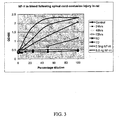
- spinal cord injury was produced using a standardized New York impactor device with a 10g weight falling 25mm. Sham injury animals received a laminectomy and were placed in the injury apparatus but were not injured. The experimentally treated animals were sacrificed at 24, hours, 48 hours, 72 hours, 5 days, 7 days and 6 weeks after injury. Blood was collected and allowed to clot for 1-2 hours at room temperature, and then stored frozen. As shown in Figure 3 strong signals were obtained from serum samples of animals which had spinal cord contusion injuries. The amount of NF-H detected was significant after 24 hours and increased over 48 and 72 hours. At 5 days the level of NF-H was somewhat lower and by 7 days was almost back to background levels.
- the NF-H level in the experimental animals sera was calculated to be in the range from 26 ⁇ g/L in the 24 hour animals to as much as 66 ⁇ g/L in the 72 hour post injury animals.
- Untreated animals were those which did not have mechanical injuries and were typically being sacrificed at the end of experiments performed for reasons irrelevant to these studies, and revealed no detectable NF-H signal.
- Further controls were sham treated animals, which were anesthetized and had their spinal cords exposed as did the experimental group, but were not subjected to the weight drop paradigm. None of these animals showed any significant NF-H immunoreactivity with the current assay.
- a kit which detects NF-H in sera using, for example, a simple diffusion and antibody capture procedure run in a filter, as has been developed for other kinds of biomarker found in sera and other fluids, may be particularly useful.
- This kit could be used to quantitate the degree of neuronal damage in a variety of situations apart from the examples illustrated here.
- An assay which detects such markers is useful experimentally in animal studies and is expected to be diagnostically useful in humans.
- the degree of neuronal injury in spinal cord injury and traumatic brain injury patients is difficult to determine using MRI or by other current imaging methods.
- An assay based on detection of a readily detectable neuronal protein such as this one could rapidly assess the degree of neuronal damage in such accident victims.
- it is expected that the level of NF-H expression can be correlated with a specific degree of neuronal injury and a specific prognosis.
Landscapes
- Health & Medical Sciences (AREA)
- Life Sciences & Earth Sciences (AREA)
- Chemical & Material Sciences (AREA)
- Engineering & Computer Science (AREA)
- Biomedical Technology (AREA)
- Molecular Biology (AREA)
- Immunology (AREA)
- Hematology (AREA)
- Urology & Nephrology (AREA)
- Proteomics, Peptides & Aminoacids (AREA)
- Biochemistry (AREA)
- Medicinal Chemistry (AREA)
- General Health & Medical Sciences (AREA)
- Organic Chemistry (AREA)
- Biotechnology (AREA)
- General Physics & Mathematics (AREA)
- Microbiology (AREA)
- Physics & Mathematics (AREA)
- Analytical Chemistry (AREA)
- Cell Biology (AREA)
- Neurosurgery (AREA)
- Food Science & Technology (AREA)
- Pathology (AREA)
- Neurology (AREA)
- Genetics & Genomics (AREA)
- Biophysics (AREA)
- Investigating Or Analysing Biological Materials (AREA)
- Peptides Or Proteins (AREA)
- Investigating Or Analysing Materials By The Use Of Chemical Reactions (AREA)
Applications Claiming Priority (2)
| Application Number | Priority Date | Filing Date | Title |
|---|---|---|---|
| US45928603P | 2003-03-31 | 2003-03-31 | |
| PCT/US2004/009114 WO2004091379A2 (en) | 2003-03-31 | 2004-03-26 | Assessing neuronal damage from blood samples |
Publications (3)
| Publication Number | Publication Date |
|---|---|
| EP1613204A2 EP1613204A2 (en) | 2006-01-11 |
| EP1613204A4 EP1613204A4 (en) | 2007-04-04 |
| EP1613204B1 true EP1613204B1 (en) | 2009-08-19 |
Family
ID=33299668
Family Applications (1)
| Application Number | Title | Priority Date | Filing Date |
|---|---|---|---|
| EP04758954A Expired - Lifetime EP1613204B1 (en) | 2003-03-31 | 2004-03-26 | Assessing neuronal damage from blood samples |
Country Status (10)
| Country | Link |
|---|---|
| US (3) | US20040241762A1 (https=) |
| EP (1) | EP1613204B1 (https=) |
| JP (1) | JP4557971B2 (https=) |
| AT (1) | ATE440286T1 (https=) |
| AU (1) | AU2004229317B2 (https=) |
| CA (1) | CA2520945C (https=) |
| DE (1) | DE602004022645D1 (https=) |
| DK (1) | DK1613204T3 (https=) |
| ES (1) | ES2332136T3 (https=) |
| WO (1) | WO2004091379A2 (https=) |
Families Citing this family (6)
| Publication number | Priority date | Publication date | Assignee | Title |
|---|---|---|---|---|
| ES2367311T3 (es) * | 2004-04-15 | 2011-11-02 | University Of Florida Research Foundation, Inc. | Productos de degradación proteolítica de map-2 como biomarcadores de diagnóstico para las lesiones neurales. |
| WO2007139866A2 (en) * | 2006-05-24 | 2007-12-06 | The University Of Miami | Screening method and system to estimate the severity of injury in critically ill patients |
| US20100159615A1 (en) * | 2006-12-27 | 2010-06-24 | Haruo Matsuda | Immunological detection method using avian antibody |
| WO2012005588A2 (en) * | 2010-07-07 | 2012-01-12 | Vereniging Voor Christelijk Hoger Onderwijs, Wetenschappelijk Onderzoek En Patiëntenzorg | Novel biomarkers for detecting neuronal loss |
| EP3129780A4 (en) * | 2014-04-07 | 2017-12-13 | Iron Horse Diagnostics Inc. | Traumatic brain injury and neurodegenerative biomarkers, methods, and systems |
| CN112823048A (zh) * | 2018-07-27 | 2021-05-18 | 维拉维斯公司 | 消除和富集的方法 |
Family Cites Families (5)
| Publication number | Priority date | Publication date | Assignee | Title |
|---|---|---|---|---|
| LU86652A1 (de) * | 1986-11-10 | 1988-06-13 | Progen Biotechnik Gmbh | Verfahren zum auffinden von gewebslaesionen |
| EP0378924B1 (en) * | 1988-12-21 | 1996-11-13 | The General Hospital Corporation | Detection of neurological disease or dysfunction |
| US5595722A (en) * | 1993-01-28 | 1997-01-21 | Neorx Corporation | Method for identifying an agent which increases TGF-beta levels |
| GB9719879D0 (en) * | 1997-09-19 | 1997-11-19 | Neuropa Ltd | Protein |
| US6589746B1 (en) * | 1999-10-21 | 2003-07-08 | University Of Cincinnati | Method of detecting axonally-derived protein tau in patients with traumatic CNS injury |
-
2004
- 2004-03-26 US US10/810,388 patent/US20040241762A1/en not_active Abandoned
- 2004-03-26 DK DK04758954T patent/DK1613204T3/da active
- 2004-03-26 AT AT04758954T patent/ATE440286T1/de not_active IP Right Cessation
- 2004-03-26 ES ES04758954T patent/ES2332136T3/es not_active Expired - Lifetime
- 2004-03-26 WO PCT/US2004/009114 patent/WO2004091379A2/en not_active Ceased
- 2004-03-26 DE DE602004022645T patent/DE602004022645D1/de not_active Expired - Lifetime
- 2004-03-26 JP JP2006509274A patent/JP4557971B2/ja not_active Expired - Fee Related
- 2004-03-26 AU AU2004229317A patent/AU2004229317B2/en not_active Ceased
- 2004-03-26 EP EP04758954A patent/EP1613204B1/en not_active Expired - Lifetime
- 2004-03-26 CA CA2520945A patent/CA2520945C/en not_active Expired - Fee Related
-
2010
- 2010-03-17 US US12/726,064 patent/US20100184105A1/en not_active Abandoned
-
2014
- 2014-11-21 US US14/550,240 patent/US20160349272A1/en not_active Abandoned
Also Published As
| Publication number | Publication date |
|---|---|
| CA2520945C (en) | 2014-03-25 |
| EP1613204A4 (en) | 2007-04-04 |
| US20040241762A1 (en) | 2004-12-02 |
| US20160349272A1 (en) | 2016-12-01 |
| WO2004091379A3 (en) | 2005-12-22 |
| ATE440286T1 (de) | 2009-09-15 |
| AU2004229317B2 (en) | 2012-01-12 |
| JP2006522336A (ja) | 2006-09-28 |
| US20100184105A1 (en) | 2010-07-22 |
| DE602004022645D1 (de) | 2009-10-01 |
| AU2004229317A1 (en) | 2004-10-28 |
| DK1613204T3 (da) | 2009-12-07 |
| JP4557971B2 (ja) | 2010-10-06 |
| ES2332136T3 (es) | 2010-01-27 |
| EP1613204A2 (en) | 2006-01-11 |
| HK1085538A1 (en) | 2006-08-25 |
| CA2520945A1 (en) | 2004-10-28 |
| WO2004091379A2 (en) | 2004-10-28 |
Similar Documents
| Publication | Publication Date | Title |
|---|---|---|
| CA2607285C (en) | Diagnosis of liver pathology through assessment of protein glycosylation | |
| US20160349272A1 (en) | Assessing neuronal damage from blood samples | |
| US20050176078A1 (en) | Detection and/or monitoring of synuclein-related diseases | |
| US20110065205A1 (en) | Method for determining prognosis of acute central nervous system disorder | |
| WO1997038315A1 (en) | A method of detecting transmissible spongiform encephalopathies | |
| JPH06502912A (ja) | アナライト変異体分析 | |
| JP5322556B2 (ja) | 新規非アルコール性脂肪性肝疾患バイオマーカーおよび該バイオマーカーを用いた非アルコール性脂肪性肝疾患の検出方法 | |
| CN114573692A (zh) | 用于检测嗜铬粒蛋白a的免疫测定与抗体 | |
| JP7449530B2 (ja) | 腎癌の検出方法及び検査薬 | |
| JP4515099B2 (ja) | Lasp−1免疫反応性の決定によって炎症性疾患および感染を診断するための方法 | |
| JP2000515854A (ja) | 脳タンパク質s―100の存在の測定方法 | |
| JP2008533454A (ja) | 炎症及び感染症のためのバイオマーカーとしての短鎖srlアルコールデヒドロゲナーゼ(dhrs4)の測定 | |
| WO1998026293A9 (en) | Methods of detecting transmissible spongiform encephalopathies by detecting 14-3-3 protein isoforms | |
| WO1998026293A1 (en) | Methods of detecting transmissible spongiform encephalopathies by detecting 14-3-3 protein isoforms | |
| HK1085538B (en) | Assessing neuronal damage from blood samples | |
| AU2012202051A1 (en) | Assessing neuronal damage from blood samples | |
| WO2025182761A1 (ja) | Gfapの検出方法、アルツハイマー病の診断を補助する方法、及びそれらに用いるキット | |
| KR101908610B1 (ko) | 변형 프리온 감염 특이발현 단백질 검출 방법 및 이를 이용한 프리온 질환 진단 방법 | |
| US20230053846A1 (en) | Method for detecting cancer bone metastasis and detection reagent | |
| AU2012247075B2 (en) | Diagnosis of liver pathology through assessment of protein glycosylation | |
| KR20200077779A (ko) | 퇴행성 뇌질환 발병 위험성 예측용 조성물 및 이를 이용한 퇴행성 뇌질환의 발병 위험성 예측 방법 | |
| JPH1123578A (ja) | アルドラーゼアイソザイムの測定方法及びアルドラーゼアイソザイム測定用標準液 |
Legal Events
| Date | Code | Title | Description |
|---|---|---|---|
| PUAI | Public reference made under article 153(3) epc to a published international application that has entered the european phase |
Free format text: ORIGINAL CODE: 0009012 |
|
| PUAK | Availability of information related to the publication of the international search report |
Free format text: ORIGINAL CODE: 0009015 |
|
| 17P | Request for examination filed |
Effective date: 20051026 |
|
| AK | Designated contracting states |
Kind code of ref document: A2 Designated state(s): AT BE BG CH CY CZ DE DK EE ES FI FR GB GR HU IE IT LI LU MC NL PL PT RO SE SI SK TR |
|
| AX | Request for extension of the european patent |
Extension state: AL LT LV MK |
|
| RIC1 | Information provided on ipc code assigned before grant |
Ipc: G01N 33/53 20060101AFI20060109BHEP |
|
| RAP1 | Party data changed (applicant data changed or rights of an application transferred) |
Owner name: UNIVERSITY OF FLORIDA RESEARCH FOUNDATION, INC. |
|
| DAX | Request for extension of the european patent (deleted) | ||
| REG | Reference to a national code |
Ref country code: HK Ref legal event code: DE Ref document number: 1085538 Country of ref document: HK |
|
| RIC1 | Information provided on ipc code assigned before grant |
Ipc: C07K 16/18 20060101ALI20070222BHEP Ipc: G01N 33/68 20060101AFI20070222BHEP |
|
| A4 | Supplementary search report drawn up and despatched |
Effective date: 20070305 |
|
| 17Q | First examination report despatched |
Effective date: 20070717 |
|
| GRAP | Despatch of communication of intention to grant a patent |
Free format text: ORIGINAL CODE: EPIDOSNIGR1 |
|
| GRAS | Grant fee paid |
Free format text: ORIGINAL CODE: EPIDOSNIGR3 |
|
| GRAA | (expected) grant |
Free format text: ORIGINAL CODE: 0009210 |
|
| AK | Designated contracting states |
Kind code of ref document: B1 Designated state(s): AT BE BG CH CY CZ DE DK EE ES FI FR GB GR HU IE IT LI LU MC NL PL PT RO SE SI SK TR |
|
| REG | Reference to a national code |
Ref country code: GB Ref legal event code: FG4D |
|
| REG | Reference to a national code |
Ref country code: CH Ref legal event code: EP |
|
| REG | Reference to a national code |
Ref country code: IE Ref legal event code: FG4D |
|
| REF | Corresponds to: |
Ref document number: 602004022645 Country of ref document: DE Date of ref document: 20091001 Kind code of ref document: P |
|
| REG | Reference to a national code |
Ref country code: HK Ref legal event code: GR Ref document number: 1085538 Country of ref document: HK |
|
| REG | Reference to a national code |
Ref country code: SE Ref legal event code: TRGR |
|
| REG | Reference to a national code |
Ref country code: DK Ref legal event code: T3 |
|
| REG | Reference to a national code |
Ref country code: ES Ref legal event code: FG2A Ref document number: 2332136 Country of ref document: ES Kind code of ref document: T3 |
|
| PG25 | Lapsed in a contracting state [announced via postgrant information from national office to epo] |
Ref country code: AT Free format text: LAPSE BECAUSE OF FAILURE TO SUBMIT A TRANSLATION OF THE DESCRIPTION OR TO PAY THE FEE WITHIN THE PRESCRIBED TIME-LIMIT Effective date: 20090819 Ref country code: FI Free format text: LAPSE BECAUSE OF FAILURE TO SUBMIT A TRANSLATION OF THE DESCRIPTION OR TO PAY THE FEE WITHIN THE PRESCRIBED TIME-LIMIT Effective date: 20090819 |
|
| PG25 | Lapsed in a contracting state [announced via postgrant information from national office to epo] |
Ref country code: SI Free format text: LAPSE BECAUSE OF FAILURE TO SUBMIT A TRANSLATION OF THE DESCRIPTION OR TO PAY THE FEE WITHIN THE PRESCRIBED TIME-LIMIT Effective date: 20090819 Ref country code: PL Free format text: LAPSE BECAUSE OF FAILURE TO SUBMIT A TRANSLATION OF THE DESCRIPTION OR TO PAY THE FEE WITHIN THE PRESCRIBED TIME-LIMIT Effective date: 20090819 |
|
| PG25 | Lapsed in a contracting state [announced via postgrant information from national office to epo] |
Ref country code: BG Free format text: LAPSE BECAUSE OF FAILURE TO SUBMIT A TRANSLATION OF THE DESCRIPTION OR TO PAY THE FEE WITHIN THE PRESCRIBED TIME-LIMIT Effective date: 20091119 Ref country code: PT Free format text: LAPSE BECAUSE OF FAILURE TO SUBMIT A TRANSLATION OF THE DESCRIPTION OR TO PAY THE FEE WITHIN THE PRESCRIBED TIME-LIMIT Effective date: 20091221 Ref country code: CY Free format text: LAPSE BECAUSE OF FAILURE TO SUBMIT A TRANSLATION OF THE DESCRIPTION OR TO PAY THE FEE WITHIN THE PRESCRIBED TIME-LIMIT Effective date: 20090819 |
|
| PG25 | Lapsed in a contracting state [announced via postgrant information from national office to epo] |
Ref country code: RO Free format text: LAPSE BECAUSE OF FAILURE TO SUBMIT A TRANSLATION OF THE DESCRIPTION OR TO PAY THE FEE WITHIN THE PRESCRIBED TIME-LIMIT Effective date: 20090819 Ref country code: EE Free format text: LAPSE BECAUSE OF FAILURE TO SUBMIT A TRANSLATION OF THE DESCRIPTION OR TO PAY THE FEE WITHIN THE PRESCRIBED TIME-LIMIT Effective date: 20090819 |
|
| PG25 | Lapsed in a contracting state [announced via postgrant information from national office to epo] |
Ref country code: SK Free format text: LAPSE BECAUSE OF FAILURE TO SUBMIT A TRANSLATION OF THE DESCRIPTION OR TO PAY THE FEE WITHIN THE PRESCRIBED TIME-LIMIT Effective date: 20090819 |
|
| PLBE | No opposition filed within time limit |
Free format text: ORIGINAL CODE: 0009261 |
|
| STAA | Information on the status of an ep patent application or granted ep patent |
Free format text: STATUS: NO OPPOSITION FILED WITHIN TIME LIMIT |
|
| PG25 | Lapsed in a contracting state [announced via postgrant information from national office to epo] |
Ref country code: BE Free format text: LAPSE BECAUSE OF FAILURE TO SUBMIT A TRANSLATION OF THE DESCRIPTION OR TO PAY THE FEE WITHIN THE PRESCRIBED TIME-LIMIT Effective date: 20090819 |
|
| 26N | No opposition filed |
Effective date: 20100520 |
|
| PG25 | Lapsed in a contracting state [announced via postgrant information from national office to epo] |
Ref country code: GR Free format text: LAPSE BECAUSE OF FAILURE TO SUBMIT A TRANSLATION OF THE DESCRIPTION OR TO PAY THE FEE WITHIN THE PRESCRIBED TIME-LIMIT Effective date: 20091120 Ref country code: MC Free format text: LAPSE BECAUSE OF NON-PAYMENT OF DUE FEES Effective date: 20100331 |
|
| REG | Reference to a national code |
Ref country code: CH Ref legal event code: PL |
|
| GBPC | Gb: european patent ceased through non-payment of renewal fee |
Effective date: 20100326 |
|
| PG25 | Lapsed in a contracting state [announced via postgrant information from national office to epo] |
Ref country code: LI Free format text: LAPSE BECAUSE OF NON-PAYMENT OF DUE FEES Effective date: 20100331 Ref country code: CH Free format text: LAPSE BECAUSE OF NON-PAYMENT OF DUE FEES Effective date: 20100331 |
|
| PG25 | Lapsed in a contracting state [announced via postgrant information from national office to epo] |
Ref country code: GB Free format text: LAPSE BECAUSE OF NON-PAYMENT OF DUE FEES Effective date: 20100326 |
|
| PG25 | Lapsed in a contracting state [announced via postgrant information from national office to epo] |
Ref country code: LU Free format text: LAPSE BECAUSE OF NON-PAYMENT OF DUE FEES Effective date: 20100326 Ref country code: HU Free format text: LAPSE BECAUSE OF FAILURE TO SUBMIT A TRANSLATION OF THE DESCRIPTION OR TO PAY THE FEE WITHIN THE PRESCRIBED TIME-LIMIT Effective date: 20100220 |
|
| PG25 | Lapsed in a contracting state [announced via postgrant information from national office to epo] |
Ref country code: TR Free format text: LAPSE BECAUSE OF FAILURE TO SUBMIT A TRANSLATION OF THE DESCRIPTION OR TO PAY THE FEE WITHIN THE PRESCRIBED TIME-LIMIT Effective date: 20090819 |
|
| PGFP | Annual fee paid to national office [announced via postgrant information from national office to epo] |
Ref country code: NL Payment date: 20140221 Year of fee payment: 11 Ref country code: IE Payment date: 20140225 Year of fee payment: 11 |
|
| PGFP | Annual fee paid to national office [announced via postgrant information from national office to epo] |
Ref country code: IT Payment date: 20140224 Year of fee payment: 11 Ref country code: ES Payment date: 20140306 Year of fee payment: 11 |
|
| PGFP | Annual fee paid to national office [announced via postgrant information from national office to epo] |
Ref country code: FR Payment date: 20140328 Year of fee payment: 11 |
|
| REG | Reference to a national code |
Ref country code: NL Ref legal event code: MM Effective date: 20150401 |
|
| PG25 | Lapsed in a contracting state [announced via postgrant information from national office to epo] |
Ref country code: IT Free format text: LAPSE BECAUSE OF NON-PAYMENT OF DUE FEES Effective date: 20150326 |
|
| REG | Reference to a national code |
Ref country code: FR Ref legal event code: ST Effective date: 20151130 |
|
| REG | Reference to a national code |
Ref country code: IE Ref legal event code: MM4A |
|
| PG25 | Lapsed in a contracting state [announced via postgrant information from national office to epo] |
Ref country code: IE Free format text: LAPSE BECAUSE OF NON-PAYMENT OF DUE FEES Effective date: 20150326 |
|
| PG25 | Lapsed in a contracting state [announced via postgrant information from national office to epo] |
Ref country code: FR Free format text: LAPSE BECAUSE OF NON-PAYMENT OF DUE FEES Effective date: 20150331 |
|
| REG | Reference to a national code |
Ref country code: ES Ref legal event code: FD2A Effective date: 20160426 |
|
| PGFP | Annual fee paid to national office [announced via postgrant information from national office to epo] |
Ref country code: DE Payment date: 20160218 Year of fee payment: 13 Ref country code: DK Payment date: 20160219 Year of fee payment: 13 Ref country code: CZ Payment date: 20160229 Year of fee payment: 13 |
|
| PGFP | Annual fee paid to national office [announced via postgrant information from national office to epo] |
Ref country code: SE Payment date: 20160219 Year of fee payment: 13 |
|
| PG25 | Lapsed in a contracting state [announced via postgrant information from national office to epo] |
Ref country code: ES Free format text: LAPSE BECAUSE OF NON-PAYMENT OF DUE FEES Effective date: 20150327 |
|
| PG25 | Lapsed in a contracting state [announced via postgrant information from national office to epo] |
Ref country code: NL Free format text: LAPSE BECAUSE OF NON-PAYMENT OF DUE FEES Effective date: 20150401 |
|
| REG | Reference to a national code |
Ref country code: DE Ref legal event code: R119 Ref document number: 602004022645 Country of ref document: DE |
|
| REG | Reference to a national code |
Ref country code: DK Ref legal event code: EBP Effective date: 20170331 |
|
| PG25 | Lapsed in a contracting state [announced via postgrant information from national office to epo] |
Ref country code: CZ Free format text: LAPSE BECAUSE OF NON-PAYMENT OF DUE FEES Effective date: 20170326 |
|
| REG | Reference to a national code |
Ref country code: SE Ref legal event code: EUG |
|
| PG25 | Lapsed in a contracting state [announced via postgrant information from national office to epo] |
Ref country code: SE Free format text: LAPSE BECAUSE OF NON-PAYMENT OF DUE FEES Effective date: 20170327 |
|
| PG25 | Lapsed in a contracting state [announced via postgrant information from national office to epo] |
Ref country code: DE Free format text: LAPSE BECAUSE OF NON-PAYMENT OF DUE FEES Effective date: 20171003 |
|
| PG25 | Lapsed in a contracting state [announced via postgrant information from national office to epo] |
Ref country code: DK Free format text: LAPSE BECAUSE OF NON-PAYMENT OF DUE FEES Effective date: 20170331 |