EP1612276A1 - Verfahren zum Identifizieren von fungizid wirksamen Verbindungen basierend auf Thymidylat-Kinasen - Google Patents
Verfahren zum Identifizieren von fungizid wirksamen Verbindungen basierend auf Thymidylat-Kinasen Download PDFInfo
- Publication number
- EP1612276A1 EP1612276A1 EP05013197A EP05013197A EP1612276A1 EP 1612276 A1 EP1612276 A1 EP 1612276A1 EP 05013197 A EP05013197 A EP 05013197A EP 05013197 A EP05013197 A EP 05013197A EP 1612276 A1 EP1612276 A1 EP 1612276A1
- Authority
- EP
- European Patent Office
- Prior art keywords
- thymidylate kinase
- activity
- thymidylate
- kinase
- fungicides
- Prior art date
- Legal status (The legal status is an assumption and is not a legal conclusion. Google has not performed a legal analysis and makes no representation as to the accuracy of the status listed.)
- Withdrawn
Links
- 102100037357 Thymidylate kinase Human genes 0.000 title claims abstract description 137
- 108010000742 dTMP kinase Proteins 0.000 title claims abstract description 131
- 239000000417 fungicide Substances 0.000 title claims abstract description 32
- 238000000034 method Methods 0.000 title claims description 66
- 241000233866 Fungi Species 0.000 claims abstract description 54
- 150000001875 compounds Chemical class 0.000 claims abstract description 52
- 230000000694 effects Effects 0.000 claims abstract description 43
- 239000003112 inhibitor Substances 0.000 claims abstract description 26
- 230000003032 phytopathogenic effect Effects 0.000 claims abstract description 23
- 230000002538 fungal effect Effects 0.000 claims abstract description 16
- 229920001184 polypeptide Polymers 0.000 claims description 78
- 108090000765 processed proteins & peptides Proteins 0.000 claims description 78
- 102000004196 processed proteins & peptides Human genes 0.000 claims description 77
- 238000006243 chemical reaction Methods 0.000 claims description 18
- 230000000855 fungicidal effect Effects 0.000 claims description 18
- 230000005764 inhibitory process Effects 0.000 claims description 18
- 230000002255 enzymatic effect Effects 0.000 claims description 17
- 239000000203 mixture Substances 0.000 claims description 14
- 229930027945 nicotinamide-adenine dinucleotide Natural products 0.000 claims description 7
- BOPGDPNILDQYTO-NNYOXOHSSA-N nicotinamide-adenine dinucleotide Chemical compound C1=CCC(C(=O)N)=CN1[C@H]1[C@H](O)[C@H](O)[C@@H](COP(O)(=O)OP(O)(=O)OC[C@@H]2[C@H]([C@@H](O)[C@@H](O2)N2C3=NC=NC(N)=C3N=C2)O)O1 BOPGDPNILDQYTO-NNYOXOHSSA-N 0.000 claims description 7
- 230000008569 process Effects 0.000 claims description 7
- 230000003993 interaction Effects 0.000 claims description 6
- 102000003855 L-lactate dehydrogenase Human genes 0.000 claims description 4
- 108700023483 L-lactate dehydrogenases Proteins 0.000 claims description 4
- 108020005115 Pyruvate Kinase Proteins 0.000 claims description 4
- 102000013009 Pyruvate Kinase Human genes 0.000 claims description 4
- LCTONWCANYUPML-UHFFFAOYSA-M Pyruvate Chemical compound CC(=O)C([O-])=O LCTONWCANYUPML-UHFFFAOYSA-M 0.000 claims description 3
- JVTAAEKCZFNVCJ-UHFFFAOYSA-M Lactate Chemical compound CC(O)C([O-])=O JVTAAEKCZFNVCJ-UHFFFAOYSA-M 0.000 claims description 2
- 238000012360 testing method Methods 0.000 abstract description 37
- 230000000843 anti-fungal effect Effects 0.000 abstract description 2
- 229940121375 antifungal agent Drugs 0.000 abstract description 2
- 229940123623 Thymidylate kinase inhibitor Drugs 0.000 abstract 1
- 230000010534 mechanism of action Effects 0.000 abstract 1
- 108090000623 proteins and genes Proteins 0.000 description 29
- 239000000126 substance Substances 0.000 description 23
- 102000004169 proteins and genes Human genes 0.000 description 19
- 241000196324 Embryophyta Species 0.000 description 18
- 210000004027 cell Anatomy 0.000 description 18
- 102000004190 Enzymes Human genes 0.000 description 17
- 108090000790 Enzymes Proteins 0.000 description 17
- 240000004808 Saccharomyces cerevisiae Species 0.000 description 16
- 239000000872 buffer Substances 0.000 description 16
- GYOZYWVXFNDGLU-XLPZGREQSA-N dTMP Chemical compound O=C1NC(=O)C(C)=CN1[C@@H]1O[C@H](COP(O)(O)=O)[C@@H](O)C1 GYOZYWVXFNDGLU-XLPZGREQSA-N 0.000 description 15
- ZKHQWZAMYRWXGA-KQYNXXCUSA-N Adenosine triphosphate Chemical compound C1=NC=2C(N)=NC=NC=2N1[C@@H]1O[C@H](COP(O)(=O)OP(O)(=O)OP(O)(O)=O)[C@@H](O)[C@H]1O ZKHQWZAMYRWXGA-KQYNXXCUSA-N 0.000 description 14
- ZKHQWZAMYRWXGA-UHFFFAOYSA-N Adenosine triphosphate Natural products C1=NC=2C(N)=NC=NC=2N1C1OC(COP(O)(=O)OP(O)(=O)OP(O)(O)=O)C(O)C1O ZKHQWZAMYRWXGA-UHFFFAOYSA-N 0.000 description 14
- 229960001456 adenosine triphosphate Drugs 0.000 description 14
- 235000014680 Saccharomyces cerevisiae Nutrition 0.000 description 13
- 150000001413 amino acids Chemical class 0.000 description 12
- 150000007523 nucleic acids Chemical class 0.000 description 12
- IAZDPXIOMUYVGZ-UHFFFAOYSA-N Dimethylsulphoxide Chemical compound CS(C)=O IAZDPXIOMUYVGZ-UHFFFAOYSA-N 0.000 description 11
- XTWYTFMLZFPYCI-KQYNXXCUSA-N 5'-adenylphosphoric acid Chemical compound C1=NC=2C(N)=NC=NC=2N1[C@@H]1O[C@H](COP(O)(=O)OP(O)(O)=O)[C@@H](O)[C@H]1O XTWYTFMLZFPYCI-KQYNXXCUSA-N 0.000 description 10
- 108020004414 DNA Proteins 0.000 description 10
- FAPWRFPIFSIZLT-UHFFFAOYSA-M Sodium chloride Chemical compound [Na+].[Cl-] FAPWRFPIFSIZLT-UHFFFAOYSA-M 0.000 description 10
- 239000003446 ligand Substances 0.000 description 10
- 108020004707 nucleic acids Proteins 0.000 description 10
- 102000039446 nucleic acids Human genes 0.000 description 10
- 239000000758 substrate Substances 0.000 description 10
- PEDCQBHIVMGVHV-UHFFFAOYSA-N Glycerine Chemical compound OCC(O)CO PEDCQBHIVMGVHV-UHFFFAOYSA-N 0.000 description 9
- 101001027052 Homo sapiens Thymidylate kinase Proteins 0.000 description 9
- 244000301083 Ustilago maydis Species 0.000 description 9
- 238000001727 in vivo Methods 0.000 description 9
- 239000013543 active substance Substances 0.000 description 8
- 230000004071 biological effect Effects 0.000 description 8
- 239000002609 medium Substances 0.000 description 8
- 239000013598 vector Substances 0.000 description 8
- -1 Aromatic radicals Chemical class 0.000 description 7
- 206010005098 Blastomycosis Diseases 0.000 description 7
- 238000003556 assay Methods 0.000 description 7
- 238000009472 formulation Methods 0.000 description 7
- 239000012634 fragment Substances 0.000 description 7
- 230000004927 fusion Effects 0.000 description 7
- 238000000338 in vitro Methods 0.000 description 7
- 229930029653 phosphoenolpyruvate Natural products 0.000 description 7
- DTBNBXWJWCWCIK-UHFFFAOYSA-N phosphoenolpyruvic acid Chemical compound OC(=O)C(=C)OP(O)(O)=O DTBNBXWJWCWCIK-UHFFFAOYSA-N 0.000 description 7
- 238000000746 purification Methods 0.000 description 7
- 241000894007 species Species 0.000 description 7
- FBPFZTCFMRRESA-FSIIMWSLSA-N D-Glucitol Natural products OC[C@H](O)[C@H](O)[C@@H](O)[C@H](O)CO FBPFZTCFMRRESA-FSIIMWSLSA-N 0.000 description 6
- 241000221961 Neurospora crassa Species 0.000 description 6
- 239000004480 active ingredient Substances 0.000 description 6
- 125000003275 alpha amino acid group Chemical group 0.000 description 6
- 108020001507 fusion proteins Proteins 0.000 description 6
- 102000037865 fusion proteins Human genes 0.000 description 6
- RAXXELZNTBOGNW-UHFFFAOYSA-N imidazole Natural products C1=CNC=N1 RAXXELZNTBOGNW-UHFFFAOYSA-N 0.000 description 6
- 238000005259 measurement Methods 0.000 description 6
- 239000000600 sorbitol Substances 0.000 description 6
- 201000007336 Cryptococcosis Diseases 0.000 description 5
- 239000005557 antagonist Substances 0.000 description 5
- 230000015572 biosynthetic process Effects 0.000 description 5
- 238000001514 detection method Methods 0.000 description 5
- 239000003995 emulsifying agent Substances 0.000 description 5
- 230000012010 growth Effects 0.000 description 5
- 238000013537 high throughput screening Methods 0.000 description 5
- 239000008188 pellet Substances 0.000 description 5
- 239000013612 plasmid Substances 0.000 description 5
- 210000001938 protoplast Anatomy 0.000 description 5
- 239000011780 sodium chloride Substances 0.000 description 5
- 239000002904 solvent Substances 0.000 description 5
- 230000009466 transformation Effects 0.000 description 5
- 241000222122 Candida albicans Species 0.000 description 4
- 108091035707 Consensus sequence Proteins 0.000 description 4
- 241000588724 Escherichia coli Species 0.000 description 4
- DHMQDGOQFOQNFH-UHFFFAOYSA-N Glycine Chemical compound NCC(O)=O DHMQDGOQFOQNFH-UHFFFAOYSA-N 0.000 description 4
- 241000282414 Homo sapiens Species 0.000 description 4
- 241001344131 Magnaporthe grisea Species 0.000 description 4
- 241000526686 Paracoccidioides brasiliensis Species 0.000 description 4
- 101100482018 Schizosaccharomyces pombe (strain 972 / ATCC 24843) cdc8 gene Proteins 0.000 description 4
- 239000007983 Tris buffer Substances 0.000 description 4
- 235000015919 Ustilago maydis Nutrition 0.000 description 4
- 238000007792 addition Methods 0.000 description 4
- 238000004458 analytical method Methods 0.000 description 4
- 238000013459 approach Methods 0.000 description 4
- 239000011324 bead Substances 0.000 description 4
- 239000000969 carrier Substances 0.000 description 4
- 101150008249 cdc8 gene Proteins 0.000 description 4
- 238000012512 characterization method Methods 0.000 description 4
- 238000004590 computer program Methods 0.000 description 4
- 230000029087 digestion Effects 0.000 description 4
- 238000005755 formation reaction Methods 0.000 description 4
- 238000002523 gelfiltration Methods 0.000 description 4
- 239000008187 granular material Substances 0.000 description 4
- 238000002360 preparation method Methods 0.000 description 4
- 239000000047 product Substances 0.000 description 4
- VYPSYNLAJGMNEJ-UHFFFAOYSA-N silicon dioxide Inorganic materials O=[Si]=O VYPSYNLAJGMNEJ-UHFFFAOYSA-N 0.000 description 4
- LENZDBCJOHFCAS-UHFFFAOYSA-N tris Chemical compound OCC(N)(CO)CO LENZDBCJOHFCAS-UHFFFAOYSA-N 0.000 description 4
- ZWEHNKRNPOVVGH-UHFFFAOYSA-N 2-Butanone Chemical compound CCC(C)=O ZWEHNKRNPOVVGH-UHFFFAOYSA-N 0.000 description 3
- CSCPPACGZOOCGX-UHFFFAOYSA-N Acetone Chemical compound CC(C)=O CSCPPACGZOOCGX-UHFFFAOYSA-N 0.000 description 3
- 241000223205 Coccidioides immitis Species 0.000 description 3
- 108091026890 Coding region Proteins 0.000 description 3
- YMWUJEATGCHHMB-UHFFFAOYSA-N Dichloromethane Chemical compound ClCCl YMWUJEATGCHHMB-UHFFFAOYSA-N 0.000 description 3
- 241001198387 Escherichia coli BL21(DE3) Species 0.000 description 3
- ZMXDDKWLCZADIW-UHFFFAOYSA-N N,N-Dimethylformamide Chemical compound CN(C)C=O ZMXDDKWLCZADIW-UHFFFAOYSA-N 0.000 description 3
- 241000228453 Pyrenophora Species 0.000 description 3
- 102000006601 Thymidine Kinase Human genes 0.000 description 3
- 108020004440 Thymidine kinase Proteins 0.000 description 3
- YXFVVABEGXRONW-UHFFFAOYSA-N Toluene Chemical compound CC1=CC=CC=C1 YXFVVABEGXRONW-UHFFFAOYSA-N 0.000 description 3
- 238000002835 absorbance Methods 0.000 description 3
- 230000004913 activation Effects 0.000 description 3
- 230000001857 anti-mycotic effect Effects 0.000 description 3
- 239000002543 antimycotic Substances 0.000 description 3
- 229940095731 candida albicans Drugs 0.000 description 3
- 239000003795 chemical substances by application Substances 0.000 description 3
- KRKNYBCHXYNGOX-UHFFFAOYSA-N citric acid Chemical compound OC(=O)CC(O)(C(O)=O)CC(O)=O KRKNYBCHXYNGOX-UHFFFAOYSA-N 0.000 description 3
- 238000010367 cloning Methods 0.000 description 3
- 230000001276 controlling effect Effects 0.000 description 3
- 244000038559 crop plants Species 0.000 description 3
- 230000001086 cytosolic effect Effects 0.000 description 3
- UJLXYODCHAELLY-XLPZGREQSA-N dTDP Chemical compound O=C1NC(=O)C(C)=CN1[C@@H]1O[C@H](COP(O)(=O)OP(O)(O)=O)[C@@H](O)C1 UJLXYODCHAELLY-XLPZGREQSA-N 0.000 description 3
- 238000011161 development Methods 0.000 description 3
- 230000006698 induction Effects 0.000 description 3
- 229910052500 inorganic mineral Inorganic materials 0.000 description 3
- 238000002955 isolation Methods 0.000 description 3
- 239000007788 liquid Substances 0.000 description 3
- 238000004519 manufacturing process Methods 0.000 description 3
- 239000013642 negative control Substances 0.000 description 3
- 125000003729 nucleotide group Chemical group 0.000 description 3
- 230000007918 pathogenicity Effects 0.000 description 3
- 239000013641 positive control Substances 0.000 description 3
- 239000007787 solid Substances 0.000 description 3
- 239000000243 solution Substances 0.000 description 3
- 238000006467 substitution reaction Methods 0.000 description 3
- XLYOFNOQVPJJNP-UHFFFAOYSA-N water Substances O XLYOFNOQVPJJNP-UHFFFAOYSA-N 0.000 description 3
- 241000235389 Absidia Species 0.000 description 2
- 229920001817 Agar Polymers 0.000 description 2
- 108091093088 Amplicon Proteins 0.000 description 2
- 241000228197 Aspergillus flavus Species 0.000 description 2
- 241001225321 Aspergillus fumigatus Species 0.000 description 2
- 241000228245 Aspergillus niger Species 0.000 description 2
- 241000228405 Blastomyces dermatitidis Species 0.000 description 2
- 206010006473 Bronchopulmonary aspergillosis Diseases 0.000 description 2
- 206010007134 Candida infections Diseases 0.000 description 2
- CURLTUGMZLYLDI-UHFFFAOYSA-N Carbon dioxide Chemical compound O=C=O CURLTUGMZLYLDI-UHFFFAOYSA-N 0.000 description 2
- 241000221204 Cryptococcus neoformans Species 0.000 description 2
- 241000371644 Curvularia ravenelii Species 0.000 description 2
- 201000004624 Dermatitis Diseases 0.000 description 2
- 101100010343 Drosophila melanogaster lobo gene Proteins 0.000 description 2
- 241001480036 Epidermophyton floccosum Species 0.000 description 2
- LYCAIKOWRPUZTN-UHFFFAOYSA-N Ethylene glycol Chemical compound OCCO LYCAIKOWRPUZTN-UHFFFAOYSA-N 0.000 description 2
- 239000004606 Fillers/Extenders Substances 0.000 description 2
- 206010058872 Fungal sepsis Diseases 0.000 description 2
- 241000228404 Histoplasma capsulatum Species 0.000 description 2
- XEEYBQQBJWHFJM-UHFFFAOYSA-N Iron Chemical class [Fe] XEEYBQQBJWHFJM-UHFFFAOYSA-N 0.000 description 2
- UQSXHKLRYXJYBZ-UHFFFAOYSA-N Iron oxide Chemical compound [Fe]=O UQSXHKLRYXJYBZ-UHFFFAOYSA-N 0.000 description 2
- 208000002260 Keloid Diseases 0.000 description 2
- 206010023330 Keloid scar Diseases 0.000 description 2
- KDXKERNSBIXSRK-UHFFFAOYSA-N Lysine Natural products NCCCCC(N)C(O)=O KDXKERNSBIXSRK-UHFFFAOYSA-N 0.000 description 2
- 239000007993 MOPS buffer Substances 0.000 description 2
- 241001444195 Madurella Species 0.000 description 2
- 241001480037 Microsporum Species 0.000 description 2
- 241000235395 Mucor Species 0.000 description 2
- 241000699660 Mus musculus Species 0.000 description 2
- 208000031888 Mycoses Diseases 0.000 description 2
- LRHPLDYGYMQRHN-UHFFFAOYSA-N N-Butanol Chemical compound CCCCO LRHPLDYGYMQRHN-UHFFFAOYSA-N 0.000 description 2
- 206010028980 Neoplasm Diseases 0.000 description 2
- 108091028043 Nucleic acid sequence Proteins 0.000 description 2
- 241000736122 Parastagonospora nodorum Species 0.000 description 2
- 201000007100 Pharyngitis Diseases 0.000 description 2
- 241000233614 Phytophthora Species 0.000 description 2
- 241000235645 Pichia kudriavzevii Species 0.000 description 2
- 229920003171 Poly (ethylene oxide) Polymers 0.000 description 2
- ATUOYWHBWRKTHZ-UHFFFAOYSA-N Propane Chemical compound CCC ATUOYWHBWRKTHZ-UHFFFAOYSA-N 0.000 description 2
- 102000001253 Protein Kinase Human genes 0.000 description 2
- 241000293824 Rhinosporidium seeberi Species 0.000 description 2
- 241000235527 Rhizopus Species 0.000 description 2
- 241000235347 Schizosaccharomyces pombe Species 0.000 description 2
- 206010040047 Sepsis Diseases 0.000 description 2
- 241001149963 Sporothrix schenckii Species 0.000 description 2
- 206010041736 Sporotrichosis Diseases 0.000 description 2
- IQFYYKKMVGJFEH-XLPZGREQSA-N Thymidine Chemical compound O=C1NC(=O)C(C)=CN1[C@@H]1O[C@H](CO)[C@@H](O)C1 IQFYYKKMVGJFEH-XLPZGREQSA-N 0.000 description 2
- 101710102179 Thymidylate kinase Proteins 0.000 description 2
- 206010044302 Tracheitis Diseases 0.000 description 2
- 241000223238 Trichophyton Species 0.000 description 2
- 241000222126 [Candida] glabrata Species 0.000 description 2
- OIRDTQYFTABQOQ-KQYNXXCUSA-N adenosine Chemical compound C1=NC=2C(N)=NC=NC=2N1[C@@H]1O[C@H](CO)[C@@H](O)[C@H]1O OIRDTQYFTABQOQ-KQYNXXCUSA-N 0.000 description 2
- 238000001042 affinity chromatography Methods 0.000 description 2
- 239000008272 agar Substances 0.000 description 2
- 239000000556 agonist Substances 0.000 description 2
- 125000001931 aliphatic group Chemical group 0.000 description 2
- 150000001338 aliphatic hydrocarbons Chemical class 0.000 description 2
- 150000001408 amides Chemical class 0.000 description 2
- 229940091771 aspergillus fumigatus Drugs 0.000 description 2
- 208000032343 candida glabrata infection Diseases 0.000 description 2
- 238000006555 catalytic reaction Methods 0.000 description 2
- 230000001413 cellular effect Effects 0.000 description 2
- 238000005859 coupling reaction Methods 0.000 description 2
- JHIVVAPYMSGYDF-UHFFFAOYSA-N cyclohexanone Chemical compound O=C1CCCCC1 JHIVVAPYMSGYDF-UHFFFAOYSA-N 0.000 description 2
- 238000012217 deletion Methods 0.000 description 2
- 230000037430 deletion Effects 0.000 description 2
- 201000010099 disease Diseases 0.000 description 2
- 208000037265 diseases, disorders, signs and symptoms Diseases 0.000 description 2
- 239000002270 dispersing agent Substances 0.000 description 2
- 239000000975 dye Substances 0.000 description 2
- 238000001962 electrophoresis Methods 0.000 description 2
- 238000005516 engineering process Methods 0.000 description 2
- 150000002170 ethers Chemical class 0.000 description 2
- 238000002474 experimental method Methods 0.000 description 2
- 239000000284 extract Substances 0.000 description 2
- 244000000008 fungal human pathogen Species 0.000 description 2
- 238000004128 high performance liquid chromatography Methods 0.000 description 2
- 230000002209 hydrophobic effect Effects 0.000 description 2
- 230000002401 inhibitory effect Effects 0.000 description 2
- 238000004255 ion exchange chromatography Methods 0.000 description 2
- BPHPUYQFMNQIOC-NXRLNHOXSA-N isopropyl beta-D-thiogalactopyranoside Chemical compound CC(C)S[C@@H]1O[C@H](CO)[C@H](O)[C@H](O)[C@H]1O BPHPUYQFMNQIOC-NXRLNHOXSA-N 0.000 description 2
- 229940043355 kinase inhibitor Drugs 0.000 description 2
- 231100000518 lethal Toxicity 0.000 description 2
- 230000001665 lethal effect Effects 0.000 description 2
- 230000000670 limiting effect Effects 0.000 description 2
- 150000002632 lipids Chemical class 0.000 description 2
- 206010025482 malaise Diseases 0.000 description 2
- 239000000463 material Substances 0.000 description 2
- 239000011159 matrix material Substances 0.000 description 2
- 229910052751 metal Inorganic materials 0.000 description 2
- 239000002184 metal Substances 0.000 description 2
- 239000011707 mineral Substances 0.000 description 2
- 239000006151 minimal media Substances 0.000 description 2
- 239000006225 natural substrate Substances 0.000 description 2
- 239000002773 nucleotide Substances 0.000 description 2
- 239000002245 particle Substances 0.000 description 2
- 239000003757 phosphotransferase inhibitor Substances 0.000 description 2
- 238000007747 plating Methods 0.000 description 2
- 238000001556 precipitation Methods 0.000 description 2
- 238000012545 processing Methods 0.000 description 2
- 230000006798 recombination Effects 0.000 description 2
- 238000005215 recombination Methods 0.000 description 2
- 230000002829 reductive effect Effects 0.000 description 2
- 238000011160 research Methods 0.000 description 2
- 230000002441 reversible effect Effects 0.000 description 2
- 238000002821 scintillation proximity assay Methods 0.000 description 2
- 239000000725 suspension Substances 0.000 description 2
- 201000004647 tinea pedis Diseases 0.000 description 2
- 238000013518 transcription Methods 0.000 description 2
- 230000035897 transcription Effects 0.000 description 2
- 230000005730 ADP ribosylation Effects 0.000 description 1
- 244000215068 Acacia senegal Species 0.000 description 1
- XTWYTFMLZFPYCI-UHFFFAOYSA-N Adenosine diphosphate Natural products C1=NC=2C(N)=NC=NC=2N1C1OC(COP(O)(=O)OP(O)(O)=O)C(O)C1O XTWYTFMLZFPYCI-UHFFFAOYSA-N 0.000 description 1
- 102100032534 Adenosine kinase Human genes 0.000 description 1
- 108010076278 Adenosine kinase Proteins 0.000 description 1
- 229920000936 Agarose Polymers 0.000 description 1
- RGCKGOZRHPZPFP-UHFFFAOYSA-N Alizarin Natural products C1=CC=C2C(=O)C3=C(O)C(O)=CC=C3C(=O)C2=C1 RGCKGOZRHPZPFP-UHFFFAOYSA-N 0.000 description 1
- 108700028369 Alleles Proteins 0.000 description 1
- 241000223600 Alternaria Species 0.000 description 1
- 241001149961 Alternaria brassicae Species 0.000 description 1
- 241000219195 Arabidopsis thaliana Species 0.000 description 1
- 239000004475 Arginine Substances 0.000 description 1
- 241001480043 Arthrodermataceae Species 0.000 description 1
- 241000235349 Ascomycota Species 0.000 description 1
- IJGRMHOSHXDMSA-UHFFFAOYSA-N Atomic nitrogen Chemical compound N#N IJGRMHOSHXDMSA-UHFFFAOYSA-N 0.000 description 1
- 241000221198 Basidiomycota Species 0.000 description 1
- DWRXFEITVBNRMK-UHFFFAOYSA-N Beta-D-1-Arabinofuranosylthymine Natural products O=C1NC(=O)C(C)=CN1C1C(O)C(O)C(CO)O1 DWRXFEITVBNRMK-UHFFFAOYSA-N 0.000 description 1
- 241000190150 Bipolaris sorokiniana Species 0.000 description 1
- 241001480061 Blumeria graminis Species 0.000 description 1
- ZOXJGFHDIHLPTG-UHFFFAOYSA-N Boron Chemical compound [B] ZOXJGFHDIHLPTG-UHFFFAOYSA-N 0.000 description 1
- 241001465180 Botrytis Species 0.000 description 1
- 241000233684 Bremia Species 0.000 description 1
- 241000233685 Bremia lactucae Species 0.000 description 1
- 239000002126 C01EB10 - Adenosine Substances 0.000 description 1
- 229910021532 Calcite Inorganic materials 0.000 description 1
- 229920002134 Carboxymethyl cellulose Polymers 0.000 description 1
- 241001157813 Cercospora Species 0.000 description 1
- 241000906476 Cercospora canescens Species 0.000 description 1
- 208000036086 Chromosome Duplication Diseases 0.000 description 1
- 241000760356 Chytridiomycetes Species 0.000 description 1
- KRKNYBCHXYNGOX-UHFFFAOYSA-K Citrate Chemical compound [O-]C(=O)CC(O)(CC([O-])=O)C([O-])=O KRKNYBCHXYNGOX-UHFFFAOYSA-K 0.000 description 1
- 241000228437 Cochliobolus Species 0.000 description 1
- 244000060011 Cocos nucifera Species 0.000 description 1
- 235000013162 Cocos nucifera Nutrition 0.000 description 1
- RYGMFSIKBFXOCR-UHFFFAOYSA-N Copper Chemical compound [Cu] RYGMFSIKBFXOCR-UHFFFAOYSA-N 0.000 description 1
- XDTMQSROBMDMFD-UHFFFAOYSA-N Cyclohexane Chemical compound C1CCCCC1 XDTMQSROBMDMFD-UHFFFAOYSA-N 0.000 description 1
- 230000006820 DNA synthesis Effects 0.000 description 1
- 241001057636 Dracaena deremensis Species 0.000 description 1
- 241000221787 Erysiphe Species 0.000 description 1
- 206010017533 Fungal infection Diseases 0.000 description 1
- 241000223218 Fusarium Species 0.000 description 1
- 241000223194 Fusarium culmorum Species 0.000 description 1
- WQZGKKKJIJFFOK-GASJEMHNSA-N Glucose Natural products OC[C@H]1OC(O)[C@H](O)[C@@H](O)[C@@H]1O WQZGKKKJIJFFOK-GASJEMHNSA-N 0.000 description 1
- 239000004471 Glycine Substances 0.000 description 1
- 229920000084 Gum arabic Polymers 0.000 description 1
- HTTJABKRGRZYRN-UHFFFAOYSA-N Heparin Chemical compound OC1C(NC(=O)C)C(O)OC(COS(O)(=O)=O)C1OC1C(OS(O)(=O)=O)C(O)C(OC2C(C(OS(O)(=O)=O)C(OC3C(C(O)C(O)C(O3)C(O)=O)OS(O)(=O)=O)C(CO)O2)NS(O)(=O)=O)C(C(O)=O)O1 HTTJABKRGRZYRN-UHFFFAOYSA-N 0.000 description 1
- 102000009331 Homeodomain Proteins Human genes 0.000 description 1
- 108010048671 Homeodomain Proteins Proteins 0.000 description 1
- GRRNUXAQVGOGFE-UHFFFAOYSA-N Hygromycin-B Natural products OC1C(NC)CC(N)C(O)C1OC1C2OC3(C(C(O)C(O)C(C(N)CO)O3)O)OC2C(O)C(CO)O1 GRRNUXAQVGOGFE-UHFFFAOYSA-N 0.000 description 1
- XQFRJNBWHJMXHO-RRKCRQDMSA-N IDUR Chemical compound C1[C@H](O)[C@@H](CO)O[C@H]1N1C(=O)NC(=O)C(I)=C1 XQFRJNBWHJMXHO-RRKCRQDMSA-N 0.000 description 1
- 239000005909 Kieselgur Substances 0.000 description 1
- ODKSFYDXXFIFQN-BYPYZUCNSA-P L-argininium(2+) Chemical compound NC(=[NH2+])NCCC[C@H]([NH3+])C(O)=O ODKSFYDXXFIFQN-BYPYZUCNSA-P 0.000 description 1
- LEVWYRKDKASIDU-IMJSIDKUSA-N L-cystine Chemical compound [O-]C(=O)[C@@H]([NH3+])CSSC[C@H]([NH3+])C([O-])=O LEVWYRKDKASIDU-IMJSIDKUSA-N 0.000 description 1
- 241000228456 Leptosphaeria Species 0.000 description 1
- 241000228457 Leptosphaeria maculans Species 0.000 description 1
- 241001330975 Magnaporthe oryzae Species 0.000 description 1
- NTIZESTWPVYFNL-UHFFFAOYSA-N Methyl isobutyl ketone Chemical compound CC(C)CC(C)=O NTIZESTWPVYFNL-UHFFFAOYSA-N 0.000 description 1
- UIHCLUNTQKBZGK-UHFFFAOYSA-N Methyl isobutyl ketone Natural products CCC(C)C(C)=O UIHCLUNTQKBZGK-UHFFFAOYSA-N 0.000 description 1
- ZOKXTWBITQBERF-UHFFFAOYSA-N Molybdenum Chemical compound [Mo] ZOKXTWBITQBERF-UHFFFAOYSA-N 0.000 description 1
- 241000041810 Mycetoma Species 0.000 description 1
- 101900313077 Mycobacterium tuberculosis Thymidylate kinase Proteins 0.000 description 1
- 241001226034 Nectria <echinoderm> Species 0.000 description 1
- 244000061176 Nicotiana tabacum Species 0.000 description 1
- 235000002637 Nicotiana tabacum Nutrition 0.000 description 1
- CTQNGGLPUBDAKN-UHFFFAOYSA-N O-Xylene Chemical compound CC1=CC=CC=C1C CTQNGGLPUBDAKN-UHFFFAOYSA-N 0.000 description 1
- 241001668536 Oculimacula yallundae Species 0.000 description 1
- 206010030216 Oesophagitis Diseases 0.000 description 1
- 108091034117 Oligonucleotide Proteins 0.000 description 1
- 108010038807 Oligopeptides Proteins 0.000 description 1
- 102000015636 Oligopeptides Human genes 0.000 description 1
- 241000233654 Oomycetes Species 0.000 description 1
- 208000007027 Oral Candidiasis Diseases 0.000 description 1
- 241001223281 Peronospora Species 0.000 description 1
- 241000201565 Peronospora viciae f. sp. pisi Species 0.000 description 1
- 108091000080 Phosphotransferase Proteins 0.000 description 1
- 241000233622 Phytophthora infestans Species 0.000 description 1
- 241001503460 Plasmodiophorida Species 0.000 description 1
- 241000233626 Plasmopara Species 0.000 description 1
- 241001281803 Plasmopara viticola Species 0.000 description 1
- 206010067565 Pneumonia cryptococcal Diseases 0.000 description 1
- 241000896242 Podosphaera Species 0.000 description 1
- 241000317981 Podosphaera fuliginea Species 0.000 description 1
- 241001337928 Podosphaera leucotricha Species 0.000 description 1
- 101100505672 Podospora anserina grisea gene Proteins 0.000 description 1
- 229920002562 Polyethylene Glycol 3350 Polymers 0.000 description 1
- 229920001213 Polysorbate 20 Polymers 0.000 description 1
- 239000004372 Polyvinyl alcohol Substances 0.000 description 1
- 108010009736 Protein Hydrolysates Proteins 0.000 description 1
- 241000682843 Pseudocercosporella Species 0.000 description 1
- 241001281802 Pseudoperonospora Species 0.000 description 1
- 241001281805 Pseudoperonospora cubensis Species 0.000 description 1
- 241000342307 Pseudoperonospora humuli Species 0.000 description 1
- 241000221300 Puccinia Species 0.000 description 1
- 241001123569 Puccinia recondita Species 0.000 description 1
- 208000004430 Pulmonary Aspergillosis Diseases 0.000 description 1
- 241000228454 Pyrenophora graminea Species 0.000 description 1
- 241000520648 Pyrenophora teres Species 0.000 description 1
- 241000231139 Pyricularia Species 0.000 description 1
- 241000233639 Pythium Species 0.000 description 1
- 241000918584 Pythium ultimum Species 0.000 description 1
- 108700008625 Reporter Genes Proteins 0.000 description 1
- 102000000505 Ribonucleotide Reductases Human genes 0.000 description 1
- 108010041388 Ribonucleotide Reductases Proteins 0.000 description 1
- 101100020443 Saccharomyces cerevisiae (strain ATCC 204508 / S288c) CDC8 gene Proteins 0.000 description 1
- 101900203263 Saccharomyces cerevisiae Thymidylate kinase Proteins 0.000 description 1
- 241000221662 Sclerotinia Species 0.000 description 1
- 241000221696 Sclerotinia sclerotiorum Species 0.000 description 1
- 229920002684 Sepharose Polymers 0.000 description 1
- 239000004113 Sepiolite Substances 0.000 description 1
- 241001533598 Septoria Species 0.000 description 1
- 244000061456 Solanum tuberosum Species 0.000 description 1
- 235000002595 Solanum tuberosum Nutrition 0.000 description 1
- 241000579741 Sphaerotheca <fungi> Species 0.000 description 1
- 108091081024 Start codon Proteins 0.000 description 1
- 241000193998 Streptococcus pneumoniae Species 0.000 description 1
- 241000187747 Streptomyces Species 0.000 description 1
- 241001617088 Thanatephorus sasakii Species 0.000 description 1
- 102000013090 Thioredoxin-Disulfide Reductase Human genes 0.000 description 1
- 108010079911 Thioredoxin-disulfide reductase Proteins 0.000 description 1
- 241000722133 Tilletia Species 0.000 description 1
- 241000722093 Tilletia caries Species 0.000 description 1
- GWEVSGVZZGPLCZ-UHFFFAOYSA-N Titan oxide Chemical compound O=[Ti]=O GWEVSGVZZGPLCZ-UHFFFAOYSA-N 0.000 description 1
- 108020004566 Transfer RNA Proteins 0.000 description 1
- 102000004142 Trypsin Human genes 0.000 description 1
- 108090000631 Trypsin Proteins 0.000 description 1
- 241000287411 Turdidae Species 0.000 description 1
- 241000221576 Uromyces Species 0.000 description 1
- 241000221577 Uromyces appendiculatus Species 0.000 description 1
- 241000221566 Ustilago Species 0.000 description 1
- 241000514371 Ustilago avenae Species 0.000 description 1
- 241000007070 Ustilago nuda Species 0.000 description 1
- 241000317942 Venturia <ichneumonid wasp> Species 0.000 description 1
- 241000228452 Venturia inaequalis Species 0.000 description 1
- BZHJMEDXRYGGRV-UHFFFAOYSA-N Vinyl chloride Chemical class ClC=C BZHJMEDXRYGGRV-UHFFFAOYSA-N 0.000 description 1
- 240000008042 Zea mays Species 0.000 description 1
- 235000005824 Zea mays ssp. parviglumis Nutrition 0.000 description 1
- 235000002017 Zea mays subsp mays Nutrition 0.000 description 1
- HCHKCACWOHOZIP-UHFFFAOYSA-N Zinc Chemical compound [Zn] HCHKCACWOHOZIP-UHFFFAOYSA-N 0.000 description 1
- 206010061418 Zygomycosis Diseases 0.000 description 1
- JLCPHMBAVCMARE-UHFFFAOYSA-N [3-[[3-[[3-[[3-[[3-[[3-[[3-[[3-[[3-[[3-[[3-[[5-(2-amino-6-oxo-1H-purin-9-yl)-3-[[3-[[3-[[3-[[3-[[3-[[5-(2-amino-6-oxo-1H-purin-9-yl)-3-[[5-(2-amino-6-oxo-1H-purin-9-yl)-3-hydroxyoxolan-2-yl]methoxy-hydroxyphosphoryl]oxyoxolan-2-yl]methoxy-hydroxyphosphoryl]oxy-5-(5-methyl-2,4-dioxopyrimidin-1-yl)oxolan-2-yl]methoxy-hydroxyphosphoryl]oxy-5-(6-aminopurin-9-yl)oxolan-2-yl]methoxy-hydroxyphosphoryl]oxy-5-(6-aminopurin-9-yl)oxolan-2-yl]methoxy-hydroxyphosphoryl]oxy-5-(6-aminopurin-9-yl)oxolan-2-yl]methoxy-hydroxyphosphoryl]oxy-5-(6-aminopurin-9-yl)oxolan-2-yl]methoxy-hydroxyphosphoryl]oxyoxolan-2-yl]methoxy-hydroxyphosphoryl]oxy-5-(5-methyl-2,4-dioxopyrimidin-1-yl)oxolan-2-yl]methoxy-hydroxyphosphoryl]oxy-5-(4-amino-2-oxopyrimidin-1-yl)oxolan-2-yl]methoxy-hydroxyphosphoryl]oxy-5-(5-methyl-2,4-dioxopyrimidin-1-yl)oxolan-2-yl]methoxy-hydroxyphosphoryl]oxy-5-(5-methyl-2,4-dioxopyrimidin-1-yl)oxolan-2-yl]methoxy-hydroxyphosphoryl]oxy-5-(6-aminopurin-9-yl)oxolan-2-yl]methoxy-hydroxyphosphoryl]oxy-5-(6-aminopurin-9-yl)oxolan-2-yl]methoxy-hydroxyphosphoryl]oxy-5-(4-amino-2-oxopyrimidin-1-yl)oxolan-2-yl]methoxy-hydroxyphosphoryl]oxy-5-(4-amino-2-oxopyrimidin-1-yl)oxolan-2-yl]methoxy-hydroxyphosphoryl]oxy-5-(4-amino-2-oxopyrimidin-1-yl)oxolan-2-yl]methoxy-hydroxyphosphoryl]oxy-5-(6-aminopurin-9-yl)oxolan-2-yl]methoxy-hydroxyphosphoryl]oxy-5-(4-amino-2-oxopyrimidin-1-yl)oxolan-2-yl]methyl [5-(6-aminopurin-9-yl)-2-(hydroxymethyl)oxolan-3-yl] hydrogen phosphate Polymers Cc1cn(C2CC(OP(O)(=O)OCC3OC(CC3OP(O)(=O)OCC3OC(CC3O)n3cnc4c3nc(N)[nH]c4=O)n3cnc4c3nc(N)[nH]c4=O)C(COP(O)(=O)OC3CC(OC3COP(O)(=O)OC3CC(OC3COP(O)(=O)OC3CC(OC3COP(O)(=O)OC3CC(OC3COP(O)(=O)OC3CC(OC3COP(O)(=O)OC3CC(OC3COP(O)(=O)OC3CC(OC3COP(O)(=O)OC3CC(OC3COP(O)(=O)OC3CC(OC3COP(O)(=O)OC3CC(OC3COP(O)(=O)OC3CC(OC3COP(O)(=O)OC3CC(OC3COP(O)(=O)OC3CC(OC3COP(O)(=O)OC3CC(OC3COP(O)(=O)OC3CC(OC3COP(O)(=O)OC3CC(OC3COP(O)(=O)OC3CC(OC3CO)n3cnc4c(N)ncnc34)n3ccc(N)nc3=O)n3cnc4c(N)ncnc34)n3ccc(N)nc3=O)n3ccc(N)nc3=O)n3ccc(N)nc3=O)n3cnc4c(N)ncnc34)n3cnc4c(N)ncnc34)n3cc(C)c(=O)[nH]c3=O)n3cc(C)c(=O)[nH]c3=O)n3ccc(N)nc3=O)n3cc(C)c(=O)[nH]c3=O)n3cnc4c3nc(N)[nH]c4=O)n3cnc4c(N)ncnc34)n3cnc4c(N)ncnc34)n3cnc4c(N)ncnc34)n3cnc4c(N)ncnc34)O2)c(=O)[nH]c1=O JLCPHMBAVCMARE-UHFFFAOYSA-N 0.000 description 1
- JCFDSPQTEMXXLO-SLFMBYJQSA-N [[(2r,3s,4r,5r)-5-(6-aminopurin-9-yl)-3,4-dihydroxyoxolan-2-yl]methoxy-hydroxyphosphoryl] [hydroxy-[hydroxy-[hydroxy-[[(2r,3s,5r)-3-hydroxy-5-(5-methyl-2,4-dioxopyrimidin-1-yl)oxolan-2-yl]methoxy]phosphoryl]oxyphosphoryl]oxyphosphoryl] hydrogen phosphate Chemical compound O=C1NC(=O)C(C)=CN1[C@@H]1O[C@H](COP(O)(=O)OP(O)(=O)OP(O)(=O)OP(O)(=O)OP(O)(=O)OC[C@@H]2[C@H]([C@@H](O)[C@@H](O2)N2C3=NC=NC(N)=C3N=C2)O)[C@@H](O)C1 JCFDSPQTEMXXLO-SLFMBYJQSA-N 0.000 description 1
- 238000010521 absorption reaction Methods 0.000 description 1
- 239000000205 acacia gum Substances 0.000 description 1
- 235000010489 acacia gum Nutrition 0.000 description 1
- 230000000895 acaricidal effect Effects 0.000 description 1
- 239000000642 acaricide Substances 0.000 description 1
- 230000021736 acetylation Effects 0.000 description 1
- 238000006640 acetylation reaction Methods 0.000 description 1
- 230000009471 action Effects 0.000 description 1
- 230000003213 activating effect Effects 0.000 description 1
- 230000010933 acylation Effects 0.000 description 1
- 238000005917 acylation reaction Methods 0.000 description 1
- 239000000654 additive Substances 0.000 description 1
- 229960005305 adenosine Drugs 0.000 description 1
- 239000000853 adhesive Substances 0.000 description 1
- 230000001070 adhesive effect Effects 0.000 description 1
- 239000000443 aerosol Substances 0.000 description 1
- 150000001298 alcohols Chemical class 0.000 description 1
- HFVAFDPGUJEFBQ-UHFFFAOYSA-M alizarin red S Chemical compound [Na+].O=C1C2=CC=CC=C2C(=O)C2=C1C=C(S([O-])(=O)=O)C(O)=C2O HFVAFDPGUJEFBQ-UHFFFAOYSA-M 0.000 description 1
- 125000002877 alkyl aryl group Chemical group 0.000 description 1
- 150000008055 alkyl aryl sulfonates Chemical class 0.000 description 1
- 150000008051 alkyl sulfates Chemical class 0.000 description 1
- 229940045714 alkyl sulfonate alkylating agent Drugs 0.000 description 1
- 150000008052 alkyl sulfonates Chemical class 0.000 description 1
- PNEYBMLMFCGWSK-UHFFFAOYSA-N aluminium oxide Inorganic materials [O-2].[O-2].[O-2].[Al+3].[Al+3] PNEYBMLMFCGWSK-UHFFFAOYSA-N 0.000 description 1
- 235000012211 aluminium silicate Nutrition 0.000 description 1
- 230000009435 amidation Effects 0.000 description 1
- 238000007112 amidation reaction Methods 0.000 description 1
- AVKUERGKIZMTKX-NJBDSQKTSA-N ampicillin Chemical compound C1([C@@H](N)C(=O)N[C@H]2[C@H]3SC([C@@H](N3C2=O)C(O)=O)(C)C)=CC=CC=C1 AVKUERGKIZMTKX-NJBDSQKTSA-N 0.000 description 1
- 229960000723 ampicillin Drugs 0.000 description 1
- 125000000129 anionic group Chemical group 0.000 description 1
- 230000000844 anti-bacterial effect Effects 0.000 description 1
- 239000003429 antifungal agent Substances 0.000 description 1
- ODKSFYDXXFIFQN-UHFFFAOYSA-N arginine Natural products OC(=O)C(N)CCCNC(N)=N ODKSFYDXXFIFQN-UHFFFAOYSA-N 0.000 description 1
- 239000012131 assay buffer Substances 0.000 description 1
- 229960000892 attapulgite Drugs 0.000 description 1
- 230000002567 autonomic effect Effects 0.000 description 1
- 230000001580 bacterial effect Effects 0.000 description 1
- 239000003899 bactericide agent Substances 0.000 description 1
- IQFYYKKMVGJFEH-UHFFFAOYSA-N beta-L-thymidine Natural products O=C1NC(=O)C(C)=CN1C1OC(CO)C(O)C1 IQFYYKKMVGJFEH-UHFFFAOYSA-N 0.000 description 1
- 230000003115 biocidal effect Effects 0.000 description 1
- 238000010352 biotechnological method Methods 0.000 description 1
- 229910052796 boron Inorganic materials 0.000 description 1
- 238000009395 breeding Methods 0.000 description 1
- 230000001488 breeding effect Effects 0.000 description 1
- 230000001680 brushing effect Effects 0.000 description 1
- 239000001273 butane Substances 0.000 description 1
- 210000004899 c-terminal region Anatomy 0.000 description 1
- 201000003984 candidiasis Diseases 0.000 description 1
- 239000001569 carbon dioxide Substances 0.000 description 1
- 229910002092 carbon dioxide Inorganic materials 0.000 description 1
- 239000001768 carboxy methyl cellulose Substances 0.000 description 1
- 235000010948 carboxy methyl cellulose Nutrition 0.000 description 1
- 239000008112 carboxymethyl-cellulose Substances 0.000 description 1
- 230000022131 cell cycle Effects 0.000 description 1
- 230000007541 cellular toxicity Effects 0.000 description 1
- 238000005119 centrifugation Methods 0.000 description 1
- 239000003610 charcoal Substances 0.000 description 1
- 239000013522 chelant Substances 0.000 description 1
- 150000008422 chlorobenzenes Chemical class 0.000 description 1
- 230000001684 chronic effect Effects 0.000 description 1
- 238000003776 cleavage reaction Methods 0.000 description 1
- 239000011248 coating agent Substances 0.000 description 1
- 239000008199 coating composition Substances 0.000 description 1
- 238000000576 coating method Methods 0.000 description 1
- 239000010941 cobalt Substances 0.000 description 1
- 229910017052 cobalt Inorganic materials 0.000 description 1
- GUTLYIVDDKVIGB-UHFFFAOYSA-N cobalt atom Chemical compound [Co] GUTLYIVDDKVIGB-UHFFFAOYSA-N 0.000 description 1
- 201000003486 coccidioidomycosis Diseases 0.000 description 1
- 238000010276 construction Methods 0.000 description 1
- 229910052802 copper Inorganic materials 0.000 description 1
- 239000010949 copper Substances 0.000 description 1
- 235000005822 corn Nutrition 0.000 description 1
- 230000008878 coupling Effects 0.000 description 1
- 238000010168 coupling process Methods 0.000 description 1
- 239000000287 crude extract Substances 0.000 description 1
- 239000013078 crystal Substances 0.000 description 1
- 238000012258 culturing Methods 0.000 description 1
- 238000005520 cutting process Methods 0.000 description 1
- 229960003067 cystine Drugs 0.000 description 1
- 230000034994 death Effects 0.000 description 1
- 230000003247 decreasing effect Effects 0.000 description 1
- 230000017858 demethylation Effects 0.000 description 1
- 238000010520 demethylation reaction Methods 0.000 description 1
- 230000001419 dependent effect Effects 0.000 description 1
- 230000037304 dermatophytes Effects 0.000 description 1
- 239000008121 dextrose Substances 0.000 description 1
- GUJOJGAPFQRJSV-UHFFFAOYSA-N dialuminum;dioxosilane;oxygen(2-);hydrate Chemical compound O.[O-2].[O-2].[O-2].[Al+3].[Al+3].O=[Si]=O.O=[Si]=O.O=[Si]=O.O=[Si]=O GUJOJGAPFQRJSV-UHFFFAOYSA-N 0.000 description 1
- 235000014113 dietary fatty acids Nutrition 0.000 description 1
- 239000003085 diluting agent Substances 0.000 description 1
- 239000001177 diphosphate Substances 0.000 description 1
- 238000007598 dipping method Methods 0.000 description 1
- 238000006073 displacement reaction Methods 0.000 description 1
- 239000010459 dolomite Substances 0.000 description 1
- 229910000514 dolomite Inorganic materials 0.000 description 1
- 229940079593 drug Drugs 0.000 description 1
- 239000003814 drug Substances 0.000 description 1
- 235000013399 edible fruits Nutrition 0.000 description 1
- 230000002900 effect on cell Effects 0.000 description 1
- 239000012149 elution buffer Substances 0.000 description 1
- 239000000839 emulsion Substances 0.000 description 1
- 238000005538 encapsulation Methods 0.000 description 1
- 230000007613 environmental effect Effects 0.000 description 1
- 238000001952 enzyme assay Methods 0.000 description 1
- 150000002148 esters Chemical class 0.000 description 1
- 238000011156 evaluation Methods 0.000 description 1
- 238000001704 evaporation Methods 0.000 description 1
- 230000005284 excitation Effects 0.000 description 1
- 230000001747 exhibiting effect Effects 0.000 description 1
- 239000000194 fatty acid Substances 0.000 description 1
- 229930195729 fatty acid Natural products 0.000 description 1
- 150000002211 flavins Chemical class 0.000 description 1
- 235000013312 flour Nutrition 0.000 description 1
- 239000006260 foam Substances 0.000 description 1
- 210000002683 foot Anatomy 0.000 description 1
- 230000022244 formylation Effects 0.000 description 1
- 238000006170 formylation reaction Methods 0.000 description 1
- 238000004362 fungal culture Methods 0.000 description 1
- 208000024386 fungal infectious disease Diseases 0.000 description 1
- 230000006251 gamma-carboxylation Effects 0.000 description 1
- 239000007789 gas Substances 0.000 description 1
- 239000000499 gel Substances 0.000 description 1
- 238000003209 gene knockout Methods 0.000 description 1
- 238000010353 genetic engineering Methods 0.000 description 1
- 230000013595 glycosylation Effects 0.000 description 1
- 238000006206 glycosylation reaction Methods 0.000 description 1
- 230000009036 growth inhibition Effects 0.000 description 1
- 239000001963 growth medium Substances 0.000 description 1
- 150000003278 haem Chemical class 0.000 description 1
- 150000008282 halocarbons Chemical class 0.000 description 1
- 229960002897 heparin Drugs 0.000 description 1
- 229920000669 heparin Polymers 0.000 description 1
- 125000000487 histidyl group Chemical group [H]N([H])C(C(=O)O*)C([H])([H])C1=C([H])N([H])C([H])=N1 0.000 description 1
- 230000006801 homologous recombination Effects 0.000 description 1
- 238000002744 homologous recombination Methods 0.000 description 1
- WGCNASOHLSPBMP-UHFFFAOYSA-N hydroxyacetaldehyde Natural products OCC=O WGCNASOHLSPBMP-UHFFFAOYSA-N 0.000 description 1
- 230000033444 hydroxylation Effects 0.000 description 1
- 238000005805 hydroxylation reaction Methods 0.000 description 1
- GRRNUXAQVGOGFE-NZSRVPFOSA-N hygromycin B Chemical compound O[C@@H]1[C@@H](NC)C[C@@H](N)[C@H](O)[C@H]1O[C@H]1[C@H]2O[C@@]3([C@@H]([C@@H](O)[C@@H](O)[C@@H](C(N)CO)O3)O)O[C@H]2[C@@H](O)[C@@H](CO)O1 GRRNUXAQVGOGFE-NZSRVPFOSA-N 0.000 description 1
- 229940097277 hygromycin b Drugs 0.000 description 1
- 230000001771 impaired effect Effects 0.000 description 1
- 238000011534 incubation Methods 0.000 description 1
- 239000001023 inorganic pigment Substances 0.000 description 1
- 239000002917 insecticide Substances 0.000 description 1
- 230000010354 integration Effects 0.000 description 1
- 238000011835 investigation Methods 0.000 description 1
- 230000026045 iodination Effects 0.000 description 1
- 238000006192 iodination reaction Methods 0.000 description 1
- 229910052742 iron Inorganic materials 0.000 description 1
- 210000001117 keloid Anatomy 0.000 description 1
- 150000002576 ketones Chemical class 0.000 description 1
- 238000012933 kinetic analysis Methods 0.000 description 1
- 239000000787 lecithin Substances 0.000 description 1
- 235000010445 lecithin Nutrition 0.000 description 1
- 125000003588 lysine group Chemical group [H]N([H])C([H])([H])C([H])([H])C([H])([H])C([H])([H])C([H])(N([H])[H])C(*)=O 0.000 description 1
- 229920002521 macromolecule Polymers 0.000 description 1
- WPBNNNQJVZRUHP-UHFFFAOYSA-L manganese(2+);methyl n-[[2-(methoxycarbonylcarbamothioylamino)phenyl]carbamothioyl]carbamate;n-[2-(sulfidocarbothioylamino)ethyl]carbamodithioate Chemical class [Mn+2].[S-]C(=S)NCCNC([S-])=S.COC(=O)NC(=S)NC1=CC=CC=C1NC(=S)NC(=O)OC WPBNNNQJVZRUHP-UHFFFAOYSA-L 0.000 description 1
- 239000004579 marble Substances 0.000 description 1
- 239000003550 marker Substances 0.000 description 1
- 230000001404 mediated effect Effects 0.000 description 1
- 230000021121 meiosis Effects 0.000 description 1
- 239000012528 membrane Substances 0.000 description 1
- 229920000609 methyl cellulose Polymers 0.000 description 1
- 230000011987 methylation Effects 0.000 description 1
- 238000007069 methylation reaction Methods 0.000 description 1
- 239000001923 methylcellulose Substances 0.000 description 1
- 239000004005 microsphere Substances 0.000 description 1
- 239000002480 mineral oil Substances 0.000 description 1
- 239000003595 mist Substances 0.000 description 1
- 230000000394 mitotic effect Effects 0.000 description 1
- 238000002156 mixing Methods 0.000 description 1
- 230000004048 modification Effects 0.000 description 1
- 238000012986 modification Methods 0.000 description 1
- 229910052750 molybdenum Inorganic materials 0.000 description 1
- 239000011733 molybdenum Substances 0.000 description 1
- 229910052901 montmorillonite Inorganic materials 0.000 description 1
- 230000035772 mutation Effects 0.000 description 1
- 230000007498 myristoylation Effects 0.000 description 1
- IJDNQMDRQITEOD-UHFFFAOYSA-N n-butane Chemical compound CCCC IJDNQMDRQITEOD-UHFFFAOYSA-N 0.000 description 1
- OFBQJSOFQDEBGM-UHFFFAOYSA-N n-pentane Natural products CCCCC OFBQJSOFQDEBGM-UHFFFAOYSA-N 0.000 description 1
- 229940042880 natural phospholipid Drugs 0.000 description 1
- 239000005645 nematicide Substances 0.000 description 1
- JCXJVPUVTGWSNB-UHFFFAOYSA-N nitrogen dioxide Inorganic materials O=[N]=O JCXJVPUVTGWSNB-UHFFFAOYSA-N 0.000 description 1
- 108010090409 novozym 234 Proteins 0.000 description 1
- 238000010899 nucleation Methods 0.000 description 1
- 235000015097 nutrients Nutrition 0.000 description 1
- 238000005457 optimization Methods 0.000 description 1
- 210000000056 organ Anatomy 0.000 description 1
- 239000011368 organic material Substances 0.000 description 1
- 239000003960 organic solvent Substances 0.000 description 1
- 230000003647 oxidation Effects 0.000 description 1
- 238000007254 oxidation reaction Methods 0.000 description 1
- 229910052625 palygorskite Inorganic materials 0.000 description 1
- 230000036961 partial effect Effects 0.000 description 1
- 239000006072 paste Substances 0.000 description 1
- 230000001717 pathogenic effect Effects 0.000 description 1
- 239000003208 petroleum Substances 0.000 description 1
- 125000002467 phosphate group Chemical group [H]OP(=O)(O[H])O[*] 0.000 description 1
- 150000003905 phosphatidylinositols Chemical class 0.000 description 1
- 150000003904 phospholipids Chemical class 0.000 description 1
- 230000026731 phosphorylation Effects 0.000 description 1
- 238000006366 phosphorylation reaction Methods 0.000 description 1
- 102000020233 phosphotransferase Human genes 0.000 description 1
- 239000001007 phthalocyanine dye Substances 0.000 description 1
- 239000002798 polar solvent Substances 0.000 description 1
- 229920000151 polyglycol Polymers 0.000 description 1
- 239000010695 polyglycol Substances 0.000 description 1
- 229920000642 polymer Polymers 0.000 description 1
- 239000000256 polyoxyethylene sorbitan monolaurate Substances 0.000 description 1
- 235000010486 polyoxyethylene sorbitan monolaurate Nutrition 0.000 description 1
- 239000011118 polyvinyl acetate Substances 0.000 description 1
- 229920002689 polyvinyl acetate Polymers 0.000 description 1
- 229920002451 polyvinyl alcohol Polymers 0.000 description 1
- 230000001323 posttranslational effect Effects 0.000 description 1
- 239000000843 powder Substances 0.000 description 1
- 239000002243 precursor Substances 0.000 description 1
- 125000002924 primary amino group Chemical group [H]N([H])* 0.000 description 1
- 230000001902 propagating effect Effects 0.000 description 1
- 239000001294 propane Substances 0.000 description 1
- 239000003380 propellant Substances 0.000 description 1
- 238000000159 protein binding assay Methods 0.000 description 1
- 239000003531 protein hydrolysate Substances 0.000 description 1
- 108060006633 protein kinase Proteins 0.000 description 1
- 230000002797 proteolythic effect Effects 0.000 description 1
- 230000006337 proteolytic cleavage Effects 0.000 description 1
- 230000002685 pulmonary effect Effects 0.000 description 1
- 239000008262 pumice Substances 0.000 description 1
- 239000010453 quartz Substances 0.000 description 1
- 150000003254 radicals Chemical class 0.000 description 1
- 230000002285 radioactive effect Effects 0.000 description 1
- 239000011541 reaction mixture Substances 0.000 description 1
- 238000003259 recombinant expression Methods 0.000 description 1
- 230000001105 regulatory effect Effects 0.000 description 1
- 230000010076 replication Effects 0.000 description 1
- 230000003362 replicative effect Effects 0.000 description 1
- 230000000717 retained effect Effects 0.000 description 1
- 230000003307 reticuloendothelial effect Effects 0.000 description 1
- 238000007363 ring formation reaction Methods 0.000 description 1
- 239000011435 rock Substances 0.000 description 1
- 150000003839 salts Chemical class 0.000 description 1
- 230000007017 scission Effects 0.000 description 1
- 238000012216 screening Methods 0.000 description 1
- 229910052624 sepiolite Inorganic materials 0.000 description 1
- 235000019355 sepiolite Nutrition 0.000 description 1
- 238000002864 sequence alignment Methods 0.000 description 1
- 150000004760 silicates Chemical class 0.000 description 1
- 239000000377 silicon dioxide Substances 0.000 description 1
- 238000000527 sonication Methods 0.000 description 1
- 238000001228 spectrum Methods 0.000 description 1
- 238000005507 spraying Methods 0.000 description 1
- 230000007480 spreading Effects 0.000 description 1
- 238000003892 spreading Methods 0.000 description 1
- 230000000087 stabilizing effect Effects 0.000 description 1
- 238000010186 staining Methods 0.000 description 1
- 238000010561 standard procedure Methods 0.000 description 1
- 230000004936 stimulating effect Effects 0.000 description 1
- 238000003860 storage Methods 0.000 description 1
- 229940031000 streptococcus pneumoniae Drugs 0.000 description 1
- 238000012916 structural analysis Methods 0.000 description 1
- 230000004960 subcellular localization Effects 0.000 description 1
- 238000007920 subcutaneous administration Methods 0.000 description 1
- 239000006228 supernatant Substances 0.000 description 1
- 239000004094 surface-active agent Substances 0.000 description 1
- 230000002195 synergetic effect Effects 0.000 description 1
- 238000003786 synthesis reaction Methods 0.000 description 1
- 239000000454 talc Substances 0.000 description 1
- 229910052623 talc Inorganic materials 0.000 description 1
- 229940104230 thymidine Drugs 0.000 description 1
- 210000001519 tissue Anatomy 0.000 description 1
- OGIDPMRJRNCKJF-UHFFFAOYSA-N titanium oxide Inorganic materials [Ti]=O OGIDPMRJRNCKJF-UHFFFAOYSA-N 0.000 description 1
- 231100000419 toxicity Toxicity 0.000 description 1
- 230000001988 toxicity Effects 0.000 description 1
- 230000002103 transcriptional effect Effects 0.000 description 1
- 238000012546 transfer Methods 0.000 description 1
- 230000009261 transgenic effect Effects 0.000 description 1
- 239000012588 trypsin Substances 0.000 description 1
- 230000007306 turnover Effects 0.000 description 1
- 235000015112 vegetable and seed oil Nutrition 0.000 description 1
- 239000008158 vegetable oil Substances 0.000 description 1
- 230000003612 virological effect Effects 0.000 description 1
- 239000011534 wash buffer Substances 0.000 description 1
- 238000005406 washing Methods 0.000 description 1
- 244000235231 white angels trumpet Species 0.000 description 1
- 239000008096 xylene Substances 0.000 description 1
- 239000011701 zinc Substances 0.000 description 1
- 229910052725 zinc Inorganic materials 0.000 description 1
Images



Classifications
-
- C—CHEMISTRY; METALLURGY
- C12—BIOCHEMISTRY; BEER; SPIRITS; WINE; VINEGAR; MICROBIOLOGY; ENZYMOLOGY; MUTATION OR GENETIC ENGINEERING
- C12Q—MEASURING OR TESTING PROCESSES INVOLVING ENZYMES, NUCLEIC ACIDS OR MICROORGANISMS; COMPOSITIONS OR TEST PAPERS THEREFOR; PROCESSES OF PREPARING SUCH COMPOSITIONS; CONDITION-RESPONSIVE CONTROL IN MICROBIOLOGICAL OR ENZYMOLOGICAL PROCESSES
- C12Q1/00—Measuring or testing processes involving enzymes, nucleic acids or microorganisms; Compositions therefor; Processes of preparing such compositions
- C12Q1/02—Measuring or testing processes involving enzymes, nucleic acids or microorganisms; Compositions therefor; Processes of preparing such compositions involving viable microorganisms
- C12Q1/18—Testing for antimicrobial activity of a material
-
- C—CHEMISTRY; METALLURGY
- C12—BIOCHEMISTRY; BEER; SPIRITS; WINE; VINEGAR; MICROBIOLOGY; ENZYMOLOGY; MUTATION OR GENETIC ENGINEERING
- C12Q—MEASURING OR TESTING PROCESSES INVOLVING ENZYMES, NUCLEIC ACIDS OR MICROORGANISMS; COMPOSITIONS OR TEST PAPERS THEREFOR; PROCESSES OF PREPARING SUCH COMPOSITIONS; CONDITION-RESPONSIVE CONTROL IN MICROBIOLOGICAL OR ENZYMOLOGICAL PROCESSES
- C12Q1/00—Measuring or testing processes involving enzymes, nucleic acids or microorganisms; Compositions therefor; Processes of preparing such compositions
- C12Q1/48—Measuring or testing processes involving enzymes, nucleic acids or microorganisms; Compositions therefor; Processes of preparing such compositions involving transferase
- C12Q1/485—Measuring or testing processes involving enzymes, nucleic acids or microorganisms; Compositions therefor; Processes of preparing such compositions involving transferase involving kinase
-
- G—PHYSICS
- G01—MEASURING; TESTING
- G01N—INVESTIGATING OR ANALYSING MATERIALS BY DETERMINING THEIR CHEMICAL OR PHYSICAL PROPERTIES
- G01N2500/00—Screening for compounds of potential therapeutic value
Definitions
- the invention relates to a method for identifying fungicides, the use of polypeptides having the enzymatic activity of a thymidylate kinase for identifying fungicides, and the use of inhibitors of thymidylate kinase as fungicides.
- Thymidylate kinase (EC 2.7.4.9), also known as thymidine monophosphate kinase, thymidylate monophosphate kinase, deoxythymidine 5'-monophosphate kinase, TMPK, catalyzes the reaction of ATP with thymidine 5'-monophosphate (TMP ) to thymidine-5'-diphosphates (TDP) (phosphotransferase reaction, see Figure 1).
- TMP thymidine 5'-monophosphate
- TDP thymidine-5'-diphosphates
- the reaction catalyzed by the thymidylate kinase is an essential step in the provision of DNA synthesis precursors (Baranowska et al., 1990, Newlon and Fangman, 1975, Schild and Byers, 1978, Sclafani and Fangman, 1984, Zamb and Roth, 1977).
- thymidylate kinase has also been obtained from numerous other organisms, for example from Homo sapiens (Swissprot: Accession No .: P23919), Arabidopsis thaliana (Fragmant Swissprot: Accession No .: 081650) or Streptococcus pneumoniae (Swissprot: Accession No .: Q8DQ58).
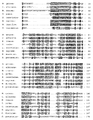
- Sequence similarities are significant within the eukaryotic classes (40-50% identity and 50-60% similarity), whereas sequence identity to bacterial enzymes is less significant (20-25% identity and 40-50% similarity), see Figure 2 ,
- Eukaryotic TMPK heterologously expressed and crystallized the yeast (Lavie et al., 1998; Lavie et al., 1997) and the human (Ostermann et al., 2000; Ostermann et al., 2003) enzyme in E. coli , Enzyme characterization has hitherto been carried out exclusively with purified enzyme from, for example, S. cerevisiae (Jong and Campbell, 1984) or N. crassa (Rossi and Wodward, 1975).
- the object of the present invention was to identify new targets of fungicides in fungi, in particular in phytopathogenic fungi, and to make accessible a method in which inhibitors of such a target or polypeptide can be identified and tested for their fungicidal properties.
- the object has been achieved by isolating the thymidylate kinase-encoding nucleic acid from a phytopathogenic fungus, recovering the polypeptide encoded therefrom and providing a method by which inhibitors of this enzyme can be determined.
- the inhibitors identified by this method can be used in vivo against fungi.
- identity is intended to mean the number of matching amino acids (identity) with other proteins, expressed as a percentage.
- identity is determined by comparisons of a given sequence to other proteins using computer programs. If sequences that are compared to one another have different lengths, the identity must be determined in such a way that the number of amino acids which the shorter sequence has in common with the longer sequence determines the percentage of the identity.
- the identity can be determined by standard means of known and publicly available computer programs such as ClustalW (Thompson et al., Nucleic Acids Research 22 (1994), 4673-4680).
- ClustalW is publicly available from Julie Thompson (Thompson@EMBL-Heidelberg.DE) and Toby Gibson (Gibson@EMBL-Heidelberg.DE), European Molecular Biology Laboratory, Meyerhofstrasse 1, D 69117 Heidelberg, Germany.
- ClustalW can also be found on various websites including the IGBMC (Institut de Génétique et de Biologie Molé Diagram et Cellulaire, BP163, 67404 Illkirch Cedex, France, ftp://ftp-igbmc.u-strasbg.fr/pub/) and the EBI ( ftp://ftp.ebi.ac.uk/pub/software/) as well as on all mirrored websites of the EBI (European Bioinformatics Institute, Wellcome Trust Genome Campus, Hinxton, Cambridge CB10 1SD, UK).
- a protein according to the invention should therefore be understood as meaning those proteins which, when using at least one of the identity determination methods described above, have an identity of at least 70%, preferably of at least 75%, particularly preferably of at least 80%, more preferably at least 85%, and especially at least 90%.
- complete thymidylate kinase describes a thymidylate kinase encoded by a complete coding region of a transcriptional unit starting with the ATG start codon and comprising all the information-bearing e x -on regions of the organism of origin Thymidylate kinase encoding gene, as well as the necessary for a correct termination of transcription signals.
- biological activity of a thymidylate kinase refers to the ability of a polypeptide to catalyze the reaction described above, i.e., the conversion of dTMP and ATP to dTDP.
- active fragment describes no longer complete nucleic acids encoding thymidylate kinase, but which still encode polypeptides having the enzymatic activity of a thymidylate kinase, and a characteristic of the thymidylate kinase reaction as above described catalyze. Such fragments are shorter than the above-described complete thymidylate kinase-encoding nucleic acids. Nucleic acids may have been removed at both the 3 'and / or 5' ends of the sequence, but portions of the sequence may also be deleted, i. have been removed that do not affect the biological activity of thymidylate kinase crucial.
- a lower or possibly also an increased activity, which still allows the characterization or use of the resulting thymidylate kinase fragment, is understood to be sufficient in the sense of the expression used here.
- the term "active fragment” may also refer to the amino acid sequence of the thymidylate kinase and then applies analogously to the above for those polypeptides which, compared to the complete sequence defined above, no longer contain certain parts, but the biological activity of the enzyme is not is decisively impaired.
- the fragments can have different lengths.
- thymidylate kinase inhibition test or “inhibition test” as used herein refers to a method or a test that allows the inhibition of the enzymatic activity of a polypeptide having the activity of a thymidylate kinase by a or more recognize chemical compounds (candidate compound (s)) whereby the chemical compound can be identified as an inhibitor of thymidylate kinase.
- gene as used herein is the term for a portion of the genome of a cell responsible for the synthesis of a polypeptide chain.
- fungicide or "fungicidal” as used herein refers to chemical compounds which are useful for controlling fungi, especially phytopathogenic fungi. Such phytopathogenic fungi are named below, but the enumeration is not exhaustive:
- Pythium species such as Pythium ultimum, Phytophthora species such as Phytophthora infestans , Pseudoperonospora species such as Pseudoperonospora humuli or Pseudoperonospora cubensis, Plasmopara species such as Plasmopara viticola , Bremia species such as Bremia lactucae , Peronospora Species such as Peronospora pisi or P.
- Erysiphe species such as Erysiphe graminis
- Sphaerotheca species such as Sphaerotheca fuliginea
- Podosphaera species such as Podosphaera leucotricha
- Venturia species such as Venturia inaequalis
- Pyrenophora species such as, for example, Pyrenophora teres or P.
- graminea conidia form: Drechslera, Syn: Helminthosporium
- Cochliobolus species such as Cochliobolus sativus
- Uromyces species such as, for example, Uromyces appendiculatus
- Puccinia species such as Puccinia recondita
- sclerot inia species such as Sclerotinia sclerotiorum
- Tilletia species such as Tilletia caries
- Ustilago species such as Ustilago nuda or Ustilago avenae
- Pellicularia species such as Pellicularia sasakii
- Pyricularia species such as Pyricularia oryzae
- Fusarium species such as Fusarium culmorum
- Botrytis species Septoria species such as Septoria nodorum
- Leptosphaeria species such as Leptosphaeria species such as Lepto
- fungicidal active substances which are found with the aid of the thymidylate kinase according to the invention can also interact with thymidylate kinases from human pathogenic fungus species, wherein the interaction with the different thymidylate kinase occurring in these fungi need not always be the same.
- fungicidal or “fungicide” are to be used equally for the terms “antimycotic” or “antimycotic” as well as for the terms “fungicidal” or “fungicidal” in the conventional sense, ie in relation to phytopathogenic fungi , Fungicidal active ingredients, which are found with the help of one from a particular fungus, here, for example, from S. cerevisiae , thymidylate kinase, so can also interact with a thymidylate kinase from numerous other fungal species, especially with phytopathogenic fungi, the interaction with the different thymidylate kinases present in these fungi do not always have to be equally strong. This explains, inter alia, the observed selectivity of the substances active on this enzyme.
- agonist refers to a molecule that accelerates or enhances the activity of the thymidylate kinase.
- antagonist refers to a molecule that slows or prevents the activity of the thymidylate kinase.
- modulator as used herein is the generic term for agonist or antagonist.
- Modulators may be small organic chemical molecules, peptides or antibodies that bind to the polypeptides of the invention or that influence their activity.
- modulators may be small organic chemical molecules, peptides or antibodies that bind to a molecule which in turn binds to the polypeptides of the invention, thereby affecting their biological activity.
- Modulators may be natural substrates and ligands or structural or functional mimetics thereof.
- the term “modulator” as used herein refers to those molecules that are not the natural substrates or ligands.
- thymidylate kinase in phytopathogenic fungi can be a target protein (a so-called "target") of fungicidally active substances.
- the thymidylate kinase is an enzyme which is also important for fungi and is therefore particularly suitable for use as a target protein for the search for new and improved fungicidally active compounds.
- the thymidylate kinase can be a point of attack or "target" for fungicidal active substances, ie the inhibition of the thymidylate kinase for damage or death of the thymidylate kinase could cause fungus.
- the enzyme thymidylate kinase can be used to identify modulators or inhibitors of its enzymatic activity in assay procedures, which is the case with various theoretically interesting targets, e.g. already known to be essential for an organism is not self-evident.
- inhibitors of thymidylate kinase which could be identified in such processes, can be used as fungicides.
- a method has been developed which is suitable for determining the activity of the thymidylate kinase and the inhibition of this activity in a so-called inhibition test, and in this way identifying inhibitors of the enzyme, for example in HTS and UHTS methods.
- the compounds identified using this method according to the invention can be tested in in vivo tests on fungi.
- the thymidylate kinase can also be inhibited in vivo by active substances and a fungal organism treated with these active substances can be damaged and killed by the treatment with these active substances.
- the inhibitors of a fungal thymidylate kinase can therefore be used as fungicides, in particular in crop protection or else as antimycotics in pharmaceutical indications.
- the inhibition of the thymidylate kinase with a substance identified in a method according to the invention for dying off or to growth inhibition of the treated fungi in synthetic media or on the plant leads.
- the thymidylate kinase can be obtained, for example, in a simple manner from fungi such as S. cerevisiae .
- the gene can be expressed, for example, recombinantly in Escherichia coli and an enzyme preparation can be prepared from E. coli cells (Example 2).
- the associated ORF was amplified from genomic DNA by methods known to those skilled in the art via gene-specific primers.
- the corresponding DNA was cloned into the vector pENTR / D-TOPO (Invitrogen Corporation, Carlsbad, California, USA) and transferred by specific recombination (Gateway technology Invitrogen) in the vector pDest17 (Invitrogen).
- the resulting plasmid pDest17-cdc8 contains the complete coding sequence of cdc8 in an N-terminal fusion with a His6 tag from the vector.
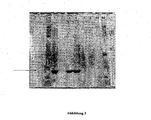
- the CDC8 fusion protein has a calculated mass of 27 kDa (see Example 2 and Figure 3).
- the plasmid pDEST17-cdc8 was then used for recombinant expression of CDC8 in E. coli BL21 (DE3) pLysS (Novagen Inc.) cells (see Example 2).
- polypeptides having the activity of a thymidylate kinase can also be obtained from other fungi, preferably from phytopathogenic fungi, which can then be used in a method according to the invention.
- the thymidylate kinase from S. cerevisiae is preferably used.
- Thymidylate kinases share homologous regions by which they can be identified. Typical of thymidylate kinase is a motif found in many ATP-binding enzymes. This conserved motif is a glycine-rich region that typically forms a flexible loop (a so-called "loop") between a beta-sheet and an alpha-helix. This loop interacts with one of the phosphate groups of the nucleotide. This sequence motif is generally referred to as a "P-loop" and corresponds to the following sequence, which is underlined in Figure 2: [AG] -x (4) -GK- [ST]
- thymidylate kinases are used with the sequence motif GLDRxGKT.
- thymidylate kinases having the sequence motif [LIV] - [LIVMGSTC] -D-R-Y-x (2) -S-G-x- [AV] - [FY] -S are used.
- the subject is underlined in Figure 2.
- PROSITE allows polypeptides to assign a function and thus recognize thioredoxin reductases as such.
- the "one-letter code” is used.
- the symbol “x” stands for a position where each amino acid is accepted.
- a variable position, where various specific amino acids are accepted, is shown in square brackets "[...]", listing the possible amino acids at this position.
- Amino acids that are not accepted at a certain position, on the other hand, are enclosed in curly brackets " ⁇ ... ⁇ ”.
- a dash “-” separates the individual elements or positions of the motif. Repeats a certain position, e.g. "x”, successively, this can be represented by indicating the number of repetitions in a subsequent bracket, e.g. "x (3)”, which stands for "x-x-x".
- a prosite motif ultimately represents the components of a consensus sequence, as well as distances between the amino acids involved and is thus typical of a particular class of enzymes. Based on this motif, it is possible on the basis of known thymidylate-kinase-encoding nucleic acids to identify or assign further polypeptides from (phytopathogenic) fungi which belong to the same class as the polypeptide according to the invention and can therefore also be used in accordance with the invention.
- S. cerevisiae thymidylate kinase this motif is present as well as S. pombe, M. grisea, C. albicans or N. crassa (see Figure 2).
- Prosite motif or the specific consensus sequence are typical of the polypeptides according to the invention, which can be structurally defined on the basis of these consensus sequences and are therefore also uniquely identifiable.
- the present invention therefore also polypeptides from phytopathogenic fungi with the enzymatic activity of a thymidylate kinase, which is the aforementioned Prosite motif [LIV] - [LIVMGSTC] - [DET] - [RH] - [FYHCS] -x (2) -S- [GSTNP] -x- [AVC] - [FY] - [STANQ] and the motive of the P loops, [AG] -x (4) -GK- [ST].
- a thymidylate kinase which is the aforementioned Prosite motif [LIV] - [LIVMGSTC] - [DET] - [RH] - [FYHCS] -x (2) -S- [GSTNP] -x- [AVC] - [FY] - [STANQ] and the motive of the P loops, [AG] -x (4) -GK- [ST].
- nucleic acids coding for thymidylate kinases from other (phytopathogenic) fungi by PCR.
- nucleic acids and their use in methods of identifying fungicidal agents are considered to be encompassed by the present invention.
- polypeptides refers to both short amino acid chains, commonly referred to as peptides, oligopeptides or oligomers, and longer amino acid chains, commonly referred to as proteins. It includes amino acid chains which may be modified either by natural processes such as post-translational processing or by prior art chemical methods. Such modifications may occur at various sites and multiply in a polypeptide, such as at the peptide backbone, at the amino acid side chain, at the amino and / or at the carboxy terminus.
- acetylations include, for example, acetylations, acylations, ADP-ribosylations, amidations, covalent linkages with flavins, heme portions, nucleotides or nucleotide derivatives, lipids or lipid derivatives or phosphatidylinositol, cyclizations, disulfide bridge formations, demethylations, cystine formations, formylations, gamma- Carboxylations, glycosylations, hydroxylations, iodinations, methylations, myristoylations, oxidations, proteolytic processing, phosphorylations, selenoylations and tRNA-mediated additions of amino acids.
- polypeptides of the invention may be in the form of "mature” proteins or as part of larger proteins, e.g. as fusion proteins. Furthermore, they may have seeding or "leader" sequences, pro-sequences, sequences that allow easy purification, such as multiple histidine residues, or additional stabilizing amino acids.
- the proteins according to the invention can also be present as they are naturally present in their organism of origin, from which they can be obtained directly, for example. Active fragments of a thymidylate kinase can also be used in the methods according to the invention as long as they allow the determination of the enzymatic activity of the polypeptide or its inhibition by a candidate compound.
- thymidylate kinase is based on preparative electrophoresis, FPLC, HPLC (e.g., using gel filtration, reverse phase or slightly hydrophobic columns), gel filtration, differential precipitation, ion exchange chromatography, or affinity chromatography (see Example 2).
- a rapid method of isolating thymidylate kinases synthesized by host cells begins with the expression of a fusion protein, whereby the fusion partner can be easily affinity purified.
- the fusion partner may be a His6 tag (see Example 2).
- the fusion protein can then be purified on Ni-NTA agarose.
- the fusion partner can be separated by partial proteolytic cleavage, for example, on linkers between the fusion partner and the polypeptide of the invention to be purified.
- the linker can be designed to include target amino acids, such as arginine and lysine residues, that define sites for cleavage by trypsin. To generate such linkers, standard cloning methods using oligonucleotides can be used.
- compositions containing the polypeptides according to the invention are at least 10-fold and particularly preferably at least 100-fold enriched in protein content compared to a preparation from the host cells.
- polypeptides according to the invention can also be affinity-purified without fusion partners with the aid of antibodies which bind to the polypeptides.
- the cells thus obtained containing the polypeptide of the present invention or the purified polypeptide thus obtained are suitable to be used in methods of identifying modulators or inhibitors of thymidylate kinase.
- the present invention also provides the use of fungal polypeptides exhibiting the enzymatic activity of a thymidylate kinase in methods of identifying inhibitors of polypeptides having the activity of a thymidylate kinase, wherein the thymidylate kinase inhibitors are used as fungicides can.
- the thymidylate kinase from S. cerevisiae is particularly preferably used.
- Fungicidal agents which are found using a thymidylate kinase from a particular fungal species, may also interact with thymidylate kinases from other fungal species, although the interaction with the different thymidylate kinases occurring in these fungi may not always be the same. This explains, among other things, the selectivity of effective substances.
- the use of active ingredients found with a thymidylate kinase of a particular fungus species as fungicides in other species of fungi can be attributed to the fact that thymidylate kinases from different fungal species are very close and display pronounced homology in larger areas. Thus, it is clear from Figure 2 that such homology exists over considerable sequence segments between S.
- yeast thymidylate kinase Substances are not restricted to S. cerevisiae .
- polypeptides having the enzymatic activity of a thymidylate kinase which have a consensus sequence as shown in FIG.
- the present invention therefore also provides a method for identifying fungicides by testing potential inhibitors or modulators of the enzymatic activity of the thymidylate kinase (test compound) in a thymidylate kinase inhibition test (Example 3).
- Methods which are suitable for identifying modulators, in particular inhibitors or antagonists of the polypeptides according to the invention are generally based on the determination of the activity or biological functionality of the polypeptide.
- both whole-cell-based methods in vivo methods
- methods based on the use of the polypeptide isolated from the cells which may be present in purified or partially purified form or else as crude extract, are suitable.
- These cell-free in vitro methods can be used as well as in vivo methods on a laboratory scale, but preferably also in HTS or UHTS methods.
- assays on fungal cultures may be performed to verify the fungicidal activity of the compounds found.
- test systems that aim to test compounds and natural extracts are preferably designed for high throughput rates to maximize the number of substances tested in a given time period.
- Test systems based on cell-free work need purified or semi-purified protein. They are suitable for a "first" test, which primarily aims to detect a possible influence of a substance on the target protein. If such a first test has been carried out and one or more compounds, extracts, etc. found, the effect of such compounds in the laboratory can be investigated even more targeted.
- the inhibition or activation of the polypeptide of the invention in vitro can be checked again, in order subsequently to test the efficacy of the compound on the target organism, here one or more phytopathogenic fungi.
- the compound may then optionally be used as a starting point for the further search and development of fungicidal compounds based on the original structure but optimized, for example, for efficacy, toxicity or selectivity.
- a synthetic reaction mix eg, products of in vitro transcription
- a cellular component such as a membrane, compartment, or any other preparation containing the polypeptides of the invention
- an optionally labeled substrate or ligand of the polypeptides Presence and absence a test compound (or even a mixture of test compounds) which may be an antagonist.
- a test compound or even a mixture of test compounds which may be an antagonist.
- the ability of the test compound to inhibit the activity of the thymidylate kinase for example, recognizable by a reduced reaction of the optionally labeled substrate.
- reporter systems include, but are not limited to, colorimetric or fluorimetric detectable substrates that are converted to a product or a reporter gene responsive to changes in the activity or expression of the polypeptides of the invention or other known binding assays.
- a displacement assay which comprises subjecting the polypeptides of the invention and a potential modulator to a molecule known to bind to the polypeptides of the invention, such as a natural one, under suitable conditions Substrate or ligands or a substrate or ligand mimetic.
- the polypeptides of the invention themselves can be labeled, e.g. fluorimetric or colorimetric, so that one can accurately determine the number of polypeptides that are bound to a ligand or have undergone a reaction.
- the binding can be monitored by means of the optionally labeled substrate, ligands or substrate analogues. In this way, the effectiveness of antagonists can be measured.
- Test systems check both inhibitory or suppressive effects of the substances, as well as stimulatory effects.
- the effectiveness of a substance can be checked by concentration-dependent test series. Control approaches without test substances or without enzyme can be used to evaluate the effects.
- SPA Scintillation Proximity Assay
- the modulators to be identified are small organic chemical compounds.
- a preferred method exploits the fact that in the reaction of the thymidylate kinase one molecule of adenosine diphosphate (ADP) is released.
- the activity or the decrease or increase in the activity of the polypeptide according to the invention can therefore be determined by the detection of the resulting ADP.
- the lower or inhibited activity of the respective thymidylate kinase which is expressed by the reduced formation of ADP, followed by the detection of the resulting ADP by coupling to the downstream reaction of pyruvate kinase and lactate dehydrogenase.
- Pyruvate kinase converts pyruvate, which consumes the resulting ADP according to the equation ADP + phosphoenolpyruvate ⁇ ATP + pyruvate phosphoenolpyruvate, which is then used by lactate dehydrogenase to oxidize NADH to NAD.
- the NAD concentration or decreasing NADH concentration which increases as a result of the coupled reaction, can be determined by absorption or fluorescence measurement (at 340 nm or an excitation wavelength of 360 nm and an emission wavelength of 465 nm) by means of photospectrometry.
- the measurement may also be done in more common formats for HTS or UHTS assays, e.g. in microtiter plates in which e.g. a total volume of 5 to 50 .mu.l per batch or per well is presented and the individual components in the desired final concentrations are present (see Example 3).
- the compound (candidate molecule) to be tested potentially inhibiting or activating the activity of the enzyme (e.g. in a suitable concentration in assay buffer containing dTMP, adenosine triphosphate, phosphoenolpyruvate and the coupled auxiliary enzymes submitted.
- the polypeptide according to the invention is added in test buffer and the reaction started with it.
- the approach will then be e.g. incubated at a suitable temperature for up to 30 minutes and the absorbance decrease measured at 340 nm.
- Another measurement is carried out in a similar approach, but without addition of a candidate molecule (test compound) and without addition of thymidylate kinase (negative control). Another measurement is again in the absence of a candidate molecule, but in the presence of thymidylate kinase (positive control). Negative and positive controls thus give the comparison values to the approaches in the presence of a candidate molecule.
- compounds which inhibit fungal thymidylate kinase and which are capable of damaging fungi of various species e.g.
- inhibitors of a thymidylate kinase according to the invention are suitable to damage fungi, preferably phytopathogenic fungi, or kill.
- a solution of the active substance to be tested can be pipetted into the wells of microtiter plates, for example. After the solvent has evaporated, medium is added to each well. The medium is previously mixed with a suitable concentration of spores or mycelium of the fungus to be tested. The resulting concentrations of the active ingredient are, for example, 0.1, 1, 10 and 100 ppm.
- the plates are then incubated on a shaker at a temperature of 22 ° C until sufficient growth can be detected in the untreated control.
- the present invention therefore also relates to the use of modulators of thymidylate kinase from fungi, preferably from phytopathogenic fungi as fungicides.
- the present invention equally relates to methods for controlling phytopathogenic fungi by allowing an inhibitor of fungal thymidylate kinase, optionally in a suitable formulation, to act on the fighter to be fought and / or its habitat.
- the present invention also relates to fungicides identified by means of a method according to the invention.
- the identified active substances can be converted into the customary formulations, such as solutions, emulsions, suspensions, powders, foams, pastes, granules, aerosols, very fine encapsulations in polymeric substances and in seed coating compositions, and ULV cold and warm mist formulations.
- customary formulations such as solutions, emulsions, suspensions, powders, foams, pastes, granules, aerosols, very fine encapsulations in polymeric substances and in seed coating compositions, and ULV cold and warm mist formulations.
- formulations are prepared in a known manner, e.g. by mixing the active compounds with extenders, that is to say liquid solvents, liquefied gases under pressure and / or solid carriers, if appropriate using surface-active agents, that is to say emulsifiers and / or dispersants and / or foam-forming agents.
- extenders that is to say liquid solvents, liquefied gases under pressure and / or solid carriers
- surface-active agents that is to say emulsifiers and / or dispersants and / or foam-forming agents.
- organic solvents can be used as auxiliary solvents.
- Suitable liquid solvents are essentially: aromatics, such as xylene, toluene or alkylnaphthalenes, chlorinated aromatics or chlorinated aliphatic hydrocarbons, such as chlorobenzenes, chloroethylenes or methylene chloride, aliphatic hydrocarbons, such as cyclohexane or paraffins, e.g. Petroleum fractions, alcohols, such as butanol or glycol, and their ethers and esters, ketones, such as acetone, methyl ethyl ketone, methyl isobutyl ketone or cyclohexanone, strongly polar solvents, such as dimethylformamide and dimethyl sulfoxide, and water.
- aromatics such as xylene, toluene or alkylnaphthalenes
- chlorinated aromatics or chlorinated aliphatic hydrocarbons such as chlorobenzenes, chloroethylenes or methylene chloride
- liquefied gaseous diluents or carriers are meant those liquids which are gaseous at normal temperature and under normal pressure, e.g. Aerosol propellants, such as halogenated hydrocarbons as well as butane, propane, nitrogen and carbon dioxide.
- Suitable solid carriers are: e.g. ground natural minerals, such as kaolins, clays, talc, chalk, quartz, attapulgite, montmorillonite or diatomaceous earth, and ground synthetic minerals, such as finely divided silica, alumina and silicates.
- Suitable solid carriers for granules are: e.g.
- Suitable emulsifiers and / or foam-formers are: e.g. nonionic and anionic emulsifiers, such as polyoxyethylene fatty acid esters, polyoxyethylene fatty alcohol ethers, e.g. Alkylaryl polyglycol ethers, alkylsulfonates, alkyl sulfates, arylsulfonates and protein hydrolysates.
- Suitable dispersants are: e.g. Lignin-sulphite liquors and methylcellulose.
- Adhesives such as carboxymethylcellulose, natural and synthetic powdery, granular or latex-type polymers, such as gum arabic, can be used in the formulations.
- Other additives may be mineral and vegetable oils.
- Dyes such as inorganic pigments, e.g. Iron oxide, titanium oxide, ferrocyan blue and organic dyes such as alizarin, azo and metal phthalocyanine dyes and trace nutrients such as salts of iron, manganese, boron, copper, cobalt, molybdenum and zinc.
- inorganic pigments e.g. Iron oxide, titanium oxide, ferrocyan blue and organic dyes such as alizarin, azo and metal phthalocyanine dyes and trace nutrients such as salts of iron, manganese, boron, copper, cobalt, molybdenum and zinc.
- the formulations generally contain between 0.1 and 95% by weight of active ingredient, preferably between 0.5 and 90%.
- the active compounds according to the invention can also be used in admixture with known fungicides, bactericides, acaricides, nematicides or insecticides, so as to obtain e.g. to broaden the spectrum of action or to prevent development of resistance.
- synergistic effects i. E. the effectiveness of the mixture is greater than the effectiveness of the individual components.
- the application rates can be varied within larger ranges depending on the application.
- plants and parts of plants can be treated.
- plants are understood as meaning all plants and plant populations, such as desired and undesired wild plants or crop plants (including naturally occurring crop plants).
- Crop plants can be plants which can be obtained by conventional breeding and optimization methods or by biotechnological and genetic engineering methods or combinations of these methods, including the transgenic plants and including the plant varieties which can or can not be protected by plant breeders' rights.
- Plant parts are to be understood as meaning all aboveground and subterranean parts and organs of the plants, such as shoot, leaf, flower and root, examples of which include leaves, needles, stems, stems, flowers, fruiting bodies, fruits and seeds, and roots, tubers and rhizomes.
- the plant parts also include crops and vegetative and generative propagation material, such as cuttings, tubers, rhizomes, offshoots and seeds.
- the treatment according to the invention of the plants and plant parts with the active ingredients is carried out directly or by acting on their environment, habitat or storage space according to the customary treatment methods, eg by dipping, spraying, evaporating, atomizing, spreading, brushing and propagating material, in particular in the case of seeds single or multi-layer coating.
- the strains were grown at 28 ° C on PD, YEPS or appropriate minimal media (Holliday, 1974, Tsukuda et al., 1988). Formation of dikaryotic filaments was observed after staining of strains on PD plate media containing 1% Charcoal (Holliday, 1974). Pathogenicity tests were performed as described (Gillissen et al., 1992). Overnight cultures of the strains were resuspended in a concentration of 4x10 7 cells and injected / dropped on young corn plants (Gaspe 'Flint). For each strain, at least 25 plants were infected and developing tumors were examined after 14-21 days.
- primers RB1 (5'-gtgggccatctaggccggcggtgcacagggtgacatcgtcc-3') and p13 (5'-caccaatagcactcgacgcacgtcc-3 ') were used.
- the interfaces Sfi I (a) and Sfi I (b) were introduced.
- the amplicons were restricted with Sfi I and ligated with the 1884 bp Sfi I fragment from the vector pBS-isolated (hygromycin B cassette).
- 50 ml of a culture in YEPS medium were grown at 28 ° C to a cell density of about 5x10 7 / ml (OD 0.6 to 1.0) and then for 7 min. at 2500g (Hereaus, 3500 rpm) in 50 ml Falkonrschreibchen centrifuged.
- the cell pellet was resuspended in 25 ml of SCS buffer (20 mM NaCitrate pH 5.8, 1.0 M sorbitol, (20 mM Na citrate / 1.0 M sorbitol and 20 mM citric acid / 1.0 M sorbitol and adjusted to pH 5.8 with pH meter)), again 7 min.
- the pellet was resuspended in 500 ⁇ l of cold STC buffer (10 mM Tris / HCl pH 7.5, 1.0 M sorbitol, 100 mM CaCl 2 ) and kept on ice. Aliquots can be stored for several months at -80 ° C.
- Plating took place on gradient plates (lower agar: 10 ml of YEPS-1.5% agar-1M sorbitol with antibiotic, just before plating, the lower agar layer was overlaid with 10 ml of YEPS-1.5% agar-1M sorbitol, the Protoplasts streaked and the plates incubated for 3-4 days at 28 ° C.
- Detection of homologous recombination into a genomic locus of cdc8 was performed by standard methods (PCR or Southern analysis) of isolated genomic DNA. It was shown that the integration of the cdc8 knock-out cassette into a cdc8 genomic locus took place and thus a wild-type copy of the cdc8 gene was replaced while the second copy was retained in this diploid strain. The resulting heterozygous cdc8 mutants were subsequently used in the pathogenicity test.
- the ORF was amplified from genomic DNA from Saccharomyces cerevisiae via gene-specific primers.
- the corresponding DNA an amplicon of 651 bp in length, was cloned into the vector pENTR / D-TOPO (Invitrogen Corporation, Carlsbad, California, USA) and transferred by specific recombination (Gateway technology Invitrogen) into the vector pDest17 (Invitrogen).
- the resulting plasmid pDest17-cdc8 contains the complete coding sequence of cdc8 in an N-terminal fusion with a His6 tag from the vector.
- the CDC8 fusion protein has a calculated mass of 27 kDa ( Figure 3).
- the plasmid pDest17-cdc8 was transformed into E. coli BL21 (DE3) pLysS.
- E. coli BL21 DE3 pLysS.
- a preculture was inoculated in 50 ml selection medium. These cells were incubated overnight at 37 ° C and then diluted 1:15 in selection medium (LB medium with 80 ⁇ g / ml ampicillin). Induction was at an OD 600nm of 0.7 with 2mM IPTG (final concentration) at 28 ° C. After induction for 24 h, the cells were harvested and worked up directly.
- Digestion was performed by sonication in digestion buffer (20 mM Tris, 50 mM NaCl, 40 ⁇ M TMP, 10% glycerol, 4 mM MgCl 2 , pH 7.4).
- the cytoplasmic fraction obtained by centrifugation (20 min at 4 ° C, 10,000 g) was used for the purification of the expressed protein.
- the purification was carried out according to the standard protocol of the manufacturer of the 5 mL HiTrap Chelating (Ni) column (Amersham Biosciences). The column was equilibrated with 10 column volume (SV) digestion buffer and washed after the sample application with 7 SV digestion buffer.
- Greiner 384 well microtiter plates were used.
- the negative control was pipetted. This was composed of 5 ⁇ l of 5% DMSO and 25 ⁇ l of Buffer 1 (75 mM MOPS buffer pH 7.5, 10 mM MgCl 2, 5 mM DTT, 1 mM TMP, 100 mM NaCl, 50 mM KCl). Positive control was pipetted into the second column, which consists of 5 ⁇ l of 5% DMSO and 25 ⁇ l of buffer 2 (buffer 1 with 1.6 ⁇ g / ml of thymidylate kinase).
- Buffer 1 75 mM MOPS buffer pH 7.5, 10 mM MgCl 2, 5 mM DTT, 1 mM TMP, 100 mM NaCl, 50 mM KCl.
- Positive control was pipetted into the second column, which consists of 5 ⁇ l of 5% DMSO and 25 ⁇ l of buffer 2 (buffer 1 with 1.6 ⁇ g / ml of thymidy
- a test substance in a concentration of 2 ⁇ M in DMSO was placed in the remaining columns using water to dilute the substance to a volume of 5 ⁇ l.
- 20 ⁇ l of Buffer 2 20 ⁇ l of Buffer 3 (75 mM MOPS buffer pH 7.5, 10 mM MgCl 2, 0.75 mM NADH, 1.25 mM ATP, 1.25 mM PEP, 6.25 mM DTT, 0.025% Tween 20, 125 mM NaCl, 62.5 mM KCl, 5 U / mL PK, 5 U / mL LDH) in all wells.
- a methanolic solution of the identified by a process according to the invention active ingredient in the desired amount, mixed with an emulsifier, pipetted. After the solvent has evaporated, 200 ⁇ l of Potato Dextrose Medium are added per well. The medium is previously mixed with appropriate concentrations of spores or mycelia of the fungus to be tested.
- the resulting concentration of the emulsifier is 300 ppm.
- the plates are then incubated on a shaker at a temperature of 22 ° C until sufficient growth can be detected in the untreated control.
- the evaluation is carried out photometrically at a wavelength of 620 nm. From the measurement data of the various Concentrations are calculated as the drug dose resulting in a 50% inhibition of fungal growth over the untreated control (ED 50 ).
Landscapes
- Chemical & Material Sciences (AREA)
- Organic Chemistry (AREA)
- Life Sciences & Earth Sciences (AREA)
- Health & Medical Sciences (AREA)
- Zoology (AREA)
- Wood Science & Technology (AREA)
- Proteomics, Peptides & Aminoacids (AREA)
- Engineering & Computer Science (AREA)
- Microbiology (AREA)
- Biochemistry (AREA)
- Physics & Mathematics (AREA)
- Molecular Biology (AREA)
- Biotechnology (AREA)
- Biophysics (AREA)
- Analytical Chemistry (AREA)
- Immunology (AREA)
- Bioinformatics & Cheminformatics (AREA)
- General Engineering & Computer Science (AREA)
- General Health & Medical Sciences (AREA)
- Genetics & Genomics (AREA)
- Toxicology (AREA)
- Measuring Or Testing Involving Enzymes Or Micro-Organisms (AREA)
- Agricultural Chemicals And Associated Chemicals (AREA)
Abstract
Die Erfindung bezieht sich auf ein Verfahren zum Identifizieren von Fungiziden, die Verwendung von Thymidylat-Kinase zum Identifizieren von Fungiziden, die Verwendung von Inhibitoren der Thymidylat-Kinase als Fungizide und Verfahren zum Bekämpfen pflanzenpathogener Pilze.
Description
- Die Erfindung bezieht sich auf ein Verfahren zum Identifizieren von Fungiziden, die Verwendung von Polypeptiden mit der enzymatischen Aktivität einer Thymidylat-Kinase zum Identifizieren von Fungiziden, und die Verwendung von Inhibitoren der Thymidylat-Kinase als Fungizide.
- Unerwünschtes Pilzwachstum, das in der Landwirtschaft jedes Jahr zu beträchtlichen Schäden führt, kann durch die Verwendung von Fungiziden kontrolliert werden. Die Ansprüche an Fungizide sind dabei hinsichtlich ihrer Wirksamkeit, Kosten und vor allem ihrer Umweltverträglichkeit stetig angestiegen. Es existiert deshalb ein Bedarf an neuen Substanzen bzw. Substanzklassen, die zu leistungsfähigen und umweltverträglichen neuen Fungiziden entwickelt werden können. Im Allgemeinen ist es üblich, in Gewächshaustests nach solchen neuen Leitstrukturen zu suchen. Solche Tests sind jedoch arbeitsintensiv und teuer. Die Anzahl der Substanzen, die im Gewächshaus getestet werden können, ist entsprechend begrenzt. Eine Alternative zu solchen Tests ist die Verwendung von sogenannten Hochdurchsatzverfahren (HTS = high throughput screening). Dabei werden in einem automatisierten Verfahren eine große Anzahl von Einzelsubstanzen hinsichtlich ihrer Wirkung auf Zellen, individuelle Genprodukte oder Gene getestet. Wird für bestimmte Substanzen eine Wirkung nachgewiesen, so können diese in herkömmlichen Screeningverfahren untersucht und gegebenenfalls weiter entwickelt werden.
- Die Thymidylat-Kinase (EC 2.7.4.9), auch bekannt als Thymidine-monophosphat-Kinase, Thymidylat-monophosphat-Kinase, Deoxythymidine-5'-monophosphate-Kinase, TMPK katalysiert die Reaktion von ATP mit Thymidin-5'-monophosphat (TMP) zu Thymidin-5'-diphosphate (TDP) (Phosphotransferase- Reaktion, siehe Abbildung 1).
- Die von der Thymidylat-Kinase katalysierte Reaktion stellt einen essentiellen Schritt in der Bereitstellung von Vorstufen für die DNA-Synthese dar (Baranowska et al., 1990; Newlon and Fangman, 1975; Schild and Byers, 1978; Sclafani and Fangman, 1984; Zamb and Roth, 1977).
- Gene für die Thymidylat-Kinase wurden aus den Pilzen Saccharomyces cerevisiae (Swissprot Accession No.: P00572) und Schizosaccharomyces pombe (Swissprot Accession No.: P36590) kloniert und konnte darüber hinaus auch in den Genomen weiterer Pilze (z.B. Neurospora crassa EAA29458) und pflanzenpathogener Pilze (z.B. Magnaporthe grisea MG09457.1) identifiziert werden. Daneben wurde die Thymidylat-Kinase auch aus zahlreichen anderen Organismen gewonnen, so z.B. aus Homo sapiens (Swissprot: Accession No.: P23919), Arabidopsis thaliana (Fragmant Swissprot: Accession No.: 081650) oder Streptococcus pneumoniae (Swissprot: Accession No.: Q8DQ58).
- Die Sequenzähnlichkeiten sind innerhalb der eükaryontischen Klassen signifikant (40-50% Identität und 50-60% Ähnlichkeit), während hingegen die Sequenzidentität zu den bakteriellen Enzymen weniger signifikant ist (20-25% Identität und 40-50% Ähnlichkeit), siehe Abbildung 2.
- Von den eukariotischen TMPK wurde das der Hefe (Lavie et al., 1998; Lavie et al., 1997) sowie das humane (Ostermann et al., 2000; Ostermann et al., 2003) Enzym in E.coli heterolog exprimiert und kristallisiert. Enzmycharakterisierungen erfolgten bislang aber ausschließlich mit gereinigtem Enzym aus z.B. S. cerevisiae (Jong and Campbell, 1984) oder N. crassa (Rossi and Wodward, 1975).
- Aufgabe der vorliegenden Erfindung war es, neue Angriffspunkte von Fungiziden in Pilzen, insbesondere in phytopathogenen Pilzen, zu identifizieren und ein Verfahren zugänglich zu machen, in denen Inhibitoren eines solchen Angriffspunktes bzw. Polypeptids identifiziert und auf ihre fungiziden Eigenschaften hin geprüft werden können. Die Aufgabe wurde gelöst, indem aus einem phytopathogenen Pilz die für Thymidylat-Kinase kodierende Nukleinsäure isoliert, das davon kodierte Polypeptid gewonnen und ein Verfahren zur Verfügung gestellt wurde, mit dem Inhibitoren dieses Enzyms bestimmt werden können. Die mit diesem Verfahren identifizierten Inhibitoren können in vivo gegen Pilze eingesetzt werden.
-
- Abbildung 1:
- Schematische Darstellung der von der Thymidylat-Kinase katalysierten Reaktion. Die Thymidylat-Kinase katalysiert die Reaktion von Deoxythymidine 5'-phosphate (dTMP) mit Adenosine 5'-triphosphate (ATP) zu Deoxythymidine 5'-diphosphate (dTDP) und Adenosine 5'-diphosphate (ADP). Bei der Reaktion wird ein Molekül ATP und ein Molekül dTMP verbraucht.
- Abbildung 2:
- Sequenzalignment von Thymidylat-Kinasen aus Magnaporte grisea (M. grisea), Candida albicans (C. albicans), Neurospora crassa (N. crassa), Schizosaccharomyces pombe (S. pombe), Saccharomyces cerevisiae (S. cerevisiae), Homo sapiens (H. sapiens), Mus musculus (M. musculus) und Streptomyces pneumoniae (S. pneumoniae). Graue Schattierung gibt den Bereich guter Konservierung an.
- Abbildung 3:
- SDS-Gel zur Überprüfung der heterologen Expression der Thymidylat-Kinase in E. coli BL21(DE3)pLysS (Novagen). Das überexprimierte His6-Fusionsprotein hat eine Grösse von 27,3 kDa. Jeweils Außen wurde ein Größenstandard aufgetragen (M). Spur 3 und 4: gereinigte Thymidylat-Kinase; Spur 1: Cytoplasmafraktion der überexprimierten Thymidylat-Kinase 24 Stunden nach der Induktion mit IPTG; Spur 5 und 6: Waschfraktionen nach dem Auftragen der Cytoplasmafraktion auf die Metall-Chelate-Sepharose Säule.
- Abbildung 4:
- Graphische Darstellung der Kinetik der Umsetzung von Thymidylat und ATP durch unterschiedliche Konzentrationen an Thymidylat-Kinase im Assay. In einem Assayvolumen von 50 µl wurden 500 µM Thymidylat, 500 µM ATP, 300µM NADH, 400µM PEP (Phosphoenolpyruvat), 0,1U Pyruvate Kinase und 0,1U Lactate Dehydrogenase eingesetzt. Die verwendeten Proteinkonzentrationen der Thymidylat-Kinase sind der Abbildung zu entnehmen. Die Umsetzung wurde anhand der Absorptionsabnahme bei 340 nm durch die Reaktion des freigesetzten ADP mit PEP und NADH zu Lactat und NAD verfolgt.
- Abbildung 5:
- Lineweaver-Burk-Plot zur Bestimmung des K M -Wertes von dTMP (A) und ATP (B). Die gemessenen Werte werden nach Lineweaver und Burk dargestellt, d.h. 1/Vo = 1/Vmax + 1/S x (KM/Vmax), worin Vo die anfängliche Reaktionsgeschwindigkeit, Vmax die maximal erreichbare Umsatzgeschwindigkeit und S die Substratkonzentarion ist. Vmax und KM lassen sich dann als Abszissen- und Ordinatenabschnitt 1/Vmax bzw. 1/KM ablesen. Der KM-Wert für dTMP liegt bei 0,17 mM µM, der KM-Wert für ATP liegt bei 0,16 mM µM.
- Unter dem Begriff "Homologie" bzw. "Identität" soll die Anzahl der übereinstimmenden Aminosäuren (Identität) mit anderen Proteinen, ausgedrückt in Prozent verstanden werden. Bevorzugt wird die Identität durch Vergleiche einer gegebenen Sequenz zu anderen Proteinen mit Hilfe von Computerprogrammen ermittelt. Weisen Sequenzen, die miteinander verglichen werden, unterschiedliche Längen auf, ist die Identität so zu ermitteln, dass die Anzahl an Aminosäuren, welche die kürzere Sequenz mit der längeren Sequenz gemeinsam hat, den prozentualen Anteil der Identität bestimmt. Die Identität kann standardmäßig mittels bekannten und der Öffentlichkeit zur Verfügung stehenden Computerprogrammen wie z.B. ClustalW (Thompson et al., Nucleic Acids Research 22 (1994), 4673-4680) ermittelt werden. ClustalW wird z.B. öffentich zur Verfügung gestellt von Julie Thompson (Thompson@EMBL-Heidelberg.DE) und Toby Gibson (Gibson@EMBL-Heidelberg.DE), European Molecular Biology Laboratory, Meyerhofstrasse 1, D 69117 Heidelberg, Germany. ClustalW kann ebenfalls von verschiedenen Internetseiten, u.a. beim IGBMC (Institut de Génétique et de Biologie Moléculaire et Cellulaire, B.P.163, 67404 Illkirch Cedex, France; ftp://ftp-igbmc.u-strasbg.fr/pub/) und beim EBI (ftp://ftp.ebi.ac.uk/pub/software/) sowie bei allen gespiegelten Internetseiten des EBI (European Bioinformatics Institute, Wellcome Trust Genome Campus, Hinxton, Cambridge CB10 1SD, UK), heruntergeladen werden. Wenn das ClustalW Computerprogramm der Version 1.8 benutzt wird, um die Identität zwischen z.B. einem gegebenen Referenzprotein und anderen Proteinen zu bestimmen, sind folgende Parameter einzustellen: KTUPLE=1, TOPDIAG=5, WINDOW=5, PAIRGAP=3, GAPOPEN=10, GAPEXTEND=0.05, GAPDIST=8, MAXDIV=40, MATRIX=GONNET, ENDGAPS(OFF), NOPGAP, NOHGAP. Eine Möglichkeit zum Auffinden von ähnlichen Sequenzen ist die Durchführung von Sequenzdatenbankrecherchen. Hierbei wird eine oder werden mehrere Sequenzen als sogenannte Abfrage ("query") vorgegeben. Diese Abfragesequenz wird dann mittels statistischen Computerprogrammen mit Sequenzen, die in den ausgewählten Datenbanken enthalten sind, verglichen. Solche Datenbankabfragen ("blast searches") sind dem Fachmann bekannt und können bei verschiedenen Anbietern durchgeführt werden. Wird eine solche Datenbankabfrage z.B. beim NCBI (National Center for Biotechnology Information, http://www.ncbi.nlm.nih.gov/) durchgeführt, so sollen die Standardeinstellungen, die für die jeweilige Vergleichsanfrage vorgegeben sind, benutzt werden. Für Proteinsequenzvergleiche ("blastp") sind dieses folgende Einstellungen: Limit entrez = nicht aktiviert; Filter = low complexity aktiviert; Expect value = 10; word size = 3; Matrix = BLOSUM62; Gap costs: Existence = 11, Extension = 1. Als Ergebnis einer solchen Abfrage werden neben anderen Parametern auch der Anteil an Identität zwischen der Abfragesequenz und den in den Datenbanken aufgefundenen ähnlichen Sequenzen dargestellt. Unter einem erfindungsgemäßen Protein sollen daher im Zusammenhang mit der vorliegenden Erfindung solche Proteine verstanden werden, die bei der Verwendung mindestens einer der vorstehend beschriebenen Methoden zur Identitätsbestimmung eine Identität von mindestens 70 % aufweisen, bevorzugt von mindestens 75 %, besonders bevorzugt von mindestens 80 %, weiter bevorzugt von mindestens 85 %, und insbesondere von mindestens 90 %.
- Der Ausdruck "vollständige Thymidylat-Kinase" wie er hierin verwendet wird, beschreibt eine Thymidylat-Kinase, die von einer vollständigen kodierenden Region einer Transkriptionseinheit kodiert wird, beginnend mit dem ATG-Startcodon und umfassend alle informationstragenden E-xonbereiche des im Herkunftsorganismus vorliegenden, für Thymidylat-Kinase kodierenden Gens, sowie die für eine korrekte Termination der Transkription nötigen Signale.
- Der Ausdruck "biologische" oder "enzymatische" Aktivität einer Thymidylat-Kinase" wie er hierin verwendet wird, bezieht sich auf die Fähigkeit eines Polypeptids, die vorstehend beschriebene Reaktion, d.h. die Umsetzung von dTMP und ATP zu dTDP zu katalysieren.
- Der Ausdruck "aktives Fragment" wie er hierin verwendet wird, beschreibt nicht mehr vollständige Nukleinsäuren kodierend für Thymidylat-Kinase, die aber noch für Polypeptide mit der enzymatische Aktivität einer Thymidylat-Kinase kodieren, und die eine für die Thymidylat-Kinase charakteristische Reaktion wie vorne beschrieben katalysieren können. Solche Fragmente sind kürzer als die oben beschriebenen vollständigen, für die Thymidylat-Kinase kodierenden Nukleinsäuren. Dabei können sowohl an den 3'- und/oder 5'-Enden der Sequenz Nukleinsäuren entfernt worden sein, es können aber auch Teile der Sequenz deletiert, d.h. entfernt worden sein, die die biologische Aktivität der Thymidylat-Kinase nicht entscheidend beeinträchtigen. Eine geringere oder gegebenenfalls auch eine erhöhte Aktivität, die aber noch die Charakterisierung bzw. Verwendung des resultierenden Thymidylat-Kinase Fragments gestattet, wird dabei als ausreichend im Sinne des hier verwendeten Ausdrucks verstanden. Der Ausdruck "aktives Fragment" kann sich ebenso auf die Aminosäuresequenz der Thymidylat-Kinase beziehen und gilt dann analog den obigen Ausführungen für solche Polypeptide, die im Vergleich zur oben definierten vollständigen Sequenz bestimmte Teile nicht mehr enthalten, wobei die biologische Aktivität des Enzyms jedoch nicht entscheidend beeinträchtigt ist. Die Fragmente können dabei verschiedene Länge besitzen.
- Der Begriff "Thymidylat-Kinase-Hemmtest" oder "Hemmtest", wie er hierin verwendet wird, bezieht sich auf ein Verfahren bzw. einen Test, der es gestattet, die Inhibition der enzymatischen Aktivität eines Polypeptids mit der Aktivität einer Thymidylat-Kinase durch eine oder mehrere chemische Verbindungen (Kandidatenverbindung(en)) zu erkennen, wodurch die chemische Verbindung als Inhibitor der Thymidylat-Kinase identifiziert werden kann.
- Der Ausdruck "Gen", wie er hierin verwendet wird, ist die Bezeichnung für einen Abschnitt aus dem Genom einer Zelle, der für die Synthese einer Polypeptid-Kette verantwortlich ist.
- Der Ausdruck "Fungizid" bzw. "fungizid" wie er hierin verwendet wird, bezieht sich auf chemische Verbindungen, die zur Bekämpfung von Pilzen, insbesondere von pflanzenpathogenen Pilzen geeignet sind. Solche pflanzenpathogene Pilze werden nachfolgenden genannt, wobei die Aufzählung nicht abschließend ist:
- Plasmodiophoromycetes, Oomycetes, Chytridiomycetes, Zygomycetes, Ascomycetes, Basidiomycetes und Deuteromycetes, z.B.
- Pythium-Arten, wie beispielsweise Pythium ultimum, Phytophthora-Arten, wie beispielsweise Phytophthora infestans, Pseudoperonospora-Arten, wie beispielsweise Pseudoperonospora humuli oder Pseudoperonospora cubensis, Plasmopara-Arten, wie beispielsweise Plasmopara viticola, Bremia-Arten, wie beispielsweise Bremia lactucae, Peronospora-Arten, wie beispielsweise Peronospora pisi oder P. brassicae, Erysiphe-Arten, wie beispielsweise Erysiphe graminis, Sphaerotheca-Arten, wie beispielsweise Sphaerotheca fuliginea, Podosphaera-Arten, wie beispielsweise Podosphaera leucotricha, Venturia-Arten, wie beispielsweise Venturia inaequalis, Pyrenophora-Arten, wie beispielsweise Pyrenophora teres oder P. graminea (Konidienform: Drechslera, Syn: Helminthosporium), Cochliobolus-Arten, wie beispielsweise Cochliobolus sativus (Konidienform: Drechslera, Syn: Helminthosporium), Uromyces-Arten, wie beispielsweise Uromyces appendiculatus, Puccinia-Arten, wie beispielsweise Puccinia recondita, Sclerotinia-Arten, wie beispielsweise Sclerotinia sclerotiorum, Tilletia-Arten, wie beispielsweise Tilletia caries; Ustilago-Arten, wie beispielsweise Ustilago nuda oder Ustilago avenae, Pellicularia-Arten, wie beispielsweise Pellicularia sasakii, Pyricularia-Arten, wie beispielsweise Pyricularia oryzae, Fusarium-Arten, wie beispielsweise Fusarium culmorum, Botrytis-Arten, Septoria-Arten, wie beispielsweise Septoria nodorum, Leptosphaeria-Arten, wie beispielsweise Leptosphaeria nodorum, Cercospora-Arten, wie beispielsweise Cercospora canescens, Alternaria-Arten, wie beispielsweise Alternaria brassicae oder Pseudocercosporella-Arten, wie beispielsweise Pseudocercosporella herpotrichoides.
- Von besonderem Interesse sind z.B. auch Magnaporthe grisea, Cochliobulus heterostrophus, Nectria hematococcus and Phytophtora species.
- Fungizide Wirkstoffe, die mit Hilfe der erfindungsgemäßen Thymidylat-Kinase gefunden werden, können aber auch mit Thymidylat-Kinasen aus humanpathogenen Pilzspezies interagieren, wobei die Interaktion mit den unterschiedlichen in diesen Pilzen vorkommenden Thymidylat-Kinase nicht immer gleich stark sein muss.
- Dabei sind die folgenden humanpathogenen Pilze von besonderem Interesse, die unter anderem die nachfolgend genannten Krankheitsbilder hervorrufen können:
- Dermatophyten, wie z.B. Trichophyton spec., Microsporum spec., Epidermophyton floccosum oder Keratomyces ajelloi, die z.B. Fußmykosen (Tinea pedis) hervorrufen,
- Hefen, wie z.B. Candida albicans, Soor-Ösophagitis und Dermatitis hervorruft, Candida glabrata, Candida krusei oder Cryptococcus neoformans, die z.B. pulmonale Cryptococcose und auch Torulose hervorrufen können,
- Schimmelpilze, wie z.B. Aspergillus fumigatus, A. flavus, A. niger, die z.B. bronchopulmonale Aspergillose oder Pilzsepsis hervorrufen, Mucor spec., Absidia spec., oder Rhizopus spec., die z.B. Zygomykosen (intravasale Mykosen) hervorrufen, Rhinosporidium seeberi, der z.B. chronische granulomatöse Pharyngitis und Tracheitis hervorruft, Madurella myzetomatis, der z.B. subkutane Myzetome hervorruft, Histoplasma capsulatum, der z.B. retikuloendotheliale Zytomykose und M. Darling hervorruft, Coccidioides immitis, der z. B. pulmonale Coccidioidomykose und Sepsis hervorruft, Paracoccidioides brasiliensis, der z.B. brasilianische Blastomykose hervorruft, Blastomyces dermatitidis, der z.B. Gilchrist-Krankheit und nordamerikanische Blastomykose hervorruft, Loboa loboi, der z.B. Keloid-Blastomykose und Lobo's Krankheit hervorruft, und Sporothrix schenckii, der z.B. Sporotrichose (granulomatöse Hautmykose) hervorruft.
- Im Folgenden sollen die Begriffe "fungizid" bzw. "Fungizid" gleichermaßen für die Begriffe "antimykotisch" bzw. "Antimykotikum" als auch für die Begriffe "fungizid" bzw. "Fungizid" im herkömmlichen Sinne, d.h. bezogen auf pflanzenpathogene Pilze, verwendet werden. Fungizide Wirkstoffe, die mit Hilfe einer aus einem bestimmten Pilz, hier z.B. aus S. cerevisiae, gewonnenen Thymidylat-Kinase gefunden werden, können also auch mit einer Thymidylat-Kinase aus zahlreichen anderen Pilzspezies, gerade auch mit pflanzenpathogenen Pilzen interagieren, wobei die Interaktion mit den unterschiedlichen in diesen Pilzen vorkommenden Thymidylat-Kinasen nicht immer gleich stark sein muss. Dies erklärt unter anderem die beobachtete Selektivität der an diesem Enzym wirksamen Substanzen.
- Der Ausdruck "Agonist", wie er hierin verwendet wird, bezieht sich auf ein Molekül, das die Aktivität der Thymidylat-Kinase beschleunigt oder verstärkt.
- Der Ausdruck "Antagonist", wie er hierin verwendet wird, bezieht sich auf ein Molekül, das die Aktivität der Thymidylat-Kinase verlangsamt oder verhindert.
- Der Ausdruck "Modulator", wie er hierin verwendet wird, stellt den Oberbegriff zu Agonist bzw. Antagonist dar. Modulatoren können kleine organisch-chemische Moleküle, Peptide oder Antikörper sein, die an die erfindungsgemäßen Polypeptide binden bzw. die deren Aktivität beeinflussen. Weiterhin können Modulatoren kleine organisch-chemische Moleküle, Peptide oder Antikörper sein, die an ein Molekül binden, welches wiederum an die erfindungsgemäßen Polypeptide bindet, und dadurch deren biologische Aktivität beeinflusst. Modulatoren können natürliche Substrate und Liganden darstellen oder strukturelle oder funktionelle Mimetika davon. Bevorzugt handelt es sich beim Ausdruck "Modulator", wie er hierin verwendet wird, jedoch um solche Moleküle, die nicht die natürlichen Substrate bzw. Liganden darstellen.
- Trotz umfangreicher Forschungen an der Thymidylat-Kinase war bislang unbekannt, dass die Thymidylat-Kinase in phytopathogenen Pilzen ein Zielprotein (ein so genanntes "Target") fungizid wirksamer Substanzen sein kann.
- Für bereits bekannte Inhibitoren der viralen Thymidylat-Kinase wurde keine fungizide Wirkung beschrieben (siehe z.B. Bone et al., 1986; Davies et al., 1988; Haouz et al., 2003; Manallack et al., 2002).
- Damit wird in der vorliegenden Erfindung zum ersten Mal gezeigt, dass die Thymidylat-Kinase ein auch für Pilze wichtiges Enzym darstellt und deshalb in besonderem Maße dazu geeignet ist, als Zielprotein für die Suche nach neuen und verbesserten fungizid wirksamen Wirkstoffen verwendet zu werden.
- Im Rahmen der vorliegenden Erfindung konnte mit Hilfe von Knock-out Experimenten gezeigt werden (Beispiel 1), dass die Thymidylat-Kinase ein Angriffspunkt oder "Target" für fungizide Wirkstoffe sein kann, die Inhibition der Thymidylat-Kinase also zur Schädigung oder zum Absterben des Pilzes führen könnte. Es konnte weiterhin gezeigt werden , dass das Enzym Thymidylat-Kinase zum Identifizieren von Modulatoren bzw. Inhibitoren seiner enzymatischen Aktivität in Testverfahren verwendet werden kann, was bei verschiedenen theoretisch interessanten Targets, die z.B. bereits als essentiell für einen Organismus bekannt sind, nicht selbstverständlich ist. Schließlich konnte auch gezeigt werden, dass Inhibitoren der Thymidylat-Kinase, die in solchen Verfahren identifiziert werden konnten, als Fungizide eingesetzt werden können.
- Im Rahmen der vorliegenden Erfindung wurde ein Verfahren entwickelt, das geeignet ist, die Aktivität der Thymidylat-Kinase sowie die Hemmung dieser Aktivität in einem so genannten Hemmtest zu bestimmen und auf diese Weise Inhibitoren des Enzyms z.B. in HTS- und UHTS-Verfahren zu identifizieren. Die mit Hilfe dieses erfindungsgemäßen Verfahrens identifizierten Verbindungen können in in vivo Tests an Pilzen geprüft werden.
- Im Rahmen der vorliegenden Erfindung wurde so gefunden, dass die Thymidylat-Kinase auch in vivo durch Wirkstoffe inhibiert werden und ein mit diesen Wirkstoffen behandelter pilzlicher Organismus durch die Behandlung mit diesen Wirkstoffen geschädigt und abgetötet werden kann. Die Inhibitoren einer pilzlichen Thymidylat-Kinase können also als Fungizide insbesondere im Pflanzenschutz oder auch als Antimykotika in Pharmaindikationen verwendet werden. In der vorliegenden Erfindung wird beispielsweise gezeigt, dass die Hemmung der Thymidylat-Kinase mit einer in einem erfindungsgemäßen Verfahren identifizierten Substanzen zum Absterben oder zu einer Wachstumshemmung der behandelten Pilze in synthetischen Medien bzw. auf der Pflanze führt.
- Die Thymidylat-Kinase kann z.B. in einfacher Weise aus Pilzen wie S. cerevisiae gewonnen werden. Zur Herstellung der Thymidylat-Kinase aus Hefe kann das Gen z.B. rekombinant in Escherichia coli exprimiert und aus E. coli Zellen eine Enzympräparation hergestellt werden (Beispiel 2).
- So wurde für die Expression des von cdc8 kodierten Polypeptids CDC8 aus Hefe (Jong and Campbell, 1984; SWISS-PROT Accession Nummer: P00572) der zugehörige ORF aus genomischer DNA nach dem Fachmann bekannten Methoden über genspezifische Primer amplifiziert. Die entsprechende DNA wurde in den Vektor pENTR/D-TOPO (Invitrogen Corporation, Carlsbad, California, USA) kloniert und mittels spezifischer Rekombination (Gateway-Technologie Invitrogen) in den Vektor pDest17 (Invitrogen) transferiert. Das resultierende Plasmid pDest17-cdc8 enthält die vollständige kodierende Sequenz von cdc8 in einer N-terminalen Fusion mit einem His6-Tag aus dem Vektor. Das CDC8 Fusionsprotein besitzt eine berechnete Masse von 27 kDa (vgl. Beispiel 2 und Abbildung 3).
- Das Plasmid pDEST17-cdc8 wurde dann zur rekombinanten Expression von CDC8 in E. coli BL21(DE3)pLysS (Novagen Inc.) Zellen verwendet (vgl. Beispiel 2).
- Wie bereits vorstehend ausgeführt, ist die vorliegende Erfindung nicht nur auf die Verwendung von Thymidylat-Kinase aus Hefe beschränkt. In analoger und dem Fachmann bekannter Weise können auch aus anderen Pilzen, vorzugsweise aus pflanzenpathogenen Pilzen, Polypeptide mit der Aktivität einer Thymidylat-Kinase gewonnen werden, die dann in einem erfindungsgemäßen Verfahren eingesetzt werden können. Bevorzugt wird z.B. die Thymidylat-Kinase aus S. cerevisiae verwendet.
- Thymidylat-Kinasen teilen sich homologe Bereiche anhand derer sie identifiziert werden können. Typisch für Thymidylat-Kinase ist ein Motiv, das sich bei vielen ATP-bindenden Enzymen findet. Es handelt sich bei diesem konservierten Motiv um eine Glycin-reiche Region, die typischerweise eine flexible Schleife (einen so genannten "Loop") zwischen einem Beta-Faltblatt und einer Alpha-Helix bildet. Diese Schleife interagiert mit einer der Phosphatgruppen des Nukleotids. Dieses Sequenzmotiv wird im Allgemeinen als "P-Loop" bezeichnet und entspricht der folgenden Sequenz, die in Abbildung 2 unterstrichen dargestellt ist :
[AG]-x(4)-G-K-[ST]
- Vorzugsweise werden Thymidylat-Kinasen mit dem Sequenzmotiv G-L-D-R-x-G-K-T verwendet.
- Es ist auch möglich, ein weiteres für Thymidylat-Kinasen typisches Motiv anzugeben, dass eine Identifizierung dieses Enzyms neben Enzymtests ermöglicht (Hofmann K., Bucher P., Falquet L., Bairoch A. (1999) "The PROSITE database, its status in 1999". Nucleic Acids Res. 27, 215). Es kann wie folgt dargestellt werden:
[LIV]-[LIVMGSTC]-[DET]-[RH]-[FYHCS]-[]x(2)-S-[GSTNP]-w-[AVC]-[FY]-[STANQ].
- Vorzugsweise werden Thymidylat-Kinasen mit dem Sequenzmotiv [LIV]-[LIVMGSTC]-D-R-Y-x(2)-S-G-x-[AV]-[FY]-S verwendet. Das Motiv ist in Abbildung 2 unterstrichen.
- PROSITE ermöglicht Polypeptiden eine Funktion zuzuordnen und somit Thioredoxin-Reduktasen als solche zu erkennen. Bei der Darstellung des Prosite Motivs wird der "Ein-Buchstaben-Code" verwendet. Das Symbol "x" steht für eine Position, an der jede Aminosäure akzeptiert wird. Eine variable Position, an der verschiedene bestimmte Aminosäuren akzeptiert werden, wird in eckigen Klammern "[...]" dargestellt, wobei die an dieser Position möglichen Aminosäuren aufgezählt werden. Aminosäuren, die an einer bestimmten Position nicht akzeptiert werden, stehen dagegen in geschweiften Klammern "{...}". Ein Gedankenstrich "-" trennt die einzelnen Elemente bzw. Positionen des Motivs. Wiederholt sich eine bestimmte Position, z.B. "x", mehrfach hintereinander, kann dies durch Angabe der Zahl der Wiederholungen in einer nachfolgenden Klammer dargestellt werden, z.B. "x (3)", was für "x-x-x" steht.
- Ein Prosite Motiv stellt also letztlich die Komponenten einer Konsensussequenz dar, sowie Abstände zwischen den beteiligten Aminosäuren und ist damit typisch für eine bestimmte Enzymklasse. Anhand dieses Motivs können auf Basis bekannter für Thymidylat-Kinasen kodierender Nukleinsäuren weitere Polypeptide aus (pflanzenpathogenen) Pilzen indentifiziert bzw. zugeordnet werden, die zur selben Klasse wie das erfindungsgemäße Polypeptid gehören und deshalb auch in erfindungsgemäßer Weise verwendet werden können.
- Im Falle der Thymidylat-Kinase aus S. cerevisiae liegt dieses Motiv ebenso vor wie bei S. pombe, M. grisea, C. albicans oder N. crassa (vgl. Abbildung 2).
- Das oben genannte Prosite Motiv bzw. die spezifische Konsensussequenz sind typisch für die erfindungsgemäßen Polypeptide, die anhand dieser Konsensussequenzen strukturell definiert werden können und damit auch eindeutig identifizierbar sind.
- Gegenstand der vorliegenden Erfindung sind deshalb auch Polypeptide aus pflanzenpathogenen Pilzen mit der enzymatischen Aktivität einer Thymidylat-Kinase, die das vorstehend genannte Prosite Motiv [LIV]-[LIVMGSTC]-[DET]-[RH]-[FYHCS]-x(2)-S-[GSTNP]-x-[AVC]-[FY]-[STANQ] und das Motiv des P-Loops, [AG]-x(4)-G-K-[ST], umfassen.
- Es ist dem Fachmann möglich, z.B. mittels PCR weitere für Thymidylat-Kinasen kodierende Nukleinsäuren aus anderen (pflanzenpathogenen) Pilzen zu erhalten und zu identifizieren. Solche Nukleinsäuren und deren Verwendung in Verfahren zum Identifizieren von fungiziden Wirkstoffen werden als von der vorliegenden Erfindung umfasst betrachtet.
- Der Ausdruck "Polypeptide", wie er hierin verwendet wird, bezieht sich sowohl auf kurze Aminosäureketten, die gewöhnlich als Peptide, Oligopeptide oder Oligomere bezeichnet werden, als auch auf längere Aminosäureketten, die gewöhnlich als Proteine bezeichnet werden. Er umfasst Aminosäureketten, die entweder durch natürliche Prozesse, wie posttranslationale Prozessierung, oder durch chemische Verfahren, die Stand der Technik sind, modifiziert sein können. Solche Modifikationen können an verschiedenen Stellen und mehrfach in einem Polypeptid vorkommen, wie beispielsweise am Peptid-Rückgrat, an der Aminosäure-Seitenkette, am Amino- und/oder am Carboxy-Terminus. Sie umfassen beispielsweise Acetylierungen, Acylierungen, ADP-Ribosylierungen, Amidierungen, kovalente Verknüpfungen mit Flavinen, Häm-Anteilen, Nukleotiden oder Nukleotid-Derivaten, Lipiden oder Lipid-Derivaten oder Phophatidylinositol, Cyclisierungen, Disulfidbrückenbildungen, Demethylierungen, Cystin-Bildungen, Formylierungen, gamma-Carboxylierungen, Glycosylierungen, Hydroxylierungen, Iodierungen, Methylierungen, Myristoylierungen, Oxidationen, proteolytische Prozessierungen, Phosphorylierungen, Selenoylierungen und tRNA-vermittelte Additionen von Aminosäuren.
- Die erfindungsgemäßen Polypeptide können in der Form "reifer" Proteine oder als Teile größerer Proteine, z.B. als Fusionsproteine, vorliegen. Weiterhin können sie Sezemierungs- oder "Leader"-Sequenzen, Pro-Sequenzen, Sequenzen, die eine einfache Reinigung ermöglichen, wie mehrfache Histidin-Reste, oder zusätzliche stabilisierende Aminosäuren aufweisen. Die erfindungsgemäßen Proteine können ebenfalls so vorliegen, wie sie natürlicherweise in ihrem Herkunftsorganismus vorliegen, aus dem sie zum Beispiel direkt gewonnen werden können. In den erfindungsgemäßen Verfahren können ebenso aktive Fragmente einer Thymidylat-Kinase eingesetzt werden, solange sie die Bestimmung der enzymatischen Aktivität des Polypeptids bzw. deren Inhibition durch eine Kandidatenverbindung ermöglichen.
- Die in den erfindungsgemäßen Verfahren eingesetzten Polypeptide können im Vergleich zu den entsprechenden Regionen von natürlich vorkommenden Thymidylat-Kinasen Deletionen oder A-minosäuresubstitutionen aufweisen, solange sie zumindest noch die biologische Aktivität einer vollständigen Thymidylat-Kinase zeigen. Konservative Substitutionen sind bevorzugt. Solche konservativen Substitutionen umfassen Variationen, wobei eine Aminosäure durch eine andere Aminosäure aus der folgenden Gruppe ersetzt wird:
- 1. Kleine aliphatische, nicht-polare oder wenig polare Reste: Ala, Ser, Thr, Pro und Gly;
- 2. Polare, negativ geladene Reste und deren Amide: Asp, Asn, Glu und Gln;
- 3. Polare, positiv geladene Reste: His, Arg und Lys;
- 4. Große aliphatische, nicht-polare Reste: Met, Leu, Ile, Val und Cys; und
- 5. Aromatische Reste: Phe, Tyr und Trp.
- Ein mögliches Reinigungsverfahren der Thymidylat-Kinase basiert auf präparativer Elektrophorese, FPLC, HPLC (z.B. unter Anwendung von Gelfiltrations-, Reversphasen- oder leicht hydrophoben Säulen), Gelfiltration, differentieller Präzipitation, Ionenaustausch-Chromatographie oder Affinitätschromatographie (vgl. Beispiel 2).
- Ein schnelles Verfahren zum Isolieren von Thymidylat-Kinasen, die von Wirtszellen synthetisiert werden, beginnt mit der Expression eines Fusionsproteins, wobei der Fusionspartner auf einfache Weise affinitätsgereinigt werden kann. Der Fusionspartner kann beispielsweise ein His6-Tag sein (vgl. Beispiel 2). Das Fusionsprotein kann dann an Ni-NTA-Agarose gereinigt werden. Der Fusionspartner kann durch partielle proteolytische Spaltung beispielsweise an Linkem zwischen dem Fusionspartner und dem zu reinigenden erfindungsgemäßen Polypeptid abgetrennt werden. Der Linker kann so gestaltet werden, dass er Ziel-Aminosäuren, wie Arginin- und Lysin-Reste einschließt, die Stellen für eine Spaltung durch Trypsin definieren. Um solche Linker zu erzeugen, können Standard-Klonierungsverfahren unter Verwendung von Oligonukleotiden angewendet werden.
- Weitere mögliche Reinigungsverfahren basieren wiederum auf präparativer Elektrophorese, FPLC, HPLC (z.B. unter Anwendung von Gelfiltrations-, Reversphasen- oder leicht hydrophoben Säulen), Gelfiltration, differentieller Präzipitation, Ionenaustausch-Chromatographie und Affinitätschromatographie.
- Die Ausdrücke "Isolierung oder Reinigung", wie sie hierin verwendet werden, bedeuten, dass die erfindungsgemäßen Polypeptide von anderen Proteinen oder anderen Makromolekülen der Zelle oder des Gewebes abgetrennt werden. Vorzugsweise ist eine die erfindungsgemäßen Polypeptide enthaltende Zusammensetzung hinsichtlich des Proteingehalts gegenüber einer Präparation aus den Wirtszellen mindestens 10-fach und besonders bevorzugt mindestens 100-fach angereichert.
- Die erfindungsgemäßen Polypeptide können auch ohne Fusionspartner mit Hilfe von Antikörpern, die an die Polypeptide binden, affinitätsgereinigt werden.
- Das Verfahren zum Herstellen von Polypeptiden mit der Aktivität einer Thymidylat-Kinase, wie z.B. des Polypeptids CDC8, ist damit gekennzeichnet durch
- (a) das Kultivieren einer Wirtszelle enthaltend zumindest eine exprimierbare Nukleinsäuresequenz kodierend für ein Polypeptid aus Pilzen mit der biologischen Aktivität einer Thymidylat-Kinase unter Bedingungen, die die Expression dieser Nukleinsäure gewährleisten, oder
- (b) das Exprimieren einer exprimierbaren Nukleinsäuresequenz kodierend für ein Polypeptid aus Pilzen mit der biologischen Aktivität einer Thymidylat-Kinase in einem in vitro--System, und
- (c) die Gewinnung des Polypeptids aus der Zelle, dem Kulturmedium oder dem in vitro--System.
- Die so erhaltenen Zellen enthaltend das erfindungsgemäße Polypeptid oder das so erhaltene gereinigte Polypeptid sind geeignet, in Verfahren zum Identifizieren von Modulatoren bzw. Inhibitoren der Thymidylat-Kinase verwendet zu werden.
- Gegenstand der vorliegenden Erfindung ist auch die Verwendung von Polypeptiden aus Pilzen, welche die enzymatische Aktivität einer Thymidylat-Kinase ausüben, in Verfahren zum Identifizieren von Inhibitoren von Polypeptiden mit der Aktivität einer Thymidylat-Kinase, wobei die Inhibitoren der Thymidylat-Kinase als Fungizide verwendet werden können. Besonders bevorzugt wird die Thymidylat-Kinase aus S. cerevisiae verwendet.
- Fungizide Wirkstoffe, die mit Hilfe einer Thymidylat-Kinase aus einer bestimmten Pilzspezies gefunden werden, können auch mit Thymidylat-Kinasen aus anderen Pilzspezies interagieren, wobei die Interaktion mit den unterschiedlichen in diesen Pilzen vorkommenden Thymidylat-Kinase nicht immer gleich stark sein muss. Dies erklärt unter anderem die Selektivität wirksamer Substanzen. Die Verwendung von Wirkstoffen, die mit einer Thymidylat-Kinase einer bestimmten PilzSpezies gefunden wurden, als Fungizide auch bei anderen Pilze-Spezies kann darauf zurückgeführt werden, dass sich Thymidylat-Kinasen aus verschiedenen Pilzspezies sehr nahe stehen und in größeren Bereichen eine ausgeprägte Homologie zeigen. So wird an Abbildung 2 deutlich, dass eine solche Homologie über beträchtliche Sequenzabschnitte hinweg zwischen S. cerevisiae, N. crassa und S. pombe besteht und damit die Wirkung der mit Hilfe der Thymidylat-Kinase aus Hefe gefundenen Substanzen nicht auf S. cerevisiae beschränkt bleibt. In Verfahren zum Identifizieren von Fungiziden werden deshalb bevorzugt Polypeptide mit der enzymatischen Aktivität einer Thymidylat-Kinase verwendet, die eine Konsensussequenz gemäß Abbildung 2 aufweisen.
- Gegenstand der vorliegenden Erfindung ist deshalb auch ein Verfahren zum Identifizieren von Fungiziden durch Testen von potentiellen Inhibitoren bzw. Modulatoren der enzymatischen Aktivität der Thymidylat-Kinase (Testverbindung) in einem Thymidylat-Kinase-Hemmtest (Beispiel 3).
- Verfahren, die geeignet sind, Modulatoren, insbesondere Inhibitoren bzw. Antagonisten der erfindungsgemäßen Polypeptide zu identifizieren, beruhen in aller Regel auf der Bestimmung der Aktivität bzw. der biologischen Funktionalität des Polypeptids. Dazu kommen prinzipiell sowohl auf ganzen Zellen beruhende Verfahren (in vivo Verfahren) in Frage, wie auch Verfahren, die auf der Verwendung des aus den Zellen isolierten Polypeptids beruhen, das in gereinigter oder teilweise gereinigter Form oder auch als Rohextrakt vorliegen kann. Diese zellfreien in vitro Verfahren können ebenso wie in vivo Verfahren im Labormaßstab, in bevorzugter Weise aber auch in HTS oder UHTS Verfahren genutzt werden. Im Anschluss an die in vivo oder in vitro Identifizierung von Modulatoren des Polypeptids können Tests an Pilzkulturen durchgeführt werden, um die fungizide Wirksamkeit der gefundenen Verbindungen zu verifizieren.
- Viele Testsysteme, die die Prüfung von Verbindungen und natürlichen Extrakten zum Ziel haben, sind bevorzugt auf hohe Durchsatzzahlen ausgerichtet, um die Zahl der untersuchten Substanzen in einem gegebenen Zeitraum zu maximieren. Testsysteme, die auf zellfreiem Arbeiten beruhen, brauchen gereinigtes oder semi-gereinigtes Protein. Sie sind geeignet für eine "erste" Prüfung, die in erster Linie darauf abzielt, einen möglichen Einfluss einer Substanz auf das Zielprotein zu detektieren. Ist eine solche erste Prüfung erfolgt und eine oder mehrere Verbindungen, Extrakte etc. gefunden, kann die Wirkung solcher Verbindungen im Labor noch gezielter untersucht werden. So kann in einem ersten Schritt die Inhibierung oder Aktivierung des erfindungsgemäßen Polypeptids in vitro noch einmal geprüft werden, um im Anschluss daran die Wirksamkeit der Verbindung am Zielorganismus, hier einem oder mehreren pflanzenpathogenen Pilzen, zu testen. Die Verbindung kann dann gegebenenfalls als Ausgangspunkt für die weitere Suche und Entwicklung von fungiziden Verbindungen verwendet werden, die auf der ursprünglichen Struktur basieren, jedoch z.B. hinsichtlich Wirksamkeit, Toxizität oder Selektivität optimiert sind.
- Um Modulatoren aufzufinden, kann z.B. ein synthetischer Reaktionsmix (z.B. Produkte der in vitro Transkription) oder ein zellulärer Bestandteil, wie eine Membran, ein Kompartiment oder irgendeine andere Präparation, die die erfindungsgemäßen Polypeptide enthält, zusammen mit einem gegebenenfalls markierten Substrat oder Liganden der Polypeptide in Gegenwart und Abwesenheit einer Testverbindung (oder auch eines Gemisches von Testverbindungen), die ein Antagonist sein kann, inkubiert werden. Die Fähigkeit der Testverbindung, die Aktivität der Thymidylat-Kinase zu hemmen, wird z.B. erkennbar an einer verringerten Umsetzung des gegebenenfalls markierten Substrates.
- Die Detektion der biologischen Aktivität der erfindungsgemäßen Polypeptide kann durch ein so genanntes Reportersystem verbessert werden. Reportersysteme in dieser Hinsicht umfassen, sind aber nicht beschränkt auf colorimetrisch oder fluorimetrische nachweisbare Substrate, die in ein Produkt umgewandelt werden oder ein Reportergen, das auf Veränderungen der Aktivität oder der Expression der erfindungsgemäßen Polypeptide anspricht oder andere bekannte Bindungstests.
- Ein weiteres Beispiel für ein Verfahren, mit welchem Modulatoren der erfindungsgemäßen Polypeptide aufgefunden werden können, ist ein Verdrängungstest, bei dem man unter dafür geeigneten Bedingungen die erfindungsgemäßen Polypeptide und einen potenziellen Modulator mit einem Molekül, das bekanntermaßen an die erfindungsgemäßen Polypeptide bindet, wie einem natürlichen Substrat oder Liganden oder einem Substrat- oder Liganden-Mimetikum zusammenbringt. Die erfindungsgemäßen Polypeptide selbst können markiert werden, z.B. fluorimetrisch oder colorimetrisch, so dass man die Anzahl der Polypeptide, die an einen Liganden gebunden sind oder die eine Umsetzung mitgemacht haben, exakt bestimmen kann. Ebenso kann jedoch die Bindung mittels des gegebenenfalls markierten Substrats, Liganden bzw. Substratanalogen verfolgt werden. Auf diese Weise lässt sich die Effektivität von Antagonisten ermessen.
- Effekte wie Zelltoxizität werden in diesen in vitro Systemen in der Regel ignoriert. Die Testsysteme überprüfen dabei sowohl inhibierende bzw. suppressive Effekte der Substanzen, als auch stimulatorische Effekte. Die Effektivität einer Substanz kann durch konzentrationsabhängige Testreihen überprüft werden. Kontrollansätze ohne Testsubstanzen bzw. ohne Enzym können zur Bewertung der Effekte herangezogen werden.
- Eine andere Möglichkeit zur Identifizierung von Substanzen, die die Aktivtät der erfindungsgemäßen Polypeptide modulieren, ist so auch der sogenannten "Scintillation Proximity Assay" (SPA), siehe EP 015 473. Dieses Testsystem nutzt die Interaktion eines Polypeptids (z.B. Thymidylat-Kinase aus Hefe) mit einem radiomarkierten Liganden bzw. Substrat. Das Polypeptid ist dabei an kleine Kügelchen ("Microspheres") oder Perlen ("Beads") gebunden, die mit szintillierenden Molekülen versehen sind. Im Verlauf des Abfalls der Radioaktivität wird die szintillierende Substanz im Kügelchen durch die subatomaren Partikel des radioaktiven Markers angeregt und ein detektierbares Photon emittiert. Die Testbedingungen werden so optimiert, dass nur jene vom Liganden ausgehenden Partikel zu einem Signal führen, die von einem an das erfindungsgemäße Polypeptid gebundenen Liganden ausgehen.
- Vorzugsweise handelt es sich bei den zu identifizierenden Modulatoren um kleine organisch-chemische Verbindungen.
- Ein Verfahren zum Identifizieren einer Verbindung, die die Aktivität einer Thymidylat-Kinase aus Pilzen moduliert und die als Fungizid im Pflanzenschutz verwendet werden kann, besteht daher darin, dass man
- a) ein Polypeptid mit der enzymatischen Aktivität einer Thymidylat-Kinase, vorzugsweise aus Pilzen, insbesondere bevorzugt aus pflanzenpathogenen Pilzen, oder eine Wirtszelle enthaltend eine solches Poylpeptid mit einer chemischen Verbindung oder mit einem Gemisch von chemischen Verbindungen unter Bedingungen in Kontakt bringt, die die Interaktion einer chemischen Verbindung mit dem Polypeptid erlauben,
- b) die Aktivität des Polypeptids bei Abwesenheit einer chemischen Verbindung mit der Aktivität des erfindungsgemäßen Polypeptids bei Anwesenheit einer chemischen Verbindung oder eines Gemisches von chemischen Verbindungen vergleicht, und
- c) die chemische Verbindung bestimmt, die die Aktivität des erfindungsgemäßen Polypeptids spezifisch moduliert und
- d) gegebenenfalls die fungizide Wirkung der bestimmten Verbindung in vivo prüft.
- Besonders bevorzugt wird dabei diejenige Verbindung bestimmt, die die Aktivität des erfmdungsgemäßen Polypeptids spezifisch inhibiert. Der Begriff "Aktivität", wie er hier verwendet wird, bezieht sich auf die biologische Aktivität des erfindungsgemäßen Polypeptids.
- Die auf diese Weise identifizierten Verbindungen können als Fungizide zur Bekämpfung von Pilzen, bevorzugt von pflanzenpathogenen Pilzen verwendet werden. Gegenstand der vorliegenden Erfindung ist daher auch ein Verfahren zum Identifizieren von Fungiziden, in dem man
- a) die vorstehend beschriebenen Schritte (a) bis (d) durchführt,
- b) die identifizierte fungizide Verbindung in geeigneter Weise formuliert, und
- c) die identifizierte Verbindung auf den zu bekämpfenden Pilz und/oder seinen Lebensraum einwirken lässt.
- Ein bevorzugtes Verfahren (siehe Beispiel 3) nutzt die Tatsache aus, dass bei der Reaktion der Thymidylat-Kinase ein Molekül Adenosindiphosphat (ADP) freigesetzt wird. Die Aktivität bzw. die Ab- oder Zunahme der Aktivität des erfindungsgemäßen Polypeptids kann deswegen durch den Nachweis des entstehenden ADP bestimmt werden. Dabei wird die geringere bzw. inhibierte Aktivität der betreffenden Thymidylat-Kinase, die sich durch die verminderte Entstehung von ADP ausdrückt, anhand des Nachweises des entstehenden ADP durch Kopplung an die nachgeschaltete Reaktion der Pyruvatkinase und Laktatdehydrogenase verfolgt. Die Pyruvatkinase setzt dabei unter Verbrauch des entstehenden ADP gemäß der Gleichung ADP + Phosphoenolpyruvat ⇔ ATP + Pyruvat Phosphoenolpyruvat zu Pyruvat um, welches dann von der Laktat Dehydrogenase zur Oxidation von NADH zu NAD verwendet wird. Die durch die gekoppelte Reaktion steigende NAD-Konzentration bzw. abnehmende NADH-Konzentration kann photospektrometrisch durch Absorptions- oder Fluoreszenzmessung (bei 340 nm bzw. einer Anregungswellenlänge von 360 nm und einer Emissionswellenlänge von 465 nm) bestimmt werden.
- Die Messung kann auch in für HTS- oder UHTS-Assays gängigeren Formaten erfolgen, z.B. in Mikrotiterplatten, in denen z.B. ein Gesamtvolumen von 5 bis 50 µl pro Ansatz bzw. pro Well vorgelegt wird und die einzelnen Komponenten in der gewünschten Endkonzentrationen vorliegen (vgl. Beispiel 3). Dabei wird die zu testende, potentiell die Aktivität des Enzyms inhibierende oder aktivierende Verbindung (Kandidatenmolekül) z.B. in einer geeigneten Konzentration in Testpuffer enthaltend dTMP, Adenosintriphosphat, Phosphoenolpyruvat und die gekoppelten Hilfsenzyme vorgelegt. Dann wird das erfindungsgemäße Polypeptid in Testpuffer zugegeben und die Reaktion damit gestartet. Der Ansatz wird dann z.B. bis zu 30 Minuten bei einer geeigneten Temperatur inkubiert und die Absorptionsabnahme bei 340 nm gemessen.
- Eine weitere Messung erfolgt in einem entsprechenden Ansatz, jedoch ohne Zugabe eines Kandidatenmoleküls (Testverbindung) und ohne Zugabe von Thymidylat-Kinase (Negativkontrolle). Eine weitere Messung erfolgt wiederum bei Abwesenheit eines Kandidatenmoleküls, jedoch bei Anwesenheit von Thymidylat-Kinase (Positivkontrolle). Negativ- und Positivkontrolle ergeben damit die Vergleichswerte zu den Ansätzen bei Anwesenheit eines Kandidatenmoleküls.
- Um optimale Bedingungen für ein Verfahren zum Identifizieren von Inhibitoren der Thymidylat-Kinase bzw. zur Bestimmung der Aktivität der erfindungsgemäßen Polypeptide zu ermitteln, kann es vorteilhaft sein, den jeweiligen KM-Wert des verwendeten erfindungsgemäßen Polypeptids zu bestimmen. Dieser gibt Aufschluss über die bevorzugt zu verwendende Konzentration des bzw. der Substrate. Im Fall der Thymidylat-Kinase aus Hefe konnte ein KM von 0,17 mM für dTMP und ein KM von 0,16 mM für ATP bestimmt werden (Abbildung 5).
- Mit Hilfe der vorstehend beispielhaft beschriebenen Verfahren konnten im Rahmen der vorliegenden Erfindung Verbindungen identifiziert werden, die die pilzliche Thymidylat-Kinase inhibieren, und die in der Lage sind, Pilze verschiedener Spezies zu schädigen (z.B. Wachstumshemmung) bzw. abzutöten.
- Es versteht sich von selbst, dass neben den genannten Verfahren zur Bestimmung der enzymatischen Aktivität einer Thymidylat-Kinase bzw. der Inhibition dieser Aktivität und zum Identifizieren von Fungiziden auch andere, z.B. bereits bekannte, Verfahren bzw. Hemmtests verwendet werden können, solange diese Verfahren es gestatten, die Aktivität einer Thymidylat-Kinase zu bestimmen und eine Inhibition dieser Aktivität durch eine Testverbindung zu erkennen.
- Die mit Hilfe eines erfindungsgemäßen Verfahrens identifizierten Inhibitoren einer erfindungsgemäßen Thymidylat-Kinase sind geeignet, Pilze, bevorzugt pflanzenpathogene Pilze, zu schädigen oder zu töten.
- Um zu überprüfen, ob die in einem erfindungsgemäßen Verfahren identifizierten Verbindung geeignet sind, um in vivo zur Bekämpfung von pflanzenpathogenen Pilzen eingesetzt zu werden, kann z.B. in die Kavitäten von Mikrotiterplatten eine Lösung des zu prüfenden Wirkstoffs pipettiert werden. Nachdem das Lösungsmittel abgedampft ist, wird zu jeder Kavität Medium hinzugefügt. Das Medium wird vorher mit einer geeigneten Konzentration von Sporen bzw. Mycel des zu prüfenden Pilzes versetzt. Die resultierenden Konzentrationen des Wirkstoffes betragen z.B. 0,1, 1, 10 und 100 ppm.
- Die Platten werden anschließend auf einem Schüttler bei einer Temperatur von 22°C inkubiert, bis in der unbehandelten Kontrolle ein ausreichendes Wachstum feststellbar ist.
- Die vorliegende Erfindung bezieht sich daher ebenfalls auf die Verwendung von Modulatoren der Thymidylat-Kinase aus Pilzen, bevorzugt aus pflanzenpathogenen Pilzen als Fungizide.
- Die vorliegende Erfindung bezieht sich gleichermaßen auf Verfahren zum Bekämpfen von pflanzenpathogenen Pilzen, indem man einen Inhibitor der pilzlichen Thymidylat-Kinase, gegebenenfalls in einer geeigneten Formulierung, auf den zubekämpfenden Pilz und/oder seinen Lebensraum einwirken lässt.
- Die vorliegende Erfindung bezieht sich auch auf Fungizide, die mit Hilfe eines erfindungsgemäßen Verfahrens identifiziert wurden.
- Verbindungen, die mit Hilfe eines erfindungsgemäßen Verfahrens identifiziert werden, und die aufgrund der Inhibition der pilzlichen Thymidylat-Kinase eine fungizide Wirkung aufweisen, können dann zur Herstellung von fungiziden Mitteln verwendet werden.
- Die identifzierten Wirkstoffe können in Abhängigkeit von ihren jeweiligen physikalischen und/oder chemischen Eigenschaften in die üblichen Formulierungen überführt werden, wie Lösungen, Emulsionen, Suspensionen, Pulver, Schäume, Pasten, Granulate, Aerosole, Feinstverkapselungen in polymeren Stoffen und in Hüllmassen für Saatgut, sowie ULV-Kalt- und Warmnebel-Formulierungen.
- Diese Formulierungen werden in bekannter Weise hergestellt, z.B. durch Vermischen der Wirkstoffe mit Streckmitteln, also flüssigen Lösungsmitteln, unter Druck stehenden verflüssigten Gasen und/oder festen Trägerstoffen, gegebenenfalls unter Verwendung von oberflächenaktiven Mitteln, also Emulgiermitteln und/oder Dispergiermitteln und/oder schaumerzeugenden Mitteln. Im Falle der Benutzung von Wasser als Streckmittel können z.B. auch organische Lösungsmittel als Hilfslösungsmittel verwendet werden. Als flüssige Lösungsmittel kommen im wesentlichen in Frage: Aromaten, wie Xylol, Toluol oder Alkylnaphthaline, chlorierte Aromaten oder chlorierte aliphatische Kohlenwasserstoffe, wie Chlorbenzole, Chlorethylene oder Methylenchlorid, aliphatische Kohlenwasserstoffe, wie Cyclohexan oder Paraffine, z.B. Erdölfraktionen, Alkohole, wie Butanol oder Glycol sowie deren Ether und Ester, Ketone, wie Aceton, Methylethylketon, Methylisobutylketon oder Cyclohexanon, stark polare Lösungsmittel, wie Dimethylformamid und Dimethylsulfoxid, sowie Wasser. Mit verflüssigten gasförmigen Streckmitteln oder Trägerstoffen sind solche Flüssigkeiten gemeint, welche bei normaler Temperatur und unter Normaldruck gasförmig sind, z.B. Aerosol-Treibgase, wie Halogenkohlenwasserstoffe sowie Butan, Propan, Stickstoff und Kohlendioxid. Als feste Trägerstoffe kommen in Frage: z.B. natürliche Gesteinsmehle, wie Kaoline, Tonerden, Talkum, Kreide, Quarz, Attapulgit, Montmorillonit oder Diatomeenerde und synthetische Gesteinsmehle, wie hochdisperse Kieselsäure, Aluminiumoxid und Silikate. Als feste Trägerstoffe für Granulate kommen in Frage: z.B. gebrochene und fraktionierte natürliche Gesteine wie Calcit, Marmor, Bims, Sepiolith, Dolomit sowie synthetische Granulate aus anorganischen und organischen Mehlen sowie Granulate aus organischem Material wie Sägemehl, Kokosnußschalen, Maiskolben und Tabakstengel. Als Emulgier und/oder schaumerzeugende Mittel kommen in Frage: z.B. nichtionogene und anionische Emulgatoren, wie Polyoxyethylen-Fettsäureester, Polyoxyethylen-Fettalkoholether, z.B. Alkylarylpolyglycolether, Alkylsulfonate, Alkylsulfate, Arylsulfonate sowie Eiweißhydrolysate. Als Dispergiermittel kommen in Frage: z.B. Lignin-Sulfitablaugen und Methylcellulose.
- Es können in den Formulierungen Haftmittel wie Carboxymethylcellulose, natürliche und synthetische pulverige, körnige oder latexförmige Polymere verwendet werden, wie Gummiarabicum, Polyvinylalkohol, Polyvinylacetat, sowie natürliche Phospholipide, wie Kephaline und Lecithine, und synthetische Phospholipide. Weitere Additive können mineralische und vegetabile Öle sein.
- Es können Farbstoffe wie anorganische Pigmente, z.B. Eisenoxid, Titanoxid, Ferrocyanblau und organische Farbstoffe, wie Alizarin-, Azo- und Metallphthalocyaninfarbstoffe und Spurennährstoffe, wie Salze von Eisen, Mangan, Bor, Kupfer, Kobalt, Molybdän und Zink verwendet werden.
- Die Formulierungen enthalten im allgemeinen zwischen 0,1 und 95 Gewichtsprozent Wirkstoff, vorzugsweise zwischen 0,5 und 90 %.
- Die erfindungsgemäßen Wirkstoffe können als solche oder in ihren Formulierungen auch in Mischung mit bekannten Fungiziden, Bakteriziden, Akariziden, Nematiziden oder Insektiziden verwendet werden, um so z.B. das Wirkungsspektrum zu verbreitern oder Resistenzentwicklungen vorzubeugen. In vielen Fällen erhält man dabei synergistische Effekte, d.h. die Wirksamkeit der Mischung ist größer als die Wirksamkeit der Einzelkomponenten.
- Beim Einsatz der erfindungsgemäßen Verbindungen als Fungizide können die Aufwandmengen je nach Applikation innerhalb größerer Bereiche variiert werden.
- Erfindungsgemäß können alle Pflanzen und Pflanzenteile behandelt werden. Unter Pflanzen werden hierbei alle Pflanzen und Pflanzenpopulationen verstanden, wie erwünschte und unerwünschte Wildpflanzen oder Kulturpflanzen (einschließlich natürlich vorkommender Kulturpflanzen). Kulturpflanzen können Pflanzen sein, die durch konventionelle Züchtungs- und Optimierungsmethoden oder durch biotechnologische und gentechnologische Methoden oder Kombinationen dieser Methoden erhalten werden können, einschließlich der transgenen Pflanzen und einschließlich der durch Sortenschutzrechte schützbaren oder nicht schützbaren Pflanzensorten. Unter Pflanzenteilen sollen alle oberirdischen und unterirdischen Teile und Organe der Pflanzen, wie Sproß, Blatt, Blüte und Wurzel verstanden werden, wobei beispielhaft Blätter, Nadeln, Stengel, Stämme, Blüten, Fruchtkörper, Früchte und Samen sowie Wurzeln, Knollen und Rhizome aufgeführt werden. Zu den Pflanzenteilen gehört auch Erntegut sowie vegetatives und generatives Vermehrungsmaterial, beispielsweise Stecklinge, Knollen, Rhizome, Ableger und Samen.
- Die erfindungsgemäße Behandlung der Pflanzen und Pflanzenteile mit den Wirkstoffen erfolgt direkt oder durch Einwirkung auf deren Umgebung, Lebensraum oder Lagerraum nach den üblichen Behandlungsmethoden, z.B. durch Tauchen, Sprühen, Verdampfen, Vernebeln, Streuen, Aufstreichen und bei Vermehrungsmaterial, insbesondere bei Samen, weiterhin durch ein- oder mehrschichtiges Umhüllen.
- Die nachfolgenden Beispiele illustrieren verschiedene Aspekte der vorliegenden Erfindung und sind nicht limitieren auszulegen.
- Die Stämme wurden bei 28°C auf PD-, YEPS- oder geeigneten Minimalmedien (Holliday, 1974; Tsukuda et al., 1988) angezogen. Die Bildung dikaryotischer Filamente wurde nach dem Auftropfen von Stämmen auf PD-Plattenmedien, die 1% Charcoal enthielten, beobachtet (Holliday, 1974). Pathogenitätstests wurden wie beschrieben durchgeführt (Gillissen et al., 1992). Übernachtkulturen der Stämme wurden in einer Konzentration von 4x10⁷ Zellen resuspendiert und jungen Maispflanzen (Gaspe' Flint) injiziert bzw. aufgetropft. Für jeden Stamm wurden mindestens 25 Pflanzen infiziert und entstehende Tumore nach 14-21 Tagen untersucht.
- Molekularbiologische Standardmethoden wurden nach Sambrook et al., 1989 durchgeführt. Um cdc8-Nullmutanten herzustellen, wurde die 5' und die 3' Flanke des cdc8-Gens mittels PCR amplifiziert. Als Template diente geonomische DNA des Stammes UM518. Für die 5' Flanke (1314bp) wurden die Primer LB2 mit der Sequenz (5'-cacggcctgagtggcccggacggcgctgctgtcagttggg-3') und p15 mit der Sequenz (5'-gccaccatcgagtcaggaacgatgg-3') eingesetzt. Für die 3'-Flanke (1238bp) wurden die Primer RB1 (5'-gtgggccatctaggccggcggtgcacagggtgacatcgtcc-3') und p13 (5'-caccaatagcactcgacgcacgtcc-3') verwendet. Mit den Primern LB2 und RB1 wurden die Schnittstellen Sfi I (a) und Sfi I (b) eingeführt. Die Amplikons wurden mit Sfi I restringiert und mit dem 1884 bp großen Sfi I-Fragment aus dem Vektor pBS-isoliert (HygromycinB-Kassette) ligiert. Durch eine PCR mit den Primern LB1 (5'-ggtcatccagaagggcttctcgc-3') und RB2 (5'-gcttgccgtcgctggatcggagagg -3') wurde die 3869 bp große cdc8-Knock-out Kassette amplifiziert, die in die nachfolgende Transformation eingesetzt wurde (Kaemper and Schreier, 2003).
- 50 ml einer Kultur in YEPS Medium wurden bei 28°C bis zu einer Zelldichte von ca. 5x10⁷/ml (OD 0.6 bis 1.0) angezogen und dann für 7 min. bei 2500g (Hereaus, 3500 rpm) in 50 ml Falkonröhrchen abzentrifugiert. Das Zellpellet wurde in 25 ml SCS-Puffer (20 mM NaCitrat pH 5.8, 1.0 M Sorbit, (20 mM NaCitrat/1.0 M Sorbit und 20 mM Zitronensäure/1.0 M Sorbit mischen und mit pH-Meter auf pH 5.8 einstellen)) resuspendiert, erneut 7 min. bei 2500 g (3500 rpm) zentrifugieren und das Pellet in 2 ml SCS-Puffer, pH 5,8, mit 2,5 mg/ml Novozym 234 resuspendiert. Die Protoplastierung erfolgte bei Raumtemperatur und wurde mikroskopisch alle 5 min. verfolgt. Die Protoplasten wurden dann mit 10 ml SCS-Puffer gemischt und bei 1100 g (2300 rpm) 10 min. zentrifugiert, der Überstand wurde verworfen. Das Pellet wurde vorsichtig in 10 ml SCS Puffer resuspendiert und erneut zentrifugiert. Der Waschvorgang mit SCS-Puffer wurde zweimal wiederholt, das Pellet wurde in 10 ml STC-Puffer gewaschen. Schließlich wurde das Pellet in 500 µl kaltem STC-Puffer (10 mM Tris/HCL pH 7.5, 1.0 M Sorbit, 100 mM CaCl2) resuspendiert und auf Eis gehalten. Aliquots können mehrere Monate bei -80°C gelagert werden.
- Die Transformation eines diploiden U. maydis Stammes erfolgte nach Schulz et al., 1990. Die Isolierung genomischer U. maydis DNA erfolgte wie bei Hoffman and Winston, 1987 beschrieben bzw. nach dem Protokoll des Firma Qiagen (DNeasy-Kit).
- Zur Transformation wurden max. 10 µl DNA (optimal 3-5 µg) in ein 2 ml Eppendorfröhrchen übertragen, 1 µl Heparin (15 µg/µl) (SIGMA H3125) zugegeben und dann 50 µl Protoplasten zugesetzt und 10 min. auf Eis inkubiert. 500 µl 40% (w/w) PEG3350 (SIGMA P3640) in STC (steril filtriert) wurden zugesetzt, vorsichtig mit der Protoplastensuspension gemischt und 15 min. auf Eis inkubiert. Das Ausplattieren erfolgte auf Gradienten-Platten (unterer Agar: 10 ml YEPS-1,5% Agar-1M Sorbitol mit Antibiotikum; kurz vor dem Ausplattieren wurde die untere Agarschicht mit 10 ml YEPS- 1,5% Agar-1M Sorbitol überschichtet, die Protoplasten ausgestrichen und die Platten für 3-4 Tage bei 28°C inkubiert.
- Der Nachweis der homologen Rekombination in einen genomischen Lokus von cdc8 wurde mittels Standardmethoden (PCR oder Southernanalyse) von isolierter genomischer DNA durchgeführt. Hierbei wurde gezeigt, dass die Integration der cdc8-Knock-out Kassette in einen genomischen cdc8-Lokus stattgefunden hat und somit eine Wildtypkopie des cdc8-Gens ersetzt wurde, während die zweite Kopie in diesem diploiden Stamm erhalten blieb. Die auf diese Weise entstandenen heterozygoten cdc8 Mutanten wurden nachfolgend in den Pathogenitätstest eingesetzt.
- Aus den im Pathogenitätstest erzeugten Tumoren wurden Sporen isoliert. Im Anschluss wurden die entstehenden Sporidien vereinzelt und phäno- bzw. genotypisch untersucht. Die phänotypische Analyse erfolgte mittels Wachstumsversuchen auf geeigneten Voll- bzw. Minimalmedien (Holliday, 1974; Tsukuda et al., 1988). Dabei zeigte sich, das keine analysierten Sporidien unter selektiven Bedingungen wuchsen. Es wurden keine diploides Stämme gefunden. Dies war ein erster Hinweis darauf, dass der Phänotyp der cdc8-Null-Mutante lethal war. Die genotypischen Untersuchungen erfolgten durch Southern- bzw. PCR basierter Analyse der Sporidien. Hierbei wurde gefunden, dass kein lebensfähiger, haploider Stamm identifiziert werden konnte, in dem das cdc8--Gen durch die cdc8-Knock-out-Kassette ersetzt war. Aus diesen Ergebnissen wurde abschließend geschlossen, dass der Knock-out des cdc8-Gens in Ustilago maydis zu einem lethalen Phänotyp führt.
- Für die Klonierung von cdc8 bzw. dessen Expression wurde der ORF aus genomischer DNA aus Saccharomyces cerevisiae über genspezifische Primer amplifiziert. Die entsprechende DNA, ein Amplikon von 651 bp Länge, wurde in den Vektor pENTR/D-TOPO (Invitrogen Corporation, Carlsbad, California, USA) kloniert und mittels spezifischer Rekombination (Gateway-Technologie Invitrogen) in den Vektor pDest17 (Invitrogen) transferiert. Das resultierende Plasmid pDest17-cdc8 enthält die vollständige kodierende Sequenz von cdc8 in einer N-terminalen Fusion mit einem His6-Tag aus dem Vektor. Das CDC8 Fusionsprotein besitzt eine berechnete Masse von 27 kDa (Abbildung 3).
- Für die heterologe Expression wurde das Plasmid pDest17-cdc8 in E. coli BL21(DE3)pLysS transformiert. Von den Transformanten wurde eine Vorkultur in 50 ml Selektionsmedium angeimpft. Diese Zellen wurden über Nacht bei 37°C inkubiert und anschließend 1:15 in Selektionsmedium (LB-Medium mit 80 µg/ml Ampicillin) verdünnt. Die Induktion erfolgte bei einer OD600nm von 0,7 mit 2 mM IPTG (Endkonzentration) bei 28°C. Nach 24 h Induktion wurden die Zellen geerntet und direkt aufgearbeitet.
- Der Aufschluss erfolgte durch Sonifizieren in Aufschlusspuffer (20 mM Tris, 50 mM NaCl, 40 µM TMP, 10% Glycerol, 4 mM MgCl2, pH 7,4). Die durch Zentrifugation (20 min bei 4°C, 10 000 g) erhaltene Cytoplasmafraktion wurde für die Aufreinigung des exprimierten Proteins verwendet. Die Reinigung erfolgte nach dem Standartprotokoll des Herstellers der 5 mL HiTrap Chelating (Ni) Säule (Amersham Biosciences). Dabei wurde die Säule mit 10 Säulenvolumen (SV) Aufschlusspuffer equilibriert und nach dem Probenauftrag mit 7 SV Aufschlusspuffer gewaschen. Anschließend wurde mit 10 SV Waschpuffer (20 mM Tris, 0,5 M NaCl, 4 mM MgCl2, 10% Glycerol, 40 µM TMP, 20 mM Imidazol, pH 7,4) gewaschen und saubere Thymidylat-Kinase eluiert (20 mM Tris, 50 mM NaCl, 4 mM MgCl2, 10% Glycerol, 10 µM TMP, 400 mM Imidazol, pH 7,4). Das gereinigte Protein wurde in Elutionspuffer bei -80°C gelagert.
- Zur Identifizierung von Modulatoren der Thymidylat-Kinase wurden 384-Well-Mikrotiterplatten von Greiner verwendet.
- In die erste Spalte wurde die Negativ-Kontrolle pipettiert. Diese setzte sich zusammen aus 5µl 5% DMSO und 25 µl Puffer1 (75 mM MOPS-Puffer pH 7,5, 10 mM MgCl2, 5 mM DTT, 1 mM TMP, 100 mM NaCL, 50 mM KCl). In die zweite Spalte wurde Positiv-Kontrolle pipetiert, die sich aus 5µl 5% DMSO und 25µl Puffer2 (Puffer1 mit 1,6µg/ml Thymidylat-Kinase) zusammensetzt.
- In die verbleibenden Spalten wurde eine Prüfsubstanz in einer Konzentration von 2 µM in DMSO vorgelegt, wobei zum Verdünnen der Substanz auf ein Volumen von 5 µl Wasser verwendet wurde. Nach Zugabe von 20 µl Puffer2 wurden zum Start der Reaktion 20 µl Puffer3 (75 mM MOPS-Puffer pH 7,5, 10 mM MgCL2, 0,75 mM NADH, 1,25 mM ATP, 1,25 mM PEP, 6,25 mM DTT, 0,025% Tween 20, 125 mM NaCL, 62,5 mM KCl, 5U/mL PK, 5U/mL LDH) in alle Wells zugegeben.
- Es folgte Inkubation bei 37°C für 40 Minuten und die abschließende Messung durch Bestimmung der Absorption bei 340 nm in einem für MTP geeigneten SPECTRAFluor Plus von Tecan.
- In die Kavitäten von Mikrotiterplatten werden eine methanolische Lösung des anhand eines erfindungsgemäßen Verfahrens identifizierten Wirkstoffs in der gewünschten Menge, versetzt mit einem Emulgator, pipettiert. Nachdem das Lösungsmittel abgedampft ist, werden je Kavität 200 µl Potatoe-Dextrose-Medium hinzugefügt. Das Medium wird vorher mit geeigneten Konzentrationen von Sporen bzw. Mycelen des zu prüfenden Pilzes versetzt.
- Die resultierende Konzentration des Emulgators beträgt 300 ppm.
- Die Platten werden anschließend auf einem Schüttler bei einer Temperatur von 22°C inkubiert, bis in der unbehandelten Kontrolle ein ausreichendes Wachstum feststellbar ist. Die Auswertung erfolgt photometrisch bei einer Wellenlänge von 620 nm. Aus den Messdaten der verschiedenen Konzentrationen wird die Wirkstoffdosis, die zu einer 50%igen Hemmung des Pilzwachstums gegenüber der unbehandelten Kontrolle führt (ED50), berechnet.
-
- 1. Baranowska, H., Zaborowska, D., Jachymczyk, W. J., and Zuk, J. (1990). Role of the CDC8 gene in the repair of single strand breaks in DNA of the yeast Saccharomyces cerevisiae. In Current Genetics, pp. 175-179.
- 2. Bone, R., Cheng, Y. C., and Wolfenden, R. (1986). Inhibition of adenosine and thymidylate kinases by bisubstrate analogs. In Journal of Biological Chemistry (United States), pp. 16410-16413.
- 3. Davies, L. C., Stock, J. A., Barrie, S. E., Orr, R. M., and Harrap, K. R. (1988). Dinucleotide analogues as inhibitors ofthymidine kinase, thymidylate kinase, and ribonucleotide reductase. In Journal of Medicinal Chemistry (United States), pp. 1305-1308.
- 4. Gillissen, B., Bergemann, J., Sandmann, C., Schroeer, B., Bolker, M., and Kahmann, R. (1992). A two-component regulatory system for self/non-self recognition in Ustilago maydis. In Cell (United States), pp. 647-657.
- 5. Haouz, A., Vanheusden, V., Munier-Lehmann, H., Froeyen, M., Herdewijn, P., Van Calenbergh, S., and Delarue, M. (2003). Enzymatic and Structural Analysis of Inhibitors Designed against Mycobacterium tuberculosis Thymidylate Kinase. In Journal of Biological Chemistry, pp. 4963-4971.
- 6. Hoffman, C. S., and Winston, F. (1987). A ten-minute DNA preparation from yeast efficiently releases autonomous plasmids for transformation of Escherichia coli. In Gene, pp. 267-272.
- 7. Holliday, R. (1974). Ustilago maydis. In Handbook of Genetics, R. C. King, ed. (New York, Plenum), pp. 575-595.
- 8. Jong, A. Y. S., and Campbell, J. L. (1984). Characterization of Saccharomyces cerevisiae thymidylate kinase, the CDC8 gene product. General properties, kinetic analysis, and subcellular localization. In Journal ofBiological Chemistry, pp. 14394-14398.
- 9. Kaemper, J., and Schreier, P. (2003). A PCR method for the rapid construction of vectors for the generation of deletion mutants by gene knockout. In PCT Int. Appl. (WO, (Bayer Aktiengesellschaft, Germany).), pp. 51 pp.
- 10. Lavie, A., Konrad, M., Brundiers, R., Goody, R. S., Schlichting, I., and Reinstein, J. (1998). Crystal structure of yeast thymidylate kinase complexed with the bisubstrate inhibitor P1-(5'-adenosyl) P5-(5'-thymidyl) pentaphosphate (TP5A) at 2.0 A resolution: implications for catalysis and AZT activation. In Biochemistry (United States), pp. 3677-3686.
- 11. Lavie, A., Vetter, I. R., Konrad, M., Goody, R. S., Reinstein, J., and Schlichting, I. (1997). Structure of thymidylate kinase reveals the cause behind the limiting step in AZT activation. In Nature Structural Biology, pp. 601-604.
- 12. Manallack, D. T., Pitt, W. R., Herdewijn, P., Balzarini, J., De Clercq, E., Sanderson, M. R., Sohi, M., Wien, F., Munier-Lehmann, H., Haouz, A., and Delarue, M. (2002). Database searching for thymidine and thymidylate kinase inhibitors using three-dimensional structure-based methods. In Journal of Enzyme Inhibition and Medicinal Chemistry, pp. 167-174.
- 13. Newlon, C. S., and Fangman, W. L. (1975). Mitochondrial DNA synthesis in cell cycle mutants of Saccharomyces cerevisiae. In Cell (Cambridge, MA, United States), pp. 423-428.
- 14. Ostermann, N., Schlichting, I., Brundiers, R., Konrad, M., Reinstein, J., Veit, T., Goody, R. S., and Lavie, A. (2000). Insights into the phosphoryltransfer mechanism of human thymidylate kinase gained from crystal structures of enzyme complexes along the reaction coordinate. In Structure (London), pp. 629-642.
- 15. Ostermann, N., Segura-Pena, D., Meier, C., Veit, T., Monnerjahn, C., Konrad, M., and Lavie, A. (2003). Structures of human thymidylate kinase in complex with prodrugs: implications for the structure-based design of novel compounds. In Biochemistry (United States), pp. 2568-2577.
- 16. Rossi, M., and Wodward, D. O. (1975). Enzymes of deoxythymidine triphosphate biosynthesis in Neurospora crassa mitochondria. In Journal of Bacteriology, pp. 640-647.
- 17. Sambrook, J., Fritsch, E. F., and Maniatis, T. (1989). Molecular cloning: A laboratory manual. (Cold spring harbor, New York, Cold spring harbor laboratory press).
- 18. Schild, D., and Byers, B. (1978). Meiotic effects of DNA-defective cell division cycle mutations of Saccharomyces cerevisiae. In Chromosoma, pp. 109-130.
- 19. Schulz, B., Banuett, F., Dahl, M., Schlesinger, R., Schaefer, W., Martin, T., Herskowitz, I., and Kahmann, R. (1990). The b alleles of U. maydis, whose combinations program pathogenic development, code for polypeptides containing a homeodomain-related motif. In Cell (Cambridge, MA, United States), pp. 295-306.
- 20. Sclafani, R. A., and Fangman, W. L. (1984). Yeast gene CDC8 encodes thymidylate kinase and is complemented by herpes thymidine kinase gene TK. In Proceedings of the National Academy of Sciences of the United States of America, pp. 5821-5825.
- 21. Tsukuda, T., Carleton, S., Fotheringham, S., and Holloman, W. K. (1988). Isolation and characterization of an autonomously replicating sequence from Ustilago maydis. In Molecular and Cellular Biology, pp. 3703-3709.
- 22. Zamb, T. J., and Roth, R. (1977). Role of mitotic replication genes in chromosome duplication during meiosis. In Proceedings of the National Academy of Sciences of the United States of America, pp. 3951-3955.

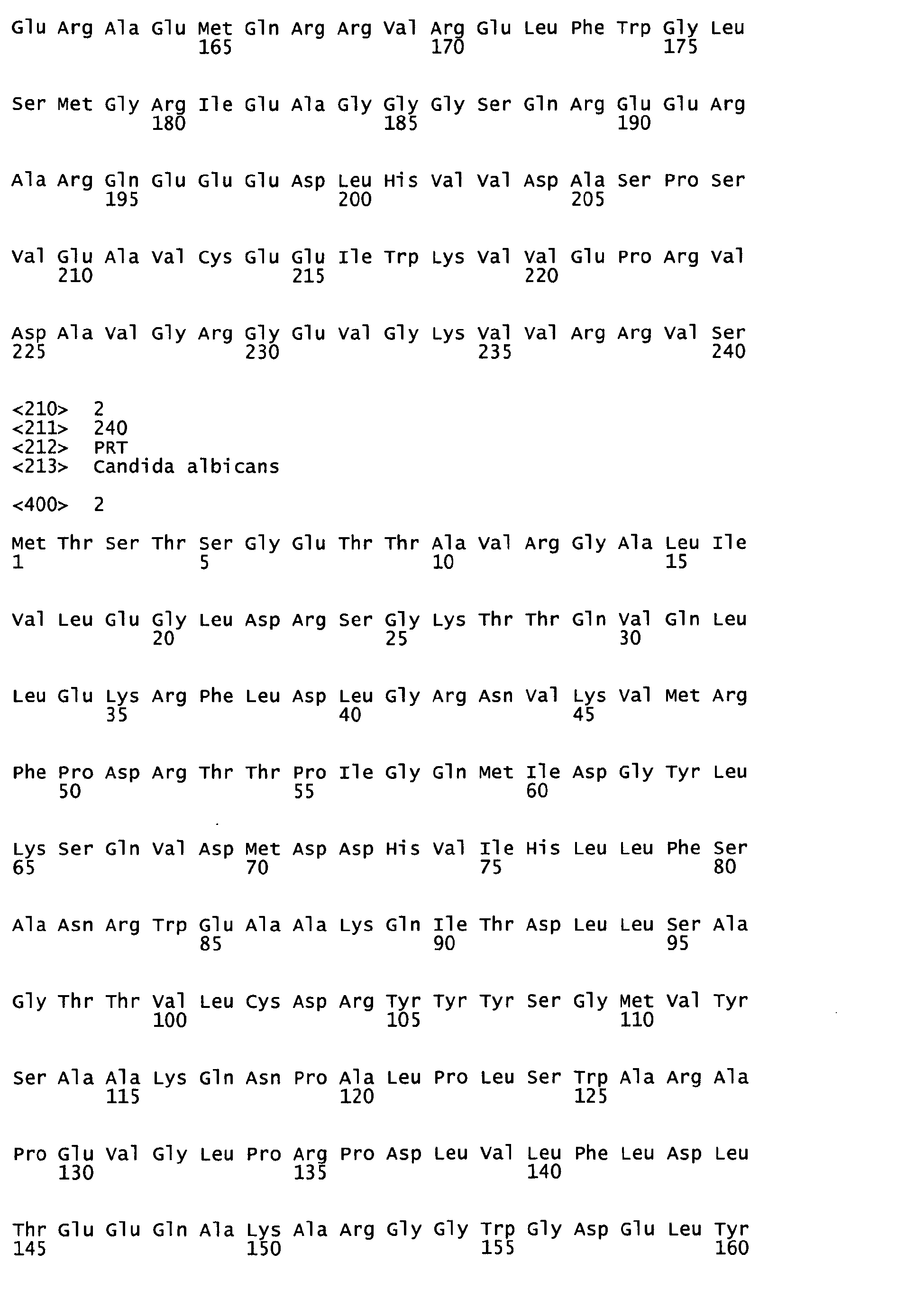


Claims (10)
- Verfahren zum Identifizieren von Fungiziden, dadurch gekennzeichnet, dass man(a) eine Wirtszelle, die eine Thymidylat-Kinase in ausreichender Menge exprimiert oder ein Polypeptid mit der enzymatischen Aktivität einer Thymidylat-Kinase mit einer chemischen Verbindung oder einem Gemisch von chemischen Verbindungen unter Bedingungen, die die Interaktion der chemischen Verbindung mit dem Polypeptid erlauben, in Kontakt bringt,(b) die enzymatische Aktivität der Thymidylat-Kinase bei Abwesenheit einer chemischen Verbindung mit der enzymatischen Aktivität der Thymidylat-Kinase bei Anwesenheit einer chemischen Verbindung oder eines Gemisches von chemischen Verbindungen vergleicht, und(c) die chemische Verbindung, die die Thymidylat-Kinase spezifisch inhibiert, bestimmt.
- Verfahren gemäß Anspruch 1, dadurch gekennzeichnet, dass man(a) das bei der Reaktion der Thymidylat-Kinase entstehende ADP mit Hilfe einer Pyruvatkinase zu ATP umsetzt,(b) das dabei entstehende Pyruvat mit Hilfe einer Lactatdehydrogenase unter NADH-Verbrauch zu Lactat umsetzt, und(c) den Verbrauch des NADHs verfolgt.
- Verfahren gemäß Anspruch 2, dadurch gekennzeichnet, dass man eine Inhibition der enzymatischen Aktivität anhand einer geringeren Zunahme der ADP-Konzentration bestimmt.
- Verfahren gemäß einem der Ansprüche 1 bis 3, dadurch gekennzeichnet, dass man in einem weiteren Schritt die fungizide Wirkung der identifizierten Verbindung testet, indem man sie mit einem Pilz in Kontakt bringt.
- Verfahren gemäß einem der Ansprüche 1 bis 4, dadurch gekennzeichnet, dass man eine Thymidylat-Kinase aus S. cerevisiae verwendet.
- Verfahren gemäß einem der Ansprüche 1 bis 4, dadurch gekennzeichnet, dass man eine Thymidylat-Kinase aus einem pflanzenpathogenen Pilz verwendet.
- Verwendung von Polypeptiden mit der Aktivität einer Thymidylat-Kinase zum Identifizieren von Fungiziden.
- Verwendung von Inhibitoren pilzlicher Polypeptide mit der Aktivität einer Thymidylat-Kinase als Fungizide.
- Verwendung von Inhibitoren eines Polypeptids mit der Aktivität einer Thymidylat-Kinase, welche durch ein Verfahren gemäß einem der Ansprüche 1 bis 4 identifiziert werden, als Fungizide.
- Verfahren zum Bekämpfen pflanzenpathogener Pilze, dadurch gekennzeichnet, dass man Inhibitoren pilzlicher Polypeptide mit der Aktivität einer Thymidylat-Kinase auf die pflanzenpathogenen Pilze und/oder ihren Lebensraum einwirken lässt.
Applications Claiming Priority (2)
| Application Number | Priority Date | Filing Date | Title |
|---|---|---|---|
| DE102004031901 | 2004-07-01 | ||
| DE102004032872A DE102004032872A1 (de) | 2004-07-01 | 2004-07-07 | Verfahren zum Identifizieren von fungizid wirksamen Verbindungen basierend auf Thymidylat-Kinasen |
Publications (1)
| Publication Number | Publication Date |
|---|---|
| EP1612276A1 true EP1612276A1 (de) | 2006-01-04 |
Family
ID=34937540
Family Applications (1)
| Application Number | Title | Priority Date | Filing Date |
|---|---|---|---|
| EP05013197A Withdrawn EP1612276A1 (de) | 2004-07-01 | 2005-06-18 | Verfahren zum Identifizieren von fungizid wirksamen Verbindungen basierend auf Thymidylat-Kinasen |
Country Status (3)
| Country | Link |
|---|---|
| US (1) | US20060171977A1 (de) |
| EP (1) | EP1612276A1 (de) |
| DE (1) | DE102004032872A1 (de) |
Cited By (1)
| Publication number | Priority date | Publication date | Assignee | Title |
|---|---|---|---|---|
| EP2468882A1 (de) * | 2010-12-27 | 2012-06-27 | Bayer CropScience AG | Aurorakinaseaktivatorpolypeptide zum Identifizieren von fungizid wirksamen Verbindungen |
Families Citing this family (2)
| Publication number | Priority date | Publication date | Assignee | Title |
|---|---|---|---|---|
| EP1586045A1 (de) * | 2002-12-27 | 2005-10-19 | Nielsen Media Research, Inc. | Verfahren und vorrichtung zur transkodierung von metadaten |
| US8765378B2 (en) | 2005-02-25 | 2014-07-01 | Biovica International Ab | Method and kit for determination of thymidine kinase activity and use thereof |
Citations (2)
| Publication number | Priority date | Publication date | Assignee | Title |
|---|---|---|---|---|
| WO2000039342A2 (en) * | 1998-12-31 | 2000-07-06 | Millennium Pharmaceuticals, Inc. | Use of essential saccharomyces genes and polypeptides |
| WO2004053150A1 (en) * | 2002-12-09 | 2004-06-24 | Oxford Glycosciences (Uk) Ltd | Mss4 as an antifungal target |
Family Cites Families (1)
| Publication number | Priority date | Publication date | Assignee | Title |
|---|---|---|---|---|
| DE10133928A1 (de) * | 2001-07-12 | 2003-01-23 | Bayer Cropscience Ag | Verfahren zum Herstellen von Deletionsmutanten |
-
2004
- 2004-07-07 DE DE102004032872A patent/DE102004032872A1/de not_active Withdrawn
-
2005
- 2005-06-18 EP EP05013197A patent/EP1612276A1/de not_active Withdrawn
- 2005-06-28 US US11/168,029 patent/US20060171977A1/en not_active Abandoned
Patent Citations (2)
| Publication number | Priority date | Publication date | Assignee | Title |
|---|---|---|---|---|
| WO2000039342A2 (en) * | 1998-12-31 | 2000-07-06 | Millennium Pharmaceuticals, Inc. | Use of essential saccharomyces genes and polypeptides |
| WO2004053150A1 (en) * | 2002-12-09 | 2004-06-24 | Oxford Glycosciences (Uk) Ltd | Mss4 as an antifungal target |
Non-Patent Citations (1)
| Title |
|---|
| BARANOWSKA H ET AL: "ROLE OF THE CDC8 GENE IN THE REPAIR OF SINGLE STRAND BREAKS IN DNA OF THE YEAST SACCHAROMYCES-CEREVISIAE", CURRENT GENETICS, vol. 18, no. 3, 1990, pages 175 - 180, XP009054132, ISSN: 0172-8083 * |
Cited By (1)
| Publication number | Priority date | Publication date | Assignee | Title |
|---|---|---|---|---|
| EP2468882A1 (de) * | 2010-12-27 | 2012-06-27 | Bayer CropScience AG | Aurorakinaseaktivatorpolypeptide zum Identifizieren von fungizid wirksamen Verbindungen |
Also Published As
| Publication number | Publication date |
|---|---|
| DE102004032872A1 (de) | 2006-01-19 |
| US20060171977A1 (en) | 2006-08-03 |
Similar Documents
| Publication | Publication Date | Title |
|---|---|---|
| EP1831391B1 (de) | Verwendung von methioninsynthase-inhibitoren zur behandlung von pilzkrankheiten bei nutzpflanzen | |
| DE102004032872A1 (de) | Verfahren zum Identifizieren von fungizid wirksamen Verbindungen basierend auf Thymidylat-Kinasen | |
| DE10242940A1 (de) | Verfahren zum Identifizieren von fungizid wirksamen Verbindungen | |
| EP1493821A1 (de) | Verfahren zum Identifizieren von fungizid wirksamen Verbindungen basierend auf Guanylat Kinasen | |
| EP1319715B1 (de) | IMP Dehydrogenase und deren Verwendung zum Identifizieren von fungizid wirksamen Verbindungen | |
| EP1394265A2 (de) | Verfahren zur Identifikation von Fungiziden unter Verwendung einer Ribose-5-Phosphat Isomerase | |
| DE10356433A1 (de) | Verfahren zum Identifizieren von fungizid wirksamen Verbindungen basierend auf UMP/CMP-Kinasen aus Pilzen | |
| EP1374681A1 (de) | Verfahren zum Identifizieren von fungizid wirksamen Verbindungen | |
| WO2005098030A2 (de) | Verfahren zum identifizieren von fungizid wirksamen verbindungen basierend auf thioredoxin reduktasen | |
| DE10330234A1 (de) | Verfahren zum Identifizieren von fungizid wirksamen Verbindungen basierend auf Mevalonat Kinasen aus Pilzen | |
| EP1891229A2 (de) | Verfahren zum identifizieren von fungizid wirksamen verbindungen basierend auf isopentenylpyrophosphat-isomerasen | |
| DE10356218A1 (de) | Verfahren zum Identifizieren von fungizid wirksamen Verbindungen basierend auf Pyruvatkinasen aus Pilzen | |
| DE60314538T2 (de) | Verfahren zum screening nach verbindungen, die die enzymatische aktivität des gwt1 genproduktes hemmen | |
| EP1288307A1 (de) | Verwendung von Fructose-1,6-Bisphospate Aldolase zum Identifizieren von neuen fungizid wirksamen Substanzen | |
| EP1592797A1 (de) | Mevalonat kinase als target fur fungizide | |
| WO2005042734A1 (de) | An der autophagozytose beteiligte ser/thr-kinase als target für fungizide | |
| DE10150677A1 (de) | Neue Targets für Fungizide | |
| Bunsick | Uncovering the Interspecies Signaling Mechanisms of the Phytohormone Strigolactone in the Rhizosphere | |
| WO2003048349A2 (de) | Acetoacetyl-coa thiolase und deren verwendung zum identifizieren von neuen fungizid wirksamen substanzen | |
| EP1402013A2 (de) | Homoaconitase als target für fungizide | |
| DE10232773A1 (de) | Proteine des Ubiquitin Proteasom Stoffwechsels als Targets für Fungizide |
Legal Events
| Date | Code | Title | Description |
|---|---|---|---|
| PUAI | Public reference made under article 153(3) epc to a published international application that has entered the european phase |
Free format text: ORIGINAL CODE: 0009012 |
|
| AK | Designated contracting states |
Kind code of ref document: A1 Designated state(s): AT BE BG CH CY CZ DE DK EE ES FI FR GB GR HU IE IS IT LI LT LU MC NL PL PT RO SE SI SK TR |
|
| AX | Request for extension of the european patent |
Extension state: AL BA HR LV MK YU |
|
| AKX | Designation fees paid | ||
| STAA | Information on the status of an ep patent application or granted ep patent |
Free format text: STATUS: THE APPLICATION IS DEEMED TO BE WITHDRAWN |
|
| 18D | Application deemed to be withdrawn |
Effective date: 20060705 |
|
| REG | Reference to a national code |
Ref country code: DE Ref legal event code: 8566 |