EP1606997A1 - Method of inhibiting freeze concentrating of substance in wet material, method of inhibiting deactivation of physiologically active substance, and process for producing lyophilizate or frozen matter having component homogeneously diffused therein - Google Patents
Method of inhibiting freeze concentrating of substance in wet material, method of inhibiting deactivation of physiologically active substance, and process for producing lyophilizate or frozen matter having component homogeneously diffused therein Download PDFInfo
- Publication number
- EP1606997A1 EP1606997A1 EP03786372A EP03786372A EP1606997A1 EP 1606997 A1 EP1606997 A1 EP 1606997A1 EP 03786372 A EP03786372 A EP 03786372A EP 03786372 A EP03786372 A EP 03786372A EP 1606997 A1 EP1606997 A1 EP 1606997A1
- Authority
- EP
- European Patent Office
- Prior art keywords
- hydrous material
- afp
- freeze
- ice
- substance
- Prior art date
- Legal status (The legal status is an assumption and is not a legal conclusion. Google has not performed a legal analysis and makes no representation as to the accuracy of the status listed.)
- Ceased
Links
Images


Classifications
-
- A—HUMAN NECESSITIES
- A01—AGRICULTURE; FORESTRY; ANIMAL HUSBANDRY; HUNTING; TRAPPING; FISHING
- A01N—PRESERVATION OF BODIES OF HUMANS OR ANIMALS OR PLANTS OR PARTS THEREOF; BIOCIDES, e.g. AS DISINFECTANTS, AS PESTICIDES OR AS HERBICIDES; PEST REPELLANTS OR ATTRACTANTS; PLANT GROWTH REGULATORS
- A01N1/00—Preservation of bodies of humans or animals, or parts thereof
- A01N1/10—Preservation of living parts
-
- A—HUMAN NECESSITIES
- A01—AGRICULTURE; FORESTRY; ANIMAL HUSBANDRY; HUNTING; TRAPPING; FISHING
- A01N—PRESERVATION OF BODIES OF HUMANS OR ANIMALS OR PLANTS OR PARTS THEREOF; BIOCIDES, e.g. AS DISINFECTANTS, AS PESTICIDES OR AS HERBICIDES; PEST REPELLANTS OR ATTRACTANTS; PLANT GROWTH REGULATORS
- A01N1/00—Preservation of bodies of humans or animals, or parts thereof
- A01N1/10—Preservation of living parts
- A01N1/12—Chemical aspects of preservation
- A01N1/122—Preservation or perfusion media
- A01N1/125—Freeze protecting agents, e.g. cryoprotectants or osmolarity regulators
-
- A—HUMAN NECESSITIES
- A23—FOODS OR FOODSTUFFS; TREATMENT THEREOF, NOT COVERED BY OTHER CLASSES
- A23B—PRESERVATION OF FOODS, FOODSTUFFS OR NON-ALCOHOLIC BEVERAGES; CHEMICAL RIPENING OF FRUIT OR VEGETABLES
- A23B2/00—Preservation of foods or foodstuffs, in general
- A23B2/80—Freezing; Subsequent thawing; Cooling
-
- A—HUMAN NECESSITIES
- A23—FOODS OR FOODSTUFFS; TREATMENT THEREOF, NOT COVERED BY OTHER CLASSES
- A23B—PRESERVATION OF FOODS, FOODSTUFFS OR NON-ALCOHOLIC BEVERAGES; CHEMICAL RIPENING OF FRUIT OR VEGETABLES
- A23B2/00—Preservation of foods or foodstuffs, in general
- A23B2/80—Freezing; Subsequent thawing; Cooling
- A23B2/85—Freezing; Subsequent thawing; Cooling with addition of or treatment with chemicals
-
- A—HUMAN NECESSITIES
- A23—FOODS OR FOODSTUFFS; TREATMENT THEREOF, NOT COVERED BY OTHER CLASSES
- A23B—PRESERVATION OF FOODS, FOODSTUFFS OR NON-ALCOHOLIC BEVERAGES; CHEMICAL RIPENING OF FRUIT OR VEGETABLES
- A23B2/00—Preservation of foods or foodstuffs, in general
- A23B2/90—Preservation of foods or foodstuffs, in general by drying or kilning; Subsequent reconstitution
- A23B2/92—Freeze drying
Definitions
- the present invention relates to a method for inhibiting freeze concentration of a substance contained in a hydrous material, a method for inhibiting inactivation of a bioactive substance, and a method for producing a frozen product or freeze-dried product in which a component is homogeneously dispersed.
- freeze concentration occurs when a hydrous material containing water molecules and substances other than water molecules (e.g., solutes, contaminants, foreign matters, and the like; hereinafter referred to as "medium") is frozen, a phenomenon called freeze concentration occurs. In this phenomenon, water molecules are crystallized with each other while the medium is being excluded, and thereby ice crystals consisting of only water molecules are formed. For this reason, the medium is dispersed heterogeneously in the hydrous material, and accumulates in places other than those where the ice crystals are formed in the hydrous material.
- Freeze concentration has been conventionally utilized in technologies for producing beverages such as production technologies for concentrated fruit juice or in foodstuffs, medicines, or waste water treatments.
- the freeze concentration during freezing destroys the internal structure of foodstuffs such as meat, vegetables, seafood, frozen confectionery products, and processed food.
- foodstuffs such as meat, vegetables, seafood, frozen confectionery products, and processed food.
- various nutritional components, umami components, additives, and the like are forced to move to places other than the ice.
- remarkable deterioration in quality is caused, and this may be a problem.
- methods for effectively inhibiting the freeze concentration are also demanded in the field of food.
- freeze-drying techniques utilized in the production of pharmaceutical preparations and foodstuffs
- inhibition of the freeze concentration is also important during freeze-drying. Specifically, the freeze concentration, once occurred, inhibits the uniform dispersion of pharmaceutical components or various umami components, and causes remarkable deterioration in the quality of products (freeze-dried products).
- Ice for displaying which is uniformly colored red or blue has been demanded for ice used in eating and drinking establishments (in the field of ice making) or ice festivals and ice-sculpture festivals held in cold climate areas.
- it is difficult to produce such uniformly colored ice and therefore, efforts, time and cost may be increased. For this reason, demands have been made on techniques for producing, for example, frozen products in which components such as coloring materials are uniformly dispersed.
- AFP antifreeze protein
- AFPs are biological materials having a unique property of inhibiting the growth of ice nucleation particles by being specifically adsorbed on the surface of fine ice crystals (ice nucleation particles) formed at freezing temperatures. It is not yet known, however, whether AFPs inhibit freeze concentration occurring inside of a frozen material, in which the ice crystals are growing.
- the present invention provides a technique for inhibiting the freeze concentration using an AFP.
- the present inventors devised a method in which a color ink is added dropwise to water to yield colored water, the colored water is frozen, and the freeze concentration of an ink component that has occurred during freezing is photographed with a camera.
- This is a clear model experimental system for verifying the inhibition of freeze concentration.
- a freeze-dried powder of an AFP dissolved in the water colored with the color ink inhibits the freeze concentration of the ink component, it was found that the addition of an AFP markedly reduces the freeze concentration of the ink component and thereby yields ice that is entirely homogeneously colored, thus completing the present invention.
- the present invention provides, for solving the above problems, in a first aspect, a method for inhibiting the freeze concentration of a substance other than water molecules in a hydrous material during the freezing of the hydrous material, the hydrous material containing water molecules and the substance other than water molecules, the method including a step of adding an AFP to the hydrous material (hereinafter referred to as "freeze-concentration inhibiting method").
- the present invention provides, for solving the problems, a method for inhibiting inactivation of a bioactive substance contained in a hydrous material during freezing of the hydrous material, the method including a step of adding an AFP to the hydrous material (hereinafter referred to as "inactivation inhibiting method").
- inactivation inhibiting method a method for inhibiting inactivation of a bioactive substance contained in a hydrous material during freezing of the hydrous material, the method including a step of adding an AFP to the hydrous material.
- the present invention provides, for solving the problems, a method for producing a frozen product or freeze-dried product by freezing or freeze-drying a hydrous material containing water molecules and a component other than water molecules, in which the component is homogeneously dispersed in the frozen product or freeze-dried product, the method including a step of adding an AFP to the hydrous material (hereinafter, may be referred to as "frozen product producing method").
- the freeze-concentration inhibiting method according to the present invention is a method including the step of adding an AFP to a hydrous material before freezing the hydrous material, in which the hydrous material contains water molecules and a substance other than water molecules.
- the "hydrous material containing water molecules and a substance other than water molecules” is not specifically limited and can be any of liquids and solids. As familiar examples thereof, mention may be made of an aqueous solution comprising a solute and a solvent, a mixture of water and a substance insoluble in water, cereals, noodles, vegetables, fruits, meat, seafood, frozen confectionery products, processed foodstuffs, pharmaceutical preparations, diagnostic products, chemicals, cosmetics, blood, sperm, ova, cells, tissues, organs, and the like.
- the "protein” used in the present invention refers to a substance comprising two or more amino acids bonded through a peptide bond.
- a small protein having not more than about 30 amino acid residues may be conventionally referred to as a "peptide” and be distinguished from a protein.
- AFP antifreeze protein
- AFPs are biophylactic substances that are specifically bound to the surfaces of ice crystals formed in cells at freezing temperatures to prevent the growth of ice crystals in vivo typically in fish to prevent their tissues from freezing. AFPs were first found about 35 years ago in the blood of a fish belonging to the Nototheniidae family living in the Antarctic Ocean. Investigations have been made mainly on fish living in and around the Arctic Ocean and the Antarctic Ocean, and thereafter in the Labrador Gulf. AFPs have also been found in other organisms such as fungi, insects, and plants, in addition to fish. The structures and functions of these are now under investigation across the world.
- the antifreezing capability of an AFP is evaluated by how much the AFP can lower the freezing point of a hydrous material containing the added AFP (thermal hysteresis (°C)).
- AFPs derived from fish are classified into four types, namely Types I, II, III and IV.
- Type I has a high Ala content, comprises Thr and Asp residues at regular intervals and has an alpha helix structure.
- Type II has a high Cys content (8%) and has a structure analogous to C-lectin.
- Type III is a protein having a helical spherical structure.
- Type IV has a high Gln residue content and is predicted to have a bundle structure of alpha helixes.
- AFPs have amphipathicity and are capable of dissolving in water to a high concentration, regardless of their types of Type I, Type II, and the like.
- the AFP used in the present invention may be any of Types I, II, III and IV. Types I, II and III, however, are preferably used typically in view of their availability and cost.
- the AFP preferably has a weight-average molecular weight Mw of 1,500 for satisfactorily penetrating into cells.
- the weight-average molecular weight Mw herein is determined by gel filtration chromatography using bovine pancreas aprotinin (Mw of 6,500), hen egg white lysozyme (Mw of 14,000), and soybean trypsin inhibitor (Mw of 21,500) as reference materials.
- the AFP is preferably added so that the AFP concentration in the hydrous material is not less than 0.02% by weight with respect to the weight of the hydrous material.
- the AFP concentration is within a range of from 0.03% by weight to 0.05% by weight, the maximum inhibitory effects on freeze concentration can be obtained, and at the same time, the cost can be reduced. Therefore, this is preferable.
- the procedure of adding the AFP to the hydrous material is not specifically limited in the present invention and can be suitably selected from among conventional procedures according to the type of hydrous material.
- the hydrous material is, for example, a liquid such as an aqueous solution or blood
- the hydrous material is, for example, a cell or tissue
- an aqueous solution of the AFP may be injected into the hydrous material typically using a syringe. It is also acceptable to allow the AFP to penetrate the hydrous material, for example, by immersing the hydrous material in an aqueous solution of the AFP and applying a pressure of 50 to 2,000 kg/cm 2 thereto.
- the hydrous material has a pH preferably ranging from 2.0 to 11.0, and more preferably ranging from 4.0 to 8.0, when the AFP is added. Controlling the pH of the hydrous material within this range can prevent denaturation of the AFP and thereby inhibit any decrease in the inhibitory effects on freeze concentration.
- the hydrous material is at a temperature preferably ranging from 0°C to 70°C, and more preferably ranging from 4°C to 30°C when the AFP is added. Controlling the temperature of the hydrous material within this range can prevent denaturation of the AFP and thereby inhibit any decrease in the inhibitory effects on freeze concentration.
- the hydrous material can be frozen by a conventional or standard freezing device or a process suitably selected according to the type of hydrous material.
- the hydrous material may be frozen by using a household or industrial-use freezer or by leaving outdoors at not more than 0°C during wintertime.
- the temperature during the freezing of the hydrous material can be appropriately set in view of the concentration of the substance other than water in the hydrous material, the antifreezing capability of the AFP, the amount of the AFP, and the like.
- the temperature is preferably -10°C or below, and more preferably ranges from -10°C to -80°C.
- the hydrous material is preferably frozen at decreased temperature, since the AFP exhibits higher inhibitory effects on freeze concentration as the freezing temperature is decreased.
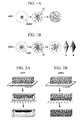
- Fig. 1A shows the case in which an AFP is not added (AFP-), and Fig. 1B shows the case in which an AFP is added (AFP+).
- ice nucleation particles 10 embryo ice crystals
- the grown ice nucleation particles 10 are combined with one another to form an aggregate (the right view).
- the aggregate of the grown crystals of the ice nucleation particles 10 is so-called "ice".
- the AFP (represented by an open circle in the drawings) is specifically bound to the plane surfaces of ice layers in single crystals of ice nucleation particles 10 formed at freezing temperatures to thereby inhibit the growth thereof (the central view). Consequently, the plane surfaces of ice layers are covered by the AFP to thereby form a large number of fine, independent ice nucleation particles 10 (the right view).
- the ice nucleation particles 10 with the plane surfaces of ice layers covered by the AFP often form bipyramidal ice crystals represented by A or B in Fig. 1B.
- These bipyramidal ice crystals are crystallographically referred to as dihexahedrons (A) or hexagonal trapezohedrons (B).
- ice crystals are fine crystals having a length in a major axis (c-axis) direction of about 50 to 500 ⁇ m. Perfect bipyramidal ice crystals may not be formed or ice crystals having different forms may be formed with some types of AFP or under some conditions for the aqueous solution. In any case, however, many fine ice crystals are formed due to the binding of AFP.
- FIG. 2A illustrates the case in which the AFP is not added (AFP-), and Fig. 2B illustrates the case in which the AFP is added (AFP+).
- the freeze concentration likely occurs according to the following mechanism. That is, when a freezing phenomenon occurs, water molecules are combined with each other to form a network, as described above. The water molecules have a property of combining with each other alone to grow to a larger size. For this reason, all the substances other than water molecules are physically excluded from the network during the formation of the network, regardless of the type and amount of the other substances. As a result, the substances other than water molecules move (are heterogeneously dispersed) to the parts where the network is not formed to thereby induce freeze concentration.
- red colored water prepared by adding a red ink dropwise to water appears as water containing a homogeneously dispersed red ink component (represented by a solid circle in the drawing), when microscopically viewed (the upper schematic view in Fig. 2A).
- a container housing the colored water is left to stand in a freezer, ice nucleation particles are formed from the bottom of the container in contact with the cooled inside wall of the freezer, and then they grow to form ice over time.
- the ink component accumulates toward one direction due to the effects of freeze concentration (the middle view in Fig. 2A).
- the freeze concentration of the ink component further proceeds over time to thereby form ice having an ice portion and a pigment portion separately when viewed macroscopically (the lower view in Fig. 2A).
- the binding of the AFP inhibits the crystal growth of the ice nucleation particles as described above, and the ice nucleation particles grow in the c-axis direction to form, for example, bipyramidal ice crystals having minute sizes ranging from about 50 to about 500 ⁇ m. These bipyramidal ice crystals have a resistance to combining with each other, and thus spaces are formed between ice crystals.
- the binding of the AFP with the bipyramidal ice crystals prevents further binding of free water present between the crystals to thereby inhibit the growth of the ice crystals, and at the same time to inhibit movement of the pigment component. Consequently, a mixture condition of the ink component with the ice crystals can be formed without the ink component being accumulated toward one direction (the middle view in Fig. 2B).
- Bipyramidal ice crystals are formed throughout the entire colored water while the heterogeneous dispersion of the ink component is inhibited, to thereby finally form a homogeneous dispersion of the color ink component and the ice crystals, as illustrated in the lower view in Fig. 2B.
- the ink component is held in the spaces between the fine bipyramidal ice crystals formed during the freezing of the hydrous material. For this reason, it may be believed that the heterogeneous dispersion of the ink component is inhibited and the freeze concentration is markedly reduced.
- Any hydrous material containing water molecules and a substance other than the water molecules is naturally frozen according to the manner illustrated in the upper schematic view in Fig. 1 and the schematic views in Fig. 2A. Specifically, when the hydrous material is exposed to subzero temperatures, ice nucleation particles are formed inside the hydrous material and are combined with each other to form ice. The ice crystals further grow and are combined with each other repetitively to form a large ice crystal (lump of ice).
- the aforementioned cereals, noodles, vegetables, fruits, meat, seafood, frozen confectionery products, processed foodstuffs, pharmaceutical preparations, diagnostic products, chemicals, cosmetics, blood, sperm, ova, cells, tissues, organs, and the like, have different internal structures and contain significantly different amounts and types of water and components other than water. From the viewpoint of freeze concentration, however, they can be essentially deemed as hydrous materials each comprising two components, i.e., "water molecules” and a "substance other than water molecules.” The freezing phenomenon of these can be schematically illustrated by the upper view in Fig. 1 and Fig. 2A. In this case, the solid circle in Fig. 2 represents the "substance other than water molecules.”
- the "substance other than water molecules" contained in the hydrous material is free from forced significant movement with the formation of ice and is prevented from concentrating. This prevents the molecules of the substance from pressing and damaging each other due to the approaching of the molecules. Consequently, the hydrous materials can be recovered after thawing in the state they were in before freezing.
- the inactivation inhibiting method according to the present invention is a method comprising a step of adding an AFP to a hydrous material containing a bioactive substance before freezing the hydrous material.
- bioactive substance in the present specification refers to any "substance having a physiological activity.”
- bioactive substances such as antibiotics, functional food additives, cell differentiation inducing substances, functional lipids such as DHA and EPA, low-molecular-weight compounds, hormones, vitamins, peptides, enzymes, antibodies, proteins, and the like.
- hydrophilic material mention may be made of aqueous solutions containing the bioactive substance, biological cells, tissues, organs, body fluids such as blood, microorganisms such as bacteria and viruses, and the like.
- the "hydrous material containing a bioactive substance” and “bioactive substance” correspond to the “hydrous material” and the “substance other than water molecules", respectively, in the aforementioned freeze-concentration inhibiting method.
- the addition of the AFP inhibits the freeze concentration of the bioactive substance. Consequently, the bioactive substance retains its activities, since proteins or other components constituting various cells such as cell walls, lipids and nucleic acids are prevented from pressing and damaging each other.
- Conditions for carrying out the inactivation inhibiting method according to the present invention such as the amount of the AFP added to the hydrous material containing a bioactive substance, pH and temperature of the hydrous material during the addition of the AFP, and the like, are the same as those described in the aforementioned freeze-concentration inhibiting method.
- the concentration of the bioactive substance in the hydrous material containing the bioactive substance is not specifically limited, and preferably ranges from 1 ng/ml to 50 mg/ml, and more preferably ranges from 50 ng/ml to 30 mg/ml.
- the bioactive substance has a concentration within this range, the effects of inhibiting inactivation by the action of the AFP are high, and therefore, this is preferable.
- the frozen product producing method according to the present invention comprises the step of adding an AFP to a hydrous material before freezing or freeze-drying of the hydrous material, the hydrous material containing water molecules and a component other than water molecules.
- frozen confectionery products such as ice creams, sherbets, and flavored ice shavings, ice for displaying, ice for food and drink (e.g., spherical ice), frozen meat, frozen fish, frozen vegetables, frozen fruits, frozen noodles, cooked frozen foodstuffs, frozen organs, frozen cells, frozen body fluids, frozen sperm, frozen ova, frozen chemicals, frozen diagnostic products, and the like.
- frozen confectionery products such as ice creams, sherbets, and flavored ice shavings
- ice for displaying ice for food and drink (e.g., spherical ice), frozen meat, frozen fish, frozen vegetables, frozen fruits, frozen noodles, cooked frozen foodstuffs, frozen organs, frozen cells, frozen body fluids, frozen sperm, frozen ova, frozen chemicals, frozen diagnostic products, and the like.
- freeze-dried product mention may be made of pharmaceutical preparations produced by freeze drying, and powdered freeze-dried foodstuffs.
- the components other than water molecules are not specifically limited.
- various components with or without physiological activities contained in pharmaceutical preparations produced by freeze drying.
- the "hydrous material containing a component other than water molecules” and the “component other than water molecules” correspond to the "hydrous material” and the “substance other than water molecules", respectively, described in the aforementioned freeze-concentration inhibiting method.
- the addition of the AFP inhibits the freeze concentration of various components.
- a frozen product or freeze-dried product containing the component such as a pigment homogeneously dispersed entirely can be obtained.
- the freeze-drying procedure can be carried out according to a conventional procedure.
- Conditions for carrying out the frozen product producing method according to the present invention such as the amount of the AFP added to the hydrous material, pH and temperature of the hydrous material during the addition of the AFP are the same as those described in the aforementioned freeze-concentration inhibiting method.
- the concentration of each of the components in the hydrous material is not specifically limited and preferably ranges from 1 ng/ml to 50 mg/ml, and more preferably ranges from 50 ng/ml to 30 mg/ml. When the component concentration is within this range, uniform dispersing effects due to the AFP are increased, and therefore, this is preferable.
- AFP (III) derived from Zoarces elongatus was prepared under the following conditions.
- the whole fish of Zoarces elongatus was purchased from Notsuke Fisheries Cooperative Association, Hokkaido (179-2, Odaito Minato-machi, Bekkai-cho, Notsuke-gun, Hokkaido, Japan).
- the residual body (about 120 g) was divided into five equal parts with a kitchen knife, and an equal amount (120 mL) of a 0.1 M aqueous solution of ammonium bicarbonate (pH of 7.9) was added thereto.
- the mixture was placed in a juicing blender (available from Tescom; PALCOOKIN; capacity of 780 mL) and was pulverized for about one minute.
- the resulting minced meat of Zoarces elongatus was subjected to centrifugal separation with a high-speed microcentrifuge (HITACHI himac CF7D2) at 3,000 rpm for 30 minutes, and thereby 150 mL of supernatant was recovered. This was placed in a dialysis tube (Spectra/Por MWCO: 3,500) and was subjected to dialysis with a 50 mM sodium acetate buffer (pH of 3.7) overnight.
- HITACHI himac CF7D2 high-speed microcentrifuge
- the contents of the dialysis tube were then subjected to a high-speed microcentrifuge (HITACHI himac CF15R) at 11,000 rpm for 30 minutes, and thereby 150 mL of supernatant was recovered. This was placed in a dialysis tube (Spectra/Por MWCO: 3,500) and was subjected to dialysis with a 0.1 M aqueous solution of ammonium bicarbonate (pH of 7.9) overnight.
- HITACHI himac CF15R high-speed microcentrifuge
- the contents of the dialysis tube were then subjected to a high-speed microcentrifuge (HITACHI himac CF15R) at 11,000 rpm for 30 minutes, and thereby 140 mL of supernatant was recovered.
- the supernatant was placed in a beaker, and 1 g of activated carbon (WAKO PURE CHEMICAL INDUSTRIES LTD., Analytical Grade 037-02115) was added, followed by stirring for 5 minutes. This was filtrated using an injector filter (pore size of 0.2 ⁇ m) and was freeze-dried.
- the weight of the freeze-dried powder was 330 mg.
- the electrophoretic analysis thereof revealed that the dried powder was a purified product of AFP (III) (hereinafter referred to as "purified AFP (III)”) derived from Zoarces elongatus and having a purity of about 80%.
- purified AFP (III) derived from Zoarces elongatus and having a purity of about 80%.
- the capability of the AFP at inhibiting the growth of ice crystals is not affected by contaminated proteins, and for this reason, this purity was assessed to be necessary and sufficient.
- Solution A The colored water in which any other substances were not added was used as Solution A (AFP-).
- 10 mg (0.02% by weight) of the dried powder of the purified AFP (III) was added to the aforementioned colored water and the mixture was thoroughly stirred, to thereby yield Solution B (AFP+).
- Solution A and Solution B were frozen by leaving to stand in a freezing chamber (-18°C) of a household refrigerator-freezer overnight.
- Photographs of the resulting ice prepared from Solution A and Solution B are shown in Figs. 3A and 3B, respectively.
- ice prepared from Solution B was a red-colored ice containing the red ink component dispersed entirely (Fig. 3B). This may have been caused by the AFP effectively inhibiting the freeze concentration of the red ink component according to the mechanism illustrated in Figs. 2D to 2F.
- AFPs have higher inhibitory effects on freeze concentration than other proteins
- regular proteins i.e., hen egg white lysozyme and bovine serum albumin
- Figs. 4A to 4D are photographs of ice prepared from Sample Mixtures A to D, respectively.
- Figs. 4A, 4B and 4C show that the red ink component was freeze-concentrated in a specific part in the resulting ice in these samples.
- Fig. 4D shows that the addition of AFP significantly reduced the freeze concentration to form homogeneously red-colored ice containing an entirely dispersed red ink component.
- Solution A red
- Solution B yellow
- Solution C blue
- Figs. 5A to 5C are photographs of ice prepared from Solutions A to C, respectively. Thus, homogeneously red-, yellow- or blue-colored ice could be prepared.
- the freeze concentration of a substance other than water molecules in a hydrous material containing water molecules and the aforementioned substance can be inhibited by adding an AFP to the hydrous material before freezing the hydrous material. This markedly reduces any deterioration in quality, destruction of the internal structure and loss of bioactivities, each caused by the freeze concentration. In addition, entirely homogeneously colored ice can be produced.
Landscapes
- Life Sciences & Earth Sciences (AREA)
- Engineering & Computer Science (AREA)
- Wood Science & Technology (AREA)
- Zoology (AREA)
- Chemical & Material Sciences (AREA)
- Polymers & Plastics (AREA)
- Food Science & Technology (AREA)
- General Health & Medical Sciences (AREA)
- Environmental Sciences (AREA)
- Health & Medical Sciences (AREA)
- Dentistry (AREA)
- Freezing, Cooling And Drying Of Foods (AREA)
- Medicinal Preparation (AREA)
- Coloring Foods And Improving Nutritive Qualities (AREA)
- Medicines Containing Material From Animals Or Micro-Organisms (AREA)
- Agricultural Chemicals And Associated Chemicals (AREA)
Abstract
Description
Consequently, the bioactive substance retains its activities, since proteins or other components constituting various cells such as cell walls, lipids and nucleic acids are prevented from pressing and damaging each other.
Claims (9)
- A method for inhibiting freeze concentration of a substance other than water molecules contained in a hydrous material during freezing of the hydrous material, the hydrous material containing water molecules and the substance other than water molecules, wherein the method comprises a step of adding an antifreeze protein to the hydrous material.
- The method for inhibiting the freeze concentration of a substance other than water molecules contained in a hydrous material according to claim 1, wherein the hydrous material has a pH ranging from 2.0 to 11.0 in the step of adding an antifreeze protein to the hydrous material.
- The method for inhibiting the freeze concentration of a substance other than water molecules contained in a hydrous material according to claim 1, wherein the hydrous material has a temperature ranging from 0°C to 70°C in the step of adding an antifreeze protein to the hydrous material.
- A method for inhibiting inactivation of a bioactive substance contained in a hydrous material during freezing of the hydrous material, the method comprising a step of adding an antifreeze protein to the hydrous material.
- The method for inhibiting inactivation of a bioactive substance according to claim 4, wherein the hydrous material has a pH ranging from 2.0 to 11.0 in the step of adding an antifreeze protein to the hydrous material.
- The method for inhibiting inactivation of a bioactive substance according to claim 4, wherein the hydrous material has a temperature ranging from 0°C to 70°C in the step of adding an antifreeze protein to the hydrous material.
- A method for producing a frozen product or freeze-dried product by freezing or freeze-drying a hydrous material containing water molecules and a component other than water molecules, wherein the component other than water molecules is homogeneously dispersed in the frozen product or freeze-dried product, the method comprising a step of adding an antifreeze protein to the hydrous material.
- The method for producing a frozen product or freeze-dried product according to claim 7, wherein the hydrous material has a pH ranging from 2.0 to 11.0 in the step of adding an antifreeze protein to the hydrous material.
- The method for producing a frozen product or freeze-dried product according to claim 7, wherein the hydrous material has a temperature ranging from 0°C to 70°C in the step of adding an antifreeze protein to the hydrous material.
Applications Claiming Priority (3)
| Application Number | Priority Date | Filing Date | Title |
|---|---|---|---|
| JP2003078977A JP2004284983A (en) | 2003-03-20 | 2003-03-20 | Method for suppressing freeze concentration of substance in hydrous material, method for suppressing deactivation of physiologically active substance, and method for producing frozen or lyophilized substance in which components are uniformly dispersed |
| JP2003078977 | 2003-03-20 | ||
| PCT/JP2003/017020 WO2004082378A1 (en) | 2003-03-20 | 2003-12-26 | Method of inhibiting freeze concentrating of substance in wet material, method of inhibiting deactivation of physiologically active substance, and process for producing lyophilizate or frozen matter having component homogeneously diffused therein |
Publications (2)
| Publication Number | Publication Date |
|---|---|
| EP1606997A1 true EP1606997A1 (en) | 2005-12-21 |
| EP1606997A4 EP1606997A4 (en) | 2007-07-25 |
Family
ID=33027993
Family Applications (1)
| Application Number | Title | Priority Date | Filing Date |
|---|---|---|---|
| EP03786372A Ceased EP1606997A4 (en) | 2003-03-20 | 2003-12-26 | METHOD FOR INHIBITING CRYOCONCENTRATION OF SUBSTANCE IN WET MATERIAL, METHOD FOR INHIBITING DEACTIVATION OF PHYSIOLOGICALLY ACTIVE SUBSTANCE AND PROCESS FOR PRODUCING LYOPHILISATE OR FROZEN MATERIAL CONTAINING HOMOGENEOUSLY DISTRIBUTED COMPONENT |
Country Status (5)
| Country | Link |
|---|---|
| US (1) | US20060177810A1 (en) |
| EP (1) | EP1606997A4 (en) |
| JP (1) | JP2004284983A (en) |
| AU (1) | AU2003296158A1 (en) |
| WO (1) | WO2004082378A1 (en) |
Families Citing this family (6)
| Publication number | Priority date | Publication date | Assignee | Title |
|---|---|---|---|---|
| JP2007173041A (en) * | 2005-12-22 | 2007-07-05 | Toyota Motor Corp | Fuel cell and fuel cell electrolyte layer |
| GB0808350D0 (en) * | 2008-05-09 | 2008-06-18 | Airbus Uk Ltd | Self-cleaning surfaces |
| EP2596706A4 (en) * | 2010-08-26 | 2015-01-28 | Nichirei Foods Inc | METHOD FOR INCREASING THERMAL HYSTERESIS ACTIVITY, METHOD FOR REDUCING THERMAL INACTIVATION OF THERMAL HYSTERESIS ACTIVITY, AND COMPOSITION FOR INCREASING THERMAL HYSTERESIS ACTIVITY |
| US8859637B2 (en) | 2012-10-22 | 2014-10-14 | Empire Technology Development Llc | Hydrophilic agents in paints |
| JP6626681B2 (en) * | 2015-10-14 | 2019-12-25 | 日立グローバルライフソリューションズ株式会社 | refrigerator |
| CN107333751A (en) * | 2017-07-25 | 2017-11-10 | 昆明医科大学第二附属医院 | A kind of cells frozen storing liquid containing antifreeze protein |
Family Cites Families (11)
| Publication number | Priority date | Publication date | Assignee | Title |
|---|---|---|---|---|
| US5118792A (en) * | 1989-05-10 | 1992-06-02 | Dna Plant Technology Corporation | Ice crystal growth suppression polypeptides and method of making |
| WO1991010361A1 (en) * | 1990-01-17 | 1991-07-25 | The Regents Of The University Of California | Composition to improve survival of biological materials |
| US5620732A (en) * | 1995-06-07 | 1997-04-15 | The Pillsbury Company | Method of making ice cream |
| EP0788745A1 (en) * | 1996-02-09 | 1997-08-13 | Societe Des Produits Nestle S.A. | Ice crystal growth inhibitor |
| DK0923306T3 (en) * | 1996-07-26 | 2003-08-25 | Unilever Nv | Frozen foods with anti-freeze peptides |
| ES2367352T3 (en) * | 1999-04-28 | 2011-11-02 | Genetics Institute, Llc | TREATMENT OF MEASURING FIBROSIS THE ANTAGONISM OF IL-3 AND THE IL-3 RECEPTOR CHAINS. |
| JP4228068B2 (en) * | 2001-11-21 | 2009-02-25 | 独立行政法人産業技術総合研究所 | Antifreeze protein derived from fish |
| JP2003250506A (en) * | 2002-03-04 | 2003-09-09 | Ikeda Shokken Kk | Lyophilization method |
| JP2003284937A (en) * | 2002-03-27 | 2003-10-07 | Ikeda Shokken Kk | Emulsion stabilizer and emulsion |
| JP2004000019A (en) * | 2002-03-27 | 2004-01-08 | Ikeda Shokken Kk | Denaturation inhibitor and liquid composition |
| JP4748480B2 (en) * | 2005-12-09 | 2011-08-17 | 独立行政法人産業技術総合研究所 | Materials to promote freezing of water or water |
-
2003
- 2003-03-20 JP JP2003078977A patent/JP2004284983A/en active Pending
- 2003-12-26 WO PCT/JP2003/017020 patent/WO2004082378A1/en not_active Ceased
- 2003-12-26 AU AU2003296158A patent/AU2003296158A1/en not_active Abandoned
- 2003-12-26 US US10/549,874 patent/US20060177810A1/en not_active Abandoned
- 2003-12-26 EP EP03786372A patent/EP1606997A4/en not_active Ceased
Also Published As
| Publication number | Publication date |
|---|---|
| JP2004284983A (en) | 2004-10-14 |
| WO2004082378A1 (en) | 2004-09-30 |
| EP1606997A4 (en) | 2007-07-25 |
| AU2003296158A1 (en) | 2004-10-11 |
| AU2003296158A8 (en) | 2004-10-11 |
| US20060177810A1 (en) | 2006-08-10 |
Similar Documents
| Publication | Publication Date | Title |
|---|---|---|
| CN1043722C (en) | Process for preparing transparent royal jelly solution | |
| Cao et al. | Cryoprotective effect of collagen hydrolysates from squid skin on frozen shrimp and characterizations of its antifreeze peptides | |
| CN1284085A (en) | Frozen foodstuff | |
| RU2331202C1 (en) | Method of production of food protein products | |
| JP4228068B2 (en) | Antifreeze protein derived from fish | |
| US20060177810A1 (en) | Method of inhibiting freeze concentrating of substance in wet material, method of inhibiting deactivation of physiologically active substance, and process for producing lyophilizate or frozen matter having component homogeneously diffused therein | |
| Ohshima et al. | New developments in surimi technology | |
| CN105646647A (en) | Chick embryo polypeptide as well as preparation method and application of chick embryo polypeptide | |
| Bekhit | Fish roe: biochemistry, products, and safety | |
| KR20180107887A (en) | Surface-modified nanoparticles with freezing control peptides | |
| CA3152575C (en) | Compositions comprising fabaceae family plant components, processes of preparation and uses thereof | |
| DE69722219T2 (en) | FROZEN FOOD WITH PEPTIDE FREEZER | |
| HK1083293A (en) | Method of inhibiting freeze concentrating of substance in wet material, method of inhibiting deactivation of physiologically active substance, and process for producing lyophilizate or frozen matter having component homogeneously diffused therein | |
| NO840689L (en) | PROCEDURE FOR THE MANUFACTURE OF CONSERVED FISH PRODUCTS. | |
| RU2142504C1 (en) | Method of preparing biologically active addition as dried form containing bacteria-eubiotics and filling for bread and confectionery articles based on said | |
| JP4332646B2 (en) | Antifreeze protein derived from fish | |
| AU2021363134A1 (en) | Compositions comprising fabaceae family plant components, processes of preparation and uses thereof | |
| JP2004286301A (en) | Method for suppressing freeze concentration of substances in hydrated substances | |
| Ibrahim | Potency of Catfish (Clarias sp.) Protein Hydrolysates as Candidates Matrices for Microbiology Reference Material | |
| Khyade et al. | Commercial Enzymes for Hydrolysates from BSF, Hermetia illucens L. | |
| RU2261623C1 (en) | Method for lyophilic drying of biological preparation | |
| KR20200137352A (en) | Method for Manufacturing Drink Containing Allium hookeri Extract | |
| CN108218975A (en) | Oyster Protein high F value oligopeptide with and preparation method thereof | |
| RU2634620C1 (en) | Method for obtaining fodder additive from starfish | |
| RU2191526C1 (en) | Biologically active product |
Legal Events
| Date | Code | Title | Description |
|---|---|---|---|
| PUAI | Public reference made under article 153(3) epc to a published international application that has entered the european phase |
Free format text: ORIGINAL CODE: 0009012 |
|
| 17P | Request for examination filed |
Effective date: 20050919 |
|
| AK | Designated contracting states |
Kind code of ref document: A1 Designated state(s): AT BE BG CH CY CZ DE DK EE ES FI FR GB GR HU IE IT LI LU MC NL PT RO SE SI SK TR |
|
| AX | Request for extension of the european patent |
Extension state: AL LT LV MK |
|
| DAX | Request for extension of the european patent (deleted) | ||
| RBV | Designated contracting states (corrected) |
Designated state(s): DE FR GB NL |
|
| REG | Reference to a national code |
Ref country code: HK Ref legal event code: DE Ref document number: 1083293 Country of ref document: HK |
|
| A4 | Supplementary search report drawn up and despatched |
Effective date: 20070626 |
|
| 17Q | First examination report despatched |
Effective date: 20080115 |
|
| R17C | First examination report despatched (corrected) |
Effective date: 20091019 |
|
| RAP1 | Party data changed (applicant data changed or rights of an application transferred) |
Owner name: NICHIREI FOODS INC. |
|
| REG | Reference to a national code |
Ref country code: DE Ref legal event code: R003 |
|
| STAA | Information on the status of an ep patent application or granted ep patent |
Free format text: STATUS: THE APPLICATION HAS BEEN REFUSED |
|
| 18R | Application refused |
Effective date: 20121122 |
|
| REG | Reference to a national code |
Ref country code: HK Ref legal event code: WD Ref document number: 1083293 Country of ref document: HK |