EP1606620B1 - Immobilization method and kit therefor - Google Patents
Immobilization method and kit therefor Download PDFInfo
- Publication number
- EP1606620B1 EP1606620B1 EP04723119A EP04723119A EP1606620B1 EP 1606620 B1 EP1606620 B1 EP 1606620B1 EP 04723119 A EP04723119 A EP 04723119A EP 04723119 A EP04723119 A EP 04723119A EP 1606620 B1 EP1606620 B1 EP 1606620B1
- Authority
- EP
- European Patent Office
- Prior art keywords
- target molecule
- solid support
- support surface
- ligand
- binding
- Prior art date
- Legal status (The legal status is an assumption and is not a legal conclusion. Google has not performed a legal analysis and makes no representation as to the accuracy of the status listed.)
- Expired - Lifetime
Links
Images
Classifications
-
- G—PHYSICS
- G01—MEASURING; TESTING
- G01N—INVESTIGATING OR ANALYSING MATERIALS BY DETERMINING THEIR CHEMICAL OR PHYSICAL PROPERTIES
- G01N33/00—Investigating or analysing materials by specific methods not covered by groups G01N1/00 - G01N31/00
- G01N33/48—Biological material, e.g. blood, urine; Haemocytometers
- G01N33/50—Chemical analysis of biological material, e.g. blood, urine; Testing involving biospecific ligand binding methods; Immunological testing
- G01N33/53—Immunoassay; Biospecific binding assay; Materials therefor
- G01N33/543—Immunoassay; Biospecific binding assay; Materials therefor with an insoluble carrier for immobilising immunochemicals
- G01N33/54393—Improving reaction conditions or stability, e.g. by coating or irradiation of surface, by reduction of non-specific binding, by promotion of specific binding
Definitions
- the present invention relates to the preparation of solid support surfaces, and more particularly to a method of immobilizing target molecules to solid support surfaces.
- a variety of analytical techniques are used to characterize interactions between molecules, particularly in the context of assays directed to the detection and interaction of biomolecules.
- antibody-antigen interactions are of fundamental importance in many fields, including biology, immunology and pharmacology.
- many analytical techniques involve binding of a "ligand”, such as an antibody, to a solid support, followed by contacting the ligand with an "analyte", such as an antigen. Following contact of the ligand and analyte, some characteristic is measured which is indicative of the interaction, such as the ability of the ligand to bind the analyte. It is often desired that after measurement of the interaction, it should be possible to dissociate the ligand-analyte pair in order to "regenerate" free ligand, thereby enabling reuse of the ligand surface for a further analytical measurement.
- the binding, or immobilization, of the ligand to the support can be either direct or indirect.
- direct immobilization the ligand is coupled directly to the surface, typically covalently
- indirect immobilization the ligand is captured (usually by non-covalent binding) by a molecule that is directly coupled to the surface, typically covalently.
- indirect immobilization is restricted to ligands which have a suitable binding site or tag for the surface-coupled molecule, it has several advantages. For example, non-covalent immobilization of the ligand is simpler to effect than covalent coupling, and the ligand need not be pure but can be captured from a crude sample. Further, all ligands are immobilized in a known and consistent orientation on the surface.
- exemplary capture molecules include protein A and protein G which both bind to the Fc-part of immunoglobulins (antibodies), NTA metal chelates which bind to histidine tags, and oligonucleotides which hybridize to a complementary oligonucleotide tag.
- oligonucleotides as capture molecules, which is disclosed in more detail in e.g. US-A-5,648,213 , has the additional advantage that by varying the oligonucleotide sequences very specific oligonucleotide pairs may easily be created. The specificity of capture oligonucleotides bound to discrete surface areas, or spots, on a solid support can then be used to address different ligands to the different spots. Another advantage resides in that relatively harsh conditions may be used to regenerate the oligonucleotide capture surface as compared to, for example, a protein surface which is susceptible to denaturation.
- polycations In the genetic engineering field, it is previously known to use polycations as nonviral agents for delivering DNA to cells.
- the polycations efficiently bind to negatively charged DNA, which results in a substantial DNA compaction.
- the polyelectrolyte complex formed has an overall positive charge, it increases the interaction with a negatively charged cell membrane.
- the DNA/polyelectrolyte complex formed interacts with the cell surface, and the DNA is then taken up by the cell, probably through lysosomes or endosomes.
- Positively-charged, neutral and negatively-charged liposomes as well as positively-charged micelles have also been used for the delivery of nucleic acids to cells, in the micelle case relying on the positive charge of the micelles to provide a - "cross-budge" between the polyanionic nucleic acids and the polyanionic surfaces of the cells.
- US-A-6,210,717 discloses the use of a mixed polymeric micelle containing an amphiphatic polyester-polycation copolymer and an amphiphatic polyester-sugar copolymer to deliver a selected nucleic acid into a host cell.
- WO 02/082078 discloses the detection or quantification of analytes bound to immobilized capture molecules by affinity liposomes which contain encapsulated enzyme activators and surface-attached affinity components capable of specific binding to captured analytes.
- the enzyme activators are released from the liposomes by temperature- or detergent-mediated mechanisms to contact and activate solid phase-immobilized inactive enzyme molecules.
- the activated enzymes generate electrochemically or optically detectable reporter molecules which are measured.
- WO 02/072873 discloses the preparation of a substrate surface supporting a lipid bilayer membrane by contacting a substrate surface with an aqueous liquid containing detergent/lipid mixed micelles to adhere detergent/lipid mixed micelles. The substrate surface is then contacted with an aqueous liquid substantially free from detergent to elute the detergent molecules from the adhered mixed micelles and make the remaining lipid molecules assemble into a lipid bilayer membrane on the substrate surface.
- a biomolecule such as a membrane protein, may be included in the bilayer membrane by including the biomolecule in the mixed micelle preparation, or by attaching the biomolecule to the substrate surface prior to depositing the mixed micelle preparation.
- a novel method for immobilizing a target molecule to solid support surface wherein the target molecule is first complexed with a vesicular structure in the form of a liposome or micelle whereupon the complex is contacted with the solid support to permit the target molecule to bind to the surface.
- the present invention therefore provides a method of immobilizing a target molecule to a solid support surface capable of binding the target molecule, wherein the target molecule and the solid support surface carry electric charges of the same kind wich method comprises the steps of:
- the complex is not dissociated when binding to the solid support surface, a subsequent treatment or wash may be required.
- Solid support refers to any solid (flexible or rigid) substrate onto which it is desired to immobilize one or more target compounds.
- the substrate may be biological, non-biological, organic, inorganic or a combination thereof, and may be in the form of particles, strands, precipitates, gels, sheets, tubings, spheres, containers, capillaries, pads, slices, films, plates, slides, etc, having any convenient shape, including disc, sphere, circle, etc.
- Complex refers to a chemical association of two (or more) species joined usually by weak electrostatic forces. A complex is dissociable if it can be dissociated into the two complex-forming species.
- “Vesicular structure” refers to an organized structure of amphiphatic (surfactant) molecules having both hydrophobic and hydrophilic domains, and includes, for example, liposomes, micelles or inverse micelles.
- Liposomes are spherical vesicles formed by a bilayer of lipids, usually phospholipids, that enclose an aqueous volume
- micelles and inverse micelles are colloidal aggregates of amphiphatic molecules, which occur at (and above) a well-defined concentration known as the critical micelle concentration (CMC).
- CMC critical micelle concentration
- the typical number of aggregated molecules in a micelle is about 50 to 100.
- “Functional group” refers to a reactive chemical entity.
- the functional group When present on a solid support surface, the functional group serves to connect a binding agent, such as a capture agent or a ligand, to the surface.
- a binding agent such as a capture agent or a ligand
- functional groups need to be activated in order to immobilize a binding agent.
- the functional groups may be inherently present in the material used for the solid support or they may be provided by treating or coating the support with a suitable material containing the functional group.
- a functional group may also be introduced by reacting the solid support surface with an appropriate chemical agent.
- Activation refers to a modification of a functional group to a reactive group enabling or improving coupling of a binding agent thereto.
- Ligand refers to a molecule that has a known or unknown affinity for a given analyte.
- the ligand may be a naturally occurring molecule or one that has been synthesized.
- the ligand may be used per se or as aggregates with another species.
- the ligand may also be a cell.
- analyte refers to a molecule, which may be a macromolecule, such as a polypeptide or a polynucleotide, or even a small molecule, the presence, amount and/or identity of which are to be determined, or which is to be characterized in other respects, such as e.g. its binding properties.
- the analyte is recognized by a particular ligand forming an analyte/ligand pair.
- the ligand may also be a cell.
- the term analyte also includes analyte analogues.
- Capture agent refers to a binding agent that can be immobilized to a solid support surface and which can bind to another species, such as a ligand or a second capture agent.
- Specific binding pair refers to a pair of molecules (each being a member of a specific binding pair) which are naturally derived or synthetically produced.
- One of the pair of molecules has a structure (such as an area or cavity) on its surface that specifically binds to (and is therefore defined as complementary with) a particular structure (such as a spatial and polar organisation) of the other molecule, so that the pair have the property of binding specifically to each other.
- types of specific binding pairs are protein-protein, antigen-antibody, antibody-hapten, biotin-avidin, ligand-receptor (e.g.
- hormone receptor peptide-receptor, enzyme-receptor
- carbohydrate-protein carbohydrate-lipid
- Antibody refers to an immunoglobulin which may be natural or partly or wholly synthetically produced and also includes active fragments, including Fab antigen-binding fragments, univalent fragments and bivalent fragments. The term also covers any protein having a binding domain which is homologous to an immunoglobulin binding domain. Such proteins can be derived from natural sources, or partly or wholly synthetically produced. Exemplary antibodies are the immunoglobulin isotypes and the Fab, Fab', F(ab') 2 , scFv, Fv, dAb, and Fd fragments.
- Nucleic acid refers to a deoxyribonucleotide polymer (DNA) or ribonucleotide polymer (RNA) in either single- or double-stranded form, and also encompasses synthetically produced analogs that can function in a similar manner as naturally occurring nucleic acids. While natural nucleic acids have a phosphate backbone, artificial nucleic acids may contain other types of backbones, nucleotides or bases. These include, for instance, peptide nucleic acids (PNAs) as described in e.g. US-A-5,948,902 and the references cited therein; pyranosyl nucleic acids (p-NAs) as described in e.g.
- PNAs peptide nucleic acids
- p-NAs pyranosyl nucleic acids
- WO 99/15540 p-RNAs
- WO 99/15539 p-RNAs
- p-DNAs locked nucleic acids
- LNAs locked nucleic acids
- Oligonucleotide refers to single stranded nucleotide multimers of from about 5 to about 100 nucleotides (including synthetically produced analogs as described for "nucleic acid” above).
- Polynucleotide refers to single stranded nucleotide multimers of from about 100 nucleotides (including synthetically produced analogs as described for "nucleic acid” above).
- Low molecular weight organic compound refers to an organic compound having a molecular weight in the range of from about 100 to about 1000, usually from about 250 to about 800. Low molecular weight compounds are sometimes also referred to as "small molecules”.
- Array generally refers to a linear or two-dimensional array of discrete regions, each having a finite area, formed on a continuous surface of a solid support and supporting one or more binding agents, such as e.g. capture agents or ligands. Ordered arrays of nucleic acids, proteins, small molecules, cells or other substances on a solid support enable parallel analysis of complex biochemical samples.
- binding agents such as e.g. capture agents or ligands.
- binding agents such as e.g. capture agents or ligands.
- Ordered arrays of nucleic acids, proteins, small molecules, cells or other substances on a solid support enable parallel analysis of complex biochemical samples.
- the density of discrete regions, or spots is typically at least 100/cm 2 , and the discrete regions typically have a diameter in the range of about 10-1000 ⁇ m, usually about 10-500 ⁇ m and are separated from other regions in the array by about the same distance.
- Biosensor usually refers to a device that uses a component for molecular recognition (for example a layer with immobilised antibodies) in conjunction with a solid state physicochemical transducer.
- the present invention generally relates to the immobilization of a target molecule to a solid support surface.
- Solid supports with immobilized target molecules are used in various fields, including analytical and separation techniques. Immobilization of a target molecule to a solid support often involves binding, such as covalent binding, of the molecule to the solid support surface.
- the solid support has a reactive chemical group that can react with the target molecule.
- the target molecule carries an electric charge, and if the solid support surface carries an opposite charge, the target molecule will be attracted to the solid support surface, facilitating the molecular interaction with the surface.
- the solid support surface carries the same kind of charge as that of the target molecule, it is readily seen that immobilization may be reduced or even substantially prevented.
- An example of the latter case is the immobilization of oligonucleotides (which generally carry a negative charge) to negatively charged surfaces.
- a charged target molecule particularly a macromolecule, such as e.g. an oligonucleotide
- a charged target molecule may be efficiently immobilized to a solid support surface, even if the surface carries the same kind of charge as that of the target molecule, if the target molecule is first complexed with a vesicular structure carrying a charge opposite to that of the target molecule, and the complex formed is then contacted with the solid support surface.
- the improved immobilization efficiency is due to the target molecule/vesicular structure complex permitting the target molecule to come sufficiently near the surface for it to interact therewith.
- This is in turn assumed to be due, on one hand, to the e.g. positively charged vesicular structure at least partially neutralizing the opposite, e.g. negative, charge of the target molecule, and, on the other hand, e.g. in the case of a macromolecule such as an oligonucleotide, compacting of the macromolecule by the vesicular structure. Compacting may also result in faster diffusion of the molecule to the surface as compared to the diffusion of the free molecule.
- the formation of the target molecule/vesicular structure complex may also improve immobilization thereof to a neutral solid support surface. Reducing repulsion forces between molecules to be immobilized may also lead to higher immobilization densities.
- the present inventive concept is generally applicable to any target molecule which can form a dissociable complex with a charged or uncharged vesicular structure.
- the target molecule is, however, preferably a biomolecule (including synthetically produced biomolecules and analogues thereto), such as e.g. nucleic acids (including e.g. plasmids), proteins, polypeptides, lipids, and carbohydrates. More specific examples of biomolecules are oligonucleotides, polynucleotides, antibodies and enzymes.
- the target molecule may also be a low molecular weight organic compound,
- the vesicular structure is a liposome or a micelle, especially a micelle.
- Liposomes or micelles may be mixed liposomes or mixed micelles, i.e. containing two (or more) liposome and micelle forming components, respectively.
- a nucleic acid is immobilized to a negatively charged solid support surface using a positively charged micelle or liposome.
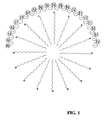
- a schematic illustration of a complex between an oligonucleotide (20-mer) and a positively charged micelle (CTAB) is shown in Figure 1.
- a protein, particularly an antibody, carrying a negative charge is immobilized to a negatively charged solid support surface using a positively charged micelle or liposome.
- a low molecular weight organic compound such as adenosine triphosphate (ATP) or nitrilo tri-acetic acid (NTA) carrying a negative charge is immobilized to a negatively charged solid support surface by means of a positively charged micelle or liposome.
- ATP adenosine triphosphate
- NTA nitrilo tri-acetic acid
- a positively charged target molecule is immobilized to a positively charged solid support surface using a negatively charged micelle or liposome.
- target molecules and micelles or liposomes to be used depend on inter alia the particular target molecule and micelle or liposome, respectively, but suitable ratios may readily be established by a person skilled in the art. Generally, ratios of target molecule to micelle or liposome (number of target molecules to number of micelles) from about 1:3 to about 3:1, preferably from about from 1:2 to about 2:1, especially about 1:1 may be used.
- amphiphatic molecules, or surfactants, from which positively charged micelles may be prepared include dodecyltrimethylammonium bromide (DTAB), cetyltrimethylammonium bromide (CTAB) (other name: hexadecyltrimethylammonium bromide), benzyldimethylhexadecylammonium chloride, dimethyldioctadecylammonium bromide, dodecylethyldimethylammonium bromide, ethylhexadecyldimethylammonium bromide, trimethyl(tetradecyl)ammonium bromide, and thonzonium bromide.
- DTAB dodecyltrimethylammonium bromide
- CTAB cetyltrimethylammonium bromide
- benzyldimethylhexadecylammonium chloride dimethyldioctadecylammonium bromide
- Negatively charged micelles may, for example, be prepared from sodium dodecylsulphate (SDS).
- SDS sodium dodecylsulphate
- Examples of molecules from which positively or negatively charged liposomes may be prepared include hexadecyldimethylammoniumpropane-1-sulphonate.
- the electric charge of the micelle or liposome is neutralized by the target molecule, such that there will remain a residual charge after the complex formation to permit the complex to interact electrostatically with an oppositely charged solid support surface.
- the complex between target molecule and the vesicular structure is usually formed spontaneously.
- the target molecule interacts with the reactive functional group or other binding moiety on the surface, so that the target molecule is immobilized thereto. This may cause simultaneous dissociation of the complex.
- a treatment or wash with a suitable solution will be required to dissociate the complex and remove the vesicular structure or residues thereof from the surface.
- the necessary solutions/conditions therefor are either well known to or may readily be established by the skilled person.
- the solid support is preferably a rigid structure and may comprise a substrate having a surface layer of a different material. While the solid support may be a particle, it is usually a surface of a larger entity, such as an inner surface of a well or receptacle, or a plate or slide. Exemplary of the latter kind are solid supports used for protein or DNA/RNA chips, as well as sensing surfaces in sensor devices, such as biosensors.
- the surface of the solid support may be composed of a variety of materials, for example, polymers, plastics, resins, polysaccharides, silica or silica-based materials, carbon, metals, inorganic glasses, membranes, etc.
- a suitable surface is a metal film, e.g. gold, silver, or aluminium, preferably gold
- the solid support surface comprises groups or molecules capable of interacting with the target molecule.
- groups may be functional groups, e.g. hydroxy, carboxy, amino, formyl, hydrazide, carbonyl, epoxy or vinyl, which may form a covalent bond with a functional group on the target molecule.
- the functional group(s) on the surface or on the target molecule is (are) activated to a more reactive group(s) prior to reaction with the target molecule.
- an aminonucleotide may be coupled to a surface-bound carboxy group activated to a N-hydroxysuccinimide ester group.
- a surface with an activated functional group that is e.g. negatively charged before the activation but neutral after the activation may develop a negative charge during the immobilization process due to competing hydrolysis of the activated group.
- the solid support surface carries one member of a specific binding pair (sbp), and the other member of the specific binding pair is on the target molecule.
- sbp specific binding pair
- a commonly used sbp for immobilizing oligonucleotides is biotin-avidin (or streptavidin).
- the solid support surface may be part of a flow cell, permitting the methods of the invention to be performed in situ in the flow cell.
- flow cells used in the biosensor field are described in e.g. US-A-5,492,840 , 5,513,264 and WO 99/36766
- the target molecule may, for instance, be an analyte-binding ligand, or a capture agent capable of binding a ligand.
- the capture agent may bind a binding agent which in turn can bind a ligand.
- a single capture agent may be used to bind a single ligand to the surface, or to bind different ligands to different discrete areas of the surface to provide a ligand array.
- a ligand array may be formed by selectively binding different ligands to specific capture agents provided on respective discrete surface areas. Binding of a ligand to a solid support surface, such as a sensor surface, is often referred to as "sensitizing" the surface.
- ligands include, without any limitation thereto, agonists and antagonists for cell membranes, toxins and venoms, viral epitopes, antigenic determinants, hormones and hormone receptors, steroids, peptides, enzymes, substrates, cofactors, drugs, lectins, sugars, oligonucleotides, oligosaccharides, proteins, glycoproteins, cells, cellular membranes, organelles, cellular receptors, vitamins, viral epitopes, and immunoglobulins, e.g. monoclonal and polyclonal antibodies.
- Exemplary capture agents include nucleic acids and antibodies, especially oligonucleotides.
- a surface with a capture agent in the form of an oligonucleotide may, for example, be used to bind a ligand conjugated to a complementary oligonucleotide tag.
- different ligands may readily be immobilized to different discrete areas of the surface.
- immobilize different oligonucleotides to different discrete areas in order to capture e.g. differently oligonucleotide-tagged ligands thereto. This will permit different ligand conjugates to be addressed to different areas, but the capture surface may still be regenerated by general regeneration conditions.
- the oligonucleotides have a length of at least six bases. It is further preferred that the oligonucleotide pairs are completely complementary over at least a portion of their respective sequences. Completely complementary sequences are, however, preferred.
- Heterobifunctional agents that may be used to prepare ligand/oligonucleotide conjugates, such as e.g. antibody/oligonucleotide conjugates, are well known to and may readily be selected by the skilled person.
- heterobifunctional agents it may be referred to, for instance, the above-mentioned US-A-5,648,213
- analytes examples include, without any restriction thereto, agonists and antagonists for cell membrane receptors, toxins and venoms, viral epitopes, hormones (e.g. opiates, steroids, etc), hormone receptors, peptides, enzymes, enzyme substrates, cofactors, drugs, lectins, sugars, oligonucleotides, oligosaccharides, proteins, and monoclonal antibodies.
- Assaying an analyte is not restricted to qualitative or quantitative determination of the analyte, but also includes, for example, studying its interaction with a ligand for other characterization of the analyte, such as determining binding properties, e.g. affinity and kinetic constants.
- Methods for detecting the presence of bound analyte(s) on the surface may be chosen from a wide variety of detection techniques, including both photometric and non-photometric methods of detection, for example, marker-based techniques, where the analyte(s) or an analyte specific reagent(s) is (are) labelled, e.g. with a radiolabel, a chromophore, fluorophore, chemiluminescent moiety or a transition metal; as well as label-free techniques.
- marker-based techniques where the analyte(s) or an analyte specific reagent(s) is (are) labelled, e.g. with a radiolabel, a chromophore, fluorophore, chemiluminescent moiety or a transition metal; as well as label-free techniques.
- Biosensors may be based on a variety of detection methods. Typically such methods include, but are not limited to, mass detection methods, such as piezoelectric, optical, thermo-optical and surface acoustic wave (SAW) device methods, and electrochemical methods, such as potentiometric, conductometric, amperometric and capacitance methods.
- mass detection methods such as piezoelectric, optical, thermo-optical and surface acoustic wave (SAW) device methods
- electrochemical methods such as potentiometric, conductometric, amperometric and capacitance methods.
- representative methods include those that detect mass surface concentration, such as reflection-optical methods, including both internal and external reflection methods, angle, wavelength or phase resolved, for example ellipsometry and evanescent wave spectroscopy (EWS), the latter including surface plasmon resonance (SPR) spectroscopy, Brewster angle refractometry, critical angle refractometry, frustrated total reflection (FTR), evanescent wave ellipsometry, scattered total internal reflection (STIR), optical wave guide sensors, evanescent wave-based imaging such as critical angle resolved imaging, Brewster angle resolved imaging, SPR angle resolved imaging, and the like.
- SPR surface plasmon resonance
- FTR frustrated total reflection
- evanescent wave ellipsometry evanescent wave ellipsometry
- scattered total internal reflection (STIR) scattered total internal reflection
- optical wave guide sensors evanescent wave-based imaging such as critical angle resolved imaging, Brewster angle resolved imaging, SPR angle resolved imaging, and the like.
- photometric methods based on
- a BIACORE ® 3000 instrument (Biacore AB, Uppsala, Sweden) was used. In this instrument, a micro-fluidic system passes samples and running buffer through four individually detected flow cells (one by one or in series), with very high precision and with small sample volumes needed.
- Sensor Chip CM5 (Biacore AB, Uppsala, Sweden) which has a gold surface with a covalently linked carboxymethyl-modified dextran polymer hydrogel.
- Running buffer was HBS-N (10 mM HEPES pH 7.4 and 150 mM NaCl) (Biacore AB, Uppsala, Sweden). Due to the carboxy groups, the hydrogel has an anionic character.
- the output from the instrument is a "sensorgram” which is a plot of detector response (measured in “resonance units", RU) as a function of time.
- An increase of 1000 RU corresponds to an increase of mass on the sensor surface of approximately 1 ng/mm 2 .
- nucleotide sequence BC1 is disclosed in Persson, B., et al. (1997) Anal. Biochem. 246, 34-44 .
- Sensor Chip CM5 was activated by 0.2 M N -ethyl- N -dimethylamino-propylcarbodiimide (EDC) and 50 mM N -hydroxysuccinimide (NHS) for 7 or 20 minutes at a flow of 5 ⁇ l/min (EDC and NHS were from Biacore AB, Uppsala, Sweden), converting a fraction of the carboxyl groups on the dextran to reactive N-hydroxysuccinimide ester groups.
- EDC N -ethyl- N -dimethylamino-propylcarbodiimide
- NHS N -hydroxysuccinimide
- oligonucleotide BC1 100 ⁇ M of amine-modified oligonucleotide BC1 (SGS DNA, Köping, Sweden, or DNA Technology, ⁇ lborg, Denmark) in borate 8.5 immobilization buffer (Biacore AB, Uppsala, Sweden) was then injected for 13 minutes at 5 ⁇ l/min for immobilization thereof to the surface. Unreacted N-hydroxysuccinimide ester groups were deactivated by injecting ethanolamine for 3 minutes at 5 ⁇ l/min (replacing the activated group by hydroxyethylamide). The immobilization procedure was performed at high NaCl concentrations varying from 1 to 3 M to shield off the negative charges of the oligonucleotide, and at relatively high pH values between 7.0 and 8.5 to obtain a rapid coupling to the surface.
- the surface was washed with three pulses of 50 mM NaOH, 1 M NaCI for 1 min (flow 5 p,l/min) to remove loosely bound oligonucleotide.
- the complementary amino-modified oligonucleotide BC2 as well as a non-complementary oligonucleotide (BC1) were then allowed to hybridise to the immobilized amino-nucleotide BC1 for three minutes at a flow of 5 ⁇ l/min with HBS-EP buffer (Biacore AB, Uppsala, Sweden). Oligonucleotide concentrations varied between 1 and 10 ⁇ M. Regeneration of the surface between hybridizations was performed with 50 mM NaOH, 1 M NaCl for 1 minute.
- Table 1 pH NaCl conc. (M) NHS/EDC Activation time (min) Immobilization (RU) Hybridization of complementary oligo (RU) Hybridization non-complementary oligo (RU) 7.0 1 7 -26 9.7 4.8 7.0 3 7 -5.4 1.9 7.5 8.5 1 7 16.5 8.6 6.9 8.5 3 7 40.8 10.1 6.8 7.0 1 20 74.2 11.6 10.1 7.0 3 20 -28.9 3.2 8.4 8.5 1 20 -7.8 3.7 7.3 8.5 3 20 15.0 4.4 -
- oligonucleotide BC1 was immobilized to a CM5 chip surface, except that HBS-EP (Biacore AB, Uppsala, Sweden) was used as immobilization buffer, and 1M, 0.75 M, 0.5 M or 0.25 M tetramethylammonium chloride (TMA-Cl) was used instead of NaCl to shield off the negative charges of the oligonucleotide.
- TMA-Cl tetramethylammonium chloride
- TMA-Cl had no effect on the immobilization of oligonucleotide to the surface.
- Sensor Chip CM5 was activated as described in Example 1 above. 10-50 ⁇ M of amine-modified oligonucleotide BC1 (SGS DNA, Köping, Sweden, or DNA Technology, ⁇ lborg, Denmark) in 10 mM Hepes pH 7.4 (Biacore AB, Uppsala, Sweden) with varying concentrations of cetyltrimethylammonium bromide (CTAB) were then injected for 10 minutes at 5 ⁇ l/min for immobilization thereof to the surface. Unreacted N-hydroxysuccinimide ester groups were deactivated by injecting ethanolamine for 3 minutes at 5 ⁇ l/min.
- CTLAB cetyltrimethylammonium bromide
- CTAB critical micellar concentration
- Example 3 The procedure described in Example 3 was followed, except that dodecyltrimethylammonium bromide (DTAB) was substituted for cetyltrimethylammonium bromide (CTAB). No hybridization with non-complementary oligonucleotide was performed. The results obtained are shown in Table 4 below.
- Table 4 DTAB conc. (mM) Amino-oligo conc. ( ⁇ M) Immobilization (RU) Loss at wash (RU) Hybridization of complementary oligo 0 10 10.5 -116.6 15 5 10 3054.5 -625.8 1970.7 10 10 3372.7 -680.4 2054.1 15 10 3519.7 -625.4 2276.5
Landscapes
- Health & Medical Sciences (AREA)
- Immunology (AREA)
- Life Sciences & Earth Sciences (AREA)
- Engineering & Computer Science (AREA)
- Chemical & Material Sciences (AREA)
- Urology & Nephrology (AREA)
- Hematology (AREA)
- Biomedical Technology (AREA)
- Molecular Biology (AREA)
- Medicinal Chemistry (AREA)
- Analytical Chemistry (AREA)
- Cell Biology (AREA)
- Chemical Kinetics & Catalysis (AREA)
- Food Science & Technology (AREA)
- Biotechnology (AREA)
- Physics & Mathematics (AREA)
- Microbiology (AREA)
- Biochemistry (AREA)
- General Health & Medical Sciences (AREA)
- General Physics & Mathematics (AREA)
- Pathology (AREA)
- Measuring Or Testing Involving Enzymes Or Micro-Organisms (AREA)
- Apparatus Associated With Microorganisms And Enzymes (AREA)
- Investigating Or Analysing Biological Materials (AREA)
- Immobilizing And Processing Of Enzymes And Microorganisms (AREA)
Applications Claiming Priority (5)
| Application Number | Priority Date | Filing Date | Title |
|---|---|---|---|
| US45750803P | 2003-03-25 | 2003-03-25 | |
| SE0300805 | 2003-03-25 | ||
| US457508P | 2003-03-25 | ||
| SE0300805A SE0300805D0 (sv) | 2003-03-25 | 2003-03-25 | Immobilization method and kit therefor |
| PCT/SE2004/000447 WO2004086046A1 (en) | 2003-03-25 | 2004-03-24 | Immobilization method and kit therefor |
Publications (2)
| Publication Number | Publication Date |
|---|---|
| EP1606620A1 EP1606620A1 (en) | 2005-12-21 |
| EP1606620B1 true EP1606620B1 (en) | 2008-01-09 |
Family
ID=33100504
Family Applications (1)
| Application Number | Title | Priority Date | Filing Date |
|---|---|---|---|
| EP04723119A Expired - Lifetime EP1606620B1 (en) | 2003-03-25 | 2004-03-24 | Immobilization method and kit therefor |
Country Status (6)
| Country | Link |
|---|---|
| EP (1) | EP1606620B1 (https=) |
| JP (1) | JP4457107B2 (https=) |
| AT (1) | ATE383576T1 (https=) |
| DE (1) | DE602004011198T2 (https=) |
| ES (1) | ES2298738T3 (https=) |
| WO (1) | WO2004086046A1 (https=) |
Families Citing this family (4)
| Publication number | Priority date | Publication date | Assignee | Title |
|---|---|---|---|---|
| EP3228715B1 (en) * | 2012-02-09 | 2019-08-14 | Life Technologies Corporation | Conjugated polymeric particle and method of making same |
| CN107922974B (zh) | 2015-07-02 | 2021-11-09 | 生命技术公司 | 羧基官能亲水微珠的偶合 |
| EP3320115B1 (en) | 2015-07-06 | 2020-09-02 | Life Technologies Corporation | Substrates and methods useful in sequencing |
| MX2021006297A (es) | 2019-08-01 | 2021-09-08 | Illumina Inc | Celdas de flujo. |
Citations (1)
| Publication number | Priority date | Publication date | Assignee | Title |
|---|---|---|---|---|
| WO2002072873A1 (en) * | 2001-03-14 | 2002-09-19 | Biacore Ab | Method of preparing supported lipid film membranes and use thereof |
Family Cites Families (3)
| Publication number | Priority date | Publication date | Assignee | Title |
|---|---|---|---|---|
| DE69737598T2 (de) * | 1996-07-29 | 2007-12-27 | Nanosphere Inc., Skokie | Nanopartikel mit daran angehefteten oligonukleotiden sowie deren verwendungen |
| BR9813548A (pt) * | 1997-12-12 | 2000-10-10 | Samyang Corp | Micelas poliméricas misturadas biodegradáveis para distribuição de gene |
| WO2002082078A2 (en) * | 2001-04-09 | 2002-10-17 | Fraunhofer-Gesellschaft Zur Foerderung Der Angewandten Forschung E.V. | Activated enzyme-linked detection systems for detecting and quantifying nucleid acids, antigens antibodies and other analytes |
-
2004
- 2004-03-24 JP JP2006507981A patent/JP4457107B2/ja not_active Expired - Lifetime
- 2004-03-24 DE DE602004011198T patent/DE602004011198T2/de not_active Expired - Lifetime
- 2004-03-24 WO PCT/SE2004/000447 patent/WO2004086046A1/en not_active Ceased
- 2004-03-24 ES ES04723119T patent/ES2298738T3/es not_active Expired - Lifetime
- 2004-03-24 EP EP04723119A patent/EP1606620B1/en not_active Expired - Lifetime
- 2004-03-24 AT AT04723119T patent/ATE383576T1/de not_active IP Right Cessation
Patent Citations (1)
| Publication number | Priority date | Publication date | Assignee | Title |
|---|---|---|---|---|
| WO2002072873A1 (en) * | 2001-03-14 | 2002-09-19 | Biacore Ab | Method of preparing supported lipid film membranes and use thereof |
Also Published As
| Publication number | Publication date |
|---|---|
| ATE383576T1 (de) | 2008-01-15 |
| DE602004011198T2 (de) | 2008-12-24 |
| JP4457107B2 (ja) | 2010-04-28 |
| EP1606620A1 (en) | 2005-12-21 |
| JP2006521559A (ja) | 2006-09-21 |
| DE602004011198D1 (de) | 2008-02-21 |
| WO2004086046A1 (en) | 2004-10-07 |
| ES2298738T3 (es) | 2008-05-16 |
Similar Documents
| Publication | Publication Date | Title |
|---|---|---|
| US7981665B2 (en) | Supports for assaying analytes and methods of making and using thereof | |
| US6130044A (en) | Surfaces for biological reactions, process for preparing them and process for their use | |
| JP5588430B2 (ja) | 標識独立検出のための表面及びその方法 | |
| EP0874242B1 (en) | Device and apparatus for the simultaneous detection of multiple analytes | |
| US8093005B2 (en) | Preparation and use of a reactive solid support surface | |
| EP1456659B1 (en) | Immobilization of binding agents | |
| JP3214795B2 (ja) | ビオチンシラン化合物及びこれらの化合物を含む結合マトリックス | |
| US20040253596A1 (en) | Bioanalytical recognition surface with optimized recognition element density | |
| KR100784437B1 (ko) | 표면처리 되지 않은 기질에 표지물질을 고정하기 위한졸-겔 바이오칩용 졸 조성물 및 그의 스크리닝 방법 | |
| US20040241724A1 (en) | Immobilization method and kit therefor | |
| EP1606620B1 (en) | Immobilization method and kit therefor | |
| US7563587B2 (en) | Method and kit for cell analyte assay | |
| Kant et al. | Relevance of adhesion in fabrication of microarrays in clinical diagnostics | |
| Zhao et al. | A novel optical immunosensing system based on measuring surface enhanced light scattering signals of solid supports | |
| WO2005036171A1 (en) | Method and system for detection of a target analyte | |
| JPWO2012161256A1 (ja) | 荷電層を備えるセンサーチップ及びその用途 | |
| Markey et al. | Biomolecular-Interaction Analysis (BIA-Technology) A Universal Biosensor-Based Technology for Biochemical Research and Development | |
| Schindler | Biomolecular-Interaction Analysis (BIA-Technology) | |
| WO2006041392A1 (en) | Preparation and use of a reactive solid support surface | |
| Bonen et al. | Silver ion microplates for immunoassays | |
| EP1611443A1 (en) | Method and kit for cell analyte assay | |
| CN101195473A (zh) | 一种固定化纳米线及其包含装置和制备方法 |
Legal Events
| Date | Code | Title | Description |
|---|---|---|---|
| PUAI | Public reference made under article 153(3) epc to a published international application that has entered the european phase |
Free format text: ORIGINAL CODE: 0009012 |
|
| 17P | Request for examination filed |
Effective date: 20050915 |
|
| AK | Designated contracting states |
Kind code of ref document: A1 Designated state(s): AT BE BG CH CY CZ DE DK EE ES FI FR GB GR HU IE IT LI LU MC NL PL PT RO SE SI SK TR |
|
| AX | Request for extension of the european patent |
Extension state: AL LT LV MK |
|
| DAX | Request for extension of the european patent (deleted) | ||
| 17Q | First examination report despatched |
Effective date: 20060908 |
|
| GRAP | Despatch of communication of intention to grant a patent |
Free format text: ORIGINAL CODE: EPIDOSNIGR1 |
|
| GRAS | Grant fee paid |
Free format text: ORIGINAL CODE: EPIDOSNIGR3 |
|
| GRAA | (expected) grant |
Free format text: ORIGINAL CODE: 0009210 |
|
| AK | Designated contracting states |
Kind code of ref document: B1 Designated state(s): AT BE BG CH CY CZ DE DK EE ES FI FR GB GR HU IE IT LI LU MC NL PL PT RO SE SI SK TR |
|
| REG | Reference to a national code |
Ref country code: GB Ref legal event code: FG4D |
|
| BECA | Be: change of holder's address |
Owner name: *GE HEALTHCARE BIO-SCIENCES A.B.BJORKGATAN 30, SE- Effective date: 20080109 |
|
| BECH | Be: change of holder |
Owner name: *GE HEALTHCARE BIO-SCIENCES A.B. Effective date: 20080109 |
|
| REG | Reference to a national code |
Ref country code: CH Ref legal event code: EP |
|
| REG | Reference to a national code |
Ref country code: IE Ref legal event code: FG4D |
|
| REF | Corresponds to: |
Ref document number: 602004011198 Country of ref document: DE Date of ref document: 20080221 Kind code of ref document: P |
|
| REG | Reference to a national code |
Ref country code: SE Ref legal event code: TRGR |
|
| REG | Reference to a national code |
Ref country code: CH Ref legal event code: NV Representative=s name: ISLER & PEDRAZZINI AG Ref country code: CH Ref legal event code: PUE Owner name: GE HEALTHCARE BIO-SCIENCES AB Free format text: BIACORE AB#RAPSGATAN 7#754 50 UPPSALA (SE) -TRANSFER TO- GE HEALTHCARE BIO-SCIENCES AB#BJOERKGATAN 30#751 84 UPPSALA (SE) |
|
| REG | Reference to a national code |
Ref country code: ES Ref legal event code: FG2A Ref document number: 2298738 Country of ref document: ES Kind code of ref document: T3 |
|
| PG25 | Lapsed in a contracting state [announced via postgrant information from national office to epo] |
Ref country code: SI Free format text: LAPSE BECAUSE OF FAILURE TO SUBMIT A TRANSLATION OF THE DESCRIPTION OR TO PAY THE FEE WITHIN THE PRESCRIBED TIME-LIMIT Effective date: 20080109 |
|
| PG25 | Lapsed in a contracting state [announced via postgrant information from national office to epo] |
Ref country code: FI Free format text: LAPSE BECAUSE OF FAILURE TO SUBMIT A TRANSLATION OF THE DESCRIPTION OR TO PAY THE FEE WITHIN THE PRESCRIBED TIME-LIMIT Effective date: 20080109 |
|
| PG25 | Lapsed in a contracting state [announced via postgrant information from national office to epo] |
Ref country code: BG Free format text: LAPSE BECAUSE OF FAILURE TO SUBMIT A TRANSLATION OF THE DESCRIPTION OR TO PAY THE FEE WITHIN THE PRESCRIBED TIME-LIMIT Effective date: 20080409 Ref country code: AT Free format text: LAPSE BECAUSE OF FAILURE TO SUBMIT A TRANSLATION OF THE DESCRIPTION OR TO PAY THE FEE WITHIN THE PRESCRIBED TIME-LIMIT Effective date: 20080109 |
|
| NLS | Nl: assignments of ep-patents |
Owner name: GE HEALTHCARE BIO-SCIENCES AB Effective date: 20080623 |
|
| ET | Fr: translation filed | ||
| PG25 | Lapsed in a contracting state [announced via postgrant information from national office to epo] |
Ref country code: PL Free format text: LAPSE BECAUSE OF FAILURE TO SUBMIT A TRANSLATION OF THE DESCRIPTION OR TO PAY THE FEE WITHIN THE PRESCRIBED TIME-LIMIT Effective date: 20080109 Ref country code: PT Free format text: LAPSE BECAUSE OF FAILURE TO SUBMIT A TRANSLATION OF THE DESCRIPTION OR TO PAY THE FEE WITHIN THE PRESCRIBED TIME-LIMIT Effective date: 20080609 |
|
| PG25 | Lapsed in a contracting state [announced via postgrant information from national office to epo] |
Ref country code: CZ Free format text: LAPSE BECAUSE OF FAILURE TO SUBMIT A TRANSLATION OF THE DESCRIPTION OR TO PAY THE FEE WITHIN THE PRESCRIBED TIME-LIMIT Effective date: 20080109 Ref country code: DK Free format text: LAPSE BECAUSE OF FAILURE TO SUBMIT A TRANSLATION OF THE DESCRIPTION OR TO PAY THE FEE WITHIN THE PRESCRIBED TIME-LIMIT Effective date: 20080109 Ref country code: MC Free format text: LAPSE BECAUSE OF NON-PAYMENT OF DUE FEES Effective date: 20080331 Ref country code: SK Free format text: LAPSE BECAUSE OF FAILURE TO SUBMIT A TRANSLATION OF THE DESCRIPTION OR TO PAY THE FEE WITHIN THE PRESCRIBED TIME-LIMIT Effective date: 20080109 |
|
| PLBE | No opposition filed within time limit |
Free format text: ORIGINAL CODE: 0009261 |
|
| STAA | Information on the status of an ep patent application or granted ep patent |
Free format text: STATUS: NO OPPOSITION FILED WITHIN TIME LIMIT |
|
| PG25 | Lapsed in a contracting state [announced via postgrant information from national office to epo] |
Ref country code: RO Free format text: LAPSE BECAUSE OF FAILURE TO SUBMIT A TRANSLATION OF THE DESCRIPTION OR TO PAY THE FEE WITHIN THE PRESCRIBED TIME-LIMIT Effective date: 20080109 |
|
| REG | Reference to a national code |
Ref country code: GB Ref legal event code: 732E |
|
| 26N | No opposition filed |
Effective date: 20081010 |
|
| REG | Reference to a national code |
Ref country code: FR Ref legal event code: TP |
|
| PG25 | Lapsed in a contracting state [announced via postgrant information from national office to epo] |
Ref country code: EE Free format text: LAPSE BECAUSE OF FAILURE TO SUBMIT A TRANSLATION OF THE DESCRIPTION OR TO PAY THE FEE WITHIN THE PRESCRIBED TIME-LIMIT Effective date: 20080109 Ref country code: IE Free format text: LAPSE BECAUSE OF NON-PAYMENT OF DUE FEES Effective date: 20080324 |
|
| PGFP | Annual fee paid to national office [announced via postgrant information from national office to epo] |
Ref country code: NL Payment date: 20090324 Year of fee payment: 6 |
|
| PG25 | Lapsed in a contracting state [announced via postgrant information from national office to epo] |
Ref country code: CY Free format text: LAPSE BECAUSE OF FAILURE TO SUBMIT A TRANSLATION OF THE DESCRIPTION OR TO PAY THE FEE WITHIN THE PRESCRIBED TIME-LIMIT Effective date: 20080109 |
|
| PGFP | Annual fee paid to national office [announced via postgrant information from national office to epo] |
Ref country code: SE Payment date: 20090327 Year of fee payment: 6 |
|
| PGFP | Annual fee paid to national office [announced via postgrant information from national office to epo] |
Ref country code: BE Payment date: 20090430 Year of fee payment: 6 |
|
| PG25 | Lapsed in a contracting state [announced via postgrant information from national office to epo] |
Ref country code: HU Free format text: LAPSE BECAUSE OF FAILURE TO SUBMIT A TRANSLATION OF THE DESCRIPTION OR TO PAY THE FEE WITHIN THE PRESCRIBED TIME-LIMIT Effective date: 20080710 Ref country code: LU Free format text: LAPSE BECAUSE OF NON-PAYMENT OF DUE FEES Effective date: 20080324 |
|
| PG25 | Lapsed in a contracting state [announced via postgrant information from national office to epo] |
Ref country code: TR Free format text: LAPSE BECAUSE OF FAILURE TO SUBMIT A TRANSLATION OF THE DESCRIPTION OR TO PAY THE FEE WITHIN THE PRESCRIBED TIME-LIMIT Effective date: 20080109 |
|
| BERE | Be: lapsed |
Owner name: *GE HEALTHCARE BIO-SCIENCES A.B. Effective date: 20100331 |
|
| REG | Reference to a national code |
Ref country code: NL Ref legal event code: V1 Effective date: 20101001 |
|
| PG25 | Lapsed in a contracting state [announced via postgrant information from national office to epo] |
Ref country code: GR Free format text: LAPSE BECAUSE OF FAILURE TO SUBMIT A TRANSLATION OF THE DESCRIPTION OR TO PAY THE FEE WITHIN THE PRESCRIBED TIME-LIMIT Effective date: 20080410 |
|
| EUG | Se: european patent has lapsed | ||
| PG25 | Lapsed in a contracting state [announced via postgrant information from national office to epo] |
Ref country code: NL Free format text: LAPSE BECAUSE OF NON-PAYMENT OF DUE FEES Effective date: 20101001 |
|
| PG25 | Lapsed in a contracting state [announced via postgrant information from national office to epo] |
Ref country code: BE Free format text: LAPSE BECAUSE OF NON-PAYMENT OF DUE FEES Effective date: 20100331 |
|
| PGFP | Annual fee paid to national office [announced via postgrant information from national office to epo] |
Ref country code: CH Payment date: 20120326 Year of fee payment: 9 |
|
| PGFP | Annual fee paid to national office [announced via postgrant information from national office to epo] |
Ref country code: IT Payment date: 20120326 Year of fee payment: 9 |
|
| PG25 | Lapsed in a contracting state [announced via postgrant information from national office to epo] |
Ref country code: SE Free format text: LAPSE BECAUSE OF NON-PAYMENT OF DUE FEES Effective date: 20100325 |
|
| REG | Reference to a national code |
Ref country code: DE Ref legal event code: R082 Ref document number: 602004011198 Country of ref document: DE Representative=s name: J D REYNOLDS & CO., GB Ref country code: DE Ref legal event code: R082 Ref document number: 602004011198 Country of ref document: DE |
|
| PGFP | Annual fee paid to national office [announced via postgrant information from national office to epo] |
Ref country code: ES Payment date: 20120326 Year of fee payment: 9 |
|
| REG | Reference to a national code |
Ref country code: CH Ref legal event code: PL |
|
| PG25 | Lapsed in a contracting state [announced via postgrant information from national office to epo] |
Ref country code: CH Free format text: LAPSE BECAUSE OF NON-PAYMENT OF DUE FEES Effective date: 20130331 Ref country code: LI Free format text: LAPSE BECAUSE OF NON-PAYMENT OF DUE FEES Effective date: 20130331 |
|
| PG25 | Lapsed in a contracting state [announced via postgrant information from national office to epo] |
Ref country code: IT Free format text: LAPSE BECAUSE OF NON-PAYMENT OF DUE FEES Effective date: 20130324 |
|
| PGFP | Annual fee paid to national office [announced via postgrant information from national office to epo] |
Ref country code: FR Payment date: 20140317 Year of fee payment: 11 |
|
| REG | Reference to a national code |
Ref country code: ES Ref legal event code: FD2A Effective date: 20140616 |
|
| PG25 | Lapsed in a contracting state [announced via postgrant information from national office to epo] |
Ref country code: ES Free format text: LAPSE BECAUSE OF NON-PAYMENT OF DUE FEES Effective date: 20130325 |
|
| REG | Reference to a national code |
Ref country code: FR Ref legal event code: ST Effective date: 20151130 |
|
| PG25 | Lapsed in a contracting state [announced via postgrant information from national office to epo] |
Ref country code: FR Free format text: LAPSE BECAUSE OF NON-PAYMENT OF DUE FEES Effective date: 20150331 |
|
| REG | Reference to a national code |
Ref country code: DE Ref legal event code: R082 Ref document number: 602004011198 Country of ref document: DE |
|
| REG | Reference to a national code |
Ref country code: DE Ref legal event code: R081 Ref document number: 602004011198 Country of ref document: DE Owner name: CYTIVA SWEDEN AB, SE Free format text: FORMER OWNER: BIACORE AB, UPPSALA, SE |
|
| PGFP | Annual fee paid to national office [announced via postgrant information from national office to epo] |
Ref country code: GB Payment date: 20230202 Year of fee payment: 20 Ref country code: DE Payment date: 20230125 Year of fee payment: 20 |
|
| REG | Reference to a national code |
Ref country code: DE Ref legal event code: R071 Ref document number: 602004011198 Country of ref document: DE |
|
| REG | Reference to a national code |
Ref country code: GB Ref legal event code: PE20 Expiry date: 20240323 |
|
| PG25 | Lapsed in a contracting state [announced via postgrant information from national office to epo] |
Ref country code: GB Free format text: LAPSE BECAUSE OF EXPIRATION OF PROTECTION Effective date: 20240323 |