EP1598266A1 - Verfahren zur Fahrtplanung eines Unterseebootes - Google Patents
Verfahren zur Fahrtplanung eines Unterseebootes Download PDFInfo
- Publication number
- EP1598266A1 EP1598266A1 EP05010088A EP05010088A EP1598266A1 EP 1598266 A1 EP1598266 A1 EP 1598266A1 EP 05010088 A EP05010088 A EP 05010088A EP 05010088 A EP05010088 A EP 05010088A EP 1598266 A1 EP1598266 A1 EP 1598266A1
- Authority
- EP
- European Patent Office
- Prior art keywords
- battery
- charging
- time
- remaining
- energy supply
- Prior art date
- Legal status (The legal status is an assumption and is not a legal conclusion. Google has not performed a legal analysis and makes no representation as to the accuracy of the status listed.)
- Granted
Links
Images

Classifications
-
- B—PERFORMING OPERATIONS; TRANSPORTING
- B63—SHIPS OR OTHER WATERBORNE VESSELS; RELATED EQUIPMENT
- B63G—OFFENSIVE OR DEFENSIVE ARRANGEMENTS ON VESSELS; MINE-LAYING; MINE-SWEEPING; SUBMARINES; AIRCRAFT CARRIERS
- B63G8/00—Underwater vessels, e.g. submarines; Equipment specially adapted therefor
- B63G8/08—Propulsion
-
- G—PHYSICS
- G01—MEASURING; TESTING
- G01C—MEASURING DISTANCES, LEVELS OR BEARINGS; SURVEYING; NAVIGATION; GYROSCOPIC INSTRUMENTS; PHOTOGRAMMETRY OR VIDEOGRAMMETRY
- G01C21/00—Navigation; Navigational instruments not provided for in groups G01C1/00 - G01C19/00
- G01C21/20—Instruments for performing navigational calculations
- G01C21/203—Instruments for performing navigational calculations specially adapted for water-borne vessels
-
- G—PHYSICS
- G06—COMPUTING OR CALCULATING; COUNTING
- G06F—ELECTRIC DIGITAL DATA PROCESSING
- G06F9/00—Arrangements for program control, e.g. control units
- G06F9/06—Arrangements for program control, e.g. control units using stored programs, i.e. using an internal store of processing equipment to receive or retain programs
- G06F9/44—Arrangements for executing specific programs
- G06F9/455—Emulation; Interpretation; Software simulation, e.g. virtualisation or emulation of application or operating system execution engines
Definitions
- the invention relates to a method for trip planning of a submarine.
- this second charge stage is therefore terminated at a finite charge current.
- the method according to the invention is intended for use in a computer system to be executed.
- the method is preferred implemented in a computer program in the execution of the Method on a corresponding computer system, preferably on a standard PC can run.
- the method can be used, for example, in one Submarine existing computer systems, such as navigation computers and control computer for the operation of the submarine, integrated become.
- the inventive method and in particular computer systems implementing this method can also outside the submarine, for example in an operations center be used to there the rides of submarines to plan or possible movements of enemy submarines to be able to predict.
- the program can be too Simulation purposes are used in training on land.
- the inventive method for trip planning is provided for Submarines, which at least one electric drive with a Battery for power supply and a charging device for the battery exhibit.
- a charging device is in conventional submarines
- a diesel engine which is a generator for Electricity generation drives.
- an air independent energy supply air independent propulsion system, short AIP system
- a fuel cell system be provided, which the electric drive as well the remaining electrical consumers of the submarine with energy can be supplied and possibly also used to the batteries legilagen.
- air independent energy supply air independent propulsion system, short AIP system
- a fuel cell system be provided, which the electric drive as well the remaining electrical consumers of the submarine with energy can be supplied and possibly also used to the batteries ashamed.
- Other possible external air independent drive systems are z. B. cycle diesel, Stirling or MESMA drive.
- the inventive method is such that initially a future time is selected for which a remaining available energy supply, d. H. the remaining capacity of the battery to a preselected discharge limit, is predetermined. According to the prediction of the remaining Energy supply at the future time based on the travel time until this time, with at least one for this travel time certain consumption profile is selected.
- a consumption profile gives the energy consumption of the submarine in a given Driving condition on. First, the energy consumption of the drive and also the energy consumption of all other consumers (hotel load) detected. The energy consumption differs considerably various driving conditions of the submarine, especially at different speeds. It can be external factors like current, depth, distance from the ground as well as in a certain Driving condition required facilities and systems on the Submarine and its energy consumption are taken into account.
- Such consumption profiles are for different driving conditions of Submarine stored in a memory unit of the computer system or are currently based on specific baseline values, in particular the energy consumption of individual consumers.
- the consumption profiles can be specified by the shipyard but also in reference trips of the submarine for the different ones Driving conditions are determined and stored. From the individual Consumption profiles can also be through interpolation or extrapolation Consumption profiles for other driving conditions are determined for which no consumption profile was pre-stored.
- the remaining energy supply In addition to the journey time and the selected from the Consumption profile resulting consumption of electrical energy is used according to the invention for determining the remaining energy supply also type and duration of the charging cycles that have taken place up to this point in time the battery is taken into account. Ie. it is taken into account, if, how often and in what charge level the battery will go to the selected future one Time has been loaded. In this way, for example for lead-acid batteries changes in battery capacity and Battery behavior, which results from that in previous charging cycles, the second charging stage at all not or not until the end was driven.
- an initial charge state with maximum Battery capacity d. H. with a maximum battery capacity up to a certain or predetermined discharge limit
- on Basis of a planned journey with at least one selected one Consumption profile simulates a first discharge cycle of the battery or calculated and the remaining energy supply of the battery on Predicted at the end of this first discharge cycle.
- the initial charge state with maximum battery capacity is always after a complete Charging cycle reached, in which at lead-acid batteries the above described second charging stage with reduced charging current to the end is driven, wherein, as described above, in practice, the charging process is interrupted at a finite charge current.
- Starting from this full battery capacity can be based on a selected consumption profile or multiple selected ones Consumption profiles when the driving condition during the found Duration changes, the discharge of the battery simulated so that at the desired time the remaining energy supply the battery can be predetermined.
- this remaining energy supply can then in one Next step will determine if the battery is recharging must be and how much time is required for the loading process. there In particular, it can be determined how much time in the second charging stage with reduced charging current is required to complete the battery to load. Alternatively, it can be determined in the second step how far with the remaining capacity left to a certain one Discharge limit based on a specific consumption profile can still be operated independently of the outside air.
- a discharge cycle of the battery can in addition to by the Consumption profile given consumption values further influencing variables be taken into account, which if they are for certain driving conditions are also stored or stored in the consumption profile could be.
- Such influencing variables can in particular Factors influencing the battery behavior and in particular the Affect battery capacity, such as the current acid temperature or by the submarine type given sizes such as battery type, battery characteristics, battery size, cell number, Partial batteries etc.
- a charge cycle considering a selected loading time and the available power of the charging device simulated or calculated and the available power supply of the battery at the end of this Charge cycle predetermined.
- d. H. Battery type, battery size, cell number, maximum available Charging power, etc. taken into account.
- d. H. Battery type, battery size, cell number, maximum available Charging power, etc. taken into account.
- d. H. the driving condition during charging, d. H. in particular takes into account the driving speed. So will of the maximum available generator power the required drive power as well as required hotel-load for the operation of the facilities and Systems of the submarine subtracted and in this way the maximum in each driving condition available charging power determined.
- the previous charging cycles calculates how long in the maximum cheap first charge level can be charged and how long in the unfavorable second charging stage must be loaded.
- the first to Available charging time given and then based on it simulates up to what capacity in this time with the help of the available standing charging power the battery can be charged.
- the system may also predict which load time is required for a given initial state of the Battery with the available charging power back to full To reach battery capacity. In doing so, particular consideration is given how long the second charging stage will take, starting from Art and duration of the previous charge cycles.
- Procedures are used in the prediction of the available energy supply the battery at a selected time also from the an air independent energy supply (AIP system), z. B. one Fuel cell system generated electric power and the Fuel or Reaktandenvordorfe considered for such a system. Ie. it can be used in the simulation or prediction of the individual Driving sections the total electrical power available of the submarine consisting of the ones stored in the batteries electrical energy as well as the fuel supplies for the AIP system, e.g. Reaktandenvordorfen for the fuel cell plant, and the resulting be taken into account in generating electric energy. Furthermore, can individual sections of the journey, d. H.
- Charging and discharging cycles of the submarine be simulated and calculated so that a certain proportion for the electric drive and / or the other units (hotel load) required electrical power from the AIP system, e.g. a fuel cell system is provided.
- the AIP system e.g. a fuel cell system
- To the total energy supply of the submarine can also take into account the amount of the available conventional, d. H. Diesel fuel taken into account usually such a supply of fuel is sufficient is big, so this is not a problem in the trip planning.
- the remaining fuel stocks for an externally independent power supply system for example the Reaktandenvordorfe for a fuel cell system, to a preselected time. This is done by that at the charging and discharging cycles simulated as described above; d. H. at the individual cruise sections of the submarine too the consumption of fuel or reactants for a given Share of electrical power provided by the AIP system is taken into account. So can at any time the performance of the submarine due to the total deployable electrical power, d. H. of batteries and AIP system, be predetermined.
- the remaining energy supply of the battery as well as the remaining fuel or reactant stocks of the AIP system a remaining travel time for a selected fuel consumption profile certainly. If the residual energy supply, d. H. the energy supply of Batteries and the supply of fuel or reactants predetermined is, in known consumption or electrical power consumption according to a selected consumption profile, the remaining time to be calculated. In addition to the consumption profile can provide up-to-date data on battery condition, especially acid temperature etc. are taken into account.
- each journey section being based on the remaining Energy reserves at the end of the preceding journey section and the nature and duration of the previous charge and discharge cycles the battery is simulated.
- the entire driving profile will be gradual constructed, with the remaining energy supply for each journey section and battery condition precalculated at the end of the journey section and on that basis the next leg of the journey is simulated. It is considered in particular whether in the Advance planning the battery before completely or only partially without full second charge level is charged.
- the individual sections of the journey can represent charging cycles, d. H.
- the submarine runs surfaced or at snorkel depth, or represent discharge cycles, in which the submarine submerged and outside air independent moves.
- the computer executing the program is entered beforehand, in which sections of the trip necessarily dived for technical reasons must be driven and in which driving sections charging cycles can be provided. The individual trip sections with Charge and discharge cycles can then be adjusted to fit in the respective predetermined sections are.
- the driving sections are marked, in which dived or surfaced or driven to snorkel depth can be.
- wide boundary conditions which affect the energy consumption, such as water depth, Currents and, for example, the depth entered or into the calculation unit.
- the created driving profile is preferably with the relevant the respective driving condition characterizing values, in particular with the required charge cycles of the battery in an electronic Nautical chart displayed. This can be done, for example, by color Marking the route depending on driving conditions, in particular for identification the charging cycles take place. Furthermore, important parameters such as the driving speed graphically or alphanumerically on the electronic nautical chart or on a separate display are displayed.
- the results of electronic trip planning according to the method described above are available in various Shape on a display device, such as a Screen with all relevant data output. This can, for example different graphics or curves are output, which the course of the performance, d. H. especially the Show battery capacity over the simulated journey time.
- the driving profile is further preferably created such that at no time the battery capacity falls below a preselected limit capacity.
- This adjustable limit capacity is, for example, the residual capacity, which for the battery life maintenance or to achieve a longer Battery life should not be below. This can for example, a residual capacity of 20%.
- Marginal capacity is the residual capacity that is required so that the submarine with the electric drive its maximum speed can reach over a predetermined amount of time.
- an AIP system e.g. a fuel cell system, producible electrical power to be considered. So can the driving profile calculator determine required charging cycles, which are so are always given that sufficient battery capacity and the remaining energy supply is never below the specified one Boundary capacity drops.
- parameters of the current operating states in particular battery capacity, battery temperature, charging and discharging power the battery, charging and discharging times, the power consumption all aggregates and generator power of the submarine continuously recorded and serve these parameters as output data for the mathematical determination of the remaining energy supply the battery at the selected future time.
- current operating parameters of an AIP system in particular the delivered electrical power and the remaining fuel or reactant inventories are continuously recorded and included in the calculation incorporated.
- the data may be for documentation or stored as a basis for later calculations. Thus is it is possible, based on this data, to make even more accurate forecasts of the remaining energy supply.
- the recorded current operating conditions can be used, already made calculations of the energy supply or to correct a previously created driving profile. This can be, for example then be required if the actual driving conditions from the consumption profile used in the calculation deviate, for example if due to a tactical maneuver the driving speed, the course or depth are changed got to.
- the continuously recorded operating parameters can then be added can be used, automatically or manually triggered Based on the changed values to correct the driving profile, so that as exactly as possible the remaining energy reserves for future times can be determined.
- Fig. 1 shows schematically the structure of a system in which a Driving profile calculator is integrated to the inventive method for Planning to carry out the trip of a submarine. That explained Example relates to a driving profile calculator, which integrates into a submarine is there and together with an existing navigation system is working.
- the navigation system forms the interface to Data input and output.
- the navigation system has a navigation computer NR on, which with a navigation planning display NPD which is planned in an electronic nautical chart and current route represents.
- the navigation computer with connected to a graphic display GD, which for displaying current Driving data and the precalculated driving profiles and in particular the precalculated capacity curve of the batteries in graphical or numerical form.
- the system has an input device K, for example in the form of a keyboard.
- the navigation computer NR also communicates with an output device AE, which is provided to output files or documents D.
- the Output device for example, a floppy disk or CD drive or a printer. Unless it is a disk drive The output device can also be used for this purpose to read or transfer data to the navigation computer.
- the navigation computer NR communicates via interfaces the driving profile computer CPC.
- the navigation computer NR and the driving profile computer CPC can be used as separate computer units or computer systems be formed, which via appropriate interfaces communicate. Alternatively, driving profile calculator CPC and navigation computer NR as software modules on the same computer system.
- the driving profile computer CPC transmits the output or display of the Results his results directly to the navigation computer NR showing the results either on the navigation planning display NPD, d. H. representing on the electronic nautical chart or on the discrete graphic display graphically or numerically outputs.
- the navigation computer NR also transmits input data, in particular Data about the planned route, which is available via the navigation planning display NPD or the input device K are input to the driving profile computer CPC.
- a data memory 2 is provided, in which basic data and in particular certain consumption profiles are stored.
- Such data may be, for example Propeller speed for different driving conditions, for example Snorkeling, crawl, etc., data on battery type, diesel engine, AIP system (e.g., fuel cell plant) and other constants and factors that the driving profile calculator CPC for Advance planning of the driving profile needed.
- This data will be either as initial data for a one-time calculation in the driving profile computer CPC transmitted or as online data 6 continuously for the Updating a created driving profile both for the driving profile computer CPC and the navigation computer NR provided.
- Data acquisition devices 4 are provided, which current operating data of the submarine, such as speed, propeller speed, Battery voltage and current, battery capacity or state of charge, Acid temperature, motor current, generator current, current power or the current of other consumers (hotel load) Fuel supply and supply of reactants for a fuel cell system detected. These data are called online data 6 the navigation computer NR and the driving profile computer CPC provided.
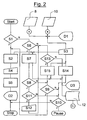
- Fig. 2 shows the procedure for the predetermination or prognosis the remaining capacity or remaining time of the submarine.
- step S1 it is decided in step S1, whether based on the currently available energy reserves determines the remaining travel time or remaining capacity of the submarine shall be. If this is to be determined, in step S2 a corresponding calculation takes place, in which current data 8 and / or stored data 10 from a data memory 2 can.
- current data may still contain data about it available battery capacity, battery temperature, remaining fuel or Reaktandenvordorfe an AIP system, etc. be.
- the saved In particular, data includes consumption profiles which Specify fuel consumption for different driving conditions, which the Energy consumption of all systems and propulsion of the submarine in a respective driving state, for example, crawl, Full load, etc.
- the data 8 and 10 can be displayed on a display device, in particular on the graphic display described above GD in step D1 to be displayed and then in Step S3 manually or automatically selected.
- a consumption profile suitable for the planned driving situation selected or caused its calculation or interpolation become.
- the data selected in step S3 is used in the calculation considered in step S2.
- the display mode can then the determined performance or the predicted performance of the submarine, for example whether the data numerically or graphically on the graphic display GD or also directly in the electronic nautical chart of the navigation planning display NPD should be output.
- step S5 finds a corresponding data preparation and in step D2 the selected Output of data instead. This is the basic level of the precalculation the remaining efficiency of the submarine of his energy supply finished.
- step S3 and in step S2 all processes since Taking into account the beginning of a driving period, in particular preceding Charging and discharging of the battery, which influences the current Have capacity or capacity of the battery, d. H. z. For example a second loading stage was finished or not.
- the system can preferably also be set so that automatic recalculations take place when in the current data 8, which are relevant for the respective calculation, to change.
- the navigation planning display NPD both the pre-calculated waypoints and dates as well as the current one Location and the current parameters are displayed, so that a constant monitoring of the ride is possible.
- step S6 decided whether to calculate a discharge or a charge should. If yes, a discharge process is simulated or calculated in step S7, taking recourse to the data selected in step S3 particular, on a chosen consumption profile and the current Battery characteristic or capacity, which in particular of previous charging and discharging cycles may be dependent. The result the calculation in step S7 is then in step D3, for example output on the graphic display GD.
- Step S8 determines whether the preselected final capacity of the battery is reached. If the final capacity has not yet been reached, in step S9 checked or interrogated, if appropriate, the remaining time remaining or remaining capacity should be calculated. If so, it starts previously described method with step S2.
- step S10 If not, a check is made in step S10 to see if recalculation begins with step S1 is desired. If the query or check in Step S10 returns "No", the process is completed.
- step S11 closes whether in the next step a charging process is simulated or calculated shall be. If the query is answered with "No", closes the described step S10. If the query answers with "yes” is, then joins a calculation of the charging process, where initially in step S12, a speed value for the emerged or snorkeling, which is used to recharge the batteries with the help of Internal combustion engines is required, is entered. Subsequently is followed by step S13, to which the method also comes if the query is answered with "No” in step S6, d. H. in the event that no unloading, but a charge should be calculated.
- step S13 it is queried whether there is a limit for the charging process there or not. If not, then step S14 follows, in which taking into account the boundary parameters selected in step S3 a complete charge is simulated or calculated.
- the selected or required current data 8 and stored data 10 which in particular the current battery capacity, battery temperature, battery type, available standing charging power and also the type of the preceding charging operations consider. So the current battery condition can be considered become. This is important, for example, with lead-acid batteries, to determine how long in the first charging stage, in which with maximum charging current is charged, and how long in the second charging stage with reduced charge current must be charged to the full To restore capacity of the battery.
- the maximum available standing charging power depends in particular on the consumption of the rest electrical loads and the drive, d. H.
- step S14 a complete charge cycle until reaching full battery capacity.
- Step D3 for example, on the graphic display GD or the navigation planning display NPD displayed.
- step S14 is followed by the already described step S10.
- step S15 A charge limit, which in answer to the Query in S13 with "yes” is present, for example, given be that the submarine surfaced only a limited time or can drive on snorkel depth, otherwise the risk of Discovery would be too big.
- step S15 a partial load is made simulated, whereby here also selected in step S3 or provided data such as current battery characteristics and - capacity, in particular the nature of the preceding charges, as well as the available charging power is taken into account.
- step S15 a partial load is made simulated, whereby here also selected in step S3 or provided data such as current battery characteristics and - capacity, in particular the nature of the preceding charges, as well as the available charging power is taken into account.
- lead-acid batteries is calculated in step S15, for example, how long with maximum charge current charged in the first charge stage can be and drove what proportion of the second charging stage can be canceled before charging due to the restriction becomes.
- step S14 the one calculated by the Charge attainable condition of the battery, d. H. the achievable Battery capacity or at the
- step D3 All in step D3 in graphical or numerical way for display Calculation or simulation results are further in stored a data memory 12. There, in particular, the pre-calculated Energy supply of the battery or the planned state the batteries are stored.
- the entire Driving profile consists of a juxtaposition of individual loading and Discharge cycles together. These are due to different driving conditions the submarine defines where the submarine is either Dipped independently of air source or dependent on outside air surfaced or driving in snorkeling. In the driving conditions, in where the submarine runs independently of the air, the batteries become usually unloaded, if not exclusively an available one AIP system such as a fuel cell system for generating electrical Energy is used. In the driving conditions where the Submarine surfaced or snorkeling can be an internal combustion engine be operated to recover the batteries via a generator to load.
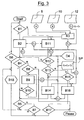
- step B1 In order to establish an overall driving profile, a decision is initially made in step B1 according to the method sequence in FIG. 3 as to whether a charging or discharging cycle should be calculated or simulated. If the query is answered with "yes", the calculation of an unloading cycle is followed in step B2. This corresponds essentially to the procedure explained with reference to FIG. 2.
- step B2 current data 8, stored data 10 and furthermore the results of a simulated preceding charging or discharging cycle stored in the data memory 12 are taken into account.
- the data stored in the data memory 12 correspond to the result data stored in the data memory 12 at the end of the method sequence according to FIG.
- the current data 8 and the stored data 10 are offered for selection by an operator in step B3, which corresponds to step S3 explained with reference to FIG.
- step B2 The result of the selection is taken into account in step B2 for the simulation of the unloading process.
- This is in particular a selected consumption profile.
- this is the pre-calculated capacity read from the data memory 12 or the predicted energy reserve of the battery, which is supplied as a quantity C n to the step B 3 and the calculation step B 2 as a basis. That is, in step B3, it may be manually selected whether the calculation is started based on a previously calculated remaining battery capacity after a preceding charge or discharge cycle. The consideration of these data can also be done automatically, which is desirable in the creation of complex driving profiles.
- step B4 following step B2, it is checked whether it should continue. If this selection is confirmed with "yes”, then step B5 follows, in which it is decided whether another or new charge or discharge cycle should be calculated.
- step B6 follows, in which it is checked whether certain limits, for example preselected limits for the remaining capacity of the battery are met. If this query is also answered with "yes", step B1 is followed by the calculation of a new charge or discharge cycle.
- step B2 The result of the calculation step B2 (C x ), ie in particular the resulting residual capacity of the battery is also displayed in step D4, for example in the graphic display. Further, the output value C n stored in step SP is adjusted and stored by adding the result C x of the previous calculation as the output for the next calculation step. Specifically, the output capacity of the battery for the next charge cycle to be calculated is set to the final value of the calculated previous charge and discharge cycle. If it is determined in step B5 that no new period or loading or unloading cycle should not be calculated, it is decided in step B7 whether or not the creation of the running profile is completed. If yes, the calculation of a new driving profile is prepared in step B18, which begins again with step B1. If it is decided that the calculation of the driving profile has not been completed, then step B6 follows and then the calculation of another charging or discharging cycle commences from step B1.
- step B8 follows, in which it is decided whether or not the last calculated period should be deleted. If so, step B9 follows, in which the last calculated data is cleared and an output size -C x is output, which is taken into account in step SP, again corresponding to the value C n changed by adding the output C x of step D2 reset.
- step B10 an inquiry then follows as to whether even more recent cycles of the travel profile should be deleted. If yes, the step B9 again joins, if not, the already described step B5 follows.
- step B8 If it is determined in step B8 that the values should not be deleted, the process is finished.
- step B11 If it is determined in step B1 that no unloading process is to be calculated, ie the query is answered with "no", then step B11 ensues, in which a loading cycle is simulated or calculated.
- the calculation step B11 again receives as input variables the stored and current data 8 and 10 selected in step B3, furthermore the capacitance value or the battery state characterizing values C n , which result at the end of the previously calculated cycle.
- the result C x at the end of the simulated charging cycle is again output in step D4 and set in step SP as a new output for a subsequent cycle.
- the calculation of the charging cycle in step B11 takes place, as explained with reference to FIG. 2 on the basis of steps S14 and S15.
- step B12 a query follows whether calculated cycles should be repeated.
- step B4 follows. If so, the step B13 follows, in which it is decided whether an intermediate loading or unloading cycle should be repeated. If so, step B14 follows, in which the multiplication or multiplication of an already calculated intermediate cycle takes place. The output value C x of the step B14 is returned to the step SP to set the value C n there by adding the value C x as the output value for the next cycle to be calculated. The step B14 is then followed by the already described step B5. If it is decided in step B13 that no intermediate cycle is to be multiplied, step B15 follows, in which it is decided whether the calculation of the entire travel profile is completed. If so, in step B 16 the multiplication of the entire travel profile or of a partial profile consisting of individual charge and discharge cycles follows.
- step SP The output value C x is further processed as described in step SP as an output for the next calculations.
- step B17 it is decided whether the next driving profile is to be created, which is followed by the already described step B18. If no next travel profile is to be created, the method is ended with the step B17. If it is decided in step B15 that the entire driving profile has not yet ended, the already described step B14 follows.
- Essential to the invention is in all calculations that preceding Charging cycles, carried out or precalculated, for the calculation itself be considered later in subsequent charging and discharging cycles, d. H. in particular, whether in a charge cycle, a second charge level completely is run through, prematurely canceled or not at all he follows.
- the resulting predicted battery condition, e.g. B. an earlier onset of gassing will be subsequent calculations based on.
- the process or plant is initially designed to work directly on used a submarine and integrated there into a computer system to become.
- the method can also be used in an operations center be used, for example, the use of a submarine or the entire submarine fleet there accordingly plan and coordinate.
- the method can or a computer program executing the method or a system implementing the method also for training, for example of submarine crews, in training centers Land are used.
Landscapes
- Engineering & Computer Science (AREA)
- Remote Sensing (AREA)
- Mechanical Engineering (AREA)
- Software Systems (AREA)
- Radar, Positioning & Navigation (AREA)
- Aviation & Aerospace Engineering (AREA)
- Theoretical Computer Science (AREA)
- Physics & Mathematics (AREA)
- General Physics & Mathematics (AREA)
- General Engineering & Computer Science (AREA)
- Automation & Control Theory (AREA)
- Electric Propulsion And Braking For Vehicles (AREA)
- Navigation (AREA)
- Charge And Discharge Circuits For Batteries Or The Like (AREA)
- Secondary Cells (AREA)
Abstract
Description
- Fig. 1
- schematisch den Aufbau eines Fahrprofilrechners zur Ausführung des erfindungsgemäßen Verfahren,
- Fig. 2
- schematisch den Verfahrensablauf zur Vorausbestimmung des verbleibenden Energievorrats zu einem bestimmten Zeitpunkt und
- Fig. 3
- schematisch den Verfahrensablauf zur Vorausbestimmung eines Fahrprofils,
- NPD
- Navigationsplanungsdisplay
- NR
- integriertes Navigationssystem
- GD
- Grafikdisplay
- K
- Eingabeeinrichtung
- AE
- Ausgabeeinrichtung
- D
- Dokument
- CPC
- Fahrprofilrechner
- 2
- Datenspeicher
- 4
- Datenerfassungseinrichtung
- 6
- Online-Daten
- 8
- aktuelle Daten
- 10
- gespeicherte Daten
- 12
- Datenspeicher
Claims (13)
- Verfahren zur Fahrtplanung eines Unterseebootes, welches zumindest einen elektrischen Antrieb mit einer Batterie zur Energieversorgung und eine Ladeeinrichtung für die Batterie aufweist, bei welchem
für einen ausgewählten zukünftigen Zeitpunkt der verbleibende verfügbare Energievorrat der Batterie auf Grundlage
der Fahrtdauer bis zu diesem Zeitpunkt,
zumindest eines für die Fahrtdauer ausgewählten Verbrauchsprofiles und
der Art und Dauer der bis zu diesem Zeitpunkt erfolgenden Ladezyklen der Batterie vorausbestimmt wird. - Verfahren nach Anspruch 1, bei welchem ausgehend von einem Anfangsladezustand mit maximaler Batteriekapazität auf Grundlage einer geplanten Fahrtdauer mit zumindest einem ausgewählten Verbrauchsprofil ein erster Entladezyklus der Batterie simuliert und der verbleibende Energievorrat der Batterie am Ende dieses ersten Entladezyklus vorausbestimmt wird.
- Verfahren nach Anspruch 1 oder 2, bei welchem ausgehend von dem verbleibenden Energievorrat der Batterie am Ende eines Entladezyklus ein Ladezyklus unter Berücksichtigung einer ausgewählten Ladezeit und der zur Verfügung stehenden Leistung der Ladeeinrichtung simuliert und der verfügbare Energievorrat der Batterie am Ende dieses Ladezyklus vorausbestimmt wird.
- Verfahren nach Anspruch 2 oder 3, bei welchem ausgehend von dem verbleibenden verfügbaren Energievorrat der Batterie am Ende eines Lade- oder Entladezyklus auf Grundlage einer weiteren geplanten Fahrtdauer mit einem ausgewählten Verbrauchsprofil ein weiterer Entladezyklus der Batterie simuliert und der verbleibende Energievorrat der Batterie am Ende dieses weiteren Entladezyklus vorausbestimmt wird.
- Verfahren nach einem der vorangehenden Ansprüche, bei welchem bei der Vorausbestimmung des verfügbaren Energievorrates der Batterie zu einem ausgewählten Zeitpunkt auch die von einer außenluftunabhängigen Energieversorgung erzeugbare elektrische Leistung sowie die Treibstoff- und Reaktandenvorräte für die außenluftabhängige Energieversorgung berücksichtigt werden.
- Verfahren nach Anspruch 5, bei welchem auch die verbleibenden Treibstoff- bzw. Reaktandenvorräte zu dem ausgewählten Zeitpunkt vorausbestimmt werden.
- Verfahren nach einem der vorangehenden Ansprüche, bei welchem für den ausgewählten Zeitpunkt auf Grundlage des errechneten verbleibenden Energievorrates der Batterie sowie gegebenenfalls der verbleibenden Treibstoff- bzw. Reaktandenvorräte einer außenluftunabhängigen Energieversorgung eine verbleibende Restfahrzeit bei einem ausgewählten Verbrauchsprofil bestimmt wird.
- Verfahren nach einem der vorangehenden Ansprüche, bei welchem ein Fahrprofil des Unterseebootes derart vorausberechnet wird, dass einzelne Fahrtabschnitte mit ausgewählten Verbrauchsprofilen und zugehöriger Lade- und Entladeleistung der Batterie rechnerisch simuliert und zu einem gesamten Fahrprofil zusammengefügt werden, wobei jeder Fahrtabschnitt jeweils auf Grundlage der verbleibenden Energievorräte am Ende des vorangehenden Fahrtabschnittes und der Art und Dauer der vorangehend erfolgenden Lade- und Entladezyklen der Batterie simuliert wird.
- Verfahren nach Anspruch 8, bei welchem Randbedingungen der Fahrt und insbesondere mögliche Zeitpunkte und die jeweils mögliche Dauer der Lade- und Entladezyklen der Batterie über eine elektronischen Seekarte (NPD) eingegeben werden und von dieser als Ausgangsbedingungen für die Berechnung des Fahrprofils in einer Berechnungseinheit (CPC) übernommen werden.
- Verfahren nach Anspruch 8 oder 9, bei welchem das erstellte Fahrprofil vorzugsweise mit den relevanten den jeweiligen Fahrzustand kennzeichnenden Werten, insbesondere mit den erforderlichen Ladezyklen der Batterie, in einer elektronischen Seekarte (NPD) angezeigt wird.
- Verfahren nach einem der Ansprüche 8 bis 10, bei welchem das Fahrprofil derart erstellt wird, dass zu keinem Zeitpunkt die Batteriekapazität unter eine vorwählbare Grenzkapazität fällt.
- Verfahren nach einem der vorangehenden Ansprüche, bei welchem Parameter der aktuellen Betriebszustände, insbesondere Batteriekapazität, Batterietemperatur, Lade- und Entladeleistung der Batterie, Lade- und Entladezeiten, die Leistungsaufnahme sämtlicher Aggregate sowie die Generatorleistung des Unterseebootes kontinuierlich erfasst werden und diese Parameter als Ausgangsdaten für die rechnerische Bestimmung des verbleibenden Energievorrates der Batterie zu dem ausgewählten zukünftigen Zeitpunkt dienen.
- Verfahren nach Anspruch 12, bei welchem auf Grundlage der erfassten aktuellen Betriebszustände vorangehend erfolgte Berechnungen des Energievorrates bzw. ein vorangehend erstelltes Fahrprofil korrigiert wird.
Applications Claiming Priority (2)
| Application Number | Priority Date | Filing Date | Title |
|---|---|---|---|
| DE102004024972A DE102004024972A1 (de) | 2004-05-21 | 2004-05-21 | Verfahren zur Fahrtplanung eines Unterseebootes |
| DE102004024972 | 2004-05-21 |
Publications (2)
| Publication Number | Publication Date |
|---|---|
| EP1598266A1 true EP1598266A1 (de) | 2005-11-23 |
| EP1598266B1 EP1598266B1 (de) | 2006-10-04 |
Family
ID=34936317
Family Applications (1)
| Application Number | Title | Priority Date | Filing Date |
|---|---|---|---|
| EP05010088A Expired - Lifetime EP1598266B1 (de) | 2004-05-21 | 2005-05-10 | Verfahren zur Fahrtplanung eines Unterseebootes |
Country Status (5)
| Country | Link |
|---|---|
| US (1) | US7801651B2 (de) |
| EP (1) | EP1598266B1 (de) |
| KR (1) | KR100679388B1 (de) |
| DE (2) | DE102004024972A1 (de) |
| ES (1) | ES2274497T3 (de) |
Cited By (2)
| Publication number | Priority date | Publication date | Assignee | Title |
|---|---|---|---|---|
| KR100679388B1 (ko) | 2004-05-21 | 2007-02-05 | 호발트스벨케-도이췌 벨프트 게엠베하 | 잠수함 항해 계획 방법 |
| EP1925550A3 (de) * | 2006-11-22 | 2011-02-02 | Howaldtswerke-Deutsche Werft GmbH | Verfahren zum Bestimmen der Restfahrdauer eines Unterseebootes |
Families Citing this family (26)
| Publication number | Priority date | Publication date | Assignee | Title |
|---|---|---|---|---|
| US20080063910A1 (en) * | 2004-12-28 | 2008-03-13 | Gs Yuasa Ccorporation | Fuel Cell Power Generating Device |
| US8408155B2 (en) | 2008-06-16 | 2013-04-02 | Juliet Marine Systems, Inc. | Fleet protection attack craft |
| US9327811B2 (en) | 2008-06-16 | 2016-05-03 | Juliet Marine Systems, Inc. | High speed surface craft and submersible craft |
| US9663212B2 (en) * | 2008-06-16 | 2017-05-30 | Juliet Marine Systems, Inc. | High speed surface craft and submersible vehicle |
| US8857365B2 (en) | 2008-06-16 | 2014-10-14 | Juliet Marine Systems, Inc. | Fleet protection attack craft and underwater vehicles |
| DE102009012061A1 (de) * | 2009-03-06 | 2010-09-09 | Dr.Ing.H.C.F.Porsche Aktiengesellschaft | Informationseinrichtung für ein Fahrzeug |
| US8457821B2 (en) * | 2009-04-07 | 2013-06-04 | Cisco Technology, Inc. | System and method for managing electric vehicle travel |
| US8536825B2 (en) * | 2009-12-31 | 2013-09-17 | Tesla Motors, Inc. | State of charge range |
| US8629657B2 (en) * | 2009-12-31 | 2014-01-14 | Tesla Motors, Inc. | State of charge range |
| KR101364635B1 (ko) * | 2010-07-21 | 2014-02-20 | 국방과학연구소 | 잠수함 장비 시뮬레이션 시스템 |
| AU2012236188B2 (en) * | 2011-03-30 | 2016-10-20 | Juliet Marine Systems, Inc. | High speed surface craft and submersible vehicle |
| DE102016202781A1 (de) * | 2016-02-23 | 2017-09-14 | Thyssenkrupp Ag | Vorrichtung zur integrierten Darstellung von Informationen auf einem Wasserfahrzeug |
| DE102016202784A1 (de) | 2016-02-23 | 2017-08-24 | Thyssenkrupp Ag | Routenoptimierung |
| AU201615158S (en) | 2016-03-17 | 2016-12-09 | Tti Macao Commercial Offshore Ltd | Battery pack |
| AU201615153S (en) | 2016-03-17 | 2016-12-09 | Tti Macao Commercial Offshore Ltd | Battery pack |
| AU201615156S (en) | 2016-03-17 | 2016-12-09 | Tti Macao Commercial Offshore Ltd | Battery pack |
| TWD191971S (zh) | 2017-01-17 | 2018-08-01 | 創科(澳門離岸商業服務)有限公司 | 具有通信終端的電池組 |
| USD853216S1 (en) | 2017-01-17 | 2019-07-09 | Tti (Macao Commercial Offshore) Limited | Power tool |
| USD853813S1 (en) | 2017-01-17 | 2019-07-16 | Tti (Macao Commercial Offshore) Limited | Power tool |
| TWD200632S (zh) | 2017-01-17 | 2019-11-01 | Tti Macao Commercial Offshore Ltd | 電池組之部分 |
| US10909641B2 (en) * | 2018-10-19 | 2021-02-02 | Gridspan Energy LLC | Systems and methods for modular mobile energy storage |
| AU2021238313A1 (en) * | 2020-03-16 | 2022-06-23 | Terradepth, Inc. | Fuel cell charging system with air breathing capability, autonomous underwater vehicle (AUV) system including same, and method of use |
| WO2021231454A1 (en) * | 2020-05-13 | 2021-11-18 | Rearden Power LLC | Hybrid battery management system |
| KR102694836B1 (ko) * | 2021-07-22 | 2024-08-14 | 한화오션 주식회사 | 부품 검색 및 개별 데이터 제공 기능을 갖는 잠수함 가상현실 훈련 시스템 |
| FR3126383A1 (fr) * | 2021-09-01 | 2023-03-03 | E-Nautic | Système de gestion énergétique d’un bateau fluvial ou maritime |
| DE102022209653B3 (de) | 2022-09-14 | 2023-11-02 | Thyssenkrupp Ag | Integriertes Missionsplanungstool |
Citations (4)
| Publication number | Priority date | Publication date | Assignee | Title |
|---|---|---|---|---|
| US4046998A (en) * | 1975-02-11 | 1977-09-06 | Nippon Soken, Inc. | Possible vehicle running distance indication |
| JPS57190221A (en) * | 1981-05-20 | 1982-11-22 | Hitachi Ltd | Computing and displaying device for running distance to be covered |
| US5916298A (en) * | 1996-03-27 | 1999-06-29 | Bayerische Motoren Werke Aktiengesellscaft | Display unit for data dependent on a vehicle's energy consumption |
| EP1464573A1 (de) * | 2003-04-01 | 2004-10-06 | Howaldtswerke-Deutsche Werft Ag | Verfahren und Vorrichtung zum bestimmen der Restfahrtdauer eines Unterseebootes |
Family Cites Families (26)
| Publication number | Priority date | Publication date | Assignee | Title |
|---|---|---|---|---|
| US4198703A (en) * | 1960-05-12 | 1980-04-15 | The United States Of America As Represented By The Secretary Of The Navy | Submarine simulating sonar beacon |
| FR2080156A5 (de) * | 1970-02-25 | 1971-11-12 | Aerospatiale | |
| US3786343A (en) * | 1973-03-19 | 1974-01-15 | Us Navy | Battery monitor system |
| JPS50158014A (de) * | 1974-06-10 | 1975-12-20 | ||
| US4048383A (en) * | 1976-02-09 | 1977-09-13 | Battelle Memorial Institute | Combination cell |
| FR2377522A1 (fr) * | 1977-01-18 | 1978-08-11 | Commissariat Energie Atomique | Vehicule de nodules sur un fond marin |
| US4229687A (en) * | 1979-05-07 | 1980-10-21 | Utah Research & Development Corporation | Temperature maintained battery system |
| US4961043A (en) * | 1988-03-15 | 1990-10-02 | Norand Corporation | Battery conditioning system having communication with battery parameter memory means in conjunction with battery conditioning |
| US5144587A (en) * | 1991-06-27 | 1992-09-01 | The United States Of America As Represented By The Secretary Of The Navy | Expendable moving echo radiator |
| DE19519107C1 (de) * | 1995-05-24 | 1996-04-04 | Daimler Benz Ag | Fahrtroutenratgebereinrichtung |
| KR970026304A (ko) * | 1995-11-30 | 1997-06-24 | 전성원 | 전기 자동차의 주행 가능 거리 표시장치 |
| KR970036360A (ko) * | 1995-12-14 | 1997-07-22 | 정몽원 | 전기자동차의 잔여거리산출장치 및 방법 |
| US6164872A (en) * | 1996-09-27 | 2000-12-26 | Mitsubishi Heavy Industries, Ltd. | Method of production of large tank, system using such large tank and submerged tunneling method using the tank |
| KR19980050341A (ko) * | 1996-12-20 | 1998-09-15 | 윤원석 | 밧데리 방전 잔여시간 표시방법 |
| US5998968A (en) * | 1997-01-07 | 1999-12-07 | Ion Control Solutions, Llc | Method and apparatus for rapidly charging and reconditioning a battery |
| US5973478A (en) * | 1997-05-23 | 1999-10-26 | Bolder Technologies Corporation | Battery recharger using taper charge |
| US6485057B1 (en) * | 1997-12-16 | 2002-11-26 | Nsk Autoliv Co., Ltd. | Automotive passenger restraint and protection apparatus and seatbelt protraction and retraction amount-detecting device |
| US6752250B2 (en) * | 2001-09-27 | 2004-06-22 | Northrop Grumman Corporation | Shock, vibration and acoustic isolation system |
| US6892985B2 (en) * | 2002-07-25 | 2005-05-17 | The Boeing Company | Store ejection system with disposable pressure vessel and associated method of operation |
| US7364810B2 (en) * | 2003-09-03 | 2008-04-29 | Bloom Energy Corporation | Combined energy storage and fuel generation with reversible fuel cells |
| US7245107B2 (en) * | 2003-05-09 | 2007-07-17 | Enerdel, Inc. | System and method for battery charge control based on a cycle life parameter |
| JP4312673B2 (ja) * | 2003-08-21 | 2009-08-12 | 株式会社デンソー | 放電灯装置 |
| US7194975B2 (en) * | 2003-12-11 | 2007-03-27 | Honeywell International, Inc. | Unmanned underwater vehicle health monitoring system and method |
| US20050228553A1 (en) * | 2004-03-30 | 2005-10-13 | Williams International Co., L.L.C. | Hybrid Electric Vehicle Energy Management System |
| DE102004024972A1 (de) | 2004-05-21 | 2005-12-15 | Howaldtswerke-Deutsche Werft Gmbh | Verfahren zur Fahrtplanung eines Unterseebootes |
| US7393382B2 (en) * | 2004-12-20 | 2008-07-01 | Idatech Llc | Temperature-based breakthrough detection and pressure swing adsorption systems and fuel processing systems including the same |
-
2004
- 2004-05-21 DE DE102004024972A patent/DE102004024972A1/de not_active Withdrawn
-
2005
- 2005-05-10 ES ES05010088T patent/ES2274497T3/es not_active Expired - Lifetime
- 2005-05-10 EP EP05010088A patent/EP1598266B1/de not_active Expired - Lifetime
- 2005-05-10 DE DE502005000127T patent/DE502005000127D1/de not_active Expired - Lifetime
- 2005-05-20 US US11/133,559 patent/US7801651B2/en active Active
- 2005-05-20 KR KR1020050042375A patent/KR100679388B1/ko not_active Expired - Fee Related
Patent Citations (4)
| Publication number | Priority date | Publication date | Assignee | Title |
|---|---|---|---|---|
| US4046998A (en) * | 1975-02-11 | 1977-09-06 | Nippon Soken, Inc. | Possible vehicle running distance indication |
| JPS57190221A (en) * | 1981-05-20 | 1982-11-22 | Hitachi Ltd | Computing and displaying device for running distance to be covered |
| US5916298A (en) * | 1996-03-27 | 1999-06-29 | Bayerische Motoren Werke Aktiengesellscaft | Display unit for data dependent on a vehicle's energy consumption |
| EP1464573A1 (de) * | 2003-04-01 | 2004-10-06 | Howaldtswerke-Deutsche Werft Ag | Verfahren und Vorrichtung zum bestimmen der Restfahrtdauer eines Unterseebootes |
Non-Patent Citations (1)
| Title |
|---|
| PATENT ABSTRACTS OF JAPAN vol. 007, no. 038 (P - 176) 16 February 1983 (1983-02-16) * |
Cited By (2)
| Publication number | Priority date | Publication date | Assignee | Title |
|---|---|---|---|---|
| KR100679388B1 (ko) | 2004-05-21 | 2007-02-05 | 호발트스벨케-도이췌 벨프트 게엠베하 | 잠수함 항해 계획 방법 |
| EP1925550A3 (de) * | 2006-11-22 | 2011-02-02 | Howaldtswerke-Deutsche Werft GmbH | Verfahren zum Bestimmen der Restfahrdauer eines Unterseebootes |
Also Published As
| Publication number | Publication date |
|---|---|
| KR100679388B1 (ko) | 2007-02-05 |
| DE502005000127D1 (de) | 2006-11-16 |
| KR20060046115A (ko) | 2006-05-17 |
| US20050261844A1 (en) | 2005-11-24 |
| EP1598266B1 (de) | 2006-10-04 |
| DE102004024972A1 (de) | 2005-12-15 |
| ES2274497T3 (es) | 2007-05-16 |
| US7801651B2 (en) | 2010-09-21 |
Similar Documents
| Publication | Publication Date | Title |
|---|---|---|
| EP1598266B1 (de) | Verfahren zur Fahrtplanung eines Unterseebootes | |
| DE102020206592A1 (de) | Verfahren und Vorrichtung zum Betreiben eines elektrisch antreibbaren Kraftfahrzeugs abhängig von einem prädizierten Alterungszustands eines elektrischen Energiespeichers | |
| DE102012222650B4 (de) | Optimieren einer Systemleistung unter Verwendung von Informationen bezüglich des Zustands der Betriebsfähigkeit | |
| DE4337020C1 (de) | Verfahren zur Überwachung der Batterie eines Hybridfahrzeugs | |
| DE102014012319B4 (de) | Verfahren zum Betreiben eines Kraftfahrzeugs, Kraftfahrzeug und Computerprogramm | |
| DE102018127530A1 (de) | Berechnung des Maximal-Stroms und Leistungsvorhersage für ein Batterie-Pack | |
| AT506272A2 (de) | Verfahren zum betreiben eines elektrofahrzeuges | |
| WO2019175357A1 (de) | Verfahren zum betreiben eines elektrischen energiespeichers, steuerung für einen elektrischen energiespeicher und vorrichtung und/oder fahrzeug | |
| EP3974246A1 (de) | Verfahren und vorrichtung zur robusten vorhersage des alterungsverhaltens eines energiespeichers in einer batteriebetriebenen maschine | |
| WO2023143881A1 (de) | Verfahren und vorrichtung zum laden einer mehrzelligen batterie | |
| DE102023101227A1 (de) | Zielbasiertes Laden von Elektrofahrzeugen | |
| DE102011107824A1 (de) | Einrichtung und Verfahren zum Betreiben eines unbemannten Unterwasserfahrzeugs sowie Unterwasserfahrzeug mit der Einrichtung | |
| DE102020214389A1 (de) | Verfahren und Vorrichtung zur Bestimmung eines Alterungszustands einer Gerätebatterie unbekannten Typs für ein batteriebetriebenes elektrisches Gerät | |
| DE102016224149B4 (de) | Vorrichtung zum dualen Anzeigen der Entleerungsentfernung eines autonomen Fahrzeugs und Anzeigeverfahren unter Verwendung von dieser | |
| EP4091869A1 (de) | Verfahren und anordnung zur lade-/entladesteuerung eines hochvolt-batteriesystems | |
| DE102014210283A1 (de) | Verfahren zum Betreiben eines Fahrzeugbordnetzes und Fahrzeugbordnetz | |
| DE102008053141A1 (de) | Verfahren und Steuerung zum Aufladen einer Batterie eines Fahrzeugs | |
| DE102008004368A1 (de) | Verfahren zur Bestimmung einer zur Verfügung stehenden Leistung, elektrischen Arbeit und/oder Ladungsmenge eines elektrischen Speichers und entsprechende Vorrichtung | |
| EP1464573B1 (de) | Verfahren und Vorrichtung zum bestimmen der Restfahrtdauer eines Unterseebootes | |
| DE102021120986A1 (de) | Elektrofahrzeug mit Kennfeld zur Einstellung eines Ladestroms | |
| DE102018005797A1 (de) | Verfahren zum Abschätzen der für eine Vollladung einer wiederaufladbaren, elektrochemischen Energiespeichervorrichtung erforderlichen Zeitdauer | |
| DE102014210304B4 (de) | Verfahren zum Betreiben eines Systems mit wenigstens zwei Leistungskomponenten, Steuergerät, Computerprogrammprodukt und System | |
| DE112020001791T5 (de) | Steuervorrichtung | |
| DE102023121118A1 (de) | Messung des Gesundheitszustands von Batterien von Elektrofahrzeugen | |
| DE102019006573A1 (de) | Verfahren zum Betreiben eines elektrischen Energiespeichers eines zumindest teilweise elektrisch betriebenen Kraftfahrzeugs auf Basis von Belastungsdaten des elektrischen Energiespeichers; sowie Batteriemanagementsystem |
Legal Events
| Date | Code | Title | Description |
|---|---|---|---|
| PUAI | Public reference made under article 153(3) epc to a published international application that has entered the european phase |
Free format text: ORIGINAL CODE: 0009012 |
|
| AK | Designated contracting states |
Kind code of ref document: A1 Designated state(s): AT BE BG CH CY CZ DE DK EE ES FI FR GB GR HU IE IS IT LI LT LU MC NL PL PT RO SE SI SK TR |
|
| AX | Request for extension of the european patent |
Extension state: AL BA HR LV MK YU |
|
| 17P | Request for examination filed |
Effective date: 20051210 |
|
| GRAP | Despatch of communication of intention to grant a patent |
Free format text: ORIGINAL CODE: EPIDOSNIGR1 |
|
| AKX | Designation fees paid |
Designated state(s): DE ES FR GB IT |
|
| GRAS | Grant fee paid |
Free format text: ORIGINAL CODE: EPIDOSNIGR3 |
|
| GRAA | (expected) grant |
Free format text: ORIGINAL CODE: 0009210 |
|
| AK | Designated contracting states |
Kind code of ref document: B1 Designated state(s): DE ES FR GB IT |
|
| PG25 | Lapsed in a contracting state [announced via postgrant information from national office to epo] |
Ref country code: IT Free format text: LAPSE BECAUSE OF FAILURE TO SUBMIT A TRANSLATION OF THE DESCRIPTION OR TO PAY THE FEE WITHIN THE PRESCRIBED TIME-LIMIT;WARNING: LAPSES OF ITALIAN PATENTS WITH EFFECTIVE DATE BEFORE 2007 MAY HAVE OCCURRED AT ANY TIME BEFORE 2007. THE CORRECT EFFECTIVE DATE MAY BE DIFFERENT FROM THE ONE RECORDED. Effective date: 20061004 |
|
| REG | Reference to a national code |
Ref country code: GB Ref legal event code: FG4D Free format text: NOT ENGLISH |
|
| REF | Corresponds to: |
Ref document number: 502005000127 Country of ref document: DE Date of ref document: 20061116 Kind code of ref document: P |
|
| GBT | Gb: translation of ep patent filed (gb section 77(6)(a)/1977) |
Effective date: 20061219 |
|
| ET | Fr: translation filed | ||
| REG | Reference to a national code |
Ref country code: ES Ref legal event code: FG2A Ref document number: 2274497 Country of ref document: ES Kind code of ref document: T3 |
|
| PLBE | No opposition filed within time limit |
Free format text: ORIGINAL CODE: 0009261 |
|
| STAA | Information on the status of an ep patent application or granted ep patent |
Free format text: STATUS: NO OPPOSITION FILED WITHIN TIME LIMIT |
|
| 26N | No opposition filed |
Effective date: 20070705 |
|
| PGRI | Patent reinstated in contracting state [announced from national office to epo] |
Ref country code: IT Effective date: 20090601 |
|
| REG | Reference to a national code |
Ref country code: DE Ref legal event code: R082 Ref document number: 502005000127 Country of ref document: DE Representative=s name: PATENTANWAELTE VOLLMANN & HEMMER, DE |
|
| REG | Reference to a national code |
Ref country code: DE Ref legal event code: R082 Ref document number: 502005000127 Country of ref document: DE Effective date: 20130206 Ref country code: DE Ref legal event code: R082 Ref document number: 502005000127 Country of ref document: DE Representative=s name: PATENTANWAELTE VOLLMANN & HEMMER, DE Effective date: 20130206 Ref country code: DE Ref legal event code: R081 Ref document number: 502005000127 Country of ref document: DE Owner name: THYSSENKRUPP MARINE SYSTEMS GMBH, DE Free format text: FORMER OWNER: HOWALDTSWERKE-DEUTSCHE WERFT GMBH, 24143 KIEL, DE Effective date: 20130206 |
|
| REG | Reference to a national code |
Ref country code: FR Ref legal event code: CD Owner name: THYSSENKRUPP MARINE SYSTEMS GMBH Effective date: 20130313 |
|
| REG | Reference to a national code |
Ref country code: ES Ref legal event code: PC2A Owner name: THYSSENKRUPP MARINE SYSTEMS GMBH Effective date: 20130912 |
|
| REG | Reference to a national code |
Ref country code: DE Ref legal event code: R084 Ref document number: 502005000127 Country of ref document: DE |
|
| REG | Reference to a national code |
Ref country code: DE Ref legal event code: R084 Ref document number: 502005000127 Country of ref document: DE Effective date: 20150206 |
|
| REG | Reference to a national code |
Ref country code: DE Ref legal event code: R082 Ref document number: 502005000127 Country of ref document: DE |
|
| REG | Reference to a national code |
Ref country code: FR Ref legal event code: PLFP Year of fee payment: 12 |
|
| REG | Reference to a national code |
Ref country code: FR Ref legal event code: PLFP Year of fee payment: 13 |
|
| REG | Reference to a national code |
Ref country code: FR Ref legal event code: PLFP Year of fee payment: 14 |
|
| REG | Reference to a national code |
Ref country code: DE Ref legal event code: R081 Ref document number: 502005000127 Country of ref document: DE Owner name: THYSSENKRUPP MARINE SYSTEMS GMBH, DE Free format text: FORMER OWNER: THYSSENKRUPP MARINE SYSTEMS GMBH, 24143 KIEL, DE |
|
| PGFP | Annual fee paid to national office [announced via postgrant information from national office to epo] |
Ref country code: IT Payment date: 20220524 Year of fee payment: 18 Ref country code: GB Payment date: 20220519 Year of fee payment: 18 Ref country code: FR Payment date: 20220523 Year of fee payment: 18 |
|
| PGFP | Annual fee paid to national office [announced via postgrant information from national office to epo] |
Ref country code: ES Payment date: 20220725 Year of fee payment: 18 |
|
| PGFP | Annual fee paid to national office [announced via postgrant information from national office to epo] |
Ref country code: DE Payment date: 20220801 Year of fee payment: 19 |
|
| GBPC | Gb: european patent ceased through non-payment of renewal fee |
Effective date: 20230510 |
|
| PG25 | Lapsed in a contracting state [announced via postgrant information from national office to epo] |
Ref country code: IT Free format text: LAPSE BECAUSE OF FAILURE TO SUBMIT A TRANSLATION OF THE DESCRIPTION OR TO PAY THE FEE WITHIN THE PRESCRIBED TIME-LIMIT Effective date: 20230510 Ref country code: GB Free format text: LAPSE BECAUSE OF NON-PAYMENT OF DUE FEES Effective date: 20230510 |
|
| PG25 | Lapsed in a contracting state [announced via postgrant information from national office to epo] |
Ref country code: FR Free format text: LAPSE BECAUSE OF NON-PAYMENT OF DUE FEES Effective date: 20230531 |
|
| REG | Reference to a national code |
Ref country code: ES Ref legal event code: FD2A Effective date: 20240627 |
|
| PG25 | Lapsed in a contracting state [announced via postgrant information from national office to epo] |
Ref country code: ES Free format text: LAPSE BECAUSE OF NON-PAYMENT OF DUE FEES Effective date: 20230511 |
|
| PG25 | Lapsed in a contracting state [announced via postgrant information from national office to epo] |
Ref country code: ES Free format text: LAPSE BECAUSE OF NON-PAYMENT OF DUE FEES Effective date: 20230511 |
|
| REG | Reference to a national code |
Ref country code: DE Ref legal event code: R119 Ref document number: 502005000127 Country of ref document: DE |
|
| PG25 | Lapsed in a contracting state [announced via postgrant information from national office to epo] |
Ref country code: DE Free format text: LAPSE BECAUSE OF NON-PAYMENT OF DUE FEES Effective date: 20241203 |