EP1585755B1 - Verfahren und zusammenstellungen für die tandem-synthese von zwei oder mehr oligonukleotiden auf einen festen träger - Google Patents
Verfahren und zusammenstellungen für die tandem-synthese von zwei oder mehr oligonukleotiden auf einen festen träger Download PDFInfo
- Publication number
- EP1585755B1 EP1585755B1 EP02796773.6A EP02796773A EP1585755B1 EP 1585755 B1 EP1585755 B1 EP 1585755B1 EP 02796773 A EP02796773 A EP 02796773A EP 1585755 B1 EP1585755 B1 EP 1585755B1
- Authority
- EP
- European Patent Office
- Prior art keywords
- group
- solid support
- groups
- protective
- oligonucleotide
- Prior art date
- Legal status (The legal status is an assumption and is not a legal conclusion. Google has not performed a legal analysis and makes no representation as to the accuracy of the status listed.)
- Expired - Lifetime
Links
Images






Classifications
-
- C—CHEMISTRY; METALLURGY
- C07—ORGANIC CHEMISTRY
- C07H—SUGARS; DERIVATIVES THEREOF; NUCLEOSIDES; NUCLEOTIDES; NUCLEIC ACIDS
- C07H21/00—Compounds containing two or more mononucleotide units having separate phosphate or polyphosphate groups linked by saccharide radicals of nucleoside groups, e.g. nucleic acids
- C07H21/04—Compounds containing two or more mononucleotide units having separate phosphate or polyphosphate groups linked by saccharide radicals of nucleoside groups, e.g. nucleic acids with deoxyribosyl as saccharide radical
-
- C—CHEMISTRY; METALLURGY
- C07—ORGANIC CHEMISTRY
- C07H—SUGARS; DERIVATIVES THEREOF; NUCLEOSIDES; NUCLEOTIDES; NUCLEIC ACIDS
- C07H21/00—Compounds containing two or more mononucleotide units having separate phosphate or polyphosphate groups linked by saccharide radicals of nucleoside groups, e.g. nucleic acids
-
- C—CHEMISTRY; METALLURGY
- C07—ORGANIC CHEMISTRY
- C07B—GENERAL METHODS OF ORGANIC CHEMISTRY; APPARATUS THEREFOR
- C07B2200/00—Indexing scheme relating to specific properties of organic compounds
- C07B2200/11—Compounds covalently bound to a solid support
-
- Y—GENERAL TAGGING OF NEW TECHNOLOGICAL DEVELOPMENTS; GENERAL TAGGING OF CROSS-SECTIONAL TECHNOLOGIES SPANNING OVER SEVERAL SECTIONS OF THE IPC; TECHNICAL SUBJECTS COVERED BY FORMER USPC CROSS-REFERENCE ART COLLECTIONS [XRACs] AND DIGESTS
- Y02—TECHNOLOGIES OR APPLICATIONS FOR MITIGATION OR ADAPTATION AGAINST CLIMATE CHANGE
- Y02P—CLIMATE CHANGE MITIGATION TECHNOLOGIES IN THE PRODUCTION OR PROCESSING OF GOODS
- Y02P20/00—Technologies relating to chemical industry
- Y02P20/50—Improvements relating to the production of bulk chemicals
- Y02P20/55—Design of synthesis routes, e.g. reducing the use of auxiliary or protecting groups
Definitions
- the present invention is related to the field of nucleotide chemistry. More specifically, the present invention is related to oligonucleotide synthesis. Even more specifically, the present invention is related to the serial synthesis of two or more different oligonucleotides on the same solid support in one synthetic run.
- Primers are also needed for state of the art sequencing techniques featuring enzymatic elongation and random termination.
- Another rapidly growing field is the application of oligonucleotides in hybridization assays, which are based on the specific annealing of oligonucleotide probes to the region of a nucleic acid analyte having a complementary sequence.
- Probes with covalently conjugated dyes that generate a fluorescent signal upon a perfect match hybridization are among the latest developments in this field.
- Corresponding methods to test for specific genomic epitopes, such as allelic discrimination or SNP detection employ hybridization probes and are readily multiplexable.
- Antisense technology is another field that demands a rapidly increasing supply of oligonucleotides.
- Synthetic antisense oligonucleotides are complementary to an RNA or DNA target sequence and are designed to halt a biological event, such as transcription, translation or splicing. They represent a whole new class of therapeutic agents, which have been shown to exhibit antiviral activity by inhibiting viral DNA or protein synthesis and, moreover, may be able to cure certain diseases by inhibiting gene expression via specifically recognizing and binding mRNA.
- antisense oligonucleotides are comprised of backbone-modified DNA or RNA derivatives such as 2'-OMe-RNA, phoshorothioate, morpholino nucleic acid, LNA, or combinations thereof.
- backbone-modified DNA or RNA derivatives such as 2'-OMe-RNA, phoshorothioate, morpholino nucleic acid, LNA, or combinations thereof.
- antisense compounds such as nuclease resistance, RNase H susceptibility and binding affinity, which are crucial for either blocking or promoting the degradation of the complementary mRNA, can be modulated and optimized.
- RNAi RNA interference
- siRNA small interfering RNAs
- phosphoramidite mediated chemical oligonucleotide synthesis a series of nucleotide synthons are sequentially attached in a predetermined order to either, depending on the direction of chain extension, the 5'-functional group or the 3'-functional group of the growing strand, which is linked to a solid phase, such as CPG or a polystyrene resin.
- each synthon generally comprises the following steps: 1) deprotecting the functional group of the growing strand, commonly the 5'-hydroxyl group; 2) coupling by adding a nucleoside synthon and an activator; 3) capping of unreacted terminal functional groups through introduction of an inert protecting group, to prevent further coupling to failure sequences; and 4) oxidizing the newly formed internucleosidic phosphorous linkage to the naturally occurring pentavalent state.
- This synthetic scheme applying phosphoramidite chemistry, has reached a high level of optimization featuring routine stepwise coupling efficiencies of up to 99% on average per cycle. Following the completed assembly of the desired sequence the oligonucleotide is finally released and deprotected at the nucleobases usually in one step employing basic conditions.
- This strategy is especially favorable in cases in which all of the oligonucleotides produced in one synthetic run can be or even need to be added to the final application at the same time. This applies particularly to primer pairs as used for PCR or sequencing and for double stranded DNA or RNA probes. These combined oligonucleotide preparations also lead to a reduced number of samples to be stored and handled for the final application.
- the linker can be integrated into the oligomeric chain partitioning it into the desired oligonucleotide units.
- One major drawback of the TOPS method is the harsh conditions and the long reaction times required to cleave the products from the linker (concentrated ammonia, 80°C, overnight; alternatively: conc ammonia/40% aqueous methylamine (1:1, v/v), 60°C, 8 hours).
- WO 02/16022 discloses a method for synthesising polymers, particularly biopolymers such as nucleic acids, peptides and saccharides, on a solid support.
- the method comprises the steps of (a) providing a solid support having a reactive group, (b) coupling a trifunctional building block with the functional group of the support said building block having two orthogonal protecting groups X and Y, (c) directed synthesis of a part of the polymer chain starting with protective group X, and (d) directed synthesis of a part of the polymer chain starting with protective group Y.
- the present invention includes a novel method for the combined, serial synthesis of two or more different oligonucleotides on the same solid support in one synthetic run, referred to hereinafter as "tandem synthesis.”
- the method of the present invention comprises the steps of: a) providing a solid support, wherein said solid support is comprised of anchor groups that are protected by two or more orthogonal protective groups; and removing one of said orthogonal protective group from the anchor groups; b) synthesizing an oligonucleotide on the deprotected anchor group; c) capping the synthesized oligonucleotide; d) removing one protective group from the anchor groups; e) synthesizing an oligonucleotide on the deprotected anchor groups; f) repeating steps c) to e) until all of the orthogonal protective groups are deprotected, and g) cleaving all synthesized oligonucleotides from the solid support. Excellent coupling rates and
- the method of the present invention is based on orthogonally protected anchor groups situated on the solid support of the invention, each of which is successively used to synthesize one of the desired sequences, as outlined in Figures 1 and 2 .
- the first oligonucleotide is assembled on the deblocked anchor groups according to standard methods for the solid phase synthesis of oligonucleotides.
- phosphoramidite chemistry is employed to synthesize the oligonucleotide.
- the anchor groups blocked by a second type of protective group are selectively liberated, which then serve as the starting point for the assembly of the second oligonucleotide, and so forth.
- the synthesized oligonucleotides are further processed as a mixture during the release and deprotection steps. Preparations obtained using the method of this invention, contain a mixture of two or more oligonucleotides.
- oligonucleotide primers are particularly useful in applications that require pairs of oligonucleotide primers, several probes at a time, duplexed nucleic acid fragments and the like, including but not limited to PCR, sequencing, multiplexed genotyping, cloning and RNA interference.
- one of the anchor groups may be unprotected.
- the method of the invention comprises the steps of: a) providing a solid support, wherein said solid support is comprised of anchor groups that are partially unprotected, the remainder of the anchor groups being protected by one or more protective groups, the protective groups being orthogonal to each other in case more than one protective group is employed; b) synthesizing an oligonucleotide on the unprotected anchor groups; c) capping the synthesized oligonucleotide; d) removing one protective group from the anchor groups; e) synthesizing an oligonucleotide on the deprotected anchor groups; f) repeating steps c) to e) until all of the orthogonal protective groups are deprotected; and g) cleaving all synthesized oligonucleotides from the support.
- the methods disclosed herein are applicable to solid phase oligonucleotide synthetic schemes in which the growing oligonucleotide chain is built in the 3' to 5' direction, as well as, in solid phase oligonucleotide synthetic schemes in which the growing oligonucleotide chain is built in the 5' to 3' direction.
- the methods disclosed herein can be applied either with or without removing the final terminal protective group following the synthesis of the last assembled oligonucleotide. In the former case, all of the oligonucleotides synthesized are jointly processed through all work-up steps and transferred in combination to the final application.
- the terminal protective group as a handle the last oligonucleotide synthesized may be separated, i.e. by employing the commonly used terminal dimethoxytrityl group as a handle in a simple, reversed-phase cartridge based purification step.
- the methods of this invention can be applied to any known methods for the solid phase synthesis of oligonucleotides including, but not limited to phosphoramidite chemistry, H-phosphonate chemistry, phosphotriester chemistry, or any other synthetic chemistry utilized to prepare oligonucleotides on solid supports. Furthermore the methods of the invention can be adapted to universal linker systems, as well as, to those preloaded with the first nucleoside of the oligonucleotide to be synthesized.
- novel solid support preparations useful for applying the method of this invention, as well as, procedures for their preparation.
- the methods of this invention employ solid support preparations comprised of two or more types of orthogonally protected anchor groups, which enables the tandem synthesis of oligonucleotides on the same support without the need for reinitializing the set-up between each synthetic run, in particular exchanging the solid support container and re-programming the synthesizer.
- oligonucleotides synthesized on the same support by methods of the invention in most instances can be subjected to joint work-up steps including cleavage, purification, desalting and concentration.
- they can be directly employed to most of the relevant ultimate applications, as their 3'- and 5'-hydroxyl groups are unmodified, particularly as they do not carry phosphate groups.
- the solid support is comprised of a homogeneous distribution of orthogonally protected anchor groups, wherein the desired number of oligonucleotides determines the number of different orthogonal anchor groups that are required.
- the solid support is comprised of a mixture of two or more solid support components. In this embodiment, each component carries only one of the orthogonal protective groups and a plurality of orthogonally protected anchor groups is established by mixing two or more components, depending on the desired number of oligonucleotides to be synthesized.
- the novel methods and support preparations of this invention have significant advantages and do not suffer from the limitations inherent in the prior art methods.
- the solid supports described herein provide for a simple, smooth and efficient synthesis of two or more oligonucleotides of consistent quality that are useful for a broad range of applications.
- the methods of this invention are especially targeted to the cost effective production of oligonucleotides for applications employing two or more primers, probes, duplex nucleic acid fragments or the like.
- the methods of this invention can easily be adopted in syntheses of modified oligonucleotides, such as phosphorothioates, RNA derivatives and locked nucleic acids (LNA), and oligonucleotides conjugated to e.g. one or several dyes via a linker unit. Due to the simple and generally applicable synthetic process described in the invention, the methods and support preparations are highly suitable for an automated setup.
- modified oligonucleotides such as phosphorothioates, RNA derivatives and
- the methods of the present invention enable an increase in the rate at which oligonucleotide can be prepared and a reduction in the costs involved, due to less expenditures required for handling and processing, as well as, for consumables and solid supports.
- the methods of the invention do not lead to compromised product quality, since the process of oligonucleotide assembly as such is based solely on the highly optimized, established procedures of the art and do not require modifications, such as specialty amidites.
- the present invention includes a novel method for the combined, serial synthesis of two or more different oligonucleotides on the same solid support in one synthetic run, referred to hereinafter as "tandem synthesis.”
- the method of the present invention is based on orthogonally protected anchor groups situated on the solid support of the invention, each of which is successively used to synthesize one of the desired sequences, as outlined in Figures 1 and 2 .
- the first oligonucleotide is assembled on the deblocked anchor groups according to standard methods for the solid phase synthesis of oligonucleotides.
- phosphoramidite chemistry is employed to synthesize the oligonucleotide.
- the anchor groups blocked by a second type of protective group are selectively liberated, which then serve as the starting point for the assembly of the second oligonucleotide, and so forth.
- the synthesized oligonucleotides are further processed as a mixture during the release and deprotection steps. Preparations obtained using the method of this invention, generally contain a mixture of two or more oligonucleotides.
- the methods disclosed herein are applicable to solid phase oligonucleotide synthetic schemes in which the growing oligonucleotide chain is built in the 3' to 5' direction, as well as, in synthetic schemes in which the growing oligonucleotide chain is built in the 5' to 3' direction.
- the methods of this invention can be applied to any known methods for the solid phase synthesis of oligonucleotides.
- the methods of the invention can be adapted to universal linker systems, as well as, to those preloaded with the first nucleoside of the oligonucleotide to be synthesized.
- the solid support is comprised of a homogeneous distribution of orthogonally protected anchor groups, wherein the desired number of oligonucleotides determines the number of different orthogonal anchor groups that are required.
- the solid support is comprised of a mixture of two or more solid support components. In this embodiment, each component carries only one of the orthogonal protective groups and a plurality of orthogonally protected anchor groups is established by mixing two or more components, depending on the desired number of oligonucleotides to be synthesized.
- the novel methods and support preparations of this invention have significant advantages and do not suffer from the limitations inherent in the prior art methods.
- the solid supports described herein provide for the simple, smooth and efficient synthesis of two or more oligonucleotides of consistent quality that are useful for a broad range of applications.
- the methods of this invention can easily be extended to the synthesis of modified oligonucleotides, such as phosphorothioates, RNA derivatives and locked nucleic acids (LNA), and oligonucleotides conjugated to e.g. one or several dyes via a linker unit. Due to the simple and generally applicable synthetic process described in the invention, the methods and support preparations are highly suitable for an automated setup.
- a or “an” entity refers to one or more of that entity; for example, an oligonucleotide refers to one or more oligonucleotides.
- an oligonucleotide refers to one or more oligonucleotides.
- the terms “a” or “an,” “one or more” and “at least one,” are used interchangeably herein.
- oligonucleotide synthesis refers to solid phase oligonucleotide synthesis (SPOS) using any methods known to those of skill in the art.
- SPOS solid phase oligonucleotide synthesis
- the SPOS is performed using methodology including, but not limited to either phosphoramidite, phosphotriester and/or nucleoside hydrogen phosphonate chemistries known to those skilled in the art as described e.g., by Gait, ed.
- oligonucleotide synthesis involves a number of chemical steps that are performed in a cyclical repetitive manner throughout the synthesis, each cycle adding one nucleotide synthon to the growing oligonucleotide chain.
- the standard chemical steps involved in a cycle include a deprotection step that liberates a functional group for further chain elongation, a coupling step that incorporates a nucleotide synthon into the oligonucleotide to be synthesized, and other steps as required by the particular chemistry used in the oligonucleotide synthesis, e.g. an oxidation step as required with phosphoramidite chemistry etc.
- a capping step that blocks those functional groups that were not elongated in the coupling step is inserted in the cycle.
- a suitable activatable group e.g. a phosphoramidite group
- the extension of the oligonucleotide chain may alternatively be pursued in the 5' to 3' direction by adding nucleotide synthons in the coupling reaction that carry suitable protective groups at the 3'-position, e.g. a DMT-group, and a suitable activatable group, e.g. a phosphoramidite group, at the 5'-position to form a linkage to the 3'-position of the growing chain.
- suitable protective groups e.g. a DMT-group
- a suitable activatable group e.g. a phosphoramidite group
- Nucleotide synthons used in the coupling step of an oligonucleotide synthesis cycle typically are mononucleotide synthons, e.g. the commercially available 5'-DMT protected deoxynucleoside 3'-phosphoramidites. Nucleotide synthons also include, but are not limited to, dinucleotide synthons, as described by Kumar and Poonian (1984) J. Org. Chem. 49:4905-12 , trinucleotide synthons, as described by Ono et al. (1995) Nucleic Acids Res. 23:4677-82 , or synthons that consist of more than 3 nucleotide units.
- oligonucleotide refers to a single stranded chain of either deoxyribonucleotides or ribonucleotides or chemical modifications thereof, such as e.g. nucleotides with a O2'-C4'-methylene bridge in their sugar portion, which are the constituting nucleotides of locked nucleic acids (LNA). Modifications include, but are not limited to those that provide other chemical groups that incorporate additional charge, polarizability, hydrogen bonding, electrostatic interaction, and functionality to the individual nucleotides or their corresponding bases or to the oligonucleotides as a whole.
- modifications include, but are not limited to modified bases such as 2'-position sugar modifications, e.g. 2'-O-methyl or 2'-fluoro modifications, 5-position pyrimidine modifications, 8-position purine modifications, modifications at cytosine exocyclic amines, incorporation of 5-bromo-uracil; backbone modifications, methylations, bases that can be part of unusual base-pairing combinations, such as the isobases isocytidine and isoguanidine and the like. Modifications further include attached labels and reporter molecules, such as fluorescent dyes, biotin, minor groove binders and the like that are known to those skilled in the art.
- modified bases such as 2'-position sugar modifications, e.g. 2'-O-methyl or 2'-fluoro modifications, 5-position pyrimidine modifications, 8-position purine modifications, modifications at cytosine exocyclic amines, incorporation of 5-bromo-uracil; backbone modifications, methylations, bases that can be part of unusual base-
- modifications include modified backbones of the oligonucleotides, examples being peptide nucleic acids (PNA), phosphorothioate DNA, methylphosphonate DNA and other modifications known to those skilled in the art and reviewed by Micklefield (2001) Current Medicinal Chemistry 8:1157-1179 .
- Oligonucleotides, as referred to in this invention are comprised of any combinations of the nucleotides and their modifications described above and can have either a few, e.g. up to 20, or many, e.g. 20 to several hundred or more, nucleotides incorporated in their chain, the total number of nucleotides being denoted " n " in the context of this invention. In one embodiment, the oligonucleotides of this invention are comprised of from about 20 to about 1000 nucleotides.
- solid phase refers to a polymer, which is insoluble in the medium employed in a particular reaction or unit operation performed to synthesize or purify oligonucleotides.
- a solid phase can be an inorganic polymer, including, but not limited to inorganic oxides, such as silica, alumina, zeolites and controlled pore glass (CPG), a modified inorganic polymer, such as silica or CPG modified with an organic coating, e.g.
- aminopropyl-silane derivatized silica or aminopropyl-silane derivatized CPG or an organic polymer, including, but not limited to polystyrene, polyacrylamide, polymethacrylate, polyvinylalcohol, or other synthetic polymers, carbohydrates such as cellulose and starch or other polymeric carbohydrates, or other organic polymers and any copolymers, composite materials or combination of the above inorganic or organic materials.
- Solid phases, as defined herein, may comprise functional groups, such as hydroxyl or amino groups or other functional groups known to those skilled in the art, which may or may not be protected.
- solid support refers to a solid phase that is derivatized to comprise functional groups that are suitable to participate in the coupling reactions of an oligonucleotide synthesis.
- Solid phases as defined herein, may comprise functional groups, such as hydroxyl or amino groups or other functional groups known to those skilled in the art, which may or may not be protected.
- the functional groups include, but are not limited to either unprotected, e.g. free hydroxyl groups, or protected hydroxyl groups that need to be deprotected prior to the coupling reaction.
- Suitable protecting groups include, but are not limited to dimethoxytrityl (DMT), methoxyethylidene, levulinyl and 9-fluorenylmethoxycarbonyl (Fmoc).
- DMT dimethoxytrityl
- Fmoc 9-fluorenylmethoxycarbonyl
- the solid support is subjected to all of the reaction cycles involved in SPOS as discussed above, including, but not limited to cycles of deprotection reactions, coupling reactions with nucleotide synthons, including but not limited to phosphoramidite synthons, and other chemical reactions in a stepwise manner to build oligonucleotides on the surface of the solid phase, as described under the term "oligonucleotide synthesis" and in the references cited therein.
- solid support component refers to solid support that is incorporated in a mixture of solid supports. Two or more solid supports that are physically mixed together to create a new solid support each constitute a solid support component of the new solid support.
- preloaded solid support refers to a solid support that comprises a covalently attached nucleoside or oligonucleotide.
- the nucleoside or oligonucleotide of a preloaded support provides the functional group that is elongated in the course of an oligonucleotide synthesis.
- the covalently attached nucleoside or oligonucleotide determines the base composition at the end of the oligonucleotide to be synthesized, i.e. the sequence of the oligonucleotide at the terminal position.
- a covalently attached nucleoside of a preloaded solid support that is employed in an oligonucleotide synthesis in 3' to 5' direction determines the 3' terminal nucleoside of the oligonucleotide.
- Certain preloaded solid supports are commercially available, e.g. nucleoside loaded CPG as depicted in the product brochures of Proligo LLC, Boulder, Colorado, USA.
- the nucleoside is protected with a standard protecting group, such as a DMT group at the 5'-position and the oligonucleotide synthesis is performed on the support in the 3' to 5' direction.
- Preloaded solid supports are generally limited in their use, because they can only be used to synthesize oligonucleotides with a predetermined end sequence.
- a commercially available preloaded solid support with a covalently attached thymidine nucleoside can only be used to synthesize oligonucleotides that contain a thymidine nucleoside at their 3'-end.
- universal solid support refers to a solid support that does not contain covalently attached nucleosides or oligonucleotides. In contrast to preloaded supports, universal supports can be employed to synthesize any oligonucleotide sequence without any sequence restrictions at the end of the oligonucleotide. With universal solid supports, the nucleotide synthon applied in the first coupling reaction of an oligonucleotide synthesis determines the sequence at the end of the synthesized oligonucleotide.
- the first 5'-DMT protected nucleoside 3'-phosphoramidite employed in the synthesis of an oligonucleotide in 3' to 5' direction determines the 3'-nucleoside unit of the oligonucleotide.
- linker refers to a bifunctional chemical moiety that covalently connects the solid phase of a solid support with the first nucleoside of the oligonucleotide to be synthesized in an oligonucleotide synthesis.
- a linker introduces a cleavage site that allows for the cleavage of the synthesized oligonucleotide from the solid support under suitable cleavage conditions.
- An example of a linker includes, but is not limited to the structure illustrated by Formula (1), below.
- Formula (1) depicts a preloaded solid support, as described in Beaucage and Iyer (1992) Tetrahedron 48:2223-2311 .
- LCAA CPG is a controlled pore glass with an organic coating comprised of primary amino groups.
- universal linker refers to a linker of a universal solid support.
- a universal linker covalently connects the solid phase of the universal solid support with the first nucleotide synthon that is coupled to the support in the course of an oligonucleotide synthesis.
- An example of a universal linker includes, but is not limited to the structure illustrated by Formula (2) , below.
- Formula (2) depicts a universal solid support described by Kumarev et al., WO 01/96357 , which is incorporated herein by reference in its entirety.
- the linker illustrated in Formula (2) is comprised of an oxalyl moiety that is covalently attached to the 5'-hydroxyl group of a 2'/3'- monoacetylated inosine nucleoside.
- the universal linker covalently connects the solid phase aminopropylsilane CPG with the 3'-phosphate group of the first nucleotide synthon that is coupled to the universal solid support in the course of an oligonucleotide synthesis.
- the linker in Formula (2) introduces a cleavage site at the 3'-terminal phosphate group of the synthesized oligonucleotide.
- the 2'/3'-acetyl group of the inosine nucleoside is deprotected and the liberated hydroxyl group participates in an intramolecular reaction with a neighboring phosphate group to form a cyclic phosphotriester intermediate, which is further cleaved under basic conditions to produce a 2',3'-phosphodiester and a released 3'-OH oligonucleotide.
- anchor group refers to a functional group to which the first nucleotide synthon is attached in the course of an oligonucleotide synthesis.
- Anchor groups include, but are not limited to functional groups, such as hydroxyl or amino groups or any other functional groups known to those skilled in the art, which may or may not be protected.
- the anchor group is a hydroxyl group, e.g. a 5'- or 3'-hydroxyl group of the nucleoside of a preloaded solid support, or a hydroxyl group of a universal solid support as described above.
- orthogonal protective groups refers to two or more protective groups that can be removed selectively with respect to each other, i.e. the removal of each of the orthogonal protective groups can be performed without cleaving any other orthogonal protective group present.
- the orthogonal protective groups protect the anchor groups as defined above.
- a " subset” refers to the portion of anchor groups protected by a particular orthogonal protective group, relative to all or the whole set of anchor groups.
- the orthogonal protective groups are selected from the group including, but not limited to dimethoxytrityl (DMT), methoxyethylidene, levulinyl and 9-fluorenylmethoxycarbonyl (Fmoc).
- a representative example of orthogonal protective groups includes the combination of DMT and levulinyl protecting groups to protect hydroxyl groups.
- DMT protective groups are cleaved under mild acidic conditions, e.g. 3% trichloroacetic acid in dichloromethane for approximately 2 hours at room temperature.
- Levulinyl protective groups are substantially stable under such mild acidic conditions as exemplified by Kumar et al. (1984) J. Org. Chem. 49:4905-4912 .
- Levulinyl protecting groups are cleaved with solutions of hydrazine in neutral organic buffers, e.g.
- DMT protective groups are substantially stable under these deprotection conditions, see Kumar et al. (1984) J. Org. Chem. 49:4905-4912 . Because each of the DMT and levulinyl protective groups on hydroxy functions can be removed selectively in the presence of the other group the DMT and the levulinyl groups are orthogonal protective groups as defined herein. There are many other examples of orthogonal protective groups that are known to those skilled in the art. A comprehensive overview on protective groups is provided in Wuts and Greene in Protective Groups in Organic Synthesis, Wiley-Interscience, ISBN 0471160199 (1999, 3rd editi on)
- the present invention provides methods for the serial synthesis of two or more different oligonucleotides on the same solid support in one synthetic run, also referred to herein as "tandem synthesis.”
- the method of the present invention comprises the steps of: a) providing a solid support, wherein said solid support is comprised of anchor groups that are protected by two or more orthogonal protective groups; and removing one of said orthogonal protective group from the anchor groups; b) synthesizing an oligonucleotide on the deprotected anchor group; c) capping the synthesized oligonucleotide d) removing one protective group from the anchor groups; e) synthesizing an oligonucleotide on the deprotected anchor groups; f) repeating steps c) to e) until all of the orthogonal protective groups are deprotected, and g) cleaving all synthesized oligonucleotides from the solid support. Excellent coupling rates and yields are obtained using the
- orthogonally protected anchor groups situated on the solid support of the invention, each of which is successively used to synthesize one of the desired sequences, as outlined in Figures 1 and 2 .
- orthogonal protective groups refers to protective groups that can be removed selectively with respect to each other, i.e. the removal of each of the orthogonal protective groups can be performed without cleaving any other orthogonal protective group present.
- Orthogonal protective groups can be selected from the group including, but are not limited to DMT, methoxyethylidene, levulinyl and Fmoc.
- orthogonal protective groups includes, but is not limited to the combination of DMT and levulinyl protecting groups to protect hydroxyl groups.
- a comprehensive overview on protective groups is provided in Wuts and Greene in Protective Groups in Organic Synthesis, Wiley-Interscience, ISBN 0471160199 (1999, 3rd editi on). Any protecting group that can be selectively removed in the presence of other protecting groups can be used in the method of this invention.
- the first oligonucleotide is assembled on the deblocked anchor groups according to standard methods for the solid phase synthesis of oligonucleotides.
- the methods of this invention can be applied to any known methods for the solid phase synthesis of oligonucleotides, including but not limited to phosphoramidite chemistry, H-phosphonate chemistry, phosphotriester chemistry, or any other synthetic chemistry utilized to prepare oligonucleotides on solid supports.
- the methods of the invention can be adapted to universal linker systems, as well as, to those preloaded with the first nucleoside of the oligonucleotide to be synthesized.
- phosphoramidite chemistry is employed to synthesize the oligonucleotide.
- the anchor groups blocked by a second type of protective group are selectively liberated, which then serve as the starting point for the assembly of the second oligonucleotide, and so forth.
- the synthesized oligonucleotides are further processed as a mixture during the release and deprotection steps. Preparations obtained using the method of this invention, generally contain a mixture of two or more oligonucleotides.
- oligonucleotide primers are particularly useful in applications that require pairs of oligonucleotide primers, several probes at a time, duplexed nucleic acid fragments and the like, including but not limited to PCR, sequencing, multiplexed genotyping, cloning and RNA interference.
- the solid phase of the solid support can be an inorganic polymer, including, but not limited to inorganic oxides, such as silica, alumina, zeolites and controlled pore glass (CPG), a modified inorganic polymer, such as silica or CPG with an organic coating, e.g.
- inorganic oxides such as silica, alumina, zeolites and controlled pore glass (CPG)
- CPG controlled pore glass
- a modified inorganic polymer such as silica or CPG with an organic coating, e.g.
- Solid phases may comprise functional groups, such as hydroxyl or amino groups or other functional groups known to those skilled in the art, which may or may not be protected.
- the methods disclosed herein are applicable to solid phase oligonucleotide synthetic schemes in which the growing oligonucleotide chain is assembled in the 3' to 5' direction, as well as, in solid phase oligonucleotide synthetic schemes in which the growing oligonucleotide chain is assembled in the 5' to 3' direction.
- the methods disclosed herein can be applied either with or without removing the final terminal protective group following the synthesis of the last assembled oligonucleotide. In the former case, all of the oligonucleotides synthesized are jointly processed through all work-up steps and transferred in combination to the final application.
- the terminal protective group as a handle the last oligonucleotide synthesized may be separated, i.e. by employing the commonly used terminal dimethoxytrityl group as a handle in a simple, reversed-phase cartridge based purification step.
- novel solid supports comprised of combinations of two or more orthogonal protective groups, as well as, methods for their preparation and their application in said tandem oligonucleotide synthesis.
- the solid supports disclosed herein enable the tandem sythesis of oligonucleotides on the same support without the need for reinitializing the set-up between each synthetic run, in particular exchanging the solid support container and re-programming the synthesizer.
- oligonucleotides synthesized on the same support by the methods of the invention in most instances can be subjected to joint work-up steps including cleavage, purification, desalting and concentration.
- they can be directly employed to most of the relevant ultimate applications, as their 3'- and 5'- hydroxyl groups are unmodified, particularly they do not carry phosphate groups.
- novel solid supports of this invention may be derivatized either with or without the first nucleoside of the oligonucleotide to be synthesized, as depicted in formulae ( 3 ) and ( 4 ), below.
- Q-U-PG (4) wherein
- N is a nucleoside moiety establishing a terminal nucleoside of the oligonucleotide to be synthesized.
- N is selected from the group including, but not limited to compounds illustrated by formulae ( 5 ) and ( 6 ), below.
- the solid supports comprising universal linkers according to the general formula ( 4 ) above are selected from the group of compounds illustrated by formula ( 7 ): wherein
- the solid supports of the present invention are comprised of anchor groups with two or more orthogonal protective groups on the same support.
- the number of orthogonal protective groups required for each oligonucleotide synthesis is determined by the number of oligonucleotides to be tandemly synthesized. In general, if m oligonucleotides are to be prepared in one synthetic run, then m orthogonal protective groups are needed.
- one of the anchor groups may be unprotected. In this case, the unprotected anchor group serves as the starting point of the first oligonucleotide to be synthesized in the tandem synthesis and m - 1 orthogonal protective groups are sufficient for the tandem preparation of m oligonucleotides.
- the method of the invention comprises the steps of: a) providing a solid support, wherein said solid support is comprised of anchor groups that are partially unprotected, the remainder of the anchor groups being protected by one or more protective groups, the protective groups being orthogonal to each other in case more than one protective group is employed; b) synthesizing an oligonucleotide on the unprotected anchor groups; c) capping the synthesized oligonucleotide; d) removing one protective group from the anchor groups; e) synthesizing an oligonucleotide on the deprotected anchor groups; f) repeating steps c) to e) until all of the orthogonal protective groups are deprotected; and g) cleaving all synthesized oligonucleotides from the support.
- different types of derivatizations of the solid support may be arbitrarily combined to conduct the intended tandem synthesis.
- two or more derivatizations as described in formula ( 3 ) comprising two or more different orthogonal protective groups may be applied.
- two or more derivatizations as described in formula ( 4 ) may be applied with two or more different orthogonal protective groups.
- the types of derivatization described in formula ( 3 ) and formula ( 4 ) may also be mixed in one tandem synthesis if they comprise different orthogonal protective groups.
- the solid support of the invention is homogeneously derivatized with two or more orthogonal protective groups referred to herein as a " homogeneous solid snpport .” Two more different oligonucleotides can be synthesized on this type of support, depending on the number of orthogonal protective groups employed.
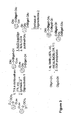
- Figure 1 illustrates the use of a homogeneous solid support derivatized with two orthogonal protective groups (PG 1 and PG 2 ) in the tandem synthesis of two oligonucleotides (Oligo1 and Oligo2).
- the protective group PG 1 is selectively removed, resulting in a homogeneous distribution of unprotected anchor groups, i.e.
- the first oligonucleotide (Oligo1) is assembled on the support via conventional solid phase oligonucleotide synthesis, e.g. phosphoramidite synthesis.
- the support is capped with a conventional capping reagent to prevent all Oligo1 sequences from being further elongated in the tandem synthesis.
- the protective group PG 2 is removed selectively, resulting in a homogeneous distribution of unprotected anchor groups, i.e. free hydroxyl groups, and capped Oligo1 on the support.
- the second oligonucleotide (Oligo2) is assembled on the support via conventional solid phase oligonucleotide synthesis, e.g. phosphoramidite synthesis.
- Oligo2 After the assembly of Oligo2, both Oligo1 and Oligo2 are cleaved from the support and deprotected to provide a mixture of the two oligonucleotides.
- the mixture of oligonucleotides is further processed in accordance with the intended application of the oligonucleotides, e.g. by desalting, or by chromatographic purification etc.
- Homogeneous solid supports can be prepared using a number of methods.
- the homogeneous solid supports are prepared in a stepwise manner, starting with a solid phase that comprises unprotected anchor groups.
- the unprotected anchor groups are reacted with a first orthogonal protective group (e.g., PG 1 ) to the desired extent by addition of the respective reagents that introduce the protective group in the appropriate amounts (e.g. in a ratio of 1:2 reagent:anchor groups, if protection of one half of the anchor groups is desired).
- a first orthogonal protective group e.g., PG 1
- the remaining free anchor groups are reacted with a second orthogonal protective group (e.g., PG 2 ) in a corresponding manner with a second reagent that introduces the second orthogonal protective group.
- a second orthogonal protective group e.g., PG 2
- This reaction scheme can be repeated, with the addition of more orthogonal protective groups until virtually all anchor groups are protected and all desired orthogonal protective groups are introduced.
- This method is particularly useful if two types of orthogonally protected anchor groups, or if one type of protected anchor group in combination with unprotected anchor groups, is desired. In the latter case, only one derivatization of approximately 50% of the anchor groups is performed.
- the remaining unreacted anchor groups may or may not be converted into orthogonally protected anchor groups by applying an excess of the appropriate reagent to introduce the second protective group.
- the homogeneous solid support for a tandem synthesis is prepared by the simultaneous application of two or more reagents, which introduce the orthogonal protective groups.
- two or more reagents which introduce the orthogonal protective groups.
- a mixture of O3'- succinate-(4-nitrophenyl)ester nucleosides with different orthogonal O5'-protective groups could be employed in a loading reaction on amino-functionalized solid phases to generate a homogeneous preloaded support.
- the solid support is generated by mixing two or more solid support components, wherein the anchor groups of each solid support component, is uniformly protected by a unique orthogonal protective group.
- Solid supports that are generated from two or more solid support components are referred to herein as " composite solid supports.
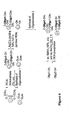
- Figure 2 illustrates the use of a composite solid support derivatized with two orthogonal protective groups (PG 1 and PG 2 ) in the tandem synthesis of two oligonucleotides (Oligo1 and Oligo2).
- the protective group PG 1 is selectively removed, resulting in a composite support that consists of a solid support component with unprotected anchor groups, i.e.
- the first oligonucleotide (Oligo1) is assembled via conventional solid phase oligonucleotide synthesis, e.g. phosphoramidite synthesis.
- the composite support is capped with a conventional capping reagent to prevent all Oligo1 sequences from being further elongated in the tandem synthesis.
- the protective group PG 2 is removed selectively, resulting in a composite solid support that consists of a solid support component with unprotected anchor groups, i.e. free hydroxyl groups, and a solid support component with attached capped Oligol.
- the second oligonucleotide (Oligo2) is assembled via conventional solid phase oligonucleotide synthesis, e.g. phosphoramidite synthesis.
- Oligo2 After the assembly of Oligo2, both Oligo1 and Oligo2 are cleaved from the composite support and deprotected to provide a mixture of both oligonucleotides.
- the mixture of oligonucleotides is further processed in accordance with the intended application of the oligonucleotides, e.g. by desalting, or by chromatographic purification etc. Two more different oligonucleotides can be synthesized on a component solid support, depending on the number of solid support components, which contain other orthogonal protective groups.
- Each solid support component of a composite solid support is easily prepared in separate reactions through methods well known in the art.
- One method to prepare such solid support components consists of introducing the orthogonal protective groups onto unprotected anchor groups.
- a dimethoxytrityl protective group can be introduced to the hydroxyl groups of a solid support component in a tritylation reaction, as described by Reddy et al. (1987) Tetrahedron Letters 28:23-26 .
- a tert-butyldimethylsilyl protective group is reacted with the hydroxyl groups of a solid support component in a silylation reaction.
- Another method to prepare solid support components is based on the use of loading reagents that already contain protected anchor groups.
- a dimethoxytrityl protected nucleoside loading reagent e.g. an O5'-dimethoxytrityl-O3'-succinate-(4-nitrophenyl)ester of a nucleoside, as described by Caruthers et al. (1982) in Chemical and Enzymatic Synthesis of Gene Fragments, A Laboratory Manual, Verlag Chemie, Gassen and Lang, eds. ISBN 3-527-26063-3 , can be employed to prepare a preloaded solid support component with dimethoxytrityl protected anchor groups from amino-functionalized solid phases.
- a levulinyl protected nucleoside loading reagent e.g.
- a O5'-levulinyl- O3'-succinate-(4-nitrophenyl)ester of a nucleoside can be employed to prepare a preloaded solid support component with levulinyl protected anchor groups from amino-functionalized solid phases.
- Component supports are mixed according to their loading in a ratio that reflects the intended ratio of the oligonucleotides to be prepared in the tandem synthesis. It may be advantageous to apply an excess of a support component in case a partial loss of the protective group of the component is anticipated during the tandem synthetic run. For example, if 9-fluorenylmethyloxycarbonyl (Fmoc) is used as one of the orthogonal protective groups, it is advantageous to apply a 20 to 40% excess of the corresponding Fmoc solid support component, in order to compensate for the partial loss of Fmoc-groups during the course of the tandem synthesis.
- Fmoc 9-fluorenylmethyloxycarbonyl
- the extent of the loss of Fmoc-protection, as well as, the optimal amounts of said excess, will primarily depend on the size and the number of oligonucleotides synthesized prior to the deblocking of the Fmoc-protected anchor group.
- the examples depicted in Figures 1 and 2 can be extended to the synthesis of more than two oligonucleotides by either increasing the number of orthogonal protective groups on the homogeneous support or by adding more solid support components that contain other orthogonal protective groups to the composite solid support.
- the sequence of synthetic steps is extended to include additional capping, synthesis and deprotection steps in this case in order to accommodate the serial synthesis of the added oligonucleotides in accordance with Figures 1 or 2 .
- a preferred orthogonal protecting group for tandem oligonucleotide synthesis is the dimethoxytrityl (DMT) group, which is removed during the standard synthetic cycle of phosphoramidite mediated oligonucleotide synthesis and therefore, will be the first of the orthogonal protective groups on the solid support to be removed in a tandem oligonucleotide synthesis.
- the DMT group is introduced using a simple tritylation process, and as noted above, it is removed during the course of the first step of automated SPOS, simultaneously allowing the progression of the detritylation to be monitored and the loading of DMT protected anchor groups to be determined via VIS-spectroscopy.
- the methoxyethylidene protective group on the 2'/3'-diol function of the ribonucleoside portion of a universal linker, as described above, is also preferred as an orthogonal protective group.
- the methoxyethylidene protective group is cleaved during the first acidic reaction step in a phosphoramidite mediated synthesis to generate a 2'/3'-monoacetate with one free hydroxyl group.
- unprotected anchor groups may be used in conjunction with one or more orthogonal protective groups.
- free hydroxyl groups can be employed together with one or more orthogonal protective groups. In this case, the free hydroxyl groups represent the starting point of the tandem oligonucleotide synthesis.
- protective groups that are orthogonal to a DMT-group, or to a methoxyethylidene group on the 2'/3'-cis diol function of a universal linker as described above, or to an unprotected anchor group include, but are not limited to, the 9-fluorenylmethyloxycarbonyl (Fmoc) protective group, which can be removed under mildly basic conditions, the 4-oxopentanoyl (levulinyl) protective group, which can be removed under neutral conditions with a solution of hydrazine hydrate in a pyridine/acetic acid buffer, and trialkylsilyl protective groups, which can be removed with deprotection solutions that contain fluoride ions.
- Fmoc 9-fluorenylmethyloxycarbonyl
- 4-oxopentanoyl (levulinyl) protective group which can be removed under neutral conditions with a solution of hydrazine hydrate in a pyridine/acetic acid buffer
- orthogonal protective groups that can be used in a tandem oligonucleotide synthesis as described herein is not limited to the examples mentioned above. Any other protective group that is an orthogonal protective group as defined herein can be employed in the method of this invention. All orthogonal protective groups employed in the same synthesis, however, must be stable under the conditions of the oligonucleotide assembly chemistry.
- bead preparations with two or more different oligonucleotides homogeneously tethered to all beads may be prepared as described with linkers that are stable under the conditions of the deprotection of the synthesized oligonucleotides.
- Such bead preparations are useful in hybridization assays.
- Linkers used for such purposes are potentially simpler compared to linkers that are cleavable under the conditions of deprotection of the synthesized oligonucleotides.
- Figure 3 illustrates the use of a homogeneous solid support, derivatized with universal linkers, in the tandem synthesis of two oligonucleotides using standard protocols for phosphoramidite chemistry.
- equal shares of the hydroxyl anchor groups on the solid support are protected either with 2'/3'-O/O-methoxyethylidene groups (OCH 3 ) or with levulinyl groups (Olev).
- the 2'/3'-O/O-methoxyethylidene protecting group is selectively opened to one side yielding an acetylated and a free hydroxyl group, overall resulting in a homogeneous 1:1-distribution of free and levulinyl protected hydroxyl groups on the support.
- the first oligonucleotide (Oligo1) is assembled on the support via conventional solid phase oligonucleotide synthesis.
- the next two steps differ from standard protocols, first regarding the order of the steps and second regarding the reagents used, but still can be performed on a automated synthesizer.
- Oligo1 is capped with an acetyl group to prevent its further elongation by subjecting the support to conventional capping reagents, as used in the capping steps of standard SPOS.
- the levulinyl group is removed selectively by briefly treating with a solution of hydrazine in a pyridine/acetic acid buffer, resulting in a homogeneous distribution of free hydroxyl groups and capped Oligol on the support.
- the second oligonucleotide (Oligo2) is conventionally assembled on the liberated hydroxyl groups.
- the support is subjected to standard deprotection/cleavage conditions affording a mixture of both oligonucleotides that is worked up, e.g. by a desalting step.
- Figure 4 illustrates the use of a composite solid support derivatized with universal linkers in the tandem synthesis of two oligonucleotides using standard protocols for phosphoramidite chemistry.
- the composite support consists of equal amounts of two solid support components having the same loadings of hydroxyl anchor groups protected with 2'/3'-O/O-methoxyethylidene groups (OCH 3 ) or with levulinyl groups (Olev).
- OCH 3 2'/3'-O/O-methoxyethylidene groups
- Olev levulinyl groups
- the 2'/3'-O/O-methoxyethylidene protecting group is selectively opened to one side yielding an acetylated and a free hydroxyl group.
- a composite solid support consisting of one solid support component with free hydroxyl groups and a second solid support component with levulinyl protected hydroxyl groups is obtained.
- the first oligonucleotide (Oligo1) is assembled on the support via conventional solid phase oligonucleotide synthesis.
- the subsequent two steps differ from standard protocols in the same manner as noted above with respect to the example illustrated in Figure 3 .
- Oligo1 is capped with an acetyl group to prevent its further elongation by subjecting the support to conventional capping reagents, as used in the capping steps of standard protocols.
- the levulinyl group is removed selectively by briefly treating with a solution of hydrazine in a pyridine/acetic acid buffer, resulting in a solid support that consists of a solid support component with free hydroxyl groups and a solid support component bearing capped Oligo1.
- the second oligonucleotide (Oligo2) is conventionally assembled on the liberated hydroxyl groups.
- the support is subjected to standard deprotection/ cleavage conditions affording a mixture of both oligonucleotides that is finally worked up, e.g. by a desalting step.
- all of these steps all of these steps can be performed on an automated synthesizer.
- the last terminal protective group is removed during the synthesis of the last assembled oligonucleotides, i.e. the synthesis is performed in the DMT-off mode, resulting, subsequent to the cleavage/removal step, in a mixture of completely deprotected oligonucleotides.
- This crude product can be used as such or can be subjected to further, preferably collective work-up steps, e.g. desalting and/or concentration under reduced pressure, as described for example in Fischer et al. (1990) BioTechniques 9:300-301 and the Pharmacia Biotech NAPTM-25 Column Instructions.
- a single ultrafiltration run or a precipitation step is sufficient to generate a mixture of oligonucleotides, such as primer pairs, that can be directly admitted to the final application.
- further purification steps as known in art, e.g., gel electrophoreses, RP- or IE-HPLC, can be performed, giving rise to either individual or combined preparations of purified oligonucleotides.
- said final terminal protective group is retained, i.e. the synthesis is performed in the DMT-on mode, resulting, subsequent to the cleavage/removal step, in a mixture of oligonucleotides of which one or more are completely deprotected and one is still bound to the terminal protective group, commonly a dimethoxytrityl-group.
- This terminal protective group can then be utilized as a handle in an additional purification step on a hydrophobic stationary phase, e.g. by passing through a reverse phase cartridge, allowing for the simple separation of the last synthesized oligonucleotides from the remaining ones.
- terminal protective group is removed during or after the additional purification step, as described for example in Johnson et al. (1990) BioTechniques 8:424-428 and McBride et al. (1988) BioTechniques 6:362-367 .
- two discrete oligonucleotide preparations can be obtained from a single SPOS run, e.g. two fractions containing one oligonucleotide each are accessible by one tandem synthesis of two oligonucleotides; or one oligonucleotide can be singled out of a three-membered tandem synthesis leaving behind a composition of two oligonucleotides, such as a primer pair.
- the novel methods and support preparations of this invention have significant advantages and do not suffer from the limitations inherent in the prior-art methods.
- the solid supports described herein provide for a simple, smooth and efficient synthesis of two or more oligonucleotides of consistent quality that are useful for a broad range of applications.
- the methods of this invention are especially targeted to the cost effective production of oligonucleotides for applications employing two or more primers, probes, duplex nucleic acid fragments or the like.
- the methods of this invention can easily be adopted in syntheses of modified oligonucleotides, such as phosphorothioates, RNA derivatives and locked nucleic acids (LNA), and oligonucleotides conjugated to e.g. one or several dyes via a linker unit.
- modified oligonucleotides such as phosphorothioates, RNA derivatives and locked nucleic acids (LNA)
- Example 1 describes the synthesis of universal solid support 8 .
- the CPG-based universal solid support 8 which bears a protected anchor group, is prepared using the method described by Kumarev et al., WO 01/96357 .
- the O2'/O3'-methoxyethylidene moiety of 8 is transferred to either the 2'-hydroxyl/3'-acetate or the 2'-acetate/3'-hydroxyl-derivative 9 upon a brief acidic treatment, e.g. with 1% trifluoroacetic acid in dichloroethane for 1 minute at room temperature, as illustrated in Scheme 1, below.
- Solid support 9 is well suited as a solid support component for the assembly of the first oligonucleotide in the course of a tandem synthesis. The same is true for the CPG derivative 10 , which carries DMT-protected anchor groups. Compound 10 is obtained from compound 9 via by a simple tritylation procedure, as described in Example 2.
- the Fmoc-group and the levulinyl protecting groups are useful as orthogonal protective groups in the context of a tandem oligonucleotide synthesis.
- the synthesis of corresponding CPG supports ( 11 ) and ( 12 ) is outlined in Scheme 2 and described in Examples 3 and 4.
- the solid supports ( 11 ) and ( 12 ) are well suited as solid support components in a tandem oligonucleotide synthesis.
- solid support ( 9 ) can be combined with the solid support ( 9 ) in an appropriate ratio to provide a composite solid support that allows the synthesis of a first oligonucleotide on the solid support component ( 9 ) and the synthesis of a second oligonucleotide on a solid support component ( 11 ) or ( 12 ).
- solid support components ( 11 ) or ( 12 ) are applied in a mixture with the solid support components ( 8 ) or ( 10 ) for the synthesis of two oligonucleotides, to provide a composite support comprised of solid support components ( 8 ) or ( 10 ) and ( 11 ) or ( 12 ), respectively.
- a general procedure for such a tandem oligonucleotide synthesis including the steps of removing the Fmoc- or the levulinyl group prior to the assembly of a second oligonucleotide is provided in Example 5. More specific examples of the tandem synthesis of oligonucleotides using the general procedure provided in Example 5 are described in Examples 6 to 9, 11 and 12.
- Example 6 illustrates the tandem synthesis of three oligodeoxynucleotide primer pairs, having lengths of 8 to 15 bases, according to the general procedure described in Example 5 using composite solid supports derived from the solid support components ( 8 ) and ( 12 ). All of the oligonucleotide products were characterized by RP-HPLC and gel electrophoresis. The results of the gel electrophoresis are set forth in Figure 5 . Lanes 1,2 and 3 represent primer pairs 1,2 and 3, respectively.
- Example 7 describes the synthesis of a sequencing primer pair consisting of a 23mer and 25mer oligodeoxynucleotide according to the general procedure described in Example 5 using composite solid support derived from the solid support components ( 8 ) and ( 12 ). The synthesized products were analyzed and their identity was verified both by comparing their HPLC retention times with those of the corresponding oligonucleotides prepared individually using standard means and by MALDI-TOF mass spectroscopic analysis. The results of the electrophoretic analysis are set forth in Figure 6 . Lanes 4 and 5 depict the separation of the two tandemly synthesized oligonucleotides.
- Lanes 1 and 2 represent the 23mer and 25mer, respectively, which were individually synthesized by conventional means, and lane 3 represents the separation of a mixture thereof.
- the same sequencing primer pair was also obtained according to procedures specified in Example 10, which are based on tandem synthesis using a homogeneous solid support.
- Example 8 describes PCR experiments using primer pairs synthesized by the method described in Example 5.
- the two primer pairs were prepared employing the component solid supports ( 8 ) and ( 12 ).
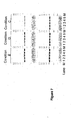
- Reference oligonucleotide primers were individually synthesized. All PCR experiments were performed under three different sets of conditions. The resulting PCR products were analyzed by electrophoresis under non-denaturing conditions. The results are set forth in Figure 7 .
- the upper set of gels depicts the results for primer pair #1 applying the three different PCR conditions C, D and E: lanes 1 to 4 represent to the primer pair obtained via a tandem oligonucleotide synthesis, lanes 5 represent the primer pair as obtained through conventional SPOS protocols in separate synthesis for each primer and lanes M contain size markers (50 bp ladder).
- the lower set of gels depicts the results for the primer pair #2 accordingly.
- the PCR products obtained from the tandem primers were identical with those generated with the reference primers in all cases and were of comparable quality.
- Example 9 describes the preparation of a ternary composite solid support comprising the methoxyethylidene-modified universal CPG ( 10 ), the Fmoc-protected universal CPG ( 11 ), and the levulinyl-protected universal CPG ( 12 ) as support components.
- this composite support for the tandem synthesis of three oligonucleotides d(T) 9 , d(T) 12 and d(T) 15 in a ratio of approximately 1:1:1 is described. These three components of the crude product mixture were identified and characterized by anion-exchange HPLC, as depicted in Figure 8 .
- the loading of the Fmoc-protected CPG support ( 11 ) or the levulinyl protected CPG support ( 12 ) is adjusted to approximately 50% of the available hydroxy groups.
- the resulting support is a homogeneous solid support useful for a tandem oligonucleotide synthesis, as described in Example 10.
- the adjustment of the ratio of protected to unprotected hydroxyl groups is necessary in a case in which differential amounts of the two oligonucleotides to be synthesized are required. For example, a ratio of approximately 33% protected hydroxyl groups and approximately 66% unprotected hydroxyl groups can be employed to generate the two oligonucleotides in a molar ratio of approximately 1:2. Protocols for the preparation, as well as, the use in tandem synthesis of such a homogeneous solid support are described in Example 10. This example illustrates the preparation of a homogeneous support comprised of unprotected hydroxyl groups and those protected by levulinyl groups in a ratio of approximately 1:1.
- Example 11 The usefulness of preparative gel electrophoresis to jointly purify a tandem synthesized pair of oligonucleotide primers in one step is demonstrated in Example 11.
- the results are set forth in Figure 9 .
- the chromatograms represent the analyses before ( Figure 9A ) and after ( Figure 9B ) the purification.
- the crude mixture is converted into a preparation of the primer pair that contains both oligonucleotides in almost equal amounts and high purity.
- Example 12 describes the tandem syntheses of two oligonucleotide pairs, each of which are composed of two single-stranded complementary oligonucleotides that are able to form a duplexed oligonucleotide by hybridizing to each other.
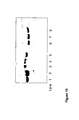
- the actual existence of the double-stranded species and the complete conversion of its single-stranded components were proven by non-denaturing gel electrophoresis, as depicted in Figure 10 .
- Lanes 1 and 2 represent a 40mer oligonucleotide marker.
- Lanes 3 to 5 and 6 to 8 illustrate the duplexes formed by oligonucleotide pairs 1 and 2, respectively.
- LCAA long-chain-alkyl-amino
- CPG preparation ( 8 ) was calculated as having a loading value of 49 ⁇ mol/g, by cleaving off the inosine moieties in a test sample (aq. LiOH (1 M), stirring for 10 minutes at room temperature), and photometrical quantification at 254 nm.
- CPG preparation ( 9 ) was dried in vacuo for 1 hour.
- DMAP (0.31 mmol
- triethylamine (2.92 mmol
- the reaction mixture was stirred at room temperature for 2 hours.
- the resulting CPG was collected on a glass-fritted funnel, washed successively with pyridine (4x), acetonitrile (3x) and diethyl ether (1x), and finally dried in vacuo to afford the tritylated support ( 10 ).
- reaction product was then reacted with a mixture of equal volumes of N-methylimidazole in acetic anhydride (10%, v/v) and anhydrous pyridine on the fritted funnel.
- acetic anhydride 10%, v/v
- pyridine 2x
- acetonitrile 3x
- the loading value of CPG preparation ( 11 ) was determined to be 56 ⁇ mol/g by cleaving off the Fmoc groups in a test sample (piperidine (20%, v/v) in DMF, 15 minutes at room temperature), which were then quantified photometrically at 301 nm.
- the following example provides a general method for the tandem synthesis of oligonucleotides.
- this example describes the synthesis of two different oligonucleotides on a common solid support using the method of this invention, however, the method can be extended to the synthesis of an unlimited number of different oligonucleotides.
- the following primer pair for sequencing was prepared according to the general procedure described in Example 5 using a composite solid support derived from the solid support components ( 8 ) and ( 12 ):
- oligonucleotides were characterized by RP-HPLC and gel electrophoresis (both analytical methods were applied as described in Example 6), and AX-HPLC ("Mini-Q" column (Pharmacia), gradient: 20% to 60% solvent B in 30 minutes; solvent A: aqueous NaOH (10 mM) with acetonitrile (20%, v/v), solvent B: solvent A with NaCl (1 M); flow: 0.4 mL/min; detection at 260 nm).
- Both primers 1 and 2 were identified on the above-mentioned RP-HPLC system. In addition, they were positively identified by comparing their electrophoretical mobility with those of the corresponding oligonucleotides, which were separately prepared according to standard protocols, as depicted in Figure 6 .
- the identity of the target molecules was also confirmed by MALDI-TOF mass spectroscopy (matrix: 3-hydroxypicolinic acid in water/acetonitrile (1:1, v/v), using a Bruker "Biflex-III" mass spectrometer): m/z calculated for primer 1: 6946.57, found: 6947,4; m/z calculated for primer 2: 7603.05, found: 7605.
- PCR experiments were performed in a MJ Research Engine Block thermalcycler.
- the PCR reactions were set up as follows: In a total volume of 25 ⁇ L each tube contained 1 unit of taq polymerase (Amplitaq Gold (Applied Biosystems)) in 'Gold buffer'(final concentrations: 15 mM Tris-HCl, 50 mM KCl, pH 8.0 (Applied Biosystems)) containing 200 ⁇ M each of dATP, dGTP, dCTP and dTTP.
- the synthesizer was used at a 1 ⁇ mol scale.
- the synthesis protocol supplied by the instrument manufacturer was followed with the exception of the capping steps after the synthesis of the first and second oligonucleotide and the subsequent steps to remove the Fmoc- and the levulinyl-protective groups, respectively, which were conducted as described below:
- the three oligonucleotides synthesized were characterized by gel electrophoresis and AX-HPLC. The latter was performed according to the method described in Example 7 and the corresponding chromatogram is depicted in Figure 8 .
Landscapes
- Chemical & Material Sciences (AREA)
- Health & Medical Sciences (AREA)
- Life Sciences & Earth Sciences (AREA)
- Biochemistry (AREA)
- Molecular Biology (AREA)
- Organic Chemistry (AREA)
- Engineering & Computer Science (AREA)
- Biotechnology (AREA)
- General Health & Medical Sciences (AREA)
- Genetics & Genomics (AREA)
- Saccharide Compounds (AREA)
Claims (48)
- Verfahren zur Synthese von zwei oder mehr verschiedenen Oligonucleotiden, das die Schritte umfasst:a) entweder Bereitstellen eines festen Trägers, wobei der feste Träger Ankergruppen umfasst, die mit zwei oder mehr orthogonalen Schutzgruppen geschützt sind, und Entfernen einer der orthogonalen Schutzgruppen von den Ankergruppen, um ungeschützte Ankergruppen zu erzeugen, oder Bereitstellen eines festen Trägers, wobei der feste Träger Ankergruppen umfasst, die zum Teil ungeschützt sind, wobei der Rest der Ankergruppen mit einer oder mehr Schutzgruppen geschützt ist, wobei die Schutzgruppen orthogonal zueinander sind, falls mehr als eine Schutzgruppe verwendet wird,b) Synthetisieren eines Oligonucleotids an den ungeschützten Ankergruppen,c) Verkappen der synthetisierten Oligonucleotide,d) Entfernen einer Schutzgruppe von den Ankergruppen,e) Synthetisieren eines Oligonucleotids an den entschützten Ankergruppenf) Wiederholen der Schritte c) bis e), bis alle der orthogonalen Schutzgruppen entschützt sind, undg) Abspalten aller synthetisierten Oligonucleotide von dem Träger.
- Verfahren nach Anspruch 1, das ferner einen Schritt h) umfasst, in dem man die abgespaltenen Oligonucleotide Bedingungen aussetzt, die geeignet sind, um die Oligonucleotide zu entschützen.
- Verfahren nach Anspruch 1, bei dem der feste Träger aus der Gruppe ausgewählt ist, die aus homogenen festen Trägern oder einem festen Verbundträger besteht.
- Verfahren nach Anspruch 3, bei dem der feste Träger aus einem festen Träger ausgewählt wird, der ein kovalent gebundenes Nucleosid oder Oligonucleotid enthält, oder aus einem festen Träger, der kein kovalent gebundenes Nucleosid oder Oligonucleotid enthält.
- Verfahren nach Anspruch 1, bei dem die orthogonalen Schutzgruppen aus der Gruppe ausgewählt sind, die aus Dimethoxytrityl (DMT), Methoxyethyliden, Levulinyl und 9-Fluorenylmethoxycarbonyl (Fmoc) besteht.
- Verfahren nach Anspruch 5, bei dem die Schutzgruppen ausgewählt werden aus Levulinyl und Fmoc.
- Verfahren nach Anspruch 5, bei dem die Schutzgruppen Methoxyethyliden und Levulinyl sind.
- Verfahren nach Anspruch 5, bei dem die Schutzgruppen Methoxyethyliden und Fmoc sind.
- Verfahren nach Anspruch 5, bei dem die Schutzgruppen DMT und Levulinyl sind.
- Verfahren nach Anspruch 5, bei dem die Schutzgruppen DMT und Fmoc sind.
- Verfahren nach Anspruch 1, bei dem der feste Träger aus der Gruppe ausgewählt ist, die aus einem anorganischen Polymer, einem modifizierten anorganischen Polymer, das aus Siliciumoxid oder CPG mit einem organischen Überzug ausgewählt ist, und einem organischen Polymer besteht.
- Verfahren nach Anspruch 11, bei dem das anorganische Polymer ein anorganisches Oxid ist, das aus der Gruppe ausgewählt ist, die aus Siliciumoxid, Aluminiumoxid, Zeolithen und porösem Glas (controlled pore glass, CPG) besteht.
- Verfahren nach Anspruch 11, bei dem das modifizierte anorganische Polymer aus der Gruppe ausgewählt ist, die aus Aminopropyl-Silan-derivatisiertem Siliciumoxid oder Aminopropyl-Silan-derivatisiertem CPG besteht.
- Verfahren nach Anspruch 11, bei dem das organische Polymer aus der Gruppe ausgewählt ist, die aus Polystyrol, Polyacrylamid, Polymethacrylat, Polyvinylalkohol und einem Kohlenhydrat, das aus Cellulose oder Stärke ausgewählt ist, besteht.
- Verfahren nach Anspruch 1, bei dem das Verhältnis der Ankergruppen mit orthogonalen Schutzgruppen an das beabsichtigte Verhältnis der zu synthetisierenden individuellen Oligonucleotide angepasst ist.
- Verfahren nach Anspruch 15, bei dem ein Überschuss an Ankergruppen verwendet wird, die mit Schutzgruppen geschützt sind, von denen zu erwarten ist, dass sie einen partiellen Verlust während der Schritte vor ihrer beabsichtigten Abspaltung erleiden.
- Verfahren nach Anspruch 16, bei dem der Überschuss angepasst ist, um den Schaden zu kompensieren.
- Verfahren nach Anspruch 1, bei dem alle Schritte in einem automatisierten Verfahren durchgeführt werden, wobei das automatisierte Verfahren einen DMT-off Modus und einen DMT-on Modus umfasst.
- Verfahren nach Anspruch 18, bei dem das letzte Oligonucleotid im DMT-off Modus synthetisiert wird.
- Verfahren nach Anspruch 18, bei dem das letzte Oligonucleotid im DMT-on Modus synthetisiert wird.
- Verfahren nach Anspruch 4, bei dem der feste Träger, der ein kovalent gebundenes Nucleosid oder Oligonucleotid enthält, aus der Gruppe ausgewählt ist, die aus festen Trägern mit der folgenden Formel besteht:
Q-L-N
wobeiQ eine feste Phase ist,L ein Linker ist undN ein Nucleosidrest ist, der das terminale Nucleosid eines zu synthetisierenden Oligonucleotides bildet, ausgewählt aus der Gruppe, die aus Verbindungen mit den folgenden Strukturen besteht: R1 aus der Gruppe ausgewählt ist, die aus -H, -OH, -F, einer wahlweise substituierten Alkoxy- oder Alkenoxygruppe, die 1 bis 4 Kohlenstoffatome aufweist, einer geschützten Aminogruppe oder OR2 besteht, wobei R2 aus Schutzgruppen ausgewählt ist, die in der Oligoribonucleotidsynthese verwendbar sind,B eine Nucleobase ist, die aus der Gruppe ausgewählt ist, die aus Adenin, Cytosin, Guanin, Thymin und Uracil oder einem chemisch modifizierten Derivat davon besteht, wobei die exocyclischen Aminogruppen der Nucleobase eine Schutzgruppe tragen können, die in der Oligonucleotidsynthese verwendbar ist,X und Y unabhängig aus -O und -NH ausgewählt sind, wobei X die Ankergruppe des festen Trägers repräsentiert und Y die Befestigungsstelle für den Linker auf der festen Phase repräsentiert undPG H oder eine Schutzgruppe ist, die in der Oligonucleotidsynthese verwendbar ist.
 - Verfahren nach Anspruch 21, bei dem R1 aus der Gruppe ausgewählt ist, die aus -OCH3, -OCH2CH=CH2 und -OCH2OCH2CH2OCH3 besteht.
- Verfahren nach Anspruch 21, bei dem R2 tert-Butyldimetylsilyl ist.
- Verfahren nach Anspruch 4, bei dem der feste Träger ein fester Träger ist, der ein kovalent gebundenes Nucleosid oder Oligonucleotid enthält, der aus der Gruppe der festen Träger ausgewählt ist, die die folgende Formel aufweisen:
Q-U
wobeiQ eine feste Phase ist undU ein universeller Linker ist, der aus der Gruppe von Verbindungen ausgewählt ist, die die folgende Formel aufweisen: S ein bifunktioneller Spacer-Rest ist, der die feste Phase (Q) mit der 5'-Hydroxylgruppe des dargestellten Furanringes kovalent verbindet,Z aus der Gruppe ausgewählt ist, die aus einer Nucleobase, die aus der Gruppe ausgewählt ist, die aus Adenin, Cytosin, Guanin, Thymin und Uracil oder einem chemisch modifizierten Derivat davon besteht, wobei die exocyclischen Aminogruppen der Nucleobase eine Schutzgruppe tragen können, die in der Oligonucleotidsynthese verwendbar ist, H, -OMe, Hypoxanthin und einem beliebigen anderen Rest besteht, der sowohl mit der Funktionalität eines universellen Linkers als auch mit allen Schritten, die das Verfahren umfasst, kompatibel sind, undR3 und R4 sind Hydroxyschutzgruppen, wobei entweder der Sauerstoff in Position 2 oder 3 des Furanringes als die Ankergruppe fungiert.
 - Verfahren nach Anspruch 24, bei dem S aus der Gruppe ausgewählt ist, die aus -C(=O)-, Diacylresten, die aus der Gruppe ausgewählt sind, die aus Oxalyl, Malonyl, Succinyl und Glutaryl besteht, Dialkylresten, die aus Methyliden, Ethyliden und Propyliden ausgewählt sind, Alkylacylresten, die aus -C(=O)-CH2-, -CH2-C(=O)-, -C(=O)-CH2-CH2- und -CH2-CH2C(=O)- ausgewählt sind, -P(=O) (OH) - und geschützten Phosphatresten besteht, die aus Verbindungen ausgewählt sind, die die Formel -P(=O) (OR6) - aufweisen, wobei R6 eine Phosphatschutzgruppe ist.
- Verfahren nach Anspruch 25, bei dem die Phosphatschutzgruppe R6 2-Cyanoethyl ist.
- Verfahren nach Anspruch 21 oder 24, bei dem die exocyclische Aminogruppe der Nucleobase mit einer Schutzgruppe geschützt ist, die aus der Gruppe ausgewählt ist, die aus Benzoyl, Isobutyryl und tert-Butylphenoxyacetyl (TAC) besteht.
- Verfahren nach Anspruch 24, bei dem R3 und R4 aus der Gruppe ausgewählt sind, die besteht aus: R3 ist H und R4 ist eine Verkappungsgruppe, R3 ist eine Verkappungsgruppe und R4 ist H, R3 ist eine Schutzgruppe und R4 ist eine Verkappungsgruppe, R3 ist eine Verkappungsgruppe und R4 ist eine Schutzgruppe oder R3 und R4 repräsentieren zusammen einen Methoxyethylidenrest, der die Sauerstoffe in Position 2 und 3 des Furanringes verbrückt.
- Verfahren nach Anspruch 28, bei dem die Verkappungsgruppe COCH3 ist.
- Verfahren zur Herstellung eines homogenen festen Trägers, das die Schritte umfasst:a) Bereitstellen einer festen Phase mit funktionellen Gruppen,b) Umsetzen eines Teils der funktionellen Gruppen der festen Phase mit einem ersten Reagenz, das einen ersten Linker und eine erste Schutzgruppe enthält, wobei der Linker wahlweise einen ersten Nucleosidrest umfasst,c) Umsetzen eines anderen Teils der funktionellen Gruppen mit einem anderen Reagenz als dem ersten Reagenz, das einen anderen Linker als den ersten Linker und eine andere Schutzgruppe als die erste Schutzgruppe enthält, wobei der andere Linker wahlweise einen ersten Nucleosidrest umfasst und die erste Schutzgruppe und die andere Schutzgruppe orthogonal sind,d) Wiederholen von Schritt c) mit noch einem weiteren Reagenz, das noch einen weiteren Linker und noch eine weitere Schutzgruppe enthält, bis alle beabsichtigten Linkerarten an der festen Phase angebracht sind, wobei jede Schutzgruppe orthogonal zu jeder anderen Schutzgruppe ist unde) Verkappung der nicht umgesetzten funktionellen Gruppen der festen Phase.
- Verfahren nach Anspruch 30, bei dem die Schritte b) bis d) gleichzeitig durchgeführt werden, wobei eine Mischung von Reagenzien verwendet wird.
- Homogener fester Träger, der zwei oder mehr unabhängig ausgewählte Linker-Untergruppen umfasst, wobei jede Linker-Untergruppe unabhängig kovalent an eine feste Phase gebunden ist, wobei jede Linker-Untergruppe einen Nucleosidrest umfasst, der Ankergruppen umfasst, wobei die Ankergruppen mit unterschiedlichen Schutzgruppen, die orthogonal zueinander sind, geschützt sind.
- Homogener fester Träger nach Anspruch 32, bei dem die Ankergruppen von einer der Untergruppen der Nucleosidreste wahlweise ungeschützt sind.
- Homogener fester Träger nach Anspruch 32, bei dem jede Linker-Untergruppe aus der Gruppe von Verbindungen ausgewählt ist, die die folgende Formel aufweisen:
L-N
wobeiL ein Linker ist undN ein erster Nucleosidrest ist, der aus der Gruppe von Verbindungen ausgewählt ist, die die folgenden Strukturen aufweisen: R1 aus der Gruppe ausgewählt ist, die aus -H, -OH, -F, einer wahlweise substituierten Alkoxy- oder Alkenoxygruppe, die 1 bis 4 Kohlenstoffatome aufweist, einer geschützten Aminogruppe oder OR2 besteht, wobei R2 aus Schutzgruppen ausgewählt ist, die in der Oligoribonucleotidsynthese verwendbar sind,B eine Nucleobase ist, die aus der Gruppe ausgewählt ist, die aus Adenin, Cytosin, Guanin, Thymin und Uracil oder einem chemisch modifizierten Derivat davon besteht, wobei die exocyclischen Aminogruppen der Nucleobase eine Schutzgruppe tragen können, die in der Oligonucleotidsynthese verwendbar ist,X und Y unabhängig aus -O und -NH ausgewählt sind, wobei X eine Ankergruppe des festen Trägers repräsentiert und Y die Befestigungsstelle für den Linker auf der festen Phase repräsentiert undPG H oder eine Schutzgruppe ist, die in der Oligonucleotidsynthese verwendbar ist.
 - Homogener fester Träger nach Anspruch 34, bei dem R1 aus der Gruppe ausgewählt ist, die aus -OCH3, -OCH2CH=CH2 und -OCH2OCH2CH2OCH3 besteht.
- Homogener fester Träger nach Anspruch 34, bei dem R2 tert-Butyldimetylsilyl ist.
- Homogener fester Träger nach Anspruch 34, bei dem die exocyclische Aminogruppe der Nucleobase mit einer Schutzgruppe geschützt ist, die aus der Gruppe ausgewählt ist, die aus Benzoyl, Isobutyryl und tert-Butylphenoxyacetyl (TAC) besteht.
- Homogener fester Träger nach Anspruch 32, bei dem jede Linker-Untergruppe aus der Gruppe der universellen Linker (U) ausgewählt ist, die die folgende Formel aufweisen:
 S ein bifunktioneller Spacer-Rest ist, der die 5'-Hydroxylgruppe des dargestellten Furanringes mit der festen Phase kovalent verbindet,Z aus der Gruppe ausgewählt ist, die aus einer Nucleobase, die aus der Gruppe ausgewählt ist, die aus Adenin, Cytosin, Guanin, Thymin und Uracil oder einem chemisch modifizierten Derivat davon besteht, wobei die exocyclischen Aminogruppen der Nucleobase eine Schutzgruppe tragen können, die in der Oligonucleotidsynthese verwendbar sind, H, -OMe, Hypoxanthin und einen beliebigen anderen Rest besteht, der sowohl mit der Funktionalität eines universellen Linkers als auch mit allen Schritten, die das Verfahren umfasst, kompatibel ist.R3 und R4 sind Hydroxyschutzgruppen, wobei entweder der Sauerstoff in Position 2 oder 3 des Furanringes als die Ankergruppe fungiert.
 - Homogener fester Träger nach Anspruch 38, bei dem S aus der Gruppe ausgewählt ist, die aus -C(=O)-, Diacylresten, die aus der Gruppe ausgewählt sind, die aus Oxalyl, Malonyl, Succinyl und Glutaryl besteht, Dialkylresten, die aus Methyliden, Ethyliden und Propyliden ausgewählt sind, Alkylacylresten, die aus -C(=O)-CH2-, -CH2-C(=O)-,-C(=O)-CH2-CH2- und -CH2-CH2-C(=O)- ausgewählt sind, -P(=O)(OH)- und geschützten Phosphatresten besteht, die aus Verbindungen ausgewählt sind, die die Formel -P(=O)(OR6)- aufweisen, wobei R6 eine Phosphatschutzgruppe ist.
- Homogener fester Träger nach Anspruch 39, bei dem die Phosphatschutzgruppe R6 2-Cyanoethyl ist.
- Homogener fester Träger nach Anspruch 38, bei dem die exocyclische Aminogruppe der Nucleobase mit einer Schutzgruppe geschützt ist, die aus der Gruppe ausgewählt ist, die aus Benzoyl, Isobutyryl und tert-Butylphenoxyacetyl (TAC) besteht.
- Homogener fester Träger nach Anspruch 38, bei dem R3 und R4 aus der Gruppe ausgewählt sind, die besteht aus: R3 ist H und R4 ist eine Verkappungsgruppe, R3 ist eine Verkappungsgruppe und R4 ist H, R3 ist eine Schutzgruppe und R4 ist eine Verkappungsgruppe, R3 ist eine Verkappungsgruppe und R4 ist eine Schutzgruppe oder R3 und R4 repräsentieren zusammen einen Methoxyethylidenrest, der die Sauerstoffe in Position 2 und 3 des Furanringes verbrückt.
- Homogener fester Träger nach Anspruch 42, bei dem die Verkappungsgruppe COCH3 ist.
- Homogener fester Träger nach Anspruch 32, bei dem die orthogonalen Schutzgruppen aus Methoxyethyliden, DMT, Levulinyl und Fmoc ausgewählt sind.
- Homogener fester Träger nach Anspruch 44, bei dem die orthogonalen Schutzgruppen Methoxyethyliden und Levulinyl sind.
- Homogener fester Träger nach Anspruch 44, bei dem die orthogonalen Schutzgruppen DMT und Levulinyl sind.
- Homogener fester Träger nach Anspruch 44, bei dem die Ankergruppen einer ersten Linker-Untergruppe ungeschützt sind und die Ankergruppen einer zweiten Linker-Untergruppe mit einer Levulinyl-Schutzgruppe geschützt sind.
- Homogener fester Träger nach Anspruch 44, bei dem die orthogonalen Schutzgruppen Methoxyethyliden und Fmoc sind.
Applications Claiming Priority (1)
| Application Number | Priority Date | Filing Date | Title |
|---|---|---|---|
| PCT/EP2002/014905 WO2004058794A1 (en) | 2002-12-31 | 2002-12-31 | Methods and compositions for the tandem synthesis of two or more oligonuleotides on the same solid support |
Publications (2)
| Publication Number | Publication Date |
|---|---|
| EP1585755A1 EP1585755A1 (de) | 2005-10-19 |
| EP1585755B1 true EP1585755B1 (de) | 2015-08-05 |
Family
ID=32668709
Family Applications (1)
| Application Number | Title | Priority Date | Filing Date |
|---|---|---|---|
| EP02796773.6A Expired - Lifetime EP1585755B1 (de) | 2002-12-31 | 2002-12-31 | Verfahren und zusammenstellungen für die tandem-synthese von zwei oder mehr oligonukleotiden auf einen festen träger |
Country Status (5)
| Country | Link |
|---|---|
| US (1) | US7615629B2 (de) |
| EP (1) | EP1585755B1 (de) |
| JP (1) | JP4791043B2 (de) |
| AU (1) | AU2002361255A1 (de) |
| WO (1) | WO2004058794A1 (de) |
Cited By (1)
| Publication number | Priority date | Publication date | Assignee | Title |
|---|---|---|---|---|
| US20210347645A1 (en) * | 2020-05-07 | 2021-11-11 | Chemgenes Corporation | Macroporous Controlled Porosity Silica Gel Suitable For Oligonucleotide Synthesis |
Families Citing this family (31)
| Publication number | Priority date | Publication date | Assignee | Title |
|---|---|---|---|---|
| US20030224353A1 (en) * | 2001-10-16 | 2003-12-04 | Stein David A. | Antisense antiviral agent and method for treating ssRNA viral infection |
| WO2005013905A2 (en) * | 2003-08-07 | 2005-02-17 | Avi Biopharma, Inc. | SENSE ANTIVIRAL COMPOUND AND METHOD FOR TREATING ssRNA VIRAL INFECTION |
| US20050222068A1 (en) | 2003-10-23 | 2005-10-06 | Mourich Dan V | Method and antisense composition for selective inhibition of HIV infection in hematopoietic cells |
| US8129352B2 (en) | 2004-09-16 | 2012-03-06 | Avi Biopharma, Inc. | Antisense antiviral compound and method for treating ssRNA viral infection |
| US8357664B2 (en) | 2004-10-26 | 2013-01-22 | Avi Biopharma, Inc. | Antisense antiviral compound and method for treating influenza viral infection |
| US7524829B2 (en) * | 2004-11-01 | 2009-04-28 | Avi Biopharma, Inc. | Antisense antiviral compounds and methods for treating a filovirus infection |
| US8067571B2 (en) | 2005-07-13 | 2011-11-29 | Avi Biopharma, Inc. | Antibacterial antisense oligonucleotide and method |
| AU2006287530A1 (en) * | 2005-09-08 | 2007-03-15 | Sarepta Therapeutics, Inc. | Antisense antiviral compound and method for treating picornavirus infection |
| WO2007030691A2 (en) * | 2005-09-08 | 2007-03-15 | Avi Biopharma, Inc. | Antisense antiviral compound and method for treating picornavirus infection |
| US8501704B2 (en) * | 2005-11-08 | 2013-08-06 | Sarepta Therapeutics, Inc. | Immunosuppression compound and treatment method |
| US8785407B2 (en) * | 2006-05-10 | 2014-07-22 | Sarepta Therapeutics, Inc. | Antisense antiviral agent and method for treating ssRNA viral infection |
| LT2735568T (lt) | 2006-05-10 | 2017-11-27 | Sarepta Therapeutics, Inc. | Oligonukleotido analogai, turintys katijonines jungtis tarp subvienetų |
| WO2009006446A2 (en) * | 2007-06-28 | 2009-01-08 | Integrated Dna Technologies, Inc. | Methods for cloning small rna species |
| US8592386B2 (en) * | 2008-12-17 | 2013-11-26 | Sarepta Therapeutics, Inc. | Antisense compositions and methods for modulating contact hypersensitivity or contact dermatitis |
| AU2010319314C1 (en) | 2009-11-13 | 2016-09-01 | Sarepta Therapeutics, Inc. | Antisense antiviral compound and method for treating influenza viral infection |
| KR101981705B1 (ko) | 2010-05-28 | 2019-05-24 | 사렙타 쎄러퓨틱스, 인코퍼레이티드 | 변형된 서브유니트간 결합 및/또는 말단 그룹을 갖는 올리고뉴클레오타이드 유사체 |
| US8198429B2 (en) | 2010-08-09 | 2012-06-12 | Avi Biopharma, Inc. | Antisense antiviral compounds and methods for treating a filovirus infection |
| WO2012031243A2 (en) | 2010-09-03 | 2012-03-08 | Avi Biopharma, Inc. | dsRNA MOLECULES COMPRISING OLIGONUCLEOTIDE ANALOGS HAVING MODIFIED INTERSUBUNIT LINKAGES AND/OR TERMINAL GROUPS |
| KR20140097398A (ko) | 2011-11-18 | 2014-08-06 | 사렙타 쎄러퓨틱스, 인코퍼레이티드 | 기능적으로-변형된 올리고뉴클레오티드 및 이의 서브유니트 |
| EP2620444B1 (de) * | 2012-01-30 | 2015-05-06 | Nitto Denko Corporation | Linker und Träger für die Festphasensynthese von Nukleinsäure |
| US11020417B2 (en) | 2015-06-04 | 2021-06-01 | Sarepta Therapeutics, Inc | Methods and compounds for treatment of lymphocyte-related diseases and conditions |
| CN105175772A (zh) * | 2015-10-22 | 2015-12-23 | 山西科瑞迪生物科技有限公司 | 多肽/核苷酸合成用固相载体材料易官能化活性树脂的制备方法 |
| US10465242B2 (en) * | 2016-07-14 | 2019-11-05 | University Of Utah Research Foundation | Multi-sequence capture system |
| IT201700030473A1 (it) * | 2017-03-20 | 2018-09-20 | Chiara Platella | Metodo per la preparazione di un supporto a basso legame aspecifico per cromatografia di affinità e/o sintesi diretta di oligonucleotidi |
| EP3902816A4 (de) * | 2018-12-26 | 2022-09-14 | Twist Bioscience Corporation | Hochgenaue de-novo-polynukleotidsynthese |
| JP7368456B2 (ja) * | 2019-03-29 | 2023-10-24 | 住友化学株式会社 | 無機多孔質担体、及びこれを用いた核酸の製造方法 |
| EP3980536A4 (de) * | 2019-06-07 | 2023-11-15 | Bio-Rad Laboratories, Inc. | Auflösung mehrerer beads pro tropfen |
| EP3815778A1 (de) * | 2019-11-04 | 2021-05-05 | Max-Planck-Gesellschaft zur Förderung der Wissenschaften e.V. | Vorrichtung zur schnellen automatisierten synthese von oligo- und polysacchariden |
| WO2021089632A1 (en) * | 2019-11-04 | 2021-05-14 | MAX-PLANCK-Gesellschaft zur Förderung der Wissenschaften e.V. | Microwave-assisted method for synthesis of oligo- and polysaccharides on solid phase |
| CN114689880B (zh) * | 2020-12-25 | 2025-07-04 | 华为技术有限公司 | 固相载体及其制备方法和应用以及生物芯片 |
| US20260109968A1 (en) * | 2022-09-02 | 2026-04-23 | Eleven Therapeutics Ltd | A method for simultaneous synthesis of a plurality of oligonucleotides |
Citations (1)
| Publication number | Priority date | Publication date | Assignee | Title |
|---|---|---|---|---|
| WO2002016022A2 (de) * | 2000-08-24 | 2002-02-28 | Febit Ag | Neue strategie zur synthese von polymeren auf oberflächen |
Family Cites Families (42)
| Publication number | Priority date | Publication date | Assignee | Title |
|---|---|---|---|---|
| US4112221A (en) | 1974-07-17 | 1978-09-05 | Asahi Kasei Kogyo Kabushiki Kaisha | Process for preparing 8,2'-O-anhydropurine nucleosides |
| US4291024A (en) | 1978-04-10 | 1981-09-22 | Turcotte Joseph G | Cytotoxic liponucleotide analogs |
| US4349552A (en) | 1978-10-30 | 1982-09-14 | Fujisawa Pharmaceutical Company, Ltd. | 5-Fluorouracil derivatives, and their pharmaceutical compositions |
| DE2931233A1 (de) | 1979-08-01 | 1981-02-19 | Mester Juliu | Verfahren zur herstellung von furocumarinen |
| US4458066A (en) | 1980-02-29 | 1984-07-03 | University Patents, Inc. | Process for preparing polynucleotides |
| US4415732A (en) | 1981-03-27 | 1983-11-15 | University Patents, Inc. | Phosphoramidite compounds and processes |
| US4616071A (en) | 1983-01-06 | 1986-10-07 | Ford Motor Company | Coating composition comprising bis-diene oligomers and bis-dieneophile oligomers |
| DE3329892A1 (de) | 1983-08-18 | 1985-03-07 | Köster, Hubert, Prof. Dr., 2000 Hamburg | Verfahren zur herstellung von oligonucleotiden |
| US5118802A (en) | 1983-12-20 | 1992-06-02 | California Institute Of Technology | DNA-reporter conjugates linked via the 2' or 5'-primary amino group of the 5'-terminal nucleoside |
| US5118800A (en) | 1983-12-20 | 1992-06-02 | California Institute Of Technology | Oligonucleotides possessing a primary amino group in the terminal nucleotide |
| US5093232A (en) | 1985-12-11 | 1992-03-03 | Chiron Corporation | Nucleic acid probes |
| US4816571A (en) | 1987-06-04 | 1989-03-28 | Applied Biosystems, Inc. | Chemical capping by phosphitylation during oligonucleotide synthesis |
| US5420276A (en) | 1987-11-03 | 1995-05-30 | Abbott Laboratories | Analogs of oxetanyl purines and pyrimidines |
| SE8802173D0 (sv) | 1988-06-10 | 1988-06-10 | Astra Ab | Pyrimidine derivatives |
| US5049656A (en) | 1988-12-21 | 1991-09-17 | Board Of Regents Of The University Of Nebraska | Sequential peptide and oligonucleotide syntheses using immunoaffinity techniques |
| WO1991006556A1 (en) | 1989-10-24 | 1991-05-16 | Gilead Sciences, Inc. | 2' modified oligonucleotides |
| KR927003044A (ko) | 1990-01-11 | 1992-12-17 | 크리스토퍼 케이. 미라벨리 | Rna 활성과 유전자 발현을 검출하고 조절하는 조성물 및 그 방법 |
| US5200514A (en) | 1990-01-19 | 1993-04-06 | University Of Georgia Research Foundation, Inc. | Synthesis of 2'-deoxypyrimidine nucleosides |
| ATE119541T1 (de) | 1990-03-13 | 1995-03-15 | Acic Canada Inc | Verfahren zur herstellung von nucleosiden und ihre analogen. |
| GB9008696D0 (en) | 1990-04-18 | 1990-06-13 | Wellcome Found | Anti-viral compounds |
| GB9021625D0 (en) | 1990-10-04 | 1990-11-21 | Ici Plc | Synthesis of oligonucleotides |
| US5539082A (en) | 1993-04-26 | 1996-07-23 | Nielsen; Peter E. | Peptide nucleic acids |
| EP0604552B1 (de) * | 1991-09-18 | 1997-02-12 | Affymax Technologies N.V. | Verfahren zur synthese der verschiedenen sammlungen von oligomeren |
| GB9207381D0 (en) | 1992-04-03 | 1992-05-13 | Ici Plc | Synthesis of oligonucleotides |
| GB9225427D0 (en) | 1992-12-04 | 1993-01-27 | Ribonetics Gmbh | Oligonucleotides with rna cleavage activity |
| WO1994017447A1 (en) | 1993-01-21 | 1994-08-04 | The State Of Oregon Acting By And Through The State Board Of Higher Education On Behalf Of The University Of Oregon | Chemical functionalization of surfaces |
| AU6550394A (en) | 1994-03-11 | 1995-09-25 | Isis Pharmaceuticals, Inc. | Novel pyrimidine nucleosides |
| JPH10501809A (ja) | 1994-06-22 | 1998-02-17 | ネクスター ファーマスーティカルズ,インコーポレイテッド | 分子内求核置換による公知および新規2′−ヌクレオシドの新規製造方法 |
| US5843650A (en) | 1995-05-01 | 1998-12-01 | Segev; David | Nucleic acid detection and amplification by chemical linkage of oligonucleotides |
| WO1997014706A1 (en) | 1995-10-19 | 1997-04-24 | Nexstar Pharmaceuticals, Inc. | Method for solution phase synthesis of oligonucleotides |
| US5874532A (en) | 1997-01-08 | 1999-02-23 | Nexstar Pharmaceuticals, Inc. | Method for solution phase synthesis of oligonucleotides and peptides |
| US5846839A (en) | 1995-12-22 | 1998-12-08 | Glaxo Group Limited | Methods for hard-tagging an encoded synthetic library |
| US6828435B2 (en) * | 1996-04-17 | 2004-12-07 | Hk Pharmaceuticals, Inc. | Combinatorial protecting group strategy for multifunctional molecules |
| US5869696A (en) * | 1996-04-22 | 1999-02-09 | Beckman Instruments, Inc. | Universal solid supports and methods for their use |
| US6107479A (en) | 1996-11-07 | 2000-08-22 | Novartis Ag | Process for the preparation of an oligomeric compound |
| EP2319854B1 (de) | 1997-01-08 | 2016-11-30 | Sigma-Aldrich Co. LLC | Biokonjugation von Makromolekülen |
| JP2001520660A (ja) | 1997-04-21 | 2001-10-30 | プロリゴ・エルエルシー | オリゴヌクレオチドの溶液相合成方法 |
| US6191286B1 (en) | 1998-08-26 | 2001-02-20 | Osi Specialties Inc. | Imidosilane compositions |
| US6171797B1 (en) | 1999-10-20 | 2001-01-09 | Agilent Technologies Inc. | Methods of making polymeric arrays |
| WO2001084234A1 (en) * | 2000-05-01 | 2001-11-08 | Proligo Llc | Method for immobilizing oligonucleotides employing the cycloaddition bioconjugation method |
| EP1289911A2 (de) * | 2000-06-13 | 2003-03-12 | Proligo LLC | Universale feste träger für festphasenoligosynthese und verfahren zu deren herstellung und verwendung |
| US20030129593A1 (en) | 2000-09-05 | 2003-07-10 | University Technologies International Inc. | Process for producing multiple oligonucleotides on a solid support |
-
2002
- 2002-12-31 EP EP02796773.6A patent/EP1585755B1/de not_active Expired - Lifetime
- 2002-12-31 AU AU2002361255A patent/AU2002361255A1/en not_active Abandoned
- 2002-12-31 WO PCT/EP2002/014905 patent/WO2004058794A1/en not_active Ceased
- 2002-12-31 US US10/250,492 patent/US7615629B2/en not_active Expired - Fee Related
- 2002-12-31 JP JP2004562522A patent/JP4791043B2/ja not_active Expired - Fee Related
Patent Citations (1)
| Publication number | Priority date | Publication date | Assignee | Title |
|---|---|---|---|---|
| WO2002016022A2 (de) * | 2000-08-24 | 2002-02-28 | Febit Ag | Neue strategie zur synthese von polymeren auf oberflächen |
Cited By (1)
| Publication number | Priority date | Publication date | Assignee | Title |
|---|---|---|---|---|
| US20210347645A1 (en) * | 2020-05-07 | 2021-11-11 | Chemgenes Corporation | Macroporous Controlled Porosity Silica Gel Suitable For Oligonucleotide Synthesis |
Also Published As
| Publication number | Publication date |
|---|---|
| US7615629B2 (en) | 2009-11-10 |
| JP4791043B2 (ja) | 2011-10-12 |
| AU2002361255A1 (en) | 2004-07-22 |
| JP2006512375A (ja) | 2006-04-13 |
| US20060149046A1 (en) | 2006-07-06 |
| WO2004058794A1 (en) | 2004-07-15 |
| EP1585755A1 (de) | 2005-10-19 |
Similar Documents
| Publication | Publication Date | Title |
|---|---|---|
| US7615629B2 (en) | Methods and compositions for the tandem synthesis of two or more oligonucleotides on the same solid support | |
| US20240400605A1 (en) | Compositions and methods for chemical cleavage and deprotection of surface-bound oligonucleotides | |
| US6590093B1 (en) | Orthoester protecting groups | |
| AU767509B2 (en) | Method for deprotecting oligonucleotides | |
| CA2186250A1 (en) | Modified oligonucleotides and intermediates useful in nucleic acid therapeutics | |
| JP2001505543A (ja) | 固相合成法 | |
| Muller et al. | Current strategies for the synthesis of RNA | |
| CN116745307A (zh) | 用于寡核苷酸的脱三苯甲基的方法 | |
| EP1546166A1 (de) | Verfahren zur trennung und entschützung von oligonukleotiden | |
| US5864031A (en) | Process for preparing 5-dithio-modified oligonucleotides | |
| CA2424716A1 (en) | Process for producing multiple oligonucleotides on a solid support | |
| EP0458876B1 (de) | Verfahren zur reinigung von spezifischen oligonukleotiden | |
| WO2003062452A2 (en) | Methods for the integrated synthesis and purification of oligonucleotides | |
| US6153742A (en) | General process for the preparation of cyclic oligonucleotides | |
| HK40102983A (en) | Chemical cleavage and deprotection | |
| Kumar | Nucleic Acids | |
| HK40042324A (en) | Compositions and methods for chemical cleavage and deprotection of surface-bound oligonucleotides | |
| HK40042324B (en) | Compositions and methods for chemical cleavage and deprotection of surface-bound oligonucleotides | |
| EP3378556A1 (de) | Verfahren zur herstellung eines trägers mit niedriger unspezifischer bindung zur affinitätschromatographie und/oder online-synthese von oligonukleotiden |
Legal Events
| Date | Code | Title | Description |
|---|---|---|---|
| PUAI | Public reference made under article 153(3) epc to a published international application that has entered the european phase |
Free format text: ORIGINAL CODE: 0009012 |
|
| 17P | Request for examination filed |
Effective date: 20050729 |
|
| AK | Designated contracting states |
Kind code of ref document: A1 Designated state(s): AT BE BG CH CY CZ DE DK EE ES FI FR GB GR IE IT LI LU MC NL PT SE SI SK TR |
|
| AX | Request for extension of the european patent |
Extension state: AL LT LV MK RO |
|
| RIN1 | Information on inventor provided before grant (corrected) |
Inventor name: ARAR, KHALIL |
|
| DAX | Request for extension of the european patent (deleted) | ||
| RAP1 | Party data changed (applicant data changed or rights of an application transferred) |
Owner name: SIGMA-ALDRICH CO. LLC |
|
| GRAP | Despatch of communication of intention to grant a patent |
Free format text: ORIGINAL CODE: EPIDOSNIGR1 |
|
| INTG | Intention to grant announced |
Effective date: 20150106 |
|
| GRAS | Grant fee paid |
Free format text: ORIGINAL CODE: EPIDOSNIGR3 |
|
| GRAL | Information related to payment of fee for publishing/printing deleted |
Free format text: ORIGINAL CODE: EPIDOSDIGR3 |
|
| GRAS | Grant fee paid |
Free format text: ORIGINAL CODE: EPIDOSNIGR3 |
|
| GRAA | (expected) grant |
Free format text: ORIGINAL CODE: 0009210 |
|
| AK | Designated contracting states |
Kind code of ref document: B1 Designated state(s): AT BE BG CH CY CZ DE DK EE ES FI FR GB GR IE IT LI LU MC NL PT SE SI SK TR |
|
| REG | Reference to a national code |
Ref country code: GB Ref legal event code: FG4D |
|
| REG | Reference to a national code |
Ref country code: CH Ref legal event code: EP |
|
| REG | Reference to a national code |
Ref country code: AT Ref legal event code: REF Ref document number: 740673 Country of ref document: AT Kind code of ref document: T Effective date: 20150815 |
|
| REG | Reference to a national code |
Ref country code: IE Ref legal event code: FG4D |
|
| REG | Reference to a national code |
Ref country code: DE Ref legal event code: R096 Ref document number: 60247371 Country of ref document: DE |
|
| REG | Reference to a national code |
Ref country code: AT Ref legal event code: MK05 Ref document number: 740673 Country of ref document: AT Kind code of ref document: T Effective date: 20150805 |
|
| REG | Reference to a national code |
Ref country code: FR Ref legal event code: PLFP Year of fee payment: 14 |
|
| REG | Reference to a national code |
Ref country code: NL Ref legal event code: MP Effective date: 20150805 |
|
| PG25 | Lapsed in a contracting state [announced via postgrant information from national office to epo] |
Ref country code: GR Free format text: LAPSE BECAUSE OF FAILURE TO SUBMIT A TRANSLATION OF THE DESCRIPTION OR TO PAY THE FEE WITHIN THE PRESCRIBED TIME-LIMIT Effective date: 20151106 Ref country code: FI Free format text: LAPSE BECAUSE OF FAILURE TO SUBMIT A TRANSLATION OF THE DESCRIPTION OR TO PAY THE FEE WITHIN THE PRESCRIBED TIME-LIMIT Effective date: 20150805 |
|
| PG25 | Lapsed in a contracting state [announced via postgrant information from national office to epo] |
Ref country code: SE Free format text: LAPSE BECAUSE OF FAILURE TO SUBMIT A TRANSLATION OF THE DESCRIPTION OR TO PAY THE FEE WITHIN THE PRESCRIBED TIME-LIMIT Effective date: 20150805 Ref country code: ES Free format text: LAPSE BECAUSE OF FAILURE TO SUBMIT A TRANSLATION OF THE DESCRIPTION OR TO PAY THE FEE WITHIN THE PRESCRIBED TIME-LIMIT Effective date: 20150805 Ref country code: PT Free format text: LAPSE BECAUSE OF FAILURE TO SUBMIT A TRANSLATION OF THE DESCRIPTION OR TO PAY THE FEE WITHIN THE PRESCRIBED TIME-LIMIT Effective date: 20151207 Ref country code: AT Free format text: LAPSE BECAUSE OF FAILURE TO SUBMIT A TRANSLATION OF THE DESCRIPTION OR TO PAY THE FEE WITHIN THE PRESCRIBED TIME-LIMIT Effective date: 20150805 |
|
| PG25 | Lapsed in a contracting state [announced via postgrant information from national office to epo] |
Ref country code: NL Free format text: LAPSE BECAUSE OF FAILURE TO SUBMIT A TRANSLATION OF THE DESCRIPTION OR TO PAY THE FEE WITHIN THE PRESCRIBED TIME-LIMIT Effective date: 20150805 |
|
| PG25 | Lapsed in a contracting state [announced via postgrant information from national office to epo] |
Ref country code: IT Free format text: LAPSE BECAUSE OF FAILURE TO SUBMIT A TRANSLATION OF THE DESCRIPTION OR TO PAY THE FEE WITHIN THE PRESCRIBED TIME-LIMIT Effective date: 20150805 Ref country code: EE Free format text: LAPSE BECAUSE OF FAILURE TO SUBMIT A TRANSLATION OF THE DESCRIPTION OR TO PAY THE FEE WITHIN THE PRESCRIBED TIME-LIMIT Effective date: 20150805 Ref country code: SK Free format text: LAPSE BECAUSE OF FAILURE TO SUBMIT A TRANSLATION OF THE DESCRIPTION OR TO PAY THE FEE WITHIN THE PRESCRIBED TIME-LIMIT Effective date: 20150805 Ref country code: DK Free format text: LAPSE BECAUSE OF FAILURE TO SUBMIT A TRANSLATION OF THE DESCRIPTION OR TO PAY THE FEE WITHIN THE PRESCRIBED TIME-LIMIT Effective date: 20150805 Ref country code: CZ Free format text: LAPSE BECAUSE OF FAILURE TO SUBMIT A TRANSLATION OF THE DESCRIPTION OR TO PAY THE FEE WITHIN THE PRESCRIBED TIME-LIMIT Effective date: 20150805 |
|
| REG | Reference to a national code |
Ref country code: DE Ref legal event code: R097 Ref document number: 60247371 Country of ref document: DE |
|
| PG25 | Lapsed in a contracting state [announced via postgrant information from national office to epo] |
Ref country code: BE Free format text: LAPSE BECAUSE OF NON-PAYMENT OF DUE FEES Effective date: 20151231 |
|
| PLBE | No opposition filed within time limit |
Free format text: ORIGINAL CODE: 0009261 |
|
| STAA | Information on the status of an ep patent application or granted ep patent |
Free format text: STATUS: NO OPPOSITION FILED WITHIN TIME LIMIT |
|
| 26N | No opposition filed |
Effective date: 20160509 |
|
| PG25 | Lapsed in a contracting state [announced via postgrant information from national office to epo] |
Ref country code: LU Free format text: LAPSE BECAUSE OF FAILURE TO SUBMIT A TRANSLATION OF THE DESCRIPTION OR TO PAY THE FEE WITHIN THE PRESCRIBED TIME-LIMIT Effective date: 20151231 Ref country code: MC Free format text: LAPSE BECAUSE OF FAILURE TO SUBMIT A TRANSLATION OF THE DESCRIPTION OR TO PAY THE FEE WITHIN THE PRESCRIBED TIME-LIMIT Effective date: 20150805 |
|
| REG | Reference to a national code |
Ref country code: CH Ref legal event code: PL |
|
| PG25 | Lapsed in a contracting state [announced via postgrant information from national office to epo] |
Ref country code: SI Free format text: LAPSE BECAUSE OF FAILURE TO SUBMIT A TRANSLATION OF THE DESCRIPTION OR TO PAY THE FEE WITHIN THE PRESCRIBED TIME-LIMIT Effective date: 20150805 |
|
| REG | Reference to a national code |
Ref country code: IE Ref legal event code: MM4A |
|
| PG25 | Lapsed in a contracting state [announced via postgrant information from national office to epo] |
Ref country code: IE Free format text: LAPSE BECAUSE OF NON-PAYMENT OF DUE FEES Effective date: 20151231 Ref country code: CH Free format text: LAPSE BECAUSE OF NON-PAYMENT OF DUE FEES Effective date: 20151231 Ref country code: LI Free format text: LAPSE BECAUSE OF NON-PAYMENT OF DUE FEES Effective date: 20151231 |
|
| REG | Reference to a national code |
Ref country code: FR Ref legal event code: PLFP Year of fee payment: 15 |
|
| PG25 | Lapsed in a contracting state [announced via postgrant information from national office to epo] |
Ref country code: BE Free format text: LAPSE BECAUSE OF FAILURE TO SUBMIT A TRANSLATION OF THE DESCRIPTION OR TO PAY THE FEE WITHIN THE PRESCRIBED TIME-LIMIT Effective date: 20150805 |
|
| PG25 | Lapsed in a contracting state [announced via postgrant information from national office to epo] |
Ref country code: BG Free format text: LAPSE BECAUSE OF FAILURE TO SUBMIT A TRANSLATION OF THE DESCRIPTION OR TO PAY THE FEE WITHIN THE PRESCRIBED TIME-LIMIT Effective date: 20150805 |
|
| PG25 | Lapsed in a contracting state [announced via postgrant information from national office to epo] |
Ref country code: CY Free format text: LAPSE BECAUSE OF FAILURE TO SUBMIT A TRANSLATION OF THE DESCRIPTION OR TO PAY THE FEE WITHIN THE PRESCRIBED TIME-LIMIT Effective date: 20150805 |
|
| PG25 | Lapsed in a contracting state [announced via postgrant information from national office to epo] |
Ref country code: TR Free format text: LAPSE BECAUSE OF FAILURE TO SUBMIT A TRANSLATION OF THE DESCRIPTION OR TO PAY THE FEE WITHIN THE PRESCRIBED TIME-LIMIT Effective date: 20150805 |
|
| REG | Reference to a national code |
Ref country code: FR Ref legal event code: PLFP Year of fee payment: 16 |
|
| PGFP | Annual fee paid to national office [announced via postgrant information from national office to epo] |
Ref country code: DE Payment date: 20201216 Year of fee payment: 19 Ref country code: GB Payment date: 20201223 Year of fee payment: 19 Ref country code: FR Payment date: 20201112 Year of fee payment: 19 |
|
| REG | Reference to a national code |
Ref country code: DE Ref legal event code: R119 Ref document number: 60247371 Country of ref document: DE |
|
| GBPC | Gb: european patent ceased through non-payment of renewal fee |
Effective date: 20211231 |
|
| PG25 | Lapsed in a contracting state [announced via postgrant information from national office to epo] |
Ref country code: GB Free format text: LAPSE BECAUSE OF NON-PAYMENT OF DUE FEES Effective date: 20211231 Ref country code: DE Free format text: LAPSE BECAUSE OF NON-PAYMENT OF DUE FEES Effective date: 20220701 |
|
| PG25 | Lapsed in a contracting state [announced via postgrant information from national office to epo] |
Ref country code: FR Free format text: LAPSE BECAUSE OF NON-PAYMENT OF DUE FEES Effective date: 20211231 |