EP1580915A1 - Verfahren zur Speichersynchronisation zwischen Sender- und Empfängereinrichtungen, und eine entsprechende Empfängereinrichtung. - Google Patents
Verfahren zur Speichersynchronisation zwischen Sender- und Empfängereinrichtungen, und eine entsprechende Empfängereinrichtung. Download PDFInfo
- Publication number
- EP1580915A1 EP1580915A1 EP05300182A EP05300182A EP1580915A1 EP 1580915 A1 EP1580915 A1 EP 1580915A1 EP 05300182 A EP05300182 A EP 05300182A EP 05300182 A EP05300182 A EP 05300182A EP 1580915 A1 EP1580915 A1 EP 1580915A1
- Authority
- EP
- European Patent Office
- Prior art keywords
- received
- data
- receiver
- identification
- memory area
- Prior art date
- Legal status (The legal status is an assumption and is not a legal conclusion. Google has not performed a legal analysis and makes no representation as to the accuracy of the status listed.)
- Granted
Links
- 238000000034 method Methods 0.000 title claims abstract description 23
- 230000005540 biological transmission Effects 0.000 claims abstract description 14
- 230000015572 biosynthetic process Effects 0.000 claims abstract description 4
- 230000001360 synchronised effect Effects 0.000 description 5
- 238000013497 data interchange Methods 0.000 description 2
- 238000004458 analytical method Methods 0.000 description 1
- 125000004122 cyclic group Chemical group 0.000 description 1
- 238000001514 detection method Methods 0.000 description 1
- 238000011161 development Methods 0.000 description 1
- 230000018109 developmental process Effects 0.000 description 1
Images
Classifications
-
- H—ELECTRICITY
- H04—ELECTRIC COMMUNICATION TECHNIQUE
- H04L—TRANSMISSION OF DIGITAL INFORMATION, e.g. TELEGRAPHIC COMMUNICATION
- H04L7/00—Arrangements for synchronising receiver with transmitter
-
- H—ELECTRICITY
- H04—ELECTRIC COMMUNICATION TECHNIQUE
- H04L—TRANSMISSION OF DIGITAL INFORMATION, e.g. TELEGRAPHIC COMMUNICATION
- H04L1/00—Arrangements for detecting or preventing errors in the information received
- H04L1/12—Arrangements for detecting or preventing errors in the information received by using return channel
- H04L1/16—Arrangements for detecting or preventing errors in the information received by using return channel in which the return channel carries supervisory signals, e.g. repetition request signals
- H04L1/1607—Details of the supervisory signal
- H04L1/1614—Details of the supervisory signal using bitmaps
-
- H—ELECTRICITY
- H04—ELECTRIC COMMUNICATION TECHNIQUE
- H04L—TRANSMISSION OF DIGITAL INFORMATION, e.g. TELEGRAPHIC COMMUNICATION
- H04L1/00—Arrangements for detecting or preventing errors in the information received
- H04L1/12—Arrangements for detecting or preventing errors in the information received by using return channel
- H04L1/16—Arrangements for detecting or preventing errors in the information received by using return channel in which the return channel carries supervisory signals, e.g. repetition request signals
-
- H—ELECTRICITY
- H04—ELECTRIC COMMUNICATION TECHNIQUE
- H04L—TRANSMISSION OF DIGITAL INFORMATION, e.g. TELEGRAPHIC COMMUNICATION
- H04L1/00—Arrangements for detecting or preventing errors in the information received
- H04L1/12—Arrangements for detecting or preventing errors in the information received by using return channel
- H04L1/16—Arrangements for detecting or preventing errors in the information received by using return channel in which the return channel carries supervisory signals, e.g. repetition request signals
- H04L1/1607—Details of the supervisory signal
- H04L1/1642—Formats specially adapted for sequence numbers
-
- H—ELECTRICITY
- H04—ELECTRIC COMMUNICATION TECHNIQUE
- H04L—TRANSMISSION OF DIGITAL INFORMATION, e.g. TELEGRAPHIC COMMUNICATION
- H04L1/00—Arrangements for detecting or preventing errors in the information received
- H04L1/12—Arrangements for detecting or preventing errors in the information received by using return channel
- H04L1/16—Arrangements for detecting or preventing errors in the information received by using return channel in which the return channel carries supervisory signals, e.g. repetition request signals
- H04L1/18—Automatic repetition systems, e.g. Van Duuren systems
- H04L1/1829—Arrangements specially adapted for the receiver end
-
- H—ELECTRICITY
- H04—ELECTRIC COMMUNICATION TECHNIQUE
- H04L—TRANSMISSION OF DIGITAL INFORMATION, e.g. TELEGRAPHIC COMMUNICATION
- H04L1/00—Arrangements for detecting or preventing errors in the information received
- H04L1/12—Arrangements for detecting or preventing errors in the information received by using return channel
- H04L1/16—Arrangements for detecting or preventing errors in the information received by using return channel in which the return channel carries supervisory signals, e.g. repetition request signals
- H04L1/18—Automatic repetition systems, e.g. Van Duuren systems
- H04L1/1867—Arrangements specially adapted for the transmitter end
- H04L1/1874—Buffer management
-
- H—ELECTRICITY
- H04—ELECTRIC COMMUNICATION TECHNIQUE
- H04L—TRANSMISSION OF DIGITAL INFORMATION, e.g. TELEGRAPHIC COMMUNICATION
- H04L47/00—Traffic control in data switching networks
- H04L47/10—Flow control; Congestion control
- H04L47/26—Flow control; Congestion control using explicit feedback to the source, e.g. choke packets
- H04L47/267—Flow control; Congestion control using explicit feedback to the source, e.g. choke packets sent by the destination endpoint
-
- H—ELECTRICITY
- H04—ELECTRIC COMMUNICATION TECHNIQUE
- H04L—TRANSMISSION OF DIGITAL INFORMATION, e.g. TELEGRAPHIC COMMUNICATION
- H04L1/00—Arrangements for detecting or preventing errors in the information received
- H04L1/12—Arrangements for detecting or preventing errors in the information received by using return channel
- H04L1/16—Arrangements for detecting or preventing errors in the information received by using return channel in which the return channel carries supervisory signals, e.g. repetition request signals
- H04L1/18—Automatic repetition systems, e.g. Van Duuren systems
- H04L1/1809—Selective-repeat protocols
-
- H—ELECTRICITY
- H04—ELECTRIC COMMUNICATION TECHNIQUE
- H04L—TRANSMISSION OF DIGITAL INFORMATION, e.g. TELEGRAPHIC COMMUNICATION
- H04L47/00—Traffic control in data switching networks
- H04L47/10—Flow control; Congestion control
Definitions
- the invention relates to a method for synchronizing memory areas in a transmitter apparatus and a receiver apparatus, particularly a transmitter memory area in a transmitter memory in a transmitter apparatus and a receiver memory area in a receiver memory in a receiver apparatus, and to a receiver apparatus.
- a plurality of electronic appliances are being interconnected using a network, even in the field of home electronics, so that electronic data can be interchanged between the appliances.
- the electronic data interchange between the electronic appliances then takes place within the network not just via cable connections between the appliances, for example on the basis of IEEE1394 bus systems, but also using wireless connections.
- the system "Hiperlan2" may be cited, in particular.
- the Hiperlan2 system allows appliances to be connected together in a network, for example home electronics appliances.
- a basic requirement when operating the network with a plurality of appliances between which electronic data are interchanged is that the electronic data be transmitted between one or more of the connected appliances with as little error as possible. If errors arise when transmitting the data, they need to be recognized and possibly corrected.
- systems such as "Hiperlan2" provide a mode of operation in which, during data transmission between a transmitter apparatus and a receiver apparatus which are connected to the network together, the detection of an incorrect data packet in the receiver apparatus automatically generates a request for a repeat transmission of the incorrect data packet (ARQ - "Automatic Repeat reQuest") and sends it to the transmitter apparatus. In this way, the transmitter apparatus is informed, in particular, about an error status for each received-data packet received incorrectly in the receiver apparatus.
- the receiver apparatus generates a feedback message which indicates whether or not a received-data packet received in the receiver apparatus contains an error.
- the presence or absence of an error is indicated using associated error status data for each received-data packet in the receiver apparatus.
- the check to determine whether or not there is an error is carried out in the receiver apparatus using an error recognition code (for example CRC - "Cyclic Redundancy Check") which the data packets received by the receiver apparatus contain.
- the receiver apparatus has a receiver memory with a receiver memory area which is used to store the received-data packets and the respective associated error status data.
- the receiver memory area with the received-data packets and the error status data corresponds to a transmitter memory area in a transmitter memory in the transmitter apparatus from which transmission-data packets have been transmitted to the receiver apparatus.
- the feedback message can first of all be used to provide information about the error status of the received-data packets in the receiver memory area, so that the transmitter apparatus can subsequently update the information about the data packets in the transmitter memory area by assigning the transmission-data packets in the transmitter memory area a respective status which corresponds to the status of the associated received-data packet in the receiver memory area.
- the feedback message In order to carry out the synchronization between the receiver memory area and the transmitter memory area correctly, it is also necessary for the feedback message to include an explicit reference identification which ensures correct association of the information from the feedback message between received-data packets in the receiver memory area and transmission-data packets in the transmitter memory area.
- the reference identification identifies a received-data packet which is used to stipulate the location of the receiver memory area in the receiver memory, for example the first received-data packet in the receiver memory area. Since the reference identification can be used to assign the received-data packet an associated transmission-data packet in the transmitter memory area, this allows the transmitter memory area and the receiver memory area to be stipulated, so that the two memory areas include data packets which can be associated with one another.
- the reference identification can be a bitmap block number (BMN).
- the bitmap block numbers are derived for single received/transmission-data packets from a sequence number explicitly associated with the respective data packet.
- this procedure has the problem that the reference identification for the feedback message is sometimes derived on the basis of the sequence number of a received-data packet which has itself been transmitted incorrectly between the transmitter apparatus and the receiver apparatus, which prevents correct synchronization of the transmitter memory area and the receiver memory area.
- the invention is based on the object of specifying an improved method for synchronizing a transmitter memory area in a transmitter apparatus with a receiver memory area in a receiver apparatus and a receiver apparatus which prevent incorrect synchronization.
- the invention is achieved by a method having the features specified in Claim 1 and by a receiver apparatus having the features specified in Claim 7.
- the invention proposes a method for synchronizing a transmitter memory area in a transmitter memory in a transmitter apparatus with a receiver memory area in a receiver memory in a receiver apparatus, where the transmitter memory area stores transmission data as transmission-data packets and the receiver memory area stores received data as received-data packets with associated error status data which respectively indicate an error status for the received-data packets, and where the method involves:
- a receiver apparatus having the following features is provided:
- a fundamental advantage which the invention achieves over the prior art is that the method is used to ensure reliable synchronization between the transmitter memory area and the receiver memory area by virtue of the reference identification for the feedback message being imperatively derived from the identification for a received-data packet, which identification is error-free. Using the method, this absence of error is also ensured when, previously, when transmitting the current reference received-data packet, an error has occurred which has resulted in an incorrect identification in the current reference received-data packet.
- ascertaining an error-free identification in a received-data packet which has been transmitted without error and subsequently ascertaining the correct identification for the current reference received-data packet prevents the incorrect identification from being used to derive the reference identification for the feedback message. The incorrect identification is automatically replaced with the correct identification in the method in order to derive the reference identification.
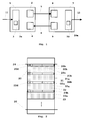
- Figure 1 shows a schematic illustration of an arrangement with a transmitter apparatus 1 which has a transmission-end transmission unit 2, a transmitter memory 3 and a transmission-end reception unit 4.
- Data links 5, 6 connect the transmitter apparatus 1 to a receiver apparatus 7 for the purpose of interchanging electronic data, said receiver apparatus 7 having a reception-end reception unit 8, a reception-end transmission unit 9 and a receiver memory 10 formed in it.
- the transmitter apparatus 1 and the receiver apparatus 7 are in the form of units in a "Hiperlan2" system.
- Arrows 11, 12 in Figure 1 schematically indicate the writing of transmission data, in the form of transmission-data packets, to the transmitter memory 3 and an application's access to received-data packets in the receiver memory 10.
- the transmitter memory 3 contains a transmitter memory area 3a and the receiver memory 10 contains a receiver memory area 10a.
- Figure 2 shows a schematic illustration of an arrangement of received-data packets 20, 21, 22 and 23 in the receiver memory area 10a between a start 24 and an end 25 of the receiver memory area 10a.
- the received-data packets 20-23 respectively comprise a data field 20a, 21a, 22a, 23a and header data 20b, 21b, 22b, 23b.
- the header data 20b-23b respectively comprise a sequence number 20c, 21c, 22c, 23c, which identifies the associated received-data packet 20-23 and which is used as an explicit identification in the receiver memory 10 and/or in the receiver memory area 10a, and also error status data 20d, 21d, 22d, 23d.
- the error status data 20d-23d indicate for the respective received-data packet 20-23 whether an error has been detected during a check on the associated received-data packet after reception in the receiver apparatus 7. This check is performed in the receiver apparatus 7 using an error code which is included in the transmission-data packets transmitted from the transmitter apparatus 1 to the receiver apparatus 7 via the data link 5. The error status is checked before the received-data packets 20-23 are stored in the receiver memory area 10a in the receiver memory 10. In line with Figure 2, the error status data 20d-23d are formed by a "1" (error present) or by a "0" (no error found) in the exemplary embodiment.
- the transmission-data packets transmitted from the transmitter memory area 3a using the transmission-end transmission unit 2, the data link 5 and the reception-end reception unit 8 are stored in the receiver memory area 10a in the receiver apparatus 7.
- the error status data 20d for the received-data packet 20 are now checked first of all.
- the error status data 20d indicate an error for the received-data packet 20.
- the error status data 21d for the next received-data packet 21 in the receiver memory area 10a are then checked.
- it is also detected in this case that the error status data 21d indicate an error.
- the error status data 22d for the next received-data packet 22 but one are then checked.
- error status data 22d indicate that the received-data packet 22 has been received and stored without error.
- the sequence number 20c for the received-data packet 20 is then derived from the sequence number 22c in the header data 22b of the received-data packet 22 by using a predetermined formation rule for the sequence numbers to calculate back in order to infer the correct (that is to say in any case not incorrect) sequence number 20c.
- sequence numbers are formed between consecutive data packets by increasing the value by one in each case.
- the error-free sequence number 22c can now be used to derive a reference identification which identifies the received-data packet 20 without error. To this end, the number of received-data packets recognized as being incorrect needs to be deduced from the sequence number of the error-free received-data packet 22 in this case.
- the reference identification is a bitmap block number (BMN), for example.
- the procedure described is used to ensure that the reference identification is ascertained from an error-free sequence number.
- the reference identification formed in this way is then integrated into a feedback message which is formed in the receiver apparatus 7 and is sent from the receiver-end transmission unit 9 to the transmission-end reception unit 4 via the data link 6.
- the way in which the method has been described is that the received-data packets 20-23 in the receiver memory area 10a have been examined for the error status data 20d-23d according to their order, which normally minimizes the time taken for memory access.
- This form of the method can also be used to ensure that the reference identification is derived only from a sequence number for which freedom from error is assured.
- the transmission-end reception unit 4 analyses the feedback message and marks the transmission-data packets in the transmitter memory area 3a in line with the information contained in the feedback message.
- the transmission-data packets are marked as data packets which need to be transmitted again on account of the occurrence of errors and/or data packets for which the transmission status is in order.
- the reference identification from the feedback message identifies the first received-data packet 20 (cf. Figure 2) in the receiver memory area 10a clearly and without error, which means that the reference identification is used to stipulate the transmitter memory area 3a in the transmitter memory 3 such that the associated transmission-data packet is the first transmission-data packet in the transmitter memory area 3a. In this way, the transmitter memory area 3a is updated as a whole and is therefore synchronized with the receiver memory area 10a.
- the feedback message is generated automatically (ARQ - "Automatic Repeat reQuest").
- memory areas to be synchronized relate to areas in the transmitter apparatus and in the receiver apparatus, the area which is present in the receiver apparatus and needs to be synchronized with the area in the transmitter apparatus being defined by virtue of its comprising received-data packets which correspond to associated transmission-data packets from the area in the transmitter apparatus.
Landscapes
- Engineering & Computer Science (AREA)
- Computer Networks & Wireless Communication (AREA)
- Signal Processing (AREA)
- Multimedia (AREA)
- Detection And Prevention Of Errors In Transmission (AREA)
- Mobile Radio Communication Systems (AREA)
- Data Exchanges In Wide-Area Networks (AREA)
- Communication Control (AREA)
Applications Claiming Priority (2)
| Application Number | Priority Date | Filing Date | Title |
|---|---|---|---|
| DE102004015159 | 2004-03-27 | ||
| DE102004015159A DE102004015159A1 (de) | 2004-03-27 | 2004-03-27 | Verfahren zum Synchronisieren von Speicherbereichen in einer Sendervorrichtung und einer Empfängervorrichtung sowie Empfängervorrichtung |
Publications (2)
| Publication Number | Publication Date |
|---|---|
| EP1580915A1 true EP1580915A1 (de) | 2005-09-28 |
| EP1580915B1 EP1580915B1 (de) | 2007-05-09 |
Family
ID=34854094
Family Applications (1)
| Application Number | Title | Priority Date | Filing Date |
|---|---|---|---|
| EP05300182A Ceased EP1580915B1 (de) | 2004-03-27 | 2005-03-14 | Verfahren zur Speichersynchronisation zwischen Sender- und Empfängereinrichtungen, und eine entsprechende Empfängereinrichtung. |
Country Status (7)
| Country | Link |
|---|---|
| US (1) | US7469005B2 (de) |
| EP (1) | EP1580915B1 (de) |
| JP (1) | JP4652096B2 (de) |
| KR (1) | KR20060044771A (de) |
| CN (1) | CN100593293C (de) |
| DE (2) | DE102004015159A1 (de) |
| MX (1) | MXPA05002987A (de) |
Families Citing this family (3)
| Publication number | Priority date | Publication date | Assignee | Title |
|---|---|---|---|---|
| JP2005136364A (ja) * | 2003-10-08 | 2005-05-26 | Zao Nikon Co Ltd | 基板搬送装置、露光装置、並びにデバイス製造方法 |
| US20080065943A1 (en) * | 2006-09-13 | 2008-03-13 | Louis Botha | Method and system for using data from a failed CRC block to determine retransmission of data packets |
| CN115865977B (zh) * | 2022-11-29 | 2026-02-06 | 新诺北斗航科信息技术(厦门)股份有限公司 | 一种适用于船载设备间的数据传输校验方法 |
Citations (4)
| Publication number | Priority date | Publication date | Assignee | Title |
|---|---|---|---|---|
| US20030066016A1 (en) * | 2001-09-28 | 2003-04-03 | Eric Wehage | Methodology for detecting lost packets |
| EP1333625A1 (de) * | 2002-02-04 | 2003-08-06 | Matsushita Electric Industrial Co., Ltd. | Verfahren und Einkheit zur Unterscheidung von Paketverlusten |
| US6625128B1 (en) * | 1999-06-28 | 2003-09-23 | Legerity, Inc. | Method and apparatus for prioritizing packet data transmission and reception |
| US6658619B1 (en) * | 2000-10-06 | 2003-12-02 | Ericsson Inc. | Systems and methods for implementing hierarchical acknowledgement bitmaps in an ARQ protocol |
Family Cites Families (10)
| Publication number | Priority date | Publication date | Assignee | Title |
|---|---|---|---|---|
| US4970714A (en) * | 1989-01-05 | 1990-11-13 | International Business Machines Corp. | Adaptive data link protocol |
| US5477541A (en) * | 1989-09-29 | 1995-12-19 | White; Richard E. | Addressing technique for storing and referencing packet data |
| JPH07184024A (ja) * | 1991-05-30 | 1995-07-21 | Konica Corp | ファクシミリ装置 |
| JPH10247901A (ja) * | 1997-03-04 | 1998-09-14 | Matsushita Electric Ind Co Ltd | 再送制御方法 |
| JP2000312201A (ja) * | 1999-04-28 | 2000-11-07 | Mitsubishi Electric Corp | 通信装置および誤り制御方法 |
| JP2000347965A (ja) * | 1999-06-07 | 2000-12-15 | Toshiba Corp | モバイル通信システム、及びモバイル通信方法 |
| GB2350984B (en) * | 1999-06-11 | 2003-10-15 | Mitel Corp | Synchronisation method and system |
| JP2001069174A (ja) * | 1999-08-31 | 2001-03-16 | Fuji Electric Co Ltd | 伝送制御方法 |
| EP1246409A4 (de) * | 2000-10-05 | 2007-04-25 | Mitsubishi Electric Corp | Paketwiederübertragungssystem, paketübertragungsgerät, paketempfangsgerät, paketwiederübertragungsverfahren, paketübertragungsverfahren und paketempfangsverfahren |
| EP1249744A1 (de) * | 2001-08-23 | 2002-10-16 | Siemens Aktiengesellschaft | Verfahren zum Herstellen konsistenter Speicherinhalte in redundanten Systemen |
-
2004
- 2004-03-27 DE DE102004015159A patent/DE102004015159A1/de not_active Withdrawn
-
2005
- 2005-03-14 EP EP05300182A patent/EP1580915B1/de not_active Ceased
- 2005-03-14 DE DE602005001072T patent/DE602005001072T2/de not_active Expired - Lifetime
- 2005-03-17 MX MXPA05002987A patent/MXPA05002987A/es not_active Application Discontinuation
- 2005-03-22 US US11/086,591 patent/US7469005B2/en active Active
- 2005-03-24 CN CN200510055981A patent/CN100593293C/zh not_active Expired - Fee Related
- 2005-03-25 JP JP2005089065A patent/JP4652096B2/ja not_active Expired - Fee Related
- 2005-03-25 KR KR1020050025004A patent/KR20060044771A/ko not_active Withdrawn
Patent Citations (4)
| Publication number | Priority date | Publication date | Assignee | Title |
|---|---|---|---|---|
| US6625128B1 (en) * | 1999-06-28 | 2003-09-23 | Legerity, Inc. | Method and apparatus for prioritizing packet data transmission and reception |
| US6658619B1 (en) * | 2000-10-06 | 2003-12-02 | Ericsson Inc. | Systems and methods for implementing hierarchical acknowledgement bitmaps in an ARQ protocol |
| US20030066016A1 (en) * | 2001-09-28 | 2003-04-03 | Eric Wehage | Methodology for detecting lost packets |
| EP1333625A1 (de) * | 2002-02-04 | 2003-08-06 | Matsushita Electric Industrial Co., Ltd. | Verfahren und Einkheit zur Unterscheidung von Paketverlusten |
Also Published As
| Publication number | Publication date |
|---|---|
| US20050213694A1 (en) | 2005-09-29 |
| US7469005B2 (en) | 2008-12-23 |
| DE102004015159A1 (de) | 2006-01-19 |
| MXPA05002987A (es) | 2005-09-29 |
| DE602005001072T2 (de) | 2008-01-17 |
| KR20060044771A (ko) | 2006-05-16 |
| CN100593293C (zh) | 2010-03-03 |
| JP4652096B2 (ja) | 2011-03-16 |
| EP1580915B1 (de) | 2007-05-09 |
| JP2005287036A (ja) | 2005-10-13 |
| CN1674488A (zh) | 2005-09-28 |
| DE602005001072D1 (de) | 2007-06-21 |
Similar Documents
| Publication | Publication Date | Title |
|---|---|---|
| JP5798251B2 (ja) | メッセージの大きさがフレキシブルな直列データ伝送におけるデータ伝送信頼性を改善するための方法及び装置 | |
| US7327735B2 (en) | System and method for detecting lost messages transmitted between modules in a communication device | |
| RU2596582C2 (ru) | Способ и устройство для адаптируемой к размерам памяти последовательной передачи данных | |
| RU2597501C2 (ru) | Способ и устройство для последовательной передачи данных с гибким размером сообщений и переменной длительностью бита | |
| US20190123908A1 (en) | Arithmetic Device, Authentication System, and Authentication Method | |
| CN102484636B (zh) | 通过使用标识序列避免伪装 | |
| US10567109B2 (en) | Method for serially transmitting a frame from a transmitter to at least one receiver by means of a bus system, and a subscriber station for a bus system | |
| EP3324574A1 (de) | Gateway-vorrichtung und steuerungsverfahren dafür | |
| EP4064589B1 (de) | Ethernet-zeitsynchronisationsverfahren und -vorrichtung | |
| JP6798280B2 (ja) | 攻撃検知装置、攻撃検知方法、および、攻撃検知プログラム | |
| KR101334017B1 (ko) | 차량 네트워크의 메시지 무결성 체크 시스템 및 방법 | |
| CN112347021A (zh) | 用于串行通信装置的安全模块 | |
| US20220303362A1 (en) | Method for compressing can-bus data | |
| EP0866401B1 (de) | Informationsidentifikationssystem zur Antwortgeberidentifizierung | |
| US7469005B2 (en) | Method for synchronizing memory areas in a transmitter apparatus and a receiver apparatus, and receiver apparatus | |
| KR101342423B1 (ko) | 통신 네트워크에서 터널 데이터 패킷의 각각의 레벨의 에러를 보고하는 장치 및 방법 | |
| EP1692806B1 (de) | Nachrichtfehlerverifikation durch verwendung von prüfung mit verborgenen daten | |
| CN117318869A (zh) | 报文时戳验证方法、电子设备及存储介质 | |
| CN1319302C (zh) | 用于监控数据包安全传输的方法和装置 | |
| KR101704300B1 (ko) | Can 메시지 송수신 방법 및 이를 실행하는 시스템 | |
| CN117082048A (zh) | 一种嵌入式软件在线升级方法和系统 | |
| CN113543100A (zh) | 基于蓝牙的端到端通信协议实现方法和系统 | |
| US10938516B1 (en) | Systems and methods for ethernet packet error detection and correction in automotive environments | |
| CN114051702B (zh) | 运行通信网络的方法、通信网络和用于通信网络的用户装置 | |
| KR20110101972A (ko) | Can 프로토콜을 사용한 데이터 통신에서 데이터 메시지에 대한 무결성 확인 방법 |
Legal Events
| Date | Code | Title | Description |
|---|---|---|---|
| PUAI | Public reference made under article 153(3) epc to a published international application that has entered the european phase |
Free format text: ORIGINAL CODE: 0009012 |
|
| AK | Designated contracting states |
Kind code of ref document: A1 Designated state(s): AT BE BG CH CY CZ DE DK EE ES FI FR GB GR HU IE IS IT LI LT LU MC NL PL PT RO SE SI SK TR |
|
| AX | Request for extension of the european patent |
Extension state: AL BA HR LV MK YU |
|
| RAP1 | Party data changed (applicant data changed or rights of an application transferred) |
Owner name: THOMSON LICENSING |
|
| 17P | Request for examination filed |
Effective date: 20060121 |
|
| AKX | Designation fees paid |
Designated state(s): DE ES FR GB IT |
|
| GRAP | Despatch of communication of intention to grant a patent |
Free format text: ORIGINAL CODE: EPIDOSNIGR1 |
|
| GRAS | Grant fee paid |
Free format text: ORIGINAL CODE: EPIDOSNIGR3 |
|
| GRAA | (expected) grant |
Free format text: ORIGINAL CODE: 0009210 |
|
| AK | Designated contracting states |
Kind code of ref document: B1 Designated state(s): DE ES FR GB IT |
|
| REG | Reference to a national code |
Ref country code: GB Ref legal event code: FG4D |
|
| REF | Corresponds to: |
Ref document number: 602005001072 Country of ref document: DE Date of ref document: 20070621 Kind code of ref document: P |
|
| REG | Reference to a national code |
Ref country code: GB Ref legal event code: 746 Effective date: 20070621 |
|
| PG25 | Lapsed in a contracting state [announced via postgrant information from national office to epo] |
Ref country code: ES Free format text: LAPSE BECAUSE OF FAILURE TO SUBMIT A TRANSLATION OF THE DESCRIPTION OR TO PAY THE FEE WITHIN THE PRESCRIBED TIME-LIMIT Effective date: 20070820 |
|
| ET | Fr: translation filed | ||
| PLBE | No opposition filed within time limit |
Free format text: ORIGINAL CODE: 0009261 |
|
| STAA | Information on the status of an ep patent application or granted ep patent |
Free format text: STATUS: NO OPPOSITION FILED WITHIN TIME LIMIT |
|
| 26N | No opposition filed |
Effective date: 20080212 |
|
| PG25 | Lapsed in a contracting state [announced via postgrant information from national office to epo] |
Ref country code: IT Free format text: LAPSE BECAUSE OF FAILURE TO SUBMIT A TRANSLATION OF THE DESCRIPTION OR TO PAY THE FEE WITHIN THE PRESCRIBED TIME-LIMIT Effective date: 20070509 |
|
| REG | Reference to a national code |
Ref country code: FR Ref legal event code: PLFP Year of fee payment: 12 |
|
| REG | Reference to a national code |
Ref country code: FR Ref legal event code: PLFP Year of fee payment: 13 |
|
| REG | Reference to a national code |
Ref country code: DE Ref legal event code: R082 Ref document number: 602005001072 Country of ref document: DE Representative=s name: HOFSTETTER, SCHURACK & PARTNER - PATENT- UND R, DE Ref country code: DE Ref legal event code: R082 Ref document number: 602005001072 Country of ref document: DE Representative=s name: HOFSTETTER, SCHURACK & PARTNER PATENT- UND REC, DE |
|
| REG | Reference to a national code |
Ref country code: FR Ref legal event code: PLFP Year of fee payment: 14 |
|
| PGFP | Annual fee paid to national office [announced via postgrant information from national office to epo] |
Ref country code: DE Payment date: 20200311 Year of fee payment: 16 Ref country code: GB Payment date: 20200323 Year of fee payment: 16 |
|
| PGFP | Annual fee paid to national office [announced via postgrant information from national office to epo] |
Ref country code: FR Payment date: 20200331 Year of fee payment: 16 |
|
| REG | Reference to a national code |
Ref country code: DE Ref legal event code: R119 Ref document number: 602005001072 Country of ref document: DE |
|
| GBPC | Gb: european patent ceased through non-payment of renewal fee |
Effective date: 20210314 |
|
| PG25 | Lapsed in a contracting state [announced via postgrant information from national office to epo] |
Ref country code: DE Free format text: LAPSE BECAUSE OF NON-PAYMENT OF DUE FEES Effective date: 20211001 Ref country code: FR Free format text: LAPSE BECAUSE OF NON-PAYMENT OF DUE FEES Effective date: 20210331 Ref country code: GB Free format text: LAPSE BECAUSE OF NON-PAYMENT OF DUE FEES Effective date: 20210314 |