EP1579712B1 - Befehlswarteschlangen für multimedia-speichereinrichtungen - Google Patents
Befehlswarteschlangen für multimedia-speichereinrichtungen Download PDFInfo
- Publication number
- EP1579712B1 EP1579712B1 EP03814798.9A EP03814798A EP1579712B1 EP 1579712 B1 EP1579712 B1 EP 1579712B1 EP 03814798 A EP03814798 A EP 03814798A EP 1579712 B1 EP1579712 B1 EP 1579712B1
- Authority
- EP
- European Patent Office
- Prior art keywords
- portable electronic
- electronic device
- media storage
- storage device
- command
- Prior art date
- Legal status (The legal status is an assumption and is not a legal conclusion. Google has not performed a legal analysis and makes no representation as to the accuracy of the status listed.)
- Expired - Lifetime
Links
Images


Classifications
-
- H—ELECTRICITY
- H04—ELECTRIC COMMUNICATION TECHNIQUE
- H04W—WIRELESS COMMUNICATION NETWORKS
- H04W92/00—Interfaces specially adapted for wireless communication networks
- H04W92/04—Interfaces between hierarchically different network devices
- H04W92/08—Interfaces between hierarchically different network devices between user and terminal device
-
- H—ELECTRICITY
- H04—ELECTRIC COMMUNICATION TECHNIQUE
- H04B—TRANSMISSION
- H04B1/00—Details of transmission systems, not covered by a single one of groups H04B3/00 - H04B13/00; Details of transmission systems not characterised by the medium used for transmission
- H04B1/38—Transceivers, i.e. devices in which transmitter and receiver form a structural unit and in which at least one part is used for functions of transmitting and receiving
- H04B1/3816—Mechanical arrangements for accommodating identification devices, e.g. cards or chips; with connectors for programming identification devices
-
- G—PHYSICS
- G06—COMPUTING OR CALCULATING; COUNTING
- G06F—ELECTRIC DIGITAL DATA PROCESSING
- G06F1/00—Details not covered by groups G06F3/00 - G06F13/00 and G06F21/00
- G06F1/16—Constructional details or arrangements
-
- H—ELECTRICITY
- H04—ELECTRIC COMMUNICATION TECHNIQUE
- H04L—TRANSMISSION OF DIGITAL INFORMATION, e.g. TELEGRAPHIC COMMUNICATION
- H04L49/00—Packet switching elements
- H04L49/90—Buffering arrangements
-
- H—ELECTRICITY
- H04—ELECTRIC COMMUNICATION TECHNIQUE
- H04M—TELEPHONIC COMMUNICATION
- H04M1/00—Substation equipment, e.g. for use by subscribers
- H04M1/02—Constructional features of telephone sets
- H04M1/0202—Portable telephone sets, e.g. cordless phones, mobile phones or bar type handsets
- H04M1/026—Details of the structure or mounting of specific components
- H04M1/0274—Details of the structure or mounting of specific components for an electrical connector module
-
- H—ELECTRICITY
- H04—ELECTRIC COMMUNICATION TECHNIQUE
- H04W—WIRELESS COMMUNICATION NETWORKS
- H04W88/00—Devices specially adapted for wireless communication networks, e.g. terminals, base stations or access point devices
- H04W88/02—Terminal devices
Definitions
- Portable electronic devices such as cellular telephones and personal digital assistants are now available with the capability to present multimedia.
- multimedia include graphics or pictures, video, MP3 audio files, and combinations thereof.
- the Multi-Media Card Association and the SD Association promote an industry-standard that specifies electrical and physical specifications for multi-media devices for use with portable communications equipment such as cellular telephones.
- a so-called multi-media device can provide ring tones, games, pictures, video, audio files and the like.
- a problem with multi-media devices such as multi-media cards (hereafter referred to as multi-media devices), however, is that an electronic device to which they are coupled, can effectively slow down because of the rate at which commands to the multi-media devices are executed and the data rate at which information is sent to and received from such devices.
- a multi-media device interface couples a processor or other controller for a portable electronic device such as a portable radio or cellular phone, to a multi-media device.
- a portable electronic device sends a command to the multi-media device, it passes through a multi-media device interface, which sends the data request to the multi-media device.
- the controller for the portable device requests a data transfer, it will usually specify the amount of data that should be read as well.
- the multi-media device will send a response to the data request and begin sending data.
- the amount of data specified by the controller for the portable electronic device will be sent by the multi-media device.
- the ability to send commands to the multi-media device at any time would improve the performance of portable communications devices to which a multi-media device is coupled.
- US patent no. US 6,466,804 describes an apparatus enabling multiple client devices to access a SIM card, coupled to a server device, along a local link, that includes a SIM card interface and a router unit.
- the SIM card interface couples the SIM card to the server device, formats the commands from the client devices for transmission to the SIM card, and formats responses to the commands for transmission from the SIM card to the client devices.
- the router unit routes the commands from the server device to the SIM card interface, and routes the responses to the commands for transmission along the local link from the SIM card to the client devices.
- a broadcast message is transmitted by the router unit along the local link to the client devices in response to detecting a physical presence signal transmitted by the SIM card interface in response to the SIM card being coupled to the SIM card interface.
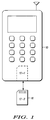
- FIG. 1 shows a portable electronic device 10 embodied as a cellular telephone and a multi-media storage device 16.
- the multi-media storage device 16 is preferably embodied as a circuit card 12-2.
- the card 12-2 can be inserted into a mating receptacle 12-1 in the portable electronic device 10 where electrical contacts of the card 12-2 make electrical contact with complementary electrical contacts with the portable electronic device 10 but which are not shown in FIG. 1 for clarity.
- the term "portable electronic device” should be construed to encompass all radio transmitter, radio receiver and transceiver devices that provide either one-way or two-way communications capability, regardless of the type of modulation (analog, CDMA, TDMA, GSM, et al.) or the frequency spectrum in which they operate (800 MHz., 900 MHz., and higher) but also including optical or infrared signals as well as acoustic signals.
- Examples of radio devices include two-way radios, pagers and GPS devices.
- portable electronic device should also be construed to include personal digital assistants (PDAs), MP3 players, digital cameras and "Internet appliance,” which can include any device by which Internet access (web browsing, e-mail or other forms of packetized data) is sent and received.
- PDAs personal digital assistants
- Internet appliance Internet appliance
- the portable electronic device 10 includes a radio device, such as a cellular telephone, which is considered to include the radio circuitry by which two-way communications can be provided.
- the term “portable electronic device” includes the radio communications circuitry, i.e., the transmitter and/or receiver and/or transceiver, used in portable and mobile two-way cellular devices, regardless of the frequency spectrum in which such devices operate or the type of modulation they use.
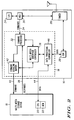
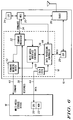
- FIG. 2 shows a preferred embodiment of a multi-media device interface 18 (i.e., an interface for a multi-media device) as part of the portable electronic device 10.
- the portable electronic device 10 is a cellular telephone and includes a radio 26.
- the radio 26 would include a radio transmitter/receiver or transceiver by which two-way communications would be provided.
- the multi-media device interface 18 operatively couples the portable electronic device 10 to a multi-media storage device 16 (also referred to herein as a "multi-media device") so that the portable communications device can effectively send commands to the multi-media storage device 16 while the multi-media storage device 16 is sending data to the portable device 10.
- a multi-media storage device 16 also referred to herein as a "multi-media device”
- a first processor 30 (hereafter the "MCU") of the portable electronic device 10 sends a command to the multi-media device 16, requesting a file.
- the MCU 30 will notify or inform a second processor 28, of the size of the file requested from the multi-media device 16. Thereafter, the second processor 28 will monitor data that it receives from the multi-media device 16.
- Information-bearing signals i.e., data signals
- Information-bearing signals can be exchanged between (i.e., sent to and received from) the multi-media storage device 16 and the portable electronic device 10 according to specifications of the Multi-Media Card Association but also according to the SD Card Association
- the preferred embodiment of the invention transfers information between the multi-media storage device 16 and the portable electronic device 10 via electrical signals
- alternate and equivalent methods of transferring information would include the use of infrared signals, acoustic, optical signals or radio frequency signals.
- Infrared data transmission techniques and circuitry, acoustic data transmission techniques and circuitry and RF data transmission techniques and circuitry are well-known to those of ordinary skill in the art.
- the multi-media storage device 16 might store audio files for use as ringer tones by the portable electronic device 10.
- the multi-media storage device 16 might also store pictures, video streams or MP3 audio files for playback on the portable electronic device 10 display screen, output from a speaker or other input/output (I/O) device 24 with which the portable electronic device 10 is equipped.
- I/O input/output
- An even more general embodiment of portable electronic device 10 includes devices identified in FIG. 5 , which include devices such as a CD player, an MP3 player, a DVD player, an Internet appliance or a PDA, (all identified by reference numeral 100) which are equipped with the multi-media device interface 18 described herein.
- a second command can be issued to the multi-media storage device 16 from the MCU 30 whereupon the multi-media device interface 18 will receive the second command and store it in a command queuing buffer 42 (also known as "buffer 42") until such time that the multi-media storage device 16 can execute it.
- a command queuing buffer 42 also known as "buffer 42”
- the multi-media device interface 18 reduces processing overhead associated with data transfer between the multi-media storage device 16 and the portable electronic device 10.
- a principal function of the multi-media device interface 18 is to enable a processor in the portable electronic device 10 that is controlling the multi-media storage device 16, to issue commands to the multi-media storage device 16, even when the multi-media storage device 16 is unable to process them.
- the multi-media device interface 18 enables the MCU 30 to issue a first command to the multi-media storage device 16.
- a command to the multi-media storage device 16 would be to request the transfer of a file from the multi-media storage device 16 to the portable electronic device 10.
- the multi-media device interface 18 enables the MCU 30 to issue another command to the multi-media storage device 16.
- the multi-media device interface 18 includes a command queuing buffer 42 where the second command is queued until the multi-media storage device 16 is able to execute the second command.
- a queued, i.e., "second" command will be executed by the multi-media storage device 16 after a previously-issued, i.e., "first" command is completed.
- the MCU 30 does not need to wait until one command to the multi-media storage device 16 has been executed before issuing another command.
- the multi-media device interface 18 includes a command processor 32, which receives information 34 (commands, but also possibly including data) from at least one of the processors 28 or 30 of the portable electronic device 10.
- a command processor 32 receives a command from the processor MCU 30, it forwards those commands to a multi-media interface controller 36, which can be embodied as a processor, such as a microcontroller or microprocessor as well as a DSP or combinational and/or sequential logic.
- the command processor 32 is preferably embodied as combinational logic, a gate array or an application specific integrated circuit.
- the MCU forms a command by configuring registers in the command processor 32.
- the command processor 32 provides for error correction by way of a cyclic redundancy check or CRC, added to the commands issued to the multi-media storage device 16 from the MCU 30.
- CRC cyclic redundancy check
- Commands to the multi-media storage device 16 are passed by the command processor 32.
- the multi-media interface controller 36 controls when the command is sent to the multi-media device 16. If the multi-media storage device 16 is capable of executing it, the multi-media interface controller 36 can forward a command directly to the multi-media storage device 16. The interface 36 also queues commands to the multi-media storage device 16 in the command queuing buffer 42.
- the command processor 32 receives responses from the multi-media storage device 16 and validates those responses, typically by checking a cyclic redundancy check or CRC. attached to the response.
- the command processor 32 will notify the portable communications device controllers, that a response was received from the multi-media storage device 16 and that the multi-media storage device 16 is available to execute another command.
- Another function of the multi-media interface controller 36 is to monitor the execution of the commands sent to the multi-media storage device 16.
- the multi-media interface controller 36 monitors the status or execution of commands by testing the responses 38 that are received from the multi-media storage device 16 in response to commands 40 that are sent to it.
- the command queuing buffer 42 which is coupled to the command processor 32 as well as the multi-media face controller 36, stores commands to the multi-media device until they can be executed.
- the command queuing buffer 42 is embodied by 48-bit shift register. Commands can be written into the buffer 42 in parallel but shifted out in a serial fashion. Alternate embodiments include using a semi-conductor random access memory (RAM) device, however, in such an embodiment, sending information serially would require some sort of parallel-to-serial conversion.
- RAM semi-conductor random access memory
- the command queuing buffer 42 stores commands from the MCU 30 until such time the multi-media storage device 16 is able to execute them.
- the determination of when the multi-media storage device 16 can execute another command is determined in the second processor 28 notifying the MCU 30 that a previously-issued command has been completed.
- the controller/MCU 30 may request a file from the multi-media storage device 16. In order to do so, the controller/MCU 30 will issue a command that will be received by the command processor 32.
- the command processor can determine the status of the multi-media storage device 16 by monitoring current or most recent responses 38. If, for instance, the multi-media storage device responses 38 indicate that the multi-media storage device 16 is not busy, the command to send a file will be sent to the queuing buffer 42.
- the multi-media interface controller 36 can gate or transfer the command 40 to transfer a file from the multi-media storage device 16 by selecting the command from the queuing buffer 42 and causing the command queuing buffer 42 to write the command 40 to the multi-media storage device 16.
- the controller 36 By tracking or monitoring the execution of commands sent to the multi-media storage device 16, the controller 36 substantially unburdens the controller/MCU 30 and the second processor (e.g., a DSP) 28 of the portable electronic device 10, freeing them to perform other tasks.
- the controller/MCU 30 does not need to wait until a data transfer is complete before issuing a command to the multi-media device 16.
- the data processing controller 16 receives data 44 from the storage device 16 and converts it to an appropriate-sized parallel format. In instances where data must be sent to the multi-media storage device 16 from the portable electronic device 10, the data processing controller 46 can perform a parallel to serial conversion.
- the data processing controller 46 includes an amount of random access memory, or RAM, into which, data from the multi-media storage device 16 can be stored pending the availability of the second processor/DSP 28 to transfer the data into the radio 26 or elsewhere in the portable electronic device 10.
- RAM random access memory
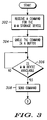
- FIG. 3 shows a method of coupling a portable electronic device to a multi-media storage device 16.
- a multi-media device interface 18 will receive a command for the multi-media storage device 16.
- the command to the multi-media storage device will be queued in a buffer until the multi-media storage device 16 concludes executing a previously-issued command.
- the portable electronic device can perform other tasks instead of waiting until the multi-media storage device is available.
- step 306 the conditions for sending a queued command are tested.
- the multi-media storage device 16 is able to execute the command issued to it, as determined by monitoring the data from or to the multi-media storage device 16, a queued command is sent to the multi-media storage device 16 in step 308.
- the execution of the command by the multi-media storage device 16 is monitored and/or tested by the multi-media device interface 18 by monitoring and/or testing data that is received by the multi-media device interface 18 from the multi-media device 16.
- the responses 38 received from the multi-media storage device 16 (sometimes embodied as the cessation thereof) will indicate when a previously-issued command is completed.
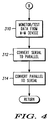
- part of the testing of data from the multi-media storage device 16 is the testing integrity is to insure that data from the multi-media storage device 16 is received intact, which in some embodiments is by way of checksums added to streams of data, parity bits added to data bytes or cyclic redundancy checks, all of which are considered to be equivalent embodiments of data integrity testing.
- step 312 data that is received from the multi-media storage device 16, is converted to a serial form.
- step 314 data directed to the multi-media storage device 16 from the portable electronic device 10 is converted from a parallel format.
- a portable electronic device 10 such as a portable phone, pager, or personal digital assistant
- a multi-media storage device through an intelligent controller or interface
- the processing power of the portable communications device can be freed to perform other tasks with the multi-media device interface monitoring the status of commands and the availability of the multi-media storage device to respond.
Landscapes
- Engineering & Computer Science (AREA)
- Signal Processing (AREA)
- Computer Networks & Wireless Communication (AREA)
- Theoretical Computer Science (AREA)
- General Physics & Mathematics (AREA)
- General Engineering & Computer Science (AREA)
- Physics & Mathematics (AREA)
- Human Computer Interaction (AREA)
- Signal Processing For Digital Recording And Reproducing (AREA)
- Mobile Radio Communication Systems (AREA)
- Computer And Data Communications (AREA)
- Two-Way Televisions, Distribution Of Moving Picture Or The Like (AREA)
- Indexing, Searching, Synchronizing, And The Amount Of Synchronization Travel Of Record Carriers (AREA)
Claims (21)
- Tragbare elektronische Vorrichtung (10), die mit einer Multimediaspeichervorrichtung (16) koppelbar ist, die einen Prozessor (20) darin aufweist, der Befehle ausführt, wobei die tragbare elektronische Vorrichtung (10) umfasst:eine Multimediavorrichtungsschnittstelle (18) als Teil der tragbaren elektronischen Vorrichtung (10) und umfassend:einen Befehlsprozessor (32) in der tragbaren elektronischen Vorrichtung (10), der konfiguriert ist, Befehle von einem Prozessor (28, 30) in der tragbaren elektronischen Vorrichtung (10) zu empfangen, die durch die Multimediaspeichervorrichtung (16) ausführbar sind, und die Befehle zu der Multimediaspeichervorrichtung (16) weiterzuleiten, die mit der tragbaren elektronischen Vorrichtung (10) betriebsfähig koppelbar ist;einen Befehlswarteschlangenpuffer (42) in der tragbaren elektronischen Vorrichtung (10), der mit dem Befehlsprozessor (32) betriebsfähig gekoppelt und fähig ist, mit einer Multimediaspeichervorrichtung (16) gekoppelt zu werden, wobei der Befehlswarteschlangenpuffer (42) zum Speichern von Befehlen dient, die durch die Multimediaspeichervorrichtung (16) ausführbar sind, die von dem Prozessor (28, 30) in der tragbaren elektronischen Vorrichtung (10) gesendet werden;eine Multimediaschnittstellensteuerung (36) in der tragbaren elektronischen Vorrichtung (10), die mit dem Befehlsprozessor (32) und dem Befehlswarteschlangenpuffer (42) betriebsfähig gekoppelt ist, wobei die Multimediaschnittstellensteuerung (36) dazu dient, Befehle von der tragbaren elektronischen Vorrichtung (10) zu identifizieren, die in dem Befehlswarteschlangenpuffer (42) gespeichert werden sollen.
- Tragbare elektronische Vorrichtung nach Anspruch 1, wobei die tragbare elektronische Vorrichtung (10) mindestens eines ist von:einem Mobiltelefontransceiver; einem MP3-Player; einem Personal Digital Assistant; einem Zweiwegefunk; einem Zweiwegepager; einem Einwegpager; einer Digitalkamera; einer Interneteinrichtung.
- Tragbare elektronische Vorrichtung nach Anspruch 1, wobei die Multimediaschnittstellensteuerung (36) einen Prozessor umfasst, der fähig ist einen Befehl zu der Multimediaspeichervorrichtung (16) direkt zu senden, und der fähig ist einen Befehl zu der Multimediaspeichervorrichtung (16) zu senden, der in den Befehlswarteschlangenpuffer (42) eingereiht wurde.
- Tragbare elektronische Vorrichtung nach Anspruch 1, wobei der Befehlsprozessor (32) konfiguriert ist, mindestens eine von den Funktionen auszuführen, die umfassen:Testen der Gültigkeit von Befehlen von dem Prozessor (28, 30) der tragbaren elektronischen Vorrichtung (10);Hinzufügen einer zyklischen Redundanzprüfung zu den Befehlen von dem Prozessor (28, 30) der tragbaren elektronischen Vorrichtung (10);Detektieren eines Fehlerkorrekturcodes in Antworten von der Multimediaspeichervorrichtung (16);Empfangen von Antworten von einer Multimediaspeichervorrichtung (16);Validieren von Antworten von einer Multimediaspeichervorrichtung (16);Benachrichtigen der tragbaren elektronischen Vorrichtung (10), dass eine Antwort von einer Multimediaspeichervorrichtung (16) empfangen wurde.
- Tragbare elektronische Vorrichtung nach Anspruch 1, wobei der Befehlswarteschlangenpuffer (42) ein Schieberegister ist.
- Tragbare elektronische Vorrichtung nach Anspruch 1, wobei die Multimediaschnittstellensteuerung (36) eine Steuerung ist, die konfiguriert ist, die Ausführung von Befehlen nachzuverfolgen, die von der tragbaren elektronischen Vorrichtung (10) zu der Multimediaspeichervorrichtung (16) gesendet werden.
- Tragbare elektronische Vorrichtung nach Anspruch 1, weiter umfassend eine Datenverarbeitungssteuerung (46), die eine Multimediaspeichervorrichtung (16) betriebsfähig mit einem zweiten Prozessor (28) innerhalb der tragbaren elektronischen Vorrichtung (10) koppelt.
- Tragbare elektronische Vorrichtung nach Anspruch 1, weiter umfassend eine Datenverarbeitungssteuerung (46), die eine Multimediaspeichervorrichtung (16) mit einem zweiten Prozessor (28) innerhalb der tragbaren elektronischen Vorrichtung (10) betriebsfähig koppelt, wobei die Datenverarbeitungssteuerung (46) programmiert ist, serielle Daten in parallele Daten umzuwandeln.
- Tragbare elektronische Vorrichtung nach Anspruch 1, weiter umfassend eine Datenverarbeitungssteuerung (46), die eine Multimediaspeichervorrichtung (16) mit einem zweiten Prozessor (28) innerhalb der tragbaren elektronischen Vorrichtung (10) betriebsfähig koppelt, wobei die Datenverarbeitungssteuerung (46) zum Steuern der Datenübertragung zwischen der tragbaren elektronischen Vorrichtung (10) und einer Multimediaspeichervorrichtung (16) dient, die mit der Datenverarbeitungssteuerung (46) gekoppelt ist.
- Tragbare elektronische Vorrichtung nach Anspruch 1, wobei Signale zwischen der tragbaren elektronischen Vorrichtung (10) und der Multimediaspeichervorrichtung (16) über mindestens eines ausgetauscht werden von: elektrischen Signalen; Infrarotsignalen; optischen Signalen; akustischen Signalen; Funkfrequenzsignalen.
- Tragbare elektronische Vorrichtung nach Anspruch 1, weiter umfassend:einen ersten Prozessor (30) in der tragbaren elektronischen Vorrichtung (10), der mit einer Multimediaspeichervorrichtung (16) betriebsfähig gekoppelt und fähig ist Befehle zu dieser zu senden und Antworten von dieser empfangen;einen zweiten Prozessor (28) in der tragbaren elektronischen Vorrichtung (10), der auf Befehle von dem ersten Prozessor (30) anspricht und fähig ist, Informationen von der Multimediaspeichervorrichtung (16) zu empfangen;wobei die Multimediavorrichtungsschnittstelle (18) sowohl mit dem ersten (30) als auch mit dem zweiten (28) Prozessor betriebsfähig gekoppelt ist und die Multimediavorrichtungsschnittstelle (18) in der Lage ist, die Übertragung eines zweiten Befehls zu der Multimediaspeichervorrichtung (16) von dem ersten Prozessor (30) einzureihen, während die Multimediaspeichervorrichtung (16) und der zweite Prozessor (28) die Ausführung eines ersten Befehls von dem ersten Prozessor (30) durch Bereitstellen der Informationen an den zweiten Prozessor (28) abschließen;eine elektronische Vorrichtung (26), die mit mindestens einem von dem ersten (30) und zweiten (28) Prozessor betriebsfähig gekoppelt ist.
- Tragbare elektronische Vorrichtung nach Anspruch 11, wobei die elektronische Vorrichtung (26) eine Funkvorrichtung ist, die mit mindestens einem von dem ersten (30) und zweiten (28) Prozessor betriebsfähig gekoppelt und fähig ist, Zweiwegkommunikationsvermögen an die tragbare elektronische Vorrichtung (10) bereitzustellen.
- Tragbare elektronische Vorrichtung nach Anspruch 12, wobei die Funkvorrichtung (26) einen Mobiltelefontransceiver umfasst.
- Tragbare elektronische Vorrichtung nach Anspruch 11, wobei mindestens einer von dem ersten (30) und zweiten (28) Prozessor mindestens eines ist von: einem Digitalsignalprozessor; einem Mikroprozessor; einem Mikrocontroller.
- Tragbare elektronische Vorrichtung nach Anspruch 11, wobei Signale zwischen der tragbaren elektronischen Vorrichtung (10) und der Multimediaspeichervorrichtung (16) über mindestens eines ausgetauscht werden von: elektrischen Signalen; Infrarotsignalen; optischen Signalen; akustischen Signalen; Funkfrequenzsignalen.
- Tragbare elektronische Vorrichtung nach Anspruch 11, wobei die tragbare elektronische Vorrichtung (10) mindestens eines umfasst von:einem Personal Digital Assistant;einer Interneteinrichtung;einem CD-Player;einem MP3-Player;einem DVD-Player;einer Digitalkamera; undeinem Mobiltelefon.
- Verfahren in einer tragbaren elektronischen Vorrichtung (10), die mit einer Multimediaspeichervorrichtung (16) koppelbar ist, die einen Prozessor (20) darin aufweist, der Befehle ausführt, wobei das Verfahren die Schritte umfasst:Empfangen (302) eines Befehls für eine Multimediaspeichervorrichtung (16) von einem Prozessor (28, 30) in der tragbaren elektronischen Vorrichtung (10) bei einem Befehlsprozessor (32) in der tragbaren elektronischen Vorrichtung (10);Identifizieren von Befehlen von der tragbaren elektronischen Vorrichtung (10), die in einem Befehlswarteschlangenpuffer (42) der tragbaren elektronischen Vorrichtung zu speichern sind, durch eine Multimediaschnittstellensteuerung (36) in der tragbaren elektronischen Vorrichtung (10);Einreihen (304) des Befehls in den Befehlswarteschlangenpuffer (42) der tragbaren elektronischen Vorrichtung (10), während die Multimediaspeichervorrichtung (16) unfähig ist, auf den Befehl anzusprechen;Senden (308) des Befehls zu der Multimediaspeichervorrichtung (16), wenn die Multimediaspeichervorrichtung (16) fähig ist, den Befehl auszuführen.
- Verfahren nach Anspruch 17, das weiter den Schritt umfasst:Detektieren des Abschlusses der Ausführung eines Befehls durch die Multimediaspeichervorrichtung (16).
- Verfahren nach Anspruch 17, weiter umfassend mindestens einen von den Schritten:Überwachen (310) der Integrität von Daten, die zwischen der Multimediaspeichervorrichtung (16) und der tragbaren elektronischen Vorrichtung (10) gesendet werden;Umwandeln (312) von seriellen Daten, die von der Multimediaspeichervorrichtung (16) empfangen werden, in parallele Daten;Umwandeln (314) von parallelen Daten von der tragbaren elektronischen Vorrichtung (10) in serielle Daten.
- Verfahren nach Anspruch 17, umfassend den Schritt des Austauschens von Signalen zwischen der tragbaren elektronischen Vorrichtung (10) und der Multimediaspeichervorrichtung (16) unter Verwendung von mindestens einem von: elektrischen Signalen; Infrarotsignalen; optischen Signalen; akustischen Signalen; Funkfrequenzsignalen.
- Verfahren nach Anspruch 17, wobei der Befehlswarteschlangenpuffer (42) ein Schieberegister ist.
Applications Claiming Priority (3)
| Application Number | Priority Date | Filing Date | Title |
|---|---|---|---|
| US335139 | 1981-12-28 | ||
| US10/335,139 US9591112B2 (en) | 2002-12-31 | 2002-12-31 | Command queuing for multimedia storage devices |
| PCT/US2003/039842 WO2004062169A2 (en) | 2002-12-31 | 2003-12-11 | Command queuing for multimedia storage devices |
Publications (3)
| Publication Number | Publication Date |
|---|---|
| EP1579712A2 EP1579712A2 (de) | 2005-09-28 |
| EP1579712A4 EP1579712A4 (de) | 2009-08-05 |
| EP1579712B1 true EP1579712B1 (de) | 2016-08-10 |
Family
ID=32655269
Family Applications (1)
| Application Number | Title | Priority Date | Filing Date |
|---|---|---|---|
| EP03814798.9A Expired - Lifetime EP1579712B1 (de) | 2002-12-31 | 2003-12-11 | Befehlswarteschlangen für multimedia-speichereinrichtungen |
Country Status (9)
| Country | Link |
|---|---|
| US (3) | US9591112B2 (de) |
| EP (1) | EP1579712B1 (de) |
| JP (1) | JP2006512678A (de) |
| KR (1) | KR101009820B1 (de) |
| CN (1) | CN1732702B (de) |
| AU (1) | AU2003297105A1 (de) |
| BR (1) | BR0317791A (de) |
| PL (1) | PL229216B1 (de) |
| WO (1) | WO2004062169A2 (de) |
Families Citing this family (15)
| Publication number | Priority date | Publication date | Assignee | Title |
|---|---|---|---|---|
| US9591112B2 (en) * | 2002-12-31 | 2017-03-07 | Google Technology Holdings LLC | Command queuing for multimedia storage devices |
| US20040266480A1 (en) * | 2003-06-27 | 2004-12-30 | Hjelt Kari Tapani | System and method for implementing sensor functionality in mobile devices |
| US20060087924A1 (en) * | 2004-10-22 | 2006-04-27 | Lance Fried | Audio/video portable electronic devices providing wireless audio communication and speech and/or voice recognition command operation |
| US20070130078A1 (en) * | 2005-12-02 | 2007-06-07 | Robert Grzesek | Digital rights management compliance with portable digital media device |
| KR100655544B1 (ko) | 2005-01-11 | 2006-12-08 | 엘지전자 주식회사 | 멀티미디어 이동 단말기의 외장 메모리 처리방법 및 그 장치 |
| US20080040564A1 (en) * | 2006-08-10 | 2008-02-14 | International Business Machines Corporation | Sychronized Light Path Scheme Across Mutiple SAS Storage Enclosures |
| US20080126588A1 (en) * | 2006-09-01 | 2008-05-29 | Orion Micro Design (S) Pte Ltd | Memory card |
| KR100891775B1 (ko) * | 2007-05-14 | 2009-04-07 | 삼성전자주식회사 | 멀티미디어 휴대 전자 장치 |
| CN102073460A (zh) * | 2010-11-25 | 2011-05-25 | 华为终端有限公司 | 外接存储器和外接存储器的传感器实现方法 |
| US9247023B2 (en) | 2011-07-27 | 2016-01-26 | Qualcomm Incorporated | System and method for prioritizing requests to a SIM |
| US9824004B2 (en) | 2013-10-04 | 2017-11-21 | Micron Technology, Inc. | Methods and apparatuses for requesting ready status information from a memory |
| US10108372B2 (en) | 2014-01-27 | 2018-10-23 | Micron Technology, Inc. | Methods and apparatuses for executing a plurality of queued tasks in a memory |
| US9454310B2 (en) | 2014-02-14 | 2016-09-27 | Micron Technology, Inc. | Command queuing |
| WO2017019104A1 (en) * | 2015-07-30 | 2017-02-02 | Hewlett Packard Enterprise Development Lp | Network device emulation |
| CN111258932B (zh) * | 2020-01-09 | 2025-11-04 | 厦门鑫忆讯科技有限公司 | 加速ufs协议处理的方法与存储控制器 |
Family Cites Families (27)
| Publication number | Priority date | Publication date | Assignee | Title |
|---|---|---|---|---|
| JPH01140276A (ja) | 1987-11-26 | 1989-06-01 | Toshiba Corp | 携帯可能記憶媒体処理装置および携帯可能記憶媒体処理装置の通信方法 |
| JPH01213774A (ja) | 1988-02-22 | 1989-08-28 | Toshiba Corp | 携帯可能記憶媒体処理装置 |
| US4942553A (en) | 1988-05-12 | 1990-07-17 | Zilog, Inc. | System for providing notification of impending FIFO overruns and underruns |
| US5208745A (en) * | 1988-07-25 | 1993-05-04 | Electric Power Research Institute | Multimedia interface and method for computer system |
| US4931950A (en) | 1988-07-25 | 1990-06-05 | Electric Power Research Institute | Multimedia interface and method for computer system |
| JPH0342756A (ja) | 1989-07-10 | 1991-02-22 | Nec Corp | コマンド処理装置 |
| US5663901A (en) * | 1991-04-11 | 1997-09-02 | Sandisk Corporation | Computer memory cards using flash EEPROM integrated circuit chips and memory-controller systems |
| JPH05128318A (ja) | 1991-11-06 | 1993-05-25 | Toppan Printing Co Ltd | Icカードシステム |
| US5640596A (en) | 1992-03-10 | 1997-06-17 | Hitachi, Ltd. | Input output control system for transferring control programs collectively as one transfer unit designated by plurality of input output requests to be executed |
| US5497373A (en) | 1994-03-22 | 1996-03-05 | Ericsson Messaging Systems Inc. | Multi-media interface |
| US5742910A (en) | 1995-05-23 | 1998-04-21 | Mci Corporation | Teleadministration of subscriber ID modules |
| US5790786A (en) * | 1995-06-28 | 1998-08-04 | National Semiconductor Corporation | Multi-media-access-controller circuit for a network hub |
| FI104223B1 (fi) | 1996-12-17 | 1999-11-30 | Nokia Mobile Phones Ltd | Menetelmä SIM-kortin ohjauskomentojen välittämiseksi ulkopuoliselta laitteelta SM-kortille |
| US6097733A (en) | 1997-06-13 | 2000-08-01 | Nortel Networks Corporation | System and associated method of operation for managing bandwidth in a wireless communication system supporting multimedia communications |
| US5970786A (en) | 1997-09-25 | 1999-10-26 | Smith; Robert S. | Method for measuring compressed natural gas |
| US7076568B2 (en) * | 1997-10-14 | 2006-07-11 | Alacritech, Inc. | Data communication apparatus for computer intelligent network interface card which transfers data between a network and a storage device according designated uniform datagram protocol socket |
| FR2770952B1 (fr) * | 1997-11-12 | 2000-01-21 | Adl Systeme Sa | Dispositif de tele-ecriture |
| US6378011B1 (en) * | 1999-05-28 | 2002-04-23 | 3Com Corporation | Parallel to serial asynchronous hardware assisted DSP interface |
| WO2001035236A1 (en) | 1999-10-25 | 2001-05-17 | Sony Corporation | Method for managing content data |
| JP4165990B2 (ja) * | 1999-12-20 | 2008-10-15 | Tdk株式会社 | メモリコントローラ及びメモリコントローラを備えるフラッシュメモリシステム、並びに、フラッシュメモリへのデータの書き込み方法 |
| US6542982B2 (en) | 2000-02-24 | 2003-04-01 | Hitachi, Ltd. | Data processer and data processing system |
| WO2002005202A1 (en) | 2000-07-07 | 2002-01-17 | Fujitsu Limited | Ic card terminal device |
| US6466804B1 (en) * | 2000-08-25 | 2002-10-15 | Motorola, Inc. | Method and apparatus for remote multiple access to subscriber identity module |
| JP3641230B2 (ja) * | 2001-10-22 | 2005-04-20 | 株式会社東芝 | メモリカードを制御するための装置および方法 |
| US6792501B2 (en) * | 2002-01-31 | 2004-09-14 | Phision Electronic Corp | Universal serial bus flash memory integrated circuit device |
| US6676022B1 (en) | 2002-10-04 | 2004-01-13 | Mobile-Mind, Inc. | Smart card system with command queuing |
| US9591112B2 (en) | 2002-12-31 | 2017-03-07 | Google Technology Holdings LLC | Command queuing for multimedia storage devices |
-
2002
- 2002-12-31 US US10/335,139 patent/US9591112B2/en not_active Expired - Fee Related
-
2003
- 2003-12-11 WO PCT/US2003/039842 patent/WO2004062169A2/en not_active Ceased
- 2003-12-11 EP EP03814798.9A patent/EP1579712B1/de not_active Expired - Lifetime
- 2003-12-11 AU AU2003297105A patent/AU2003297105A1/en not_active Abandoned
- 2003-12-11 JP JP2004565485A patent/JP2006512678A/ja active Pending
- 2003-12-11 KR KR1020057012244A patent/KR101009820B1/ko not_active Expired - Lifetime
- 2003-12-11 BR BR0317791-2A patent/BR0317791A/pt not_active IP Right Cessation
- 2003-12-11 PL PL376089A patent/PL229216B1/pl unknown
- 2003-12-11 CN CN2003801080450A patent/CN1732702B/zh not_active Expired - Lifetime
-
2005
- 2005-06-24 US US11/167,041 patent/US20050232197A1/en not_active Abandoned
- 2005-06-24 US US11/166,450 patent/US9614944B2/en not_active Expired - Fee Related
Also Published As
| Publication number | Publication date |
|---|---|
| JP2006512678A (ja) | 2006-04-13 |
| US9591112B2 (en) | 2017-03-07 |
| WO2004062169A2 (en) | 2004-07-22 |
| PL376089A1 (en) | 2005-12-12 |
| CN1732702A (zh) | 2006-02-08 |
| US9614944B2 (en) | 2017-04-04 |
| US20050232197A1 (en) | 2005-10-20 |
| US20050259640A1 (en) | 2005-11-24 |
| KR20050091033A (ko) | 2005-09-14 |
| BR0317791A (pt) | 2005-11-22 |
| PL229216B1 (pl) | 2018-06-29 |
| CN1732702B (zh) | 2011-06-15 |
| WO2004062169A3 (en) | 2004-12-29 |
| AU2003297105A1 (en) | 2004-07-29 |
| EP1579712A2 (de) | 2005-09-28 |
| KR101009820B1 (ko) | 2011-01-19 |
| AU2003297105A8 (en) | 2004-07-29 |
| US20040127255A1 (en) | 2004-07-01 |
| EP1579712A4 (de) | 2009-08-05 |
Similar Documents
| Publication | Publication Date | Title |
|---|---|---|
| US9614944B2 (en) | Command queuing for multimedia storage devices | |
| CN102739634B (zh) | 主机设备基于通知挂起到客户端设备的通信链路 | |
| CN113301535B (zh) | 一种数据传输方法、装置及系统 | |
| CN108430101A (zh) | 天线关闭方法、装置、存储介质和电子设备 | |
| US20210089492A1 (en) | Rdma data sending and receiving methods, electronic device, and readable storage medium | |
| CN103269374A (zh) | 录音同步方法、装置和设备 | |
| US20210091888A1 (en) | Data indicating method and related products | |
| US20040078449A1 (en) | Master communication device, slave communication device, communication control apparatus, communication system, and communication control program | |
| WO2019028703A1 (zh) | 一种反馈应答信息的长度确定方法及相关产品 | |
| CN107612643A (zh) | 信道检测方法及信道检测设备 | |
| US7822040B2 (en) | Method for increasing network transmission efficiency by increasing a data updating rate of a memory | |
| US10033476B2 (en) | Apparatus and method for acquiring synchronization in mobile communication system | |
| CN114641035A (zh) | 无线数据包聚合发送方法及其电子设备、介质 | |
| RU2736825C1 (ru) | Способ управления ретрансляцией данных и относящийся к нему продукт | |
| WO2019080059A1 (zh) | 反馈应答信息传输方法及相关产品 | |
| CN102693623B (zh) | 基于Android系统实现红外遥控的方法以及装置 | |
| US20230050178A1 (en) | Electronic device for recording contents data and method of the same | |
| JPH09298577A (ja) | データ伝送装置 | |
| US6910176B2 (en) | Method for communicating data between digital camera and portable electronic communication device | |
| US8073383B2 (en) | Method and apparatus for long-time music play on a mobile communication terminal | |
| CN109964432B (zh) | 多比特信息复用传输方法及相关产品 | |
| KR20260056805A (ko) | 음질과 패킷 재생 지연을 개선하는 전자 장치 및 이의 동작 방법 | |
| BRPI0317791B1 (pt) | Portable electronic device, multimedia device interface and method for coupling a portable electronic device to a multimedia device | |
| WO2022042202A1 (zh) | 媒体文件传输的方法及装置 | |
| CN118826962A (zh) | 一种接口电路及电子设备 |
Legal Events
| Date | Code | Title | Description |
|---|---|---|---|
| PUAI | Public reference made under article 153(3) epc to a published international application that has entered the european phase |
Free format text: ORIGINAL CODE: 0009012 |
|
| 17P | Request for examination filed |
Effective date: 20050711 |
|
| AK | Designated contracting states |
Kind code of ref document: A2 Designated state(s): AT BE BG CH CY CZ DE DK EE ES FI FR GB GR HU IE IT LI LU MC NL PT RO SE SI SK TR |
|
| AX | Request for extension of the european patent |
Extension state: AL LT LV MK |
|
| DAX | Request for extension of the european patent (deleted) | ||
| RBV | Designated contracting states (corrected) |
Designated state(s): DE FI FR GB IT |
|
| A4 | Supplementary search report drawn up and despatched |
Effective date: 20090706 |
|
| 17Q | First examination report despatched |
Effective date: 20100312 |
|
| RAP1 | Party data changed (applicant data changed or rights of an application transferred) |
Owner name: MOTOROLA MOBILITY, INC. |
|
| RAP1 | Party data changed (applicant data changed or rights of an application transferred) |
Owner name: MOTOROLA MOBILITY LLC |
|
| REG | Reference to a national code |
Ref country code: DE Ref legal event code: R079 Ref document number: 60349256 Country of ref document: DE Free format text: PREVIOUS MAIN CLASS: H04Q0007200000 Ipc: H04B0001381600 |
|
| GRAP | Despatch of communication of intention to grant a patent |
Free format text: ORIGINAL CODE: EPIDOSNIGR1 |
|
| RIC1 | Information provided on ipc code assigned before grant |
Ipc: H04B 1/3816 20150101AFI20160210BHEP |
|
| INTG | Intention to grant announced |
Effective date: 20160225 |
|
| RAP1 | Party data changed (applicant data changed or rights of an application transferred) |
Owner name: GOOGLE TECHNOLOGY HOLDINGS LLC |
|
| GRAS | Grant fee paid |
Free format text: ORIGINAL CODE: EPIDOSNIGR3 |
|
| GRAA | (expected) grant |
Free format text: ORIGINAL CODE: 0009210 |
|
| AK | Designated contracting states |
Kind code of ref document: B1 Designated state(s): DE FI FR GB IT |
|
| REG | Reference to a national code |
Ref country code: GB Ref legal event code: FG4D |
|
| REG | Reference to a national code |
Ref country code: DE Ref legal event code: R096 Ref document number: 60349256 Country of ref document: DE |
|
| REG | Reference to a national code |
Ref country code: FR Ref legal event code: PLFP Year of fee payment: 14 |
|
| PG25 | Lapsed in a contracting state [announced via postgrant information from national office to epo] |
Ref country code: IT Free format text: LAPSE BECAUSE OF FAILURE TO SUBMIT A TRANSLATION OF THE DESCRIPTION OR TO PAY THE FEE WITHIN THE PRESCRIBED TIME-LIMIT Effective date: 20160810 Ref country code: FI Free format text: LAPSE BECAUSE OF FAILURE TO SUBMIT A TRANSLATION OF THE DESCRIPTION OR TO PAY THE FEE WITHIN THE PRESCRIBED TIME-LIMIT Effective date: 20160810 |
|
| REG | Reference to a national code |
Ref country code: DE Ref legal event code: R097 Ref document number: 60349256 Country of ref document: DE |
|
| PLBE | No opposition filed within time limit |
Free format text: ORIGINAL CODE: 0009261 |
|
| STAA | Information on the status of an ep patent application or granted ep patent |
Free format text: STATUS: NO OPPOSITION FILED WITHIN TIME LIMIT |
|
| 26N | No opposition filed |
Effective date: 20170511 |
|
| REG | Reference to a national code |
Ref country code: FR Ref legal event code: PLFP Year of fee payment: 15 |
|
| PGFP | Annual fee paid to national office [announced via postgrant information from national office to epo] |
Ref country code: FR Payment date: 20191226 Year of fee payment: 17 |
|
| PG25 | Lapsed in a contracting state [announced via postgrant information from national office to epo] |
Ref country code: FR Free format text: LAPSE BECAUSE OF NON-PAYMENT OF DUE FEES Effective date: 20201231 |
|
| PGFP | Annual fee paid to national office [announced via postgrant information from national office to epo] |
Ref country code: GB Payment date: 20221227 Year of fee payment: 20 |
|
| PGFP | Annual fee paid to national office [announced via postgrant information from national office to epo] |
Ref country code: DE Payment date: 20221228 Year of fee payment: 20 |
|
| P01 | Opt-out of the competence of the unified patent court (upc) registered |
Effective date: 20230515 |
|
| REG | Reference to a national code |
Ref country code: DE Ref legal event code: R071 Ref document number: 60349256 Country of ref document: DE |
|
| REG | Reference to a national code |
Ref country code: GB Ref legal event code: PE20 Expiry date: 20231210 |
|
| PG25 | Lapsed in a contracting state [announced via postgrant information from national office to epo] |
Ref country code: GB Free format text: LAPSE BECAUSE OF EXPIRATION OF PROTECTION Effective date: 20231210 |
|
| PG25 | Lapsed in a contracting state [announced via postgrant information from national office to epo] |
Ref country code: GB Free format text: LAPSE BECAUSE OF EXPIRATION OF PROTECTION Effective date: 20231210 |