EP1579210B1 - Aus polydiacetylen hergestellte kolorimetrische sensoren. - Google Patents
Aus polydiacetylen hergestellte kolorimetrische sensoren. Download PDFInfo
- Publication number
- EP1579210B1 EP1579210B1 EP03813810A EP03813810A EP1579210B1 EP 1579210 B1 EP1579210 B1 EP 1579210B1 EP 03813810 A EP03813810 A EP 03813810A EP 03813810 A EP03813810 A EP 03813810A EP 1579210 B1 EP1579210 B1 EP 1579210B1
- Authority
- EP
- European Patent Office
- Prior art keywords
- analyte
- sensor
- alkylene
- transducer
- receptor
- Prior art date
- Legal status (The legal status is an assumption and is not a legal conclusion. Google has not performed a legal analysis and makes no representation as to the accuracy of the status listed.)
- Expired - Lifetime
Links
- LLCSWKVOHICRDD-UHFFFAOYSA-N buta-1,3-diyne Chemical group C#CC#C LLCSWKVOHICRDD-UHFFFAOYSA-N 0.000 title description 18
- 239000000463 material Substances 0.000 title description 9
- 239000012491 analyte Substances 0.000 claims abstract description 66
- 230000008859 change Effects 0.000 claims abstract description 51
- 238000001514 detection method Methods 0.000 claims abstract description 48
- 238000000034 method Methods 0.000 claims abstract description 48
- 125000002947 alkylene group Chemical group 0.000 claims description 88
- 239000000523 sample Substances 0.000 claims description 64
- 239000000758 substrate Substances 0.000 claims description 64
- 150000001875 compounds Chemical class 0.000 claims description 36
- 239000000203 mixture Substances 0.000 claims description 32
- 125000000732 arylene group Chemical group 0.000 claims description 25
- -1 ethylene, trimethylene, tetramethylene, pentamethylene, hexamethylene, heptamethylene, octamethylene Chemical group 0.000 claims description 23
- 125000004450 alkenylene group Chemical group 0.000 claims description 22
- 241000894006 Bacteria Species 0.000 claims description 19
- 239000012528 membrane Substances 0.000 claims description 16
- 108010093965 Polymyxin B Proteins 0.000 claims description 14
- 239000002158 endotoxin Substances 0.000 claims description 14
- VYPSYNLAJGMNEJ-UHFFFAOYSA-N Silicium dioxide Chemical compound O=[Si]=O VYPSYNLAJGMNEJ-UHFFFAOYSA-N 0.000 claims description 12
- 239000000741 silica gel Substances 0.000 claims description 12
- 229910002027 silica gel Inorganic materials 0.000 claims description 12
- 239000011521 glass Substances 0.000 claims description 11
- 210000000265 leukocyte Anatomy 0.000 claims description 10
- 210000002700 urine Anatomy 0.000 claims description 10
- PEDCQBHIVMGVHV-UHFFFAOYSA-N Glycerine Chemical compound OCC(O)CO PEDCQBHIVMGVHV-UHFFFAOYSA-N 0.000 claims description 9
- SBKRTALNRRAOJP-BWSIXKJUSA-N N-[(2S)-4-amino-1-[[(2S,3R)-1-[[(2S)-4-amino-1-oxo-1-[[(3S,6S,9S,12S,15R,18R,21S)-6,9,18-tris(2-aminoethyl)-15-benzyl-3-[(1R)-1-hydroxyethyl]-12-(2-methylpropyl)-2,5,8,11,14,17,20-heptaoxo-1,4,7,10,13,16,19-heptazacyclotricos-21-yl]amino]butan-2-yl]amino]-3-hydroxy-1-oxobutan-2-yl]amino]-1-oxobutan-2-yl]-6-methylheptanamide (6S)-N-[(2S)-4-amino-1-[[(2S,3R)-1-[[(2S)-4-amino-1-oxo-1-[[(3S,6S,9S,12S,15R,18R,21S)-6,9,18-tris(2-aminoethyl)-15-benzyl-3-[(1R)-1-hydroxyethyl]-12-(2-methylpropyl)-2,5,8,11,14,17,20-heptaoxo-1,4,7,10,13,16,19-heptazacyclotricos-21-yl]amino]butan-2-yl]amino]-3-hydroxy-1-oxobutan-2-yl]amino]-1-oxobutan-2-yl]-6-methyloctanamide sulfuric acid Polymers OS(O)(=O)=O.CC(C)CCCCC(=O)N[C@@H](CCN)C(=O)N[C@@H]([C@@H](C)O)C(=O)N[C@@H](CCN)C(=O)N[C@H]1CCNC(=O)[C@@H](NC(=O)[C@H](CCN)NC(=O)[C@H](CCN)NC(=O)[C@H](CC(C)C)NC(=O)[C@@H](Cc2ccccc2)NC(=O)[C@@H](CCN)NC1=O)[C@@H](C)O.CC[C@H](C)CCCCC(=O)N[C@@H](CCN)C(=O)N[C@@H]([C@@H](C)O)C(=O)N[C@@H](CCN)C(=O)N[C@H]1CCNC(=O)[C@@H](NC(=O)[C@H](CCN)NC(=O)[C@H](CCN)NC(=O)[C@H](CC(C)C)NC(=O)[C@@H](Cc2ccccc2)NC(=O)[C@@H](CCN)NC1=O)[C@@H](C)O SBKRTALNRRAOJP-BWSIXKJUSA-N 0.000 claims description 9
- 125000000304 alkynyl group Chemical group 0.000 claims description 9
- 229960003548 polymyxin b sulfate Drugs 0.000 claims description 9
- 108090000765 processed proteins & peptides Proteins 0.000 claims description 8
- 125000000843 phenylene group Chemical group C1(=C(C=CC=C1)*)* 0.000 claims description 7
- 125000003837 (C1-C20) alkyl group Chemical group 0.000 claims description 6
- 125000004178 (C1-C4) alkyl group Chemical group 0.000 claims description 6
- NZZFYRREKKOMAT-UHFFFAOYSA-N diiodomethane Chemical compound ICI NZZFYRREKKOMAT-UHFFFAOYSA-N 0.000 claims description 6
- 108010036176 Melitten Proteins 0.000 claims description 5
- 238000002405 diagnostic procedure Methods 0.000 claims description 3
- 239000012530 fluid Substances 0.000 claims description 3
- 125000002958 pentadecyl group Chemical group [H]C([*])([H])C([H])([H])C([H])([H])C([H])([H])C([H])([H])C([H])([H])C([H])([H])C([H])([H])C([H])([H])C([H])([H])C([H])([H])C([H])([H])C([H])([H])C([H])([H])C([H])([H])[H] 0.000 claims description 3
- 125000002948 undecyl group Chemical group [H]C([*])([H])C([H])([H])C([H])([H])C([H])([H])C([H])([H])C([H])([H])C([H])([H])C([H])([H])C([H])([H])C([H])([H])C([H])([H])[H] 0.000 claims description 3
- 108010009551 Alamethicin Proteins 0.000 claims description 2
- 108010026389 Gramicidin Proteins 0.000 claims description 2
- 108060003100 Magainin Proteins 0.000 claims description 2
- LGHSQOCGTJHDIL-UTXLBGCNSA-N alamethicin Chemical compound N([C@@H](C)C(=O)NC(C)(C)C(=O)N[C@@H](C)C(=O)N[C@@H](CCC(N)=O)C(=O)NC(C)(C)C(=O)N[C@H](C(=O)NC(C)(C)C(=O)NCC(=O)N[C@@H](CC(C)C)C(=O)NC(C)(C)C(=O)N1[C@@H](CCC1)C(=O)N[C@@H](C(C)C)C(=O)NC(C)(C)C(=O)NC(C)(C)C(=O)N[C@@H](CCC(O)=O)C(=O)N[C@@H](CCC(N)=O)C(=O)N[C@H](CO)CC=1C=CC=CC=1)C(C)C)C(=O)C(C)(C)NC(=O)[C@@H]1CCCN1C(=O)C(C)(C)NC(C)=O LGHSQOCGTJHDIL-UTXLBGCNSA-N 0.000 claims description 2
- 210000000416 exudates and transudate Anatomy 0.000 claims description 2
- 229960004905 gramicidin Drugs 0.000 claims description 2
- ZWCXYZRRTRDGQE-SORVKSEFSA-N gramicidina Chemical compound C1=CC=C2C(C[C@H](NC(=O)[C@@H](CC(C)C)NC(=O)[C@H](CC=3C4=CC=CC=C4NC=3)NC(=O)[C@@H](CC(C)C)NC(=O)[C@H](CC=3C4=CC=CC=C4NC=3)NC(=O)[C@@H](CC(C)C)NC(=O)[C@H](CC=3C4=CC=CC=C4NC=3)NC(=O)[C@H](C(C)C)NC(=O)[C@H](C(C)C)NC(=O)[C@@H](C(C)C)NC(=O)[C@H](C)NC(=O)[C@H](NC(=O)[C@H](C)NC(=O)CNC(=O)[C@@H](NC=O)C(C)C)CC(C)C)C(=O)NCCO)=CNC2=C1 ZWCXYZRRTRDGQE-SORVKSEFSA-N 0.000 claims description 2
- 125000002960 margaryl group Chemical group [H]C([*])([H])C([H])([H])C([H])([H])C([H])([H])C([H])([H])C([H])([H])C([H])([H])C([H])([H])C([H])([H])C([H])([H])C([H])([H])C([H])([H])C([H])([H])C([H])([H])C([H])([H])C([H])([H])C([H])([H])[H] 0.000 claims description 2
- VDXZNPDIRNWWCW-JFTDCZMZSA-N melittin Chemical compound NCC(=O)N[C@@H]([C@@H](C)CC)C(=O)NCC(=O)N[C@@H](C)C(=O)N[C@@H](C(C)C)C(=O)N[C@@H](CC(C)C)C(=O)N[C@@H](CCCCN)C(=O)N[C@@H](C(C)C)C(=O)N[C@@H](CC(C)C)C(=O)N[C@@H]([C@@H](C)O)C(=O)N[C@@H]([C@@H](C)O)C(=O)NCC(=O)N[C@@H](CC(C)C)C(=O)N1CCC[C@H]1C(=O)N[C@@H](C)C(=O)N[C@@H](CC(C)C)C(=O)N[C@@H]([C@@H](C)CC)C(=O)N[C@@H](CO)C(=O)N[C@H](C(=O)N[C@@H]([C@@H](C)CC)C(=O)N[C@@H](CCCCN)C(=O)N[C@@H](CCCNC(N)=N)C(=O)N[C@@H](CCCCN)C(=O)N[C@@H](CCCNC(N)=N)C(=O)N[C@@H](CCC(N)=O)C(=O)N[C@@H](CCC(N)=O)C(N)=O)CC1=CNC2=CC=CC=C12 VDXZNPDIRNWWCW-JFTDCZMZSA-N 0.000 claims description 2
- 238000002156 mixing Methods 0.000 claims description 2
- 150000003904 phospholipids Chemical group 0.000 claims description 2
- 125000002889 tridecyl group Chemical group [H]C([*])([H])C([H])([H])C([H])([H])C([H])([H])C([H])([H])C([H])([H])C([H])([H])C([H])([H])C([H])([H])C([H])([H])C([H])([H])C([H])([H])C([H])([H])[H] 0.000 claims description 2
- 210000001124 body fluid Anatomy 0.000 claims 5
- 239000010839 body fluid Substances 0.000 claims 5
- 239000007864 aqueous solution Substances 0.000 claims 2
- 230000001747 exhibiting effect Effects 0.000 claims 2
- 210000004369 blood Anatomy 0.000 claims 1
- 239000008280 blood Substances 0.000 claims 1
- 210000003097 mucus Anatomy 0.000 claims 1
- 229920000015 polydiacetylene Polymers 0.000 abstract description 45
- 230000000712 assembly Effects 0.000 abstract description 31
- 238000000429 assembly Methods 0.000 abstract description 31
- 239000000243 solution Substances 0.000 description 74
- 125000002496 methyl group Chemical group [H]C([H])([H])* 0.000 description 35
- 238000002360 preparation method Methods 0.000 description 33
- 238000012360 testing method Methods 0.000 description 32
- 108020003175 receptors Proteins 0.000 description 30
- 102000005962 receptors Human genes 0.000 description 30
- RTZKZFJDLAIYFH-UHFFFAOYSA-N Diethyl ether Chemical compound CCOCC RTZKZFJDLAIYFH-UHFFFAOYSA-N 0.000 description 26
- 125000003718 tetrahydrofuranyl group Chemical group 0.000 description 20
- 125000000217 alkyl group Chemical group 0.000 description 19
- 239000007787 solid Substances 0.000 description 19
- XEKOWRVHYACXOJ-UHFFFAOYSA-N Ethyl acetate Chemical compound CCOC(C)=O XEKOWRVHYACXOJ-UHFFFAOYSA-N 0.000 description 18
- 150000002009 diols Chemical class 0.000 description 18
- XLYOFNOQVPJJNP-UHFFFAOYSA-N water Substances O XLYOFNOQVPJJNP-UHFFFAOYSA-N 0.000 description 18
- VGGSQFUCUMXWEO-UHFFFAOYSA-N Ethene Chemical compound C=C VGGSQFUCUMXWEO-UHFFFAOYSA-N 0.000 description 17
- 239000005977 Ethylene Substances 0.000 description 17
- 239000002904 solvent Substances 0.000 description 17
- 125000003258 trimethylene group Chemical group [H]C([H])([*:2])C([H])([H])C([H])([H])[*:1] 0.000 description 17
- 238000006116 polymerization reaction Methods 0.000 description 15
- NGNBDVOYPDDBFK-UHFFFAOYSA-N 2-[2,4-di(pentan-2-yl)phenoxy]acetyl chloride Chemical compound CCCC(C)C1=CC=C(OCC(Cl)=O)C(C(C)CCC)=C1 NGNBDVOYPDDBFK-UHFFFAOYSA-N 0.000 description 14
- 125000001570 methylene group Chemical group [H]C([H])([*:1])[*:2] 0.000 description 14
- 239000004820 Pressure-sensitive adhesive Substances 0.000 description 13
- YMWUJEATGCHHMB-UHFFFAOYSA-N Dichloromethane Chemical compound ClCCl YMWUJEATGCHHMB-UHFFFAOYSA-N 0.000 description 12
- CSNNHWWHGAXBCP-UHFFFAOYSA-L Magnesium sulfate Chemical compound [Mg+2].[O-][S+2]([O-])([O-])[O-] CSNNHWWHGAXBCP-UHFFFAOYSA-L 0.000 description 12
- 238000006243 chemical reaction Methods 0.000 description 12
- 125000000383 tetramethylene group Chemical group [H]C([H])([*:1])C([H])([H])C([H])([H])C([H])([H])[*:2] 0.000 description 12
- GZDFHIJNHHMENY-UHFFFAOYSA-N Dimethyl dicarbonate Chemical compound COC(=O)OC(=O)OC GZDFHIJNHHMENY-UHFFFAOYSA-N 0.000 description 11
- 241000588724 Escherichia coli Species 0.000 description 10
- 239000011203 carbon fibre reinforced carbon Substances 0.000 description 10
- 238000000576 coating method Methods 0.000 description 10
- DMEGYFMYUHOHGS-UHFFFAOYSA-N cycloheptane Chemical group C1CCCCCC1 DMEGYFMYUHOHGS-UHFFFAOYSA-N 0.000 description 10
- 239000000178 monomer Substances 0.000 description 10
- YXFVVABEGXRONW-UHFFFAOYSA-N Toluene Chemical compound CC1=CC=CC=C1 YXFVVABEGXRONW-UHFFFAOYSA-N 0.000 description 9
- NQGIJDNPUZEBRU-UHFFFAOYSA-N dodecanoyl chloride Chemical compound CCCCCCCCCCCC(Cl)=O NQGIJDNPUZEBRU-UHFFFAOYSA-N 0.000 description 9
- 230000003993 interaction Effects 0.000 description 9
- 229920006008 lipopolysaccharide Polymers 0.000 description 9
- VLKZOEOYAKHREP-UHFFFAOYSA-N n-Hexane Chemical class CCCCCC VLKZOEOYAKHREP-UHFFFAOYSA-N 0.000 description 9
- 229920000642 polymer Polymers 0.000 description 9
- JUJWROOIHBZHMG-UHFFFAOYSA-N Pyridine Chemical compound C1=CC=NC=C1 JUJWROOIHBZHMG-UHFFFAOYSA-N 0.000 description 8
- 125000004122 cyclic group Chemical group 0.000 description 8
- 239000012901 Milli-Q water Substances 0.000 description 7
- 125000004432 carbon atom Chemical group C* 0.000 description 7
- 239000011248 coating agent Substances 0.000 description 7
- 239000007788 liquid Substances 0.000 description 7
- 229910052943 magnesium sulfate Inorganic materials 0.000 description 7
- 238000005259 measurement Methods 0.000 description 7
- FALRKNHUBBKYCC-UHFFFAOYSA-N 2-(chloromethyl)pyridine-3-carbonitrile Chemical compound ClCC1=NC=CC=C1C#N FALRKNHUBBKYCC-UHFFFAOYSA-N 0.000 description 6
- IJGRMHOSHXDMSA-UHFFFAOYSA-N Atomic nitrogen Chemical compound N#N IJGRMHOSHXDMSA-UHFFFAOYSA-N 0.000 description 6
- 108090000790 Enzymes Proteins 0.000 description 6
- 102000004190 Enzymes Human genes 0.000 description 6
- XUIMIQQOPSSXEZ-UHFFFAOYSA-N Silicon Chemical compound [Si] XUIMIQQOPSSXEZ-UHFFFAOYSA-N 0.000 description 6
- WYURNTSHIVDZCO-UHFFFAOYSA-N Tetrahydrofuran Chemical compound C1CCOC1 WYURNTSHIVDZCO-UHFFFAOYSA-N 0.000 description 6
- 206010052428 Wound Diseases 0.000 description 6
- 208000027418 Wounds and injury Diseases 0.000 description 6
- 238000002835 absorbance Methods 0.000 description 6
- 125000004836 hexamethylene group Chemical group [H]C([H])([*:2])C([H])([H])C([H])([H])C([H])([H])C([H])([H])C([H])([H])[*:1] 0.000 description 6
- 208000015181 infectious disease Diseases 0.000 description 6
- BDAGIHXWWSANSR-UHFFFAOYSA-N methanoic acid Natural products OC=O BDAGIHXWWSANSR-UHFFFAOYSA-N 0.000 description 6
- 239000012044 organic layer Substances 0.000 description 6
- RGSFGYAAUTVSQA-UHFFFAOYSA-N pentamethylene Natural products C1CCCC1 RGSFGYAAUTVSQA-UHFFFAOYSA-N 0.000 description 6
- 125000004817 pentamethylene group Chemical group [H]C([H])([*:2])C([H])([H])C([H])([H])C([H])([H])C([H])([H])[*:1] 0.000 description 6
- 239000000047 product Substances 0.000 description 6
- 235000012431 wafers Nutrition 0.000 description 6
- 230000027455 binding Effects 0.000 description 5
- 239000012267 brine Substances 0.000 description 5
- WJTCGQSWYFHTAC-UHFFFAOYSA-N cyclooctane Chemical group C1CCCCCCC1 WJTCGQSWYFHTAC-UHFFFAOYSA-N 0.000 description 5
- 125000005678 ethenylene group Chemical group [H]C([*:1])=C([H])[*:2] 0.000 description 5
- 239000010931 gold Substances 0.000 description 5
- 230000001678 irradiating effect Effects 0.000 description 5
- 229920000024 polymyxin B Polymers 0.000 description 5
- 229960005266 polymyxin b Drugs 0.000 description 5
- 102000004196 processed proteins & peptides Human genes 0.000 description 5
- 230000004044 response Effects 0.000 description 5
- HPALAKNZSZLMCH-UHFFFAOYSA-M sodium;chloride;hydrate Chemical compound O.[Na+].[Cl-] HPALAKNZSZLMCH-UHFFFAOYSA-M 0.000 description 5
- 229940014800 succinic anhydride Drugs 0.000 description 5
- JKMHFZQWWAIEOD-UHFFFAOYSA-N 2-[4-(2-hydroxyethyl)piperazin-1-yl]ethanesulfonic acid Chemical compound OCC[NH+]1CCN(CCS([O-])(=O)=O)CC1 JKMHFZQWWAIEOD-UHFFFAOYSA-N 0.000 description 4
- VHYFNPMBLIVWCW-UHFFFAOYSA-N 4-Dimethylaminopyridine Chemical compound CN(C)C1=CC=NC=C1 VHYFNPMBLIVWCW-UHFFFAOYSA-N 0.000 description 4
- 239000004215 Carbon black (E152) Substances 0.000 description 4
- HEDRZPFGACZZDS-UHFFFAOYSA-N Chloroform Chemical compound ClC(Cl)Cl HEDRZPFGACZZDS-UHFFFAOYSA-N 0.000 description 4
- 239000007995 HEPES buffer Substances 0.000 description 4
- VEXZGXHMUGYJMC-UHFFFAOYSA-N Hydrochloric acid Chemical compound Cl VEXZGXHMUGYJMC-UHFFFAOYSA-N 0.000 description 4
- KFZMGEQAYNKOFK-UHFFFAOYSA-N Isopropanol Chemical compound CC(C)O KFZMGEQAYNKOFK-UHFFFAOYSA-N 0.000 description 4
- 238000004458 analytical method Methods 0.000 description 4
- SEWYHOMCDKWYEF-UHFFFAOYSA-N dodeca-5,7-diyne-1,12-diol Chemical compound OCCCCC#CC#CCCCCO SEWYHOMCDKWYEF-UHFFFAOYSA-N 0.000 description 4
- 125000001495 ethyl group Chemical group [H]C([H])([H])C([H])([H])* 0.000 description 4
- PCHJSUWPFVWCPO-UHFFFAOYSA-N gold Chemical compound [Au] PCHJSUWPFVWCPO-UHFFFAOYSA-N 0.000 description 4
- 229910052737 gold Inorganic materials 0.000 description 4
- 229930195733 hydrocarbon Natural products 0.000 description 4
- 150000002823 nitrates Chemical class 0.000 description 4
- 102000039446 nucleic acids Human genes 0.000 description 4
- 108020004707 nucleic acids Proteins 0.000 description 4
- 150000007523 nucleic acids Chemical class 0.000 description 4
- 102000004169 proteins and genes Human genes 0.000 description 4
- 108090000623 proteins and genes Proteins 0.000 description 4
- UMJSCPRVCHMLSP-UHFFFAOYSA-N pyridine Natural products COC1=CC=CN=C1 UMJSCPRVCHMLSP-UHFFFAOYSA-N 0.000 description 4
- 229910052710 silicon Inorganic materials 0.000 description 4
- 239000010703 silicon Substances 0.000 description 4
- 238000001228 spectrum Methods 0.000 description 4
- 238000003756 stirring Methods 0.000 description 4
- 239000000126 substance Substances 0.000 description 4
- 239000003053 toxin Substances 0.000 description 4
- 231100000765 toxin Toxicity 0.000 description 4
- 108700012359 toxins Proteins 0.000 description 4
- OSWFIVFLDKOXQC-UHFFFAOYSA-N 4-(3-methoxyphenyl)aniline Chemical compound COC1=CC=CC(C=2C=CC(N)=CC=2)=C1 OSWFIVFLDKOXQC-UHFFFAOYSA-N 0.000 description 3
- 0 CC[C@@](C)C[C@@]1C[C@@](C)*CC1 Chemical compound CC[C@@](C)C[C@@]1C[C@@](C)*CC1 0.000 description 3
- SNRUBQQJIBEYMU-UHFFFAOYSA-N Dodecane Natural products CCCCCCCCCCCC SNRUBQQJIBEYMU-UHFFFAOYSA-N 0.000 description 3
- 241000192125 Firmicutes Species 0.000 description 3
- OKKJLVBELUTLKV-UHFFFAOYSA-N Methanol Chemical compound OC OKKJLVBELUTLKV-UHFFFAOYSA-N 0.000 description 3
- 239000002033 PVDF binder Substances 0.000 description 3
- 239000004743 Polypropylene Substances 0.000 description 3
- 244000052616 bacterial pathogen Species 0.000 description 3
- 230000003115 biocidal effect Effects 0.000 description 3
- 239000013060 biological fluid Substances 0.000 description 3
- 239000003153 chemical reaction reagent Substances 0.000 description 3
- 125000003438 dodecyl group Chemical group [H]C([H])([H])C([H])([H])C([H])([H])C([H])([H])C([H])([H])C([H])([H])C([H])([H])C([H])([H])C([H])([H])C([H])([H])C([H])([H])C([H])([H])* 0.000 description 3
- 235000019253 formic acid Nutrition 0.000 description 3
- 125000004051 hexyl group Chemical group [H]C([H])([H])C([H])([H])C([H])([H])C([H])([H])C([H])([H])C([H])([H])* 0.000 description 3
- VDXZNPDIRNWWCW-UHFFFAOYSA-N melitten Chemical compound NCC(=O)NC(C(C)CC)C(=O)NCC(=O)NC(C)C(=O)NC(C(C)C)C(=O)NC(CC(C)C)C(=O)NC(CCCCN)C(=O)NC(C(C)C)C(=O)NC(CC(C)C)C(=O)NC(C(C)O)C(=O)NC(C(C)O)C(=O)NCC(=O)NC(CC(C)C)C(=O)N1CCCC1C(=O)NC(C)C(=O)NC(CC(C)C)C(=O)NC(C(C)CC)C(=O)NC(CO)C(=O)NC(C(=O)NC(C(C)CC)C(=O)NC(CCCCN)C(=O)NC(CCCNC(N)=N)C(=O)NC(CCCCN)C(=O)NC(CCCNC(N)=N)C(=O)NC(CCC(N)=O)C(=O)NC(CCC(N)=O)C(N)=O)CC1=CNC2=CC=CC=C12 VDXZNPDIRNWWCW-UHFFFAOYSA-N 0.000 description 3
- 229910052757 nitrogen Inorganic materials 0.000 description 3
- IZUPBVBPLAPZRR-UHFFFAOYSA-N pentachloro-phenol Natural products OC1=C(Cl)C(Cl)=C(Cl)C(Cl)=C1Cl IZUPBVBPLAPZRR-UHFFFAOYSA-N 0.000 description 3
- 125000001147 pentyl group Chemical group C(CCCC)* 0.000 description 3
- 238000010587 phase diagram Methods 0.000 description 3
- 229920001343 polytetrafluoroethylene Polymers 0.000 description 3
- 239000004810 polytetrafluoroethylene Substances 0.000 description 3
- 229920002981 polyvinylidene fluoride Polymers 0.000 description 3
- 230000002441 reversible effect Effects 0.000 description 3
- 238000001338 self-assembly Methods 0.000 description 3
- 230000035945 sensitivity Effects 0.000 description 3
- 238000003786 synthesis reaction Methods 0.000 description 3
- FPGGTKZVZWFYPV-UHFFFAOYSA-M tetrabutylammonium fluoride Chemical compound [F-].CCCC[N+](CCCC)(CCCC)CCCC FPGGTKZVZWFYPV-UHFFFAOYSA-M 0.000 description 3
- 238000000870 ultraviolet spectroscopy Methods 0.000 description 3
- 239000012855 volatile organic compound Substances 0.000 description 3
- 229960000549 4-dimethylaminophenol Drugs 0.000 description 2
- LFQSCWFLJHTTHZ-UHFFFAOYSA-N Ethanol Chemical compound CCO LFQSCWFLJHTTHZ-UHFFFAOYSA-N 0.000 description 2
- 102000004856 Lectins Human genes 0.000 description 2
- 108090001090 Lectins Proteins 0.000 description 2
- 102100037611 Lysophospholipase Human genes 0.000 description 2
- 108010052285 Membrane Proteins Proteins 0.000 description 2
- 108091093037 Peptide nucleic acid Proteins 0.000 description 2
- 108010058864 Phospholipases A2 Proteins 0.000 description 2
- LGRFSURHDFAFJT-UHFFFAOYSA-N Phthalic anhydride Natural products C1=CC=C2C(=O)OC(=O)C2=C1 LGRFSURHDFAFJT-UHFFFAOYSA-N 0.000 description 2
- 239000004698 Polyethylene Substances 0.000 description 2
- 102000007056 Recombinant Fusion Proteins Human genes 0.000 description 2
- 108010008281 Recombinant Fusion Proteins Proteins 0.000 description 2
- 239000007983 Tris buffer Substances 0.000 description 2
- 241000700605 Viruses Species 0.000 description 2
- 150000001347 alkyl bromides Chemical class 0.000 description 2
- 239000000427 antigen Substances 0.000 description 2
- 108091007433 antigens Proteins 0.000 description 2
- 102000036639 antigens Human genes 0.000 description 2
- 238000004630 atomic force microscopy Methods 0.000 description 2
- 230000015572 biosynthetic process Effects 0.000 description 2
- JHIWVOJDXOSYLW-UHFFFAOYSA-N butyl 2,2-difluorocyclopropane-1-carboxylate Chemical compound CCCCOC(=O)C1CC1(F)F JHIWVOJDXOSYLW-UHFFFAOYSA-N 0.000 description 2
- 125000000484 butyl group Chemical group [H]C([*])([H])C([H])([H])C([H])([H])C([H])([H])[H] 0.000 description 2
- 150000001720 carbohydrates Chemical class 0.000 description 2
- 235000014633 carbohydrates Nutrition 0.000 description 2
- 238000012512 characterization method Methods 0.000 description 2
- 239000002738 chelating agent Substances 0.000 description 2
- 239000003086 colorant Substances 0.000 description 2
- 238000007398 colorimetric assay Methods 0.000 description 2
- 238000001035 drying Methods 0.000 description 2
- 230000000694 effects Effects 0.000 description 2
- 239000003480 eluent Substances 0.000 description 2
- 150000002148 esters Chemical class 0.000 description 2
- 238000011156 evaluation Methods 0.000 description 2
- 239000005329 float glass Substances 0.000 description 2
- 239000012634 fragment Substances 0.000 description 2
- 150000002270 gangliosides Chemical class 0.000 description 2
- VANNPISTIUFMLH-UHFFFAOYSA-N glutaric anhydride Chemical compound O=C1CCCC(=O)O1 VANNPISTIUFMLH-UHFFFAOYSA-N 0.000 description 2
- RCBVKBFIWMOMHF-UHFFFAOYSA-L hydroxy-(hydroxy(dioxo)chromio)oxy-dioxochromium;pyridine Chemical compound C1=CC=NC=C1.C1=CC=NC=C1.O[Cr](=O)(=O)O[Cr](O)(=O)=O RCBVKBFIWMOMHF-UHFFFAOYSA-L 0.000 description 2
- 238000007654 immersion Methods 0.000 description 2
- 238000006317 isomerization reaction Methods 0.000 description 2
- 239000010410 layer Substances 0.000 description 2
- 239000002523 lectin Substances 0.000 description 2
- 102000006240 membrane receptors Human genes 0.000 description 2
- 108020004084 membrane receptors Proteins 0.000 description 2
- 125000001421 myristyl group Chemical group [H]C([*])([H])C([H])([H])C([H])([H])C([H])([H])C([H])([H])C([H])([H])C([H])([H])C([H])([H])C([H])([H])C([H])([H])C([H])([H])C([H])([H])C([H])([H])C([H])([H])[H] 0.000 description 2
- 239000003921 oil Substances 0.000 description 2
- CTSLXHKWHWQRSH-UHFFFAOYSA-N oxalyl chloride Chemical compound ClC(=O)C(Cl)=O CTSLXHKWHWQRSH-UHFFFAOYSA-N 0.000 description 2
- 239000007800 oxidant agent Substances 0.000 description 2
- 125000000913 palmityl group Chemical group [H]C([*])([H])C([H])([H])C([H])([H])C([H])([H])C([H])([H])C([H])([H])C([H])([H])C([H])([H])C([H])([H])C([H])([H])C([H])([H])C([H])([H])C([H])([H])C([H])([H])C([H])([H])C([H])([H])[H] 0.000 description 2
- 244000052769 pathogen Species 0.000 description 2
- 230000001717 pathogenic effect Effects 0.000 description 2
- 239000002954 polymerization reaction product Substances 0.000 description 2
- 230000008569 process Effects 0.000 description 2
- 230000005855 radiation Effects 0.000 description 2
- 238000012216 screening Methods 0.000 description 2
- 150000003384 small molecules Chemical class 0.000 description 2
- 238000000527 sonication Methods 0.000 description 2
- 230000003595 spectral effect Effects 0.000 description 2
- 230000003746 surface roughness Effects 0.000 description 2
- 239000000725 suspension Substances 0.000 description 2
- TUNFSRHWOTWDNC-UHFFFAOYSA-N tetradecanoic acid Chemical compound CCCCCCCCCCCCCC(O)=O TUNFSRHWOTWDNC-UHFFFAOYSA-N 0.000 description 2
- 238000012876 topography Methods 0.000 description 2
- PYJJCSYBSYXGQQ-UHFFFAOYSA-N trichloro(octadecyl)silane Chemical compound CCCCCCCCCCCCCCCCCC[Si](Cl)(Cl)Cl PYJJCSYBSYXGQQ-UHFFFAOYSA-N 0.000 description 2
- LENZDBCJOHFCAS-UHFFFAOYSA-N tris Chemical compound OCC(N)(CO)CO LENZDBCJOHFCAS-UHFFFAOYSA-N 0.000 description 2
- GUAHPAJOXVYFON-ZETCQYMHSA-N (8S)-8-amino-7-oxononanoic acid zwitterion Chemical compound C[C@H](N)C(=O)CCCCCC(O)=O GUAHPAJOXVYFON-ZETCQYMHSA-N 0.000 description 1
- 125000004209 (C1-C8) alkyl group Chemical group 0.000 description 1
- CITHEXJVPOWHKC-UUWRZZSWSA-N 1,2-di-O-myristoyl-sn-glycero-3-phosphocholine Chemical compound CCCCCCCCCCCCCC(=O)OC[C@H](COP([O-])(=O)OCC[N+](C)(C)C)OC(=O)CCCCCCCCCCCCC CITHEXJVPOWHKC-UUWRZZSWSA-N 0.000 description 1
- PBLNBZIONSLZBU-UHFFFAOYSA-N 1-bromododecane Chemical compound CCCCCCCCCCCCBr PBLNBZIONSLZBU-UHFFFAOYSA-N 0.000 description 1
- DIEDVCMBPCRJFQ-UHFFFAOYSA-N 10,12-tricosadiynoic acid Chemical compound CCCCCCCCCCC#CC#CCCCCCCCCC(O)=O DIEDVCMBPCRJFQ-UHFFFAOYSA-N 0.000 description 1
- RUQNSBQXHWBLTG-UHFFFAOYSA-N 10h-phenoxazine-1,2-diol Chemical class C1=CC=C2NC3=C(O)C(O)=CC=C3OC2=C1 RUQNSBQXHWBLTG-UHFFFAOYSA-N 0.000 description 1
- IUDGNRWYNOEIKF-UHFFFAOYSA-N 11-bromo-undecanoic acid Chemical compound OC(=O)CCCCCCCCCCBr IUDGNRWYNOEIKF-UHFFFAOYSA-N 0.000 description 1
- XFGANBYCJWQYBI-UHFFFAOYSA-N 11-bromoundecan-1-ol Chemical compound OCCCCCCCCCCCBr XFGANBYCJWQYBI-UHFFFAOYSA-N 0.000 description 1
- ULGGZAVAARQJCS-UHFFFAOYSA-N 11-sulfanylundecan-1-ol Chemical compound OCCCCCCCCCCCS ULGGZAVAARQJCS-UHFFFAOYSA-N 0.000 description 1
- XBNGYFFABRKICK-UHFFFAOYSA-N 2,3,4,5,6-pentafluorophenol Chemical compound OC1=C(F)C(F)=C(F)C(F)=C1F XBNGYFFABRKICK-UHFFFAOYSA-N 0.000 description 1
- LINPIYWFGCPVIE-UHFFFAOYSA-N 2,4,6-trichlorophenol Chemical compound OC1=C(Cl)C=C(Cl)C=C1Cl LINPIYWFGCPVIE-UHFFFAOYSA-N 0.000 description 1
- CFMZSMGAMPBRBE-UHFFFAOYSA-N 2-hydroxyisoindole-1,3-dione Chemical compound C1=CC=C2C(=O)N(O)C(=O)C2=C1 CFMZSMGAMPBRBE-UHFFFAOYSA-N 0.000 description 1
- RTZZCYNQPHTPPL-UHFFFAOYSA-N 3-nitrophenol Chemical compound OC1=CC=CC([N+]([O-])=O)=C1 RTZZCYNQPHTPPL-UHFFFAOYSA-N 0.000 description 1
- QTBSBXVTEAMEQO-UHFFFAOYSA-M Acetate Chemical compound CC([O-])=O QTBSBXVTEAMEQO-UHFFFAOYSA-M 0.000 description 1
- NLXLAEXVIDQMFP-UHFFFAOYSA-N Ammonia chloride Chemical class [NH4+].[Cl-] NLXLAEXVIDQMFP-UHFFFAOYSA-N 0.000 description 1
- 208000035143 Bacterial infection Diseases 0.000 description 1
- VEXZGXHMUGYJMC-UHFFFAOYSA-M Chloride anion Chemical compound [Cl-] VEXZGXHMUGYJMC-UHFFFAOYSA-M 0.000 description 1
- VYZAMTAEIAYCRO-UHFFFAOYSA-N Chromium Chemical compound [Cr] VYZAMTAEIAYCRO-UHFFFAOYSA-N 0.000 description 1
- 229910021591 Copper(I) chloride Inorganic materials 0.000 description 1
- 108090000371 Esterases Proteins 0.000 description 1
- 239000003810 Jones reagent Substances 0.000 description 1
- 239000012359 Methanesulfonyl chloride Substances 0.000 description 1
- NQTADLQHYWFPDB-UHFFFAOYSA-N N-Hydroxysuccinimide Chemical compound ON1C(=O)CCC1=O NQTADLQHYWFPDB-UHFFFAOYSA-N 0.000 description 1
- 229910002651 NO3 Inorganic materials 0.000 description 1
- NHNBFGGVMKEFGY-UHFFFAOYSA-N Nitrate Chemical compound [O-][N+]([O-])=O NHNBFGGVMKEFGY-UHFFFAOYSA-N 0.000 description 1
- 208000008718 Pyuria Diseases 0.000 description 1
- KEAYESYHFKHZAL-UHFFFAOYSA-N Sodium Chemical compound [Na] KEAYESYHFKHZAL-UHFFFAOYSA-N 0.000 description 1
- 241000589970 Spirochaetales Species 0.000 description 1
- 206010048038 Wound infection Diseases 0.000 description 1
- 238000010521 absorption reaction Methods 0.000 description 1
- 239000002253 acid Substances 0.000 description 1
- 230000003213 activating effect Effects 0.000 description 1
- 125000002252 acyl group Chemical group 0.000 description 1
- 238000012644 addition polymerization Methods 0.000 description 1
- 239000000853 adhesive Substances 0.000 description 1
- 230000001070 adhesive effect Effects 0.000 description 1
- 230000002411 adverse Effects 0.000 description 1
- 244000000022 airborne pathogen Species 0.000 description 1
- HSFWRNGVRCDJHI-UHFFFAOYSA-N alpha-acetylene Natural products C#C HSFWRNGVRCDJHI-UHFFFAOYSA-N 0.000 description 1
- 150000008064 anhydrides Chemical class 0.000 description 1
- 125000004653 anthracenylene group Chemical group 0.000 description 1
- 239000003242 anti bacterial agent Substances 0.000 description 1
- 230000003377 anti-microbal effect Effects 0.000 description 1
- 239000012736 aqueous medium Substances 0.000 description 1
- 125000003118 aryl group Chemical group 0.000 description 1
- 238000003556 assay Methods 0.000 description 1
- QVGXLLKOCUKJST-UHFFFAOYSA-N atomic oxygen Chemical compound [O] QVGXLLKOCUKJST-UHFFFAOYSA-N 0.000 description 1
- 230000001580 bacterial effect Effects 0.000 description 1
- LFZDEAVRTJKYAF-UHFFFAOYSA-L barium(2+) 2-[(2-hydroxynaphthalen-1-yl)diazenyl]naphthalene-1-sulfonate Chemical compound [Ba+2].C1=CC=CC2=C(S([O-])(=O)=O)C(N=NC3=C4C=CC=CC4=CC=C3O)=CC=C21.C1=CC=CC2=C(S([O-])(=O)=O)C(N=NC3=C4C=CC=CC4=CC=C3O)=CC=C21 LFZDEAVRTJKYAF-UHFFFAOYSA-L 0.000 description 1
- 230000004888 barrier function Effects 0.000 description 1
- 210000000601 blood cell Anatomy 0.000 description 1
- 238000009835 boiling Methods 0.000 description 1
- 125000000480 butynyl group Chemical group [*]C#CC([H])([H])C([H])([H])[H] 0.000 description 1
- 239000006227 byproduct Substances 0.000 description 1
- 229910052799 carbon Inorganic materials 0.000 description 1
- 238000006555 catalytic reaction Methods 0.000 description 1
- 210000004027 cell Anatomy 0.000 description 1
- 150000001805 chlorine compounds Chemical class 0.000 description 1
- 238000004587 chromatography analysis Methods 0.000 description 1
- 229910052804 chromium Inorganic materials 0.000 description 1
- 239000011651 chromium Substances 0.000 description 1
- 238000004140 cleaning Methods 0.000 description 1
- 238000004737 colorimetric analysis Methods 0.000 description 1
- 230000000052 comparative effect Effects 0.000 description 1
- 230000002860 competitive effect Effects 0.000 description 1
- 238000010276 construction Methods 0.000 description 1
- OXBLHERUFWYNTN-UHFFFAOYSA-M copper(I) chloride Chemical compound [Cu]Cl OXBLHERUFWYNTN-UHFFFAOYSA-M 0.000 description 1
- 125000001995 cyclobutyl group Chemical group [H]C1([H])C([H])([H])C([H])(*)C1([H])[H] 0.000 description 1
- 125000004976 cyclobutylene group Chemical group 0.000 description 1
- 125000000582 cycloheptyl group Chemical group [H]C1([H])C([H])([H])C([H])([H])C([H])([H])C([H])(*)C([H])([H])C1([H])[H] 0.000 description 1
- 125000004977 cycloheptylene group Chemical group 0.000 description 1
- 125000000113 cyclohexyl group Chemical group [H]C1([H])C([H])([H])C([H])([H])C([H])(*)C([H])([H])C1([H])[H] 0.000 description 1
- 125000004956 cyclohexylene group Chemical group 0.000 description 1
- 125000001511 cyclopentyl group Chemical group [H]C1([H])C([H])([H])C([H])([H])C([H])(*)C1([H])[H] 0.000 description 1
- 125000004979 cyclopentylene group Chemical group 0.000 description 1
- 125000001559 cyclopropyl group Chemical group [H]C1([H])C([H])([H])C1([H])* 0.000 description 1
- 125000004980 cyclopropylene group Chemical group 0.000 description 1
- DEZRYPDIMOWBDS-UHFFFAOYSA-N dcm dichloromethane Chemical compound ClCCl.ClCCl DEZRYPDIMOWBDS-UHFFFAOYSA-N 0.000 description 1
- ILLHQJIJCRNRCJ-UHFFFAOYSA-N dec-1-yne Chemical compound CCCCCCCCC#C ILLHQJIJCRNRCJ-UHFFFAOYSA-N 0.000 description 1
- KOAOUMQUUZNRLL-UHFFFAOYSA-N dec-9-yn-1-ol Chemical compound OCCCCCCCCC#C KOAOUMQUUZNRLL-UHFFFAOYSA-N 0.000 description 1
- 125000002704 decyl group Chemical group [H]C([H])([H])C([H])([H])C([H])([H])C([H])([H])C([H])([H])C([H])([H])C([H])([H])C([H])([H])C([H])([H])C([H])([H])* 0.000 description 1
- 230000001419 dependent effect Effects 0.000 description 1
- 230000008021 deposition Effects 0.000 description 1
- 238000013461 design Methods 0.000 description 1
- 238000003745 diagnosis Methods 0.000 description 1
- UXGNZZKBCMGWAZ-UHFFFAOYSA-N dimethylformamide dmf Chemical compound CN(C)C=O.CN(C)C=O UXGNZZKBCMGWAZ-UHFFFAOYSA-N 0.000 description 1
- 229960003724 dimyristoylphosphatidylcholine Drugs 0.000 description 1
- 239000006185 dispersion Substances 0.000 description 1
- WNAHIZMDSQCWRP-UHFFFAOYSA-N dodecane-1-thiol Chemical compound CCCCCCCCCCCCS WNAHIZMDSQCWRP-UHFFFAOYSA-N 0.000 description 1
- 230000005670 electromagnetic radiation Effects 0.000 description 1
- 230000002708 enhancing effect Effects 0.000 description 1
- 230000007613 environmental effect Effects 0.000 description 1
- 230000002255 enzymatic effect Effects 0.000 description 1
- 125000004185 ester group Chemical group 0.000 description 1
- DQYBDCGIPTYXML-UHFFFAOYSA-N ethoxyethane;hydrate Chemical compound O.CCOCC DQYBDCGIPTYXML-UHFFFAOYSA-N 0.000 description 1
- 125000002534 ethynyl group Chemical group [H]C#C* 0.000 description 1
- 238000001704 evaporation Methods 0.000 description 1
- 230000008020 evaporation Effects 0.000 description 1
- 239000007850 fluorescent dye Substances 0.000 description 1
- 238000001215 fluorescent labelling Methods 0.000 description 1
- 238000007421 fluorometric assay Methods 0.000 description 1
- 235000013305 food Nutrition 0.000 description 1
- 125000000524 functional group Chemical group 0.000 description 1
- 239000000499 gel Substances 0.000 description 1
- 208000027096 gram-negative bacterial infections Diseases 0.000 description 1
- YVXHZKKCZYLQOP-UHFFFAOYSA-N hept-1-yne Chemical compound CCCCCC#C YVXHZKKCZYLQOP-UHFFFAOYSA-N 0.000 description 1
- 125000003187 heptyl group Chemical group [H]C([*])([H])C([H])([H])C([H])([H])C([H])([H])C([H])([H])C([H])([H])C([H])([H])[H] 0.000 description 1
- 125000005842 heteroatom Chemical group 0.000 description 1
- ARBOVOVUTSQWSS-UHFFFAOYSA-N hexadecanoyl chloride Chemical compound CCCCCCCCCCCCCCCC(Cl)=O ARBOVOVUTSQWSS-UHFFFAOYSA-N 0.000 description 1
- 230000001900 immune effect Effects 0.000 description 1
- 238000010348 incorporation Methods 0.000 description 1
- 125000000959 isobutyl group Chemical group [H]C([H])([H])C([H])(C([H])([H])[H])C([H])([H])* 0.000 description 1
- 125000001449 isopropyl group Chemical group [H]C([H])([H])C([H])(*)C([H])([H])[H] 0.000 description 1
- 150000002632 lipids Chemical class 0.000 description 1
- 230000014759 maintenance of location Effects 0.000 description 1
- FPYJFEHAWHCUMM-UHFFFAOYSA-N maleic anhydride Chemical compound O=C1OC(=O)C=C1 FPYJFEHAWHCUMM-UHFFFAOYSA-N 0.000 description 1
- 230000004060 metabolic process Effects 0.000 description 1
- QARBMVPHQWIHKH-UHFFFAOYSA-N methanesulfonyl chloride Chemical compound CS(Cl)(=O)=O QARBMVPHQWIHKH-UHFFFAOYSA-N 0.000 description 1
- 244000005700 microbiome Species 0.000 description 1
- 238000012986 modification Methods 0.000 description 1
- 230000004048 modification Effects 0.000 description 1
- PEECTLLHENGOKU-UHFFFAOYSA-N n,n-dimethylpyridin-4-amine Chemical compound CN(C)C1=CC=NC=C1.CN(C)C1=CC=NC=C1 PEECTLLHENGOKU-UHFFFAOYSA-N 0.000 description 1
- YBSZEWLCECBDIP-UHFFFAOYSA-N n-[bis(dimethylamino)phosphoryl]-n-methylmethanamine Chemical compound CN(C)P(=O)(N(C)C)N(C)C.CN(C)P(=O)(N(C)C)N(C)C YBSZEWLCECBDIP-UHFFFAOYSA-N 0.000 description 1
- 125000004108 n-butyl group Chemical group [H]C([H])([H])C([H])([H])C([H])([H])C([H])([H])* 0.000 description 1
- 125000000740 n-pentyl group Chemical group [H]C([H])([H])C([H])([H])C([H])([H])C([H])([H])C([H])([H])* 0.000 description 1
- 125000004123 n-propyl group Chemical group [H]C([H])([H])C([H])([H])C([H])([H])* 0.000 description 1
- 125000004957 naphthylene group Chemical group 0.000 description 1
- 125000001400 nonyl group Chemical group [H]C([*])([H])C([H])([H])C([H])([H])C([H])([H])C([H])([H])C([H])([H])C([H])([H])C([H])([H])C([H])([H])[H] 0.000 description 1
- UMIPWJGWASORKV-UHFFFAOYSA-N oct-1-yne Chemical compound CCCCCCC#C UMIPWJGWASORKV-UHFFFAOYSA-N 0.000 description 1
- QJAOYSPHSNGHNC-UHFFFAOYSA-N octadecane-1-thiol Chemical compound CCCCCCCCCCCCCCCCCCS QJAOYSPHSNGHNC-UHFFFAOYSA-N 0.000 description 1
- WTBAHSZERDXKKZ-UHFFFAOYSA-N octadecanoyl chloride Chemical compound CCCCCCCCCCCCCCCCCC(Cl)=O WTBAHSZERDXKKZ-UHFFFAOYSA-N 0.000 description 1
- 125000002347 octyl group Chemical group [H]C([*])([H])C([H])([H])C([H])([H])C([H])([H])C([H])([H])C([H])([H])C([H])([H])C([H])([H])[H] 0.000 description 1
- 230000003647 oxidation Effects 0.000 description 1
- 238000007254 oxidation reaction Methods 0.000 description 1
- 238000005691 oxidative coupling reaction Methods 0.000 description 1
- 230000001590 oxidative effect Effects 0.000 description 1
- 229910052760 oxygen Inorganic materials 0.000 description 1
- 239000001301 oxygen Substances 0.000 description 1
- 238000010647 peptide synthesis reaction Methods 0.000 description 1
- 150000002978 peroxides Chemical class 0.000 description 1
- 238000012123 point-of-care testing Methods 0.000 description 1
- 229920000573 polyethylene Polymers 0.000 description 1
- 230000000379 polymerizing effect Effects 0.000 description 1
- 229920001155 polypropylene Polymers 0.000 description 1
- GXBBCEZQOPFZFX-UHFFFAOYSA-N potassium;3-aminopropylazanide Chemical compound [K+].NCCC[NH-] GXBBCEZQOPFZFX-UHFFFAOYSA-N 0.000 description 1
- 238000012545 processing Methods 0.000 description 1
- 230000001737 promoting effect Effects 0.000 description 1
- 125000001436 propyl group Chemical group [H]C([*])([H])C([H])([H])C([H])([H])[H] 0.000 description 1
- 125000002568 propynyl group Chemical group [*]C#CC([H])([H])[H] 0.000 description 1
- 210000001938 protoplast Anatomy 0.000 description 1
- 239000011541 reaction mixture Substances 0.000 description 1
- 238000001953 recrystallisation Methods 0.000 description 1
- 230000002207 retinal effect Effects 0.000 description 1
- 150000003839 salts Chemical class 0.000 description 1
- 239000011540 sensing material Substances 0.000 description 1
- 238000000926 separation method Methods 0.000 description 1
- 229910000104 sodium hydride Inorganic materials 0.000 description 1
- 239000012312 sodium hydride Substances 0.000 description 1
- 239000012453 solvate Substances 0.000 description 1
- 230000009870 specific binding Effects 0.000 description 1
- 239000007858 starting material Substances 0.000 description 1
- 125000004079 stearyl group Chemical group [H]C([*])([H])C([H])([H])C([H])([H])C([H])([H])C([H])([H])C([H])([H])C([H])([H])C([H])([H])C([H])([H])C([H])([H])C([H])([H])C([H])([H])C([H])([H])C([H])([H])C([H])([H])C([H])([H])C([H])([H])C([H])([H])[H] 0.000 description 1
- 230000009897 systematic effect Effects 0.000 description 1
- 125000000999 tert-butyl group Chemical group [H]C([H])([H])C(*)(C([H])([H])[H])C([H])([H])[H] 0.000 description 1
- BCNZYOJHNLTNEZ-UHFFFAOYSA-N tert-butyldimethylsilyl chloride Chemical compound CC(C)(C)[Si](C)(C)Cl BCNZYOJHNLTNEZ-UHFFFAOYSA-N 0.000 description 1
- 239000012085 test solution Substances 0.000 description 1
- LPWCRLGKYWVLHQ-UHFFFAOYSA-N tetradecanoyl chloride Chemical compound CCCCCCCCCCCCCC(Cl)=O LPWCRLGKYWVLHQ-UHFFFAOYSA-N 0.000 description 1
- YLQBMQCUIZJEEH-UHFFFAOYSA-N tetrahydrofuran Natural products C=1C=COC=1 YLQBMQCUIZJEEH-UHFFFAOYSA-N 0.000 description 1
- WHRNULOCNSKMGB-UHFFFAOYSA-N tetrahydrofuran thf Chemical compound C1CCOC1.C1CCOC1 WHRNULOCNSKMGB-UHFFFAOYSA-N 0.000 description 1
- 230000002463 transducing effect Effects 0.000 description 1
- 238000012546 transfer Methods 0.000 description 1
- 125000005270 trialkylamine group Chemical group 0.000 description 1
- 239000005052 trichlorosilane Substances 0.000 description 1
- LBNVCJHJRYJVPK-UHFFFAOYSA-N trimethyl(4-trimethylsilylbuta-1,3-diynyl)silane Chemical compound C[Si](C)(C)C#CC#C[Si](C)(C)C LBNVCJHJRYJVPK-UHFFFAOYSA-N 0.000 description 1
- 238000001429 visible spectrum Methods 0.000 description 1
- 230000000007 visual effect Effects 0.000 description 1
- 244000000028 waterborne pathogen Species 0.000 description 1
- 238000009736 wetting Methods 0.000 description 1
Images


Classifications
-
- G—PHYSICS
- G01—MEASURING; TESTING
- G01N—INVESTIGATING OR ANALYSING MATERIALS BY DETERMINING THEIR CHEMICAL OR PHYSICAL PROPERTIES
- G01N33/00—Investigating or analysing materials by specific methods not covered by groups G01N1/00 - G01N31/00
- G01N33/48—Biological material, e.g. blood, urine; Haemocytometers
- G01N33/50—Chemical analysis of biological material, e.g. blood, urine; Testing involving biospecific ligand binding methods; Immunological testing
- G01N33/53—Immunoassay; Biospecific binding assay; Materials therefor
- G01N33/569—Immunoassay; Biospecific binding assay; Materials therefor for microorganisms, e.g. protozoa, bacteria, viruses
- G01N33/56911—Bacteria
-
- G—PHYSICS
- G01—MEASURING; TESTING
- G01N—INVESTIGATING OR ANALYSING MATERIALS BY DETERMINING THEIR CHEMICAL OR PHYSICAL PROPERTIES
- G01N33/00—Investigating or analysing materials by specific methods not covered by groups G01N1/00 - G01N31/00
- G01N33/48—Biological material, e.g. blood, urine; Haemocytometers
- G01N33/50—Chemical analysis of biological material, e.g. blood, urine; Testing involving biospecific ligand binding methods; Immunological testing
- G01N33/53—Immunoassay; Biospecific binding assay; Materials therefor
- G01N33/531—Production of immunochemical test materials
- G01N33/532—Production of labelled immunochemicals
-
- G—PHYSICS
- G01—MEASURING; TESTING
- G01N—INVESTIGATING OR ANALYSING MATERIALS BY DETERMINING THEIR CHEMICAL OR PHYSICAL PROPERTIES
- G01N33/00—Investigating or analysing materials by specific methods not covered by groups G01N1/00 - G01N31/00
- G01N33/48—Biological material, e.g. blood, urine; Haemocytometers
- G01N33/50—Chemical analysis of biological material, e.g. blood, urine; Testing involving biospecific ligand binding methods; Immunological testing
- G01N33/52—Use of compounds or compositions for colorimetric, spectrophotometric or fluorometric investigation, e.g. use of reagent paper and including single- and multilayer analytical elements
- G01N33/521—Single-layer analytical elements
Definitions
- the present invention relates to a technique for detection of analytes using observable spectral changes in polydiacetylene assemblies. More specifically, this invention relates to a colorimetric sensor comprising polydiacetylene assemblies and a method of using the sensor to detect an analyte.
- Diacetylenes are typically colorless and undergo addition polymerization, either thermally or by actinic radiation. As the polymerization proceeds, these compounds undergo a contrasting color change to blue or purple. When exposed to external stimuli such as heat, physical stress or a change of solvents or counterions, polydiacetylenes exhibit a further color changes produced by distortion of the planar backbone conformation. Polydiacetylene assemblies are known to change color from blue to red with an increase in temperature or changes in pH due to conformational changes in the conjugated backbone as described in Mino, et al., Langmuir, Vol. 8, p. 594, 1992; Chance, et al., Journal of Chemistry and Physics, Vol.
- Synthesis of both the receptors and the polydiacetylene membranes can be complicated and difficult.
- the polydiacetylene membranes can exhibit insufficient color change upon binding with an analyte, requiring other substances for promoting the structural change or enhancing analytical equipment to observe the color change.
- the present invention provides a colorimetric sensor to detect the presence of analytes by spectral changes (color changes visible to the naked eye or with a colorimeter) that occur as a result of the specific binding of the analytes to polydiacetylene assemblies.
- the polydiacetylene assemblies indicate the presence of an analyte in a simple yet highly sensitive manner.
- the present invention provides a colorimetric sensor comprising a receptor and the polymerization reaction product comprising at least one compound of the formula where R 1 is or
- R 3 , R 8 , R 13 , R 21 , R 24 , R 31 and R 33 are independently alkyl;
- R 4 , R 5 , R 7 , R 14 , R 16 , R 19 , R 20 , R 22 , R 25 , and R 32 are independently alkylene;
- R 6 , R 15 , R 18 , and R 26 are independently alkylene, alkenylene, or arylene;
- R 9 is alkylene or -NR 34 -;
- R 10 , R 12 , R 27 , and R 29 are independently alkylene or alkylene-arylene;
- R 11 and R 28 are independently alkynyl;
- R 17 is an ester-activating group;
- R 23 is arylene;
- R 30 is alkylene or -NR 36 -;
- R 34 , and R 36 are independently H or C 1 -C 4 alkyl; p is 1-5; and n is 1-20; and where R 1 and R 2 are
- test kit whose reliability is relativity stable in a wide range of environmental conditions, and when the analyte is mixed with a number of other materials.
- the present invention provides a colorimetic sensor comprising diacetylenic materials and a method of using the sensor to detect an analyte.
- alkyl refers to a straight or branched chain or cyclic monovalent hydrocarbon radical having a specified number of carbon atoms. Alkyl groups include those with one to twenty carbon atoms. Examples of “alkyl” as used herein include, but are not limited to, methyl, ethyl, n-propyl, n-butyl, n-pentyl, isobutyl, and isopropyl, and the like. It is to be understood that where cyclic moieties are intended, at least three carbons in said alkyl must be present. Such cyclic moieties include cyclopropyl, cyclobutyl, cyclopentyl, cyclohexyl and cycloheptyl.
- alkylene refers to a straight or branched chain or cyclic divalent hydrocarbon radical having a specified number of carbon atoms. Alkylene groups include those with one to fourteen carbon atoms. Examples of “alkylene” as used herein include, but are not limited to, methylene, ethylene, trimethylene, tetramethylene and the like. It is to be understood that where cyclic moieties are intended, at least three carbons in said alkylene must be present. Such cyclic moieties include cyclopropylene, cyclobutylene, cyclopentylene, cyclohexylene and cycloheptylene.
- alkenylene refers to a straight or branched chain or cyclic divalent hydrocarbon radical having a specified number of carbon atoms and one or more carbon-carbon double bonds. Alkenylene groups include those with two to eight carbon atoms. Examples of “alkenylene” as used herein include, but are not limited to, ethene-1,2-diyl or propene-1,3-diyl.
- arylene refers to divalent unsaturated aromatic carboxylic radicals having a single ring, such as phenylene, or multiple condensed rings, such as naphthylene or anthrylene.
- Arylene groups include those with six to thirteen carbon atoms. Examples of "arylene” as used herein include, but are not limited to, benzene- 1,2-diyl, benzene-1,3-diyl, benzene-1,4-diyl or naphthalene-1,8-diyl.
- alkylene-arylene refers to an alkylene moiety as defined above bonded to an arylene moiety as defined above.
- alkylene-arylene examples include, but are not limited to, -CH 2 -phenylene, -CH 2 CH 2 -phenylene, and -CH 2 CH 2 CH 2 -phenylene.
- alkynyl refers to a straight or branched chain or cyclic monovalent hydrocarbon radical having from two to thirty carbons and at least one carbon-carbon triple bond.
- alkynyl as used herein include, but are not limited to, ethynyl, propynyl and butynyl.
- analyte(s) refers to any material that can be detected by the sensor of the present invention. Such materials include, but are not limited to small molecules, pathogenic and non-pathogenic organisms, toxins, membrane receptors and fragments, volatile organic compounds, enzymes and enzyme substrates, antibodies, antigens, proteins, peptides, nucleic acids, and peptide nucleic acids.
- bacteria refers to all forms of microorganisms considered to be bacteria including cocci, bacilli, spirochetes, sheroplasts, protoplasts, etc.
- receptor refers to any molecule with a binding affinity for an analyte of interest.
- Receptor includes, but is not limited to, naturally occurring receptors such as surface membrane proteins, enzymes, lectins, antibodies, recombinant proteins, etc.; synthetic proteins; nucleic acids; c-glycosides; carbohydrates; gangliosides; and chelating agents.
- the terms "assembly”, or “self-assembly”, refers to any self-ordering of diacetylene molecules prior to polymerization. J. Israelachvili, Intermolecular and Surface Forces (2 nd Ed.), Academic Press, New York (1992), pp. 321-427.
- SAMs self-assembling monolayer(s)
- transducer describes a material capable of turning a recognition event at the molecular level into an observable signal.
- the present invention provides a colorimetric sensor comprising novel polydiacetylene assemblies incorporated with a receptor for detection of an analyte.
- the polydiacetylene assemblies are polymerized compounds of the formula where R 1 is or
- R 3 ,R 8 , R 13 , R 21 , R 24 , R 31 and R 33 are independently alkyl;
- R 4 , R 5 ,R 7 , R 14 , R 16 , R 19 , R 20 , R 22 , R 25 , and R 32 are independently alkylene;
- R 6 , R 15 , R 18 , and R 26 are independently alkylene, alkenylene, or arylene;
- R 9 is alkylene or -NR 34 -;
- R 10 , R 12 , R 27 are independently alkyl;
- R 29 are independently alkylene or alkylene-arylene; R 11 and R 28 are independently alkynyl; R 17 is an ester-activating group; R 23 is arylene; R 30 is alkylene or -NR 36 -; R 34 , and R 36 are independently H or C 1 -C 4 alkyl; p is 1-5; and n is 1-20; and where R 1 and R 2 are not the same.
- R 1 when R 1 is alkyl examples include C 1 -C 20 alkyl, C 6 -C 18 alkyl, and C 12 -C 16 alkyl. Additional examples of R 1 when R 1 is alkyl include dodecyl and hexadecyl.
- R 3 examples include C 1 -C 20 alkyl, and C 6 -C 18 alkyl. Additional examples of R 3 include undecyl and pentadecyl.
- R 4 examples include C 1 -C 14 alkylene, and C 1 -C 4 alkylene. Additional examples of R 4 include methylene (-CH 2 -), trimethylene, (-CH 2 CH 2 CH 2 -), and tetramethylene (-CH 2 CH 2 CH 2 CH 2 -).
- R 5 examples include C 1 -C 14 alkylene, and C 1 -C 3 alkylene. Additional examples of R 5 include ethylene (-CH 2 CH 2 -), and trimethylene (-CH 2 CH 2 CH 2 -).
- R 7 examples include C 1 -C 14 alkylene, and C 2 -C 9 alkylene. Additional examples of R 7 include ethylene (-CH 2 CH 2 -), trimethylene (-CH 2 CH 2 CH 2 -), tetramethylene (-CH 2 CH 2 CH 2 CH 2 -), pentamethylene (-CH 2 CH 2 CH 2 CH 2 CH 2 -), hexamethylene (-CH 2 CH 2 CH 2 CH 2 CH 2 CH 2 -), heptamethylene (-CH 2 CH 2 CH 2 CH Z CH 2 CH 2 -), octamethylene (-CH 2 CH 2 CH 2 CH 2 CH 2 CH 2 CH 2 CH 2 -), and nonamethylene (-CH 2 CH 2 CH 2 CH 2 CH 2 CH 2 CH 2 CH 2 -).
- R 8 examples include C 1 -C 16 alkyl, and-C 1 -C 8 alkyl. Additional examples of R 8 include-butyl, pentyl and hexyl.
- R 9 is independently alkylene or -NR 34 -, where R 34 is H or C 1 -C 4 alkyl;
- R 9 when R 9 is alkylene examples include C 1 -C 14 alkylene, and C 1 -C 3 alkylene, such as methylene (-CH 2 -) for example.
- R 9 when R 9 is -NR 34 - examples include -NH-, -N(CH 2 CH 3 ) -, and -N(CH 3 ) -.
- R 10 when R 10 is alkylene examples include C 1 -C 14 alkylene, and C 1 -C 8 alkylene. Additional examples of R 10 when R 10 is alkylene include methylene (-CH 2 -), ethylene (-CH 2 CH 2 -), trimethylene (-CH 2 CH 2 CH 2 -), tetramethylene (-CH 2 CH 2 CH 2 CH 2 -), -C(CH 3 ) 2 -, and -CH((CH 2 ) 1-4 CH 3 )-. Examples of R 10 when R 10 is alkylene-arylene include (C 1 -C 14 alkylene)-arylene, and (C 1 -C 14 alkylene)-phenylene. An additional example of R 10 when R 10 is alkylene-arylene includes -CH 2 -phenylene.
- R 12 when R 12 is alkylene examples include C 1 -C 14 alkylene, and C 1 -C 8 alkylene. Additional examples of R 12 when R 12 is alkylene include methylene (-CH 2 -), ethylene (-CH 2 CH 2 -), trimethylene (-CH 2 CH 2 CH 2 -), tetramethylene (-CH 2 CH 2 CH 2 CH 2 -), -C(CH 3 ) 2 -, and -CH((CH 2 ) 1-4 CH 3 )-. Examples of R 12 when R 12 is alkylene-arylene include (C 1 -C 14 alkylene)-arylene, and (C 1 -C 14 alkylene)-phenylene. An additional example of R 12 when R 12 is alkylene-arylene includes -CH 2 -phenylene.
- R 13 examples include C 1 -C 4 alkyl, such as methyl for example.
- R 14 examples include C 1 -C 4 alkylene, such as ethylene (-CH 2 CH 2 -) for example.
- R 16 examples include C 1 -C 14 alkylene, and C 2 -C 9 alkylene. Additional examples of R 16 include ethylene (-CH 2 CH 2 -), trimethylene (-CH 2 CH 2 CH 2 -), tetramethylene (-CH 2 CH 2 CH 2 CH 2 -), pentamethylene (-CH 2 CH 2 CH 2 CH 2 CH 2 -), hexamethylene (-CH 2 CH 2 CH 2 CH 2 CH 2 CH 2 -), heptamethylene (-CH 2 CH 2 CH 2 CH 2 CH 2 CH 2 -), octamethylene (-CH 2 CH 2 CH 2 CH 2 CH 2 CH 2 CH 2 CH 2 -), and nonamethylene (-CH 2 CH 2 CH 2 CH 2 CH 2 CH 2 CH 2 -).
- R 17 examples include groups that activate the neighboring ester group toward acyl transfer.
- ester activating groups include pentafluorophenol, pentachlorophenol, 2, 4, 6-trichlorophenol, 3-nitrophenol, N-hydroxysuccinimide, N-hydroxyphthalimide and those disclosed in M. Bodanszky, "Principles of Peptide Synthesis," (Springer-Verlag 1984), for example.
- An additional example of R 17 is 2,5-dioxo-1-pyrrolidinyl.
- R 19 examples include C 1 -C 14 alkylene, and C 2 -C 9 alkylene. Additional examples of R 19 include ethylene (-CH 2 CH 2 -), trimethylene (-CH 2 CH 2 CH 2 -), tetramethylene (-CH 2 CH 2 CH 2 CH 2 -), pentamethylene (-CH 2 CH 2 CH 2 CH 2 CH 2 -), hexamethylene (-CH 2 CH 2 CH 2 CH 2 CH 2 CH 2 -), heptamethylene (-CH 2 CH 2 CH 2 CH 2 CH 2 CH 2 -), octamethylene (-CH 2 CH 2 CH 2 CH 2 CH 2 CH 2 CH 2 CH 2 -), and nonamethylene (-CH 2 CH 2 CH 2 CH 2 CH 2 CH 2 CH 2 CH 2 -).
- R 20 examples include C 1 -C 14 alkylene, C 1 -C 9 alkylene, and C 1 -C 4 alkylene . Additional examples of R 20 include methylene (-CH 2 -), ethylene (-CH 2 CH 2 -), trimethylene (-CH 2 CH 2 CH 2 -), tetramethylene (-CH 2 CH 2 CH 2 CH 2 -), pentamethylene (-CH 2 CH 2 CH 2 CH 2 CH 2 -), hexamethylene (-CH 2 CH 2 CH 2 CH 2 CH 2 CH 2 -), heptamethylene (-CH 2 CH 2 CH 2 CH 2 CH 2 CH 2 -), octamethylene (-CH 2 CH 2 CH 2 CH 2 CH 2 CH 2 CH 2 CH 2 -), and nonamethylene (-CH 2 CH 2 CH 2 CH 2 CH 2 CH 2 CH 2 -).
- R 21 when R 21 is alkyl examples include C 1 -C 20 alkyl, C 6 -C 18 alkyl, and C 10 -C 17 -alkyl. Additional examples of R 21 when R 21 is alkyl include decyl, undecyl, tridecyl, tetradecyl, pentadecyl, heptadecyl.
- R 22 examples include C 1 -C 14 alkylene, and C 2 -C 9 alkylene. Additional examples of R 22 include ethylene (-CH 2 CH 2 -), trimethylene (-CH 2 CH 2 CH 2 -), and tetramethylene.
- R 23 examples include C 6 -C 13 arylene, and phenylene.
- An additional example of R 23 when R 23 is arylene is benzene-1,4-diyl.
- R 24 examples include C 1 -C 20 alkyl, and C 6 -C 18 alkyl. Additional examples of R 24 include methyl, ethyl, propyl, butyl, pentyl, hexyl, heptyl, octyl, nonyl, and dodecyl.
- R 25 examples include C 1 -C 14 alkylene, and C 2 -C 9 alkylene. Additional examples of R 25 include ethylene (-CH 2 CH 2 -), trimethylene (-CH 2 CH 2 CH 2 -), tetramethylene (-CH 2 CH 2 CH 2 CH 2 -), pentamethylene (-CH 2 CH 2 CH 2 CH 2 CH 2 -), hexamethylene (-CH 2 CH 2 CH 2 CH 2 CH 2 CH 2 -), heptamethylene (-CH 2 CH 2 CH 2 CH 2 CH 2 CH 2 -), octamethylene (-CH 2 CH 2 CH 2 CH 2 CH 2 CH 2 CH 2 CH 2 -), and nonamethylene (-CH 2 CH 2 CH 2 CH 2 CH 2 CH 2 CH 2 CH 2 -).
- R 27 when R 27 is alkylene examples include C 1 -C 14 alkylene, and C 1 -C 8 alkylene. Additional examples of R 27 when R 27 is alkylene include methylene (-CH 2 -), ethylene (-CH 2 CH 2 -), trimethylene (-CH 2 CH 2 CH 2 -), tetramethylene (-CH 2 CH 2 CH 2 CH 2 -), -C(CH 3 ) 2 -, and -CH((CH 2 ) 1-4 CH 3 )-. Examples of R 27 when R 27 is alkylene-arylene include (C 1 -C 14 alkylene)-arylene, and (C 1 -C 14 alkylene)-phenylene. An additional example of R 27 when R 27 is alkylene-arylene includes -CH 2 -phenylene.
- R 28 examples include C 2 -C 30 alkynyl, and C 20 -C 25 alkynyl. Additional examples of R 28 include C 2 -C 30 alkynyl having at least two carbon-carbon triple bonds (-C ⁇ C-), and C 20 -C 25 alkynyl having at least two carbon-carbon triple bonds. Further examples of R 28 include C 22 -alkynyl having at least two carbon-carbon triple bonds, C 24 alkynyl having at least two carbon-carbon triple bonds. Yet further examples of R 28 include -(CH 2 ) 8 ⁇ C-C ⁇ C-(CH 2 ) 9 CH 3 , and -(CH 2 ) 8 -C ⁇ C-C ⁇ C-(CH 2 ) 11 CH 3 .
- R 29 when R 29 is alkylene examples include C 1 -C 14 alkylene, and C 1 -C 8 alkylene. Additional examples of R 29 when R 29 is alkylene include methylene (-CH 2 -), ethylene (-CH 2 CH 2 -), trimethylene (-CH 2 CH 2 CH 2 -), tetramethylene (-CH 2 CH 2 CH 2 CH 2 -), -C(CH 3 ) 2 -, and -CH((CH 2 ) 1-4 CH 3 )-. Examples of R 29 when R 29 is alkylene-arylene include (C 1 -C 14 alkylene)-arylene, and (C 1 -C 14 alkylene)-phenylene. An additional example of R 29 when R 29 is alkylene-arylene includes -CH 2 -phenylene.
- R 30 is independently alkylene or -NR 36 -, where R 36 is H or C 1 -C 4 alkyl.
- R 30 when R 30 is alkylene examples include C 1 -C 14 alkylene, and C 1 -C 3 alkylene, such as methylene (-CH 2 -) for example.
- R 30 when R 30 is -NR 36 - include -NH-, -N(CH 2 CH 3 ) -, and -N(CH 3 )-.
- R 31 examples include C 1 -C 16 alkyl, and C 1 -C 8 alkyl. Additional examples of R 31 include butyl, pentyl and hexyl.
- R 32 examples include C 1 -C 14 alkylene, and C 2 -C 9 alkylene. Additional examples of R 32 include ethylene (-CH 2 CH 2 -), trimethylene (-CH 2 CH 2 CH 2 -), tetramethylene (-CH 2 CH 2 CH 2 CH 2 -), pentamethylene (-CH 2 CH 2 CH 2 CH 2 CH 2 -), and hexamethylene (-CH 2 CH 2 CH 2 CH 2 CH 2 CH 2 -).
- R 33 examples include C 1 -C 20 alkyl, C 6 -C 18 alkyl, and C 10 -C 16 alkyl. Additional examples of R 33 include dodecyl, tetradecyl, hexadecyl, and octadecyl.
- Compounds of the present invention also include those where p can be 1 or 2 and n can be 1-20, 3-17, 6-14, or 9-11.
- the invention is inclusive of the compounds described herein including isomers, such as structural isomers and geometric isomers, salts, solvates or polymorphs.
- Diacetylenes of the Formula XXIII can be prepared as outlined in Scheme 1 where n is typically 1 to 4 and m is typically 10 to 14.
- Compounds of formula XXLH can be prepared via oxidation from compounds of formula XXII by reaction with a suitable oxidizing agent in a suitable solvent such as DMF for example.
- suitable oxidizing agents include Jones reagent and pyridinium dichromate for example. The aforesaid reaction is typically run for a period of time from 1 hour to 48 hours, generally 8 hours, at a temperature from 0°C to 40°C, generally from 0°C to 25°C.
- Compounds of formula XXII can be prepared from compounds of formula XXI by reaction with a suitable acid chloride.
- suitable acid chlorides include any acid chloride that affords the desired product such as lauroyl chloride, 1-dodecanoyl chloride, 1-tetradecanoyl chloride, 1-hexadecanoyl chloride, and 1-octadecanoyl chloride for example.
- Suitable solvents include ether, tetrahydrofuran, dichloromethane, and chloroform, for example.
- the aforesaid reaction is typically run for a period of time from 1 hour to 24 hours, generally 3 hours, at a temperature from 0°C to 40°C, generally from 0°C to 25°C, in the presence of a base such as trialkylamine or pyridine base.
- Diacetylenic compounds as disclosed herein can also be prepared by reacting compounds of formula XXII with an anhydride such as succinic, glutaric, or phthalic anhydride in the presence of a suitable solvents such as toluene.
- anhydride such as succinic, glutaric, or phthalic anhydride
- the aforesaid reaction is typically run for a period of time from 1 hour to 24 hours, generally 15 hours, at a temperature from 50°C to 125°C, generally from 100°C to 125°C.
- the diacetylenic compounds as disclosed-herein self assemble in solution to form ordered assemblies that can be polymerized using any actinic radiation such as, for example, electromagnetic radiation in the UV or visible range of the electromagnetic spectrum.
- Polymerization of the diacetylenic compounds result in polymerization reaction products that have a color in the visible spectrum less than 570 nm, between 570nm and 600nm, or greater than 600nm depending on their conformation and exposure to external factors.
- polymerization of the diacetylenic compounds disclosed herein result in meta-stable blue phase polymer networks that include a polydiacetylene backbone. These meta-stable blue phase polymer networks undergo a color change from bluish to reddish-orange upon exposure to external factors such as heat, a change in solvent or counterion, if available, or physical stress for example.
- Polymerization products of some of the diacetylenic compounds disclosed herein can exhibit a reversible color change and/or a three state color change.
- the resulting blue-phase polymer network can change color to a reddish-orange state upon exposure to heat, a change in solvent or counterion, or physical stress.
- This reddish-orange polymer network can then change color to a yellowish-orange state upon further exposure to heat, a change in solvent or counterion, or physical stress.
- polymer networks disclosed herein can cycle between these reddish-orange and yellowish-orange states in a reversible manner.
- the polydiacetylene assemblies formed from the disclosed diacetylene compounds can function as a transducer in biosensing applications.
- the structural requirements of a diacetylenic molecule for a given sensing application are typically application specific.
- Features such as overall chain length, solubility, polarity, crystallinity, and presence of functional groups for further molecular modification all cooperatively determine a diacetylenic molecule's ability to serve as a useful sensing material.
- the structure of the diacetylenic compound should be capable of forming a stable dispersion in water, polymerizing efficiently to a colored material, incorporating appropriate receptor chemistry for binding to an analyte, and transducing that binding interaction by means of a color change.
- the diacetylenic compounds of the present invention possess the capabilities described above and can be easily and efficiently polymerized into polydiacetylene assemblies that undergo the desired color changes. Additionally, the diacetylenic compounds allow for the incorporation of large excesses of unpolymerizable material, such as a receptor described below, while still forming a stable, polymerizable solution.
- the disclosed diacetylenic compounds can be synthesized in a rapid high-yielding fashion, including high-throughput methods of synthesis.
- the presence of functionality in the backbones of the diacetylenic compounds, such as heteroatoms for example, provides for the possibility of easy structural elaboration in order to meet the requirements of a given sensing application.
- the diacetylenic compounds can be polymerized into the desired polydiacetylene backbone containing network by adding the diacetylene to a suitable solvent, such as water for example, sonicating the mixture, and then irradiating the solution with ultraviolet light, typically at a wavelength of 254nm. Upon polymerization the solution undergoes a color change to bluish-purple.
- the colorimetric sensors of the present invention comprising the disclosed diacetylene compounds can serve as the basis for the colorimetric detection of a molecular recognition event in solution or coated on a substrate.
- a molecular recognition device can be prepared by adding a receptor to the diacetylene monomer system either prior to or after polymerization. Upon polymerization or thereafter, the receptor is effectively incorporated within the polymer network such that interaction of the receptor with an analyte results in a visible color change due to the perturbation of the conjugated ene-yne polymer backbone.
- the receptor is physically mixed and dispersed among the polydiacetylene assemblies.
- the receptor is covalently bonded to the polydiacetylene assemblies.
- useful receptors include, but are not limited to surface membrane proteins, enzymes, lectins, antibodies, recombinant proteins, etc.; synthetic proteins; nucleic acids; c-glycosides; carbohydrates; gangliosides; and chelating agents.
- the receptor is a phospholipid.
- the receptor is a glycerol incorporated into the diacetylene assembly by known methods such as that discussed in Alcaraz, Marie-Lyne; Peng, Ling; Klotz, Phillipe; Goeldner, Maurice, J. Org. Chem. 1996 , 61, 192-201.
- the colorimetric sensors of the present invention formed from the disclosed diacetylene compounds are amenable to a variety of applications that demand cost-effective, stable, accurate, consistent and quick diagnostics outside the laboratory setting. Applications include point-of-care testing, home testing diagnostics, military and industrial detection of air -or water-borne pathogens and VOCs, and food processing.
- the colorimetric sensors can be used for the detection of gram-negative bacteria in biological fluids to diagnose the presence of an infection.
- the presence of gram-negative bacteria in urine is indicative of a urine infection.
- a colorimetric sensor comprising the polydiacetylene assemblies of the present invention can indicate the presence of gram-negative bacteria in urine or other biological fluids through color change either in a solution or as a coating on a substrate.
- the colorimetric sensors of the present invention could be paired with other known diagnostic methods to provide a multi-prong determination of the presence of bacteria or other analytes.
- a colorimetric test detecting leukocyte (white blood cells or WBCs) esterase activity as described in U.S. Patent No. 4,299,917 is suggestive of pyuria (pus in the urine) and can be interpreted as an indication of the presence of an infection.
- a sensor combining a test for leukocytes, in whole or lysed form, as well as a test for gram-negative bacteria based on the polydiacetylene assemblies of the present invention could be used to infer not only the presence of an infection but whether the infection is caused by gram-negative or gram-positive bacteria.
- a negative result on this combination sensor for gram-negative detection observed on the polydiacetylene portion of the sensor in conjunction with a positive result on the leukocycte portion of the sensor could be interpreted as the presence of a gram-positive bacterial infection.
- a positive result on the gram-negative test would be indicative of a gram-negative bacterial infection.
- nitrate test is based on a colorimetric assay capable of detecting nitrates as the byproduct of bacteria metabolism. The test is severely limited by its inability to detect the presence of the bacteria directly, and the fact that not all bacteria produce nitrates, and thus some groups of bacteria would not be detected.
- the colorimetric sensor of the present invention and the leukocyte test could be coated on the same substrate to determine the presence or absence of gram negative and gram positive bacteria as describe above. This could minimize the need to wait 16-24 hours for the results of a urine sample culture to identify the class of bacteria before antibiotic treatment begins. In those instances in which an antibiotic is prescribed before the results of the culture are obtained, the antibiotic could be targeted to the class of bacteria based on the sensor test results.
- the colorimetric sensors of the present invention could be used in conjunction with wound dressings to detect the presence of an infection.
- the sensor could be integrated in the dressing as a layer directly or indirectly in contact with the wound.
- the sensor could also be inserted into the dressing during use.
- the sensor could also be used as a stand-alone diagnostic in the assessment of a wound infection by analyzing the analyte extracted from a wound swab.
- a sensor comprising the polydiacetylene assemblies can be obtained without the need to form a film by the conventional LB (Langmuir-Blodgett) process before transferring it onto an appropriate support.
- the polydiacetylene assemblies can be formed on a substrate using the known LB process as described in A. Ulman, An Introduction to Ultrathin Organic Films, Academic Press, New York (1991), pp. 101-219.
- the present invention provides biosensing capabilities in a disposable adhesive product.
- the sensors are self-contained and do not require additional instrumentation to convey a measurable result. Alternatively, use with other analytical instrumentation is possible to further enhance sensitivity, such as fluorescence with the fluorescent "red" phase developed after detection of the analyte.
- the sensors function to provide a rapid screening device, i.e., less than 30 minutes, and preferably less than 15 minutes, when the detection of a threshold presence of a specific analyte is desired. Additionally, the sensors of the present invention are disposable and relatively inexpensive.
- the colorimetric sensor comprises a transducer formed from a receptor incorporated within the polydiacetylene assemblies in solution.
- the solution can be provided in a simple vial system, with the analyte directly added to a vial containing a solution with the transducer specific to the analyte of interest.
- the colorimetric sensor could comprise multiple vials in a kit, with each vial containing a transducer comprising polydiacetylenes assemblies with incorporated receptors particular to different analytes. For those applications in which the analyte cannot be added directly to the polydiacetylene transducer, a two-part vial system could be used.
- One compartment of the vial could contain reagents for sample preparation of the analyte physically separated from the second compartment containing the transducer formed from the polydiacetylene assemblies. Once sample preparation is complete, the physical barrier separating the compartments would be removed to allow the analyte to mix with the transducer for detection.
- the colorimetric sensor is a rapid indicator in a tape or label format as depicted in FIGURE 1.
- FIGURE 1 shows a tape or label 10 coated with a pressure sensitive adhesive 20 and a transducer 30 coated on a substrate 40.
- Pressure sensitive adhesive 20 can affix tape or label 10 to a surface for direct detection of an analyte.
- Pressure sensitive adhesive 20 is isolated from transducer 30 containing the polydiacetylene assemblies to potentially minimize adverse effects.
- pressure sensitive adhesive 20 surrounds the transducer 30 located in the center of tape or label 10. In an alternate embodiment (not shown), the pressure sensitive adhesive and the transducer are combined.
- tape or label 10 will contain a transparent window on the side of tape or label 10 that does not contain pressure sensitive adhesive 20.
- the window would be centered under transducer 30 to allow the user to view the color change without removing the tape or label 10 from the surface containing the analyte.
- the tape or label 110 is shown as array 111 composed of multiple transducers 112, 113, 114, 115, and 116.
- Each of transducers 112, 113, 114, 115, and 116 could be formed from the same or different polydiacetylene assemblies with each polydiacetylene assembly incorporating the same or different receptor.
- array 111 can be designed to detect multiple analytes at various concentration levels.
- any one of transducers 112, 113, 114, 115 can be replaced with an alternative diagnostic test, such as the leukocyte test.
- tape or label 100 comprises a foldable substrate 101 with pressure sensitive adhesive 102 on one side of foldable substrate 101, and transducer 103 placed on the opposing side of foldable substrate 101 facing pressure sensitive adhesive 102.
- the surface containing a target analyte could be contacted with pressure sensitive adhesive 102 to collect the sample.
- the foldable substrate 101 would be folded to contact the pressure sensitive adhesive 102 to transducer 103 as shown in FIGURE 4.
- foldable substrate 101 could be perforated to allow separation of foldable substrate 101 into two or more parts, with one part containing pressure sensitive adhesive 102 and another part containing the transducer 103. Both the foldable feature and/or the perforations of foldable substrate 101 allow the user to prevent the transducer from contacting the sample surface that contains the analyte for applications requiring that functionality.
- foldable substrate 101 in FIGURE 3 could also include multiple transducers as shown in FIGURE 2 and described above. Further, foldable substrate 101 could include a transparent window on the side opposite transducer 103 for viewing any color change after foldable susbstrate 101 is folded to contact transducer 103 to pressure sensitive adhesive 102.
- FIGURES 5 and 6 Alternative embodiments are shown in FIGURES 5 and 6 that allow delivery of a fluid sample to the transducer via a microfluidic element such as those described in U.S. Patent Nos. 6,375,871 and 6,451,191.
- tape or label 301 contains a microfluidic element 302 that-delivers-the-analyte to the transducer 303.
- pressure sensitive adhesive could be supplied on tape or label 301 on the side opposite transducer 303 to allow the tape or label to be attached to a surface for storage or holding purposes such as attaching to a wall or container.
- a microfluidic element 401 is provided on tape or label 402.
- Microfluidic element 401 delivers the analyte to multiple wells 403, 404, 405, and 406 containing the same or different transducers.
- Each of the transducers in multiple wells 403, 404, 405, and 406 could be formed from the same or different polydiacetylene assemblies with each polydiacetylene assembly incorporating the same or different receptor.
- multiple wells 403, 404, 405, and 406 can be designed to provide detection for multiple analytes at various concentration levels.
- kits could contain a vial for reagant storage and mixing of the analyte before contacting the colorimetric sensor coated on a two-dimensional substrate.
- the kit could comprise a vial for reagent storage and analyte preparation, with a cap system containing the transducer of the present invention coated on a substrate.
- the present invention also provides a method for analysis of an analyte, which comprises contacting the abovementioned colorimetric sensor with a solution sample or surface containing an analyte and utilizing an absorption measurement or a visual observation with the naked eye to detect color change in the colorimetric sensor.
- the present invention provides a method for indirect detection of an analyte by selection of a probe with an affinity to bind with both the receptor incorporated into the polydiacetylene assemblies and the analyte.
- the probe selected will demonstrate a competitive affinity with the analyte.
- the probe will bind to the analyte rather than the receptor on the polydiacetylene backbone, resulting in no color change. If the analyte is absent, the probe will bind to the receptor incorporated on the polydiacetylene backbone, resulting in a color change from blue to red.
- the probe can contact the transducer after the analyte contacts the transducer, or can be mixed with the analyte prior to the mixture contacting the transducer.
- the probe can be contacted with the transducer in solution or coated on a substrate.
- the probe will be any molecule with an affinity for both the target analyte and the receptor.
- Possible probes for use in the present invention include membrane disrupting peptides such as alamethicin, magainin, gramicidin, polymyxin B sulfate, and melittin.
- probe concentrations can be chosen to correspond to desired concentration levels of detection.
- the method of indirect detection using the probe allows design of the system around the type and concentration of the probe for desired sensitivity in a given application. This allows the transducer to be universal to multiple analytes of interest. For example, a single transducer (polydiacetylene/receptor combination) could serve to detect multiple analytes by varying the probe in contact with the transducer in accordance with the probe's affinity for the analyte.
- the substrates of the present invention can be characterized by contact angle measurements using milli-Q (Millipore) water and methylene iodide (Aldrich) probe liquids.
- a goniometer from Rame-Hart is used to measure the contact angle that a drop of a probe liquid forms when placed on a substrate. Although the drop covers a macroscopic area of the substrate, the interaction of the liquid and the surface probes only the outermost 1-5 ⁇ ngstroms of the surface.
- contact angle analysis provides an accurate and sensitive technique for characterizing surface energetics as discussed in A. Ulman, An Introduction to Ultrathin Organic Films, Academic Press, New York (1991), pp. 48-58.
- the coating substrates used in the present invention can be considered to encompass two broad categories.
- the first of these categories include highly flat substrates, such as evaporated gold on atomically flat silicon (111) wafers, atomically flat silicon (111) wafers, or float glass, which are bare and modified with self-assembling monolayers (SAMs) to alter their surface energy in a systematic fashion.
- the second class of surfaces comprised surfaces with a highly textured topography that included many different classes of materials ranging from paper substrates to polymeric ink receptive coatings to structured polymeric films, microporous films, and membrane materials. Common characteristics amongst these substrates are the large surface roughness and/or porosity.
- the measurements of contact angles and the determination of polar and dispersive surface energies from these contact angle measurements cannot be regarded as an equibrium characterization of their true thermodynamic energies.
- the contact angles indicate an "effective” or “practical” surface energy that can be used to classify these substrates for comparative purposes.
- TABLE 1 summarizes the substrates coated with the polydiacetylene assemblies for use as a colorimetric sensor of the present invention.
- the SAMs used to modify the substrate are listed with the substrate when used.
- the substrate contact angles as measured with water and methylene iodide are shown, as well as the dispersive and polar components of the surface energy calculated by the Geometric Mean Method as shown in S. Wu; Polymer Interface and Adhesion; Marcel Dekker, New York (1982).
- the last column lists the color of the dry PDA coating.
- FIGURES 6 and 7 show the phase diagram based on the colorimetric observations of the dried coatings and the contact angle analysis of the coated substrates.
- FIGURE 6 shows the resulting color of the coated substrate as a function of advancing contact angle of water versus advancing contact angle of methylene iodide.
- FIGURE 7 shows the resulting color of the coated substrate as a function of the polar component of the substrate surface energy versus the dispersive component of that surface energy as calculated by the Geometric Mean method from the advancing contact angles of water and methylene iodide as provided in S. Wu; Polymer Interface and Adhesion; Marcel Dekker, New York (1982).
- the surfaces for which the polydiacetylene coating remained in its initial blue color are identified by a filled-in circle on each plot.
- the surfaces identified with a circle are those on which the initial "blue" phase transformed into the red phase upon drying.
- the triangular points identify surfaces on which the dry coating showed a mixture of the blue and red phases.
- the coated substrates exhibit advancing contact angles with methylene iodide below 50° as depicted in FIGURE 6. This condition corresponds to substrates characterized by a dispersive component of their surface energy greater than 40 dynes/cm on FIGURE 7.
- topography and surface energy will impact the effectiveness of the transducer on the substrate in characteristics such as color contrast at detection and shelf-life.
- substrates with these properties that have an advancing contact angle with water less than 90° result in dry coatings containing a mixture of the blue and red phases as depicted in FIGURE 6.
- This condition would correspond to surfaces in which the dispersive surface energy component could be less than 40 dynes/cm but with a polar surface energy component greater than at least 10 dynes/cm in FIGURE 7.
- CR Colorimetric response
- Step 1 Preparation of HO(CH 2 ) 4 C ⁇ C-C ⁇ C(CH 2 ) 4 O(O)C(CH 2 ) 10 CH 3
- the solid was purified over silica gel (gradient from 25% to 50% by volume ethyl acetate in hexanes) to yield 570 milligrams of HO(CH 2 ) 4 C ⁇ C-C ⁇ C(CH 2 ) 4 O(O)C(CH 2 ) 10 CH 3 as a white solid.
- Step 2 Preparation of HO(O)C(CH 2 ) 3 C ⁇ C-C ⁇ C(CH 2 ) 3 O(O)C(CH 2 ) 10 CH 3
- the solid was purified over silica gel eluting with 25/74/1 of ethyl acetate/hexanes/formic acid by volume to yield 0.21 grams of HO(O)C(CH 2 ) 3 C ⁇ C-C ⁇ C(CH 2 ) 4 O(O)C(CH 2 ) 10 CH 3 as a white solid.
- Example 2 The same procedure described in Example 1 was followed using the diol and acid chloride in Step 1 shown in Table 2 to give the compounds with the general structure HO(O)C(CH 2 ) a-1 C ⁇ C-C ⁇ C(CH 2 ) a O(O)C(CH 2 ) b CH 3 (a and b are defined in Table 2).
- Step 1 Preparation of HO(CH 2 ) 4 C ⁇ C-C ⁇ C(CH 2 ) 4 O(O)C(CH 2 ) 12 CH 3
- the solid was purified over silica gel (15% by volume of ethyl acetate in dichloromethane to 100% theyl acetate gradient) to yield 5.0 grams of HO(CH 2 ) 4 C ⁇ C-C ⁇ C(CH 2 ) 4 O(O)C(CH 2 ) 12 CH 3 as a white solid.
- Step 2 Preparation of HO(O)C(CH 2 ) 2 C(O)O(CH 2 ) 4 C ⁇ C-C ⁇ C(CH 2 ) 4 O(O)C(CH 2 ) 12 CH 3
- the organic layer was separated, dried over MgS0 4 , filtered and the solvent was removed to yield a white solid.
- the solid was purified over silica gel eluting with 10/89/1 of ethyl acetate/dichloromethane/formic acid by volume to yield 1.70 grams of HO(O)C(CH 2 ) 2 C(O)O(CH 2 ) 4 C ⁇ C-C ⁇ C(CH 2 ) 4 O(O)C(CH 2 ) 12 CH 3 as a white solid.
- Step 1 Preparation of HO(CH 2 ) 5 C ⁇ C-C ⁇ C(CH 2 ) 5 OH
- HO(CH 2 ) 5 C ⁇ CH was prepared by the KAPA-promoted isomerization of HOCH 2 C ⁇ C(CH 2 ) 3 CH 3 prepared according to Miller, J.G.; Oehlschlager, A.C. J.Org. Chem. 1984, 49, 2332-2338 or HO(CH 2 ) 2 C ⁇ C(CH 2 ) 2 CH 3 (commercially available from GFS Chemicals; Powell, OH).
- Oxidative coupling of HO(CH 2 ) 5 C ⁇ CH was carried out in a glass reaction vessel by dissolving 6.95 grams HO(CH 2 ) 5 C ⁇ CH in pyridine/methanol (2.0 mL/6.2 mL) and adding 307 grams of CuCl followed by stirring in the presence of oxygen until all the starting material was consumed.
- Step 2 Preparation of HO(CH2) 5 C ⁇ C-C ⁇ C(CH 2 ) 5 O(O)C(CH 2 ) 10 CH 3
- Step 3 Preparation of HO(O)C(CH 2 ) 2 C(O)O(CH 2 ) 5 C ⁇ C-C ⁇ C(CH 2 ) 5 O(O)C(CH 2 ) 10 CH 3
- Example 18 The same procedure described in Example 18 was followed using the diol and acid chloride in Step 2 shown in Table 4 to give the compounds with the general structure HO(O)C(CH 2 ) 2 C(O)O(CH 2 ) 5 C ⁇ C-C ⁇ C(CH 2 ) 5 O(O)C(CH 2 ) b CH 3 (b is defined in Table 4).
- Example 18 Step 1 The same procedure described in Example 18 Step 1 was followed to prepare the diol HO(CH 2 ) 6 C ⁇ C-C ⁇ C(CH 2 ) 6 OH starting from 1-heptyne.
- the remaining procedure for Example 18 was followed using the diol and acid chloride in Step 2 shown in Table 5 to give the compounds with the general structure HO(O)C(CH 2 ) 2 C(O)O(CH 2 ) 6 C ⁇ C-C ⁇ C(CH 2 ) 6 O(O)C(CH 2 ) b CH 3 (b is defined in Table 5).
- Example 18 Step 1 The same procedure described in Example 18 Step 1 was followed to prepare the diol HO(CH 2 ) 7 C ⁇ C-C ⁇ C(CH 2 ) 7 OH staring from 1-octyne.
- the remaining procedure for Example 18 was followed using the diol and acid chloride in Step 2 shown in Table 6 to give the compounds with the general structure HO(O)C(CH 2 ) 2 C(O)O(CH 2 ) 7 C ⁇ C-C ⁇ C(CH 2 ) 7 O(O)C(CH 2 ) b CH 3 (b is defined in Table 6).
- Example 18 Step 1 The same procedure described in Example 18 Step 1 was followed to prepare the diol HO(CH 2 ) 9 C ⁇ C-C ⁇ C(CH 2 ) 9 OH staring from 1-decyne.
- the remaining procedure for Example 18 was followed using the diol and acid chloride in Step 2 shown in Table 7 to give the compounds with the general structure HO(O)C(CH 2 ) 2 C(O)O(CH 2 ) 9 C ⁇ C-C ⁇ C(CH 2 ) 9 O(O)C(CH 2 ) b CH 3 (b is defined in Table 7).
- Step 1 Preparation of HO(CH 2 ) 4 C ⁇ C-C ⁇ C(CH 2 ) 4 O(CH 2 ) 11 CH 3
- the oil was purified over silica gel (25%-35% by volume of ethyl acetate in hexane gradient) to yield 606 milligrams of HO(CH 2 ) 4 C ⁇ C-C ⁇ C(CH 2 ) 4 O(CH 2 ) 11 CH 3 as a white solid.
- Step 2 Preparation of HO(O)C(CH 2 ) 2 C(O)O(CH 2 ) 4 C ⁇ C-C ⁇ C(CH 2 ) 4 O(CH 2 ) 11 CH 3
- the organic layer was separated, dried over MgSO 4 , filtered and the solvent was removed to yield a white solid.
- the solid was purified over silica gel eluting with 10/89/1 of ethyl acetate/dichloromethane/formic acid by volume to yield HO(O)C(CH 2 ) 2 C(O)O(CH 2 ) 4 C ⁇ C-C ⁇ C(CH 2 ) 4 O(CH 2 ) 11 CH 3 as a white solid.
- Example 37 The same procedure described in Example 37 was followed using the diol and alkyl bromide in Step 1 shown in Table 8 to give the compounds with the general structure HO(O)C(CH 2 ) 2 C(O)O(CH 2 ) a C ⁇ C-C ⁇ C(CH 2 ) a O(CH 2 ) b CH 3 (a and b are defined in Table 8).
- Example 6 A sample of 10.1 milligrams of the compound prepared in Example 6 was placed in a glass vessel and suspended in 5 milliliters of isopropanol. The mixture was heated to boiling and 10 milliliters of 70°C water was added. The resulting solution was boiled until the temperature reached 95°C indicating the nearly all of the isopropanol had boiled off. The solution was cooled to room temperature and then to 4°C for 16 hours. A 2 milliliter aliquot of the solution was exposed 254 nanometer light for 10 minutes, producing a dark blue color indicative that polymerization had occurred.
- the sample was then filtered through a 1.2 ⁇ m syringe filter, and polymerized by irradiating the sample beneath a 254 nm UV lamp (commercially available from VWR Scientific Products; West Chester, PA) at a distance of 3 cm for 10 minutes. Polymerization results in the observation of a distinct, bluish-purple color.
- the detection property of the solution was determined by the addition of -80 ⁇ L of a polymyxin B sulfate solution (10,050 units/mL) to the sample. This resulted in a rapid colorimetric response that could easily be determined visually as a change from blue to red and quantified by UV-vis spectroscopy as a shift from peak absorbance at 640 nm to a peak absorbance at 540 nm in spectra taken after one hour at room temperature.
- the polymerized PDA/DMPC mixture prepared in Example 43 was coated onto a piece of a reverse-phase C-18 silica gel plate. The solution was spotted on the plate and allowed to dry at room temperature resulting in blue spots on the test plate. To test this solid state form of the sensor, a test solution (40 ⁇ L) of a polymyxin B sulfate (10,050 units/mL) was added to the sample spot. This resulted in an immediate ( ⁇ 15 seconds) color change from blue to pink. A control test using only milli-Q water (50 ⁇ L) showed no color change.
- the detection property of the solution was determined by the addition of ⁇ 50 ⁇ L of a 1 mM mellitin solution to the sample. This resulted in a rapid colorimetric response that could easily be determined visually as a change from blue to red and quantified by UV-vis spectroscopy as a shift from peak absorbance at 640 nm to a peak absorbance at 540 nm in spectra taken after one hour at room temperature.
- a test plate was made using the polymerized detector solution of Example 45 using the same procedure as in Example 44. Several spots (40 ⁇ l each) of the polymerized solutions were placed onto a piece of a reverse-phase C-18 silica gel plate. The solutions were allowed to dry at room temperature resulting in blue spots. To test the substrates' ability to detect peptides, two samples containing 15 and 30 nanomoles of mellitin respectively were added to the different spots on the test plate. This resulted in an immediate ( ⁇ 15 seconds) color change from blue to red. Control samples of milli-Q water spotted on separate test spots showed no color change.
- a detection solution was prepared as in Example 45.
- the detection properties of the solutions were determined by the addition of ⁇ 50 ⁇ L of a 75 ⁇ M Phospholipase A2 solution to each of the samples. This resulted in a colorimetric response that could easily be determined visually as a change from blue to red and quantified by UV-vis spectroscopy as a shift from peak absorbance at 640 nm to a peak absorbance at 540 nm in spectra taken after one hour at room temperature.
- Example 48 was repeated, except that to test the peptide-membrane interaction detection properties of the polymerized assemblies on the substrate, 50 ⁇ L of a polymyxin B sulfate solution (10,050 units/mL) was added to each of the spots on the test plate. This resulted in a splotchy appearance that reflected a CR less than 5% of color change depending on the preparation of the solution.
- Test plates were made as in Example 46.
- a polymyxin B sulfate solution (10,050 units/mL) was added to a vial containing only milli-Q water and to a vial containing a suspension of E . coli [ATCC25922, ⁇ 10 9 bacteria/mL in milli-Q water]. After allowing the two samples to sit for 30 minutes, they were filtered through a 0.45 ⁇ m syringe filter and 40 ⁇ L of each of the eluents was placed onto dried spots of the sensor mixture. After 15 minutes the liquid was removed and the plates were examined. The sample with no E . coli and only polymyxin B showed a color change to red while those samples with both E . coli and polymyxin B show no dramatic color change.
- the solution was then probe sonicated using a Model XL2020 probe sonicator (commercially available from Misonix, Inc.; Farmington, NY) for 1 minute at a power setting of 5, and placed into a 4 °C refrigerator overnight (-16 hours).
- the sample was filtered through a 1.2 ⁇ m syringe filter and polymerization of a stirring solution was achieved by irradiating the sample beneath a 254 nm UV lamp at a distance of 3 cm for 20 minutes, resulting in the observation of a blue color.
- the samples were filtered through a 1.2 ⁇ m syringe filter and polymerization of a stirring solution was achieved by irradiating the sample beneath a 254 nm UV lamp at a distance of 3 cm for 60 seconds, resulting in the observation of an intense blue color.
- a syringe several spots (40 ⁇ l each) of the polymerized solutions were placed onto a piece of a reverse-phase C-18 silica gel plate. The solutions were allowed to dry at room temperature resulting in blue spots.
- a polymyxin B sulfate solution (5025 units/mL) was added to a solution of endotoxin free water and a solution of endotoxin free water contaminated with lipopolysaccharide. After allowing the samples to incubate for 30 minutes at 37 °C, the samples were cooled to room temperature and 500 ⁇ L of each solution was placed onto a dried spot of the PDA/DMPC solution. After 15 minutes of gentle shaking, the liquid was removed and the plates were examined. This resulted in a colorimetric response that could easily be determined visually as a change from blue to red in the absence of lipopolysaccharide.
- surfaces were prepared in the following manner for evaluation.
- the gold surfaces were prepared by evaporation of gold onto a chromium primed polished silicon wafer.
- the resulting surface was highly reflective with an rms surface roughness less than 15 ⁇ ngstroms as measured by Atomic Force Microscopy (AFM) using Nanoscope Command Reference Manual Version 4.42; Digital Instruments; Sections 12.5 and 12.6.
- AFM Atomic Force Microscopy
- the glass surfaces were prepared by cleaning in an oxidizing bath (commercially available from Nochromix) overnight, followed by copious rinsing in milli-Q water until the rinse water could maintain a uniform sheet over the glass surface without de-wetting.
- the glass surfaces were dusted prior to use using a dry nitrogen stream.
- Silicon wafer surfaces were used as received and dusted prior to use using a dry nitrogen stream.
- Surfaces modified with SAMs were formed by immersion of the surface in a solution nominally 1mM in SAM concentration. Either ethanol or chloroform were used as solvents. Immersion times were at least 24 hours, followed by extensive rinsing with the neat solvent used during self-assembly. The samples were then allowed to dry in a dry box overnight prior to the contact angle measurements.
Landscapes
- Health & Medical Sciences (AREA)
- Life Sciences & Earth Sciences (AREA)
- Immunology (AREA)
- Engineering & Computer Science (AREA)
- Hematology (AREA)
- Chemical & Material Sciences (AREA)
- Biomedical Technology (AREA)
- Urology & Nephrology (AREA)
- Molecular Biology (AREA)
- Food Science & Technology (AREA)
- General Physics & Mathematics (AREA)
- Cell Biology (AREA)
- Biotechnology (AREA)
- Pathology (AREA)
- Microbiology (AREA)
- Medicinal Chemistry (AREA)
- Physics & Mathematics (AREA)
- Analytical Chemistry (AREA)
- Biochemistry (AREA)
- General Health & Medical Sciences (AREA)
- Tropical Medicine & Parasitology (AREA)
- Virology (AREA)
- Investigating Or Analysing Materials By The Use Of Chemical Reactions (AREA)
- Measuring Or Testing Involving Enzymes Or Micro-Organisms (AREA)
- Investigating Or Analysing Biological Materials (AREA)
- Organic Low-Molecular-Weight Compounds And Preparation Thereof (AREA)
- Apparatus Associated With Microorganisms And Enzymes (AREA)
- Investigating Or Analyzing Non-Biological Materials By The Use Of Chemical Means (AREA)
- Addition Polymer Or Copolymer, Post-Treatments, Or Chemical Modifications (AREA)
- Investigating Or Analysing Materials By Optical Means (AREA)
- Spectrometry And Color Measurement (AREA)
Claims (27)
- Kolorimetrischer Sensor zum Nachweisen eines Analyten, umfassend:einen Rezeptor undeine polymerisierte Zusammensetzung, umfassend mindestens eine Verbindung der Formelwobei R1

C1-C20-Alkyl,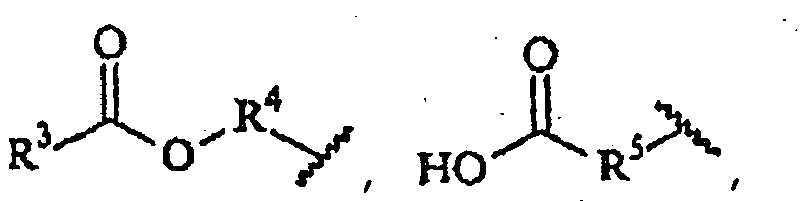

R2
R3, R8, R13, R21, R24, R31 und R33 unabhängig voneinander C1-C20-Alkyl sind;
R4, R5, R7, R14, R16, R19, R20, R22, R25 und R32 unabhängig voneinander C1-C14-Alkylen sind;
R6, R15, R18 und R26 unabhängig voneinander C1-C14-Alkylen, C2-C8-Alkenylen oder C6-C13-Arylen sind;
R9 C1-C14-Alkylen oder -NR34- ist;
R10, R12, R27 und R29 unabhängig voneinander C1-C14-Alkylen oder (C1-C14-Alkylen)-(C2-C8-arylen) sind;
R11 und R28 unabhängig voneinander C2-C30-Alkinyl sind;
R17 eine Gruppe ist, die einen Ester aktiviert;
R23 C6-C13-Arylen ist;
R30 C1-C14-Alkylen oder -NR36- ist;
R34 und R36 C1-C4-Alkyl sind;
p 1 bis 5 ist;
n 1 bis 20 ist;
wobei R1 und R2 nicht gleich sind;
wobei der Rezeptor in die polymerisierte Zusammensetzung inkorporiert ist, wodurch ein Transducer erzeugt wird; und
wobei der Transducer eine Farbänderung zeigt, wenn er mit einem Analyten in Kontakt gebracht wird. - Sensor nach Anspruch 1, wobei R1

wobei R7 Ethylen, Trimethylen, Tetramethylen, Pentamethylen, Hexamethylen, Heptamethylen, Octamethylen oder Nonamethylen ist und R6 Ethylen, Trimethylen, Ethenylen oder Phenylen ist; und
wobei R2
wobei R20 Ethylen, Trimethylen, Tetramethylen, Pentamethylen, Hexamethylen, Heptamethylen, Octamethylen oder Nonamethylen ist und wobei R21 Undecyl, Tridecyl, Pentadecyl, Heptadecyl ist; und wobei p 1 ist. - Sensor nach Anspruch 1, wobei der Rezeptor aus der Gruppe bestehend aus Phospholipid und Glycerin gewählt ist.
- Sensor nach Anspruch 1, wobei der Transducer in einer wässrigen Lösung dispergiert ist.
- Sensor nach Anspruch 1, wobei der Transducer auf einem Substrat aufgetragen ist.
- Sensor nach Anspruch 5, wobei das Substrat einen Kontaktwinkel von weniger als 50 Grad bei der Verwendung von Methyleniodid zeigt.
- Sensor nach Anspruch 5, wobei das Substrat aus der Gruppe bestehend aus Kieselgelplatte, Papier, Glas, texturiertem Photopapier, Glanzphotopapier und mikroporösem Film gewählt ist.
- Sensor nach Anspruch 1, wobei der Rezeptor durch physikalisches Mischen in die polymerisierte Zusammensetzung integriert ist.
- Sensor nach Anspruch 1, wobei der Rezeptor kovalent an die polymerisierte Zusammensetzung gebunden ist.
- Verfahren zum Nachweis eines Analyten, umfassend
Bilden des kolorimetrischen Sensors nach Anspruch 1, wobei der Rezeptor in die polymerisierte Zusammensetzung inkorporiert wird, wodurch ein Transducer erzeugt wird, der eine Farbänderung zeigen kann;
in Kontakt bringen des Sensors mit einem Analyten; und
Beobachten einer Farbänderung, wenn der Analyt vorhanden ist. - Verfahren zum Nachweis eines Analyten, umfassend
Bilden des kolorimetrischen Sensors nach Anspruch 1, wobei der Rezeptor in die polymerisierte Zusammensetzung inkorporiert wird, wodurch ein Transducer erzeugt wird, der eine Farbänderung zeigen kann;
in Kontakt bringen des Transducers mit einem Analyten;
in Kontakt bringen des Transducers mit einer Sonde, die eine Affinität sowohl zum Analyten als auch zum Rezeptor aufweist; und
Beobachten keiner Farbänderung, wenn der Analyt vorhanden ist. - Verfahren nach Anspruch 11, wobei die Sonde und der Analyt zu einem Gemisch vereinigt werden, bevor sie mit dem Transducer in Kontakt gebracht werden.
- Verfahren nach Anspruch 11, wobei die Sonde ein Membranen spaltendes Peptid umfasst.
- Verfahren nach Anspruch 11, wobei die Sonde aus der Gruppe bestehend aus Alamethicin, Magainin, Gramicidin, Polymyxin-B-sulfat und Melittin gewählt wird.
- Verfahren nach Anspruch 11, wobei der Analyt aus der Gruppe bestehend aus gramnegativen Bakterien und Endotoxin gewählt wird.
- Einmal-Kit zum Nachweisen des Vorhandenseins eines Analyten, umfassend:einen oder mehrere Transducer, umfassend den kolorimetrischen Sensor nach Anspruch 1; undein Mittel zum in Kontakt bringen des Transducers mit einem Analyten.
- Kit nach Anspruch 16, ferner umfassend eine oder mehrere Sonden mit einer Affinität zum Rezeptor und einem oder mehreren Analyten; wobei die Sonde vom Transducer physikalisch getrennt ist, bis der Kit verwendet wird.
- Kit nach Anspruch 16, wobei ein oder mehrere Transducer in einer wässrigen Lösung dispergiert sind.
- Kit nach Anspruch 16, wobei ein oder mehrere Transducer auf einem Substrat aufgetragen sind, wodurch eine Anordnung erzeugt wird.
- Verfahren zum Nachweisen des Vorhandenseins von Bakterien in einer Körperflüssigkeit, umfassend den Schritt des in Kontakt bringens des Sensors nach Anspruch 1 mit einer Körperflüssigkeit.
- Kolorimetrischer Sensor nach Anspruch 1, ferner umfassend einen diagnostischen Test zum Nachweisen von Leukozyten.
- Verfahren zum Nachweisen des Vorhandenseins von Bakterien in einer Körperflüssigkeit, umfassend den Schritt des in Kontakt bringens des Sensors nach Anspruch 21 mit einer Körperflüssigkeit.
- Verfahren nach Anspruch 20 oder 21, wobei die Körperflüssigkeit aus der Gruppe bestehend aus Urin, Mukus, Wundexsudat und Blut gewählt wird.
- Medizinischer Gegenstand, umfassend einen Wundverband und den kolorimetrischen Sensor nach Anspruch 1.
- Medizinischer Gegenstand nach Anspruch 24, wobei der kolorimetrische Sensor mit dem Wundbett durch ein Fluidkontrollsystem verbunden ist.
- Medizinischer Gegenstand nach Anspruch 25, wobei das Fluidkontrollsystem ein mikrofluidisches System ist.
- Verfahren zum Nachweisen des Vorhandenseins von Bakterien, wobei das Verfahren den Schritt des Einfügens des kolorimetrischen Sensors nach Anspruch 1 in einen Wundverband umfasst.
Applications Claiming Priority (5)
| Application Number | Priority Date | Filing Date | Title |
|---|---|---|---|
| US325801 | 2002-12-19 | ||
| US10/325,801 US20040126897A1 (en) | 2002-12-19 | 2002-12-19 | Colorimetric sensors constructed of diacetylene materials |
| US10/738,573 US7364918B2 (en) | 2002-12-19 | 2003-12-16 | Colorimetric sensors constructed of diacetylene materials |
| US738573 | 2003-12-16 | ||
| PCT/US2003/040714 WO2004057331A1 (en) | 2002-12-19 | 2003-12-19 | Colorimetric sensors constructed of diacetylene materials |
Publications (2)
| Publication Number | Publication Date |
|---|---|
| EP1579210A1 EP1579210A1 (de) | 2005-09-28 |
| EP1579210B1 true EP1579210B1 (de) | 2007-06-06 |
Family
ID=32684694
Family Applications (1)
| Application Number | Title | Priority Date | Filing Date |
|---|---|---|---|
| EP03813810A Expired - Lifetime EP1579210B1 (de) | 2002-12-19 | 2003-12-19 | Aus polydiacetylen hergestellte kolorimetrische sensoren. |
Country Status (11)
| Country | Link |
|---|---|
| EP (1) | EP1579210B1 (de) |
| JP (1) | JP4402597B2 (de) |
| AT (1) | ATE364176T1 (de) |
| AU (1) | AU2003301171B8 (de) |
| BR (1) | BR0317472A (de) |
| CA (1) | CA2510030C (de) |
| DE (1) | DE60314290T2 (de) |
| DK (1) | DK1579210T3 (de) |
| ES (1) | ES2286511T3 (de) |
| MX (1) | MXPA05006445A (de) |
| WO (1) | WO2004057331A1 (de) |
Cited By (1)
| Publication number | Priority date | Publication date | Assignee | Title |
|---|---|---|---|---|
| CN105044086A (zh) * | 2015-04-23 | 2015-11-11 | 上海感信信息科技股份有限公司 | 一种压力蒸汽灭菌化学指示卡变色判断设备 |
Families Citing this family (11)
| Publication number | Priority date | Publication date | Assignee | Title |
|---|---|---|---|---|
| US6963007B2 (en) | 2002-12-19 | 2005-11-08 | 3M Innovative Properties Company | Diacetylenic materials for sensing applications |
| CA2576822A1 (en) * | 2004-08-06 | 2006-02-16 | Analytical Biological Services, Inc. | Method for detecting a plurality of different species |
| CA2589351A1 (en) * | 2004-12-17 | 2006-07-13 | 3M Innovative Properties Company | Colorimetric sensors constructed of diacetylene materials |
| US20060223052A1 (en) * | 2005-03-30 | 2006-10-05 | Kimberly-Clark Worldwide, Inc. | Technique for detecting microorganisms |
| TW200714898A (en) | 2005-08-02 | 2007-04-16 | 3M Innovative Properties Co | Apparatus and method for detecting an analyte |
| TW200712487A (en) * | 2005-08-02 | 2007-04-01 | 3M Innovative Properties Co | Apparatus and method for detecting an analyte |
| US8835157B2 (en) | 2007-04-25 | 2014-09-16 | 3M Innovative Properties Company | Supported reagents, methods, and devices |
| EP2220500A4 (de) * | 2007-11-20 | 2010-12-15 | 3M Innovative Properties Co | Verfahren zur analyse einer probe für ein bakterium unter verwendung eines diacetylenhaltigen polymersensors |
| JP2011516819A (ja) * | 2007-11-20 | 2011-05-26 | スリーエム イノベイティブ プロパティズ カンパニー | 検出装置及び方法 |
| CN104807987B (zh) * | 2014-01-27 | 2017-04-19 | 广州阳普医疗科技股份有限公司 | 纸芯片、其制备方法及生物分子的检测方法 |
| JP6786478B2 (ja) | 2014-05-11 | 2020-11-18 | リア ダイアグノスティクス,インコーポレーテッド | 可撓性一体型尿ベースの診断デバイス |
Family Cites Families (5)
| Publication number | Priority date | Publication date | Assignee | Title |
|---|---|---|---|---|
| EP1007943A1 (de) * | 1997-02-14 | 2000-06-14 | The Regents Of The University Of California | Protien- gekoppelte farb-analyt- nachweisgeraete |
| EP0965033A1 (de) * | 1997-03-03 | 1999-12-22 | The Regents of the University of California | Direkter kolorimetrischer nachweis von biokatalysatoren |
| JP3138442B2 (ja) * | 1997-12-26 | 2001-02-26 | 株式会社ホギメディカル | ポリジアセチレン膜を用いる発色センサー |
| US6472214B2 (en) * | 1999-05-26 | 2002-10-29 | Jp Labs, Inc. | Freeze monitoring device |
| US7049152B2 (en) * | 2001-03-13 | 2006-05-23 | The Regents Of The University Of California | Color and shape changing polymeric ribbons and sheets |
-
2003
- 2003-12-19 ES ES03813810T patent/ES2286511T3/es not_active Expired - Lifetime
- 2003-12-19 JP JP2004562334A patent/JP4402597B2/ja not_active Expired - Fee Related
- 2003-12-19 DK DK03813810T patent/DK1579210T3/da active
- 2003-12-19 DE DE60314290T patent/DE60314290T2/de not_active Expired - Lifetime
- 2003-12-19 WO PCT/US2003/040714 patent/WO2004057331A1/en not_active Ceased
- 2003-12-19 BR BR0317472-7A patent/BR0317472A/pt not_active IP Right Cessation
- 2003-12-19 AU AU2003301171A patent/AU2003301171B8/en not_active Ceased
- 2003-12-19 EP EP03813810A patent/EP1579210B1/de not_active Expired - Lifetime
- 2003-12-19 AT AT03813810T patent/ATE364176T1/de not_active IP Right Cessation
- 2003-12-19 MX MXPA05006445A patent/MXPA05006445A/es active IP Right Grant
- 2003-12-19 CA CA2510030A patent/CA2510030C/en not_active Expired - Fee Related
Non-Patent Citations (1)
| Title |
|---|
| None * |
Cited By (2)
| Publication number | Priority date | Publication date | Assignee | Title |
|---|---|---|---|---|
| CN105044086A (zh) * | 2015-04-23 | 2015-11-11 | 上海感信信息科技股份有限公司 | 一种压力蒸汽灭菌化学指示卡变色判断设备 |
| CN105044086B (zh) * | 2015-04-23 | 2018-08-28 | 上海感信信息科技股份有限公司 | 一种压力蒸汽灭菌化学指示卡变色判断设备 |
Also Published As
| Publication number | Publication date |
|---|---|
| DE60314290T2 (de) | 2008-02-07 |
| AU2003301171A1 (en) | 2004-07-14 |
| BR0317472A (pt) | 2005-11-16 |
| DE60314290D1 (de) | 2007-07-19 |
| CA2510030C (en) | 2012-07-10 |
| AU2003301171B8 (en) | 2010-03-11 |
| ATE364176T1 (de) | 2007-06-15 |
| AU2003301171B2 (en) | 2009-11-12 |
| EP1579210A1 (de) | 2005-09-28 |
| JP4402597B2 (ja) | 2010-01-20 |
| CA2510030A1 (en) | 2004-07-08 |
| JP2006510907A (ja) | 2006-03-30 |
| ES2286511T3 (es) | 2007-12-01 |
| WO2004057331A1 (en) | 2004-07-08 |
| DK1579210T3 (da) | 2007-09-17 |
| MXPA05006445A (es) | 2005-09-08 |
Similar Documents
| Publication | Publication Date | Title |
|---|---|---|
| US7364918B2 (en) | Colorimetric sensors constructed of diacetylene materials | |
| US20120149037A1 (en) | Colorimetric sensors constructed of diacetylene materials | |
| AU2003301171B2 (en) | Colorimetric sensors constructed of diacetylene materials | |
| US20110097814A1 (en) | Detection devices and methods | |
| JPH11500223A (ja) | 三次元比色分析集成体 | |
| CA2455427A1 (en) | Sensitive and rapid detection of pathogenic organisms and toxins using fluorescent polymeric lipids | |
| JPH10510159A (ja) | 多層分析要素 | |
| Liu et al. | Determination of human IgG by solid substrate room temperature phosphorescence immunoassay based on an antibody labeled with nanoparticles containing dibromofluorescein luminescent molecules | |
| WO2006077586A2 (en) | Polydiacetylene-containing solid colorimetric and/or fluorescent detector, method for its preparation and uses thereof | |
| Price et al. | Fluorescent detection of lipopolysaccharide interactions with model membranes | |
| Jacobs et al. | Fluorescent detection of lipopolysaccharide interactions with model membranes | |
| RU2783710C1 (ru) | Способ обнаружения возбудителя псевдотуберкулеза | |
| COMPOSED et al. | PROCESS FOR MANUFACTURING XYLITOL AND XYLITOL-RICH PRODUCTS | |
| Schalkhammer et al. | Ion channels in artificial bolaamphiphile membranes deposited on sensor chips: optical detection in an ion-channel-based biosensor | |
| Jacobs et al. | Department of Microbiology, School of Medicine and Biomedical Sciences, State University of New York at Buffalo, Buffalo, New | |
| Trivedi et al. | Temperature Dependent Energy Transfer Measurements Reveal Flexibility in the Upper 50 kDa Domain of Myosin V | |
| Arimoto et al. | High Speed Imaging For Myosin VI | |
| McKenna et al. | Kinetics Of Myo1c Association To And Dissociation From Phosphoinositide-containing Vesicles | |
| Pyrpassopoulos et al. | Single-molecule Measurements Of Myo1c-PIP2 Detachment Forces Using Optical Tweezers | |
| BLOT et al. | DRY MULTILAYER ANALYTICAL ELEMENT FOR ANALYSIS OF ENZYMES OR TRIGLYCERIDES | |
| AU2384999A (en) | Highly specific surfaces for biological reactions, method of preparation and utilization |
Legal Events
| Date | Code | Title | Description |
|---|---|---|---|
| PUAI | Public reference made under article 153(3) epc to a published international application that has entered the european phase |
Free format text: ORIGINAL CODE: 0009012 |
|
| 17P | Request for examination filed |
Effective date: 20050719 |
|
| AK | Designated contracting states |
Kind code of ref document: A1 Designated state(s): AT BE BG CH CY CZ DE DK EE ES FI FR GB GR HU IE IT LI LU MC NL PT RO SE SI SK TR |
|
| AX | Request for extension of the european patent |
Extension state: AL LT LV MK |
|
| DAX | Request for extension of the european patent (deleted) | ||
| GRAP | Despatch of communication of intention to grant a patent |
Free format text: ORIGINAL CODE: EPIDOSNIGR1 |
|
| GRAS | Grant fee paid |
Free format text: ORIGINAL CODE: EPIDOSNIGR3 |
|
| GRAA | (expected) grant |
Free format text: ORIGINAL CODE: 0009210 |
|
| AK | Designated contracting states |
Kind code of ref document: B1 Designated state(s): AT BE BG CH CY CZ DE DK EE ES FI FR GB GR HU IE IT LI LU MC NL PT RO SE SI SK TR |
|
| PG25 | Lapsed in a contracting state [announced via postgrant information from national office to epo] |
Ref country code: CH Free format text: LAPSE BECAUSE OF FAILURE TO SUBMIT A TRANSLATION OF THE DESCRIPTION OR TO PAY THE FEE WITHIN THE PRESCRIBED TIME-LIMIT Effective date: 20070606 Ref country code: LI Free format text: LAPSE BECAUSE OF FAILURE TO SUBMIT A TRANSLATION OF THE DESCRIPTION OR TO PAY THE FEE WITHIN THE PRESCRIBED TIME-LIMIT Effective date: 20070606 Ref country code: FI Free format text: LAPSE BECAUSE OF FAILURE TO SUBMIT A TRANSLATION OF THE DESCRIPTION OR TO PAY THE FEE WITHIN THE PRESCRIBED TIME-LIMIT Effective date: 20070606 |
|
| REG | Reference to a national code |
Ref country code: GB Ref legal event code: FG4D |
|
| REG | Reference to a national code |
Ref country code: CH Ref legal event code: EP |
|
| REG | Reference to a national code |
Ref country code: IE Ref legal event code: FG4D |
|
| REF | Corresponds to: |
Ref document number: 60314290 Country of ref document: DE Date of ref document: 20070719 Kind code of ref document: P |
|
| PG25 | Lapsed in a contracting state [announced via postgrant information from national office to epo] |
Ref country code: SE Free format text: LAPSE BECAUSE OF FAILURE TO SUBMIT A TRANSLATION OF THE DESCRIPTION OR TO PAY THE FEE WITHIN THE PRESCRIBED TIME-LIMIT Effective date: 20070906 |
|
| REG | Reference to a national code |
Ref country code: DK Ref legal event code: T3 |
|
| ET | Fr: translation filed | ||
| PG25 | Lapsed in a contracting state [announced via postgrant information from national office to epo] |
Ref country code: AT Free format text: LAPSE BECAUSE OF FAILURE TO SUBMIT A TRANSLATION OF THE DESCRIPTION OR TO PAY THE FEE WITHIN THE PRESCRIBED TIME-LIMIT Effective date: 20070606 |
|
| REG | Reference to a national code |
Ref country code: ES Ref legal event code: FG2A Ref document number: 2286511 Country of ref document: ES Kind code of ref document: T3 |
|
| REG | Reference to a national code |
Ref country code: CH Ref legal event code: PL |
|
| PG25 | Lapsed in a contracting state [announced via postgrant information from national office to epo] |
Ref country code: BE Free format text: LAPSE BECAUSE OF FAILURE TO SUBMIT A TRANSLATION OF THE DESCRIPTION OR TO PAY THE FEE WITHIN THE PRESCRIBED TIME-LIMIT Effective date: 20070606 |
|
| PG25 | Lapsed in a contracting state [announced via postgrant information from national office to epo] |
Ref country code: SI Free format text: LAPSE BECAUSE OF FAILURE TO SUBMIT A TRANSLATION OF THE DESCRIPTION OR TO PAY THE FEE WITHIN THE PRESCRIBED TIME-LIMIT Effective date: 20070606 Ref country code: CZ Free format text: LAPSE BECAUSE OF FAILURE TO SUBMIT A TRANSLATION OF THE DESCRIPTION OR TO PAY THE FEE WITHIN THE PRESCRIBED TIME-LIMIT Effective date: 20070606 Ref country code: BG Free format text: LAPSE BECAUSE OF FAILURE TO SUBMIT A TRANSLATION OF THE DESCRIPTION OR TO PAY THE FEE WITHIN THE PRESCRIBED TIME-LIMIT Effective date: 20070906 Ref country code: PT Free format text: LAPSE BECAUSE OF FAILURE TO SUBMIT A TRANSLATION OF THE DESCRIPTION OR TO PAY THE FEE WITHIN THE PRESCRIBED TIME-LIMIT Effective date: 20071106 |
|
| PG25 | Lapsed in a contracting state [announced via postgrant information from national office to epo] |
Ref country code: SK Free format text: LAPSE BECAUSE OF FAILURE TO SUBMIT A TRANSLATION OF THE DESCRIPTION OR TO PAY THE FEE WITHIN THE PRESCRIBED TIME-LIMIT Effective date: 20070606 |
|
| PLBE | No opposition filed within time limit |
Free format text: ORIGINAL CODE: 0009261 |
|
| STAA | Information on the status of an ep patent application or granted ep patent |
Free format text: STATUS: NO OPPOSITION FILED WITHIN TIME LIMIT |
|
| PG25 | Lapsed in a contracting state [announced via postgrant information from national office to epo] |
Ref country code: GR Free format text: LAPSE BECAUSE OF FAILURE TO SUBMIT A TRANSLATION OF THE DESCRIPTION OR TO PAY THE FEE WITHIN THE PRESCRIBED TIME-LIMIT Effective date: 20070907 |
|
| 26N | No opposition filed |
Effective date: 20080307 |
|
| PG25 | Lapsed in a contracting state [announced via postgrant information from national office to epo] |
Ref country code: RO Free format text: LAPSE BECAUSE OF FAILURE TO SUBMIT A TRANSLATION OF THE DESCRIPTION OR TO PAY THE FEE WITHIN THE PRESCRIBED TIME-LIMIT Effective date: 20070606 |
|
| PG25 | Lapsed in a contracting state [announced via postgrant information from national office to epo] |
Ref country code: MC Free format text: LAPSE BECAUSE OF NON-PAYMENT OF DUE FEES Effective date: 20071231 |
|
| PG25 | Lapsed in a contracting state [announced via postgrant information from national office to epo] |
Ref country code: IE Free format text: LAPSE BECAUSE OF NON-PAYMENT OF DUE FEES Effective date: 20071219 |
|
| PG25 | Lapsed in a contracting state [announced via postgrant information from national office to epo] |
Ref country code: EE Free format text: LAPSE BECAUSE OF FAILURE TO SUBMIT A TRANSLATION OF THE DESCRIPTION OR TO PAY THE FEE WITHIN THE PRESCRIBED TIME-LIMIT Effective date: 20070606 |
|
| PG25 | Lapsed in a contracting state [announced via postgrant information from national office to epo] |
Ref country code: CY Free format text: LAPSE BECAUSE OF FAILURE TO SUBMIT A TRANSLATION OF THE DESCRIPTION OR TO PAY THE FEE WITHIN THE PRESCRIBED TIME-LIMIT Effective date: 20070606 |
|
| PG25 | Lapsed in a contracting state [announced via postgrant information from national office to epo] |
Ref country code: LU Free format text: LAPSE BECAUSE OF NON-PAYMENT OF DUE FEES Effective date: 20071219 |
|
| PG25 | Lapsed in a contracting state [announced via postgrant information from national office to epo] |
Ref country code: TR Free format text: LAPSE BECAUSE OF FAILURE TO SUBMIT A TRANSLATION OF THE DESCRIPTION OR TO PAY THE FEE WITHIN THE PRESCRIBED TIME-LIMIT Effective date: 20070606 Ref country code: HU Free format text: LAPSE BECAUSE OF FAILURE TO SUBMIT A TRANSLATION OF THE DESCRIPTION OR TO PAY THE FEE WITHIN THE PRESCRIBED TIME-LIMIT Effective date: 20071207 |
|
| PGFP | Annual fee paid to national office [announced via postgrant information from national office to epo] |
Ref country code: DK Payment date: 20141211 Year of fee payment: 12 |
|
| PGFP | Annual fee paid to national office [announced via postgrant information from national office to epo] |
Ref country code: DE Payment date: 20141216 Year of fee payment: 12 Ref country code: GB Payment date: 20141217 Year of fee payment: 12 Ref country code: ES Payment date: 20141111 Year of fee payment: 12 |
|
| PGFP | Annual fee paid to national office [announced via postgrant information from national office to epo] |
Ref country code: NL Payment date: 20141210 Year of fee payment: 12 Ref country code: FR Payment date: 20141208 Year of fee payment: 12 |
|
| PGFP | Annual fee paid to national office [announced via postgrant information from national office to epo] |
Ref country code: IT Payment date: 20141209 Year of fee payment: 12 |
|
| REG | Reference to a national code |
Ref country code: DE Ref legal event code: R119 Ref document number: 60314290 Country of ref document: DE |
|
| REG | Reference to a national code |
Ref country code: DK Ref legal event code: EBP Effective date: 20151231 |
|
| GBPC | Gb: european patent ceased through non-payment of renewal fee |
Effective date: 20151219 |
|
| REG | Reference to a national code |
Ref country code: NL Ref legal event code: MM Effective date: 20160101 |
|
| REG | Reference to a national code |
Ref country code: FR Ref legal event code: ST Effective date: 20160831 |
|
| PG25 | Lapsed in a contracting state [announced via postgrant information from national office to epo] |
Ref country code: DE Free format text: LAPSE BECAUSE OF NON-PAYMENT OF DUE FEES Effective date: 20160701 Ref country code: NL Free format text: LAPSE BECAUSE OF NON-PAYMENT OF DUE FEES Effective date: 20160101 Ref country code: GB Free format text: LAPSE BECAUSE OF NON-PAYMENT OF DUE FEES Effective date: 20151219 |
|
| PG25 | Lapsed in a contracting state [announced via postgrant information from national office to epo] |
Ref country code: FR Free format text: LAPSE BECAUSE OF NON-PAYMENT OF DUE FEES Effective date: 20151231 |
|
| PG25 | Lapsed in a contracting state [announced via postgrant information from national office to epo] |
Ref country code: IT Free format text: LAPSE BECAUSE OF NON-PAYMENT OF DUE FEES Effective date: 20151219 |
|
| REG | Reference to a national code |
Ref country code: ES Ref legal event code: FD2A Effective date: 20170126 |
|
| PG25 | Lapsed in a contracting state [announced via postgrant information from national office to epo] |
Ref country code: DK Free format text: LAPSE BECAUSE OF NON-PAYMENT OF DUE FEES Effective date: 20151231 |
|
| PG25 | Lapsed in a contracting state [announced via postgrant information from national office to epo] |
Ref country code: ES Free format text: LAPSE BECAUSE OF NON-PAYMENT OF DUE FEES Effective date: 20151220 |