EP1578809B1 - Process for transitioning between incompatible catalysts using a substantially contaminant free seedbed - Google Patents
Process for transitioning between incompatible catalysts using a substantially contaminant free seedbed Download PDFInfo
- Publication number
- EP1578809B1 EP1578809B1 EP03814661.9A EP03814661A EP1578809B1 EP 1578809 B1 EP1578809 B1 EP 1578809B1 EP 03814661 A EP03814661 A EP 03814661A EP 1578809 B1 EP1578809 B1 EP 1578809B1
- Authority
- EP
- European Patent Office
- Prior art keywords
- reactor
- catalyst
- polymerization
- seedbed
- polymerization reaction
- Prior art date
- Legal status (The legal status is an assumption and is not a legal conclusion. Google has not performed a legal analysis and makes no representation as to the accuracy of the status listed.)
- Expired - Lifetime
Links
- 239000003054 catalyst Substances 0.000 claims description 119
- 238000006116 polymerization reaction Methods 0.000 claims description 77
- 238000000034 method Methods 0.000 claims description 39
- 229920000642 polymer Polymers 0.000 claims description 34
- 239000000356 contaminant Substances 0.000 claims description 33
- 230000008569 process Effects 0.000 claims description 29
- 239000002574 poison Substances 0.000 claims description 21
- 231100000614 poison Toxicity 0.000 claims description 21
- 239000000376 reactant Substances 0.000 claims description 16
- 239000002685 polymerization catalyst Substances 0.000 claims description 13
- 239000012968 metallocene catalyst Substances 0.000 claims description 11
- 239000011954 Ziegler–Natta catalyst Substances 0.000 claims description 9
- 239000002245 particle Substances 0.000 claims description 9
- 238000013022 venting Methods 0.000 claims description 9
- 238000003860 storage Methods 0.000 claims description 8
- 230000000694 effects Effects 0.000 claims description 5
- 230000009849 deactivation Effects 0.000 claims description 4
- 238000010348 incorporation Methods 0.000 claims description 2
- 230000009257 reactivity Effects 0.000 claims description 2
- 239000000047 product Substances 0.000 description 43
- 238000010926 purge Methods 0.000 description 26
- 238000012546 transfer Methods 0.000 description 26
- 239000007789 gas Substances 0.000 description 23
- 239000011261 inert gas Substances 0.000 description 20
- IJGRMHOSHXDMSA-UHFFFAOYSA-N Atomic nitrogen Chemical compound N#N IJGRMHOSHXDMSA-UHFFFAOYSA-N 0.000 description 18
- 239000003446 ligand Substances 0.000 description 17
- 150000003624 transition metals Chemical class 0.000 description 13
- 239000000178 monomer Substances 0.000 description 11
- 229910052723 transition metal Inorganic materials 0.000 description 11
- 229910052757 nitrogen Inorganic materials 0.000 description 9
- 230000007704 transition Effects 0.000 description 9
- 150000001336 alkenes Chemical class 0.000 description 8
- 150000001875 compounds Chemical class 0.000 description 8
- VYZAMTAEIAYCRO-UHFFFAOYSA-N Chromium Chemical compound [Cr] VYZAMTAEIAYCRO-UHFFFAOYSA-N 0.000 description 7
- 229910052804 chromium Inorganic materials 0.000 description 6
- 239000011651 chromium Substances 0.000 description 6
- ZSWFCLXCOIISFI-UHFFFAOYSA-N endo-cyclopentadiene Natural products C1C=CC=C1 ZSWFCLXCOIISFI-UHFFFAOYSA-N 0.000 description 6
- -1 moisture Substances 0.000 description 5
- XLYOFNOQVPJJNP-UHFFFAOYSA-N water Substances O XLYOFNOQVPJJNP-UHFFFAOYSA-N 0.000 description 5
- VYPSYNLAJGMNEJ-UHFFFAOYSA-N Silicium dioxide Chemical compound O=[Si]=O VYPSYNLAJGMNEJ-UHFFFAOYSA-N 0.000 description 4
- JJWKPURADFRFRB-UHFFFAOYSA-N carbonyl sulfide Chemical compound O=C=S JJWKPURADFRFRB-UHFFFAOYSA-N 0.000 description 4
- 125000000058 cyclopentadienyl group Chemical group C1(=CC=CC1)* 0.000 description 4
- 238000010586 diagram Methods 0.000 description 4
- 238000012685 gas phase polymerization Methods 0.000 description 4
- 230000002427 irreversible effect Effects 0.000 description 4
- 230000002441 reversible effect Effects 0.000 description 4
- CURLTUGMZLYLDI-UHFFFAOYSA-N Carbon dioxide Chemical compound O=C=O CURLTUGMZLYLDI-UHFFFAOYSA-N 0.000 description 3
- 239000012190 activator Substances 0.000 description 3
- QVGXLLKOCUKJST-UHFFFAOYSA-N atomic oxygen Chemical compound [O] QVGXLLKOCUKJST-UHFFFAOYSA-N 0.000 description 3
- 238000006243 chemical reaction Methods 0.000 description 3
- 238000011049 filling Methods 0.000 description 3
- 238000004519 manufacturing process Methods 0.000 description 3
- JRZJOMJEPLMPRA-UHFFFAOYSA-N olefin Natural products CCCCCCCC=C JRZJOMJEPLMPRA-UHFFFAOYSA-N 0.000 description 3
- 239000001301 oxygen Substances 0.000 description 3
- 229910052760 oxygen Inorganic materials 0.000 description 3
- 239000007787 solid Substances 0.000 description 3
- UGFAIRIUMAVXCW-UHFFFAOYSA-N Carbon monoxide Chemical compound [O+]#[C-] UGFAIRIUMAVXCW-UHFFFAOYSA-N 0.000 description 2
- CPLXHLVBOLITMK-UHFFFAOYSA-N Magnesium oxide Chemical compound [Mg]=O CPLXHLVBOLITMK-UHFFFAOYSA-N 0.000 description 2
- JUJWROOIHBZHMG-UHFFFAOYSA-N Pyridine Chemical compound C1=CC=NC=C1 JUJWROOIHBZHMG-UHFFFAOYSA-N 0.000 description 2
- RTAQQCXQSZGOHL-UHFFFAOYSA-N Titanium Chemical compound [Ti] RTAQQCXQSZGOHL-UHFFFAOYSA-N 0.000 description 2
- PNEYBMLMFCGWSK-UHFFFAOYSA-N aluminium oxide Inorganic materials [O-2].[O-2].[O-2].[Al+3].[Al+3] PNEYBMLMFCGWSK-UHFFFAOYSA-N 0.000 description 2
- IAQRGUVFOMOMEM-UHFFFAOYSA-N but-2-ene Chemical compound CC=CC IAQRGUVFOMOMEM-UHFFFAOYSA-N 0.000 description 2
- 229910002092 carbon dioxide Inorganic materials 0.000 description 2
- 239000001569 carbon dioxide Substances 0.000 description 2
- 229910002091 carbon monoxide Inorganic materials 0.000 description 2
- 230000001627 detrimental effect Effects 0.000 description 2
- 238000001125 extrusion Methods 0.000 description 2
- 229910052736 halogen Inorganic materials 0.000 description 2
- 150000002367 halogens Chemical class 0.000 description 2
- 239000001257 hydrogen Substances 0.000 description 2
- 229910052739 hydrogen Inorganic materials 0.000 description 2
- 230000003993 interaction Effects 0.000 description 2
- 230000000670 limiting effect Effects 0.000 description 2
- 239000007788 liquid Substances 0.000 description 2
- 239000000463 material Substances 0.000 description 2
- 230000007246 mechanism Effects 0.000 description 2
- 239000000203 mixture Substances 0.000 description 2
- 239000011541 reaction mixture Substances 0.000 description 2
- 230000002829 reductive effect Effects 0.000 description 2
- 239000011347 resin Substances 0.000 description 2
- 229920005989 resin Polymers 0.000 description 2
- 239000000377 silicon dioxide Substances 0.000 description 2
- 229910052719 titanium Inorganic materials 0.000 description 2
- 239000010936 titanium Substances 0.000 description 2
- 229910052720 vanadium Inorganic materials 0.000 description 2
- GGQQNYXPYWCUHG-RMTFUQJTSA-N (3e,6e)-deca-3,6-diene Chemical compound CCC\C=C\C\C=C\CC GGQQNYXPYWCUHG-RMTFUQJTSA-N 0.000 description 1
- RWSOTUBLDIXVET-UHFFFAOYSA-N Dihydrogen sulfide Chemical class S RWSOTUBLDIXVET-UHFFFAOYSA-N 0.000 description 1
- UFHFLCQGNIYNRP-UHFFFAOYSA-N Hydrogen Chemical compound [H][H] UFHFLCQGNIYNRP-UHFFFAOYSA-N 0.000 description 1
- 239000004698 Polyethylene Substances 0.000 description 1
- 229910052768 actinide Inorganic materials 0.000 description 1
- 150000001255 actinides Chemical class 0.000 description 1
- 230000009471 action Effects 0.000 description 1
- 230000002411 adverse Effects 0.000 description 1
- 150000001298 alcohols Chemical class 0.000 description 1
- 150000001299 aldehydes Chemical class 0.000 description 1
- 150000001345 alkine derivatives Chemical class 0.000 description 1
- 125000005234 alkyl aluminium group Chemical group 0.000 description 1
- HSFWRNGVRCDJHI-UHFFFAOYSA-N alpha-acetylene Natural products C#C HSFWRNGVRCDJHI-UHFFFAOYSA-N 0.000 description 1
- 150000001412 amines Chemical class 0.000 description 1
- 230000001174 ascending effect Effects 0.000 description 1
- 125000004429 atom Chemical group 0.000 description 1
- 238000007664 blowing Methods 0.000 description 1
- KAKZBPTYRLMSJV-UHFFFAOYSA-N butadiene group Chemical group C=CC=C KAKZBPTYRLMSJV-UHFFFAOYSA-N 0.000 description 1
- 239000006227 byproduct Substances 0.000 description 1
- 125000004432 carbon atom Chemical group C* 0.000 description 1
- 150000001728 carbonyl compounds Chemical class 0.000 description 1
- 150000001735 carboxylic acids Chemical class 0.000 description 1
- TYYBBNOTQFVVKN-UHFFFAOYSA-N chromium(2+);cyclopenta-1,3-diene Chemical compound [Cr+2].C=1C=C[CH-]C=1.C=1C=C[CH-]C=1 TYYBBNOTQFVVKN-UHFFFAOYSA-N 0.000 description 1
- 238000011109 contamination Methods 0.000 description 1
- 238000007334 copolymerization reaction Methods 0.000 description 1
- 125000004122 cyclic group Chemical group 0.000 description 1
- 238000005202 decontamination Methods 0.000 description 1
- 230000003588 decontaminative effect Effects 0.000 description 1
- 230000003247 decreasing effect Effects 0.000 description 1
- 238000000151 deposition Methods 0.000 description 1
- 239000002274 desiccant Substances 0.000 description 1
- 150000001993 dienes Chemical class 0.000 description 1
- 235000014113 dietary fatty acids Nutrition 0.000 description 1
- XNMQEEKYCVKGBD-UHFFFAOYSA-N dimethylacetylene Natural products CC#CC XNMQEEKYCVKGBD-UHFFFAOYSA-N 0.000 description 1
- 238000007599 discharging Methods 0.000 description 1
- 238000001035 drying Methods 0.000 description 1
- 150000002148 esters Chemical class 0.000 description 1
- 150000002170 ethers Chemical class 0.000 description 1
- 125000002534 ethynyl group Chemical group [H]C#C* 0.000 description 1
- 239000002360 explosive Substances 0.000 description 1
- 239000000194 fatty acid Substances 0.000 description 1
- 229930195729 fatty acid Natural products 0.000 description 1
- 150000004665 fatty acids Chemical class 0.000 description 1
- 230000002349 favourable effect Effects 0.000 description 1
- 239000012467 final product Substances 0.000 description 1
- 238000005243 fluidization Methods 0.000 description 1
- 239000000499 gel Substances 0.000 description 1
- 150000002334 glycols Chemical class 0.000 description 1
- 239000013628 high molecular weight specie Substances 0.000 description 1
- 125000004435 hydrogen atom Chemical class [H]* 0.000 description 1
- 229910052809 inorganic oxide Inorganic materials 0.000 description 1
- 238000003780 insertion Methods 0.000 description 1
- 230000037431 insertion Effects 0.000 description 1
- 238000002955 isolation Methods 0.000 description 1
- 150000002576 ketones Chemical class 0.000 description 1
- 229910052747 lanthanoid Inorganic materials 0.000 description 1
- 150000002602 lanthanoids Chemical class 0.000 description 1
- 229910052749 magnesium Inorganic materials 0.000 description 1
- 239000011777 magnesium Substances 0.000 description 1
- 239000000395 magnesium oxide Substances 0.000 description 1
- 238000012423 maintenance Methods 0.000 description 1
- 229910052751 metal Inorganic materials 0.000 description 1
- 239000002184 metal Substances 0.000 description 1
- 150000002825 nitriles Chemical class 0.000 description 1
- GQPLMRYTRLFLPF-UHFFFAOYSA-N nitrous oxide Inorganic materials [O-][N+]#N GQPLMRYTRLFLPF-UHFFFAOYSA-N 0.000 description 1
- 150000002902 organometallic compounds Chemical class 0.000 description 1
- 238000004806 packaging method and process Methods 0.000 description 1
- 150000002989 phenols Chemical class 0.000 description 1
- 229920000573 polyethylene Polymers 0.000 description 1
- 230000000379 polymerizing effect Effects 0.000 description 1
- 229920000098 polyolefin Polymers 0.000 description 1
- 230000001737 promoting effect Effects 0.000 description 1
- 238000011403 purification operation Methods 0.000 description 1
- UMJSCPRVCHMLSP-UHFFFAOYSA-N pyridine Natural products COC1=CC=CN=C1 UMJSCPRVCHMLSP-UHFFFAOYSA-N 0.000 description 1
- 238000000926 separation method Methods 0.000 description 1
- 239000000126 substance Substances 0.000 description 1
- 150000003623 transition metal compounds Chemical class 0.000 description 1
- LEONUFNNVUYDNQ-UHFFFAOYSA-N vanadium atom Chemical compound [V] LEONUFNNVUYDNQ-UHFFFAOYSA-N 0.000 description 1
Images


Classifications
-
- C—CHEMISTRY; METALLURGY
- C08—ORGANIC MACROMOLECULAR COMPOUNDS; THEIR PREPARATION OR CHEMICAL WORKING-UP; COMPOSITIONS BASED THEREON
- C08F—MACROMOLECULAR COMPOUNDS OBTAINED BY REACTIONS ONLY INVOLVING CARBON-TO-CARBON UNSATURATED BONDS
- C08F2/00—Processes of polymerisation
- C08F2/38—Polymerisation using regulators, e.g. chain terminating agents, e.g. telomerisation
-
- C—CHEMISTRY; METALLURGY
- C08—ORGANIC MACROMOLECULAR COMPOUNDS; THEIR PREPARATION OR CHEMICAL WORKING-UP; COMPOSITIONS BASED THEREON
- C08F—MACROMOLECULAR COMPOUNDS OBTAINED BY REACTIONS ONLY INVOLVING CARBON-TO-CARBON UNSATURATED BONDS
- C08F10/00—Homopolymers and copolymers of unsaturated aliphatic hydrocarbons having only one carbon-to-carbon double bond
-
- C—CHEMISTRY; METALLURGY
- C08—ORGANIC MACROMOLECULAR COMPOUNDS; THEIR PREPARATION OR CHEMICAL WORKING-UP; COMPOSITIONS BASED THEREON
- C08F—MACROMOLECULAR COMPOUNDS OBTAINED BY REACTIONS ONLY INVOLVING CARBON-TO-CARBON UNSATURATED BONDS
- C08F2/00—Processes of polymerisation
- C08F2/34—Polymerisation in gaseous state
-
- C—CHEMISTRY; METALLURGY
- C08—ORGANIC MACROMOLECULAR COMPOUNDS; THEIR PREPARATION OR CHEMICAL WORKING-UP; COMPOSITIONS BASED THEREON
- C08F—MACROMOLECULAR COMPOUNDS OBTAINED BY REACTIONS ONLY INVOLVING CARBON-TO-CARBON UNSATURATED BONDS
- C08F2/00—Processes of polymerisation
- C08F2/38—Polymerisation using regulators, e.g. chain terminating agents, e.g. telomerisation
- C08F2/42—Polymerisation using regulators, e.g. chain terminating agents, e.g. telomerisation using short-stopping agents
-
- Y—GENERAL TAGGING OF NEW TECHNOLOGICAL DEVELOPMENTS; GENERAL TAGGING OF CROSS-SECTIONAL TECHNOLOGIES SPANNING OVER SEVERAL SECTIONS OF THE IPC; TECHNICAL SUBJECTS COVERED BY FORMER USPC CROSS-REFERENCE ART COLLECTIONS [XRACs] AND DIGESTS
- Y10—TECHNICAL SUBJECTS COVERED BY FORMER USPC
- Y10S—TECHNICAL SUBJECTS COVERED BY FORMER USPC CROSS-REFERENCE ART COLLECTIONS [XRACs] AND DIGESTS
- Y10S526/00—Synthetic resins or natural rubbers -- part of the class 520 series
- Y10S526/901—Monomer polymerized in vapor state in presence of transition metal containing catalyst
Definitions
- the present invention is directed generally to a method for transitioning in a gas-phase reactor from a first polymerization reaction to a second polymerization reaction incompatible with the first polymerization reaction.
- the method provides conducting a first polymerization reaction and removing substantially all the contents from the first polymerization reaction without introducing contaminants into the reactor, followed by conducting multiple polymerizations to form multiple substantially contaminant-free seedbeds and storing the beds under an inert atmosphere to maintain them as substantially contaminant-free and then adding a select compatible substantially contaminant-free seedbed and other components for a second polymerization reaction into the reactor, without introducing contaminants and without purging the reactor, and conducting the second polymerization reaction.
- Gas-phase processes for the homopolymerization and copolymerization of monomers, especially olefin monomers, are well known in the art. Such processes can be conducted, for example, by introducing the gaseous monomer or monomers into a stirred and/or fluidized bed of resin particles and catalyst.
- the polymerization is conducted in a fluidized-bed reactor, wherein a bed of polymer particles is maintained in a fluidized state by means of an ascending gas stream including gaseous reaction monomer.
- the polymerization of olefins in a stirred-bed reactor differs from polymerization in a gas fluidized-bed reactor by the action of a mechanical stirrer within the reaction zone, which contributes to fluidization of the bed.
- gas-phase reactor will include fluidized-bed and stirred-bed reactors.
- the start-up of a gas-phase reactor generally uses a bed of preformed polymer particles, i.e. a "seedbed.” After polymerization is initiated, the seedbed is sometimes referred to as a "reactor bed.”
- the reactor bed includes a bed of polymer particles, catalyst(s), reactants and inert gases.
- This reaction mixture is maintained in a fluidized condition by the continuous upward flow of a fluidizing gas stream from the base of the reactor which includes recycle gas stream circulated from the top of the reactor, together with added make-up reactants and inert gases.
- a distributor plate is typically positioned in the lower portion of the reactor to help distribute the fluidizing gas to the reactor bed, and also to act as a support for the reactor bed when the supply of recycle gas is cut off. As fresh polymer is produced, polymer product is withdrawn to substantially maintain the height of the reactor bed. Product withdrawal is generally via one or more discharge outlets disposed in the lower portion of the reactor, near the distributor plate.
- the polymerization process can employ Ziegler-Natta, metallocene or other known polymerization catalysts appropriate for the gas-phase process.
- a variety of gas phase polymerization processes are known.
- the recycle stream can be cooled to a temperature below the dew point, resulting in condensing a portion of the recycle stream, as described in U.S. Patent Nos. 4,543,399 and 4,588,790 .
- This intentional introduction of a liquid into a recycle stream or directly into the reactor during the process is referred to generally as a "condensed mode" operation.
- the first catalyzed olefin polymerization process was terminated using various techniques known in the art. Then the reactor was purged and emptied. After a new seedbed was added but before new reactants were added, the reactor would undergo another purging step to remove any contaminants such as catalyst poisons, and water and/or oxygen that may have been introduced when emptying or refilling the reactor. Such decontamination steps are time consuming and costly, sometimes requiring about 4 days or more of reactor shutdown time before polymerization could be re-initiated in a commercial operation.
- Bybee requires a step of purging the reactor after the introduction of the seedbed to remove oxygen that has been introduced into the reactor.
- Bybee also discloses a step of adding a drying agent to the seedbed in the reactor to remove moisture that has been introduced as a result of opening the reactor.
- These purging and drying steps require additional reactor downtime, and equates to lost production and increased costs.
- US5672666 discloses a process for transitioning between polymerization catalyst systems which are incompatible with each other.
- the invention relates to a process for transitioning from an olefin polymerization reaction utilizing a traditional Ziegler-Natta catalyst system to a metallocene-olefin polymerization reaction.
- What is needed is a method for transitioning from one catalyst system to another catalyst system that is incompatible with the first catalyst system, with reduced gas-phase reactor down-time.
- the present invention satisfies this need.
- the invention relates to a process as defined in claim 1.
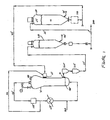
- Figure 1 is a flow diagram of a gas-phase polymerization plant in accordance with an embodiment of this invention.
- Figure 2 is a simplified flow diagram that shows a method for obtaining and storing a seedbed in accordance with an embodiment of this invention.
- Figure 3 is a simplified flow diagram that shows a method for obtaining and storing a substantially contaminant free seedbed in accordance with an embodiment of this invention.
- Figure 4 is a simplified flow diagram that shows a method for obtaining and storing a substantially contaminant free seedbed in accordance with an embodiment of this invention.
- Figure 5 illustrates a mechanism by which a seedbed conveyance line can be attached to the reactor during polymerization.
- Figure 6 illustrates a mechanism by which a seedbed conveyance line can be detachable from the reactor during polymerization, but attached to the reactor for conveyance of the seedbed.
- the invention relates to a process for transitioning from a first catalyst system to a second catalyst system that is incompatible with the first catalyst system, in a gas-phase polymerization reactor.
- catalysts and “catalyst systems” are used interchangeably.
- compatible catalysts are those catalysts having similar kinetics of termination and insertion of monomer and comonomer(s) and/or do not detrimentally interact with each other.
- “Incompatible catalysts” are those that satisfy one or more of the following: 1) those catalysts that in each other's presence reduce the activity of at least one of the catalysts by greater than 50%; 2) those catalysts such that under the same reactive conditions one of the catalysts produces polymers having a molecular weight greater than two times higher than any other catalyst in the system; 3) those catalysts that differ in comonomer incorporation frequency or reactivity ratio under the same conditions by more than 30%. Detrimental catalyst interactions can lead to poor product quality. For example, in the production of resins that are to be subsequently processed into films, incompatible catalysts or detrimental catalyst interactions can result in high molecular weight species that act or appear as gels in the subsequent film.
- While the preferred embodiment of the invention relates to transitioning from a traditional Ziegler-Natta catalyst to a metallocene catalyst, it is within the scope of this invention to transition between any incompatible catalysts.
- this invention contemplates transitioning between a traditional Ziegler-Natta catalyst and a chromium catalyst; transitioning between a chromium catalyst and a metallocene catalyst; transitioning between a traditional Ziegler-Natta titanium catalyst to a Ziegler-Natta vanadium catalyst; or even transitioning between a traditional Ziegler-Natta catalyst or a chromium catalyst or a metallocene systems and a mixed Ziegler-Natta/metallocene catalyst system and vice-versa.
- This invention contemplates that the direction of transitioning between incompatible catalysts is not limiting, however, it is preferred that the process of the invention transitions from a catalyst incompatible with a metallocene catalyst system.
- Traditional Ziegler-Natta catalysts comprise a transition metal halide, such as titanium or vanadium halide, and an organometallic compound of a metal of Group 1, 2 or 3, typically trialkylaluminum compounds, which serve as an activator for the transition metal halide.
- Some Ziegler-Natta catalyst systems incorporate an internal electron donor that is complexed to the alkyl aluminum or the transition metal.
- the transition metal halide may be supported on a magnesium halide or complexed thereto.
- This active Ziegler-Natta catalyst may also be impregnated onto an inorganic support such as silica or alumina.
- chromocene catalysts for example, described in U.S. Patent No.
- 4,460,755 are also considered to be traditional Ziegler-Natta catalysts.
- traditional Ziegler-Natta catalysts see for example, U.S. Patent Nos. 3,687,920 , 4,086,408 , 4,376,191 , 5,019,633 , 4,482,687 , 4,101,445 , 4,560,671 , 4,719,193 , 4,755,495 , 5,070,055 .
- Metallocene catalysts are typically those bulky ligand transition metal compounds derivable from the formula:
- L is a bulky ligand
- A is at least one halogen leaving group
- M is a transition metal
- m and n are such that the total ligand valency corresponds to the transition metal valency.
- the catalyst is four coordinate such that the compound is ionizable to a 1+ valency state.
- the ligands L and A may be bridged to each other, and if two ligands L and/or A are present, they may be bridged.
- the metallocene compound may be full-sandwich compounds having two or more ligands L, which may be cyclopentadienyl ligands or cyclopentadiene derived ligands or half-sandwich compounds having one ligand L, which is a cyclopentadienyl ligand or derived ligand.
- the metallocene compounds contain a multiplicity of bonded atoms, preferably carbon atoms, forming a group that can be cyclic.
- the bulky ligand can be a cyclopentadienyl ligand or cyclopentadienyl derived ligand, which can be mono- or poly-nuclear, or any other ligand capable of ⁇ -5 bonding to the transition metal.
- One or more bulky ligands may be ⁇ -bonded to the transition metal atom.
- the transition metal atom may be a Group 4, 5 or 6 transition metal and/or a transition metal from the lanthanide and actinide series.
- ligands may be bonded to the transition metal, such as at least one halogen as a leaving group that is detachable from the transition metal.
- halogen as a leaving group that is detachable from the transition metal.
- EP-A-0129,368 EP-A-0520732 , EP-A-0277003 , EP-A-0277004 , EP-A-0420436 , WO 91/04257 , WO 92/00333 , WO 93/08221 , and WO 93/08199 .
- the metallocene catalyst may also be supported on support materials known in the art, such as inorganic oxides like silica, alumina or magnesia or polymeric such as polyethylene.
- the metallocene catalyst or mixed catalysts can be supported on a single support, or the catalyst(s) may separately be supported on one support and an activator on another support.
- polymerization is conducted in a gas phase reactor 75.
- reaction mixture comprising a bed of polymer particles, catalyst, reactants and inert gases
- Cycle gas is taken from the top of the reactor 75 through line 135.
- the circulating cycle gas is compressed by a compressor 145 and cooled by a heat exchanger 155 before being reintroduced at the base of the reactor 75 as a fluidizing gas stream.
- the fluidizing gas stream will also contain make-up reactants and inert gases, which can be introduced into line 135 by line 160.
- a distributor plate 185 is positioned at the lower end of the reactor to help distribute the fluidizing gas to the reactor bed, and also to act as a support for the reactor bed when the supply of fluidizing or cycle gas is cut off.
- polymer product is withdrawn by one or more discharge outlets 30 disposed in the lower portion of the reactor 75, near the distributor plate 185.
- the polymer product can be transferred into a product chamber 205 and then into a product blow tank 215 which enables the transfer of the polymer product through transfer line 25 into a product purge bin 200. Nitrogen and steam are injected using a purging system 165 into product purge bin 200 in order to remove reactants and terminate or prevent any continuing polymerization.
- the polymer product can then be transferred out of the product purge bin 200 to downstream operations 300, which can include extrusion or packaging operations.
- the first polymerization reaction should first be terminated.
- Methods for terminating a polymerization reaction are known in the art. Non-limiting examples include stopping the catalyst feed and allowing the reaction to die off, introducing a catalyst poison to the reactor or adjusting the reactor conditions to stop the polymerization, such as by decreasing the pressure and/or temperature of the reactor below the necessary conditions to sustain polymerization. It is preferred that the polymerization be stopped by introduction of a catalyst poison, or "catalyst killers.”
- catalyst killers do not include that minor portion of poisons or contaminants that may be contained in the monomer or comonomer feed streams during normal polymerization operations.
- Catalyst killers include reversible poisons such as, but not limited to, carbon monoxide (CO), carbon dioxide (CO 2 ), internal olefins, 2-butene internal dienes, 2-4 hexadiene, alkenes and butadienes.
- Reversible catalyst killers typically initially inhibit catalyst activity and polymerization for a period of time, but do not irreversibly deactivate the catalyst. These reversible catalyst killers can be used in any combination or order of introduction in the process of this invention.
- Catalyst killers useful in this invention also include irreversible catalyst killers, which irreversibly inactivate a catalyst's ability to polymerize olefins.
- irreversible catalyst killers include, but are not limited to, for example, oxygen, water (H 2 0), alcohols, glycols, phenols, ethers, carbonyl compounds such as ketones, aldehydes, carboxylic acids, esters, fatty acids, alkynes such as acetylene, amines, nitriles, nitrous compounds, pyridine, pyroles, carbonyl sulfide (COS) and mercaptans.
- These irreversible catalyst killers can be used in any combination or order of introduction in the process of this invention. Mixtures of one or more reversible catalyst killers and irreversible catalyst killers may also be used, however, one of ordinary skill in the art will recognize that some of these killers could react with each other and are thus better introduced separately.
- the contents of the reactor 75 are emptied by continuous or intermittent discharging.
- the reactor contents include unreacted monomer or comonomer feed, unreacted catalyst, polymerized products, the reactor bed, by-products of the polymerization reaction and catalyst poisons, if any.
- the manner of removing the contents of the first polymerization reaction is not critical, however, it is required that the removal step be conducted to prevent introduction of additional or substantial contaminants. Accordingly, it is preferred that the reactor 75 be maintained as a substantially closed system through this removal step.
- contaminants means air, moisture or other catalyst poisons.
- substantially closed system means that the reactor is not exposed to the atmosphere so as to allow additional or substantial contaminants into the reactor.
- the reactor is emptied conventionally through normal product discharges through the discharge outlet 30.
- product discharges are intermittently taken in order to remove polymer product and maintain the volume of product in the reactor, as previously discussed.
- this same product discharge system can be used to substantially empty the reactor of its contents.
- these conventional product discharges can be conducted to remove in excess of about 95% of the reactor contents by volume, preferably greater than 99%, more preferably greater than 99.5%.
- an inert gas such as nitrogen can be fed into the reactor 75 to help fluidize the reactor bed to aid in the removal of the reactor contents.
- a seedbed is added to the gas-phase reactor in a manner that prevents the introduction of contaminants into the reactor, i.e. while maintaining a substantially closed system.
- the seedbed itself is substantially free of contaminants upon introduction into the reactor, so that purging the reactor is not required after introduction of the seedbed.
- substantially free of contaminants it is meant that the seedbed contain less than 200 parts per million by weight (ppmw) of contaminants, more preferably less than 100 ppmw, and even more preferably 50 ppmw. Contaminant quantities equal to or greater than 200 ppmw are referred to herein as additional or substantial contamination or contaminants.
- the cycle or fluidizing gas should comprise less than or equal to 20 ppmw water for good operability and catalyst activity and for polymerizations catalyzed by chrome-based or metallocene catalysts, the cycle or fluidizing gas should comprise less than or equal to 10 ppmw water, which can be accomplished by the present invention.
- polymer product is discharged from the reactor 75 during normal operations, and transferred through line 25 to product purge bin 200.
- the seedbed is purged in product purge bin 200 by an inert gas purge system 165 to deactivate catalyst species and remove reactants, such as a nitrogen and/or a steam purge system.
- the product is then transferred by transfer line 35 to the seedbed container 100, where the seedbed is stored for subsequent use during a transition to a second polymerization catalyst.
- the seedbed can be transferred by way of transfer line 45 to a second product purge bin wherein the seedbed is purged to provide a substantially contaminant free seedbed and then transferred by way of transfer line 45 to the reactor 75.
- the stored product may be sufficiently purged during direct transfer to the reactor 75 (using, for example, a transfer like transfer line 45 in Figure 3 ) by using a dry inert gas (e.g. dry nitrogen) as the transfer or conveyance medium or, as other alternative, by using product purge bin 200 wherein in either case product purge bin is bypassed by appropriate piping.
- a dry inert gas e.g. dry nitrogen
- the polymer product is discharged from the reactor 75 during normal operations and is transferred through line 25 directly to the seedbed container 100.
- An inert gas purging system such as a nitrogen and water purge system, is used to remove reactants from the seedbed and deactivate catalyst species.
- the seedbed can be stored in the container 100 under an inert gas blanket provided from an inert gas system 65. When needed, the seedbed can be transferred to the reactor 75 by way of transfer line 45.
- the polymer product is discharged from the reactor 75 during normal operations and is transferred through transfer line 25 to a stripping and venting unit equipped with a vent, wherein the reactants are stripped and/or vented from the product, and wherein either in the stripping and venting unit or, after transfer by way of a transfer line, preferably to a deactivation unit equipped with a vent, catalyst species contained with the product particles are deactivated without introducing substantial contaminants to the product such as, for example, by injecting a combination of steam and dry nitrogen from a deactivation system 175 at a sufficient amount to deactivate any active catalyst species but not at an excess amount such that the moisture or other suitable deactivator is available to act as a catalyst killer or contaminant in a subsequent polymerization.
- the substantially contaminant free seedbed material is transferred by way of a transfer line to a storage container 100 wherein a pad or blanket of inert gas is provided from an inert gas system 65 to maintain the seedbed substantially free of contaminants.
- the seedbed is ready for subsequent introduction into the reactor through transfer line 45, without the need for purging before or after introduction into the reactor 75.
- the transfer should be conducted to prevent the introduction of additional or substantial contaminants to the seedbed and the reactor 75.
- the transfer (which may be either at dilute phase or dense phase) is accomplished using a dry inert gas such as nitrogen.
- stripping and venting it is meant that reactants are completely or substantially removed or separated from polymer product and allowed to escape the stripping and venting unit unit as a result of a pressure drop (that is, there is a sufficiently reduced pressure to separate gases and any liquids from solid polymer particles) in the stripping and venting unit unit including the application of a vacuum.
- a pressure drop that is, there is a sufficiently reduced pressure to separate gases and any liquids from solid polymer particles
- LEL lower explosive limit
- the pressure drop or vacuum can be accomplished by any suitable means known in the art including by employing extrusion values and vacuum pumps.
- the storage container 100 is preferably a vertical storage bin capable of being sealed to be air-tight, although any appropriate container may be used, such as hopper cars, semi-bulk bags and drums.
- the seedbed can be stored in the storage container 100 under a blanket of inert gas 55 to maintain the seedbed 10 substantially free of contaminants for introduction into the reactor 75.
- a seedbed conveying line 45 is used to transfer the seedbed from the container 100 to the reactor 75.
- the seedbed conveying line 45 can either be permanently attached to the reactor 75, or can be detachable, for example by way of a pipe connecting spool. Connection of the conveying line 45 and the reactor 75 is made at a seedbed fill point 15.
- the seedbed conveying line 45 is attached to the reactor 75 during polymerization.
- the seedbed conveying line 45 should be continuously purged to prevent polymers or reactants from depositing in the conveying line 45, or the conveying line 45 should be purged prior to introducing the substantially contaminant free seedbed into the reactor to remove any polymers or reactants previously deposited in the conveying line 45, and/or, boss nozzles may be utilized to minimize or prevent excessive quantities of product from being deposited in conveying lines.
- a slipstream 20 of reactor circulating gas is continuously introduced into conveying line 45 near the reactor and circulated back into the reactor 75 to keep actively-growing catalyst/polymer particles from being deposited in the conveying line 45.
- a valve 80 such as a full port valve, can be positioned near the reactor end of the seedbed conveying line 45 to accomplish the isolation of the reactor 75 from the container 100 during normal reactor operation.
- the seedbed conveying line 45 may also be detached from the reactor 75 when the line is not being used to transfer the seedbed.
- a vent valve 85 can be positioned on the seedbed conveying line 45 near the inlet of the valve 80, with a pipe connecting spool 90 connecting the valve 80 and vent valve 85.
- the pipe connecting spool 90 is removable upon closing of both valve 80 and vent valve 85.
- the connecting spool 90 Prior to transferring the seedbed, the connecting spool 90 can be attached, and the seedbed conveying line 45 and connecting spool purged (with valve 80 closed) with an inert gas, such as nitrogen from source 70, to ensure no contaminants are introduced into the reactor 75 during the seedbed transfer.
- the seedbed fill point 15 is illustrated as being located on the cylindrical portion of the reactor 75, it is not intended to limit the scope of the invention as such.
- the positioning of the seedbed fill point 15 in relation to the reactor 75 can be selected by one of ordinary skill in the art.
- the seedbed fill point 15 can also be conveniently located, among other places, near the dome of the reactor 75, for example at fill point 130 or into an existing transfer line.
- the delivery of the seedbed 10 to the reactor 75 can be accomplished by any common method, provided that the seedbed 10 is delivered to the reactor 75 at a final pressure in excess of the pressure being maintained in the reactor during this filling or introduction step.
- the seedbed can be transferred into the reactor by suction, aspiration or by blowing the seedbed into the reactor under pressure by inert gas.
- Zero reactor pressure during filling with the seedbed 10 is possible, however, a slight positive pressure in the reactor 75 is preferred to help avoid the potential ingress of air and/or moisture.
- the reactor may be opened to the atmosphere provided the reactor is maintained at a sufficient pressure to prevent intrusion of contaminants, i.e. the system is still substantially closed.
- Dense-phase inert gas can be used as a carrier to transfer the seedbed 10 from the container 100 to the reactor 75, through the conveyance line 45.
- transfer equipment 110 such as a blow-tank system or a rotary feeder that is rated for the required pressure differential may be used.
- Dilute-phase inert gas delivery can also be used as long as it delivers the seedbed 10 to the reactor 75 at pressures in excess of the reactor pressure during filling.
- Transfer equipment 110 such as a standard rotary feeder based delivery system can also be used for the dilute-phase system.
- Other options include using a gravity-flow delivery system for high discharge rates from the storage container, positioned above the gas-phase reactor fill port. In each of these systems, the reactor 75 may be equipped with a vent 50 to flare to accommodate the addition of the seedbed under pressure.
- the transfer rate of the seedbed 10 to the reactor 75 can be selected based on the desired reactor fill time.
- the volumetric inert gas flow requirement for the transfer can be adjusted to maintain the proper gas/solids ratio.
- a preferred solids/gas mass ratio is in the 1-10:1 range for dilute phase and greater than 25:1 for dense phase.
- the inert gas velocity at the seedbed pick-up point for dilute gas phase would nominally be in the 20-40 meters/second (m/s) range and, more typically, in the 25-30 m/s range.
- the feed system for the next polymerization reaction e.g. monomer (or comonomer) and hydrogen
- the concentrations of monomer, comonomer and hydrogen are selected by one of ordinary skill in the art based upon the second catalyst system to be introduced into the reactor.
- the second catalyst can be introduced to begin the second polymerization reaction.
- this invention also contemplates using one or more additional storage containers, each container having a substantially contaminant free seedbed, as described above, to supply to the reactor 75 for the transition between incompatible catalysts as previously described.
- storage containers are provided with stored seedbed polymer therein for each polymer product that the polymer manufacturer is to make in its polymerization operations.
- An important aspect to this invention is to provide a fast "running" or “flying" transition from one catalyst to a second catalyst in a gas-phase polymerization system, while minimizing the amount of second catalyst-produced off-grade product.
- the reactor down-time that is the time between the removal of the first catalyst to the introduction of the second catalyst, is less than 48 hours, more preferably, less than 24 hours.
Landscapes
- Chemical & Material Sciences (AREA)
- Health & Medical Sciences (AREA)
- Chemical Kinetics & Catalysis (AREA)
- Medicinal Chemistry (AREA)
- Polymers & Plastics (AREA)
- Organic Chemistry (AREA)
- Polymerisation Methods In General (AREA)
- Addition Polymer Or Copolymer, Post-Treatments, Or Chemical Modifications (AREA)
- Other Resins Obtained By Reactions Not Involving Carbon-To-Carbon Unsaturated Bonds (AREA)
- Transition And Organic Metals Composition Catalysts For Addition Polymerization (AREA)
Applications Claiming Priority (5)
| Application Number | Priority Date | Filing Date | Title |
|---|---|---|---|
| US43769602P | 2002-12-31 | 2002-12-31 | |
| US437696P | 2002-12-31 | ||
| US10/720,511 US6867270B2 (en) | 2002-12-31 | 2003-11-24 | Process for transitioning between incompatible catalysts using a substantially contaminant free seedbed |
| US720511 | 2003-11-24 | ||
| PCT/US2003/038876 WO2004060922A2 (en) | 2002-12-31 | 2003-12-08 | Process for transitioning between incompatible catalysts using a substantially contaminant free seedbed |
Publications (3)
| Publication Number | Publication Date |
|---|---|
| EP1578809A2 EP1578809A2 (en) | 2005-09-28 |
| EP1578809A4 EP1578809A4 (en) | 2006-02-01 |
| EP1578809B1 true EP1578809B1 (en) | 2013-05-15 |
Family
ID=32717915
Family Applications (1)
| Application Number | Title | Priority Date | Filing Date |
|---|---|---|---|
| EP03814661.9A Expired - Lifetime EP1578809B1 (en) | 2002-12-31 | 2003-12-08 | Process for transitioning between incompatible catalysts using a substantially contaminant free seedbed |
Country Status (15)
| Country | Link |
|---|---|
| US (1) | US6867270B2 (pt) |
| EP (1) | EP1578809B1 (pt) |
| JP (1) | JP4134046B2 (pt) |
| KR (1) | KR100655351B1 (pt) |
| CN (1) | CN1319996C (pt) |
| AU (1) | AU2003296307B2 (pt) |
| BR (1) | BRPI0317829B1 (pt) |
| CA (1) | CA2508675C (pt) |
| ES (1) | ES2432246T3 (pt) |
| MX (1) | MXPA05007204A (pt) |
| MY (1) | MY137540A (pt) |
| PL (1) | PL378739A1 (pt) |
| RU (1) | RU2292356C2 (pt) |
| TW (1) | TWI270557B (pt) |
| WO (1) | WO2004060922A2 (pt) |
Families Citing this family (11)
| Publication number | Priority date | Publication date | Assignee | Title |
|---|---|---|---|---|
| EP1767549A1 (en) | 2005-09-20 | 2007-03-28 | Ineos Europe Limited | Polymerisation catalysts |
| BRPI0916813A2 (pt) * | 2008-07-23 | 2020-08-11 | Basell Polyolefine Gmbh | método para transição de sistemas incompatíveis de catalisador de polimerização de olefina |
| EP2172495A1 (en) * | 2008-10-03 | 2010-04-07 | Ineos Europe Limited | Method for the production of polymers |
| EP2361372A1 (en) * | 2008-12-02 | 2011-08-31 | Univation Technologies, LLC | Polymer finishing process |
| EP2358767B1 (en) * | 2008-12-18 | 2013-02-20 | Univation Technologies, LLC | Method for seed bed treatment for a polymerization reaction |
| WO2010072367A1 (en) * | 2008-12-23 | 2010-07-01 | Basell Polyolefine Gmbh | Method for transitioning between incompatible olefin polymerization catalyst systems |
| EP2383298A1 (en) * | 2010-04-30 | 2011-11-02 | Ineos Europe Limited | Polymerization process |
| WO2014095624A1 (en) * | 2012-12-18 | 2014-06-26 | Ineos Europe Ag | Process for stopping and restarting polymerisation |
| ES2719407T3 (es) * | 2015-04-08 | 2019-07-10 | Univation Tech Llc | Transiciones en reactor cerrado entre catalizadores de metaloceno |
| KR102929723B1 (ko) * | 2020-10-23 | 2026-02-20 | 주식회사 엘지화학 | 폴리에틸렌 중합용 유동층 반응기 시스템 |
| CN115888583B (zh) * | 2022-10-31 | 2025-07-04 | 中安联合煤化有限责任公司 | 一种共聚单元均聚化生产方法 |
Family Cites Families (12)
| Publication number | Priority date | Publication date | Assignee | Title |
|---|---|---|---|---|
| US4243619A (en) | 1978-03-31 | 1981-01-06 | Union Carbide Corporation | Process for making film from low density ethylene hydrocarbon copolymer |
| US4588790A (en) | 1982-03-24 | 1986-05-13 | Union Carbide Corporation | Method for fluidized bed polymerization |
| US4543399A (en) | 1982-03-24 | 1985-09-24 | Union Carbide Corporation | Fluidized bed reaction systems |
| US5352749A (en) | 1992-03-19 | 1994-10-04 | Exxon Chemical Patents, Inc. | Process for polymerizing monomers in fluidized beds |
| US5436304A (en) | 1992-03-19 | 1995-07-25 | Exxon Chemical Patents Inc. | Process for polymerizing monomers in fluidized beds |
| US5462999A (en) | 1993-04-26 | 1995-10-31 | Exxon Chemical Patents Inc. | Process for polymerizing monomers in fluidized beds |
| JP3077940B2 (ja) | 1993-04-26 | 2000-08-21 | エクソン・ケミカル・パテンツ・インク | 流動層重合法のための安定な操作条件を決定する方法 |
| US5442019A (en) | 1994-03-25 | 1995-08-15 | Exxon Chemical Company | Process for transitioning between incompatible polymerization catalysts |
| US5672666A (en) * | 1995-06-05 | 1997-09-30 | Exxon Chemical Patents Inc. | Process for transitioning between incompatible polymerization catalysts |
| JP3836219B2 (ja) * | 1996-09-12 | 2006-10-25 | 三井化学株式会社 | オレフィン気相重合の停止方法、オレフィン気相重合の開始方法およびオレフィンの気相重合装置 |
| US6218484B1 (en) | 1999-01-29 | 2001-04-17 | Union Carbide Chemicals & Plastics Technology Corporation | Fluidized bed reactor and polymerization process |
| CN1352657A (zh) | 1999-03-31 | 2002-06-05 | 切夫里昂菲利普化学有限责任公司 | 用于不相容聚合催化剂之间转变的方法 |
-
2003
- 2003-11-24 US US10/720,511 patent/US6867270B2/en not_active Expired - Lifetime
- 2003-12-08 EP EP03814661.9A patent/EP1578809B1/en not_active Expired - Lifetime
- 2003-12-08 AU AU2003296307A patent/AU2003296307B2/en not_active Ceased
- 2003-12-08 CA CA002508675A patent/CA2508675C/en not_active Expired - Fee Related
- 2003-12-08 PL PL378739A patent/PL378739A1/pl not_active Application Discontinuation
- 2003-12-08 CN CNB2003801057327A patent/CN1319996C/zh not_active Expired - Lifetime
- 2003-12-08 BR BRPI0317829-3A patent/BRPI0317829B1/pt not_active IP Right Cessation
- 2003-12-08 MX MXPA05007204A patent/MXPA05007204A/es active IP Right Grant
- 2003-12-08 KR KR1020057012250A patent/KR100655351B1/ko not_active Expired - Fee Related
- 2003-12-08 ES ES03814661T patent/ES2432246T3/es not_active Expired - Lifetime
- 2003-12-08 RU RU2005124362/04A patent/RU2292356C2/ru active
- 2003-12-08 WO PCT/US2003/038876 patent/WO2004060922A2/en not_active Ceased
- 2003-12-08 JP JP2004565246A patent/JP4134046B2/ja not_active Expired - Fee Related
- 2003-12-29 TW TW092137333A patent/TWI270557B/zh not_active IP Right Cessation
- 2003-12-29 MY MYPI20035019A patent/MY137540A/en unknown
Also Published As
| Publication number | Publication date |
|---|---|
| TW200427704A (en) | 2004-12-16 |
| RU2005124362A (ru) | 2006-04-20 |
| ES2432246T3 (es) | 2013-12-02 |
| KR100655351B1 (ko) | 2006-12-11 |
| US6867270B2 (en) | 2005-03-15 |
| RU2292356C2 (ru) | 2007-01-27 |
| MXPA05007204A (es) | 2005-10-18 |
| PL378739A1 (pl) | 2006-05-15 |
| MY137540A (en) | 2009-02-27 |
| CN1726229A (zh) | 2006-01-25 |
| WO2004060922A3 (en) | 2004-10-28 |
| CA2508675C (en) | 2009-09-22 |
| AU2003296307B2 (en) | 2007-03-15 |
| KR20050094419A (ko) | 2005-09-27 |
| BRPI0317829B1 (pt) | 2015-08-18 |
| AU2003296307A1 (en) | 2004-07-29 |
| JP2006521413A (ja) | 2006-09-21 |
| BR0317829A (pt) | 2005-11-29 |
| JP4134046B2 (ja) | 2008-08-13 |
| EP1578809A4 (en) | 2006-02-01 |
| US20040167299A1 (en) | 2004-08-26 |
| CN1319996C (zh) | 2007-06-06 |
| EP1578809A2 (en) | 2005-09-28 |
| CA2508675A1 (en) | 2004-07-22 |
| TWI270557B (en) | 2007-01-11 |
| WO2004060922A2 (en) | 2004-07-22 |
Similar Documents
| Publication | Publication Date | Title |
|---|---|---|
| KR100388507B1 (ko) | 기상올레핀중합용장치및방법 | |
| EP0041796B1 (en) | Improvement in multi-step gas-phase polymerization of olefins | |
| KR101426308B1 (ko) | 올레핀의 중합을 위한 기체 상 방법 및 장치 | |
| EP1182216A2 (en) | A method of catalyst transitions in olefin polymerisations | |
| EP1578809B1 (en) | Process for transitioning between incompatible catalysts using a substantially contaminant free seedbed | |
| EP1578813B1 (en) | Method for transitioning from a catalyst to an incompatible catalyst in a gas-phase reactor | |
| US4395359A (en) | Polymerization catalyst, process for preparing, and use for ethylene homopolymerization | |
| WO2000058377A1 (en) | Process for changing between incompatible polymerization catalysts | |
| CA2170101A1 (en) | Process for polymerising olefin in gas phase | |
| KR101465824B1 (ko) | 폴리올레핀 제조 시스템 및 방법 | |
| EP0830892B1 (en) | Equipment and process for gas-phase olefin polymerisation | |
| ZA200504823B (en) | Process for transitioning between incompatible catalysts using a substantially contaminant free seedbed | |
| EP0004646A2 (en) | Process for preparing polymerization catalyst and process for ethylene homopolymerization | |
| RU2851599C1 (ru) | Способ полимеризации мономера |
Legal Events
| Date | Code | Title | Description |
|---|---|---|---|
| PUAI | Public reference made under article 153(3) epc to a published international application that has entered the european phase |
Free format text: ORIGINAL CODE: 0009012 |
|
| 17P | Request for examination filed |
Effective date: 20050613 |
|
| AK | Designated contracting states |
Kind code of ref document: A2 Designated state(s): AT BE BG CH CY CZ DE DK EE ES FI FR GB GR HU IE IT LI LU MC NL PT RO SE SI SK TR |
|
| AX | Request for extension of the european patent |
Extension state: AL LT LV MK |
|
| A4 | Supplementary search report drawn up and despatched |
Effective date: 20051215 |
|
| DAX | Request for extension of the european patent (deleted) | ||
| 17Q | First examination report despatched |
Effective date: 20070905 |
|
| RIC1 | Information provided on ipc code assigned before grant |
Ipc: C08F 10/00 20060101ALI20120608BHEP Ipc: C08F 4/6592 20060101ALI20120608BHEP Ipc: C08F 2/38 20060101AFI20120608BHEP |
|
| GRAP | Despatch of communication of intention to grant a patent |
Free format text: ORIGINAL CODE: EPIDOSNIGR1 |
|
| GRAS | Grant fee paid |
Free format text: ORIGINAL CODE: EPIDOSNIGR3 |
|
| GRAA | (expected) grant |
Free format text: ORIGINAL CODE: 0009210 |
|
| AK | Designated contracting states |
Kind code of ref document: B1 Designated state(s): AT BE BG CH CY CZ DE DK EE ES FI FR GB GR HU IE IT LI LU MC NL PT RO SE SI SK TR |
|
| REG | Reference to a national code |
Ref country code: GB Ref legal event code: FG4D Ref country code: CH Ref legal event code: EP |
|
| REG | Reference to a national code |
Ref country code: AT Ref legal event code: REF Ref document number: 612139 Country of ref document: AT Kind code of ref document: T Effective date: 20130615 |
|
| REG | Reference to a national code |
Ref country code: IE Ref legal event code: FG4D |
|
| REG | Reference to a national code |
Ref country code: DE Ref legal event code: R096 Ref document number: 60344083 Country of ref document: DE Effective date: 20130711 |
|
| REG | Reference to a national code |
Ref country code: AT Ref legal event code: MK05 Ref document number: 612139 Country of ref document: AT Kind code of ref document: T Effective date: 20130515 |
|
| REG | Reference to a national code |
Ref country code: NL Ref legal event code: VDEP Effective date: 20130515 |
|
| PG25 | Lapsed in a contracting state [announced via postgrant information from national office to epo] |
Ref country code: FI Free format text: LAPSE BECAUSE OF FAILURE TO SUBMIT A TRANSLATION OF THE DESCRIPTION OR TO PAY THE FEE WITHIN THE PRESCRIBED TIME-LIMIT Effective date: 20130515 Ref country code: GR Free format text: LAPSE BECAUSE OF FAILURE TO SUBMIT A TRANSLATION OF THE DESCRIPTION OR TO PAY THE FEE WITHIN THE PRESCRIBED TIME-LIMIT Effective date: 20130816 Ref country code: PT Free format text: LAPSE BECAUSE OF FAILURE TO SUBMIT A TRANSLATION OF THE DESCRIPTION OR TO PAY THE FEE WITHIN THE PRESCRIBED TIME-LIMIT Effective date: 20130916 Ref country code: SE Free format text: LAPSE BECAUSE OF FAILURE TO SUBMIT A TRANSLATION OF THE DESCRIPTION OR TO PAY THE FEE WITHIN THE PRESCRIBED TIME-LIMIT Effective date: 20130515 Ref country code: AT Free format text: LAPSE BECAUSE OF FAILURE TO SUBMIT A TRANSLATION OF THE DESCRIPTION OR TO PAY THE FEE WITHIN THE PRESCRIBED TIME-LIMIT Effective date: 20130515 Ref country code: SI Free format text: LAPSE BECAUSE OF FAILURE TO SUBMIT A TRANSLATION OF THE DESCRIPTION OR TO PAY THE FEE WITHIN THE PRESCRIBED TIME-LIMIT Effective date: 20130515 |
|
| PG25 | Lapsed in a contracting state [announced via postgrant information from national office to epo] |
Ref country code: BG Free format text: LAPSE BECAUSE OF FAILURE TO SUBMIT A TRANSLATION OF THE DESCRIPTION OR TO PAY THE FEE WITHIN THE PRESCRIBED TIME-LIMIT Effective date: 20130815 |
|
| REG | Reference to a national code |
Ref country code: ES Ref legal event code: FG2A Ref document number: 2432246 Country of ref document: ES Kind code of ref document: T3 Effective date: 20131202 |
|
| PG25 | Lapsed in a contracting state [announced via postgrant information from national office to epo] |
Ref country code: SK Free format text: LAPSE BECAUSE OF FAILURE TO SUBMIT A TRANSLATION OF THE DESCRIPTION OR TO PAY THE FEE WITHIN THE PRESCRIBED TIME-LIMIT Effective date: 20130515 Ref country code: EE Free format text: LAPSE BECAUSE OF FAILURE TO SUBMIT A TRANSLATION OF THE DESCRIPTION OR TO PAY THE FEE WITHIN THE PRESCRIBED TIME-LIMIT Effective date: 20130515 Ref country code: DK Free format text: LAPSE BECAUSE OF FAILURE TO SUBMIT A TRANSLATION OF THE DESCRIPTION OR TO PAY THE FEE WITHIN THE PRESCRIBED TIME-LIMIT Effective date: 20130515 |
|
| PG25 | Lapsed in a contracting state [announced via postgrant information from national office to epo] |
Ref country code: NL Free format text: LAPSE BECAUSE OF FAILURE TO SUBMIT A TRANSLATION OF THE DESCRIPTION OR TO PAY THE FEE WITHIN THE PRESCRIBED TIME-LIMIT Effective date: 20130515 Ref country code: RO Free format text: LAPSE BECAUSE OF FAILURE TO SUBMIT A TRANSLATION OF THE DESCRIPTION OR TO PAY THE FEE WITHIN THE PRESCRIBED TIME-LIMIT Effective date: 20130515 |
|
| PLBE | No opposition filed within time limit |
Free format text: ORIGINAL CODE: 0009261 |
|
| STAA | Information on the status of an ep patent application or granted ep patent |
Free format text: STATUS: NO OPPOSITION FILED WITHIN TIME LIMIT |
|
| 26N | No opposition filed |
Effective date: 20140218 |
|
| REG | Reference to a national code |
Ref country code: DE Ref legal event code: R097 Ref document number: 60344083 Country of ref document: DE Effective date: 20140218 |
|
| REG | Reference to a national code |
Ref country code: CH Ref legal event code: PL |
|
| PG25 | Lapsed in a contracting state [announced via postgrant information from national office to epo] |
Ref country code: MC Free format text: LAPSE BECAUSE OF FAILURE TO SUBMIT A TRANSLATION OF THE DESCRIPTION OR TO PAY THE FEE WITHIN THE PRESCRIBED TIME-LIMIT Effective date: 20130515 Ref country code: LU Free format text: LAPSE BECAUSE OF FAILURE TO SUBMIT A TRANSLATION OF THE DESCRIPTION OR TO PAY THE FEE WITHIN THE PRESCRIBED TIME-LIMIT Effective date: 20131208 |
|
| REG | Reference to a national code |
Ref country code: IE Ref legal event code: MM4A |
|
| PG25 | Lapsed in a contracting state [announced via postgrant information from national office to epo] |
Ref country code: CH Free format text: LAPSE BECAUSE OF NON-PAYMENT OF DUE FEES Effective date: 20131231 Ref country code: IE Free format text: LAPSE BECAUSE OF NON-PAYMENT OF DUE FEES Effective date: 20131208 Ref country code: LI Free format text: LAPSE BECAUSE OF NON-PAYMENT OF DUE FEES Effective date: 20131231 |
|
| PG25 | Lapsed in a contracting state [announced via postgrant information from national office to epo] |
Ref country code: CY Free format text: LAPSE BECAUSE OF FAILURE TO SUBMIT A TRANSLATION OF THE DESCRIPTION OR TO PAY THE FEE WITHIN THE PRESCRIBED TIME-LIMIT Effective date: 20130515 Ref country code: TR Free format text: LAPSE BECAUSE OF FAILURE TO SUBMIT A TRANSLATION OF THE DESCRIPTION OR TO PAY THE FEE WITHIN THE PRESCRIBED TIME-LIMIT Effective date: 20130515 |
|
| PG25 | Lapsed in a contracting state [announced via postgrant information from national office to epo] |
Ref country code: HU Free format text: LAPSE BECAUSE OF FAILURE TO SUBMIT A TRANSLATION OF THE DESCRIPTION OR TO PAY THE FEE WITHIN THE PRESCRIBED TIME-LIMIT; INVALID AB INITIO Effective date: 20031208 |
|
| REG | Reference to a national code |
Ref country code: FR Ref legal event code: PLFP Year of fee payment: 13 |
|
| REG | Reference to a national code |
Ref country code: FR Ref legal event code: PLFP Year of fee payment: 14 |
|
| PGFP | Annual fee paid to national office [announced via postgrant information from national office to epo] |
Ref country code: CZ Payment date: 20161110 Year of fee payment: 14 |
|
| PGFP | Annual fee paid to national office [announced via postgrant information from national office to epo] |
Ref country code: IT Payment date: 20161221 Year of fee payment: 14 |
|
| REG | Reference to a national code |
Ref country code: FR Ref legal event code: PLFP Year of fee payment: 15 |
|
| PG25 | Lapsed in a contracting state [announced via postgrant information from national office to epo] |
Ref country code: CZ Free format text: LAPSE BECAUSE OF NON-PAYMENT OF DUE FEES Effective date: 20171208 |
|
| PG25 | Lapsed in a contracting state [announced via postgrant information from national office to epo] |
Ref country code: IT Free format text: LAPSE BECAUSE OF NON-PAYMENT OF DUE FEES Effective date: 20171208 |
|
| PGFP | Annual fee paid to national office [announced via postgrant information from national office to epo] |
Ref country code: DE Payment date: 20191126 Year of fee payment: 17 |
|
| PGFP | Annual fee paid to national office [announced via postgrant information from national office to epo] |
Ref country code: BE Payment date: 20191119 Year of fee payment: 17 Ref country code: FR Payment date: 20191115 Year of fee payment: 17 |
|
| PGFP | Annual fee paid to national office [announced via postgrant information from national office to epo] |
Ref country code: GB Payment date: 20191206 Year of fee payment: 17 Ref country code: ES Payment date: 20200102 Year of fee payment: 17 |
|
| REG | Reference to a national code |
Ref country code: DE Ref legal event code: R082 Ref document number: 60344083 Country of ref document: DE Representative=s name: KILBURN & STRODE LLP, NL |
|
| REG | Reference to a national code |
Ref country code: DE Ref legal event code: R119 Ref document number: 60344083 Country of ref document: DE |
|
| GBPC | Gb: european patent ceased through non-payment of renewal fee |
Effective date: 20201208 |
|
| REG | Reference to a national code |
Ref country code: BE Ref legal event code: MM Effective date: 20201231 |
|
| PG25 | Lapsed in a contracting state [announced via postgrant information from national office to epo] |
Ref country code: FR Free format text: LAPSE BECAUSE OF NON-PAYMENT OF DUE FEES Effective date: 20201231 |
|
| PG25 | Lapsed in a contracting state [announced via postgrant information from national office to epo] |
Ref country code: DE Free format text: LAPSE BECAUSE OF NON-PAYMENT OF DUE FEES Effective date: 20210701 Ref country code: GB Free format text: LAPSE BECAUSE OF NON-PAYMENT OF DUE FEES Effective date: 20201208 |
|
| REG | Reference to a national code |
Ref country code: ES Ref legal event code: FD2A Effective date: 20220208 |
|
| PG25 | Lapsed in a contracting state [announced via postgrant information from national office to epo] |
Ref country code: ES Free format text: LAPSE BECAUSE OF NON-PAYMENT OF DUE FEES Effective date: 20201209 |
|
| PG25 | Lapsed in a contracting state [announced via postgrant information from national office to epo] |
Ref country code: BE Free format text: LAPSE BECAUSE OF NON-PAYMENT OF DUE FEES Effective date: 20201231 |