EP1577648A1 - Messeinrichtung - Google Patents
Messeinrichtung Download PDFInfo
- Publication number
- EP1577648A1 EP1577648A1 EP04006043A EP04006043A EP1577648A1 EP 1577648 A1 EP1577648 A1 EP 1577648A1 EP 04006043 A EP04006043 A EP 04006043A EP 04006043 A EP04006043 A EP 04006043A EP 1577648 A1 EP1577648 A1 EP 1577648A1
- Authority
- EP
- European Patent Office
- Prior art keywords
- sensor
- circuit board
- module according
- sensor module
- teeth
- Prior art date
- Legal status (The legal status is an assumption and is not a legal conclusion. Google has not performed a legal analysis and makes no representation as to the accuracy of the status listed.)
- Granted
Links
- WABPQHHGFIMREM-UHFFFAOYSA-N lead(0) Chemical compound [Pb] WABPQHHGFIMREM-UHFFFAOYSA-N 0.000 claims description 11
- 238000012937 correction Methods 0.000 claims description 3
- 239000000565 sealant Substances 0.000 claims description 3
- 238000007493 shaping process Methods 0.000 claims description 2
- 238000004519 manufacturing process Methods 0.000 abstract description 3
- 230000008901 benefit Effects 0.000 description 4
- 238000013461 design Methods 0.000 description 3
- 238000000034 method Methods 0.000 description 3
- JAYCNKDKIKZTAF-UHFFFAOYSA-N 1-chloro-2-(2-chlorophenyl)benzene Chemical compound ClC1=CC=CC=C1C1=CC=CC=C1Cl JAYCNKDKIKZTAF-UHFFFAOYSA-N 0.000 description 2
- 101100084627 Neurospora crassa (strain ATCC 24698 / 74-OR23-1A / CBS 708.71 / DSM 1257 / FGSC 987) pcb-4 gene Proteins 0.000 description 2
- 230000008859 change Effects 0.000 description 2
- 238000004891 communication Methods 0.000 description 2
- 230000001419 dependent effect Effects 0.000 description 2
- 238000001514 detection method Methods 0.000 description 2
- 238000010586 diagram Methods 0.000 description 2
- 238000005304 joining Methods 0.000 description 2
- 238000012544 monitoring process Methods 0.000 description 2
- 230000008569 process Effects 0.000 description 2
- 230000032683 aging Effects 0.000 description 1
- 238000004378 air conditioning Methods 0.000 description 1
- 230000005540 biological transmission Effects 0.000 description 1
- 238000003745 diagnosis Methods 0.000 description 1
- 239000000284 extract Substances 0.000 description 1
- 230000006870 function Effects 0.000 description 1
- 238000010438 heat treatment Methods 0.000 description 1
- 230000001771 impaired effect Effects 0.000 description 1
- 239000004033 plastic Substances 0.000 description 1
- 230000009467 reduction Effects 0.000 description 1
- 238000007789 sealing Methods 0.000 description 1
- 229910000679 solder Inorganic materials 0.000 description 1
- 238000003860 storage Methods 0.000 description 1
- 229920001169 thermoplastic Polymers 0.000 description 1
- 239000004416 thermosoftening plastic Substances 0.000 description 1
- 238000009423 ventilation Methods 0.000 description 1
Images



Classifications
-
- G—PHYSICS
- G01—MEASURING; TESTING
- G01D—MEASURING NOT SPECIALLY ADAPTED FOR A SPECIFIC VARIABLE; ARRANGEMENTS FOR MEASURING TWO OR MORE VARIABLES NOT COVERED IN A SINGLE OTHER SUBCLASS; TARIFF METERING APPARATUS; MEASURING OR TESTING NOT OTHERWISE PROVIDED FOR
- G01D11/00—Component parts of measuring arrangements not specially adapted for a specific variable
- G01D11/24—Housings ; Casings for instruments
- G01D11/245—Housings for sensors
Definitions
- the invention relates to a measuring device in the Preamble of claim 1 mentioned type.
- Such measuring devices are advantageous in the heating, Ventilation and air conditioning (HVAC) for buildings for collection a process variable used.
- HVAC Heating, Ventilation and air conditioning
- Such Measuring device is an example of a device for Detecting the humidity in a room or in a room Device for supplying or removing air.
- Such measuring devices are also for the detection of Illuminance or used for gas detection.
- the present invention is basically applicable when Process variables are detected with sensor elements that have electrical connection wires. Such Measuring device is therefore also used in a vehicle.
- a known measuring device for detecting the Humidity has a capacitive humidity sensor and a temperature sensor on.
- For recording of electrical Measuring signals are connection wires of both sensors via Plug or solder connections with an electronic Circuit or connected to a connection cable.
- the invention is based on the object, a Measuring device with electrical sensors to create in the also uninsulated thin connection wires of a sensor - For example, those with a wire diameter in the Order of 0.1 mm - reproducible, safe and can be inexpensively connected to a circuit board.
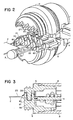
- Fig. 1, 1 denotes a sensor module having a first one Sensor element 2 and a second sensor element 3, with a single or multi-layer printed circuit board 4, with a first Shell 5 and a second shell 6.
- the first sensor element 2 is a humidity sensor and the second sensor element 3 is a temperature sensor.
- the two sensor elements 2 and 3 for example, the relative humidity of a room or an air duct detectable.
- the sensor module 1 more sensor elements or having only a single sensor element.
- the two shells 5 and 6 are designed such that they assembled a support function for the sensor module. 1 exercise.
- the sensor elements 2 and 3 by a Cover or protected by a filter 7, which advantageously on the two shells 5 and 6 am Sensor module 1 are attached.
- the Circuit board 4 with a sensor tube 8 can be covered, the advantageously on the two shells 5 and 6 am Sensor module 1 is attached.
- the circuit board 4 is for example via a with a Plug 9 provided cable with a parent system, typically connected to a control device.
- a Communication device for wireless data transmission between the sensor module and the higher-level system arranged.
- the two shells 5 and 6 serve the two shells 5 and 6 in advantageous manner during assembly of the Sensor module 1 as a production tool.
- the first shell 5 For storage of the printed circuit board 4, the first shell 5 by way of example, paragraphs 11 opposite, by the the positioning of the circuit board 4 on the first shell. 5 is determined.
- the first shell 5 by way of example Cam 12, which in conjunction with on the circuit board 4th trained recesses 13, the circuit board 4 in hold assembled state in trays 4 and 5.
- a first tooth 20, a second tooth 21 and a third one Tooth 22 belong to a first against the sensor elements. 2 and 3 arranged row of teeth, which advantageously is formed in the first shell 5 and through which electrical connection wires 23, 24 and 25 of Sensor elements 2 and 3 at a certain distance from each other insulated to the circuit board 4 are performed.
- the electrical connection wires 23, 24 and 25 soldered directly to the circuit board 4.
- the second tooth 21 is in a section shown.
- a fourth tooth is designated, the belongs to a second row of teeth, which compared to the first Tooth row offset against the printed circuit board in the second Shell 6 is formed.
- the guide means is in the exact shape and shape Design within wide limits of self-imposed requirements adaptable; such as number and mass of used sensor elements, in shape and wire diameter of the Connecting wires, to a required quality of the seal around the connecting wires and to a required Leakage current or voltage between individual Leads.
- the two shells 5 and 6 are made of one Plastic, in particular certain thermoplastics advantageous that absorb hardly any moisture.
- the teeth 20, 21, 22, 26, 27 and 28 are formed substantially wedge-shaped.
- the both rows of teeth are designed and arranged in such a way a first one associated with a first lead wire 23 Channel 30 of two adjacent teeth 20 and 21 of the first Tooth row and two adjacent teeth 27 and 26 of the second row of teeth is limited.
- a second a second Terminal wire 24 associated channel 31 is of two further adjacent teeth 21 and 22 of the first row of teeth and of two further adjacent teeth 26 and 28 of the limited second row of teeth.
- One of a wedge angle ⁇ of the teeth of the second row of teeth or a wedge angle ⁇ of teeth of the first row of teeth dependent steepness of the tooth flanks becomes at least as steep chosen that when capturing the connecting wires 23 and 24 no self-locking occurs.
- the between adjacent Teeth of a row of teeth molded saddle 32 or 33 is advantageously so on the shape and the diameter matched the received lead wire 23 and 24, that some degree of sealing, between the Sensor element 2 or 3 and the circuit board mounted in the State of the two assembled shells 5 and 6 reached becomes.
- the guide means has a third row of teeth on which between the second row of teeth and the Printed circuit board 4 and arranged on the first shell. 5 is trained.
- the third row of teeth one seventh tooth 35 (Fig. 2), an eighth tooth 36 and a ninth tooth 37, wherein the connecting wire 23 of the first Sensor element 2 between the seventh tooth 35 and the eighth Tooth 36 is located and the lead wire 24 of the second Sensor element 3 between the eighth tooth 36 and the ninth Tooth 37 lies.
- the teeth 35, 36 and 37 of the third row of teeth from the sensor elements 2 and 3 seen from just behind the corresponding teeth 20, 21 and 22 of the arranged first row of teeth and the second row of teeth is in assembled state of the two shells 5 and 6 between inserted the first and the third row of teeth.
- Fig. 5a the opposite to the first row of teeth after Rear-shifted second row of teeth with partially dashed lines - thus invisible marked - drawn tooth tips of Teeth 27, 26 and 28.
- a tooth 27 or 26 or 28 just behind a corresponding tooth 20 or 21 or 22 arranged, with the tooth tips of the first row of teeth opposite to the tooth tips of the second row of teeth are directed.
- the two shells 5 and 6 have over Positioning means by which the two shells 5 and 6 are precisely aligned with each other during assembly.
- the second shell 6 exemplary cams 70 and 71 which in assembling the both shells 5 and 6 in corresponding at the first Shell 5 recessed holes 72 and 73 are introduced.
- a denotes the distance between the two adjacent lead wires 23 and 24 and b the Distance between the two adjacent Connecting wires 24 and 25.
- the distance a or b between two connecting wires so small is that on the surface of the two shells 5 and 6 impermissibly high creepage currents between the Can form lead wires 23 and 24 or 24 and 25 respectively, is advantageously at the two shells 5 and 6 a Surface shape designed such that one for leakage currents Significant way greater than the distance a or b between the lead wires 23 and 24 and 24 and 25, respectively.
- a Significant reduction of leakage currents is thereby achievable that at exit points of the connecting wires 23, 24, 25 each have a substantially frusto-conical Structure 80, 81 and 82 is formed.
- the two are Shells 5 and 6 advantageously so on the diameter and the shape of the leads 23, 24 and 25 matched, that a circuit board side on the two shells 5 and 6 applied sealant sensor side one for Creepage currents between the connecting wires 23, 24 and 25 decisive shaping of the guide means is not effective is impaired.
- the two shells 5 and 6 before joining shown completely separated.
- the two shells 5 and 6 by a with Advantage arranged laterally on the shells 5 and 6 Hinge connected to each other, wherein a rotation axis of the Hinge parallel to the connecting wires 23, 24 and 25 lies.
- the hinge is directly at integral forms of the two shells 5 and 6 are formed.
- a measuring device shown in FIG. 6 has a capacitive humidity sensor 60 and a temperature sensor 61 on.
- An electrical signal S1 of the humidity sensor 60 is for Forming a humidity signal H with advantage on one with the Humidity sensor 60 connected first transducer 62nd while an electrical signal S2 of the Temperature sensor 61 to form a temperature signal T with advantage to one connected to the temperature sensor 61 second transducer 63 is guided.
- On the output side are the two transducers 62 and 63 with a microprocessor 64 connected.
- a data memory 65 has correction data K for correcting the Humidity signal H on.
- One of the recorded relative Humidity corresponding output signal Hr is from Microprocessor 64 using the humidity signal H, the Temperature signal T and the correction data K computable.
- the output signal Hr in a Interface unit 66 for a certain Communication standard prepared and standardized Output signal Hrs provided.
- the measuring device is a change in an important sensor characteristic of one Monitoring unit 67 over a longer period, ie recorded over several months or years.
- a status signal .DELTA.R output which for example, evaluated by the microprocessor 64 or is forwarded.
- the status signal ⁇ R becomes For example, as additional information with the Output signal Hr forwarded or in a variant of Measuring device regardless of the output signal Hr to Provided.
- the transducers 62 and 63, the microprocessor 64, the Data memory 65 are advantageously on the circuit board 4th (Fig. 1) arranged.
- the interface unit 66 is depending on Needed on the PCB 4 or in a variant on the the printed circuit board 4 opposite side of the sensor tube 8 in housed another housing.
Landscapes
- Physics & Mathematics (AREA)
- General Physics & Mathematics (AREA)
- Investigating Or Analyzing Materials By The Use Of Electric Means (AREA)
- Optical Transform (AREA)
- Measuring Pulse, Heart Rate, Blood Pressure Or Blood Flow (AREA)
- Eye Examination Apparatus (AREA)
Abstract
Description
Claims (14)
- Sensormodul mit wenigstens einem elektrische Anschlussdrähte aufweisenden Sensorelement und einer Leiterplatte, wobei die elektrischen Anschlussdrähte des Sensorelements mit der Leiterplatte elektrisch leitend verbunden sind,
gekennzeichnet durch ein zwischen der Leiterplatte (4) und dem Sensorelement (2; 3) angeordnetes Führungsmittel (20,21, 22,26,27,28) durch welches die elektrischen Anschlussdrähte (23, 24, 25) in einem gewissen Abstand voneinander isoliert zur Leiterplatte (4) geführt werden,
wobei das Führungsmittel(20,21,22,26,27,28) ein erstes Teil und ein zweites Teil (26,27,28) aufweist und die Anschlussdrähte (23, 24, 25) zwischen dem ersten Teil (20,21,22) und dem zweiten Teil (26,27,28) angeordnet sind,
wobei das erste Teil (20,21,22) im wesentlichen keilförmige Zähne(20,21,22) aufweist, die derart ausgebildet und angeordnet sind, dass ein Anschlussdraht (23; 24; 25) zwischen zwei nebeneinander angeordneten Zähnen liegt, und
wobei das zweite Teil (26,27,28) im wesentlichen keilförmige Zähne (26,27,28) aufweist, die derart ausgebildet und angeordnet sind, dass der Anschlussdraht (23; 24; 25) zwischen zwei nebeneinander angeordneten Zähnen liegt, und
wobei die Zähne des ersten Teils (20,21,22) gegenüber den Zähnen des zweiten Teils (26,27,28) versetzt angeordnet sind. - Sensormodul nach Anspruch 1, dadurch gekennzeichnet, dass das Führungsmittel (20,21,22,26,27,28) an einer Austrittstelle eines Anschlussdrahtes eine Oberflächenform aufweist, durch welche ein für einen Kriechstrom massgeblicher Weg zwischen dem Anschlussdraht und einem weiteren Anschlussdraht grösser als der Abstand zwischen den beiden Anschlussdrähten ist.
- Sensormodul nach einem vorangehenden Anspruch, dadurch gekennzeichnet, dass zwei benachbarte Zähne (20, 21) des ersten Teils eine Lücke bilden, in welcher ein Anschlussdraht (23) gefangen ist, wobei ein Sattel (32) der Lücke, auf dem der Anschlussdraht (23) aufliegt, und von dem aus je eine Zahnflanke der beiden benachbarten Zähne (20, 21) ausgeht, in einer eine leitende Schicht der Leiterplatte (4) aufweisenden Ebene liegt.
- Sensormodul nach einem vorangehenden Anspruch, dadurch gekennzeichnet, dass das erste Teil (20,21,22) an einer ersten Schale (5) ausgebildet ist, und
dass das zweite Teil (26,27,28) an einer zweiten Schale (6) ausgebildet ist, wobei die Leiterplatte (4) wenigstens an einer der beiden Schalen (5; 6) befestigt ist. - Sensormodul nach einem vorangehenden Anspruch, dadurch gekennzeichnet, dass die Leiterplatte (4) in der ersten Schale (5) gelagert ist.
- Sensormodul nach einem vorangehenden Anspruch, dadurch gekennzeichnet, dass die Anschlussdrähte (23, 24, 25) des Sensorelements (2; 3) an der Leiterplatte (4) angelötet sind.
- Sensormodul nach einem vorangehenden Anspruch, dadurch gekennzeichnet, dass die beiden Schalen (5, 6) derart auf die Durchmesser und die Form der Anschlussdrähte (23, 24, 25) des Sensorelements (2; 3) angepasst sind, dass eine leiterplattenseitig an den beiden Schalen (5, 6) aufgetragene Dichtungsmasse sensorseitig eine für Kriechströme zwischen den Anschlussdrähten (23, 24, 25) massgebende Formgebung des Führungsmittels (20,21,22,26,27,28) nicht wesentlich beeinträchtigt.
- Sensormodul nach einem vorangehenden Anspruch, dadurch gekennzeichnet, dass auf der Leiterplatte (4) eine elektronische Schaltung (62; 63) zur Umformung von elektrischen Sensorsignalen angeordnet ist.
- Sensormodul nach einem vorangehenden Anspruch, dadurch gekennzeichnet, dass auf der Leiterplatte (4) eine Datenspeicher (65) mit Daten (K) zur Korrektur von elektrischen Sensorsignalen angeordnet ist.
- Sensormodul nach einem vorangehenden Anspruch, dadurch gekennzeichnet, dass auf der Leiterplatte (4) ein Prozessor (64) angeordnet ist, durch den Sensorsignale transformierbar sind.
- Sensormodul nach einem vorangehenden Anspruch, dadurch gekennzeichnet, dass das Sensorelement durch ein Filter (7) abdeckbar ist.
- Sensormodul nach einem vorangehenden Anspruch, dadurch gekennzeichnet, dass ein die Leiterplatte (4) abdeckendes Fühlerrohr (8) angeordnet ist.
- Sensormodul nach einem vorangehenden Anspruch, dadurch gekennzeichnet, dass das Sensorelement (2; 3) ein Feuchtesensor ist.
- Sensormodul nach einem vorangehenden Anspruch, dadurch gekennzeichnet, dass das Sensorelement (2; 3) ein Temperatursensor ist.
Priority Applications (4)
| Application Number | Priority Date | Filing Date | Title |
|---|---|---|---|
| DE502004001155T DE502004001155D1 (de) | 2004-03-15 | 2004-03-15 | Messeinrichtung |
| AT04006043T ATE335988T1 (de) | 2004-03-15 | 2004-03-15 | Messeinrichtung |
| EP04006043A EP1577648B1 (de) | 2004-03-15 | 2004-03-15 | Messeinrichtung |
| US11/080,676 US7345591B2 (en) | 2004-03-15 | 2005-03-15 | Measuring device |
Applications Claiming Priority (1)
| Application Number | Priority Date | Filing Date | Title |
|---|---|---|---|
| EP04006043A EP1577648B1 (de) | 2004-03-15 | 2004-03-15 | Messeinrichtung |
Publications (2)
| Publication Number | Publication Date |
|---|---|
| EP1577648A1 true EP1577648A1 (de) | 2005-09-21 |
| EP1577648B1 EP1577648B1 (de) | 2006-08-09 |
Family
ID=34833594
Family Applications (1)
| Application Number | Title | Priority Date | Filing Date |
|---|---|---|---|
| EP04006043A Expired - Lifetime EP1577648B1 (de) | 2004-03-15 | 2004-03-15 | Messeinrichtung |
Country Status (3)
| Country | Link |
|---|---|
| EP (1) | EP1577648B1 (de) |
| AT (1) | ATE335988T1 (de) |
| DE (1) | DE502004001155D1 (de) |
Cited By (3)
| Publication number | Priority date | Publication date | Assignee | Title |
|---|---|---|---|---|
| US20160123779A1 (en) * | 2014-10-29 | 2016-05-05 | Siemens Schweiz Ag | Cover For A Duct Sensor |
| EP4067182A1 (de) * | 2021-02-19 | 2022-10-05 | Transportation IP Holdings, LLC | Sensoranordnung, trockner und fahrzeugsteuerungssystem damit |
| US12344214B2 (en) | 2021-02-19 | 2025-07-01 | Transportation Ip Holdings, Llc | Sensor assembly, dryer, and vehicle control system using the same |
Citations (4)
| Publication number | Priority date | Publication date | Assignee | Title |
|---|---|---|---|---|
| EP0601507A2 (de) * | 1992-12-08 | 1994-06-15 | Honeywell B.V. | Elektrischer Zustandsfühler |
| US5892149A (en) * | 1996-05-24 | 1999-04-06 | I F M Electronic Gmbh | Heat transfer monitoring and/or measuring device |
| US6365424B1 (en) * | 1999-08-17 | 2002-04-02 | Siemens Aktiengesellschaft | Sensor device and method of producing a sensor device |
| DE10146156A1 (de) * | 2000-09-20 | 2002-04-04 | Delphi Tech Inc | Modulare Sensoranordnung und Verfahren zur Herstellung derselben |
-
2004
- 2004-03-15 DE DE502004001155T patent/DE502004001155D1/de not_active Expired - Lifetime
- 2004-03-15 EP EP04006043A patent/EP1577648B1/de not_active Expired - Lifetime
- 2004-03-15 AT AT04006043T patent/ATE335988T1/de active
Patent Citations (4)
| Publication number | Priority date | Publication date | Assignee | Title |
|---|---|---|---|---|
| EP0601507A2 (de) * | 1992-12-08 | 1994-06-15 | Honeywell B.V. | Elektrischer Zustandsfühler |
| US5892149A (en) * | 1996-05-24 | 1999-04-06 | I F M Electronic Gmbh | Heat transfer monitoring and/or measuring device |
| US6365424B1 (en) * | 1999-08-17 | 2002-04-02 | Siemens Aktiengesellschaft | Sensor device and method of producing a sensor device |
| DE10146156A1 (de) * | 2000-09-20 | 2002-04-04 | Delphi Tech Inc | Modulare Sensoranordnung und Verfahren zur Herstellung derselben |
Cited By (5)
| Publication number | Priority date | Publication date | Assignee | Title |
|---|---|---|---|---|
| US20160123779A1 (en) * | 2014-10-29 | 2016-05-05 | Siemens Schweiz Ag | Cover For A Duct Sensor |
| US9689719B2 (en) * | 2014-10-29 | 2017-06-27 | Siemens Aktiengesellschaft | Cover for a duct sensor |
| EP4067182A1 (de) * | 2021-02-19 | 2022-10-05 | Transportation IP Holdings, LLC | Sensoranordnung, trockner und fahrzeugsteuerungssystem damit |
| AU2022200979B2 (en) * | 2021-02-19 | 2023-02-02 | Transportation Ip Holdings, Llc | Sensor assembly, dryer, and vehicle control system using the same |
| US12344214B2 (en) | 2021-02-19 | 2025-07-01 | Transportation Ip Holdings, Llc | Sensor assembly, dryer, and vehicle control system using the same |
Also Published As
| Publication number | Publication date |
|---|---|
| ATE335988T1 (de) | 2006-09-15 |
| DE502004001155D1 (de) | 2006-09-21 |
| EP1577648B1 (de) | 2006-08-09 |
Similar Documents
| Publication | Publication Date | Title |
|---|---|---|
| EP3231033B1 (de) | Zellkontaktierungssystem für eine elektrochemische vorrichtung | |
| EP2989669B1 (de) | Verfahren zum herstellen eines batterienkontaktierungssystems und batterienkontaktierungssystem | |
| DE10223946B4 (de) | Drehdetektoreinrichtung und Verfahren zu deren Herstellung | |
| EP1202024B1 (de) | Sensormodul mit Blechformteil ( magnetoresistiver Drosselklappensensor ) | |
| DE112015002366T5 (de) | Elektronische drosselkörperanordnung | |
| EP1446643A1 (de) | Messfühler und messfühleranordnung | |
| DE102007009569B4 (de) | Anschlusseinrichtung und Verfahren zu deren Herstellung | |
| EP3615903A1 (de) | Sensor zur erfassung eines räumlichen temperaturprofils und verfahren zur herstellung einer sensoreinheit | |
| EP4221966A1 (de) | Verfahren zur fertigung einer baugruppe aus einem kunststoff-schlauchabschnitt mit mindestens einer schlauch-drahteinlage und einem anschluss-konnektor | |
| EP1858034A1 (de) | Elektrisches Potentiometer | |
| DE102009050319B4 (de) | Elektrochemische Vorrichtung | |
| EP1577648B1 (de) | Messeinrichtung | |
| DE102007002177A1 (de) | Verbindungsaufbau für ein abgeschirmtes Kabel | |
| DE68924576T2 (de) | Integrierte Schaltung für Fahrzeug. | |
| DE19727989C2 (de) | Variabler Elektrischer Widerstand | |
| EP2679969B1 (de) | Vorrichtung zur Erfassung der Temperatur in einem Raum und ein Verfahren zur Herstellung einer solchen Vorrichtung | |
| DE102004007202B4 (de) | Druckdetektor mit langgestrecktem Gehäuse zur Aufnahme eines druckempfindlichen Elementes | |
| DE102022124320A1 (de) | Leiterplattenanordnung, Batterieanordnung und Verfahren zum Herstellen einer Leiterplattenanordnung | |
| WO2006048231A1 (de) | Batteriestromsensor für ein kraftfahrzeug | |
| WO2020160866A1 (de) | Schmelzsicherung, schaltungsanordnung und kraftfahrzeug mit schaltungsanordnung | |
| DE10104354A1 (de) | Elektrisches Flachbandkabel mit gefalteten elektrischen Leiterbahnen | |
| WO2004109269A1 (de) | Verfahren zur herstellung eines bauteils, insbesondere eines ölzustandssensors, sowie nach einem solchen verfahren hergestelltes bauteil | |
| WO2009086901A1 (de) | Leiterbahnträger sowie verfahren zur herstellung eines leiterbahnträgers | |
| EP1608535B1 (de) | Anordnung von elektrischen und/oder mechanischen komponenten auf einer grossen, flexiblen folienleiterfläche | |
| EP1055122A1 (de) | Bauelement zur gaskonzentrationsmessung |
Legal Events
| Date | Code | Title | Description |
|---|---|---|---|
| PUAI | Public reference made under article 153(3) epc to a published international application that has entered the european phase |
Free format text: ORIGINAL CODE: 0009012 |
|
| AK | Designated contracting states |
Kind code of ref document: A1 Designated state(s): AT BE BG CH CY CZ DE DK EE ES FI FR GB GR HU IE IT LI LU MC NL PL PT RO SE SI SK TR |
|
| AX | Request for extension of the european patent |
Extension state: AL LT LV MK |
|
| RAP1 | Party data changed (applicant data changed or rights of an application transferred) |
Owner name: SIEMENS SCHWEIZ AG |
|
| 17P | Request for examination filed |
Effective date: 20051021 |
|
| GRAP | Despatch of communication of intention to grant a patent |
Free format text: ORIGINAL CODE: EPIDOSNIGR1 |
|
| AKX | Designation fees paid |
Designated state(s): AT BE BG CH CY CZ DE DK EE ES FI FR GB GR HU IE IT LI LU MC NL PL PT RO SE SI SK TR |
|
| GRAS | Grant fee paid |
Free format text: ORIGINAL CODE: EPIDOSNIGR3 |
|
| GRAA | (expected) grant |
Free format text: ORIGINAL CODE: 0009210 |
|
| AK | Designated contracting states |
Kind code of ref document: B1 Designated state(s): AT BE BG CH CY CZ DE DK EE ES FI FR GB GR HU IE IT LI LU MC NL PL PT RO SE SI SK TR |
|
| PG25 | Lapsed in a contracting state [announced via postgrant information from national office to epo] |
Ref country code: IT Free format text: LAPSE BECAUSE OF FAILURE TO SUBMIT A TRANSLATION OF THE DESCRIPTION OR TO PAY THE FEE WITHIN THE PRESCRIBED TIME-LIMIT;WARNING: LAPSES OF ITALIAN PATENTS WITH EFFECTIVE DATE BEFORE 2007 MAY HAVE OCCURRED AT ANY TIME BEFORE 2007. THE CORRECT EFFECTIVE DATE MAY BE DIFFERENT FROM THE ONE RECORDED. Effective date: 20060809 Ref country code: SK Free format text: LAPSE BECAUSE OF FAILURE TO SUBMIT A TRANSLATION OF THE DESCRIPTION OR TO PAY THE FEE WITHIN THE PRESCRIBED TIME-LIMIT Effective date: 20060809 Ref country code: IE Free format text: LAPSE BECAUSE OF FAILURE TO SUBMIT A TRANSLATION OF THE DESCRIPTION OR TO PAY THE FEE WITHIN THE PRESCRIBED TIME-LIMIT Effective date: 20060809 Ref country code: SI Free format text: LAPSE BECAUSE OF FAILURE TO SUBMIT A TRANSLATION OF THE DESCRIPTION OR TO PAY THE FEE WITHIN THE PRESCRIBED TIME-LIMIT Effective date: 20060809 Ref country code: NL Free format text: LAPSE BECAUSE OF FAILURE TO SUBMIT A TRANSLATION OF THE DESCRIPTION OR TO PAY THE FEE WITHIN THE PRESCRIBED TIME-LIMIT Effective date: 20060809 Ref country code: RO Free format text: LAPSE BECAUSE OF FAILURE TO SUBMIT A TRANSLATION OF THE DESCRIPTION OR TO PAY THE FEE WITHIN THE PRESCRIBED TIME-LIMIT Effective date: 20060809 Ref country code: FI Free format text: LAPSE BECAUSE OF FAILURE TO SUBMIT A TRANSLATION OF THE DESCRIPTION OR TO PAY THE FEE WITHIN THE PRESCRIBED TIME-LIMIT Effective date: 20060809 Ref country code: PL Free format text: LAPSE BECAUSE OF FAILURE TO SUBMIT A TRANSLATION OF THE DESCRIPTION OR TO PAY THE FEE WITHIN THE PRESCRIBED TIME-LIMIT Effective date: 20060809 Ref country code: CZ Free format text: LAPSE BECAUSE OF FAILURE TO SUBMIT A TRANSLATION OF THE DESCRIPTION OR TO PAY THE FEE WITHIN THE PRESCRIBED TIME-LIMIT Effective date: 20060809 |
|
| REG | Reference to a national code |
Ref country code: GB Ref legal event code: FG4D Free format text: NOT ENGLISH |
|
| REG | Reference to a national code |
Ref country code: CH Ref legal event code: EP |
|
| REG | Reference to a national code |
Ref country code: IE Ref legal event code: FG4D Free format text: LANGUAGE OF EP DOCUMENT: GERMAN |
|
| REF | Corresponds to: |
Ref document number: 502004001155 Country of ref document: DE Date of ref document: 20060921 Kind code of ref document: P |
|
| PG25 | Lapsed in a contracting state [announced via postgrant information from national office to epo] |
Ref country code: DK Free format text: LAPSE BECAUSE OF FAILURE TO SUBMIT A TRANSLATION OF THE DESCRIPTION OR TO PAY THE FEE WITHIN THE PRESCRIBED TIME-LIMIT Effective date: 20061109 Ref country code: BG Free format text: LAPSE BECAUSE OF FAILURE TO SUBMIT A TRANSLATION OF THE DESCRIPTION OR TO PAY THE FEE WITHIN THE PRESCRIBED TIME-LIMIT Effective date: 20061109 |
|
| PG25 | Lapsed in a contracting state [announced via postgrant information from national office to epo] |
Ref country code: ES Free format text: LAPSE BECAUSE OF FAILURE TO SUBMIT A TRANSLATION OF THE DESCRIPTION OR TO PAY THE FEE WITHIN THE PRESCRIBED TIME-LIMIT Effective date: 20061120 |
|
| GBT | Gb: translation of ep patent filed (gb section 77(6)(a)/1977) |
Effective date: 20061030 |
|
| REG | Reference to a national code |
Ref country code: SE Ref legal event code: TRGR |
|
| PG25 | Lapsed in a contracting state [announced via postgrant information from national office to epo] |
Ref country code: PT Free format text: LAPSE BECAUSE OF FAILURE TO SUBMIT A TRANSLATION OF THE DESCRIPTION OR TO PAY THE FEE WITHIN THE PRESCRIBED TIME-LIMIT Effective date: 20070109 |
|
| NLV1 | Nl: lapsed or annulled due to failure to fulfill the requirements of art. 29p and 29m of the patents act | ||
| ET | Fr: translation filed | ||
| REG | Reference to a national code |
Ref country code: IE Ref legal event code: FD4D |
|
| PLBE | No opposition filed within time limit |
Free format text: ORIGINAL CODE: 0009261 |
|
| STAA | Information on the status of an ep patent application or granted ep patent |
Free format text: STATUS: NO OPPOSITION FILED WITHIN TIME LIMIT |
|
| 26N | No opposition filed |
Effective date: 20070510 |
|
| BERE | Be: lapsed |
Owner name: SIEMENS SCHWEIZ A.G. Effective date: 20070331 |
|
| PG25 | Lapsed in a contracting state [announced via postgrant information from national office to epo] |
Ref country code: BE Free format text: LAPSE BECAUSE OF NON-PAYMENT OF DUE FEES Effective date: 20070331 |
|
| PG25 | Lapsed in a contracting state [announced via postgrant information from national office to epo] |
Ref country code: MC Free format text: LAPSE BECAUSE OF NON-PAYMENT OF DUE FEES Effective date: 20070331 |
|
| PG25 | Lapsed in a contracting state [announced via postgrant information from national office to epo] |
Ref country code: GR Free format text: LAPSE BECAUSE OF FAILURE TO SUBMIT A TRANSLATION OF THE DESCRIPTION OR TO PAY THE FEE WITHIN THE PRESCRIBED TIME-LIMIT Effective date: 20061110 |
|
| PG25 | Lapsed in a contracting state [announced via postgrant information from national office to epo] |
Ref country code: EE Free format text: LAPSE BECAUSE OF FAILURE TO SUBMIT A TRANSLATION OF THE DESCRIPTION OR TO PAY THE FEE WITHIN THE PRESCRIBED TIME-LIMIT Effective date: 20060809 |
|
| REG | Reference to a national code |
Ref country code: FR Ref legal event code: TP |
|
| REG | Reference to a national code |
Ref country code: CH Ref legal event code: NV Representative=s name: SIEMENS SCHWEIZ AG Ref country code: CH Ref legal event code: PUE Owner name: SIEMENS AKTIENGESELLSCHAFT Free format text: SIEMENS SCHWEIZ AG#ALBISRIEDERSTRASSE 245#8047 ZUERICH (CH) -TRANSFER TO- SIEMENS AKTIENGESELLSCHAFT#WITTELSBACHERPLATZ 2#80333 MUENCHEN (DE) |
|
| REG | Reference to a national code |
Ref country code: GB Ref legal event code: 732E Free format text: REGISTERED BETWEEN 20090514 AND 20090520 |
|
| PG25 | Lapsed in a contracting state [announced via postgrant information from national office to epo] |
Ref country code: CY Free format text: LAPSE BECAUSE OF FAILURE TO SUBMIT A TRANSLATION OF THE DESCRIPTION OR TO PAY THE FEE WITHIN THE PRESCRIBED TIME-LIMIT Effective date: 20060809 Ref country code: LU Free format text: LAPSE BECAUSE OF NON-PAYMENT OF DUE FEES Effective date: 20070315 |
|
| PG25 | Lapsed in a contracting state [announced via postgrant information from national office to epo] |
Ref country code: HU Free format text: LAPSE BECAUSE OF FAILURE TO SUBMIT A TRANSLATION OF THE DESCRIPTION OR TO PAY THE FEE WITHIN THE PRESCRIBED TIME-LIMIT Effective date: 20070210 Ref country code: TR Free format text: LAPSE BECAUSE OF FAILURE TO SUBMIT A TRANSLATION OF THE DESCRIPTION OR TO PAY THE FEE WITHIN THE PRESCRIBED TIME-LIMIT Effective date: 20060809 |
|
| PG25 | Lapsed in a contracting state [announced via postgrant information from national office to epo] |
Ref country code: DE Free format text: LAPSE BECAUSE OF NON-PAYMENT OF DUE FEES Effective date: 20111001 |
|
| REG | Reference to a national code |
Ref country code: CH Ref legal event code: PUE Owner name: SIEMENS SCHWEIZ AG, CH Free format text: FORMER OWNER: SIEMENS AKTIENGESELLSCHAFT, DE |
|
| REG | Reference to a national code |
Ref country code: FR Ref legal event code: PLFP Year of fee payment: 12 |
|
| REG | Reference to a national code |
Ref country code: GB Ref legal event code: 732E Free format text: REGISTERED BETWEEN 20150220 AND 20150225 |
|
| REG | Reference to a national code |
Ref country code: DE Ref legal event code: R081 Ref document number: 502004001155 Country of ref document: DE Owner name: SIEMENS SCHWEIZ AG, CH Free format text: FORMER OWNER: SIEMENS AKTIENGESELLSCHAFT, 80333 MUENCHEN, DE Effective date: 20150407 |
|
| REG | Reference to a national code |
Ref country code: AT Ref legal event code: PC Ref document number: 335988 Country of ref document: AT Kind code of ref document: T Owner name: SIEMENS SCHWEIZ AG, CH Effective date: 20150330 |
|
| REG | Reference to a national code |
Ref country code: FR Ref legal event code: TP Owner name: SIEMENS SCHWEIZ AG, CH Effective date: 20160202 |
|
| REG | Reference to a national code |
Ref country code: FR Ref legal event code: PLFP Year of fee payment: 13 |
|
| REG | Reference to a national code |
Ref country code: FR Ref legal event code: PLFP Year of fee payment: 14 |
|
| REG | Reference to a national code |
Ref country code: FR Ref legal event code: PLFP Year of fee payment: 15 |
|
| PGFP | Annual fee paid to national office [announced via postgrant information from national office to epo] |
Ref country code: FR Payment date: 20230317 Year of fee payment: 20 Ref country code: AT Payment date: 20230207 Year of fee payment: 20 |
|
| PGFP | Annual fee paid to national office [announced via postgrant information from national office to epo] |
Ref country code: SE Payment date: 20230307 Year of fee payment: 20 Ref country code: IT Payment date: 20230321 Year of fee payment: 20 Ref country code: DE Payment date: 20220620 Year of fee payment: 20 |
|
| PGFP | Annual fee paid to national office [announced via postgrant information from national office to epo] |
Ref country code: CH Payment date: 20230612 Year of fee payment: 20 |
|
| PGFP | Annual fee paid to national office [announced via postgrant information from national office to epo] |
Ref country code: GB Payment date: 20230403 Year of fee payment: 20 |
|
| REG | Reference to a national code |
Ref country code: DE Ref legal event code: R071 Ref document number: 502004001155 Country of ref document: DE Ref country code: CH Ref legal event code: PL |
|
| REG | Reference to a national code |
Ref country code: GB Ref legal event code: PE20 Expiry date: 20240314 |
|
| PG25 | Lapsed in a contracting state [announced via postgrant information from national office to epo] |
Ref country code: GB Free format text: LAPSE BECAUSE OF EXPIRATION OF PROTECTION Effective date: 20240314 |
|
| REG | Reference to a national code |
Ref country code: SE Ref legal event code: EUG |
|
| REG | Reference to a national code |
Ref country code: AT Ref legal event code: MK07 Ref document number: 335988 Country of ref document: AT Kind code of ref document: T Effective date: 20240315 |