EP1570944B1 - Umhüllte Elektrode mit niedrigem Gasausstoss und niedrigem hexavalenten Chrom, zum Schweissen von rostfreiem Stahl - Google Patents
Umhüllte Elektrode mit niedrigem Gasausstoss und niedrigem hexavalenten Chrom, zum Schweissen von rostfreiem Stahl Download PDFInfo
- Publication number
- EP1570944B1 EP1570944B1 EP05300115A EP05300115A EP1570944B1 EP 1570944 B1 EP1570944 B1 EP 1570944B1 EP 05300115 A EP05300115 A EP 05300115A EP 05300115 A EP05300115 A EP 05300115A EP 1570944 B1 EP1570944 B1 EP 1570944B1
- Authority
- EP
- European Patent Office
- Prior art keywords
- coating
- weight
- electrode
- lithium
- electrode according
- Prior art date
- Legal status (The legal status is an assumption and is not a legal conclusion. Google has not performed a legal analysis and makes no representation as to the accuracy of the status listed.)
- Expired - Lifetime
Links
Images

Classifications
-
- B—PERFORMING OPERATIONS; TRANSPORTING
- B23—MACHINE TOOLS; METAL-WORKING NOT OTHERWISE PROVIDED FOR
- B23K—SOLDERING OR UNSOLDERING; WELDING; CLADDING OR PLATING BY SOLDERING OR WELDING; CUTTING BY APPLYING HEAT LOCALLY, e.g. FLAME CUTTING; WORKING BY LASER BEAM
- B23K35/00—Rods, electrodes, materials, or media, for use in soldering, welding, or cutting
- B23K35/22—Rods, electrodes, materials, or media, for use in soldering, welding, or cutting characterised by the composition or nature of the material
- B23K35/36—Selection of non-metallic compositions, e.g. coatings or fluxes; Selection of soldering or welding materials, conjoint with selection of non-metallic compositions, both selections being of interest
- B23K35/3601—Selection of non-metallic compositions, e.g. coatings or fluxes; Selection of soldering or welding materials, conjoint with selection of non-metallic compositions, both selections being of interest with inorganic compounds as principal constituents
- B23K35/3608—Titania or titanates
-
- B—PERFORMING OPERATIONS; TRANSPORTING
- B23—MACHINE TOOLS; METAL-WORKING NOT OTHERWISE PROVIDED FOR
- B23K—SOLDERING OR UNSOLDERING; WELDING; CLADDING OR PLATING BY SOLDERING OR WELDING; CUTTING BY APPLYING HEAT LOCALLY, e.g. FLAME CUTTING; WORKING BY LASER BEAM
- B23K35/00—Rods, electrodes, materials, or media, for use in soldering, welding, or cutting
- B23K35/22—Rods, electrodes, materials, or media, for use in soldering, welding, or cutting characterised by the composition or nature of the material
- B23K35/36—Selection of non-metallic compositions, e.g. coatings or fluxes; Selection of soldering or welding materials, conjoint with selection of non-metallic compositions, both selections being of interest
- B23K35/365—Selection of non-metallic compositions of coating materials either alone or conjoint with selection of soldering or welding materials
-
- B—PERFORMING OPERATIONS; TRANSPORTING
- B23—MACHINE TOOLS; METAL-WORKING NOT OTHERWISE PROVIDED FOR
- B23K—SOLDERING OR UNSOLDERING; WELDING; CLADDING OR PLATING BY SOLDERING OR WELDING; CUTTING BY APPLYING HEAT LOCALLY, e.g. FLAME CUTTING; WORKING BY LASER BEAM
- B23K35/00—Rods, electrodes, materials, or media, for use in soldering, welding, or cutting
- B23K35/22—Rods, electrodes, materials, or media, for use in soldering, welding, or cutting characterised by the composition or nature of the material
- B23K35/24—Selection of soldering or welding materials proper
- B23K35/30—Selection of soldering or welding materials proper with the principal constituent melting at less than 1550°C
- B23K35/3053—Fe as the principal constituent
- B23K35/308—Fe as the principal constituent with Cr as next major constituent
Definitions
- the present invention relates to the field of rutile-type, soft-melting, low-emission, low-emission hexavalent chromium (Cr VI ) and solid-coated, that is to say, little or no friable , in particular for welding stainless steels.
- Fumes emitted during welding operations resulting from complex processes of vaporization - condensation - oxidation or vaporization - oxidation - condensation, are among the nuisances associated with arc welding.
- welding fumes the nature and quantity of which are a growing concern in manufacturing plants, require the use of protections, such as smoke extractors, to preserve the health of operators and staff members. working nearby.
- the strong presence of the chromium element in stainless steels means that, during their welding, the particles constituting the welding fumes contain a high content of compounds that carry the chromium element, namely trivalent chromium (Cr III ). shape the least toxic element chromium, and / or hexavalent chromium (Cr VI ), form known to be highly toxic to humans since considered a carcinogen.
- the element hexavalent chromium (Cr VI ), resulting from welding fumes and present in the breathing air, is therefore particularly regulated, given its potential toxic nature.
- VME of trivalent chromium (Cr III ) being 0.5 mg / m 3
- its maximum permissible concentration in the fumes, so as not to generate a reduction of the permissible fumes in the breathing air is 10%.
- the compounds based on Na and K are conventionally used almost systematically in coated electrode coatings to give the products their good arc characteristics, especially stability and arc dynamics. It is for this reason that the electrodes formulated based on lithium silicate alone, and therefore without Na and K, have a process weldability much lower than that of the standard electrodes.
- GB-A-1,581,182 discloses a rutile type electrode for welding stainless steels, and for reducing the volume of fumes, especially the amount of toxic chromium, released during welding.
- the coating contains less than 1% by weight of (Na 2 O + K 2 O).
- the binder is formed from a colloidal solution containing 1 to 90% by weight of Si, Al, Zr, B, P, Ti, Mg, Ca, Th and / or Fe oxides. This solution may contain silicate of lithium.
- the problem that arises is to propose a range of environmentally friendly coating formulations, with a solid coating, of the soft-melt rutile type, intended for welding stainless steels, leading to a deposited metal (after melting).
- the chemical composition of which complies with the standards for different grades of stainless steels, in particular EN 1600 and AWS A5.4.
- the invention also relates to a method for arc welding stainless steel, in which an electrode according to the invention is used to produce at least one solder joint on one or more parts to be welded, as well as on the coating of such an electrode.
- the arc welding process at the coated electrode starts when the operator initiates the welding arc by striking / rubbing the end of his electrode on the workpiece, which electrode and workpieces are an integral part of the electrical installation, just like the welding generator, these being connected to each other by all the cables of the installation and the grounding.
- the intense heat thus produced causes the end of the electrode and the base metal to melt at the point of impact of the arc; the transfer of metal then takes place through the arc to the room.
- the metal is thus deposited on the part as the electrode is consumed by fusion.
- the operator must then maintain the arc by holding the end of the electrode at a certain height of the workpiece and moving it at a steady speed along the workpiece. While the solder is deposited, a sufficient amount of heat is maintained to melt the end of the electrode and the area underlying the arc on the workpiece.
- a coated electrode for arc welding is a conductor rod of the electrical current called core surrounded by an adherent coating commonly called coating, at the end of which springs the welding arc.
- the energy of the arc is thus used as a means of heating the parts to be assembled.
- the metal core is generally chosen, as far as possible, so that its chemical composition corresponds to the grade of the base metal to be welded.
- it can also be made of steel soft, that is to say, virtually without alloying element with the exception of a low manganese content, the elements of alloys required to obtain a deposit of the desired shade being then provided by the coating; we are then in the presence of an electrode called "synthetic".
- the content of alloying elements of the coating is never zero because it makes it possible to improve the mechanical characteristics of the weld and to compensate for the losses due to the volatilization of the metal elements during the fusion of the electrode when an alloying soul whose analysis is close to that of the metal to be deposited is used, or of providing the alloying elements necessary for synthesizing the composition of the metal to be deposited when using a core made of mild steel.
- the coating has a major influence on the welding characteristics and the resulting properties of the deposited metal. His major roles are both electrical, mechanical, and metallurgical.
- the main functions that must ensure the ingredients involved in the composition of the coating are multiple. Most of the constituents may have more than one function and the combination of several constituents at specific levels may allow the realization of a particular function.
- the different coating constituents can thus be classified according to different families, namely the constituents in the form of powders and the constituents in liquid form.
- the constituents in liquid form are especially binders, which are most often liquid silicates used for the agglomeration of dry powders constituting the coating before forming the dough to allow extrusion.
- the method of preparation of the mixture entering the composition of the coating for the manufacture of a coated electrode is carried out according to a procedure which is decomposed in the following manner.
- Binder (s) is (are) then added (s) for wetting the dry mixture in a kneader.
- the coating paste After the rheological properties of the coating paste have been assessed, it is shaped and then the concentric extrusion of the coating is carried out by means of an electrode press around metal cores previously cut to the length required.
- Verification of the centering of the extruded coating around the cores or concentricity of the electrodes then follows: a good centering is necessary for the quality of the final product.
- the ends of the electrodes must then be prepared by brushing the coating; the ignition end of the electrodes is in turn prepared most often by graphite or aluminization depending on the nature of the product.
- the electrodes are baked. This cooking can be carried out, in steps or not, up to a temperature of the order of 350-500 ° C.
- the formulation means employed consist in adopting the conventional solution for eliminating in the formulations all the ingredients containing the alkaline elements Na and K and replace them with 'equivalent' lithium-based ingredients (Li).
- Li spodumene
- LiAl Si 2 O s
- petalite LiAlSi 4 O 10
- eucryptite LiAlSiO 4
- These compounds used as coating constituents have as main functions to control the viscosity of the liquid slag, to participate in the formation of the slag and thus to the protection of the deposited metal, and to participate in the stabilization of the arc being welded. .
- Table 1 illustrates, for 2 electrodes (A and B) of type 316L, with a central core of diameter equal to 2.5 mm in stainless steel type 304L, formulated on the same formulation base and from the same silicate. lithium introduced in liquid form in fixed quantity at the wetting, the influence of the choice of the type of feldspar on the amount of hexavalent chromium in the welding fumes generated with these electrodes.
- the electrode of formula A is formulated from a set of dry powders according to the prior art, whereas the electrode of formula B consists of dry powders according to the invention, both manufactured by means of a silicate of lithium according to the invention.
- Table 1 ⁇ / u> Formula AT B (according to prior art) (according to invention)
- Raw materials (powders + binder) used in the composition of the coating (% by weight in the coating)
- Various metallic elements 20.1% Oxides, carbonates, fluorides and other rodents 50.8%
- Alumino-silicate type Na and K feldspar: Spodumene ( compound of Li): 24.9% 24.9% Li silicate (dry part) SiO2 3.62% Li2O 0.52% Na2O 0.06% Total: 100% Cr VI resulting in fumes 2.7% 0.6% Smoke emission rate 0.13 g / min 0.08 g / min
- Formula B according to the invention formulated from spodumene substituting feldspars of Na and K used in Formula A, gives a concentration of Cr VI in the fumes of 0.6% instead of 2.7%, that is to say about 4 times lower.
- the fume emission rate of Formula B according to the invention is significantly lower than that of Formula A.
- extrusion agents or spinning agents which are used for the formulation of coated electrodes.
- these are organic materials which, in combination with the binders and the powders used, make it possible to obtain a good paste consistency and the acquisition by it of its rheological properties with a view to its extrusion around the surface. metal core of the electrode.
- spinning agents constituting conventional electrode coatings, which traditionally contain Na or K elements, by other compounds devoid of these elements.
- the frequently used spinning agents such as Na or K alginates, be completely banned and replaced by other suitable spinning agents within the scope of the present invention.
- suitable spinning agents such as carboxymethylcellulose (CMC), hydroxyethylcellulose or any other organic substance or water-soluble resin, calcium alginate, polymers of plant origin, such as guar gum, talc ( of typical formula 3MgO.4SiO 2 .H 2 O), or else the clay (of typical formula Al 2 O 3 .2SiO 2 .2H 2 O).
- Table 2 shows the influence of the replacement of strands based on Na and K (electrode of formula C) by strands devoid of Na and K (electrode of formula D) on the amount of Cr VI produced and the fume emission rate, for soft fusion type electrodes of the same diameter equal to 3.2 mm, made from Li silicate (based on 3.62% of SiO 2 + 0.52% Li 2 O + 0.06% Na 2 O in dry form by weight in the coating), for the two grades of stainless steels 308L and 316L.
- the electrode D according to the invention leads to a smoke emission rate lower by nearly 20% than that of the electrode C, as well as to a proportion of chromium VI also decreased by more than 10% with respect to the C electrode.
- Table 3 specifies, for the combinations of strands used in formulas C and D of Table 2, the contents of elements Ca, Na and K corresponding.
- Table 3 ⁇ / u> Threads of the formula C Ropes of the formula D It 0.018% 0.020% N / A 0.072% 0.006% K 0.041% 0.005%
- the percentage (%) is expressed in% by weight in the constituent considered.
- the coated electrode D according to the invention contains approximately the same proportion of calcium as the electrode C but, on the other hand, contains approximately 12 times less Na and 8 times less K .
- the binders are generally aqueous silicates used in liquid form for the agglomeration of dry powders constituting the coating before forming the dough to allow extrusion.
- the amount of silicates used should be such that a thin film is established between the powder particles, the one or more silicates acting as a bridging agent between the powders.
- the optimum amount of binder to be used depends mainly on its viscosity, the binding / spinning coupling retained, as well as the particle size distribution of the powders used in the formula.
- One of the constraints imposed for the manufacture of ecological stainless electrodes according to the invention is to use lithium silicate, replacing traditional Na and / or K silicates.
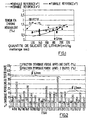
- the Figure 1 shows the existence of such a maximum amount of lithium silicate (Q max. ) not to exceed, for the various bases of stainless formulas studied at the origin of the development of ecological stainless electrodes, while Table 4 below after gives the compositions of the coatings of the formulas references n ° 1 to 3 of the Figure 1 . More precisely, the curves of the Figure 1 have been established by performing the formulation substitutions of the 3 examples described above, while varying the amount of Li silicate used. For formula reference 3, the most promising in terms of reduction of fumes emitted and operational performance (soft fusion, slag detachment, appearance of cord) at the origin of the development, Q max .
- Li binder in liquid form per kg of dry mix, i.e. in dry form, in the range of 3.4 to 4% by weight in the coating for SiO 2 , from 0.4 to 0.6% for Li 2 O and 0.05 to 0.06% for Na 2 O.
- Table 5 illustrates, for 2 electrodes of grade 316L of diameter equal to 2.5 mm formulated on the same formulation base and from spodumene, the influence of the choice of the type of silicate, that is to say of binder, on the amount of Cr VI in the welding fumes and the rate of fumes emission.
- Formula E according to the invention formulated from Li silicate in substitution of Na / K silicates in Formula F according to the prior art, gives a concentration of Cr VI in the fumes of 0.6% instead of 3.0%., a reduction of 80%.
- the viscosity of the lithium silicates used in the context of the invention is generally very low, that is to say typically from 15 to 50 centipoise (cpo) at ambient temperature (20 ° C.), therefore much lower than those of traditional Na and / or K silicates whose viscosity range is typically from 150 to 600 cc.
- the density of the lithium silicate falling within the scope of the invention is around 1.2.
- the electrodes thus obtained present very fragile coatings and can not thus claim to be sufficiently resistant mechanically (shocks, falls, friction, folding %) during their packaging, their transport, and their subsequent use in industrial environment.
- the spinning agents eg CMC, guar gum, alginates
- the spinning agents eg CMC, guar gum, alginates
- This test consists in successively dropping 10 electrodes coming from the same manufacture, from a height of 1 m on a hard horizontal surface, for example a concrete ground and to express the solidity of their coatings in fraction in mass of coating lost after 1 fall, then after 2 falls.
- the Figure 2 illustrates a series of results obtained from a number of electrode drop tests (diameters of 2.5 mm and 3.2 mm) from various fabrications, for which variations have been made to the formulation parameters listed above. .
- this is achieved by the joint use of a large part of the mixture, the average particle size of which is greater than or equal to 100 ⁇ m, with a secondary part of fine powders, that is to say ⁇ 40 ⁇ m. .
- Melting is the way the electrode melts during welding. It characterizes the transfer of the drops of metal and the molten coating that takes place between the electrode that burns and the melt on the workpiece.
- a fusion which is carried out with a transfer of mainly fine drops is qualified as soft fusion. It is characterized in this case by a steady, weak breath sound intensity, superimposed on a slight crackle, and is a sign of obvious user comfort for the welder.
- a gentle fusion is accompanied by a very small amount of projections during welding. These are very fine when they exist.
- the projections represent the amounts of metal that are ejected out of the arc during welding or that result from the splashing of liquid metal drops in the melt.
- the slag suite is the line defining the boundary between the melt, ie the liquid metal, at the tip of the electrode and the supernatant liquid slag at the surface.
- the shape and stability of the slag suite conditions the shape and regularity of the underlying bead and, in particular, the smoothness and regularity of the streaks on the surface of the bead after solidification.
- the slag sequence is generally very close to the tip of the electrode behind the base of the arc.
- the formulation of a soft fusion type electrode must therefore be such that the slag sequence appears calm and stable because otherwise it may be a gene for the welder and may lead to defects in the bead appearance (irregularly spaced streaks, more or less marked ...), or inclusions of slag in the deposit.
- the formulation of a soft fusion electrode must make it possible to obtain a stable melting and slurry.
- surfactant elements such as Sb, Bi, Se, Te, S must be carefully controlled in the coatings in order to obtain a good slag detachment without the operating performances and / or the resistance of the coating of the product are affected.
- Tables 8a and 8b show that the obtaining of an ecological stainless electrode according to the invention, of the soft-melting and solid-coating type, is conditioned by the use of a certain number of raw materials whose proportions must be carefully controlled.
- Tables 8a and 8b are recorded test matrices demonstrating the influence of the nature of the coating powders used on the operating performance of the electrodes and the strength of their coating.
- Table 8a ⁇ / u> Formula number 1 2 3 4 5 6 7 8
- Raw materials (powders + binders) used in the composition of the coating (% by weight in the coating) rutile 35.4 35.4 35.4 35.4 35.4 35.4 35.4 35.4 35.4 35.4 35.4 Various carbonates 9.6 9.6 9.6 1.9 1.9 1.9 1.9 1.9 1.9 1.9 1.9 1.9 S from various sulphates 0.7 0.7 0 0 0.7 0.7 0 0 Total quantity in Sb, Bi, Se and Te 0.4 0 0.4 0 0.4 0 0.4 0 Li silicate (dry part, ie SiO 2 + Li 2 O + traces including Na 2 O) 4.2 4.2 4.2 4.2 4.2 4.2 4.2 4.2 4.2 4.2 4.2 4.2 4.2 4.2 4.2 4.2 4.2
- Table 9 summarizes all the basic principles of formulation / manufacture of ecological stainless electrodes according to the invention that must be respected for the optimization of their main properties, namely a reduced fume emissions, a low content. in hexavalent chromium, less than 1% in fumes, possible fabrication, solid coating, good process weldability (ie, soft fusion, stable arc, little or no spatter), and a bead of Welding of beautiful appearance, healthy, clean, uniform, shiny, and finely streaked, with good wetting, as shown in the pictures of Figures 3 and 4 , and a good detachment of slag, as shown in Figure 3 .
- Table 10 shows, for its part, the uniqueness of the ecological stainless electrodes of the invention manufactured using lithium silicate and Li-based substitution powders with respect to the "traditional" non-ecological stainless electrodes formulated from Na and / or K silicates and other ingredients containing Na and K elements.
- the ecological stainless electrodes of the invention make it possible to reduce smoke emissions by 25% to 98% compared to standard stainless electrodes and lead to a content of Cr VI (expressed as a% in fumes) of 4 to 5 times lower than those of the standard electrodes.
- the values indicated above correspond to electrodes formulated on a core diameter of 3.2 mm, grade 316L.
Landscapes
- Engineering & Computer Science (AREA)
- Mechanical Engineering (AREA)
- Chemical & Material Sciences (AREA)
- Inorganic Chemistry (AREA)
- Nonmetallic Welding Materials (AREA)
- Arc Welding In General (AREA)
Claims (16)
- Umhüllte Elektrode, gebildet aus einem zentralen metallischen Kern, der mindestens teilweise von einer feststofflichen Umhüllung bedeckt ist, welche auf dem Kern eine Beschichtung bildet, wobei die Umhüllung Rutil und mindestens eine Verbindung auf Basis von Lithium enthält und frei von Natrium- und Kaliumfeldspat ist, wobei die Umhüllung Folgendes umfasst, wobei die Gewichtsprozente (%) für jede Verbindung unter Bezugnahme auf das Gesamtgewicht der Elektrodenumhüllung ausgedrückt sind:- 5 bis 45 Gew.-% mindestens eines Aluminosilikats auf Basis von Lithium oder 0,2 bis 3% Lithium, das aus mindestens einem Aluminosilikat auf Basis von Lithium stammt,- mindestens einen Extrusionshilfsstoff, der frei von Na und/oder K ist,- Lithiumsilikat als Bindemittel,- ungefähr 10 bis 55 Gew.-% eines oder mehrerer metallischer Elemente in Form von Ferrolegierungen oder einzelnen Elementen, und- einen Gesamtanteil von Na und K in der Umhüllung, dessen Summe 0 bis 1 Gew.-% beträgt.
- Elektrode nach Anspruch 1, dadurch gekennzeichnet, dass der zentrale metallische Kern aus Weichstahl oder aus nicht rostendem Stahl besteht.
- Elektrode nach Anspruch 1 oder 2, dadurch gekennzeichnet, dass der Durchmesser des Kerns 1,8 bis 6 mm, vorzugsweise 2,5 bis 4 mm beträgt.
- Elektrode nach Anspruch 1 oder 2, dadurch gekennzeichnet, dass mindestens ein Aluminosilikat, insbesondere mindestens ein Lithiumfeldspat, aus Spodumen, Petalit und Eukryptit gewählt ist.
- Elektrode nach einem der Ansprüche 1 bis 4, dadurch gekennzeichnet, dass sie, wenn das Gewicht der Elemente unter Bezugnahme auf das Gesamtgewicht der Elektrodenumhüllung ausgedrückt wird, mehr als 10% an Si und mehr als 1,3% an Li, vorzugsweise 11 bis 21% an Si und 1,5 bis 2,9% an Li, aufweist.
- Elektrode nach einem der Ansprüche 1 bis 5, dadurch gekennzeichnet, dass der Gesamtanteil an Na und K in der Umhüllung kleiner-gleich 0,50 Gew.-% beträgt.
- Elektrode nach einem der Ansprüche 1 bis 6, dadurch gekennzeichnet, dass mindestens ein Extrusionshilfsstoff aus der Gruppe gewählt ist, die von Carboxymethylcellulose (CMC), Hydroxyethylcellulose, wasserlöslichen organischen Substanzen oder Harzen, Calciumalginat, Polymeren pflanzlicher Herkunft wie etwa Guargummi oder aus Talkum (mit der typischen Formel 3MgO.4SiO2.H2O) und Ton (mit der typischen Formel Al2O3.2SiO2.2H2O) gebildet ist.
- Elektrode nach einem der Ansprüche 1 bis 7, dadurch gekennzeichnet, dass die Umhüllung ungefähr mindestens 20 Ges.-% der Umhüllung an einem oder mehreren metallischen Elementen in Form von Ferrolegierungen oder einzelnen Elementen, die aus Mangan, Nickel, Chrom, Molybdän, Eisen, Silizium, Aluminium, Niob, Tantal, Kupfer und deren Mischungen gewählt sind, umfasst.
- Elektrode nach einem der Ansprüche 1 bis 8, dadurch gekennzeichnet, dass sie unter Bezugnahme auf das Gesamtgewicht der Elektrodenumhüllung 11 bis 21% an Si und 1,5 bis 2,9% an Li aufweist.
- Elektrode nach einem der Ansprüche 1 bis 9, dadurch gekennzeichnet, dass die Umhüllung, ausgedrückt in Ges.-% in der Umhüllung, in den folgenden Anteilen Pulver enthält, die der Herstellung der Umhüllung dienen:- 0,8 bis 18,5% an Al2O3, vorzugsweise 2 bis 16,5% an Al2O3,- 5 bis 40% an SiO2, vorzugsweise 9 bis 35% an SiO2,- 15 bis 45% an TiO2, vorzugsweise 20 bis 40% an TiO2,- 2,8 bis 8,5% an CaO, vorzugsweise 4 bis 7,5% an CaO,- 0,5 bis 5% an CaF2, vorzugsweise 1 bis 4% an CaF2.
- Elektrode nach einem der Ansprüche 1 bis 10, dadurch gekennzeichnet, dass die Umhüllung, ausgedrückt in % des Gesamtgewichts in der Elektrodenumhüllung, in den folgenden Anteilen Elemente enthält, die der Herstellung der Umhüllung dienen:- 0,4 bis 10,0% an Al, vorzugsweise 1 bis 9% an Al,- 2,0 bis 19,0% an Si, vorzugsweise 4 bis 17% an Si,- 9,0 bis 27,0% an Ti, vorzugsweise 12 bis 24% an Ti,- 0,2 bis 3,0% an Ca, vorzugsweise 0,5 bis 2,5% an Ca, und- 0,2 bis 3,0% an Li, vorzugsweise 0,4 bis 2,6% an Li.
- Elektrode nach einem der Ansprüche 1 bis 11, dadurch gekennzeichnet, dass die Umhüllung aus einer trockenen Mischung von Umhüllungspulvern erhalten wird, die aus mindestens 17 Gew.-% in der Trockenformel an Partikeln mit einer Korngröße von größer-gleich 100 µm und aus mindestens 8% an Feinpartikeln mit einer Korngröße von kleiner-gleich 40 µm gebildet ist.
- Elektrode nach einem der Ansprüche 1 bis 12, dadurch gekennzeichnet, dass die Stoffmenge, die sich nach einer Fallprüfung von der Umhüllung ablöst, bei welcher die Elektrode einen freien senkrechten Fall aus einer Höhe von 1 Meter auf eine harte waagerechte Fläche erfährt, bei Elektroden, deren Kerndurchmesser 1,6 bis 6 mm beträgt, kleiner-gleich ungefähr 15 Gew.-% unter Bezugnahme auf das Gesamtgewicht der Umhüllung beträgt, und bei Elektroden, deren Kerndurchmesser kleiner als 3,2 mm ist, vorzugsweise kleiner-gleich ungefähr 7%.
- Elektrode nach einem der Ansprüche 1 bis 10, dadurch gekennzeichnet, dass die Umhüllung, ausgedrückt in Gew.-% in der Umhüllung, 4 bis 18% an pulverförmigen Carbonaten, insbesondere an CaCO3, vorzugsweise 8 bis 13% an Carbonaten, enthält.
- Lichtbogenschweißverfahren für ein oder mehrere zu schweißende Werkstücke aus nicht rostendem Stahl, wobei eine Elektrode nach einem der Ansprüche 1 bis 14 verwendet wird, um mindestens eine Schweißnaht auf dem oder den zu schweißenden Werkstück (en) herzustellen.
- Umhüllung für Elektroden, die Rutil enthält und Folgendes umfasst, wobei die Gewichtsprozente (%) für jede Verbindung unter Bezugnahme auf das Gesamtgewicht der Elektrodenumhüllung ausgedrückt sind:- 5 bis 45 Gew.-% mindestens eines Aluminosilikats auf Basis von Lithium oder insgesamt 0,2 bis 3% an Lithium, das aus der Gesamtheit der Elemente stammt, welche in Form von Pulvern und Bindemitteln der Herstellung der Umhüllung dienen,- mindestens einen Extrusionshilfsstoff, der frei von Na und/oder K ist,- Lithiumsilikat als Bindemittel,- ungefähr 10 bis 55 Gew.-% eines oder mehrerer metallischer Elemente in Form von Ferrolegierungen oder einzelnen Elementen, und- einen Gesamtanteil von Na und K in der Umhüllung, der 0 bis 0,5 Gew.-% beträgt.
Applications Claiming Priority (2)
| Application Number | Priority Date | Filing Date | Title |
|---|---|---|---|
| FR0450398A FR2866825B1 (fr) | 2004-03-01 | 2004-03-01 | Electrode enrobee a faible emission de fumees et bas chrome hexavalent pour le soudage des aciers inoxydables |
| FR0450398 | 2004-03-01 |
Publications (2)
| Publication Number | Publication Date |
|---|---|
| EP1570944A1 EP1570944A1 (de) | 2005-09-07 |
| EP1570944B1 true EP1570944B1 (de) | 2009-10-28 |
Family
ID=34746558
Family Applications (1)
| Application Number | Title | Priority Date | Filing Date |
|---|---|---|---|
| EP05300115A Expired - Lifetime EP1570944B1 (de) | 2004-03-01 | 2005-02-14 | Umhüllte Elektrode mit niedrigem Gasausstoss und niedrigem hexavalenten Chrom, zum Schweissen von rostfreiem Stahl |
Country Status (8)
| Country | Link |
|---|---|
| US (1) | US20050189337A1 (de) |
| EP (1) | EP1570944B1 (de) |
| AT (1) | ATE446819T1 (de) |
| CA (1) | CA2498246A1 (de) |
| DE (1) | DE602005017319D1 (de) |
| ES (1) | ES2335020T3 (de) |
| FR (1) | FR2866825B1 (de) |
| PT (1) | PT1570944E (de) |
Cited By (2)
| Publication number | Priority date | Publication date | Assignee | Title |
|---|---|---|---|---|
| CN101817130A (zh) * | 2010-04-06 | 2010-09-01 | 天津大桥焊材集团有限公司 | 一种50公斤级耐火耐候钢焊条及其制备方法 |
| CN102528312A (zh) * | 2012-02-15 | 2012-07-04 | 哈尔滨工业大学 | 一种用于铁路轨道接头放热焊的焊料和引燃剂及其焊接方法 |
Families Citing this family (48)
| Publication number | Priority date | Publication date | Assignee | Title |
|---|---|---|---|---|
| EP1649706A4 (de) * | 2003-07-18 | 2011-05-11 | Kodiak Networks Inc | Premium-voice-dienste für drahtlose kommunikationssysteme |
| US9913300B2 (en) | 2011-12-14 | 2018-03-06 | Kodiak Networks, Inc. | Push-to-talk-over-cellular (PoC) |
| US7853279B2 (en) * | 2006-04-26 | 2010-12-14 | Kodiak Networks, Inc. | Advanced features on a real-time exchange system |
| US9137646B2 (en) | 2004-11-23 | 2015-09-15 | Kodiak Networks, Inc. | Method and framework to detect service users in an insufficient wireless radio coverage network and to improve a service delivery experience by guaranteed presence |
| US10367863B2 (en) | 2004-11-23 | 2019-07-30 | Kodiak Networks Inc. | Method for providing dynamic quality of service for push-to-talk service |
| US10178513B2 (en) | 2004-11-23 | 2019-01-08 | Kodiak Networks, Inc. | Relay-mode and direct-mode operations for push-to-talk-over-cellular (PoC) using WiFi-technologies |
| US8498660B2 (en) * | 2009-03-30 | 2013-07-30 | Kodiak Networks, Inc. | Enhanced group calling features for connected portfolio services in a wireless communications network |
| US8670760B2 (en) | 2008-01-24 | 2014-03-11 | Kodiak Networks, Inc. | Converged mobile-web communications solution |
| US8676189B2 (en) * | 2008-01-24 | 2014-03-18 | Kodiak Networks, Inc. | Converged mobile-web communications solution |
| US8036692B2 (en) * | 2005-08-08 | 2011-10-11 | Kodiaks Networks, Inc. | Brew platform enabling advanced voice services (AVS) including push-to-talk, push-to-conference and push-to-message on wireless handsets and networks |
| US10057105B2 (en) | 2004-11-23 | 2018-08-21 | Kodiak Networks, Inc. | Architecture framework to realize push-to-X services using cloudbased storage services |
| US8369829B2 (en) * | 2010-03-03 | 2013-02-05 | Kodiak Networks, Inc. | Prepaid billing solutions for push-to-talk in a wireless communications network |
| US10116691B2 (en) | 2004-11-23 | 2018-10-30 | Kodiak Networks, Inc. | VoIP denial-of-service protection mechanisms from attack |
| US10750327B2 (en) | 2004-11-23 | 2020-08-18 | Kodiak Networks Inc | Method for multiplexing media streams to optimize network resource usage for push-to-talk-over-cellular service |
| US9485787B2 (en) | 2005-05-24 | 2016-11-01 | Kodiak Networks, Inc. | Method to achieve a fully acknowledged mode communication (FAMC) in push-to-talk-over-cellular (PoC) |
| US20110183659A1 (en) * | 2009-12-04 | 2011-07-28 | Kodiak Networks, Inc. | Community group client and community auto discovery solutions in a wireless communications network |
| US10111055B2 (en) | 2004-11-23 | 2018-10-23 | Kodiak Networks, Inc. | Optimized methods for large group calling using unicast and multicast transport bearer for PoC |
| JP5410039B2 (ja) * | 2008-06-03 | 2014-02-05 | 株式会社神戸製鋼所 | ステンレス鋼エレクトロガスアーク溶接用フラックス入りワイヤ |
| WO2010048217A1 (en) * | 2008-10-20 | 2010-04-29 | Kodiak Networks, Inc. | Hybrid push-to-talk for mobile phone networks |
| FR2946554B1 (fr) | 2009-06-10 | 2012-06-08 | Air Liquide Welding France | Electrode enrobee a ame en acier et enrobage au lithium |
| CN102655978B (zh) * | 2009-12-16 | 2015-08-05 | 新日铁住金株式会社 | 可全位置焊接的气体保护电弧焊接用药芯焊丝 |
| JP4995929B2 (ja) * | 2010-01-27 | 2012-08-08 | 株式会社神戸製鋼所 | ステンレス鋼フラックス入りワイヤ |
| WO2011146205A1 (en) | 2010-05-21 | 2011-11-24 | Kodiak Networks, Inc. | Predictive wakeup for push-to-talk-over-cellular (poc) call setup optimizations |
| US9314880B2 (en) * | 2010-10-21 | 2016-04-19 | Stoody Company | Chromium free hardfacing welding consumable |
| CN102528320B (zh) * | 2010-12-28 | 2014-03-19 | 昆山京群焊材科技有限公司 | 超低温高韧性奥氏体焊条 |
| JP5410466B2 (ja) * | 2011-03-01 | 2014-02-05 | 株式会社神戸製鋼所 | ステンレス鋼フラックス入りワイヤ |
| CN102773622B (zh) * | 2011-05-11 | 2015-08-19 | 上海重型机器厂有限公司 | 用于落锤试验的铬钼系低合金钢试样的焊接方法 |
| CA2804368C (en) | 2012-02-01 | 2018-03-13 | Kodiak Networks, Inc. | Wifi interworking solutions for push-to-talk-over-cellular (poc) |
| US10906135B2 (en) * | 2012-05-24 | 2021-02-02 | Hobart Brothers Llc | Systems and methods for low-manganese welding wire |
| US10898966B2 (en) | 2012-05-24 | 2021-01-26 | Hobart Brothers Llc | Systems and methods for low-manganese welding wire |
| US9895774B2 (en) | 2013-05-08 | 2018-02-20 | Hobart Brothers Company | Systems and methods for low-manganese welding alloys |
| US9844838B2 (en) | 2013-05-08 | 2017-12-19 | Hobart Brothers Company | Systems and methods for low-manganese welding alloys |
| EP3025529B1 (de) | 2013-07-23 | 2018-04-11 | Kodiak Networks, Inc. | Push-to-talk-over-cellular-netzwerke mit funkzugangsnetzwerkbewusstem dienst |
| US10362074B2 (en) | 2015-02-03 | 2019-07-23 | Kodiak Networks, Inc | Session management and notification mechanisms for push-to-talk (PTT) |
| CA2971107C (en) | 2015-05-07 | 2020-10-20 | Kodiak Networks, Inc. | System and method for data synchronization |
| WO2017062627A1 (en) | 2015-10-06 | 2017-04-13 | Kodiak Networks, Inc. | System and method for improved push-to-talk communication performance |
| CA3000202C (en) | 2015-10-06 | 2022-05-31 | Kodiak Networks, Inc. | System and method for media encoding scheme (mes) selection |
| GB2561722B (en) | 2015-10-23 | 2021-10-20 | Kodiak Networks Inc | System and method for content messaging |
| US11285559B2 (en) | 2015-11-30 | 2022-03-29 | Illinois Tool Works Inc. | Welding system and method for shielded welding wires |
| US10722986B2 (en) * | 2015-12-11 | 2020-07-28 | Hobart Brothers Llc | Systems and methods for low-manganese welding wire |
| DE112017002108B4 (de) | 2016-04-22 | 2026-02-26 | Kodiak Networks Inc. | System und verfahren für push-to-talk (ptt) -ein-tastendruck-rufe |
| PL3266560T3 (pl) | 2016-07-05 | 2019-08-30 | Ductil S.A. | Elektroda wielowarstwowa do spawania stali nierdzewnej |
| US10555370B2 (en) | 2016-09-28 | 2020-02-04 | Kodiak Networks, Inc. | System and method for push-to-talk (PTT) in high latency networks |
| US10257669B2 (en) | 2016-12-01 | 2019-04-09 | Kodiak Networks, Inc. | PTX data analytic engine notifying group list of detected risk event |
| US10630529B2 (en) | 2016-12-29 | 2020-04-21 | Kodiak Networks, Inc. | System and method for push-to-talk (PTT) in mobile edge computing (MEC) |
| US10341823B2 (en) | 2016-12-30 | 2019-07-02 | Kodiak Networks Inc. | System and method for direct mode push to talk communication protocols |
| JP7683274B2 (ja) * | 2021-03-30 | 2025-05-27 | セイコーエプソン株式会社 | チクソ成形用材料、チクソ成形用材料の製造方法およびチクソ成形体 |
| CN117182383B (zh) * | 2023-09-20 | 2026-08-11 | 武汉铁锚焊接材料股份有限公司 | 一种高锰低温钢用药芯焊丝及激光电弧复合焊接方法 |
Citations (1)
| Publication number | Priority date | Publication date | Assignee | Title |
|---|---|---|---|---|
| US2697159A (en) * | 1951-08-14 | 1954-12-14 | Foote Mineral Co | Welding electrode and coating and method of making the same |
Family Cites Families (11)
| Publication number | Priority date | Publication date | Assignee | Title |
|---|---|---|---|---|
| US2032322A (en) * | 1934-04-10 | 1936-02-25 | Indiana Steel & Wire Company | Flux-coated electrode |
| US2228639A (en) * | 1940-02-10 | 1941-01-14 | Linde Air Prod Co | Electric welding medium |
| US2798824A (en) * | 1956-04-11 | 1957-07-09 | Int Nickel Co | Coated electrode particularly suited for welding dissimilar metals |
| BE632962A (de) * | 1963-06-05 | |||
| US3565644A (en) * | 1967-03-22 | 1971-02-23 | Scm Corp | Composition for glazing ceramic ware |
| GB1581182A (en) * | 1976-03-23 | 1980-12-10 | Kobe Steel Ltd | Coated welding electrode containing chromium |
| US4196004A (en) * | 1978-03-22 | 1980-04-01 | Manfred Berretz | Corrosion resistant glasses that contain chemical additives for application over metal substrates |
| GB8811411D0 (en) * | 1988-05-13 | 1988-06-15 | Unilever Plc | Silicate binders |
| US5124530A (en) * | 1990-03-22 | 1992-06-23 | Inco Alloys International, Inc. | Stable low fume stainless steel welding electrode |
| DE10016414A1 (de) * | 2000-04-01 | 2001-10-18 | Bosch Gmbh Robert | Glas und Glaspulvermischung sowie deren Verwendung zur Herstellung einer Glaskeramik |
| US7147725B2 (en) * | 2003-12-04 | 2006-12-12 | Lincoln Global, Inc. | Colloidal silica binder system |
-
2004
- 2004-03-01 FR FR0450398A patent/FR2866825B1/fr not_active Expired - Fee Related
-
2005
- 2005-02-14 DE DE602005017319T patent/DE602005017319D1/de not_active Expired - Lifetime
- 2005-02-14 AT AT05300115T patent/ATE446819T1/de active
- 2005-02-14 ES ES05300115T patent/ES2335020T3/es not_active Expired - Lifetime
- 2005-02-14 PT PT05300115T patent/PT1570944E/pt unknown
- 2005-02-14 EP EP05300115A patent/EP1570944B1/de not_active Expired - Lifetime
- 2005-02-21 CA CA002498246A patent/CA2498246A1/fr not_active Abandoned
- 2005-02-28 US US11/068,105 patent/US20050189337A1/en not_active Abandoned
Patent Citations (1)
| Publication number | Priority date | Publication date | Assignee | Title |
|---|---|---|---|---|
| US2697159A (en) * | 1951-08-14 | 1954-12-14 | Foote Mineral Co | Welding electrode and coating and method of making the same |
Cited By (2)
| Publication number | Priority date | Publication date | Assignee | Title |
|---|---|---|---|---|
| CN101817130A (zh) * | 2010-04-06 | 2010-09-01 | 天津大桥焊材集团有限公司 | 一种50公斤级耐火耐候钢焊条及其制备方法 |
| CN102528312A (zh) * | 2012-02-15 | 2012-07-04 | 哈尔滨工业大学 | 一种用于铁路轨道接头放热焊的焊料和引燃剂及其焊接方法 |
Also Published As
| Publication number | Publication date |
|---|---|
| EP1570944A1 (de) | 2005-09-07 |
| PT1570944E (pt) | 2010-01-18 |
| CA2498246A1 (fr) | 2005-09-01 |
| ATE446819T1 (de) | 2009-11-15 |
| FR2866825B1 (fr) | 2007-04-20 |
| ES2335020T3 (es) | 2010-03-18 |
| DE602005017319D1 (de) | 2009-12-10 |
| US20050189337A1 (en) | 2005-09-01 |
| FR2866825A1 (fr) | 2005-09-02 |
Similar Documents
| Publication | Publication Date | Title |
|---|---|---|
| EP1570944A1 (de) | Umhüllte Elektrode mit niedrigem Gasausstoss und niedrigem hexavalenten Chrom, zum Schweissen von rostfreiem Stahl | |
| CA2291694C (fr) | Fil fourre de soudage a basse teneur en azote | |
| AU2004201092B2 (en) | Flux Binder System | |
| TWI280170B (en) | Modified flux system in cored electrode | |
| US7091448B2 (en) | Welding electrode and method for reducing manganese in fume | |
| KR102407671B1 (ko) | 스테인리스강을 용접하기 위한 다중-코팅된 용접봉 | |
| JP2010501350A (ja) | 金属を溶接するための炭素 | |
| EP1778432B1 (de) | Schlackefreier flussmittelkernschweissdraht mit hohem siliziumanteil zum schweissen von ferritischen rostfreien stählen | |
| EP2666575A1 (de) | Fühldraht zum Schweißen von Stählen mit hohen Streckgrenzen | |
| JP4208544B2 (ja) | 金属マグネシウム原料及びそれを含むアーク溶接用フラックス入りワイヤ | |
| JP6698367B2 (ja) | 球状粒子からなる金属粉末 | |
| CN111918749B (zh) | 埋弧焊用焊剂 | |
| JP2019171458A (ja) | サブマージアーク溶接用フラックス |
Legal Events
| Date | Code | Title | Description |
|---|---|---|---|
| PUAI | Public reference made under article 153(3) epc to a published international application that has entered the european phase |
Free format text: ORIGINAL CODE: 0009012 |
|
| AK | Designated contracting states |
Kind code of ref document: A1 Designated state(s): AT BE BG CH CY CZ DE DK EE ES FI FR GB GR HU IE IS IT LI LT LU MC NL PL PT RO SE SI SK TR |
|
| AX | Request for extension of the european patent |
Extension state: AL BA HR LV MK YU |
|
| 17P | Request for examination filed |
Effective date: 20060307 |
|
| AKX | Designation fees paid |
Designated state(s): AT BE BG CH CY CZ DE DK EE ES FI FR GB GR HU IE IS IT LI LT LU MC NL PL PT RO SE SI SK TR |
|
| RAP1 | Party data changed (applicant data changed or rights of an application transferred) |
Owner name: L'AIR LIQUIDE SOCIETE ANONYME A DIRECTOIRE ET Owner name: AIR LIQUIDE WELDING FRANCE |
|
| RAP1 | Party data changed (applicant data changed or rights of an application transferred) |
Owner name: L'AIR LIQUIDE, SOCIETE ANONYME POUR L'ETUDE ET L'E Owner name: AIR LIQUIDE WELDING FRANCE |
|
| RAP1 | Party data changed (applicant data changed or rights of an application transferred) |
Owner name: L'AIR LIQUIDE, SOCIETE ANONYME POUR L'ETUDE ET L'E Owner name: AIR LIQUIDE WELDING FRANCE |
|
| 17Q | First examination report despatched |
Effective date: 20081031 |
|
| GRAP | Despatch of communication of intention to grant a patent |
Free format text: ORIGINAL CODE: EPIDOSNIGR1 |
|
| GRAS | Grant fee paid |
Free format text: ORIGINAL CODE: EPIDOSNIGR3 |
|
| GRAA | (expected) grant |
Free format text: ORIGINAL CODE: 0009210 |
|
| AK | Designated contracting states |
Kind code of ref document: B1 Designated state(s): AT BE BG CH CY CZ DE DK EE ES FI FR GB GR HU IE IS IT LI LT LU MC NL PL PT RO SE SI SK TR |
|
| REG | Reference to a national code |
Ref country code: GB Ref legal event code: FG4D Free format text: NOT ENGLISH |
|
| REG | Reference to a national code |
Ref country code: CH Ref legal event code: EP |
|
| REG | Reference to a national code |
Ref country code: IE Ref legal event code: FG4D |
|
| REF | Corresponds to: |
Ref document number: 602005017319 Country of ref document: DE Date of ref document: 20091210 Kind code of ref document: P |
|
| REG | Reference to a national code |
Ref country code: PT Ref legal event code: SC4A Free format text: AVAILABILITY OF NATIONAL TRANSLATION Effective date: 20100111 |
|
| REG | Reference to a national code |
Ref country code: SE Ref legal event code: TRGR |
|
| REG | Reference to a national code |
Ref country code: ES Ref legal event code: FG2A Ref document number: 2335020 Country of ref document: ES Kind code of ref document: T3 |
|
| LTIE | Lt: invalidation of european patent or patent extension |
Effective date: 20091028 |
|
| PG25 | Lapsed in a contracting state [announced via postgrant information from national office to epo] |
Ref country code: FI Free format text: LAPSE BECAUSE OF FAILURE TO SUBMIT A TRANSLATION OF THE DESCRIPTION OR TO PAY THE FEE WITHIN THE PRESCRIBED TIME-LIMIT Effective date: 20091028 Ref country code: LT Free format text: LAPSE BECAUSE OF FAILURE TO SUBMIT A TRANSLATION OF THE DESCRIPTION OR TO PAY THE FEE WITHIN THE PRESCRIBED TIME-LIMIT Effective date: 20091028 Ref country code: IS Free format text: LAPSE BECAUSE OF FAILURE TO SUBMIT A TRANSLATION OF THE DESCRIPTION OR TO PAY THE FEE WITHIN THE PRESCRIBED TIME-LIMIT Effective date: 20100228 |
|
| REG | Reference to a national code |
Ref country code: IE Ref legal event code: FD4D |
|
| PG25 | Lapsed in a contracting state [announced via postgrant information from national office to epo] |
Ref country code: CY Free format text: LAPSE BECAUSE OF FAILURE TO SUBMIT A TRANSLATION OF THE DESCRIPTION OR TO PAY THE FEE WITHIN THE PRESCRIBED TIME-LIMIT Effective date: 20091028 Ref country code: SI Free format text: LAPSE BECAUSE OF FAILURE TO SUBMIT A TRANSLATION OF THE DESCRIPTION OR TO PAY THE FEE WITHIN THE PRESCRIBED TIME-LIMIT Effective date: 20091028 Ref country code: PL Free format text: LAPSE BECAUSE OF FAILURE TO SUBMIT A TRANSLATION OF THE DESCRIPTION OR TO PAY THE FEE WITHIN THE PRESCRIBED TIME-LIMIT Effective date: 20091028 |
|
| PLBI | Opposition filed |
Free format text: ORIGINAL CODE: 0009260 |
|
| PG25 | Lapsed in a contracting state [announced via postgrant information from national office to epo] |
Ref country code: RO Free format text: LAPSE BECAUSE OF FAILURE TO SUBMIT A TRANSLATION OF THE DESCRIPTION OR TO PAY THE FEE WITHIN THE PRESCRIBED TIME-LIMIT Effective date: 20091028 Ref country code: EE Free format text: LAPSE BECAUSE OF FAILURE TO SUBMIT A TRANSLATION OF THE DESCRIPTION OR TO PAY THE FEE WITHIN THE PRESCRIBED TIME-LIMIT Effective date: 20091028 Ref country code: BG Free format text: LAPSE BECAUSE OF FAILURE TO SUBMIT A TRANSLATION OF THE DESCRIPTION OR TO PAY THE FEE WITHIN THE PRESCRIBED TIME-LIMIT Effective date: 20100128 Ref country code: DK Free format text: LAPSE BECAUSE OF FAILURE TO SUBMIT A TRANSLATION OF THE DESCRIPTION OR TO PAY THE FEE WITHIN THE PRESCRIBED TIME-LIMIT Effective date: 20091028 Ref country code: IE Free format text: LAPSE BECAUSE OF FAILURE TO SUBMIT A TRANSLATION OF THE DESCRIPTION OR TO PAY THE FEE WITHIN THE PRESCRIBED TIME-LIMIT Effective date: 20091028 |
|
| 26 | Opposition filed |
Opponent name: ESAB AB Effective date: 20100709 |
|
| PLAX | Notice of opposition and request to file observation + time limit sent |
Free format text: ORIGINAL CODE: EPIDOSNOBS2 |
|
| PG25 | Lapsed in a contracting state [announced via postgrant information from national office to epo] |
Ref country code: SK Free format text: LAPSE BECAUSE OF FAILURE TO SUBMIT A TRANSLATION OF THE DESCRIPTION OR TO PAY THE FEE WITHIN THE PRESCRIBED TIME-LIMIT Effective date: 20091028 Ref country code: CZ Free format text: LAPSE BECAUSE OF FAILURE TO SUBMIT A TRANSLATION OF THE DESCRIPTION OR TO PAY THE FEE WITHIN THE PRESCRIBED TIME-LIMIT Effective date: 20091028 |
|
| PLBB | Reply of patent proprietor to notice(s) of opposition received |
Free format text: ORIGINAL CODE: EPIDOSNOBS3 |
|
| REG | Reference to a national code |
Ref country code: CH Ref legal event code: PL |
|
| PG25 | Lapsed in a contracting state [announced via postgrant information from national office to epo] |
Ref country code: MC Free format text: LAPSE BECAUSE OF NON-PAYMENT OF DUE FEES Effective date: 20100301 Ref country code: GR Free format text: LAPSE BECAUSE OF FAILURE TO SUBMIT A TRANSLATION OF THE DESCRIPTION OR TO PAY THE FEE WITHIN THE PRESCRIBED TIME-LIMIT Effective date: 20100129 Ref country code: CH Free format text: LAPSE BECAUSE OF NON-PAYMENT OF DUE FEES Effective date: 20100228 Ref country code: LI Free format text: LAPSE BECAUSE OF NON-PAYMENT OF DUE FEES Effective date: 20100228 |
|
| PLAB | Opposition data, opponent's data or that of the opponent's representative modified |
Free format text: ORIGINAL CODE: 0009299OPPO |
|
| R26 | Opposition filed (corrected) |
Opponent name: ESAB AB Effective date: 20100709 |
|
| PG25 | Lapsed in a contracting state [announced via postgrant information from national office to epo] |
Ref country code: LU Free format text: LAPSE BECAUSE OF NON-PAYMENT OF DUE FEES Effective date: 20100214 Ref country code: HU Free format text: LAPSE BECAUSE OF FAILURE TO SUBMIT A TRANSLATION OF THE DESCRIPTION OR TO PAY THE FEE WITHIN THE PRESCRIBED TIME-LIMIT Effective date: 20100429 |
|
| PG25 | Lapsed in a contracting state [announced via postgrant information from national office to epo] |
Ref country code: TR Free format text: LAPSE BECAUSE OF FAILURE TO SUBMIT A TRANSLATION OF THE DESCRIPTION OR TO PAY THE FEE WITHIN THE PRESCRIBED TIME-LIMIT Effective date: 20091028 |
|
| PLCK | Communication despatched that opposition was rejected |
Free format text: ORIGINAL CODE: EPIDOSNREJ1 |
|
| APAH | Appeal reference modified |
Free format text: ORIGINAL CODE: EPIDOSCREFNO |
|
| APBM | Appeal reference recorded |
Free format text: ORIGINAL CODE: EPIDOSNREFNO |
|
| APBP | Date of receipt of notice of appeal recorded |
Free format text: ORIGINAL CODE: EPIDOSNNOA2O |
|
| PGFP | Annual fee paid to national office [announced via postgrant information from national office to epo] |
Ref country code: AT Payment date: 20120213 Year of fee payment: 8 |
|
| APBQ | Date of receipt of statement of grounds of appeal recorded |
Free format text: ORIGINAL CODE: EPIDOSNNOA3O |
|
| PGFP | Annual fee paid to national office [announced via postgrant information from national office to epo] |
Ref country code: PT Payment date: 20130206 Year of fee payment: 9 |
|
| REG | Reference to a national code |
Ref country code: AT Ref legal event code: MM01 Ref document number: 446819 Country of ref document: AT Kind code of ref document: T Effective date: 20130228 |
|
| PG25 | Lapsed in a contracting state [announced via postgrant information from national office to epo] |
Ref country code: AT Free format text: LAPSE BECAUSE OF NON-PAYMENT OF DUE FEES Effective date: 20130228 |
|
| RAP2 | Party data changed (patent owner data changed or rights of a patent transferred) |
Owner name: AIR LIQUIDE WELDING FRANCE |
|
| REG | Reference to a national code |
Ref country code: FR Ref legal event code: TP Owner name: AIR LIQUIDE WELDING FRANCE, FR Effective date: 20140205 |
|
| PLAB | Opposition data, opponent's data or that of the opponent's representative modified |
Free format text: ORIGINAL CODE: 0009299OPPO |
|
| R26 | Opposition filed (corrected) |
Opponent name: ESAB AB Effective date: 20100709 |
|
| REG | Reference to a national code |
Ref country code: PT Ref legal event code: MM4A Free format text: LAPSE DUE TO NON-PAYMENT OF FEES Effective date: 20140814 |
|
| PG25 | Lapsed in a contracting state [announced via postgrant information from national office to epo] |
Ref country code: PT Free format text: LAPSE BECAUSE OF NON-PAYMENT OF DUE FEES Effective date: 20140814 |
|
| REG | Reference to a national code |
Ref country code: FR Ref legal event code: PLFP Year of fee payment: 11 |
|
| APAH | Appeal reference modified |
Free format text: ORIGINAL CODE: EPIDOSCREFNO |
|
| APAH | Appeal reference modified |
Free format text: ORIGINAL CODE: EPIDOSCREFNO |
|
| PLAB | Opposition data, opponent's data or that of the opponent's representative modified |
Free format text: ORIGINAL CODE: 0009299OPPO |
|
| R26 | Opposition filed (corrected) |
Opponent name: ESAB AB Effective date: 20100709 |
|
| PLAB | Opposition data, opponent's data or that of the opponent's representative modified |
Free format text: ORIGINAL CODE: 0009299OPPO |
|
| REG | Reference to a national code |
Ref country code: FR Ref legal event code: PLFP Year of fee payment: 12 |
|
| R26 | Opposition filed (corrected) |
Opponent name: ESAB AB Effective date: 20100709 |
|
| REG | Reference to a national code |
Ref country code: FR Ref legal event code: PLFP Year of fee payment: 13 |
|
| REG | Reference to a national code |
Ref country code: DE Ref legal event code: R100 Ref document number: 602005017319 Country of ref document: DE |
|
| APBU | Appeal procedure closed |
Free format text: ORIGINAL CODE: EPIDOSNNOA9O |
|
| PLBN | Opposition rejected |
Free format text: ORIGINAL CODE: 0009273 |
|
| STAA | Information on the status of an ep patent application or granted ep patent |
Free format text: STATUS: OPPOSITION REJECTED |
|
| REG | Reference to a national code |
Ref country code: FR Ref legal event code: PLFP Year of fee payment: 14 |
|
| 27O | Opposition rejected |
Effective date: 20180108 |
|
| PGFP | Annual fee paid to national office [announced via postgrant information from national office to epo] |
Ref country code: ES Payment date: 20200302 Year of fee payment: 16 Ref country code: GB Payment date: 20200227 Year of fee payment: 16 |
|
| PGFP | Annual fee paid to national office [announced via postgrant information from national office to epo] |
Ref country code: BE Payment date: 20200227 Year of fee payment: 16 |
|
| PGFP | Annual fee paid to national office [announced via postgrant information from national office to epo] |
Ref country code: FR Payment date: 20200225 Year of fee payment: 16 |
|
| GBPC | Gb: european patent ceased through non-payment of renewal fee |
Effective date: 20210214 |
|
| REG | Reference to a national code |
Ref country code: BE Ref legal event code: MM Effective date: 20210228 |
|
| PG25 | Lapsed in a contracting state [announced via postgrant information from national office to epo] |
Ref country code: GB Free format text: LAPSE BECAUSE OF NON-PAYMENT OF DUE FEES Effective date: 20210214 Ref country code: FR Free format text: LAPSE BECAUSE OF NON-PAYMENT OF DUE FEES Effective date: 20210228 |
|
| REG | Reference to a national code |
Ref country code: ES Ref legal event code: FD2A Effective date: 20220510 |
|
| PG25 | Lapsed in a contracting state [announced via postgrant information from national office to epo] |
Ref country code: ES Free format text: LAPSE BECAUSE OF NON-PAYMENT OF DUE FEES Effective date: 20210215 Ref country code: BE Free format text: LAPSE BECAUSE OF NON-PAYMENT OF DUE FEES Effective date: 20210228 |
|
| PGFP | Annual fee paid to national office [announced via postgrant information from national office to epo] |
Ref country code: NL Payment date: 20240220 Year of fee payment: 20 |
|
| PGFP | Annual fee paid to national office [announced via postgrant information from national office to epo] |
Ref country code: DE Payment date: 20240216 Year of fee payment: 20 |
|
| PGFP | Annual fee paid to national office [announced via postgrant information from national office to epo] |
Ref country code: SE Payment date: 20240221 Year of fee payment: 20 Ref country code: IT Payment date: 20240229 Year of fee payment: 20 |
|
| REG | Reference to a national code |
Ref country code: DE Ref legal event code: R071 Ref document number: 602005017319 Country of ref document: DE |
|
| REG | Reference to a national code |
Ref country code: NL Ref legal event code: MK Effective date: 20250213 |
|
| REG | Reference to a national code |
Ref country code: SE Ref legal event code: EUG |