EP1558020A2 - Bildverarbeitungsvorrichtung, -verfahren und -programm - Google Patents
Bildverarbeitungsvorrichtung, -verfahren und -programm Download PDFInfo
- Publication number
- EP1558020A2 EP1558020A2 EP05100306A EP05100306A EP1558020A2 EP 1558020 A2 EP1558020 A2 EP 1558020A2 EP 05100306 A EP05100306 A EP 05100306A EP 05100306 A EP05100306 A EP 05100306A EP 1558020 A2 EP1558020 A2 EP 1558020A2
- Authority
- EP
- European Patent Office
- Prior art keywords
- image
- referred raw
- scene
- image processing
- raw datum
- Prior art date
- Legal status (The legal status is an assumption and is not a legal conclusion. Google has not performed a legal analysis and makes no representation as to the accuracy of the status listed.)
- Withdrawn
Links
- 238000012545 processing Methods 0.000 title claims abstract description 212
- 238000003672 processing method Methods 0.000 title claims description 39
- 238000012937 correction Methods 0.000 claims abstract description 336
- 238000013507 mapping Methods 0.000 claims abstract description 178
- 239000003086 colorant Substances 0.000 description 69
- 230000000875 corresponding effect Effects 0.000 description 39
- 230000014509 gene expression Effects 0.000 description 26
- 230000006870 function Effects 0.000 description 21
- 230000006978 adaptation Effects 0.000 description 16
- 238000000034 method Methods 0.000 description 16
- 230000004044 response Effects 0.000 description 15
- 238000003384 imaging method Methods 0.000 description 12
- 239000011159 matrix material Substances 0.000 description 11
- 238000010586 diagram Methods 0.000 description 9
- 230000006835 compression Effects 0.000 description 8
- 238000007906 compression Methods 0.000 description 8
- 230000000007 visual effect Effects 0.000 description 8
- 238000004364 calculation method Methods 0.000 description 7
- 238000007405 data analysis Methods 0.000 description 7
- 238000004458 analytical method Methods 0.000 description 6
- 238000005516 engineering process Methods 0.000 description 5
- 238000011156 evaluation Methods 0.000 description 3
- 230000001131 transforming effect Effects 0.000 description 3
- 230000008859 change Effects 0.000 description 2
- 238000006243 chemical reaction Methods 0.000 description 2
- 238000004040 coloring Methods 0.000 description 2
- 230000002596 correlated effect Effects 0.000 description 2
- 230000000694 effects Effects 0.000 description 2
- 239000000463 material Substances 0.000 description 2
- 230000003287 optical effect Effects 0.000 description 2
- 230000002093 peripheral effect Effects 0.000 description 2
- 230000008569 process Effects 0.000 description 2
- 230000003595 spectral effect Effects 0.000 description 2
- 238000011282 treatment Methods 0.000 description 2
- OAICVXFJPJFONN-UHFFFAOYSA-N Phosphorus Chemical compound [P] OAICVXFJPJFONN-UHFFFAOYSA-N 0.000 description 1
- 238000004737 colorimetric analysis Methods 0.000 description 1
- 238000005286 illumination Methods 0.000 description 1
- 239000004973 liquid crystal related substance Substances 0.000 description 1
- 238000005259 measurement Methods 0.000 description 1
- 230000007935 neutral effect Effects 0.000 description 1
- 238000009877 rendering Methods 0.000 description 1
- 229910052709 silver Inorganic materials 0.000 description 1
- 239000004332 silver Substances 0.000 description 1
- -1 silver halide Chemical class 0.000 description 1
- 230000005477 standard model Effects 0.000 description 1
Images







Classifications
-
- H—ELECTRICITY
- H04—ELECTRIC COMMUNICATION TECHNIQUE
- H04N—PICTORIAL COMMUNICATION, e.g. TELEVISION
- H04N1/00—Scanning, transmission or reproduction of documents or the like, e.g. facsimile transmission; Details thereof
- H04N1/46—Colour picture communication systems
- H04N1/56—Processing of colour picture signals
- H04N1/60—Colour correction or control
- H04N1/6083—Colour correction or control controlled by factors external to the apparatus
- H04N1/6086—Colour correction or control controlled by factors external to the apparatus by scene illuminant, i.e. conditions at the time of picture capture, e.g. flash, optical filter used, evening, cloud, daylight, artificial lighting, white point measurement, colour temperature
-
- H—ELECTRICITY
- H04—ELECTRIC COMMUNICATION TECHNIQUE
- H04N—PICTORIAL COMMUNICATION, e.g. TELEVISION
- H04N1/00—Scanning, transmission or reproduction of documents or the like, e.g. facsimile transmission; Details thereof
- H04N1/40—Picture signal circuits
- H04N1/407—Control or modification of tonal gradation or of extreme levels, e.g. background level
- H04N1/4072—Control or modification of tonal gradation or of extreme levels, e.g. background level dependent on the contents of the original
-
- H—ELECTRICITY
- H04—ELECTRIC COMMUNICATION TECHNIQUE
- H04N—PICTORIAL COMMUNICATION, e.g. TELEVISION
- H04N1/00—Scanning, transmission or reproduction of documents or the like, e.g. facsimile transmission; Details thereof
- H04N1/46—Colour picture communication systems
- H04N1/56—Processing of colour picture signals
- H04N1/60—Colour correction or control
- H04N1/603—Colour correction or control controlled by characteristics of the picture signal generator or the picture reproducer
-
- H—ELECTRICITY
- H04—ELECTRIC COMMUNICATION TECHNIQUE
- H04N—PICTORIAL COMMUNICATION, e.g. TELEVISION
- H04N1/00—Scanning, transmission or reproduction of documents or the like, e.g. facsimile transmission; Details thereof
- H04N1/46—Colour picture communication systems
- H04N1/56—Processing of colour picture signals
- H04N1/60—Colour correction or control
- H04N1/6058—Reduction of colour to a range of reproducible colours, e.g. to ink- reproducible colour gamut
Definitions
- the present invention relates to an image processing apparatus, an image processing method and an image processing program all for outputting an image obtained through photographing by an image pickup apparatus such as a digital camera on an output device such as a monitor or a printer.
- an output device has its own reproduction primary color determined by coloring material (phosphor for monitor, dye for printer) to be used.
- an imaging sensor such as CCD has its own spectral characteristics, and when image data obtained through photographing are outputted as they are, a possibility to obtain reproduction of colors which are close to the subject photographed is low. It is therefore necessary for image data to be subjected to color transform in accordance with relationship between spectral characteristics of the imaging sensor and a reproduction primary color of the output device.
- transform processing caused by the limitation of reproduction capability of the output device is needed in addition to transform for adjusting to characteristics peculiar to these output devices.
- the reproduction capability of the output device means tone and a range of reproduction of colors owned by the output device. In many cases, these are narrower, compared with luminance ranges (luminance threshold) of photographing scene and with colors of a subject. For example, a luminance area of an actual scene to be photographed arrives at an order of several thousands : 1 in the open air, frequently (for example, see page 926 of "Handbook of color science, Second Edition” edited by The Color Science Association of Japan, published from University of Tokyo Press).
- the luminance range which can be reproduced on a monitor display or a printer which is usually seen indoors is on a level of about several hundreds : 1 at the best. Therefore, when outputting information obtained by an image pickup apparatus such as an imaging sensor, luminance needs to be subjected to some kinds of compression.
- the foregoing applies also to colors in the same way, and for the subject which is more colorful than a color reproduction range obtained by coloring material of the output device, it is necessary to apply processing to compress within a color reproduction range of the output device and to assign them.
- a color reproduction range (color gamut) of the output device is called a gamut
- this processing to assign to the reproducible color is called a gamut mapping processing (color gamut mapping processing).
- the color management There are two points of view in the color management.
- One of them is a method wherein an exchange of data conducted between an input device and an output device is carried out by a color space that is defined in advance. Namely, the input device outputs image data wherein characteristics peculiar to the device are transformed into color space, and the output device conducts processing to adjust to characteristics peculiar to the device on the assumption that the data received are their color space, to output.
- Another one is a method to prepare a data file called a device profile on which peculiar characteristics of the device are recorded and the data file is read by the color management system to conduct appropriate transform.
- a device profile ICC profile representing a format standardized by ICC (International Color Consortium) is frequently used.
- sRGB is one determined by average characteristics of the monitor, a big error is not caused even when sRGB is outputted.
- ICC profile is used to output data wherein sRGB is transformed into characteristics peculiar to the monitor by an application software.
- characteristics peculiar to the monitor are corrected on a hardware basis by adjusting to sRGB color space, and when these monitors are used, no problem is caused even when outputting is carried out without taking any actions.
- sRGB namely, average monitor
- the reason for the foregoing is as follows. Since the viewing condition for observing one image is different from that for observing the other image, visual characteristic of a human body is changed. Unless this is corrected, both images do not look alike.
- the viewing conditions include the contrast between a looked area and a peripheral area and a difference between a white color of monitor display and a light source color for illuminating a print.
- the color appearance model is a model with which the "color appearance" under the various viewing conditions can be estimated. Specifically, it is the model wherein the image transform in which the viewing condition serves as an image transform parameter (which is called an appearance parameter) is conducted from a colorimetry value, and a value expressing "color appearance" under the specified viewing condition can be calculated.
- CIECAM97s which is recommended by INTERNATIONAL COMMITTEE OF ILLUMINATION (CIE) as a standard model is used frequently for the color appearance model. Furthermore, after an announcement of CIECAM97s, further improvements were made, and CIECAM02 is about to be recommended soon, as a substitute for CIECAM97s.
- CIECAM97s which is recommended by INTERNATIONAL COMMITTEE OF ILLUMINATION (CIE) as a standard model is used frequently for the color appearance model. Furthermore, after an announcement of CIECAM97s, further improvements were made, and CIECAM02 is about to be recommended soon, as a substitute for CIECAM97s.
- sRGB is a color space which is adjusted to an average monitor as mentioned above, its color reproduction range is limited to the same range as that of the monitor substantially.
- the color reproduction range for the printer is broader than that of the monitor. For example, an area which cannot be reproduced by sRGB exists in a cyan area of an ink jet printer, and in a yellow area of a silver halide photography printer (for details, for example, see page 444 of "Fine Imageing and Digital Photography" published by Corona Co.
- image data correlated not with a color space adjusted to the monitor such as sRGB but with characteristics of an actual photographing scene from a digital camera Namely, image data proportional to luminance of actual photographing scene which have been transformed into the color space defined colorimetrically are outputted from a digital camera.
- the data of this kind is called scene-referred raw data, or image data by scene-referred color space.
- scene-referred color space there are known, for example, RIMM RGB and ERIMM RGB (see page 418 - 426 of Journal of Imaging Science and Technology, Vol. 45 (2001)) or scRGB (IEC Standard 61966-2-2).
- the image data adjusted to an output device such as a conventional sRGB is called output-referred raw data.
- Patent Document 1 TOKKAI No. 2003-299116
- a difference in human visual characteristics caused by photographing scene and by a difference of viewing conditions of output image cannot be corrected sufficiently.
- a color appearance model is used, and in these ordinary color management systems, a color appearance model is used for the purpose of correcting the difference of viewing conditions between a monitor and a printer.
- Viewing conditions for the monitor and the printer are usually fixed substantially, and they do not change greatly. Therefore, in the conventional color management system, an appearance parameter is optimized and fixed to the viewing conditions under the ordinary office environment, in many cases. Further, even in the case where a color appearance model is prepared as a standard in OS or the like, viewing conditions cannot be established freely in some cases.
- viewing conditions in the case of viewing the actual photographing scene in the course of photographing by a digital camera are greatly different from viewing conditions in the case of viewing the monitor display and prints.
- absolute luminance for the monitor display is substantially the same as that for prints, but a difference between the outdoor scene in the daytime and the monitor display and prints is extremely large.
- scenes to be photographed by a digital camera are multifarious to include bright scenes in the daytime and dark scenes such as night views, and viewing conditions vary greatly depending on photographing scenes. Even in the case where a viewing condition changes for each image data, the conventional system cannot cope with the changes properly.
- desired tone characteristics vary depending on a subject to be photographed.
- desired tone characteristics vary depending on the ratio of a portrait to a picture area, namely, on an image magnification, and when the ratio of a portrait to a picture area is small, the tone characteristics in which the contrast is high to be close to that of scenery tend to be desired.
- a problem of the invention is to transform image data which are proportional to luminance of photographed scene so that they may look desirably, and to output them.
- image transform based on a color appearance model is conducted on the scene-referred raw data, then, after the image transform, tone and/or color correction and color gamut mapping processing corresponding to an output equipment are conducted using a correction parameter determined by the scene-referred raw data or information relating to the scene-referred raw data. Then, after the tone and/or color correction and color gamut mapping processing, inverse transform for the image transform is carried out.
- an image processing apparatus comprising: an image forward-transform section for applying an image forward-transform based on a color appearance model to an inputted scene referred raw datum; an image processing section for applying a tone and/or color correction using a correction parameter determined based on the scene referred raw datum or information related to the scene referred raw datum, and a gamut mapping corresponding to an output device; and an image inverse-transform section for applying an image inverse-transform of the image forward-transform after the image processing.
- the embodiment described in Item 1-2 is the image processing apparatus of Item 1-1, wherein the image processing section comprises an image correcting section for applying a tone and/or color correction to the scene referred raw datum which is applied the image forward-transform, using a correction parameter determined based on the scene referred raw datum or information related to the scene referred raw datum and a gamut mapping section for applying a gamut mapping to the corrected data corresponding to the output device.
- the image processing section comprises an image correcting section for applying a tone and/or color correction to the scene referred raw datum which is applied the image forward-transform, using a correction parameter determined based on the scene referred raw datum or information related to the scene referred raw datum and a gamut mapping section for applying a gamut mapping to the corrected data corresponding to the output device.
- the embodiment described in Item 1-3 is the image processing apparatus of Item 1-2 wherein the image correcting section applies the tone and/or color correction to the scene referred raw datum applied the image forward-transformation, using a correction parameter related to the scene referred raw datum.
- the embodiment described in Item 1-4 is the image processing apparatus of Item 1-2, further comprising a photographing condition analyzing section for determining the correcting parameter to the scene referred raw datum using information related, wherein the image correcting section applies the tone and/or color correction to the scene referred raw datum applied the image forward-transformation, using the determined correction parameter.
- the embodiment described in Item 1-5 is the image processing apparatus of Item 1-2, further comprising a scene analyzing section for determining the correction parameter using the scene referred raw datum, wherein the image correcting section applies the tone and/or color correction to the scene referred raw datum applied the image forward-transformation, using the determined correction parameter.
- the embodiment described in Item 1-6 is the image processing apparatus of Item 1-1, wherein the image processing section comprises a gamut mapping section for applying a gamut mapping to the scene referred raw datum which is applied the image forward-transform, corresponding to the output device and an image correcting section for applying a tone and/or color correction simultaneously with the gamut mapping using the correction parameter determined based on the scene referred raw datum or information related to the scene referred raw datum.
- the image processing section comprises a gamut mapping section for applying a gamut mapping to the scene referred raw datum which is applied the image forward-transform, corresponding to the output device and an image correcting section for applying a tone and/or color correction simultaneously with the gamut mapping using the correction parameter determined based on the scene referred raw datum or information related to the scene referred raw datum.
- the embodiment described in Item 1-7 is the image processing apparatus of Item 1-6, wherein the image correcting section applies the tone and/or color correction simultaneously with the gamut mapping to the scene referred raw datum which is applied the image forward-transform, using a correction parameter related to the scene referred raw datum.
- the embodiment described in Item 1-8 is the image processing apparatus of Item 1-6, further comprising a photographing condition analyzing section for determining the correction parameter using information related to the scene referred raw datum, wherein the image correcting section applies the tone and/or color correction simultaneously with the gamut mapping to the scene referred raw datum which is applied the image forward-transform, using the determined correction parameter.
- the embodiment described in Item 1-9 is the image processing apparatus of Item 1-6, further comprising a scene condition analyzing section for determining the correction parameter using information related to the scene referred raw datum, wherein the image correcting section applies the tone and/or color correction simultaneously with the gamut mapping to the scene referred raw datum which is applied the image forward-transform, using the determined correction parameter.
- the embodiment described in Item 1-10 is the image processing apparatus of Item 1-1, wherein the image processing section comprises a gamut mapping section for applying a gamut mapping to the scene referred raw datum which is applied the image forward-transform, corresponding to the output device and an image correcting section for applying a tone and/or color correction after the gamut mapping using the correction parameter determined based on the scene referred raw datum or information related to the scene referred raw datum.
- the image processing section comprises a gamut mapping section for applying a gamut mapping to the scene referred raw datum which is applied the image forward-transform, corresponding to the output device and an image correcting section for applying a tone and/or color correction after the gamut mapping using the correction parameter determined based on the scene referred raw datum or information related to the scene referred raw datum.
- the embodiment described in Item 1-11 is the image processing apparatus of Item 1-10, wherein the image correcting section applies the tone and/or color correction to the scene referred raw datum which is applied the gamut mapping, using a correction parameter related to the scene referred raw datum.
- the embodiment described in Item 1-12 is the image processing apparatus of Item 1-10, further comprising a photographing condition analyzing section for determining the correction parameter using information related to the scene referred raw datum, wherein the image correcting section applies the tone and/or color correction to the scene referred raw datum which is applied the gamut mapping, using the determined correction parameter.
- the embodiment described in Item 1-13 is the image processing apparatus of Item 1-10, further comprising a scene condition analyzing section for determining the correction parameter using the scene referred raw datum, wherein the image correcting section applies the tone and/or color correction to the scene referred raw datum which is applied the gamut mapping, using the determined correction parameter.
- the embodiment described in Item 1-14 is the image processing apparatus of any one of Items 1-1 through 1-13, wherein the tone and/or color correction is a correction for an image contrast enhancement.
- the embodiment described in Item 1-15 is the image processing apparatus of any one of Items 1-1 through 1-13, wherein the tone and/or color correction is a correction for an image chroma enhancement.
- Item 1-16 is the image processing apparatus of any one of Items 1-1 through 1-15, wherein the color appearance model is CIECAM97s.
- Item 1-17 is the image processing apparatus of any one of Items 1-1 through 1-15, wherein the color appearance model is CIECAM02s.
- the embodiment described in Item 1-18 is the image processing apparatus of any one of Items 1-1 through 1-17, wherein the information related to the scene referred raw datum is information representing a photographed-scene type and/or information relating to the photographing condition and the information is added to the tag information area of the scene referred raw datum as meta information.
- an image processing method comprising: an image forward-transform step of applying an image forward-transform based on a color appearance model to an inputted scene referred raw datum; an image processing step of applying a tone and/or color correction using a correction parameter determined based on the scene referred raw datum or information related to the scene referred raw datum, and a gamut mapping corresponding to an output device; and an image inverse-transform step of applying an image inverse-transform of the image forward-transform after the image processing.
- the embodiment described in Item 1-20 is the image processing method of Item 1-19, wherein the image processing step comprises an image correcting step for applying a tone and/or color correction to the scene referred raw datum which is applied the image forward-transform, using a correction parameter determined based on the scene referred raw datum or information related to the scene referred raw datum and a gamut mapping step of applying a gamut mapping to the corrected data corresponding to the output device.
- the image processing step comprises an image correcting step for applying a tone and/or color correction to the scene referred raw datum which is applied the image forward-transform, using a correction parameter determined based on the scene referred raw datum or information related to the scene referred raw datum and a gamut mapping step of applying a gamut mapping to the corrected data corresponding to the output device.
- the embodiment described in Item 1-21 is the image processing method of Item 1-20, wherein the image correcting step applies the tone and/or color correction to the scene referred raw datum applied the image forward-transformation, using a correction parameter related to the scene referred raw datum.
- the embodiment described in Item 1-22 is the image processing method of Item 1-20, further comprising a photographing condition analyzing step of determining the correcting parameter to the scene referred raw datum using information related, wherein the image correcting step applies the tone and/or color correction to the scene referred raw datum applied the image forward-transformation, using the determined correction parameter.
- the embodiment described in Item 1-23 is the image processing method of Item 1-20, further comprising a scene analyzing step of determining the correction parameter using the scene referred raw datum, wherein the image correcting step applies the tone and/or color correction to the scene referred raw datum applied the image forward-transformation, using the determined correction parameter.
- the embodiment described in Item 1-24 is the image processing method of Item 1-19, wherein the image processing step comprises a gamut mapping step of applying a gamut mapping to the scene referred raw datum which is applied the image forward-transform, corresponding to the output device and an image correcting step of applying a tone and/or color correction simultaneously with the gamut mapping using the correction parameter determined based on the scene referred raw datum or information related to the scene referred raw datum.
- the embodiment described in Item 1-25 is the image processing method of Item 1-24, wherein the image correcting step applies the tone and/or color correction simultaneously with the gamut mapping to the scene referred raw datum which is applied the image forward-transform, using a correction parameter related to the scene referred raw datum.
- the embodiment described in Item 1-26 is the image processing method of Item 1-24, further comprising a photographing condition analyzing step of determining the correction parameter using information related to the scene referred raw datum, wherein the image correcting step applies the tone and/or color correction simultaneously with the gamut mapping to the scene referred raw datum which is applied the image forward-transform, using the determined correction parameter.
- the embodiment described in Item 1-27 is the image processing method of Item 1-24, further comprising a scene condition analyzing step of determining the correction parameter using information related to the scene referred raw datum, wherein the image correcting step applies the tone and/or color correction simultaneously with the gamut mapping to the scene referred raw datum which is applied the image forward-transform, using the determined correction parameter.
- the embodiment described in Item 1-28 is the image processing method of Item 1-19, wherein the image processing step comprises a gamut mapping step of applying a gamut mapping to the scene referred raw datum which is applied the image forward-transform, corresponding to the output device and an image correcting step of applying a tone and/or color correction after the gamut mapping using the correction parameter determined based on the scene referred raw datum or information related to the scene referred raw datum.
- the image processing step comprises a gamut mapping step of applying a gamut mapping to the scene referred raw datum which is applied the image forward-transform, corresponding to the output device and an image correcting step of applying a tone and/or color correction after the gamut mapping using the correction parameter determined based on the scene referred raw datum or information related to the scene referred raw datum.
- the embodiment described in Item 1-29 is the image processing method of Item 1-28, wherein the image correcting step applies the tone and/or color correction to the scene referred raw datum which is applied the gamut mapping, using a correction parameter related to the scene referred raw datum.
- the embodiment described in Item 1-30 is the image processing method of Item 1-28, further comprising a photographing condition analyzing step of determining the correction parameter using information related to the scene referred raw datum, wherein the image correcting step applies the tone and/or color correction to the scene referred raw datum which is applied the gamut mapping, using the determined correction parameter.
- the embodiment described in Item 1-31 is the image processing method of Item 1-28, further comprising a scene condition analyzing step of determining the correction parameter using the scene referred raw datum, wherein the image correcting step applies the tone and/or color correction to the scene referred raw datum which is applied the gamut mapping, using the determined correction parameter.
- the embodiment described in Item 1-32 is the image processing method of any one of Items 1-19 through 1-31, wherein the tone and/or color correction is a correction for an image contrast enhancement.
- the embodiment described in Item 1-33 is the image processing method of any one of Items 1-19 through 1-31, wherein the tone and/or color correction is a correction for an image chroma enhancement.
- Item 1-34 is the image processing method of any one of Items 1-19 through 1-33, wherein the color appearance model is CIECAM97s.
- Item 1-35 is the image processing method of any one of Items 1-19 through 1-33, wherein the color appearance model is CIECAM02s.
- the embodiment described in Item 1-36 is the image processing method of any one of Items 1-19 through 1-35, wherein the information related to the scene referred raw datum is information representing a photographed-scene type and/or information relating to the photographing condition and the information is added to the tag information area of the scene referred raw datum as meta information.
- an image processing program comprising: an image forward-transform step of applying an image forward-transform based on a color appearance model to an inputted scene referred raw datum; an image processing step of applying a tone and/or color correction using a correction parameter determined based on the scene referred raw datum or information related to the scene referred raw datum, and a gamut mapping corresponding to an output device; and an image inverse-transform step of applying an image inverse-transform of the image forward-transform after the image processing.
- the embodiment described in Item 1-38 is the image processing program of Item 1-37, wherein the image processing step comprises an image correcting step of applying a tone and/or color correction to the scene referred raw datum which is applied the image forward-transform, using a correction parameter determined based on the scene referred raw datum or information related to the scene referred raw datum and a gamut mapping step of applying a gamut mapping to the corrected data corresponding to the output device.
- the image processing step comprises an image correcting step of applying a tone and/or color correction to the scene referred raw datum which is applied the image forward-transform, using a correction parameter determined based on the scene referred raw datum or information related to the scene referred raw datum and a gamut mapping step of applying a gamut mapping to the corrected data corresponding to the output device.
- the embodiment described in Item 1-39 is the image processing program of Item 1-38, wherein the image correcting step applies the tone and/or color correction to the scene referred raw datum applied the image forward-transformation, using a correction parameter related to the scene referred raw datum.
- the embodiment described in Item 1-40 is the image processing program of Item 1-38, further comprising a photographing condition analyzing step of determining the correcting parameter to the scene referred raw datum using information related, wherein the image correcting step applies the tone and/or color correction to the scene referred raw datum applied the image forward-transformation, using the determined correction parameter.
- the embodiment described in Item 1-41 is the image processing program of Item 1-38, further comprising a scene analyzing step of determining the correction parameter using the scene referred raw datum, wherein the image correcting step applies the tone and/or color correction to the scene referred raw datum applied the image forward-transformation, using the determined correction parameter.
- the embodiment described in Item 1-42 is the image processing program of Item 1-37, wherein the image processing step comprises a gamut mapping step of applying a gamut mapping to the scene referred raw datum which is applied the image forward-transform, corresponding to the output device and an image correcting step of applying a tone and/or color correction simultaneously with the gamut mapping using the correction parameter determined based on the scene referred raw datum or information related to the scene referred raw datum.
- the embodiment described in Item 1-43 is the image processing program of Item 1-42, wherein the image correcting step applies the tone and/or color correction simultaneously with the gamut mapping to the scene referred raw datum which is applied the image forward-transform, using a correction parameter related to the scene referred raw datum.
- the embodiment described in Item 1-44 is the image processing program of Item 1-42, further comprising a photographing condition analyzing step of determining the correction parameter using information related to the scene referred raw datum, wherein the image correcting step applies the tone and/or color correction simultaneously with the gamut mapping to the scene referred raw datum which is applied the image forward-transform, using the determined correction parameter.
- the embodiment described in Item 1-45 is the image processing program of Item 1-42, further comprising a scene condition analyzing step of determining the correction parameter using information related to the scene referred raw datum, wherein the image correcting step applies the tone and/or color correction simultaneously with the gamut mapping to the scene referred raw datum which is applied the image forward-transform, using the determined correction parameter.
- the embodiment described in Item 1-46 is the image processing program of Item 1-37, wherein the image processing step comprises a gamut mapping step of applying a gamut mapping to the scene referred raw datum which is applied the image forward-transform, corresponding to the output device and an image correcting step of applying a tone and/or color correction after the gamut mapping using the correction parameter determined based on the scene referred raw datum or information related to the scene referred raw datum.
- the image processing step comprises a gamut mapping step of applying a gamut mapping to the scene referred raw datum which is applied the image forward-transform, corresponding to the output device and an image correcting step of applying a tone and/or color correction after the gamut mapping using the correction parameter determined based on the scene referred raw datum or information related to the scene referred raw datum.
- the embodiment described in Item 1-47 is the image processing program of Item 1-46, wherein the image correcting step applies the tone and/or color correction to the scene referred raw datum which is applied the gamut mapping, using a correction parameter related to the scene referred raw datum.
- the embodiment described in Item 1-48 is the image processing program of Item 1-46, further comprising a photographing condition analyzing step of determining the correction parameter using information related to the scene referred raw datum, wherein the image correcting step applies the tone and/or color correction to the scene referred raw datum which is applied the gamut mapping, using the determined correction parameter.
- the embodiment described in Item 1-49 is the image processing program of Item 1-46, further comprising a scene condition analyzing step of determining the correction parameter using the scene referred raw datum, wherein the image correcting step applies the tone and/or color correction to the scene referred raw datum which is applied the gamut mapping, using the determined correction parameter.
- Item 1-50 is the image processing program of any one of Items 1-37 through 1-49, wherein the tone and/or color correction is a correction for an image contrast enhancement.
- Item 1-51 is the image processing program of any one of Items 1-37 through 1-49, wherein the tone and/or color correction is a correction for an image chroma enhancement.
- Item 1-52 is the image processing program of any one of Items 1-37 through 1-51, wherein the color appearance model is CIECAM97s.
- Item 1-53 is the image processing program of any one of Items 1-37 through 1-51, wherein the color appearance model is CIECAM02s.
- the embodiment described in Item 1-54 is the image processing program of any one of Items 1-37 through 1-53, wherein the information related to the scene referred raw datum is information representing a photographed-scene type and/or information relating to the photographing condition and the information is added to the tag information area of the scene referred raw datum as meta information.
- image transform based on a color appearance model is conducted on the inputted scene-referred raw data, then, after the image transform, correction of tones and/or colors is conducted, then, after the correction, color gamut mapping processing corresponding to output equipment is conducted, and an inverse transform of the image transform is conducted after the color gamut mapping processing, to output.
- the correction of the tones and/or colors is correction to emphasize contrast of images.
- the correction of the tones and/or colors is correction to emphasize chroma of images.
- image transform based on a color appearance model is conducted on the inputted scene-referred raw data, then, after the image transform, correction of tones and/or colors based on the parameter for color gamut mapping to be related to scene-referred raw data is conducted simultaneously with color gamut mapping processing corresponding to output equipment, and an inverse transform of the image transform is conducted after the color gamut mapping processing, to output.
- image transform based on a color appearance model is conducted on the inputted scene-referred raw data, then, after the image transform, correction of tones and/or colors based on the parameter for color gamut mapping specified from additional information of scene-referred raw data is conducted simultaneously with color gamut mapping processing corresponding to output equipment, and an inverse transform of the image transform is conducted after the color gamut mapping processing, to output.
- image transform based on a color appearance model is conducted on the inputted scene-referred raw data, then, after the image transform, correction of tones and/or colors based on the parameter for color gamut mapping specified from scene-referred raw data is conducted simultaneously with color gamut mapping processing corresponding to output equipment, and an inverse transform of the image transform is conducted after the color gamut mapping processing, to output.
- the color gamut mapping processing includes processing to emphasize contrast of images.
- the color gamut mapping processing includes processing to emphasize chroma of images.
- image transform based on a color appearance model is conducted on the inputted scene-referred raw data, then, after the image transform, color gamut mapping processing corresponding to output equipment is conducted, then, after the color gamut mapping processing, correction of tones and/or colors is conducted, and an inverse transform of the image transform is conducted after the correction, to output.
- the correction of the tones and/or colors is conducted based on the parameter for correction to be related to the scene-referred raw data.
- the correction of the tones and/or colors is correction for emphasizing a contrast of images.
- the correction of the tones and/or colors is correction for emphasizing chroma of images.
- the color appearance model is CIECAM97s.
- the color appearance model is CIECAM02.
- the additional information of the scene-referred raw data is information included in Exif file format.
- image transform based on a color appearance model is conducted on the inputted scene-referred raw data, then, after the image transform, correction of tones and/or colors is conducted, then, color gamut mapping processing corresponding to output equipment is conducted after the correction, and an inverse transform of the image transform is conducted after the color gamut mapping processing.
- the correction of the tones and/or colors is correction for emphasizing a contrast of images.
- the correction of the tones and/or colors is correction for emphasizing chroma of images.
- image transform based on a color appearance model is conducted on the inputted scene-referred raw data, then, after the image transform, correction of tones and/or colors based on the parameter for color gamut mapping related to the scene-referred raw data is conducted simultaneously with color gamut mapping processing corresponding to output equipment after the image transform, and an inverse transform of the image transform is conducted after the color gamut mapping processing, for outputting.
- image transform based on a color appearance model is conducted on the inputted scene-referred raw data, then, after the image transform, correction of tones and/or colors based on the parameter for color gamut mapping specified from additional information of the scene-referred raw data is conducted simultaneously with color gamut mapping processing corresponding to output equipment after the image transform, and an inverse transform of the image transform is conducted after the color gamut mapping processing, for outputting.
- image transform based on a color appearance model is conducted on the inputted scene-referred raw data, then, after the image transform, correction of tones and/or colors based on the parameter for color gamut mapping specified from the scene-referred raw data is conducted simultaneously with color gamut mapping processing corresponding to output equipment after the image transform, and an inverse transform of the image transform is conducted after the color gamut mapping processing, for outputting.
- the color gamut mapping processing includes processing for emphasizing contrast of images.
- the color gamut mapping processing includes processing for emphasizing chroma of images.
- image transform based on a color appearance model is conducted on the inputted scene-referred raw data, then, color gamut mapping processing corresponding to output equipment is conducted after the image transform, then, correction of tones and/or colors is conducted after the color gamut mapping processing and an inverse transform of the image transform is conducted after the correction, for outputting.
- the correction of the tones and/or colors is correction for emphasizing contrast of images.
- the correction of the tones and/or colors is correction for emphasizing chroma of images.
- the color appearance model is CIECAM97s.
- the color appearance model is CIECAM02.
- the additional information of the scene-referred raw data is information included in Exif file format.
- the functions to conduct image transform based on a color appearance model on the inputted scene-referred raw data then, to conduct correction of tones and/or colors after the image transform, and then, to conduct color gamut mapping processing corresponding to output equipment after the correction, and to conduct an inverse transform of the image transform after the color gamut mapping processing, for outputting.
- the function to conduct correction of the tones and/or colors based on the parameter for correction to be related to the scene-referred raw data is further realized on the computer.
- the functions to specify a parameter for correction from additional information of the scene-referred raw data and to conduct correction of the tones and/or colors based on the specified parameter for correction are further realized in the aforesaid computer.
- the functions to specify a parameter for correction from the scene-referred raw data and to conduct correction of the tones and/or colors based on the parameter for correction are further realized in the aforesaid computer.
- the correction of the tones and/or colors is correction for emphasizing contrast of images.
- the correction of the tones and/or colors is correction for emphasizing chroma of images.
- the functions to conduct image transform based on a color appearance model on the inputted scene-referred raw data then, to conduct correction of tones and/or colors based on the parameter for color gamut mapping related to the scene-referred raw data simultaneously with color gamut mapping processing corresponding to output equipment after the image transform, and to conduct an inverse transform of the image transform after the color gamut mapping processing, for outputting.
- the color gamut mapping processing includes processing for emphasizing contrast of images.
- the color gamut mapping processing includes processing for emphasizing chroma of images.
- the functions to conduct image transform based on a color appearance model on the inputted scene-referred raw data then, to conduct color gamut mapping processing corresponding to output equipment after the image transform, then, to conduct correction of tones and/or colors after the color gamut mapping processing and to conduct an inverse transform of the image transform after the correction, for outputting.
- the function to conduct correction of the tones and/or colors based on the parameter for correction related to the scene-referred raw data is further realized on the computer.
- the function to specify the parameter for correction from additional information of the scene-referred raw data and to conduct correction of the tones and/or colors based on the specified parameter for correction is further realized in the computer.
- the function to specify the parameter for correction from the scene-referred raw data and to conduct correction of the tones and/or colors based on the parameter for correction is further realized in the computer.
- the correction of the tones and/or colors is correction for emphasizing contrast of images.
- the correction of the tones and/or colors is correction for emphasizing chroma of images.
- the color appearance model is CIECAM97s.
- the color appearance model is CIECAM02.
- the additional information of the scene-referred raw data is information included in Exif file format.
- the scene-referred raw data described in the aforesaid items means image data belonging to scene-referred raw state and data which can be transformed to image data belonging to scene-referred raw state.
- the image state is a technical term which has assimilated recently as a concept showing "rendering state of image data" (detailed definitions of that technical term are shown in, for example, "Requirements for Unambiguous Specification of a Color Encoding ISO 22028-1", Kevin Spaulding, in Proc. Tenth Color Imaging Conference: Color Science and Engineering Systems, Technologies, Applications, IS&T, Springfield, VA, p. 106 -111 (2002)).
- “Scene-referred” means data correlated with characteristics of an actual photographed scene taken by a photographing device such as a digital camera, and it means data which are transformed into color space defined colorimetrically and are proportional to luminance of a scene. Further, data which are not proportional to luminance, and are neither corrected nor emphasized intentionally, and can be transformed in terms of luminance and chromaticity value of the scene by the transform that can be expressed by a simple numerical formula, are included in the scene-referred. For example, raw data used generally by a digital camera can be transformed into a colorimetric value of the scene by a matrix operation expressing characteristics of an image sensor, and therefore, the raw data are included in the scene-referred.
- the scene-referred raw data described in the aforementioned structure are specifically those including the raw data by the digital camera and those wherein the aforesaid raw data are transformed into color space whose transform method is defined colorimetrically, and the image data which have not been subjected to intentional correction and emphasizing correspond to the scene-referred raw data.
- the relationship between a luminance value of a pixel and luminance of the scene it is not limited to a primary linear relationship, and OECF (photoelectric conversion characteristics defined by ISO14524) and contrast transform characteristics have only to be known.
- image transform based on a color appearance model is conducted for the scene-referred raw data, then, after the image transform, correction of tones and/or colors is conducted, then, after the correction, color gamut mapping processing corresponding to output equipment is conducted, and an inverse transform of the image transform is conducted after the color gamut mapping processing, to output, or 2) image transform based on a color appearance model is conducted for the scene-referred raw data, then, after the image transform, color gamut mapping processing corresponding to output equipment is conducted, then, correction of tones and/or colors is conducted, after or simultaneously with the color gamut mapping processing corresponding, and an inverse transform of the image transform is conducted after the color gamut mapping processing, to output, or 3) image transform based on a color appearance model is conducted for the scene-referred raw data, then, after the image transform, color gamut mapping processing corresponding to output equipment is conducted, then, correction of tones and/or colors is conducted, after the color gamut mapping processing, after the color gamut mapping processing, after the color gamut mapping processing, or 3) image transform
- digital camera 2 such as CRT and printer 4 are connected to the image processing apparatus 10.
- the image processing apparatus 10 has application software 1 representing a program for conducting image processing for various types of image files inputted.
- the digital camera 2 outputs image file 6 to which the data to be used in combination with the application software 1 is related.
- the application software 1 reads image file 6 to process it, and outputs to monitor 3 or printer 4.
- the application software 1 is also possible to process image file 7 taken by ordinary digital camera other than the digital camera 2.
- Digital camera ICC profile 21, monitor ICC profile 31 and printer ICC profile 41 each having thereon described characteristics are prepared respectively on digital camera 2, monitor 3 and printer 4.
- Optical system 202 is a zoom lens which forms an image of a subject on CCD image sensor on imaging sensor 203.
- the imaging sensor 203 transforms an optical image photoelectrically with CCD and conducts analogue-to-digital conversion to output.
- the image data thus outputted are inputted respectively in AF operation section 204, WB operation section 205, AE operation section 206 and in image processing section 208.
- the AF operation section 204 obtains distances between AF areas arranged at 9 locations on an image area, and outputs them. Judgment of the distance is conducted by judgment of contrast of images.
- CPU 201 selects the value that is located at the nearest position to make it to be a subject distance.
- the WB operation section 205 outputs a white balance evaluation value of the image.
- the white balance evaluation value is a gain value necessary to make RGB output values of a neutral subject to agree under the light source in the case of photographing, and it is calculated as a ratio of R/G and a ratio of B/G with G channel serving as a standard.
- the evaluation value thus calculated is inputted in image processing section 208, and a white balance of the image is adjusted.
- the AE operation section 206 obtains an appropriate exposure value from image data and outputs it.
- the CPU 201 calculates an aperture value and a shutter speed value which make the calculated appropriate exposure value and the existing exposure value to agree with each other.
- the aperture value is outputted by lens control section 207, and the aperture diameter corresponding to the aperture value is established.
- the shutter speed value is outputted to imaging sensor section 203, and CCD integral time corresponding thereto is established.
- Image processing section 208 conducts series of image processing such as white balance processing, interpolation processing of CCD filter arrangement, color transform, contrast transform, sharpness correction and JPEG compression.
- JPEG-compressed image data are outputted to display section 209 and recording data preparing section 210.
- the display section 209 displays picked-up images on a liquid crystal display and displays various types of information by instruction of CPU 201.
- the recording data preparing section 210 formats JPEG-compressed image data and various types of photographed data inputted from CPU 201 on Exif file to record them on recording medium 211.
- a user can switch a photographing scene mode through its establishment. That is, three modes including an ordinary mode, a portrait mode and a scenery mode can be selected as the photographing scene mode, and a user can switch to a portrait mode when a subject is a person, and to a scenery mode when a subject is a scenery, by operating scene mode setting key 212, and thereby, to obtain an appropriate image for each subject.
- the digital camera 2 adds or relates information of the selected photographing scene mode to image data file for recording.
- Image data are recorded in a JPEG form of Exif file format which is a standard for a digital camera, and in that format, there exists a portion called a maker note (tag information area) representing a space where each maker can write in free information, and the photographing scene mode information is recorded on that space as meta information.
- a maker note tag information area
- the digital camera 2 records information of a position of AF area selected as a subject and information of CCD size on the image file in the same way.
- a user can set output color space through color space setting key 213.
- the output color space any one of scRGB representing scene-referred color space, sRGB representing output-referred color space and Raw can be selected.
- sRGB an image transformed into sRGB color space where various types of image processing are conducted in the camera is outputted, in the same way as in the conventional digital camera. This processing is the same as that for a conventional digital camera.
- transform is conducted based on IEC standard (IEC61966-2-2), for outputting.
- Raw the color space peculiar to CCD is used for outputting.
- photographing modes stated above can be switched, and a combination of any of a digital camera that records an ordinary Exif information or a digital camera that records only image data and does not record additional information, can be used, in addition to a digital camera records the information on image data to output it.
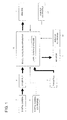
- the application software 1 is composed of CAM forward transform module 101 by a color appearance model, scene analysis module 102, photographing data analysis module 103, image correcting module 104, gamut mapping module 105 and CAM inverse transform module 106 by a color appearance model. Furthermore, image correcting module 104 and gamut mapping module 105 can be included in image processing module 107. Namely, the application software 1 is characterized in that the scene analysis module 102, photographing data analysis module 103 and image correcting module 104 are added to conventional application software 1a shown in Fig. 17. In this case, the image correcting module 104 conducts correction of tones and/or colors of images (emphasizing contrast, emphasizing chroma).
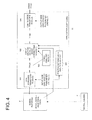
- gamut mapping module 105 it is also possible to compose so that correction of tones and/or colors is conducted with gamut mapping module 105, as in application software 11 shown in Fig. 4.
- image correcting module 104 and gamut mapping module 105 in application software 1 are united to be one module as gamut mapping module 105 in the application software 11.
- the united module of the application software 11 can be called image processing module.
- the united module of the application software 11 transforms contrast and chroma in the same way as in the image transform module 104 in application software 1, before chroma compression processing for gamut mapping.
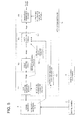
- gamut mapping module 105 it is also possible to compose so that correction of tones and/or colors is conducted after gamut mapping processing by gamut mapping module 105 as in application software 12 shown in Fig. 5.
- Image correcting module 104 and gamut mapping module 105 can be included in image processing module 107.
- image correcting module 104 is provided on the rear step of gamut mapping module 105. That is, the application software 1 and the application software 12 are the same in terms of contents of processing, and only difference between them is an order of processing.
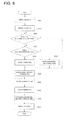
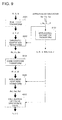
- step #001 there is conducted initialization such as resetting of a variable number and a flag to be used.
- step #002 scene-referred raw data are read from digital camera 2 in accordance with an instruction of a user. Then, in step #003, whether photographing scene mode information of digital camera 2 is included in the scene-referred raw data or not is judged, and when the information is included (step #003, Yes), the flow moves to step #007, while when the information is not included (step #003, No), the flow moves to step #004.
- step #004 whether Exif information is related to the scene-referred raw data or not is judged, and when the Exif information is related (step #004, Yes), the flow moves to step #006, and photographing scene is specified from Exif information by photographing data analysis module 103.
- step #005 the flow moves to step #005, and the scene-referred raw data is analyzed by scene analysis module 102 to specify the photographing scene.
- step #007 image data are CAM-forward-transformed by CAM forward transform module 101 in accordance with a color appearance model.
- this color appearance model is one for correcting a difference of viewing conditions between a monitor and a printer under the average office environment, and an appearance parameter used for CAM forward transform cannot be changed.
- step #008 the transformed image data are subjected to correction of tones and/or colors by image correcting module 104, and then, the flow moves to step #009 where gamut mapping processing is conducted by gamut mapping module 105.
- step #008 and #009 can be included in one step where image processing is conducted by image processing module 107.
- step #010 CAM inverse transform based on the color appearance model is conducted by CAM inverse transform module 106, and in step #011, output image (output-referred raw data) after the CAM inverse transform is outputted to an output device.
- a photographing scene is specified by using information such as luminance, a focal length of a lens and a photographing distance all recorded as Exif information.
- portrait rate P is calculated in step #101, first.
- the membership function is one showing a rate (probability) of a portrait scene to a focal length of a lens, and it can be considered to be one showing frequency in use in the scene to be judged.
- Portrait rate for luminance P Bv is found from Xa graph in Fig.
- step #102 scenery rate L is calculated equally.
- L L Bv x L f' x L ⁇
- step #103 P and L are judged whether both of them are the same each other or not, and when they are the same each other (step #3; Yes), the then processing is ended, while, when they are different each other (step #3; No), the flow moves to step #104, and P is judged whether it is larger than L.
- step #4; Yes the flow moves to step #105, and a flag of a person is set and the then processing is ended.
- step #106 When P is not larger than L (step #4; No), the flow moves to step #106, and a flag of a scenery is set and the then processing is ended.
- CAM forward transform processing based on a color appearance model by CAM forward transform module 101 will be explained in detail, next.
- CIECAM97s was used as a color appearance model
- step #201 RGB values of each pixel of input image data are transformed into tristimulus values X, Y and Z.
- step #202 the following values used in the calculation later are calculated from the established appearance parameter.
- chromatic adaptation transform is carried out for image data.
- the chromatic adaptation transform is one wherein chromatic adaptation transform of a von Kries-type has been improved and a degree of adaptation for a white color under the viewing condition is considered.
- X, Y and Z are transformed into (Numeral 6) R , G , B by the following expressions (hereinafter referred to as R1, G1 and B1 respectively in the text).
- transform matrix M B is used as transform matrix M B .
- Rw, Gw and Bw are those wherein tristimulus values of adaptation white color are transformed by matrix M B .
- step #204 image data which have been subjected to chromatic adaptation processing are transformed into cone responses R', G' and B' which correspond to human visual system sensors.
- step #204 inverse transform of the transform by the matrix stated above is carried out, and then, 3 x 3 matrix called as Hunt-Pointer-Estevez is applied.
- step #205 image data which have been transformed into cone responses are subjected to the following transform corresponding to non-linear response of a human visual system.
- step #206 numerical values estimating color appearance, hue angle: h, lightness: J and chroma: C are calculated respectively based on the following expressions.
- h tan -1 (b/a)
- ⁇ (Ra' + Ga' - 2 ⁇ Ba') J 100 ⁇ (A/Aw)
- c' ⁇ A [2 ⁇ Ra' + Ga' + (1/20) ⁇ Ba' - 0.305] ⁇ N hb
- Aw is calculated from Ra', Ga' and Ba' which are obtained by transforming Xw, Yw and Zw in the same way
- C 2.44 ⁇ s 0.69 (J/100) 0.67n (1.64 - 0.29 n )
- s 50 ⁇ ( a 2 + b 2 ) 1 ⁇ 2 100 ⁇ e ⁇ (10/13)
- h1, h2, e1 and e2 they are retrieved from the following table.
- step #202 When CIECAM02 is used as a color appearance model, processing in step #202 and thereafter are changed as follow.
- step #202 the following values used in calculation later are calculated from the established appearance parameter.
- k 1 5 ⁇ L A +1
- F L 0.2 ⁇ k 4 ⁇ (5 ⁇ L A ) + 0.1 ⁇ (1 ⁇ k 4 ) 2 ⁇ (5 ⁇ L A ) 1 3
- chromatic adaptation transform is conducted for image data.
- the chromatic adaptation transform is one wherein chromatic adaptation transform of a von Kries-type has been improved and a degree of adaptation for a white color under the viewing condition is considered.
- X, Y and Z are transformed by the following expressions into R1, G1 and B1 respectively.
- Rw, Gw and Bw are those wherein tristimulus values of adaptation white color are transformed by matrix M CAT02 .
- step #204 image data which have been subjected to chromatic adaptation processing are transformed into cone responses R', G' and B' which correspond to human visual system sensors.
- step #204 inverse transform of the transform by the matrix stated above is carried out, and then, 3 x 3 matrix called as Hunt-Pointer-Estevez is applied.
- step #205 image data which have been transformed into cone responses are subjected to the following transform corresponding to non-linear response of a human visual system.
- step #206 numerical values estimating color appearance, hue angle: h, lightness: J and chroma: C are calculated respectively based on the following expressions.
- A [2 ⁇ Ra' + Ga' +(1/20) ⁇ Ba' -0.305] ⁇ N bb (Aw is calculated from Ra', Ga' and Ba' which are obtained by transforming Xw, Yw and Zw in the same way)
- RGB values result in values of J, C and h showing "color appearance".
- the scene analysis module 102 analyzes images transformed by a color appearance model into visual "appearance" data, and thereby, judges whether or not the image data include a portion that is suited to a flesh color. This makes it possible to judge whether the image represents people photography or not. Further, by measuring its area, a size of a person is specified.
- step #301 a pixel counting value used for counting pixels is reset to zero.
- step #302 there is judged whether a value of each pixel transformed into L*a*b* belongs to a flesh color area established in advance or not, and when it belongs to the flesh color area (step #302; Yes), the flow moves to step #303 to add 1 to a flesh color pixel count value, and then, moves to step #304.
- step #304 1 is added to the aforesaid pixel count value, and in step #305, the pixel count value is compared with the total number of pixels to judge whether processing for all pixels has been terminated or not.
- step #305; No When the processing for all pixels has not been terminated (step #305; No), the flow goes back to step #302 to repeat the treatments of the above-mentioned steps #302 - #305.
- step #305; Yes When the processing for all pixels has been terminated (step #305; Yes), the flow moves to step #306 to judge whether the value of the rate of flesh color obtained by dividing the flesh color pixel count value with the total pixel count value is greater than threshold value TH or not, and when the value of the rate of flesh color is greater than TH (step #306; Yes), the flow moves to step #307 to set a flag of a person indicating that a subject is a person to end the then processing. When the value of the rate of flesh color is equal to or smaller than TH (step #306; No), the flow moves to step #308 to reset a flag of a person to end the then processing.
- step #401 there is judged whether Exif information recorded by digital camera 2 is present or not.
- the flow moves to step #402 to read a luminance value recorded from control Bv (parameter for correcting tone and/or color) and to set to luminance value L BV .
- control Bv parameter for correcting tone and/or color
- L BV luminance value
- the luminance value stated above is recorded by control Bv value of APEX system used for exposure control of digital camera 2.
- transform LUT Look Up Table
- an appearance correction coefficient for emphasizing chroma are established.
- CAM forward transform of a color appearance model see step #007 shown in Fig. 6
- a luminance value of the sRGB monitor is 80 cd/m 2 .
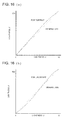
- transform LUT that emphasizes different contrast in accordance with a difference between luminance value of photographing scene L BV and the luminance value established as a standard condition (see Fig. 15).
- the transform LUT is established as follows, depending on the value of the luminance value L BV .
- coefficient f for correcting a value of chroma is set to emphasize chroma.
- step #405 For conducting tone correction in accordance with photographing scene, there is judged whether a person subject flag is set or not in step #405, and when a person subject flag is set (step #405; Yes), the flow moves to step #406 to establish LUT for persons, while, when a person subject flag is not set (step #405; No), the flow moves to step #407 to establish LUT for ordinary use.
- step #408 LUT for correcting appearance and LUT for correcting scene are applied on lightness of image data: J to conduct tone transform, and further to correct chroma: C with coefficient f by the following expression, to terminate the then processing.
- C' f x C
- the most simple method as a gamut mapping method is a clipping method which maps chromaticity points which are present outside a color area capable of being recorded onto a boundary of nearest color areas.
- tone on the outside of the color area lacks detail, resulting in an image that gives a sense of discomfort in appreciation.
- the present example therefore, employs non-linear compression wherein chromaticity points in the area where the chroma is higher than an appropriate threshold value are compressed smoothly depending on a size of chroma. Namely, in the area where chroma value is not less than threshold value: Cth, the compression shown in Fig.
- C calculated by the color appearance model (For details about a method of color area mapping, see, for example, page 447 of "Fine Imaging and Digital Photography” of Corona Co. edited by Publishing Committee of The Society of Photographic Science and Technology of Japan).
- values of R, G and B are calculated successively under the condition that 255, 0 and 0 are for R, and 0, 255 and 0 are for G.
- monitor ICC profile 31 and printer ICC profile 41 are used as a parameter for gamut mapping (color area mapping).
- gamut mapping color area mapping
- step #505 a value of k is calculated from the minimum value of Cout (i)/Cin (i) through the following expression. Further, a color for which the value of k has been calculated is stored in a memory such as RAM as mincolor.
- step #506 a counting value used for counting pixels is reset.
- a value of chroma C of each pixel transformed into JCh is transformed to value C' compressed by the following expression.
- Threshold value Cth at which the compression is started is made to be 80% of the value of k, which is calculated by the following expression.
- C' C out (min color) [ C in (min color - Cth )] 0.5 ⁇ ( C - Cth ) 0.5
- step #508 a pixel count value is compared with the total value of pixels to judge whether processing for all pixels has been terminated or not.
- step #508; Yes the processing for all pixels has been terminated.
- step #508; No the flow goes back to step #507 to repeat the treatments of the steps #507 and #508.
- the gamut mapping method includes many methods in addition to one explained in the present specification, and many of them can be used.
- CAM inverse transform based on a color appearance model by CAM inverse transform module 106 will be explained in detail, next.
- step #601 the following variables are calculated from the second appearance parameters relating to output images Xw', Yw', Zw', L A ', Yb', c', Nc', F LL ' and F'.
- k ' 1 5 ⁇ L A ' +1
- F L ' 0.2 ⁇ k' 4 ⁇ (5 ⁇ L A ' ) + 0.1 ⁇ (1 - k' 4 ) 2 ⁇ (5 ⁇ L A ' ) 1 3
- Aw' is calculated by applying operations in step #203 - #206 on Xw', Yw' and Zw'.
- step #602 non-linear response values Ra', Ga' and Ba' are calculated from parameters J', C' and h representing a color appearance.
- a and s are obtained by the following expression from J' and C'.
- h1, h2, e1 and e2 they are retrieved from the following table.
- Ra', Ga' and Ba' are calculated from the following expressions.
- (Numeral 28) Ra' (20/61) ⁇ (A/N bb ' + 2.05) + (41/61) ⁇ (11/23) ⁇ a + (288/61) ⁇ (1/23) ⁇ b
- Ga' (20/61) ⁇ (A/N bb ' + 2.05) - (81/61) ⁇ (11/23) ⁇ a - (261/61) ⁇ (1/23) ⁇ b
- Ba' (20/61) ⁇ (A/N bb ' + 2.05) - (20/61) ⁇ (11/23) ⁇ a - (20/61) ⁇ (315/23) ⁇ b
- step #603 non-linear response values Ra', Ga' and Ba' are subjected to inverse transform, to obtain cone responses R', G' and B'.
- R' 100 ⁇ [(2 ⁇ Ra' - 2) / (41 - Ra')] 1/0.73
- G' 100 ⁇ [(2 ⁇ Ga' - 2) / (41 - Ga')] 1/0.73
- B' 100 ⁇ [(2 ⁇ Ba' - 2) / (41 - Ba')] 1/0.73
- step #604 cone responses are subjected to inverse transform, and Rc ⁇ Y, Gc ⁇ Y and Bc ⁇ Y (hereinafter referred to simply as RcY, GcY and BcY) are calculated.
- step #605 chromatic adaptation inverse transform is carried out to return to colorimetric values.
- Y' 0.43231 ⁇ YR + 0.51836 ⁇ YG + 0.04929 ⁇ (Y/Yc) 1/P BYc
- tristimulus values X", Y" and Z" are calculated by the following expression.
- tristimulus values X", Y" and Z" of the colors corresponding to the appearance specified in the environment are calculated from the value indicating the color appearance and from the second viewing environment parameters.
- This value is outputted after being transformed into color space of an output equipment, in step #606.
- 3 x 3 matrix information described in monitor ICC profile 31 and printer ICC profile 41 in which the characteristics of the monitor 3 and printer 4 are respectively described is used, or the three-dimensional look up table is used, to transform.
- step #601 the following variables are calculated from the second appearance parameter.
- k' 1 5 ⁇ L A ' +1
- L ' 0.2 ⁇ k' 4 ⁇ ( 5 ⁇ L A ' ) + 0.1 ⁇ (1 ⁇ k' 4 ) 2 ⁇ (5 ⁇ L A ' ) 1 3
- steps #203 - #206 relating to the CAM transform stated above are applied by using the second appearance parameter, for tristimulus values of a white color in the adapting field area, for calculating Aw'.
- step #602 the input value of hue angle h is retrieved from the following table, to obtain i that satisfies h i ⁇ h' ⁇ h i+1 . i 1 2 3 4 5 h i 20.14 90.00 164.25 237.53 380.14 e i 0.8 0.7 1.0 1.2 0.8 H i 0.0 100.0 200.0 300.0 400.0
- h' ( H - H i )( e i +1 ⁇ h i - e i ⁇ h i +1 ) - 100 ⁇ h i ⁇ e i +1 ( H - H i )( e i +1 - e i ) -100 ⁇ e i +1
- the value is one wherein 360 is subtracted.
- C' representing chroma of a color appearance and an input value of J' representing lightness are used to calculate the following variables.
- Ra ' 460 1403 p 2 + 451 1403 a + 288 1403 b
- Ga' 460 1403 p 2 + 891 1403 a + 261 1403 b
- Ba' 460 1403 p 2 + 220 1403 a + 6300 1403 b
- R' sign ( Ra' -0.1) ⁇ 100 F L ' ⁇ 27.13 ⁇
- G' sign ( Ga' -0.1) ⁇ 100 F L ' ⁇ 27.13 ⁇
- B' sign ( Ba' -0.1) ⁇ 100 F L ' ⁇ 27.13 ⁇
- step #604 calculation of cone response inverse transform will be explained.
- CAM forward transform is conducted by CAM forward transform module 101 for the scene-referred raw data, then, after the CAM forward transform, correction of tones and/or colors is conducted by image correcting module 104, then, after the correction, color area mapping processing according to an output equipment is conducted by gamut mapping module 105, and CAM inverse transform is conducted by CAM inverse transform module 106 after the color area mapping processing, or 2) CAM forward transform is conducted by CAM forward transform module 101 for the scene-referred raw data, then, color area mapping processing according to an output equipment is conducted by gamut mapping module 105 after the CAM forward transform, and CAM inverse transform is conducted by CAM inverse transform module 106 after the color area mapping processing, or 3) CAM forward transform is conducted by CAM forward transform module 101 for the scene-referred raw data, then, color area mapping processing according to an output equipment is conducted by gamut mapping module 105 after the CAM forward transform, then, after the color area mapping processing according to an output equipment is conducted by gamut mapping module 105 after the CAM forward transform, then, after
- image correcting module 104 and gamut mapping module 105 can be included in image processing module 107.
Landscapes
- Engineering & Computer Science (AREA)
- Multimedia (AREA)
- Signal Processing (AREA)
- Facsimile Image Signal Circuits (AREA)
- Image Processing (AREA)
- Processing Of Color Television Signals (AREA)
- Color Image Communication Systems (AREA)
Applications Claiming Priority (2)
| Application Number | Priority Date | Filing Date | Title |
|---|---|---|---|
| JP2004015924A JP2005210495A (ja) | 2004-01-23 | 2004-01-23 | 画像処理装置、画像処理方法及び画像処理プログラム |
| JP2004015924 | 2004-01-23 |
Publications (1)
| Publication Number | Publication Date |
|---|---|
| EP1558020A2 true EP1558020A2 (de) | 2005-07-27 |
Family
ID=34631953
Family Applications (1)
| Application Number | Title | Priority Date | Filing Date |
|---|---|---|---|
| EP05100306A Withdrawn EP1558020A2 (de) | 2004-01-23 | 2005-01-19 | Bildverarbeitungsvorrichtung, -verfahren und -programm |
Country Status (4)
| Country | Link |
|---|---|
| US (1) | US20050163370A1 (de) |
| EP (1) | EP1558020A2 (de) |
| JP (1) | JP2005210495A (de) |
| CN (1) | CN1645903A (de) |
Cited By (3)
| Publication number | Priority date | Publication date | Assignee | Title |
|---|---|---|---|---|
| EP1770999A2 (de) | 2005-09-29 | 2007-04-04 | Samsung Electronics Co., Ltd. | Verfahren und Vorrichtung zur Bildkompensation |
| WO2009035506A1 (en) * | 2007-09-11 | 2009-03-19 | Eastman Kodak Company | Color transforming method |
| US9024962B2 (en) | 2008-02-15 | 2015-05-05 | Thomson Licensing | Method for adjusting the settings of a reproduction color device |
Families Citing this family (15)
| Publication number | Priority date | Publication date | Assignee | Title |
|---|---|---|---|---|
| JP4940639B2 (ja) * | 2005-09-30 | 2012-05-30 | セイコーエプソン株式会社 | 画像処理装置、画像処理方法及び画像処理プログラム |
| JP2008048314A (ja) * | 2006-08-21 | 2008-02-28 | Fuji Xerox Co Ltd | 画像処理装置、画像処理プログラムおよび画像処理方法 |
| JP2008067308A (ja) * | 2006-09-11 | 2008-03-21 | Fuji Xerox Co Ltd | 色処理装置、色処理方法およびプログラム |
| US20080130987A1 (en) * | 2006-11-30 | 2008-06-05 | Microsoft Corporation | Color Management of RAW Content from Digital Capture Devices |
| US7971208B2 (en) | 2006-12-01 | 2011-06-28 | Microsoft Corporation | Developing layered platform components |
| KR100834766B1 (ko) | 2007-01-24 | 2008-06-05 | 삼성전자주식회사 | 색 관리 장치 및 방법 |
| JP5263767B2 (ja) * | 2008-09-26 | 2013-08-14 | 株式会社ザクティ | 撮像装置及びモード適否判定方法 |
| CN101478689B (zh) * | 2008-12-08 | 2010-12-01 | 四川虹微技术有限公司 | 一种基于色域映射的图像光照校正系统 |
| CN101478690B (zh) * | 2008-12-08 | 2010-12-01 | 四川虹微技术有限公司 | 一种基于色域映射的图像光照校正方法 |
| US8610948B2 (en) * | 2009-11-24 | 2013-12-17 | Canon Kabushiki Kaisha | Spectral gamut mapping by constrained subdivision of gamut |
| US8542402B2 (en) * | 2009-12-18 | 2013-09-24 | Canon Kabushiki Kaisha | Selection of samples for spanning a spectral gamut |
| JP5592715B2 (ja) * | 2010-07-02 | 2014-09-17 | オリンパス株式会社 | 画像処理装置および画像処理方法 |
| WO2018072270A1 (zh) * | 2016-10-17 | 2018-04-26 | 华为技术有限公司 | 一种图像显示增强方法及装置 |
| US11386588B2 (en) * | 2016-12-27 | 2022-07-12 | Sony Corporation | Product design system and design image correction apparatus |
| CN108510554B (zh) * | 2018-03-08 | 2020-01-14 | 深圳市华星光电半导体显示技术有限公司 | 一种图像处理方法及系统 |
Family Cites Families (4)
| Publication number | Priority date | Publication date | Assignee | Title |
|---|---|---|---|---|
| EP0967792B1 (de) * | 1998-06-26 | 2011-08-03 | Sony Corporation | Drucker mit Bildkorrekturfähigkeit |
| US6335983B1 (en) * | 1998-09-28 | 2002-01-01 | Eastman Kodak Company | Representing an extended color gamut digital image in a limited color gamut color space |
| US7580063B2 (en) * | 2002-05-07 | 2009-08-25 | Fujifilm Corporation | Digital camera for outputting image correction information |
| JP2004096508A (ja) * | 2002-08-30 | 2004-03-25 | Konica Minolta Holdings Inc | 画像処理方法、画像処理装置、画像記録装置、プログラム及び記録媒体 |
-
2004
- 2004-01-23 JP JP2004015924A patent/JP2005210495A/ja active Pending
-
2005
- 2005-01-19 US US11/037,119 patent/US20050163370A1/en not_active Abandoned
- 2005-01-19 EP EP05100306A patent/EP1558020A2/de not_active Withdrawn
- 2005-01-21 CN CNA2005100055857A patent/CN1645903A/zh active Pending
Cited By (6)
| Publication number | Priority date | Publication date | Assignee | Title |
|---|---|---|---|---|
| EP1770999A2 (de) | 2005-09-29 | 2007-04-04 | Samsung Electronics Co., Ltd. | Verfahren und Vorrichtung zur Bildkompensation |
| EP1770999A3 (de) * | 2005-09-29 | 2009-11-04 | Samsung Electronics Co., Ltd. | Verfahren und Vorrichtung zur Bildkompensation |
| US7978201B2 (en) | 2005-09-29 | 2011-07-12 | Samsung Electronics Co., Ltd. | Method for compensating an image |
| WO2009035506A1 (en) * | 2007-09-11 | 2009-03-19 | Eastman Kodak Company | Color transforming method |
| US7961939B2 (en) | 2007-09-11 | 2011-06-14 | Eastman Kodak Company | Color transforming method |
| US9024962B2 (en) | 2008-02-15 | 2015-05-05 | Thomson Licensing | Method for adjusting the settings of a reproduction color device |
Also Published As
| Publication number | Publication date |
|---|---|
| CN1645903A (zh) | 2005-07-27 |
| JP2005210495A (ja) | 2005-08-04 |
| US20050163370A1 (en) | 2005-07-28 |
Similar Documents
| Publication | Publication Date | Title |
|---|---|---|
| EP1558022A2 (de) | Bildverarbeitungsvorrichtung, -verfahren und -programm, BIlderfassungsvorrichtung und Bilddatenausgabeverfahren und -programm | |
| US20050163370A1 (en) | Image processing apparatus, image processing method and image processing program | |
| Süsstrunk et al. | Standard RGB color spaces | |
| US6791716B1 (en) | Color image reproduction of scenes with preferential color mapping | |
| US7436995B2 (en) | Image-processing apparatus, image-capturing apparatus, image-processing method and image-processing program | |
| EP1558021A2 (de) | Bildverarbeitungsverfahren, Bildverarbeitungsvorrichtung und Bilderzeugungsvorrichtung | |
| EP1158779A2 (de) | Farbbildwiedergabe mit besonderer Farbtonabbildung | |
| US20040095478A1 (en) | Image-capturing apparatus, image-processing apparatus, image-recording apparatus, image-processing method, program of the same and recording medium of the program | |
| US20090060326A1 (en) | Image processing apparatus and method | |
| US7450158B2 (en) | Spectrum and color reproduction system to convert a color signal from a color-image input into a color signal for a color-image output | |
| JPH10229502A (ja) | 色変換方法 | |
| EP1467555A2 (de) | Ausgewogene digitale Farbbilderzeugung mit wenigen Farbfehlern | |
| JP2005354372A (ja) | 画像記録装置、画像記録方法、画像処理装置、画像処理方法、及び画像処理システム | |
| Giorgianni et al. | Color management for digital imaging systems | |
| EP1394741A2 (de) | Transformation eines Bildfrequenzcharakteristikums abhängig von einem Charakteristikum des Bildaufnahmegeräts | |
| JP4150490B2 (ja) | 画像処理システムおよび画像処理方法および記録媒体 | |
| JP2004336521A (ja) | 画像処理方法、画像処理装置及び画像記録装置 | |
| EP2672712A1 (de) | Szenenabhängige Farbskalaabbildung | |
| JP2002077659A (ja) | 好みの色変換を実現する方法及び好みの色変換を実現する装置 | |
| JP2000261825A (ja) | 画像処理方法および装置並びに記録媒体 | |
| JP2007318320A (ja) | 画像処理装置、撮影装置、画像処理方法及び画像処理プログラム | |
| JP2007312313A (ja) | 画像処理装置、画像処理方法及びプログラム | |
| Holm | Integrating New Color Image Processing Techniques with Color Management | |
| Sakamoto et al. | Development of XYZ/sRGB-SCID and color gamut compression | |
| JP2004178428A (ja) | 画像処理方法 |
Legal Events
| Date | Code | Title | Description |
|---|---|---|---|
| PUAI | Public reference made under article 153(3) epc to a published international application that has entered the european phase |
Free format text: ORIGINAL CODE: 0009012 |
|
| AK | Designated contracting states |
Kind code of ref document: A2 Designated state(s): AT BE BG CH CY CZ DE DK EE ES FI FR GB GR HU IE IS IT LI LT LU MC NL PL PT RO SE SI SK TR |
|
| AX | Request for extension of the european patent |
Extension state: AL BA HR LV MK YU |
|
| STAA | Information on the status of an ep patent application or granted ep patent |
Free format text: STATUS: THE APPLICATION HAS BEEN WITHDRAWN |
|
| 18W | Application withdrawn |
Effective date: 20070820 |