EP1558002A1 - Verfahren zur Zuordnung einer IP-Adresse zu einem Gerät - Google Patents
Verfahren zur Zuordnung einer IP-Adresse zu einem Gerät Download PDFInfo
- Publication number
- EP1558002A1 EP1558002A1 EP04001453A EP04001453A EP1558002A1 EP 1558002 A1 EP1558002 A1 EP 1558002A1 EP 04001453 A EP04001453 A EP 04001453A EP 04001453 A EP04001453 A EP 04001453A EP 1558002 A1 EP1558002 A1 EP 1558002A1
- Authority
- EP
- European Patent Office
- Prior art keywords
- port
- identifier
- address
- switch
- protocol
- Prior art date
- Legal status (The legal status is an assumption and is not a legal conclusion. Google has not performed a legal analysis and makes no representation as to the accuracy of the status listed.)
- Granted
Links
- 238000000034 method Methods 0.000 title claims abstract description 18
- 238000001514 detection method Methods 0.000 claims abstract description 10
- 230000005540 biological transmission Effects 0.000 claims description 6
- 230000015654 memory Effects 0.000 abstract description 2
- 230000008901 benefit Effects 0.000 description 8
- 238000004590 computer program Methods 0.000 description 4
- 230000007246 mechanism Effects 0.000 description 4
- 230000002950 deficient Effects 0.000 description 3
- 238000001914 filtration Methods 0.000 description 3
- 238000010586 diagram Methods 0.000 description 2
- 238000005516 engineering process Methods 0.000 description 2
- 238000004891 communication Methods 0.000 description 1
- 230000008878 coupling Effects 0.000 description 1
- 238000010168 coupling process Methods 0.000 description 1
- 238000005859 coupling reaction Methods 0.000 description 1
- 230000001419 dependent effect Effects 0.000 description 1
- 230000003993 interaction Effects 0.000 description 1
- 230000004044 response Effects 0.000 description 1
- 230000003068 static effect Effects 0.000 description 1
- 230000001960 triggered effect Effects 0.000 description 1
- 230000003936 working memory Effects 0.000 description 1
Images


Classifications
-
- H—ELECTRICITY
- H04—ELECTRIC COMMUNICATION TECHNIQUE
- H04L—TRANSMISSION OF DIGITAL INFORMATION, e.g. TELEGRAPHIC COMMUNICATION
- H04L61/00—Network arrangements, protocols or services for addressing or naming
- H04L61/50—Address allocation
- H04L61/5007—Internet protocol [IP] addresses
- H04L61/5014—Internet protocol [IP] addresses using dynamic host configuration protocol [DHCP] or bootstrap protocol [BOOTP]
-
- H—ELECTRICITY
- H04—ELECTRIC COMMUNICATION TECHNIQUE
- H04L—TRANSMISSION OF DIGITAL INFORMATION, e.g. TELEGRAPHIC COMMUNICATION
- H04L61/00—Network arrangements, protocols or services for addressing or naming
- H04L61/50—Address allocation
- H04L61/5038—Address allocation for local use, e.g. in LAN or USB networks, or in a controller area network [CAN]
-
- Y—GENERAL TAGGING OF NEW TECHNOLOGICAL DEVELOPMENTS; GENERAL TAGGING OF CROSS-SECTIONAL TECHNOLOGIES SPANNING OVER SEVERAL SECTIONS OF THE IPC; TECHNICAL SUBJECTS COVERED BY FORMER USPC CROSS-REFERENCE ART COLLECTIONS [XRACs] AND DIGESTS
- Y02—TECHNOLOGIES OR APPLICATIONS FOR MITIGATION OR ADAPTATION AGAINST CLIMATE CHANGE
- Y02D—CLIMATE CHANGE MITIGATION TECHNOLOGIES IN INFORMATION AND COMMUNICATION TECHNOLOGIES [ICT], I.E. INFORMATION AND COMMUNICATION TECHNOLOGIES AIMING AT THE REDUCTION OF THEIR OWN ENERGY USE
- Y02D30/00—Reducing energy consumption in communication networks
Definitions
- the invention relates to a method for assigning an IP address to a device, as well as a digital storage medium, a switch and a device that can be connected to the switch.
- IP Internet Protocol
- DHCP Dynamic Host Configuration Protocol
- the selection of the IP address to associate with the requesting device the DHCP server uses the local settings (Static or dynamic allocation) and in the DHCP request delivered options.
- the DHCP options cf. Website http://www.iana.org/assignments/bootp-dhcp-parameters
- the DHCP server can be a client with him uniquely assign the stored IP address.
- identifier must be retentive on the client to be a reproducible result of address resolution too receive.
- a client can e.g. a UUID (Universal Unique Identifier) or a DNS (Domain Name Service) name.
- UUID Universal Unique Identifier
- DNS Domain Name Service
- aliases multiple identifiers (aliases) for one IP address are deposited.
- the "# 82 Relay Agent Information" of the DHCP can do this IP address requesting terminal through the port of the coupling node ("Switch") to which it is connected, exactly identified become.
- Option 82 is similar to an identification via Media Access Control (MAC) address.
- MAC Media Access Control
- a disadvantage of the assignment of IP addresses by means of DHCP and Option 82 is that the switches through the elaborate filtering the DHCP requirements are heavily loaded. A switch must use such a filter to identify all DHCP requests, and remove them from the data stream for additional To enter information or to recognize that already one Entry is present. Then the DHCP request is restored inserted in the data stream. This is in particular disadvantageous that efficient switching mechanisms such as cut-through be made impossible.
- the invention is based on the object, a improved method for assigning an IP address to a Device to create. Furthermore, the invention is the task at the bottom, a corresponding digital storage medium, device and create a switch.
- the invention provides a method for assigning a IP address created to a device, with an identifier of the Ports to which the device is connected from the switch the device is transmitted.
- the identifier of the port then becomes from the device to an address server located on the Based on the identifier of the port assigns the device an IP address. This procedure is applied when the device is still no "own" identifier received.
- the invention allows an efficient network management of Ethernet applications in the industrial field, often a very large number of Have nodes.
- a defective device may be replaced by a replacement device be replaced without being manually in the network management must be intervened.
- the assignment of the IP address to the replacement device can be automatic without any user interaction respectively.
- the Identification of the port to the device connected to the port transmitted using a proximity detection protocol.
- the LLDP protocol is suitable for this purpose STANDARD IEEE802.1AB.
- STANDARD IEEE803.1 Using the mechanisms of the Slow Protocol (STANDARD IEEE803.1) provides LLDP neighborhood information in switched networks. This neighborhood information are used for unique addressing.
- the DHCP protocol is the assignment of the IP address to a device initiated by the device itself by the device a corresponding DHCP request sent to a DHCP address server.
- This DHCP request contains the identifier of the port the device is connected as the basis for the assignment the IP address to the device.
- the Discovery and Configuration Protocol is used.
- DCP Discovery and Configuration Protocol
- the assignment of IP addresses not by the end devices, but by a DCP address server initiated. This asks of the concerned Device identifies the port to which the device is connected is, to assign the IP address to the device based on this.
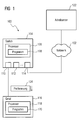
- FIG. 1 shows an automation system 100.
- the automation system 100 has a communication network 102, such as for example an ethernet.
- the network 102 includes several Switching nodes, so-called switches, of which a switch 104 is shown by way of example in FIG.
- the switch 104 has a processor 106 for executing a Computer program 108.
- the computer program 108 is in common Way on a digital storage medium, for example stored in a working memory.
- the switch 104 has different Ports, of which ports 110, 112, 114 are exemplary are shown in the figure 1.
- Each of the ports of the Switch 104 has a port identifier, also referred to as a port ID becomes.
- an automation device 116 is connected to the port 110 .
- the automation device 116 may be in principle to be any device of automation technology, such as a transmitter, a drive, a controller or the like.
- the automation device 116 has a processor 118 for Execution of a computer program 120.
- the computer program 120 is in a conventional manner on a digital storage medium, such as a memory, stored.
- An address server 122 is over the network 102 with the port 114 of the switch 104 connected.
- the address server 122 is used for Assignment of Internet Protocol (IP) addresses to the participants of the automation system 100.
- IP Internet Protocol
- the procedure for assigning an IP address to the programmable controller 116 is as follows:
- Port identifier 124 is stored in the automation device 116 stored.
- the port identifier 124 becomes then from the automation device 116 via the switch 104 and transmit the network 102 to the address server 122.
- the address server assigns the Automation device 116 to its IP address.
- This procedure can be used when initializing the automation system 100 can be used to all of the participants assign an IP address to the automation system.
- This method is that it also be used when replacing a defective device can.
- the automation device 116 fails, then It is by a corresponding, functioning automation device 116 replaced. By connecting the replaced automation device 116 to port 110 the assignment of the IP address is triggered again.
- the algorithm for assigning the IP addresses comes to it the same result as when assigning the IP address the original automation device 116, since the algorithm based on the same port identifier 124 becomes.
- a so-called Neighborhood recognition protocol For the transmission of the port identifier 124 from the switch 104 to the automation device 116 is preferably a so-called Neighborhood recognition protocol used.
- Neighborhood detection protocols are by themselves out of the ordinary known to the art.
- Using a proximity detection protocol finds an automatic data exchange between neighboring devices in a network instead.
- the neighborhood detection is done by LLDP, according to standard IEEE802.1AB (see website http://www.ieee802.org/1/pages/802.1ab.html).
- LLDP supplies every Ethernet subscriber (DTE) gets its name (chassis ID) and the send port (port id).
- DTE Ethernet subscriber
- port id the send port
- IEEE803.1 provides LLDP neighborhood information in switched networks.
- DHCP For the transmission of the port identifier 124 from the automation device 116 to the address server 122 is preferably DHCP is used.
- the address server is 122 to a so-called DHCP server.
- DHCP protocol sends the automation device 116 a DHCP request to the address server 122 to allocate a Request IP address.
- the port identifier 124 as Part of the DHCP request from the automation device 116 at the address server 122, on this basis the Assigns IP address to the automation device 116.
- DCP is used. In this case it acts at the address server 122 is a DCP server. deviant DHCP is the initiative to assign the IP address not from the automation device 116, but from the DCP address server 122 itself off. On an appropriate request of the DCP address server 122, the programmable controller responds 116 with the stored in the automation device 116 Port ID 124. On this basis, the DCP address server 122 then the assignment of the IP address to the Automation device 116 before.
- LLDP is used in conjunction with DHCP and Option 82 used. Because every device knows its neighbor via LLDP, can use this information for unique addressing become.
- the DHCP address server 122 stores next to the client ID or Host ID also the neighborhood information about an IP address. For example, requires the automation device 116 from the DHCP address server 122 to an IP address, it fills that as option 82 designated field with that of the neighbor, the is called Chassis ID and Port ID (i.e. for example, port identifier 124). This eliminates the costly Filtering the DHCP requests in the switches completely, but the DHCP address server 122 can still access the topology information, that is, port identifier 124, an IP address assign.
- LLDP is an inexpensive to implement Protocol. Because of this, the switches of the Automation system 100 with the same performance be realized cheaper.
- DCP used in the considered network 102 then stores the DCP client, that is, for example, the automation device 116, next to the station name, that is the Client ID, also the neighborhood information.
- the DCP address server 122 searches as needed active according to a specific automation device, such as for example, the automation device 116.
- the DCP address server 122 can be specified. In this case can the search by station name, client ID or chassis ID omitted because the neighborhood information for the further Procedure is sufficient.
- the commissioning phase they become unique in the automation devices of the automation system 100 Name of the Station, client ID and chassis ID deposited. These are in the Further used for the search. Is the desired automation device found, in addition, the neighborhood information read out and stored in the DCP address server 122.
- FIG. 2 shows a corresponding flow chart.
- Step 200 takes place during the commissioning of the automation system the assignment of the IP addresses to the participants of the automation system.
- step 202 during the operation of the automation system of one of the automation devices out.
- step 204 the defective automation device exchanged by sending it to the same port of the same switch like the original automation device connected becomes.
- the port identifier is from the switch transferred to the replacement device. This is preferably done according to a neighborhood recognition protocol.
- step 208 is the port identifier from the replacement device to an address server transfer. This is done, for example, by DHCP or DCP.
- step 210 the assignment of the IP address takes place to the replacement device through the address server.
- steps 206, 208, and 210 become the same Also in the commissioning phase of the automation system, that is, in the step 200, performed. This means that steps 206 to 210 for the Replacement device during operation of the automation system 100 are repeated using the allocation algorithm for the IP address comes to the same result, since the port identifier has not changed.
- a client In a running system, a client is exchanged. This is taken from the warehouse and knows its identifier Not. He uses the port identifier of his neighbor, saved as an alias to the client in the DHCP server is. For example, via the also available from the DHCP server "Host Name", the new client receives its identifier and saves it remanently for further use.
- the client with the identifier forwards it to its direct neighbors via LLDP. This means that they can be addressed via the ALIAS described in Scenario 2 via DHCP, their IP address and their identifier. This baptizes the entire LAN / part of the LAN / entire neighborhood like an avalanche.
- the entire machine is to be individualized with a "push of a button”. This makes fast commissioning possible with little effort.
- this task can also be carried out by a PLC or a simple baptismal device.
- FIG. 3 shows an example of a corresponding network topology.
Landscapes
- Engineering & Computer Science (AREA)
- Computer Networks & Wireless Communication (AREA)
- Signal Processing (AREA)
- Small-Scale Networks (AREA)
- Data Exchanges In Wide-Area Networks (AREA)
Abstract
Description
- Figur 1
- ein Blockdiagramm einer Ausführungsform eines erfindungsgemäßen Netzwerks,
- Figur 2
- ein Flussdiagramm einer Ausführungsform eines erfindungsgemäßen Verfahrens,
- Figur 3
- ein Blockdiagramm eines Ausführungsbeispiels eines Netzwerks.
| Prinzip: | ||
| Identifikator | Alias | IP |
| Client1.Anlage1.Werk1 | Port1.Client2.Anlage1.Werk1 | 10.0.0.1 |
| Client2.Anlagel.Werk1 | Port3.Client1.Anlage1.Werk1 | 10.0.0.2 |
| Client3.Anlage1.Werk1 | Port1.Client2.Anlage1.Werk1 | 10.0.0.3 |
Damit sind diese über den im Szenario 2 beschriebenen ALIAS adressierbar erhalten über DHCP ihre IP-Adresse und ihren Identifikator. Dadurch wird lawinenartig das gesamte LAN / Teil LAN / die gesamte Nachbarschaft getauft.
Neben dem ES kann diese Aufgabe auch von einer SPS oder einem einfachen Taufgerät übernommen werden.
Claims (20)
- Verfahren zur Zuordnung einer IP-Adresse zu einem Gerät (116) mit folgenden Schritten:Anschluss des Geräts (116) an einen Port (110) eines Switches (104),Übertragung einer Kennung (124) des Ports (110) von dem Switch (104) an das Gerät (116),Übertragung der Kennung (124) des Ports (110) von dem Gerät (116) an einen Adressserver (122),Zuordnung der IP-Adresse zu dem Gerät (116) auf der Grundlage der Kennung (124) des Ports (110).
- Verfahren nach Anspruch 1, wobei die Übertragung der Kennung (124) des Ports (110) von dem Switch an das Gerät (116) nach einem Nachbarschaftserkennungsprotokoll erfolgt.
- Verfahren nach Anspruch 2, wobei es sich bei dem Nachbarschaftserkennungsprotokoll um IEEE802.1AB und/oder IEEE803.1 handelt.
- Verfahren nach einem der Ansprüche 1, 2 oder 3, wobei die Übertragung der Kennung (124) des Ports (110) von dem Gerät (116) an den Adressserver (122) mittels eines DHCP-Protokolls erfolgt.
- Verfahren nach einem der Ansprüche 1, 2 oder 3, wobei die Übertragung der Kennung (124) des Ports (110) von dem Gerät (116) an den Adressserver (122) mittels eines DCP-Protokolls erfolgt.
- Digitales Speichermedium mit Programminstruktionen zur Durchführung der folgenden Schritte:Empfang einer Kennung (124) eines Ports (110) durch ein an den Port (110) angeschlossenes Gerät (116),Sendung der Kennung (124) des Ports (110) von dem Gerät (116) an einen Adressserver (122) zur Zuordnung einer IP-Adresse zu dem Gerät (116) auf der Grundlage der Kennung (124) des Ports (110) durch den Adressserver (122).
- Digitales Speichermedium nach Anspruch 6, mit weiteren Programminstruktionen eines Nachbarschaftserkennungsprotokolls.
- Digitales Speichermedium nach Anspruch 7, wobei es sich bei dem Nachbarschaftserkennungsprotokoll um IEEE802.1AB und/oder IEEE803.1 handelt.
- Digitales Speichermedium nach Anspruch 6, 7 oder 8, mit weiteren Programminstruktionen zur Sendung der Kennung des Ports nach einem DHCP-Protokoll.
- Digitales Speichermedium nach einem der Ansprüche 6 bis 9, mit weiteren Programminstruktionen zur Sendung der Kennung des Ports mittels eines DCP-Protokolls.
- Gerät zum Anschluss an einen Port (110) eines Switches (104) mitMitteln (118, 120) zum Empfang einer Kennung (124) des Ports (110) von dem Switch (104),Mitteln (118, 120) zur Sendung der Kennung (124) des Ports (110) von dem Gerät (116) zu einem Adressserver (122) zur Zuordnung einer IP-Adresse zu dem Gerät (116) auf der Grundlage der Kennung (124) des Ports (110).
- Gerät nach Anspruch 11, wobei die Mittel (118, 120) zum Empfang der Kennung (124) des Ports (110) zur Durchführung eines Nachbarschaftserkennungsprotokolls ausgebildet sind.
- Gerät nach Anspruch 12, wobei es sich bei dem Nachbarschaftserkennungsprotokoll um IEEE802.1AB und/oder IEEE803.1 handelt.
- Gerät nach Anspruch 11, 12 oder 13, wobei die Mittel (118, 120) zur Sendung der Kennung (124) des Ports (110) nach einem DHCP-Protokoll ausgebildet sind.
- Gerät nach einem der Ansprüche 11 bis 14, wobei die Mittel (118, 120) zur Sendung der Kennung (124) des Ports (110) nach einem DCP-Protokoll ausgebildet sind.
- Switch mit mehreren Ports (110, 112, ..., 114), wobei jeder der Ports eine eindeutige Kennung hat, und mit Mitteln zur Durchführung der folgenden Schritte:Sendung einer Kennung (124) eines der Ports (110) an ein an den betreffenden Port (110) angeschlossenes Gerät (116),Weiterleitung eines von dem Gerät empfangenen Datenpakets, welches die Kennung (124) des Ports (110) beinhaltet, an einen Adressserver (122) zur Zuordnung einer IP-Adresse zu dem Gerät (116) auf der Grundlage der Kennung (124) des Ports (110).
- Switch nach Anspruch 16, wobei die Sendung der Kennung (124) des Ports (110) an das Gerät (116) nach einem Nachbarschaftserkennungsprotokoll erfolgt.
- Switch nach Anspruch 17, wobei es sich bei dem Nachbarschaftserkennungsprotokoll um IEEE802.1AB und/oder IEEE803.1 handelt.
- Switch nach einem der Ansprüche 16, 17 oder 18, wobei die Weiterleitung des Datenpakets mit der Kennung (124) des Ports (110) nach einem DHCP-Protokoll erfolgt.
- Switch nach einem der Ansprüche 16 bis 19, wobei die Weiterleitung des Datenpakets mit der Kennung (124) des Ports (110) nach einem DCP-Protokoll erfolgt.
Priority Applications (7)
| Application Number | Priority Date | Filing Date | Title |
|---|---|---|---|
| AT04001453T ATE410875T1 (de) | 2004-01-23 | 2004-01-23 | Verfahren zur zuordnung einer ip-adresse zu einem gerät |
| DE502004008199T DE502004008199D1 (de) | 2004-01-23 | 2004-01-23 | Verfahren zur Zuordnung einer IP-Adresse zu einem Gerät |
| ES04001453T ES2315579T3 (es) | 2004-01-23 | 2004-01-23 | Procedimiento para la asignacion de una direccion ip a un equipo. |
| EP04001453A EP1558002B1 (de) | 2004-01-23 | 2004-01-23 | Verfahren zur Zuordnung einer IP-Adresse zu einem Gerät |
| US11/039,614 US7483396B2 (en) | 2004-01-23 | 2005-01-20 | Method for assigning an IP address to a device |
| CA002493841A CA2493841A1 (en) | 2004-01-23 | 2005-01-21 | Method for assigning an ip address to a device |
| CNB2005100056830A CN100525316C (zh) | 2004-01-23 | 2005-01-24 | 为设备分配ip地址的方法 |
Applications Claiming Priority (1)
| Application Number | Priority Date | Filing Date | Title |
|---|---|---|---|
| EP04001453A EP1558002B1 (de) | 2004-01-23 | 2004-01-23 | Verfahren zur Zuordnung einer IP-Adresse zu einem Gerät |
Publications (2)
| Publication Number | Publication Date |
|---|---|
| EP1558002A1 true EP1558002A1 (de) | 2005-07-27 |
| EP1558002B1 EP1558002B1 (de) | 2008-10-08 |
Family
ID=34626495
Family Applications (1)
| Application Number | Title | Priority Date | Filing Date |
|---|---|---|---|
| EP04001453A Expired - Lifetime EP1558002B1 (de) | 2004-01-23 | 2004-01-23 | Verfahren zur Zuordnung einer IP-Adresse zu einem Gerät |
Country Status (7)
| Country | Link |
|---|---|
| US (1) | US7483396B2 (de) |
| EP (1) | EP1558002B1 (de) |
| CN (1) | CN100525316C (de) |
| AT (1) | ATE410875T1 (de) |
| CA (1) | CA2493841A1 (de) |
| DE (1) | DE502004008199D1 (de) |
| ES (1) | ES2315579T3 (de) |
Cited By (8)
| Publication number | Priority date | Publication date | Assignee | Title |
|---|---|---|---|---|
| EP1850563A1 (de) * | 2006-04-30 | 2007-10-31 | General Electric Company | Verfahren zum Konfigurieren von IP Adressen in einem Windparknetzwerk |
| WO2008138701A3 (en) * | 2007-05-16 | 2009-05-28 | Nokia Corp | Distributed discovery and network address assignment |
| WO2010004150A3 (fr) * | 2008-06-26 | 2010-08-19 | Peugeot Citroën Automobiles SA | Procede et boitier passerelle de telechargement d'un fichier |
| EP2037659A3 (de) * | 2007-08-04 | 2013-07-31 | Hirschmann Automation and Control GmbH | Verfahren zur DHCP Server-Konfiguration unter Verwendung von DHCP Option 82 |
| EP3024201A1 (de) * | 2014-11-20 | 2016-05-25 | Bull Sas | Zuordnungsverfahren einer netzadresse zu einem endgerät des netzes, entsprechendes netz, verbindungsgerät, endgerät und entsprechender adressierungsserver |
| EP2515483B1 (de) | 2009-12-18 | 2018-03-07 | Mitsubishi Electric Corporation | System zur ausgabe von ip-adressen und verfahren zur ausgabe von ip-adressen |
| EP3203688A4 (de) * | 2014-09-30 | 2018-05-23 | Hitachi Kokusai Electric Inc. | Ip-kommunikationssystem, vorrichtung zur festlegung von ip-adressen und verfahren zur festlegung von ip-adressen |
| EP2214383B1 (de) * | 2009-01-28 | 2018-12-12 | Juniper Networks, Inc. | Automatische freigabe von ressourcen, die für teilnehmergeräte in einem breitbandzugangsnetz reserviert sind |
Families Citing this family (59)
| Publication number | Priority date | Publication date | Assignee | Title |
|---|---|---|---|---|
| US8775571B2 (en) * | 2005-06-07 | 2014-07-08 | Extreme Networks, Inc. | Methods, systems, and computer program products for dynamic network access device port and user device configuration for implementing device-based and user-based policies |
| US8751649B2 (en) | 2005-06-07 | 2014-06-10 | Extreme Networks | Port management system |
| US9461959B2 (en) * | 2006-05-30 | 2016-10-04 | Cisco Technology, Inc. | Techniques for auto assigning IP telephone extension numbers based on a port |
| JP4418970B2 (ja) * | 2006-09-01 | 2010-02-24 | サイレックス・テクノロジー株式会社 | ネットワーク機器及びコンピュータプログラム |
| US8644820B2 (en) * | 2006-11-13 | 2014-02-04 | Samsung Electronics Co., Ltd. | Apparatus and method for acquiring service information in wireless network |
| US7757000B1 (en) | 2006-12-14 | 2010-07-13 | Cisco Technology, Inc. | Computed client identifier in DHCP |
| JP2008227987A (ja) * | 2007-03-14 | 2008-09-25 | Nec Corp | ネットワーク接続機器、通信システム及びそれらに用いる近隣装置情報重複回避方法 |
| US8279874B1 (en) | 2007-03-30 | 2012-10-02 | Extreme Networks, Inc. | Self-configuring network |
| US8838831B2 (en) * | 2007-05-01 | 2014-09-16 | Cisco Technology, Inc. | Populating location wiremap databases |
| TWI449373B (zh) * | 2008-06-11 | 2014-08-11 | Asustek Comp Inc | 區域網路的管理方法及其裝置 |
| US8755307B2 (en) | 2009-01-28 | 2014-06-17 | Mitsubishi Electric Corporation | IP-address distribution device and IP-address distribution method |
| US8977738B2 (en) * | 2009-06-05 | 2015-03-10 | Power Measurement Ltd. | Automated discovery of monitoring devices on a network |
| US20110026529A1 (en) * | 2009-07-31 | 2011-02-03 | Saugat Majumdar | Method And Apparatus For Option-based Marking Of A DHCP Packet |
| US8615571B2 (en) * | 2010-05-12 | 2013-12-24 | International Business Machines Corporation | Network address assignment in a data center |
| US8504530B2 (en) * | 2010-06-26 | 2013-08-06 | Asibo Inc. | Global information management system and method |
| CN103563313B (zh) * | 2011-06-30 | 2017-02-15 | 三菱电机株式会社 | Ip地址分配系统 |
| CN103179221A (zh) * | 2011-12-21 | 2013-06-26 | 英业达股份有限公司 | 伺服器系统及配电单元的地址设定方法 |
| US9288182B1 (en) | 2012-05-01 | 2016-03-15 | Amazon Technologies, Inc. | Network gateway services and extensions |
| US9450967B1 (en) | 2012-05-01 | 2016-09-20 | Amazon Technologies, Inc. | Intelligent network service provisioning and maintenance |
| US9438556B1 (en) * | 2012-05-01 | 2016-09-06 | Amazon Technologies, Inc | Flexibly configurable remote network identities |
| US9294437B1 (en) | 2012-05-01 | 2016-03-22 | Amazon Technologies, Inc. | Remotely configured network appliances and services |
| CN103780389A (zh) * | 2012-10-26 | 2014-05-07 | 华为技术有限公司 | 基于端口认证的方法及网络设备 |
| CN103795581B (zh) * | 2012-10-29 | 2018-05-11 | 新华三技术有限公司 | 地址处理方法和设备 |
| KR20140062387A (ko) * | 2012-11-14 | 2014-05-23 | 현대로템 주식회사 | 철도차량 네트워크의 아이피주소 할당방법 |
| CN103051738B (zh) * | 2012-12-10 | 2016-01-06 | 上海斐讯数据通信技术有限公司 | 一种dhcp地址分配方法和系统 |
| EP2765749B1 (de) * | 2012-12-26 | 2016-04-20 | Huawei Technologies Co., Ltd. | Verfahren, vorrichtung und system zur implementierung der anmeldung einer ip-telefonnummer |
| US9948497B2 (en) * | 2013-03-15 | 2018-04-17 | Verizon Patent And Licensing Inc. | System for and method of automatically discovering and configuring NIDs |
| CN103414709A (zh) * | 2013-08-02 | 2013-11-27 | 杭州华三通信技术有限公司 | 用户身份绑定、协助绑定的方法及装置 |
| CN106576059B (zh) * | 2014-07-18 | 2019-10-11 | 三菱电机株式会社 | Ip地址分发系统、交换机装置以及ip地址分发方法 |
| WO2016020981A1 (ja) * | 2014-08-05 | 2016-02-11 | 株式会社アキブシステムズ | 経路制御装置及び経路制御方法並びにコンピュータシステム及びプログラム及びプログラムを格納した記憶媒体 |
| EP3065340A1 (de) * | 2015-03-04 | 2016-09-07 | ABB Technology AG | Verfahren zur automatischen konfiguration einer ied |
| EP3070821B1 (de) | 2015-03-16 | 2017-09-13 | ABB Schweiz AG | Elektrische Maschine |
| CN105592062A (zh) * | 2015-10-28 | 2016-05-18 | 杭州华三通信技术有限公司 | 一种保持ip地址不变的方法及装置 |
| US10126799B2 (en) | 2016-07-22 | 2018-11-13 | Rockwell Automation Technologies, Inc. | Intelligent power tap with zone control and safety zone control |
| US10440620B2 (en) | 2016-07-22 | 2019-10-08 | Rockwell Automation Technologies, Inc. | Systems and methods for bidirectional network geography delivery |
| US10218699B2 (en) | 2016-07-22 | 2019-02-26 | Rockwell Automation Technologies, Inc. | Systems and methods for adding a non-inherent component to a device key of a networked device |
| US10154006B2 (en) | 2016-07-22 | 2018-12-11 | Rockwell Automation Technologies, Inc. | Systems, methods and apparatus for supporting multiple network addressing modes |
| US10108216B2 (en) | 2016-07-22 | 2018-10-23 | Rockwell Automation Technologies, Inc. | Power tap with adjustable configuration |
| US10108238B2 (en) | 2016-07-22 | 2018-10-23 | Rockwell Automation Technologies, Inc. | Intelligent power tap for providing power and communicating in industrial automation applications |
| CN106412143B (zh) * | 2016-09-12 | 2019-10-18 | 新疆石油管理局数据公司 | 一种集群节点ip地址的可视化分配方法 |
| US10412041B2 (en) | 2016-09-21 | 2019-09-10 | Rockwell Automation Technologies, Inc. | Internet protocol (IP) addressing using an industrial control program |
| US10412042B2 (en) | 2016-09-21 | 2019-09-10 | Rockwell Automation Technologies, Inc. | Topology based internet protocol (IP) addressing |
| US10819574B2 (en) * | 2017-04-04 | 2020-10-27 | Ciena Corporation | Low or zero touch provisioning systems and methods of network elements over unnumbered interfaces |
| US10289517B2 (en) * | 2017-06-21 | 2019-05-14 | Western Digital Technologies, Inc. | Identifying system device locations |
| EP3646574A4 (de) * | 2017-06-26 | 2021-02-17 | Commscope Technologies LLC | System und verfahren zum konfigurieren des ethernet-netzwerks und der hf-verbindungen für verknüpfungen zwischen knoten eines verteilten antennensystems |
| EP3462710B1 (de) * | 2017-09-29 | 2020-01-15 | Siemens Aktiengesellschaft | Verfahren zur bereitstellung eines namensdienstes innerhalb eines industriellen automatisierungssystems und switch |
| CN110120988B (zh) * | 2018-02-07 | 2021-03-30 | 华为技术有限公司 | 地址管理方法、设备及系统 |
| CN110233799B (zh) * | 2018-03-05 | 2021-10-26 | 华为技术有限公司 | 一种端口配置的方法和通信设备 |
| US10819679B2 (en) * | 2018-05-02 | 2020-10-27 | Ciena Corporation | Zero touch provisioning of a network element through a network address translation gateway |
| JP7176992B2 (ja) * | 2018-11-30 | 2022-11-22 | コイト電工株式会社 | Dhcpサーバ、ネットワークシステム、固定ipアドレスの割り当て方法 |
| CN110247997B (zh) * | 2019-06-26 | 2020-12-15 | 三维通信股份有限公司 | Das系统中ip地址分配和拓扑管理的方法、装置和存储介质 |
| CN110519407B (zh) * | 2019-08-23 | 2022-02-11 | 新华三技术有限公司合肥分公司 | 端口地址配置方法、转发设备及控制器 |
| CN111586203B (zh) * | 2020-05-09 | 2022-05-31 | 苏州浪潮智能科技有限公司 | 一种存储ip配置的方法、装置、设备及可读介质 |
| CN111885214B (zh) * | 2020-06-15 | 2021-07-02 | 北京交通大学 | 一种面向工业异构网络设备的地址统一分配方法及装置 |
| US11561533B2 (en) * | 2020-09-30 | 2023-01-24 | Rockwell Automation Technologies, Inc. | Streamlining the commission of network identifiers |
| LU102271B1 (de) | 2020-11-27 | 2022-05-30 | Phoenix Contact Gmbh & Co | Zuweisungsverfahren zum Zuweisen von Geräte- Identifikationen und hierzu eingerichtetes Netzwerkgerät |
| DE102020131481A1 (de) | 2020-11-27 | 2022-06-02 | Phoenix Contact Gmbh & Co. Kg | Zuweisungsverfahren zum Zuweisen von Geräte- Identifikationen und hierzu eingerichtetes Netzwerkgerät |
| US20230239237A1 (en) * | 2022-01-27 | 2023-07-27 | Dell Products L.P. | Service discovery method for networks with multicast restrictions |
| CN115589397A (zh) * | 2022-10-25 | 2023-01-10 | 毕诗章 | 一种通过交换机接口号固化主机ip的动态地址分配方法 |
Citations (1)
| Publication number | Priority date | Publication date | Assignee | Title |
|---|---|---|---|---|
| EP1081921A2 (de) * | 1999-09-06 | 2001-03-07 | PHOENIX CONTACT GmbH & Co. Kg | Verfahren zur Vergabe von IP-Adressen in Kommunikationsnetzen |
Family Cites Families (28)
| Publication number | Priority date | Publication date | Assignee | Title |
|---|---|---|---|---|
| US5598536A (en) * | 1994-08-09 | 1997-01-28 | Shiva Corporation | Apparatus and method for providing remote users with the same unique IP address upon each network access |
| US6031978A (en) * | 1996-06-28 | 2000-02-29 | International Business Machines Corporation | System, method and program for enabling a client to reconnect to a same server in a network of computer systems after the server has moved to a different network address |
| US6167052A (en) * | 1998-04-27 | 2000-12-26 | Vpnx.Com, Inc. | Establishing connectivity in networks |
| US6697360B1 (en) * | 1998-09-02 | 2004-02-24 | Cisco Technology, Inc. | Method and apparatus for auto-configuring layer three intermediate computer network devices |
| US6298383B1 (en) * | 1999-01-04 | 2001-10-02 | Cisco Technology, Inc. | Integration of authentication authorization and accounting service and proxy service |
| US6330560B1 (en) * | 1999-09-10 | 2001-12-11 | International Business Machines Corporation | Multiple manager to multiple server IP locking mechanism in a directory-enabled network |
| US7007080B2 (en) * | 1999-12-23 | 2006-02-28 | Solution Inc Limited | System for reconfiguring and registering a new IP address for a computer to access a different network without user intervention |
| US6862286B1 (en) * | 2000-05-08 | 2005-03-01 | 3Com Corporation | Tracking dynamic addresses on a network |
| US7356841B2 (en) * | 2000-05-12 | 2008-04-08 | Solutioninc Limited | Server and method for providing specific network services |
| WO2002003744A1 (en) * | 2000-06-30 | 2002-01-10 | Hughes Electronics Corporation | Residential broadband communications device, and method of operating same |
| GB0107638D0 (en) * | 2001-03-27 | 2001-05-16 | Marconi Comm Ltd | Access networks |
| US7263552B2 (en) * | 2001-03-30 | 2007-08-28 | Intel Corporation | Method and apparatus for discovering network topology |
| US7096273B1 (en) * | 2001-04-25 | 2006-08-22 | Cisco Technology, Inc. | DHCP over mobile IP |
| US6876667B1 (en) * | 2001-04-30 | 2005-04-05 | Cisco Technology, Inc. | Method and apparatus for establishing class of service configuration in a network device of a broadband cable network using dynamic host configuration protocol |
| US7197549B1 (en) * | 2001-06-04 | 2007-03-27 | Cisco Technology, Inc. | On-demand address pools |
| US7313606B2 (en) * | 2001-11-27 | 2007-12-25 | The Directv Group, Inc. | System and method for automatic configuration of a bi-directional IP communication device |
| US7843923B2 (en) * | 2002-01-08 | 2010-11-30 | Verizon Services Corp. | Methods and apparatus for determining the port and/or physical location of an IP device and for using that information |
| US7898977B2 (en) * | 2002-03-01 | 2011-03-01 | Enterasys Networks Inc. | Using signal characteristics to determine the physical location of devices in a data network |
| DE50301105D1 (de) * | 2002-03-27 | 2005-10-06 | Siemens Ag | Aaa serversystem zur effizienten zugangskontrolle und adresszuordnung |
| US6957086B2 (en) * | 2002-05-01 | 2005-10-18 | Microsoft Corporation | Method for wireless capability discovery and protocol negotiation, and wireless device including same |
| US20040143654A1 (en) * | 2002-06-28 | 2004-07-22 | Didier Poirot | Node location management in a distributed computer system |
| KR20060019502A (ko) * | 2002-07-08 | 2006-03-03 | 패킷프론트 스웨덴 에이비 | 네트워크 장비의 동적 포트 구성 |
| EP2472823B1 (de) * | 2002-11-06 | 2013-09-18 | Telefonaktiebolaget L M Ericsson AB (Publ) | Verfahren und Vorrichtung in einem IP-Netzwerk |
| US7899932B2 (en) * | 2003-01-15 | 2011-03-01 | Panasonic Corporation | Relayed network address translator (NAT) traversal |
| US7370346B2 (en) * | 2003-04-29 | 2008-05-06 | Hewlett-Packard Development Company, L.P. | Method and apparatus for access security services |
| US7697527B2 (en) * | 2003-07-30 | 2010-04-13 | Nortel Networks Limited | Method and apparatus for direct frame switching using frame contained destination information |
| US7184751B1 (en) * | 2003-08-29 | 2007-02-27 | Davis Samuel D | System for detecting, tracking, and translating changing identification codes |
| US7120787B2 (en) * | 2003-10-31 | 2006-10-10 | International Business Machinces Corporation | Secure switching for downloading network boots |
-
2004
- 2004-01-23 EP EP04001453A patent/EP1558002B1/de not_active Expired - Lifetime
- 2004-01-23 ES ES04001453T patent/ES2315579T3/es not_active Expired - Lifetime
- 2004-01-23 DE DE502004008199T patent/DE502004008199D1/de not_active Expired - Lifetime
- 2004-01-23 AT AT04001453T patent/ATE410875T1/de active
-
2005
- 2005-01-20 US US11/039,614 patent/US7483396B2/en active Active
- 2005-01-21 CA CA002493841A patent/CA2493841A1/en not_active Abandoned
- 2005-01-24 CN CNB2005100056830A patent/CN100525316C/zh not_active Expired - Lifetime
Patent Citations (1)
| Publication number | Priority date | Publication date | Assignee | Title |
|---|---|---|---|---|
| EP1081921A2 (de) * | 1999-09-06 | 2001-03-07 | PHOENIX CONTACT GmbH & Co. Kg | Verfahren zur Vergabe von IP-Adressen in Kommunikationsnetzen |
Non-Patent Citations (2)
| Title |
|---|
| "IEEE Std 803.1-1992 IEEE Recommended Practice for Unique Identification in Power Plants and Related Facilities - Component Function Identifiers", IEEE STANDARD 803.1, 1992, pages 1 - 1, XP002288535, Retrieved from the Internet <URL:http://standards.ieee.org/reading/ieee/std_public/description/nuclear/803.1-1992_desc.html> [retrieved on 20040715] * |
| NETWORK VISION: "Comparison between Auto-IP and DHCP Option 82", 2004, 2004, pages 1 - 7, XP002288508, Retrieved from the Internet <URL:http://www.intravue.net/autoip/Auto-IP_Option82paper1.pdf> [retrieved on 20040714] * |
Cited By (12)
| Publication number | Priority date | Publication date | Assignee | Title |
|---|---|---|---|---|
| EP1850563A1 (de) * | 2006-04-30 | 2007-10-31 | General Electric Company | Verfahren zum Konfigurieren von IP Adressen in einem Windparknetzwerk |
| WO2008138701A3 (en) * | 2007-05-16 | 2009-05-28 | Nokia Corp | Distributed discovery and network address assignment |
| EP2037659A3 (de) * | 2007-08-04 | 2013-07-31 | Hirschmann Automation and Control GmbH | Verfahren zur DHCP Server-Konfiguration unter Verwendung von DHCP Option 82 |
| WO2010004150A3 (fr) * | 2008-06-26 | 2010-08-19 | Peugeot Citroën Automobiles SA | Procede et boitier passerelle de telechargement d'un fichier |
| EP2214383B1 (de) * | 2009-01-28 | 2018-12-12 | Juniper Networks, Inc. | Automatische freigabe von ressourcen, die für teilnehmergeräte in einem breitbandzugangsnetz reserviert sind |
| EP2515483B1 (de) | 2009-12-18 | 2018-03-07 | Mitsubishi Electric Corporation | System zur ausgabe von ip-adressen und verfahren zur ausgabe von ip-adressen |
| EP2515483B2 (de) † | 2009-12-18 | 2022-03-02 | Mitsubishi Electric Corporation | System zur ausgabe von ip-adressen und verfahren zur ausgabe von ip-adressen |
| EP3203688A4 (de) * | 2014-09-30 | 2018-05-23 | Hitachi Kokusai Electric Inc. | Ip-kommunikationssystem, vorrichtung zur festlegung von ip-adressen und verfahren zur festlegung von ip-adressen |
| EP3024201A1 (de) * | 2014-11-20 | 2016-05-25 | Bull Sas | Zuordnungsverfahren einer netzadresse zu einem endgerät des netzes, entsprechendes netz, verbindungsgerät, endgerät und entsprechender adressierungsserver |
| US20160149857A1 (en) * | 2014-11-20 | 2016-05-26 | Bull Sas | Process for assigning a network address to a terminal network-element, network, interconnection network-element, addressing server and associated terminal network-element |
| FR3029050A1 (fr) * | 2014-11-20 | 2016-05-27 | Bull Sas | Procede d'affectation d'une adresse reseau a un equipement terminal du reseau, reseau, equipement de connexion, serveur d'adressage et equipement terminal associes |
| US10491564B2 (en) * | 2014-11-20 | 2019-11-26 | Bull Sas | Process for assigning a network address to a terminal network-element, network, interconnection network-element, addressing server and associated terminal network-element |
Also Published As
| Publication number | Publication date |
|---|---|
| US20050163118A1 (en) | 2005-07-28 |
| CN1645867A (zh) | 2005-07-27 |
| ATE410875T1 (de) | 2008-10-15 |
| DE502004008199D1 (de) | 2008-11-20 |
| EP1558002B1 (de) | 2008-10-08 |
| CA2493841A1 (en) | 2005-07-23 |
| CN100525316C (zh) | 2009-08-05 |
| US7483396B2 (en) | 2009-01-27 |
| ES2315579T3 (es) | 2009-04-01 |
Similar Documents
| Publication | Publication Date | Title |
|---|---|---|
| EP1558002B1 (de) | Verfahren zur Zuordnung einer IP-Adresse zu einem Gerät | |
| DE60032263T2 (de) | Vernetzungssystem für die industrielle automatsieurung | |
| EP3059930B1 (de) | Verfahren zur konfiguration eines kommunikationsgeräts eines industriellen automatisierungssystems und kommunikationsgerät | |
| EP3062490B1 (de) | Verfahren zur Datenübermittlung innerhalb eines industriellen Automatisierungssystems und Kommunikationsgerät | |
| DE102008010145A1 (de) | PEER-TO-PEER-Kommunikationssystem und -verfahren | |
| EP2037659A2 (de) | Verfahren zur DHCP Server-Konfiguration unter Verwendung von DHCP Option 82 | |
| EP1488611A1 (de) | Aaa serversystem zur effizienten zugangskontrolle und adresszuordnung | |
| EP0998100B1 (de) | Verfahren zum Einrichten eines Internet-Protokoll Netzwerkes | |
| DE60211270T2 (de) | Vorrichtung und Verfahren zur Erbringung von Rechnernetzwerken | |
| EP2955904B1 (de) | Vergabe von netzwerkadressen für netzteilnehmer | |
| DE102006027683A1 (de) | Verfahren und Vorrichtung zur Vernetzung einer automatisierten Anlage | |
| EP1494434B1 (de) | Verfahren zur Konfiguration einer Einrichtung in einem Datennetz | |
| EP3462710B1 (de) | Verfahren zur bereitstellung eines namensdienstes innerhalb eines industriellen automatisierungssystems und switch | |
| EP1081921B1 (de) | Verfahren zur Vergabe von IP-Adressen in Kommunikationsnetzen | |
| WO2012130263A1 (de) | Verfahren zur adressierung von nachrichten in einem computernetzwerk | |
| EP2171943B1 (de) | Verfahren zum routen von dienstnachrichten | |
| WO2006087254A1 (de) | Verfahren zum einrichten einer kommunikationsbeziehung in zumindest einem kommunikationsnetz | |
| EP3142334B1 (de) | Verfahren zum betrieb von kommunikationsgeräten innerhalb eines industriellen automatisierungssystems | |
| DE10251906B4 (de) | Verfahren und Anordnung zur Inventarisierung von an einem Netzwerk angeschlossenen Netzkomponenten | |
| EP1511272B1 (de) | Verfahren zum Zuordnen von über mehrere Netzwerke verteilten Clients zu einem Server und Client zur Durchführung des Verfahrens | |
| DE102005055447B4 (de) | Verfahren und Gerätebus zur selbsttätigen Erfassung von Busteilnehmern | |
| EP1696637B1 (de) | Verfahren zur Reduktion von Datenpaketverlusten beim Aktualisieren einer Adresstabelle | |
| EP3461081A1 (de) | Verfahren zum betrieb eines mehrere kommunikationsgeräte umfassenden kommunikationsnetzes eines industriellen automatisierungssystems, steuerungseinheit und kommunikationsgerät | |
| WO2020239371A1 (de) | Verfahren zur adressvergabe an kommunikationsgeräte und steuerungsgerät für ein industrielles automatisierungssystem | |
| EP4053712A1 (de) | Verfahren zur übertragung von publish-subscribe-nachrichten, netzwerk und anlage |
Legal Events
| Date | Code | Title | Description |
|---|---|---|---|
| PUAI | Public reference made under article 153(3) epc to a published international application that has entered the european phase |
Free format text: ORIGINAL CODE: 0009012 |
|
| AK | Designated contracting states |
Kind code of ref document: A1 Designated state(s): AT BE BG CH CY CZ DE DK EE ES FI FR GB GR HU IE IT LI LU MC NL PT RO SE SI SK TR |
|
| AX | Request for extension of the european patent |
Extension state: AL LT LV MK |
|
| 17P | Request for examination filed |
Effective date: 20060126 |
|
| AKX | Designation fees paid |
Designated state(s): AT BE BG CH CY CZ DE DK EE ES FI FR GB GR HU IE IT LI LU MC NL PT RO SE SI SK TR |
|
| 17Q | First examination report despatched |
Effective date: 20070426 |
|
| GRAP | Despatch of communication of intention to grant a patent |
Free format text: ORIGINAL CODE: EPIDOSNIGR1 |
|
| GRAS | Grant fee paid |
Free format text: ORIGINAL CODE: EPIDOSNIGR3 |
|
| GRAA | (expected) grant |
Free format text: ORIGINAL CODE: 0009210 |
|
| AK | Designated contracting states |
Kind code of ref document: B1 Designated state(s): AT BE BG CH CY CZ DE DK EE ES FI FR GB GR HU IE IT LI LU MC NL PT RO SE SI SK TR |
|
| REG | Reference to a national code |
Ref country code: GB Ref legal event code: FG4D Free format text: NOT ENGLISH |
|
| REG | Reference to a national code |
Ref country code: CH Ref legal event code: EP |
|
| REG | Reference to a national code |
Ref country code: IE Ref legal event code: FG4D Free format text: LANGUAGE OF EP DOCUMENT: GERMAN |
|
| REF | Corresponds to: |
Ref document number: 502004008199 Country of ref document: DE Date of ref document: 20081120 Kind code of ref document: P |
|
| REG | Reference to a national code |
Ref country code: CH Ref legal event code: NV Representative=s name: SIEMENS SCHWEIZ AG |
|
| PG25 | Lapsed in a contracting state [announced via postgrant information from national office to epo] |
Ref country code: SI Free format text: LAPSE BECAUSE OF FAILURE TO SUBMIT A TRANSLATION OF THE DESCRIPTION OR TO PAY THE FEE WITHIN THE PRESCRIBED TIME-LIMIT Effective date: 20081008 |
|
| REG | Reference to a national code |
Ref country code: CH Ref legal event code: PCAR Free format text: SIEMENS SCHWEIZ AG;INTELLECTUAL PROPERTY FREILAGERSTRASSE 40;8047 ZUERICH (CH) |
|
| REG | Reference to a national code |
Ref country code: ES Ref legal event code: FG2A Ref document number: 2315579 Country of ref document: ES Kind code of ref document: T3 |
|
| PG25 | Lapsed in a contracting state [announced via postgrant information from national office to epo] |
Ref country code: BG Free format text: LAPSE BECAUSE OF FAILURE TO SUBMIT A TRANSLATION OF THE DESCRIPTION OR TO PAY THE FEE WITHIN THE PRESCRIBED TIME-LIMIT Effective date: 20090108 |
|
| PGFP | Annual fee paid to national office [announced via postgrant information from national office to epo] |
Ref country code: ES Payment date: 20090209 Year of fee payment: 6 |
|
| PG25 | Lapsed in a contracting state [announced via postgrant information from national office to epo] |
Ref country code: PT Free format text: LAPSE BECAUSE OF FAILURE TO SUBMIT A TRANSLATION OF THE DESCRIPTION OR TO PAY THE FEE WITHIN THE PRESCRIBED TIME-LIMIT Effective date: 20090218 Ref country code: FI Free format text: LAPSE BECAUSE OF FAILURE TO SUBMIT A TRANSLATION OF THE DESCRIPTION OR TO PAY THE FEE WITHIN THE PRESCRIBED TIME-LIMIT Effective date: 20081008 |
|
| PGFP | Annual fee paid to national office [announced via postgrant information from national office to epo] |
Ref country code: NL Payment date: 20090129 Year of fee payment: 6 |
|
| REG | Reference to a national code |
Ref country code: IE Ref legal event code: FD4D |
|
| PG25 | Lapsed in a contracting state [announced via postgrant information from national office to epo] |
Ref country code: EE Free format text: LAPSE BECAUSE OF FAILURE TO SUBMIT A TRANSLATION OF THE DESCRIPTION OR TO PAY THE FEE WITHIN THE PRESCRIBED TIME-LIMIT Effective date: 20081008 Ref country code: RO Free format text: LAPSE BECAUSE OF FAILURE TO SUBMIT A TRANSLATION OF THE DESCRIPTION OR TO PAY THE FEE WITHIN THE PRESCRIBED TIME-LIMIT Effective date: 20081008 Ref country code: DK Free format text: LAPSE BECAUSE OF FAILURE TO SUBMIT A TRANSLATION OF THE DESCRIPTION OR TO PAY THE FEE WITHIN THE PRESCRIBED TIME-LIMIT Effective date: 20081008 Ref country code: IE Free format text: LAPSE BECAUSE OF FAILURE TO SUBMIT A TRANSLATION OF THE DESCRIPTION OR TO PAY THE FEE WITHIN THE PRESCRIBED TIME-LIMIT Effective date: 20081008 |
|
| PGFP | Annual fee paid to national office [announced via postgrant information from national office to epo] |
Ref country code: BE Payment date: 20090122 Year of fee payment: 6 |
|
| PLBE | No opposition filed within time limit |
Free format text: ORIGINAL CODE: 0009261 |
|
| STAA | Information on the status of an ep patent application or granted ep patent |
Free format text: STATUS: NO OPPOSITION FILED WITHIN TIME LIMIT |
|
| PG25 | Lapsed in a contracting state [announced via postgrant information from national office to epo] |
Ref country code: MC Free format text: LAPSE BECAUSE OF NON-PAYMENT OF DUE FEES Effective date: 20090131 Ref country code: SE Free format text: LAPSE BECAUSE OF FAILURE TO SUBMIT A TRANSLATION OF THE DESCRIPTION OR TO PAY THE FEE WITHIN THE PRESCRIBED TIME-LIMIT Effective date: 20090108 Ref country code: CZ Free format text: LAPSE BECAUSE OF FAILURE TO SUBMIT A TRANSLATION OF THE DESCRIPTION OR TO PAY THE FEE WITHIN THE PRESCRIBED TIME-LIMIT Effective date: 20081008 |
|
| 26N | No opposition filed |
Effective date: 20090709 |
|
| PG25 | Lapsed in a contracting state [announced via postgrant information from national office to epo] |
Ref country code: SK Free format text: LAPSE BECAUSE OF FAILURE TO SUBMIT A TRANSLATION OF THE DESCRIPTION OR TO PAY THE FEE WITHIN THE PRESCRIBED TIME-LIMIT Effective date: 20081008 |
|
| BERE | Be: lapsed |
Owner name: SIEMENS A.G. Effective date: 20100131 |
|
| REG | Reference to a national code |
Ref country code: NL Ref legal event code: V1 Effective date: 20100801 |
|
| PG25 | Lapsed in a contracting state [announced via postgrant information from national office to epo] |
Ref country code: GR Free format text: LAPSE BECAUSE OF FAILURE TO SUBMIT A TRANSLATION OF THE DESCRIPTION OR TO PAY THE FEE WITHIN THE PRESCRIBED TIME-LIMIT Effective date: 20090109 Ref country code: NL Free format text: LAPSE BECAUSE OF NON-PAYMENT OF DUE FEES Effective date: 20100801 |
|
| PG25 | Lapsed in a contracting state [announced via postgrant information from national office to epo] |
Ref country code: BE Free format text: LAPSE BECAUSE OF NON-PAYMENT OF DUE FEES Effective date: 20100131 |
|
| REG | Reference to a national code |
Ref country code: ES Ref legal event code: FD2A Effective date: 20110401 |
|
| PG25 | Lapsed in a contracting state [announced via postgrant information from national office to epo] |
Ref country code: LU Free format text: LAPSE BECAUSE OF NON-PAYMENT OF DUE FEES Effective date: 20090123 |
|
| PG25 | Lapsed in a contracting state [announced via postgrant information from national office to epo] |
Ref country code: HU Free format text: LAPSE BECAUSE OF FAILURE TO SUBMIT A TRANSLATION OF THE DESCRIPTION OR TO PAY THE FEE WITHIN THE PRESCRIBED TIME-LIMIT Effective date: 20090409 |
|
| PG25 | Lapsed in a contracting state [announced via postgrant information from national office to epo] |
Ref country code: ES Free format text: LAPSE BECAUSE OF NON-PAYMENT OF DUE FEES Effective date: 20110322 |
|
| PG25 | Lapsed in a contracting state [announced via postgrant information from national office to epo] |
Ref country code: TR Free format text: LAPSE BECAUSE OF FAILURE TO SUBMIT A TRANSLATION OF THE DESCRIPTION OR TO PAY THE FEE WITHIN THE PRESCRIBED TIME-LIMIT Effective date: 20081008 |
|
| PG25 | Lapsed in a contracting state [announced via postgrant information from national office to epo] |
Ref country code: ES Free format text: LAPSE BECAUSE OF NON-PAYMENT OF DUE FEES Effective date: 20100124 Ref country code: CY Free format text: LAPSE BECAUSE OF FAILURE TO SUBMIT A TRANSLATION OF THE DESCRIPTION OR TO PAY THE FEE WITHIN THE PRESCRIBED TIME-LIMIT Effective date: 20081008 |
|
| PGFP | Annual fee paid to national office [announced via postgrant information from national office to epo] |
Ref country code: AT Payment date: 20121211 Year of fee payment: 10 |
|
| PGFP | Annual fee paid to national office [announced via postgrant information from national office to epo] |
Ref country code: CH Payment date: 20130415 Year of fee payment: 10 |
|
| REG | Reference to a national code |
Ref country code: CH Ref legal event code: PL |
|
| REG | Reference to a national code |
Ref country code: AT Ref legal event code: MM01 Ref document number: 410875 Country of ref document: AT Kind code of ref document: T Effective date: 20140123 |
|
| PG25 | Lapsed in a contracting state [announced via postgrant information from national office to epo] |
Ref country code: CH Free format text: LAPSE BECAUSE OF NON-PAYMENT OF DUE FEES Effective date: 20140131 Ref country code: LI Free format text: LAPSE BECAUSE OF NON-PAYMENT OF DUE FEES Effective date: 20140131 |
|
| PG25 | Lapsed in a contracting state [announced via postgrant information from national office to epo] |
Ref country code: AT Free format text: LAPSE BECAUSE OF NON-PAYMENT OF DUE FEES Effective date: 20140123 |
|
| PGFP | Annual fee paid to national office [announced via postgrant information from national office to epo] |
Ref country code: GB Payment date: 20150114 Year of fee payment: 12 |
|
| REG | Reference to a national code |
Ref country code: FR Ref legal event code: PLFP Year of fee payment: 13 |
|
| GBPC | Gb: european patent ceased through non-payment of renewal fee |
Effective date: 20160123 |
|
| PG25 | Lapsed in a contracting state [announced via postgrant information from national office to epo] |
Ref country code: GB Free format text: LAPSE BECAUSE OF NON-PAYMENT OF DUE FEES Effective date: 20160123 |
|
| REG | Reference to a national code |
Ref country code: FR Ref legal event code: PLFP Year of fee payment: 14 |
|
| REG | Reference to a national code |
Ref country code: FR Ref legal event code: PLFP Year of fee payment: 15 |
|
| REG | Reference to a national code |
Ref country code: DE Ref legal event code: R079 Ref document number: 502004008199 Country of ref document: DE Free format text: PREVIOUS MAIN CLASS: H04L0029120000 Ipc: H04L0067286900 |
|
| PGFP | Annual fee paid to national office [announced via postgrant information from national office to epo] |
Ref country code: FR Payment date: 20230113 Year of fee payment: 20 |
|
| PGFP | Annual fee paid to national office [announced via postgrant information from national office to epo] |
Ref country code: IT Payment date: 20230126 Year of fee payment: 20 Ref country code: DE Payment date: 20220620 Year of fee payment: 20 |
|
| REG | Reference to a national code |
Ref country code: DE Ref legal event code: R071 Ref document number: 502004008199 Country of ref document: DE |