EP1555846A1 - Verfahren zur Fernschaltung von Diensten - Google Patents
Verfahren zur Fernschaltung von Diensten Download PDFInfo
- Publication number
- EP1555846A1 EP1555846A1 EP20040100123 EP04100123A EP1555846A1 EP 1555846 A1 EP1555846 A1 EP 1555846A1 EP 20040100123 EP20040100123 EP 20040100123 EP 04100123 A EP04100123 A EP 04100123A EP 1555846 A1 EP1555846 A1 EP 1555846A1
- Authority
- EP
- European Patent Office
- Prior art keywords
- mobile
- mobile device
- service
- named
- command
- Prior art date
- Legal status (The legal status is an assumption and is not a legal conclusion. Google has not performed a legal analysis and makes no representation as to the accuracy of the status listed.)
- Granted
Links
Images




Classifications
-
- H—ELECTRICITY
- H04—ELECTRIC COMMUNICATION TECHNIQUE
- H04W—WIRELESS COMMUNICATION NETWORKS
- H04W48/00—Access restriction; Network selection; Access point selection
- H04W48/02—Access restriction performed under specific conditions
- H04W48/04—Access restriction performed under specific conditions based on user or terminal location or mobility data, e.g. moving direction, speed
-
- H—ELECTRICITY
- H04—ELECTRIC COMMUNICATION TECHNIQUE
- H04W—WIRELESS COMMUNICATION NETWORKS
- H04W4/00—Services specially adapted for wireless communication networks; Facilities therefor
- H04W4/02—Services making use of location information
- H04W4/029—Location-based management or tracking services
-
- H—ELECTRICITY
- H04—ELECTRIC COMMUNICATION TECHNIQUE
- H04W—WIRELESS COMMUNICATION NETWORKS
- H04W4/00—Services specially adapted for wireless communication networks; Facilities therefor
- H04W4/02—Services making use of location information
Definitions
- the present invention relates to a system and a method to selectively remotely remotely service a mobile communication device.
- Mobile devices especially mobile phones, are always on common. However, there are places and conditions in which the use a mobile device is undesirable or even dangerous, so for Example in concert halls or airplanes. As some mobile subscribers forget (or refrain) to turn off your mobile device already are Several systems are known to protect these devices in protected locations forcibly completely eliminated by third parties.
- a complete elimination of the mobile device is not included popular with mobile subscribers, still necessary or allowed. In some countries must, for example, at least outgoing and incoming emergency calls and Emergency messages also sent in protected rooms respectively can be received. Voice or data connections of the guests Brutal interruption is certainly not good customer advertising. Moreover is a complete shutdown of the device often not even necessary; in one For example, aircraft are primarily the transmit and receive functions the transceiver potentially dangerous; Reasons to passengers about one On the other hand, there is no prohibition on betting on the mobile device. At another Places are mainly the camera function of modern mobile phones problematic, but not the mobile part.
- US20030133573 describes a solution in which mobile device parts be disabled in a room by a Bluetooth signal. Also This solution only works with devices that have a Bluetooth part and have activated this part. A special Bluetooth profile must also be installed to understand the signal and in the Afterwards switch off the desired device part. In addition, you can With this procedure only terminals are turned off, which are within the range of the Bluetooth transmitter in the protected area; Location-independent blocking is not possible.
- W09825433 describes another method with which a Mobile network operators complete a terminal depending on the location can switch off. Other shutdown criteria are not mentioned.
- US5778304 describes a system for location-dependent restriction mobile device services; as examples will be the maximum Volume, use of the mobile device for private calls, data transmission, the image transmission, etc., mentioned.
- This method of determined by the mobile network operator mobile subscriber location as a parameter for the decision to block a Device used. The method can therefore only by the mobile network operator be used, or at least by a party, over this usually confidential information.
- Another goal is to have greater flexibility in identifying to offer locked mobile devices.
- Services are permanent programs or program parts, which must be enabled for the operating system and Applications of the mobile device to appropriate hardware or software resources can access.
- Certain services can For example, device drivers include such that a hardware portion is unreachable is when the corresponding service is disabled.
- Other services can control user applications or parts of the operating system For example, the Internet or mobile network access.
- the active or inactive state of a service is often associated with given a simple flag, whose state with a small Software cost can be changed.
- the invention also has the advantage that the conditions indicating when a mobile service is being switched off must be freely definable.
- the control is thus not only from Mobile subscriber location, but of any other parameters, the inside and / or outside the infrastructure of the mobile network be determined. For example, a company may decide be the camera function of all mobile devices of a group of Turn employees or customers on or off at the same time (independent from the respective location).
- the on or off Service selected from the remote device under several possibilities and specified in the switching command.
- different device services from different sets of Mobile devices are turned off. For example, parents can be yours Children have access to games or paid services only during allow predetermined periods of time.
- the switching conditions determined by a third party can determine under what conditions certain mobile device services of foreign mobile devices should be.
- a service is preferably used by Mobile network operators, regulatory bodies and / or affected parties Mobile subscribers checked if the blocking of a particular Service is allowed.
- the switching conditions depends on parameters that are within and outside of the Infrastructure of the mobile network can be determined. In this way more complex switching conditions can be used, such as all Completely lock mobile devices in one place, except those of employees, where game applications and the camera of certain employees also switched off. Also commercial models for activation of existing services by a third party against a Fee will be made possible.
- At least certain switching commands anonymous to the administrator of the remote remote device.
- a third party can provide certain services to a group on or off mobile devices that meet certain conditions, without knowing the identity of the affected mobile subscribers. This will solve privacy issues that would then occur if every third person has all the required parameters of a large number of Mobile subscriber would learn.
- FIG. 1 is a block diagram of the software architecture of FIG Mobile device.
- FIG. 2 is a block diagram of a first embodiment of the invention Systems of the invention.
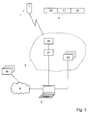
- FIG. 3 is a block diagram of a second embodiment the system of the invention.
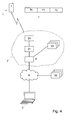
- FIG. 4 is a block diagram of a third embodiment the system of the invention.
- FIG. 5 shows a screen of the input mask which is shown in FIG Remote device can be used to enter switching conditions.
- FIG. 6 is a flowchart of the method of one embodiment the invention.
- WEB server For example, you have an HTTP service that continuously polls from WEB users and forwards them.
- Mobile devices When we talk about mobile devices, we mean mobile phones, PDAs, cameras, videos and computer systems by one Mobile subscribers can be carried and those via an interface to have a wireless communication system.
- Popular mobile devices include GSM and UMTS mobile phones.
- Figure 1 is a block diagram of the typical software architecture of a Mobile Device 1.
- the schematically illustrated architecture becomes for example, with some differences, in Symbian TM, Windows CE TM and pure JAVA TM mobile devices.
- the software architecture also includes system processes 104, other services 105 (for example, permanent programs, including JAVA programs) and user applications 106.
- FIG. 2 is a block diagram of a first embodiment of the invention System of the invention with a mobile device 1 (ME), the components and Includes resources that are controlled by services.
- the mobile device 1 is registered in a mobile network 2 (for example, a GSM or UMTS network).
- the mobile network includes one (or is networked with one) Plurality of base stations 20, a home file register (HLR, not shown), and a message handler (for example, an SMS Handler (SMSC)), a USSD handler and / or a TCP / IP server, respectively SMS text messages, USSD (Unstructured Supplementary Service Data) and / or internet packets.
- the components 20 and 21 can be conventional.
- the inventive mobile network 2 also includes a Remote device 22 (for example, one or more networked computer systems) with which switching conditions determined, adapted and tested and which automatically triggers and activates a command the mobile device 1 transmits when certain switching conditions are met.
- this remote device is the operator of the mobile network. 2 (or a network with a roaming agreement) and is thus Part of the infrastructure of this network.
- the server 22 preferably comprises an unillustrated database of switching conditions required by the network operator and / or from multiple third parties 5 via a telecommunications network 4 (for example, Internet), and a program with which is checked continuously or periodically whether certain or all participants of the mobile network 2 these switching conditions fulfill.
- the device 22 receives constantly updated parameters from systems 23 within the infrastructure of the mobile network and / or external systems 30. These parameters may be from the remote device 22 are tested and solve the remote switching of a service in a mobile device 1, if they meet the predetermined switching conditions fulfill.
- At least any two of these parameters become arbitrarily combined on the basis of freely definable switching conditions, within the remote device 22 to determine if certain services certain mobile devices 1 should be blocked or exempted.
- a preferred variant may be three, or more preferably, from These parameters are combined for greater flexibility in the Determination of the remote switching conditions.
- both Parameters determined within the infrastructure of the mobile network as well as external parameters, such as parameters, the from a third party 5 and / or from several different third parties be determined or specified. It can preferably also simultaneously parameters that specifically a mobile device affect (for example, its location) as well as mobile device-independent Parameters are combined. Parameters determined in the mobile device 1 itself can be used arbitrarily with other parameters of the Network 2 and / or external parameters are combined.
- a switching command 7 sent and via the mobile network and the message handler 21 to the Mobile device 1 is sent, in which a service on or off must become.
- the switching command typically includes a header 70 with the address of the mobile device, an on or off switching command 71 and the Indication 72 about the service (s) to be switched. It can, for example SMS (for example SMS, the commands according to the procedure of EP689368), USSD, emails with executable content, JAVA applets, HTML or WML content or other from the operating system of the Mobile device 1 or the SIM identifying the mobile subscriber in the mobile device 1 executable files are sent.
- SMS for example SMS, the commands according to the procedure of EP689368
- USSD emails with executable content, JAVA applets, HTML or WML content or other from the operating system of the Mobile device 1 or the SIM identifying the mobile subscriber in the mobile device 1 executable files are sent.
- the service specified in instruction part 72 may also be of the type Model and technical characteristics of the mobile device 1 depending if these features are known by the third party 5 and / or the mobile network are. Also, the sent command may depend on the mobile device its about hardware and operating system differences consider. For example, JAVA applet to a JAVA capable Mobile device and SMS commands to mobile devices of which not sure is whether they can interpret JAVA be sent.
- the command is executed by turning on or off Service, JAVA program or device driver software controlled onor is turned off.
- the mobile device 1 sends an acknowledgment to the remote device 22, when the named command is performed.
- FIG. 5 shows a screen of the input mask in the remote device 22 and / or in Terminal 5 of a third party to enter switching conditions.
- this mask is called Web page generated in the remote device 22, for example, ASP, .NET, JAVA, JAVAscript, PERL etc. programming technique and with one Web browser at the third party 5 reproduced and edited.
- An electronic Mask that is not based on Internet or a fax or Paper form is also conceivable.
- the input mask shown as an example in FIG. 5 is allowed to combine several parameters with one another to determine or subsequently adjust a switching condition.
- the Third party may preferentially adjust existing conditions at any time, delete, or prepare new switching conditions.
- Access to This input mask is preferably with a password or a protected by other authentication mechanism. This access is preferred charged by the operator of the mobile network; it is possible also that every triggered switching command or switching process is charged becomes.
- the input mask of Figure 5 includes a field in which a Location can be specified, in this case "Bern, Schwarztorstrasse 61 ".
- a location to be blocked could also be graphically displayed as a variant a map with geographical coordinates relative to the location of a Mobile device and so on. The location could also be implicit be.
- a list of several geographic areas to block also conceivable.
- abstract units can also be specified (for example, “Komische Oper Berlin", “all swimming pools” or "in public transport") in this case, the correspondence between the specified abstract unit and the locked area preferably in the remote device.
- the field 501 contains a time span, here from 08:00 to 17:00, during which mobile services are to be turned on or off. More complicated times, for example, from the date, day of the week, or are dependent on periodically repeatable time periods, too conceivable.
- the time span can be specified with a start and an end (as in the example shown) or with a duration (approx the duration of a spectacle during which photos are prohibited). It can also specify very short time periods for certain applications including time periods shorter than a minute or even as a second, or time period or duration, by external Events are dependent.
- Field 502 contains a list of mobile devices that are remotely switched can be.
- mobile devices can use the phone number (MSISDN), with the unique name of the mobile subscriber, with a reference to a known group (for example, all mobile subscribers a mobile operator), etc.
- the list can either be open - in this case, the third party 5 services each remote mobile device - or be closed - the third party only certain mobile devices can remotely control, such as the mobile devices of mobile subscribers who explicitly authorized such a remote control or the mobile devices of affiliates or relatives Mobile subscribers.
- Field 503 allows the third party additional conditions for example, as SQL or pseudo-SQL conditions.
- the third party indicates whether a grant of the affected mobile subscriber before a service on his mobile device is turned off or on.
- the third party indicates whether the affected Mobile subscriber is informed when a service off or on becomes.
- Field 506 contains a list of several services listed in the Example shown must be turned off when the others Conditions are met.
- the video function and the wireless interface of the mobile devices all mobile subscribers listed in field 502 and who are are switched on and off at the specified address, with the concerned mobile subscribers, and being asked for their authorization is requested.
- this set of conditions used to ban employees of a company during the Working hours take photos at work and connect with the wifi of the company.
- FIG. 3 shows an embodiment of the invention in which the remote unit 5, in which the switching conditions are checked, itself located outside the infrastructure of the mobile network 2.
- the remote device For example, 5 can be directly from a third party, for example a Value-added service providers are operated.
- the switching conditions use parameters that are determined within the remote device 5, external parameters, for example, over the Internet 4 of several external devices, and possibly parameters, which are determined within the mobile network 2 and from Mobile network operators are communicated.
- the remote device sends a command, such as an SMS, a USSD TCP IP command, etc. over the mobile network 2 to the affected mobile devices, then execute this command.
- a command such as an SMS, a USSD TCP IP command, etc.
- FIG. 4 shows an embodiment of the invention in which the remote unit 5, in which the switching conditions are checked, itself is also outside the infrastructure of the mobile network 2.
- this remote device receives anonymized internal parameters of the mobile network 2, at different points 23 within the Network 2 are determined and via a proxy anonymization server. 8 are anonymous so that the operator of the remote device does not know can determine which parameters correspond to which mobile subscriber.
- This has the advantage that a third party can thus send anonymous commands to about mobile services, which are located in a special location turn on or off, without the identity of the affected Mobile subscriber to learn.
- the anonymous commands are in the proxy server de-anonymized by replacing an alias with the correct identity and be forwarded to the affected mobile devices 1.
- FIG. 6 is a flow chart of the method of the invention.
- the Reference numeral 100 shows the beginning of the method.
- a set of switching conditions initially determined for example in the first access by the third party 5 to the remote device.
- the initial set of conditions can also be empty by not setting an initial condition.
- the third party 5 then has the option of this set of conditions as often as desired in step 102 to adapt and complete.
- the set connections will then be during the step 103 checked by the remote unit 22. This test will be continuous or repeated periodically, as long as the set conditions are not met (Lozenge 104).
- a corresponding switching command is triggered in step 105 and during the step 106 via the mobile network 2 and the Message handler 21 to the affected mobile device (s).
- the switching command is then executed in this case, if the mobile subscriber has granted it.
- a simple message is sent to the mobile device 1 before or after a service is turned on or off becomes.
- the message can also be generated by the mobile device; she can also indicate that a service 105, 107 after a predetermined period of time is switched on or off.
- the message and / or the request for A confirmation may also be in multimodal mode played during a voice connection.
- This switching command may be during step 107 de-anonymized by Proxy 8.
- the command will then be during the step 108 received from the mobile device 1 and performed at step 109, the activation or deactivation of the service may only take place after a period of time after the end of a connection or after the explicit one Authorization of the affected mobile subscriber takes place.
Landscapes
- Engineering & Computer Science (AREA)
- Computer Networks & Wireless Communication (AREA)
- Signal Processing (AREA)
- Computer Security & Cryptography (AREA)
- Mobile Radio Communication Systems (AREA)
Abstract
Description
- Es können nur komplette Geräte ausgeschaltet werden, nicht aber selektiv bestimmte Dienste, und/oder
- Endgeräte-Hardwareanpassungen werden benötigt, um ein spezielles Sperrsignal zu empfangen, oder um den Standort des Geräts zu bestimmen, und/oder
- Die Fernsperrfunktion kann vom Mobilteilnehmer abgeschaltet werden, und/oder
- Es können nur Mobilgeräte innerhalb eines bestimmten Raums gesperrt werden, und/oder
- Das Verfahren kann nur vom Mobilfunknetzbetreiber eingesetzt werden, und/oder
- Der Standort der Mobilteilnehmer bleibt gegenüber von Dritten nicht anonym, und/oder
- Bestehende Sprach- und Datenverbindungen werden auf unhöfliche Art unterbrochen.
- Die Tastatur
- Andere Eingabemittel, wie Joystick, zusätzliche Knöpfe, Rollelement, usw.
- Eine oder mehrere Anzeigen
- Ein Lautsprecher und ein Mikrophon
- Eine Vibrierfunktion
- Mindestens einen Transceiver (Sendeteil und Empfangsteil) für den Zugriff auf ein oder mehrere Mobilnetze
- Einen Chipkartenleser für die SIM-Karte und/oder für externe Chipkarten
- Eine statische- oder Video-Kamera
- Ein Blitzgerät
- Eine Peripherie-Schnittstelle
- Eine infrarote Schnittstelle
- Eine Bluetooth Schnittstelle
- Eine WLAN Schnittstelle
- Rington
- Alarm
- Musik- oder Videowiedergabe
- usw.
- Den von einem Standortbestimmungsmodul ermittelten Standort des Mobilteilnehmers, der mit einem Satelliten-Standortbestimmungsmodul im Mobilgerät 1 und/oder anhand der in den Basisstationen empfangenen Signale zum Beispiel anhand eines Triangulationsverfahrens ermittelt werden kann.
- Die Zeit, den Wochentag und/oder das Datum.
- Die für jeden Mobilteilnehmer und/oder für jede Basisstation verfügbare Bandbreite für die Datenübertragung.
- Die Identität des Heimnetzbetreibers.
- Die Netzbelastung (zum Beispiel die Anzahl Mobilteilnehmer in einem Gebiet).
- Die Anwesenheit von prioritären Mobilteilnehmern in einem Gebiet.
- Der Zustand (zum Beispiel ein oder aus) eines anderen Mobilgeräts und/oder eines Dienstes in einem anderen Mobilgerät.
- Die Identität des Mobilfunknetzes, in welchem ein Mobilteilnehmer momentan angemeldet ist (Heimnetz oder besuchtes Netz).
- Den verfügbaren Saldo auf einem vorbezahlten Konto des Mobilteilnehmers beim Netzbetreiber und/oder bei einem Dritten, wobei das Konto mit der IMSI und/oder mit der MSISDN der SIM-Karte verbunden sein kann.
- Die Solvabilität des Mobilteilnehmers.
- Merkmale des Mobilgeräts (Marke, Model, Typ, technische Merkmale, Version des Betriebsystems, verfügbarer Speicher, usw.)
- Merkmale der SIM-Karte innerhalb des Mobilgeräts (Typ, verfügbarer Speicher, technische Merkmale, usw.)
- Das Profil des Mobilteilnehmers.
- Den Empfang eines Fernsteuerungsbefehls aus einem anderen Mobilgerät.
- usw.
- Die Zeit, den Wochentag und/oder das Datum.
- Das Vorhandensein des Mobilteilnehmers auf einer vorbestimmten Liste.
- Das Vorhandensein von bestimmten Mobilgeräten in der Nähe eines anderen bestimmten Mobilteilnehmers, wobei dies durch eine kontaktlose Interaktion im Nahbereich (zum Beispiel über Bluetooth) ermittelt wird.
- Parameter, die im ferngeschalteten Mobilgerät 1 ermittelt werden und anhand eines zusätzlichen Programms an das Ferngerät 22 übermittelt werden, einschliesslich Anweisungen des Mobilteilnehmers oder Empfang von Signalen aus der Bluetooth, IrdA, WLAN usw. -Schnittstelle.
- Bedingungen, die von guten Sitten und anderen Gewohnheiten abhängig sind (etwa um Foto in bestimmten Bereichen zu verbieten).
- usw.
Claims (29)
- Verfahren, um mindestens einen Dienst (103, 105) eines in einem Mobilfunknetz (2) registrierten Mobilgeräts (1) selektiv mit einem von einem Ferngerät (22) gesendeten Befehl (7) fernzuschalten, ohne das ganze Mobilgerät auszuschalten, gekennzeichnet durch folgende Schritte:Bestimmung und nachträgliche Anpassung eines Satzes von Schaltbedingungen (500-506) von einer Drittpartei (5),Test der benannten Schaltbedingungen im Ferngerät (22),Automatische Auslösung des Befehls (7), wenn die Schaltbedingungen erfüllt sind,Sendung des Befehls (7) an das Mobilgerät (1),Empfang des Befehls (7) durch das Mobilgerät (1),Ein- oder Ausschaltung des Dienstes (103, 105) im Mobilgerät (1).
- Das Verfahren des Anspruchs 1, in welchem der benannte einoder auszuschaltende Dienst (103, 105) unter mehreren Möglichkeiten gewählt wird.
- Das Verfahren eines der Ansprüche 1 oder 2, in welchem der benannte ein- oder auszuschaltende Dienst (103, 105) im benannten Befehl (7) angegeben ist.
- Das Verfahren des Anspruchs 3, in welchem der Befehl (7) vom Typ oder den technischen Merkmalen des Mobilgeräts (1) abhängig ist.
- Das Verfahren eines der Ansprüche 1 bis 4, in welchem die Schaltbedingungen (500-506) mindestens zwei Parameter aus der folgenden Liste berücksichtigen:Standort des Mobilgeräts (1)ZeitMomentan verfügbare Bandbreite für die DatenübertragungMobilgerätdichteNetzbelastungAnwesenheit von prioritären MobilteilnehmernRegistriertes Mobilfunknetz (2)Verfügbarer Saldo auf einem vorbezahlten Konto des MobilteilnehmersSolvabilität des Mobilteilnehmers.
- Das Verfahren eines der Ansprüche 1 bis 5, in welchem die Schaltbedingungen mindestens zwei Parameter aus der folgenden Liste berücksichtigen:Vorhandensein des Mobilteilnehmers auf einer ListeEreignisse, die von einem Scheduler ausgelöst werdenExterne EreignisseVorhandensein von vorbestimmten Mobilgeräten (1)Empfang eines Fernsteuerungsbefehls aus einem Mobilgerät (1).
- Das Verfahren eines der Ansprüche 1 bis 6, in welchem der benannte ein- oder auszuschaltende Dienst (105, 103) unter mindestens zwei der folgenden Möglichkeiten bestimmt wird:KameraBlitzgerätAnzeigeRingtonAlarmVibrierfunktionLautsprecherMusik- oder VideowiedergabeSendeteilBluetoothIrDAWLANKurzmeldungsdienstSIM-Kartebestimmte Anwendungen.
- Das Verfahren eines der Ansprüche 1 bis 7, in welchem die Schaltung durch Start oder Stop eines Dienstes (103, 105) im Betriebssystem (100) des Mobilgeräts (1) softwaregesteuert erfolgt.
- Das Verfahren eines der Ansprüche 1 bis 8, in welchem die benannte Schaltung durch Start oder Stop eines Gerättreibers (103) im Mobilgerät softwaregesteuert erfolgt.
- Das Verfahren eines der Ansprüche 1 bis 9, in welchem die benannte Schaltung durch Start oder Stop eines JAVA-Residentsprogramm erfolgt.
- Das Verfahren eines der Ansprüche 1 bis 10, in welchem der benannte Befehl über einen Kurzmeldungsdienst durch das Mobilfunknetz (2) an das Mobilgerät (1) übertragen wird.
- Das Verfahren eines der Ansprüche 1 bis 11, in welchem der benannte Befehl als HTML- oder WML-Inhalt durch das Mobilfunknetz (2) an das Mobilgerät (1) übertragen wird.
- Das Verfahren eines der Ansprüche 1 bis 12, in welchem das Mobilgerät (1) eine Bestätigung an das Ferngerät (22) sendet, wenn der benannte Befehl durchgeführt wird.
- Das Verfahren eines der Ansprüche 1 bis 13, in welchem das benannte Ferngerät (22), welches das Ein- oder Ausschalten eines Dienstes initiiert, vom Betreiber des Mobilfunknetzes (2) betrieben wird und somit Teil der Infrastruktur dieses Mobilfunknetzes ist.
- Das Verfahren eines der Ansprüche 1 bis 13, in welchem das benannte Ferngerät (22), welches das Ein- oder Ausschalten eines Dienstes initiiert, von einem Drittanbieter (5) betrieben wird und sich ausserhalb der Infrastruktur des Mobilfunknetzes (2) befindet.
- Das Verfahren eines der Ansprüche 1 bis 15, in welchem die benannte Drittpartei (5) die Identität der Mobilgeräte (1), welche die benannten Schaltbedingungen erfüllen, nicht ermittelt,
und in welchem die benannte Drittpartei (22) anonyme Einoder Ausschaltbefehle (7) sendet. - Das Verfahren eines der Ansprüche 1 bis 16, in welchem Parameter, die für die benannten Schaltbedingungen berücksichtigt werden, im Mobilfunknetz (2) ermittelt werden und anonym über einen Anonymisierungs-Proxyserver (8) an die Drittpartei (5) übermittelt werden.
- Das Verfahren eines der Ansprüche 1 bis 17, in welchem mindestens gewisse benannte Schaltbedingungen im Mobilgerät (1) geprüft werden.
- Das Verfahren eines der Ansprüche 1 bis 18, in welchem um eine Bestätigung eines Mobilteilnehmers gebeten wird, bevor ein Dienst (105, 103) des Mobilgeräts (1) dieses Mobilteilnehmers ein- oder ausgeschaltet wird.
- Das Verfahren eines der Ansprüche 1 bis 19, in welchem eine Meldung an das Mobilgerät (1) übermittelt wird, nachdem ein Dienst (103, 105) ein- oder ausgeschaltet wird.
- Das Verfahren eines der Ansprüche 1 bis 20, in welchem eine Meldung im Voraus an das Mobilgerät (1) übermittelt wird, in welcher angegeben ist, dass ein Dienst (105, 107) nach einer vorbestimmten Zeitspanne ein- oder ausgeschaltet wird.
- Das Verfahren eines der Ansprüche 19 bis 21, in welchem die benannte Bestätigung oder Meldung im multimodalen Modus während einer Sprachverbindung wiedergegeben wird.
- Das Verfahren eines der Ansprüche 1 bis 18, in welchem das Ein- oder Ausschalten mindestens eines Dienstes (105, 107) transparent für den Mobilteilnehmer erfolgt.
- Das Verfahren eines der Ansprüche 1 bis 23, in welchem der Mobilteilnehmer mit einer Option in seinem Mobilgerät angibt, ob gewisse oder alle Dienste aus einem Ferngerät (22) ein- oder ausgeschaltet werden können.
- Das Verfahren eines der Ansprüche 1 bis 24, in welchem das Ein- oder Ausschalten eines Dienstes (105, 107) vom Betreiber des Mobilfunknetzes verrechnet wird.
- Das Verfahren eines der Ansprüche 1 bis 25, in welchem eine Vielzahl von Drittparteien (5) auf das benannte Ferngerät (22) über ein Telekommunikationsnetz (4) zugreift, um unterschiedliche Sätze von Schaltbedingungen (500-506) zu bestimmen.
- Das Verfahren eines der Ansprüche 1 bis 26, in welchem der Betreiber des benannten Ferngeräts (22) einen Befehl (7) einer Drittpartei (5) erst dann an das betreffende Mobilgerät (1) sendet, wenn geprüft worden ist, ob dieser Befehl zulässig ist.
- Vorrichtung (22), mit folgenden Mitteln:Mittel zur Bestimmung und zur nachträglichen Anpassung eines Satzes von Schaltbedingungen (500-506), mit welchen angegeben wird, ob einen Dienst eines Mobilgeräts ein- oder ausgeschaltet werden mussMittel zum mehrmaligen Test der benannten SchaltbedingungenMittel zur automatischen Auslösung eines Befehls (7), wenn die Schaltbedingungen erfüllt sindMittel zur Sendung des Befehls (7) an das Mobilgerät (1).
- Datenträger in welchem ein Programm gespeichert ist, welches das Verfahren eines der Ansprüche 1 bis 27 ausführt, wenn es von einem Server durchgeführt wird.
Priority Applications (1)
| Application Number | Priority Date | Filing Date | Title |
|---|---|---|---|
| EP04100123.1A EP1555846B1 (de) | 2004-01-15 | 2004-01-15 | Verfahren zur Fernschaltung von Diensten |
Applications Claiming Priority (1)
| Application Number | Priority Date | Filing Date | Title |
|---|---|---|---|
| EP04100123.1A EP1555846B1 (de) | 2004-01-15 | 2004-01-15 | Verfahren zur Fernschaltung von Diensten |
Publications (2)
| Publication Number | Publication Date |
|---|---|
| EP1555846A1 true EP1555846A1 (de) | 2005-07-20 |
| EP1555846B1 EP1555846B1 (de) | 2015-10-21 |
Family
ID=34610216
Family Applications (1)
| Application Number | Title | Priority Date | Filing Date |
|---|---|---|---|
| EP04100123.1A Expired - Lifetime EP1555846B1 (de) | 2004-01-15 | 2004-01-15 | Verfahren zur Fernschaltung von Diensten |
Country Status (1)
| Country | Link |
|---|---|
| EP (1) | EP1555846B1 (de) |
Cited By (1)
| Publication number | Priority date | Publication date | Assignee | Title |
|---|---|---|---|---|
| CN113766356A (zh) * | 2021-08-18 | 2021-12-07 | 华建数创(上海)科技有限公司 | 基于移动端的智慧运营管理中心远程控制方法 |
Citations (6)
| Publication number | Priority date | Publication date | Assignee | Title |
|---|---|---|---|---|
| WO1998025433A1 (en) | 1996-12-05 | 1998-06-11 | Ericsson Inc. | Method and apparatus for restricting operation of cellular telephones to well delineated geographical areas |
| US5778304A (en) | 1994-03-10 | 1998-07-07 | Motorola, Inc. | Method for providing communication services based on geographic location |
| EP1223772A1 (de) | 2001-01-10 | 2002-07-17 | Hitachi, Ltd. | Kommunikationsverfahren und System zur Steuerung mit Information über begrenzte Bereiche |
| US20030008662A1 (en) | 2001-07-09 | 2003-01-09 | Stern Edith H. | Systems and methods wherein a mobile user device operates in accordance with a location policy and user device information |
| US20030133573A1 (en) | 2002-01-16 | 2003-07-17 | International Business Machines Corporation | Limiting device function |
| US20030143954A1 (en) * | 2002-01-25 | 2003-07-31 | International Business Machines Corporation | Method of handling wireless device intrusion into populated areas |
-
2004
- 2004-01-15 EP EP04100123.1A patent/EP1555846B1/de not_active Expired - Lifetime
Patent Citations (6)
| Publication number | Priority date | Publication date | Assignee | Title |
|---|---|---|---|---|
| US5778304A (en) | 1994-03-10 | 1998-07-07 | Motorola, Inc. | Method for providing communication services based on geographic location |
| WO1998025433A1 (en) | 1996-12-05 | 1998-06-11 | Ericsson Inc. | Method and apparatus for restricting operation of cellular telephones to well delineated geographical areas |
| EP1223772A1 (de) | 2001-01-10 | 2002-07-17 | Hitachi, Ltd. | Kommunikationsverfahren und System zur Steuerung mit Information über begrenzte Bereiche |
| US20030008662A1 (en) | 2001-07-09 | 2003-01-09 | Stern Edith H. | Systems and methods wherein a mobile user device operates in accordance with a location policy and user device information |
| US20030133573A1 (en) | 2002-01-16 | 2003-07-17 | International Business Machines Corporation | Limiting device function |
| US20030143954A1 (en) * | 2002-01-25 | 2003-07-31 | International Business Machines Corporation | Method of handling wireless device intrusion into populated areas |
Cited By (1)
| Publication number | Priority date | Publication date | Assignee | Title |
|---|---|---|---|---|
| CN113766356A (zh) * | 2021-08-18 | 2021-12-07 | 华建数创(上海)科技有限公司 | 基于移动端的智慧运营管理中心远程控制方法 |
Also Published As
| Publication number | Publication date |
|---|---|
| EP1555846B1 (de) | 2015-10-21 |
Similar Documents
| Publication | Publication Date | Title |
|---|---|---|
| DE602004009735T2 (de) | Eine Methode und ein Apparat zur Bereitstellung Mobile-zur-Mobile Videofähigkeit zu einem Netz | |
| DE60100658T2 (de) | Verfahren und System zur Bereitstellung von Diensten | |
| DE60022977T2 (de) | Positionsgeheimhaltung für drahtlose Mobilstationen und Verwendungsverfahren | |
| DE60214062T2 (de) | Benutzer-Markierung von Standorten eines Mobiltelefons | |
| DE60100582T2 (de) | Orts- und personenabhängige Gerätekontrolle | |
| DE60119917T2 (de) | Mobiltelefon mit Funkrufempfängermodus | |
| EP2090029B1 (de) | Aufbau von kommunikationsverbindungen zwischen fahrzeugen | |
| DE69931344T2 (de) | Nachrichtenverarbeitungsverfahren und system in einem telekommunikationssystem | |
| DE602005000552T2 (de) | Drahtlose Zugangskontrolle für Telematik- und Sprachdienste | |
| EP1208717A1 (de) | Notrufsystem innerhalb eines telekommunikationsnetzes | |
| EP4078542B1 (de) | Verfahren zum übermitteln von personalisierter information an einen nutzer eines gebäudes | |
| DE60133097T2 (de) | Verfahren und übertragungsnetzwerk zur steuerung von menufunktionen eines mobilen telefons | |
| EP1464198A1 (de) | Verbesserter datenschutz für positionsabhängige dienste | |
| EP1555846B1 (de) | Verfahren zur Fernschaltung von Diensten | |
| DE60314522T2 (de) | Verfahren und Telekommunikationssystem zur Positionsbestimmung einer Ziel-Teilnehmereinrichtung unter Nutzung einer "Mobile Originating-Location Request (MO-LR)"-Prozedur | |
| EP1190587A1 (de) | Verfahren zum betreiben eines mobilen endgeräts und entsprechendes mobilfunksystem | |
| DE60103455T2 (de) | Steuerung der Wegewahl | |
| WO2002056271A2 (de) | Kontaktvermittlungseinrichtung und -verfahren | |
| DE60017972T2 (de) | Verfahren zum Bereitstellen von Diensteselektion für ein Endgerät, Endgerät und Entsprechendes Verwaltungszentrum | |
| EP0879543A2 (de) | Verfahren zur herstellung einer sprachverbindung in einem mobilfunknetz und einrichtung zur durchführung dieses verfahrens | |
| DE69831772T2 (de) | Benutzerunterstützte schnurlose Betrugserkennung | |
| DE60024910T2 (de) | Positionsspezifischer Informationsdienst | |
| DE102008026690A1 (de) | Mobilfunkgesteuertes Fernüberwachungssystem und entsprechendes Verfahren | |
| DE102013003063A1 (de) | Steuerung des Kommunikationsverhaltens eines Kraftfahrzeugs | |
| DE102013208111B4 (de) | Anrufveranlassung einer entfernten Kommunikationseinrichtung unter Verwendung eines Datenkanalkommunikationspfads |
Legal Events
| Date | Code | Title | Description |
|---|---|---|---|
| PUAI | Public reference made under article 153(3) epc to a published international application that has entered the european phase |
Free format text: ORIGINAL CODE: 0009012 |
|
| AK | Designated contracting states |
Kind code of ref document: A1 Designated state(s): AT BE BG CH CY CZ DE DK EE ES FI FR GB GR HU IE IT LI LU MC NL PT RO SE SI SK TR |
|
| AX | Request for extension of the european patent |
Extension state: AL LT LV MK |
|
| 17P | Request for examination filed |
Effective date: 20051217 |
|
| AKX | Designation fees paid |
Designated state(s): AT BE BG CH CY CZ DE DK EE ES FI FR GB GR HU IE IT LI LU MC NL PT RO SE SI SK TR |
|
| RAP1 | Party data changed (applicant data changed or rights of an application transferred) |
Owner name: SWISSCOM (SCHWEIZ) AG |
|
| RAP1 | Party data changed (applicant data changed or rights of an application transferred) |
Owner name: SWISSCOM AG |
|
| 17Q | First examination report despatched |
Effective date: 20111124 |
|
| REG | Reference to a national code |
Ref country code: DE Ref legal event code: R079 Ref document number: 502004015059 Country of ref document: DE Free format text: PREVIOUS MAIN CLASS: H04Q0007380000 Ipc: H04W0048040000 |
|
| GRAP | Despatch of communication of intention to grant a patent |
Free format text: ORIGINAL CODE: EPIDOSNIGR1 |
|
| RIC1 | Information provided on ipc code assigned before grant |
Ipc: H04W 4/02 20090101ALN20150506BHEP Ipc: H04W 48/04 20090101AFI20150506BHEP |
|
| INTG | Intention to grant announced |
Effective date: 20150604 |
|
| GRAS | Grant fee paid |
Free format text: ORIGINAL CODE: EPIDOSNIGR3 |
|
| GRAA | (expected) grant |
Free format text: ORIGINAL CODE: 0009210 |
|
| AK | Designated contracting states |
Kind code of ref document: B1 Designated state(s): AT BE BG CH CY CZ DE DK EE ES FI FR GB GR HU IE IT LI LU MC NL PT RO SE SI SK TR |
|
| REG | Reference to a national code |
Ref country code: GB Ref legal event code: FG4D Free format text: NOT ENGLISH |
|
| REG | Reference to a national code |
Ref country code: CH Ref legal event code: EP Ref country code: CH Ref legal event code: NV Representative=s name: P&TS SA, CH |
|
| REG | Reference to a national code |
Ref country code: AT Ref legal event code: REF Ref document number: 757340 Country of ref document: AT Kind code of ref document: T Effective date: 20151115 |
|
| REG | Reference to a national code |
Ref country code: IE Ref legal event code: FG4D Free format text: LANGUAGE OF EP DOCUMENT: GERMAN |
|
| REG | Reference to a national code |
Ref country code: DE Ref legal event code: R096 Ref document number: 502004015059 Country of ref document: DE |
|
| REG | Reference to a national code |
Ref country code: FR Ref legal event code: PLFP Year of fee payment: 13 |
|
| REG | Reference to a national code |
Ref country code: NL Ref legal event code: FP |
|
| PG25 | Lapsed in a contracting state [announced via postgrant information from national office to epo] |
Ref country code: ES Free format text: LAPSE BECAUSE OF FAILURE TO SUBMIT A TRANSLATION OF THE DESCRIPTION OR TO PAY THE FEE WITHIN THE PRESCRIBED TIME-LIMIT Effective date: 20151021 Ref country code: IT Free format text: LAPSE BECAUSE OF FAILURE TO SUBMIT A TRANSLATION OF THE DESCRIPTION OR TO PAY THE FEE WITHIN THE PRESCRIBED TIME-LIMIT Effective date: 20151021 |
|
| PG25 | Lapsed in a contracting state [announced via postgrant information from national office to epo] |
Ref country code: SE Free format text: LAPSE BECAUSE OF FAILURE TO SUBMIT A TRANSLATION OF THE DESCRIPTION OR TO PAY THE FEE WITHIN THE PRESCRIBED TIME-LIMIT Effective date: 20151021 Ref country code: FI Free format text: LAPSE BECAUSE OF FAILURE TO SUBMIT A TRANSLATION OF THE DESCRIPTION OR TO PAY THE FEE WITHIN THE PRESCRIBED TIME-LIMIT Effective date: 20151021 Ref country code: PT Free format text: LAPSE BECAUSE OF FAILURE TO SUBMIT A TRANSLATION OF THE DESCRIPTION OR TO PAY THE FEE WITHIN THE PRESCRIBED TIME-LIMIT Effective date: 20160222 Ref country code: GR Free format text: LAPSE BECAUSE OF FAILURE TO SUBMIT A TRANSLATION OF THE DESCRIPTION OR TO PAY THE FEE WITHIN THE PRESCRIBED TIME-LIMIT Effective date: 20160122 Ref country code: BE Free format text: LAPSE BECAUSE OF NON-PAYMENT OF DUE FEES Effective date: 20160131 |
|
| REG | Reference to a national code |
Ref country code: DE Ref legal event code: R097 Ref document number: 502004015059 Country of ref document: DE |
|
| PG25 | Lapsed in a contracting state [announced via postgrant information from national office to epo] |
Ref country code: CZ Free format text: LAPSE BECAUSE OF FAILURE TO SUBMIT A TRANSLATION OF THE DESCRIPTION OR TO PAY THE FEE WITHIN THE PRESCRIBED TIME-LIMIT Effective date: 20151021 |
|
| PLBE | No opposition filed within time limit |
Free format text: ORIGINAL CODE: 0009261 |
|
| STAA | Information on the status of an ep patent application or granted ep patent |
Free format text: STATUS: NO OPPOSITION FILED WITHIN TIME LIMIT |
|
| PG25 | Lapsed in a contracting state [announced via postgrant information from national office to epo] |
Ref country code: RO Free format text: LAPSE BECAUSE OF FAILURE TO SUBMIT A TRANSLATION OF THE DESCRIPTION OR TO PAY THE FEE WITHIN THE PRESCRIBED TIME-LIMIT Effective date: 20151021 Ref country code: EE Free format text: LAPSE BECAUSE OF FAILURE TO SUBMIT A TRANSLATION OF THE DESCRIPTION OR TO PAY THE FEE WITHIN THE PRESCRIBED TIME-LIMIT Effective date: 20151021 Ref country code: SK Free format text: LAPSE BECAUSE OF FAILURE TO SUBMIT A TRANSLATION OF THE DESCRIPTION OR TO PAY THE FEE WITHIN THE PRESCRIBED TIME-LIMIT Effective date: 20151021 Ref country code: LU Free format text: LAPSE BECAUSE OF FAILURE TO SUBMIT A TRANSLATION OF THE DESCRIPTION OR TO PAY THE FEE WITHIN THE PRESCRIBED TIME-LIMIT Effective date: 20160115 Ref country code: DK Free format text: LAPSE BECAUSE OF FAILURE TO SUBMIT A TRANSLATION OF THE DESCRIPTION OR TO PAY THE FEE WITHIN THE PRESCRIBED TIME-LIMIT Effective date: 20151021 |
|
| 26N | No opposition filed |
Effective date: 20160722 |
|
| PG25 | Lapsed in a contracting state [announced via postgrant information from national office to epo] |
Ref country code: MC Free format text: LAPSE BECAUSE OF FAILURE TO SUBMIT A TRANSLATION OF THE DESCRIPTION OR TO PAY THE FEE WITHIN THE PRESCRIBED TIME-LIMIT Effective date: 20151021 |
|
| REG | Reference to a national code |
Ref country code: IE Ref legal event code: MM4A |
|
| PG25 | Lapsed in a contracting state [announced via postgrant information from national office to epo] |
Ref country code: SI Free format text: LAPSE BECAUSE OF FAILURE TO SUBMIT A TRANSLATION OF THE DESCRIPTION OR TO PAY THE FEE WITHIN THE PRESCRIBED TIME-LIMIT Effective date: 20151021 |
|
| REG | Reference to a national code |
Ref country code: FR Ref legal event code: PLFP Year of fee payment: 14 |
|
| PG25 | Lapsed in a contracting state [announced via postgrant information from national office to epo] |
Ref country code: IE Free format text: LAPSE BECAUSE OF NON-PAYMENT OF DUE FEES Effective date: 20160115 |
|
| REG | Reference to a national code |
Ref country code: AT Ref legal event code: MM01 Ref document number: 757340 Country of ref document: AT Kind code of ref document: T Effective date: 20160115 |
|
| PG25 | Lapsed in a contracting state [announced via postgrant information from national office to epo] |
Ref country code: AT Free format text: LAPSE BECAUSE OF NON-PAYMENT OF DUE FEES Effective date: 20160115 |
|
| REG | Reference to a national code |
Ref country code: FR Ref legal event code: PLFP Year of fee payment: 15 |
|
| PG25 | Lapsed in a contracting state [announced via postgrant information from national office to epo] |
Ref country code: HU Free format text: LAPSE BECAUSE OF FAILURE TO SUBMIT A TRANSLATION OF THE DESCRIPTION OR TO PAY THE FEE WITHIN THE PRESCRIBED TIME-LIMIT; INVALID AB INITIO Effective date: 20040115 Ref country code: CY Free format text: LAPSE BECAUSE OF FAILURE TO SUBMIT A TRANSLATION OF THE DESCRIPTION OR TO PAY THE FEE WITHIN THE PRESCRIBED TIME-LIMIT Effective date: 20151021 |
|
| PG25 | Lapsed in a contracting state [announced via postgrant information from national office to epo] |
Ref country code: TR Free format text: LAPSE BECAUSE OF FAILURE TO SUBMIT A TRANSLATION OF THE DESCRIPTION OR TO PAY THE FEE WITHIN THE PRESCRIBED TIME-LIMIT Effective date: 20151021 |
|
| PG25 | Lapsed in a contracting state [announced via postgrant information from national office to epo] |
Ref country code: BG Free format text: LAPSE BECAUSE OF FAILURE TO SUBMIT A TRANSLATION OF THE DESCRIPTION OR TO PAY THE FEE WITHIN THE PRESCRIBED TIME-LIMIT Effective date: 20151021 |
|
| REG | Reference to a national code |
Ref country code: DE Ref legal event code: R082 Ref document number: 502004015059 Country of ref document: DE Representative=s name: BECK & ROESSIG EUROPEAN PATENT ATTORNEYS, DE Ref country code: DE Ref legal event code: R082 Ref document number: 502004015059 Country of ref document: DE Representative=s name: BECK & ROESSIG - EUROPEAN PATENT ATTORNEYS, DE |
|
| PGFP | Annual fee paid to national office [announced via postgrant information from national office to epo] |
Ref country code: FR Payment date: 20230124 Year of fee payment: 20 Ref country code: CH Payment date: 20230125 Year of fee payment: 20 |
|
| PGFP | Annual fee paid to national office [announced via postgrant information from national office to epo] |
Ref country code: GB Payment date: 20230124 Year of fee payment: 20 Ref country code: DE Payment date: 20230127 Year of fee payment: 20 |
|
| PGFP | Annual fee paid to national office [announced via postgrant information from national office to epo] |
Ref country code: NL Payment date: 20230124 Year of fee payment: 20 |
|
| REG | Reference to a national code |
Ref country code: DE Ref legal event code: R071 Ref document number: 502004015059 Country of ref document: DE Ref country code: CH Ref legal event code: PL |
|
| REG | Reference to a national code |
Ref country code: NL Ref legal event code: MK Effective date: 20240114 |
|
| REG | Reference to a national code |
Ref country code: GB Ref legal event code: PE20 Expiry date: 20240114 |
|
| PG25 | Lapsed in a contracting state [announced via postgrant information from national office to epo] |
Ref country code: GB Free format text: LAPSE BECAUSE OF EXPIRATION OF PROTECTION Effective date: 20240114 |