EP1554266B1 - Verfahren zur herstellung 2,5-disubstituierter 3-alkylthiophenen - Google Patents
Verfahren zur herstellung 2,5-disubstituierter 3-alkylthiophenen Download PDFInfo
- Publication number
- EP1554266B1 EP1554266B1 EP03808838A EP03808838A EP1554266B1 EP 1554266 B1 EP1554266 B1 EP 1554266B1 EP 03808838 A EP03808838 A EP 03808838A EP 03808838 A EP03808838 A EP 03808838A EP 1554266 B1 EP1554266 B1 EP 1554266B1
- Authority
- EP
- European Patent Office
- Prior art keywords
- formula
- compound
- group
- reduction
- give
- Prior art date
- Legal status (The legal status is an assumption and is not a legal conclusion. Google has not performed a legal analysis and makes no representation as to the accuracy of the status listed.)
- Expired - Lifetime
Links
- 238000004519 manufacturing process Methods 0.000 title claims abstract description 10
- 238000000034 method Methods 0.000 claims abstract description 35
- 150000001875 compounds Chemical class 0.000 claims description 68
- 238000006722 reduction reaction Methods 0.000 claims description 45
- YMWUJEATGCHHMB-UHFFFAOYSA-N Dichloromethane Chemical compound ClCCl YMWUJEATGCHHMB-UHFFFAOYSA-N 0.000 claims description 27
- DTQVDTLACAAQTR-UHFFFAOYSA-N Trifluoroacetic acid Chemical compound OC(=O)C(F)(F)F DTQVDTLACAAQTR-UHFFFAOYSA-N 0.000 claims description 24
- OKKJLVBELUTLKV-UHFFFAOYSA-N Methanol Chemical compound OC OKKJLVBELUTLKV-UHFFFAOYSA-N 0.000 claims description 21
- BIHYFOLIQODFPD-UHFFFAOYSA-N 5-benzyl-2,3-dimethylthiophene Chemical compound S1C(C)=C(C)C=C1CC1=CC=CC=C1 BIHYFOLIQODFPD-UHFFFAOYSA-N 0.000 claims description 15
- 239000012279 sodium borohydride Substances 0.000 claims description 14
- 229910000033 sodium borohydride Inorganic materials 0.000 claims description 14
- IMNFDUFMRHMDMM-UHFFFAOYSA-N N-Heptane Chemical compound CCCCCCC IMNFDUFMRHMDMM-UHFFFAOYSA-N 0.000 claims description 13
- 238000006243 chemical reaction Methods 0.000 claims description 13
- 238000002360 preparation method Methods 0.000 claims description 12
- LFQSCWFLJHTTHZ-UHFFFAOYSA-N Ethanol Chemical compound CCO LFQSCWFLJHTTHZ-UHFFFAOYSA-N 0.000 claims description 10
- 238000002425 crystallisation Methods 0.000 claims description 10
- 230000008025 crystallization Effects 0.000 claims description 10
- KDLHZDBZIXYQEI-UHFFFAOYSA-N Palladium Chemical compound [Pd] KDLHZDBZIXYQEI-UHFFFAOYSA-N 0.000 claims description 9
- VSCWAEJMTAWNJL-UHFFFAOYSA-K aluminium trichloride Chemical compound Cl[Al](Cl)Cl VSCWAEJMTAWNJL-UHFFFAOYSA-K 0.000 claims description 9
- 239000002904 solvent Substances 0.000 claims description 9
- XLYOFNOQVPJJNP-UHFFFAOYSA-N water Substances O XLYOFNOQVPJJNP-UHFFFAOYSA-N 0.000 claims description 9
- 125000006527 (C1-C5) alkyl group Chemical group 0.000 claims description 8
- 229910052736 halogen Inorganic materials 0.000 claims description 7
- 150000002367 halogens Chemical class 0.000 claims description 7
- 230000002829 reductive effect Effects 0.000 claims description 7
- 229910052799 carbon Inorganic materials 0.000 claims description 6
- UAYWVJHJZHQCIE-UHFFFAOYSA-L zinc iodide Chemical compound I[Zn]I UAYWVJHJZHQCIE-UHFFFAOYSA-L 0.000 claims description 6
- PASDCCFISLVPSO-UHFFFAOYSA-N benzoyl chloride Chemical compound ClC(=O)C1=CC=CC=C1 PASDCCFISLVPSO-UHFFFAOYSA-N 0.000 claims description 5
- OKTJSMMVPCPJKN-UHFFFAOYSA-N Carbon Chemical compound [C] OKTJSMMVPCPJKN-UHFFFAOYSA-N 0.000 claims description 4
- KFZMGEQAYNKOFK-UHFFFAOYSA-N Isopropanol Chemical compound CC(C)O KFZMGEQAYNKOFK-UHFFFAOYSA-N 0.000 claims description 4
- 239000002841 Lewis acid Substances 0.000 claims description 4
- VYPSYNLAJGMNEJ-UHFFFAOYSA-N Silicium dioxide Chemical compound O=[Si]=O VYPSYNLAJGMNEJ-UHFFFAOYSA-N 0.000 claims description 4
- 239000002253 acid Substances 0.000 claims description 4
- 239000003054 catalyst Substances 0.000 claims description 4
- 238000009903 catalytic hydrogenation reaction Methods 0.000 claims description 4
- 150000007517 lewis acids Chemical class 0.000 claims description 4
- 239000000203 mixture Substances 0.000 claims description 4
- 229910052763 palladium Inorganic materials 0.000 claims description 4
- BASFCYQUMIYNBI-UHFFFAOYSA-N platinum Chemical compound [Pt] BASFCYQUMIYNBI-UHFFFAOYSA-N 0.000 claims description 4
- HTSGKJQDMSTCGS-UHFFFAOYSA-N 1,4-bis(4-chlorophenyl)-2-(4-methylphenyl)sulfonylbutane-1,4-dione Chemical compound C1=CC(C)=CC=C1S(=O)(=O)C(C(=O)C=1C=CC(Cl)=CC=1)CC(=O)C1=CC=C(Cl)C=C1 HTSGKJQDMSTCGS-UHFFFAOYSA-N 0.000 claims description 3
- AFVFQIVMOAPDHO-UHFFFAOYSA-N Methanesulfonic acid Chemical compound CS(O)(=O)=O AFVFQIVMOAPDHO-UHFFFAOYSA-N 0.000 claims description 3
- QAOWNCQODCNURD-UHFFFAOYSA-N Sulfuric acid Chemical compound OS(O)(=O)=O QAOWNCQODCNURD-UHFFFAOYSA-N 0.000 claims description 3
- 125000001797 benzyl group Chemical group [H]C1=C([H])C([H])=C(C([H])=C1[H])C([H])([H])* 0.000 claims description 3
- 239000000460 chlorine Substances 0.000 claims description 3
- BEOOHQFXGBMRKU-UHFFFAOYSA-N sodium cyanoborohydride Chemical compound [Na+].[B-]C#N BEOOHQFXGBMRKU-UHFFFAOYSA-N 0.000 claims description 3
- 239000001117 sulphuric acid Substances 0.000 claims description 3
- 235000011149 sulphuric acid Nutrition 0.000 claims description 3
- WKBOTKDWSSQWDR-UHFFFAOYSA-N Bromine atom Chemical compound [Br] WKBOTKDWSSQWDR-UHFFFAOYSA-N 0.000 claims description 2
- ZAMOUSCENKQFHK-UHFFFAOYSA-N Chlorine atom Chemical compound [Cl] ZAMOUSCENKQFHK-UHFFFAOYSA-N 0.000 claims description 2
- PXGOKWXKJXAPGV-UHFFFAOYSA-N Fluorine Chemical compound FF PXGOKWXKJXAPGV-UHFFFAOYSA-N 0.000 claims description 2
- UFHFLCQGNIYNRP-UHFFFAOYSA-N Hydrogen Chemical compound [H][H] UFHFLCQGNIYNRP-UHFFFAOYSA-N 0.000 claims description 2
- 230000002378 acidificating effect Effects 0.000 claims description 2
- 150000001298 alcohols Chemical class 0.000 claims description 2
- SMZOGRDCAXLAAR-UHFFFAOYSA-N aluminium isopropoxide Chemical compound [Al+3].CC(C)[O-].CC(C)[O-].CC(C)[O-] SMZOGRDCAXLAAR-UHFFFAOYSA-N 0.000 claims description 2
- PNEYBMLMFCGWSK-UHFFFAOYSA-N aluminium oxide Inorganic materials [O-2].[O-2].[O-2].[Al+3].[Al+3] PNEYBMLMFCGWSK-UHFFFAOYSA-N 0.000 claims description 2
- 239000003849 aromatic solvent Substances 0.000 claims description 2
- 125000003118 aryl group Chemical group 0.000 claims description 2
- UORVGPXVDQYIDP-UHFFFAOYSA-N borane Chemical class B UORVGPXVDQYIDP-UHFFFAOYSA-N 0.000 claims description 2
- 229910000085 borane Inorganic materials 0.000 claims description 2
- GDTBXPJZTBHREO-UHFFFAOYSA-N bromine Substances BrBr GDTBXPJZTBHREO-UHFFFAOYSA-N 0.000 claims description 2
- 229910052794 bromium Inorganic materials 0.000 claims description 2
- 229910052801 chlorine Inorganic materials 0.000 claims description 2
- NLFBCYMMUAKCPC-KQQUZDAGSA-N ethyl (e)-3-[3-amino-2-cyano-1-[(e)-3-ethoxy-3-oxoprop-1-enyl]sulfanyl-3-oxoprop-1-enyl]sulfanylprop-2-enoate Chemical compound CCOC(=O)\C=C\SC(=C(C#N)C(N)=O)S\C=C\C(=O)OCC NLFBCYMMUAKCPC-KQQUZDAGSA-N 0.000 claims description 2
- 229910052731 fluorine Inorganic materials 0.000 claims description 2
- 239000011737 fluorine Substances 0.000 claims description 2
- 125000001188 haloalkyl group Chemical group 0.000 claims description 2
- 229910052739 hydrogen Inorganic materials 0.000 claims description 2
- 239000001257 hydrogen Substances 0.000 claims description 2
- 238000005984 hydrogenation reaction Methods 0.000 claims description 2
- 239000012280 lithium aluminium hydride Substances 0.000 claims description 2
- 229910052987 metal hydride Inorganic materials 0.000 claims description 2
- 150000004681 metal hydrides Chemical class 0.000 claims description 2
- 230000007935 neutral effect Effects 0.000 claims description 2
- 229910052697 platinum Inorganic materials 0.000 claims description 2
- 239000000377 silicon dioxide Substances 0.000 claims description 2
- 125000003107 substituted aryl group Chemical group 0.000 claims description 2
- 239000010457 zeolite Substances 0.000 claims description 2
- 238000005917 acylation reaction Methods 0.000 abstract description 8
- 239000003153 chemical reaction reagent Substances 0.000 abstract description 4
- HEMHJVSKTPXQMS-UHFFFAOYSA-M Sodium hydroxide Chemical compound [OH-].[Na+] HEMHJVSKTPXQMS-UHFFFAOYSA-M 0.000 description 21
- 239000000543 intermediate Substances 0.000 description 21
- 125000002496 methyl group Chemical group [H]C([H])([H])* 0.000 description 18
- 238000000746 purification Methods 0.000 description 11
- IAZDPXIOMUYVGZ-UHFFFAOYSA-N Dimethylsulphoxide Chemical compound CS(C)=O IAZDPXIOMUYVGZ-UHFFFAOYSA-N 0.000 description 9
- BZYUMXXOAYSFOW-UHFFFAOYSA-N 2,3-dimethylthiophene Chemical compound CC=1C=CSC=1C BZYUMXXOAYSFOW-UHFFFAOYSA-N 0.000 description 8
- 0 C*1C=CC(BC(SC2N)=CC2I)CC=C1 Chemical compound C*1C=CC(BC(SC2N)=CC2I)CC=C1 0.000 description 8
- 239000011541 reaction mixture Substances 0.000 description 8
- RTZKZFJDLAIYFH-UHFFFAOYSA-N Diethyl ether Chemical compound CCOCC RTZKZFJDLAIYFH-UHFFFAOYSA-N 0.000 description 6
- KWYUFKZDYYNOTN-UHFFFAOYSA-M Potassium hydroxide Chemical compound [OH-].[K+] KWYUFKZDYYNOTN-UHFFFAOYSA-M 0.000 description 6
- YXFVVABEGXRONW-UHFFFAOYSA-N Toluene Chemical compound CC1=CC=CC=C1 YXFVVABEGXRONW-UHFFFAOYSA-N 0.000 description 6
- VLKZOEOYAKHREP-UHFFFAOYSA-N n-Hexane Chemical compound CCCCCC VLKZOEOYAKHREP-UHFFFAOYSA-N 0.000 description 6
- 239000000047 product Substances 0.000 description 6
- BSQKBHXYEKVKMN-UHFFFAOYSA-N 3-methylthiophene-2-carbaldehyde Chemical compound CC=1C=CSC=1C=O BSQKBHXYEKVKMN-UHFFFAOYSA-N 0.000 description 5
- 239000012074 organic phase Substances 0.000 description 5
- ULLLXDOAOQBNST-UHFFFAOYSA-N (4,5-dimethylthiophen-2-yl)-phenylmethanol Chemical compound S1C(C)=C(C)C=C1C(O)C1=CC=CC=C1 ULLLXDOAOQBNST-UHFFFAOYSA-N 0.000 description 4
- OAKJQQAXSVQMHS-UHFFFAOYSA-N Hydrazine Chemical compound NN OAKJQQAXSVQMHS-UHFFFAOYSA-N 0.000 description 4
- BZLVMXJERCGZMT-UHFFFAOYSA-N Methyl tert-butyl ether Chemical compound COC(C)(C)C BZLVMXJERCGZMT-UHFFFAOYSA-N 0.000 description 4
- 238000004587 chromatography analysis Methods 0.000 description 4
- 239000007858 starting material Substances 0.000 description 4
- PEJNBKPYWHSAFR-UHFFFAOYSA-N (4,5-dimethylthiophen-2-yl)-phenylmethanone Chemical compound S1C(C)=C(C)C=C1C(=O)C1=CC=CC=C1 PEJNBKPYWHSAFR-UHFFFAOYSA-N 0.000 description 3
- 238000005160 1H NMR spectroscopy Methods 0.000 description 3
- 150000008064 anhydrides Chemical class 0.000 description 3
- 230000015572 biosynthetic process Effects 0.000 description 3
- MTHSVFCYNBDYFN-UHFFFAOYSA-N diethylene glycol Chemical compound OCCOCCO MTHSVFCYNBDYFN-UHFFFAOYSA-N 0.000 description 3
- 238000004821 distillation Methods 0.000 description 3
- 239000012467 final product Substances 0.000 description 3
- DLEDOFVPSDKWEF-UHFFFAOYSA-N lithium butane Chemical compound [Li+].CCC[CH2-] DLEDOFVPSDKWEF-UHFFFAOYSA-N 0.000 description 3
- MZRVEZGGRBJDDB-UHFFFAOYSA-N n-Butyllithium Substances [Li]CCCC MZRVEZGGRBJDDB-UHFFFAOYSA-N 0.000 description 3
- 239000012071 phase Substances 0.000 description 3
- HEDRZPFGACZZDS-UHFFFAOYSA-N Chloroform Chemical compound ClC(Cl)Cl HEDRZPFGACZZDS-UHFFFAOYSA-N 0.000 description 2
- XDTMQSROBMDMFD-UHFFFAOYSA-N Cyclohexane Chemical compound C1CCCCC1 XDTMQSROBMDMFD-UHFFFAOYSA-N 0.000 description 2
- ZAFNJMIOTHYJRJ-UHFFFAOYSA-N Diisopropyl ether Chemical compound CC(C)OC(C)C ZAFNJMIOTHYJRJ-UHFFFAOYSA-N 0.000 description 2
- VEXZGXHMUGYJMC-UHFFFAOYSA-N Hydrochloric acid Chemical compound Cl VEXZGXHMUGYJMC-UHFFFAOYSA-N 0.000 description 2
- CTQNGGLPUBDAKN-UHFFFAOYSA-N O-Xylene Chemical compound CC1=CC=CC=C1C CTQNGGLPUBDAKN-UHFFFAOYSA-N 0.000 description 2
- PMZURENOXWZQFD-UHFFFAOYSA-L Sodium Sulfate Chemical compound [Na+].[Na+].[O-]S([O-])(=O)=O PMZURENOXWZQFD-UHFFFAOYSA-L 0.000 description 2
- FAPWRFPIFSIZLT-UHFFFAOYSA-M Sodium chloride Chemical compound [Na+].[Cl-] FAPWRFPIFSIZLT-UHFFFAOYSA-M 0.000 description 2
- 150000001338 aliphatic hydrocarbons Chemical class 0.000 description 2
- 150000004945 aromatic hydrocarbons Chemical class 0.000 description 2
- HUMNYLRZRPPJDN-UHFFFAOYSA-N benzaldehyde Chemical compound O=CC1=CC=CC=C1 HUMNYLRZRPPJDN-UHFFFAOYSA-N 0.000 description 2
- 238000011097 chromatography purification Methods 0.000 description 2
- 229940125890 compound Ia Drugs 0.000 description 2
- 150000002170 ethers Chemical class 0.000 description 2
- 125000001495 ethyl group Chemical group [H]C([H])([H])C([H])([H])* 0.000 description 2
- 238000004128 high performance liquid chromatography Methods 0.000 description 2
- CBOIHMRHGLHBPB-UHFFFAOYSA-N hydroxymethyl Chemical compound O[CH2] CBOIHMRHGLHBPB-UHFFFAOYSA-N 0.000 description 2
- 239000007788 liquid Substances 0.000 description 2
- LQNUZADURLCDLV-UHFFFAOYSA-N nitrobenzene Chemical compound [O-][N+](=O)C1=CC=CC=C1 LQNUZADURLCDLV-UHFFFAOYSA-N 0.000 description 2
- 239000012454 non-polar solvent Substances 0.000 description 2
- 239000007787 solid Substances 0.000 description 2
- 238000003786 synthesis reaction Methods 0.000 description 2
- LMBFAGIMSUYTBN-MPZNNTNKSA-N teixobactin Chemical compound C([C@H](C(=O)N[C@@H]([C@@H](C)CC)C(=O)N[C@@H](CO)C(=O)N[C@H](CCC(N)=O)C(=O)N[C@H]([C@@H](C)CC)C(=O)N[C@@H]([C@@H](C)CC)C(=O)N[C@@H](CO)C(=O)N[C@H]1C(N[C@@H](C)C(=O)N[C@@H](C[C@@H]2NC(=N)NC2)C(=O)N[C@H](C(=O)O[C@H]1C)[C@@H](C)CC)=O)NC)C1=CC=CC=C1 LMBFAGIMSUYTBN-MPZNNTNKSA-N 0.000 description 2
- 239000008096 xylene Substances 0.000 description 2
- NWZSZGALRFJKBT-KNIFDHDWSA-N (2s)-2,6-diaminohexanoic acid;(2s)-2-hydroxybutanedioic acid Chemical compound OC(=O)[C@@H](O)CC(O)=O.NCCCC[C@H](N)C(O)=O NWZSZGALRFJKBT-KNIFDHDWSA-N 0.000 description 1
- UOCLXMDMGBRAIB-UHFFFAOYSA-N 1,1,1-trichloroethane Chemical compound CC(Cl)(Cl)Cl UOCLXMDMGBRAIB-UHFFFAOYSA-N 0.000 description 1
- 229910021630 Antimony pentafluoride Inorganic materials 0.000 description 1
- 229910015900 BF3 Inorganic materials 0.000 description 1
- VEXZGXHMUGYJMC-UHFFFAOYSA-M Chloride anion Chemical compound [Cl-] VEXZGXHMUGYJMC-UHFFFAOYSA-M 0.000 description 1
- 238000005863 Friedel-Crafts acylation reaction Methods 0.000 description 1
- 206010022489 Insulin Resistance Diseases 0.000 description 1
- 229910021578 Iron(III) chloride Inorganic materials 0.000 description 1
- 238000003612 Meerwein-Ponndorf-Verley reduction reaction Methods 0.000 description 1
- NINIDFKCEFEMDL-UHFFFAOYSA-N Sulfur Chemical compound [S] NINIDFKCEFEMDL-UHFFFAOYSA-N 0.000 description 1
- 239000005864 Sulphur Substances 0.000 description 1
- 229910003074 TiCl4 Inorganic materials 0.000 description 1
- 125000002252 acyl group Chemical group 0.000 description 1
- 150000001266 acyl halides Chemical class 0.000 description 1
- 230000010933 acylation Effects 0.000 description 1
- VBVBHWZYQGJZLR-UHFFFAOYSA-I antimony pentafluoride Chemical compound F[Sb](F)(F)(F)F VBVBHWZYQGJZLR-UHFFFAOYSA-I 0.000 description 1
- 239000008346 aqueous phase Substances 0.000 description 1
- 238000009835 boiling Methods 0.000 description 1
- WTEOIRVLGSZEPR-UHFFFAOYSA-N boron trifluoride Chemical compound FB(F)F WTEOIRVLGSZEPR-UHFFFAOYSA-N 0.000 description 1
- 125000002915 carbonyl group Chemical group [*:2]C([*:1])=O 0.000 description 1
- 150000001732 carboxylic acid derivatives Chemical class 0.000 description 1
- 239000003795 chemical substances by application Substances 0.000 description 1
- IJOOHPMOJXWVHK-UHFFFAOYSA-N chlorotrimethylsilane Chemical compound C[Si](C)(C)Cl IJOOHPMOJXWVHK-UHFFFAOYSA-N 0.000 description 1
- 238000009833 condensation Methods 0.000 description 1
- 230000005494 condensation Effects 0.000 description 1
- 238000001816 cooling Methods 0.000 description 1
- 239000012043 crude product Substances 0.000 description 1
- 150000002009 diols Chemical class 0.000 description 1
- UZUODNWWWUQRIR-UHFFFAOYSA-L disodium;3-aminonaphthalene-1,5-disulfonate Chemical compound [Na+].[Na+].C1=CC=C(S([O-])(=O)=O)C2=CC(N)=CC(S([O-])(=O)=O)=C21 UZUODNWWWUQRIR-UHFFFAOYSA-L 0.000 description 1
- 238000001035 drying Methods 0.000 description 1
- 238000000605 extraction Methods 0.000 description 1
- 238000007306 functionalization reaction Methods 0.000 description 1
- 150000004820 halides Chemical class 0.000 description 1
- IKDUDTNKRLTJSI-UHFFFAOYSA-N hydrazine monohydrate Substances O.NN IKDUDTNKRLTJSI-UHFFFAOYSA-N 0.000 description 1
- 201000001421 hyperglycemia Diseases 0.000 description 1
- RBTARNINKXHZNM-UHFFFAOYSA-K iron trichloride Chemical compound Cl[Fe](Cl)Cl RBTARNINKXHZNM-UHFFFAOYSA-K 0.000 description 1
- 125000000959 isobutyl group Chemical group [H]C([H])([H])C([H])(C([H])([H])[H])C([H])([H])* 0.000 description 1
- 229940126601 medicinal product Drugs 0.000 description 1
- 208000030159 metabolic disease Diseases 0.000 description 1
- QNGNSVIICDLXHT-UHFFFAOYSA-N para-ethylbenzaldehyde Natural products CCC1=CC=C(C=O)C=C1 QNGNSVIICDLXHT-UHFFFAOYSA-N 0.000 description 1
- 231100000572 poisoning Toxicity 0.000 description 1
- 230000000607 poisoning effect Effects 0.000 description 1
- 238000010992 reflux Methods 0.000 description 1
- 150000003839 salts Chemical class 0.000 description 1
- 238000007086 side reaction Methods 0.000 description 1
- 239000011780 sodium chloride Substances 0.000 description 1
- 229910052938 sodium sulfate Inorganic materials 0.000 description 1
- 235000011152 sodium sulphate Nutrition 0.000 description 1
- 150000003577 thiophenes Chemical class 0.000 description 1
- XJDNKRIXUMDJCW-UHFFFAOYSA-J titanium tetrachloride Chemical compound Cl[Ti](Cl)(Cl)Cl XJDNKRIXUMDJCW-UHFFFAOYSA-J 0.000 description 1
- 208000001072 type 2 diabetes mellitus Diseases 0.000 description 1
Classifications
-
- C—CHEMISTRY; METALLURGY
- C07—ORGANIC CHEMISTRY
- C07D—HETEROCYCLIC COMPOUNDS
- C07D333/00—Heterocyclic compounds containing five-membered rings having one sulfur atom as the only ring hetero atom
- C07D333/02—Heterocyclic compounds containing five-membered rings having one sulfur atom as the only ring hetero atom not condensed with other rings
- C07D333/04—Heterocyclic compounds containing five-membered rings having one sulfur atom as the only ring hetero atom not condensed with other rings not substituted on the ring sulphur atom
- C07D333/06—Heterocyclic compounds containing five-membered rings having one sulfur atom as the only ring hetero atom not condensed with other rings not substituted on the ring sulphur atom with only hydrogen atoms, hydrocarbon or substituted hydrocarbon radicals, directly attached to the ring carbon atoms
- C07D333/22—Radicals substituted by doubly bound hetero atoms, or by two hetero atoms other than halogen singly bound to the same carbon atom
-
- C—CHEMISTRY; METALLURGY
- C07—ORGANIC CHEMISTRY
- C07D—HETEROCYCLIC COMPOUNDS
- C07D333/00—Heterocyclic compounds containing five-membered rings having one sulfur atom as the only ring hetero atom
- C07D333/02—Heterocyclic compounds containing five-membered rings having one sulfur atom as the only ring hetero atom not condensed with other rings
- C07D333/04—Heterocyclic compounds containing five-membered rings having one sulfur atom as the only ring hetero atom not condensed with other rings not substituted on the ring sulphur atom
- C07D333/06—Heterocyclic compounds containing five-membered rings having one sulfur atom as the only ring hetero atom not condensed with other rings not substituted on the ring sulphur atom with only hydrogen atoms, hydrocarbon or substituted hydrocarbon radicals, directly attached to the ring carbon atoms
- C07D333/08—Hydrogen atoms or radicals containing only hydrogen and carbon atoms
-
- C—CHEMISTRY; METALLURGY
- C07—ORGANIC CHEMISTRY
- C07D—HETEROCYCLIC COMPOUNDS
- C07D333/00—Heterocyclic compounds containing five-membered rings having one sulfur atom as the only ring hetero atom
- C07D333/02—Heterocyclic compounds containing five-membered rings having one sulfur atom as the only ring hetero atom not condensed with other rings
- C07D333/04—Heterocyclic compounds containing five-membered rings having one sulfur atom as the only ring hetero atom not condensed with other rings not substituted on the ring sulphur atom
- C07D333/06—Heterocyclic compounds containing five-membered rings having one sulfur atom as the only ring hetero atom not condensed with other rings not substituted on the ring sulphur atom with only hydrogen atoms, hydrocarbon or substituted hydrocarbon radicals, directly attached to the ring carbon atoms
- C07D333/14—Radicals substituted by singly bound hetero atoms other than halogen
- C07D333/16—Radicals substituted by singly bound hetero atoms other than halogen by oxygen atoms
Definitions
- the present invention relates to a novel process for preparing 2,5-disubstituted 3-alkylthiophenes and more particularly to a process for preparing them that comprises an acylation reaction in position 5 of 2-substituted 3-alkylthiophenes.
- compound (Ia) is used as an intermediate in the preparation of medicinal products for treating metabolic disorders related to insulin resistance or hyperglycemia.
- this synthesis involves the reduction of 3-methylthiophene-2-carboxaldehyde (step a ) to give 2,3-dimethylthiophene, its functionalization in position 5 (step b ) and, finally, subsequent reduction of the intermediate alcohol (step c ) to give the desired compound (Ia).
- step b Another non-neglible drawback is represented by the need to use, in the condensation with benzaldehyde (step b), an intermediate 2,3-dimethylthiophene of high purity in order to minimize the possible side reactions and thus to obtain the desired product (Ia) in acceptable overall yields, which in this case would be about 67%, and with a sufficient degree of purity for subsequent direct synthetic use.
- the starting material for the process i.e.
- 3-methylthiophene-2-carboxaldehyde is, however; commercially available with a relatively poor degree of purity, generally of about 90%, and consequently the impure 2,3-dimethylthiophene obtained by reducing it cannot be used in unpurified form in the subsequent step, but rather is always subjected to purification; in particular, being a an oil, it is purified by chromatography, which is definitely not very method practicable from an industrial point of view.
- the final compound (Ia), which is a high-boiling liquid, is difficult to isolate and therefore another possible purification at level, by means of chromatography or distillation, would be relatively problematic on an industrial scale.
- One subject of the present invention is therefore a process for preparing 2,5-disubstituted 3-alkylthiophenes of formula in which
- the process that is the subject of the present invention comprises the acylation reaction ( a ) of the compound of formula II and the subsequent reduction ( b ) of the acyl intermediate of formula IV to give the desired compound I.
- the starting compound of formula II is commercially available or may be prepared according to processes known to those skilled in the art.
- the acylation reaction referred to in point ( a ) is generally performed under the standard conditions of Friedel-Crafts acylations.
- Preferred mixed anhydrides are those in which R 4 represents methyl, ethyl, i-butyl or benzyl, more preferably methyl or ethyl.
- the catalysts that may be used in this reaction are generally Lewis acids, for instance AlCl 3 , SbF 5 , FeCl 3 , TiCl 4 or BF 3 , preferably AlCl 3 .
- Suitable solvents are those commonly used by those skilled in the art for reactions of this type, i.e. chlorinated solvents such as methylene chloride, chloroform or trichloroethane, or deactivated aromatic solvents such as nitrobenzene, preferably methylene chloride.
- a molar ratio of compound III/Lewis acid/compound II generally of between 0.9-1.5/0.9-1.5/1 and preferably of about 1/1/1 per unit of compound II is used.
- step b involves the reduction of the intermediate of formula IV to give the desired product of formula I.
- this reduction may be performed by means of a single reductive treatment ( b ) or, preferably, by means of a first reduction reaction ( b 1 ), optionally followed by a second reduction reaction ( b 2 ).
- a strong acid for instance trifluoroacetic acid, methanesulphonic acid or sulphuric acid, preferably sodium borohydride or sodium cyanoborohydride in the presence of trifluoroacetic acid, or zinc iodide or trimethylsilyl chloride or trialkylsilanes in the presence of trifluoroacetic acid.
- metal hydrides such as sodium borohydride, lithium aluminium hydride or boranes, preferably with sodium borohydride in alkaline medium, or alternatively by treatment with aluminium isopropoxide (Meerwein-Ponndorf-Verley reaction).
- Suitable crystallization solvents are usually apolar solvents such as ethers, for example diethyl ether, diisopropyl ether or methyl tert-butyl ether, aromatic hydrocarbons, for example toluene or xylene, aliphatic hydrocarbons, for example hexane, heptane or cyclohexane, or mixtures of these solvents.
- apolar solvents such as ethers, for example diethyl ether, diisopropyl ether or methyl tert-butyl ether, aromatic hydrocarbons, for example toluene or xylene, aliphatic hydrocarbons, for example hexane, heptane or cyclohexane, or mixtures of these solvents.
- the hydroxylated compounds of formula I may then be converted into the corresponding completely reduced compounds of formula I, preferably into compound Ia, by reduction ( b 2 ) of the CHOH groups to CH 2 groups, for example by treatment with a borohydride in the presence of a strong acid, for instance trifluoroacetic acid, methanesulphonic acid or sulphuric acid, preferably with sodium borohydride or sodium cyanoborohydride and trifluoroacetic acid, or zinc iodide, or, surprisingly, by means of catalytic hydrogenation.
- a strong acid for instance trifluoroacetic acid, methanesulphonic acid or sulphuric acid, preferably with sodium borohydride or sodium cyanoborohydride and trifluoroacetic acid, or zinc iodide, or, surprisingly, by means of catalytic hydrogenation.
- This latter reaction may be performed simply by treating the hydroxylated compound I, dissolved in a suitable solvent such as an alcohol, for instance methanol, ethanol or isopropanol, preferably methanol, or in mixtures of water and alcohols at a hydrogen pressure of between about 1 and 10 bar, at a temperature of between about 15 and 60°C, in the presence of a hydrogenation catalyst chosen from palladium and platinum, preferably palladium supported on an inert support such as carbon, alumina, silica or zeolites, preferably on carbon, in a neutral or acidic medium, without observing the foreseeable poisoning of the catalyst normally caused by sulphur-containing compounds, as are the thiophene derivatives prepared in the present process.
- a suitable solvent such as an alcohol, for instance methanol, ethanol or isopropanol, preferably methanol, or in mixtures of water and alcohols
- a hydrogenation catalyst chosen from palladium and platinum, preferably palladium supported on an inert support such
- One preferred embodiment of the present invention is represented by the preparation of 2,3-dimethyl-5-benzylthiophene (Ia) according to the following scheme:
- the product IIb may be prepared from the commercially available low-quality compound IIa, by reduction with hydrazine and sodium hydroxide, as described, for example, in WO 99/61435, and used in the next step without being isolated or purified.
- the acylation reaction ( a ) of compound IIb may be performed by directly using its organic extraction solution, which is preferably methylenic, originating from the reduction of compound IIa.
- Compound lVb thus obtained may be totally reduced ( b ), to give Ia, for example by reaction with sodium borohydride and trifluoroacetic acid or, preferably, subjected to two successive reduction reactions ( b 1 and b 2 ) with formation of the hydroxylated intermediate Ic.
- This latter variant of the process is particularly preferred, since it allows the intermediate Ic to be purified by crystallization.
- the first reduction reaction ( b 1 ) is preferably performed with sodium borohydride and sodium hydroxide, while the second reduction with sodium borohydride and trifluoroacetic acid or by means of catalytic hydrogenation, preferably with sodium borohydride and trifluoroacetic acid.
- the intermediate Ic is generally crystallized from apolar solvents such as ethers, for example diethyl ether, diisopropyl ether or methyl tert-butyl ether, aromatic hydrocarbons, for example toluene or xylene, or aliphatic hydrocarbons, for example hexane, heptane or cyclohexane, or mixtures of these solvents, preferably from n-heptane.
- apolar solvents such as ethers, for example diethyl ether, diisopropyl ether or methyl tert-butyl ether, aromatic hydrocarbons, for example toluene or xylene, or aliphatic hydrocarbons, for example hexane, heptane or cyclohexane, or mixtures of these solvents, preferably from n-heptane.
- the present process may be applied using the commercially available low-quality product IIa.
- compound IIa with a GC purity of 90%, it is possiblre to obtain 2,3-dimethyl-5-benzylthiophene la with an HPLC purity of about 99%, without the need for chromatographic purifications, but merely by means of a simple crystallization of the intermediate alcohol Ic.
- the product II in which A represents CHO or R 2 CO-, is acylated directly to give the intermediate IV which is then subjected to the simultaneous reduction of both the carbonyl groups.
- this conversion may be performed by means of a single reduction reaction ( b ) or, preferably, two successive reduction reactions ( b 1 and b 2 ), with the possibility of purification of the intermediate hydroxylated compound by crystallization.
- reaction mixture was cooled to room temperature and poured into cold water (1 L), acidified to pH 2 with concentrated hydrochloric acid (about 150 ml) and extracted with methylene chloride (2x100 ml). The combined organic phases were dried over anhydrous sodium sulphate. The solid was filtered off and washed with methylene chloride (20 ml) and the 2,3-dimethylthiophene solution was used directly without further purification (88.2% GC purity).
- Benzoyl chloride (37.2 ml) was dissolved in the methylenic solution containing about 35.6 g of 2,3-dimethylthiophene obtained from Example 1. This solution was added slowly at 0-5°C to a solution of anhydrous aluminium trichloride (42.7 g) in methylene chloride (100 ml) over 2-3 hours. The reaction mixture was stirred at 20-25°C for 2 hours and was then refluxed for one hour. After cooling to room temperature, the reaction mixture was poured into water (500 ml) at 0°C and stirred for 15 minutes. The two phases were separated and the organic phase was washed first with water (500 ml) and then with aqueous 30% sodium hydroxide solution (30 ml).
- 2,3-Dimethyl-5-( ⁇ -hydroxybenzyl)thiophene (46.0 g) was dissolved in methanol (750 ml), followed by addition of 5% palladium-on-charcoal containing 50% water (7.5 g on a dry basis). The reaction mixture was hydrogenated at 40-45°C and 6-7 bar for 24 hours, to give 26 g of 2,3-dimethyl-5-thiophene (61% yield).
Landscapes
- Chemical & Material Sciences (AREA)
- Organic Chemistry (AREA)
- Pharmaceuticals Containing Other Organic And Inorganic Compounds (AREA)
- Organic Low-Molecular-Weight Compounds And Preparation Thereof (AREA)
- Heterocyclic Compounds Containing Sulfur Atoms (AREA)
- Mechanical Treatment Of Semiconductor (AREA)
- Crystals, And After-Treatments Of Crystals (AREA)
Claims (15)
- Verfahren zur Herstellung von 2,5-disubstituierten 3-Alkylthiophenen der Formel
 A für eine CH3-, R2CH2-, HOCH2- oder R2CH(OH)-Gruppe steht,B für eine CHOH- oder CH2-Gruppe steht,R1 für H oder für eine C1-C5-Alkylgruppe steht,R2 für eine C1-C5-Alkylgruppe steht,R3 für H oder eine C1-C5-Alkylgruppe oder eine C1-C5-Halogenalkylgruppe, oder ein unter Fluor, Chlor und Brom ausgewähltes Halogen steht,bei dem man:(a) eine Verbindung der Formel
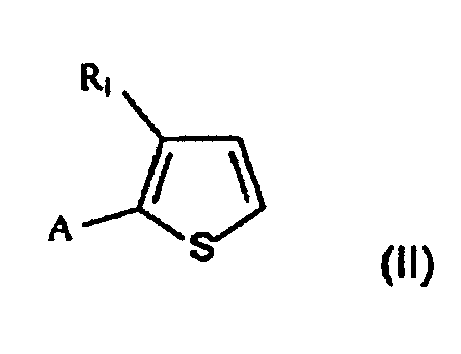 A für eine CHO-, CH3-, R2CH2- oder R2-CO-Gruppe steht undR1 und R2 die oben angegebenen Bedeutungen besitzen;mit einer Verbindung der Formel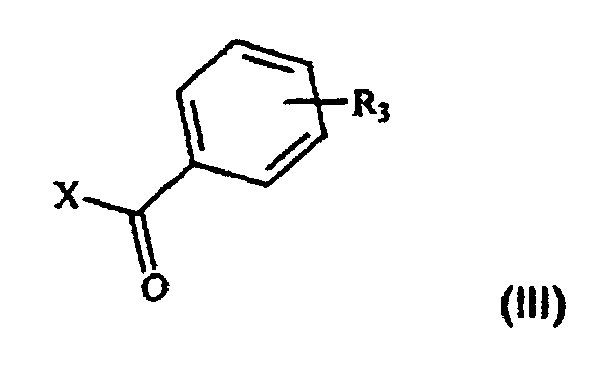

-OCOOR4 (VI)
worinR4 für C1-C5-Alkyl, gegebenenfalls substituiertes Benzyl oder gegebenenfalls substituiertes Aryl steht undR3 die oben angegebenen Bedeutungen besitzt;zu einer Verbindung der Formel
A, R1, R2 und R3 die oben angegebenen Bedeutungen besitzen, umsetzt und(b) die so erhaltene Verbindung der Formel IV zu der Verbindung der Formel I reduziert. - Verfahren nach Anspruch 1 zur Herstellung von 2,5-disubstituierten 3-Alkylthiophenen der Formel
 A für eine CH3- oder eine R2CH2-Gruppe steht,bei dem man:(a) eine Verbindung der Formel
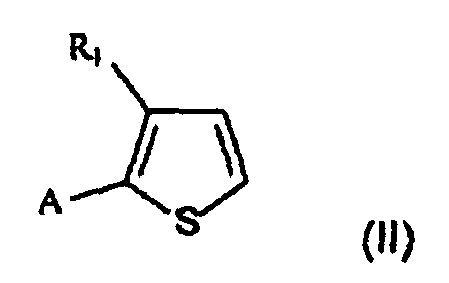 A für eine CH3- oder R2CH2-Gruppe steht,mit einer Verbindung der Formel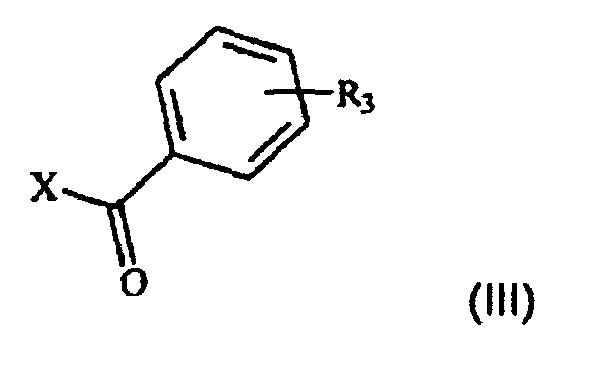
 A für eine CH3- oder R2CH2-Gruppe steht, umsetzt und(b) die so erhaltene Verbindung der Formel IV zu der Verbindung der Formel I reduziert.
 - Verfahren nach Anspruch 1 zur Herstellung von 2,5-disubstituierten 3-Alkylthiophenen der Formel
 A für eine CH3-, R2CH2-, HOCH2- oder R2CH(OH)-Gruppe steht,bei dem man:(a) eine Verbindung der Formel
 A für eine CHO- oder R2-CO-Gruppe steht,mit einer Verbindung der Formel
 A für eine CHO- oder R2-CO-Gruppe steht, umsetzt und(b) die so erhaltene Verbindung der Formel IV zu der Verbindung der Formel I reduziert.
 - Verfahren nach Anspruch 1, bei dem man die unter Punkt (a) erwähnte Umsetzung mit einer Verbindung der Formel III, worin X für Halogen steht, in Gegenwart einer Lewis-Säure und in einem unter chlorierten Lösungsmitteln und deaktivierten aromatischen Lösungsmitteln ausgewählten Lösungsmittel, vorzugsweise mit Benzoylchlorid, in Gegenwart von AlCl3 und in Methylenchlorid, durchführt, wobei das Molverhältnis von Verbindung III/Lewis-Säure/Verbindung II zwischen 0,9-1,5/0,9-1,5/1 und vorzugsweise 1/1/1 liegt.
- Verfahren nach Anspruch 1, bei dem man die unter Punkt (b) erwähnte Reduktion mittels einer einzigen reduktiven Behandlung der Verbindung der Formel

 A für eine CH3- oder R2CH2-Gruppe steht undB für eine CH2-Gruppe steht,durchführt.
 - Verfahren nach Anspruch 5, bei dem man die reduktive Behandlung mit Natriumborhydrid oder Natriumcyanoborhydrid in Gegenwart von Trifluoressigsäure durchführt.
- Verfahren nach Anspruch 1, bei dem man die unter Punkt (b) erwähnte Reduktion mit Hilfe einer ersten Reduktionsreaktion (b1) der Verbindung der Formel

 A für eine CH3-, R2CH2-, HOCH2- oder R2CH(OH)-Gruppe steht undB für eine CHOH-Gruppe steht;gegebenenfalls gefolgt von einer zweiten Reduktionsreaktion (b2) des hydroxylierten Zwischenprodukts der Formel I zu einer Endverbindung der Formel
 A für eine CH3- oder R2CH2-Gruppe steht undB für eine CH2-Gruppe steht,durchführt.
 - Verfahren nach Anspruch 7, bei dem man die unter Punkt (b) erwähnte Reduktion mittels der Reduktionsreaktion (b1) und (b2) nacheinander durchfuhrt.
- Verfahren nach Anspruch 7, bei dem man die erste der Reduktionsreaktionen (b1) durch Behandlung mit Metallhydriden, wie Natriumborhydrid, Lithiumaluminiumhydrid oder Boranen, oder durch Behandlung mit Aluminiumisopropoxid, vorzugsweise durch Behandlung mit Natriumborhydrid, durchführt.
- Verfahren nach Anspruch 7, bei dem man die zweite der Reduktionsreaktionen (b2) durch Behandlung mit einem Borhydrid in Gegenwart einer starken Säure, wie Trifluoressigsäure, Methansulfonsäure oder Schwefelsäure, oder mit Zinkiodid oder durch katalytische Hydrierung, vorzugsweise durch Behandlung durch Natriumborhydrid und Trifluoressigsäure, durchführt.
- Verfahren nach Anspruch 7, bei dem man die zweite der Reduktionsreaktionen (b2) durch katalytische Hydrierung des in einem geeigneten Lösungsmittel, wie einem Alkohol, beispielsweise Methanol, Ethanol oder Isopropanol, vorzugsweise Methanol, oder in einem Gemisch aus Wasser und Alkoholen, gelösten hydroxylierten Zwischenprodukts der Formel I (B = CHOH) bei einem Wasserstoffdruck zwischen 1 und 10 bar, einer Temperatur zwischen 15 und 60°C in Gegenwart eines unter Palladium und Platin, vorzugsweise auf einem inerten Träger, wie Kohlenstoff, Aluminiumoxid, Siliziumdioxid oder Zeoliten, vorzugsweise auf Kohlenstoff, geträgertem Palladium, ausgewählten Hydrierkatalysators in neutralem oder sauren Medium durchführt.
- Verfahren nach Anspruch 7, bei dem man die hydroxylierte Zwischenverbindung der Formel
 A für eine CH3-, R2CH2-, HOCH2- oder R2CH(OH)-Gruppe steht undB für eine CHOH-Gruppe steht,durch Kristallisation reinigt.
 - Verfahren zur Herstellung von 2,3-Dimethyl-5-benzylthiophen der Formel
 (a) die Verbindung der Formel

 (b1) die Verbindung IVb zu der hydroxylierten Zwischenverbindung der Formel
 (b2) die hydroxylierte Zwischenverbindung Ic zu 2,3-Dimethyl-5-benzylthiophen (Ia) reduziert.
 - Verfahren nach Anspruch 13, bei dem man die unter den Punkten (a), (b1) und (b2) erwähnten Umsetzungen unter den experimentellen Bedingungen der Ansprüche 4, 9 bzw. 10 durchführt.
- Verfahren nach Anspruch 13, bei dem man die hydroxylierte Zwischenverbindung der Formel Ic durch Kristallisation, vorzugsweise aus n-Heptan, reinigt.
Applications Claiming Priority (3)
| Application Number | Priority Date | Filing Date | Title |
|---|---|---|---|
| ITMI20020021 | 2002-10-14 | ||
| IT002172A ITMI20022172A1 (it) | 2002-10-14 | 2002-10-14 | Processo per la preparazione di 3-alchil-tiofeni-2, 5-disostituiti. |
| PCT/IB2003/004498 WO2004035562A1 (en) | 2002-10-14 | 2003-10-13 | Process for preparing 2,5-disubstituted 3-alkylthiophenes |
Publications (2)
| Publication Number | Publication Date |
|---|---|
| EP1554266A1 EP1554266A1 (de) | 2005-07-20 |
| EP1554266B1 true EP1554266B1 (de) | 2006-03-22 |
Family
ID=32104769
Family Applications (1)
| Application Number | Title | Priority Date | Filing Date |
|---|---|---|---|
| EP03808838A Expired - Lifetime EP1554266B1 (de) | 2002-10-14 | 2003-10-13 | Verfahren zur herstellung 2,5-disubstituierter 3-alkylthiophenen |
Country Status (10)
| Country | Link |
|---|---|
| US (1) | US20060069272A1 (de) |
| EP (1) | EP1554266B1 (de) |
| JP (1) | JP2006508082A (de) |
| KR (1) | KR20050050131A (de) |
| AT (1) | ATE321036T1 (de) |
| AU (1) | AU2003264830A1 (de) |
| DE (1) | DE60304226T2 (de) |
| ES (1) | ES2258240T3 (de) |
| IT (1) | ITMI20022172A1 (de) |
| WO (1) | WO2004035562A1 (de) |
Cited By (1)
| Publication number | Priority date | Publication date | Assignee | Title |
|---|---|---|---|---|
| WO2007089193A1 (en) * | 2006-02-02 | 2007-08-09 | Astrazeneca Ab | A process for preparing 2-hydroxy-3- [5- (morpholin-4-ylmethyl)pyridin-2-yl] lh-indole-5-carbonitrile as a free base or salts thereof |
Families Citing this family (2)
| Publication number | Priority date | Publication date | Assignee | Title |
|---|---|---|---|---|
| CN104086523A (zh) * | 2014-06-09 | 2014-10-08 | 上海方楠生物科技有限公司 | 一种制备坎格列净中间体2-(4-氟苯基)-5-[(5-卤代-2-甲基苯基)甲基]噻吩的方法 |
| WO2018226961A1 (en) * | 2017-06-09 | 2018-12-13 | Shanghai Yanfeng Jinqiao Automotive Trim Systems Co. Ltd. | Vehicle interior component |
Family Cites Families (3)
| Publication number | Priority date | Publication date | Assignee | Title |
|---|---|---|---|---|
| IT1276738B1 (it) * | 1995-06-16 | 1997-11-03 | Erregierre Spa | Processo per la preparazione di derivati dell'acido -metil-2- tiofeneacetico |
| HRP20000767A2 (en) * | 1998-05-12 | 2001-10-31 | American Home Prod | Benzothiophenes, benzofurans and indoles useful in the treatment of insulin resistance and hyperglycemia |
| US6103708A (en) * | 1998-05-12 | 2000-08-15 | American Home Products Corporation | Furans, benzofurans, and thiophenes useful in the treatment of insulin resistance and hyperglycemia |
-
2002
- 2002-10-14 IT IT002172A patent/ITMI20022172A1/it unknown
-
2003
- 2003-10-13 AT AT03808838T patent/ATE321036T1/de not_active IP Right Cessation
- 2003-10-13 DE DE60304226T patent/DE60304226T2/de not_active Expired - Fee Related
- 2003-10-13 JP JP2004544588A patent/JP2006508082A/ja active Pending
- 2003-10-13 WO PCT/IB2003/004498 patent/WO2004035562A1/en not_active Ceased
- 2003-10-13 AU AU2003264830A patent/AU2003264830A1/en not_active Abandoned
- 2003-10-13 ES ES03808838T patent/ES2258240T3/es not_active Expired - Lifetime
- 2003-10-13 KR KR1020057006307A patent/KR20050050131A/ko not_active Withdrawn
- 2003-10-13 US US10/530,858 patent/US20060069272A1/en not_active Abandoned
- 2003-10-13 EP EP03808838A patent/EP1554266B1/de not_active Expired - Lifetime
Cited By (1)
| Publication number | Priority date | Publication date | Assignee | Title |
|---|---|---|---|---|
| WO2007089193A1 (en) * | 2006-02-02 | 2007-08-09 | Astrazeneca Ab | A process for preparing 2-hydroxy-3- [5- (morpholin-4-ylmethyl)pyridin-2-yl] lh-indole-5-carbonitrile as a free base or salts thereof |
Also Published As
| Publication number | Publication date |
|---|---|
| JP2006508082A (ja) | 2006-03-09 |
| WO2004035562A1 (en) | 2004-04-29 |
| DE60304226T2 (de) | 2006-08-17 |
| ES2258240T3 (es) | 2006-08-16 |
| KR20050050131A (ko) | 2005-05-27 |
| US20060069272A1 (en) | 2006-03-30 |
| AU2003264830A1 (en) | 2004-05-04 |
| EP1554266A1 (de) | 2005-07-20 |
| DE60304226D1 (de) | 2006-05-11 |
| ITMI20022172A1 (it) | 2004-04-15 |
| ATE321036T1 (de) | 2006-04-15 |
Similar Documents
| Publication | Publication Date | Title |
|---|---|---|
| US7414136B2 (en) | Method for producing 3-substituted 2-chloro-5-fluoro-pyridine or its salt | |
| JP2007511558A (ja) | ビタミンb6の製造 | |
| CN1042129C (zh) | 4-(3,4-二氯苯基)-3,4-二氢-1(2h)-萘酮的制备方法 | |
| US8431717B2 (en) | Process for the preparation of 5-(2-ethyl-dihydro-1H-inden-2-yl)-1H-imidazole and salts thereof | |
| HU196066B (en) | Process for production of tetron acid | |
| WO2004035562A1 (en) | Process for preparing 2,5-disubstituted 3-alkylthiophenes | |
| EP1308432B1 (de) | Verfahren zur herstellung von 5-(4-chlorophenyl)-methyl-2,2-dimethylcyclopentanon | |
| JP4418048B2 (ja) | 13−シス−レチノイン酸の製造方法 | |
| EP0421759B1 (de) | Verfahren zur Herstellung von 1-Indanonderivaten | |
| JPS6365057B2 (de) | ||
| US6403814B1 (en) | Method for synthesizing diaryl-substituted heterocyclic compounds, including tetrahydrofurans | |
| TWI500596B (zh) | 合成3,4-二甲氧基雙環[4.2.0]辛-1,3,5-三烯-7-甲腈之方法,及於合成依伐布雷定(ivabradine)及其與醫藥上可接受酸之加成鹽之應用 | |
| JP2009215198A (ja) | 光学活性β−フルオロメチルカルボニル誘導体の製造法 | |
| CA2328918C (en) | Process for the preparation of 2-hydroxyalkyl halophenones | |
| JP2801647B2 (ja) | 6―フルオロクロモン―2―カルボン酸誘導体の製造法 | |
| JP2004506628A (ja) | ビタミンeの調製に用いるための中間体 | |
| JPH0511110B2 (de) | ||
| JPH06184007A (ja) | 2,3−ジメチルナフタレンの製造法 | |
| HU192136B (en) | Process for producing a 2-thiophfene-acetic acid derivative | |
| JP2512958B2 (ja) | 1−ビフェニリルエタノ―ル誘導体およびその製法 | |
| JPH10316609A (ja) | 2−ヒドロキシ−5−ノルボルネン−2−カルボン酸の製造方法 | |
| JPH053859B2 (de) | ||
| CA2058144C (en) | Process for the production of threo-4-alkoxy-5-(arylhydroxymethyl)-2(5h)-furanones | |
| JP2000344722A (ja) | 4−ヒドロキシメチル−1−アミノシクロペント−2−エン誘導体の製造方法 | |
| JP3144921B2 (ja) | ベンジルエステル誘導体及びその製造方法 |
Legal Events
| Date | Code | Title | Description |
|---|---|---|---|
| PUAI | Public reference made under article 153(3) epc to a published international application that has entered the european phase |
Free format text: ORIGINAL CODE: 0009012 |
|
| 17P | Request for examination filed |
Effective date: 20050517 |
|
| AK | Designated contracting states |
Kind code of ref document: A1 Designated state(s): AT BE BG CH CY CZ DE DK EE ES FI FR GB GR HU IE IT LI LU MC NL PT RO SE SI SK TR |
|
| AX | Request for extension of the european patent |
Extension state: AL LT LV MK |
|
| GRAP | Despatch of communication of intention to grant a patent |
Free format text: ORIGINAL CODE: EPIDOSNIGR1 |
|
| DAX | Request for extension of the european patent (deleted) | ||
| GRAS | Grant fee paid |
Free format text: ORIGINAL CODE: EPIDOSNIGR3 |
|
| GRAA | (expected) grant |
Free format text: ORIGINAL CODE: 0009210 |
|
| AK | Designated contracting states |
Kind code of ref document: B1 Designated state(s): AT BE BG CH CY CZ DE DK EE ES FI FR GB GR HU IE IT LI LU MC NL PT RO SE SI SK TR |
|
| PG25 | Lapsed in a contracting state [announced via postgrant information from national office to epo] |
Ref country code: RO Free format text: LAPSE BECAUSE OF FAILURE TO SUBMIT A TRANSLATION OF THE DESCRIPTION OR TO PAY THE FEE WITHIN THE PRESCRIBED TIME-LIMIT Effective date: 20060322 Ref country code: NL Free format text: LAPSE BECAUSE OF FAILURE TO SUBMIT A TRANSLATION OF THE DESCRIPTION OR TO PAY THE FEE WITHIN THE PRESCRIBED TIME-LIMIT Effective date: 20060322 Ref country code: SI Free format text: LAPSE BECAUSE OF FAILURE TO SUBMIT A TRANSLATION OF THE DESCRIPTION OR TO PAY THE FEE WITHIN THE PRESCRIBED TIME-LIMIT Effective date: 20060322 Ref country code: SK Free format text: LAPSE BECAUSE OF FAILURE TO SUBMIT A TRANSLATION OF THE DESCRIPTION OR TO PAY THE FEE WITHIN THE PRESCRIBED TIME-LIMIT Effective date: 20060322 Ref country code: AT Free format text: LAPSE BECAUSE OF FAILURE TO SUBMIT A TRANSLATION OF THE DESCRIPTION OR TO PAY THE FEE WITHIN THE PRESCRIBED TIME-LIMIT Effective date: 20060322 Ref country code: BE Free format text: LAPSE BECAUSE OF FAILURE TO SUBMIT A TRANSLATION OF THE DESCRIPTION OR TO PAY THE FEE WITHIN THE PRESCRIBED TIME-LIMIT Effective date: 20060322 Ref country code: IT Free format text: LAPSE BECAUSE OF FAILURE TO SUBMIT A TRANSLATION OF THE DESCRIPTION OR TO PAY THE FEE WITHIN THE PRESCRIBED TIME-LIMIT;WARNING: LAPSES OF ITALIAN PATENTS WITH EFFECTIVE DATE BEFORE 2007 MAY HAVE OCCURRED AT ANY TIME BEFORE 2007. THE CORRECT EFFECTIVE DATE MAY BE DIFFERENT FROM THE ONE RECORDED. Effective date: 20060322 |
|
| REG | Reference to a national code |
Ref country code: GB Ref legal event code: FG4D |
|
| REG | Reference to a national code |
Ref country code: CH Ref legal event code: EP Ref country code: CH Ref legal event code: NV Representative=s name: CLARIANT INTERNATIONAL LTD. |
|
| REG | Reference to a national code |
Ref country code: IE Ref legal event code: FG4D |
|
| REF | Corresponds to: |
Ref document number: 60304226 Country of ref document: DE Date of ref document: 20060511 Kind code of ref document: P |
|
| PG25 | Lapsed in a contracting state [announced via postgrant information from national office to epo] |
Ref country code: DK Free format text: LAPSE BECAUSE OF FAILURE TO SUBMIT A TRANSLATION OF THE DESCRIPTION OR TO PAY THE FEE WITHIN THE PRESCRIBED TIME-LIMIT Effective date: 20060622 Ref country code: BG Free format text: LAPSE BECAUSE OF FAILURE TO SUBMIT A TRANSLATION OF THE DESCRIPTION OR TO PAY THE FEE WITHIN THE PRESCRIBED TIME-LIMIT Effective date: 20060622 Ref country code: SE Free format text: LAPSE BECAUSE OF FAILURE TO SUBMIT A TRANSLATION OF THE DESCRIPTION OR TO PAY THE FEE WITHIN THE PRESCRIBED TIME-LIMIT Effective date: 20060622 |
|
| REG | Reference to a national code |
Ref country code: HU Ref legal event code: AG4A Ref document number: E000387 Country of ref document: HU |
|
| ET | Fr: translation filed | ||
| REG | Reference to a national code |
Ref country code: ES Ref legal event code: FG2A Ref document number: 2258240 Country of ref document: ES Kind code of ref document: T3 |
|
| PG25 | Lapsed in a contracting state [announced via postgrant information from national office to epo] |
Ref country code: PT Free format text: LAPSE BECAUSE OF FAILURE TO SUBMIT A TRANSLATION OF THE DESCRIPTION OR TO PAY THE FEE WITHIN THE PRESCRIBED TIME-LIMIT Effective date: 20060822 |
|
| NLV1 | Nl: lapsed or annulled due to failure to fulfill the requirements of art. 29p and 29m of the patents act | ||
| PGFP | Annual fee paid to national office [announced via postgrant information from national office to epo] |
Ref country code: IE Payment date: 20060915 Year of fee payment: 4 |
|
| PGFP | Annual fee paid to national office [announced via postgrant information from national office to epo] |
Ref country code: HU Payment date: 20060927 Year of fee payment: 4 |
|
| PGFP | Annual fee paid to national office [announced via postgrant information from national office to epo] |
Ref country code: ES Payment date: 20061002 Year of fee payment: 4 |
|
| PGFP | Annual fee paid to national office [announced via postgrant information from national office to epo] |
Ref country code: FR Payment date: 20061025 Year of fee payment: 4 |
|
| PGFP | Annual fee paid to national office [announced via postgrant information from national office to epo] |
Ref country code: DE Payment date: 20061026 Year of fee payment: 4 |
|
| PG25 | Lapsed in a contracting state [announced via postgrant information from national office to epo] |
Ref country code: MC Free format text: LAPSE BECAUSE OF NON-PAYMENT OF DUE FEES Effective date: 20061031 |
|
| PGFP | Annual fee paid to national office [announced via postgrant information from national office to epo] |
Ref country code: IT Payment date: 20061031 Year of fee payment: 4 |
|
| RAP2 | Party data changed (patent owner data changed or rights of a patent transferred) |
Owner name: ARCHIMICA S.R.L. |
|
| PLBE | No opposition filed within time limit |
Free format text: ORIGINAL CODE: 0009261 |
|
| STAA | Information on the status of an ep patent application or granted ep patent |
Free format text: STATUS: NO OPPOSITION FILED WITHIN TIME LIMIT |
|
| 26N | No opposition filed |
Effective date: 20061227 |
|
| PG25 | Lapsed in a contracting state [announced via postgrant information from national office to epo] |
Ref country code: GR Free format text: LAPSE BECAUSE OF FAILURE TO SUBMIT A TRANSLATION OF THE DESCRIPTION OR TO PAY THE FEE WITHIN THE PRESCRIBED TIME-LIMIT Effective date: 20060623 Ref country code: CZ Free format text: LAPSE BECAUSE OF FAILURE TO SUBMIT A TRANSLATION OF THE DESCRIPTION OR TO PAY THE FEE WITHIN THE PRESCRIBED TIME-LIMIT Effective date: 20060322 |
|
| GBPC | Gb: european patent ceased through non-payment of renewal fee |
Effective date: 20071013 |
|
| REG | Reference to a national code |
Ref country code: CH Ref legal event code: PL |
|
| PG25 | Lapsed in a contracting state [announced via postgrant information from national office to epo] |
Ref country code: FI Free format text: LAPSE BECAUSE OF FAILURE TO SUBMIT A TRANSLATION OF THE DESCRIPTION OR TO PAY THE FEE WITHIN THE PRESCRIBED TIME-LIMIT Effective date: 20060322 Ref country code: EE Free format text: LAPSE BECAUSE OF FAILURE TO SUBMIT A TRANSLATION OF THE DESCRIPTION OR TO PAY THE FEE WITHIN THE PRESCRIBED TIME-LIMIT Effective date: 20060322 |
|
| PG25 | Lapsed in a contracting state [announced via postgrant information from national office to epo] |
Ref country code: TR Free format text: LAPSE BECAUSE OF FAILURE TO SUBMIT A TRANSLATION OF THE DESCRIPTION OR TO PAY THE FEE WITHIN THE PRESCRIBED TIME-LIMIT Effective date: 20060322 Ref country code: LU Free format text: LAPSE BECAUSE OF NON-PAYMENT OF DUE FEES Effective date: 20061013 Ref country code: LI Free format text: LAPSE BECAUSE OF NON-PAYMENT OF DUE FEES Effective date: 20071031 Ref country code: CH Free format text: LAPSE BECAUSE OF NON-PAYMENT OF DUE FEES Effective date: 20071031 Ref country code: DE Free format text: LAPSE BECAUSE OF NON-PAYMENT OF DUE FEES Effective date: 20080501 |
|
| REG | Reference to a national code |
Ref country code: FR Ref legal event code: ST Effective date: 20080630 |
|
| PG25 | Lapsed in a contracting state [announced via postgrant information from national office to epo] |
Ref country code: IE Free format text: LAPSE BECAUSE OF NON-PAYMENT OF DUE FEES Effective date: 20071015 |
|
| PG25 | Lapsed in a contracting state [announced via postgrant information from national office to epo] |
Ref country code: CY Free format text: LAPSE BECAUSE OF FAILURE TO SUBMIT A TRANSLATION OF THE DESCRIPTION OR TO PAY THE FEE WITHIN THE PRESCRIBED TIME-LIMIT Effective date: 20060322 Ref country code: GB Free format text: LAPSE BECAUSE OF NON-PAYMENT OF DUE FEES Effective date: 20071013 |
|
| REG | Reference to a national code |
Ref country code: ES Ref legal event code: FD2A Effective date: 20071015 |
|
| PG25 | Lapsed in a contracting state [announced via postgrant information from national office to epo] |
Ref country code: ES Free format text: LAPSE BECAUSE OF NON-PAYMENT OF DUE FEES Effective date: 20071015 Ref country code: FR Free format text: LAPSE BECAUSE OF NON-PAYMENT OF DUE FEES Effective date: 20071031 |
|
| PG25 | Lapsed in a contracting state [announced via postgrant information from national office to epo] |
Ref country code: IT Free format text: LAPSE BECAUSE OF NON-PAYMENT OF DUE FEES Effective date: 20071013 |
|
| PG25 | Lapsed in a contracting state [announced via postgrant information from national office to epo] |
Ref country code: HU Free format text: LAPSE BECAUSE OF NON-PAYMENT OF DUE FEES Effective date: 20071014 |