EP1550278B1 - Kanalabbildung fuer ofdm-frequenzsprung - Google Patents
Kanalabbildung fuer ofdm-frequenzsprung Download PDFInfo
- Publication number
- EP1550278B1 EP1550278B1 EP03799030.6A EP03799030A EP1550278B1 EP 1550278 B1 EP1550278 B1 EP 1550278B1 EP 03799030 A EP03799030 A EP 03799030A EP 1550278 B1 EP1550278 B1 EP 1550278B1
- Authority
- EP
- European Patent Office
- Prior art keywords
- bachs
- sub
- symbols
- carriers
- bach
- Prior art date
- Legal status (The legal status is an assumption and is not a legal conclusion. Google has not performed a legal analysis and makes no representation as to the accuracy of the status listed.)
- Expired - Lifetime
Links
- 238000013507 mapping Methods 0.000 title claims description 26
- 239000000969 carrier Substances 0.000 claims description 85
- 230000005540 biological transmission Effects 0.000 claims description 50
- 238000000034 method Methods 0.000 claims description 31
- 238000012545 processing Methods 0.000 claims description 16
- 238000005192 partition Methods 0.000 claims description 3
- 102100023044 Cytosolic acyl coenzyme A thioester hydrolase Human genes 0.000 claims 44
- 101710152190 Cytosolic acyl coenzyme A thioester hydrolase Proteins 0.000 claims 44
- IJJWOSAXNHWBPR-HUBLWGQQSA-N 5-[(3as,4s,6ar)-2-oxo-1,3,3a,4,6,6a-hexahydrothieno[3,4-d]imidazol-4-yl]-n-(6-hydrazinyl-6-oxohexyl)pentanamide Chemical compound N1C(=O)N[C@@H]2[C@H](CCCCC(=O)NCCCCCC(=O)NN)SC[C@@H]21 IJJWOSAXNHWBPR-HUBLWGQQSA-N 0.000 claims 16
- 238000001228 spectrum Methods 0.000 description 7
- 238000004891 communication Methods 0.000 description 6
- 238000012937 correction Methods 0.000 description 5
- 125000004122 cyclic group Chemical group 0.000 description 5
- 238000005562 fading Methods 0.000 description 3
- 238000000926 separation method Methods 0.000 description 3
- 230000003044 adaptive effect Effects 0.000 description 2
- 230000001413 cellular effect Effects 0.000 description 2
- 230000010363 phase shift Effects 0.000 description 2
- 238000013459 approach Methods 0.000 description 1
- 230000015556 catabolic process Effects 0.000 description 1
- 238000006243 chemical reaction Methods 0.000 description 1
- 238000006731 degradation reaction Methods 0.000 description 1
- 230000036039 immunity Effects 0.000 description 1
- 238000003780 insertion Methods 0.000 description 1
- 230000037431 insertion Effects 0.000 description 1
- 238000012986 modification Methods 0.000 description 1
- 230000004048 modification Effects 0.000 description 1
- 230000000737 periodic effect Effects 0.000 description 1
- 238000011084 recovery Methods 0.000 description 1
- 230000003252 repetitive effect Effects 0.000 description 1
- 230000001629 suppression Effects 0.000 description 1
- 230000001360 synchronised effect Effects 0.000 description 1
Images




Classifications
-
- H—ELECTRICITY
- H04—ELECTRIC COMMUNICATION TECHNIQUE
- H04L—TRANSMISSION OF DIGITAL INFORMATION, e.g. TELEGRAPHIC COMMUNICATION
- H04L5/00—Arrangements affording multiple use of the transmission path
- H04L5/0001—Arrangements for dividing the transmission path
- H04L5/0003—Two-dimensional division
- H04L5/0005—Time-frequency
- H04L5/0007—Time-frequency the frequencies being orthogonal, e.g. OFDM(A) or DMT
-
- H—ELECTRICITY
- H04—ELECTRIC COMMUNICATION TECHNIQUE
- H04L—TRANSMISSION OF DIGITAL INFORMATION, e.g. TELEGRAPHIC COMMUNICATION
- H04L1/00—Arrangements for detecting or preventing errors in the information received
- H04L1/02—Arrangements for detecting or preventing errors in the information received by diversity reception
- H04L1/06—Arrangements for detecting or preventing errors in the information received by diversity reception using space diversity
- H04L1/0618—Space-time coding
-
- H—ELECTRICITY
- H04—ELECTRIC COMMUNICATION TECHNIQUE
- H04L—TRANSMISSION OF DIGITAL INFORMATION, e.g. TELEGRAPHIC COMMUNICATION
- H04L5/00—Arrangements affording multiple use of the transmission path
- H04L5/0001—Arrangements for dividing the transmission path
- H04L5/0014—Three-dimensional division
- H04L5/0023—Time-frequency-space
-
- H—ELECTRICITY
- H04—ELECTRIC COMMUNICATION TECHNIQUE
- H04L—TRANSMISSION OF DIGITAL INFORMATION, e.g. TELEGRAPHIC COMMUNICATION
- H04L5/00—Arrangements affording multiple use of the transmission path
- H04L5/003—Arrangements for allocating sub-channels of the transmission path
- H04L5/0037—Inter-user or inter-terminal allocation
-
- H—ELECTRICITY
- H04—ELECTRIC COMMUNICATION TECHNIQUE
- H04L—TRANSMISSION OF DIGITAL INFORMATION, e.g. TELEGRAPHIC COMMUNICATION
- H04L5/00—Arrangements affording multiple use of the transmission path
- H04L5/003—Arrangements for allocating sub-channels of the transmission path
- H04L5/0058—Allocation criteria
- H04L5/0064—Rate requirement of the data, e.g. scalable bandwidth, data priority
-
- H—ELECTRICITY
- H04—ELECTRIC COMMUNICATION TECHNIQUE
- H04L—TRANSMISSION OF DIGITAL INFORMATION, e.g. TELEGRAPHIC COMMUNICATION
- H04L27/00—Modulated-carrier systems
- H04L27/26—Systems using multi-frequency codes
- H04L27/2601—Multicarrier modulation systems
- H04L27/2602—Signal structure
Definitions
- the present invention relates to wireless communications, and in particular to channel mapping in an orthogonal frequency division multiplexing system.
- orthogonal frequency division multiplexing is a multi-carrier transmission technique
- the available spectrum is divided into many sub-carriers, each being modulated by data at a relatively low data rate.
- OFDM supports multiple access by allocating different sub-carriers to different users.
- the sub-carriers for OFDM are orthogonal and closely spaced to provide an efficient spectrum.
- Each narrow band sub-carrier is modulated using various modulation formats, such as quadrature phase-shift keying (QPSK) and quadrature amplitude modulation (QAM).
- OFDM modulation is provided using an Inverse Fast Fourier Transform (IFFT). Initially, data for transmission is mapped into quadrature-based symbols that are encoded onto the individual sub-carriers.
- IFFT Inverse Fast Fourier Transform
- An IFFT is performed on the set of modulated sub-carriers to produce an OFDM symbol in the time domain: Typically, a cyclic prefix is created and appended to the beginning of the OFDM symbol before it is amplified and transmitted.
- the OFDM symbols are processed using a fast Fourier transform (FFT) to recover the modulated sub-carriers, from which the transmitted symbols can be recovered and decoded to arrive at the transmitted data.
- FFT fast Fourier transform
- each circle represents a sub-carrier for a sequence of OFDM symbols.
- Each row represents the sub-carriers associated with an OFDM symbol, and each OFDM symbol is transmitted in sequence over time.
- users 1 and 2 require a voice service, wherein users 3 and 4 require data and video services, respectively.
- the voice services require lower data rate than the data services, while the video service requires the most resources.
- the groups of sub-carriers dedicated to voice such as that for users 1 and 2 are less than that for users 3 and 4.
- User 4 is using as much of the spectrum as the first three users combined.
- mapping of user data to various sub-carriers is repetitive and consistent. Due to the significant variations in the communication channel, especially for the frequency selective fading channel, and interference over the time-frequency plane, such multiple access mapping results in a different carrier-to-interference ratio for each user. The different carrier-to-interference ratios will lead to unequal degradation of performance for each user.
- frequency-hopping schemes have been employed to systematically remap the groups of sub-carriers associated with each user to different points in the time-frequency plane, as illustrated in Figure 2 .
- users are assigned one or more transmission blocks consisting of a set number of sub-carriers within a set number of adjacent OFDM symbols.
- a user does not necessarily transmit on the same sub-carrier group for every OFDM symbol, but will jump to a different sub-carrier after a period of time based on the defined hopping pattern.
- the sub-carrier hopping scheme illustrated in Figure 2 improves the performance over the fixed time-frequency allocation illustrated in Figure 1 ; however, the performance could be further improved if the diversity across the whole band were fully exploited.
- the present invention provides a technique for supporting variable bitrate services in an OFDM environment while minimizing the impact of the variations of fading channels and interference.
- a basic access channel (BACH) is defined by a set number of sub-carriers over multiple OFDM symbols. While the number of sub-carriers remains fixed for the BACH, the sub-carriers for any given BACH will hop from one symbol to another.
- the BACH is defined by a hopping pattern for a select number of sub-carriers over a sequence of symbols.
- the BACH has the following attributes.
- the BACH is formed by a group of sub-carriers distributed across several OFDM symbols as described above. In each OFDM symbol, 2 n sub-carriers are assigned to a given BACH, where n is an integer.
- the sub-carriers in the BACH are equally spaced in the frequency domain and distributed across the entire frequency band.
- a subset fast Fourier transform FFT
- the subset FFT reduces the computational complexity associated with a full range FFT capable of operating over the entire OFDM symbol to recover each of the sub-carriers associated with the OFDM symbol, instead of just those associated with the BACH.
- a pseudo-random pattern is employed for sub-carrier mapping for the BACHs from one OFDM symbol to the next to effectively distribute the BACH across the whole band of sub-carriers as efficiently as possible.
- space-time coding STC
- the sub-carriers associated with a BACH over consecutive OFDM symbols within a given STC block will remain the same to keep the STC-related information together.
- the number of services and number of users supported by the system can be dynamically adjusted based on the number of BACHs assigned to a user and scheduling.
- the minimum access channel is a BACH
- the channel for a select user is often composed of several BACHs.
- the number of BACHs occupied by the user is determined by throughput requirements.
- a voice channel may only need one BACH, while high-speed data transmissions may need several BACHs.
- throughput rates may be further controlled.
- each base station will use a pseudo-random or different pre-determined allocation sequence for BACH mapping of multiple users to reduce collisions between BACHs of different cells.
- the present invention provides a technique for supporting variable bitrate services in an OFDM environment while minimizing the impact of channel variations and interference.
- a basic access channel (BACH) is defined by a set number of sub-carriers over multiple OFDM symbols. While the number of sub-carriers remains fixed for the BACH, the sub-carriers for any given BACH will hop from one symbol to another.
- the BACH is defined by a hopping pattern for a select number of sub-carriers over a sequence of symbols.
- each BACH is associated with a group of sub-carriers, which may or may not hop from one symbol to the next depending on the mapping scheme.
- data for a given user is associated with one or more BACHs, depending on the necessary throughput.
- a single BACH is sufficient to support voice communication, wherein multiple BACHs may be allocated to a given user to support higher throughput data and video services.
- the allocation of BACHs to users may dynamically vary depending on the required throughput.
- throughput rates may also depend on how data for the user is scheduled and the frequency at which data is scheduled.
- data may be scheduled for a first group of users associated with a BACH during a first transmission time slot, and a second group of users associated with the same BACH during a subsequent time slot.
- the BACH has the following attributes.
- the BACH is formed by a group of sub-carriers distributed across several OFDM symbols as described above. In each OFDM symbol, 2 n sub-carriers are assigned to a given BACH, where n is an integer.
- the sub-carriers in the BACH are equally spaced in the frequency domain and distributed across the whole band.
- a subset fast Fourier transform FFT
- the subset FFT reduces the computational complexity associated with a full range FFT capable of operating over the entire OFDM symbol to recover each of the sub-carriers associated with the OFDM symbol, instead of just those associated with the BACH.
- a pseudo-random pattern is employed for sub-carrier mapping for the BACHs from one OFDM symbol to the next to effectively distribute the BACH across the whole band of sub-carriers as efficiently as possible.
- space-time coding STC
- the sub-carriers associated with a BACH over consecutive OFDM symbols within a given STC block will remain the same to keep the STC-related information together.
- the number of services and number of users supported by the system can be dynamically adjusted based on the number of BACHs assigned to a user and scheduling.
- the minimum access channel is a BACH
- the channel for a select user is often composed of several BACHs.
- the number of BACHs occupied by the user is determined by throughput requirements.
- a voice channel may only need one BACH, while high-speed data transmissions may need several BACHs.
- the BACHs are assigned to that user such that the sub-carriers associated with the given BACHs at any given time are separated from each other as much as possible on the time-frequency plane.
- the BACHs assigned to a common user are selected to maximize the separation among sub-carriers.
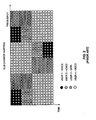
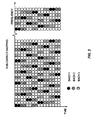
- Figure 4 represents a simplified embodiment, wherein four BACHs (BACH 0 through BACH 3), which have four sub-carriers each, are illustrated over a small portion of a time-frequency plane. As illustrated, each sub-carrier within any given BACH is separated by a sub-carrier in both time and frequency.
- the BACHs will be grouped as either BACH 0 and BACH 1 or as BACH 2 and BACH 3.
- the combinations of either BACH 0 and BACH 1 or BACH 2 and BACH 3 provide sub-carrier allocation that is optimally distributed over the time-frequency plane. As such, the sub-carrier separation is maximized for any given user.
- the process of maximizing separation among sub-carriers for a group of BACHs assigned to a single user is referred to as the maximum distance partition rule. If the user requires all four BACHs (0 through 3), all of the sub-carriers in the illustrated embodiment are allocated to the user via the four BACHs (0 through 3).
- each base station will use a pseudo-random or different pre-determined allocation sequence for BACH mapping of multiple users to reduce collisions between BACHs of different cells.
- BACHs are defined throughout the OFDM spectrum
- user data can be allocated to the various BACHs as illustrated in Figure 5 .
- data for the various users are efficiently and evenly distributed throughout the time-frequency plane.
- the voice applications of users 1 and 2 use only half the resources of the data service associated with user 3.
- the video application associated with user 4 receives twice the resources as the data application of user 3.
- the mapping index of Figure 5 illustrates how data is indexed to the BACHs assigned to each user over time, as well as how data is scheduled for each user.
- the number of BACHs and frequency of scheduling affects throughput in a defined manner.
- sub-carrier mapping is controlled according to a pattern known by both the transmitter and receiver.
- V-BLAST V-BLAST
- This technique is referred to as layer hopping, wherein the data stream for a given user is alternatively mapped to a different transmit antenna according to a certain pattern.
- the BACH assignment for each user's service can hop between the different BLAST layers.
- An effective way to implement such a system is to use a simple time reversal pattern of a time-frequency plane, and apply that pattern to a second layer for transmission through a second antenna. Accordingly, the BACHs for any given OFDM symbols transmitted from the respective antennas are unique in their sub-carriers, as well as data.
- An example time reversal scheme is illustrated in Figure 6 , wherein the BACH indexing for the time-frequency plan of Figure 5 is transmitted through antenna A, and the time reversal of that plan is transmitted through antenna B.
- antenna switching may be used to effectively provide spatial diversity when MIMO or MISO systems are working under 1x1 or 1xM configurations.
- Antenna switching-based BACH assignment for single input single output (SISO) or single input multiple output (SIMO) transmissions refers to a technique wherein during for a first time slot the BACHs assigned to a user are transmitting through one antenna, and for the next slot the transmissions are switched to another antenna.
- the above multiplexing techniques based on BACHs provide significant performance gain when the system is not fully loaded. Gains can also be achieved when the system is fully loaded, such as when the BACH units are fully utilized throughout the time-frequency plane.
- a controlled reuse of the BACHs may be implemented wherein BACHs for additional users are overlaid on top of the time-frequency plane, and in particular on top of existing BACHs.
- the overlay of the BACH will cause collision of the corresponding BACHs, and therefore intra-cell interference; however, by exploiting adaptive coding and modulation with powerful forward error correction, the collision loss can be minimized and the additional throughput gain can be achieved.
- BACH overlay a key aspect is to reuse and control allocation in the space-time-frequency dimension of the BACH overlay.
- the hopping pattern of the overlaid BACH may be different from that of the existing BACHs, such that the impact of BACH collision can be reduced.
- An example BACH overlay approach is illustrated in Figure 7 , wherein two additional users are systematically and evenly overlaid in a distributed manner throughout the time-frequency plane as represented by the BACH index.
- the original, or underlying, multiplexing scheme is that illustrated in Figure 5 , with the two additional users, users 5 and 6, overlaid thereon.
- different BACH indexing for the various cells, sectors, or base stations that are adjacent to one another minimizes the interference from adjacent cells and sectors.
- An exemplary architecture for implementing the above concepts is illustrated below. Those skilled in the art will recognize the various modifications and changes from that described below that are still within the scope of the teachings herein and the claims that follow.
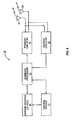
- the base station 10 generally includes a control system 12, a baseband processor 14, transmit circuitry 16, receive circuitry 18, multiple antennas 20, and a network interface 22.
- the receive circuitry 18 receives radio frequency signals bearing information from one or more remote transmitters provided by user elements 24, such as mobile telephones, personal digital assistants, wireless modems, and the like (illustrated in Figure 9 ).
- the baseband processor 14 processes the digitized received signal signals from the receive circuitry 18 to extract the information or data bits conveyed in the received signal. This processing typically comprises OFDM demodulation, decoding, and error correction operations. As such, the baseband processor 14 is generally implemented in one or more digital signal processors (DSPs).
- DSPs digital signal processors
- the received information is then sent across a wireless network via the network interface 22 or transmitted to another user element 24 serviced by the base station 10.
- the network interface 22 will typically interact with a circuit-switched network forming a part of a wireless network, which may be coupled to the public switched telephone network (PSTN). For example, the network interface 22 may communicate with a mobile switching center (MSC) servicing multiple base stations 10.
- MSC mobile switching center
- the baseband processor 14 receives digitized data, which may represent voice, data, or control information, from the network interface 22 under the control of control system 12, which encodes the data for transmission.
- the encoded data is output to the transmission circuitry 16 for OFDM modulation.
- a power amplifier (not shown) will amplify the modulated OFDM signals to a level appropriate for transmission, and deliver the modulated carrier signal to the antennas 20 through a matching network (not shown). Modulation and processing details are described in greater detail below.
- a user element 24 configured according to one embodiment of the present invention is illustrated.
- the user element 24 will include a control system 26, a baseband processor 28, transmit circuitry 30, receive circuitry 32, multiple antennas 34, and user interface circuitry 36.
- the receive circuitry 32 receives OFDM frequency signals bearing information from one or more remote transmitters provided by base stations 10.
- a low noise amplifier and a filter (not shown) cooperate to amplify and remove broadband interference from the signal for processing.
- the baseband processor 28 processes the digitized received signal to extract the information or data bits conveyed in the received signal. This processing typically comprises demodulation using a Fast Fourier Transform, decoding, and error correction operations as will be discussed on greater detail below.
- the baseband processor 28 is generally implemented in one or more digital signal processors (DSPs).
- DSPs digital signal processors
- the baseband processor 28 receives digitized data, which may represent voice, data, or control information, from the control system 26, which it encodes for transmission.
- the encoded data is output to the transmit circuitry 30, where it is used by a modulator to modulate a carrier signal that is at a desired transmit frequency or frequencies.
- a power amplifier (not shown) will amplify the modulated carrier signal to a level appropriate for transmission, and deliver the modulated carrier signal to the antennas 34 through a matching network (not shown).
- OFDM modulation requires the performance of an Inverse Fast Fourier Transform (IFFT) on the symbols to be transmitted.
- IFFT Inverse Fast Fourier Transform
- FFT Fast Fourier Transform
- IDFT Inverse Discrete Fourier Transform
- DFT Discrete Fourier Transform
- OFDM is used at least for the downlink transmission from the base stations 10 to the user elements 24.
- the base stations 10 are synchronized to a common clock.
- Each base station 10 is equipped with n transmit antennas 20, and each user element 24 is equipped with m receive antennas 34.
- the respective antennas can be used for reception and transmission using appropriate duplexers or switches and are so labeled only for clarity.
- a logical transmission architecture is provided according to one embodiment.
- the base station 10 and user element 24 have multiple antennas; however, those skilled in the art will recognize the applicability of the present invention to less complicated, single-antennas embodiments.
- the transmission architecture is described as being that of the base station 10, but those skilled in the art will recognize the applicability of the illustrated architecture for uplink and downlink communications.
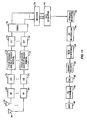
- a base station controller (not shown) sends data in the form a series of data bits intended for multiple user elements 24 (users 1 through x) to the base station 10.
- the base station 10 will schedule the data for transmission during select time slots.
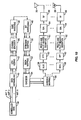
- the scheduled data bits 38 for each user element 24 are preferably scrambled in a manner reducing the peak-to-average power ratio associated with the bit stream using data scrambling logic 40.
- a cyclic redundancy check (CRC) for the scrambled bits is determined and appended to portions of the scrambled bits using CRC adding logic 42.
- CRC cyclic redundancy check
- channel coding is performed using channel encoder logic 44 to effectively add redundancy to the groups of bits to facilitate recovery and error correction at the user element 24.
- the channel encoder logic 44 uses known Turbo encoding techniques in one embodiment.
- the encoded data is then processed by rate matching logic 46 to compensate for the data expansion associated with encoding.
- Bit interleaver logic 48 systematically reorders the bits in the encoded data to minimize the potential for loss of consecutive bits during transmission. Based on the desired modulation, which is preferably Quadrature Amplitude Modulation (QAM) or Quadrature Phase Shift Key (QPSK) modulation, groups of the bits are systematically mapped into corresponding symbols by the QPSK/QAM mapping logic 50. The symbols may be systematically reordered to further bolster the immunity of the transmitted signal to periodic data loss caused by frequency selective fading.
- the symbols for each user are each encoded onto sub-carriers according to a defined index by BACH mapping logic 52 as above described. Accordingly, the symbols for a select user element 24 are encoded onto sub-carriers into one or more BACHs assigned to the user element 24.
- QAM Quadrature Amplitude Modulation
- QPSK Quadrature Phase Shift Key
- STC space-time coding
- symbols on each sub-carrier may be presented to optional STC encoder logic 54, which processes blocks of symbols to modify the symbols in a fashion making the transmitted signals more resistant to interference and readily decoded at a user element 24 or to enhance spectrum efficiency.
- the STC encoder logic 54 will process the incoming symbols according to a selected STC encoding mode and provide n outputs, which may corresponding to the number of transmit antennas 20 for the base station 10.
- n outputs which may corresponding to the number of transmit antennas 20 for the base station 10.
- the modulated sub-carriers may be selectively directed along a transmission paths associated with a desired one of the antennas 20 by antenna mapping logic 56.
- the antenna mapping logic 56 facilitates spatial hopping for each user element 24 by pseudo-randomly changing the antenna 20 used to transmit the modulated sub-carriers for any given user element 24.
- Multiplexing logic 58 cooperates with the antenna mapping logic 56 to associate and combine sub-carriers for any of the given user elements 24 for processing by IFFT logic 60.
- the IFFT logic 60 will perform some form of inverse Fast Fourier Transform, such as an Inverse Discrete Fast Fourier Transform (IDFT) to produce an OFDM symbol in the time domain.
- the OFDM symbol will include the frequency components of each of the modulated sub-carriers for a given time period.
- the length of time for the OFDM symbol is equal to the reciprocal of the spacing of the sub-carriers, and is relatively long compared to the data rate associated with the incoming data bits.
- a cyclic prefix and pilot headers are added to the beginning of the OFDM symbols by prefix and pilot header insertion logic 62.
- the resultant signals are converted to an analog signal via digital-to-analog (D/A) conversion circuitry 64.
- D/A digital-to-analog
- the resultant analog signals are then simultaneously amplified, and transmitted via the RF circuitry 66 to the respective antennas 20 in the corresponding transmission path.
- FIG. 11 Upon arrival of the transmitted signals at each of the antennas 34 of the user element 24, the signals are downconverted and amplified by the RF receive circuitries 68. Analog-to-digital (A/D) converters 70 then digitize these analog signals for digital processing. The cyclic prefixes and pilot headers are removed by the cyclic decoder and pilot header removal logic 72. Respective FFT processors 74 operate to facilitate a Fast Fourier Transform on the digitized signals to convert the received time domain OFDM symbols into a group of modulated sub-carriers in the frequency domain. Preferably, a subset FFT is performed to recover only those sub-carriers carrying information that is intended for the user element 24.
- the cyclic prefixes and pilot headers are removed by the cyclic decoder and pilot header removal logic 72.
- Respective FFT processors 74 operate to facilitate a Fast Fourier Trans
- the FFT logic will synchronously change processing from one OFDM symbol to another.
- the transform is preferably accomplished using a Discrete Fourier Transform.
- Demultiplexing logic 76 combines the sub-carriers from each of the receive paths and presents the recovered sub-carriers to an STC decoder 78, if space-time coding was employed during transmission.
- the STC decoder 78 implements STC decoding on the symbols in the sub-carriers.
- the recovered set of sub-carriers is sent to BACH de-mapping logic 80, which will de-map the symbols from the respective sub-carriers for delivery to QPSK/QAM de-mapping logic 82.
- the de-mapped symbols are converted to a corresponding bitstream using the QPSK/QAM de-mapping logic 82.
- the bits are then de-interleaved using bit de-interleaver logic 84, which corresponds to the bit interleaver logic 48 of the transmitter architecture.
- the de-interleaved bits are then processed by rate de-matching logic 86 and presented to channel decoder logic 88 to recover the initially scrambled data and the CRC checksum.
- CRC logic 90 removes the CRC checksum, checks the scrambled data in traditional fashion, and provides it to the de-scrambling logic 92 for de-scrambling using the known base station de-scrambling code to recover the originally transmitted data 94.
Landscapes
- Engineering & Computer Science (AREA)
- Signal Processing (AREA)
- Computer Networks & Wireless Communication (AREA)
- Mobile Radio Communication Systems (AREA)
Claims (26)
- Verfahren, das umfasst:a) Assoziieren von an eine Vielzahl von Benutzerelementen (24) zu sendenden Daten mit entsprechenden Basiszugriffskanälen bzw. BACHs, wobei jeder BACH durch eine gesetzte Anzahl von Subträgern definiert wird, die durch ein Sprungmuster identifiziert werden, das über eine Vielzahl von assoziierten Orthogonalfrequenzmultiplex bzw. OFDM-Symbolen verteilt ist,b) Zuweisen der BACHs zu der Vielzahl von Benutzerelementen, wobei zu einem bestimmten Zeitpunkt die BACHs auf mehrere Benutzerelemente gemappt sind und wobei die gesetzte Anzahl jedes aus der Vielzahl von BACHs zwei oder mehr beträgt,c) Mappen der Daten zu Quadratur-basierten Symbolen,d) für jedes aus der Vielzahl von Benutzerelementen (24), Codieren der Quadratur-basierten Symbole auf die zwei oder mehr Subträger für die mit dem Benutzerelement (24) assoziierten BACHs, unde) Modulieren der zwei oder mehr Subträger unter Verwendung einer Inverse-Fast-Fourier-Transformation, um OFDM-Symbole für das Senden zu erzeugen,wobei die jeden BACH definierenden Subträger gleichmäßig über ein gesamtes mit den OFDM-Symbolen assoziiertes Frequenzband beabstandet und verteilt sind.
- Verfahren nach einem der vorstehenden Ansprüche, das weiterhin das Codieren der Quadratursymbole vor dem Codieren der Quadratursymbole auf die Subträger unter Verwendung von Raum-Zeit-Codes umfasst, wobei die über aufeinander folgende OFDM-Symbole mit dem BACH assoziierten Subträger für einen Satz von Raum-Zeit-codierten Symbolen gleich sind.
- Verfahren nach einem der vorstehenden Ansprüche, das weiterhin das Assoziieren einer Vielzahl von BACHs mit ausgewählten aus der Vielzahl von Benutzerelementen (24) umfasst, um das Senden der Daten basierend auf einer gewünschten Durchsatzrate für jedes Benutzerelement (24) zu vereinfachen.
- Verfahren nach Anspruch 3, wobei eine Vielzahl von BACHs mit einem ausgewählten aus der Vielzahl von Benutzerelementen (24) in Übereinstimmung mit der Maximaldistanz-Teilungsregel assoziiert wird.
- Verfahren nach Anspruch 4, wobei Sendungen während definierten Zeitschlitzen erfolgen und wobei das Verfahren weiterhin das Planen einer Sendung der Daten während Zeit-schlitzen für jedes aus der Vielzahl von Benutzerelementen (24) basierend auf der gewünschten Durchsatzrate umfasst.
- Verfahren nach einem der vorstehenden Ansprüche, wobei die Subträger durch ein Sprungmuster über eine Vielzahl von assoziierten OFDM-Symbolen identifiziert werden und wobei das Sprungmuster für die Subträger, die die BACHs über OFDM-Symbole identifizieren, pseudozufällig ist.
- Verfahren nach einem der vorstehenden Ansprüche, wobei das BACH-Mapping für verschiedene Zellen oder Sektoren einer Basisstation (10) verschieden ist.
- Verfahren nach einem der vorstehenden Ansprüche, wobei das BACH-Mapping für verschiedene Zellen oder Sektoren einer Basisstation (10) pseudozufällig ist.
- Verfahren nach Anspruch 6, wobei eine Sendung von einer Vielzahl von Antennen (20) erfolgt und wobei die BACHs zwischen den Antennen aus der Vielzahl von Antennen während des Sendens springen.
- Verfahren nach einem der vorstehenden Ansprüche, wobei eine Sendung von einer Vielzahl von Antennen (20) erfolgt und die BACHs auf verschiedene aus der Vielzahl von Antennen (20) gemappt werden.
- Verfahren nach einem der vorstehenden Ansprüche, das weiterhin das Codieren der Quadratur-basierten Symbole für ein zweites Benutzerelement (24) auf Subträger für einen bereits mit Quadratur-basierten Symbolen für ein erstes Benutzerelement (24) codierten BACH umfasst, um die Quadratur-basierten Symbole für das zweite Benutzerelement (24) effektiv über die Quadratur-basierten Symbole für das erste Benutzerelement (24) zu überlagern.
- Verfahren an einem Benutzerelement (24), wobei das Verfahren umfasst:a) Empfangen von Orthogonalfrequenzmultiplex bzw. OFDM-Symbolen,b) Demodulieren der empfangenen OFDM-Symbole unter Verwendung einer Teilsatz-Fast-Fourier-Transformation, um nur diejenigen Subträger wiederherzustellen, die mit Quadratur-basierten Symbolen codiert sind, die für das Benutzerelement gedacht sind, und Bilden einer Vielzahl von Basiszugriffskanälen bzw. BACHs, wobei jeder BACH durch ein Sprungmuster über eine Vielzahl von assoziierten OFDM-Symbolen definiert wird, wobei die BACHs mehreren Benutzerelementen zugewiesen wurden, wobei zu einem bestimmten Zeitpunkt die BACHs auf mehrere Benutzerelemente gemappt sind, undc) Decodieren der auf die Subträger codierten Quadratur-basierten Symbole und Demappen der Symbole aus den entsprechenden Subträgern, um Daten wiederherzustellen,wobei die jeden BACH definierenden Subträger gleichmäßig über ein gesamtes mit den OFDM-Symbolen assoziiertes Frequenzband beabstandet und verteilt sind.
- Verfahren nach Anspruch 12, das weiterhin das Assoziieren einer Vielzahl von BACHs mit ausgewählten aus der Vielzahl von Benutzerelementen (24) umfasst, um das Senden der Daten basierend auf einer gewünschten Durchsatzrate für jedes Benutzerelement (24) zu vereinfachen.
- Sender (10), der eine Basisband-Verarbeitungslogik (14) und einen assoziierten Sendeschaltungsaufbau (16) umfasst, die ausgebildet sind zum:a) Assoziieren von an eine Vielzahl von Benutzerelementen (24) zu sendenden Daten mit entsprechenden Basiszugriffskanälen bzw. BACHs, wobei jeder BACH durch eine gesetzte Anzahl von Subträgern definiert wird, die durch ein Sprungmuster identifiziert werden, das über eine Vielzahl von assoziierten Orthogonalfrequenzmultiplex bzw. OFDM-Symbolen verteilt ist,b) Zuweisen der BACHs zu der Vielzahl von Benutzerelementen, wobei zu einem bestimmten Zeitpunkt die BACHs auf mehrere Benutzerelemente gemappt sind und wobei jeder aus der Vielzahl von BACHs durch eine Gruppe gebildet wird, die eine gesetzte Anzahl von zwei oder mehr aufweist,c) Mappen der Daten zu Quadratur-basierten Symbolen,d) für jedes aus der Vielzahl von Benutzerelementen (24), Codieren der Quadratur-basierten Symbole auf die Subträger für die mit dem Benutzerelement assoziierten BACHs, unde) Modulieren der zwei oder mehr Subträger unter Verwendung einer Inverse-Fast-Fourier-Transformation, um OFDM-Symbole für das Senden zu erzeugen,wobei die jeden BACH definierenden Subträger gleichmäßig über ein gesamtes mit den OFDM-Symbolen assoziiertes Frequenzband beabstandet und verteilt sind.
- Sender (10) nach Anspruch 14, wobei die Basisband-Verarbeitungslogik (14) und der Sendeschaltungsaufbau (16) weiterhin ausgebildet sind zum Codieren der Quadratur-basierten Symbole unter Verwendung von Raum-Zeit-Codes vor dem Codieren der Quadratur-basierten Symbole auf die Subträger, wobei die über aufeinander folgende OFDM-Symbole mit dem BACH assoziierten Subträger für einen Satz von Raum-Zeit-codierten Symbolen gleich sind.
- Sender (10) nach einem der Ansprüche 14 bis 15, wobei die Basisband-Verarbeitungslogik (14) und der Sendeschaltungsaufbau (16) weiterhin ausgebildet sind zum Assoziieren einer Vielzahl von BACHs mit ausgewählten aus der Vielzahl von Benutzerelementen (24), um das Senden der Daten basierend auf einer gewünschten Durchsatzrate für jedes Benutzerelement (24) zu vereinfachen.
- Sender (10) nach einem der Ansprüche 14 bis 16, wobei eine Vielzahl von BACHs mit einem ausgewählten aus der Vielzahl von Benutzerelementen (24) in Übereinstimmung mit der Maximaldistanz-Teilungsregel assoziiert wird.
- Sender (10) nach Anspruch 17, wobei Sendungen während definierten Zeitschlitzen erfolgen und wobei die Basisband-Verarbeitungslogik (14) und der Sendeschaltungsaufbau (16) weiterhin ausgebildet sind zum Planen einer Sendung der Daten während Zeitschlitzen für jedes aus der Vielzahl von Benutzerelementen (24) basierend auf der gewünschten Durchsatzrate.
- Sender (10) nach einem der Ansprüche 14 bis 18, wobei die Subträger durch ein Sprungmuster über eine Vielzahl von assoziierten OFDM-Symbolen identifiziert werden und wobei das Sprungmuster für die Subträger, die die BACHs über OFDM-Symbole identifizieren, pseudozufällig ist.
- Sender (10) nach einem der Ansprüche 14 bis 19, wobei das BACH-Mapping für verschiedene Zellen oder Sektoren einer Basisstation verschieden ist.
- Sender (10) nach einem der Ansprüche 14 bis 20, wobei das BACH-Mapping für verschiedene Zellen oder Sektoren pseudozufällig ist.
- Sender (10) nach Anspruch 19, wobei eine Sendung von einer Vielzahl von Antennen (20) erfolgt und wobei die BACHs zwischen der Vielzahl von Antennen während des Sendens springen.
- Sender (10) nach einem der Ansprüche 14 bis 22, wobei eine Sendung von einer Vielzahl von Antennen (20) erfolgt und die BACHs auf verschiedene aus der Vielzahl von Antennen (20) gemappt werden.
- Sender (10) nach einem der Ansprüche 14 bis 23, wobei die Basisband-Verarbeitungslogik (14) und der Sendeschaltungsaufbau (16) weiterhin ausgebildet sind zum Codieren der Quadratur-basierten Symbole für ein zweites Benutzerelement (24) auf Subträger für einen bereits mit Quadratur-basierten Symbolen für ein erstes Benutzerelement (24) codierten BACH, um die Quadratur-basierten Symbole für das zweite Benutzerelement (24) effektiv über die Quadratur-basierten Symbole für das erste Benutzerelement (24) zu überlagern.
- Empfänger-Benutzerelement (24), das eine Basisband-Verarbeitungslogik (28) und einen assoziierten Empfangsschaltungsaufbau (32) umfasst, die ausgebildet sind zum:a) Empfangen von Orthogonalfrequenzmultiplex bzw. OFDM-Symbolen,b) Demodulieren der empfangenen OFDM-Symbole unter Verwendung einer Teilsatz-Fast-Fourier-Transformation, um nur diejenigen Subträger wiederherzustellen, die mit Quadratur-basierten Symbolen codiert sind, die für das Empfänger-Benutzerelement gedacht sind, und Bilden einer Vielzahl von Basiszugriffskanälen bzw. BACHs, wobei jeder BACH durch eine gesetzte Anzahl von Subträgern definiert wird, die durch ein über eine Vielzahl von assoziierten OFDM-Symbolen verteiltes Sprungmuster identifiziert werden, wobei jeder der BACHs mehreren Benutzerelementen zugewiesen wurde, wobei zu einem bestimmten Zeitpunkt die BACHs auf mehrere Benutzerelemente gemappt sind, undc) Decodieren der auf die Subträger codierten Quadratur-basierten Symbole und Demappen der Symbole aus den entsprechenden Subträgern, um Daten wiederherzustellen,wobei die jeden BACH definierenden Subträger gleichmäßig über ein gesamtes mit den OFDM-Symbolen assoziiertes Frequenzband beabstandet und verteilt sind.
- Empfänger (24) nach Anspruch 25, wobei die Basisband-Verarbeitungslogik (28) und der Empfangsschaltungsaufbau (32) weiterhin ausgebildet sind zum Assoziieren einer Vielzahl von BACHs mit ausgewählten aus der Vielzahl von Benutzerelementen (24), um das Senden der Daten basierend auf einer gewünschten Durchsatzrate für jedes Benutzerelement (24) zu vereinfachen.
Priority Applications (1)
| Application Number | Priority Date | Filing Date | Title |
|---|---|---|---|
| EP10183812A EP2381611A3 (de) | 2002-10-01 | 2003-09-29 | Kanal-Mapping für ein OFDM-Frequenz-Hopping |
Applications Claiming Priority (3)
| Application Number | Priority Date | Filing Date | Title |
|---|---|---|---|
| US10/261,739 US7317680B2 (en) | 2002-10-01 | 2002-10-01 | Channel mapping for OFDM |
| US261739 | 2002-10-01 | ||
| PCT/IB2003/004272 WO2004032443A1 (en) | 2002-10-01 | 2003-09-29 | Channel mapping for ofdm frequency-hopping |
Related Child Applications (1)
| Application Number | Title | Priority Date | Filing Date |
|---|---|---|---|
| EP10183812A Division-Into EP2381611A3 (de) | 2002-10-01 | 2003-09-29 | Kanal-Mapping für ein OFDM-Frequenz-Hopping |
Publications (2)
| Publication Number | Publication Date |
|---|---|
| EP1550278A1 EP1550278A1 (de) | 2005-07-06 |
| EP1550278B1 true EP1550278B1 (de) | 2015-01-07 |
Family
ID=32030049
Family Applications (2)
| Application Number | Title | Priority Date | Filing Date |
|---|---|---|---|
| EP10183812A Withdrawn EP2381611A3 (de) | 2002-10-01 | 2003-09-29 | Kanal-Mapping für ein OFDM-Frequenz-Hopping |
| EP03799030.6A Expired - Lifetime EP1550278B1 (de) | 2002-10-01 | 2003-09-29 | Kanalabbildung fuer ofdm-frequenzsprung |
Family Applications Before (1)
| Application Number | Title | Priority Date | Filing Date |
|---|---|---|---|
| EP10183812A Withdrawn EP2381611A3 (de) | 2002-10-01 | 2003-09-29 | Kanal-Mapping für ein OFDM-Frequenz-Hopping |
Country Status (6)
| Country | Link |
|---|---|
| US (1) | US7317680B2 (de) |
| EP (2) | EP2381611A3 (de) |
| CN (2) | CN103248470B (de) |
| AU (1) | AU2003265050A1 (de) |
| TW (1) | TWI356607B (de) |
| WO (1) | WO2004032443A1 (de) |
Families Citing this family (97)
| Publication number | Priority date | Publication date | Assignee | Title |
|---|---|---|---|---|
| US9130810B2 (en) | 2000-09-13 | 2015-09-08 | Qualcomm Incorporated | OFDM communications methods and apparatus |
| US7295509B2 (en) | 2000-09-13 | 2007-11-13 | Qualcomm, Incorporated | Signaling method in an OFDM multiple access system |
| US7184713B2 (en) * | 2002-06-20 | 2007-02-27 | Qualcomm, Incorporated | Rate control for multi-channel communication systems |
| US20040121730A1 (en) * | 2002-10-16 | 2004-06-24 | Tamer Kadous | Transmission scheme for multi-carrier MIMO systems |
| WO2004038972A1 (en) * | 2002-10-26 | 2004-05-06 | Electronics And Telecommunications Research Institute | Frequency hopping ofdma method using symbols of comb pattern |
| EP1605619A4 (de) * | 2003-02-28 | 2012-01-11 | Ntt Docomo Inc | Funkkommunikationssystem und funkkommunikationsverfahren |
| CN1742449B (zh) * | 2003-06-30 | 2012-06-13 | 富士通株式会社 | 多载波无线传输系统、发送装置和接收装置 |
| ATE315290T1 (de) * | 2003-07-28 | 2006-02-15 | Cit Alcatel | Verfahren und vorrichtung zur auswahl von unterträgern gemäss dienstqualitätsanforderungen in einem mehrträgerkommunikationssystem |
| KR100640461B1 (ko) * | 2003-07-30 | 2006-10-30 | 삼성전자주식회사 | 직교 주파수 분할 다중 접속 방식을 사용하는 이동 통신시스템에서 서브 채널 할당 장치 및 방법 |
| US8599764B2 (en) * | 2003-09-02 | 2013-12-03 | Qualcomm Incorporated | Transmission of overhead information for reception of multiple data streams |
| US8477809B2 (en) * | 2003-09-02 | 2013-07-02 | Qualcomm Incorporated | Systems and methods for generalized slot-to-interlace mapping |
| US7221680B2 (en) | 2003-09-02 | 2007-05-22 | Qualcomm Incorporated | Multiplexing and transmission of multiple data streams in a wireless multi-carrier communication system |
| US8509051B2 (en) * | 2003-09-02 | 2013-08-13 | Qualcomm Incorporated | Multiplexing and transmission of multiple data streams in a wireless multi-carrier communication system |
| US7535819B1 (en) * | 2003-09-26 | 2009-05-19 | Staccato Communications, Inc. | Multiband OFDM system with mapping |
| KR100580840B1 (ko) * | 2003-10-09 | 2006-05-16 | 한국전자통신연구원 | 다중 입력 다중 출력 시스템의 데이터 통신 방법 |
| US8526412B2 (en) * | 2003-10-24 | 2013-09-03 | Qualcomm Incorporated | Frequency division multiplexing of multiple data streams in a wireless multi-carrier communication system |
| US7453949B2 (en) * | 2003-12-09 | 2008-11-18 | Agere Systems Inc. | MIMO receivers having one or more additional receive paths |
| US7649833B2 (en) * | 2003-12-29 | 2010-01-19 | Intel Corporation | Multichannel orthogonal frequency division multiplexed receivers with antenna selection and maximum-ratio combining and associated methods |
| US7345989B2 (en) * | 2004-01-12 | 2008-03-18 | Intel Corporation | Adaptive channelization scheme for high throughput multicarrier systems |
| US7665008B2 (en) * | 2004-01-12 | 2010-02-16 | Intel Corporation | Method and apparatus for implementing a low density parity check code in a wireless system |
| EP1763932A4 (de) * | 2004-02-17 | 2010-01-06 | Huawei Tech Co Ltd | Multiplex-verfahren in einem kommunikationssystem |
| KR100946923B1 (ko) * | 2004-03-12 | 2010-03-09 | 삼성전자주식회사 | 직교 주파수 분할 다중 방식을 사용하는 통신 시스템에서 채널 품질 정보의 송수신 장치 및 방법, 그리고 그에 따른 시스템 |
| US7408909B2 (en) * | 2004-04-28 | 2008-08-05 | Intel Corporation | Method and apparatus to enable multiple receivers |
| CN100421364C (zh) * | 2004-04-30 | 2008-09-24 | 华为技术有限公司 | 分配物理层资源的方法及收发数据流的装置 |
| US7684372B2 (en) * | 2004-05-04 | 2010-03-23 | Ipwireless, Inc. | Signaling MIMO allocations |
| US7492749B2 (en) * | 2004-05-19 | 2009-02-17 | The Directv Group, Inc. | Method and system for providing multi-input-multi-output (MIMO) downlink transmission |
| US9525977B2 (en) * | 2004-06-15 | 2016-12-20 | Texas Instruments Incorporated | Broadcast multicast mode |
| US7724777B2 (en) * | 2004-06-18 | 2010-05-25 | Qualcomm Incorporated | Quasi-orthogonal multiplexing for a multi-carrier communication system |
| ATE442022T1 (de) * | 2004-07-13 | 2009-09-15 | Alcatel Lucent | Verfahren zur endgeräteunterstützen interferenzkontrolle in einem mehrträger- mobilkommunikationssystem |
| US9137822B2 (en) | 2004-07-21 | 2015-09-15 | Qualcomm Incorporated | Efficient signaling over access channel |
| US9148256B2 (en) | 2004-07-21 | 2015-09-29 | Qualcomm Incorporated | Performance based rank prediction for MIMO design |
| US7804884B2 (en) * | 2004-08-16 | 2010-09-28 | Realtek Semiconductor Corp. | Packet detection in time/frequency hopped wireless communication systems |
| US20060056540A1 (en) * | 2004-09-14 | 2006-03-16 | Texas Instruments Incorporated. | Dynamic pilot subcarrier and data subcarrier indexing structure for wireless MIMO communication systems |
| KR100769671B1 (ko) * | 2005-02-21 | 2007-10-24 | 삼성전자주식회사 | Mb-ofdm 송수신장치 및 그 신호처리 방법 |
| US8160046B2 (en) | 2004-12-22 | 2012-04-17 | Qualcomm Incorporated | Control channel assignment in a wireless communication network |
| CN101908908B (zh) | 2004-12-22 | 2015-05-20 | 高通股份有限公司 | 用于在多址通信网络中进行灵活跳变的方法和装置 |
| KR101080964B1 (ko) * | 2004-12-27 | 2011-11-08 | 엘지전자 주식회사 | Ofdma 무선 접속 시스템에서의 데이터 버스트 할당방법 |
| EP1832024B1 (de) * | 2004-12-27 | 2018-06-06 | GoldPeak Innovations Inc. | Zuteilen von daten-bursts und unterstützung von hybrider auto-neuübertragungsanforderung in einem funkzugangssystem mit orthogonal-frequenzmultiplexzugriff |
| KR100647987B1 (ko) * | 2005-01-27 | 2006-11-23 | 삼성전자주식회사 | 직교주파수분할다중시스템에서 인터리빙 방법 |
| US9246560B2 (en) | 2005-03-10 | 2016-01-26 | Qualcomm Incorporated | Systems and methods for beamforming and rate control in a multi-input multi-output communication systems |
| US9154211B2 (en) | 2005-03-11 | 2015-10-06 | Qualcomm Incorporated | Systems and methods for beamforming feedback in multi antenna communication systems |
| US8446892B2 (en) | 2005-03-16 | 2013-05-21 | Qualcomm Incorporated | Channel structures for a quasi-orthogonal multiple-access communication system |
| US9143305B2 (en) | 2005-03-17 | 2015-09-22 | Qualcomm Incorporated | Pilot signal transmission for an orthogonal frequency division wireless communication system |
| US9461859B2 (en) | 2005-03-17 | 2016-10-04 | Qualcomm Incorporated | Pilot signal transmission for an orthogonal frequency division wireless communication system |
| US9520972B2 (en) | 2005-03-17 | 2016-12-13 | Qualcomm Incorporated | Pilot signal transmission for an orthogonal frequency division wireless communication system |
| US9184870B2 (en) | 2005-04-01 | 2015-11-10 | Qualcomm Incorporated | Systems and methods for control channel signaling |
| US9408220B2 (en) | 2005-04-19 | 2016-08-02 | Qualcomm Incorporated | Channel quality reporting for adaptive sectorization |
| US9036538B2 (en) | 2005-04-19 | 2015-05-19 | Qualcomm Incorporated | Frequency hopping design for single carrier FDMA systems |
| FI20055211A0 (fi) * | 2005-05-06 | 2005-05-06 | Nokia Corp | Radioresurssien hallinta FDMA järjestelmässä |
| US8077692B2 (en) * | 2005-05-20 | 2011-12-13 | Qualcomm Incorporated | Enhanced frequency division multiple access for wireless communication |
| KR100810280B1 (ko) * | 2005-05-27 | 2008-03-06 | 삼성전자주식회사 | 주파수 오버레이 통신 시스템에서 데이터 송수신 방법 및 시스템 |
| US8611284B2 (en) | 2005-05-31 | 2013-12-17 | Qualcomm Incorporated | Use of supplemental assignments to decrement resources |
| US8879511B2 (en) | 2005-10-27 | 2014-11-04 | Qualcomm Incorporated | Assignment acknowledgement for a wireless communication system |
| US8565194B2 (en) | 2005-10-27 | 2013-10-22 | Qualcomm Incorporated | Puncturing signaling channel for a wireless communication system |
| US8462859B2 (en) | 2005-06-01 | 2013-06-11 | Qualcomm Incorporated | Sphere decoding apparatus |
| US9179319B2 (en) | 2005-06-16 | 2015-11-03 | Qualcomm Incorporated | Adaptive sectorization in cellular systems |
| US8599945B2 (en) | 2005-06-16 | 2013-12-03 | Qualcomm Incorporated | Robust rank prediction for a MIMO system |
| US8885628B2 (en) | 2005-08-08 | 2014-11-11 | Qualcomm Incorporated | Code division multiplexing in a single-carrier frequency division multiple access system |
| US20070041457A1 (en) | 2005-08-22 | 2007-02-22 | Tamer Kadous | Method and apparatus for providing antenna diversity in a wireless communication system |
| US9209956B2 (en) | 2005-08-22 | 2015-12-08 | Qualcomm Incorporated | Segment sensitive scheduling |
| US8644292B2 (en) | 2005-08-24 | 2014-02-04 | Qualcomm Incorporated | Varied transmission time intervals for wireless communication system |
| US9136974B2 (en) | 2005-08-30 | 2015-09-15 | Qualcomm Incorporated | Precoding and SDMA support |
| US8693430B2 (en) | 2005-09-28 | 2014-04-08 | Neocific, Inc. | Method and system for multi-carrier packet communication with reduced overhead |
| US7697414B2 (en) * | 2005-09-30 | 2010-04-13 | Meshnetworks, Inc. | System and method for achieving crest factor reduction for multi-carrier modulation in a wireless communication network |
| US20070081448A1 (en) * | 2005-10-06 | 2007-04-12 | Mansoor Ahmed | Partially coherent transmission for a multi-carrier communication system |
| US9225416B2 (en) | 2005-10-27 | 2015-12-29 | Qualcomm Incorporated | Varied signaling channels for a reverse link in a wireless communication system |
| US9225488B2 (en) | 2005-10-27 | 2015-12-29 | Qualcomm Incorporated | Shared signaling channel |
| US8693405B2 (en) | 2005-10-27 | 2014-04-08 | Qualcomm Incorporated | SDMA resource management |
| US9144060B2 (en) | 2005-10-27 | 2015-09-22 | Qualcomm Incorporated | Resource allocation for shared signaling channels |
| US9088384B2 (en) | 2005-10-27 | 2015-07-21 | Qualcomm Incorporated | Pilot symbol transmission in wireless communication systems |
| US8477684B2 (en) | 2005-10-27 | 2013-07-02 | Qualcomm Incorporated | Acknowledgement of control messages in a wireless communication system |
| US9172453B2 (en) | 2005-10-27 | 2015-10-27 | Qualcomm Incorporated | Method and apparatus for pre-coding frequency division duplexing system |
| US9210651B2 (en) | 2005-10-27 | 2015-12-08 | Qualcomm Incorporated | Method and apparatus for bootstraping information in a communication system |
| US8582509B2 (en) | 2005-10-27 | 2013-11-12 | Qualcomm Incorporated | Scalable frequency band operation in wireless communication systems |
| US8045512B2 (en) | 2005-10-27 | 2011-10-25 | Qualcomm Incorporated | Scalable frequency band operation in wireless communication systems |
| US8582548B2 (en) | 2005-11-18 | 2013-11-12 | Qualcomm Incorporated | Frequency division multiple access schemes for wireless communication |
| US7940640B2 (en) | 2006-01-20 | 2011-05-10 | Nortel Networks Limited | Adaptive orthogonal scheduling for virtual MIMO system |
| KR101062674B1 (ko) * | 2006-02-18 | 2011-09-06 | 삼성전자주식회사 | 무선 통신 시스템에서 자원을 할당하고 통신을 수행하는 장치 및 방법 |
| CN100373895C (zh) * | 2006-04-29 | 2008-03-05 | 北京理工大学 | 基于分数阶傅立叶变换的正交频分复用(ofdm)系统 |
| WO2008003815A1 (en) * | 2006-07-07 | 2008-01-10 | Nokia Corporation | Improved radio resource allocation mechanism |
| FI20065698A0 (fi) * | 2006-11-06 | 2006-11-06 | Nokia Corp | Radioresurssien allokointi ja radiojärjestelmä |
| CN101569126B (zh) * | 2006-12-21 | 2014-12-17 | 无线星球有限责任公司 | 用于在利用ofdm技术的通信系统中的符号映射的方法和设备 |
| US20090175210A1 (en) * | 2007-07-26 | 2009-07-09 | Qualcomm Incorporated | Multiplexing and transmission of multiple data streams in a wireless multi-carrier communication system |
| US8798183B2 (en) | 2007-08-13 | 2014-08-05 | Qualcomm Incorporated | Feedback and rate adaptation for MIMO transmission in a time division duplexed (TDD) communication system |
| KR101224561B1 (ko) * | 2007-08-20 | 2013-01-21 | 삼성전자주식회사 | 이동통신 시스템에서 고속 공용 제어 채널을 사용하지 않은경우를 위한 메모리 할당 장치 및 방법 |
| CN101384065B (zh) * | 2007-09-07 | 2012-02-29 | 中兴通讯股份有限公司 | 一种资源跳频分配方法 |
| US8077693B2 (en) | 2007-09-19 | 2011-12-13 | Samsung Electronics Co., Ltd. | Resource remapping and regrouping in a wireless communication system |
| CN101217771B (zh) * | 2008-01-14 | 2012-09-05 | 中兴通讯股份有限公司 | 跳频资源分配方法和装置 |
| KR101492566B1 (ko) * | 2008-03-26 | 2015-02-12 | 삼성전자주식회사 | 광대역 무선통신 시스템에서 복합 자동 재전송 요청을지원하기 위한 장치 및 방법 |
| KR101603649B1 (ko) | 2008-04-21 | 2016-03-15 | 엘지전자 주식회사 | 레거시 시스템을 지원하기 위한 자원 할당을 위한 다중화 구조를 설계하는 방법 |
| US8259560B2 (en) * | 2008-08-29 | 2012-09-04 | Harris Corporation | Communication system allocating pilot sub-carriers and related methods |
| US8031670B2 (en) * | 2008-11-13 | 2011-10-04 | Telefonaktiebolaget L M Ericsson (Publ) | Systems and methods for selecting the size of a control region of a downlink subframe |
| EP2197138B1 (de) * | 2008-12-15 | 2019-03-20 | Mitsubishi Electric R&D Centre Europe B.V. | Raum-frequenz-blockkodierung für ein mehrnutzer-system |
| WO2010104338A2 (en) * | 2009-03-11 | 2010-09-16 | Samsung Electronics Co., Ltd. | Method and apparatus for allocating backhaul transmission resource in wireless communication system based on relay |
| JP2010278928A (ja) * | 2009-05-29 | 2010-12-09 | Fujitsu Ltd | 無線端末、無線基地局、及び無線通信方法、 |
| RU2441330C1 (ru) * | 2010-11-09 | 2012-01-27 | Открытое акционерное общество "Концерн "Созвездие" | Многопараметрическая адаптивная система передачи информации |
| RU2684636C1 (ru) * | 2018-05-25 | 2019-04-11 | Общество с ограниченной ответственностью "НИРИТ-СИНВЭЙ Телеком Технолоджи" | Способ передачи данных на основе OFDM-сигналов |
Family Cites Families (9)
| Publication number | Priority date | Publication date | Assignee | Title |
|---|---|---|---|---|
| US5912917A (en) | 1990-10-18 | 1999-06-15 | Engelbrecht; Lloyd | Digital broadcast system |
| JP2802255B2 (ja) * | 1995-09-06 | 1998-09-24 | 株式会社次世代デジタルテレビジョン放送システム研究所 | 直交周波数分割多重伝送方式及びそれを用いる送信装置と受信装置 |
| JPH11196063A (ja) * | 1997-12-25 | 1999-07-21 | Victor Co Of Japan Ltd | Ofdm変復調装置及びその方法 |
| US6192026B1 (en) * | 1998-02-06 | 2001-02-20 | Cisco Systems, Inc. | Medium access control protocol for OFDM wireless networks |
| US6246713B1 (en) * | 1998-06-08 | 2001-06-12 | Telefonaktiebolaget Lm Ericsson (Publ) | Frequency-hopping in a bandwidth-on-demand system |
| DE69920388T2 (de) * | 1998-07-13 | 2006-02-23 | Sony Corp. | Mehrträgerkommunikationsverfahren, Sender und Empfänger |
| CA2299568A1 (en) * | 1999-03-11 | 2000-09-11 | Lucent Technologies Inc. | Orthogonal frequency division multiplexing based spread spectrum multiple access system using directional antenna |
| KR100294070B1 (ko) * | 1999-06-23 | 2001-06-15 | 박태진 | 이중주파수도약 통신 시스템 및 제어방법 |
| US20020150038A1 (en) * | 2000-07-10 | 2002-10-17 | Atsushi Sumasu | Multi-carrier communication device and peak power suppressing method |
-
2002
- 2002-10-01 US US10/261,739 patent/US7317680B2/en not_active Expired - Lifetime
-
2003
- 2003-09-29 EP EP10183812A patent/EP2381611A3/de not_active Withdrawn
- 2003-09-29 CN CN201310044302.4A patent/CN103248470B/zh not_active Expired - Lifetime
- 2003-09-29 CN CN03823495.5A patent/CN1685681A/zh active Pending
- 2003-09-29 WO PCT/IB2003/004272 patent/WO2004032443A1/en not_active Ceased
- 2003-09-29 AU AU2003265050A patent/AU2003265050A1/en not_active Abandoned
- 2003-09-29 EP EP03799030.6A patent/EP1550278B1/de not_active Expired - Lifetime
-
2004
- 2004-03-29 TW TW093108522A patent/TWI356607B/zh not_active IP Right Cessation
Also Published As
| Publication number | Publication date |
|---|---|
| CN1685681A (zh) | 2005-10-19 |
| US7317680B2 (en) | 2008-01-08 |
| WO2004032443A8 (en) | 2004-06-24 |
| EP2381611A2 (de) | 2011-10-26 |
| EP2381611A3 (de) | 2012-07-04 |
| TW200533104A (en) | 2005-10-01 |
| TWI356607B (en) | 2012-01-11 |
| CN103248470A (zh) | 2013-08-14 |
| AU2003265050A8 (en) | 2004-04-23 |
| CN103248470B (zh) | 2017-03-01 |
| EP1550278A1 (de) | 2005-07-06 |
| WO2004032443A1 (en) | 2004-04-15 |
| US20040062193A1 (en) | 2004-04-01 |
| AU2003265050A1 (en) | 2004-04-23 |
Similar Documents
| Publication | Publication Date | Title |
|---|---|---|
| EP1550278B1 (de) | Kanalabbildung fuer ofdm-frequenzsprung | |
| US7486735B2 (en) | Sub-carrier allocation for OFDM | |
| US10862609B2 (en) | Methods and systems for OFDM using code division multiplexing | |
| US7760699B1 (en) | System and method for efficient transmission of electronic information | |
| US9749167B2 (en) | Transmitting apparatus and transmitting method | |
| AU2004307361B2 (en) | Apparatus and method for assigning subchannels in an OFDMA communication system | |
| US20100215079A1 (en) | Method and communication system device for the generation or processing of OFDM symbols in a transmission system with spread user data | |
| CN103036600B (zh) | 通信系统 | |
| US20050249298A1 (en) | Multi-code multi-carrier code division multiple access (CDMA) system and method | |
| US20050013279A1 (en) | Apparatus and method for assigning subchannels in an OFDMA communication system | |
| US7688773B2 (en) | Method of transmitting and receiving a signal in an MC-CDMA system | |
| KR20080024182A (ko) | 통신 시스템에서 서브 채널 할당 장치 및 방법 |
Legal Events
| Date | Code | Title | Description |
|---|---|---|---|
| PUAI | Public reference made under article 153(3) epc to a published international application that has entered the european phase |
Free format text: ORIGINAL CODE: 0009012 |
|
| 17P | Request for examination filed |
Effective date: 20050502 |
|
| AK | Designated contracting states |
Kind code of ref document: A1 Designated state(s): AT BE BG CH CY CZ DE DK EE ES FI FR GB GR HU IE IT LI LU MC NL PT RO SE SI SK TR |
|
| AX | Request for extension of the european patent |
Extension state: AL LT LV MK |
|
| DAX | Request for extension of the european patent (deleted) | ||
| RBV | Designated contracting states (corrected) |
Designated state(s): DE FR GB |
|
| 17Q | First examination report despatched |
Effective date: 20070312 |
|
| APBK | Appeal reference recorded |
Free format text: ORIGINAL CODE: EPIDOSNREFNE |
|
| APBN | Date of receipt of notice of appeal recorded |
Free format text: ORIGINAL CODE: EPIDOSNNOA2E |
|
| APBR | Date of receipt of statement of grounds of appeal recorded |
Free format text: ORIGINAL CODE: EPIDOSNNOA3E |
|
| APAF | Appeal reference modified |
Free format text: ORIGINAL CODE: EPIDOSCREFNE |
|
| RAP1 | Party data changed (applicant data changed or rights of an application transferred) |
Owner name: MICROSOFT CORPORATION |
|
| APBT | Appeal procedure closed |
Free format text: ORIGINAL CODE: EPIDOSNNOA9E |
|
| RIC1 | Information provided on ipc code assigned before grant |
Ipc: H04B 7/08 20060101ALI20140409BHEP Ipc: H04B 1/713 20110101ALI20140409BHEP Ipc: H04L 5/00 20060101ALI20140409BHEP Ipc: H04L 27/26 20060101AFI20140409BHEP |
|
| GRAP | Despatch of communication of intention to grant a patent |
Free format text: ORIGINAL CODE: EPIDOSNIGR1 |
|
| INTG | Intention to grant announced |
Effective date: 20140715 |
|
| GRAS | Grant fee paid |
Free format text: ORIGINAL CODE: EPIDOSNIGR3 |
|
| GRAA | (expected) grant |
Free format text: ORIGINAL CODE: 0009210 |
|
| AK | Designated contracting states |
Kind code of ref document: B1 Designated state(s): DE FR GB |
|
| REG | Reference to a national code |
Ref country code: GB Ref legal event code: FG4D |
|
| REG | Reference to a national code |
Ref country code: DE Ref legal event code: R096 Ref document number: 60347211 Country of ref document: DE Effective date: 20150219 |
|
| RAP2 | Party data changed (patent owner data changed or rights of a patent transferred) |
Owner name: MICROSOFT TECHNOLOGY LICENSING, LLC |
|
| REG | Reference to a national code |
Ref country code: DE Ref legal event code: R097 Ref document number: 60347211 Country of ref document: DE |
|
| PLBE | No opposition filed within time limit |
Free format text: ORIGINAL CODE: 0009261 |
|
| STAA | Information on the status of an ep patent application or granted ep patent |
Free format text: STATUS: NO OPPOSITION FILED WITHIN TIME LIMIT |
|
| 26N | No opposition filed |
Effective date: 20151008 |
|
| REG | Reference to a national code |
Ref country code: FR Ref legal event code: PLFP Year of fee payment: 14 |
|
| REG | Reference to a national code |
Ref country code: FR Ref legal event code: PLFP Year of fee payment: 15 |
|
| REG | Reference to a national code |
Ref country code: FR Ref legal event code: PLFP Year of fee payment: 16 |
|
| REG | Reference to a national code |
Ref country code: DE Ref legal event code: R082 Ref document number: 60347211 Country of ref document: DE Representative=s name: GRUENECKER PATENT- UND RECHTSANWAELTE PARTG MB, DE Ref country code: DE Ref legal event code: R081 Ref document number: 60347211 Country of ref document: DE Owner name: MICROSOFT TECHNOLOGY LICENSING, LLC, REDMOND, US Free format text: FORMER OWNER: MICROSOFT CORP., REDMOND, WASH., US |
|
| REG | Reference to a national code |
Ref country code: GB Ref legal event code: 732E Free format text: REGISTERED BETWEEN 20191017 AND 20191023 |
|
| PGFP | Annual fee paid to national office [announced via postgrant information from national office to epo] |
Ref country code: GB Payment date: 20220811 Year of fee payment: 20 Ref country code: DE Payment date: 20220609 Year of fee payment: 20 |
|
| PGFP | Annual fee paid to national office [announced via postgrant information from national office to epo] |
Ref country code: FR Payment date: 20220808 Year of fee payment: 20 |
|
| P01 | Opt-out of the competence of the unified patent court (upc) registered |
Effective date: 20230505 |
|
| REG | Reference to a national code |
Ref country code: DE Ref legal event code: R071 Ref document number: 60347211 Country of ref document: DE |
|
| REG | Reference to a national code |
Ref country code: GB Ref legal event code: PE20 Expiry date: 20230928 |
|
| PG25 | Lapsed in a contracting state [announced via postgrant information from national office to epo] |
Ref country code: GB Free format text: LAPSE BECAUSE OF EXPIRATION OF PROTECTION Effective date: 20230928 |