EP1548128A1 - Verfahren zur wiedergewinnung von dna - Google Patents
Verfahren zur wiedergewinnung von dna Download PDFInfo
- Publication number
- EP1548128A1 EP1548128A1 EP03798488A EP03798488A EP1548128A1 EP 1548128 A1 EP1548128 A1 EP 1548128A1 EP 03798488 A EP03798488 A EP 03798488A EP 03798488 A EP03798488 A EP 03798488A EP 1548128 A1 EP1548128 A1 EP 1548128A1
- Authority
- EP
- European Patent Office
- Prior art keywords
- cdna
- cdna fragment
- pcr
- primer
- sequence
- Prior art date
- Legal status (The legal status is an assumption and is not a legal conclusion. Google has not performed a legal analysis and makes no representation as to the accuracy of the status listed.)
- Withdrawn
Links
Images



Classifications
-
- C—CHEMISTRY; METALLURGY
- C12—BIOCHEMISTRY; BEER; SPIRITS; WINE; VINEGAR; MICROBIOLOGY; ENZYMOLOGY; MUTATION OR GENETIC ENGINEERING
- C12Q—MEASURING OR TESTING PROCESSES INVOLVING ENZYMES, NUCLEIC ACIDS OR MICROORGANISMS; COMPOSITIONS OR TEST PAPERS THEREFOR; PROCESSES OF PREPARING SUCH COMPOSITIONS; CONDITION-RESPONSIVE CONTROL IN MICROBIOLOGICAL OR ENZYMOLOGICAL PROCESSES
- C12Q1/00—Measuring or testing processes involving enzymes, nucleic acids or microorganisms; Compositions therefor; Processes of preparing such compositions
- C12Q1/68—Measuring or testing processes involving enzymes, nucleic acids or microorganisms; Compositions therefor; Processes of preparing such compositions involving nucleic acids
- C12Q1/6844—Nucleic acid amplification reactions
- C12Q1/6853—Nucleic acid amplification reactions using modified primers or templates
- C12Q1/6855—Ligating adaptors
-
- C—CHEMISTRY; METALLURGY
- C12—BIOCHEMISTRY; BEER; SPIRITS; WINE; VINEGAR; MICROBIOLOGY; ENZYMOLOGY; MUTATION OR GENETIC ENGINEERING
- C12Q—MEASURING OR TESTING PROCESSES INVOLVING ENZYMES, NUCLEIC ACIDS OR MICROORGANISMS; COMPOSITIONS OR TEST PAPERS THEREFOR; PROCESSES OF PREPARING SUCH COMPOSITIONS; CONDITION-RESPONSIVE CONTROL IN MICROBIOLOGICAL OR ENZYMOLOGICAL PROCESSES
- C12Q2525/00—Reactions involving modified oligonucleotides, nucleic acids, or nucleotides
- C12Q2525/10—Modifications characterised by
- C12Q2525/191—Modifications characterised by incorporating an adaptor
Definitions
- the present invention relates to a method for recovering a DNA fragment of interest, and more specifically, the present invention relates to a DNA recovery method for recovering a cDNA fragment of interest from a group of cDNA fragments in which various kinds of cDNA fragments are present.
- Non-Patent Document 1 there is a method that uses a slab gel to recover a cDNA fragment of interest from a group of cDNA fragments (see, e.g., Non-Patent Document 1). That is, for the group of cDNA fragments, for example, an acrylamide gel electrophoresis is carried out. Subsequently, cDNA fragments in acrylamide gel are stained with ethidium bromide and the acrylamide gel is then illuminated with a UV transilluminator to detect cDNA fragments. Subsequently, the acrylamide gel portion containing the cDNA fragment of interest is cut out of the group of fractionated cDNA fragments, followed by recovering the cDNA fragment from the gel.
- a slab gel to recover a cDNA fragment of interest from a group of cDNA fragments.
- Patent Documents 1 to 3 there is another method that uses a capillary electrophoresis to recover a cDNA fragment of interest from a group of cDNA fragments. That is, the group of cDNA fragments previously labeled with a fluorescent probe is provided to a capillary column to carry out electrophoresis. Then, on the basis of a detected peak, a time at which the cDNA of interest will be electrophoresed is estimated. Next, the electrophoresis is performed again using the capillary column, followed by recovering the cDNA of interest on the basis of the estimated time thereof.
- Non-Patent Document 1 A new method for sequencing DNA, Proc. Natl. Acad. Sci., 1977, 74: 560-564
- the former method has a problem in that the cDNA fragment of interest cannot be recovered when the content of the cDNA fragment of interest is small because the cDNA fragment cannot be detected under a UV transilluminator even if the cDNA fragment is stained after gel electrophoresis.
- the recovered cDNA fragments may be a mixture of the cDNA of interest and other cDNA fragments having lengths which are substantially the same as that of the cDNA fragment.
- the method has lower resolution of size fractionation, so that the recovered cDNA fragments may be a mixture including fragments other than that of interest or a recovery rate of the cDNA of interest may be decreased.
- the present invention has been made in consideration of the present circumstances and an object of the present invention is to provide a method for DNA recovery, in which a cDNA fragment of interest can be recovered more reliably from a group of cDNA fragments in which various kinds of cDNA fragments are present.
- Means for attaining the above-mentioned object is a method for DNA recovery, characterized by comprising: a first PCR step for carrying out a PCR reaction on a group of cDNA fragments each having a first adaptor sequence on one end and a second adaptor sequence on the other end, using a first primer having a sequence complementary to the above-mentioned first adaptor sequence and also having a labeling substance and a second primer having a sequence complementary to the above-mentioned second adaptor sequence; an electrophoretic step for carrying out a gel electrophoresis on the group of cDNA fragments amplified in the above-mentioned first PCR step; and, on the basis of the results of the electrophoretic step, a recovery step for cutting out a gel portion containing a cDNA fragment of interest from the gel and then recovering the cDNA fragment from the gel portion.
- the DNA recovery method of the present invention is a method for recovering a cDNA fragment of interest from a group of cDNA fragments each having adaptor sequences on both ends.
- a fist primer having a sequence complementary to a first adaptor on one end of the cDNA fragment and also having a labeling substance and a second primer having a sequence complementary to a second adaptor sequence on the other end of the cDNA fragment.
- a PCR reaction is carried out.
- the amplified group of cDNA fragments (a PCR product) is subjected to a gel electrophoresis.
- a gel portion containing the cDNA fragment of interest is cut out of the gel, from which the cDNA fragment is recovered.
- the PCR reaction is carried out in advance of the gel electrophoresis and thus a large amount of the group of cDNA fragments can be amplified. Therefore, even if the cDNA fragment of interest is present at a low concentration, it can be amplified to a large extent and can be detected by the gel electrophoresis.
- a primer having a labeling substance is used, so that the PCR product will also have the labeling substance. Therefore, even if the cDNA fragment of interest remains in a comparatively small amount even after carrying out the PCR reaction, recognizing the labeling substance in the electrophoresis allows the position of the cDNA fragment of interest in a gel to be easily detected.
- the group of cDNA fragments is fractionated by gel electrophoresis. Compared to electrophoresis with a capillary column, therefore, an improvement in size resolution is attained and thus only the cDNA of interest can be specifically recovered.
- the group of cDNA fragments which consists of various cDNA fragments provided as a sample may be any of those each having a first adaptor sequence on one end and a second adaptor sequence on the other end. That is, the cDNA fragments may originate from any source, including those prepared from mRNA extracted from animal or plant cells or those prepared from mRNA extracted from viruses or microorganisms.
- the group of cDNA fragments may be one that contains almost all genes expressed in cells used in the extraction or one that contains a part of genes expressed therein.
- the cDNA fragment may be one having adaptor sequences on both ends of the whole-length cDNA or one having adapter sequences on both ends of a fragment of the whole-length cDNA.
- each of the first adaptor sequence and the second adaptor sequence may be one having any given sequences, but preferably those designed in consideration of the efficiency of PCR or the like. That is, when each of these adaptor sequences has approximately 15 bases, a stable PCR reaction can be carried out to efficiently amplify the cDNA fragments.
- the first primer may be any one having a sequence complementary to the first adaptor sequence and the labeling substance.
- the complementary sequence as described herein is not limited to a sequence with 100% complementarity to the first adaptor sequence but includes a sequence which is substantially complementary to the first adaptor sequence as far as the cDNA fragments may be amplified in the PCR reaction.
- the first primer is not limited to the one that consists of only a sequence complementary to the first adaptor sequence but includes any one in which another sequence is connected to a sequence complementary to the first adaptor sequence.
- the first primer may be not only the one that corresponds to the entire first adaptor sequence but also any one that corresponds to a part of the first adaptor sequence.
- the labeling substance may be any one having high detection sensitivity in gel electrophoresis.
- fluorescent substances include 6-carboxy fluorescein (hereinafter, referred to as FAM), 4,7,2',4',5',7'-hexachloro-6-carboxy fluorescein (hereinafter, referred to as HEX), NED (Applied Biosystems Japan, Co., Ltd.), 6-carboxy-X-rhodamine (hereinafter, referred to as Rox) and the like.
- FAM 6-carboxy fluorescein
- HEX 4,7,2',4',5',7'-hexachloro-6-carboxy fluorescein
- NED Applied Biosystems Japan, Co., Ltd.
- 6-carboxy-X-rhodamine hereinafter, referred to as Rox
- These labeling substances are to be bonded to, for example, an end of the primer DNA (e.g., 5'-end thereof).
- the second primer may be any one having a sequence complementary to the second adaptor sequence.
- the complementary sequence described herein is not limited to a sequence with 100% complementarity to the second adaptor sequence but includes a sequence which is substantially complementary to the second adaptor sequence as far as the cDNA fragments may be amplified in the PCR reaction.
- the second primer is not limited to the one that consists of only a sequence complementary to the second adaptor sequence but includes also any one in which another sequence is connected to a sequence complementary to the second adaptor sequence.
- the second primer is not only the one that corresponds to the entire second adaptor sequence but also any one that corresponds to a part of the second adaptor sequence.
- the second primer may also be bonded to the above-mentioned labeling substance.
- Preferable DNA polymerases include those that do not result in permanent inactivation even by short-time heating at high temperatures at the time of producing denatured DNA strands in a PCR reaction and yet show their activities at high temperatures.
- Examples of the DNA polymerases include those originate from thermophilic bacteria such as Thermococcus litoralis , Bacillus stearothermophilus , Methanothermus fervidus , Thermus aquaticus , T. flavus , T. lacteus , T. rubens , and T.
- thermophilic archaebacteria such as Desulfurococcus mobilis , Methanobacterium thermoautotrophilcum , Sulfolobus solfataricus , S. acidocaldarius , Thermoplasma acidophilum , and Pyrococcus kodakaraensis strain KOD1.
- the DNA polymerase from Thermus aquaticus
- an antibody specific to the DNA polymerase may be mixed.
- the antibody include a monoclonal antibody, a polyclonal antibody, a recombinantly-engineered antibody, and a chemically- or recombinantly-engineered antibody fragment (e.g., Fab fragment).
- the monoclonal antibody is particularly preferably used.
- a known monoclonal antibody against Taq DNA polymerase is able to inhibit the enzyme activity of Taq DNA polymerase at temperatures of about 20°C to about 40°C, while it is inactivated at high temperatures in a thermal cycle of the PCR.
- the PCR cycle is carried out in the presence of four different dNTPs, i.e., dATP, dCTP, dGTP, and dTTP.
- dNTPs i.e., dATP, dCTP, dGTP, and dTTP.
- the PCR reaction is carried out in a reaction solution that contains an appropriate buffering agent. This is for efficient amplification of nucleic acids.
- the buffer solution can be appropriately changed or modified to obtain optimal reaction conditions.
- a buffer solution prepared by adding potassium chloride or magnesium chloride to a Tris-based buffer solution with an appropriately-adjusted pH value can be used.
- 5%-10% DMSO and 1%-2% betaine may be added. It has an effect of keeping a problem at minimum, wherein a product is hardly amplified when a cDNA fragment to be provided as a template DNA has a secondary structure.
- electrophoresis step by using a known slab electrophoresis or the like, such as an acrylamide gel electrophoresis or an agarose gel electrophoresis, or the like, cDNA fragments (PCR products) are electrophoresed to fractionate the cDNA fragments.
- a known slab electrophoresis or the like such as an acrylamide gel electrophoresis or an agarose gel electrophoresis, or the like
- cDNA fragments PCR products
- the recovery step may be, on the basis of the results of the electrophoresis step, any one using any of procedures as far as it is a step of recovering the cDNA fragment of interest by cutting a gel portion containing the DNA fragment out of the gel.
- the electrophoresis step is carried out by subjecting cDNA fragments to a DNA sequencer capable of detecting a labeling substance and, from the results of analysis, a cDNA fragment to be recovered is determined. Subsequently, the same sample is electrophoresed again and, when the cDNA fragment of interest is detected, the gel portion containing the cDNA fragment of interest is then cut out, followed by recovering the cDNA fragment therefrom.
- the group of cDNA fragments each having adaptor sequences on both ends can be prepared, for example, as follows:
- a method can be used to produce a group of cDNA fragments each having adaptor sequences on both ends, wherein the method comprises the steps of: synthesizing a cDNA fragment added with a tag substance on the 5' end thereof from mRNA which is extracted from a cell; cleaving the obtained cDNA fragment with a first restriction enzyme; recovering a cDNA fragment having the tag substance by binding to a high-affinity substance having high affinity to the above-mentioned tag substance; binding the recovered cDNA fragment with a first adaptor sequence having a sequence complementary to a sequence of an enzyme-cleaving site cleaved by the first restriction enzyme; cleaving the cDNA fragment bonded to the above-mentioned first adaptor sequence by a second restriction enzyme; recovering a cDNA fragment free of the above-mentioned tag substance by biding to the above-mentioned high-affinity substance to remove the cDNA fragment having the above-mentioned tag substance; and biding the cDNA fragment
- the step comprises a PCR reaction using a primer having a sequence complementary to the above-mentioned first adaptor sequence and having an arbitrary two-base sequence NN on the 3' end of the sequence and a primer having a sequence complementary to the above-mentioned second adaptor sequence and having an arbitrary two-base sequence NN on the 3' end of the sequence.
- the group of cDNA fragments can be divided into a plurality of small-sized groups of cDNA fragments.
- the tag substance and the high-affinity substance having high affinity to the tag substance refer to substances that constitute a biding pair capable of specifically biding to each other with high affinity.
- a combination of the tag substance and the high-affinity substance for example, biotin and streptoavidine, biotin and avidin, FIGT and FITC antibody, DIG and anti-DIG, Protein A and mouse IgG, latex particles, and so on can be cited.
- any of them may be used as a tag substance or any of them may be used as a high-affinity substance.
- a restriction enzyme refers to an enzyme, also called a restriction endonuclease in general, which hydrolyzes and cleaves double-stranded DNA at a specific sequence.
- two different restriction enzymes first restriction enzyme and second restriction enzyme
- the restriction enzymes used are preferably those capable of cutting a cDNA fragment into fragments of recognizable lengths.
- the enzymes are preferably those which can cleave more of synthesized cDNA fragments, preferably almost all of them.
- a restriction enzyme a four-base recognition enzyme or a six-base recognition enzyme may be used. In particular, from the reason described above, the use of the four-base recognition enzyme is preferable.
- the adaptor sequence which is used for binding to a primer used in PCR amplification, is designed on the basis of the restriction enzyme used. That is, the first adaptor sequence for binding to the enzyme-cleaving site of the first restriction enzyme has a sequence complementary to the enzyme-cleaving site of the first restriction enzyme. In addition, the second adaptor sequence for binding to the enzyme-cleaving site of the second restriction enzyme has a sequence complementary to the enzyme-cleaving site of the second restriction enzyme.
- the primer set consists of a set of primers used to amplify cDNA fragments by means of PCR.
- the "arbitrary two-base sequence NN" used herein refers to a sequence arbitrarily selected from A, T, G, and C. Each given sequence comprises two bases as a result of considering simplicity and analytical accuracy of the method. In other words, by making each given sequence from two bases, it is possible to prepare a maximum of 256 different primer sets, so that the group of cDNA fragments can be divided into a plurality of groups.
- the given two-base sequence NN may be provided as one having three or more bases for one of the primers or for both of the primers. By this procedure, it is possible to increase the number of the kinds of primers, so that the number of primer sets can be made to a maximum of 1,024 or a maximum of 4,096.
- the method for DNA recovery according to any of those described above may be preferably provided as a method for DNA recovery characterized by comprising a second PCR step for carrying out again a PCR reaction on the cDNA fragment recovered in the above-mentioned recovery step, using a third primer having a sequence complementary to the above-mentioned first adaptor sequence and a fourth primer having a sequence complementary to the above-mentioned second adaptor sequence.
- a second PCR step is provided for carrying out the PCR reaction again. Therefore, even if the amount of the cDNA fragment of interest is small, it can be amplified substantially.
- the third primer used in this PCR step may be any one having a sequence complementary to the first adaptor sequence.
- the above-mentioned first primer may be used.
- a labeling substance is not particularly required.
- the fourth primer may be any one having a sequence complementary to the second adaptor sequence.
- the above-mentioned second primer may be used.
- the method for DNA recovery according to the method described above may be preferably provided as a method for DNA recovery characterized by performing the second PCR step by mixing, in the second PCR step, a homologous recombinant protein containing at least either of a RecA protein or a RecA-altered protein obtained by altering the RecA protein and having functions analogous to those of the RecA protein.
- the homologous recombinant protein such as the RecA protein or the like is mixed in the reaction solution and then PCR is carried out, followed by amplifying recovered cDNA fragments.
- the recovered cDNA fragments can be specifically amplified. That is, in the conventional PCR method, when the temperature of the primer extension reaction, such as the annealing temperature, is set to be low, the recovered cDNA fragments are amplified together with the amplification of a large amount of by-products. According to the present invention, however, it becomes possible to amplify the recovered cDNA fragments more specifically.
- the homologous recombinant protein described above may be any one containing at least a RecA protein or a RecA-altered protein obtained by altering the RecA protein and having functions analogous to those of the RecA protein.
- the RecA-altered protein include a product of a gene produced from a gene that encodes the RecA protein by the induction of a site-specific mutation or the like and comprises an amino acid sequence having one or several amino acids being deleted, substituted, or added, while having functions analogous to those of the RecA protein.
- it may be a protein fragment of the RecA protein (RecA fragment) having functions analogous to those of the protein.
- the RecA protein or the like is preferably one that does not result in permanent inactivation even when subjected to short-time heating at high temperatures at the time of producing denatured DNA strands in a PCR reaction and yet shows activity at high temperatures.
- a RecA protein originating from E. coli is preferably used.
- the above homologous recombinant protein is preferably mixed in the range of 1 ng to 1,000 ng with respect to 20 pmol of the primer. This is because, when the PCR is carried out in such a range, the cDNA fragment can be efficiently and specifically amplified.
- the method for DNA recovery according to any of the methods for DNA recovery described above may be provided as a method for DNA recovery characterized by comprising: a ligation step in which, after the recovery step when there is no second PCR step, or after the second PCR step when there is the second PCR step, the above-mentioned cDNA fragment is ligated to a plasmid vector to form a recombinant plasmid; and an introduction step for introducing the above-mentioned recombinant plasmid into E. coli.
- the method for DNA recovery of the present invention comprises, after the recovery step if there is no second PCR step, or after the second PCR step if there is a second PCR step, a ligation step in which a cDNA fragment of interest is ligated to a plasmid vector to form a recombinant plasmid. Furthermore, the method further comprises an introduction step for introducing the recombinant plasmid into E. coli.
- the plasmid DNA can be used in a structural analysis for the determination of the base sequence.
- genes expressed in certain cells are grouped as described below.
- a group of cDNAs is synthesized from extracted mRNAs.
- cDNAs of the obtained group are cleaved by two appropriate restriction enzymes, and both cleaved ends thereof are connected with adaptor sequences to prepare a group of cDNA fragments, each having a length enough to be recognized and having the adaptor sequences at both ends.
- the obtained group of cDNA fragments is divided into a plurality of groups by using a plurality of different primer sets.
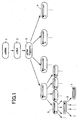
- Group 2 of cDNAs is synthesized by a method known in the art. Then, Group 2 is subjected to cleavage with two appropriate restriction enzymes to obtain Group 3 of cDNA fragments. Subsequently, Group 3 of cDNA fragments is further divided on the basis of the sequence for two bases each at both ends of the cDNA, i.e., the sequences for four bases in total, that is, depending on whether the four bases are A, T, G, or C. For instance, by differentiating the base at the 5' end (represented by a black-colored portion in Fig. 1), it is possible to divide Group 3 into four different kinds of Group 4.
- a method for preparing a plurality of Groups 7 of cDNA fragments from Group 1 of extracted mRNAs will be specifically described with reference to Fig. 2.
- each letter of alphabets in Fig. 2 indicates a base that constitutes a base sequence
- N, M, W, X, Y and Z each represents an arbitrary base, wherein X and Y bind complementarily to each other and W and Z bind complementarily to each other.
- mRNA 11 is extracted from a certain cell to be tested by a method known in the art.
- a Fast Track 2.0 kit manufactured by Invitrogen Corporation
- 20 ⁇ g in total of mRNA 11 was extracted from yeast.
- an oligo-dT primer complementary to a poly-A tail at the 3' end of the extracted mRNA 11 is labeled with biotin (tag substance) 13. This is used as a primer to synthesize cDNA 12.
- biotin tag substance
- 20 ⁇ g of the extracted mRNA 11 was mixed with 100 pmole in 0.8 ⁇ l of a 5'-biotinylated oligo-dT primer (manufactured by BRL, Inc.), followed by incubation at 65°C for 5 minutes.
- the synthesized cDNA 12 is cleaved with a first restriction enzyme. Specifically, 20 units of a restriction enzyme MspI (manufactured by Takara Shuzo Co., Ltd.) and 10 ⁇ g of the cDNA 12 in final concentrations in 100 ⁇ l were reacted at 37°C for 360 minutes. Incidentally, MspI is a restriction enzyme that recognizes four bases. Subsequently, the cDNA fragments were purified with ethanol by a method known in the art.
- MspI is a restriction enzyme that recognizes four bases.
- the biotin 13 is captured and only 3'-end fragments of the cleaved cDNA fragments are recovered. Specifically, the biotin 13 was connected to the streptavidin 14 (manufactured by Dynal, Inc.) immobilized on magnetic beads in a reaction solution to obtain the product.
- a first adaptor sequence 15 having a sequence complementary to the recognition cleavage site of the first restriction enzyme is ligated to the 5' end of the recovered cDNA fragments.
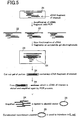
- the first adaptor sequence 15 used in the present example is shown in Fig. 3A. Specifically, using 5.0 ⁇ g of the first adaptor (manufactured by BRL, Inc.) having a CG protruding end (i.e., a sequence complementary to the cleavage fragment site of the restriction enzyme MspI) and 10 units of T4 DNA ligase (manufactured by NEB, Inc.), ligation was carried out in 15 ⁇ l of a T4 DNA ligase buffer.
- this cDNA fragment is cleaved with a second restriction enzyme.
- a restriction enzyme MseI manufactured by NEB, Inc.
- this MseI is also a restriction enzyme that recognizes four bases.
- cDNA fragments were purified with ethanol by a method known in the art.
- biotin 13 was captured using streptavidin 14 and a 3'-end fragment of cleaved cDNA fragments is removed while a 5'-end fragment of cleaved cDNA fragments is recovered.
- a second adaptor sequence 16 having a sequence complementary to the recognition cleavage site of the second restriction enzyme is attached to the 3' end of the recovered cDNA fragment.
- the second adaptor sequence 16 used in the present example is shown in Fig. 3B.
- a TA protruding end i.e., a sequence complementary to the cleavage fragment site of the restriction enzyme MseI
- T4 DNA ligase manufactured by NEB, Inc.
- a group of cDNA fragments 17 which contain known sequences at both ends has been constructed by the above procedures.
- this group of cDNA fragments 17 is subjected to a PCR reaction using a primer set.
- This primer set uses: as shown in Fig. 4A, a primer having a sequence complementary to the first adaptor sequence and a primer having an additional sequence of two bases (represented by NN in Fig. 4) in the direction of amplification; and, as shown in Fig. 4B, a primer having a sequence complementary to the second adaptor sequence and an additional sequence of two bases (represented by NN in Fig. 4) in the direction of amplification. Since two bases added to the individual primers in the direction of amplification are designed by all the combinations of the four different bases of A, T, G, and C, a maximum of 256 different primer sets are contemplated.
- PCR may be carried out by a method known in the art.
- the plurality of kinds of group of cDNA fragments 18 obtained as above each can be utilized as a sample for recovering a cDNA fragment of interest in the present example.
- the small-scale group of cDNA fragments as a sample used in the present example is classified by using a primer composed of oligonucleotide 1 and a primer composed of oligonucleotide 2.
- Group 21 of the created cDNA fragments is amplified by PCR reaction using a first primer that has a sequence complementary to the first adaptor sequence 15 and is connected to a labeling substance and a second primer that has a sequence complementary to the second adaptor sequence 16.
- the above-mentioned oligonucleotide 1 having a sequence complementary to the first adaptor sequence 15 was subjected to a PCR reaction using the first primer attached to near-infrared fluorochrome IRD-800 that is a fluorescent substance and the second primer composed of the above oligonucleotide 2 that has a sequence complementary to the second adaptor sequence 16.
- the first and second primers may be synthesized by a method known in the art, respectively.
- PCR reaction was carried out using GeneAmp 2400 available from PerkinElmer, Inc. The PCR conditions were based on Stepdown PCR (see Biotechniques, 1996, 20: 478-485).
- An enzyme (DNA polymerase) used was a KOD Dash enzyme manufactured by Toyobo Co., Ltd. This DNA polymerase was derived from Pyrococcus kodakaraensis (strain KOD1). The composition of the reaction solution was determined according to an accompanying instruction manual.
- Group 22 of the amplified cDNA fragments (PCR product) is subjected to gel electrophoresis.
- the Group 22 of amplified cDNA fragments was subjected to a DNA sequencer (LIC-4200L (S) -1 manufactured by LI-COR, Inc.) capable of reading a fluorochromes and then to acrylamide gel electrophoresis for size fractionation.
- the composition of the acrylamide gel 23 was determined according to an accompanying manual of the above DNA sequencer.
- a gel portion containing a cDNA fragment 24 of interest is cut out of the whole gel on the basis of the results of the electrophoresis step to recover the cDNA fragment 24.
- a cDNA fragment to be extracted was determined based on the analysis result of acrylamide gel electrophoresis.
- this cDNA fragment 24 is derived from a known gene A and has a length of 202 bp (including both adaptor sequences).
- acrylamide gel electrophoresis was carried out for the same sample and terminated immediately after the cDNA fragment 24 of interest appeared on the analysis screen to cut out a gel portion on which the laser of the detector was irradiated.
- the acrylamide gel portion which had been cut out was reacted in a buffer overnight at 65°C to recover the cDNA fragment 24 from the acrylamide gel.
- a kit manufactured by Omega Bio-tek, Inc. (E.Z.N.A. Poly-Gel DNA extraction kit) was used.
- the recovered cDNA fragment 24 is again subjected to a PCR reaction using a third primer having a sequence complementary to the first adaptor sequence 15 and a forth primer having a sequence complementary to the second adaptor sequence 16.
- a PCR reaction was carried out using at the forward side the third primer having a sequence complementary to the first adaptor sequence in addition to a sequence of a restriction enzyme NotI site, and at the reverse side the forth primer having a sequence complementary to the second adaptor sequence in addition to a sequence of a restriction enzyme SpeI site.
- the third primer is composed of oligonucleotide 3 and the forth primer is composed of oligonucleotide 4.
- PCR reaction was carried out using GeneAmp 2400 manufactured by PerkinElmer, Co., Ltd. under the conditions of Stepdown PCR (see Biotechniques, 1996, 20: 478-485).
- An enzyme (DNA polymerase) used was a KOD Dash enzyme available from Toyobo Co. , Ltd.
- the composition of the reaction solution was determined according to an accompanying instruction manual.
- a product of the cDNA fragment 24 amplified in the second PCR step is ligated to a plasmid vector 25 to form a recombinant plasmid 26.
- the amplification product of the cDNA fragment 24 was treated with restriction enzymes NotI and SpeI and then ligated to the plasmid vector (pbluescript II) 25 to form the recombinant plasmid 26.
- This ligation was performed by using the Ligation kit ver.2 manufactured by Takara Shuzo Co., Ltd. according to an accompanying instruction manual thereof.
- the recombinant plasmid 26 is introduced into E. coli.
- E. coli DH5 ⁇ was used as competent cells and the recombinant plasmid 26 was introduced into the E. coli by a method known in the art.
- the cDNA fragment 24 of interest can be recovered more reliably from the Group 21 of cDNA fragments.
- groups of cDNA fragments each different from the group of cDNA fragments used in recovering the above gene A were prepared as a sample by the method described above.
- oligonucleotide 5 as a first primer
- oligonucleotide 6 as a second primer
- oligonucleotide 7 as a third primer
- oligonucleotide 8 as a forth primer
- oligonucleotide 9 as a first primer
- oligonucleotide 10 as a second primer
- oligonucleotide 11 as a third primer
- oligonucleotide 12 as a forth primer
- oligonucleotide 13 as a first primer
- oligonucleotide 14 as a second primer
- oligonucleotide 15 as a third primer
- oligonucleotide 16 as a forth primer
- a recombinant plasmid was extracted from transformed E. coli by a method known in the art. This plasmid extraction was carried out for a plurality of colonies. For each of the extracted recombinant plasmids, a base sequence of the incorporated cDNA fragments was determined. Such gene analysis was carried out on each of the cDNA fragments derived from the gene A through the gene D in a similar manner. The results thereof are shown in Table 1. It is noted that numbers in parenthesis represent the length of each cDNA fragment (including both adaptor sequences). Recovery rate (%) Gene A (202 bp) 67 Gene B (314 bp) 57 Gene C (130 bp) 100 Gene D (209 bp) 100
- the recovery of the cDNA fragment of interest from the group of cDNA fragments according to the method described in the present example is found to be capable of recovering the cDNA fragment of interest more reliably.
- the group of cDNA fragments can be amplified in a substantial amount. Therefore, even if the cDNA fragment of interest has a low concentration, it can be amplified substantially and can be detected in gel electrophoresis.
- a PCR product also contains the labeling substance.
- the position of the cDNA fragment of interest in the gel can be easily detected by recognizing this labeling substance in electrophoresis.
- the group of cDNA fragments is fractionated by gel electrophoresis, it is possible to improve size resolution and to recover only the cDNA fragment of interest more specifically, as compared to, for example, electrophoresis using a capillary column.
- each of the first and the second adaptor is provided as a sequence of approximately 15 bases, a PCR reaction can be stably carried out thereon to amplify cDNA fragments efficiently.
- the near-infrared fluorochrome IRD-800 which is a fluorescent substance, is used.
- the detection sensitivity of a cDNA fragment in gel electrophoresis can be improved.
- a second PCR step is provided to carry out additional PCR reaction for a cDNA fragment that has been recovered in the recovery step. Therefore, it is possible to significantly amplify the recovered cDNA fragment even if the content thereof is small.
- the present invention is provided with a ligation step in which a cDNA fragment is ligated to a plasmid vector to form a recombinant plasmid after the second PCR step and an introduction step in which this recombinant plasmid is introduced into E. coli . Therefore, this is effective in the case of conducting analysis on the structure of the cDNA fragment, and so on. That is, by culturing the E. coli which has been transformed and extracting a plasmid DNA having the cDNA fragment, this extracted plasmid DNA can be utilized in structure analysis (e.g., the determination of a base sequence).
- acrylamide gel electrophoresis was performed as in the Example 1 described above. Subsequently, instead of performing additional electrophoresis for the same sample, the gel that had been initially subjected to electrophoresis was flaked off the gel plate by using a filter paper. Subsequently, the gel adhering to the filter paper was placed on a scanner capable of detecting a fluorochrome and the whole gel was subjected to imaging. By this procedure, it was possible to recover accurately only the gel portion containing the target cDNA fragment even if this cDNA fragment was at a lower concentration.
- a recombinant plasmid was extracted from transformed E. coli by a method known in the art to determine a base sequence of the inserted cDNA fragment. Such gene analysis was conducted for a cDNA fragment derived from a gene E in the same way.
- a group of cDNA fragments different from the groups of cDNA fragments used to recover the above genes A to D was prepared by the above-mentioned method.
- a first primer through a forth primer having slightly different base sequences thereof were utilized. Specifically, oligonucleotide 17 as a first primer, oligonucleotide 18 as a second primer, oligonucleotide 19 as a third primer, and oligonucleotide 20 as a forth primer were used.
- Example 1 a cDNA fragment derived from an unknown gene is recovered and analyzed in the present example.
- the cDNA fragment derived from the unknown gene is analyzed, there are two possible methods for finding out whether the cDNA fragment which has been recovered is the target cDNA fragment or not.
- a group of cDNA fragments is subjected to gel electrophoresis with a marker and the length of a cDNA fragment of interest is determined precisely based on an agreement between the length of the cDNA fragment and the length of the marker, and so on, whether the cDNA fragment which has been recovered and analyzed is the target cDNA fragment or not is to be determined from the length thereof.
- a second PCR step was carried out.
- 500 ng of a RecA protein of E. coli with respect to 20 pmol of a primer was further mixed in a PCR reaction solution.
- a first primer and a second primer used in the first PCR step are composed of oligonucleotide 21 and oligonucleotide 22, respectively.
- a third primer and a forth primer used in the second PCR step are composed of oligonucleotide 23 and oligonucleotide 24, respectively.
- a recombinant plasmid was extracted from transformed E. coli by a method known in the art to determine a base sequence of the inserted cDNA fragment. From the result, a cDNA fragment of the base sequence having a length of 200 bp was determined to be the cDNA fragment of interest while a cDNA fragment of the base sequence not having a length of 200 bp was determined not to be the cDNA fragment of interest.
- a RecA protein was not added in the second PCR step and a PCR reaction employing only a DNA polymerase (KOD Dash) was carried out while keeping other steps the same as those described above, and the recovery rate of the cDNA fragment of interest was examined.
- a PCR reaction using an SSB (single strand DNA binding protein) protein of E. coli instead of the RecA protein was carried out in the second PCR reaction step while keeping other steps the same as those described above, and the recovery rate of the cDNA fragment of interest was examined.
- SSB single strand DNA binding protein
- the addition of the RecA protein in the second PCR reaction can substantially improve the recovery rate of the cDNA fragment of interest. This may be because, when a PCR reaction is performed with the RecA protein mixed in a reaction solution, the amplification of byproducts (nonspecific PCR products) can be kept low without reducing the yield of the cDNA fragment.
- PCR in the second PCR step is carried out by mixing the RecA protein in the reaction solution to amplify the group of cDNA fragments. Therefore, the amplification of byproducts (nonspecific products) can be kept low without reducing the yield of the group of cDNA fragments. That is, since the presence of the above homologous recombinant protein can suppress the occurrence of the primer extension reaction caused by the binding of the primer to nonspecific sites of the cDNA fragment, the amplification of nonspecific PCR products can be suppressed.
- the group of cDNA fragments can be amplified specifically. That is, a conventional PCR method amplifies not only a group of cDNA fragments but byproducts in a large amount when the temperature of the primer extension reaction such as the annealing temperature is set at a low level. However, in the present example, it is possible to amplify the group of cDNA fragments more specifically.
- the cDNA fragment of interest can be recovered more reliably.
- the RecA protein in the range of 1 ng to 1000 ng is mixed for 20 pmol of the primer in the present example, it is possible to amplify a cDNA fragment more efficiently and specifically.
- a cDNA fragment derived from an unknown gene is recovered and analyzed. If the length of a cDNA fragment of interest is not precisely determined even by subjecting the group of cDNA fragments to gel electrophoresis, one set of appropriate primers is prepared on the basis of a base sequence of the cDNA fragment which has been analyzed and recovered, and RT-PCR is carried out to find out whether the cDNA fragment analyzed by RT-PCR is of interest or not.
- a first primer and a second primer used in the first PCR step are composed of oligonucleotide 25 and oligonucleotide 26, respectively.
- a third primer and a forth primer used in the second PCR step are composed of oligonucleotide 27 and oligonucleotide 28, respectively.
- a recombinant plasmid was extracted from transformed E. coli by a method known in the art to determine a base sequence of the inserted cDNA fragment.
- One set of primers was prepared based on the base sequence of a cDNA fragment having a high recovery rate. These primers are composed of oligonucleotide 29 and oligonucleotide 30.
- a PCR reaction was carried out for the original group of cDNA fragments used as a sample.
- a RecA protein was not added to the sample and a PCR reaction employing only DNA polymerase (KOD Dash) was carried out.
- a PCR reaction using an SSB protein instead of the RecA protein was carried out for the same sample. Subsequently, reaction products thereof were subjected to gel electrophoresis. The results are shown in Fig. 6.
- the present invention can provide a method for DNA recovery, in which a cDNA fragment of interest can be recovered more reliably from the group of cDNA fragments in which various kinds of cDNA fragments are present.
Landscapes
- Chemical & Material Sciences (AREA)
- Life Sciences & Earth Sciences (AREA)
- Organic Chemistry (AREA)
- Engineering & Computer Science (AREA)
- Zoology (AREA)
- Wood Science & Technology (AREA)
- Proteomics, Peptides & Aminoacids (AREA)
- Health & Medical Sciences (AREA)
- Biophysics (AREA)
- Chemical Kinetics & Catalysis (AREA)
- Immunology (AREA)
- Microbiology (AREA)
- Molecular Biology (AREA)
- Analytical Chemistry (AREA)
- Physics & Mathematics (AREA)
- Biotechnology (AREA)
- Biochemistry (AREA)
- Bioinformatics & Cheminformatics (AREA)
- General Engineering & Computer Science (AREA)
- General Health & Medical Sciences (AREA)
- Genetics & Genomics (AREA)
- Measuring Or Testing Involving Enzymes Or Micro-Organisms (AREA)
Applications Claiming Priority (3)
| Application Number | Priority Date | Filing Date | Title |
|---|---|---|---|
| JP2002280660 | 2002-09-26 | ||
| JP2002280660A JP2004113108A (ja) | 2002-09-26 | 2002-09-26 | Dna回収法 |
| PCT/JP2003/012214 WO2004029292A1 (ja) | 2002-09-26 | 2003-09-25 | Dna回収法 |
Publications (2)
| Publication Number | Publication Date |
|---|---|
| EP1548128A1 true EP1548128A1 (de) | 2005-06-29 |
| EP1548128A4 EP1548128A4 (de) | 2006-11-22 |
Family
ID=32040491
Family Applications (1)
| Application Number | Title | Priority Date | Filing Date |
|---|---|---|---|
| EP03798488A Withdrawn EP1548128A4 (de) | 2002-09-26 | 2003-09-25 | Verfahren zur wiedergewinnung von dna |
Country Status (4)
| Country | Link |
|---|---|
| US (1) | US20050260641A1 (de) |
| EP (1) | EP1548128A4 (de) |
| JP (1) | JP2004113108A (de) |
| WO (1) | WO2004029292A1 (de) |
Families Citing this family (2)
| Publication number | Priority date | Publication date | Assignee | Title |
|---|---|---|---|---|
| JP5253703B2 (ja) * | 2004-03-12 | 2013-07-31 | アイシン精機株式会社 | 遺伝子断片の取得方法 |
| US7700281B2 (en) | 2004-06-30 | 2010-04-20 | Usb Corporation | Hot start nucleic acid amplification |
Family Cites Families (13)
| Publication number | Priority date | Publication date | Assignee | Title |
|---|---|---|---|---|
| US5223414A (en) * | 1990-05-07 | 1993-06-29 | Sri International | Process for nucleic acid hybridization and amplification |
| US5510473A (en) * | 1990-11-09 | 1996-04-23 | The United States Of American As Represented By The Secretary Of Health And Human Services | Cloning of the recA gene from thermus aquaticus YT-1 |
| EP0812211A4 (de) * | 1994-03-18 | 1998-12-16 | Gen Hospital Corp | Erkennungsverfahren durch rflp |
| RU2111254C1 (ru) * | 1994-07-11 | 1998-05-20 | Институт молекулярной биологии им.В.А.Энгельгардта РАН | СПОСОБ ДЕТЕКЦИИ ДИФФЕРЕНЦИАЛЬНО ЭКСПРЕССИРУЮЩИХСЯ МАТРИЧНЫХ РНК И КЛОНИРОВАНИЯ СООТВЕТСТВУЮЩИХ ИМ ФРАГМЕНТОВ кДНК |
| US5712126A (en) * | 1995-08-01 | 1998-01-27 | Yale University | Analysis of gene expression by display of 3-end restriction fragments of CDNA |
| US5716784A (en) * | 1996-02-05 | 1998-02-10 | The Perkin-Elmer Corporation | Fluorescence detection assay for homogeneous PCR hybridization systems |
| JPH09220099A (ja) * | 1996-02-15 | 1997-08-26 | Aisin Kosumosu Kenkyusho:Kk | プローブを用いた核酸の検出方法 |
| US6060245A (en) * | 1996-12-13 | 2000-05-09 | Stratagene | Methods and adaptors for generating specific nucleic acid populations |
| US6214548B1 (en) * | 1997-01-29 | 2001-04-10 | The United States Of America As Represented By The Secretary Of The Army | Diagnostic methods for Cyclospora |
| JP3925981B2 (ja) * | 1997-02-28 | 2007-06-06 | 株式会社アイシン・コスモス研究所 | 核酸検出用プローブを利用した核酸検出方法 |
| US6090556A (en) * | 1997-04-07 | 2000-07-18 | Japan Science & Technology Corporation | Method for quantitatively determining the expression of a gene |
| US6287825B1 (en) * | 1998-09-18 | 2001-09-11 | Molecular Staging Inc. | Methods for reducing the complexity of DNA sequences |
| AUPQ439699A0 (en) * | 1999-12-01 | 1999-12-23 | University Of Sydney, The | Detection of nucleic acid fragments |
-
2002
- 2002-09-26 JP JP2002280660A patent/JP2004113108A/ja active Pending
-
2003
- 2003-09-25 WO PCT/JP2003/012214 patent/WO2004029292A1/ja not_active Ceased
- 2003-09-25 EP EP03798488A patent/EP1548128A4/de not_active Withdrawn
-
2005
- 2005-03-25 US US11/090,844 patent/US20050260641A1/en not_active Abandoned
Also Published As
| Publication number | Publication date |
|---|---|
| US20050260641A1 (en) | 2005-11-24 |
| WO2004029292A1 (ja) | 2004-04-08 |
| EP1548128A4 (de) | 2006-11-22 |
| JP2004113108A (ja) | 2004-04-15 |
Similar Documents
| Publication | Publication Date | Title |
|---|---|---|
| CN112236530B (zh) | 一种耐高温Cas蛋白的用途及靶标核酸分子的检测方法和试剂盒 | |
| JP4918409B2 (ja) | 核酸配列の増幅方法 | |
| US8999677B1 (en) | Method for differentiation of polynucleotide strands | |
| US9518302B2 (en) | Method for direct amplification from crude nucleic acid samples | |
| US8202972B2 (en) | Isothermal DNA amplification | |
| JP2005509433A (ja) | 多重pcr | |
| AU2012240460B2 (en) | High through-put analysis of transgene borders | |
| US10059938B2 (en) | Gene expression analysis | |
| EP1960541A1 (de) | Verfahren zum screening mit hohem durchsatz von transposon-tagging-populationen und zur massiven parallelen sequenzidentifizierung von insertionsstellen | |
| CN111465705B (zh) | 用于去除和/或检测具有错配的核苷酸的核酸的方法 | |
| CN114606322A (zh) | 基于Argonaute蛋白和指数扩增一步检测长链RNA的试剂盒及检测方法及应用 | |
| EP1548128A1 (de) | Verfahren zur wiedergewinnung von dna | |
| Bogdanova et al. | DSN depletion is a simple method to remove selected transcripts from cDNA populations | |
| US11174511B2 (en) | Methods and compositions for selecting and amplifying DNA targets in a single reaction mixture | |
| JP4311003B2 (ja) | 原核生物の遺伝子発現解析方法 | |
| US20020064837A1 (en) | Method for synthesizing a nucleic acid molecule using a ribonuclease | |
| KR20230124636A (ko) | 멀티플렉스 반응에서 표적 서열의 고 감응성 검출을위한 조성물 및 방법 | |
| Ji et al. | Principles of nucleic acid-based detection methods | |
| US20190249334A1 (en) | Methods and Kits for Detecting Contamination and Sample Misidentification | |
| US20260049303A1 (en) | Di-Modal DNA Libraries and Methods of Preparation and Uses Thereof | |
| JP2000093175A (ja) | 核酸合成法 | |
| Byrne et al. | RNA editing in Physarum mitochondria: assays and biochemical approaches | |
| JP5253703B2 (ja) | 遺伝子断片の取得方法 | |
| JP2004141105A (ja) | Dna合成反応を促進する方法、およびそのための組成物 | |
| US20250002900A1 (en) | Methods for Producing DNA Libraries and Uses Thereof |
Legal Events
| Date | Code | Title | Description |
|---|---|---|---|
| PUAI | Public reference made under article 153(3) epc to a published international application that has entered the european phase |
Free format text: ORIGINAL CODE: 0009012 |
|
| 17P | Request for examination filed |
Effective date: 20050322 |
|
| AK | Designated contracting states |
Kind code of ref document: A1 Designated state(s): AT BE BG CH CY CZ DE DK EE ES FI FR GB GR HU IE IT LI LU MC NL PT RO SE SI SK TR |
|
| RBV | Designated contracting states (corrected) |
Designated state(s): DE FR GB |
|
| A4 | Supplementary search report drawn up and despatched |
Effective date: 20061023 |
|
| 17Q | First examination report despatched |
Effective date: 20080207 |
|
| STAA | Information on the status of an ep patent application or granted ep patent |
Free format text: STATUS: THE APPLICATION IS DEEMED TO BE WITHDRAWN |
|
| 18D | Application deemed to be withdrawn |
Effective date: 20080618 |