EP1546304B1 - VERBESSERTE PRODUKTION VON BAKTERIENSTûMMEN - Google Patents
VERBESSERTE PRODUKTION VON BAKTERIENSTûMMEN Download PDFInfo
- Publication number
- EP1546304B1 EP1546304B1 EP03808137.8A EP03808137A EP1546304B1 EP 1546304 B1 EP1546304 B1 EP 1546304B1 EP 03808137 A EP03808137 A EP 03808137A EP 1546304 B1 EP1546304 B1 EP 1546304B1
- Authority
- EP
- European Patent Office
- Prior art keywords
- gene
- activity
- cell
- host cell
- endogenous
- Prior art date
- Legal status (The legal status is an assumption and is not a legal conclusion. Google has not performed a legal analysis and makes no representation as to the accuracy of the status listed.)
- Expired - Lifetime
Links
Images






Classifications
-
- C—CHEMISTRY; METALLURGY
- C07—ORGANIC CHEMISTRY
- C07K—PEPTIDES
- C07K14/00—Peptides having more than 20 amino acids; Gastrins; Somatostatins; Melanotropins; Derivatives thereof
- C07K14/195—Peptides having more than 20 amino acids; Gastrins; Somatostatins; Melanotropins; Derivatives thereof from bacteria
- C07K14/24—Peptides having more than 20 amino acids; Gastrins; Somatostatins; Melanotropins; Derivatives thereof from bacteria from Enterobacteriaceae (F), e.g. Citrobacter, Serratia, Proteus, Providencia, Morganella, Yersinia
-
- C—CHEMISTRY; METALLURGY
- C12—BIOCHEMISTRY; BEER; SPIRITS; WINE; VINEGAR; MICROBIOLOGY; ENZYMOLOGY; MUTATION OR GENETIC ENGINEERING
- C12N—MICROORGANISMS OR ENZYMES; COMPOSITIONS THEREOF; PROPAGATING, PRESERVING, OR MAINTAINING MICROORGANISMS; MUTATION OR GENETIC ENGINEERING; CULTURE MEDIA
- C12N15/00—Mutation or genetic engineering; DNA or RNA concerning genetic engineering, vectors, e.g. plasmids, or their isolation, preparation or purification; Use of hosts therefor
- C12N15/09—Recombinant DNA-technology
- C12N15/63—Introduction of foreign genetic material using vectors; Vectors; Use of hosts therefor; Regulation of expression
- C12N15/70—Vectors or expression systems specially adapted for E. coli
-
- C—CHEMISTRY; METALLURGY
- C12—BIOCHEMISTRY; BEER; SPIRITS; WINE; VINEGAR; MICROBIOLOGY; ENZYMOLOGY; MUTATION OR GENETIC ENGINEERING
- C12P—FERMENTATION OR ENZYME-USING PROCESSES TO SYNTHESISE A DESIRED CHEMICAL COMPOUND OR COMPOSITION OR TO SEPARATE OPTICAL ISOMERS FROM A RACEMIC MIXTURE
- C12P13/00—Preparation of nitrogen-containing organic compounds
- C12P13/04—Alpha- or beta- amino acids
-
- C—CHEMISTRY; METALLURGY
- C12—BIOCHEMISTRY; BEER; SPIRITS; WINE; VINEGAR; MICROBIOLOGY; ENZYMOLOGY; MUTATION OR GENETIC ENGINEERING
- C12P—FERMENTATION OR ENZYME-USING PROCESSES TO SYNTHESISE A DESIRED CHEMICAL COMPOUND OR COMPOSITION OR TO SEPARATE OPTICAL ISOMERS FROM A RACEMIC MIXTURE
- C12P13/00—Preparation of nitrogen-containing organic compounds
- C12P13/04—Alpha- or beta- amino acids
- C12P13/22—Tryptophan; Tyrosine; Phenylalanine; 3,4-Dihydroxyphenylalanine
-
- C—CHEMISTRY; METALLURGY
- C12—BIOCHEMISTRY; BEER; SPIRITS; WINE; VINEGAR; MICROBIOLOGY; ENZYMOLOGY; MUTATION OR GENETIC ENGINEERING
- C12P—FERMENTATION OR ENZYME-USING PROCESSES TO SYNTHESISE A DESIRED CHEMICAL COMPOUND OR COMPOSITION OR TO SEPARATE OPTICAL ISOMERS FROM A RACEMIC MIXTURE
- C12P7/00—Preparation of oxygen-containing organic compounds
- C12P7/02—Preparation of oxygen-containing organic compounds containing a hydroxy group
- C12P7/04—Preparation of oxygen-containing organic compounds containing a hydroxy group acyclic
- C12P7/06—Ethanol, i.e. non-beverage
-
- C—CHEMISTRY; METALLURGY
- C12—BIOCHEMISTRY; BEER; SPIRITS; WINE; VINEGAR; MICROBIOLOGY; ENZYMOLOGY; MUTATION OR GENETIC ENGINEERING
- C12P—FERMENTATION OR ENZYME-USING PROCESSES TO SYNTHESISE A DESIRED CHEMICAL COMPOUND OR COMPOSITION OR TO SEPARATE OPTICAL ISOMERS FROM A RACEMIC MIXTURE
- C12P7/00—Preparation of oxygen-containing organic compounds
- C12P7/02—Preparation of oxygen-containing organic compounds containing a hydroxy group
- C12P7/04—Preparation of oxygen-containing organic compounds containing a hydroxy group acyclic
- C12P7/06—Ethanol, i.e. non-beverage
- C12P7/065—Ethanol, i.e. non-beverage with microorganisms other than yeasts
-
- C—CHEMISTRY; METALLURGY
- C12—BIOCHEMISTRY; BEER; SPIRITS; WINE; VINEGAR; MICROBIOLOGY; ENZYMOLOGY; MUTATION OR GENETIC ENGINEERING
- C12P—FERMENTATION OR ENZYME-USING PROCESSES TO SYNTHESISE A DESIRED CHEMICAL COMPOUND OR COMPOSITION OR TO SEPARATE OPTICAL ISOMERS FROM A RACEMIC MIXTURE
- C12P7/00—Preparation of oxygen-containing organic compounds
- C12P7/02—Preparation of oxygen-containing organic compounds containing a hydroxy group
- C12P7/04—Preparation of oxygen-containing organic compounds containing a hydroxy group acyclic
- C12P7/18—Preparation of oxygen-containing organic compounds containing a hydroxy group acyclic polyhydric
-
- C—CHEMISTRY; METALLURGY
- C12—BIOCHEMISTRY; BEER; SPIRITS; WINE; VINEGAR; MICROBIOLOGY; ENZYMOLOGY; MUTATION OR GENETIC ENGINEERING
- C12P—FERMENTATION OR ENZYME-USING PROCESSES TO SYNTHESISE A DESIRED CHEMICAL COMPOUND OR COMPOSITION OR TO SEPARATE OPTICAL ISOMERS FROM A RACEMIC MIXTURE
- C12P7/00—Preparation of oxygen-containing organic compounds
- C12P7/02—Preparation of oxygen-containing organic compounds containing a hydroxy group
- C12P7/04—Preparation of oxygen-containing organic compounds containing a hydroxy group acyclic
- C12P7/18—Preparation of oxygen-containing organic compounds containing a hydroxy group acyclic polyhydric
- C12P7/20—Glycerol
-
- C—CHEMISTRY; METALLURGY
- C12—BIOCHEMISTRY; BEER; SPIRITS; WINE; VINEGAR; MICROBIOLOGY; ENZYMOLOGY; MUTATION OR GENETIC ENGINEERING
- C12P—FERMENTATION OR ENZYME-USING PROCESSES TO SYNTHESISE A DESIRED CHEMICAL COMPOUND OR COMPOSITION OR TO SEPARATE OPTICAL ISOMERS FROM A RACEMIC MIXTURE
- C12P7/00—Preparation of oxygen-containing organic compounds
- C12P7/24—Preparation of oxygen-containing organic compounds containing a carbonyl group
- C12P7/26—Ketones
- C12P7/28—Acetone-containing products
-
- C—CHEMISTRY; METALLURGY
- C12—BIOCHEMISTRY; BEER; SPIRITS; WINE; VINEGAR; MICROBIOLOGY; ENZYMOLOGY; MUTATION OR GENETIC ENGINEERING
- C12P—FERMENTATION OR ENZYME-USING PROCESSES TO SYNTHESISE A DESIRED CHEMICAL COMPOUND OR COMPOSITION OR TO SEPARATE OPTICAL ISOMERS FROM A RACEMIC MIXTURE
- C12P7/00—Preparation of oxygen-containing organic compounds
- C12P7/40—Preparation of oxygen-containing organic compounds containing a carboxyl group including Peroxycarboxylic acids
-
- C—CHEMISTRY; METALLURGY
- C12—BIOCHEMISTRY; BEER; SPIRITS; WINE; VINEGAR; MICROBIOLOGY; ENZYMOLOGY; MUTATION OR GENETIC ENGINEERING
- C12P—FERMENTATION OR ENZYME-USING PROCESSES TO SYNTHESISE A DESIRED CHEMICAL COMPOUND OR COMPOSITION OR TO SEPARATE OPTICAL ISOMERS FROM A RACEMIC MIXTURE
- C12P7/00—Preparation of oxygen-containing organic compounds
- C12P7/40—Preparation of oxygen-containing organic compounds containing a carboxyl group including Peroxycarboxylic acids
- C12P7/44—Polycarboxylic acids
-
- C—CHEMISTRY; METALLURGY
- C12—BIOCHEMISTRY; BEER; SPIRITS; WINE; VINEGAR; MICROBIOLOGY; ENZYMOLOGY; MUTATION OR GENETIC ENGINEERING
- C12P—FERMENTATION OR ENZYME-USING PROCESSES TO SYNTHESISE A DESIRED CHEMICAL COMPOUND OR COMPOSITION OR TO SEPARATE OPTICAL ISOMERS FROM A RACEMIC MIXTURE
- C12P7/00—Preparation of oxygen-containing organic compounds
- C12P7/40—Preparation of oxygen-containing organic compounds containing a carboxyl group including Peroxycarboxylic acids
- C12P7/44—Polycarboxylic acids
- C12P7/46—Dicarboxylic acids having four or less carbon atoms, e.g. fumaric acid, maleic acid
-
- Y—GENERAL TAGGING OF NEW TECHNOLOGICAL DEVELOPMENTS; GENERAL TAGGING OF CROSS-SECTIONAL TECHNOLOGIES SPANNING OVER SEVERAL SECTIONS OF THE IPC; TECHNICAL SUBJECTS COVERED BY FORMER USPC CROSS-REFERENCE ART COLLECTIONS [XRACs] AND DIGESTS
- Y02—TECHNOLOGIES OR APPLICATIONS FOR MITIGATION OR ADAPTATION AGAINST CLIMATE CHANGE
- Y02E—REDUCTION OF GREENHOUSE GAS [GHG] EMISSIONS, RELATED TO ENERGY GENERATION, TRANSMISSION OR DISTRIBUTION
- Y02E50/00—Technologies for the production of fuel of non-fossil origin
- Y02E50/10—Biofuels, e.g. bio-diesel
Definitions
- the present invention relates to alteration of metabolic pathways in bacterial strains and particularly in E. coli. More specifically the invention pertains to manipulating global regulatory genes, such as arc A and rpo S in bacterial host cells to enhance the production of desired products.
- Production of chemicals through cultivation of microorganisms is generally performed under well-controlled conditions wherein a constant environment regarding temperature, oxygen concentration and pH are maintained.
- culture vessels which include the microorganisms, are fed with different types of nutrients that cells use for growth and the production of desired chemical compounds.
- certain metabolic pathways and physiological responses programmed into a cell's genome are unnecessary, and in fact, may interfere with the optimized performance of a preferred process.
- bacterial cells a number of reactions in these metabolic pathways and physiological responses can be eliminated or enhanced to improve the production of desired products.
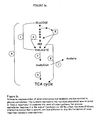
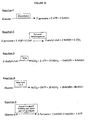
- Figure 1 illustrates a number of pathways and reactions involved in the assimilation of glucose.
- Enhanced efficient glucose assimilation can result in increased energy production, such as ATP, NADH, NADPH and FADH, for use by a bacterial strain.
- the increased energy production can then result in an increase in production and/or growth per unit weight of generating biomass or per unit weight of provided carbon substrate.
- glucose assimilation and metabolite production in microorganisms by genetic engineering has involved inactivation or deregulation of specific enzymes; overexpression of genes that are involved in central metabolic routes, such as glycolysis and the TCA cycle; the introduction of heterologous genes; and various other approaches.
- microbial strains regulate their physiology not just by controlling specific steps in a pathway, but also by coordinating a number of biosynthetic and catabolic pathways through the use of global regulators.
- ArcB/ArcA regulatory system is the RpoS. system.
- TCA cycle enzymes of the tricarboxylic acid (TCA) cycle are repressed under anaerobic conditions and particularly when the microorganisms are grown on glucose.
- the response of the TCA cycle enzymes in the absence to oxygen is regulated mainly at the transcriptional level by the ArcB/ArcA two-component regulatory system (NCBI entries NP 418818 (AE000400) and NP 417677 (AE000510)).
- ArcB histidine kinase
- the phosphorylated-ArcA then binds to regulatory regions, which are operably linked to the coding regions of TCA cycle regulated enzymes and either activates or represses transcription.
- enzymes regulated in this manner include succinate dehydrogenase, 2-oxoglutarate dehydrogenase, isocitrate dehydrogenase, and citrate synthase, which are all repressed by phosphorylated ArcA. ( Lynch et al., (1996) in REGULATION OF GENE EXPRESSION IN ESCHERICHIA COLI. Eds. Lin et al., Chapman and Hall, New York ).
- RpoS genes encode DNA-dependent RNA polymerase sigma subunits and when bound to the core RNA polymerase, allows the transcription of a subset of genes. For example In E . coli, rpo S is induced under various stress conditions and controls the expression of a catalase gene ( kat E) and glycogen biosynthesis. RpoS is believed to be a global regulator of the general stress response in bacteria and can be triggered by many different stress signals. Often, activation of rpo S is accompanied by a reduction or cessation of bacterial growth. This mechanism provides the host microorganism with the ability to survive the encountered stress as well as potential other stresses. ( Hengge - Aronis, R. (2002) Microbiol. Mol. Biol. Rev. 66:373-395 ).
- rpo S dependent genes There are more than 70 rpo S dependent genes known and the majority of these confer resistance against oxidative stress, near-UV radiation, potentially lethal heat shock, hyperosmolarity, acidic pH and organic solvents. Compared with wild-type rpo S strains, rpo S mutants were unable able to induce the general stress response in bacteria and could not survive prolonged starvation periods ( Hengge-Aronis R. (2002) Microbiol. Mol. Biol. Rev. 66:373-395 ). In recombinant bacterial strains, the production of protein during culture, and particularly during late stage fed-batch fermentation, may result in a general stressful condition, which may induce the RpoS-dependent response.
- the phosphoenolpyruvate carboxylase (Ppc) enzyme catalyzes the conversion of phosphoenolpyruvate (PEP) to oxaloacetate (OAA).
- Ppc replenishes the TCA cycle by directly providing OAA, which may have been removed for other biosynthetic reactions. If OAA is not replenished, the efficiency of the TCA cycle may be diminished.
- E. Coli cells having an inactivated ppc (ppc - ) grew slower than wild-type ppc cells ( ppc + ) , and the ppc + cells used glucose about three times as efficiently as the ppc - cells.
- the ppc - cells overproduced phenylalanine (Phe).
- the ppc - cells produced at least 16 times more Phe than the ppc + cells.
- the production of unwanted by-products, such as acetate and pyruvate were also stimulated in the ppc - cells.
- Miller et al., (1987) Microbiol. 2:143-149 the overproduction of Ppc in E. coli was effected by cloning the ppc in a multicopy plasmid under a tac promoter resulting in an increase in growth yield on glucose as well a decrease in the secretion of organic acids.
- a more efficient metabolic pathway for glucose assimilation may be achieved in a bacterial microorganism.
- the invention provides a genetically engineered microorganism comprising an Inactivated endogenous global regulator selected from the group of arc A genes or rpo S genes and optionally an exogenous promoter operably linked to a polynucleotide encoding a protein having phosphoenolpyruvate (PEP) carboxylase activity, wherein the engineered microorganism is capable of enhanced production of biomaterials, enhanced cell growth and/or enhanced cell productivity.
- an Inactivated endogenous global regulator selected from the group of arc A genes or rpo S genes and optionally an exogenous promoter operably linked to a polynucleotide encoding a protein having phosphoenolpyruvate (PEP) carboxylase activity
- PEP phosphoenolpyruvate
- the genetically modified microorganism encompassed by the invention may further include inactivation of i) an endogenous gene encoding a protein having phosphogluconate dehydratase (Edd) activity, ii) an endogenous gene encoding a protein having phosphoacetylkinase (Pta) activity, III) an endogenous gene encoding a protein having acetate kinase (AckA) activity and/or iv) an endogenous gene encoding a protein having methygloxyal synthase (MgsA) activity.
- Edd phosphogluconate dehydratase
- Pta phosphoacetylkinase
- AckA acetate kinase
- MgsA methygloxyal synthase
- One aspect of the invention pertains to a method of enhancing the production of a desired product in a bacterial host cell which comprises modifying a bacterial host cell by inactivating an endogenous arc A gene and culturing the modified bacterial host cell in suitable culture media comprising glucose under aerobic conditions to allow production of a desired product, and isolating the desired product from the culture media, wherein the desired product is glycerol and wherein the bacterial host cell is from a strain of the Enterobacteriaceae family.
- the host cell is an E. coli or Pantoea cell, and preferably the host cell is a PTS - /Glu + cell.
- the method further comprises Inactivating the expression of an endogenous gene encoding a polypeptide having RpoS activity, Edd activity, Pta activity, AckA activity or MgsA activity.
- the method further comprises transforming the bacterial host cell with a DNA fragment comprising an exogenous promoter, wherein the DNA fragment including the exogenous promoter is integrated into the host cell chromosome and replaces the endogenous promoter which is operably linked to a PEP carboxylase coding sequence wherein PEP carboxylase is overexpressed.
- the method further comprises isolating the desired product from the culture media.
- a second aspect the invention pertains to a method of enhancing biomass production in bacterial host cells comprising modifying a bacterial host cell by Inactivating an endogenous arc A gene and culturing the modified bacterial cell under suitable culture conditions wherein said culture conditions include aerobic fermentation and glucose as a carbon source and wherein biomass production is enhanced in the modified bacterial cell compared to biomass production in a corresponding non-modified bacterial cell cultured under essentially the same conditions, wherein the bacterial host cell is selected from the group consisting of Escherichia cells, Pantoea cells, Klebsiella cells, Gluconobacter cells and Erwinia cells.
- the method according to this aspect further comprises inactivating an endogenous rpo S gene.
- the endogenous arc A gene is inactivated by a deletion.
- the method further comprises inactivating an endogenous gene encoding a polypeptide having phosphogluconate dehydratase activity, phosphotransacetylase activity, acetyl kinase activity or methylglyoxyal synthase activity.
- the endogenous gene encoding a polypeptide having phosphogluconate dehydratase activity is an edd gene; the endogenous gene encoding a polypeptide having phosphotransacetylase activity is a pta gene; the endogenous gene encoding a polypeptide having acetyl kinase activity is an ack A gene; and the endogenous gene encoding a polypeptide having methylglyoxyal synthase activity is a mgs A gene.
- the method further comprises Isolating the modified bacterial cell.
- Preferred host cell E. coli cells and Pantoea cells.
- nucleic acids are written left to right in the 5' to 3' orientation and amino acid sequences are written left to right in amino to carboxy orientation, respectively.
- the term "global regulator” refers to a regulatory protein or RNA sequence that controls at least two operons, wherein each operon contains genes involved in different physiological roles or metabolic pathways.
- operon refers to a group of genes which are transcribed as a single transcriptional unit and are subject to coordinated regulation by a common regulatory sequence.
- a “gene” is meant a segment of DNA involved in the encoding for regulatory RNA's, transfer RNA's, ribosomal RNA's, promoter regions operably linked to the expression of a peptide, polypeptide or protein, including the coding region, non-coding regions preceding ("leader”) and following (“trailer”) the coding region, as well as intervening non-coding sequences ("introns") between individual coding segments ("exons”). Coding refers to the representation of amino acids, start and stop signals in a three base “triplet” code.
- a "regulatory sequence” is a nucleic acid sequence operably linked to a coding sequence to effect expression of the coding sequence.
- the regulatory sequence can inhibit, repress or promote the expression of the operably linked coding sequence or translation of the mRNA.
- the regulatory sequence has a positive activity. i.e. binding of an endogenous ligand (e.g. a transcription factor) to the regulatory sequence increases transcription, thereby resulting in increased expression of the corresponding target gene. In such a case, interference with transcription by binding a polyamide to a regulatory sequence would reduce or abolish expression of a gene.
- Regulatory sequences include promoters, enhancers, silencers, operators and transcription factors.
- a “promoter” is a regulatory sequence that is involved in binding RNA polymerase to initiate transcription of a gene.
- a promoter will comprise two consensus sequences corresponding to a -35 homology box and a -10 homology box with a linker sequence located between the -35 box and -10 box.
- the -35 homology box corresponds to TTGACA and the -10 homology box corresponds to TATAAT. Promoters are often located upstream (5') to the transcription initiation site of an operably linked gene.
- a promoter may also include or be adjacent to a regulatory sequence known in the art as a silencer.
- a silencer sequence generally has a negative regulatory effect on expression of the gene.
- exogenous promoter refers to non-native promoters, synthetic promoters, and modified naturally occurring promoters.
- Modified naturally occurring promoters are promoters that have been derived from endogenous promoters of a host cell, wherein the endogenous promoter or a derivative thereof is reintroduced into the host cell.
- Enhancers are nucleic acid regulatory sequences that can increase the utilization of promoters, and can function in either orientation (5'-3' or 3'-5') and in any location (upstream or downstream) relative to the promoter.
- operably linked refers to a juxtaposition wherein the elements are in an arrangement allowing them to be functionally related.
- a promoter is operably linked to a structural sequence if it functions as a specific binding site for RNA polymerase.
- a promoter is operably linked to a coding sequence if it controls the transcription of the sequence and a ribosome binding site is operably linked to a coding sequence if it is positioned so as to permit translation of the mRNA.
- a "structural sequence” refers to a putative polynucleotide sequence of DNA that encodes a protein. Messenger RNA is its primary product.
- arc A gene and "arc A” used interchangeability herein refer to a polynucleotide which encodes the structural gene of ArcA or a homologue, fragment, derivative or complement thereof and having the arcA gene's function.
- rpo S gene and " rpo S” used interchangeability herein refer to a polynucleotide which encodes or comprises the rpo S RNA or a homologue, fragment, derivative or complement thereof and having the rpo S gene's function.
- edd gene and “edd” used interchangeability herein refer to a polynucleotide which encodes or comprises the edd RNA or a homologue, fragment, derivative or complement thereof and having the edd gene's function.
- pta gene and " pta " used interchangeable herein refer to a polynucleotide which encodes or comprises the pta -RNA or a homologue, fragment, derivative or complement thereof and having the pta gene's function.
- ackA gene and "ackA” used interchangeably herein refer to a polynucleotide which encodes or comprises the ackA RNA or a homologue, fragment, derivative or complement thereof and having the ackA gene's function.
- mgsA gene and “msgA” used interchangeably herein refer to a polynucleotide which encodes or comprises the msgA RNA or a homologue, fragment, derivative or complement thereof and having the msgA gene's function.
- ArcA and polypeptide having ArcA activity refer to an aerobic respiration control protein which is a global regulatory protein encoded by the E . coli arc A gene or a polypeptide having substantial homology thereto and having arc A regulatory activity.
- RpoS and "polypeptide having Rpos activity” refer to a polypeptide encoded by the E . coli rpo S gene or a polypeptide having substantial homology thereto and having rpo S regulatory activity.
- Edd or "polypeptide having phosphogluconate dehydratase activity” refer to a polypeptide encoded by the E. coli edd gene or a polypeptide having substantial homology thereto and having phosphogluconate dehydratase activity. Typical of Edd is EC 4.2.1.12.
- polypeptide having phosphogluconate dehydratase activity refers to polypeptide which catalyzes the conversion of gluconate-6-phosphate to a) pyruvate and b) glyceraldehyde-3-phosphate in the catabolism of gluconate.
- Pta and "polypeptide having phosphotransacetylase activity” refers to a polypeptide encoded by the E. coli pta gene or a polypeptide having substantial homology thereto and having phosphotransacetylase activity. Typical of Pta is E.C. 2.3.1.8.
- polypeptide having phosphotransacetylase activity refers to a polypeptide which is capable of converting acetyl coenzyme A to acetate-phosphate.
- Ack and "polypeptide having acetate kinase activity” refer to a polypeptide encoded by the E. coli ack A gene or a polypeptide having substantial homology thereto and having acetate kinase activity. Typical of Ack is E.C. 2.7.2.1.
- a "polypeptide having acetate kinase activity” refers to a polypeptide capable of converting acetyl phosphate to acetate or the reverse.
- MgsA and "polypeptide having methylgloxyal synthase” refer to a polypeptide encoded by the E. coli mgsA gene or a polypeptide having substantial homology thereto and having methylgloxyal synthase activity. Typical of MgsA is EC 4.2.3.3.
- a "polypeptide having methylgloxyal synthase activity” refers to a polypeptide capable of converting dihydroxyacetone phosphate into methylglyoxal and inorganic phosphate.
- Typical of Ppc is EC 4.1.1.31.
- endogenous when referring to a gene or regulatory sequence, means that the gene or regulatory sequence originates from within the organism.
- exogenous when referring to a gene or regulatory sequence, means that the gene or regulatory sequence originates from outside the organism, e.g., from another strain, species, and or genera.
- homologous when referring to a gene or polynucleotide sequence, means a sequence having functional equivalence to the sequence being referred to, The homologous sequence regulates the same encoded sequence or regulates a sequence that encodes a polypeptide having the same enzymatic activity as the reference sequence even though it may not have 100% amino acid identity.
- non-functional when referring to an operon, gene, a global regulatory sequence or a protein means that the known normal function or activity of the operon, gene, global regulatory sequence or protein has been eliminated or highly diminished. Inactivation which renders the operon, gene, global regulatory sequence or protein non-functional includes any means such as but not limited to deletions, mutations, substitutions, interruptions or insertions.
- Deletions of an operon, gene or global regulator sequence may include deletion of the entire sequence of one or more genes, deletion of part of the sequence of one or more genes, deletion of the regulatory region, deletion of the translational signals and deletion of the coding sequence including flanking regions of one or more genes.
- polynucleotide and “nucleic acid”, used interchangeably herein, refer to a polymeric form of nucleotides of any length, either ribonucleotides or deoxyribonucleotides. These terms include a single-, double- or triple-stranded DNA, genomic DNA, cDNA, RNA, DNA-RNA hybrid, or a polymer comprising purine and pyrimidine bases, or other natural, chemically, biochemically modified, non-natural or derivatized nucleotide bases.
- polynucleotides a gene or gene fragment, exons, introns, mRNA, tRNA, rRNA, ribozymes, cDNA, recombinant polynucleotides, branched polynucleotides, plasmids, vectors, isolated DNA of any sequence, isolated RNA of any sequence, nucleic acid probes, and primers.
- a polynucleotide may comprise modified nucleotides,-such as methylated nucleotides and nucleotide analogs, uracyl, other sugars and linking groups such as fluororibose and thioate, and nucleotide branches.
- the sequence of nucleotides may be interrupted by non-nucleotide components.
- a nucleic acid is said to "encode" an RNA or a polypeptide if, in its native state or when manipulated by methods known to those of skill in the art, it can be transcribed and/or translated to produce the RNA, the polypeptide or a fragment thereof.
- the anti-sense strand of such a nucleic acid is also said to encode the sequences.
- RNA can be transcribed by an RNA polymerase to produce RNA, but an RNA can be reverse transcribed by reverse transcriptase to produce a DNA.
- a DNA can encode a RNA and vice versa.
- vector refers to a polynucleotide construct designed to introduce nucleic acids into one or more cell types.
- Vectors include cloning vectors, expression vectors, shuttle vectors, plasmids, cassettes and the like.
- DNA construct refers to a nucleic acid sequence or polynucleotide generated recombinantly or synthetically for example by in vitro PCR or other suitable techniques the DNA construct is used to introduce nucleic acid into a host cell.
- the DNA construct can be incorporated into a plasmid, chromosome or nucleic acid fragment.
- the term DNA construct may be used interchangeably with DNA cassette, expression cassette and other grammatical equivalents.
- An enzyme is "overexpressed" in a host cell if the enzyme is expressed in the cell at a higher level that the level at which it is expressed in a corresponding wild-type cell.
- gene means a DNA segment that is involved in producing a polypeptide and includes regions preceding and following the coding regions as well as intervening sequences (introns) between individual coding segments (exons).
- Under transcriptional control or “transcriptionally controlled” are terms well understood in the art that indicate that transcription of a polynucleotide sequence, usually a DNA sequence, depends on its being operably linked to an element which contributes to the initiation of, or promotes, transcription.
- Under translational control is a term well understood in the art that indicates a regulatory process that occurs after the messenger RNA has been formed.
- the term for the gene is not capitalized and is italics, i.e. ppc.
- the term for the protein is generally not italicized and the first letter is capitalized, i.e. Ppc.
- polypeptide proteins and polypeptide are used interchangeability herein.
- the 3-letter code for amino acids as defined in conformity with the IUPAC-IUB Joint Commission on Biochemical Nomenclature (JCBN) is used through out this disclosure. It is also understood that a polypeptide may be coded for by more than one nucleotide sequence due to the degeneracy of the genetic code.
- the respective peptides are variants thereof in which there have been trivial-substitutions, deletions, insertions or other modifications of the native peptide polypeptide which substantially retain the respective peptide activity characteristics, particularly silent or conservative substitutions.
- Silent nucleotide substitutions are changes of one or more nucleotides which do not change any amino acid of the respective peptide.
- Conservative substitutions include substitutions within the following groups: glycine, alanine; valine, isoleucine, leucine; aspartic acid, glutamic acid; asparagine, glutamine; serine, threonine; lysine, arginine; and phenylalanine, tyrosine.
- Such conservative substitutions are not expected to interfere with the respective biochemical activity, particularly when they occur in structural regions (e.g., alpha helices or beta pleated sheets) of the polypeptide, which can be predicted by standard computer analysis of the amino acid sequence of E. coli peptide.
- PPS Phosphoenolpyruvate (PEP)-dependent phosphotransferase transport system
- PTS - /Glu - refers to a cell which has a significantly reduced ability to utilize glucose as a carbon source because the PTS, normally utilized by such strains to transport and phosphorylate glucose is inactivated.
- PTS - /Glu + refers to a cell that is capable of utilizing glucose as a carbon source despite the inactivation of PTS.
- a PTS - /Glu + strain will have a specific growth rate of at least 0.4 per hour (0.4hr -1 ).
- specific growth rate ( ⁇ ) refers to the increase of mass or cell number per time.
- the specific growth rate will be at least 0.4hr -1 , at least 0.5hr -1 , at least 0.6hr -1 , at least 0.7hr -1 and at least 0.8hr -1 or greater.
- enhanced production refers to an increase in the amount of desired end-product produced by a genetically engineered (altered) microorganism according to the invention as compared to the production of the same end-product in a corresponding wild-type (unaltered) microorganism.
- Enhanced production may be determined as an increased amount of end product produced per unit of carbon substrate or per amount of microorganism.
- enhanced growth rate is meant an increased growth rate of the altered bacterial host according to the invention as compared to the growth rate of the corresponding unaltered bacterial host.
- O 2 flow levels of greater than about 0.5 liters per minute, greater than about 1.0 liters per minute, greater than about 2.0 liters per minute, greater than about 3.0 liters per minute, greater than about 4.0 liters per minute, and greater than about 5.0 liters per minute per 14 liter tank are contemplated. In another embodiment, not more than 15 liters/min per 14 liter tank is contemplated. Also between about 0.5 to 15 liters per minute and between about 0.5 to 12 liters per minute of oxygen flow per 14 liter tank are contemplated.
- biomass is meant, when referring to a host cell, the weight of the host cells in the fermentation media.
- the term “culturing” means the fermentative bioconversion of a carbon substrate to a desired end product within a reaction vessel.
- Typical reaction vessels include but are not limited to vats, bottles, flasks, bags, bioreactors and any other suitable receptacle.
- Bioconversion refers to the contacting a microorganism with a carbon substrate to convert the carbon substrate to a desired end product.
- carbon source encompasses suitable carbon substrates ordinarily used by microorganisms, such as 6 carbon sugars, including but not limited to glucose (G), gulose, lactose, sorbose, fructose, idose, galactose and mannose all in either D or L form, or a combination of 6 carbon sugars, such as glucose and fructose, and/or 6 carbon sugar acids.
- 6 carbon sugars including but not limited to glucose (G), gulose, lactose, sorbose, fructose, idose, galactose and mannose all in either D or L form, or a combination of 6 carbon sugars, such as glucose and fructose, and/or 6 carbon sugar acids.
- isolation and “isolation” mean to separate a compound from other materials. Isolation is meant to achieve a purity of at least 70%, 75%, 08%, 85%, 90%, 95%, 97% and 99%.
- nucleic acid or polypeptide means the nucleic acid or polypeptide is removed from at least one component with which it is naturally associated.
- introduced in the context of inserting a nucleic acid sequence into a cell, means protoplast fusion, transfection, transformation, transduction, conjugation and the like.
- transformed means the cell has a non-native (heterologous) polynucleotide sequence integrated into is genome.
- chromosomal integration refers to a process where a polynucleotide is introduced into the chromosome of a cell
- bacteria refers to any group of microscopic organisms that are prokaryotic, i.e., that lack a membrane-bound nucleus and organelles. All bacteria are surrounded by a lipid membrane that regulates the flow of materials in and out of the cell. A rigid cell wall completely surrounds the bacterium and lies outside the membrane.
- a "genetically engineered microorganism” refers to a microorganism having a modified genetic sequence as compared to the original/initial derivative and/or wild type.
- An "altered bacterial host” is a genetically engineered bacterial host cell having an inactivated endogenous arcA or rpo S and an overexpressed ppc.
- an altered bacterial host will have an enhanced level of production of a desired compound compared to the level of production of the same desired compound in a corresponding unaltered bacterial host grown under essentially the same growth conditions.
- An "unaltered bacterial host cell” is a bacterial host cell wherein the endogenous arc A or endogenous rpo S gene is not inactivated and remains functional.
- chromosomal integration is a process whereby an introduced polynucleotide is incorporated into a host cell chromosome. The process preferably takes place by homologous recombination.
- modifying the level of protein or enzyme activity produced by a host cell refers to controlling the levels of protein or enzymatic activity produced during culturing, such that the levels are increased or decreased as desired.
- nucleic acid or a polynucleotide when referring to nucleic acid or a polynucleotide means that the nucleic acid has been altered in some way as compared to a wild type nucleic acid, such as by mutation in; substitution, insertion, deletion of part or all of the nucleic acid; or by being operably linked to a transcriptional control region.
- mutations include but are not limited to point mutations, frame shift mutations and deletions of part or all of a arc A gene or rpo S gene.
- Desired product refers to the desired compound to which a carbon substrate is bioconverted into.
- exemplary desired products are pyruvate, chorismate, PEP, glycerol, OAA, and succinate.
- metabolic product any sugar, amino acid, protein, alcohol, acid, organic compound, non-organic compound, or derivative or chemically modified version of any of the above which is produced as a result of a biosynthetic pathway.
- the term "recombinant” refers to a host cell that has a modification of its genome, e.g., as by the addition of nucleic acid not naturally occurring in the organism or by a modification of nucleic acid naturally occurring in the host cell.
- a polynucleotide or polypeptide having substantial homology to another polynucleotide or polypeptide will have a certain percentage (for example, 80%, 85%, 90%, 95%, 96%, 97% or 99%) of "sequence identity"-to another-sequence, and means that, when aligned, that percentage of bases or amino acids are the same in comparing the two sequences.
- This alignment and the percent homology or sequence identity can be determined using software programs known in the art, for example those described in CURRENT PROTOCOLS IN MOLECULAR BIOLOGY (F.M. Ausubel et al., eds., 1987) Supplement 30, section 7.7.18 .
- Another sequence software program that could be used is the TFastA Data Searching Program available in the Sequence Analysis Software Package Version 6.0 (Genetic Computer Group, University of Wisconsin, Madison, WI).
- sequences encompasses by the invention are also defined by the ability to hybridize under stringent or moderate conditions with the described sequences.
- a nucleic acid is "hybridizable" to another nucleic acid when a single stranded form of the nucleic acid can anneal to the other nucleic acid under appropriate conditions of temperature and solution ionic strength.
- Hybridization and washing conditions are well known and exemplified in Sambrook (1989) supra, (see in particular chapters 9 and 11).
- Low stringency hybridization conditions correspond to a Tm of 55°C (for example 5 X SSC, 0.1 % SDS, 0.25 milk and no formamide or 5 X SSC, 0.5% SDS and 30% formamide).
- Moderate stringency hybridization conditions correspond for example, to 6 X SSC, 0.1 % SDS, 0.05% milk with or without formamide, and stringent hybridization conditions correspond for example, to a Tm of 65°C and 0.1X SSC and 0.1% SDS.
- NCBI refers to the National Center for Biotechnology Information, Natl Library Med. (www.ncbi.nlm.nih.gov/).
- ATCC refers to the American Type Culture Collection international depository located at 10801 University Boulevard. Manassas, VA 201110.
- the present invention encompasses the inactivation of an arcA gene and the RNA encoded thereby and/or the inactivation of a rpo S gene, said inactivation inhibiting the ability of the gene to down regulate expression of metabolic products.
- Preferred host cells that may be genetically engineered according to the invention are bacterial cells.
- Enterobacteriaceae refers to bacterial strains having the general characteristics of being gram negative and being facultatively anaerobic. Included in the family of Enterobacteriaceae are Erwinia, Enterobacter, Gluconobacter, Serratia, Klebsiella, Escherichia and Pantoea. In the present invention, particularly preferred Enterobacteriaceae are Erwinia, Klebsiella, Escherichia and Pantoea, and most preferred are fermentation strains of Escherichia and Pantoea. Reference is also made to Kageyama et al., (1992) International J. Sys. Bacteriol. 42:203 .
- the preferred host cell is a Pantoea cell.
- Pantoea includes P. agglomerans, P. dispersa, P. punctata, P. citrea, P. terrea, P. ananas and P. stewartii and in particular, Pantoea citrea.
- Pantoea citrea is a preferred Pantoea strain, for example ATCC No. 39140.
- Pantoea citrea has sometimes been referred to as Erwinia citreus or Acetobacter cerinus.
- the host strain is an E . coli cell, for example KLP23 as disclosed in WO 01/012833A2 ; RJ8N having ATCC No. PTA 4216 and MG1655 having ATCC No. 700926.
- the host strain is one that is capable of using a PTS for carbohydrate transport.
- PTS for carbohydrate transport.
- a general review of the PTS can be found in ( Postma et al., 1993, Microbiol. Rev. 57:543-594 ; Romano et al., 1979, J. Bacteriol. 139:93-97 and Saier et al. 1990, In: BACTERIAL ENERGETICS pp. 273-299, T.A. Krulwich, Ed. Academic Press, NY ). Also reference is made to Meadow et al. (1990) Annu. Rev. Biochem. 59:497-542
- the host strain encompassed by the invention is a strain that was originally capable of utilizing a PTS for carbohydrate transport but has been altered to have an inactive PTS (phenotypically PTS - /Glu - ).
- PTS - -cells can be achieved using techniques available to those skilled in the art. Inactivation will effectively reduce PEP phosphorylation to undetectable levels as measured by PEP-dependent phosphorylation of 2-deoxy-D-glucose using the protocols described by Gachelin, G. (1969). Biochem. Biophys. Acta. 34:382-387 ; Romero, et al., (1979) J. Bact. 139:93-97 ; or- Bouvet and Grimont., (1987) Ann. Inst. Pasteur/Microbiol. 138:313 . Also PEP phosphorylation assays are useful in determining the level of PTS - expression.
- PST - /Glu - host cells may be selected from PTS wild-type host cells by inactivation of at least one gene encoding part or all of the enzymes comprising the PTS.
- the PTS is inactivated by the deletion of at least one gene selected from the group consisting of pts I , pts H and crr encoding the EI, HPr and IIA Glc proteins of the PTS respectively ( Postma, et al (1993) Microbiol. Rev. 57:543-594 ).
- at least two of the genes are inactivated.
- a nonlimiting example of a method employed to inactivate the PTS is as follows. It is known that in E . coli the pts I , pts H and crr are linked together in an operon.
- the ptsHIcrr operon in E . coli strains such as JM101 ( Yanisch-Perron et al. (1985) Gene 33:103 - 119 ) and strain PB103 ( Mascarenhas (1987) PCT WO/87/01130 ) can be inactivated by deletion using a generalized transduction method as described by Silhavy, et al. (1984) In: EXPERIMENTS WITH GENE FUSIONS, pp 110-112, Cold Spring Harbor Laboratory Press, NY .
- P1vir phage is used to perform the transduction and strain TP2811 ( Levy et al., (1990) Gene 86:27 - 33 ) can be used as the donor of the ptsHIcrr deletion.
- the process can be carried out in two stages. First, a cell-free suspension of phage is prepared by growing bacteriophage P1 vir on strain TP2811. In the TP2811 strain most of the ptsHIcrr operon has been deleted and a kanamycin-resistant marker may be inserted in the same DNA region ( Levy et al., (1990) Gene 86:27-33 ).
- the obtained P1vir lysate was able to transduce the ptsHIcrr deletion and kanamycin resistance marker simultaneously.
- these phage can be used to infect the recipient strains, JM101 or PB103 and transductants may be selected by plating the infected cells on MacConkey-glucose plates containing kanamycin.
- the recipient strains (JM101 and PB103) are kanamycin sensitive and form red colonies on MacConkey-glucose plates.
- the MacConkey-glucose plates contain an indicator dye that, depending on the pH, can vary from white to deep red. If the -cells can transport glucose at a fast rate, normally they will secrete organic acids and produce red colonies.
- glucose transport is diminished or absent, the cells will not produce organic acids and the colonies will be white. This enables one to ascertain whether the host cell exhibits a glucose + (PTS - /Glu+) or glucose - (PTS - /Glu - ) phenotype.
- transductants have a PTS - /Glu - phenotype they can be selected and inoculated in minimal medium containing glucose as the only carbon source.
- minimal medium containing glucose as the only carbon source.
- the transductants would have no detectable cell growth and the PTS parent strains would grow very well ( WO 96/34961 ).
- the PTS - derivative of JM101 was designated PB11 and the PTS - derivative of PB103 was designated NF6.
- One further nonlimiting method which may be used to inactivate PTS in a bacterial host includes inserting or modifying a repressor binding region operably linked with a gene encoding an expressed protein such that the expression of the gene occurs in the presence of a specific molecule.
- the lac operator is a DNA sequence recognized by the Lac repressor. If this operator is located in the proper position, relative to the promoter, then if the repressor is bound to the operator, it will interfere with the binding of the RNA polymerase and block gene transcription. This blockage can be removed by the addition of the inducer IPTG (isopropyl- ⁇ -D-thiogalactoside).
- the level of repression and/or induction will depend on the strength of the promoter, the location and sequence of the operator, as well as the amount of the repressor and the inducer ( Muller J. et al., (1996) J. Mol. Biol. 257:21-29 ).
- the lac operator is used to regulate a number of promoters, among them several variants of the lac promoter and the hybrid trc promoter.
- Another nonlimiting method to affect a PTS - /Glu - phenotype includes the incorporation of a promoter which affects the expression of the structural gene sequence when certain conditions are present.
- the Pm promoter from the TOL plasmid can be used to control gene expression.
- gene expression is achieved when benzoate or toluate is added to the media.
- Still a further nonlimiting method to affect a PTS - phenotype is to alter the mRNA stability as described by Carrier and Keasling (1997) Biotechnol. Prog. 13:699-708 .
- a preferred host cell will have a restored glucose+ (PTS - /Glu+) phenotype; that is a PTS - /Glu - host cell is modified to restore the glucose + phenotype, thereby obtaining a PTS - /Glu ⁇ phenotype.
- PTS - /Glu+ restored glucose+
- a method for identifying beneficial modifications comprising the step of selecting global regulators that have a regulatory effect on a multitude of genes that express polypeptides having beneficial enzymatic activities and modifying the global regulatory genes.
- Exemplary global regulators include, but are not limited to arcA, rpoS, Fnr (NP 415850), OxyR (NP 418396), CRP (NP 417816), Fur (NP 414622) and H-NS (P08936).
- the modified global regulatory gene is an arc A gene and homologous genes coding for RNAs or proteins having essentially the same function and having at least 70%, 75%, 80%, 85%, 90%, 93%, 96%, 97% and 99% sequence identity thereto.
- the arcA gene has been characterized (NCBI AE000510). It has also been identified and characterized in Samonella typhimurium LT2 (NC 003197), Samonella enterica (NC 003098) and Stretomyces coelicolor (NC 003888).
- the ArcA sequence from E . coli has been deposited in the NCBI database with the number NP 418818. (Also reference is made to GenBank Accession No. U00096).
- a polypeptide having ArcA activity will have at least 70%, at least 80%, at least 85%, at least 90%, at least 95% and at least 98% sequence homology to the E . coli ArcA having the sequence of NP 418818.
- the arcA/arcB regulatory system regulates more than one operon which is involved in respiratory and fermentative metabolism in response to oxygen deficiency.
- the reference Lynch et al. ((1996) REGULATION OF GENE EXPRESSION IN ESCHERICHIA COLI. Eds.
- Lin et al., Chapman and Hall NY list numerous genes that may be regulated by the ArcA/ArcB system. Some of these genes include aceB, acn, arcA, cob, cyd (A and B), cyo (A, B, C, D and E), fad B , fdn (G , H and I), foc A, pfl, fum A , glp D, glt A, hem A , hya (A-F), icd, ict (P, R and D), mdh, nuo (A-N), pdh, ace (E and F), lpd, pdu, poc R , sdh (A -D), soda, suc (A-D) and tra Y; and particularly, ace B, arcA, cyd (A and B), cyo (A, B, C, D and E), glt A , m
- the modified global regulatory gene is rpo S and homologous genes coding for RNAs or protein having essentially the same function and having at least 70%, 75%, 80%, 85%, 90%, 93%, 96%, 97% and 99% sequence identity thereto.
- the rpo S gene has been characterized and the rpo S sequence from E.coli has been deposited in the NCBI database with the number NP 417221. Therefore in one embodiment a polypeptide having RpoS activity will have at least 70%, at least 80%, at least 85%, at least 90%, at least 95% and at least 98% sequence homology to the E . coli RpoS having the sequence of NP 417221.
- RNA polymerase sigma factor which is the product of the rpo S gene binds to the core RNA polymerase under a variety of stress factors. While the number and types of genes controlled regulated by rpo S will vary, the reference of Hengge-Aronis ((1996) in ESCHERICHIA COLI AND SALMONELLA: CELLULAR AND MOLECULAR BIOLOGY, Eds. Neidhardt et al., ASM Press, Washington DC pages 1492-1512 ) list numerous genes that may be regulated by rpoS.
- genes include aid B, ald B, app (A, B,C, y), bol A, cbd AB, cbp A, cfa, csg (A, B, D, E, F and G), csi E, dac C, dps, emr (A and B), fic, fts (A, Q and Z), gal (E, K and T), glg (A and S), glp D, gor, hde (A and B), him (A and D), htr E, hya (A , B, C, D, E and F), kat (E and G), lac Z, ldc C, mcc, osm (B andY), ots (A and B), pox B , pro (P , V, W, and X), top A, tre A, wrb A, and xth A; and particularly, ald B, dps and pox B ,
- the genes of homologs of E. coli arcA and rpo S in other species or strains can be obtained by generating cDNA from RNA from such species using any technique known in the art, such as using Riboclone cDNA Synthesis Systems AMV RT (Promega, Madison, Wis.), then probing such cDNA with radiolabeled primers containing various portions (e.g. 30 or 40 bases long) of the sequences of the E.coli arcA or rpo S disclosed herein and in references cited herein.
- primers can encode the amino acid sequence of the disclosed E. coli polypeptides but differ in codon usage from the sequences disclosed. Additional known hybridization techniques and computer-automated sequence comparisons and identification using algorithms such as BLAST may be used to identify homologous sequences.
- At least one host cell chromosomal region can be modified by inactivation of the region coding for the expression of a global regulator arcA or the global regulator rpo S and those homologous thereto. Inactivation may occur through the deletion, insertion or substitution of at least one nucleotide in the genomic coding region of the wild type host cell. In a preferred embodiment, inactivation of one or more genes will preferably be a stable and non-reverting inactivation. In a further embodiment, inactivation results from deletion of part or all of the arcA or rpo S gene and those homologous thereto. The deletion may be partial as long as the sequences left in the chromosome are too short for biological activity of the gene.
- an altered bacterial cell will include more than one inactivated gene, for examples at least two inactivated genes, at least three inactivated genes, at least four inactivated genes, at least five inactivated genes, at least six inactivated genes or more.
- the inactivated genes may be contiguous to one another or may be located in separate regions of the host cell chromosome.
- the inactivated gene may have a necessary function under certain conditions but the gene is not necessary for host cell strain viability under laboratory conditions such as growth in a fermentation, in a shake flask, in plate media and the like.
- DNA integration cassettes which are useful for modifying endogenous chromosomal arcA, rpo S and homologous regulatory regions thereto include homologous nucleic acid sequences of the regulatory region encoding the expression of the global regulators to be inactivated, a selectable marker, and sequences for allowing autonomous replication or chromosomal integration, such as recombinase recognition sites.
- nucleic acid sequences homologous to upstream (5') regions of a gene encoding a global regulatory protein will preferably flank a first recombinase recognition site (5' thereto) and a second recombinase site (3' thereto).
- Nucleic acid sequences homologous to upstream (5') regions of a gene encoding a global regulatory protein include sequences derived from a) a sequence 5' to the endogenous regulatory region that is targeted for modification, and b) a sequence 3' of the endogenous regulatory region that is targeted for modification.
- the 3' sequence may include parts of a global regulatory protein coding sequence.
- a homologous flanking sequence may include from about 2 to 500 bp, about 5 to 250 bp, about 5 to 200 bp, about 5 to 100 bp and about 5 to 50 bp.
- a mutagenic DNA cassette encompassed by the invention will include a selectable marker and a number of genes can be used to detect insertion of the gene in E . coli. Some of these genes confer selectable phenotypes. In this case, media conditions can be established so that only colonies which have expression of these genes activated will grow. Other genes confer phenotypes which can be screened. A screenable phenotype can often yield information about levels of gene expression. While any desired marker can be used, based on these properties, useful antibiotic resistance (Anb R ) markers include but are not limited to, Cm R , Km R and Gm R .
- a preferred non-limiting example of a selectable marker is a chloramphenicol acetyltransferase (CAT) gene. In a preferred embodiment, the selectable marker will be flanked on both sides by a recombinase recognition site. It is advantageous if the selective marker is removed after integration into the target cell.
- CAT chloramphenicol acet
- Recombinase sites are well known in the art and generally fall into two distinct families based on their mechanism of catalysis and reference is made to Huang et al., (1991) NAR. 19:443 ; Datsenko and Warner (2000) Proc. Natl. Acad. Sci 97:6640-6645 and Nunes-Duby, D, et al, (1998) NAR 26:391-406 .
- the recognition sites are the same.
- One well known recombination system is the Saccharomyces Flp/FRT recombination system,-which comprises a Flp enzyme and-two asymmetric 34 bp FRT minimum recombination sites ( Zhu et al., (1995) J. Biol.
- a FRT site comprises two 13 bp sequence inverted and imperfectly repeated, which surround an 8 bp core asymmetric sequence where crossing-over occurs.
- Cre/loxP site-specific recombination system of bacteriophage P1 which comprises a Cre enzyme and two asymmetric 34 bp loxP recombination sites.
- a loxP site comprises two 13 bp sequences, inverted and imperfectly repeated, which surround an 8 bp core asymmetric sequence, where crossing-over occurs.
- the Cre-dependent intramolecular recombination between two parallel loxP sites results is excision of any intervening DNA sequence as a circular molecule, producing two recombination products, each containing one loxP site ( Kilby et al., (1993) Trends Genet. 9:414-421 ).
- a mutagenic DNA integration cassette may be introduced into a host cell by means well known in the art. Some of these transfer techniques include transformation, transduction, conjugation and protoplast fusion. A variety of transformation procedures are known by those of skill in the art for deleting or overexpressing genes or gene fragments in the host cell chromosomes. General transformation procedures are taught in CURRENT PROTOCOLS IN MOLECULAR BIOLOGY (vol. 1, edited by Ausubel et al., John Wiley & Sons, Inc. 1987, Chapter 9 ) and include calcium phosphate methods, transformation using DEAE-Dextran and electroporation. Reference is also made to USP 5,032,514 ; Potter H. (1988) Anal. Biochem 174:361-373 ; and Sambrook, J. et al., MOLECULAR CLONING: A LABORATORY MANUAL, Cold Spring Harbor Laboratory Press (1989 ).
- Whether a host cell has been transformed can be detected by the presence/absence of marker gene expression which can suggest whether the nucleic acid of interest is present. However, its expression should be confirmed. For example, if the nucleic acid encoding a pathway enzyme is inserted within a marker gene sequence, -recombinant cells containing the insert can be identified by the absence of marker gene function.
- Expression of the marker gene in response to induction or selection usually indicates expression of the enzyme as well.
- host cells which contain the coding sequence for a pathway enzyme and express the enzyme may be identified by a -variety of procedures known to those of skill in the art. These procedures include, but are not limited to, DNA-DNA or DNA-RNA hybridization and protein bioassay or immunoassay techniques which include membrane-based, solution-based, or chip-based technologies for the detection and/or quantification of the nucleic acid or protein.
- the presence of the enzyme polynucleotide sequence in a host microorganism can be detected by DNA-DNA or DNA-RNA hybridization or amplification using probes, portions or fragments of the enzyme polynucleotide sequences.
- an endogenous global regulatory gene is inactivated, and preferably an arc A gene, a rpo S gene or homologous genes thereto is inactivated by deletion and preferably deleted by homologous recombination.
- This general methodology is described in Datsenko and Warner (2000) proc. Natl. Acad. Sci. 97:6640-6645 ).
- a chloramphenicol resistance gene may cloned into a unique restriction site found in the arcA gene.
- the Cm R gene may then be inserted into the structural coding region of the gene at the respective site. Modification is then transferred to the chromosome of a E.coli arcA by homologous recombination using a non-replicating R6K vector.
- the Cm R gene may then be removed from the arcA coding region leaving an interrupting spacer in the coding region, which results in inactivation of the coding region.
- the Cm R gene may be inserted into the coding region in exchange for portions of the coding region.
- inactivation is by insertion.
- a DNA construct will comprise a nucleic acid sequence having the arcA gene interrupted by a selective marker.
- the selective marker will be flanked on each side by sections of the arc A gene coding sequence.
- the DNA construct aligns with essentially identical sequences of the endogenous arcA in the host chromosome and in a double crossover event the endogenous arcA gene is inactivated by the insertion of the selective marker.
- inactivation is by insertion in a single crossover event with a plasmid as the vector.
- the arcA gene to be excised is aligned with a plasmid comprising polynucleotides of the arc A gene or part of the gene coding sequence and a selective marker.
- the selective marker may be located within the gene coding sequence or on a part of the plasmid separate from the gene.
- the vector is integrated into the host cell chromosome, and the gene is inactivated by the insertion of the vector in the coding sequence.
- Inactivation may also occur by a mutation of the gene.
- Methods of mutating genes are well known in the art and include but are not limited to chemical mutagenesis, site-directed mutation, generation of random mutations, and gapped-duplex approaches. ( USP 4,760,025 ; Moring et al., Biotech. 2:646 (1984 ); and Kramer et al., Nucleic Acids Res. 12:9441 (1984 )).
- Inactivation may also occur by applying the above described inactivation methods to the respective promoter regions of the desired genomic region.
- the present invention encompasses overexpressing a ppc gene.
- the ppc gene and homologous genes thereto can be overexpressed by the introduction of a DNA cassette comprising of multiple copies of the ppc gene or by the introduction of a DNA cassette comprising a regulatory sequence including a promoter operably linked with a ppc.
- an exogenous promoter is a promoter other than a naturally occurring promoter, which is operably linked to an endogenous coding region of a phosphoenolpyruvate carboxylase (Ppc) in a host cell and includes but is not limited to non-native promoters, synthetic promoters, and modified naturally occurring promoters which include a) native endogenous promoters which are operably linked to a polynucleotide encoding a Ppc, wherein the native promoter has been altered and then reintroduced into the host cell chromosome and b) native endogenous promoters which are not operably linked to a polynucleotide encoding a Ppc.
- Ppc phosphoenolpyruvate carboxylase
- a DNA cassette is constructed which comprises regulatory sequences including an exogenous promoter as defined above and further includes a selectable marker; sequences allowing autonomous replication or chromosomal integration, such as recombinase recognition sites; and flanking sequences, which are located upstream (5') and downstream (3') of the recombinase recognition sites.
- a regulatory region and specifically including a promoter useful in a DNA cassette according to the invention includes-sequences of between about 20 to 200 bp, of between about 20 to 150 bp and of between about 20 to 100 bp.
- Exemplary exogenous promoters include glucose isomerase (GI) (NCBI NC 003074), trc, Tac, Trp, Lac, LacUV5, Bla, P tacl , P R , P RM , P A1 , P A2 , P A3 and P L and derivative promoters thereof ( Deuschle et al., (1986) (EMBO J. 5: 2987-2994 ; ( Amann et al., (1983) Gene 25:167-178 and Amore et al.
- Preferred promoters include the trc promoter and derivatives thereof (Amann et al., (1983) supra) and the GI promoter (also known as a xylose isomerase promoter), short GI promoters and derivatives thereof. Reference is made to Amore et al. (1989) supra. 30:351-357.
- the sequence of a segment of the GI promoter (+50 to -7 of the -10 box) is set forth in SEQ ID NO.
- a preferred promoter is the short 1.6GI promoter as illustrated in SEQ ID NO. 20.
- a derivative promoter may include a modification to at least one nucleotide in a position corresponding to a nucleotide in the -35 box, linker region or -10 box. In a preferred embodiment these derivative promoters are altered in a position corresponding to a position in the -35 box.
- Particularly preferred derivative promoters include a modification to a -35 box corresponding to TTGACA and TTTACA. Some TTGACA modifications include TTGAAA, TTCAC and CTGACA.
- One particular modification is to the position corresponding to position -35.
- Particularly preferred derivative promoters also include a modification to a -10 box corresponding to TATAAT, TAAGAT and TATGTT.
- Linker regions may also be modified ( Burr et al., (2000) NAR 28:1864-1870 ). Preferably linker regions whether modified or unmodified are between 14 to 20 bp in length, preferably 16 bp, 17 bp, 18 bp and 19 bp. Those skilled in the art are well aware of methods used to make modifications in promoters and the present invention is not limited by these methods.
- One exemplary method includes use of the Quikchange Kit (Stratagene); Reference is also made to WO 98/07846 ; Russell and Bennett (1982) Gene 231-243 and Sommer et al. (2000) Microbiol.146:2643-2653 .
- a selectable marker can be used to detect insertion of the ppc gene in a host cell as previously described.
- a DNA cassette comprising the promoter to be integrated into a host cell chromosome at a ppc target site will include a selectable marker flanked on both sides by a recombinase recognition site.
- Recombinase sites are described above for the DNA cassettes useful for inactivation of arcA and rpoS. Also see Huang et al., (1991) NAR. 19:443 ; Datsenko and Warner (2000) Proc. Natl. Acad. Sci 97:6640-6645 ; Nunes-Duby, D, et al, (1998) NAR 26:391-406 ; Zhu et al., (1995) J. Biol.
- Cre/loxP site-specific recombination system of bacteriophage P1 which comprises a Cre enzyme and two asymmetric 34 bp loxP recombination sites
- Cre/loxP site-specific recombination system of bacteriophage P1 which comprises a Cre enzyme and two asymmetric 34 bp loxP recombination sites
- An integration DNA cassette useful for effecting overexpression according to the invention will also include nucleic acid sequences homologous to upstream (5') regions of a gene encoding a Ppc protein. These homologous sequences will preferably flank the first recombinase recognition site (5' thereto) and the promoter (3' thereto). Nucleic acid sequences homologous to upstream (5') regions of a gene encoding a Ppc protein include sequences derived from a) a sequence 5' to the endogenous regulatory region that is targeted for modification, and b) a sequence 3' of the endogenous regulatory region that is targeted for modification. The 3' sequence may include parts of a Ppc coding sequence. A homologous flanking sequence may include from about 2 to 250 bp, about 5 to 200 bp, about 5 to 150 bp, about 5 to 100 bp and about 5 to 50 bp.
- the E . coli sequence of Ppc has been deposited in the NCBI database as NP 418391.
- Methods of obtaining a desired gene from bacterial cells are common and well known in the art of molecular biology. For example, if a sequence of a gene is known, suitable genomic libraries may be created and screened. Once a sequence is isolated the DNA may be amplified using standard techniques such as polymerase chain reaction (PCR) ( USP 4,683,202 ) to obtain amounts of DNA by restriction. Also reference is made to Sambrook et al., supra. Additionally publicly available computer programs can be used to determine sequences with identity to a Ppc. Preferred programs include the GCG Pileup program, FASTA ( Pearson et al. (1988) Proc. Natl.
- BLAST BLAST Manual, Altschul et al., Natl. Cent. Biotechnol. Inf., Natl Library Med. (NCBI NLM), NIH, Bethesda MD and Altschul et al., (1997) NAR 25:3389-3402 ).
- a DNA integration cassette for ppc overexpression may be introduced into a host cell as described above for the DNA mutagenic cassette.
- the engineered cell preferably expresses ppc at a level higher than the level of ppc expressed in a comparable wild-type cell.
- This comparison can be made in any number of ways by one of skill in the art and is done under comparable growth conditions.
- Ppc enzymatic activity can be quantified and compared using various assays known to those skilled in the art.
- Ppc activity can be quantified using cell free extracts by a coupled assay (Flores and Gancedo 1997).
- This method involves incubating at room temperature a ultracentifuged (50,000 rpm, 1 h, 4°C) cell free extract sample in a cuvette that contain 0.22 mM NADH, 1.1 mM phosphoenolpyruvate (PEP), 0.25 mM acetyl-CoA, and 6 U of malate dehydrogenase (MDH) in 0.1 M Tris/HCl, pH 8.5 buffer with 11 mM sodium bicarbonate and 11 mM magnesium sulfate, in a total volume of 1.0 mL.
- a background rate of the reaction of enzyme and NADH is first determined at 340 nm.
- the second substrate, PEP is subsequently added and the absorbance change over time is further monitored.
- PPC activity is defined by subtracting the background rate from the gross rate.
- the edd gene (NCBI AAC74921) encodes 6-phosphogluconate dehydrase (EC 4.2.1.12) which converts gluconate-6-phosphate into pyruvate and glyceraldehydes-3-phosphate in the catabolism of gluconate. ( Peekhaus & Conway, (1998) J. Bact., 180: 3495-3502 ). It has been observed that the inactivation of edd does not preclude growth on gluconate and that gluconate metabolism will occur through the pentose pathway. The participation of the Entner-Doudoroff pathway in cells growing on glucose as the only carbon source has not been reported.
- phosphogluconate dehydratase catalyzed end products would indicate the inactivation of the gene.
- phosphogluconate dehydratase enzymatic activity can be quantified and compared using various assays known to those skilled in the art.
- Edd activity can be quantified using HPLC methods ( Taha et al., (1994) Analytical Biochemistry 219:115-120 ).
- acetate is formed from Acetyl-COA by the action of 2 enzymes: phosphotransacetylase (E.C. 2.3.1.8) and acetate kinase (E.C. 2.7.2.1), encoded by the pta (NCBI entry AE000319) and ackA (NCBI entry AE000318) genes respectively. It has been reported that the inactivation of the pta and ackA genes does not eliminate the formation of acetate completely. ( Ricci et al., (1991) Biotechnol. Bioeng.
- Phosphotransacetylase enzymatic activity can be quantified and compared using various assays known to those skilled in the art. ( De Spiegeleer, Bart, et al, Anal. Biochem. (1986), 158(1), 195-200 ).
- methylglyoxal pathway may function as a bypass of the glycolytic pathway by converting dehydroxyacetone phosphate (an intermediate of the upper part of the glycolytic pathway) into pyruvate.
- dehydroxyacetone phosphate an intermediate of the upper part of the glycolytic pathway
- the methylglyoxal pathway can not replace nonfunctional glycolytic pathway reaction such as glyceraldehyde-3-phosphate dehydrogenase, triosephosphate isomerase, phosphoglycerate kinase or enolase.
- Cooper R.A. (1984) Ann. Rev. Microbiol. 38:49-68 .
- homologous genes of edd, ack A , pta and mgsA in other species or strains can be obtained by generating cDNA from RNA from such species using any technique known in the art, such as using Riboclone cDNA Synthesis Systems AMV RT (Promega, Madison, Wis.); hybridization studies, and computer alignment programs.
- Typical cell cultures are grown at 25 to 32 °C and preferably about 28 or 29 °C in appropriate media. While the examples describe growth media used, other exemplary growth media useful in the present invention are common commercially prepared media such as Luria Bertani (LB) broth, Sabouraud Dextrose (SD) broth or Yeast medium (YM) broth. Other defined or synthetic growth media may also be used and the appropriate medium for growth of the particular microorganism will be known by someone skilled in the art of microbiology or fermentation science. Suitable pH ranges preferred for the fermentation are between pH 5 to pH 8 where pH 7 to pH 7.5 for the seed flasks and between pH 5 to pH 6 for the reactor vessel.
- LB Luria Bertani
- SD Sabouraud Dextrose
- YM Yeast medium
- Other defined or synthetic growth media may also be used and the appropriate medium for growth of the particular microorganism will be known by someone skilled in the art of microbiology or fermentation science.
- Suitable pH ranges preferred for the fermentation are between pH 5 to pH
- Fermentation media in the present invention must contain suitable carbon substrates which will include but are not limited to monosaccharides such as glucose and fructose, oligosaccharides such as lactose or sucrose, polysaccharides such as starch or cellulose and unpurified mixtures from a renewable feedstocks such as cheese whey permeate, cornsteep liquor, sugar beet molasses, and barley malt. Additionally the carbon substrate may also be one-carbon substrates such as carbon. Although it is contemplated that all of the above mentioned carbon substrates are suitable in the present invention preferred are the carbohydrates glucose, fructose or sucrose.
- the concentration of the carbon substrate is from about 55% to about 75% on a weight/weight basis and also from about 60 to about 70% on a weight/weight basis.
- fermentation media must contain suitable minerals, salts, vitamins, cofactors and buffers suitable for the growth or the cultures and promotion of the enzymatic pathway necessary for ascorbic acid intermediate production.
- the present process employs a fed-batch method of fermentation for its culture systems.
- a classical batch fermentation is a closed system where the composition of the media is set at the beginning of the fermentation and not subject to artificial alterations during the fermentation. Thus, at the beginning of the fermentation the media is inoculated with the desired organism or organisms and fermentation is permitted to occur adding nothing to the system.
- a "batch" fermentation is batch with respect to the addition of carbon source and attempts are often made at controlling factors such as pH and oxygen concentration.
- the metabolite and biomass compositions of the system change constantly up to the time the fermentation is stopped.
- cells moderate through a static lag phase to a high growth log phase and finally to a stationary phase where growth rate is diminished or halted. If untreated, cells in the stationary phase will eventually die.
- Cells in log phase generally are responsible for the bulk of production of end product or intermediate.
- a variation on the standard batch system is the Fed-Batch system.
- Fed-Batch fermentation processes are also suitable in the present invention and comprise a typical batch system with the exception that the substrate is added in increments as the fermentation progresses.
- Fed-Batch systems are useful when catabolite repression is apt to inhibit the metabolism of the cells and where it is desirable to have limited amounts of substrate in the media. Measurement of the actual substrate concentration in Fed-Batch systems is difficult and is therefore estimated on the basis of the changes of measurable factors such as pH, dissolved oxygen and the partial pressure of waste gases such as CO 2 .
- Batch-and Fed-Batch fermentations are common and well known in the art and examples may be found in Brock, supra.
- Continuous fermentation is an open system where a defined fermentation media is added continuously to a bioreactor and an equal amount of conditioned media is removed simultaneously for processing. Continuous fermentation generally maintains the cultures at a constant high density where cells are primarily in log phase growth.
- Continuous fermentation allows for the modulation of one factor or any number of factors that affect cell growth or end product concentration.
- one method will maintain a limiting nutrient such as the carbon source or nitrogen level at a fixed rate and allow all other parameters to moderate.
- a number of factors affecting growth can be altered continuously while the cell concentration, measured by media turbidity, is kept constant.
- Continuous systems strive to maintain steady state growth conditions and thus the cell loss due to media being drawn off must be balanced against the cell growth rate in the fermentation.
- the present invention may be practiced using either batch, fed-batch or continuous processes and that any known mode of fermentation would be suitable. Additionally, it is contemplated that cells may be immobilized on a substrate as whole cell catalysts and subjected to fermentation conditions for ascorbic acid intermediate production.
- Samples can be drawn at predetermined time periods and -analyzed for-the presence or quantity of a specific-product or intermediate. For example, samples can be periodically drawn off the fermentation reactor vessel and loaded onto Dionex (Sunnyvale, CA, Product No. 043118) Ion Pac AS 10 column (4 mm times 250mm) connected to a Waters 2690 Separation Module and a Waters 410 Differential Refractometer (Milford, MA).
- A-method of determining the production-efficiency of the modified host cell is an analysis of the substrate consumption or of CO 2 production.
- Oxygen Uptake Rate or OUR refers to the determination of the specific consumption of oxygen within the reactor vessel. Oxygen consumption can be determined using various on-line measurements.
- the OUR (mmol/(liter*hour)) is determined by the following formula: ((Airflow (standing liters per minute) / Fermentation weight (weight of the fermentation broth in kilograms)) X supply O 2 X broth density X (a constant to correct for airflow calibration at 21.1 C instead of standard 20.0 C)) minus ([airflow /fermentation weight] x [offgas O 2 /offgas N 2 ] X supply N 2 X broth density X constant).
- Carbon evolution rate refers to the determination of how much CO 2 is produced within the reactor vessel during fermentation. Usually, since no CO 2 is initially or subsequently provided to the reaction vessel, any CO 2 is assumed to be produced by the fermentation process occurring within the reaction vessel.
- Off-gas CO 2 refers to the amount of CO 2 measured within the reactor vessel, usually by mass spectroscopic methods known in the art.
- yield refers to the amount of product/the amount of substrate. The yield can be expressed as a weight % ( product gm/substrate gm) or as moles of product/moles of substrate. For example, the amount of the substrate, e.g., glucose, can be determined by the feed rate and the concentration of the added glucose.
- the amount of products present can be determined by various spectrophotometer or analytic methodologies.
- One such methodology is high performance liquid chromatography (HPLC).
- HPLC high performance liquid chromatography
- An increased yield refers to an increased yield as compared to the yield of a conversion using the wild-type organism, for example an increase of at least 5%, 10%, 20%, 30%, 40%, 50% 75%, 90% over the yield of the wild-type.
- assays can be used to determine the amounts and/or presence of glucose and desired products. such as glycerol, 1,3-propanediol.
- Desired products include succinate, glycerol, 1,3-propanediol, chorismate, pyruvate, ethanol, acetate and ascorbic acid (ASA) intermediates, such as gluconate, 2-keto-D-gluconic acid (2KDG), 2, 5DKG and 2-keto-L-gulonic acid (2KLG).
- ASA ascorbic acid
- a protein is substantially pure when at least about 60% to 75% of a sample exhibits a single polypeptide sequence.
- a substantially pure protein typically comprises about 60 to 90% by weight of a protein sample, more usually about 95% and preferably at least 96%, 97%, 98% and 99%.
- E. coli chromosomal DNA was as performed using the commercial kit UltraClean (MoBio Lab. Inc. Solana Beach, CA). To transform E. coli strains with PCR products, cells were grown and made competent by the procedure described by Datsenko & Wanner ((2000) Proc. Natl. Acad. Sci 97: 6640-6645 ). Transformants carrying the plasmid were grown in 5-ml SOB cultures ( Hanahan, D (1983) J. Mol. Biol. 166, 557-580 ) with ampicillin and L-arabinose at 30 C to an OD600 of ⁇ 0.6 and them made electro competent by concentrating 100-fold and washing three times with ice-cold 10% glycerol. Plasmid DNA transformation in E.coli strains was done by electroporation of competent cells prepared as described by Sambrook, supra.
- loxP/Cre recombinase system from P1 phage and the FRT/Flp recombinase system from yeast provide a mechanism to remove the marker.
- Nucleic acid primers based on arcA, edd, ackA, pta, mgsA, pckA and ppc sequences can be prepared by standard techniques. Primers can be used, for example, for amplification of nucleic acid sequences, e.g., by the polymerase chain reaction (PCR). See, e.g., PCR Protocols: A Guide to Methods and Applications, Innis et al., eds., Academic Press: San Diego (1990 ). The preparation and use of probes and primers is described, e.g., in Sambrook et al. (1989) or Ausubel et al. (1987).
- PCR polymerase chain reaction
- the utility of the PTS - /Glu + strains to convert carbon from glucose to a product was tested by plasmids carrying genes encoding enzymes that carry out conversion of DHAP to 1, 3 propanediol.
- the pSYCO constructs were pSC101 (Stratagene) based plasmids that carry genes for conversion of DHAP (dihydroxyacetone-P) to glycerol ( dar 1 and gpp 2) from Saccharomyces cerevisiae (referred to as the glycerol pathway) and subsequently glycerol to 1, 3 -propanediol ( dha B1-3, dhaX, orf W, X, and Y from Klebsiella, (referred to as the 1,3-propanediol pathway).
- the pSYCO constructs used in the current examples were pSYCO101, 103, 106 and 109 and reference is made to figures 6 and 7 which depict the nucleotide sequence and plasmid map of pSYCO 101, respectively.
- the pSYCO103 construct is identical to pSYCO101 except the DNA region which includes the glycerol pathway genes and the two Eco R1 sites in the opposite orientation to that of pSYCO101.
- the pSYCO106 construct is identical to pSYCO103 except for the removal of the 126 bp of non-coding plasmid DNA between the Eco R1 sites and bp 10589 - 11145.
- the pSYCO109 construct is identical to pSYCO 106 except that the coding region orfW has been deleted. For the experiments described herein, the plasmids are functionally equivalent.
- the arcA gene was deleted in 2 E.coli strains: MG1655 (ATCC 47076) and strain KLNDH which is a derivative of strain KLP23 described by Emptage et al (PCT publication WO 01/12833-A1 ) where the ndh gene has been inactivated.
- MG1655 ATCC 47076
- strain KLNDH which is a derivative of strain KLP23 described by Emptage et al (PCT publication WO 01/12833-A1 ) where the ndh gene has been inactivated.
- Datsenko & Wanner was utilized ( Datsenko & Wanner (2000) Proc,. Natl. Acad. Sci. USA, 10: 6640-6645 ). Briefly, the method uses a plasmid that codes for 3 protein activities that increase the frequency of homologous recombination.
- arcA mutagenic cassette was obtained by PCR using plasmid pKD3 (see below) and the primers ArcA1 and ArcA2 (SEQ ID NO. 1 and SEQ ID NO. 2) that contain regions of homology to the arcA gene and to the FRT-cat cassette present in pKD3. This plasmid has been described by Datsenko & Wanner, supra.
- TM2 medium TM2 medium (g/L): K 2 HPO 4 (13.6 g/l), KH 2 PO 4 (13.6 g/l), MgSO 4 .7H2O (2 g/l), citric acid monohydrate (2 g/l), ferric ammonium citrate (0.3 g/l), (NH 4 ) 2 SO 4 (3.2 g/l), yeast extract (5 g/l), solution of trace elements (1 ml), pH adjusted to 6.8.
- the solution of trace elements contained (g/L): citric acid.
- Cultures were incubated at 37°C in a orbital shaker PsycroTherm (New Brunswick, Edison, NJ. USA) at 275 rpm. Samples were taken at different time intervals and the Optical density (OD) at 600 nm was measured. Cells were removed by centrifugation and the supernatants were utilized to quantify glucose and acetate. Cultures were grown under medium, atmospheric pressure and temperature, such that dissolved oxygen was not limiting. For example at 34°C and atmospheric pressure of 760mmHg, in H 2 O the dissolved O 2 is 7mg/ml. Conditions in medium will be lower (Vesilind, P.A. (1996) INTRODUCTION TO ENVIRONMENTAL ENGINEERING, PWS Publishing Company Boston, MA Table 6.2 - 6).
- strain MG1655 with the arcA deletion grew to a higher cell density (OD 600 of 35 versus 25) and produced less acetate (approximately 1 g/l compared to 9 g/l).
- strains KLNDH (FM5 glpK-gldA-ndn) and KLNDH ⁇ arcA were transformed with plasmid pSYCO101 ( figures 6 and 7 ) which carries the genes to convert dihydroacetone-phosphate into glycerol.
- Strain FM5 is disclosed in US 5,494,816 and US 6,136,576 and reference is also made to ATCC Accession no. 53911.
- the resulting strains, KLNDH ⁇ arcA 101 and KLNDH 101 were evaluated as described above in example 1b, except that the production of glycerol was also measured.
- Molar yield moles of product obtained per mole of glucose consumed
- the rpo S gene was inactivated in strain KLP23 (Empage et a., WO 01/12833 ) by transduction.
- a P1-lysate from strain JM101- rpoS ::Tn 10 was prepared by standard methods. This strain contains the rpoS::Tn 10 loci from strain AMS150 described by McCann et al., (1991) J. Bacteriol. 173: 4188-4194 .
- the P1-lysate was used to transduce the Tn10 marker into KLP23. Transductants were selected on Lb plates containing 20 micrograms/ml of Tetracycline. Colonies that appeared after 16-20 hrs.
- a KLP23 rpoS ::Tn10 strain was transformed with plasmid pAH48 that codes for 2 yeast genes that convert dehydroxyacetone phosphate into glycerol ( Emptage et al PCT publication WO 0112833-A ).
- the resulting strain KLP23 rpoS /48 was analyzed as described in example 1B.
- the inactivation of rpo S had a positive effect on glycerol production by increasing the conversion of glucose into glycerol (yield).
- ppc gene its native regulatory region was replaced by a synthetic construction that includes the strong promoter 1.6-Gl (SEQ ID NO. 19).
- the ppc natural promoter was replaced by the short 1.6 Gl promoter (SEQ ID NO. 20) in FMP'1.5gapAmgsA (genotype FM5 glpk-gldA-ndh-ptsHlcrr-galPp-trc glkptrc arcA-edd-gapAp-1.5mgsA-).
- the native gapA promoter was replaced with a synthetic short 1.5 Gl promoter (SEQ ID NO. 22) by replacing 225 bp of upstream gap A sequence (see GeneBank Accession No. U00096)) with FRT-CmR-FRT and engineered promoter.
- the replacement cassette was amplified by PCR with the primer pair SEQ ID NO. 23 and SEQ ID NO. 24 using pKD3 as a template.
- the primer SEQ ID NO. 23 contains 39 bp of homology to gap A including the ATG start, the short 1.5Gl promoter and 20 bp of homology to template pKD3.
- MG1655 1.5gapA::Cm Recombinant cells were selected on LB plates with 12.5 mg/L chloramphenicol. Successful integration of the cassette replaces the region 34 - 258 bp upstream of the gap A ATG start codon with a FRT-CmR-FRT-short 1.5 Gl promoter cassette.
- a P1 phage lystae was prepared and used to move to mutation to FMP'::Km. This strain was designated FMP'::Km 1.5gapA::Cm.
- the short 1.5 Gl gap A promoter in MG1655 1.5 gapA::Cm was replaced with a 1.6 Gl promoter (SEQ ID NO. 20).
- a replacement cassette was PCR amplified with primer pair SEQ ID NO. 25 and SEQ ID NO. 26 using genomic DNA from MG1655 1.5gapA::Cm as template.
- the primer SEQ ID NO. 26 contains homology to the gap A upstream region in MG1655 1.5 gapA::Cm and contains the 1.6 Gl promoter (SEQ ID NO. 20).
- the 1.6 Gl promoter replacement cassette was used to replace the native gapA promoter of MG1655 as described above to give strain MG1655 1.6gapA::Cm.
- strain FMP'::Km 1.6gapA::Cm was then used to replace the natural gapA promoter of FMP' ::Km (using P1 transduction) to give strain FMP'::Km 1.6gapA::Cm.
- Glyceraldehyde-3-phosphate dehydrogenase activity was determined using cell-free extracts prepared from FMP'::Km1.5gapA::Cm, FMP'::Km 1.6gapA::Cm and FMP'::Km as control. The values obtained compared to that of the control.
- the strain FMP'::Km 1.6gapA::Cm was transformed with the plasmid pSYC0106.
- the ppcR (SEQ ID NO. 17) primer is 100 nucleotides long and includes the entire sequence from the +1 of P1 (natural ppc promoter) and transcription start to 41 bp upstream the ATG of ppc; the 1.6 Gl promoter sequence from 4 bp upstream the -35 to 9 bp downstream the -10 and the priming site for pKD3.
- the ppcF primer (SEQ ID NO. 18) is 80 bp long and contains 59 bp of sequence (1860478 to 1860536) from the intergenic region and the priming site for pKD3.
- the PCR primer utilized to amplify the excisable antibiotic marker carries besides the regions of homology with the chromosome and the antibiotic cassette, the 1.6 Gl promoter.
- Phosphoenolpyruvate carboxylase Phosphoenolpyruvate carboxylase (Ppc) enzymatic activity was measured from cell free extracts obtained from the shake flasks described in example 1. Aliquots of cells were harvested in mid-log phase, broken by two passages through a French press cell, centrifuged for 15 min at 14,000 rpm, and ultracentrifuged 1 hr at 50,000 rpm. The supernatant was removed and used as a source of proteins. Specific activities of Ppc are reported in Table 2. The replacement of the natural ppc promoter with the short 1.6 Gl promoter (SEQ ID NO. 20) increased the Ppc enzyme activity by three fold.
- the same procedure described for the deletion of arcA was used to inactivate the edd gene, except that the Cat cassette was obtained from plasmid pLoxCat2 described by Palmeros et al.,( Palmeros et al. (2000) Gene 247:255-264 ).
- the primers edd 1 and edd 2 (SEQ ID. NO. 5 and SEQ ID NO. 6) utilized to generate the mutagenic cassette which contained 80 bases of homology to the edd gene and 20 bases to pLoxCat2.
- the edd gene was deleted in strain KLGG ⁇ arcA (FM5 glpK-gldA-ndh-ptsHlcrr-KmR galPp-trc glkp-trc arcA-). Proper integration of the cassette was confirmed by sequencing the chromosomal region using primers edd 3 and edd 4 SEQ ID NO. 7 and SEQ ID NO. 8.
- strains KLGG ⁇ arcA, and KLGG ⁇ arcA ⁇ edd were transformed with plasmid pSYCO103 that carries the genes to convert dihydroacetone-phosphate into glycerol, and glycerol into 1,3, propanediol in the presence of vitamin B-12.
- the resulting strains KLGG ⁇ arcA /103, and KLGG ⁇ arcA ⁇ edd /101 were evaluated as described in Example 2, except that the production of glycerol and 1,3 propanediol was measured.
- mgsA gene was performed as described above for arcA.
- the primers mgsA-1 (SEQ ID NO. 13) and mgsA-2 (SEQ ID NO. 14) were utilized to generate the mutagenic DNA cassette, which contained 36 bases of homology to the mgsA gene, and 20 bases of homology to pKD4. Plasmid pKD4 has been described by Datsenko & Wanner, supra.
- the mgsA gene was deleted in strain FMP'1.5gapA ( FM5 glpk-gldA-ndh-ptsHlcrr-galPp-trc glkp-trc arcA-edd-gapAp-1.5).
- Proper integration of the DNA cassette was confirmed by sequencing the chromosomal region using primers mgsA-3 (SEQ ID NO. 15) and mgsA-4 (SEQ ID NO. 16).
- strains FMP'1.5gap and FMP'1.5gap ⁇ mgsA were transformed with plasmid pSYCO106 that carries the genes to convert dihydroacetone-phosphate into glycerol, and glycerol into 1,3, propanediol in the presence of vitamin B-12.
- the resulting strains were evaluated as described in example 1B, except that the production of glycerol and 1,3 propanediol was measured. As shown in table 5, compared with the parent strain the ⁇ mgsA strain produced more glycerol and 1, 3 propanediol.
- the ackA and pta genes are contiguous in the E.coli chromosome and deletion of these genes was performed as described above for arcA.
- the primers DacA-F (SEQ ID NO. 9) and Dpta-R (SEQ ID NO. 10) were utilized to generate a mutagenic DNA cassette which contained 80 bases of homology to the ackA or pta genes respectively, and 20 bases of homology to pKD3.
- the ack A and pta genes were deleted in strain Triple1.6 btuR1.6yqhD (FM5 glpk-gldA-ndh-ptsHlcrr-galPp-trc glkp-trc arcA-edd-gapAp-1.5 mgsA-ppcp-1.6 yciK-btuRp-1.6 yqhC-yqhDp-1.6).
- the strains were grown as described above except that the stability of the plasmid was examined by growing the strains in the presence or absence of spectinomycin (concentration of 100 micrograms/ml) and passing the culture every 24 hours by adding 16 microliters of the previous days culture to a fresh batch of medium and allowing the strain to grow. This sequential dilution of the culture was repeated every day for 5 days and samples were taken on a daily basis to assess the production of glycerol and 1,3-propanediol. Typically in the absence of spectinomycin in the culture, the pSYCO 109 plasmid would be quickly lost upon passage of the culture.
- spectinomycin concentration of 100 micrograms/ml
- the parent strain In the presence of spectinomycin, the parent strain exhibits a 15% decline in molar yield by day 3 and a 38% decline by day 5 indicating that even in the presence of antibiotic, the production of glycerol and 1,3-propanediol is negatively affected by continuous passage of the culture. With the deletion of ack-pta, the molar yield declines by only 0.07% after 5 days, indicating a significant increase in stability of production. This effect is even more pronounced in the absence of antibiotic. By day 5, the parent strain showed a 80% decrease in molar yield while the strain with the deletion of ack-pta showed only a 0.1 % decrease in molar yield. Thus the deletion of these two genes significantly increased the stability of the plasmid and production of glycerol and 1,3-propanediol.
Landscapes
- Chemical & Material Sciences (AREA)
- Organic Chemistry (AREA)
- Life Sciences & Earth Sciences (AREA)
- Engineering & Computer Science (AREA)
- Zoology (AREA)
- Wood Science & Technology (AREA)
- Health & Medical Sciences (AREA)
- Genetics & Genomics (AREA)
- General Health & Medical Sciences (AREA)
- Biotechnology (AREA)
- General Engineering & Computer Science (AREA)
- Biochemistry (AREA)
- Bioinformatics & Cheminformatics (AREA)
- Microbiology (AREA)
- General Chemical & Material Sciences (AREA)
- Chemical Kinetics & Catalysis (AREA)
- Biomedical Technology (AREA)
- Biophysics (AREA)
- Molecular Biology (AREA)
- Physics & Mathematics (AREA)
- Plant Pathology (AREA)
- Gastroenterology & Hepatology (AREA)
- Medicinal Chemistry (AREA)
- Proteomics, Peptides & Aminoacids (AREA)
- Micro-Organisms Or Cultivation Processes Thereof (AREA)
- Preparation Of Compounds By Using Micro-Organisms (AREA)
Claims (15)
- Ein Verfahren zum Erhöhen der Produktion eines gewünschten Produktes in einer bakteriellen Wirtszelle, umfassend:a) Modifizieren einer bakteriellen Wirtszelle durch Inaktivierung eines endogenen arcA Gens,b) Kultivieren der modifizierten bakteriellen Wirtszelle in einem geeigneten Kulturmedium, das Glucose umfasst, unter aeroben Bedingungen, die die Produktion des gewünschten Produkts erlauben undc) Isolieren des gewünschten Produkts aus dem Kulturmedium,wobei das gewünschte Produkt Glycerin ist und wobei die bakterielle Wirtszelle aus einem Stamm der Enterobacteriaceae Familie stammt.
- Das Verfahren nach Anspruch 1, wobei die bakterielle Wirtszelle eine E. coli oder Pantoea Zelle ist.
- Das Verfahren nach Anspruch 1, wobei die bakterielle Wirtszelle eine PTS-/GLu+ Zelle ist.
- Das Verfahren nach Anspruch 1, ferner umfassend das Inaktivieren der Expression eines endogenen Gens, das ein Polypeptid kodiert, das RpoS Aktivität, Edd Aktivität, Pta Aktivität, AckA Aktivität oder MgsA Aktivität aufweist.
- Das Verfahren nach Anspruch 1, ferner umfassend das Transformieren der bakteriellen Wirtszelle mit einem DNA Fragment, das einen exogenen Promotor umfasst, wobei das DNA Fragment, das den exogenen Promotor beinhaltet, in das Wirtszell-Chromosom integriert wird und den endogenen Promotor, der funktionsfähig mit einer PEP Carboxylase kodierenden Sequenz verbunden ist, ersetzt, wobei die PEP Carboxylase überexprimiert wird.
- Ein Verfahren zum Erhöhen der Biomasseproduktion in einer bakteriellen Wirtszelle, umfassend:a) Modifizieren einer bakteriellen Wirtszelle durch Inaktivierung eines endogenen arcA Gens undb) Kultivieren der modifizierten bakteriellen Zelle unter geeigneten Kulturbedingungen, wobei die Kulturbedingungen aerobe Fermentation und Glucose als Kohlenstoffquelle beinhalten und wobei die Biomasseproduktion in der modifizierten bakteriellen Zelle im Vergleich zur Biomasseproduktion einer korrespondierenden nicht-modifizierten bakteriellen Zelle, die unter denselben Bedingungen kultiviert wird, erhöht ist,wobei die bakterielle Wirtszelle aus der Gruppe bestehend aus Escherichia Zellen, Pantoea Zellen, Klebsiella Zellen, Gluconobacter Zellen und Erwinia Zellen ausgewählt ist.
- Das Verfahren nach Anspruch 6, ferner umfassend das Inaktivieren eines endogenen rpoS Gens.
- Das Verfahren nach Anspruch 6, wobei das endogene arcA Gen durch eine Deletion inaktiviert ist.
- Das Verfahren nach Anspruch 6, ferner umfassend das Inaktivieren eines endogenen Gens, das ein Polypeptid kodiert, das Phosphogluconat-Dehydratase-Aktivität, Phosphotransacetylase-Aktivität, Acetyl-Kinase-Aktivität oder Methylglyoxyal-Synthase-Aktivität aufweist.
- Das Verfahren nach Anspruch 9, wobei das endogene Gen, das ein Polypeptid kodiert, das Phosphogluconat-Dehydratase-Aktivität aufweist, ein edd Gen ist.
- Das Verfahren nach Anspruch 9, wobei das endogene Gen, das ein Polypeptid kodiert, das Phosphotransacetylase-Aktivität aufweist, ein pta Gen ist.
- Das Verfahren nach Anspruch 9, wobei das endogene Gen, das ein Polypeptid kodiert, das Acetyl-Kinase-Aktivität aufweist, ein ackA Gen ist.
- Das Verfahren nach Anspruch 9, wobei das endogene Gen, das ein Polypeptid kodiert, das Methylglyoxyal-Synthase-Aktivität aufweist, ein mgsA Gen ist.
- Das Verfahren nach Anspruch 6, ferner umfassend das Isolieren der modifizierten bakteriellen Zelle.
- Das Verfahren nach Anspruch 6, wobei die bakterielle Wirtszelle eine E. coli oder Pantoea Zelle ist.
Priority Applications (1)
| Application Number | Priority Date | Filing Date | Title |
|---|---|---|---|
| EP11177586A EP2428573A3 (de) | 2002-10-04 | 2003-10-03 | Verbesserte Herstellung von Bakterienstämmen sowie Querverweis auf verwandte Anmeldungen |
Applications Claiming Priority (5)
| Application Number | Priority Date | Filing Date | Title |
|---|---|---|---|
| US41619202P | 2002-10-04 | 2002-10-04 | |
| US41616702P | 2002-10-04 | 2002-10-04 | |
| US416167P | 2002-10-04 | ||
| US416192P | 2002-10-04 | ||
| PCT/US2003/031445 WO2004033421A2 (en) | 2002-10-04 | 2003-10-03 | Improved production of bacterial strains |
Related Child Applications (1)
| Application Number | Title | Priority Date | Filing Date |
|---|---|---|---|
| EP11177586.2 Division-Into | 2011-08-15 |
Publications (3)
| Publication Number | Publication Date |
|---|---|
| EP1546304A2 EP1546304A2 (de) | 2005-06-29 |
| EP1546304A4 EP1546304A4 (de) | 2006-03-08 |
| EP1546304B1 true EP1546304B1 (de) | 2013-05-08 |
Family
ID=32096140
Family Applications (2)
| Application Number | Title | Priority Date | Filing Date |
|---|---|---|---|
| EP03808137.8A Expired - Lifetime EP1546304B1 (de) | 2002-10-04 | 2003-10-03 | VERBESSERTE PRODUKTION VON BAKTERIENSTûMMEN |
| EP11177586A Withdrawn EP2428573A3 (de) | 2002-10-04 | 2003-10-03 | Verbesserte Herstellung von Bakterienstämmen sowie Querverweis auf verwandte Anmeldungen |
Family Applications After (1)
| Application Number | Title | Priority Date | Filing Date |
|---|---|---|---|
| EP11177586A Withdrawn EP2428573A3 (de) | 2002-10-04 | 2003-10-03 | Verbesserte Herstellung von Bakterienstämmen sowie Querverweis auf verwandte Anmeldungen |
Country Status (5)
| Country | Link |
|---|---|
| US (2) | US20060121581A1 (de) |
| EP (2) | EP1546304B1 (de) |
| AU (1) | AU2003277276A1 (de) |
| DK (1) | DK1546304T3 (de) |
| WO (1) | WO2004033421A2 (de) |
Cited By (1)
| Publication number | Priority date | Publication date | Assignee | Title |
|---|---|---|---|---|
| WO2020132737A2 (en) | 2018-12-28 | 2020-07-02 | Braskem S.A. | Modulation of carbon flux through the meg and c3 pathways for the improved production of monoethylene glycol and c3 compounds |
Families Citing this family (28)
| Publication number | Priority date | Publication date | Assignee | Title |
|---|---|---|---|---|
| AU2003205041A1 (en) | 2002-07-12 | 2004-01-29 | Ajinomoto Co., Inc. | Method for producing target substance by fermentation |
| BRPI0510919A (pt) * | 2004-05-20 | 2008-05-20 | Ajinomoto Kk | bactéria produtora de ácido succìnico e processo para produzir ácido succìnico |
| US20070249018A1 (en) * | 2006-02-23 | 2007-10-25 | Goutham Vemuri | Reduced overflow metabolism and methods of use |
| CN101517086A (zh) | 2006-07-21 | 2009-08-26 | 希乐克公司 | 生物质转化系统 |
| US9002680B2 (en) | 2008-06-13 | 2015-04-07 | Nike, Inc. | Foot gestures for computer input and interface control |
| US9549585B2 (en) | 2008-06-13 | 2017-01-24 | Nike, Inc. | Footwear having sensor system |
| US9297709B2 (en) | 2013-03-15 | 2016-03-29 | Nike, Inc. | System and method for analyzing athletic activity |
| US10070680B2 (en) | 2008-06-13 | 2018-09-11 | Nike, Inc. | Footwear having sensor system |
| WO2009152456A2 (en) | 2008-06-13 | 2009-12-17 | Nike, Inc. | Footwear having sensor system |
| US8647642B2 (en) | 2008-09-18 | 2014-02-11 | Aviex Technologies, Llc | Live bacterial vaccines resistant to carbon dioxide (CO2), acidic PH and/or osmolarity for viral infection prophylaxis or treatment |
| EP2407544A4 (de) | 2009-03-12 | 2014-01-22 | Korea Res Inst Of Bioscience | Herstellungsverfahren für 1,3-propandiol unter verwendung eines rekombinanten mikrobiellen stamms mit blockiertem glycerinoxidationsstoffwechselweg |
| CA2955632A1 (en) | 2010-11-10 | 2012-05-18 | Nike Innovate C.V. | Systems and methods for time-based athletic activity measurement and display |
| US9381420B2 (en) | 2011-02-17 | 2016-07-05 | Nike, Inc. | Workout user experience |
| EP2676212B1 (de) | 2011-02-17 | 2022-03-16 | NIKE Innovate C.V. | Auswahl und korrelation von körperaktivitätsdaten mit bilddaten |
| EP3153046B1 (de) | 2011-02-17 | 2019-01-23 | NIKE Innovate C.V. | Schuhwerkeinsatz mit sensorsystem |
| JP5805218B2 (ja) | 2011-02-17 | 2015-11-04 | ナイキ イノベイト シーブイ | センサーシステムを持つ履物 |
| US11071344B2 (en) | 2012-02-22 | 2021-07-27 | Nike, Inc. | Motorized shoe with gesture control |
| US11684111B2 (en) | 2012-02-22 | 2023-06-27 | Nike, Inc. | Motorized shoe with gesture control |
| US20130213146A1 (en) | 2012-02-22 | 2013-08-22 | Nike, Inc. | Footwear Having Sensor System |
| US20130213147A1 (en) | 2012-02-22 | 2013-08-22 | Nike, Inc. | Footwear Having Sensor System |
| US9743861B2 (en) | 2013-02-01 | 2017-08-29 | Nike, Inc. | System and method for analyzing athletic activity |
| US11006690B2 (en) | 2013-02-01 | 2021-05-18 | Nike, Inc. | System and method for analyzing athletic activity |
| US10926133B2 (en) | 2013-02-01 | 2021-02-23 | Nike, Inc. | System and method for analyzing athletic activity |
| US10676723B2 (en) | 2015-05-11 | 2020-06-09 | David Gordon Bermudes | Chimeric protein toxins for expression by therapeutic bacteria |
| US20230139445A1 (en) | 2016-11-15 | 2023-05-04 | Danmarks Tekniske Universitet | Bacterial cells with improved tolerance to diacids |
| US11180535B1 (en) | 2016-12-07 | 2021-11-23 | David Gordon Bermudes | Saccharide binding, tumor penetration, and cytotoxic antitumor chimeric peptides from therapeutic bacteria |
| US11129906B1 (en) | 2016-12-07 | 2021-09-28 | David Gordon Bermudes | Chimeric protein toxins for expression by therapeutic bacteria |
| DK182075B1 (en) * | 2022-06-13 | 2025-07-02 | Dsm Ip Assets Bv | Genetically engineered cells comprising sigma factor modifications for production of heterologous products and methods for use of same |
Family Cites Families (27)
| Publication number | Priority date | Publication date | Assignee | Title |
|---|---|---|---|---|
| US4760025A (en) * | 1984-05-29 | 1988-07-26 | Genencor, Inc. | Modified enzymes and methods for making same |
| US4683202A (en) * | 1985-03-28 | 1987-07-28 | Cetus Corporation | Process for amplifying nucleic acid sequences |
| WO1987001130A1 (en) | 1985-08-15 | 1987-02-26 | Stauffer Chemical Company | Tryptophan producing microorganism |
| US5032514A (en) * | 1988-08-08 | 1991-07-16 | Genentech, Inc. | Metabolic pathway engineering to increase production of ascorbic acid intermediates |
| US5168056A (en) * | 1991-02-08 | 1992-12-01 | Purdue Research Foundation | Enhanced production of common aromatic pathway compounds |
| US5272073A (en) * | 1992-06-30 | 1993-12-21 | Purdue Research Foundation | Biocatalytic synthesis of catechol from glucose |
| US5374543A (en) * | 1992-10-02 | 1994-12-20 | Amgen Inc. | Enhanced indole biosynthesis |
| US5776736A (en) * | 1992-12-21 | 1998-07-07 | Purdue Research Foundation | Deblocking the common pathway of aromatic amino acid synthesis |
| US5487987A (en) * | 1993-09-16 | 1996-01-30 | Purdue Research Foundation | Synthesis of adipic acid from biomass-derived carbon sources |
| US5629181A (en) * | 1993-09-16 | 1997-05-13 | Purdue Research Foundation | Synthesis of catechol from biomass-derived carbon sources |
| US5602030A (en) * | 1994-03-28 | 1997-02-11 | University Of Florida Research Foundation | Recombinant glucose uptake system |
| US5985617A (en) * | 1997-02-18 | 1999-11-16 | Liao; James C. | Microorganisms and methods for overproduction of DAHP by cloned PPS gene |
| DK0827542T3 (da) * | 1995-05-05 | 2008-08-18 | Genencor Int | Anvendelse af glucose-transport-mutanter til fremstilling af forbindelser fra den aromatiske pathway |
| US5686276A (en) * | 1995-05-12 | 1997-11-11 | E. I. Du Pont De Nemours And Company | Bioconversion of a fermentable carbon source to 1,3-propanediol by a single microorganism |
| DE69739121D1 (de) | 1996-08-23 | 2009-01-02 | Peter Ruhdal Jensen | Künstliche promotorbibliotheken für ausgewählte organismen sowie daraus entstammende promotoren |
| ID21487A (id) | 1996-11-13 | 1999-06-17 | Du Pont | Metoda pembuatan 1,3 - propandiol dengan organisme rekombinan |
| CA2267999A1 (en) | 1996-11-15 | 1998-05-22 | E.I. Du Pont De Nemours And Company | A small volume, highly sensitive method for detecting environmental insults |
| CA2311601C (en) | 1997-12-02 | 2008-07-08 | E.I. Du Pont De Nemours And Company | Method for the production of glycerol by recombinant organisms |
| US6432686B1 (en) * | 1998-05-12 | 2002-08-13 | E. I. Du Pont De Nemours And Company | Method for the production of 1,3-propanediol by recombinant organisms comprising genes for vitamin B12 transport |
| US6613552B1 (en) * | 1999-01-29 | 2003-09-02 | Board Of Trustees Operating Michigan State University | Biocatalytic synthesis of shikimic acid |
| PT1204755E (pt) | 1999-08-18 | 2006-11-30 | Du Pont | Processo para a produção biológica de 1, 3-propanodiol |
| JP4380029B2 (ja) | 2000-07-05 | 2009-12-09 | 味の素株式会社 | 微生物を利用した物質の製造法 |
| US7711490B2 (en) * | 2001-01-10 | 2010-05-04 | The Penn State Research Foundation | Method and system for modeling cellular metabolism |
| CA2441774A1 (en) * | 2001-04-20 | 2002-10-31 | E.I. Du Pont De Nemours And Company | A product removal process for use in a biofermentation system |
| JP2006513692A (ja) | 2002-04-22 | 2006-04-27 | ジェネンコー・インターナショナル・インク | 様々なレベルの遺伝子発現を生じる修飾プロモーターを作成する方法 |
| EP1499709B1 (de) * | 2002-04-22 | 2012-01-04 | E.I. Du Pont De Nemours And Company | Promotor und plasmidsystem für die gentechnik |
| AU2003287028B2 (en) * | 2002-10-04 | 2008-09-04 | E.I. Du Pont De Nemours And Company | Process for the biological production of 1,3-propanediol with high yield |
-
2003
- 2003-10-03 EP EP03808137.8A patent/EP1546304B1/de not_active Expired - Lifetime
- 2003-10-03 US US10/527,827 patent/US20060121581A1/en not_active Abandoned
- 2003-10-03 EP EP11177586A patent/EP2428573A3/de not_active Withdrawn
- 2003-10-03 DK DK03808137.8T patent/DK1546304T3/da active
- 2003-10-03 WO PCT/US2003/031445 patent/WO2004033421A2/en not_active Ceased
- 2003-10-03 AU AU2003277276A patent/AU2003277276A1/en not_active Abandoned
-
2008
- 2008-07-11 US US12/171,762 patent/US8852890B2/en not_active Expired - Fee Related
Cited By (2)
| Publication number | Priority date | Publication date | Assignee | Title |
|---|---|---|---|---|
| WO2020132737A2 (en) | 2018-12-28 | 2020-07-02 | Braskem S.A. | Modulation of carbon flux through the meg and c3 pathways for the improved production of monoethylene glycol and c3 compounds |
| US12486513B2 (en) | 2018-12-28 | 2025-12-02 | Braskem S.A. | Modulation of carbon flux through the meg and C3 pathways for the improved production of monoethylene glycol and C3 compounds |
Also Published As
| Publication number | Publication date |
|---|---|
| EP1546304A2 (de) | 2005-06-29 |
| AU2003277276A8 (en) | 2004-05-04 |
| AU2003277276A1 (en) | 2004-05-04 |
| EP1546304A4 (de) | 2006-03-08 |
| WO2004033421A3 (en) | 2004-11-11 |
| US20090075347A1 (en) | 2009-03-19 |
| DK1546304T3 (da) | 2013-08-05 |
| US20060121581A1 (en) | 2006-06-08 |
| EP2428573A3 (de) | 2012-06-27 |
| WO2004033421A2 (en) | 2004-04-22 |
| US8852890B2 (en) | 2014-10-07 |
| EP2428573A2 (de) | 2012-03-14 |
Similar Documents
| Publication | Publication Date | Title |
|---|---|---|
| US8852890B2 (en) | Production of bacterial strains | |
| US8476041B2 (en) | Glucose transport mutants for production of biomaterial | |
| US8945888B2 (en) | Method for producing high amount of glycolic acid by fermentation | |
| US5602030A (en) | Recombinant glucose uptake system | |
| KR100885616B1 (ko) | 글리세롤을 이용한 아미노산의 생산 방법 | |
| CA2700510A1 (en) | Mutant microorganisms having high ability to produce putrescine and method for producing putrescine using the same | |
| JP2015509379A (ja) | 新規スクロース輸送体を含んでなる組換え細菌 | |
| EP1546312B1 (de) | Glucosetransportmutanten zur herstellung von biomaterial | |
| US20250340828A1 (en) | Microorganism and method for the improved production of leucine and/or isoleucine | |
| US20070184540A1 (en) | Metabolically engineered bacterial strains having enhanced 2-keto-D-gluconate accumulation | |
| JP2015509378A (ja) | スクロース輸送ポリペプチド変種 | |
| CN119855913A (zh) | 用于改善缬氨酸产生的微生物和方法 | |
| CN121801791A (zh) | 高产l-高丝氨酸工程菌及其构建方法和应用 | |
| Orencio-Trejo et al. | Springer-Verlag Berlin Heidelberg 2010 Published online: 17 February 2010 | |
| MX2013012900A (es) | Cepas de escherichia coli con una alta capacidad para la produccion de plasmidos y su uso en la produccio de vacunas de adn. | |
| HK1143187A (en) | Metabolically engineered bacterial strains having enhanced 2-keto-d-gluconate accumulation |
Legal Events
| Date | Code | Title | Description |
|---|---|---|---|
| PUAI | Public reference made under article 153(3) epc to a published international application that has entered the european phase |
Free format text: ORIGINAL CODE: 0009012 |
|
| 17P | Request for examination filed |
Effective date: 20050329 |
|
| AK | Designated contracting states |
Kind code of ref document: A2 Designated state(s): AT BE BG CH CY CZ DE DK EE ES FI FR GB GR HU IE IT LI LU MC NL PT RO SE SI SK TR |
|
| AX | Request for extension of the european patent |
Extension state: AL LT LV MK |
|
| RIC1 | Information provided on ipc code assigned before grant |
Ipc: 7C 12N 1/20 A Ipc: 7C 12R 1/19 B |
|
| DAX | Request for extension of the european patent (deleted) | ||
| A4 | Supplementary search report drawn up and despatched |
Effective date: 20060125 |
|
| 17Q | First examination report despatched |
Effective date: 20090813 |
|
| REG | Reference to a national code |
Ref country code: DE Ref legal event code: R079 Ref document number: 60344013 Country of ref document: DE Free format text: PREVIOUS MAIN CLASS: C12N0001200000 Ipc: C12N0015700000 |
|
| GRAP | Despatch of communication of intention to grant a patent |
Free format text: ORIGINAL CODE: EPIDOSNIGR1 |
|
| RIC1 | Information provided on ipc code assigned before grant |
Ipc: C12P 7/40 20060101ALI20121108BHEP Ipc: C12P 13/22 20060101ALI20121108BHEP Ipc: C12P 7/20 20060101ALI20121108BHEP Ipc: C12P 7/28 20060101ALI20121108BHEP Ipc: C12P 7/06 20060101ALI20121108BHEP Ipc: C12P 7/44 20060101ALI20121108BHEP Ipc: C12P 7/46 20060101ALI20121108BHEP Ipc: C12P 13/04 20060101ALI20121108BHEP Ipc: C12P 7/18 20060101ALI20121108BHEP Ipc: C12N 15/70 20060101AFI20121108BHEP |
|
| RAP1 | Party data changed (applicant data changed or rights of an application transferred) |
Owner name: DANISCO US INC. |
|
| GRAS | Grant fee paid |
Free format text: ORIGINAL CODE: EPIDOSNIGR3 |
|
| GRAA | (expected) grant |
Free format text: ORIGINAL CODE: 0009210 |
|
| AK | Designated contracting states |
Kind code of ref document: B1 Designated state(s): AT BE BG CH CY CZ DE DK EE ES FI FR GB GR HU IE IT LI LU MC NL PT RO SE SI SK TR |
|
| REG | Reference to a national code |
Ref country code: GB Ref legal event code: FG4D |
|
| REG | Reference to a national code |
Ref country code: CH Ref legal event code: EP Ref country code: AT Ref legal event code: REF Ref document number: 611127 Country of ref document: AT Kind code of ref document: T Effective date: 20130515 |
|
| REG | Reference to a national code |
Ref country code: IE Ref legal event code: FG4D |
|
| REG | Reference to a national code |
Ref country code: DE Ref legal event code: R096 Ref document number: 60344013 Country of ref document: DE Effective date: 20130704 |
|
| REG | Reference to a national code |
Ref country code: CH Ref legal event code: NV Representative=s name: ARNOLD AND SIEDSMA AG, CH |
|
| REG | Reference to a national code |
Ref country code: DK Ref legal event code: T3 |
|
| REG | Reference to a national code |
Ref country code: NL Ref legal event code: T3 |
|
| REG | Reference to a national code |
Ref country code: AT Ref legal event code: MK05 Ref document number: 611127 Country of ref document: AT Kind code of ref document: T Effective date: 20130508 |
|
| PG25 | Lapsed in a contracting state [announced via postgrant information from national office to epo] |
Ref country code: ES Free format text: LAPSE BECAUSE OF FAILURE TO SUBMIT A TRANSLATION OF THE DESCRIPTION OR TO PAY THE FEE WITHIN THE PRESCRIBED TIME-LIMIT Effective date: 20130819 Ref country code: PT Free format text: LAPSE BECAUSE OF FAILURE TO SUBMIT A TRANSLATION OF THE DESCRIPTION OR TO PAY THE FEE WITHIN THE PRESCRIBED TIME-LIMIT Effective date: 20130909 Ref country code: GR Free format text: LAPSE BECAUSE OF FAILURE TO SUBMIT A TRANSLATION OF THE DESCRIPTION OR TO PAY THE FEE WITHIN THE PRESCRIBED TIME-LIMIT Effective date: 20130809 Ref country code: SE Free format text: LAPSE BECAUSE OF FAILURE TO SUBMIT A TRANSLATION OF THE DESCRIPTION OR TO PAY THE FEE WITHIN THE PRESCRIBED TIME-LIMIT Effective date: 20130508 Ref country code: SI Free format text: LAPSE BECAUSE OF FAILURE TO SUBMIT A TRANSLATION OF THE DESCRIPTION OR TO PAY THE FEE WITHIN THE PRESCRIBED TIME-LIMIT Effective date: 20130508 Ref country code: AT Free format text: LAPSE BECAUSE OF FAILURE TO SUBMIT A TRANSLATION OF THE DESCRIPTION OR TO PAY THE FEE WITHIN THE PRESCRIBED TIME-LIMIT Effective date: 20130508 |
|
| PG25 | Lapsed in a contracting state [announced via postgrant information from national office to epo] |
Ref country code: CY Free format text: LAPSE BECAUSE OF FAILURE TO SUBMIT A TRANSLATION OF THE DESCRIPTION OR TO PAY THE FEE WITHIN THE PRESCRIBED TIME-LIMIT Effective date: 20130508 Ref country code: BG Free format text: LAPSE BECAUSE OF FAILURE TO SUBMIT A TRANSLATION OF THE DESCRIPTION OR TO PAY THE FEE WITHIN THE PRESCRIBED TIME-LIMIT Effective date: 20130808 |
|
| PG25 | Lapsed in a contracting state [announced via postgrant information from national office to epo] |
Ref country code: CZ Free format text: LAPSE BECAUSE OF FAILURE TO SUBMIT A TRANSLATION OF THE DESCRIPTION OR TO PAY THE FEE WITHIN THE PRESCRIBED TIME-LIMIT Effective date: 20130508 Ref country code: EE Free format text: LAPSE BECAUSE OF FAILURE TO SUBMIT A TRANSLATION OF THE DESCRIPTION OR TO PAY THE FEE WITHIN THE PRESCRIBED TIME-LIMIT Effective date: 20130508 Ref country code: SK Free format text: LAPSE BECAUSE OF FAILURE TO SUBMIT A TRANSLATION OF THE DESCRIPTION OR TO PAY THE FEE WITHIN THE PRESCRIBED TIME-LIMIT Effective date: 20130508 |
|
| PG25 | Lapsed in a contracting state [announced via postgrant information from national office to epo] |
Ref country code: RO Free format text: LAPSE BECAUSE OF FAILURE TO SUBMIT A TRANSLATION OF THE DESCRIPTION OR TO PAY THE FEE WITHIN THE PRESCRIBED TIME-LIMIT Effective date: 20130508 Ref country code: IT Free format text: LAPSE BECAUSE OF FAILURE TO SUBMIT A TRANSLATION OF THE DESCRIPTION OR TO PAY THE FEE WITHIN THE PRESCRIBED TIME-LIMIT Effective date: 20130508 |
|
| PLBE | No opposition filed within time limit |
Free format text: ORIGINAL CODE: 0009261 |
|
| STAA | Information on the status of an ep patent application or granted ep patent |
Free format text: STATUS: NO OPPOSITION FILED WITHIN TIME LIMIT |
|
| 26N | No opposition filed |
Effective date: 20140211 |
|
| REG | Reference to a national code |
Ref country code: DE Ref legal event code: R097 Ref document number: 60344013 Country of ref document: DE Effective date: 20140211 |
|
| PG25 | Lapsed in a contracting state [announced via postgrant information from national office to epo] |
Ref country code: MC Free format text: LAPSE BECAUSE OF FAILURE TO SUBMIT A TRANSLATION OF THE DESCRIPTION OR TO PAY THE FEE WITHIN THE PRESCRIBED TIME-LIMIT Effective date: 20130508 |
|
| PG25 | Lapsed in a contracting state [announced via postgrant information from national office to epo] |
Ref country code: TR Free format text: LAPSE BECAUSE OF FAILURE TO SUBMIT A TRANSLATION OF THE DESCRIPTION OR TO PAY THE FEE WITHIN THE PRESCRIBED TIME-LIMIT Effective date: 20130508 |
|
| PG25 | Lapsed in a contracting state [announced via postgrant information from national office to epo] |
Ref country code: LU Free format text: LAPSE BECAUSE OF NON-PAYMENT OF DUE FEES Effective date: 20131003 Ref country code: HU Free format text: LAPSE BECAUSE OF FAILURE TO SUBMIT A TRANSLATION OF THE DESCRIPTION OR TO PAY THE FEE WITHIN THE PRESCRIBED TIME-LIMIT; INVALID AB INITIO Effective date: 20031003 |
|
| REG | Reference to a national code |
Ref country code: FR Ref legal event code: PLFP Year of fee payment: 14 |
|
| REG | Reference to a national code |
Ref country code: FR Ref legal event code: PLFP Year of fee payment: 15 |
|
| REG | Reference to a national code |
Ref country code: FR Ref legal event code: PLFP Year of fee payment: 16 |
|
| PGFP | Annual fee paid to national office [announced via postgrant information from national office to epo] |
Ref country code: GB Payment date: 20200923 Year of fee payment: 18 Ref country code: FR Payment date: 20200914 Year of fee payment: 18 |
|
| PGFP | Annual fee paid to national office [announced via postgrant information from national office to epo] |
Ref country code: BE Payment date: 20200916 Year of fee payment: 18 |
|
| PGFP | Annual fee paid to national office [announced via postgrant information from national office to epo] |
Ref country code: CH Payment date: 20201015 Year of fee payment: 18 Ref country code: IE Payment date: 20201009 Year of fee payment: 18 |
|
| PGFP | Annual fee paid to national office [announced via postgrant information from national office to epo] |
Ref country code: NL Payment date: 20210915 Year of fee payment: 19 |
|
| PGFP | Annual fee paid to national office [announced via postgrant information from national office to epo] |
Ref country code: FI Payment date: 20211011 Year of fee payment: 19 Ref country code: DK Payment date: 20211012 Year of fee payment: 19 Ref country code: DE Payment date: 20210831 Year of fee payment: 19 |
|
| REG | Reference to a national code |
Ref country code: CH Ref legal event code: PL |
|
| REG | Reference to a national code |
Ref country code: BE Ref legal event code: MM Effective date: 20211031 |
|
| GBPC | Gb: european patent ceased through non-payment of renewal fee |
Effective date: 20211003 |
|
| PG25 | Lapsed in a contracting state [announced via postgrant information from national office to epo] |
Ref country code: GB Free format text: LAPSE BECAUSE OF NON-PAYMENT OF DUE FEES Effective date: 20211003 Ref country code: BE Free format text: LAPSE BECAUSE OF NON-PAYMENT OF DUE FEES Effective date: 20211031 |
|
| PG25 | Lapsed in a contracting state [announced via postgrant information from national office to epo] |
Ref country code: LI Free format text: LAPSE BECAUSE OF NON-PAYMENT OF DUE FEES Effective date: 20211031 Ref country code: CH Free format text: LAPSE BECAUSE OF NON-PAYMENT OF DUE FEES Effective date: 20211031 |
|
| PG25 | Lapsed in a contracting state [announced via postgrant information from national office to epo] |
Ref country code: FR Free format text: LAPSE BECAUSE OF NON-PAYMENT OF DUE FEES Effective date: 20211031 |
|
| PG25 | Lapsed in a contracting state [announced via postgrant information from national office to epo] |
Ref country code: IE Free format text: LAPSE BECAUSE OF NON-PAYMENT OF DUE FEES Effective date: 20211003 |
|
| REG | Reference to a national code |
Ref country code: DE Ref legal event code: R119 Ref document number: 60344013 Country of ref document: DE |
|
| REG | Reference to a national code |
Ref country code: DK Ref legal event code: EBP Effective date: 20221031 |
|
| REG | Reference to a national code |
Ref country code: NL Ref legal event code: MM Effective date: 20221101 |
|
| PG25 | Lapsed in a contracting state [announced via postgrant information from national office to epo] |
Ref country code: NL Free format text: LAPSE BECAUSE OF NON-PAYMENT OF DUE FEES Effective date: 20221101 Ref country code: DE Free format text: LAPSE BECAUSE OF NON-PAYMENT OF DUE FEES Effective date: 20230503 |
|
| PG25 | Lapsed in a contracting state [announced via postgrant information from national office to epo] |
Ref country code: DK Free format text: LAPSE BECAUSE OF NON-PAYMENT OF DUE FEES Effective date: 20221031 |
|
| PG25 | Lapsed in a contracting state [announced via postgrant information from national office to epo] |
Ref country code: FI Free format text: LAPSE BECAUSE OF NON-PAYMENT OF DUE FEES Effective date: 20221003 |