EP1542984B1 - Methoden zur reinigung von cannabinoiden aus pflanzenmaterial - Google Patents
Methoden zur reinigung von cannabinoiden aus pflanzenmaterial Download PDFInfo
- Publication number
- EP1542984B1 EP1542984B1 EP03750947A EP03750947A EP1542984B1 EP 1542984 B1 EP1542984 B1 EP 1542984B1 EP 03750947 A EP03750947 A EP 03750947A EP 03750947 A EP03750947 A EP 03750947A EP 1542984 B1 EP1542984 B1 EP 1542984B1
- Authority
- EP
- European Patent Office
- Prior art keywords
- cannabinoid
- solvent
- plant material
- thc
- extract
- Prior art date
- Legal status (The legal status is an assumption and is not a legal conclusion. Google has not performed a legal analysis and makes no representation as to the accuracy of the status listed.)
- Expired - Lifetime
Links
Images











Classifications
-
- B—PERFORMING OPERATIONS; TRANSPORTING
- B01—PHYSICAL OR CHEMICAL PROCESSES OR APPARATUS IN GENERAL
- B01D—SEPARATION
- B01D11/00—Solvent extraction
- B01D11/02—Solvent extraction of solids
- B01D11/0288—Applications, solvents
-
- C—CHEMISTRY; METALLURGY
- C07—ORGANIC CHEMISTRY
- C07C—ACYCLIC OR CARBOCYCLIC COMPOUNDS
- C07C65/00—Compounds having carboxyl groups bound to carbon atoms of six—membered aromatic rings and containing any of the groups OH, O—metal, —CHO, keto, ether, groups, groups, or groups
- C07C65/01—Compounds having carboxyl groups bound to carbon atoms of six—membered aromatic rings and containing any of the groups OH, O—metal, —CHO, keto, ether, groups, groups, or groups containing hydroxy or O-metal groups
- C07C65/19—Compounds having carboxyl groups bound to carbon atoms of six—membered aromatic rings and containing any of the groups OH, O—metal, —CHO, keto, ether, groups, groups, or groups containing hydroxy or O-metal groups having unsaturation outside the aromatic ring
-
- A—HUMAN NECESSITIES
- A61—MEDICAL OR VETERINARY SCIENCE; HYGIENE
- A61P—SPECIFIC THERAPEUTIC ACTIVITY OF CHEMICAL COMPOUNDS OR MEDICINAL PREPARATIONS
- A61P1/00—Drugs for disorders of the alimentary tract or the digestive system
- A61P1/08—Drugs for disorders of the alimentary tract or the digestive system for nausea, cinetosis or vertigo; Antiemetics
-
- A—HUMAN NECESSITIES
- A61—MEDICAL OR VETERINARY SCIENCE; HYGIENE
- A61P—SPECIFIC THERAPEUTIC ACTIVITY OF CHEMICAL COMPOUNDS OR MEDICINAL PREPARATIONS
- A61P25/00—Drugs for disorders of the nervous system
- A61P25/04—Centrally acting analgesics, e.g. opioids
-
- A—HUMAN NECESSITIES
- A61—MEDICAL OR VETERINARY SCIENCE; HYGIENE
- A61P—SPECIFIC THERAPEUTIC ACTIVITY OF CHEMICAL COMPOUNDS OR MEDICINAL PREPARATIONS
- A61P25/00—Drugs for disorders of the nervous system
- A61P25/06—Antimigraine agents
-
- A—HUMAN NECESSITIES
- A61—MEDICAL OR VETERINARY SCIENCE; HYGIENE
- A61P—SPECIFIC THERAPEUTIC ACTIVITY OF CHEMICAL COMPOUNDS OR MEDICINAL PREPARATIONS
- A61P25/00—Drugs for disorders of the nervous system
- A61P25/22—Anxiolytics
-
- A—HUMAN NECESSITIES
- A61—MEDICAL OR VETERINARY SCIENCE; HYGIENE
- A61P—SPECIFIC THERAPEUTIC ACTIVITY OF CHEMICAL COMPOUNDS OR MEDICINAL PREPARATIONS
- A61P27/00—Drugs for disorders of the senses
- A61P27/02—Ophthalmic agents
- A61P27/06—Antiglaucoma agents or miotics
-
- A—HUMAN NECESSITIES
- A61—MEDICAL OR VETERINARY SCIENCE; HYGIENE
- A61P—SPECIFIC THERAPEUTIC ACTIVITY OF CHEMICAL COMPOUNDS OR MEDICINAL PREPARATIONS
- A61P29/00—Non-central analgesic, antipyretic or antiinflammatory agents, e.g. antirheumatic agents; Non-steroidal antiinflammatory drugs [NSAID]
-
- C—CHEMISTRY; METALLURGY
- C07—ORGANIC CHEMISTRY
- C07D—HETEROCYCLIC COMPOUNDS
- C07D311/00—Heterocyclic compounds containing six-membered rings having one oxygen atom as the only hetero atom, condensed with other rings
- C07D311/02—Heterocyclic compounds containing six-membered rings having one oxygen atom as the only hetero atom, condensed with other rings ortho- or peri-condensed with carbocyclic rings or ring systems
- C07D311/78—Ring systems having three or more relevant rings
- C07D311/80—Dibenzopyrans; Hydrogenated dibenzopyrans
-
- C—CHEMISTRY; METALLURGY
- C07—ORGANIC CHEMISTRY
- C07C—ACYCLIC OR CARBOCYCLIC COMPOUNDS
- C07C2601/00—Systems containing only non-condensed rings
- C07C2601/12—Systems containing only non-condensed rings with a six-membered ring
- C07C2601/16—Systems containing only non-condensed rings with a six-membered ring the ring being unsaturated
-
- Y—GENERAL TAGGING OF NEW TECHNOLOGICAL DEVELOPMENTS; GENERAL TAGGING OF CROSS-SECTIONAL TECHNOLOGIES SPANNING OVER SEVERAL SECTIONS OF THE IPC; TECHNICAL SUBJECTS COVERED BY FORMER USPC CROSS-REFERENCE ART COLLECTIONS [XRACs] AND DIGESTS
- Y10—TECHNICAL SUBJECTS COVERED BY FORMER USPC
- Y10T—TECHNICAL SUBJECTS COVERED BY FORMER US CLASSIFICATION
- Y10T436/00—Chemistry: analytical and immunological testing
- Y10T436/25—Chemistry: analytical and immunological testing including sample preparation
- Y10T436/25375—Liberation or purification of sample or separation of material from a sample [e.g., filtering, centrifuging, etc.]
Definitions
- the invention relates to methods of preparing cannabinoids in substantially pure form starting from plant material.
- the principle cannabinoid components present in herbal cannabis are the cannabinoid acids ⁇ 9 tetrahydrocannabinolic acid ( ⁇ 9 THCA) and cannabidiolic acid (CBDA), with small amounts of the corresponding neutral cannabinoids, respectively ⁇ 9 tetrahydrocannabinol ( ⁇ 9 THC) and cannabidiol (CBD).
- Cannabidiol was formerly regarded as an inactive constituent, however there is emerging evidence that it has pharmacological activity, which is different from that of ⁇ 9 THC in several respects.
- herbal cannabis may contain lower levels of other minor cannabinoids. These may be intermediates in the biosynthesis of the major cannabinoids and hence exist at only low levels in the plant as they are constantly undergoing further biotransformation once they are formed.
- An example of such a cannabinoid is cannabigerol (CBG).
- CBG cannabigerol
- Other minor cannabinoids may represent the end point of an alternative biosynthetic pathway to that leading to the formation of the major cannabinoids ⁇ 9 THC and CBD. These cannabinoids are frequently relatively more abundant in the plant, an example being cannabichromene (CBC).
- ⁇ 9 Tetrahydrocannabivarin ( ⁇ 9 THCV).
- This compound is closely related to ⁇ 9 THC, with the only difference in structure being the presence of a propyl (C 3 H 7 ) side chain rather than a pentyl (C 5 H 11 ) side chain on the aromatic ring.
- This compound usually accompanies ⁇ 9 THC at a level of 1-2% of THC present.
- ⁇ 9 THC is a special example of a minor cannabinoid that is the end point of a biosynthetic pathway.
- Purified forms of certain of the cannabinoids present in herbal cannabis are useful as active pharmaceutical agents.
- ⁇ 9 THC also known as dronabinol
- FDA Food and Drug Administration
- Cannabidiol formerly regarded as an inactive constituent of cannabis, has, as aforesaid, itself shown promising pharmacological activity.
- Purified forms of the cannabinoids and cannabinoid acids are also potentially useful as analytical standards, particularly in the characterisation of cannabis-derived medicines based on botanical drug substances prepared from herbal cannabis.
- WO 02/32420 discloses a process for preparing, for example, ⁇ 9 -THC from plant material. It utilises CO 2 extraction and ethanol precipitation to obtain "primary extracts" containing ⁇ 9 -THC and CBD, with reduced amounts of, for example, monoterpenes, sesquiterpenes, hydrocarbons, alkaloids, flavonoids and chlorophylls. The CBD is then converted to ⁇ 9 -THC by a catalysing reaction. The cannabinoids make up only approximately two-thirds of the composition and are therefore not substantially pure.
- US 6,403,126 discloses a process in which THC is removed from a cannabis extract using chromatography.
- JP 3153625 discloses a method of producing an anti-allergic agent.
- dry seeds of cannabis are subjected to multiple extraction steps and multiple chromatographic steps.
- Biochemical Medicine (1973, vol. 8, P.341-344 ) discloses a multi-step extraction and purification process for producing ⁇ 9 -THC of unspecified purity.
- ODCCP Bulletin on Narcotics (1976, Issue 4) discloses a method of isolating CBD, THC and CBN using preparative gas chromatography.
- US-A-6,365,416 describes a method of preparing ⁇ 9 THC from plant material which involves extracting the plant material with a non-polar organic solvent, optionally subjecting the extract to a column chromatography step to produce a residue eluate, subjecting the extract or the residue eluate to a low pressure flash distillation to produce a distillate, optionally subjecting the distillate to a second flash distillation step, and subjecting the distillate to column chromotography, normal HPLC or reverse-phase HPLC.
- the process provides a product containing ⁇ 9 THC in an amount greater than 90% by weight.
- the present invention relates to such a purification process based on a simple combination of solvent extraction, chromatography and re-crystallisation steps.
- the process is simple, efficient and economic, and is capable of producing cannabinoids of high purity, whilst avoiding the need for preparatory HPLC.
- the invention provides a method of obtaining a cannabinoid or cannabinoid acid having a chromatographic purity of greater than 95% or a product enriched in a given cannabinoid or cannabinoid acid comprising:
- the method may optionally comprise a further step v) of flash chromatography as an optional further purification step.
- the flash chromatography step may comprise the following:
- the invention relates to a purification process for preparing substantially pure cannabinoid or cannabinoid acid or a product enriched in a given cannabinoid or cannabinoid acid from plant material.
- a "substantially pure" preparation of cannabinoid or cannabinoid acid is defined as a preparation having a chromatographic purity (of the desired cannabinoid or cannabinoid acid) of greater than 95%, more preferably greater than 96%, more preferably greater than 97%, more preferably greater than 98%, more preferably greater than 99% and most preferably greater than 99.5%, as determined by area normalisation of an HPLC profile.
- product enriched in a given cannabinoid or cannabinoid acid encompasses preparations having at least 80%, preferable greater than 85%, more preferably greater than 90% chromatographic purity for the desired cannabinoid or cannabinoid acid. Such a product will generally contain a greater proportion of impurities, non-target materials and other cannabinoids than a "substantially pure" preparation.
- the method of the invention may be used to extract/purify cannabinoids or cannabinoid acids from any plant material known to contain such cannabinoids or cannabinoid acids. Most typically, but not necessarily, the "plant material" will be derived from one or more cannabis plants.
- plant material encompasses a plant or plant part (e.g. bark, wood, leaves, stems, roots, flowers, fruits, seeds, berries or parts thereof) as well as exudates, and includes material falling within the definition of "botanical raw material” in the Guidance for Industry Botanical Drug Products Draft Guidance, August 2000, US Department of Health and Human Services, Food and Drug Administration Centre for Drug Evaluation and Research.
- annabis plant(s) encompasses wild type Cannabis sativa and also variants thereof, including cannabis chemovars (varieties characterised by virtue of chemical composition) which naturally contain different amounts of the individual cannabinoids, also Cannabis sativa subspecies indica including the variants var. indica and var.kafiristanica, Cannabis indica and also plants which are the result of genetic crosses, self-crosses or hybrids thereof.
- cannabis chemovars variants thereof, including cannabis chemovars (varieties characterised by virtue of chemical composition) which naturally contain different amounts of the individual cannabinoids, also Cannabis sativa subspecies indica including the variants var. indica and var.kafiristanica, Cannabis indica and also plants which are the result of genetic crosses, self-crosses or hybrids thereof.
- the term “cannabis plant material” is to be interpreted accordingly as encompassing plant material derived from one or more cannabis plants. For the avoidance of doubt it is hereby stated that “canna
- Decarboxylated cannabis plant material refers to cannabis plant material which has been subject to a decarboxylation step in order to convert cannabinoid acids to the corresponding free cannabinoids.
- the starting material for the purification process is an extract containing a cannabinoid or cannabinoid acid obtained from a plant material.
- the "extract containing a cannabinoid or cannabinoid acid” may be a solvent extract of a plant material.
- Preferred extraction solvents for use in the preparation of this extract include non-polar solvents, also alcohols such as ethanol or methanol and liquid carbon dioxide.
- the extract is prepared by dissolving plant material in an extraction solvent, removing insoluble material from the resultant solution (preferably by filtration), and removing the extraction solvent from the solution (preferably by rotary evaporation) to form an extract containing a cannabinoid or cannabinoid acid.
- Non-polar solvents are particularly preferred for preparing an initial extract from the starting plant material. Any non-polar solvent capable of solubilising cannabinoids or cannabinoid acids may be used. Preferred non-polar solvents include liquid non-polar solvents comprising lower C5-C12, preferably C5 to C8, straight chain or branched chain alkanes. The most preferred non-polar solvent for the preparation of free cannabinoids is hexane.
- an acidified extraction solvent to prepare the initial extract.
- the primary purpose of this acidification is to prevent/minimise ionisation of the cannabinoid acid, which could otherwise adversely affect the purification process.
- acidified non-polar solvents of the types described above. Acidification may be achieved by the additional of a small volume of acid to the solvent. Generally it is sufficient to add a relatively weak acid, such as acetic acid. For any given purification process the optimal amount and type of acid used may be determined empirically.
- a preferred acidified solvent is 0.1% acetic acid in hexane. This is the extraction solvent of choice for preparing an initial extract from the starting plant material in the preparation of cannabinoid acids.
- the plant material may be subjected to a decarboxylation step prior to step (i).
- the purpose of the decarboxylation step is to convert cannabinoid acids present in the plant material to the corresponding free cannabinoids.
- Decarboxylation is preferably carried out by heating the plant material to a defined temperature for a suitable length of time. Decarboxylation of cannabinoid acids is a function of time and temperature, thus at higher temperatures a shorter period of time will be taken for complete decarboxylation of a given amount of cannabinoid acid.
- appropriate conditions for decarboxylation consideration must, however, be given to minimising thermal degradation of the desirable, pharmacological cannabinoids into undesirable degradation products, particularly thermal degradation of ⁇ 9 THC to cannabinol (CBN).
- decarboxylation is carried out in a multi-step heating process in which the plant material is:
- the first step is conducted at a temperature in the range of from 100°C to 110°C for 10-20min. More preferably the first temperature is about 105°C and the first time period is about 15 minutes.
- Optimum times and temperatures for the second step may vary depending on the nature of the plant material, and more particularly on the cannabinoid which it is intended to isolate from the plant material, and may be easily determined by routine experiment. Suitable conditions may include, for example, a temperature in the range of from 115°C to 125°C for a time period in the range of from 45 to 75 minutes (typically 120°C for 60 minutes), or a temperature in the range of from 135°C to 145°C, for a time period in the range of from 15 to 45 minutes.
- the second temperature is preferably in the range of from 115°C to 125°C, typically 120°C, and the second time period is preferably in the range of from 45 minutes to 75 minutes, typically about 60 minutes. More preferably the second temperature is in the range of from 100°C to 110°C, typically 105°C, and the second time period is in the range of from 60 to 120 minutes. In another embodiment, most preferred for a mass of plant material greater than 4kg, the second temperature is in the range of from 140°C to 150°C, preferably 145°C, and the second time period is in the range of from 45 to 55 minutes.
- step (i) where the starting “plant material” is freshly harvested or “wet” plant material is may be subjected to a drying step to remove excess moisture prior to step (i).
- decarboxylation and drying may be combined in a single heating step or in a multi-step heating process, as described above.
- the "extract containing a cannabinoid or cannabinoid acid" prepared from the starting plant material may be a "botanical drug substance” prepared from the plant material, or an ethanolic solution of such a botantical drug substance.
- a “botanical drug substance” is an extract derived from plant material, which extract fulfils the definition of "botanical drug substance” provided in the Guidance for Industry Botanical Drug Products Draft Guidance, August 2000, US Department of Health and Human Services, Food and Drug Administration Centre for Drug Evaluation and Research of: "A drug substance derived from one or more plants, algae, or macroscopic fungi. It is prepared from botanical raw materials by one or more of the following processes: pulverisation, decoction, expression, aqueous extraction, ethanolic extraction, or other similar processes.”
- “Botanical drug substances” derived from cannabis plants include primary extracts prepared by such processes as, for example, maceration, percolation, and solvent extraction. Solvent extraction may be carried out using essentially any solvent that dissolves cannabinoids/cannabinoid acids, such as for example C1 to C5 alcohols (e.g. ethanol, methanol), C5-C12 alkanes (e.g. hexane), Norflurane (HFA134a), HFA227 and carbon dioxide. When solvents such as those listed above are used, the resultant extract typically contains non-specific lipid-soluble material.
- solvent extraction may be carried out using essentially any solvent that dissolves cannabinoids/cannabinoid acids, such as for example C1 to C5 alcohols (e.g. ethanol, methanol), C5-C12 alkanes (e.g. hexane), Norflurane (HFA134a), HFA227 and carbon dioxide.
- solvents such as those listed above are used,
- the botanical drug substance is preferably obtained by carbon dioxide (CO 2 ) extraction followed by a secondary extraction, e.g. an ethanolic precipitation, to remove a substantial proportion of non-cannabinoid materials, e.g. waxes, wax esters and glycerides, unsaturated fatty acid residues, terpenes, carotenes, and flavenoids and other ballast.
- CO 2 carbon dioxide
- a secondary extraction e.g. an ethanolic precipitation
- the botanical drug substance is produced by a process comprising extraction with liquid CO 2 , under sub-critical or super-critical conditions, and then a further extraction, preferably an ethanolic precipitation, to remove significant amounts of ballast.
- the material is preferably heated to a defined temperature for a defined period of time in order to decarboxylate cannabinoid acids to free cannabinoids prior to extraction of the botanical drug substance.
- the "extract containing a cannabinoid or cannabinoid acid” is subjected to a chromatographic purification step to produce a partially purified extract.
- the purpose of this step is to reduce the amount of "non-target", i.e. non-cannabinoid or non-cannabinoid acid material, in the extract and also to provide a degree of separation/fractionation of the various cannabinoid/cannabinoid acid components of the crude plant extract obtained in step (i).
- the product of the chromatographic step is collected in multiple fractions, which may then be tested for the presence of the desired cannabinoid/cannabinoid acid using any suitable analytical technique (e.g. TLC). Fractions enriched in the desired cannabinoid/cannabinoid acid may then be selected for further purification.
- the chromatographic step will preferably comprise column chromatography, and is preferably based on molecular sizing and polarity.
- Preferred column matrix materials are hydrophilic lipophilic materials, for example hydroxypropylated cross-linked dextrans such as Sephadex LH-20 TM .
- Various different solvents may be used in combination with this type of matrix, for example dimethyl sulphoxide, pyridine, water, dimethylformamide, methanol, saline, ethylene dichloride, chloroform, propanol, ethanol, isobutanol, formamide, methylene dichloride, butanol, isopropanol, tetrahydrofuran, dioxane, chloroform/dichloromethane etc.
- the chromatographic step comprises column chromatography on a Sephadex LH-20 TM column, preferably eluting with a 2:1 mixture of chloroform/dichloromethane.
- a suitable combination of column packing material and solvent having separation characteristics suitable for use in separation (fractionation) of cannabinoids and cannabinoid acids may be used with equivalent effect.
- the column eluate is typically collected in several fractions. The fractions are tested for the presence of the desired cannabinoid/cannabinoid acid using a suitable analytical technique, and those fractions containing the highest amounts of the desired cannabinoid or cannabinoid acid selected for further processing. Solvent is then removed from the selected fractions, preferably by rotary evaporation.
- the partially purified product obtained from the chromatographic step is re-dissolved in a first solvent. Any insoluble residues (e.g. particulate material) are removed from the resultant solution, typically by filtration.
- the first solvent is then removed, preferably by rotary evaporation.
- the product of this step is re-dissolved in a second solvent. Again, any insoluble residues (e.g. particulate material) are removed from the resultant solution, typically by filtration.
- the second solvent is then removed, preferably by rotary evaporation, to produce the final product, which is a substantial pure cannabinoid or cannabinoid acid or a product enriched in a given cannabinoid or cannabinoid acid.
- the first and second solvents are different.
- One of the first or second solvents is a solvent which is substantially more polar than the cannabinoid/cannabinoid acid which it is desired to purify. Treatment with this solvent has the effect of removing unwanted components that are less polar than the desired cannabinoid/cannabinoid acid.
- the other solvent is a solvent which is substantially less polar than the cannabinoid/cannabinoid acid which it is desired to purify. Treatment with this solvent has the effect of removing unwanted components that are more polar than the desired cannabinoid/cannabinoid acid.
- the combined effect of sequential treatment with two such solvents is of "topping and tailing" the partially purified extract to yield a substantially pure product.
- the two solvent treatment steps may be performed in either order. It is immaterial to the overall purification whether the "less polar" or "more polar" contaminants are removed first.
- the first and second solvents may be essentially any solvents that dissolve cannabinoids and/or cannabinoid acids and which have the desired polarity in comparison to the cannabinoid/cannabinoid acid which it is desired to isolate.
- Preferred solvents for use in these treatment steps include alcohols, particularly C1-C5 alcohols, with methanol being particularly preferred, and also C5-C12 straight or branched chain alkanes, most preferably pentane.
- a particularly preferred combination of first and second solvents, which is suitable for use in the preparation of the majority of cannabinoids and cannabinoid acids, is methanol and pentane. These solvents may be used in either order.
- the process of the invention generally results in the isolation of substantially pure cannabinoids or cannabinoid acids of high chromatographic purity.
- substantially pure cannabinoids or cannabinoid acids are often obtained as crystalline solids or clear colourless solutions.
- the inventors have determined that the process of the invention may be used to prepare substantially pure preparations of cannabinoids or cannabinoid acids having a higher degree of chromatographic purity than the preparations previously known in the prior art. Therefore, in an extremely important aspect, the process of the invention provides a solution to the problem of preparing/isolating cannabinoids and cannabinoid acids at a high degree of purity.
- the process is advantageously cheap, amenable to scale-up and applicable to a wide range of different cannabinoids and cannabinoid acids.
- the process of the invention may be used to prepare substantially pure forms, or products enriched in, essentially any cannabinoids or cannabinoid acids which occur naturally in plant material (including free cannabinoid forms of naturally occurring cannabinoid acids).
- Cannabis plants generally contain complex mixtures of cannabinoid acids and cannabinoids, although depending on the variety of cannabis one type of cannabinoid may pre-dominate.
- the purpose of the chromatographic step (ii) is to separate the various cannabinoid/cannabinoid acid components of the crude plant extract obtained in step (i).
- the product of the chromatographic step is collected in multiple fractions, which may then be tested for the presence of the desired cannabinoid/cannabinoid acid using any suitable analytical technique (e.g. TLC).
- Fractions enriched in the desired cannabinoid/cannabinoid acid may then be selected for further purification.
- the same simple process steps may be adapted for purification of essentially any plant-derived cannabinoid or cannabinoid acid.
- Selectivity for different cannabinoids or cannabinoid acids may be enhanced by selection of appropriate starting plant material.
- “high THC” cannabis plants should preferably be selected as the starting material.
- “high CBD” cannabis plants should preferably be selected as the starting material.
- the process of the invention is of general utility and is not limited to the use of particular cannabis varieties as the starting material.
- cannabinoid content of any particular cannabis plant material may be qualitatively and quantitatively determined using analytical techniques well known to those skilled in the art, such as thin-layer chromatography (TLC) or high performance liquid chromatography (HPLC).
- TLC thin-layer chromatography
- HPLC high performance liquid chromatography
- cannabis varieties having varying cannabinoid content.
- traditional selective breeding techniques the inventors have been able to select cannabis varieties (chemovars) having relatively high content of CBD, or of the minor cannabinoids ⁇ 9 tetrahydrocannabivarin ( ⁇ 9 THCV), cannabigerol (CBG) or cannabichromene (CBC).
- CBD cannabinoids
- CBD cannabigerol
- CBC cannabichromene
- the process will generally include a "decarboxylation" step to decarboxylate free cannabinoid acids to the corresponding free cannabinoid.
- a decarboxylation step may be included prior to step (i) if it is desired to isolate free cannabinoids, or omitted if it is desired to isolate cannabinoid acids.
- the process of the invention is particularly preferred for use in the preparation of substantially pure ⁇ 9 tetrahydrocannabinolic acid ( ⁇ 9 THCA), cannabidiolic acid (CBDA), ⁇ 9 tetrahydrocannabinol ( ⁇ 9. THC) and ⁇ 9 tetrahydrocannabivarin ( ⁇ 9 THCV) from cannabis plant material, and in the preparation of extracts of cannabis plant material highly enriched in cannabigerol (CBG) or cannabichromene (CBC).
- ⁇ 9 THCA substantially pure ⁇ 9 tetrahydrocannabinolic acid
- CBDA cannabidiolic acid
- THC ⁇ 9 tetrahydrocannabinol
- ⁇ 9 tetrahydrocannabivarin ⁇ 9 THCV
- ⁇ 9 tetrahydrocannabinolic acid ⁇ 9 THCA
- the preparation is typically a pale yellow crystalline solid at room temperature, having a melting point of ⁇ 70°C.
- the preparation preferably comprises:
- the inventors are the first to isolate ⁇ 9 THCA from plant material at this level of purity in crystalline form. Pure ⁇ 9 THCA is useful as a starting material for the preparation of pure ⁇ 9 THC by decarboxylation, also as a chromatographic standard.
- the preferred method for preparation of substantially pure ⁇ 9 THCA from cannabis plant material comprises:
- the cannabis plant material will preferably be derived from cannabis plants having a relatively high ⁇ 9 -THCA content, most preferably cannabis plants containing >90% ⁇ 9 THCA as a percentage of total cannabinoid content.
- CBDA cannabidiolic acid
- the preparation is typically a pale yellow crystalline solid at room temperature, having a melting point in the range of from 45-48°C.
- the preparation preferably comprises:
- CBDA is the first to isolate CBDA from plant material at this level of purity in crystalline form.
- CBDA cannabidiolic acid
- the preparation typically comprises:
- Pure CBDA is useful as a starting material for the preparation of pure CBD by decarboxylation, also as a chromatographic standard and may also have pharmaceutical potential.
- the ability to prepare CBDA at a high level of purity will permit further studies of the pharmaceutical utility of this cannabinoid acid.
- the preferred method for preparation of substantially pure CBDA from cannabis plant material comprises:
- the cannabis plant material will preferably be derived from cannabis plants having a relatively high CBDA content, most preferably cannabis plants containing >90% CBDA as a percentage of total cannabinoid content.
- the method may optionally include a further purification step of flash chromatography, comprising The method may optionally include a further purification step of flash chromatography comprising vii) loading the substantially pure solution of CBDA onto a Chromabond Flash BT 12M silica cartridge column, eluting with hexane:ethyl acetate (98:2) at a flow rate of approximately 5 ml/min.
- ⁇ 9 THC ⁇ 9 tetrahydrocannabinol
- the preparation preferably comprises less 0.5%, preferably than 0.4%, more preferably less than 0.2% and most preferably less than 0.1% CBD (w/w), less than 0.5%, preferably less than 0.4%, more preferably less than 0.2% and most preferably less than 0.1% CBN (w/w).
- the preparation contains no detectable ( ⁇ 0.1%) CBD and no detectable CBN ( ⁇ 0.1%), as analysed by HPLC.
- ⁇ 9 THC has previously been reported in the literature as a yellow oil and has never been obtained in crystalline form.
- the pure ⁇ 9 THC is of obvious utility as an active pharmaceutical agent, and is also useful as a chromatographic standard, particularly as a comparative standard in the qualitative analysis of botanical drug substances derived from cannabis.
- the availability of highly pure ⁇ 9 THC will also facilitate studies of the pharmacology of ⁇ 9 THC.
- the preferred method for preparation of substantially pure ⁇ 9 THC comprises:
- the ethanolic solution of a botanical drug substance from decarboxylated cannabis plant material is preferably obtained by a method comprising the following steps:
- the (decarboxylated) cannabis plant material will preferably be derived from cannabis plants having a relatively high THC content, most preferably cannabis plants containing >90% THC ( ⁇ 9 THCA plus ⁇ 9 THC) as a percentage of total cannabinoid content.
- the plant material is subject to decarboxylation in order to convert the naturally occurring ⁇ 9 THCA into ⁇ 9 THC.
- ⁇ 9 tetrahydrocannabivarin ⁇ 9 THCV
- ⁇ 9 THCV ⁇ 9 tetrahydrocannabivarin
- the preparation is typically a crystalline solid at room temperature.
- the preparation preferably comprises less than 1%, preferably less than 0.8%, more preferably less than 0.6%, more preferably less than 0.4%, more preferably less than 0.2% and most preferably less than 0.1% CBD (w/w), less than 2.0%, preferably less than 1.5%, more preferably less than 1.0% and most preferably 0.5% or less ⁇ 9 THC (w/w), less than 1%, preferably less than 0.8%, more preferably less than 0.6%, more preferably less than 0.4%, more preferably less than 0.2% and most preferably less than 0.1% CBN (w/w).
- ⁇ 9 THCV is isolated from plant material at this level of purity and in crystalline form.
- the availability of pure ⁇ 9 THCV will permit studies of the pharmacology of this minor cannabinoid and evaluation of its pharmaceutical potential.
- Pure ⁇ 9 THCV is also useful as a chromatographic standard and as a starting material for the preparation of pure cannabivarin (CBV), for example by thermal degradation of ⁇ 9 THCV in air.
- the preferred method for preparation of substantially pure ⁇ 9 THCV from plant material comprises:
- the ethanolic solution of a botanical drug substance from cannabis plant material is preferably obtained by a method comprising the following steps:
- the cannabis plant material will preferably be derived from cannabis plants having a relatively high ⁇ 9 THCV content.
- CBD cannabigerol
- the product preferably comprises less than 1%, preferably less than 0.8%, more preferably less than 0.6%, more preferably less than 0.4%, more preferably less than 0.2% and most preferably less than 0.1% CBD (w/w), less than 1%, preferably less than 0.8%, more preferably less than 0.6%, more preferably less than 0.4%, more preferably less than 0.2% and most preferably 0.1% or less ⁇ 9 THC (w/w).
- the product most preferably contains no detectable ( ⁇ 0.1%) CBN or CBD and no more than 0.1% ⁇ 9 THC, as analysed by HPLC.
- the inventors are the first to prepare cannabis plant extracts containing the minor cannabinoid CBG at this level of chromatographic purity.
- CBD cannabigerol
- chromatographic purity of greater than 92%, more preferably greater than 94%, more preferably greater than 96% and most preferably greater than 97% by area normalisation of an HPLC profile.
- the preparation is preferably a clear colourless solution at room temperature.
- the preparation typically comprises: 4% or less, more preferably 3% or less, and most preferably less than 2% CBD (w/w), less than 1%, preferably less than 0.8%, more preferably less than 0.6%, more preferably less than 0.4%, more preferably less than 0.2% and most preferably less than 0.1% ⁇ 9 -THC (w/w), less than 1%, preferably less than 0.8%, more preferably less than 0.6%, more preferably less than 0.4%, more preferably less than 0.2%, and most preferably less than 0.1% CBN (w/w).
- enriched extracts or substantially pure preparations will permit further evaluation of the pharmacology of CBG in order to assess its pharmaceutical potential.
- the enriched extract/substantially pure preparation is also useful as a reference standard in chromatographic characterisation of cannabis-derived medicines.
- the preferred method of preparing enriched CBG extracts or substantially pure preparations of CBG from cannabis plant material comprises:
- the cannabis plant material will preferably be derived from cannabis plants having a relatively high CBG content.
- a further step of flash chromatography may be conducted to further improve purity, preferably as set out in step viii) below.
- Such a step results in a further improvement in purity to greater than 99% (w/w).
- an equivalent step could be used to improve purity for any of the other cannabinoids.
- Step viii) loading the substantially pure cannabigerol or the cannabigerol enriched product onto a Chromabond Flash BT 12M silica cartridge column, eluting with hexam:ethyl acetate (98:2) at a flow rate of approximately 5ml/min.
- CBC cannabichromene
- the product preferably comprises less than 5%, preferably less than 4%, more preferably less than 3%, more preferably less than 2% and most preferably 1% or less CBD (w/w), less than 2%, preferably less than 1.5%, more preferably less than 1.0%, more preferably less than 0.5% and most preferably 0.3% or less ⁇ 9 THC (w/w), less than 1%, preferably less than 0.8%, more preferably less than 0.6%, more preferably less than 0.4%, more preferably less than 0.2% and most preferably 0.1% or less CBN (w/w).
- the inventors are the first to prepare cannabis plant extracts containing the minor cannabinoid CBC at this level of chromatographic purity.
- CBC cannabichromene
- the preparation typically comprises: 1% or less, more preferably 0.8% or less, more preferably 0.6% or less, more preferably 0.4% or less and most preferably less than 0.2% CBD (w/w), less than 1%, preferably less than 0.8%, more preferably less than 0.6%, more preferably less than 0.4%, more preferably less than 0.2% and most preferably less than 0.1% ⁇ 9 -THC (w/w), less than 1%, preferably less than 0.8%, more preferably less than 0.6%, more preferably less than 0.4%, more preferably less than 0.2% and most preferably less than 0.1% CBN (w/w).
- enriched extracts/substantially pure preparations will permit further evaluation of the pharmacology of CBC in order to assess its pharmaceutical potential.
- the enriched extract/substantially pure preparation is also useful as a reference standard in chromatographic characterisation of cannabis-derived medicines.
- the preferred method for preparing enriched CBC extracts or substantially pure preparations of CBC from cannabis plant material comprises:
- the cannabis plant material will preferably be derived from cannabis plants having a relatively high CBC content.
- the method may optionally include a further purification step of flash chromatography comprising viii) loading the substantially pure preparation of CBC or the product enriched in CBC onto a Chromabond Flash BT 12M silica cartridge column, eluting with hexane:ethyl acetate (98:2) at a flow rate of approximately 5 ml/min.
- GW Pharma Ltd has developed distinct varieties of Cannabis plant hybrids to maximise the output of the specific chemical constituents, cannabinoids.
- Various types of plant are used; one chemovar, designated G1 or "high THC” chemovar, produces >90% total cannabinoid content as ⁇ 9 THC (naturally occurring in the plant in the form of ⁇ 9 THCA) and a further chemovar, designated G5 or "high CBD” chemovar produces >90% total cannabinoid content as CBD (naturally occurring in the plant in the form of CBDA).
- chemovars yield significant amounts of the minor cannabinoids ⁇ 9 THCV (G9 chemovar), CBG (G41 chemovar) and CBC (G80 chemovar).
- Alternative varieties can be obtained - see for example, Common cannabinoids phenotypes in 350 stocks of cannabis, Small and Beckstead, Lloydia vol 36b , 1973 p144-156 - and bred using techniques well known to the skilled man to maximise cannabinoid content.
- THC cannabis chemovar (100 g) and G5 were extracted twice with 0.1 % v/v glacial acetic acid in hexane (A.R. grade) at a solvent:herb ratio of 15:1.
- the resulting extracts were filtered and then solvent removed by rotary evaporation to yield crude extracts enriched in the respective cannabinoid acids and suitable for further processing.
- CBG cannabigerol
- CBC cannabichromene
- ⁇ 9 THC and ⁇ 9 THCV ethanolic solutions of botanical drug substances were prepared, respectively, from high THC and high THCV cannabis chemovars according to the following process: harvest cannabis plant material, dry, reduce particle size by milling to less than 2000 ⁇ m ⁇ for ⁇ 9 THC decarboxylate milled plant material by heating to approximately 105°C for 15 minutes, followed by approximately 145°C for minimum of 55 minutes (NB decarboxylation conditions may be varied depending on nature of target cannabinoid) ⁇ extract with liquid carbon dioxide (CO 2 ) [Food Grade] for up to 10 hours Conditions: Approximately 60 bar ⁇ 10 bar pressure and 10°C ⁇ 5°C ⁇ Removal of CO 2 by depressurisation to recover crude extract ⁇ "Winterisation"-Dissolution of crude extract in ethanol followed by chilling solution (-20°C ⁇ 5°C/up to 52hours) to precipitate unwanted waxes ⁇ Removal of unwanted waxy material by cold filtration (20mm filter) ⁇ ethanolic
- Extraction using liquid CO 2 is carried out under sub-critical conditions at a temperature of approximately 10°C ⁇ 5°C using a pressure of approximately 60 bar ⁇ 10bar.
- Decarboxylated plant material is packed into a single column and exposed to liquid CO 2 under pressure for approximately 8 hours, CO 2 mass flow 1250kg/hr ⁇ 20%.
- the crude BDS extract is collected into sealed vessels.
- the crude BDS extract is held at -20°C ⁇ 5°C.
- the crude BDS extract contains waxes and long chain molecules. Removal is by "winterisation", whereby the crude BDS extract is warmed to e.g. 40°C ⁇ 4°C to liquefy the material. Ethanol is added in the ratio of 2:1 ethanol volume to weight of crude BDS extract. The ethanolic solution is then cooled to -20°C ⁇ 5°C and held at this temperature for approximately 48 hours.
- the precipitate is removed by cold filtration through a 20 ⁇ m filter, to give an ethanolic solution of the BDS.
- Preliminary charcoal clean-up may be carried out by passing the ethanolic BDS solution (500 mg/ml) through a disposable plastic column (130 mm x 27 mm i.d) packed with activated charcoal (decolourcarb DCL GDC grade, from Sutcliffe Speakman Carbons, 15.4 g per unit). Absolute ethanol B.P. (Hayman) is used as the solvent.
- Ethanol and any water that may be present are removed by evaporation, e.g. rotary evaporation or thin film evaporation under reduced pressure(60°C ⁇ 2°C, with vapour at 40°C ⁇ 2°C /172 mbar and 72 mbar ⁇ 4mbar).
- the resulting product may be applied directly to the chromatography column.
- Steps of re-dissolving extracts in the first and second solvents, filtering to remove insoluble material and removing solvent by rotary evaporation are carried out according to standard laboratory procedures, such as would be known to those skilled in the art.
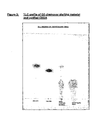
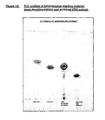
- TLC uses both retention time and characteristic spot colour to effectively identify the cannabinoid/cannabinoid acid components in a complex mixture.
- Methanolic solutions of the fractions eluted from the chromatographic column are prepared for TLC analysis.
- An aliquot is spotted onto a TLC plate, alongside suitable reference samples (e.g. for at least ⁇ 9 THC and CBD).
- suitable reference samples e.g. for at least ⁇ 9 THC and CBD.
- THC and THCA present as pink spots, while CBD and CBDA are orange in colour.
- Neutrals can be distinguished from the acids by comparison of the Rf value to that obtained for the standards. Identity is confirmed by comparison of Rf and colour of the sample spot, to that obtained for the appropriate standard.
- a typical TLC protocol is as follows:
- Dipping tank for visualisation reagent Dipping tank for visualisation reagent.
- the standard solutions are stored frozen at -20°C between uses and are used for up to 12 months after initial preparation.
- the entire plate is briefly immersed in the Fast Blue B reagent until the characteristic red/orange colour of cannabinoids begins to develop.
- the plate is removed and allowed to dry under ambient conditions in the dark.
- Cannabinoids will give an orange-purple colour: Cannabidiol CBD orange (fastest running) ⁇ 9 Tetrahydrocannabinol THC pink Cannabinol CBN purple Cannabichromene CBC pink purple Cannabigerol CBG orange ⁇ 9 tetrahydrocannabivarin THCV purple
- the corresponding acids form streaks of the same colour as the neutral component spots.
- the acids run at lower R f .
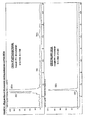
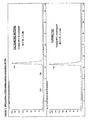
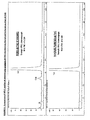
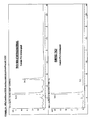
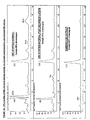
- composition of the isolated products may be determined by HPLC analysis.
- a typical HPLC assay for ⁇ 9 THC, ⁇ 9 THCA, CBD, CBDA and CBN may be carried out as follows:
- Samples of "pure" cannabinoids/cannabinoid acids and enriched extracts are diluted in methanol prior to HPLC analysis. Optimal dilutions may be determined empirically.
- Herbal cannabis samples are prepared by taking a 100mg sample and treating this with 5 or 10ml of Methanol/Chloroform (9/1 w/v). The dispersion is sonicated in a sealed tube for 10 minutes, allowed to cool and an aliquot is centrifuged and suitably diluted with methanol prior to chromatography.
- Diluted test solutions are made up in methanol and should contain analytes in the linear working range of from 0.02-0.2 mg/ml.
- Cannabinoids can be subdivided into neutral and acidic-the qualitative identification can be performed using the DAD dual wavelength mode. Acidic cannabinoids absorb strongly in the region of 220nm-310nm. Neutral cannabinoids only absorb strongly in the region of 220nm.
- the DAD can also be set up to take UV spectral scans of each peak, which can then be stored in a spectral library and used for identification purposes.
- Data processing for quantitation utilises batch processing software on the Hewlett Packard Chemstation.
- Chromatographic purity of cannabinoid samples is calculated as a % of total cannabinoid content by area normalization.
- Samples of final products i.e. "pure” cannabinoids/cannabinoid acids and enriched extracts are diluted in methanol prior to HPLC analysis. Optimal dilutions may be determined empirically.
- Cannabis plant material samples are prepared by taking 100mg chopped dried material and treating this with 5 or 10ml of Methanol/Chloroform (9:1 v/v). Extract the sample in an ultrasonic bath for 15 minutes and allow to stand in the dark for 18 hours.
- Standard solutions are used to provide quantitative and retention time data. These can be typically injected in triplicate prior to the injection of any sample solutions and then singularly at suitable intervals during the run, with a maximum of 10 test samples in between standards. Table 3-Retention times THCV 33.7-34.5 minutes CBD 35.6-36.3 minutes ⁇ 9 THC 37.2-38.1 minutes CBN 38.5-39.1 minutes
- Extract THC herb (G1 chemovar) with 0.1% v/v acetic acid in hexane.
- Extract CBD herb (G5 chemovar) with 0.1% v/v acetic acid in hexane.
- Extract decarboxylated G41 chemovar with hexane ⁇ Filter and remove solvent from filtrate on rotary evaporator. ⁇ Pass a solution of the resulting concentrated extract through a column packed with Sephadex LH20 and eluting with 2:1 chloroform/dichloromethane. ⁇ Collect CBG rich fractions and remove solvent by rotary evaporation. ⁇ Re-dissolve crude CBG enriched fractions in methanol and remove insoluble residue by filtration. ⁇ Remove solvent from filtrate by rotary evaporation. ⁇ Re-dissolve crude CBG enriched fractions in pentane and remove insoluble residue by filtration. ⁇ Remove solvent from filtrate by rotary evaporation. ⁇ i) Highly enriched CBG extract or ii) CBG solution ⁇ Flash chromatography
- Extract decarboxylated G80 chemovar with hexane ⁇ Filter and remove solvent from filtrate on rotary evaporator. ⁇ Pass a solution of the resulting concentrated extract through a column packed with Sephadex LH20 and eluting with 2:1 chloroform/dichloromethane. ⁇ Collect CBC rich fractions and remove solvent by rotary evaporation. ⁇ Re-dissolve crude CBC enriched fractions in methanol and remove insoluble residue by filtration. ⁇ Remove solvent from filtrate by rotary evaporation. Re-dissolve crude CBC enriched fractions in pentane and remove insoluble residue by filtration. ⁇ Remote solvent from filtrate by rotary evaporation. ⁇ i) Highly enriched CBC extract or ii) CBC solution
Landscapes
- Health & Medical Sciences (AREA)
- Chemical & Material Sciences (AREA)
- Organic Chemistry (AREA)
- Chemical Kinetics & Catalysis (AREA)
- Animal Behavior & Ethology (AREA)
- Life Sciences & Earth Sciences (AREA)
- Veterinary Medicine (AREA)
- Public Health (AREA)
- General Chemical & Material Sciences (AREA)
- Medicinal Chemistry (AREA)
- Nuclear Medicine, Radiotherapy & Molecular Imaging (AREA)
- General Health & Medical Sciences (AREA)
- Pharmacology & Pharmacy (AREA)
- Bioinformatics & Cheminformatics (AREA)
- Engineering & Computer Science (AREA)
- Neurosurgery (AREA)
- Biomedical Technology (AREA)
- Neurology (AREA)
- Pain & Pain Management (AREA)
- Ophthalmology & Optometry (AREA)
- Rheumatology (AREA)
- Hospice & Palliative Care (AREA)
- Otolaryngology (AREA)
- Pharmaceuticals Containing Other Organic And Inorganic Compounds (AREA)
- Pyrane Compounds (AREA)
- Medicines Containing Plant Substances (AREA)
- Agricultural Chemicals And Associated Chemicals (AREA)
- Organic Low-Molecular-Weight Compounds And Preparation Thereof (AREA)
- Saccharide Compounds (AREA)
Claims (28)
- Verfahren zum Erhalten eines Cannabinoids oder einer Cannabinoid-Säure, das/die eine chromatographische Reinheit von mehr als 95% hat, oder eines Produkts, das in einem/einer bestimmten Cannabinoid oder Cannabinoid-Säure aus einem Pflanzenmaterial angereichert ist, umfassend:i) Erhalten eines Extrakts, der ein Cannabinoid oder eine Cannabinoid-Säure aus einem Pflanzenmaterial enthält;ii) Unterziehen des Extrakts aus Schritt (i) einem chromatographischen Schritt, um einen teilweise aufgereinigten Extrakt zu erzeugen;iii) Lösen des teilweise aufgereinigten Extrakts in einem ersten Lösungsmittel, Entfernen jeglichen unlöslichen Materials davon und Entfernen des Lösungsmittels; undiv) Lösen des Produkts, das in Schritt iii) erhalten wird, in einem zweiten Lösungsmittel, Entfernen jeglichen unlöslichen Materials davon und Entfernen des Lösungsmittels, um das Cannabinoid oder die Cannabinoid-Säure, das/die eine chromatographische Reinheit von mehr als 95% hat, oder das Produkt, das in einem/einer bestimmten Cannabinoid oder Cannabinoid-Säure angereichert ist, zu erhalten, worin die ersten und zweiten Lösungsmittel unterschiedlich sind und worin eines der ersten oder zweiten Lösungsmittel ein Lösungsmittel ist, das im wesentlichen polarer als das Cannabinoid/ die Cannabinoid-Säure ist, das/die aufgereinigt werden soll und das andere Lösungsmittel ein Lösungsmittel ist, das im wesentlichen weniger polar als das Cannabinoid/ die Cannabinoid-Säure ist, das/die aufgereinigt werden soll.
- Verfahren nach Anspruch 1, worin eines der Lösungsmittel ein Alkohol ist.
- Verfahren nach Anspruch 2, worin eines der Lösungsmittel Methanol ist.
- Verfahren nach einem der Ansprüche 1 bis 3, worin eines der Lösungsmittel ein gerad- oder verzweigt-kettiges C5-C12-Alkan ist.
- Verfahren nach Anspruch 4, worin eines der Lösungsmittel Pentan ist.
- Verfahren nach Anspruch 5, worin eines der Lösungsmittel Pentan ist und das andere Lösungsmittel Methanol ist.
- Verfahren nach einem der vorherigen Ansprüche, worin der Extrakt, der ein Cannabinoid oder eine Cannabinoid-Säure enthält, das/die in Schritt (i) erhalten wird, durch ein Verfahren hergestellt wird, das Lösungsmittelextraktion des Pflanzenmaterials umfasst.
- Verfahren nach Anspruch 7, worin Schritt (i) das Lösen des Pflanzenmaterials in einem Extraktionslösungsmittel umfasst, Entfernen jeglichen unlöslichen Materials aus der resultierenden Lösung und Entfernen des Lösungsmittels, um einen Extrakt zu bilden, der ein Cannabinoid oder eine Cannabinoid-Säure enthält.
- Verfahren nach Anspruch 7 oder Anspruch 8, worin das Extraktionslösungsmittel ein unpolares Lösungsmittel, Ethanol, Methanol oder Kohlendioxid ist.
- Verfahren nach Anspruch 9, worin das unpolare Lösungsmittel ein gerad- oder verzweigt-kettiges C5-C12-Alkan umfasst.
- Verfahren nach Anspruch 10, worin das unpolare Lösungsmittel Hexan ist.
- Verfahren nach Anspruch 7 oder Anspruch 8, worin das Extraktionslösungsmittel angesäuert wird.
- Verfahren nach Anspruch 12, worin das Extraktionslösungsmittel ein angesäuertes unpolares Lösungsmittel ist.
- Verfahren nach Anspruch 13, worin das Extraktionslösungsmittel ein angesäuertes gerad- oder verzweigt-kettiges C5-C12-Alkan ist.
- Verfahren nach Anspruch 14, worin das Extraktionslösungsmittel 0,1% V/V Essigsäure in Hexan ist.
- Verfahren nach einem der Ansprüche 1 bis 15, das einen weiteren Schritt Decarboxylieren des Pflanzenmaterials vor Schritt (i) einschließt.
- Verfahren nach einem der Ansprüche 1 bis 6, worin der Extrakt, der ein Cannabinoid oder eine Cannabinoid-Säure enthält, das/die in Schritt (i) erhalten wird, einen botanischen Arzneistoff umfasst, der aus dem Pflanzenmaterial stammt.
- Verfahren nach Anspruch 17, worin der botanische Arzneistoff durch ein Verfahren hergestellt wird, das Lösungsmittelextraktion des Pflanzenmaterials umfasst.
- Verfahren nach Anspruch 18, worin der botanische Arzneistoff durch Extraktion mit Kohlendioxid hergestellt wird.
- Verfahren nach Anspruch 19, worin der botanische Arzneistoff durch ein Verfahren hergestellt wird, das Extraktion mit Kohlendioxid (CO2) umfasst, gefolgt von einem sekundären Extraktionsschritt, um einen Anteil der Nicht-Ziel Materialien zu entfernen.
- Verfahren nach Anspruch 20, worin der sekundäre Extraktionsschritt ethanolische Ausfällung ist.
- Verfahren nach Anspruch 20 oder Anspruch 21, worin das Verfahren zur Herstellung des botanischen Arzneistoffs weiter einen Aktivkohle-Reinigungsschritt einschließt.
- Verfahren nach Anspruch 22, worin der botanische Arzneistoff durch ein Verfahren hergestellt wird, umfassend:i) gegebenenfalls Decarboxylierung des Pflanzenmaterials,ii) Extraktion mit flüssigem CO2, um einen rohen botanischen Arzneistoff zu erzeugen,iii) Ausfällung mit C1-C5-Alkohol, um den Anteil der Nicht-Ziel Materialien zu verringern,iv) Entfernen der Ausfällung,v) Behandlung mit Aktivkohle, undvi) Verdampfung, um den C1-C5-Alkohol und Wasser zu entfernen, wodurch ein endgültiger botanischer Arzneistoff erzeugt wird.
- Verfahren nach einem der vorherigen Ansprüche, worin der chromatographische Schritt Säulenchromatographie umfasst.
- Verfahren nach einem der vorherigen Ansprüche, worin der chromatographische Schritt auf Molekulargröße und Polarität basiert.
- Verfahren nach Anspruch 25, worin der chromatographische Schritt mit einer Sephadex™ LH-20 Matrix durchgeführt wird.
- Verfahren nach Anspruch 26, worin der chromatographische Schritt mit einer 2:1 Mischung Chloroform/Dichlormethan als Lösungsmittel durchgeführt wird.
- Verfahren nach Anspruch 1, das einen weiteren Schritt v) umfasst:v) Beladen des/der im wesentlichen reinen Cannabinoids oder Cannabinoid-Säure oder des Produkts, das in einem/einer bestimmten Cannabinoid oder Cannabinoid-Säure angereichert ist, auf eine Chromabond Flash BT 12M Siliciumdioxid Patronensäule, wobei mit Hexan: Ethylacetat (98:2) mit einer Fließgeschwindigkeit von ungefähr 5 ml/min eluiert wird.
Priority Applications (1)
| Application Number | Priority Date | Filing Date | Title |
|---|---|---|---|
| EP09177676A EP2161262A1 (de) | 2002-09-23 | 2003-09-23 | Aus Pflanzenmaterial gewonnen THCV- und THCV-Extrakte |
Applications Claiming Priority (3)
| Application Number | Priority Date | Filing Date | Title |
|---|---|---|---|
| GB0222077 | 2002-09-23 | ||
| GBGB0222077.0A GB0222077D0 (en) | 2002-09-23 | 2002-09-23 | Methods of preparing cannabinoids from plant material |
| PCT/GB2003/004078 WO2004026857A2 (en) | 2002-09-23 | 2003-09-23 | Methods of purifying cannabinoids from plant material |
Publications (2)
| Publication Number | Publication Date |
|---|---|
| EP1542984A2 EP1542984A2 (de) | 2005-06-22 |
| EP1542984B1 true EP1542984B1 (de) | 2009-12-02 |
Family
ID=9944620
Family Applications (2)
| Application Number | Title | Priority Date | Filing Date |
|---|---|---|---|
| EP03750947A Expired - Lifetime EP1542984B1 (de) | 2002-09-23 | 2003-09-23 | Methoden zur reinigung von cannabinoiden aus pflanzenmaterial |
| EP09177676A Withdrawn EP2161262A1 (de) | 2002-09-23 | 2003-09-23 | Aus Pflanzenmaterial gewonnen THCV- und THCV-Extrakte |
Family Applications After (1)
| Application Number | Title | Priority Date | Filing Date |
|---|---|---|---|
| EP09177676A Withdrawn EP2161262A1 (de) | 2002-09-23 | 2003-09-23 | Aus Pflanzenmaterial gewonnen THCV- und THCV-Extrakte |
Country Status (9)
| Country | Link |
|---|---|
| US (3) | US7700368B2 (de) |
| EP (2) | EP1542984B1 (de) |
| AT (1) | ATE450521T1 (de) |
| AU (1) | AU2003269167A1 (de) |
| CA (1) | CA2499492C (de) |
| DE (1) | DE60330363D1 (de) |
| ES (1) | ES2337460T3 (de) |
| GB (2) | GB0222077D0 (de) |
| WO (1) | WO2004026857A2 (de) |
Cited By (1)
| Publication number | Priority date | Publication date | Assignee | Title |
|---|---|---|---|---|
| WO2022133362A1 (en) * | 2020-12-18 | 2022-06-23 | Finley Matthew Havis | Facile purification of cannabinoid acids |
Families Citing this family (164)
| Publication number | Priority date | Publication date | Assignee | Title |
|---|---|---|---|---|
| GB0202385D0 (en) * | 2002-02-01 | 2002-03-20 | Gw Pharma Ltd | Compositions for the treatment of nausea,vomiting,emesis,motion sicknes or like conditions |
| EP1482917B1 (de) * | 2002-02-01 | 2019-05-08 | GW Pharma Limited | Zusammensetzungen mit cannabidiolsäure zur behandlung von übelkeit, erbrechen, emesis, reisekrankheit oder ähnlichen zuständen |
| GB0222077D0 (en) | 2002-09-23 | 2002-10-30 | Gw Pharma Ltd | Methods of preparing cannabinoids from plant material |
| AU2005305675B2 (en) * | 2004-11-16 | 2012-12-13 | Jazz Pharmaceuticals Operations Uk Limited | New use for cannabinoid |
| GB0425248D0 (en) * | 2004-11-16 | 2004-12-15 | Gw Pharma Ltd | New use for cannabinoid |
| TWI369203B (en) | 2004-11-22 | 2012-08-01 | Euro Celtique Sa | Methods for purifying trans-(-)-△9-tetrahydrocannabinol and trans-(+)-△9-tetrahydrocannabinol |
| AU2005314021B2 (en) * | 2004-12-09 | 2010-02-11 | Insys Therapeutics, Inc. | Room-temperature stable dronabinol formulations |
| ZA200802767B (en) * | 2005-09-29 | 2009-09-30 | Amr Technology Inc | Process for production of delta-9-tetrahydrocannabinol |
| US8481085B2 (en) | 2006-06-15 | 2013-07-09 | Gw Pharma Limited | Pharmaceutical compositions comprising cannabigerol |
| EP2046290A4 (de) * | 2006-08-04 | 2011-08-17 | Insys Therapeutics Inc | Wässrige dronabinolformulierungen |
| GB0703284D0 (en) * | 2007-02-20 | 2007-03-28 | Resolution Chemicals Ltd | Delta 9 - tetrahydrocannabinol processing |
| WO2009020666A1 (en) * | 2007-08-06 | 2009-02-12 | Insys Therapeutics Inc. | Oral cannabinoid liquid formulations and methods of treatment |
| GB2456183A (en) * | 2008-01-04 | 2009-07-08 | Gw Pharma Ltd | Anti-psychotic composition comprising cannabinoids and anti-psychotic medicament |
| GB2459125B (en) * | 2008-04-10 | 2013-01-02 | Gw Pharma Ltd | Method if extracting cannabichromene and its acid from Cannabis sativa plant material |
| US8445034B1 (en) | 2010-11-02 | 2013-05-21 | Albert L Coles, Jr. | Systems and methods for producing organic cannabis tincture |
| GB2487712B (en) | 2011-01-04 | 2015-10-28 | Otsuka Pharma Co Ltd | Use of the phytocannabinoid cannabidiol (CBD) in combination with a standard anti-epileptic drug (SAED) in the treatment of epilepsy |
| GB2524689B (en) * | 2011-05-20 | 2016-01-27 | Gw Pharma Ltd | Cannabinoids for use in the treatment of neuropathic pain |
| GB2495118B (en) | 2011-09-29 | 2016-05-18 | Otsuka Pharma Co Ltd | A pharmaceutical composition comprising the phytocannabinoids cannabidivarin (CBDV) and cannabidiol (CBD) |
| US9358259B2 (en) * | 2012-03-20 | 2016-06-07 | Andrew David Hospodor | Recycling cannabinoid extractor |
| PL2844243T3 (pl) | 2012-05-03 | 2020-05-18 | Echo Pharmaceuticals B.V. | Sposób przygotowania izolatu z rośliny konopi zawierającego delta-9-tetrahydrokannabinol |
| US9155767B2 (en) | 2012-10-18 | 2015-10-13 | Andrew D. Hospodor | Essential element management |
| JP6581509B2 (ja) | 2013-02-28 | 2019-09-25 | ティーウィノット テクノロジーズ リミテッド | 化合物を合成する化学工学プロセス及び装置 |
| WO2014131114A1 (en) * | 2013-03-01 | 2014-09-04 | Compassionate Analytics Inc. | Methods for cannabinoid quantification |
| US9199960B2 (en) * | 2013-05-02 | 2015-12-01 | Frederick R. Ferri | Method and apparatus for processing herbaceous plant materials including the cannabis plant |
| WO2015025312A1 (en) | 2013-08-21 | 2015-02-26 | Cannabics Pharmaceuticals Inc | Compositions for combined immediate and sustained release of cannabinoids, methods of manufacture and use thereof |
| AU2014346466A1 (en) * | 2013-11-11 | 2016-05-19 | The Werc Shop, LLC | Solvent-free processing, system and methods |
| US9380813B2 (en) | 2014-02-11 | 2016-07-05 | Timothy McCullough | Drug delivery system and method |
| US10821240B2 (en) | 2014-02-11 | 2020-11-03 | Vapor Cartridge Technology Llc | Methods and drug delivery devices using cannabis |
| US9220294B2 (en) | 2014-02-11 | 2015-12-29 | Timothy McCullough | Methods and devices using cannabis vapors |
| US9044390B1 (en) | 2014-04-17 | 2015-06-02 | Gary J. Speier | Pharmaceutical composition and method of manufacturing |
| US9186386B2 (en) | 2014-04-17 | 2015-11-17 | Gary J. Speier | Pharmaceutical composition and method of manufacturing |
| CA2950424C (en) | 2014-05-29 | 2023-03-14 | Insys Pharma, Inc. | Stable cannabinoid formulations |
| US11331279B2 (en) | 2014-05-29 | 2022-05-17 | Radius Pharmaceuticals, Inc. | Stable cannabinoid formulations |
| US12544389B2 (en) | 2014-05-29 | 2026-02-10 | Fresh Cut Development, Llc | Stable cannabinoid formulations |
| US11911361B2 (en) | 2014-05-29 | 2024-02-27 | Radius Pharmaceuticals, Inc. | Stable cannabinoid formulations |
| GB2530001B (en) | 2014-06-17 | 2019-01-16 | Gw Pharma Ltd | Use of cannabidiol in the reduction of convulsive seizure frequency in treatment-resistant epilepsy |
| WO2016004410A1 (en) | 2014-07-02 | 2016-01-07 | Cannavest Corp. | Novel process for generating hemp oil with a high cannabidiol (cbd) content |
| AU2015308136B2 (en) | 2014-08-25 | 2020-07-09 | Teewinot Technologies Limited | Apparatus and methods for the simultaneous production of cannabinoid compounds |
| GB2531281A (en) | 2014-10-14 | 2016-04-20 | Gw Pharma Ltd | Use of cannabidiol in the treatment of intractable epilepsy |
| GB2531278A (en) | 2014-10-14 | 2016-04-20 | Gw Pharma Ltd | Use of cannabidiol in the treatment of intractable epilepsy |
| GB2531282A (en) | 2014-10-14 | 2016-04-20 | Gw Pharma Ltd | Use of cannabinoids in the treatment of epilepsy |
| CA3135893C (en) | 2014-10-21 | 2023-11-14 | United Cannabis Corp. | Cannabis extracts and methods of preparing and using same |
| US20170312327A1 (en) * | 2014-11-17 | 2017-11-02 | Connoisseur Holdings, Llc | Extraction devices, systems, and methods |
| US10502750B2 (en) | 2014-12-23 | 2019-12-10 | Biotech Institute, Llc | Reliable and robust method for the analysis of cannabinoids and terpenes in cannabis |
| US10207198B2 (en) | 2015-01-22 | 2019-02-19 | Phytoplant Research S.L. | Methods of purifying cannabinoids using liquid:liquid chromatography |
| MX364559B (es) * | 2015-01-22 | 2019-04-30 | Phytoplant Res S L | Metodos de purificacion de cannabinoides, composiciones y kits de los mismos. |
| US11034639B2 (en) * | 2015-01-22 | 2021-06-15 | Phytoplant Research S.L. | Methods of purifying cannabinoids using liquid:liquid chromatography |
| US10155708B2 (en) | 2015-01-22 | 2018-12-18 | Phytoplant Research S.L. | Methods of purifying cannabinoids, compositions and kits thereof |
| CA3012599A1 (en) | 2015-01-26 | 2016-08-04 | Matthew W. Giese | Systems, apparatuses, and methods for classification |
| US12303541B2 (en) | 2015-04-01 | 2025-05-20 | The State Of Israel, Ministry Of Agriculture & Rural Development, Agricultural Research Organization (Aro) (Volcani Center) | Erodium crassifolium L'Her plant extracts and uses thereof |
| EP3277260B1 (de) | 2015-04-01 | 2021-05-12 | The State of Israel, Ministry of Agriculture & Rural Development, Agricultural Research Organization (ARO) (Volcani Center) | Pflanzenextrakte aus erodium crassifolium l'her und verwendungen davon |
| GB2539472A (en) | 2015-06-17 | 2016-12-21 | Gw Res Ltd | Use of cannabinoids in the treatment of epilepsy |
| US20170008870A1 (en) * | 2015-07-06 | 2017-01-12 | Clare J. Dibble | Methods for Obtaining Purified Cannabis Extracts and THCA Crystals |
| US10456435B2 (en) | 2015-07-15 | 2019-10-29 | Christopher A. MCELVANY | Topical antiviral formulations and methods of using the same |
| WO2017023821A1 (en) * | 2015-07-31 | 2017-02-09 | Scientific Holdings, Llc | Botanical identification method and system |
| US9585867B2 (en) | 2015-08-06 | 2017-03-07 | Charles Everett Ankner | Cannabinod formulation for the sedation of a human or animal |
| GB2541191A (en) * | 2015-08-10 | 2017-02-15 | Gw Pharma Ltd | Use of cannabinoids in the treatment of epilepsy |
| US20180271827A1 (en) * | 2015-09-24 | 2018-09-27 | Pasenture, Inc. | Cannabinoid compositions and methods of making |
| US9950976B1 (en) * | 2015-10-27 | 2018-04-24 | CLS Labs, Inc. | Cannabidiol extraction and conversion process |
| US10328361B2 (en) | 2016-02-25 | 2019-06-25 | Jeffrey M. Skell | Extracting substances from botanical matter |
| GB2548873B (en) | 2016-03-31 | 2020-12-02 | Gw Res Ltd | Use of Cannabidiol in the Treatment of SturgeWeber Syndrome |
| US10035081B2 (en) * | 2016-04-14 | 2018-07-31 | Capna Intellectual, Inc. | Methods to reduce chlorophyll co-extraction through extraction of select moieties essential oils and aromatic isolates |
| US10588974B2 (en) | 2016-04-22 | 2020-03-17 | Receptor Holdings, Inc. | Fast-acting plant-based medicinal compounds and nutritional supplements |
| US10499584B2 (en) | 2016-05-27 | 2019-12-10 | New West Genetics | Industrial hemp Cannabis cultivars and seeds with stable cannabinoid profiles |
| US11027218B2 (en) | 2016-06-10 | 2021-06-08 | Canopy Growth Corporation | Purification and separation techniques for cannabinoids |
| US9717683B1 (en) | 2016-06-29 | 2017-08-01 | Ep Pharma, Llc | Low-temperature inhalation administration of cannabinoid entities |
| AU2017290107A1 (en) | 2016-06-29 | 2019-01-17 | CannScience Innovations Inc. | Decarboxylated cannabis resins, uses thereof and methods of making same |
| GB2551987A (en) | 2016-07-01 | 2018-01-10 | Gw Res Ltd | Oral cannabinoid formulations |
| GB2551986A (en) | 2016-07-01 | 2018-01-10 | Gw Res Ltd | Parenteral formulations |
| WO2018009514A1 (en) * | 2016-07-06 | 2018-01-11 | George Stantchev | Apparatus and method for plant extraction |
| CN107686440B (zh) * | 2016-08-04 | 2022-07-08 | 辽宁天予化工有限公司 | 一种间三氟甲基苯酚的制备方法 |
| GB2553139A (en) | 2016-08-25 | 2018-02-28 | Gw Res Ltd | Use of cannabinoids in the treatment of multiple myeloma |
| EP3525764A4 (de) * | 2016-10-12 | 2020-05-13 | Columbia Care LLC | Orale zusammensetzung von extrahierten cannabinoiden und verfahren zur verwendung davon |
| US11015142B1 (en) * | 2016-10-20 | 2021-05-25 | Unified Science, LLC | Extraction system and methods for preparing a botanical oil |
| US10155176B1 (en) | 2016-11-03 | 2018-12-18 | Healer, LLC | Process for the production of a concentrated cannabinoid product |
| EA201892396A1 (ru) | 2016-12-02 | 2019-04-30 | Ресептор Лайф Сайенсиз, Инк. | Быстродействующие растительные лекарственные соединения и биологически активные добавки |
| US10239808B1 (en) * | 2016-12-07 | 2019-03-26 | Canopy Holdings, LLC | Cannabis extracts |
| GB2557921A (en) | 2016-12-16 | 2018-07-04 | Gw Res Ltd | Use of cannabinoids in the treatment of angelman syndrome |
| US20200000767A1 (en) * | 2016-12-22 | 2020-01-02 | Medcan Pharma A/S | Liquid cannabinoid composition |
| NL2018190B1 (en) | 2017-01-18 | 2018-07-26 | Procare Beheer B V | Psilocybin or psilocin in combination with cannabinoid |
| GB2559774B (en) | 2017-02-17 | 2021-09-29 | Gw Res Ltd | Oral cannabinoid formulations |
| GB2560019A (en) | 2017-02-27 | 2018-08-29 | Gw Res Ltd | Use of cannabinoids in the treatment of leukaemia |
| CN110621312A (zh) * | 2017-03-05 | 2019-12-27 | 以色列国家农业部、农村发展农业研究组织·沃尔卡尼中心 | 用于治疗癌症的组合物和方法 |
| US11213558B2 (en) | 2017-05-17 | 2022-01-04 | Orochem Technologies, Inc. | CBX extraction-isolation process |
| CA2987979A1 (en) | 2017-12-07 | 2019-06-07 | Tresvertol Inc. | Solvent-free thca extraction process |
| US10206888B2 (en) * | 2017-06-06 | 2019-02-19 | Cmg Partners, Inc. | Cannabis-based therapeutic product for treatment of chronic pain |
| US20180371358A1 (en) * | 2017-06-23 | 2018-12-27 | Pure, Llc | Cannabis extract filtration methods and systems |
| GB2564383B (en) | 2017-06-23 | 2021-04-21 | Gw Res Ltd | Use of cannabidiol in the treatment of tumours assoicated with Tuberous Sclerosis Complex |
| US10189762B1 (en) | 2017-07-07 | 2019-01-29 | Orochem Technologies, Inc. | Process for purification and separation of cannabinoids, from dried hemp and cannabis leaves |
| IT201700085508A1 (it) * | 2017-07-26 | 2019-01-26 | Inalco S R L | Metodo per la produzione di cannabinoidi da varietà di canapa industriale |
| US10272360B2 (en) | 2017-08-05 | 2019-04-30 | Priya Naturals, Inc. | Phytochemical extraction system and methods to extract phytochemicals from plants including plants of the family Cannabaceae sensu stricto |
| US10308626B1 (en) | 2018-07-02 | 2019-06-04 | Pratt Bethers | Crystal purification in a glass or metal container |
| US10851076B2 (en) | 2017-08-10 | 2020-12-01 | Pratt Bethers | Method for purifying crystals using solvent vapors |
| US10960322B2 (en) | 2018-07-02 | 2021-03-30 | Pratt Bethers | Apparatus for purifying crystals using solvent vapors |
| EP3453397A1 (de) | 2017-09-12 | 2019-03-13 | Albert Jan Dijkstra | Verfahren zur isolierung eines cannabinoidextrakts und produkt aus cannabispflanzenmaterial |
| US10596486B2 (en) * | 2017-09-21 | 2020-03-24 | Louis Phillip Nevitt | Plant matter fractional distillation system using heated air induction into precisely heated chamber to extract a plant's organic compounds without use of solvents |
| US9987567B1 (en) | 2017-09-29 | 2018-06-05 | NextLeaf Solutions Ltd. | Cannabinoid extraction process and system |
| US10406453B2 (en) | 2017-09-29 | 2019-09-10 | NextLeaf Solutions Ltd. | Cannabinoid extraction process using brine |
| US12449334B2 (en) | 2017-11-20 | 2025-10-21 | Orange Photonics, Inc. | Sample preparation and analysis of cannabinoid concentration using simplified liquid extraction |
| WO2019100172A1 (en) * | 2017-11-27 | 2019-05-31 | Beleave Inc. | Extraction and purification of cannabinoid compounds |
| US10941102B2 (en) * | 2017-11-29 | 2021-03-09 | Robert Henry Wohleb | Aqueous leaching method to produce microcrystalline powder |
| GB2568929A (en) | 2017-12-01 | 2019-06-05 | Gw Res Ltd | Use of cannabinoids in the treatment of epilepsy |
| AU2018378943A1 (en) * | 2017-12-08 | 2020-07-02 | Biotech Institute LLC | High cannabigerol cannabis plants, methods of producing and methods of using them |
| GB2569961B (en) | 2018-01-03 | 2021-12-22 | Gw Res Ltd | Pharmaceutical |
| US12458906B2 (en) | 2018-01-23 | 2025-11-04 | High Sierra Technologies, Inc. | Methods of modifying a naturally occurring cannabis raw plant material, a purified cannabis product from a naturally occurring cannabis raw plant material, and a modified cannabis product from a naturally occurring cannabis raw plant material |
| WO2019147690A1 (en) | 2018-01-23 | 2019-08-01 | High Sierra Technologies, Inc. | Cannabis products modified by removing volatile organic compounds and adding volatile unsaturated hydrocarbons |
| CA3089994A1 (en) * | 2018-01-31 | 2019-08-08 | Canopy Holdings, LLC | Hemp powder |
| CA3092060A1 (en) | 2018-02-23 | 2019-08-29 | Columbia Care Llc | Hard-pressed scored splittable marijuana tablets |
| US11192870B2 (en) | 2018-03-07 | 2021-12-07 | Socati Technologies—Oregon, Llc | Continuous isolation of cannabidiol and conversion of cannabidiol to delta 8-tetrahydrocannabinol and delta 9-tetrahydrocannabinol |
| MX2020009335A (es) * | 2018-03-07 | 2020-12-03 | Socati Tech Oregon Llc | Aislamiento continuo de cannabidiol y conversion de cannabidiol a delta 8-tetrahidro cannabinol y delta 9- tetrahidro cannabinol. |
| US11851415B2 (en) | 2018-03-07 | 2023-12-26 | Cleen Technology Inc. | Continuous isolation of cannabidiol and cannabinoids and conversion of cannabidiol to delta 8-tetrahydrocannabinol and delta 9-tetrahydrocannabinol |
| DE102018001959A1 (de) | 2018-03-10 | 2019-09-12 | Florian Frey | Thermisches Trennverfahren zur Anreicherung von Cannabinoiden |
| BR112020020850A2 (pt) | 2018-04-09 | 2021-01-19 | Ellevet Sciences | Extrato de cânhamo para tratamento da dor em animais |
| US20190308116A1 (en) * | 2018-04-10 | 2019-10-10 | Craig Alan Brodersen | Solvent based cannabinoid extraction process with improved efficiency, safety, quality, which yields a homogenous and pasteurized product |
| WO2019211772A1 (en) * | 2018-05-03 | 2019-11-07 | Radient Technologies Inc. | Obtaining extracts in a solid form |
| WO2019211797A1 (en) * | 2018-05-03 | 2019-11-07 | Radient Technologies Inc. | Method of decarboxylating acidic cannabinoids in cannabis extract suspended within a carrier fluid |
| AU2019304278B2 (en) | 2018-07-19 | 2024-01-11 | Al&Am Pharmachem Ltd. | Process for purification of tetrahydrocannabinolic- and cannabidiolic acid from plant material extract |
| US10897925B2 (en) | 2018-07-27 | 2021-01-26 | Joseph Pandolfino | Articles and formulations for smoking products and vaporizers |
| WO2020028198A1 (en) | 2018-08-03 | 2020-02-06 | Biomass Oil Separation Solutions, Llc | Processes and apparatus for extraction of substances and enriched extracts from plant material |
| WO2020028991A1 (en) * | 2018-08-08 | 2020-02-13 | Neptune Wellness Solutions Inc. | Cold extraction method for cannabinoids and terpenes from cannabis by polyunsaturated lipid-based solvents |
| CA3091719A1 (en) | 2018-08-08 | 2020-02-13 | Neptune Wellness Solutions Inc. | Cold extraction method for cannabinoids and terpenes from cannabis by organic solvents |
| US11324718B2 (en) | 2018-10-09 | 2022-05-10 | Sartorius Chromatography Equipment | Method for purifying cannabinoids |
| CA3119729A1 (en) | 2018-10-10 | 2020-04-16 | Treehouse Biotech, Inc. | Synthesis of cannabigerol |
| EP3867236A1 (de) * | 2018-10-18 | 2021-08-25 | Taba IP, LLC | Reinigung von cannabinoiden aus cannabisrohöl |
| EP3873459A1 (de) | 2018-10-31 | 2021-09-08 | Enantia, S.L. | Feste zusammensetzungen aus co-kristallen von cannabinoiden |
| WO2020101731A1 (en) * | 2018-11-13 | 2020-05-22 | Cbd Inc. | Methods, devices, and systems for processing of plant-based matter |
| UY38480A (es) | 2018-11-19 | 2020-06-30 | Receptor Holdings Inc | Aminoácidos grasos n-acilados para reducir la variabilidad de absorción en composiciones a base de cannabinoides |
| EP3911148A4 (de) * | 2019-01-17 | 2022-10-12 | Synthonics, Inc. | Feste mizellare zusammensetzungen von cannabinoidsäuren |
| US11147805B2 (en) | 2019-02-07 | 2021-10-19 | Medipure Pharmaceuticals Inc. | Cannabinoid receptor agonists and serine hydrolase enzyme inhibitor based anxiolytic therapeutic product |
| CA3129535A1 (en) | 2019-03-07 | 2020-09-10 | Oludare ODUMOSU | Formulations for treating cluster symptoms associated with autism spectrum disorder |
| US10676453B1 (en) | 2019-03-20 | 2020-06-09 | Alan Hoskins | Decarboxylation process |
| CN109851480A (zh) * | 2019-04-03 | 2019-06-07 | 凤阳县小岗村永和营养保健品有限公司 | 一种采用动态轴向压缩柱制备高纯度大麻二酚的方法 |
| AU2020262269B2 (en) | 2019-04-23 | 2024-03-28 | Soma Oil Llc | Cannabis processing systems and methods |
| WO2020231970A1 (en) * | 2019-05-16 | 2020-11-19 | Precision Extraction Solutions | Method for winterized cannabis oleoresin |
| US11285402B2 (en) * | 2019-06-03 | 2022-03-29 | Josh Rutherford | Diamond pressure apparatus for crystallizing cannabinoids |
| KR20220114109A (ko) | 2019-06-12 | 2022-08-17 | 넥타 헬스 사이언시즈 인코포레이티드 | 칸나비스로부터 표적 화합물의 선택된 패밀리를 추출, 가공, 및 정제하는 방법 |
| US12557843B2 (en) * | 2019-07-15 | 2026-02-24 | Raymond Louis Larson | Other than cannabinoids, flavonoids, and terpenes |
| WO2021012044A1 (en) | 2019-07-22 | 2021-01-28 | Canopy Growth Corporation | Continuous crystallization of cannabinoids in a stirred-tank reactor |
| US10799546B1 (en) | 2019-07-26 | 2020-10-13 | Biomass Oil Separation Solutions, Llc | Modular, integrated process and apparatus for extracting, refining and remediating active substances from plant material |
| CN110724589B (zh) * | 2019-08-27 | 2023-01-10 | 桂林莱茵生物科技股份有限公司 | 一种制备大麻二酚联产大麻全谱油的方法 |
| ES2956536T3 (es) | 2019-09-12 | 2023-12-22 | Cabbacis Llc | Artículos y formulaciones para productos para fumar y vaporizadores |
| MX2022003189A (es) | 2019-09-16 | 2022-06-08 | Vapor Cartridge Tech Llc | Sistema de administración de fármacos con sustratos apilables. |
| US11160768B2 (en) | 2019-10-22 | 2021-11-02 | Edmund M. Dunn | Paraffin wax with CBD isolate |
| GB202002754D0 (en) | 2020-02-27 | 2020-04-15 | Gw Res Ltd | Methods of treating tuberous sclerosis complex with cannabidiol and everolimus |
| MX2022010960A (es) | 2020-03-04 | 2022-11-16 | Pleopharma L L C | Métodos y composiciones para tratar el trastorno por uso de cannabis y mitigar la abstinencia de cannabinoides. |
| GB202011442D0 (en) * | 2020-07-23 | 2020-09-09 | Univ York | Isolation of cannabinoids using mesoporous materials |
| US20230270806A1 (en) * | 2020-09-04 | 2023-08-31 | Herbolea Biotech S.P.A. | Thc-free cannabinoid concentrate, method of obtaining the same and use thereof |
| EP4216976A1 (de) * | 2020-09-25 | 2023-08-02 | Medpharm Iowa LLC | Huckepack-extraktionsverfahren für cannabinoiden und zugehörige verfahren |
| US11160757B1 (en) | 2020-10-12 | 2021-11-02 | GW Research Limited | pH dependent release coated microparticle cannabinoid formulations |
| US12029718B2 (en) | 2021-11-09 | 2024-07-09 | Cct Sciences, Llc | Process for production of essentially pure delta-9-tetrahydrocannabinol |
| WO2022125966A1 (en) | 2020-12-10 | 2022-06-16 | Orochem Technologies Inc. | Process for removing thc from cannabinoids |
| IL304021A (en) | 2020-12-31 | 2023-08-01 | Cookies Creative Consulting & Promotions Inc | Preparations that include cannabis and mushroom extracts, and their uses |
| WO2022182844A1 (en) * | 2021-02-24 | 2022-09-01 | Molecular Infusions Llc | Purified cannabinodis isolated from fermentate |
| US20230001326A1 (en) * | 2021-07-02 | 2023-01-05 | Winters Capital IP LLC | Process for extracting bioactive compounds from plant materials |
| US12122757B2 (en) | 2021-11-24 | 2024-10-22 | CLS Labs, Inc. | Cannabidiol extraction and conversion process |
| US12440454B2 (en) | 2022-02-01 | 2025-10-14 | Portland Technology Holdings Llc | Pharmaceutical compositions containing hemp extract for administration to felines and related methods |
| EP4511011A2 (de) * | 2022-04-22 | 2025-02-26 | Curio IP, LLC | Orale pharmazeutische cannabinoidzusammensetzungen und verfahren zur behandlung entzündlicher magen-darm-erkrankungen |
| EP4514339A1 (de) | 2022-04-27 | 2025-03-05 | Jazz Pharmaceuticals Research UK Limited | Behandlung von spastizität und schmerzen bei patienten mit niereninsuffizienz |
| CA3255565A1 (en) * | 2022-05-20 | 2023-11-23 | Arizona Board Of Regents On Behalf Of Arizona State University | CRYSTALLINE FORMS OF CANNABINOID ACIDS, THEIR PRODUCTION PROCESSES AND THEIR USES |
| WO2023250274A1 (en) | 2022-06-22 | 2023-12-28 | Ilera Therapeutics Llc | Enhanced capture and dissolution matrix for cannabinoids and methods of making the same |
| WO2024015780A1 (en) | 2022-07-11 | 2024-01-18 | Ilera Therapeutics Llc | Zlt-007 and methods of treating diabetic neuropathy |
| EP4568702A1 (de) | 2022-08-12 | 2025-06-18 | Jazz Pharmaceuticals Research UK Limited | Feste orale darreichungsformen mit cannabinoiden |
| EP4626411A1 (de) | 2022-12-02 | 2025-10-08 | Jazz Pharmaceuticals Research UK Limited | Cannabinoiden zur behandlung von essentiellem tremor bei patienten |
| WO2024168426A1 (en) | 2023-02-13 | 2024-08-22 | Apogee Pharmaceuticals, Inc. | Small molecules as monoacylglycerol lipase (magl) inhibitors, compositions and use thereof |
Family Cites Families (12)
| Publication number | Priority date | Publication date | Assignee | Title |
|---|---|---|---|---|
| JPH03153625A (ja) | 1989-11-13 | 1991-07-01 | Tsumura & Co | 抗アレルギー剤 |
| JP3153625B2 (ja) | 1992-04-30 | 2001-04-09 | 黒田精工株式会社 | 平面度測定方法 |
| US6730519B2 (en) | 1998-10-26 | 2004-05-04 | The University Of Mississippi | Method of preparing delta-9-tetrahydrocannabinol |
| US20020039795A1 (en) | 1998-10-26 | 2002-04-04 | Elsohly Et Al | Method of preparing delta-9-tetrahydrocannabinol |
| US6403126B1 (en) * | 1999-05-26 | 2002-06-11 | Websar Innovations Inc. | Cannabinoid extraction method |
| DE10051427C1 (de) | 2000-10-17 | 2002-06-13 | Adam Mueller | Verfahren zur Herstellung eines Tetrahydrocannabinol- und Cannabidiol-haltigen Extraktes aus Cannabis-Pflanzenmaterial sowie Cannabis-Extrakte |
| US7025992B2 (en) * | 2001-02-14 | 2006-04-11 | Gw Pharma Limited | Pharmaceutical formulations |
| AU2002231970B2 (en) | 2001-02-14 | 2007-08-16 | CNX Therapeutics Limited | Mucoadhesive pharmaceutical formulations |
| EP1482917B1 (de) | 2002-02-01 | 2019-05-08 | GW Pharma Limited | Zusammensetzungen mit cannabidiolsäure zur behandlung von übelkeit, erbrechen, emesis, reisekrankheit oder ähnlichen zuständen |
| CA2474951A1 (en) | 2002-02-01 | 2003-08-07 | Resolution Chemicals Limited | Production of .delta.9 tetrahydrocannabinol |
| US6946150B2 (en) * | 2002-08-14 | 2005-09-20 | Gw Pharma Limited | Pharmaceutical formulation |
| GB0222077D0 (en) | 2002-09-23 | 2002-10-30 | Gw Pharma Ltd | Methods of preparing cannabinoids from plant material |
-
2002
- 2002-09-23 GB GBGB0222077.0A patent/GB0222077D0/en not_active Ceased
-
2003
- 2003-09-23 EP EP03750947A patent/EP1542984B1/de not_active Expired - Lifetime
- 2003-09-23 DE DE60330363T patent/DE60330363D1/de not_active Expired - Lifetime
- 2003-09-23 CA CA2499492A patent/CA2499492C/en not_active Expired - Lifetime
- 2003-09-23 AU AU2003269167A patent/AU2003269167A1/en not_active Abandoned
- 2003-09-23 ES ES03750947T patent/ES2337460T3/es not_active Expired - Lifetime
- 2003-09-23 US US10/528,951 patent/US7700368B2/en active Active
- 2003-09-23 WO PCT/GB2003/004078 patent/WO2004026857A2/en not_active Ceased
- 2003-09-23 AT AT03750947T patent/ATE450521T1/de not_active IP Right Cessation
- 2003-09-23 EP EP09177676A patent/EP2161262A1/de not_active Withdrawn
- 2003-09-23 GB GB0322263A patent/GB2393721B/en not_active Expired - Fee Related
-
2010
- 2010-03-01 US US12/714,907 patent/US8846409B2/en not_active Expired - Lifetime
-
2014
- 2014-08-28 US US14/471,113 patent/US20150203434A1/en not_active Abandoned
Cited By (1)
| Publication number | Priority date | Publication date | Assignee | Title |
|---|---|---|---|---|
| WO2022133362A1 (en) * | 2020-12-18 | 2022-06-23 | Finley Matthew Havis | Facile purification of cannabinoid acids |
Also Published As
| Publication number | Publication date |
|---|---|
| ES2337460T3 (es) | 2010-04-26 |
| WO2004026857A3 (en) | 2004-08-12 |
| CA2499492C (en) | 2011-07-12 |
| GB0322263D0 (en) | 2003-10-22 |
| GB2393721A (en) | 2004-04-07 |
| AU2003269167A8 (en) | 2004-04-08 |
| GB2393721B (en) | 2005-10-19 |
| US20150203434A1 (en) | 2015-07-23 |
| AU2003269167A1 (en) | 2004-04-08 |
| US20050266108A1 (en) | 2005-12-01 |
| US7700368B2 (en) | 2010-04-20 |
| CA2499492A1 (en) | 2004-04-01 |
| EP1542984A2 (de) | 2005-06-22 |
| EP2161262A1 (de) | 2010-03-10 |
| DE60330363D1 (de) | 2010-01-14 |
| GB0222077D0 (en) | 2002-10-30 |
| US20100168448A1 (en) | 2010-07-01 |
| WO2004026857A2 (en) | 2004-04-01 |
| ATE450521T1 (de) | 2009-12-15 |
| US8846409B2 (en) | 2014-09-30 |
Similar Documents
| Publication | Publication Date | Title |
|---|---|---|
| US7700368B2 (en) | Methods of purifying cannabinoids from plant material | |
| US20060167283A1 (en) | Method of preparing cannabidiol from plant material | |
| EP2311475B1 (de) | Extraktion von pharmazeutisch active cannabinoiden aus pflanzlichem material | |
| US20210128657A1 (en) | Extraction of pharmaceutically active components from plant materials | |
| Radwan et al. | Natural cannabinoids of cannabis and methods of analysis | |
| US11027218B2 (en) | Purification and separation techniques for cannabinoids | |
| EP2844243B1 (de) | Verfahren zur herstellung eines cannabis-pflanzenisolates mit delta-9-tetrahydrocannabinol | |
| GB2408978A (en) | Delta-9 Tetrahydrocannabinol of high purity | |
| GB2391865A (en) | Improvements in the extraction of pharmaceutically active components from plant materials | |
| US20230382884A1 (en) | Methods for separation and isolation of tetrahydrocannabivarin | |
| HK1076249B (en) | Extraction of pharmaceutically active cannabinoids from plant materials |
Legal Events
| Date | Code | Title | Description |
|---|---|---|---|
| PUAI | Public reference made under article 153(3) epc to a published international application that has entered the european phase |
Free format text: ORIGINAL CODE: 0009012 |
|
| 17P | Request for examination filed |
Effective date: 20050310 |
|
| AK | Designated contracting states |
Kind code of ref document: A2 Designated state(s): AT BE BG CH CY CZ DE DK EE ES FI FR GB GR HU IE IT LI LU MC NL PT RO SE SI SK TR |
|
| AX | Request for extension of the european patent |
Extension state: AL LT LV MK |
|
| DAX | Request for extension of the european patent (deleted) | ||
| REG | Reference to a national code |
Ref country code: HK Ref legal event code: DE Ref document number: 1077067 Country of ref document: HK |
|
| 17Q | First examination report despatched |
Effective date: 20060522 |
|
| GRAP | Despatch of communication of intention to grant a patent |
Free format text: ORIGINAL CODE: EPIDOSNIGR1 |
|
| GRAS | Grant fee paid |
Free format text: ORIGINAL CODE: EPIDOSNIGR3 |
|
| GRAA | (expected) grant |
Free format text: ORIGINAL CODE: 0009210 |
|
| AK | Designated contracting states |
Kind code of ref document: B1 Designated state(s): AT BE BG CH CY CZ DE DK EE ES FI FR GB GR HU IE IT LI LU MC NL PT RO SE SI SK TR |
|
| REG | Reference to a national code |
Ref country code: GB Ref legal event code: FG4D |
|
| REG | Reference to a national code |
Ref country code: CH Ref legal event code: EP |
|
| REG | Reference to a national code |
Ref country code: IE Ref legal event code: FG4D |
|
| REF | Corresponds to: |
Ref document number: 60330363 Country of ref document: DE Date of ref document: 20100114 Kind code of ref document: P |
|
| REG | Reference to a national code |
Ref country code: CH Ref legal event code: NV Representative=s name: KIRKER & CIE S.A. |
|
| REG | Reference to a national code |
Ref country code: ES Ref legal event code: FG2A Ref document number: 2337460 Country of ref document: ES Kind code of ref document: T3 |
|
| PG25 | Lapsed in a contracting state [announced via postgrant information from national office to epo] |
Ref country code: SE Free format text: LAPSE BECAUSE OF FAILURE TO SUBMIT A TRANSLATION OF THE DESCRIPTION OR TO PAY THE FEE WITHIN THE PRESCRIBED TIME-LIMIT Effective date: 20091202 Ref country code: FI Free format text: LAPSE BECAUSE OF FAILURE TO SUBMIT A TRANSLATION OF THE DESCRIPTION OR TO PAY THE FEE WITHIN THE PRESCRIBED TIME-LIMIT Effective date: 20091202 |
|
| PG25 | Lapsed in a contracting state [announced via postgrant information from national office to epo] |
Ref country code: CY Free format text: LAPSE BECAUSE OF FAILURE TO SUBMIT A TRANSLATION OF THE DESCRIPTION OR TO PAY THE FEE WITHIN THE PRESCRIBED TIME-LIMIT Effective date: 20091202 Ref country code: SI Free format text: LAPSE BECAUSE OF FAILURE TO SUBMIT A TRANSLATION OF THE DESCRIPTION OR TO PAY THE FEE WITHIN THE PRESCRIBED TIME-LIMIT Effective date: 20091202 |
|
| PG25 | Lapsed in a contracting state [announced via postgrant information from national office to epo] |
Ref country code: AT Free format text: LAPSE BECAUSE OF FAILURE TO SUBMIT A TRANSLATION OF THE DESCRIPTION OR TO PAY THE FEE WITHIN THE PRESCRIBED TIME-LIMIT Effective date: 20091202 |
|
| PG25 | Lapsed in a contracting state [announced via postgrant information from national office to epo] |
Ref country code: RO Free format text: LAPSE BECAUSE OF FAILURE TO SUBMIT A TRANSLATION OF THE DESCRIPTION OR TO PAY THE FEE WITHIN THE PRESCRIBED TIME-LIMIT Effective date: 20091202 Ref country code: PT Free format text: LAPSE BECAUSE OF FAILURE TO SUBMIT A TRANSLATION OF THE DESCRIPTION OR TO PAY THE FEE WITHIN THE PRESCRIBED TIME-LIMIT Effective date: 20100402 Ref country code: EE Free format text: LAPSE BECAUSE OF FAILURE TO SUBMIT A TRANSLATION OF THE DESCRIPTION OR TO PAY THE FEE WITHIN THE PRESCRIBED TIME-LIMIT Effective date: 20091202 Ref country code: BG Free format text: LAPSE BECAUSE OF FAILURE TO SUBMIT A TRANSLATION OF THE DESCRIPTION OR TO PAY THE FEE WITHIN THE PRESCRIBED TIME-LIMIT Effective date: 20100302 |
|
| PG25 | Lapsed in a contracting state [announced via postgrant information from national office to epo] |
Ref country code: SK Free format text: LAPSE BECAUSE OF FAILURE TO SUBMIT A TRANSLATION OF THE DESCRIPTION OR TO PAY THE FEE WITHIN THE PRESCRIBED TIME-LIMIT Effective date: 20091202 Ref country code: BE Free format text: LAPSE BECAUSE OF FAILURE TO SUBMIT A TRANSLATION OF THE DESCRIPTION OR TO PAY THE FEE WITHIN THE PRESCRIBED TIME-LIMIT Effective date: 20091202 Ref country code: CZ Free format text: LAPSE BECAUSE OF FAILURE TO SUBMIT A TRANSLATION OF THE DESCRIPTION OR TO PAY THE FEE WITHIN THE PRESCRIBED TIME-LIMIT Effective date: 20091202 |
|
| PLBE | No opposition filed within time limit |
Free format text: ORIGINAL CODE: 0009261 |
|
| STAA | Information on the status of an ep patent application or granted ep patent |
Free format text: STATUS: NO OPPOSITION FILED WITHIN TIME LIMIT |
|
| PG25 | Lapsed in a contracting state [announced via postgrant information from national office to epo] |
Ref country code: GR Free format text: LAPSE BECAUSE OF FAILURE TO SUBMIT A TRANSLATION OF THE DESCRIPTION OR TO PAY THE FEE WITHIN THE PRESCRIBED TIME-LIMIT Effective date: 20100303 |
|
| 26N | No opposition filed |
Effective date: 20100903 |
|
| PG25 | Lapsed in a contracting state [announced via postgrant information from national office to epo] |
Ref country code: DK Free format text: LAPSE BECAUSE OF FAILURE TO SUBMIT A TRANSLATION OF THE DESCRIPTION OR TO PAY THE FEE WITHIN THE PRESCRIBED TIME-LIMIT Effective date: 20091202 |
|
| PG25 | Lapsed in a contracting state [announced via postgrant information from national office to epo] |
Ref country code: MC Free format text: LAPSE BECAUSE OF NON-PAYMENT OF DUE FEES Effective date: 20100930 |
|
| PG25 | Lapsed in a contracting state [announced via postgrant information from national office to epo] |
Ref country code: IT Free format text: LAPSE BECAUSE OF NON-PAYMENT OF DUE FEES Effective date: 20100923 |
|
| PG25 | Lapsed in a contracting state [announced via postgrant information from national office to epo] |
Ref country code: IE Free format text: LAPSE BECAUSE OF NON-PAYMENT OF DUE FEES Effective date: 20100923 |
|
| REG | Reference to a national code |
Ref country code: HK Ref legal event code: WD Ref document number: 1077067 Country of ref document: HK |
|
| PG25 | Lapsed in a contracting state [announced via postgrant information from national office to epo] |
Ref country code: LU Free format text: LAPSE BECAUSE OF NON-PAYMENT OF DUE FEES Effective date: 20100923 Ref country code: HU Free format text: LAPSE BECAUSE OF FAILURE TO SUBMIT A TRANSLATION OF THE DESCRIPTION OR TO PAY THE FEE WITHIN THE PRESCRIBED TIME-LIMIT Effective date: 20100603 |
|
| PG25 | Lapsed in a contracting state [announced via postgrant information from national office to epo] |
Ref country code: TR Free format text: LAPSE BECAUSE OF FAILURE TO SUBMIT A TRANSLATION OF THE DESCRIPTION OR TO PAY THE FEE WITHIN THE PRESCRIBED TIME-LIMIT Effective date: 20091202 |
|
| REG | Reference to a national code |
Ref country code: FR Ref legal event code: PLFP Year of fee payment: 14 |
|
| REG | Reference to a national code |
Ref country code: FR Ref legal event code: PLFP Year of fee payment: 15 |
|
| REG | Reference to a national code |
Ref country code: FR Ref legal event code: PLFP Year of fee payment: 16 |
|
| PGFP | Annual fee paid to national office [announced via postgrant information from national office to epo] |
Ref country code: NL Payment date: 20220922 Year of fee payment: 20 Ref country code: GB Payment date: 20220901 Year of fee payment: 20 Ref country code: DE Payment date: 20220920 Year of fee payment: 20 |
|
| PGFP | Annual fee paid to national office [announced via postgrant information from national office to epo] |
Ref country code: FR Payment date: 20220920 Year of fee payment: 20 |
|
| PGFP | Annual fee paid to national office [announced via postgrant information from national office to epo] |
Ref country code: IT Payment date: 20220930 Year of fee payment: 20 Ref country code: ES Payment date: 20221018 Year of fee payment: 20 |
|
| PGFP | Annual fee paid to national office [announced via postgrant information from national office to epo] |
Ref country code: CH Payment date: 20220928 Year of fee payment: 20 |
|
| P01 | Opt-out of the competence of the unified patent court (upc) registered |
Effective date: 20230530 |
|
| REG | Reference to a national code |
Ref country code: DE Ref legal event code: R071 Ref document number: 60330363 Country of ref document: DE |
|
| REG | Reference to a national code |
Ref country code: NL Ref legal event code: MK Effective date: 20230922 |
|
| REG | Reference to a national code |
Ref country code: CH Ref legal event code: PL Ref country code: ES Ref legal event code: FD2A Effective date: 20230929 |
|
| REG | Reference to a national code |
Ref country code: GB Ref legal event code: PE20 Expiry date: 20230922 |
|
| PG25 | Lapsed in a contracting state [announced via postgrant information from national office to epo] |
Ref country code: GB Free format text: LAPSE BECAUSE OF EXPIRATION OF PROTECTION Effective date: 20230922 Ref country code: ES Free format text: LAPSE BECAUSE OF EXPIRATION OF PROTECTION Effective date: 20230924 |