EP1542809B1 - Moleküle gewisser aktivität empfangender träger und verfahren zur sicherstellung anwesenheit solcher moleküle auf solcher träger - Google Patents
Moleküle gewisser aktivität empfangender träger und verfahren zur sicherstellung anwesenheit solcher moleküle auf solcher träger Download PDFInfo
- Publication number
- EP1542809B1 EP1542809B1 EP03780273A EP03780273A EP1542809B1 EP 1542809 B1 EP1542809 B1 EP 1542809B1 EP 03780273 A EP03780273 A EP 03780273A EP 03780273 A EP03780273 A EP 03780273A EP 1542809 B1 EP1542809 B1 EP 1542809B1
- Authority
- EP
- European Patent Office
- Prior art keywords
- molecules
- carrier
- polymerizable
- crosslinkable
- active
- Prior art date
- Legal status (The legal status is an assumption and is not a legal conclusion. Google has not performed a legal analysis and makes no representation as to the accuracy of the status listed.)
- Expired - Lifetime
Links
- 230000000694 effects Effects 0.000 title claims abstract description 35
- 238000000034 method Methods 0.000 title claims description 28
- 239000000203 mixture Substances 0.000 claims abstract description 46
- 239000000126 substance Substances 0.000 claims abstract description 40
- 238000006116 polymerization reaction Methods 0.000 claims description 14
- 238000004132 cross linking Methods 0.000 claims description 13
- 241000238631 Hexapoda Species 0.000 claims description 10
- 238000001035 drying Methods 0.000 claims description 10
- WSFSSNUMVMOOMR-UHFFFAOYSA-N Formaldehyde Chemical compound O=C WSFSSNUMVMOOMR-UHFFFAOYSA-N 0.000 claims description 7
- 239000003054 catalyst Substances 0.000 claims description 7
- 229960000490 permethrin Drugs 0.000 claims description 7
- RLLPVAHGXHCWKJ-UHFFFAOYSA-N permethrin Chemical compound CC1(C)C(C=C(Cl)Cl)C1C(=O)OCC1=CC=CC(OC=2C=CC=CC=2)=C1 RLLPVAHGXHCWKJ-UHFFFAOYSA-N 0.000 claims description 7
- 239000002917 insecticide Substances 0.000 claims description 6
- 241000255925 Diptera Species 0.000 claims description 5
- NIXOWILDQLNWCW-UHFFFAOYSA-N acrylic acid group Chemical group C(C=C)(=O)O NIXOWILDQLNWCW-UHFFFAOYSA-N 0.000 claims description 4
- 239000000463 material Substances 0.000 claims description 4
- ZEYUSQVGRCPBPG-UHFFFAOYSA-N 4,5-dihydroxy-1,3-bis(hydroxymethyl)imidazolidin-2-one Chemical compound OCN1C(O)C(O)N(CO)C1=O ZEYUSQVGRCPBPG-UHFFFAOYSA-N 0.000 claims description 3
- JOYRKODLDBILNP-UHFFFAOYSA-N Ethyl urethane Chemical compound CCOC(N)=O JOYRKODLDBILNP-UHFFFAOYSA-N 0.000 claims description 3
- VGGLHLAESQEWCR-UHFFFAOYSA-N N-(hydroxymethyl)urea Chemical compound NC(=O)NCO VGGLHLAESQEWCR-UHFFFAOYSA-N 0.000 claims description 3
- XSQUKJJJFZCRTK-UHFFFAOYSA-N Urea Chemical compound NC(N)=O XSQUKJJJFZCRTK-UHFFFAOYSA-N 0.000 claims description 3
- XTXRWKRVRITETP-UHFFFAOYSA-N Vinyl acetate Chemical compound CC(=O)OC=C XTXRWKRVRITETP-UHFFFAOYSA-N 0.000 claims description 3
- MTAZNLWOLGHBHU-UHFFFAOYSA-N butadiene-styrene rubber Chemical compound C=CC=C.C=CC1=CC=CC=C1 MTAZNLWOLGHBHU-UHFFFAOYSA-N 0.000 claims description 3
- 239000004202 carbamide Substances 0.000 claims description 3
- IVJISJACKSSFGE-UHFFFAOYSA-N formaldehyde;1,3,5-triazine-2,4,6-triamine Chemical compound O=C.NC1=NC(N)=NC(N)=N1 IVJISJACKSSFGE-UHFFFAOYSA-N 0.000 claims description 3
- 229920002635 polyurethane Polymers 0.000 claims description 3
- 239000004814 polyurethane Substances 0.000 claims description 3
- 229920005989 resin Polymers 0.000 claims description 3
- 239000011347 resin Substances 0.000 claims description 3
- 239000004753 textile Substances 0.000 claims description 2
- 238000010298 pulverizing process Methods 0.000 claims 1
- QTBSBXVTEAMEQO-UHFFFAOYSA-N Acetic acid Chemical compound CC(O)=O QTBSBXVTEAMEQO-UHFFFAOYSA-N 0.000 description 8
- 239000000077 insect repellent Substances 0.000 description 6
- 239000000243 solution Substances 0.000 description 6
- 238000011282 treatment Methods 0.000 description 6
- 230000008901 benefit Effects 0.000 description 5
- 230000001747 exhibiting effect Effects 0.000 description 5
- 230000005855 radiation Effects 0.000 description 5
- 241000238876 Acari Species 0.000 description 4
- 230000008569 process Effects 0.000 description 4
- 238000005406 washing Methods 0.000 description 4
- 239000011230 binding agent Substances 0.000 description 3
- 239000004744 fabric Substances 0.000 description 3
- 238000007654 immersion Methods 0.000 description 3
- 241000894006 Bacteria Species 0.000 description 2
- 239000002253 acid Substances 0.000 description 2
- 230000002411 adverse Effects 0.000 description 2
- 239000004599 antimicrobial Substances 0.000 description 2
- 239000007864 aqueous solution Substances 0.000 description 2
- 238000004040 coloring Methods 0.000 description 2
- 239000000470 constituent Substances 0.000 description 2
- 239000000835 fiber Substances 0.000 description 2
- 229960004279 formaldehyde Drugs 0.000 description 2
- 238000004519 manufacturing process Methods 0.000 description 2
- BDAGIHXWWSANSR-UHFFFAOYSA-N methanoic acid Natural products OC=O BDAGIHXWWSANSR-UHFFFAOYSA-N 0.000 description 2
- 230000005012 migration Effects 0.000 description 2
- 238000013508 migration Methods 0.000 description 2
- 229920000058 polyacrylate Polymers 0.000 description 2
- 229920000642 polymer Polymers 0.000 description 2
- 239000002861 polymer material Substances 0.000 description 2
- 239000002904 solvent Substances 0.000 description 2
- 238000010186 staining Methods 0.000 description 2
- XLYOFNOQVPJJNP-UHFFFAOYSA-N water Substances O XLYOFNOQVPJJNP-UHFFFAOYSA-N 0.000 description 2
- IXPNQXFRVYWDDI-UHFFFAOYSA-N 1-methyl-2,4-dioxo-1,3-diazinane-5-carboximidamide Chemical compound CN1CC(C(N)=N)C(=O)NC1=O IXPNQXFRVYWDDI-UHFFFAOYSA-N 0.000 description 1
- OSWFIVFLDKOXQC-UHFFFAOYSA-N 4-(3-methoxyphenyl)aniline Chemical compound COC1=CC=CC(C=2C=CC(N)=CC=2)=C1 OSWFIVFLDKOXQC-UHFFFAOYSA-N 0.000 description 1
- NIXOWILDQLNWCW-UHFFFAOYSA-M Acrylate Chemical compound [O-]C(=O)C=C NIXOWILDQLNWCW-UHFFFAOYSA-M 0.000 description 1
- 239000005874 Bifenthrin Substances 0.000 description 1
- 229920000742 Cotton Polymers 0.000 description 1
- 239000005892 Deltamethrin Substances 0.000 description 1
- 241000196324 Embryophyta Species 0.000 description 1
- 229920000877 Melamine resin Polymers 0.000 description 1
- 241001465754 Metazoa Species 0.000 description 1
- 239000004952 Polyamide Substances 0.000 description 1
- 229920000297 Rayon Polymers 0.000 description 1
- 239000002174 Styrene-butadiene Substances 0.000 description 1
- 238000005299 abrasion Methods 0.000 description 1
- 150000007513 acids Chemical class 0.000 description 1
- 230000009471 action Effects 0.000 description 1
- 230000004913 activation Effects 0.000 description 1
- QVGXLLKOCUKJST-UHFFFAOYSA-N atomic oxygen Chemical compound [O] QVGXLLKOCUKJST-UHFFFAOYSA-N 0.000 description 1
- 230000004888 barrier function Effects 0.000 description 1
- OMFRMAHOUUJSGP-IRHGGOMRSA-N bifenthrin Chemical compound C1=CC=C(C=2C=CC=CC=2)C(C)=C1COC(=O)[C@@H]1[C@H](\C=C(/Cl)C(F)(F)F)C1(C)C OMFRMAHOUUJSGP-IRHGGOMRSA-N 0.000 description 1
- 230000003139 buffering effect Effects 0.000 description 1
- 230000015556 catabolic process Effects 0.000 description 1
- 239000001913 cellulose Substances 0.000 description 1
- 229920002678 cellulose Polymers 0.000 description 1
- 239000000919 ceramic Substances 0.000 description 1
- 230000002925 chemical effect Effects 0.000 description 1
- 238000007385 chemical modification Methods 0.000 description 1
- 230000000295 complement effect Effects 0.000 description 1
- 239000004567 concrete Substances 0.000 description 1
- 230000009193 crawling Effects 0.000 description 1
- 238000009109 curative therapy Methods 0.000 description 1
- 230000006378 damage Effects 0.000 description 1
- 229960002483 decamethrin Drugs 0.000 description 1
- 238000006731 degradation reaction Methods 0.000 description 1
- OWZREIFADZCYQD-NSHGMRRFSA-N deltamethrin Chemical compound CC1(C)[C@@H](C=C(Br)Br)[C@H]1C(=O)O[C@H](C#N)C1=CC=CC(OC=2C=CC=CC=2)=C1 OWZREIFADZCYQD-NSHGMRRFSA-N 0.000 description 1
- 201000010099 disease Diseases 0.000 description 1
- 208000037265 diseases, disorders, signs and symptoms Diseases 0.000 description 1
- 239000000839 emulsion Substances 0.000 description 1
- YREQHYQNNWYQCJ-UHFFFAOYSA-N etofenprox Chemical compound C1=CC(OCC)=CC=C1C(C)(C)COCC1=CC=CC(OC=2C=CC=CC=2)=C1 YREQHYQNNWYQCJ-UHFFFAOYSA-N 0.000 description 1
- 230000000763 evoking effect Effects 0.000 description 1
- 235000019256 formaldehyde Nutrition 0.000 description 1
- 235000019253 formic acid Nutrition 0.000 description 1
- 238000010438 heat treatment Methods 0.000 description 1
- 230000005764 inhibitory process Effects 0.000 description 1
- 230000000749 insecticidal effect Effects 0.000 description 1
- 230000002427 irreversible effect Effects 0.000 description 1
- 238000005304 joining Methods 0.000 description 1
- 239000010985 leather Substances 0.000 description 1
- 229910052751 metal Inorganic materials 0.000 description 1
- 239000002184 metal Substances 0.000 description 1
- 244000005700 microbiome Species 0.000 description 1
- 230000004048 modification Effects 0.000 description 1
- 238000012986 modification Methods 0.000 description 1
- 239000001301 oxygen Substances 0.000 description 1
- 229910052760 oxygen Inorganic materials 0.000 description 1
- 239000004014 plasticizer Substances 0.000 description 1
- 229920002647 polyamide Polymers 0.000 description 1
- 229920000728 polyester Polymers 0.000 description 1
- 230000000379 polymerizing effect Effects 0.000 description 1
- 238000011321 prophylaxis Methods 0.000 description 1
- 238000009877 rendering Methods 0.000 description 1
- 230000002000 scavenging effect Effects 0.000 description 1
- 235000010413 sodium alginate Nutrition 0.000 description 1
- 239000000661 sodium alginate Substances 0.000 description 1
- 229940005550 sodium alginate Drugs 0.000 description 1
- 239000007921 spray Substances 0.000 description 1
- 238000005507 spraying Methods 0.000 description 1
- 239000011115 styrene butadiene Substances 0.000 description 1
- 229920003048 styrene butadiene rubber Polymers 0.000 description 1
- 230000008719 thickening Effects 0.000 description 1
- 239000002562 thickening agent Substances 0.000 description 1
- 230000002747 voluntary effect Effects 0.000 description 1
- 239000002023 wood Substances 0.000 description 1
- -1 wool Polymers 0.000 description 1
- 210000002268 wool Anatomy 0.000 description 1
Images

Classifications
-
- B—PERFORMING OPERATIONS; TRANSPORTING
- B05—SPRAYING OR ATOMISING IN GENERAL; APPLYING FLUENT MATERIALS TO SURFACES, IN GENERAL
- B05D—PROCESSES FOR APPLYING FLUENT MATERIALS TO SURFACES, IN GENERAL
- B05D5/00—Processes for applying liquids or other fluent materials to surfaces to obtain special surface effects, finishes or structures
Definitions
- the present invention relates, on the one hand, to a support receiving molecules having an activity, either against unwanted organisms or phenomena, or in favor of a desired phenomenon, on the other hand, at a method of ensuring the presence of these molecules at such a support and, secondly, a composition for implementing this method and / or to be associated with said support.
- the invention relates to the field of media processing and will find its application when it comes to making media that have particular properties, particularly in the context of the protection of this support or an element receiving such a support, against adverse effects.
- a first method consists in ensuring the fixing of molecules on a support by making a covalent bond between this support and these molecules. Such is, for example, the case when it comes to fixing coloring molecules on a support, in particular cellulose.
- Such a method has a number of disadvantages in that the realization of a covalent bond, on the one hand, requires the intervention of specific chemicals and a substantial supply of energy and on the other hand and above all, causes an irreversible chemical modification of the support as well as the structure and the activity of the molecules which is not admissible.
- Another method is to ensure the attachment of molecules on a support by bonding these molecules with a binder.
- Such bonding is, in fact, achieved by polymerization of this binder at high temperature which has a number of disadvantages consisting, on the one hand, in a stiffening of the support and, on the other hand, in a flooding of the molecules. within the binder which makes these molecules completely inactive.
- the document EP-0609600 describes, also, such a method and relates to a support on which is reported a layer of an insect repellent treatment consisting of permethrin molecules associated with a plasticizer allowing the migration of these molecules.
- This support is supplemented by a barrier designed to resist the migration of permethrin in order either to protect it from degradation by oxygen and ultraviolet radiation, or to prevent permethrin from coming into contact with the substance. skin.
- the present invention is intended to overcome the disadvantages of devices and methods of the state of the art.
- the invention relates to a support according to claim 1 and receiving molecules having an activity, in particular chemical, biochemical or the like, against insects and being insecticide, insect repellent or the like.
- the trapping means consist of a substance containing molecules of the polymerizable and / or crosslinkable type forming a network having at least one amorphous zone at which at least a portion of the active molecules are trapped.
- the trapping means are defined at a superposition of several layers, on the one hand, adsorbed on the surface of said support, on the other hand, each constituted by a substance containing polymerizable and / or crosslinkable molecules and, on the other hand, each comprising at least one amorphous zone between which and / or inside which said active molecules are trapped.
- the invention also relates to a method according to claim 9 and of ensuring the presence, at a carrier, of molecules having an activity, in particular chemical, biochemical or similar, against insects and being insecticide, insect repellent or the like.
- the advantages of the present invention consist in that the active molecules are made integral with the support by means of trapping means, on the one hand, ensuring an effective fixation of these molecules on the support and, on the other hand, not affecting the activity of these active molecules.
- Another advantage relates to the fact that the implementation of the method for producing a support receiving active molecules is easy.
- Yet another advantage of the invention is that this method makes it possible to envisage, without destruction or inhibition, the fixation of many different types of molecules having activity in many fields, this on a large amount of supports of various nature and varied.
- An additional advantage relates to the fact that the active molecules can be arranged in the form of superimposed layers that can be removed successively (in particular by mechanical or chemical effect such as, for example, by washing, by friction or other support) which, d on the one hand, allows to maintain the activity of the support and, on the other hand, allows activation successive molecules identical or different (for example for a different action) trapped at said support.
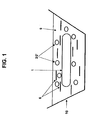
- the figure 1 is a schematic view corresponding to a step of the method according to the invention consisting in ensuring the presence of a composition containing active molecules and polymerizable molecules and / or crosslinkable at the support, this according to a particular embodiment of this invention .
- the figure 2 is a schematic view corresponding to a support according to the invention at which was assured the presence of a composition containing active molecules and polymerizable molecules and / or crosslinkable.
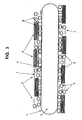
- the figure 3 is a schematic view of a support according to the invention having amorphous zones at which active molecules are trapped.
- the present invention relates to the field of media processing and will find its application when it comes to making media that have particular properties, for example when it comes to ensuring the protection of this support or a element receiving such support, this against adverse effects.
- a support 1 In order to confer such properties on a support 1, it is necessary to ensure the presence, at this support 1, of molecules 2, 2 'exhibiting an activity, in particular a chemical, biochemical or similar activity. Such an activity can, according to a first type of support 1, be carried out against undesirable organisms (microorganisms, animals, plants ...) or phenomena (radiation %), or even according to a another type of support 1, to practice in favor of desired phenomena (coloration ).
- the invention thus relates to a support 1 which is associated with means 3 arranged to ensure trapping, at this support 1, of at least part 2 of said active molecules 2, 2 'present at this support 1
- These trapping means 3 are, moreover and despite their trapping function, designed capable of maintaining the activity of said active molecules 2 as the case may be, against unwanted organisms / phenomena or in favor of the desired phenomena.
- the support 1 receives, at its surface 4 and / or in its volume 5, a substance 6 containing molecules of the polymerizable and / or crosslinkable type capable of forming a network having at least one amorphous zone 7 and at least one a crystalline zone 8.
- the substance 4 contains molecules of the polymerizable and / or crosslinkable type which, by incomplete polymerization and / or crosslinking, are capable of constituting at least one amorphous zone 7. Also, the amorphous zone 7, at the level of which are trapped said active molecules 2, is constituted by an incomplete polymerization and / or crosslinking of the polymerizable and / or crosslinkable molecules used in the composition of the substance 6 defining said trapping means 3.
- such an amorphous zone 7, at which said active molecules 2 are trapped is constituted by a dried portion of the substance 6 containing the polymerizable and / or crosslinkable molecules.
- the trapping means 3 are defined at the level of at least one layer, on the one hand, adsorbed on the surface 4 of said support 1 and, on the other hand, constituted by a substance 6. containing polymerizable and / or crosslinkable molecules.
- a layer comprises at least one amorphous zone 7 behind which and / or inside which are trapped said active molecules 2.
- said active molecules 2 can be trapped behind such an amorphous zone 7.
- the polymerizable and / or crosslinkable molecules are capable of forming a network having openings whose cross-section is less than that of an active molecule 2 so that the latter 2 is trapped by the network, the back of the latter, while remaining active vis-à-vis the outside environment.
- said active molecules 2 can be trapped inside such an amorphous zone 7.
- the polymerizable and / or crosslinkable molecules are capable of forming a network constituted by channels or the like within which are trapped said active molecules 2 while remaining active with respect to the external medium.
- said trapping means 3 are defined at a superposition of several layers, on the one hand, adsorbed on the surface 4 of said support 1, on the other hand, constituted each by a substance 6 containing polymerizable and / or crosslinkable molecules and, on the other hand, each having at least one amorphous zone 7 between and / or within which said active molecules 2 are trapped.
- Such layers preferably adopt a structure of the aforementioned type (open or channel network).
- a preferred embodiment of the invention consists in that the amorphous zones 7 of several superimposed layers are themselves superimposed.
- an amorphous zone 7 has a greater fragility than a crystalline zone 8. Also, through appropriate treatment, it is possible to remove part of a layer of substance 6 corresponding to an amorphous zone 7 of this layer. Such an embodiment advantageously makes it possible to remove from the support 1 active molecules 2 trapped by an upper layer and having lost their activity in order to bring the active molecules 2 entrapped by a lower layer which have only little or no activity.
- appropriate treatment may consist of a mechanical and / or chemical type treatment.
- a treatment can consist of friction, abrasion, washing of said support 1, this under particular conditions (particularly temperature).
- the amorphous zone (s) 7 and / or the active molecules 2 may be capable of undergoing a deformation allowing such an active molecule 2 to pass through or from extracting a layer of substance 6 to be released into the external medium.
- the deformation of an active molecule 2 may, for example, be caused by an insect or the like (for example a mosquito) coming into contact with such a molecule 2.
- the deformation of such a molecule 2 and / or an amorphous zone 7 may, again, result from a voluntary contact with an element external to the support 1, in particular contact with the skin or contact by friction, buffering or the like, this in the context a treatment aimed at ensuring, voluntarily, a release of such active molecules 2.
- these 2, 2' may be in an emulsifiable, dispersible form or soluble in a solvent, especially water.
- such active molecules 2 have an activity against insects (crawling, flying or other) and can be insecticide, insect repellent or the like.
- insects can be insecticide, insect repellent or the like.
- insect repellent molecules such as permethrin, deltamethrin or the like.
- insecticidal and insect repellent molecules such as, for example, bifenthrin or ethophen prox.
- active molecules 2 exhibit a coloring activity of the support 1.
- the latter 1 may be of different types.
- this support 1 may consist, at least in part, of a textile material.
- a textile material can be of the knitted, woven, nonwoven or other type and be constituted by fibers and / or natural, artificial or synthetic filaments such as, for example, polyester, viscose, cotton, wool, polyamide. , silk, or a mixture of different fibers and / or filaments.
- the support is a clothing item (a shirt, sweater, pants, jacket or other).
- one application of the invention may consist in ensuring the presence, at the level of such a clothing element, of molecules exhibiting activity against insects (for example mosquitoes), bacteria , microbes, mites (eg ticks), staining products or radiation.
- Such a clothing element can also receive molecules designed to stain the support 1 or having an activity in the prophylaxis or curative treatment of a disease to which the wearer of this garment may be subject.
- molecules 2 exhibiting activity against insects for example mosquitoes
- bacteria, microbes, mites for example ticks
- staining products or radiation may, again, be associated with a support 1 defined by a fabric in the form of a sheer (more particularly a mosquito net, curtains, double curtains or other).
- Molecules 2 exhibiting such activities may be associated with a support 1 constituted by a constituent element of a building, such as, for example, a wall, a closure device (in particular a door, a window, a shutter or the like), a blind, a roof, a balcony, a terrace, paving stones or, again, a lining attached to such a constituent element.
- a support 1 constituted by a constituent element of a building, such as, for example, a wall, a closure device (in particular a door, a window, a shutter or the like), a blind, a roof, a balcony, a terrace, paving stones or, again, a lining attached to such a constituent element.
- any support 1 made of any material (wood, concrete, fabric , metal, leather, ceramics ...), all kinds of active molecules 2 or any kind of mixture of active molecules 2 (similar, identical, different, complementary activity) according to the type or types of activities that we wish to give this support 1.
- molecules used in the composition of the substance 4 they may be of the polymerizable and / or crosslinkable type.
- polymerizable molecule an acrylic derivative, styrene butadiene, polyurethane, vinyl acetate, urethane or other.
- crosslinkable molecules these may, in a non-limiting manner, be constituted by resins of the melamine formalin, methylol urea, dimethyloldihydroxyethylene urea, urea formalin or other type.
- substance 4 may contain any one of these molecules, or even a mixture of several of these molecules.
- this substance 4 may, again, contain at least one catalyst constituted, for example, by an acid type catalyst such as acetic acid, formic acid or the like or a mixture of such acids.
- an acid type catalyst such as acetic acid, formic acid or the like or a mixture of such acids.
- the present invention also relates to a process consisting in ensuring the presence, at a support 1, of molecules 2, 2 'exhibiting an activity, in particular a chemical, biochemical or similar activity, of the type mentioned above, this against unwanted organisms.
- composition 9, containing the active molecules 2, 2 'as well as the polymerizable and / or crosslinkable molecules is usually carried out in the presence of a solvent which may be, for example, water .
- the polymerizable and / or crosslinkable molecules may require the presence of a catalyst to polymerize and / or crosslink as is, for example, the case for polymerizable molecules and / or crosslinkable at high temperature.
- composition 9 containing a substance 4 consisting of polymerizable and / or crosslinkable molecules at high temperature is produced, a catalyst is added to this composition 9.
- the composition 9 may contain a substance 4 constituted by molecules capable of polymerizing and / or crosslinking in the absence of a catalyst, more particularly by self-polymerization or self-crosslinking.
- this support 1 can be immersed in a bath 10 containing such a composition 9, such a bath 10 being, for example, made in a tank, especially a washing machine.
- a bath 10 being, for example, made in a tank, especially a washing machine.
- Such an embodiment can be envisaged in the case of a support 1 adopting the shape of a fabric or the like.
- this composition 9 is sprayed onto said support 1 by means of a sprayer adopting, for example, the shape of at least one nozzle.
- a sprayer adopting, for example, the shape of at least one nozzle.
- Such an embodiment may, for example, be considered in the context of a support 1 adopting the shape of a roof, a blind or the like.
- Yet another embodiment consists in the fact that such a composition 9 is applied to said support 1 by means of a brush or a roller. This can be so when the support 1 takes the form of a terrace, a wall or other. In such a case it is usually necessary to ensure a thickening of the composition 9 by adding to the latter 9 a thickener, as the case may be, of synthetic (such as for example an acrylate or other) or natural (for example a sodium alginate or other).
- the active molecules 2 are trapped in at least one amorphous zone 7 of the substance 6 contained in said composition 9. In fact, such entrapment is ensured by carrying out a polymerization and / or or incomplete crosslinking of the polymerizable and / or crosslinkable molecules contained in this composition 9.
- this scavenging of the active molecules 2 in an amorphous zone 7 can be achieved by proceeding to the drying of said composition 9 at a temperature substantially lower than the polymerization and / or crosslinking temperature of the polymerizable molecules and / or crosslinkable contained in the composition. In fact, through such drying, it is ensured polymerization and / or incomplete crosslinking of these molecules leaving room for an unstructured network having amorphous zones 7 where active molecules 2 are trapped.
- the drying is ensured at a low temperature in comparison with the polymerization and / or crosslinking temperature of the molecules contained in the substance 6.
- such a drying of the composition 9 takes place at a temperature below 70 ° C, preferably below 50 ° C, this, preferably, in the open air, in a furnace or the like.
- the present invention also relates to a chemical composition 9 intended to implement the method described above and / or intended to be associated with a support 1 in order to obtain the abovementioned support 1.
- composition 9 then contains, on the one hand, active molecules 2, 2 'and, on the other hand, a substance 4 constituted by molecules of the polymerizable and / or crosslinkable type capable of forming a network having at least one amorphous zone 7.
Landscapes
- Agricultural Chemicals And Associated Chemicals (AREA)
- Immobilizing And Processing Of Enzymes And Microorganisms (AREA)
- Organic Low-Molecular-Weight Compounds And Preparation Thereof (AREA)
- Catching Or Destruction (AREA)
- Polymerisation Methods In General (AREA)
Claims (16)
- Träger (1), empfangend Moleküle (2, 2'), die insbesondere eine chemische, biochemische oder ähnliche Aktivität gegen Insekten aufweisen und der Art Insektizid, Repellent oder dergleichen seien, insbesondere Permethrin oder dergleichen, wobei diesem Träger (1) Mittel (3) fest zugeordnet seien, ausgelegt, um im Bereich dieses Trägers einn Einfang (1) von wenigstens einem Teil (2) der aktiven Moleküle (2, 2') sicherzustellen, dadurch gekennzeichnet, dass die Einfangmittel (3) durch polymerisierbare und/oder vernetzbare Moleküle gebildet sind, die durch Trocknung bei einer wesentlich niedrigeren Temperatur als jene der Polymerisation und/oder der Vernetzung unvollständig polymerisiert und/oder vernetzt sind und im Bereich des Trägers (1) wenigstens eine amorphe Zone (7) eines Netzes aus polymerisierbaren und/oder vernetzbaren Molekülen bilden, wobei eine solche amorphe Zone (7) wenigstens einen Teil (2) der aktiven Moleküle (2, 2') einfängt, während die Aktivität der eingefangenen aktiven Moleküle (2) gegen Insekten beibehalten wird.
- Träger (1) nach Anspruch 1, dadurch gekennzeichnet, dass die Einfangmittel (3) im Bereich wenigstens einer Schicht gebildet sind, die, einerseits, in der Oberfläche (4) des besagten Trägers (1) adsorbiert ist und, andererseits, aus einer Substanz (6) besteht, welche polymerisierbare und/oder vernetzbare Moleküle enthält, und, andererseits noch, wenigstens eine amorphe Zone (7) umfasst, auf deren Rückseite und/oder in deren Innern die besagten aktiven Molekülen (2) eingefangen sind.
- Träger (1) nach irgendeinem der vorgehenden Ansprüche, dadurch gekennzeichnet, dass die Einfangmittel (3) im Bereich einer Überlagerung mehrerer Schichten gebildet sind, die, einerseits, in der Oberfläche (4) des besagten Trägers (1) adsorbiert sind und, andererseits, jeweils durch eine Substanz (6) gebildet sind, die polymerisierbare und/oder vernetzbare Moleküle enthält und, andererseits noch, jeweils wenigstens eine amorphe Zone (7) umfassen, zwischen denen und/oder innerhalb von denen die besagten aktiven Moleküle (2) eingefangen sind.
- Träger (1) nach irgendeinem der vorgehenden Ansprüche, dadurch gekennzeichnet, dass das Netz aus polymerisierbaren und/oder vernetzbaren Molekülen im Bereich einer amorphen Zone (7) Öffnungen aufweist, deren Querschnitt kleiner ist als jener eines aktiven Moleküls (2), derart, dass dieses letztere (2) durch das Netz auf der Rückseite dieses letzteren eingefangen ist, während sie aktiv gegenüber der Umgebung verbleibt.
- Träger (1) nach irgendeinem der Ansprüche 1 bis 3, dadurch gekennzeichnet, dass das Netz aus polymerisierbaren und/oder vernetzbaren Molekülen im Bereich einer amorphen Zone (7) durch Kanäle oder dergleichen gebildet ist, in deren Innern die besagten aktiven Moleküle (2) eingefangen sind, während sie aktiv gegenüber der Umgebung verbleiben.
- Träger (1) nach irgendeinem der vorgehenden Ansprüche, dadurch gekennzeichnet, dass der Träger (1) wenigstens zum Teil durch ein Textilmaterial, insbesondere ein Kleidungselement, ein Insektenschutzgitter oder dergleichen gebildet ist.
- Träger (1) nach irgendeinem der vorgehenden Ansprüche, dadurch gekennzeichnet, dass die polymerisierbaren Moleküle aus einem Acrylderivat, Butadien-Styrol, Polyurethan, Vinylacetat, Urethan oder ähnlichem bestehen.
- Träger (1) nach irgendeinem der Ansprüche 1 bis 6, dadurch gekennzeichnet, dass die vernetzbaren Moleküle aus einem Harz der Art Melamin-Formaldehyd, Methylolharnstoff, Dimethyloldihydroxyethylenharnstoff, Harnstoffformaldehyd oder dergleichen bestehen.
- Verfahren, darin bestehend, einerseits, im Bereich eines Trägers (1) die Anwesenheit von Molekülen (2, 2') sicherzustellen, die insbesondere eine chemische, biochemische oder ähnliche Aktivität gegen Insekten aufweisen und der Art Insektizid, Repellent oder dergleichen seien, insbesondere Permethrin oder dergleichen, und, andererseits, im Bereich dieses Trägers (1) einen Einfang von wenigstens einem Teil (2) der aktiven Moleküle (2, 2') sicherzustellen, dadurch gekennzeichnet, dass:- eine Zusammensetzung (9) hergestellt wird, enthaltend, einerseits, aktive Moleküle (2, 2'), und, andererseits, eine Substanz (6), die durch polymerisierbare und/oder vernetzbare Molekülen gebildet ist;- die Anwesenheit dieser Zusammensetzung (9) im Bereich dieses Trägers (1) sichergestellt wird;- eine unvollständige Polymerisation und/oder Vernetzung der polymerisierbaren und/oder vernetzbaren Moleküle sichergestellt wird, indem diese Letzteren bei einer Temperatur getrocknet werden, die wesentlich niedriger ist als jene der Polymerisation und/oder der Vernetzung, um im Bereich des Trägers (1) wenigstens eine amorphe Zone (7) eines Netzes aus polymerisierbaren und/oder vernetzbaren Molekülen zu bilden, wobei eine solche amorphe Zone (7) wenigstens einen Teil (2) der aktiven Moleküle (2, 2') einfängt, wobei die Aktivität der eingefangenen aktiven Moleküle (2) gegen Insekten beibehalten wird.
- Verfahren nach Anspruch 9, dadurch gekennzeichnet, dass das Netz aus polymerisierbaren und/oder vernetzbaren Molekülen in Bereich einer amorphen Zone (7) Öffnungen aufweist, deren Querschnitt kleiner ist als jener eines aktiven Moleküls (2), derart, dass dieses letztere (2) durch das Netz auf der Rückseite dieses letzteren eingefangen ist, wobei sie aktiv gegenüber der Umgebung verbleibt.
- Verfahren nach Anspruch 9, dadurch gekennzeichnet, dass das Netz aus polymerisierbaren und/oder vernetzbaren Molekülen in Bereich einer amorphen Zone (7) durch Kanäle oder dergleichen gebildet ist, in denen Innern die besagten aktiven Moleküle (2) eingefangen sind, wobei sie aktiv gegenüber der Umgebung verbleiben.
- Verfahren nach irgendeinem der Ansprüche 9 bis 11, dadurch gekennzeichnet, dass, wenn eine Zusammensetzung (9) hergestellt wird, enthaltend eine Substanz (6), die durch bei hoher Temperatur polymerisierbare und/oder vernetzbare Moleküle gebildet ist, zu dieser Zusammensetzung (9) ein Katalysator hinzugefügt wird.
- Verfahren nach irgendeinem der Ansprüche 9 bis 12, dadurch gekennzeichnet, dass die Anwesenheit der Zusammensetzung (9) im Bereich des Trägers (1) sichergestellt wird, indem, je nach dem Fall, dieser Träger (1) in einem Bad (10) eingetaucht wird, das eine solche Zusammensetzung (9) enthält, oder indem eine solche Zusammensetzung (9) auf den Träger (1) gesprüht oder angebracht wird.
- Verfahren nach irgendeinem der Ansprüche 9 bis 13, dadurch gekennzeichnet, dass die Trocknung der Zusammensetzung (9) bei einer Temperatur unter 70°C, vorzugsweise unter 50°C, und zwar vorzugsweise in der freien Luft, in einem Ofen oder dergleichen, stattfindet.
- Verfahren nach irgendeinem der Ansprüche 9 bis 14, dadurch gekennzeichnet, dass die polymerisierbaren Moleküle aus einem Acrylderivat, Butadien-Styrol, Polyurethan, Vinylacetat, Urethan oder dergleichen besteht.
- Verfahren nach irgendeinem der Ansprüche 9 bis 14, dadurch gekennzeichnet, dass die vernetzbaren Moleküle aus einem Harz der Art Melamin-Formaldehyd, Methylolharnstoff, Dimethyloldihydroxyethylenharnstoff, Harnstoffformaldehyd oder dergleichen besteht.
Applications Claiming Priority (3)
| Application Number | Priority Date | Filing Date | Title |
|---|---|---|---|
| FR0211729A FR2844730B1 (fr) | 2002-09-23 | 2002-09-23 | Dispositif support de molecules actives, procede pour assurer la presence de ces molecules sur ledit dispositif et composition pour la mise en oeuvre du procede et l'obtention d'un tel dispositif |
| FR0211729 | 2002-09-23 | ||
| PCT/FR2003/050060 WO2004026492A2 (fr) | 2002-09-23 | 2003-09-23 | Support recevant des molecules presentant une activite et procede pour assurer la presence de telles molecules sur un tel support |
Publications (2)
| Publication Number | Publication Date |
|---|---|
| EP1542809A2 EP1542809A2 (de) | 2005-06-22 |
| EP1542809B1 true EP1542809B1 (de) | 2008-07-09 |
Family
ID=31970893
Family Applications (1)
| Application Number | Title | Priority Date | Filing Date |
|---|---|---|---|
| EP03780273A Expired - Lifetime EP1542809B1 (de) | 2002-09-23 | 2003-09-23 | Moleküle gewisser aktivität empfangender träger und verfahren zur sicherstellung anwesenheit solcher moleküle auf solcher träger |
Country Status (8)
| Country | Link |
|---|---|
| EP (1) | EP1542809B1 (de) |
| AT (1) | ATE400371T1 (de) |
| AU (1) | AU2003288363A1 (de) |
| DE (1) | DE60322080D1 (de) |
| ES (1) | ES2310253T3 (de) |
| FR (1) | FR2844730B1 (de) |
| PT (1) | PT1542809E (de) |
| WO (1) | WO2004026492A2 (de) |
Families Citing this family (1)
| Publication number | Priority date | Publication date | Assignee | Title |
|---|---|---|---|---|
| CN103341461B (zh) * | 2013-07-25 | 2015-08-19 | 无锡市群征干燥设备有限公司 | 喷雾干燥机的软管清洗装置 |
Citations (1)
| Publication number | Priority date | Publication date | Assignee | Title |
|---|---|---|---|---|
| WO2000014128A1 (en) * | 1998-09-08 | 2000-03-16 | Microban Products Company | Antimicrobial acrylic material |
Family Cites Families (2)
| Publication number | Priority date | Publication date | Assignee | Title |
|---|---|---|---|---|
| US5252387A (en) * | 1991-04-01 | 1993-10-12 | Graniteville Company | Fabrics with insect repellent and a barrier |
| US5631072A (en) * | 1995-03-10 | 1997-05-20 | Avondale Incorporated | Method and means for increasing efficacy and wash durability of insecticide treated fabric |
-
2002
- 2002-09-23 FR FR0211729A patent/FR2844730B1/fr not_active Expired - Fee Related
-
2003
- 2003-09-23 DE DE60322080T patent/DE60322080D1/de not_active Expired - Lifetime
- 2003-09-23 AT AT03780273T patent/ATE400371T1/de not_active IP Right Cessation
- 2003-09-23 EP EP03780273A patent/EP1542809B1/de not_active Expired - Lifetime
- 2003-09-23 ES ES03780273T patent/ES2310253T3/es not_active Expired - Lifetime
- 2003-09-23 AU AU2003288363A patent/AU2003288363A1/en not_active Abandoned
- 2003-09-23 WO PCT/FR2003/050060 patent/WO2004026492A2/fr not_active Ceased
- 2003-09-23 PT PT03780273T patent/PT1542809E/pt unknown
Patent Citations (1)
| Publication number | Priority date | Publication date | Assignee | Title |
|---|---|---|---|---|
| WO2000014128A1 (en) * | 1998-09-08 | 2000-03-16 | Microban Products Company | Antimicrobial acrylic material |
Also Published As
| Publication number | Publication date |
|---|---|
| EP1542809A2 (de) | 2005-06-22 |
| DE60322080D1 (de) | 2008-08-21 |
| WO2004026492A2 (fr) | 2004-04-01 |
| WO2004026492A3 (fr) | 2004-05-06 |
| ES2310253T3 (es) | 2009-01-01 |
| ATE400371T1 (de) | 2008-07-15 |
| FR2844730A1 (fr) | 2004-03-26 |
| AU2003288363A1 (en) | 2004-04-08 |
| FR2844730B1 (fr) | 2005-07-15 |
| PT1542809E (pt) | 2008-10-09 |
Similar Documents
| Publication | Publication Date | Title |
|---|---|---|
| CN101338519B (zh) | 驱虫织物及其制造方法 | |
| CN103649409B (zh) | 用于浸渍纺织品的组合物 | |
| CN102926201B (zh) | 一种除蚊缓释布的整理方法 | |
| Prokopy | Oviposition-deterring fruit marking pheromone in Rhagoletis fausta | |
| JPH09310275A (ja) | 殺虫剤で処理した繊維の効力と耐洗濯性を向上する方法ならびに手段 | |
| JP2018535944A5 (de) | ||
| AU1516595A (en) | Slow release insect repellent formulations and uses | |
| Kamari et al. | A mini review of materials used as improvers for insect and arthropod pest repellent textiles | |
| EP0511258B1 (de) | Textilbehandlung | |
| Heine et al. | Antimicrobial functionalisation of textile materials | |
| EP1542809A2 (de) | Moleküle gewisser aktivität empfangender träger und verfahren zur sicherstellung anwesenheit solcher moleküle auf solcher träger | |
| EP1432866B1 (de) | Verfahren zur behandlung von textilmaterialien mit akariziden und mikrobiziden mittteln | |
| Mahmud et al. | Progress in mosquito repellent textiles: factors, methods, and challenges | |
| WO1997024484A1 (fr) | Article de recouvrement pour des lits et analogues, et procede pour sa confection | |
| JPH09273073A (ja) | 生物抵抗性を有する繊維製品の加工方法 | |
| FR3071421B1 (fr) | Procede pour la fabrication d'un support active et support ainsi obtenu | |
| KR100438020B1 (ko) | 퍼메트린을 함유하는 방충용 직물의 제조방법 | |
| JPH032101A (ja) | 防虫性布帛 | |
| JPH05311509A (ja) | 防虫性アクリル系合成繊維並びにその製造法 | |
| CA2734294A1 (fr) | Procede pour la fixation de molecules actives sur un support, element actif obtenu par ce procede et composition chimique pour la mise en oeuvre de ce procede | |
| CN106702734A (zh) | 一种包含杀虫剂和/或驱虫剂的浸渍纺织品 | |
| EP1275769A1 (de) | Verfahren zur Oberflächenbehandlung von Textilfasern | |
| EP2213786B1 (de) | Faser- oder Filamentmaterial impregniert mit Wirkstoffen | |
| Hebeish et al. | Bioallethrin–based cotton finishing to impart long–lasting toxic activity against mosquitoes | |
| WO2012080616A1 (fr) | Procède de fixation de molécules actives sur un support cationique par liaisons ionique et covalente, élément actif comportant un support cationique et des molécules actives fixées par liaisons ionique et covalente sur ce support cationique, support cationique et procède de fabrication d'un tel support cationique |
Legal Events
| Date | Code | Title | Description |
|---|---|---|---|
| PUAI | Public reference made under article 153(3) epc to a published international application that has entered the european phase |
Free format text: ORIGINAL CODE: 0009012 |
|
| 17P | Request for examination filed |
Effective date: 20050317 |
|
| AK | Designated contracting states |
Kind code of ref document: A2 Designated state(s): AT BE BG CH CY CZ DE DK EE ES FI FR GB GR HU IE IT LI LU MC NL PT RO SE SI SK TR |
|
| AX | Request for extension of the european patent |
Extension state: AL LT LV MK |
|
| DAX | Request for extension of the european patent (deleted) | ||
| 17Q | First examination report despatched |
Effective date: 20060908 |
|
| RAP1 | Party data changed (applicant data changed or rights of an application transferred) |
Owner name: CHT R. BEITLICH GMBH |
|
| RIN1 | Information on inventor provided before grant (corrected) |
Inventor name: FAFET, JEAN-FRANCOIS Inventor name: WIPF, DENIS |
|
| GRAP | Despatch of communication of intention to grant a patent |
Free format text: ORIGINAL CODE: EPIDOSNIGR1 |
|
| GRAS | Grant fee paid |
Free format text: ORIGINAL CODE: EPIDOSNIGR3 |
|
| GRAA | (expected) grant |
Free format text: ORIGINAL CODE: 0009210 |
|
| AK | Designated contracting states |
Kind code of ref document: B1 Designated state(s): AT BE BG CH CY CZ DE DK EE ES FI FR GB GR HU IE IT LI LU MC NL PT RO SE SI SK TR |
|
| REG | Reference to a national code |
Ref country code: GB Ref legal event code: FG4D Free format text: NOT ENGLISH |
|
| REG | Reference to a national code |
Ref country code: CH Ref legal event code: EP |
|
| REF | Corresponds to: |
Ref document number: 60322080 Country of ref document: DE Date of ref document: 20080821 Kind code of ref document: P |
|
| REG | Reference to a national code |
Ref country code: IE Ref legal event code: FG4D Free format text: LANGUAGE OF EP DOCUMENT: FRENCH |
|
| REG | Reference to a national code |
Ref country code: PT Ref legal event code: SC4A Free format text: AVAILABILITY OF NATIONAL TRANSLATION Effective date: 20080930 |
|
| REG | Reference to a national code |
Ref country code: ES Ref legal event code: FG2A Ref document number: 2310253 Country of ref document: ES Kind code of ref document: T3 |
|
| NLV1 | Nl: lapsed or annulled due to failure to fulfill the requirements of art. 29p and 29m of the patents act | ||
| PG25 | Lapsed in a contracting state [announced via postgrant information from national office to epo] |
Ref country code: NL Free format text: LAPSE BECAUSE OF FAILURE TO SUBMIT A TRANSLATION OF THE DESCRIPTION OR TO PAY THE FEE WITHIN THE PRESCRIBED TIME-LIMIT Effective date: 20080709 |
|
| PG25 | Lapsed in a contracting state [announced via postgrant information from national office to epo] |
Ref country code: BG Free format text: LAPSE BECAUSE OF FAILURE TO SUBMIT A TRANSLATION OF THE DESCRIPTION OR TO PAY THE FEE WITHIN THE PRESCRIBED TIME-LIMIT Effective date: 20081009 Ref country code: SI Free format text: LAPSE BECAUSE OF FAILURE TO SUBMIT A TRANSLATION OF THE DESCRIPTION OR TO PAY THE FEE WITHIN THE PRESCRIBED TIME-LIMIT Effective date: 20080709 Ref country code: FI Free format text: LAPSE BECAUSE OF FAILURE TO SUBMIT A TRANSLATION OF THE DESCRIPTION OR TO PAY THE FEE WITHIN THE PRESCRIBED TIME-LIMIT Effective date: 20080709 Ref country code: AT Free format text: LAPSE BECAUSE OF FAILURE TO SUBMIT A TRANSLATION OF THE DESCRIPTION OR TO PAY THE FEE WITHIN THE PRESCRIBED TIME-LIMIT Effective date: 20080709 |
|
| REG | Reference to a national code |
Ref country code: IE Ref legal event code: FD4D |
|
| BERE | Be: lapsed |
Owner name: CHT R. BEITLICH G.M.B.H. Effective date: 20080930 |
|
| PG25 | Lapsed in a contracting state [announced via postgrant information from national office to epo] |
Ref country code: MC Free format text: LAPSE BECAUSE OF NON-PAYMENT OF DUE FEES Effective date: 20080930 Ref country code: EE Free format text: LAPSE BECAUSE OF FAILURE TO SUBMIT A TRANSLATION OF THE DESCRIPTION OR TO PAY THE FEE WITHIN THE PRESCRIBED TIME-LIMIT Effective date: 20080709 Ref country code: IE Free format text: LAPSE BECAUSE OF FAILURE TO SUBMIT A TRANSLATION OF THE DESCRIPTION OR TO PAY THE FEE WITHIN THE PRESCRIBED TIME-LIMIT Effective date: 20080709 Ref country code: DK Free format text: LAPSE BECAUSE OF FAILURE TO SUBMIT A TRANSLATION OF THE DESCRIPTION OR TO PAY THE FEE WITHIN THE PRESCRIBED TIME-LIMIT Effective date: 20080709 |
|
| REG | Reference to a national code |
Ref country code: CH Ref legal event code: PL |
|
| PLBE | No opposition filed within time limit |
Free format text: ORIGINAL CODE: 0009261 |
|
| STAA | Information on the status of an ep patent application or granted ep patent |
Free format text: STATUS: NO OPPOSITION FILED WITHIN TIME LIMIT |
|
| PG25 | Lapsed in a contracting state [announced via postgrant information from national office to epo] |
Ref country code: CZ Free format text: LAPSE BECAUSE OF FAILURE TO SUBMIT A TRANSLATION OF THE DESCRIPTION OR TO PAY THE FEE WITHIN THE PRESCRIBED TIME-LIMIT Effective date: 20080709 Ref country code: SK Free format text: LAPSE BECAUSE OF FAILURE TO SUBMIT A TRANSLATION OF THE DESCRIPTION OR TO PAY THE FEE WITHIN THE PRESCRIBED TIME-LIMIT Effective date: 20080709 Ref country code: RO Free format text: LAPSE BECAUSE OF FAILURE TO SUBMIT A TRANSLATION OF THE DESCRIPTION OR TO PAY THE FEE WITHIN THE PRESCRIBED TIME-LIMIT Effective date: 20080709 |
|
| 26N | No opposition filed |
Effective date: 20090414 |
|
| PG25 | Lapsed in a contracting state [announced via postgrant information from national office to epo] |
Ref country code: BE Free format text: LAPSE BECAUSE OF NON-PAYMENT OF DUE FEES Effective date: 20080930 |
|
| PG25 | Lapsed in a contracting state [announced via postgrant information from national office to epo] |
Ref country code: IT Free format text: LAPSE BECAUSE OF FAILURE TO SUBMIT A TRANSLATION OF THE DESCRIPTION OR TO PAY THE FEE WITHIN THE PRESCRIBED TIME-LIMIT Effective date: 20080709 |
|
| PG25 | Lapsed in a contracting state [announced via postgrant information from national office to epo] |
Ref country code: LI Free format text: LAPSE BECAUSE OF NON-PAYMENT OF DUE FEES Effective date: 20080930 Ref country code: CH Free format text: LAPSE BECAUSE OF NON-PAYMENT OF DUE FEES Effective date: 20080930 |
|
| PG25 | Lapsed in a contracting state [announced via postgrant information from national office to epo] |
Ref country code: SE Free format text: LAPSE BECAUSE OF FAILURE TO SUBMIT A TRANSLATION OF THE DESCRIPTION OR TO PAY THE FEE WITHIN THE PRESCRIBED TIME-LIMIT Effective date: 20081009 |
|
| PG25 | Lapsed in a contracting state [announced via postgrant information from national office to epo] |
Ref country code: HU Free format text: LAPSE BECAUSE OF FAILURE TO SUBMIT A TRANSLATION OF THE DESCRIPTION OR TO PAY THE FEE WITHIN THE PRESCRIBED TIME-LIMIT Effective date: 20090110 Ref country code: LU Free format text: LAPSE BECAUSE OF NON-PAYMENT OF DUE FEES Effective date: 20080923 Ref country code: CY Free format text: LAPSE BECAUSE OF FAILURE TO SUBMIT A TRANSLATION OF THE DESCRIPTION OR TO PAY THE FEE WITHIN THE PRESCRIBED TIME-LIMIT Effective date: 20080709 |
|
| PG25 | Lapsed in a contracting state [announced via postgrant information from national office to epo] |
Ref country code: TR Free format text: LAPSE BECAUSE OF FAILURE TO SUBMIT A TRANSLATION OF THE DESCRIPTION OR TO PAY THE FEE WITHIN THE PRESCRIBED TIME-LIMIT Effective date: 20080709 |
|
| PG25 | Lapsed in a contracting state [announced via postgrant information from national office to epo] |
Ref country code: GR Free format text: LAPSE BECAUSE OF FAILURE TO SUBMIT A TRANSLATION OF THE DESCRIPTION OR TO PAY THE FEE WITHIN THE PRESCRIBED TIME-LIMIT Effective date: 20081010 |
|
| REG | Reference to a national code |
Ref country code: FR Ref legal event code: PLFP Year of fee payment: 14 |
|
| REG | Reference to a national code |
Ref country code: FR Ref legal event code: PLFP Year of fee payment: 15 |
|
| REG | Reference to a national code |
Ref country code: FR Ref legal event code: PLFP Year of fee payment: 16 |
|
| PGFP | Annual fee paid to national office [announced via postgrant information from national office to epo] |
Ref country code: DE Payment date: 20180920 Year of fee payment: 16 Ref country code: FR Payment date: 20180925 Year of fee payment: 16 |
|
| PGFP | Annual fee paid to national office [announced via postgrant information from national office to epo] |
Ref country code: GB Payment date: 20180919 Year of fee payment: 16 |
|
| PGFP | Annual fee paid to national office [announced via postgrant information from national office to epo] |
Ref country code: PT Payment date: 20180913 Year of fee payment: 16 |
|
| PGFP | Annual fee paid to national office [announced via postgrant information from national office to epo] |
Ref country code: ES Payment date: 20181022 Year of fee payment: 16 |
|
| REG | Reference to a national code |
Ref country code: DE Ref legal event code: R119 Ref document number: 60322080 Country of ref document: DE |
|
| PG25 | Lapsed in a contracting state [announced via postgrant information from national office to epo] |
Ref country code: DE Free format text: LAPSE BECAUSE OF NON-PAYMENT OF DUE FEES Effective date: 20200401 Ref country code: PT Free format text: LAPSE BECAUSE OF NON-PAYMENT OF DUE FEES Effective date: 20200424 |
|
| GBPC | Gb: european patent ceased through non-payment of renewal fee |
Effective date: 20190923 |
|
| PG25 | Lapsed in a contracting state [announced via postgrant information from national office to epo] |
Ref country code: FR Free format text: LAPSE BECAUSE OF NON-PAYMENT OF DUE FEES Effective date: 20190930 Ref country code: GB Free format text: LAPSE BECAUSE OF NON-PAYMENT OF DUE FEES Effective date: 20190923 |
|
| REG | Reference to a national code |
Ref country code: ES Ref legal event code: FD2A Effective date: 20210129 |
|
| PG25 | Lapsed in a contracting state [announced via postgrant information from national office to epo] |
Ref country code: ES Free format text: LAPSE BECAUSE OF NON-PAYMENT OF DUE FEES Effective date: 20190924 |