EP1538183A1 - Thermoplastische folie, thermoplastische harzzusammensetzung und phyllosilicat - Google Patents
Thermoplastische folie, thermoplastische harzzusammensetzung und phyllosilicat Download PDFInfo
- Publication number
- EP1538183A1 EP1538183A1 EP03795376A EP03795376A EP1538183A1 EP 1538183 A1 EP1538183 A1 EP 1538183A1 EP 03795376 A EP03795376 A EP 03795376A EP 03795376 A EP03795376 A EP 03795376A EP 1538183 A1 EP1538183 A1 EP 1538183A1
- Authority
- EP
- European Patent Office
- Prior art keywords
- layered silicate
- film
- cation
- group
- weight
- Prior art date
- Legal status (The legal status is an assumption and is not a legal conclusion. Google has not performed a legal analysis and makes no representation as to the accuracy of the status listed.)
- Granted
Links
- CFMZSMGAMPBRBE-UHFFFAOYSA-N ON(C(c1c2cccc1)=O)C2=O Chemical compound ON(C(c1c2cccc1)=O)C2=O CFMZSMGAMPBRBE-UHFFFAOYSA-N 0.000 description 1
Images

Classifications
-
- C—CHEMISTRY; METALLURGY
- C08—ORGANIC MACROMOLECULAR COMPOUNDS; THEIR PREPARATION OR CHEMICAL WORKING-UP; COMPOSITIONS BASED THEREON
- C08K—Use of inorganic or non-macromolecular organic substances as compounding ingredients
- C08K5/00—Use of organic ingredients
- C08K5/16—Nitrogen-containing compounds
- C08K5/34—Heterocyclic compounds having nitrogen in the ring
- C08K5/3412—Heterocyclic compounds having nitrogen in the ring having one nitrogen atom in the ring
-
- C—CHEMISTRY; METALLURGY
- C04—CEMENTS; CONCRETE; ARTIFICIAL STONE; CERAMICS; REFRACTORIES
- C04B—LIME, MAGNESIA; SLAG; CEMENTS; COMPOSITIONS THEREOF, e.g. MORTARS, CONCRETE OR LIKE BUILDING MATERIALS; ARTIFICIAL STONE; CERAMICS; REFRACTORIES; TREATMENT OF NATURAL STONE
- C04B26/00—Compositions of mortars, concrete or artificial stone, containing only organic binders, e.g. polymer or resin concrete
- C04B26/02—Macromolecular compounds
- C04B26/10—Macromolecular compounds obtained otherwise than by reactions only involving carbon-to-carbon unsaturated bonds
- C04B26/18—Polyesters; Polycarbonates
-
- C—CHEMISTRY; METALLURGY
- C01—INORGANIC CHEMISTRY
- C01B—NON-METALLIC ELEMENTS; COMPOUNDS THEREOF; METALLOIDS OR COMPOUNDS THEREOF NOT COVERED BY SUBCLASS C01C
- C01B33/00—Silicon; Compounds thereof
- C01B33/20—Silicates
- C01B33/36—Silicates having base-exchange properties but not having molecular sieve properties
- C01B33/38—Layered base-exchange silicates, e.g. clays, micas or alkali metal silicates of kenyaite or magadiite type
- C01B33/44—Products obtained from layered base-exchange silicates by ion-exchange with organic compounds such as ammonium, phosphonium or sulfonium compounds or by intercalation of organic compounds, e.g. organoclay material
-
- C—CHEMISTRY; METALLURGY
- C04—CEMENTS; CONCRETE; ARTIFICIAL STONE; CERAMICS; REFRACTORIES
- C04B—LIME, MAGNESIA; SLAG; CEMENTS; COMPOSITIONS THEREOF, e.g. MORTARS, CONCRETE OR LIKE BUILDING MATERIALS; ARTIFICIAL STONE; CERAMICS; REFRACTORIES; TREATMENT OF NATURAL STONE
- C04B14/00—Use of inorganic materials as fillers, e.g. pigments, for mortars, concrete or artificial stone; Treatment of inorganic materials specially adapted to enhance their filling properties in mortars, concrete or artificial stone
- C04B14/02—Granular materials, e.g. microballoons
- C04B14/04—Silica-rich materials; Silicates
- C04B14/20—Mica; Vermiculite
- C04B14/206—Mica or vermiculite modified by cation-exchange; chemically exfoliated vermiculate
-
- C—CHEMISTRY; METALLURGY
- C08—ORGANIC MACROMOLECULAR COMPOUNDS; THEIR PREPARATION OR CHEMICAL WORKING-UP; COMPOSITIONS BASED THEREON
- C08G—MACROMOLECULAR COMPOUNDS OBTAINED OTHERWISE THAN BY REACTIONS ONLY INVOLVING UNSATURATED CARBON-TO-CARBON BONDS
- C08G63/00—Macromolecular compounds obtained by reactions forming a carboxylic ester link in the main chain of the macromolecule
- C08G63/78—Preparation processes
- C08G63/80—Solid-state polycondensation
-
- C—CHEMISTRY; METALLURGY
- C08—ORGANIC MACROMOLECULAR COMPOUNDS; THEIR PREPARATION OR CHEMICAL WORKING-UP; COMPOSITIONS BASED THEREON
- C08K—Use of inorganic or non-macromolecular organic substances as compounding ingredients
- C08K9/00—Use of pretreated ingredients
- C08K9/04—Ingredients treated with organic substances
-
- C—CHEMISTRY; METALLURGY
- C08—ORGANIC MACROMOLECULAR COMPOUNDS; THEIR PREPARATION OR CHEMICAL WORKING-UP; COMPOSITIONS BASED THEREON
- C08L—COMPOSITIONS OF MACROMOLECULAR COMPOUNDS
- C08L67/00—Compositions of polyesters obtained by reactions forming a carboxylic ester link in the main chain; Compositions of derivatives of such polymers
-
- C—CHEMISTRY; METALLURGY
- C08—ORGANIC MACROMOLECULAR COMPOUNDS; THEIR PREPARATION OR CHEMICAL WORKING-UP; COMPOSITIONS BASED THEREON
- C08L—COMPOSITIONS OF MACROMOLECULAR COMPOUNDS
- C08L67/00—Compositions of polyesters obtained by reactions forming a carboxylic ester link in the main chain; Compositions of derivatives of such polymers
- C08L67/02—Polyesters derived from dicarboxylic acids and dihydroxy compounds
- C08L67/03—Polyesters derived from dicarboxylic acids and dihydroxy compounds the dicarboxylic acids and dihydroxy compounds having the carboxyl- and the hydroxy groups directly linked to aromatic rings
-
- C—CHEMISTRY; METALLURGY
- C04—CEMENTS; CONCRETE; ARTIFICIAL STONE; CERAMICS; REFRACTORIES
- C04B—LIME, MAGNESIA; SLAG; CEMENTS; COMPOSITIONS THEREOF, e.g. MORTARS, CONCRETE OR LIKE BUILDING MATERIALS; ARTIFICIAL STONE; CERAMICS; REFRACTORIES; TREATMENT OF NATURAL STONE
- C04B2111/00—Mortars, concrete or artificial stone or mixtures to prepare them, characterised by specific function, property or use
- C04B2111/00241—Physical properties of the materials not provided for elsewhere in C04B2111/00
- C04B2111/00318—Materials characterised by relatively small dimensions, e.g. small thickness
-
- C—CHEMISTRY; METALLURGY
- C04—CEMENTS; CONCRETE; ARTIFICIAL STONE; CERAMICS; REFRACTORIES
- C04B—LIME, MAGNESIA; SLAG; CEMENTS; COMPOSITIONS THEREOF, e.g. MORTARS, CONCRETE OR LIKE BUILDING MATERIALS; ARTIFICIAL STONE; CERAMICS; REFRACTORIES; TREATMENT OF NATURAL STONE
- C04B2111/00—Mortars, concrete or artificial stone or mixtures to prepare them, characterised by specific function, property or use
- C04B2111/00474—Uses not provided for elsewhere in C04B2111/00
- C04B2111/00482—Coating or impregnation materials
-
- C—CHEMISTRY; METALLURGY
- C08—ORGANIC MACROMOLECULAR COMPOUNDS; THEIR PREPARATION OR CHEMICAL WORKING-UP; COMPOSITIONS BASED THEREON
- C08L—COMPOSITIONS OF MACROMOLECULAR COMPOUNDS
- C08L2203/00—Applications
- C08L2203/16—Applications used for films
Definitions
- the present invention relates to a film that comprises a thermoplastic resin composition which contains a layered silicate having an organic cation, the thermoplastic resin composition, and the layered silicate. More specifically, it relates to a film in which the layered silicate is highly dispersed and which has excellent properties including mechanical properties and dimensional stability, and a resin composition and a layered silicate which provide the film.
- Thermoplastic resins including a polyester are used in a variety of applications due to their excellent properties, e.g., mechanical properties, moldability, heat resistance, weather resistance, light resistance and chemical resistance.
- a polyester film is widely used in a variety of applications, e.g., for electric and electronic materials including a magnetic recording medium, an electronic mount board and a capacitor, for packing, for medical use, and for various industrial materials, due to excellent properties of the polyester, e.g., heat resistance, mechanical properties, electric properties, chemical resistance, optical properties and environmental resistance.
- improvements in the mechanical properties including elastic modulus, dimensional stability, surface properties and other properties are desired.
- nanocomposite which is a composition prepared by dispersing a layered compound in a thermoplastic resin on a nano scale has been attracting attention.
- properties improved over properties inherent in the resin have been attained with respect to various properties including high heat resistance, high elasticity, flame retardancy and a gas barrier property (refer to "World of the Nanocomposite", Sumi Nakajyo, Kogyo Chousakai, 2000).
- a polyamide film (refer to page 2 in JP-A 2000-336186), a polyimide film (refer to page 2 in JP-A 2000-7912), a polycarbonate film (refer to page 2 in JP-A 2001-131400) and the like are known, and improvements in properties such as a gas barrier property are disclosed.
- the polyester film few reports have been made because dispersion of a layered compound is very difficult.
- a layer inorganic substance containing film using a silane clay complex as a layered compound and a polyester as a resin is disclosed (refer to page 2 in JP-A 11-71509).
- the film has many unclear points since, for example, there are no descriptions about side reactions which are often seen at the time of formation of the nanocomposite (for example, in the case of the polyester, production of a dialkylene glycol chain (refer to page 14 in JP-A 2002-514265)).
- a polyester composition using a silane clay complex is described in Table 4 on page 59 of WO 00/60006.
- the polyester composition has significantly lower mechanical properties including flexural modulus than an ordinary polyester.
- the polyester nanocomposite film is still in development, and progress in its development has been desired.
- a layered compound cation-exchanged with an organic ammonium ion is generally used as the layered compound used in the polymer nanocomposite.
- the thermal stability of the layered compound is not so high, and the layered compound therefore cannot be used for a resin having a high molding temperature (refer to page 2 in JP-A 11-1605).
- an onium ion having a high thermal decomposition temperature such as a phosphonium ion (refer to JP-A 11-1605) or a hetero aromatic ion (refer to page 2 in JP-A 8-337414) as a cation exchanger is known.
- organic groups contained in these cation exchangers are a general long-chain alkyl group or aromatic group, and compatibility with the resin is not considered. As a result, the compatibility of the layered compound with the resin is not so high.
- an example using a polyalkoxylated ammonium ion as a cation exchanger for a layered compound (refer to page 2 in JP-A 2002-514265), an example using a layered compound cation-exchanged with a long-chain alkyl ammonium ion in combination with a polyimide having high compatibility with a polyester (refer to page 2 in JP-A 2002-105294, for example) and an example incorporating a unit which can be a part of the polymer into a cation exchanger (refer to Y. Imai et al., Chem. Mater., Vol. 14, pp. 477 to 479, 2002) are known.
- JP-A 2002-514265 there is a problem with respect to heat resistances of a polyalkoxyl group and an ammonium ion.
- the polyimide in the case of JP-A 2002-105294, the polyimide must be used in a rather excessive amount for the layered compound, thereby causing a possibility that properties inherent in the matrix resin may be impaired.
- Chem. Mater., Vol. 14, pp. 477 to 479, 2002 there is formed a structure that the polymer appears to be crosslinked on the surface of a layered compound where the cation exchangers gather, thereby causing a possibility of deterioration in tenacity.
- An object of the present invention is to provide a thermoplastic polyester film or thermoplastic aromatic polycarbonate film in which a cation-exchanged layered silicate is highly dispersed and which has excellent mechanical properties and dimensional stability.
- Another object of the present invention is to provide a thermoplastic resin composition having a cation-exchanged layered silicate highly dispersed in a thermoplastic resin.
- Still another object of the present invention is to provide a layered silicate which can be highly dispersed in a thermoplastic resin.
- thermoplastic composition comprising:
- thermoplastic resin composition comprising:
- a layered silicate having, as at least a portion of cations, an organic cation represented by the following formula: wherein R 1 is a divalent hydrocarbon group having 5 to 20 carbon atoms, R 2 is a divalent hydrocarbon group having 1 to 20 carbon atoms, R' is a group represented by the following formula (I-1): wherein R 1 and R 2 are the same as defined above, an alkyl group, an aryl group or an aralkyl group, L + is an ammonium ion, a phosphonium ion or a hetero aromatic ion, and n is 1 to 5.
- thermoplastic resin (A) a thermoplastic polyester or a thermoplastic aromatic polycarbonate is used.
- thermoplastic polyester a thermoplastic polyester comprising a dicarboxylic acid component, a diol component and, in some cases, a hydroxycarboxylic acid component is used.
- dicarboxylic acid examples include aromatic dicarboxylic acids such as terephthalic acid, isophthalic acid, ortho-phthalic acid, chlorphthalic acid, nitrophthalic acid, 2,5-naphthalenedicarboxylic acid, 2,6-naphthalenedicarboxylic acid, 2,7-naphthalenedicarboxylic acid, 1,5-naphthalenedicarboxylic acid, 4,4'-biphenyldicarboxylic acid, 2,2'-biphenyldicarboxylic acid, 4,4'-diphenyl ether dicarboxylic acid, 4,4'-diphenylmethanedicarboxylic acid, 4,4'-diphenylsulfonedicarboxylic acid, 4,4'-diphenylisopropylidenedicarboxylic acid, 1,2-bis(4-carboxyphenoxy)-ethane and 5-sodium sulfoisophthalate; aliphatic dicarboxylic acids such as ter
- diol examples include ethylene glycol, 1,2-propylene glycol, 1,3-trimethylene glycol, 1,3-butanediol, 1,4-butanediol, 2,2-dimethylpropanediol, neopentyl glycol, 1,5-pentanediol, 1,6-hexanediol, 1,8-octanediol, 1,10-decanediol, 1,4-cyclohexanedimethanol, 1,3-cyclohexanedimethanol, 1,2-cyclohexanedimethanol, trimethylene glycol, tetramethylene glycol, pentamethylene glycol, octamethylene glycol, diethylene glycol, dipropylene glycol, biphenol, methylenebisphenol, 4,4'-ethylidenebisphenol, 4,4'-methylenebis(2,6-dimethylphenol), 4,4'-methylenebis(2,6-methyl)
- ethylene glycol 1,3-trimethylene glycol, 1,4-butanediol, 4,4'-isopropylidenebisphenol (bisphenol A), 4,4'-cyclohexylidenebisphenol, 4,4'-(3,3,5-trimethylcyclohexylidene)bisphenol, 4,4'-(9H-fluorene-9-ylidene)bisphenol and 4,4'-(9H-fluorene-9-ylidene)bis(2-methylphenol) are preferred.
- hydroxycarboxylic acid examples include aromatic hydroxycarboxylic acids such as p-hydroxybenzoic acid, p-hydroxyethoxybenzoic acid, 6-hydroxy-2-naphthoic acid and 4'-hydroxy-biphenyl-4-carboxylic acid. These may be used alone or in combination of two or more.
- an aromatic polyester is preferred.
- Specific examples thereof include a poly(ethylene terephthalate), poly(1,3-trimethylene terephthalate), poly(1,4-butylene terephthalate), poly(1,4-cyclohexylenedimethylene terephthalate), poly(ethylene-2,6-naphthalene dicarboxylate), poly(1,3-trimethylene-2,6-naphthalene dicarboxylate), poly(1,4-butylene-2,6-naphthalene dicarboxylate), poly(ethyleneisophthalate-terephthalate) copolymer, poly(1,4-butyleneisophthalate-terephthalate) copolymer and poly(1,4-cyclohexylenedimethyleneisophthalate-terephthalate) copolymer.
- the above polyester preferably contains a dialkylene glycol component in an amount of not larger than 5 mol% based on the total of all glycol components.
- the amount of the dialkylene glycol component is more preferably not larger than 4 mol%, much more preferably not larger than 3 mol%, particularly preferably not larger than 2 mol%.
- the layered silicate to be used in the present invention which will be described later is hardly involved in production of the dialkylene glycol component in the polyester. Thus, even if the polyester is polymerized in the presence of the layered silicate, the production rate of the dialkylene glycol component can be kept low.
- a polycarbonate based on bisphenol A is preferred out of polycarbonates having a structure that bisphenols are bonded by carbonates.
- bisphenols which are used include biphenol, methylenebisphenol, 4,4'-ethylidenebisphenol, 4,4'-methylenebis(2,6-dimethylphenol), 4,4'-methylenebis(2,6-methylphenol), 4,4'-isopropylidenebisphenol (bisphenol A), 4,4'-isopropylidenebis(2-methylphenol), 4,4'-isopropylidenebis(2,6-dimethylphenol), 4,4'-(1-phenylethylidene)bisphenol, 4,4'-(1-phenylethylidene)bis(2-methylphenol), 4,4'-(1-phenylethylidene)bis(2,6-dimethylphenol), 4,4'-(1-methylpropylidene)bisphenol, 4,4'-(1-methylpropylidene)bisphenol, 4,4'
- 4,4'-isopropylidenebisphenol bisphenol A
- 4,4'-cyclohexylidenebisphenol 4,4'-(3,3,5-trimethylcyclohexylidene)bisphenol
- 4,4'-(9H-fluorene-9-ylidene)bisphenol 4,4'-(9H-fluorene-9-ylidene)bis(2-methylphenol) are preferred.
- the molecular weight of the polycarbonate is preferably 0.1 to 20 dL/g, more preferably 0.2 to 10 dL/g, much more preferably 0.3 to 5 dL/g, in terms of reduced viscosity (value measured in 1.2 g/dL of methylene chloride at 20°C).
- the layered silicate (B) has an organic cation represented by the above formula (I), preferably a cation represented by the formula (I) wherein R is a group represented by the above formula (I-1), as at least a portion of cations.
- the layered silicate (B) can be obtained by exchanging at least a portion of cations of a layered silicate having no organic cation represented by the above formula (I) (hereinafter referred to as "layered silicate before cation-exchanging") with the organic cation represented by the formula (I).
- the layered silicate before cation-exchanging has a cation exchanging ability and shows a characteristic of swelling by taking in water between layers.
- Preferred examples thereof include a smectite-based clay mineral, a vermiculite-based clay mineral and a mica-based clay mineral.
- Specific examples of the smectite-based clay mineral include naturally occurring or chemically synthesized hectorite, saponite, stibunsite, beidellite and montmorillonite, and substitution products, derivatives and mixtures thereof.
- specific examples of the mica-based clay mineral include chemically synthesized swellable mica having, for example, an Li or Na ion between layers, and substitution products, derivatives and mixtures thereof.
- the smectite-based clay mineral is preferred, and montmorillonite is particularly preferred, because it is easily dispersed in the thermoplastic resin. These may be used alone or in combination of two or more.
- the organic cation is represented by the following formula (I): wherein R is a group represented by the following formula (I-1): wherein R 1 is a divalent hydrocarbon group having 5 to 20 carbon atoms, and R 2 is a divalent hydrocarbon group having 1 to 20 carbon atoms, an alkyl group, an aryl group or an aralkyl group.
- L + is an ammonium ion, a phosphonium ion or a hetero aromatic ion.
- n is an integer of 1 to 5, with the proviso that when L + is an ammonium ion or a phosphonium ion, n is 4 and four Rs may be the same or different.
- R 1 when R is the group represented by the above formula (I-1) include aromatic hydrocarbon groups such as 1,2-phenylene, 3-methyl-1,2-phenylene, 4-methyl-1,2-phenylene, 3-ethyl-1,2-phenylene, 4-ethyl-1,2-phenylene, 3-propyl-1,2-phenylene, 4-propyl-1,2-phenylene, 3-phenyl-1,2-phenylene, 4-phenyl-1,2-phenylene, 3-nitro-1,2-phenylene, 4-nitro-1,2-phenylene, 1,8-naphthalene, 1,2-naphthalene, 2,3-naphthalene, 2-methyl-1,8-naphthalene, 3-methyl-1,8-naphthalene, 4-methyl-1,8-naphthalene, 3-methyl-1,2-naphthalene, 4-methyl-1,2-naphthalene, 5-methyl-1,2-naphthalene, 6-methyl-1,2-naphthalene, 7-methyl-1,2-naphthalene
- R 2 examples include hydrocarbon groups such as methylene, ethylene, 1,3-trimethylene, 1,4-tetramethylene, 1,5-pentamethylene, 1,2-cyclopentylene, 1,3-cyclopentylene, 1,6-hexamethylene, 1,2-cyclohexylene, 1,3-cyclohexylene, 1,4-cyclohexylene,1,7-heptamethylene, 1,8-octamethylene, 1,9-nonamethylene, 1,10-decamethylene, 1,11-undecamethylene, 1,12-dodecamethylene, 1,13-tridecamethylene, 1,14-tetradecamethylene, 1,15-pentadecamethylene, 1,16-hexadecamethylene, 1,17-heptadecamethylene, 1,18-octadecamethylene, 1,19-nonadecamethylene and 1,20-decadecamethylene. These may be used alone or in combination of two or more.
- alkyl group represented by R examples include linear alkyl groups such as methyl, ethyl, propyl, butyl, pentyl, hexyl, heptyl, octyl, nonyl, decyl, undecyl, dodecyl, tridecyl, tetradecyl, pentadecyl, hexadecyl, heptadecyl, octadecyl, nonadecyl and decadecyl; and alicyclic alkyl groups such as cyclopropyl, cyclobutyl, cyclopentyl, cyclohexyl, cycloheptyl, cyclooctyl, cyclononyl, cyclodecyl, norbornyl and bicycloundecyl.
- linear alkyl groups such as methyl, ethyl, propyl, butyl, penty
- Illustrative examples of the aryl group represented by R include phenyl, tolyl and xylyl.
- Illustrative examples of the aralkyl group represented by R include benzyl, phenylethyl, phenylpropyl, phenylbutyl, phenylpentyl, phenylhexyl, phenylheptyl, phenyloctyl, phenylnonyl, phenyldecyl, phenylundecyl, phenyldodecyl, phenyltridecyl, phenyltetradecyl, phenylpentadecyl, phenylhexadecyl, phenylheptadecyl, phenyloctadecyl, phenylnonadecyl and phenyldecadecyl.
- the above alkyl group, aryl group and aralkyl group may be substituted by a substituent such as a hydroxy group, an alkoxy group, a phenoxy group, an ester group or a carboxylic group.
- alkyl, aryl and aralkyl groups substituted by the substituents include the following groups and isomers thereof.
- a and b are an integer of 1 to 30 that the number of carbon atoms in the group is 30 or less, preferably 20 or less, more preferably 15 or less, particularly preferably 10 or less.
- organic cations derived from the phosphine, pyridine, imidazole, pyrazole and amine derivatives are preferred because they have high heat-resistance and are easily available, and the cations derived from the imidazole derivatives are particularly preferred. These may be used alone or in combination of two or more.
- a method of cation-exchanging the layered silicate with the organic cation a conventionally known method can be used. For example, a solution obtained by dispersing the layered silicate before cation-exchanging in water and a solution of a compound comprising the organic cations and pairing anions are mixed together by agitation, and the layered silicate is then separated from the medium by a method such as filtration or centrifugal separation and washed.
- a method such as filtration or centrifugal separation and washed.
- the layered silicate has been cation-exchanged with the organic cations, from a change in a distance between layers of the layered silicate between before and after cation-exchanging and from a change in an exchange rate (cation exchange rate) between the cations contained in the layered silicate and the organic cations between before and after cation-exchanging.
- cation exchange rate an exchange rate
- the change in the distance between the layers between before and after cation-exchanging can be easily measured from a change in a diffraction angle derived from diffraction between the layers by measurement such as X-ray diffraction .
- the cation exchange percentage in the present invention can be determined from the following formula (VI) once the change in the distance between the layers is confirmed.
- Cation Exchange Percentage (%) ⁇ Wf/(1 - Wf) ⁇ /(M org /M si ) x 100
- Wf represents a weight reduction ratio of the layered silicate measured by a thermogravimetric analysis from 120° C to 800°C at a temperature increasing rate of 20°C/min
- M org represents the molecular weight of the imidazolium ion
- M si represents a molecular weight of the layered silicate per charge.
- the molecular weight per charge in the layered silicate is a value calculated by a reciprocal of the cation exchange capacity (unit: gram equivalent or eq/100 g) of the layered silicate.)
- the cation exchange rate is preferably 50 to 200%.
- the cation exchange rate is low, dispersibility of the layered silicate when mixed with the thermoplastic resin may be low. Meanwhile, when the cation exchange rate is too high, the content of organic onium cation in the cation-exchanged layered silicate becomes so high that the properties of the thermoplastic resin are rather impaired.
- the cation exchange rate used is higher than 100%, it is conceived that an intermolecular force such as hydrogen bonding works between the organic onium ions.
- the cation exchange rate is more preferably 55 to 170%, much more preferably 60 to 150%, particularly preferably 63 to 130%.
- the cation-exchanged layered silicate preferably has a thermal decomposition temperature of 310° C or higher.
- the thermal decomposition temperature is a temperature when a reduction in weight measured by a thermogravimetric analysis in a nitrogen atmosphere at a temperature increasing rate of 20°C/min is 5 wt%.
- the thermal decomposition temperature is more preferably 320°C or higher, much more preferably 330°C or higher, particularly preferably 340°C or higher.
- thermoplastic resin composition for producing the film of the present invention comprises the above thermoplastic resin (A) and the above cation-exchanged layered silicate (B), and the amount of the cation-exchanged layered silicate is 0.1 to 10 parts by weight in terms of ash content based on 100 parts by weight of the thermoplastic resin.
- the amount of the cation-exchanged layered silicate is too small, such effects as an improvement in mechanical properties and an improvement in dimensional stability by addition of the layered silicate are not exhibited, while when the amount is too large, the layered silicate forms large agglomerates and therefore degrades the above physical properties, or even if the silicate manages to disperse, the viscosity of the composition becomes so high that moldability deteriorates undesirably.
- the amount of the cation-exchanged layered silicate in terms of the amount of an inorganic component or ash, is preferably 0.3 to 8 parts by weight, more preferably 0.5 to 7 parts by weight, much more preferably 0.8 to 6 parts by weight, based on 100 parts by weight of the thermoplastic resin.
- the weight ratio between the thermoplastic resin and the ash of the cation-exchanged layered silicate can be determined from a change in the weight of the film between before and after thermal decomposition by use of a thermogravimetric analysis. More specifically, the thermoplastic resin and the organic cations of the layered silicate are completely decomposed by heating at about 800° C, and only the inorganic component of the layered silicate remains after the decomposition. Thus, the weight ratio in terms of the inorganic component or ash can be determined from the weight loss after the decomposition.
- the cation-exchanged layered silicate is preferably dispersed in the thermoplastic resin as a matrix in small number of layers. More specifically, the thickness in a cross sectional direction of the layered silicate can be calculated by use of the diffraction angle and full width of half maximum intensity of a diffraction peak attributable to diffraction between the layers of the layered silicate by X-ray diffraction.
- the thus obtained thickness of the layered silicate in the film cross sectional direction is preferably 3 to 100 nm.
- the thickness of the layered silicate is exfoliated to a single layer, the thickness cannot be detected by the method. However, it is sufficient for the object of the present invention if it can be confirmed in the above measurement that the thickness is 3 to 100 nm.
- a exfoliated silicate may be contained in the composition as long as film formability and flowability are not impaired.
- the thickness in the film cross sectional direction of the layered silicate is smaller than 3 nm, the layered Silicate has two layers or less and is difficult to disperse.
- the thickness of the layered silicate in the film cross sectional direction is more preferably 4 to 50 nm, much more preferably 5 to 30 nm, particularly preferably 6 to 15 nm.
- a method for producing the film of the present invention is not limited to a particular method, and a conventionally known method is used.
- Illustrative examples of the method are a melt extrusion method such as a method comprising polymerizing the thermoplastic resin in the presence of the cation-exchanged layered silicate so as to produce the thermoplastic resin composition and melt-extruding the composition from a T die and a method comprising mixing the cation-exchanged layered silicate and the thermoplastic resin together by use of a twin-screw extruder or the like and melt-extruding the mixture from a T die, and a solution casting method such as a method comprising dissolving the cation-exchanged layered silicate and the thermoplastic resin in a medium such as a solvent so as to prepare a solution, casting the solution and then removing the solvent.
- the temperature at which the film is produced by the melt extrusion method preferably ranges from the glass transition temperature of the thermoplastic resin to 350°C, more preferably from (the glass transition temperature + 50)° C to 330° C, much more preferably from (the glass transition temperature + 80)°C to 320° C.
- the retention time at the above temperature is preferably 1 minute to 10 hours, more preferably 1 minute to 8 hours, much more preferably 1 minute to 6 hours.
- the above layered silicate used in the present invention has high dispersibility in the thermoplastic resin. Thus, a film having excellent dispersibility can be obtained.
- the film of the present invention is preferably monoaxially or biaxially oriented. Orientation can be evaluated independently on the thermoplastic resin and the layered silicate by X-ray diffraction of the film, observation of the film under a transmission electron microscope, et al.
- the orientation factor f in the above formula (II) is a generally used indicator which expresses the degree of orientation of, for example, crystals of a polymer, and it is described on, for example, page 1,604 in Ran et al., Polymer, Vol. 42, pages 1,601 to 1,612 (2001).
- the orientation factor f fails to satisfy the above formula (II) with respect to the orientation of the layered silicate, the effects of improving mechanical properties such as elastic modulus and dimensional stability which are expected by addition of the layered silicate may not be exerted sufficiently.
- the value of f more preferably satisfies 0.7 ⁇ f ⁇ 1, much more preferably 0.8 ⁇ f ⁇ 1, particularly preferably 0.85 ⁇ f ⁇ 1.
- an orientation factor f which corresponds to a diffraction peak with the highest intensity among diffractions from crystals of the polyester preferably satisfies the following formula (II'): 0.3 ⁇ f ⁇ 1 wherein f is the same as defined above.
- the orientation factor f fails to satisfy the above formula (II') with respect to orientation of the polyester, the effect of improving mechanical properties such as elastic modulus which is expected by addition of the layered silicate may not be exerted sufficiently.
- the value of f more preferably satisfies 0.4 ⁇ f ⁇ 1, much more preferably 0.5 ⁇ f ⁇ 1, particularly preferably 0.6 ⁇ f ⁇ 1.
- thermoplastic film which satisfies the above formula (II) or formulae (II) and (II') is not particularly limited as long as it is a method which satisfies the above formula (II) or formulae (II) and (II'). It is suitably achieved by stretching the film of the present invention.
- a suitable stretching method can be a method of monoaxially or biaxially stretching the film sequentially or simultaneously. More specifically, the stretch temperature preferably ranges from the glass transition point of the thermoplastic resin to (the glass transition point + 100°C), more preferably from the glass transition point of the thermoplastic resin to (the glass transition point + 80° C), much more preferably from the glass transition point to (the glass transition point + 70°C).
- the stretch ratio is preferably 1.1 to 100 times, more preferably 1.3 to 90 times, much more preferably 1.5 to 80 times.
- the stretch ratio in the present invention is a value represented by (area of film after stretching)/(area of film before stretching).
- the stretch rate is preferably 0.01/min to 10,000/min, more preferably 0.05/min to 8,000/min, much more preferably not higher than 5,000/min.
- the stretch rate in the present invention is a value represented by (area of film after stretching)/(area of film before stretching)/time(min).
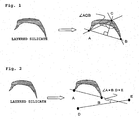
- the shape of the layered silicate observed from a cross section of the film preferably satisfies the following formula (III): 120° ⁇ ( ⁇ ACB)ave ⁇ 180° wherein A, B and C are points in one layered silicate, A and B are both end points in a longitudinal direction of the layered silicate, C is the farthest point from the straight line connecting A to B, ⁇ ACB is an angle (°) formed by the line AC and the line BC, and ( ⁇ ACB)ave is the average of ⁇ ACB which is obtained from 10 layered silicates with the first to tenth largest distances between the points A and B that are contained in a cross sectional area of 10 ⁇ m 2 .
- the above 10 layered silicates contained in the cross sectional area of 10 ⁇ m 2 preferably have a distance between the points A and B of at least 100 nm.
- ( ⁇ ABC)ave more preferably satisfies 130° ⁇ ( ⁇ ABC)ave ⁇ 180°, much more preferably 140° ⁇ ( ⁇ ABC)ave ⁇ 180° , particularly preferably 150° ⁇ ( ⁇ ABC)ave ⁇ 180°.
- the shape of the cation-exchanged layered silicate observed from a cross section of the film preferably satisfies the following formula (IV): 0 ⁇ ⁇ ( ⁇ A*B D*E) ⁇ 16 wherein A and B are points in one layered silicate and end points in a longitudinal direction of the layered silicate, A*B is the straight line connecting the point A to the point B, D*E is a reference straight line prepared on the cross section of the film, ⁇ A*B D*E is an acute angle (°) formed by A*B and D*E, and ⁇ ( ⁇ A*B D*E) is the standard deviation of ⁇ A*B D*E which is determined for 10 layered silicates with the first to tenth largest distances between the points A and B that are contained in a cross sectional area of 10 ⁇ m 2 .
- D*E is prepared for layered silicates in the cross sectional area of 10 ⁇ m 2 of the film of the present invention.
- D*E is a line which forms an angle together with A*B of each layered silicate, and where D*E is prepared is not particularly limited as long as it exists on the same plane (or the same film cross section) as A*B.
- ⁇ ( ⁇ A*B D*E) deviates from the range of the above formula (IV), the effect of improving elastic modulus by the layered silicate may become difficult to be exerted.
- ⁇ ( ⁇ A*B D*E) more preferably satisfies 0 ⁇ ⁇ ( ⁇ A*B D*E) ⁇ 12, much more preferably 0 ⁇ ⁇ ( ⁇ A*B D*E) ⁇ 10, particularly preferably 0 ⁇ ⁇ ( ⁇ A*B D*E) ⁇ 8.
- a production method of the film which satisfies the above formula (III) or (IV) is not particularly limited as long as it is a method which satisfies the above formula (III) or (IV). It is suitably achieved by forming and stretching the film of the present invention.
- a suitable stretching method a method of monoaxially or biaxially stretching the film sequentially or simultaneously can be named. More specifically, the stretch temperature preferably ranges from the glass transition point of the thermoplastic resin to (the glass transition point + 90° C), more preferably from the glass transition point of the thermoplastic resin to (the glass transition point + 70° C), much more preferably from the glass transition point to (the glass transition point + 60°C).
- the stretch ratio is preferably 1.2 to 100 times, more preferably 1.4 to 90 times, much more preferably 1.6 to 80 times.
- the stretch ratio is too low, it is difficult to orient the layered silicate so as to satisfy at least one of the above formulae (III) and (IV) undesirably.
- the stretch rate is preferably 0.001/min to 10,000/min, more preferably 0.005/min to 8,000/min, much more preferably 0.01/min to 5,000/min.
- the film of the present invention is a polyester film
- crystals of the polyester are preferably heat-set by a heat treatment after production or orientation by stretching of the film.
- the heat treatment temperature preferably ranges from the glass transition point of the polyester to the melting point of the polyester, more preferably from (the glass transition point + 20°C) to (the melting point - 10°C), much more preferably from (the glass transition point + 30°C) to (the melting point - 20°C).
- the heat treatment time is preferably 1 second to 10 minutes, more preferably 5 seconds to 9 minutes, much more preferably 10 seconds to 8 minutes. Further, during the heat treatment, it is preferable to hold the film so as to prevent loosening of orientation from occurring.
- the thus obtained film is excellent in mechanical properties and dimensional stability and can be widely used in a variety of applications, e.g., for electric and electronic materials including a magnetic recording medium, an electronic mount board and a capacitor, for packing, for medical use and for various industrial materials.
- thermoplastic resin composition for producing the film of the present invention uses a thermoplastic polyester or a thermoplastic aromatic polycarbonate as the thermoplastic resin. According to the studies made by the present inventor(s), it has been found that a resin composition containing a specific layered silicate out of the above layered silicates is excellent in heat resistance, a gas barrier property, flame retardancy, elasticity and tenacity and used in productions of various molded articles, fibers and films even when using various other thermoplastic resins in place of the above thermoplastic resins.
- thermoplastic resin composition comprises 100 parts by weight of the thermoplastic resin (A') and 0.1 to 10 parts by weight in terms of ash content of the layered silicate having, as at least a portion of cations, the organic cation represented by the above formula (I) wherein at least one of Rs is represented by the above formula (I-1).
- thermoplastic resin examples include a polyolefin such as a polyethylene, a polypropylene and a polystyrene, a polyarylate, a polyamide, a polyimide, a polyetherimide, a polyether, a polyketone, a polyetherketone, a polysulfide, a polysulfone and a polyethersulfone, in addition to the aforementioned polyester and aromatic polycarbonate.
- the polyester, aromatic polycarbonate, polyamide, polyimide, polyetherketone, polyether, polysulfide, polysulfone and polyethersulfone are preferred since these can particularly cause a layered silicate having high heat resistance to exhibit its properties.
- polyamide examples include a condensation product obtained from a diamine and a carboxylic acid or an aminocarboxylic acid.
- suitable compounds of the diamine include aliphatic diamines such as methylene diamine, ethylene diamine, trimethylene diamine, tetramethylene diamine, pentamethylene diamine, hexamethylene diamine, heptamethylene diamine, octamethylene diamine, nonamethylene diamine, decamethylene diamine, undecamethylene diamine, dodecamethylene diamine, tridecamethylene diamine, tetradecamethylene diamine, pentadecamethylene diamine, hexadecamethylene diamine, heptadecamethylene diamine, octadecamethylene diamine, nonadecamethylene diamine and decadecamethylene diamine; and aromatic diamines such as o-phenylene diamine, m-phenylene diamine, p-phenylene diamine, 2,2'-diamino biphenyl, 3,3'-diamino biphenyl, 4,4'-diamino biphenyl, 3,4'-d
- dicarboxylic acid examples include aromatic dicarboxylic acids such as terephthalic acid, isophthalic acid, ortho-phthalic acid, chlorphthalic acid, nitrophthalic acid, 2,5-naphthalenedicarboxylic acid, 2,6-naphthalenedicarboxylic acid, 2,7-naphthalenedicarboxylic acid, 1,5-naphthalenedicarboxylic acid, 4,4'-biphenyldicarboxylic acid, 2,2'-biphenyldicarboxylic acid, 4,4'-diphenyl ether dicarboxylic acid, 4,4'-diphenylmethanedicarboxylic acid, 4,4'-diphenylsulfonedicarboxylic acid, 4,4'-diphenylisopropylidenedicarboxylic acid, 1,2-bis(4-carboxyphenoxy)-ethane and 5-sodium sulfoisophthalate; aliphatic dicarboxylic acids such as ter
- aminocarboxylic acid examples include aminoacetic acid, 2-aminopropionic acid, 3-aminopropionic acid, 2-aminobutyric acid, 3-aminobutyric acid, 4-aminobutyric acid, 5-aminopentanoic acid, 6-aminohexanoic acid, 7-aminoheptanoic acid, 8-aminooctanoic acid, 9-aminononanoic acid, 10-aminodacanoic acid, 11-aminoundecanoic acid and 12-aminododecanoic acid. These may be used alone or in admixture of two or more.
- polyimide and polyetherimide include semi-aromatic polyimides such as a poly(ethylenepyromellitimide), a poly(butylenepyromellitimide), a poly(hexamethylenepyromellitimide), a poly(octamethylenepyromellitimide), a poly(dodecamethylenepyromellitimide), a poly(trimethylhexamethylenepyromellitimide) and a poly(isophoronylenepyromellitimide); and a polyetherimide (product of GE Plastics Co. , Ltd., trade name: ULTEM). These may be used alone or in admixture of two or more.
- semi-aromatic polyimides such as a poly(ethylenepyromellitimide), a poly(butylenepyromellitimide), a poly(hexamethylenepyromellitimide), a poly(octamethylenepyromellitimide), a poly(dodecamethylenepyromellitim
- polyether a conventionally known polyether having recurring units in which aromatic groups are connected by an ether linkage can be used.
- Illustrative examples of such a polyether include a poly(1,4-phenylene)ether, a poly(2,6-dimethyl-1,4-phenylene)ether, a poly(2-methyl-6-ethyl-1,4-phenylene)ether, a poly(2,6-diethyl-1,4-phenylene)ether, a poly(2-ethyl-6-n-propyl-1,4-phenylene)ether, a poly(2,6-di-n-propyl-1,4-phenylene)ether, a poly(2-methyl-6-n-buthyl-1,4-phenylene)ether, a poly(2-ethyl-6-isopropyl-1,4-phenylene)ether, a poly(2-methyl-6-chloroethyl-1,4-phenylene)ether and a poly(2-methyl-6-hydroxy
- polyetherketone conventionally known polyetherketones described in U.S. Patent Nos. 3,953,400, 4,320,224 and 4,709,007 can be used.
- Illustrative examples of the polyetherketone include polyetherketones having at least one of recurring units represented by the following formulae.
- polysulfide a conventionally known polysulfide having recurring units in which aromatic groups are connected by a sulfide linkage can be used.
- An example of such a polysulfide is a poly(1,4-phenylene)sulfide.
- polysulfone and polyethersulfone conventionally known polysulfone and polyethersulfone in which a diphenylsulfone unit forms a portion of the main chain of the polymer can be used.
- Illustrative examples of the polysulfone and polyethersulfone include those having at least one of recurring units represented by the following formulae. and
- the layered silicate having, as at least a portion of cations, the organic cation represented by the above formula (I) wherein at least one of Rs is represented by the above formula (I-1) is as described above. Further, it is to be understood that the above description is directly applied to what is not described herein.
- the layered silicate preferably has the organic cation such that a cation exchange percentage (%) represented by the following formula (VI) is 50 to 200.
- Cation Exchange Percentage (%) ⁇ Wf/(1 - Wf) ⁇ /(M org /M si ) x 100
- Wf represents a weight reduction ratio of the layered silicate measured by a thermogravimetric analysis from 120° C to 800° C at a temperature increasing rate of 20°C/min
- M org represents the molecular weight of the imidazolium ion
- M si represents a molecular weight of the layered silicate per charge.
- the molecular weight per charge in the layered silicate is a value calculated by a reciprocal of the cation exchange capacity (unit: gram equivalent or eq/100 g) of the layered silicate.)
- the modified layered silicate a modified layered silicate having a thermal decomposition temperature of not lower than 310°C is preferably used. More specifically, the layered silicate is preferably smectite, vermiculite or mica in which at least a portion of cations has been replaced by the organic cation.
- the above layered silicate used in the above thermoplastic resin composition has, as at least a portion of cations, an organic cation represented by the following formula: wherein R 1 is a divalent hydrocarbon group having 5 to 20 carbon atoms, R 2 is a divalent hydrocarbon group having 1 to 20 carbon atoms, R' is a group represented by the following formula (I-1): wherein R 1 and R 2 are the same as defined above, an alkyl group, an aryl group or an aralkyl group, L + is an ammonium ion, a phosphonium ion or a hetero aromatic ion, and n is 1 to 5.
- R 1 is a divalent hydrocarbon group having 5 to 20 carbon atoms
- R 2 is a divalent hydrocarbon group having 1 to 20 carbon atoms
- R' is a group represented by the following formula (I-1): wherein R 1 and R 2 are the same as defined above, an alkyl group, an aryl group or an aralkyl
- the layered silicate is a novel compound provided by the present invention.
- the layered silicate is an example of the layered silicate represented by the above formula (I), and it is to be understood that the above description is directly applied to what is not described herein.
- a layered silicate is preferred that has the organic cation such that a cation exchange percentage (%) represented by the following formula (VI) is 50 to 200.
- Cation Exchange Percentage (%) ⁇ Wf/(1 - Wf) ⁇ /(M org /M si ) x 100
- Wf represents a weight reduction ratio of the layered silicate measured by a thermogravimetric analysis from 120° C to 800° C at a temperature increasing rate of 20°C/min
- M org represents the molecular weight of the imidazolium ion
- M si represents a molecular weight of the layered silicate per charge.
- the molecular weight per charge in the layered silicate is a value calculated by a reciprocal of the cation exchange capacity (unit: gram equivalent or eq/100 g) of the layered silicate.)
- the layered silicate preferably has a thermal decomposition temperature of not lower than 310° C and is preferably smectite, vermiculite or mica in which at least a portion of cations has been replaced by the organic cation.
- phthalimide potassium 85 parts by weight of phthalimide potassium, 1,008 parts by weight of 1,10-dibromodecane and 430 parts by weight of (fully dehydrated) dimethyl formamide were charged into a flask, stirred, and heated at 100°C for 20 hours. After heating, volatile components were all removed, and the residue was extracted with xylene. Volatile components were distilled off from the extracted solution, and the residue was left to stand at room temperature so as to obtain crystals of 10-bromodecamethylphthalimide. 3.5 parts by weight of 10-bromodecamethylphthalimide and 0.7 parts by weight of imidazole were charged into a flask and heated at 100° C for 10 hours so as to obtain phthalimidedecamethyleneimidazolium bromide.
- IC10I-M cation-exchanged layered silicate
- the weight ratio between the poly(ethylene-2,6-naphthalenedicarboxylate) and the layered silicate in terms of ash in the composition was 100:7.
- the melting point of the composition was 265°C, and its reduced viscosity was 0.56 dL/g.
- Example 3 The film obtained in Example 3 was stretched to 3.6 times in a longitudinal direction and to 3.6 times in a transverse direction (stretch ratio: 13 times) simultaneously at 150° C at a stretch rate of 45/min. Then, the film was heat-set at 205°C for 1 minute so as to give a biaxially oriented film.
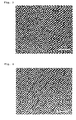
- Table 1 The properties of the obtained film are shown in Table 1. Further, a photograph of the film observed from a cross sectional direction is shown in Fig. 4.
- Example 3 The film obtained in Example 3 was stretched to 3.0 times in a longitudinal direction and to 3.0 times in a transverse direction (stretch ratio: 9.0 times) simultaneously at 130° C at a stretch rate of 38/min. Then, the film was heat-set at 205°C for 1 minute so as to give a biaxially oriented film.
- Table 1 The properties of the obtained film are shown in Table 1.
- a layered silicate (abbreviated as C10I-M) cation-exchanged with N-decamethylimidazolium was obtained in the same manner as in Example 1 except that 10 parts by weight of N-decamethylimidazolium bromide (above formula) was used as an organic onium ion.
- the cation exchange rate of C10I-M was 130%, and the thermal decomposition temperature was 344°C.
- a composition comprising a poly(ethylene-2,6-naphthalenedicarboxylate) and a layered silicate was obtained in the same manner as in Example 1 except that 3.0 parts by weight of C10I-M synthesized in Reference Example 2 was used as the layered silicate.
- the weight ratio between the poly(ethylene-2,6-naphthalenedicarboxylate) and the layered silicate in terms of ash in the composition was 100: 2.
- the melting point of the composition was 263° C, and its reduced viscosity was 0.72 dL/g. Further, when the state of the layered silicate dispersed in the composition was observed by use of a transmission electron microscope, a large agglomerate was observed as shown in Fig. 5, indicating low dispersibility.
- An unstretched film was obtained in the same manner as in Example 3 except that a poly(ethylene-2,6-naphthalate) (reduced viscosity: 0.78 g/dL) was used.
- the properties of the obtained film are shown in Table 2.
- the film obtained in Comparative Example 2 was processed in the same manner as in Example 4 so as to obtain a biaxially oriented film.
- the properties of the obtained film are shown in Table 2.
- the film obtained in Comparative Example 2 was processed in the same manner as in Example 5 so as to obtain a biaxially oriented film.
- the properties of the obtained film are shown in Table 2.
- phthalimidedecamethyleneimidazolium bromide and decylimidazolium bromide were recovered in a molar ratio of 4.5:5.5. From this result, the molar ratio between phthalimidedecamethyleneimidazolium and decylimidazolium contained in IC10I/C10I-M was estimated to be 5.5:4.5.
- the cation exchange rate of IC10I/C10I-M was 119%, the thermal decomposition temperature was 342°C, and the distance between layers was 25.8 ⁇ .
- the weight ratio between the poly(ethylene-2,6-naphthalenedicarboxylate) and the layered silicate in terms of ash in the composition was 100:2.
- the melting point of the composition was 265°C, and its reduced viscosity was 0.81 dL/g.
- the resin composition was observed under a transmission electron microscope (Fig. 6). As shown in Fig. 6, the layered silicate was highly dispersed.
- phthalimide potassium 85 parts by weight of phthalimide potassium, 1,008 parts by weight of 1,10-dibromodecane and 430 parts by weight of (fully dehydrated) dimethyl formamide were charged into a flask, stirred, and heated at 100°C for 20 hours. After heating, volatile components were all removed, and the residue was extracted with xylene. Volatile components were distilled off from the extracted solution, and the residue was left to stand at room temperature so as to obtain crystals of 10-bromodecamethylenephthalimide.
- the melting point of the composition was 265°C, and its reduced viscosity was 0.54 dL/g.
- Example 9 860 parts by weight of the composition of Example 9 and 2,240 parts by weight of poly(ethylene-2,6-naphthalate) (reduced viscosity: 0.78 g/dL) were melt-kneaded at a melt temperature of 300°C by use of a twin-screw extruder.
- the obtained composition was extruded onto a cooling drum of 80° C from a 1-mm-wide slit die at a melt temperature of 300° C in the same manner as in Example 3 so as to obtain a film.
- the properties of the obtained film are shown in Table 1.
- Example 10 The film obtained in Example 10 was stretched to 3.6 times in a longitudinal direction and to 3.6 times in a transverse direction (stretch ratio: 13 times) simultaneously at 150° C at a stretch rate of 45/min. Then, the film was heat-set at 205°C for 1 minute so as to give a biaxially oriented film.
- Table 1 The properties of the obtained film are shown in Table 1.
Landscapes
- Chemical & Material Sciences (AREA)
- Organic Chemistry (AREA)
- Engineering & Computer Science (AREA)
- Ceramic Engineering (AREA)
- Chemical Kinetics & Catalysis (AREA)
- Health & Medical Sciences (AREA)
- Medicinal Chemistry (AREA)
- Polymers & Plastics (AREA)
- Materials Engineering (AREA)
- Structural Engineering (AREA)
- Inorganic Chemistry (AREA)
- Civil Engineering (AREA)
- General Health & Medical Sciences (AREA)
- Compositions Of Macromolecular Compounds (AREA)
- Manufacture Of Macromolecular Shaped Articles (AREA)
- Laminated Bodies (AREA)
Applications Claiming Priority (5)
| Application Number | Priority Date | Filing Date | Title |
|---|---|---|---|
| JP2002265179 | 2002-09-11 | ||
| JP2002265179 | 2002-09-11 | ||
| JP2003064814 | 2003-03-11 | ||
| JP2003064814 | 2003-03-11 | ||
| PCT/JP2003/011584 WO2004024820A1 (ja) | 2002-09-11 | 2003-09-10 | 熱可塑性フィルム、熱可塑性樹脂組成物および層状珪酸塩 |
Publications (3)
| Publication Number | Publication Date |
|---|---|
| EP1538183A1 true EP1538183A1 (de) | 2005-06-08 |
| EP1538183A4 EP1538183A4 (de) | 2007-01-10 |
| EP1538183B1 EP1538183B1 (de) | 2007-10-31 |
Family
ID=31996141
Family Applications (1)
| Application Number | Title | Priority Date | Filing Date |
|---|---|---|---|
| EP03795376A Expired - Lifetime EP1538183B1 (de) | 2002-09-11 | 2003-09-10 | Thermoplastische folie, thermoplastische harzzusammensetzung und phyllosilicat |
Country Status (10)
| Country | Link |
|---|---|
| US (1) | US7189782B2 (de) |
| EP (1) | EP1538183B1 (de) |
| JP (1) | JP3902626B2 (de) |
| KR (1) | KR100981899B1 (de) |
| CN (1) | CN1290924C (de) |
| AT (1) | ATE377043T1 (de) |
| AU (1) | AU2003266507A1 (de) |
| DE (1) | DE60317212T2 (de) |
| TW (1) | TWI282804B (de) |
| WO (1) | WO2004024820A1 (de) |
Cited By (3)
| Publication number | Priority date | Publication date | Assignee | Title |
|---|---|---|---|---|
| EP1702887A4 (de) * | 2003-09-18 | 2009-03-11 | Teijin Ltd | Phyllosilicat und dieses enthaltende thermoplastharzzusammensetzung |
| EP2060538A3 (de) * | 2007-11-13 | 2009-06-17 | Tomoegawa Co., Ltd. | Tondispersion, Verfahren zu ihrer Herstellung und Tondünnfilm |
| WO2012016952A1 (de) * | 2010-08-02 | 2012-02-09 | Siemens Aktiengesellschaft | Hochtemperaturstabile schichtsilikate mit erhöhter schichtaufweitung |
Families Citing this family (5)
| Publication number | Priority date | Publication date | Assignee | Title |
|---|---|---|---|---|
| JP2005298751A (ja) * | 2004-04-15 | 2005-10-27 | Teijin Ltd | ポリエステル樹脂組成物およびポリエステルフィルム |
| US20090020913A1 (en) * | 2005-03-22 | 2009-01-22 | Fujifilm Corporation | Solution Casting Method |
| JP5269288B2 (ja) * | 2005-10-28 | 2013-08-21 | 住友化学株式会社 | 液晶ポリエステル樹脂組成物及び該樹脂組成物から得られるフィルム |
| US20070161738A1 (en) * | 2006-01-09 | 2007-07-12 | Bayer Materialscience Llc | Thermoplastic composition containing polycarbonate-polyester and nanoclay |
| JP2015193797A (ja) * | 2014-03-24 | 2015-11-05 | 日東電工株式会社 | 透明樹脂フィルム |
Family Cites Families (11)
| Publication number | Priority date | Publication date | Assignee | Title |
|---|---|---|---|---|
| US5530052A (en) | 1995-04-03 | 1996-06-25 | General Electric Company | Layered minerals and compositions comprising the same |
| JP3964497B2 (ja) | 1997-06-12 | 2007-08-22 | ユニチカ株式会社 | ポリエステル組成物 |
| JP3686260B2 (ja) | 1997-07-01 | 2005-08-24 | 株式会社カネカ | 層状無機物含有樹脂フィルム |
| WO1999002593A1 (en) | 1997-07-09 | 1999-01-21 | Eastman Chemical Company | Polyester composite material and method for its manufacturing |
| JP3686258B2 (ja) | 1998-06-19 | 2005-08-24 | 株式会社カネカ | ポリイミド系フィルムおよび製造方法 |
| US7138453B1 (en) | 1999-04-05 | 2006-11-21 | Kaneka Corporation | Thermoplastic resin composition and process for preparing the same |
| JP2000336186A (ja) | 1999-05-31 | 2000-12-05 | Toray Ind Inc | 芳香族ポリアミドフィルムとその製造方法及びそれを用いた磁気記録媒体と磁気テープ |
| JP2001131400A (ja) | 1999-11-05 | 2001-05-15 | Kanegafuchi Chem Ind Co Ltd | 樹脂組成物および光学フィルム |
| JP3706534B2 (ja) * | 2000-09-27 | 2005-10-12 | 帝人株式会社 | ポリエステル複合材料 |
| EP1350815A4 (de) * | 2000-12-08 | 2008-04-30 | Sekisui Chemical Co Ltd | Material für isolierendes substrat, leiterplatte, laminat, kupferfolie mit harz, kupferummanteltes laminat, polyimidfolie, folie für tabs und prepregs |
| JP2002370276A (ja) | 2001-06-18 | 2002-12-24 | Teijin Dupont Films Japan Ltd | 二軸配向ポリエステルフィルム |
-
2003
- 2003-09-10 DE DE60317212T patent/DE60317212T2/de not_active Expired - Lifetime
- 2003-09-10 EP EP03795376A patent/EP1538183B1/de not_active Expired - Lifetime
- 2003-09-10 WO PCT/JP2003/011584 patent/WO2004024820A1/ja not_active Ceased
- 2003-09-10 JP JP2004535936A patent/JP3902626B2/ja not_active Expired - Fee Related
- 2003-09-10 AU AU2003266507A patent/AU2003266507A1/en not_active Abandoned
- 2003-09-10 CN CNB038016710A patent/CN1290924C/zh not_active Expired - Fee Related
- 2003-09-10 AT AT03795376T patent/ATE377043T1/de not_active IP Right Cessation
- 2003-09-10 US US10/501,788 patent/US7189782B2/en not_active Expired - Fee Related
- 2003-09-10 KR KR1020047006814A patent/KR100981899B1/ko not_active Expired - Fee Related
- 2003-09-10 TW TW092125105A patent/TWI282804B/zh not_active IP Right Cessation
Non-Patent Citations (2)
| Title |
|---|
| No further relevant documents disclosed * |
| See also references of WO2004024820A1 * |
Cited By (4)
| Publication number | Priority date | Publication date | Assignee | Title |
|---|---|---|---|---|
| EP1702887A4 (de) * | 2003-09-18 | 2009-03-11 | Teijin Ltd | Phyllosilicat und dieses enthaltende thermoplastharzzusammensetzung |
| US7759420B2 (en) | 2003-09-18 | 2010-07-20 | Teijin Limited | Layered silicate and thermoplastic resin composition containing it |
| EP2060538A3 (de) * | 2007-11-13 | 2009-06-17 | Tomoegawa Co., Ltd. | Tondispersion, Verfahren zu ihrer Herstellung und Tondünnfilm |
| WO2012016952A1 (de) * | 2010-08-02 | 2012-02-09 | Siemens Aktiengesellschaft | Hochtemperaturstabile schichtsilikate mit erhöhter schichtaufweitung |
Also Published As
| Publication number | Publication date |
|---|---|
| US7189782B2 (en) | 2007-03-13 |
| JP3902626B2 (ja) | 2007-04-11 |
| CN1290924C (zh) | 2006-12-20 |
| US20050089698A1 (en) | 2005-04-28 |
| AU2003266507A1 (en) | 2004-04-30 |
| CN1596287A (zh) | 2005-03-16 |
| KR100981899B1 (ko) | 2010-09-13 |
| DE60317212T2 (de) | 2008-08-14 |
| EP1538183A4 (de) | 2007-01-10 |
| KR20050046651A (ko) | 2005-05-18 |
| WO2004024820A1 (ja) | 2004-03-25 |
| TWI282804B (en) | 2007-06-21 |
| ATE377043T1 (de) | 2007-11-15 |
| DE60317212D1 (de) | 2007-12-13 |
| JPWO2004024820A1 (ja) | 2006-01-05 |
| EP1538183B1 (de) | 2007-10-31 |
| TW200404849A (en) | 2004-04-01 |
Similar Documents
| Publication | Publication Date | Title |
|---|---|---|
| US6057035A (en) | High-temperature polymer/inorganic nanocomposites | |
| Burnside et al. | Synthesis and properties of new poly (dimethylsiloxane) nanocomposites | |
| US6486252B1 (en) | Nanocomposites for high barrier applications | |
| Liu et al. | Intercalation and exfoliation: a review on morphology of polymer nanocomposites reinforced by inorganic layer structures | |
| EP1040081B1 (de) | Polymernanoverbundmaterialien für gasdichte anwendungen | |
| US6251980B1 (en) | Nanocomposites formed by onium ion-intercalated clay and rigid anhydride-cured epoxy resins | |
| US7166657B2 (en) | Article utilizing highly branched polymers to splay layered materials | |
| WO2007027114A1 (en) | An intumescent fire retardant and the method of its manufacture | |
| CA2393015A1 (en) | A polymer-clay nanocomposite comprising an amorphous oligomer | |
| EP1538183B1 (de) | Thermoplastische folie, thermoplastische harzzusammensetzung und phyllosilicat | |
| JP2000053858A (ja) | 高剛性難燃ポリアミド複合材料 | |
| JP2005298751A (ja) | ポリエステル樹脂組成物およびポリエステルフィルム | |
| JP3296100B2 (ja) | 熱可塑性樹脂組成物の製造方法 | |
| Kulshreshtha et al. | Nano‐addition of raw bentonite enhances polypropylene (PP) properties | |
| JPWO2005085349A1 (ja) | ポリエステル樹脂組成物 | |
| Jang et al. | Preparation and characterization of cellulose nanocomposite films with two different organo-micas | |
| Imai | Special considerations for clay-based materials | |
| JP2006328210A (ja) | ポリエステル樹脂組成物および成形体 | |
| JP2010024370A (ja) | ポリエステル樹脂組成物 | |
| CA2401052A1 (en) | High-temperature polymer/inorganic nanocomposites | |
| JP2006028241A (ja) | ポリエステルフィルム | |
| KANDOLA | Faculty of Technology, Bolton Institute, Bolton | |
| JP2005298649A (ja) | ポリ(エチレン−2、6−ナフタレンジカルボキシレート)フィルム |
Legal Events
| Date | Code | Title | Description |
|---|---|---|---|
| PUAI | Public reference made under article 153(3) epc to a published international application that has entered the european phase |
Free format text: ORIGINAL CODE: 0009012 |
|
| 17P | Request for examination filed |
Effective date: 20040624 |
|
| AK | Designated contracting states |
Kind code of ref document: A1 Designated state(s): AT BE BG CH CY CZ DE DK EE ES FI FR GB GR HU IE IT LI LU MC NL PT RO SE SI SK TR |
|
| AX | Request for extension of the european patent |
Extension state: AL LT LV MK |
|
| DAX | Request for extension of the european patent (deleted) | ||
| A4 | Supplementary search report drawn up and despatched |
Effective date: 20061211 |
|
| RIC1 | Information provided on ipc code assigned before grant |
Ipc: C08K 9/04 20060101AFI20061205BHEP Ipc: C04B 14/20 20060101ALI20061205BHEP Ipc: C01B 33/44 20060101ALI20061205BHEP |
|
| GRAP | Despatch of communication of intention to grant a patent |
Free format text: ORIGINAL CODE: EPIDOSNIGR1 |
|
| GRAS | Grant fee paid |
Free format text: ORIGINAL CODE: EPIDOSNIGR3 |
|
| GRAA | (expected) grant |
Free format text: ORIGINAL CODE: 0009210 |
|
| AK | Designated contracting states |
Kind code of ref document: B1 Designated state(s): AT BE BG CH CY CZ DE DK EE ES FI FR GB GR HU IE IT LI LU MC NL PT RO SE SI SK TR |
|
| REG | Reference to a national code |
Ref country code: GB Ref legal event code: FG4D |
|
| REG | Reference to a national code |
Ref country code: IE Ref legal event code: FG4D |
|
| REG | Reference to a national code |
Ref country code: CH Ref legal event code: EP |
|
| REF | Corresponds to: |
Ref document number: 60317212 Country of ref document: DE Date of ref document: 20071213 Kind code of ref document: P |
|
| PG25 | Lapsed in a contracting state [announced via postgrant information from national office to epo] |
Ref country code: CH Free format text: LAPSE BECAUSE OF FAILURE TO SUBMIT A TRANSLATION OF THE DESCRIPTION OR TO PAY THE FEE WITHIN THE PRESCRIBED TIME-LIMIT Effective date: 20071031 Ref country code: ES Free format text: LAPSE BECAUSE OF FAILURE TO SUBMIT A TRANSLATION OF THE DESCRIPTION OR TO PAY THE FEE WITHIN THE PRESCRIBED TIME-LIMIT Effective date: 20080211 Ref country code: LI Free format text: LAPSE BECAUSE OF FAILURE TO SUBMIT A TRANSLATION OF THE DESCRIPTION OR TO PAY THE FEE WITHIN THE PRESCRIBED TIME-LIMIT Effective date: 20071031 Ref country code: SE Free format text: LAPSE BECAUSE OF FAILURE TO SUBMIT A TRANSLATION OF THE DESCRIPTION OR TO PAY THE FEE WITHIN THE PRESCRIBED TIME-LIMIT Effective date: 20080131 |
|
| REG | Reference to a national code |
Ref country code: CH Ref legal event code: PL |
|
| PG25 | Lapsed in a contracting state [announced via postgrant information from national office to epo] |
Ref country code: SI Free format text: LAPSE BECAUSE OF FAILURE TO SUBMIT A TRANSLATION OF THE DESCRIPTION OR TO PAY THE FEE WITHIN THE PRESCRIBED TIME-LIMIT Effective date: 20071031 Ref country code: PT Free format text: LAPSE BECAUSE OF FAILURE TO SUBMIT A TRANSLATION OF THE DESCRIPTION OR TO PAY THE FEE WITHIN THE PRESCRIBED TIME-LIMIT Effective date: 20080331 Ref country code: BG Free format text: LAPSE BECAUSE OF FAILURE TO SUBMIT A TRANSLATION OF THE DESCRIPTION OR TO PAY THE FEE WITHIN THE PRESCRIBED TIME-LIMIT Effective date: 20080131 |
|
| PG25 | Lapsed in a contracting state [announced via postgrant information from national office to epo] |
Ref country code: AT Free format text: LAPSE BECAUSE OF FAILURE TO SUBMIT A TRANSLATION OF THE DESCRIPTION OR TO PAY THE FEE WITHIN THE PRESCRIBED TIME-LIMIT Effective date: 20071031 |
|
| ET | Fr: translation filed | ||
| PG25 | Lapsed in a contracting state [announced via postgrant information from national office to epo] |
Ref country code: CZ Free format text: LAPSE BECAUSE OF FAILURE TO SUBMIT A TRANSLATION OF THE DESCRIPTION OR TO PAY THE FEE WITHIN THE PRESCRIBED TIME-LIMIT Effective date: 20071031 Ref country code: DK Free format text: LAPSE BECAUSE OF FAILURE TO SUBMIT A TRANSLATION OF THE DESCRIPTION OR TO PAY THE FEE WITHIN THE PRESCRIBED TIME-LIMIT Effective date: 20071031 |
|
| PG25 | Lapsed in a contracting state [announced via postgrant information from national office to epo] |
Ref country code: RO Free format text: LAPSE BECAUSE OF FAILURE TO SUBMIT A TRANSLATION OF THE DESCRIPTION OR TO PAY THE FEE WITHIN THE PRESCRIBED TIME-LIMIT Effective date: 20071031 Ref country code: BE Free format text: LAPSE BECAUSE OF FAILURE TO SUBMIT A TRANSLATION OF THE DESCRIPTION OR TO PAY THE FEE WITHIN THE PRESCRIBED TIME-LIMIT Effective date: 20071031 Ref country code: SK Free format text: LAPSE BECAUSE OF FAILURE TO SUBMIT A TRANSLATION OF THE DESCRIPTION OR TO PAY THE FEE WITHIN THE PRESCRIBED TIME-LIMIT Effective date: 20071031 |
|
| PLBE | No opposition filed within time limit |
Free format text: ORIGINAL CODE: 0009261 |
|
| STAA | Information on the status of an ep patent application or granted ep patent |
Free format text: STATUS: NO OPPOSITION FILED WITHIN TIME LIMIT |
|
| 26N | No opposition filed |
Effective date: 20080801 |
|
| PG25 | Lapsed in a contracting state [announced via postgrant information from national office to epo] |
Ref country code: GR Free format text: LAPSE BECAUSE OF FAILURE TO SUBMIT A TRANSLATION OF THE DESCRIPTION OR TO PAY THE FEE WITHIN THE PRESCRIBED TIME-LIMIT Effective date: 20080201 |
|
| PG25 | Lapsed in a contracting state [announced via postgrant information from national office to epo] |
Ref country code: FI Free format text: LAPSE BECAUSE OF FAILURE TO SUBMIT A TRANSLATION OF THE DESCRIPTION OR TO PAY THE FEE WITHIN THE PRESCRIBED TIME-LIMIT Effective date: 20071031 |
|
| PG25 | Lapsed in a contracting state [announced via postgrant information from national office to epo] |
Ref country code: MC Free format text: LAPSE BECAUSE OF NON-PAYMENT OF DUE FEES Effective date: 20080930 Ref country code: EE Free format text: LAPSE BECAUSE OF FAILURE TO SUBMIT A TRANSLATION OF THE DESCRIPTION OR TO PAY THE FEE WITHIN THE PRESCRIBED TIME-LIMIT Effective date: 20071031 |
|
| PG25 | Lapsed in a contracting state [announced via postgrant information from national office to epo] |
Ref country code: CY Free format text: LAPSE BECAUSE OF FAILURE TO SUBMIT A TRANSLATION OF THE DESCRIPTION OR TO PAY THE FEE WITHIN THE PRESCRIBED TIME-LIMIT Effective date: 20071031 Ref country code: IE Free format text: LAPSE BECAUSE OF NON-PAYMENT OF DUE FEES Effective date: 20080910 |
|
| PG25 | Lapsed in a contracting state [announced via postgrant information from national office to epo] |
Ref country code: HU Free format text: LAPSE BECAUSE OF FAILURE TO SUBMIT A TRANSLATION OF THE DESCRIPTION OR TO PAY THE FEE WITHIN THE PRESCRIBED TIME-LIMIT Effective date: 20080501 Ref country code: LU Free format text: LAPSE BECAUSE OF NON-PAYMENT OF DUE FEES Effective date: 20080910 |
|
| PG25 | Lapsed in a contracting state [announced via postgrant information from national office to epo] |
Ref country code: TR Free format text: LAPSE BECAUSE OF FAILURE TO SUBMIT A TRANSLATION OF THE DESCRIPTION OR TO PAY THE FEE WITHIN THE PRESCRIBED TIME-LIMIT Effective date: 20071031 |
|
| PGFP | Annual fee paid to national office [announced via postgrant information from national office to epo] |
Ref country code: DE Payment date: 20110923 Year of fee payment: 9 Ref country code: GB Payment date: 20110921 Year of fee payment: 9 Ref country code: FR Payment date: 20111004 Year of fee payment: 9 |
|
| PGFP | Annual fee paid to national office [announced via postgrant information from national office to epo] |
Ref country code: IT Payment date: 20110923 Year of fee payment: 9 Ref country code: NL Payment date: 20110726 Year of fee payment: 9 |
|
| REG | Reference to a national code |
Ref country code: NL Ref legal event code: V1 Effective date: 20130401 |
|
| GBPC | Gb: european patent ceased through non-payment of renewal fee |
Effective date: 20120910 |
|
| REG | Reference to a national code |
Ref country code: FR Ref legal event code: ST Effective date: 20130531 |
|
| PG25 | Lapsed in a contracting state [announced via postgrant information from national office to epo] |
Ref country code: GB Free format text: LAPSE BECAUSE OF NON-PAYMENT OF DUE FEES Effective date: 20120910 Ref country code: DE Free format text: LAPSE BECAUSE OF NON-PAYMENT OF DUE FEES Effective date: 20130403 |
|
| PG25 | Lapsed in a contracting state [announced via postgrant information from national office to epo] |
Ref country code: NL Free format text: LAPSE BECAUSE OF NON-PAYMENT OF DUE FEES Effective date: 20130401 Ref country code: FR Free format text: LAPSE BECAUSE OF NON-PAYMENT OF DUE FEES Effective date: 20121001 Ref country code: IT Free format text: LAPSE BECAUSE OF NON-PAYMENT OF DUE FEES Effective date: 20120910 |
|
| REG | Reference to a national code |
Ref country code: DE Ref legal event code: R119 Ref document number: 60317212 Country of ref document: DE Effective date: 20130403 |