EP1533296A1 - Sulfenylverbindung, markierungsreagens und verfahren zur analyse von peptid - Google Patents
Sulfenylverbindung, markierungsreagens und verfahren zur analyse von peptid Download PDFInfo
- Publication number
- EP1533296A1 EP1533296A1 EP03761759A EP03761759A EP1533296A1 EP 1533296 A1 EP1533296 A1 EP 1533296A1 EP 03761759 A EP03761759 A EP 03761759A EP 03761759 A EP03761759 A EP 03761759A EP 1533296 A1 EP1533296 A1 EP 1533296A1
- Authority
- EP
- European Patent Office
- Prior art keywords
- group
- compound
- peptide
- labeled
- labeling
- Prior art date
- Legal status (The legal status is an assumption and is not a legal conclusion. Google has not performed a legal analysis and makes no representation as to the accuracy of the status listed.)
- Withdrawn
Links
- 0 *c1ccccc1[N+]([O-])=O Chemical compound *c1ccccc1[N+]([O-])=O 0.000 description 1
Images


Classifications
-
- G—PHYSICS
- G01—MEASURING; TESTING
- G01N—INVESTIGATING OR ANALYSING MATERIALS BY DETERMINING THEIR CHEMICAL OR PHYSICAL PROPERTIES
- G01N33/00—Investigating or analysing materials by specific methods not covered by groups G01N1/00 - G01N31/00
- G01N33/48—Biological material, e.g. blood, urine; Haemocytometers
- G01N33/50—Chemical analysis of biological material, e.g. blood, urine; Testing involving biospecific ligand binding methods; Immunological testing
- G01N33/68—Chemical analysis of biological material, e.g. blood, urine; Testing involving biospecific ligand binding methods; Immunological testing involving proteins, peptides or amino acids
- G01N33/6803—General methods of protein analysis not limited to specific proteins or families of proteins
- G01N33/6848—Methods of protein analysis involving mass spectrometry
-
- C—CHEMISTRY; METALLURGY
- C07—ORGANIC CHEMISTRY
- C07C—ACYCLIC OR CARBOCYCLIC COMPOUNDS
- C07C313/00—Sulfinic acids; Sulfenic acids; Halides, esters or anhydrides thereof; Amides of sulfinic or sulfenic acids, i.e. compounds having singly-bound oxygen atoms of sulfinic or sulfenic groups replaced by nitrogen atoms, not being part of nitro or nitroso groups
- C07C313/08—Sulfenic acids; Derivatives thereof
-
- C—CHEMISTRY; METALLURGY
- C07—ORGANIC CHEMISTRY
- C07B—GENERAL METHODS OF ORGANIC CHEMISTRY; APPARATUS THEREFOR
- C07B2200/00—Indexing scheme relating to specific properties of organic compounds
- C07B2200/05—Isotopically modified compounds, e.g. labelled
-
- G—PHYSICS
- G01—MEASURING; TESTING
- G01N—INVESTIGATING OR ANALYSING MATERIALS BY DETERMINING THEIR CHEMICAL OR PHYSICAL PROPERTIES
- G01N2458/00—Labels used in chemical analysis of biological material
- G01N2458/15—Non-radioactive isotope labels, e.g. for detection by mass spectrometry
Definitions
- the present invention relates to exhaustive analysis of proteins expressed in living cells and tissues. More specifically, the present invention relates to compounds suitable for the analysis of expressed proteins, labeling reagents using such compounds, and quantitative analysis of expressed proteins using labeling agents.
- Sulfenyl compounds are known to react with the indole ring of tryptophan residues and have been used as selective labeling reagents for tryptophan residues.
- Two-dimensional gel electrophoresis (2D-PAGE) is a common technique used in the analysis of proteins. In this technique, firstly proteins extracted from biological samples are separated/purified on 2D-PAGE and spots of interest are excised from the resulting two-dimensional gel image. The proteins in the spots are subsequently subjected to reductive alkylation, enzymatic digestion, and other processes and are then identified in a mass spectrometry (e.g., PMF). This technique also allows differential display of relative abundance of proteins in two biological samples.
- PMF mass spectrometry
- This technique has a drawback in that regulatory proteins and other proteins that are present in trace amounts can hardly be detected in the analysis of the lysates of whole cells in the case that the abundance of constitutively expressed proteins (housekeeping proteins) exists.
- the technique also has other drawbacks, including inability of differential display to accurately quantify proteins, non-reproducibility due to non-uniform gel plates, and difficulty in separating high molecular weight proteins.
- the above technique can result in complex mass spectra due to the cysteine residues present in proteins in large abundance.
- the ICAT method involves drawbacks that the use of a special avidin column to separate the labeled peptide fragments is needed and that the relatively large molecular weight of the reaction reagent (approx. 600) limits its reactivity.
- a sulfenyl compound that serves as a labeling reagent with superior reactivity and selectivity, can readily be analyzed by mass spectrometry, is highly quantitative, and does not require special columns. It is also an objective of the present invention to provide a labeling reagent using the sulfenyl compound, as well as an analytical method for proteins and peptides using such a labeling reagent.
- the present invention comprises following inventions.
- the present invention provides a sulfenyl compound represented by the following formula: R-S-X where R is an organic functional group containing at least one constituent element labeled with an isotope, and X is a leaving group.
- R is an organic functional group containing at least one constituent element labeled with an isotope
- X is a leaving group.
- This sulfenyl compound may be used as a labeling reagent to label a compound to be identified.
- the compound is particularly useful as a labeling reagent for peptide analysis.
- a labeling reagent in which two individual reagents, one being the heavy reagent and the other the light reagent, are combined can facilitate mass spectrometry-based peptide analysis.
- the organic functional group R is a substituent group comprising C, H, and N, and optionally O and/or P as a constituent element.
- the isotope is a stable isotope, such as 2 H, 13 C, 15 N, 17 O, and 18 O.
- a peptide sample labeled with the heavy reagent is mixed with a peptide sample labeled with the light reagent and the mixture is subjected to mass spectrometry measurement.
- the presence of the isotope causes a difference in the mass number between the respective labeled peptides. This difference corresponds to the difference in molecular weight between the heavy reagent and the light reagent.
- the difference in mass number is preferably 3 to 12 daltons, and more preferably 6 to 10 daltons.
- the mass number difference that is 3 daltons or greater makes the tendency for the peak of the labeled peptide modified with the heavy reagent and the peak of the labeled peptide modified with the light reagent not to overlap, resulting in simple analysis.
- the molecular weight of the sulfenyl compound of the present invention is preferably larger than the molecular weight of the compound having the same structure as the sulfenyl compound but unlabeled with the isotope by 3 to 12, and more preferably by 6 to 10.
- the sulfenyl compound of the present invention contains only an isotope, such as 2 H, 16 N or 17 O, that has a greater mass number by 1, the number of the constituent elements labeled with isotopes is preferably 3 or more, for example, 3 to 12, and more preferably 6 to 10.
- the sulfenyl compound of the present invention contains an isotope, such as 18 O, that has a grater mass number greater by 2, 3 or more isotopes to achieve a mass number difference of 3 or larger may not be needed.
- an isotope such as 18 O
- 3 or more isotopes to achieve a mass number difference of 3 or larger may not be needed.
- two of the constituent elements labeled with 18 O cause a difference of 4 daltons, resulting in giving a preferred mass difference.
- the molecular weight of the heavy reagent is designed so that the difference in molecular weight between the heavy reagent and the light reagent is preferably 3 to 12, and more preferably 6 to 10.
- the organic functional group R in the formula (I) is an alkyl group which may be substituted or an aryl group which may be substituted.
- substituents of the alkyl group which may be substituted include, but are not limited to, NO 2 , COOH, SO 3 H, OH, alkoxyl, aryl, and aryloxy.
- substituents of the aryl group which may be substituted include, but are not limited to, NO 2 , COOH, SO 3 H, OH, alkyl, alkoxyl, aryl, and aryloxy.
- substituents may be selected to adjust the reactivity, solubility, and the like, of the present reagent.
- the organic functional group R is a phenyl group which may be substituted.
- the labeled peptides can readily be separated on an ordinary column such as a reversed-phase column.
- Examples of the leaving group X in the formula (I) include, but are not limited to, halogen atoms such as F, Cl, Br, and I.
- the molecular weight of the sulfenyl compound of the present invention is preferably approximately 190 in terms of the reactivity with the peptides to be labeled.
- Particularly preferred compounds for the sulfenyl compound of the present invention are 2-nitro[ 13 C 6 ] benzenesulfenyl chloride, 4-nitro[ 13 C 6 ] benzenesulfenyl chloride, 2, 4-dinitro[ 13 C 6 ] benzenesulfenyl chloride, and 2-nitro-4-carboxy[ 13 C 6 ] benzenesulfenyl chloride.
- the sulfenyl compounds of the present invention may be synthesized from corresponding disulfides, thiols, or sulfides by halogenation or other techniques.
- a manner for synthesizing a sulfenyl compound that has a phenyl group labeled with six 13 C atoms as the organic functional group R from, for example, a sulfide is exemplified in the following manner.
- the precursor sulfide is obtained as [ 13 C 6 ] phenyl benzyl sulfide by reacting [ 13 C 6 ] benzene derivative such as nitro[ 13 C 6 ]chlorobenzene with benzyl mercaptan.
- the resulting [ 13 C 6 ] phenyl benzyl sulfide is reacted with a halogenating agent to obtain the desired sulfenyl compound.
- a halogenating agent Sulfuryl chloride, bromine or the like may preferably be used as the halogenating agent.
- Tetrachloro carbon, ethylene chloride or the like may preferably be used as the solvent. The reaction is carried out for example at 10°C to 45°C for 5 min. to 1 hour.
- the sulfenyl compound thus obtained may be identified by comparing the mass spectrum of the obtained sulfenyl compound with that of the compound having the same structure as the sulfenyl compound but unlabeled with the isotope. The identification may also be performed by comparing 13 C and 1 H NMR spectra of the both compounds.
- sulfenyl compound of the present invention can introduce the labeled substituent (R-S-group) into a compound to be identified resulting in the capability of use as a labeling reagent.
- sulfenyl compounds can selectively react with the indole rings of tryptophan residues of a peptide. Therefore, the isotope-labeled sulfenyl compounds of the present invention are particularly useful as labeling reagents in the peptide analysis.
- Tryptophan is an amino acid that plays a significant role in the aspects of the function and activity in proteins.
- tryptophan-containing peptides are adrenocorticotropic hormone (ACTH), Galanin, parathyroid hormone (PTH), ⁇ -chymotrypsin, gramicidin A, and lysozyme.
- Tryptophan belongs to one of the least abundant amino acids in proteins and, thus, a peptide subjected to the labeling reaction and enzymatic digestion would give a simple mass spectrum. This facilitates analysis and offers a significant advantage to the proteome analysis.
- Sulfenyl compounds undergo electrophilic substitution with the indole rings of the tryptophan residues, thereby labeling the tryptophan residues.
- This reaction is expected to have higher reactivity as compared to the nucleophilic substitution that takes place between the ICAT reagent and cysteine residues in the ICAT method.
- the labeled tryptophan residue-including peptide which is generated by labeling by sulfenyl compound is more hydrophobic than the unlabeled tryptophan residue-including peptide and can thus be separated/purified without requiring a special column used in the ICAT method: These peptides can be separated/purified sufficiently on a gel filtration or reversed-phase column.
- the method for analyzing peptides of the present invention involves labeling a peptide of interest at amino acid residues and subjecting the resulting labeled peptide to mass spectrometry measurement.
- the peptide of interest may be a mixture of two or more peptides.
- the present invention comprises the steps of the labeling reaction and the mass spectrometry measurement.
- the present invention comprises the steps of the labeling reaction, mixing the labeled peptides if necessary, and the mass spectrometry measurement.
- the present invention comprises the steps of fragmenting the peptide preferably by enzymatic treating (enzymatic digestion), and/or chemically treating by reduction and alkylation.
- the present invention further comprises the purification step comprising separation on a gel filtration column and separation on a reversed-phase column.
- the process of the present invention in which the respective steps of labeling, enzymatic digestion, and chemical treatment among the above process is combined, comprises: (a) process of carrying out enzymatic digestion followed by labeling; (b) process of carrying out labeling followed by enzymatic digestion; (c) process of carrying out chemical treatment followed by labeling; (d) process of carrying out labeling followed by chemical treatment; (e) process of carrying out chemical treatment, enzymatic digestion and labeling in this order; (f) process of carrying out chemical treatment, labeling and enzymatic digestion in this order; and (g) process of carrying out labeling, chemical treatment and enzymatic digestion in this order.
- a control peptide sample is prepared in addition to the peptide sample of interest.
- the control peptide sample may also be a mixture of corresponding two or more peptides.
- peptide sample of interest is proteins derived from diseased cells and the control peptide sample is proteins derived from normal cells corresponding to the diseased cells. In such a case, these corresponding samples are different from each other in peptide compositions.
- respective samples may be used one kinds, and one sample and/or another sample may be used in combination with two or more kinds.
- the labeling reaction is carried out by using an ordinary method.
- the labeling reagent in which the heavy reagent and the light reagent are combined is used, the peptide of interest is labeled with using either one of the heavy reagent or the light reagent, and the other hand, the control peptide is labeled with using the other of the heavy reagent or the light reagent.
- the peptide of interest may be labeled with using the heavy reagent and the control peptide may be labeled with using the light reagent; and the peptide of interest may be labeled with using the light reagent and the control peptide may be labeled with using the heavy reagent.
- Such individual labeling gives at least two kinds of labeled peptides.
- peptides may be subjected to optional fragmentation.
- the fragmentation is preferably carried out by enzymatic digestion (hereinafter, the present invention will be described assuming that the fragmentation is carried out by enzymatic digestion).
- the enzymatic digestion may be carried out either prior to or following the above-described labeling process.
- the present invention comprises (a) process of carrying out enzymatic digestion followed by labeling, or (b) process of carrying out labeling followed by enzymatic digestion.
- Preferred enzymes for the enzymatic digestion include trypsin, lysyl endopeptidase, thrombin, plasmin, kallikrein, and urokinase, each of which is an endopeptidase with high substrate specificity.
- trypsin trypsin
- lysyl endopeptidase thrombin
- plasmin plasmin
- kallikrein kallikrein
- urokinase each of which is an endopeptidase with high substrate specificity.
- the present invention in addition to the labeling, an optional chemical treatment by reduction and alkylation.
- the chemical treatment and the labeling may be performed in any order.
- the present invention comprises (c) process of carrying out chemical treatment followed by labeling, and (d) process of carrying out labeling followed by chemical treatment.
- the alkylation form include, but are not limited to, S-carbamidomethylation and S-carboxymethylation.
- a peptide of interest contains cysteine residues or disulfide bonds.
- the highly reactive SH groups of cysteine residues tend to form disulfide bonds and are converted to dithio groups, in some cases resulting in an unexpected peptide configuration.
- disulfide bonds tend to scramble with other disulfide bonds and, thus, the enzymatic digestion, normally carried out in a high pH environment, can give rise to conformational changes of peptides and makes analysis of the peptides difficult.
- This problem can be prevented by performing the chemical treatment. Specifically, in the chemical treatment, dithio groups which are susceptible to enzymatic digestion are reductively converted by the above-described reduction, and converted to alkylthio groups by the alkylation.
- the chemical treatment precedes the enzymatic digestion.
- the enzymatic digestion may be carried out either prior to or following the labeling.
- the present invention comprises (e) process of carrying out chemical treatment, enzymatic digestion and labeling in this order.
- the present invention comprises (f) process of carrying out chemical treatment, labeling and enzymatic digestion in this order, or (g) process of carrying out labeling, chemical treatment and enzymatic digestion in this order.
- cysteine residues can be labeled, as can tryptophan residues, by the labeling of the present invention.
- the chemical treatment may be performed prior to the labeling.
- the chemical treatment may, however, be carried out following the labeling.
- these cystaine residues bring about the side reaction during the labeling.
- cysteine residues react with the labeling reagent to form disulfide bonds.
- the disulfide bonds formed by the side reaction may then be subjected to the above-described chemical treatment for reductive cleavage and alkylation. Accordingly, the chemical treatment may be performed subsequent to the labeling in accordance with the present invention.
- labeled peptides or labeled peptide fragments are obtained from a peptide of interest (labeled peptides and labeled peptide fragments are collectively referred to as “labeled peptide molecules,” hereinafter. Further, peptides and peptide fragments which are unreacted labeling reaction are collectively referred to as “unlabeled peptide molecules,” hereinafter).
- the labeled peptide molecules are preferably purified.
- the labeled peptide molecules which are labeled at tryptophan residues, have higher hydrophobicity than the unlabeled peptide molecules, so that they can be readily separated from the unlabeled peptide molecules on an ordinary reversed-phase column using ODS or a similar material.
- a significant advantage of the present invention is that it does not require the use of special columns such as those used in the ICAT method.
- the gel filtration is carried out prior to purification on a reversed-phase column.
- the gel filtration carriers include sephadex, biogel, and agarose gel, with sephadex particularly preferred.
- the most preferred sephadex is LH20.
- the optionally purified labeled peptide molecules are subjected to mass spectrometry measurement.
- the labeling reagent in which the heavy reagent and the light reagent are combined is used, the peptide sample of interest and the control peptide sample may be mixed with each other prior to mass spectrometry measurement. In this manner, the labeled peptide molecules present in the respective samples are mixed with each other.
- the respective labeled peptide molecules may be mixed when they are subjected to mass spectrometry measurement, and the mixing may be preformed either upon enzymatic digestion, chemical treatment, or purification, provided that the mixing is performed following the labeling and prior to the mass spectrometry measurement.
- the mixed labeled peptide molecules are measured on mass spectrometry.
- Examples of ionization techniques used in mass spectrometry in the present invention include FD, SIMS, FAB, MALDI, ESI, and the other methods.
- Examples of mass spectrometers for use in the present invention include double-focusing mass spectrometers, quadrupole mass spectrometers, Time-Of-Flight (TOF) mass spectrometers, Fourier transformation mass spectrometers, ion cyclotron mass spectrometers, and the other mass spectrometers.
- TOF Time-Of-Flight
- the results of mass spectrometry may be combined with the results of tandem mass spectrometry (MS/MS) for peptide analysis.
- the resulting mass spectrum will show pair peaks of fragment ions having a mass number difference that corresponds to the difference in molecular weight between the heavy reagent and the light reagent.
- Their integration ratio corresponds to the molar ratio of the labeled peptides present in the respective samples and, thus, to the molar ratio of the corresponding peptide of interest to the control peptide.
- sequence information obtained from tandem mass spectrometry (MS/MS) and database search allows identification of the respective peptide of interest and the control peptide, corresponding to the respective labeled peptide molecules.
- Some peptides present in either one of the peptide sample of interest or the control peptide sample may not be present in the other sample as their corresponding peptides.
- a peptide expressed in one of the samples may not be expressed in the other.
- the entire course of the method for peptide analysis of the present invention which comprises labeling, enzymatic digestion, chemical treatment, purification, and mass spectrometry measurement, may be performed individually for each sample.
- the analysis may be performed.
- the present invention can provide a labeling reagent that makes use of a particular sulfenyl compound and thereby allows the labeling reaction in peptide analysis to be carried out at higher reactivity and selectivity.
- the use of such a highly reactive, highly selective labeling reagent in the peptide analysis enables more accurate and easier determination of the types of peptides as well as the difference in the expression levels of peptides which respectively exists in the sample of interest and the control sample.
- the use of this labeling reagent also enables more accurate and easier determination what abundance of a particular peptide contains in the sample compared to the other peptide in the sample.
- the present invention enables the exhaustive analysis of expressed proteins more quantitative and more efficient.
- the method of the present invention enables to determine the difference in the peptide composition between normal cells and diseased cells at the level of expressed proteins and, thus, provide a way to unveil underlying mechanisms that control activation of disease cells. Namely, in case that a peptide proven by the method of the present invention is involved in the onset of a particular disease, by theoretically designing compound which is targeted to the peptide and specifically act on the peptide to effectively control its function on computer, a candidate for a potential pharmaceutical product can be created. Also, information on the gene encoding this peptide is obtained, and a substance to specifically control expression of the gene can be created as a candidate for a potential pharmaceutical product. The present invention enables to create of such candidate compounds more effectively.
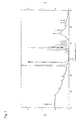
- the resulting heavy reagent and the corresponding light reagent (2-nitro[ 12 C 6 ] benzenesulfenyl chloride) were each subjected to mass spectrometry measurement.
- the structural formula of the heavy reagent and the light reagent are shown in the following chemical formula 1: where * indicates a carbon molecule labeled with 13 C.
- Buffer A 0. 01M HCOOH-Et 3 N (pH4.5) Solution B CH 3 CN Gradient of solution B varied from 0% to 100% over a 50 minute time period.
- Example 2 Using lysozyme as a model protein, an experiment was conducted for the same purpose as in Example 2. In this experiment, the labeling, chemical treatment, and enzymatic digestion were performed in this order.
- Lysozyme was labeled with the "light reagent" in the same manner as in Experiment 2, and then washed and freeze-dried. Subsequently, the chemical treatment (reduction of disulfide linkages and S-carbamidomethylation) and the enzymatic digestion, as described below, was performed.
- reaction mixture was allowed to cool to room temperature, 100mM NH 4 HCO 3 solution of iodoacetamide was added and the reaction was allowed to proceed at room temperature for 1 hour.
- the reaction solution was subjected to purification on a Sephadex G10 column and was freeze-dried.
- Buffer A 0. 1% TFA Solution B 0.07 TFA in CH 3 CN Gradient of solution B varied from 0% to 100% over a 100 minute time period.
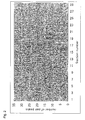
- Fig. 2 is a histogram showing counted number of the pair peaks.
- horizontal axis represents the fraction number and vertical axis represents the number of pair peaks.
- desired pair peaks were observed from fractions No. 16 to No. 23. Namely, it was found that a fraction may be collected in total 1ml from 1.8ml to 2.8ml, and may actually be collected in a somewhat larger volume.
- a peptide containing both tryptophan and cysteine residues was used.
- tryptophan residues not only tryptophan residues but also cysteine residues are labeled when the peptide is labeled prior to the chemical treatment, so that the peptide labeled both on cysteine residues and on tryptophan residues can be generated immediately after the labeling.
- An experiment was conducted to determine if the peptide is converted to the peptide labeled only on the tryptophan residues after the chemical treatment.
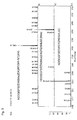
- horizontal axis represents the mass/charge ratio (m/z) and vertical axis represents the relative ion intensity (%Int.).
- the peptide of SEQ ID NO: 1 that gave a signal at 2252.04 (m/z) was converted to a compound that gave a signal at 2559.44 (m/z).
- This compound corresponds to a peptide having a sequence of NDDGGFSEEW(Nbs)EAQRDSHLGC(Nbs) (SEQ ID NO: 2), which is labeled on both tryptophan and cysteine.
- W(Nbs) represents a labeled tryptophan residue
- C(Nbs) represents a labeled cysteine residue.
- This compound is a peptide having a sequence of NDDGGFSEEW(Nbs)EAQRDSHLGC(AM) (SEQ ID NO: 3), which has the labeled substituent on the cysteine residue due to labeling cleaved by the reducing agent and then amidomethylated (AM) by iodoacetamide.
- C(AM) represents an amidomethylated cysteine residue.
- the labeling reaction was performed in the same manner as in Example 2 using the "light reagent" for the cells A and the “heavy reagent” for the cells B.
- the chemical treatment and the enzymatic digestion were omitted because of the simplified systems.
- ⁇ -lactoalbumin (LCA_BOVIN), glycelaldehyde-3-phosphate dehydrogenase (G3P_RABIT), phosphorylase B (PHS2_RABIT), and ovalbumin (OVAL_CHICK) (each available from Sigma) as model peptides
- a model of cells in two different conditions was established by setting the ratio of the peptides contents as follows: Cells A LCA_BOVIN, G3P_RABIT, PHS2_RABIT, OVAL_CHICK (12.5 ⁇ g of each was contained) Cells B LCA_BOVIN, G3P_RABIT, PHS2_RABIT, OVAL_CHICK (25 ⁇ g of each was contained)
- the ratio of peptide content in cells A to that in cells B Cells A: Cells B 1:2 (molar ratio)
- Example 2 the labeling reaction was then performed in the same manner as in Example 2 using the "light reagent” for the cells A and the “heavy reagent” for the cells B, followed by the chemical treatment and the enzymatic digestion performed in the same manner as Example 3. This gave a digest containing labeled peptide fragments. The digest was then subjected to separation/purification on a Sephadex LH20 column and then to MALDI-TOF MS analysis. The results are shown in Table 2.
- Table 2 Shown in Table 2 are gene names; identified peptide sequences (Peptide Sequence Identified); observed ratios of the amount of peptide labeled with the light reagent to the amount of peptide labeled with the heavy reagent (Observed Ratio ( 13 C 0 / 13 C 6 )); expected ratios of the amount of peptide labeled with the light reagent to the amount of peptide labeled with the heavy reagent (Expected Ratio ( 13 C 0 / 13 C 6 )); differences between the mean values of the observed values and the expected ratios (Means+-SD); and errors (Error(%)).
- egg-white lysozyme (Sigma) to serve as a sample protein was added to rat serum (Wister) to determine if any signals derived from lysozyme can be observed (Spike test).
- Wister rat serum
- the ratio of lysozyme content in cells A to that in cells B Cells A: Cells B 1:2 (molar ratio)
- the total amount of proteins and the amount of albumin present in 5 ⁇ l of the rat serum were 0.28mg and 0.14mg (2.1nmol), respectively.
- Rat serums of the following two lines of rats were used.
- the labeling reagent of the present invention may be any sulfenyl compound represented by the general formula (I).
- the method of the present invention is not limited to the above-described peptides, but encompasses any peptide including proteins. Therefore, the foregoing description of Examples is intended to be only illustrative and should not be construed in any way as limiting the scope of the invention. The invention is intended to cover all changes, modifications and equivalents that may be included within the spirit and the scope of the invention as defined by the appended claims.
- SEQ ID NO: 1 represents Presenilin-1 (331-349)-Cys
- SEQ ID NO: 2 represents labeled Presenilin-1 (331-349)-Cys
- SEQ ID NO: 3 represents labeled and amidomethylated Presenilin-1 (331-349)-Cys.
- the present invention provides a sulfenyl compound that serves as a labeling reagent with superior reactivity and selectivity, can readily be analyzed by mass spectrometry, is highly quantitative, and does not require special columns.
- the present invention also provides a labeling reagent using the sulfenyl compound, as well as an analytical method for proteins and peptides using such a labeling reagent.
Landscapes
- Life Sciences & Earth Sciences (AREA)
- Health & Medical Sciences (AREA)
- Chemical & Material Sciences (AREA)
- Engineering & Computer Science (AREA)
- Molecular Biology (AREA)
- Physics & Mathematics (AREA)
- Organic Chemistry (AREA)
- Bioinformatics & Cheminformatics (AREA)
- Bioinformatics & Computational Biology (AREA)
- Hematology (AREA)
- Biomedical Technology (AREA)
- Urology & Nephrology (AREA)
- Immunology (AREA)
- Spectroscopy & Molecular Physics (AREA)
- General Health & Medical Sciences (AREA)
- Microbiology (AREA)
- Biotechnology (AREA)
- Proteomics, Peptides & Aminoacids (AREA)
- Food Science & Technology (AREA)
- Medicinal Chemistry (AREA)
- Analytical Chemistry (AREA)
- Biochemistry (AREA)
- Cell Biology (AREA)
- General Physics & Mathematics (AREA)
- Pathology (AREA)
- Biophysics (AREA)
- Investigating Or Analysing Biological Materials (AREA)
- Other Investigation Or Analysis Of Materials By Electrical Means (AREA)
- Organic Low-Molecular-Weight Compounds And Preparation Thereof (AREA)
- Peptides Or Proteins (AREA)
Applications Claiming Priority (5)
| Application Number | Priority Date | Filing Date | Title |
|---|---|---|---|
| JP2002191497 | 2002-06-28 | ||
| JP2002191497 | 2002-06-28 | ||
| JP2002191496 | 2002-06-28 | ||
| JP2002191496 | 2002-06-28 | ||
| PCT/JP2003/004308 WO2004002950A1 (ja) | 2002-06-28 | 2003-04-03 | スルフェニル化合物、ラベル化試薬、及びペプチドの解析方法 |
Publications (2)
| Publication Number | Publication Date |
|---|---|
| EP1533296A1 true EP1533296A1 (de) | 2005-05-25 |
| EP1533296A4 EP1533296A4 (de) | 2006-06-07 |
Family
ID=30002326
Family Applications (1)
| Application Number | Title | Priority Date | Filing Date |
|---|---|---|---|
| EP03761759A Withdrawn EP1533296A4 (de) | 2002-06-28 | 2003-04-03 | Sulfenylverbindung, markierungsreagens und verfahren zur analyse von peptid |
Country Status (5)
| Country | Link |
|---|---|
| US (1) | US20050221413A1 (de) |
| EP (1) | EP1533296A4 (de) |
| JP (1) | JP3976048B2 (de) |
| AU (1) | AU2003236369A1 (de) |
| WO (1) | WO2004002950A1 (de) |
Cited By (1)
| Publication number | Priority date | Publication date | Assignee | Title |
|---|---|---|---|---|
| US7354996B2 (en) | 2004-09-07 | 2008-04-08 | Shimadzu Corporation | Method and kit for quantitative analysis of protein |
Families Citing this family (10)
| Publication number | Priority date | Publication date | Assignee | Title |
|---|---|---|---|---|
| US20050224710A1 (en) * | 2004-04-13 | 2005-10-13 | Eiichi Matsuo | Method for measuring hydrophobic peptides using maldi mass spectrometer |
| WO2005100975A1 (ja) * | 2004-04-13 | 2005-10-27 | Shimadzu Corporation | 質量分析を用いる物質の測定方法及びキット |
| KR100611313B1 (ko) * | 2004-06-30 | 2006-08-10 | 고려대학교 산학협력단 | 폴리펩티드의 n-말단 치환용 화합물, 이를 이용한폴리펩티드 내의 아미노산 서열분석 및 정량방법 |
| JP4854271B2 (ja) * | 2005-11-01 | 2012-01-18 | キユーピー株式会社 | 血清コレステロール低下に関与するcyp7a1酵素活性化剤 |
| WO2007108140A1 (ja) * | 2006-03-22 | 2007-09-27 | Shimadzu Corporation | 電気泳動法及び質量分析法を用いるタンパク質試料の同定及び定量法 |
| JP4609370B2 (ja) * | 2006-04-24 | 2011-01-12 | 株式会社島津製作所 | 硫黄含有ペプチドの処理法及び硫黄原子含有ペプチドの解析法 |
| EP2180320A1 (de) | 2006-06-05 | 2010-04-28 | Shimadzu Corporation | Tumormarker und Verfahren zur Bestimmung des Auftretens einer kanzerösen Erkrankung |
| JPWO2008032868A1 (ja) * | 2006-09-15 | 2010-01-28 | 株式会社島津製作所 | 腎癌の腫瘍マーカー及び腎癌の罹患の識別方法 |
| JP4775714B2 (ja) * | 2006-11-27 | 2011-09-21 | 株式会社島津製作所 | タンパク質同定方法、およびタンパク質同定装置 |
| JP2017161447A (ja) * | 2016-03-11 | 2017-09-14 | 株式会社島津製作所 | 分析方法 |
Family Cites Families (3)
| Publication number | Priority date | Publication date | Assignee | Title |
|---|---|---|---|---|
| JP3701044B2 (ja) * | 1995-04-24 | 2005-09-28 | 住友精化株式会社 | シアノベンゼンスルフェニルハライドおよびそれを用いる3−置換ベンゾイソチアゾールの製造方法 |
| ATE253126T1 (de) * | 1998-08-25 | 2003-11-15 | Univ Washington | Schnelle quantitative analyse von proteinen oder proteinfunktionen in komplexen gemischen |
| AU5197199A (en) * | 1999-08-12 | 2001-03-13 | Nippon Fine Chemical Co., Ltd. | Processes for the preparation of aromatic sulfenyl chlorides and so forth |
-
2003
- 2003-04-03 AU AU2003236369A patent/AU2003236369A1/en not_active Abandoned
- 2003-04-03 WO PCT/JP2003/004308 patent/WO2004002950A1/ja not_active Ceased
- 2003-04-03 US US10/518,358 patent/US20050221413A1/en not_active Abandoned
- 2003-04-03 JP JP2004517238A patent/JP3976048B2/ja not_active Expired - Fee Related
- 2003-04-03 EP EP03761759A patent/EP1533296A4/de not_active Withdrawn
Non-Patent Citations (5)
| Title |
|---|
| CAPOZZI, GIUSEPPE ET AL: "Cyclization of arylthiovinyl sulfonic esters to benzoÄbÜthiophenes. Unusual 1,2-sulfur shift" JOURNAL OF ORGANIC CHEMISTRY , 35(4), 1217-19 CODEN: JOCEAH; ISSN: 0022-3263, 1970, XP002376954 * |
| MIURA, YOZO ET AL: "N1,N5-bis(arylthio)-2,4-diphenyl-1,3,5-tr iazapenta-1,3-dienyl radicals. An electron spin resonance study" JOURNAL OF ORGANIC CHEMISTRY , 56(12), 3950-4 CODEN: JOCEAH; ISSN: 0022-3263, 1991, XP002376953 * |
| NORMAN, MARK H. ET AL: "Synthesis of 13C- and 14C-labeled 1192U90, an ortho-amino benzamide with a preclinical atypical antipsychotic profile" JOURNAL OF LABELLED COMPOUNDS & RADIOPHARMACEUTICALS , 38(3), 269-80 CODEN: JLCRD4; ISSN: 0362-4803, 1996, XP008062974 * |
| See also references of WO2004002950A1 * |
| VERONESE, F. M. ET AL: "Selective separation of tryptophan derivatives using sulfenyl halides" ACTA VITAMINOLOGICA ET ENZYMOLOGICA , 29(1-6), 243-7 CODEN: AVEZA6; ISSN: 0300-8924, 1975, XP008062973 * |
Cited By (1)
| Publication number | Priority date | Publication date | Assignee | Title |
|---|---|---|---|---|
| US7354996B2 (en) | 2004-09-07 | 2008-04-08 | Shimadzu Corporation | Method and kit for quantitative analysis of protein |
Also Published As
| Publication number | Publication date |
|---|---|
| WO2004002950A1 (ja) | 2004-01-08 |
| JP3976048B2 (ja) | 2007-09-12 |
| EP1533296A4 (de) | 2006-06-07 |
| AU2003236369A1 (en) | 2004-01-19 |
| JPWO2004002950A1 (ja) | 2005-10-27 |
| US20050221413A1 (en) | 2005-10-06 |
Similar Documents
| Publication | Publication Date | Title |
|---|---|---|
| JP4300029B2 (ja) | ゲルフリー定性及び定量的プロテオーム分析のための方法及び装置、ならびにその使用 | |
| Ashcroft | Protein and peptide identification: the role of mass spectrometry in proteomics | |
| US20080242838A1 (en) | Labeling reagent and methods of use | |
| US20050221413A1 (en) | Sulfenyl compound, labeling reagent, and method of analyzing peptide | |
| CN102099685A (zh) | 用于蛋白性分子的标记和亲和力选择的化合物和方法 | |
| WO2005012247A1 (en) | Compounds and methods for the rapid quantitative analysis of proteins and polypeptides | |
| EP1265072A1 (de) | Verfahren zur Charakterisierung von Polypeptiden | |
| EP2488492B1 (de) | Geschützte aminmarkierungen und ihre verwendung beim nachweis von analyten | |
| US7250266B2 (en) | Selective labeling agent for phosphoproteome analysis and phosphorylated site analysis | |
| EP1267170A1 (de) | Verfahren zur Charakterisierung von Polypeptiden | |
| KR100611313B1 (ko) | 폴리펩티드의 n-말단 치환용 화합물, 이를 이용한폴리펩티드 내의 아미노산 서열분석 및 정량방법 | |
| EP2710380B1 (de) | Detektionsverfahren von aminosäuresequenz und/oder identifikation von peptiden und proteinen mittels eines derivatisierungsreagenz und synthese von 5-formylbenzen-1,3-disulfonsäure als derivatisierungsreagenz | |
| KR100693111B1 (ko) | 인산화 단백질의 질량 분석 및 인산화 위치 분석용 표지물질 | |
| US20060234314A1 (en) | Selective binding and analysis of macromolecules | |
| JP2005232132A (ja) | ダンシル基を有するチオール基特異的標識用試薬、その製法、および該標識試薬を用いた標識法 | |
| AU2002310610A1 (en) | Characterising polypeptides |
Legal Events
| Date | Code | Title | Description |
|---|---|---|---|
| PUAI | Public reference made under article 153(3) epc to a published international application that has entered the european phase |
Free format text: ORIGINAL CODE: 0009012 |
|
| 17P | Request for examination filed |
Effective date: 20050125 |
|
| AK | Designated contracting states |
Kind code of ref document: A1 Designated state(s): AT BE BG CH CY CZ DE DK EE ES FI FR GB GR HU IE IT LI LU MC NL PT RO SE SI SK TR |
|
| AX | Request for extension of the european patent |
Extension state: AL LT LV MK |
|
| DAX | Request for extension of the european patent (deleted) | ||
| A4 | Supplementary search report drawn up and despatched |
Effective date: 20060508 |
|
| STAA | Information on the status of an ep patent application or granted ep patent |
Free format text: STATUS: THE APPLICATION HAS BEEN WITHDRAWN |
|
| 18W | Application withdrawn |
Effective date: 20090318 |