EP1528493A1 - Geschäftsanfragen und -tätigkeiten mit Nachrichtenübermittlungsservice - Google Patents
Geschäftsanfragen und -tätigkeiten mit Nachrichtenübermittlungsservice Download PDFInfo
- Publication number
- EP1528493A1 EP1528493A1 EP04022100A EP04022100A EP1528493A1 EP 1528493 A1 EP1528493 A1 EP 1528493A1 EP 04022100 A EP04022100 A EP 04022100A EP 04022100 A EP04022100 A EP 04022100A EP 1528493 A1 EP1528493 A1 EP 1528493A1
- Authority
- EP
- European Patent Office
- Prior art keywords
- business
- data
- request
- data store
- information
- Prior art date
- Legal status (The legal status is an assumption and is not a legal conclusion. Google has not performed a legal analysis and makes no representation as to the accuracy of the status listed.)
- Withdrawn
Links
Images


Classifications
-
- G—PHYSICS
- G06—COMPUTING OR CALCULATING; COUNTING
- G06Q—INFORMATION AND COMMUNICATION TECHNOLOGY [ICT] SPECIALLY ADAPTED FOR ADMINISTRATIVE, COMMERCIAL, FINANCIAL, MANAGERIAL OR SUPERVISORY PURPOSES; SYSTEMS OR METHODS SPECIALLY ADAPTED FOR ADMINISTRATIVE, COMMERCIAL, FINANCIAL, MANAGERIAL OR SUPERVISORY PURPOSES, NOT OTHERWISE PROVIDED FOR
- G06Q10/00—Administration; Management
- G06Q10/10—Office automation; Time management
-
- G—PHYSICS
- G06—COMPUTING OR CALCULATING; COUNTING
- G06Q—INFORMATION AND COMMUNICATION TECHNOLOGY [ICT] SPECIALLY ADAPTED FOR ADMINISTRATIVE, COMMERCIAL, FINANCIAL, MANAGERIAL OR SUPERVISORY PURPOSES; SYSTEMS OR METHODS SPECIALLY ADAPTED FOR ADMINISTRATIVE, COMMERCIAL, FINANCIAL, MANAGERIAL OR SUPERVISORY PURPOSES, NOT OTHERWISE PROVIDED FOR
- G06Q10/00—Administration; Management
- G06Q10/06—Resources, workflows, human or project management; Enterprise or organisation planning; Enterprise or organisation modelling
Definitions
- the present invention deals with a system and method for facilitating inquires and transactions between businesses or inside a company. In the latter case an employee uses the system for facilitating inquires and transactions. More specifically, the present invention deals with using a messaging service to implement question answering and functional processing between businesses.
- the present invention proceeds, for the sake of example, by referring to a manufacturer. However, it will be appreciated that the invention is not so limited and could apply to many other contexts as well, such as within a company, at a distributor, or any other place in a commercial sales channel or supply chain. It could also be used in other business applications, such as finance, customer relation management, etc.
- the goal of a manufacturer is to sell to, and to deliver products or services to, retailers (or other customer). In doing so, however, the manufacturer often outsources services to, and orders parts from, external suppliers. The manufacturer may also rely on distributors to distribute its products to retailers.
- a bicycle manufacturer assembles bicycles for distribution to retailers.
- the bicycle manufacturer orders parts from a number of different suppliers who supply different components of the bicycle, such as frames, wheels, tires, seats, deraielles, brakes, etc.
- Each of those suppliers typically ships the parts to the manufacturer through a separate shipping company.
- the shipping companies used by the different suppliers may, or may not, be the same.
- the manufacturer has obtained all of the parts, and assembles the bicycles, it also typically ships the finished products (the bicycles) to its distributors through a separate shipping company.
- the distributors typically ship the bicycles to the retailers (the eventual customer of the manufacturer) by a separate shipping company.
- the goods in this manufacturing chain flow from suppliers, through the manufacturer and distributor, to the retailers.
- There are at least three shipping links in the manufacturer chain and thus there may be a wide variety of different shipping companies used. At each step along the chain, delays can occur.
- the manufacturer must open a network connection to a supplier's network, then choose an appropriate option for viewing order status information, then input an indication of the order (such as the order number) and then allow the supplier's system to transmit the status information corresponding to the order to the manufacturer's computer for display.
- the status associated with such an order is simply the ship date which indicates when the order was shipped or when it is planned to be shipped. Therefore, the manufacturer must go through the same process, all over again, with respect to the shipping company that the supplier used to ship the product to the manufacturer. Considering that a manufacturer must repeat this cumbersome process multiple times for a single item that is being supplied by a supplier, and considering the fact that the manufacturer may need to repeat the entire process for a plurality of different items shipped by different suppliers, simply tracking down inventory or other items along the manufacturing chain can be very time consuming and inefficient for a manufacturer.
- the present invention provides a system by which entities interact with one another in a supply chain.
- the entities (such as a seller and customer) use a messaging system to perform status inquiry and functional processing steps with respect to data stored at the resource management system of the other.
- one of the parties can enter an item identifier and an indication of an inquiry with respect to the item identified by the item identifier. That information is transmitted through a messaging system to the other party (such as the seller). The seller receives the message, performs database operations to retrieve information responsive to the inquiry, and returns that information via the messaging system.
- the inquiry is simply a status inquiry and the returned information is status information answering the inquiry.
- the inquiry is a request to perform a substantive data processing step (such as to convert a quote to an order), and the information returned is confirmation that the requested step has been performed.
- the returned information is returned through a different communication modality, other than the messaging system.
- the return information can be returned through electronic mail, facsimile, telephone call, pager information, etc.
- the present invention relates to a system by which a seller and customer can exchange information.
- a seller and customer can exchange information.
- one illustrative environment in which the present invention can be used is discussed.
- FIG. 1 illustrates an example of a suitable computing system environment 100 on which the invention may be implemented.
- the computing system environment 100 is only one example of a suitable computing environment and is not intended to suggest any limitation as to the scope of use or functionality of the invention. Neither should the computing environment 100 be interpreted as having any dependency or requirement relating to any one or combination of components illustrated in the exemplary operating environment 100.
- the invention is operational with numerous other general purpose or special purpose computing system environments or configurations.
- Examples of well known computing systems, environments, and/or configurations that may be suitable for use with the invention include, but are not limited to, personal computers, server computers, hand-held or laptop devices, multiprocessor systems, microprocessor-based systems, set top boxes, programmable consumer electronics, network PCs, minicomputers, mainframe computers, distributed computing environments that include any of the above systems or devices, and the like.
- the invention may be described in the general context of computer-executable instructions, such as program modules, being executed by a computer.
- program modules include routines, programs, objects, components, data structures, etc. that perform particular tasks or implement particular abstract data types.
- the invention may also be practiced in distributed computing environments where tasks are performed by remote processing devices that are linked through a communications network.
- program modules may be located in both local and remote computer storage media including memory storage devices.
- an exemplary system for implementing the invention includes a general purpose computing device in the form of a computer 110.
- Components of computer 110 may include, but are not limited to, a processing unit 120, a system memory 130, and a system bus 121 that couples various system components including the system memory to the processing unit 120.
- the system bus 121 may be any of several types of bus structures including a memory bus or memory controller, a peripheral bus, and a local bus using any of a variety of bus architectures.
- such architectures include Industry Standard Architecture (ISA) bus, Micro Channel Architecture (MCA) bus, Enhanced ISA (EISA) bus, Video Electronics Standards Association (VESA) local bus, and Peripheral Component Interconnect (PCI) bus also known as Mezzanine bus.
- ISA Industry Standard Architecture
- MCA Micro Channel Architecture
- EISA Enhanced ISA
- VESA Video Electronics Standards Association
- PCI Peripheral Component Interconnect
- Computer 110 typically includes a variety of computer readable media.
- Computer readable media can be any available media that can be accessed by computer 110 and includes both volatile and nonvolatile media, removable and non-removable media.
- Computer readable media may comprise computer storage media and communication media.
- Computer storage media includes both volatile and nonvolatile, removable and non-removable media implemented in any method or technology for storage of information such as computer readable instructions, data structures, program modules or other data.
- Computer storage media includes, but is not limited to, RAM, ROM, EEPROM, flash memory or other memory technology, CD-ROM, digital versatile disks (DVD) or other optical disk storage, magnetic cassettes, magnetic tape, magnetic disk storage or other magnetic storage devices, or any other medium which can be used to store the desired information and which can be accessed by computer 100.
- Communication media typically embodies computer readable instructions, data structures, program modules or other data in a modulated data signal such as a carrier WAV or other transport mechanism and includes any information delivery media.
- modulated data signal means a signal that has one or more of its characteristics set or changed in such a manner as to encode information in the signal.
- communication media includes wired media such as a wired network or direct-wired connection, and wireless media such as acoustic, FR, infrared and other wireless media. Combinations of any of the above should also be included within the scope of computer readable media.
- the system memory 130 includes computer storage media in the form of volatile and/or nonvolatile memory such as read only memory (ROM) 131 and random access memory (RAM) 132.
- ROM read only memory
- RAM random access memory
- BIOS basic input/output system
- RAM 132 typically contains data and/or program modules that are immediately accessible to and/or presently being operated on by processing unit 120.
- FIG. 1 illustrates operating system 134, application programs 135, other program modules 136, and program data 137.
- the computer 110 may also include other removable/non-removable volatile/nonvolatile computer storage media.
- FIG. 1 illustrates a hard disk drive 141 that reads from or writes to non-removable, nonvolatile magnetic media, a magnetic disk drive 151 that reads from or writes to a removable, nonvolatile magnetic disk 152, and an optical disk drive 155 that reads from or writes to a removable, nonvolatile optical disk 156 such as a CD ROM or other optical media.
- removable/non-removable, volatile/nonvolatile computer storage media that can be used in the exemplary operating environment include, but are not limited to, magnetic tape cassettes, flash memory cards, digital versatile disks, digital video tape, solid state RAM, solid state ROM, and the like.
- the hard disk drive 141 is typically connected to the system bus 121 through a non-removable memory interface such as interface 140, and magnetic disk drive 151 and optical disk drive 155 are typically connected to the system bus 121 by a removable memory interface, such as interface 150.
- hard disk drive 141 is illustrated as storing operating system 144, application programs 145, other program modules 146, and program data 147. Note that these components can either be the same as or different from operating system 134, application programs 135, other program modules 136, and program data 137. Operating system 144, application programs 145, other program modules 146, and program data 147 are given different numbers here to illustrate that, at a minimum, they are different copies.
- a user may enter commands and information into the computer 110 through input devices such as a keyboard 162, a microphone 163, and a pointing device 161, such as a mouse, trackball or touch pad.
- Other input devices may include a joystick, game pad, satellite dish, scanner, or the like.
- a monitor 191 or other type of display device is also connected to the system bus 121 via an interface, such as a video interface 190.
- computers may also include other peripheral output devices such as speakers 197 and printer 196, which may be connected through an output peripheral interface 190.
- the computer 110 may operate in a networked environment using logical connections to one or more remote computers, such as a remote computer 180.
- the remote computer 180 may be a personal computer, a hand-held device, a server, a router, a network PC, a peer device or other common network node, and typically includes many or all of the elements described above relative to the computer 110.
- the logical connections depicted in FIG. 1 include a local area network (LAN) 171 and a wide area network (WAN) 173, but may also include other networks.
- LAN local area network
- WAN wide area network
- Such networking environments are commonplace in offices, enterprise-wide computer networks, intranets and the Internet.
- the computer 110 When used in a LAN networking environment, the computer 110 is connected to the LAN 171 through a network interface or adapter 170. When used in a WAN networking environment, the computer 110 typically includes a modem 172 or other means for establishing communications over the WAN 173, such as the Internet.
- the modem 172 which may be internal or external, may be connected to the system bus 121 via the user-input interface 160, or other appropriate mechanism.
- program modules depicted relative to the computer 110, or portions thereof may be stored in the remote memory storage device.
- FIG. 1 illustrates remote application programs 185 as residing on remote computer 180. It will be appreciated that the network connections shown are exemplary and other means of establishing a communications link between the computers may be used.
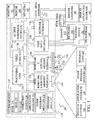
- FIG. 2 is a block diagram of one illustrative manufacturing channel 200.
- Manufacturing channel 200 includes a plurality of suppliers 202, 204 and 206, a plurality of shipping companies 208, 210, 212, 214 and 216, manufacturer 220, distributor 222 and retailer 224.
- the present invention will be described with respect to the channel 200 shown in FIG. 2, and with respect to manufacturer 220 being a bicycle manufacturer that sells bicycles through distributors 222 to retailers 224. It will, of course, be appreciated that the scenario discussed is exemplary only and is used for describing features of the present invention. The invention is not limited to the scenario discussed.
- the manufacturer could be any type of manufacturer, it could be supplied with goods and/or services, and it could sell to end user customers or retailers, with or without a distributor, as examples.
- the present invention can be used by any business using business applications, such as in finance, customer relations management, etc.
- manufacturer 220 is illustratively a bicycle manufacturer who receives parts from suppliers 202, 204 and 206 and assembles those parts into finished bicycles.
- suppliers 204-206 ship the parts to manufacturer 220 using shipping companies (or shippers) 208, 210 and 212, respectively. It will, of course, be noted that the shippers 208-212 can be different companies or the same company.
- manufacturer 220 manufactures (e.g., assembles) the bicycles, it ships the bicycles to distributor 222 using yet another shipper 214.
- Distributor 222 ships the bicycles received from manufacturer 220 to the plurality of retailers 224 who eventually sells the bicycles to the end customer.
- distributor 222 uses yet another shipper 216.
- the suppliers, shippers, manufacturer, distributor and retailers are illustratively separate companies, and in many cases have barriers between them. For instance, it is not unusual for each of the companies to have separate computer systems which do not communicate with one another directly. As discussed in the background section, this can cause a great deal of difficulty in attempting to do even simple tasks, such as obtaining the status of an order or converting a quote to an actual order.
- FIG. 3 illustrates a more detailed block diagram of a system 229 with seller 230 and customer 232.
- the seller can be any one of the entities in channel 200 shown in FIG. 2 which sells something (e.g., the manufacturer), and customer 232 can be any of those entities which purchases something from a seller (e.g., a distributor or retailer).
- a seller e.g., a distributor or retailer
- the items in FIG. 3 have been referred to as seller 230 and customer 232.
- FIG. 3 shows that seller 230 includes a user interface system 234, an access control system 236, message processing system 238, output channels 240, database accessing system 242 and database 244.
- User interface system 234 is, in one illustrative embodiment, a general user interface system that allows a user to access other components within seller 230.
- Message processing system 238 also receives messages from customer 232 and processes those messages to determine what type of response is desired.
- Message processing system 238 controls database accessing system 242 to retrieve the desired information from database 244 so that the information can be formatted into a proper instant messaging format and transmitted back to customer 232.
- Output channels 240 are alternative output channels, such as an electronic mail channel, a paging channel, a cellular telephone channel, etc. As is described below, message processing system 238 may provide a response through an alternate channel 240, other than the instant messaging channel.
- Database accessing system 242 and database 244 may illustratively embody a resource planning system which is used for planning and managing the resources of seller 230 in filling orders to customers (such as customer 232).
- database 244 contains a wide variety of records related to the resources of seller 230. Those records may identify and describe, for instance, inventory currently held by seller 230. The records may also describe orders which have been received and which are being processed. Further, database 244 may include records describing customers of seller 230, and pricing information related to orders being filled for those customers. Database 244 may also illustratively include records that describe quotes which have been made to customers for various products sold by seller 230. The quotes may illustratively include the cost and delivery terms associated with a predefined product which is being quoted. Of course, database 244 can store a wide variety of additional or different information related to its business.
- Database 244 and database accessing system 242 can be configured as a relational database and a corresponding accessing system. For instance, they may implement a structured query language (SQL) database and database accessing system. Alternatively, database 244 and system 242 can be used to implement an object relational database. In that embodiment, database 244 may be implemented using an SQL database system, but database accessing system 244 may allow users to access the data stored in database 244 in terms of objects. Thus, database accessing system 242 receives queries to database 244 in terms of objects, and converts those queries into relational database queries and executes the relational database queries against database 244. Database accessing system 242 then returns the results received from database 244, formatted in terms of objects instead of tables.
- SQL structured query language
- FIG. 3 shows that customer 232 includes user interface system 246 and message processing system 248.
- Message processing system 248 is similar to message processing system 238 in that it receives inputs from the user through user interface system 246 and generates and transmits instant messages based on those inputs.
- message processing systems 238 and 248 are connected to one another via network 250 and instant messaging service 252.
- network 250 is a wide area network (or a global network such as the Internet) but it can be another network as well.
- Messaging service 252 is also shown connected through network 250 to message processing systems 238 and 240.
- messaging service 252 provides a messaging service which effectively connects processing systems 238 and 248 so that they can send messages back and forth very quickly, without numerous operations being performed by the user.
- messaging service 252 and message processing systems 238 and 248 is the system sold under the designation MSN MESSENGER by Microsoft Corporation of Redmond, Washington. Of course, a wide variety of other similar types of instant messaging services 252 can be used as well. Some such systems include those sold under the designations YAHOO!MESSENGER by Yahoo! Inc., and AOL Instant Messenger (or AIM) by America Online, Inc.
- Access control system 236 allows the seller 230 to control access to its database 244. Through the user interface system 234, the user can authorize customers to have access to all, or limited portions of, database 244. Of course, if desired, the user can remove authorization as well so the seller has no access to any part of database 214.
- FIG. 4 is a flow diagram illustrating the operation of the system 229 shown in FIG. 3 in accordance with one embodiment of the present invention.
- FIGS. 5A-5G are user interface displays which help to illustrate the operation of system 229 in accordance with one embodiment of the present invention.
- message processing systems 238 and 248 can be used such that customer 232 can query the status of various items in database 244 and receive a response from message processing system 238, without undergoing the cumbersome and time consuming processes required by prior systems.
- customer 232 can actually undertake functional data manipulation steps on data in database 244, through message processing system 238, again without undergoing the time consuming and cumbersome processes required by prior systems.
- customer 232 has configured message processing system 248 (such as through the use of messaging service 252) such that it has a hierarchically organized group corresponding to seller 230.
- message processing system 248 such as through the use of messaging service 252
- system 248 when the user accesses message processing system 248 through user interface system 246, system 248 generates a display through user interface system 246 such as display 260 shown in FIG. 5A.
- Display 250 shows that the customer 232 has set up a group corresponding to seller 230 where a plurality of messaging features are available for that seller.
- Those features include inventory feature 262, order status feature 264 and quote-to-order feature 266, by way of example.
- message processing system 248 receives a selection input from the user. This is indicated by block 272.
- the user may use any desired user input device (such as push buttons, a stylus, a touch sensitive screen, a keypad, etc.) to select the desired feature for use.
- any desired user input device such as push buttons, a stylus, a touch sensitive screen, a keypad, etc.
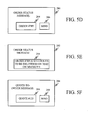
- This causes message processing system 248 to generate a display, such as display 262 shown in FIG. 5B, except that the message area 264 is blank.
- Display 262 shows that the user has accessed the inventory feature and wishes to use that feature by entering text into message area 264. The user then enters into message area 264 an inventory item number through user interface system 246. Receiving the user input message is indicated by block 274 in FIG. 4.
- the message shown in FIG. 5B is that the user has entered item number 14568 under the inventory feature in the group corresponding to seller 230.
- Message processing system 248 formats this input into an instant message which can be processed by messaging service 252 and sent to message processing system 238.
- the user then provides a "send" input indicating that user wishes to send the message. In one embodiment, this is accomplished by simply selecting the send button 266 shown in FIG. 5B (which can again be selected through a stylus, by depressing a button on a keypad, by touching the "send” button 266 on a touch sensitive screen, etc.).
- Message processing system 248 then sends the message to seller 230. This is indicated by block 276 in FIG. 4.
- the messaging system used to transmit the message from customer 232 to seller 230 may illustratively be any type of instant messaging system by which the message can be sent directly to seller 230 through network 250 and message service 252, without various intermediate sending steps required by the user, such as is encountered with electronic mail.
- message processing system 238 receives the message, it recognizes that it is identifying an inventory item and generates a request to database accessing system 242 to retrieve information related to inventory item 14568 from database 244. Processing the message is indicated by block 278 in FIG. 4.
- database accessing system 242 In response to the request from message processing system 238, database accessing system 242 generates a database query and executes it against database 244. The query retrieves the information in database 244 corresponding to inventory item 14568. This is indicated by block 280 in FIG. 4. The information returned from database 244 is returned by database accessing system 242 to message processing system 238, in a desired format. Message processing system 238 then generates a message containing the information responsive to the inquiry received from customer 232 and returns that message to message processing system 248. Generation of the message is indicated by block 282 in FIG. 4 and transmission of the message to customer 248 is indicated by block 284 in FIG. 4.
- Message processing system 248 accesses user interface system 246 and displays the return message to the user.
- One exemplary display is that shown at 268 in FIG. 5C.
- FIG. 5C shows that the message field 264 contains a message "Inventory level for item # 14568 is 125 pieces". Displaying the return message at customer 232 is indicated by block 286 in FIG. 4.
- customer 232 has generated a request for data in database 244 at seller 230 very quickly and easily, by simply opening up the message interface to message processing system 248. The user then simply enters the simplified query and hits send and the message is fully processed. Data is retrieved from database 244, and a return message is received without the user being required to take anymore steps.
- This is highly advantageous over prior systems which, at the very least, required a user to establish a connection with a web site representing the seller, open up multiple web pages allowing the user to search on a particular item, then enter the item number and execute the search. Many prior systems were even much more complex than that.
- message processing system 238 formats it as an instant message and sends it to message processing system 248 where it is displayed through user interface system 246 to the user in the form such as the display shown at 292 in FIG. 5E.
- Display 292 shows that message area 264 now contains the message "Order #789 is scheduled to be delivered, on time, on mm/dd/yy.”, wherein the date portion would, of course, contain the estimated delivery date for the order.
- the user has been able to obtain the order status by simply sending a message with the order number through an instant messaging service. The user very quickly receives the return message indicating the order status. This is all done with very few manual steps required.
- the customer can perform functional data manipulation steps on data in database 244 as well. For instance, if the user selects the Quote-to-Order feature 266 shown in FIG. 5A, message processing system 248 illustratively generates a display such as display 294 shown in FIG. 2F, without any text entered in message area 264. This allows the user to insert a quote number and convert that quote to an actual order at seller 230.
- FIG. 5F shows that the user has simply entered in quote #123.
- the user then simply actuates the send button 266 and the message is sent from message processing system 248 to message processing system 238.
- Message processing system 238 causes an update to be performed on database 244.
- the update converts quote #123 contained in database 244 into an actual order.
- message processing system 238 sends a confirmation message back to message processing system 248 for display to the user.
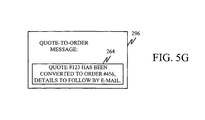
- a confirmation message is shown at 296 in FIG. 5G.
- FIG. 5G shows that message area 264 contains the message "Quote #123 has been converted to order #456, details to follow by email.” Of course, all of the details of the new order #456 could also be sent through the messaging system. However, FIG. 5G illustrates another embodiment of the invention in which message processing system 238 utilizes multiple channels to respond to an inquiry by message processing system 248.
- message processing system 238 sends a relatively short message to message processing system 248 confirming that the desired functional data manipulation step has been performed, and also indicating the communication modality which will be used to transmit the remaining information.
- message processing system 238 then invokes one of the other output channels 240 (in this case the electronic mail output channel) and sends the detailed information corresponding to the new order #456 (such as the delivery date, the price, other delivery terms, etc.) to customer 232 using electronic mail.
- the present invention thus allows a customer to query information at a seller with a very few number of user input steps required.
- Another embodiment of the present system allows the customer to perform actual functional data manipulation steps on data in the database of the seller, again with very few manual steps required. This substantially improves the efficiency and ease with which these types of communications can be made, rendering the present system significantly advantageous over prior systems used to accomplish this type of communication.
- the context used to describe the invention is exemplary only.
- the invention could as easily be used within a company, and using wireless or other communication technologies. For instance, prior to making a sales call, a sales person can use the invention to query a customer's credit limits using a cellular phone or other handheld device.
Landscapes
- Engineering & Computer Science (AREA)
- Business, Economics & Management (AREA)
- Human Resources & Organizations (AREA)
- Strategic Management (AREA)
- Entrepreneurship & Innovation (AREA)
- Economics (AREA)
- Operations Research (AREA)
- Theoretical Computer Science (AREA)
- General Physics & Mathematics (AREA)
- Marketing (AREA)
- General Business, Economics & Management (AREA)
- Quality & Reliability (AREA)
- Tourism & Hospitality (AREA)
- Physics & Mathematics (AREA)
- Development Economics (AREA)
- Educational Administration (AREA)
- Game Theory and Decision Science (AREA)
- Data Mining & Analysis (AREA)
- Management, Administration, Business Operations System, And Electronic Commerce (AREA)
- Information Transfer Between Computers (AREA)
Applications Claiming Priority (2)
| Application Number | Priority Date | Filing Date | Title |
|---|---|---|---|
| US696851 | 2003-10-30 | ||
| US10/696,851 US8392522B2 (en) | 2003-10-30 | 2003-10-30 | Business inquiries and operations using messaging service |
Publications (1)
| Publication Number | Publication Date |
|---|---|
| EP1528493A1 true EP1528493A1 (de) | 2005-05-04 |
Family
ID=34423381
Family Applications (1)
| Application Number | Title | Priority Date | Filing Date |
|---|---|---|---|
| EP04022100A Withdrawn EP1528493A1 (de) | 2003-10-30 | 2004-09-16 | Geschäftsanfragen und -tätigkeiten mit Nachrichtenübermittlungsservice |
Country Status (5)
| Country | Link |
|---|---|
| US (1) | US8392522B2 (de) |
| EP (1) | EP1528493A1 (de) |
| JP (1) | JP2005135394A (de) |
| KR (1) | KR20050041867A (de) |
| CN (1) | CN1648911A (de) |
Families Citing this family (4)
| Publication number | Priority date | Publication date | Assignee | Title |
|---|---|---|---|---|
| US7669205B2 (en) * | 2005-07-01 | 2010-02-23 | Microsoft Corporation | Using messages to extend CRM functionality |
| CN101001150A (zh) * | 2006-01-15 | 2007-07-18 | 腾讯科技(深圳)有限公司 | 一种即时通信中的业务推播系统 |
| US20130204655A1 (en) * | 2012-02-07 | 2013-08-08 | Scott Damon | System and method for customizing and manufacturing tires near point-of-sale |
| CN103595613B (zh) | 2012-08-13 | 2017-06-06 | 阿里巴巴集团控股有限公司 | 即时通讯客户端、即时通讯服务器和即时通讯方法 |
Family Cites Families (13)
| Publication number | Priority date | Publication date | Assignee | Title |
|---|---|---|---|---|
| US6728685B1 (en) * | 1999-11-05 | 2004-04-27 | Ford Motor Company | Communication schema of online reporting system and method related to online orders for consumer products having specific configurations |
| US6895388B1 (en) * | 1999-11-05 | 2005-05-17 | Ford Motor Company | Communication schema of online system and method of locating consumer product in the enterprise production pipeline |
| US6901430B1 (en) * | 1999-11-05 | 2005-05-31 | Ford Motor Company | Online system and method of locating consumer product having specific configurations in the enterprise production pipeline and inventory |
| JP2002007792A (ja) * | 2000-06-27 | 2002-01-11 | Daiwabo Information System Co Ltd | 商品販売支援システムにおける見積処理方法 |
| US20020026373A1 (en) * | 2000-08-24 | 2002-02-28 | Sudesh Kamath | Methods and systems for online express ordering of goods and services |
| US20020038224A1 (en) * | 2000-09-25 | 2002-03-28 | United Parcel Service Of America, Inc. | Systems and associated methods for notification of package delivery services |
| US20020072980A1 (en) * | 2000-12-07 | 2002-06-13 | Rabindranath Dutta | System, method, and program for managing electronic shopping carts |
| JP2002312693A (ja) * | 2001-04-16 | 2002-10-25 | Ntt Pc Communications Inc | 電子商取引システム及び配送状況表示方法並びに配送状況表示プログラム |
| GB2378544A (en) * | 2001-04-26 | 2003-02-12 | Nihon Dot Com Co Ltd | Online purchase of shipping and insurance services |
| JP2002328983A (ja) * | 2001-05-02 | 2002-11-15 | Tsubasa System Co Ltd | 注文商品の所在追跡のための識別情報を送信する方法、受注者端末、および、プログラム |
| US20020174026A1 (en) * | 2001-05-18 | 2002-11-21 | Pickover Clifford A. | Method and apparatus for facilitating the locating of an item |
| JP2002366467A (ja) * | 2001-06-12 | 2002-12-20 | Alpine Electronics Inc | メッセージ通信システム |
| JP2003256665A (ja) * | 2002-02-27 | 2003-09-12 | Gmn Corporation:Kk | 取引媒介システム |
-
2003
- 2003-10-30 US US10/696,851 patent/US8392522B2/en not_active Expired - Fee Related
-
2004
- 2004-09-10 KR KR1020040072556A patent/KR20050041867A/ko not_active Withdrawn
- 2004-09-16 EP EP04022100A patent/EP1528493A1/de not_active Withdrawn
- 2004-09-29 JP JP2004285232A patent/JP2005135394A/ja active Pending
- 2004-10-29 CN CNA2004100899095A patent/CN1648911A/zh active Pending
Non-Patent Citations (1)
| Title |
|---|
| No Search * |
Also Published As
| Publication number | Publication date |
|---|---|
| US20050108349A1 (en) | 2005-05-19 |
| US8392522B2 (en) | 2013-03-05 |
| JP2005135394A (ja) | 2005-05-26 |
| CN1648911A (zh) | 2005-08-03 |
| KR20050041867A (ko) | 2005-05-04 |
Similar Documents
| Publication | Publication Date | Title |
|---|---|---|
| US7478058B2 (en) | Collaborative commerce hub | |
| US8325750B2 (en) | Accelerated system and methods for synchronizing, managing, and publishing business information | |
| US8700414B2 (en) | System supported optimization of event resolution | |
| US8190465B2 (en) | Make-to-specification process and data model | |
| US20100161366A1 (en) | Product requirement specification in production model | |
| US20100161365A1 (en) | Different sales and planning product options | |
| US10185739B2 (en) | Automatic search and replacement functionality within a computing application | |
| US20020165805A1 (en) | Method and system for managing parts requirements processes | |
| US20040111286A1 (en) | System for the provision of goods and services over a distributed communication network | |
| WO2002052378A2 (en) | System for the provision of goods and services over a distributed communication network | |
| US7660788B1 (en) | Mapping part numbers and other identifiers | |
| US20080162164A1 (en) | Method and system for centralized management of sources of supply | |
| US8095433B2 (en) | Method and computer storage medium for ordering a replacement kit to build superseded parts | |
| US7461091B2 (en) | Controlling data transition between business processes in a computer application | |
| US20020077958A1 (en) | Implementation of a supply-based management system in a network environment | |
| US20090037535A1 (en) | Creating or Interpreting an Electronic Communication | |
| US7707070B2 (en) | Method and system for dynamic purchase order handling | |
| US8392522B2 (en) | Business inquiries and operations using messaging service | |
| CN114066555A (zh) | 一种在线购买非标工业设备备品备件的实现方法及系统 | |
| Schoop et al. | To monitor or not to monitor-the role of trusted third parties in electronic marketplaces | |
| US20060190433A1 (en) | Distributed navigation business activities data | |
| US20040030614A1 (en) | Computer-implemented method and system for managing workload of procurement individuals | |
| Hendon et al. | The strategic and tactical value of electronic data interchange for marketing firms | |
| JP4634840B2 (ja) | 運用資産管理システム、運用資産管理方法およびプログラム | |
| Moon et al. | Issues in the International Standards of Electronic Documents for Global e-Trade |
Legal Events
| Date | Code | Title | Description |
|---|---|---|---|
| PUAI | Public reference made under article 153(3) epc to a published international application that has entered the european phase |
Free format text: ORIGINAL CODE: 0009012 |
|
| AK | Designated contracting states |
Kind code of ref document: A1 Designated state(s): AT BE BG CH CY CZ DE DK EE ES FI FR GB GR HU IE IT LI LU MC NL PL PT RO SE SI SK TR |
|
| AX | Request for extension of the european patent |
Extension state: AL HR LT LV MK |
|
| 17P | Request for examination filed |
Effective date: 20051028 |
|
| AKX | Designation fees paid |
Designated state(s): AT BE BG CH CY CZ DE DK EE ES FI FR GB GR HU IE IT LI LU MC NL PL PT RO SE SI SK TR |
|
| STAA | Information on the status of an ep patent application or granted ep patent |
Free format text: STATUS: THE APPLICATION IS DEEMED TO BE WITHDRAWN |
|
| 18D | Application deemed to be withdrawn |
Effective date: 20100401 |