EP1519785B1 - Katalysator bestehend aus einer wolframoxidmonoschicht auf einem zirkon- und/oder titandioxidträger - Google Patents
Katalysator bestehend aus einer wolframoxidmonoschicht auf einem zirkon- und/oder titandioxidträger Download PDFInfo
- Publication number
- EP1519785B1 EP1519785B1 EP03762721A EP03762721A EP1519785B1 EP 1519785 B1 EP1519785 B1 EP 1519785B1 EP 03762721 A EP03762721 A EP 03762721A EP 03762721 A EP03762721 A EP 03762721A EP 1519785 B1 EP1519785 B1 EP 1519785B1
- Authority
- EP
- European Patent Office
- Prior art keywords
- solid
- zirconia
- tungsten
- oxidation
- support
- Prior art date
- Legal status (The legal status is an assumption and is not a legal conclusion. Google has not performed a legal analysis and makes no representation as to the accuracy of the status listed.)
- Expired - Lifetime
Links
Images
Classifications
-
- B—PERFORMING OPERATIONS; TRANSPORTING
- B01—PHYSICAL OR CHEMICAL PROCESSES OR APPARATUS IN GENERAL
- B01J—CHEMICAL OR PHYSICAL PROCESSES, e.g. CATALYSIS OR COLLOID CHEMISTRY; THEIR RELEVANT APPARATUS
- B01J21/00—Catalysts comprising the elements, oxides, or hydroxides of magnesium, boron, aluminium, carbon, silicon, titanium, zirconium, or hafnium
- B01J21/06—Silicon, titanium, zirconium or hafnium; Oxides or hydroxides thereof
- B01J21/063—Titanium; Oxides or hydroxides thereof
-
- B—PERFORMING OPERATIONS; TRANSPORTING
- B01—PHYSICAL OR CHEMICAL PROCESSES OR APPARATUS IN GENERAL
- B01J—CHEMICAL OR PHYSICAL PROCESSES, e.g. CATALYSIS OR COLLOID CHEMISTRY; THEIR RELEVANT APPARATUS
- B01J21/00—Catalysts comprising the elements, oxides, or hydroxides of magnesium, boron, aluminium, carbon, silicon, titanium, zirconium, or hafnium
- B01J21/06—Silicon, titanium, zirconium or hafnium; Oxides or hydroxides thereof
- B01J21/066—Zirconium or hafnium; Oxides or hydroxides thereof
-
- B—PERFORMING OPERATIONS; TRANSPORTING
- B01—PHYSICAL OR CHEMICAL PROCESSES OR APPARATUS IN GENERAL
- B01J—CHEMICAL OR PHYSICAL PROCESSES, e.g. CATALYSIS OR COLLOID CHEMISTRY; THEIR RELEVANT APPARATUS
- B01J23/00—Catalysts comprising metals or metal oxides or hydroxides, not provided for in group B01J21/00
- B01J23/002—Mixed oxides other than spinels, e.g. perovskite
-
- B—PERFORMING OPERATIONS; TRANSPORTING
- B01—PHYSICAL OR CHEMICAL PROCESSES OR APPARATUS IN GENERAL
- B01J—CHEMICAL OR PHYSICAL PROCESSES, e.g. CATALYSIS OR COLLOID CHEMISTRY; THEIR RELEVANT APPARATUS
- B01J23/00—Catalysts comprising metals or metal oxides or hydroxides, not provided for in group B01J21/00
- B01J23/16—Catalysts comprising metals or metal oxides or hydroxides, not provided for in group B01J21/00 of arsenic, antimony, bismuth, vanadium, niobium, tantalum, polonium, chromium, molybdenum, tungsten, manganese, technetium or rhenium
- B01J23/24—Chromium, molybdenum or tungsten
- B01J23/30—Tungsten
-
- B—PERFORMING OPERATIONS; TRANSPORTING
- B01—PHYSICAL OR CHEMICAL PROCESSES OR APPARATUS IN GENERAL
- B01J—CHEMICAL OR PHYSICAL PROCESSES, e.g. CATALYSIS OR COLLOID CHEMISTRY; THEIR RELEVANT APPARATUS
- B01J23/00—Catalysts comprising metals or metal oxides or hydroxides, not provided for in group B01J21/00
- B01J23/38—Catalysts comprising metals or metal oxides or hydroxides, not provided for in group B01J21/00 of noble metals
- B01J23/54—Catalysts comprising metals or metal oxides or hydroxides, not provided for in group B01J21/00 of noble metals combined with metals, oxides or hydroxides provided for in groups B01J23/02 - B01J23/36
- B01J23/56—Platinum group metals
- B01J23/64—Platinum group metals with arsenic, antimony, bismuth, vanadium, niobium, tantalum, polonium, chromium, molybdenum, tungsten, manganese, technetium or rhenium
- B01J23/652—Chromium, molybdenum or tungsten
- B01J23/6527—Tungsten
-
- B—PERFORMING OPERATIONS; TRANSPORTING
- B01—PHYSICAL OR CHEMICAL PROCESSES OR APPARATUS IN GENERAL
- B01J—CHEMICAL OR PHYSICAL PROCESSES, e.g. CATALYSIS OR COLLOID CHEMISTRY; THEIR RELEVANT APPARATUS
- B01J23/00—Catalysts comprising metals or metal oxides or hydroxides, not provided for in group B01J21/00
- B01J23/70—Catalysts comprising metals or metal oxides or hydroxides, not provided for in group B01J21/00 of the iron group metals or copper
- B01J23/76—Catalysts comprising metals or metal oxides or hydroxides, not provided for in group B01J21/00 of the iron group metals or copper combined with metals, oxides or hydroxides provided for in groups B01J23/02 - B01J23/36
- B01J23/84—Catalysts comprising metals or metal oxides or hydroxides, not provided for in group B01J21/00 of the iron group metals or copper combined with metals, oxides or hydroxides provided for in groups B01J23/02 - B01J23/36 with arsenic, antimony, bismuth, vanadium, niobium, tantalum, polonium, chromium, molybdenum, tungsten, manganese, technetium or rhenium
- B01J23/85—Chromium, molybdenum or tungsten
- B01J23/888—Tungsten
-
- B—PERFORMING OPERATIONS; TRANSPORTING
- B01—PHYSICAL OR CHEMICAL PROCESSES OR APPARATUS IN GENERAL
- B01J—CHEMICAL OR PHYSICAL PROCESSES, e.g. CATALYSIS OR COLLOID CHEMISTRY; THEIR RELEVANT APPARATUS
- B01J35/00—Catalysts, in general, characterised by their form or physical properties
- B01J35/60—Catalysts, in general, characterised by their form or physical properties characterised by their surface properties or porosity
-
- C—CHEMISTRY; METALLURGY
- C10—PETROLEUM, GAS OR COKE INDUSTRIES; TECHNICAL GASES CONTAINING CARBON MONOXIDE; FUELS; LUBRICANTS; PEAT
- C10G—CRACKING HYDROCARBON OILS; PRODUCTION OF LIQUID HYDROCARBON MIXTURES, e.g. BY DESTRUCTIVE HYDROGENATION, OLIGOMERISATION, POLYMERISATION; RECOVERY OF HYDROCARBON OILS FROM OIL-SHALE, OIL-SAND, OR GASES; REFINING MIXTURES MAINLY CONSISTING OF HYDROCARBONS; REFORMING OF NAPHTHA; MINERAL WAXES
- C10G27/00—Refining of hydrocarbon oils in the absence of hydrogen, by oxidation
- C10G27/04—Refining of hydrocarbon oils in the absence of hydrogen, by oxidation with oxygen or compounds generating oxygen
-
- C—CHEMISTRY; METALLURGY
- C10—PETROLEUM, GAS OR COKE INDUSTRIES; TECHNICAL GASES CONTAINING CARBON MONOXIDE; FUELS; LUBRICANTS; PEAT
- C10G—CRACKING HYDROCARBON OILS; PRODUCTION OF LIQUID HYDROCARBON MIXTURES, e.g. BY DESTRUCTIVE HYDROGENATION, OLIGOMERISATION, POLYMERISATION; RECOVERY OF HYDROCARBON OILS FROM OIL-SHALE, OIL-SAND, OR GASES; REFINING MIXTURES MAINLY CONSISTING OF HYDROCARBONS; REFORMING OF NAPHTHA; MINERAL WAXES
- C10G45/00—Refining of hydrocarbon oils using hydrogen or hydrogen-generating compounds
- C10G45/02—Refining of hydrocarbon oils using hydrogen or hydrogen-generating compounds to eliminate hetero atoms without changing the skeleton of the hydrocarbon involved and without cracking into lower boiling hydrocarbons; Hydrofinishing
- C10G45/04—Refining of hydrocarbon oils using hydrogen or hydrogen-generating compounds to eliminate hetero atoms without changing the skeleton of the hydrocarbon involved and without cracking into lower boiling hydrocarbons; Hydrofinishing characterised by the catalyst used
-
- B—PERFORMING OPERATIONS; TRANSPORTING
- B01—PHYSICAL OR CHEMICAL PROCESSES OR APPARATUS IN GENERAL
- B01J—CHEMICAL OR PHYSICAL PROCESSES, e.g. CATALYSIS OR COLLOID CHEMISTRY; THEIR RELEVANT APPARATUS
- B01J2523/00—Constitutive chemical elements of heterogeneous catalysts
-
- B—PERFORMING OPERATIONS; TRANSPORTING
- B01—PHYSICAL OR CHEMICAL PROCESSES OR APPARATUS IN GENERAL
- B01J—CHEMICAL OR PHYSICAL PROCESSES, e.g. CATALYSIS OR COLLOID CHEMISTRY; THEIR RELEVANT APPARATUS
- B01J35/00—Catalysts, in general, characterised by their form or physical properties
- B01J35/60—Catalysts, in general, characterised by their form or physical properties characterised by their surface properties or porosity
- B01J35/61—Surface area
- B01J35/613—10-100 m2/g
-
- B—PERFORMING OPERATIONS; TRANSPORTING
- B01—PHYSICAL OR CHEMICAL PROCESSES OR APPARATUS IN GENERAL
- B01J—CHEMICAL OR PHYSICAL PROCESSES, e.g. CATALYSIS OR COLLOID CHEMISTRY; THEIR RELEVANT APPARATUS
- B01J35/00—Catalysts, in general, characterised by their form or physical properties
- B01J35/60—Catalysts, in general, characterised by their form or physical properties characterised by their surface properties or porosity
- B01J35/61—Surface area
- B01J35/615—100-500 m2/g
Definitions
- the present invention relates to a novel catalyst based on tungsten on a zirconia support and / or titanium dioxide, its preparation process and its uses as a catalyst for chemical reactions, especially in the petrochemical field, in particular refining.
- Zirconium oxide or zirconia is a solid widely used in catalysis.
- the physical properties that make it quite suitable for this use are its high melting point (3003 K), its low thermal conductivity and its high resistance to corrosion by acids.
- amphoteric carrier such as alumina, which can be used in oxidation and reduction reactions. Crystallization and sintering of crystallites by calcination is not desired for use as a support.
- zirconia develops acidic properties by sulfation and is active for the isomerization of paraffins.
- the specific surface improves the catalytic activity. This surface can be increased by the precipitation pH.
- Various crystallographic phases are observed during the calcination of zirconia: tetragonal and monoclinic.
- Zirconia can be synthesized by various methods such as the precipitation in aqueous solution of zirconium salts such as ZrOCl 2 ⁇ 8H 2 O, ZrO (NO 3 ) 2 ⁇ 2H 2 O, ZrCl 4 or the sol-gel method.
- zirconium salts such as ZrOCl 2 ⁇ 8H 2 O, ZrO (NO 3 ) 2 ⁇ 2H 2 O, ZrCl 4 or the sol-gel method.
- Tungsten / zirconia catalysts have been known for a long time and are an alternative for acid-catalyzed reactions.
- the advantage of these solids over sulphates is that they do not lose the dopant during heat treatment and they deactivate less. They have been described by Hino and Arata (J. Chem Soc., Chem., (1979), 1148 ) as strong acid catalysts.
- the definition as superacid initially adopted has been revised downwards, and we now admit commonly, that they are strong acids, capable of isomerizing linear paraffins to iso-paraffins at about 523 K. Insofar as the acidic sites could not be identified, these solids are characterized by a chemical composition and a method of preparation.
- JM Parera et al. (Applied Catalysis A: General, Elsevier Science, 163 (1-2), (5/12/1997), 165-175 ) present zirconia supported tungsten oxide catalysts prepared from ammonium metatungstate solutions at pH 6 or higher.
- Tungsten as a monolayer on the support, presents tetrahedral species but also octahedral species that become dominant when the tungsten content deposited increases.
- the current tungsten / zirconia catalysts essentially comprise octahedral tungsten, probably in titanium dioxide for catalyzing oxidation reactions, epoxidation, hydrodesulphurization, isomerization, and other reactions carried out especially on products from the petrochemical industry.
- the invention firstly relates to a solid comprising a monolayer of tungsten oxide on a zirconia support and / or titanium dioxide, characterized in that the amount of tungsten, in the form of tetrahedral species, deposited on the support is between 10% and 25%, preferably between 15% and 25% by weight relative to the total mass of the support and in that it is obtained by anion exchange between zirconia and peroxotungstic acid in acid medium at pH below 3.
- the invention relates first of all to a solid comprising a monolayer of tungsten oxide on a zirconia support and / or titanium dioxide, characterized in that the tungsten has a tetrahedral coordination, before and after calcination.
- tungsten trioxide crystals WO 3
- WO 3 tungsten trioxide crystals
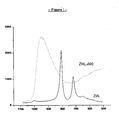
- the tetrahedral coordination of tungsten is confirmed by Raman spectrometry, a resonance line at 935 cm -1 , maintained after calcination at a temperature in the region of 600 ° C or even greater than 700 ° C.
- the resonance lines at 800 cm -1 and 1000 cm -1 characteristic of octahedral tungsten and of micro crystals of WO 3, are absent from the Raman spectrum of the solid according to the present invention.
- the solid according to the present invention comprises tungsten, in oxidized form, deposited in monolayer on a zirconia support and / or titanium dioxide.
- support zirconia and / or titanium dioxide is meant that the support may consist of pure zirconia or pure titanium dioxide or a mixture of zirconia and titanium dioxide, in all proportions.
- the amount of tungsten deposited on the support is between 0.5% by weight and 80% by weight, advantageously between 1% and 40%, preferably between 2% and 25% by weight. relative to the total mass of the solid.
- the solid comprises a monolayer of tungsten in the form of tetrahedral species in an amount of between 5% by weight and 25% by weight, advantageously between 10% and 25%, preferably between 15% and 25% by weight relative to the total mass of the solid.
- the solid according to the invention has quite interesting catalytic properties and also has the advantage, compared to the catalysts known from the prior art, of being able to be used without undergoing prior calcination, generally necessary to activate the catalyst. .
- a calcining temperature of less than 800 ° C, more particularly less than 700 ° C, and preferably about or less than about 600 ° C is sufficient. This temperature also corresponds to the temperature sufficient to regenerate the catalyst.
- the solid of the invention can of course be calcined (activated and / or regenerated) at higher temperatures, such as those usually encountered for tungsten / zirconia catalysts of the prior art, which temperatures are generally equal to or greater than 800 ° C. vs.
- temperatures are generally equal to or greater than 800 ° C. vs.
- the solid according to the present invention may further comprise one or more metals known for their catalytic activities, such as, for example, platinum, palladium, rhodium, cobalt, nickel, iron, etc.
- the solids of the invention may for example be advantageously added with palladium or platinum, in order to catalyze hydrogenation reactions, for example hydrogenation of aromatic compounds from fuels to naphthenes.
- the present invention also relates to a process for the preparation of the solid tungsten / zirconia and / or titanium dioxide, characterized in that an ion monolayer is deposited.
- peroxotungstic acid H 2 W 2 O 11
- This compound makes it possible to obtain a monolayer of tungsten on the surface of the support, for example 20% by weight of tungsten, with an initial support surface of approximately 300 m 2 / g in the case of a support. pure zirconia.
- the solid obtained by this technique has a large Raman line at about 935 cm -1 , attributable to tetrahedral tungsten, without bands at 1000 cm -1 , nor at 800 cm -1 attributable to octahedral microcrystals of tungsten trioxide ( WO 3 ). It should also be noted here that these spectra are obtained after heating in air at 600 ° C.
- the oxidation of the tungstic acid can be carried out according to various methods, advantageously under the action of hydrogen peroxide, without however being limited to this oxidizing agent.
- WO 3 tungsten trioxide
- Other methods may be used as long as they lead to the formation of anions WO 4 2 - , only then to be exchanged with hydrated zirconia and / or hydrated titanium dioxide, in an acid medium, preferably less than pH 3, while maintaining a tetrahedral structure.
- the process according to the invention makes it possible to obtain a very acidic peroxotungstic acid (H 2 W 2 O 11 ) having a pH of less than 3, and with the particularity of being easily attached to a zirconia and / or titanium dioxide support.
- zirconium dioxide, titanium dioxide and mixtures thereof have the properties of being amphoteric solids and anion exchangers in this acidic zone (pH ⁇ 3).
- the process of the present invention uses a support comprising pure zirconia, that is to say without titanium dioxide.
- the invention is however not limited to this type of support alone and also includes pure TiO 2 support solids, that is to say without zirconia, but also solids whose support consists of a mixture of zirconia and of TiO 2 , in all proportions. Fillers, additives and others known to those skilled in the art can also be added to the oxide or the mixture of oxides forming the support of the solids according to the invention.
- the precursors used to fix tungsten on a support such as zirconia were the ammonium metatungstates [(NH 4 ) 6 H 2 W 12 O 40 ], for which, it is known from the general works of chemistry mineral (for example that of P. Pascal) that tungsten was engaged in a structure of Keggin, formed of octahedra. This structure does not become a structure WO 4 2 - tetrahedral only at very basic pH, the pH value at which zirconia only exchanges cations.
- the peroxotungstic acid decomposes on the surface of the support in mononuclear tetrahedral species. This has the effect of favorably modifying the acid properties of the catalyst obtained.
- a strongly acidic catalyst considerably improves the properties, such as for example kinetics, selectivities and yields, many catalytic chemical reactions, especially in the field of petrochemistry.
- the solid according to the invention has oxidation properties unknown so far on the usual catalysts in which the tungsten dissolves more easily.
- the present invention also relates to the use of the solid tungsten / zirconia and / or titanium dioxide as defined above as a thermally stable acid catalyst, oxidation catalyst and epoxidation, or hydrodesulphurization by addition of nickel.
- the solid catalysts according to the present invention have catalytic properties which are much greater than the catalysts known in the prior art for the same type of reaction.
- the lowest activation temperature about 600 ° C. (or about 873 K), relative to temperatures of around 800 ° C. for the usual catalysts, which makes it possible to increase the specific surface of the catalyst and therefore its effectiveness.
- the solids obtained in the prior art have an octahedral coordination of tungsten or microcrystals of tungsten trioxide
- the tetrahedral tungsten coordination confers a greater degree of acidity to the solid according to the invention, and therefore better yields for acid catalyzed reactions (such as oxidation, epoxidation, etc.).
- the solid according to the present invention has a high chemical and thermal stability, thus ensuring better ability to regenerate the solid.
- the solids according to the invention find a particularly interesting application in the catalytic reactions of oxidation of sulfur derivatives, especially those present in hydrocarbons, before or after refining.
- the solids according to the invention are thus particularly suitable for the desulfurization of hydrocarbons, especially fuels, for example gasolines, kerosines and gas oils.
- the solids according to the present invention have proved to be very efficient catalysts in the oxidation reactions of substituted and unsubstituted benzothiophenes and / or dibenzothiophenes.
- Sulfur compounds are particularly undesirable in liquid hydrocarbons.
- the presence of sulfur is associated with the corrosion of equipment and the deterioration of combustion engines.
- Sulfur also poisons metal catalysts used in petroleum refining and catalytic conversion of gaseous effluents. It is further recognized that the emission of sulfur-containing products into the atmosphere contributes to acid rain and ozone formation, and the current specification of up to 500 ppm sulfur, especially in diesel, has to decrease to only a few ppm. in the future, which will require more and more efficient processes.
- Sulfur compounds such as sulphides, disulfides and mercaptans
- thiophenes such as benzothiophene (BT), dibenzotiophenes (DBT) and their derivatives, especially substituted derivatives, are more difficult to eliminate, since they are refractory molecules.
- the oxidation process of sulfur compounds is in particular an alternative to hydrodesulfurization because these compounds are oxidized to sulfoxides and sulfones, soluble in polar solvents and can thus be easily extracted by physical means as described in the patent application WO 01/48119 .
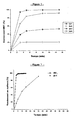
- the rehydrated meixnerite hydrotalcites are very active, oxidizing DBT up to 98% in 30 minutes in monophasic liquid systems, this conversion reaching 99% in 45 minutes in a 3-phase system.
- the solids according to the present invention are much more active for the oxidation of thiophenes and derivatives such as BT and DBT, substituted or not.
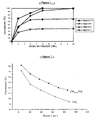
- the tetrahedral structure of tungsten being very stable, even at high temperatures, it has been possible to observe conversions of the order of 99% in times of 5 minutes with hydrogen peroxide, and 70% after a hour with tert-butyl hydroperoxide (TBHP), conversions that are fully compatible with an industrial application.
- TBHP tert-butyl hydroperoxide
- the support zirconia and / or titanium dioxide means a support based on zirconia, or based on titanium dioxide or based on a mixture of the two oxides mentioned above, in all proportions. Solids in which the support comprises pure zirconia, i.e. without titanium dioxide, are preferred.
- compound or composition to be desulphurized is meant more particularly the products derived from the distillation of petroleum, whether they are refined or not.
- products derived from the distillation of petroleum are, for example, hydrocarbons, especially fuels, in particular gasolines, kerosines and gas oils, more specifically gas oils.
- sulfur compounds should preferably be understood to mean thiophene compounds, usually present in products derived from the distillation of petroleum, such as, for example, benzothiophene (BT), dibenzothiphen (DBT) and their derivatives, in particular their derivatives substituted by one or more groups, chosen especially from alkyls, in particular methyl.
- BT benzothiophene
- DBT dibenzothiphen
- the process according to the present invention has proved, for example, to be particularly effective for the oxidation of DBT and its substituted derivatives, such as mono-, di-, tri- or tetra-alkylbenzothiophenes.
- the sulfur atoms of the thiophene compounds are oxidized to sulphone groups.
- the sulphonated compounds thus obtained can thus be easily removed from the reaction medium by conventional techniques known per se, such as decantation, phase separation, distillation, etc.
- the oxidizing agent may also be of any type known to those skilled in the art, and is advantageously chosen from peroxides, in particular hydrogen peroxide or tert-butyl hydroperoxide. These oxidizing agents may be used alone or as a mixture.
- the solvents will be chosen according to the compound or the composition to be desulphurized and may for example be chosen from water, alkanes, for example hexane, heptane, octane, nonane, decane, alkanols, for example 2- butanol, polar solvents in general, such as, for example, nitriles (acetonitrile) or cyclic ethers (tetrahydrofuran, dioxane).
- polar solvents in general, such as, for example, nitriles (acetonitrile) or cyclic ethers (tetrahydrofuran, dioxane).
- the choice of the solvent is in fact related to the nature of the reaction to be carried out, and will thus be mainly guided by non-toxicity considerations in general required for industrial applications and with regard to the protection of the environment.
- solvent mixtures can be used, and also that the reaction can take place in homogeneous, heterogeneous, monophasic, biphasic or even triphasic phase.
- the compound or the composition to be desulfurized can also serve as a solvent for the reaction.
- the reaction medium may further be advantageous to extract the sulfones from the reaction medium as and when they are formed so as to displace the reaction equilibrium and thus increase the efficiency of the process.
- the use of polar solvent in a multiphase reaction medium thus has the advantage of solubilizing the sulfones and thus displacing the equilibrium as previously described.
- the oxidant / compounds to be oxidized ratio can vary in large proportions, depending on the operating conditions, the nature of the oxidant, the compound to be oxidized, the solvent used and the desired degree of conversion, as well as the duration of the reaction envisaged.
- the oxidant / compounds to be oxidized ratio may, for example, vary from 100/1 to 1/100, preferably from 100/1 to 1/1. Very satisfactory results have been obtained with oxidation ratios / compounds to be oxidized between 20/1 and 1/1, especially between 10/1 and 2/1.
- the process of the invention has thus been shown to be particularly effective for the oxidation of the thiophene compounds contained in the gas oils, with conversion rates to sulfones generally between 80% and 99.9% depending on the operating conditions.
- the present invention therefore also relates to fuels, especially gas oils, desulphurized by the process of the present invention.
- Example A1 Preparation of a zirconia support
- the zirconia support is commercially available (for example from MEL® Chemicals) or may be prepared according to techniques known per se, and for example according to the following procedure:
- Tungsten / zirconia catalysts with different tungsten contents were prepared from zirconia obtained by sol-gel, and used in the hydrated state, according to the following procedures:
- a solution of 0.1 M tungstic acid is prepared by diluting 6.25 g of tungstic acid in 250 ml of 35% hydrogen peroxide. The anion exchange is then carried out between the tungstic acid solution and the zirconium hydroxide. 75 ml of solution per 5 g of hydroxide, in the case studied, 10 g of zirconium hydroxide in 150 ml of tungstic acid solution are counted. The mixture is stirred for 15 min, filtered and then placed in an oven at 80 ° C. for 24 hours. Finally, the solid is calcined under air (flow rate 20 cm 3 / min) at 600 ° C for 3 hours. This tungsten zirconia contains 19.4% tungsten.
- a solution of 0.25 M tungstic acid is prepared by diluting 15.62 g of tungstic acid in 250 ml of 35% hydrogen peroxide. The rest of the preparation is identical to that of ZW 0.1 600, the solid being calcined at 700 ° C. instead of 600 ° C.
- This tungsten zirconia contains 19.8% tungsten, which shows that the equilibrium is entirely shifted towards the tungsten fixation on the zirconia.
- the solid (hereinafter referred to as Zr-1) was obtained using an excess of tungsten (50 mL of 0.1 M solution per 2 g of solid).
- the catalyst ZW 1 was prepared according to the method described by E. Iglesia et al., J. Catal., 194, (2000), 175-187 :
- tungsten on zirconia has the effect of increasing the textural properties for a tungsten content ranging from 2 to 10%, and decreasing with a tungsten content of 20%.
- Table III shows the influence of calcination temperature and concentration of the tungstic acid solution on the BET area and pore size of the solids according to the present invention. These data are deduced from nitrogen adsorption isotherms on solids prepared from zirconia hydrated having a BET area equal to 211 m 2 .g -1 , and an average pore diameter of 1.4 nm. ⁇ b> ⁇ u> - Table III - ⁇ / u> ⁇ /b> H 2 concentration WO 5 0.1M 0.25M 0.5M ZW 1 T calcination: 600 ° C.
- the catalyst of the invention has a number of acidic sites, per gram or mole of tungsten, double the ZW 1 catalyst. This is consistent with the tetrahedral tungsten coordination of the solids of the present invention observed in Raman.
- Example C Example of isomerization of alkanes
- This example shows the ability of the catalysts according to the invention to selectively isomerize hexane to methylpentanes.
- a mechanical mixture of 80 mg of tungsten zirconia according to the invention is carried out with 80 mg of platinum / silica (Pt / SiO 2 ).
- Example D Example of epoxidation of olefins
- the products are epoxide alone at 298 K and cyclohexanediol at 348 K.
Landscapes
- Chemical & Material Sciences (AREA)
- Engineering & Computer Science (AREA)
- Organic Chemistry (AREA)
- Chemical Kinetics & Catalysis (AREA)
- Materials Engineering (AREA)
- Oil, Petroleum & Natural Gas (AREA)
- General Chemical & Material Sciences (AREA)
- Catalysts (AREA)
- Organic Low-Molecular-Weight Compounds And Preparation Thereof (AREA)
- Production Of Liquid Hydrocarbon Mixture For Refining Petroleum (AREA)
- Inorganic Compounds Of Heavy Metals (AREA)
Claims (23)
- Feststoff, enthaltend eine Monoschicht aus Wolframoxid auf einem Zirkon- und/oder Titandioxidträger, dadurch gekennzeichnet, dass die Menge an Wolfram, in tetraedrischer Form, die auf dem Träger aufgebracht ist, zwischen 10 Gew.% und 25 Gew.%, vorzugsweise zwischen 15 Gew.% und 25 Gew.%, bezogen auf die Gesamtmasse des Trägers, beträgt, und dadurch dass er durch den Austausch von Anionen zwischen Zirkon und Peroxowolframsäure in einem sauren Milieu bei einem pH-Wert unterhalb von 3 erhalten wird.
- Feststoff nach Anspruch 1, dadurch gekennzeichnet, dass der Träger ein Zirkonträger ist.
- Feststoff nach einem der vorangegangenen Ansprüche, dadurch gekennzeichnet, dass er zusätzlich ein oder mehrere Metalle enthält, ausgewählt aus Platin, Rhodium, Kobalt, Palladium, Nickel und Eisen.
- Feststoff nach einem der vorangegangenen Ansprüche, dadurch gekennzeichnet, dass die tetraedrische Anordnung des W nach Calcinierung bei einer Temperatur von etwa 600°C, oder sogar oberhalb von 700°C erhalten wird.
- Feststoff nach einem der vorangegangenen Ansprüche,
dadurch gekennzeichnet, dassa) die spezifische Oberfläche des Feststoffs nach Erhitzen auf eine Temperatur unterhalb von 800°C, vorzugsweise unterhalb von 700°C, insbesondere unterhalb oder bei etwa 600°C, zwischen 50 und 300 m2/g beträgt, noch bevorzugter zwischen 65 und 200 m2/g, vorzugsweise zwischen 86 und 150 m2/g. - Feststoff nach einem der vorangegangenen Ansprüche,
dadurch gekennzeichnet, dassa) die spezifische Oberfläche des Feststoffs nach Erhitzen auf eine Temperatur unterhalb von 800°C, vorzugsweise unterhalb von 700°C, insbesondere unterhalb oder im Bereich von etwa 600°C zwischen 50 und 300 m2/g beträgt, noch bevorzugter zwischen 65 und 200 m2/g, vorzugweise zwischen 86 und 150 m2/g;b) der vorliegende Feststoff einen Gesamtsäuregehalt, gemessen durch Adsorption von Ammoniak zwischen 0,1 und 0,5 mmol/g, vorzugsweise zwischen 0,2 und 0,4 mmol/g, noch bevorzugter von etwa 0,35 mmol/g, Feststoff nach Erhitzen auf eine Temperatur unterhalb von 800°C, vorzugsweise unterhalb von 700°C, insbesondere unterhalb von oder im Bereich von etwa 600°C, aufweist. - Verfahren zum Herstellen eines Feststoff nach einem der Ansprüche 1 bis 6, dadurch gekennzeichnet, dass eine Monoschicht an
 a) Oxidation von Wolframsäure in Peroxowolframsäure (H2W2O11) ;b) Ionenaustausch im sauren Milieu, vorzugsweise bei einem pH-Wert unterhalb von 3, zwischen der Peroxowolframsäurelösung, die auf diese Weise erhalten wurde, und einem Zirkon (ZrO2) Hydrat- und/oder Titandioxidhydratträger; undc) Wiedergewinnen des festen Wolfram/Zirkon- und/oder Titandioxids.
 - Verfahren zum Herstellen eines Feststoffs nach einem der Ansprüche 1 bis 6, dadurch gekennzeichnet, dass eine Monoschicht an
 a) Oxidation von Wolframtrioxid (WO3) Hydrat in Gegenwart eines Oxidationsmittels;b) Ionenaustausch im sauren Milieu, vorzugweise unterhalb eines pH-Werts von 3, zwischen der Peroxowolframsäurelösung, die auf diese Weise erhalten wurde, und einem Zirkon (ZrO2) Hydrat- und/oder Titandioxidhydratträger; undc) Wiedergewinnen des festen Wolfram/Zirkon- und/oder Titandioxids.
 - Verwendung eines Feststoffs nach einem der Ansprüche 1 bis 6 als Reaktionskatalysator für die Oxidation, Epoxidation, Hydrodesulfurierung, Isomerisation von Paraffinen und von Olefinen, für die Hydrierung von aromatischen Verbindungen, Oxidation von Schwefelverbindungen und von Olefinen.
- Verwendung nach Anspruch 9, dadurch gekennzeichnet, dass die Reaktion eine säurekatalysierte Reaktion ist.
- Verwendung nach einem der Ansprüche 9 oder 10, dadurch gekennzeichnet, dass die Reaktion eine katalytische Oxidationsreaktion von Schwefelderivaten ist, insbesondere von solchen Derivaten, die in Kohlenwasserstoffen vorkommen, vor oder sogar nach der Raffinierung.
- Verwendung nach einem der Ansprüche 9 bis 11 für die Desulfurierung von Kohlenwasserstoffen, insbesondere von Treibstoffen, beispielsweise Benzinen, Kerosinen und Gasölen.
- Verwendung nach einem der Ansprüche 9 bis 12, dadurch gekennzeichnet, dass die Reaktion eine katalytische Oxidationsreaktion von Benzothiophenen und/oder Dibenzothiophenen ist, wobei diese substituiert sind oder unsubstituiert sein können.
- Verfahren zur oxidativen Desulfurierung von Verbindungen oder Zusammensetzungen, die Schwefel haltige Verbindungen enthalten, dadurch gekennzeichnet, dass es die folgenden Schritte umfasst:a) Inkontaktbringen von einer Verbindung oder Zusammensetzung, die desulfuriert werden soll, mit einem Oxidationsmittel und einem Feststoff nach einem der Ansprüche 1 bis 6;b) Durchführen der Oxidationsreaktion in einem geeigneten Lösungsmittel, vorzugsweise bei Atmosphärendruck und bei einer geeigneten Temperatur, vorzugsweise zwischen 20°C und der Verdampfungstemperatur des Lösungsmittels;c) Entfernen der Oxidationsprodukte der Ausgangsverbindung oder der Ausgangszusammensetzung.
- Verfahren nach Anspruch 14, dadurch gekennzeichnet, dass die Verbindungen oder die Zusammensetzungen, die desulfuriert werden sollen, raffinierte Produkte sind oder nichtraffinierte Produkte sind, die aus der Destillation von Erdöl stammen, insbesondere Kohlenwasserstoffe und vorzugsweise Brennstoffe, beispielsweise Benzine, Kerosine und Gasöle, besonders bevorzugt Gasöle.
- Verfahren nach einem der Ansprüche 14 bis 15, dadurch gekennzeichnet, dass die Verbindungen Thiophenderivate, insbesondere Benzothiophene, Dibenzothiophene und deren Derivate sind, insbesondere substituierte.
- Verfahren nach einem der Ansprüche 14 bis 16, dadurch gekennzeichnet, dass das Oxidationsmittel ausgewählt ist aus Peroxiden, insbesondere Wasserstoffperoxid oder Tertbutylhydroperoxid, wobei diese Oxidationsmittel einzeln oder im Gemisch verwendet werden können.
- Verfahren nach einem der Ansprüche 14 bis 17, dadurch gekennzeichnet, dass das Lösungsmittel für die Reaktion ausgewählt wird aus der Verbindung oder der Zusammensetzung, die behandelt werden soll, Wasser, Alkanen, Alkanolen, polaren Lösungsmitteln, wobei diese Lösungsmittel einzeln oder im Gemisch verwendet werden können.
- Verfahren nach einem der Ansprüche 14 bis 18, dadurch gekennzeichnet, dass es im homogenen, heterogenen, Mono-, Bi- oder sogar Triphasenmilieu durchgeführt wird.
- Verfahren nach einem der Ansprüche 14 bis 19, dadurch gekennzeichnet, dass das Verhältnis Oxidationsmittel zu oxidierender Verbindung sich im Bereich von 100/1 und 1/100, vorzugsweise zwischen 100/1 und 1/1, noch bevorzugter zwischen 20/1 und 1/1, und insbesondere zwischen 10/1 und 2/1 beträgt.
- Verfahren nach einem der Ansprüche 14 bis 20, dadurch gekennzeichnet, dass das Oxidationsprodukt aus dem Reaktionsmilieu im gleichen Maße wie es gebildet wird, auch entfernt wird.
- Verfahren nach einem der Ansprüche 14 bis 21, in welchem das Oxidationsprodukt ein desulfurierter Kraftstoff ist.
- Verfahren nach einem der Ansprüche 14 bis 22, in dem das Oxidationsprodukt ein Gasöl ist.
Applications Claiming Priority (3)
| Application Number | Priority Date | Filing Date | Title |
|---|---|---|---|
| FR0208318 | 2002-07-03 | ||
| FR0208318A FR2841797B1 (fr) | 2002-07-03 | 2002-07-03 | Catalyseurs a base de tungstene |
| PCT/FR2003/002040 WO2004004893A2 (fr) | 2002-07-03 | 2003-07-01 | Catalyseurs comprenant une couche d’oxyde de tungstene sur un support zircone et/ou oxyde de titane |
Publications (2)
| Publication Number | Publication Date |
|---|---|
| EP1519785A2 EP1519785A2 (de) | 2005-04-06 |
| EP1519785B1 true EP1519785B1 (de) | 2008-05-14 |
Family
ID=29725119
Family Applications (1)
| Application Number | Title | Priority Date | Filing Date |
|---|---|---|---|
| EP03762721A Expired - Lifetime EP1519785B1 (de) | 2002-07-03 | 2003-07-01 | Katalysator bestehend aus einer wolframoxidmonoschicht auf einem zirkon- und/oder titandioxidträger |
Country Status (7)
| Country | Link |
|---|---|
| US (1) | US7851401B2 (de) |
| EP (1) | EP1519785B1 (de) |
| AT (1) | ATE395131T1 (de) |
| AU (1) | AU2003259316A1 (de) |
| DE (1) | DE60320995D1 (de) |
| FR (1) | FR2841797B1 (de) |
| WO (1) | WO2004004893A2 (de) |
Families Citing this family (14)
| Publication number | Priority date | Publication date | Assignee | Title |
|---|---|---|---|---|
| EP1732686B1 (de) * | 2004-03-29 | 2011-09-14 | Showa Denko K.K. | Verfahren zur herstellung einer sauerstoffhaltigen verbindung unter verwendung eines katalysators auf basis von palladium, wolfram und zirkon |
| FR2888131B1 (fr) * | 2005-07-08 | 2008-04-04 | Total France Sa | Catalyseur d'ouverture de cycles hydrocarbones. |
| FR2907445B1 (fr) * | 2006-10-20 | 2010-09-03 | Rhodia Recherches & Tech | Composition a acidite elevee a base d'oxyde de zirconium, d'oxyde de titane et d'oxyde de tungstene,procede de preparation et utilisation dans le traitement des gaz d'echappement |
| DE102007004350A1 (de) * | 2007-01-29 | 2008-07-31 | Evonik Degussa Gmbh | Verfahren zur Regenerierung eines Katalysators |
| US20090242459A1 (en) * | 2008-03-26 | 2009-10-01 | General Electric Company | Oxidative desulfurization of fuel oil |
| RU2476258C2 (ru) * | 2009-10-06 | 2013-02-27 | Мицубиси Хеви Индастриз, Лтд. | КАТАЛИЗАТОР УДАЛЕНИЯ NOx ИЗ ВЫСОКОТЕМПЕРАТУРНОГО ДЫМОВОГО ГАЗА, СПОСОБ ЕГО ПОЛУЧЕНИЯ И СПОСОБ УДАЛЕНИЯ NOx ИЗ ВЫСОКОТЕМПЕРАТУРНОГО ДЫМОВОГО ГАЗА |
| FR2956114B1 (fr) | 2010-02-11 | 2012-03-23 | Inst Francais Du Petrole | Procede de transformation de biomasse lignocellulosique ou de cellulose par des acides solides de lewis a base de tungstene |
| FR2963346B1 (fr) | 2010-07-29 | 2013-03-15 | IFP Energies Nouvelles | Procede de transformation de biomasse lignocellulosique ou de cellulose par des catalyseurs acides solides de lewis a base d'oxyde de tungstene et d'un metal choisi dans les groupes 8 a 11 |
| US8790508B2 (en) | 2010-09-29 | 2014-07-29 | Saudi Arabian Oil Company | Integrated deasphalting and oxidative removal of heteroatom hydrocarbon compounds from liquid hydrocarbon feedstocks |
| US10262763B2 (en) * | 2016-09-19 | 2019-04-16 | Radium Incorporated | Systems, devices, and/or methods for managing radiation shielding |
| CN114377671B (zh) * | 2020-10-16 | 2025-07-08 | 浙江大学 | 一种含有钨酸盐纳米团簇的复合氧化物、其制备方法和用途 |
| CN115138371B (zh) * | 2021-03-29 | 2024-03-12 | 昆明理工大学 | 一种还原性硫污染物选择性催化氧化催化剂及其制备方法和应用 |
| CN118744003A (zh) * | 2024-04-11 | 2024-10-08 | 广东石油化工学院 | 一种非晶/晶体核壳催化剂及其制备方法 |
| CN118745357A (zh) * | 2024-04-11 | 2024-10-08 | 广东石油化工学院 | 一种利用非晶/晶体核壳催化剂去除油品中噻吩类含硫化合物的方法 |
Citations (1)
| Publication number | Priority date | Publication date | Assignee | Title |
|---|---|---|---|---|
| EP0547934A1 (de) * | 1991-12-16 | 1993-06-23 | Rhone-Poulenc Chimie | Katalysator zur selektiven Reduktion von stickoxiden und seine Anwendung |
Family Cites Families (5)
| Publication number | Priority date | Publication date | Assignee | Title |
|---|---|---|---|---|
| US2739132A (en) * | 1952-08-25 | 1956-03-20 | Universal Oil Prod Co | Manufacture of supported catalysts |
| NO115733B (de) * | 1965-12-24 | 1968-11-25 | Montedison Spa | |
| GB1249079A (en) * | 1969-04-02 | 1971-10-06 | Shell Int Research | A process for epoxidizing olefins with organic hydroperoxides |
| US5543036A (en) * | 1993-07-22 | 1996-08-06 | Mobil Oil Corporation | Process for hydrotreating |
| FR2802939B1 (fr) * | 1999-12-28 | 2005-01-21 | Elf Antar France | Procede de desulfuration des derives du thiophene contenus dans les carburants |
-
2002
- 2002-07-03 FR FR0208318A patent/FR2841797B1/fr not_active Expired - Fee Related
-
2003
- 2003-07-01 AU AU2003259316A patent/AU2003259316A1/en not_active Abandoned
- 2003-07-01 AT AT03762721T patent/ATE395131T1/de not_active IP Right Cessation
- 2003-07-01 WO PCT/FR2003/002040 patent/WO2004004893A2/fr not_active Ceased
- 2003-07-01 DE DE60320995T patent/DE60320995D1/de not_active Expired - Lifetime
- 2003-07-01 EP EP03762721A patent/EP1519785B1/de not_active Expired - Lifetime
- 2003-07-01 US US10/519,498 patent/US7851401B2/en not_active Expired - Fee Related
Patent Citations (1)
| Publication number | Priority date | Publication date | Assignee | Title |
|---|---|---|---|---|
| EP0547934A1 (de) * | 1991-12-16 | 1993-06-23 | Rhone-Poulenc Chimie | Katalysator zur selektiven Reduktion von stickoxiden und seine Anwendung |
Non-Patent Citations (3)
| Title |
|---|
| FIGUERAS F. ET AL: "Influence of the coordination on the catalytic properties of supported W catalysts", JOURNAL OF CATALYSYS, vol. 226, 2004, pages 25 - 31, XP004518081 * |
| SCHEITHAUER M. ET AL: "Genesis and structure of WOxZrO2 solid acid catalysts", LANGMUIR, vol. 14, 1998, NEW-YORK, pages 3019 - 3029, XP002374865 * |
| VAUDAGNA S.R. ET AL: "Platinum supported WOx-ZrO2: Effect of calcination temperature and tungsten loading", APPLIED CATALYSIS A: GENERAL, vol. 168, 1998, AMSTERDAM, NL, pages 93 - 111, XP004271340 * |
Also Published As
| Publication number | Publication date |
|---|---|
| DE60320995D1 (de) | 2008-06-26 |
| AU2003259316A8 (en) | 2004-01-23 |
| EP1519785A2 (de) | 2005-04-06 |
| FR2841797B1 (fr) | 2005-08-05 |
| US7851401B2 (en) | 2010-12-14 |
| AU2003259316A1 (en) | 2004-01-23 |
| US20060091045A1 (en) | 2006-05-04 |
| WO2004004893A2 (fr) | 2004-01-15 |
| WO2004004893A3 (fr) | 2004-04-15 |
| ATE395131T1 (de) | 2008-05-15 |
| FR2841797A1 (fr) | 2004-01-09 |
Similar Documents
| Publication | Publication Date | Title |
|---|---|---|
| EP1892038B1 (de) | Verfahren zur Herstellung einer Lösung eines Salzes von einem Anderson-Heteropolyanion, das in seiner Struktur Molybdän und Kobalt oder Nickel vereint | |
| EP1246889B1 (de) | Verfahren zur entschwefelung von in kraftstoffen enthaltenen thiophenderivaten | |
| EP0581619B1 (de) | Verfahren zur Umwandlung von Synthesegas in Kohlenwasserstoffe auf Kobalt basierender Katalysator | |
| EP2097166B1 (de) | Dehydrierferfahren in gegenwart eines bimetall- oder multimetallkatalysators mit optimiertem bimetallindex und wasserstoffabsorptionsfähigkeit | |
| EP2161076B1 (de) | Selektives Hydrierungsverfahren zum Einsatz eines Sulfidkatalysators mit spezifischer Zusammensetzung | |
| EP2441516B1 (de) | Optimierter Katalysator für katalytisches Reformierungsverfahren | |
| EP0020240B1 (de) | Kohlenwasserstoff-Hydrobehandlungskatalysatoren und ihre Verwendung bei der Reformierung und Isomerisation von Kohlenwasserstoffen in Gegenwart von Wasserstoff | |
| EP1519785A2 (de) | Aus einer wolframoxidschicht auf einem zirkon- und/oder titandioxidträger bestehender katalysator | |
| EP1053785A1 (de) | Ein auf einem metalloxid der Gruppe IVB basierende Katalysatorträger, seine Herstellung und seine Verwendungen | |
| FR2910351A1 (fr) | Catalyseur d'hydrotraitement, son procede de preparation et son utilisation. | |
| EP1346009A1 (de) | Verfahren und vorrichtung zur entschwefelung von thiophenderivate enthaltenden kohlenwasserstoffen | |
| EP0115449A2 (de) | Oxydierungskatalysator für Schwefelwasserstoff | |
| WO2002004110A2 (fr) | Procede de preparation d'un catalyseur acide a base de zircone sulfatee massique, catalyseur susceptible d'etre obtenu par ce procede et ses utilisations | |
| CA1151133A (fr) | Catalyseur de production d'hydrocarbures aromatiques et son procede de preparation | |
| EP0979807B1 (de) | Verfahren zur Fischer-Tropsch-Synthese in Gegenwart eines Katalysators mit vorbestimmter Grösse der Metall- partikel | |
| WO2006077302A1 (fr) | Catalyseur d'hydrotraitement, son procede de preparation et son utilisation | |
| EP0967010B1 (de) | Herstellung eines ein Element der Gruppen IIIB, IVB, VB enthaltenden, sulfidierten Katalysators | |
| FR2783252A1 (fr) | Procede pour l'hydrodesazotation et l'hydrogenation de structures aromatiques de coupes petrolieres | |
| WO2006040427A1 (fr) | Catalyseurs d'hydrotraitement de produits petroliers | |
| FR2845622A1 (fr) | Catalyseur d'hydroraffinage et/ou d'hydroconversion prepare a partir d'une nouvelle phase active de type oxycarbonitrure | |
| BE612551A (de) | ||
| FR2792548A1 (fr) | Preparation d'un catalyseur comprenant un metal de groupe viii et un metal additionnel introduit sous la forme d'un compose organometallique hydrosoluble et son utilisation en conversion d'hydrocarbures | |
| FR2735393A1 (fr) | Catalyseurs utilisables dans les reactions de transformation d'hydrocarbures et contenant du silicium et des metaux alcalins ou alcalino-terreux | |
| BE514494A (de) | ||
| FR2792644A1 (fr) | Procede d'hydroreformage en presence d'un catalyseur comprenant un metal du groupe vii et un metal additionnel introduit sous forme de compose organometallique hydrosoluble |
Legal Events
| Date | Code | Title | Description |
|---|---|---|---|
| PUAI | Public reference made under article 153(3) epc to a published international application that has entered the european phase |
Free format text: ORIGINAL CODE: 0009012 |
|
| 17P | Request for examination filed |
Effective date: 20050105 |
|
| AK | Designated contracting states |
Kind code of ref document: A2 Designated state(s): AT BE BG CH CY CZ DE DK EE ES FI FR GB GR HU IE IT LI LU MC NL PT RO SE SI SK TR |
|
| AX | Request for extension of the european patent |
Extension state: AL LT LV MK |
|
| 17Q | First examination report despatched |
Effective date: 20050531 |
|
| RIN1 | Information on inventor provided before grant (corrected) |
Inventor name: FIGUERAS, FRANEOIS Inventor name: PALOMEQUE, JORGE Inventor name: ESSAYEM, NADINE Inventor name: FECHE, CYRIL Inventor name: GELBARD, GEORGES Inventor name: LORIDANT, STEFANE |
|
| DAX | Request for extension of the european patent (deleted) | ||
| GRAP | Despatch of communication of intention to grant a patent |
Free format text: ORIGINAL CODE: EPIDOSNIGR1 |
|
| RTI1 | Title (correction) |
Free format text: CATALYSTS COMPRISING A TUNGSTEN OXIDE MONOLAYER ONTO A ZIRCONIA AND/OR TITANIA CARRIER |
|
| GRAS | Grant fee paid |
Free format text: ORIGINAL CODE: EPIDOSNIGR3 |
|
| GRAA | (expected) grant |
Free format text: ORIGINAL CODE: 0009210 |
|
| AK | Designated contracting states |
Kind code of ref document: B1 Designated state(s): AT BE BG CH CY CZ DE DK EE ES FI FR GB GR HU IE IT LI LU MC NL PT RO SE SI SK TR |
|
| REG | Reference to a national code |
Ref country code: GB Ref legal event code: FG4D Free format text: NOT ENGLISH |
|
| REG | Reference to a national code |
Ref country code: CH Ref legal event code: EP |
|
| REG | Reference to a national code |
Ref country code: IE Ref legal event code: FG4D |
|
| REF | Corresponds to: |
Ref document number: 60320995 Country of ref document: DE Date of ref document: 20080626 Kind code of ref document: P |
|
| PG25 | Lapsed in a contracting state [announced via postgrant information from national office to epo] |
Ref country code: SI Free format text: LAPSE BECAUSE OF FAILURE TO SUBMIT A TRANSLATION OF THE DESCRIPTION OR TO PAY THE FEE WITHIN THE PRESCRIBED TIME-LIMIT Effective date: 20080514 |
|
| PG25 | Lapsed in a contracting state [announced via postgrant information from national office to epo] |
Ref country code: FI Free format text: LAPSE BECAUSE OF FAILURE TO SUBMIT A TRANSLATION OF THE DESCRIPTION OR TO PAY THE FEE WITHIN THE PRESCRIBED TIME-LIMIT Effective date: 20080514 Ref country code: ES Free format text: LAPSE BECAUSE OF FAILURE TO SUBMIT A TRANSLATION OF THE DESCRIPTION OR TO PAY THE FEE WITHIN THE PRESCRIBED TIME-LIMIT Effective date: 20080825 |
|
| NLV1 | Nl: lapsed or annulled due to failure to fulfill the requirements of art. 29p and 29m of the patents act | ||
| PG25 | Lapsed in a contracting state [announced via postgrant information from national office to epo] |
Ref country code: AT Free format text: LAPSE BECAUSE OF FAILURE TO SUBMIT A TRANSLATION OF THE DESCRIPTION OR TO PAY THE FEE WITHIN THE PRESCRIBED TIME-LIMIT Effective date: 20080514 Ref country code: NL Free format text: LAPSE BECAUSE OF FAILURE TO SUBMIT A TRANSLATION OF THE DESCRIPTION OR TO PAY THE FEE WITHIN THE PRESCRIBED TIME-LIMIT Effective date: 20080514 |
|
| REG | Reference to a national code |
Ref country code: IE Ref legal event code: FD4D |
|
| PG25 | Lapsed in a contracting state [announced via postgrant information from national office to epo] |
Ref country code: CZ Free format text: LAPSE BECAUSE OF FAILURE TO SUBMIT A TRANSLATION OF THE DESCRIPTION OR TO PAY THE FEE WITHIN THE PRESCRIBED TIME-LIMIT Effective date: 20080514 Ref country code: DK Free format text: LAPSE BECAUSE OF FAILURE TO SUBMIT A TRANSLATION OF THE DESCRIPTION OR TO PAY THE FEE WITHIN THE PRESCRIBED TIME-LIMIT Effective date: 20080514 Ref country code: IE Free format text: LAPSE BECAUSE OF FAILURE TO SUBMIT A TRANSLATION OF THE DESCRIPTION OR TO PAY THE FEE WITHIN THE PRESCRIBED TIME-LIMIT Effective date: 20080514 Ref country code: PT Free format text: LAPSE BECAUSE OF FAILURE TO SUBMIT A TRANSLATION OF THE DESCRIPTION OR TO PAY THE FEE WITHIN THE PRESCRIBED TIME-LIMIT Effective date: 20081014 Ref country code: SE Free format text: LAPSE BECAUSE OF FAILURE TO SUBMIT A TRANSLATION OF THE DESCRIPTION OR TO PAY THE FEE WITHIN THE PRESCRIBED TIME-LIMIT Effective date: 20080814 |
|
| PG25 | Lapsed in a contracting state [announced via postgrant information from national office to epo] |
Ref country code: RO Free format text: LAPSE BECAUSE OF FAILURE TO SUBMIT A TRANSLATION OF THE DESCRIPTION OR TO PAY THE FEE WITHIN THE PRESCRIBED TIME-LIMIT Effective date: 20080514 Ref country code: SK Free format text: LAPSE BECAUSE OF FAILURE TO SUBMIT A TRANSLATION OF THE DESCRIPTION OR TO PAY THE FEE WITHIN THE PRESCRIBED TIME-LIMIT Effective date: 20080514 |
|
| REG | Reference to a national code |
Ref country code: CH Ref legal event code: PL |
|
| PLBE | No opposition filed within time limit |
Free format text: ORIGINAL CODE: 0009261 |
|
| STAA | Information on the status of an ep patent application or granted ep patent |
Free format text: STATUS: NO OPPOSITION FILED WITHIN TIME LIMIT |
|
| PG25 | Lapsed in a contracting state [announced via postgrant information from national office to epo] |
Ref country code: MC Free format text: LAPSE BECAUSE OF NON-PAYMENT OF DUE FEES Effective date: 20080731 |
|
| 26N | No opposition filed |
Effective date: 20090217 |
|
| PG25 | Lapsed in a contracting state [announced via postgrant information from national office to epo] |
Ref country code: EE Free format text: LAPSE BECAUSE OF FAILURE TO SUBMIT A TRANSLATION OF THE DESCRIPTION OR TO PAY THE FEE WITHIN THE PRESCRIBED TIME-LIMIT Effective date: 20080514 Ref country code: BG Free format text: LAPSE BECAUSE OF FAILURE TO SUBMIT A TRANSLATION OF THE DESCRIPTION OR TO PAY THE FEE WITHIN THE PRESCRIBED TIME-LIMIT Effective date: 20080814 |
|
| PG25 | Lapsed in a contracting state [announced via postgrant information from national office to epo] |
Ref country code: CH Free format text: LAPSE BECAUSE OF NON-PAYMENT OF DUE FEES Effective date: 20080731 Ref country code: LI Free format text: LAPSE BECAUSE OF NON-PAYMENT OF DUE FEES Effective date: 20080731 |
|
| PG25 | Lapsed in a contracting state [announced via postgrant information from national office to epo] |
Ref country code: HU Free format text: LAPSE BECAUSE OF FAILURE TO SUBMIT A TRANSLATION OF THE DESCRIPTION OR TO PAY THE FEE WITHIN THE PRESCRIBED TIME-LIMIT Effective date: 20081115 Ref country code: CY Free format text: LAPSE BECAUSE OF FAILURE TO SUBMIT A TRANSLATION OF THE DESCRIPTION OR TO PAY THE FEE WITHIN THE PRESCRIBED TIME-LIMIT Effective date: 20080514 Ref country code: LU Free format text: LAPSE BECAUSE OF NON-PAYMENT OF DUE FEES Effective date: 20080701 |
|
| PG25 | Lapsed in a contracting state [announced via postgrant information from national office to epo] |
Ref country code: TR Free format text: LAPSE BECAUSE OF FAILURE TO SUBMIT A TRANSLATION OF THE DESCRIPTION OR TO PAY THE FEE WITHIN THE PRESCRIBED TIME-LIMIT Effective date: 20080514 |
|
| PG25 | Lapsed in a contracting state [announced via postgrant information from national office to epo] |
Ref country code: GR Free format text: LAPSE BECAUSE OF FAILURE TO SUBMIT A TRANSLATION OF THE DESCRIPTION OR TO PAY THE FEE WITHIN THE PRESCRIBED TIME-LIMIT Effective date: 20080815 |
|
| REG | Reference to a national code |
Ref country code: FR Ref legal event code: PLFP Year of fee payment: 14 |
|
| REG | Reference to a national code |
Ref country code: FR Ref legal event code: PLFP Year of fee payment: 15 |
|
| REG | Reference to a national code |
Ref country code: FR Ref legal event code: PLFP Year of fee payment: 16 |
|
| PGFP | Annual fee paid to national office [announced via postgrant information from national office to epo] |
Ref country code: IT Payment date: 20190718 Year of fee payment: 17 Ref country code: FR Payment date: 20190731 Year of fee payment: 17 Ref country code: DE Payment date: 20190711 Year of fee payment: 17 |
|
| PGFP | Annual fee paid to national office [announced via postgrant information from national office to epo] |
Ref country code: BE Payment date: 20190725 Year of fee payment: 17 |
|
| PGFP | Annual fee paid to national office [announced via postgrant information from national office to epo] |
Ref country code: GB Payment date: 20190719 Year of fee payment: 17 |
|
| REG | Reference to a national code |
Ref country code: DE Ref legal event code: R119 Ref document number: 60320995 Country of ref document: DE |
|
| GBPC | Gb: european patent ceased through non-payment of renewal fee |
Effective date: 20200701 |
|
| REG | Reference to a national code |
Ref country code: BE Ref legal event code: MM Effective date: 20200731 |
|
| PG25 | Lapsed in a contracting state [announced via postgrant information from national office to epo] |
Ref country code: GB Free format text: LAPSE BECAUSE OF NON-PAYMENT OF DUE FEES Effective date: 20200701 Ref country code: FR Free format text: LAPSE BECAUSE OF NON-PAYMENT OF DUE FEES Effective date: 20200731 |
|
| PG25 | Lapsed in a contracting state [announced via postgrant information from national office to epo] |
Ref country code: BE Free format text: LAPSE BECAUSE OF NON-PAYMENT OF DUE FEES Effective date: 20200731 Ref country code: DE Free format text: LAPSE BECAUSE OF NON-PAYMENT OF DUE FEES Effective date: 20210202 |
|
| PG25 | Lapsed in a contracting state [announced via postgrant information from national office to epo] |
Ref country code: IT Free format text: LAPSE BECAUSE OF NON-PAYMENT OF DUE FEES Effective date: 20200701 |