EP1516016B1 - Ploymerzusammensetzung und ihre verwendung - Google Patents
Ploymerzusammensetzung und ihre verwendung Download PDFInfo
- Publication number
- EP1516016B1 EP1516016B1 EP03760694A EP03760694A EP1516016B1 EP 1516016 B1 EP1516016 B1 EP 1516016B1 EP 03760694 A EP03760694 A EP 03760694A EP 03760694 A EP03760694 A EP 03760694A EP 1516016 B1 EP1516016 B1 EP 1516016B1
- Authority
- EP
- European Patent Office
- Prior art keywords
- styrene
- pet
- polyethylene terephthalate
- copet
- butadiene
- Prior art date
- Legal status (The legal status is an assumption and is not a legal conclusion. Google has not performed a legal analysis and makes no representation as to the accuracy of the status listed.)
- Expired - Lifetime
Links
- 239000000203 mixture Substances 0.000 title claims description 44
- 229920000139 polyethylene terephthalate Polymers 0.000 claims description 57
- 239000005020 polyethylene terephthalate Substances 0.000 claims description 57
- 229920000642 polymer Polymers 0.000 claims description 55
- -1 polyethylene terephthalate Polymers 0.000 claims description 54
- 229920000728 polyester Polymers 0.000 claims description 35
- 238000009987 spinning Methods 0.000 claims description 35
- 229920001935 styrene-ethylene-butadiene-styrene Polymers 0.000 claims description 22
- 239000000835 fiber Substances 0.000 claims description 21
- 229920001971 elastomer Polymers 0.000 claims description 19
- 239000000806 elastomer Substances 0.000 claims description 19
- QLZJUIZVJLSNDD-UHFFFAOYSA-N 2-(2-methylidenebutanoyloxy)ethyl 2-methylidenebutanoate Chemical compound CCC(=C)C(=O)OCCOC(=O)C(=C)CC QLZJUIZVJLSNDD-UHFFFAOYSA-N 0.000 claims description 18
- FACXGONDLDSNOE-UHFFFAOYSA-N buta-1,3-diene;styrene Chemical compound C=CC=C.C=CC1=CC=CC=C1.C=CC1=CC=CC=C1 FACXGONDLDSNOE-UHFFFAOYSA-N 0.000 claims description 18
- 229920006244 ethylene-ethyl acrylate Polymers 0.000 claims description 18
- 239000005042 ethylene-ethyl acrylate Substances 0.000 claims description 18
- 229920000468 styrene butadiene styrene block copolymer Polymers 0.000 claims description 18
- 229920001577 copolymer Polymers 0.000 claims description 17
- 239000004753 textile Substances 0.000 claims description 16
- 239000000654 additive Substances 0.000 claims description 15
- 238000004519 manufacturing process Methods 0.000 claims description 14
- 239000011145 styrene acrylonitrile resin Substances 0.000 claims description 14
- 239000004594 Masterbatch (MB) Substances 0.000 claims description 13
- 238000000034 method Methods 0.000 claims description 12
- 230000000996 additive effect Effects 0.000 claims description 11
- 229920001519 homopolymer Polymers 0.000 claims description 11
- 229920001707 polybutylene terephthalate Polymers 0.000 claims description 11
- 229920001296 polysiloxane Polymers 0.000 claims description 11
- 230000008569 process Effects 0.000 claims description 9
- 238000001125 extrusion Methods 0.000 claims description 6
- 239000003963 antioxidant agent Substances 0.000 claims description 5
- 238000004043 dyeing Methods 0.000 claims description 5
- 238000006068 polycondensation reaction Methods 0.000 claims description 4
- 239000003381 stabilizer Substances 0.000 claims description 4
- 229920001169 thermoplastic Polymers 0.000 claims description 4
- 229920002725 thermoplastic elastomer Polymers 0.000 claims description 3
- 244000144992 flock Species 0.000 claims description 2
- 229920001225 polyester resin Polymers 0.000 claims description 2
- 239000004645 polyester resin Substances 0.000 claims description 2
- 238000002156 mixing Methods 0.000 claims 1
- 230000003068 static effect Effects 0.000 claims 1
- 229920002302 Nylon 6,6 Polymers 0.000 description 5
- 238000002425 crystallisation Methods 0.000 description 5
- 230000008025 crystallization Effects 0.000 description 5
- ISPYQTSUDJAMAB-UHFFFAOYSA-N 2-chlorophenol Chemical compound OC1=CC=CC=C1Cl ISPYQTSUDJAMAB-UHFFFAOYSA-N 0.000 description 4
- XLYOFNOQVPJJNP-UHFFFAOYSA-N water Substances O XLYOFNOQVPJJNP-UHFFFAOYSA-N 0.000 description 4
- 239000004952 Polyamide Substances 0.000 description 3
- 239000004698 Polyethylene Substances 0.000 description 3
- 230000008901 benefit Effects 0.000 description 3
- 230000000694 effects Effects 0.000 description 3
- 229920003229 poly(methyl methacrylate) Polymers 0.000 description 3
- 229920002647 polyamide Polymers 0.000 description 3
- 229920000573 polyethylene Polymers 0.000 description 3
- 239000004926 polymethyl methacrylate Substances 0.000 description 3
- KAKZBPTYRLMSJV-UHFFFAOYSA-N Butadiene Chemical compound C=CC=C KAKZBPTYRLMSJV-UHFFFAOYSA-N 0.000 description 2
- RRHGJUQNOFWUDK-UHFFFAOYSA-N Isoprene Chemical compound CC(=C)C=C RRHGJUQNOFWUDK-UHFFFAOYSA-N 0.000 description 2
- 229920001410 Microfiber Polymers 0.000 description 2
- 239000002202 Polyethylene glycol Substances 0.000 description 2
- 239000004743 Polypropylene Substances 0.000 description 2
- PPBRXRYQALVLMV-UHFFFAOYSA-N Styrene Chemical compound C=CC1=CC=CC=C1 PPBRXRYQALVLMV-UHFFFAOYSA-N 0.000 description 2
- 239000000975 dye Substances 0.000 description 2
- 238000002844 melting Methods 0.000 description 2
- 230000008018 melting Effects 0.000 description 2
- 239000003658 microfiber Substances 0.000 description 2
- 230000004048 modification Effects 0.000 description 2
- 238000012986 modification Methods 0.000 description 2
- 229920002492 poly(sulfone) Polymers 0.000 description 2
- 229920001223 polyethylene glycol Polymers 0.000 description 2
- 229920001155 polypropylene Polymers 0.000 description 2
- 230000009467 reduction Effects 0.000 description 2
- SMZOUWXMTYCWNB-UHFFFAOYSA-N 2-(2-methoxy-5-methylphenyl)ethanamine Chemical compound COC1=CC=C(C)C=C1CCN SMZOUWXMTYCWNB-UHFFFAOYSA-N 0.000 description 1
- NIXOWILDQLNWCW-UHFFFAOYSA-N 2-Propenoic acid Natural products OC(=O)C=C NIXOWILDQLNWCW-UHFFFAOYSA-N 0.000 description 1
- OKTJSMMVPCPJKN-UHFFFAOYSA-N Carbon Chemical compound [C] OKTJSMMVPCPJKN-UHFFFAOYSA-N 0.000 description 1
- DGAQECJNVWCQMB-PUAWFVPOSA-M Ilexoside XXIX Chemical compound C[C@@H]1CC[C@@]2(CC[C@@]3(C(=CC[C@H]4[C@]3(CC[C@@H]5[C@@]4(CC[C@@H](C5(C)C)OS(=O)(=O)[O-])C)C)[C@@H]2[C@]1(C)O)C)C(=O)O[C@H]6[C@@H]([C@H]([C@@H]([C@H](O6)CO)O)O)O.[Na+] DGAQECJNVWCQMB-PUAWFVPOSA-M 0.000 description 1
- 229920002319 Poly(methyl acrylate) Polymers 0.000 description 1
- 239000004793 Polystyrene Substances 0.000 description 1
- XTXRWKRVRITETP-UHFFFAOYSA-N Vinyl acetate Chemical compound CC(=O)OC=C XTXRWKRVRITETP-UHFFFAOYSA-N 0.000 description 1
- BZHJMEDXRYGGRV-UHFFFAOYSA-N Vinyl chloride Chemical compound ClC=C BZHJMEDXRYGGRV-UHFFFAOYSA-N 0.000 description 1
- 238000010521 absorption reaction Methods 0.000 description 1
- 230000003078 antioxidant effect Effects 0.000 description 1
- 239000002216 antistatic agent Substances 0.000 description 1
- 229920001400 block copolymer Polymers 0.000 description 1
- 238000007385 chemical modification Methods 0.000 description 1
- 239000003795 chemical substances by application Substances 0.000 description 1
- 150000001875 compounds Chemical class 0.000 description 1
- 239000012141 concentrate Substances 0.000 description 1
- 238000001816 cooling Methods 0.000 description 1
- 238000000113 differential scanning calorimetry Methods 0.000 description 1
- 238000010036 direct spinning Methods 0.000 description 1
- 238000001035 drying Methods 0.000 description 1
- 150000002148 esters Chemical class 0.000 description 1
- 239000004744 fabric Substances 0.000 description 1
- VOZRXNHHFUQHIL-UHFFFAOYSA-N glycidyl methacrylate Chemical compound CC(=C)C(=O)OCC1CO1 VOZRXNHHFUQHIL-UHFFFAOYSA-N 0.000 description 1
- 239000008187 granular material Substances 0.000 description 1
- 238000005469 granulation Methods 0.000 description 1
- 230000003179 granulation Effects 0.000 description 1
- 230000006872 improvement Effects 0.000 description 1
- 239000004973 liquid crystal related substance Substances 0.000 description 1
- 239000000155 melt Substances 0.000 description 1
- JRZJOMJEPLMPRA-UHFFFAOYSA-N olefin Natural products CCCCCCCC=C JRZJOMJEPLMPRA-UHFFFAOYSA-N 0.000 description 1
- 150000002989 phenols Chemical class 0.000 description 1
- AQSJGOWTSHOLKH-UHFFFAOYSA-N phosphite(3-) Chemical class [O-]P([O-])[O-] AQSJGOWTSHOLKH-UHFFFAOYSA-N 0.000 description 1
- 230000000704 physical effect Effects 0.000 description 1
- 229920000515 polycarbonate Polymers 0.000 description 1
- 239000004417 polycarbonate Substances 0.000 description 1
- 229920002959 polymer blend Polymers 0.000 description 1
- 229920000306 polymethylpentene Polymers 0.000 description 1
- 239000011116 polymethylpentene Substances 0.000 description 1
- 229920005553 polystyrene-acrylate Polymers 0.000 description 1
- 239000002994 raw material Substances 0.000 description 1
- 229910052708 sodium Inorganic materials 0.000 description 1
- 239000011734 sodium Substances 0.000 description 1
- 239000007787 solid Substances 0.000 description 1
- 239000000126 substance Substances 0.000 description 1
- 230000001629 suppression Effects 0.000 description 1
- KKEYFWRCBNTPAC-UHFFFAOYSA-L terephthalate(2-) Chemical compound [O-]C(=O)C1=CC=C(C([O-])=O)C=C1 KKEYFWRCBNTPAC-UHFFFAOYSA-L 0.000 description 1
- 239000004416 thermosoftening plastic Substances 0.000 description 1
- 229920006163 vinyl copolymer Polymers 0.000 description 1
- 229920002554 vinyl polymer Polymers 0.000 description 1
- 150000003751 zinc Chemical class 0.000 description 1
Images

Classifications
-
- D—TEXTILES; PAPER
- D01—NATURAL OR MAN-MADE THREADS OR FIBRES; SPINNING
- D01F—CHEMICAL FEATURES IN THE MANUFACTURE OF ARTIFICIAL FILAMENTS, THREADS, FIBRES, BRISTLES OR RIBBONS; APPARATUS SPECIALLY ADAPTED FOR THE MANUFACTURE OF CARBON FILAMENTS
- D01F6/00—Monocomponent artificial filaments or the like of synthetic polymers; Manufacture thereof
- D01F6/88—Monocomponent artificial filaments or the like of synthetic polymers; Manufacture thereof from mixtures of polycondensation products as major constituent with other polymers or low-molecular-weight compounds
- D01F6/92—Monocomponent artificial filaments or the like of synthetic polymers; Manufacture thereof from mixtures of polycondensation products as major constituent with other polymers or low-molecular-weight compounds of polyesters
-
- C—CHEMISTRY; METALLURGY
- C08—ORGANIC MACROMOLECULAR COMPOUNDS; THEIR PREPARATION OR CHEMICAL WORKING-UP; COMPOSITIONS BASED THEREON
- C08L—COMPOSITIONS OF MACROMOLECULAR COMPOUNDS
- C08L25/00—Compositions of, homopolymers or copolymers of compounds having one or more unsaturated aliphatic radicals, each having only one carbon-to-carbon double bond, and at least one being terminated by an aromatic carbocyclic ring; Compositions of derivatives of such polymers
- C08L25/02—Homopolymers or copolymers of hydrocarbons
- C08L25/04—Homopolymers or copolymers of styrene
- C08L25/08—Copolymers of styrene
- C08L25/12—Copolymers of styrene with unsaturated nitriles
-
- C—CHEMISTRY; METALLURGY
- C08—ORGANIC MACROMOLECULAR COMPOUNDS; THEIR PREPARATION OR CHEMICAL WORKING-UP; COMPOSITIONS BASED THEREON
- C08L—COMPOSITIONS OF MACROMOLECULAR COMPOUNDS
- C08L67/00—Compositions of polyesters obtained by reactions forming a carboxylic ester link in the main chain; Compositions of derivatives of such polymers
- C08L67/02—Polyesters derived from dicarboxylic acids and dihydroxy compounds
-
- C—CHEMISTRY; METALLURGY
- C08—ORGANIC MACROMOLECULAR COMPOUNDS; THEIR PREPARATION OR CHEMICAL WORKING-UP; COMPOSITIONS BASED THEREON
- C08L—COMPOSITIONS OF MACROMOLECULAR COMPOUNDS
- C08L2205/00—Polymer mixtures characterised by other features
- C08L2205/03—Polymer mixtures characterised by other features containing three or more polymers in a blend
- C08L2205/035—Polymer mixtures characterised by other features containing three or more polymers in a blend containing four or more polymers in a blend
-
- C—CHEMISTRY; METALLURGY
- C08—ORGANIC MACROMOLECULAR COMPOUNDS; THEIR PREPARATION OR CHEMICAL WORKING-UP; COMPOSITIONS BASED THEREON
- C08L—COMPOSITIONS OF MACROMOLECULAR COMPOUNDS
- C08L23/00—Compositions of homopolymers or copolymers of unsaturated aliphatic hydrocarbons having only one carbon-to-carbon double bond; Compositions of derivatives of such polymers
- C08L23/02—Compositions of homopolymers or copolymers of unsaturated aliphatic hydrocarbons having only one carbon-to-carbon double bond; Compositions of derivatives of such polymers not modified by chemical after-treatment
- C08L23/04—Homopolymers or copolymers of ethene
- C08L23/08—Copolymers of ethene
- C08L23/0846—Copolymers of ethene with unsaturated hydrocarbons containing atoms other than carbon or hydrogen
- C08L23/0869—Copolymers of ethene with unsaturated hydrocarbons containing atoms other than carbon or hydrogen with unsaturated acids, e.g. [meth]acrylic acid; with unsaturated esters, e.g. [meth]acrylic acid esters
- C08L23/0876—Salts thereof, i.e. ionomers
-
- C—CHEMISTRY; METALLURGY
- C08—ORGANIC MACROMOLECULAR COMPOUNDS; THEIR PREPARATION OR CHEMICAL WORKING-UP; COMPOSITIONS BASED THEREON
- C08L—COMPOSITIONS OF MACROMOLECULAR COMPOUNDS
- C08L25/00—Compositions of, homopolymers or copolymers of compounds having one or more unsaturated aliphatic radicals, each having only one carbon-to-carbon double bond, and at least one being terminated by an aromatic carbocyclic ring; Compositions of derivatives of such polymers
- C08L25/02—Homopolymers or copolymers of hydrocarbons
- C08L25/04—Homopolymers or copolymers of styrene
- C08L25/08—Copolymers of styrene
- C08L25/10—Copolymers of styrene with conjugated dienes
-
- C—CHEMISTRY; METALLURGY
- C08—ORGANIC MACROMOLECULAR COMPOUNDS; THEIR PREPARATION OR CHEMICAL WORKING-UP; COMPOSITIONS BASED THEREON
- C08L—COMPOSITIONS OF MACROMOLECULAR COMPOUNDS
- C08L83/00—Compositions of macromolecular compounds obtained by reactions forming in the main chain of the macromolecule a linkage containing silicon with or without sulfur, nitrogen, oxygen or carbon only; Compositions of derivatives of such polymers
- C08L83/04—Polysiloxanes
Definitions
- the present invention relates to polymeric blends and use thereof, in particular their use in the production of textile fibers based on polyethylene terephthalate (PET) and its copolymers.
- PET polyethylene terephthalate
- the polymeric blends according to the present invention are used for suppressing or reducing the crystallization effect induced by the spinning or drawing rate in textile fibres based on polyethylene terephthalate (PET) and its copolymers, polybutylene terephthalate (PBT) and its copolymers, polymethyl terephthalate and its copolymers.
- PET polyethylene terephthalate
- PBT polybutylene terephthalate
- polymethyl terephthalate and its copolymers polymethyl terephthalate and its copolymers.
- thermoplastic polymer crystallizes due to a physical effect relating to the physics of heat.
- the amorphous state of a polymer is the state of maximum disorder, and also the state of minimum energy of its molecular structure.
- a polymer therefore needs energy to reach the crystalline state, and, in fact, it absorbs energy during crystallization, normally in the form of heat. The energy absorption continues until the crystalline state is reached, when the polymer releases, all at once, the whole excess energy. This rapid release of energy is demonstrated by the exothermic peak which appears in the DSC (Differential Scanning Calorimeter) tracks.
- the polymer remains in the crystalline state up until the total melting point (Tm), which corresponds to the temperature at which all the crystallites have melted and the polymer is therefore in the amorphous state.
- Tm total melting point
- Fibre drawing is an operation which is necessary for conferring elasticity, resilience, tenacity and other physical and mechanical characteristics to said fibers.
- the polymer undergoes a first orientation of the molecular chains during the extrusion process, when the melted polymer is forced through the holes of the dies and, after cooling the fiber thus obtained, a first crystallization takes place.
- the crystallinity percentage increases during the collecting process of the filaments, even when the drawing ratio is low, as in the case of POY (Partially Oriented Yarns), as the crystallinity of the yarns increases with an increase in the collecting rate of the filaments.
- This phenomenon is known as "Speed Induced Crystallinity" and is due to the kinetic energy necessary for collecting the filaments at high speed (> 3500 m/min). Said kinetic energy is absorbed by the filaments and used by the polymer for changing state, i.e. for crystallizing. The higher the collection rate (and consequently the amount of energy) the higher the crystallinity degree acquired by the polymer will be.
- the increase in crystallinity of the polymer is shown both by DSC analysis and X-ray birefringence.
- this phenomenon sets severe limits to the possibility of obtaining POY, MDY, FDY and HT fibers with good textile characteristics, by collecting the filaments at high rates, as the high crystallinity makes the fibre rigid and the elasticity of the fibre is too low.
- PET polyethyleneterephthalate
- COPET copolymers
- the immiscible polymer is selected from polyethylene, polypropylene, polyethylene glycol or nylon 66 in the case of polyethylene terephthalate or from polyethylene, polypropylene, polyethylene glycol or polyethylene terephthalate in the case of nylon 66.
- nylon 66 to PET is preferred as it allows the polyester fibre to be spun at 2000 m/min, with an increase in the production capacity of up to 50%.
- the increase in the production capacity is linked to the increase in the spinning and collecting rate according to the following formula: 1 + E ⁇ / 100 ⁇ 1 + E / 100 1 + E / 100 ⁇ x 100
- the extruded filaments In order to produce extruded and draw filaments with the same textile titer expressed in decitex (d) with the maximum drawing ratios, the extruded filaments must however have a titer of d(1+E/100) and d(1+E'/100), respectively.
- JP 56-85420 discloses the addition to polyamide fibres of a quantity of polycarbonate (PC) ranging from 0.5% to 10%;
- EP 0035796 describes the addition to PET and COPET polyester fibres of polysulfone (PSU) in a quantity ranging from 1% to 10%.
- EP-A-0041327 describes the addition to polyester fibres of a quantity ranging from 1% to 15% of liquid crystals (LCP).
- EP-A-0047464 discloses the addition to polyester fibres of a quantity of 1-4 polymethylpentene which varies from 0.2% to 10%.
- EP 0631638 (Akzo) describes the addition to polyester fibres of polymethylmethacrylate imidized in a quantity ranging from 0.1% to 5%.
- EP-A-0860524 (Zimmer AG) describes the addition to polyester fibres of high molecular weight polymethylmethacrylate in a quantity varying from 0.3% to 5%.
- F1-nally, WO 99/07927 (Degussa AG) discloses the addition of immiscible polymers such as vinyl acetate, esters of acrylic acid, vinyl chloride.
- JP 63118319 discloses a composition composed of: (A) a thermoplastic polyester (e.g. PET or PBT), (B) a vinyl copolymer containing glycidyl methacrylate and (C) a block copolymer composed of a vinyl aromatic compound polymer block (preferably styrene) and an olefin compound polymer block (preferably butadiene or isoprene.
- a thermoplastic polyester e.g. PET or PBT
- B vinyl copolymer containing glycidyl methacrylate
- C a block copolymer composed of a vinyl aromatic compound polymer block (preferably styrene) and an olefin compound polymer block (preferably butadiene or isoprene.
- JP 62021817 relates to a polymeric composition for use in ultra-high speed spinning of polyester fibers.
- the composition comprises a PET polymer modified by adding polymethylmethacrylate having a solubility parameter of 9-12 and a melt index of ⁇ 4.
- JP 56157449 relates to a polybutylene terephthalate polymer composition with modified moldability and fiber therefrom.
- the polymer composition includes polybutylene terephthalate which is compounded with polystyrene or polymethylacrylate.
- the polymeric blend according to the present invention allows the drawbacks which characterize the known art, to be overcome.
- an objective of the present invention is to produce additives which allow the high-speed spinning of PET and COPET thermoplastic polymers, using any spinning system, maintaining the tenacity and ultimate elongation properties unaltered, with an increase in productivity and consequently overcoming the limits which characterize the known art.
- An object of the present invention relates to polymeric blends comprising styrene-acrylonitrile (SAN), polyethylene terephthalate homopolymer (PET) or copolymer (COPET), or polyethylene terephthalate glycolate (PET-G), with an intrinsic viscosity (IV) equal to or higher than 0.78 dl/g, SEBS (styrene-ethylene-butadiene-styrene)elastomers or SBS (styrene-butadiene-styrene) elastomers and/or neutralized ionomeric EEA (ethylene-ethyl-acrylate) and/or polysiloxanes.
- SAN styrene-acrylonitrile
- PET polyethylene terephthalate homopolymer
- COPET copolymer
- PET-G polyethylene terephthalate glycolate
- IV intrinsic viscosity
- SEBS styrene-ethylene-butad
- a further object of the present invention relates to a polymeric blend comprising styrene-acrylonitrile (SAN), polyethylene terephthalate homopolymer (PET) or copolymer (COPET), or polyethylene terephthalate glycolate (PET-G), with an intrinsic viscosity (IV) equal to or higher than 0.78 dl/g, SEBS (styrene-ethylene-butadiene-styrene) elastomers or SBS (styrene-butadiene-styrene) elastomers and/or neutralized ionomeric EEA (ethylene-ethyl-acrylate) and/or polysiloxanes, in masterbatch form.
- SAN styrene-acrylonitrile
- PET polyethylene terephthalate homopolymer
- COPET copolymer
- PET-G polyethylene terephthalate glycolate
- IV intrinsic viscosity
- SEBS st
- An object of the present invention also relates to the use of a polymer blend comprising styrene-acrylonitrile (SAN), polyethylene terephthalate homopolymer (PET) or copolymer (COPET), or polyethylene terephthalate glycolate (PET-G), with an intrinsic viscosity (IV) equal to or higher than 0.78 dl/g, SEBS (styrene-ethylene-butadiene-styrene)elastomers or SBS (styrene-butadiene-styrene) elastomers and/or neutralized ionomeric EEA (ethylene-ethyl-acrylate) and/or polysiloxanes, as additive for polymers to be spun in the high-speed spinning at a speed higher than 3500 m/min of polyester PET, COPET, PBT and PTT fibres.
- SAN styrene-acrylonitrile
- PET polyethylene terephthalate homopolymer
- a fundamental advantage of the polymeric blends according to the present invention is that, in any percentage of the components forming them, they suppress the physical phenomenon known as "crystallinity induced speed" in the high-speed spinning of PET, COPET, PBT and PTT polyester fibres. It this way, it is possible to effect the spinning and collection of these fibres at rates which are 50% to 100% higher than those currently used, without altering the characteristics of the fibres.
- Another advantage of the polymeric blends according to the present invention consists in the improvement in the dyeability of polyester fibres. This in fact allows fibres to be produced with deep colour shades, using normal dyeing systems of polyester fibres.
- the polymeric blends according to the present invention preferably comprise ionomeric EEA neutralized with sodium or zinc salts.
- the polysiloxanes are high molecular weight polysiloxanes.
- the polymeric blends according to the present invention comprise the following component percentages: styrene-acrylonitrile (SAN), from 60 to 90% by weight, polyethylene terephthalate homopolymer (PET) or copolymer (COPET), or polyethylene terephthalate glycolate (PET-G), with an intrinsic viscosity (IV) equal to or higher than 0.78 dl/g, from 10 to 40% by weight, SEBS (styrene-ethylene-butadiene-styrene)elastomers or SBS (styrene-butadiene-styrene) elastomers, from 1 to 3% by weight, and/or neutralized ionomeric EEA, from 1 to 3% by weight, and/or polysiloxanes, from 1 to 3% by weight with respect to the total weight of the polymeric mixture.
- SAN styrene-acrylonitrile
- PET polyethylene terephthalate homopolymer
- COPET
- the polymeric blends according to the present invention can also comprise antioxidant and process thermo-stabilizing compounds such as hindered phenols or phosphites or their mixtures.
- polymeric blends according to the present invention can contain various types of oilants and antistatic agents or their mixtures.
- the blends are prepared using single-screw or co-rotating twin-screw extruders, equipped with screws suitable for the processing of the above types of polymers so as to obtain concentrates in the form of masterbatches.
- the masterbatch is added to the polymer to be spun in a quantity varying from 0.1 to 15% by weight, preferably from 2 to 10% by weight.
- the masterbatches are added to the polymer to be modified in various ways such as:
- An object of the present invention also relates to a spinning process of a textile fibre based on a polymer selected from PET, COPET, PBT and PTT polyester resins, wherein, before the spinning, a quantity ranging from 0.1 to 15% of a granular masterbatch obtainable by the extrusion of a polymeric blend comprising styrene-acrylonitrile (SAN), polyethylene terephthalate homopolymer (PET) or copolymer (COPET), or polyethylene terephthalate glycolate (PET-G), with an intrinsic viscosity (IV) equal to or higher than 0.78 dl/g, SEBS (styrene-ethylene-butadiene-styrene)elastomers or SBS (styrene-butadiene-styrene) elastomers and/or neutralized ionomeric EEA and/or polysiloxanes, is added to the polymer to be spun.
- SAN sty
- the granular masterbatch is preferably added in a quantity ranging from 0.5% to 10% by weight.
- An object of the present invention also relates to a textile fibre which can be obtained by means of the process described above.
- the textile fibre according to the present invention can be textured (volumized) at a high speed.
- blends according to the present invention which differ according to the type of spinning process used, are the following: - blend for the modification of PET, COPET, PBT, PPT polyesters for the production of POY thread: A) PET polyester (IV 0.78 dl/g) 15%; TPE SEBS 1%; styrene-acrylonitrile (SAN) 84%; antioxidants and thermo-stabilizers 0.5 phr. B) PET polyester (IV 0.78 dl/g) 15%; ionomeric EEA 1%; styrene-acrylonitrile (SAN) 84%; antioxidants and thermo-stabilizers 0.5 phr. C) PET polyester (IV 0.95 dl/g) 15%; TPE SEBS 1%; styrene-acrylonitrile (SAN) 84%.
- a polyethyleneterephthalate polymer with an intrinsic viscosity (IV) equal to 0.64 dl/g (viscosity measured in orthochlorophenol) was extruded at a temperature of 295°C in the form of a continuous POY thread of 248/48 den, with a fineness of the individual filament of 5.2 den and collected in the form of cylindrical bobbins at a rate of 4200 m/min with the addition of 1% of a masterbatch of the blend previously indicated with A) with the following results: Tenacity 2.55 g/den; Ultimate elongation 135%; Elastic modulus 9 g/den.
- the addition of the masterbatch in a quantity varying from 2 to 10% by weight improves the dyeability of the polyester fibres and allows fibres to be produced with deep shades, using the normal polyester dyeing systems. This is an extremely important and new result, as so far the production of deep shade polyester fibres could only be obtained with copolymers modified in the reactor phase.
- High shrinkage fibres are polyester fibres having a shrinkage of 40 to 60% in water at 100°C.
- a polyester polymer with an IV of 0.64 dl/g, spun and collected at 4000 m/min has a shrinkage in hot water of 30%
- the same polymer containing 4% of blend A) spun and collected at 4000 m/min has a shrinkage in hot water of 60%.
- a polyethyleneterephthalate polymer with an intrinsic viscosity (IV) equal to 0.64 dl/g (viscosity measured in orthochlorophenol) was extruded at a temperature of 295°C in the form of a continuous POY thread of 120/72 den, with a fineness of the individual filament equal to 1.6 den and collected in the form of cylindrical bobbins at a rate of 4200 m/min with the addition of 1% of a masterbatch of the blend previously indicated with A) with the following results: Tenacity 2.65 g/den; Ultimate elongation 134%; Elastic modulus 9.88 g/den.
- the same polyester polymer with no addition and spun and collected at 3000 m/min has the following parameters: Tenacity 2.64 g/den; Ultimate elongation 130%.
- polyester polymer (PET) with the additive and spun at 4000 m/min has the same characteristics as the polymer spun at 3000 m/min with a considerable increase in the production capacity of the spinning plant.
- a polyethyleneterephthalate polymer with an intrinsic viscosity (IV) equal to 0.64 dl/g (viscosity measured in orthochlorophenol) was extruded at a temperature of 285°C in the form of a continuous POY thread of 120/72 den, with a fineness of the individual filament equal to 1.6 den and collected in the form of cylindrical bobbins at a rate of 4200 m/min with the addition of 1% of a masterbatch of the blend previously indicated with C) with the following results: Tenacity 2.65 g/den; Ultimate elongation 136%; Elastic modulus 9.56 g/den.
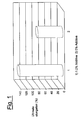
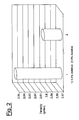
- the enclosed figures 1 , 2 and 3 graphically compare the tenacity, ultimate elongation and shrinkage values in water at 100°C for the polymer containing the additive and for the same polymer without the additive, in particular for a continuous POY polyester thread 1.6 den spun at 4200 m/min.
- the same polyester polymer with no addition and spun and collected at 3000 m/min has the following parameters: Tenacity 2.64 g/den; Ultimate elongation 130%.
- polyester polymer (PET) with the additive and spun at 4200 m/min has the same characteristics as the polymer spun at 3000 m/min with a considerable increase in the production capacity of the spinning plant.
Landscapes
- Chemical & Material Sciences (AREA)
- Chemical Kinetics & Catalysis (AREA)
- Health & Medical Sciences (AREA)
- Medicinal Chemistry (AREA)
- Polymers & Plastics (AREA)
- Organic Chemistry (AREA)
- General Chemical & Material Sciences (AREA)
- Engineering & Computer Science (AREA)
- Textile Engineering (AREA)
- Artificial Filaments (AREA)
- Compositions Of Macromolecular Compounds (AREA)
Claims (15)
- Polymermischung umfassend Styrol-Acrylnitril (SAN), Polyethylenterephthalat Homopolymer (PET) oder Copolymer (COPET) oder Polyethylenterephthalat-Glycolat (PET-G) mit einer intrinsischen Viskosität (IV) gleich oder größer 0,78 dl/g, SEBS (Styrol-Ethylen-Butadien-Styrol) Elastomere oder SBS (Styrol-Butadien-Styrol) Elastomere und/oder neutralisiertes, ionomeres EEA (Ethylen-Ethylacrylat) und/oder Polysiloxane.
- Polymermischung nach Anspruch 1, dadurch gekennzeichnet, dass sie Polyethylenterephthalat Homopolymer (PET) oder Copolymer (COPET) oder Polyethylenterephthalat-Glycolat (PET-G) mit einer intrinsischen Viskosität (IV) gleich oder größer 0,78 dl/g, TPE SEBS (thermoplastische Styrol-Ethylen-Butadien-Styrol-Polymerelastomere), Styrol-Acrylnitril (SAN) und Antioxidationsmittel sowie Thermostabilisatoren enthält.
- Polymermischung nach Anspruch 1, dadurch gekennzeichnet, dass sie Polyethylenterephthalat Homopolymer (PET) oder Copolymer (COPET) oder Polyethylenterephthalat-Glycolat (PET-G) mit einer intrinsischen Viskosität (IV) gleich oder größer 0,78 dl/g, ionomeres Ethylen-Ethylacrylat (EEA), Styrol-Acrylnitril (SAN) und Antioxidationsmittel sowie Thermostabilisatoren enthält.
- Polymermischung nach Anspruch 1, dadurch gekennzeichnet, dass sie folgende Komponentenanteile enthält: Styrol-Acrylnitril (SAN) zwischen 60 und 90 Gew.%, Polyethylenterephthalat Homopolymer (PET) oder Copolymer (COPET) oder Polyethylenterephthalat-Glycolat (PET-G) mit einer intrinsischen Viskosität (IV) gleich oder größer 0,78 dl/g zwischen 10 und 40 Gew.%, SEBS (Styrol-Ethylen-Butadien-Styrol) Elastomere oder SBS (Styrol-Butadien-Styrol) Elastomere zwischen 1 und 3 Gew.% und/oder ionomeres EEA zwischen 1 und 3 Gew.% und/oder Polysiloxane zwischen 1 und 3 Gew.% bezogen auf das Gesamtgewicht des Polymergemischs.
- Polymermischung nach einem der vorstehenden Ansprüche, in Form eines Masterbatch-Granulats.
- Masterbatch-Granulat, hergestellt durch Extrusion einer Polymermischung mit Einschnecken-Extrudern oder gleichsinnig drehenden Doppelschnecken-Extrudern nach einem beliebigen Anspruch von 1 bis 4.
- Verwendung einer Polymermischung umfassend Styrol-Acrylnitril (SAN), Polyethylenterephthalat Homopolymer (PET) oder Copolymer (COPET) oder Polyethylenterephthalat-Glycolat (PET-G) mit einer intrinsischen Viskosität (IV) gleich oder größer 0,78 dl/g, SEBS (Styrol-Ethylen-Butadien-Styrol) Elastomere oder SBS (Styrol-Butadien-Styrol) Elastomere und/oder neutralisiertes, ionomeres EEA (Ethylen-Ethylacrylat) und/oder Polysiloxane als Zusatzstoff für PET, COPET, PBT und PTT Polyesterpolymere, die bei einer Geschwindigkeit von mehr als 3500 m/min versponnen und gesammelt werden.
- Verwendung einer Polymermischung nach Anspruch 7, als Zusatzstoff, wobei die Mischung in der Polykondensationsendphase von PET und COPET mittels eines seitlichen Hilfsextruders oder einer volumetrischen Pumpe mit einer statischen oder dynamischen Mischanlage direkt in den Reaktor eingebracht wird.
- Verwendung einer Polymermischung nach Anspruch 8, als Zusatzstoff für die Herstellung von Polyesterfasern in Flocken oder Fäden des Typs Hochschrumpffasern (HS-Fasern).
- Verwendung einer Polymermischung nach einem der Ansprüche von 7 bis 9 in einer Menge zwischen 0,1% und 15 Gew.%.
- Verwendung einer Polymermischung nach einem der Ansprüche von 7 bis 9 in einer Menge zwischen 2% und 10 Gew.%.
- Spinnverfahren eines Gewebes auf der Basis eines Polymers, der ausgewählt ist aus PET, COPET, PBT und PTT Polyesterharzen, bei dem vor dem Spinnen ein Masterbatch-Granulat in einer Menge zwischen 0,1 und 15 %, das durch Extrudieren einer Polymermischung umfassend Styrol-Acrylnitril (SAN), Polyethylenterephthalat Homopolymer (PET) oder Copolymer (COPET) oder Polyethylenterephthalat-Glycolat (PET-G) mit einer intrinsischen Viskosität (IV) gleich oder größer 0,78 dl/g, SEBS (Styrol-Ethylen-Butadien-Styrol) Elastomere oder SBS (Styrol-Butadien-Styrol) Elastomere und/oder neutralisiertes, ionomeres EEA und/oder Polysiloxane gewonnen wird, zu dem zu spinnenden Polymer hinzugegeben wird.
- Verfahren nach Anspruch 12, dadurch gekennzeichnet, dass das Masterbatch-Granulat in einer Menge zwischen 0,5 und 10 Gew.% hinzugegeben wird.
- Textilfaser, die mittels eines Verfahrens nach einem der Ansprüche 12 und 13 gewonnen wird.
- Textilfaser nach Anspruch 14, dadurch gekennzeichnet, dass sie mit Standardfärbeverfahren in intensiven Farbtönen gefärbt wird.
Applications Claiming Priority (3)
| Application Number | Priority Date | Filing Date | Title |
|---|---|---|---|
| ITMI20021373 | 2002-06-21 | ||
| IT2002MI001373A ITMI20021373A1 (it) | 2002-06-21 | 2002-06-21 | Mescole polimeriche e loro uso |
| PCT/EP2003/007123 WO2004000938A1 (en) | 2002-06-21 | 2003-06-17 | Polymeric blends and use thereof |
Publications (2)
| Publication Number | Publication Date |
|---|---|
| EP1516016A1 EP1516016A1 (de) | 2005-03-23 |
| EP1516016B1 true EP1516016B1 (de) | 2013-01-09 |
Family
ID=11450060
Family Applications (1)
| Application Number | Title | Priority Date | Filing Date |
|---|---|---|---|
| EP03760694A Expired - Lifetime EP1516016B1 (de) | 2002-06-21 | 2003-06-17 | Ploymerzusammensetzung und ihre verwendung |
Country Status (4)
| Country | Link |
|---|---|
| EP (1) | EP1516016B1 (de) |
| AU (1) | AU2003250881A1 (de) |
| IT (1) | ITMI20021373A1 (de) |
| WO (1) | WO2004000938A1 (de) |
Families Citing this family (4)
| Publication number | Priority date | Publication date | Assignee | Title |
|---|---|---|---|---|
| CN101985510B (zh) * | 2010-08-26 | 2012-11-07 | 上海锦湖日丽塑料有限公司 | 一种高耐候的丙烯酸酯树脂组合物及其制备方法 |
| CN103160038B (zh) * | 2013-02-04 | 2014-06-11 | 南华大学 | 用于聚苯乙烯类硬塑玩具的云纹抗菌色母粒及制备方法 |
| CN109438867A (zh) * | 2018-11-13 | 2019-03-08 | 上海博怀化工有限公司 | 应用于pc的高光泽、高黑度专用母粒 |
| CN110067039B (zh) * | 2019-04-22 | 2022-02-08 | 上海梦丝新材料科技有限公司 | 一种新型的苯乙烯嵌段共聚物混合物弹性纤维及其制造方法 |
Family Cites Families (12)
| Publication number | Priority date | Publication date | Assignee | Title |
|---|---|---|---|---|
| JPS5685420A (en) | 1979-12-07 | 1981-07-11 | Teijin Ltd | Undrawn polyamide fiber and its preparation |
| EP0035796B1 (de) | 1980-03-12 | 1986-06-04 | Teijin Limited | Thermoplastische synthetische Fasern und Verfahren zu deren Herstellung |
| JPS56157449A (en) | 1980-05-09 | 1981-12-04 | Toray Ind Inc | Polybutylene terephthalate polymer composition with modified moldability and fiber therefrom |
| EP0041327B1 (de) | 1980-05-30 | 1983-09-07 | Imperial Chemical Industries Plc | Schmelzspinnverfahren |
| JPS5747912A (en) | 1980-09-03 | 1982-03-19 | Teijin Ltd | Undrawn polyester yarn and its production |
| JPS5945329A (ja) | 1982-09-08 | 1984-03-14 | Toshiba Silicone Co Ltd | 室温硬化性発泡弾性ポリシロキサン組成物 |
| GB8405694D0 (en) | 1984-03-05 | 1984-04-11 | Ici Plc | Melt spinning of blend of fibre forming polymer |
| JPS6221817A (ja) * | 1985-05-30 | 1987-01-30 | Teijin Ltd | ポリエステル繊維の超高速紡糸方法 |
| JPS63118319A (ja) | 1986-11-06 | 1988-05-23 | Asahi Chem Ind Co Ltd | ポリエステル成形材料 |
| DE4208916A1 (de) | 1992-03-20 | 1993-09-23 | Akzo Nv | Polyesterfaser und verfahren zu deren herstellung |
| DE19707447A1 (de) | 1997-02-25 | 1998-08-27 | Zimmer Ag | Verfahren zur Verarbeitung von Polymermischungen zu Filamenten |
| DE59804443D1 (de) | 1997-08-05 | 2002-07-18 | Roehm Gmbh | Verfahren zur verarbeitung von polymermischungen zu filamenten |
-
2002
- 2002-06-21 IT IT2002MI001373A patent/ITMI20021373A1/it unknown
-
2003
- 2003-06-17 EP EP03760694A patent/EP1516016B1/de not_active Expired - Lifetime
- 2003-06-17 WO PCT/EP2003/007123 patent/WO2004000938A1/en not_active Ceased
- 2003-06-17 AU AU2003250881A patent/AU2003250881A1/en not_active Abandoned
Also Published As
| Publication number | Publication date |
|---|---|
| AU2003250881A1 (en) | 2004-01-06 |
| EP1516016A1 (de) | 2005-03-23 |
| ITMI20021373A1 (it) | 2003-12-22 |
| WO2004000938A1 (en) | 2003-12-31 |
| ITMI20021373A0 (it) | 2002-06-21 |
Similar Documents
| Publication | Publication Date | Title |
|---|---|---|
| EP2245077B1 (de) | Monofilamentfasern mit gemahlenem calciumcarbonat | |
| CA2534176C (en) | Polylactic acid resin, textile products obtained therefrom, and processes for producing textile products | |
| US8182725B2 (en) | Methods for making polylactic acid stereocomplex fibers | |
| EP1208255B1 (de) | Hochfeste polyesterfäden und verfahren zu deren herstellung | |
| AU3748993A (en) | Polyester fibres and process for producing the same | |
| CN100398704C (zh) | 聚丙烯纤维和含有聚丙烯纤维的纱线 | |
| EP2826808B1 (de) | Polyesterfasern und filamente, hergestellt durch verwendung von pmma pigment masterbatch, herstellungsverfahren und verwendung | |
| EP0491947B1 (de) | Polyesterfaser | |
| DE69213474T2 (de) | Polyestergarne mit hohem modul fuer reifenkorden und verbundmaterialien | |
| Masaki et al. | Stereocomplex Formation in the Poly (L-lactic acid)/poly (D-lactic acid) Melt Blends and the Melt Spun Fibers | |
| EP1350874B1 (de) | Bauschiges polyester multifilament-verbungsgarn und verfahren zu dessen herstellung | |
| WO2004000938A1 (en) | Polymeric blends and use thereof | |
| EP0630995B1 (de) | Multifilament-Garn aus Polyäthylennaphthalat und Verfahren zu seiner Herstellung | |
| WO2008034477A1 (de) | Masterbatch und verfahren zur herstellung von kationisch anfärbbaren polyester/copolyester-filamenten oder -fasern sowie verwendung des verfahrens | |
| KR100609801B1 (ko) | 섬유의 고속 용융 방사 | |
| EP1208253B1 (de) | Hmls-fäden aus polyester und spinnstreckverfahren zu deren herstellung | |
| CN116397340A (zh) | 一种熔纺聚乙烯工业丝的生产方法 | |
| US20250223731A1 (en) | Melt spinning of blended polylactic acid fibers | |
| US3657178A (en) | Polypivalolactone fibers and a method for their manufacture | |
| DE10201834B4 (de) | Herstellung dimensionsstabiler Polyesterfäden | |
| CN117402486A (zh) | 一种可纺性高的无机杂化聚酰胺复合物及其制备方法和应用 | |
| JP2004162205A (ja) | 芯鞘型モノフィラメントおよびそれを用いた漁網 | |
| JP2011106060A (ja) | ポリアリーレンスルフィド繊維 | |
| JP3373294B2 (ja) | 生分解性に優れたストッキング | |
| KR20020007569A (ko) | 폴리에스테르 부분연신사 및 그 제조방법 |
Legal Events
| Date | Code | Title | Description |
|---|---|---|---|
| PUAI | Public reference made under article 153(3) epc to a published international application that has entered the european phase |
Free format text: ORIGINAL CODE: 0009012 |
|
| 17P | Request for examination filed |
Effective date: 20050110 |
|
| AK | Designated contracting states |
Kind code of ref document: A1 Designated state(s): AT BE BG CH CY CZ DE DK EE ES FI FR GB GR HU IE IT LI LU MC NL PT RO SE SI SK TR |
|
| AX | Request for extension of the european patent |
Extension state: AL LT LV MK |
|
| DAX | Request for extension of the european patent (deleted) | ||
| 17Q | First examination report despatched |
Effective date: 20070117 |
|
| GRAP | Despatch of communication of intention to grant a patent |
Free format text: ORIGINAL CODE: EPIDOSNIGR1 |
|
| GRAS | Grant fee paid |
Free format text: ORIGINAL CODE: EPIDOSNIGR3 |
|
| GRAA | (expected) grant |
Free format text: ORIGINAL CODE: 0009210 |
|
| AK | Designated contracting states |
Kind code of ref document: B1 Designated state(s): AT BE BG CH CY CZ DE DK EE ES FI FR GB GR HU IE IT LI LU MC NL PT RO SE SI SK TR |
|
| REG | Reference to a national code |
Ref country code: GB Ref legal event code: FG4D |
|
| REG | Reference to a national code |
Ref country code: CH Ref legal event code: EP Ref country code: AT Ref legal event code: REF Ref document number: 592751 Country of ref document: AT Kind code of ref document: T Effective date: 20130115 |
|
| REG | Reference to a national code |
Ref country code: IE Ref legal event code: FG4D |
|
| REG | Reference to a national code |
Ref country code: DE Ref legal event code: R096 Ref document number: 60343087 Country of ref document: DE Effective date: 20130314 |
|
| PG25 | Lapsed in a contracting state [announced via postgrant information from national office to epo] |
Ref country code: SI Free format text: LAPSE BECAUSE OF FAILURE TO SUBMIT A TRANSLATION OF THE DESCRIPTION OR TO PAY THE FEE WITHIN THE PRESCRIBED TIME-LIMIT Effective date: 20130109 |
|
| REG | Reference to a national code |
Ref country code: NL Ref legal event code: VDEP Effective date: 20130109 |
|
| REG | Reference to a national code |
Ref country code: AT Ref legal event code: MK05 Ref document number: 592751 Country of ref document: AT Kind code of ref document: T Effective date: 20130109 |
|
| PG25 | Lapsed in a contracting state [announced via postgrant information from national office to epo] |
Ref country code: BG Free format text: LAPSE BECAUSE OF FAILURE TO SUBMIT A TRANSLATION OF THE DESCRIPTION OR TO PAY THE FEE WITHIN THE PRESCRIBED TIME-LIMIT Effective date: 20130409 Ref country code: ES Free format text: LAPSE BECAUSE OF FAILURE TO SUBMIT A TRANSLATION OF THE DESCRIPTION OR TO PAY THE FEE WITHIN THE PRESCRIBED TIME-LIMIT Effective date: 20130420 Ref country code: BE Free format text: LAPSE BECAUSE OF FAILURE TO SUBMIT A TRANSLATION OF THE DESCRIPTION OR TO PAY THE FEE WITHIN THE PRESCRIBED TIME-LIMIT Effective date: 20130109 Ref country code: SE Free format text: LAPSE BECAUSE OF FAILURE TO SUBMIT A TRANSLATION OF THE DESCRIPTION OR TO PAY THE FEE WITHIN THE PRESCRIBED TIME-LIMIT Effective date: 20130109 Ref country code: CY Free format text: LAPSE BECAUSE OF FAILURE TO SUBMIT A TRANSLATION OF THE DESCRIPTION OR TO PAY THE FEE WITHIN THE PRESCRIBED TIME-LIMIT Effective date: 20130109 Ref country code: AT Free format text: LAPSE BECAUSE OF FAILURE TO SUBMIT A TRANSLATION OF THE DESCRIPTION OR TO PAY THE FEE WITHIN THE PRESCRIBED TIME-LIMIT Effective date: 20130109 |
|
| PGFP | Annual fee paid to national office [announced via postgrant information from national office to epo] |
Ref country code: DE Payment date: 20130416 Year of fee payment: 11 |
|
| PG25 | Lapsed in a contracting state [announced via postgrant information from national office to epo] |
Ref country code: PT Free format text: LAPSE BECAUSE OF FAILURE TO SUBMIT A TRANSLATION OF THE DESCRIPTION OR TO PAY THE FEE WITHIN THE PRESCRIBED TIME-LIMIT Effective date: 20130509 Ref country code: NL Free format text: LAPSE BECAUSE OF FAILURE TO SUBMIT A TRANSLATION OF THE DESCRIPTION OR TO PAY THE FEE WITHIN THE PRESCRIBED TIME-LIMIT Effective date: 20130109 Ref country code: GR Free format text: LAPSE BECAUSE OF FAILURE TO SUBMIT A TRANSLATION OF THE DESCRIPTION OR TO PAY THE FEE WITHIN THE PRESCRIBED TIME-LIMIT Effective date: 20130410 Ref country code: FI Free format text: LAPSE BECAUSE OF FAILURE TO SUBMIT A TRANSLATION OF THE DESCRIPTION OR TO PAY THE FEE WITHIN THE PRESCRIBED TIME-LIMIT Effective date: 20130109 |
|
| PG25 | Lapsed in a contracting state [announced via postgrant information from national office to epo] |
Ref country code: SK Free format text: LAPSE BECAUSE OF FAILURE TO SUBMIT A TRANSLATION OF THE DESCRIPTION OR TO PAY THE FEE WITHIN THE PRESCRIBED TIME-LIMIT Effective date: 20130109 Ref country code: CZ Free format text: LAPSE BECAUSE OF FAILURE TO SUBMIT A TRANSLATION OF THE DESCRIPTION OR TO PAY THE FEE WITHIN THE PRESCRIBED TIME-LIMIT Effective date: 20130109 Ref country code: EE Free format text: LAPSE BECAUSE OF FAILURE TO SUBMIT A TRANSLATION OF THE DESCRIPTION OR TO PAY THE FEE WITHIN THE PRESCRIBED TIME-LIMIT Effective date: 20130109 Ref country code: RO Free format text: LAPSE BECAUSE OF FAILURE TO SUBMIT A TRANSLATION OF THE DESCRIPTION OR TO PAY THE FEE WITHIN THE PRESCRIBED TIME-LIMIT Effective date: 20130109 Ref country code: DK Free format text: LAPSE BECAUSE OF FAILURE TO SUBMIT A TRANSLATION OF THE DESCRIPTION OR TO PAY THE FEE WITHIN THE PRESCRIBED TIME-LIMIT Effective date: 20130109 |
|
| PLBE | No opposition filed within time limit |
Free format text: ORIGINAL CODE: 0009261 |
|
| STAA | Information on the status of an ep patent application or granted ep patent |
Free format text: STATUS: NO OPPOSITION FILED WITHIN TIME LIMIT |
|
| 26N | No opposition filed |
Effective date: 20131010 |
|
| PG25 | Lapsed in a contracting state [announced via postgrant information from national office to epo] |
Ref country code: IT Free format text: LAPSE BECAUSE OF FAILURE TO SUBMIT A TRANSLATION OF THE DESCRIPTION OR TO PAY THE FEE WITHIN THE PRESCRIBED TIME-LIMIT Effective date: 20130109 |
|
| REG | Reference to a national code |
Ref country code: DE Ref legal event code: R097 Ref document number: 60343087 Country of ref document: DE Effective date: 20131010 |
|
| PG25 | Lapsed in a contracting state [announced via postgrant information from national office to epo] |
Ref country code: MC Free format text: LAPSE BECAUSE OF FAILURE TO SUBMIT A TRANSLATION OF THE DESCRIPTION OR TO PAY THE FEE WITHIN THE PRESCRIBED TIME-LIMIT Effective date: 20130109 |
|
| REG | Reference to a national code |
Ref country code: CH Ref legal event code: PL |
|
| GBPC | Gb: european patent ceased through non-payment of renewal fee |
Effective date: 20130617 |
|
| REG | Reference to a national code |
Ref country code: IE Ref legal event code: MM4A |
|
| REG | Reference to a national code |
Ref country code: FR Ref legal event code: ST Effective date: 20140228 |
|
| PG25 | Lapsed in a contracting state [announced via postgrant information from national office to epo] |
Ref country code: GB Free format text: LAPSE BECAUSE OF NON-PAYMENT OF DUE FEES Effective date: 20130617 Ref country code: CH Free format text: LAPSE BECAUSE OF NON-PAYMENT OF DUE FEES Effective date: 20130630 Ref country code: IE Free format text: LAPSE BECAUSE OF NON-PAYMENT OF DUE FEES Effective date: 20130617 Ref country code: LI Free format text: LAPSE BECAUSE OF NON-PAYMENT OF DUE FEES Effective date: 20130630 |
|
| PG25 | Lapsed in a contracting state [announced via postgrant information from national office to epo] |
Ref country code: FR Free format text: LAPSE BECAUSE OF NON-PAYMENT OF DUE FEES Effective date: 20130701 |
|
| REG | Reference to a national code |
Ref country code: DE Ref legal event code: R119 Ref document number: 60343087 Country of ref document: DE |
|
| REG | Reference to a national code |
Ref country code: DE Ref legal event code: R119 Ref document number: 60343087 Country of ref document: DE Effective date: 20150101 |
|
| PG25 | Lapsed in a contracting state [announced via postgrant information from national office to epo] |
Ref country code: DE Free format text: LAPSE BECAUSE OF NON-PAYMENT OF DUE FEES Effective date: 20150101 |
|
| PG25 | Lapsed in a contracting state [announced via postgrant information from national office to epo] |
Ref country code: TR Free format text: LAPSE BECAUSE OF FAILURE TO SUBMIT A TRANSLATION OF THE DESCRIPTION OR TO PAY THE FEE WITHIN THE PRESCRIBED TIME-LIMIT Effective date: 20130109 |
|
| PG25 | Lapsed in a contracting state [announced via postgrant information from national office to epo] |
Ref country code: HU Free format text: LAPSE BECAUSE OF FAILURE TO SUBMIT A TRANSLATION OF THE DESCRIPTION OR TO PAY THE FEE WITHIN THE PRESCRIBED TIME-LIMIT; INVALID AB INITIO Effective date: 20030617 Ref country code: LU Free format text: LAPSE BECAUSE OF NON-PAYMENT OF DUE FEES Effective date: 20130617 |