EP1511625B2 - Gleitlagerverbundwerkstoff - Google Patents
Gleitlagerverbundwerkstoff Download PDFInfo
- Publication number
- EP1511625B2 EP1511625B2 EP03757024A EP03757024A EP1511625B2 EP 1511625 B2 EP1511625 B2 EP 1511625B2 EP 03757024 A EP03757024 A EP 03757024A EP 03757024 A EP03757024 A EP 03757024A EP 1511625 B2 EP1511625 B2 EP 1511625B2
- Authority
- EP
- European Patent Office
- Prior art keywords
- sliding
- sliding layer
- lubricant
- bearing composite
- peek
- Prior art date
- Legal status (The legal status is an assumption and is not a legal conclusion. Google has not performed a legal analysis and makes no representation as to the accuracy of the status listed.)
- Expired - Lifetime
Links
- 239000002131 composite material Substances 0.000 title claims abstract description 25
- 239000000463 material Substances 0.000 claims abstract description 57
- 239000004696 Poly ether ether ketone Substances 0.000 claims abstract description 40
- 229920002530 polyetherether ketone Polymers 0.000 claims abstract description 40
- 239000012791 sliding layer Substances 0.000 claims abstract description 34
- 239000010410 layer Substances 0.000 claims abstract description 28
- 239000002245 particle Substances 0.000 claims abstract description 26
- 239000004033 plastic Substances 0.000 claims abstract description 19
- 229920003023 plastic Polymers 0.000 claims abstract description 19
- 239000000314 lubricant Substances 0.000 claims abstract description 14
- GWEVSGVZZGPLCZ-UHFFFAOYSA-N Titan oxide Chemical compound O=[Ti]=O GWEVSGVZZGPLCZ-UHFFFAOYSA-N 0.000 claims abstract description 12
- 239000005083 Zinc sulfide Substances 0.000 claims abstract description 9
- DRDVZXDWVBGGMH-UHFFFAOYSA-N zinc;sulfide Chemical compound [S-2].[Zn+2] DRDVZXDWVBGGMH-UHFFFAOYSA-N 0.000 claims abstract description 9
- 239000010419 fine particle Substances 0.000 claims abstract description 7
- 239000004408 titanium dioxide Substances 0.000 claims abstract description 6
- JUPQTSLXMOCDHR-UHFFFAOYSA-N benzene-1,4-diol;bis(4-fluorophenyl)methanone Chemical compound OC1=CC=C(O)C=C1.C1=CC(F)=CC=C1C(=O)C1=CC=C(F)C=C1 JUPQTSLXMOCDHR-UHFFFAOYSA-N 0.000 claims abstract 3
- OKTJSMMVPCPJKN-UHFFFAOYSA-N Carbon Chemical compound [C] OKTJSMMVPCPJKN-UHFFFAOYSA-N 0.000 claims description 11
- 229910002804 graphite Inorganic materials 0.000 claims description 7
- 239000010439 graphite Substances 0.000 claims description 7
- 239000000654 additive Substances 0.000 claims description 2
- 229910052799 carbon Inorganic materials 0.000 claims 4
- 229920000049 Carbon (fiber) Polymers 0.000 abstract description 14
- 239000004917 carbon fiber Substances 0.000 abstract description 14
- 229910052984 zinc sulfide Inorganic materials 0.000 abstract description 10
- 239000011159 matrix material Substances 0.000 abstract description 5
- 239000000470 constituent Substances 0.000 abstract 4
- 238000012360 testing method Methods 0.000 description 31
- 238000009826 distribution Methods 0.000 description 9
- 238000005461 lubrication Methods 0.000 description 8
- 239000000203 mixture Substances 0.000 description 8
- 229910010413 TiO 2 Inorganic materials 0.000 description 6
- 239000004810 polytetrafluoroethylene Substances 0.000 description 6
- 229920001343 polytetrafluoroethylene Polymers 0.000 description 6
- 229910000906 Bronze Inorganic materials 0.000 description 5
- 239000010974 bronze Substances 0.000 description 5
- 239000000126 substance Substances 0.000 description 5
- 238000007792 addition Methods 0.000 description 4
- 230000000052 comparative effect Effects 0.000 description 4
- KUNSUQLRTQLHQQ-UHFFFAOYSA-N copper tin Chemical compound [Cu].[Sn] KUNSUQLRTQLHQQ-UHFFFAOYSA-N 0.000 description 4
- 229910000831 Steel Inorganic materials 0.000 description 3
- 239000011521 glass Substances 0.000 description 3
- 238000004519 manufacturing process Methods 0.000 description 3
- 238000005259 measurement Methods 0.000 description 3
- 229920012287 polyphenylene sulfone Polymers 0.000 description 3
- 239000010959 steel Substances 0.000 description 3
- 238000010998 test method Methods 0.000 description 3
- 239000004698 Polyethylene Substances 0.000 description 2
- TZCXTZWJZNENPQ-UHFFFAOYSA-L barium sulfate Chemical compound [Ba+2].[O-]S([O-])(=O)=O TZCXTZWJZNENPQ-UHFFFAOYSA-L 0.000 description 2
- 239000011324 bead Substances 0.000 description 2
- 239000000919 ceramic Substances 0.000 description 2
- 230000000694 effects Effects 0.000 description 2
- 230000002349 favourable effect Effects 0.000 description 2
- 239000000835 fiber Substances 0.000 description 2
- 239000003365 glass fiber Substances 0.000 description 2
- 238000000034 method Methods 0.000 description 2
- 229920002492 poly(sulfone) Polymers 0.000 description 2
- -1 polyethylene Polymers 0.000 description 2
- 239000011148 porous material Substances 0.000 description 2
- 229920001169 thermoplastic Polymers 0.000 description 2
- 239000004416 thermosoftening plastic Substances 0.000 description 2
- 239000002033 PVDF binder Substances 0.000 description 1
- 239000004642 Polyimide Substances 0.000 description 1
- 239000002318 adhesion promoter Substances 0.000 description 1
- PNEYBMLMFCGWSK-UHFFFAOYSA-N aluminium oxide Inorganic materials [O-2].[O-2].[O-2].[Al+3].[Al+3] PNEYBMLMFCGWSK-UHFFFAOYSA-N 0.000 description 1
- 239000004760 aramid Substances 0.000 description 1
- 229920006231 aramid fiber Polymers 0.000 description 1
- 239000003795 chemical substances by application Substances 0.000 description 1
- 239000003245 coal Substances 0.000 description 1
- 238000005516 engineering process Methods 0.000 description 1
- 229920003247 engineering thermoplastic Polymers 0.000 description 1
- 239000000945 filler Substances 0.000 description 1
- 238000011835 investigation Methods 0.000 description 1
- 238000005304 joining Methods 0.000 description 1
- LQBJWKCYZGMFEV-UHFFFAOYSA-N lead tin Chemical compound [Sn].[Pb] LQBJWKCYZGMFEV-UHFFFAOYSA-N 0.000 description 1
- 239000000155 melt Substances 0.000 description 1
- CWQXQMHSOZUFJS-UHFFFAOYSA-N molybdenum disulfide Chemical compound S=[Mo]=S CWQXQMHSOZUFJS-UHFFFAOYSA-N 0.000 description 1
- 229910052982 molybdenum disulfide Inorganic materials 0.000 description 1
- 238000013021 overheating Methods 0.000 description 1
- 229920000573 polyethylene Polymers 0.000 description 1
- 229920001721 polyimide Polymers 0.000 description 1
- 229920000642 polymer Polymers 0.000 description 1
- 229920002981 polyvinylidene fluoride Polymers 0.000 description 1
- 230000003014 reinforcing effect Effects 0.000 description 1
- 238000005029 sieve analysis Methods 0.000 description 1
- HBMJWWWQQXIZIP-UHFFFAOYSA-N silicon carbide Chemical compound [Si+]#[C-] HBMJWWWQQXIZIP-UHFFFAOYSA-N 0.000 description 1
- 229910010271 silicon carbide Inorganic materials 0.000 description 1
- 210000001170 unmyelinated nerve fiber Anatomy 0.000 description 1
Images



Classifications
-
- F—MECHANICAL ENGINEERING; LIGHTING; HEATING; WEAPONS; BLASTING
- F16—ENGINEERING ELEMENTS AND UNITS; GENERAL MEASURES FOR PRODUCING AND MAINTAINING EFFECTIVE FUNCTIONING OF MACHINES OR INSTALLATIONS; THERMAL INSULATION IN GENERAL
- F16C—SHAFTS; FLEXIBLE SHAFTS; ELEMENTS OR CRANKSHAFT MECHANISMS; ROTARY BODIES OTHER THAN GEARING ELEMENTS; BEARINGS
- F16C33/00—Parts of bearings; Special methods for making bearings or parts thereof
- F16C33/02—Parts of sliding-contact bearings
- F16C33/04—Brasses; Bushes; Linings
- F16C33/20—Sliding surface consisting mainly of plastics
- F16C33/201—Composition of the plastic
-
- B—PERFORMING OPERATIONS; TRANSPORTING
- B32—LAYERED PRODUCTS
- B32B—LAYERED PRODUCTS, i.e. PRODUCTS BUILT-UP OF STRATA OF FLAT OR NON-FLAT, e.g. CELLULAR OR HONEYCOMB, FORM
- B32B27/00—Layered products comprising a layer of synthetic resin
- B32B27/18—Layered products comprising a layer of synthetic resin characterised by the use of special additives
-
- C—CHEMISTRY; METALLURGY
- C08—ORGANIC MACROMOLECULAR COMPOUNDS; THEIR PREPARATION OR CHEMICAL WORKING-UP; COMPOSITIONS BASED THEREON
- C08L—COMPOSITIONS OF MACROMOLECULAR COMPOUNDS
- C08L71/00—Compositions of polyethers obtained by reactions forming an ether link in the main chain; Compositions of derivatives of such polymers
-
- C—CHEMISTRY; METALLURGY
- C08—ORGANIC MACROMOLECULAR COMPOUNDS; THEIR PREPARATION OR CHEMICAL WORKING-UP; COMPOSITIONS BASED THEREON
- C08G—MACROMOLECULAR COMPOUNDS OBTAINED OTHERWISE THAN BY REACTIONS ONLY INVOLVING UNSATURATED CARBON-TO-CARBON BONDS
- C08G2650/00—Macromolecular compounds obtained by reactions forming an ether link in the main chain of the macromolecule
- C08G2650/28—Macromolecular compounds obtained by reactions forming an ether link in the main chain of the macromolecule characterised by the polymer type
- C08G2650/38—Macromolecular compounds obtained by reactions forming an ether link in the main chain of the macromolecule characterised by the polymer type containing oxygen in addition to the ether group
- C08G2650/40—Macromolecular compounds obtained by reactions forming an ether link in the main chain of the macromolecule characterised by the polymer type containing oxygen in addition to the ether group containing ketone groups, e.g. polyarylethylketones, PEEK or PEK
-
- Y—GENERAL TAGGING OF NEW TECHNOLOGICAL DEVELOPMENTS; GENERAL TAGGING OF CROSS-SECTIONAL TECHNOLOGIES SPANNING OVER SEVERAL SECTIONS OF THE IPC; TECHNICAL SUBJECTS COVERED BY FORMER USPC CROSS-REFERENCE ART COLLECTIONS [XRACs] AND DIGESTS
- Y10—TECHNICAL SUBJECTS COVERED BY FORMER USPC
- Y10T—TECHNICAL SUBJECTS COVERED BY FORMER US CLASSIFICATION
- Y10T428/00—Stock material or miscellaneous articles
- Y10T428/12—All metal or with adjacent metals
- Y10T428/12493—Composite; i.e., plural, adjacent, spatially distinct metal components [e.g., layers, joint, etc.]
- Y10T428/12535—Composite; i.e., plural, adjacent, spatially distinct metal components [e.g., layers, joint, etc.] with additional, spatially distinct nonmetal component
- Y10T428/12556—Organic component
- Y10T428/12569—Synthetic resin
-
- Y—GENERAL TAGGING OF NEW TECHNOLOGICAL DEVELOPMENTS; GENERAL TAGGING OF CROSS-SECTIONAL TECHNOLOGIES SPANNING OVER SEVERAL SECTIONS OF THE IPC; TECHNICAL SUBJECTS COVERED BY FORMER USPC CROSS-REFERENCE ART COLLECTIONS [XRACs] AND DIGESTS
- Y10—TECHNICAL SUBJECTS COVERED BY FORMER USPC
- Y10T—TECHNICAL SUBJECTS COVERED BY FORMER US CLASSIFICATION
- Y10T428/00—Stock material or miscellaneous articles
- Y10T428/249921—Web or sheet containing structurally defined element or component
- Y10T428/249924—Noninterengaged fiber-containing paper-free web or sheet which is not of specified porosity
- Y10T428/24994—Fiber embedded in or on the surface of a polymeric matrix
-
- Y—GENERAL TAGGING OF NEW TECHNOLOGICAL DEVELOPMENTS; GENERAL TAGGING OF CROSS-SECTIONAL TECHNOLOGIES SPANNING OVER SEVERAL SECTIONS OF THE IPC; TECHNICAL SUBJECTS COVERED BY FORMER USPC CROSS-REFERENCE ART COLLECTIONS [XRACs] AND DIGESTS
- Y10—TECHNICAL SUBJECTS COVERED BY FORMER USPC
- Y10T—TECHNICAL SUBJECTS COVERED BY FORMER US CLASSIFICATION
- Y10T428/00—Stock material or miscellaneous articles
- Y10T428/25—Web or sheet containing structurally defined element or component and including a second component containing structurally defined particles
-
- Y—GENERAL TAGGING OF NEW TECHNOLOGICAL DEVELOPMENTS; GENERAL TAGGING OF CROSS-SECTIONAL TECHNOLOGIES SPANNING OVER SEVERAL SECTIONS OF THE IPC; TECHNICAL SUBJECTS COVERED BY FORMER USPC CROSS-REFERENCE ART COLLECTIONS [XRACs] AND DIGESTS
- Y10—TECHNICAL SUBJECTS COVERED BY FORMER USPC
- Y10T—TECHNICAL SUBJECTS COVERED BY FORMER US CLASSIFICATION
- Y10T428/00—Stock material or miscellaneous articles
- Y10T428/31504—Composite [nonstructural laminate]
- Y10T428/31678—Of metal
-
- Y—GENERAL TAGGING OF NEW TECHNOLOGICAL DEVELOPMENTS; GENERAL TAGGING OF CROSS-SECTIONAL TECHNOLOGIES SPANNING OVER SEVERAL SECTIONS OF THE IPC; TECHNICAL SUBJECTS COVERED BY FORMER USPC CROSS-REFERENCE ART COLLECTIONS [XRACs] AND DIGESTS
- Y10—TECHNICAL SUBJECTS COVERED BY FORMER USPC
- Y10T—TECHNICAL SUBJECTS COVERED BY FORMER US CLASSIFICATION
- Y10T428/00—Stock material or miscellaneous articles
- Y10T428/31504—Composite [nonstructural laminate]
- Y10T428/31678—Of metal
- Y10T428/31688—Next to aldehyde or ketone condensation product
-
- Y—GENERAL TAGGING OF NEW TECHNOLOGICAL DEVELOPMENTS; GENERAL TAGGING OF CROSS-SECTIONAL TECHNOLOGIES SPANNING OVER SEVERAL SECTIONS OF THE IPC; TECHNICAL SUBJECTS COVERED BY FORMER USPC CROSS-REFERENCE ART COLLECTIONS [XRACs] AND DIGESTS
- Y10—TECHNICAL SUBJECTS COVERED BY FORMER USPC
- Y10T—TECHNICAL SUBJECTS COVERED BY FORMER US CLASSIFICATION
- Y10T428/00—Stock material or miscellaneous articles
- Y10T428/31504—Composite [nonstructural laminate]
- Y10T428/31942—Of aldehyde or ketone condensation product
Definitions
- the invention relates to a sliding bearing composite material with a metallic support layer, optionally with a porous carrier layer applied thereto, and with a sliding surface for a sliding partner forming lead-free sliding layer with a sliding layer material based on plastic with PEEK and with a lubricant in the form of zinc sulfide.
- Such a sliding bearing composite material is known from DE 36 01 569 A1 where PEEK is mentioned as one of several polymers, although none of the embodiments comprises PEEK.
- the reference teaches to use 5-40 vol% of zinc sulfide and / or barium sulfate in the overlay material to increase wear resistance.
- As the strength-increasing additives are called glass fibers, glass beads, carbon fibers, ceramic fibers and aramid fibers.
- the embodiments all comprise glass fibers or glass beads.
- Plain bearings made of plain bearing composite materials with a sliding layer based on plastics have found widespread use in the field of technology for far-reaching requirements, for example in terms of load capacity, chemical resistance or temperature resistance.
- thermoplastics known and available, but in which the temperature resistance can only be guaranteed for operating temperatures up to about 90 ° C; These are, for example, ABS, high-pressure polyethylene (HD-PE), PVC, polysulfone (PS) and others.
- high-pressure polyethylene HD-PE
- PVC high-pressure polyethylene
- PS polysulfone
- engineering thermoplastics which are suitable for use temperatures up to about 150 ° C, such.
- the present invention relates to such sliding bearing composites, which are to be suitable for use at continuous service temperatures of above 180 ° C. But they should also have very good tribological properties and favorable mechanical properties in terms of formability and high chemical resistance. In addition, the requirement is made of the sliding bearing composite that it can be produced in an industrially feasible manufacturing process.
- the particle size of the lubricant in the form of zinc sulfide and the hardening component in the form of titanium dioxide, which are added to the matrix-forming plastic component has an important meaning.
- fine particles in the claimed range a "dense" homogeneous distribution of these substances in the plastic matrix can be achieved. It has been found that in this way an increase in the performance of the sliding bearing composite material can be achieved both in terms of low wear rates and in terms of a favorable coefficient of friction.
- the above-mentioned hardening component and the lubricant of the sliding layer material are preferably in the form of fine particles having a D50 value of the particle size of at most 400 nm, preferably from 100 to 350 nm.
- the above-mentioned D50 value of the particle size means a particle size with respect to which 50% by weight of the respective substance with a comparatively larger particle size and 50% by weight with a comparatively smaller particle size are present. Since the lubricant particles to be added and the particles of the hardening component in the form of titanium dioxide are pulverulent particles prepared by industrial processes or sorted by industrial processes, a particle size distribution curve having a bell-shaped or approximately normal distribution will usually result. The D50 value of the particle size will then be close to the maximum of the bell-shaped distribution curve.
- the bell-shaped distribution curve is such that at least 60%, in particular at least 70% and preferably at least 80 wt.% Of the substance in question with a particle size within a particle size range around the bell maximum or around the D50 value is around ⁇ 50% of this value, ie for example at a D50 value of 330 nm in a particle size range of 330 nm ⁇ 165 nm, ie from 165 nm to 495 nm.
- a preferred distribution is characterized by a characteristic grain size of 0.440 ⁇ m (440 nm) and a shape parameter ⁇ of 2.87.
- carbon fibers enhances the sliding layer of the sliding bearing composite by increasing its rigidity and strength as well as its creep resistance. Furthermore, the wear resistance is increased by carbon fibers. Of particular importance is also the aspect of thermal conductivity, which is improved by carbon fibers in the overlay. These lead to overheating of the sliding layer is prevented by the occurring during operation directly on the surface of the sliding friction heat is dissipated to the interior of the sliding bearing composite, in particular to the metallic component of an optionally provided porous support layer or directly to the metallic support layer.
- the sliding bearing composite material with polyetheretherketone (PEEK) as a matrix-forming plastic component proves to be resistant to high temperatures in conjunction with the other claimed components, d. H. it can be used permanently at temperatures above 180 ° C, for example 190 to 250 ° C.
- PPS polyphenylene sulfone
- PPS forms an inadequate matrix with regard to its holding capacity, which tends to break up during the forming process and, in terms of its tribological performance, can not match that of PEEK.
- thermoplastics may be contained in the sliding layer material.
- their proportion should not amount to more than 20% by weight, in particular not more than 10% by weight, of the proportion of the plastic component in the sliding layer material.
- the plastic component is 100% PEEK formed.
- the weight percentage of the carbon fibers is 5 to 15 wt .-%. It has further proved to be advantageous if the overlay material has additions of graphite particles in a weight percentage, based on the mass of the overlay material of 5 to 15 wt .-%.
- the graphite particles should preferably be present as fine particles having a particle size of not more than 15 ⁇ m, in particular 1-15 ⁇ m, preferably 1-5 ⁇ m.
- the sliding layer material according to the invention adheres excellently to a metallic support layer and, accordingly, a porous carrier layer can also be dispensed with.
- plastic slip material By extruding the plastic slip material into a thin ribbon form, applying the ribbon to the heated carrier ribbon, substantial advantages are obtained, and it has been found that the plastic slip material can be introduced into the pores of the porous carrier layer without requiring prior grinding ,
- test results obtained in the following were obtained by various test methods known per se. It was the in FIG. 1 outlined investigations on a so-called ring-plate test rig ( FIG. 1 left), on a pin-disk test stand ( FIG. 1 Center) and on a block-on-ring test bench ( FIG. 1 right).
- a comparative material named P23 was investigated in which the sliding layer material contains PVDF as matrix-forming plastic component and lead and PTFE as lubricant.
- a sliding bearing composite with a sliding layer of a commercially available sliding layer material with PEEK as matrix-forming plastic component and the composition which can be seen from the table below under the name PEEK 4 was also investigated.
- the carbon fibers of the material PEEK 4 have a length of 1000 ⁇ m - 5000 ⁇ m.
- composites named PEEK 5, 6, 7 were tested with compositions of the overlay material which are also shown in the table below.
- the overlay material was placed in a porous support layer sintered onto a steel support layer.
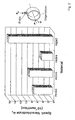
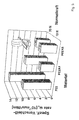
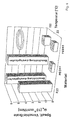
- FIG. 2 shows the test results for the specific wear rate that were once obtained on a block-on-ring test bench ( FIG. 2 , where the sliding layer material forms the "block", but it is in "bulk” form, ie not on a porous carrier layer before), and on a ring-plate test stand ( FIG. 3 ) or a pin-disk test stand ( FIG. 4 ).
- Duration of test 20 h
- Surface pressure 1 MPa
- Lubrication unlubricated room temperature
- Measured values are measured at two different pressure forces of the ring against the plate of 10 N and 20 N, respectively.
- FIGS. 5 to 7 show tests of the coefficient of friction of the above-discussed comparative materials P 23, PEEK 4 and the material PEEK 6 according to the invention.
- a preferred composition of the sliding bearing composite according to the invention is given by a supporting layer made of steel and a porous support layer made of bronze, for example copper-tin-bronze, such as CuSn10, and a sliding layer made of a sliding layer material of a composition according to the exemplary embodiment FEEK 6 with 10% by weight.
- % ZnS 10% by weight of carbon fibers, 10% by weight of graphite particles and 10% by weight of TiO 2 Zinc sulfide as a lubricant and titanium dioxide as a hardening agent are present in the PEEK 5, 6 and 7 materials in the form of extremely fine particles wherein the zinc sulfide having an average particle size with a D50 value of about 300 nm and the titanium dioxide having an average particle size with a D50 value of about 300 nm is present. This results in particularly fine homogeneous structures and particularly low coefficients of friction and wear values.
- the carbon fibers in the materials PEEK 5, 6 have a length of 50 to 250 microns, preferably from 60 to 150 microns, their average diameter is 8 to 15 microns.
- the size of the graphite particles is up to 15 microns, especially at 1-15 microns, preferably 1-5 microns.
- PEEK then forms the remainder of the plastic plain bearing material. Converted to a volumenprozentuale composition shows that the volume percentage of the PEEK matrix is preferably between 55 and 90 vol .-%.
- a preferred composition consists of 75 vol.% PEEK, 4 vol.% ZnS, 10 vol.% Short carbon fibers, 7 vol.% Graphite, and 4 vol.% TiO 2 .
Landscapes
- Chemical & Material Sciences (AREA)
- General Engineering & Computer Science (AREA)
- Engineering & Computer Science (AREA)
- Medicinal Chemistry (AREA)
- Health & Medical Sciences (AREA)
- Chemical Kinetics & Catalysis (AREA)
- Mechanical Engineering (AREA)
- Polymers & Plastics (AREA)
- Organic Chemistry (AREA)
- Sliding-Contact Bearings (AREA)
- Compositions Of Macromolecular Compounds (AREA)
- Laminated Bodies (AREA)
- Lubricants (AREA)
Description
- Die Erfindung betrifft einen Gleitlagerverbundwerkstoff mit einer metallischen Stützschicht, gegebenenfalls mit einer darauf aufgebrachten porösen Trägerschicht, und mit einer eine Gleitfläche für einen Gleitpartner bildenden bleifreien Gleitschicht mit einem Gleitschichtmaterial auf Kunststoffbasis mit PEEK und mit einem Schmierstoff in Form von Zinksulfid.
- Ein solcher Gleitlagerverbundwerkstoff ist bekannt aus
DE 36 01 569 A1 , wo PEEK als einer von mehreren Polymeren genannt ist, obschon keines der Ausführungsbeispiele PEEK umfasst. Die Druckschrift lehrt, zur Erhöhung der Verschleißfestigkeit 5- 40 Vol.-% Zinksulfid und/oder Bariumsulfat in dem Gleitschichtmaterial zu verwenden. Als die Festigkeit erhöhende Zusätze sind Glasfasern, Glasperlen, Kohlefasern, Keramikfasern und Aramidfasern genannt. Die Ausführungsbeispiele umfassen sämtlich Glasfasern oder Glasperlen. -
DE 37 36 292 A1 offenbart eine separat herstellbare Gleitschicht auf Folienbasis, die dann über eine als Haftvermittler dienende Zwischenschicht oder direkt auf eine metallische Stützschicht aufbringbar ist. Als Material für die Gleitschicht ist fluorierter Kunststoff, insbesondere PTFE oder modifiziertes PTFE oder Polyimid oder PEEK als geeignet genannt. Keines der Ausführungsbeispiele umfasst PEEK. Der Gleitschicht kann gemäß dieser Druckschrift zur Verstärkung und/oder zur Verbesserung der Wärmeleitfähigkeit und/oder der Verschleißeigenschaften ein oder mehrere Füllstoffe zugegeben werden. Je nach Zielsetzung seien insbesondere Kohle, Aluminiumoxid, Keramikwerkstoffe, Glas, Bronze, Molybdändisulfid oder Siliziumcarbid eingelagert. - Gleitlager aus Gleitlagerverbundwerkstoffen mit einer Gleitschicht auf Kunststoffbasis haben in der Technik eine weite Verbreitung gefunden, und zwar für weitestreichende Anforderungsbereiche, etwa im Hinblick auf die Belastbarkeit, Chemikalienbeständigkeit oder die Temperaturbeständigkeit. Es sind Thermoplaste bekannt und erhältlich, bei denen jedoch die Temperaturbeständigkeit nur für Betriebstemperaturen bis ca. 90° C gewährleistet werden kann; es sind dies beispielsweise ABS, Hochdruck-Polyethylen (HD-PE), PVC, Polysulfon (PS) und andere. Es existiert aber auch eine Anzahl von sogenannten technischen Thermoplasten, die sich für Einsatztemperaturen bis ca. 150° C eignen, wie z. B. POM, PET, PA.
- Die vorliegende Erfindung betrifft solche Gleitlagerverbundwerkstoffe, die sich für den Einsatz bei Dauergebrauchstemperaturen von oberhalb 180° C eignen sollen. Sie sollen dabei aber auch sehr gute tribologische Eigenschaften und günstige mechanische Kennwerte im Hinblick auf Umformbarkeit sowie eine hohe Chemikalienbeständigkeit aufweisen. Zudem wird an den Gleitlagerverbundwerkstoff die Forderung gestellt, dass er sich in einem industriell durchführbaren Herstellungsverfahren produzieren lässt.
- Diese Aufgabe wird durch einen Gleitlagerverbundwerkstoff mit den Merkmalen des Anspruchs 1 gelöst.
- Es wurde mit der Erfindung festgestellt, dass der Teilchengröße des Schmierstoffs in Form von Zinksulfid und der härtenden Komponente in Form von Titandioxid, welche der matrixbildenden Kunststoffkomponente zugesetzt sind, eine wichtige Bedeutung zukommt. Unter Verwendung von feinen Teilchen im beanspruchten Bereich lässt sich eine "dichte" homogene Verteilung dieser Stoffe in der Kunststoffmatrix erreichen. Es wurde festgestellt, dass sich auf diese Weise eine Steigerung der Leistungsfähigkeit des Gleitlagerverbundwerkstoffs sowohl im Hinblick auf geringe Verschleißraten als auch im Hinblick auf einen günstigen Reibkoeffizienten erreichen lässt. Die erwähnte härtende Komponente und der Schmierstoff des Gleitschichtmaterials liegen vorzugsweise in Form feiner Teilchen mit einem D50-Wert der Teilchengröße von höchstens 400 nm, vorzugsweise von 100 - 350 nm vor. Der vorerwähnte D50-Wert der Teilchengröße bezeichnet eine Teilchengröße, bezüglich der 50 Gew.% des betreffenden Stoffs mit einer demgegenüber größeren Teilchengröße und 50 Gew.% mit einer demgegenüber kleineren Teilchengröße vorliegen. Da es sich bei den zuzusetzenden Schmierstoffpartikeln und bei den Partikeln der härtenden Komponente in Form von Titandioxid um in technischen Verfahren herzustellende bzw. nach technischen Verfahren sortierte pulverförmige Partikel handelt, wird üblicherweise eine glockenförmige oder annähernd Normalverteilungsform aufweisende Teilchengrößenverteilungskurve resultieren. Der D50-Wert der Teilchengröße wird dann in der Nähe des Maximums der glockenförmigen Verteilungskurve liegen. Es erweist sich im Sinne der vorliegenden Erfindung als vorteilhaft, wenn die glockenförmige Verteilungskurve derart ist, dass sich wenigstens 60%, insbesondere wenigstens 70% und vorzugsweise wenigstens 80 Gew.% des betreffenden Stoffs mit einer Teilchengröße innerhalb eines Teilchengrößenbereichs um das Glockenmaximum herum oder um den D50-Wert herum von ± 50% dieses Werts vorliegen, also beispielsweise bei einem D50-Wert von 330 nm in einem Teilchengrößenbereich von 330nm ±165 nm, also von 165 nm bis 495 nm.
- Es hat sich des Weiteren als zweckmäßig erwiesen, wenn eine Teilchengrößenverteilung derart ist, dass der Summenrückstand in Gewichtsprozent bei einer Siebanalyse mit variierender Maschenweite t, insbesondere zwischen 1 µm und 100 nm, durch folgende Beziehung beschrieben werden kann:

- Durch den Zusatz von Kohlenstofffasern wird die Gleitschicht des Gleitlagerverbundwerkstoffs verstärkt, indem ihre Steifigkeit und Festigkeit, aber auch ihre Kriechfestigkeit erhöht wird. Ferner wird der Verschleißwiderstand durch Kohlenstofffasern erhöht. Besondere Bedeutung kommt auch dem Aspekt der Wärmeleitfähigkeit zu, der durch Kohlenstofffasern in der Gleitschicht verbessert wird. Diese führen dazu, dass eine Überhitzung der Gleitschicht verhindert wird, indem die beim Betrieb unmittelbar an der Oberfläche der Gleitschicht auftretende Reibungswärme an das Innere des Gleitlagerverbundwerkstoffs, insbesondere an die metallische Komponente einer gegebenenfalls vorgesehenen porösen Trägerschicht oder direkt an die metallische Stützschicht abgeführt wird.
- Der Gleitlagerverbundwerkstoff mit Polyetheretherketon (PEEK) als matrixbildender Kunststoffkomponente erweist sich in Verbindung mit den weiteren beanspruchten Komponenten als hochtemperaturstabil, d. h. er kann bei Temperaturen oberhalb von 180° C, beispielsweise 190 bis 250° C dauerhaft eingesetzt werden. Zwar würde sich Polyphenylensulfon (PPS) als matrixbildende Kunststoffkomponente eines Gleitschichtmaterials aufgrund seiner Temperaturstabilität bis 260° C zumindest grundsätzlich eignen; PPS bildet jedoch eine im Hinblick auf ihr Haltevermögen ungenügende Matrix, die gerade beim Umformen zum Aufplatzen neigt und auch im Hinblick auf ihre tribologische Leistungsfähigkeit an diejenige von PEEK nicht anzuschließen vermag.
- Die vorliegende Erfindung schließt zwar nicht aus, dass neben PEEK als matrixbildender Kunststoffkomponente noch ein oder mehrere weitere Thermoplaste in dem Gleitschichtmaterial enthalten sein dürfen. Ihr Anteil sollte aber nicht mehr als 20 Gew.-%, insbesondere nicht mehr als 10 Gew.-% des Anteils der Kunststoffkomponente in dem Gleitschichtmaterial betragen. Vorzugsweise ist die Kunststoffkomponente zu 100 % von PEEK gebildet.
- Es wurde ferner festgestellt, dass bei dem erfindungsgemäßen Gleitlagerverbundwerkstoff gerade für dessen Einsatz unter Extremlastbedingungen auf den Zusatz von PTFE, das in üblichen Gleitwerkstoffen zwischen 2 und 15 Gew.-% vorhanden ist, verzichtet werden kann. Es wird davon ausgegangen, dass der an sich erwünschte Einfluss von PTFE auf die tribologischen Eigenschaften einer Werkstoffzusammensetzung von der beanspruchten Komponente Zinksulfid erbracht wird.
- Es hat sich nach einer bevorzugten Ausführungsform der Erfindung als besonders vorteilhaft erwiesen, wenn es sich bei den Kohlenstofffasern um Kurzfasern einer Länge von 50 bis 250 µm, insbesondere von 60 bis 150 µm handelt. Es wurde nämlich erfindungsgemäß festgestellt, dass solchenfalls eine homogene Verteilung der Kohlenstofffasern im Gleitschichtmaterial auch innerhalb der Poren der gegebenenfalls vorgesehenen porösen Trägerschicht erreicht wird, bei der es sich beispielsweise um eine Bronzeschicht, insbesondere eine Blei-Zinn-Bronzeschicht handeln kann. Hierdurch kann die Wärmeleitfähigkeit weiter verbessert werden, indem die entstehende Wärme an die poröse Trägerschicht effektiv abgeleitet werden kann. Es haben sich hierbei Kohlenstofffasern mit einer Dicke von 8 bis 15 µm als vorteilhaft erwiesen.
- Der gewichtsprozentuale Anteil der Kohlenstofffasern wiederum bezogen auf die Masse des Gleitschichtmaterials beträgt 5 - 15 Gew.-%.
Es hat sich des weiteren als vorteilhaft erwiesen, wenn das Gleitschichtmaterial Zusätze von Graphitpartikeln in einem gewichtsprozentualen Anteil bezogen auf die Masse des Gleitschichtmaterials von 5 bis 15 Gew.-% aufweist. Die Graphitpartikel sollten vorzugsweise als feine Partikel einer Teilchengröße bis maximal 15 µm, insbesondere 1 - 15 µm, vorzugsweise 1 - 5 µm vorliegen. - Es wurde des weiteren festgestellt, dass das erfindungsgemäße Gleitschichtmaterial hervorragend auf einer metallischen Stützschicht haftet und demgemäß auf eine poröse Trägerschicht auch verzichtet werden kann.
- Der Gleitlagerverbundwerkstoff kann durch das folgende Verfahren hergestellt werden.
- Zuführen eines die Trägerschicht bildenden Bandmaterials und Vorerwärmen des Bandmaterials,
- Bilden eines bandförmigen Gleitschichtmaterials aus dem zuvor gemischten und erschmolzenen Gleitschichtmaterial durch Extrudieren der Schmelze,
- Zuführen des bandförmigen Gleitschichtmaterials auf das die Trägerschicht bildende Bandmaterial und Zusammenfügen unter Druck und bei Temperaturen von 300 bis 500 C°.
- Durch das Extrudieren des Kunststoffgleitmaterials in eine dünne Bandform, das Aufbringen des Bands auf das erhitzte Trägerband ergeben sich wesentliche Vorteile, und zwar hat es sich gezeigt, dass das Kunststoffgleitmaterial auf diese Weise ohne vorheriges Zermahlen zu erfordern in die Poren der porösen Trägerschicht eingebracht werden kann.
- Weitere Merkmale, Einzelheiten und Vorteile der Erfindung ergeben sich aus den Patentansprüchen und der zeichnerischen Darstellung und nachfolgenden Beschreibung von Werkstoffzusammensetzungen und deren Eigenschaften. In der Zeichnung zeigt:
- Figur 1
- eine schematische Darstellung verschiedener Prüfverfahren bzw. Prüfstände;
- Figuren 2 bis 4
- die graphische Darstellung der Messung spezifischer Verschleißraten bei verschiedenen Versuchsbedingungen unter Anwendung der Prüfverfahren nach
Figur 1 und - Figuren 5 bis 7
- eine graphische Darstellung der Messung des Reibkoeffizienten bei verschiedenen Werkstoffen und verschiedenen Prüfbedingungen.
- Die nachfolgend gewonnenen Prüfergebnisse wurden durch verschiedene, an sich bekannte Prüfverfahren gewonnen. Es wurden die in
Figur 1 skizzierten Untersuchungen auf einem sogenannten Ring-Platte-Prüfstand (Figur 1 links), auf einem Stift-Scheibe-Prüfstand (Figur 1 Mitte) und auf einem Block-auf-Ring-Prüfstand (Figur 1 rechts) ausgeführt. - Es wurde ein Vergleichswerkstoff mit der Bezeichnung P23 untersucht, bei dem das Gleitschichtmaterial als matrixbildende Kunststoffkomponente PVDF sowie als Schmierstoff Blei und PTFE enthält. Ferner wurde untersucht ein Gleitlagerverbundwerkstoff mit einer Gleitschicht aus einem im Handel erhältlichen Gleitschichtmaterial mit PEEK als matrixbildender Kunststoffkomponente und der Zusammensetzung, die aus der nachfolgenden Tabelle unter der Bezeichnung PEEK 4 ersichtlich ist. Die Kohlenstofffasern des Werkstoffs PEEK 4 haben eine Länge von 1000 µm - 5000µm.
Bezeichnung Matrix ZnS Gew.-% C-Fasern Gew.-% PTFE Gew.-% Graphit Gew.-% TiO2 Gew.-% PEEK 4 Rest PEEK - 10 10 10 - PEEK 5 Rest PEEK 10 10 10 - - PEEK 6 Rest PEEK 10 10 - 10 10 PEEK 7 Rest PEEK 10 - - 10 5 - Sodann wurden Verbundwerkstoffe mit den Bezeichnungen PEEK 5, 6, 7 mit Zusammensetzungen des Gleitschichtmaterials, die ebenfalls aus der nachfolgenden Tabelle ersichtlich sind, getestet. Bei sämtlichen Werkstoffen wurde das Gleitschichtmaterial in eine poröse Trägerschicht eingebracht, die auf eine Stützschicht aus Stahl aufgesintert ist.
- Die
Figuren 2 ,3 und4 zeigen die Prüfergebnisse zur spezifischen Verschleißrate, die einmal auf einem Block-auf-Ring-Prüfstand gewonnen wurden (Figur 2 , dort bildet das Gleitschichtmaterial den "Block", es liegt aber in "bulk"-Form, also nicht auf einer porösen Trägerschicht vor), sowie auf einem Ring-Platte-Prüfstand (Figur 3 ) bzw. einem Stift-Scheibe-Prüfstand (Figur 4 ). Bei der Prüfung nachFigur 2 wurde mit folgenden Parametern gearbeitet:Versuchsdauer: 20 h Flächenpressung: 1 MPa Gleitgeschwindigkeit: 1,0 m/s Gegenkörper: 100Cr6, Ra = 0,1-0,2 µm Schmierung: ungeschmiert Raumtemperatur - Bei der Prüfung nach
Figur 3 wurde mit folgenden Parametern gearbeitet:Versuchsdauer: 20 h Gleitgeschwindigkeit: 1,57 m/s Gegenkörper: 100Cr6, Ra = 0,1-0,2 µm Schmierung: ungeschmiert Raumtemperatur - Es sind Messwerte bei jeweils zwei verschiedenen Andruckkräften des Rings gegen die Platte von 10 N und 20 N gemessen.
- Bei der Prüfung nach
Figur 4 wurde mit folgenden Parametern gearbeitet:Versuchsdauer 20 h Flächenpressung 0,5 MPa Gleitgeschwindigkeit 1,57 m/s Gegenkörper 100Cr6, Ra = 0,1-0,2 µm Schmierung ungeschmiert - Es wurde bei zwei verschiedenen Temperaturen, nämlich Raumtemperatur von 23° C und 150° C gemessen.
Die Messungen zeigen, dass bei der Prüfung nachFigur 2 der erfindungsgemäße Gleitlagerverbundwerkstoff PEEK 6 gegenüber den Vergleichswerkstoffen eine geringere spezifische Verschleißrate, also einen höheren Verschleißwiderstand aufweist. Bei der Prüfung nachFigur 3 wurde festgestellt, dass der erfindungsgemäße Gleitlagerverbundwerkstoff PEEK 6 sich gerade bei hohen Flächenpressungen, also hohen Belastungen als den anderen Werkstoffen überlegen darstellt. Insbesondere wird deutlich, dass die Weglassung der Kohlenstofffasern und die Reduzierung von TiO2 bei PEEK 7 im Vergleich zu PEEK 6 sich negativ auf den Verschleißwiderstand auswirkt, also die Verschleißrate erhöht. Hingegen bewirkt die Zugabe von TiO2 bei PEEK 6 ausgehend von PEEK 5, welches kein TiO2 aufweist, eine Verringerung der Verschleißrate. - Bei der Prüfung nach
Figur 4 wurde eine überlegene Temperaturbeständigkeit des erfindungsgemäßen Werkstoffs PEEK 6 ermittelt. Während die anderen beiden Vergleichswerkstoffe den Anforderungen nicht gewachsen waren und ausfielen, da ihre Gleitschicht und eine auf die Stützschicht aufgebrachte poröse Trägerschicht vollständig bis auf die aus Stahl bestehende Stützschicht abgerieben wurde. - Die
Figuren 5 bis 7 zeigen Prüfungen des Reibkoeffizienten der vorstehend erörterten Vergleichswerkstoffe P 23, PEEK 4 und des erfindungsgemäßen Werkstoffs PEEK 6. - Die Prüfparameter bei der Prüfung nach
Figur 5 waren wie folgt:Versuchsdauer: 20 h Gleitgeschwindigkeit: 1,57 m/s Gegenkörper: 100Cr6, Ra = 0,1-0,2 µm Schmierung: ungeschmiert Raumtemperatur - Es wurde bei dieser Prüfung auf einem Ring-Platte-Prüfstand der Reibkoeffizient der Werkstoffe bei zwei verschiedenen Anpressdrücken von 10 und 20 N gemessen.
- Die Prüfparameter bei der Prüfung nach
Figur 6 auf einem Ring-Platte-Prüfstand waren wie folgt:Versuchsdauer: 72 h Gleitgeschwindigkeit: 1,57 m/s Gegenkörper: 100Cr6, Ra = 0,1-0,2 µm Schmierung: Initialschmierung Raumtemperatur - Diese Prüfung des Reibkoeffizienten unterscheidet sich von derjenigen nach
Figur 5 dadurch, dass eine Initialschmierung verwendet wurde, während die Prüfung nachFigur 5 ungeschmiert erfolgte. Die Versuchsdauer ist etwa drei mal so lang. Wiederum ergibt sich eine Überlegenheit des erfindungsgemäßen Werkstoffs bei dem höheren Anpressdruck. - Die Prüfparameter bei der Prüfung nach
Figur 7 waren wie folgt:Versuchsdauer 20 h Flächenpressung 0,5 MPa Gleitgeschwindigkeit 1,57 m/s Gegenkörper 100Cr6, Ra = 0, 1-0, 2 µm Schmierung ungeschmiert - Bei der Prüfung des Reibkoeffizienten auf einem Stift-Scheibe-Prüfstand bei zwei Prüftemperaturen, nämlich Raumtemperatur von 23° C und einer erhöhten Temperatur von 150° C, zeigt sich die den Vergleichswerkstoffen überlegene Temperaturbeständigkeit des erfindungsgemäßen Werkstoffs PEEK 6.
- Eine bevorzugte Zusammensetzung des erfindungsgemäßen Gleitlagerverbundwerkstoffs ist gegeben durch eine Stützschicht aus Stahl und eine darauf aufgebrachte poröse Trägerschicht aus Bronze, beispielsweise Kupfer-Zinn-Bronze, wie CuSn10, und eine Gleitschicht aus einem Gleitschichtmaterial einer Zusammensetzung gemäß dem Ausführungsbeispiel FEEK 6 mit 10 Gew.-% ZnS, 10 Gew.-% Kohlenstofffasern, 10 Gew.-% Graphitpartikeln und 10 Gew.-% TiO2 Das Zinksulfid als Schmierstoff und das Titandioxid als härtender Stoff liegen bei den Werkstoffen PEEK 5, 6 und 7 in Form extrem feiner Partikel vor, wobei das Zinksulfid mit einer mittleren Partikelgröße mit einem D50-Wert von etwa 300 nm und das Titandioxid mit einer mittleren Partikelgröße mit einem D50-Wert von etwa 300 nm vorliegt. Hierdurch entstehen besonders feine homogene Strukturen und besonders geringe Reibwerte und Verschleißwerte. Die Kohlenstofffasern haben bei den Werkstoffen PEEK 5, 6 eine Länge von 50 bis 250 µm, vorzugsweise von 60 bis 150 µm, ihr mittlerer Durchmesser beträgt 8 bis 15 µm. Die Größe der Graphitpartikel liegt bei bis zu 15 µm, insbesondere bei 1 - 15 µm, vorzugsweise bei 1-5 µm. PEEK bildet dann den Rest des Kunststoffgleitlagermaterials. Umgerechnet auf eine volumenprozentuale Zusammensetzung ergibt sich, dass der volumenprozentuale Anteil der PEEK-Matrix vorzugsweise zwischen 55 und 90 Vol.-% liegt. Eine bevorzugte Zusammensetzung besteht aus 75 Vol.-% PEEK, 4 Vol.-% ZnS, 10 Vol.-% Kohlenstoffkurzfasern, 7 Vol.-% Graphit und 4 Vol.-% TiO2.
Claims (5)
- Gleitlagerverbundwerkstoff mit einer metallischen Stützschicht, gegebenenfalls mit einer darauf aufgebrachten porösen Trägerschicht, und mit einer eine Gleitfläche für einen Gleitpartner bildenden bleifreien Gleitschicht mit einem Gleitschichtmaterial auf Kunststoffbasis mit PEEK und mit einem Schmierstoff in Form von Zinksulfid, dadurch gekennzeichnet, dass das Gleitschichtmaterial PEEK als matrixbildende Kunststoffkomponente und ferner den Schmierstoff in Form von Zinksulfid und eine härtende Komponente in Form von Titandioxid und zusätzlich Kohlenstofffasern aufweist und dass der gewichtsprozentuale Anteil des Schmierstoffs und der härtenden Komponente bezogen auf die Masse des Gleitschichtmaterials jeweils 5 - 15 Gew.-% beträgt und dass der Schmierstoff und die härtende Komponente in Form feiner Teilchen mit einem D50-Wert der Teilchengröße von höchstens 500 nm vorliegt, and dass der gewichtsprozentuale Anteil der Kohlenstofffasern bezogen auf die Masse des Gleitschichtmaterials 5 - 15 Gew.-% beträgt.
- Gleitlagerverbundwerkstoff nach Anspruch 1, dadurch gekennzeichnet, dass der Schmierstoff und die härtende Komponente in Form feiner Teilchen mit einem D50-Wert der Teilchengröße von höchstens 400 nm, insbesondere von 100 - 350 nm vorliegt.
- Gleitlagerverbundwerkstoff nach Anspruch 1 oder 2, dadurch gekennzeichnet, dass die Kohlenstofffasern eine Länge von 50 - 250 µm, insbesondere 60 - 150 µm aufweisen.
- Gleitlagerverbundwerkstoff nach Anspruch 1, 2 oder 3, dadurch gekennzeichnet, dass die Kohlenstofffasern eine Dicke von 8 - 15 µm aufweisen.
- Gleitlagerverbundwerkstoff nach einem der vorstehenden Ansprüche, dadurch gekennzeichnet, dass das Gleitschichtmaterial Zusätze von Graphitpartikeln in einem gewichtsprozentualen Anteil bezogen auf die Masse des Gleitschichtmaterials von 5 - 15 Gew.-% aufweist.
Applications Claiming Priority (5)
| Application Number | Priority Date | Filing Date | Title |
|---|---|---|---|
| DE10226262 | 2002-06-07 | ||
| DE10226262 | 2002-06-07 | ||
| DE10225783 | 2002-06-10 | ||
| DE10225783A DE10225783A1 (de) | 2002-06-07 | 2002-06-10 | Gleitlagerverbundwerkstoff |
| PCT/EP2003/005892 WO2003103955A1 (de) | 2002-06-07 | 2003-06-05 | Gleitlagerverbundwerkstoff |
Publications (3)
| Publication Number | Publication Date |
|---|---|
| EP1511625A1 EP1511625A1 (de) | 2005-03-09 |
| EP1511625B1 EP1511625B1 (de) | 2005-12-21 |
| EP1511625B2 true EP1511625B2 (de) | 2012-03-14 |
Family
ID=29737587
Family Applications (1)
| Application Number | Title | Priority Date | Filing Date |
|---|---|---|---|
| EP03757024A Expired - Lifetime EP1511625B2 (de) | 2002-06-07 | 2003-06-05 | Gleitlagerverbundwerkstoff |
Country Status (6)
| Country | Link |
|---|---|
| US (1) | US7056590B2 (de) |
| EP (1) | EP1511625B2 (de) |
| AT (1) | ATE313432T1 (de) |
| BR (1) | BR0311595A (de) |
| ES (1) | ES2254969T3 (de) |
| WO (1) | WO2003103955A1 (de) |
Families Citing this family (19)
| Publication number | Priority date | Publication date | Assignee | Title |
|---|---|---|---|---|
| DE502004009120D1 (de) * | 2003-10-20 | 2009-04-23 | Ks Gleitlager Gmbh | Formkörper für gleitende Beanspruchung |
| US20060029795A1 (en) * | 2004-08-09 | 2006-02-09 | University Of Florida Research Foundation, Inc. | Multi-layer low friction and low wear polymer/polymer composites having compositionally graded interfaces |
| US7314646B2 (en) | 2004-08-09 | 2008-01-01 | University Of Florida Research Foundation, Inc. | Low friction and low wear polymer/polymer composites |
| DE102005026665A1 (de) * | 2005-06-02 | 2006-12-07 | Ks Gleitlager Gmbh | Gleitlagerschale für motorische Anwendungen |
| AT504088B1 (de) * | 2006-09-01 | 2008-11-15 | Miba Gleitlager Gmbh | Gleitlager |
| EP2581404A1 (de) | 2011-10-11 | 2013-04-17 | Basf Se | Thermoplastische Formmasse und daraus hergestellte Formteile mit verbesserter Verschleißfestigkeit |
| US8729164B2 (en) | 2011-10-11 | 2014-05-20 | Basf Se | Thermoplastic molding composition and moldings produced therefrom with improved wear resistance |
| CN104470981A (zh) | 2012-05-16 | 2015-03-25 | 索尔维特殊聚合物美国有限责任公司 | 摩擦聚合物组合物 |
| WO2014018505A1 (en) | 2012-07-23 | 2014-01-30 | Emerson Climate Technologies, Inc. | Injection molded seals for compressors |
| BR112015001500A2 (pt) | 2012-07-23 | 2017-07-04 | Emerson Climate Technologies | revestimentos antidesgaste para superfícies de desgaste do compressor |
| CN104769040B (zh) | 2012-09-04 | 2017-08-04 | 索尔维特殊聚合物美国有限责任公司 | 高熔体流动性paek组合物 |
| US9879722B2 (en) * | 2013-03-11 | 2018-01-30 | Bell Helicopter Textron Inc. | Low shear modulus transition shim for elastomeric bearing bonding in torsional applications |
| DE102013221968A1 (de) * | 2013-10-29 | 2015-04-30 | Vitrulan Technical Textiles Gmbh | Heizmittel und elektrisch leitender Heizkörper |
| DE102016104509B3 (de) * | 2016-03-11 | 2017-08-03 | Ks Gleitlager Gmbh | Metall/Kunststoff-Gleitlagerverbundwerkstoff und hieraus hergestelltes Gleitlagerelement |
| EP3945107A1 (de) | 2020-07-28 | 2022-02-02 | Evonik Operations GmbH | Thermoplastische zusammensetzungen von polyetheretherketonen mit verbesserten tribologischen materialeigenschaften und verwendung dieser |
| CN114801108B (zh) * | 2021-02-09 | 2024-06-04 | 浙江长盛滑动轴承股份有限公司 | 一种高耐磨pvdf复合板材及其制备方法 |
| US20240343901A1 (en) | 2021-08-04 | 2024-10-17 | Röhm Gmbh | Polymer composition based on poly(meth)acrylimide for tribological applications |
| EP4469508A1 (de) | 2022-01-24 | 2024-12-04 | Röhm GmbH | Polymerschaumstoffe auf basis von poly(meth)acrylimid |
| WO2023139194A1 (en) | 2022-01-24 | 2023-07-27 | Röhm Gmbh | Polymer foams based on blends of poly(vinylidene fluoride) and poly(meth)acrylimide |
Family Cites Families (22)
| Publication number | Priority date | Publication date | Assignee | Title |
|---|---|---|---|---|
| DE3027409A1 (de) * | 1980-07-19 | 1982-02-25 | Karl Schmidt Gmbh, 7107 Neckarsulm | Verbundgleitlagerwerkstoff |
| JPS59103022A (ja) | 1982-12-03 | 1984-06-14 | Daido Metal Kogyo Kk | 耐摩耗性にすぐれた軸受材料 |
| DE3425960A1 (de) * | 1984-07-14 | 1986-01-16 | Kolbenschmidt AG, 7107 Neckarsulm | Werkstoff zur herstellung von verbundlagern fuer kurbelwellen |
| DE3505374A1 (de) * | 1985-02-16 | 1986-08-28 | Kolbenschmidt AG, 7107 Neckarsulm | Gleitlagerwerkstoff |
| DE3534133A1 (de) * | 1985-09-25 | 1987-04-02 | Kolbenschmidt Ag | Wartungsarmer gleitlagerwerkstoff |
| US4847135A (en) * | 1986-01-21 | 1989-07-11 | Kolbenschmidt Aktiengesellschaft | Composite material for sliding surface bearings |
| DE3601569A1 (de) * | 1986-01-21 | 1987-07-23 | Kolbenschmidt Ag | Verbund-gleitlagerwerkstoff |
| DE3700810A1 (de) | 1987-01-14 | 1988-07-28 | Basf Ag | Hochtemperaturbestaendige polyaryletherketone |
| JP2528904B2 (ja) * | 1987-10-20 | 1996-08-28 | 大同メタル工業 株式会社 | 複層摺動部材 |
| DE3736292A1 (de) | 1987-10-27 | 1989-05-11 | Norton Pampus Gmbh | Wartungsfreies gleitlager |
| DE3815265A1 (de) * | 1988-05-05 | 1989-11-16 | Kolbenschmidt Ag | Werkstoff fuer verbundlager und verfahren zu seiner herstellung |
| DE3815264A1 (de) * | 1988-05-05 | 1989-11-16 | Kolbenschmidt Ag | Werkstoff fuer verbundlager und verfahren zu seiner herstellung |
| DE3917516A1 (de) | 1989-05-30 | 1990-12-06 | Bayer Ag | Graphitierte polyarylensulfid-formmassen |
| JP2510374B2 (ja) * | 1992-04-10 | 1996-06-26 | 大同メタル工業株式会社 | 転動子を有する滑り・転がり兼用型軸受 |
| DE69327377T2 (de) * | 1992-09-25 | 2000-06-08 | Oiles Corp., Tokio/Tokyo | Mehrschichtiger Gleitteil |
| JP2881633B2 (ja) * | 1995-02-01 | 1999-04-12 | 大同メタル工業株式会社 | コンプレッサー用湿式複層軸受及びその製造方法 |
| DE19606948A1 (de) * | 1996-02-23 | 1997-08-28 | Hoechst Ag | Kunststoff-Formmassen mit geringerem Verschleiß |
| DE19650563A1 (de) | 1996-12-05 | 1998-06-10 | Basf Ag | Flammwidrige thermoplastische Formmassen |
| US5971617A (en) * | 1997-07-24 | 1999-10-26 | Norton Pampus Gmbh | Self-lubricated bearing |
| DE10126460A1 (de) * | 2001-05-31 | 2003-02-06 | Ks Gleitlager Gmbh | Gleitlagerverbundwerkstoff mit einer metallischen Stützschicht |
| DE10126462A1 (de) * | 2001-05-31 | 2003-01-23 | Ks Gleitlager Gmbh | Gleitlagerverbundwerkstoff mit einer metallischen Stützschicht |
| DE10126463A1 (de) * | 2001-05-31 | 2003-02-20 | Ks Gleitlager Gmbh | Gleitlagerverbundwerkstoff mit einer metallischen Stützschicht |
-
2003
- 2003-06-05 BR BR0311595A patent/BR0311595A/pt not_active Application Discontinuation
- 2003-06-05 WO PCT/EP2003/005892 patent/WO2003103955A1/de not_active Ceased
- 2003-06-05 EP EP03757024A patent/EP1511625B2/de not_active Expired - Lifetime
- 2003-06-05 US US10/516,013 patent/US7056590B2/en not_active Expired - Fee Related
- 2003-06-05 AT AT03757024T patent/ATE313432T1/de not_active IP Right Cessation
- 2003-06-05 ES ES03757024T patent/ES2254969T3/es not_active Expired - Lifetime
Also Published As
| Publication number | Publication date |
|---|---|
| EP1511625A1 (de) | 2005-03-09 |
| BR0311595A (pt) | 2005-02-22 |
| US7056590B2 (en) | 2006-06-06 |
| EP1511625B1 (de) | 2005-12-21 |
| US20050208313A1 (en) | 2005-09-22 |
| ES2254969T3 (es) | 2006-06-16 |
| ATE313432T1 (de) | 2006-01-15 |
| WO2003103955A1 (de) | 2003-12-18 |
Similar Documents
| Publication | Publication Date | Title |
|---|---|---|
| EP1511624B1 (de) | Gleitlagerverbundwerkstoff | |
| EP1511625B1 (de) | Gleitlagerverbundwerkstoff | |
| EP0832155B1 (de) | Gleitschichtmaterial | |
| DE102013227187B4 (de) | Gleitlagerwerkstoff und Gleitlager-Verbundwerkstoff mit Zinksulfid und Bariumsulfat | |
| DE19719858B4 (de) | Drucklager mit einer Gleitoberfläche | |
| EP2241773B1 (de) | Gleitlager | |
| DE102010018328B4 (de) | Gleitlagerverbundwerkstoff und hieraus hergestelltes Gleitlager | |
| DE102013227188A1 (de) | Selbstschmierende thermoplastische Schichten mit Zusatz von PTFE mit polymodalem Molekulargewicht | |
| DE19524968A1 (de) | Gleitlagerwerkstoff und dessen Verwendung | |
| EP2241597A1 (de) | Polymercompound sowie Bauteile, hergestellt unter Verwendung des Compounds | |
| EP0232922A1 (de) | Verbund-Gleitlagerwerkstoff | |
| DE19808541C1 (de) | Schichtverbundwerkstoff | |
| EP0234602A1 (de) | Gleitlagerwerkstoff | |
| EP4392684B1 (de) | Gleitlagerverbundwerkstoff und gleitlageranordnung | |
| DE102011089975B3 (de) | Gleitlagerverbundwerkstoff und hieraus hergestelltes Gleitlagerelement | |
| EP1526296B1 (de) | Formkörper für gleitende Beanspruchung | |
| DE102020108228A1 (de) | Gleitlagerverbundwerkstoff und Verfahren zu seiner Herstellung | |
| DE10225783A1 (de) | Gleitlagerverbundwerkstoff | |
| DE10226264B4 (de) | Gleitlagerverbundwerkstoff | |
| EP2565232A1 (de) | Polymercompound sowie Bauteile, hergestellt unter Verwendung des Compounds | |
| DE112020004952T5 (de) | Harzmaterial für ein Gleitelement und Gleitelement | |
| EP3661742B1 (de) | Metall-kunststoff-gleitlagerverbundwerkstoff und hieraus hergestelltes gleitlagerelement | |
| DE102006015997A1 (de) | Verschleißfester Werkstoff | |
| DE102006030320B3 (de) | Gleitlagerverbundwerkstoff | |
| DE1926586C (de) | Lagerbauteile mit Eigenschmierwirkung |
Legal Events
| Date | Code | Title | Description |
|---|---|---|---|
| PUAI | Public reference made under article 153(3) epc to a published international application that has entered the european phase |
Free format text: ORIGINAL CODE: 0009012 |
|
| 17P | Request for examination filed |
Effective date: 20040820 |
|
| AK | Designated contracting states |
Kind code of ref document: A1 Designated state(s): AT BE BG CH CY CZ DE DK EE ES FI FR GB GR HU IE IT LI LU MC NL PT RO SE SI SK TR |
|
| GRAP | Despatch of communication of intention to grant a patent |
Free format text: ORIGINAL CODE: EPIDOSNIGR1 |
|
| GRAS | Grant fee paid |
Free format text: ORIGINAL CODE: EPIDOSNIGR3 |
|
| GRAA | (expected) grant |
Free format text: ORIGINAL CODE: 0009210 |
|
| AK | Designated contracting states |
Kind code of ref document: B1 Designated state(s): AT BE BG CH CY CZ DE DK EE ES FI FR GB GR HU IE IT LI LU MC NL PT RO SE SI SK TR |
|
| PG25 | Lapsed in a contracting state [announced via postgrant information from national office to epo] |
Ref country code: NL Free format text: LAPSE BECAUSE OF FAILURE TO SUBMIT A TRANSLATION OF THE DESCRIPTION OR TO PAY THE FEE WITHIN THE PRESCRIBED TIME-LIMIT Effective date: 20051221 Ref country code: IT Free format text: LAPSE BECAUSE OF FAILURE TO SUBMIT A TRANSLATION OF THE DESCRIPTION OR TO PAY THE FEE WITHIN THE PRESCRIBED TIME-LIMIT;WARNING: LAPSES OF ITALIAN PATENTS WITH EFFECTIVE DATE BEFORE 2007 MAY HAVE OCCURRED AT ANY TIME BEFORE 2007. THE CORRECT EFFECTIVE DATE MAY BE DIFFERENT FROM THE ONE RECORDED. Effective date: 20051221 Ref country code: SK Free format text: LAPSE BECAUSE OF FAILURE TO SUBMIT A TRANSLATION OF THE DESCRIPTION OR TO PAY THE FEE WITHIN THE PRESCRIBED TIME-LIMIT Effective date: 20051221 Ref country code: RO Free format text: LAPSE BECAUSE OF FAILURE TO SUBMIT A TRANSLATION OF THE DESCRIPTION OR TO PAY THE FEE WITHIN THE PRESCRIBED TIME-LIMIT Effective date: 20051221 Ref country code: FI Free format text: LAPSE BECAUSE OF FAILURE TO SUBMIT A TRANSLATION OF THE DESCRIPTION OR TO PAY THE FEE WITHIN THE PRESCRIBED TIME-LIMIT Effective date: 20051221 Ref country code: IE Free format text: LAPSE BECAUSE OF FAILURE TO SUBMIT A TRANSLATION OF THE DESCRIPTION OR TO PAY THE FEE WITHIN THE PRESCRIBED TIME-LIMIT Effective date: 20051221 Ref country code: SI Free format text: LAPSE BECAUSE OF FAILURE TO SUBMIT A TRANSLATION OF THE DESCRIPTION OR TO PAY THE FEE WITHIN THE PRESCRIBED TIME-LIMIT Effective date: 20051221 |
|
| REG | Reference to a national code |
Ref country code: GB Ref legal event code: FG4D Free format text: NOT ENGLISH |
|
| REG | Reference to a national code |
Ref country code: CH Ref legal event code: EP |
|
| GBT | Gb: translation of ep patent filed (gb section 77(6)(a)/1977) |
Effective date: 20051221 |
|
| REG | Reference to a national code |
Ref country code: SE Ref legal event code: TRGR |
|
| REG | Reference to a national code |
Ref country code: IE Ref legal event code: FG4D Free format text: LANGUAGE OF EP DOCUMENT: GERMAN |
|
| REF | Corresponds to: |
Ref document number: 50302010 Country of ref document: DE Date of ref document: 20060126 Kind code of ref document: P |
|
| PG25 | Lapsed in a contracting state [announced via postgrant information from national office to epo] |
Ref country code: DK Free format text: LAPSE BECAUSE OF FAILURE TO SUBMIT A TRANSLATION OF THE DESCRIPTION OR TO PAY THE FEE WITHIN THE PRESCRIBED TIME-LIMIT Effective date: 20060321 Ref country code: BG Free format text: LAPSE BECAUSE OF FAILURE TO SUBMIT A TRANSLATION OF THE DESCRIPTION OR TO PAY THE FEE WITHIN THE PRESCRIBED TIME-LIMIT Effective date: 20060321 Ref country code: GR Free format text: LAPSE BECAUSE OF FAILURE TO SUBMIT A TRANSLATION OF THE DESCRIPTION OR TO PAY THE FEE WITHIN THE PRESCRIBED TIME-LIMIT Effective date: 20060321 |
|
| REG | Reference to a national code |
Ref country code: HU Ref legal event code: AG4A Ref document number: E000268 Country of ref document: HU |
|
| PG25 | Lapsed in a contracting state [announced via postgrant information from national office to epo] |
Ref country code: PT Free format text: LAPSE BECAUSE OF FAILURE TO SUBMIT A TRANSLATION OF THE DESCRIPTION OR TO PAY THE FEE WITHIN THE PRESCRIBED TIME-LIMIT Effective date: 20060522 |
|
| NLV1 | Nl: lapsed or annulled due to failure to fulfill the requirements of art. 29p and 29m of the patents act | ||
| PG25 | Lapsed in a contracting state [announced via postgrant information from national office to epo] |
Ref country code: CZ Free format text: LAPSE BECAUSE OF NON-PAYMENT OF DUE FEES Effective date: 20060605 |
|
| PG25 | Lapsed in a contracting state [announced via postgrant information from national office to epo] |
Ref country code: SE Free format text: LAPSE BECAUSE OF NON-PAYMENT OF DUE FEES Effective date: 20060606 Ref country code: ES Free format text: LAPSE BECAUSE OF NON-PAYMENT OF DUE FEES Effective date: 20060606 Ref country code: HU Free format text: LAPSE BECAUSE OF NON-PAYMENT OF DUE FEES Effective date: 20060606 |
|
| REG | Reference to a national code |
Ref country code: ES Ref legal event code: FG2A Ref document number: 2254969 Country of ref document: ES Kind code of ref document: T3 |
|
| PG25 | Lapsed in a contracting state [announced via postgrant information from national office to epo] |
Ref country code: MC Free format text: LAPSE BECAUSE OF NON-PAYMENT OF DUE FEES Effective date: 20060630 Ref country code: BE Free format text: LAPSE BECAUSE OF NON-PAYMENT OF DUE FEES Effective date: 20060630 |
|
| REG | Reference to a national code |
Ref country code: IE Ref legal event code: FD4D |
|
| ET | Fr: translation filed | ||
| PLBI | Opposition filed |
Free format text: ORIGINAL CODE: 0009260 |
|
| 26 | Opposition filed |
Opponent name: FEDERAL-MOGUL WIESBADEN GMBH Effective date: 20060920 |
|
| PLAX | Notice of opposition and request to file observation + time limit sent |
Free format text: ORIGINAL CODE: EPIDOSNOBS2 |
|
| EUG | Se: european patent has lapsed | ||
| PLBB | Reply of patent proprietor to notice(s) of opposition received |
Free format text: ORIGINAL CODE: EPIDOSNOBS3 |
|
| REG | Reference to a national code |
Ref country code: ES Ref legal event code: FD2A Effective date: 20060606 |
|
| PG25 | Lapsed in a contracting state [announced via postgrant information from national office to epo] |
Ref country code: AT Free format text: LAPSE BECAUSE OF NON-PAYMENT OF DUE FEES Effective date: 20060605 |
|
| BERE | Be: lapsed |
Owner name: KS GLEITLAGER G.M.B.H. Effective date: 20060630 |
|
| REG | Reference to a national code |
Ref country code: CH Ref legal event code: PL |
|
| PG25 | Lapsed in a contracting state [announced via postgrant information from national office to epo] |
Ref country code: CH Free format text: LAPSE BECAUSE OF NON-PAYMENT OF DUE FEES Effective date: 20070630 Ref country code: LI Free format text: LAPSE BECAUSE OF NON-PAYMENT OF DUE FEES Effective date: 20070630 |
|
| PLAB | Opposition data, opponent's data or that of the opponent's representative modified |
Free format text: ORIGINAL CODE: 0009299OPPO |
|
| PG25 | Lapsed in a contracting state [announced via postgrant information from national office to epo] |
Ref country code: EE Free format text: LAPSE BECAUSE OF FAILURE TO SUBMIT A TRANSLATION OF THE DESCRIPTION OR TO PAY THE FEE WITHIN THE PRESCRIBED TIME-LIMIT Effective date: 20051221 |
|
| PG25 | Lapsed in a contracting state [announced via postgrant information from national office to epo] |
Ref country code: TR Free format text: LAPSE BECAUSE OF FAILURE TO SUBMIT A TRANSLATION OF THE DESCRIPTION OR TO PAY THE FEE WITHIN THE PRESCRIBED TIME-LIMIT Effective date: 20051221 Ref country code: LU Free format text: LAPSE BECAUSE OF NON-PAYMENT OF DUE FEES Effective date: 20060605 |
|
| PG25 | Lapsed in a contracting state [announced via postgrant information from national office to epo] |
Ref country code: CY Free format text: LAPSE BECAUSE OF FAILURE TO SUBMIT A TRANSLATION OF THE DESCRIPTION OR TO PAY THE FEE WITHIN THE PRESCRIBED TIME-LIMIT Effective date: 20051221 |
|
| PUAH | Patent maintained in amended form |
Free format text: ORIGINAL CODE: 0009272 |
|
| STAA | Information on the status of an ep patent application or granted ep patent |
Free format text: STATUS: PATENT MAINTAINED AS AMENDED |
|
| 27A | Patent maintained in amended form |
Effective date: 20120314 |
|
| AK | Designated contracting states |
Kind code of ref document: B2 Designated state(s): AT BE BG CH CY CZ DE DK EE ES FI FR GB GR HU IE IT LI LU MC NL PT RO SE SI SK TR |
|
| REG | Reference to a national code |
Ref country code: DE Ref legal event code: R102 Ref document number: 50302010 Country of ref document: DE Effective date: 20120314 |
|
| REG | Reference to a national code |
Ref country code: FR Ref legal event code: PLFP Year of fee payment: 14 |
|
| REG | Reference to a national code |
Ref country code: FR Ref legal event code: PLFP Year of fee payment: 15 |
|
| PGFP | Annual fee paid to national office [announced via postgrant information from national office to epo] |
Ref country code: FR Payment date: 20170621 Year of fee payment: 15 Ref country code: GB Payment date: 20170620 Year of fee payment: 15 |
|
| GBPC | Gb: european patent ceased through non-payment of renewal fee |
Effective date: 20180605 |
|
| PG25 | Lapsed in a contracting state [announced via postgrant information from national office to epo] |
Ref country code: FR Free format text: LAPSE BECAUSE OF NON-PAYMENT OF DUE FEES Effective date: 20180630 Ref country code: GB Free format text: LAPSE BECAUSE OF NON-PAYMENT OF DUE FEES Effective date: 20180605 |
|
| PGFP | Annual fee paid to national office [announced via postgrant information from national office to epo] |
Ref country code: DE Payment date: 20220812 Year of fee payment: 20 |
|
| REG | Reference to a national code |
Ref country code: DE Ref legal event code: R071 Ref document number: 50302010 Country of ref document: DE |