EP1510920B1 - Vorrichtung und Verfahren zur Steuerung der Urladenprozedur eines Rechnersystems - Google Patents
Vorrichtung und Verfahren zur Steuerung der Urladenprozedur eines Rechnersystems Download PDFInfo
- Publication number
- EP1510920B1 EP1510920B1 EP04018755A EP04018755A EP1510920B1 EP 1510920 B1 EP1510920 B1 EP 1510920B1 EP 04018755 A EP04018755 A EP 04018755A EP 04018755 A EP04018755 A EP 04018755A EP 1510920 B1 EP1510920 B1 EP 1510920B1
- Authority
- EP
- European Patent Office
- Prior art keywords
- partition
- psa
- area
- boot record
- master boot
- Prior art date
- Legal status (The legal status is an assumption and is not a legal conclusion. Google has not performed a legal analysis and makes no representation as to the accuracy of the status listed.)
- Expired - Lifetime
Links
Images




Classifications
-
- G—PHYSICS
- G06—COMPUTING OR CALCULATING; COUNTING
- G06F—ELECTRIC DIGITAL DATA PROCESSING
- G06F11/00—Error detection; Error correction; Monitoring
- G06F11/07—Responding to the occurrence of a fault, e.g. fault tolerance
- G06F11/14—Error detection or correction of the data by redundancy in operations
- G06F11/1402—Saving, restoring, recovering or retrying
- G06F11/1415—Saving, restoring, recovering or retrying at system level
- G06F11/1441—Resetting or repowering
-
- G—PHYSICS
- G06—COMPUTING OR CALCULATING; COUNTING
- G06F—ELECTRIC DIGITAL DATA PROCESSING
- G06F9/00—Arrangements for program control, e.g. control units
- G06F9/06—Arrangements for program control, e.g. control units using stored programs, i.e. using an internal store of processing equipment to receive or retain programs
- G06F9/22—Microcontrol or microprogram arrangements
- G06F9/24—Loading of the microprogram
-
- G—PHYSICS
- G06—COMPUTING OR CALCULATING; COUNTING
- G06F—ELECTRIC DIGITAL DATA PROCESSING
- G06F11/00—Error detection; Error correction; Monitoring
- G06F11/07—Responding to the occurrence of a fault, e.g. fault tolerance
- G06F11/14—Error detection or correction of the data by redundancy in operations
- G06F11/1402—Saving, restoring, recovering or retrying
- G06F11/1415—Saving, restoring, recovering or retrying at system level
- G06F11/1417—Boot up procedures
-
- G—PHYSICS
- G06—COMPUTING OR CALCULATING; COUNTING
- G06F—ELECTRIC DIGITAL DATA PROCESSING
- G06F9/00—Arrangements for program control, e.g. control units
- G06F9/06—Arrangements for program control, e.g. control units using stored programs, i.e. using an internal store of processing equipment to receive or retain programs
- G06F9/44—Arrangements for executing specific programs
- G06F9/4401—Bootstrapping
- G06F9/4406—Loading of operating system
- G06F9/441—Multiboot arrangements, i.e. selecting an operating system to be loaded
Definitions
- the present invention relates to an apparatus and method for controlling a booting operation of a computer system, and more particularly to an apparatus and method for appropriately recovering a system using data stored in a hidden area of a HDD (Hard Disk Drive).
- HDD Hard Disk Drive
- Computers such as a desktop computer, a notebook computer, etc., are being improved in their performances of various aspects such as miniaturization, multi-processing, and high-speed controlling.
- the computers are configured so that they can internally include various peripherals for performing individual operations as well as a main routine configuration for use in an operation of a CPU (Central Processing Unit) or can be used in a state where various peripherals are connected.
- a CPU Central Processing Unit
- an audio device, a modem, a network device, a floppy disk drive, a CD-ROM (Compact Disc-Read Only Memory) drive and a DVD (Digital Versatile Disc) player can be mounted in the computer, such that these components can operate separately from the main routine.
- the recent computer can perform various functions based on the improved performance. Moreover, it is predicted that the computer's function will be generally extended.
- a computer system may be frequently damaged due to an erroneous operation, a program error, etc.
- a booting operation performed by a HDD may be erroneous
- a recovery CD-ROM or floppy disk, etc. is provided together with a computer when the computer is conventionally purchased so that the computer system can be appropriately recovered.
- the recovery CD-ROM is employed only when the computer system is damaged or when an OS (Operating System) of the computer, for example, WindowsTM, must be recovered, the number of uses of the recovery CD-ROM is very small.
- OS Operating System
- the recovery CD-ROM may be used a long time after purchasing the computer, a user may lose the recovery CD-ROM or may be unable to remember a place where the user placed the recovery CD-ROM.
- the recovery CD-ROM is lost, the user is inconvenienced because he/she must receive an additional service so that the computer can be recovered.
- additional costs required for manufacturing the recovery CD-ROM or floppy disk are imposed on a computer distributor or manufacturer when the recovery CD-ROM or floppy disk is additionally manufactured.
- service for recovering the use environment of the computer must be continuously provided.
- US 6 430 663 describes methods for selecting a boot partition and hiding a non-selected partition. Two copies of an operating system are provided in different boot partitions of a hard disk drive; an original boot partition and a back-up boot partition A single master boot record is provided in a separate partition of the hard disk drive and has serial numbers corresponding to the original boot partition and the back-up boot partition. The user then has the option of selecting which operating system should be booted.
- EP 1 199 636 A2 describes a self-repairing operating system, wherein a primary operating system and an emergency operating system are installed on the hard disk drive of a computer.
- EP 1 274 009 A2 describes a hybrid hard disk drive having extensible firmware interface (EFI) GPT partitions and legacy partitions.
- the hybrid hard disk drive enables a legacy BIOS based system to boot from a disk having EFI GPT partitions.
- the present invention which is defined in detail in the appended independent claims, provides a method and apparatus of managing a memory of a computer, which overcome the problems and limitations associated with the related art.
- CD-ROM Compact Disc-Read Only Memory
- HDD Hard Disk Drive
- MBR Master Boot Record
- MBR Master Boot Record
- HDD Hard Disk Drive
- BIOS Basic Input/ Output System
- a method of managing a memory associated with a computer comprising: assigning a first partition to the user area; storing first partition information in the management area of the user area, the first partition information pertaining to the first partition; assigning a second partition to the PSA in response to an access signal, the access signal authorizing access to the PSA; storing, in the management area, second partition information pertaining to the second partition; storing the second partition information in the PSA; and removing the second partition information from the management area after storing the second partition information in the PSA.
- PSA protected security area
- an apparatus for managing a memory associated with a computer including a user area and a protected security area (PSA), the user area including a management area
- the apparatus comprising a combination of elements for assigning a first partition to the user area; for storing first partition information in the management area of the user area, the first partition information pertaining to the first partition; for assigning a second partition to the PSA in response to an access signal, the access signal authorizing access to the PSA; for storing, in the management area, second partition information pertaining to the second partition; for storing the second partition information in the PSA; and for removing the second partition information from the management area after storing the second partition information in the PSA.
- PSA protected security area
- a computer system comprising: a user input unit; a display unit; a microprocessor to control the display unit and the user input unit; and a memory being controlled by the microprocessor and including a user area and a protected security area (PSA), the user area including a management area, wherein the user area includes a first partition, and first partition information stored in the management area, the first partition information pertaining to the first partition, the PSA includes a second partition and second partition information in response to an access signal, the access signal authorizing access to the PSA, the second partition information pertaining to the second partition, and the management area also stores therein the second partition information, which is removed after the second partition information is provided in the PSA.
- PSA protected security area
- a computer program product embodied on at least one computer-accessible medium, for managing a memory associated with a computer, the memory including a user area and a protected security area (PSA), the user area including a management area
- the computer program product comprising computer-executable instructions for: assigning a first partition to the user area; storing first partition information in the management area of the user area, the first partition information pertaining to the first partition; assigning a second partition to the PSA in response to an access signal, the access signal authorizing access to the PSA; storing, in the management area, second partition information pertaining to the second partition; storing the second partition information in the PSA; and removing the second partition information from the management area after storing the second partition information in the PSA.
- FIG. 1A is a block diagram illustrating the configuration of a computer to which the present invention is applied;
- FIG. 1B shows a structure of a HDD in the computer of FIG. 1A ;
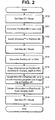
- FIG. 2 illustrates a process for recording data necessary for recovering a system on an HDD to which the booting control method in accordance with the present invention is applied;
- FIGs. 3A, 3B and 3C show examples of certain steps of FIG. 2 ;
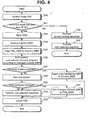
- FIG. 4 is a flowchart illustrating a method for controlling a booting operation of a computer system in accordance with an embodiment of the present invention.
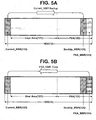
- FIGS. 5A, 5B and 5C illustrate a process in which an MBR is copied and backed up by the method of FIG. 4 .
- FIG. 1A is a block diagram of a computer to which a method for controlling a booting operation in accordance with the present invention can be applied.
- FIG. 1A exemplarily shows the configuration of a notebook computer.
- FIG. 1B shows a structure of a HDD in the computer of FIG. 1A .
- the notebook computer includes a microprocessor 1 for controlling the overall operations of the computer, a floppy disc/optical disc drive 2, a RAM 3, a display unit 4 such as a monitor, a flash memory 5, input units 6 such as a keyboard, a mouse, etc., a network interface 7, a HDD (Hard Disk Drive) 12, and any known component. All the components of the computer are operatively coupled and can carry out known operations.
- the notebook computer can carry out a read/write operation, and conserve information even though power is cut off.
- the flash memory 5 stores programs and data necessary for a basic operation associated with routines to be used when the computer is turned on.
- the flash memory 5 carries out a storing operation in linkage to a BIOS 8 (Basic Input/Output System) serving as a program responsible for transmitting information between peripherals such as a memory, a disk drive and a monitor, requirements for setting a power management mode, and an optimum power management mode based on the requirements.
- BIOS 8 Basic Input/Output System
- the flash memory 5 is also referred to as the ROM (Read Only Memory) BIOS storing the BIOS 8.
- the BIOS 8 sets an initial environment necessary for operating the system according to a user command so that an OS (Operating System) controls the computer, and carries out a function for booting the OS. That is, the BIOS executes a process for the booting operation after the system wakes up.
- OS Operating System
- the BIOS 8 controls access to an area of the HDD 12.
- the HDD 12 is divided into a recovery area for storing recovery data and a user area for storing various user data units.
- the BIOS 8 controls the recovery area in an active state only when an operation for recovering the system is carried out and controls the recovery area in an inactive state at other times so that the user cannot recognize the recovery area as the user area.
- a setup menu of the ROM BIOS includes menu items for controlling the recovery area in the active or inactive state.
- the setup menu of the ROM BIOS is stored in a CMOS (Complementary Metal Oxide Semiconductor) embedded in a core chipset.
- CMOS Complementary Metal Oxide Semiconductor
- the typical personal computer or notebook computer performs a sequence of system booting operations when a user turns on system power.
- the BIOS 8 reads an MBR (Master Boot Record) stored in a first sector of the HDD 12 and reads a boot sector record of a partition storing an OS according to the read MBR to perform a system booting operation.
- MBR Master Boot Record
- the MBR is information necessary for identifying a position and state of the OS to load the identified OS in a main memory unit of the computer, and is located in the first sector of the HDD 12. Moreover, the MBR is referred to as the "partition sector" or "master partition table" because the MBR includes information about a format, size and position of each partition when the HDD 12 is formatted. In addition, the MBR includes a program capable of reading the boot sector record of a partition storing the OS to be loaded in the memory. The boot sector record contains a program for loading the rest of the OS in the memory.
- the MBR is typically configured by one sector, and its size is typically 512 bytes.
- the first 446 bytes of 512 bytes are reserved for a boot code necessary for reading the OS, the next 64 bytes are reserved for partition information tables, and the last two bytes are reserved for a value necessary for identifying the MBR.
- 16 bytes are required for each partition information table.
- Four partitions can be assigned to the HDD 12.
- Each partition information table stores information pertaining to one or more partitions.
- This information is also referred to as partition information and includes a boot indicator for determining whether or not a corresponding partition is a booting partition, a start sector header and cylinder position of a corresponding partition, an end sector header and cylinder position of the corresponding partition, the total number of sectors of the corresponding partition, etc.
- the boot indicator indicates an active or bootable state for only one partition and indicates that other partitions are inactive or not bootable.
- the boot indicator indicates that an active partition is a booting partition. The system is booted on the basis of the OS recorded on a corresponding partition.
- the HDD 12 provided in the computer to which the present invention is applied is divided into a user area 121 accessible by the OS and a hidden area inaccessible by the OS, for example, a PSA 122 (Protected Security Area).
- a PSA 122 Protected Security Area
- a current MBR 123 (“Current_MBR") is recorded in the header of the HDD 12 and includes partition information of the user area 121 except for the PSA 122. Moreover, the user area 121 stores a typical OS such as WindowsTM to be executed when the system is booted on the basis of the current MBR 123. Accordingly, when the system is booted on the basis of the current MBR 123, the system cannot access the PSA 122.
- Current_MBR a typical OS such as WindowsTM to be executed when the system is booted on the basis of the current MBR 123. Accordingly, when the system is booted on the basis of the current MBR 123, the system cannot access the PSA 122.
- a PSA MBR 124 (“PSA_MBR") is recorded on a specific section of the PSA 122, for example, at an end section of the PSA 122.
- the PSA MBR 124 includes partition information of the PSA 122 inaccessible by the typical OS. Moreover, partition information of an area except for the PSA 122, that is, partition information of the user area 121 accessible by the typical OS can be included in the PSA MBR 124. Accordingly, when the system is booted on the basis of the PSA MBR 124, the total HDD 12 including the PSA 122 can be accessed.
- the PSA 122 can store a specific OS to be executed when a booting operation is carried out on the basis of the PSA MBR 124, for example, a Win-PE (Windows Pre-installation Environment), a program for recovering the computer system, and an image file in which the OS installed in the user area 121 of the HDD 12 is compressed.
- a Win-PE Windows Pre-installation Environment
- the access to the PSA 122 is enabled and the booting operation on the basis of the specific OS stored in the PSA 122 is enabled.
- PSA partition information is added to an available partition information area in a partition information table of the current MBR 123.
- the last partition information of the table is backed up, and the PSA partition information can be recorded in place of the last partition information of the table.
- the last partition information replaced with the PSA partition information can be recovered by the backed-up information when a recovery mode ends.
- the PSA MBR 124 including the PSA partition information can be useful when an error occurs in the computer system.
- the current MBR 123 is replaced by the PSA MBR 124.
- the recovery program can recover the computer system using the compressed image file.
- the recovery mode can be started.
- the recovery program is automatically executed.
- the recovery program can newly designate a partition of the user area 121 according to a user selection operation or can maintain a pre-existing partition.
- the OS installed in the user area 121 when the computer system is assembled and produced is newly installed in a partition of the user area 121 using the compressed image file stored in the PSA 122.
- the changed current MBR can include partition information of the user area 121 before the recovery mode, data stored in the user area 121 can be maintained on the basis of the partition information of the user area 121.
- the current MBR 123 is damaged before being changed, data stored in the user area 121 may not be always maintained.
- the recovery program records partition information of the changed user area 121 on the current MBR 123, deletes PSA partition information, and again changes a booting partition to a partition in which the OS is newly installed.
- the recovery program is used to mainly recover the computer system, it is preferred that a minimum program for recovering the computer system is constituted.
- the present invention is not limited to only the recovery program.
- an application program such as a document editor, an audio playback program or a video playback program such as a DVD (Digital Versatile Disc) can be included.
- the recovery program is constituted so that the user cannot arbitrarily record data on the PSA 122 or cannot delete data recorded on the PSA 122, so as to prevent damage of the PSA 122.
- the present invention does not limit the above-described constitution of the recovery program.
- the recovery program can be constituted so that the user can arbitrarily record or delete a file on the rest of the PSA 122 except for a part of the PSA 122 in which important data that must not be damaged is recorded.
- the recovery program can add the changed partition information to the PSA MBR 124.
- Partition information of the user area 121 of the last changed HDD 12 is managed in the PSA MBR 124 so that a recovery operation can be carried out normally when an error is incurred in the computer system. That is, also when the current MBR 123 is damaged, data stored in the user area 121 can be recovered using partition information of the user area 121 added to the PSA MBR 124.
- the PSA partition information of the PSA MBR 124 is not affected by the added information.
- the recovery program may not allow the PSA MBR 124 to be changed.
- FIG. 2 illustrates a process for recording on the HDD, data necessary for recovering a system to which a booting control method is applied in accordance with an embodiment of the present invention.
- the process of FIG. 2 is applied to the computer of FIG. 1A , but is equally applicable to any other computer.
- an OS such as WindowsTM is installed in a user area 121 of a HDD 12 of the computer.
- a specific OS is installed in a PSA 122 of the HDD 12 to boot the computer system in a recovery mode, and a recovery program for recovering the computer system and an image file in which an OS installed in the user area 121 is compressed are recorded in the PSA 122.
- PSA partition information and identification information for discriminating the HDD 12 from another HDD are recorded in the PSA 122.
- the PSA 122 becomes a hidden area.
- the total capacity of the HDD 12 is 80 Gbytes, and the total capacity of the PSA 122 is 3 Gbytes.
- a command "Set Max 77" is executed so that the PSA 122 in effect becomes a hidden area inaccessible by the computer.
- firmware of the HDD 12 is changed.
- the computer system recognizes the changed HDD capacity and does not recognize the PSA 122.
- the changed HDD capacity is applied after the computer system is reset.
- a program for recording data necessary for recovering the HDD 12 executes the command "Set Max 77" to reset the computer (S10).
- an arbitrary size of a partition "Partition #0" is allocated to the user area 121 of the HDD 12 whose capacity is recognized as 77 Gbytes
- an information table associated with Partition #0 is formed in a current MBR 123 of the HDD 12 (S11).
- an OS such as WindowsTM is installed in the Partition #0 (S12).
- FIG. 3A An example of steps S11 and S 12 is illustrated in FIG. 3A .
- a Partition #0 20 is allocated in the user area 121 in which WindowsTM is installed.
- Information on the Partition #0 is stored in a first section 31 of an MBR partition area 30 in the current MBR 123.
- Partition #1 having a size of 3 Gbytes in the remaining 3-Gbyte area (or PSA 122) of the HDD 12 whose capacity is recognized as 80 Gbytes, is generated (S14).
- An information table associated with Partition #1 is recorded in the current MBR 123 (S14).
- the PSA MBR 124 including information associated with Partition #1 is also recorded on the last sector of the PSA 122 (S15). Additionally, information associated with Partition #0 can be recorded. In this process, an identification code can be additionally recorded on the last sector of the PSA 122 to discriminate the HDD 12 from another HDD.
- Partition #1 is changed to a booting partition.
- a specific OS e.g., Win-PE (Windows Pre-installation Environment)
- Win-PE Windows Pre-installation Environment
- steps S14-S16 is illustrated in FIG. 3B .
- Partition #1 22 having a size of 3 Gbytes is allocated in the PSA 122.
- An information pertaining Partition # 1 is then recorded in a second section 32 of the MBR partition area 3, and also copied in a section 42 of a PSA partition area 40 of the PSA MBR 124.
- a Win-PE is also recorded in the PSA 122.
- WindowsTM is now installed in Partition #0 of the HDD 12
- Win-PE is now installed in the PSA 122
- the recovery program, the WindowsTM image file and the PSA partition information are recorded in the PSA 122.
- the PSA MBR 124 may be located in the last sector of the PSA 122.
- step S16 the information pertaining to Partition #1 is deleted from the current MBR 123. This is illustrated in FIG. 3C as an example. Then Partition #0 is again designated as a booting partition of the HDD 12 (S17). Moreover, the command "Set Max 77" is executed and then the computer is reset so that Partition #1, i.e., the PSA 122, is once again set as the hidden area (S18) which is selectively accessible only in certain situations.
- Partition #1 i.e., the PSA 122
- FIG. 4 is a flowchart illustrating a method for controlling a booting operation of a computer system in accordance with the present invention. This method is implemented using the computer of FIG. 1A or any other suitable computer.
- the HDD to which the method of FIG. 4 is applied includes the PSA MBR 124 in the PSA 122, the specific OS (Operating System) and the recovery program as discussed above in connection with FIG. 2 .
- the BIOS 8 to which the present invention is applied determines whether or not a specific key (e.g., F11) has been inputted, that is, whether or not a recovery mode has been selected, within a predetermined time after the power supply is turned on (S21).
- a specific key e.g., F11
- the BIOS 8 reads the current MBR 123 recorded in the header of the HDD 12 in a state where the PSA 122 of the HDD 12 is set as the hidden area, and performs a normal booting operation for the computer system according to a result of reading the current MBR 123 (S22) and any user-selected operation in response to the user input (S32).
- the BIOS 8 sets the capacity of the HDD 12 to the total capacity of the HDD 12 including the PSA 122, such that the PSA 122 can be accessed (S23).
- the BIOS 8 performs a booting operation in a recovery mode using the PSA MBR 124 (e.g., partition information on Partition #1) stored in the PSA 122 of the HDD 12. Before the booting operation in the recovery mode, the BIOS 8 sequentially performs a backup operation for the current MBR 123 (S24) and a copy operation for copying the PSA MBR 124 to the current MBR 123 (S25). For instance, as shown in FIG. 5A , the BIOS reads the current MBR 123 recorded in the header of the HDD 12 and the read current MBR is backed up to another specific section of the PSA 122, for example, before the PSA MBR 124 (S24).
- the BIOS24 reads the current MBR 123 recorded in the header of the HDD 12 and the read current MBR is backed up to another specific section of the PSA 122, for example, before the PSA MBR 124 (S24).
- the BIOS 8 reads the PSA MBR 124 stored at the end of the PSA 122 of the HDD 12 and copies the read PSA MBR to the header of the HDD 12 as shown in FIG. 5B .
- the BIOS 8 adds PSA partition information from the PSA MBR 124 to the current MBR 123 and corrects the current MBR 123 so that a PSA partition can be set as a booting partition (S25).
- the read current MBR 123 is damaged, the damaged current MBR 123 can be changed according to the partition information of the user area 121 of the HDD 12 included in the PSA MBR 124.
- the BIOS 8 reads the current MBR 123 changed by the PSA MBR 124 and boots the computer system with the specific OS stored in the PSA 122 according to a result of reading the current MBR 123 (S26).
- the recovery program is automatically executed in the booted specific OS (S26).
- the recovery program When the user makes a recovery request, the recovery program again installs an OS installed when the computer is produced, a relative application program, etc. (S29). At this point, the recovery program newly designates a partition of the user area 121 according to the user's selection operation or maintains a pre-existing partition, and newly installs the OS in the user area 121 using the compressed image file stored in the PSA 122. In this process, partition information on the changed user area 121 is added to the current MBR 123, PSA partition information is deleted, and a partition in which the OS is newly installed is changed to a booting partition. Moreover, another application program can be installed and executed under control of the user.
- the recovery program When the user again boots the computer system in a state where a recovery operation is not executed in the recovery mode or terminates the recovery mode (S27), the recovery program reads the backup MBR 125 ("BackUp_MBR") from the PSA 122 and copies the read backed-up MBR to the position in which the current MBR 123 was originally present (S28). This is to give right to select the recovery operation in the recovery mode to the user. That is, a system state after the recovery mode returns to that before the recovery mode.
- Backup_MBR Backup MBR 125
- the specific OS can selectively add the changed partition information to the PSA MBR 124 as shown in FIG. 5C (S31).
- the BIOS 8 sets a capacity value of the HDD 12 to a result value when a capacity value of the PSA 122 is subtracted from the total capacity value of the HDD 12, thereby changing the PSA 122 to the hidden area inaccessible by the normal OS (S33).
- the BIOS 8 When the computer is again in an ON state, the BIOS 8 reads the changed current MBR 123, and boots the computer system with a newly installed OS according to a result of the reading.
- the BIOS 8 determines whether or not a current HDD is the same HDD as at the time of producing the computer before determining whether or not a specific key is inputted after the computer is turned on. That is, the BIOS 8 determines whether or not the HDD has been changed by the user. When determining that the current HDD is not the original, the BIOS may not perform the recovery operation in accordance with the present invention. This is because the booting control method in accordance with the present invention operates together with the HDD 12 having a PSA 122 storing a PSA MBR, a specific OS, a recovery program, etc. Moreover, the PSA 122 of the HDD 12 can store identification information for discriminating the HDD 12 in a specific section of the PSA 122, that is, an end sector of the PSA 122.
- Such computer program(s) may be stored in memories such as RAM, ROM, PROM, etc. associated with computers. Alternatively, such computer program(s) may be stored in a different storage medium such as a magnetic disc, optical disc, magneto-optical disc, etc. Such computer program(s) may also take the form of a signal propagating across the Internet, extranet, intranet or other network and arriving at the destination device for storage and implementation.
- the computer programs are readable using a known computer or computer-based device.
- the present invention provides an apparatus and method for controlling a booting operation in a computer system that can eliminate the cost of manufacturing a recovery CD-ROM (Compact Disc-Read Only Memory) since an additional recovery CD-ROM is not required by storing recovery data to be provided to a user in a predetermined area of a HDD.
- a recovery CD-ROM Compact Disc-Read Only Memory
- the present invention provides an apparatus and method for controlling a booting operation in a computer system that can conveniently and easily recover the system using a recovery program stored in a HDD, thereby removing the inconvenience of managing a recovery CD-ROM.
- the present invention provides an apparatus and method for controlling a booting operation in a computer system that can maintain data stored in a user area of a HDD while recovering the system.
- the present invention provides an apparatus and method for controlling a booting operation in a computer system that can minimally change a BIOS to control the booting operation, thereby minimizing a BIOS load for recovering the computer system.
Landscapes
- Engineering & Computer Science (AREA)
- Theoretical Computer Science (AREA)
- Software Systems (AREA)
- Physics & Mathematics (AREA)
- General Engineering & Computer Science (AREA)
- General Physics & Mathematics (AREA)
- Quality & Reliability (AREA)
- Computer Security & Cryptography (AREA)
- Stored Programmes (AREA)
- Storage Device Security (AREA)
Claims (43)
- Verfahren zum Verwalten eines Speichers, der zu einem Computer gehört, wobei der Speicher einen Benutzerbereich (121) und einen geschützten Sicherheitsbereich (PSA) aufweist, wobei der Benutzerbereich (121) einen ersten Hauptbootaufzeichnungsbereich (123) aufweist und wobei der PSA (122) einen zweiten Hauptbootaufzeichnungsbereich (124) aufweist, wobei das Verfahren aufweist:Zuweisen einer ersten Partition (#0) dem Benutzerbereich (121);Speichern erster Partitionsinformationen im ersten Hauptbootaufzeichnungsbereich (123) des Benutzerbereichs, wobei die ersten Partitionsinformationen die erste Partition (#0) betreffen;Zuweisen einer zweiten Partition (#1) dem PSA (122) als Reaktion auf ein Zugriffssignal, wobei das Zugriffssignal einen Zugriff auf den PSA (122) autorisiert;Speichern im ersten Hauptbootaufzeichnungsbereich (123) zweiter Partitionsinformationen, die die zweite Partition (#1) betreffen;Speichern der zweiten Partitionsinformationen im PSA (122); undEntfernen der zweiten Partitionsinformationen aus dem ersten Hauptbootaufzeichnungsbereich (123) nach dem Speichern der zweiten Partitionsinformationen im PSA (122).
- Verfahren nach Anspruch 1, wobei das Zuweisen der ersten Partition (#0) und das Speichern der ersten Partitionsinformationen gleichzeitig stattfinden.
- Verfahren nach Anspruch 1 oder 2, wobei das Zuweisen der zweiten Partition (#1) und das Speichern der zweiten Partitionsinformationen im ersten Hauptbootaufzeichnungsbereich (123) gleichzeitig stattfinden.
- Verfahren nach einem der Ansprüche 1 bis 3, wobei der Schritt des Speicherns der Informationen der zweiten Partition (#1) im PSA (122) aufweist:Kopieren der zweiten Partitionsinformationen vom ersten Hauptbootufzeichnungsbereich (123) in den PSA (122).
- Verfahren nach einem der Ansprüche 1 bis 4, wobei der Schritt des Zuweisens der ersten Partition (#0) als Reaktion auf ein Beschränkungssignal stattfindet, wobei das Beschränkungssignal den Zugriff auf den PSA (122) beschränkt.
- Verfahren nach einem der Ansprüche 1 bis 5, das ferner aufweist:Einstellen des Speichers, den Zugriff auf den PSA (122) nach dem Entfernungsschritt zu beschränken.
- Verfahren nach einem der Ansprüche 1 bis 6, wobei beim Schritt des Zuweisens der ersten Partition der Speicher ein Festplattenlaufwerk ist, das zu dem Computer gehört.
- Verfahren nach einem der Ansprüche 1 bis 7, das ferner aufweist:Speichern mindestens eines Wiedergewinnungsprogramms in der zweiten Partition (#1).
- Verfahren nach Anspruch 8, das ferner aufweist:Ausführen des mindestens einen Wiedergewinnungsprogramms, wenn eine Wiedergewinnungsbetriebsart ausgewählt ist.
- Verfahren nach Anspruch 9, das ferner aufweist:Speichern einer Kopie der im ersten Hauptbootaufzeichnungsbereich (123) gespeicherten Informationen im PSA (122), wenn die Wiedergewinnungsbetriebsart ausgewählt wird.
- Verfahren nach einem der Ansprüche 1 bis 10, das ferner aufweist:Einstellen einer Größe mindestens einer Partition des Speichers als Reaktion auf eine Benutzereingabe;Aktualisieren des ersten Hauptbootaufzeichnungsbereichs (123) entsprechend der eingestellten Größe der mindestens einen Partition; undSpeichern einer Kopie der Informationen im aktualisierten ersten Hauptbootaufzeichnungsbereich (123) im PSA (122).
- Verfahren nach einem der Ansprüche 1 bis 11, wobei der Benutzerbereich durch einen Endbenutzer zugänglich ist und der PSA (122) nicht durch den Endbenutzer zugänglich ist.
- Verfahren nach einem der Ansprüche 1 bis 12, wobei sich der erste Hauptbootaufzeichnungsbereich (123) an einem ersten Abschnitt des Benutzerbereichs (121) befindet.
- Verfahren nach einem der Ansprüche 1 bis 13, das ferner aufweist:Einfügen eines Kennzeichnungscodes in den PSA (122), wobei der Kennzeichnungscode den Speicher kennzeichnet; undSteuern eines Wiedergewinnungsbetriebs des Speichers beruhend auf dem Kennzeichnungscode.
- Vorrichtung zum Verwalten eines Speichers, der zu einem Computer gehört, wobei der Speicher einen Benutzerbereich (121) und einen geschützten Sicherheitsbereich (PSA) aufweist, wobei der Benutzerbereich einen ersten Hauptbootaufzeichnungsbereich (123) aufweist und wobei der PSA (122) einen zweiten Hauptbootaufzeichnungsbereich (124) aufweist,
wobei die Vorrichtung aufweist:eine Einrichtung, um dem Benutzerbereich (121) eine erste Partition (#0) zuzuweisen;eine Einrichtung zum Speichern erster Partitionsinformationen im ersten Hauptbootaufzeichnungsbereich (123) des Benutzerbereichs (121), wobei die ersten Partitionsinformationen die erste Partition (#0) betreffen;eine Einrichtung, um dem PSA (122) als Reaktion auf ein Zugriffssignal eine zweite Partition (#1) zuzuweisen, wobei das Zugriffssignal den Zugriff auf den PSA (122) autorisiert;eine Einrichtung zum Speichern zweiter Partitionsinformationen im ersten Hauptbootaufzeichnungsbereich (123), die die zweite Partition (#1) betreffen;eine Einrichtung zum Speichern der zweiten Partitionsinformationen im PSA (122); undeine Einrichtung zum Entfernen der zweiten Partitionsinformationen aus dem ersten Hauptbootaufzeichnungsbereich (123) nach dem Speichern der zweiten Partitionsinformationen im PSA (122). - Vorrichtung nach Anspruch 15, wobei das Zuweisen der ersten Partition (#0) und das Speichern der ersten Partitionsinformationen gleichzeitig stattfinden.
- Vorrichtung nach Anspruch 15 oder 16, wobei das Zuweisen der zweiten Partition (#1) und das Speichern der zweiten Partitionsinformationen im ersten Hauptbootaufzeichnungsbereich (123) gleichzeitig stattfinden.
- Vorrichtung nach einem der Ansprüche 15 bis 17, wobei die Einrichtung zum Speichern der zweiten Partitionsinformationen im PSA (122) die zweiten Partitionsinformationen vom ersten Hauptbootaufzeichnungsbereich (123) in den PSA (122) kopiert.
- Vorrichtung nach einem der Ansprüche 15 bis 18, wobei die Einrichtung zum Zuweisen der ersten Partition (#0) die erste Partition (#0) als Reaktion auf ein Beschränkungssignal zuweist, wobei das Beschränkungssignal den Zugriff auf den PSA (122) beschränkt.
- Vorrichtung nach einem der Ansprüche 15 bis 19, die ferner aufweist:eine Einrichtung zur Beschränkung des Zugriffs auf den PSA (122), wobei der Zugriff auf den PSA (122) beschränkt wird, nachdem die Einrichtung zum Entfernen die zweiten Partitionsinformationen aus dem ersten Hauptbootaufzeichnungsbereich (123) entfernt.
- Vorrichtung nach einem der Ansprüche 15 bis 20, wobei der Speicher ein Festplattenlaufwerk ist, das zu dem Computer gehört.
- Vorrichtung nach einem der Ansprüche 15 bis 21, die ferner aufweist:eine Einrichtung zum Speichern mindestens eines Wiedergewinnungsprogramms in der zweiten Partition (#1).
- Vorrichtung nach Anspruch 22, die ferner aufweist:eine Einrichtung zum Ausführen des mindestens einen Wiedergewinnungsprogramms, wenn eine Wiedergewinnungsbetriebsart ausgewählt wird.
- Vorrichtung nach Anspruch 23, die ferner aufweist:eine Einrichtung zum Speichern einer Kopie der im ersten Hauptbootaufzeichnungsbereich (123) gespeicherten Informationen im PSA (122), wenn die Wiedergewinnungsbetriebsart ausgewählt wird.
- Vorrichtung nach Anspruch 24, die ferner aufweist:eine Einrichtung zum Einstellen einer Größe mindestens einer Partition des Speichers als Reaktion auf eine Benutzereingabe;eine Einrichtung zum Aktualisieren des ersten Hauptbootaufzeichnungsbereichs (123) entsprechend der eingestellten Größe der mindestens einen Partition; undeine Einrichtung zum Speichern einer Kopie der Informationen im aktualisierten ersten Hauptbootaufzeichnungsbereich (123) im PSA (122).
- Vorrichtung nach einem der Ansprüche 15 bis 25, wobei der Benutzerbereich (121) durch einen Endbenutzer zugänglich ist und der PSA (122) nicht durch den Endbenutzer zugänglich ist.
- Vorrichtung nach einem der Ansprüche 15 bis 26, wobei sich der erste Hauptbootaufzeichnungsbereich (123) an einem ersten Abschnitt des Benutzerbereichs (121) befindet.
- Vorrichtung nach einem der Ansprüche 15 bis 27, die ferner aufweist:eine Einrichtung zum Einfügen eines Kennzeichnungscodes in den PSA (122), wobei der Kennzeichnungscode den Speicher kennzeichnet; undeine Einrichtung zum Steuern eines Wiedergewinnungsbetriebs des Speichers beruhend auf dem Kennzeichnungscode.
- Computersystem, das aufweist:eine Benutzereingabeeinheit (6);eine Anzeigeeinheit (4);einen Mikroprozessor (1), um die Anzeigeeinheit (4) und die Benutzereingabeeinheit (6) zu steuern; undeinen Speicher, der durch den Mikroprozessor (1) gesteuert wird und einen Benutzerbereich (121), der einen ersten Hauptbootaufzeichnungsbereich (123) aufweist, und einen geschützten Sicherheitsbereich (PSA) aufweist, der einen zweiten Hauptbootaufzeichnungsbereich (124) aufweist;wobei der Benutzerbereich (121) eine erste Partition (#0) und erste Partitionsinformationen aufweist, die im ersten Hauptbootaufzeichnungsbereich (123) gespeichert sind, wobei die ersten Partitionsinformationen die erste Partition (#0) betreffen,
der PSA (122) eine zweite Partition (#1) und zweite Partitionsinformationen als Reaktion auf ein Zugriffssignal aufweist, wobei das Zugriffssignal den Zugriff auf den PSA (122) autorisiert, wobei die zweiten Partitionsinformationen die zweite Partition (#1) betreffen, und
der erste Hauptbootaufzeichnungsbereich (123) darin außerdem die zweiten Partitionsinformationen speichert, die entfernt werden, nachdem die zweiten Partitionsinformationen im PSA (122) bereitgestellt werden. - Computerprogrammprodukt, das auf mindestens einem computerzugänglichen Medium vorhanden ist, zum Verwalten eines Speichers, der zu einem Computer gehört, wobei der Speicher einen Benutzerbereich (121) und einen geschützten Sicherheitsbereich (PSA) aufweist, wobei der Benutzerbereich (121) einen ersten Hauptbootaufzeichnungsbereich (123) aufweist und wobei der PSA (122) einen zweiten Hauptbootaufzeichnungsbereich (124) aufweist, wobei das Computerprogrammprodukt computerausführbare Befehle aufweist, die, wenn sie auf einem Computer ausgeführt werden, die Schritte ausführen:Zuweisen einer ersten Partition (#0) dem Benutzerbereich (121);Speichern erster Partitionsinformationen im ersten Hauptbootaufzeichnungsbereich (123) des Benutzerbereichs, wobei die ersten Partitionsinformationen die erste Partition (#0) betreffen;Zuweisen einer zweiten Partition (#1) dem PSA (122) als Reaktion auf ein Zugriffssignal, wobei das Zugriffssignal den Zugriff auf den PSA (122) autorisiert;Speichern zweiter Partitionsinformationen im ersten Hauptbootaufzeichnungsbereich (123), die die zweite Partition (#1) betreffen;Speichern der zweiten Partitionsinformationen im PSA (122); undEntfernen der zweiten Partitionsinformationen aus dem ersten Hauptbootaufzeichnungsbereich (123) nach dem Speichern der zweiten Partitionsinformationen im PSA (122).
- Computerprogrammprodukt nach Anspruch 30, wobei das Zuweisen der ersten Partition (#0) und das Speichern der ersten Partitionsinformationen gleichzeitig stattfinden.
- Computerprogrammprodukt nach Anspruch 30 oder 31, wobei das Zuweisen der zweiten Partition (#1) und das Speichern der zweiten Partitionsinformationen im ersten Hauptbootaufzeichnungsbereich (123) gleichzeitig stattfinden.
- Computerprogrammprodukt nach einem der Ansprüche 30 bis 32,
wobei die computerausführbaren Befehle zum Speichern der zweiten Partitionsinformationen im PSA (122) computerausführbare Befehle aufweisen zum:Kopieren der zweiten Partitionsinformationen vom ersten Hauptbootaufzeichnungsbereich (123) in den PSA (122). - Computerprogrammprodukt nach einem der Ansprüche 30 bis 33,
wobei die computerausführbaren Befehle zum Zuweisen der ersten Partition (#0) als Reaktion auf ein Beschränkungssignal zuweisen, wobei das Beschränkungssignal den Zugriff auf den PSA (122) beschränkt. - Computerprogrammprodukt nach einem der Ansprüche 30 bis 34, das ferner computerausführbare Befehle aufweist zum:Einstellen des Speichers, um den Zugriff auf den PSA (122) zu beschränken, nachdem die zweiten Partitionsinformationen aus dem ersten Hauptbootaufzeichnungsbereich (123) entfernt sind.
- Computerprogrammprodukt nach einem der Ansprüche 30 bis 35,
wobei der Speicher ein zu dem Computer gehörendes Festplattenlaufwerk ist. - Computerprogrammprodukt nach einem der Ansprüche 30 bis 36, das ferner computerausführbare Befehle aufweist zum:Speichern mindestens eines Wiedergewinnungsprogramms in der zweiten Partition (#1).
- Computerprogrammprodukt nach Anspruch 37, das ferner computerausführbare Befehle aufweist zum:Ausführen des mindestens einen Wiedergewinnungsprogramms, wenn eine Wiedergewinnungsbetriebsart ausgewählt wird.
- Computerprogrammprodukt nach Anspruch 38, das ferner computerausführbare Befehle aufweist zum:Speichern einer Kopie der im ersten Hauptbootaufzeichnungsbereich (123) gespeicherten Informationen im PSA (122), wenn die Wiedergewinnungsbetriebsart ausgewählt wird.
- Computerprogrammprodukt nach einem der Ansprüche 30 bis 39, das ferner computerausführbare Befehle aufweist zum:Einstellen einer Größe mindestens einer Partition des Speichers als Reaktion auf eine Benutzereingabe;Aktualisieren des ersten Hauptbootaufzeichnungsbereichs (123) entsprechend der eingestellten Größe der mindestens einen Partition; undSpeichern einer Kopie der Informationen im aktualisierten ersten Hauptbootaufzeichnungsbereich (123) im PSA (122).
- Computerprogrammprodukt nach einem der Ansprüche 30 bis 40,
wobei der Benutzerbereich (121) durch einen Endbenutzer zugänglich ist und der PSA (122) nicht durch den Endbenutzer zugänglich ist. - Computerprogrammprodukt nach einem der Ansprüche 30 bis 41,
wobei sich der erste Hauptbootaufzeichnungsbereich (123) an einem ersten Abschnitt des Benutzerbereichs befindet. - Computerprogrammprodukt nach einem der Ansprüche 30 bis 42, das ferner computerausführbare Befehle aufweist zum:Einfügen eines Kennzeichnungscodes in den PSA (122), wobei der Kennzeichnungscode den Speicher kennzeichnet; undSteuern eines Wiedergewinnungsbetriebs des Speichers beruhend auf dem Kennzeichnungscode.
Applications Claiming Priority (4)
| Application Number | Priority Date | Filing Date | Title |
|---|---|---|---|
| KR20030054952 | 2003-08-08 | ||
| KR2003054952 | 2003-08-08 | ||
| KR2003060842 | 2003-09-01 | ||
| KR20030060842 | 2003-09-01 |
Publications (3)
| Publication Number | Publication Date |
|---|---|
| EP1510920A2 EP1510920A2 (de) | 2005-03-02 |
| EP1510920A3 EP1510920A3 (de) | 2007-04-18 |
| EP1510920B1 true EP1510920B1 (de) | 2009-10-07 |
Family
ID=34107021
Family Applications (1)
| Application Number | Title | Priority Date | Filing Date |
|---|---|---|---|
| EP04018755A Expired - Lifetime EP1510920B1 (de) | 2003-08-08 | 2004-08-06 | Vorrichtung und Verfahren zur Steuerung der Urladenprozedur eines Rechnersystems |
Country Status (5)
| Country | Link |
|---|---|
| US (2) | US7263589B2 (de) |
| EP (1) | EP1510920B1 (de) |
| KR (1) | KR101115486B1 (de) |
| CN (1) | CN1296835C (de) |
| DE (1) | DE602004023461D1 (de) |
Families Citing this family (44)
| Publication number | Priority date | Publication date | Assignee | Title |
|---|---|---|---|---|
| KR100823293B1 (ko) * | 2001-08-21 | 2008-04-18 | 삼성전자주식회사 | 컴퓨터시스템 및 그 제어방법 |
| KR100652506B1 (ko) * | 2004-09-24 | 2006-12-06 | 삼성전자주식회사 | 시스템 운용 데이터 자가 복구 장치 및 방법 |
| US7516315B2 (en) | 2005-03-18 | 2009-04-07 | Research In Motion Ltd. | Electronic device having an alterable configuration and methods of manufacturing and configuring the same |
| KR100704629B1 (ko) * | 2005-04-15 | 2007-04-09 | 삼성전자주식회사 | 변경된 위치의 마스터 부트 레코드의 바이러스 감염 여부를판단하고 치료하는 장치 및 방법 |
| JP4965824B2 (ja) | 2005-06-24 | 2012-07-04 | 株式会社東芝 | 情報処理装置およびデータ救済方法 |
| JP4940599B2 (ja) * | 2005-08-26 | 2012-05-30 | 富士通株式会社 | 情報処理装置、情報処理装置制御プログラム、情報処理装置制御方法 |
| KR100750132B1 (ko) | 2005-09-27 | 2007-08-21 | 삼성전자주식회사 | 부팅, 소프트웨어 자동 업데이트 및 에러 복원 방법과 그시스템, 그 방법을 기록한 컴퓨터 판독 가능한 기록매체 |
| TWI308722B (en) * | 2005-12-09 | 2009-04-11 | Wistron Corp | Method for making a bootable usb storage device |
| KR100746032B1 (ko) * | 2006-01-04 | 2007-08-06 | 삼성전자주식회사 | 마스터 부트 레코드를 관리하는 저장 매체 및 상기 저장매체를 이용한 컴퓨터 시스템의 부팅 방법 |
| US7757112B2 (en) * | 2006-03-29 | 2010-07-13 | Lenovo (Singapore) Pte. Ltd. | System and method for booting alternate MBR in event of virus attack |
| US20070283114A1 (en) * | 2006-06-01 | 2007-12-06 | Lawrence Andy V | Method and system for dividing a hard disk drive into multiple host access spaces |
| US7925809B2 (en) * | 2006-10-24 | 2011-04-12 | Apple Inc. | Systems and methods for storage management in a data processing device |
| US9098448B2 (en) * | 2007-05-29 | 2015-08-04 | Dell Products L.P. | Intelligent boot services |
| US20090172378A1 (en) * | 2007-12-28 | 2009-07-02 | Kazmierczak Gregory J | Method and system for using a trusted disk drive and alternate master boot record for integrity services during the boot of a computing platform |
| US8090767B2 (en) | 2008-01-07 | 2012-01-03 | Apple Inc. | Pairing and storage access scheme between a handheld device and a computing system |
| US8341384B2 (en) * | 2008-06-06 | 2012-12-25 | Apple Inc. | Installation of software onto a computer |
| EP2327704A4 (de) | 2008-08-29 | 2012-05-09 | Shionogi & Co | Ringkondensiertes azolderivat mit pi3k-hemmender wirkung |
| US8200930B2 (en) * | 2008-10-14 | 2012-06-12 | Digital Lifeboat, Inc. | Interacting with data in hidden storage |
| US20100100587A1 (en) * | 2008-10-14 | 2010-04-22 | Digital Lifeboat, Inc. | Systems and methods for a data management recovery in a peer-to-peer network |
| KR101615646B1 (ko) * | 2009-08-25 | 2016-04-27 | 삼성전자 주식회사 | 컴퓨터시스템, 그 제어방법과, 그 컴퓨터프로그램이 저장된 기록매체 |
| US8195929B2 (en) * | 2009-08-27 | 2012-06-05 | Hewlett-Packard Development Company, L.P. | Controlling file systems sharing among two or more operating system |
| CN102033761A (zh) * | 2009-09-30 | 2011-04-27 | 鸿富锦精密工业(深圳)有限公司 | 电子装置及其多重开机方法 |
| US7937512B1 (en) * | 2009-10-19 | 2011-05-03 | Spx Corporation | Method and apparatus for an automatic recovery keyboard for slate tablet computers |
| KR20110077114A (ko) * | 2009-12-30 | 2011-07-07 | 주식회사 아이리버 | 멀티미디어 기능을 구비한 전자사전단말 및 이의 운용방법 |
| KR101110715B1 (ko) * | 2010-01-18 | 2012-02-24 | 전지혜 | 시스템 부팅 제어 방법 및 장치 |
| US8521972B1 (en) | 2010-06-30 | 2013-08-27 | Western Digital Technologies, Inc. | System and method for optimizing garbage collection in data storage |
| CN102207912B (zh) * | 2010-07-07 | 2015-10-07 | 无锡中科龙泽信息科技有限公司 | 在设备端实现分区功能的闪存设备及其访问方法 |
| US20120233449A1 (en) * | 2011-03-11 | 2012-09-13 | Thibadeau Robert H | Methods and systems for measuring trustworthiness of a self-protecting drive |
| CN102736983B (zh) * | 2011-04-14 | 2016-05-25 | 上海华虹集成电路有限责任公司 | 控制智能卡flash空间大小的方法 |
| JP5077726B1 (ja) * | 2011-05-23 | 2012-11-21 | Necインフロンティア株式会社 | コンピュータ、その制御方法及びプログラム |
| US9189392B1 (en) | 2011-06-30 | 2015-11-17 | Western Digital Technologies, Inc. | Opportunistic defragmentation during garbage collection |
| US9158670B1 (en) | 2011-06-30 | 2015-10-13 | Western Digital Technologies, Inc. | System and method for dynamically adjusting garbage collection policies in solid-state memory |
| CN102495737B (zh) * | 2011-10-18 | 2014-05-07 | 青岛海信移动通信技术股份有限公司 | 制作用户终端分区的方法、装置和用户终端 |
| US8819375B1 (en) | 2011-11-30 | 2014-08-26 | Western Digital Technologies, Inc. | Method for selective defragmentation in a data storage device |
| JP5519712B2 (ja) * | 2012-01-20 | 2014-06-11 | レノボ・シンガポール・プライベート・リミテッド | コンピュータをブートする方法およびコンピュータ |
| US10339051B2 (en) | 2012-04-30 | 2019-07-02 | Hewlett Packard Enterprise Development Lp | Configurable computer memory |
| US8788778B1 (en) | 2012-06-04 | 2014-07-22 | Western Digital Technologies, Inc. | Garbage collection based on the inactivity level of stored data |
| KR101236981B1 (ko) * | 2012-09-14 | 2013-02-26 | (주)나래소프트 | 히든 영역을 이용한 하이버네이션 부팅 시스템 |
| US9329931B2 (en) * | 2013-07-24 | 2016-05-03 | Seagate Technology Llc | Solid state drive emergency pre-boot application providing expanded data recovery function |
| JP6543122B2 (ja) * | 2015-07-17 | 2019-07-10 | キヤノン株式会社 | 情報処理装置と、前記情報処理装置による不揮発記憶装置の初期化方法、及びプログラム |
| JP7067270B2 (ja) * | 2018-05-25 | 2022-05-16 | 富士通株式会社 | 情報処理装置,ロードプログラムおよびロード方法 |
| KR102576684B1 (ko) * | 2018-11-15 | 2023-09-11 | 에스케이하이닉스 주식회사 | 저장 장치 및 그 동작 방법 |
| KR102159835B1 (ko) * | 2019-05-02 | 2020-09-24 | 김덕우 | 보조기억장치의 복구정보 관리 장치 및 방법 |
| CN116466871A (zh) * | 2022-01-18 | 2023-07-21 | 成都忆芯科技有限公司 | 用于访问存储设备的方法及相关产品 |
Family Cites Families (22)
| Publication number | Priority date | Publication date | Assignee | Title |
|---|---|---|---|---|
| US6381694B1 (en) * | 1994-02-18 | 2002-04-30 | Apple Computer, Inc. | System for automatic recovery from software problems that cause computer failure |
| US5966732A (en) | 1996-12-02 | 1999-10-12 | Gateway 2000, Inc. | Method and apparatus for adding to the reserve area of a disk drive |
| US6560701B1 (en) * | 1997-02-10 | 2003-05-06 | International Business Machines Corporation | Alternate boot record |
| CN1109300C (zh) * | 1997-07-31 | 2003-05-21 | 周恽 | 计算机硬盘存储内容透明保护的方法及其装置 |
| US6430663B1 (en) * | 1998-07-06 | 2002-08-06 | Adaptec, Inc. | Methods for selecting a boot partition and hiding a non-selected partition |
| KR100621614B1 (ko) * | 1999-08-30 | 2006-09-06 | 삼성전자주식회사 | 컴퓨터 시스템의 파일 백업 방법 |
| US6578034B1 (en) * | 1999-09-30 | 2003-06-10 | International Business Machines Corporation | Method and system for a distributed hidden database across a plurality of computer media |
| JP2001118328A (ja) * | 1999-10-15 | 2001-04-27 | Sony Corp | 記録及び/又は再生装置、並びに、記録及び/又は再生方法 |
| GB2367656A (en) * | 2000-10-06 | 2002-04-10 | Hewlett Packard Co | Self-repairing operating system for computer entities |
| KR100389206B1 (ko) * | 2001-04-25 | 2003-06-27 | 주식회사 성진씨앤씨 | 컴퓨터 운영 시스템 보호 방법 및 장치 |
| EP1274009A3 (de) * | 2001-07-03 | 2003-12-03 | Hewlett-Packard Company | System und Verfahren um einem BIOS-vermächtnissystem das Hochfahren zu ermöglichen von einer Platte die EFI GPT Partitionen enthält |
| US6862681B2 (en) * | 2001-07-16 | 2005-03-01 | International Business Machines Corporation | Method and system for master boot record recovery |
| US7024549B1 (en) * | 2001-07-31 | 2006-04-04 | Western Digital Ventures, Inc. | Disk drive having a protected partition configured to load an operating system for performing a user-selected function |
| WO2003050683A1 (en) * | 2001-08-31 | 2003-06-19 | Legend (Beijing) Limited | Method for backing up and recovering data in the hard disk of a computer |
| CN100389408C (zh) * | 2001-11-08 | 2008-05-21 | 联想(北京)有限公司 | 硬盘数据加密备份及还原方法 |
| US7536598B2 (en) * | 2001-11-19 | 2009-05-19 | Vir2Us, Inc. | Computer system capable of supporting a plurality of independent computing environments |
| US7024581B1 (en) * | 2002-10-09 | 2006-04-04 | Xpoint Technologies, Inc. | Data processing recovery system and method spanning multiple operating system |
| JP2004234053A (ja) * | 2003-01-28 | 2004-08-19 | Internatl Business Mach Corp <Ibm> | コンピュータシステム、コンピュータ装置、記憶装置のデータ保護方法、およびプログラム |
| US7305577B2 (en) * | 2003-04-11 | 2007-12-04 | Star Softcomm Pte Ltd | Data isolation system and method |
| US7657716B2 (en) * | 2003-07-24 | 2010-02-02 | Gateway, Inc. | Save and restore of a protected area |
| KR20050032902A (ko) * | 2003-10-02 | 2005-04-08 | 주식회사 삼보컴퓨터 | 데이타 저장 및 복구 방법 |
| US20060041738A1 (en) * | 2004-08-17 | 2006-02-23 | Yu-Chen Lai | Recovery method for master boot record of hard disk drive |
-
2004
- 2004-05-06 KR KR1020040031842A patent/KR101115486B1/ko not_active Expired - Fee Related
- 2004-08-06 EP EP04018755A patent/EP1510920B1/de not_active Expired - Lifetime
- 2004-08-06 CN CNB2004100564091A patent/CN1296835C/zh not_active Expired - Fee Related
- 2004-08-06 DE DE602004023461T patent/DE602004023461D1/de not_active Expired - Lifetime
- 2004-08-09 US US10/913,518 patent/US7263589B2/en not_active Ceased
-
2008
- 2008-07-02 US US12/167,193 patent/USRE41011E1/en not_active Expired - Lifetime
Also Published As
| Publication number | Publication date |
|---|---|
| EP1510920A2 (de) | 2005-03-02 |
| US7263589B2 (en) | 2007-08-28 |
| CN1296835C (zh) | 2007-01-24 |
| KR20050015972A (ko) | 2005-02-21 |
| USRE41011E1 (en) | 2009-11-24 |
| EP1510920A3 (de) | 2007-04-18 |
| CN1591359A (zh) | 2005-03-09 |
| DE602004023461D1 (de) | 2009-11-19 |
| US20050066145A1 (en) | 2005-03-24 |
| KR101115486B1 (ko) | 2012-02-27 |
Similar Documents
| Publication | Publication Date | Title |
|---|---|---|
| US7263589B2 (en) | Apparatus and method for controlling booting operation of computer system | |
| US6205558B1 (en) | Recovery of file systems after modification failure | |
| US6963951B2 (en) | Partition recovery method | |
| US7694092B2 (en) | Storage subsystem and back-up/recovery method | |
| US7519806B2 (en) | Virtual partition for recording and restoring computer data files | |
| US6851073B1 (en) | Extensible system recovery architecture | |
| US7509530B2 (en) | Method and system for use in restoring an active partition | |
| US7366887B2 (en) | System and method for loading programs from HDD independent of operating system | |
| EP2477111B1 (de) | Computersystem und Programmwiederherstellungsverfahren dafür | |
| JP4561759B2 (ja) | 情報処理装置、情報記録媒体、および情報処理方法、並びにコンピュータ・プログラム | |
| US20040172577A1 (en) | Restoring data from point-in-time representations of the data | |
| US7913045B2 (en) | Storage system comprising backup function | |
| US20060101259A1 (en) | Boot methods and computers utilizing same | |
| US6415382B1 (en) | Hard disk bootstrap redirection | |
| US20040044886A1 (en) | Partition recovery method | |
| KR100692473B1 (ko) | 정보 처리 장치, 정보 처리 장치 제어 프로그램 및 정보처리 장치 제어 방법 | |
| EP1769368A1 (de) | Verfahren und vorrichtung zum schützen von systemdaten auf einer computerfestplatte | |
| US7469261B2 (en) | Apparatus and method for protecting system data on computer hard-disk | |
| US7024493B1 (en) | Bootable CD for transferring files independently of computer operating systems | |
| JP2005506632A (ja) | 大容量記憶装置用セキュリティ装置 | |
| KR20050032902A (ko) | 데이타 저장 및 복구 방법 | |
| JP2001101039A (ja) | 階層ストレージ管理装置 | |
| US20070112722A1 (en) | File system and file information processing method | |
| EP1096381A2 (de) | Wiederanlaufsystem und -methode für Rechnerbetriebssystem | |
| JP2006185374A (ja) | アレイ装置を構築可能な情報処理装置及び同装置におけるディスクドライブの認識方法 |
Legal Events
| Date | Code | Title | Description |
|---|---|---|---|
| PUAI | Public reference made under article 153(3) epc to a published international application that has entered the european phase |
Free format text: ORIGINAL CODE: 0009012 |
|
| AK | Designated contracting states |
Kind code of ref document: A2 Designated state(s): AT BE BG CH CY CZ DE DK EE ES FI FR GB GR HU IE IT LI LU MC NL PL PT RO SE SI SK TR |
|
| AX | Request for extension of the european patent |
Extension state: AL HR LT LV MK |
|
| PUAL | Search report despatched |
Free format text: ORIGINAL CODE: 0009013 |
|
| AK | Designated contracting states |
Kind code of ref document: A3 Designated state(s): AT BE BG CH CY CZ DE DK EE ES FI FR GB GR HU IE IT LI LU MC NL PL PT RO SE SI SK TR |
|
| AX | Request for extension of the european patent |
Extension state: AL HR LT LV MK |
|
| RIC1 | Information provided on ipc code assigned before grant |
Ipc: G06F 11/14 20060101AFI20041208BHEP Ipc: G06F 9/44 20060101ALI20070313BHEP |
|
| 17P | Request for examination filed |
Effective date: 20071018 |
|
| 17Q | First examination report despatched |
Effective date: 20071112 |
|
| AKX | Designation fees paid |
Designated state(s): DE FR GB |
|
| GRAP | Despatch of communication of intention to grant a patent |
Free format text: ORIGINAL CODE: EPIDOSNIGR1 |
|
| GRAS | Grant fee paid |
Free format text: ORIGINAL CODE: EPIDOSNIGR3 |
|
| GRAA | (expected) grant |
Free format text: ORIGINAL CODE: 0009210 |
|
| RTI1 | Title (correction) |
Free format text: APPARATUS AND METHOD FOR CONTROLLING BOOTING OPERATION OF A COMPUTER SYSTEM |
|
| AK | Designated contracting states |
Kind code of ref document: B1 Designated state(s): DE FR GB |
|
| REG | Reference to a national code |
Ref country code: GB Ref legal event code: FG4D |
|
| REF | Corresponds to: |
Ref document number: 602004023461 Country of ref document: DE Date of ref document: 20091119 Kind code of ref document: P |
|
| PLBE | No opposition filed within time limit |
Free format text: ORIGINAL CODE: 0009261 |
|
| STAA | Information on the status of an ep patent application or granted ep patent |
Free format text: STATUS: NO OPPOSITION FILED WITHIN TIME LIMIT |
|
| 26N | No opposition filed |
Effective date: 20100708 |
|
| PGFP | Annual fee paid to national office [announced via postgrant information from national office to epo] |
Ref country code: DE Payment date: 20140718 Year of fee payment: 11 |
|
| REG | Reference to a national code |
Ref country code: FR Ref legal event code: PLFP Year of fee payment: 12 |
|
| REG | Reference to a national code |
Ref country code: DE Ref legal event code: R119 Ref document number: 602004023461 Country of ref document: DE |
|
| REG | Reference to a national code |
Ref country code: FR Ref legal event code: PLFP Year of fee payment: 13 |
|
| PG25 | Lapsed in a contracting state [announced via postgrant information from national office to epo] |
Ref country code: DE Free format text: LAPSE BECAUSE OF NON-PAYMENT OF DUE FEES Effective date: 20160301 |
|
| REG | Reference to a national code |
Ref country code: FR Ref legal event code: PLFP Year of fee payment: 14 |
|
| REG | Reference to a national code |
Ref country code: FR Ref legal event code: PLFP Year of fee payment: 15 |
|
| PGFP | Annual fee paid to national office [announced via postgrant information from national office to epo] |
Ref country code: FR Payment date: 20190709 Year of fee payment: 16 |
|
| PGFP | Annual fee paid to national office [announced via postgrant information from national office to epo] |
Ref country code: GB Payment date: 20190708 Year of fee payment: 16 |
|
| GBPC | Gb: european patent ceased through non-payment of renewal fee |
Effective date: 20200806 |
|
| PG25 | Lapsed in a contracting state [announced via postgrant information from national office to epo] |
Ref country code: FR Free format text: LAPSE BECAUSE OF NON-PAYMENT OF DUE FEES Effective date: 20200831 |
|
| PG25 | Lapsed in a contracting state [announced via postgrant information from national office to epo] |
Ref country code: GB Free format text: LAPSE BECAUSE OF NON-PAYMENT OF DUE FEES Effective date: 20200806 |